



1
Who Are Scientists?
EDUC 324 Teaching Elementary and Middle School Science
2
Who Are Scientists?
Part One
Select ten images of men, women, and people representing multiple ethnicities, as well as a
variety of types of scientists (e.g., environmentalists, astronauts, microbiologist, and
physicists). Complete the chart below with each scientist’s name, image, and area of
research/scientific endeavor.
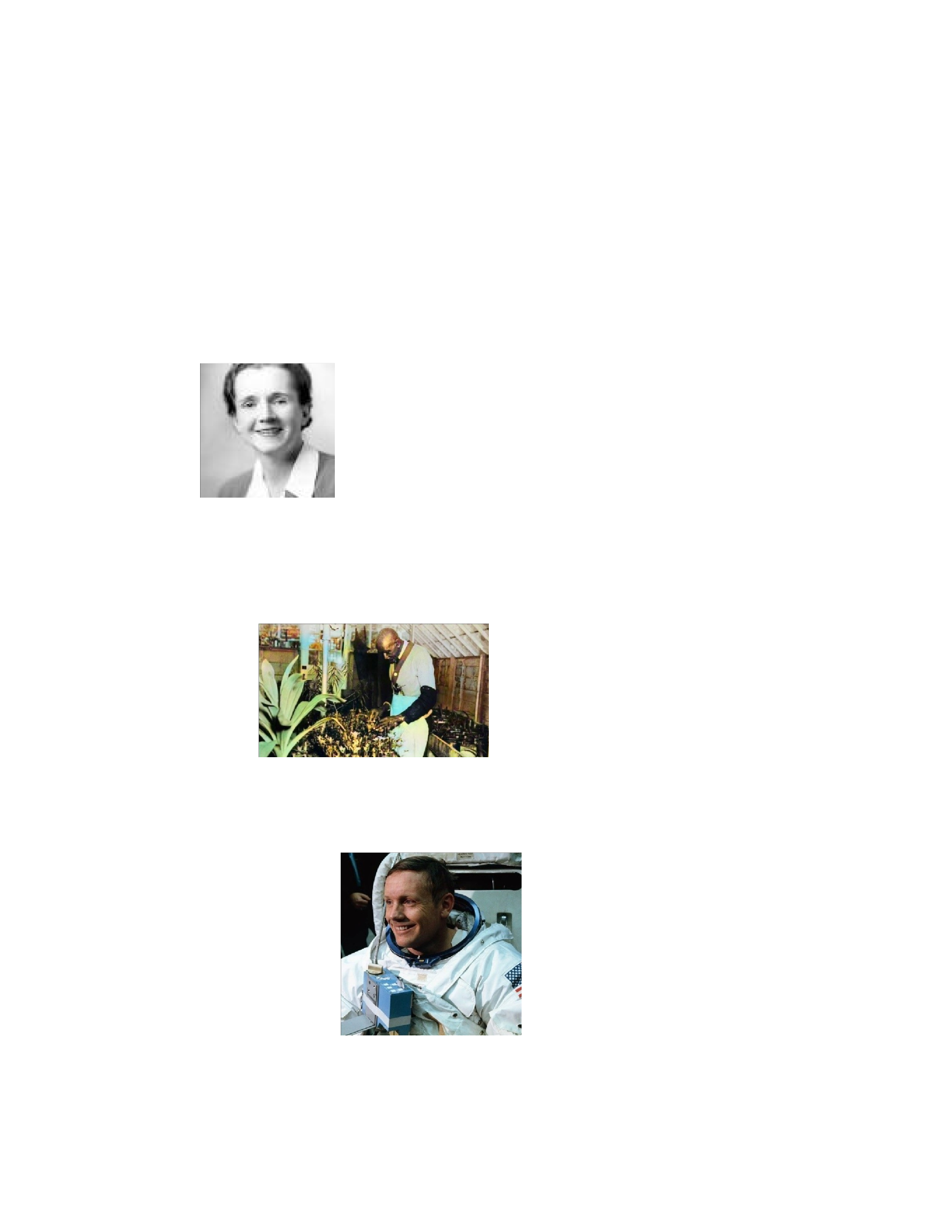
1. Name: Rachel Carson
Famous environmentalist who exposed what pesticides really were and how dangerous
they are.
2. Name: George Washington Carver
Another environmentalist who focused on taking care of the world, a few examples
that he worked on was diversifying crops and soil health.
3. Name: Neil Armstrong
First man to walk on the moon.
3
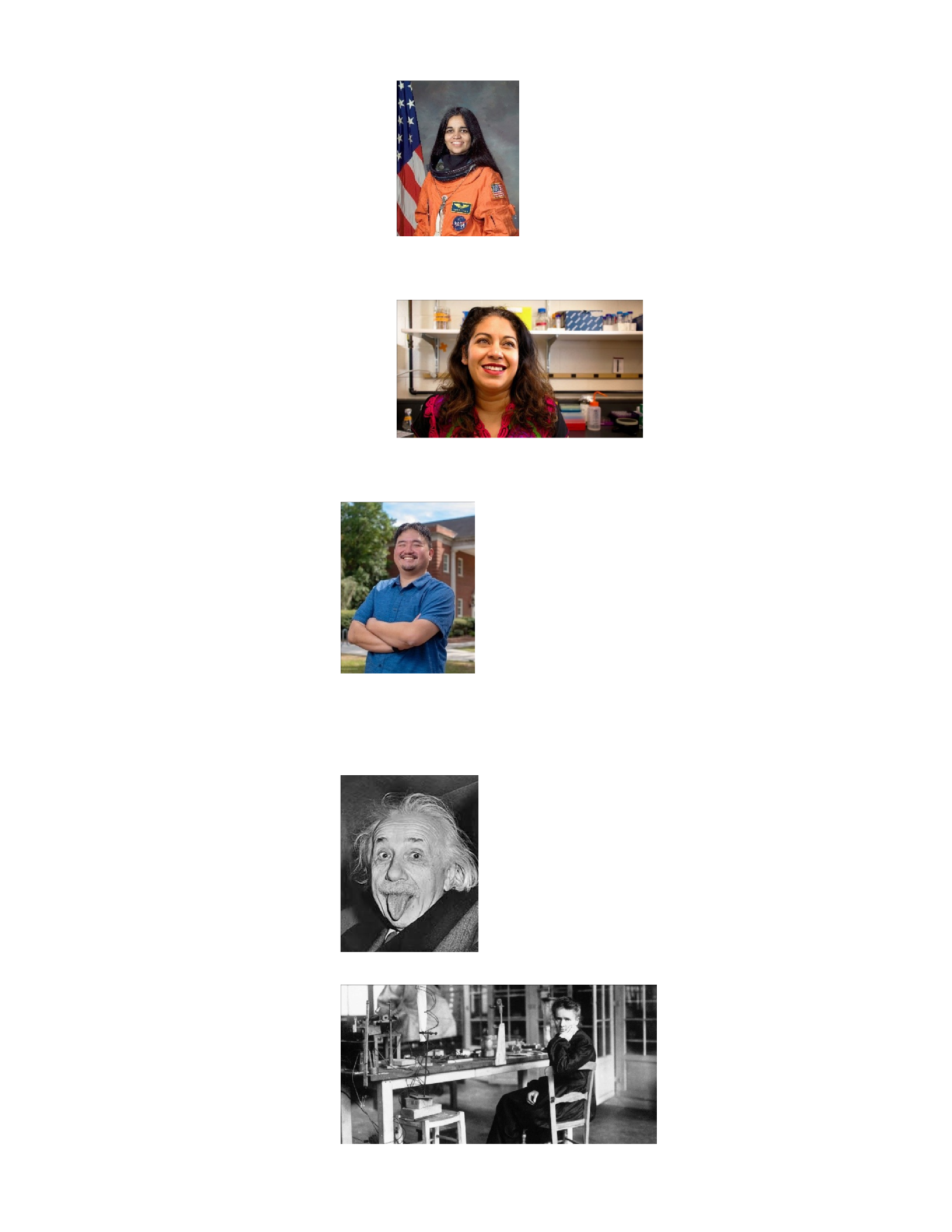
4. Name: Kalpana Chawla
Was the first Indian-American aerospace engineer and astronaut.
5. Name: Dr. Carla Bonilla
She teaches molecular biology and genetics as well as microbiology at USD.
6. Name: Blake Ushijima
Is an assistant professor at UNCW with lab research of the development of probiotic
treatments for habitat restoration, diseases, and molecular mechanisms.
7. Name: Albert Einstein
Revolutionized physics, quantum mechanics, and his theories on relativity.
8. Name: Marie Curie
Polish-French physicist and chemist. Discovery of radioactivity nature of thorium.
4
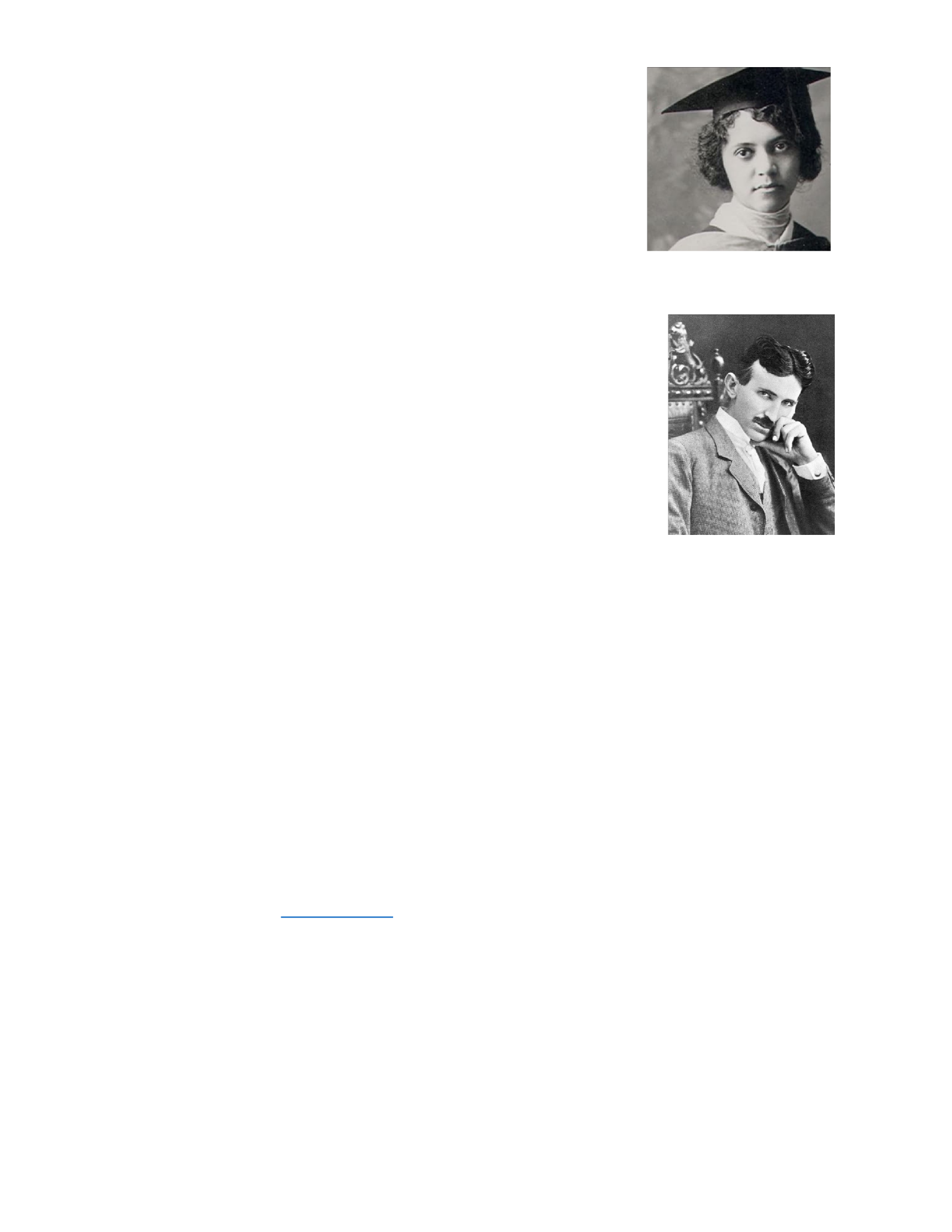
9. Name: Alice Ball
Discovered an injectable treatment for leprosy in the early
20th century.
10. Name: Nikola Tesla
Was a Serbian-American engineer. Known for his design of what we
know as the modern electricity supply system.
Part Two
Explain in one paragraph (at least five sentences) how you will use these photos in your
classroom. Make sure you describe and justify how your plan will improve teaching and
learning in the above scenario. Provide evidence from the chapter to support your
justification (with citations).
“Learning researchers also believe that the learner must reflect on her or his ideas and make
personal sense of these ideas. This capacity to “know what you know”—and what you do not
understand—is called metacognition or self-monitoring (Donovan & Bransford, 2005)” (Koch,
Chapter 1). Similarly to the example for this assignment, I would create a PowerPoint with
each slide being a different scientist. It would state their name and what they do, I would talk
with the students about the importance of each scientist before showing a picture. They will
have a sheet with a blank square for all ten scientists. As I describe and talk about each one,
the students will draw what they hear about each one and how they may depict the scientist.
After we finish each slide, the students will see what each scientist looks like. I think that this

5
could be a fun and interesting way for the students to view the information in their own way
before fully knowing every piece of knowledge given to them! “For students, true
understanding means that they can discuss concepts freely and apply them to other areas of
thinking” (Koch, Chapter 2).

6
References
Famous physicists - the greatest physicists of all time. Famous Physicists |. (2018, March 25).
https://famousphysicists.org/
Koch, J. (2018). Science stories: Science methods for elementary and middle school teachers.
Cengage Learning.
Lallanilla, M. (2024, October 15). The 17 environmentalists everyone should know. Treehugger.
https://www.treehugger.com/environmentalists-you-should-know-1709040
NASA. (2025, August 11). Former astronauts. NASA.
https://www.nasa.gov/humans-in-space/astronauts/former-astronauts/
Wheeler, K. (2024, February 19). Diverse famous microbiologists. San Diego Squared.
https://sd2.org/diverse-famous-microbiologists/
Powered by TCPDF (www.tcpdf.org)

