Quiz: Pulling It All Together
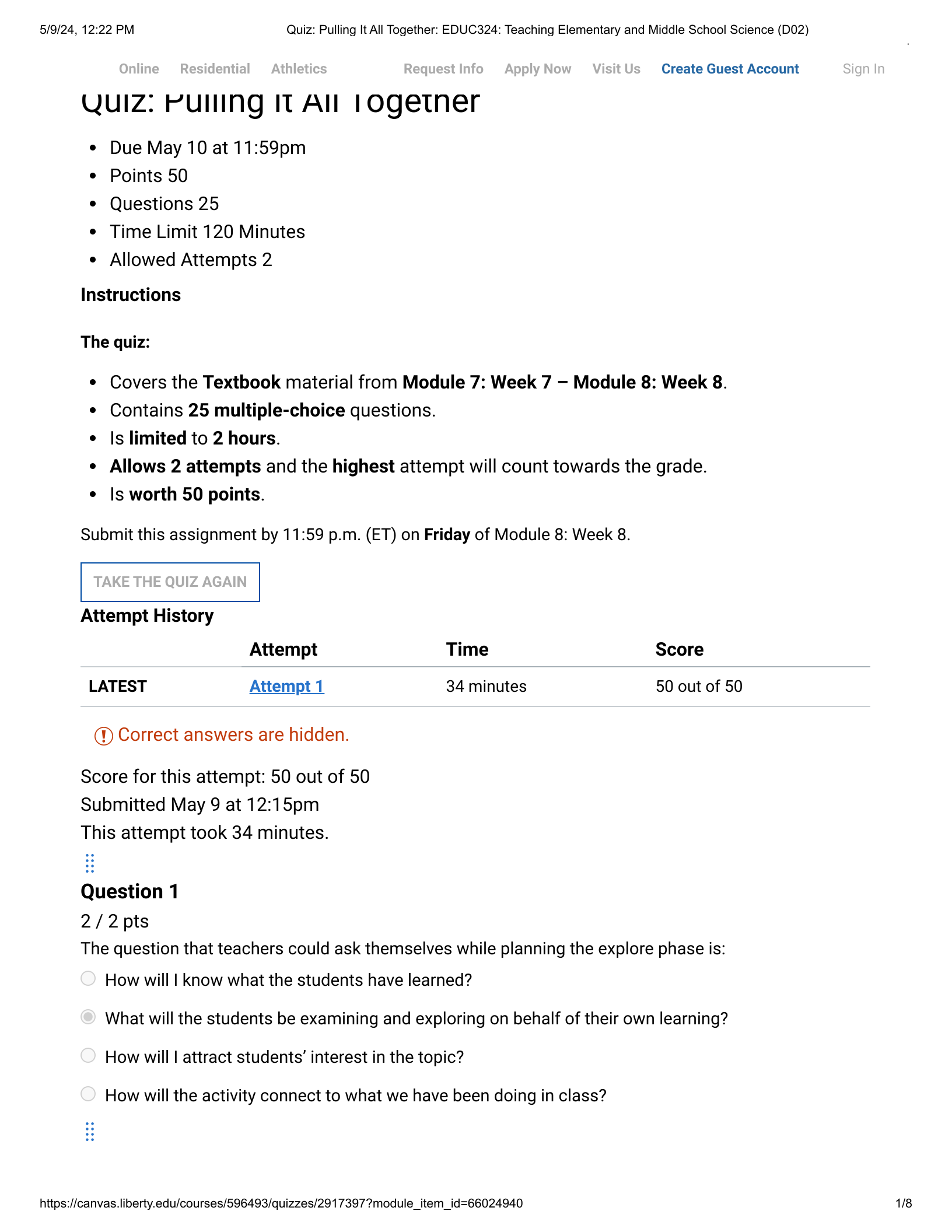
Due May 10 at 11:59pm
Points 50
Questions 25
Time Limit 120 Minutes
Allowed Attempts 2
Instructions
Attempt History
Attempt Time Score
LATEST Attempt 1 34 minutes 50 out of 50
Correct answers are hidden.
Score for this attempt: 50 out of 50
Submitted May 9 at 12:15pm
This attempt took 34 minutes.
Question 1
2 / 2 pts
How will I know what the students have learned?
What will the students be examining and exploring on behalf of their own learning?
How will I attract students’ interest in the topic?
How will the activity connect to what we have been doing in class?
The quiz:
Covers the Textbookmaterial from Module 7: Week 7 – Module 8: Week 8.
Contains 25 multiple-choicequestions.
Is limited to 2 hours.
Allows 2 attempts and the highest attempt will count towards the grade.
Is worth 50 points.
Submit this assignment by 11:59 p.m. (ET) on Friday of Module 8: Week 8.
TAKE THE QUIZ AGAIN
The question that teachers could ask themselves while planning the explore phase is:
Online Residential Athletics
Sign InRequest Info Apply Now Visit Us Create Guest Account
5/9/24, 12:22 PM
Quiz: Pulling It All Together: EDUC324: Teaching Elementary and Middle School Science (D02)
https://canvas.liberty.edu/courses/596493/quizzes/2917397?module_item_id=66024940
1/8
Question 2
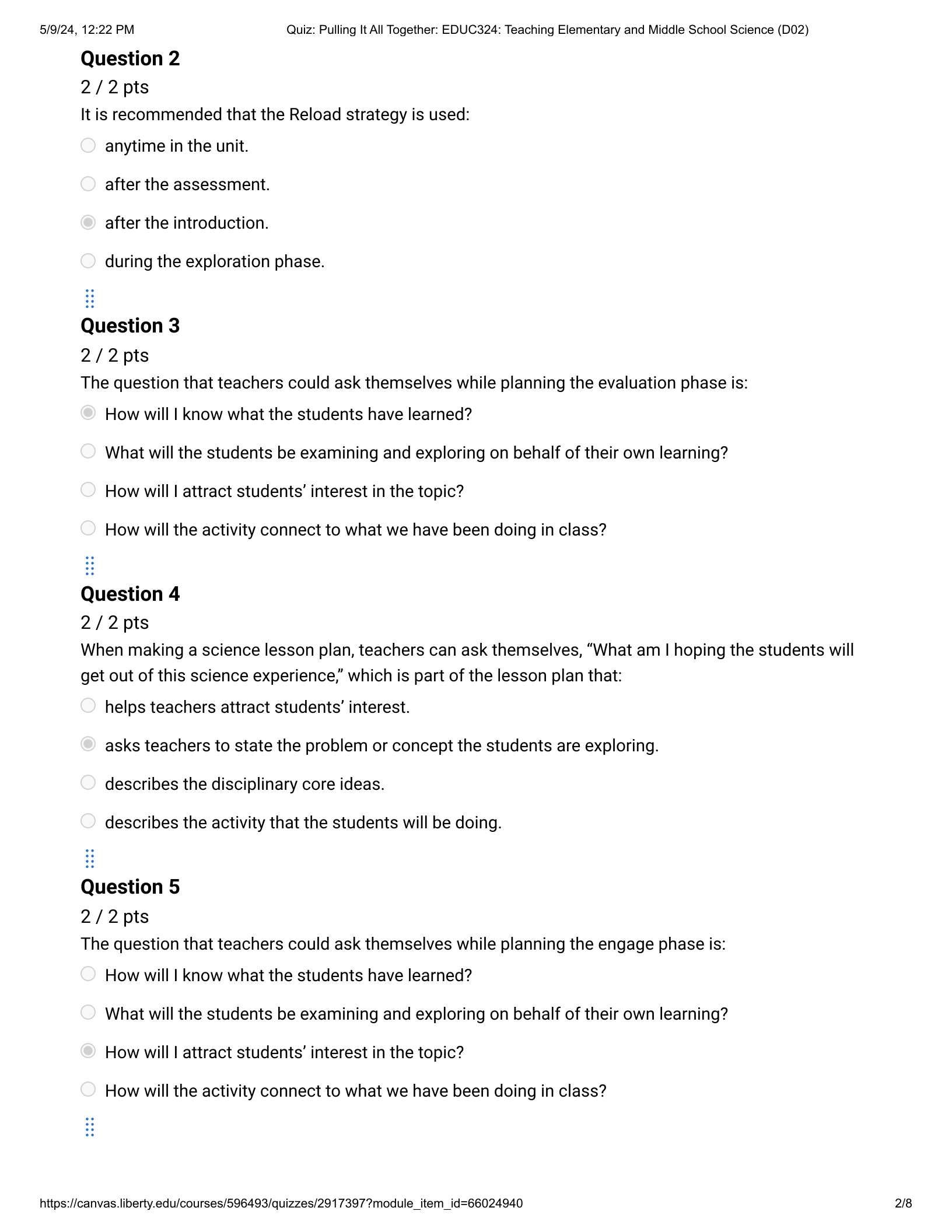
2 / 2 pts
anytime in the unit.
after the assessment.
after the introduction.
during the exploration phase.
Question 3
2 / 2 pts
How will I know what the students have learned?
What will the students be examining and exploring on behalf of their own learning?
How will I attract students’ interest in the topic?
How will the activity connect to what we have been doing in class?
Question 4
2 / 2 pts
helps teachers attract students’ interest.
asks teachers to state the problem or concept the students are exploring.
describes the disciplinary core ideas.
describes the activity that the students will be doing.
Question 5
2 / 2 pts
How will I know what the students have learned?
What will the students be examining and exploring on behalf of their own learning?
How will I attract students’ interest in the topic?
How will the activity connect to what we have been doing in class?
It is recommended that the Reload strategy is used:
The question that teachers could ask themselves while planning the evaluation phase is:
When making a science lesson plan, teachers can ask themselves, “What am I hoping the students will
get out of this science experience,” which is part of the lesson plan that:
The question that teachers could ask themselves while planning the engage phase is:
5/9/24, 12:22 PM
Quiz: Pulling It All Together: EDUC324: Teaching Elementary and Middle School Science (D02)
https://canvas.liberty.edu/courses/596493/quizzes/2917397?module_item_id=66024940
2/8
Question 6
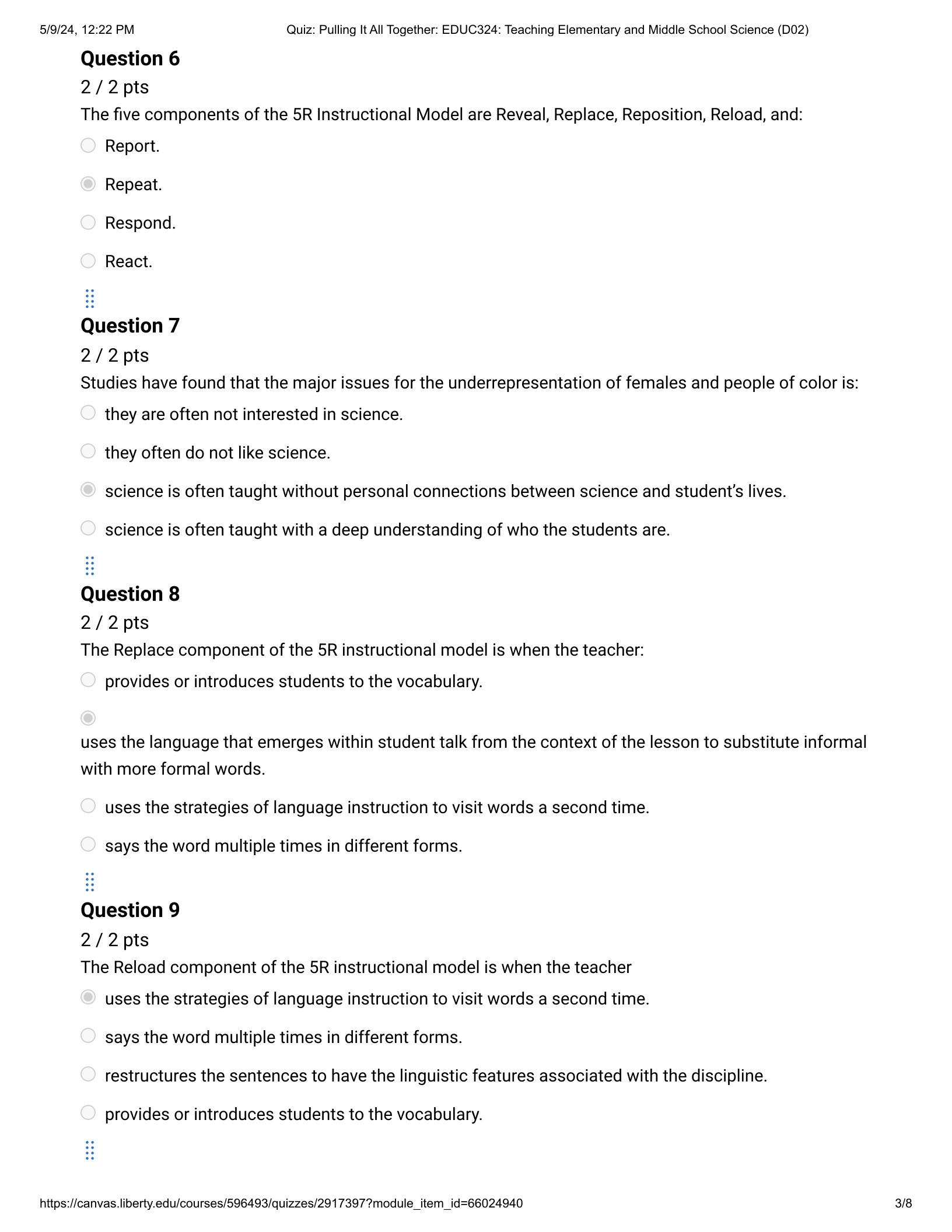
2 / 2 pts
Report.
Repeat.
Respond.
React.
Question 7
2 / 2 pts
they are often not interested in science.
they often do not like science.
science is often taught without personal connections between science and student’s lives.
science is often taught with a deep understanding of who the students are.
Question 8
2 / 2 pts
provides or introduces students to the vocabulary.
uses the language that emerges within student talk from the context of the lesson to substitute informal
with more formal words.
uses the strategies of language instruction to visit words a second time.
says the word multiple times in different forms.
Question 9
2 / 2 pts
uses the strategies of language instruction to visit words a second time.
says the word multiple times in different forms.
restructures the sentences to have the linguistic features associated with the discipline.
provides or introduces students to the vocabulary.
The ve components of the 5R Instructional Model are Reveal, Replace, Reposition, Reload, and:
Studies have found that the major issues for the underrepresentation of females and people of color is:
The Replace component of the 5R instructional model is when the teacher:
The Reload component of the 5R instructional model is when the teacher
5/9/24, 12:22 PM
Quiz: Pulling It All Together: EDUC324: Teaching Elementary and Middle School Science (D02)
https://canvas.liberty.edu/courses/596493/quizzes/2917397?module_item_id=66024940
3/8
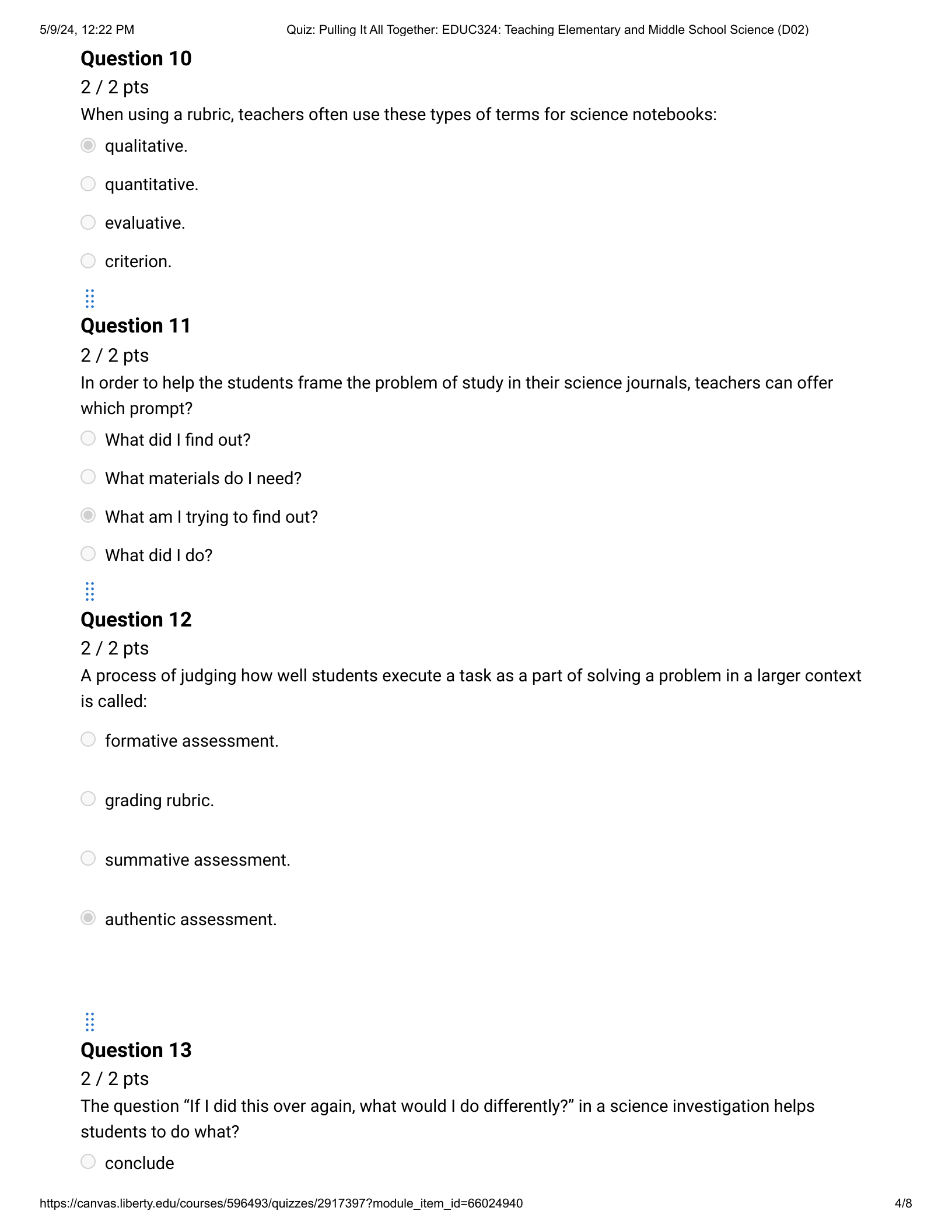
Question 10
2 / 2 pts
qualitative.
quantitative.
evaluative.
criterion.
Question 11
2 / 2 pts
What did I nd out?
What materials do I need?
What am I trying to nd out?
What did I do?
Question 12
2 / 2 pts
formative assessment.
grading rubric.
summative assessment.
authentic assessment.
Question 13
2 / 2 pts
conclude
When using a rubric, teachers often use these types of terms for science notebooks:
In order to help the students frame the problem of study in their science journals, teachers can offer
which prompt?
A process of judging how well students execute a task as a part of solving a problem in a larger context
is called:
The question “If I did this over again, what would I do differently?” in a science investigation helps
students to do what?
5/9/24, 12:22 PM
Quiz: Pulling It All Together: EDUC324: Teaching Elementary and Middle School Science (D02)
https://canvas.liberty.edu/courses/596493/quizzes/2917397?module_item_id=66024940
4/8
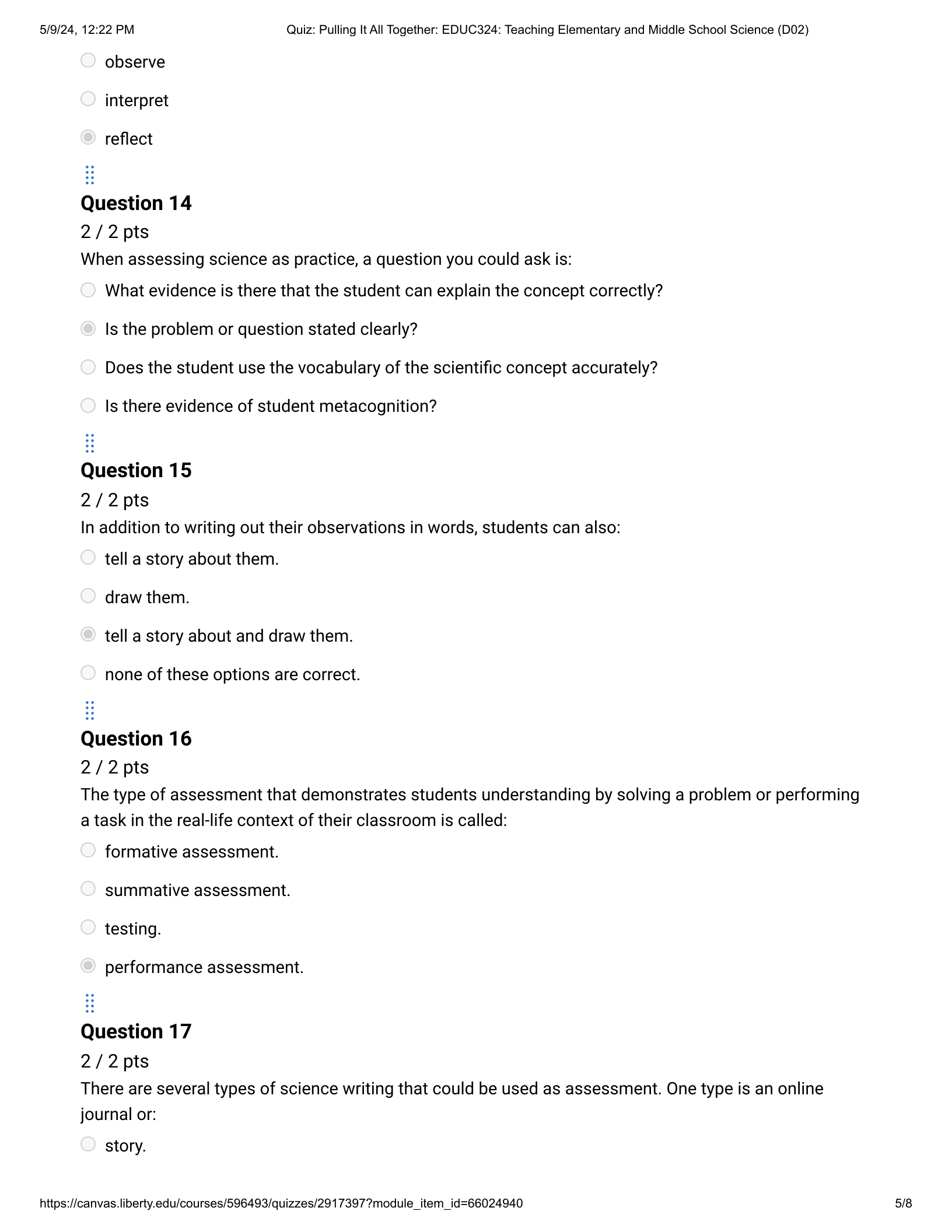
observe
interpret
reect
Question 14
2 / 2 pts
What evidence is there that the student can explain the concept correctly?
Is the problem or question stated clearly?
Does the student use the vocabulary of the scientic concept accurately?
Is there evidence of student metacognition?
Question 15
2 / 2 pts
tell a story about them.
draw them.
tell a story about and draw them.
none of these options are correct.
Question 16
2 / 2 pts
formative assessment.
summative assessment.
testing.
performance assessment.
Question 17
2 / 2 pts
story.
When assessing science as practice, a question you could ask is:
In addition to writing out their observations in words, students can also:
The type of assessment that demonstrates students understanding by solving a problem or performing
a task in the real-life context of their classroom is called:
There are several types of science writing that could be used as assessment. One type is an online
journal or:
5/9/24, 12:22 PM
Quiz: Pulling It All Together: EDUC324: Teaching Elementary and Middle School Science (D02)
https://canvas.liberty.edu/courses/596493/quizzes/2917397?module_item_id=66024940
5/8
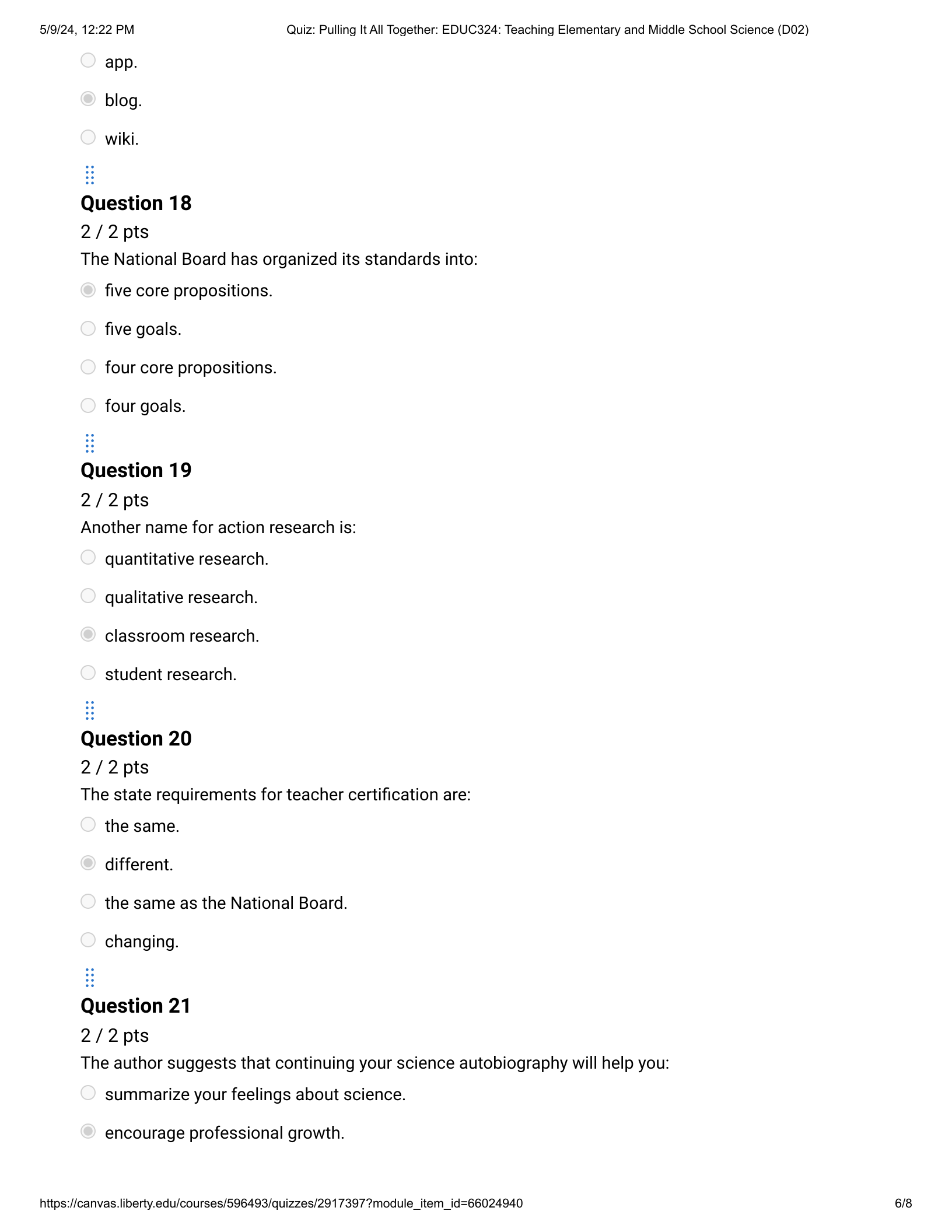
app.
blog.
wiki.
Question 18
2 / 2 pts
ve core propositions.
ve goals.
four core propositions.
four goals.
Question 19
2 / 2 pts
quantitative research.
qualitative research.
classroom research.
student research.
Question 20
2 / 2 pts
the same.
different.
the same as the National Board.
changing.
Question 21
2 / 2 pts
summarize your feelings about science.
encourage professional growth.
The National Board has organized its standards into:
Another name for action research is:
The state requirements for teacher certication are:
The author suggests that continuing your science autobiography will help you:
5/9/24, 12:22 PM
Quiz: Pulling It All Together: EDUC324: Teaching Elementary and Middle School Science (D02)
https://canvas.liberty.edu/courses/596493/quizzes/2917397?module_item_id=66024940
6/8
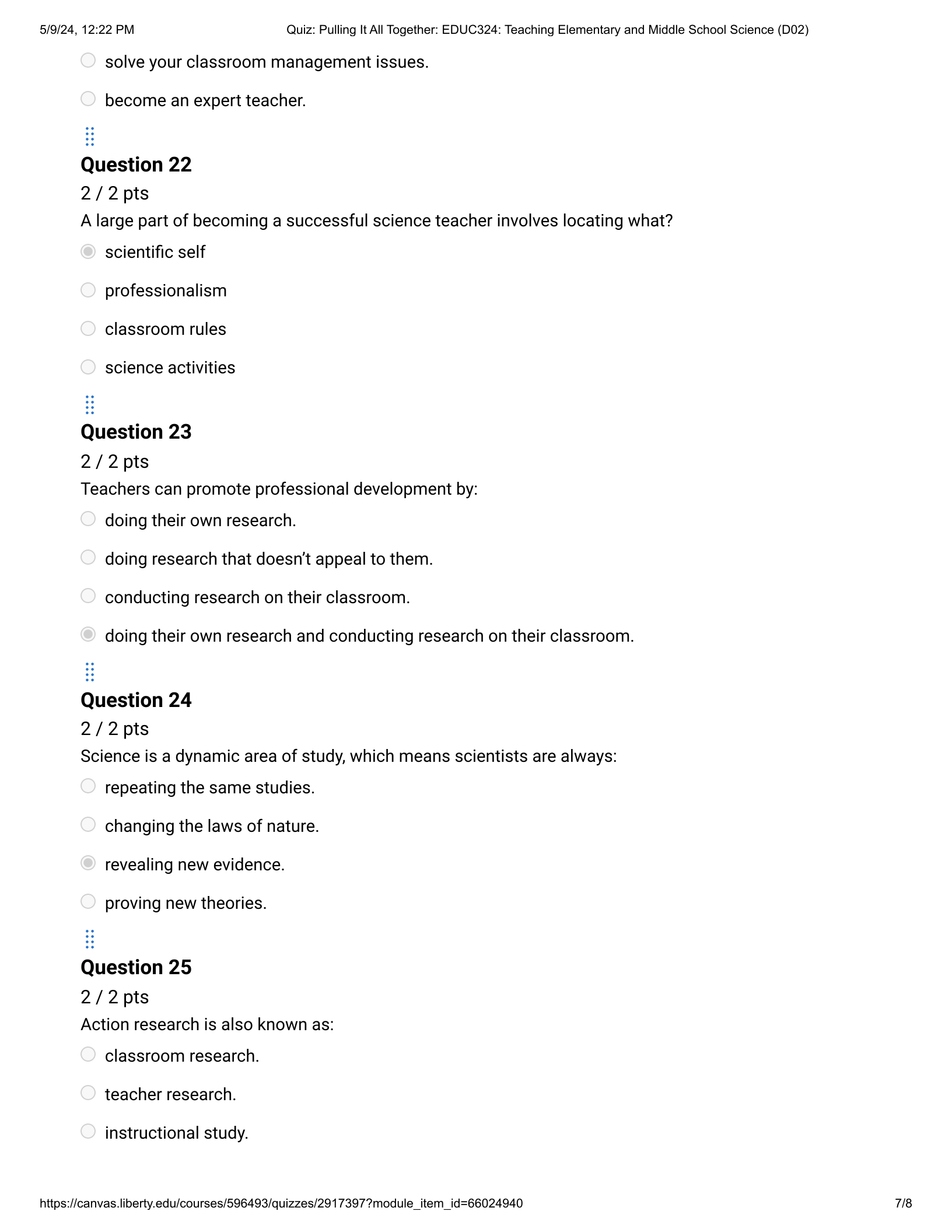
solve your classroom management issues.
become an expert teacher.
Question 22
2 / 2 pts
scientic self
professionalism
classroom rules
science activities
Question 23
2 / 2 pts
doing their own research.
doing research that doesn’t appeal to them.
conducting research on their classroom.
doing their own research and conducting research on their classroom.
Question 24
2 / 2 pts
repeating the same studies.
changing the laws of nature.
revealing new evidence.
proving new theories.
Question 25
2 / 2 pts
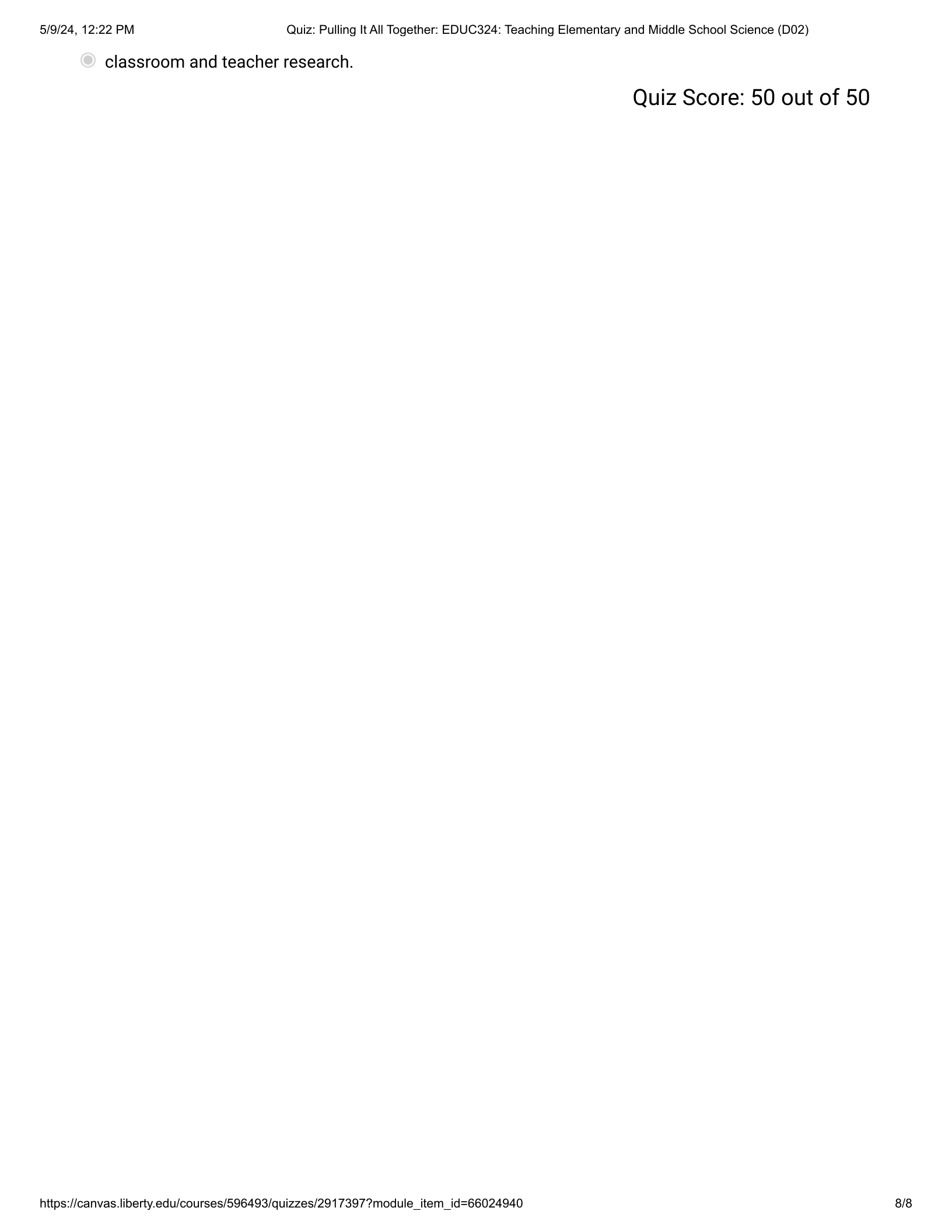
classroom research.
teacher research.
instructional study.
A large part of becoming a successful science teacher involves locating what?
Teachers can promote professional development by:
Science is a dynamic area of study, which means scientists are always:
Action research is also known as:
5/9/24, 12:22 PM
Quiz: Pulling It All Together: EDUC324: Teaching Elementary and Middle School Science (D02)
https://canvas.liberty.edu/courses/596493/quizzes/2917397?module_item_id=66024940
7/8