



EDSP 363
BEHAVIOR I P TNTERVENTION LAN EMPLATE
Student’s Name: Jill Smith Student’s Date of Birth: 10/05/2010
Gender: Female Date Plan Developed: 09/25/2023
1. Description of Target Behavior (Operationally defined, easily observable and measurable, include
examples, as well as duration, frequency, and intensity):
When Jill encounters situations that unsettle or frustrate her, such as transitions or exposure to loud
noises, she has developed unique coping mechanisms. For instance, she might gently stay back and
forth, or lightly tap her head or occasionally her leg. It is crucial to understand that when these
situations arise, Jill requires assistance from a paraprofessional or teacher. Without support and a
change of environment, Jills initial distress can escalate rapidly. She may become more agitated and
start crying, or sometimes exhibit uncontrolled movements, such as flailing. The well-being of Jill
and those around her is of concern, therefore, it is essential to have strategies and interventions in
place to promptly address these behaviors. The duration of these behaviors can vary significantly.
Sometimes they only persist for a few minutes; however, there are instances where Jill may struggle
with them throughout the day. This highlights the importance of being proactive and offering
personalized support to help Jill effectively manage her reactions during these situations.
2. Hypothesis/Summary Statement of the Function of the Behavior (Developed based on data
analyzed from the FBA):
Jill’s actions are her way of finding comfort and reassurance when she is upset due to her surroundings.
Sometimes, she will use these behaviors to get attention from those around her.
3. Antecedent Modifications (What can be done to support the student and prevent the occurrence of
this behavior? What changes can be implemented to create a safe, inclusive, and culturally
responsive learning environment that engages the student in meaningful learning activities and
social interactions? Describe the modifications in enough detail for them to be implemented):
Jill will receive a set of noise-cancelling headphones to help her during times of transition (e.g., fire
drills, music class, lunch time). An extra pair of headphones will also be easily accessible either
with Jill or her paraprofessional in case there are any sudden loud noises.
Jill will be given an additional set of storage containers to help her keep her desk and personal
belongings more orderly. This will enable her to arrange her items as she prefers, ensuring she
always knows where everything is located, minimizing the likelihood of experiencing frustration.
Jill will be provided with a schedule that will be attached to her desk. This visual schedule will
allow her to see when transitions are scheduled, helping her to prepare for them.
Page of 1 6

EDSP 363
4. Behavioral Goal (Develop a behavioral goal that includes the condition, student, replacement
behavior, criterion, and timeframe):
Jill will be instructed on the correct way to wear her noise-cancelling headphones, along with clear
instruction on how to use them. To be sure she understands, the teacher and paraprofessional can
conduct a practice transition with her, confirming her understanding in when and how to use the
headphones correctly.
Jill will be shown her new desk setup, which includes new organizers. She will be told why she has
been given more space, highlighting how it keeps her collections safe.
Jill will be shown the schedule on her desk. The teacher and paraprofessional will go over the different
times and transitions that are part of her day. It will be made clear that if there are any unexpected
changes in the schedule, the paraprofessional will inform her of the change and make sure she
understands what to expect.
5. Replacement Behaviors (What new behavior will be taught or what current behavior will be increased
that serves the same function as the behavior targeted for reduction and allow the student to achieve the
same outcome. How will the replacement behavior be taught to the student? How will the student be
rewarded for engaging in the new or emerging behavior in a way that addresses the function of the
behavior?):
Jill is encouraged to use the designated corner to calm down and will stay within that specified area. This
corner allows her to take a moment and regain her composure whenever she needs it. In recognition of her
achievements, she has the privilege of choosing a reward from the prize box, which offers a range of appealing
options. Moreover, we have implemented a reward system to further motivate Jill and encourage positive
behavior. If Jill manages to earn stickers in four out of five days in a given week, she becomes eligible for a
special treat. This approach provides an incentive for her to actively participate in activities and contribute to
maintaining a peaceful learning environment.
6. Strategies for Reducing the Target Behavior (What will be the response should the target behavior
occur? This response should not maintain the behavior):
Recognizing that Jill gets upset and resorts to hitting herself on the leg, it is important for teachers to step in
quickly. They can start by having a one-on-one conversation with Jill to understand how she is feeling and
determine if she could benefit from some time or other calming techniques, such as a calm-down corner or
fidgets. This approach aims to stop the self-aggression and gives Jill the tools she needs to express herself and
work through her feelings in a supportive learning environment.
7. Crisis Plan (How should others respond if the strategies for reducing the target behavior are not
effective or if the target behavior occurs in a manner that jeopardizes the safety of the student or
others? Include the procedures for safely and appropriately intervening when the student is in
crisis):
If Jill were to engage in self-aggression or other behaviors that may harm her or her peers around her, she
would be removed from the classroom to speak one-on-one with the teacher. It is clear that Jill does not
like confrontations, therefore, given her aversion, when her behavior needs to be addressed, she will be
taken out of the classroom with a gentle, one-one-one discussion. This may be more effective in helping
her understand and improve her actions.
Page of 2 6

EDSP 363
8. Laws (What are the laws impacting decisions about students with disabilities? Describe the procedures
(law) required for suspending a student with a disability demonstrating a clear understanding of MDR
and its relationship to the FBA/BIP):
IDEA and Section 504 are important laws for students with disabilities. IDEA insists on using a Manifestation
Determination Review (MDR), which helps to figure out if the behavior that led to a suspension is linked to
the student’s disability. If it is, you cannot go ahead with typical disciplinary measures. Instead, you must dig
deeper with a Functional Behavior Assessment (FBA) to understand the function of a behavior. This will then
lead to the creation of a Behavior Intervention Plan (BIP) with strategies to help the student while still meeting
their needs.
9. Benefits of the Plan (How does this BIP encourage the student’s emotional well-being, positive social
interactions, and self-determination, independence, self-awareness, self-management, self-control, self-
reliance, self-esteem, and self-advocacy?)
A good BIP is a roadmap for students like Jill, who face challenges due to their autism. It helps Jill manage
her emotions and improve how she interacts with other people. By setting goals and teaching her how to
regulate her behavior, the BIP helps to empower Jill to become more independent and more aware socially. It
will boost her self-esteem and help her to speak up for herself. A BIP is made to make Jill feel better
emotionally, get along with others, and grow as a person.
10. Culturally Responsive Practices (How does the plan demonstrate an understanding of the student’s
language, culture, and family background?):
By understanding Jills language needs, such as the use of visual aids, the plan incorporates tools to ensure
effective communication. The BIP ensures that Jill can express herself and understand instructions more
clearly. By incorporating ideas from Jill’s family, the plan creates a cohesive support system that aligns with
her family’s values and their expectations.
11. Generalization (How can this plan be carried out in different settings? Emphasize the development,
maintenance, and generalization of behavioral skills and teaching the student to adapt to different
environments):
Jill can use tools from school (e.g., fidget toys and visual schedule) to help with her daily life at home. By
teaching her to learn to adapt with self-control tools and support from family and friends. This plan will be
regularly assessed and adjusted as needed as Jill navigates diverse settings.
12. Progress Monitoring ( Data Collection and monitoring of the target and replacement behaviors.
What type of data will be collected, when, and by whom? Once the data are collected, how often
will the data be monitored and by whom? Based on the data, how often will updates be made to the
BIP?):
Jills plan incorporates monitoring through data collection. Data will be gathered on target and
replacement behaviors, with teachers and specialists responsible for the data collection. The frequency of
data collection will vary based on the behavior being observed. A regular review of this data will show
what updates are necessary to Jills BIP. If adjustments are needed, modifications to strategies, goals, or
additional support will be provided.
Page of 3 6
EDSP 363
13. Collaboration & Communication (How will the BIP be communicated to other teachers and
paraprofessionals? How will the plan involve and be communicated to parents? How will daily
and weekly progress be communicated with parents?):
Jills BIP will be communicated to all school personnel, ensuring that teachers, paraprofessionals, and staff
are familiar with he plan. They will have access to the BIP. Jills mother will participate in the plans
development and get regular updates on her progress through regular meetings and communications
through phone or email. Daily and weekly progress reports will keep her mother informed about her
experiences at school and if there are any changes to the plan.
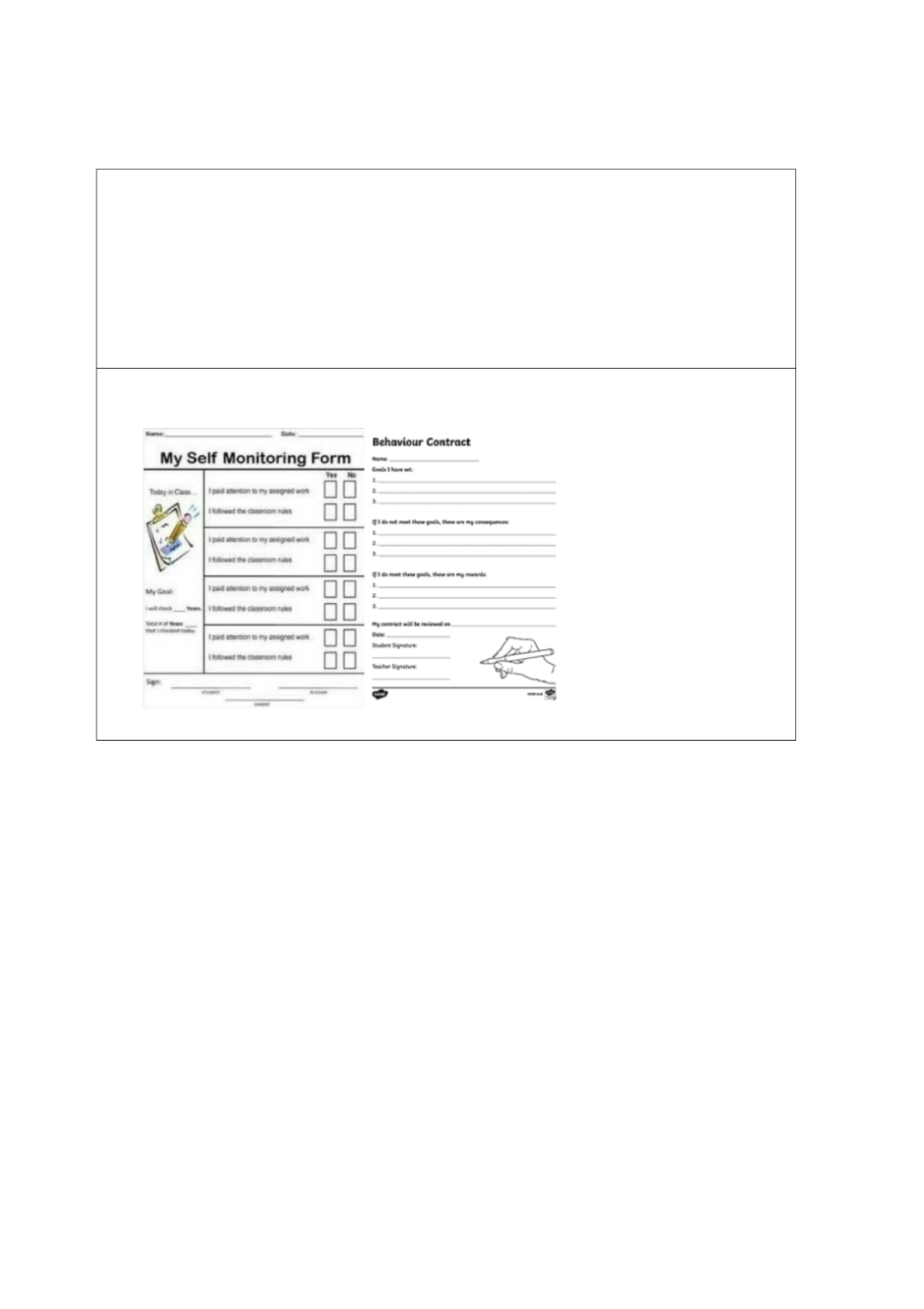
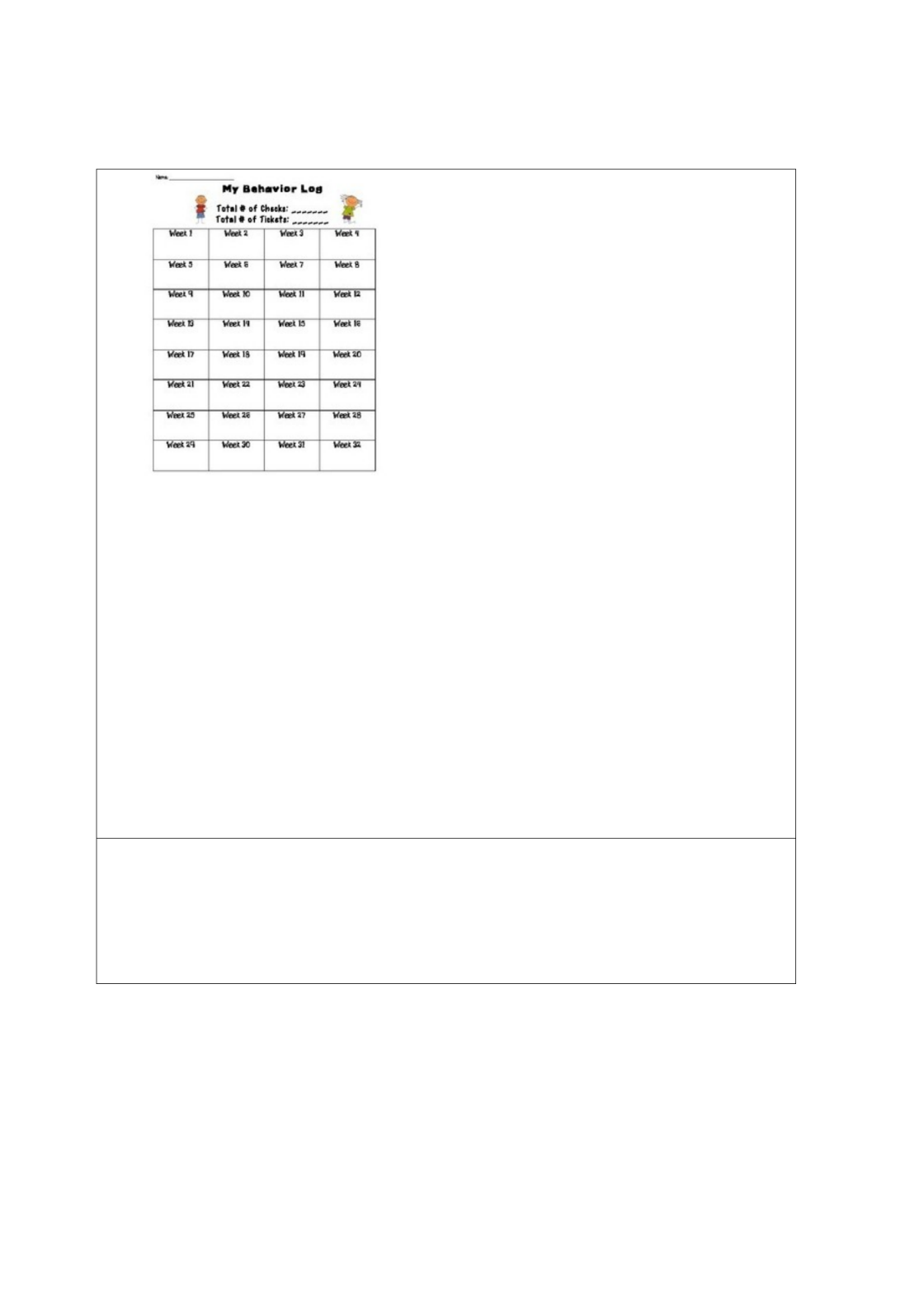
14. Appendices (Required items: (a) Behavioral Contract; (b) Self-monitoring plan for student use; (c)
Record keeping document(s); (d) Communication with other educators; (e) Communication with
family):
Page of 4 6
EDSP 363
Hello,
The following documents are attached to assist Jill in her learning process. They are designed to help
us all gauge her skills and keep an eye on how she is feeling throughout the day. If you have any
questions about these documents or anything else that is included, please don’t hesitate to ask Jill’s
paraprofessional or her teacher(s). We are all here to support her together!
Hello Mr./Mrs. (Name),
I have created a Functional Behavior Assessment for Jill and gathered some strategies to support her
through her days here at school. These documents will be in use all day to keep track of how Jill is
doing and see how she is feeling. If you ever have any questions or need more information, please feel
free to reach out to Jill’s teacher or paraprofessional. We are here to help!
(Teacher/Caseworker)
Page of 5 6

