SCIENCE OF READING 2
Science of Reading
The article I chose compares two different models that have quite a bit of overlap. The two
models are Simple View of Reading and Scarborough's reading rope. Wegenhart describes the
Simple View of reading as is focus is on decoding skills and reading comprehension (2015). If
you cannot decode words, you cannot understand what you are reading. According to the
research teacher have often seen similar results when using Scarborough's reading rope.
Scarborough’s reading rope focuses on the components to language comprehension and word
recognition to get skilled readers.
The main differences that I pulled out of the article Shanahan on Literacy. He focuses on making
sure the educators are following evidence-based practices and not just believing someone when
they claim they have “science or reading” curriculum or activities. The video delved into having
systematic and explicit active teaching practices that are evidence based.
References:
Wegenhart, T. A. (2015). Better Reading Through Science: Using Research-Based Models to
Help Students Read Latin Better. Journal of Classics Teaching, 16(31), 8–13.
https://doi.org/10.1017/s2058631015000021
Reply to Melissa Dryman
Melissa, I enjoyed reading your post – you made many valid points. It is crucial for an
educator to know and understand how students acquire reading and writing skills. Educators can
only learn so much from formal schooling. If they do not have a solid foundation, they will have
a hard time teaching the skills effectively. Educators learn the most about reading and writing
instruction when having an experienced mentor to guide them, in their own classroom where
SCIENCE OF READING 3
they can get firsthand experience. I am lucky that the school system I work for has an
instructional coach that helps the teachers implement the best evidence based practices in the
classrooms.
I agree that as educators we should gradually release the learning to our students. This is
accomplished by explicit instruction and teaching of strategies where students can independently
master the reading tasks that have been presented. Hopefully educators will continue to follow
the science of reading research and help students become better readers. Good luck with the rest
of the semester!
Reply to Simmerly Hernandez
Simmerly, thank you for your post. I completely agree that reading does not come
naturally to most. Educators that provide support and explicit instruction to students can help
them to gain the skills they need to be an effective reader. I liked how you proposed that
vocabulary could be both language comprehension as well as word recognition. Students that
have families that hold conversations with them, including about environmental print, have a
larger vocabulary than students that do not have these conversations. Students from a lower
socioeconomic status and students with disabilities are at greater risk for having smaller
vocabularies, as they will have less experiences and exposure to more meaningful vocabulary.
Prior to this assignment, I had seen research on science of reading and how to include it
in phonics and reading instruction. I had also seen a picture of the Rope Model of Reading, when
I watched a secret sounds lecture. I didn’t make the connection between the two until this
SCIENCE OF READING 4
assignment. Effective reading needs to include all aspects of reading and those aspects need to be
explicitly taught and practiced. Good luck with the rest of the semester!
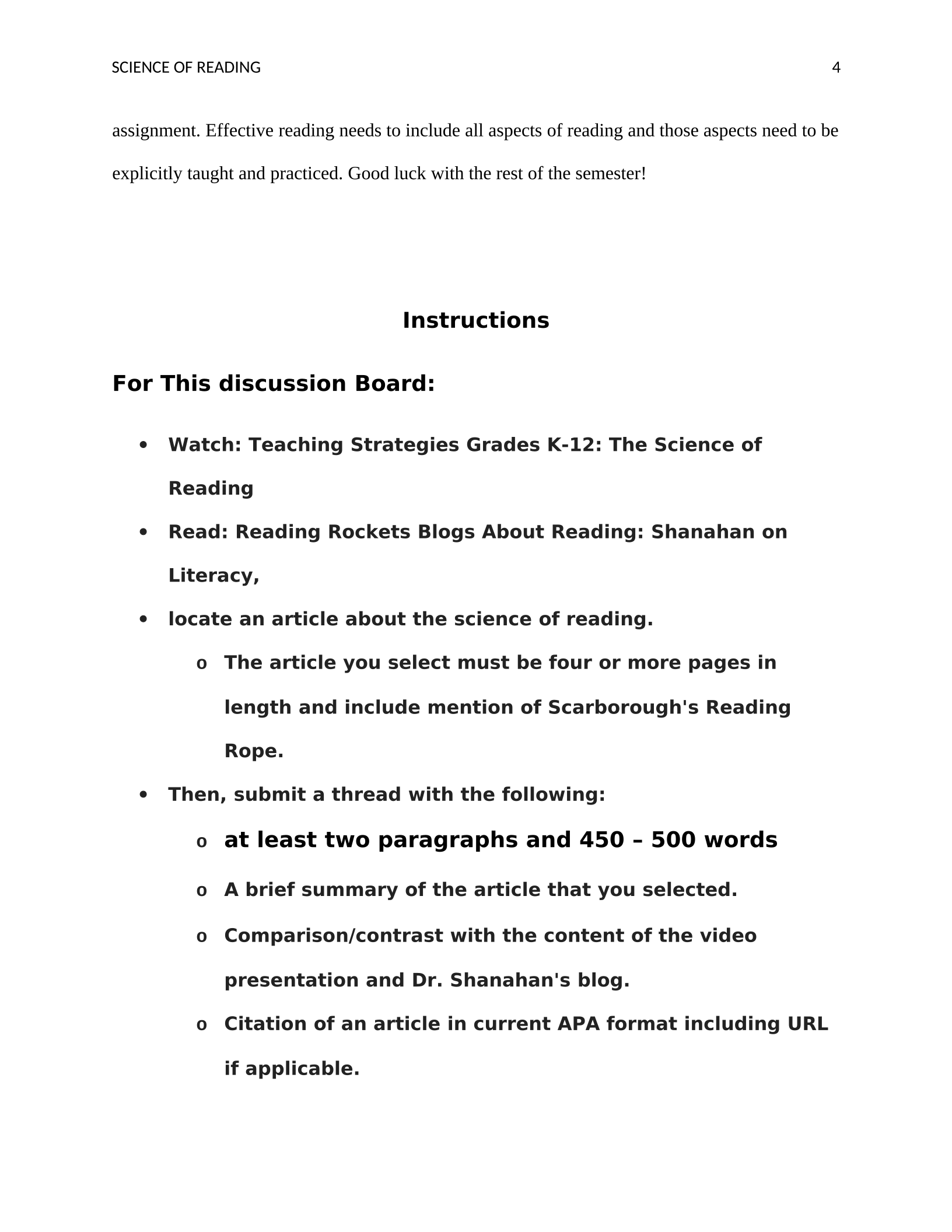
Instructions
For This discussion Board:
Watch: Teaching Strategies Grades K-12: The Science of
Reading
Read: Reading Rockets Blogs About Reading: Shanahan on
Literacy,
locate an article about the science of reading.
oThe article you select must be four or more pages in
length and include mention of Scarborough's Reading
Rope.
Then, submit a thread with the following:
oat least two paragraphs and 450 – 500 words
oA brief summary of the article that you selected.
oComparison/contrast with the content of the video
presentation and Dr. Shanahan's blog.
oCitation of an article in current APA format including URL
if applicable.