


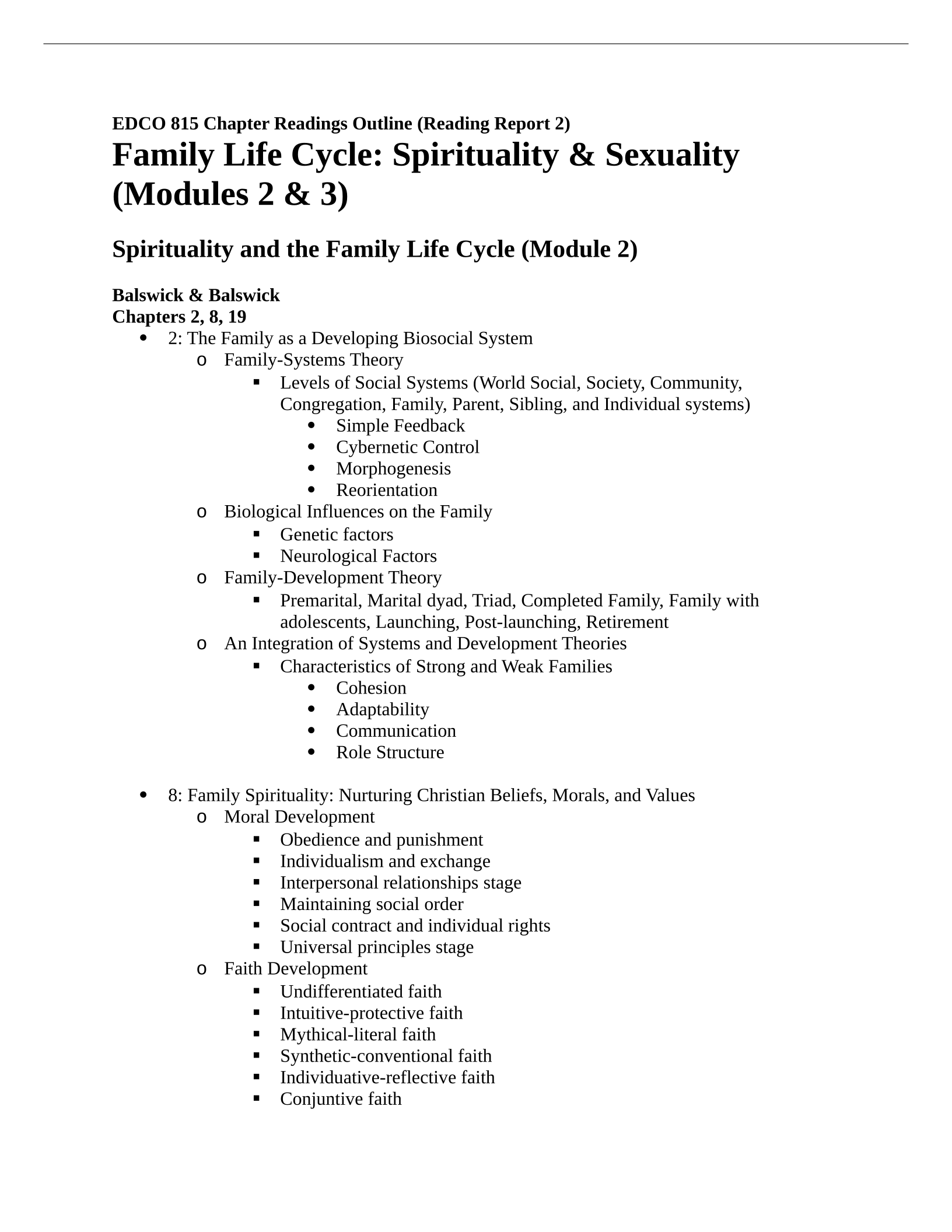
EDCO 815 Chapter Readings Outline (Reading Report 2)
Family Life Cycle: Spirituality & Sexuality
(Modules 2 & 3)
Spirituality and the Family Life Cycle (Module 2)
Balswick & Balswick
Chapters 2, 8, 19
2: The Family as a Developing Biosocial System
oFamily-Systems Theory
Levels of Social Systems (World Social, Society, Community,
Congregation, Family, Parent, Sibling, and Individual systems)
Simple Feedback
Cybernetic Control
Morphogenesis
Reorientation
oBiological Influences on the Family
Genetic factors
Neurological Factors
oFamily-Development Theory
Premarital, Marital dyad, Triad, Completed Family, Family with
adolescents, Launching, Post-launching, Retirement
oAn Integration of Systems and Development Theories
Characteristics of Strong and Weak Families
Cohesion
Adaptability
Communication
Role Structure
8: Family Spirituality: Nurturing Christian Beliefs, Morals, and Values
oMoral Development
Obedience and punishment
Individualism and exchange
Interpersonal relationships stage
Maintaining social order
Social contract and individual rights
Universal principles stage
oFaith Development
Undifferentiated faith
Intuitive-protective faith
Mythical-literal faith
Synthetic-conventional faith
Individuative-reflective faith
Conjuntive faith

Universalizing faith
oA Trinitarian Model of Family Spirituality
Differentiation in Christ
Spiritual Differentiation in the Family
Family Spirituality and Sanctification
oDealing with Differences in Faith
oFamily Spirituality Embedded in Supportive Community
oFamily Spirituality as a Process
19: The Erosion of Biblical Truth in a Modern World
oModernity Defined
oThe Crisis and Challenge of Modernity
The Four Dimensions of Sociocultural Life
Consciousness (Subjective experiences and understanding)
Communication (Symbolic Social interaction)
Community (Institutional and Group Life)
Commodities (Economic life)
oThe Impact of Modernity on the Family
Fragmentation of Consciousness
Problem: has produced a crisis in the area of morality and authority
within the family.
False Hopes: traditionalism—an attempt to restore the family to
what it was in the past
Complexity of Communication
Problem: saps vitality from family life
False Hopes: overreliance on techniques of communication
Disintegration of Community
Problem: nuclear family has replaced the extended family in most
modern societies
False Hopes: some families become self-contained units; other
families turn to extrafamilial institutions for the care of dependent
members; and development of alternative family forms.
Dominance of Commodities
Problem: change the family from the basic unit of production to
the basic unit of consumption
False Hopes: feminist have argued that true equality for
housewives can be achieved only the state paying a wage for their
work
Carter and McGoldrick
Chapters 8
o8: Spirituality and the Family Life Cycle
oINTRO
oSpirituality and Religion in America
oThe Family Life Cycle and Spirituality
Children and Spirituality
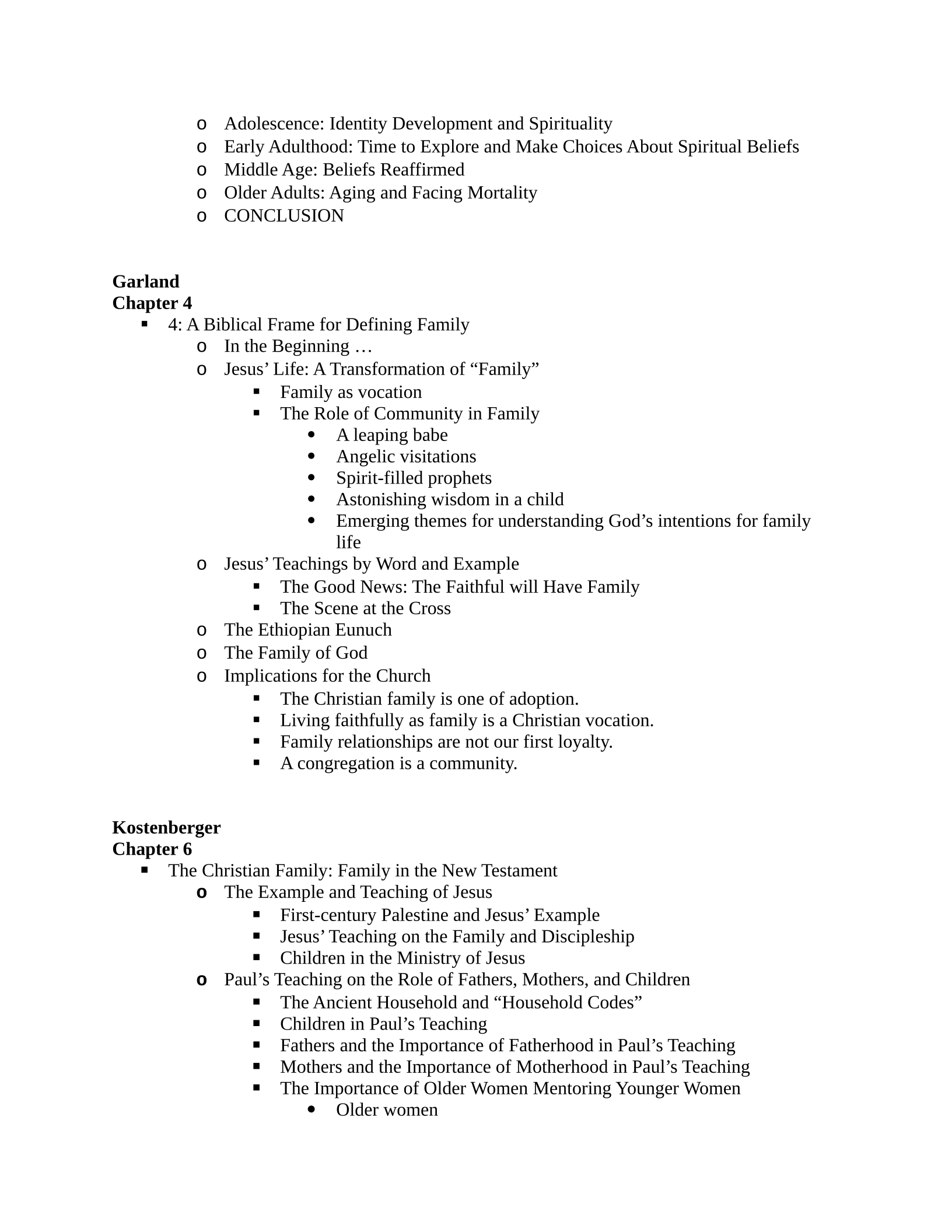
oAdolescence: Identity Development and Spirituality
oEarly Adulthood: Time to Explore and Make Choices About Spiritual Beliefs
oMiddle Age: Beliefs Reaffirmed
oOlder Adults: Aging and Facing Mortality
oCONCLUSION
Garland
Chapter 4
4: A Biblical Frame for Defining Family
oIn the Beginning …
oJesus’ Life: A Transformation of “Family”
Family as vocation
The Role of Community in Family
A leaping babe
Angelic visitations
Spirit-filled prophets
Astonishing wisdom in a child
Emerging themes for understanding God’s intentions for family
life
oJesus’ Teachings by Word and Example
The Good News: The Faithful will Have Family
The Scene at the Cross
oThe Ethiopian Eunuch
oThe Family of God
oImplications for the Church
The Christian family is one of adoption.
Living faithfully as family is a Christian vocation.
Family relationships are not our first loyalty.
A congregation is a community.
Kostenberger
Chapter 6
The Christian Family: Family in the New Testament
oThe Example and Teaching of Jesus
First-century Palestine and Jesus’ Example
Jesus’ Teaching on the Family and Discipleship
Children in the Ministry of Jesus
oPaul’s Teaching on the Role of Fathers, Mothers, and Children
The Ancient Household and “Household Codes”
Children in Paul’s Teaching
Fathers and the Importance of Fatherhood in Paul’s Teaching
Mothers and the Importance of Motherhood in Paul’s Teaching
The Importance of Older Women Mentoring Younger Women
Older women
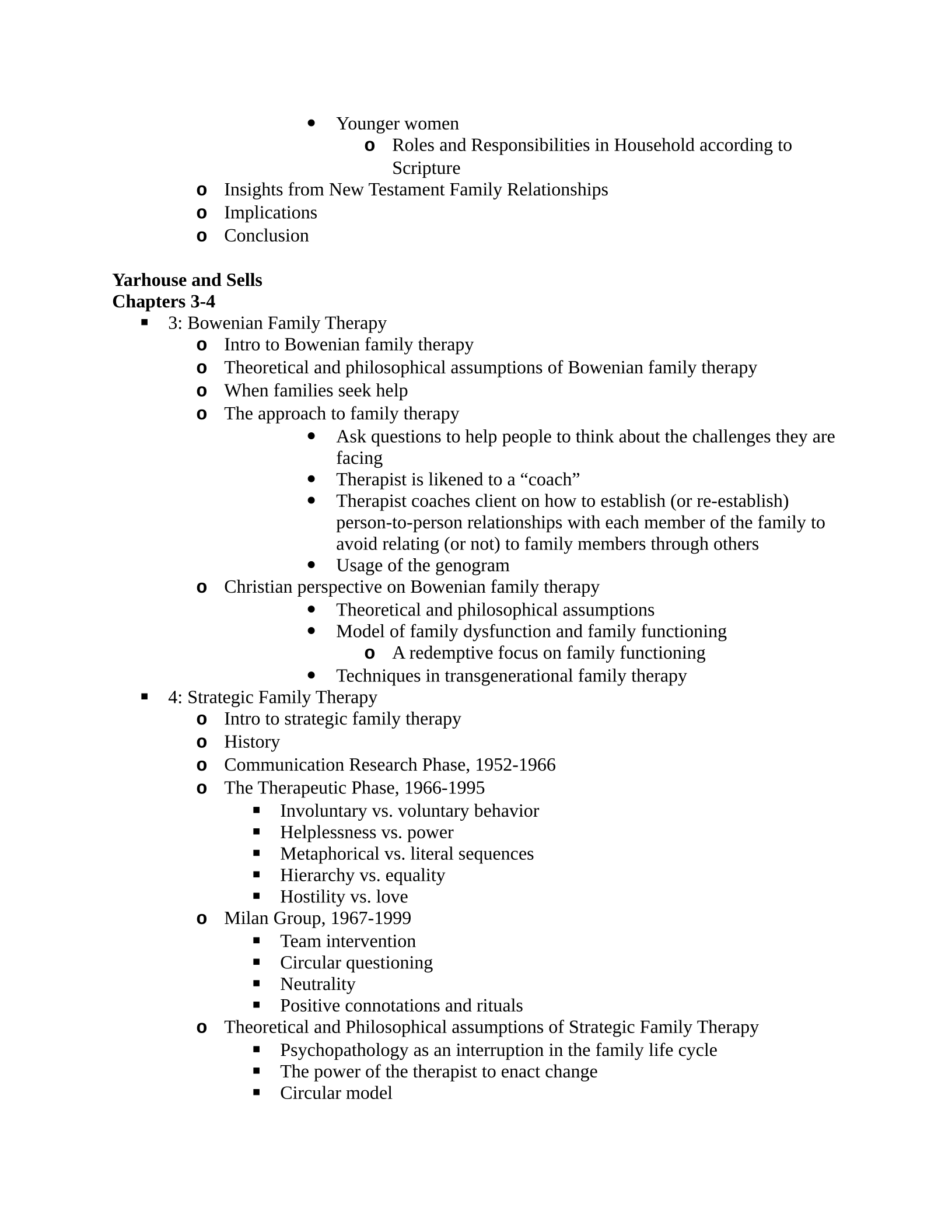
Younger women
oRoles and Responsibilities in Household according to
Scripture
oInsights from New Testament Family Relationships
oImplications
oConclusion
Yarhouse and Sells
Chapters 3-4
3: Bowenian Family Therapy
oIntro to Bowenian family therapy
oTheoretical and philosophical assumptions of Bowenian family therapy
oWhen families seek help
oThe approach to family therapy
Ask questions to help people to think about the challenges they are
facing
Therapist is likened to a “coach”
Therapist coaches client on how to establish (or re-establish)
person-to-person relationships with each member of the family to
avoid relating (or not) to family members through others
Usage of the genogram
oChristian perspective on Bowenian family therapy
Theoretical and philosophical assumptions
Model of family dysfunction and family functioning
oA redemptive focus on family functioning
Techniques in transgenerational family therapy
4: Strategic Family Therapy
oIntro to strategic family therapy
oHistory
oCommunication Research Phase, 1952-1966
oThe Therapeutic Phase, 1966-1995
Involuntary vs. voluntary behavior
Helplessness vs. power
Metaphorical vs. literal sequences
Hierarchy vs. equality
Hostility vs. love
oMilan Group, 1967-1999
Team intervention
Circular questioning
Neutrality
Positive connotations and rituals
oTheoretical and Philosophical assumptions of Strategic Family Therapy
Psychopathology as an interruption in the family life cycle
The power of the therapist to enact change
Circular model
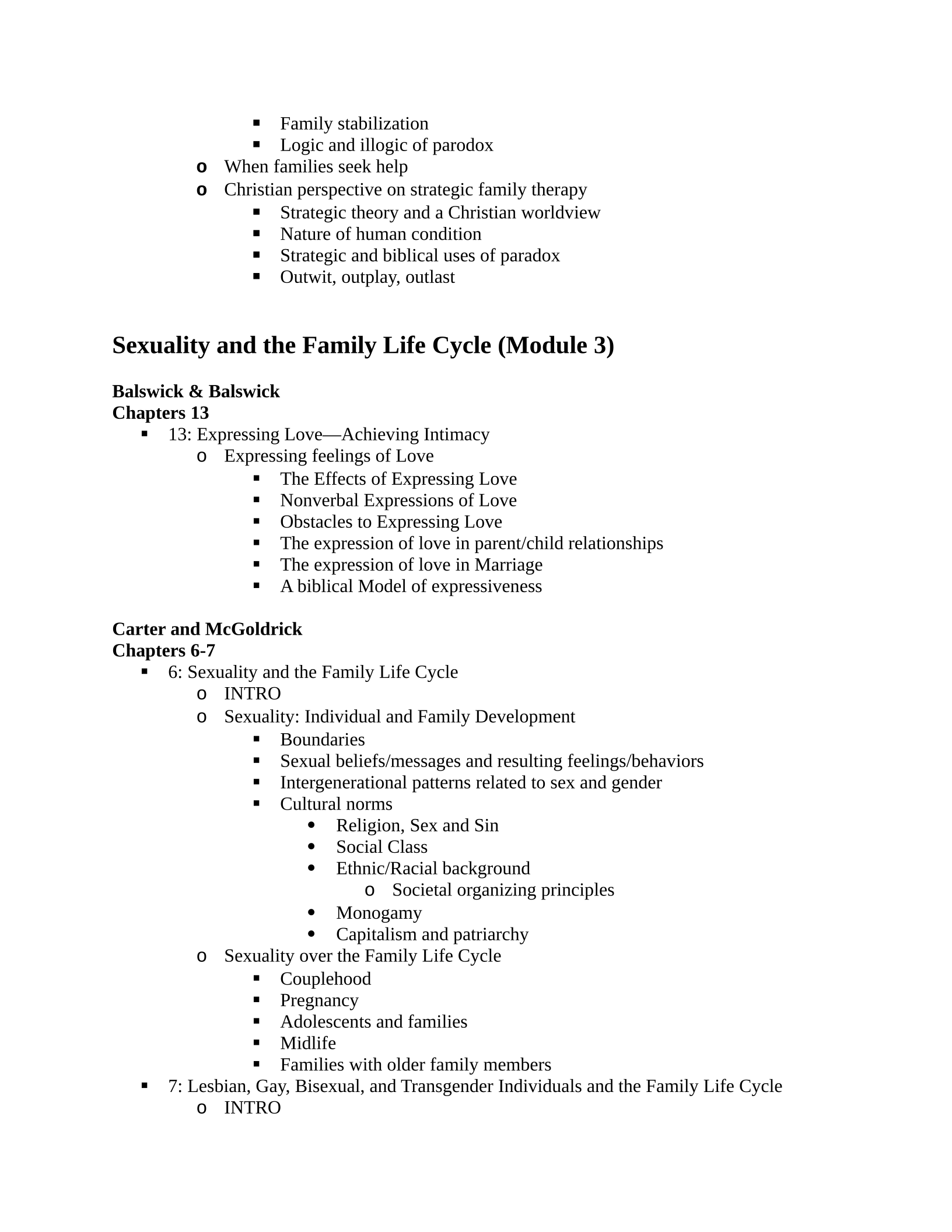
Family stabilization
Logic and illogic of parodox
oWhen families seek help
oChristian perspective on strategic family therapy
Strategic theory and a Christian worldview
Nature of human condition
Strategic and biblical uses of paradox
Outwit, outplay, outlast
Sexuality and the Family Life Cycle (Module 3)
Balswick & Balswick
Chapters 13
13: Expressing Love—Achieving Intimacy
oExpressing feelings of Love
The Effects of Expressing Love
Nonverbal Expressions of Love
Obstacles to Expressing Love
The expression of love in parent/child relationships
The expression of love in Marriage
A biblical Model of expressiveness
Carter and McGoldrick
Chapters 6-7
6: Sexuality and the Family Life Cycle
oINTRO
oSexuality: Individual and Family Development
Boundaries
Sexual beliefs/messages and resulting feelings/behaviors
Intergenerational patterns related to sex and gender
Cultural norms
Religion, Sex and Sin
Social Class
Ethnic/Racial background
oSocietal organizing principles
Monogamy
Capitalism and patriarchy
oSexuality over the Family Life Cycle
Couplehood
Pregnancy
Adolescents and families
Midlife
Families with older family members
7: Lesbian, Gay, Bisexual, and Transgender Individuals and the Family Life Cycle
oINTRO
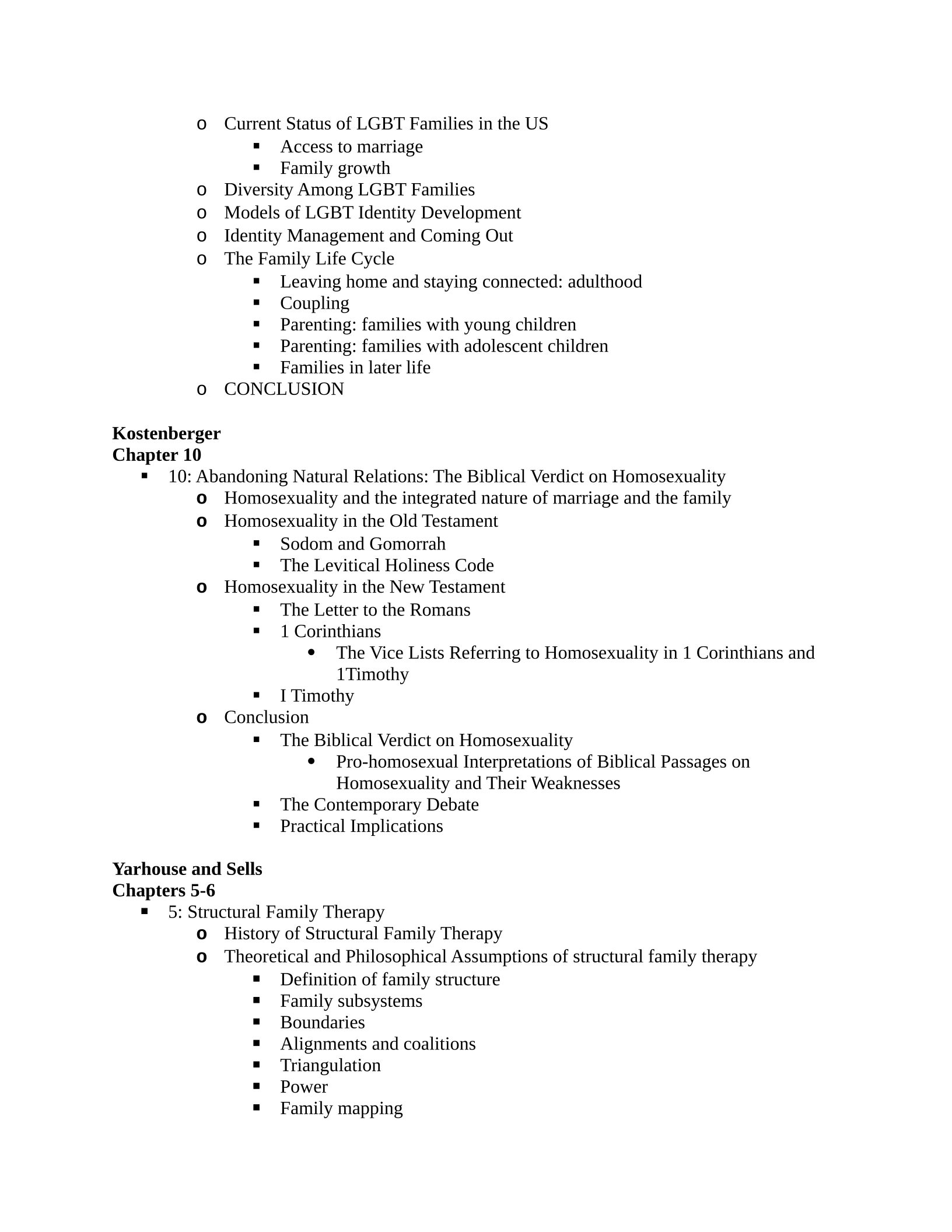
oCurrent Status of LGBT Families in the US
Access to marriage
Family growth
oDiversity Among LGBT Families
oModels of LGBT Identity Development
oIdentity Management and Coming Out
oThe Family Life Cycle
Leaving home and staying connected: adulthood
Coupling
Parenting: families with young children
Parenting: families with adolescent children
Families in later life
oCONCLUSION
Kostenberger
Chapter 10
10: Abandoning Natural Relations: The Biblical Verdict on Homosexuality
oHomosexuality and the integrated nature of marriage and the family
oHomosexuality in the Old Testament
Sodom and Gomorrah
The Levitical Holiness Code
oHomosexuality in the New Testament
The Letter to the Romans
1 Corinthians
The Vice Lists Referring to Homosexuality in 1 Corinthians and
1Timothy
I Timothy
oConclusion
The Biblical Verdict on Homosexuality
Pro-homosexual Interpretations of Biblical Passages on
Homosexuality and Their Weaknesses
The Contemporary Debate
Practical Implications
Yarhouse and Sells
Chapters 5-6
5: Structural Family Therapy
oHistory of Structural Family Therapy
oTheoretical and Philosophical Assumptions of structural family therapy
Definition of family structure
Family subsystems
Boundaries
Alignments and coalitions
Triangulation
Power
Family mapping
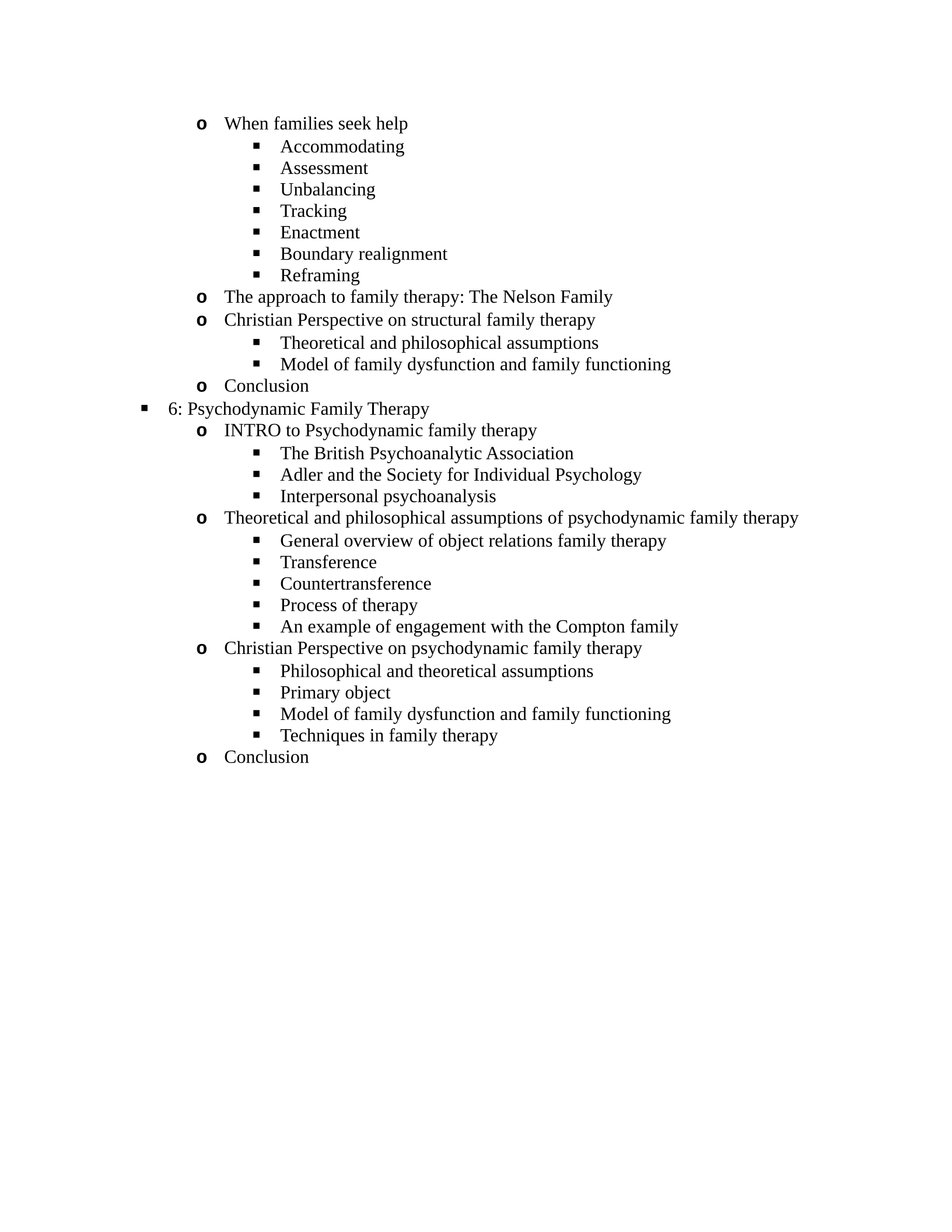
oWhen families seek help
Accommodating
Assessment
Unbalancing
Tracking
Enactment
Boundary realignment
Reframing
oThe approach to family therapy: The Nelson Family
oChristian Perspective on structural family therapy
Theoretical and philosophical assumptions
Model of family dysfunction and family functioning
oConclusion
6: Psychodynamic Family Therapy
oINTRO to Psychodynamic family therapy
The British Psychoanalytic Association
Adler and the Society for Individual Psychology
Interpersonal psychoanalysis
oTheoretical and philosophical assumptions of psychodynamic family therapy
General overview of object relations family therapy
Transference
Countertransference
Process of therapy
An example of engagement with the Compton family
oChristian Perspective on psychodynamic family therapy
Philosophical and theoretical assumptions
Primary object
Model of family dysfunction and family functioning
Techniques in family therapy
oConclusion
Powered by TCPDF (www.tcpdf.org)

