


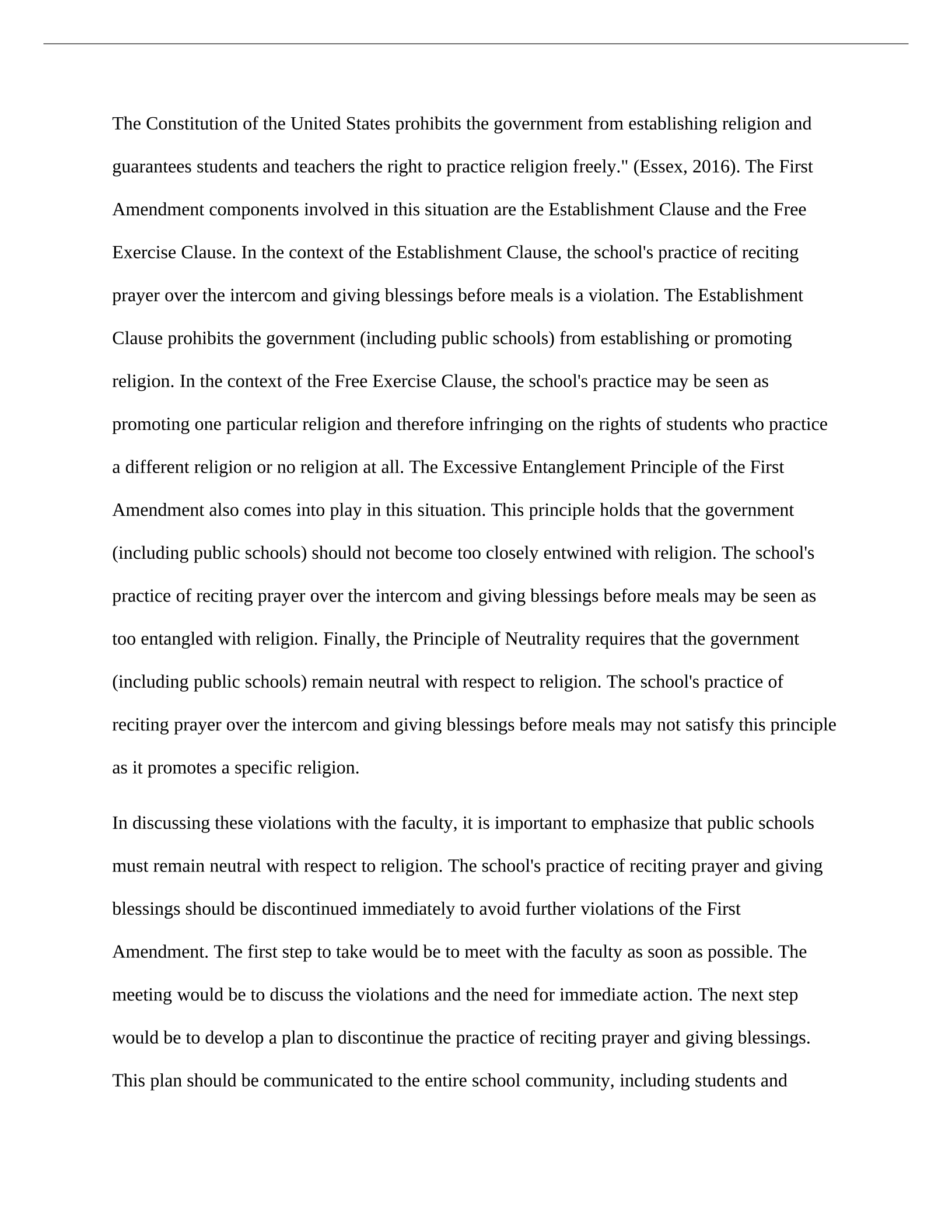
The Constitution of the United States prohibits the government from establishing religion and
guarantees students and teachers the right to practice religion freely." (Essex, 2016). The First
Amendment components involved in this situation are the Establishment Clause and the Free
Exercise Clause. In the context of the Establishment Clause, the school's practice of reciting
prayer over the intercom and giving blessings before meals is a violation. The Establishment
Clause prohibits the government (including public schools) from establishing or promoting
religion. In the context of the Free Exercise Clause, the school's practice may be seen as
promoting one particular religion and therefore infringing on the rights of students who practice
a different religion or no religion at all. The Excessive Entanglement Principle of the First
Amendment also comes into play in this situation. This principle holds that the government
(including public schools) should not become too closely entwined with religion. The school's
practice of reciting prayer over the intercom and giving blessings before meals may be seen as
too entangled with religion. Finally, the Principle of Neutrality requires that the government
(including public schools) remain neutral with respect to religion. The school's practice of
reciting prayer over the intercom and giving blessings before meals may not satisfy this principle
as it promotes a specific religion.
In discussing these violations with the faculty, it is important to emphasize that public schools
must remain neutral with respect to religion. The school's practice of reciting prayer and giving
blessings should be discontinued immediately to avoid further violations of the First
Amendment. The first step to take would be to meet with the faculty as soon as possible. The
meeting would be to discuss the violations and the need for immediate action. The next step
would be to develop a plan to discontinue the practice of reciting prayer and giving blessings.
This plan should be communicated to the entire school community, including students and
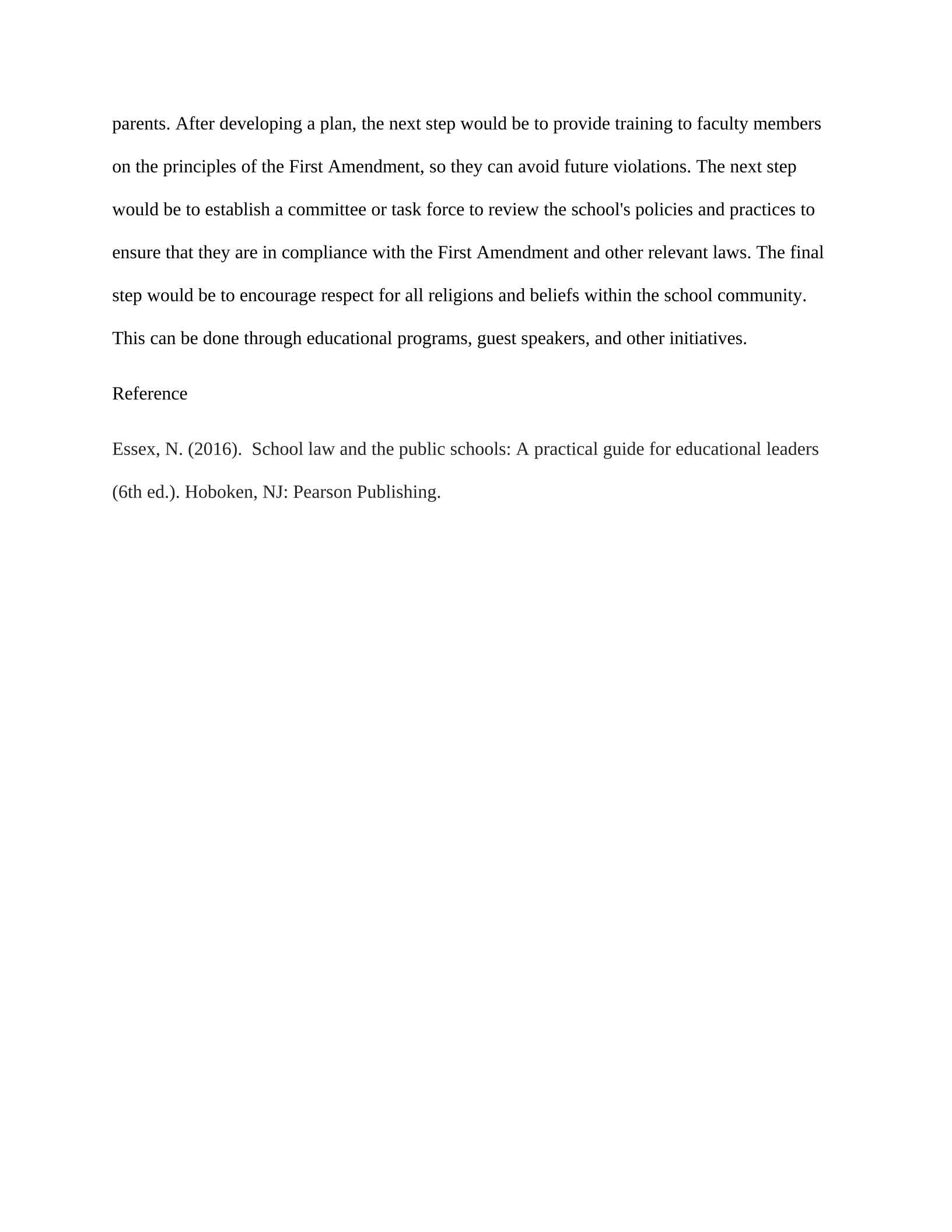
parents. After developing a plan, the next step would be to provide training to faculty members
on the principles of the First Amendment, so they can avoid future violations. The next step
would be to establish a committee or task force to review the school's policies and practices to
ensure that they are in compliance with the First Amendment and other relevant laws. The final
step would be to encourage respect for all religions and beliefs within the school community.
This can be done through educational programs, guest speakers, and other initiatives.
Reference
Essex, N. (2016).0 School law and the public schools: A practical guide for educational leaders
(6th ed.). Hoboken, NJ: Pearson Publishing.
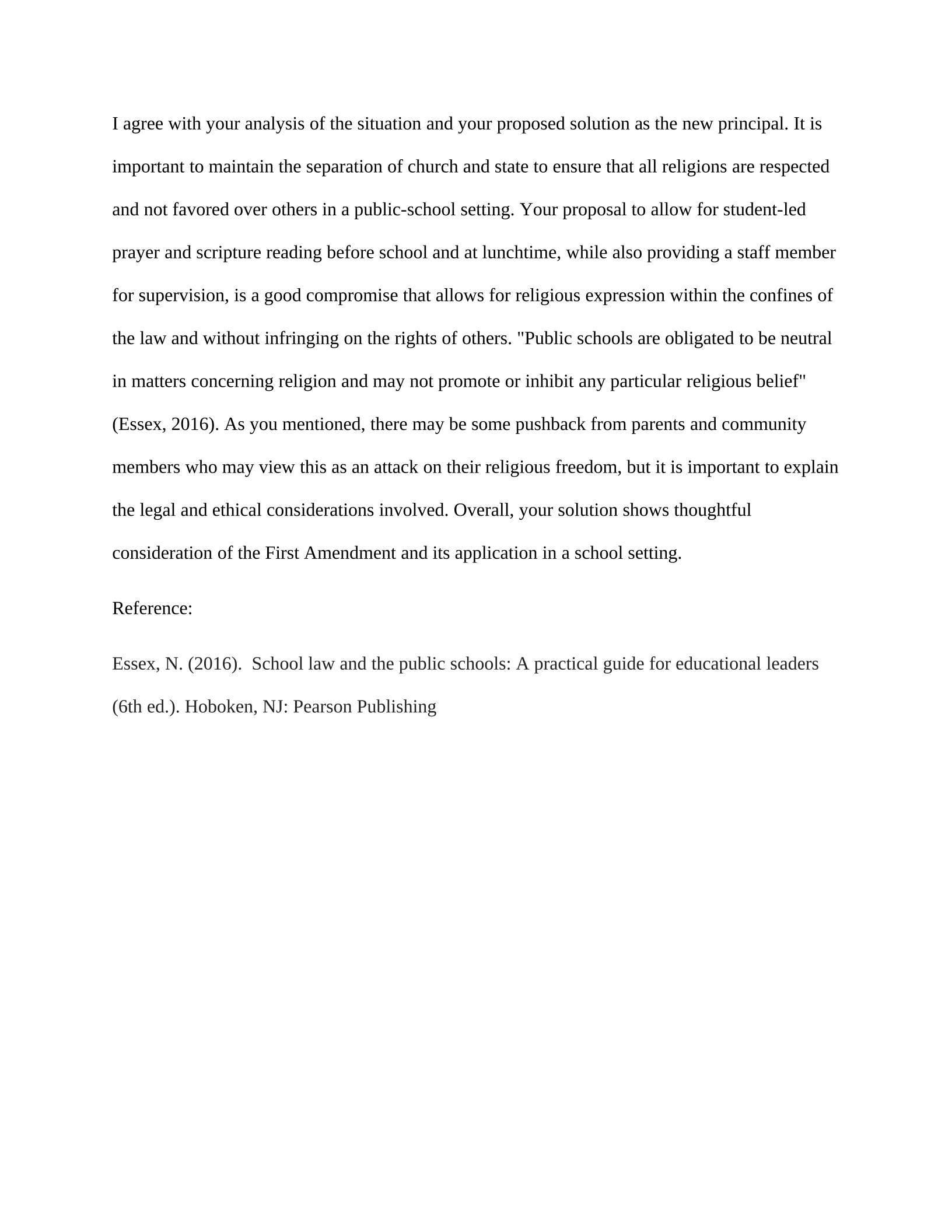
I agree with your analysis of the situation and your proposed solution as the new principal. It is
important to maintain the separation of church and state to ensure that all religions are respected
and not favored over others in a public-school setting. Your proposal to allow for student-led
prayer and scripture reading before school and at lunchtime, while also providing a staff member
for supervision, is a good compromise that allows for religious expression within the confines of
the law and without infringing on the rights of others. "Public schools are obligated to be neutral
in matters concerning religion and may not promote or inhibit any particular religious belief"
(Essex, 2016). As you mentioned, there may be some pushback from parents and community
members who may view this as an attack on their religious freedom, but it is important to explain
the legal and ethical considerations involved. Overall, your solution shows thoughtful
consideration of the First Amendment and its application in a school setting.
Reference:
Essex, N. (2016).0 School law and the public schools: A practical guide for educational leaders
(6th ed.). Hoboken, NJ: Pearson Publishing
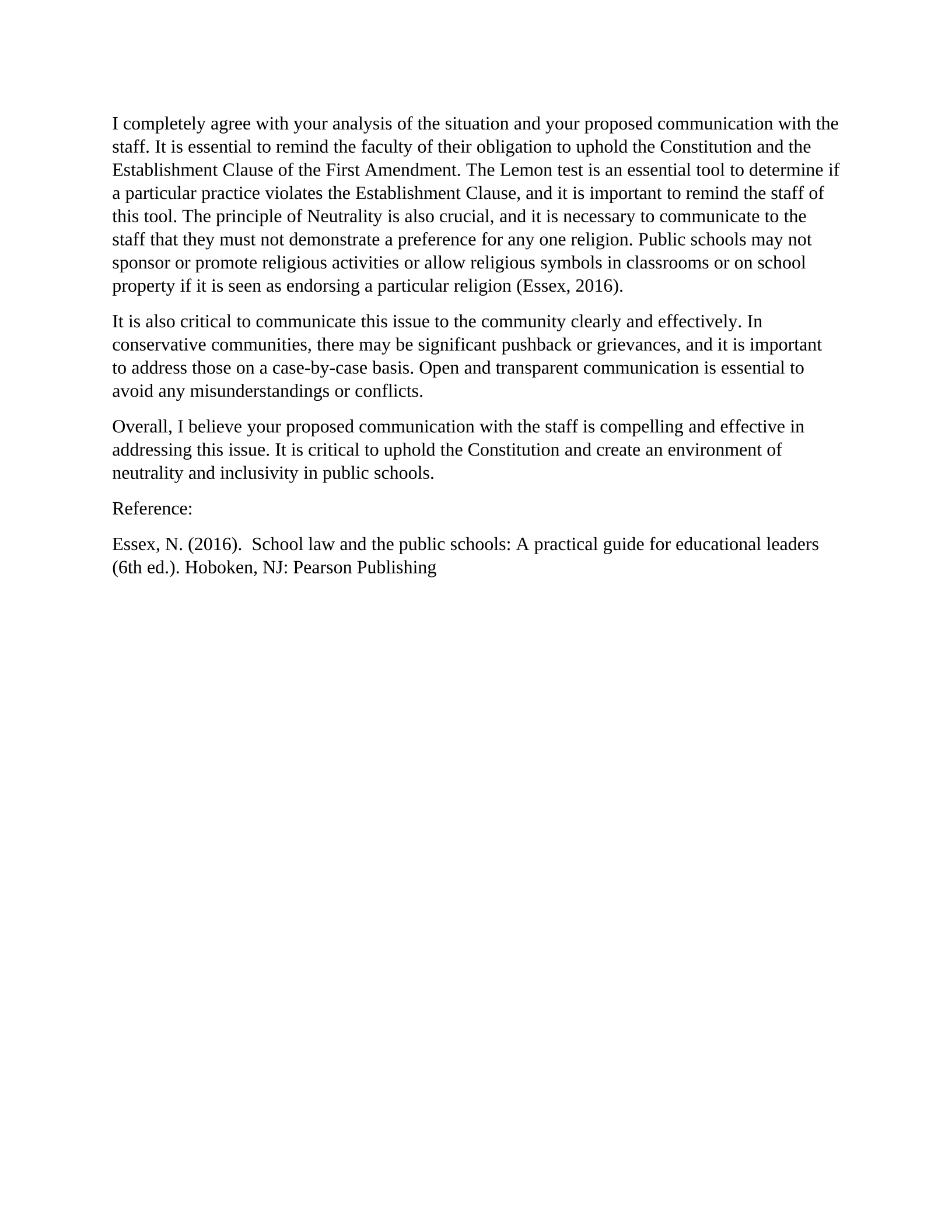
I completely agree with your analysis of the situation and your proposed communication with the
staff. It is essential to remind the faculty of their obligation to uphold the Constitution and the
Establishment Clause of the First Amendment. The Lemon test is an essential tool to determine if
a particular practice violates the Establishment Clause, and it is important to remind the staff of
this tool. The principle of Neutrality is also crucial, and it is necessary to communicate to the
staff that they must not demonstrate a preference for any one religion. Public schools may not
sponsor or promote religious activities or allow religious symbols in classrooms or on school
property if it is seen as endorsing a particular religion (Essex, 2016).
It is also critical to communicate this issue to the community clearly and effectively. In
conservative communities, there may be significant pushback or grievances, and it is important
to address those on a case-by-case basis. Open and transparent communication is essential to
avoid any misunderstandings or conflicts.
Overall, I believe your proposed communication with the staff is compelling and effective in
addressing this issue. It is critical to uphold the Constitution and create an environment of
neutrality and inclusivity in public schools.
Reference:
Essex, N. (2016).0 School law and the public schools: A practical guide for educational leaders
(6th ed.). Hoboken, NJ: Pearson Publishing
Powered by TCPDF (www.tcpdf.org)

