


1
Discussion Thread: Research Methods
Name
Institution
Date

2
A user-centered, iterative, and adaptable methodology is required to design a Christian
ethical decision application system for medical professionals. Our final pick is an Iterative
Design Approach, focusing on the Lean Startup Approach (LSA) after careful consideration,
analysis, and comparison of various techniques. The Waterfall Model is a common linear method
of software development that begins with the study of requirements and ends with the final
product being tested and released to the public (Aroral, 2021, p.91). However, it has a drawback
in that it must be done and go on from one level to the next without pausing. The space for user
input and iterative improvement could be much better. This rigidity could be better since our
project calls for a constantly evolving and improving system that considers user input.
Another formidable rival was the Agile approach, which heavily stresses flexibility and
adaptation. Agile is an approach that emphasizes communication with the client, frequent
iterations, and adaptability. It allows continuous user input and adjustments, which is essential to
the system's user-friendly design. While Agile's iterative approach to development has many
benefits, its lack of systematic planning may lead to less organized development and a longer
project timeline. In light of these other approaches, I feel resident in our choice to use the Lean
Startup Approach (LSA) inside the Iterative Design Approach for this project. According to
Chengbin et al. (2022), the LSA encourages frequent user input and rapid prototype iteration.
The project calls for a flexible decision support system that can be tailored to meet the needs of
various healthcare providers, and the iterative nature of this approach allows for just that.
While beginning with the research problem, this section explains the Iterative Design
Method that uses LSA. After that, a comprehensive literature study is performed to learn about
prior research and find holes. After that, user studies are conducted to glean relevant information
for creating the prototype. Users comment on this first version of the product, which is used to

3
develop the product further. Iteratively creating, testing, and refining is done until the desired
result is achieved.
Nussbaumer et al. (2023), who laid forth a strategy for incorporating ethics-by-design
into decision support systems, are another source of motivation for our effort (pp.34-55). By
taking such a holistic approach, I can ensure that ethical factors are considered at every stage of
the system's lifecycle. This aligns with the moral principles I want to follow through the creation
of a decision-support system tailored to the medical community's needs. Using this as a guide,
you may be certain that the final product will be both user-centric and web-based and firmly
rooted in Christian ethics.
The plan is to gather data from various sources, including published literature and
prototype user testing. The prototype's usefulness, usability, and ethical conformity may all be
enhanced via this input testing. In order to facilitate medical proffesionals interaction, simple
literature navigation, and feedback collection, most researchers propose using a web-based
application (Maramba et al., 2019, p.95). Since the system can be accessed from anywhere, it
attracts a larger audience and serves a wider variety of users. I will extensively test our prototype
utilizing real-world circumstances to confirm the system's reliability while making ethical
decisions. The prototype's capacity to deal with medical ethics problems will be evaluated this
way. They will also evaluate the system's ability to adapt to the specific needs of each user in a
given scenario.
After carefully considering options, I settled on a hybrid of the Iterative Design and Lean
Startup approaches because of their suitability to fit prototyping, continuous feedback
integration, and flexibility. Using this strategy, want to create a web-based Christian ethical

4
decision application system for medical professionals that considers each individual's values and
circumstances.

5
References
Aroral, H. K. (2021). Waterfall Process Operations in the Fast-paced World: Project
Management Exploratory Analysis. International Journal of Applied Business and
Management Studies, 6(1), 91-99.
Chengbin, W., Hongbin, W., Min, D., & Yongyan, F. (2022). Lean Startup Approaches (LSAs):
Convergence, Integration and Improvement. Technological Forecasting and Social
Change, 179, 121640.
Maramba, I., Chatterjee, A., & Newman, C. (2019). Methods of usability testing in the
development of eHealth applications: a scoping review. International journal of medical
informatics, 126, 95-104.
Nussbaumer, A., Pope, A., & Neville, K. (2023). A framework for applying ethics‐by‐design to
decision support systems for emergency management. Information Systems Journal,
33(1), 34-55.
6
Appendix
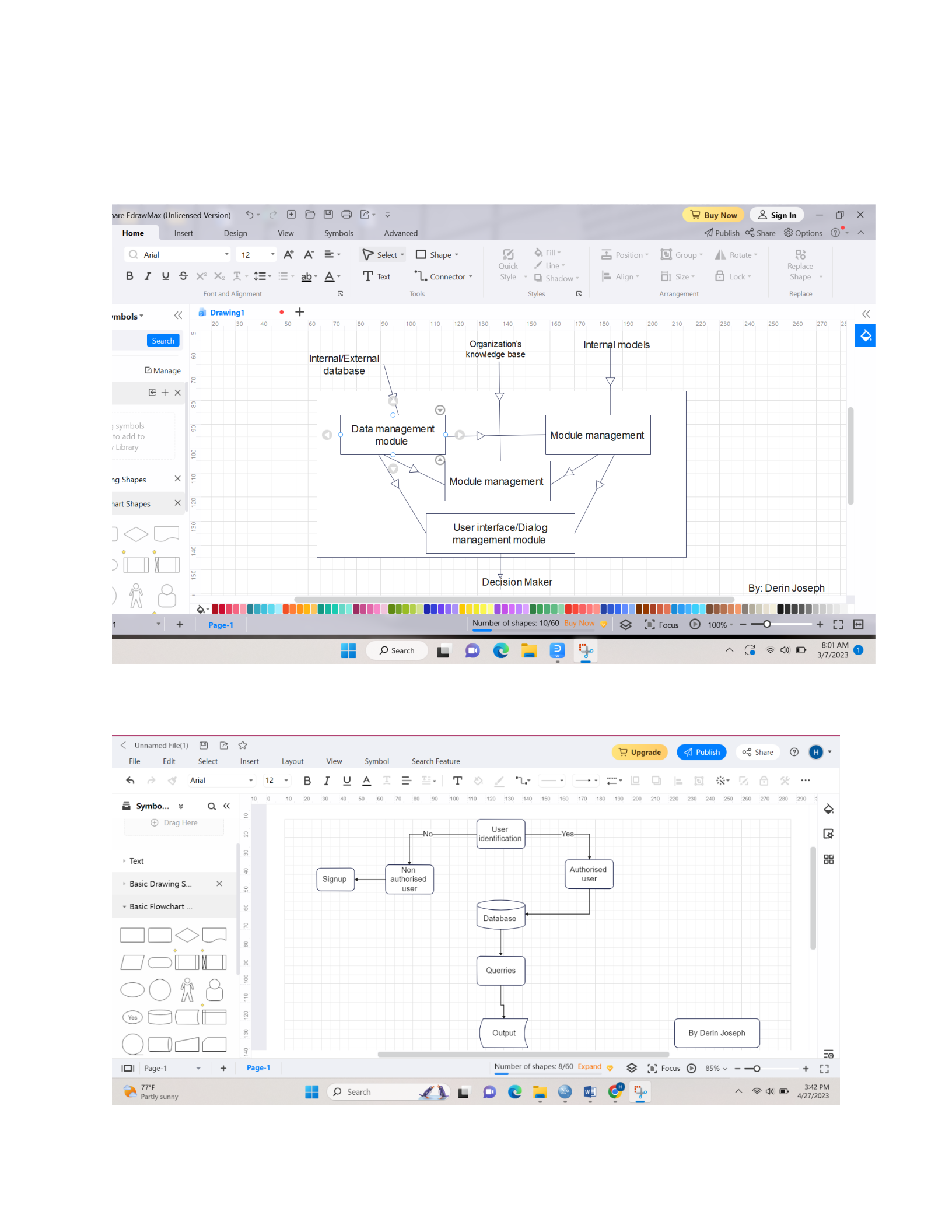
Figure 1: Class diagram
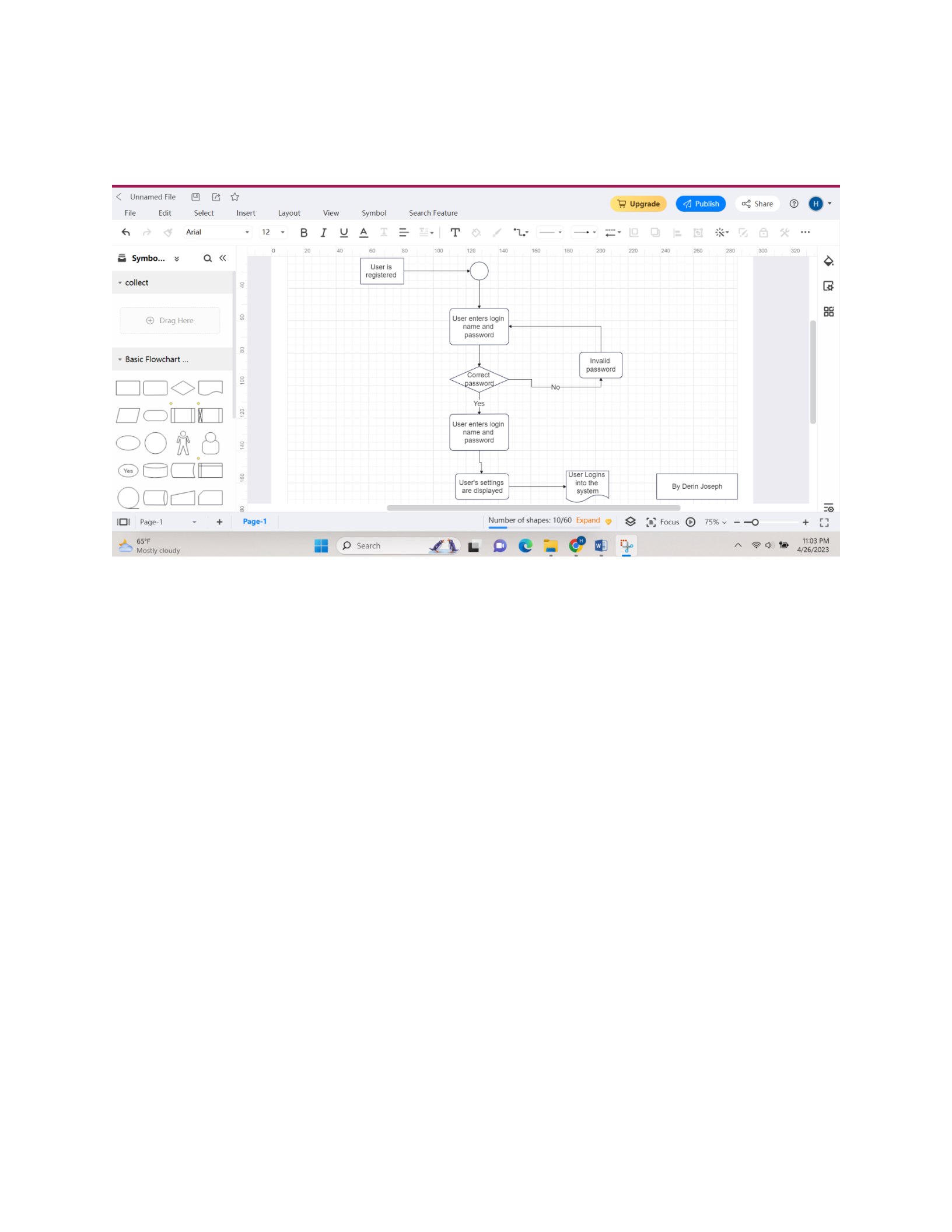
Figure 2: Activity diagram
o o
<
UnnamedFile @O
&B WY
oo
ae
©
@-
File
Edit
Select
Insert
Layout
View
Symbol
Search
Feature
4
Arial
~
2
+
BIUYA
So.
T
160
180
200
220
200 260 200 300
20
&
Symbo...
v
ak
»
collect
@
60
User
enters
login
name
and
password
@®
Drag
Here
~
Basic
Flowchart
...
COICISCI]
Oonom
COR
CG
SMC
Qnogg
IQ
Page-1 ~
+
Page-1
Number
of
shapes:
10/60
Expand
@
B]
{a}
Focus
@
75%v
—-—O
+
beneu@ny
a
eam
oom
Invalid
password
100
User
enters
login
name
and
password
User
Logins
Into
the
system
User's
settings
are
displayed
=6
ra
3
oor
Mostly cloudy
7
Figure 3: Use case diagram

