


Skip to Main Content
Quiz: Reliability and Validity
Due Sep 12, 2021 at 11:59pm Points 25 Questions 20
Time Limit 60 Minutes
This quiz is no longer available as the course has been concluded.
Attempt History
Attempt Time Score
LATEST Attempt 1 20 minutes 25 out of 25
Correct answers are hidden.
Score for this quiz: 25 out of 25
Submitted Sep 11, 2021 at 4:48pm
This attempt took 20 minutes.
1.25 / 1.25 pts
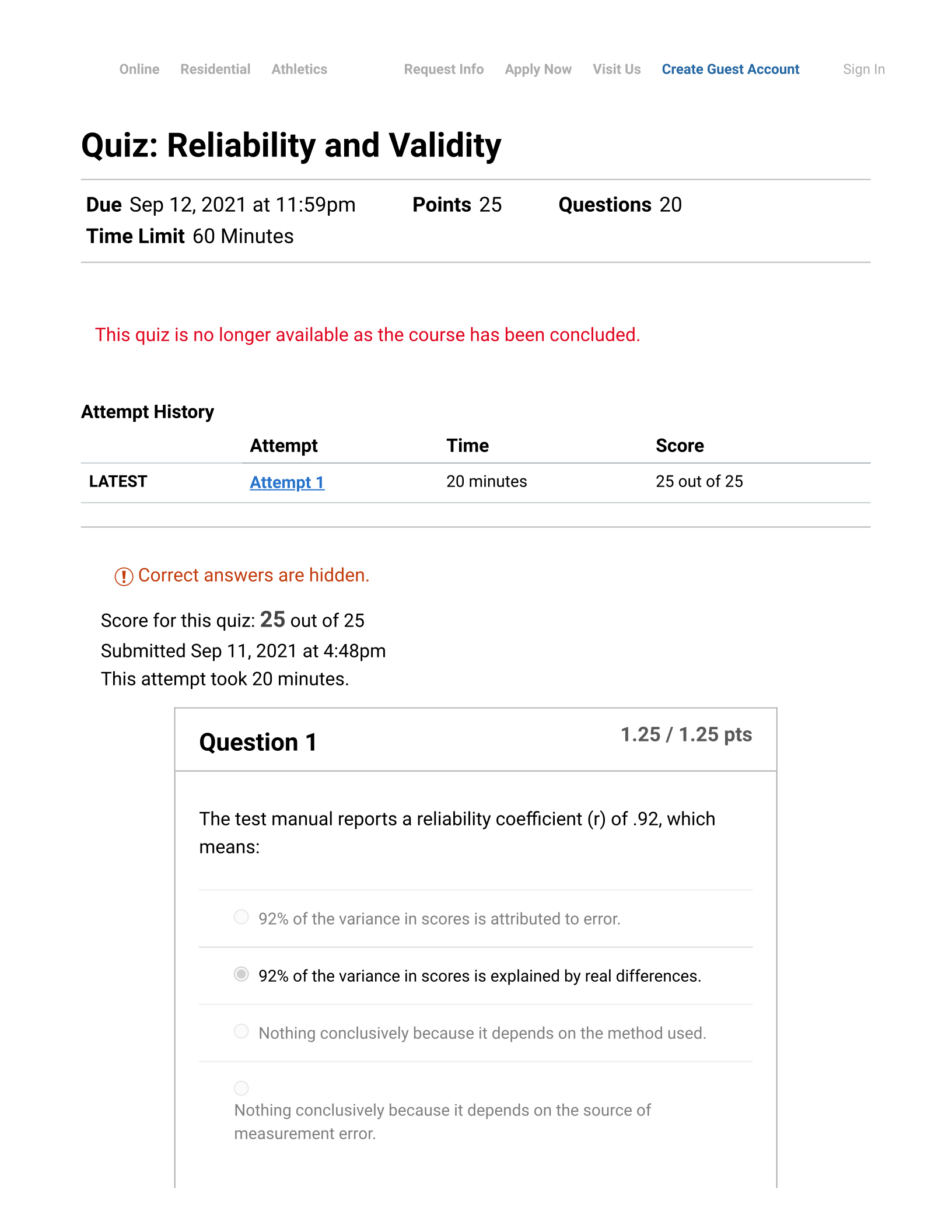
Question 1
The test manual reports a reliability coecient (r) of .92, which
means:
92% of the variance in scores is attributed to error.
92% of the variance in scores is explained by real differences.
Nothing conclusively because it depends on the method used.
Nothing conclusively because it depends on the source of
measurement error.
Online
Residential
Athletics
Sign InRequest Info Apply Now Visit Us Create Guest Account
1.25 / 1.25 pts
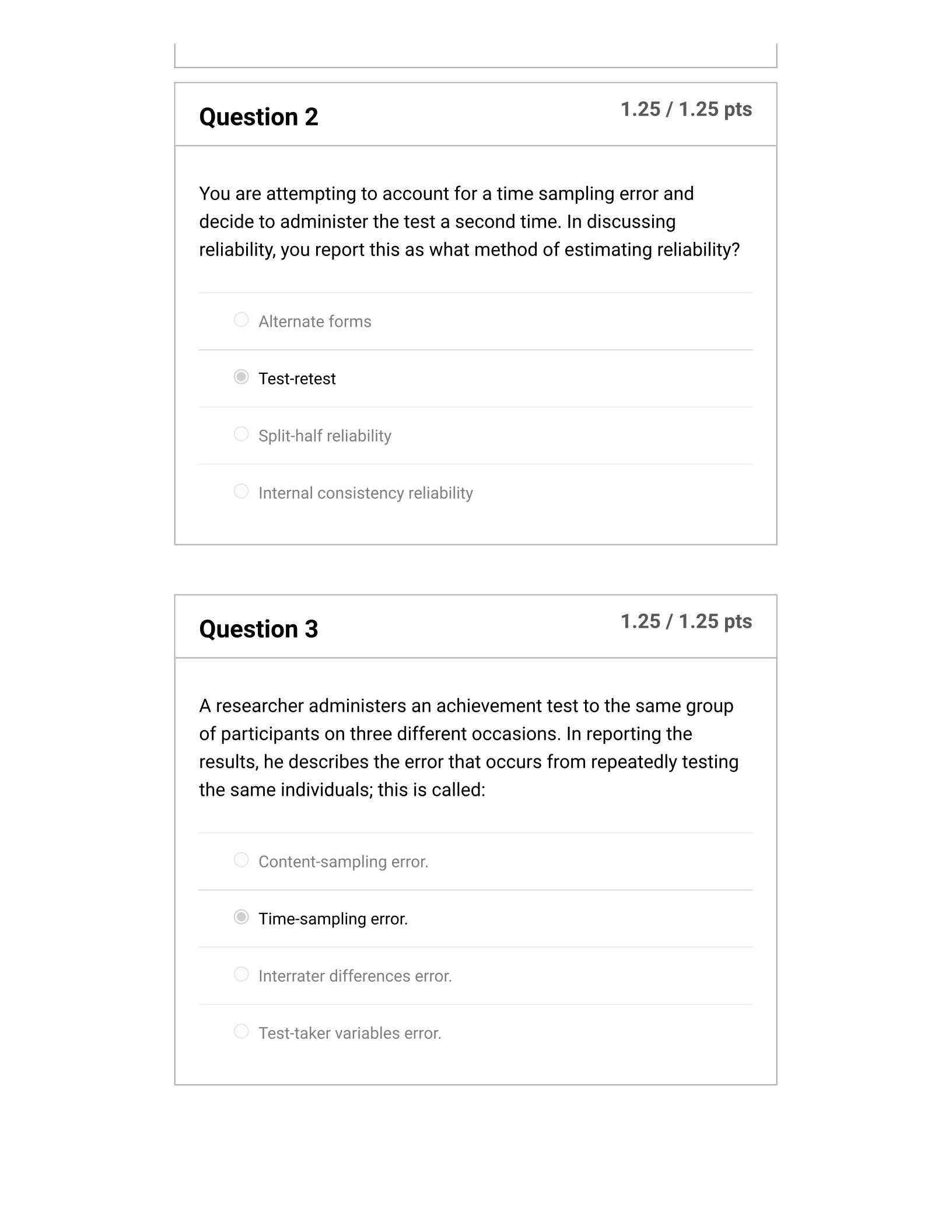
Question 2
You are attempting to account for a time sampling error and
decide to administer the test a second time. In discussing
reliability, you report this as what method of estimating reliability?
Alternate forms
Test-retest
Split-half reliability
Internal consistency reliability
1.25 / 1.25 pts
Question 3
A researcher administers an achievement test to the same group
of participants on three different occasions. In reporting the
results, he describes the error that occurs from repeatedly testing
the same individuals; this is called:
Content-sampling error.
Time-sampling error.
Interrater differences error.
Test-taker variables error.
1.25 / 1.25 pts
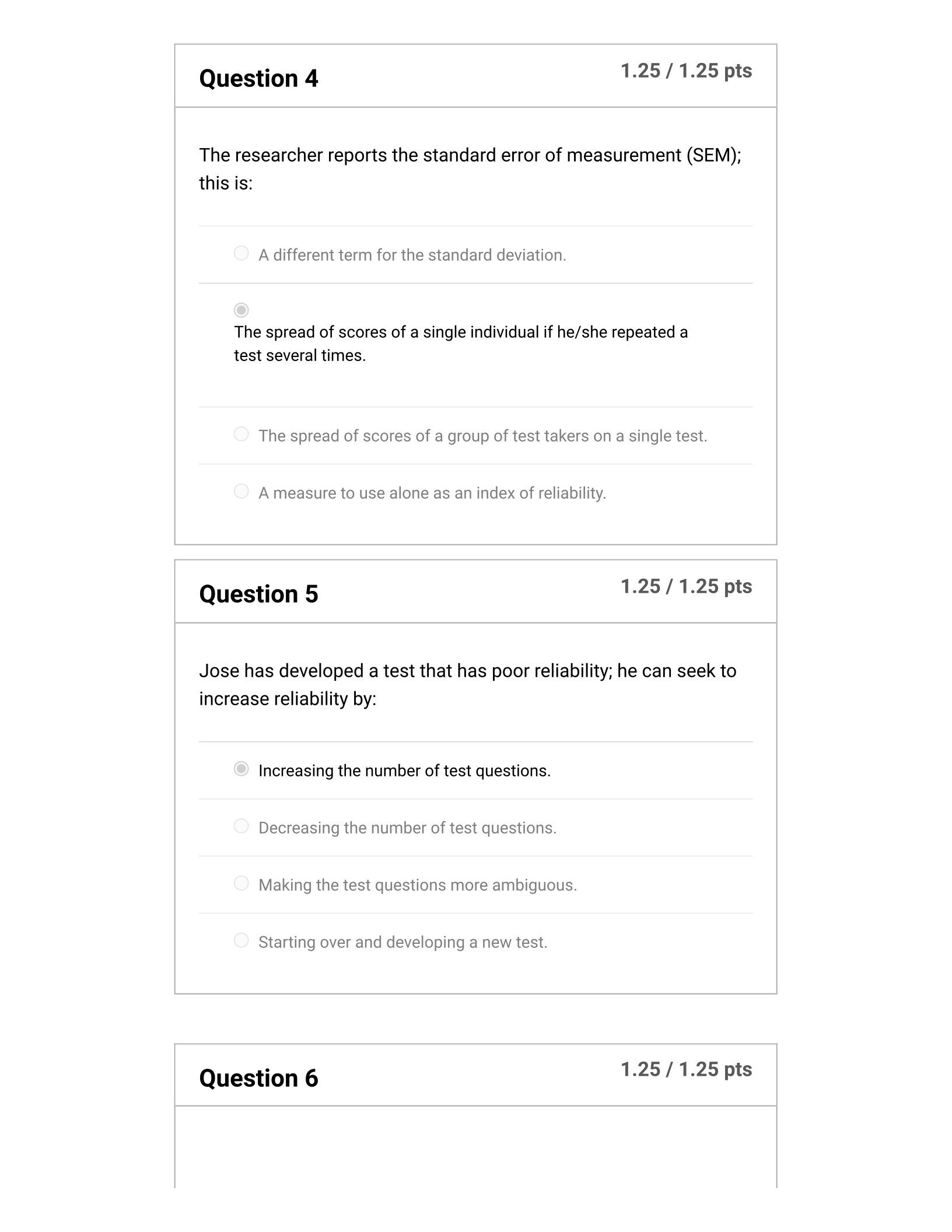
Question 4
The researcher reports the standard error of measurement (SEM);
this is:
A different term for the standard deviation.
The spread of scores of a single individual if he/she repeated a
test several times.
The spread of scores of a group of test takers on a single test.
A measure to use alone as an index of reliability.
1.25 / 1.25 pts
Question 5
Jose has developed a test that has poor reliability; he can seek to
increase reliability by:
Increasing the number of test questions.
Decreasing the number of test questions.
Making the test questions more ambiguous.
Starting over and developing a new test.
1.25 / 1.25 pts
Question 6
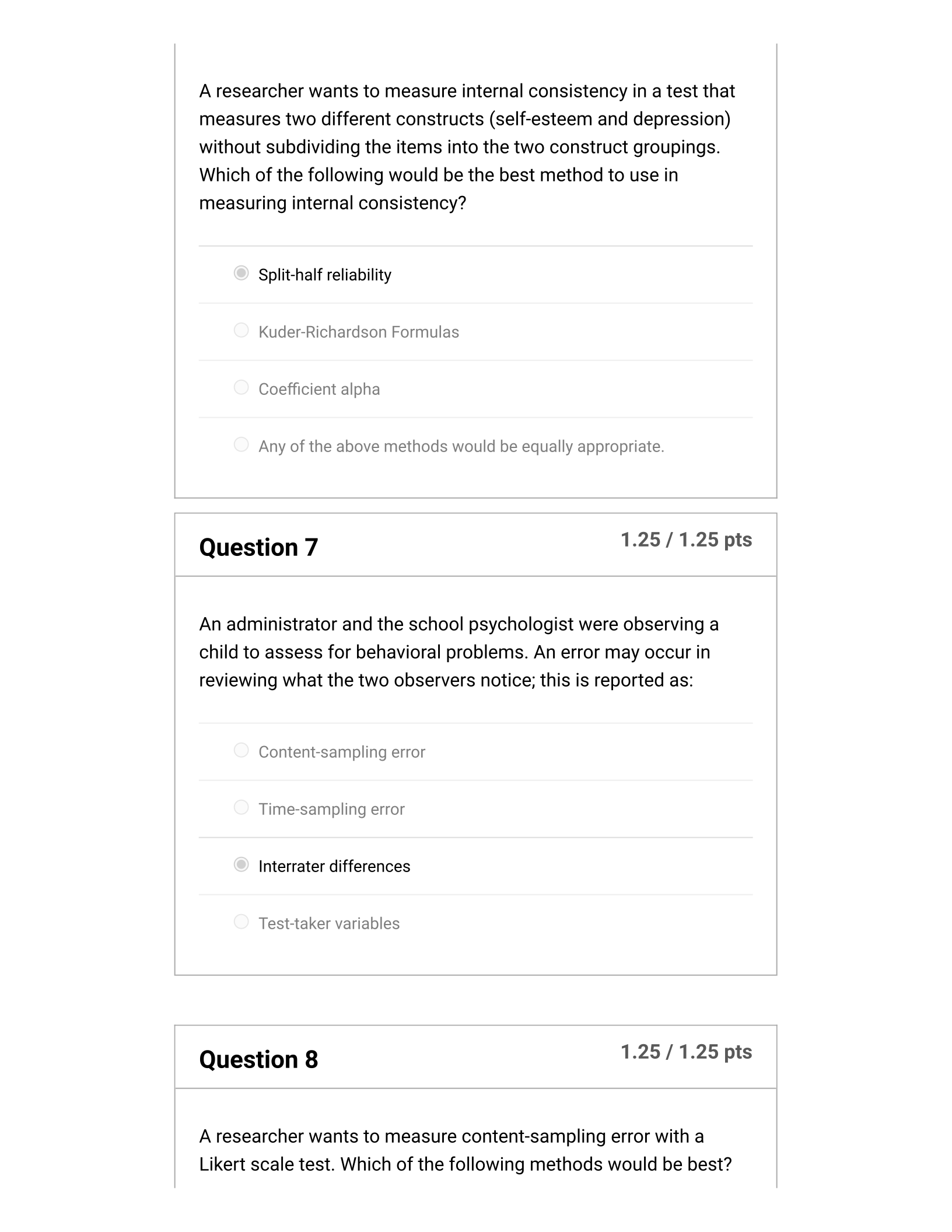
A researcher wants to measure internal consistency in a test that
measures two different constructs (self-esteem and depression)
without subdividing the items into the two construct groupings.
Which of the following would be the best method to use in
measuring internal consistency?
Split-half reliability
Kuder-Richardson Formulas
Coecient alpha
Any of the above methods would be equally appropriate.
1.25 / 1.25 pts
Question 7
An administrator and the school psychologist were observing a
child to assess for behavioral problems. An error may occur in
reviewing what the two observers notice; this is reported as:
Content-sampling error
Time-sampling error
Interrater differences
Test-taker variables
1.25 / 1.25 pts
Question 8
A researcher wants to measure content-sampling error with a
Likert scale test. Which of the following methods would be best?
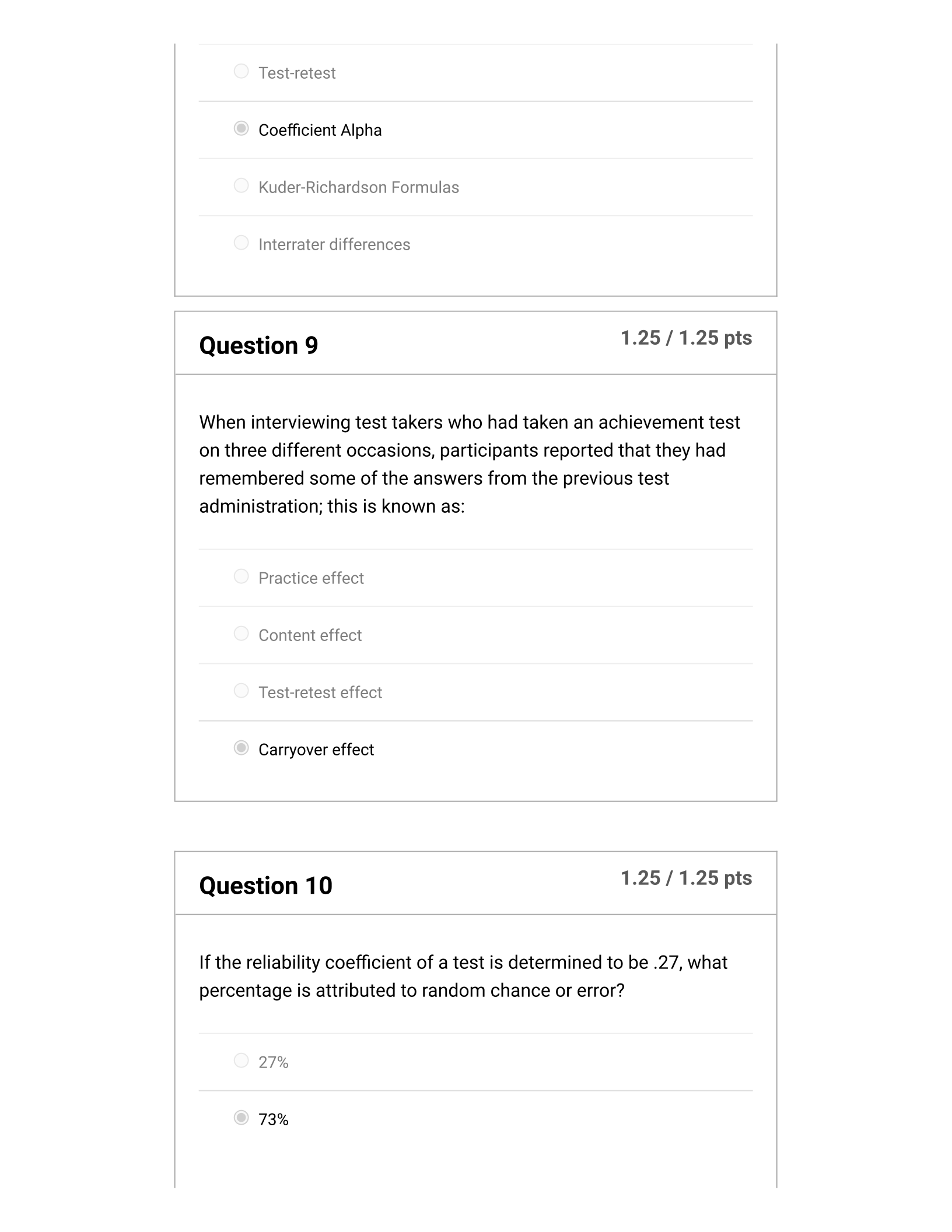
Test-retest
Coecient Alpha
Kuder-Richardson Formulas
Interrater differences
1.25 / 1.25 pts
Question 9
When interviewing test takers who had taken an achievement test
on three different occasions, participants reported that they had
remembered some of the answers from the previous test
administration; this is known as:
Practice effect
Content effect
Test-retest effect
Carryover effect
1.25 / 1.25 pts
Question 10
If the reliability coecient of a test is determined to be .27, what
percentage is attributed to random chance or error?
27%
73%
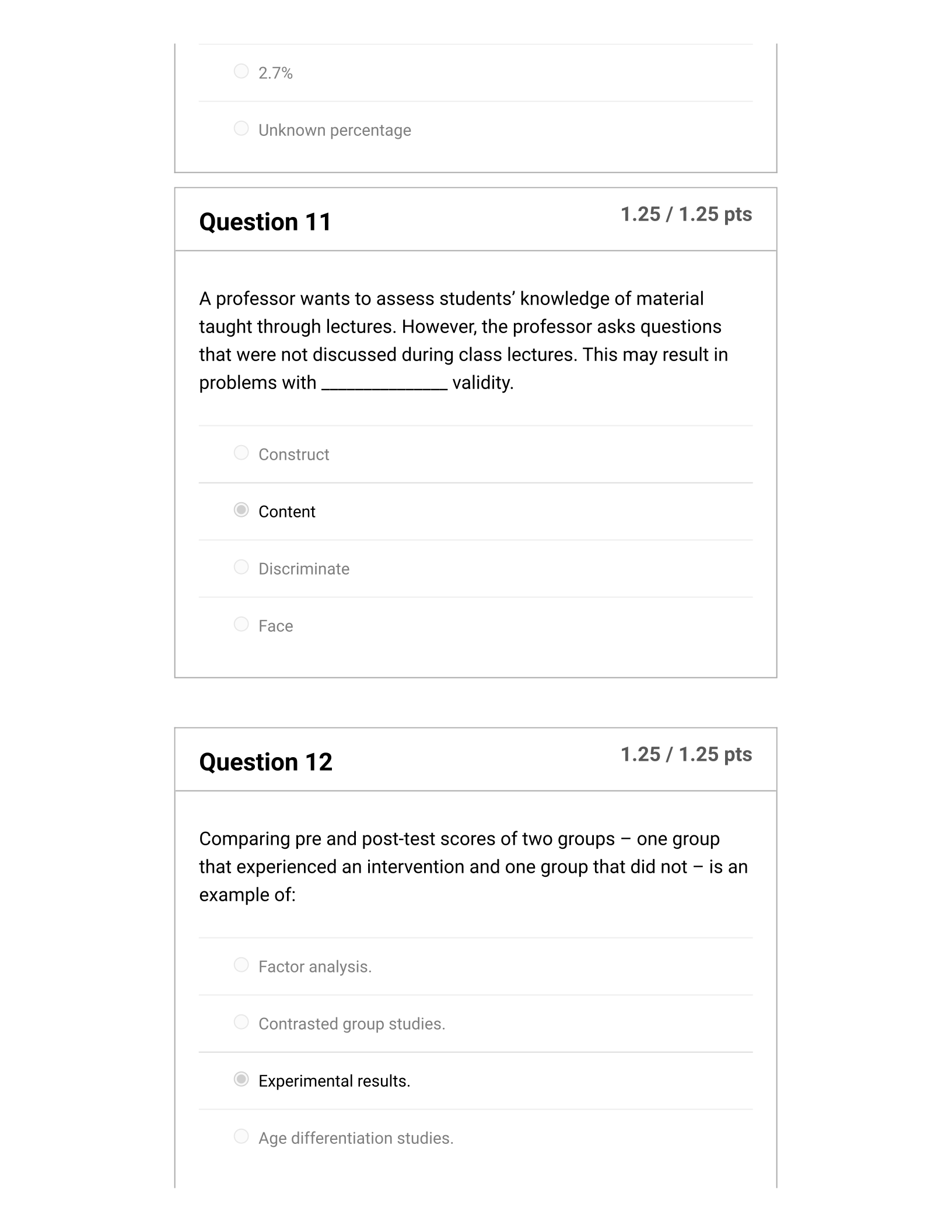
2.7%
Unknown percentage
1.25 / 1.25 pts
Question 11
A professor wants to assess students’ knowledge of material
taught through lectures. However, the professor asks questions
that were not discussed during class lectures. This may result in
problems with _______________ validity.
Construct
Content
Discriminate
Face
1.25 / 1.25 pts
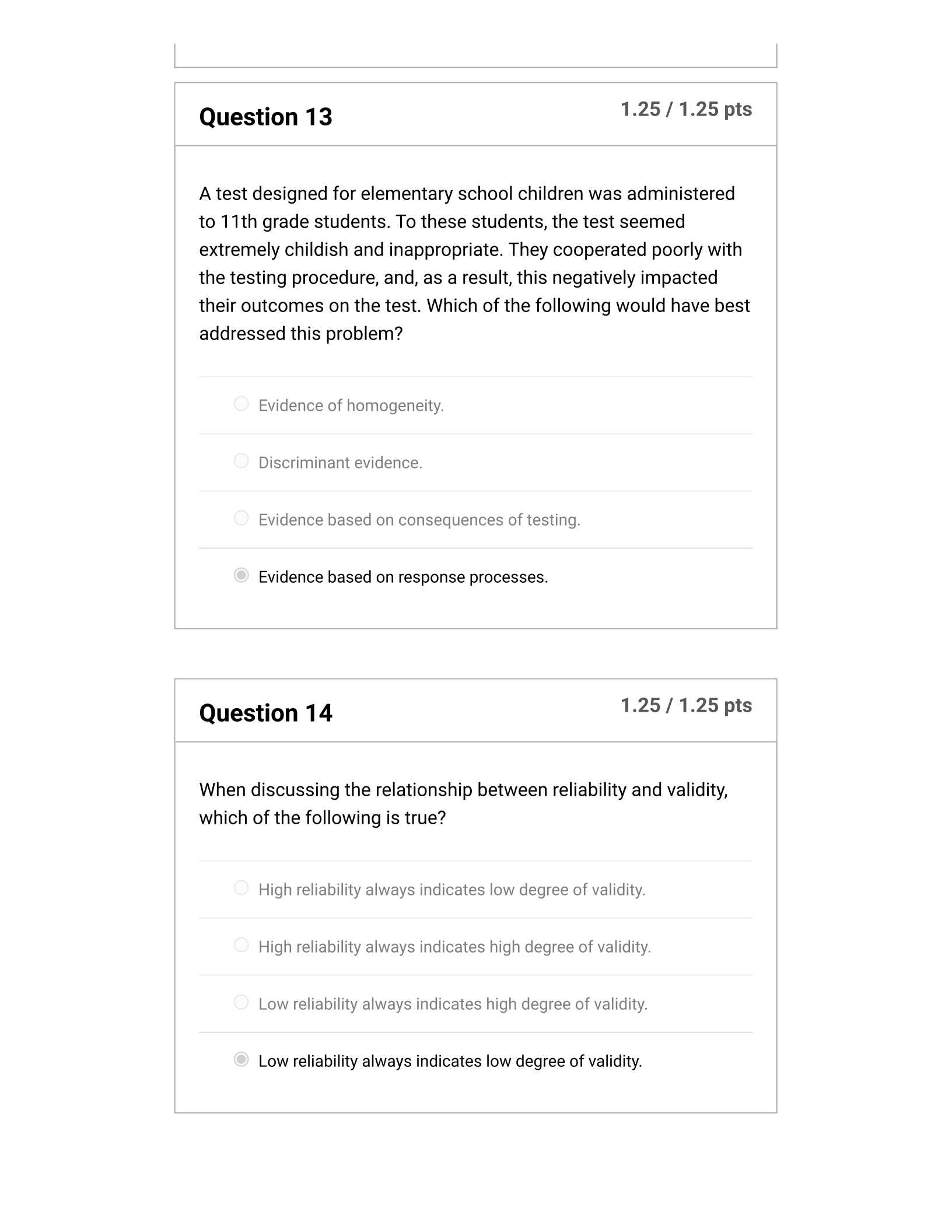
Question 12
Comparing pre and post-test scores of two groups – one group
that experienced an intervention and one group that did not – is an
example of:
Factor analysis.
Contrasted group studies.
Experimental results.
Age differentiation studies.
1.25 / 1.25 pts
Question 13
A test designed for elementary school children was administered
to 11th grade students. To these students, the test seemed
extremely childish and inappropriate. They cooperated poorly with
the testing procedure, and, as a result, this negatively impacted
their outcomes on the test. Which of the following would have best
addressed this problem?
Evidence of homogeneity.
Discriminant evidence.
Evidence based on consequences of testing.
Evidence based on response processes.
1.25 / 1.25 pts
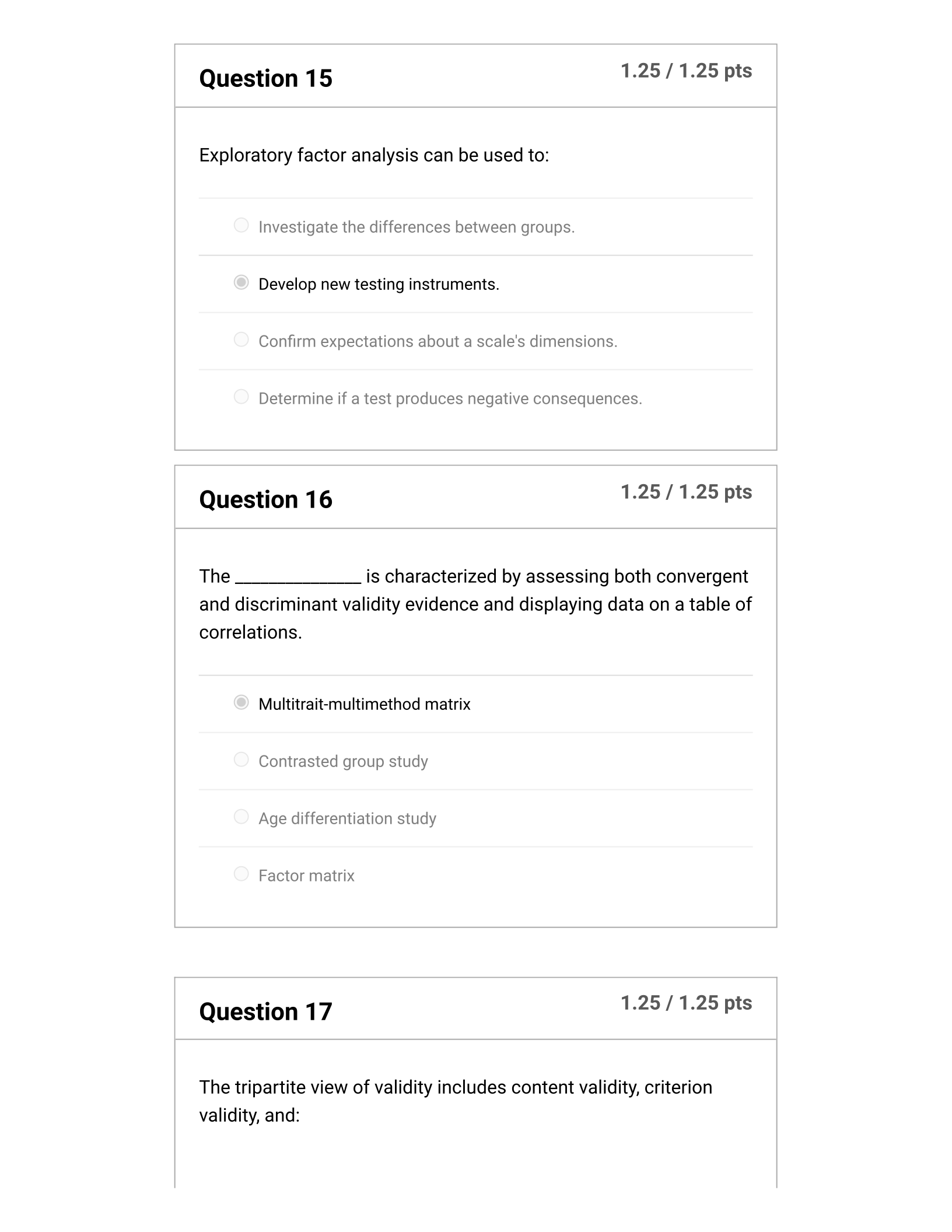
Question 14
When discussing the relationship between reliability and validity,
which of the following is true?
High reliability always indicates low degree of validity.
High reliability always indicates high degree of validity.
Low reliability always indicates high degree of validity.
Low reliability always indicates low degree of validity.
1.25 / 1.25 pts
Question 15
Exploratory factor analysis can be used to:
Investigate the differences between groups.
Develop new testing instruments.
Conrm expectations about a scale's dimensions.
Determine if a test produces negative consequences.
1.25 / 1.25 pts
Question 16
The _______________ is characterized by assessing both convergent
and discriminant validity evidence and displaying data on a table of
correlations.
Multitrait-multimethod matrix
Contrasted group study
Age differentiation study
Factor matrix
1.25 / 1.25 pts
Question 17
The tripartite view of validity includes content validity, criterion
validity, and:
Discriminate validity
Convergent validity
Content validity
Construct validity
1.25 / 1.25 pts
Question 18
Validity coecients greater than __________ are considered in the
very high range.
.50
.60
.70
.80
1.25 / 1.25 pts
Question 19
_______________ is a threat to validity that implies that a test is too
narrow and fails to include important dimensions or aspects of the
identied construct.
Content underrepresentation
Content-irrelevant variance
Construct underrepresentation
Construct-irrelevant variance
1.25 / 1.25 pts
Question 20
_______________ are concepts, ideas, or hypotheses that cannot be
directly measured or observed.
Constructs
Variables
Standards
Specications
Quiz Score: 25 out of 25

