



Chapter 1: Helping as a Personal Journey
Becoming a Reflective Practitioner
- Reflective practitioner – you make a commitment to a personal
awareness of your automatic reactions and prejudices by taking
time to think back on these reactions and perhaps to record them
in a journal or discuss with a supervisor or colleague
oOne who examines supervision sessions with a
knowledgeable mentor rather than making excuses or
blaming others
oHaving the courage to ask for feedback from others and to
ask for it from others, and then reflecting
oWays to be proactive: reflecting on your practice, developing
a support group of fellow learners, becoming a client
yourself, and keeping a personal journal
- Reflection in Action – applying insights gained in reflection to real
problems and real situations
oDonald A. Schön
What is Helping?
- Helping – encompasses all the activities we use to assist another
person
- Psychological Helping –
- Situational Interviewing – the interviewee is placed in a situation to
see how they react
What Are Counseling and Psychotherapy?
- Psychotherapy – the process of helping clients who were troubled
with mental disorders
oMental disorders – severe disturbances of mood, thought,
and behavior for which there are specific diagnostic criteria

- Counseling – psychotherapy for “normal people”
ouse assessment tools, learn diagnostic methods, and engage
in treatment planning
- Coaching – allows individuals without therapeutic degrees to
practice professional helping
o“Developmental process whereby an individual meets on a
regular basis to clarify goals, deal with potential stumbling
blocks, and improve their performance. It is an intervention
that is highly personable and generally involves a one-to-one
relationship between a coach and client.”
Challenges You Will Face in Learning the Art of Helping (pg. 14)
- Development
oTime-honored hierarchy – based on the fact that to learn a
trade, you must go through stages as experience and
knowledge develop under supervision
Naivette
Novice
Initiate
Apprentice
Experienced Helper
Expert
Master Therapist
oPerry’s Three Stages
Dualistic
Characterized by the belief that a helper’s
responses are either right or wrong
Multiplistic
Becomes comfortable in the knowledge that there are
multiple answers, and all interventions and techniques
seem equally appropriate
Relativistic
You will recognize that although many types of
responses may be appropriate, depending on
2

circumstances, some are more efficient than
others
You will understand that your choice of responses
will have specific repercussions
- Arnold Lazarus
oFounder of multimodal theory
oTraining can sometimes undermine our native talents
- Pimum non nocere – do no harm
Characteristics of an Effective Helper
- Positive, accepting view of other people
oBelieves people have the desire to change
oMust be able to communicate this genuine nonjudgemental
attitude as well as warmth and caring
- Good self-esteem and is a secure and mentally healthy person
- Good self-care skills
- Creative an intellectually competent
oJ. L. Moreno
Founder of psychodrama
Believed the most necessary quality for a group leader
was courage
- The fifth characteristic has two facets:
oMust be able to listen unflinchingly to stories of great pain
oThe job requires risk taking and action, without the security
offered by other sciences
- Remember two things:
oMany of the characteristics can be developed
oEach person brings unique characteristics to the helping
profession
The Nuts and Bolts of Helping
- One conceptual framework that may help to see the small pieces
into a bigger puzzle is understanding that these are fundamentally
3

effective because they evoke common therapeutic factors (mega-
skills)
- Jerome Frank described six common therapeutic factors that seem
to cut across therapeutic persuasion
oMaintaining a strong helper/client relationship
oIncreasing the client’s motivation and expectations of help
oEnhancing the client’s sense of self-esteem, mastery or
efficacy
oProviding new learning experiences
oRaising emotional arousal and promoting emotional
expression
oProviding opportunities to practice new behaviors
Therapeutic Building Blocks
- The basic helping skills
- Most fundamental components of the helping interview
- Invitational Skills:
oNonverbal skills
oOpening skills
oReflecting skills
oAdvanced reflecting skills
oChallenging skills
oGoal-setting skills
- Reflecting Skills
oAdvanced reflecting skills
Reflecting meaning and summarizing
- Challenging Skills
oIdentify incongruities in a client’s story and give information
on client strengths and weakness
oGiving feedback and confrontation
- Goal-setting Skills
oQuestions to identify a goal or boiling down the problem
- Change Techniques
4
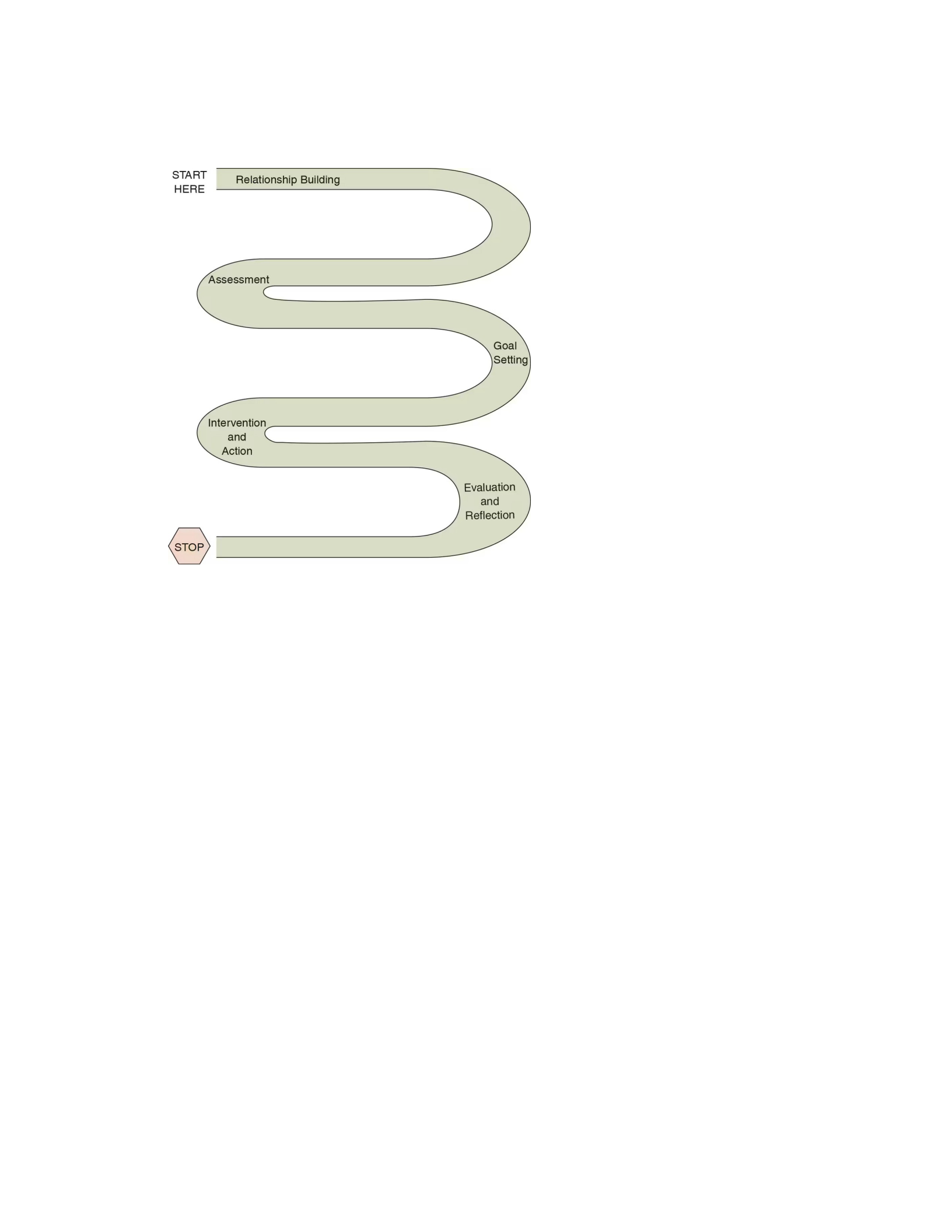
oInterventions designed to help the client achieve a goal that
has been identified using goal-setting skills
The Roadmap of the Helping Process
5

