


Quiz: Quantitative Analysis
Points 30
Questions 15
Time Limit 60 Minutes
Question 1
1.5 / 1.5 pts
The use of multiple methods to study one research question is
Mixated methods
Matched methods
Triangulation
Tripulation
Question 2
1.5 / 1.5 pts
Combining qualitative and quantitative methods within one research project
can strengthen the project's design by
Enhancing measurement reliability
Enhancing causal validity
Disproving authenticity
Disproving nomothetic causal validity
Question 3
1.5 / 1.5 pts
Creswell and Plano Clark (2011) suggest that the unique feature of a
transformative design is
That it uses a practical perspective with a social justice focus
That it uses a theoretical perspective with a social justice focus
When it improves the well-being of well-off populations
All of the above
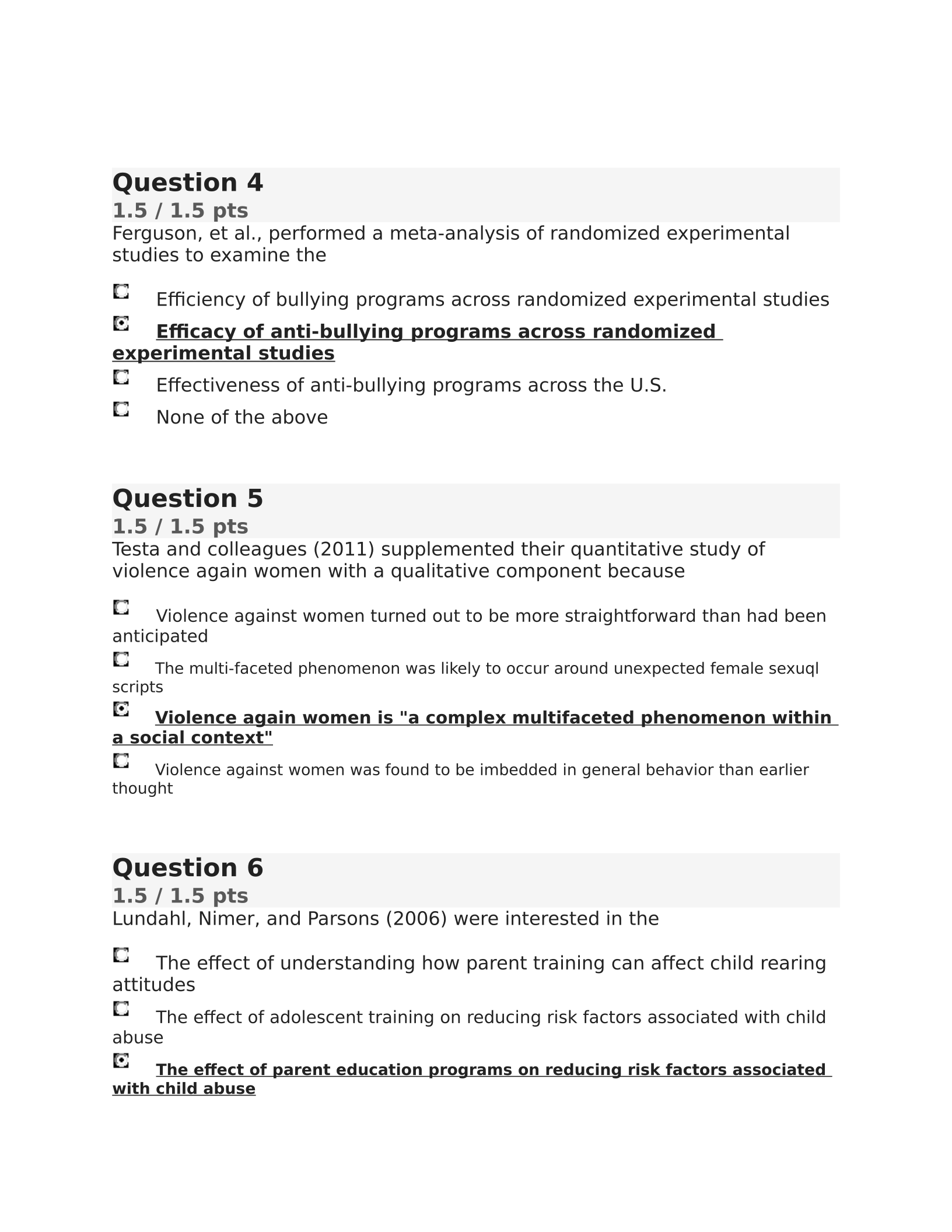
Question 4
1.5 / 1.5 pts
Ferguson, et al., performed a meta-analysis of randomized experimental
studies to examine the
Efficiency of bullying programs across randomized experimental studies
Efficacy of anti-bullying programs across randomized
experimental studies
Effectiveness of anti-bullying programs across the U.S.
None of the above
Question 5
1.5 / 1.5 pts
Testa and colleagues (2011) supplemented their quantitative study of
violence again women with a qualitative component because
Violence against women turned out to be more straightforward than had been
anticipated
The multi-faceted phenomenon was likely to occur around unexpected female sexuql
scripts
Violence again women is "a complex multifaceted phenomenon within
a social context"
Violence against women was found to be imbedded in general behavior than earlier
thought
Question 6
1.5 / 1.5 pts
Lundahl, Nimer, and Parsons (2006) were interested in the
The effect of understanding how parent training can affect child rearing
attitudes
The effect of adolescent training on reducing risk factors associated with child
abuse
The effect of parent education programs on reducing risk factors associated
with child abuse

The effect of multi-child mixed families on abuse rates
Question 7
1.5 / 1.5 pts
This design uses the theoretical perspective with a social justice focus to
improve the well-being of vulnerable populations.
Embedded design
Transformative design
Exploratory sequential design
Multiphase design
Question 8
1.5 / 1.5 pts
One mark of a sophisticated researcher is the ability to
Integrate convergent techniques to a complex research question
Apply diverse techniques to address different aspects of a complex
research question
Use mental concepts to reflect exactly what we measured
Generalize beyond the cases actually studied
Question 9
1.5 / 1.5 pts
For his research, Homeroom Security, Aaron Kupchik (2010) used the
Multiphase design
Exploratory sequential design
Convergent parallel design
Embedded design
Question 10
1.5 / 1.5 pts
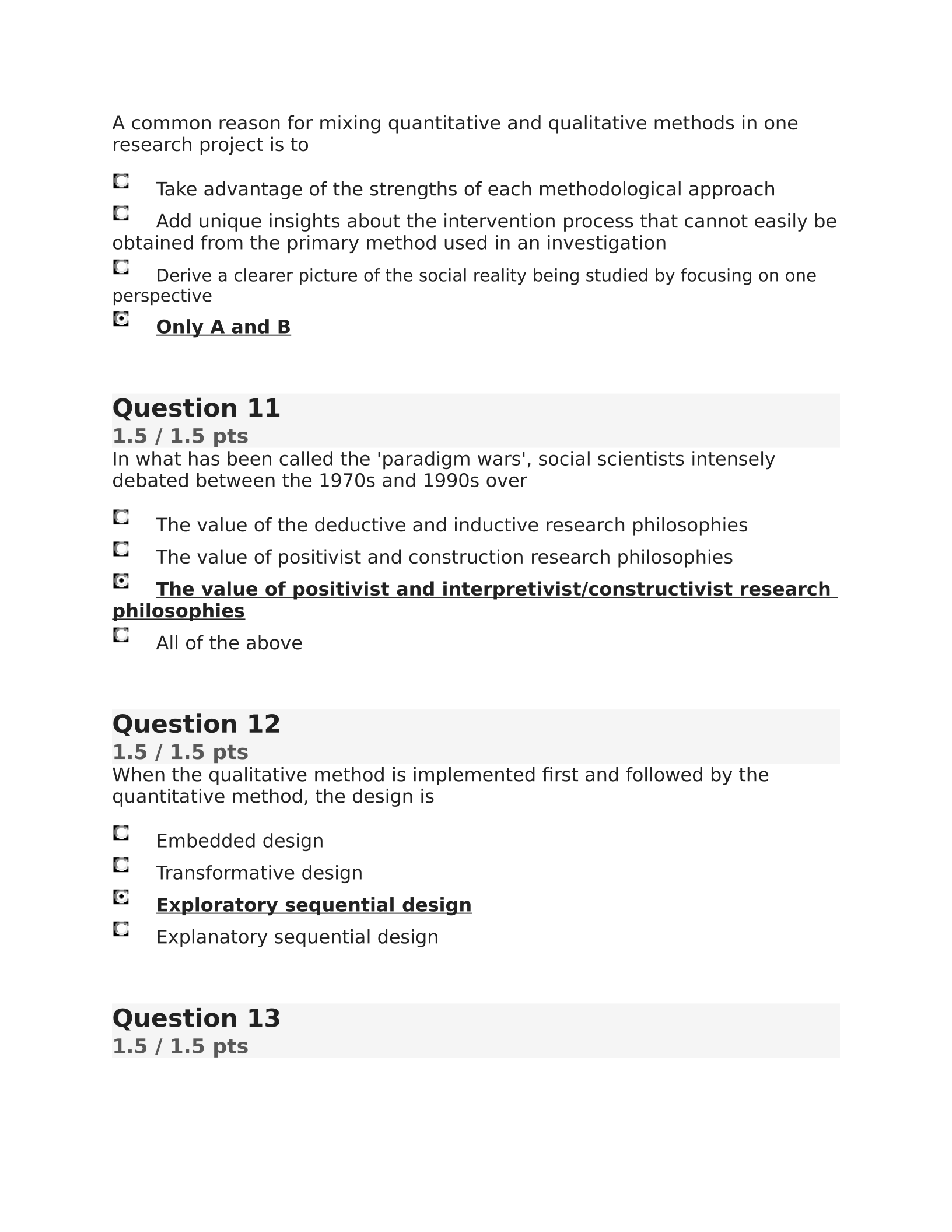
A common reason for mixing quantitative and qualitative methods in one
research project is to
Take advantage of the strengths of each methodological approach
Add unique insights about the intervention process that cannot easily be
obtained from the primary method used in an investigation
Derive a clearer picture of the social reality being studied by focusing on one
perspective
Only A and B
Question 11
1.5 / 1.5 pts
In what has been called the 'paradigm wars', social scientists intensely
debated between the 1970s and 1990s over
The value of the deductive and inductive research philosophies
The value of positivist and construction research philosophies
The value of positivist and interpretivist/constructivist research
philosophies
All of the above
Question 12
1.5 / 1.5 pts
When the qualitative method is implemented first and followed by the
quantitative method, the design is
Embedded design
Transformative design
Exploratory sequential design
Explanatory sequential design
Question 13
1.5 / 1.5 pts
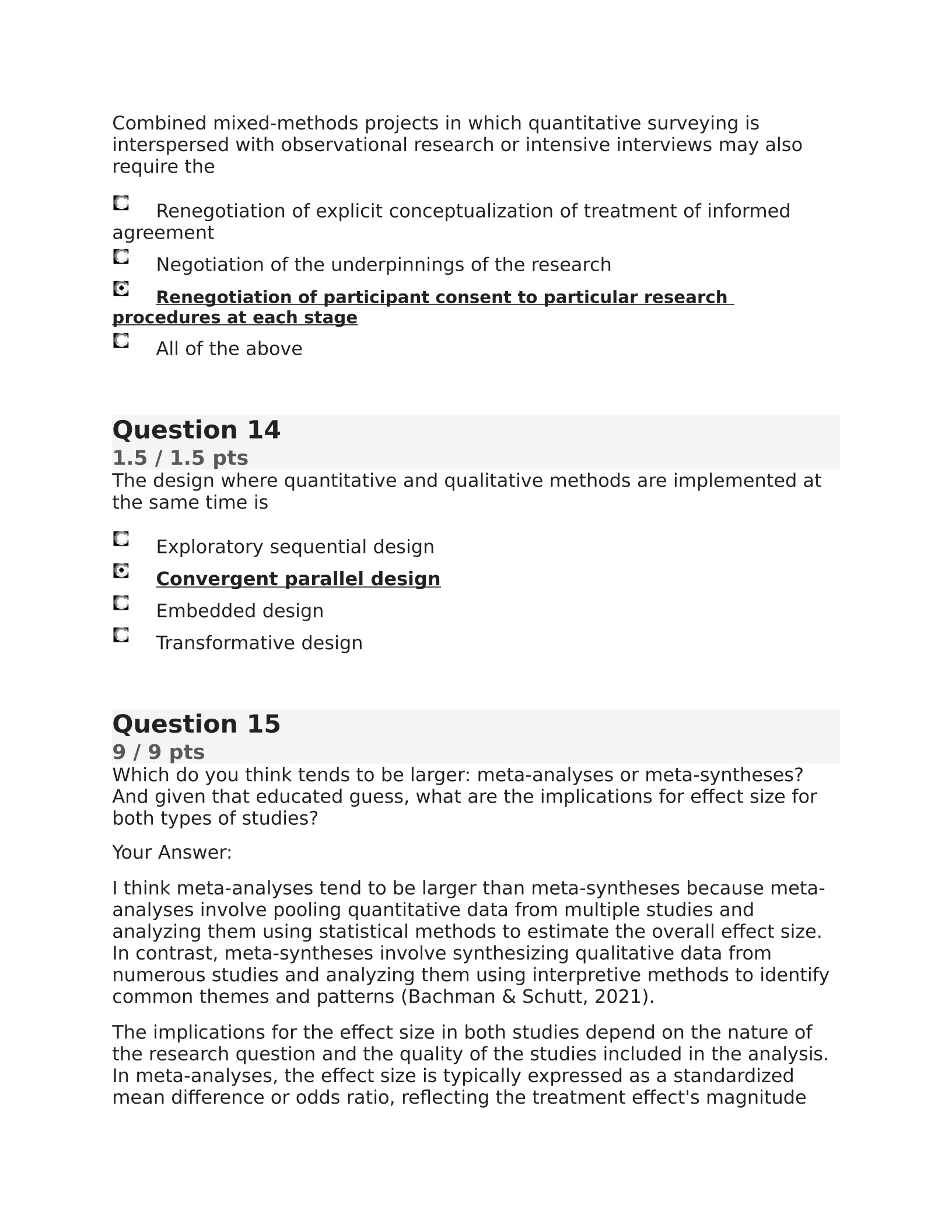
Combined mixed-methods projects in which quantitative surveying is
interspersed with observational research or intensive interviews may also
require the
Renegotiation of explicit conceptualization of treatment of informed
agreement
Negotiation of the underpinnings of the research
Renegotiation of participant consent to particular research
procedures at each stage
All of the above
Question 14
1.5 / 1.5 pts
The design where quantitative and qualitative methods are implemented at
the same time is
Exploratory sequential design
Convergent parallel design
Embedded design
Transformative design
Question 15
9 / 9 pts
Which do you think tends to be larger: meta-analyses or meta-syntheses?
And given that educated guess, what are the implications for effect size for
both types of studies?
Your Answer:
I think meta-analyses tend to be larger than meta-syntheses because meta-
analyses involve pooling quantitative data from multiple studies and
analyzing them using statistical methods to estimate the overall effect size.
In contrast, meta-syntheses involve synthesizing qualitative data from
numerous studies and analyzing them using interpretive methods to identify
common themes and patterns (Bachman & Schutt, 2021).
The implications for the effect size in both studies depend on the nature of
the research question and the quality of the studies included in the analysis.
In meta-analyses, the effect size is typically expressed as a standardized
mean difference or odds ratio, reflecting the treatment effect's magnitude

and direction. A significant impact indicates a strong treatment effect, while
a small result indicates a weak one (Bachman & Schutt, 2021).
In meta-syntheses, the effect size is typically expressed in terms of the
themes or patterns that emerge from the analysis. The implications for the
effect size depend on the quality and diversity of the studies included in the
calculation and the rigor of the synthesis process. A well-conducted meta-
synthesis can provide a rich and nuanced understanding of the research
question. Still, the effect size may be more challenging to quantify than in a
meta-analysis (Bachman & Schutt, 2021).
Reference
Bachman, R., & Schutt, R. K. (2021). Fundamentals of research in
criminology and criminal justice (5th ed.). Los Angeles, CA: Sage
Publications, Inc.
Powered by TCPDF (www.tcpdf.org)

