


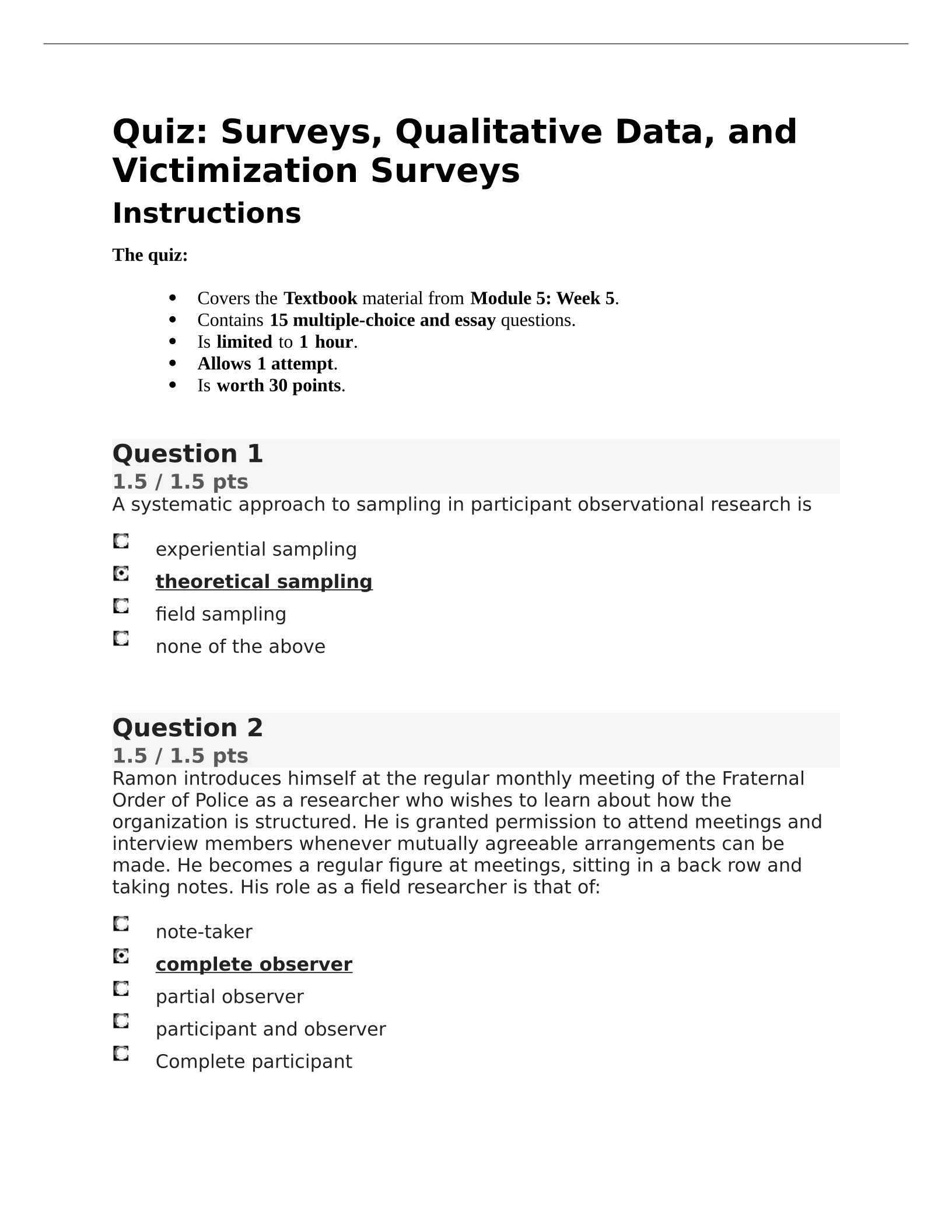
Quiz: Surveys, Qualitative Data, and
Victimization Surveys
Instructions
The quiz:
Covers the Textbook material from Module 5: Week 5.
Contains 15 multiple-choice and essay questions.
Is limited to 1 hour.
Allows 1 attempt.
Is worth 30 points.
Question 1
1.5 / 1.5 pts
A systematic approach to sampling in participant observational research is
experiential sampling
theoretical sampling
field sampling
none of the above
Question 2
1.5 / 1.5 pts
Ramon introduces himself at the regular monthly meeting of the Fraternal
Order of Police as a researcher who wishes to learn about how the
organization is structured. He is granted permission to attend meetings and
interview members whenever mutually agreeable arrangements can be
made. He becomes a regular figure at meetings, sitting in a back row and
taking notes. His role as a field researcher is that of:
note-taker
complete observer
partial observer
participant and observer
Complete participant
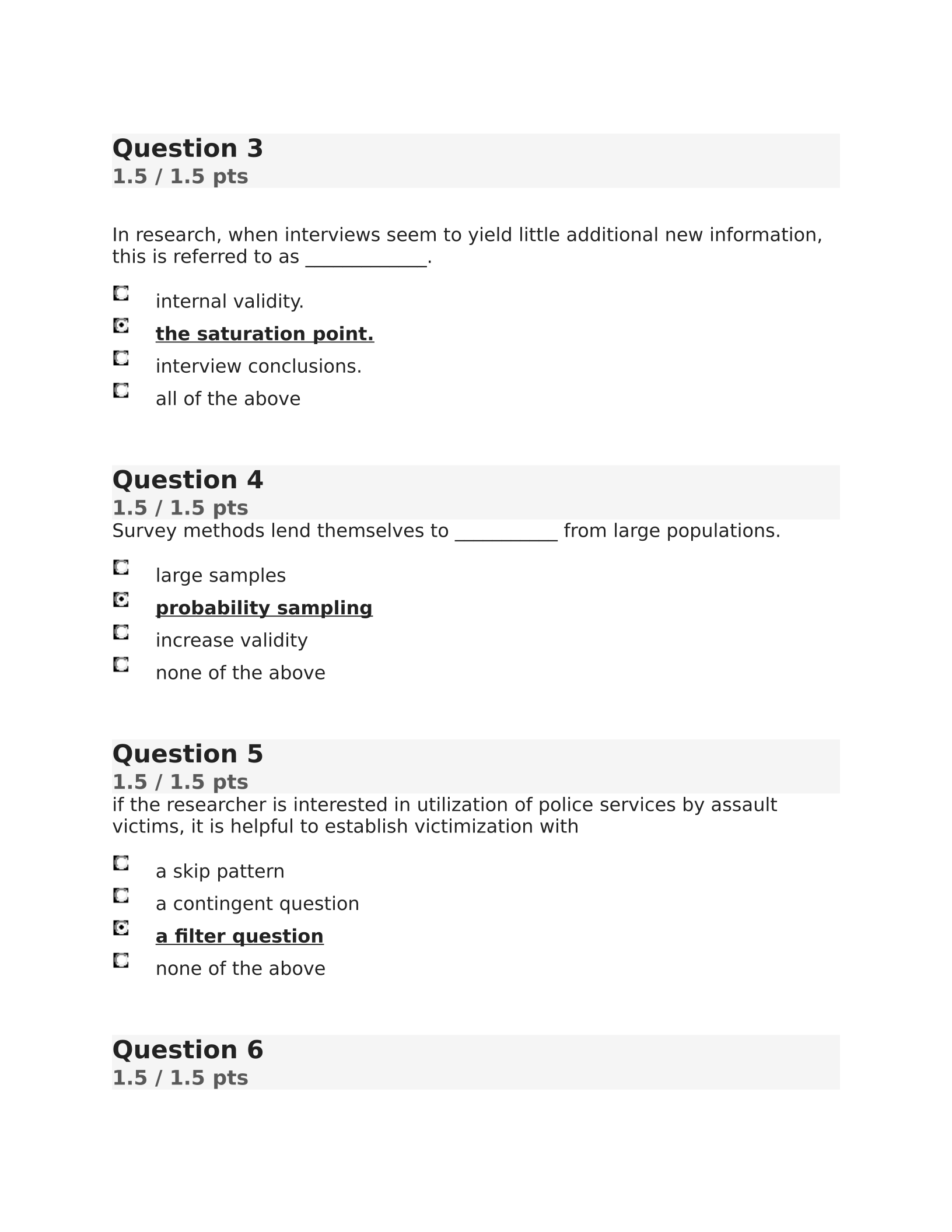
Question 3
1.5 / 1.5 pts
In research, when interviews seem to yield little additional new information,
this is referred to as _____________.
internal validity.
the saturation point.
interview conclusions.
all of the above
Question 4
1.5 / 1.5 pts
Survey methods lend themselves to ___________ from large populations.
large samples
probability sampling
increase validity
none of the above
Question 5
1.5 / 1.5 pts
if the researcher is interested in utilization of police services by assault
victims, it is helpful to establish victimization with
a skip pattern
a contingent question
a filter question
none of the above
Question 6
1.5 / 1.5 pts

There are no set standards for evaluating the validity or authenticity of
conclusions in a qualitative study, but Becker (1958) argues that the data
can be assessed in terms criteria such as:
the credibility of the informant
questions about the spontaneity of informant's statements
presence or absence of the researcher and how it influences other group
members
All of the above
IncorrectQuestion 7
0 / 1.5 pts
A researcher may choose to use several related questions in order to
measure a variable, which is known as
idiosyncratic variable
an index or scale = CORRECT ANSWER
a reliability measure
a demographic question
Question 8
1.5 / 1.5 pts
Consider the question: "Do you disagree that juveniles should not be tried as
adults if they commit murder?" Which of the following best describes the
question?
it is a double-negative question
it is a double-barreled question
it does not have a mutually exclusive response
none of the above
Question 9
1.5 / 1.5 pts
In order to measure violent victimizations, the NCVS uses
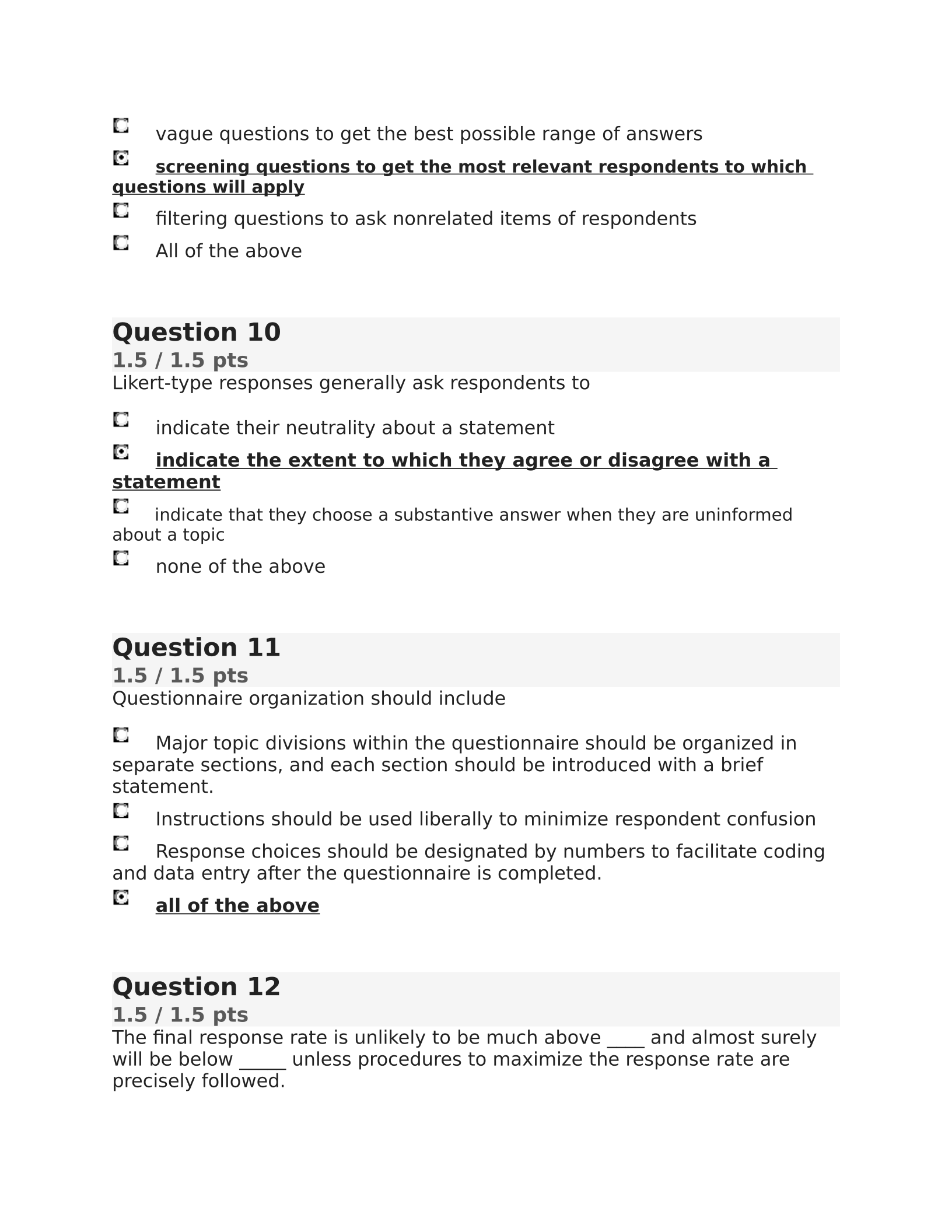
vague questions to get the best possible range of answers
screening questions to get the most relevant respondents to which
questions will apply
filtering questions to ask nonrelated items of respondents
All of the above
Question 10
1.5 / 1.5 pts
Likert-type responses generally ask respondents to
indicate their neutrality about a statement
indicate the extent to which they agree or disagree with a
statement
indicate that they choose a substantive answer when they are uninformed
about a topic
none of the above
Question 11
1.5 / 1.5 pts
Questionnaire organization should include
Major topic divisions within the questionnaire should be organized in
separate sections, and each section should be introduced with a brief
statement.
Instructions should be used liberally to minimize respondent confusion
Response choices should be designated by numbers to facilitate coding
and data entry after the questionnaire is completed.
all of the above
Question 12
1.5 / 1.5 pts
The final response rate is unlikely to be much above ____ and almost surely
will be below _____ unless procedures to maximize the response rate are
precisely followed.

20, 25%
35, 40%
80%, 70%
over 90%, 95%
Question 13
1.5 / 1.5 pts
Examining relationships is the centerpiece of the analytic process because it
allows the researcher to preserve a record of what happened
allows the researcher to move from simple description to
explanations of why things happened as they did
allows the researcher to validate the authenticity of the conclusions
from the data
allows the researcher to have confidence in the field research study
conclusions
Question 14
1.5 / 1.5 pts
When no identifying information can be obtained about a respondent, the
responses are
confidential
anonymous
both confidential and anonymous
neither confidential nor anonymous
Question 15
9 / 9 pts
Intensive interviewing is much costlier and takes much more time than all
interviewing with closed-ended questions. Why should it be used at all?
Describe in your answer the distinctive characteristics of intensive
interviewing and identify the research questions and situations that make it
preferable.
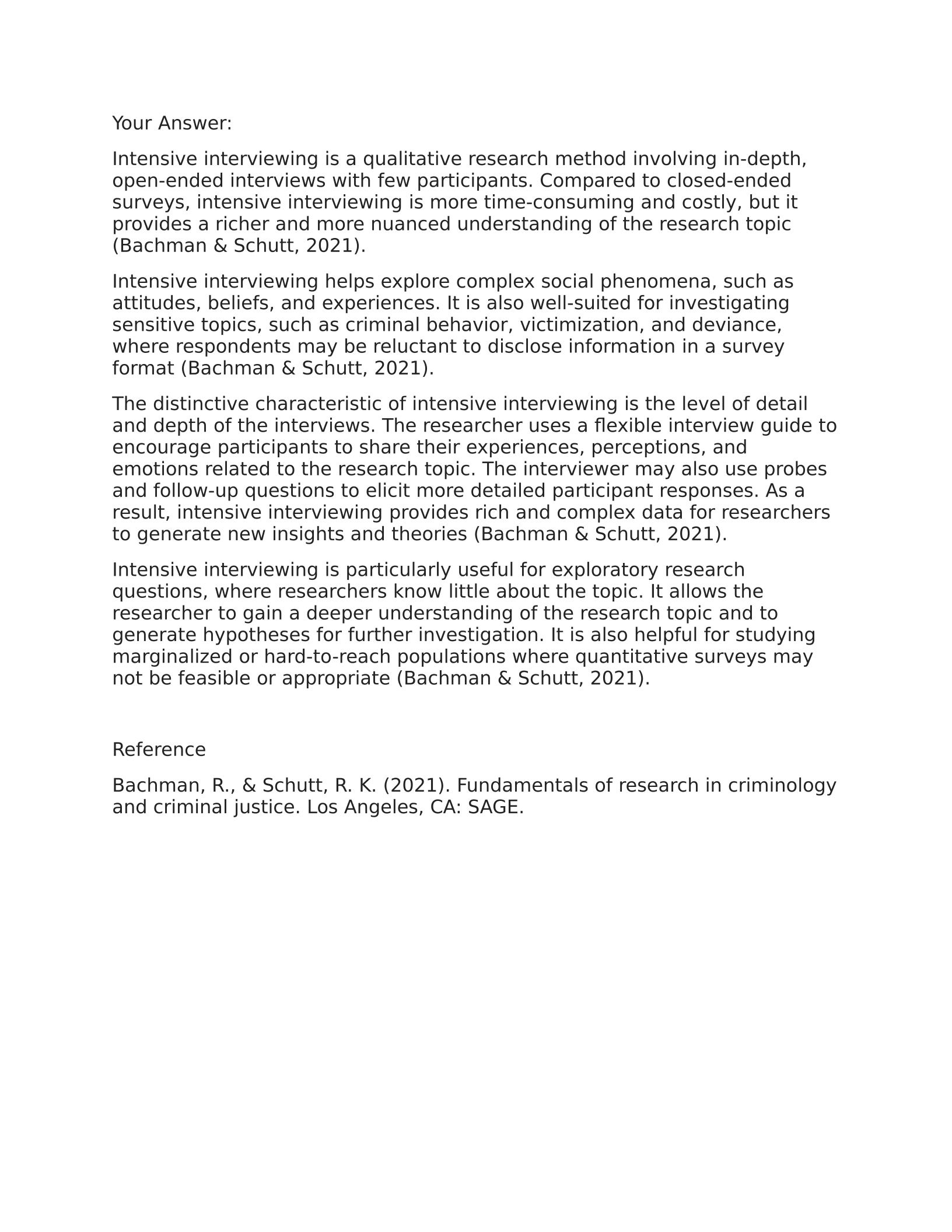
Your Answer:
Intensive interviewing is a qualitative research method involving in-depth,
open-ended interviews with few participants. Compared to closed-ended
surveys, intensive interviewing is more time-consuming and costly, but it
provides a richer and more nuanced understanding of the research topic
(Bachman & Schutt, 2021).
Intensive interviewing helps explore complex social phenomena, such as
attitudes, beliefs, and experiences. It is also well-suited for investigating
sensitive topics, such as criminal behavior, victimization, and deviance,
where respondents may be reluctant to disclose information in a survey
format (Bachman & Schutt, 2021).
The distinctive characteristic of intensive interviewing is the level of detail
and depth of the interviews. The researcher uses a flexible interview guide to
encourage participants to share their experiences, perceptions, and
emotions related to the research topic. The interviewer may also use probes
and follow-up questions to elicit more detailed participant responses. As a
result, intensive interviewing provides rich and complex data for researchers
to generate new insights and theories (Bachman & Schutt, 2021).
Intensive interviewing is particularly useful for exploratory research
questions, where researchers know little about the topic. It allows the
researcher to gain a deeper understanding of the research topic and to
generate hypotheses for further investigation. It is also helpful for studying
marginalized or hard-to-reach populations where quantitative surveys may
not be feasible or appropriate (Bachman & Schutt, 2021).
Reference
Bachman, R., & Schutt, R. K. (2021). Fundamentals of research in criminology
and criminal justice. Los Angeles, CA: SAGE.
Powered by TCPDF (www.tcpdf.org)

