


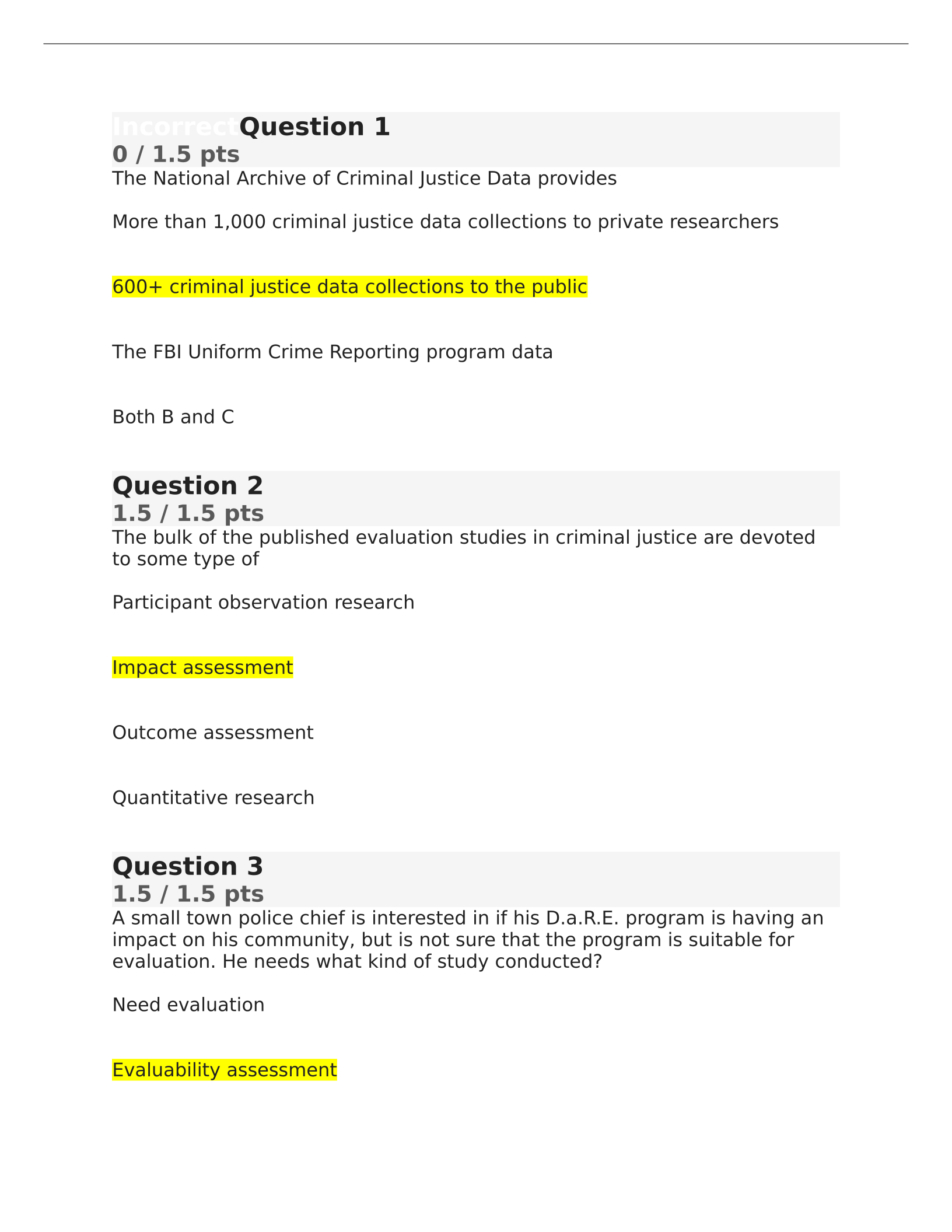
IncorrectQuestion 1
0 / 1.5 pts
The National Archive of Criminal Justice Data provides
More than 1,000 criminal justice data collections to private researchers
600+ criminal justice data collections to the public
The FBI Uniform Crime Reporting program data
Both B and C
Question 2
1.5 / 1.5 pts
The bulk of the published evaluation studies in criminal justice are devoted
to some type of
Participant observation research
Impact assessment
Outcome assessment
Quantitative research
Question 3
1.5 / 1.5 pts
A small town police chief is interested in if his D.a.R.E. program is having an
impact on his community, but is not sure that the program is suitable for
evaluation. He needs what kind of study conducted?
Need evaluation
Evaluability assessment
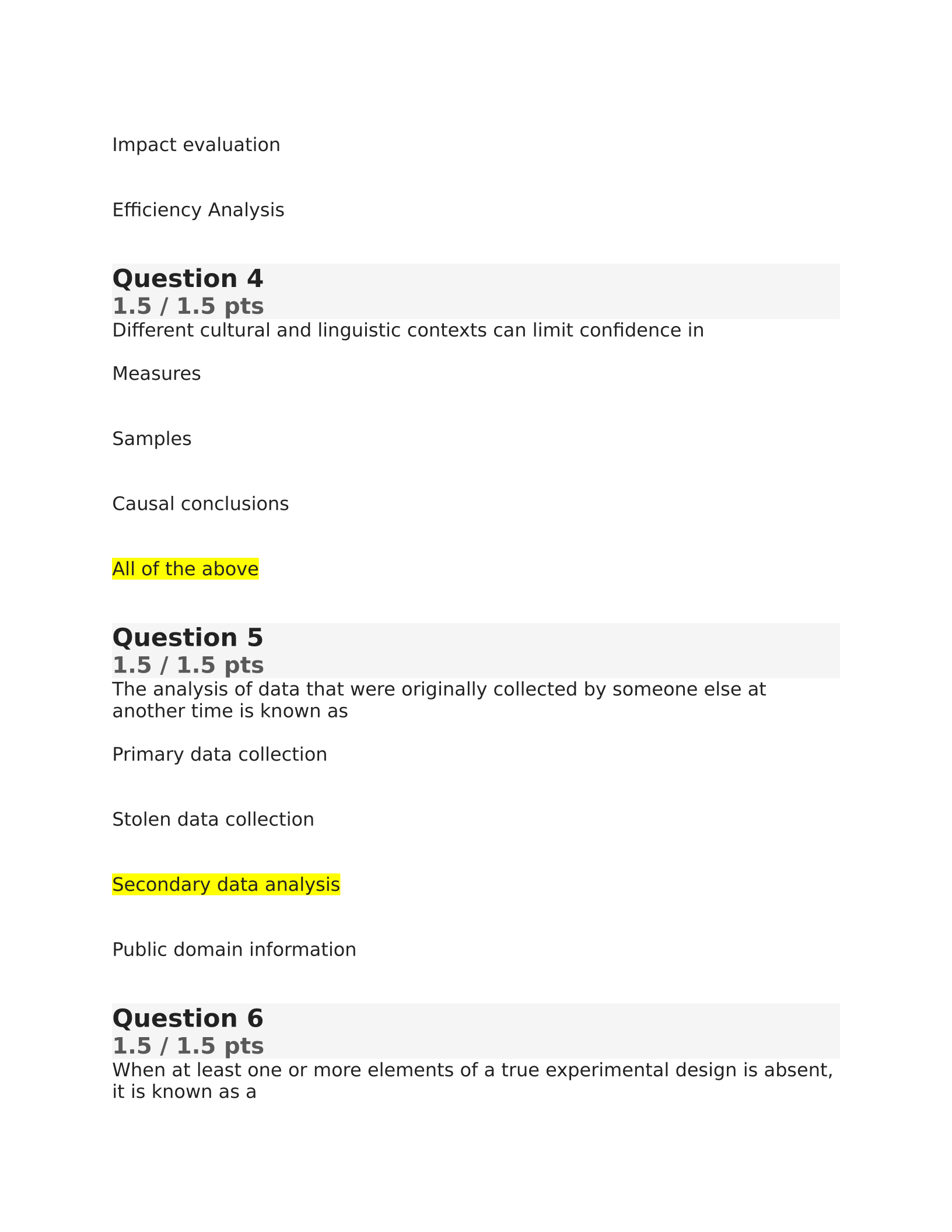
Impact evaluation
Efficiency Analysis
Question 4
1.5 / 1.5 pts
Different cultural and linguistic contexts can limit confidence in
Measures
Samples
Causal conclusions
All of the above
Question 5
1.5 / 1.5 pts
The analysis of data that were originally collected by someone else at
another time is known as
Primary data collection
Stolen data collection
Secondary data analysis
Public domain information
Question 6
1.5 / 1.5 pts
When at least one or more elements of a true experimental design is absent,
it is known as a

Nonprobability study
Quasi-experimental design
Randomly assigned control
None of the above
Question 7
1.5 / 1.5 pts
The Freedom of Information Act (FOIA) stipulates that
Only persons who have a security clearance of top secret or above can have
access to agency records
Most persons may have a right to records unless records are exempted
All persons have a right to access all federal agency records unless the
records are specifically exempted
Many persons may have a right to access non-federal agency records
Question 8
1.5 / 1.5 pts
The concept of ____________ has increasingly been used since the
internet and social media platforms emerged.
utilizing technology in research
social-network analysis
social engineering
None of the above

Question 9
1.5 / 1.5 pts
Shaw and McKay conducted a landmark analysis in criminology on
Adult crime in New York neighborhoods
Juvenile delinquency in Chicago neighborhoods
Adult crime in Chicago neighborhoods
Juvenile delinquency in New York neighborhoods
Question 10
1.5 / 1.5 pts
When a researcher is not able to randomly assign participants to
experimental and control conditions, they may use a(n)
Nonequivalent control group design
Participant observation design
Time series design
Counterfactual design
IncorrectQuestion 11
0 / 1.5 pts
The goal of evaluation research is
Different than the goal of other types of social science research
Primarily the same as the goal for all social science research
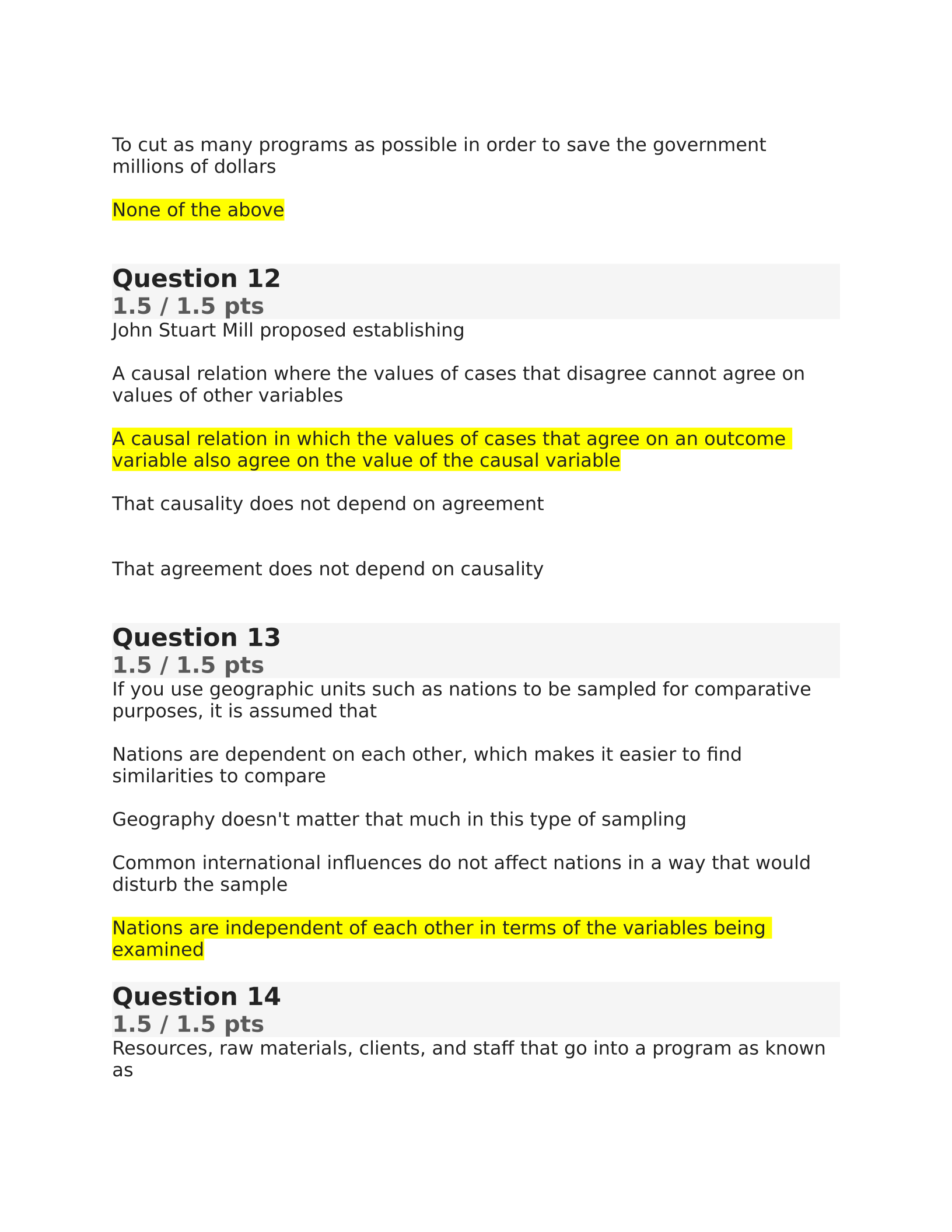
To cut as many programs as possible in order to save the government
millions of dollars
None of the above
Question 12
1.5 / 1.5 pts
John Stuart Mill proposed establishing
A causal relation where the values of cases that disagree cannot agree on
values of other variables
A causal relation in which the values of cases that agree on an outcome
variable also agree on the value of the causal variable
That causality does not depend on agreement
That agreement does not depend on causality
Question 13
1.5 / 1.5 pts
If you use geographic units such as nations to be sampled for comparative
purposes, it is assumed that
Nations are dependent on each other, which makes it easier to find
similarities to compare
Geography doesn't matter that much in this type of sampling
Common international influences do not affect nations in a way that would
disturb the sample
Nations are independent of each other in terms of the variables being
examined
Question 14
1.5 / 1.5 pts
Resources, raw materials, clients, and staff that go into a program as known
as
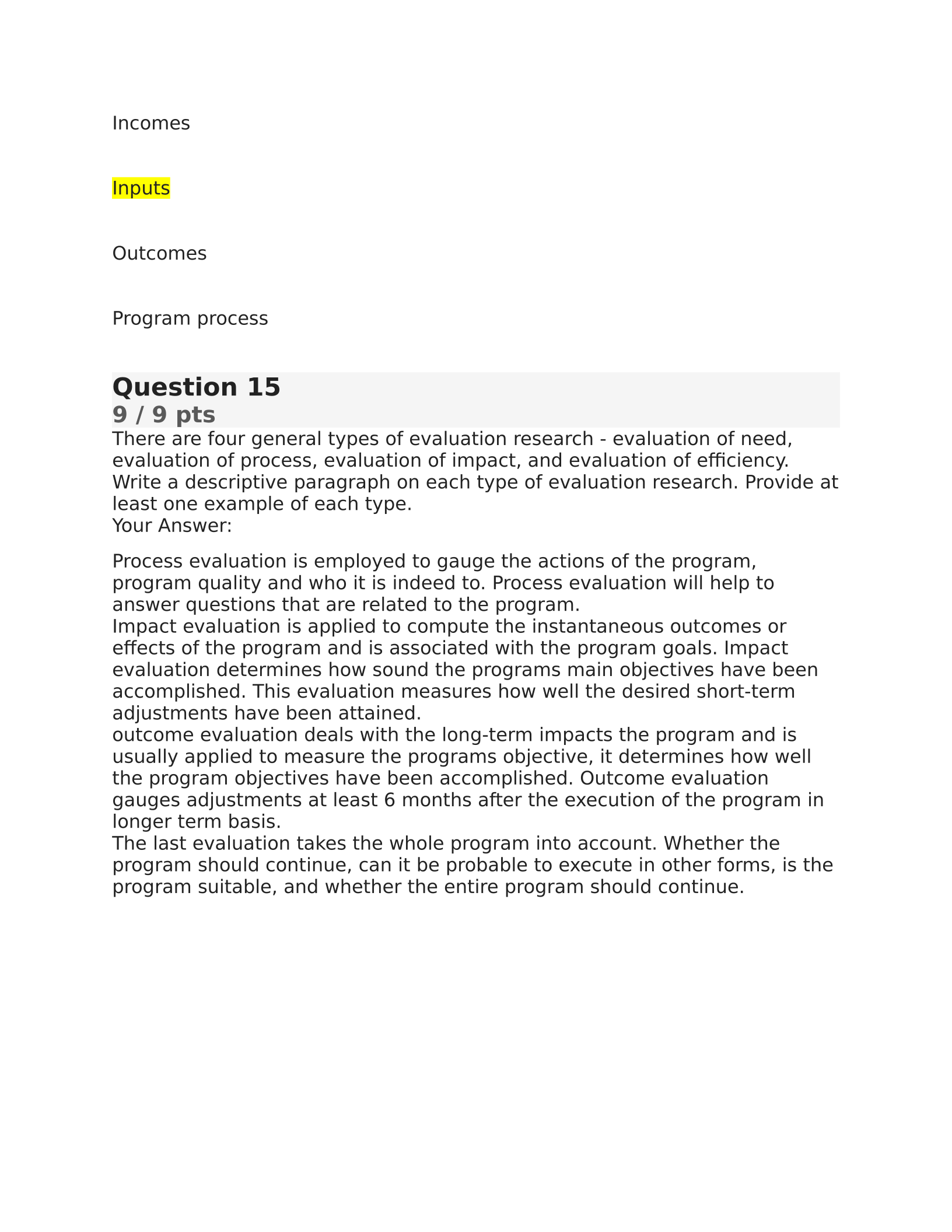
Incomes
Inputs
Outcomes
Program process
Question 15
9 / 9 pts
There are four general types of evaluation research - evaluation of need,
evaluation of process, evaluation of impact, and evaluation of efficiency.
Write a descriptive paragraph on each type of evaluation research. Provide at
least one example of each type.
Your Answer:
Process evaluation is employed to gauge the actions of the program,
program quality and who it is indeed to. Process evaluation will help to
answer questions that are related to the program.
Impact evaluation is applied to compute the instantaneous outcomes or
effects of the program and is associated with the program goals. Impact
evaluation determines how sound the programs main objectives have been
accomplished. This evaluation measures how well the desired short-term
adjustments have been attained.
outcome evaluation deals with the long-term impacts the program and is
usually applied to measure the programs objective, it determines how well
the program objectives have been accomplished. Outcome evaluation
gauges adjustments at least 6 months after the execution of the program in
longer term basis.
The last evaluation takes the whole program into account. Whether the
program should continue, can it be probable to execute in other forms, is the
program suitable, and whether the entire program should continue.
Powered by TCPDF (www.tcpdf.org)

