


EXPLORING THE SYNERGISTIC INTEGRATION OF ARTIFICIAL
INTELLIGENCE AND BLOCKCHAIN TO ENHANCE SECURITY AND
TRANSPARENCY IN MODERN SYSTEMS
Abstract
This research paper explores the synergistic integration of artificial intelligence (AI) and
blockchain technologies to enhance security and transparency in modern systems. The
introduction provides a brief overview of security and transparency in various domains,
emphasizing the need to address these issues. The literature review examines existing research
and case studies highlighting the potential use cases of AI and blockchain integration. Two
notable case studies, JPMorgan Chase's Quorum blockchain platform, and the Voatz mobile
voting platform, demonstrate the practical application of AI and blockchain in enhancing
security and transparency. The review also discusses the synergies between AI and blockchain,
exploring how AI algorithms can improve safety within blockchain systems and how blockchain
technology can contribute to data integrity and transparency.
Additionally, the literature review addresses the security challenges modern systems face
and the role of AI and blockchain in mitigating these challenges. By analyzing the literature and
case studies, this research aims to establish a solid foundation for further exploration and
identify opportunities for research in integrating AI and blockchain. The findings from this
literature review inform the subsequent sections of the research paper, providing insights into the
practical uses, benefits, and challenges of AI and blockchain integration in enhancing security
and transparency.
i

Abbreviations
1. AI - Artificial Intelligence
2. GDPR - General Data Protection Regulation
3. Ksh - Kenyan Shillings
4. AI - Artificial Intelligence
5. IoT - Internet of Things
6. API - Application Programming Interface
7. ML - Machine Learning
8. DL - Deep Learning
9. IT - Information Technology
ii

Table of Contents
Abbreviations...........................................................................................................................iii
List of Tables............................................................................................................................vi
1. Introduction...............................................................................................................................1
1.1. Background of Study.........................................................................................................1
1.2. Research Objectives...........................................................................................................1
1.3. Research Questions.............................................................................................................2
1.4. Significance of the Research:.............................................................................................2
1.4.1. Traditional Security Vs. Ever-Evolving Threat Landscape........................................2
1.4.2. Transparency and Accountability...............................................................................2
1.4.3. Benefits of AI and Blockchain....................................................................................3
Operational Definition of Terms...............................................................................................4
2. Literature Review.....................................................................................................................5
2.1. Artificial Intelligence and Blockchain...............................................................................5
2.2. Security Challenges in Modern Systems...........................................................................5
2.2.1. Limitations of Traditional Security Approaches.........................................................6
2.3. Blockchain Technology and its Role in Security...............................................................6
2.3.1. Cryptographic Mechanisms........................................................................................7
2.4. Synergies between AI and Blockchain...............................................................................7
2.5. Case Studies........................................................................................................................8
2.5.1. Finance - Anti-Money Laundering (AML).................................................................8
2.5.2. Healthcare - Secure Data Sharing and Medical Research..........................................9
2.6. Research Gaps and Future Directions..............................................................................12
2.6.1. Governance and Legal Considerations.....................................................................13
3. Methodology...........................................................................................................................14
3.1. Research Design..............................................................................................................14
3.2. Sampling and Participants...............................................................................................14
3.3. Data Collection................................................................................................................15
3.4. Data Analysis and Management......................................................................................16
3.5. Ethical Considerations.....................................................................................................17
iii

3.6. Limitations.......................................................................................................................18
4. TIME.......................................................................................................................................19
5. Budget.....................................................................................................................................21
6. References................................................................................................................................22
iv

List of Tables
Figure 1: the JP Morgan Quorum platform and architecture ..........................................................
9
Figure 2:Medical chain supply using Block chain. .......................................................................
10
Figure 3:IBM Food Trust Apples to Apple Puree
Example ...........................................................11
Figure 4: Voatz Flow Diagram ......................................................................................................
12
v

1. Introduction
1.1.Background of Study
Security and transparency have become crucial for modern systems across various domains in
today's digital landscape. Industries such as finance, healthcare, supply chain, and governance
increasingly recognize the significance of addressing these issues to ensure trust, accountability,
and integrity. Rapid technological advancements have introduced new vulnerabilities and
challenges to security and transparency. Traditional systems and methods often struggle to keep
pace with the evolving threat landscape and the growing complexity of data management. This
factor has led to a heightened risk of data breaches, fraud, manipulation, and lack of
transparency, which can have severe consequences for individuals, organizations, and
society(Arora et al., 2020).
According to Ekramifard et al. (2020), fraudulent activities, money laundering, and identity theft
are rising in the financial sector. Healthcare systems grapple with protecting patient data,
ensuring privacy, and preventing unauthorized access(J. Singh et al., 2022). Supply chain
networks face challenges in tracking and verifying the origin and authenticity of products,
leading to counterfeit goods and compromised quality. Similarly, governance systems encounter
trust and transparency issues, hindering public participation and accountability (AlShamsi et al.,
2020). There is a growing recognition of the potential of emerging technologies such as artificial
intelligence (AI) and blockchain. AI offers advanced analytical capabilities, enabling proactive
threat detection, anomaly identification, and secure authentication(Ahmed et al., 2022). On the
other hand, blockchain provides a decentralized and tamper-resistant framework for data storage,
immutability, and auditability(Ekramifard et al., 2020). Integrating AI and blockchain offers a
promising opportunity to enhance the security and transparency of modern systems.
This research explores the synergistic integration of AI and blockchain to address various
domains' security and transparency needs. By harnessing both technologies' strengths, it seeks to
develop a comprehensive framework to provide robust and reliable solutions for modern
systems. Through this research, we aim to contribute to advancing knowledge and offer practical
insights into implementing AI-blockchain integration to enhance security and transparency in the
digital era.
1.2.Research Objectives
The research aims to achieve the following specific objectives:
1. Investigate and identify the potential synergistic interactions between artificial
intelligence (AI) and blockchain technologies to enhance security and transparency in
modern systems.
1

2. Evaluate the impact of integrating AI and blockchain on security and transparency in
modern systems by analyzing relevant metrics.
3. Develop practical guidelines and best practices for implementing the integrated AI
blockchain system within the specified timeframe of the research project.
4. Assess the potential benefits and challenges of integrating artificial intelligence (AI) and
blockchain in different domains, such as finance, healthcare, supply chain, and
governance, to enhance security and transparency in modern systems.
5. Investigate ethical considerations and risks associated with the integration of artificial
intelligence (AI) and blockchain systems for security and transparency in modern
systems.
1.3.Research Questions
The investigation will be guided by the following research questions, which align with the
research objectives and highlight the key aspects to be explored:
1. How can AI algorithms be effectively integrated into blockchain systems to enhance
security?
2. How does the integration of AI and blockchain impact transparency in modern systems?
3. What are the synergistic interactions between AI and blockchain technologies?
4. What are the guidelines and best practices for implementing the integrated AI blockchain
system?
1.4.Significance of the Research:
Exploring the synergistic integration of AI and blockchain technologies holds immense
importance in addressing the limitations of traditional security measures and existing systems
while enhancing security and transparency in modern designs. Understanding the significance of
this research is vital for several reasons.
1.4.1. Traditional Security Vs. Ever-Evolving Threat Landscape
Traditional security measures often struggle to keep pace with the ever-evolving threat
landscape. Static rule-based systems and manual monitoring cannot detect sophisticated attacks
and rapidly evolving vulnerabilities(Jeon et al., 2022). Integrating AI algorithms within
blockchain systems enables leveraging machine learning, anomaly detection, and pattern
recognition techniques to identify and mitigate security threats proactively. This integration
allows for a dynamic and adaptive security approach, bolstering the resilience of modern systems
against emerging threats(Rajagopal et al., 2022).
2

1.4.2. Transparency and Accountability
Existing systems often suffer from a lack of transparency and accountability. Centralized
databases and siloed information architectures limit data visibility and traceability, leading to
data manipulation, unauthorized access, and data breaches. By integrating blockchain
technology, which offers a decentralized and immutable ledger, transparency and auditability can
be significantly enhanced(Attkan & Ranga, 2022). The combination of AI and blockchain
enables the development of secure and transparent systems where data integrity and authenticity
can be assured, fostering trust among stakeholders.
1.4.3. Benefits of AI and Blockchain
Moreover, the integration of AI and blockchain presents several potential benefits. By leveraging
AI techniques, such as natural language processing and image recognition, within blockchain
systems, it becomes possible to automate data analysis, identify patterns, and derive meaningful
insights from large volumes of data. This factor can enhance decision-making processes, enable
real-time monitoring, and facilitate predictive analytics(Samuel et al., 2022). Furthermore,
integration can empower individuals by giving them greater control over their data,
privacypreserving mechanisms, and enhanced data ownership.
The synergistic integration of AI and blockchain technologies offer a promising solution to the
limitations of traditional security measures and existing systems. By exploring this integration,
we can unlock the potential for robust security, transparency, and accountability in modern
systems across various domains(Jeon et al., 2022). The research addresses current challenges and
paves the way for developing innovative solutions and frameworks to shape a more secure and
transparent digital future.
3

Operational Definition of Terms
AI: For this research study, Artificial Intelligence (AI) refers to the
simulation of human intelligence in machines that are programmed to
perform tasks, make decisions, and learn from data. AI technologies
encompass machine learning algorithms, natural language processing,
and computer vision, among others.
Blockchain: In this research, blockchain is defined as a decentralized and
distributed digital ledger that records transactions across multiple nodes
in a secure and transparent manner. It is characterized by its
immutability, cryptographic mechanisms, and consensus algorithms
that ensure trust and integrity in the recorded data.
Synergistic
Integration:
Synergistic integration in this study refers to the combined use and
interplay of AI and blockchain technologies to enhance security and
transparency in modern systems. It involves leveraging the unique
strengths and capabilities of AI and blockchain in a complementary
manner to achieve improved outcomes.
Security Security, in the context of this research, refers to the protection of data,
information, and systems from unauthorized access, modification, or
destruction. It involves the implementation of measures to safeguard
against cyber threats, data breaches, identity theft, and other malicious
activities.
Transparency: Transparency in this study refers to the openness, traceability, and
auditability of processes, data, and transactions within a system. It
involves providing stakeholders with clear visibility into the operations
and actions taken, promoting accountability and trust.
Modern Systems: Modern systems in this research context refer to contemporary
technological infrastructures and applications used in various
industries, such as finance, healthcare, supply chain, and government.
These systems typically involve complex data processing, high reliance
on digital technologies, and the need for enhanced security and
transparency.
Data Integrity: Data integrity, as used in this study, refers to the accuracy,
completeness, and reliability of data throughout its lifecycle. It involves
ensuring that data remains unaltered and consistent, maintaining its
quality and trustworthiness.
Decentralization: Decentralization, in the context of this research, refers to the
distribution of control and decision-making across multiple nodes or
entities rather than relying on a central authority. Decentralization is a
fundamental characteristic of blockchain technology.
4

2. Literature Review
2.1.Artificial Intelligence and Blockchain
Artificial Intelligence (AI) and blockchain technology are two rapidly evolving fields that have
the potential to revolutionize various aspects of modern systems, particularly in terms of security
and transparency. Understanding AI and blockchain's fundamental concepts, capabilities, and
applications is crucial in exploring their synergistic integration for enhancing safety and
transparency. According to Chen et al. 2020, AI refers to developing computer systems that can
perform tasks that typically require human intelligence. It encompasses various subfields, such as
machine learning, natural language processing, computer vision, and robotics. AI systems can
analyze vast amounts of data, identify patterns, make intelligent decisions, and learn from
experience. The capabilities of AI enable a wide range of applications across different domains.
In security, AI algorithms can detect anomalies, classify and predict threats, and automate
defense mechanisms. AI can also be utilized in data analysis, customer service, healthcare
diagnostics, autonomous vehicles, and personalized recommendations, among many other areas
(Ekramifard et al., 2020).
According to Tagde et al., (2021), blockchain is a decentralized and distributed ledger technology
that provides a secure and transparent way to record and verify transactions. It consists of a chain
of blocks, where each block contains a set of transactions that are cryptographically linked to the
previous block, forming an immutable and tamper-resistant record. The key features of
blockchain include decentralization, transparency, immutability, and consensus mechanisms.
These features make blockchain suitable for applications that require trust, accountability, and
transparency. Blockchain technology has gained significant attention through its initial
application in cryptocurrencies like Bitcoin, but its potential extends far beyond digital
currencies (Rieger et al., 2019)
AI and blockchain technology offer significant potential for enhancing security and transparency
in modern systems. AI's ability to analyze data, make intelligent decisions, and predict threats,
combined with blockchain's decentralized and transparent nature, can create synergies that
address security challenges, ensure data integrity, and establish trust in various industries.
Integrating AI and blockchain can transform how modern systems handle security and
transparency, leading to more robust and trustworthy systems in the future.
2.2.Security Challenges in Modern Systems
Tawalbeh et al. (2020) discussed how modern systems face numerous security challenges that
can have significant consequences for organizations and individuals. Understanding these
challenges is essential in recognizing the limitations of traditional security approaches and the
need for innovative solutions that leverage AI and blockchain. They highlighted some key
security challenges faced by modern systems: Cyber threats, including malware, ransomware,
phishing attacks, and DDoS (Distributed Denial of Service) attacks, continue to evolve and pose
5

significant risks. Attackers exploit software, networks, and systems vulnerabilities to gain
unauthorized access, disrupt services, or steal sensitive information (Ekramifard et al., 2020).
Attkan and Ranga (2022) argued that data breaches involve unauthorized access or exposure to
sensitive information, such as personal data, financial records, or intellectual property. These
breaches can lead to reputational damage, financial loss, and potential legal repercussions.
Advanced persistent threats (APTs) and insider threats contribute to the complexity of data
breaches. Attkan & Ranga, (2022) also showed that identity theft occurs when an attacker gains
unauthorized access to personal information, such as social security numbers, passwords, or
financial credentials. Stolen identities can be used for various fraudulent activities, including
unauthorized transactions, opening fraudulent accounts, or committing other forms of identity
fraud (Ekramifard et al., 2020). Fraud encompasses various deceptive activities, such as financial
fraud, insurance fraud, or supply chain fraud. Attackers exploit system weaknesses to manipulate
or falsify information, leading to financial losses and damaged trust.
2.2.1. Limitations of Traditional Security Approaches
According to Chattu (2021), traditional security approaches rely on rule-based systems,
signaturebased detection, and centralized authorities for authentication and authorization. These
approaches have limitations in dealing with the increasing sophistication of attacks, evolving
malware, and the sheer volume of data generated. They may struggle to detect new and unknown
threats, resulting in false negatives or positives (Ekramifard et al., 2020).
Mohanta et al., (2020) noted that modern systems face numerous security challenges, including
cyber threats, data breaches, identity theft, and fraud. Traditional security approaches have
limitations in dealing with these evolving challenges. However, leveraging AI and blockchain
can provide innovative solutions that enhance security measures. AI enables proactive threat
detection, adaptive defense mechanisms, and intelligent analysis of large volumes of data.
Blockchain technology ensures transparency, accountability, and immutability, strengthening
authentication, access control, and data integrity. Integrating AI and blockchain offers a
promising path towards addressing the security challenges modern systems face and establishing
more robust and trustworthy environments (Ekramifard et al., 2020).
2.3.Blockchain Technology and its Role in Security
According to Demirkan et al. (2020), blockchain technology offers several features and
characteristics that contribute to enhanced security and transparency in modern systems. These
features, such as decentralization, immutability, and cryptographic mechanisms, make
blockchain a suitable solution for securing various aspects of digital systems.
According to Polas et al., (2022), one of the key features of blockchain is its decentralized nature.
Traditional systems often rely on a centralized authority or intermediary to manage transactions
and data. In contrast, blockchain operates on a peer-to-peer network where multiple participants,
known as nodes, collectively maintain the system's integrity. This decentralized structure
6

eliminates the reliance on a single point of failure, making it more resilient against attacks and
reducing the risk of data manipulation or unauthorized access (Guo et al., 2022).
Sandner et al. (2020) defined blockchain's immutability as the tamper-resistant nature of the data
stored on the blockchain. Once a transaction or record is added to the blockchain, it becomes
virtually impossible to alter or delete it without the network's consensus. Each block in the chain
contains a cryptographic hash of the previous block, creating a permanent and unbroken chain of
records. This immutability ensures data integrity and provides a transparent audit trail, making it
highly suitable for applications that require verifiable and tamper-proof records.
2.3.1. Cryptographic Mechanisms
According to research by Khanh and Khang, (2021), blockchain employs cryptographic
mechanisms to enhance security. Transactions and data stored on the blockchain are secured
using cryptographic techniques such as digital signatures and hash functions. Digital signatures
ensure that transactions are signed by the appropriate participants, providing authentication and
nonrepudiation. Hash functions generate unique identifiers for data blocks, ensuring data
integrity and preventing unauthorized modifications (Muminova et al., 2020). Blockchain excels
at securely storing transactional data. Each transaction is recorded as a block in the blockchain,
forming a chronological chain of transactions. These blocks are linked together using
cryptographic hashes, ensuring that any change to a previous block would require the alteration
of subsequent blocks, making it computationally infeasible. This feature makes blockchain
suitable for applications that require transparent and auditable transactional data, such as supply
chain management, financial transactions, and asset tracking (Warkentin and Orgeron, 2020).
Blockchain technology offers enhanced security and transparency through its decentralized
nature, immutability, and cryptographic mechanisms. It provides a tamper-resistant platform for
securely storing transactional data, verifying identities, and establishing participant trust. By
leveraging these features, modern systems can benefit from the increased security, data integrity,
and trust that blockchain brings, making it a valuable tool in securing digital systems in various
industries (AlShamsi et al., 2020).
2.4.Synergies between AI and Blockchain
Integrating AI and blockchain can create synergistic effects that enhance security and
transparency in modern systems. By combining the capabilities of AI algorithms with the
decentralized and immutable nature of blockchain, innovative solutions can be developed to
address security challenges and improve data integrity.
Jeon et al., (2022) conducted research at Meta and noted that AI algorithms can analyze the vast
amount of data stored on the blockchain to identify patterns, detect anomalies, and derive
insights. By applying machine learning and data analytics techniques, AI can detect fraudulent
activities, predict potential security breaches, and identify suspicious behavior patterns. This
analysis can enhance the security of blockchain-based systems by providing real-time
monitoring, early threat detection, and proactive defense mechanisms (Singh et al., 2020).
7

According to Sharma et al. (2023), blockchain can provide a decentralized and tamper-resistant
platform for identity verification. AI algorithms can augment this process by analyzing and
validating identity-related data. AI can utilize facial recognition, voice recognition, and
behavioral biometrics to verify the authenticity of individuals' identities and prevent identity
theft. Integrating
AI and blockchain can result in robust and reliable identity verification systems with reduced
reliance on centralized authorities. Sharma et al. discussed EHDHE, digital healthcare
ecosystems using blockchain, showing how blockchain is used to verify health documents
digitally.
2.4.1.1.Transparent Supply Chain Management
A research by Samuel et al., (2022) on application of AI in modern economy showed that AI and
blockchain can revolutionize supply chain management by providing transparency, traceability,
and accountability. AI algorithms can analyze blockchain data to track and verify the movement
of goods, detect counterfeit products, and identify potential bottlenecks or vulnerabilities in the
supply chain. This integration enhances the security of supply chain operations and enables
consumers to make more informed purchasing decisions (Ravi et al., 2022).
According to research by Dhar Dwivedi et al., (2021) on 5G-enabled IoT, integrating AI and
blockchain can create synergistic effects that enhance security and transparency in various
domains. AI algorithms can analyze blockchain data, improve identity verification, strengthen
supply chain management, and detect fraud. Blockchain provides a transparent and auditable
environment for training AI models, sharing insights, and establishing trust. By leveraging the
strengths of both AI and blockchain, innovative solutions can be developed to address security
challenges, improve data integrity, and enhance the overall trustworthiness of modern systems
(AlShamsi et al., 2020).
2.5.Case Studies
2.5.1. Finance - Anti-Money Laundering (AML)
According to the roles of AI, Khanh & Khang, (2021) noted that AI algorithms integrated with
blockchain technology have been used in the finance industry to enhance AML efforts. These
systems can analyze transactional data stored on the blockchain, detect suspicious patterns, and
identify potential money laundering activities. By combining AI's analytical capabilities with the
immutability and transparency of blockchain, financial institutions can improve their ability to
combat illicit economic activities while maintaining clarity and auditability.
2.5.1.1.Case Study: JPMorgan Chase's Quorum Blockchain JPMorgan Chase JPMorgan
Chase's Quorum Blockchain JPMorgan Chase developed the Quorum blockchain platform,
which integrates AI algorithms to enhance AML processes. The system can analyze transactional
data stored on the blockchain to identify potential money laundering patterns and suspicious
activities. This implementation has improved the efficiency and effectiveness of AML efforts,
reduced false positives, and enhanced compliance measures (Morgan, 2020).
8
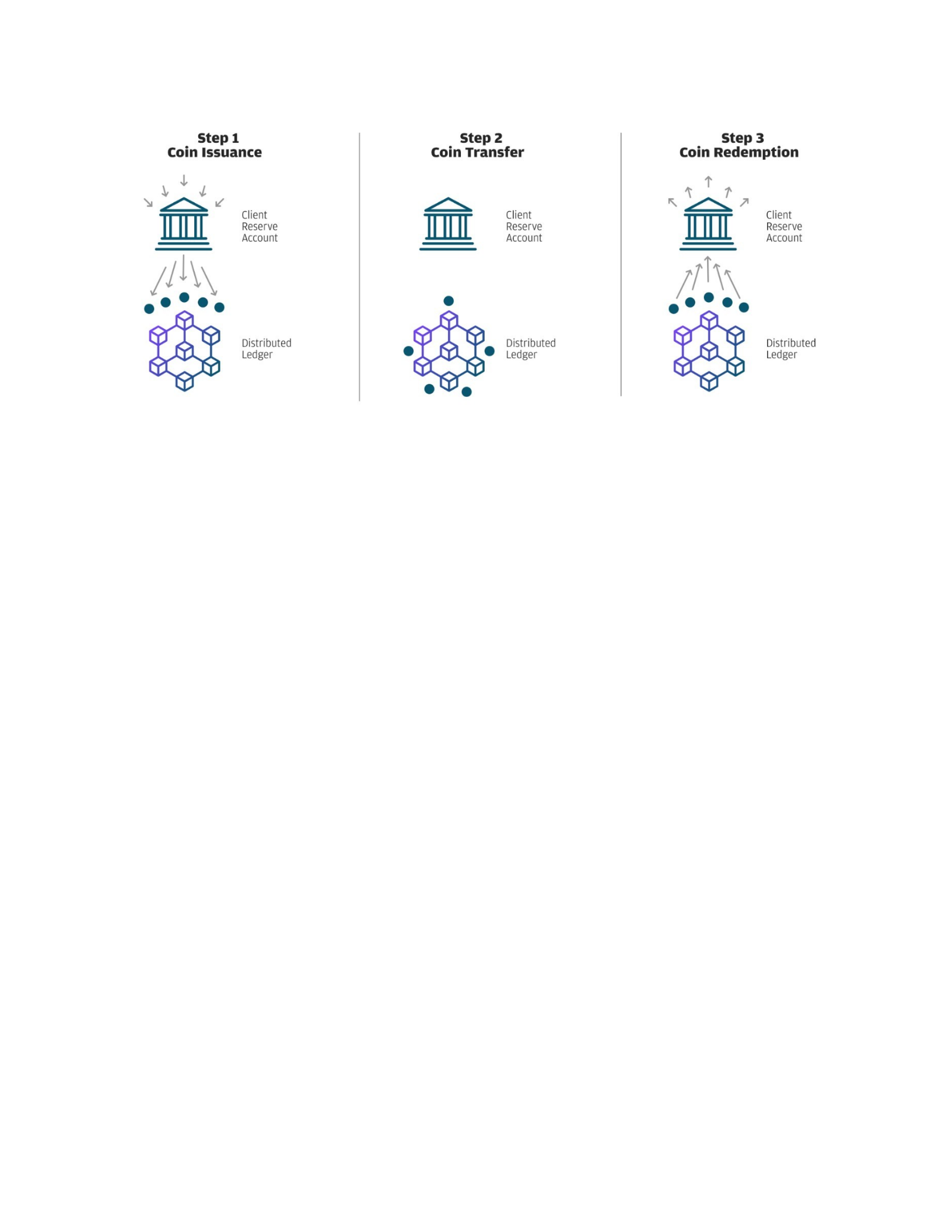
Figure 1: the JP Morgan Quorum platform and architecture
2.5.2. Healthcare - Secure Data Sharing and Medical Research
AI and blockchain integration can address privacy and security concerns in healthcare by
enabling secure data sharing and facilitating medical research. Blockchain provides a transparent
and auditable platform for sharing health data while preserving patient privacy. AI algorithms
can leverage this data for drug discovery, personalized medicine, and disease prediction studies.
2.5.2.1.Case Study: Medicalchain
Medicalchain is a blockchain-based platform that allows patients to securely share their medical
records with healthcare providers, researchers, and insurance companies. AI algorithms analyze
the transmitted data to generate insights and improve patient care. Integrating AI and blockchain
has enhanced security, privacy, and trust in healthcare data sharing and research (Medicalchain,
2023). Integrating AI and blockchain in supply chain management can improve transparency,
traceability, and trust. AI algorithms can analyze blockchain data to track and verify the
movement of goods, detect counterfeit products, and optimize supply chain operations.
Blockchain's immutability ensures the integrity of transactional data, reducing fraud risks and
enhancing accountability (Attkan & Ranga, 2022).
9
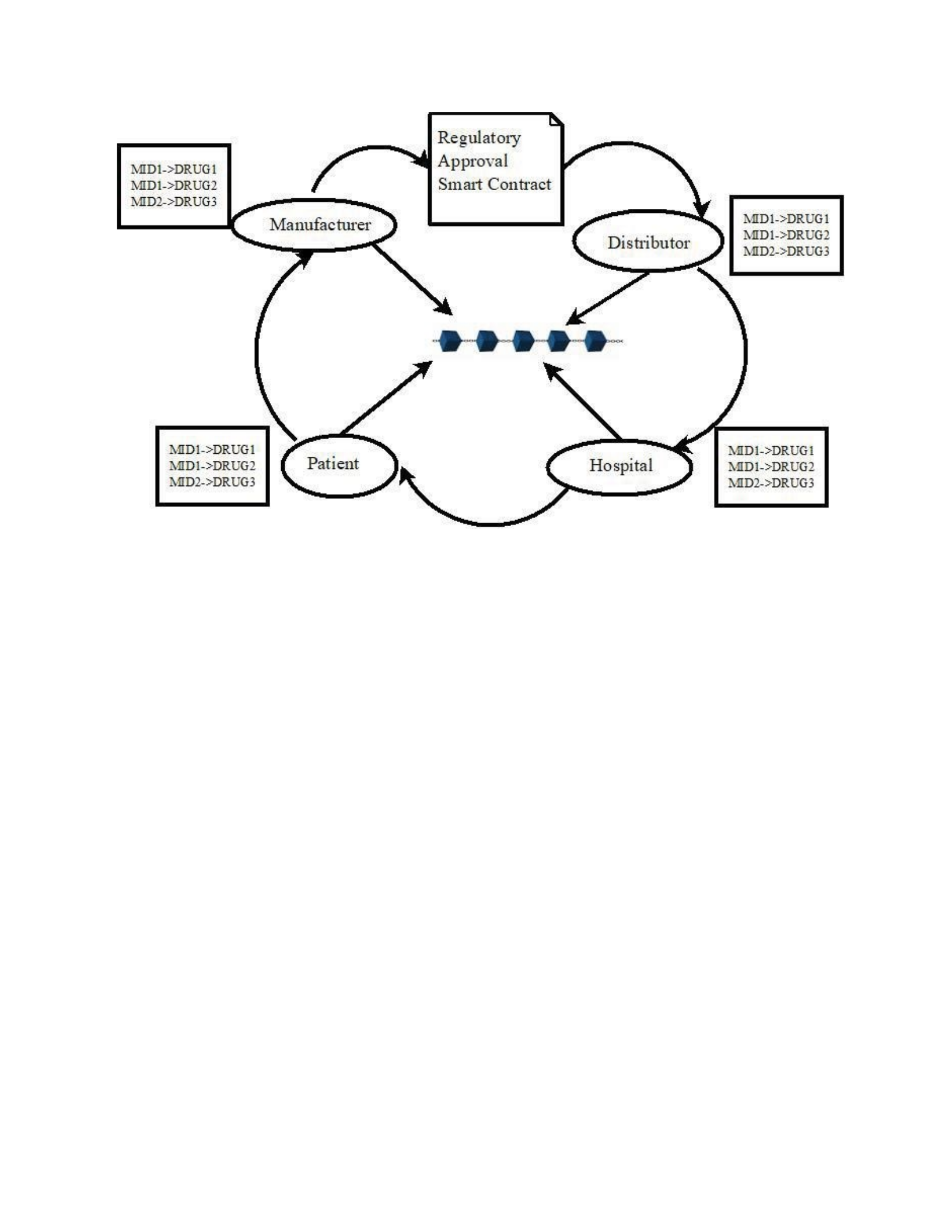
Figure 2:Medical chain supply using Block chain.
2.5.2.2.Case Study: IBM Food Trust IBM Food Trust
IBM Food Trust IBM Food Trust is a blockchain-based platform that enables transparent and
traceable supply chains in the food industry. AI algorithms analyze the data stored on the
blockchain to track the origin of food products, ensure compliance with quality standards, and
detect potential safety issues. This implementation has improved food safety, reduced fraud, and
increased consumer trust (IBM, 2020). AI and blockchain integration can enhance voting
systems' security, transparency, and integrity. By leveraging blockchain's immutability and
consensus mechanisms, governments can provide a transparent and auditable platform for
recording votes while using AI algorithms to detect anomalies or fraudulent activities.
10
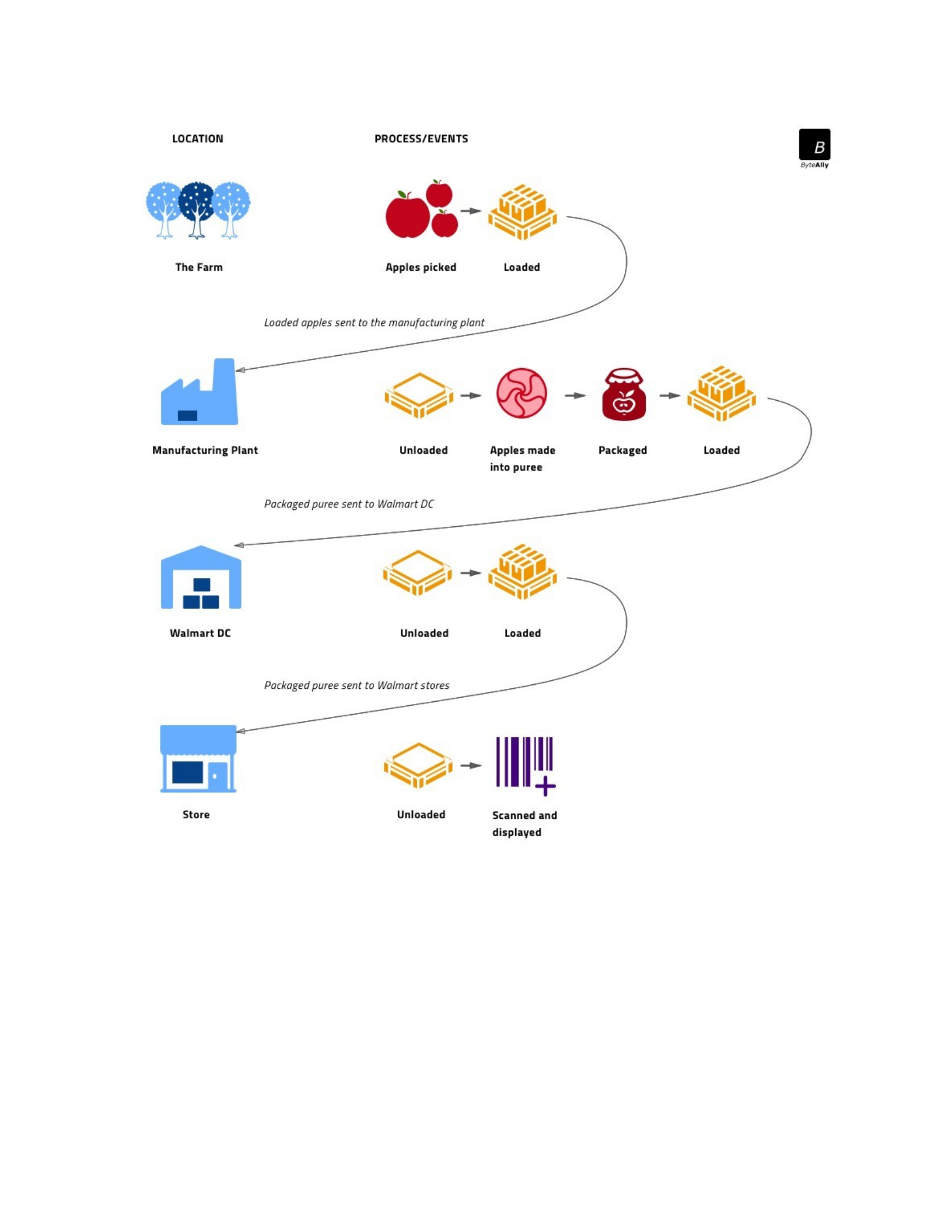
Figure 3:IBM Food Trust Apples to Apple Puree Example
2.5.2.3.Case Study: Voatz.
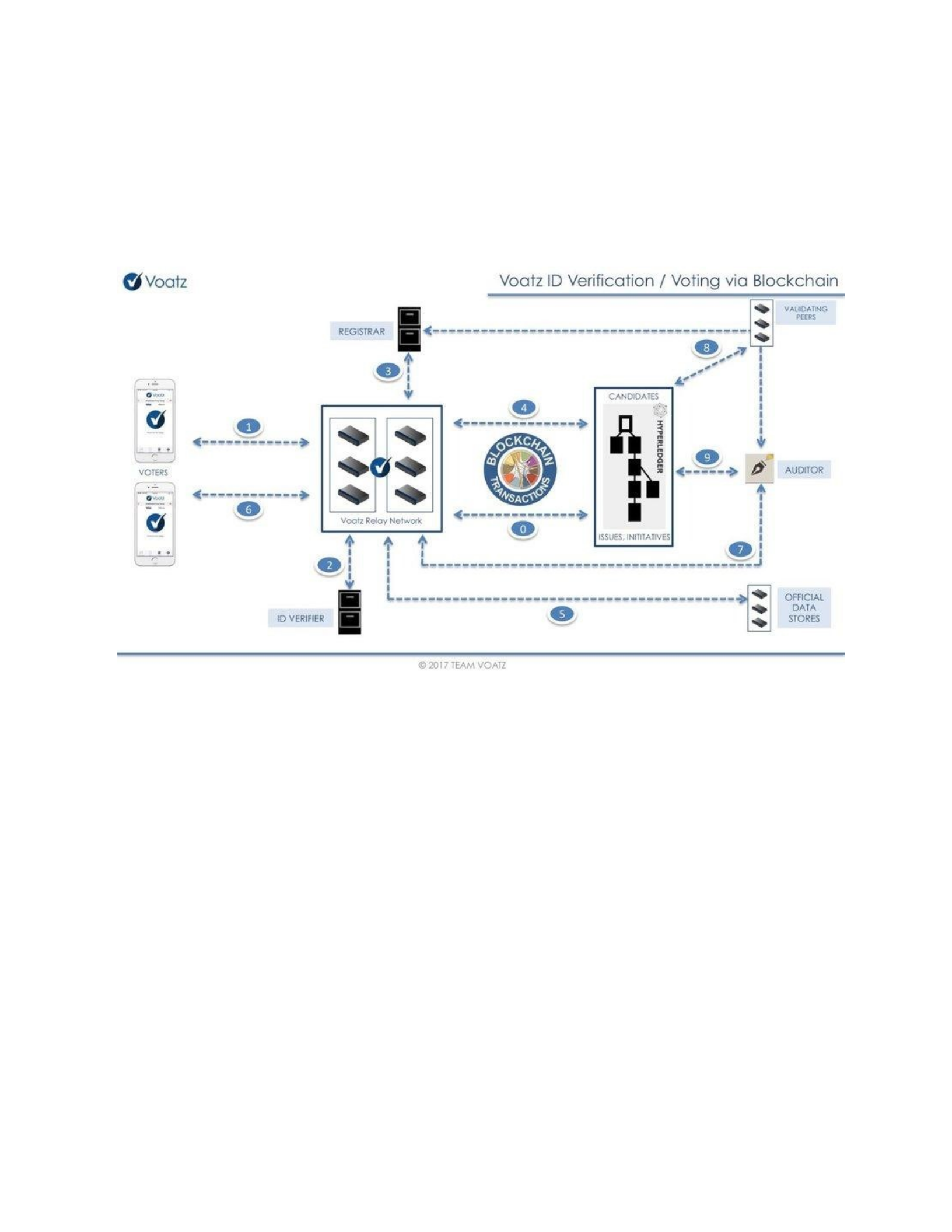
Voatz is a blockchain-based mobile voting platform that utilizes AI algorithms for security and
fraud detection. The system allows voters to cast their votes securely using their mobile devices,
and the votes are recorded on a blockchain, ensuring transparency and immutability. AI
algorithms analyze voting data to detect potential anomalies or fraudulent activities, enhancing
the security and integrity of the voting process (Voatz, 2020).
11
These case studies demonstrate the potential of integrating AI and blockchain to enhance security
and transparency in various industries. While these implementations have shown promising
outcomes, challenges remain regarding scalability, privacy, regulatory compliance, and building
trust. Continued research, development, and collaboration are essential to address these
challenges and unlock the full potential of AI and blockchain integration in enhancing security
and transparency.
Figure 4: Voatz Flow Diagram
2.6.Research Gaps and Future Directions
Current research gaps and future directions in the field of AI and blockchain integration for
enhanced security and transparency include:
According to research on Meta by Jeon et al., (2022), one significant research challenge is
addressing the scalability limitations of blockchain networks when integrating with AI
algorithms. As the volume of data and computational requirements increase, ensuring efficient
and highperformance systems becomes crucial. Future research should focus on developing
scalable architectures, consensus mechanisms, and optimization techniques to handle large-scale
AI analysis of blockchain data (Attkan & Ranga, 2022).
Alzubi et al., (2021) noted that maintaining privacy while performing AI analysis on blockchain
data remains challenging. Developing privacy-preserving techniques, such as secure multiparty
computation, zero-knowledge proofs, and differential privacy, can enable secure and private AI
analysis without compromising sensitive data. However, they concluded that further research is
needed to explore these privacy-enhancing methodologies and their integration with
blockchainbased systems.
12

According to Singh et al., (2020), blockchain networks often operate on different protocols and
standards, hindering interoperability and data sharing among systems. Establishing
interoperability frameworks and standards that enable seamless integration and data exchange
between various blockchain networks is an important research direction. Standardization efforts
can facilitate cross-platform collaboration and enhance AI and blockchain integration's overall
effectiveness and transparency (AlShamsi et al., 2020).
According to Li et al., (2020), AI algorithms integrated with blockchain must address justice,
bias, and explainability issues. It is critical to ensure that AI models do not exhibit discriminatory
behavior and are transparent in their decision-making processes. Research should focus on
developing methodologies to detect and mitigate biases in AI algorithms and creating explainable
AI models that provide evident reasoning for their outputs when analyzing blockchain data
(Attkan & Ranga, 2022).
A research from Metaverse by Jeon et al., (2022) showed that the energy consumption of
blockchain networks, particularly in proof-of-work consensus mechanisms, remains a challenge.
Exploring energy-efficient consensus algorithms and alternative approaches, such as proof-
ofstake or hybrid models, can reduce the environmental impact of blockchain networks while
maintaining security and transparency. Incorporating AI techniques for optimizing energy
consumption in blockchain networks is another promising research direction. Emerging
technologies, such as the Internet of Things (IoT), edge computing, and federated learning,
present opportunities for further enhancing the integration of AI and blockchain. Exploring how
these technologies can complement each other to improve security, privacy, and efficiency in
diverse domains is an area for future exploration. For example, combining blockchain with edge
computing can enable secure and real-time AI analysis at the network's edge, enhancing response
times and privacy (Attkan & Ranga, 2022).
2.6.1. Governance and Legal Considerations
AI and blockchain integration's governance and legal aspects need further attention. Establishing
regulatory frameworks, compliance measures, and governance models that ensure ethical use,
data protection, and user rights is crucial. Research should explore the legal implications, ethical
considerations, and governance structures needed to govern the integration of AI and blockchain
in different industries and applications.
Future research should focus on scalability, privacy preservation, interoperability, fairness,
energy efficiency, integration with emerging technologies, and governance aspects of AI and
blockchain integration. Addressing these research gaps will contribute to advancing the field and
unlocking the full potential of AI and blockchain for enhanced security and transparency in
various domains.
13

3. Methodology
3.1.Research Design
The overall research design for this study will be a mixed methods approach, combining
quantitative and qualitative methods. This design is chosen to provide a comprehensive
understanding of the integration of AI and blockchain for enhanced security and transparency.
The quantitative component of the research will involve analyzing numerical data related to the
implementation of AI and blockchain in various industries. This will include examining
statistical trends, patterns, and correlations to gain insights into the benefits, challenges, and
outcomes of integrating AI and blockchain. Quantitative data will be collected through surveys
and questionnaires distributed to industry professionals, researchers, and practitioners working in
relevant fields. The qualitative component of the research will involve in-depth interviews with
key stakeholders in the AI and blockchain domains, including industry experts, policymakers,
and researchers. These interviews will provide rich insights into the experiences, perspectives,
and practical implications of integrating AI and blockchain for security and transparency.
Qualitative data will be collected through semi-structured interviews and will be transcribed and
analyzed thematically to identify key themes and patterns.
The chosen mixed methods design enables a holistic approach to investigating the research
questions. The quantitative aspect provides a broader perspective and allows for generalizability,
while the qualitative aspect provides deeper insights, capturing the nuances and complexities of
the integration of AI and blockchain. The combination of both methods will enhance the validity
and reliability of the study's findings by triangulating different sources of data and perspectives.
This research design aligns with the research objectives as it allows for a comprehensive
exploration of the benefits, challenges, and potential applications of AI and blockchain
integration for security and transparency. By utilizing both quantitative and qualitative methods,
this design enables a more robust and nuanced understanding of the topic, supporting the
investigation of research questions from multiple angles.
3.2.Sampling and Participants
The target population for this research study includes professionals, experts, and researchers
working in the fields of AI and blockchain integration for security and transparency. Given the
broad scope and interdisciplinary nature of the topic, a purposive sampling technique will be
employed to ensure that participants possess relevant knowledge and experience in the subject
matter. The sample size will be determined based on the principle of data saturation, where data
collection continues until no new insights or information emerge. The sample size will also be
influenced by practical considerations, such as the availability and accessibility of participants.
14

Participants will be selected through a combination of convenience sampling and snowball
sampling techniques. Initially, convenience sampling will be utilized to identify and recruit
individuals who are easily accessible and willing to participate in the study. These individuals
may include industry professionals, researchers, and practitioners who have expertise in AI and
blockchain integration.
Snowball sampling will then be employed to expand the participant pool. Participants initially
recruited through convenience sampling will be asked to recommend other experts or colleagues
who have relevant knowledge and experience. This approach helps to ensure a diverse range of
perspectives and allows for the inclusion of participants who may be less easily accessible
through traditional sampling techniques.
Inclusion criteria for participants will include individuals who have experience in the practical
implementation or research of AI and blockchain integration, as well as those who can provide
valuable insights into the benefits, challenges, and potential applications of this integration.
There will be no specific exclusion criteria, as the aim is to gather a wide range of perspectives
and experiences from individuals working in different sectors and roles.
Demographic and contextual factors will be considered during participant selection to ensure
diversity in terms of gender, geographic location, industry sector, and level of expertise. This will
help capture a comprehensive representation of the target population and enhance the
generalizability of the findings.
By employing purposive sampling, the sample size and selection process will be tailored to the
specific research objectives, allowing for the inclusion of participants who can provide valuable
insights into the integration of AI and blockchain for enhanced security and transparency. The
combination of convenience and snowball sampling techniques will facilitate the recruitment of
participants with relevant expertise and ensure a diverse range of perspectives.
3.3.Data Collection
The data collection process for this research study will involve a combination of surveys and
interviews. These methods are chosen to gather both quantitative and qualitative data, allowing
for a comprehensive understanding of the integration of AI and blockchain for enhanced security
and transparency.
Surveys will be conducted to collect quantitative data from a large number of participants. The
survey questionnaire will be designed to gather information about the participants' perceptions,
experiences, and attitudes regarding AI and blockchain integration. The survey will be
distributed electronically, utilizing online survey platforms or email, to ensure easy access and
efficient data collection. The timeframe for survey data collection will be approximately four
weeks, allowing participants sufficient time to respond and ensuring a robust sample size.
Interviews will be conducted to gather in-depth qualitative data from selected participants.
Semistructured interviews will be employed to explore participants' experiences, challenges, and
insights related to the integration of AI and blockchain. The interviews will be conducted either
15

face-to-face, through video conferencing, or via telephone, depending on the preferences and
availability of the participants. The interviews will be audio-recorded with the consent of the
participants and transcribed for further analysis. The timeframe for interview data collection will
depend on the availability and scheduling of participants, typically spanning several weeks to
ensure comprehensive data collection.
The data collection process will be conducted by the researcher, who has experience in
conducting surveys and interviews. Prior to the data collection, the researcher will pilot test the
survey questionnaire and interview guide to ensure clarity and appropriateness. The researcher
will also establish rapport and build trust with the participants to create a comfortable
environment for sharing their experiences and perspectives.
The chosen data collection methods, surveys, and interviews are justified based on the research
objectives and questions. Surveys provide a quantitative perspective, allowing for the collection
of a larger sample size and statistical analysis of data. Interviews, on the other hand, facilitate a
deeper exploration of participants' experiences, providing qualitative insights that can uncover
nuances and complexities. By utilizing both methods, a more comprehensive and nuanced
understanding of the integration of AI and blockchain for enhanced security and transparency
can be achieved.
3.4.Data Analysis and Management
The data collected in this research study will be managed, stored, and secured with the utmost
care to ensure data integrity and comply with data protection regulations. The following steps
will be taken to manage and analyze the data:
1. Data Storage and Security: The data collected, both in electronic and physical formats,
will be stored securely. Electronic data will be stored on password-protected devices and
encrypted servers to prevent unauthorized access. Physical data, such as consent forms or
interview recordings, will be stored in locked cabinets or secure storage facilities. Access
to data will be restricted to the research team to maintain confidentiality and security.
2. Data Cleaning and Organization: Prior to analysis, the collected data will undergo a data
cleaning process to ensure accuracy and quality. This may involve checking for missing
values, outliers, and inconsistencies. Any errors or discrepancies will be resolved through
verification and clarification with the participants if necessary. The cleaned data will be
organized in a structured manner, ensuring it is ready for analysis.
3. Anonymization and Confidentiality: To protect the privacy and confidentiality of
participants, appropriate measures will be taken to anonymize the data. Personally
identifiable information will be removed or pseudonymized, and participant identities
will be coded. This ensures that individual participants cannot be identified from the
collected data. The use of codes or pseudonyms will be maintained consistently
throughout the analysis and reporting stages to maintain confidentiality.
16

4. Data Integrity and Compliance: To ensure data integrity, data will be handled and
analyzed with precision and accuracy. During analysis, appropriate statistical or
qualitative analysis techniques will be employed to derive meaningful insights from the
data. The analysis process will be documented and well-documented to ensure
transparency and reproducibility.
Compliance with data protection regulations will be strictly adhered to throughout the research
process. Any personal data collected will be processed in accordance with relevant data
protection laws and regulations, such as the General Data Protection Regulation (GDPR). The
research team will uphold participants' rights, including the right to access, rectify, and erase
their personal data, if applicable.
Furthermore, all research activities will be conducted with the utmost respect for ethical
guidelines and participants' consent. The findings and results of the study will be reported in an
aggregated and anonymized manner to ensure the confidentiality of individual participants.
By implementing these data management practices, including secure storage, data cleaning,
anonymization, and compliance with data protection regulations, the research study ensures the
integrity and confidentiality of the collected data. These measures promote the ethical handling
of data and safeguard the rights and privacy of the participants involved in the study.
3.5.Ethical Considerations
This research study acknowledges the importance of ethical considerations in protecting the
rights and well-being of participants. Several measures will be taken to ensure ethical conduct
throughout the research process. Informed consent will be obtained from all participants prior to
their involvement in the study. Participants will be provided with a clear and detailed explanation
of the research objectives, procedures, potential risks, and benefits. They will be informed of
their voluntary participation, the right to withdraw from the study at any time, and how their data
will be used and protected. Written or electronic consent will be obtained from participants to
signify their agreement to participate.
Confidentiality and anonymity will be strictly maintained throughout the research. All data
collected will be kept confidential and will only be accessible to the research team. Participant
identities will be anonymized, and any personally identifiable information will be removed or
pseudonymized in research reports or publications. The use of codes or pseudonyms will be
employed to ensure the confidentiality of participant responses.
Data protection measures will be implemented to safeguard the collected data. Electronic data
will be stored in password-protected devices and secure servers. Physical data, such as consent
forms or interview transcripts, will be securely stored in locked cabinets or password-protected
files. Data will be retained for the duration necessary for analysis and as required by ethical
guidelines or regulations, after which it will be securely deleted or destroyed.
Ethical approvals for this research study will be sought from the relevant ethics committees or
institutional review boards. The research protocol, including the research design, data collection
17

methods, participant consent procedures, and data protection measures, will be submitted for
review. Any modifications to the research design or procedures will be communicated to the
ethics committee for approval. The study will adhere to the ethical guidelines set forth by these
committees and comply with any additional requirements or regulations related to data protection
and participant welfare.
3.6.Limitations
This research study acknowledges that there are certain limitations and potential sources of bias
or error that should be acknowledged. These limitations help to establish the boundaries and
context of the research findings. The following limitations and challenges are identified:
1. Sample Bias: The study's findings are based on a specific sample of participants who are
knowledgeable about AI and blockchain integration. While efforts will be made to
include a diverse range of participants, there is a possibility of sample bias, as participants
may have particular perspectives or experiences that do not fully represent the entire
population of interest. Generalizability to a broader population may be limited due to the
specific characteristics of the sample.
2. Self-Reporting Bias: The research relies on self-reported data obtained through surveys
and interviews. This introduces the potential for self-reporting bias, where participants
may provide responses that are influenced by social desirability or their own perceptions.
Efforts will be made to mitigate this bias through careful questionnaire design,
establishing rapport with participants, and ensuring confidentiality and anonymity to
encourage honest responses.
3. Data Collection Constraints: The research may face certain constraints during the data
collection process, such as time limitations or difficulties in accessing certain
participants. These constraints may impact the sample size or composition, potentially
affecting the representativeness of the findings. The research team will make every effort
to mitigate these constraints and work within the available resources and timeframe.
4. Interpretation Bias: The analysis and interpretation of data are subjective processes
influenced by the researchers' perspectives and backgrounds. This introduces the
possibility of interpretation bias, where personal biases or preconceived notions may
unintentionally influence the analysis and findings. To minimize this bias, multiple
researchers will be involved in the analysis process, and regular discussions and peer
debriefing will be conducted to ensure diverse perspectives are considered.
5. External Factors: The study's findings may be influenced by external factors that are
beyond the control of the research team. These factors can include changes in industry
trends, technological advancements, or regulatory developments in the field of AI and
18

blockchain integration. The research will strive to capture the current state of knowledge,
but it may not reflect future developments.
By acknowledging these limitations and potential sources of bias or error, the study provides
transparency and helps readers understand the context and boundaries of the research findings. It
also highlights areas where future research can build upon or address these limitations to further
advance knowledge in the field of AI and blockchain integration for enhanced security and
transparency.
19

4. TIME
Supervisor action required Primary Focus Secondary Focus Holiday
September 2023- April 2024 October
September
November December
January/ February
March
Task List 1 2 3 4 1 2 3 4 1 2 3 4 1 2 3 4 1 2 3 4
Research Topic and Chapter 1
Literature Review and Research Design
Data Collection Instrument
Development
Pilot Testing and Refinement of Data
Collection Instrument
Data Collection
Data Analysis
Results Interpretation and Findings
Synthesis
Discussion and Conclusion Writing
Finalizing the Research Report
Submission of the Research Report

19

Project Timeline and Project Description
Task
ID
Task Name Timeline Description
1 Project Initiation
and Research
Planning
Week 1 This task involves initiating the research
project, setting goals, defining research
objectives, and creating a detailed plan for the
entire project.
2 Literature Review
and Conceptual
Framework
Weeks 2-4 In this task, an extensive literature review is
conducted to gather relevant information and
develop a conceptual framework for the
research study.
Development
3 Data Collection
and Preparation
Weeks 5-6 This task focuses on collecting and preparing
the necessary data for analysis, including
selecting appropriate data sources and ensuring
data quality.
4 Data Analysis and
Interpretation
Weeks 7-9 During this task, the collected data is analyzed
using suitable analytical techniques, and the
results are interpreted to answer the research
questions.
5 Integration of AI
and Blockchain
Models
Weeks 10-12 This task involves integrating AI and
blockchain models to explore their synergistic
effects and their impact on security and
transparency in modern systems.
6 Testing and
Validation of
Integrated Models
Weeks 13-15 The integrated AI and blockchain models are
tested and validated to assess their
performance, accuracy, and effectiveness in
enhancing security and transparency.
7 Results
Evaluation and
Discussion
Weeks 16-17 In this task, the results of the research study are
evaluated, discussed, and compared with
existing literature and theories to draw
meaningful conclusions.
8 Conclusion and
Recommendations
Week 18 The task involves summarizing the key
findings, drawing conclusions based on the
results, and providing recommendations for
future research or practical applications.
9 Report Writing
and Drafting
Weeks 19-20 This task focuses on writing the research
report, including the introduction,
methodology, results, discussion, conclusion,
and any necessary appendices.
10 Finalizing the
Research Report
Week 21 The research report is finalized by reviewing
and editing the content, ensuring coherence and
22

and Submission clarity, and submitting the final version to the
appropriate parties.
5. Budget
Item Estimated Cost
(Ksh)
Description
Research
Materials
10,000 This includes costs for purchasing books, journals,
articles, or other reference materials for the research
study.
Participant
Incentives
20,000 To encourage participant involvement, incentives
such as gift vouchers or cash reimbursements may be
provided as a token of appreciation.
Data
Collection
Tools
5,000 Costs associated with acquiring data collection tools
such as survey software, online platforms, or data
recording devices.
Data Analysis
Software
15,000 This includes the cost of software licenses or
subscriptions for statistical analysis or data
visualization tools.
Travel
Expenses
30,000 Costs related to travel for fieldwork, data collection,
attending conferences, seminars, or meeting with
collaborators or participants.
Research
Assistance
40,000 This includes fees for research assistants or support
personnel who may be involved in data collection,
analysis, or administrative tasks.
Printing and
Binding
8,000 Expenses related to printing final research reports,
documents, or other necessary materials for
distribution or submission purposes.
Ethical
Approval Fees
5,000 Costs associated with obtaining ethical approval for
the research study from relevant ethics committees or
institutional review boards.
Conference or
Seminar Fees
25,000 Fees for attending conferences, seminars, or
workshops where research findings can be presented,
discussed, or shared with the academic community.
Miscellaneous
Expenses
7,000 Any additional expenses not covered by the other
categories, such as postage, telephone bills, or
unexpected costs that may arise during the study.
Total
Estimated
Budget
165,000 The overall estimated budget for the research project,
encompassing all the items and associated costs
mentioned above.
23

6. References
Ahmed, I., Zhang, Y., Jeon, G., Lin, W., Khosravi, M. R., & Qi, L. (2022). A blockchain-and
artificial intelligence-enabled smart IoT framework for sustainable city. International
Journal of Intelligent Systems, 37(9), 6493–6507.
AlShamsi, M., Salloum, S. A., Alshurideh, M., & Abdallah, S. (2020). Artificial intelligence and
blockchain for transparency in governance. In Artificial intelligence for sustainable
development: Theory, practice and future applications (pp. 219–230). Springer.
Alzubi, O. A., Alzubi, J. A., Shankar, K., & Gupta, D. (2021). Blockchain and artificial
intelligence enabled privacy-preserving medical data transmission in Internet of Things.
Transactions on Emerging Telecommunications Technologies, 32(12), e4360.
Arora, M., Chopra, A. B., & Dixit, V. S. (2020). An approach to secure collaborative
recommender system using artificial intelligence, deep learning, and blockchain.
Intelligent Communication, Control and Devices: Proceedings of ICICCD 2018, 483–
495.
Attkan, A., & Ranga, V. (2022). Cyber-physical security for IoT networks: A comprehensive
review on traditional, blockchain and artificial intelligence based key-security. Complex
& Intelligent Systems, 8(4), 3559–3591.
Chattu, V. K. (2021). A review of artificial intelligence, big data, and blockchain technology
applications in medicine and global health. Big Data and Cognitive Computing, 5(3), 41.
Dhar Dwivedi, A., Singh, R., Kaushik, K., Rao Mukkamala, R., & Alnumay, W. S. (2021).
Blockchain and artificial intelligence for 5G-enabled Internet of Things: Challenges,
opportunities, and solutions. Transactions on Emerging Telecommunications
24

Technologies, e4329.
Ekramifard, A., Amintoosi, H., Seno, A. H., Dehghantanha, A., & Parizi, R. M. (2020). A
systematic literature review of integration of blockchain and artificial intelligence.
Blockchain Cybersecurity, Trust and Privacy, 147–160.
Gupta, R., Kumari, A., & Tanwar, S. (2021). Fusion of blockchain and artificial intelligence for
secure drone networking underlying 5G communications. Transactions on Emerging
Telecommunications Technologies, 32(1), e4176.
Jeon, H. J., Youn, H. C., Ko, S. M., & Kim, T. H. (2022). Blockchain and AI Meet in the
Metaverse. Advances in the Convergence of Blockchain and Artificial Intelligence,
73(10.5772).
Khanh, H. H., & Khang, A. (2021). The role of artificial intelligence in blockchain applications.
In Reinventing manufacturing and business processes through artificial intelligence (pp.
19–38). CRC Press.
Krittanawong, C., Rogers, A. J., Aydar, M., Choi, E., Johnson, K. W., Wang, Z., & Narayan, S.
M. (2020). Integrating blockchain technology with artificial intelligence for
cardiovascular medicine. Nature Reviews Cardiology, 17(1), 1–3.
Li, W., Su, Z., Li, R., Zhang, K., & Wang, Y. (2020). Blockchain-based data security for
artificial intelligence applications in 6G networks. IEEE Network, 34(6), 31–37.
Manogaran, G., Mumtaz, S., Mavromoustakis, C. X., Pallis, E., & Mastorakis, G. (2021).
Artificial intelligence and blockchain-assisted offloading approach for data availability
maximization in edge nodes. IEEE Transactions on Vehicular Technology, 70(3), 2404–
2412.
25

Mattos, D. M. F., Krief, F., & Rueda, S. J. (2020). Blockchain and artificial intelligence for
network security. In Annals of Telecommunications (Vol. 75, pp. 101–102). Springer.
Mohanta, B. K., Jena, D., Satapathy, U., & Patnaik, S. (2020). Survey on IoT security:
Challenges and solution using machine learning, artificial intelligence and blockchain
technology. Internet of Things, 11, 100227.
Polas, M. R. H., Jahanshahi, A. A., Kabir, A. I., Sohel-Uz-Zaman, A. S. M., Osman, A. R., &
Karim, R. (2022). Artificial intelligence, blockchain technology, and risk-taking behavior
in the 4.0 IR Metaverse Era: Evidence from Bangladesh-based SMEs. Journal of Open
Innovation: Technology, Market, and Complexity, 8(3), 168.
Rajagopal, B. R., Anjanadevi, B., Tahreem, M., Kumar, S., Debnath, M., & Tongkachok, K.
(2022). Comparative Analysis of Blockchain Technology and Artificial Intelligence and
its impact on Open Issues of Automation in Workplace. 2022 2nd International
Conference on Advance Computing and Innovative Technologies in Engineering
(ICACITE), 288–292.
Samuel, O., Javaid, N., Alghamdi, T. A., & Kumar, N. (2022). Towards sustainable smart cities:
A secure and scalable trading system for residential homes using blockchain and artificial
intelligence. Sustainable Cities and Society, 76, 103371.
Singh, J., Sajid, M., Gupta, S. K., & Haidri, R. A. (2022). Artificial Intelligence and Blockchain
Technologies for Smart City. Intelligent Green Technologies for Sustainable Smart
Cities, 317–330.
Singh, S. K., Rathore, S., & Park, J. H. (2020). Blockiotintelligence: A blockchain-enabled
intelligent IoT architecture with artificial intelligence. Future Generation Computer
Systems, 110, 721–743.
26

Singh, S., Sharma, P. K., Yoon, B., Shojafar, M., Cho, G. H., & Ra, I.-H. (2020). Convergence
of blockchain and artificial intelligence in IoT network for the sustainable smart city.
Sustainable Cities and Society, 63, 102364.
Tagde, P., Tagde, S., Bhattacharya, T., Tagde, P., Chopra, H., Akter, R., Kaushik, D., &
Rahman, M. H. (2021). Blockchain and artificial intelligence technology in e-Health.
Environmental Science and Pollution Research, 28, 52810–52831.
Vyas, S., Shabaz, M., Pandit, P., Parvathy, L. R., & Ofori, I. (2022). Integration of artificial
intelligence and blockchain technology in healthcare and agriculture. Journal of Food
Quality, 2022.
Wang, Z., Li, M., Lu, J., & Cheng, X. (2022). Business Innovation based on artificial
intelligence and Blockchain technology. Information Processing & Management, 59(1),
102759.
Whig, P., Velu, A., & Nadikattu, R. R. (2022). Blockchain platform to resolve security issues in
IoT and smart networks. In AI-Enabled Agile Internet of Things for Sustainable FinTech
Ecosystems (pp. 46–65). IGI Global.
27

