


PROJECT TITLE: ONLINE ELECTRONIC SHOPPING SYSTEM

TABLE OF CONTENTS
Contents
TABLE OF CONTENTS..............................................................................................................................i
LIST OF FIGURES.....................................................................................................................................ii
ACRONYMS AND ABBREVIATIONS........................................................................................................iii
PHASE I..................................................................................................................................................1
Introduction.......................................................................................................................................1
Background Information....................................................................................................................1
A. Problem Definition.....................................................................................................................2
B. Issues.........................................................................................................................................2
C. Objectives..................................................................................................................................2
D. Requirements............................................................................................................................2
E. Constraints of the project..........................................................................................................4
F. Description of Proposed System................................................................................................4
G. Logical Model Design.................................................................................................................5
1. Data flow diagrams....................................................................................................................5
2. Quality Plan...............................................................................................................................7
PHASE II.................................................................................................................................................7
System and Database Design.............................................................................................................7
A. User Interface............................................................................................................................7
B. Data design..................................................................................................................................10
1. Database design (Tables).............................................................................................................10
2. Entity Relation Diagrams..............................................................................................................11
3. Data File Storage and Access...................................................................................................12
C. System Architecture....................................................................................................................12
PHASE III..............................................................................................................................................13
Project Plan.....................................................................................................................................13
Tasks needed for Online Electronic Shopping System.....................................................................13
Estimated time and cost..................................................................................................................14
Gant Chart.......................................................................................................................................14
i

LIST OF FIGURES
Figure 1: OESS Context Level DFD..........................................................................................................5
Figure 2: OESS General use case diagram..............................................................................................6
Figure 3: OESS Activity Diagram.............................................................................................................7
Figure 4: OESS electronics category item interface...............................................................................8
Figure 5: OESS Login Interface...............................................................................................................9
Figure 6:OESS Order form Interface......................................................................................................9
Figure 7: OESS Entity relation diagram................................................................................................12
Figure 8: OESS client tier architecture.................................................................................................13
Figure 9: OESS Gant Chart...................................................................................................................14
LIST OF TABLES
Table 1: OESS customer database table..............................................................................................10
Table 2:OESS Electronic_items database table....................................................................................10
Table 3: OESS Shopping_cart_items database table............................................................................10
Table 4: Order_details database table.................................................................................................10
Table 5: Shipping_type database table................................................................................................11
Table 6: Creditcard_details database table.........................................................................................11
Table 7: Purchase_history database table...........................................................................................11
ii

ACRONYMS AND ABBREVIATIONS
OESS- Online Electronic Shopping System
GUI- Graphical User Interface
iii

PHASE I
Introduction
In today’s market, it is extremely difficult to start a new small-scale business and its
sustenance with competition from the well-established and settled/brand owners hence the
need to venture in online shopping sites. Online shopping system refers to web applications
that allows consumers to buy goods or services directly over the Internet using a web
browser.
Online shopping is the future of business transactions not just in the country but across the
world. The world is being transformed into a global village through innovative ways such as
Online shopping sites. This form of business has been booming especially during holidays. It
would be important to consider people who are unable to access shopping malls due to their
busy schedules. According to Lee et al (2017) online shopping is quickly replacing in-store
shopping as years go by.
Online shopping has made it easier and faster to purchase goods and one can do it at the
comfort of the place they choose. It is also an income generating activity that creates
employment for various individuals. It is growing into an important portion of GDP for many
countries. In my project I expect to create an ease of business transactions and make it easy to
purchase the items they desire (Bilgihan, 2016). I expect to have search engine optimization
with an attractive design that makes visitors to spend time on the site. Customers tend to love
easy navigation and not complex activities that take a lot of time. It would also be important
to create a webpage that ensures the customer safety is a priority by securing their
information. The customers can create personal accounts in order to feel part of the business
activity.
Modern businesses need to invest in online shopping sites as a way of getting more
customers. We live in a tech-driven world where most customers access smart-phones in their
daily activities (Sun, Ni, & Wang, 2016). The convenience and speed combined with ease of
transport are some of the factors that attract customers to online shopping sites. Online
Electronic Shopping System exhibits these characteristics to enable users identify, order and
pay for electronics over the Internet and I hope it will shape the future of shopping and be
part of the revolution.
Background Information
An online electronic shopping system is a virtual store on the Internet where customers can
browse the catalogue and select products of interest. The selected items may be collected in a
shopping cart. At checkout time, the items in the shopping cart will be presented as an order.
At that time, more information will be needed to complete the transaction. Usually, the
customer will be asked to fill or select a billing address, a shipping address, a shipping
option, and payment information such as credit card number or payment on delivery. An e-
mail notification is then sent to the customer as soon as the order is placed. Once the order is
placed, the seller processes the order and delivery is made to the customer’s address of
preference as indicated in the order made and then payment is made as agreed upon by the
customer and the seller.
1

A. Problem Definition
In today’s market, it is extremely difficult to start a new small scale business and its
sustenance with competition from the well-established and settled/brand owners. Most often,
even if the quality of the product is quite good, due to a lack of advertisement or business at
the small scale, it just becomes another face in the sea, and the product does not reach a larger
group of customers. Most people today also love shopping online rather than spending lot of
time at physical markets.
B. Issues
Physical shopping wastes time.
Physical shopping does not provide for variety as online shopping.
C. Objectives
Main Objective
To develop a system that will enable customers to identify, select, make an order and make
payments over the internet on a given electronic equipment of choice and also enable sellers
to ship the product to the customer’s address of choice.
Specific Objectives
To develop a system that will enable consumers to identify and make an order on an
electronic equipment over the Internet.
To develop a system that will enable sellers to provide reliable information about electronic
equipment to enable easy access to the consumers.
To develop a system that will provide confidentiality, Integrity and Availability of user data.
Justification of the project
This project is necessary because it would make information about electronic equipment
readily available to the consumers and it will also enable consumers to make order online
without going to the physical store hence saving time and inconveniences that may arise. It
will also be able to bridge the gap between small scale and medium businesses and the large
business since the small and medium companies will also have the platform to sell out their
products without much limitation.
D. Requirements
Specific Requirements:
Functional Requirements:
This section provides requirement overview of the system.
Various functional modules that can be implemented by the system will be -
Description:
Registration
If customer wants to buy the electronic equipment, then he/she must be registered,
unregistered user can’t go to the shopping cart.
Login
Customer logins to the system by entering valid user ID and password for the shopping.
2

Add/edit the Cart
After the customer has logged in to the system, he/she can add or edit items in the cart then
proceed to make an order or cancel the order made earlier.
Payment
In this system, the mode of payment used will be by Cash on delivery of certain electronic
equipment and use of online payment such as PayPal and pioneer. Credit and debit cards are
also a mode of payment employed in the platform.
Logout
After ordering or surfing for the electronic equipment of preference, the customer has to
logout i.e. end their session.
Report Generation
After ordering the electronic equipment, the system will send a copy of the bill to the
customer’s Email-address and another to the system data base.
Non-Functional Requirements:
Following Non-Functional Requirements will be there in the insurance to the internet:
(i) Secure access to consumer’s confidential data.
(ii) Availability of information and the system to the users.
(iii) Better component design to get better performance at peak time.
(iv) Flexible service based architecture will be highly desirable for future extension.
Non-Functional Requirements define system properties and constraints. Other Non-
Functional Requirements are:
Security
Reliability
Maintainability
Portability
Extensibility
Reusability
Compatibility
Resource Utilization
Performance Requirements:
In order to maintain an acceptable speed at maximum number of uploads allowed from a
particular customer as any number of users can access to the system at any time.
Also the connections to the servers will be based on the attributes of the user like his/her
location and workstation.
3

E. Constraints of the project
Total cost of purchase is expensive than the physical stores.
Some consumers like to physically shop with friends and relatives.
It is impossible to test the electronic equipment online.
Assumptions
Most of the consumers have access to Internet.
F. Description of Proposed System
Benefits over existing solutions
It is fast and time saving.
It is easier to use.
It is less expensive to use.
It is more secure.
Features of proposed system
Consumer
Registration/Login
Browse and select an item.
Add items to cart.
Make an order
Make payment.
Seller
Login
Add and remove items
Process an order
Deliver a processed order
Receive payment.
General
About us
Frequently asked questions
Help
Search
Contact us
4
G. Logical Model Design
1. Data flow diagrams
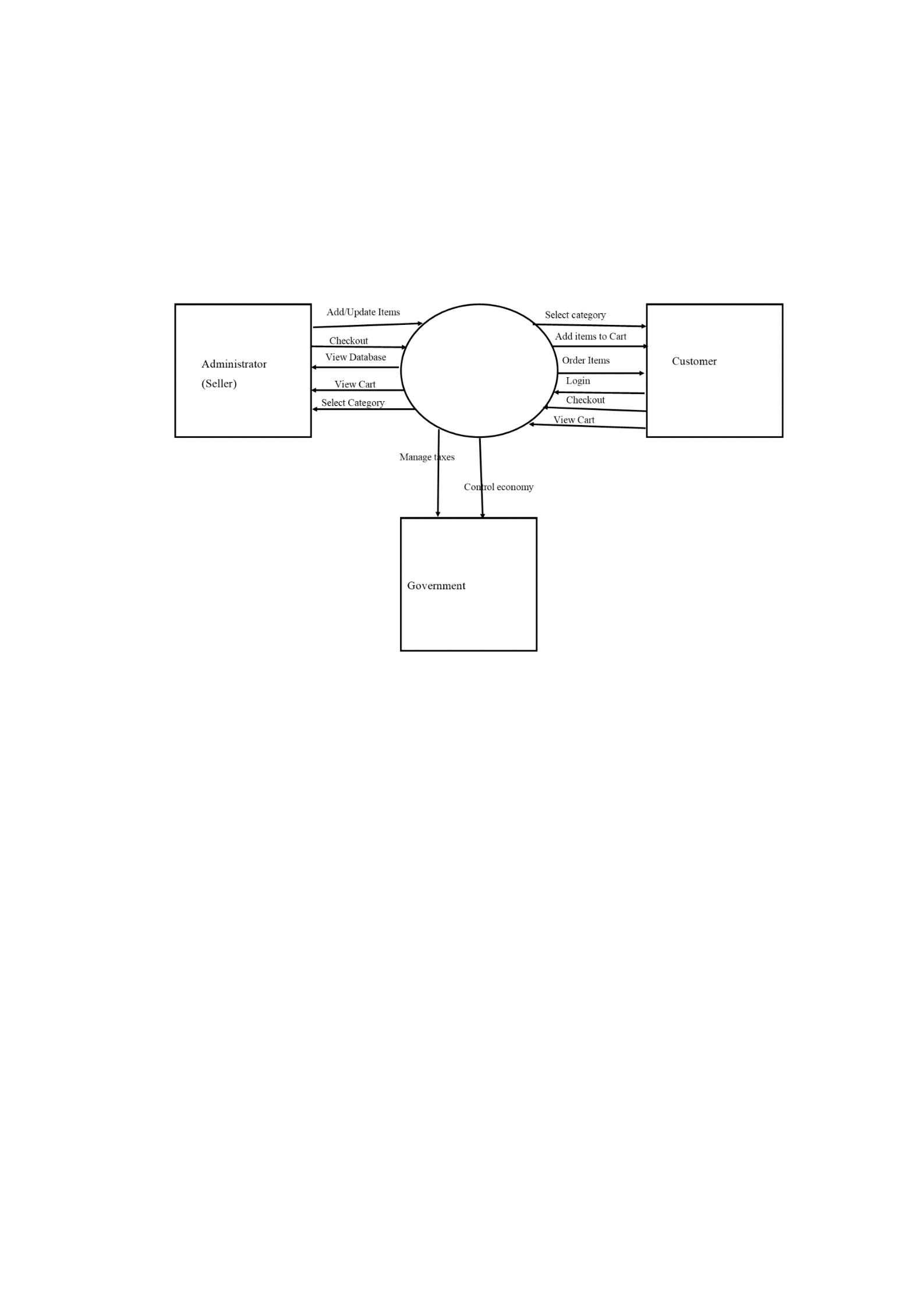
Figure 1 below shows context level DFD for OESS. The Context Level DFD provides a
conceptual view of the process and its surrounding input, output and data stores.
Figure 1: OESS Context Level DFD
General Use case Diagram
The figure below shows the general use case diagram of OESS. The three actors are the
administrator, the customer and the government. The administrator can select a category,
add/update items to/from the cart, view database, checkout or view the cart. The customers
can select category, add/remove items from their cart, login, and make an order or checkout.
On the other hand the government is to ensure steady economy and manage taxes.
5
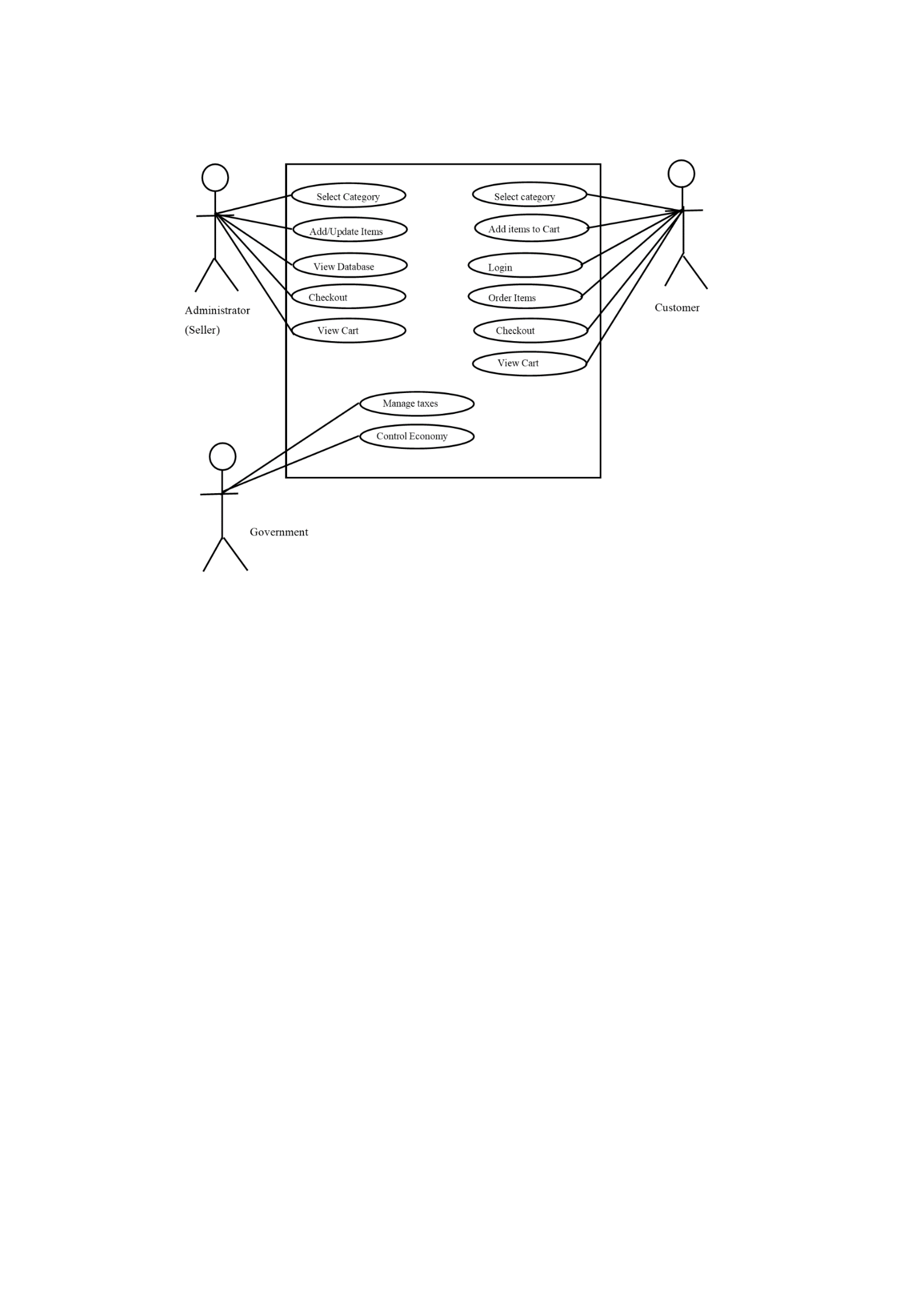
Figure 2: OESS General use case diagram
Activity Diagram
The figure below demonstrates the activity flow for OESS The flow of the application is
similar for both the user and administrator. The flow begins when the user first runs the
application home screen OESS that appears in the web browser. The user can browse through
the available list of categories and can choose either to select a category or to directly view
the cart. In the category, a user can select view more information for details about a particular
item before deciding to add it to the shopping cart by clicking on the cart icon next to the
item. The user can then decide to either continue shopping by clicking the continue shopping
button or can check out by clicking on the checkout option. If there are no items in the cart,
then the user does not have an option to click checkout (Chakraborty, Lee, Bagchi-Sen,
Upadhyaya, & Rao, 2016). The user can check out after doing the user authentication by
logging in with the username and password. Once the user successfully logins/registers, the
order form, where the user can put the correct information to place the order appears. If the
user includes incorrect or incomplete information, then placing the order is not allowed. After
the user successfully inputs the correct information, placing order is successful, and the user
can see the success message. The additional flow step for the administrators is that they can
view the user’s information, the user’s checkout, and the product details by using the
database after the user successfully places an order.
6
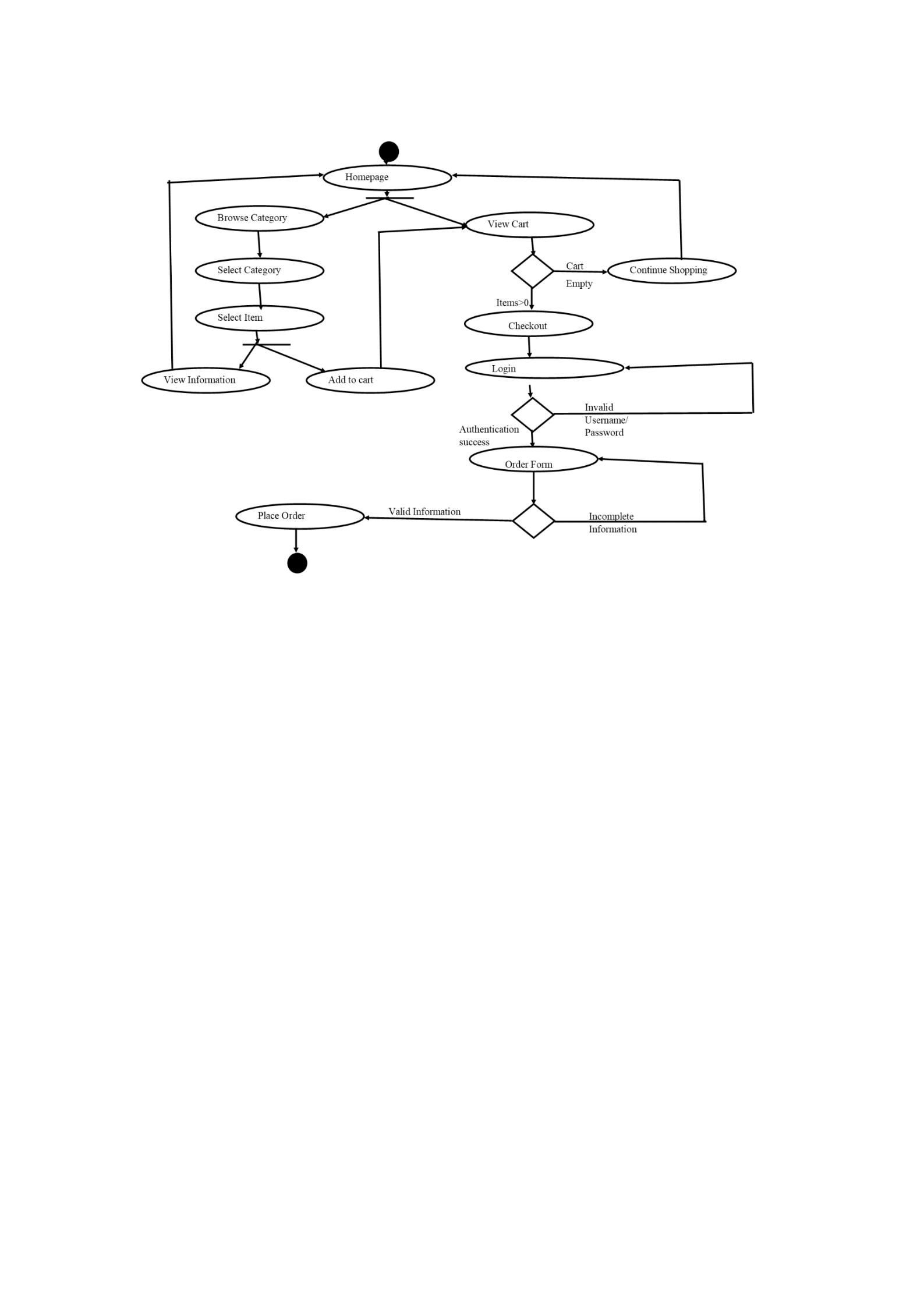
Figure 3: OESS Activity Diagram
2. Quality Plan
The International Organization for Standardization (ISO) defines quality as “the degree to
which a set of inherent characteristics fulfils requirements”. In order to achieve quality of this
system, I will use ISO: 9000:2000.
In order to achieve quality plan of OESS system, I refer to ISO 9000 standard because it is a
quality system standard that:
i. It is a three-part, continuous cycle of planning, controlling, and documenting quality in an
organization.
ii. Provides minimum requirements needed for an organization to meet its quality
certification standards
iii. Helps organizations around the world reduce costs and improve customer satisfaction
PHASE II
System and Database Design
A. User Interface
User Interface
The two interface types found in the online shopping-cart application are as follows:
1. Customer Interface: Customers are able to view the home page of the shopping-cart
application, browse the different categories, browse and add any number of items from any
categories in the shopping cart, look for information about each product, delete the items in
the shopping cart, save the cart for later viewing, check out or continue shopping after adding
7
the item to the cart, and check out the items by completing the required information in the
order form (Bilgihan,, Kandampully & Zhang, 2016).
2. Admin Interface: The administrator is able to view the users’ information that was
entered during checkout in the database, can update the information, price, shipping costs of
the items, add or remove items from the main display.
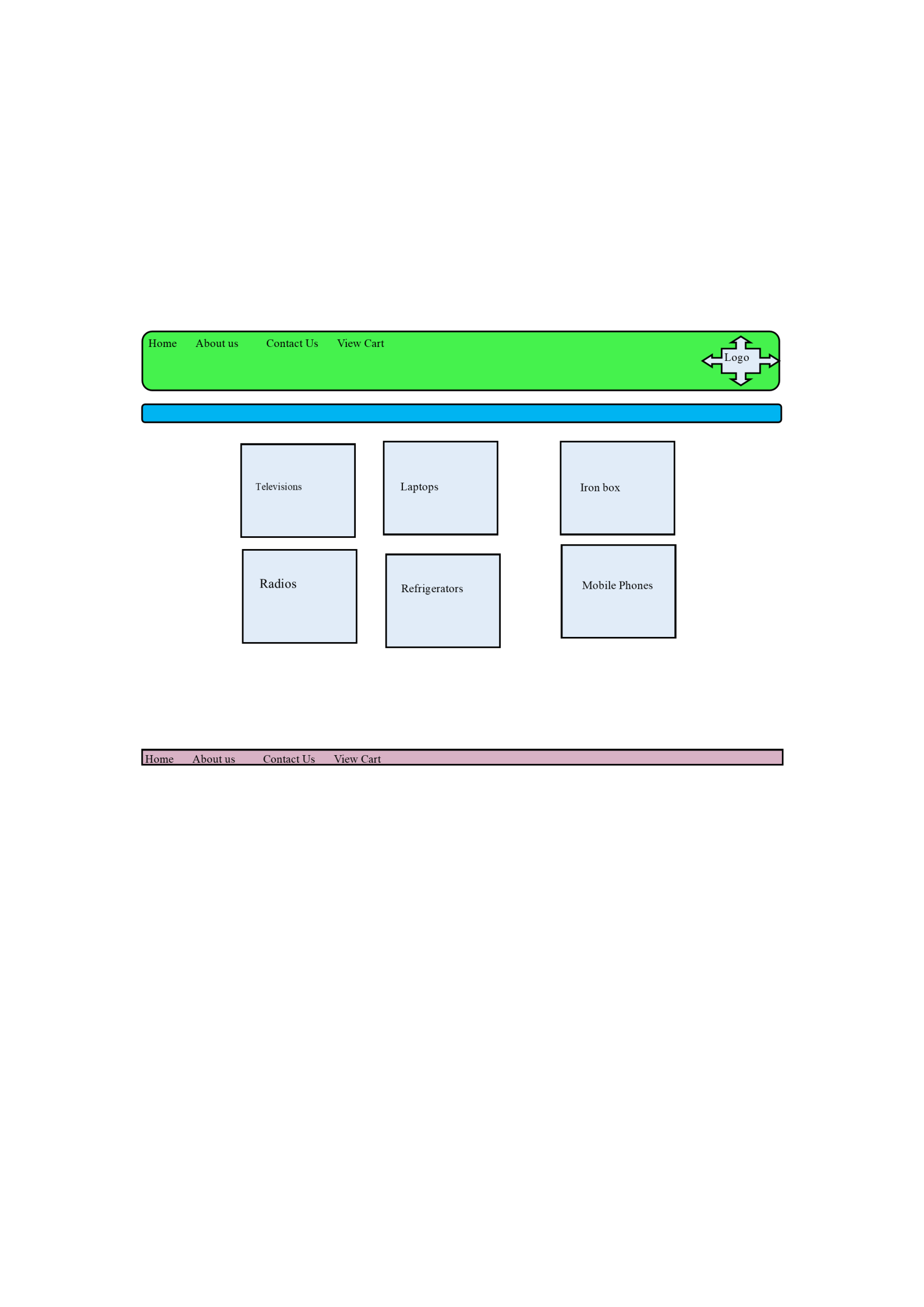
3. Electronics Category Item Interface: The figure below shows items in the electronics
category.
Figure 4: OESS electronics category item interface.
1. Login Interface: The user has to login/register to the user-authentication form by
utilizing the username and password once the checkout button is clicked to place an
order. The login interface appears when the user clicks the checkout button.
8
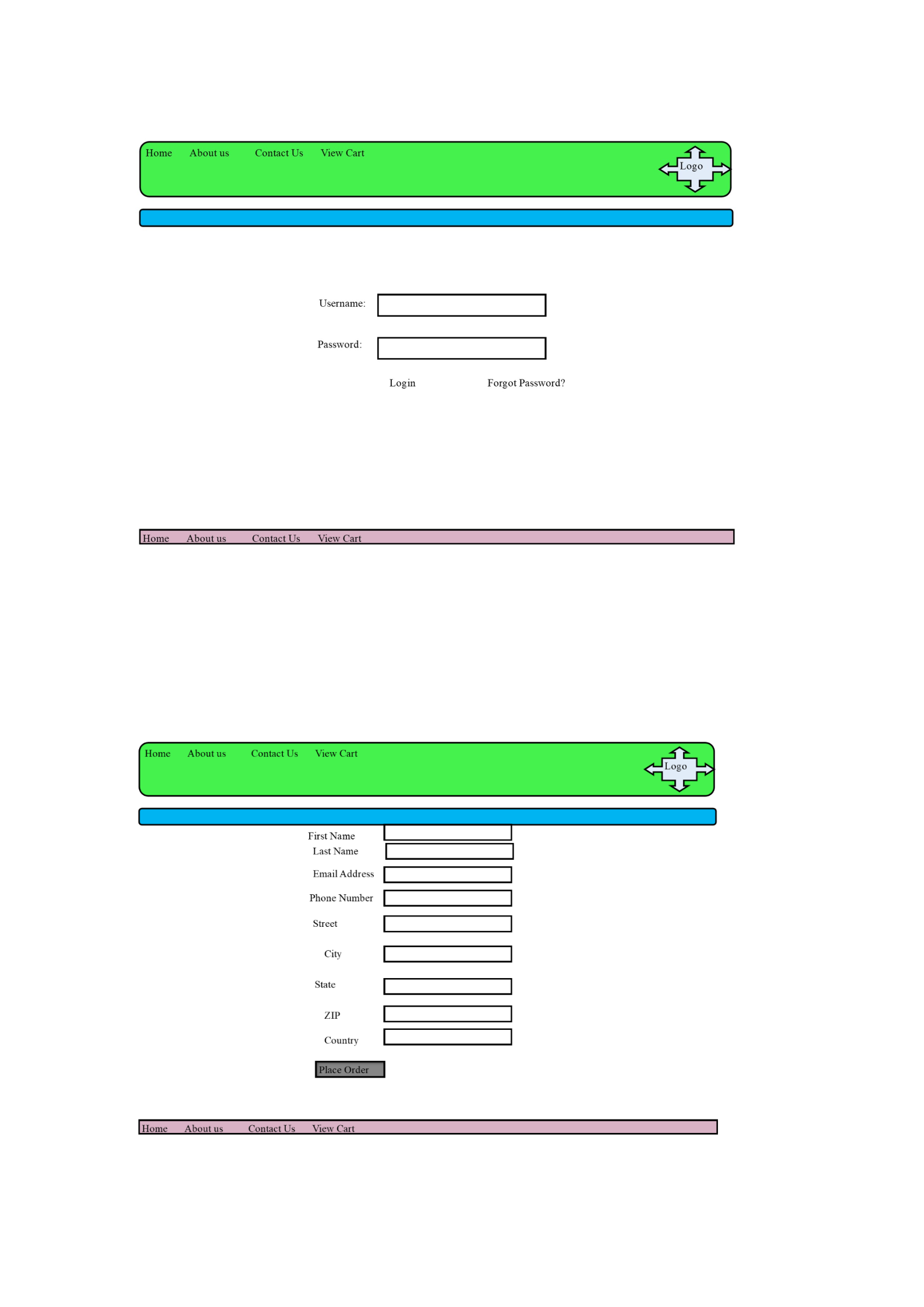
Figure 5: OESS Login Interface
2. Order Form Interface: The order-form page consists of a form where the
user/administrator completes the personal information, such as name, email address,
shipping address, and phone number, to check out. After filling in the information, the
user places the order by clicking on the place button, bringing him to a final message
page indicating that the order was successfully placed.
Figure 6:OESS Order form Interface
9

B. Data design
1. Database design (Tables)
Customer
S/NO NAME TYPE DESCRIPTION
1 userID varchar Primary Key
2 Password Varchar
3 FirstName Varchar
4 LastName Varchar
5 Address Varchar
6 City Varchar
7 ZIP Integer
8 State Varchar
9 Email Varchar
10 Phone varchar
Table 1: OESS customer database table
Electronic_items
S/NO NAME TYPE DESCRIPTION
1 ElectronicsID Integer Primary key
2 electronicsName Varchar
3 Category Varchar
4 No_of_electronics Integer
5 Price Double
Table 2:OESS Electronic_items database table
Shopping_cart_items
S/NO NAME TYPE DESCRIPTION
1 Shopping_cartID integer Primary key
2 InventoryID Integer
3 Price Double
4 Date Varchar
5 userID Varchar
6 Quantity Integer
Table 3: OESS Shopping_cart_items database table
Order_details
S/NO NAME TYPE DESCRIPTION
1 Ordered Integer Primary key
2 userID Char
3 Receivers_name Char
4 Address Char
5 City Char
6 ZIP Integer
7 State Char
8 Shipping_type Char
9 Payment_date Date
Table 4: Order_details database table
10

Shipping_type
S/NO NAME TYPE DESCRIPTION
1 Shipping_type Varchar Primary key
2 Price Double
3 Delivery_days integer
Table 5: Shipping_type database table
Creditcard_details
S/NO NAME TYPE DESCRIPTION
1 Creditcard_usernam
e
Varchar Primary key
2 Creditcard_no varchar
3 Card_type Varchar
4 CVV_number Integer
5 Expiry_date Date
6 userID Varchar
Table 6: Creditcard_details database table.
Purchase_history
S/NO NAME TYPE DESCRIPTION
1 userID Varhar Primary key
2 inventoryID varchar
3 Purchase_date Date
4 Ordered Integer
5 Quantity Integer
6 Price Double
Table 7: Purchase_history database table
2. Entity Relation Diagrams
The ERD serves as a blue print from which a relational database maybe deduced. The figure
below shows the ERD for OESS.
11
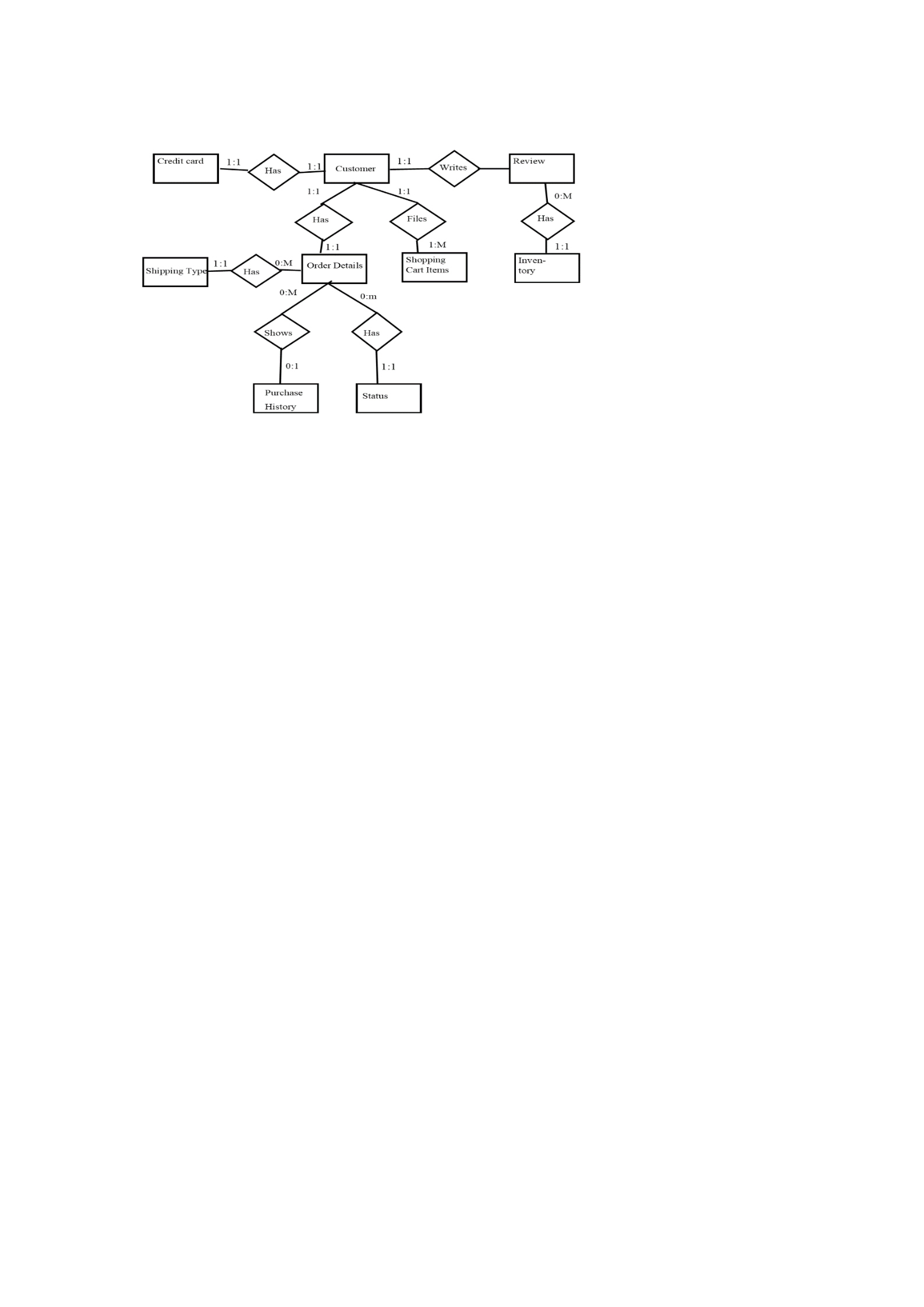
Figure 7: OESS Entity relation diagram.
One to one means entity A matches exactly one record in entity B and every record in B
matches exactly one record in A. One to many means that every record in A matches zero or
more records in B and every record in B matches exactly one record in A. If there is a one to
many relationship between two entities, then these entities are represented as Associative
Entities. In the Relational Database model, each of the entities will be transformed into a
table.
3. Data File Storage and Access.
In OESS, I will use MYSQL database to store, edit, and retrieve data that is needed by both
the administrators and the customer.
C. System Architecture
OESS system uses three-tier architecture. Three-tier architecture is a client-server
architecture in which the functional process logic, data access, computer data storage and
user interface are developed and maintained as independent modules on separate platforms.
Three-tier architecture is a software design pattern and well-established software architecture.
The three tiers in OESS three-tier architecture are:
Presentation Tier: Occupies the top level and displays information related to services
available on a website (Roy & Roy, 2016). This tier communicates with other tiers by
sending results to the browser and other tiers in the network; Application Tier: Also called
the middle tier, logic tier, business logic or logic tier, this tier is pulled from the presentation
tier. It controls application functionality by performing detailed processing; and Data Tier:
Houses database servers where information is stored and retrieved. Data in this tier is kept
independent of application servers or business logic.
Figure 8 below illustrates the three-tier architecture of OESS system.
12
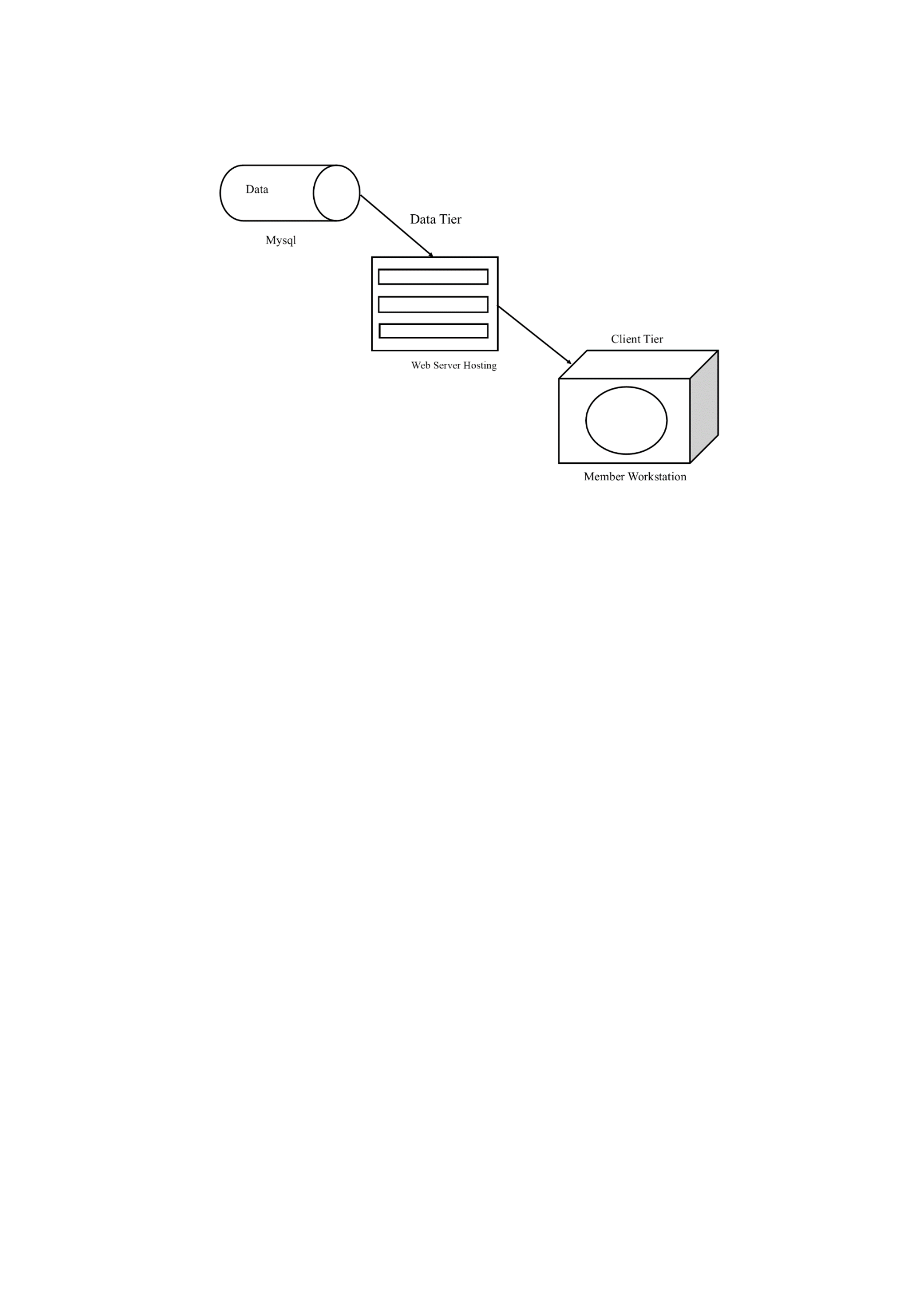
Figure 8: OESS client tier architecture.
PHASE III
Project Plan
Tasks needed for Online Electronic Shopping System
1. In the first delivery, the application must be able to add an item to the shopping cart and
case.
Browse categories on the home page
Select a category and browse through the items
View more information about an item.
Add an item to the shopping cart.
2. The application must be able to check out the items in the cart.
Check out the items.
Continue shopping.
Delete the items to update the shopping cart.
3. The application asks for user authentication before checking out.
Add items to the cart.
Check out the items
Log in with a valid username and password.
4. The application must bring up the order form for the check out.
13
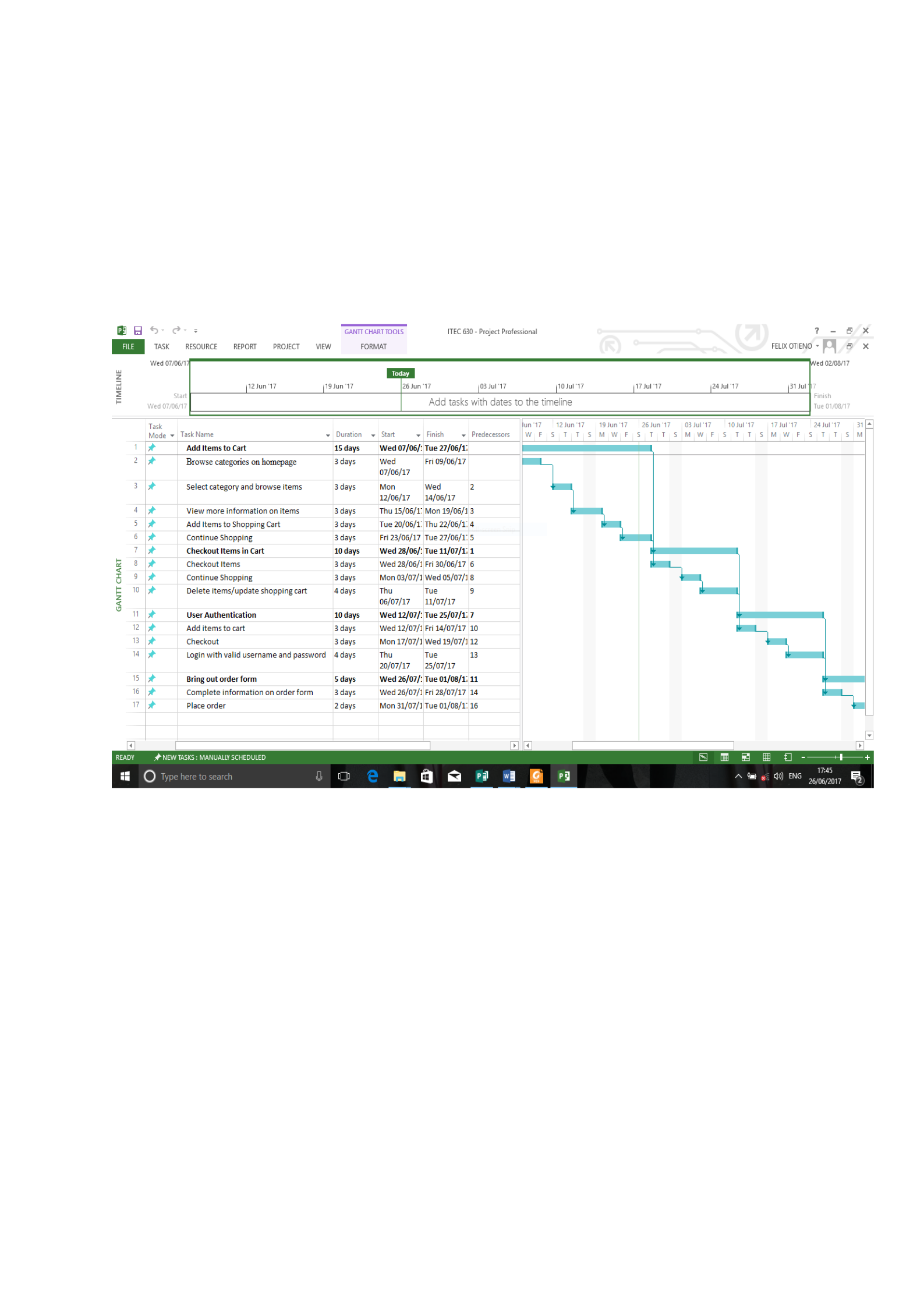
Complete the information on the order form.
Place the order.
Estimated time and cost
Starting date 11th June 2017
Ending date: 1st August 2017
Total duration: 8 weeks
Gant Chart
Figure 9: OESS Gant Chart
References
14

Wong, E. J., Yap, K. M., Alexander, J., & Karnik, A. (2016, November). An Empirical Study
of Haptic-Audio Based Online Shopping System for the Blind. InLInternational AsiaHaptics
conferenceL(pp. 419-424). Springer, Singapore.
Sun, H., Ni, W., & Wang, Z. (2016). A consumption system model integrating quality,
satisfaction and behavioral intentions in online shopping.LInformation Technology and
Management,L17(2), 165-177.
Roy, P., & Roy, D. (2016). Development of Online Shopping System using ASP .NET
Technology and Microsoft SQL.LInternational Journal,L4(4).
Bilgihan, A. (2016). Gen Y customer loyalty in online shopping: An integrated model of
trust, user experience and branding.LComputers in Human Behavior,L61, 103-113.
Chakraborty, R., Lee, J., Bagchi-Sen, S., Upadhyaya, S., & Rao, H. R. (2016). Online
shopping intention in the context of data breach in online retail stores: An examination of
older and younger adults.LDecision Support Systems,L83, 47-56.
Bilgihan, A., Kandampully, J., & Zhang, T. (2016). Towards a unified customer experience
in online shopping environments: Antecedents and outcomes.LInternational Journal of
Quality and Service Sciences,L8(1), 102-119.
15

