



Study Notes of Theory and Practice of Counseling and Psychotherapy
(10th ed) by Gerald Corey
Psychoanalytic Therapy
Introduction
Most of the theories of counseling and psychotherapy influenced by psychoanalytic principles
and techniques
Attention to psychodynamic factors that motivate behavior
Freudian theory gives a brief attention to Carl Jung’s approach
View of Human Nature
Libido—sexual energy
Life instincts serve the purpose of the survival of the individual and the human race
Freud also postulates death instincts
People manifest through their behavior on unconscious wish to die or to hurt themselves
Structure of Personality
THE ID—The Demanding Child
oRuled by the pleasure principle
THE EGO—The Traffic Cop
oRuled by the reality principle
THE SUPEREGO —The Judge
oRuled by the moral principle
Conscious and Unconscious
The following are clinical evidence for postulating the unconscious:
oDreams
oSlips of the tongue
oPosthypnotic suggestions
oMaterial derived from free-association techniques
oMaterial derived from projective techniques
oSymbolic content of psychotic symptoms
Consciousness is a thin slice of the total mind
Like the iceberg that lies below the surface of the water, the larger part of the mind exists below
the surface of awareness
Unconscious stores all experiences, memories, and repressed material
Root of all forms of neurotic symptoms and behaviors.
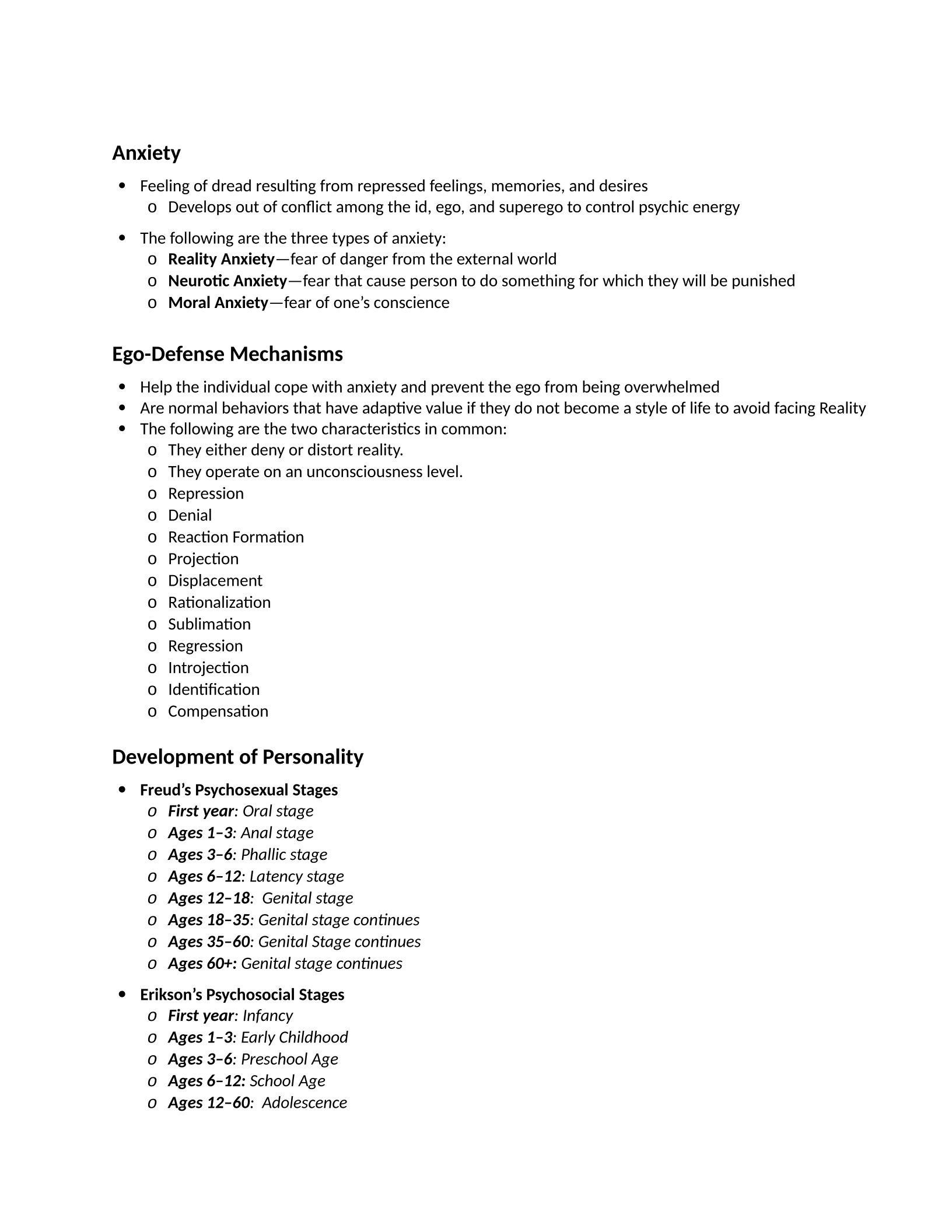
Anxiety
Feeling of dread resulting from repressed feelings, memories, and desires
oDevelops out of conflict among the id, ego, and superego to control psychic energy
The following are the three types of anxiety:
oReality Anxiety—fear of danger from the external world
oNeurotic Anxiety—fear that cause person to do something for which they will be punished
oMoral Anxiety—fear of one’s conscience
Ego-Defense Mechanisms
Help the individual cope with anxiety and prevent the ego from being overwhelmed
Are normal behaviors that have adaptive value if they do not become a style of life to avoid facing Reality
The following are the two characteristics in common:
oThey either deny or distort reality.
oThey operate on an unconsciousness level.
oRepression
oDenial
oReaction Formation
oProjection
oDisplacement
oRationalization
oSublimation
oRegression
oIntrojection
oIdentification
oCompensation
Development of Personality
Freud’s Psychosexual Stages
oFirst year: Oral stage
oAges 1–3: Anal stage
oAges 3–6: Phallic stage
oAges 6–12: Latency stage
oAges 12–18: Genital stage
oAges 18–35: Genital stage continues
oAges 35–60: Genital Stage continues
oAges 60+: Genital stage continues
Erikson’s Psychosocial Stages
oFirst year: Infancy
oAges 1–3: Early Childhood
oAges 3–6: Preschool Age
oAges 6–12: School Age
oAges 12–60: Adolescence
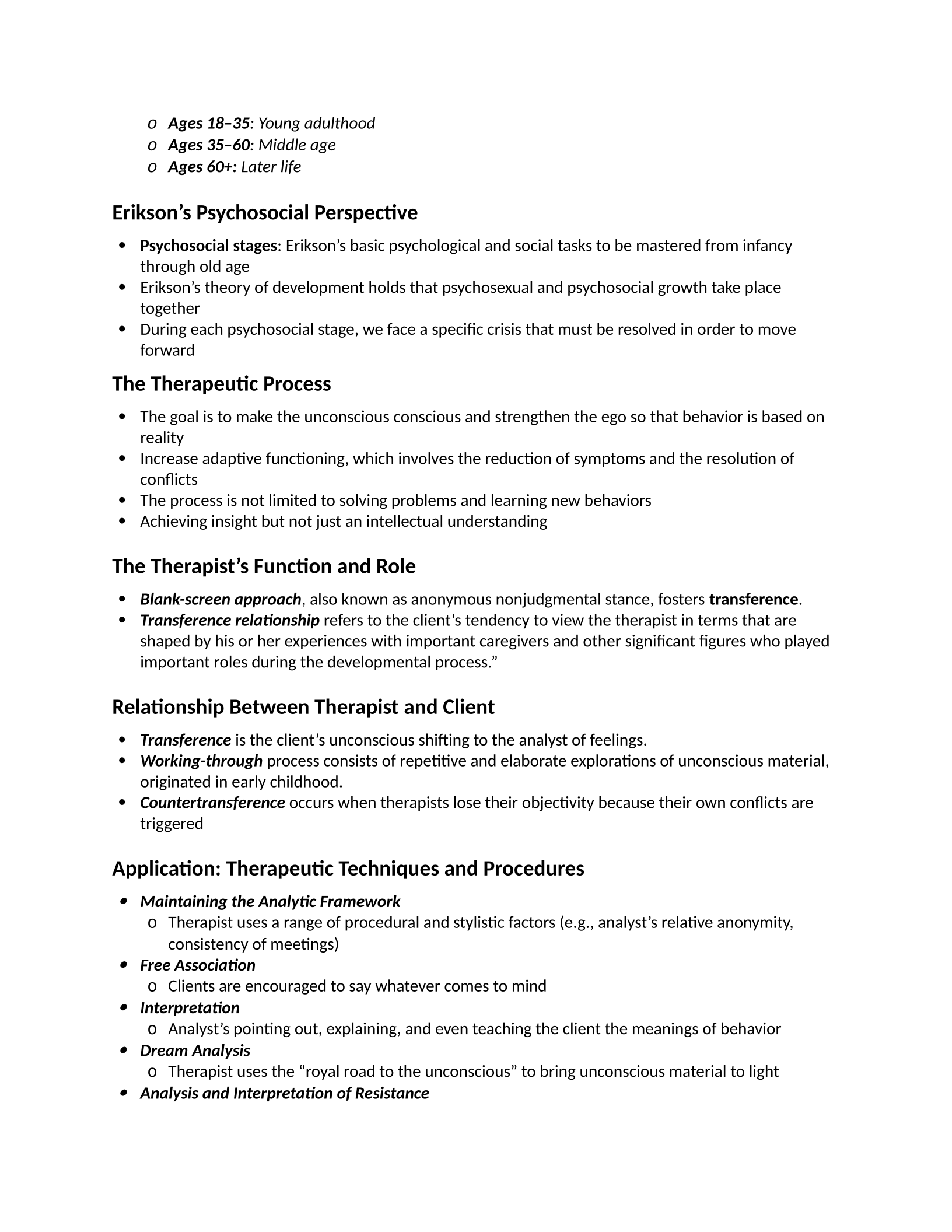
oAges 18–35: Young adulthood
oAges 35–60: Middle age
oAges 60+: Later life
Erikson’s Psychosocial Perspective
Psychosocial stages: Erikson’s basic psychological and social tasks to be mastered from infancy
through old age
Erikson’s theory of development holds that psychosexual and psychosocial growth take place
together
During each psychosocial stage, we face a specific crisis that must be resolved in order to move
forward
The Therapeutic Process
The goal is to make the unconscious conscious and strengthen the ego so that behavior is based on
reality
Increase adaptive functioning, which involves the reduction of symptoms and the resolution of
conflicts
The process is not limited to solving problems and learning new behaviors
Achieving insight but not just an intellectual understanding
The Therapist’s Function and Role
Blank-screen approach, also known as anonymous nonjudgmental stance, fosters transference.
Transference relationship refers to the client’s tendency to view the therapist in terms that are
shaped by his or her experiences with important caregivers and other significant figures who played
important roles during the developmental process.”
Relationship Between Therapist and Client
Transference is the client’s unconscious shifting to the analyst of feelings.
Working-through process consists of repetitive and elaborate explorations of unconscious material,
originated in early childhood.
Countertransference occurs when therapists lose their objectivity because their own conflicts are
triggered
Application: Therapeutic Techniques and Procedures
Maintaining the Analytic Framework
oTherapist uses a range of procedural and stylistic factors (e.g., analyst’s relative anonymity,
consistency of meetings)
Free Association
oClients are encouraged to say whatever comes to mind
Interpretation
oAnalyst’s pointing out, explaining, and even teaching the client the meanings of behavior
Dream Analysis
oTherapist uses the “royal road to the unconscious” to bring unconscious material to light
Analysis and Interpretation of Resistance

oWorks against the progress of therapy and prevents the client from producing previously
unconscious material
Analysis and Interpretation of Transference
oTherapist points out, explains, and teaches the meanings of whatever is revealed
Application to Group Counseling
Group work provides a rich framework for working through transference feelings
oThe group becomes a microcosm of members’ everyday lives.
oProjections onto the leader and members are clues to unresolved intrapsychic conflicts that can
be identified, explored, and worked through in the group.
oPushing the client too rapidly or offering ill-timed interpretations will render the process
ineffective.
Jung’s Perspective on the Development of Personality
An elaborate explanation of human nature that combines ideas from history, mythology,
anthropology, and religion
Places central importance on psychological changes associated with midlife
Achieving individuation—the harmonious integration of the conscious and unconscious aspects of
personality—is an innate and primary goal
To become integrated, it is essential to accept our dark side, or shadow
Dreams are aimed at integration and resolution; they contain messages from the collective
unconscious, our source of creativity
Images of universal experiences contained in the collective unconscious are called archetypes (the
persona, the anima and animus, and the shadow)
Contemporary Trends: Object-Relations Theory, Self Psychology,
and Relational Psychoanalysis
Object Relations
Emphasizes attachment and separation
Self Psychology
Emphasizes how we use interpersonal relationships (self objects) to develop our own sense of self
Relational Psychoanalysis
Emphasizes the interactive process between client and therapist
Brief Psychodynamic Therapy
Applies the principles of psychodynamic theory and therapy to treating selective disorders within 10
to 25 sessions
Strengths from a Diversity Perspective
Erikson made significant contributions to how social and cultural factors affect people in many
cultures over the life span.
This approach promotes intensive psychotherapy for therapists, which gives them insight into their
countertransference, including biases and prejudices.
Shortcomings From a Diversity Perspective

Based on upper- and middle-class values and may be cost prohibitive for many people
Cultural expectations may lead clients to want more direction and structure from the professional
More concerned with long-term personality reconstruction than with short-term problem solving
Fails to address social, cultural, and political factors that oppress clients
Contributions of the Classical Psychoanalytic Approach
Applying psychoanalytic point of view to therapy practice is useful in
ounderstanding resistances that take the form of canceling appointments, fleeing from therapy
prematurely, and refusing to look at oneself
ounderstanding that unfinished business can be worked through to provide a new ending to events
that have restricted clients emotionally
ounderstanding the value and role of transference
oUnderstanding the overuse of ego defenses
Contributions of Contemporary Psychoanalytic Approach
Helps therapists understand the following:
oExtensive empirical literature on attachment, emotion, defenses, personality, and other areas
that support the theoretical models and clinical experiences of psychoanalytic therapists
oThe value of concepts such as unconscious motivation, the influence of early development,
transference, countertransference, and resistance
Limitations and Criticisms of Psychoanalytic Approach
This approach may not be appropriate for all cultures or socioeconomic groups
Deterministic focus does not emphasize current maladaptive behaviors
Minimizes role of the environment
Requires subjective interpretation
Relies heavily on client fantasy
Lengthy treatment may not be practical or affordable for many clients
Powered by TCPDF (www.tcpdf.org)

