


Jesse Boles
BUSI 820 Quantitative Research Methods
August 3, 2024
Assignment Six

BUSI 820 Assignment 6
Table of Contents
A.6 Chapter 8 Problem 8.1 3
A.6 Chapter 8 Problem 8.2 4
A.6 Chapter 8 Problem 8.3 5
A.6 Chapter 8 Problem 8.4 6
References 9
August 3, 2024 2
BUSI 820 Assignment 6
A.6 Chapter 8 Problem 1
August 3, 2024 3
BUSI 820 Assignment 6
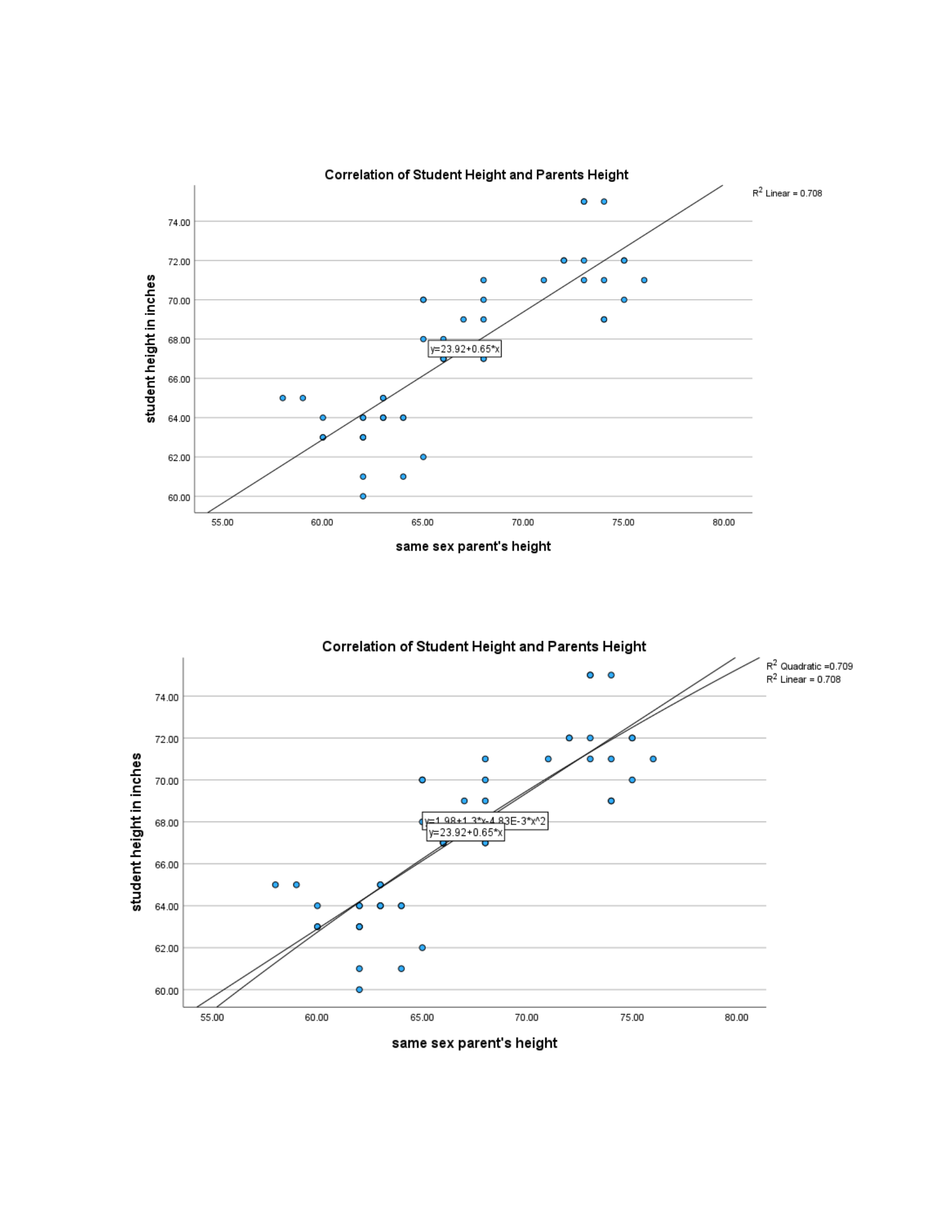
In the scatterplots for the correlation of student height and parent height, a high positive
relationship can be witnessed between both variables. This indicates statistically significant that a
strong relationship or effect size is much larger than typical for students' height in comparison to
their parent's height (Morgan et al., 2019). The direction of the linear regression line, as well as
the quadratic line, show a significant correlation of r=.71 for both. Brinkmann et al. (2022)
indicate that effect size is critical for determining the relationship between variables and the
dependency each one provides to the other.
A.6 Chapter 8 Problem 2
August 3, 2024 4
BUSI 820 Assignment 6
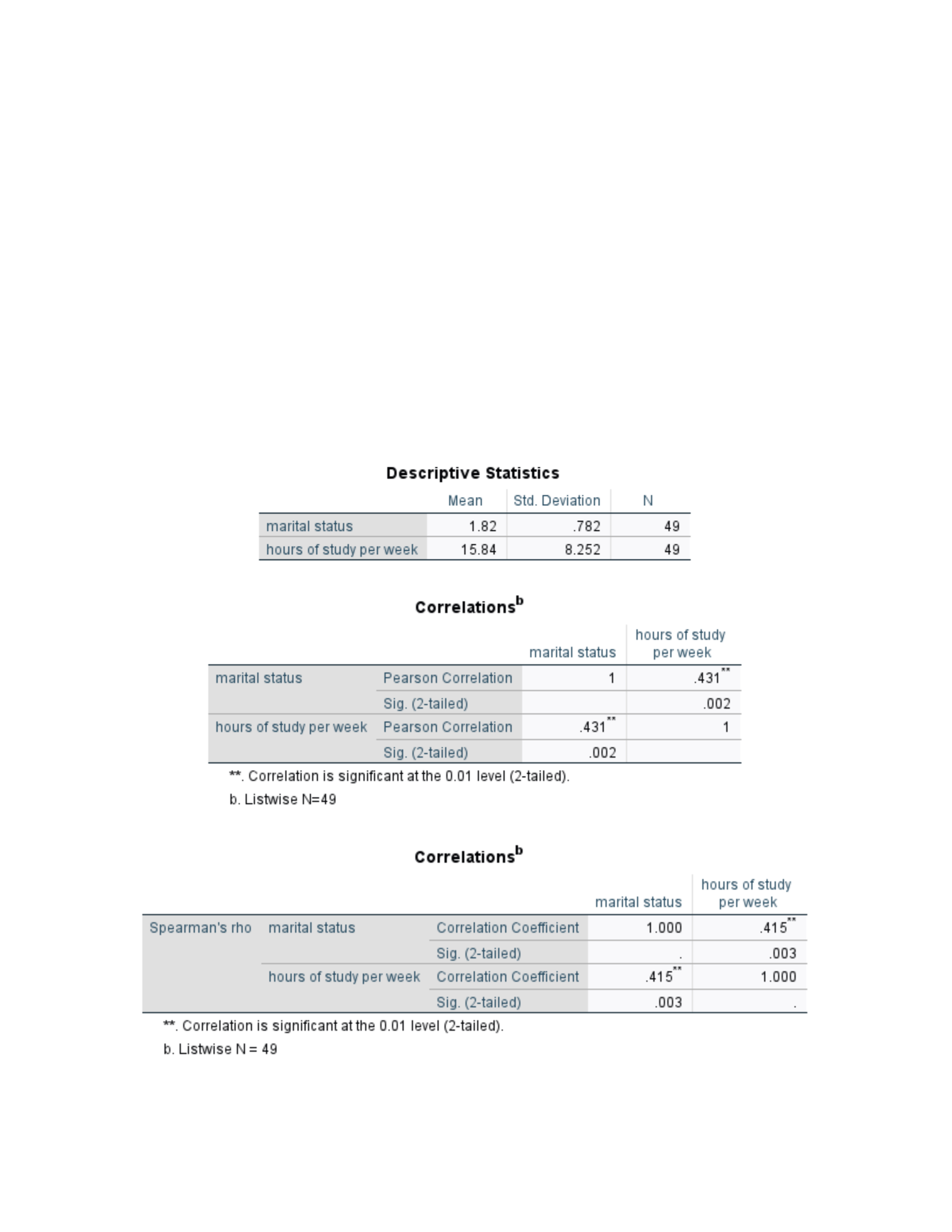
A correlation analysis was conducted to determine if there was a statistical significance
between the variables of a student's marital status and the hours of study they perform each
week. The Pearson Correlation r (47)=.43, p=.002, and these correlations provide a significant
statistical linkage. This positive correlation illustrates that students who are married have
contributed more hours to study and vice versa, pertaining to students who are not married
engaging in fewer hours of study. Kwok et al. (2023) show in their study that the Pearson
Correlation provides linear representation and understanding of variable interpretation to
illustrate relationship status further.
A.6 Chapter 8 Problem 3
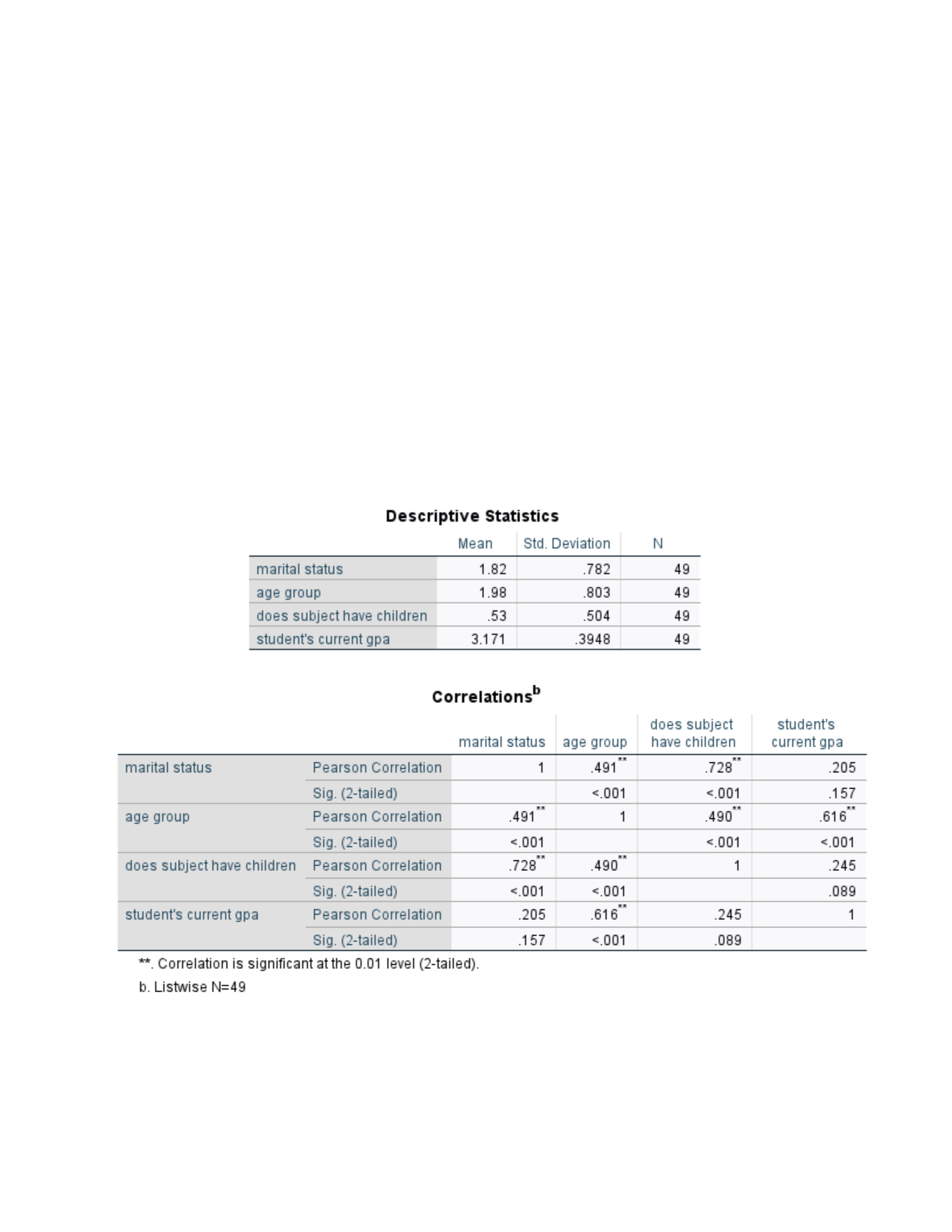
To determine the correlation between marital status, age group, students with children,
and overall student GPA, a Pearson Correlation was computed to review the overall
August 3, 2024 5
BUSI 820 Assignment 6
intercorrelation of each variable. Table A illustrates a correlation between the variables and the
statistical significance of each variable to the others. The strength of the variable relationship is
much larger than typical between the variables of marital status and having children, and the
weakest relationship, or smaller than typical, is between marital status and student GPA. The
relationship between age group and student GPA also proves to be larger than typical, while
having children and student GPA would be closer to a typical effect size relationship.
Table A: Intercorrelations, Means, and SD for Student Life Variables
Variable 1 2 3 4 M SD
Marital
Status
- .49** .73** .21 1.82 .782
Age Group - .49** .62** 1.98 .803
Has
Children
- .25 .53 .504
Student
GPA
- 3.17 .394
*p < .05 **p < .01
A.6 Chapter 8 Problem 4
August 3, 2024 6
BUSI 820 Assignment 6
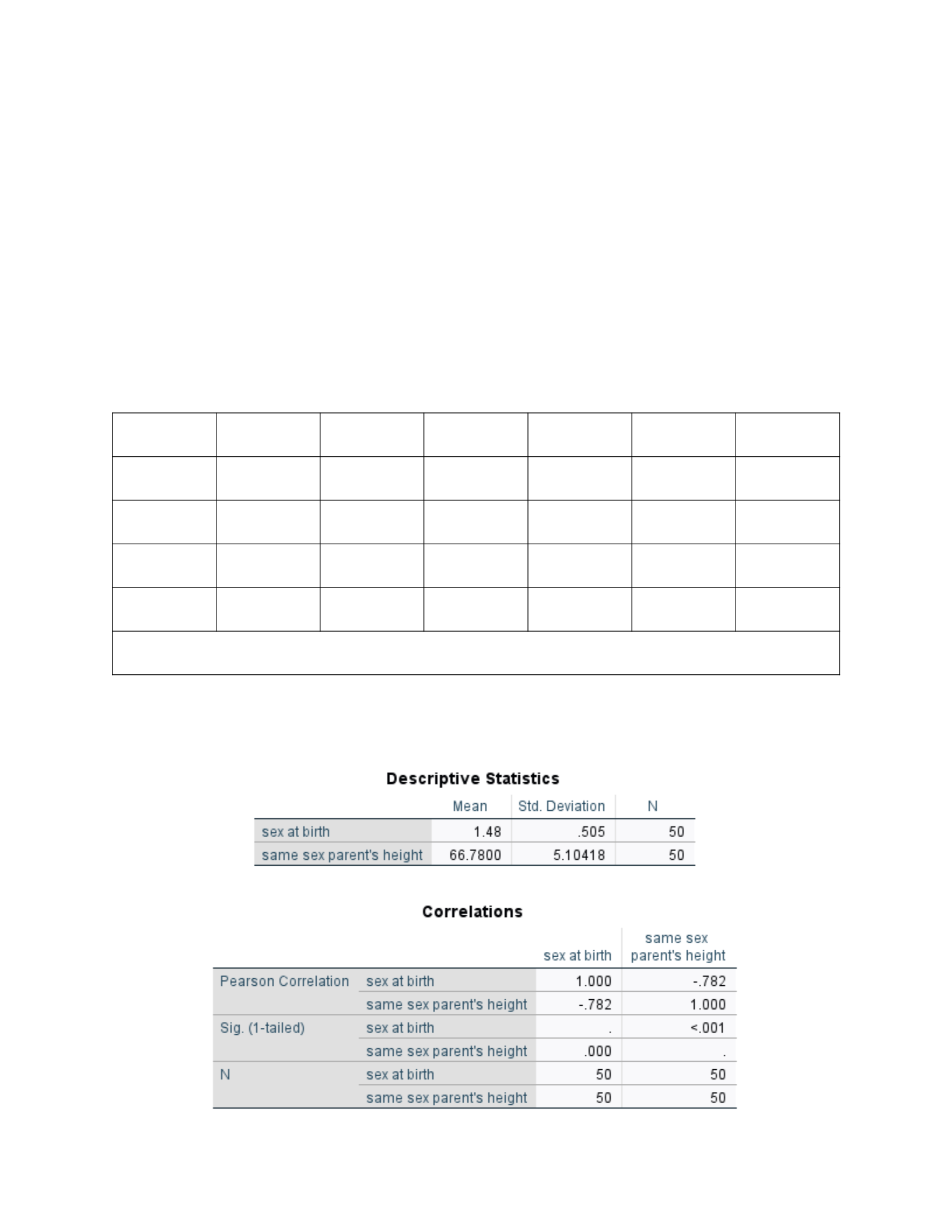
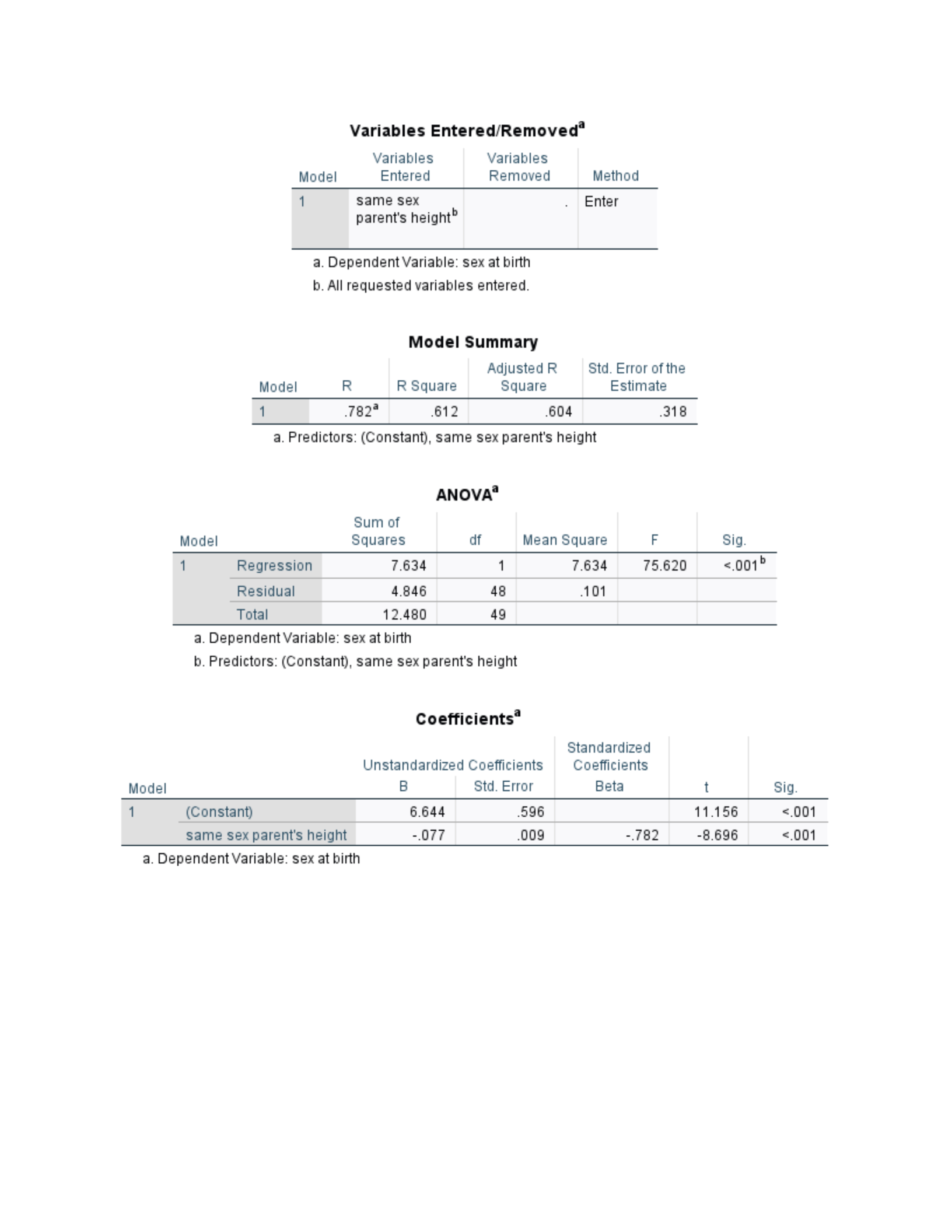
Multiple regression was used between same-sex parents' height as a dependent variable
and the student's sex at birth for predicting the student's overall height. In reviewing the model
summary, the total R-value is .78, and R squared is .61, denoting that a variance of 61% between
these variables and a regression model is a positive determinant for this review (Morgan et al.,
August 3, 2024 7

BUSI 820 Assignment 6
2019). In a review of the coefficients table, it can be determined that both significantly contribute
to one another and can be predicted to help determine the student's height.
References
Brinkmann, C., Gohl, P., Mack, D., Pfeifer, J., Fenés, M. P., Harzer, O., & Zöllner, B. (2022).
The importance of effect sizes when comparing cycle threshold values of SARS-CoV-2
variants. PLoS ONE, 17(7), e0271808. https://doi.org/10.1371/journal.pone.0271808
Kwok, T. W., Chang, S., & Li, H. (2023). Understanding client satisfaction of prefabricated
curtain wall in Hong Kong using XGBoost and Pearson correlation. Engineering
Construction & Architectural Management. https://doi.org/10.1108/ecam-03-2023-0276
August 3, 2024 8

BUSI 820 Assignment 6
Morgan, G. A., Barrett, K. C., Leech, N. L., & Gloeckner, G. W. (2019). IBM SPSS for
Introductory Statistics: Use and Interpretation. Routledge.
August 3, 2024 9

