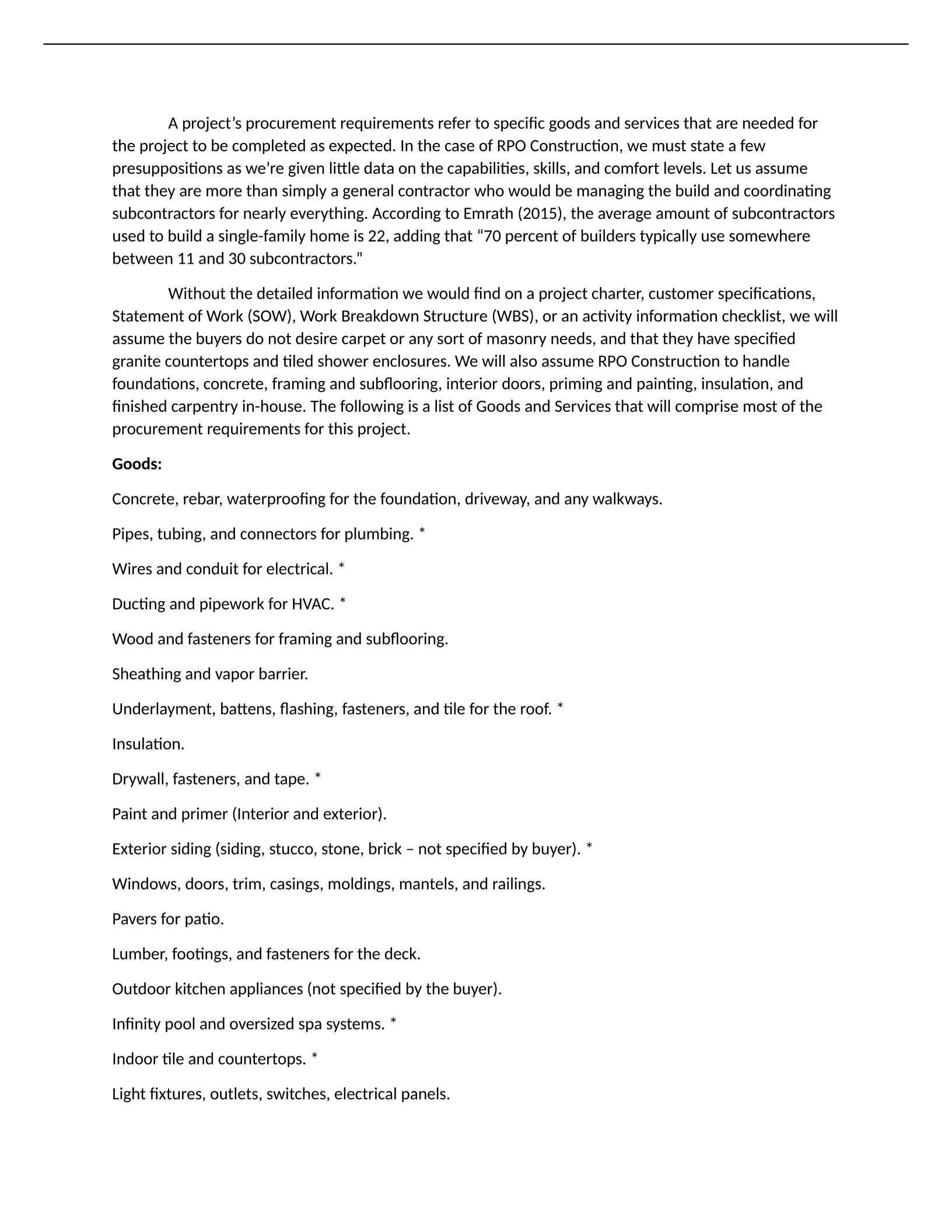
A project’s procurement requirements refer to specific goods and services that are needed for
the project to be completed as expected. In the case of RPO Construction, we must state a few
presuppositions as we’re given little data on the capabilities, skills, and comfort levels. Let us assume
that they are more than simply a general contractor who would be managing the build and coordinating
subcontractors for nearly everything. According to Emrath (2015), the average amount of subcontractors
used to build a single-family home is 22, adding that “70 percent of builders typically use somewhere
between 11 and 30 subcontractors.”
Without the detailed information we would find on a project charter, customer specifications,
Statement of Work (SOW), Work Breakdown Structure (WBS), or an activity information checklist, we will
assume the buyers do not desire carpet or any sort of masonry needs, and that they have specified
granite countertops and tiled shower enclosures. We will also assume RPO Construction to handle
foundations, concrete, framing and subflooring, interior doors, priming and painting, insulation, and
finished carpentry in-house. The following is a list of Goods and Services that will comprise most of the
procurement requirements for this project.
Goods:
Concrete, rebar, waterproofing for the foundation, driveway, and any walkways.
Pipes, tubing, and connectors for plumbing. *
Wires and conduit for electrical. *
Ducting and pipework for HVAC. *
Wood and fasteners for framing and subflooring.
Sheathing and vapor barrier.
Underlayment, battens, flashing, fasteners, and tile for the roof. *
Insulation.
Drywall, fasteners, and tape. *
Paint and primer (Interior and exterior).
Exterior siding (siding, stucco, stone, brick – not specified by buyer). *
Windows, doors, trim, casings, moldings, mantels, and railings.
Pavers for patio.
Lumber, footings, and fasteners for the deck.
Outdoor kitchen appliances (not specified by the buyer).
Infinity pool and oversized spa systems. *
Indoor tile and countertops. *
Light fixtures, outlets, switches, electrical panels.
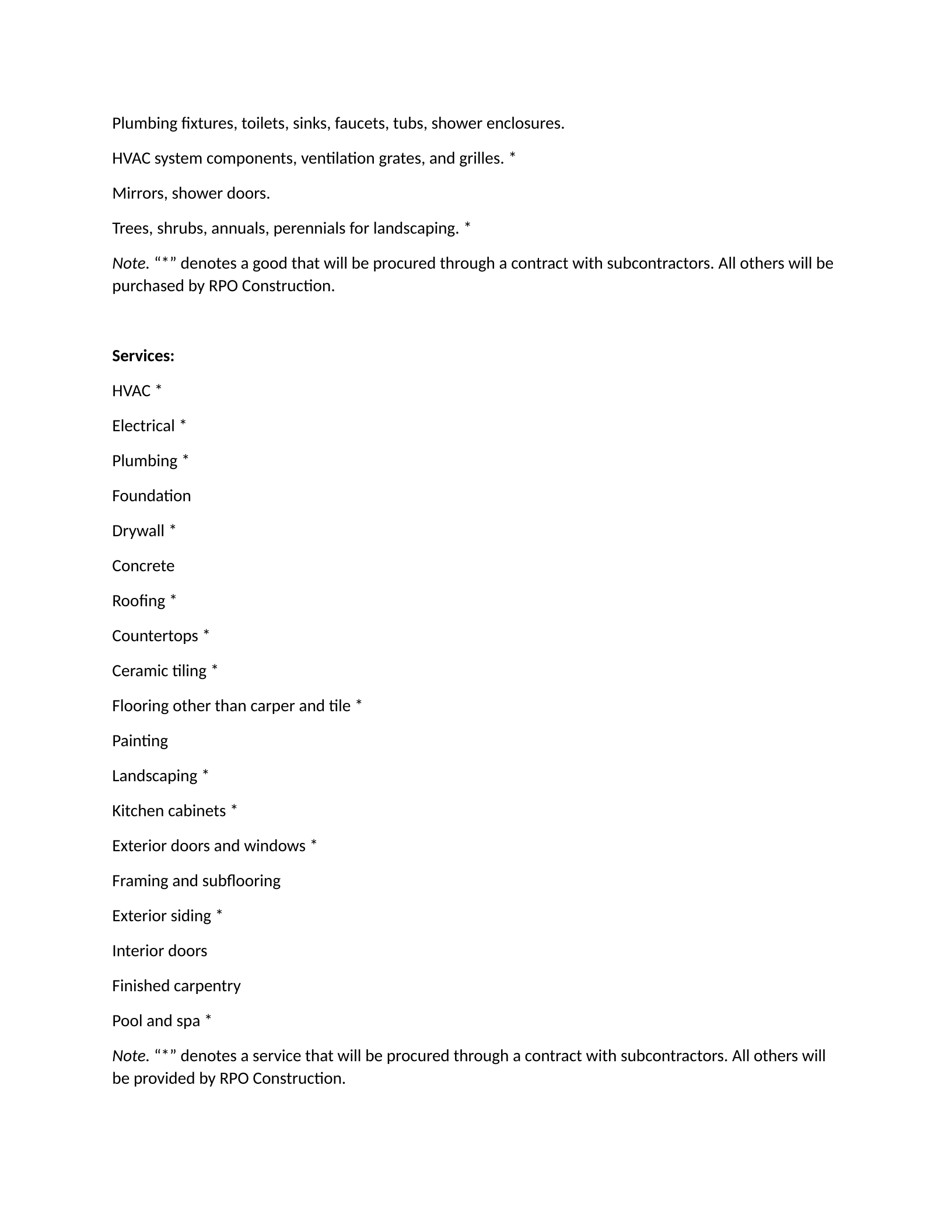
Plumbing fixtures, toilets, sinks, faucets, tubs, shower enclosures.
HVAC system components, ventilation grates, and grilles. *
Mirrors, shower doors.
Trees, shrubs, annuals, perennials for landscaping. *
Note. “*” denotes a good that will be procured through a contract with subcontractors. All others will be
purchased by RPO Construction.
Services:
HVAC *
Electrical *
Plumbing *
Foundation
Drywall *
Concrete
Roofing *
Countertops *
Ceramic tiling *
Flooring other than carper and tile *
Painting
Landscaping *
Kitchen cabinets *
Exterior doors and windows *
Framing and subflooring
Exterior siding *
Interior doors
Finished carpentry
Pool and spa *
Note. “*” denotes a service that will be procured through a contract with subcontractors. All others will
be provided by RPO Construction.
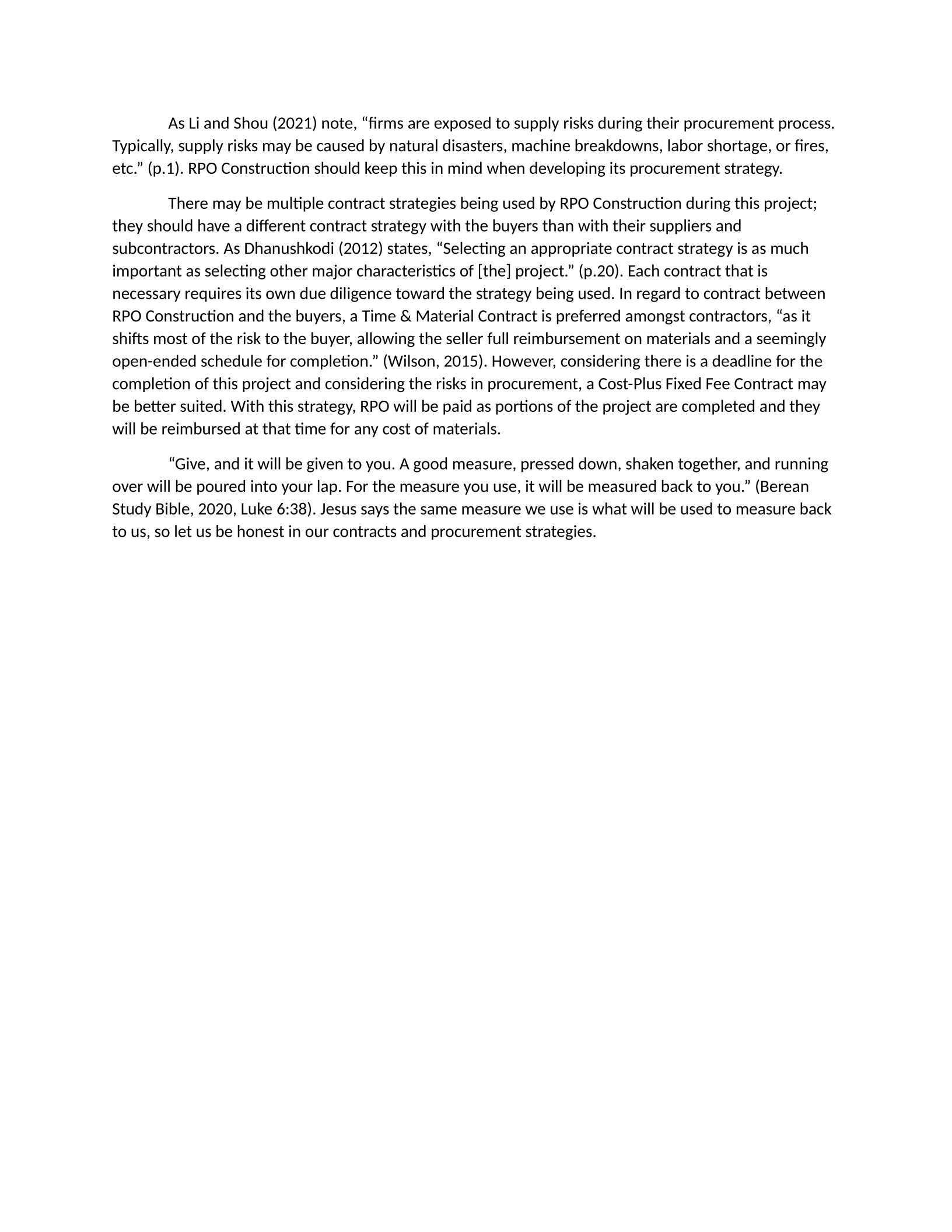
As Li and Shou (2021) note, “firms are exposed to supply risks during their procurement process.
Typically, supply risks may be caused by natural disasters, machine breakdowns, labor shortage, or fires,
etc.” (p.1). RPO Construction should keep this in mind when developing its procurement strategy.
There may be multiple contract strategies being used by RPO Construction during this project;
they should have a different contract strategy with the buyers than with their suppliers and
subcontractors. As Dhanushkodi (2012) states, “Selecting an appropriate contract strategy is as much
important as selecting other major characteristics of [the] project.” (p.20). Each contract that is
necessary requires its own due diligence toward the strategy being used. In regard to contract between
RPO Construction and the buyers, a Time & Material Contract is preferred amongst contractors, “as it
shifts most of the risk to the buyer, allowing the seller full reimbursement on materials and a seemingly
open-ended schedule for completion.” (Wilson, 2015). However, considering there is a deadline for the
completion of this project and considering the risks in procurement, a Cost-Plus Fixed Fee Contract may
be better suited. With this strategy, RPO will be paid as portions of the project are completed and they
will be reimbursed at that time for any cost of materials.
“Give, and it will be given to you. A good measure, pressed down, shaken together, and running
over will be poured into your lap. For the measure you use, it will be measured back to you.” (Berean
Study Bible, 2020, Luke 6:38). Jesus says the same measure we use is what will be used to measure back
to us, so let us be honest in our contracts and procurement strategies.
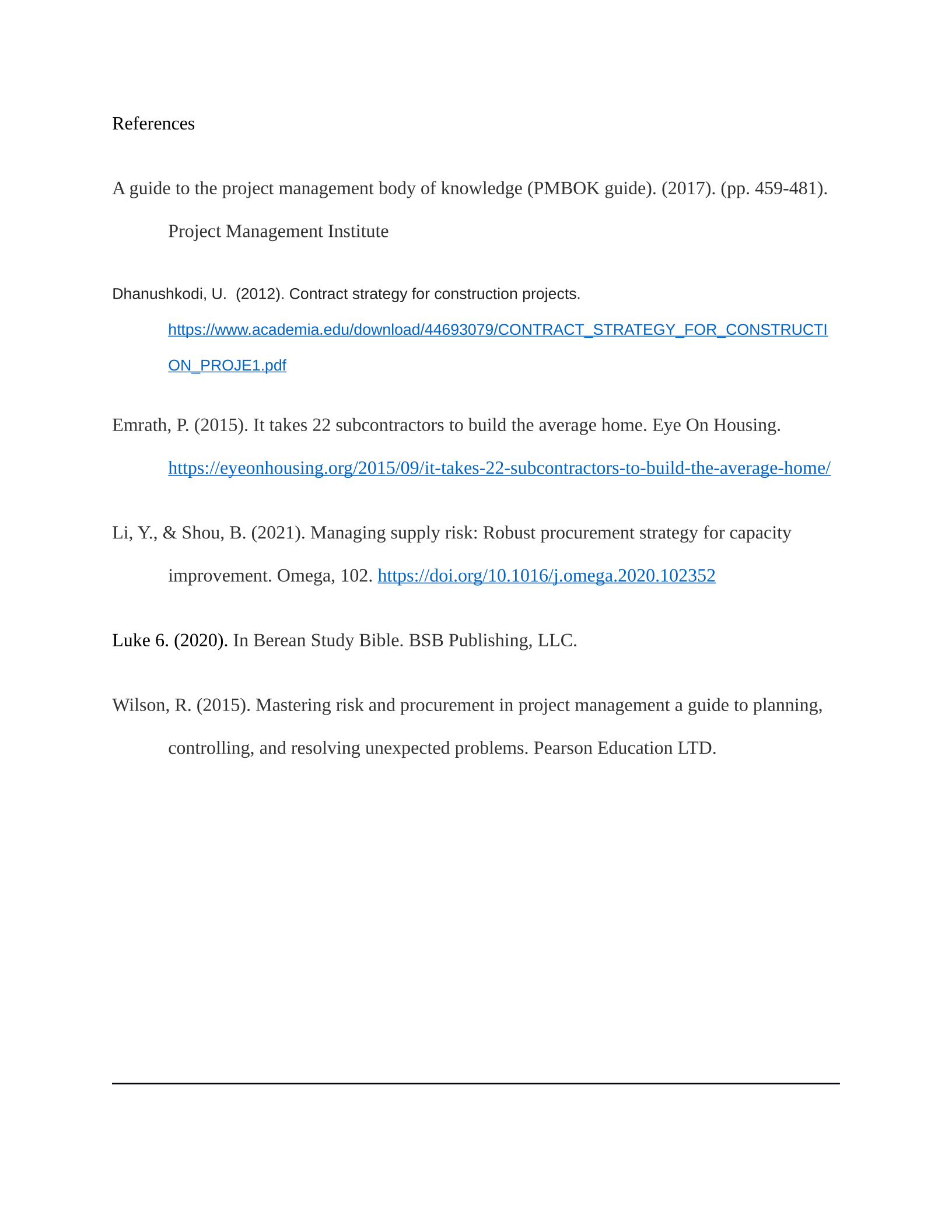
References
A guide to the project management body of knowledge (PMBOK guide). (2017). (pp. 459-481).
Project Management Institute
Dhanushkodi, U. (2012). Contract strategy for construction projects.
https://www.academia.edu/download/44693079/CONTRACT_STRATEGY_FOR_CONSTRUCTI
ON_PROJE1.pdf
Emrath, P. (2015). It takes 22 subcontractors to build the average home. Eye On Housing.
https://eyeonhousing.org/2015/09/it-takes-22-subcontractors-to-build-the-average-home/
Li, Y., & Shou, B. (2021). Managing supply risk: Robust procurement strategy for capacity
improvement. Omega, 102. https://doi.org/10.1016/j.omega.2020.102352
Luke 6. (2020). In Berean Study Bible. BSB Publishing, LLC.
Wilson, R. (2015). Mastering risk and procurement in project management a guide to planning,
controlling, and resolving unexpected problems. Pearson Education LTD.
Reply 1
Andrew,
I agree with your discussion in regard to the needs of the customer, as well as the skills
and ability of the company helping shape the requirements list. And I appreciate that you gave
examples of some of the requirements the customers may have, especially use (or non-use) of
specific contractors. That was definitely not something I had considered. You have provided a
good example of a make-or-buy analysis.
I also appreciate that you stated your assumptions on the skill level or purpose of RPO
Construction as being a general contractor. I made a different assumption in my discussion,
simply based on the use of the word construction in their company name. I assumed them to be
more than a general contractor and gave a list of the abilities and skills I was assuming them to
have in order to decide what procurement requirements I thought they could accomplish
themselves (purchasing the necessary materials) and what they would need to hire subcontractors
for. However, I do agree that the dock and boathouse are more likely than not to require the use
of subcontractors, as those items do require a specialization not likely to be held by RPO
Construction, who is being hired for the new home project.
I did note where Wilson (2015) states “Contractors prefer this type of contract,” when
discussing Time and Material Contracts (p.118). However, I thought a Cost-Plus Fixed Fee
Contract might be used here. I had not thought about the Firm Fixed Price Contract you
mentioned as a possible option in the scenario, though I do remember that was a practice used on
base when I was performing the duties of building manager for a Controlled Industrial Facility in
need of repairs. Blaess (2021) mentions a “firm-fixed-price contract” being awarded in the
construction of a new training facility for Fleet Activities Yokosuka, Japan (p. 50).
I like your reference to 1 Chronicles 22 and I was reminded of Exodus 25-28. God seems
to be giving Moses His own project procurement requirements, in a sense. Some items come
from ‘in-house’ in the sense that they were brought as offerings from the Israelites. Some were
procured, such as the wood needed. There is even a sense of ‘subcontractors’ being used, “You
are to instruct all the skilled craftsmen, whom I have filled with a spirit of wisdom” (Berean
Study Bible, 2020, Exodus 28:3).
References
Blaess, J. (2021). Fast-tracking a critical training facility. The Military Engineer, 113(733), 48-
51. https://www.jstor.org/stable/27015579
Exodus 28. (2020). In Berean Study Bible. BSB Publishing, LLC.
Wilson, R. (2015). Mastering risk and procurement in project management a guide to planning,
controlling, and resolving unexpected problems. Pearson Education LTD.
Reply 2
James,
I appreciate your discussion on the risk procurement brings. I agree with you having
accurate and reliable sources of information is vital. I made a similar list of the documents to use,
as you, noting the reading material. One of the items that caught my attention was your reference
to Høibø et al. (2018) when they state, “in regions with termites, wood is less frequently used.”
This caught my attention because I live and grew up in an area where termites are a force to be
reckoned with and yet a majority of the homes are wood-framed on slab foundation with many
century-buildings being purely of wood construction.
After following the link provided, I noted many of the authors names could be
Norwegian, this further intrigued me as I’m familiar with some near millennia old structures
made of wood existing there, though I am not at all familiar with the termite density or existence
within the country. I found the article fascinating and my suspicion of the authors’ country of
origin to be correct. My statistics professor would be happy to know I spent as much time as I
did staring at the various figures in the article.
I agree with your assessment of items to be purchased and items to be contracted, though
my list was different, as I started with different assumptions about RPO Construction. However, I
disagree with your suggestion of a Cost Plus Incentive Fee Contract, though you could be right. I
felt like a Cost Plus Fixed Fee Contract would be a better fit for this scenario, considering the
performance goal is to complete the project on time with a fee included for going beyond the
deadline. Wilson (2015) states, “this contract does allow for the reimbursement of items
purchased, there is still a fixed fee negotiated for the remainder of the contract, which typically
includes the contractor’s time, expenses, and profit margin.” (p. 117). The fee incurred for
finishing beyond the agreed upon deadline simply comes out of the contractor’s profit margin.
I like your reference to Matthew 7 and I am reminded of Luke 14, “Which of you,
wishing to build a tower, does not first sit down and count the cost to see if he has the resources
to complete it?” (Berean Study Bible, 2020, Luke 14:28). While Jesus is talking about the cost of
discipleship here, He does so using simple, applicable truths that all should be familiar with.
References
Høibø O, Hansen E, Nybakk E, & Nygaard M. (2018). Preferences for urban building materials:
Does building culture background matter? Forests, 9(8), 504.
https://doi.org/10.3390/f9080504
Luke 14. (2020). In Berean Study Bible. BSB Publishing, LLC.
Wilson, R. (2015). Mastering risk and procurement in project management a guide to planning,
controlling, and resolving unexpected problems. Pearson Education LTD.