


1
Chapter 1: Introduction to the Study
Leadership has been a subject of interest for scholars and philosophers for
centuries, and, as a result, there is a large body of literature available. Leadership scholars
have argued that various skills and traits are intrinsic and vital to effective leadership
(Harris, 2018; Mayer, Aquino, Greenbaum, & Kuenzi, 2012; Prieto, 2013). Other
researchers have explored facets of leadership, including the role of top executives in
establishing and advancing employee commitment (Jackson, Meyer, & Wang, 2013) or
examining the actions they take in directing their organization towards achieving their
vision and goals (Salleh & Grunewald, 2013). Works like these establish a foundation
and contribute meaningful insights into various features of leadership. However,
leadership ethics, the focus of this study, is not well understood and is inadequately
represented within the context of a rapidly changing global economy where organizations
are expanding into new international markets. In this study, I explored dimensions of
leadership ethics and their relationship to organizational financial performance.
There exists a growing concern regarding unethical leadership behaviors where
leaders of international organizations negatively impact the local or national economies
where they operate or effectively harm the people and society they serve (Gan, 2018).
Ethical issues facing global leaders are complex and are often difficult to navigate. On
one end of the spectrum, organizational leaders are responsible for maximizing
shareholder returns and delivering strong financial performance, yet if done in an
unethical manner, their results may be at the detriment of society or violate social and
cultural norms. For leaders in global markets, what is accepted in one region may be

2
considered unethical in another, making the prospects of leading successfully very
difficult (Sajfert, Nikolić, Vukonjanski, Terek, & Vulović, 2017). Conversely, when a
leader’s directives inadvertently advance a legalistic organizational culture, they may
unwittingly implant risk averting ideals that hamper innovation and avoidance of
opportunities that might enhance financial performance and not act in the best interests of
stakeholders. Ethical leadership is vital to organizational success, yet there is need for
greater conceptualization of its effects on organizational financial performance
supporting policy development and leadership practitioners. Ethical leadership represents
an important social priority that has the potential of shaping how leadership is practiced
in global settings.
In this chapter, I present the nature of the questions associated with (un)ethical
leadership and the impact on humanity. I describe the current leadership theories and the
gap in them that necessitates a greater academic emphasis examining ethical leadership,
its antecedents, and its outcomes on organizations. I also support the rationale for the
examination of ethical leadership and the relationship to organizational performance.
Ethical leadership theory was applied in this study that addressed the topic, seeking a
greater understanding of the impact of leadership behaviors on organizations and society.
Background
Issues of (un)ethical leadership behaviors are important to understand; however,
their multifaceted nature is challenging for researchers to study. Northouse (2016)
claimed, “In short, ethics is central to leadership because of the nature of the process of
influence, the need to engage followers in accomplishing mutual goals, and the impact

3
leaders have on the organization’s values” ( p. 337). The current literature examining
leadership ethics and its relationship to organizational performance, including financial
performance, is limited to a small number of reports relevant to the topic (Sajfert et al.,
2017).
The expanding global economy, changing geopolitical environments, and diverse
international markets where organizations operate make the issue of ethical leadership are
rising concerns. Mayer, Kuenzi, Greenbaum, Bardes, and Salvador (2009, p. 1) argued
that “ethical leadership differs from other leadership theories” where ethical leadership
components are encompassed within them. The dearth of empirical data found in the
literature reveals the need for more research and demonstrates its importance as a social
priority (Shin, Kim, Sung, & Choi, 2015; Wang, Feng, & Lawton, 2017).
Recent corporate scandals have highlighted an international crisis in leadership
ethics and have emphasized a need for expanded scholarly research dedicated to
addressing the concern. The collapse of multinational organizations like Enron, Tyco,
Lehman Brothers, and the telecommunications giant WorldCom brought on by scandals
of their respective leader’s unethical behavior is illustrative of the issue. Within the
pharmaceutical industry, the marketing tactics authorized by Purdue Pharm leaders for
the opioid OxyContin promoting it inappropriately for a broad pain application has
contributed to the national opioid crisis (Zee, 2009). In each case, leaders modeled
unprincipled behaviors to members directing them to act in corrupt and sometimes
unlawfully leading to their criminal conviction. Drawing on social learning theory
(Bandura, 1977), organizational leaders serve as role-models of ethical standards by

4
demonstrating appropriate behaviors and establishing what is expected of organizational
members (Brown, Treviño, & Harrison, 2005a). The different types of leadership
behaviors modeled by unethical leaders has signaled the alarm by regulatory agencies and
company stakeholders who call for increased understanding into ethical leadership.
Researchers have examined different leadership behaviors and organizational
performance metrics, often reporting confounding results. For example, in a study of
small and medium sized Thailand organizations, Suriyankietkaew and Avery (2016)
examined the relationship between 23 sustainable leadership practices, including leader
ethical behavior and organizational financial performance. They demonstrated a modest
nonsignificant relationship among ethical leadership practices and financial performance
(Suriyankietkaew & Avery, 2016).
Researchers have also proved mediating relationships between employees with
high organizational commitment behaviors, high internal organizational ethics, and the
firm’s legal ethical standards to its financial performance (Chun, Shin, Choi & Kim,
2013). In a related study, researchers demonstrated a link between a supervisor’s
perceived ethical leadership and the participation level of followers, also thought to result
in economic benefits for the organization (Žemgulienė, 2013). In a study of companies
located in Korea, researchers examined the relationship of top manager ethics and firm
financial performance (Shin et al., 2015). They illustrated a mediating relationship
between top leader ethics and firm level ethics, which results in procedural justice and
then to improved financial performance (Shin et al., 2015). Their findings are important;

5
however, they were derived from one county where cultural influences and regional
views on ethical leadership limit the generalizability of the outcomes.
Ethical leadership is argued to be multidimensional, influencing organizational
performance through diverse mechanisms. Top manager communications are one
dimension that has been shown to effect strategic practices and organizational outcomes.
In their analysis of chief executive officer (CEO) letters to shareholders from multiple
leaders employed in different industries, Patelli and Pedrini (2015) confirmed that the
CEO tone was positively associated with financial accounting aggressiveness but also
argued that negative financial accounting practices could be negatively influenced by the
top leader’s tone.
Other ethical leadership dimensions shown to be correlated to organizational
financial performance include leader humane orientation, identified as a leader who
establishes a caring and supportive environment; as well as leader responsibility and
sustainability orientation, where leaders encourage employee collective thinking; and a
culture of environmentalism, related to organizational financial performance (Wang et
al., 2017). The previous studies of ethical leadership reflect the complexity of leadership
ethics as a research topic and the variations of leadership themes that exist in the current
literature. Leadership scholars have opined that greater efforts are needed for examining
ethical leadership and its resulting effects on organization financial performance (Sajfert
et al., 2017). This research contributes to the limited empirical literature enhancing the
scientific knowledge of ethical leadership and relationships between top managers’ ethics

6
and organizational financial performance and helps to inform leadership practices and the
formulation of polices.
Problem Statement
There is a need for greater comprehension of the effects of leadership ethics on
organizations and relationships to different organizational outcomes. Over the past
decade, researchers have tested different leadership theories, which include broad notions
of ethics. These efforts failed, however, to capture the multifaceted dimensions of ethical
leadership. Brown et al. (2005a) were first to conceptualize ethical leadership theory.
Recent attention has been given to ethical leadership theory (Dion, 2012; Eisenbeiss,
2012; Hunt, 2017; Kim, Ko, & Kim, 2015), and there is a call for improved empirical
evidence by leadership scholars prompted by conflicting outcomes of ethical leadership
research and the effects on organizations.
Data that describe connections of top manager ethics and organizational financial
results are inadequate in their scope and volume. The extent literature reflects scholarly
work concerning outcomes that are related to organizational performance measures and
financial results but that are difficult to generalize, sometimes reflecting conflicting
results. For example, researchers have demonstrated that ethical leadership is positively
related to employee’s task performance (Ahn, Lee, & Yun, 2018; Walumbwa, et al.,
2011; Yang & Wei, 2017), employee empowerment and motivation leading to their in
role success (Dust, Resick, Margolis, Mawritz, & Greenbaum, 2018), employee
satisfaction (Celik, Dedeoglu, & Ynanyr, 2015), firm performance (Kim & Brymer,
2011; Shin et al., 2015; Walumbwa et al., 2011; Wang et al., 2017), and organizational

7
citizenship behaviors where employees performed at a higher than expected level as an
output of ethical leadership behaviors.
Associations have been found to exist between facets of ethical leadership,
including humane orientation, and the leader’s responsibility and sustainability
orientation with organizational financial performance (Wang et al., 2017). Other
researchers have concluded that top manager ethical leadership has an indirect effect on
organizational financial performance mediated by the procedural justice climate that
impacts organizational financial performance (Chin, Sung, Choi, & Kim, 2015). In their
study of Serbian organizations, Sajfert et al. (2017) found strong correlations between
ethical leadership and observed outcomes such as follower job satisfaction and weaker
relationships to organizational outcomes like financial performance. Suriyankietkaew and
Avery (2016) compared 23 sustainable leadership practices, including ethical leadership
behaviors and their effect on firm financial performance for companies Thailand, and
found that ethical leadership had less of an impact on organizational financial
performance than friendly labor relations, valuing employees, social responsibility, and
strong shared vision. Importantly, dimensions of each of these sustainable practices are
directly reflected in the definition of ethical leadership that were used for this research.
There is the potential for conflicting priorities for leaders when considering
ethical leadership behaviors and organizational financial performance. Top managers
(CEO, chief financial officer, president) are accountable for setting the course for their
organizations, and they are expected to act in the best interests of the company to
maximize financial results. Top managers must seek a balance between their fiduciary

8
responsibilities to various stakeholders while also setting the standard of acceptable
behavior. An emphasis on financial performance may present morally conflicting
priorities in a global context when ethics are in question. For example, how do top
managers behave when a morally conflicting decision to act unethically leads to
improved financial performance? Ciulla, Knights, Mabey, and Tomkins (2018) asserted,
“When the stakes are high, leaders do not have the luxury of following their own moral
convictions when they conflict with their moral obligations to constituents. They have to
make a choice when all other options are bad” (p. 4). The weight of these types of
leadership decisions are intensified when viewed from a global perspective and when
there is no precedence for leaders to follow.
Practitioners, global governments, and regulatory agencies have emphasized the
importance of ethical leadership, proclaiming its significance as an international priority.
Research efforts should be aimed at addressing the empirical need for scientific
knowledge supporting ethical leadership as an independent construct unique from other
leadership theories (Mayer et al., 2012; Mayer et al., 2009). The literature review reflects
a gap in the knowledge regarding the complex relationships that exist with ethical
leadership and the components of organizational financial performance. Scholars have
emphasized ethics as vital for effective organizations and society. In this dissertation, I
refined the position and proposed that ethical leadership is directly related to a firm’s
financial performance. Furthermore, unique to this study, ethical leadership theory served
as a basis to test the hypothesis.

9
Purpose of the Study
This quantitative correlational study was designed to address deficiencies in the
conceptualization of ethical leadership theory by examining relationships between top
manager’s ethical leadership levels and organizational financial performance. I also
tested whether mediation occurs with top manager practices, purposes, and virtues. The
results of study are intended to aid top managers with an improved understanding of the
impact of top manager ethics. This dissertation could contribute to the scientific
knowledge leading to positive organizational and social change.
Variables
A leader centric approach was taken to examine the correlation between top
manager ethical leadership levels, the independent variable, emphasizing top
management executives within global organizations in a single industry
(pharmaceuticals), and organizational financial performance, the dependent variable,
while mediating for effects of leadership purposes, virtues, and practices. Mayer et al.
(2012) argued in favor of a leader centric approach based in its theoretical and practical
utility. Social learning theory (Bandura, 1977) and social exchange theory (Blau, 1964)
served to frame the study. Organizational leaders serve as models for its members, and
social learning theory suggests that individuals learn from others through the role
modeling process of normative behaviors that are acceptable (Bandura, 1977; Brown et
al., 2005a). Top management leaders possess positional power, setting the cultural tone
for what is expected for ethical behaviors of employees. They also set acceptable ethical
standards through their vision for the organization. Top management leaders then steer

10
the organization through their leadership practices and communications. Through their
observable actions, communications, and expressed commitment, they establish the
importance of ethical standards. However, the relational distance of followers from top
management is not fully understood, and the processes and mechanisms by which top
managers influence organizational behavior are needed (Brown et al., 2005a).
Leadership practitioners have begun to identify meaningful distinctions in
leadership structures (Mayer et al., 2009; Shin et al., 2015). While there is still debate
among scholars as to how the different levels of leadership influence their organization, I
limited this study to top management. There is limited empirical data separating top
management ethical leadership from midlevel ethical leadership and which examines the
relationship to organizational financial performance in a global setting (Shin et al., 2015).
Additionally, empirical data on global ethical leadership are deficient, and the data
available present results from research conducted in single countries and disparate
industries, making it difficult to draw generalizable conclusions.
For the present study, top manager ethical leadership in the pharmaceutical
industry served as the independent variable, and their organizational financial
performance served as the dependent variable. Additionally, I examined whether
mediation exists with top manager practices, purposes and virtues. Figure 1 provides a
visual illustration of mediation model as applied in this research. The study also supports
the argument that contextual variables such industry type and cultural influences from the
leader’s country of origin are important to consider and are incorporated into the design.

11
In contrast to many other industries, the pharmaceutical industry is highly
regulated, with significant governmental oversite and reporting requirements placed on
manufacturers. Costs for pharmaceutical manufacturers to research, develop, and gain
regulatory approval, then produce and distribute approved medications has continued to
climb, and a recent estimate places the cost at $2.8 billion (DiMasi, Grabowski, &
Hansen, 2016). For companies that operate internationally, they must also meet the
individual requirements for each country they operate. In a highly controlled industry like
pharmaceuticals, where the cost of entry is significant and the benefits to society are
great, ethical leadership is critical. By examining the relationships between these
variables, I revealed important insights for leaders as they direct their organizations.
Mediating Variables: Practices, Purposes and Virtues
In agreement with the opinion that ethical leadership is a complex construct,
Lawton and Páez (2015) argued that it is comprised of leadership virtues that overlap
with leadership practices, and leadership purposes in a three-dimensional model. They
opined that leadership “virtues cannot be separated from the context within which they
are practiced” (Lawton & Páez, 2015, p. 645). Leadership practices such as ethical
decision making, moral judgement, and promoting a purpose and vison that inspires
honesty, integrity, and courage intersect with the virtues of an ethical leader. Lawton and
Páez (2015) argued that their three-dimensional model encompasses variables previously
identified in leadership literature. The variables that embody the three-dimensional model
were predicted to mediate the relationship between top manager ethical leadership and
the financial performance for global organizations.

12
Research Questions
In this study, I sought to identify whether a relationship exists between top
manager ethics level, the independent variable, and organizational financial performance,
the dependent variable. Furthermore, I examined whether top managers’ purposes,
practices, and virtue mediate the relationship between top managers’ ethics level and
organizational performance.
Primary research question: Is there a correlation between top manager’s ethical
level and organizational financial performance?
H10: There is no statistically significant correlation with top manager’s ethical
leadership level and organizational financial performance.
H1a: There is a statistically significant correlation with top manager’s ethical
leadership level and organizational financial performance.
Secondary research question: To what extent does top managers’ practices,
purpose, and virtue mediate the relationship between top managers’ ethics level and
organizational financial performance?
H20: Top managers’ practices, purpose, and virtues do not mediate the relationship
between top managers’ ethics level and organizational financial performance.
H2a: Top managers’ practices, purpose, and virtues do mediate the relationship
between top managers’ ethics level and organizational financial performance.
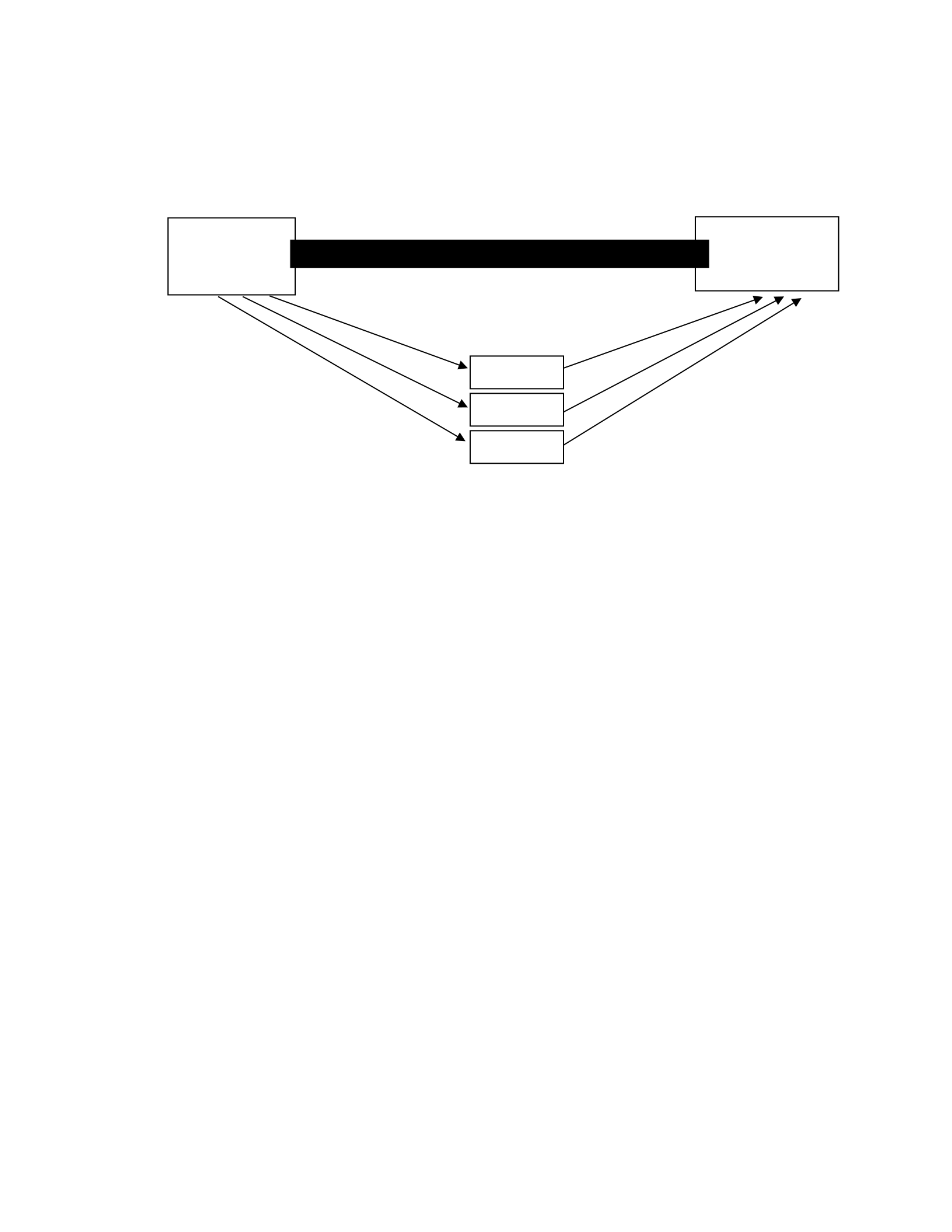
13
Figure 1. Mediated effects of leadership practices, purposes, and virtues (see Lawton &
Páez, 2015) on the correlation between top management ethical leadership (X) and
organizational financial performance (Y) (on the basis of Baron & Kenny, 1986). Idea
generated from “Introduction to Mediation, Moderation, and Conditional Process
Analysis” by A. Hayes, (2013), pp. 445.
Theoretical and Conceptual Framework
Ethical leadership as a construct has proven challenging for scholars to study due
to its varied influences, and the empirical research on the topic is still emerging. In this
dissertation, I drew on the ethical leadership theory. Many scholars have proposed new
ideas for research, and there are examples of different theoretical framing that have been
applied and are presented in this manuscript (see Zhu, Zheng, Riggio, & Zhang, 2015).
Ethical leadership theory has demonstrated to be useful for investigators in several
research settings. Examples of related studies described in literature review have
addressed correlations between leadership ethics and employee engagement and
organizational member output. However, it is still not fully understanding how the ethical
M1
X
Y
a
b
c’
Indirect Mediated Pathway
M2
M3

14
leadership level of top organizational managers influences business results with an
emphasis on financial performance, along with the possible mechanisms involved.
Top manager ethical leadership is an international concern as well and is not
limited to any single industry. There are signs of trouble in many countries and in a
variety of enterprises. In a 2016 Global Business Ethics Survey of employees working at
private and public organizations, the Ethics and Compliance Initiative group found that
employees described being pressured by leaders to compromise standards or observed
leader misconduct (as cited in Harned et al., 2016). The survey also highlighted
significant variances in survey responses based on the employee’s country of origin, and
in many countries, reported misconduct was significantly higher (as cited in Harned et al.,
2016). Ethical leadership studies have often limited sample selection to regional
participants, and they call attention to the importance of context, such as national and
regional influences that affect antecedents of ethical leadership and outcomes.
Nature of the Study
The design applied for this dissertation was methods that have been used in
similar ethical leadership research, allowing for the positioning of the results of this
research within the existing body of literature. As discussed, top manager ethical
leadership levels served as the independent variable, and quantitative correlational
statistical methods were used to measure its association with the dependent variable of
financial performance. Regression analysis was then employed to measure the mediating
relationships of top manager practices, purposes, and virtues with financial performance
(Baron & Kenny, 1986).

15
Definitions
Definitions are presented in this section for core concepts that were used for this
dissertation. A discussion for each is also provided to expand on terms that were found in
different leadership reports referenced in this study.
Ethics: Principled moral conduct dictating a person’s behavior. Lewis (1985)
suggested that it encompassed the “rules, standards, principles, or codes giving guidelines
for morally sound behavior” (as cited in Kaptein, 2008, p. 980). While this
characterization provided a useful starting point for the examination of ethical leadership,
it failed to adequately distinguish the unique influences that top managers have on middle
managers and organizational members.
Ethical leadership: Is the practice of being a moral manager. It encompasses
notions of honesty, virtuosity, and leading by setting a good example. A common
definition found in the extent literature was “the demonstration of normatively
appropriate conduct through personal actions and interpersonal relationships, and the
promotion of such conduct to followers through two-way communication, reinforcement,
and decision-making”. This definition served as a constitutive foundation by many ethical
leadership scholars in their research (Avey, Palanski, & Walumbwa, 2011; Bauman,
2013; Brown & Treviño, 2006; Hanson, Loose, Reveles, & Hanshaw, 2017; Lawton &
Páez, 2015; Mayer et al., 2012, 2009; Mayer, Kuenzi, & Greenbaum, 2010; Mihelic,
Lipicnik, & Tekavcic, 2010; Shin et al., 2015; Walumbwa et al., 2011; Wang et al., 2017;
Zhu, Zheng, He, Wang, & Zhang, 2017). Mihelic et al. (2010) and Zhu et al. (2015)
suggested that the definition suggests that ethical leaders role-model normatively

16
acceptable traits and behaviors, exemplifying the moral person, and leaders establish
ethical standards and values through their communications, rewarding appropriate
behaviors and punishing inappropriate behaviors representing the moral manager.
Ethical leadership has been demonstrated to affect the ethical climate of the
organization and the ethical practices of its members (Kul, 2017). Ethical leadership
practices include how the leader communicates codes of conduct (Kul, 2017), rewarding
ethical performance and punishing unethical behaviors, setting strategic plans,
prioritizing performance standards, and handling disputes. It was based upon this
definition that I examined the ethical leadership.
Financial performance: Reflects the company’s fiscal results compared to its
stated goals reported on the company’s balance sheets, statement of cash flows, and profit
and loss statements. In a global context, financial performance was found difficult to
measure reliably or consistently as organizations operating in different countries applied
unique accounting practices based on local standards. Many differences in local and
international laws were observed in their requirements for organizations reporting of their
financial results. Also differences in measure of reporting times were found. Li and
Zhang (2007) measured organizational performance over a 3-year time frame looking at
“return on investment, return on sales, profit growth, return on assets, overall efficiency
of operations, sales growth, market share growth, and cash flow from operations” (p.
797). Other researchers have evaluated financial performance over a 6-month time frame
(Shin et al., 2015) and limited the analysis to operating profit divided by total assets
(Chun et al., 2013). Further complicating financial analysis was the challenge of

17
uniformity of reporting between generally accepted accounting principles, International
Financial Reporting Standards, and other local regulatory standards on financial
disclosures found in the United States. For this research, consistent with Avery and
Bergsteiner (2010), financial performance was defined as net profits, sales revenues, and
controllable costs reported by top managers. I limited the time of reporting financial
results to 2-years allowing for the top managers’ ethics levels to have had an impact on
organizational financial results.
Pharmaceutical industry: Global industry discovering, developing,
manufacturing, and marketing medicines for human and animal consumption, and
treating a variety of diseases and ailments. Leadership ethics within the context of the
pharmaceutical industry are essential and I argued it was important to distinguish top
manager influences on organizational performance. Within the global pharmaceutical
industry, I found examples of organizational corruption and criminal activities that have
led to the harming of patients, financial penalties, tarnished industry and organizational
reputations, the loss of patient trust, and a greater societal burden (Kieke, 2013). As
described previously, the unethical leadership actions involved in the marketing of
OxyContin were an example described in the literature. Promotional tactics, approved
and employed by Purdue Pharma and its leaders, illustrated how financial results
influenced subordinates and resulted in costly harm to society. The direction by Purdue
Pharma company officials played a significant role in the opioid epidemic in the United
States and ultimately led to the company’s bankruptcy and payment of millions in
damages. As the pharmaceutical and health related industries continue to move towards

18
globalization to expand their markets, it is necessary that leaders understand the impact of
their decisions and the consequences of their actions on the patients they serve. It is vital
that they are aided with improved understandings of ethical leadership.
Top manager practices: Practices denote the idea of what one does, their
decisions, and daily activities that create and reinforce the ethical canons for the
organization as they interact with followers. Ethical decisions made by top managers may
be complex and nontraditional, requiring their judgement when the impact of their
decisions potentially affects the outcomes of the organization (Lawton & Páez, 2015).
I argued that top manager practices are distinct from lower manager levels. Their
practices set the example for others to follow, and their impact can influence follower
perceptions of trust, equitable distribution of opportunities, and motivating behaviors.
Top manager purposes: The operational role of the top managers seen in their
goal setting and how they maximize profits. Purpose deals with why a top manager
behaves or acts in a certain way to achieve a desired organizational outcome. For their
purpose to be effective, it must be congruent with the organizational vision. For example,
the top manager who communicates and demonstrates the importance of transparency
and accurate record keeping may also have trust as their purpose. In this example,
purpose is consistent with the organizational vision of trust as seen in the top manager’s
ethical practices.
Top manager virtues: A leader who is moral, principled, promoting characteristics
of collective and individual greatness. A virtuous and authentic leader was often applied
synonymously to ethical leadership within the existing literature. Authenticity was

19
another leadership attribute frequently found in the literature. Its use in this context
referred to one’s internal self-cognizance, or their clear personal awareness, and their
controlled actions such that they aligned with their personal value system (Avolio &
Gardner, 2005; May, Chan, Hodges, & Avolio, 2003). Walumbwa, Avolio, Gardner,
Wernsing, and Peterson (2008) provided that leader authenticity was a “pattern of leader
behaviors” that “promotes a positive ethical climate, to foster greater self-awareness, an
internalized moral perspective…and relational transparency on the part of leaders
working with followers” (p. 94). Authentic leaders who act with integrity provide a basis
for the virtuous leader.
Integrity and authenticity were also often related and frequently found describing
the virtuous leader (Lawton & Páez, 2015). A leader who behaves morally, making
consistent decisions that are aligned with espoused beliefs and who acts within the laws
and codes that govern their industry was said to have integrity. It was recognized cross
culturally as a fundamental feature of ethical leadership (Resick, Hanges, Dickson, &
Mitchelson, 2006).
References to the practices, purposes, and virtues variables were commonly used
by researchers who have also argued that they collectively demonstrate important
contributions to study of ethical leadership. For the present work, these terms were
groups and examined individually as mediating variables that impact the relationship
between top managers’ ethics levels and financial outcomes of the organization.
Top managers: Executive level leaders, including the chief executive, president,
and vice president or similar organizational title. They are individuals responsible for

20
setting the vision for their organization or division, and they are responsible for creating
expected standards and developing a culture that supports it. They are responsible for
their organization or division performance and the successful achievement of its stated
mission.
Top managers of global pharmaceutical companies were responsible for directing
a major segment of the world’s economy with a projected value of $1.12 trillion in 2023
(Evaluate Pharma, 2018). The international pharmaceutical industry is vital to global
health as it develops, manufactures, and distributes lifesaving medicines to individuals in
countries around the world. The pharmaceutical industry’s growth in new product
development has helped to eradicate epidemics and effectively treat diseases previously
untreatable, extending lives and improving the quality of life promoting the health of
society.
Assumptions
As the ethics of leadership has become a bigger public concern, it has also been a
priority for the pharmaceutical industry both in the United States and globally. Many
international pharmaceutical organizations are instituting programs to introduce and
inspire a culture of ethics, however, many compliance executive’s express dissatisfaction
with the results (Vamvoukaki, 2019). Activities including training programs, placement
of internal ethics committees, employing leaders to embed a culture of ethical behaviors
as a standard, and hiring consultants specializing in ethics are some examples of how the
industry is responding. These measures are taken for the purpose of building and
improving the ethical behaviors of members of the organization, and they are assumed to

21
result in a positive impact on the bottom line. Recent literature has supported the position
demonstrating a positive correlation to ethical leadership and financial performance (Shin
et al., 2015). These results, however, are limited and not globally represented. Company
leaders have expressed their desires to understand the types of ethics and compliance
programs that result in improvements in their financial outcomes (Vamvoukaki, 2019).
In the global pharmaceutical industry, drug research and development are critical
for the sustainability of many organizations. The process requires top managers to accept
a significant level of risk in bringing new products to market. Where there are risks in
drug development, there are often high returns for investors. This possibly contradicts the
goal for top managers of mitigating risks while maximizing shareholder return on
investment. It is implicit that highly ethical top managers leading ethical organizations
will result in higher financial profits. However, in organizations where top managers
emphasize ethics over financial performance, the results could lead to diminished
financial performance, resulting in a confounding outcome. This may be particularly
important in the pharmaceutical industry, where the regulatory oversight required of
pharmaceutical manufacturers emphasizes compliance and levies heavy punishments on
top managers whose organization is implicated in wrongdoing. Organizations that
express the importance of ethics as a part of their corporate culture may inadvertently
create an unresponsive and risk averse climate where new product development is
impeded. Top managers must develop an expectation of ethical responsibility while
encouraging and assuming risks that maximize stakeholder value.

22
An antagonistic view is depicted in the literature when pharmaceutical companies
are accused of profiteering at the expense of patients, and their leaders are often
suspected of mismanagement. Compounding this concern is seen when these same
leaders are celebrated for their organizational performance and are encouraged to drive
up profits and the company’s stock price and then receive a large performance bonus
when they accomplish the task. One must question the associations to the (un)ethical
behavior of the leader and what this reveals about the effect on leaders when
organizations emphasize financial performance to the detriment of ethical behavior. This
demonstrates that ethical leadership may sometimes lead to underperformance, and
unethical leadership behavior may lead to improved financial results.
Scope and Delimitations
Levels in leadership ethics are a central concern when examining relationships
that impact an organization’s financial results. By distinguishing the levels of leadership
influence, researchers observe that the top manager instills their vision for the
organization, including their ethical expectations and demonstrating ethical leadership
behaviors that form the norms and accepted behaviors. The argument presented in the
literature assumes that top managers establish and reinforce the ethical expectations and
that their influence permeates and trickles down through the organization (Byun, Karau,
Dai, & Lee, 2018; Wang, Xu, & Liu, 2018; ). In this research, I underscored the
importance of the relational influence of the ethical leadership of top managers on their
organization and its performance.

23
The mid or lower tier manager’s leadership impact is unique from that of the top
manager, and for this reason was excluded from consideration. I rationalized that a lower
tier leader’s actions are based on the direction and demonstrated behaviors of the top
manager. The influence of lower tier managers on followers is limited to a smaller unit of
individuals within the larger organization. Their ethical leadership behaviors are observed
and perceived by their followers; however, this reflects the top manager’s ethical
leadership. Additionally, the functional role of mid or lower level managers is focused on
the daily operations of the organization. They are responsible for supervising their team’s
production activities, delivery schedules, staffing requirements, and sales and marketing.
Their impact on the organization’s financial performance is limited to their locus of
control.
Limitations
The examination of leadership ethics of top managers in a global setting presents
different challenges for researchers. As described previously, pharmaceutical companies
of various sizes with the potential for operating in multiple countries, and their top
managers were the target study population for this dissertation. Access to study
participants and company information was a concern, and in many instances, was
difficult to obtain. Ethics may have been a sensitive topic for some leaders and
organizations where companies have been fined or publicly criticized for violations.
Additionally, due to the highly technical and sensitive nature of research and
development and trade secrets within the industry, providing access to information to
outside parties was restricted. Working to engage top managers in this setting required an

24
adequate explanation of the research and transparency when responding to questions to
allay subjects’ concerns. Restricted access to top managers whose contribution to the
topic or controls put in place to protect company data due to trade secrets may have had
an impact on the conclusions of the research, leading to inconclusive or erroneous results.
Some countries laws may also hamper information sharing. In instances where
industry leaders are based in countries where data are guarded or not available to the
public, attracting top managers to participate was unlikely. Other leaders may have been
concerned that openly discussing ethics puts them or their organization at risk of public
criticism or penalties from regulatory bodies to whom they are held accountable. The
relative size of the organization may also have limited access to leaders or data. Smaller
companies with fewer personnel who serve multiple functions may have found it difficult
to participate in this type of research project that they perceived to be a distraction from
their responsibilities. Alternatively, larger organizations may have filtered
communications reaching top managers, making a request for participating difficult. In
each scenario, the possible pool of participants was made smaller and further added to the
challenges recruiting top managers. As described, access to top manager participants and
the limitations of target subjects willing to respond to the research questions was a
concern as each possible limitation may have biased the results of my research.
Significance
An evaluation of the literature regarding the ethical leadership construct and
research presented in reports based on various models helped to inform the research
design in this study. Specifically, the study design allowed for an improved examination

25
of ethical leadership that was distinguished between leadership levels for organizations in
a global setting. In past studies, researchers have often employed strategies that viewed
ethical leadership from a collective perspective, overlapping different organizational
leadership tiers including midtier managers, directors, and senior executives into one
measurement. For example, in a study of American companies, researchers found that
56% of U.S. employees had observed misconduct at work including lying to constituents,
abusive behaviors, stealing, misrepresentation of vital reporting activities, and sexual
harassment (Mayer et al., 2010). By investigating ethical leadership based on
organizational leadership levels and the relation to organizational financial performance,
new insights were revealed. The previously described, the 2016 Global Business Ethics
Survey demonstrated the value of this strategy when examining ethical leadership by
differentiating leader misconduct from followers based on the nature or the type of
offense. Isolating top manager’s leadership ethics, I anticipated that distinct perceptions
would be identified.
Scientific literature reflecting contrasts between the ethical behaviors of various
levels of leadership was limited. Researchers have begun to classify top manager ethical
behaviors that are positively linked to organizational financial performance (Shin et al.,
2015). Top management executives’ influences are “trickled down” indirectly through
midlevel leaders who then demonstrate expected behaviors (Mayer et al., 2009), applying
rewards and punishment as tools for directing the desired behaviors (Mayer et al., 2012).
However, past designs have addressed ethical leadership as a collective and that these
strategies overlook that the leader’s level of influence is related to their proximity to

26
followers. A concentrated investigation of ethical leadership, its antecedents and
outcomes, specific to the top manager, or high-ranking organizational leaders (e.g. CEO,
chief financial officer, president) in global organizations provides fresh perspectives on
ethical leadership. Supporting this argument, Shin et al. (2015) emphasized the top
manager strategy and contended that there is a gap in the data regarding ethical leadership
from the view of top managers and their relationship to organizational performance:
“Previous research on the topic rarely examines the relationship and linking mechanisms
between top management ethical leadership and organizational performance” (p 43).
Combining levels of organizational leadership, Walumbwa et al. (2011) studied
organizations in China and demonstrated that ethical leaders who have positive leader
member exchanges with employees enhanced organizational performance. Their findings
have been challenged by more recent research, which argued that the measure of ethical
leadership employed was confounded by other measures, making it difficult to interpret
and generalize results (Yukl, Mahsud, Hassan, & Prussia, 2013). Shin et al. (2015)
researched ethical leadership in a variety of industries in Korea and found that
statistically significant predictive relationships exist between organizational ethical
climate established by leaders and organizational outcomes.
Scholars have recently argued that the complex nature of ethical leadership
requires a more holistic approach. Additionally, as ethical leadership research expands,
emphasis must also be placed on research designs that address the topic from the lens of
different countries and cultures. In line with the study purpose, I examined global ethical
leadership dimensions of top managers within the pharmaceutical industry and the

27
relationship to organizational financial performance. This study contributes to the
empirical data by limiting the research subjects to top managers and their organization’s
financial performance, adding an international context that illuminates differences based
on the top managers leadership practices, purpose, and virtues.
Where past researchers studied ethical leadership as a unidimensional construct
and within the framework of existing leadership theories, current researchers have argued
for the necessity to explore it as independent construct with multiple dimensions (Mayer
et al., 2012). Dominant theories on the topic have progressed from the singular
examination of ethical leadership behaviors and the impact on follower outcomes to
include ethical leadership as a distinct conceptualization (Mayer et al., 2012; Shin et al.,
2015; Wang et al., 2017). Kalshoven, Den Hartog, and De Hoogh (2011b) contended that
ethical leadership is a multidimensional construct, and this position was supported by
Wang et al. (2017), who argued that unidimensional models were inadequate for
examining the subject. The researchers’ views support the argument favoring the
identification of important dimensions of ethical leadership as well as examining
mediating influences that effect follower behavior and organizational financial outcomes
and that lead to unethical leadership behaviors. Lawton and Páez (2015) proposed a
three-dimensional model connecting leadership practices, purposes, and virtues often
found in extent ethical leadership literature. Their model shifts the emphasis from
leadership traits, which were thought to be inherent to the leader and were often the focus
of early leadership research, to leadership behaviors and actions (Lawton & Páez, 2015).
The strategy allows for consideration of influences on leaders, such as cultural, political,

28
social, and organizational norms (Hanson et al., 2017). In this study, variables that
comprised the three-dimensions were examined as mediating effects impacting the
relationships between ethical leadership of top leaders and organizational performance.
The social implications for this study are significant. In the context of recent
national outrage brought on by the unprincipled behaviors of leaders in governments and
in different industries, it brings center stage the negative effects that unethical leadership
can have on organizations, their employees, and society. Compounding the concern is
globalization where companies are moving into international markets. In such instances,
ethical leadership may be perceived differently, requiring greater support for leaders of
global enterprises. Understanding complex relationships between ethical leadership to
organizational performance is vital for leaders. By expanding the scientific knowledge,
one might expect improved organizational performance, amended policies leading to
enhanced leadership standards, and greater trust and approval by the society.
Summary
In the following chapters of the dissertation, I review the relevant ethical
leadership literature that provides support for the argument that a gap in the literature
exists, leading to an important need for further development of scholarly research and
new insights. I anticipated to advance the understanding of the relationship between
ethical leadership and organizational financial performance, isolating the effect of top
managers in a global industry. I present a rationale for social learning and social
exchange theories as framing for the research design. Future chapters provide the
argument as to why this study was needed and a research plan that outlines the

29
quantitative methods that were employed. Finally, I also present the different instruments
that were applied for testing the hypotheses and the unique results followed by
conclusions developed through the empirical designs.

30
Chapter 2: Literature Review
Introduction
Leadership theorists throughout the 20th century have described leadership
attributes that involve ethical dimensions. Where there is a wealth of philosophical
writings on leadership and business ethics, there are few present-day philosophers who
have written about leadership ethics (Ciulla et al., 2018). Researchers exploring the role
of ethics in leadership provide useful definitions and nomenclature (Lawton and Páez,
2015); however, it is argued that the extent research has been “anecdotal and
…normative” (Mihelic et al., 2010) and that social sciences lack empirical evidence
regarding ethical leadership dimensions (Brown et al., 2005a). In the literature, several
theoretical perspectives and models have been emphasized by researchers, including
transformational leadership (Bass, 1985), authentic leadership, situational leadership
(Tannenbaum & Schmidt, 1986), servant leadership (Greenleaf, 1977), and leader-
member exchange (Dansereau, Graen, & Haga, 1975). Many have served as frameworks
in leadership inquiry, where researchers have identified traits including honesty, trust,
respect, and principled leadership, and these traits were thought to encompass ethics.
Leadership scholars have argued, however, while these theories incorporate ethical
features, they fail to adequately deal with the complex multivariate nature of the ethical
leadership construct (Mayer et al., 2012). Contemporary philosophers have argued that a
more intricate and more distinct comprehension of ethical leadership is needed (Ciulla et
al., 2018). Reflected in the review of the literature is a necessity to examine ethical
leadership as an independent construct to better classify relationships between its relevant

31
antecedents and outcomes such that organizations can affect change through enhanced
training, hiring of leaders, and policies.
I begin this chapter by discussing existing themes found in the literature where
researchers have examined ethical leadership. I review applications of the various
theories used by scholars to research the subject, identifying their arguments and gaps
supporting the purpose of this dissertation. I also describe the holes in the extent literature
in addressing the multivariate dimensions of ethical leadership. I then discuss the social
learning and social exchange theories as superior framing for the examination of ethical
leadership research. These theories are presented as uniquely relevant from those found
in the literature discussing ethical leadership, positioning them as more suitable for
examining the question presented.
Literature Search Strategy
My strategy for conducting the literature searches for this chapter involved
multiple approaches. I began by exploring the Walden Library to conduct much of my
research using the search tools and resources available. These included examining peer
reviewed journals, along with books and articles on the topic. Several other dissertations
were also found to be useful. To expand my search, topics were selected from general
and commonly used terms with the Google Scholar search engine to identify relevant
peer reviewed literature. Finally, examining the journal references for more relevant
literature, I was able to expand my search into the foundational works that were
frequently referenced in multiple journals and used to formulate the ethical leadership
theory. The literature was then catalogued using the Zotero reference management tool.

32
Relevant search terms were identified and narrowed based on the productivity of the
searches and relevance to the topic.
The Walden University and Alpharetta County libraries were the primary sources
of literature. Thoreau Multi-Database, Business Source Complete, SAGE Journalism,
SocINDEX, Academic Search Complete, Education Source, and Complementary Indexes
were the databases used for conducting the literature review search. These databases
provided a significant number of journals and relevant books. The database search was
limited to current journals between 2013 to 2019. I also restricted the literature search to
peer-reviewed journals. Some of the articles and seminal works, which provided
important historical context, are also reflected in the literature review.
Search terms included leadership, ethics, global ethics, pharmaceutical
leadership ethics, ethical leadership theory, leadership theories, authentic leadership,
transformational leadership, servant leadership, situational leadership, social learning,
social exchange, and leadership behaviors and traits. As described in Chapter 1, ethical
leadership theory is underdeveloped, and only a small number of resources discussing the
topic were found supporting the argument put forth in this paper, showing that additional
scholarly empirical research was warranted.
Theoretical Foundations
Ethical leadership theory is distinguishable from other leadership theories. This
position is supported by leadership scholars who have noted that such theories as
transformational, authentic, and transactional leadership identify ethical leadership
dimensions included within the broader ethical leadership construct (Brown & Treviño,

33
2006; Mayer et al., 2009; Zhu et al., 2015). Brown et al. (2005a) claimed, “Little has
been done to systematically develop an ethical leadership construct necessary for testing
theory about its origins and outcomes” ( p. 118). To effectively examine dimensions of
ethical leadership, the strategy employed in this research followed Wang et al.’s (2017)
recommendation to treat ethical leadership as an independent construct and distinct from
generalized business ethics.
To begin, I review the current theoretical models that have been applied by
researchers when examining ethical leadership. I describe the rationale for their
application and then illustrate some of the advantages and disadvantages for each. The
various instruments that have been applied by scholars are discussed in the following
outline. Many of the research strategies used in past earlier research provided significant
insights aiding in shaping the investigation of ethical leadership in this study. However,
interest in ethical leadership by psychologists and scholars is relatively new, and many
have argued that there are significant gaps on the understanding (Zhu et al., 2015).
Finally, I explain the choice of social learning theory (Bandura, 1977) and social
exchange theory (Blau, 1964) as the framing for this investigation.
Conceptual Framework - Ethical Leadership Paradigm
In 2000, Treviño, Hartman and Brown conducted controlled qualitative interviews
with executive leaders and corporate ethics officers. From their research, they developed
a two-pillar model of ethical leadership including the “moral person” and the “moral
manager” (Treviño et al., 2000, p. 128). The moral personal traits include honesty,
integrity, and trustworthiness; principled fair decisions; and a social concern. The moral

34
manager models appropriate behaviors, and they communicate regularly regarding ethics
and values, holding followers accountable using rewards and discipline to reinforce
appropriate ethical behavior (Zhu et al., 2015). Treviño et al. (2000) revealed that a
leader’s individual traits (integrity, trustworthiness, honesty), observable behaviors
(doing the right thing), and decision making (emphasis on values, fair, social concern)
serve to shape follower perceptions and that being a moral manager involved
organizational member perceptions that the manager was an ethical role model,
communicating consistently about what ethics means to the broader organization, setting
the expectations regarding ethical behavior, and treating everyone equally and
accountable.
The examination of antecedents to ethical leadership has also proven important
for developing a deeper understanding of the influences affecting a leader’s ethical
behaviors. A leader’s moral identity symbolization and moral identity internalization
were demonstrated to have a positive relationship to ethical leadership (Mayer et al.,
2012). Mayer et al.’s (2012) findings supported previous research by Aquino and Reed
(2012), and they concluded that a leader’s moral identity is a predictor of ethical
behavior. Furthermore, their findings demonstrate where a leader’s moral identity and
ethical behavior serve as important predictors of ethical organizational outcomes (Mayer
et al., 2012).
Theories in the contemporary literature surrounding the subject continue to
emerge and shift the focus from examining ethical leadership traits and how ethical
leaders should behave and act to leadership in practice and the examination of

35
antecedents and outcomes (Grandy & Sliwa, 2017; Kalshoven, Den Hartog, & De Hoogh,
2011a). Leadership scholars interested in ethics have traditionally taken a “prescriptive
approach” (Mayer et al., 2009), identifying ethical leadership traits and presenting
systems or programs that may serve as designs to advance organizational ethical
leadership practices. This strategy, however, fails to recognize precursors of ethical
leadership and highlights a gap in the literature. A leader’s behaviors are present
throughout the organization, and the standards set by their leadership are crucial for
creating the ethical culture (Mihelic et al., 2010). Virtuous leader behaviors that are
embodied in the daily practices and espoused purposes of their actions are thought to
relate to ethical leadership; however, in the present study, I sought to examine these
variables as mediators affecting organizational financial performance. The following
discussion outlines the various frameworks that have been applied by researchers
examining ethical leadership and the rationale for selecting social learning theory and
social exchange theory as the framing for this dissertation.
Literature Review Related to Key Variables and Concepts
Ethical leadership has been examined through many theoretical lenses, and
several of them provide compelling foundations for their application as framework for
studying ethical leadership. Transformational and transactional (Kalshoven, Den Hartog,
& De Hoogh, 2011c) charismatic (Bass & Avolio, 1997) leadership theories have often
served as the basis for many of the historical studies; however, there is debate among
scholars as to the ideal framing. Kalshoven et al. (2011a) demonstrated the lack of
correlation between ethical leadership and transformational leadership. Burns (1978)

36
argued that moral leadership encompasses transformational and charismatic leadership
principles, while other scholars have identified spiritual and authentic leadership as
principle theories (Brown & Treviño, 2006). Lawton et al. (2015) argued that there are
three over lapping leadership dimensions, including leader practices, purposes, and
practices that serve as a model for an integrative approach to research ethical leadership.
The debate among scholars regarding the subject illustrates a lack of consistency in the
results and therefore supports the need for additional research.
A critical aspect of the examination of ethical leadership is the optimal theoretical
framing. Past researchers have applied several leadership theories in their examination of
ethical leadership. I present a discussion of the dominant theories for framing the present
ethical leadership research. I present common themes and overlapping concepts among
the theories and their limitations. Many of the instruments used for measuring ethical
leadership, which are encompassed in research, are described. Finally, I discuss
arguments concerning the various instruments adding important considerations regarding
their use and outcomes.
Transformational Leadership
A dominant theory applied in ethical leadership research is the transformational
leadership theory (Burns, 1978). The ethical leader is central to transformational
leadership, although it is a broad concept where leaders consider the emotions, values,
ethics, and aspirations of followers, and where the leader attempts to make connections
with followers observing their needs, desires and ambitions, and acts as a change agent
motivating them to accomplish their aspirations and dreams (Northouse, 2016). Brown et

37
al. (2005a) also supported the argument that ethical leadership dimensions are rooted in
transformational as well as charismatic leadership domains. The transformational leader
can be morally inspiring for followers and to their organization, moving them to achieve
greatness placing emphasis on morals and values (Bass, 1985; Burns, 1978).
Later scholars argued that an alternate transformational model exists and that
leaders can be pseudo-transformational by motivating followers to act unethically or
immorally (Bass & Steidlmeier, 1999). Proponents of the transformational model
emphasized the moral aspects of leadership in addressing followers needs, arguing that
transformational leaders motivate followers by role modeling, and articulating a clear
vision helping them achieve more than expected, going beyond self-interests, and
encouraging followers to pursue higher level needs and social priorities (Bass, 1985).
Within the transformational leadership theory, Bass described pseudo
transformational leadership as the “dark side of leadership” which is “destructive” and
“unethical” leadership practices (as cited in Northouse, 2016, p. 339). Northouse (2016)
argued that scholars have emphasized the positive attributes of the transformational
leader, and that it is vital to understand the negative behaviors of the pseudo
transformational leader. Ciulla (2005) opined that leadership is far reaching and that the
immoral actions of an unethical leader have negative implications on numerous people.
Unethical leadership behaviors included dishonesty, self-serving, egotism, unquenchable
determination, irresponsible regard for their actions (Ciulla, 2005). In their research,
Schyns and Schilling's (2013) argued that the body of existing scientific evidence is
limited related to leader ethics, however, they demonstrated a positive correlation exits

38
between unethical leadership and counterproductive follower behaviors. To expand the
scholarly understanding of ethical leadership, I argue in favor of the view that one must
also consider the behaviors of the unethical leader and the relationship on organizational
performance.
There are criticisms regarding the transformational leadership model. While there
is much in the leadership existing literature that involved the transformational framework,
a lack of its application was found specific to top manager ethics. Opponents have argued
that transformational leadership lacks “conceptual clarity” considering multiple activities
and characteristics making it difficult to define parameters and measurements
(Northouse, 2016, p. 178). Kalshoven et al. (2011a) argue that different leadership
dispositions and attributes are important and affect leadership methods and core
leadership traits, emphasizing differences in transformational and ethical leadership.
Additionally, the theory handles leadership as a personality trait that leaders have rather
than leadership behaviors that are learned. Significant overlap with dimensions of ethical
leadership and transformational leadership exists (Zhu et al., 2015), yet the model
inadequately addresses the complex dimensions of ethical leadership.
A widely applied measurement instrument used for testing transformational
leadership is the Multifactor Leadership Questionnaire (MLQ). The instrument was
designed to measure dimensions of transformational leadership based on interview
responses from junior and senior leaders regarding their perceptions of leadership
behaviors (Bass, 1985). The MLQ was advanced by Bass and Avolio (1997) and the
instrument has gone through multiple iterations, refining its measures and improving its

39
validity (Northouse, 2016). Zhu et al. (2015) argues that the MLQ contains only one
question that measures the ethics of the leader. As such, the MLQ instrument is limited in
its capacity to measure the complex multivariate influences of leadership ethics and was
decided to be inadequate in the present study.
Authentic Leadership
Authentic leadership is a relatively new theory, and one which is likely to
continue to evolve and be enhanced with several variations in how scholars understand it
(Gardner, Avolio, & Walumbwa, 2005; Northouse, 2016; Walumbwa et al., 2008).
Dimensions of the authentic leader construct, as conceptualized by Gardner, Avolio,
Luthans, May, and Walumbwa (2005), and Ilies, Morgeson, and Nahrgang (2005)
emphasized the leader’s intrapersonal self-concept, self-knowledge, self-awareness, and
the leaders behaviors. They also stressed the leader’s interpersonal perspectives, and the
relational viewpoint between a leader and their followers. Morgeson and Nahrgang
described the developmental concerns of the leader who nurtured their relationships with
followers. While I found different references fir authentic leadership in the extant
literature, Walumbwa et al. (2008, p 94) provided a consolidated definition used for this
dissertation.
A pattern of leader behavior that draws upon and promotes both positive
psychological capacities and a positive ethical climate, to foster greater self-
awareness, and internalized moral perspective, balanced processing of
information, and relational transparency on the part of leaders working with
followers, fostering positive self-development.

40
The authentic leader is self-aware with personal insights of their impact on others,
and they can self-regulate their influences in a way that is beneficial to the development
of others and the organization. Authentic leaders possess an advanced, highly developed
internal moral compass built from personal experiences and standards which guide them.
Authentic leaders actively seek input from others and are able to analyze information in a
balanced and objective manner before making decisions (Northouse, 2016). Proponents
of the model have suggested that internalized moral dimension influences how the leader
behaves and that they act consistently regardless of societal or organizational pressures
(Zhu et al., 2015). Inclusion of the authentic leadership construct was relevant for
consideration in ethical leadership as it incorporates moral dimensions of individuals in
leadership roles and their effect on follower’s performance (Gardner, Avolio, &
Walumbwa, 2005). However, Northouse (2016) argued that the moral dimensions of
authentic leadership are not well developed and do not offer a complete explanation of
how they affect other leadership dimensions.
The Authentic Leadership Questionnaire (ALQ) (Avolio, Gardner, & Walumbwa,
2007), developed and advanced by Walumbwa et al. (2008), has been often applied by
researchers measuring authentic leadership. The instrument was validated cross-culturally
surveying participants sampled from the United States, Kenya and China adding to its
utility in providing generalizable results. The ALQ is comprised of 16 items measuring
the four factors of authentic leadership (Northouse, 2016). By design, the ALQ separates
the authentic leadership construct from other leadership theories including,
transformational, servant, leader-member exchange, and importantly, ethical leadership

41
(Walumbwa et al., 2008). I found significant overlap in the ALQ measures relevant to the
present study, however, important limitations concerning its application were observed.
Of the leadership dimensions tested, only four items measuring internalized moral
perspectives related to ethical leadership, and it is inadequate to account for the many
dimensions that encompass ethical leadership (Zhu et al., 2015). Additionally, the ALQ is
a self-assessment tool designed to help the subject identify their own level of authentic
leadership and it is not intended as a research instrument (Northouse, 2016). Because of
the limits in the authentic leadership construct and constraints in the ALQ, they are
unacceptable for the present research.
Servant Leadership
The servant leadership construct is the third framework frequently referenced in
ethics related research on leadership (Zhu et al., 2015). Servant leadership was first
conceptualized by Greenleaf (1970) who also continued to expand on his ideas by
defining it and providing context for his ideas found in source literature (Greenleaf,
1977). The theory’s relevance to the topic was founded in the viewpoint that servant
leaders are first and foremost ethical, leading in ways that serve their organization, the
community, society, and others (Northouse, 2016). Additional scholarly contributions
have been made by researchers who improved the theory identifying major characteristics
of the servant leader (Barbuto & Wheeler, 2006; Dennis & Bocarnea, 2005; Laub, 1999;
Sendjaya, Sarros, & Santora, 2008; Spears, 1998, 2002; van Dierendonck & Nuijten,
2011; Wong & Davey, 2007). Personal traits of integrity and honesty reflected
dimensions of the moral person, and modeling behaviors aligned with moral manager

42
dimensions of ethical leadership (Zhu et al., 2017, 2015). There were opposing views
among scholars found, some of whom maintained that the servant leadership attributes
were still theoretical, requiring more empirical evidence validating the theory (Northouse,
2016; Zhu et al., 2015).
Following Greenleaf’s introduction of servant leadership, various efforts were
made by researchers to develop suitable scales for measuring servant leadership attributes
and characteristics. In their work to construct an instrument useful for measuring servant
leadership, Barbuto and Wheeler (2006) provided a scale that measured five factors of
servant leadership. However, only one (altruistic calling) was associated with dimensions
of ethical leadership (Zhu et al., 2015). The Servant Leadership Questionnaire (SLQ)
(Liden, Wayne, Zhao, & Henderson, 2008) was a validated multi-dimensional instrument
that measured seven factors aligned with servant leadership. The instrument proved
useful in measuring servant leadership and drawing contrasts between transformational
and leader-member exchange models of leadership (Barbuto & Wheeler, 2006). The SLQ
is a 28-question survey testing seven factors comprising servant leadership. Relevant to
the present study, however, only one factor (behaving ethically) reflected in four
questions, aligned with ethical leadership, limiting its capacity to measure the multiple
dimensions of ethical leadership (Zhu et al., 2015). It is for this reason, the SLQ was
deemed not an appropriate survey instrument to answer the research question which were
posed in this dissertation.

43
Situational Leadership
Situational leadership (SL) is not a leadership theory, rather it is a popular
prescriptive design program which was found discussed widespread in current leadership
literature and applied in many corporate settings. In the program, models of leadership
behaviors that were trained in courses designed to advance positive organizational
outcomes were discussed. Many of the leadership behaviors I found in the model were
consistent and overlapped with the ethical leadership construct. The SL model, originally
developed by Hersey and Blanchard (1969), has gone through multiple iterations
(Blanchard, Zigarmi, & Nelson, 1993; Hersey & Blanchard, 1977, 1988, 1993), and has
been implanted in leadership training at major organizations including pharmaceutical
manufacturers pertinent for the present study.
The SL model was developed as a contingency leadership model that considered
the developmental maturity level of followers, aligning the optimal leadership style best
suited to support the individual follower. Required of the leader was their ability to adjust
their leadership style that they applied with each individual team member considering
their development level. The SL model entailed the identification of the follower’s
developmental maturity level based on their competencies and commitment. Leaders then
adjusted their approach in an aligned manner based on the needs of the follower. The SL
model emphasized the leader’s ability to control the style of leadership they applied in
different situations (Northouse, 2016).
Several instruments have been developed to support the SL model and were often
used to appraise the needs of teams and individuals. The Situational Leadership

44
Questionnaire (SLQ) was found to be a popular instrument by researchers. Participants
were asked to reflect on different situations from their work environment, and then
selected their favored leadership style from various options (Northouse, 2016). The SL
model’s popularity was due to its clarity, ease of use, and the prescriptive guidance given
to leaders based on their assessment of followers needs. Many organizations have
implemented the SL model program as part of their leadership training.
There were several important criticisms of the SL model identified. For example,
leadership scholars argued that the model did not explain the theoretical connections
between the commitment of followers and their level of development within the model’s
four developmental quadrants (Graeff, 1997). Additionally, even though the SL approach
improved performance (Northouse, 2016), subsequent studies failed to replicate the
results or support the leadership assumptions proposed by the authors (Fernandez &
Vecchio, 1997; Vecchio, Bullis, & Brazil, 2006). Furthermore, there was a lack of
published scholarly research supporting the model’s proposals (Northouse, 2016) and
scholars argued against the validity of the SL design (Fernandez & Vecchio, 1997;
Vecchio et al., 2006) suggesting little practicality of the model’s methods (Vecchio et al.,
2006). Because of the criticisms and gaps in scholarly support of the SL model, it was
judged unsuitable for the examination of ethical leadership in the present study.
Social Learning Theory
Brown et al., (2005b) were first to examine ethical leadership through the lens of
social learning theory. Advocates for social learning theory argue that within the leader-
follower relationship, followers learn from leaders who role model “activities which

45
serve as guides for appropriate performances” (Bandura, 1977, p. 24). Mayer (2009)
provided that where there are role models, members strove to emulate their behaviors.
Individuals who command attention, such as top organizational leaders, are attractive to
followers, and set acceptable codes of conduct. Organizational members observe the
leader’s behaviors and practices and are influenced to behave in a similar manner. The
leader employs methods that increase awareness and understanding of the acceptable
conduct, along with communications such as written and visual references designed to
enhance recall, and rewards appropriate behavior and punishes deviant behaviors to
motivate organizational compliance. Drawing on social learning theory (Bandura, 1977),
researchers have demonstrated positive relationships between ethical leaders and their
influence on followers who exceeded expectations to achieve organizational goals
(Podsakoff, Ahearne, & MacKenzie, 1997; Podsakoff, MacKenzie, Paine, & Bachrach,
2000). Their results demonstrated that follower and organizational behavior is positively
related to ethical leadership, thereby leading to improved organizational outcomes.
Three processes have been demonstrated to be involved in modeling behaviors
(Bandura, 1977). Within any social group, certain individuals are perceived as attractive
to followers, more influential, and capture the attention of others identified as the
attentional process. Brown et al. (2005b) argued that leaders became attractive through
engaging behaviors and actions, and through demonstrated expected ethical behaviors.
Leaders must first establish an ethical cultural climate through virtuous examples. They
then reinforced modeled ethical behaviors through symbols designed to stimulate recall
of expected behaviors referred to as the retention process (Bandura, 1977). Through

46
repeated exposure to the symbols, followers recall expected behaviors and then begin to
emulate the leader’s modeled behaviors. The third process, motor reproduction, involves
leader-follower feedback which reinforces and motivates followers to align their
behaviors. The present study proposed that each of the processes overlap and are
represented by the mediating variables identified within the proposed model.
The ethical leadership scale (ELS), an instrument created and validated by Brown,
et al. (2005b) has been used by scholars as they examine ethical leadership. Applying the
ELS, the researchers found instrument reliability measuring many of the broad
dimensions of the ethical leadership construct with leadership behaviors including
integrity, fair treatment of followers, and holding employees accountable for ethical
behavior (Brown et al., 2005a). For many scholars, the ELS has been useful when
measuring ethical leadership from the perspective of the follower. However, the aim of
this project was to examine ethical leadership from a multi-dimensional perspective and
in the context of a global organization. The ELS is a unidimensional scale that is limited
in its capacity to measure the different antecedent’s multiple factors involved in ethical
leadership. It fails to capture the multidimensional aspects of ethical leadership
adequately for purposes of the present study.
Social Exchange Theory
Another theory used for the examination of ethical leadership is the social
exchange (SE) theory. The SE theory, conceptualized by Homans (1958) was advanced
by other researchers including Blau (1964). The theory emphasized the social interactions
and the exchanges of value that take place between people. In an organizational setting,

47
the leader-member exchange represents a dyadic relationship between the leader and
follower. Exchanges also occur in groups and are more accurately represented in the SE
theory. Aligning with Kohlberg's (1984) moral development model, the social exchange
and social learning theories overlapped with key aspects of the model. Kohlberg argued
that there are three dominant stages of moral development including the (a)
preconventional morality level where people develop morally by being obedient for fear
of punishment, and they make moral decisions based on exchanging value in self-
interests mirroring concepts found in the social exchange theory. Level two, called
conventional morality, identified social learning, arguing that individuals make moral
decisions based on conforming to social expectations because it is what is expected of
them. The postconventional morality level, the third level, claimed that people are moral
because it is what is best for everyone. Many concepts found in Kohlberg’s model were
consistent with the SE theory. For example, people sought rewards and avoided
punishment, and relationships between leaders and followers were interdependent.
Organizational leaders are dependent upon the commitment of followers to
accomplish the operational mission, while followers apply their labors to earn an income
forming a symbiotic relationship. Leaders leverage rewards that encourage ethical
behaviors and apply penalties for inappropriate behaviors. The SE theory held that people
anticipated and acted on potential future rewards received through their exchanges (Blau,
1964). Finally, (Walumbwa et al., 2011) argued the social learning and social exchange
theories have been widely used and highly useful theories. Based on the previous
descriptions of social learning and social exchange theories, the present study applied

48
these theories as framing and sought to add to the understanding of ethical leadership and
its influence on organizational financial performance.
Ethical Leadership Traits
Global Cultural Influences
Important considerations involving cultural influences and their related impact on
leaders have been demonstrated as important considerations for researchers studying
ethical leadership in global organizations (Kalshoven et al., 2011c). Societal and cultural
norms, and the organizational climate were proven as significant dimensions having
influenced leadership ethics (Kalshoven et al., 2011a). Resick et al. (2006) argued that a
society’s culture reflects unique differences in values and feelings regarding ethical
leadership issues. Cultural variances have presented challenges for researchers interested
in different global perceptions of leadership ethics and in developing empirical strategies
for studying the subject.
The Global Leadership and Organizational Behavior Effectiveness (GLOBE)
project examined cultural influences on leaders (House, Javidan, Hanges, & Dorfman,
2002). In the GLOBE project, House et al. (2002) conducted a multinational survey of
middle managers representing 825 different organizations. Their results supported the
argument of regional and organizational cultural clusters that influenced how leaders
acted and behaved, and how their perceptions of effectiveness by followers were formed.
The data from the GLOBE project has had a significant influence on leadership research,
however, there was no direct examination of ethical leadership in the GLOBE project.
Mihelic et al. (2010) supported the argument that leaders demonstrate different practices

49
that are connected to their organizational or societal culture. The current cultural
literature on leadership reflects gaps in the understanding of global differences in the
relationships present in ethical leadership and organizational financial performance.
Variables Influencing Perceptions of Ethical Leadership
Examination of ethical leadership and the relationship to organizational
performance is central to the present study. It is not enough to be a good leader in the
moral sense, leaders must also be effective tactically. After all, leaders are put into place
for the very purpose of directing the organization towards achieving the mission. A body
of scholarly literature exists that have identified different ethical leadership traits and
behaviors that have been consistently demonstrated as positively correlated to
organizational performance. The overlapping of many common ethical leadership traits
and characteristics, verify that specific dimensions exist (Lawton & Páez, 2015). It is
vital in advancing our understanding of the role of ethical leadership to the relationship of
organizational financial performance by distinguishing differences in variables identified
as most relevant to the topic.
Over the past decade, researchers have studied a variety of concepts aligned with
ethical leadership. Scholars have debated over a variety of leadership traits and behaviors,
and many were found in the literature and are presented. Kalshoven et al. (2011a)
examined Goldberg's (1990) big five leadership personality traits (extroversion,
conscientiousness or dependability, agreeableness, emotional stability, and culture or
intellect), and found that only two, conscientiousness and agreeableness, were statically
correlated to ethical leadership.

50
Relative to this study, I argued that ethical leadership is complex and involves
overlapping ideas and concepts. For example, virtuous leadership, including integrity
and authenticity, were found in past research and often described ethical leadership.
Lawton and Páez (2015) recommended that researchers should examine leader virtues
including integrity and authenticity, along with leader practices and purposes when
examining ethical leadership. Lawton and Páez proposed a three-dimensional model for
examining ethical leadership which incorporated leader virtues along with leader
practices, and purposes. Their three-dimensional model intersects with five principles of
ethical leadership presented by Badaracco and Ellsworth (1991) which encompassed
leadership practices including respect for others, serving others, and building community,
as well as, leader virtues. Burns (as cited in Northouse, 2016) argued that leaders
demonstrate ethical practices in several ways. Leaders establish respect for followers by
listening and perceiving them as individuals with unique values and personal goals,
treating them with empathy, confirming their beliefs, demonstrating fairness in how they
allocate resources, provide opportunities, and administer rewards and discipline.
Serving others is a fundamental trait described by many leadership scholars. A
vital task of leaders is to serve others through their vision and how their vision shapes the
organization (Northouse, 2016). Senge (as cited in Northouse, 2016), maintained that
ethical leaders serve followers by establishing and stewarding an ethical vision for the
organization that is greater than themselves and that followers embrace.
Leader purposes are addressed by how leaders build up their followers and the
community they serve. An ethical leader reveals their purpose through their concern for

51
others and the social issues that they emphasize and support. Purposeful ethical leaders
do not impose their will, rather they seek a common goal that is agreed upon by the
leader and their followers. For the ethical leader, a common purpose is larger than the
individuals involved. A common ethical leader purpose includes a concern for
community, and it benefits all parties. Ethical leadership demands that the leader’s
purpose includes consideration of commonly agreed upon goals with a higher moral
purpose (Northouse, 2016).
This study followed the Lawton and Páez 's (2015) assertion of the utility of a
three-dimension model for studying ethical leadership. I examined the relationship of
leadership virtues, practices, and purposes as mediating variables and their effect on the
relationship between top managers’ ethics levels and organizational financial
performance.
Ethical Leadership Descendant
Financial Outcomes
There is a dearth of relevant evidence that describes relationships with top
managers ethics and the organization’s financial performance. A common challenge
researchers face as they examine the effects of ethical leadership is identifying how to
consistently measure financial performance (Suriyankietkaew & Avery, 2016).
Suriyankietkaew et al. (2016) argue that a reliable measure of financial performance is
needed to consistently examine the relationship of ethical leadership to organizational
financial outcomes achieving generalizable results. Scholarly interest regarding
(un)ethical leadership at a global level continues to encourage researchers to test different

52
theories, however, few have examined its effect on organizational financial performance.
Supporting the argument, Wang et al. (2017) posit that “there is relatively little
exploration of how ethical leadership at CEO level influence firm-level performance” (p.
96). In a study of firms based in China, researchers examined the relationships of various
orientations of ethical leadership including leader humane, leader responsibility, and
leader sustainability orientations and found a positive correlation to the firm-level
financial performance (Wang et al., 2017).
Global differences in ethical leadership based on cultural perspectives, regional
variations where organizations are owned by governments, and different accounting
practices challenge researchers examining relationships seeking to identify results that
can be generalized. As noted earlier, many organizations have placed, sometimes at great
costs, programs and training designed to emphasize a desired culture of ethics.
Additionally, many top managers within organizations, are held accountable for meeting
both, the ethical goals and financial goals. It has been noted that a leader’s accountability
to these goals, may be in conflict, and pose significant challenges. Inappropriate
organizational priorities may be responsible for driving problematic outcomes. Executive
leaders who successfully deliver on financial performance goals that satisfy stakeholders,
may leave their organizations morally bankrupt if their sole measure of success is
financial results. Their ability to balance financial results with an ethical leadership
principle is critical.
An organizational leader’s emphasis on technical competence often conflicts with
the perspective of followers who prioritize integrity as important for their superior

53
(Hogan, Curphy, & Hogan, 1994). The conflict is supported by researchers who found
that executives must proactively establish their reputation as an ethical leader or risk
follower misperceptions of them as an ethically neutral or unethical leader whose only
priority was on organizational profits ( Treviño et al., 2000). Executive leaders set the
ethical climate for the organization and proactive and consistent communications should
be a part of an ethical leadership strategy. Shin et al. (2015) found a positive relationship
between top management leadership ethics and the culture of ethics in Korean
organizations. In the absence of visible leadership actions that align with the
organization’s priorities, followers develop their own behaviors and often assume the
bottom line takes precedence.
A variety of approaches have been taken by scholars to measure financial
performance with diverse results for each. Suriyankietkaew and Avery (2016) examined
organizational sustainability through the lens of leadership practices including ethical
leadership and the impact on increased profitable growth among other outcomes. The
authors examination, consisting of surveys taken by middle and front-line managers of
small and medium size enterprises (SME) in Thailand, found a positive correlation
between ethical leadership, as one of 23 sustainable leadership practices, and
organizational financial performance. The authors suggested, however, that because the
study was limited to Thailand, which they identify as a small developing country, and
with SME organizations, generalizing their results to more developed countries was
difficult (Suriyankietkaew & Avery, 2016).

54
For this study, identifying commonly accepted measures of financial performance
was important. Within the literature surrounding the global pharmaceutical industry, a
consistent and reliable financial measure was difficult to identify. As described earlier.
generally accepted accounting principles are accounting standards applied for corporate
accounting practices used to report financial outcomes in the United States and in many
countries. Other countries may be less stringent or apply different standards for
accounting practices or be motivated to present strong performance results to encourage
investors. Frequently applied financial performance measures of publicly listed
companies include sales revenues, capital expenditure, cash flow, net income, and profits
(Suriyankietkaew & Avery, 2016). These financial measures were often found in similar
research and served as the financial measures used, however, their continuity and
replicability in a global setting were often different and difficult to generalize. To address
this challenge, data gathered regarding top managers’ self-assessment of organizational
financial performance included questions regarding organizational net profits, sales
revenues, and controllable costs.
Pharmaceutical Industry
Exploring the literature surrounding leadership ethics in the pharmaceutical
industry reveals scholarly works that embody many of the leadership ethics elements.
However, they do not address the complexity of the ethical leadership, nor do they
provide adequate empirical conclusions that can be generalized. Many articles were
found that described (un)ethical behavior involving industry or corporate ethics (Shaw &
Whitney, 2016), marketing and promotional strategies (Mulki, Jaramillo, & Locander,

55
2009; Sismondo, 2013; Skandrani & Sghaier, 2016), industry sponsorship of clinical
trials (Steiner, 2008), and concerns over patient protection in underdeveloped countries
through contracted medical research (Adobor, 2012). Data found on top manager ethics
within the pharmaceutical industry was less prominent in the literature and not suitable
for this study. The scholarly works, regarding leadership ethics within the industry,
provided few useful comparative discussions. In an older case study presented by Bowen
(2004) involving one organization, antecedents to ethical leadership decision making
were examined and found to involve an organizational culture of ethics, collaborative
leadership, a global view towards innovation, a reward system for ethical behavior, and
an organizational commitment to the analysis of ethics. Kieke (2013) argued that a
pharmaceutical organization’s ethical culture is established by its board of directors, and
its practices and behaviors are then communicated from the board of directors to its
leaders, who must provide clear direction and alignment of rewards. Questions remain
about leadership ethics within the industry, and the broader application of results gleaned
from scholarly works.
There is an essential level of trust expected among pharmaceutical manufacturers
who invest in the research and development of medicines. Successful drug development
enables companies to marketing new compounds to health care providers who prescribe
them, and ultimately to patients who consume them. While a history of broken trust
exists, the industry has made efforts through the guidance of organizations like the
International Federation of Pharmaceutical Manufacturers and Associations (IFPMA) to
self-regulate and to rebuild and uphold the trust (Shaw & Whitney, 2016). Along with

56
IFPMA Codes of Practice (IFPMA, 2012), new national codes including the
Pharmaceutical Research and Manufacturers of America healthcare provider interactions
code (PhRMA, 2008), and new rules regulating the global industry, reinforce the goal of
rebuilding trust. Codes and laws regulating the industry are thought to be appropriate and
serve as an important step, however, do not replace the need for ethical leaders.
Trends towards the globalization of the pharmaceutical industry demands
reflection for this research which are vital. The literature surrounding the topic provides
inadequate understandings and warrant additional investigation. For the industry,
globalization provides market growth opportunities, the potential for improving financial
results, and an improved capacity to invest in product development. It also brings about
important societal benefits including access to quality effective medicines to patients in
countries around the world. Pharmaceutical companies have grown market shares for
their brands by building a global presence over the past decade. With this effort many
new treatments have been made available to patients in countries where there are no
resources or capacity to develop and produce them locally.
Organizational leaders who press for global market sales must do so while
respecting the local laws and cultural ethos of the countries within which they operate. As
with other industries, pharmaceutical leaders of global organizations establish the culture
and ethical standards expected for operating internationally. In a United States based
study, researchers demonstrated a positive relationship between organizational leaders
and the ethical climate of members of the sales teams (Mulki et al., 2009). These results
offer some confirmatory insights which are relevant for the present study, however, not

57
specific to the target leadership level of top manager ethics supporting the argument that
new research is needed.
Summary
In Chapter 2, I described the ethical leadership theory and presented it as a unique
and developing construct with distinct dimensions from other leadership theories. I
identified a common definition found in the literature for ethical leadership and framing
useful for this study. I also discussed the variety of research designs and constructs
previously applied by investigators over the past decade which are considered relevant
for this research. Drawn from the literature were descriptions of the independent,
dependent, and mediating variables thought to be related to ethical leadership. Finally, I
discussed research related to the topic of ethical leadership within the context of the
global pharmaceutical industry and limitations found therein.
Seeking relevant literature addressing relationships between ethical leadership and
organizational financial performance reveal a deficiency in our understanding and an
opportunity to add to the scientific knowledge. Within the social sciences, there have
been several landmark studies that have established the ethical leadership theory as an
important and useful model for researchers. Researchers have recently used the theory to
explain antecedents to leadership behaviors, follower perceptions of leadership, and
organizational performance. While results from research discussing ethical leadership
continues to add empirical evidence, much of it is limited and challenging to generalize
more globally. The conclusion, based on this examination of the literature, supported the
argument favoring greater scientific efforts revealing new insights supporting policy

58
development, organizational leaders, and the described purpose.

59
Chapter 3: Research Method
Applied Techniques and Practices
Leadership scholars, practitioners, policy officials, and industry leaders voice
their interests in empirical ethical leadership research, which can provide fresh insights
into the topic. Reports on the subject are broadly available and recognized for their
important contributions. However, many practitioners argue that there is need for more
work to be done to expand the limited body of scientific knowledge. In this dissertation, I
sought to add to the existing body of literature and applied quantitative statistical
methods to examine the relationships between ethical leadership, the independent
variable, and organizational financial performance, the predictor variable. I expanded my
research by examining mediating effects of top manager purpose, virtues, and practices to
determine if outcomes can be predicted.
I begin this chapter with a review of the research design and approach that were
applied to examine the question and provide a justification for each. I describe the sample
population and size, the methodology used for sample selection, and a description of the
characteristics of the selected sample participants. An explanation of the survey
instruments used to collect data is provided, along with the data collection steps and the
type of data collected and how the instruments and the data relate to each of the variables.
A description of the data collection analysis and statistical methodologies and a
discussion of the rationale for the selections of the statistical methods is then presented.
Finally, descriptive and inferential data related to the hypothesis is discussed.

60
Methodology
Research Design and Inquiry Approach
I considered a postpositivist view in this nonexperimental study examining
relationships between the independent and dependent variables. Questionnaires were used
to collect data that measured the perceived ethical behaviors of top managers, and
regression analysis was used to test the different hypotheses, allowing for predictive
interpretations of the outcomes that could then be generalized (see Creswell, 2009, 2014).
The questionnaire methods of data collection were necessary for the selected
participant population for several reasons. Selecting a sample from the target population
and then surveying them using a validated testing instrument provided for a numeric
quantifiable description of the trends in behaviors that are reflective of the population
(see Creswell, 2014). Additionally, administering a web-based strategy surveying a
sample group was simpler and more efficient and cost effective than surveying the target
population.
The statistical methods for correlational analysis of samples are also widely
applied in the social sciences, accepted in the scholarly peer-reviewed literature on the
subject, and provided meaningful insights and generalizable results. An objective of this
dissertation was to identify behavioral trends in global ethical leadership from the sample
that adds new insights to the scientific body of literature and that are generalizable to a
global population. Finally, this was cross-sectional study, with questionnaires being
administered at one point in time. The strategy aligned with the research plan and

61
provided for organized data collection allowing for an efficient interpretation of the
results.
Setting and Sample
The global pharmaceutical industry is broadly comprised of numerous types of
organizations of different sizes working in a variety of healthcare related activities
surrounding research, development, marketing, and sales of medicines. To narrow the
relevant industries where top organizational leaders were sampled, I adopted the North
American Industry Classification System and the Standard Industrial Classification
definitions for pharmaceuticals. The definition provided that the pharmaceutical industry
includes “establishments primarily engaged in manufacturing in-vivo diagnostic
substances and pharmaceutical preparations … intended for internal and external
consumption in dose forms, such as ampoules, tablets, capsules, vials, ointments,
powders, solutions, and suspensions” (Pharmaceutical Preparation Manufacturing
Industry, 2018, p. 6) and Standard Industrial Classification, 2834 (United States
Department of Labor, n.d.). Industry sample populations also included biotechnology
companies involved in research and drug development.
The global pharmaceutical and biopharmaceutical industry organizations were the
total population selected for this study. Based on the North American Industry
Classification System 2018 report, estimates of global pharmaceutical companies exceed
18,000 organizations worldwide meeting the pharmaceutical definition. The target
population was top managers leading these organizations. As the outcome variable of
interest was organizational financial performance and some of the organizations are

62
owned by governments where financial performance data are not publicly available, I
excluded these organizations for consideration. Participant selection was limited to those
organizations whose financial performance records could be documented by the top
manager during the questionnaire.
A multistage cluster sample framing strategy was applied to access to top
managers. I used an on-line electronic survey method for capturing participant responses.
In the first stage, global pharmaceutical organizational top managers were recruited
applying a nonprobabilistic convenience web-based and direct e-mail strategy by
requesting top manager participation. Additionally, my recruitment strategies included
web-based announcements of the research.
I anticipated prohibitive challenges with targeted recruitment and access to study
participants, making the sample design optimal. Expanding on the first stage, a second
web-based request was employed, targeted for organizations and their top managers as
study participants who met selection criteria, specifically top managers of global
pharmaceutical and biopharmaceutical organizations with more than 2 years of
experience in their role. I screened the candidates to deselect individuals and
organizations not meeting the study target population criteria. An organizational letter of
cooperation was secured from participants’ organizations.
Organizational or department financial performance was used to determine the top
leader’s impact over 2 years. Financial constraints for this research effort limited the
questionnaire instruments for the study to the English language, and as such, restricted
participation to only those top managers and their subordinates who were proficient in

63
English. Other elimination criteria used for screening applicants were individuals serving
as middle and lower level managers and subjects leading organizations where
organizational financial reports were not available.
I identified organizational clusters in the second stage. Associated organizational
subordinate members were asked to complete the electronic ELQ instrument. The top
manager was also asked to complete the SLQ. The questionnaires were coded for cross
referencing the top manager and their team members using methods for blinding all
participants. The nonprobabilistic design permitted potential bias in recruitment;
however, the recruitment by a nonparticipating organizational member allowed for all
members of their organization to participate. To ensure anonymity, I provided all subjects
with an electronic cover letter describing the goal of the study, a process outline
including instructions that could be used to recruit participants from organizational
members, and informed consent disclosures. Willing member participants were then
directed to access the questionnaire electronically with instructions on completing the
process and submitting their responses. All company information and participant
responses were held confidential, and only available to me. Additionally, the results and
interpretations are only presented in aggregate form with no identifiable information.
As this was a global study, web-based and e-mail recruitment of participants
provided for expanded access as well as cost and time efficiencies. Anticipated
limitations such as governmental regulations restricting access in some countries,
organizational rules that do not allow participation by leaders, and Internet access
presented anticipated challenges to the method of sample recruitment. Additionally,

64
organizational overlap exists in international companies where there may be multiple top
managers within the same organization and multiple top managers in various countries
that lead the organization within a country. For this reason, the questionnaire asked the
top manager to only report on the financial performance of their organization or division.
Determining the sample size needed from an unknown population posed
difficulties. Furthermore, several studies have demonstrated challenges of successfully
recruiting participants. As many as two-thirds of the targets recruited in many of the
studies were nonresponders or chose not to participate. Additionally, as many as 10%of
the participants dropped out. I reviewed the sample sizes taken from reference materials
to determine the sample population needed to power this study to meet statistical
significance. I examined 25 previously published peer reviewed reports of similar
research regarding ethical leadership theories as references, a range of sample sizes was
determined with a median sample size of 184 subjects. Considering these past
experiences, a goal of 571 participants was needed to achieve the 184-sample subject
goal needed for the study. Stratification of top managers based on gender, country of
origin, size of the organization, and country where the leader was positioned within the
organization was used. The research plan called for a request inviting top managers of
global pharmaceutical companies to participate in the survey. Following the initial
request and allowing for a 2-week response period, I sent a second request to additional
organizations meeting the target population criteria. A third request was then sent in the
same manner following a 2-week period, and a review of the progress was conducted. I

65
anticipated that the three requests would allow for an adequate number of participants to
be achieved.
Instrumentation and Materials
Ethical leadership measure. As described in Chapter 2, various instruments
developed by researchers have been applied to the examination ethical leadership. Many
of them have been used for empirical research and have established a sense of ethical
leadership. However, when looking to generalize their results to a global population, they
have been less useful. Ethical leadership measurement instruments include the ELS
(Brown et al., 2005b), Perceived Leader Integrity Scale (Craig & Gustafson, 1998),
Ethical Leadership Work Questionnaire (Kalshoven et al., 2011b), SLQ (Barbuto &
Wheeler, 2006), and ALQ (Walumbwa et al., 2008). These instruments have limitations
or reflect nonrelevant answers that lead to confusing and confounding results as well as
overlap with other leadership constructs (Yukl et al., 2013).
The Ethical Leadership Questionnaire (ELQ) (Hassan, Mahsud, Yukl, & Prussia,
2013; Yukl, 2010; Yukl et al., 2013) was the questionnaire instrument used to measure
the independent variable of top manager ethical leadership. Permission to use the revised
ELQ 10 item survey was provided (Appendix E). The ELQ was originally developed as a
15-item survey then later revised to a 10-item survey eliminating other types of
leadership behaviors that are not directly related to measuring ethics including being
supportive, fair and unbiased when assigning tasks, sets the example of dedication and
sacrifice, acknowledges mistakes and takes responsibility for them, and regards honesty
and integrity as important personal values (Yukl, 2010). Questions found in the revised

66
ELQ are designed to capture participant perceptions regarding their leader’s integrity,
honesty, ethical behavior, and resulting in an ethical score. The revised ELQ 10 item
survey was applied for this dissertation and a copy of both questionnaires are found in
Appendix A and B.
The revised ELQ results in a mean score for the ethical leadership of top
managers as perceived by subordinates and organizational team members. The original
ELQ reflected key commonly identified dimensions of ethical leadership found in the
literature including, (a) honesty and integrity, (b) consistent ethical behaviors and
communications that speak to ethical behaviors, (c) fairness in decisions and dispersing
of rewards, and (d) leader behaviors that demonstrate kindness and consideration for
organizational members (Yukl et al., 2013). The revised ELQ limits the focus to only
those behaviors indicating leadership ethics and many of the removed non-specific
question are reflected in mediating leader practices. Also, by underscoring the importance
of key ethical dimensions, the confusion and challenges brought about by the limitations
described in other survey instruments are addressed.
Participants using the ELQ are asked to respond to 10 questions based on a 6-
point Likert-style format where 1=strongly disagree, 2=moderately disagree, 3=slightly
disagree, 4=slightly agree, 5, moderately agree, and 6=strongly agree. The survey was
administered to subordinates who rated their leader on the key ethical attributes including
honesty, integrity, consistency of ethical behaviors, communications of ethical values,
altruism and ethical guidance (Yukl, 2010) and provides a mean score for the leader.
Yukl and colleagues developed the ELQ to capture ethical leadership attributes gleaned

67
from previously applied ethical leadership surveys excluding possible confounding
variables. Exploratory and confirmatory factor analysis were used to assess the
discriminant validity of the ELQ. Principal component analysis and oblique rotation
resulted in four distinct factors including ethical leadership, relationship, change and task
behaviors. The factor loadings for ethical leadership demonstrated distinctions among the
items and only three items had minor cross-loadings (>.30) with relational behaviors
(Yukl et al., 2013).
The 10 questions of the ELQ were designed to study the significance of ethical
leadership to leadership effectiveness. The responses measure subordinate’s perceptions
of their leader’s ethicality based on their observations of the leader. For this dissertation I
used participant’s responses to the ELQ to measure the ethical leadership which served as
the independent variable. The data was captured electronically. The database of
participant responses was kept on file in a secure location and can be made available
upon request.
Organizational financial performance measure. For measurement of the
financial performance, the dependent variable, the Sustainable Leadership Questionnaire
(SL) (Avery & Bergsteiner, 2010, 2011) was used. Organizational performance was
found to be a broad and often used dependent variable, however, many researchers have
examined performance using different measures ranging from multiple disciplines. A
review of the extent literature demonstrated several approaches have been applied by
scholars in their research regarding organizational financial performance. Researchers
often applied multiple metrics when examining organizational financial performance, yet

68
paid little attention to their measurement construct relative to their focus of interest
(Richard, Devinney, Yip, & Johnson, 2009). Richard et al. (2009) offered that as
researchers explore organizational financial performance from the contextual discipline
that they approach their research question, it is important that their financial performance
construct establishes appropriate procedures for measures that can be combined, and the
provides a method for combining the results. For purposes of this dissertation, three
common financial performance measures including net profits, sales revenue, and
controlling costs were used as measurements of financial performance.
Mediating variable measurement. The mediating variables involved in top
manager practices, purposes and virtues encompass multiple dimensions of leadership
behaviors. The SL questionnaire also embodies broad concepts identified as honeybee
leadership practices that converge with the leadership practices, purpose and virtues
mediating concepts and attributes of interest. “SL proposes 23 leadership. . . practices
that cover multi-faceted management systems, principles, processes, and values”
(Suriyankietkaew & Avery, 2016, pp. 2-3). A copy of the SL questionnaire used for this
project is available as appendix (Appendix C). The 23 SL honeybee practices that served
as the foundation of this research and their descriptions are listed in Table 1. Authors of
the SL questionnaire recommends that organizations, in order to be financially
successful, must strike a “balance between economic, social, and ecological objectives
while attaining high performance, resilience and sustainability” (Avery et al., 2016, p. 2),
and the SL practices are operationalized by how closely the top manager perceives their
organizational alignment with the honeybee practices (Avery et al., 2016).

69
For this study, I argued that the 23 SL practices characterized in the survey
questions embody and are represented in the mediating variables. This study grouped the
23 SL practices into one of the three mediating variables using definitions found in
related ethical leadership literature and presented in Table 2. For this process, SL
questions that refer to and ask about what the leader does as part of their daily habits that
exemplifies moral excellence, as well as, their actions and direction towards their
followers (Lawton & Páez, 2015; Suriyankietkaew & Avery, 2016) were grouped as
leadership practices. SL questions which focused on the leader’s perceptions of honesty,
integrity, morality, and a leader’s vision for the organization promoting the common
good (Lawton & Páez, 2015) were categorized as leader virtues. These are also
represented by the organizations mission and vision statements and how they are
communicated. SL questions were grouped in the purpose category based upon their
focus towards perceptions regarding principled objectives, leader relationship with
organizational members which are often described as trusting and loyal, social and
community concerns, and their concern about how their relationships effect desired
outcomes. Of note, leader ethics is included in the SL model; however, for this study it
was measured using the ELQ, and it is the independent variable of interest. The SL model
places leader ethics as a practice; however, this inadequately represents the complexity of
leadership ethics and the remaining SL questions are reflected in the top leader practices,
purposes and virtues. It was, therefore, important to examine the leadership ethics
independently seeking greater clarity as the independent variable.

70
Table 1
Sustainable Leadership (SL) Practices and Descriptors
Sustainable leadership
practice
Description of the
sustainable
leadership practice
Developing people
Develops everyone continuously
Labor relations
Seeks cooperation
Retaining staff
Values long tenure at all levels
Succession planning
Promotes from within when possible
Valuing staff
Is concerned about employee welfare
CEO and top team
CEO works as top team member or speaker
Ethical behavior
Doing the right thing as an explicit core value
Long term perspective
Prefers the long-term over short-term profits
and growth
Organizational change
Change is an evolving and considered process
Financial independence
Seeks maximum independence from others
Environmental responsibility
Protects the environment
Social responsibility
Values people and the community
Stakeholder consideration
Everyone matters
Strong, shared vision
Shared view of the future is essential strategic
tool
Decision making
Is consensual and devolved
Self-management
Staff are mostly self-managing
Team orientation
Teams are extensive and empowered
Culture
Fosters and enabling, widely shared culture
Knowledge sharing and retention
Spreads throughout the organization
Trust
High trust through relationships and goodwill
Innovation
Strong, systematic, strategic innovation at all
levels
Staff engagement
Values emotionally committed staff and the
resulting commitment
Quality
Is embedded in the culture
Note. The sustainable leadership model contains 23 practices including ethical
behavior as a leader practice. The SL model was adapted from Avery and
Bergsteiner (2010).

71
Supporting the SL “honeybee” model, research has provided confirming
evidence of the relationship between the sustainable leadership practices and
organizational performance. Researches working in Thailand with small to medium
sized organizations demonstrated correlations with sustainable leadership practices
that were positively associated with organizational financial performance (Avery et
al., 2016). It has also been proposed that sustainable leadership practices relate to
employee satisfaction which leads to organizational financial performance
(Suriyankietkaew & Avery, 2014). Kantabutra and Avery (2013) argued that the
sustainable leadership practices contrasted with the traditional short-term view of
profit maximization and emphasized longer term goals. The 23 SL practices have not
been consistently demonstrated to correlate to organizational financial performance.
Unique to this dissertation, I argue that the 23 SL practices are captured in the
mediating variables that were hypothesized to influence the relationship between top
manager ethics levels and organizational financial results. Regression analysis was
used with each of the three groups to test for mediated correlations that influence the
independent and dependent variables.
An adaptation of Avery and Bergsteiner’s Sustainable Leadership
Questionnaire was used to measure the sustainable leadership practices. The 57-item
SL questionnaire was tested for robustness using Cronbach’s alpha and most items
exceeded the threshold of .70 (Hair, Black , Babin, Anderson & Tatham, 2010; as
cited by Suriyankietkaew & Avery, 2016), and is a reliable and valid instrument for
the empirical application in the present study (Suriyankietkaew & Avery, 2016).

72
Table 2
Sustainable Leadership (SL) Practices and Their Associated Groupings
Sustainable leadership
practice
Designated grouping
Developing people
Leader practice
Labor relations
Leader practice
Retaining staff
Leader practice
Succession planning
Leader practice
Valuing staff
Leader virtue
CEO and top team
Leader practice
Ethical behavior
Leader virtue
Long term perspective
Leader purpose
Organizational change
Leader purpose
Financial independence
Leader virtue
Environmental responsibility
Leader virtue
Social responsibility
Leader purpose
Stakeholder consideration
Leader purpose
Strong, shared vision
Leader purpose
Decision making
Leader practice
Self-management
Leader practice
Team orientation
Leader purpose
Culture
Leader purpose
Knowledge sharing and retention
Leader practice
Trust
Leader purpose
Innovation
Leader purpose
Staff engagement
Quality
Leader purpose
Leader virtue
Note. The SL practices were designated to one of three hypothesized mediators.
Assignments were cross matched based on terms and descriptions found in the
literature.

73
The ELQ and the SLQ were administered electronically through
SurveyMonkey®. Upon receipt of a signed Letter of Cooperation from an authorized
company agent, an introductory letter was sent to the agent that described the
research project and their role in distributing electronic invitations to top managers
and their team member participants. The letter provided the necessary disclosure
information, and an invitation to access the appropriate questionnaire. The letter
included a unique code used for cross matching top manager responses with their
team members responses. A hyperlink to the online questionnaire was also included
in the invitation. Informed consent documents were provided electronically to
participants prior to them being able to access their questionnaire. Subjects were
required to review and check a box indicating their understanding of the research and
potential risks and their approval before participating. Participants names and
identifications were blinded using a coding methodology to protect anonymity.
The raw data was received through electronic responses and were collected
through the SurveyMonkey website. The data was saved for future reference on a
secure hard drive. The data collected were stored in accordance with University IRB
protocols for five years upon completion of the project for reference and future
interest. No other applications of the data collected for this study were expected.
Physical hard copies of the survey responses were also stored in compliance with
University IRB protocols, protected for five years in a secure location for reference
and future interests. Aggregated results were used for interpretation.

74
Data Collection and Analysis
Data type collected was both descriptive and inferential for analysis and
interpretation. Examples of descriptive data in this study includes gender of the
participant, age range, education level, and years in position. The data was examined
for extreme outliers or erroneous data points and then cleaned, eliminating it from
the analysis and interpretation. Types of data collected were nominal, ordinal and
interval/ratio. Ordinal data was collected with the ELQ and was used for identifying
a top manager ethical score providing a mean average across the ten items in the
survey. The ELQ is based on a 6-point Likert type response (1 = strongly disagree, 2
= moderately disagree, 3 = slightly disagree, 4 = slightly agree, 5 = moderately
agree, 6 = strongly agree).
Items found on the SL questionnaire capture mixed types of data which were
used for examining the mediating relationships between the independent and
dependent variables. Non-parametric statistics were used in this study as the data met
commonly accepted principles as described by (Warner, 2013). The commonly
observed rules suggest that non-parametric dependent variables may be either
nominal or ordinal, scores on the outcomes need not be normally distributed, the
variance across groups are not required to be equal, and outliers do not present a
problem for non-parametric studies (Warner, 2013).
This study examined the relationship between the ethical leadership levels of
top executives and their organization’s financial performance. It also examined
whether mediating effects of the top manager’s practices, purposes and virtues exist.

75
A positive correlation was predicted among top leader ethics and the financial
performance of the organization. Confounding this prediction was data found in the
current literature suggesting that there was an impact of top leaders on the entire
organization and the relationship was complex. The study examined the hypothesis
that top manager practices, purposes and virtues mediate and have a positive impact
on organizational financial performance.
Regression analysis was used to test relationships between the dependent and
independent variables and the predictive relationship between top manager ethical
level and organizational financial performance. It was also useful when more than
one predictor variable was considered. This study distinguished among multiple
variables involved in ethical leadership that impacts an organization’s financial
performance, and regression analysis methods are designed to help researchers
identify the variables most influential in importance and others that are less
impactful. SPSS statistical tools were used to test for fit among the X and Y
variables.
Baron and Kenny (1986) mediation model used to examine the relationships
among several causal hypothesis was used. Warner (2013) argued that mediation was
present when the result on the dependent variable (Y) from the independent variable
(X) was transmitted by another variable. In the present study, I hypothesized that the
effect of top managers’ ethics levels on organizational financial performance was
mediated through top manager practices, purposes and virtues. Indirect path
mediation as represented previously in Chapter 1, Figure 1 illustrated the

76
hypothesized correlations. The first step in testing for mediation was to establish
path coefficients through a series of regression analysis which tested the strength of
the associations between the variables. A test for evaluating statistical significance of
the mediated paths was also necessary. SPSS was used to conduct each of these
statistical analyses.
Steps for protecting participants. Protecting individuals who participated
in the study was of vital importance and steps were taken to ensure anonymity. All
steps available for the protection of the individual participant’s data and
identification followed the Walden University IRB Guidelines. The Walden
University Institutional Review Board approval number for this study was 07-01-19-
0030993.
A letter which outlined the research protocol and the research questions was
presented to all stakeholders. Individuals who expressed interest were instructed
regarding how the research was to be conducted and they were asked to consent
electronically on the informed consent form provided through the SurveyMonkey
website. The consent form provided specific instructions on participation and
communicated that their participation was voluntary and that they may discontinue at
any time without penalty. Additionally, subjects were asked to verify their ability to
participate based on their organization’s policies.
During the data collection process, survey responses were coded such that
only I as the primary researcher had access to the responses. All data captured was
put into a data file that was conducive to SPSS, and as the data was analyzed, the

77
participant identifiers were kept separate and independent of their responses. At the
completion of the data analysis, electronic files were kept in a secure location. Future
access to the data would be limited to formal requests and based on Walden
University IRB requirements. No additional use of the data was anticipated.
Threats to validity. As discussed, it was anticipated that the target sample
group, top managers, may present a difficult population to engage as participants in
the research. Additionally, using a convenience sampling strategy, represented
threats to the external validity. This study captured responses from top managers
who lead global pharmaceutical enterprises, and who represented the types of
responses that were needed to address the research questions. To manage this threat,
a precisely crafted letter was used to invite members of the target population to
participate. As part of their responses, the subject’s role was identified for eligibility
and used only after confirming that they met the criteria specified.
The possibility of an additional threat to internal validity was identified as the
participants expressed concerns over the sensitive nature of ethics related questions.
Again, as part of the invitation process, the letter of invitation included a
comprehensive outline of the study design, with the steps taken to protect
participants identities. Also, reassurances to participants that their responses were
blinded and only available to me, and that results were only presented in aggregate
form with no names of organizations or participants included provided additional
support addressing participants concerns.

78
Summary
Chapter three discussed the research methods which were employed to
examine the relationships which were thought to exist among top managers’ ethics
levels and organizational financial performance and other mediating variables. In it, I
identified top managers within the pharmaceutical industry as the study population,
the sample selection criteria, and the strategies used for recruiting participants. I also
reviewed survey instruments that were used, including the SLQ and the ELQ. A
discussion of their validity for researching questions was also presented in this
chapter, along with the benefits and the measures they provided. Measures of the
ELQ included the top managers’ ethics levels as perceived by their followers. The
survey questions contained in the SLQ enabled me to distinguish differences in the
leadership practices, purposes, and virtues as mediating variables and their
relationship to financial performance. Finally, within the SLQ were questions that
captured the financial results as perceived by the top manager.
Chapter 4 shifts to the presentation of the data analysis and interpretation of
data taken from the surveyed participants. Each of the hypothesis are discussed and
descriptions of the results and their impact on the research questions. The data is
presented where relational comparisons among the variables are made for greater
understanding of results. These results provide important insights and contribute to
the growing knowledge regarding ethical leadership.

79
Chapter 4: Results
Introduction
Ethical leadership is thought to be essential for organizational performance
across multiple industries, and interest in the subject has grown as evidenced by
recent scholarly articles. Many authors have argued in favor of additional empirical
research to aid policies regarding ethical leadership. Current literature that addresses
the effects of ethical leadership on organizations reflect inconsistent outcomes.
Research offering new and reliable insights promises to aid leaders as they direct
their organizations and benefit the societies they serve.
Determining the effect that top managers’ ethic levels have on organizations
is crucial in setting policies. The purpose of this study was to examine relationships
of top managers’ ethics levels and organizational financial performance while testing
whether mediation exists with top manager practices, purposes, and virtues. I
examined the various facets that are thought to involve ethical leadership and are
critical for improving financial performance. To date, limited evidence is available
correlating these two variables, yet many companies commit important limited
resources annually on recruiting, hiring, and training to support the advancement of
an ethical culture. Ethical leadership theory was used to frame the study as a new
theoretical construct, adding to the body of scientific evidence.
The primary research question for this dissertation was whether there is a
correlation between top manager ethics levels to organizational financial
performance. Additionally, whether top manager perceptions of their practices (how

80
they perceive what they do), purposes (their insights of why they do what they do),
and virtues (perceptions regarding honesty, truthfulness, and integrity) mediates the
relationship between top managers’ ethics levels and organizational financial
performance. The hypothesis was that there is a statistically significant correlation
between the variables and that mediation provides an explanation of the relationship.
A sample population of senior leaders within the (bio)pharmaceutical
industry served as the target research population for the study. Because of strict
regulatory oversite, distinctive industry product patent life cycle, and the need for
acquisition, development, and marketing of new medicines to maintain profits and
sustainability, there was significant homogeneity among top managers and their
companies. Top manager leaders with senior titles including CEO, president, and
vice president leading organizations within the (bio)pharmaceutical industry were
identified for the study and were recruited and screened as research subjects.
In this chapter, I describe the data collection and findings of the research. A
description of the time frame and response rates for the data collection as well as,
discrepancies in the data collection from the plan are included. Baseline sample
descriptions, sample demographics, and a comparison of the sample population to
the desired study population is presented providing for external validity. I also
discuss descriptive statistics that characterize the sample population and an
evaluation of the statistical assumptions appropriate to the study. The results of the
statistical analysis of the data representing each hypothesis question, along with the
statistical probability values, confidence intervals, and effect size are reported.

81
Finally, a summary of the results concludes the chapter where each of the research
questions are addressed, considering the new findings based on the research
conducted in the study.
Data Collection
Following Institutional Review Board approval, recruitment of participants
occurred over 12 weeks. Recruitment invitations were sent out to 338 pharmaceutical
organizational top managers leaders using the social media site LinkedIn or emailed
directly. LinkedIn was selected as it permitted for the superior recruitment of
targeted top managers by title within the desired study population. As part of the
recruitment process, a signed letter of cooperation (LOC) was required by an
authorized nonparticipating agent of the organization permitting leaders to
participate. Five LOCs from separate organizations were received. Top manager
participant response rates were less than 1% and lower than expected. Once
approved, separate email invitations were provided to the company agent to
distribute to potential leaders and their direct report team members.
Corporate financial performance scores using indirect measures based on top
manager perceptions in sales growth and net profits and the organization’s ability to
control costs over the past 3 years were calculated using responses from five top
managers from five separate (bio)pharmaceutical companies using data captured
with the SLQ. Top manager ethical leadership scores were also calculated from team
member responses to the ELQ. Team member participants were identified by
organizational agents who recruited subordinates of the top managers who were then

82
invited through emailed letters. Invitations were coded for purposes of cross
referencing the responses from the top manager and their team members without
disclosing their identities.
Of the 338 top managers invited to participate in the project, 30% were
female and 70% male; however, of the five organizational leaders, 100% of the
participants were male. Most of the respondents (80%) were between the ages of 45
to 54 years old with 20% aged 55 to 60. Eighty percent of the participants had
master’s degrees, and 20% had a medical doctoral degree. The top managers were
leading (bio)pharmaceutical companies ranging in financial worth from $500 million
to $25 billion. Finally, 60% of the companies had been in operation less than 20
years, and 20% more than 100 years.
Several contributing factors were identified which contributed to the low
response rate, including the sensitive nature of the research subject regarding leader
ethics, multiple levels of approval that were often required, limited organizational
leaders who were willing to take part, and the perceived risks for disclosing of
propriety financial data. Also, restrictions in LinkedIn’s tool functionality made it
difficult to provide candidates with adequate information describing the research and
the process to participate. This limitation required a response by subjects to an
invitation to connect before being able to provide them with the complete study
invitation and the process overview. Additionally, the organizational review process
often required an approval by legal counsel, human resources, and other senior
officials before the top manager could participate. These steps were not anticipated

83
and often eliminated candidates who might have otherwise been willing to contribute
their responses.
The IRB requirement of organizational approval prior to participating that
was confirmed through a LOC added steps that involved the identification of an
authorized nonparticipating agent of the organization who could review and sign the
LOC before research candidates could participate. This necessitated an explanation
to the agent of the process and considerable follow up activities by the agent as they
assumed the role of distributing the materials to the top manager and their team
members while maintaining participant confidentiality. These additional measures,
not incorporated in the original recruitment plan, made the procedure cumbersome
and more time consuming than expected. Three waves of invitations to participate
were also described in the research plan and extended the time required. While a
second and third wave of invitations were sent, the response rates were only
minimally improved.
The sample population was representative of (bio)pharmaceutical leaders and
their teams successfully targeted for this study. All the participants held senior level
leadership positions including vice president, president, and CEOs of their respective
organizations. Additionally, team members were limited to direct reports of the top
managers who were able to provide responses that were reflective of their top
manager ethics level.

84
Results
In response to the research questions investigating correlations between top
manager ethics levels and organizational financial performance, and whether
mediation occurs between top manager practices, purposes, and virtues thought to
affect the relationship, I applied the steps for the Baron and Kenny (1986) model to
test for mediation. Step 1 of the model called for conducting regression analysis to
test for a correlation between the predictor and outcome variables. In Step 2, I used
regression analysis to test for relationships between the predictor variable and the
mediating variables. Finally, in Step 3, I used regression analysis to look for
correlations between the mediating variables and the outcome variable.
Researchers have previously concluded that if any of Steps 1 through 3 are
found to be nonsignificant, mediation is not possible or likely (Kenny, 2018).
However, statistical significance may provide less useful insights as the coefficients
are stated in zero and nonzero terms and not statistical significance (Kenny, 2018).
Kenny (2018) asserted, “Contemporary analysts believe that the essential steps in
establishing mediation are steps 2 and 3” (para. 4), which may also provide
meaningful results.
The independent variable top manager ethical leadership score was calculated
using the 10 questions that comprise the ELQ (see Yukl, 2010). Each question was
coded so that strongly disagree = 1, moderately disagree = 2, slightly disagree = 3,
slightly agree = 4, moderately agree = 5, and strongly agree = 6. The top manager
perceptions for the 23 sustainable principles incorporated in the SLQ were coded,

85
and a score for each variable was calculated (see Avery & Bergsteiner, 2010). These
scores were used to calculate the dependent variable organizational financial
performance and the mediating variables. The coding involved applying a numerical
value to the range of possible responses so that strongly disagree = 1, disagree = 2,
neutral = 3, agree = 4, strongly agree = 5, and don’t know = 0. The organizational
financial performance was calculated by the coding of the responses and was
calculated from top managers’ perceptions of organizational 3-year sales and
revenues, capital expenditures, cash flow, and net income.
Preparation of the data for statistical analysis included assessing missing data
from the survey responses. Due to the small number of participant responses, I
decided not to exclude participant’s data where they responded with “don’t know”.
The SLQ design is separated into different sections. Where participants provided a
“don’t know” response to questions, these data were skipped, and the remainder of
their answers were included in the data set for analysis. By examining the company
and demographic data, this allowed for additional interpretation and provided some
explanation for participant’s responses.
For Step 1, a bivariate linear regression was conducted with X predicting Y.
The predictor was top manager ethical leadership scores and the outcome was
organizational financial performance. The regression analysis indicated that the
ethical leadership score explained a non-statistically significant 3% of the variance,
R2 = .03, F (1,10) = .26, p >.05. The top manager ethical level scores were found to
be a non-statistically significant predictor of organizational performance, β = -.13, t

86
= -.51, p >.05. The results of step one indicated that the null hypothesis for research
question one was accepted, and the alternative hypothesis was rejected. The results
of step one analysis also suggest that leadership practices, leadership purposes, and
leadership virtues was not a mediator of the relationship to top manager ethical
scores and organizational performance. Therefore, for research question two, the null
hypothesis was accepted, and the alternative was rejected.
Steps two and three were also conducted and are presented in the results.
Following the argument that step one results might not prove statistically significant
with the small sample size presented in this research, the goals of steps two and three
analysis were anticipated to expose additional insights regarding correlations with
the mediating variables and the outcome variable notwithstanding their relative
statistical significance. For step two, simple regression analysis was conducted with
the predictor variable top manager ethical leadership scores, while the outcome
variables were each of the three proposed mediating variables, leadership practices,
principles, or virtues and were tested independently.
The results for step two regression analysis testing for a relationship with
leadership practices was found to be non-statistically significant. The results
indicated that ethical leadership explained a non-statistically significant 2% of the
variance in leadership practices, R2 = .02, F (1,14) = .32, p >.05. Top manager
ethical leadership was found to be a non-statistically significant predictor of leader
practice, β = -.18, t = -.56, p >.05.

87
Regression analysis was then used to test for a relationship with leadership
purposes. Top manager ethics was found to explain a nonsignificant <1% of the
variance in leadership purposes, R2 = .04, F (1,14) = .6, p >.05. Ethical leadership
was found to be a non-statistically significant predictor of leader purpose, β = -.11, t
= -.25, p=.81.
Regression analysis was also used to test for a correlation with leadership
virtues. The results of the regression test indicated that the top manager ethical
leadership explained a non-statistically significant <1% of the variance in leadership
virtues, R2 = .01, F (1,14) = .17, p >.05. Top manager ethical level score was found
to be a non-statistically significant predictor of leader virtues, β = -.08, t = -.41,
p >.05. Step two analysis results were that top manager ethics score was not a
statically significant predictor of leadership practices, leadership purposes, or
leadership virtue scores.
Step three involved conducting simple regression analysis using the three
mediating variables, leadership practices, leadership purposes, and leadership virtue
scores as the predictor variable, and organizational performance as the outcome
variable. The results for step three regression analysis tests for correlations between
top manager practices and organizational financial performance was found to be
statistically significant. The results indicated that the leadership practice score
explained a statistically significant 9% of the variance in organizational financial
performance, R2 = .90, F (1,10) = 93.263, p <.05. Leader practices was found to be a

88
statistically significant predictor of organizational financial outcomes, β = .61, t =
9.66, p <.05.
Regression analysis using the leadership purpose score as the predictor
explained a statistically significant 8% of the variance in organizational financial
performance, R2 = .85, F (1,10) = 59.167, p <.05. Leader purpose was found to be a
statistically significant predictor of organizational financial outcomes, β = .50, t =
7.69, p <.05. Finally, regression analysis with leadership virtues score as the
predictor explained a statistically significant 9% of the variance in organizational
financial performance, R2 = .93, F (1,10) = 139.075, p <.05. Leader virtue was found
to be a statistically significant predictor of organizational financial outcomes, β =
1.042, t = 11.79, p <.05. These results indicated a direct correlation between
leadership practices, leadership purposes, and leadership virtues to organizational
financial performance.
Summary
The results of the research presented in this report provide possible answers
to the question as to whether a relationship exists between top manager ethical
leadership and organizational financial performance, and whether mediation was
responsible for the relationship. No direct correlations were found between top
manager ethical scores and organizational financial performance. Additionally, no
mediation was present. The conclusions were that top manager ethics level is a poor
predictor of organizational financial performance in the pharmaceutical industry.
This led to the conclusion related to research question one that no correlation existed

89
between ethical leadership levels and organizational financial performance and the
acceptance of the null hypothesis, rejecting the alternative hypothesis.
Question two which asked whether mediation between leadership practices,
leadership purposes, and leadership virtue scores explained the correlation between
top managers’ ethics levels and organizational financial performance. The results of
this study indicated that there was no statistically significant mediation present.
Therefore, the conclusion of this research regarding question two resulted in the
acceptance of the null hypothesis, rejecting the alternative hypothesis.
Finally, beyond the scope of the research questions posed in this essay, there
were found to be statistically significant positive correlations existing between top
manager practices, purposes, and virtues with organizational financial performance.
The results align with existing research and provide important insights and
opportunities for organizations to examine these related leadership behaviors within
the context of different organizations and industries. Figure 2 illustrates the results I
found where top manager practices, or their observed behaviors and daily activities,
and the virtues which describe their values explained 9% of the change in
organizational performance respectively. Top manager purposes which defined why
they behave as they do, was responsible for 8% of the organizational changes in
financial performance. These findings were beyond the scope of the research
questions posed, however, but warrant attention by organizations prioritizing ethics
in their leadership hiring and training practices.

90
Figure 2. Correlations between top manager (leader) practices, purposes, and virtues
with organizational financial performance (based on Baron & Kenny, 1986).
Leader Practices
Leader Purposes
Leader Virtues
Financial
Performance
.90
.85
.93

91
Chapter 5: Discussion, Conclusions, and Recommendations
Introduction
Leadership ethics theory is a complex, multifaceted, and expanding construct. As
a recently described theory, promulgated by leadership scholars, ethical leadership has
been shown to influence different aspects of organizational performance. An examination
of current literature regarding ethical leadership provides researchers with useful
definitions, characteristics, and descriptions of ethical behaviors exhibited by leaders,
which were used to frame the present study. However, in the context of growing concern
over global organizational scandals, scholars, organizational leaders, and policy officials
have argued that expanded research addressing the need for greater understanding of the
impact of ethics on organizations is required.
This empirical study expanded on ethical leadership theory by providing new data
beneficial for informing organizational policies. It added fresh evidence advancing
ethical leadership as a new and useful theory and positioned itself with new insights. The
global pharmaceutical industry was selected as the research population because of its
important responsibility in developing innovative new medicines that have a significant
impact or in benefitting the health of society. In this study, I applied quantitative research
methods surveying top managers of pharmaceutical companies and their teams. Their
responses to the SLQ and the ELQ were used for data collection, and correlational
analysis was conducted to test for relationships between variables.
Questions examined in this study were meant to test top managers’ ethics levels’
effects on organizational financial performance. I hypothesized that there is a positive

92
relationship between highly ethical top managers and their organization’s financial
performance. The topic is an important one in that leadership ethics and the impact on
performance has been examined in the context of different industries and unique
performance measures; however, financial performance has only been recently explored.
I also investigated a series of secondary hypothesized assumptions that top manager
practices, purposes, and virtues commonly highlighted in leadership journals act as
mediators, affecting the relationship between top manager ethics and organizational
financial performance.
Unexpected low participant responses for the study led to the nonstatistical
significance in the results, negatively impacting the interpretation of the data. However,
the conclusions are worth noting as they provide possible trends that suggest possible
new areas and strategies for future exploration. Based on the described limitation in
responses, the conclusions for Research Question 1 revealed that there is no statistically
significant correlation between the top managers’ ethics level as perceived by their team,
and how their business unit or organization performs financially. These results were
noteworthy considering the international emphasis placed on leaders in establishing and
mandating a culture of ethics. Additionally, I used the Baron and Kenny (1986) model to
test for mediation among the variables. According to the model, after testing and finding
no correlations between the independent and dependent variables, I then tested and found
no correlations between the independent and mediating variables. The results for Step 2
indicated that mediation between top manager practices, purposes, and virtues do not

93
explain a hypothesized relationship between top manager ethics and organizational
financial performance.
Proceeding to Step 3 of the Baron and Kenny model, I tested for correlations
between the top manager practices, purpose, and virtues, which demonstrated a
statistically significant relationship exists with organizational financial performance.
These exceptional results are relevant considering their importance in the deeper
understanding of their impact on organizational financial performance. Each of the
variables was shown to be positively related to the organization’s financial performance.
The outcomes were beyond the influence of ethical leadership, and the result recognizes
useful insights for organizations as they consider policies and training designed to
positively impact their results.
Interpretations and Findings
Leadership ethics, described in this report as a multidimensional concept,
represents an important international priority for businesses, organizations, and
governments. Leadership ethics has often been referenced and studied as a
unidimensional construct; however, many researchers believe that to examine leadership
ethics more effectively, multiple dimensions should be considered (Karim & Nadeem,
2019; Sharma, Agrawal & Khandelwal, 2019). I followed this assertion and examined the
subject through a lens that included leader practices, purposes, and virtues as first
described by Lawton and Páez (2015) in order to incorporate its multiple complex
dimensions.

94
The existing empirical data regarding ethical leadership are incomplete in how
past researchers have depicted them, and researchers have proposed and leveraged
diverse theories for their investigations on the subject. For examining the relationship
between top manager ethics and organizational performance, past studies were narrow in
their scope, focusing their efforts to a single industry, country, or region, or overlapping
definitions of leadership, making their findings problematic to generalize. In this study, I
disagreed with the use of transformational, authentic, servant, and situational leadership
theories to frame ethical leader research as seen in many studies. I determined that these
theories were less appropriate as each of these theories was often too broad in its scope,
weaving ethics into larger leadership designs, or too vague and unfocused relative to the
treatment of leadership ethics. For example, many of the dominant leadership reports
found in the literature incorporated behaviors or traits of leader ethics including trust,
honesty, and integrity, which were considered and incorporated into this dissertation;
however, these data were inadequate for answering the research questions presented here.
Ethical leadership as an independent variable and its relationship to organizational
performance is important and is a pertinent new construct available to scholars. Evidence
of its increased popularity is seen by a growing number of studies as more research on the
topic is published and its relevance as an independent construct is seen in contemporary
studies. An example of this is seen in a recent study conducted in Maharashtra, India
where researchers found a positive relationship between the leadership ethics levels and
organizational sales performance mediated by the trust in the leader (Miland, Radha,
Neel, & Pratik, 2019). While the results of the present study failed in confirming that a

95
relationship exists between top manager’s ethics levels and financial performance due to
low participant response rates, the results are uniquely positioned among the current body
of research as the analysis was focused on financial performance. My conclusions align
with other more current research findings that involved other variables described as
leader characteristics and behaviors, which were statistically correlated directly and
indirectly to organizational financial performance. Results of an investigation performed
by researchers in the Vietnamese textile industry served to illustrate this point where a
company CEO’s ethics style was shown to have a positive association to corporate social
responsibility, which in turn resulted in improved financial performance for the
organization (Nguyen, Doan, & Tran, 2019). Their findings and the results of this
dissertation concur with the position held by scholars that ethical leadership is a complex
and multidimensional construct that requires new research approaches to better
understand its impact on organizations.
An interpretation of the results for each of the hypothesized mediating variables is
worthy of mention as I found them to have a significant influence on organizational
financial outcomes within the context of the pharmaceutical companies represented.
Specifically, I demonstrated a positive association with top manager virtues and how well
the organization performed financially. Virtues depicted in this study were manifested in
how the top manager perceived the value of their staff, their orientation and response to
financial influences, their concerns surrounding their impact on the environment, their
commitment to operational excellence, and their recognition and direction towards ethical
codes expected from organizational members.

96
Top manager practices were also noteworthy and were a statistically significant
predictor of financial performance. I referenced practices as the top manager assessment
of the handling of member disputes and how discipline is administered, the nature of the
decision making process and the involvement of team members, actions reflected in
hiring and retention, and setting and monitoring of work expectations.
Finally, top manager purposes were also demonstrated to relate to organizational
financial performance. Purposes were characterized by how top managers perceived
organizational planning strategies, change management patterns, the importance of
organizational contributions to the community, the vision for the business, the team
culture, trust, and tolerance of risk for the organization. Each of the mediating variables
was shown to be accountable for part of the financial success of an organization,
providing new empirical data and a deeper understanding of ethical leadership useful for
organizational leaders, leadership scholars, and policy makers.
Limitations of the Study
The main aim of this study was to assess whether there was an identifiable
relationship between top managers’ ethics levels and organizational financial
performance associated with global pharmaceutical companies. It also examined whether
mediation exits with top manager practices, purposes, and virtues which might explain
the hypothesized correlational relationship influencing the variables. Although this study
performed a thorough survey, there were certain limitations while investigating the
questions posed by this study. A grasp of the limitations will aid interested researchers as
they endeavor to examine the topic in the future.

97
Plans for this study called for a minimum goal of 184 top managers and their team
members who were employed at global pharmaceutical companies to participate.
However, after the final collection and compilation of data, there were only five top
managers and 17 team members who participated completing valid questionnaires. As
previously discussed, the low response rates may have been the result of a lack of interest
by top managers, the number of steps required to be completed by participants before
they could take part, or by the concern over the potential risk associated with the topic.
Since the topic was related with participant’s perceptions of organizational ethics, there
may have been apprehension by participants of exposing their organization to regulatory
or organizational inspection following their involvement.
A target of this study was to capture responses from participants employed with
firms within the larger global biopharmaceutical industry. While there were top managers
representing global companies, the relatively small number of participants meant that the
research findings failed to achieve the desired statistical power and results could reflect a
bias, challenging the validity of the findings. The lack of statistical significance could
have resulted in erroneous conclusions increasing the likelihood of type II error. There
could in-fact be a significant correlation between top managers’ ethics levels and
organizational financial performance.
The use of convenience sampling methodology means that generalizing the results
may also be problematical. I selected convenience sampling in order to increase the
possible number of participants and to conduct the research affordably. However,
convenience sampling has been often criticized due to the possibility of sampling errors

98
and the potential for biased results. Additionally, the sampled participants may not
accurately reflect the target population presenting challenges when generalizing the
findings. Therefore, researchers who attempt to conduct similar studies, may be well
served in considering different methodologies for enlisting subjects.
The participation of top managers of large global pharmaceutical companies
presented several recruiting challenges and was more difficult than predicted. The
planned enlistment called for three invitation attempts directed at targeted individuals.
Adhering to this protocol, I observed that many invitees did not respond to the invitations
or declined to participate due to time constraints. In some cases, there were
organizational policies in place that limited their ability to participate. Also, some
organizations required formal submission of the research plan and all relevant documents
for review by the organization’s legal, human resources and compliance departments. In
situations where organizational approval was necessary, I found that the added steps
limited the willingness to participate by some candidates.
Furthermore, questions about the financial performance of organizations
described in chapter one was also anticipated to present a challenge for data collection.
Steps taken to remedy the challenge were to limit the number of survey questions, and to
apply previously used questions that were found suitable in similar research. Expressed
concerns of the types of questions regarding organizational financial performance by
participants was identified as a reason by some for not participating in the research. Many
organizations controlled the types of financial information that was shared or publicly
disclosed and declined to participate. Allowance for a longer recruitment and response

99
timeframe should be considered to increase participation for future studies. The steps
required for this study allowing for the company approval were also thought to contribute
to the lackluster participation.
Finally, following the Baron and Kenny (1986) steps, testing for mediation,
revealed a statistically significant relationship between the hypothesized mediating
variables and the dependent variable. Notwithstanding the low participation rates, this
finding is significant as it supports the view by many of there being a causal relationship
between top manager practices, purposes, and virtues that overlap and can be useful
predictors of organizational financial performance. More emphasis by organizational
leaders on the importance of these variables in the recruitment, hiring and training of top
managers should be considered as part of a holistic view for organizational leadership.
Recommendations
For many organizations, establishing a culture of ethics is a priority and ethical
leadership is believed to set the standard expected of team members. Recognizing that
there is a process for fostering an ethical culture and understanding the necessary actions,
while still ensuring a strong financial result is essential for successful leaders. This study
adds to the scientific knowledge of the topic by contributing new insights which may
prove useful to organizations, leadership scholars, and other concerned stakeholders,
however, there remains a need for further empirical research.
I this study, I examined leadership ethics within the context of the global
pharmaceutical industry as a study population due to its uniform and consistent
regulatory environment. Other industries have emphasized organizational ethics as it is

100
believed that a strong financial performance will follow. Nevertheless, the literature
offers limited data that consistently confirms this assertion. The pharmaceutical industry
is also unique from other industries because of its constant development of innovative
proprietary products for sustainability. Other industries and governmental agencies may
be suitable alternatives to consider for future research. Additional data is needed from
scholarly studies that examine the impact of ethical leadership in multiple settings in
order to develop more generalizable results.
This study, I also hypothesized that if the top manager of an organization scores
high on how their team perceives their ethical leadership, then their organization or
business unit will perform well financially. The result was a non-statistically significant
correlation; however, this finding is thought to be in large part due to the small number of
willing participants sampled from the target population of the pharmaceutical industry.
As a result, a recommendation to more thoroughly examine the question presented in this
study is to test the hypothesis in different industry settings. As previously described,
many pharmaceutical leaders were either unwilling or unable to participate in a research
project of this nature either because of company policies which prohibited them, or from
the industry proprietary and highly controlled environment. Therefore, this response from
unwilling candidates would suggest that, to more effectively examine the question, future
research may draw from top leaders in a variety of industries where participation rates
may be better, and where results might achieve statistical significance.
Discussed in Chapter 4, the results of this study further confirmed that a
correlation exists between top manager practices, purposes, virtues, and organizational

101
financial performance. These findings are particularly useful for organizations. Literature
describing ethics often references observed ethical leader behaviors and actions, which
appear to advance an organizational culture of ethics. However, the data also
demonstrates inconsistent recommendations regarding the multifaceted nature of leader
ethics and how it supports organizational financial results. This study adds support to the
argument that emphasizes this notion. Organizations desiring to promote ethics within
their culture should consider how each of the three aspects of leader practices, purposes,
and virtues are integrated into their recruiting, hiring, and training related activities.
Furthermore, the alignment of the performance evaluation processes and rewards should
be considered.
Implications
Organizational ethical leadership has been demonstrated important in multiple
settings, and within the global pharmaceutical industry, it is essential. For pharmaceutical
companies creating and marketing vital health sustaining medicines and related goods,
establishing and maintaining a solid reputation is critical. Executives leading these
companies are responsible for building a strong ethical standing and protecting it, while
also maximizing company profits. However, ethics and financial profits are not mutually
exclusive, and neither should be a singular focus for leaders. Unethical leadership can
produce financial performance for a company, but at the cost of the organization’s
reputation. Alternatively, where leaders emphasize a culture of ethics as their dominant
concern, organizational members may experience inconsistent direction to maximize
performance results, while being punished for behaving in a way that is inconsistent with

102
ethical standards. The issue is particularly relevant for global companies with different
regional ethical standards. In many cases where leaders are faced with unique regional
standards, top manager actions may lead to negative implications for the organization’s
reputation.
The escalating public outcry regarding the consequences of unethical companies
and the impact they have on society, underscores the concern for ethical leaders.
Governments, communities, and consumers exert significant pressure on companies
demanding they address violations in ethical standards. In many cases, industry
corruption has shown to damage societal trust in institutions and people, hindering
innovation, and it leads to social inequities (Peralta, 2013). An enhanced awareness and
understanding of the complex nature and impact of ethical leadership on organizations
and countries holds great promise, and ethical leadership theory signifies an effective
construct for future research.
Conflicting outcomes by different researchers mean that continued efforts are
needed to better understand the context in which ethical leadership creates organizational
value and improves financial results. Recent research has shown that highly ethical
businesses attracted investors, and resulted in enhanced company value (Mili, Gharbi, &
Teulon, 2019). Conversely, Mili, et al. (2019) found no relationship in investor interest in
a company and the organization’s ethical performance. Their study reflects similar
challenges of recruiting top managers, and the complex nature of the topic relative to the
pharmaceutical industry. Important questions remain. For future research, different

103
methods for recruiting participants, and the examination of alternate industries may prove
more effective in recruiting participants.
For pharmaceutical companies who are committing more resources towards
addressing regulatory and societal concerns regarding ethics, empirical data providing
consistent solutions to questions supporting the hiring, training, and directing of top
leaders will prove useful. The results of this study added emphasis to the contention of
many scholars that additional research examining the different facets of ethical leadership
should incorporate leader practices, purposes, and virtues when testing for relationships
with organizational performance measures. Furthermore, companies may benefit from
evaluating results from current top manager hiring and training practices and the impact
on organizational financial measures.
Conclusions
Ethical leadership theory is a relatively new construct and there is a need for
advancing the theory considering today’s global economy. Researchers have taken
different methodological approaches to empirically test different aspects of ethical
leadership and its influences on organizations. In this study, I examined one aspect, top
manager ethical leadership, and analyzed its relationship to financial results for
pharmaceutical organizations. Following accepted empirical methods from prior research,
and focusing on variables which have been inadequately addressed, I hypothesized that
where top managers are perceived as being highly ethical, they may be more successful
developing an organizational culture of ethics that provides for improved economic
outcomes for their company. While results from this research were not statistically

104
significant, other important insights were introduced and are worthy of further
examination.
The relationship between the top managers’ ethics levels and organizational
financial performance were tested, along with what role top manager practices, purposes,
and, virtues might have in mediating possible correlations. Results of this investigation
revealed that there was no meaningful connection between the independent and
dependent variables. However, this result was not surprising due to the low number of top
leader participants responding to the questionnaire. Generalizing these findings from the
data presented is therefore difficult, and further investigation is warranted.
This study, nevertheless, provides another interesting and important outcome that
is remarkable. Applying the Baron and Kenny (1986) model of testing for mediation,
there was a statistically significant relationship shown to exist between the top manager
practices, purposes, and virtues with organizational financial performance in the global
pharmaceutical industry. This outcome comports with the argument that ethics research
examining leadership influences on organizational performance measures should include
these variables and their related effects. Furthermore, it substantiates their effects on
pharmaceutical organizations financial outcomes.
Ethical leadership from the perspective of the pharmaceutical industry is unique
from previous research. In a highly innovative industry where there is significant
governmental oversight, and recent criticisms of leadership abuses in public trust,
understanding the impact of ethical leadership is essential. The potential benefits of
expanding the scientific knowledge regarding the topic are important to consider.

105
Possible benefits include, greater efficiency in the use of limited resources applied
towards developing new pharmaceutical compounds, improved equity in access to new
treatments at lower costs, less potential harm to patients leading to reduced societal costs,
and improved reputation for industry leaders and their companies.

106
References
Adobor, H. (2012). Ethical issues in outsourcing: The case of contract medical research
and the global pharmaceutical industry. Journal of Business Ethics, 105(2), 239–
255. doi:10.1007/s10551-011-0964-0
Ahn, J., Lee, S., & Yun, S. (2018). Leaders’ core self-evaluation, ethical leadership, and
employees’ job performance: The moderating role of employees’ exchange
ideology. Journal of Business Ethics, 148(2), 457–470. doi:10.1007/s10551-016-
3030-0
Avery, G., & Bergsteiner, H. (2010). Honeybees & locusts: The business case for
sustainable leadership. Sidney, Australia: Allen & Unwin.
Avery, G., & Bergsteiner, H. (2011). Sustainable leadership: Honeybee and locust
approaches. New York: NY: Routledge.
Avey, J., Palanski, M., & Walumbwa, F. (2011). When leadership goes unnoticed: The
moderating role of follower self-esteem on the relationship between ethical
leadership and follower behavior. Journal of Business Ethics, 98(4), 573–582.
doi:10.1007/s10551-010-0610-2
Avolio, B., & Gardner, L. (2005). Authentic leadership development: Getting to the root
of positive forms of leadership. The Leadership Quarterly, 16(3), 315–338.
doi:10.1016/j.leaqua.2005.03.001
Avolio, B., Gardner, W., & Walumbwa, F. (2007). Authentic leadership questionnaire for
researchers. PsycTESTS. doi:10.1037/t06442-000

107
Badaracco, J., & Ellsworth, R. (1991). Leadership, integrity and conflict. Journal of
Organizational Change Management, 4(4), 46-55.
doi:10.1108/EUM0000000001204
Bandura, A. (1977). Social learning theory. Englewood Cliffs, NJ: Prentice-Hall.
Barbuto, J., & Wheeler, D. (2006). Scale development and construct clarification of
servant leadership. Group & Organization Management, 31(3), 300–326.
doi:10.1177/1059601106287091
Baron, R., & Kenny, D. (1986). The moderator-mediator variable distinction in social
psychological research: Conceptual, strategic, and statistical considerations.
Journal of Personality and Social Psychology, 51(6), 1173–1182.
doi:10.1037/0022-3514.51.6.1173
Bass, B. M. (1985). Leadership and performance beyond expectation. New York, NY:
Free Press.
Bass, B., & Avolio, B. (1997). Revised manual for the multifactor leadership
questionnaire. Palo Alta, CA: Mind Garden.
Bass, B., & Steidlmeier, P. (1999). Ethics, character, and authentic transformational
leadership behavior. Leadership Quarterly, 10(2), 181. doi:10.1016/s1048-
9843(99)00016-8
Bauman, D. (2013). Leadership and the three faces of integrity. The Leadership
Quarterly, 24(3), 414–426. doi:10.1016/j.leaqua.2013.01.005

108
Blanchard, K., Zigarmi, D., & Nelson, R. (1993). Situational leadership after 25 years: A
Retrospective. Journal of Leadership and Organizational Studies, 1, 21–36.
doi:10.1177/107179199300100104
Blau, P. (1964). Exchange and power in social life. New York, NY: John Wiley.
Bowen, S. (2004). Organizational factors encouraging ethical decision making: An
exploration into the case of an exemplar. Journal of Business Ethics, 52(4), 311–
324. doi:10.1007/s10551-004-1527-4
Brown, M., & Treviño, L. (2006). Ethical leadership: A review and future directions. The
Leadership Quarterly, 17(6), 595–616. doi:10.1016/j.leaqua.2006.10.004
Brown, M., Treviño, L., & Harrison, D. (2005a). Ethical leadership: A social learning
perspective for construct development and testing. Organizational Behavior and
Human Decision Process, 97(2), 117–134. doi:10.1016/j.obhdp.2005.03.002
Brown, M., Treviño, L., & Harrison, D. (2005b). Ethical leadership scale. PsycTESTS.
doi:10.1037/t19109-000
Burns, J. (1978). Leadership. New York, NY: Harper & Row.
Byun, G., Karau, S., Dai, Y., & Lee, S. (2018). A three-level examination of the
cascading effects of ethical leadership on employee outcomes: A moderated
mediation analysis. Journal of Business Research, 88, 44-53.
doi:10.1016/j.jbusres.2018.03.004
Celik, S., Dedeoglu, B., & Ynanyr, A. (2015). Relationship between ethical leadership,
organizational commitment and job satisfaction at hotel organizations. Ege
Academic Review, 15(1), 53-63. doi:10.21121/eab.2015117999

109
Chin, Y., Sung, S., Choi, J., & Kim, M. (2015). Top management ethical leadership and
firm performance: Mediating role of ethical and procedural justice climate,
Journal of Business Ethics, 129(1), 43-57, doi:10.1007/s10551-014-2144-5
Chun, J., Shin, Y., Choi, J., & Kim, M. (2013). How does corporate ethics contribute to
firm financial performance? The mediating role of collective organizational
commitment and organizational citizenship behavior. Journal of Management,
39(4), 853–877. doi:10.1177/0149206311419662
Ciulla, J. (2005). The state of leadership ethics and the work that lies before us. Business
Ethics: A European Review, 14(4), 323–335. doi:10.1111/j.1467-
8608.2005.00414.x
Ciulla, J., Knights, D., Mabey, C., & Tomkins, L. (2018). Philosophical contributions to
leadership ethics introduction. Business Ethics Quarterly, 28(1), 1–14.
doi:10.1017/beq.2017.48
Craig, S., & Gustafson, S. (1998). Perceived leader integrity scale. PsycTESTS.
doi10.1037/t15238-000
Creswell, J. (2009). The selection of a research design. In Research design: Qualitatitive,
quantitative, and mixed methods approaches (3rd ed., pp. 3–21). Thousand Oaks,
CA: Sage Publications, Inc.
Creswell, J. (2014). The selection of a research approach. In Research design:
Qualitative, quantitative, and mixed methods approaches (4th ed., pp. 3–23).
Thousand Oaks, CA: Sage Publications, Inc.

110
Dansereau, F., Graen, G., & Haga, W. (1975). A vertical dyad linkage approach to
leadership within formal organizations: A longitudinal Iinvestigation of the role
making process. Organizational Behavior and Human Performance, 13, 46–78.
doi:10.1016/0030-5073(75)90005-7
Dennis, R., & Bocarnea, M. (2005). Development of the servant leadership assessment
instrument. Leadership & Organization Development Journal, 26(8), 600–615.
doi:10.1108/01437730510633692
DiMasi, J., Grabowski, H., & Hansen, R. (2016). Innovation in the pharmaceutical
industry: New estimates of R&D costs. Journal of Health Economics, 47, 20–33.
doi:10.1016/j.jhealeco.2016.01.012
Dion, M. (2012). Are ethical theories relevant for ethical leadership? Leadership &
Organization Development Journal, 33(1), 4-24.
doi:10.1108/01437731211193098
Dust, S., Resick, C., Margolis, J., Mawritz, M., & Greenbaum, R. (2018). Ethical
leadership and employee success: Examining the roles of psychological
empowerment and emotional exhaustion. The Leadership Quarterly, 29(5), 570-
583. doi:10.1016/j.leaqua.2018.02.002
Eisenbeiss, S. (2012). Re-thinking ethical leadership: An interdisciplinary integrative
approach. The Leadership Quarterly, 23(5), 791–808.
doi:10.1016/j.leaqua.2012.03.001

111
Evaluate Pharma. (2018). World preview 2018, outlook to 2024 (Industry Trends) (pp. 1–
48). Retrieved from http://info.evaluategroup.com/rs/607-YGS-
364/images/WP2018.pdf.
Fernandez, C., & Vecchio, R. (1997). Situational leadership theory revisited: A test of an
across-jobs perspective. The Leadership Quarterly, 8(1), 67–84.
doi:10.1016/S1048-9843(97)90031-X
Gan, C. (2018). Ethical leadership and unethical employee behavior: A moderated
mediation model. Social Behavior and Personality, 46(8), 1271–1283.
doi:10.2224/sbp.7328
Gardner, W., Avolio, B., Luthans, F, May, D., & Walumbwa, F. (2005). “Can you see the
real me?” A self-based model of authentic leader and follower development. The
Leadership Quarterly, 16(3), 343–372. doi:10.1016/j.leaqua.2005.03.003
Gardner, W., Avolio, B., & Walumbwa, F. (2005). Authentic leadership development:
Emergent trends and future directions. In W. L. Gardner, B. J. Avolio, & F. O.
Walumbwa (Eds.), Authentic Leadership Theory and Practice: Origins, Effects
and Development (pp. 387–406). Oxford, UK: Elsevier Science.
Goldberg, L. (1990). An alternative “description of personality”: The Big-five factor
structure. Journal of Personality and Social Psychology, 59(6), 1216–1229.
doi:10.1037/0022-3514.59.6.1216
Graeff, C. (1997). Evolution of situational leadership theory: A critical review.
Leadership Quarterly, 153–170. doi:10.1016/s1048-9843(97)90014-x

112
Grandy, G., & Sliwa, M. (2017). Contemplative leadership: The possibilities for the
ethics of leadership theory and practice. Journal of Business Ethics, 143(3), 423–
440. doi:10.1007/s10551-015-2802-2
Greenleaf, R. (1970). The Servant as Leader. Westfield, IN.
Greenleaf, R. (1977). Servant Leadership: A Journey Into the Nature of Legitimate Power
and Greatness. Mahwah, NJ: Paulist Press.
Hanson, J., Loose, W., Reveles, U., & Hanshaw, G. (2017). Validation of the newly
developed graphical inventory of ethical leadership (GIEL) scale: Implications for
administrator preparation and business leaders. Journal of Educational Issues,
3(1), 20–43. doi.org/10.5296/jei.v3i1.10480
Harned, P., Bongino, P., Brooks, N., Eng, Z., Greene, N., Kann, R., … Redekop, H.
(2016). 2016 Global business ethics survey: Measuring risk and promoting
workplace integrity (pp. 1–54). Ethics Research Center. Retrieved from
http://www.boeingsuppliers.com/2016_Global_Ethics_Survey_Report.pdf
Harris, T. (2018). George Washington: A revolutionary approach to leadership.
Leadership & Organization Development Journal, 39(8), 995-1009.
doi:10.1108/LODJ-11-2017-0367
Hassan, S., Mahsud, R., Yukl, G., & Prussia, G. E. (2013). Ethical and empowering
leadership and leader effectiveness. Journal of Managerial Psychology, 28(2),
133–146. doi:10.1108/02683941311300252
Hayes, A. (2013). Introduction to mediation, moderation, and conditional process
analysis. The Guilford Press, New York, NY.

113
Hersey, P., & Blanchard, K. (1969). Life cycle theory of leadership. Training &
Development Journal, 23(5), 26. Retrieved from
http://psycnet.apa.org.ezp.waldenulibrary.org/record/1970-19661-001
Hersey, P., & Blanchard, K. H. (1977). Management of organizational behavior: Utilizing
human resources (3rd ed.). Englewood Cliffs, NJ: Prentice Hall.
Hersey, P., & Blanchard, K. (1988). Management of organizational behavior: Utilizing
human resources (5th ed.). Englewood Cliffs, NJ: Prentice Hall.
Hersey, P., & Blanchard, K. H. (1993). Management of organizational behavior: Utilizing
human resources (6th ed.). Englewood Cliffs, NJ: Prentice Hall.
Hogan, R., Curphy, G., & Hogan, J. (1994). What we know about leadership:
Effectiveness and personality. American Psychologist, 49(6), 493–504.
doi:10.1037/0003-066X.49.6.493
Homans, G. (1958). Social behavior as exchange. American Journal of Sociology, 63(6,),
597–606. Retrieved from http://www.jstor.org/stable/2772990.
House, R., Javidan, M., Hanges, P., & Dorfman, P. (2002). Understanding cultures and
implicit leadership theories across the globe: An introduction to project GLOBE.
Journal of World Business, 37(1), 3–10. doi:10.1016/S1090-9516(01)00069-4
Hunt, K. (2017). Humane orientation as a moral construct in ethical leadership theories:
A comparative analysis of transformational, servant, and authentic leadership in
the United States, Mexico, and China. International Journal on Leadership, 5(2),
1-11. Retrieved from https://ezp.waldenulibrary.org/login?url =https://search-
proquest-com.ezp.waldenulibrary.org/docview/2024116217

114
accountid=14872
International Federation of Pharmaceutical Manufacturers and Associations (2012). Code
of Practice. IFPMA. Retrieved from https://www.ifpma.org
Ilies, R., Morgeson, F., & Nahrgang, J. (2005). Authentic leadership and eudaemonic
well-being: Understanding leader–follower outcomes. The Leadership Quarterly,
16(3), 373–394. doi:10.1016/j.leaqua.2005.03.002
Jackson, T., Meyer, J., & Wang, X. (2013). Leadership, commitment, and culture: A
meta-analysis. Journal of Leadership & Organizational Studies 20(1) 84–106.
doi:10.1177/1548051812466919
Kalshoven, K., Den Hartog, D., & De Hoogh, A. (2011a). Ethical Leader Behavior and
Big Five Factors of Personality. Journal of Business Ethics, 100(2), 349–366.
doi:10.1007/s10551-010-0685-9
Kalshoven, K., Den Hartog, , & De Hoogh, A. (2011b). Ethical leadership at work
questionnaire. PsycTESTS. doi:10.1037/t11664-000
Kalshoven, K., Den Hartog, D., & De Hoogh, A. (2011c). Ethical leadership at work
questionnaire (ELW): Development and validation of a multidimensional
measure. Leadership Quarterly, 22(1), 51–69.
doi.org/10.1016/j.leaqua.2010.12.007
Kantabutra, S., & Avery, G. (2013). Sustainable leadership: honeybee practices at a
leading Asian industrial conglomerate. Asia-Pacific Journal of Business
Administration, 5(1), 36–56. doi:10.1108/17574321311304521

115
Kaptein, M. (2008). Developing a measure of unethical behavior in the workplace: A
stakeholder perspective. Journal of Management, 34(5), 978–1008.
doi:10.1177/0149206308318614
Karim, S., & Nadeem, S. (2019). Understanding the unique impact of dimensions of
ethical leadership on employee attitudes. Journal of Ethics and Behavior, 29(7),
572-594. doi:10.1080/10508422.2019.1580582
Kenny, D. (2018). Mediation [Steps for conducting mediation]. Retrieved from
http://davidakenny.net/cm/mediate.htm#BK
Kieke, R. (2013). Board oversight plays a key role in treating pharmaceutical misconduct.
Journal of Health Care Compliance, 15(2), 47–59. Retrieved from
https://ezp.waldenulibrary.org/login?url=https://search.ebscohost.com/login.aspx?
direct=true&db=bth&AN=95640709&site=eds-live&scope=site
Kim, D., Ko, J., & Kim, S. (2015). Exploring the ethical aspects of leadership: From a
Korean perspective. Asian Philosophy. 25(2), 113-131. doi:10.1080/0955
2367.2015.1013732
Kim, W., & Brymer, R. (2011). The effects of ethical leadership on manager job
satisfaction, commitment, behavioral outcomes and firm performance.
International Journal of Hospitality Management, 30(4), 1020-1026. doi:
10.1016/j.ijhm.2011.03.008
Kohlberg, L. (1984). Essays on moral development, Vol 2: The psychology of moral
development. New York, NY: Harper & Row.

116
Kul, B. (2017). The impact of ethical climate and ethical leadership on ethical codes
practices. International Journal of Management Economics & Business /
Uluslararasi Yönetim Iktisat ve Isletme Dergisi, 563–573.
doi:10.17130/ijmeb.2017icmeb1735471
Laub, J. (1999). Assessing the servant organization: Development of the Servant
Organizational Leadership Assessment (SOLA) instrument (Ed.D.). Florida
Atlantic University, United States -- Florida. Retrieved from
http://search.proquest.com/pqdtglobal/docview/304517144/abstract/F2F9ACD8C
82D46C2PQ/1
Lawton, A., & Páez, I. (2015). Developing a framework for ethical leadership. Journal of
Business Ethics, 130, 639–649. doi:10.1007/s10551-014-2244-2
Lewis, P. (1985). Defining “business ethics”: Like nailing jello to a wall. Journal of
Business Ethics, 4(5), 377–383. doi:10.1007/bf02388590
Li, H., & Zhang, Y. (2007). The role of managers’ political networking and functional
experience in new venture performance: Evidence from China’s transition
economy. Strategic Management Journal, 28, 791–804. doi:10.1002/smj.605
Liden, R., Wayne, S., Zhao, H., & Henderson, D. (2008). Servant leadership:
Development of a multidimensional measure and multi-level assessment. The
Leadership Quarterly, 19(2), 161–177. doi:10.1016/j.leaqua.2008.01.006
May, D., Chan, A., Hodges, T., & Avolio, B. (2003). Developing the moral component of
authentic leadership. Organizational Dynamics, 32(3), 247–260.
doi:10.1016/S0090-2616(03)00032-9

117
Mayer, D., Aquino, K., Greenbaum, R., & Kuenzi, M. (2012). Who displays ethical
leadership, and why does it matter? An examination of antecedents and
consequences of ethical leadership. Academy of Management Journal, 55(1), 151-
171. doi:10.5465/amj.2008.0276
Mayer, D., Kuenzi, M., Greenbaum, R., Bardes, M., & Salvador, R. (2009). How low
does ethical leadership flow? Test of a trickle-down model. Organizational
Behavior and Human Decision Processes, 108(1), 1–13. doi:10.1016/
j.obhdp.2008.04.002
Mayer, D., Kuenzi, M., & Greenbaum, R. (2010). Examining the link between ethical
leadership and employee misconduct: the mediating role of ethical climate.
Journal of Business Ethics, 95(Suppl 1), 7–16. doi:10.1007/s10551-011-0794-0
Mihelic, K., Lipicnik, B., & Tekavcic, M. (2010). Ethical leadership. International
Journal of Management and Information Systems, 14(5), 31–42.
doi:10.19030/ijmis.v14i5.11
Miland, G., Radha, I., Neel, K., & Pratik, B. (2019). Ethical leadership and its
relationship with sales force performance mediated by trust of sales employees on
their leaders. Economics and Applied Informatics, 25(1), 120-131.
doi:10.35219/eai1584040914
Mili, M., Gharbi, S., & Teulon, F. (2019). Business ethics, campy value and ownership
structure. Journal of Management and Governance, 23(4), 937-987.
doi.org/10.1007/s10997-019-09475-z

118
Mulki, J., Jaramillo, J., & Locander, W. (2009). Critical role of leadership on ethical
climate and salesperson behaviors. Journal of Business Ethics, 86(2), 125–141.
doi:10.1007/s10551-008-9839-4
Newsom, J. (2018). Testing mediation with regression analysis. Retrieved from
http://web.pdx.edu/~newsomj/semclass/
Nguyen, X. H., Doan, X. T., & Tran, H. L. (2019). CEO ethical leadership, corporate
social responsibility and financial performance in the industrial revolution 4.0:
Evidence from garment and textile industry. Management Science Letters. 9(13).
2433-2442. doi:10.5267/j.msl.2019.7.012
Northouse, P. (2016). Leadership ethics. In K. Bierach, L. Larson, M. Masson, A.
Rickard & M. Stanley (Eds.), Leadership: Theory and Practice (7th ed.) (pp. 329-
362). Thousand Oaks, CA: Sage Publications.
Patelli, L. & Pedrini, M. (2015). Is tone at the top associated with financial reporting
aggressiveness. Journal of Business Ethics, (126), 3-19. doi:10.1007/s10551-013-
1994-6
Peralta, O. G. (2013). How much does it cost to be ethical? What is the cost of
corruption? Retrieved from https://blog.iese.edu/ethics/2013/11/28/how-much-
does-it-cost-to-be-ethical-what-is-the-cost-of-corruption/
Pharmaceutical Preparation Manufacturing Industry (naics 325412). (2018). Worldwide
Pharmaceutical Preparation Manufacturing Industry Report, 1–140. Retrieved
from htts://ezp.waldenulibrary.org/login?url=https://search.ebscohost.com/
login.aspx?direct=true&db=bth&AN=127351818&site=eds-live&scope=site.

