


Atharv Kulkarni
Business Valuation
Dr. Abiola Fapetu
October 6th, 2021

Netflix Report: Valuation Estimates and Recommendations
Introduction
A valuation can be considered the heart of finance (Damodaran, 2007). A business
valuation is necessary for determining the economic worth of a company. Business owners may
need a valuation done to make necessary business decisions, and investors may require
valuations to analyze the growth potential for initial investments. Business valuations are also
conducted for mergers and acquisitions, marital dissolution, financial reporting, business
planning, shareholder oppression cases, and many more reasons (Hitchner, 2017). While anyone
can conduct a business valuation, it is preferred to obtain a valuation from a certified business
analyst for more reliable results. It is the analyst’s responsibility to understand the applicable
standards of value for the valuation process and must use the appropriate methods depending on
the purpose of valuation. The value of a business is determined by analyzing the expected cash
flows attributable to the business, the expected growth in those cash flows over the relevant
holding period, and all the risks associated with achieving those expected cash flows (Mercer,
2021). The three most common approaches used by professional analysts to value a business
include the income approach, the market approach, and the asset approach. There’s a level of
depth beyond all three approaches, and different analysts could yield different results depending
on the purpose, assumptions, and methods used during the valuation process.
The company that will be evaluated in this assignment is Netflix, Inc. Netflix, Inc. is a
popular video streaming service company that is known to provide subscription services to over
250 million members worldwide. The company offers its subscribers with a wide range of
selection for movies and tv shows to stream on tablets, gaming consoles, computers, phones, and
smart TVs. Even though the company was founded in 1997, it did not gain popularity until 2007

when the company started offering its subscribers with the option to stream their favorite content
online directly from their homes. This assignment will assume that Netflix, Inc. is a private
company, and will aim to determine the company’s economic worth through the various
valuation approaches.
Valuation approaches and methods considered
Income Approach: The income approach values a business based on the projections of its
expected future benefits. The approach is commonly used in valuations when the subject
business has been consistently profitable or for tax return purposes. The basic income approach
formula consists of a mathematical fraction with a numerator that represents the expected future
cash flows (in some instances, net income), and a denominator that represents the associated risk
and uncertainty that comes with the cash flow in the numerator (Hitchner, 2017). The three
primary methods under the income approach consist of the discounted cash flow, the capitalized
cash flow, and the excess cash flow method. The discounted cash flow method utilizes a series of
fractions and determines the current value of a business based on its future projections. This
assignment will utilize the discounted cash flow method to determine Netflix’s future growth
potential based on its previous earnings and growth rate. The income approach requires a full
financial model and could be considered the hardest approach to applying (Fenigstein, n.d). In
the previous assignment, Netflix’s financial statements were analyzed, and their profitability
ratios were calculated. The company’s gross profit margin was determined by dividing the gross
profit by the net sales for each of the four years. The obtained results indicated that Netflix was
consistently growing and increasing its profits each year. Since 2017, the company’s gross profit
margin rose 7% by 2020. The results implied that Netflix was able to consistently generate
higher profit while reducing costs and generating more revenues. Netflix’s net profit margin and

operating profit margins also showed a consistent rise in their profit percentages from 2017 to
2020. The income approach was considered to value Netflix because the company indicated a
continuous growth in their profits and future economic benefits. Netflix has a lot more room to
grow and expand its services to a wider range of audiences.
Market Approach: Just like the income approach, the market approach values a business through
its ability to grow and earn future economic benefits. The underlying concept of this approach is
to base the subject company’s value on sales or revenues of comparable guideline companies
(Hitchner, 2017). Advantages of the market approach include that it uses actual data provided by
comparable companies in their financial statements, and does not rely on explicit forecasts. A
market approach is suitable to calculate a business’s worth when the data of comparable
companies is more readily available. This approach is also easier to explain to individuals as is
simpler to apply. The formula for the market approach consists of determining the comparable
company’s price multiple (like a price to earnings ratio), and the subject company’s parameter
(like revenues, and gross profits). The reason why the market approach was considered to
determine the value of Netflix was that there are a variety of comparable guideline companies
that are in the same industry as Netflix and provide similar services. The companies used in the
market approach process for this assignment are public companies, and the necessary
information required to perform the calculations is acquired through their annual filings. The
value obtained from this approach will help a rational buyer make sensible financial decisions
and not pay more for a company than the current market price of comparable guideline
companies.
Asset Approach: The asset approach, also known as the cost approach, is a general way in which
an analyst adjusts the relevant balance sheet data by using one or more methods based on the

value of the assets net of liabilities (Trugman, 2013). This method is generally used for
performing valuations on holding or investment companies, businesses generating losses or
businesses that are considering liquidating soon. The asset approach might not be the best
method to perform a valuation on Netflix, as the company does not have enough assets in terms
of property and equipment. Most of the company’s assets consist of content assets that include
their movies, shows, websites, and other intangible assets. The adjusted net assets method is an
asset approach method that starts with a book-basis balance sheet closest to the valuation date
and ends with assets and liabilities adjusted to the fair market value. The difference between the
adjusted assets and liabilities will determine the current economic value of Netflix for the asset
approach.
Identification and evaluation of any nonoperating and/or excess assets or liabilities
Short-term loans: Short-term loans are nonoperating liabilities that were recorded on Netflix’s
2020 balance sheet. The company did not record any short-term loans in the prior four years. The
short-term loans are considered nonoperating liabilities because they are loans owed by Netflix
but aren’t relating to the company’s ongoing business operations. The short-term loans were
adjusted and completely removed for conducting the asset approach valuation.
Risk Analysis
Competition: Netflix has a wide range of competition in the streaming services industry that
may affect its future growth and valuation of the company. Streaming services such as Hulu,
Disney+, Amazon Prime Video, Comcast, and Fox are a few examples of Netflix’s competitors.
Netflix’s yearly growth rate will be affected by the increase in streaming accessibility, lowering
prices, and continuous upgrades of products and technologies in all the companies. Along with

the established rival companies, new companies are entering the video streaming industry, and
while they have yet to grow big enough to be competing with Netflix, they should still be
considered as potential threats (Hitchner, 2017).
Globalization: While Netflix has been able to offer its services in over 150 countries, it still
hasn’t been able to expand in countries such as China, North Korea, and Syria. China has the
world’s largest population, and Netflix won’t be able to reach its peak audience until it becomes
available in China. Most of Netflix’s content is strictly in English, thus making it difficult to
convince non-English speakers to pay for a service that would offer a very limited supply of
content. To please customers with language barriers, Netflix will have to increase the costs of
revenues to produce content they would understand (Wu, 2021).
Laws and Regulation: Laws and regulations from different countries may differ from one
another. Netflix faces a wide variety of risks associated with the laws and regulations when
expanding to a new country. For instance, a country may increase internet prices, or ban online
streaming services, thus affecting the company’s business and causing a decrease in the local
audience (Wu, 2021).
A.R Turnover in Days: Netflix’s account receivable turnover in days increased in 2020 due to
the increase in subscribers who purchased subscriptions on credit.
Discount Rate: The discount rate in the discounted cash flow analysis is an interest rate that is
used to determine the present value from converting the value received in a future time. A low
discount rate implies that the current present value is high, and the value obtained in the future
won’t be worth as much as it currently is. Large companies such as Netflix require a lower
discount rate for their discounted cash flow analysis because the companies have already
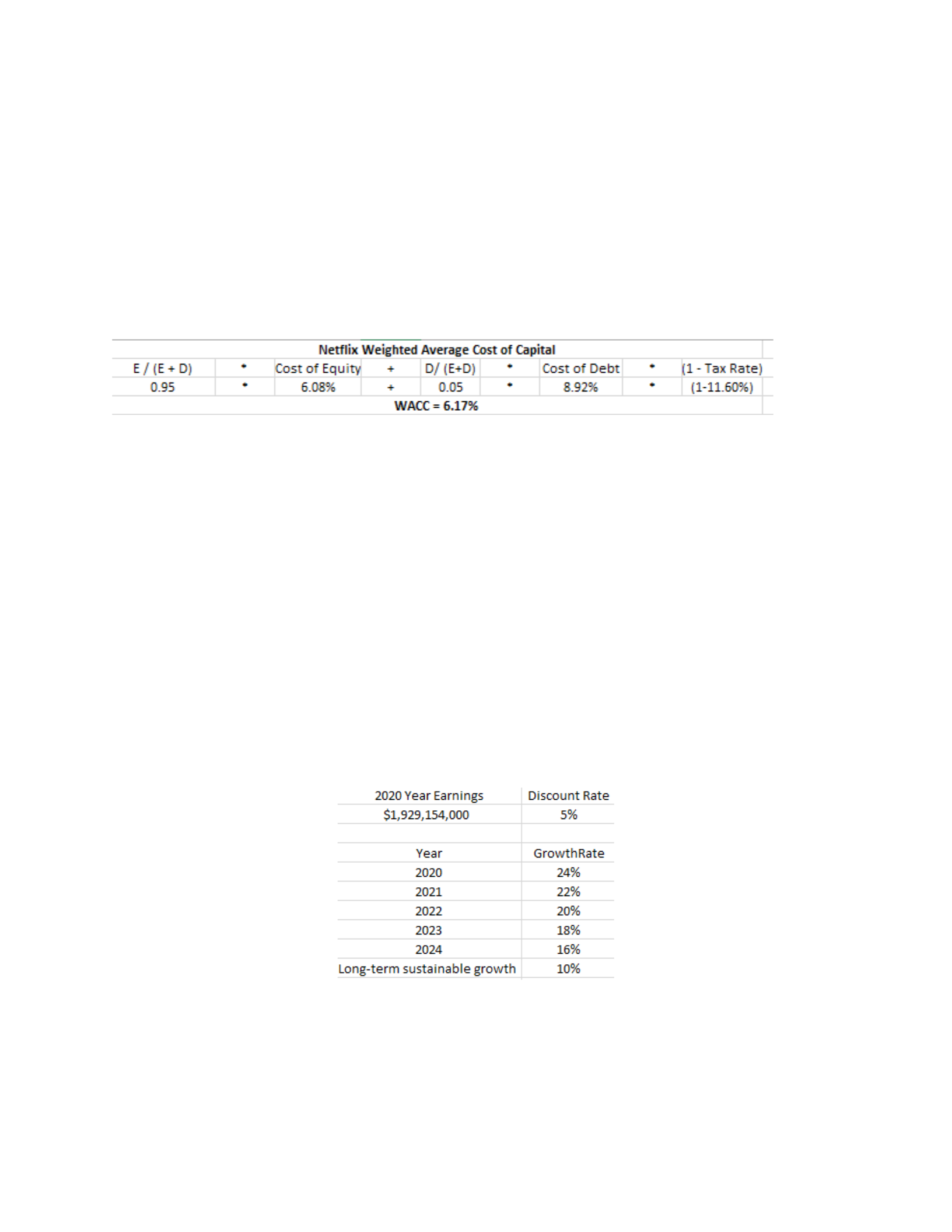
established themselves and will face more challenges in growing at the current rate. They also
face a variety of risks such as uncertainty in cash flows and competition that reduce their
potential growth and future value. The discount rate can be determined by calculating the
weighted average cost of capital or analyzing the compensation for risk.
While the current weighted average cost of capital for Netflix is 6.17%, the discount rate used in
this assignment is 5%. The 5% was obtained from the WACC and risks associated with factors
such as the industry (rivalry, and bargaining power of suppliers and customers) and the
macroenvironment (economy, technology, politics, and international) that reduce Netflix’s
potential to receive higher future economic benefits (Hitchner, 2017).
Application of valuation approaches
The Income Approach:
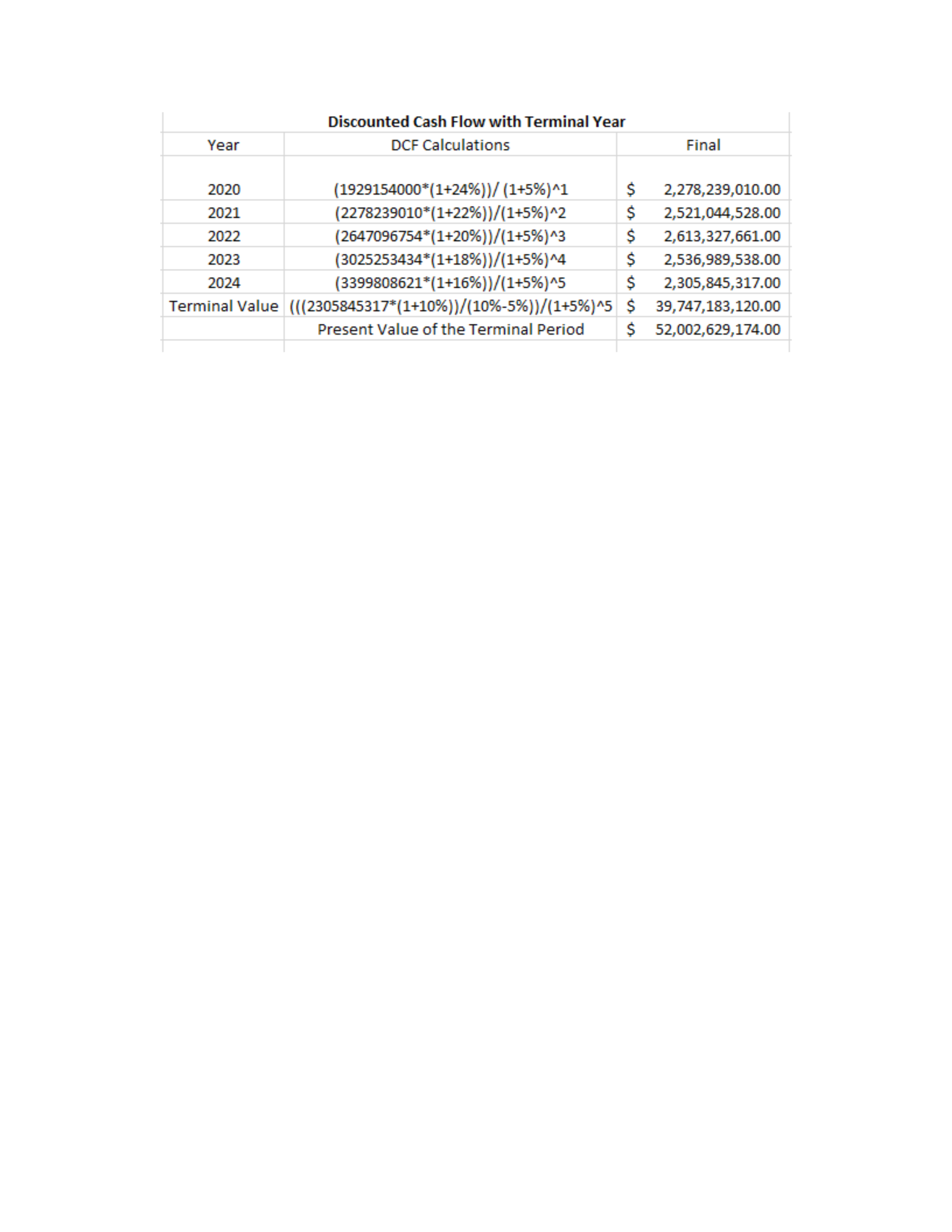
Netflix recorded a free cash flow of $1,929,154,000 for the year ending December 2020. The
free cash flow is the amount of free cash generated after considering all internal and external
operations. The 2020 free cash flow was used to calculate the present value for the initial year in
the discounted cash flow analysis. The growth rate of 24% was determined by calculating the
annual sales growth rates in the previous assignment. The growth rates indicated a steady decline
from 30% in 2017 to 24% in 2020. The growth rates for the future years were determined by
examining the past growth rate trends, and assuming the same trends would apply in the future.
The assumed growth rates for 2021 to 2024 indicate a steady decline in Netflix’s growth due to
the various risks and threats Netflix will continue to face. The long-term sustainable growth of
10% indicates the minimum growth rate Netflix will continue to see in the coming future.
Despite the risks, Netflix still shows a lot more potential to grow and establish with newer
countries and audiences and produce new original movies and shows that aren’t available to view
on any other services. The Gordon Growth Model was used to calculate the terminal value from
the sum of the present values of expected future cash flows (Hitchner, 2017). This model
assumes that Netflix will continue to grow forever with at least a 10% perpetuity and determines
the value of company stock based on dividends, growth rate, and the cost of capital (Duncan,
Anderson, Price, Thomas, 2017). The final values were determined by applying the associated

net cash flows, growth rates, and the discount rate in the discounted cash flow formula for each
respective year. The sum of the resulting calculations determined the present economic worth of
Netflix based on its anticipated future operations in the next five years. Netflix’s current value
obtained from the income approach through the discounted cash flow analysis is
$52,002,629,175.
The Market Approach: The comparable guideline companies that are chosen to perform the
market approach for this assignment somewhat belong in the same industry as Netflix and
provide streaming services. Some of the chosen companies such as Walt Disney Co. and Google
provide other products and services and are just as, if not more, established than Netflix. The
three chosen guideline companies are all publicly traded on the stock market. Each company’s
price multiple was determined by dividing their market cap by their total earnings for the year
2020. The market cap was determined by multiplying their current stock price by the total
number of outstanding shares. The obtained price multiple was then multiplied by Netflix’s 2020
revenues, and the result obtained was the company’s valuation. Since the valuation differed when
compared to different companies, the average valuation was taken to obtain the economic worth
of Netflix through the market approach.
Walt Disney Company: The Walt Disney Company is a world-renowned entertainment
company. The company is known to operate television channels such as Disney, ESPN, National
Geographic, and Fox. The company also operates resorts, theme parks, and cruise lines. The
company’s main objective is to be “one of the world’s leading producers and providers of

entertainment and information, and its primary financial goals are to maximize earnings and cash
flow that will drive long-term shareholder value” (Carillo, Crumley, Thieringer, Harrison, 2012).
Just like Netflix, the company offers direct-to-consumer video streaming services such as
Disney+, ESPN+, and Hulu. Due to the being well-established and providing such a wide range
of products and services, The Walt Disney Company’s current valuation is over $320 billion.
After performing the market approach calculation with the Walt Disney Company’s data,
Netflix’s valuation for the year 2020 was $122,449,633,800.
ViacomCBS: ViacomCBS Inc. is a media and entertainment company that operates worldwide.
The company operates through television entertainment by broadcasting news, sports, kids’
programs, game shows, late-night programs, and court shows (Yahoo Finance, n.d.). The
company also produces, finances, and distributes movies. The company is similar to Netflix in
the aspect of providing digital entertainment. After using ViacomCBS’s financial information in
the market approach formula, Netflix’s valuation for the year 2020 was $25,442,000,000.
Alphabet Inc: Alphabet Inc. provides a wide range of products and services such as hardware,
Search, Google Maps, Google Play, Android, Chrome, and advertisements. YouTube, which is
one of the most popular video sharing and streaming platforms in the world is also owned by
Google. The company’s current market cap is over $1.85 trillion and is one of the largest
companies in the world. After using Alphabet Inc.’s price multiple and multiplying it by Netflix’s
2020 revenues, the resulting value was $254,720,000,000.
The average of all three Netflix valuations for the year 2020 is $134 billion. The valuation is
lower than Alphabet Inc. and The Walt Disney Company because these large companies provide
a great variety of products and services other than just streaming and are well established across
the world. These two companies own companies that directly compete with Netflix, but also own
companies that bring in revenue from other operations. Alphabet Inc. owns YouTube, while The
Walt Disney Company owns Disney+ and Hulu which are considered Netflix’s biggest
competitors.
The Asset Approach:

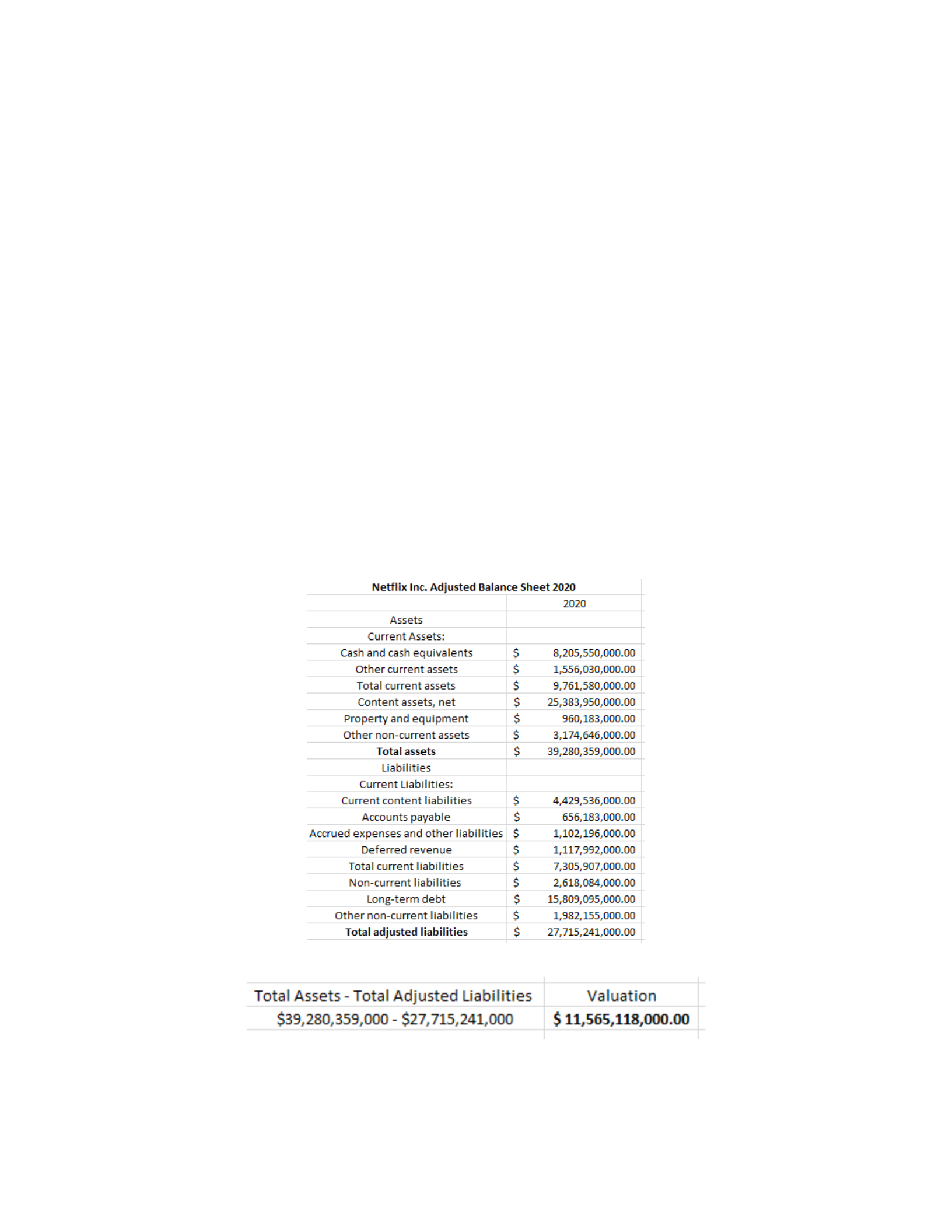
A company’s value is created by its assets and liabilities (Duhnea, 2016). The adjusted net assets
method was applied to determine the fair market value of Netflix through the asset approach. The
consolidated balance sheet for the year 2020 was obtained from Netflix’s 2021 10k report and
analyzed to determine whether it needed any adjustments. The liabilities section consisted of the
company’s short-term loans, which were removed from the adjusted balance sheet. The short-
term loans are Netflix’s nonoperating liabilities and consist of the amount the company owes but
isn’t related to the ongoing operations. The short-term loans were the only adjustment needed to
the company’s balance sheet for determining Netflix’s value through the asset approach. After
subtracting the company’s total adjusted liabilities by the total assets, Netflix’s valuation was
$11,565,118,000 for the year 2020. The valuation obtained from the asset approach is much
lower compared to the valuations from the income approach and the market approach. The
reason for a low valuation might be due to the value of Netflix’s property and equipment assets.
Compared to other assets, the value of the company’s property and equipment assets is the
lowest. The asset approach is most favorable for the valuation of real estate or holding
companies because they consist of a lot more assets, compared to the number of liabilities they
owe. The difference between the asset and liabilities for Netflix wasn’t significant, despite
adjusting the liabilities by removing the short-term loans.
Reconciliation of the three valuation approach estimates
The valuations obtained from the three different approaches differed greatly from one another.
For the year 2020, Netflix’s valuation through the discounted cash flow analysis for the income
approach was $52,002,629,175. The company’s average valuation after using the market
approach formula with the comparable guideline companies was $134,000,000,000. The lowest
valuation of $11,565,118,000 was obtained from the adjusted net assets method during the asset

approach. The valuation obtained from the market approach seems to be the most accurate. “Do
not judge by appearances, but judge with right judgement” (John 7:24). The reason why the
income approach seems inconsistent is that a lot of assumptions were made during the process.
The discount rate of 5% was assumed after analyzing the company’s future risks and the
weighted average cost of capital. The growth rates were assumed after analyzing the company’s
growth rates from 2017 to 2020. The long-term sustainable growth rate was assumed to
determine the terminal value and was much lower compared to its current growth rate. The asset
approach seems inconsistent with what Netflix’s current value should be because the difference
between the company’s assets and liabilities is not significant. Netflix’s most assets consist of
value from their intangible assets while the least comes from its property and equipment. The
value obtained from the market approach seems the most accurate out of the three to Netflix’s
actual value. Unlike the income approach, no assumptions were made, and actual financial data
was used in the market approach. Companies such as Alphabet Inc. and The Walt Disney
Company are valued at a much higher price than Netflix’s valuation, but it is most likely due to
their operations in other products and services outside of the video streaming industry. Despite
that, Netflix was still valued at its highest through the market approach, and there are a variety of
reasons why Netflix could be worth so high. Just like the previous two companies mentioned,
Netflix operates worldwide and offers its services to over 180 countries with over 200 million
subscribers. The company offers a wide range of movies and tv shows, along with producing
their originals. The digital entertainment industry is continuously growing, and established
companies such as Netflix will keep seeing an increase in revenues as long as they keep up with
the competition and come up with new strategies to one-up them.

Netflix’s market value for December 31st, 2020, was $239,543,339,000. The value was obtained
by multiplying its closing stock price of $540.73 by the total outstanding shares of 443 million.
Netflix’s actual value was much higher than the valuation obtained from the reconciliation value
of $134,000,000,000. The financial analyses in the previous assignment indicated that Netflix’s
financial condition is good and its ability to consistently gain profits is strong. The company has
shown positive total cash inflows after their operating, financing, and investing activities for the
past four years (Revisine, 2021). I believe Netflix’s actual valuation is more accurate than any of
the valuations obtained from the three approaches. While Netflix does face a wide variety of
risks in the future, it still has a lot more potential to grow and expand its services. I believe the
stock price of $540.73 is a great buy for long-term investors. “Until we all reach unity in the faith
and in the knowledge of the Son of God and become mature, attaining to the whole measure of
the fullness of Chris” (Ephesians 4:13). As long as Netflix can keep up with the changes in
industry, economy, and law & regulations, the company will continue to see growth, and will
eventually surpass $600.00 a share. Streaming services are a popular source of entertainment that
people can enjoy from anywhere in the world. With the amount of content and genres Netflix
offers its customers, and the additional new content it keeps on adding, Netflix’s customers
won’t be going anywhere any time soon, and the company will keep on seeing an increase in its
annual revenues and profitability.

References
Carillo, C., Crumley, J., Thieringer, K., & Harrison, J. (2012, November). The Walt Disney
Company: A Corporate Strategy Analysis. University of Richmod. Retrieved from
https://scholarship.richmond.edu/cgi/viewcontent.cgi?article=1010&context=robins-case-
network.
Damodaran, A. (2007). Valuation approaches and metrics: A survey of the theory and evidence.
Now.
Duhnea, C. (2016). The Adjusted Net Asset Valuation Method – Connecting the dots between
Theory and Practice. IDEAS. Retrieved from
https://ideas.repec.org/a/ovi/oviste/vxviy2016i1p521-526.html.
Duncan, J., Anderson, S., Price, S., & Thomas, C. (2017, April). The Gordon Growth Model: A
Teaching Case.
English Standard Version Bible. (2001). ESV Online. https://esv.literalword.com/
Fenigstein, T. (n.d.). Issues arising in the valuation ofhigh-tech companies.
http://www.buildingipvalue.com/c_finance/telaviv.html.
Hitchner, J. R. (2017). Financial valuation: Applications and models. Wiley.
Mercer, Z. C., & Harms, T. W. (2021). Business valuation: An integrated theory. John Wiley &
Sons, Inc.
Revsine, L. (2021). Financial reporting & analysis. McGraw-Hill Education.

Trugman, G. R. (2013). Understanding business valuation. American Institute of Certified Public
Accountants.
Wu, Y. (2021, July 19). 5 strategic risks for netflix Journo. Retrieved from
https://journo.com.tr/netflix-strategic-risks.
Yahoo! (n.d.). ViacomCBS Inc. (VIAC) company Profile & Facts. Yahoo! Finance. Retrieved
October 8, 2021, from https://finance.yahoo.com/quote/VIAC/profile?p=VIAC.

