


Liberty University – Online
Population Health Intervention Project
Mental health is increasing recognized by the public health community as critical to good
health (CDC,gov, 2012). Nearly one fourth of United States citizens at adult age suffer from a
diagnosable mental illness each year. In 1999, the Surgeon General’s office released its first
report on mental health calling for the full integration of mental health into the nation’s public
health system (CDC.gov, 2012). The information in the report showed that mental illness are
included in the most prevalent and costly conditions in the United States and that with proper
diagnoses and proper treatments can reduce their occurrence and reduce the effect it may have on
other health conditions. In many communities, most people believe that mental health does not
exist and “happens to someone else.” The fact of the matter is that mental health disorders are
common in all communities and are widespread. An estimated 54 million Americans suffer from
some form of mental health disorder in a given year (mha.net, 2016).
Mental illness can be defined as a disease that causes mild to severe disturbances in
thought and/or behavior, resulting in an inability to cope with life’s ordinary demands and
routines (mha.net, 2016). Treatments have been developed and tested to successfully reduce the
symptoms and disabilities of many mental illnesses; unfortunately, people distressed by these
illness often do not seek out services or choose to fully engage in them (Corrigan, Druss, and
Perlick, 2014). The stigma of mental illness discourages individuals from seeking the necessary
treatment needed to be productive in society. Many people with serious mental illnesses don’t
seek out the treatment needed or they don’t follow through with interventions once it has begun.
The presence of untreated mental illness can have a negative impact on an individual’s quality of
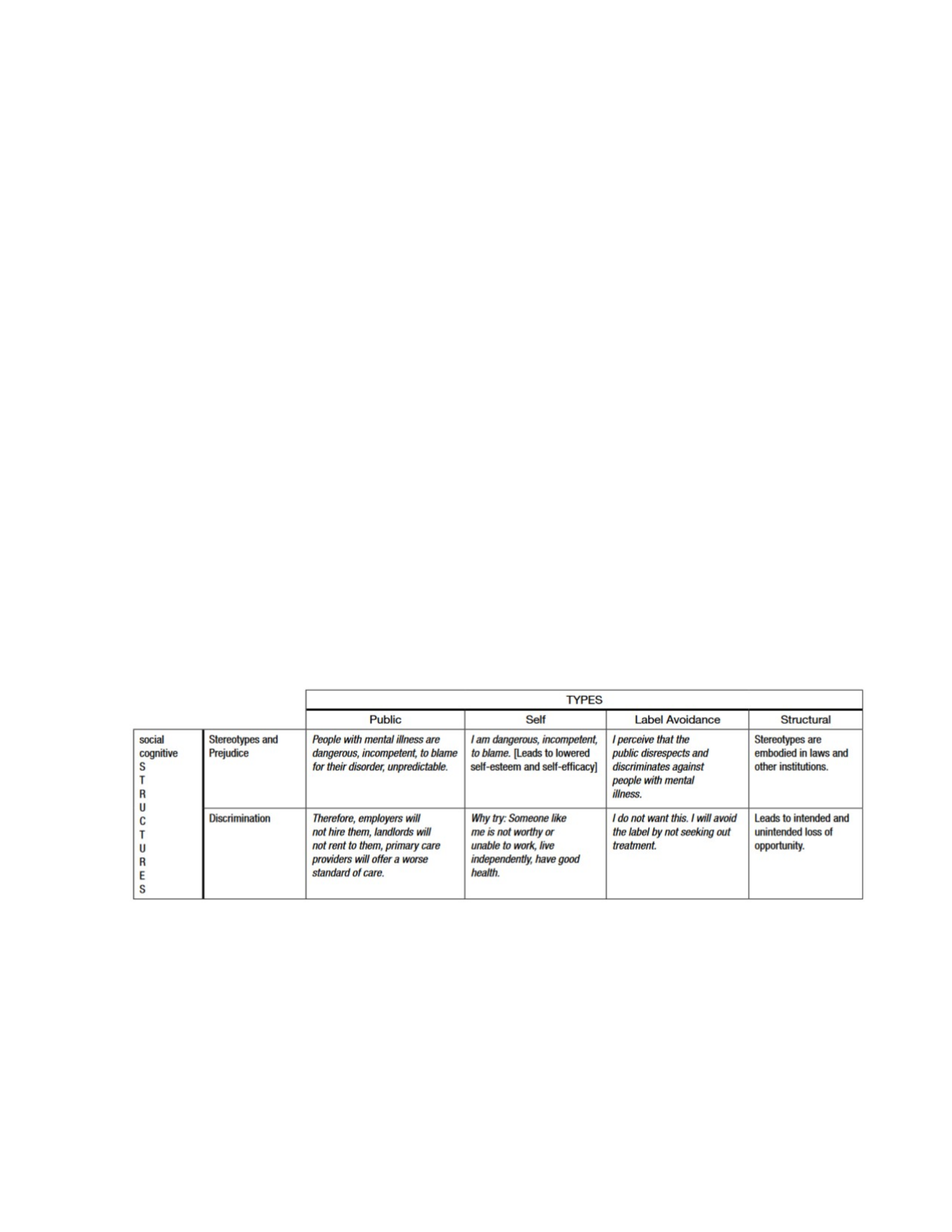
life. The table below is a matrix created by Corrigan, Druss, and Perlick describing the stigma of
mental illness and how it affects people that suffer from mental illnesses.
Mental health disorders can be genetically developed. Offspring of parents with server
mental illness have an increased risk of developing a mental illness themselves (Rasic, Hajek,
Alda, & Uher, 2014). Adults and children that suffer from mental illness also suffer from a higher
rate of physical illness and are more likely to die at a younger age as a result of a physical illness.
Many that suffer from mental illness frequently visit emergency departments for treatment. The

overcrowding of emergency departments does not allow them to properly treatment a patient
diagnosed with a mental illness and because of this there is a high readmission rate in emergency
departments. Emergency departments are common entry points for hospital admission and it is
not unusual to find that those with mental health/substance abuse conditions are frequent users of
emergency departments (Smith, Stocks, & Santora, 2015). The reason for frequent visit to
emergency departments by the mental health population has not been determined. The admission
and readmission of these individuals are frequent and costly. There were 1.8 million inpatient
stays at community hospitals for mental health and substance abuse conditions in 2009, costing
an estimated $9.7 billion (Smith, Stocks, & Santora, 2015). The reoccurring of emergency
department visits and inpatient admission could be a direct reflection of the lack of access to
outpatient treatment. Acknowledgment of the gaps would lead to recommendations for efforts to
create more effective outpatient care and treatment. This would also help to match the
appropriate treatment needed for mental health and substance abuse patients that have been seen
in the emergency department or admitted in the hospital. The purpose of outpatient treatment is
to reduce the frequency of emergency department visits and the number of readmission or
hospital stays.
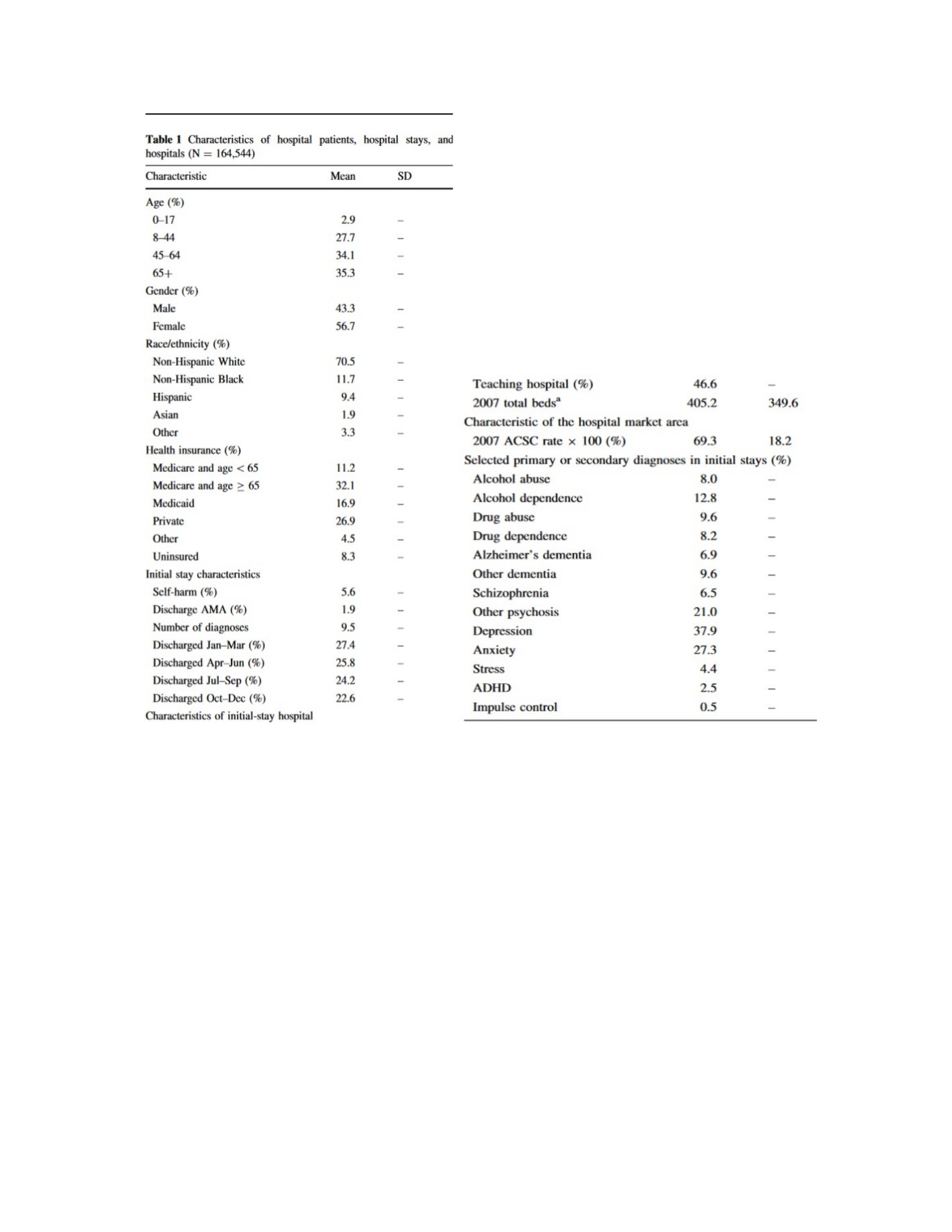
The purpose of this study is to examine the data on the frequency of emergency
department visits and admissions resulting from an ED visit. The visit can be broken down by
age, gender, race/ethnicity, health insurance, and primary and secondary diagnoses. The table
below, created by Smith, Stocks, and Santora outlines all this information.
Mental illness, substance abuse and poverty are very closely related. Single women and
women accompanied by their dependent children represent a substantial and growing segment of
the homeless population in the United States (Chambers, et. al., 2014). The relationship between
mental health and homelessness is complex and multidirectional; mental health problems can
function as both a cause and a result of homelessness (Chambers, et.al., 2014). Poor mental
health increases an individual or family’s probability of being homeless, but it can also prolong
the episodes of homelessness. It is very common for individuals that are homeless to not have
access to proper health care and health insurance benefits; which means when an individual feels
they are in a crisis the emergency department is their source of treatment. Without follow up

treatment or after care, these individuals could find themselves in the emergency department for
seeking treatment within thirty days of the initial episode.
The National Alliance of Mental Illness lists the following facts as prevalence of mental
illness:
Approximately 1 in 5 adults in the US – 43.8 million, or 18.5%- experiences mental
illness in a given year.
Approximately 1 in 25 adults in the US – 9.8 million, or 4.0% - experiences a serious
mental illness in a given year that substantially interferes with or limits one or more
major life activities.
Approximately 1 in 5 youth aged 13 – 18 (21.4%) experiences a severe mental disorder at
some point during their life. Four children aged 8 – 15, estimate 13%.
1.1% of adults in the US live with schizophrenia
2.6% of adults in the US live with bipolar disorder
6.9% of adults in the US – 16 million – had at least one major depressive episode in the
past year.
18.1% of adults in the US experienced an anxiety disorder such as posttraumatic stress
disorder (PTSD), obsessive-compulsive disorder (OCD), and specific phobias.
Among the 20.2 million adults in the US who experienced a substance use disorder,
50.5% - 10.2 million adults – had a co-occurring mental illness.
The deinstitutionalization of psychiatric care in high-income countries has increased the
number of people being care for in the community (Amina, et. al., 2015). Individuals caring for
patients that have been diagnosed with a mental illness spend more than six hours a day
providing care. Emergency departments are designed to rapidly assess and evaluate a patient’s
illness or injury and stabilize their condition prior to transfer to an inpatient hospital bed or
discharge (Innes, et. al, 2013). The number of admission in the emergency department makes it
the busiest departments of any healthcare organization. The emergency department is designed to

manage medical and surgical emergencies; however mental health diagnoses may not be
considered a direct result of an emergency. Care coordination processes have been created in the
emergency department to triage individuals with mental health disorders to determine if their
need is a true emergency. The care coordination process is also responsible for creating after care
plans for mental health patients to seek outpatient treatment. Emergency department visit are
costing the healthcare industry millions of dollars each year when patients without health
insurance coverage visits the emergency department for a nonemergency situation.
The average cost for a nonemergency visit to the emergency department cost approximately
$2000 per person and with over 200,000 emergency room visits that can put a strain on the
healthcare system and the government. Many states expanded the Medicaid programs with the
implementation of the Affordable Care Act; however North Carolina was not one of those states.
The key to this expansion is the essential health benefits provision in the ACT that requires cover
of mental health and substance use disorder services at parity with general medical benefits
(Beronio, Glied, & Frank, 2014). Along with the population of people that were uninsured, a
large number of Americans with health insurance benefits for general health care needs, mental
health care is totally excluded or offered less comprehensive coverage of mental health and
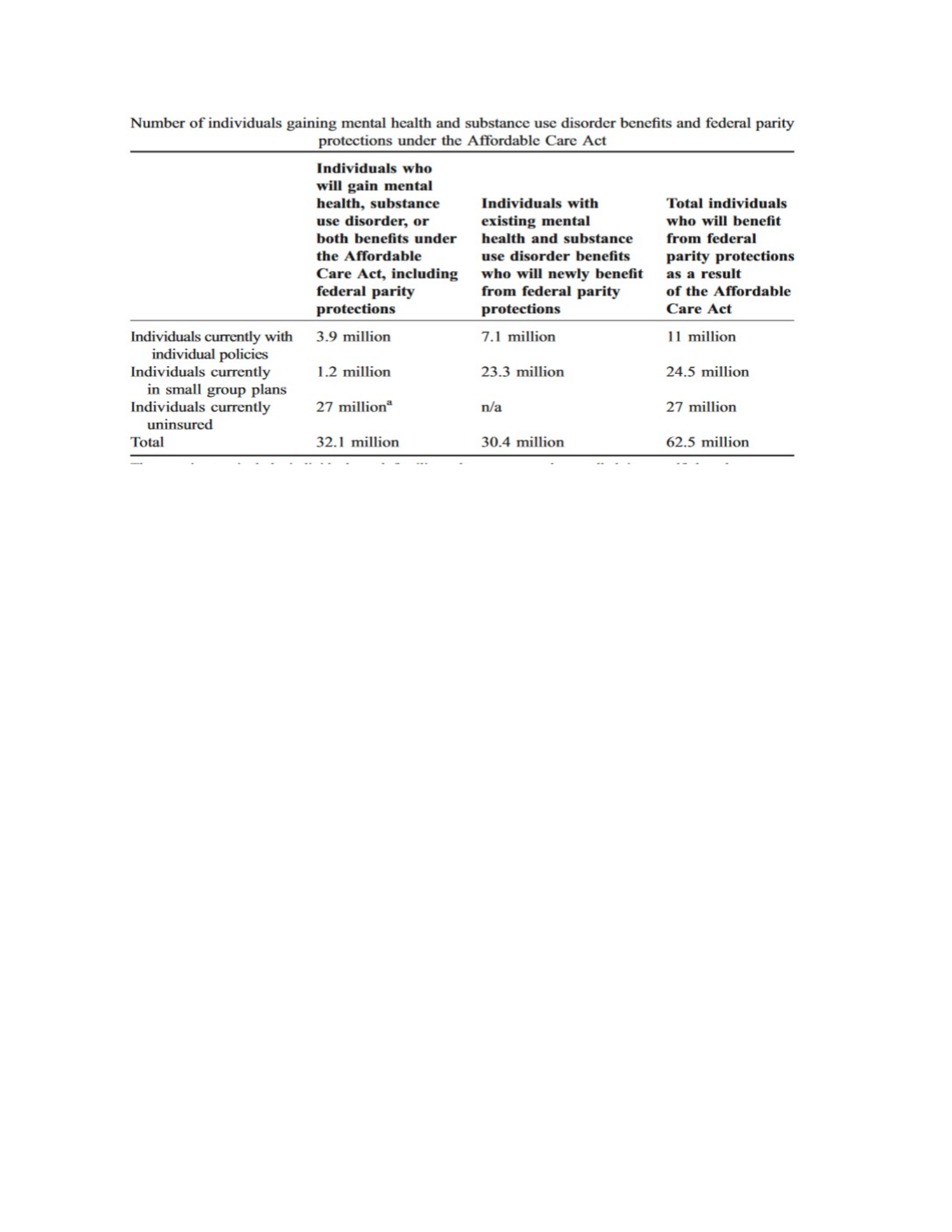
substance use disorder treatment. The table below, created by Beronia, Glied, & Frank, outlines
how individuals benefits from the affordable care act.
Health care benefits and processes such as care coordination in an emergency department help to
increase the number of individuals receiving outpatient treatment for mental health disorders.
A growing body of research suggests that organization-specific contextual characteristics
have an impact on the delivery of mental health services and interact with efforts to improve
services within community-based organizational settings (Glisson, et. al., 2013). The
organizational social contexts in which services are rendered affect both treatment
implementation and outcomes. According to NAMI, the consequences of lack of treatment are:
Serious mental illness costs America $193.2 billion in lost earnings per year.
Mood disorders, including major depression, dysthymic disorder and bipolar disorder, are
the third most common cause of hospitalization in the U.S. for both youth and adults aged
18–44.
Individuals living with serious mental illness face an increased risk of having chronic
medical conditions. Adults in the U.S. living with serious mental illness die on average
25 years earlier than others, largely due to treatable medical conditions.
Over one-third (37%) of students with a mental health condition age 14–21 and older
who are served by special education drop out—the highest dropout rate of any disability
group.
Suicide is the 10th leading cause of death in the U.S., the 3rd leading cause of death for
people aged 10–24 and the 2nd leading cause of death for people aged 15–24.
More than 90% of children who die by suicide have a mental health condition.
Each day an estimated 18-22 veterans die by suicide.
Individuals when a mental health disorders, shows up at the emergency department when they
feel they are in a crisis instead of seeking outpatient treatment to prevent a crisis. The burden of
mental illness is profound and growing in the United States. Coupled with large gaps of
psychiatric services, this mental health burden has often forced emergency departments to
become the de facto primary and acute care provider of mental health care in the United States
(Larkin, et. al., 2013). For a number of reasons, emergency departments are used as the first
source of care by individuals seeking mental health-related services for the first time. It is also
use for those in needed of treatment after normal clinical hours. Patient demographics play a key
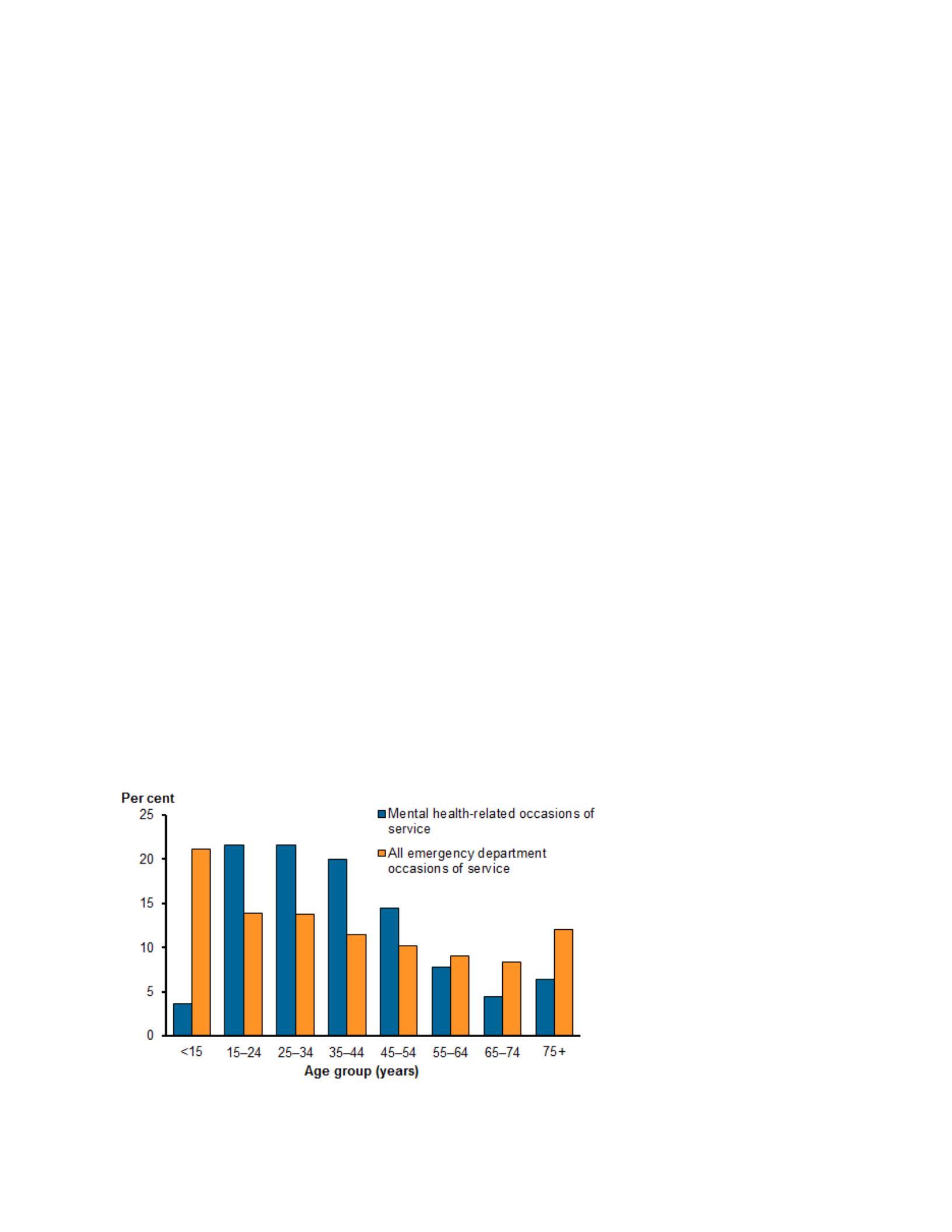
role in emergency visits. The chart below outlines emergency department visits by age group.

According to the chart, individuals between the ages of 15-45 have the highest number of visit to
an emergency department for mental health treatment. Data is obtained from various emergency
departments and compiled to determine the frequency of visit to emergency departments by
mental health patients. Of these patients, a very small portion of them are receiving after care
treatment. Financial responsibilities, lack of health coverage and education, and the stigma of
mental health disorders are reason my patients do not seek after care treatment.
There are many scriptures in the bible that relate to mental illness and gives instructions
as to how to deal with the stigma of it. Philippians 4:6-7 states, “Do not be anxious about
anything, but in everything by prayer and supplication with thanksgiving let your requests be
made known to God. And the peace of God, which surpasses all understand, will guard your
hearts and your minds in Christ Jesus. Even with mental illness, God is able to heal the mind and
held the healthcare understand what needs to be done for their patients. While treatment options,
including medication and counseling, are available to all mental health patients, preventions the
better choice. In most cases treatment does work, but it can be very costly. Many mental illnesses
can be prevented, and the Bible provides helpful information to that end. If we read a little
further, in Philippians 4:8 it says “ And now, my friends, all that is true, all that is noble, all that
is just and pure, all that is lovable and gracious, whatever is excellent and admirable-fill all your
thoughts with these thing.” God wants us to fill our minds with good things. Those who continue
to apply positive words will practice positive thinking, which is a habit that is critical to mental
health. It is important to avoid filling our minds with the negative and degrading aspects of the
world around us. It is so much going on in the world today and we must trust that God will
handle all our troubles. If we want good mental health, we should discipline our minds to avoid a
degrading mental diet.

References:
Amina Yesufu-Udechuku, Bronwyn Harrison, Evan Mayo-Wilson, Norman Young, Peter
Woodhams, David Shiers, Elizabeth Kuipers, Tim Kendall The British Journal of Psychiatry Apr
2015, 206 (4) 268-274; DOI: 10.1192/bjp.bp.114.147561
Beronio, K., Glied, S., & Frank, R. (2014). How the Affordable Care Act and Mental Health
Parity and Addiction Equity Act Greatly Expand Coverage of Behavioral Health Care. The
Journal of Behavioral Health Services & Research, 41(4), 410-428. doi:10.1007/s11414-014-
9412-0
Centers for Disease Control and Prevention. Public Health Action Plan to Integrate Mental
Health Promotion and Mental Illness Prevention with Chronic Disease Prevention, 2011–2015.
Atlanta: U.S. Department of Health and Human Services; 2012.
Chambers, C., Chiu, S., Scott, A. N., Tolomiczenko, G., Redelmeier, D. A., Levinson, W., & Hwang, S. W.
(2013). Factors Associated with Poor Mental Health Status Among Homeless Women With and Without
Dependent Children. Community Mental Health Journal, 50(5), 553-559. doi:10.1007/s10597-013-9605-7
Corrigan, P. W., Druss, B. G., & Perlick, D. A. (2014). The Impact of Mental Illness Stigma on
Seeking and Participating in Mental Health Care. Psychological Science in the Public Interest,
15(2), 37-70. doi:10.1177/1529100614531398
Daniel Rasic, Tomas Hajek, Martin Alda, Rudolf Uher; Risk of Mental Illness in Offspring of
Parents With Schizophrenia, Bipolar Disorder, and Major Depressive Disorder: A Meta-Analysis
of Family High-Risk Studies. Schizophr Bull 2014; 40 (1): 28-38. doi: 10.1093/schbul/sbt114

Glisson, C., Hemmelgarn, A., Green, P., & Williams, N. J. (2013). Randomized Trial of the
Availability, Responsiveness and Continuity (ARC) Organizational Intervention for Improving
Youth Outcomes in Community Mental Health Programs. Journal of the American Academy of
Child & Adolescent Psychiatry, 52(5), 493-500. doi:10.1016/j.jaac.2013.02.005
Innes, K., Morphet, J., O'Brien, A. P. and Munro, I. (2014), Caring for the mental illness patient
in emergency departments – an exploration of the issues from a healthcare provider perspective.
J Clin Nurs, 23: 2003–2011. doi:10.1111/jocn.12437
Larkin, G. L., Beautrais, A. L., Spirito, A., Kirrane, B. M., Lippmann, M. J., & Milzman, D. P.
(2013). Mental Health and Emergency Medicine: A Research Agenda. Academic Emergency
Medicine, 16(11), 1110-1119. doi:10.1111/j.1553-2712.2009.00545.x
Mental Illness and the Family: Recognizing Warning Signs and How to Cope. (2016, December
08). Retrieved from http://www.mentalhealthamerica.net/recognizing-warning-signs
NAMI. (n.d.). Retrieved from http://www.nami.org/Learn-More/Mental-Health-By-the-Numbers
Smith, M. W., Stocks, C., & Santora, P. B. (2015). Hospital Readmission Rates and Emergency
Department Visits for Mental Health and Substance Abuse Conditions. Community Mental
Health Journal, 51(2), 190-197. doi:10.1007/s10597-014-9784-x

