


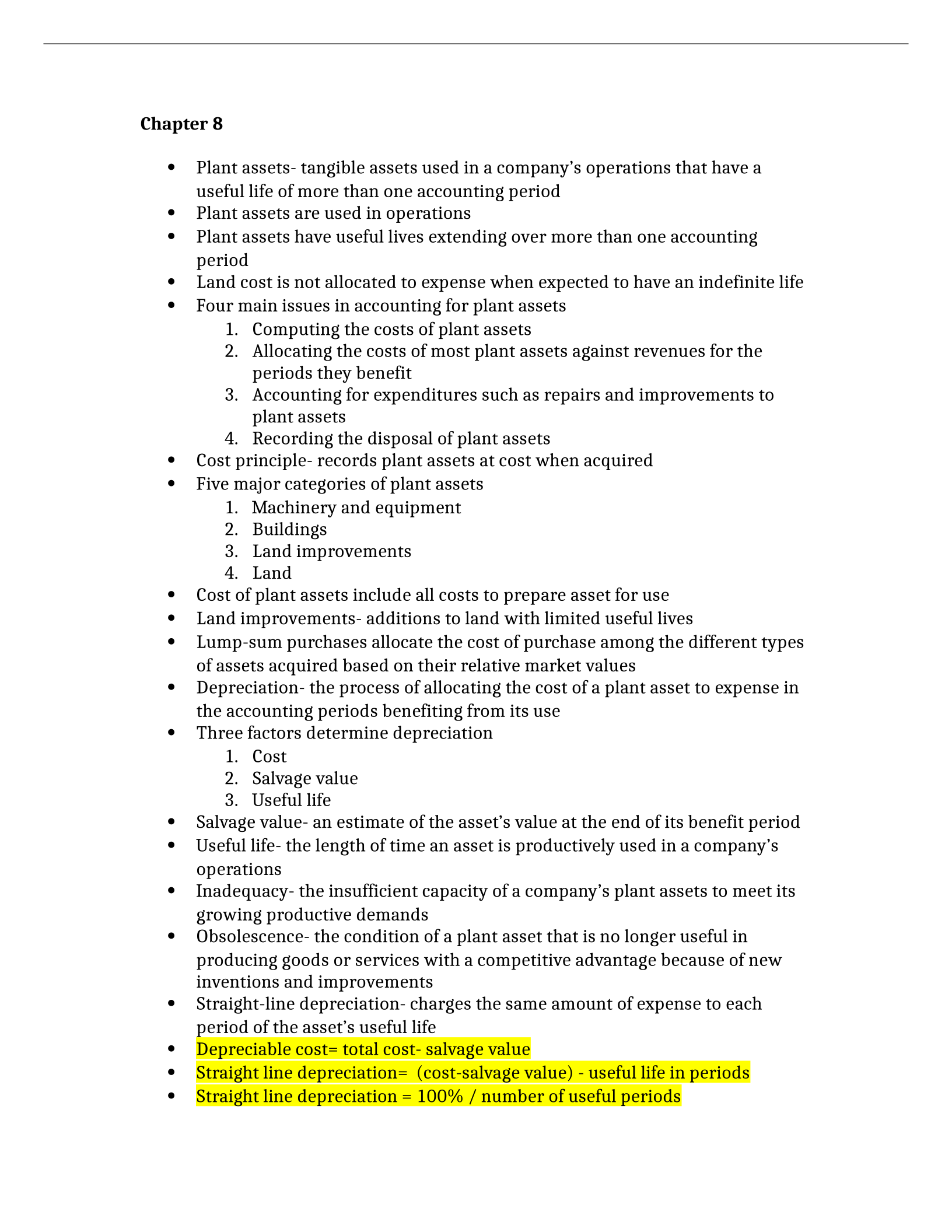
Chapter 8
Plant assets- tangible assets used in a company’s operations that have a
useful life of more than one accounting period
Plant assets are used in operations
Plant assets have useful lives extending over more than one accounting
period
Land cost is not allocated to expense when expected to have an indefinite life
Four main issues in accounting for plant assets
1. Computing the costs of plant assets
2. Allocating the costs of most plant assets against revenues for the
periods they benefit
3. Accounting for expenditures such as repairs and improvements to
plant assets
4. Recording the disposal of plant assets
Cost principle- records plant assets at cost when acquired
Five major categories of plant assets
1. Machinery and equipment
2. Buildings
3. Land improvements
4. Land
Cost of plant assets include all costs to prepare asset for use
Land improvements- additions to land with limited useful lives
Lump-sum purchases allocate the cost of purchase among the different types
of assets acquired based on their relative market values
Depreciation- the process of allocating the cost of a plant asset to expense in
the accounting periods benefiting from its use
Three factors determine depreciation
1. Cost
2. Salvage value
3. Useful life
Salvage value- an estimate of the asset’s value at the end of its benefit period
Useful life- the length of time an asset is productively used in a company’s
operations
Inadequacy- the insufficient capacity of a company’s plant assets to meet its
growing productive demands
Obsolescence- the condition of a plant asset that is no longer useful in
producing goods or services with a competitive advantage because of new
inventions and improvements
Straight-line depreciation- charges the same amount of expense to each
period of the asset’s useful life
Depreciable cost= total cost- salvage value
Straight line depreciation= (cost-salvage value) - useful life in periods
Straight line depreciation = 100% / number of useful periods
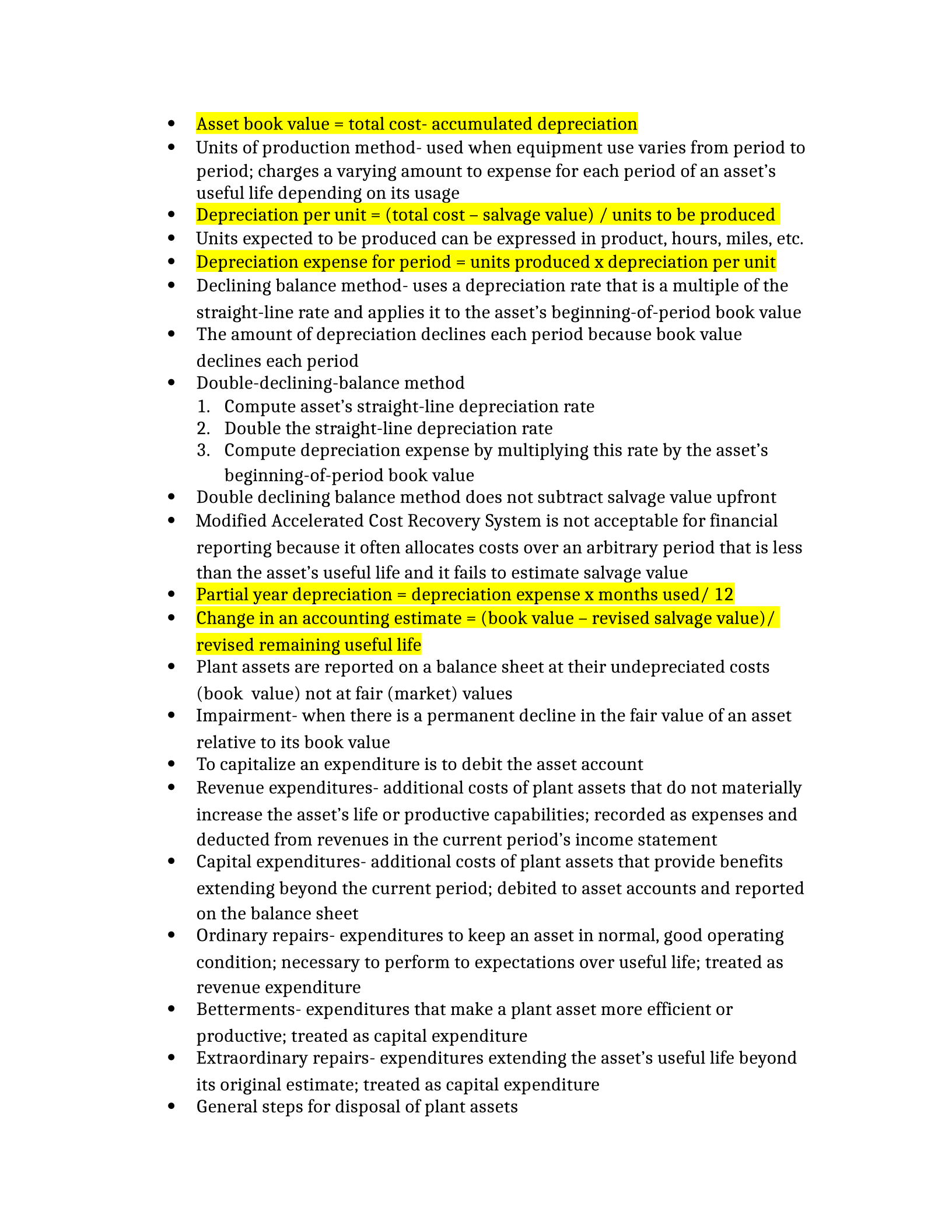
Asset book value = total cost- accumulated depreciation
Units of production method- used when equipment use varies from period to
period; charges a varying amount to expense for each period of an asset’s
useful life depending on its usage
Depreciation per unit = (total cost – salvage value) / units to be produced
Units expected to be produced can be expressed in product, hours, miles, etc.
Depreciation expense for period = units produced x depreciation per unit
Declining balance method- uses a depreciation rate that is a multiple of the
straight-line rate and applies it to the asset’s beginning-of-period book value
The amount of depreciation declines each period because book value
declines each period
Double-declining-balance method
1. Compute asset’s straight-line depreciation rate
2. Double the straight-line depreciation rate
3. Compute depreciation expense by multiplying this rate by the asset’s
beginning-of-period book value
Double declining balance method does not subtract salvage value upfront
Modified Accelerated Cost Recovery System is not acceptable for financial
reporting because it often allocates costs over an arbitrary period that is less
than the asset’s useful life and it fails to estimate salvage value
Partial year depreciation = depreciation expense x months used/ 12
Change in an accounting estimate = (book value – revised salvage value)/
revised remaining useful life
Plant assets are reported on a balance sheet at their undepreciated costs
(book value) not at fair (market) values
Impairment- when there is a permanent decline in the fair value of an asset
relative to its book value
To capitalize an expenditure is to debit the asset account
Revenue expenditures- additional costs of plant assets that do not materially
increase the asset’s life or productive capabilities; recorded as expenses and
deducted from revenues in the current period’s income statement
Capital expenditures- additional costs of plant assets that provide benefits
extending beyond the current period; debited to asset accounts and reported
on the balance sheet
Ordinary repairs- expenditures to keep an asset in normal, good operating
condition; necessary to perform to expectations over useful life; treated as
revenue expenditure
Betterments- expenditures that make a plant asset more efficient or
productive; treated as capital expenditure
Extraordinary repairs- expenditures extending the asset’s useful life beyond
its original estimate; treated as capital expenditure
General steps for disposal of plant assets
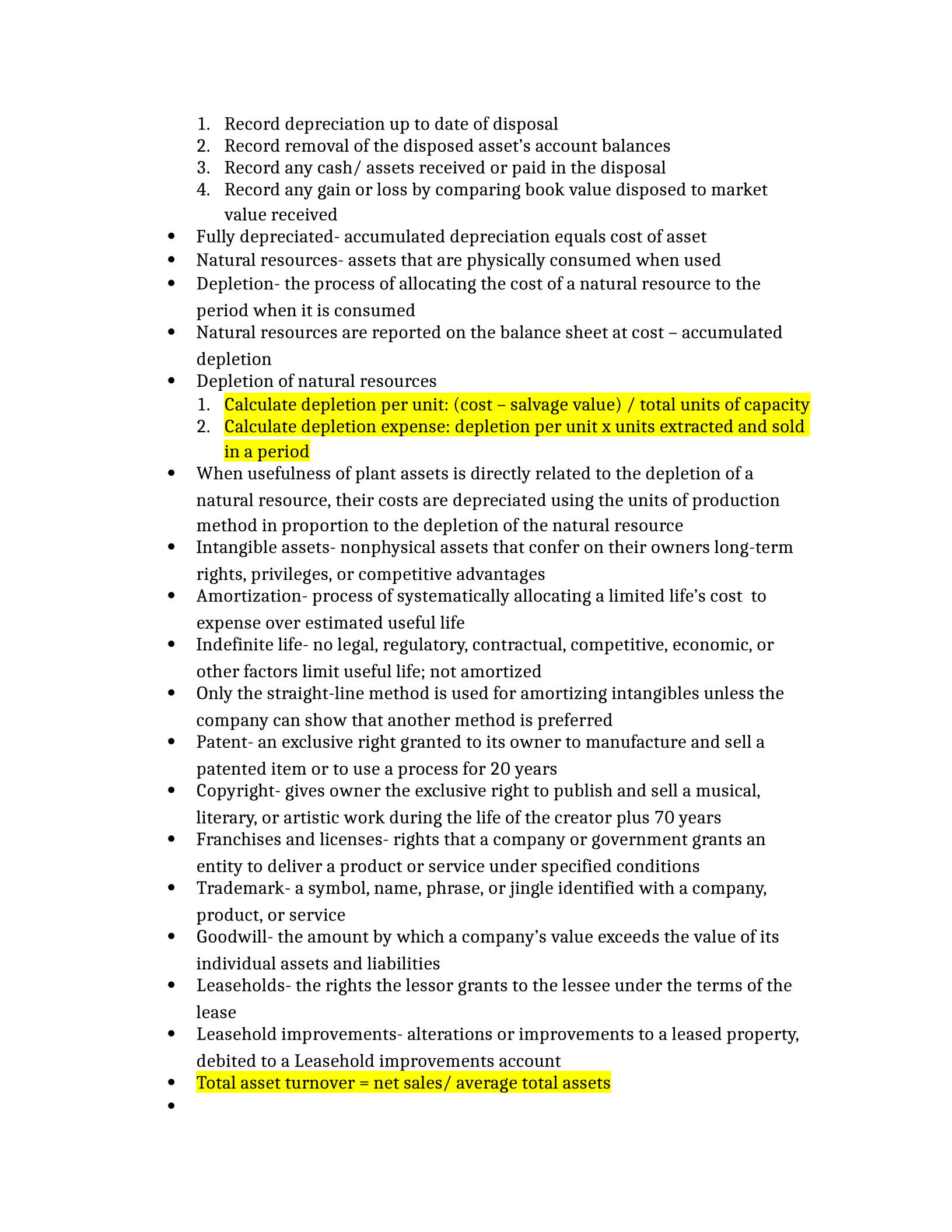
1. Record depreciation up to date of disposal
2. Record removal of the disposed asset’s account balances
3. Record any cash/ assets received or paid in the disposal
4. Record any gain or loss by comparing book value disposed to market
value received
Fully depreciated- accumulated depreciation equals cost of asset
Natural resources- assets that are physically consumed when used
Depletion- the process of allocating the cost of a natural resource to the
period when it is consumed
Natural resources are reported on the balance sheet at cost – accumulated
depletion
Depletion of natural resources
1. Calculate depletion per unit: (cost – salvage value) / total units of capacity
2. Calculate depletion expense: depletion per unit x units extracted and sold
in a period
When usefulness of plant assets is directly related to the depletion of a
natural resource, their costs are depreciated using the units of production
method in proportion to the depletion of the natural resource
Intangible assets- nonphysical assets that confer on their owners long-term
rights, privileges, or competitive advantages
Amortization- process of systematically allocating a limited life’s cost to
expense over estimated useful life
Indefinite life- no legal, regulatory, contractual, competitive, economic, or
other factors limit useful life; not amortized
Only the straight-line method is used for amortizing intangibles unless the
company can show that another method is preferred
Patent- an exclusive right granted to its owner to manufacture and sell a
patented item or to use a process for 20 years
Copyright- gives owner the exclusive right to publish and sell a musical,
literary, or artistic work during the life of the creator plus 70 years
Franchises and licenses- rights that a company or government grants an
entity to deliver a product or service under specified conditions
Trademark- a symbol, name, phrase, or jingle identified with a company,
product, or service
Goodwill- the amount by which a company’s value exceeds the value of its
individual assets and liabilities
Leaseholds- the rights the lessor grants to the lessee under the terms of the
lease
Leasehold improvements- alterations or improvements to a leased property,
debited to a Leasehold improvements account
Total asset turnover = net sales/ average total assets
Powered by TCPDF (www.tcpdf.org)

