


COMPARING PERSPECTIVES OF INFORMAL SCIENCE EDUCATORS AND
ANIMAL CARE PROFESSIONALS IN AQUARIUMS
CHAPTER 1
INTRODUCTION
Science learning is not restricted to classrooms or school settings. Learners are flocking to
environments such as zoos and aquariums where science learning is inherent to the experience
(National Research Council, 2009). Informal science education institutions, or ISIs, strive to
have visitors walk away from an exhibit or educational interaction with understandings that are
aligned with their mission statements. In particular, zoos and aquariums often promote
conservation-oriented mindsets and wonder for the natural world, although visitors may initially
be drawn to these spaces for entertainment (Ballentyne & Packer, 2016) or other social
experiences (Falk, 2006). These spaces can sustain competing interests among their visitors by
providing a range of activities that encourage socialization and building on prior knowledge
(Ballentyne & Packer, 2016; National Academies of Science, Engineering, and Medicine, 2018).
Zoos and Aquariums
Zoos and aquariums provide a myriad of self-motivated and staff-led experiences for
guests to take part in including reading signage, attending shows, and interacting with social
media content (Llewellyn & Rose, 2021; Roe et al., 2014). Throughout their visit, guests are
most likely to interact with personnel who are responsible for animal care, visitor services, or
education programming (Carter et al., 2020; Khalil & Ardoin, 2011). Research on the influence
of animal care professionals (ACPs), or husbandry staff, in what visitors learn or perceive is
relatively understudied, but the body of knowledge surrounding the influence of informal science

educators (ISEs) is more robust. Studies have shown that ISEs provide nuanced perspectives and
adaptations that can enrich a visitor’s experience at ISIs (Plummer & Small, 2013; Tran, 2007).
The intersection of job roles among ACPs and ISEs and their potential impact in shaping visitor
behavior or mindsets served as the primary inspiration for this study.
Despite variation in their day-to-day duties, ACPs and ISEs face similar challenges in
professional settings. There are few established organizations for professional educators who
work within ISIs, let alone zoos or aquariums specifically. These facilities face high rates of
burnout and staffing turnover among ISE and ACP positions despite doing work with “both
personal and social significance” (Bunderson & Thompson, 2009, p. 32). The Washington Post,
New York Times, and USA Today, among other news sources, reported that many of the largest
member organizations within the Association of Zoos and Aquariums (AZA) were forced to lay
off 20%-60% of their workforce in 2020 due to the COVID-19 pandemic. Departments that
involve working with the public, including education and husbandry, saw at least 40% laid-off or
furloughed (American Alliance of Museums, 2020). The systemic and episodic obstacles faced
by each career field are potentially more alike than different. It is worth investigating the
perspectives of ISEs and ACPs in order to best address the goals of these communicators and
help them develop impactful experiences for learners.
Rationale
I have held a variety of paid and volunteer animal science and education positions at
AZA-accredited zoos and aquariums, including exhibit interpretation, marine mammal
husbandry, and field research. Each role involved networking with multiple departments in order
to meet an objective, develop expertise, or complete a project. In these roles, I overheard many
motivations for why a coworker found themselves in their current role. Some colleagues

described their time as an animal care or education employee as a gateway to a career in a
different department at an ISI. These individuals expressed frustration over barriers encountered
in the hiring process, including the apparent preference for accruing experience in their field
through primarily unpaid, seasonal volunteer opportunities or internships. Additionally, many
shared how the desire to contribute to animal conservation conflicted with their distaste for key
aspects of their current role. For instance, one employee eventually developed a preference for
not working in husbandry after finding they struggled to cope with sensory overload in their
animal’s food preparation processes. Others confided how they left careers with higher pay and
stable hours in order to work at ISIs due to a sense of calling or deeper satisfaction in their new
role as an ISE or ACP. The wide spectrum of perspectives was confounding and served as
inspiration for this study’s research questions.
Communication, or lack thereof, both within and between husbandry and education
departments was another theme throughout my experiences working in zoos and aquariums.
From summer camps to daily presentations, ACPs and ISEs frequently engaged in interpretation
for the same members of the public. I repeatedly witnessed peers present different topics or
educational strategies that were in direct conflict with the other departments’ guidelines or
expectations for that interaction. For example, one aspect of guest engagement in a previous ISE
role I held involved co-hosting public presentations with ACPs. During one such event, the ACP
encouraged guests to utilize a mobile app about seafood sustainability; however, ISE managers
recently told staff in their department to not use or discuss this same app in front of guests. I had
to quickly adapt my presentation in the moment to account for this and after the presentation, the
two of us left confused and without a definitive resolution. This instance, among others, showed
me how members of ACP and ISE departments can hold similar goals for encouraging

conservation initiatives among guests, but that the means for fostering this change can cause
unintentional contradictions if they hear conflicting directives from departmental leadership.
Failure to adequately investigate stressors to communication networks among seemingly
complementary departments can potentially lead to frustration behind closed doors, rather than
aligning methods or training to meet a common goal.
Since 1990, both career tracks have seen job requirements rise without proportional
changes in pay or professional development opportunities (Daigle, 2016). Zookeepers in
particular are expected to take on the roles of a biologist, nutritionist, veterinarian, facilities
specialist, and more, all while holding a high degree of trust with public visitors (Bunderson &
Thompson, 2009; Good, 2009). There are industry-wide initiatives to increase the diversity,
accessibility, and representation of educators in ISIs; however, recent data suggests that up to
59% of educators surveyed by Rende et al. (2021) have considered academic or career changes.
Pressures from within and outside of the organization can create confusion over how to meet
goals or transmit information to guests and colleagues. In more than one ISI, I repeatedly
navigated visitors’ confusion and critiques over how a facility can simultaneously disseminate
information about the link between fossil fuel emissions and climate change while having
multiple exhibits sponsored by prominent fossil fuel companies. Additionally, a lack of
standardized training (McLain, 2017) and varying degrees of responsibility in decision-making
can strain how ACPs and ISEs identify with the field as a whole (Bailey, 2006). Especially at
sites where employees and volunteers share job responsibilities between departments, I found it
difficult to explain what I do for work to others outside of my industry. Within the same shift, I
could engage in work that belonged to several departments–this ultimately stoked doubt over
whether I identified with a career in science, entertainment, tourism, or something else entirely.

Collaboration between husbandry and education departments is essential for maintaining
competing demands for time spent with learners within an operating day. Limited space means
that multiple staff members may share the same live animals and educational sites, even within
the same day. The likelihood that guests will encounter both ISEs and ACPs through curated or
spontaneous interactions in their visit is high. Analyzing the similarities and differences in why
these professionals enter their field, how they approach teaching, and what tactics they use for
communicating information can unify institutional messaging and tailor professional
development more effectively. Encouraging transparency about each profession’s expertise
benefits all stakeholders in zoos and aquariums. By comparing perceptions of two key
populations within ISIs, zoos and aquariums can start to address chronic problems that lead to
feelings of division, uncertainty, or lack of belonging.
Research Questions
The purpose of this study is to better understand the perspectives of animal care and
education professionals who engage with visitors in facilities that house living animal
collections. The research questions are as follows:
1. In what ways do ISE motivations for working in an aquarium compare to those of ACPs?
2. In what ways do objectives for communicating information to visitors differ between
these two groups of aquarium staff?
3. What strategies do the two groups utilize during educational interactions with guests and
how do these strategies differ?
4. What are the institutional differences that inform relationships between each group?

Methodology
This study employed a mixed-methods approach in order to ascertain details about role,
purpose, and rationale for ISEs and ACPs as they communicate with visitors at their facility.
ISEs or ACPs currently or formerly employed at two AZA-accredited aquariums on the West
Coast of the United States created the two subpopulations investigated in this multi-site case
study. Interns, volunteers, or potential applicants for a position in their career tracks were
excluded, as well as staff who work at sites where positions have significant overlap in job
duties. The majority of participants were front-line staff, but some held leadership positions
within their departments, such as curators. All participants met predetermined minimum
thresholds related to their professional experience in order to be included in this study.
Incorporating limitations helped to establish uniformity among those employed in two different
professions and instituted additional validity in this study’s conclusions.
Purposive sampling methods were used to address two primary barriers in obtaining
respondents: small populations and broad geographic scope. After obtaining permission from
departmental leadership, I contacted participants through their work email to participate in an
online questionnaire. Snowball sampling through in-person and virtual means was used to recruit
additional participants when an initial sample of ACPs was too small. Snowball sampling can
further the reach of the initial sample, establish degrees of separation from the researcher, and
include perspectives that may have otherwise been omitted (Leighton et al., 2021; Palinkas et al.,
2015; Parker et al., 2019). Upon completion of the survey, participants were invited to take part
in a virtual interview with the researcher. These semi-structured interviews included open-ended
questions where participants could share their experiences and elaborate on topics related to the
research questions.

Quantitative analyses were derived from closed-ended questions supplied through the
online survey. Frequency counts related to interactions with the public were analyzed along with
demographic information. These results are intended to shed light on whether ACPs and ISEs at
these two aquariums present significant differences in their strategies for public engagement.
Testimony from interviews were analyzed through a qualitative lens in order to compare
perspectives between the two career tracks as well as their facilities. In this study, “job” and
“role” were considered as singular commitments, whereas “career” or “profession” were
comprised of multiple jobs. Responses to open-ended questions were repeatedly scanned for
common words or phrases related to the research questions and assigned codes. Emergent codes
were compiled and compared in order to identify themes surrounding motivation, learning
objectives when facilitating an educational interaction, methods for engaging with the public,
and factors that contribute to the relationship between the two departments at each institution.
There are many outcomes of this research that I hope to see manifest in my personal and
professional commitments. In my experiences working at informal science education institutions,
I personally witnessed division among groups of ACP and ISE staff that, on the surface, appeared
complementary in departmental form and function. However, I also saw massive opportunities
for unification once I dug deeper into the mindsets of my peers. This research proved to be a
unique opportunity to dive deeper into the fields that started my own career path, while
highlighting the historical paths that led to their current-day positions as well as tangible areas
for future growth. I also hoped that systemic issues could be addressed from different angles if
purposeful efforts were made to bring those core values and mindsets held by staff to the
forefront of institutional decision-making. Furthermore, I hoped this research could serve to
unify institutional messaging and professional development opportunities so that learners could

maximize the potential in how they begin or maintain curiosity about the world. Zoos and
aquariums have persisted despite massive cultural and social upheaval and they are valued by
learners worldwide–this research is intended to contribute to a global effort to conserve natural
spaces and their inhabitants by addressing key communicators behind those efforts.
CHAPTER 2
REVIEW OF THE LITERATURE
Introduction
The purpose of this study is to highlight the perspectives of ACPs and ISEs who engage
with visitors to aquariums. This chapter examines the literature regarding how informal
environments support learning science, the role that zoos and aquariums play in supporting
informal science learning, as well as the front-line staff guests are likely to encounter within
these institutions.
Learning Science in Informal Environments
Informal Science Education Institutions (ISIs)
Opportunities to learn about science and engage in scientific practices are not restricted to
a school classroom or laboratory. These educational experiences are often referred to as informal
science education. They exist on a spectrum ranging from casual conversations to curated
programs, and typically include elements of learner choice and self-pacing (Fenichel &
Schweingruber, 2010). Some of these spaces are classified as informal science education
institutions (ISIs), or designed facilities that encourage participants to engage “cognitively,
socially, developmentally, and emotionally” with science learning (National Research Council,
2009, p. 4). These sites are able to serve the public as well as schools by providing experiential
learning not necessarily found in a classroom (Walsh & Straits, 2014). Zoos and aquariums are

particularly “enthusiastic and important players in the delivery of free-choice conservation
learning experiences” (Ballentyne & Packer, 2016, p. 1).
Although the modalities and settings for informal science education are as diverse as its
participants, there are shared elements that link them in a unique category of learning. Science
education has historically been oversimplified as a teacher transmitting key facts and principles
about scientific topics to students in a classroom (National Research Council, 2000; Scheurman,
1998). However, more accurate models of learning in formal and informal spaces are reframing
science education to include nuanced information about how people of all ages learn. Science
learning outcomes appear to be effective and durable when there is an intentional collaboration
between the learner and educator and where scientific skills, perspectives, and content are gained
through reasoning and argumentation (Kisiel, 2012; Windschitl et al., 2018). Furthermore,
science learning can become a more equitable practice when cultural influences and out-ofschool
experiences are viewed as a vital resource for learner-directed education (National
Academies of Science, Engineering, and Medicine, 2018). The National Research Council (2009)
and Fenichel and Schweingruber (2010) detail specific characteristics in science learning at ISIs,
including:
●learner choice and agency over their degree of engagement
●multimodal experiences that build on learner’s prior knowledge
●opportunities for socializing with others
●lack of formal assessments, such as tests or quizzes
Much of the learner participation with informal science education is voluntary; however,
staff within ISIs can serve a critical role for mediating the accommodation of new experiences.
Donovan and Bransford (2005) pose the contrast between content and concept learning not as a

conflict, but a partnership: “...knowledge of facts and knowledge of important organizing ideas
are mutually supportive…Memory of factual knowledge is enhanced by conceptual knowledge,
and conceptual knowledge is clarified as it is used to help organize constellations of important
details” (p. 7). ISI staff members serve as interpreters between expertise and novelty. They
simultaneously support the visitor’s engagement with authentic objects or experiences while
communicating knowledge that can supplement or challenge their prior knowledge (Pattison et
al., 2017; Tran, 2006). By engaging with visitors among multiple aspects of scientific learning,
including conceptual understanding and development of scientific practices, staff can stimulate
interest and facilitate the development of refined models for how learners view the natural world
(National Research Council, 2009). This engagement can take many forms but it is inherently a
“dynamic system of social activity” that orients content to a learner’s “everyday life” (National
Academies of Science, Engineering, and Medicine, 2018, p. 26).
Learning in Zoos and Aquariums
Supporting guest learning at zoos and aquaria can take on multiple competing forms,
including interpretation of exhibit signage, interactive elements, habitat construction, or live
animals. Closeness to live animals and the immersive design of animal habitats is highly valued
among educators and parents visiting zoos and aquariums (Fraser & Sickler, 2008), but it is
unclear whether these factors alone encourage talk beyond basic observations. For instance,
limited studies in aquariums have found that naturalistic designs of marine invertebrate touch
tanks did not significantly enhance discourse about ecology among family groupings (Kopczak et
al., 2013). Exhibit design or proximity to wildlife do not appear to be sufficient on their own in
supporting guests’ sensemaking–interaction with an educator is critical for providing context
about these spaces in the visitor’s life. In studies limited to conservation of reptiles and

amphibians, direct field experiences with animals improved both attitudes and receptiveness to
conservation topics (Ballouard et al., 2012; Rommel et al., 2016). Designed settings, including
zoos and aquariums, may have a greater impact on visitor affect or developing interest in science
rather than imparting knowledge about scientific principles. As ISIs evaluate virtual and inperson
learning experiences, communicators at those facilities should be mindful that the objects they
interpret are gateways to “the opportunity to interact with something” (Roberts, 2005, p.
85).
Encouraging sensemaking through social interaction has also been documented as a vital
pathway to science learning in museums (National Research Council, 2009; Palmquist &
Crowley, 2007) as well as zoos and aquariums (Fraser & Sickler, 2008; Kisiel et al., 2012). The
benefits of facilitating conversations are two-fold; engaging in discourse allows both visitors and
informal science educators to gauge the degree of learning taking place (Fenichel &
Schweingruber, 2010). Despite balancing several competing responsibilities, ISEs can shape the
direction and breadth of scientific knowledge, affect, or behaviors of guests by supporting social
relationships and learner self-direction inherent to these spaces. Recognizing the creativity and
adaptability of science educators in educational interactions may be a key asset for ISIs looking
to better understand the extent of guest learning or how organizational objectives are met.
Explicitly stating what guests typically know, how they need support, and the role of
informal science education in that process has multiple implications. These include focusing
professional development for informal educators to target specific educational goals (Pattison et
al., 2017), and fostering reflective practice about effectively engaging audiences with
controversial topics (L. B. Allen & Crowley, 2013). Visitors to zoos and aquariums, for instance,
retain strong knowledge about animals themselves and are aware of human impacts on the

environment, but need significant support for understanding higher-order scientific thinking such
as food web complexity or nutrient cycling (Dove & Byrne, 2014). Creating shared language
among communicators can serve as a springboard for staff to set individual or departmental goals
or remove barriers for sharing experiences with each other (Dwolatzky et al., 2021). McGinnis et
al. (2016) found that climate change educators can experience a dilution or dissociation from the
practice of communicating information when common goals about the topic are not shared
among the group. This may be especially relevant for educators working in aquariums as visitors
to these institutions are notably more conservation-minded than those who attend other ISIs (Falk
& Adelman, 2003). Educational language about climate change and conservation often overlaps
with respect to subject and scientific relationships; unified messaging among front-line
communicators and their leadership teams can help ISIs construct strong, clear connections
between content and guest impact on the wellbeing of natural spaces.
Understanding Zoos and Aquariums as Places of Learning
Institutional Context
Each aquarium in this study maintained current accreditation through the AZA. AZA
certification aligns husbandry, educational practices, and conservation efforts for facilities that
commit to “established standards and best practices” for the profession (AZA, 2021). AZA
institutions are located in thirteen countries in North America, South America, Europe, and Asia.
AZA-certified organizations are not exclusively designated as zoos or aquariums, but also
include botanical gardens, museums, rescue centers, among others. Facilities that seek
accreditation must be a “permanent institution,” witness a “regular flow of visitors,” and have
their primary mission centered around “the exhibition, conservation, and preservation of the

earth’s fauna in an educational and scientific manner” (AZA, 2021). In a study analyzing mission
statements of AZA members, Patrick and Caplow (2018) found that most members emphasized
“inspiration and connection,” while acknowledging that their collective goals continue to evolve
(p. 1).
The diversity of geographical location, size of institution, and communication initiatives
lend a variety of opportunities for visitors to engage with animal collections. Within a given day,
most guests are able to utilize these spaces through a variety of spontaneous or scheduled
activities. Self-guided exploration primarily takes place by reading signage or interacting with
artifacts at exhibits (Roe et al., 2014). Additionally, many visitors choose to dedicate part of their
visit towards paid encounters with staff and animals (Carter et al., 2020; Verbeke, 2015) or
scheduled shows or talks (Price et al., 2015). Many AZA facilities are pivoting to also include
virtual programming for remote engagement, resulting in an increasing number using social
media platforms for entertainment and conservation-oriented content (Llewellyn & Rose, 2021).
Zoos and aquariums also embed themselves in the surrounding areas through outreach and
professional networking events (Rommel et al., 2016). Verbeke (2015) asserts that zoos in
particular fit within a larger community context by “educating and engaging publics in
sustainability and conservation-related conversations” (p. 5).
Visitor Context
ISIs, especially zoos and aquariums, are stationed as an intersection between place,
culture, content, and the learners themselves. Each visitor not only brings a collection of prior
experiences to their experience at an ISI, but also their expectations or motivations for the outing.
Following up on their landmark study regarding identities of visitors to museums, Falk et al.
(2008) found that zoo and aquarium guests often held a single motivation for visiting that was

aligned to an aspect of their identity. For instance, guests who focused on facilitating interactions
between these sites and young learners in their group reported the most value in experiences that
supported positive emotions and engagement among children or other families. In a study
examining this single-motivation model, Rowe and Nickels (2011) cautioned that these
motivations should not be generalized to define visitor identities. Falk and Adelman (2003) noted
in an earlier study that the majority of guests tend to possess “low to moderate knowledge and
moderate to extensive interest” about specific subject matter prior to visiting zoos and aquariums
(p. 172). The public has been shown to value zoos and especially aquariums for their ability to
connect conservation issues of environments and animals in the wild to those in human-care
settings (Fraser & Sickler, 2008).
Visitation to aquariums and zoos in the United States is a relatively popular choice for the
public, families, and school groups. According to the AZA (2021), approximately 183 million
visits are recorded annually with the majority of visitors attending with children. In their report,
Fraser and Sickler (2008) note that live animals are a primary factor that attracts guests to zoos,
as well as participating in activities that are enjoyable. More value tends to be placed on
aquariums as a source for environmental information even if learning this information is not
cited as a primary driver for attendance (Ballantyne & Packer, 2016; Fraser & Sickler, 2008).
Ensuring that visitor expectations are met during scheduled programming (Moss et al., 2010;
Price et al., 2015), field trips (Fenichel & Schweingruber, 2010), or educational communications
such as signage or habitats (Kisiel et al., 2012; Roe et al., 2014) can help institutions align their
educational goals and evaluate their impact on communities more effectively. The nature of
ISIs as spaces for self-guided engagement and enjoyment in nature potentially challenges the
narratives of their respective mission statements. These broad visions assert zoos and aquariums

as places to learn about global themes and take action, yet this may conflict with the apparent
goals of visitors (Dwolatzky et al., 2021; Llewellyn & Rose, 2021). Numerous studies
(Ballentyne & Packer, 2016; Falk & Dierking, 2010; National Research
Council, 2009) demonstrate that guests recognize the duality of entertainment and education
about the natural world while attending an ISI. From reading a sign to participating in a field trip,
learners have the choice to engage with elements of ISIs that interest them. Learning about
conservation actions they can take to reduce their water or energy consumption, for instance,
may only be viewed as tangential relative to internalizing information about the animals they
came to view (Fraser & Sickler, 2008).
Furthermore, the in-person and virtual messaging to which these facilities assign may
conflict with viewer and staff expectations. Llewellyn and Rose (2021) analyzed YouTube videos
of zoos and aquariums and found that those with the highest social media engagement
consistently do not contain high amounts of conservation content. More broadly, these accounts
emphasized organisms that did not represent the taxonomic diversity of their facility’s collections
or global conservation involvements (Llewellyn & Rose, 2021). Visitors attending an interactive
behavior training (Moss et al., 2010) or research (Price et al., 2015) program at a zoo had
elevated attentiveness and self-reported more enjoyment than those who tuned into talks with
little audience involvement. In order to simultaneously sustain interest and satisfy the needs of
visitors, zoos and aquariums often utilize communicators like zookeepers and educators to bridge
these worlds.
Front-Line Staff

Informal Science Educators
The first population featured in this study are categorized as informal science educators
(ISEs), or staff members who facilitate science learning in an ISI. This broad category of science
communicator encompasses those who are paid, such as front-line or behind-the-scenes
educators, instructors, as well as those who are unpaid, including volunteers, docents, and
interns. In this study, research will be limited to those who focus their career helping visitors to
ISIs with “developing an interest in science and understanding scientific knowledge” (Plummer
& Small, 2013, p. 203). The roles that ISEs occupy are broad, ranging from exhibit interpretation
to program design. It is unclear what proportion of educators work specifically in zoos or
aquariums, but the median salary range in the United States is estimated to be between $29,290
and $32,050 (Torpey, 2010). Low pay, unpredictable work environments, and varied career
pathways are often cited as challenges for maintaining a steady trajectory in this field (McLain,
2017). ISEs describe deep passion for subject matter, autonomy and creativity, and a feeling that
“the work they do is making a difference” (Bailey, 2006, p. 175).
ISEs are often encouraged to occupy the role of mediator when engaging with learners.
Pattison et al. (2017) analyzed the approaches and mindsets of ISEs at a mathematics exhibit in a
science museum and detailed several notable patterns. These educators simultaneously analyzed
verbal and nonverbal indicators of understanding among all group members, managed interactive
physical elements in the space, and guided development of mathematical reasoning to be in line
with the exhibit’s learning objectives. In addition, utilizing talk among adults and children was
perceived as a helpful method for “supporting intergenerational communication, providing a
shared goal for family members, and [was] a clear way for adults to direct family engagement”
(p. 151). Kopczak et al. (2013) also found that active interventions by staff members can

significantly influence the frequency and depth of ecology-related talk at exhibits, especially in
family groups.
ISEs play a large role in communicating information pertinent to mission statements of
zoos and aquariums, such as engaging in conservation efforts or mitigating effects of climate
change. The degree of guest learning about conservation issues is debated, with some researchers
noting that learning may be indirectly related to educational material at stations or exhibits
(Kisiel et al., 2012). Falk et al. (2008) found that zoos and aquariums were shown to positively
change visitor affect or attitude towards conservation without reporting gains in knowledge or
behaviors learned. When educators can build and deliver effective educational programs, zoos
can empower visitors and foster “deeper understanding of biodiversity conservation” (Dove &
Byrne, 2014, p. 340). Emphasizing local environments and communities may help learners
develop stronger commitments and scaffold their degree of involvement from local to global
issues. (Dove & Byrne, 2014; Rommel et al., 2016).
It is important to consider the views of ISEs in gaining a deeper understanding about their
motivations, perceived roles, and strategies for learner engagement. Informal science education
may be viewed as both a profession and a central facet of identity, which in turn influences
personal lives through relationship building and activities they choose to participate in (Bailey,
2006). Holliday and Lederman (2014) found that ISEs, in general, place high value on the
transmission of scientific content as well as instructional tools for engaging with the scientific
enterprise more generally. However, more research is needed to understand how these
professionals develop their ability to differentiate which information they teach to others. For
example, exhibit interpretation can adapt in the moment to support visitors’ interests, but guided
experiences such as tours, shows, or programs may “favor the educator’s choice of content rather

than the visitors’” (Tran, 2007, p. 140). Prior experience with pedagogical lesson planning or
delivery appears to improve positive association with the practice of informal science education,
and is more closely aligned with sociocultural learning theories (L. B. Allen & Crowley, 2013;
Tran 2007).
Research into the roles of ISEs point to professional development programs as a key tool
for establishing shared language, practices, and frameworks of learning. The body of literature on
professional development of ISEs is small and often limited to translating the experiences of
instructors in formal classrooms into ISI settings (Pattison & Dierking, 2013; Plummer & Small,
2013). These spaces are fundamentally different in nature from a school classroom, leading to
potential conflicts between educator goals and the reality of navigating an unpredictable learning
environment. ISEs must continuously weigh the varying intersectional identities of their learners,
their communities, and of the institution itself (Fenichel & Schweingruber, 2010; Tran & King,
2007). Defining the motivations, roles, and strategies that ISEs utilize can not only inform
employee retention at a managerial level but also serve to standardize the field by providing a
benchmark for future evaluation.
Animal Care Professionals
The second population studied in this survey are broadly categorized as animal care
professionals (ACPs), or husbandry staff. This term refers to professionals who are responsible
for managing the health and wellbeing of living animals at a permanent facility designated for
animal care (Royster, 2015). These individuals are colloquially referred to as ‘zookeepers’, but
many take on job titles related to specialized care for a group of animals. These individuals may
specialize their practice to care for an individual species or taxonomic group, or generalize in
multiple groupings of animals. For example, an aviculturist will identify as a member of a zoo’s

husbandry department but is a specialist on management of birds. Despite their vital role within
the field of captive animal welfare, there is “no globally accepted definition of what a zoo keeper
actually is” due to a host of considerations including animal groups, institutional culture, and
inconsistent standardization of best practice (Roberts, 2005, p. 50). ACPs often obtain experience
working with many different groups of organisms throughout their career as a result of new
opportunities or changes in animal collections.
The role of an ACP is dynamic, multifaceted, and nuanced. ACPs are primarily
responsible for the whole wellbeing of animals under their care, but this is not their only charge.
Husbandry staff report taking on the roles of many careers in one position including: exhibit
sanitation and maintenance, security and safety, nutrition and diet regulation, medicinal care,
education and communication, and reproductive specialist (Ashforth & Kreiner, 1999; Good,
2009). Managing competing responsibilities that have little overlap is consistently rated as one of
the top challenges for sustaining a career in animal care fields (Bunderson & Thompson, 2005;
Daigle, 2016). Although an ACP may perform work that is personally fulfilling, they are likely to
face public stigmas related to physical labor and conflicting views about the role of captive
animal care (Ashforth & Kreiner, 1999; Fraser & Sickler, 2008) in environmental conservation.
There are few statistics available that list how many ACPs are specifically employed in
zoos and aquariums in the United States. Many institutions seek accreditation by the AZA, the
governing body that oversees the development, operations, and conservation goals for animals
housed in human care. Royster (2015) and Kramer (2019) separately state that 200,000 to
350,000 individuals are estimated to work in animal care positions in the United States.
However, this number includes animal control, data science, and agriculture or aquaculture
fields. A 2014 survey by the AZA reported fewer than 5,000 full-time husbandry staff members

in their accredited organizations. Some professional development organizations are available for
staff at AZA facilities, but growing membership remains a challenge (Bunderson & Thompson,
2009).
The field of animal husbandry has changed dramatically within the last 50 years. For
instance, earning a high school diploma used to be encouraged for zookeeping applicants; now,
the hiring norm trends towards a minimum of a completed science degree from a 4-year
collegiate program in addition to years of internships or volunteer opportunities (L. G. Allen,
2015). Reports on trends within animal care professions have shown that since 1990, the
“fundamental requirements of the job and the salaries of zookeepers have not changed” (Daigle,
2016, p. 2). A full-time ACP within an accredited zoo or aquarium can expect to earn an annual
reported salary of $26,000-35,000, which equates to around hourly minimum wage in most U.S.
states (Royster, 2015). Additionally, entering the zookeeping profession requires navigating
barriers related to geographic location, aspects of identity and culture, and economic opportunity.
Despite these challenges, ACPs report levels of devotion and deep meaning in their work
shared by few other professions. When investigating the underlying motivations for why
individuals became husbandry staff, findings in identity research converge on a strong sense of
personal calling to help animals in an occupational role (Daigle, 2016). Bunderson and
Thompson (2009) discovered that zookeepers’ commitment to the animal care field led to
voluntary sacrifices in pay, scheduling, professional development, physical health, and personal
endeavors. This same study also found that ACPs framed personal expertise or experiences at a
young age as a sign that they were morally compelled to serve within their profession–a view
that was uniquely documented among early Protestant missionaries.

The literature surrounding the professional development of husbandry staff is limited to
two avenues: the human-animal bond and improving animal welfare. Formal education about
these topics is rarely documented as a core aspect of ACP training, with most ISIs reporting
onthe-job learning from colleagues as the primary source of information transfer (Bacon et al.,
2021). Application of ideas into a hands-on setting can be invaluable for reconciling differences
between theory and practice as well as providing nuance about the culture of the institution
(Bacon et al., 2021; Roberts, 2005). Shifting the delivery of vocational training away from a
standardized program to an additional job demand has been noted as a source of emotional
fatigue, conflict, and career burnout among animal caretakers (Burns, 2020). Riggio et al. (2020)
found that ACP perceptions of relative animal physical and psychological welfare was linked to
overall job satisfaction and positive emotional bonds with animals under their care. The
relationship between motivation and job performance is also echoed in research surrounding the
professional development of staff in laboratory animal (Lockworth et al., 2011), agricultural
(Daigle, 2016), and veterinary fields (Dolby & Lister, 2014). However, there appears to be little
documentation on training animal care staff for effective guest communication or education,
especially among ACPs in zoos or aquariums.
Institutional leadership and the public are experiencing a historical shift in their
perceptions about the role and value of animal care within zoos and aquariums. Although these
professionals were historically viewed as physical laborers, they are now regarded as trusted
sources of information among children, especially as they present positive information
(Boseovski & Thurman, 2014). From social media videos to scheduled talks or shows, ACPs are
often in positions where they represent the institution, its mission, and the larger fields of
conservation and animal care to the public (Llewellyn & Rose, 2021; Royster, 2015). Price et al.

(2015) concluded that guests, especially those in multi-generational groups, reported higher
levels of enjoyment and knowledge gain after attending research or training-based presentations
hosted by husbandry staff. When compared to viewing a video or reading exhibit signage,
increases in a visitor’s personal connection with animal conservation have been associated with
interactions with ACPs through virtual reality programs (Carter et al., 2020), animal encounters
(Verbeke, 2015), and teacher professional development workshops (Rommel et al., 2016). ACPs
serve a vital role in how zoos and aquariums talk with their visitors, yet little is known about the
communication strategies they use or the learning objectives they have in these exchanges.
Zoos and aquariums appear to rely on two primary staff groups for communicating
information to their visitors: ISEs and ACPs. These subpopulations appear to enter their fields
through different avenues and sustain occupational growth through additional training with varied
priorities. Despite these distinctions, there appears to be some common threads that are not
explicitly stated in the literature. Both groups hold a deep passion for their vocation as a whole
and perceive their role as serving a larger purpose, such as habitat conservation or preserving
species. They are also considered to be invaluable sources of educational information for guests
attending these spaces. Guest communication is part of each profession, taking place through a
range of interactions that range from spontaneous to structured. However, the degree to which
guests actively distinguish between these two groups is largely unknown. Identifying the
similarities and differences behind what motivates ACPs and ISEs and how they each engage the
public could provide critical depth for the decision-making among institutional leadership.
Reporting the perceptions of two primary communicators may help zoos and aquariums continue
to impact learners beyond their initial visit through a multifaceted approach to interdepartmental
cooperation and evaluation of program delivery.

Conclusion
This current study examined the perspectives of ACPs and ISEs at two aquariums with
respect to what motivated them to establish a career at an ISIs with living collections, what
learning objectives they hold when engaging with guests, and what educational strategies they
employ when working with learners in a learning capacity. Broad patterns and trends were
collected and later compared using a combination of close- and open-ended survey questions
distributed to participants’ work emails. Following the survey, select participants from each study
site and professional track were invited to participate in interviews with the researcher to provide
more testimony about their experiences. Chapter 3 will expand more on these methodologies as
well as specific criteria used to identify ideal candidates for interviews.

CHAPTER 3
METHODOLOGY
Introduction
Some ISIs, including zoos and aquariums, house animals for conservation, public
education, and initiating meaningful relationships with their communities. These ISIs typically
rely on multiple departments to ensure that animal welfare standards are met and to deliver
conservation messaging to their clientele. Individuals who are primarily employed in ACP or ISE
departments hold unique perspectives because they may have overlapping job responsibilities—
both groups typically utilize similar organisms and exhibits at their ISIs to communicate with
guests. For the purposes of this study, ACPs are those hired to maintain the health and wellbeing
of living animals; ISE staff work primarily with learners utilizing institutional resources. The
findings from this research may be used for streamlining communication between departments,
optimizing professional development, and ensuring consistent interpretation with visitors.
This study seeks to better understand the perspectives of ISEs and ACPs staffed at
aquariums and investigate how they engage the public. Responses from the two groups are
compared using the following research questions:
1. In what ways do ISE motivations for working in an aquarium compare to those of ACPs?
2. In what ways do objectives for communicating information to visitors differ between
these two groups of aquarium staff?
3. What strategies do the two groups utilize during educational interactions with guests and
how do these strategies differ?
4. What are the institutional differences that inform relationships between each group?

Study Design
This study used a mixed-methods approach, examining data from an online survey and
video-recorded interviews. A questionnaire was initially distributed to guide the subject selection
development for subsequent interviews and to triangulate transcript data. Utilizing multiple data
collection techniques from the same participant can compensate for contextual or statistical
information missed as a result of using only one analysis method (Tashakkori & Teddlie, 1998).
For instance, a participant may report their level of agreement to a statement on a survey but
divulge rationale for their answer in an interview. Quantitative data regarding duration in career
path, demographics, and job-related duties, among others, were collected through close-ended
and open-ended survey questions. Some questions involved identifying agreeableness to a variety
of Likert statements; the topics of these statements were determined from key topics and themes
that were shared among multiple peer-reviewed publications discussed in Chapter 2 in addition to
my own personal experiences in ISE and ACP roles. Most question topics were repeated or
rephrased to establish authentic engagement with the survey itself and establish a trend in how
participants view their roles. Qualitative data collected from open-ended interview questions
were utilized to uncover the underlying behaviors and mindsets used by ISEs and ACPs when
communicating with the public and each other. Data used to analyze the final research question
arose from additional discussion from interviewees following responses to interview questions,
and was collected opportunistically as a result.
Study Sites
Two facilities located on the West Coast of the United States were chosen for this
multisite case study. They were designated as A1 or A2 in discussions about findings from the
survey and interviews. Both sites have been categorized as aquariums as well as 501c(3)

educational nonprofits since their openings in the 1990s. Each institution elevates ocean
conservation as a core component of their work in their mission statements. The first location
(A1) is positioned in a densely populated region of California and the second location (A2) is
distanced, but accessible, from primary population centers in the Pacific Northwest. Overall
visitation differs drastically between the two sites; however, they serve similar sizes of learner
populations through programming with their Education Departments. Each institution
experiences cycles in their visitation patterns that correspond with seasons, but A2 witnesses
larger fluctuations. A1 and A2 used a combination of virtual, off-site, and in-house settings to
reach similar numbers of students each in 2022. Additionally, each aquarium is governed by a
myriad of stakeholders, including their local municipality, county, and state, as well as private
organizations.
These study sites held current accreditation with the AZA. Obtaining and sustaining AZA
accreditation is a rigorous and time-intensive process, meaning that only a select group of
facilities receive this designation annually. According to the AZA (2024), less than “10 percent of
the 2,800 wildlife exhibitors licensed by the United States Department of Agriculture” follow
their standards for conservation and animal welfare. These facilities house living collections of
similar sizes. Each facility’s husbandry department cares for organisms whose wild populations
are primarily found in or adjacent to the Pacific Ocean, excluding large cetaceans. In addition,
the majority of animals maintain a permanent residence at their respective institutions, but a
small portion are temporarily housed on-site during rehabilitation or research periods.
Participants
All participants were current or former full-time employees in animal care or education
departments at the aquariums described above. Names of interviewees and their workplaces were

omitted and given pseudonyms to maintain privacy when reporting findings. The sampling size
for this multi-site case study included 30 total participants, which were balanced between facility,
career field, length of duration in their respective career field, and, if designated as an ACP staff,
the types of animals they primarily cared for. A breakdown by department and institution was
used in this study’s data analysis. Some individuals noted that they were paid employees in one
department but also volunteered in another–a separate category was created in analyses as a
result. Information on participant identification is included in Table 1:
TABLE 1. Participant Career Track and Institution Affiliation
Institution
TOTAL
Education (ISE) Husbandry (ACP) Both
A1 8 6 1 15
A2 7 6 2 15
TOTAL 15 12 3 30
At the end of the online survey, participants were presented with additional optional
questions where they could provide more information about their career and their personal
identities. When asked to report their gender, the majority of individuals in each department
selfidentified as female, shown with more detail in Table 2:
TABLE 2. Self-Reported Gender of Participants
Gender
ISE ACP Both
Female 12 9 1 22
Male 1 4 2 7
Prefer not to say 0 1 0 1
Subpopulation
Subpopulation

TOTAL 13 14 3 30
Some individuals opted to omit their answer when reporting how long they were employed in
their career track, resulting in a smaller amount (n = 27) than the total survey respondents. The
mean duration for ACPs (N = 12) was 10.5 years and the mean duration for ISEs (N = 13) was
8.9 years. Only one participant who worked or volunteered in both departments provided this
information.
Interviewees (n = 12) logged a wide range of experience in their field, spanning six
months to thirty-five years–these corresponded with leadership level in their facility. Nearly all
individuals were staffed in a full-time capacity (N = 11), with one transitioning to part-time status
after three decades of work. Consistently working twenty or more hours per week was stated as
the boundary between full- or part-time employment. Most staff stated in their interviews that
they occupied entry- or mid-level positions at their aquarium, which entailed aspects of career
exploration or establishment. Others had been elevated to the level of supervisor, manager, or
curator, occupying leadership roles within their department, which is displayed in Table 3:
TABLE 3. Interviewee Career Tenure Within Study Site
Institution Entry-Level Experienced Management TOTAL
A1 3 2 1 6
A2 2 1 3 6
TOTAL 5 3 4 12
The majority of participants reported a combination of front-line and behind-the-scenes time
within a typical shift. Some participants were selected due to their overlap of job responsibilities
with other departments. For instance, they may volunteer or spend portions of a paid shift as an
ACP, but mainly perform duties as an ISE.

Recruitment
This study utilized a purposeful sampling method to recruit participants for this study.
Purposive sampling can enable collection of data from information-rich groups that are otherwise
difficult to access (Palinkas et al., 2015). When considering the scale of personnel in education or
animal husbandry fields, ISE and ACP staff in AZA-accredited zoos and aquariums make up
relatively small populations. Additionally, the facilities highlighted in this research are located in
different states in the United States.
Recruitment primarily took place over email at each study site (Appendix D). An initial
message was scripted and sent to departmental managers at A1 and A2 for approval, who then
distributed to the participants’ work emails. This first contact was designed to verify interest,
position, and primary role at their job site, in addition to ensuring they fell within the recruitment
guidelines. If participants did not respond to the first inquiry within one month, two additional
reminders were sent to their email one week apart. At A1, the Education Manager selected
individuals in their department who were most likely to respond. They also sent the survey
directly to ACP staff members after receiving recommendations from their respective managers.
At A2, the Education Manager contacted employees by sending a bulk email to each department
of interest.
Snowball sampling was introduced as a recruitment method when a sufficient sample size
of the ACP subpopulations failed to meet minimum thresholds. This method can expand the
scope and diversity of perspectives from the initial purposeful sampling; it also provides greater
power to results by increasing the number of connections away from the researcher (Parker et al.,
2019). Etikan et al. (2015) caution that snowball sampling in particular is subject to a higher
proportion of bias because, “respondents who have great number of social connections are able

to provide investigators with a higher proportion of other respondents who have characteristics
similar to that initial respondent” (p. 1). Additionally, utilizing professional networks in these
fields allows for more perspectives to be included that may be missed otherwise and produce
richer datasets (Etikan et al., 2015; Leighton et al., 2021). After their interview (see below),
ACPs were encouraged by the researcher to invite others to participate in the study, primarily
recruiting by word-of-mouth. They subsequently shared an email with a link to the survey and
the researcher’s contact information. Limitations were ultimately placed on which individuals
were considered in order to minimize potential researcher bias through narrowed selection
criteria. At the time of this study, all individuals must have been currently or formerly employed
within 5 years of recruitment and have been employed in a full-time capacity for at least 1 year
in their most recent position at A1 or A2. Survey responses were used to curate a list of 12 ISE
and ACP interviewees, distributed equally between subpopulation and site, that seemed most
likely to provide a range of perspectives. The researcher then contacted candidates directly using
the emails provided when they opted into an additional interview.
Data Collection
In the first part of this study, online surveys were distributed to part-time and full-time
employees of the Education and Husbandry departments by their managers from October 2022 to
January 2023 (Appendix A). Respondents were contacted through their work emails by their
managers, who forwarded a message written by the researcher that invited them to complete a
short online questionnaire (Appendix D). The researcher’s contact information, notice of privacy,
and informed consent form (Appendix E) were included in the initial email as well as the survey.
Two additional reminders were written by the researcher and distributed to staff emails one
month after the initial contact (Appendix D). These were sent to further the potential reach of

recruitment and provide opportunities for contact about questions or concerns. At the end of the
survey, participants selected whether they would like to schedule an interview with the
researcher to provide additional detail to their answers.
After completing the online survey, respondents’ answers were analyzed in order to select
individuals for the subsequent interview. Each participant’s department, leadership level relative
to other colleagues, overall career history, type of animals in their care (when appropriate), and
scores for closed-ended questions were tabulated in this analysis. This step was taken in the
interview’s purposive sampling in order to ensure that a range of perspectives were likely to
emerge and that one subpopulation would not be over-represented in qualitative analyses. A total
of twelve semi-structured virtual interviews were conducted from January to March 2023, split
evenly between the institution and department combinations. They typically lasted 20-45
minutes. The open-ended interview questions (Appendix B) were designed to tease out
similarities and differences between participants in two career paths and settings.
Data Analysis
The data collected from online questionnaires and interviews underwent quantitative and
qualitative analyses. Incorporating both methods allowed participants to provide nuanced
explanations or details that may not have been fully expressed in a survey format. Names of
participants and institution characteristics related to size, collection type, and location were
collected for the purposes of categorizing data but ultimately omitted in Chapters 4 and 5 to
maintain anonymity. Participant quotes were tagged by their study site (A1 or A2), career
subpopulation (ACP or ISE), and their interviewee number in their subpopulation (1, 2, 3).

Quantitative Data
Although the majority of the conclusions from this study were derived from qualitative
data, some data from the questionnaire and interviews were considered from a quantitative lens.
Survey responses to close-ended questions produced frequency counts relating job roles and
methods of science communication to institution and career track. In addition to frequency, some
data from Likert Scale scores were converted into numerical scores. The highest score of 5
indicated strong agreement with a statement, and the lowest score of 1 indicated strong
disagreement. Frequencies were converted into percentages in order to compare similarities or
identify differences in ACP and ISE career motivations or backgrounds, interpretation objectives,
and communication strategies revealed in their interviews. The frequencies of scores were
compared to interview answers in order to validate themes and subthemes; additionally, if a
particular participant selected a Likert score that deviated from information shared by colleagues
in their career track, I asked them to provide more detail in their interview.
Qualitative Data
Dialogue from the video-recorded interviews was transcribed using Ubiqus, a
professional translation company. Transcripts were then scanned for accuracy and to address any
discrepancies between spoken or typed language. Further reviews of interview transcripts by the
researcher yielded key phrases and words that have similar meaning or context. This method of
analysis relied on an inductive approach where subsequent reflections of these collated data
allow for codes to emerge. These codes included flagged statements that were related to
motivations, learning objectives, methods used for communicating with the public (Basit, 2003).
Similarities and differences in the responses between career tracks were primarily
explored, but additional details between aquarium and professional experience also materialized.

These codes were ultimately defined and organized into larger themes and subthemes (Thomas,
2006). For the first research question, interview findings yielded broad categories of participants’
motivations and their sources for beginning and sustaining a career at an ISI. The second
research question involved identifying categories of educational objectives and defining
subcategories for how they manifest in interactions with the public. For the third research
question, the researcher analyzed strategies for science communication that related to how staff
utilize exhibits and animals, adapt to different learners, and identify success in those interactions.
An additional research question arose from interview transcripts which detailed institutional
differences that contributed to the relationships for education and husbandry departments.
Software
A myriad of software programs were used to aid analysis. The online survey was created
and hosted on Google Forms for ease of access and ability to store responses until participants
are within access of Wi-Fi or data networks. Subsequent interview scheduling took place on
Doodle Poll, a website that compares calendars for viewers to find shared availability. Answers
were auto-populated onto Google Sheets, a cloud-based spreadsheet program that is linked to
Google Forms. Utilizing a cloud-based platform allowed for continuity on mobile or desktop data
entry in addition to offline analysis throughout the research process. Zoom (version 5.8.4), a
video conferencing platform, served as the primary software for conducting interviews. Dialogue
and video were recorded and then transcribed using Ubiqus, a transcription company. Each
transcript was first annotated individually and then compared to each other after being uploaded
to QDA Miner Lite (version 3.0). This free desktop program served as a digital tool that managed
all transcripts and codes while allowing for comparisons between established variables, such as
study site and participant. Once the codes were assigned and downloaded, they were color coded

and consolidated on Google Sheets. Quantitative analysis and creation of figures and tables were
performed on Microsoft Excel. Sources used in the literature review were compiled and
organized on Mendeley, a reference management tool.
Limitations
Although there are many facets to staffing facilities that provide animal care and public
education, some limitations were placed on the personnel interviewed for this study. Individuals
who work as volunteers, docents, or interns were not considered. This may limit how easily the
experiences reported by their colleagues can be generalized to other populations. For some
departments at ISIs, staff split time between animal care and interpretation including animal
ambassador programs, rescue or rehabilitation centers, federal or state parks, or museums. In
order to effectively compare the experiences of professionals in husbandry and education, those
who were employed in the locations listed above were not interviewed due to the degree of
overlap in job responsibilities. In addition, only current or recently employed personnel were
considered for this study. Despite the high likelihood that individuals who apply or interview for
open positions within animal care or guest education share the background and roles of this
study’s participants, those candidates were not contacted. It is important to note that conclusions
drawn from this study are not fully representative of the larger population of ACPs and ISEs
within the United States.
Significant measures were taken to ensure authenticity of responses to surveys and
interviews, but some participants may have felt social pressure to participate, alter responses, or
not fully express their opinions due to the nature of snowball sampling (Shah, 2019). The
nonrandom aspects of purposive and snowball sampling mean that they are subject to bias from
the researcher and respondents. For instance, employees from ISE departments at both study sites

were contacted over email from departmental leadership, but one manager pre-selected which
respondents to distribute the survey to due to their likelihood of participating. Response bias may
have been incidentally introduced in this process since initial contact came from a direct
manager. Lastly, the researcher’s prior experiences in ISIs may have affected their judgment in
selecting or analyzing participant data. For instance, the researcher could expect certain answers
to be shared in participant interviews, which may introduce deductive elements into the inductive
coding process.

CHAPTER 4
RESULTS
Introduction
This chapter begins by providing an overview of participants at each study site, such as
basic demographic and sampling characteristics. Quotes from participant interviews used to
demonstrate and support findings have been tagged by their aquarium (A1 or A2), career track
(ACP or ISE), and participant number in their subgroup (1, 2, 3). The results from this
mixedmethods data analysis are then organized by each of the research questions stated below:
1. In what ways do ISE motivations for working in an aquarium compare to those of ACPs?
2. In what ways do objectives for communicating information to visitors differ between
these two groups of aquarium staff?
3. What strategies do the two groups utilize during educational interactions with guests and
how do these strategies differ?
4. What are the institutional differences that inform relationships between each group?
This research project aimed to shed light on the perspectives of professionals who
communicate science with the public at ISIs that house living animal collections, such as aquaria.
Participants from two career tracks, ACPs and ISEs, were examined in this study. Their responses
were collected through two primary methods: online surveys and interviews with the researcher.
The surveys were distributed to members of the departments stated above and generated a dataset
of responses to open- and closed-ended questions. From these, the researcher exercised
purposeful sampling to ensure that subsequent interviews represented a range of perspectives of
colleagues in those institutions. Two facilities were chosen for this multi-site case study; each are
nationally accredited aquariums located on the West Coast of the United States.

One institution (A1) has a larger overall staff size due to its proximity to metropolitan centers;
the second aquarium (A2) experiences wider fluctuations in visitation that correspond with
seasonal tourism.
Motivations for Entering and Remaining in their Field
All participants were asked questions in the survey and interview about the degree to
which their profession was related to their identity, and what factors led to seeking employment
in an ISI. Analysis of open-ended questions from the survey and interview responses revealed
two primary sources that exemplified why individuals entered and ultimately sustained their
careers: (1) pre-career motivations, and (2) in-career motivations. Additionally, interviewees
offered insight into factors that deter developing motivation in their profession. Figure 1 outlines
these relationships while Table 4 defines and describes further, including examples of key
phrases or words used in inductive coding. These motivations primarily include intrinsic
influences among each subpopulation or institution, but some extrinsic factors arose as well. For
instance, volunteering at an aquarium or zoo served as an avenue for both cultivating and
fostering interest about types of employment opportunities in an aquarium. Among interviewees,
over 50% directly mentioned volunteering at some point in their career, with 5 out of 6 ISEs
maintaining volunteer positions compared to only 2 of 6 ACPs. Overall, despite maintaining
roles in separate departments, aquarium husbandry and education staff appear to have more
similarities than differences with respect to their sources of motivations for entering and
sustaining a career in a zoo or aquarium setting.

FIGURE 1. Visual map of sources of motivation and factors contributing to each.
TABLE 4. Motivations of ACP and ISE Staff
Categories Motivations Definition Examples
Pre-Career
Motivations
Connections
with Nature
Participants specifically
express connections to time
spent in or around the outdoors
or wildlife in recreational
capacities.
“I’ve always loved
animals” (A2ACP3) or
“Turns out I really dig the
ocean” (A2ISE3).
Desire to
Continue
Learning
Participants source inspiration
from learning or research
opportunities in college or
academia.
“I ended up going to grad
school and studying
marine biology”
(A2ISE1).

In-Career
Motivations
Interest
Alignment
Participants report finding
aspects of their profession that
overlap with personal interests,
inclinations, or attitudes that
contribute to continuing their
career path.
“...what we’re doing is
full of once-in-a-lifetime
opportunities for most
other people..”
(A2ACP2).
Becoming
Part of a
Community
Participants describe how
accumulated interactions with
colleagues or in volunteerism
result in personal validation.
“…it's the people, the
work family that you
create” (A1ACP2).
Connection
with a Bigger
Purpose
Participants develop a
relationship with a larger cause
due to their role, such as
conservation or connections to
animals.
“The aquarium is so
much more than just
husbandry” (A1ACP2).
Career
Deterrents
Lifestyle
Limitations
Participants outline external
influences that negatively
impact life outside of work.
“...I think the people are
here more for the mission
than the paycheck”
(A2ISE1).
Emotional
Investment
Participants identify aspects of
their role that strain emotional
well-being or self-regulation.
“It’s very easy to get
burned out because you
do care…you work so
hard for the animals”
(A1ACP1).
Note: Participant identification from interview dataset shown in parentheses.
Pre-Career Motivations
Individuals in ACP and ISE career paths noted specific relationships between external
factors that preceded their career and their professional choices. Among survey respondents (n =
30), over 90% indicated agreement with the statement, “A zoo or aquarium is the ideal
environment that will help me reach my goals.”
Connections with nature. Members of each subpopulation identified an affinity for
activities centered around natural spaces and wildlife as a strong factor in guiding the direction of

their professional path. There were two particular avenues where participants expressed a
connection to nature: in early childhood and in recreation or travel-based activities.
Consuming information about the natural world in early childhood was identified as a
particularly formative period and set of experiences for members of each career path. When
many participants recalled sources of motivation while growing up, they expressed how their
curiosity about the outdoors was supported by relatives, teachers, and other community
members. Accessing nearby ISIs or natural spaces seemed particularly impactful for at least half
of ISE interviewees. One shared:
My grandma had a house in Florida, so we'd go down every year…I always just was
interested in what was washing up on the beaches…My dad took us to the zoo every
week…and we had bird feeders [at home]…and I just loved the beach and the ocean and
wanted to know everything that was in it. (A2ISE1)
When engaging with nature, organisms and the spaces they inhabit appeared to directly fuel
enthusiasm for pursuing a career that included those elements. For one participant, reading about
or researching marine animals for elementary school projects or as a high school aquarium
volunteer stood out as inspiring an interest for careers in marine science (A2ISE2). Cable
television networks that featured the outdoors, such as Discovery Channel, PBS, or Animal
Planet, held special value for those who did not grow up close to oceans or other natural spaces: I
didn't have any exposure to the ocean and stuff for a large portion of my life. So really the
only thing I had was a channel on a TV basically to go off of for any of that stuff. I grew
up watching…Steve Irwin specifically…[he] was probably one of the main [influences],
like, "Oh my gosh. I wanna work with animals. This guy is so excited about them."
(A1ACP3)

Repeated enthusiasm and exposure to novel sources of information appeared to wield a great
influence on members of this case study early in their lives.
Many individuals in husbandry departments attributed recreational or travel experiences
in the outdoors to their choice to work with wildlife. Several ACPs discussed how SCUBA
diving was a specific catalyst for their current vocation:
[I] remember the first time I dove…It wasn't anything crazy, but I couldn't believe how it
felt to breathe underwater…I was just like, “I think I wanna be in the water.” Eventually,
that really quickly turned to a passion for animals and [I] never looked back from there.
(A1ACP1)
For these ACPs, becoming a certified diver encouraged them to continue developing skills
related to working near water and animals. Outside of SCUBA, many participants noted how
enjoyment from outdoor physical activities, like sports or hobbies, prior to starting in their role
helped them gravitate to dynamic positions–both of which can categorize ISE and ACP roles. For
others, volunteering in animal husbandry in their free time helped them realize how aquariums
provide unique opportunities to “explore things that sometimes people haven’t thought of yet…
[with a] sheer diversity of species” (A2ACP2), rather than focusing on specific recreational
interests. The interviewees in this case study demonstrated how a recreational activity provided
tangential exposure to many aspects that are shared by their current field, such as learning about
a habitat’s biodiversity and developing familiarity with specialized equipment
or procedures.
Desire to continue learning. For interviewees in both subpopulations, time spent in
traditional academic settings was an initial spark for pursuing a career in or tangential to marine
sciences. Two factors played a role in developing this motivation, which include coursework and

practical applications of subject matter. Many respondents shared surprise when reflecting on
the path their career took from their initial college or university classes. One remarked, “if you
had told me that I would be a zookeeper when I went into college, I would have laughed at you. I
never anticipated that…” (A2ACP1). Nearly all pursued degrees in marine science or biology,
while three others studied subjects outside of their current career field. Post-secondary schooling
was often framed as a gateway to a profession centered around marine conservation:
I didn't get any education on it in primary school because I went to a really rural school
who didn't teach marine biology. So I knew my only opportunity to really learn the stuff I
wanted to learn was going to be by taking it to the next step and doing that through
college…I didn't know until I got to school or until I graduated just how many different
things you could do…(A1ACP3)
Acting on academic interests exposed interviewees to new roles within their field while building
up a robust knowledge base for marine-oriented subject matter. For many of the ISEs,
servicelearning experiences was fulfilling in itself, such as helping visitors to satisfy their
curiosities or connect to novel information or experiences during their visit to an aquarium:
You’re interpreting animals, and you’re interpreting exhibits, and ideas, and science, and
all these other things. You’re taking them from one language and one context, and you’re
processing it for others, and putting it in a more relatable way that others can connect
to…those “a-ha” moments. That is so addictive and so just fulfilling and rewarding. It's
like, "I want more of those." (A1ISE3)
Varied coursework allowed participants to pursue hands-on learning opportunities, such as
research projects or internships, requiring them to integrate multiple subjects into practical
outlets (A2ACP1).

Many interviewees acknowledged that education or animal husbandry were not their
intended career choice, but that it allowed them to continue identifying with science in a manner
they viewed as nontraditional. All ACP participants, regardless of institution, realized that
continuing along a traditional academic research path presented too many obstacles or did not
provide enough motivation to continue. One participant, reflecting on their experiential learning,
explained how working in animal care or education via labs or internships helped them realize
how they could pivot:
I decided that I got into this field because I wanted to work with the animals. I didn’t
want to spend most of my time filling out grant requests for money for projects...We rely
on scientific literature to make informed decisions on what we do all the time, but it just
wasn’t for me. (A2ACP2)
ACPs largely concurred with ISEs in how their original draw to scientific research had
significant overlap with responsibilities in their current role. One senior husbandry staff member
stated, “doing animal care has honestly been this roundabout way of me getting to a place where
I can do research conservation work” (A1ACP2). Science communication based on
interpretation, rather than academic publication, appeared to serve as a significant factor in
seeking employment at an ISI for this subpopulation.
In-Career Motivations
Within this multi-site case study, respondents indicated how a culmination of events
throughout a participant’s various roles at ISIs shaped the course of their career path. This differs
from the prior motivation source as individuals noted how their realization about continuing in
their career path happened after they accepted at least one role.

Interest alignment. When asked what factors contributed to the development of their
career, participants in each subpopulation referenced how their professional roles were wellsuited
to personal preferences. Successfully meeting challenges that arise through one’s job was a
shared factor of sustaining career motivation among both groups in this sample. ACP staff
primarily cited how working with live animals inevitably produces problems that require a
dynamic approach, analysis, and implementation. One individual reflected on how an emphasis
in flexible thinking among her department’s leadership team empowered her to try different
solutions, a strong pull for continuing in the animal care field (A2ACP1). Constant variability
required finding stability, such as how required tasks helped staff settle into a comforting routine:
“...each one of our days is different from the other. It really is a job that does not have monotony.
You blink twice and it’s the end of the day. It’s like ‘how did this happen?’” (A2ACP2). For
ISEs, embodying an adaptable mindset was essential for working in an ISI. In addition to a
varied atmosphere, guests brought a range of prior experiences, questions, and aims into their
educational interactions with educators (A1ISE3). Navigating and evaluating success of each
unique experience appeared to validate creativity when working with the public in an educational
capacity.
Impacting learners was a dynamic experience in how interviewees in both
subpopulations reported their motivation for entering a field based in science communication. A
curator reflected, “If I’m having a bad day and I need to get away and…reset things, I’m walking
the galleries…to watch the people looking at what we do. So that’s my recharge, my motivation
for why I come to work every day” (A2ACP1). Witnessing the social nature inherent at ISIs,
especially among family groups, can have profound impacts on the employees facilitating those
moments:

Back when I was volunteering at another aquarium in high school, there was a round ray
tank…[T]here was a little boy who was really nervous to touch, and I was interpreting at
that exhibit…we [eventually touched the rays]…Two minutes later another kid came up
from a completely different family and was also scared, and this little boy then did the
exact same…spiel…that I did with him with this other kid and they touched them
together. And it was like, "Oh my God, this is what I want to do!" (A1ISE1)
For ISE staff in particular, direct visitor responses to educational information created positive
feedback and seemed to reaffirm career choices. One shared how they started their educational
career in a traditional classroom setting, but found that facilitating learning at ISIs solidified his
professional transition: “This is what I've been missing…this is…more intrinsically-driven,
where people are here because they want to be here. It's all self-directed” (A2ISE3). Multiple
interviewees shared how being “at different schools every day, teaching different classes, seeing
different kids [as I] share my passion for the ocean and ocean animals” (A1ISE1) helped them
embrace informal education as a whole. Regardless of modality, recognizing that one’s jobrelated
tasks had profound, observable impacts in others stood out as a primary motivator for continuing
employment in settings like ISIs.
Outside of recreation, members of each group recognized the unique nature of working in
ISIs and the positive impacts of unexpected opportunities that can arise in them. Each aquarium
featured in this case study houses organisms that occupy a diverse array of habitats. One ACP
participant reflected, “Each day that we are there and we are doing what we’re doing is full of
once-in-a-lifetime opportunities for most other people. So just reflecting on that is kind of
mindblowing” (A2ACP2). From routine tank maintenance to hourly training sessions, the variety
of experiences that take place in a single day at an ISI are rarely within a guest’s daily
attendance; few places outside of academic or research facilities can share that designation with

aquariums. Additionally, individuals with significant tenure at a facility can be granted special
leadership roles in unique projects. At the time of this project, A2 recently began construction on
a new building that will be pivotal in continuing to assist with conservation of their local
ecosystems:
I get to be involved and be…this core person of that initiative of reintroducing sea otters
to the Oregon Coast…that's my lifetime goal…from my very first internship when I
learned that sea otters were hunted to extinction on the Oregon Coast, [I thought], “Can
we return them? Can we reintroduce them? Can this be a thing?”...That specific thing…
really drives me. (A2ACP3)
Whether small moments snowballed into a large impact, or one event became a pivotal
realization, it appears that staff of all levels in this study experienced unexpected outcomes from
continued professional tenure at ISIs.
Becoming part of a community. An additional motivation reported by participants
relates to identifying with a community who shared their vigor, curiosity, and goals.
Relationship-building with peers at their facility took place over the course of their time at the
institution, including employment and volunteer opportunities. One notable difference that arose
was centered around institution, as opposed to subpopulation. For interviewees at A1, closeness
with others was strongly related to longevity:
When I was an intern, when I was a volunteer, it's the same people that I've been seeing
here at the aquarium. Some people have been here for ten-plus years! They've seen me go
from a volunteer to a staff member…that's a big reason why I come back to work…it's
the people, the work family that you create. (A1ACP2)

Pride in maintaining relationships and celebrating movement within and between departments
contributed to this individual’s bonds with colleagues. It should be noted that A1 occupies a
larger footprint and oversees a higher volume of visitors annually compared to A2; this
corresponds with a larger number of volunteers and paid staff on-site each day and potentially a
longer period of engagement (e.g., from volunteer to paid staff) with peers. In contrast, A2
maintains smaller volunteer and staffing ratios. Those who held leadership positions within ACP
and ISE departments separately discussed how familiarity with other employees at their
institution removed barriers for communication and facilitated camaraderie. One participant
stated: “I love that here we do have such a small facility where I can just text the Education
Manager and be like, ‘Hey, what do you think about this?’…I really appreciate that” (A2ACP3).
Each of these examples shows how staff themselves generate reasons to continue in their career
path, even if the methods for developing closeness differ.
Shared passions for one’s profession was a common facet of work life shared with both
subpopulations. For ISE interviewees, a desire to continue learning and sharing new information
seemed to create positive feedback: “We are all self-proclaimed nerds and just those people who
get geeked out about something and then get really excited to share that with anybody who will
sit still long enough for you to talk to” (A2ISE3). Internalizing new information, communicating
it to others, and witnessing their reactions can inform teaching behaviors among those in guest
communication roles. Over time, this led to developing personal relationships and deeper
motivation: “The people we work with are just so…like-minded. They care about
conservation...They care about kids…We’re such animal people [that we’re] saving birds that are
outside, sick, you know? It’s part of our culture at work” (A1ISE3). A sense of community in the
workplace among ISE interviewees in this case study had many facets, from recognizing shared

interests to acting on related behaviors. One ACP curator reflected how reward for passion
among colleagues helped them connect to their vocation and continue to accept roles at ISIs like
aquariums: “I always identify strongly with my work…It’s a huge part of my identity. When you
add in that you're passionate…and you add in that there's lives that you're responsible for, it just
ups that even more…” (A1ACP3). The effort perceived among ACP colleagues, particularly
during formative periods in a profession, such as internships, appeared to influence career path
motivations.
Connection with a bigger purpose. For many individuals, the catalyst for continuing on
their career path was partly due to a perception of connecting with causes or purposes larger than
their specific role. This sentiment was shared among both subpopulations, particularly with
respect to environmental conservation: "...I feel like this is a position where you can make a
difference or at least feel like you are” (A2ISE1). Among all survey respondents (n = 30), only
two did not agree with the statement, “When I talk with guests, I feel that I am making a
difference.” The opportunities to communicate with visitors at an aquarium led to positive
emotional impacts on some employees. When a positive interaction was perceived as a direct
result of their job performance early in a career, the decision to continue was impactful: “[there]
was that moment of, like, ‘I genuinely enjoy this!’...It was that moment of, ‘I can be good at this
and I can make an impact by doing this’” (A1ISE2). The relationship between impacting guest
experiences and cumulation of employee efforts or application of skill sets may create a positive
feedback loop that supports career choices for ISEs.
Developing emotional connections to organisms helped ACPs in particular find continued
fulfillment in their career choices at both study sites: Half of husbandry interviewees noted how
recognizing the diversity of animals they can learn about and directly impact was an important

facet of continuing in their career path. ACP staff repeatedly mentioned their surprise at
developing respect for the species under their care, with particular focus on invertebrates and
fish–species that are not commonly associated with generating charisma: “The spider crabs are
my favorite…They all have their own personalities…[It’s] like coming home to a dog, you get
close to them. You discover their little quirks'' (A1ACP2). ISEs also held animals in high regard,
but individual relationships with animals did not seem as impactful as cultivating respect for
marine life as a whole. The stories shared by interviewees demonstrate how developing
emotional connections to animals can become a motivation for their ongoing work.
ACP staff described how their work could ideally help guests progress along a spectrum
of emotional connection, similar to the path they embarked on prior to establishing their
professional identity. On one end guests could simply observe, “the variety of animals [ACP
staff] work with” (A1ACP1). This could lead to appreciation about their biology or behaviors
more broadly: “the first time I saw a kid run…to the first exhibit, hands up on the glass, like this,
‘Oh, mom, look at that! That’s so cool!’ I was hooked…that’s what made me decide I wanted to
do this” (A2ACP1). Visitor interest and care for animals could translate into behavioral shifts that
benefit the animal’s wild counterparts:
…working in husbandry and diving and taking care of the exhibit, it's not just cleaning a
fish tank. It's showing them and their best self, and then in that turn, translating how
beautiful the ocean is and how important it is to keep it clean and to keep it looking like
the exhibit does. (A1ACP2)
For ACPs, changing and developing their personal narrative about what it means to work with
animals contributed to why they stayed in their jobs. This is also reflected by the online survey,

as all but one participant (n = 30) agreed that their profession is, to a certain degree, part of their
identity or how they view themselves.
Career Deterrents
Contrary to the many sources of motivation that sustain participants, there were
additional factors mentioned by study participants that can work against their drive to stay in
their field. These challenging aspects of roles in ISE or ACP careers are largely split into two
categories: lifestyle limitations and emotional investment. Respondents from each subpopulation
largely concurred on the type and effect of these downsides, but some seemed to have a greater
effect on ACPs compared to ISEs although the extent of impact varied. Although there were no
survey or interview questions related to this topic, nearly all interviewees shared aspects of
working in ISI that challenged their motivation to continue work in their field.
Lifestyle limitations. One challenge each group shared was related to external aspects of
the role that affect satisfaction in a career, some of which may be systemic. The most common
deterrent that appeared in interview testimonies included low compensation, especially in
entrylevel positions. They noted how accruing a variety of internship or volunteer opportunities
is often necessary to advance in their profession, but that these are often unpaid or require
payment to participate, which is “not an option” for many individuals (A1ACP3). Many of these
positions are seasonal, have limited availability, or are highly competitive, which led nearly all
participants to move multiple times throughout their career in order to develop expertise. These
repeated choices can lead to conflict or make it difficult to achieve financial goals, with some
even leaving the field for a time in order to do so: “I worked here as a senior aquarist …then I
left because I couldn’t put my daughter through college” (A2ACP1). An additional obstacle to
maintaining motivation was related to required scheduling at all hours for specific site needs or

programs, including overnight and holidays shifts. All respondents identified how this affected
their wellness over time because of repeatedly missing quality rest or time with loved ones,
especially early in their careers (A2ACP3).
Emotional investment. Although attaching feelings to one’s job can foster a career,
participants shared how it can also deter continued involvement due to discontent or emotional
fatigue. A supervisor at A1 reported a spectrum of perceptions around identification with the
animal care field. One challenge is defined by a “workaholic” productivity that betters the team’s
performance. This was echoed at A2, who noted that, in their experience, specific expertise
related to emergency animal care and rehabilitation developed through years in their field
necessitated that the career become “a lifestyle”:
You work so hard to get into the field in the first place…you're the one that's keeping
these animals alive, and you can't just call out because you don't feel like it…it's like
caring for almost a human being or a loved one... though I'm not technically on call 24/7,
I kind of am. (A2ACP3)
Related to this, a challenge of “emotional captivity” (A1ACP2) was noted by many staff who
described how their emotional capacity was strained due to a perception in their career field that
they needed to exceed expectations about their job’s tasks as well as additional responsibilities
adjacent to their direct role. One said, “in our field we definitely get a lot thrown onto us and
that’s just expected…there’s a lot we do that goes well beyond just the care of the animals”
(A1ACP1). Those who purposefully distanced emotions from their roles, often newer to the
profession, reported how this change was necessitated by observing many senior colleagues who
left their roles or the field entirely due to emotional fatigue or burnout.
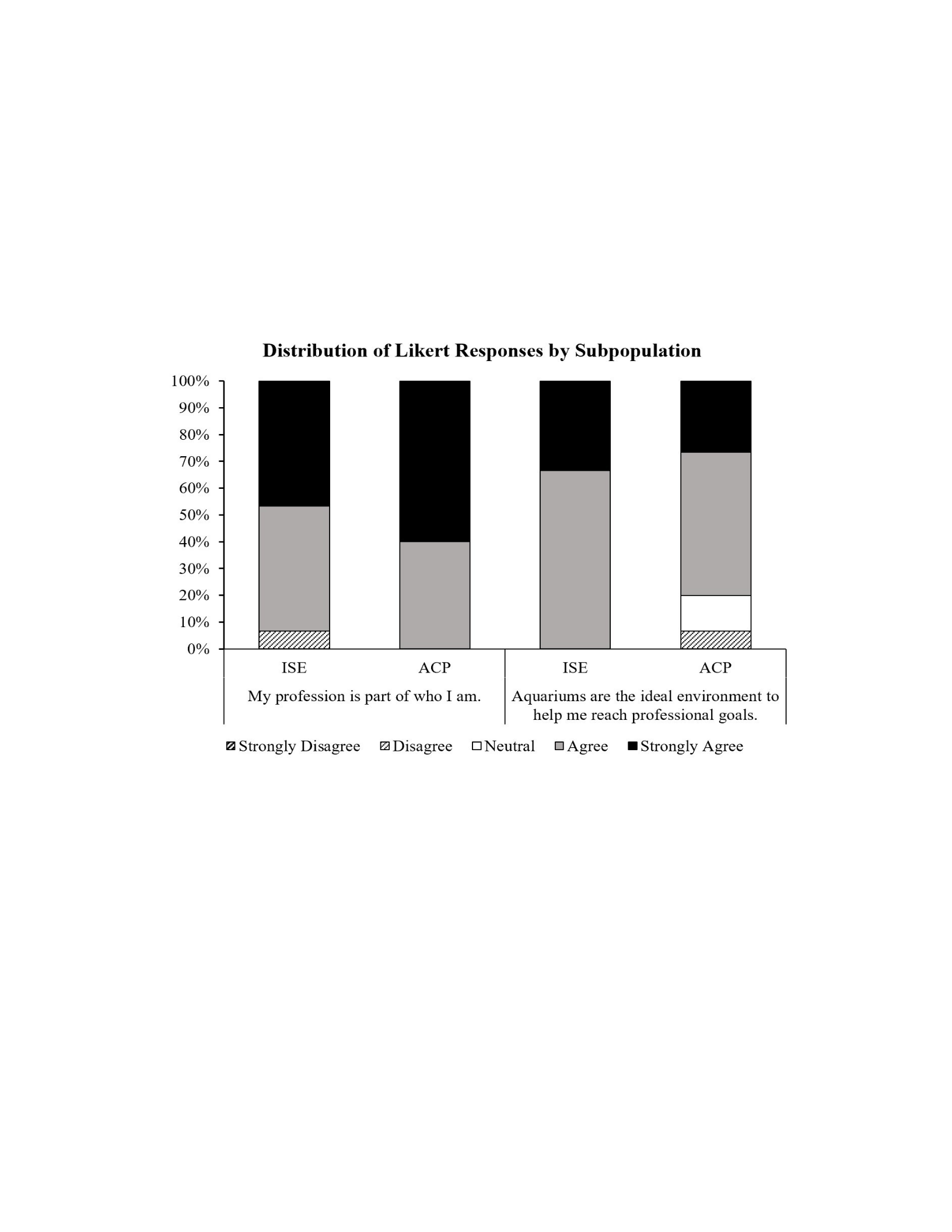
Additional Data Related to Motivations
Two survey questions asked respondents (n = 30) to reflect on their motivations for
pursuing and continuing employment in an ISI and indicate their agreement to specific prompts.
Members of the ACP (N = 15) and ISE (N = 15) subpopulations responded to these prompts –
their frequencies to each Likert scale category are displayed in Figure 2.
FIGURE 2. Likert responses to motivation-oriented statements.
Each career track displayed relative agreement in considering whether their role is part of how
they view themselves and if an aquarium is the ideal environment for achieving their goals.
However, ACPs displayed more variability compared to ISEs with respect to the latter prompt,
with 20% not indicating their agreement. These frequencies are aligned with differences
previously identified in this chapter, as more ACPs pointed to additional academic avenues for
pursuing their professional goals compared to ISEs. However, there appear to be minor
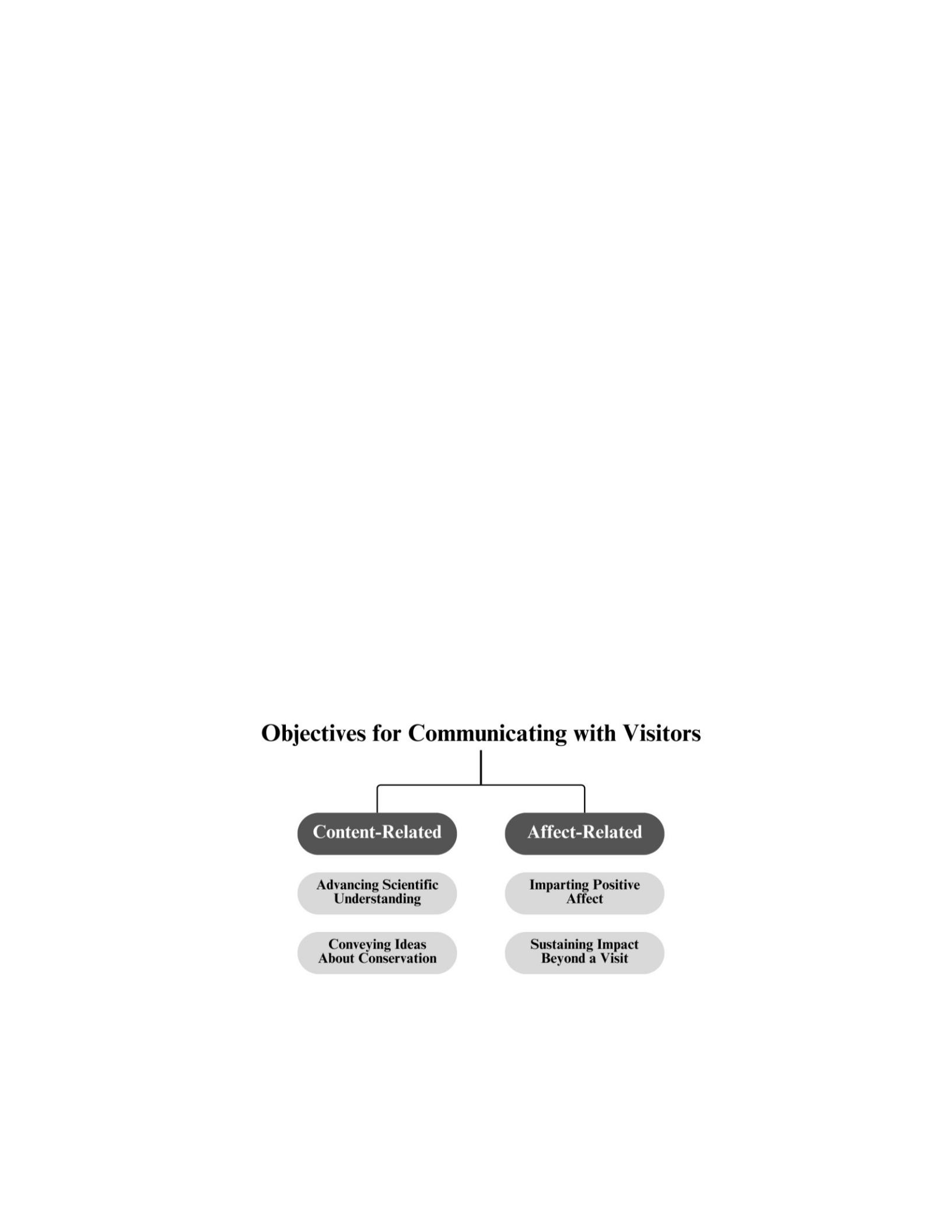
differences between interview and survey data as members of each subpopulation identified risks
involved in relating personal and professional identities to each other.
Objectives in Educational Interactions
Survey respondents and interviewees were asked about their objectives when engaging in
an educational interaction with visitors at their aquarium. Analyzing Likert scale scores (n = 30)
from close-ended prompts and open-ended interview questions saw two primary categories of
objectives emerge: (1) content-related objectives, and (2) affect-related objectives. Among
survey respondents, ISEs were largely aligned with ACPs in that they had a learning objective in
mind when they interacted with the public. However, survey data indicated that only two-thirds
of ISEs indicated that they prioritize conveying facts to the public.
Figure 3 outlines the objective categories while Table 5 expands on their definitions and
provides examples that emerged through inductive coding. Overall, ISEs and ACPs share
emotional and content-related educational outcomes when interacting with aquarium visitors,
with strong emphasis placed on impacting attitudes and behaviors related to marine conservation.
FIGURE 3. Visual map of educational objectives and their respective subcategories.

TABLE 5. Educational Objectives of ACP and ISE Staff
Category Subcategory Definition Examples
Content-
related
Advancing
Scientific
Understanding
Communicating diverse types
of factual information to
guests in order to advance or
challenge their current
knowledge about a topic.
“I can take what I do
understand and translate it
into a way that [someone]
who has no background in
this can understand it
better” (A1ISE1).
Conveying Ideas
About
Conservation
Disseminating information to
visitors so they are aware of
impacts on the well-being of
ecosystems and organisms.
“...these are important
conversations to have. If
you don’t know that there’s
a problem, you can’t do
anything to fix it.”
(A1ISE2).
Affect-
related
Imparting
Positive Affect
Visitors exhibit favorable
emotional responses through
connections to exhibits,
animals, staff, and the ISI
during their visit.
“...they come away from
this feeling excited about
the ocean, [thinking] ‘I care
a little bit more about the
ocean today…’” (A1ISE2).
Sustaining
Impact Beyond a
Visit
Staff approach educational
interactions with intent to
motivate changes in behaviors
or perspectives beyond their
initial visit.
“...I’m gonna give them
something that I hope
interests them enough that
they’re gonna want to keep
learning” (A2ACP1).
Note: Participant identification from interview dataset shown in parentheses.
Content-related Objectives
Among the various objectives expressed by respondents, each group prioritized what
information visitors could learn as a result of their visit to an aquarium. Both subpopulations
expressed how advancing guests’ current understanding of a topic remained a focus during their
opportunities for science communication.
Advancing scientific understanding. Participants spoke about how their role as a
science communicator helped their institution address its mission by facilitating scientific
understanding both within and beyond the facility. These staff members framed their positions as

a bridge between the spaces and species they have passion for and the guests with whom they
interact. Regardless of the topic or modality for the educational interaction, ACP staff qualified
their intentions by describing the effect of language on others: “nobody wants to feel like they
don't know what they're talking about when someone asks a question” (A1ACP3). The
mechanisms for how this objective is addressed will be described later in the chapter, but the
fundamental aim remains the same. Ultimately, members of each group agreed that helping
visitors develop their knowledge of natural phenomena is core to how they view their role in
communicating scientific information. Participants reflected on how translating academic and
professional expertise about marine biology or animal care is a priority in conversations with
visitors:
...Our guests come in and some of them may have a background in this, but a lot of them
don't, and they come to us as the trusted source…we are the ones who are taking that
potentially complicated or super scientific…information and sharing it in a way that's
easy for our guests to understand. (A1ISE1)
Nearly all interviewees remarked on the inherent diversity in topics that can arise during
unstructured moments, such as walking through a gallery or in a tour. Staff members on the
whole celebrated the chance to share their interests with others because there was potential to
“spark a love for learning all kinds of things'' (A2ISE2). These findings illustrate how ISE and
ACP roles are dynamic and highly dependent on situational context and prior knowledge of
visitors. The information shared within one conversation may not be replicated in the next.
Regardless, learning remains a priority when interacting with aquarium visitors.
Participants also indicated that they sought to support scientific understanding by

dispelling misconceptions by challenging visitors’ prior ideas. A curator remarked how they
reframe animals from consumable resources to areas of curiosity when they can:
…a lot of people come in and…they see food items…They're looking at a tank full of
crabs and they're like, "Yum. That looks delicious." For me, I want to have an interaction
that makes people say, "Oh, there's something more there and this could be interesting
beyond what I get out of this animal.” (A1ACP3)
Presenting information that may contradict what a visitor understood prior to their interaction
with a staff member was viewed by participants in this case study as an opportunity to develop
interest. This was prevalent when confronting subjects, such as less popular species: “If I can get
somebody excited about hagfish, or…sea cucumbers, or wolf eels, all these ugly animals that
usually get overlooked for the charismatic megafauna, it’s like, ‘Yes, I did it!’" (A2ISE3).
Disseminating technical knowledge to others in a scaffolded manner may even help make
content about broader topics, such as habitat loss or climate change, more approachable.
Conveying ideas about conservation. For interviewees, steering conversations with
guests towards environmental or animal conservation issues frequently arose as an objective they
maintain when entering learning interactions. Both groups addressed this objective through a
variety of topics that extend beyond local habitats or species; in doing so, they communicate this
information using animals and environments on-display and comparing to those affected off-site.
Helping visitors understand conservation issues that affect large portions of marine life appeared
to be valued more highly than focusing on a singular message or species. Yet efforts to
concentrate on a specific conservation topic may not proceed as planned due to the complex
social interactions at informal environments:

You might have a general framework of what you want to touch on…but how you get
there and what you touch on to get there is completely up to the guests and what you’re
observing, and what’s happening in the moment… (A1ISE2)
One educator shared how centering educational interactions around conservation acts as a chance
to develop visitor autonomy: “...these are important conversations to have. If you don’t know
that there’s a problem, you can’t do anything to fix it…they can make that decision if that’s
something that they want to do” (A1ISE2). Regardless of career track or facility, husbandry and
education staff shared perspectives that aquarium visitors should be informed on the historical
causes, scientific processes, and range of solutions for a variety of conservation concerns.
ACPs acknowledged how it is a priority to address marine habitats and animals that are
struggling outside of the aquarium (A2ACP3). For this group, their work in managing exhibits
was another method for communicating conservation messaging. Displaying animals in a way
that highlights their natural behaviors and adaptations acted as a bridge that conveys how,
“...[our aquarium is] not just here to show these animals. We're actually trying to make a
difference out there” (A1ACP1). These findings demonstrate how ISEs and ACPs share the
perspective that a fundamental aspect of their roles is to translate exhibits and technical
knowledge for the public. To these participants, factual information may help start guests on a
pathway towards deeper interest, respect, and actions in ocean stewardship.
Affect-related Objectives
Outside of helping others develop scientific knowledge, participants in this case study
placed importance on helping to impact a visitor’s emotions as a result of their aquarium
attendance. Each subpopulation shared views around the value of cultivating positive
experiences among visitors, even if specific facts or pieces of information were not central to that

interaction. Husbandry staff, in particular, focused on impacting visitors enough for them to want
to continue exploring their awareness, attitudes, or behaviors towards issues that affect marine
life.
Imparting positive affect. Developing a factual base for visitors about aquatic
ecosystems and organisms is important to interviewees; however, positively impacting visitor
emotions remained a critical part of participants’ communications. For ACP staff at A2,
generating excitement in others started with outward expressions in their interactions: “They’re
not gonna get excited unless I’m excited…I think it’s the little connections that people need to
make so that they’re gonna care. So when you go home, you still feel that connection”
(A2ACP1). Presenting an upbeat demeanor from the start of an interaction seemed to facilitate
development of a rapport with visitors, which could lead, “them to take away the facts and
responses to whatever questions they’re asking” (A1ISE1). ISEs and ACPs viewed an emotional
connection to a specific animal or exhibit, or more broadly, their experience of attending an ISI,
as a measure of success in their role. For many participants, they expressed a hope that
meaningful encounters would lead visitors to attitudes or appreciation for “the animals that we’re
talking about” (A2ACP3), or even “feeling excited about the ocean” (A1ISE2) more broadly.
Sustaining impact beyond a visit. A shared objective among all interviewees was
focused on empowering lasting changes in visitors’ attitudes and behaviors towards the ocean,
with special attention to environmental conservation. They did not express a preference for
whether guests contribute to causes featured at their ISI or others they encounter outside of the
facility. Many participants described how this objective is especially important to them: “...the
biggest thing is to walk away caring about the animals that we’re talking about more and caring
about the oceans and…what their physical impact [is] and what they can do to [help]”

(A2ACP3). Deeper meaning was not limited to cultivating an emotional connection or
broadening a knowledge base; interviewees described how they want attendees of their ISI to
connect behaviors or choices in their personal lives to the animals and exhibits they observe.
When ACP and ISE staff actively identified the type and depth of connection that is most
achievable for furthering engagement, they feel their objective has been met: “There’s different
things that people can…but it’s how you connect them to wanting to help…it’s all about finding
the little things to relate to on that personal level with the guests, then to bring it up to a
conservation level” (A1ISE3). Although strategies for facilitating relationships to ideas or
actions among visitors will be discussed later in this chapter, their objective appears to be shared.
When ISEs and ACPs described their multitude of motivations for entering their respective
career paths, many described a desire to positively impact the health of marine habitats and
animals. This focus on not just understanding, but also acting, on ideas or attitudes towards
conservation seems to manifest as an aspect of their practice as well, and is a priority they
wanted to pass onto visitors.
Many participants noted an institution-wide alignment with their objectives, which they
felt supported their aim to inspire sustained changes. They observed how narratives were actively
shifting towards more explicit mentions of long-term conservation efforts through signage,
programming options, social media content, and talking points in scripted or opportunistic
interactions (A2ACP1). Interviewees at both aquariums noted how, “all our programs
intentionally have a broader conservation issue…[to] help change behavior or get people
thinking about what they can do to help animals out in the ocean…” (A2ISE1). These can range
from providing solutions to issues that affect all marine life to those relevant to a specific species
or seasonal problem prevalent in the aquarium’s geographic region. Providing options for

engagement was not restrictive; the biodiversity of marine life and habitats featured at each study
site supports a guest’s ability to identify with their prior experiences on a variety of
environmental concerns. For half of participants, outreach was crucial for bridging gaps related
to inequities or geographical divides so that their facility can continue, “making a connection
with people that they probably wouldn’t have gotten” (A2ACP1). Aligned messaging in
objectives can potentially unify departments within the site and help guests feel empowered to
contribute to collective conservation actions.
Additional Data Related to Objectives
Several survey questions prompted respondents (n = 30) to consider the degree to which
they aligned with statements related to their objectives when engaging in an educational
interaction at their ISI. Equal numbers of respondents from ACP (N = 15) and ISE (N = 15)
completed the survey. The prompts and frequencies of each subpopulation are displayed in
Figure 4.

FIGURE 4. Likert responses to objective-oriented statements.
Each subpopulation linked aspects of their work that involve science communication to their
aquarium’s mission or vision statements; however, ACPs as a whole more strongly agreed that
their position’s responsibilities are aligned with mission. These findings are consistent with
qualitative data, as over 80% of respondents in each group agree that they have a learning
objective in mind when engaging with the public. However, there appear to be differences in
which information is presented in these interactions, as husbandry staff had more consensus
compared to ISEs.
Strategies for Engaging the Public
Participants in this study were asked about the types of educational strategies used to
engage the public as well as their perspectives for gauging success in those encounters. Likert
scale scores and frequencies from close-ended statements on the online survey were used to
identify differences among each subpopulation. ACPs demonstrated a high degree of overlap
with ISEs, but some differences emerged in specific categories of interactions. Additionally,
responses to interview questions revealed several approaches to public engagement shared
among the groups. Overall, ISEs and ACPs utilize similar strategies to meet these outcomes,
although ISEs implement open-ended question-asking and observation-making in more learning
encounters compared to ACPs.
Nature of Educational Interactions
In their interviews, all participants (n = 12) were asked, “Can you describe the nature of
your interactions with guests? For instance, do they tend to be more structured or spontaneous?”
Ten of twelve interviewees characterized the majority of their educational interactions as

spontaneous. These moments were described as primarily conversational and were often
prompted by a visitor directly or an exhibit close to the staff member (A2ISE3). Spontaneity
could also occur during a scheduled experience, such as a whale watch or staffing an interpretive
station, because the types and topics of questions asked were unpredictable. ACPs anticipated
spontaneous interactions to talk with visitors in an instructional capacity if they entered public
spaces to observe their animals. One elaborated: “If I’m interacting with a guest, it’s typically
something that I have either stopped them or inserted myself into a conversation, that happens, or
they’re asked me a question as I’m walking through the gallery” (A2ACP1).
Conversely, structured learning experiences were defined by participants as having few
opportunities for visitor input and had a decided “purpose” prior to starting (A1ISE2). These
included programs with predesignated talking points, such as, “doing the same spiel for things
like octopus encounters or lives on TikTok” (A1ACP1). Physical limitations in the aquarium, like
glass walls that separate exhibits from the public, also prevented guests from directly asking staff
questions (A2ACP3). Some individuals described how the frequency of structured interactions
increased in order to minimize risk of viral transmission between animals and people during the
COVID-19 pandemic (A2ISE2). Husbandry staff at A2 criticized how these encounters did not
feel organic or did not communicate passion effectively when messaging felt scripted. Despite
this scrutiny, members of both subpopulations acknowledged that formalized interactions occupy
a “minimal amount” of their time (A1ACP3). Overall, interviewees found that the majority of
their public engagement opportunities took on a spontaneous and more dynamic format.
Types of Educational Interactions
Documenting the variety of educational interactions in an ISE or ACP role at each study
site informs which strategies may be used to engage guests. Survey respondents (n = 30) were

presented with a pre-selected list of potential activities where they might engage with visitors at
their aquarium, which is described in Table 6.
TABLE 6. Educational Interaction Opportunities in Aquariums
Interaction Examples
Paid public programming Behind-the-scenes tours or animal encounters
One-on-one guest interactions Touch tank facilitation or stationed at habitat/exhibit
Scheduled talks or shows Keeper chats, animal feedings, or training sessions
Classes or sessions Schools or groups in specified teaching spaces
School group field trip guide Chaperone or student attendant
Filming social media content Narrating video or demonstrating enrichment
Community outreach events On- and off-site ISI representation at an event
Note: This question is displayed in Appendix A for reference.
In addition, respondents could elaborate about more educational circumstances not shown
on the survey with write-in comments. For ISEs, some responses related to training other staff
who regularly communicate about science in their role, such as volunteers. Few husbandry
employees described additional avenues for visitor interactions, such as representing their
aquarium or career field as a lecturer at universities or in media interviews. Participants
demonstrated variability in the types and frequencies of educational events that they are regularly
involved in (Figure 5).
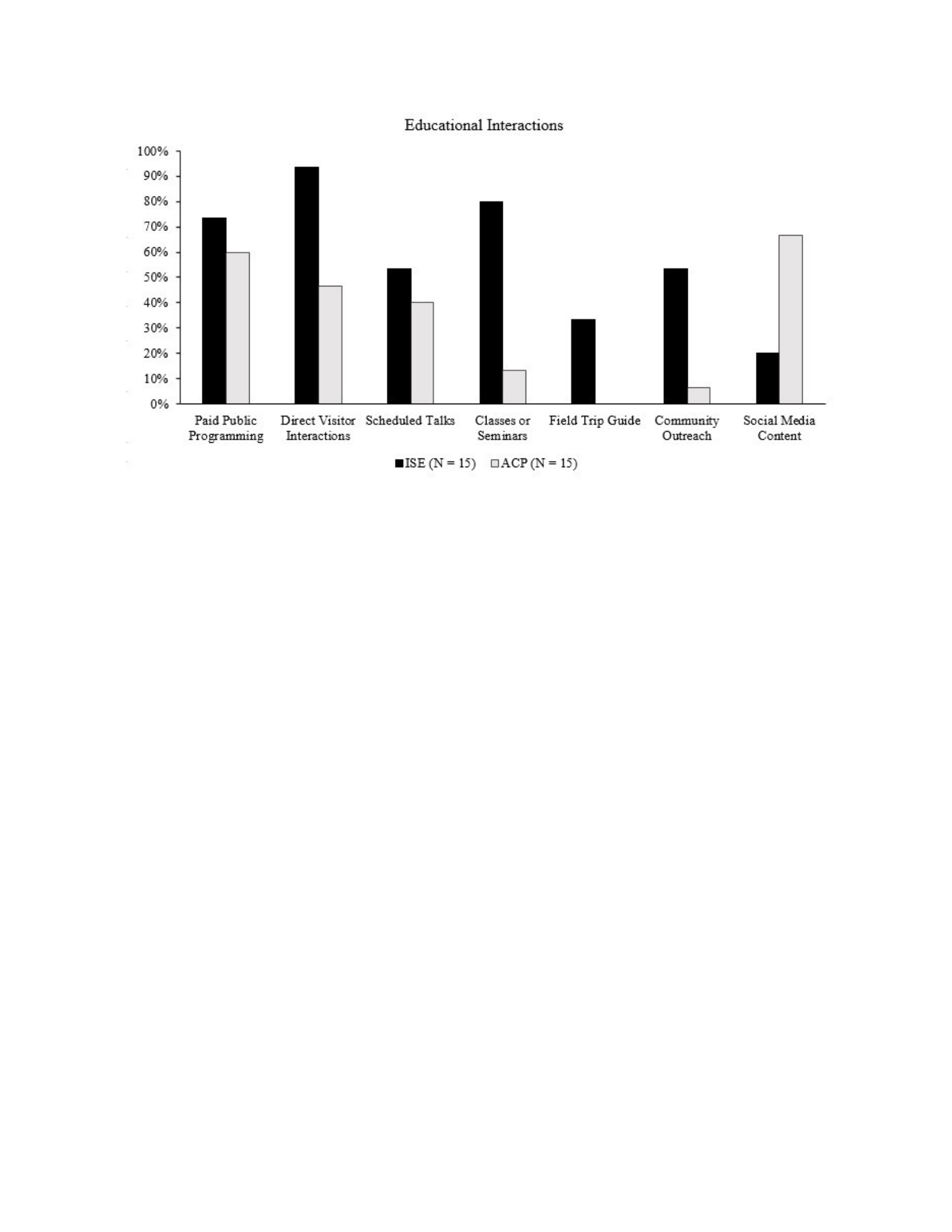
FIGURE 5. Types of educational interactions at ISIs.
As expected, ISEs reported engaging in more categories of educational interactions and at
higher frequencies than ACPs in their day-to-day role. This difference was especially clear for
activities such as leading educational classes or seminars, encountering visitors at exhibits, and
engaging in community outreach. In this case study, about two-thirds of ACPs indicated that
generating content for aquarium social media channels is a frequent method for how they educate
guests.
Navigating Educational Interactions at ISIs
Members of this case study (n = 30) were asked about what strategies they use during
moments of learning with the public using close-ended prompts in the survey and open-ended
interview questions. The responses of how ACPs and ISEs use exhibits and organisms at their
aquarium, how they adapt to new learners, and how they gauge the success of an interaction are
grouped below by interview question and mapped out in Figure 6.
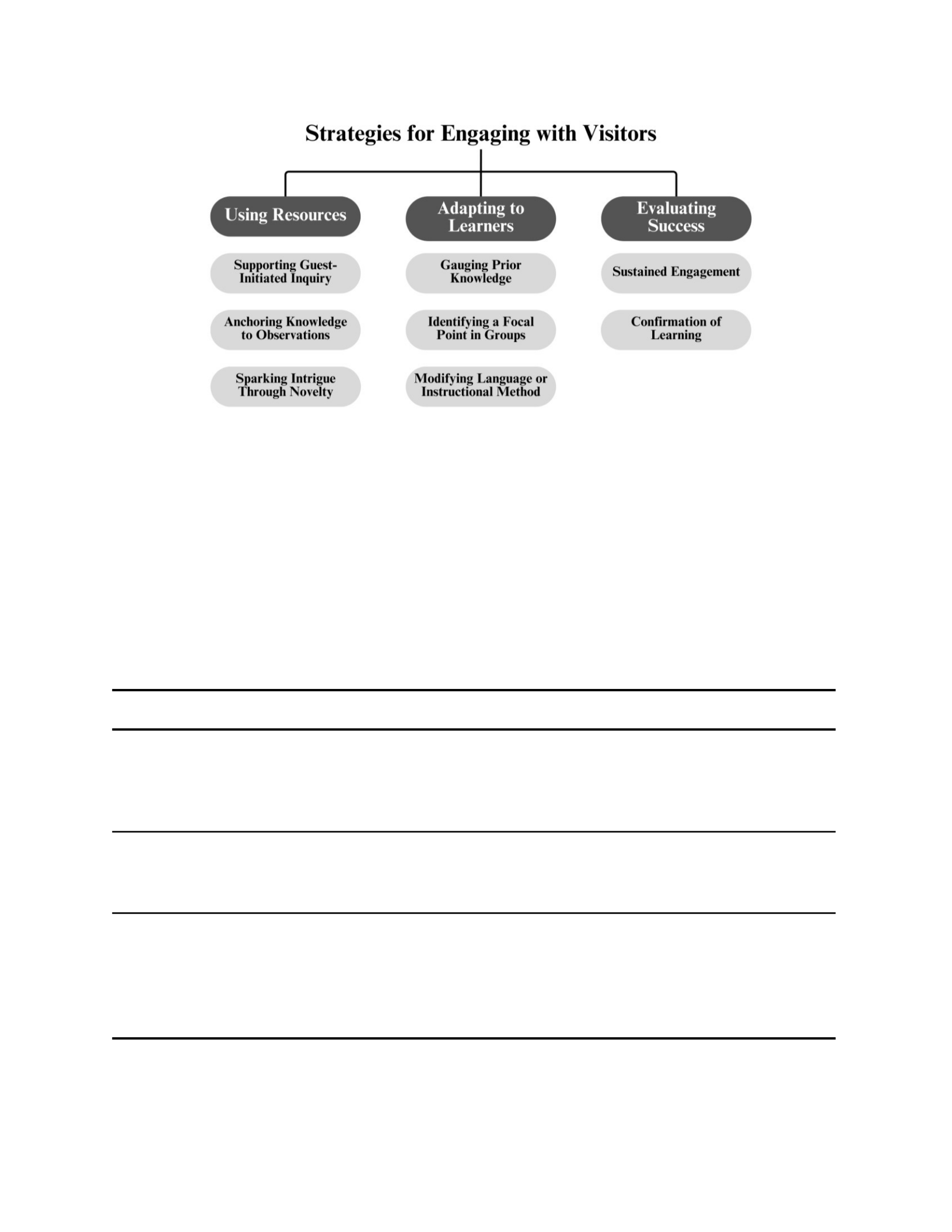
FIGURE 6. Visual map of educational strategies and their respective subcategories.
Resource for learning. Participants frequently cited using animals and exhibits that are
accessible to guests as a tool to spark their learning. These opportunities namely took place in the
forms of visitors asking questions and sharing observations. Table 7 outlines these strategies and
relevant examples that surfaced as a result of inductive coding.
TABLE 7. Use of Exhibits and Animals in Guest Interactions
Strategy Definition Examples
Supporting
GuestInitiated
Inquiry
Staff wait for visitors to ask
questions or make observations
before focusing the topic and depth
of instruction.
“I like to use [questions] as giving
them chances to point out certain
things on their own for me to jump
off of…” (A2ISE2)
Anchoring
Knowledge to
Observations
Staff initiate interaction and connect
new information to a guest’s
sensory experiences.
“You can start that exploration by
drawing connections to what
they’re experiencing.” (A1ISE2)
Sparking Intrigue
Through Novelty
Staff use exhibits or animals as a
prompt for providing information
that may provoke interest, surprise,
or awe in learners.
“I…give people a fact or something
maybe that is not common
knowledge that they wouldn't hear
from our typical shows."
(A1ACP2)
Note: Participant identification from interview dataset shown in parentheses.
Supporting guest-initiated inquiry. Each subpopulation demonstrated attention to

“letting the guests direct the encounter or guide it at the start” (A2ISE3). This was framed as a
method to overcome challenges of informal science learning, such as the limited time spent with
individuals or utilizing exhibits that are easily accessible. What guests choose to share with a
staff member helped them narrow which topics were discussed and to what depth. Many ACPs
noticed that guest comments were often focused on their current experiences at an exhibit close
to them, whereas ISEs remarked that they can be asked about organisms featured in a different
part of the aquarium or off-site entirely (A1ISE2). One elaborated on how this shaped their
approach to education-based conversations by saying, “...it's easier for me to direct their focus to
the exhibit if it's a question…or a [related] comment...It's helpful to say, ‘Look at this, I can
explain this to you while we're looking at it together’” (A1ACP3). For husbandry staff, utilizing
proximity in a teaching moment facilitated continued inquiry while minimizing effort for
planning the pathway toward a learning objective. Members of each career field remarked on the
conversational nature of these interactions and how it can lead to enjoyment or excitement from
both parties involved. One difference that emerged between groups focused on the use of initial
visitor questions to lead to other topics. As discussed earlier, staff often had content-centered
objectives in mind; however, ISEs generally presented the exhibits and animals as a “springboard
for the conversation” (A1ISE1) or a “bridge to something that people are already interested in”
(A1ISE2). This perspective cast a guest-initiated learning moment as having potential to move to
advanced or bigger-picture concepts. Conversely, ACPs tended to focus on the present moment
by using what visitors identify as a means to directly address their query.
Anchoring knowledge to observations. When interviewees discussed the role that
exhibits and animals play in their educational interactions, they often served as a method to
ground new information that guests learn. This perspective was shared by both employee groups,

especially in how the exhibits function “as a point of reference because a lot of people have
never seen these animals before in their lives” or how they live in areas that are difficult to access
(A1ACP2). Exhibits and animals, in this mindset, can be a mechanism for contextualizing
unfamiliar learning materials. ACPs and ISEs did not limit observation-making to live animals–
they often utilized biological artifacts, such as bones or shells, to spark sensory experiences for
guests (A2ISE1). Many ISE staff expressed how these could be opportunities for continued
engagement with members of the public who lacked academic language to communicate their
ideas adequately, including children.
Sparking intrigue through novelty. Another means by which participants in this study
relied on animals and their exhibits involved sharing information that is often novel to guests.
This took many forms, including featuring subjects that are related to animal behavior or
anatomy or are industry-specific, such as facility management. These topics were prioritized for
two main reasons: to invoke surprise and to address preconceptions. Interviewees at both sites
discussed how exposure to new information may spark more curiosity after the initial interaction
because it “will stick more in your brain if you haven’t really heard it anywhere else” (A1ACP2).
The experience’s novelty was not limited to onsite observations–these also applied to virtual
education and offsite community outreach programs. Similar messages could be shared with
learners who cannot attend the aquarium in-person and extend the reach of the institution beyond
their doors (A1ISE1). ACPs involved in developing social media content echoed this perspective,
citing how lack of physical access was not necessarily a barrier to learning if observation-making
was prioritized in the videos they made. Each group emphasized the importance of new
information in order to help the public connect to prior experiences and evaluate the impact of
the current interaction.

Working with animals and exhibits similarly directly fueled opportunities to share
personal information or stories in order to “demystify some of the animals that people have some
preconceived notions about” (A2ISE2). This could look like shifting a narrative from being
fearbased to having respect, or invoking curiosity about an organism that may not initially
present as interesting or remarkable. One curator expressed how storytelling is a preferred
strategy because it was formative in developing their passion for marine life:
...sharing your favorite things about when you get excited and passionate…it does
spread. I have a personal memory of getting connected to sea cucumbers that way. When
I first came to the aquarium, there was a volunteer who was just stoked about [them]. I
never gave them the time of day to even consider...After listening to them…it’s like, “I’m
a hard-core sea cucumber fan now too.” (A2ISE3)
ACPs and ISEs remarked how visitors can respond strongly to narratives that conflict with ones
they already held, and how that fueled further exploration on the topic with the staff member or
with their group after the interaction ended.
Adapting in educational interactions. Participants were also asked about what
strategies they use to adapt to learners in their educational interactions. Education and husbandry
staff addressed this aspect of science communication in the online survey and in their interviews.
More information on the strategies they use to maintain a dynamic approach in structured and
spontaneous interactions are presented in Table 8.
TABLE 8. Adapting to Learners in Educational Interactions
Strategy Definition Examples
Gauging Prior
Knowledge
Staff assess what content visitors
may already know by listening
for context clues or asking
directly.
“So using a simple question I
think can really help gauge the
level of the learners, and then you
pivot from there.” (A1ISE3)

Identifying a Focal
Point in Group
Dynamics
Staff focus instruction towards one
member of a group as a gateway
to helping others learn.
“...you get down on your knees
and you talk directly to the kid…
it brings everybody into the
conversation.” (A2ACP1)
Modifying Language
or Method of
Instruction
Staff tailor vocabulary or learning
modality to address a spectrum of
prior knowledge on a topic.
“If you can’t adapt to meet the
level of your learners or change
to better suit them, then you’re
not going to feel as successful.”
(A1ISE1)
Note: Participant identification from interview dataset shown in parentheses.
Gauging prior knowledge. Education and husbandry participants reported using
formative assessments in their interactions to help determine what information guests may
already know. In the survey, all participants (n = 30) were asked about whether evaluating the
background of guests is essential to their role; over 86% of ISEs (N = 15) indicated that they
agreed or strongly agreed compared to only 26% of ACPs (N = 15). This is also consistent with
testimony from interviews, with nearly all ISEs and half of ACPs reporting regular use of prior
knowledge assessments.
Interviewees utilized a variety of methods to informally assess what information a learner
may already know when entering an interaction, but the most common method was centered
around how guests use language. This could take the form of a question directed at a staff
member or in response to a question posed to them: “If you're listening to what someone's
saying, it's normally pretty apparent…whether they have a marine biology background or not
based on how they ask the question…when I answer their question I tend to reflect the same
level” (A1ACP3). For ACPs, many analyzed the relative “complexity of the question” posed by
the visitor by looking for detail, specific jargon, or the uniqueness of the topic itself (A2ACP2).
This strategy helped husbandry staff determine the level to which they can mirror the guest as the
interaction continued. ISEs often took a proactive approach to this strategy by asking open-ended

questions, such as favorite ocean animal or what they find interesting about a particular topic.
This technique was chosen so the staff member was alerted about a potential pivot based on what
the guest may know, as well as helping the learner feel like they are directing the interaction
(A1ISE1). Additionally, nearly all ISEs felt that their question-asking subtly validated an
attendee’s choice to utilize staff members for educational reasons in their aquarium visit.
In addition to direct feedback in one-on-one conversations, ACPs and ISEs analyzed what
information visitors might know in large group settings by using probing questions and analyzing
nonverbal cues. For one curator who regularly leads scripted shows with large audiences, asking
specific questions helped guide their narrative:
Today we had a wide range [of visitors] and so I asked, "Raise your hand if you've ever
heard the word ‘keystone species,’” and maybe twenty people raised their hand or they’re
nodding their head…I’m trying to use that ‘yes’ or ‘no’ to gauge what their knowledge
is…that’s so reinforcing for us… (A2ACP3)
Husbandry staff used simple questions as a means to informally survey the audience in large
group settings for the purpose of informing their approach to an educational conversation. This
was especially helpful for ACPs who specifically noted how their visitor engagement training is
limited compared to other aspects of their role, and that this preference is complemented by their
career path: “I tend to just answer their question and then move along. We're a little more backof-
house. We have a great education team that's fantastic with liaisoning with the guests.
Fortunately we don't have to do too much of that…” (A1ACP1). From hand raising to head nods,
many aspects of body language were mentioned by interviewees as indicators for familiarity with
presented information. The method, depth, and frequency to which formative assessment was

employed varied between ACPs and ISEs, but both noted how evaluating prior knowledge is an
important part of how they communicate science to the public.
Identifying a focal point in group dynamics. When participants facilitated an educational
interaction with groups, some remarked on how focusing instruction towards a specific member
can help others learn more effectively. Many specifically mentioned targeting their attention
towards children in family groupings: “you get down on your knees and you talk directly to the
kid…It brings everybody into the conversation without excluding, but it also focuses the
conversation on who actually asked the question” (A2ACP1). When working with young
learners in particular, many noted how both the child and surrounding family members appear to
be more engaged or ask additional questions once the staff member changed to whom the
conversation was directed. Changing body position was not the only method for cueing others to
a shift in the interaction; adjusting word choice helped the topic become more accessible and
relevant to the specific individual (A1ISE2).
If it is not apparent which individual can be a gateway to the group, another way to
include them at first may involve using open-ended, “leading questions'' until one person does
feel emboldened to participate “in whatever way they are comfortable” (A2ISE1), such as asking
for a favorite ocean animal. This could also apply to members of a group who moderated the
social interaction, such as teachers or chaperones of school groups or those who are translating
the staff member’s language to others around them. Participants also noted that without
addressing the connection between the members in a social group, others who were not directly
involved in the educational interaction may feel excluded (A2ISE3). Using an individual-focused
approach appears to be a strategy for both ACPs and ISEs because it effectively distributes a
message while affirming the social nature of informal learning settings and those who visit them.

Modifying language or method of instruction. When working with different learners, all
interviewees reported adjusting vocabulary to meet visitor needs and scaffolding learning to
more advanced topics. One described: “I will adjust my word choice, so that it’s something that
can apply to them…and is also generally accessible…there’s no point in bringing up a word if
you’re not going to explain it…because you want people to feel welcomed…” (A1ISE2).
Choosing to incorporate terminology that is more simplistic or easily recognizable was framed as
a method that can help learners access more complex scientific information. Among ACPs, some
mentioned how they empathized with a learner potentially feeling confused or dismissed as they
experienced those emotions during teaching moments throughout their career (A2ACP2). One
also noted how their passion for a subject can accidentally recreate the experiences they
criticized: “I’ll get super-excited about what it is I’m doing, and I’ll forget about it and just go off
on a tangent. Then I’ll glance over and there’s this glazed expression…” (A2ACP2). An
additional area of personal reflection that arose among ACPs was focused on what resource they
use to inform their adjustments. Rather than referencing training or a learning theory, they relied
on their past experiences as a learner in school and modeled that approach with visitors
(A1ACP3).
Choosing not to use technical language at the start of an educational interaction provided
more chances to gauge a visitor's prior knowledge or customize to their interests. Many ACPs
referenced their own past experiences when explaining language choices in presenting new
knowledge: “I have been in those situations where at the time I felt like I was being talked down
to, and that’s something I definitely want to avoid when communicating with anyone”
(A2ACP2). Some ACPs noted how they altered their responses based on the language choices of
the guest, such as the presence of technical jargon unique to a specific subject (A1ACP2). This

strategy was shared by ISEs, with many explicitly mentioning how they intentionally use broad
language at the start of a conversation and refine what vocabulary they use as they learn more.
For one, adopting this strategy helped them find more success in interactions with children:
I think it's really important to be flexible…If you can't adapt [language] to meet the level
of your learners or change to better suit them, then you're not going to feel as successful
in each of those meetings as you might be if you're able to bend [your language choices]
a little bit. (A1ISE1)
Embracing adaptability in how scientific information is communicated also broadened what
participants believed a visitor may learn: “So, adapting your lesson to maybe not focus so much
on terminology, but more concepts…an overarching topic [could] stick with them a little bit
more” (A1ISE3).
Modifying the method of instruction that ISEs use can open up accessibility in this
interpretive setting. Educators at A1 stated how intentionally diversifying how information is
presented, such as incorporating drawing or movement, allowed visitors to demonstrate
understanding using a means that complimented their background:
I think…visuals and talking and hands-on things…especially with our littles [is
successful] – one, we can incorporate that into our teaching, so moving like different
animals…and two, if they are wiggly and need to move, we have let go of that, “you have
to sit still and listen” [mentality], because…that might help them learn. (A1ISE1)
ISEs also reflected on how their perspectives regarding opportunities for alternative methods of
engagement shifted as they developed more expertise (A2ISE3). This strategy was not reported
among the ACPs in this sample. Modifying scientific communication by changing language,
method of delivery or evaluation, or a learning objective for the purposes of addressing a

visitor’s knowledge base or needs can provide real-time feedback and validation for both parties’
role in the interaction.
Gauging successful interactions. Participants were asked in their interview about how
they evaluated success in educational interactions with the public. They acknowledged how
assessing learning in ISIs is often challenging due to limited time spent with visitors, as well as
learners’ “self-directed” engagement with any exhibit or staff member (A2ISE3). Determining
the extent to which a content- or emotion-centered objective was met often took place in the
learning moment or shortly thereafter. These assessment strategies are presented in Table 9.
TABLE 9. Evaluating Success of Educational Interactions
Strategy Definition Examples
Sustained
Engagement
Staff observe how visitors continue
the interaction with themselves or
others through additional
conversation.
“Sometimes hearing kids tell their
friends about things right in front
of you…and having them be
excited about that...” (A1ISE3)
Confirmation of
Learning
Staff confirm whether visitors
understand new content after
specific check-in questions or
comments.
“I’ll ask…’did I give you what
you were looking for?’” (A2ISE2)
Note: Participant identification from interview dataset shown in parentheses.
Sustained engagement. One indicator of success recognized by both groups was centered
around how visitors chose to continue engagement through additional question-asking or
socializing in group settings. This was framed by some from the perspective of visitor choice:
“...physical presence does do quite a lot. If you don’t have a captive audience, they have every
ability to walk away and move away from [the interaction]” (A1ISE2). Sustained engagement
primarily presented as asking original questions to the staff member after information was shared
or listening to responses to other’s questions (A2ACP3). ACPs and ISEs often cited moments

where guests ask questions after the initial interaction as a tool to help gauge whether the visitor
responded to their adjustment. Guests who, unprompted, were able to successfully incorporate
new vocabulary or ask questions about subjects with higher complexity after the staff member
modified language were often viewed as those who were engaged: “If I can get them curious
about the animal itself and the ecosystems, if they are asking those deeper questions then it's like,
‘Yes, hooked them’ (A2ISE3). Some interviewees leveraged the social nature of ISIs to help
others who may not have been interacting directly with an aquarium employee develop
knowledge as well, such as family members or others positioned near the conversation
(A2ACP1). Participants in each subpopulation shared a feeling of validation when this focal
visitor shared their excitement or what information they learned with others around them. One
stated: “...it’s a win because they’re telling other people about it, and that’s a pretty cool feeling”
(A1ISE3).
Confirmation of learning. For ISEs and ACPs, evaluating the success of an interaction
involved looking for specific indicators that the visitor understands new content. In this strategy,
participants primarily listened for guests to validate the interaction or answer a direct
confirmation about whether their educational objective was met. In this sample, ACPs reported
openly asking for feedback from the public when information is presented in conversation as
opposed to a structured event: “...I try to be pretty direct before I leave…so I've tried to make it a
habit to be like, ‘Does that answer your question?’ That way I have confirmation…” (A1ACP3).
ISEs also demonstrated question-asking as a means to approximate understanding. This was
framed from the context of “collecting feedback” by asking for additional questions or
confirmations (A2ISE1). Respondents shared the value of receiving explicit feedback from
guests about the knowledge they shared or how it was shared:

…we can’t evaluate as much as we’d like…so I’m always very grateful for when people
thank me for my time and are willing to say that little bit extra to let me know if there’s
anything more I could have done or that they were receptive to that information. People
will outright tell you...which is quite nice to kind of help gauge where you’re at with
those interactions. (A2ISE2)
Evaluation for an educational interaction’s success can be difficult to come by in unstructured
moments throughout a guest’s visit to an aquarium. However, creating opportunities for the
public to provide immediate feedback through questions or comments may help validate the
interaction itself.
Interdepartmental Relationships
Participants were asked in both the survey and interview to describe the nature of their
relationship with the alternate subpopulation and if they feel that they regularly collaborate on
educational content. Their responses informed this study’s final research question, in which
interviewees describe institutional differences that affect the nature of interdepartmental
relationships between husbandry and education staff. Although collaboration was emphasized as
a priority in their relationships, certain factors caused friction. Over 45% of animal husbandry (N
= 15) and 60% informal science education (N = 15) respondents agreed that they regularly work
with other departments at their aquarium. However, participants divulged more information in
their interviews as they expressed a dual nature in how they viewed their science communication
counterparts. Interviewees perceived a “weird dynamic between husbandry and education” or
“disconnect” (A2ISE1) in the industry as a whole regarding what role each serves in
communicating information to the public. Assumptions about what information is accrued over a
career and how it is shared with the public led to narratives that were incomplete or

contradictory. Overall, each subpopulation celebrates productive interdepartmental partnerships
with the other and recognizes how they serve as unique reservoirs of knowledge, but caution how
external and internal pressures can strain employees.
Some sources of tension persisted at each aquarium due to the systemic nature of
differences between career tracks, such as lower pay or additional expectations from institutional
leadership. One interviewee held a unique perspective compared to others due to the time spent
with both education and husbandry departments in their role: “Education has been getting paid
more for a very long time. [Husbandry] pay just changed a little bit so it’s a little more even, but
it’s still not completely even…they know we get paid more…” (A1ISE3). Some ACPs felt how
limited time spent with individual animals can lead ISEs to repeatedly report issues that turn out
to be misinformed; responding to these calls took away from other tasks on their loaded daily
husbandry schedule (A1ACP1). For instance, many ISEs may only spend thirty minutes with an
animal while they are stationed at an interpretation cart, compared to hours that an ACP may
spend as they clean or maintain the exhibit, administer medical care, or engage in animal
training. Additionally, competition for limited job openings in animal husbandry compared to
informal science education contributed to different mindsets about the relative rigor or collective
expertise about marine life in each career track (A2ACP2). Members of both career tracks
acknowledged the relative difficulties that come with each vocation, but ACPs tended to share
how they felt their positions included more challenges. These differences were consistent among
career tracks and between each study site.
An additional theme emerged describing how the COVID-19 pandemic presented as an
obstacle to collaboration between the two subpopulations at each site. The difference was stark
enough for many individuals to frame this shift as, “the before-COVID times and after-COVID

times” (A2ACP3). Opportunities for interdepartmental training on animal husbandry or guest
interpretation practices, as well as in-person contact, declined significantly due to risk of
exposure between staff and vulnerable animal populations (A2ISE2). Additionally, departmental
leadership from both groups needed to rebuild their teams after pandemic-induced financial
challenges forced changes in staffing (A2ISE1). This contributed, in the opinion of many
participants, to some breakdown in communication and expectations between different levels of
leadership: “I think that there’s a couple of different levels in both departments where we’re all
really good at working together, and I think the higher up it goes, the communication…gets lost
in translation or deemed not as important” (A1ISE1). Employees who held entry- or mid-career
positions overwhelmingly expressed preferences for unity of messaging and openness for growth
as the effects of the pandemic waned. Interviewees who held supervisory positions shared this
opinion as they expressed optimism for collaboration opportunities on future science education
programs: “I was talking to our Education Manager today, it’s like, ‘Today felt a little bit normal.
Maybe we’re getting back into the swing of things’” (A2ACP3).
Differences in institutional culture emerged as another influence on how tension can
appear or flourish once present in an interdepartmental relationship. Staff at A2 shared a
perception for how their facility’s smaller footprint facilitated open communication, leading to
mutual respect for their counterpart’s professional expertise. Participants framed interactions
between the two departments from a positive and collaborative lens with minimal conflict:
We make the product. The education crew, they explain what we do. We have to have a
really close relationship because things change all the time…Here, every single one of
the volunteers says hello to me…If you [consider] a place like Monterey [Bay
Aquarium], where you’re pushing 15 to 20 volunteers every shift, that’s a lot of people.

(A2ACP1)
This was especially apparent when describing how members of each department regularly traded
off who led communications with the public depending on what the situation demanded
(A2ACP2). Additionally, the majority of husbandry staff discussed how they appreciate the
unique skill sets that ISEs bring to encounters with guests; similarly, ISEs praised ACPs for
setting aside valuable time to share personal experiences with those same visitors. Participants
praised leadership in both departments for intentionally prioritizing collaboration and productive
relationships between ACPs and ISEs. This development started by first addressing
discrepancies, investigating their root causes, and lastly, identifying shared outcomes (A2ACP3).
Although participants at A1 also viewed the other department as a valuable reservoir of
knowledge, these perspectives were often paired with critique or skepticism. At their institution,
expertise was reported as being more concentrated between each career track: “...husbandry is
usually specific in one kind of group of animals, whereas education has to know a little bit of
everything…historically husbandry has thought, ‘Ugh, education doesn’t know things.’ But it’s,
‘We just don’t know everything about your animal’” (A1ISE3). An ACP employee shared how
lack of education training in their department “sometimes can give the impression [to ISEs] that
maybe we don’t care as much or we’re not as invested” (A1ACP1) when engaged in an
educational interaction. When explaining how annoyance built up after hearing repeated false
alarms about an animal during a shift, an ACP reframed the situation: “Bottom line is, I know
that they have the animal's best interest at heart, so I don't let it bother or annoy me. I try not to
because, in the end…I'd rather you be concerned than not concerned about something”
(A1ACP2). Despite areas of conflict, individuals in each subpopulation stated the importance of

communicating openly with each other about tensions and celebrating shared perspectives in
order to find a pathway forward.

CHAPTER 5
DISCUSSION
Introduction
The objective of this mixed-methods study was to shed light on the perspectives of
science communicators at ISIs, namely, professionals who work in animal care and guest
education. The following research questions served as the framework for comparing institution
and career path in this sample of participants:
1. In what ways do ISE motivations for working in an aquarium compare to those of ACPs?
2. In what ways do objectives for communicating information to visitors differ between
these two groups of aquarium staff?
3. What strategies do the two groups utilize during educational interactions with guests and
how do these strategies differ?
4. What are the institutional differences that inform relationships between each group?
Two AZA-accredited aquariums located on the West Coast of the United States served as
the focal points in this case study. After receiving approval at each facility, managers distributed
an online survey to members of the ISE and ACP departments. Closed- and open-ended questions
in the questionnaire were designed to solicit more information about the learning objectives and
communication strategies that staff use in educational interactions. Select respondents were
invited to participate in an interview with the researcher. During this time, participants provided
more detail about their motivations for entering and sustaining a career at an ISI with live
specimens, rationale for which objectives they prioritize and measure success from in a learning
interaction, and details about differences in the interdepartmental relationships at their aquarium.

Motivations for Working in an Aquarium
The first research question examined underlying motivations and contributing factors that
spark and sustain individuals to pursue careers within ISIs–specifically, roles in animal care and
science education at aquariums. Motivations were primarily intrinsic in nature and were reported
as either originating prior to a career or once a career was started. Some, such as a drive to
connect to nature or pursue academic interests, originated early in childhood or during
postsecondary schooling. For other participants, motivations became clearer after they began
employment at an aquarium as many found satisfaction once they began to align their personal
interests with their work. They also shared the impact of connecting to communities or larger
causes through their roles at an aquarium. This research question intended to compare and
contrast the perspectives of the two populations, yet there were more similarities than
differences. The primary difference between ACPs and ISEs with respect to motivations arose in
the setting where learning took place; ISEs placed high value on hands-on learning opportunities
whereas ACPs pointed to academia as a driving force for their career-related decisions.
Interviewees also provided additional information related to aspects of their roles that
impede career development, such as systemic challenges to lifestyle preferences or unsustainable
emotional investment, especially for ACPs. In addition, over half of participants mentioned
volunteering as a gateway towards establishing their profession, which was especially important
for ISEs. Volunteering was a low-stakes opportunity to sample careers of interest without strong
commitment or significant investment. Many interviewees volunteered early in their careers,
supporting research by Deery et al. (2011) who found that a primary motivation for this age
group is to advance job opportunities and “to learn through direct experience” (p.321). Overall,

ISEs and ACPs demonstrated more overlap in these motivations, especially in those that
preceded a career.
Comparing Motivations for Entering Careers
Connections with nature. Both ACPs and ISEs celebrated how their love for the
outdoors as a child served as a motivator that led to their job at an aquarium. Although
Bunderson and Thompson (2009) found that zookeepers in their study developed a strong sense
of personal calling when they were young, this was not shared by all husbandry staff in this
study. Members of each subpopulation noted the importance of adults in their life who
consistently encouraged curiosity or sustained engagement with nature–this was especially
influential for participants who grew up geographically removed from the ocean. This may
suggest that even if barriers are in place that prevent easy in-person access to marine animals or
the outdoors, the impact of media on modeling careers in science communication and
environmental conservation at an early age may provide a larger influence on profession than
what is expected.
Both groups of aquarium staff found that cumulative experiences related to recreation,
hobbies, or traveling in outdoor spaces fostered a drive to learn about biodiversity and
ecosystems. For ACPs in particular, SCUBA diving became a gateway to choosing a career based
around the ocean as this activity became a proxy to interact with or observe marine wildlife up
close. These learning moments reported by both groups, which allowed for celebrating the
outdoors and even refining skills, mimic aspects of informal science learning at ISIs more
broadly as they are often voluntary, self-directed, and lack pressure from formal assessment
(National Research Council, 2010). Repeated, positive experiences that help cultivate curiosity

for biodiversity may support an affinity for aquarium employment in order to continue
connecting with nature.
Desire to continue learning. For the majority of interviewees in both groups,
postsecondary coursework played a larger role than primary or secondary schooling in shaping
participants’ professions. Nearly all participants focused their university studies towards life
sciences, with most earning degrees in marine science or biology, which is consistent with
findings from Park (2021). Even for those who did not major in scientific disciplines, many ISEs
and ACPs wanted to find a career that supported continuous learning. For some members of both
groups, studying marine science provided the academic language and conceptual frameworks
needed to effectively support science learning in social settings like aquariums (National
Research Council, 2009).
A similarity that arose among both groups included the impact of hands-on investigations
through participation in labs, research projects, or internships during their post-secondary
schooling. These experiences allowed participants to apply information from their coursework
into practical settings that mimic tasks in aquarium-based roles. For many ISEs and ACPs,
sampling aspects of an ISI-oriented job through schoolwork sustained participants’ interest
development for employment in the sciences (Fenichel & Schweingruber, 2010; Hidi &
Renninger, 2006). Ultimately, 9 out of 12 individuals (including all husbandry staff) in this study
reported shifting their aim from pursuing traditional research-oriented positions to those at
aquariums early in their career. Over 80% of participants shared how they did not expect to be in
the job they held at the time of this study, suggesting that their pre-career motivations are pliable.

Their collective testimony demonstrates how aquarium employment may allow for work to
become aligned with science as a whole, even if the career does not match traditional
expectations of what it means to work as a scientist.
Comparing Motivations for Sustaining Careers
Interest alignment. Members of each subpopulation expressed how the fit between their
profession and personal interests helped them sustain motivation for working in an ISI with
living collections. Nearly all interviewees celebrated opportunities to successfully meet
challenges when faced with unpredictability that inherently arises when working in an aquarium.
ISEs appreciated the resourcefulness that develops from balancing multiple identities and
messages held by their learners, personal and professional communities, and their place of work,
which is aligned with research related to Tran and King (2007). This was also true for ACPs as
they reflected on how their role continues to evolve from one primarily based in physical labor to
implementing and measuring efforts that support an animal’s holistic well-being (Good, 2009).
Institutions that foster creativity and provide tools to manage high workloads or dynamic
situations may be demonstrating initiative in avoiding employee burnout (Bunderson &
Thompson, 2009).
As participants continued developing their career, they cited impacting learners as central
to their motivation; however, their methods for doing so differed between career tracks. Unlike
ACPs, ISEs connected learning about science education techniques with a deepening of
commitment to their profession. This is consistent with Holliday and Lederman’s work (2014)
showing that informal science educators place high value on the transmission of scientific
content as well as instructional tools for engaging with the scientific enterprise more broadly. For
both groups, participating in conversations with others were framed as fundamental learning

opportunities. They had potential to provide immediate feedback while underscoring the
importance of staff interventions in open-ended learning settings (Kopczak et al., 2013).
Repeated conversations with guests helped staff from each subpopulation come into their role as
a mediator in social learning at their aquarium (Pattison et al., 2017). The body of literature on
this topic primarily focuses on ISEs, but findings from this investigation underscore how
developing strategies for effective science education with the public may help sustain career
choice among personnel who do not traditionally have this responsibility in their role.
Becoming part of a community. Nearly all interviewees found deeper purpose in their
work after contributing to communities that aligned with their interests. Members of each group
placed a strong value on the relationships with colleagues who share or support their interests.
Differences emerged between each institution: employees at A1 reported developing close ties
due to extended tenure, whereas those at A2 felt that their smaller workforce supported
relationship-building more easily. Sharing passions steered many towards developing their
careers at aquariums, although differences arose with respect to which passions were shared
among peers. Among ISEs, using identical frameworks of learning and exhibits on-site helped
staff connect with others in similar roles as they refined expertise in facilitating educational
interactions (Plummer & Small, 2013). ACPs echoed previous findings from Riggio et al. (2020)
in that recognizing the collective actions of peers when maintaining standards of animal welfare
served as the primary method for building community at their place of employment. Together,
these cumulative factors echo patterns of reasoning and investigation that define science more
broadly. They also show that employees can also take advantage of opportunities for social
interaction in ISIs when developing motivations for their profession (Fraser & Sickler, 2008;
National Research Council, 2009).

Connection with a bigger purpose. Regardless of study site or subpopulation, finding
satisfaction in how professions can connect to larger causes stood out as a spark that sustained
career choices. Notably, each group shared motivations in empowering the public to act on
conservation initiatives. All but two survey respondents expressed that they felt their role made a
difference on systems that extend beyond their facility–prior research had only documented this
alignment among informal science educators (Bailey, 2006). Both groups understood how they
can take advantage of their institution’s emphasis on conservation by supporting learners’
progression towards larger patterns and themes in science fields (Dove & Bryne, 2014).
Both groups also felt personal fulfillment as they helped guests develop emotional
connections with marine animals; however, the methods by which they approached this
challenge differed. ISEs valued facilitating social interactions among attendees while learning
about or conserving organisms more broadly. Conversely, husbandry staff reported the deep, and
sometimes unexpected, impact of realizing animal personalities on their motivation to continue
work in their field. Curating exceptional and individualized experiences between animals, their
exhibits, and the public was core to how ACPs aligned conservation with science
communication. These interview data show how personal fulfillment from animal husbandry can
lead to a deepening of commitment, but Ashforth and Kreiner (1999) do warn how this can
potentially foster conflict with visitors who do not hold mutual perspectives.
Career Deterrents
Lifestyle limitations. Each group echoed perceptions about how those involved in hiring
decisions potentially hold applicants in a higher regard if they accrued multiple internships or
volunteer opportunities prior to pursuing a paid role. Although valuable for exploring career
options, these roles were often unpaid or set at minimum wage, short in duration, and required

frequent relocation at the participant’s cost. Each field shares an annual median wage around
$30,000 (Royster, 2015; Torpey, 2010), however, lack of pay raises that matched increased living
costs throughout a career placed economic hardship on participants over time. Aquariums and
similar ISIs should be aware of systemic challenges faced by their employees as they may be
unintentionally supporting larger processes through implicit actions.
Emotional burdens. Although many staff celebrated how their work connects to larger
causes, ACPs especially felt how this can become a professional challenge due to emotional
burdens. Outside of grappling with grief that comes from animal mortality, ACPs in leadership
positions felt conflicted about receiving promotions as what was perceived as a strong work ethic
often came at personal cost. These included: an unsustainable balance between work and
personal responsibilities, burnout from intense passion for the profession, taking on additional
responsibilities outside of the role to demonstrate a team-oriented attitude, and guilt from taking
time away from work. Cumulative stressors led nearly all ACPs in this sample to question
leaving their field entirely, which has been cautioned by those who conduct research in this area
of study (Bunderson & Thompson, 2009; Daigle, 2016; Good, 2009). ISE interviews touched on
these negative factors, but not at the same depth; in fact, all expressed a desire to continue
working in zoos and aquariums regardless of challenges inherent to their field. Supporting the
motivations of those charged with speaking with the public at ISIs will require fostering shared
perspectives while actively taking steps in order to acknowledge issues that are unique to each
subpopulation.
Objectives for Educational Interactions
The second research question of this study was designed to outline the objectives held by
husbandry and education staff when they engage in educational interactions with the public.

These objectives could be split into two categories: helping guests develop their understanding or
fostering positive emotional experiences throughout a visit. ACP and ISE participants displayed
significant overlap in their perspectives, with a few notable exceptions. Both subpopulations in
this study did not necessarily prioritize solely communicating factual information in a teaching
moment; rather, they supported different aspects of science learning, similar to those outlined by
the National Research Council (2009). These included helping guests engage with scientific
thinking or practices, or applying information about the natural world to aquarium exhibits and
programming. ACPs and ISEs displayed more overlap in their contextualization of educational
objectives than I expected, but did diverge in how they pictured visitors connecting their work,
and their institution’s mission, to conservation topics and actions.
Content-related Objectives
ISEs and ACPs shared a common perspective in that a primary aim of their role is to
communicate factual information to visitors; however ACPs appeared to place more emphasis on
addressing conservation issues. The depth and variety of topics ranged broadly among
interactions with the public, demonstrating a dynamic learning experience for both guests and
staff (Falk & Dierking, 2000). Prioritizing fact and information learning when interacting with
visitors was also reflected in the survey, as over 90% of husbandry staff indicated agreement
compared to less than 70% of ISEs. ACPs may place more emphasis on scientific knowledge as a
gateway towards sustaining interest in marine science compared to their counterparts. This could
be a reflection of where their passion originated, with many ACPs reporting on the profound
impact of educational experiences inside and outside of classrooms on their motivation to work
in an aquarium.

Teaching visitors about how conservation issues affect the long-term health or stability of
ecosystems was a priority to participants in both groups, but especially among all ACPs. Rather
than interacting directly with guests, husbandry staff felt that their role in maintaining high
standards of exhibitry and animal welfare implicitly communicated how the results of collective
conservation efforts benefit marine life and habitats. Staff emphasis on learning factual
information, especially surrounding environmental conservation, appears to be aligned with
guests’ expectations about the role of aquariums in communicating conservation concepts or
behaviors, as previously documented by Fraser and Sickler (2008).
Affect-related Objectives
Cultivating positive affect among the public as a result of attendance to an aquarium was
a priority for both education and husbandry interviewees. As guests responded to educational
interactions with curiosity and enthusiasm, each group felt that their objectives were validated.
Many subjects indicated that addressing this objective could sometimes be more valuable than
communicating information alone. If visitors associate learning about marine spaces with
favorable emotions or experiences, then they may be motivated to continue engaging with topics
after their visit. Both ISEs and ACPs were committed to leaving a positive impression, especially
if it became a gateway to sustained interests or behavioral changes oriented around conservation.
The institutional mission at each of these study sites, and AZA-accredited aquariums more
broadly, emphasize generating connections between the ocean and visitors through captivating
programming and displays (Patrick & Caplow, 2018); findings indicate how this outcome is
adopted by front-line communicators as well.
Strategies Used in Educational Interactions

Nature and Types of Educational Interactions
This study’s third research question investigated the strategies used by ACPs and ISEs
when they engage in educational interactions with members of the public. It is important to detail
the nature and types of interactions staff are involved in prior to describing their strategies with
learners. Data from surveys and interviews indicated that ISEs engaged in more types of
educational interactions and at higher frequencies than ACPs, which was expected. Members of
each group characterized the majority of their encounters as spontaneous or unpredictable in
nature, such as answering questions brought up during paid public programming. Respondents
pointed to a lack of predictability with respect to duration, the primary topic, and resources used
to support further learning in the encounter.
Even interactions that appear structured, such as a class or tour, could take on unexpected
qualities due to the inherent variability of working with animals and the public at an ISI. Unlike
ISEs, the structured interaction that ACPs reported most frequently was centered around their
participation in aquarium social media content. Although they did not expand on the knowledge
which they communicated over social media, ACPs did note that their communication lacked an
organic or creative quality as a result of a script’s more rigid structure. Llewellyn and Rose
(2021) note how zoos and aquariums with high virtual engagement tend to feature select, rather
than diverse, organisms and limit conservation topics. Husbandry staff appear to associate social
media content with guest learning, although little research currently exists that discusses the
depth of science learning that takes place as a result of viewing social media. As ACPs continue
to develop their reputation as being a trusted information source among the public (Boseovski &
Thurman, 2014; Royster, 2015), it will be important for ISIs to critically evaluate how these
front-line communicators disseminate messaging for larger audiences.

Strategies for Educational Interactions
Resource for learning. Staff members from both institutions reported using exhibits,
animals, and corresponding biological artifacts as learning resources in educational interactions
with the public. There were no notable differences between ISEs and ACPs in whether one group
relied more on guest- or staff-initiated inquiry.
However, husbandry staff reported how visitors, as well as themselves, often limited the
scope of question-asking to focus more on exhibits and animals that were in close proximity to
the interaction–this did not apply to most ISEs. Use of nearby resources was valued by each
subpopulation when learner inquiry involved heavy-lifting on the part of the staff member; these
included addressing topics that challenge preconceptions or traditional lines of questioning, such
as when members of the public express interest in species that are not often held in high regard.
Both parties may find satisfaction in the interaction as the guest can engage in self-initiated
learning while the staff member can act on their motivation to help others connect to bigger
causes. Facilitating the progression of a visitor’s interests from a momentary attitude to one that
is sustained and individualized in behaviors (Hidi & Renninger, 2006) mirrors one of the primary
motivations for ISEs and ACPs mentioned earlier in this chapter.
When staff initiated educational interactions with visitors, both ISEs and ACPs
recognized the importance of observation-making in developing knowledge frameworks that
feature new information. There were no significant differences between what resources
participants in each group relied upon for modeled observations with learners. They reported
accessing nearby exhibits or biological artifact collections in activating this strategy, as these
tools helped less experienced staff members develop their ability to facilitate educational
conversations. Utilizing observations helped ISEs and ACPs simultaneously evaluate the places,

people, and cultures of their aquarium (Falk & Dierking, 2000) as well as their environment in
selecting effective and accessible anchoring phenomena (Lee et al., 2019). This strategy was
valued among ACPs and ISEs as it was seen as a means to hook learners towards continued
investigation or address their misconceptions–both of which directly support the previously
stated content- and affect-oriented objectives.
Invoking novelty in learners through storytelling or presenting a narrative was valued
highly among ISEs and ACPs. Participants felt that learners were invited to actively evaluate
their prior knowledge about a topic, especially if new information was contradictory to
previously held understandings. When considering this strategy from an affect-oriented lens,
respondents in both groups felt that their passion for marine life could be perceived by visitors as
authentic. Presenting genuine attitudes or perspectives helped ACPs in particular with addressing
controversial topics in interactions, such as environmental conservation or the role of humans in
caring for animals. This echoes findings from Donovan and Bransford (2005), who caution how
preconceptions can actively serve as a barrier to additional learning when new information
contradicts previous understandings. Whether an educational interaction took place over social
media or in front of an exhibit, members of each subpopulation felt that presenting novel
information could be a powerful tool to navigate perceived constraints or spark further
investigation. Previous research supports intervention of science educators in helping visitors
make sense of new information beyond basic observations (Dove & Byrne, 2014). Identifying
opportunities to communicate unique information may help staff members perceive greater
success in their educational interactions with the public.
Adapting in educational interactions. Both subpopulations from both aquariums
reported how they adapt to learners in different educational contexts. ACPs and ISEs separately

described how they intentionally evaluate a visitor’s prior knowledge during an educational
interaction. However, this contradicted some survey findings as ISEs were more likely to gauge
background information of learners compared to ACPs. Husbandry staff shared how their ability
to evaluate prior knowledge was often limited due to several obstacles, including: physical
separation from guests in an exhibit’s design (such as behind a glass wall), prevalence of scripted
messaging, and lack of training. Findings also showed that ISEs mainly use open-ended
questions with guests during their initial assessment, which is similar to science educators in
formal classrooms (National Academies of Science, Engineering, and Medicine, 2018).
Conversely, ACPs often relied on close-ended questions and evaluated body language or
nonverbal responses in how they gauge what the public may know. Leadership teams in ISIs may
benefit from further evaluations regarding how staff assess prior knowledge as it remains a
valued strategy among their employees.
An additional strategy used during visitor engagement involved how participants modify
their own behaviors after receiving information from guests. ACPs reacted more directly to guest
prompts while also demonstrating adaptability in a manner that mimics those of ISEs. This
included focusing on one member of a group, such as children who accompany adult family
members, in order to take advantage of potential social connections–a strategy that was also
documented among ISEs in a study conducted by Pattison et al. (2017). Interviewees from both
groups reported changing their body position to be directly aligned with their chosen focal point
in the group. ACPs and ISEs intentionally introduced pauses in the conversation in order for the
targeted member to share what they learned with others around them, which may unify
messaging or ensure that mutual understanding is achieved before pivoting to other topics.

Another adaptation reported by both groups involved modifying language or method of
instruction in an educational interaction once a guest’s topic and vocabulary in their inquiry were
evaluated. Notably, ACPs reflected on their past experiences as a learner in their career field or in
school settings to guide how they modulate their impact in interactions with the public; many
individuals cited reducing behaviors or making specific language choices that can avoid the
subsequent feelings of exclusion or condescension they experienced in the past. This was
different from ISEs, as they primarily used simplistic verbiage to better gauge prior
understanding on a topic. Both subpopulations appear to recognize how visitors often display
interest for learning at their aquarium and benefit from responding to their varied levels of prior
knowledge about marine life (Falk & Adelman, 2003; Fraser & Sickler, 2008).
Gauging successful interactions. Assessment during educational interactions appeared to
be opportunistic and surface-level in nature for both ACPs and ISEs. Members of each group
testified in their interviews about how they would likely benefit from more tools to conduct
indepth evaluations, but were often limited in their capacity to do so. ACPs and ISEs used a
guest’s choice to sustain engagement in an educational interaction as an imprecise estimate of
relative enjoyment and effort needed to learn new information. It was particularly meaningful to
these participants if guests continued to ask questions that incorporated new information or if
they shared what they learned with others around them. Prior studies show that visitors enter an
aquarium with expectations to be entertained or engage in free-choice learning (Falk & Dierking,
2000), and partly satisfy this through attending scheduled shows or programming with staff like
ACPs and ISEs (Price et al., 2015; Verbeke, 2015). If visitors choose to be present and contribute
to the educational encounter for an extended time, this may serve as an informal sign of success
for both the visitor and employee facilitating the interaction (Fenichel & Schweingruber, 2010).

ACPs and ISEs also utilized explicit question-asking to visitors for confirmation of
learning. This strategy provided direct feedback on whether a staff member effectively used
educational language and resources to present a narrative that was accessible and informational.
Study participants found that their educational interactions were successful when their messaging
aligned with signage and social media content, which is supported by previous research on visitor
expectations from Kisiel et al. (2012). It is clear from interview and survey results that ACPs and
ISEs utilize many overlapping strategies in how they facilitate and evaluate educational
interactions with the public.
Interdepartmental Relationships at Institutions
This final research question emerged after testimony from all interviewees addressed
institutional differences between the husbandry and education departments. Participants were
asked about collaboration opportunities and the nature of their relationship with the
subpopulation they were not a part of in their profession. Although more than 40% of survey
respondents described working regularly with other departments in their role, interview
testimony provided rich detail about the dual nature of their interdepartmental relationships.
Interviewees celebrated how experiences from each profession featured in this study provided a
richer perspective for visitors learning about marine science, often framing their counterparts as
invaluable reservoirs of knowledge both for employees and the public. Staff at both aquaria
referenced gratitude for the other subpopulation when visitor questions extended beyond the
bounds of their knowledge base or prevented them from completing tasks related to animal
welfare.
However, some areas of conflict were more broad that institution alone and therefore took
on a systemic nature in their divides. Differences in pay, scheduling, and opportunities for

advancement were the primary topics noted by interviewees at both study sites. ACPs also noted
how the lack of training opportunities to learn more about ISE practices and theories fed into
misconceptions about how those in husbandry specialties do not communicate effectively with
guests. This contrasts with the reality of ISEs in this sample as many developed familiarity with
animal care protocols due to personal interest, volunteering, or through frequency in topics
covered in visitor communications. Bacon et al. (2021) found that the primary mode of
knowledge transfer in animal husbandry involves on-the-job learning from peers, rather than
specific time slots set aside for training. Additionally, these findings echo those of Daigle (2016),
who note that both ISEs and ACPs have been subjected to increasingly demanding task loads
without proportional internal support from institutional leadership.
The COVID-19 pandemic was reported as a driver for the forced siloing of tasks and
spaces on-site during the time of this study, done in order to minimize the risk of exposure
among staff and for sensitive animal populations (Siegrist et al., 2023). Each aquarium faced
significant financial and staffing challenges that affected all departments. As a result, leadership
at these ISIs needed to rebuild a large portion of their departments, rework how tasks are
assigned to each role, and revisit how opportunities for guest engagement were offered (Macri &
Wells, 2023). Interviewees from the different career tracks and from varying levels of leadership
acknowledged that partnerships with their counterparts were not at the level they preferred;
however, they also shared an optimism that there was potential to achieve a culture that was
mutually beneficial.
Each institution in this case study features similar animals and exhibits, but their
workplace cultures may influence how relationships are cultivated between departments that
regularly communicate scientific information with the public in their role. At A1, participants

noted the consequences of having job responsibilities that are distinctly separate between the two
departments. This division facilitated expertise development within one’s field, but it also
contributed to staff conflict around how information is disseminated to guests, similar to findings
reported by McLain (2017). At this site only, ISEs and ACPs shared a mindset that each group
passes judgment on how little is known about their respective fields. Additionally, there appeared
to be a disconnect between different levels of leadership on priorities for interdepartmental
cohesion. Individuals who frequently intersect due to shared exhibits or educational opportunities
expressed a desire to openly collaborate with each other on shared goals or problems
encountered.
On the other hand, the employees at A2 felt that their facility's smaller staff and visitor
capacity, in addition to a culture that fostered collaboration, led to positive outlooks on the
relationships between departments. ACP and ISE staff reported frequently sharing
responsibilities during structured and interpretive science education programming. Familiarity
with educational goals and personnel were known among all levels of career expertise, from
volunteers to managers. L. B. Allen and Crowley (2013) similarly suggest that actively reflecting
on how community is built among staff who share spaces, subjects, and learners in their role may
be mutually beneficial for all stakeholders. If these two groups of employees are able to share
their perspectives in a manner that is intended to identify shared problems and subsequent
solutions, this may prevent burnout among employees by minimizing fatigue from repeated,
individualized decision-making (Bailey, 2006; McLain, 2017). Furthermore, they can establish
mutual professional development goals that specifically target their respective department’s
strengths or weaknesses related to guest engagement (Pattison et al., 2017). Together, the actions

taken at A2 may support staff who thrive from finding deep personal and professional meaning in
their work (Bunderson & Thompson, 2009).
Limitations
Participants and Setting
Although measures were put in place to ensure consistent sampling and comparisons
between each site, some limitations should be noted. Only two aquariums were chosen as the
focal institutions in this study. These sites feature similar exhibits for organisms of the Pacific
Ocean and participate in research, rehabilitation, and outreach efforts with larger marine
conservation communities. However, other ISIs such as zoos, national or state parks, and
museums overlap in topic and connectivity to external systems. All personnel in this study
reported prior work with institutions outside of A1 and A2 throughout their career; however, their
testimony reported in Chapter 4 only represent the two sites at the center of this case study.
Additionally, these facilities are located on the West Coast of the United States and may not serve
populations that are fully representative for larger populations of husbandry and education
departments in other AZA-accredited institutions.
In order to standardize some aspects of participant profiles, additional limitations were
put in place that could have narrowed the views shared in this study. Steps were taken to ensure a
balanced range of career development among interviewees, but some were not included.
Volunteers, interns, and docents were not surveyed or interviewed despite performing duties that
overlap with participants’ roles in their respective departments. Their experiences may be too
different compared to those of full-time staff, which may have led to too much divergence in the
perspectives reported in this case study. Additionally, the researcher was not able to acquire
participation from staff at the highest levels of institutional leadership, such as departmental

managers, curators, or executives. The perspectives they accumulate throughout their career
could provide more robust comparisons, especially to those who accrue additional
responsibilities through tenure or other means. Finally, this study took place from October 2022
to March 2023, just as facilities were scaling up to full operational capacity near the end of the
COVID-19 pandemic (Centers for Disease Control and Prevention, 2023). This event led to
significant reductions or turnovers in overall staffing, programs offered, and opportunities for
visitor interactions at both study sites; individuals who were recently employed may have
provided testimony that was not reported in Chapter 4.
Validity
I pursued many options for establishing authenticity in responses, but some factors may
have limited how data were collected and analyzed. Questions presented to participants in the
interview were reviewed by multiple individuals. These include this study’s principal committee
member as well as ACPs and ISEs who work at sites that were not the focus of this research.
However, more input from additional subjects could have been gathered with respect to how the
online survey’s processes and questions were perceived to ensure that this data collection tool
evaluated what it was intended to. With respect to review, I met regularly with my advisor to
establish validity throughout the qualitative data analysis process. Assigned codes and emerging
themes were critically examined together; if consensus could be reached, modifications were put
in place until there was mutual agreement. Additional steps could have been taken in this phase
of the study, such as including more reviewers or separately generating codes prior to discussion.
Including anonymity for respondents in all steps of data collection and reporting helped
to minimize pressures to participate, but additional factors should be considered when evaluating
validity. Differences in recruitment between the two study sites may have influenced which

individuals participated in the first place. At A1, only those employees who the manager believed
would participate received the researcher’s initial recruitment email. Direct contact from a
manager may have introduced artificial pressure on personnel to participate. Additionally, a
senior ACP employee enacted snowball sampling in their department to recruit more participants
in this study. This type of sampling is subject to higher threat of bias because individuals are
more likely to contact others who share their mindsets or other characteristics (Etikan et al.,
2015). At both facilities, contact through work email addresses reached many target employees
after obtaining explicit approval from departmental leadership. Future research may benefit from
using alternative recruitment methods, such as a listserv or social media, in order to broaden
perspectives included in findings and remove influences related to employment. Finally,
conclusions derived from survey and interview data were intended to be inductive in nature. It is
possible that my prior professional experiences in aquariums may have unintentionally
introduced confirmation bias or deductive influences in their qualitative coding.
Implications
Implications for Future Research
A topic that arose in many interviews was related to identity development. Many
interviewees used the terms, “identity” and “motivation” interchangeably, indicating that there
may be a relationship between these two aspects of self-perception. Future research could
investigate the relationship between career motivation and identity. What it means to identify
with a profession has been studied before with ACPs, with researchers noting how occupational
choices had ties to identification with a cause that originated at a young age (Daigle, 2016). The
majority of research surrounding identity development in science educators is primarily restricted
to formal education settings–more work can be done to highlight the perspectives of ISEs.

Likewise, multiple categories of ISIs and their professional subpopulations were excluded from
this project in order to focus findings on two career tracks and facilities. Additional explorations
related to motivations, educational interactions, and interdepartmental relationships could
examine other staff groupings at aquariums, such as those involved in guest services, facility
upkeep, or executive management. Understanding their perspectives around career choice can
ensure that their narratives are not excluded from community-building and science education
initiatives within ISIs.
Further research can also be conducted at informal science institutions with living animal
collections outside of aquariums. Zoos, rescue or rehabilitation centers, and other similar
facilities also service the public and feature local organisms or habitats–additional investigations
may reveal similarities or differences with the findings of this study. Additionally, exploring the
perspectives of other front-line staff at zoos and aquariums may yield areas of overlap not
previously described, with special attention paid to perceptions of community and guest
engagement. Institutional size was repeatedly mentioned among A2 staff as a positive factor for
facilitating positive bonds between departments, but this was not the case with A1. More
research into the effects of institutional or staffing size is needed to identify how they affect
community building among science communicators at ISIs.
Furthermore, this study sought to uncover motivations for why ACPs and ISEs enter and
sustain their careers, but very few outside of Rende et al. (2021) have documented factors that
influence career changes in science communicators at ISIs. Park’s (2021) limited study suggests
how external factors may play a larger role in why ISEs leave their profession, but more research
is needed to fully investigate these claims. Husbandry staff at each site shared a perception that
aquarium visitors learn implicitly about environmental conservation by viewing pristine habitats

and seeing behaviors that are mirrored by wild counterparts through in-person visitation and
online engagement. Macri and Wells (2023) document how individuals with children in their
home and those with prior zoo experiences, such as membership or prior experiences with
employment/volunteering, valued digital opportunities for connection to their zoo through social
media and webcam use. Little research currently documents whether learning is taking place in
these encounters and if so, to what degree these exposures result in lasting behavioral or
emotional impacts. Finally, ISIs would likely benefit from the documentation about the
prevalence of prior knowledge assessment among front-line communicators; participants in both
subpopulations noted how this strategy is critical to their work, yet the body of research on this
topic is primarily focused on classroom settings or among formal science educators.
Implications for Future Practice
As zoos and aquaria continue to diversify their living animal collections it will be
essential to ensure that educational interactions with staff or settings demonstrate continuity and
sustain engagement (National Research Council, 2010; Tran, 2006). This is especially important
for ACPs, as research conducted by Price et al. (2015), found that this subpopulation in particular
can positively influence the relative enjoyment and knowledge gained by guests during their visit
to a zoo or aquarium. Integration of shared experiences, goals, and attitudes across departments
may start with acknowledgement of differences or establishing protocol for when instances of
misunderstanding arise. Creating common language can facilitate goal development between
different sets of science communicators (Dwolatzky et al., 2021), especially those who
disseminate information about climate change (McGinnis et al., 2016) or controversial topics (L.
B. Allen & Crowley, 2013). Establishing the objectives and strategies of communicators who
utilize shared exhibits and signage may also complement groundbreaking research from Serrell

(2015), who stated that the most effective spaces unify messaging in all areas that visitors
interface with.
Professional development and hiring decisions should also take into account that multiple
staff populations are communicating with the public throughout their visit. A member of the
public is most likely to interact with ACPs or ISEs in their aquarium visit (Carter et al., 2020),
yet the two professions are considered to be distinct from one another. Members of each
department in all levels of leadership celebrated opportunities to collaborate, especially in
establishing tools for communicating scientific knowledge, attitudes, and practices. They appear
to share many motivations for pursuing a career centered around science communication, even if
they prioritize some strategies for connection over others. Unifying artifacts and communication
around a central “big idea” can provide “unambiguous focus” within science education exhibits
(Serrell, 2015, p. 7)–this could also apply to how staff across departments balance competing
interests within dynamic settings.
Additional avenues for institutional leadership can involve how staff relationships are
cultivated. Although opportunistic or structured spaces for venting frustrations can be helpful,
institutional leadership can consider supporting the development of purposeful staff groups who
are designed to elicit solutions to problems that staff face. This can also help build community as
many aspects of working in an ISI such as an aquarium can involve isolation or even artificially
construct echo chambers. Further training may help these employees implement tools to evaluate
how members of the public receive the aquarium’s messaging, especially if these strategies gauge
learning in a robust manner and are accessible to those in entry-level positions. Finally, aquarium
administration may benefit from eliciting how their staff connect their work or relate to
conservation; this may contextualize how vocation is connected to the larger motivating factors

that sustain their employment base while highlighting how disparate teams work together to
support guest learning. I am eager to implement these ideas into my own practice as I shape the
vision and subsequent practice of informal science learning teams that I am a part of.
Conclusion
Despite maintaining roles in separate departments, aquarium husbandry and education
staff appear to have more similarities than differences with respect to their sources of motivations
for entering and sustaining a career in a zoo or aquarium or setting. Furthermore, they share
emotional and content-related educational outcomes when interacting with aquarium visitors,
with strong emphasis placed on impacting attitudes and behaviors related to marine conservation.
They utilize similar strategies to meet these outcomes, although ISEs implement open-ended
question-asking and observation-making in more learning encounters compared to ACPs. Each
subpopulation celebrates productive interdepartmental partnerships with the other and recognizes
how they serve as unique reservoirs of knowledge, but caution how external and internal
pressures can strain employees. These results collectively support and confound the expectations
that I brought into this study as some perspectives aligned with my prior observations, while
others brought depth to my preconceptions. Although this multi-site case study is limited in
scope, it offers potential for how all levels of leadership can build sustainable connections
between two groups who frequently interface with the public on issues that affect communities
beyond the walls of those aquariums.

