


1
Chapter 1: Introduction to the Study
Many graduates from journalism programs across the United States find
themselves at a disadvantage finding employment within the field after graduation due to
lack of real-life work experience (Gollmitzer, 2018; Madison, 2014). Although
universities generally educate students in a wide range of theories and skills in the field
of journalism, often these students are not finding employment due to a lack of
experience (Gollmitzer, 2018; Madison, 2014). Some universities require students to
complete at least one internship to acquire this field experience, but others do not require
any internship or make the internship optional (Kennesaw State University, 2020).
Gaining experience during an internship may allow students to not only extend
their in-class studies, bridging theory and practice, but could provide hands-on
experiences specific to the area of journalism they are most interested in (Clair, 2015).
Some universities have found it difficult to stay updated with what the field requires
entry-level employees (Carpenter et al., 2015). (Carpenter et al., 2015). Requiring at least
one internship may have a positive impact on students’ success in finding employment in
the field after graduation. Many universities require internships for their journalism
students as a way of providing up-to-date and authentic practice in the field. However,
university administrators noted that the value and inclusion of internships in journalism
programs is not fully understood. I examined journalism graduates’ perceptions and
experiences related to employment. Thus, I examined graduates’ how graduates described
characteristics of internships, and what they perceived as beneficial in terms of practices
and relationship skills related to employers and the community following graduation.

2
Chapter 1 includes the background of this study, the problem statement
surrounding the study, as well as the purpose of the study. I examined potential
limitations and the significance behind each research question. In this chapter, I identify
definitions of study and general terms and discuss the conceptual framework. For
university officials to make informed decisions regarding inclusion of an internship as a
requirement of a university degree program, a greater understanding of graduates’
perceptions of the nature of the internship and how internship experiences are perceived
to influence employment opportunities following their graduation was needed.
Background
Journalism today is no longer bound by the traditional term of studying only
newspapers, magazines, television, and radio. Journalism has adapted to new conditions
including digital media, social media, entrepreneur, as well as radio, television, and print
(Clair, 2015). Clair (2015) argued that news is created in forms and platforms that did not
exist a decade ago. Those who graduate with a journalism-related bachelor’s degree find
it necessary to be flexible, innovating, and able to create news across all mediums, not
limited to “text, audio, photographic, and video formats” (Clair, 2015 p. 123). University
students need to develop skills that will be used in the journalism field following
graduation through the opportunities they are afforded in their degree programs.
Although education is important, students should develop practical skills needed
to effectively work in the marketplace and develop as creative and critical thinkers
(Carlson, 2014; Richards & Marshall, 2019). According to Cappelli (2015) and Beckley
(2018), a survey of U.S. employers found that relevant work experience is the most

3
significant factor, more so than that of relevant coursework when it comes to the hiring
process. Journalism graduates report difficulty gaining employment in the field within 6
months of graduation without having completed at least one internship during their
studying years (Gollmitzer, 2018; Madison, 2014). However, in many programs,
internships are optional or not offered at all, while others require at least one internship
(Mitola et al., 2018; Nutefall, 2012).
Students who complete an internship course often find that the internship
provided a uniquely independent environment that was vital in preparing them for full-
time employment after graduation (Barbarash, 2016). One university professor explained
that as a professional journalist who has the task of training university broadcast
journalism students, a common issue with new interns is that they lacked knowledge of
hands-on experience when they first entered the newsroom. They work with each student
individually to help them gain a richer knowledge of journalism concepts introduced in
their degree programs. Students need to apply the skills introduced in university degree
programs to support their readiness for employment beyond university graduation
(personal communication, July 13, 2021). Internships are important for journalism
students and should be considered as part of the university degree program.
As an example of the importance of internships, according to the National
Association of Colleges and Employers (NACE), Endicott College requires all students to
participate in an internship program as part of their program curriculum. Students
complete the program with two 120-hour internships during their freshman and
sophomore years, along with a semester-long internship at the beginning of their senior

4
year (Saltikoff, 2017). As a result, 53% of students reported that their current
employment position was the direct result of their internship completion or internship
contacts (Saltikoff, 2017).
Graduates from other schools not requiring internships have found it difficult to
obtain employment in the field without the right combination of knowledge and skills
employers desire (Halman, 2016). Students have had difficulty obtaining employment
post-graduation with only a degree and no practical experience (Vos & Singer, 2016).
Students without prior internships display a lack of the experience needed to gain future
employment (Freedman & Poulson, 2015). In the social sciences field (which includes
journalism-related majors), 52% of students found employment within their field based
on the internship they completed compared to the 28% of students who did not complete
an internship (Freedman & Poulson, 2015). Nunley et al. (2016) argued business-related
undergraduate majors who worked as interns before they graduate were 14% more likely
to be hired by employers than those who did not work as interns during their studying
years.
Some research suggested it is during the student’s studying years that universities
focus on the theoretical aspect of gaining an understanding of knowledge within the
journalism-related major (Velez & Giner, 2015). However, employers may demand more
practical skills and experience before a student seeks employment. When students lack
practical experience, they may not understand how to accurately write a current news
story or properly interview individuals and complications may arise. For example,
interning allowed students in broadcast journalism majors the most up-to-date training in

5
a television newsroom setting (Gollmitzer, 2018; Madison, 2014). Practical experiences
at a television newsroom setting may include instruction on reporting, anchoring,
producing, photography, assignment desk operations, and producing online-social media
content. Madison (2014) and Gollmitzer (2018) believed that not only does successfully
completing an internship within a television newsroom setting allow students the
possibility of gaining a stronger journalistic knowledge, but it also strengthens the
students’ awareness of what is expected of them by future supervisors and the
marketplace.
Students are taught various multimedia knowledge during an internship in what is
called “digital era practicums” (Madison, 2014, p. 315). For students interested in
broadcasting those opportunities have included control room producing, writing, graphics
creating, interviewing, video and audio editing, camera operating, and television set
teleprompter education (Gollmitzer, 2018; Madison, 2014). Broadcasting areas are
meaningful to journalism-related major studies because students have learned not only
how to hone their professional skills, but also to practice the specific skills for their
chosen area of journalism. For example, at Kennesaw State University, students had to
complete a series of courses within the university’s curriculum requirements (Kennesaw
State University, 2020). Often this curriculum includes but is not limited to completing
these specific courses: “News Reporting and Writing, Media Law, and Introduction to
Mass Communications” (Kennesaw State University, 2020, pg. 1).
The more experience students have with hands-on training, the more valuable
they are as students and professionals (Carpenter et al., 2016). Halman (2016) argued that

6
students need to identify and understand how the business they are studying works,
including their professional capacity expectations. Bakker (2014) and Loosen (2019)
found that internships for production work have become a developing trend.
Qualifications required for employment requires diversity and a wide variety of
traditional and technical knowledge in the field. Loosen (2019) argued it is impossible for
any journalism bachelor’s degree program to instruct in all the skills required at any
profound depth.
Problem Statement
The problem is that graduates who do not have an internship show greater
difficulty in obtaining gainful employment compared to those who do have an internship.
However, simply believing that internships may translate into employment does not
explain this gap that exists in the literature to describe how students perceive the role of
the internship in obtaining employment in the field. For some students who complete an
internship within a variety of journalism internships, there is evidence to suggest that
certain elements of an internship may lead to employment (Saltikoff (2017). In addition,
how students describe what and how they learned during the internship may be affected,
not just by the internship experience itself but also by what the student brings to the
internship. Not having a greater understanding of the role of the internship, therefore,
may hinder universities in providing the support for effective internship experiences for
their students and thus improving post-graduation employment.
By the end of an internship, most students learned at least entry-level practices in
order to gain employment. Those who interned in a newsroom suggested there is an

7
element of the experience they did not gain within a classroom, but only in a newsroom
(Albarran, 2016; Hilt & Lipschultz, 1996). Regardless of the timing of the internship, Hilt
and Lipschultz (1996) and Albarran (2016) agreed that educators need to better
understand journalism internships. Future studies that establish a link between relevant
internships and university educators may advance the quality of student’s learning within
the classroom.
Whether all types of internships have an equal effect also suggests a major
question. The career of a journalist has become more and more of a technical job.
Technical qualifications required new employees to diversify their understanding of the
depth of the skills required to be a journalist (Bakker, 2014; Loosen, 2019). According to
Loosen (2019), it is impossible for journalists to master these skills independently, just as
it is impossible for bachelor's degree journalism programs to teach these skills in depth.
Providing evidence needed to help universities decide whether, and what type of
internships to require, could possibly benefit graduates in future employment. It may also
help students make informed decisions about the type of internship and the characteristics
of the internship they chose that will most benefit them in future employment in the
journalism field. In a study conducted by Saltikoff (2017) Endicott College’s uniquely
structured academic internship curriculum concluded that a broader study is needed to
encompass the same (or different) findings that requiring at least one internship increases
the chances of a graduate’s ability to gain employment. As a result, additional extensive
research related to the value of an internship experience with or without employer pay
was highly suggested (Saltikoff, 2017).

8
To determine the impact of an internship experience and actual field employment
decisions made by graduates, Rothman and Sisman (2016) concluded that additional
studies would be necessary to understand the effect of the graduate’s experience.
Although some studies look at survey data, Wenger et al. (2018) suggested more in-depth
data be collected rather than if graduates found employment in the broad field of
communications. Specifically, that additional studies track where graduates are finding
jobs.
The research problem for this study is that graduates who do not have an
internship show greater difficulty in obtaining gainful employment compared to those
who do have an internship. However, simply believing that internships may translate into
employment, does not explain how students perceive the role of the internship in
obtaining employment in the field. Therefore, I examined this problem through the
perceptions and experiences of the graduates who engaged in internships. This
knowledge may aid universities in determining whether to include required internships in
their program curriculum to provide students with the skills sought by employers and
what characteristics internships should include.
Purpose of the Study
The purpose of the study that was to investigate the graduates’ perceptions and
experiences of how internships might affect journalism majors’ gaining employment in
the field within 6 months of graduation. To accomplish this, it was important to develop a
deeper understanding of the perceptions and experiences of graduates who completed an
internship during their program and obtained employment within 6 months of graduation.

9
This qualitative study provided in-depth knowledge and understanding of the type and
characteristic of internships that graduates perceived as most beneficial. The study also
provided evidence of the graduates’ perceptions about how their internship experience
affected future employment and job success. Kolb’s (1971) experiential learning theory
was the theoretical framework for this study.
Research Question
To obtain student perceptions about the internship they experienced, the research
question for this study was:
Research Question (RQ): How do journalism-related major graduates, who
completed at least one internship and obtained employment in their field within 6 months
of graduation, describe their journalism internship perceptions and experiences that led to
employment in the field?
Conceptual Framework
The primary source for the conceptual framework in this study was Kolb’s (1971)
experiential learning theory (ELT). Kolb contends learners progress through four distinct
learning stages that include (a) concrete experience, (b) reflective observation of
experience, (c) abstract conceptualization, and (d) active experimentation. Kolb’s
premise, in learning new constructs, skills, or developing knowledge, is that adults
advance through the four learning stages and if the student effectively experiences, and
processes each stage, that learning occurs. (Fry & Kolb, 1979). When examining the
logical connections of this study to Kolb’s ELT four stages, Miettinen (2000) and
Merriam and Baumgartner (2020) described ELT as a learning approach that may be used

10
to support cognitive invention that creates a stronger foundational understanding for
graduates. Study findings reflected that graduates’ internship experiences provide
opportunities to apply the duties, skills and knowledge obtained in classroom instruction
(Merriam & Baumgartner, 2020).
Kolb’s Four Stages of ELT
The phenomenon examined in this study is related to Kolb’s four stages as
described in ELT as interns are called to practice, reflect, conceptualize, and implement
skills and knowledge in television news settings. While placed in an internship setting,
students adjust, experiment, apply, and demonstrate journalism skills. During an
internship, participants learn practice, reflect, and are put into future situations they may
encounter thus allowing them to apply their learning in the real-world roles (Clair, 2015).
Examples of real-world experiences include working in a television news setting and
having work immediately seen by viewers, directors, anchors, and supervisors as it airs
on local television (Gollmitzer, 2018; Madison, 2014). Interns who work in newsrooms
reported that these experiences resulted in internal motivation to either adjust or
complement their practices (Gollmitzer, 2018; Madison, 2014). Hence, students placed in
internships may experience Kolb’s four stages. Therefore, I used Kolb’s four stages as
the lens to analyze the data in this study.
Nature of the Study
The design of this study was of a qualitative nature with a phenomenographical
research approach. Although a quantitative design would have provided percentages of
students who have or have not completed an internship, the percentage who have or have

11
not gained employment within a particular amount of time after graduation, or how many
internships each participant has completed, it would not have provided information on the
richness of the internship experience. Choy (2014) and Creswell and Creswell (2018)
explained that qualitative research allows for more than just strength in numbers but is
also used to gain various perspectives and in-depth understanding of the concept to be
explored.
I used the phenomenographical research approach to determine whether there was
a connection between the problem and the participant when students engaged in different
internship experiences from others participating in the study. Tight’s (2018)
phenomenographical research approach intended to be a way “to identify the qualitatively
different ways in which different people experience, conceptualize, perceive, and
understand various kinds of phenomena” (p. 181). Within Tight's (2018) framework,
learning assumes the position of central importance as it represents a (qualitative) change
from one conceptualized idea or understanding into another understanding or reality.
Recognizing and discussing the way graduates perceived their internship experience and
how students perceive their experience through their own lived experiences is important
when universities make decisions about internships.
I used semistructured interviews as the data collection procedure for this study. I
selected participants who were graduates with a degree in the field of journalism and who
had at least one internship, and who had obtained employment within 6 months of
graduating. I recruited participants from various universities across the United States who

12
completed at least one internship. In the next section, I discuss the definitions pertinent to
this study.
Definitions
Key concepts for this study included:
The Accrediting Counsel on Education in Journalism and Mass Communication
(ACEJMC) is the agency responsible for the evaluation of professional journalism as well
as the mass communications programs in colleges and universities across the United
States.
Internship is a professional learning experience in which meaningful and practical
work is offered to a student based on their field of study or career interest (University of
Maryland & Baltimore County, n.d.). According to University of Maryland, Baltimore
County (n.d.) an internship gives the student an opportunity to explore their chosen career
and learn new skills not taught in the classroom.
Journalism is the activity of gathering, assessing, creating, and presenting news
and information whereas a result, it is the product of these activities (American Press
Institute, 2013). The Open School of Journalism identifies traditional and modern
journalism as digital media, social media, entrepreneurial, emerging, radio, television,
and print (Areas of Journalism, n.d.).
The National Association of Colleges and Employers (NACE) identifies itself as
the leading source for college-educated employment in which forecasts hiring and job-
market trends, tracking entry level salaries, recruiting, and hiring practices, along with
student attitudes towards post-college employment, and employment outcomes (National

13
Association of Colleges and Employers, 2017). According to National Association of
Colleges and Employers (2017), in addition to tracking employment trends in business
and technology, NACE also tracks employment in the field of journalism, making data
collection invaluable for this study.
Assumptions
I initially assumed that graduates from journalism programs have difficulty
finding employment in the field within 6 months of graduation when they have not
completed at least one internship. I also assumed that there was a gap in practice among
curriculum requirements of universities with a journalism major in which some require
internships for journalism majors, and some did not. I assumed that graduate participants
would be open and honest in their interview answers. I did not assume that just any
internship would translate into employment within the field. It was important to note
these assumptions as the curriculum, internship, and employment are specifically
designed to promote the field, not just gain general employment post completion of a
university’s concentration.
Although there was little direct internship information pertaining to journalism
internships and graduates, there are studies in many other disciplines that also applied to
journalism majors. This information further explained ways for universities to assure
graduates are learning the most up-to-date practices in journalism skills. Some of the
research included Endicott College, which required all students, including journalism, to
take at least one internship. This result showed higher rates of employment, including in
the field of journalism. Other researchers included Hilt and Lipschultz (1996) and

14
Albarran (2016) who examined the broadcast education of undergraduates by surveying
broadcast news managers and interns. They were able to learn what managers and interns
look for in future employment and how interns can better construct their time in a
newsroom to benefit themselves. Carlson (2014) and Richards and Marshall (2019) found
that graduates believed their classroom knowledge and activities including internships
made them three times more likely to be successful at work.
Scope and Delimitations
In this qualitative research I intended to document graduates’ experiences with
journalism internships. I intended to go beyond confirming how many graduates found
employment after internships, to better understand the nature of these internships and the
perceived value of the internship in providing students with the skills needed for success
in the job. The choice of participants and the years studied are the major delimitations of
the study. Major delimitations narrowed the scope of the study by limiting the
participants to those who graduated from each selected universities who completed at
least one internship during their studying years, and who gained or attempted to gain
employment within 6 months of their graduation date. I did not examine participants who
did not complete an internship during their studying years or completed an internship but
did not graduate. In the data collection process, I used interviews to obtain students’
experiences in an internship and how the internship may have aided them in gaining
employment in the field. Because this was a qualitative study with limited participants,
although broad reaching, I could not generalize transferability of the findings.

15
Limitations
Searching for possible bias within this study was critical. Galdas (2017) related
that bias is a perception made by peer reviewers who argue data has, will be collected, or
even analyzed is aligned too meticulously with the personal outline of the researcher.
Within any qualitative study there was the possibility of research questions, data
collection, or location findings bias. However, no bias appears to exist in participant
selection or participation.
Significance
Insight from this study provided evidence for universities to explore if they should
require at least one internship within their journalism major to increase students’ real-life
exposure of journalism practice. The research had the protentional to fill the identified
gap that existed in the curriculum among journalism programs where some require
internships whereas others do not or make it optional. A deeper understanding of the role
of the internship, what type, and how many was important to better inform journalism
programs in their curricular decisions. The findings from this study may provide
university stakeholders with information that may influence decision-making related to
the role of internships in journalism programs for university students. Expanding the role
of internships at universities that provide degrees could result in positive social change by
strengthening the real-world skills needed by students majoring in journalism, thus
providing increased opportunities for successful post degree employment.

16
Summary
Chapter 1 included the basics of this study in relation to its background, nature of
the study, and possible biases and limitations I faced. This chapter also included a
discussion of the lack of understanding about the role and characteristics of effective
internships and how this might affect journalism majors’ gaining employment in the field
within 6 months of graduation. In this chapter, I reviewed literature pertaining to the
characteristics and number of internships especially in relation to the perceived effect of
internships on employment based on each participants’ individual experience.
The problem addressed in this study is that graduates who do not have an internship show
greater difficulty in obtaining gainful employment compared to those who do have an
internship. Evidence to support this problem is reflected in researchers’ findings related
to internships and mastery of skills needed in the journalism field.
Journalism has become more of an advanced and diversified field than it used to
be. In qualitative studies including university interns, researchers noted that employers
require university graduates to possess an in-depth understanding of specific skills and
the ability to apply these skills to experiences university graduates encounter in their
chosen career field. (Bakker, 2014; Loosen, 2019). Bakker (2014) and Loosen (2019)
reported findings that participants perceived that in-depth skills pertaining to their chosen
field were mastered through internship experiences. Furthermore, study findings were
that mastering in-depth skills in the university students’ chosen career field were
developed most feasibly by additional practices that only internships provide. Additional
researchers noted that university interns reported that they perceived the experiences and

17
skills gained in internships were more useful than those experiences afforded them in
traditional university courses. (Albarran, 2016; Hilt & Lipschultz, 1996). Researchers
suggest that future research should focus on investigating the relationship between
relevant internships and the students’ and employers’ perceived value of students’
learning related to the journalism degree programs. University educators may enhance the
quality of students’ learning within the classrooms as additional research may provide
information that would inform university stakeholders regarding the structure and
expectations of journalism degree programs that would promote future success in the
journalism career field.
There is a gap in practice between the study of journalism and the actual
employment of a new journalism graduate. Therefore, this study provided information for
university officials to inform their decision-making regarding whether and what type of
internships should be required for graduates to benefit them in their future employment.
In Chapter 2, I describe the conceptual framework that was the basis for designing the
research questions, interview protocol, and data analysis process. I also include a
synthesis of the literature related to the problem of this study and provide a context for
understanding the field of journalism, university degree programs in higher education
related to journalism, research pertaining to journalism in higher education, the use of
university student internships for entering the journalism field, and job placements
following university graduation.

18
Chapter 2: Literature Review
There is a gap in the literature about the characteristics of internships and what
skills and knowledge graduates perceived as beneficial to helping them obtain journalism
employment and find success in that employment. There are few qualitative accounts of
university graduates’ perceptions related to journalism internship experiences and how
they may affect gainful employment following graduation. Therefore, the purpose of this
study was to describe the graduates’ internship characteristics and how graduates
perceive internships might affect journalism majors’ gaining employment in the field
within 6 months of graduation. The results of this study may help universities make
decisions about whether to include at least one required internship in their journalism
programs. In this literature review, I provided a synthesis of studies conducted in the field
of journalism that focused on the nature of internships, the benefits of internships, needs
of employers, and up-to-date curriculum in universities across the United States. In
Chapter 2, I discuss the literature that has been published in the field of journalism as
well as the field of internships. I synthesize the literature and provide a context for the
problem studied.
Literature Search Strategy
To complete this literature review, I conducted keyword searches using the
Internet search engine tool, Google Scholar in addition to Walden University’s Library
databases that included EBSCO ebooks, ERIC, and education source combined search,
Google Books, Google Public Data Directory, ICPSR - Inter-University Consortium for
Political and Social Research Datasets, SAGE Journals, SAGE Research Methods

19
Online, ScholarWorks, Thoreau Multi-Database Search, and Walden Library Books. I
selected search terms to explore the literature related to this study that included:
journalism, employment, broadcast journalism, television, broadcast, broadcast
internships, journalism internships, journalism education, internships, and other
academic concentrations. In the areas of internships, I used keywords such as teaching
and learning, learning and development, journalism job market, journalism degree,
changes to curriculum, and field of journalism.
Initially, specific keywords I used for conducting searches included journalism,
internships, employment, broadcast journalism, television, broadcast, broadcast
internships, journalism internships, and journalism education within the various Walden
University Library databases. I located literature pertaining to the specific areas within
journalism, however there appeared to be fewer studies that related to journalism,
internships, and employment. I worked with Walden University’s librarian to extend my
research collection; however, I found the same sources within the last 5 years. As a result,
I searched using the keywords academic concentrations, internships: teaching and
learning, learning and development, journalism job market, journalism degree. In the
realm of journalism, I used keywords changes to curriculum, and field of journalism to
find any information that would enhance my foundational findings pertaining to my
original data research that correlated with my research question. I searched outside the
scope of the study and examined the journalism program curriculum, including
internships at universities that awarded bachelor’s degrees because of the limited number

20
of dissertations, journals, or academic articles that touched on the topic of university
journalism graduates obtaining employment within the field.
Conceptual Framework
The theoretical base for this study was Kolb’s (1971) ELT. Kolb contends that
effective learning occurs when adult learners progress through four stages of learning
(Fry & Kolb, 1979). Kolb describes the four stages of learning that include: (a) concrete
experience, (b) reflective observation of experience, (c) abstract conceptualization, and
(d) active experimentation. Kolb grounds ELT in the work of Dewey (1997), Lewin
(1964), and Piaget (1971). Stirling et al. (2017) argued ELT is holistic in nature and
focuses on the dimensions of the learner. Stirling et al. (2017) believed each of the four
stages of ELT provides a basis for subsequent learning. Stirling et al. observed that
Kolb’s premise in ELT, that learning occurs in four stages, contains drawbacks. These
researchers contend that in the application of ELT in higher education frameworks,
multiple learning processes may occur concurrently, consequently, Kolb fails to
incorporate this notion into ELT (Stirling et al., 2017).
When using individual practices of ELT, all four stages of the theory are not only
manifested in the stage of development (Stage Four: Active Experimentation) but also
developed and critiqued as the learner actively participates in the learning situation
(Turesky, 2005). That is, the learning process takes place as a cycle of contact between
the individual and the environment (Turesky, 2005). For instruction to be effective,
learners need to experience the stages of the ELT and apply their skills through concrete
experiences, reflective observation, abstract conceptualization, and active

21
experimentation (Atkinson & Murrell, 1988; Fry & Kolb, 1979). When applied to a
situation such as internships, this approach allows for a better understanding of the
elements of each participant’s experience and the possible effect on later employment.
The personal experience is not only experienced in the elements of the internship, i.e.,
responsibilities a student is given to complete, but also on what the individual brings to
the situation including socio-cultural factors and motivation (LaPoint, et al., 2010).
As a learning approach, ELT provided a strong foundation for understanding
graduates’ experience and its relationship to the duties and skills learned in the
classroom, putting knowledge into practice (Merriam & Baumgartner, 2020; Miettinen,
2000). When examining the dynamics of ELT, Kolb recognized each phase of the model
as a different form of “adaptation to reality or a “learning model” (Fry & Kolb, 1979, p.
30). Kolb insisted that students use concrete experience, reflective observation of
experience, abstract conceptualization, and active experimentation to:
involve themselves fully, openly, and without bias in new experiences. They must
be able to reflect on and observe their experiences from many perspectives. They
must be able to create concepts that integrate their observations into logically
sound theories, and they must be able to use these theories to make decisions and
solve problems (Fry & Kolb, 1979, p. 30).
Kolb’s theories have influenced university instruction and foundational aspects across
several disciplines and countries (Gynnild, 2016). As a result, these four stages occurred
during a graduate’s completion of an internship. During an internship each participant
had an opportunity to learn, reflect, practice, and experiment in the field situations they

22
encountered (Gynnild). I examined students’ perceptions of the internship’s effect on
both their learning and successful employment. I used Kolb’s theory as a framework for
interpreting and analyzing the learning experiences shared by participants in interviews.
Using Kolb’s framework of learning, I examined participants’ responses related to the
stages described in the framework.
Literature Review Related to Key Concepts
Journalism Programs
Traditional bachelor-degree granting journalism programs may give students the
foundational understandings when it comes to the theories behind the curriculum. Some
research has suggested that during the student's studying years, bachelor's degree-
granting universities focus on the theoretical aspect of gaining an understanding of
knowledge within the journalism-related major (Velez & Giner, 2015). Observation of
foundational and practical applications in such a curriculum is necessary.
Journalism curriculum in traditional terms of studying only newspapers,
magazines, television, and radio is no longer studied. Journalism adapted to new
conditions including digital media, social media, entrepreneurial, as well as radio,
television, and print (Clair, 2015). Pérez-Serrano et al. (2015) argued the goal of
journalism communication schools is to educate graduates and skilled media users
beyond the simple technical aspects that anyone can learn at any time. Regarding news,
Researchers argued that news is created in forms and on stages that did not exist a decade
ago (Clair, 2015).

23
Required observations are the foundational and practical applications in such a
curriculum. At the University of Georgia, Grady College of Journalism and Mass
Communications, students are required to learn classroom foundational journalism
applications including information gathering, reporting, and writing, multiplatform story
production, and introduction to video journalism, introduction to photojournalism or
graphics for practical applications (Grady College, 2020). Previous researchers have
argued that theoretical education is important. At the same time, students should develop
practical skills needed to work effectively in the marketplace as well to be creative and
critical thinkers (Carlson, 2014; Richards & Marshall, 2019). Although researchers have
looked at what has happened during students studying years, the review of the literature
for this study suggested that there was no correlation between examined graduates, the
development of practical skills, and the success rates in gaining employment after
university graduation (Bourelle, 2012; Bright, 2018; Silva et al., 2016).
Intellectual leadership in journalism programs acknowledged part of their mission
is to provide job-related training to future journalists (Kennesaw State University, 2020).
However, University mission statements do not always translate into university program
personnel designing degree programs to afford students the opportunity to adapt
newsroom-related skills, develop a foundation in theoretical courses pertaining to
journalism or explore and enroll in courses outside of their major that could provide
students with a deeper understanding of journalism in society (Carpenter et al., 2015).
Journalism university students need a rich foundation in journalism theory, critical
knowledge, and skills to be successfully employed post-graduation. Without this

24
foundation students may not extensively relate to incentives, standards, and technology in
the actual workplace (Carpenter et al., 2015). Researchers have contended that the value
of internships, what is learned, and how internships should be structured is not clearly
understood (Carpenter et al., 2015).
The goal of journalism communication schools, and faculties is to educate
graduates so that they are highly skilled media users, possessing a depth of knowledge of
the foundations in journalism, and possess the skills that are required for successful
employment in the journalism field (Pérez-Serrano et al., 2015). Nationwide, university
leadership in journalism implement internships differently and the curriculum in
journalism degree programs reflects variance in understanding how internships have been
used to support students’ learning. Thus, the development of journalism skills prior to
admittance to university journalism programs, skills developed during university
coursework, and skills needed for entry into the job market should be examined (Pérez-
Serrano et al., 2015).
Academic Preparation for Journalism
Students found specialized journalism courses often are perceived to hold more
academic weight than foundational journalism courses. For example, Columbia’s School
of Journalism offered foundational journalism courses in journalism ethics, journalism
history, reporting, and writing (Journalism Degree Programs, 2020). Whereas at the same
university, specialized journalism courses included video newsroom, telling stories using
sound, video broadcasting, and writing for business and financial news (Journalism
Degree Programs, 2020). Core courses required and reflected a school’s teaching beliefs.

25
Core courses provided basic skills that have an impact on students leaning when it comes
to performing well in journalism courses in addition to the industry of their choosing
(Blom & Davenport, 2012; Lane & Johnston, 2017).
Required journalism courses have differed slightly from university to university.
At the University of Georgia, Grady College of Journalism and Mass Communications,
students worked to develop storytelling skills in audio, visual, and written forms
(Journalism Degree Programs, 2020). Students must complete the following courses at
the Walter Cronkite School of Journalism and Mass Communications: News Reporting
and Writing, Mass Communication Law, Editing or Videography (B.A. Requirements,
n.d.). Likewise, at Indiana University Media School, students were able to earn a
bachelor’s degree in news reporting and editing (Indiana University, 2020) Degree
requirements for completion of a Journalism BA degree also included the following
courses: Journalism Research, Statistics, and Media School Core (Majors, minors
certificates, n.d.). In addition, students were required to specialize in either broadcast
journalism, video journalism, or news writing that required additional coursework
(Majors, minors certificates, n.d.).
Practical Preparations for Journalism
Generally, researchers have established matching theoretical and practical
applications that mirror actual practice in a university laboratory is not possible (Bakker,
2014; Loosen, 2019). However, some instructors did attempt to mimic this experience.
To try to teach practical journalism skills, Charles and Luce (n.d.) found that instructors
turned classrooms into newsrooms in order to enhance and encourage a more professional

26
and authentic environment but remaining largely subjective without leaving the actual
space of a university campus. Students who were involved in performing practical
applications throughout their courses of study were more likely to succeed in the
broadcast journalism industry (Arter et al., 2016). Feedback from industry employers and
students supported the inclusion of practical activities and experiences within the
classroom, aiding programs to assess their curriculum and at the same time enhance the
reputation and visibility for those universities (Velez & Giner, 2015).
The goal of U.S. programs was to train students to learn the most up-to-date
practices related to newsroom skills (Carpenter et al., 2015). For this reason, universities
continued to expand their practical courses by introducing students to advanced
technology used in the field. Students at universities with broadcast journalism programs
required specific facilities and access to various equipment (Journalism Major at WVU,
2018). At Columbia University students were required to take the course Video
Newsroom. Students were taught practical skills in their video newsroom course that
related to the broadcast journalism industry (Alvarez, 2020). Such skills included control
room producing, Associated Press writing, creating graphics, interviewing, video/audio
editing, camera operations, and television set teleprompter education (Alvarez, 2020).
Such practical applications are proven invaluable to journalism-related major
studies because students learned how to hone their skills in the safe environment within
the classroom and build practical experiences (Gollmitzer, 2018; Madison, 2014).
Universities that provided a television newsroom setting provided students with
instruction on reporting, anchoring, producing, photography, assignment desk operations,

27
as well as producing online-social media content (Gollmitzer, 2018; Madison, 2014). By
applying practical and theoretical applications, students became more successful
(Gollmitzer, 2018; Madison, 2014).
Journalism programs have found it necessary to be flexible and innovative (Clair,
2015). Students should be able to report news across all mediums not just for “text, audio,
photographic, and video formats” (Clair, 2015, p. 123). At the University of Georgia,
Grady College of Journalism and Mass Communications, the program explained that
their program prepares students for “work in photojournalism, video journalism, social
media, web and publication design, media innovation and entrepreneurship, and news
management” (Grady College, 2020, para. 3) in addition to traditional broadcast and print
journalism fields. Journalism programs also responded to industry disruption adding
curriculum pertaining to journalism practices rather than traditional theoretical aspects
(Thier, 2016). Curriculum included some universities presenting courses and programs
connected to philosophies of social change and community commitment as opposed to
practical industry applications (Thier, 2016).
In addition to completing core and foundational courses, some programs required
students to complete a senior capstone course (Grady College, 2020). For example, at the
University of Georgia, leading up to the senior capstone course students had been
required to demonstrate what they have learned during their time in the journalism
program (Grady College, 2020). During the capstone course students focused on working
in a safe space newsroom environment using their journalistic knowledge and skills in the
production of daily stories for multiple platforms (Courses Home, n.d.). Multiple

28
platforms included TV broadcasting, online, mobile, and social media news delivery
(Courses Home, n.d.). One way some universities addressed the need for applying
learning to practical situations that students may have encountered in the workplace.
Instructors at different universities generally agreed that broadcast journalism
capstone courses should focus on the practical rather than the theoretical (Middleweek et
al., 2020; Tanner et al., 2012). Capstone courses provide instructors with opportunities to
teach newer formulas of journalism while attempting not to abandon the traditional
objectives of journalism education (Thier, 2016). However, due to the intensity of such
courses, instructors have found a lack of available time to engage students in all they
need to teach, therefore presenting the need for students to take an internship to acquire
skills that they do not feel they received even through culminating courses such as the
capstone (Middleweek et al., 2020; Tanner et al., 2012).
Internships
More universities, not just those with journalism majors, should integrate “the
idea of work and academic training” (Carlson, 2014, p. 33). A NACE survey found that
nearly 50% of university seniors within as many as 66% of liberal arts’ universities have
done some type of internship, paid position, or fieldwork during their studying years
(Carlson, 2014; Richards & Marshall, 2019). Similarly, the main goal of an internship is
to give students experience in their chosen field (Mitola et al., 2018; Nutefall, 2012).
Internships provide valuable experience to students in various aspects (Mitola et
al., 2018; Nutefall, 2012). Research in journalism internships is limited, however
researchers have provided insights into the role and need for internships. For example,

29
internship research in social sciences may be compared to research conducted in the field
of journalism. In the social sciences, such as education, researchers established that the
workplace provides real life situations for problem-solving and exposure to other learning
tools that a typical classroom could not duplicate (Beckley, 2018; Cappelli, 2015). For
example, teacher education students who completed an internship develop a more
thorough understanding of instructional strategies and classroom management as the
students apply the skills from the university classroom by engaging with students in the
internship. Although behavior management and instructional strategies have been
included in teacher preparation programs, researchers reported that students did not
demonstrate the ability to apply the skills until the students become the instructor; the
opportunity for becoming the instructor is provided through the internship (Beckley,
2018; Cappelli, 2015).
Internships allow students to hone their skills before seeking actual employment
after university (Pérez-Serrano et al., 2015). Halman (2016) argued that students need to
identify and understand how the business they are studying works, including their
professional capacity expectations. Internships provide this practical experience and
foster better university performance during their internship experience, aiding in a
stronger understanding of theory presented in the classroom and resulting in a higher-
grade point average upon graduation (Velez & Giner, 2015). Internships give a broader
experience of the real world and reinforce skills not necessarily taught in the classroom.
Internship programs can emphasize technical skills, analytical skills, as well as foster
awareness of the constant need to be able to adapt and be creative in a constantly

30
changing world (Anjum, 2020; Coco, 2000). According to a Femmel’s study (Senat et al.,
2019) programs that require an internship are advantageous for students.
Research shows internships help graduates acquire skills they never would have
learned otherwise. For example, students are able to use practice skills they have learned
in class during an internship. Because active learning is taking place during an internship,
opportunities are present to the student to observe, think, reflect, and write about real-life
issues and not instructor created (Arter, et al., 2016). Internships provide students an
influx of new and state of the art techniques when it comes to applying methods learned
in the classroom (Barbarash, 2016). Internship students are more likely to succeed in the
industry while gaining a profounder sense of understanding and the facility to solve
issues beyond the instantaneous focus that is usually only given in a classroom setting
(Arter, et al., 2016). Development through guided practice allows the student to question,
analyze, and synthesize information by challenging the understanding of concepts and
organizational structures would give students a broader view of the learning experience
(Perrin, 2014; Schreiner & Tobolowsky, 2018).
Internships are perceived to have a positive influence on employment after
graduation. In a Gallup-Purdue index, Carlson (2014) and Richards and Marshall (2019)
found that graduates felt their classroom knowledge and activities including internships
made them three times more likely to be successful at work. Others stress that internships
are a strategic activity regarding the growing importance of employment factors and
recognizes the university learning process as fundamental (Pérez-Serrano et al., 2015). At
the same time, students find their ability to obtain employment post-graduation with only

31
a degree and no practical experience limited and ultimately detrimental to securing their
first job (Vos & Singer, 2016). Even more important, internships may allow students to
have the capability of renovating the world around them while also seeing a
transformation in themselves (Bourelle, 2012; Matheson & Petersen, 2020). Over 90% of
students gain employment in their chosen field at one university due to curriculum that
requires students to engage in internships in their first year in attendance along with each
continued year after that (Saltikoff, 2017). Based on the experience of an internship,
career obtainment is available (Tucciarone, 2015). Employers argue the learning provided
by an internship is “perhaps even more so than education – and it can only be obtained by
participating in an internship” (Tucciarone, 2015, p. 30).
Not only does the internship experience enhance student learning of the field, but
evaluation of internships proves to be especially beneficial for improving curriculum and
instruction (Criscoe & Land, 2020; Williams, 2010). As a result, Tucciarone (2015)
investigated how universities grow student enrollment by advertising internships to
interested students during the students’ search for universities to attend after graduation
from high school. Recognizing benefits are practices when it comes to achieving
successful marketability within the student’s concentration (Blom & Davenport, 2012;
Lane & Johnston, 2017).
Internship Value
Internships are of value both to the students who participate and businesses where
they occur. Internships are the building blocks between a student’s academic experiences
and professional careers (Hurst et al., 2014; Stansbie et al., 2016). Study results show that

32
participants who have attained a set of skills and approaches are looked at as being
valuable in future employment but also are testing tools for the interns themselves
(Sparre & Frgemann, 2016). The majority of participants believe they would not have
learned to work systematically had it not been for the internship itself combined with a
university module (Sparre & Frgemann, 2016).
Students who complete an internship say they learn a variety of qualities. A study
of 2,500 randomly selected graduates said their greatest lessons learned during their
internship time were learning to work on a team, manage projects, adapt to working in a
professional environment, solve problems, and learn independently (Carlson, 2014;
Richards & Marshall, 2019). Other students have positive statements about their
internship experience that provides a richness beyond just completion of their internship
itself (Brooks, 2014; Zehr & Korte, 2020). Research finds positive connections between
internships and the community and business (Bourelle, 2012; Matheson & Petersen,
2020). An employer in Wenger and Owens’ (2012) study said:
It’s somewhat of a challenge, trying to get managers to understand what young
people bring to the table. A lot of good ones can go to a major site and make a
contribution right away. Before, you wanted someone with 5- or 10-years’
experience (Wenger & Owens, 2012, p. 15).
Internships and Gainful Employment
Particularly important is the predicting employment success as the number of
internships students have during their studying years and that much of the decision to
study journalism in university comes from internships made possible to students (Becker

33
et al., 2014; Dzula et al., 2020). A NACE survey found 73.7% of employers said they
preferred to hire graduates with relevant work experience (National Association of
Colleges and Employers, 2017). Furthermore, 55% of employers preferred graduates who
gained their professional experience from an internship (Hurst et al., 2014; Stansbie et al.,
2016). When it comes to interns as non-employees, researchers discovered a lack of
qualities or characteristics between interns and real employees (Scheuer & Mills, 2016).
Real journalistic employees can edit video for broadcast needs, use proper program
coding for electronic movement commands of studio cameras, in addition to understand
and identify the difference between what news is in the community and what is not.
Both university performances and internships are known to significantly relate to
employment (Becker et al., 2014; Dzula et al., 2020). In the social sciences field
(including journalism related majors) 52% of students found employment within their
field after completing an internship (Saltikoff, 2017). An example of the importance of
internships, according to National Association of Colleges and Employers (2017),
Endicott College requires all students to participate in an internship program as part of
their program curriculum. Students earned a degree and obtained extensive resume
experience with two 120-hour internships during their freshman and sophomore years,
along with a full semester internship during their fall senior year (Saltikoff, 2017).
Consequently, 53% of students reported that their current employment position directly
resulted from their internship completion or internship contacts (Saltikoff, 2017).
Researchers suggested comparisons of securing a full-time job at graduation
which is consistent to the graduate’s major (Blau et al., 2016). When 310 business school

34
graduates were analyzed, Blau et al. (2016) found their results were consistent with Gault
et al. (2016). All three researchers found that graduates who graduated from university
within 5 years of each study’s timeframe, who completed at least one internship, found a
job more quickly in addition to securing significantly higher starting pay than compared
to other alumni without an internship. However, employers warn interns that their
positions are not just an internship, but rather an extended interview for future full-time
employment (Dailey, 2016).
Internships increase the employability of students upon graduation (Velez &
Giner, 2015). Those who complete an internship reported higher salaries in comparison’s
students who did not complete an internship. Internships are valuable not only to students
and graduates, but to trades and other occupational companies (Barbarash, 2016;
Rothman & Sisman, 2016). The ability to participate in an internship allows the student
the opportunity to see if first or second chosen career path is suitable for them (Fox,
2020; Gardner & Bartkus, 2014). If an intern keeps up with journal writing, student
learning, and validates teaching and learning strategies when it comes time to interview
for a position in the field, they are more adapted (Criscoe & Land, 2020; Williams,
2010).
Over half of surveyed interns who completed at least one internship in the field of
business were able to confirm their continuing pursuing of that same field work in the
future (Rothman & Sisman, 2016). Less than half of the surveyed interns expressed
interest in searching for a job in another field other than that of their internship. In
another field, business, degree graduates who complete an internship are 4.43 times

35
greater to secure employment after graduation versus those who do not (Barbarash,
2016). Whereas others surveyed said they gained self-knowledge about their career fit
before graduation took place (Rothman & Sisman, 2016).
The inclusion of internship experiences on a resume may aid in the competitive
edge while enhancing the graduate’s probability of being hired to fill a position vacancy
(Silva et al., 2016). In addition, preparing, applying, monitoring, and assessing multiple
internships show to be extremely arduous and time consuming for both employers and
universities (Silva et al., 2016). Study results account for why internships are less
common for a majority of universities even though such programs have shown to be
highly successful (Silva et al., 2016).
Internships Pros and Cons
Any student or graduate who completes at least one internship generally agrees
there are pros and cons to each experience (Mitola et al., 2018; Nutefall, 2012). However,
internships and practicum have played a critical role in student’s interest in pursuing a
career in their chosen concentration. In a general sense, students use many adjectives to
describe the impact of their internship (Brooks, 2014; Zehr & Korte, 2020). One study
participant says they felt a sense of confidence through their internship experience
(Brooks, 2014; Zehr & Korte, 2020). Another participant suggested that those with whom
they worked with during their time at their internship were willing to help in starting a
career (Brooks, 2014; Zehr & Korte, 2020). Although surveyed interns were thankful for
the internship experience, the internship failed to meet their expectations (Rothman &
Sisman, 2016).

36
Data collected from architectural interns show that the interns gained no
experience during their internship, requiring 41% of those surveyed to change jobs to
gain more diverse experience (Barbarash, 2016). In addition, 66% of interns reported no
experience when it came to engineering-related internships (Barbarash, 2016). Similarly,
research from student internships uncovered communications, time-management, self-
confidence, critical thinking, leadership, and ability to work in a team to be skills gained
by students during their time at an internship (Hurst et al., 2014; Stansbie et al., 2016).
Some cons to an internship indicate that when compared to employees, interns
describe not being paid, not working full time hours, not being real staff, nor working a
real job (Scheuer & Mills, 2016). Compared to older, more experienced employees,
interns are in the category of “young, fresh-faced, starry-eyed, clueless, undeveloped and
inexperienced students” (Scheuer & Mills, 2016, p. 463). Interns pose a greater risk to
employers as they are more likely to make mistakes. Some interns, although they see
themselves as part of the organization in which they intern, found they had no permanent
positions made available at the end of their internship, making them question if
employment would be available at a later time (Dailey, 2016). Some students found
themselves in a position of influence during their internship work (Sparre & Frgemann,
2016). Such influences are found mainly in community practice even though the students
considered themselves newcomers or green.
The importance of internships shows participants’ futures and what perceptions
the participants hold to be either positive or negative towards their chosen internship
(Tucciarone, 2015). At least 94% of participants found an internship at least somewhat

37
important to critically important including 52% of all participants agreed that real world
experience is the most positive aspect of an internship (Tucciarone, 2015). Whereas Silva
et al. (2016) found the existence of internships was consistent with graduates'
expectations with work-related experiences, making it more likely for participants to find
a job and keeping down, if not lowering, unemployment rates as one of the positive
outcomes.
Students report advantages as a result, of accountability and real-world
implications during their internships (Perrin, 2014; Schreiner & Tobolowsky, 2018).
Students convey a feeling of accountability by their community and their internship
employer to produce work that matters (Perrin, 2014; Schreiner & Tobolowsky, 2018).
Participants believe their internships provide professional capability for full time roles
they may later step into, including aspects not examined in universities including,
professional communication and what employment is really like in particular
occupational circles (Dailey, 2016). Feedback from not only employers but also students
provide input for curriculum assessment and enhance reputation and visibility for the
universities themselves (Velez & Giner, 2015).
Journalism Internships
Journalism internships have given students and future graduates the chance to
experience their chosen career path before deciding to apply for employment. During this
experience students are taught a variety of multimedia knowledge during an internship in
what Madison (2014) calls digital era practicums (Gollmitzer, 2018; Madison, 2014). Not
only did successfully completing an internship within a television newsroom setting

38
allow students the possibility of gaining a stronger journalistic knowledge, but it also
strengthened the students’ awareness of what is expected of them by future supervisors
and the marketplace (Gollmitzer, 2018; Madison, 2014). Qualifications required for
employment include diversity and a wide variety of traditional and technical knowledge
in the journalism field (Bakker, 2014; Loosen, 2019). Employers may demand additional
instruction towards practical skills and gain further experience before a student thinks
about seeking employment (Velez & Giner, 2015). However, it may be impossible for
anyone journalism bachelor’s degree program to instruct the skills required at any
profound depth (Bakker, 2014; Loosen, 2019).
Journalism students who complete an internship course often found that the
internship provided a uniquely independent environment that was vital in preparing them
for full-time employment after graduation (Barbarash, 2016). When the university and
internship employer worked together to show trend lines, advising curriculum
committees on preferred changes in coursework took place in order to keep up with the
rapid expansions in advertising, journalism, and mass communications (Bugeja &
Garrett, 2019). Even a study on broadcast journalism internships found all of those
surveyed support the requirements of internships set by their university and degree
program (Albarran, 2016; Hilt & Lipschultz, 1996). In addition, more than 59% of interns
agreed that previous experience in broadcast news was important when a company is
hiring. When Madison (2014) examined three universities,’ journalism degree programs
and concentrations, the study findings indicated that internships were critical for
journalism students within their chosen field.

39
Students who complete internships are more valued by professionals in the field
versus those who did not complete an internship (Freedman & Poulson, 2015).
Researchers who examine hands-on applications for students found that one of the two
most important recognitions comes in jobs and internships (Freedman & Poulson, 2015).
Neither broadcast managers nor interns place as much importance on the university major
itself as they do on job application skills within the study (Albarran, 2016; Hilt &
Lipschultz, 1996). Interning allows students in broadcast journalism majors, the most up-
to-date training in a television newsroom setting (Gollmitzer, 2018; Madison, 2014).
The practice of journalism is extremely important for those who apply and gain
employment within the field. The more experience students have with hands-on training,
the more valuable they are both as a student and a professional (Carpenter et al., 2016).
Some graduates reported that during their job interviews they believed an internship
provided them with valuable practice and experiences in the field of journalism or other
communication tasks (Sparre & Frgemann, 2016).
Researchers argue adequate orientation must be given to interns or direction when
it comes to their internship (Brunner et al., 2018; Daugherty, 2011). Some interns
reported not even receiving a tour of the building, nor were they introduced to fellow
employees. Site supervisors even admitted to not having enough time to properly train
interns, leaving them to learn in the hustle and bustle of the newsrooms by anyone
available at that moment (Brunner et al., 2018; Daugherty, 2011). Although each
internship allows the students a chance to work alongside seasoned professionals,
offering invaluable networking opportunities and possible leads for future employment,

40
interns learn very quickly that journalism organizations are a place of business and not
necessarily focused on learning. Therefore, training interns is not the journalism
organizations priority (Gollmitzer, 2018; Madison, 2014).
Interns provide free services while learning real world practice in the world of
journalism. The consensus between internship employers and interns is that it is of fair
trade (Gollmitzer, 2018; Madison, 2014). Interns learn valuable skills and have their
work published professionally and internship employers receive free labor to help in their
newsrooms.
Journalism Employment
Graduates who look for jobs in the field find it more and more difficult to obtain
an entry level position without some type of practical application that they may
demonstrate. Practical application includes having the right combination of knowledge
and skills gathered during their studying years (Albarran, 2016; Halman, 2016; Hilt &
Lipschultz, 1996; Saltikoff, 2017) whereas opportunities to enter the job market allows
students a better understanding of their chosen career path beyond what the university
environment can teach students (Pérez-Serrano et al., 2015). Therefore, cross-platform
skills, those taught in the classroom and then practiced in the field during an internship,
continue to play an important role in helping students find employment (Wenger &
Owens, 2012; Wenger et al., 2018). Additionally, researchers suggest that those with
little experience may have additional needed skills that veteran journalist do not, making
graduates more desired in field positions (Wenger & Owens, 2012; Wenger et al., 2018).

41
Within non-journalism correlated research involving internship and employment
some studies examine university majors, internship practice, and employment
opportunities while looking at undergraduate business programs (Nunley et al., 2016).
Despite examining business-related jobs there is no statistical evidence linking general
business degrees to better job opportunities (Nunley et al., 2016). However, there is an
estimated reduction of 27% when it comes to graduate unemployment rates as students
complete at least one internship during their studying years (Silva et al., 2016). One
researcher suggested candidates applying for a job not identify their internship on their
resume as an internship, for it may be apparent as a gauge of uncertainty for the candidate
(Silva et al., 2016). Other researchers suggest graduates looking for employment should
capitalize on their experience as an intern by mentioning said internship on the graduate’s
resume (Bright, 2018; Kilpert & Shay, 2013).
In a business study, participants who list their internship experience on their
resume and a degree in business had interview rates 14% higher than those who did not
complete an internship (Nunley et al., 2016). However, having an internship usually
brings significant practical experience to a graduate’s employment search and is viewed
as being much better than no experience at all (Bright, 2018; Kilpert & Shay, 2013).
Whether stated on the resume or not, there is still strong evidence to suggest that
industry-related internships significantly affect employment opportunities (Nunley et al.,
2016).

42
Summary and Conclusions
Journalism programs continue to give students foundational understandings of
journalism itself. Therefore, practical skill courses became more and vital in the progress
and future of journalism programs themselves. Other than students who studied in majors
where externships or internships are required (medical, law, and education) internships
continue to be considered an elective course. Journalism internships, considered by many
universities as elective, give practical practice to skills required to be successful in the
field. In addition to employers looking for a degree in journalism, they look for
experience that allows an entry-level applicant to demonstrate their understanding of the
skills learned during their studying years. Otherwise, graduates may miss opportunities
that should be available to them.
ELT learning has allowed graduates to put the practices and theories they were
taught during their studying years into real-life experiences when incorporating a field
internship into their journalism education (Fry & Kolb, 1979). Not only are the four
steps, concrete experience, reflective observation of experience, abstract
conceptualization, and active experimentation, rehearsed with each journalism
concentration course, but each theory occurred during the graduate’s time in the
internship. Each of the four areas examined during the literature review allowed me to
investigate how prior studies provide some understanding of journalism internships,
journalism curriculum, and field requirements regarding gaining employment after
graduation. However, a gap continues to exist in understanding the perceptions of
graduate students about if and how they developed skills while having very different

43
experiences as are common to the variety of possible internships in the field. A
comparison of the experiences could lead to recognition of specific characteristics of
internships that graduates perceive to lead to early employment. This led to the current
qualitative research study that sought to describe the experiences of graduates during
their internships and how these experiences may affect employment.
Chapter 3 includes the methodology that has been used to address the problem for
this study. The method selected was a qualitative tradition described as
phenomenographical. In Chapter 3, I describe role of the researcher, participants,
recruitment, data collection method, protocol, data analysis procedures, trustworthiness,
ethical procedures, and I complete the chapter by providing a summary.

44
Chapter 3: Research Method
Qualitative researchers explore and understand the meaning ascribed to that of a
social or human problem either within an individual or group (Creswell & Creswell,
2018). Qualitative research therefore aligns with the purpose of the study that was to
investigate the graduates’ perceptions and experiences of how internships might affect
journalism majors’ gaining employment in the field within 6 months of graduation. In the
methodology chapter, I describe the research question that was written to support the
purpose of the study, the phenomenon of the study, research design and rationale for the
chosen tradition Thereafter, I continue by defining the participants selection, sampling
strategy and justification, criterion for participant selection, as well as describing the
participant sample. In addition, I describe instrumentation, how the instrument was
developed, content validity, and sufficiency of the data collection related to the
instrument to answer the research question. Then, I describe the procedures for
recruitment, obtaining informed consent and data collection process. Subsequently, I
describe the data analysis plan, issues of trustworthiness, and ethical protection of the
participants.
Research Design and Rationale
I used a qualitative design and employed a phenomenographical research
approach to explore the following research question:
RQ: How do journalism-related major graduates, who completed at least one
internship and obtained employment in their field within 6 months of graduation,

45
describe their journalism internship perceptions and experiences that led to employment
in the field?
Central Phenomena
The central phenomena of this study are the descriptions, experiences, and
perceptions of internships related to journalism majors’ employment in the field within 6
months of graduation of graduate students. I explored these descriptions, characteristics,
and perceptions of graduate students through the lens of Kolb’s (1971) ELT. Kolb
contends the four stages of learning are: (a) concrete experience, (b) reflective
observation of experience, (c) abstract conceptualization, and (d) active experimentation.
I studied 10 graduates who had completed at least one journalism internship and were
working in the field to explore these phenomena.
Research Tradition and Rationale
I chose a qualitative approach to explore journalism graduates’ descriptions, and
experiences of internships related to employment in the field within 6 months of
graduation of graduate students. Researchers use qualitative methodology to explore
broad concepts produce descriptive data (Silverman, 2016). Previous researchers note
qualitative approach enables the researcher to connect to the phenomena in their study,
and to empathize and identify with participants in the study (Corbin & Strauss, 2014).
Silverman (2016) argues that identifying with the participant is essential so that the
individual may understand the issue or situation. I chose the qualitative paradigm based
on my purpose statement, to develop a deeper understanding of the perceptions and
experiences of graduates who completed an internship during their journalism program.

46
Although there are theoretical or philosophical traditions of qualitative research,
the goal of qualitative research is to explain or understand how a particular group
experienced and interpreted a group situation (Howson, 2017). Qualitative researchers
use interviews, anecdotal data material, reports, observations, and other various types of
data to support their research (Howson, 2017). Qualitative researchers collect data
pertaining to attitudes, beliefs, and feelings. In addition, I collected basic demographic
data from the participants including whether they completed a journalism internship and
gained employment. Therefore, qualitative data collected by me serves as the best option
for this study.
In qualitative research, researchers often rely on informational or critical social
sciences while applying logic in practice (Choy, 2014; Holloway & Galvin, 2016).
Researchers may emphasize the use of detailed analysis in studies that result from the
natural flow of social life (Choy, 2014; Holloway & Galvin, 2016). Researchers consider
the strengths of various approaches in qualitative research when selecting a design.
Researchers contend qualitative research is best used for (a) exploring similar viewpoints,
(b) raising more issues related to a phenomenon using general and open-ended inquiry,
and (c) understanding behaviors of principles, beliefs, and expectations. Data collection
for qualitative research can include unstructured or semistructured observations,
interviews with participants, examination of documentation, and visual materials, and
instituting a procedure for recording collected data (Creswell & Creswell, 2018).
Qualitative researchers focus on gaining a deep understanding of a specific event based
on patterns and structures found amongst a group of specific participants (Bogdan &

47
Biklen, 2006). Researchers who do not employ qualitative research, question qualitative
researchers about their about their bias, opinions, and prejudices as it relates to data
collection (Bogdan & Biklen, 2006). In order to account for personal biases, qualitative
researchers spend a substantial amount of time within the experimental world collecting
and reviewing masses of data (Bogdan & Biklen, 2006). Additionally, qualitative
researchers are astutely aware of the importance of data quality and employ specific
practices to support trustworthiness and validity (Bogdan & Biklen, 2006; Howson,
2017). In summary, qualitative researchers explore perceptions values, lived experiences,
beliefs, to promote understanding of phenomena in the world.
Other Methods Considered
I considered quantitative and qualitative research methods for this research study.
Theoretical traditions of qualitative research include ethnography, phenomenology,
symbolic interactionism, and postmodernism (Howson, 2017). However, in quantitative
research, a narrow lens is used to look for connections at specific variables. As a result of
examining the relationship amongst variables, quantitative researchers produce findings
reflecting numerical data that is analyzed using statistical procedures (Creswell &
Creswell, 2018). When comparing qualitative and quantitative methods it is essential to
understand the foundational aspects of both methods individually. In a qualitative study,
the researcher examines data through a wide lens, looking for connections of inter-
relationships between concepts that are unspecific (Cohen et al., 2017; Maxwell, 1992).
Qualitative researchers explore and understand the meanings of individuals or groups
when examining social or human problems (Creswell & Creswell, 2018).

48
In qualitative research, responses from participants answers are more likely to
include complex discursive replies to in-depth interviewing (Cohen et al., 2017; Maxwell,
1992). In quantitative research, the instrument is already predetermined and selectively
designed as a technological tool that does not allow for flexibility, imagination, or
reflexivity (Creswell & Poth, 2017). However, qualitative researchers often use
themselves as an instrument for data collection by attending to both their own cultural
assumptions as well as the information obtained from interview data (Cohen et al., 2017;
Maxwell, 1992).
Qualitative researchers also use case studies in various fields to develop an in-
depth analysis of the event, activity, of one or more individuals (Creswell & Creswell,
2018). In addition, a bounded case study approach, may include defining the boundaries
of the case by time and activity. When exploring a case study as a possible approach, I
considered the number of participants I would use to conduct the study, a specific
timeline for data collection, and the types of data to be collected. As a result, I concluded
that I would use a case study approach to deeply examine one specific area and that I
would possibly include multiple data points rather than making comparisons of the
experiences of the participants.
A second alternative approach that I considered in this study was the
phenomenological research approach. Although this approach is similar to the
phenomenographical research approach, researchers using the phenomenological
approach to examine a specific phenomenon and how participants perceive the
phenomenon in a given context over time (Tuffour, 2017). A phenomenological research

49
approach requires a deep understanding of human know-hows common to a group of
people, as explained by Creswell and Poth (2017). Phenomenological interviews should
be either open or semistructured and include no more than 15 participants (Padilla-Díaz,
2015).
Quantitative researchers approach problems using different designs. Quantitative
researchers summarize data numerically. Researchers using quantitative methods seek to
describe perceptions, values, and beliefs using descriptive statistics (Lodico, et al., 2010).
Quantitative researchers select the specific approach based on the purpose of the
quantitative study that could include examining the differences in an applied treatment
compared to a control group, determining the relationships between variables, and
seeking to explain the differences between groups (Lodico, et al., 2010). Quantitative
researchers do not focus on (a) human perception and beliefs, or nonexistence of
resources for large scale research, and (b) understanding in-depth description (Choy,
2014; Holloway & Galvin, 2016). In this study, I did not explore the relationship between
variables or examine the differences in groups, therefore, I did not employ a quantitative
approach to address the phenomena addressed by this study. Hence, I selected a
qualitative approach for this study using a phenomenographical research approach.
Qualitative researchers are more concerned with the human aspect side of
research (Creswell & Creswell, 2018). For example, in a study conducted on deaf
teachers and their experiences in inclusive classrooms, researcher Hankebo (2018)
explored the qualitative design using semistructured interviews and observations to
collect data. In addition, Hankebo used the interpretive phenomenological research to

50
explore in detail each participating deaf teachers' effective communication and interaction
with their hearing students. Data collected were organized into three main themes based
on the based on the research question. The study findings showed that significant
challenges within the classroom pertained to deaf teachers' lack of (a) pedagogical
knowledge, skills, (b) proper support, and (c) interpreters in teacher education training
universities (Hankebo, 2018).
Based on the phenomena I selected a qualitative research paradigm with a
phenomenographical research approach as the best option for the purpose of this study. In
this study, I examined participants’ perceptions, and experiences of completing a
journalism internship and obtaining employment. I used semistructured one-on-one
interviews to address the purpose of this study and answer the research question.
Creswell and Creswell (2018) argued that qualitative design includes emerging questions,
procedures, data collection, and analysis as well as interpreting the meaning behind such
data.
The phenomenographical research approach is one of three qualitative approaches
that researchers use to follow a specific criteria in a study. The other two qualitative
approaches I considered were the case study and phenomenological. Baxter and Jack
(2008) described qualitative case study as:
An approach to research that facilitates exploration of a phenomenon within its
context using a variety of data sources. This ensures that the issue is not explored
through one lens, but rather a variety of lenses which allows for multiple facets of
the phenomenon to be revealed and understood. (p. 544)

51
Qualitative researchers use a phenomenographical approach to examine the
different ways that people experience an event. Phenomenography is defined as "a
research method for mapping the qualitatively different ways people experience,
conceptualize, perceive, and understand various aspects of, phenomena in, the world
around them" (Tight, 2018, p. 31). Researchers employ a phenomenographical approach
to by integrating one’s personal beliefs and thoughts as a that influence how the
researcher may interpret the relationships perceived between the participants, their
experiences, the events that occur, and the individual meaning personally assigned to the
interactions between these perceived constructs (Feldon & Tofel-Grehl, 2018). Several
researchers examined how individuals discovered different qualitative patterns when
experiencing, conceptualizing, realizing, and understanding diverse aspects of a
occurrences (Nallaya, 2018; Ornek, 2008). Researchers have options regarding how to
interpret data when using a phenomenographical approach. When using a
phenomenographical approach, researchers examine the phenomenon, and how
participants’ experience the phenomenon thus resulting in options related to data analysis
and interpreting results (Nallaya, 2018; Ornek, 2008). Bakker (2014) described the
approach:
Phenomenography focused on the ways of experiencing different phenomena,
ways of seeing them, knowing about them, and having skills related to them. The
aim is, however, not to find the singular essence, but the variation and the
architecture of this variation by different aspects that define the phenomena (p.
26).
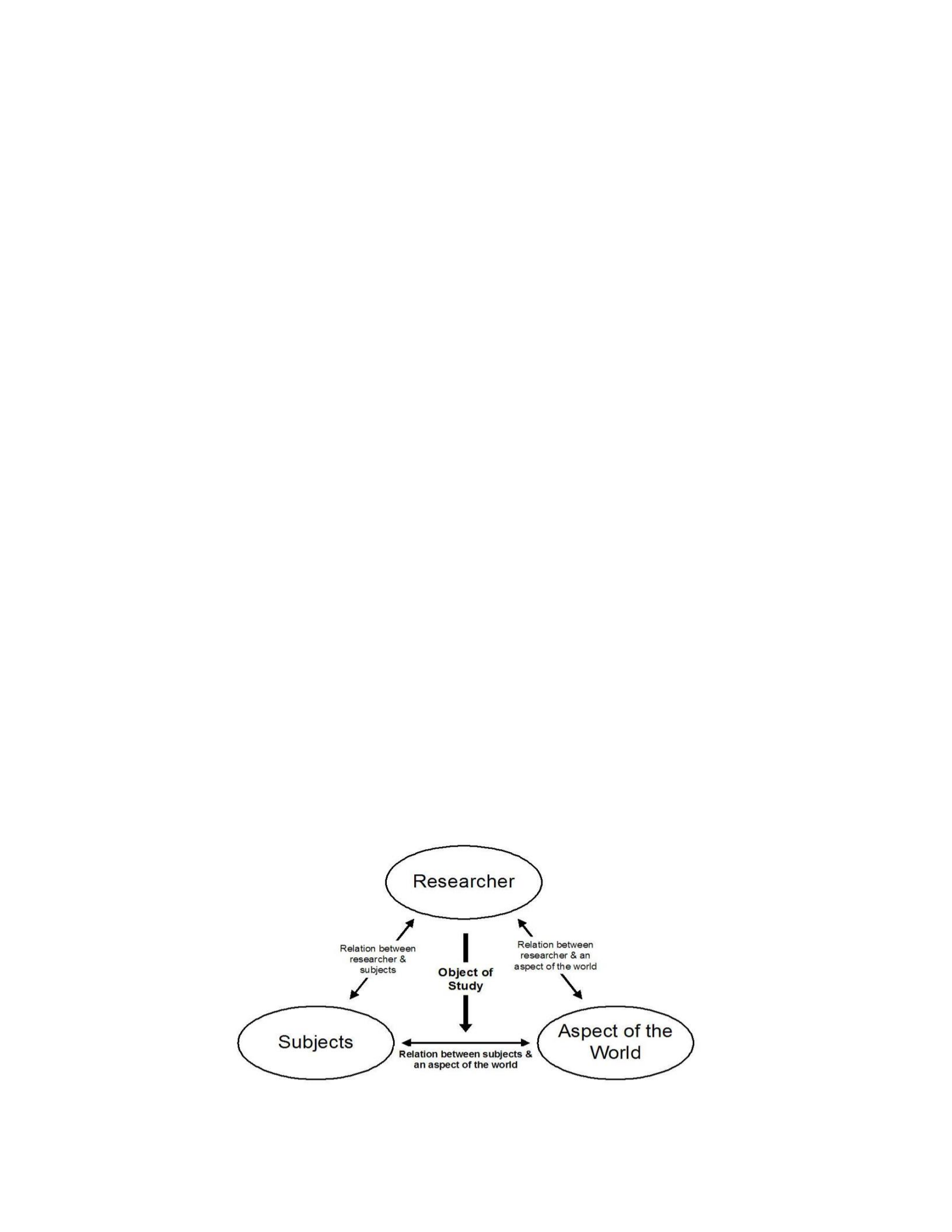
52
Figure 1 illustrates that phenomenographic research does not consider the subject
(i.e.: journalism internship graduate) and aspect of the world (i.e.: what the journalism
internship graduate learns and experiences during the internship and if they gain
employment as a result) as separate entities within the phenomenon but instead relates the
subject to the aspect (Khan, 2014; Sibanda & Ramrathan, 2017). In addition, Khan
(2014) and Sibanda and Ramrathan (2017) explained that based on Bowden and Green’s
(2005) description of phenomenographic research, the subject and the aspect of the world
are not separate but create a relationship between each. Therefore, the person's experience
and the aspect create a relational approach (Case, 2016; Limberg, 2000). By using this
approach, I deeply explored the relationship between the internship itself and the
individual’s personal experiences, and their personal experiences that they bring to the
internship situation that may in turn affect the participants’ perceptions of the
effectiveness of the internship experience and their perceived success in the internship.
Figure 1
Focus of Phenomenographical Research (Mann, 2009)

53
Limberg’s (2000) approach allows researchers to gain an understanding of the
subjects’ experience of the aspect in a more in-depth manner (Case, 2016). Limberg
contends that researchers may gain a deeper understanding of the subject’s experiences
when employing the phenomenographic research approach. Using this approach, I
examined the nature and experiences of internships, and how the internship, whether
optional or required, was perceived to effect employment by graduates.
Role of the Researcher
I did not complete a journalism-related major internship during my academic
years in university. However, I am the internship coordinator and video broadcasting
instructor at a college on the west coast where I work with media communication
students in obtaining and maintaining a media-centered internship. In addition, during my
time as a producer and reporter in broadcast news, I instructed interns brought on to work
in a newsroom.
I have no previous ties to any of the universities chosen for the study. I have not
been a student at any of the universities chosen for the study, and I have never applied for
student admission. I had no ties to participants as I did not know a single individual prior
to this study. The participant selection for a qualitative study is critical as the participants
selected should have knowledge about the phenomenon studied to answer interview
questions related to the research questions to address the purpose of the study.
I currently work as a freelance broadcast journalist. I have worked in the field of
journalism for over 10 years. I also am employed as a tenured professor of media
communications and work primarily with undergraduate students. Researchers should

54
reflect on their personal belief systems and experiences prior to conducting the study
(Lodico et al., 2010). I conducted the interview using the same protocol and process to
minimize bias. I used a journal to write down my observations and personal thoughts
during and after the interview process. Prior to beginning each interview, I consciously
set aside my own beliefs to maintain and support the data integrity (see Merriam &
Grenier, 2019). After each interview I reviewed my notes for any bias.
Methodology
Participant Selection Logic
Participant Population and Sampling Strategy
The population of participants for this study were graduates who had majored in
journalism field. The population of students targeted for this study was important in order
for them to have knowledge about the phenomenon of the study. The sampling strategy is
very important in qualitative research. Creswell and Poth (2017) explain that population
size is important to consider for qualitative studies. Qualitative researchers use purposeful
sampling to target selected individuals to understand the primary phenomenon (Creswell
& Poth, 2017; Lodico et al., 2010). In qualitative research, sample sizes are often smaller,
and the nature of the study is such that the researchers seek to understand a phenomenon
in-depth with fewer participants to reach saturation (Creswell & Poth, 2017; Lodico et al.,
2010). Qualitative researchers contend saturation is obtained when receiving the
repetition of responses to interview questions (Merriam & Grenier, 2019). I used
purposeful sampling to select a smaller number of participants, who were knowledgeable
about the phenomenon studied, even though the student population of journalism

55
programs may be considered large when compared to enrollment in other degree
programs.
Participant Criteria
The participant inclusion criteria for the study were graduates who: (a) had
majored in a journalism or related field, (b) had participated in a least one internship
during their years of study, (c) had gained employment within 6 months of their
graduation date. I direct personal message participants and confirmed whether they met
the inclusion criteria for the study. All participants confirmed that they met the criteria
for participation. I conducted in-depth interviews of 10 participants that enabled me to
reach saturation due to the rich descriptions provided by the participants during the
interview.
Number of Participants and Rationale
The target number of participants for this study was eight to 12 participants who
met the participant criteria. The actual sample population in this study included 10
graduates from a range of journalism programs who met the inclusion criteria for the
study. All 10 participants met the criteria for this study, represented a range age of
graduates in the journalism or related field and represented different ethnicities and
genders. Based on the recommendation of Guest et al. (2006) population size is not a
standard for qualitative research and that saturation may occur in as few as eight
interviews, I determined that 10 participants were appropriate for this study.

56
Procedures for Participant Identification, Contact, Recruitment
I used direct personal message to recruit participants through social media
websites Facebook and LinkedIn. LinkedIn profiles contained the graduate degree field,
university, and employment field. I introduced myself, and my purpose in contacting
them, the purpose of the study and described the consent process. I entered all returned
messages from potential participants into a pool from which I chose a purposeful sample.
Instrumentation
As I was interviewing graduates regarding their perceptions and experiences
pertaining to a phenomenon, I used an interview protocol as the primary method of data
collection for this study (see Appendix A). I developed an interview protocol using
semistructured interview questions to address the purpose of the study that was to
investigate the graduates’ perceptions and experiences of how internships might affect
journalism majors’ gaining employment in the field within 6 months of graduation. I
created interview questions to solicit participants’ perceptions and experiences related to
the phenomenon studied, that aligned with the research questions. I included questions
for the interview protocol that supported my investigation of each participant's
perceptions and experiences during their journalism internships. I used Kolb’s (1971),
ELT, the conceptual framework, as a lens to analyze the data and to interpret the findings
of this study.
Validity
In qualitative research, defining validity is the appropriateness of the study's tools,
processes, and data (Leung, 2015). Content validity for the interview protocol focused on

57
clarity and of the interview questions relevance (see Beck, 2020) In order to establish
content validity, I requested that academic colleagues review the protocol questions and
look for any questions that may be perceived as confusing for participants. I requested
that the colleagues provide feedback on clarity and content of the instrument. I revised
the interview protocols based on the feedback obtained from academic colleagues. I also
obtained feedback from my doctoral committee members, who are experts in research
methodology, as to whether my interview questions were appropriately designed to solicit
the desired content. This process of obtaining feedback from colleagues and experts
supported content validity of the interview instrument (see Beck, 2020; Leung, 2015). I
systematically followed appropriate and uniform strategies throughout interview process,
and during the one-on-one interviews.
Reliability
I used a standardized protocol to ensure that each participant could respond to the
same questions even though their described experiences were different. By using a
standardized protocol for the overall interview process and for each interview, I
supported reliability in the study. Additionally, by asking questions in the same way, I
was able to note inconsistencies in each person’s response. Procedures and processes
followed also support content validity (see Leung, 2015). Saturation obtained by
reviewing, coding, and analyzing the transcripts following the interview process, is one
indicator that content validity is achieved (see Leung, 2015). I reached saturation in my
review of transcripts data from the 10 participant interviews collected for this study.

58
Procedures for Recruitment, Participation, and Data Collection
Recruiting Procedures
Contact with potential recruited participants who matched the participant
selection requirements received a message via social media. Researchers estimate that
90% of American adults use the internet making it highly likely that journalism graduates
were familiar with internet use (Gelinas, et al., 2017). Participants were recruited via
direct personal message through social media websites Facebook and LinkedIn. I was
able to determine whom to contact if the individual identified themselves on their
personal social media page as a graduate from bachelor's degree journalism programs,
who list a bachelor's degree-granting university’s journalism program publicly on their
social media account, and who currently holds an employment position in the field of
broadcast journalism. I sent each potential participant a personal message that stated
whom I was, where I attended university for my doctorate, what my study is about, the
interview process in which I plan to complete my research, and the consent form to sign
if they wish to participate in the direct personal message. I also inquired whether the
potential participants met all the listed selection requirements. I entered all returned
messages from potential participants into a pool from which I chose a purposeful sample.
Informed Consent
I sent each potential participant the consent form subsequent to initial contact.
Return of the signed informed consent form indicated an interest in participating in the
research. The consent form included background information about the study, how the
study would take place and be videotaped via Zoom, information pertaining to their

59
voluntary participation in the study, which included their choice to leave the study at any
time, maintaining each participants privacy, any risks that may occur in the study, and
how to contact me or ask any questions they may have. Interviews with each participant
did not take place until I received their return email with the signed consent form.
Data Collection
The only data collection instrument used in this research was the semistructured
interview protocol (Appendix A). I indicate the location of the data collected using this
instrument, the frequency and duration of data collection using the instrument, and how I
recorded data gained through this instrument in the next section. It is important to
systemize the data collection process in qualitative research (Merriam & Grenier, 2019).
Location of Data Collection. I collected data during a semistructured interview
with each participant as scheduled. Each interview took place through the electronic
meeting website Zoom. Participants met with me over Zoom on the agreed upon time,
and date and each interview lasted approximately 45 minutes. I conducted interviews
individually, and I notified each participant when they entered the meeting that the
interview was being recorded. The recording is a feature offered by Zoom.
Frequency, Duration, and Recording of Data Collection. I conducted a single
one-on-one interview with each participant using the protocol instrument. Each interview
lasted approximately 45 minutes. I video-recorded the interviews through Zoom using a
secure internet connection. Only my committee and I have access to recordings,
transcripts, and raw data. I assigned each participant a designated number (Participant 1,
Participant 2, Participant 3, Etc.) so that their identities would remain confidential. I

60
stored all electronic video and audio data collected during each interview on my personal
password protected computer. Throughout each one-on-one interview, I adhered to the
semistructured interview protocol using open-ended questions and used probes to gain
more in-depth responses from participants as needed (see Hatch, 2013).
To establish quality, I sent a transcript of the participants’ interview and an
explanation for review after completing one-on-one interviews with participants. During
this time, participants had the opportunity to make comments and suggest corrections,
validations, or challenges to their interviews. Once I collected data from all participants
and completed follow-up procedures, I thanked participants for their time and effort by
direct personal message. Participants did not receive gifts or payments for their
participation in the study.
Data Analysis Plan
Background of Analysis Approach
Phenomeongraphic analysis should reveal two main aspects, a referential aspect,
and a structural aspect (Boon et al., 2007). The referential aspect refers to descriptions of
what is experienced in the internship by the participants, and from these categories of
description are detailed (Boon et al., 2007). The structural aspect deals with how the
phenomenon is experienced by individual participants, including the linking of the
structural relationship of each experience in a different way (Akerlind, 2012; Hajar,
2020). Structural relationships represent the structure of what Tight (2018) calls the
"outcome space" (p. 178), where participants described different ways of experiencing

61
the same experience. From the collective descriptions, an outcome space is detailed that
shows how the categories of experiences are related and vary (Boon et al., 2007).
As indicated by Marton (1986), the codes capture the variations in the
participants' experience. Saldaña (2016) emphasized that the most useful method for
coding is to derive questions from the research subject matter itself. As coding may
describe small ideas, Luborsky (1994) explained that coding is a way for themes to
provide insight into various beliefs including cultural and values.
The phenomenographic focus of data collection within this study was initially on
the individual experience and was then reviewed collectively (Akerlind, 2012; Hajar,
2020). When using the phenomenographical research approach to examine data, I looked
at codes that emerged in the descriptions that participants provide about what they
individually and then collectively experienced during their internships. The relationship
between participants in this study were their perceptions and experiences during their
internships and gaining employment after completing an internship.
Process for Coding
Patton (2014) argued that research questions, methodologies, and conceptual
frameworks are context specific. The process for coding included phenomenographical,
inductive, and deductive analysis of different elements of the data. The use of inductive
coding requires the researcher to review each transcript multiple times, identifying words
(codes) from the transcript that exemplify aspects of the participant's experiences or
perceptions (see Patton, 2014). To begin the data analysis process, I initiated an inductive
coding process. I read the transcripts to understand the perceptions and experiences that

62
were conveyed in the interview process. I initiated this process by looking for
experiences and conceptions. I used inductive coding and began by reading and rereading
each transcript multiple times while also scanning for similarities and differences within
each individual transcript (see Patton, 2014). Next, I then compared interview transcripts
among the participants looking for agreement and disagreement as well as additional
possible codes. I began the coding process for each transcript. I color-coded the initial
codes on each transcript and then grouped the color-coded words into larger groups of
codes that appeared to be similar. I continued another round of inductive coding, and I
omitted some initial codes and combined them into the final themes. I then separated
codes, quotes, and descriptive experiences with theme names. Upon completing inductive
coding, I moved on to conduct the deductive coding using Kolb’s framework.
I also used deductive coding, coding that requires a predefined set of codes, to
analyze the data in relation to Kolb's four stages (Kolb, 1971). The predefined codes
included concrete experience, active experimentation, reflective observation, and abstract
conceptualization. Each of Kolb's four phases became a code that I used to code all of the
participants’ transcripts looking for evidence of Kolb’s framework in the text. I read the
transcripts of each participant, and assigned codes based on the conceptual framework. I
identified evidence to support the codes, in the form of excerpts from the participants’
transcripts. The deductive coding process allowed me to identify additional themes from
the interview data.
After completing the inductive coding, and deductive coding processes, I entered
the initial inductive and deductive coding, the transcripts, initial codes, and themes into

63
MAXQDA. I conducted a line-by-line review of the transcripts in MAXQDA that
allowed me to refine the themes and subthemes that I initially identified. Using
MAXQDA also allowed me to identify smaller excerpts from participants’ responses that
provided additional insight into the participants’ perceptions of the phenomenon.
Through the process of using MAXQDA software, I was also able to eliminate irrelevant
or redundant pieces of the text from the interviews thus allowing these data to be more
manageable (see Tight, 2018). I developed figures to visually portray the process I used
to analyze these data (see Figures 4, 5, 6, and 7; pgs. 80-89).
After completing the inductive, and deductive coding and MAXQDA analysis, I
conducted the phenomenographical analysis of these data. Based on the themes that
emerged and quotes identified during my analysis and the MAXQDA digital analysis, it
was possible to analyze the perceived experiences of the participants. Through the use of
phenomenographical analysis, I identified participants’ experiences and how the
experiences were different based on what they may have brought to the experience, such
as past experience, learning, motivation, or varied view of the field. The
phenomenographical analysis was the final stage of the data analysis process.
Tools for Coding
I conducted inductive and deductive coding using the conceptual framework.
Following the initial coding, I used a software program, named MAXQDA. MAXQDA is
an all-in-one qualitative coding tool that supports the researcher in examining the
transcripts from each interview and identifies corresponding text based on the code name
that the researcher identifies. During and throughout the process of examining each

64
transcript, I drafted codes and possible themes for MAXQDA to identify the potential
text that aligned with the codes. I identified subthemes by using MAXQDA. I also
refined my analysis based on additional text identified by the MAX QDA software.
Finally, using the themes and examples from the data I attempted to develop a
general understanding of the content as suggested by Vella (2002) coding analysis. This
included asking myself, "What does this mean? What is it telling me about internships
and employment?" I organized the results by themes and included examples from the
MAXDA printout. I analyzed the themes and considered the findings that emerged from
the themes.
Discrepant Cases
Contradictions in research may arise, giving way to unexpected findings. Such
contradictions are often known as discrepant cases. LeCompte et al. (1993) defines
deviant cases as "a sampling method that aims to elaborate, modify, or refine a theory,"
(p. 93), whereas they define negative case sampling as, "samples that appear to wholly
disprove or refute the theory being developed" (p. 93). As an irregularity within the data
collection, information was categorized based on its theme, saying, or experiences.
Participants described the varied details of their internship perceptions and experiences.
The internship perceptions and experiences across all 10 participants were varied.
However, the participants’ reported variations were not perceived as discrepant cases but
opportunities to examine how these differences may have affected their experience and
their perceptions of the experience. There were no discrepant cases as the variance in

65
participants’ perceptions are concluded to variances in experiences, and the reported
experiences and varied perceptions do not refute the findings of the study
Trustworthiness
Trustworthiness in qualitative research is about credibility, transferability,
confirmability, and dependability of the data (Statistics Solutions, 2019). I transcribed
these data verbatim from the recordings and conducted multiple reviews of the recordings
and transcriptions. In addition, I also had each participant review their transcribed
interview for accuracy or credibility of meaning (see Statistics Solutions, 2019). I audio
and video recorded the interviews and transcribed them word for word. I made notes on
any non-verbal cues and communications that I observed from the participant during the
interview to increase trustworthiness.
The transferability of the research findings demonstrates whether the findings
were applicable to other situations. Although it cannot be assumed that qualitative
research is transferable, the use of rich descriptions of the data and the variation in
participant selection may make it possible to apply the findings to other individuals and
settings (see Bogdan & Biklen, 2006).
Addressing dependability in this dissertation research took place by the detailed
reporting of the methodology and data analysis. Detailed reporting ensured that another
person could replicate the study using the described methodology and analysis protocol.
Using Kolb's (1971) stages as a framework enhanced this possibility. Finally, the study's
trustworthiness was improved as the research committee reviewed the research process,
analysis, and report of findings.

66
Ethical Procedures
There were no data collected until I obtained IRB approval. In addition, all
participants of this study had already graduated from four-year universities; therefore, a
letter of cooperation or IRB approval from the universities was not needed. The identity
of each participant within the study remained confidential throughout the process. I gave
each participant a code name: Participant 1, Participant 2, Participant 3, etc. and reported
data using this convention.
I placed all confidential direct personal messages, MAXQDA coding, and video
recordings on a 64-gigabyte universal serial bus (USB). The USB is secure in a private
safe where only I have access. I will destroy all collected correspondence and data in
2026, 5 years after completing the study. I had no prior relationship of any type with any
of the universities or participants that have partaken in this study.
Summary
I used a qualitative phenomenographical research approach to complete this
research. The conducted study took place via semistructured interviews that were video
recorded. I played the role of data collector and transcriber. Participants selected include
10 post-completion journalism majors from universities across the country, who
completed at least one journalism internship.
Each participant was recruited through open access using direct personal
messaging on Facebook and LinkedIn social media websites as opposed to recruiting
through an advertisement for participants. I transcribed each participant's interview to
maintain the highest trust of data collection during this study. I conducted the data

67
analysis by determining inductive themes and patterns that I coded and cataloged while
providing insight into the participants' response to each individual internship experience.
Themes and patterns provided insight into each participants' experience and were then
further analyzed for refinement and interpretation. Ethical procedures follow IRB and
university standards while maintaining the confidentiality of each participant both during
and after the study was concluded.
In Chapter 4, I review the data collected among the 10 participants while
identifying themes and findings from the study conducted. I analyze data using
phenomenographical reasoning when examining the perceptions and experiences each
participant described. I used participants’ reported perceptions and experiences that were
similar to identify inductive reasoning, deductive reasoning per Kolb's (1971) four stages
of ELT, and phenomenographical reasoning to analyze these data.

68
Chapter 4: Results
The purpose of the study that was to investigate the graduates’ perceptions and
experiences of how internships might affect journalism majors’ gaining employment in
the field within 6 months of graduation. The goal of developing a deeper understanding
of the phenomenon of how graduates in the field of journalism perceived an internship
affected obtaining gainful employment within 6 months of graduation related to the gap
in the literature that indicated some graduates do not demonstrate effective skills on the
job after graduating with a degree in the field of journalism although literature suggests
that internships promote skills and prepare the journalism graduate for gainful
employment. To address this goal, the research question that guided this study was:
RQ: How do journalism-related major graduates, who completed at least one
internship and obtained employment in their field within 6 months of graduation,
describe their journalism internship perceptions and experiences that led to employment
in the field?
In Chapter 4, I include an analysis based on 10 semistructured interviews with
journalism degree-holding participants from across the United States. Each participant
completed at least one journalism-based internship during their studying years. I also
describe the setting, data collection steps, describe the data analysis process, present
codes, themes by research question, and provide a thorough description of the overall
findings of the study. I conclude by outlining evidence of trustworthiness, and finally
conclude Chapter 4 summary.

69
Setting
Each participant within the study had no known conditions that influenced their
participation. There were no incentives provided to the participants for the study nor were
there any changes in who corresponded or interviewed the participants. All participants
were currently employed in the field of journalism at the time of the interviews.
Data Collection
I conducted 10 semistructed, one-on-one interviews using a secure internet
connection. I consistently used the interview protocol and process for each interview that
lasted no longer than 45 minutes. I collected both video and audio recordings of the
interviews using the Zoom software. Upon completing each interview, I uploaded and
stored all video recordings and transcripts on my personal computer, using a software
database with password protected files. I reviewed each video recording and compared
the recording to the transcript to discern any errors between the video recording and
transcript for each interview. I expected each interview to take approximately 60 minutes;
however, the interviews were shorter than I anticipated with the longest interview lasting
45 minutes. I conducted each interview from my home office over a 5-day period and
conducted two interviews each day. I did not encounter any variations in the data
collection plan. Upon completing the interviews and verifying the accuracy of the
transcript with each participant, I concluded these data were accurate, and I prepared the
data for inductive coding.

70
Data Analysis
I began the data analysis by personally transcribing all interviews. Next, I
reviewed each participant’s transcript multiple times and compared the transcription to
the audio recordings. I continued breaking down the data by organizing the data, ensuring
the removal of any identifiers, and creating a pseudonym for each participant (Participant
1, 2, etc.). I sent each transcription to the participant and requested that they review their
transcript for accuracy and return the transcript to me with any corrections.
I used inductive and deductive coding in this study. I analyzed these data using
both an inductive approach, and deductive approach based on the Kolb framework. The
process for coding using both inductive and deductive coding supported my analysis of
different elements of the data. Researchers use inductive coding initially to review each
transcript multiple times, identifying words from the transcript that exemplify aspects of
each participant's experience (Bogdan & Biklen, 2006). I initiated coding on individual
interview transcripts after reviewing the transcript multiple times. I read and reread the
transcripts. I assigned initial codes by using a colored highlighter to group different
descriptive words of the participants’ described internship experience. Figure 2 reflects
the process I used for qualitative data analysis.
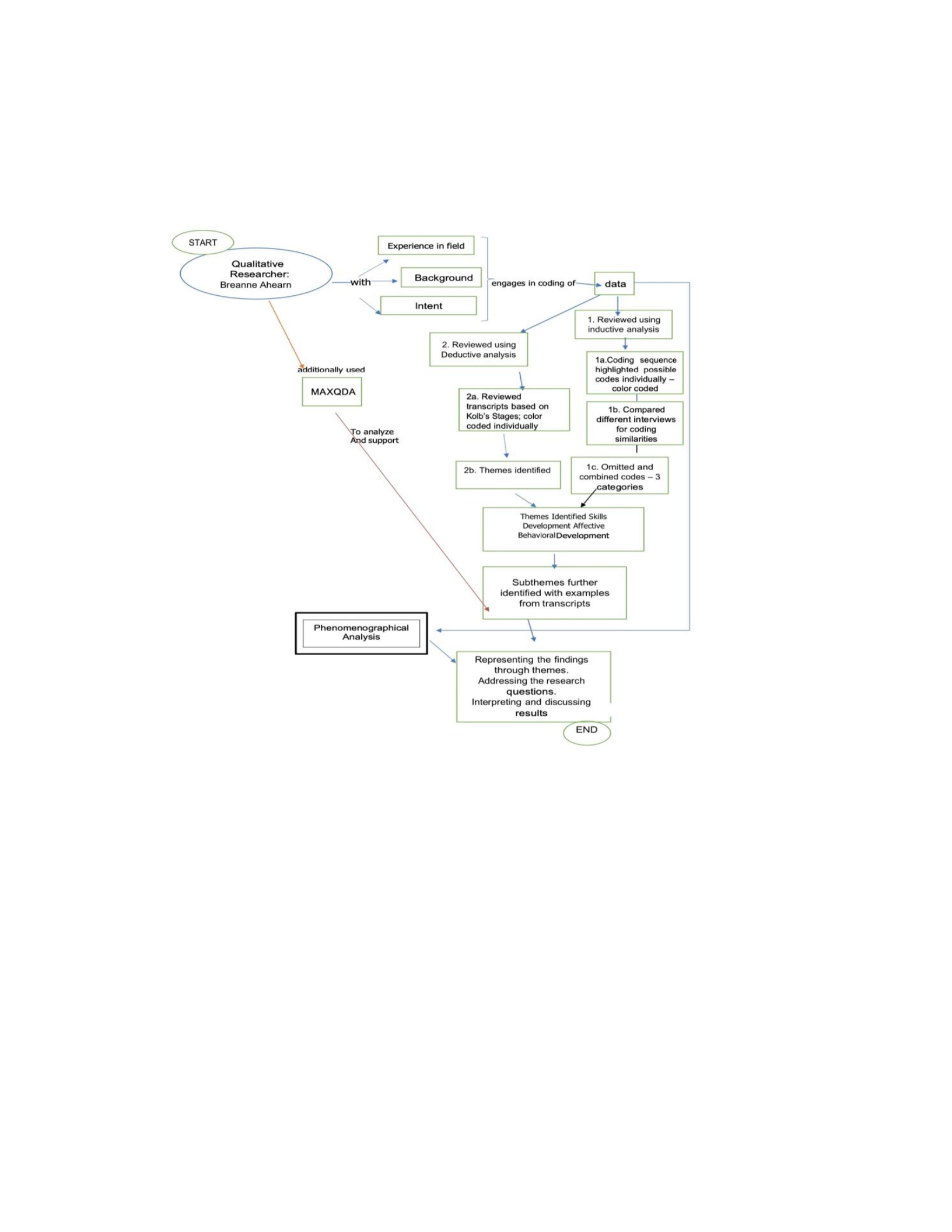
71
Figure 2
Coding Process Used for Qualitative Analysis
In the early stages of data analysis, I looked for possible language, words, or
phrases that were commonly used between participants in their descriptions. I also
examined the data looking for differences in how participants described their perceptions.
I also examined the transcript as a whole by focusing on different perspectives during
different times, that allowed me to illuminate different aspects across participants, by
considering their perspective or point of view. The initial codes that emerged from the
first round of inductive coding and analysis of the transcripts included: newspaper
creation, green screen, teleprompter, camera operations, video shooting, reporting,

72
writing, producing, social media, transcribing footage, logging footage, editing footage,
time management, hard work, diligence, attitude, and willingness to learn.
In the next step of inductive coding, I collected all codes across all transcripts and
reviewed each code to combine or omit codes as indicated then grouped the initial codes
together with those that were similar. Next, I then grouped the combined group of codes
into potential themes. I identified two main themes using inductive coding. These were:
skills development and affective behavior development. Three subthemes emerged within
the skills development theme (a) technical skills, (b) production skills, and (c)
interviewing skills.
In the deductive analysis process, I used preidentified categories from Kolb's
framework. The codes used from Kolb’s model were (a) concrete experience, (b)
reflective observation of experience, (c) abstract conceptualization, and (d) active
experimentation. I analyzed the codes and themes comparing them to Kolb’s stages to
look for alignment and relationships. The names of the four stages of the framework were
inputted into MAXDA as codes to locate phrases and words in order to compare how the
inductive codes aligned with Kolb's four stages. In the analysis of results, I describe these
four deductive codes and the inductive codes.
Codes, Themes, and Subthemes
The two themes were skills development and affective behavior development.
Skills development included the subthemes of technology, production, and interviewing
skills. Codes for affective behavior development included attitude, time management,
diligence, hard work, and preparation for work. I identified examples of phrases and

73
quotes in MAXDA for each theme and subtheme. Overall, the analysis showed saturation
of graduates' perceptions of their internships.
Theme 1: Skills Development
Within the skills development theme, three subthemes emerged: technical,
production, and interviewing. Technical skills reflected the skills learned during the
creation process of news. Participants perceived that accessing and using software
contributed to their skill development and abilities to create the process of news.
Participants described how they perceived they developed these skills, but often their
descriptions arose from different types of experiences. That is, each participant gained
similar skills based on whom they shadowed each day of their internship or which
position within the internship they were assigned. In addition, what experiences, learning,
and personal characteristics and motivations brought to the internship experience may
have influenced what and how they developed skills.
There appeared to be a possible link between learning skills and affective
behavior development. Participants’ perceptions of their internship appeared to align with
their reports on affective behaviors experienced. Participants’ varied in their reported
perceptions and experiences and appeared to vary as related to their individual
perceptions. Participants’ varied experiences and how they see them, understand them,
and identify the skills they have related to them results how they view the world (Bakker,
2014; Tight, 2018).
As indicated previously, phenomenographic research “seeks to identify the
multiple conceptions that people have for a particular phenomenon,” (Akerlind, 2012, p.

74
119; Hajar, 2020, pg. 7), reflecting the different ways that people describe how they
experience a given phenomenon (Ornek, 2008). Therefore, as a result of this research,
participants described their internships (the phenomenon) very differently as described
below in the results. However, the descriptions still generated similar codes and
subthemes that were grouped into two major themes. The descriptions supported the
literature on phenomenographic research that stated that individuals experience a
phenomenon, such as an internship, in different ways, as stated by Ornek (2008), "focus
on the ways of experiencing different phenomena, ways of seeing them, knowing about
them, and having skills related to them (pg. 25)." Thus, I describe the individuals’
experiences highlighting themes but showing how the same codes and themes emerged
from different experiences.
Theme 2: Affective Behavior Development
The affective behavior development included factors that participants developed
during the internship experience and those individuals stated they brought to the situation
that may have affected their perceptions of the internship itself and job attainment due to
the internship. When investigating different ways that people experience an event
(internship), researchers Feldon and Tofel-Grehl (2018) emphasize, “personal
conceptions as a necessary construct to understand the relationship between the physical
events that people experience and the personal meanings that they derive from those
experiences” (pg. 892).
The participants used several terms to provide a broad description of their
internship experience. For example, when asked to use only one word to describe their

75
internship experience, terms included: interesting, tiresome, informative, exciting,
successful, thrilling, brief, challenging, and educational. However, further analysis and
grouping of these individual terms led to a focus on the specific language used in
multiple participant descriptions that I grouped under the codes of hard work, diligence,
attitude, willingness to learn, and time management. Some initial words were dropped or
moved to other more appropriate subthemes as they provided better examples for those
areas. For example, participants recalled working long hours, missing holiday
celebrations with family, being on-call when needed, and doing anything asked of them
by their internship employers.
Participants described that they were exposed to activities pertaining to time
management and to new content that they had not been exposed to in their traditional
classroom settings. Each participant recalled working various shifts, as early as 2 a.m. to
11 a.m. and as late as 3 p.m. to 11:30 p.m. For example, Participant 4: “I stayed long
hours to knock out my internship hours and then I started in production.” According to
Participant 4, ultimately, this appeared to translate into better employment opportunities.
Affective factors that participants brought to the situation appear to have affected
how they engaged in the internship and how they perceived the effect of that internship.
Participants addressed experiences they perceived affected their growth in learning both
personally and as a journalist. However, rather than simply listing things they learned,
although they did this also, participants described the experience in terms of things that
built character such as time management, diligence, hard work, attitude, and willingness
to learn.

76
Results
Participants
A total of 10 participants participated in the study. Four of the 10 participants had
completed more than one internship. Eight of the 10 participants interned at a television
news station. Outside of the television news station internship, Table 1 reflects
internships were also completed at a newspaper, and a televised jewelry network.
However, the internships varied within the news category. These included newspaper,
television, and network internships. Participant 3 studied and graduated with a degree in
meteorology, although they interned and worked in broadcast news as a chief
meteorologist. Table 1 reflects the overall participant demographics including gender,
region, and number of internships completed by each participant.
Table 1
Participants’ Demographics and Internship Information
Participant Number
Gender
Internship Region
Number of Internships
Completed
Participant One
Female
South
1
Participant Two
Male
South
1
Participant Three
Male
South
1
Participant Four
Female
South
1
Participant Five
Female
South
1
Participant Six
Female
South
1
Participant Seven
Female
Midwest and West
3
Participant Eight
Male
Midwest and West
3
Participant Nine
Female
West
2
Participant 10
Male
South
2

77
A total of nine participants graduated with degrees in the field of journalism,
including general journalism, broadcasting, and mass communication, and one participant
with a degree in meteorology and a minor in broadcast. Interviews included participants
who completed more than one internship, and participants had internships in a variety of
markets. These included small markets, large markets, and network markets. Participants
completed internships in various locations including but not limited to Chicago, Illinois,
Washington, D.C., Knoxville, Tennessee, and Santa Barbara, California. Some
participants were offered employment at their internships before the internship
concluded.
Discussion of Results
In this section I discuss the results to answer the research question in relation to
the conceptual framework and the phenomenographical analysis. I draw on the themes
discussed in the data analysis section and provide further quotes that support the final
results. Overall, the research results indicate that all participants described a variety of
internship experiences that led to skill and affective behavior development. I found the
descriptions of the internship experience varied, often widely, from participant to
participant and resulted in both individual and collective analysis results. However, the
analysis of results indicated that similar skills and affective behaviors developed even
though the experiences were so varied.
The research question addressed how journalism-related major graduates, who
completed at least one internship and obtained employment in their field within 6 months
of graduation, described their journalism internship perceptions and experiences that led

78
to employment in the field. The goal of the data collection and analysis was to have
participants discuss their different perceptions and experiences during the internship, thus
allowing for comparing in order to analyze these data by deriving codes, subthemes, and
themes across interviews. Descriptions of internships were detailed and rich. The data
reflected individual and collective skills acquired during the internship that participants
believed were essential for later employment. I coded these descriptions and then divided
them into two themes that were (a) skills development and (b) affective behavior
development. In the next section, I discuss the deductive coding and themes.
Conceptual Framework Results In Relation To Themes Identified
Kolb (1971) explains that effective learning occurs when adult learners progress
through four stages of learning. These stages are: (a) concrete experience, (b) reflective
observation of experience, (c) abstract conceptualization, and (d) active experimentation.
During the transition from classroom learning to in-field practice, each participant
reported that they learned hands-on practices as described by Kolb’s (1971) ELT theory
(see Figure 3 below). In fact, participants described using their internships to learn,
practice, reflect on, and put into future practice situations they encountered while
shadowing professionals during their internship. When I examined each participant's
experience through the lens of ELT stages, I found a relationship between the themes
identified in the inductive analysis and Kolb’s four stages during deductive analysis
reflected in Figure 3.
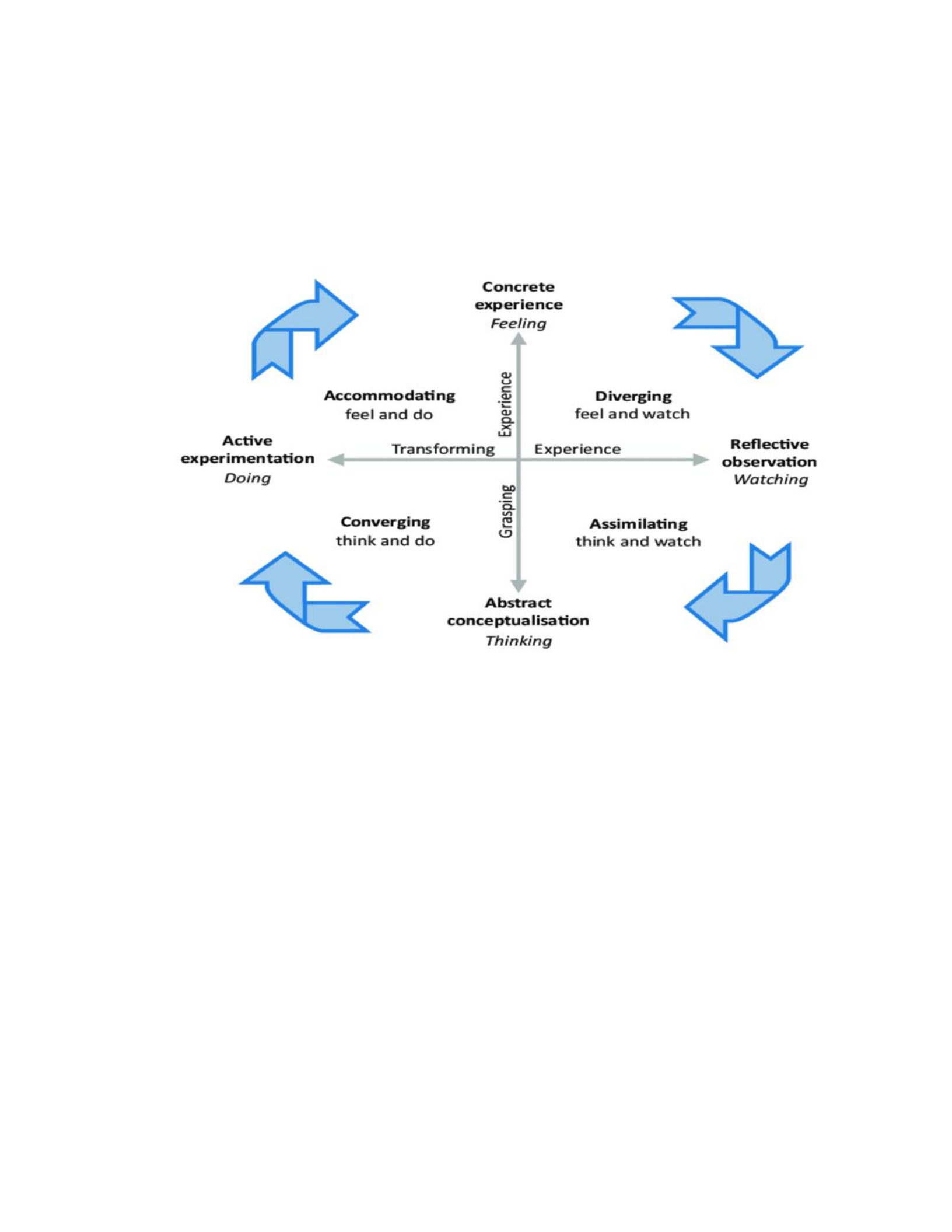
79
Figure 3
4-Stages of Kolb’s ELT Theory in Practice
Note. From EducationTechnology.net “Kolb’s Experiential Learning Theory & Learning
Styles,” by S. Kurt, 2020. Copyright 2021 by Education Technology.
In this study I focused on answering the question:
RQ: How do journalism-related major graduates, who completed at least one
internship and obtained employment in their field within 6 months of graduation,
describe their journalism internship experience that led to employment in the field?
In this study, I used inductive and deductive coding; then I conducted an analysis
based on phenomenographical approach. The following figures reflect Kolb’s stage,
code, code description, theme, subtheme, and text from the participants that support the
theme. Figures 4 – 7 detail each code along with a definition code relationship to the

80
themes and subthemes with an excerpt example.
Figure 4
Results in Relation to Kolb’s Stage One to Themes
Stage One: Concrete Experience
Code
Code Description
Theme
Subtheme
Excerpt Example
Newspaper
Creation
Skills and steps
involved while
creating a newspaper
Skills Development
(Participants
described hands-on
practices)
Technical
Skills
(Hardware
skills learned
during the
creation
process of
news)
Doing the reporting, the
photography, writing my
stories helped with the
editing and putting the
paper together
Green Screen
A bright green curtain
in the TV studio that
allows for special
effects during
broadcast
Skills Development
Technical
Skills
I would forecast every
day with the
meteorologist. He helped
me build a graphic or two
Teleprompter
Two-way mirror
attached to studio
cameras allowing
anchors and reporters
to read pre-written
scripts
Skills Development
Technical
Skills
We learned about the
teleprompter
Camera
Operations
Operations including
moving camera,
tilting, zooming lens
view, focusing, and
panning
Skills Development
Technical
Skills
I did help reporters do
stand-up shots
Video Shooting
Camera used to
visually and audio
record individuals,
places, or things that
will be edited and
used in pre-record
news stories
Skills Development
Technical
Skills
I was there every day
shooting a VOSOT

81
Reporting
Interviewing
individuals pertaining
to a story that the
news station believes
the community needs
to or should know
about.
Skills Development
Technical
Skills
Going to breaking news
with a reporter and seeing
how to cover it
Social Media
Posting video or
reporter teasing a
story that will be on
the newscast later in
that day or detailing
breaking news that
citizens need to know
about
Skills Development
Technical
Skills
I didn't really understand
how Twitter worked as a
reporter but after those
three internships I knew
how to update people
with important
information
Transcribing and
Logging footage
Writing exact word
said during a
recorded interview or
raw audio sound.
This includes writing
times aligning with
dialogue
Skills Development
Production
Skills
(Software
skills learned
during the
creation
process of
news)
The producer asked me to
do basic transcribing to
interviews… ‘I need you
to tell me word by word,
what they said, and I
need the time codes’
Editing Footage
The act of taking raw
video and cutting it to
visually follow script
of story
Skills Development
Production
Skills
The reporter taught me
some things in the editing
bay about moving stories
along faster
Communication
Reporter or
producer’s ability to
see non-verbal
responses, gain
experience with
speaking with
officials, politicians,
and victims relating
to stories
Skills Development
Interviewing
Skills
(Creative
communication
skills learned
during the
creation
process of
news)
I saw how to understand
people with nonverbal
cues… you've got to be
empathetic too. You have
to show respect for the
families involved
Three
Foundational
Questions
Creating three open-
ended questions that
reporter or producer
can ask during an
interview that will
lead to follow-up
questions pertaining
to the story
Skills Development
Interviewing
Skills
The reporters taught me
the best ways to ask the
question, so that they [the
interviewee] answers it in
a way where your
question doesn't have to
be on camera, without
having that conversation
with them beforehand

82
Time
Management
Word used to
describe how
participants were able
to take their
internship experience
and use it to gain
employment within
the field
Affective Behavior
Development
(Word participants
used to describe
their internship
experience)
I stayed long hours to
knock out my internship
hours
In stage one, concrete experience Kolb contends that when students begin their
internship, they experience something new that they had not learned before creating a
new experience. In some experiences, the students will have no prior field experience, but
they may identify the experience based on curriculum within their university’s journalism
program. In this study, participants’ experiences reflected Kolb’s (1971) stage one in
relation to both themes and each of the three subthemes.

83
Figure 5
Results in Relation to Kolb’s Stage Two to Themes
Stage Two: Reflective Observation
Code
Code Description
Theme
Subtheme
Excerpt Example
Newspaper
Creation
Skills and steps
involved while
creating a
newspaper
Skills
Development
Technical
Skills
Piece articles together with the
scissors
Camera
Operations
Operations
including moving
camera, tilting,
zooming lens view,
focusing, and
panning
Skills
Development
Technical
Skills
We practice Rule of Thirds and
composition
Video Shooting
Camera used to
visually and audio
record individuals,
places, or things that
will be edited and
used in pre-record
news stories
Skills
Development
Technical
Skills
The reporter was able to do a lot
of dynamic shots that gave him
more than just the classic face
on or over the shoulder type of
[visual] shots
Reporting
Interviewing
individuals
pertaining to a story
that the news station
believes the
community needs to
or should know
about.
Skills
Development
Technical
Skills
See what they [reporters] do
within the field and how they
gather information
Writing
Associated Press
(AP) writing style to
tell a story for audio
recording or live
news broadcast
Skills
Development
Technical
Skills
You actually learn the skills you
need for writing

84
Communication
Reporter or
producer’s ability to
see non-verbal
responses, gain
experience with
speaking with
officials, politicians,
and victims relating
to stories
Skills
Development
Interviewing
Skills
My reporter was teaching me
about what you should ask
people, the best way to get to
the root of the story, the best
ways to get somebody to trust
you, so that they will divulge
the information
Diligence
Word used to
describe how
participants were
able to take their
internship
experience and use
it to gain
employment within
the field
Affective
Behavior
Development
I think there’s something is to
be said about someone who's
willing to take something
unpaid and willing to do the
internship while being willing
to learn
Attitude
Word used to
describe how
participants were
able to take their
internship
experience and use
it to gain
employment within
the field
Affective
Behavior
Development
They (producers) were kind of
hesitant to let you take the reins
or do anything by yourself. But
once they saw you were there to
learn and bug them until they let
you, then you felt like you were
a working professional
In stage two, reflective observation, students take the new experiences from stage
one and reflect on them. Such experiences can occur in the field, in the newsroom, or the
news station studio. Participants in this study reported a greater degree of stage two
reflection with respect to the subtheme of technical skills rather than production or
interviewing skills.

85
Figure 6
Results in Relation to Kolb’s Stage Three to Themes
Stage Three: Abstract Conceptualization
Code
Code Description
Theme
Subtheme
Excerpt Example
Green Screen
A bright green curtain
in the TV studio that
allows for special
effects during
broadcast
Skills Development
Technical
Skills
Weather graphic building
skills were applied during
weather report creation
Teleprompter
Two-way mirror
attached to studio
cameras allowing
anchors and reporters
to read pre-written
scripts
Skills Development
Technical
Skills
We learned a lot about
making sure we had times
and frames
Camera
Operations
Operations including
moving camera,
tilting, zooming lens
view, focusing, and
panning
Skills Development
Technical
Skills
Biggest skill was learning
how to use the camera
Reporting
Interviewing
individuals pertaining
to a story that the
news station believes
the community needs
to or should know
about.
Skills Development
Technical
Skills
I learned more to focus on
what was hard hitting
news and what would be
acceptable for TV
Writing
Associated Press (AP)
writing style to tell a
story for audio
recording or live news
broadcast
Skills Development
Technical
Skills
My writing skills grew.
I learned to write like a
journalist
Editing Footage
The act of taking raw
video and cutting it to
visually follow script
of story
Skills Development
Production
Skills
Being able to cut video
that would be in the
newscast later that day

86
Communication
Reporter or producer’s
ability to see non-
verbal responses, gain
experience with
speaking with
officials, politicians,
and victims relating to
stories
Skills Development
Interviewing
Skills
My interviewing skills
really grew after I
shadowed the reporter. I
saw how to understand
them [the interviewee]
with nonverbal cues
Three
Foundational
Questions
Creating three open-
ended questions that
reporter or producer
can ask during an
interview that will
lead to follow-up
questions pertaining to
the story
Skills Development
Interviewing
Skills
Learned a lot about how to
interview and how to
structure a story
Hard Work
Word used to describe
how participants were
able to take their
internship experience
and use it to gain
employment within
the field
Affective Behavior
Development
It's frustrating… the time
crunch. You learn to push
yourself like they
(reporters and producers)
do
Stage three, abstract conceptualization, occurs when the student learns from what
he or she just experienced. In stage three the students take their experiences and learn
from them. Participants in this study each identified with stage three as it transitioned
each participant’s idea of being a student who was learning a practice and pushed them
into the understanding professional journalist.

87
Figure 7
Results in Relation to Kolb’s Stage Four to Themes
Stage Four: Active Experimentation
Code
Code Description
Theme
Subtheme
Excerpt Example
Green Screen
A bright green
curtain in the TV
studio that allows
for special effects
during broadcast
Skills
Development
Technical
Skills
We practiced enough
[green screen weather
reporting on camera] to
the point where I had a
full demo tape made
Teleprompter
Two-way mirror
attached to studio
cameras allowing
anchors and
reporters to read
pre-written scripts
Skills
Development
Technical
Skills
We learned how it [time
frames and the
teleprompter] was
applied to the news
broadcast
Camera
Operations
Operations
including moving
camera, tilting,
zooming lens view,
focusing, and
panning
Skills
Development
Technical
Skills
I had this experience
working with live TV
cameras
Video Shooting
Camera used to
visually and audio
record individuals,
places, or things that
will be edited and
used in pre-record
news stories
Skills
Development
Technical
Skills
I would get assigned a
story, go shoot it, then
come back and edit it
Reporting
Interviewing
individuals
pertaining to a story
that the news station
believes the
community needs to
or should know
about.
Skills
Development
Technical
Skills
The reporter would
hone my package shot
and telling me to redo
it. I would keep redoing
it until it was what the
reporter was looking for

88
Writing
Associated Press
(AP) writing style to
tell a story for audio
recording or live
news broadcast
Skills
Development
Technical
Skills
I didn't realize how
much the producer
writes. That was a
shock to my system
when I started
Social Media
Posting video or
reporter teasing a
story that will be on
the newscast later in
that day or detailing
breaking news that
citizens need to
know about
Skills
Development
Technical
Skills
I was running around
Los Angeles and
collecting news while
writing for the
reporter’s social media
Transcribing and
Logging footage
Writing exact word
said during a
recorded interview
or raw audio sound.
This includes
writing times
aligning with
dialogue
Skills
Development
Production
Skills
I was writing (coding)
broadcast commercial
times for the engineers
Editing Footage
The act of taking
raw video and
cutting it to visually
follow script of
story
Skills
Development
Production
Skills
I was editing for
[broadcast news] shows
Communication
Reporter or
producer’s ability to
see non-verbal
responses, gain
experience with
speaking with
officials, politicians,
and victims relating
to stories
Skills
Development
Interviewing
Skills
I made calls.
Specifically, to dispatch
and officials for a quote
about the story.
Three
Foundational
Questions
Creating three open-
ended questions that
reporter or producer
can ask during an
interview that will
lead to follow-up
questions pertaining
to the story
Skills
Development
Interviewing
Skills
I was working on the
best ways to ask
questions without
having that
conversation with them
[interviewee]
beforehand

89
Hard Work
Word used to
describe how
participants were
able to take their
internship
experience and use
it to gain
employment within
the field
Affective
Behavior
Development
It [internship] taught
me… especially in
terms of live breaking
news or alive content,
how to prepare and how
to live in that moment
as a professional
journalist
Diligence
Word used to
describe how
participants were
able to take their
internship
experience and use
it to gain
employment within
the field
Affective
Behavior
Development
I forced reporters to
take me with them and I
showed them that I
wanted to do this
Willingness to
Learn
Word used to
describe how
participants were
able to take their
internship
experience and use
it to gain
employment within
the field
Affective
Behavior
Development
I was able to shoot stuff
for the reporters and
write scripts. I was
helping build [broadcast
news] shows.
In Kolb's fourth and final stage, active experimentation, the student moves
observation into practice. The students take the experiences they witnessed in stage one,
reflected on in stage two, learned from in stage three, and now attempt to try on their own
what they have learned, often in new situations. Repetition of stage four occurs until the
participants succeed in their practice. For Participant 3, repeating stage four allowed for
the creation of a demonstration video reel that would be used to help gain employment
before they graduated. Participant 5 gained skills that facilitated employment on to the
news team just weeks into their internship.

90
Deductive Coding Based on Kolb’s Framework
Stage One: Concrete Experience
Kolb’s (1971) ELT Stage One states that concrete experience is when learners
encounter new experiences in a hands-on manner. Participants reported concrete
experiences led to the development of specific skills, aligning with elements of all the
skills theme. All 10 participants described the different skills learned.
Technical Skills. Technical skills are those skills learned during the creation
process of news. Creation process of news includes creating a newspaper edition and all
aspects of live broadcast in regard to control room operations and live studio news
making. Each of the 10 participants in this study mentioned learning technical skills
numerous times. In the area of technical skills, codes emerged in the data that included
newspaper creation, green screen, teleprompter, camera operations, video shooting,
reporting, writing, and social media. Many of the same skills developed, regardless of
where their internship was in the field of journalism.
Participants described the development of technical skills in a variety of
journalism experiences. Participant 5 developed technical skills through engaging in
video production creation while shadowing producers, while Participants 6 and 10
developed camera procedure skills by operating cameras in both the studio and in the
field for live broadcast even though Participant 6 worked for the jewelry network and
Participant 10 a local news station. Participant 3 discussed how one day a week they
would go out to report and learn how to shoot, then how to edit. Participant 8’s
experience included practice with producing, reporting, writing, and social media

91
postings: "After just two weeks of being there you feel like you're a reporter at that point,
and you want to go out and create a package."
Participants described concrete experiences by both learning and doing. For
example, Participant 2 experienced their first concrete experience while learning
production and technical skills: “Make sure that they (anchors) knew exactly where they
were going, in the terms of the script… I was basically at the hands of every director and
a producer, depending on what they were doing.” Participant 3 described daily green
screen practice. The participant described having no experience outside of one news
practice course at university prior to the internship: “I had zero experience with anything
news related. So even being able to cut a video or just to write a quick script for
something or to learn how to shoot or learn how to pitch a story…”
Participants described concrete learning by working directly with professionals in
the field. For example, Participant 2 described learning how the teleprompter operated
and how it applies to the broadcast news. Participant 5 discussed practicing rules of thirds
and composition, while Participant 6 discussed getting behind the camera as an important
concrete experience. Participant 8 learned to run live shots for correspondence at the
Department of Justice and set up the SAT truck for live shots. Participant 9 described
actively shooting a voice-over sound on tape every day. This video experience was also
described by Participants 3, 5, 8, and 9.
Participants who engaged in more than one internship discussed how different
experiences benefited them in developing technical skills. For example, Participants 8
and 4, in addition to learning the technical side of the broadcast news, described the

92
visual aspects of reporting and how using them provided an advantage in producing from
within the newsroom.
Production Skills. Concrete production skills included the act of taking raw
recorded video, including interviews and random community footage, and editing it to
match the written script. Nine of the 10 participants had some type of experience when it
came to discussing production skills. Codes within the production skills subtheme
included transcribing and logging footage and editing footage. Participants used
production skills to learn non-live broadcast aspects relating to visual storytelling that
was not within the live studio broadcast. Within Kolb’s concrete stage, Participant 4
discussed learning video production skills through working with reporters in the field.
Participant 2 learned about production by, “making sure everything was queued up
correctly...” Other production skills that fell into the concrete stage included learning how
to run commercials properly (Participant 2), learning about times and frames (Participant
2), learning to cut video (Participant 6), and editing video (Participant 4, 7, and 10).
Participant 4 provided details about production skill development when they stated, “we
practiced rules of thirds and communication… getting behind the camera.”
Directly working with professions in the field supported the development of
concrete skills in production. For example, Participant 5 stated, “He [producer] allowed
me to write scripts, kind of design my own blocks, gather content, make phone calls, and
find regional stories.” Participant 6 talked about engaging in production technologist
activities: “I think that's typical of a production tech is to rotate through the three

93
different areas.” Participant 8 described how a reporter taught them about the editing bay
and moving stories along faster.
Interviewing Skills. I grouped the codes of listening, communication, and the use
of three foundational questions into the subtheme of interviewing skills. Elements of
interviewing fell within Kolb’s concrete stage. This was noted as one of the major skills
learned through a variety of internship experiences by nine out of 10 participants.
Participant 1 discussed learning how to interview and structure a story, stating, "You
could really see the progression and how to interview people." Participant 4 also
highlighted learning interviewing skills. They explained how developing interviewing
skills helped: “It [reporting] really taught me about the importance of giving all of the
information in a synced manner to the audience.”
Interviewing skills relating to concrete experience were evident particularly for
Participants 4 and 10. Participant 10 focused on listening skills describing, “I would
come in and go to the pitch meeting… and listen to everyone pitch their stories.”
Participant 4 focused more on communicating verbally when they stated, “Learning to
talk to people in a way that simply gets the message, instead of having a big, long-winded
conversation was completely new to me.” Participant 7 talked about simply learning to
help set up the camera for the interview. Participant 9 described going out with reporters
and learning what kind of questions to ask. Similarly, Participant 4 discussed learning
what to ask and how to be calm during an interview.

94
Stage Two: Reflective Observation
Stage two of Kolb’s (1971) ELT incorporates reflective observation. Stage two
deals with how participants describe reflecting on their experiences. Each of the 10
participants within this study used an action word to describe their internship experience.
From the discussion about their experience with reflective observation and coding
combined within the affective behavior theme, predominant words included diligence,
hard work, time management, attitude, and willingness to learn. The participants had a
variety of personal experiences based on the type of internship completed. For example,
Participant 1’s internship consisted of a weekly newspaper in which they described their
experience during the internship as learning to reflect on what they did wrong and then
learn from it: “When I go back and look at some of my first stories with that paper it was
rough. Like, that's not how you write a lead.” On the other hand, Participant 3’s
experience in television news came from the meteorology aspect of broadcasting.
Although Participant 3’s goal was to work with the weather, they were still taught the
aspects of broadcast journalism during their internship. Being taught the aspects of
broadcast journalism led to the reflective observation of exactly how journalists prepare
for broadcasting the news. Participant stated, “Being able to walk into a newsroom and sit
in meetings and learn how shows are produced and how they are stacked in certain ways
was something very new to me.”
Participant 2, reflecting on their experience, stated, "It [the internship] taught me
how to prepare and how to live in that moment as a professional journalist in the studio.”
Others reflected on what they learned from experts that followed. Participant 9 learned to

95
hone their technical writing skills through constructive feedback from producers.
Similarly, Participant 8 learned to strengthen their writing skills while working with
seasoned reporters in the field. As Participant 8 worked with a variety of reporters, they
found themselves observing the reporters' manners, communication techniques with the
public, and how each story they worked on would become a storytelling experience:
"Watching reporters do their job and how they do their job teaches you how to build a
story, how to interact with the public, and what kind of reporter you want to be.”
Reflective practice also related to how participants build on characteristics they
have developed to apply them to future careers. For example, Participant 4 reflected on
their foundational education at university and compared it to what they were learning in
the field and how to apply aspects like interviewing to their future career: “Interviewing
skills… that's something I never really thought that I would use while I was in college, so
I didn't pay attention to that in class because I wanted to be behind the scenes.”
Participant 10 explained having a similar experience: “I learned how to use all of those
different programs [editing and producing] which I was not learning at university.”
Participant 7 reflected on an experience that taught them affective behaviors
crucial for the job of a reporter:
I remember how he [reporter] would approach families in distress… they were
just informed that their son that was overseas died… [the reporter] needed to get
an interview with them. He taught me how to approach them … you have to show
some respect for them… then I kind of see his manner and then eventually, as the

96
internship progressed, he would let me go with him… stand there right next to
him, and I would see him do it.
This participant stressed how learning to listen empathetically allowed them to obtain a
better interview. Participant 7 shadowed their reporter and attended crime scenes and city
council meetings. Participant 7 used abstract conceptualization when thinking about
future career practices, “taking notes and inside thinking, how would I do this? Every
now and then I would ask him questions and he would always very nicely take the time to
explain to me what was happening.”
Participants recalled working long hours, missing holiday celebrations with
family, being on-call when needed, and doing anything asked of them by their internship
employers. Each participant recalled working various shifts, as early as 2 a.m. to 11 a.m.
and as late as 3 p.m. to 11:30 p.m. For example, Participant 4 stated, "I stayed long hours
to knock out my internship hours with the reporters and then I started in production." In
another discussion, Participant 4 described how being diligent about doing and redoing
work paid off: “The reporter was honing my package and telling me to redo it. At the end
of the day, it helped me because I would keep redoing it until it was what they were
looking for.” Ultimately, this participant stated that being willing to put in the long hours
appeared to translate into better employment opportunities.
An example of diligence was Participant 6’s statement that their internship,
although unpaid, gave them the experience to succeed within a professional television
newsroom: "I do think that there's something is to be said about someone who's willing to
take something unpaid and willing to do the internship while being willing to learn so I

97
thought it definitely helped a lot." Thus, it appeared that although some internships were
not precisely in the field the participant thought they wanted, in the end, these internships
did have benefits. It may even be that the attitude and dedication of the participant played
as big a role as the job itself. In another example of diligence, Participant 8 explained
how each experience on its own transitioned them into the reporter they are today:
Even having one internship on your resume shows an employer that you have
been in a newsroom, and you know what it's like… no matter how big the market
is, and the more internships you do, obviously, the more you stand out.
Hard work and diligence were exemplified in Participant 9, who, when asked
what they perceived to be the effect of their gaining employment after graduation, stated:
I knew I would get a job after [the internship] because I went in early every single
day. I stayed late, I forced reporters to take me with them, and I showed them that
I wanted to do this, and so then they helped me.
Stage Three: Abstract Conceptualization
Stage three of the ELT occurs when the learner forms new ideas or modifies ideas
based on reflections that arise from the reflective observation stage. Nine out of the 10
participants discussed concepts that aligned with stage three when it came to comparing
what they learned in the classroom versus what they learned in the field. They used both
learning moments and applied them to situations they experienced during their internship.
For example, although Participant 2 was faced with a catastrophe minutes before their
newscast was to go on air, they adapted to their surroundings and aided the anchor in
getting through the broadcast without the help of technology: “It taught me, especially in

98
terms of live breaking news or live content, how to prepare and how to live in that
moment as a professional journalist.” Participant 3 applied skills they had learned in one
internship area and applied it to learning other aspects of broadcasting.
Regarding their second and third internships, Participant 8 stated they applied
skills developed during their first internship: “I knew exactly who to talk to, what
firefighters to look out for, where to stand, what information needs to be relayed and also
how to use social media.” When asking participants what they perceived to be the effect
of their internship in obtaining gainful employment within the journalism field, each had
a different response even though every participant said completing the internship helped
them gain employment. For example, Participant 1 stated, “They [potential employers]
wanted something that was actually published and read by the public. So that was very
helpful to have those clips because it was published.”
All 10 participants described how skills they learned aided in future employment.
Each participant learned specific important areas of their chosen internship area, using
those practical experiences as examples of employment interviews. For example,
Participant 2 stated that they used their technical skills learned during their time at a
television news station to aid in their future endeavors of gainful employment:
Having the contacts and having the ability to say I was an intern at another TV
station… the contact of the news director who employed me, then having the
capabilities and knowing what it was like [to work] in an actual TV studio helped
me.

99
Developing technical skills were noted by participants as helping them in obtaining a job.
Two participants indicated that developing production skills resulted in video products
that were useful in obtaining a job. Participant 1 discussed how, "A lot of what I noticed
when I was applying for jobs when I got out of college was that they wanted clips from a
publication. They didn't want clips from your college paper."
Participant 2 also discussed the effect learning production skills had on preparing
for employment. Learning production skills came from an experience they had on a live
set where a brand-new weekend reporter had everything crash on her first morning show.
The prompter caused the control room to lose graphics. Participant 2 learned on the spot
how to deal with a major production issue: “It taught me how to prepare and how to live
in that moment as a professional journalist.” Participant 5 found themselves 2 weeks into
their internship with a job offer to start immediately as a producer, stating it was their
willingness and curiosity that caught the eye of the TV news station news director just
weeks into their internship for them to make an offer of a permanent position, “She [the
news director] pulled me into the office that day and she was like you're doing some
really great work; you have the right attitude. I want you as my night side producer.”
Stage Four: Active Experimentation
The last stage of ELT consists of active experimentation. This means the learner
applies the new ideas to their surroundings based on their experience with stages one
through three. Participants describe how they actively engaged in the skills they have
learned or how they would use them in the future. All participants described active
experimentation experiences, especially the further along they developed within each

100
internship. For example, Participant 4 improved interviewing skills: “I really developed
fast communication skills like learning to talk to people in a way that simply gets the
message, instead of having a big, long-winded conversation.” Participant 1 took stages
one through three, applied them to their reporting skills as a newspaper reporter, “How to
interview people… That was very helpful because when you first get out in the field, you
[have to] have your questions ready, you have to be prepared.”
Often participants discussed how learning in one area allowed them to apply skills
in another area. Participant 3 interned in broadcasting, where they were given the
opportunity to learn in-depth about being a broadcast journalist and weather reporting,
where meteorology was their focused area in school. Participant 3 stated,
My job isn't just getting in front of a camera for two and a half minutes and
talking about when it's going to rain, but to be able to get news experience to put
me in good position to know what to do and what to expect when I'm in a
newsroom.
Participants applied higher-level skills to new situations. For example, Participant
8, who interned in the White House, a large Los Angeles broadcast studio, and a small
rural station, stated, "It was just thrilling because you can, as an intern, be able to shoot
stuff for the reporters, you were writing scripts, and you were helping build shows,
whether it was a network in a big city or small market." Participant 5 discussed how they
learned how important writing skills were in the field and later in employment.
Participant 3 described the confidence they had when leaving the internship to
know that they would take the skills they learned in their television newsroom and

101
applied them to their future employment interviews: “Even to be able to walk out the
door my last day with confidence, and say, ‘I’m your guy, I'm your candidate. I think
that's a big deal’.”
Interviewing skill development overflowed into the participants' ability to engage
in their job interview. Participant 7 discussed their experience in relying on what they
learned or did not learn when called for an interview: “I sent them [a news station] a
reporter resume tape, and they wanted to see me anchor, and I didn't have experience
anchoring; so, that's where that ended.” Some participants detailed their experiences
learning how to operate a green screen, although for others, it was honing their writing
techniques and reporting both in the field and in the newsroom that they would actively
use later in their jobs. For example, Participant 5 was offered a producer position within 2
weeks of starting their broadcast news internship. As a result, Participant 5 was able to
apply skills that they had already learned and was continuing to progress into how they
used active experimentation with their new staff members:
I was able to help new reporters because we had fresh out-of-school reporters
who you kind of needed to guide them and say this is exactly what I want for my
show. This is how I want it to look.
Internship to Employment
Collectively, participants indicated that the internship was a positive experience
even though they had different types of experiences and different reactions to those
experiences, often based on their own career goals and conceptions of what the internship
meant, how they perceived the opportunities they received, and how they reacted to them.

102
This description of different internship experiences aligns with Marton’s (1986)
description of phenomenographic study, “Phenomenography is the empirical study of the
differing ways in which people experience, perceive, apprehend, understand, and
conceptualize various phenomena and aspects of the world around us” (p. 34). Each
participant described a different experience during their internship, often in different
areas of journalism. Table 2 reflects the length of time it took each participant to gain
employment, what degree they earned, and their current employment role within the field
of journalism.

103
Table 2
Participant Post-Internship Employment Information
Participant
Number
Degree Obtained
Timeline to Gainful
Employment
Current Position
Participant One
Journalism
60 Days Post
Graduation
TV News Producer
Participant Two
Broadcasting
30 Days Before
Graduation
TV News Control
Room Director
Participant Three
Meteorology
30 Days Before
Graduation
TV News Chief
Meteorologist
Participant Four
Mass Communications
60 Days Before
Graduation
TV News Producer
Participant Five
Mass Communications
During Internship
TV News Producer
Participant Six
Journalism and
Electronic Media
90 Days Post
Graduation
TV News Video Editor
Participant Seven
Broadcast Journalism
90 Days Post
Graduation
TV News Reporter
Participant Eight
Journalism
30 Days Before
Graduation
TV News Reporter
Participant Nine
Journalism
90 Days Post
Graduation
TV News Anchor
Participant 10
Journalism and
Electronic Media
30 Days Before
Graduation
TV News Reporter
All 10 participants consistently described how their internships influenced their
abilities. All participants stated their abilities gained through the internship, made a
difference when it came to finding employment. Three participants spoke about being
offered employment by their internship employer, of which only Participant 5 accepted
such employment. Several participants mentioned that they applied to more than one

104
television news station and were offered employment from at least two stations. When
asked if the internship made a difference in what employers are looking for in a future
employee, each of the 10 participants said their internship experience made a difference
as employers inquired more about their internship rather than their experience with
university journalism activities.
Evidence of Trustworthiness
I conducted one-on-one, semistructured interviews with each participant using a
secure internet connection and Zoom video online software. I used the Zoom software
program to transcribe each interview. I immediately reviewed each transcription by
comparing the recording to the transcription to remove any errors and information that
could identify the participant. After checking and rechecking the transcripts, I sent the
participant their transcribed for review. I asked participant to review for any errors,
changes they wished to make, and information they wished to remove or add. I then
conducted additional reviews to begin the coding process, first individually and then
collectively.
The transferability of the research findings applies to other situations within the
same field. While the research was broad, participants completed internships across the
country, and it is possible that, if examined by regions or by specific job titles, i.e.,
reporters, producers, photographers, or production assistants, a tentative, similar result
would be found. In addition, by using a qualitative phenomenographic approach, I
specified how participants described and perceived the effect of their experiences gained
during internships.

105
Dependability is one element of trustworthiness. A study is dependable if it would
show similar results if conducted again following the same procedure, design, and
conceptual framework. For example, when examining the same themes of each
participant, the researcher would be able to identify similar results of the study.
I established confirmability during the coding phase of the analysis of this study.
As I conducted each interview codes emerged. During the examination and re-
examination of each transcript, I found repeated descriptions of the internships, even
though the internship experiences differed among the participants. For example,
participants described technical skill development such as examining and re-examining
writing practices and shadowing professionals to learn and adapt those practices. Each of
these topics was unique as each participant learned from a variety of professionals who
did not know each other and were geographically in different parts of the United States.
Summary
A total of 10 participants engaged in semistructured, one-on-one interviews; I
examined participants’ perceptions and experiences and how they perceived these
internships may have affected gaining employment in the field within 6 months.
Participants came from various backgrounds and completed at least one internship in
newspapers, local television news, or network broadcasting. Some participants completed
more than one internship. All were offered positions within the realm of journalism less
than 90 days after graduation.
The interviews were first analyzed individually and then collectively to identify
themes that showed similarities and differences. Two major themes emerged, skills

106
development and affective behavior development. The skills theme included subthemes
of technical, production, and interviewing skills that describe the participants' experience
in the internship, answering the research question. Participants' descriptions of their
internship and perceived reasons for successful employment after the internship showed
various experiences. Participants appeared to view these experiences through their own
understandings.
In Chapter 5, I offer interpretations of the finding and describe limitations. I also
provide recommendations pertaining to the possibility of changing journalism internships
from an elective practice to a required practice at universities across the United States. I
conclude by stating implications for the inclusion of internships in the university
journalism degree programs in the future.

107
Chapter 5: Discussion, Conclusions, and Recommendations
The purpose of the study that was to investigate the graduates’ perceptions and
experiences of how internships might affect journalism majors’ gaining employment in
the field within 6 months of graduation. The nature of the study was qualitative with a
phenomenographical research approach. Semistructured interviews were the basis for the
data collection of this study. Participants consisted of those who had graduated from
various universities in journalism across the United States and had completed at least one
internship. According to Cappelli (2015) and Beckley (2018), a survey of U.S. employers
found that relevant work experience was the most important factor, more so than relevant
coursework when it came to the hiring process. Often journalism majors reported
difficulty gaining employment in the field within 6 months of graduation without having
completed at least one internship during their studying years (Gollmitzer, 2018; Madison,
2014).
Findings indicate that participants perceived that learning occurred in two major
areas (themes): skills development and affective behavior development. Within the skills
development theme, participants described developing skills subthemes of technical,
production, and interviewing areas. Affective behavior development, including affective
change or growth in areas that participants perceived helped with job attainment. Each of
the 10 participants gained employment within 3 months of graduation. The overall
findings from the analysis suggested that the effects of learning and putting into practice
the skills taught from each internship solidified the participants' skills of journalism and
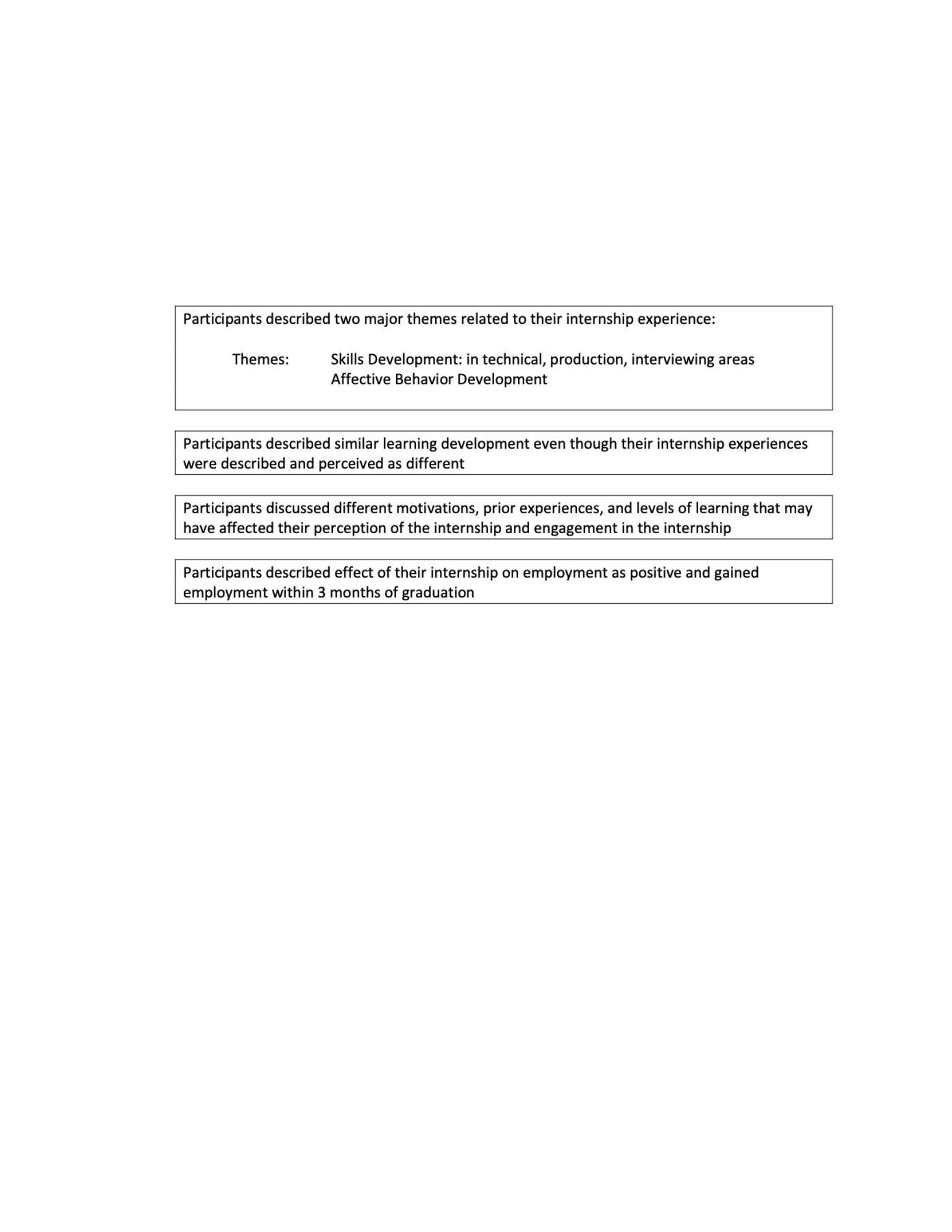
108
made them more valuable to employers by offering employment sooner than the expected
6 months (see Figure 8 below).
Figure 8 Overview of Results
Interpretation of the Findings
Specific research surrounding journalism students and internships was somewhat
scarce. As a result, peer-reviewed findings detailed several areas pertaining to
internships, including journalism programs, internships outside the field, journalism
internships, and journalism employment. Nutefall (2012) and Mitola et al. (2018) stated
that internships provide valuable experience to students in various aspects, including
practical skills learned and built upon foundation characteristics of journalism taught
within the classroom.
Based on each participant's perceived experience within this study, skills
development and affective behavior development were perceived to have occurred even

109
though the descriptions of the participants’ internships were different. Each intern
reported varied perceptions of the skills learned and how the internships were
experienced as well as how the internship contributed to their employment following
graduation. Therefore, it is possible that there is not only one ideal internship situation for
a journalism student. The participants’ experiences and perceptions of the internship were
affected by a result of their lived experiences that they brought to the internship. The
participants’ prior experiences and perceptions interacted in some manner with their
internship experiences thus resulting in the varied perceptions and experiences reported
in the study findings. Figure 9 reflects the relationship between the prior experiences and
perceptions, internship experiences and reported perceptions and also how the conceptual
framework, ELT, is related to the interpretation of the study findings. While not explicitly
stated, interpretations of the interview discussions suggest that prior experiences,
personal motivation, prior learning, and view of the world and field may have impacted
how participants perceived their internship experience. Findings are interpreted and based
on each participant's experience within this study, the practical skills obtained during
each participant's internship, and the application of the four stages of Kolb's ELT.
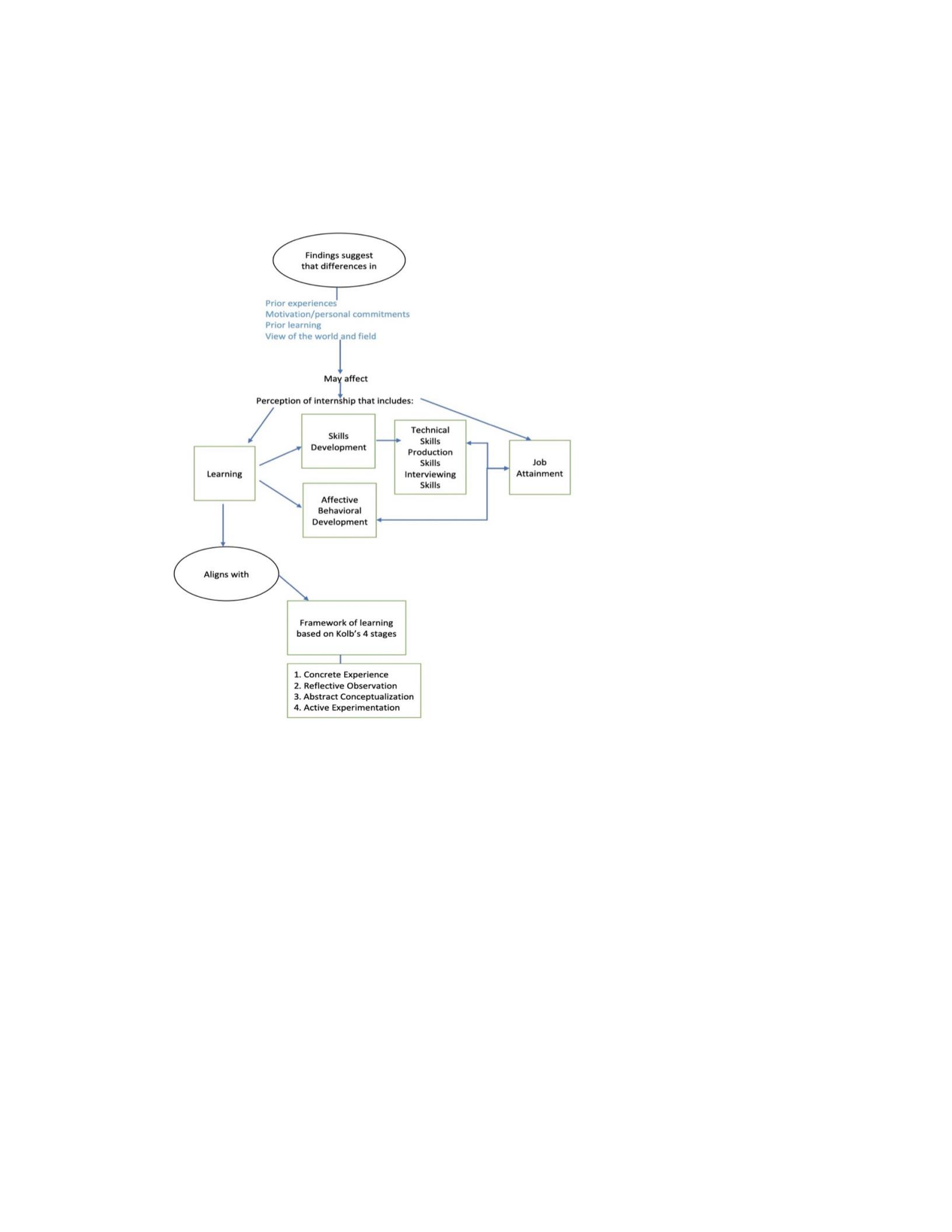
110
Figure 9
Interpretation of Findings
At the initiation of this research study, I hoped to find out if there were specific
characteristics about internships that would help university officials place students into
internships that were the most effective for the journalism degree program. However,
although it appears internships greatly improved the participants' chances of employment
and enhanced the development of skills and affective behavior in the field, the findings of
how participants came to these understandings differed, even when two individuals were
engaged in an internship within the same journalism site. Such differences may suggest
that it is not necessarily the specific characteristics of the internship, but what the

111
students’ individual constructs are related to their perceptions and experiences of the
world that influences their interpretation of the internship and hence findings of the study.
The students’ prior experiences may be at least as important as the type of internship that
the student experiences when examining factors that influence employment and skill
development.
Participants described events and experiences that affected their relationship
interactions in the field and affective behavior development. King and Sweitzer (2014)
stressed the phenomenon of individuals’ learning in internship experiences and described
as the emerging pedagogy of academic internships. These researchers emphasized that,
"Internships can be vehicles for both learning and development in aspects of students'
lives" (p. 43). Thus, documenting the learning process in this study as skills development
and affective behavior development is essential. However, students’ development
involves a change in how students see themselves and make sense of their internship
experience (see Swaner, 2012). Based on these researchers’ findings, interpreting events
and experiences, such as the internship, is critical for the students to make sense of, as
students’ affective behavior development is influenced through these experiences (see
King & Sweitzer, 2014; Swaner, 2012).
In the original assumptions of this study, I argued that graduates gained
employment within 6 months of graduation. However, after conducting this study, I
discovered that each of the 10 participants gained employment in 3 months or less of
graduation. The longest timeframe that it took for a graduate to obtain employment was 3
months, and the shortest timeframe was 2 weeks into the internship. Participants

112
attributed their ability to secure gainful employment within these short periods of time to
the skills and affective behaviors developed during the internship.
Participants described their internship experience as not being just an intern but
being a part of a journalistic team, although this report is consistent with the literature.
For example, Barbarash (2016) argued that journalism students who complete an
internship course often find that sitting in on war room meetings, having their own
equipment for filming and editing, and being allowed to create their own news stories
based on events of the day under the direction of a professional journalist made them feel
like they were a professional and part of the newsroom team. Interns reported that their
experiences contributed to the development of their diligence, time management, and
work ethics. Unlike the experience of the classroom, the unique internship environment
may allow students to develop skills in affective domains as well as the technical skills
domain.
Participants stated that they were able to process their personal experiences
through the internship assignment that would allow them to address any future potential
reoccurrences of unique experiences more effectively in the journalism setting. Some
participants were faced with catastrophic experiences, although others were exposed to
aspects of broadcasting that they found less familiar. Some interns reported that being
taught obsolete journalistic skills in the university classroom created some obstacles for
them in the internship that included modifying what they had been taught at university
and adjusting their learning to real-life experiences.

113
Limitations of the Study
The major limitation for this study, which is common to qualitative research, is
that (a) the findings cannot be generalized to larger populations, (b) there was a small
sample size, and (c) the possibility of bias by the researcher (Lodico, et al., 2010). I
recruited a purposeful sample of graduates who had obtained employment within 6
months of graduating in the field of journalism or a related field. I included female and
male participants from various regions of the United States.
I had no previous ties to participants chosen for the study, nor had I been a student
at any of the universities that the participants attended. I did not know any of the
participants in the study prior to conducting the study. I have had experience working in
the field of journalism for over 10 years, continue to work as a freelance journalist, and
currently work as a tenured professor in media communications with undergraduate
students. Due to my connection to the field of journalism, I took precautions to minimize
bias. Lodico et al. (2010) notes that researchers should reflect on their values and prior
experiences as a qualitative researcher. Therefore, I recorded my thoughts in a reflective
journal during and after the interview process. I put my own beliefs and judgements aside
prior to the interview and consciously focused on my role as the researcher to support
integrity of the data (see Merriam & Grenier, 2019). I followed the same procedure and
protocol for each interview thereby systematizing the data collection process and
minimizing the opportunity for bias or error.
As with any qualitative study, there is the possibility of bias regarding the
research question, data collection, or location findings. To reduce this limitation, I

114
conducted individual one-on-one, semistructured interviews using a secure Internet
connection, and Zoom video online software. I aligned all the interview questions to the
research question focusing on the realm of participants’ internships related to their
perceptions and experiences and how this may have influenced their ability to secure
employment after graduating. Therefore, at no time was a bias to be found during the
interviews or data collection. As for location findings, I was able to keep bias at a
minimum due to recruiting participants via Facebook and LinkedIn, and examining the
nature of their degree, and their employment status.
Recommendations
There are few qualitative studies related to journalism internships in the literature.
This study added to the literature base regarding internships and gainful employment for
graduates in the field of journalism. Based on the peer-reviewed publications and
research conducted within the field of journalism and the methodological approach of this
study, it appears that this study may be the first of its kind. Therefore, this study added to
the literature base regarding the graduates’ perceptions of internships and how they
influence gainful employment. Also, the study findings emerged that participants
perceived they obtained specific skill sets through the internship experience, moreover
participants perceived the internship contributed to their gainful employment within a
short timeframe of graduating, if not before graduation. The scarcity of literature on
internships in the journalism degree program warrants further research in this field.
Further research should be conducted regarding how university officials may include the
internship in the journalism degree program and how students develop the technical and

115
affective skills they need to be successful in the field of journalism. Overall, additional
research is needed on the value of the internship for the field of journalism and how best
to structure the curriculum for students’ skill development and future success. Additional
research could be obtained regarding the skills learned at various internship programs and
how to structure the internship for the student to develop both the affective and technical
skills needed for their careers. The level of skills developed, and type of skills developed
in various newsroom internships, could be more deeply explored, and compared to
television network internships, and also to local news internships. Other
recommendations may include comparing journalism programs that require an internship
versus those that offer interning as an elective. Additional studies may include examining
internships revolving around reporters versus producers or one university journalism
program versus another in which both hold high percentage journalism graduation rates
based on internship. Case study research of effective journalism programs could also be
studied to discover how the best programs, for the various aspects of the field of
journalism, develop their students to be prepared for the field of journalism following
graduation. Quantitative studies could be conducted to examine the variables of
internships and employment, or internships and the development of affective and
technical skills. In addition, findings from this study suggest that internships are effective
in both learning and development and positively affect employment.
Implications
The purpose of the study that was to investigate the graduates’ perceptions and
experiences of how internships might affect journalism majors’ gaining employment in

116
the field within 6 months of graduation. This study contributed to the gap in practice
between the study of journalism and the actual employment of new journalism graduates.
This study filled an overall gap in the literature of developing a deeper understanding of
the phenomenon of how graduates in the field of journalism perceived an internship
affected obtaining gainful employment within 6 months of graduation related to the gap
in the literature that indicated some graduates do not demonstrate effective skills on the
job after graduating with a degree in the field of journalism although literature suggests
that internships promote skills and prepare the journalism graduate for gainful
employment. Using Kolb’s ELT, the four stages of learning served to support the
interpretation of the study themes. By using the phenomenographical approach, I
examined the data in relation to the aspects, experiences, and perceptions each participant
expressed in order to more deeply understand the role of the internship, skills developed,
and influence of perceptions and experiences the participant brings with them to the
internship environment.
The findings of this study could be important for universities to make informed
decisions about whether to require internships for their journalism majors and how to
prepare their students for the internship. Understanding the value and effective structures
of internships by university officials, could result in possible decisions regarding the
programs and how they are structured. Consequently, these changes could result in a
positive social impact on prospective students in the field of journalism as they could
learn new skills and affective behaviors that would make it easier to obtain employment
upon graduation. Ultimately, if decision-makers consider the findings of this study and

117
were to incorporate internships into the university degree programs for journalism
students, the job opportunities and career prospects for students could be positively
affected by better preparing students in the field of journalism for the job market upon
graduation. Students who quickly find jobs in their field upon graduation, are able to
decrease the financial burden on the student and their families. Launching internships
into university degree programs could strengthen the graduation rate and possibly even
student retention. Researchers maintain that programs that support student engagement
lead to less attrition and increase student attrition (Saltikoff, 2017). The completion of
each participant's internship resulted in additional positive social change for the
individual and within the realms of economics, personally, and society.
With the experience of having completed an internship, the graduates may gain a
stronger understanding of up-to-date industry practices, including writing, producing, in-
field reporting, community outreach, and technical skills that would allow graduates to
enter the field better prepared and shorten onboarding time and reduce the time and
resources used to onboard new employees. Graduates could become more quickly
adapted to their surroundings and more productive members of a team. Graduates who
enter the field with real-life experience gained from an internship before employment
display a stronger understanding of practical skills, communication skills, community
skills, and policies relating to local, state, and federal guidelines.
Regarding positive social change within universities, it may be possible that
having students complete a journalism internship would allow the university officials to
graduate journalism students with a more highly competitive degree resulting in

118
improved placements for graduates. Concerning university policy, if an internship were
required, the strengthened job placements for graduates could not only increase the
number of journalists working in the field but may support university officials to
integrate instruction on most up-to-date practices. Students who possess cutting-edge
practices due to an internship have a deeper knowledge of expectations as well as areas of
improvement within their technical and affective skills.
Possibly of equal importance to the knowledge and skills learned during an
internship is a greater understanding of affective factors that individuals could bring to
themselves, and to the field of journalism. University officials, if they were to consider
the findings of this study, could structure programs for journalism to consciously develop
experiences, such as internships, that result in strengthening student's engagement and
learning. If experiences, sociocultural beliefs, and work ethics could be further
understood and described, university officials could strengthen the learning experiences
for university students by developing curriculum and unique internship opportunities for
students
Conclusion
Journalism today is no longer bound by the traditional term of studying only
newspapers, magazines, television, and radio (Clair, 2015). Furthermore, graduates from
schools not requiring internships find it difficult to obtain employment in the field
without the right combination of knowledge and skills employers desire (Halman, 2016).
Vos and Singer (2016) argued that students have difficulty obtaining employment post-
graduation with only a degree and no practical experience.

