


ESD in brief Sustainable development
Sustainable development is recognized as an issue of global concern. Ban
Kimoon, Secretary-General of the United Nations, sees it as “the imperative of the
twentyfirst century, one that encompasses: the saving of the planet, the lifting of people
out of poverty, and the advancing of economic growth” (Firth & Smith, 2013, p. 169).
This study focuses on education as a chief instrument for sustainable development. Thus,
Education for Sustainable Development (ESD) is an evolving field in education that
requires a lot of attention from both educators as well as policymakers.
ESD equally addresses all three pillars of sustainable development. These are
society, environment and economy, with culture as a fourth and vital dimension
(UNESCO, 2015). The significance of ESD is to inform citizens, nationwide, on ways to
preserve their environment within their respective contexts and economic statuses
(Contini & Pascual, 2010). ESD is a holistic and a broad field. It “encompasses
environmental education but sets it in the broader context of socio-cultural factors, in
addition to the socio-political issues of equity, poverty, democracy and quality of life”
(Venkataraman, 2009, p.8). This means that ESD more profoundly examines different
societal complexities and different educational settings before the implementation of any
initiatives.
1.2 Statement of the Problem

According to UNDP Human Development Report 2014, Central Agency for
Public Mobilization and Statistics – CAPMAS, Egypt is confronted with many challenges
regarding its growing population. The estimated population growth rate is 1.6%. This
means that the total population is expected to exceed 100 million by 2020 (UNDP, 2014).
This bursting population poses a great challenge given the country’s limited resources.
Poverty, governance, and environment are the challenges mainly facing Egypt in recent
years (UNDP, 2014). These challenges are directly interconnected to the segments of
sustainable development.
There are 26.3% of Egyptians who live below the poverty line. This number is not
consistent with the country’s economic growth (UNDP, 2014). This reflects that there are
large disparities and inequalities in the population, especially between rural and urban
areas (UNDP, 2014). The quality of public services, including public education, is of very
poor quality (UNDP, 2014). In a competitive job market, youth unemployment rates
reached 90% of the total unemployment rate.
Regarding the governance challenges facing Egypt, UNDP (2014) factored in the
major political instability after the January 25th revolution. The UNDP (2014) highlighted
the marginal role of civil society and its low participation in development. Given the
weak political parties and low citizen participation, the citizens’ voice is weak. It is not
influential in shaping the country’s development priorities.. In addition, there are few
measures for monitoring the outcomes of development.
Concerning the environment challenges, UNDP (2014) stated that given the high
population and limited water resources, Egypt is fronting water scarcity. There is a major
alarm on clean water accessibility and solid waste management. The sanitation systems in

Egypt serve only 70% of the urban population, and only 4% in rural Egypt (UNDP,
2014). In addition, Egypt’s high consumption rates indicate a rapid depletion of oil and
gas resources. Plus, the country has continuous smog episodes as a result of air pollution.
Finally, climate change related issues that indicate loss of biodiversity (UNDP, 2014).
1.3 Purpose of the Study
This research study focuses on education as a major influential tool that can
promote sustainable developments in Egypt. ESD ought to be addressed as an essential
discipline in the Egyptian education system, in order to enlighten students on how the
three segments of sustainable development are interdependent on each other. Hence,
students as active members of the community would realize their social responsibility
towards sustainability. Consequently, generating younger citizens who are in continuous
pursue for sustainable societies.
The main objective of this research is to examine current initiatives for
implementing ESD in Egyptian schools and accordingly offers recommendations. The
researcher views the civil society elements, as major players in supporting or resisting
development initiatives. One should focus on the human capital that needs to be actively
engaged in order to transform a nation facing the above challenges. This study
emphasizes the need for stronger civil society participation and a paradigm shift to
achieve effective and sustainable ESD structures, which is necessary for fruitful
implementations.
There are few sustainable communities in Egypt, like Sekem (one of the major
stakeholders involved in this research) and Basaisa village, which are self-sustained

communities. These communities started with the local inhabitants as the transformers of
their own communities. They created their own model to recycle and use all available
resources, such as solar panels to preserve solar energy. El Basaisa community in
AlSharkiya, as described in Arafa (2002), managed to start the “nucleus” of sustainable
communities. Arafa (2002) further explained how Basaisa practices have been successful
and have led to an exceptional increase in literacy and in the living conditions of the
inhabitants of the village. On a larger scale, Sekem development (Sekem, 2015) started in
1977 and their community expanded to include: organic agriculture, community school,
medical care, and Sekem business companies (pharmaceuticals, food products, organic
cotton clothing). The main reason behind their success is the engaging of the surrounding
community and considering them as their top priority. So a continuous dialogue was
formed that offered equal opportunity for all participants to be actively engaged in their
own community.
1.4 Study Context: El-Warraq Background
El-Warraq is an informal area located in the north of Giza governorate, with a
strategic location directly overlooking the River Nile. El-Warraq area was originally an
agricultural land, but it experienced a rapid increase in urbanization, where people from
different parts of Egypt settled and built informal houses around the area. El-Warraq
consists of six smaller areas; namely Warraq El-Arab, Warraq El-Hadar, Warraq Island,
Mohamed Island, Tanash and Ezbet Al-Mofty. PDP’s target area is a part of Warraq El-
Hadar (Environics, 2014).
El-Warraq has a total population of approximately one million inhabitants. The
population is remarkably increasing due to the high illiteracy among the population as

well as religious misconceptions on birth control (Environics, 2014). In addition, there
are high dropout rates among school children for various reasons. Yet Environics (2014)
highlighted a thought-provoking reason for dropouts, which is that many children leave
school to work as ‘tok-tok’ (rickshaw) drivers, due to the relatively high pay it generates.
Overall, there is a high unemployment rate in the area and poor quality of
education. In studying education in El-Warraq area, Environics (2014) pointed out the
high density of students in classes (approximately 75 students/class), which is caused by
the high population. In addition, the number of classes at schools is insufficient.
Interestingly, Environics (2014) stated that the Education Department, that does not have
storage places, uses some classrooms in each school for storage of their files and
archives. Schools resorted to running two shifts to overcome the shortage of classrooms
that causes high density.
Environics (2014) also highlighted that the local NGOs in El-Warraq have very
limited previous experiences in physical (urban) upgrading, since they are registered and
licensed by the Ministry of Social Affairs to act as charities. The NGOs depend on
financial aid and donations, to provide medical services (using old equipment), or give
private tutoring lessons at low cost to the surrounding community. In addition, most of
the mosques and churches in the area are parts of the civil society, they play a social role
in the community by offering health and education services (Environics, 2014).
Identifying active stakeholders is a crucial factor to be considered for the success
of the implementation of any project. As Environics (2014) pointed out, the main
stakeholders in any area are the Local Authorities (LA), the civil society, and the

community itself. Due to the power of authority, as they have in-depth knowledge of the
community’s priorities and needs, human resources, some facilities, and departments that
handle legal and accounting issues. The LAs are normally the strongest candidates to
receive the financial aid grants. Yet, Environics (2014) stated that in the case of
ElWarraq, LAs had weaknesses such as the centralized decision-making, bureaucracy,
and the financial constraints, and most importantly their human resources lack
community trust, and need capacity building. So, LAs have problems writing grant
proposals professionally, also due to poor English skills (Environics, 2014). Thus, the
LAs asked PDP for support.
El-Warraq community was then a participant in the Participatory Needs
Assessment, and as described by Environics (2014), the most important stakeholder is the
community that is undertaking the change. The poor quality of education was ranked as
their highest concern; unemployment came second, followed by poor waste management
that results in garbage accumulation in the streets (Environics, 2014). In addition, male
respondents raised concerns regarding increasing drug abuse and lack of security in the
area.
The next chapter discourses the theoretical framework of the study, where ESD
was understood to fit with constructivist theorists; Freire and Vygotsky. In addition, a
short history of ESD was revised, as a synopsis of how the field of ESD began and its
development since 1972. Later, civil society was previewed, as the role of civil society
was perceived as fundamental for sustainable community interventions. Then examples of
ESD interventions in UK and Brazil were examined. UK portrayed a top-bottom reform
to incorporate ESD into its formal education. While Brazil adopted a bottom-top reform

that involved partnerships and formed active social groups within the community.
Moreover, an outline of the origins of ESD in Egypt was addressed in order to understand
the roots of this study.

2. Literature Review
2.1 Theoretical Framework
This study is based on one of the very influential pedagogues in education, Paulo
Freire, the author of Pedagogy of the Oppressed (1968). As reflected in Freire’s (1970)
work, his upbringing in a poor community in Brazil caused him to observe and rethink
what he called the “culture of silence”. He suggested that oppressed societies tend to
share a silent dialogue that they cannot verbalize; yet they realize as their own, once they
relate to it. He pointed out that this culture was a product of economic, social and political
oppression. Freire (1970) further clarified how he realized that education is one of the
major instruments used by oppressive regimes to reproduce this culture. He stressed that
this type of culture mandated certain communities to adapt to oppression rather than
change. Torres & Noguera (2008) amplified the implications of Freire’s work in
highlighting the role of education as a democratic instrument not an oppressive one.
Freire (1970) discussed that through education people need to ignite a dialogue to
realize that they are “creators of their culture”. In this way citizens are given a sense of
ownership of their surroundings, which they have the ability to transform. Freire (1970)
further emphasized the importance of the power that comes from within the weakness of
the oppressed. He suggests that change is a mutual process shared between the strong
elite and the weak poor. He highlighted that education facilitates deep reflection that he
believes will automatically lead to action (Freire, 1970).
However, educational reform in a formal educational system requires political
will. But, in societies where education was used as an instrument of propagating

oppression, comes the importance of informal educational projects that can be carried out
with the oppressed to promote change (bottom-top approach). Nevertheless, the mass
media, propaganda, management are all instruments that keep reinforcing the poor’s lack
of confidence and self-efficacy, enhancing their feeling of powerlessness to change. Yet,
these people are the ones who need to be enlightened, through education, to start the
thread for real change (Freire, 1970).
Freire (1970) believed, from an educational perspective, that teachers and students
are responsible for mutually and critically analyzing their contexts, in order to re-create it
in a better form. But, when education is all about filling the students with content without
relating it to their own realities, it becomes an unusable type of education. Teachers
narrate information to students and expect them to store it for later. This is the “banking”
notion of education, which is typically teacher-centered. While, in an interactive
education system, where both teachers and students are co-learners, students create their
own world instead of adapting to their existing reality (Freire, 1970). This was also
portrayed in Torres & Noguera (2008) where the significance of language and developing
narratives of one’s own reality is crucial for education to happen.
Freire (1970) proposed the problem-posing method, so teachers and students get
the chance to analyze and reflect on their understandings through dialogue. The outcome
of this learning method is a critical analysis for the students’ realities so they feel
connected to their contexts and have the authority to change them. In this way, Torres &
Noguera (2008) inferred that individuals become committed to acts of positive social
transformations.

Freire’s (1970) proposed model of education rejected imposing knowledge in the
banking style model. He argued that many educational initiatives failed because they
were imposing knowledge. The type of knowledge that people cannot use to relate to
their own realities. He described it as ‘preaching in the desert’.
His action plan to start intervening in a community is for intervening educators to
gather a group of people in the area and introduce them to the reasons for their presence,
and how they plan to work. If the community likes it and agrees to the project, educators
call for volunteers to assist them in collecting background data on the area. Followed by a
“decoding” stage, where educators observe and acquaint themselves with the inhabitants
by having informal conversations. After each visit, the educators write a report to evaluate
and re-evaluate their project. In addition, the community representatives would also
participate in all the activities done by the investigating team of educators. In this way,
the project continually meets the community needs (Freire, 1970).
Then comes the “codification” phase, where educators come up with codes of the
challenges facing the community. These codes become themes for critical reflection.
Throughout the program, as a dialogue is formed, more themes can be added as needed.
But there are types of themes that might not necessarily evolve from the community but
are important ones, Freire referred to them as “hinged themes”. The next phase is
identifying and deciding on the best methods of addressing the themes (Freire, 1970).
In conclusion, Freire’s pedagogy of the oppressed is a search for the dialogue
within the oppressed, which enables them to become masters of their own thinking and
consciously transform their communities.

Similarly, social constructivist theorists like Vygotsky (1978) verified the
importance of the internal communication that occurs as an essential element of
development. Vygotsky (1978) emphasized the external dynamics that lead to that
internal dialogue which precedes development. According to him, the way knowledge is
constructed is related to the language acquired from external sources. Followed by a
process of forming an individual’s internal dialogue; an internal speech that constructs
knowledge (Vygotsky, 1978).
In this way, Freire (1970) and Vygotsky (1978) agreed that education occurs when
the individual initiates an internal dialogue that constructs or reconstructs the person’s
mindset. Freire (1970) focused on the oppressed, which is reflected in the underprivileged
community of El-Warraq. As Freire (1970) explained how knowledge need to originate
from the oppressed and not be imposed on them. This indicates the vital demand for
highly participating communities; who can assess and prioritize what their needs are, and
eventually find solutions and ways to transform.
ESD was perceived as a holistic discipline as it integrates many aspects of
societies' main problems. Thus, ESD could be clearly comprehended to initiate this
internal dialogue, within communities, to transform the three segments of sustainable
development (Society, Economy, Environment). Especially, if the instructional methods
practiced, to deliver ESD, were highly engaging. As highlighted by Vygotsky (1978),
highlighted the importance of the type of language used to address individuals within
their Zone of Proximal Development (ZPD). The ZPD is the zone where people can learn
and develop. Below the person’s ZPD, the acquired knowledge is too easy and no
learning happens. Above their ZPD, the acquired knowledge is very difficult and still no

learning happens. Thus it’s crucial to identify the areas where communities are ready to
develop.
ESD could be integrated to fit each one’s ZPD, and eventually lead to the required
internal dialogue for development. In the broad sense, ESD relates to almost every aspect
of the lives of Egyptians (society, environment and economy). Thus, how can it be
integrated in a curriculum that should also tackle multi-disciplines and relate them to each
other? One of the aims of ESD is to trigger students to reflect on their current attitudes,
and have better vision of their future and the world around them.
Golding (2009) emphasized the importance of an interdisciplinary approach to
learning; where students are encouraged to relate all disciplines together to make a better
sense of their world. The previously proposed model of STEM education, that integrated
Science, Technology, Engineering and Mathematics, now changed to STE2AM, where an
extra ‘E’ is for ESD, and ‘A’ for Art. As discussed in El-Deghaidy (2014), students
studying STE2AM disciplines are expected to contribute to greening their surroundings
and to think more actively towards greener lifestyles. Students need to acquire the skill to
put all STE2AM (Science, Technology, Engineering, ESD, Art and Mathematics)
disciplines together, for their behaviors and attitudes to positively change. Societal
transformation really starts when students can build a desire for continuous learning, and
alter from brain drain to brain circulation.
2.2 History of ESD
The notion of sustainable development began to take shape in 1972 with the
United Nations Conference on the Human Environment, held in Sweden. The conference

was the first major assembly to address international environmental concerns (Kruljac,
2012). Followed that, the Brundtland Report was published in 1987, and it initiated a
global dialogue of how to promote ESD as a main field that combines environmental
education and sustainable development (Bourn, 2008). It was not until twenty years later,
in 1992, that Mohan Munasinghe unveiled the ‘sustainable development triangle’ at the
United Nations Conference on Environment and Development in Rio de Janeiro, Brazil
(Munasinghe, 1992). Also known as the Earth Summit, this conference launched the
international comprehensive plan, Agenda 21, the blueprint for sustainability. By 2002,
the idea of sustainable development had gained momentum, as evidenced by the title of
that year’s United Nations (UN) environmental meeting: The World Summit on
Sustainable Development (Kruljac, 2012).
Subsequently the field of ESD grew as an international discipline that needs to be
promoted on a global level. In the recent years, the role of the United Nations (2010) was
to gadget for the United Nations Decade for Education for Sustainable Development
(DESD), with the United Nations Educational, Scientific, and Cultural Organization
(UNESCO) as the lead agency of this Decade. All nations were encouraged to launch
their own ESD initiatives (Contini & Pascual, 2010). The DESD started in 2005 with four
main objectives as stated in the UNESCO (2009) on its Policy Dialogue 3:
1. Facilitate networking, linkages, exchange and interactions among stakeholders in ESD.
2. Foster an increased quality of teaching and learning in ESD.
3. Help countries make progress towards the Millennium Development Goals through
ESD efforts.

4. Provide countries with new opportunities to incorporate ESD into educational reform
efforts.
The UNESCO (2009) advocates establishing a “strategy as a practical process
that is learning centered”. This helps countries to focus on how strategy actually works,
and what changing knowledge, skills and action competences are needed throughout the
process. So it becomes more about a profound transformation in societies through
effective learning strategies. ESD is a lifelong learning process and needs to be integrated
into the entire educational system, as well as training and public awareness systems to
build capacity for sustainable development (UNESCO, 2009).
As a result of the international efforts to promote sustainable development, Egypt
has developed its own Sustainable Development Strategy (SDS) with a vision for 2030.
As highlighted by El-Megharbel (2015), the main goal for Egypt’s SDS is to be one of the
top 30 countries in: Economy, Competitive Market, Human Capital, Anti-corruption and
Happy Citizen. This vision is based on improving the following pillars: Education and
Training, Knowledge, Innovation and Scientific Research, Heath, Economy Culture,
Social Justice, Transparency and Efficiency of Governmental Institutions, Energy,
Foreign Policy and National Security, Domestic Policy, Urban Development and
Environment (El-Megharbel, 2015).
Looking in depth at the education section in Egypt’s SDS, the strategy included
general goals on how to improve basic and higher education, and Key Performance
Indicators (KPI’s) of how these goals will be measured. However, there was no specific
indication of ESD or how these goals will be implemented on the ground (MOP, 2015).

This is a crucial step in sustainable development; how will people on the ground perceive
and continue to implement ESD as part of their everyday lives.
It is important to highlight the major role of politics in promoting ESD as
discussed in Gough & Scott (2006), who further explained various perspectives on the
interplay between politics, education and sustainable development. As mentioned in
Gough & Scott (2006) some of these perspectives are:
• The Technocratic perspective, this perspective focuses on existing political and
education systems, and assigns experts to train and educate people on sustainable
development. This perspective exhibits confidence in the human beings’ ability to
develop scientific and technological solutions to environmental problems.
However, criticisms to this perspective argue that technocrats are “locked into the
dominant social paradigm and cannot see that, in relation to sustainable
development, there are political and ideological issues that must be addressed”
(Gouth & Scott, 2006, p. 279).
• The Paradigm Shift perspective focuses on previous societal practices that require
a paradigm shift; a ‘revolution’ in the society’s everyday actions. The argument
put forward is that a further social paradigm shift is essential as science and
technology failed to solve problems of poverty, starvation, and environmental
degradation.
• The Pragmatic perspective focuses on the society’s need to act here and now, so
action plans are to be implemented first, in an optimistic manner, to later influence
policymakers into endorsing ESD in decision-making strategies.

• Globalization perspective view education and sustainable development within a
wider political discourse, where education can make a contribution to equip
learners and build their capacity to practice sustainable ways within the global
arena.
Moreover, Calley (2010) confirmed the complexity of preparing intervention
programs to develop communities. Intervention programs that aim for development occur
on three steps: program design, program implementation and program evaluation (Calley,
2010). Most development programs are not sustainable because they were based on fixed
plans for the program implementation only, which is short term. But, identifying the
community priorities, engaging the available resources and establishing channels for
continuous communication are essential for sustainable change (Calley, 2010).
Furthermore, Calley (2010) highlighted the importance of having flexible programs that
embrace continuous evaluation and redesign within the program implementation phase.
This flexibility leads to better-fit development programs, for respective communities, as it
allows continuous improvement during the program implementation. The implementation
plan is not fixed; it can be readjusted according to the community’s evolving
requirements. This describes a large segment of the role of civil society, who should be
working hand in hand with the people, not the government, to develop their community.
The role of civil society became nonnegotiable for sustainable community developments
as discussed in the next section.
2.3 Civil Society
“Today there is almost no field devoted to the study of social or political change,
be it sociology, political science, history or even economics, which omits mention of the

importance of civil society” (Dalton, 2014, p. 41). Later this study touches upon the
Brazilian experience, which was very inspiring in how they formed community
partnerships and engaged civil society to manage their solid waste.
In the 18th and 19th centuries, in context of the rapid development of capitalism
in Britain and Europe, the term civil society started to emerge. Former UN Secretary
General Kofi Annan categorized civil society as ‘the new superpower’ (UN 2003). Civil
society organizations are non-governmental and non-profitable entities, and such
organizations are sometimes called the ‘third sector’ (Dalton, 2014).
Dalton (2014) described the work of the German philosopher G.W.F. Hegel (1770
-1831) as very influential in positioning civil society. The ‘Hegelian’ perception of the
role of civil society organizations is to ‘mediate’ between public and private sectors.
Examples of these organizations include churches, labor unions, political parties, social
movements, and NGOs (Dalton, 2014). The Hegelian explanation suggests that civil
society should have a civilizing influence, “that it encourages trust and reciprocity that in
turn supports citizen engagement and by extension the functioning of democratic states”
(Dalton, 2014, p. 45). In addition, Dalton (2014) explained the Lockean view of civil
society that emphasized its role as a counterbalance to authoritarian states and thus a
driver of regime change.
However, there are difficulties associated with transmitting western civil society
organizations to non-western countries, like Egypt. Dalton (2014) highlighted the fact that
civil society is confined to western societies, which makes it very limited in describing
non-western societies. Chatterjee (2006) claimed that, in most of the world, “Civil society

as an ideal continues to energize an interventionist political project, but as an actually
existing form it is demographically limited” (Chatterjee 2006, p. 39). For Sen (2010),
civil society is a neo-colonial project that serves the interest of the elites, since civil
society can be characterized by exclusivity, inequality, violence, favoritism and
corruption.
Williams (2009) asserted that neoliberals promote global guidelines, which do not
particularly fit all societies, where globalization moves from the center to the periphery.
In terms of education, international agencies that form a strong sector of civil society in
the Middle East, can act as “receptor sites for transnational ideas, promoting and diffusing
new ideas in education” (Ginsburg & Megahed, 2008, p.2).
Moreover, Dalton (2014) argued that civil society also includes secretive or
ritualistic groups that can generate “bonding rather than bridging” social capital; as it
strengthens the links between people with the same background. Which defies the role of
civil society organizations as mediator between the different sectors in the community.
Furthermore, as Hauss (2003) clarified that bonding social capital strengthens
predisposed beliefs including prejudices, forming circles of closed communities with
similar discriminations rather than forming peaceful communities.
Another major difficulty regarding civil society is how autonomous such
organizations need to be, as they should be separate entities from the state (Dalton, 2014).
However, in practice, separation between the state and civil society, in practice, hardly
exists. Especially in the developing world, the state has governed civil society in and it
has not been as much separated from the state as in the West (Cotton, 1992). For example

in the case of Japan, Schwartz (2003) argues that “the Japanese state plays an active role
in targeting and monitoring welfare corporations that could well operate as part of civil
society, but which instead ended up serving as non-profit ‘subcontractors’ for the state”
(Schwartz 2003, p. 13). Chandhoke (2002) further explained the consequences of civil
society in the developing countries, which created a ‘fake’ civil society sponsored by the
government. In that way such organizations have a way to gain access to development aid
and serve different agendas (Dalton, 2014). In chapter 4, the role of the studied local
NGO was identified from the data collected.
In the next section, the literature review touched upon ESD in the UK and Brazil.
The UK was one of the leading countries in promoting ESD, so it was worth
contemplating its strategies for the implementation of its initiatives; to learn from their
journey in the field of ESD. Current research studies testing the level of sustainability
literacy in the UK suggested that students already have a high level of awareness of
sustainable development issues, as stated in the guidance published by the HEA & QAA
(2014). Brazil, on the other hand, is a developing country with a bursting population and
lower socioeconomic status, which is similar to the current situation in Egypt. Egypt is
new in the field of ESD, as discussed later in section 2.5.
2.4 Comparative Dimension
2.4.1 ESD in the UK
The field of Education for Sustainable Development started off as a chief concern
in the UK as many other industrialized countries; how to educate citizens to preserve
resources, and practice efficient ways of living that do not negatively influence future
generations. Recommendations were made at the United Nations Rio Summit on

Sustainable Development in 1992; and the same year the UK implemented strict
measures of integrating ESD in their national curriculum (Bourn, 2008). In the UK
collaboration started with two entities from environmental and development education,
the Council for Environmental Education (CEE) and the Development Education
Association (DEA). CEE and DEA agreed on a Forum on Education for Sustainability
from 1993 until 1997 and continued until 2005, which were responsible to promote ESD
initiatives in the UK (Bourn, 2008).
As stated by the UNESCO (2009), the UK ESD strategy indicates that a
comprehensive local strategic partnerships, both urban and rural, with local authorities,
learning and skills councils and colleges, plus universities and trade unions work together
towards ESD. The HEA & QAA (2014) described NSDS as a comprehensive, adaptable,
continuous and long-term strategy that helps achieve economic prosperity and social
welfare, while at the same time preserving the environment.
Also the HEA & QAA (2014), highlighted that the UK Sustainable Development
Strategy aims to secure a sustainable, innovative and productive economy, and social
justice through social inclusion, where personal well being and sustainable communities
are priorities. The UK strategy envisions ESD as a core element for all professional
graduates; the guidance described it as ‘sustainability literacy’. Where graduates share
responsibility as stewards, of the environment but also of social justice; as employees,
citizens, parents and mentors of the next generation.
The current research and studies done to test the level of sustainability literacy in
the UK suggests that students already have a high level of awareness of sustainable

development issues. As stated in the guidance published by the HEA & QAA (2014) that
a three-year longitudinal study over 2010, 2011 and 2012, carried out by the National
Union of Students (NUS) and the HEA, with support from Change Agents UK, has
shown that over two-thirds of students surveyed believe that sustainable development
should be covered in their degree courses. In addition, the study reported that 80 per cent
of third year students see universities as key actors in the delivery of skills for sustainable
development.
The United Kingdom had several ESD initiatives. In 1997, the UK government
formed a Sustainable Development Education Panel, which was formed with a body of
experts in the fields of education, environment and development. And this panel acted as
an advisory body to the government (Bourn, 2008).
One of the initiatives on a school level was The Sustainable Schools initiative.
This initiative covered a wide range of ESD issues, the Sustainable Schools initiative
looked at diverse issues like food, drink, energy, water, travel, traffic, purchasing, waste,
buildings and grounds. The Sustainable Schools initiative also provided guidance and a
training pack for school governors, a guide to sustainable school operation, resources for
teachers and an audit tool to help schools evaluate the impact of the initiative (Bourn,
2008). The Sustainable Schools initiative gave a stronger sense of ownership to the
schools’ staff (project beneficiaries); to control and audit their own impact.
Moreover, another initiative in the UK, on a school level, was called the Growing
Schools initiative, which was more focused on students in the countryside. The activities
included in this initiative encouraged schools to use outdoor environments, playground

areas for farming and planting (Bourn, 2008). So the Growing Schools initiative was
appropriate to the context of its implementation location in the countryside.
On the level of higher education, the Green Academy program was launched in
2011 by the Higher Education Academy to assist universities in embedding education for
sustainable development (ESD) into the overall student experience (Martin & Mccoshan,
2014). The Green Academy approach is based on bringing together small teams of staff,
students and academics to meet with ESD team leaders and initiate activities to tackle the
ESD concepts covered in the curriculum. Their focus is on both formal curriculum and
informal curriculum (also called co-curriculum), and the team works on analyzing
methods to embed sustainability into the curriculum and see what worked, what didn’t
work and why (Martin & Mccoshan, 2014).
Along with these initiatives, another element was added to the UK ESD initiatives
in the recent years, which is the global citizenship aspect (Bourn, 2008). This inquires
that ESD become part of global citizenship education. This led to the creation of support
strategies for schools and the production of guidance publications such as Developing a
Global Dimension in the School Curriculum in England. Such publications initiated a
strong network of NGOs that supported ESD as part of global citizenship education.
Another popular publication in the field is the Oxfam’s Framework for Global
Citizenship, which promotes ESD with a key feature of social justice and a global
concern for the environment (Bourn, 2008). According to Bourn (2008) after the UN
decade for ESD that started in 2005, the UK continued its strategies on ESD initiatives by
facilitating networks, communicating with expertise knowledge, and promoting

sustainable development to civil society with funding organizations. The East Midlands
initiative, for example, is one of 35 Regional Centers for Excellence (RCE) on ESD
around the world, and has established a range of projects within the region (Bourn, 2008).
To summarize, the UK exhibits good practice in ESD at all levels and in most
learning contexts across the country. Good teaching, enhanced learner outcomes and a
strong link between the professional standards and the qualifications of teachers
characterize it. Teachers and educators are perceived as part of innovative communities
and they form networks of ESD to communicate and share best practices.
The UK initiatives are criticized, within the UK context, for lacking clarity in
differentiating between Environmental Education and ESD. It is important to highlight
the difference between Environmental education and ESD. Environmental education is
defined as “a well-established discipline, which focuses on humankind’s relationship with
the natural environment and on ways to conserve and preserve it and properly steward its
resources” (Venkataraman, 2009). So the main emphasis of Environmental Education is
only the interaction between human beings and the environment. But continuous
improvements and adjustments are still made within the UK to clarify and unify the
definition of ESD (Bourn, 2008).
Hence the main challenges remain in the terminology of describing ESD, as
Bourn (2008) argued that policymakers are still inclined to deal with ESD only in its
environmental segment, with less stress on its economic and social segments. Therefore,
still more emphasis is needed to work with ESD in terms of social inclusion and social
justice.

Overall, UK incorporated ESD in a top-bottom reform that involved policies and
ministerial decisions to infuse ESD into the formal education system. In the next section,
Brazil adopted ESD within community programs, and partnerships within each
community to implement these programs.
2.4.2 ESD in Brazil
Since the UK demographics are quite different to those of Egypt, it was important
to research ESD in a country more comparable to Egypt. Brazil is the largest country in
South America in population and geographic size; it is also the world’s fifth largest
country and has the world’s sixth largest population. Brazil is divided into 26 states and
one federal district (where Brasilia, the capital city, is located). The population of more
than 210 million people is made up of five major groups: African, European, Middle
Eastern, Asian and indigenous individuals (Watson, 2013). As a society, Brazilians are
divided into two distinct groups: those who have a high standard of living and those who
live in poverty. Increased urbanization, brought about by the strong economic
development, has created unequal wealth distribution (Watson, 2013).
The government of Brazil obligates education for all children ages 7 to 14 years
(first to eighth grade). Brazil’s education system is centralized under the umbrella of a
national department of education; educational programs are divided into fundamental,
intermediate, and higher education levels (Watson, 2013). There are two school networks
in Brazil: (a) government schools; and (b) private schools that can be operating under
religious and nongovernmental agencies (Montoan & Valente, 1998).
As a whole, the Brazilian education system has been characterized by deficiencies

and inequalities for years. As Junior & Sampaio (2010) highlighted that quality education
in Brazil is only offered to students from privileged backgrounds, and education is not
perceived as a human right. As Freire (1968/1986) asserted, “For them to be is to have
and to be the class of the ‘haves’” (p. 44). Thus, there is a poor standard of public
education that is given to disadvantaged students, with low socioeconomic status.
However, as indicated in Kruljac (2012), Brazil was successful in forming public
and private partnerships, to engage the community, to solve many environmental issues
like solid waste management. A Brazilian city called Curitiba was dealing with garbage
littering in rivers, and sewage that increase their levels of pollution. In order to overcome
this problem, Curitiba created waste recycling programs that decreased their waste
tremendously (Kruljac, 2012). As a result, Curitiba was internationally recognized for its
sustainability efforts (Globe Award, 2010; World Habitat Awards).
Iraza’bal (2005) pointed out that there are three major players that contributed to
Curitiba’s sustainability accomplishments. One is the support from the power elite; two is
the media efforts in promoting sustainability programs, and finally, the low-income
populations who actually experienced the worthy outcomes of recycling. Iraza’bal (2005)
also emphasized that economic strength, active governing institutions, and citizens
welfare are directly associated with the power of social groups engaged in the
community. Macedo (2004) further explained that the initiatives implemented in Curitiba
are more effective when “municipal administrators and politicians work together with
planning professionals and there is consensus between technical solutions and the
political will to implement them” (Macedo, 2004, p. 548).

The ‘Waste that is not Waste’ program was an initiative developed in Curitiba to
encourage recycling (Kruljac, 2012). The program had both an infrastructure and
an educational element. The educational element was focused to educate citizens
on the difference between organic and inorganic waste and increase their
awareness of the importance of dividing them (Kruljac, 2012).
Another initiative was the ‘Waste Purchase’ program. Its main aim was to form
waste collection spots for areas that are highly polluted with solid waste. But, before
participating in the program, the identified areas should form a Neighborhood
Association who signs an agreement with the city-governing officials. The role of the
Association is to facilitate the carriage of waste to the collection spots; these spots were
usually near rivers, to prevent waste from entering the water channels. In return, waste
trucks collect the waste bags for bus tokens (Kruljac, 2012).
Later on, as the program progressed, the neighborhood association noticed that
farmers throw away their food surplus, at times of low market demand. So, instead of
exchanging waste with bus tokens, the excess food was purchased from farmers and
given to waste collectors (Kruljac, 2012). In this way, waste collectors were satisfied to
eat fresh food, and farmers also gain some cash from the food surplus that would have
typically been an economic loss.
The Brazilian experience with ESD was an impressive one and it was more
closely related to the Egyptian context. However, Brazil partnerships were mainly within
the local community. The next section reviewed the origins of ESD in Egypt, where ESD

initiatives were implemented by forming partnerships between universities, schools,
ministries, local NGOs and funding agencies.
2.5 Origins of ESD in Egyptian Schools
The EduCamp initiatives (I and II) were among the first attempts to endorse ESD
in the Egyptian public school education. The Center for Sustainable Development (CSD)
at the American University in Cairo (AUC) and SEKEM Development Foundation (one
of the regional centers of excellence (RCE) in Egypt) were involved, through a large
international consortium, in a project entitled “Education for Sustainable Development
beyond the Campus (EduCamp). The main objective of the project was to promote and
implement ESD in Egypt nationwide and within all education levels. EduCamp focused
on pedagogical changes that enable teachers to teach in ways that mirrored the principles
of ESD, to introduce real changes in students’ thought processes, behavior, and values.
The EduCamp I was the first endeavor to disseminate ESD in Egyptian schools, it
was a partnership between the RWTH Aachen University in Germany and the Center for
Sustainable Development in the American University in Cairo, funded by the EU
TEMPUS program with a budget of 1.4 million Euros (Center for Sustainable
Development, 2014). The uniqueness of the EduCamp I lied in the fact that it is “Multi-
Cooperation of Multi-Stakeholders”; this initiative brought together the Ministry of
Education (Public schools) and the Ministry of Higher Education (Universities) to
cooperate together with NGO’s (funds and fieldwork) to promote ESD in Egypt
(Sweilam, 2014).

Sweilam (2014) further clarified that the EduCamp I was implemented on three
consecutive phases. First, a needs analysis/assessment was done to answer certain
questions that helped in customizing School Kits for the respective context. The needs
assessment answered questions concerning: to what extent do the national curricula tackle
ESD? How can the curricula be an ESD instrument? What were the missing skills that
teachers need to deliver ESD concepts? And finally what type of equipment and teaching
methodologies were required for ESD?
As a result the ESD Kits came about as an enrichment to infuse ESD in the
existing national curricula. The second phase was the Training of Teachers (ToT).
Training school teachers on these kits at one of the centers of excellence in education for
sustainable development, and integrating student-focused approaches such as debates,
games, and experiments in the learning process. The Third phase was the pilot
implementations in grades 5 to 9 in public schools across seven different governorates.
These were also associated with the partner universities. This was the beginning of the
EduCamp II, which was the project examined in this study.
EduCamp II was a pilot implementation in two public schools located in an area
in Egypt called El-Warraq. EduCamp II pulled on the achievements of the EduCamp I
project and fostered its materials, where parts of the EduCamp I ESD Kits were
developed and adapted to the local conditions of El-Warraq area. Ginsburg & Megahed
(2008) debated the effectiveness of active learning pedagogies in the Egyptian context,
where there is a lot of struggle with new learning methodologies.
Ginsburg & Megahed (2008) questioned the extent to which teachers’ actually
implement new learning pedagogies inside the classroom. It’s worthy to note that there is

a gap between what teachers know in theory and what teachers practice; teachers in
theory may understand how to be ESD facilitators and how to engage students and so on,
but, in practice, teachers are still confronted with so much resistance from students and
parents. Unfortunately, there are cultural limitations from most parents/caregivers in the
Egyptian society that still perceive exams, grades and certificates as fundamentals.
EduCamp II aimed at the development of a summer educational and recreational
program with hands-on activities that bring key sustainable development concepts to
school students, in the form of games, outdoor activities, group discussion, experiments,
and other student-centered activities. The EduCamp II toolkits were tailor made to the
context of the study (section 1.4).

3. Research Methodology
3.1 Research Framework
The main objective of this research is to examine current initiatives for
implementing ESD in Egyptian schools and accordingly offers recommendations. The
target population in this study is EL-Warraq community, and the sample used for
investigation is one of the public schools of the EduCamp II pilot implementation,
ElSaddat School.
Dependent on a qualitative method of data collection and analysis, where semi
structured interviews (Appendix A) and teachers’ questionnaire (Appendix B) are used for
investigation. In addition, the researcher analyzed the EduCamp II kit, teachers’ program
and the facts finding report generated by the CSD. This study addresses the following
questions:
a) What are the main characteristics of ESD curricula and teachers training
programs?
b) Who are the stakeholders involved in ESD initiatives in Egypt? And what is the
role of each stakeholder?
c) Within El Warraq context, how did the participants in this project perceive the
collaboration and engagement among stakeholders? To what extent did the
community engage in the project's activities?
On the qualitative level, semi structured interviews were conducted with fortyfour
stakeholders involved in the EduCamp II. The stakeholders were representatives from the
Center for Sustainable Development (CSD) in the AUC, Sekem Development

Foundation, Mohby Om-ElKorra (Local NGO), and the GIZ (funding agency).
Furthermore, the researcher also interviewed parents, students and teachers, and a pre and
post implementation teacher’s questionnaire was collected from the schoolteachers.
The researcher analyzed the EduCamp II toolkit and the teachers’ training program.
Plus the data collected from the pre and post teachers’ questionnaire (Appendix B) to
answer question a). Moreover, the interview questions were used to answer question b).
Finally, along with the interviews, the researcher also analyzed the “Facts Finding Report”
produced by the CSD (after they collected three hundred community questionnaires) to
answer question c).
The framework to analyze the data collected in this study was be based on
Emerson, Fretz & Shaw (2011). As Emerson, Fretz & Shaw (2011) acknowledged that a
type of open coding in a qualitative study might focus on the development and formation
of categories from the data. The researcher created an ethnographic text from the
interviews, and then color-coded the common viewpoints. These color-coded texts were
put into sub-themes and later categorized into more general themes. Eventually, a solid
narrative was formed from the interviewees’ data. The researcher had no pre-planned
themes for the analysis. The thematic analysis was constructed from the data collected.
In addition, the interview questions used for data collection were initially piloted during
the researcher’s presence observing the TOT. During this period, the researcher derived
relevant questions that would guide the data collection. The semi-structured interview
questions were mainly designed to gather the participants’ perceptions and overviews on
ESD and its implementation in Egypt. After finalizing the research design and research
instruments, both Arabic and English consent forms were prepared. Then approvals were
obtained from the IRB and CAPMAS.

3.2 Study Participants
The EduCamp II took the available EduCamp I ESD resource kits and selected
activities that were relevant for the challenges of El-Warraq. The project team, from the
AUC and Sekem adapted the existing activities, from the EduCamp I, and added relevant
topics for the El-Warraq area. Stakeholders involved in the EduCamp II were:
• The Center for Sustainable Development (CSD) at AUC aims to enable a dialogue
among relevant stakeholders,
• SEKEM Development Foundation, with its extensive experience in formal and
informal education, will play a significant role in training future trainers to carry
out ESD activities in schools,
• Mohby Om El-kora is the local NGO in El-Warraq, who will play a significant
role to ensure the effective and smooth communication with the local target
groups and stakeholders, in addition to providing community access for the
project team,
• GIZ, Deutsche Gesellschaft für Internationale Zusammenarbeit (GIZ) GmbH; the
GIZ Participatory Development Programme in Urban Areas (PDP) is an
international development cooperation programme working on improving and
developing informal areas in Egypt since 2004.
The first phase of implementation was completed by the CSD, which included the
collection of three hundred questionnaires from the communities surrounding the two
public schools chosen, community questionnaire. A group of experts prepared closeended
questionnaires, to collect data regarding the community’s consumption patterns and
knowledge of alternative ways to preserve their surrounding resources. In order to

facilitate the data collection at this phase, volunteers from the local NGO were trained
and appointed to conduct the open-ended questionnaires from the surrounding community
randomly.
The second phase of implementation included the ToT; training of teachers. Also
run by the CSD and trainers from Sekem development. Twenty teachers, from El-Saddat
School, went through a one-week training program to empower their teaching pedagogies
and help them focus on ESD issues. These trained teachers will then gadget what they
learned in the summer pilot implementation with school students, under the supervision
of the Sekem trainers. Finally, the third phase is a three-week pilot implementation, of the
new ESD kit, in two public schools in El-Warraq.
The researcher was present at all three phases as an observer to outline the
interview questions in Appendix A and the teachers’ questionnaire in Appendix B. The
researcher used the facts finding report, generated by the CSD after the first phase, for
data analysis. Moreover, the researcher obtained a copy of the teachers’ training program
and the EduCamp II toolkit for data analysis.
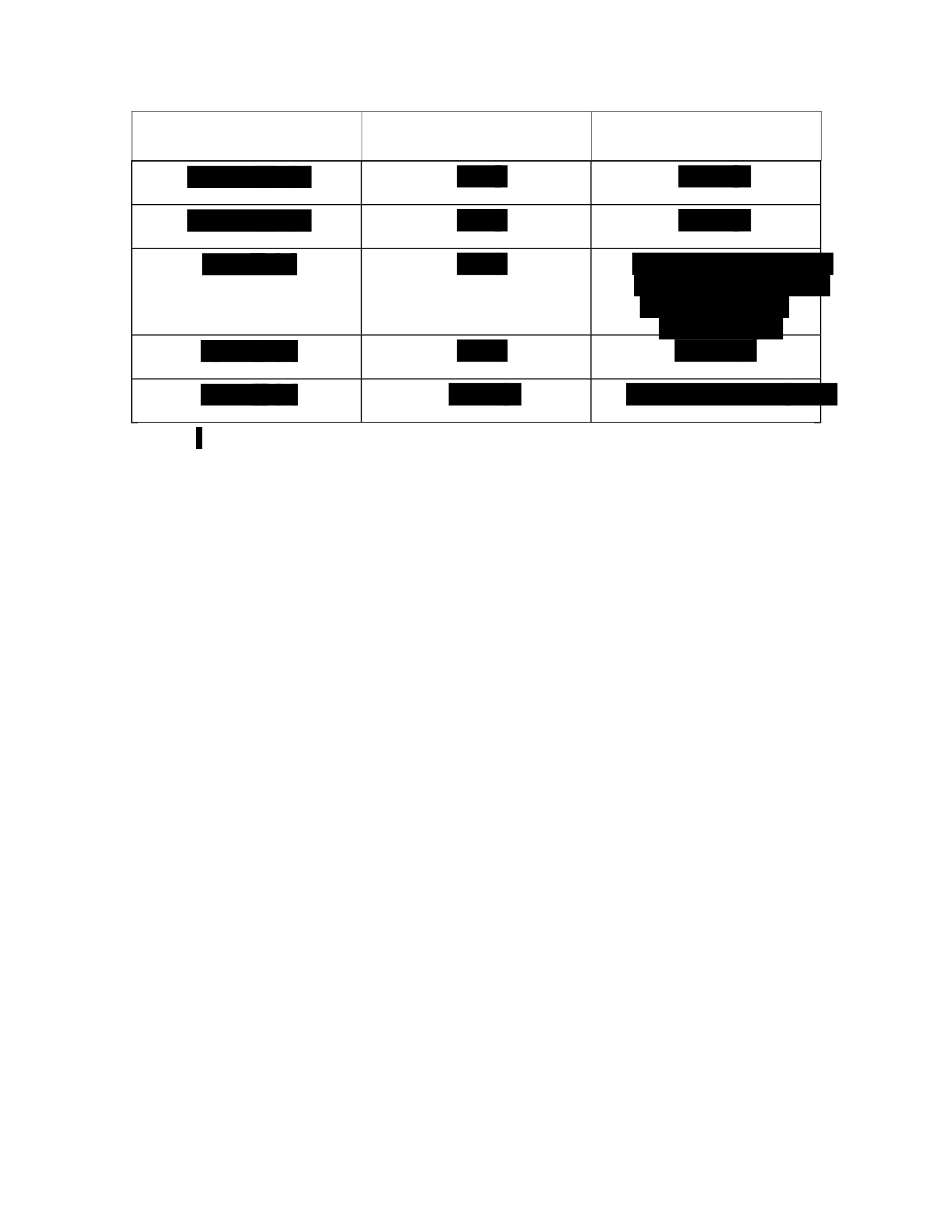
These tables summarize the codification of the study participants, as they will be
referred to in the next section.
Table 1: Students’ Codes
Coding
Gender
Stage
Student 1 (S1)
Male
Preparatory
Student 2 (S2)
Female
Primary
Student 3 (S3)
Male
Preparatory

Coding
Gender
Parent 1 (P1)
Female
Parent 2 (P2)
Female
Parent 3 (P3)
Female
Parent 4 (P4)
Male
Parent 5 (P5)
Female
Parent 6 (P6)
Female

Parent 7 (P7)
Female
Table 4: Codes for Management, NGO, Sekem, GIZ, AUC
Coding
Gender
Role
Management 1 (M1)
Male
School Principal
Management 2 (M2)
Female
Educational Management
Representative
NGO 1 (N1)
Male
NGO Head
NGO 2 (N2)
Female
NGO Employee
NGO 3 (N3)
Female
NGO Employee
Sekem 1
SK
1)
(
Male
Trainer
Sekem 2
SK
2)
(
Male
Trainer
GIZ 1
1)
G
(
Male
PDP Advisor, Fund
Management, Area
Coordinator
-
Giza
Governorate
C
SD 1
C
(
1)
Male
Director
CSD 2
2)
C
(
Female
Program Coordinator

4. Data Collection and Analysis
The researcher attended the three phases of EduCamp II; Needs Assessment at
NGO, TOT and Summer Implementation. El-Saddat School is a relatively new school,
established two years ago in 2013 (picture 1). The school was located on an agricultural
land, which was stripped to build schools complex and El-Saddat was one of them
(picture 2). The area is highly polluted with garbage (picture 3). The number of students
during the implementation ranged between 50-70 students throughout the 3 weeks. The
age of student attendees ranged between 8-13 years old. In-class activities were carried
out in a recently renovated well-prepared classroom. Each table was used for a group of
7-8 students with one teacher. One or two teachers took turns on leading the class activity
for the whole class, while the rest of the teachers worked in groups with students (picture
4).
The implementation was designed to use simple materials to run in-class activities
such as cards/papers/colors, for brainstorming, storytelling, drawing and coloring.
Furthermore students performed simple plays (prepared by teachers) using costumes and
materials they brought from home (picture 5). Sometimes videos were shown using a
projector with a laptop in class. Outdoor activities were carried out in the school’s garden,
which was adequately spacious (picture 6). The materials used to run the outdoor
activities were mainly ropes/cards/wooden objects (like sticks, compass)/food ingredients
(like apple, wheat)/balls/cones.
4.1 Kit and TOT Analysis
At this phase, the researcher attempted to answer the research question a) what are
the main characteristics of ESD curricula and teachers training programs?

The second phase SK1 and SK2 extracted relevant ESD activities from EduCamp
I, and adapted them to El-Warraq priorities (EduCamp II). In addition, SK1 and SK2
delivered a training program (TOT) for around twenty teachers from each school. The
researcher attended and observed the one-week TOT in El-Saddat school.
To identify the ESD curricula used in EduCamp II, the researcher analyzed the
toolkit activities, using a 3D mapping approach (El-Deghaidy, Seminar 2015). In the 3D
mapping, there were three dimensions for analysis. One is the ESD segments
(Environment, Society, Economy). Two is the STEAM disciplines (Science, Technology,
Engineering, Art, Mathematics). Three is the 21st century skills (Collaboration, Creativity,
Critical Thinking, Communication).
There were two toolkits in EduCamp II, one for primary stage (level 1) and
another one for preparatory stage (level 2), a total of forty-five activities. Each booklet
was divided into four sections as follows:
Table 5: Kit Content
General ESD
Agriculture
Energy
Water
Number of
Activities in
Level 1
9
5
5
3
Number of
Activities in
Level 2
11
4
4
4
Each activity in the toolkit was examined to check which fields were integrated in
each activity: ESD, STEAM, and 21st century skill(s). Accordingly, a graph was plotted
for both levels as follows:
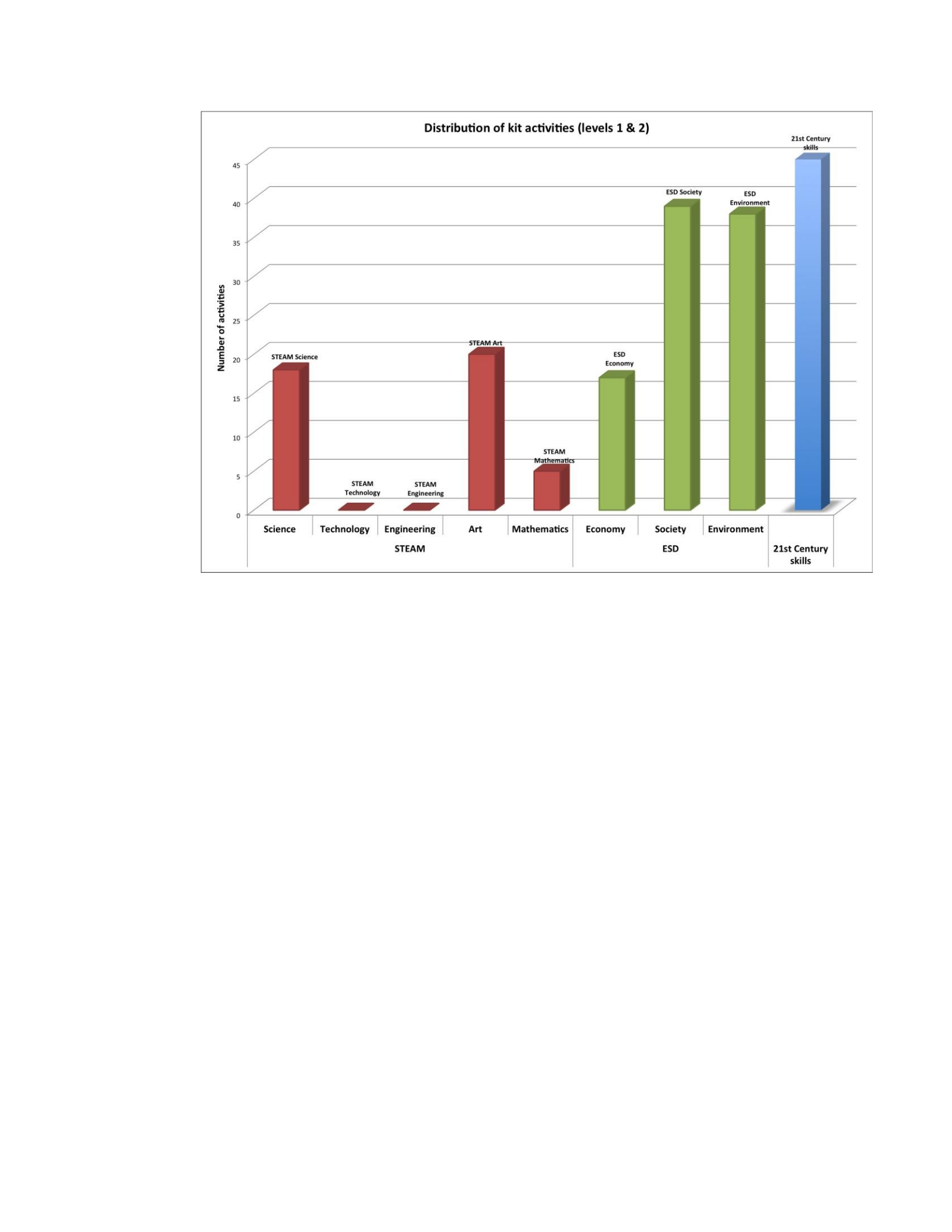
Figure 1: Distribution of Kit Activities
As seen in Figure 1, all activities were based on integrating the 21st century skills
by stimulating discussions (communication), group activities (collaboration), intriguing
questions for critical thinking and creativity through art and acting activities. Most of the
issues discoursed in the activities are Societal and Environmental issues, with less
emphasis on Economic issues. As for STEAM disciplines, Science and Art were more
incorporated in the program compared to the other disciplines.
In the TOT, SK1 and SK2 covered activities from EduCamp II to introduce the
ESD concepts to the teachers. The TOT was a simulation for the teachers to understand
what they were expected to achieve in the implementation. On the first day, teachers were
reluctant to interact with the trainers. As SK1 (2015) explained how they always faced

this problem in the beginning of their trainings. As teachers presumed that the training
was similar to the government trainings that were not attractive to many.
However, as the ESD concepts were revealed to the teachers, they were able to
relate it to their everyday lives, as human beings and as teachers. Plus, active learning
techniques were used in the sessions, so teachers became very highly engaged and
enthusiastic about the training. The TOT was dynamic and interactive. The teachers’
feedback on the TOT will be highlighted in the next section.
4.1.1 Teacher’s Questionnaire Analysis
Due to the several-month time gap between the TOT and the summer
implementation, the researcher designed and administered pre and post questionnaires for
the teachers (Appendix B). The teacher’s questionnaire mainly covered parts on the
quality of the training (teacher preparation), ease of implementation (number of students,
student engagement, available resources, school administration support, community
support). The researcher collected seventeen pre-implementation questionnaires on the
first day of the implementation and sixteen post-implementation questionnaires on the
last day. The logic behind the pre-implementation questionnaire was to trace the teachers’
feedback about the TOT program, and their expectations of the summer implementation.
Then the purpose of the post-implementation questionnaire was to check if those
expectations were met, and whether teachers still have the same feedback about the
training and the implementation, in addition to any suggestions.
Overall, Teachers’ before and after implementation reported very positive
feedback on the TOT. There was not a big variation between the teachers’ responses,
before and after the implementation, on the Teachers’ training they acquired (TOT).
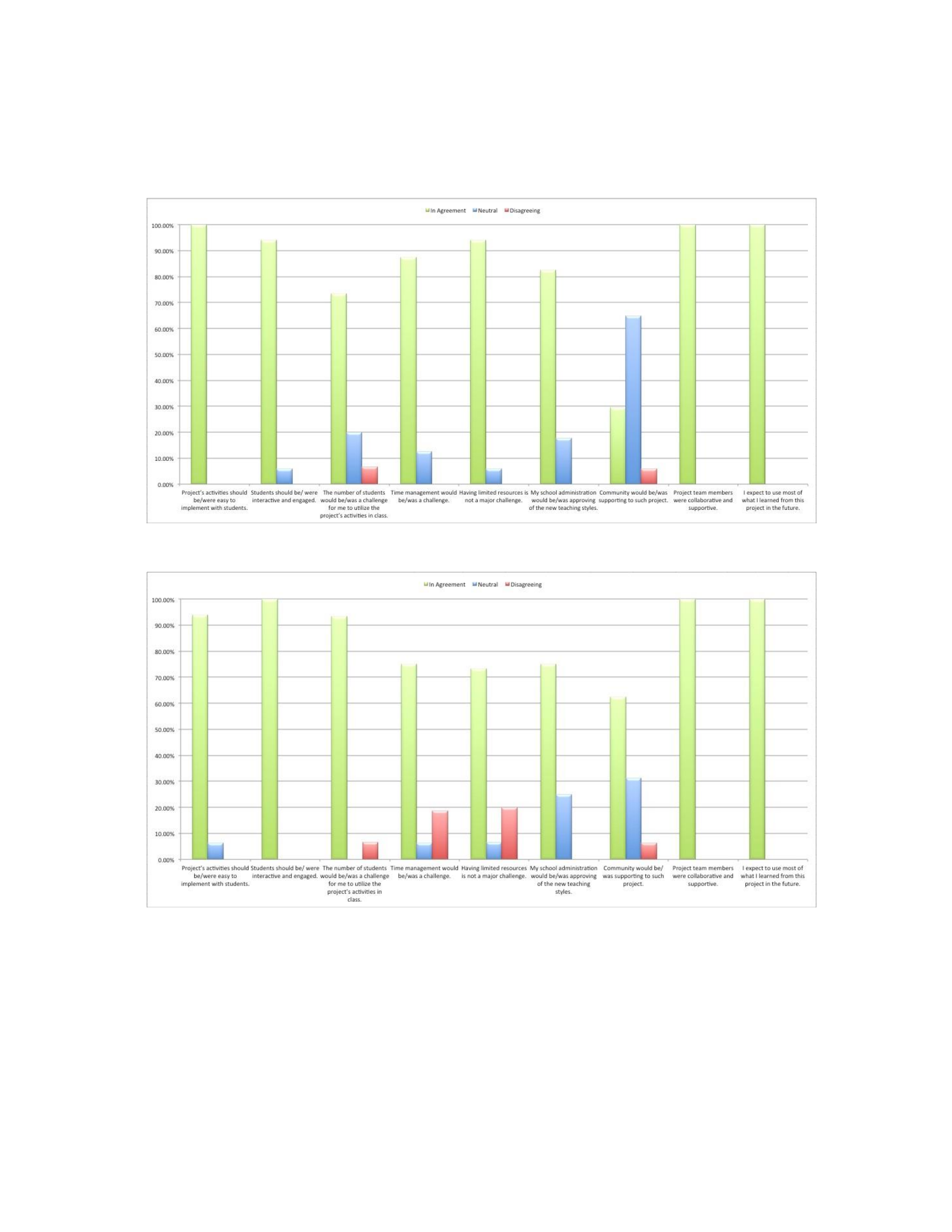
Moreover, teachers’ perceptions regarding the implementation varied slightly as shown in
Figure 2 and Figure 3.
Figure 2: Teachers’ perceptions before the implementation
Figure 3: Teachers’ perceptions after the implementation
The main variations between the two graphs showed that,
• The number of teachers who strongly agreed that students would be interactive
and engaged increased by 6% after the implementation. This was a positive
indicator that teachers’ expectations for the students to be interactive went up after

they implemented the program, and saw for themselves how students were
actively engaged.
• After the implementation, 20% more teachers agreed that the number of students
was challenging to implement activities in class. This indicated that the number of
students were difficult to manage throughout the three weeks. This was provoking
to how can such program be implemented during normal school days, where the
number of students reach ninety students.
• After the implementation, 12% less teachers agreed that Time management was a
challenge. This implied that teachers faced some difficulties in their time
management during the implementation.
• Regarding the limited resources, 21% less teachers agreed that having limited
resources was a challenge after the implementation. This means that teachers
inquired more resources to use during the program. As few teachers suggested
having more computers/toolkits would have been more beneficial.
• Before the implementation, teachers did not expect the surrounding community to
be supportive of the program. However, their perspective changed after the
implementation where 33% more teachers agreed that the community would be
supportive to such program.
Moreover, teachers’ statements in the questionnaires, about the TOT and the
program, were more affirmative after the implementation. Teachers felt the positive
change in their attitudes and in students’ behavior, as reported in the interviews in the
next section. Ten out of the sixteen questionnaires conveyed in their suggestions that
they would like to have more intense TOT’s throughout the school year. Five teachers

questionnaires demanded attention from the educational management to ‘see’ what
they did and not just ‘hear’ about their achievements in the program.
On the other hand, negative comments in the questionnaires were related to the
program being too stretched, for three weeks, that some students were exhausted towards
the end. So, a few teachers advocated for having the program implemented over two
weeks instead of three. Individual comments included:
• Complained about not receiving a copy of the EduCamp II tool kit.
• Inquired for a test to assess teachers’ ESD knowledge, as not all teachers involved
understand ESD.
• Aspired for the program activities to be included in the school curriculum.
• Demanded involvement and connection between the schools and civil
societies in the district.
4.2 Facts finding report
To answer question b) and c), the researcher analyzed the facts finding report to have
a solid background of El-Warraq context.
The first phase of the Educamp II project was the needs assessment. In order to
design the mentioned questionnaires, a group of social research experts from AUC were
hired by CSD, to prepare a quantitative close-ended Questionnaire to be administered at
El-Warraq area. These were divided into six sections as follows:
1- Background Information
• Age/Literacy/Marital status
2- Infra Structure
• Clean Water sources/Water usage

• Energy sources/consumption
• Solid waste management/Sewage disposal
• District Characteristics
• Transportation
• Safety
• Air/Noise Pollution
4- Services and Facilities
• Governmental Schools (Activities offered if any/ Number of teachers/
Quality of service
• Medical Services
• Youth Employment/educational status
5- Behavior and Habits
• Water Consumption (washing, cleaning, cooking, conserving habits)
• Energy Consumption (monthly bill, conservation habits)
6- Interviewee Willingness
• Willingness to reduce consumption/ preserve energy/ cleaning streets
After the questionnaire was approved by the CSD, the experts gave a two-day
training at the NGO to the girls assigned to distribute and collect the questionnaires. The
training was attended by the researcher, who also supervised a group of the girls in their
data collection around one of the chosen schools. Random method was the type of
sampling, with a systematic approach, choosing every 10th household to fill a
questionnaire. The NGO girls were assigned to collect three hundred questionnaires from
the surrounding community, one hundred and fifty from around each of the two chosen
schools. The target population was mainly females/mothers who were responsible for

running the households. The NGO girls were successful in collecting 331 valid
questionnaires, as reported in the facts finding report by the CSD (September 2014).
El-Warraq community comes from relatively low-income families. Almost 77%
of the community consumed energy with a monthly electricity bill ranging from 26-100
Egyptian Pounds. The quality of education offered in the area is low. Regarding the two
schools of investigation, interviewees reported that there are no art or physical activities
in the schools (53% at primary level and 72% at preparatory level).
The data analyzed in the facts finding report showed that the level of education
was not an indicator of sustainable knowledge. Where 85% of the interviewees reported
that they have completed their education or at least finished primary stage. Yet, almost
95% of the interviewees were not aware of their daily water consumption or conserving
behavior. In addition, 24% of the interviewees threw garbage in the street. However,
almost 93% reported that they were willing to clean their environment and live with more
sustainable attitudes.
4.3 Interviews
In an attempt to answer the research questions b) who are the stakeholders
involved in ESD initiatives in Egypt? And what is the role of each stakeholder? And c)
Within El-Warraq context, how did the participants in this project perceive the
collaboration and engagement among stakeholders? To what extent did the community
engage in the project's activities?
The researcher audio recorded forty-four (44) semi-structured interviews with all
stakeholders involved in the project. The interview questions covered areas on their
perceptions of the project and its sustainability, the role of each stakeholder, the problems

they faced (if any), the level of community engagement (resist or support), collaboration
efforts, and future suggestion.
4.3.1 Role of Stakeholders
As for question (b), the following data were dissected from the interviews with the
various stakeholders. This section discusses how the various stakeholders perceive what
their role was in general and in EduCamp II.
Teachers
T4 & T6 (2015) believed that the school is always the origins of any change in the
community. They explained how sustainable development is a seed that need to be
planted in the school first and then it extends to the whole community. T8 (2015) pointed
out the importance of circulating the ESD concepts to any educational association,
including mosques, churches, along with schools. However, T1 & T5 (2015) were
disappointed by the role of the NGO in this program, as they barely attended the
implementation. They further elaborated that NGO should have attended the program to
be inspired and have the capability to inform other citizens in the district, about ESD.
Sekem
SK1 (2015) emphasized Sekem organization for development role was to know
the needs of teachers in the schools of El Warraq. The role of Sekem along with
Heliopolis University was to prepare activities for sustainable development in relation to
El Warraq context. According to the collected questionnaires, many of the current
problems can be related to ESD concepts. Sekem trainers analyzed the questionnaires of
the community needs assessment and they were responsible to design activities for the
TOT and an interactive summer program (SK1 & SK2, 2015).

The main purpose of the program is to deliver sustainable development concepts
to teachers and then students, in an attractive way. Many engaging activities were added,
such as sports, arts and acting activities to make it like an edutainment program. Under
the AUC-CSD supervision, a kit with these activities, and how to conduct them, in terms
of place, time, number of students, materials and ideal steps to achieve it and evaluate it,
was accomplished (SK1, 2015). The teachers acquired their training in the TOT and
during summer implementation Sekem’s role was to follow up on the accomplishment of
the program with students; just as guidance and consultation (SK1, 2015).
NGO
N1 explained the NGO’s role was to communicate to people what the idea of the
program is. Moreover the NGO assigned girls, who work at the NGO, to collect the needs
assessment questionnaires. Those girls received a two-day training on how to collect
questionnaires.. The NGO will also search for schools that have good criteria; described
by N1 (2015) “in terms of parents and students level, school infrastructure and resources
that can help in implementing this program”.
In general, as described by NGO interviewees, the NGO role is mainly charity
work, as N2 (2015) said “ we do awareness sessions for students and parents who visit
the NGO…. general topics or as requested by the MoE”. The NGO is an official entity
funded by donations and the Ministry of Social Solidarity. The NGO worked in previous
community projects like Literacy campaigns (N3, 2015). Conversely, M2 (2015)
criticized the role of local NGO’s, in El-Warraq, because they’re not as active as they
should be (she compared them with other large NGOs like Sawieras Foundation).

GIZ
G1 (2015) clarified that The Participatory Development Programme in Urban
areas (PDP) is only a single project of the GIZ projects. The GIZ-PDP has a fund from
the European Union commission to develop slum areas in Egypt. The GIZ’s role is to
maintain communication with political powers, to understand their vision more and
facilitate community work. However, as the GIZ clarified PDP is only a funding entity,
they call for proposals across the different institutions (governmental and
nongovernmental) and whichever’s proposal is accepted, they get the fund. GIZ-PDP
conducts a community needs assessment to prioritize which areas they will work in. So
far these areas are across 3 governorates, Giza: El-Warraq, Saqyet Mekki, Gzeiret
ElDahab, Cairo: Ain shams, Ezbet El-Nasr, Kalioub: Shobra, El-Khsoos. Their focus is
on these sectors: Education, Health, Youth Centers, Waste Management and
Transportation.
(G1, 2015)
G1 (2015) asserted that the EduCamp II fund was a Euro 100,000, which was
granted to the AUC as a main applicant and Sekem as a co-applicant. G1 (2015) declared
that the EduCamp II was a successful project as he explained that their main indicator for
project success is to satisfy 70% of the project beneficiaries. After the end of any project,
the GIZ-PDP has a follow-up plan for 7 years that involves visits to the schools. One of
the major challenges that continue to face GIZ is the unstable political status in Egypt. As
G1 (2015) reported that the PDP worked with three different ministries since 2012, and
they all come with contradicting visions (the Ministry of Planning in 2012, then it
changed to the Ministry of Urban Development in 2014, and now the Ministry of

Housing). These continuous political changes were a huge obstacle, as they start from
scratch to communicate the PDP plans to every new ministry.
AUC
C1 (2015) elaborated on the role of the AUC in the program. The AUC was the
main grant applicant, manager and initiator, based on EU EduCamp I. EduCamp I ended
in 2014, and it was more related to the integration of ESD in the national curriculum. A
real life implementation and continuation was EduCamp II. However, EduCamp II was
funded by GIZ-PDP instead of the EU. The AUC continued to lead the initiative,
originally coming from Aachen University, to lead the consortium with Sekem
development. As C2 (2015) also confirmed that Sekem development have the technical
knowledge of ESD.
C1 (2015) explained the role of the local NGO as a link between AUC and
ElWarraq community. Mainly looking for female volunteers to interview and collect data
from the households around the two schools. Later, the role of the NGO was a
supplementary role not a main one. As C1 explained the local NGO staff did not have
enough capacity to cascade the knowledge to their surrounding families. Furthermore,
Om El-Korra, the local NGO was not chosen by AUC-CSD. C2 (2015) explained that the
local NGO was mentioned in the GIZ-PDP call for proposal, that Om El-Korra in specific
was highly engaged with the community.
However, this was not the focus of EduCamp II, the main focus was to propel the
ESD message to students at school, and then from students to their families. It was very
important to attract students to come to school and feel it can be fun and they learn in
innovative ways (C1, 2015).

In addition, the concepts students learned in EduCamp II were not easy.
Nonetheless it was designed in a simple mode to deliver the message to primary and
preparatory students. For example, losing agriculture is a major issue, related to urban
planning, but it was simplified so students could potentially understand how precious
agriculture land is, and they would never contribute in such act (C1, 2015).
Nevertheless, C2 (2015) mentioned that the GIZ-PDP was a very challenging
agent to work with. As she explained that the GIZ functioned as a subcontractor to the
EU, GIZ submitted a proposal to EU to spend this fund in that way, and GIZ report back
to EU. C2 (2015) further explained that GIZ-PDP required a lot of paperwork for a
oneyear project, with a small budget, like EduCamp II. Plus, the project cost was more
than expected in the grant proposal. C2 (2015) asserted that the GIZ-PDP inquired
different offers for every single deal (like tendering for juices, milk and everyday
students’ meals). GIZ-PDP was dealing with AUC as if it’s a small organization. They
expected CSD to make Purchase Orders (PO’s). GIZ-PDP didn’t comprehend that CSD is
only a center at AUC, all spending has to go through the AUC supply chain unit (C2,
2015). C2 (2015) also referred to another key point, that GIZ overlooked their
role as a coordinating body. GIZ-PDP had access to ministry officials. C2 (2015)
proposed that GIZ-PDP could have made a protocol to put all stakeholders involved in
this project together from the very beginning. A common agreement would have saved a
lot of time and effort. Instead of having each stakeholder go through the bureaucratic and
routine procedures. But, GIZ-PDP didn’t facilitate the procedure although they had
connections in the various ministries; they left each stakeholder to work on their own to
get the approvals and permissions (C2, 2015).

4.3.2 Thematic Analysis
In the next subsection the following themes were derived to answer research
question c) Within El Warraq context, how did the participants in this project perceive the
collaboration and engagement among stakeholders? To what extent did the community
engage in the program's activities?
4.3.2.1 Learning Environment
Students’ Attitudes
One of the major changes in behavior that occurred in EduCamp II is that students
were enthusiastic about going to school. All parents reported that one of the main changes
they observed in their children is their high motivation to attend the program. Students
were keen to wake up early in the morning to be on time. “My primary stage daughter
wakes me up everyday saying get up mother, it is 8:30, we don’t want to be late” (P2,
2015). Students are very enthusiastic about the activities and what they learn. P2, P5 &
P6 (2015) compared their children’s behavior in normal school days, as their children
were always reluctant to get up to go to school. Moreover, P1 & P3 (2015) were surprised
by the fact that it was summer vacation time and their children still wanted to go to
school.
Students also connoted their eagerness to attend the program, as S6, S8, S9, S11
& S14 (2015) explained how they were using their summer time in an exciting training,
where they play and learn at the same time. They clarified how they would normally
spend summer by hanging out aimlessly in their neighborhood. But, this summer they
went to school played fun games and learned about new topics.

In addition, M2 (2015) further verified that this enthusiasm was not observed in
previous programs as she said, “both teachers and students were excited to attend. In
other trainings, teachers were frustrated and they didn’t want to continue”. Similarly, M1
(2015) expressed how he saw the difference between this program and previous
professional development programs attempted by the MoE, “This program was more
appealing to teachers and students and they all looked happy”.
Teachers’ Attitudes
On the teacher’s level, as rationalized by SK1 (2015), teachers before the TOT did
not have the philosophy of preparing materials or themes to enhance student learning
through games and activities. Teachers would always complain about the large number of
students, however, after the successful implementation in EL-Sadat school, SK1 (2015)
foresees a high potential for ESD.
During the TOT, SK1 (2015) designated that, at the beginning, teachers don’t
understand what ESD is about, and then gradually they start relating it to their own lives.
He further explained that many teachers felt like they were reborn, because this wasn't
how they were trained in their respective faculties of education. SK1 (2015) explained
that
“We implemented the TOT in different governorates; Hurghada , Al Sharqia,
Belbeis and El-Warraq, and we received consistent positive feedback from all
teachers. The training lasted for a week, seven hours per day, it's almost intensive
but it leaves the teacher in the state of research and inspiration to develop
themselves”.

The program was enlightening for many teachers, in terms of their attitudes with their
students. T1 (2015) narrated how he changed the way he dealt with students positively;
“At work, to be honest, I used to shout and hit students, to control them. For
example, if I have an extremely naughty boy and I can’t control him, not that I
“can’t”; actually I can through beating him or something. But now things are
different after learning about personality types. Actually it was my first time to
discuss that topic. I now realize that each student has a different personality type
and I can’t change it. My real challenge is to handle my students the way they are
and try to win them over”.
There was also a significant change in how teachers’ interact with each other. T5
(2015) reported that during the program they worked as a one team,
“There are seventeen teachers who worked with more than seventy students on a
daily basis. We agreed on having four main teachers each day, two teachers for
the scientific activity and two for the entertaining activities. While the remaining
teachers stayed in small groups with students, to facilitate the activities. And we
rotate everyday.”
Student and Teacher Interaction
Another change was seen in how teachers and students interact with each other,
unlike normal school days.
On the students level, S1, S4, S10, S15, S16 (2015) reported that they learned a
lot of information by activities they did, one of the students said “my dream is to learn the
same way during school days, …I studied many facts in books but after the academic
year is over, I forget it all ” (S9, 2015). One teacher explained her approach in explaining

how the compass works, “students knew about the compass, but knew nothing about how
it works. In the activity, we used pictures and small cubes to make a compass, and then I
showed them a real one and passed it around for them to explore” (T4, 2015).
Students also referred to the difference between the way they learn during normal
school days and how they learn in the program. One of the students confirmed that saying
“I feel like we are playing, but at the same time learn from the activities we do and I
understand more”(S7, 2015). Another student said “I hope that the teachers will have the
same attitude during school. Normally teachers tell us they finished explaining and we
write down what they wrote on the board. They did not treat us this way before”(S4,
2015). Furthermore, another student described how different teachers interact with them
as she said, “Teachers now make conversations with us and they speak with us. We don’t
have activities during schooldays. But in this training they use different ways, which is
better, and we understand quickly”(S12, 2015). The program initiated a dialogue between
students and teachers, which did not happen before in a teacher-centered classroom. This
was also confirmed as S2 (2015) stated how she learned communication skills and
understood how to respect others' opinions, mainly from the letter W activity. The letter
W activity was done in the outdoor garden of the school with a simple wooden board that
has Letter W on it (picture 7). Teachers and students gather around the wooden board
forming a rectangle shape. Each from their side of the rectangle can see W differently;
Letter W, Number 3, Letter M, and Number 4 in Arabic (picture 8). This particular activity
was designed for students to understand that each one of us may have different perspectives
of the same topic. But understanding and accepting our diversity is a crucial issue.

Moreover, P7 (2015) reported that her son was obsessed with online games, but
during the program he used the Internet to research facts about energy (as he heard about
it in the program). This implies that the Internet was used as an attractive learning tool.
She further clarified that her preparatory son talks about these new facts from his research
as if he never heard about it before. Though, he learned about those exact facts in former
school years. This clears the transformation from teacher-centered learning environment
to student-centered learning environment. Where students truly comprehend the
information and own it.
Student’s Products (from recycled materials)
During the program, students had an opportunity to unlock their hidden talents. As
many S5, S7, S8 and S16 (2015) stated that during school days there were not even
physical education classes. Conversely, in this program, students appreciate how they can
practice many of their hobbies like drawing and coloring. S3 and S12 (2015) expressed
how they look differently at waste at their homes and how they think of using them to
make useful things.
Students conveyed their creativity in using waste around them. They made many
artistic models that expressed how they understood ESD. S15 made a vase out of an old
can and decorated it with flowers and colorful papers (picture 9). S5 made a 3-D truck
using small wooden pieces nails and bottles caps for the wheels (pictures 10&11). S11
described how he made a selfie stick at home using old materials,
“I innovated a selfie stick that could be done from waste at home, and I used an
old metallic stick, an old metallic sheet and an application on my mobile phone which is
called easy selfie, from the play store on Android” (picture 12). S7 expressed how

she made a plant (that her father didn't want at home), and she brought a bottle, cut it
and filled it with soil and water, and placed the plant in the bottle
(picture 13). S1 also made a model for a windmill using cardboard and cartoon box
(picture 14).
Moreover, S14 used foil to wrap an old fiber plate, and then placed a solid piece
of chocolate and covered it with plastic wrap (picture 15). She tested if the heat from the
sun will melt the chocolate or not. After that experiment she explained how she now
understood how much energy the sun has. S6 invented a fragrance pack, as he explained
he cut the top of an old can, and lit a candle and covered it with the can. Then he placed a
liquid perfume on the curved part, so the heat would evaporate and spread the fragrance
in the air. However, he realized that the candle kept blowing off because there wasn’t
enough oxygen inside the can. So he made small holes on the can sides to allow oxygen
in. The candle heated the liquid perfume until it evaporated and diffused a pleasant
fragrance in the classroom (picture 16).
4.3.2.2 Barriers for sustainable change
Educational Management and Routine
The first barrier for change is the educational management bureaucratic
procedures and routine. All of the stakeholders involved in the program had their
complaints about such procedures. A rigid system, which resisted change and only
reinforced bureaucratic paperwork, was extremely challenging to work with. T8 (2015)
pointed out the importance of a flexible system in which a new idea like ESD is applied.
ESD is a rich field that teachers saw they can deliver easily to students, but they will face
a lot of problems because the curriculum and the exams always come first. All Teachers

reported they were very willing to change and develop into more advanced ways of
teaching. T4, T5, T7 (2015) also declared that the educational management expects them
to deliver the curriculum, regardless of how. T5 (2015) affirmed that the educational
management focused only on how much of the curriculum teachers delivered
periodically. The educational management were never concerned with the style of
teaching. He further explained that there is no practical application of the curriculum; it’s
all about passing the exams.
In addition, T11 (2015) clarified that during the training, teachers come to school
and may be mandated by the school principal to go attend another task. As she explained
“During the program, the school principal asked me to attend a meeting outside school,
in El-Warraq educational management. So I missed a day in the program…I felt irritated;
we were working alone, the principal could bring another teacher who was not
participating in the activities, but he chose me instead”.
Furthermore, teachers were concerned about the ease of doing these activities
with students during the normal school year. As T6 (2015) explained
“After the program is over, I can not repeat these activities. For example, if I
want to take my class to the garden, the school administration would refuse. They
would ask me to use whatever I have in the classroom, and the space in the class
is not enough”.
All teachers complained about how they are not appreciated or motivated by the
district educational management. However, M2 (2015) confirmed that they would
celebrate and distribute certificates to acknowledge teachers’ efforts after the program,
(and it happened). But she considered a financial reward is nevertheless imperative.

In accordance with teachers’ experience, both SK1 and SK2 agreed on how
bureaucracy and routine were leading the country nowhere. SK1 (2015) discussed how
their organization was experienced in dealing with the routine system. As he explained
“Employees have rules that they must follow, even the minister of education has to
follow the rules. Everyone I encountered was excited and encouraged to implement the
program. But they were all afraid to sign any paper, but we kept trying until we got the
required approvals”.
On the other hand, N1 (2015) explained how their NGO faced a lot of difficulties
to enter schools around their area. Since the NGO did not have an official letter from
ElWarraq educational management. Though, the local NGO is an official entity that has
a protocol agreement with the Ministry of Social Solidarity. Yet the NGO had to be
registered in the Ministry of Education (MoE) to be allowed to enter any school. At the
AUC, C1 (2015) elaborated on the same problem they faced in dealing with the Ministry
of Education. He clarified that community work in Egypt is a very difficult process;
many projects fail and were never completed to the end because of the routine
procedures. During the CSD’s work on the program they were inquired by the MoE to
have all partners (AUC, Sekem, NGO) licensed as community workers. This implies
that the ministerial entities are all working independent of each other, each on its own.
The AUC is an official entity at the MoE but not at the Ministry of Social Affairs. Such
complexities make community work in Egypt very repelling to many, as C2 (2015)
reported, “the system should work for us, not us for the system”.

Cultural Barrier
As deduced from the interviews, another barrier for change is cultural. Teachers
lacked a lot of attention in the previous years, and they were very pleased to be the center
of attention during the program (C2, 2015). However, teachers were concerned with
having an overseer to observe them, whether it’s from Sekem development or the
educational management officials. T3, T5, T8, T10 & T11 (2015) reported that they
perceived their efforts as unvalued because it was not visible to other higher management
officials. T8 (2015) further clarified that even the educational management visits were
only for short durations; to check if everything is under control, but they did not attend
the activities and see what teachers’ truly accomplished.
On the other hand, SK1 & SK2 were not micromanaging the teachers. Their
perspective was that they trusted the teachers on doing their best in class, whether there
were overseers or not (SK1 & SK2, 2015). SK1 further explained that teachers image in
the community was very negative and this is another reason teachers sensed that they are
undervalued. But, SK1 supposed that when students tell their parents how they were
educated without being beaten up or disrespected, then teacher’s image would start to
positively change.
On the ground, NGO girls described how difficult it is to introduce people to a
new concept like ESD and the summer program. N2 (2015) reported that the whole
concept of forming partnerships between NGOs and schools is totally new to their
community. N3 (2015) further confirmed that while collecting the needs assessment
questionnaires, people were very suspicious about the program intentions. As the
EduCamp II was a foreign funded project from the GIZ and managed by the AUC. The

community anticipated that the program might have had a hidden agenda (N3, 2015). She
further explained that some interviewees were tensed about even writing their names on
the questionnaires.
4.3.2.3 Ways for Sustainable Change
Holistic Approach to ESD
ESD is a holistic field; it is only sustainable when it includes all responsible
people, in the education directorate or at school level, and at home. T6 (2015) verified “I
am a math teacher and I attended the three week program. Now I know a new way of
teaching, but everything can get messy as it could be an Arabic teacher who didn’t get the
training; he could impair my new approach with the students”. T9 (2015) also
inferred that all humans could easily grasp the idea of taking care of their environment;
“we can all connect to most of the ESD concepts”. But she explained how these concepts
should have spread all over El-Warraq community, so they would create a small society
like Sekem community.
T5 (2015) projected the importance of sharing this program with responsible
personnel in the educational management, so they are informed and aware of the
importance of ESD. T5 initiated to cascade the ESD message as he said, “We have tests
in educational management next Sunday, so I will try to meet with deputy minister in
order to know her perception about the program and how she wanted to execute it.”
Likewise, SK1 (2015) confirmed that, a political push from higher authority is crucial as
employees are afraid of rules and routine. For a sustainable change that adopts ESD, a
common dialogue needs to exist across the community; from political officials to
households.

Follow up and Expansion
The notion of expanding EduCamp II to cover more schools was very emphasized
in the interviews. T1, T3, T4, T5 & T6 (2015) highlighted that El-Saddat and Mohammed
Farid schools were only samples, but it is fundamental to expand to more schools. These
teachers explained how they saw follow up and expansion as key aspects to continue.
Otherwise, the program achievements would be disoriented.
T5 (2015) pointed out how expansion could be through increasing the number of
ESD trained teachers in their district. He further suggested that instead of having 15
trainers in one school, why not have 3 trainers in each school and reach out for more
schools (so they would reach 5 schools instead of 2 schools). Those three trainers can
train other teachers in their respective school. In this way, the ESD concepts could reach
more teachers and students in the same duration (T5, 2015). Moreover, many teachers
showed interest to attend more training like the TOT in their vacations in order to develop
professionally (T2, T5, T6, T7, T11). This was also mentioned in the teachers’
questionnaires’. Teachers’ suggestions were focused on implementing the program on a
larger scale and training the school administration and educational management as well.
Similarly, T6 (2015) emphasized on expanding the program to all schools in the district,
so they would work together as one entity.
Correspondingly, M1 (2015) expressed that teachers and students, from other
schools, aspired to come to El-Saddat school to attend the program. In addition, M2
(2015) declared an interest in expanding the program to more schools.
After the success of the EduCamp II implementation, SK1 (2015) reported that,
the National Center of Educational Research and Development officially accredited their

ESD toolkit activities. As SK1 (2015) elaborated that this center is the highest authority
in Egypt, in terms of educational activities and innovations. SK1 & SK2 (2015)
recommended spreading EduCamp II in all Egyptian schools. SK1 (2015) also revealed
that Sekem development collaborated with the sector of foreign and cultural affairs to
implement EduCamp II activities in 150 schools; these are the UNESCO associated
schools.
Media
To many stakeholders in EduCamp II, they perceived media as a main technique
for sustainable change. P4 (2015) proposed
“If you really want sustainable development to prosper, you should resort to the
media, because it is accessible to all, whether the TV or the radio. I suggest creating an
animation to propagate the concepts of sustainable development, and the importance of
energy to bond the community and kids to the environment”. T5 (2015) also
highlighted a demand for propaganda as he said, “This program has no advertising, media
and not given any attention from such institutions…this affected some people
negatively”. Teachers were longing for attention whether from the project staff,
educational management, or the media.
In addition, SK 2 (2015) mentioned how important the foreign media was
propagating sustainable development, and recently Egypt was in a conference on
sustainable development. He implied that the local media needed to publicize for
sustainable development through its various channels, including social media.
Surprisingly, many students have online access via Internet café’s in the district (T6,
2015). Thus, social media could be a rapid way to infuse ESD in the community.

However, the Internet was solely used for playing games or chatting on social media.
During the program, teachers asked students to search facts online and present them in
class. This activity was appealing to many students as many of them are passionate about
the Internet. As S9 (2015) explained how he started searching for science facts online.
5. Discussion and Conclusion
5.1 Discussion
After analyzing the above data and the various perspectives discussed in Chapter
2, the researcher views the following: The EduCamp II did positively influence El-Saddat
community’s behavior, at least for a short-term period.
EduCamp II was a strictly pre-planned project. The unique collaboration between
AUC, Sekem, GIZ and the local NGO was impressive, but still the initiative came about
as an imposition on communities who do not initially comprehend the meaning of ESD.
This infers that there was initial resistance to the EduCamp initiative from the target
communities, which was seen at the beginning of the teachers’ TOT. However, such
resistance was weakened gradually as the program progressed.
In formal projects like the EduCamp II; funding agencies as well as ministries
attempt to dictate their own rules. In such projects, a strict plan with specified protocols
and guidelines needed to be assimilated regardless of any other factor. The flexibility
required in intervention programs, that was referred to by Calley (2010) in section 2.2 did
not exist. The EduCamp II adopted a technocratic/pragmatic perspective (section 2.2) on
promoting ESD. The technocratic aspect of the EduCamp was in how the implementation

was accomplished, by ESD experts (Sekem) and organized TOTs. There was also a
pragmatic perspective to the EduCamp II, as it was initiated by partnerships. Yet, such
partnerships did not manage to influence the Ministries of Education and Higher
Education to embrace the EduCamp kits (I and II) in public school education. There were
no policies or actions from the ministry level to embrace the EduCamp kits. Although it
was mentioned in the interviews that EduCamp II kit would be disseminated in UNESCO
schools in Egypt. It was still under the umbrella of international efforts and not national
efforts to promote ESD.
That is unlike the UK approach, discussed in section 2.4.1, which adopted the
globalized perspective; and a lot of the pragmatic perspective; but strong policies were
reinforced by political powers in a top-down manner to integrate ESD in the UK
curriculum. Besides, the UK strategy were concerned with incorporating ESD as part of
their global citizenship agenda. Moreover, the UK initiatives put emphasis on continuous
assessment and evaluation, for future developments in the field of ESD; to ensure
successful progression and to stay in line with the world wide best practices. Brazil, on
the other hand, was a bottom-top approach to incorporating ESD. Communities formed
their own partnerships to manage their solid waste. Such communities were given the
ownership of the programs’ implemented.
A major difficulty with the ESD implementation in El-Warraq was the poor role
played by the local NGO. Their role was limited to collecting the questionnaires and not
even attending the program’s activities to spread the ESD message among the
community. As inferred from the interviews and section 2.3 on civil society, NGOs in
developing countries, like Egypt, would mainly play the role of a subcontractor to the

government ministries. Not actively engage in developing communities through
education.
Furthermore, although the EduCamp II included ESD student centered activities
that enhance problem solving; discussions, critical thinking, and also teachers received
professional trainings, still the sustainability of the program remain questionable.
Teachers were eager for recognition and growth, which pushed them to work very hard to
accomplish the best results in the program. However, there were no measures to ensure
their continuation to teach using student-centered pedagogies. In addition, the educational
management of El-Warraq did not take any further actions to activate and expand
EduCamp II in other schools in the district.
In conclusion, the main objective of ESD as a discipline is to promote social
responsibility, and to inform citizens that each of its segments is interdependent on the
other. So, for communities to learn and work together, they must be engaged with a
strong sense of ownership of what is being implemented in their society. In addition, a
push from government officials is indispensable because routine and protocols between
entities remain a major obstacle.
5.2 Recommendations
As for the recommendations for future implementations of ESD initiatives in
Egypt, the following viewpoints were concluded as a way to move forward.
• Flexibility during projects’ implementations. Continuous research and revisiting
the program design to adapt it to the context of the implementation. For example,
in El-Saddat School, instead of having seventeen teachers working in the same

school for three weeks (two active teachers and the rest are helping students). The
seventeen teachers could have been divided on more schools for further expansion
of the initiative.
• Operable communication channels ‘within and between’ the various ministries are
crucial to facilitate community work.
• Having a clear protocol, that includes all the stakeholders, to be approved by the
various ministries before implementation would have saved a lot of time and
effort.
• Establishing an ESD unit in the educational management to follow up and
promote ESD activities in schools.
• Assign groups of students to be responsible for ESD activities during the school
year. Students don’t expect to be financially rewarded, they were proud to be part
of the program and to find any entity to discover and explore their interests.
Following up on students’ activities could be easily done through social media,
with few visits to the location.
• Rewards for teachers, at least emotional reward. Teachers worked in EduCamp II
because they expected to get a trainer’s certificate from the AUC (as ESD trainers
who can train other teachers). But at the end, they only received a certificate of
attendance. Which if they initially knew about, would have negatively influenced
their efforts during the summer program. In addition, finding out about it at the
end, contributed to demotivating them to carry on.
• Empowering civil societies in informal areas for more sustainable initiatives.
Civil society has a strong role to play in community participation measures; such

as awareness campaigns, for the communities to understand the purpose and
benefits of such initiatives.
5.3 Research Limitations
• This study is based on the researcher’s interpretations and perspectives, which
may be subject to biases.
• The researcher was perceived as a researcher from the same entity that was a
stakeholder in the program, AUC. This might have limited the participants’
responses.
• The sample size used for investigation was only from El-Saddat School in El-
Warraq. A larger sample size would have been more affirmative.

