


1
PSYCHOLOGY
Student’s Name
Institutional Affiliation
Class Name
Instructor’s Name
Date
2
Part I. Experience Constructing the Genogram
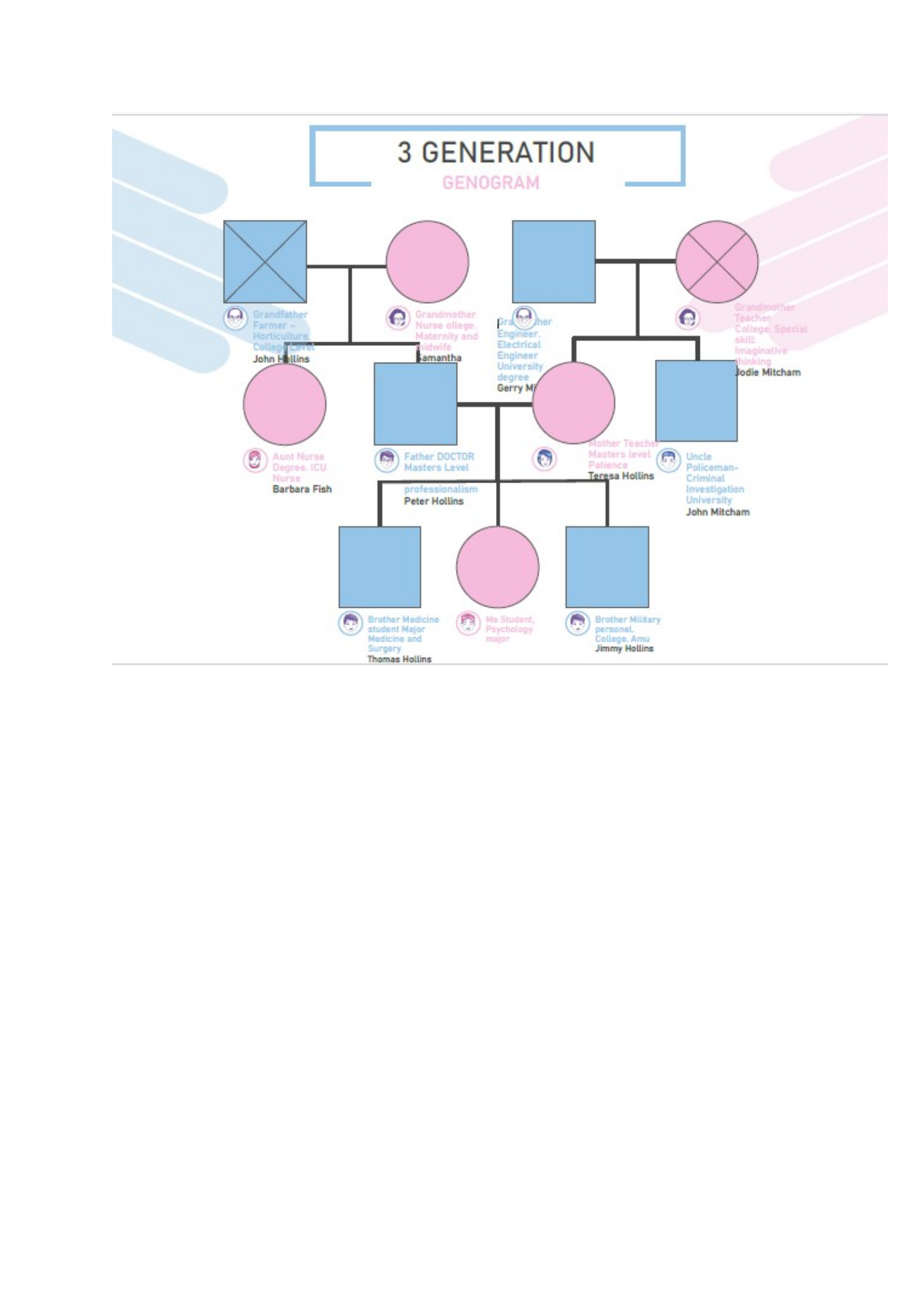
The generation of the three-generation career genogram was insightful as it presented
a fresh perspective on the family's dynamics between education, careers, and skills. Other
patterns were dicovered when charting the various occupations, education levels, and specific
skills of the family members to demonstrate how past generations influence careers and
education. Discussions with my relatives about their educational and career paths helped me
better understand their stories and the circumstances under which people made their
decisions.
I also felt emotions while doing so, mainly when I examined the difficulties and
accomplishments of my family members at work. The genogram established that family

3
values, cultural beliefs, and economic challenges within the family influenced career choices.
This reflective exercise made me think about generational patterns and how careers change
due to society and family trends and expectations.
Part II. Identifying Patterns
Family Occupation, Skills, and Education Trends
One trend observed in our family is the focus on professional occupations in
healthcare, education, and other public services. Our father is a doctor, and many of the other
members of our family are also in the same healthcare line. For instance, our grandmother is
a nurse, and our aunt is an Intensive care unit nurse. Our mother and another grandmother
were teachers, and my brothers are in the medical profession and the military, respectively.
This emphasis on healthcare and education hints towards the importance of formal education
and vocational training within our family as several members have been to college or have
obtained their advanced degrees.
This trend is consistent with other shifts in the essential characteristics of the U.S.
labor market, such as the constant growth of the healthcare industry and the stable importance
of education (U.S. Bureau of Labor Statistics, 2023). For instance, the healthcare sector,
especially, has been facing increased employment opportunities recently because of factors
such as the increasing population of patients and advancement in healthcare technologies
(American Hospital Association, 2022). The same is true for my family members' careers, as
people of each generation seek stable and fulfilling employment that contributes to the
welfare of society.
Male and Female Patterns
Gender-based career patterns were also evident in the genogram. My father and
brothers are leaders, technicians, doctors, and soldiers, while my mother and sisters are
teachers, nurses, and nannies. These distinctions are consistent with gender stereotyping,

4
which is known to determine careers throughout the world. Males are inclined to leadership
and technical occupations, whereas females will likely be involved in caring and teaching
roles (Cha, 2020).
The women in our family are educated up to the master’s level, which today is a trend
in women's education empowerment. This is in line with the current society, where
education, especially at higher levels, has become more affordable and crucial, especially for
the female gender in the areas of teaching and nursing, among others, as pointed out by
Kearney, 2021.
Relation to Career Development History and the American Labor Market
The career patterns within my family’s employment also reflect the patterns in the
U.S. labor force and other trends in career advancement. In the last few decades, there has
been growing concern about the need for higher education while joining any professional
practice and the increasing need for health and education professionals. This shift is present
in my family, where the focus has shifted from getting more education and service-type jobs.
For example, the healthcare profession has increased employment prospects because of
demographic factors, technology, and enhanced health literacy U.S. Department of Health
and Human Services, 2023.
The change in market demand is captured in my family's occupational pattern, where
health and education are significant sectors mainly due to emerging social needs and
women’s employment (Kaiser Family Foundation, 2022).
Part III. Personal Reflection
Alignment with Family History
My educational and career goals align with my family’s focus on professional education and
government work. Since I am studying psychology, I am choosing a career that, though not a
medical or an educational career like my family members, involves helping people. The roles

5
played by my parents and other caregivers in the healthcare fraternity probably inspired me to
take up psychology. This field also needs someone empathetic, a good listener, and a passion
for the psychological health and welfare of the populace.
Surprises
To our greatest amazement, one of the things that emerged clearly during this exercise
was that public service careers have remained relatively steady across generations. Close
relatives have been professionals, with many working in education, healthcare, or the
military, which shows that our family has always been an active, helpful part of society. The
other surprising finding was that our grandmother's creativity and imaginative thinking as a
teacher emerged from the more rigid professions that dominated the family. Her way of
teaching in our class focused on the different kinds of skills and values in our family.
Part IV. Application to Counseling
These genograms can be helpful when counseling clients because they help them
understand how family patterns affect career and education decisions. In career counseling,
for example, the client can use a genogram to understand the family factors that may
influence career choices and to consider how such patterns may affect decisions. When
visualizing generations, a counselor helps to direct the conversation toward expectations for a
particular career and may shed light on potential motivation (Brown et al., 2020).
It is essential to remember that certain emotions may occur throughout the process.
When clients discover hidden expectations or career demands, they are likely to develop
certain feelings, especially when they feel compelled to follow in their family’s footsteps.
The genogram is based one testimonial data, which may sometimes be erroneous or lacking
some information (Campbell et al., 2021). It must be noted that genograms have their own set
of limitations. Still, they remain an effective means of promoting self-reflection and
encouraging constructive conversation in counseling.

6
References
American Hospital Association. (2022). The healthcare workforce. https://www.aha.org
Brown, C., Garcia, M., & Terry, K. (2020). Exploring family career patterns using
genograms: A guide for career counselors. Journal of Career Development, 47(3),
248–263.
Campbell, H., Miller, P., & Smith, J. (2021). The use of genograms in family therapy:
Challenges and opportunities. Family Therapy Journal, 58(4), 342–355.
Cha, Y. (2020). Gender differences in occupational choices: Trends in professional sectors.
Gender, Work & Organization, 27(5), 567–581.
Kaiser Family Foundation. (2022). The role of healthcare workers in the U.S. labor market.
https://www.kff.org
Kearney, M. S. (2021). Women, education, and the changing U.S. labor market. Brookings
Institution. https://www.brookings.edu
U.S. Bureau of Labor Statistics. (2023). Occupational outlook handbook. https://www.bls.gov
U.S. Department of Health and Human Services. (2023). The future of the healthcare
workforce in America. https://www.hhs.gov

