


PSY 341 – Module 2
The World of the Newborn
Reading: pg. 85-119, 188-198
Chapter 3: Biology and Behavior
Genome: the complete set of genes (humans have more than 100,000
Genotype: the genetic material an organism inherits
Phenotype: observable expression of genotype (characteristics and behavior)
Environment: individual’s surroundings
Chromosomes: molecules made up of two strands of DNA
DNA: carries biochemical instructions in formatting the organism
Genes: basic unit of heredity
Sex chromosomes: determines the sex (females have 2 large X chromosomes,
males have one X and one smaller Y)
Mutation and random assortment of chromosomes are mechanisms that effect
an organism
Crossing over: when the two members of a pair of chromosomes swap sections
of DNA
Alleles: one-third of human genes have 2+ forms (same trait but different
outcome, ie. eye color, but brown, blue, hazel)
Homozygous: person inherit two of the same allele (two dominant or two
recessive)
oCorresponding trait is expressed
Heterozygous: person inherits two different alleles (one dominant and one
recessive)
Polygenic inheritance: several different genes contribute to any given
phenotypic outcome
Norm of reaction: all of the phenotypes that could result from a genotype in
relation to the environments it's in
oIf genetically identical animals develop differently in different
environments, we infer that environmental factors must be responsible for
developmental outcomes
Genotype environment interaction Phenylketonuria (PKU): disorder which
defects recessive gene; when it’s inherited from both parents, people can’t
metabolize phenylalanine (amino acid found in red meat and artificial
sweeteners, which causes impaired brain development. If they avoid it,
impairment can be avoided
Another example: effects of abusive parenting, why some children become
violent and others do not importance of combination of environment and
genetic factors
oHaving abusive parenting AND the x-linked gene MAOA (inhibits brain
chemicals associated with aggression) antisocial outcomes

Epigentics: although DNA structure is fixed, certain epigenic mechanisms
mediated by the environment can alter the gene’s functioning which can be
passed on to next generations
oi.e. why identical twins don’t have identical lives
Methylation: silence gene expression
Behavior genetics: how variation in behavior and development results from the
interaction of genetic and environmental factors
Heritable: all influenced by some degree of hereditary factors
Multifactoral: affected by a host of environmental and genetic factors
Neurons: gray matter of the brain, send and receive messages
Cell body: contains the basic biological material that keeps the neuron
functioning
Dendrites: fibers that receive input from other cells
Axon: fiber that conducts electrical signals away from cell body to connections
with other neurons
Synapses: junctions between axon terminal of one neuron and the dendritic
branches of another
Glial cells: brain’s white matter (makes up most of the brain)
Myelin sheath: insulates axons and increases speed and efficiency of
information transmission
Cerebral cortex: 80% of the brain, folds of brain mental functions like seeing,
hearing, writing, reading, arithmetic, feelings, communications
Occipital lobe: processing important information
Temporal lobe: memory, visual recognition, speech & language, processing
emotion and auditory info
Parietal lobe: spatial processing, integrates sensory input with information
stored in memory
Frontal lobe: cognitive control (working memory, planning, decision making,
inhibitory control)
Corpus callosum: how the left and right hemispheres of the brain communicate
Cerebral lateralization: hemispheres specialized for different modes of
processing
Hippocampus: brain region important for memory processing
Neurogenesis: rapid increase of neurons through cell division complete
around 18 weeks after conception
Myelination: formation of insulating myelin sheath around axons beings in the
brain before birth and continues into early adulthood
Synaptogenesis: each neuron synapses with thousands of other neurons,
resulting in the formation of the trillions of previous connections
Synaptic pruning: cell elimination, happens all over the brain; lots of pruning
during adolescence “use it or lose it”
Plasticity: capacity of the brain to be molded or changed by experience (less
information needs to be encoded in the genes)

Experience-expectant plasticity: William Greenough; the brain can expect
certain things to happen based on general experiences that have been present
throughout human evolution
Experience-dependent plasticity: idiosyncratic experience where neural
connections are created and reorganized constantly throughout life as a function
of an individual’s experiences
Reflexes: organized patterns of actions (neonatal reflexes); grasping, rooting,
sucking, tonic neck reflex
Lecture Video 1:
William James, 1890s – the world of the newborn is a “blooming, buzzing
confusion” (hypothesis)
Motor behavior is the only way we can tell how a newborn is reacting
Are we born with innate knowledge or not?
Are newborn behaviors evidence for or against William James?
oIf yes Empiricism
oIf no Innatism (some of our knowledge is already there)
Ask yourself: Does the newborn have appropriate responses to complex stimuli
(i.e. visually following a ball moving)
Film: The March of Dimes – The Neonatal Behavioral Assessment Scale by T. Berry
Brazelton
Bring out the baby’s capacity for coping
Using positive/negative stimuli
Best performance conveys baby as individual
Baseline: baby’s sleep state
Stimuli: flashlight, rattle, bells, uncovering him, pin prick, reflexes, leg movements
(walking), muscle tone, eye responses, defensive movements, neck reflex
The scale records individual differences
The scale shares the baby’s behavior with the parents
Emotional responses: soothing voice to calm baby
Turning towards sound: reappears at 4 months
Coping responses: the babies are expecting patterns/regularities in the world
Mirror neurons
Lecture Video 2:
Organismic process in action (baby having an effect on the social environment
bidirectional causality)
If parents are shown the scale of the baby right away, they are able to provide for
the baby better
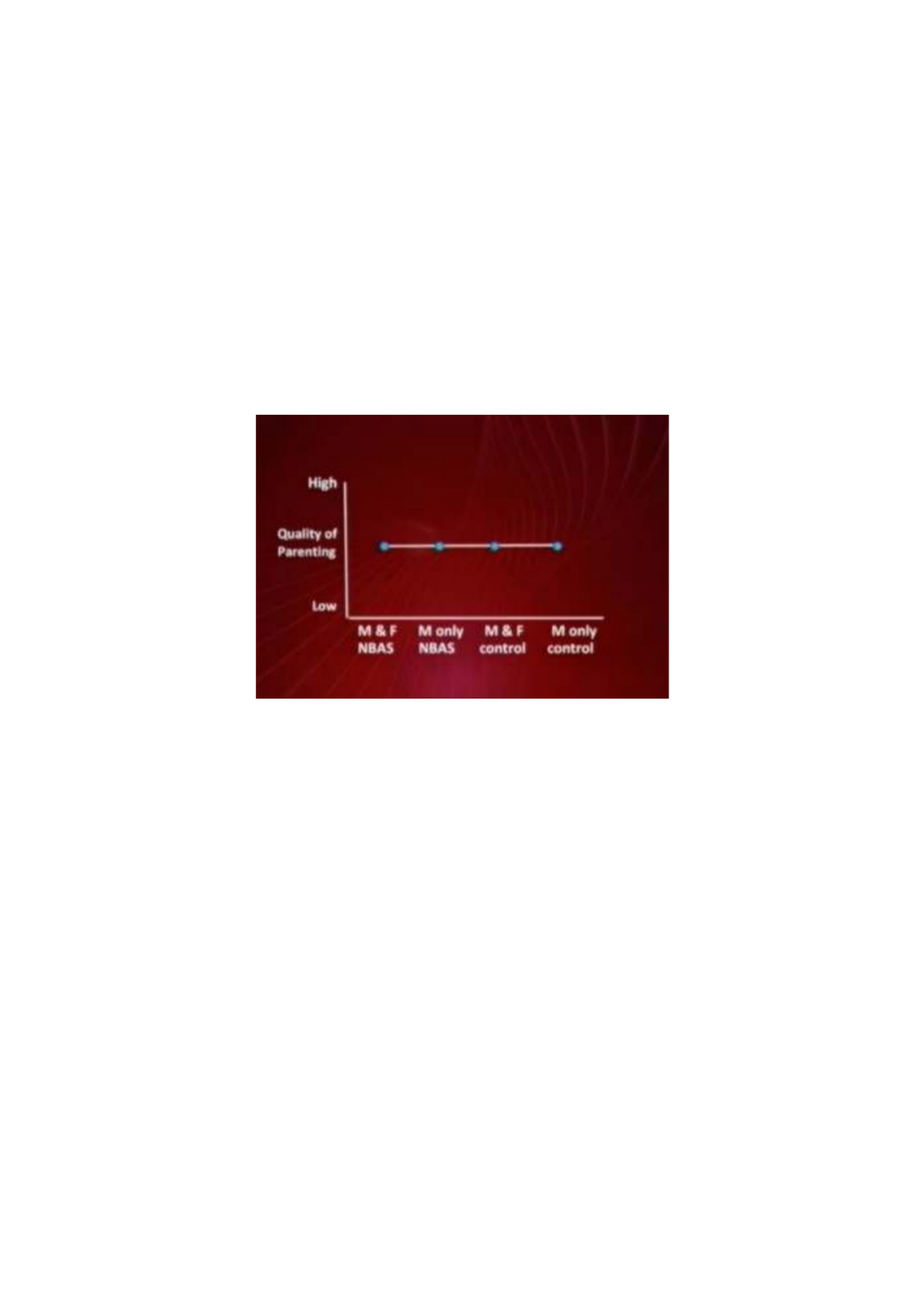
Belsy (1985)
oIndependent variables
Neonatal scale test, or control
Mother and father, or mother only
Data of parenting from 1, 3, 9 months – dependent variables
oParents randomly assigned
oGroup 1 both parents, Group 2 just mothers, Group 3 (mother and father
and were told they’d receive report) & 4 (mother’s only and were told
they’d receive report) -- control groups
oDependent variables
At home observation from trained people: groups 3 and 4 (control
groups) also had observers results are due to procedure and not
because parents are on their “best behavior”
No difference the NBAS had no effect on parent’s behavior later on at home?
Brazleton wrote response article after study was released he said that you
have to be very sure that parents enjoy the training experience
oAre parents uncomfortable?
Belsky’s response: we did assess how involved the parents were in the training,
trainers were reliably scoring parents
If we separated those who enjoyed the training vs. those who didn’t… only effect
in group 1
Alert baby meant parents enjoyed training
What if they tested the parent’s personality beforehand? Well the groups were
randomized and they weren’t interested in parent’s personality
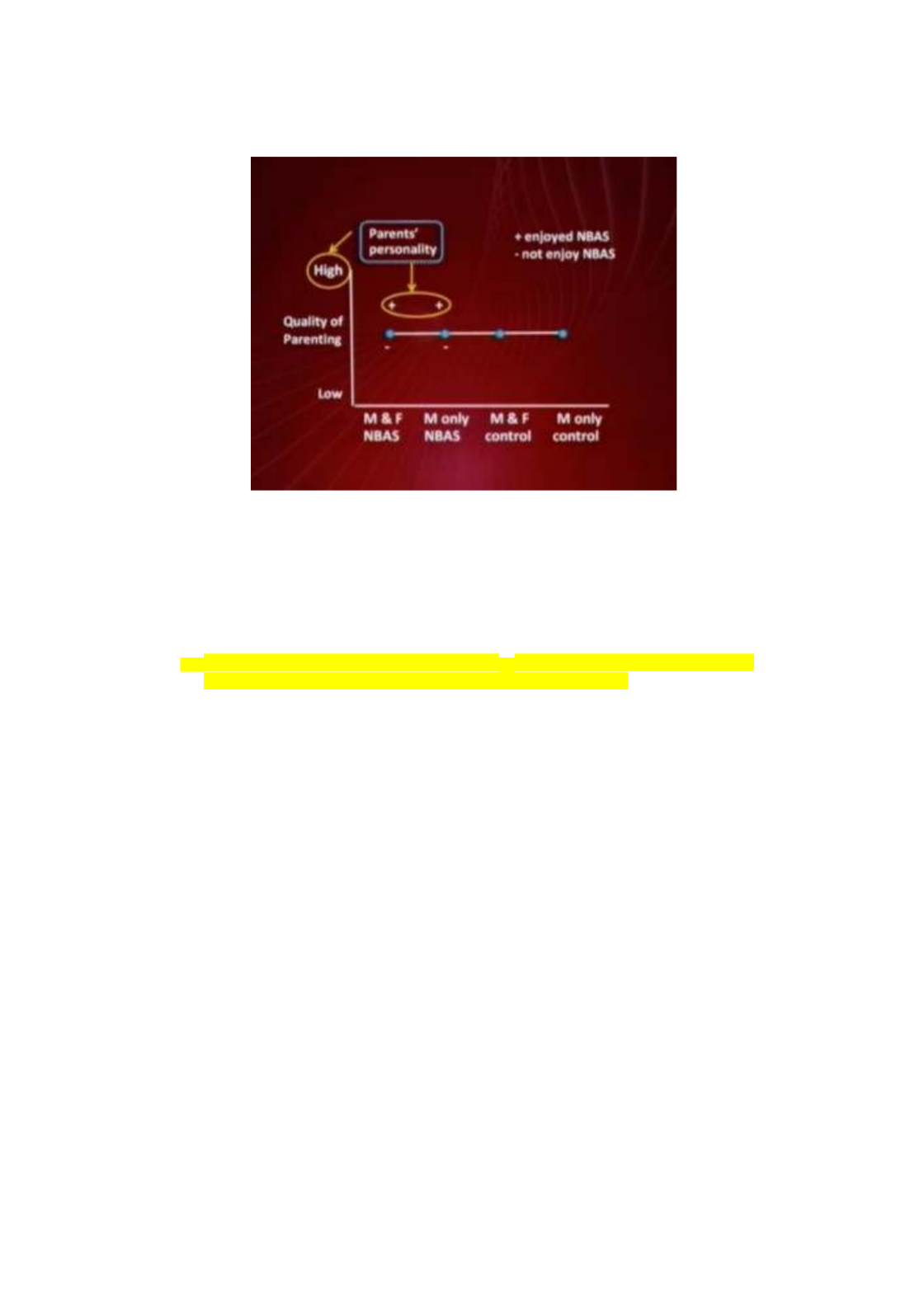
Conclusion: No overall effect, not due to parents’ personality
Relevant factors that make this training worth it: both parents present,
alert baby, parents enjoy the training
Lecture Video 3:
Motor development: human infant is helpless for about first year
How do human infants learn to control their body?
Motor control is learned by trial and error? babies start out randomly moving
their bodies and realize that certain movement patterns work
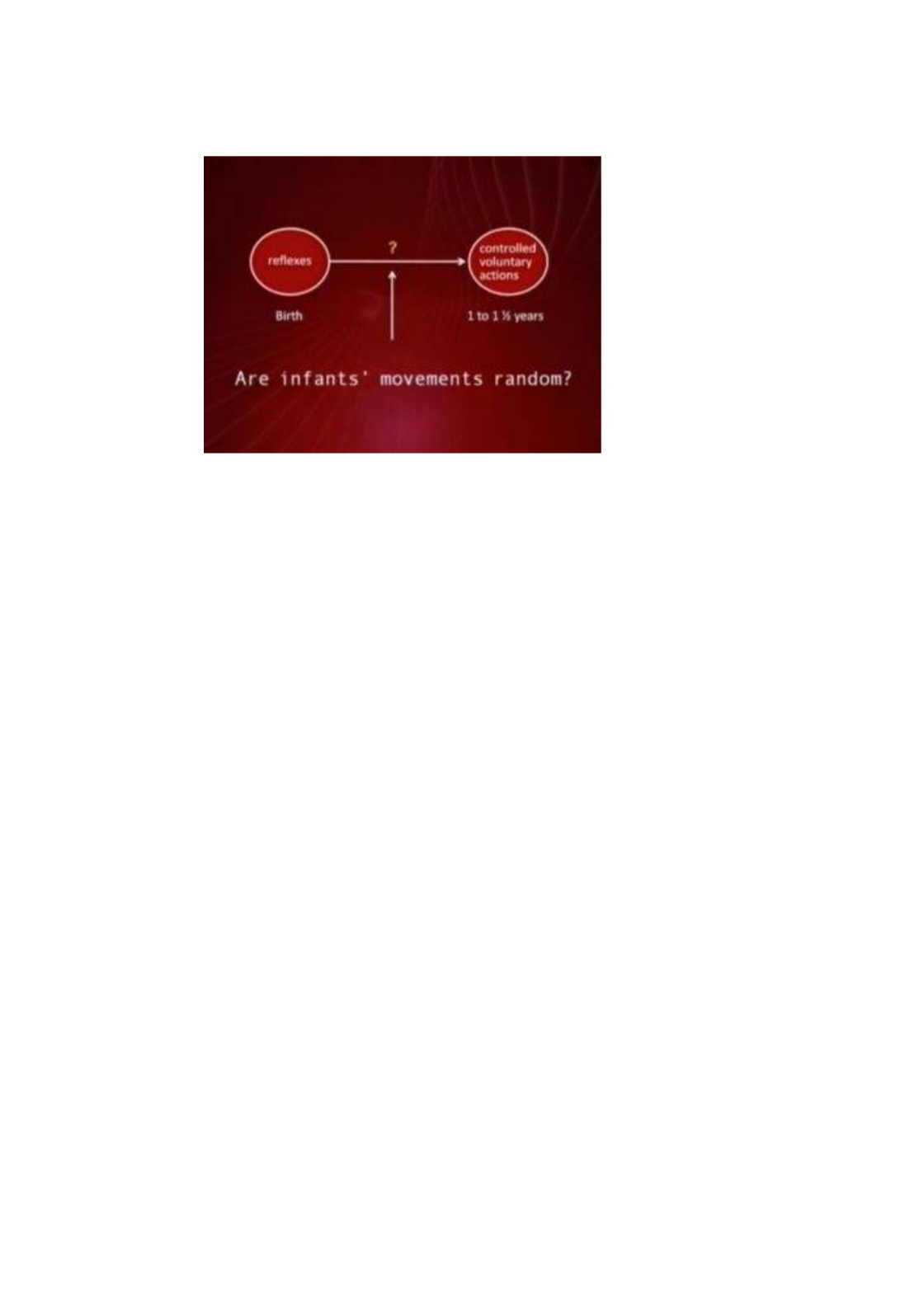
Video clips:
Yes, If babies have to learn everything with no innate patterns empiricism
No, If babies movements are not random innatism
Ester Thelan:
Rhythmic stereotypic movements (RSM): common in first year of infant’s life
She found it’s in every body part, are not reflexes, and peak before voluntary
control of body part
RSM kicking has the same form as newborn stepping reflex
oA central pattern generator for stepping?
Perhaps it goes:
Reflexes RSM Controlled voluntary actions
Evidence towards motor development being innate
One problem: stepping reflex is a “disappearing reflex” baby will show it when
lifted up, but after about a month the reflex disappears
oMaybe some other control program suppressed the walking reflex until it is
needed again? Like when the infant starts to learn to walk?
oMaybe stepping reflex is innate, but that program is erased from nervous
system, and has to be relearned when needed
Ester found that baby puts on a lot of weight in legs around this time
She suspended them in water and found that baby’s will do stepping reflex
Final study: connect baby to device to measure signal from nervous system to
legs
oThey found that the messages were not in sequence, but were to contract
all of the muscles at once, like a burst of energy sent to the leg
Movements in first year:
Patterned, not random
In every body part
Same form as adult movements
No innate programming in baby’s brain about how to fire the muscles in sequence, BUT
the movements are not random the third way: dynamic systems
The developing brain and developing body are a system and both are constantly
changing each other
Very little is preprogrammed – instead there is a dynamic system between brain
and body
The patterns are built into the structure of the body

This makes sense for there not to be preprogrammed systems – every infant’s
body is different and it’s changing rapidly. If brain was preprogrammed, that body
part is changing too quickly and those innate programs would be useless
Study Guide Questions:
1) Using the evidence presented in the film on the Neonatal Behavioral Assessment
Scale as your data, construct an argument either criticizing or defending William James'
statement that the world of the newborn is a "blooming, buzzing confusion." Use as
many examples from the film as you can in your argument. What examples don’t fit into
your argument?
Start your thinking from the hypothesis that the world is a blooming buzzing confusion
for the newborn. Then go through each example of behavior demonstrated in the film.
Does the baby react to that situation as if the world were confusing to him? The world is
not a blooming buzzing confusion to you (hopefully!), so you know how you would react
to each of these situations. How does the baby react? If, after your consideration, you
conclude that the world is confusing to the baby, then clearly the baby has a lot to learn,
which would then on balance suggest he starts out knowing little about how the world
works (which is the position of Empiricism). But if you conclude that the world is not
confusing to him, then clearly he has less to learn, which would then on balance
suggest he already knows something about what to expect about how the world works
(which is the position of Innatism).
2) (a) In his study using the Neonatal Behavioral Assessment Scale with parents, what
factors did J. Belsky find to be important in predicting how well the parents did at home
with their infants?
(b) In your judgment, does his study show that the NBAS training caused
improvement in parenting? Explain and justify your position.
3} Explain what is “new” about Esther Thelan’s account of infant motor development.

