


Surname 1
PAF 200 - Public Service and Policy in the 21st Century
December 15, 2024
Final Paper
Advantages and Disadvantages of Various Methods of Government Intervention to Correct
Market Failure Arising from Monopoly Power
Market failure is a situation that has affected many nations in various sectors of the
economy. It occurs when the market force operations lead to a deadweight loss of the economy’s
welfare. It also occurs when the competitive results of the market fail to be satisfactory from the
society’s viewpoint. There are various causes of market failures, and the major cause is normally
the domination of the market by monopolies. Monopolies have the market power which allows it
to manipulate prices to its advantage. Also, in a free market, the private sector cannot supply pure
public goods and the quasi-public goods needed by the consumers to meet their needs and wants
in a profitable manner (Posner 807). These are some of the issues that lead to market failure
resulting from the abuse of the market power by the monopolies. The purpose of this paper is to
discuss the advantages and disadvantages of the various methods of the government in correcting
the market failure as a result of monopoly power. It explains the market failure and its causes; it
further explores government interventions and their pros and cons, such as price regulation and
capping, establishes policies for mergers, the creation of liberty market, regulation of the rate of
return and provides an in-depth discuss the deadweight loss. The conclusion gives the overview of
the paper.
Normative theory of market failure argues that the regulation helps in improving the
efficiency of the economy and safeguards the social values through the correction of market
failures. It further argues that regulators have enough information and the power of enforcement

Surname 2
to efficiently promote the interests of the public (Tresch 123). It, therefore, means that regulation
is the best way to correct market failures. Market failure refers to the inefficient distribution of
resources in the free market that occurs due to the existence of monopoly powers in the market.
Monopoly power is the ability of a firm to control the market through increased prices and lower
outputs (Tresch 123). The theory suggests that regulation controls the activities of the monopoly
firms to create stability and protect the welfare of the customers. Deadweight loss, on the other
hand, is the loss caused to the society as a result of the inefficiencies in the market. It means that
deadweight loss causes market failure by causing undesirable market conditions. Monopoly also
causes deadweight loss through high pricing of goods and services. Deadweight loss involves
demand and supply being out of equilibrium which is what the monopolies do in the market. They
lower supply of goods and services which raise demand and hence the prices increase causing
market inefficiency (Posner 808). There is a need to care about deadweight loss as it negatively
affects the total welfare of the society. Regulation is the efficient way to reduce the effects of
deadweight loss through the regulation of the monopoly power.
Methods of Government Regulation
Price Regulation and Capping
Price regulation and capping are done by placing a ceiling on the prices that companies
within a given industry can charge for services and goods. It is done primarily in the private
sector to maintain prices through the use of regulators. It means that these monopolies have to
sell their products at a price lower than the margin established by the regulator or value the
prices of the services equal the stipulated amount (Sheshinski 127). The regulator in some
circumstances can set price floors which discourage anticompetitive pricing. It requires firms to
refund the surplus profits.

Surname 3
Modern markets are promoting market fairness and economic stability where price
control and capping are becoming an element of environmental policies. Price ceilings are
coupled with emission limits in governments to achieve market efficiency and environmental
accountability (Taleizadeh et al. 12232). This incorporation entails that companies not only have
to obey the pricing regulations but also adhere to the emission provisions which compel
companies to consider both cost-efficient and environmental friendly ways of production at the
same time. These two commitments usher in change in technology and efficiency improvement
especially in the sectors like manufacturing and energy. Regulators maximize long-run
commitments in clean manufacturing and resources optimization, which is connected to the
sustainability performance, to the pricing systems. This reconciliation of economic and
environmental aims is what makes the regulation more of an incentive-based mechanism, rather
than a punitive one, that leads to continuous improvement (Entezaminia et al. 125973). This
strategy, in the long term, would develop a stable market, equitable competition, and the overall
ecological footprints decrease (Yadav et al. 40). Governments strike a balance between consumer
protection, corporate responsibility, and environmental management using hybrid regulatory
models.
Multi-channel supply chains are another business area affected by price capping, which
forces companies to re-evaluate their production, distribution and pricing strategies. When the
regulating policies restrict the flexibility in prices, businesses need to rebuild their logistics to
remain profitable (Xu et al. 2738). This usually involves having sophisticated demand
forecasting systems in place as well as optimization software that can enhance demand
forecasting and reduce wastage. Operating more effectively, companies will be able to
compensate the restrictions of the pricing ceilings and will be able to compete in the changing

Surname 4
market. Also, the price regulation stimulates cost control and resource distribution innovation,
which assures businesses flexibility in terms of policy restrictions (Mondal and Giri 859). A
widespread practice of most organizations is trying to test the hybrid forms of combining
marketplace and reselling strategies as a way of minimizing the financial exposure to capped
prices. These strategies allow the diversification and risk-sharing in accordance with the
governmental regulations (Xu et al. 2746). Consequently, controlled pricing leads to efficiency,
technology advancement, and didactic coordination of supply chain indirectly. By such adaptive
mechanisms, companies are able to survive growth even in constraining economic conditions.
Inter-firm relationships are also changed as government price regulation, part of the cap-
and-trade systems, promotes both cooperative and competitive behavior among firms. In
regulated provisions, companies tend to cooperate to achieve an emission goal but they are not
allowed to exceed the price limit (Mondal and Giri 859). This kind of cooperation will also result
in fewer cost and technological duplication, and enables industrial ecology to be even more
diverse and resource economical. Moreover, these partnerships increase the survival of the
smaller firms in the well regulated markets due to the sharing of resources and information. The
coordinated operations also improve the market transparency and it assists in stabilizing supply
and decreasing consumer price volatility (Entezaminia et al. 125973). Meanwhile, a regulated
price encourages competition through sustainable performance, as opposed to price dominance.
Those that are quicker in adopting the green technologies are more likely to have reputational
benefits and popular support among the consumers (Yadav et al. 40). This competition and
collaboration, in essence, fosters innovation whilst maintaining fairness, and regulated markets
are efficient and sustainable.

Surname 5
New trends in economic administration focus on dynamic rather than fixed price control
vehicles. Regulators are moving to systems, which vary price caps in line with environmental
impact and market conditions (Xu et al. 2749). This bandwidth gives companies an opportunity
to be nimble, and it is important to note that even after many years, the control of prices is still
serving its social and ecological functions. There is also no shortage or stagnation in production
under adaptive pricing as this aspect brings about unintended consequences unlike when using
rigid controls. In addition, the incorporation of performance measures into regulatory
frameworks amplifies transparency and accountability (Mondal and Giri 870). Data-driven
supervision allows changing price limits in real-time, rewarding firms that demonstrate
efficiency and operational effectiveness or high environmental standards. This feedback loop of
interaction forms a paradigm of partnership between the government and industry to minimize
friction and advance common interests (Taleizadeh et al. 12232). In the end, the adaptive
regulation can promote the sustained development and steady competitive ability in the market
by ensuring the market complies with sustainability and economic stability in the constantly
developing global economy.
Advantages
The regulator sets the prices which discourage firms from over pricing their products.
This form of regulation is important as it protects the competitors and the consumers through the
prevention of the firms from inflating the prices of the monopoly services they provide. It
becomes a benefit to the consumers since price increase by monopolies is to their detriment.
Posner, (548) suggests that price regulation also allows the evaluation of the potential of a
company. Before the implementation of price regulations, an evaluation is always done that

Surname 6
provides a basis for price regulation. It, in turn, allows the companies to examine the quality of
service they provide and possible ways of improving services.
Firms can also have the incentive of cutting the costs. When the companies cut the costs
way below the cost of the monopoly company, it can increase their profits and more customers
will be drawn to buy their goods and services. The regulation also leads to the creation of
surrogate competition. It is evident that the absence of competition in an industry causes
damages to both the consumers and the other few companies that service the same industry with
the monopoly company (Sheshinski 128). The method that is used to prevent the monopoly from
abuse of the power endowed to it. It also increases the competition.
Regulation of prices does not just prevent the monopolistic exploitation but also instills
consumer confidence and sustainability in the market. When companies exist within transparent
pricing models, consumers can be convinced that prices are presented as a fair value and no
extreme behavior of profits seeking (Cuesta & Sepulveda, 202). This openness is a source of
equity in an economy as it does not hinder the availability of basic goods and services to people
with high income earners. This leads to markets that are regulated being more customer loyal and
demand stable in the long run. Additionally, predictable pricing condition also gives the
companies an opportunity to plan their production and investment strategies without much risk.
This kind of stability contributes to economic growth because the markets will respond to
fluctuations in demand and supply without sporadic shocks. Price fairness and consumer
protection help regulators to establish a situation where the sustainability of business and the
wellbeing of the population comply together (Cai and Jiang 108964). When regulation exists,
price mechanisms have turned into systems of accountability and trust and not tools of
exploitation (Cuesta & Sepulveda 2021; Cai and Jiang 108964; Fan et al. 325).

Surname 7
The other benefit of price control is its contribution to greater market efficiency through
the reduction of allocative distortions. Unregulated monopolies, as a result, usually hike up
prices to several times the production costs, thereby limiting access and reducing total welfare
(Zheng et al. 909). Meanwhile, a priced-limited policy guarantees that goods and services will be
accessible to a larger number of consumers, hence companies will still be able to cover their
operational costs. This pricing adjustment also compels the less efficient firms to take another
look at their cost structures and production side of operations. Consequently, government
regulation becomes responsible for the appearance of a managerial culture orientated to
accountability and efficiency-driven innovation (Cuesta & Sepúlveda 2021). In addition to this,
stable price levels in the markets can open the doors of financial institutions to regulated sectors
as such institutions will find profit margins and risks more predictable (Fan et al. 328). With
time, the interaction among efficiency, affordability, and investment trust results in stronger and
more balanced market ecosystems (Zheng et al. 909; Cuesta & Sepúlveda 2021).
Price regulation can also have the effect of a company innovating and creating new
technologies, in particular, if it is a type of industry that is environmentally sensitive. Firms that
find themselves in situations where their costs and prices are limited will usually decide to invest
in more efficient technologies so as to be able to reduce their production costs without exceeding
the price limit (Cai & Jiang 108964). This phenomenon is happening in the markets of low-
carbon and renewable energy sources where price regulation is turning into one of the factors
that facilitates the implementation of clean production methods by companies. Industries that
confront price restrictions and environmental requirements at the same time will use innovation
as a tool for making a profit (Fan et al. 325). Besides that, the deployment of energy-efficient
steps and carbon mitigation can be identified as a new source of competitiveness in the distant

Surname 8
future. In this manner, price control measures are not only a means of consumer protection but
also serve as a force for a sustainable industrial revolution. Such instruments are some of the
ways through which economic regulation can be a supporter of environmental goals, thereby not
contradicting financial discipline with the necessity of taking care of the planet (Cai & Jiang
108964).
Smart technologies' integration into regulated sectors has unfolded additional advantages
of price control systems. A good instance is the case of energy and utilities, where smart grids
together with regulatory pricing frameworks facilitate the real-time monitoring of production and
consumption which in turn brings about the optimization of energy distribution and reduction of
consumer costs (Avwioroko 33). The amalgamation of digital technologies with price regulation
provisions makes it possible for tariffs to be adjusted automatically in a way that better reflects
supply, demand, and even environmental factors. This level of accuracy minimizes the
inefficiencies that are typical of the traditional fixed pricing models (Fan et al. 325). In addition
to that, data analytics have a significant role in enhancing the level of openness which in turn
gives regulators the opportunity to spot and prevent market abuses in a timely manner.
Avwioroko (33), the combination of digital monitoring and price regulation is a powerful tool
not only for achieving ecological goals but also for adhering to economic principles. These
changes have the effect of deepening the regulatory ecosystem and thus making it more resilient
to the challenges of the future in terms of fairness, sustainability, and technological
modernization across different industries (Avwioroko 33; Fan et al. 325; Zheng et al. 909).
One more benefit of price regulation is its positive impact on social welfare through
increased fair access to necessary goods and services. Through price controls on essential
services such as utilities, healthcare, or public transport, regulators stop economic exclusion and

Surname 9
make sure that even the lowest-income groups have their basic needs met (Cuesta & Sepúlveda
2021). Besides, such social fair pricing also reduces the risk of social unrest and income gap that
are usually the results of too much deregulated economies. Theoretically, when consumers have
the ability to buy the basic commodities, societal productivity and stability are likely to go up
(Cai & Jiang 108964). In addition to this, government intervention in pricing can prevent
industry sectors relying on the most critical ones such as housing and healthcare from
overcharging the consumers and thus keep the vulnerable groups safe from the manipulations of
the market (Fan et al. 325). Therefore, price regulation operates not only as an economic and
social shield that helps to regulate the market with humanitarian principles but also facilitates the
flow of market forces. By doing so, it supports the continuation of certain types of growth that
are socially inclusive while at the same time allowing for the competitive integrity to be
maintained within the economy (Cai & Jiang 108964; Fan et al. 325).
The Disadvantages of Price Regulation
The regulation process is quite costly and difficult for the regulators. The budget incurred
in the process of evaluating the industry, identification of the monopolies and making the
decisions on the level of standard prices is involving and time-consuming. The regulatory
capture is also another problem. Sheshinski says it is a situation where the regulators are
compromised by the monopolies to become soft in setting the prices which allow the monopolies
to increase their prices making supernormal profits. There is also a possibility of the firm
labeling the regulator as the potential enemies as they argue that the regulators are stricter and do
not allow them to get enough profit to expand their investments. It causes inefficiency due to
lack of cooperation between the firms and regulators.

Surname 10
Pricing regulation may also cause more systemic inefficiencies that are not just restricted
to the relationship between regulators and firms. When the industries are under intensive
administrative scrutiny, the decision-making process becomes complicated and decreases market
agility and flexibility. Bauer and Bohlin note that stringent regulatory controls in 5G markets
have frequently limited the willingness of firms to adopt innovative technologies with associated
diffusion lag of the adoption of higher-order infrastructure and poorer competitive advantages
(Bauer and Bohlin 102260). This relationship puts emphasis on the fact that too much regulation
in spite of the good intentions is counterproductive and is likely to prevent technological
progress and market development. These limitations are more harmful when the industry
experiences a rapid technological change because, in these cases, the firms need to find a balance
between the compliance requirements and the necessity to constantly adjust to the changes
(Cheng, Huang, and Yang 101795). The structural rigidity that exists between the prevailing
regulatory frameworks and the overall market dynamics results in neglect of the global delivery
of innovation and investment flows correspondingly by various industries. According to Bachev,
sustainable governance demands institutional flexibility that allows the regulation to keep up
with the varying economic and technological realities (Bachev 119). In the absence of this
leeway, regulatory frameworks run the threat of becoming an impediment to development,
creating a state of paralyzed stillness instead of a state of stability. Therefore, the unintended
outcome of price regulation is not just that it will be expensive to administer but also that it is
prone to sublimating the innovative and adaptive abilities that stimulate long-term growth.
Another negative aspect of price regulation is that it may lead to distortion in competition
as well as induce strategic avoidance in the firms. When profitability is undermined by the price
limits, the companies can resort to one of the options: relocating business to unregulated markets

Surname 11
or implementing cost-saving strategies that can negatively affect quality and innovation. Nippa,
Patnaik, and Taussig emphasize that multinational firms tend to restructure operations or even
move to jurisdictions with softer carbon prices undermining the desired regulatory successes
(Nippa, Patnaik, and Taussig 917). This trend explains a larger problem, namely overregulation
may result in maneuvering that diminishes economic efficiency and policy credibility. On the
same note, Komorowska et al. indicate that market participants respond to price differentials in a
strategic manner, drawing on arbitrage opportunities instead of making productive investments
(Komorowska et al. 28570). These adaptive practices demonstrate how harden price structures
are in complicated international markets where capital mobility enables companies to avoid
national limitations. According to Boomhower et al., proper regulation can only be achieved
when there is subtle knowledge of the risk adaptation in markets, particularly during periods of
uncertainty and external shocks (Boomhower et al. 25). This understanding means that a
sustainable price control mechanism should balance fairness and flexibility, which can induce
compliance with incentives and not through coercion and control. In the absence of this balance,
regulatory regimes will threaten to undermine the markets which they are meant to stabilize.
The price regulation also affects how industries deploy resources and risk management
which in most cases contributes to worsening inefficiencies in the long run. When the
government prices are below the equilibrium, the firms are likely to invest less in the
infrastructure or in its maintenance systems and instead use the funds to establish survival tactics
in the short run. Bachev notes that inefficient allocation of resources may occur due to the
misalignment of governance mechanisms whereby regulated entities are more focused on
compliance costs rather than focusing on productivity enhancing investments (Bachev 113). The
result of this structural imbalance is the deterioration of resilience which exposes industries to

Surname 12
economic shocks and market volatility. Furthermore, Boomhower et al. disclose that in the
industries that are vulnerable to environmental risks, including insurance, strict pricing designs
prevent the proper representation of the changing patterns of risks, which increases systemic
instability (Boomhower et al. 17). These results highlight a regulatory design paradox in the
sense that in as much as the aim is to make the service affordable and fair, price controls may
actually increase long-term financial vulnerability. Losing a degree to act according to the
changes in demand, firms become less effective in developing some risk-management tools or
sustainable pricing mechanisms (Nippa, Patnaik, and Taussig 920). This loss of strategic
capacity eventually relegates the inefficiency problem to the state institutions, where the
dependency cycles of reliance weaken market self-rectification.
The other dimension that is of paramount importance is social and behavioral
implications of price regulation that in most cases go beyond economical efficiency. Excessive
high pricing might redefine consumer expectations such that they become dependent on
artificially low charges which create value illusions. According to Campus et al., the regulatory
strictness varied among different countries in the e-cigarette market directly affected the
consumer risk perceptions and purchasing behavior (Campus et al. 114187). These behavioral
reactions can be used to show that regulatory measures may inadvertently influence social norms
and preferences and thereby make it difficult to fulfill long-term policy goals. This malpractice is
in line with other institutional path dependence theories, in which the consumption habits
founded on regulatory legacies render them difficult to reform (Bauer and Bohlin 102260). The
challenge comes when the regulatory agencies have to weigh between consumer protection and
educational protection of the market and accountability is not compromised by the affordability
measures. One of the possible ways to align incentives with long-term social welfare,

Surname 13
Boomhower et al. propose adaptive regulation, which is responsive to behavioral feedback loops
(Boomhower et al. 32). Hence, a sustainable price control should include behavioral economics
to prevent the establishment of paternalistic systems at the expense of efficiency in the short
term.
Price regulation has also become an issue of environmental and sustainability
implications. Pricing interventions within the energy and resource-intensive sectors may be a
distortion of the signals which are required in the ecological transition. According to Nippa,
Patnaik, and Taussig, the discrepancy in carbon pricing regimes diminishes the level of
commitment by firms to invest in clean technologies, undermining the effectiveness of global
climate policies (Nippa, Patnaik, and Taussig 924). This is an example of how the mechanisms
of price control, when divorced of environmental aims, may tend to maintain an unsustainable
practice unintentionally. In the same way, Komorowska et al. show that price gap on energy
storage markets affects the competitiveness of clean technologies, demoralizing the investment
in renewable alternatives (Komorowska et al. 28566). These results indicate that there is a
necessity to have unity between economic regulation and environmental policy because disparate
systems can produce conflicting drives. According to the focus of Bachev, sustainable
production and consumption can be encouraged by means of governance models that entail the
introduction of ecological performance criteria into the system of pricing (Bachev 117).
Incorporating these adaptive sustainability measures into regulatory design means that price
controls can be able to stabilize markets as well as facilitate the overall transition to
environmental resilience and resource efficiency.
The world economic system is interdependent, and this fact makes the systems of
national prices ineffective. A globalized market can make the effects of regulation to cut across

Surname 14
the borders and determine the international competitiveness and the dynamics of trade.
According to Bauer and Bohlin, regulatory fragmentation between nations may disrupt world-
wide innovation networks with companies experiencing inappropriate pricing regimes along with
different compliance standards (Bauer and Bohlin 102261). These discrepancies establish
inefficiencies that stretch further than domestic markets and collusion with foreign investment
and co-operation is deterred. In addition, Boomhower et al. emphasize that price regulation in a
sector or region might lead to spillover in other sectors, especially in interdependent financial
and environmental systems (Boomhower et al. 28). This is to say that the unilateral pricing
policies can cause unintended ripple effects that cause instability in the related industries and
markets. According to Nippa, Patnaik, and Taussig, harmonized international frameworks in
particular carbon and energy markets may be able to counteract such distortions and improve
cooperative resilience (Nippa, Patnaik, and Taussig 927). Therefore, in the modern globalizing
economies, price regulation has to advance beyond unilateral state-specific tools to worldwide
knowledgeable approaches that maintain a sense of fairness and allow transnational
competitiveness.
Policies for Mergers
The ability of several companies coming together to form one large firm causes market
failures through the formation of a monopoly power. The government sets up policies that
investigate the possibility of the companies merging to form one large company that can
dominate the market controlling a large share of the market (Sheshinski 129). If the merger
forms a company that has more than 25 percent of the market share, the situation is referred to
the competition commission which in turn makes a decision on whether to block or allow the
merger to operate.

Surname 15
The complexity of evaluating the long-term outcomes of the mergers on both innovation
and market entry are also difficult in mergers. The policymakers have always been in a dilemma
on whether to promote consolidation to achieve efficiency or prevent it to maintain a healthy
competition. According to Fumagalli, Motta, and Tarantino, the acquisition of potential
competitors may lower the motivation to innovate because large players will use acquisitions
instead of competition with newcomers (Fumagalli, Motta, and Tarantino 47). This relationship
implies that the merger policy should distinguish between the efficiency-enhancing combinations
and those that have to be used to obstruct the threats in the future. Provided that the supervision
does not make this difference, there is a danger that markets will lose the competitive pressure
that contributes to technological advancement and consumer well-being. Katz describes that
acquisitions by large players in digital industries include smaller innovative companies, which
usually results in kill zones, where the entrepreneurship will not dare to enter a market controlled
by large platform players (Katz 62). This kind of behavior is an indication of how mergers may
choke the innovation ecosystems outside the immediate transaction. Cabral also observes that
digital sectors that are controlled by mergers must take into account not just the market shares
existing in the present but also the future directions on the paths of innovation and competition
(Cabral 104). These lessons point towards the need to regulate proactively by focusing on
dynamic competition as opposed to immediate efficiency benefits.
The definition of market power is also transformed by the digital consolidation. In cases
where data and connectivity are the primary sources of a competitive edge, the conventional
antitrust instruments do not work with the accuracy. Platform mergers have a tendency of
consolidating user data in services to create an ecosystem that excludes new entrants and
increases information asymmetry (1314). Such structural supremacy is beyond the quantification

Surname 16
of price-based measures. These non-price mechanisms by which control of data and algorithms is
strengthened are not included in the conventional merger analysis, which focuses on the cost and
output effects (Cabral 109). Regulators overlooking these variables are prone to be
underestimating the economic and social impacts of digital consolidation. Also, acquiring
possible competitors undermines competition in the market since smaller innovators feel that
acquisition rather than innovation is the only way to come out of the market (Katz 69). To cope
with this disproportion, it is necessary to develop policy frameworks that are able to evaluate the
potential of innovation, concentration of data, and technological dependency at the same time.
The absence of such an adaptive model would mean that the process of merger regulation would
remain at a lower level of digital transformation.
The other than the effect of the markets, the mergers also have implications for corporate
governance and financial transparency. The integration after a merger may also make
accountability unclear through establishing intricate ownership systems that conceal actual
control and exposure to risks (Cumming et al. 1489). This transparency obstructs the
identification of anti-competitive conduct and misrepresentation of financial data. Companies
can also take advantage of the uncertainty in the policy to engage in mergers that redistribute the
risk instead of creating fruitful synergies (Paudyal et al. 144). These types of strategies are
profitable to the shareholders in the short run but cause a decrease in the stability of the whole
market. The lack of transparency regulations only increases the issue, with companies being able
to portray anti-competitive mergers as efficiency-enhosing deals (Fumagalli, Motta, and
Tarantino 59). These tendencies indicate that transparency measures are to be further than pre-
merger review. Post-merger assessment of its activities would be continuous in order to see that
the efficiencies promised are realised as well as prevent practices that would nullify healthy

Surname 17
competition. This would tighten accountability and make the result of the mergers to be in line
with the interests of the people.
The Advantages of Merger Policies
Empowering of firms by the dominant firm is one of the biggest advantages. If the
commission allows a merger to operate with the market share it dominates, it helps the growing
firms to have more profit to finance riskier and profitable investments. Also, the smaller firms
benefit from the policies because it controls the behavior of the mergers giving them an
advantage. It regulates their prices or can dissolve mergers to protect them. Merger policies also
bring research and development when more firms come together (Posner 548). They combine
their resources in conducting market research leading to the development of the market, and the
smaller firms benefit from the pool of resources created.
Mergers also create economies of scale. It allows the mergers to work together to
increase output reducing the average production costs. The lowered average costs allow the
reduction of prices of goods and services for the consumers. Avoidance of duplication of
products and services by companies producing similar goods and services allows them to
diversify their products through sharing of knowledge avoiding production of similar goods in
the market. Government price controls through policies give an advantage to the firms which are
underperforming (Sheshinski 130). The mergers cannot exploit them through lowering of prices
since they have a reduced cost of production. It balances the market share between the merger
and the independent struggling firms.
Once you have set control mechanisms linked to progressive policy, mergers can become
a source of environmental sustainability and innovation. Companies merging in eco-friendly
sectors, usually combine the resources to both meet the tough ecological standards and to be

Surname 18
efficient in green technology investments. A recent empirical study indicates that green mergers
and acquisitions can be a great driver of eco-innovation and resource efficiency in enterprises
that are heavily polluting (Liang et al. 48941). Such a merger provides a way for companies to
absorb (rather than throw on society) the environmental costs within themselves. This harmony
between the design of regulations and the strategy of corporates shows how carefully crafted
merger policies can turn the potential monopolistic concentration into a sustainable
modernization harness. Additionally, mergers resulting in a combined pool of financial and
technical resources can cut back on the redundancies of green R&D, thus, promote the formation
of long-term innovation ecosystems (48948). The synchronization of the shared sustainability
objectives between the parties involved reveals the most important regulator's insight: If market
authorization is linked to environmental performance, then consolidation can be a win-win
situation for profit and the planet.
Digital transformation is a source of complexity, as well as opportunity, for merger
policy advantages. As the metaverse economy is arising, companies are more and more
combining their digital infrastructure with their physical operations in order to improve their
connectivity and data utilization (Shi et al. 2108). This combination goes far beyond the mere
efficiency—it fundamentally changes the way companies think of production, interaction, and
consumer experience. In case a merger happens between a digital and a physical company, the
combined entity is able to accelerate the technological transfer and the innovation diffusion,
especially in the industries that require real-time data and virtual simulation. This kind of
integration gives companies the opportunity to test market behavior, product design, and policy
compliance in hybrid digital environments (2114). However, the advantage is contingent upon a
regulatory framework that not only understands the worth of virtual experimentation but also

Surname 19
sees it as a mere complement to real-world risk management. By making sure that digital
mergers remain transparent and competitive, regulators give companies the green light to harness
technological convergence without endangering consumer choice or market fairness. Such a
marketplace is adaptive and forward-looking; it is a marketplace that, instead of being dominated
by monopolies, is rewarded for the collaboration driven by innovation.
One of the most notable and quickly essential advantages of merger strategies is their
power to influence the data-driven innovation and consumer personalization of tomorrow. As
digital mergers become more prevalent, companies in most cases obtain large datasets which
enable them to create highly tailored products and services (Chen et al. 6). This type of
personalization increases both customer satisfaction and business efficiency, however, at the
same time, it raises issues of data monopolization and unaffordable access to the digital
resources. To regulate such situations, regulators can use merger policies to impose the open data
or interoperability standard requirements thus ensuring that privacy protection evolves together
with innovation (9). With correct implementation, these measures turn the potential information
asymmetries into creative competition opportunities as companies compete to develop new
algorithms and analytical tools in a level playing field. In addition, the practice of merged
entities sharing data responsibly will result in fewer redundant research activities and higher
predictive consumer models' accuracies (13). In essence, these devices indicate a transformation
in regulatory ideology: merger policies are no longer only instruments that prevent concentration
but also strategic tools that direct market power to the technologically progressive side that
benefits society. Crafting governance systems that foster innovation while still providing
reasonable constraints on informational dominance is the real challenge, however.

Surname 20
In addition, border-crossing scenarios shed light on the capability of merger regulations
to be flexible and to help global markets become more stable again. In the first place, economic
research indicates that deliberate consolidation across different countries can bolster the system’s
resilience in times of macroeconomic volatility and policy uncertainty (Stefko et al. 6391).
Cross-border mergers, if they come with a properly coordinated oversight, enable companies to
spread their operations in different geographical areas and consequently to share the risk that
comes from various regulatory environments. Moreover, these mergers become a source of
knowledge transfer, which makes the smaller economies capable of absorbing not only state-of-
the-art technologies but also managerial expertise from the partners that are already more
developed (6397). The process of diffusion, therefore, gets stronger the more competitive the
local market becomes and less regional inequality there is. Nevertheless, the precondition for
these benefits to happen is the presence of coordination among national regulators. In case there
is no coordination, companies might take advantage of the loopholes in different jurisdictions
which would be detrimental to the process of fair competition (Argentesi et al. 112). The main
message goes beyond that as it states that when merger policies are harmonized on the
international level they can be seen as the means of economic integration and stability instead of
being obstacles on the way of globalization. Among other things, these policies are instrumental
in pushing firm-level efficiency, but they also become the means of keeping balanced economic
interdependence among different markets.
Disadvantages of merger policies
Merger policies may allow forms to form conglomerates creating a monopoly in the
market. It results to decrease in competition as the mergers gain power through reduced prices.
The mergers dominate the market providing one or similar products which limit the choices of

Surname 21
the consumers. There are fewer firms competing to produce other products for consumers to
choose from in the market. Additionally, Sheshinski (131) asserts that mergers create joblessness
as the merging companies lay off its workers leading to unemployment. When more companies
merge into one, new employees are hired. Also, it causes diseconomies of scale if the policies
restrict firms from merging. It leads to increased costs of production per firm, which increases
prices and lowers profit.
Even mergers under regulatory supervision, as an unintended consequence, may suppress
innovation by lessening competitive pressure and limiting the technological diversity of markets.
The motive of firms to engage in disruptive innovation decreases when there are no new rivals to
be challenged as they are absorbed, thus dominant players can continue to make incremental
rather than transformative progress. One study found that acquisition of a potential competitor
usually leads to the abandoning of innovative projects rather than their development (Fumagalli
et al. 18). Such a scenario only deepens the 'creativity' problem of the industry and also
consumer welfare since less new products reach the market. The digital sector is a case in point
where antagonism is reduced after the major consolidations which generally leads to the
concentration of control over data and algorithms that in turn discourages small firms from
investing in the risky innovation of their products (Cabral 104). As fewer innovations emerge
from existing firms, the economy experiences a decrease in long-term dynamism which, in turn,
heightens the entry barriers for new entrepreneurs. Therefore, proper merger supervision cannot
be limited to short-term efficiency gains only, but rather be concerned with the structural effects
on innovation ecosystems so that competition can still function as a driving force for
technological progress.

Surname 22
One more drawback of merger policies stems from their uneven impact around the globe,
especially during times of policy or economic uncertainties. When faced with changing political
or financial situations, companies may decide to merge in a stable region in order to consolidate
their capital. This can result in a situation where cross-border mergers can cause more volatility
and thus deepen the gap between different economies (Paudyal et al. 100930). Such an
imbalance can have the effect of investment being diverted away from the markets of developing
countries, thus their growth and the speed of technological adoption will slow. Besides that,
regulation differences between countries can lead to the firms that are in regions with less strict
oversight being able to take advantage of it more than those in other regions (Parker et al. 1321).
These kinds of differences distort global competition, as corporations exploit regulatory gaps to
cement their monopolistic positions while at the same time they evade being held responsible in
those jurisdictions that are stricter. Over the years, these imbalances have eroded international
cooperation and played a role in systemic instability in the areas of trade and finance. Their
combined effect is that they create a dual market system - one which is underpinned by strong
oversight and another which is controlled by opportunistic consolidation. Therefore, the problem
that policymakers are facing is to ensure global regulatory standards are in line with each other
so as to avoid merger policies facilitating the deepening of economic divides instead of bridging
them.
Along with the risks of creating inefficiencies in the market, merger policies also carry
the risk of causing regulatory distortions. This happens when the mechanisms that are supposed
to safeguard competition are used by corporations for influence or for strategic manipulation.
Large firms can, as industries expand in terms of scale and political leverage, influence the
interpretation and enforcement of merger rules so as to be able to maintain their market

Surname 23
positions. There is evidence that shows that the exercise of regulatory discretion in the evaluation
of mergers can become a lobbying and policy capturing area, thus leading to the weakening of
the antitrust effectiveness (Cumming et al. 1482). This distortion defies the principles on which
merger policy frameworks are built and thus lowers public trust in the regulators' impartiality.
Moreover, the concentration of innovation capacity resulting from the acquisition of the
emerging competitors by the dominant firms under the disguise of market synergizing is what
leads to the control of technological trajectories (Katz 107). Hence, it is the entrenchment of
power which, on one hand, excludes smaller firms, and on the other hand, limits the choice of
consumers. With time, the indistinct boundary between regulatory approval and corporate
strategy becomes less transparent thus, the authorities finding it more difficult to ensure fairness.
To ensure that merger control is still credible and functional, it should be kept away from
political and economic influences and instead, it should depend on the transparent and evidence-
based evaluation standards that competition uses to drive equitable market development.
Liberty Markets
It is the creation of a situation where firms join up and compete with the existing firms.
When firms join up, they can compete effectively with other firms increasing their economies of
scale and giving them a competitive advantage. These are firms that have a common market and
targets the production of common goods and services.
Advantages
The market forces regulate the prices of the goods and services in the liberty markets. It,
therefore, gives the consumers an advantage as their consumption behaviors determine the
prices. Government regulations of prices are less leading to the efficiency of running the firms.
Firms can also join the industry easily due to less regulatory policies hindering them from

Surname 24
joining forces unlike for the mergers (Posner 548). It also allows the consumers to access a wide
variety of goods and services as the firms provide a wide variety of goods that consumers. It also
creates employment as more workers are needed to provide the technical services required. The
reduced prices from the Liberty market cater for the overall welfare of the consumers.
Nevertheless, liberal markets also depend quite a lot on the premise that competition will
be conducted fairly and will be self-regulating, a condition that may not always be the case. If
there is a lack of sufficient supervision, leading companies may decide to behave strategically in
ways that disrupt the market balance, for instance, by engaging in predatory pricing or closing
smaller competitors by their aggressive expansion activities (Bachev 118). Such operations
demolish the already neutral market forces since big players get to control prices and limit new
entrants. Besides that, sectors that are very dependent on technological developments may
become unfairly competitive if wealthier companies use their advantages to develop faster while
smaller ones struggle to keep up (Bauer and Bohlin 102266). The accumulation of market power
in even nominally free markets can therefore, result in the reoccurrence of monopolies which
liberty markets have been designed to prevent. Transparent regulations and a limited yet efficient
supervision system are still the means to economic freedom if voluntary competition can indeed
result into real consumer welfare rather than unrestrained corporate monopolies (Cheng, Huang,
and Yang 101802).
Disadvantages
The liberty market has a disadvantage in that the firms have to lay off their previous
workers and employ more after its establishment. It disadvantages these workers as it causes
unemployment and other undesired outcomes. It also exposes the local economy to the
international competition which causes adverse effects. International competition can lead to

Surname 25
increase in prices of local products due to the differences in economic statuses of different
nations. It can affect the consumers locally as goods become expensive.
Moreover, free markets may become sources of unequal market concentration situations
if big multinational corporations take advantage of their superior capital and technological
resources in order to dominate small local enterprises. Such domination most of the time leads to
an unbalanced power of negotiation, i.e., small firms find it very difficult to compete in pricing,
marketing, and innovation (Nippa, Patnaik, and Taussig 915). This disparity deteriorates the
internal industries, lowers the number of producers, and results in the development of
homogenized markets that decrease consumer freedom. Gradually, the fading of small firms can
lead to the disappearance of local jobs as well as community-based economic resilience (Bachev
120). In cases where market liberalization is achieved without proper institutional safeguards, it
usually benefits efficiency more than equity, thus, profit maximization is given preference over
social stability. Therefore, although free markets foster openness and competition, there still
needs to be fair trade practices and balanced regulation in order to prevent the accumulation of
economic power in the hands of a few dominant actors (Boomhower et al. 34).
Liberty markets, by their very nature, are highly volatile and this volatility can lead to
instability both for consumers and producers. Frequent demand and supply changes are the major
reasons for such volatility in which prices become unpredictable thus movements in prices are
for some unknown periods of time. This, in turn, affects the poorest of the poor households, who
do not have the possibility to handle such price shocks (Komorowska et al. 28567). For
producers, the situation is no better. The volatility puts them at risk of being hit by the shocks of
the global market and unstable exchange rates especially in scenarios where the sectors are
heavily dependent on the use of imported inputs (Campus et al. 114190). All these tensions,

Surname 26
resulting from the lack of policy coordination, may fuel the upsurge of cyclical crises in which
market confidence and investments dwindle. The openness of local economies to external price
dynamics is, therefore, also a factor that moves the control over critical goods such as food and
energy from national to international levels. Hence, sustainable liberty markets should be filled
with adaptive policies that help create price stabilization and at the same time, provide protection
to vulnerable sectors from where competition comes as the core principle. Properly regulated
economic freedom will, therefore, not become fragile and exploitative but rather, it will be
inclusive and resilient (Bauer and Bohlin 102268).
Regulation of rate of return: RPI-X formula of price Capping by firm size
The newly privatized companies such as water, gas, and electricity firms are regulated by
the government to avoid creation of high entry barriers and natural monopoly. Posner (548) says
it aims to reduce costs through stimulation as well as prevention of high margins of cost. In price
capping, if the prices rise at RPI-X, it allows the industry to sustain normal profits as long as it
attains TFP growth that is equal to the national average; the TFTUK, + X. The regulation that
allows the company to get a rate of return that is higher than the capital cost encourages the
company to acquire excess capital stock. The firm’s equity, therefore, becomes proportional to
its capital stock.
Its Advantages
The return regulation is low which allows the firms to be more flexible and allows it to
gain more incentives due to lack of rigid regulation. The stability of the market is ensured
through the rate of return methods which allows the companies to sell more and increase their
profits and a healthy form of competition is encouraged (Posner 548). The methodology

Surname 27
consequently leads to the lower capital cost which in return allows the firms to lower the prices
of its goods and services. It increases sales and hence the profit.
Its Disadvantages
It causes cost padding where the budget increases than estimated. The effect caused is
unnecessary spending of money in the subsequent projects. It causes deception and breeds a
detrimental corporate atmosphere. The regulation also decreases the incentives for increasing the
cost of production affecting the efficiency and returns a firm can gain from increased incentives.
The regulation may also fail in properly evaluating the levels of reasonable profits which may
lead to less amount capital for subsequent projects. It also leads to excessive investment in fixed
assets which allows the monopoly firms to abuse their power.
Market failures and the Motivation of Government policies
The government policies seek to provide measures to prevent market failure. It prevents it
from the monopoly power that causes underproduction of goods and services by increases the
prices of the products than when there is a form of competition to control the market power.
Monopoly’s market power damages the consumer welfare. The policies are motivated by the need
to reduce other causes of market failure which include the negative externalities such as the effects
caused by environmental pollution leading to social costs of production exceeding the private
costs. Positive externalities such as the provision of healthcare and education make the social
benefits associated with consumption to surpass the private benefits is also another motivation
(Posner 808). These negative influences call for the protection of consumers and the market
through the use of policies.
Deadweight loss

Surname 28
Deadweight loss refers to the cost created to the society by the inefficient nature of the
market. It is applied to any form of deficiency resulting from inefficient resource allocation.
Some of the things that cause deadweight loss include price ceilings, which involve the use of
price controls, rent controls and price floors (Kay 111). It is primarily created by the taxation of
goods and services, and the transactions levied on the elasticity of supply and demand. It,
therefore, imposes a change in the supply and demand, and consequently, the changes of prices.
When the consumers fail to feel the prices of the services and goods as compared to the utility,
they are likely not to purchase the product leading to market failure. It shows the clear
connection that exists between deadweight loss and market failure through taxation. The tax
burden falls on the sellers and the buyers of the products causing undesirable effects.
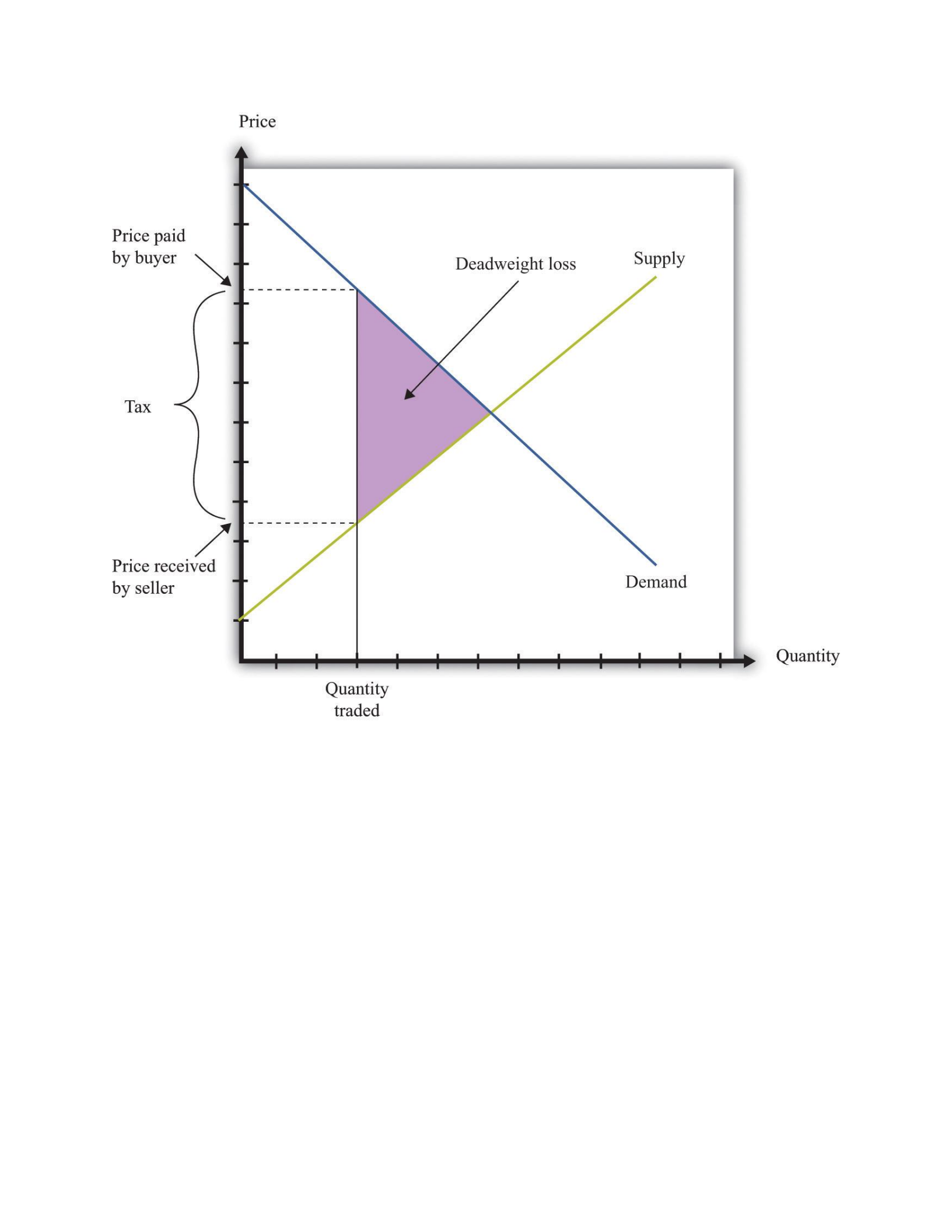
A tax imposed on a product creates a difference between the prices that the seller receives
and the one paid by the buyer. Kay (113) adds that the deadweight loss and tax burden created
are defined about the competitive equilibrium caused by unavailability of tax. The tax burden
caused by the buyer is calculated from the difference the price paid under the competitive
equilibrium and the price paid by the buyer under the tax. On the other hand, the burden of the
seller is calculated from the difference between the prices received under tax and the price under
equilibrium competition. It is evident that the burden that the buyer receives is higher than the
burden the seller receives when all factors are constant and if the elasticity of demand it less. If
the supply is less elastic and all other factors remain constant, the burden of the seller becomes
higher. The formula used in the calculation of the change in price and the change quantity
demanded can help in the calculation of deadweight loss as shown below.
The formula:
Deadweight loss= 5*(P2-P1) *(Q1-Q2).
Surname 29
Where P1 represents price 1 and P2 price 2
Q 1 represents Quantity 1 while Q2 quantity 2
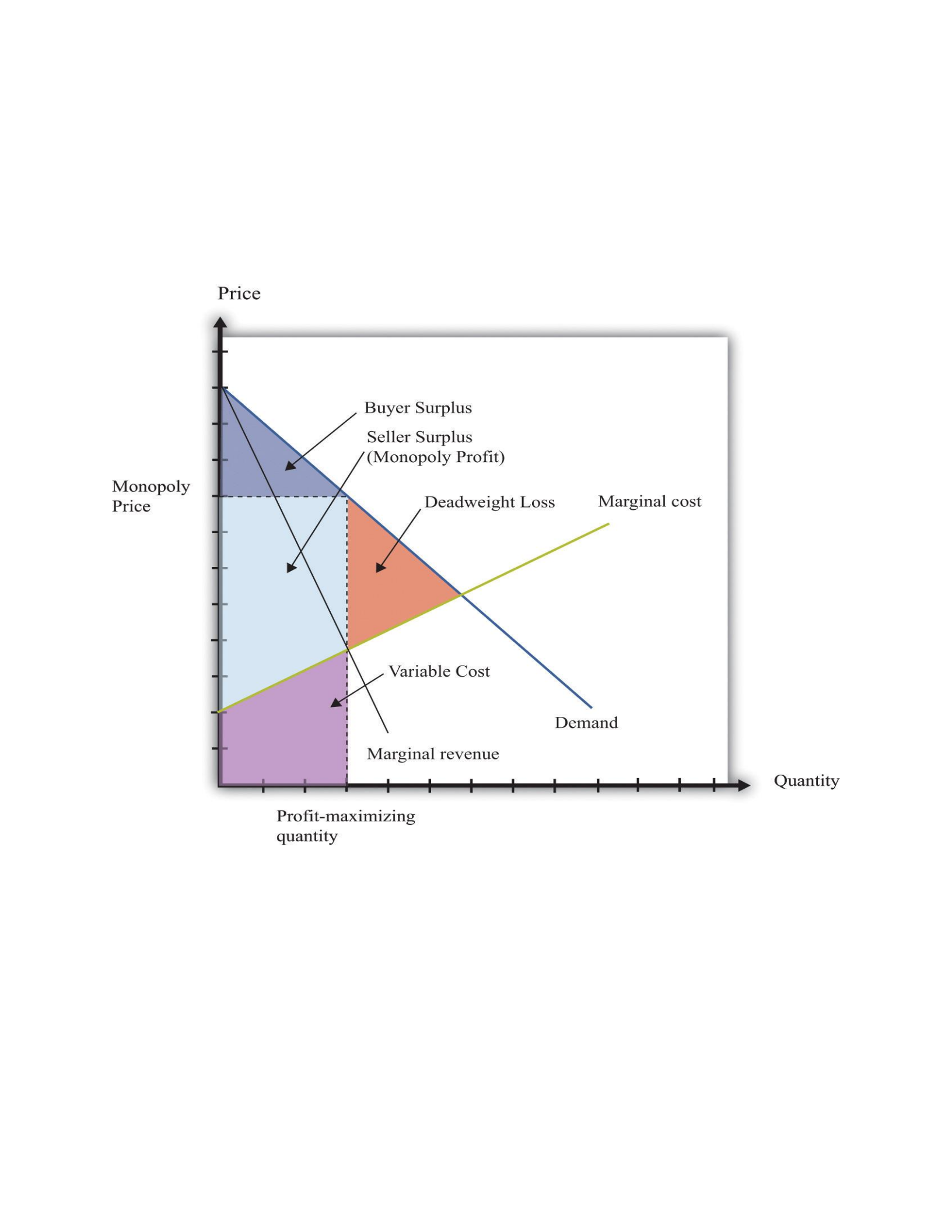
The graphs below illustrate deadweight loss on monopoly prices and quantity and tax burdens
relation to price paid by the buyer and the quantity.
Figure 1: The relationship between Monopoly price and Quantity
Surname 30
Figure 2: The relationship between Price paid by the buyer and Quantity traded
In conclusion, the discussion in this paper shows that market occurs when the
mechanisms of prices fail to effectively and efficiently allocate the scarce resources or when the
market forces operations lead to a deadweight loss. One major cause is the abuse of monopoly
power by firms and mergers. However, the government imposes measures to curb it through
price regulation and capping to control prices. It creates merger policies to prevent monopolistic
powers and establishes liberty markets to enable firms to join leading favorable consumer
conditions. Deadweight loss is the cost created to the society by the inefficient nature of the

Surname 31
market. It is applied to any form of deficiency resulting from inefficient resource allocation. It
can be concluded that due to market failures, the need to regulate monopolistic powers becomes
essential to stabilize the market despite the negative impacts of the measures.

Surname 32
Works Cited
Argentesi, Elena, et al. "Merger policy in digital markets: An ex post assessment." Journal of
Competition Law & Economics 17.1 (2021): 95-140.
Avwioroko, Afor. "The integration of smart grid technology with carbon credit trading systems:
Benefits, challenges, and future directions." Engineering Science & Technology
Journal 4.2 (2023): 33-45.
Bachev, Hrabrin. "Agrarian Governance–Who, What, Why, How, Where, When, Price,
Level?." Theoretical and Practical Research in Economic Fields (TPREF) 14.27 (2023):
105-125.
Bauer, Johannes M., and Erik Bohlin. "Regulation and innovation in 5G
markets." Telecommunications Policy 46.4 (2022): 102260.
Boomhower, Judson, et al. How Are Insurance Markets Adapting to Climate Change? Risk
Classification and Pricing in the Market for Homeowners Insurance. No. w32625.
National Bureau of Economic Research, 2024.
Cabral, Luis. "Merger policy in digital industries." Information Economics and Policy 54 (2021):
100866.
Cai, Haibo, Leiyu Chen, and Yuan Yuan. "Retailer involvement in carbon emission reduction
under the Cap-and-Trade mechanism." Systems Science & Control Engineering 11.1
(2023): 2167886.
Campus, Brooke, et al. "Comparing the regulation and incentivization of e-cigarettes across 97
countries." Social science & medicine 291 (2021): 114187.
Chen, Zhijun, et al. "Data‐driven mergers and personalization." The RAND Journal of
Economics 53.1 (2022): 3-31.

Surname 33
Cheng, Li-Keng, Hsien-Long Huang, and Shou-Yu Yang. "Attitude toward 5G: The moderating
effect of regulatory focus." Technology in Society 67 (2021): 101795.
Cuesta, José Ignacio, and Alberto Sepúlveda. "Price regulation in credit markets: A trade-off
between consumer protection and credit access." Available at SSRN 3282910 (2021).
Cumming, Douglas, et al. "Mergers and acquisitions research in finance and accounting: Past,
present, and future." European Financial Management 29.5 (2023): 1464-1504.
Entezaminia, Arezou, Ali Gharbi, and Mustapha Ouhimmou. "A joint production and carbon
trading policy for unreliable manufacturing systems under cap-and-trade
regulation." Journal of Cleaner Production 293 (2021): 125973.
Fan, Xiaoshuai, Kanglin Chen, and Ying-Ju Chen. "Is price commitment a better solution to
control carbon emissions and promote technology investment?." Management
Science 69.1 (2023): 325-341.
Farronato, Chiara, Jessica Fong, and Andrey Fradkin. "Dog eat dog: Balancing network effects
and differentiation in a digital platform merger." Management Science 70.1 (2024): 464-
483.
Fumagalli, Chiara, Massimo Motta, and Emanuele Tarantino. "Shelving or developing? Optimal
policy for mergers with potential competitors." CEPR Discussion Paper (2022).
Katz, Michael L. "Big Tech mergers: Innovation, competition for the market, and the acquisition
of emerging competitors." Information Economics and Policy 54 (2021): 100883.
Kay, John A. "The deadweight loss from a tax system." Journal of Public Economics 13.1
(1980): 111-119.

Surname 34
Komorowska, Aleksandra, et al. "An analysis of the competitiveness of hydrogen storage and Li-
ion batteries based on price arbitrage in the day-ahead market." international journal of
hydrogen energy 47.66 (2022): 28556-28572.
Liang, Xuedong, et al. "Green mergers and acquisitions and green innovation: An empirical study
on heavily polluting enterprises." Environmental Science and Pollution Research 29.32
(2022): 48937-48952.
Mondal, Chirantan, and Bibhas C. Giri. "Retailers’ competition and cooperation in a closed-loop
green supply chain under governmental intervention and cap-and-trade
policy." Operational Research 22.2 (2022): 859-894.
Nippa, Michael, Sanjay Patnaik, and Markus Taussig. "MNE responses to carbon pricing
regulations: Theory and evidence." Journal of International Business Studies 52.5 (2021):
904-929.
Parker, Geoffrey, Georgios Petropoulos, and Marshall Van Alstyne. "Platform mergers and
antitrust." Industrial and Corporate Change 30.5 (2021): 1307-1336.
Paudyal, Krishna, et al. "Economic policy uncertainty and cross-border mergers and
acquisitions." Journal of Financial Stability 56 (2021): 100926.
Posner, Richard A. "Natural monopoly and its regulation." Stan. L. Rev. 21 (1968): 548.
Posner, Richard A. "The social costs of monopoly and regulation." Journal of Political Economy
83.4 (1975): 807-827.
Sheshinski, Eytan. "Price, quality and quantity regulation in monopoly situations." Economical
43.170 (1976): 127-137.

Surname 35
Shi, Haoran, et al. "MARL Sim2real transfer: Merging physical reality with digital virtuality in
metaverse." IEEE Transactions on Systems, Man, and Cybernetics: Systems 53.4 (2022):
2107-2117.
Stefko, Robert, et al. "An analysis of the impact of economic context of selected determinants of
cross-border mergers and acquisitions in the EU." Economic research-Ekonomska
istraživanja 35.1 (2022): 6385-6402.
Taleizadeh, Ata Allah, Milad Shahriari, and Shib Sankar Sana. "Pricing and coordination strategies
in a dual channel supply chain with green production under cap and trade
regulation." Sustainability 13.21 (2021): 12232.
Tresch, Richard W. “Public finance: A normative theory.” Academic Press (2014): 123-127
Xu, Xiaoping, et al. "The selection of marketplace mode and reselling mode with demand
disruptions under cap-and-trade regulation." International Journal of Production
Research 61.8 (2023): 2738-2757.
Yadav, D., et al. "Reduction of Pollution through Sustainable and Flexible Production by
Controlling By-Products." Journal of Environmental Informatics 40.2 (2022).
Zheng, Yanfang, et al. "The effect of emission permit allocation in an early-stage cap-and-trade
for a duopoly market." International Journal of Production Research 59.3 (2021): 909-
925.

