



1
The Impact of Head Start Middle Managers' Transformational Leadership on Organizational
Learning and Innovativeness in the United States
CHAPTER 1: Introduction
The purpose of this dissertation research is to examine the relationship between middle
managers' transformational leadership, organizational learning, and innovativeness within
various Head Start programs across the United States. Leadership influences followers in
achieving organizational goals and actualizing the vision, which makes it the most powerful
commodity in an organization (Northouse, 2021). Scholars posit that transformational leadership
motivates and inspires followers by transmuting their perceptions, attitudes, beliefs, and,
ultimately, their actions (Xie, 2020). Transformational leadership has four core components:
idealized influence, inspirational motivation, intellectual stimulation, and individualized
consideration (Bass & Avolio, 1993), and it is found in all organizations and on all hierarchical
levels (Andersen, 2018).
The four aspects of transformational leadership—idealized influence, inspirational
motivation, intellectual stimulation, and individual consideration—yield innovative
organizational cultures based on the assumption that everyone contributes to solving complex
problems by empowering them to take responsibility for achieving the vision (Bass & Avolio,
1993). Transformational leaders are charismatic, inspire learning, give personal attention, and
communicate high expectations (Northouse, 2021).
The dissertation research focuses on two dependent variables of organizational learning
and innovativeness and examines the influence of transformational leadership on these
constructs. Organizational learning enhances internal processes and systems through acquired
knowledge, practice (Park & Kim, 2018), and knowledge sharing or exchanging information
among groups (Ouakouak & Ouedraogo, 2019). Continued learning directly relates to long-term
organizational behavior change (Watad, 2019). Organizational innovativeness is the ability or

2
readiness to develop different types of innovations, and the process requires an openness to new
ideas, creativity, experimentation, flexibility, and a willingness to change (Strychalska-
Rudzewicz & Rudzewicz, 2021). Consequently, there is substantial agreement in the literature
that transformational leadership is significantly related to organizational learning (Eun-Jee &
Park, 2019; Vashdi et al., 2019; Xie, 2020) and innovativeness (Afsar & Umrani, 2020; Chung
& Li, 2021). More profoundly, Xie (2020) acclaimed transformational leadership as the
preeminent form of leadership for a learning organization. Additionally, the literature confirms a
significant relationship between organizational learning and innovation (Bahadur et al., 2021;
Baxla & Mishra, 2022; Karimi et al., 2023).
However, a gap exists in the literature regarding how these findings translate to different
demographics, such as early childhood programs such as Head Start. This research sought to fill
that gap through a conceptual replication of research investigating transformational leadership,
organizational learning, and innovation (Alsalami et al., 2014; García-Morales, 2012; Noruzy et
al., 2013). Their quantitative methodologies involved structural equation modeling with
participants in manufacturing and the public and private sections in Dubai, Spain, and Iran. Their
findings have been cited extensively, forming the basis for subsequent studies on the topic.
Instead of replicating their procedures with a new sample, this study tested a similar underlying
hypothesis but introduced variations (Derksen & Morawski, 2022) by focusing on Head Start
middle managers. Such a replication is pivotal for understanding the broader implications of the
original findings and discerning whether similar effects manifest in Head Start programs.
Why is the previously mentioned confirmation of the interrelationship between
leadership, organizational learning, and innovation important? Organizations of all types and
sizes operate in complex and competitive environments. As such, Pudjiarti and Priagung Hutomo

3
(2020) surmised that leaders must engage in strategic resource utility and continuous innovation.
Leadership, organizational learning, and organizational innovativeness help sustain superior
business performance during times of uncertainty and optimize competitive advantages (Mai et
al., 2022; Srirahayu et al., 2022). In other words, ongoing learning and knowledge sharing give
employees the skills to adopt new strategies, efficiencies, and capabilities (Ouakouak &
Ouedraogo, 2019; Zhao et al., 2021). Accordingly, the COVID-19 pandemic impacted
organizations' abilities to innovate (Bar Am et al., 2020) and to learn important factors that
influence performance and survival (Berraies & Zine El Abidine, 2019).
Despite the challenges caused by the COVID-19 pandemic, Yukl and Gardner (2020)
laid the foundation for organizations to cope with complex situations. Their work elucidates how
organizational learning can significantly impact decision-making, innovation, the cultivation of
strategic advantages, and effective change management. Organizational learning encompasses
two central concepts: exploitation and exploration. Exploitation entails decisions and actions
involving refinement, choices, efficiencies, implementation, and execution (March, 1991). On
the other hand, exploration involves venturing into new areas such as innovation, risk-taking,
variation, and experimentation. March's groundbreaking seminal work on organizations as
adaptive systems propelled the exploitation-exploration paradox into research across leadership,
business, and finance, solidifying that the concept is directly related to innovation, organizational
learning, strategic action, and survival (Levine & Argote, 2020; Wilden et al., 2018).
In thinking about survival and sustainability, the federally funded Head Start, an early
childhood program that serves at-risk children from birth through 5 years of age, was among the
organizations impacted by the pandemic. The National Institute of Early Education Research
identified the following pandemic-related challenges in Head Start programs: (a) increased

4
inequities in enrollment, dropping by 257,000 children between 2018-2019, (b) lower staff
salaries, averaging $37,685 annually, and (c) inconsistent quality across programs nationwide
(Arundel, 2022). Additionally, the U.S. Department of Health and Human Services (US DHHS;
US DHHS, 2023) reported the loss of over 80,000 early childhood jobs in 2020, with many
organizations expressing that they could not recruit candidates to fill vacancies.
Coupled with the residual effects of the pandemic, the 2024 proposed budget cuts to
Head Start would cause additional constraints and challenges. The anticipated federal budget for
Head Start for the fiscal year 2024 allocates $11,246,820,000, denoting a $750,000,000 decrease
from the 2023 funding level, representing a 6.25% cut to vital early education services for
children and families (National Head Start Association, 2023). Moreover, over 80,000 eligible
children would no longer have access to services (National Head Start Association, 2023),
directly impacting programs across the United States (Williams, 2023). Head Start programs are
funded based on the number of children served; a reduction in enrollment has budgetary
implications. Like other types of organizations, many Head Start agencies face turbulent
conditions and obstacles, as elucidated by García-Morales et al. (2012) in their organizational
learning and innovation research. Organizational learning and innovation facilitated through
transformational leadership may provide the answers needed to create competitive advantages,
which provides the premise and context for this dissertation.
This chapter addresses the problem statement, research purpose, research question and
hypotheses, theoretical framework, significance of the study, delimitations and limitations, and
definition of terms. The chapter concludes with a brief description of the research design and an
overview of the dissertation research's organization throughout the rest of the document.

5
1.1 Statement of the Problem
Head Start programs nationwide are experiencing challenges, such as low enrollment and
increased staff vacancies (Arundel, 2022; Ioakimedes, 2022). The central problem examined in
this dissertation research is the assumption that transformational leadership theory relates to the
antecedents of organizational learning and innovativeness as described in research (Bahadur et
al., 2021; García-Morales et al., 2012; Ruvio et al., 2014) in a Head Start early childhood
organization. Whether a significant relationship exists between transformational leadership,
organizational learning, and innovativeness is unknown in an early childhood setting, as
literature does not currently exist.
There are many studies on transformational leadership organizational learning
(Alblooshi et al., 2021; Imran et al., 2016; Khan & Khan, 2019; Khan & Ismail, 2017; Mohamed
& Otman, 2021Vashdi et al., 2019; Siangchokyoo et al., 2020; Verma et al., 2022; Yukl, 2009).
Verma et al. (2022) specified that new research should empirically test the relationship between
organizational learning, transformational leadership, and innovativeness in different industries.
The limited research on how these concepts impact early childhood organizations shapes the
following questions:
1. Does transformational leadership of middle managers in Head Start impact
organizational learning and innovativeness?
2. Is there an interrelationship between transformational leadership, organizational
learning, and innovativeness?
These two questions provide data on the effects of transformational leadership on organizational
learning and innovativeness and the associations and correlations among all the variables.
Understanding the interrelationship between transformational leadership, organizational learning,

6
and innovativeness can contribute to a deeper understanding of their combined effects and
provide implications for leadership development and organizational strategies. Finally, the
questions can contribute to organizational leadership and behavior in an early childhood setting.
1.2 Purpose of the Research
The purpose of this quantitative study is to investigate the relationships among the
transformational leadership of middle managers, organizational learning, and innovativeness.
The study was designed to offer Head Start programs guidance and support in transformational
leadership, aiming to enhance improvements through learning and innovation. The objectives of
the research are the following:
1. Identify which transformational leadership behaviors correlate with individual and
group organizational learning.
2. Explore the relationships between middle managers' transformational leadership and
innovativeness.
3. Determine which transformational leadership behavior correlates most with
the different aspects of innovativeness.
1.3 Research Design
The researcher employed a non-experimental, explanatory correlational research design,
and it aims to investigate the extent to which a relationship exists between Head Start middle
managers' transformational leadership behaviors, organizational learning, and organizational
innovativeness. The central research question and basis for this research are, “What is the
relationship between middle managers' transformational leadership behaviors, organizational
learning, and organizational innovativeness within a Head Start program?” The research question
and hypotheses guiding this study was answered by the transformational leadership and

7
organizational learning scale (García-Morales et al., 2012) and the organizational innovativeness
scale (Ruvio et al., 2014). The hypotheses predict the strength and direction of the relationships
between the variables, which are as follows:
H1: There is a significant relationship between Head Start middle managers'
transformational leadership, organizational learning, and innovativeness.
H2: A positive correlation exists between the Head Start middle manager's
transformational leadership and organizational learning.
H3: A positive correlation exists between Head Start middle managers' transformational
leadership and organizational innovativeness.
H4: A positive correlation exists between organizational learning and organizational
innovativeness.
H5: Organizational learning significantly predicts organizational innovativeness,
indicating a positive relationship between the two variables.
1.4 Theoretical Framework
The theoretical framework is a “dynamic meeting place of theory and method” (Ravitch
& Riggan, 2017, p. 141). Therefore, the framework answers the central research question for the
study, “Do middle managers' transformational leadership behaviors explain organizational
learning and organizational innovativeness within a Head Start program?” The transformational
leadership theory is the theoretical framework guides and anchors this dissertation research
(Bass, 1985; Bass & Avolio, 1995). In this case, the theoretical framework provides the
integration and intersection of the transformational leadership components: idealized influence,
inspirational motivation, intellectual stimulation, and individualized consideration, and how
they explain organizational learning and innovativeness. Transformational leadership provides
the

8
theoretical basis for how organizational learning and innovativeness constructs occur within the
context of an organization.
1.4.1 Transformational Leadership Theoretical Framework
Since the inception of the transformational leadership theory 50 years ago, new evidence
and standpoints have modified the theory from solely characterizing and embodying political
leadership to a popular phenomenon that changes the trajectory of organizations with innovative
and learning capabilities (Chung & Li, 2021; Verma et al., 2022). Scholars describe
transformational leadership as a transmutable and altering process that catalyzes followers to
perform beyond expectations by increasing their consciousness and steering them toward
actualizing collective goals (Bass & Avolio, 1993; Northouse, 2021; Yukl, 2009).
Transformative leaders support, challenge, and inspire followers, which increases trust and
engagement in learning processes and activities (Eun-Jee & Park, 2019).
The origin of transformational leadership theory started with James Downton, a
sociologist who, in 1973, was the first person to coin the term (Burgess, 2016). Notably, Robert
House's (1976) ideations of charismatic leadership influenced the theory that later manifested in
James Burns's (1978) Pulitzer Prize-winning book, Leadership, empirically positioning the
transformational leadership theory in the field (as cited in Burgess, 2016). Burns accomplished
this feat by challenging leader-centric approaches in leadership studies (Couto, 2015), previously
dominated by the leaders' behaviors, skills, and traits with minimal regard for followers (Yukl &
Gardner, 2020). He was the first authority to expand the leadership process beyond achieving
goals and merely influencing followers by incorporating the leader's values, ability to motivate
others, and embedding morality (Burns, 2003; Northouse, 2021).

9
Similarly, in distancing from the leader-centric perspective, Bass's (1985) theoretical
revisions to transformational leadership integrated four key concepts: (a) idealized influence, (b)
inspirational motivation, (c) intellectual stimulation, and (d) individualized consideration (as
cited in Northouse, 2021). Idealized influence is the emotional aspect, where the leader
communicates the vision using charisma to garner support for transformation (Northouse, 2021).
Inspirational motivation is the attention paid to the feelings and needs of followers (Vermeulen
et al., 2022) and the inspiration invoked by the leader (Smerek, 2018). Intellectual stimulation is
the leadership behavior that challenges the employees in an organization to foster innovation and
creativity (Afsar & Umrani, 2020; Mai et al., 2022; Wilden et al., 2018). Individualized
consideration coaches the employee with authentic concern (Northouse, 2021).
Moreover, idealized influence, inspirational motivation, intellectual stimulation, and
individualized consideration are integral to a leader's ability to create positive relationships,
culture, and a shared vision (Park & Kim, 2018). Within organizations characterized by these
leadership qualities, employees actively seek new knowledge and embrace challenges (Eun-Jee
& Park, 2019). Promoting knowledge-sharing fostered by transformational leaders facilitates
organizational learning (Mahendra, 2018). These leaders provide employees with essential task
information, feedback, and instruction while collaborating with others to develop new ideas,
services, innovations, or procedures (Park & Kim, 2018), all of which are essential elements of
organizational learning. In sum, research consistently demonstrates a positive and significant
association between transformational leadership and organizational learning (Eun-Jee & Park,
2019; García-Morales et al., 2012; Nguyen & Luu, 2019; Vashdi et al., 2019; Xie, 2020).
To further detail the unique features of transformational leaders, Burns (2003) explained
that “leaders take the initiative in mobilizing people for the participation in change processes,

10
encouraging a sense of collective identity and efficacy, which in turn brings stronger feelings of
self-worth” (p. 25). As such, Mai et al. (2022) found that middle managers' transformational
leadership behaviors, such as intellectual stimulation and individualized consideration, were key
facets that helped acquiesce employee commitment toward organizational innovativeness.
Culture promotes creativity, a critical feature in organizational learning and innovativeness
(Chong et al., 2018; Hester van Breda-Verduijn & Heijboer, 2016; Ruvio et al., 2014; Safiia,
2019). In this sense, an innovative culture is flexible and responsive in rapidly changing
environments, and middle managers fit into and model the culture (Chong et al., 2018).
1.4.2 Transformational Leadership, Organizational Learning, and Innovativeness Model
As elucidated in Figure 1, the four characteristics of transformational leadership:
idealized influence, inspirational motivation, intellectual stimulation, and individualized
consideration permeate the culture, with the shared vision helping to facilitate and explain
organizational learning as constructed by García-Morales et al. (2012). Ryan Smerek (2018), the
author of the book Organizational Learning and Performance and a professor at Northwestern
University, posited that a shared vision vicariously through the leader is a mechanism that
motivates learning by raising aspirational levels. According to Smerek (2018), shared vision and
culture are interconnected, particularly in transformational leadership, where both components
are essential for driving change, achieving organizational goals, and fostering innovation and
learning (Anderson, 2017). The descriptors of shared vision and culture within transformational
leadership clarify how learning and innovativeness occur contextually in an organization.
Furthermore, innovativeness has five dimensions: creativity, openness, future orientation,
risk-taking, and proactiveness (Ruvio et al., 2014). Ruvio et al.'s (2014) model demonstrates
how employees can have input via the culture into creating new processes, approaches, or

11
services. The overall conceptual model in Figure 1 shows the direct relationship between all the
theories, which were tested using a multivariate regression model. The model denotes the other
four hypotheses, the research question, and the overlapping relationship between organizational
learning and innovativeness to establish the hypothesized relationship. The model accounts for
the multidimensionality of transformational leadership and innovativeness by including the
distinct attributes accredited. Finally, transformational leadership is the nexus connecting
organizational learning and innovativeness.
Figure 1
Transformational Leadership, Organizational Learning, and Innovativeness Model
1.5 Research Significance
For several reasons, there is saliency in researching the impact of a middle manager's
transformational leadership on organizational learning and innovativeness within a Head Start
program. First, no research exists on these variables being examined in an early childhood
setting, such as Head Start. Second, most of the current research on organizational learning and
innovation occurs outside of the United States (Afsar & Umrani, 2020; Bahadur et al., 2021;
H1
H5
H3
RQ1
H4
H2

12
Chung & Li, 2021; Mai et al., 2022; Vashdi et al., 2019; Verma et al., 2022; Xie, 2020). Third,
middle managers' leadership was unexamined in organizations, specifically early childhood
settings, with much of the research on organizational learning and innovation focusing on senior
leaders (Bahadur et al., 2021; Berraies & Zine El Abidine, 2019; Mohamed & Otman, 2021;
Noruzy et al., 2013).
The dissertation research provides four key facets. First, fostering the understanding of
which transformational leadership behaviors are the most correlated with individual employees
and organizational learning. Second, identifying which transformational leadership behaviors are
most correlated with the five characteristics of organizational innovation: creativity, openness,
future orientation, risk-taking, and proactiveness. Third, providing an awareness of the impact of
transformational leadership style among middle managers as a potential prerequisite for
improving organizational problem-solving, decision-making, learning, and performance as
predicted by scholars (García-Morales et al., 2012). Fourth, the findings of this study enhance
leadership, organizational learning, and innovativeness by explaining how early childhood
programs such as Head Start improve their business performance and respond to the residual
impacts of COVID-19. Additional research in American-based settings could help leadership
scholars and the United States Administration for Children and Families that fund Head Start
programs better understand the relationships between the variables and address the multiple
literature gaps.
1.6 Assumptions
The study includes the following assumptions. First, it assumes that all participants,
middle managers, are English language proficient and can read and answer the survey questions.
Second, it is assumed that all participants answered the survey questions openly and honestly.

13
Third, the survey instruments (García-Morales et al., 2012) for the study are reliable and valid to
measure the constructs of transformational leadership, organizational learning, and
organizational innovativeness. Finally, the study presupposes that each middle manager has
some level of transformational leadership behaviors.
1.7 Delimitations
The study has several delimitations. This study examines the predictive credibility of the
dependent variables: organizational learning and organizational innovativeness in accounting for
the variability in the independent variable, middle managers' transformational leadership in Head
Start, and early childhood programs throughout the United States. Most of the research
previously conducted on transformational leadership, organizational learning, and organizational
innovativeness occurred outside of the United States and in industries other than an early
childhood program. Therefore, the phenomena are unstudied in this context; this research may
only address some of the needs of prior research due to differences in population and location.
The study excludes program directors and executive leaders in Head Start programs.
The dissertation research design delimits itself to a quantitative correlational study.
The research avoids concentrating on cause or effect and doesn't determine the reasoning behind
the existence or absence of the relationships. The study aims to uncover the relationship between
middle manager's transformational leadership, organizational learning, and organizational
innovativeness.
1.8 Limitations
The limitations of this study that may affect the generalization of the findings include
self-reported survey data, which are susceptible to bias and may lead to inaccurate conclusions
(Ross & Bibler Zaida, 2019). The statistical tests, correlational and multivariate regression, will

14
not provide cause and effect determinations, only relational data (Urdan, 2022). Moreover, using
a convenience sample does not allow generalizability to the entire population. The study's results
may need additional statistical testing in future research using probability sampling to validate
generalizability (Creswell & Guetterman, 2019).
A mixed-methods design would include rich interview data to help fully elucidate an
understanding of middle managers' perceptions of transformational leadership and how they
impact organizational learning and innovativeness. This design was not selected due to time
constraints. Siangchokyoo et al. (2020) recommended a more mixed methods research design to
test the transformational leadership components to strengthen and recreate a richer theory. The
predominance of the research has employed a quantitative design, and a qualitative approach
could help further the understanding of individuals' perceptions and beliefs about
transformational leadership, organizational learning, and organizational innovativeness. Xie
(2020) called for more grounded qualitative research to assess transformational leadership
theory.
1.9 Definition of Terms
The key terms for the dissertation are transformational leadership, organizational
learning, organizational innovativeness, innovation, middle managers, the Head Start program,
and mental models. The definitions for the terms are listed below.
Transformational Leadership is an inspirational and motivational approach that fosters
knowledge dissemination and promotes employee creativity by communicating followers' shared
vision, purpose, and direction (Bass, 1985; García-Morales et al., 2012).
Organizational Learning is the capability “within an organization to maintain or improve
performance based on experience. This activity involves knowledge acquisition (the

15
development or creation of skills, insights, and relationships), knowledge sharing (the
dissemination to others of what has been acquired by some), and knowledge utilization
(integration of learning so that it is assimilated and broadly available and can be generalized to
new situations)” (Dibella et al., 1996, p. 363).
Organizational Innovativeness is the number of innovations an organization has adopted
(Garcia & Calantone, 2002; Ruvio et al., 2014) based on five attributes: openness, future risk-
taking orientation, proactiveness, and creativity.
Innovation is developing, adopting, and implementing new processes, products, policies,
programs, or services that require learning and behavior change (Bahadur et al., 2021).
Middle Managers are mid-level employees who manage and serve as administrators,
leaders, mentors, and change agents who translate and help actualize the vision of superior
leaders in an organization (Boureston, 2019) and oversee day-to-day operations (Mai et al.,
2022).
Head Start Programs are sub-recipient agencies funded by the Administration for
Children and Families to provide a comprehensive early childhood program that includes
education, health, nutrition, mental health, and family support and engagement services to
children and families who are at risk and have incomes below the federal poverty guidelines
(The Office of Head Start, 2022b).
Mental Models are cognitive frames that guide how the world works, and they are based
on repeating what has already been done (Serrat, 2021).
Mental models shape the organizational culture. The accumulated shared learning of a
group, as it solves problems of external adaptation and internal integration, has worked

16
well enough to be considered valid to be taught to new members as the correct way to
perceive, think, feel, and behave concerning those problems. (Schein, 2017, p. 6)
The accumulated learning is a pattern and system of beliefs, values, and behavioral norms that
transform into conscious reality (Schein, 2017).
1.10 Overview of Organization of the Dissertation Proposal
Chapter 1 outlined the problem in examining how transformational leadership impacts
organizational learning and innovativeness in Head Start programs and why it is significant.
Subsequently, this chapter outlines the research question and hypotheses guiding the research,
purpose, theoretical framework, and key terms. Chapter 2 presents a critical review of the
literature related to the research question and the hypotheses, theoretical and historical
foundations, and a detailed background of the dependent and independent variables. Chapter 3
expounds on the research design and rationale, data collection procedures, and statistical analysis
for this dissertation research.

17
CHAPTER 2: Review of Literature
This non-experimental, explanatory correlational research explores the relationship
between Head Start middle managers' transformational leadership behaviors, organizational
learning, and organizational innovativeness. Leadership, organizational learning, and
organizational innovativeness help sustain superior business performance during times of
uncertainty and optimize competitive advantages (Mai et al., 2022). The literature review
focuses on the current and seminal research and findings on transformational leadership, middle
management, organizational learning, and organizational innovativeness, which provide
empirical insight and conceptual linkages into any relationships between the variables. Further, it
presents research salient to the preparation of Head Start middle managers in supporting their
role in fostering and contributing to organizational learning and organizational innovativeness,
the basis for achieving sustainability and optimal performance results.
2.1 Literature Review Methods
The selection process focused on predominantly peer-reviewed books and research
studies from the past 5 years to ensure a comprehensive and up-to-date review capturing the
latest trends, developments, and methodologies in the field (Maggio et al., 2016; Pautasso, 2013;
Santini, 2018). Using literature from the past five years in a dissertation is crucial to ensuring
relevance and credibility (Santini, 2018). The author indicated that literature from the last 5 years
aids in identifying current gaps in knowledge, offers a meaningful comparative analysis of the
research findings, and underscores the study's alignment with contemporary discourse.
Furthermore, the review included relevant qualitative and quantitative studies from databases
such as ProQuest, JSTOR, ABI/INFORM Complete, Business Source Complete, and

18
PsycARTICLES. The key terms involved in the search were transformational leadership,
organizational learning, innovation, organizational innovativeness, and middle managers.
2.2 Organization of the Literature Review
The body of literature begins with an overview of the history of the Head Start program
and the general leadership structure within a local agency. Next, the literature examines
transformational leadership theory in the context of organizational learning, innovativeness, and
middle managers. Subsequently, the related literature provides the specific constructs,
definitions, and general theoretical underpinnings of organizational learning and organizational
innovativeness that validate the relevance and relationship with middle managers'
transformational leadership. The literature review concludes with a summary.
2.3 History of the Head Start Program
Over 58 years ago, President Lyndon B. Johnson avowed legislation in his State of the
Union to address the amelioration of socio-economic inequalities and conditions persisting
across the country, known as the “War on Poverty” (Office of Head Start, 2022). As a result of a
recommendation from expert pediatricians and child psychologists, Head Start began as an
eight- week demonstration project designed to help break the generational cycles of poverty for
low- income families as one of the domestic programs in Johnson's Great Society agenda (The
Early Childhood Learning and Knowledge Center, 2019; The Office of Head Start, 2022a). Head
Start is a comprehensive early childhood program that provides education, health, nutrition,
mental health, and family support services to at-risk children and families with incomes below
the federal poverty guidelines (The Office of Head Start, 2022b).
In 2007, President Bush reauthorized Head Start with legislation that caused vital
changes to the program to strengthen and improve the quality of program services (The Early

19
Learning and Knowledge Center, 2019). The Office of Head Start Early Learning and
Knowledge Center indicated that these changes included a realignment of Head Start school
readiness goals, higher degree qualifications for teaching staff, and increased monitoring of
programs to include an evaluation of program outcomes and operations. Additionally, the
website specified that the 110th Congress passed the reauthorization known as the Improving
Head Start for School Readiness Act with bi-partisan support through September 30, 2012, in
Public Law, 110-134. Congress has not reauthorized Head Start since then but continues to allot
federal appropriations annually. All Head Start agencies must comply with and meet the
requirements of Head Start Program Performance Standards, the regulations that govern the
program first developed in 1975 and most recently updated in 2016 (The Office of Head Start,
2022a).
Since 1965, more than 36 million children have enrolled in Head Start, the country's
oldest and largest early childhood program (The Office of Head Start, 2022a). Head Start grew
from an eight-week project to full-day, full-year, multifaceted program options for families,
serving preschool-age children, with services expanding to infants, toddlers, and pregnant
women in the Early Head Start in 1994 upon approval from Congress (The Early Childhood
Learning and Knowledge Center, 2019). Nationally, over 1 million children receive Head Start
and Early Head Start services in 1,600 organizations situated in local communities; most are
nonprofits, schools, and community action agencies (The Office of Head Start, 2022b). In April
2022, Congress approved $11,036,820,000 in appropriations for Head Start, an increase of $289
million over the fiscal year 2021 (US DHHS, 2022).
Because of the federal financial investment in the Head Start program, innovation has
been a vital aspect of the program since its inception. Likewise, Edward Zigler, a child

20
psychologist from Yale University who helped start the program, explained over 53 years ago
that Head Start should be a model of the best and most innovative child and family services
(Vinci, 2018). The author noted that the founders of Head Start embedded organizational
innovativeness into the program's mission. However, do Head Start programs employ
organizational innovativeness and learning, positively affecting competitiveness and
performance (Bello & Adeoye, 2018; Levine & Argote, 2020; Mai et al., 2022; Wilden et al.,
2018; Yuliansyah et al., 2021)?
The answer to the question is not definitive due to the gaps in the literature, and it
depends on who is responding. For example, Mead and Mitchel (2016) argued that despite its
long-standing history, the program continues to experience several challenges with the increased
competition with the state-funded pre-kindergarten programs. More pejoratively, they quote
Checker E. Finn, Jr., a former Assistant Secretary of the Department of Education:
Despite its popularity and the billions spent on it, and notwithstanding its decent job of
targeting services for needy kids, today's Head Start, when viewed through the lens of
pre-K education and kindergarten readiness, amounts to a huge, wasted opportunity.
(Mead & Mitchel, 2016, p. 20)
The authors posited that Head Start programs had not implemented high innovation to address
their challenges.
2.3.1 Head Start Leadership Structure
An efficient and effective leader is someone who listens and responds to the needs of their
team. It is a person who is unafraid to challenge the status quo and constantly strives to
innovate and improve.
— Dr. Deborah Bergeron, Former National Director of the Office of Head Start

21
As described in the quote by Dr. Bergeron, the Office of Head Start (2022) subsumes the
synergy of innovative leadership, effective management systems, and well-designed services
equal to high-quality child and family outcomes. The Head Start Program Performance
Standards (2016) identify the critical leadership structure required in a program, including
middle managers or individuals responsible for delivering comprehensive services. Head Start
middle managers are the staff responsible for these different service areas, including education,
health, disabilities, nutrition, transportation, and administrative duties such as human resources
(Head Start Performance Standards, 2016), and they generally report to the Head Start Director
or an executive leader that has program oversight responsibilities. Middle managers for this
dissertation study exclude Head Start directors or those with executive program oversight
responsibilities. The study assumes that the transformational leadership of middle managers is
central to organizational learning and innovativeness.
2.4 Transformational Leadership Theory and Organizational Learning
One definition of organizational learning is a dynamic learning process used to acquire,
retain, share, and transfer knowledge (Mousa et al., 2020). Knowledge improves actions and
reactions in organizational learning (Elshanti, 2017) by enabling people to do things differently
(Hariharan & Vivekanand, 2018). For the last 60 years, organizational learning has dominated
management literature (Lambert, 2022; Mousa et al., 2020) as the theory has continued to evolve
the processes and constructs from its early theoretical inception. The one constant in
organizational learning research is the influence of leadership (Eun-Jee & Park, 2019; Lundqvist
et al., 2023; Park & Kim, 2018).
Toward that end, Thoroughgood et al. (2018) explained that “Leadership is a
dynamic, co-creational process between leaders, followers, and environments, the product of
which

22
contributes to group and organizational outcomes” (p. 627). In other words, leadership involves
an ongoing relational process that is interactive, where the leader and the followers influence
one another. There is some research on organizational learning and different leadership theory
types; for example, sustainable leadership (Iqbal & Ahmad, 2021), authentic leadership (Milić et
al., 2017; Nawaz & Tian, 2022), servant (Xie, 2020), and strategic leadership (Naim & Lenka,
2020). Despite this fact, research shows that transformational leadership plays a significant role
in improving organizational learning (Alblooshi et al., 2021; Imran et al., 2016; Khan & Ismail,
2017; Khan & Khan, 2019; Megheirkouni, 2018; Mohamed & Otman, 2021; Siangchokyoo et
al., 2020; Vashdi et al., 2019; Verma et al., 2022; Yukl, 2009) at the group and organizational
level of analysis.
The leadership style is the impetus that can preclude an organization from establishing a
culture that fosters the discovery, diffusion, and application of new knowledge (Yukl, 2009). It
can also break an organization (Jaroliya & Gyanchandani, 2022). To illustrate this, Milway and
Saxton (2011) found that leaders experienced difficulties implementing organizational learning
based on three barriers:
1. A lack of measurable goals about using knowledge to improve performance
2. Insufficient incentives to promote organizational learning
3. Uncertainty about the effectiveness of processes for documenting knowledge sharing
The authors explained that 97% of the survey respondents espoused that their leaders valued
knowledge sharing to accomplish the mission but could not implement organizational learning
within the agency. In this case, discussing the importance of knowledge sharing is insufficient in
creating a culture conducive to fostering learning. Transformational leaders change the culture

23
and promote individual growth by inspiring members to acquiesce to a positive environment (Park
& Kim, 2018).
Additionally, Lundqvist et al. (2023) solidified the assertion that a statistically significant
relationship exists between different types of leadership and organizational learning in his
systematic literature review of 105 studies published from 1998 through 2021. His research
resulted in four key findings. First, of the 105 studies, 100 employed quantitative design.
Second, transformational leadership and behaviors were the most researched leadership styles
investigated, and the two strongest indicators that influenced learning at the organizational level
were individual consideration and idealized influence. Third, Lundqvist et al. (2023) identified
only one study by Megheirkouni (2018) that examined the impact of transformational and
transactional leadership styles on fostering organizational learning at sports organizations. He
showed through hierarchical regression results of p=0.00<0.01, with a beta weight of 0.24, that
idealized influence was the only statistically significant transformational behavior associated
with learning at the organizational level versus the individual and group levels. Fourth, like the
work of Senge (1990), he explained that group learning was a process in which different
members share different ideas and experiences, creating shared mental models that direct how
they behave and complete tasks. The evidence suggests that idealized influence, individual
consideration, and intellectual stimulation are significant in transformational leadership at the
organizational level of analysis. This dissertation research examined if the findings were similar
and consistent at the group level of analysis using a sample of middle managers and
understanding how those mental models influence organizational learning.
Moreover, research on transformational leadership and organizational behavior revealed
advantageous macro-level outcomes. Specifically, Eun-Jee and Park (2019) examined the

24
relationship between transformational leadership, organizational learning, interpersonal trust, and
organizational citizenship behavior in the manufacturing sector in South Korea. They analyzed
survey data from 208 employee respondents using structural model equation methods, and the
findings showed that transformational leadership directly influenced organizational learning.
Additional findings revealed that organizational learning mediated the relationship between
transformational leadership and organizational citizenship behavior when employees engage in
positive and constructive actions above and beyond their job description that benefit the
organization.
Likewise, Nguyen and Luu (2019) contributed to similar findings related to
transformational leadership and organizational learning, mirroring the insights discovered by
Eun-Jee and Park (2019). Their quantitative research on 314 executive leaders in
manufacturing firms in Vietnam. Their empirical investigation had two goals: determining the
role of transformational leadership on organizational performance and the indirect and direct
effects of transformational leadership on culture, innovation, and organizational learning.
Structural modeling equation analyses revealed that transformational leadership was directly
related to organizational innovation and learning, culture, and performance. They showed that
transformational leadership had a more significant effect on organizational innovation than
organizational learning, although transformational leadership correlated with organizational
learning and innovation.
In short, transformational leaders inspire followers to achieve organizational goals (Bass,
1985), empowering people to engage in collective group and individual learning and feedback
loops (Xie, 2020). Scholars (e.g., Bligh et al., 2018; Verma et al., 2022) insisted that
transformational leaders support an organizational learning culture by openly encouraging

25
employees to learn from their errors. The four fundamental tenets of transformational leadership,
inspirational motivation, intellectual stimulation, individualized consideration, and idealized
influence, relate to organizational learning through the leaders' positive communication,
encouragement, feedback, and reward for achieving goals (Vashdi et al., 2019).
2.5 Conceptualization of Organizational Learning
Transitioning from the influence of transformational leadership on organizational
learning, the subsequent focus is on the conceptualization itself. Aligned with Şahin's (2021)
perspective on organizational learning, this dissertation research explores three key
conceptualizations: Levitt and March's (1988) cognitive-behavioral viewpoint, Argyris and
Schön's (1978, 1996) loop learning, and Senge's (1990) learning organization model. These
three viewpoints on organizational learning converge on a common definition presented by Fiol
and Lyles (1985), who state that “Organizational learning means the process of improving
actions through better knowledge and understanding” (p. 803). Within Fiol and Lyles's definition
is that learning occurs at the individual and organizational levels, unequivocally involving
cognition and human behavior among employees at various levels.
2.5.1 March’s Influence on Organizational Learning
Cybert and March (1963), in their book, A Behavioral Theory of the Firm, identified
organizational learning in a decision-making model around bounded rationality and satisficing or
aiming for an acceptable solution rather than a perfect option (as cited in Castaneda et al., 2018).
Collectively, they linked decision-making principles, such as choosing solutions during times of
uncertainty and ambiguity, to organizational learning by connecting them to norms and routines
(Li et al., 2021; Mie, 2010). They argued that individuals and organizations rely on routines or
taken-for-granted assumptions from experience rather than evaluating and gauging the

26
consequences of alternatives (Lemken & Anderson, 2022). Learning how and when to make
decisions, such as exploring or exploiting within an organization, was one of the earliest
attempts to identify organizational learning conditions (March 1991).
Levitt and March's (1988) organizational learning framework has a cognitive behavioral
perspective that characterizes learning as an individual human process of consuming and storing
new concepts, skills, and behaviors concerning translating learning into capabilities that add to
organizational resources and dynamics (Hariharan & Vivekanand, 2018). The framework
consists of the fundamental proposition that knowledge from organizational learning is derived
from routines, history-based learning, and aspired targets, and it is manifested in the
organizational culture. Notably, routines are the focal point of the framework, and there are four
critical aspects to routines. First, routines result from interpretations of the past and guide
decision-making in exploration and exploitation. Second, it is followed by adapting to feedback
about outcomes. Third, learning from routines encodes historical inferences, including forms,
rules, procedures, strategies, and technologies that guide behavior. Lastly, routines include
cultural and climate components such as beliefs, frameworks, paradigms, codes, cultures, and
knowledge. In other words, within their framework, organizational learning is viewed as
routines-based, history-dependent, and target-oriented.
2.5.2 Loop Learning
In the 1970s, Chris Argyris and Donald Schön extended the organizational learning
theory by incorporating assumptions from the experiential learning theories of John Dewy and
Kurt Lewin (Skhiri, 2017; Tosey et al., 2012). Experiential learning is a holistic, integrative
approach that combines experience, perception, cognition, and behavior in adult education
(Miettinen, 2000). As one of the more prominent and well-cited organizational learning theories,

27
Argyris and Schön's loop learning focuses on human behavior and the theory of action, acting on
existing knowledge to foster change (Basten & Haamann, 2018; Elkjaer, 2021; Skhiri, 2017). In
learning, leaders compare expectations with the intended results, reflecting, exploring, and
asking questions that engage in a deeper form of learning (Argyris & Schön, 1978), thus
implying that the stimulating intellect component of transformational leadership aligns with this
proposition.
Single-loop learning encompasses adaptations, knowledge consolidation from different
members, detecting and correcting errors (Argyris & Schön, 1978, 1996; Chaney, 2022), and
embedding the results into organizational maps and images (Elshanti, 2017). Double-loop
learning occurs when staff questions strategic goals and organizational responses (Skhiri, 2017)
and uses their acquired knowledge to detect and correct errors (Argyris & Schön, 1996). Loop
learning challenges deeply held beliefs when assessing why an error occurred and how to correct
it to construct new processes, systems, or ways of doing business. Double-loop learning results
from a crisis, creating a need for a different vision and directives from leadership for a new
product (Argyris & Schön, 1978).
Basten and Haamann (2018) conducted a concept-driven narrative review to identify
learning approaches and link those to the various organizational learning theories. Their research
design focused on compiling conclusions from multiple studies to advance models and
recommend future research. After reviewing 405 studies, they revealed 18 organizational
learning approaches, such as research and development, a process that challenges past collective
assumptions, and single-loop learning evolves to create new problem-solving approaches. They
surmised loop learning was beneficial in the engineering process when developing new products
that may fail or need revisions. Finally, they raised questions about the utility of loop learning.

28
Specifically, they explained that single and double-loop learning levels within organizational
learning are challenging to achieve due to a lack of coherent conceptualization and instructions
on implementation. The question remains how organizational loop learning fits in a service-
based industry.
2.5.3 Learning Organization Perspective
Senge (1990), who built on the theoretical influence of Argyris and Schön, argues that an
organization is a place where people can expand their competencies by learning together, leading
to desirable results. He also raised concerns with their organizational learning theory by
suggesting that it omitted the systems thinking perspective, which helps managers evoke
strategic change. Senge added four other dimensions to learning in addition to systems thinking:
mental models, shared vision, and personal mastery. Collectively, the dimensions foster groups'
capabilities to create; he deviated from the term organizational learning and coined his theory of
the learning organization. He characterized the learning organization as “where people
continually expand their capacity to create results they truly desire, where new and expansive
patterns of thinking are nurtured, where collective aspiration is set free and where people are
continually learning how to learn together” (Senge, 1990, p. 3).
The main emphasis of Senge's work was augmenting existing mental models to focus
more on systems thinking, identifying flaws, and challenging them when necessary. Mental
models augment the concept to mean deeply ingrained assumptions, generalizations, pictures,
and images that influence how we perceive the world and act (Bui, 2020; Serratt, 2021). For
example, personal and shared organizational visions are mental images, assumptions, stories,
and perceptions (Senge, 1990), as they are simplified versions of one's perceived reality (Serrat,
2021). Parallel to Levitt and March (1988), who stated that organizational routines are

29
independent of the actors that execute them, people form interpretations about past events and
mentally classify them as good or bad based on perception, inference, and judgment.
Organizations develop paradigms or mental models for interpreting those experiences, and
experience, learning, and memory shape future predictions. Individuals interpret and
communicate knowledge using mental models, a profoundly rooted lens of how the world works
(Smerek, 2018). Mental models and knowledge distribution comprise organizational memory,
the compilation of previous decisions, and how this information is stored and later retrieved
(Casteneda et al., 2018).
2.6 Organizational Learning Shortcomings
Although a plethora of research suggests the significance of organizational learning, there
are some pitfalls in organizational learning. Scholars agree there is variance, discrepancies, and
inconsistencies in the definition of organizational learning due to the cognitive and behavioral
multi-dimensionality of the construct (Elshanti, 2017; Garad & Gold, 2019; Tosey et al., 2012;
Watad, 2019). That being the case, Popova-Nowak and Cseh (2015) describe organizational
learning as a nascent theory. Their meta-analysis revealed that much of the organizational
learning research lacked epistemological or ontological positions or possessed illogically mixed
paradigms. They concluded that lacking research positions leads to unreflective and theoretical
confusion. Many theorists contributed to the early theoretical formulation (Argyris & Schön,
1978; Cyert & March, 1963; Senge, 1990), which has changed over the years and morphed into
several different definitions such as learning to correct errors (Argyris & Schön, 1978);
facilitating learning for transformation (Senge, 1990), and the acquisition, distribution, and
interpretation of knowledge that form organizational memory (Huber, 1991).

30
2.7 Organizational Innovativeness and Transformational Leadership
To lead in a culture of change, it is important to be an expert on innovativeness, not just
innovation. — Michel Fullan
The quote describes why going beyond innovation to a system of innovativeness
embedded in the culture is essential for ongoing change. Organizations constantly change and
evolve through collective learning and shifting practices (McKenzie & Varney, 2018). There is a
great need to study organizational innovation. Bahadur et al. (2021) explained that less than 3%
of the 1,000 published articles focused on organizational innovation. Leaders drive innovation
by creating an environment conducive to organizational learning (Tian et al., 2021; Yukl &
Gardner, 2020). The leader's knowledge is the compilation of information and the mental
structures used to organize the information (Northouse, 2021). He explained that the leader
creates new knowledge and competencies by utilizing various complex mental models for
learning and collecting data. Thus, leadership and strategic capabilities are centralized themes in
learning and innovation (Bahadur et al., 2021; Pauget & Wald, 2018).
By creating a vision for change, transformational leaders encourage followers to
challenge their traditional routines and operating methods, adopt innovative methods to cope
with complex problems and transcend their interests for the overall good of the organization
(Eun-Jee & Park, 2019). Transformational leadership stimulates an innovative organizational
culture, leading to strong knowledge orientation and performance (Gorzelany et al., 2021; Khan
et al., 2020; Verma et al., 2022). Similarly, Sattayaraksa and Boon-itt (2018) conducted
quantitative research with 269 firms in Thailand through a mail survey, using structural equation
modeling to investigate the role of CEO transformational leadership on product innovation
performance in manufacturing. The research focused on organizational learning and innovative

31
culture, among other variables. Innovation was measured on cultural elements like Ruvio et al.'s
(2014) model, which included risk-taking, openness, and creativity. Their findings underscored
that transformational leadership was positively associated with innovation strategy,
organizational learning, and innovative culture (p<0.001). Moreover, ingrained in the four
features of transformational leadership—idealized consideration, intellectual stimulation,
individualized consideration, and inspired motivation—is the leader's ability to promote learning
among the employees to create innovative solutions (García-Morales et al., 2012).
Specifically, Afsar and Umrani's (2020) research on the impact of transformational
leadership on employees' innovative work behavior used a sample of 338 participants from the
manufacturing sector. Structural equation modeling analyses found that transformational
leadership positively impacts employees' innovative work behaviors, with a p-value of 0.01. In
their study, they controlled for gender, age, and job tenure. Additionally, they found that task
complexity and the innovation climate moderated the relations between transformational
leadership and employees' innovative work behavior at p<0.01.
Complementing these findings, Chung and Li (2021) warned that an excessive level of
transformational leadership would negatively affect innovative behaviors, whereas an
appropriate level would yield positive innovation. Their research involved a sample of 307
employees from research and development firms using hierarchical linear modeling analysis;
they discovered that a modest level of transformational leadership is positively related to
innovative work behaviors at p<0.05. The researchers also found that team learning, a dimension
of organizational learning, has the potential to enhance members' innovative behaviors while
moderating the perceptions of excessive transformational leadership. Similarly, Karimi et al.
(2023) used a quantitative research design and structural equation modeling with a convenience

32
sampling of 178 employees in the agricultural sector in their investigation of the role of
transformational leadership in developing innovation. They found that transformational
leadership was significantly related to employees' innovative work behaviors (β = 0.15, p <
0.05). These findings underscore the importance of transformational leadership in fostering
innovation.
In agreement with scholars (e.g., Chung & Li, 2021; Karimi et al., 2023), Kucharska
(2021) also identified a core flaw in transformational leadership theory and innovativeness.
Kucharska (2021) explored leadership, culture, intellectual capital, and knowledge processes for
organizational innovativeness across four industries: construction, healthcare, higher education,
and information technology in Poland, with a sample of 1,481 employees. They revealed that
transformational leadership significantly affected knowledge and learning cultures in all four
industries; however, it did not fully support the acceptance of mistakes in an organization. In
other words, organizations with high levels of knowledge and learning cultures tend not to
accept mistakes, which could be a deterrent and counterintuitive.
Building on their investigation of strategic factors' influence on organizational innovation
and learning, Bahadur et al. (2021) adopted a descriptive correlational method involving 360
chief executive officers and structural equation modeling. Their study utilized a prior version of
a survey instrument developed by García-Morales et al. (2006) to measure transformational
leadership. Notably, four hypotheses were formulated to explore the positive and significant
impact of transformational leadership on organizational learning and innovation. Furthermore,
the research affirmed the positive and significant influence of organizational innovation and
learning on overall organizational performance. Pearson's correlation coefficients revealed

33
moderately positive relationships among the variables, and the statistical support for all
hypotheses was strong, with p < 0.01 significance.
2.8 Conceptualization of Organizational Innovativeness
Moving on from the impact of transformational leadership on organizational
innovativeness, conceptualizing the construct is the next area of focus. Scholars agree that there
is overlap and misuse in the interchangeability of innovation and innovativeness (Bahadur et al.,
2021; Ruvio et al., 2014). Previously, Wang and Ahmed (2004) indicated that innovation was the
development of new products. Innovativeness is the overall collective capabilities and innovative
activities representing the culture, leading to new services, products, and processes overall
agency-wide (Ruvio et al., 2014). Theoretically, Ruvio et al. (2014) and Wang and Ahmed
(2004) viewed organizational innovativeness in valid and reliable scales; however, they differ on
the conceptualization and operationalization of the multidimensional construct.
Wang and Ahmed (2004) identified three internal processes that undergird innovative
outcomes: behavioral innovativeness, process innovativeness, and strategic, innovative
orientation. Behavioral innovativeness is the individual, group, and management's belief and
actions toward innovation and how individual actors allow the culture to govern their innovative
efforts. Process innovativeness is developing methods, practices, new technology usage, and
approaches to foster continuous quality improvement. Lastly, strategic orientation is the ability
of the organization to create, implement, and leverage existing resources effectively.
During the initial studies to construct the scale, Wang and Ahmed focused on human resources
management.
Vanhala and Ritala (2016) followed suit in their quantitative research on communication
technology in Finland. Both Wang and Ahmed (2004) and Vanhala and Ritala (2016) found a

34
statistically significant relationship between effective human resource management practices and
organizational innovativeness statistically significant at the 95 percent confidence level.
Although scholars (Safiia, 2019; Vanhala & Ritala, 2016; Wang & Ahmed, 2004) used the
behavioral, process, and strategic, innovative framework for this study, Ruvio et al. (2014)
conceptualization is a central aspect of the study since it focuses on organizations in general.
Other studies addressed a specialty area like human resources management instead of overall
innovativeness (Vanhala & Ritala, 2016; Wang & Ahmed, 2004). Figure 2 shows the five
dimensions of innovativeness, which allows for a multifaceted understanding of the relationships
among the key characteristics identified by Ruvio et al. (2014).
Figure 2
Theoretical Model of Organizational Innovativeness by Ruvio et al. (2014)
Ruvio et al. (2014) proposed an organizational innovativeness construct comprising five
distinct components: creativity, openness, future orientation, risk-taking, and proactiveness.
Their intention was for this scale to comprehensively measure the structure and nature of

35
innovativeness, serving as a strategic diagnostic instrument. Creativity, the ability to transform
new ideas into products, services, or processes, is crucial. Openness represents the organization's
agility and adaptability in the face of change, fostering innovation. Future orientation assesses
the organization's readiness for forthcoming innovations, acting as a reflection of its culture.
Risk-taking evaluates the organization's willingness to embrace risks versus aversion to them,
directly influencing its propensity for innovation. Finally, proactiveness deals with the
organization's capacity to seize or create new business opportunities regarding services,
products, or approaches.
Moreover, they identified organizational learning as an antecedent of innovativeness and
found that the creativity and openness dimensions had the strongest relationship within
organizational learning. Similarly, according to managers' perceptions in a private higher
education institution, Safiia's (2019) quantitative research found a positive relationship between
organizational learning and organizational innovativeness. Comparatively, Baxla and Mishra
(2022) examined the role of innovation in the relationship between organizational learning and
performance. In their study, innovation was the dependent variable, and organizational learning
and performance were the independent variables. Their sample was 269 employees from a steel
plant, and a quantitative design found statistically significant relationships between
organizational learning, innovation, and organizational performance at p < 0.05.
Moreover, before the work of scholars Baxla and Mishra (2022) and Safiia (2019),
Alsalami et al. (2014) evaluated the effects of transformational leadership on organizational
innovation and the mediating effect of organizational learning on this relationship. Their
methodology included a survey with 248 participants from private and public organizations in
Dubai, United Arab Emirates. The findings showed in the public sector that transformational

36
leadership significantly and positively affects organizational learning through inspirational
motivation, p<.001 and intellectual stimulation, p<.05. In the private sector, the findings revealed
that the relationship between transformational leadership and organizational learning was
influenced by idealized influence at p<.001, and inspirational motivation at, p<.05. Similarly, in
the public sector, transformational leadership had a statistically significant effect on
organizational innovation through inspirational motivation, p<.05, individualized consideration,
p<.05, and intellectual stimulation, p<.05. Moreover, idealized influence had a statically and
positively significant relationship in the private sector, p<.01. In their study, organizational
learning and innovation were significant in both sectors at p<.001. Their study provided evidence
that transformational leadership incites innovation, and the results aligned with previous research
that transformational leadership contributes to organizational learning. Thus, the rationale
employed to justify the research design includes the previously mentioned extant research
studies. Additionally, data were collected using a survey instrument and statistical testing was
conducted to assess the relationships between and among variables to include middle managers.
2.9 Middle Managers and Transformational Leadership
In the continuum of organizational dynamics and navigating the landscape of
innovativeness, middle managers are instrumental in cultivating an environment relevant to
growth and change. Further, leadership is a dynamic relational process that actualizes the
confluence of the leader and the followers (Naber & Moffett, 2017). In addition to managing
day-to-day operations, scholars posit that middle managers help create a culture conducive to
organizational learning and innovation across all levels of an organization (Mai et al., 2022).
Middle managers cope with paradoxical demands like operating through routines and processes
while concurrently creating new ones and exploiting existing knowledge (Yukl & Gardner,
2020;

37
McKenzie & Varney, 2018). Arguably, because middle managers facilitate strategy and goal
attainment, Morkevičiūtė et al. (2019) discussed how the transformational leadership style is
effective due to its effect on employee perception, working habits, job-related behaviors, and
maximizing work outcomes.
Middle managers are pivotal conduits of leadership, with considerable influence on the
organization's trajectory. Transformational leadership, a shared vision, personal mastery, the
environment, and strategic capabilities predict organizational learning and innovation (Bahadur
et al., 2021). Along those lines, middle managers with transformational leadership styles foster
confidence in all employees, a requisite noted for organizational change (Beta & Badri, 2020),
learning, and innovation (Bahadur et al., 2021; Northouse, 2021; Pauget & Wald, 2018). The
relevant empirical research on middle managers and transformational leadership explained
throughout this section provides insights into understanding how their unique roles within an
organization either foster or impede learning and innovativeness.
What transformational leadership behaviors must a middle manager exhibit to accomplish
the outcomes associated with organizational learning and innovativeness? In seeking answers to
the question of which transformational leadership behaviors middle managers must exhibit for
learning and innovativeness, Alegbeleye and Kaufman (2020) tested four hypotheses related to
middle managers' transformational leadership and effective followership using the Multifactor
Leadership Questionnaire (MLQ- 5X) with a sample of 100 middle managers across the United
States. They explained that effective followers contribute to innovativeness, question rationality
in decision-making, participate in transformation, and collaborate with leaders. Multivariate
regression results showed significant positive relationships between intellectual stimulation,
individual consideration, inspirational motivation, and effective followership at the p<.01 level

38
for three hypotheses after controlling for age, sex, race, educational level, and tenure.
Interestingly, the author's hypothesis involving idealized influence was unproven, indicating no
relationship to effective followership. Their research posited that effective followers perceive
themselves as partners in the shared vision and that success is reciprocal; if the leader succeeds,
so does the middle manager.
In another research study, Jyoti and Bhau (2015) determined that the individual
consideration principle of transformational leadership helped middle managers solve problems,
develop positive relationships, and carry out the leader's desired tasks. The four characteristics
of transformational leadership are charisma, consideration, motivation, and intellectual
stimulation, which prompt employees to perform beyond expectation (Verma et al., 2022) by
changing how a person feels about themselves and their attitude toward the work (Vermeulen
et al., 2022). Furthermore, Nielsen and Cleal (2011) concluded that brainstorming, planning,
information sharing, and problem-solving were all related to transformational leadership
behaviors exhibited by middle managers.
Additionally, middle managers and supervisors play a pivotal role in strategic efforts that
require empowering employees, delegating responsibilities (Engle et al., 2017), holding
individuals accountable (Fogg, 1999), and shaping the conditions for the learning environment
(McKenzie & Varney, 2018). Specifically, Jyoti and Bhau's (2015) research deemed that middle
managers encourage and empower staff to generate new ideas and to think outside the box. “For
individual behavior to change, you must influence not only their environment but their hearts
and minds …” (Heath & Heath, 2010, p. 5). Organizational learning has cognitive and
behavioral dimensions, meaning followers must learn about the change or can solve complex
problems and

39
think differently, leading to behavioral changes and practices (Crossan et al., 1995; Park & Kim,
2018).
Furthermore, the literature provides findings on areas that may impede learning and
innovativeness and outlines additional transformational leadership behaviors conducive to
learning and innovativeness. Engle et al.'s (2017) qualitative research on middle managers in
health care from 17 Veterans Affairs Medical Centers revealed 14 emergent themes, including
innovation failure based on resource allocation, organizational barriers, and a lack of staff
engagement. Other important themes related to innovation were effective implementation and
support. Their study found that obtaining staff buy-in is a crucial component of organizational
learning, synthesis, and diffusion of information for middle managers. The study focused on
middle managers, innovation, and performance; however, some direct leadership attributes and
behaviors emerged as themes, which resembled idealized influence, inspirational motivation,
intellectual stimulation, and individualized consideration.
Engel et al. (2017) reported that middle managers needed to provide training, coaching,
and purposeful communication. These factors foster an environment that encourages followers to
think independently and openly, thereby stimulating innovative practices. Furthermore,
transformational leadership accentuates the importance of the relational exchange between
leaders and followers to drive change across the process (Nielsen et al., 2022; Park & Kim,
2018), an integral part of the organizational transformation model (Engel et al., 2017).
Similarly, Nielsen et al. (2022) concluded with statistical significance at p<0.001 in a
two-part study with over 2,400 survey participants in Belgium and Norway that
transformational leadership mainly benefits those in supervisory or management positions. The
researchers surmised this assertion because transformational executive leaders foster intellectual
stimulation

40
and provide the resources needed to carry out goals and vision in cases of high ambiguity. Their
findings also consistently showed that being a middle manager or supervisor was a contextual
factor that determined the effectiveness of transformational leadership across both samples in
Norway and Belgium. In summary, considering the level of effectiveness and the lasting impact
on job satisfaction, their recommendation is to increase and enhance transformational leadership
practices among middle managers.
2.9.1 Criticism of Transformational Leadership
Even with Nielsen et al.'s (2022) plea for more middle managers to engage in
transformational leadership practice, there are downsides to transformational leadership.
Perfection does not exist in any form of leadership because humans err, and tension exists
between what is right and self-interest (Price, 2008). Notably, there are counterarguments,
cautions, and criticisms associated with the effectiveness of transformational leadership.
Morality, values, and motivation do not safeguard followers from immorality, derailment, or
other types of maleficence; there is a propensity for the transformational leadership pendulum to
swing to the other end of the continuum to pseudo-transformationalism or dark leadership
(Johnson, 2018; Thoroughgood et al., 2018). Transformational leaders can act unethically and
egoistically, acting on personal interests instead of supporting followers' needs or organizational
goals and values (Xie, 2020).
2.9.2 Middle Managers in Organizations
Earlier in the literature review, the researcher identified the uniqueness of middle
managers in organizations and leadership since they are both leaders and followers (Yukl &
Gardner, 2020). Leader-follower roles are flexible: one can simultaneously operate as a leader
and follower (Alegbeleye & Kaufman, 2020). They work to accommodate diverse agendas, from

41
subordinating to following the upper echelon of leadership to supervising the line staff
(Alegbeleye & Kaufman, 2020; McKenzie & Varney, 2018). Also, middle managers serve as
administrators, leaders, mentors, and change agents who translate and help actualize the vision of
superior leaders in a local context (Boureston, 2019). They facilitate an information flow from
upper management to lower levels while implementing strategic direction by allocating resources
and staff to meet organizational goals (Ancarani et al., 2021; McKenzie & Varney, 2018).
Middle managers work with their direct reports to accomplish goals and tasks in day-to-
day operations. For this reason, middle managers generally implement organizational learning
strategies (Mai et al., 2022) as strategic decision-makers and the next generation of leadership
(Dunphy, 2019). Consequently, middle managers act as sense-makers, seeking new opportunities
and making tactical and operational decisions impacting systems and structures (McKenzie &
Varney, 2018). Sense-making is the process that middle managers use to construct knowledge
regarding the organizational process and cultivate learning in the workplace following a
hierarchical structure (Blakcori & Psychogios, 2021). They make sense of their experiences and
cue the employees to construct shared meanings (Boureston, 2019). Sense-making is a means to
understand what is happening (Weick, 1995) and determine a course of action. Juxtaposed to this
statement, Northouse (2021) explained that the leader's knowledge is the compilation of
information and mental structures used to organize the information. He explained that an
assortment of complex schemata or mental models for learning and managing data accentuate a
leader's ongoing knowledge and competency.
Why is it important to include how middle managers engage in sense-making and
constructing their mental models? Rice et al. (2019) research showed that “mental model
maintenance and building may invoke different levels of effort, resistance, complexity, risk,

42
changes, and improvements” (p. 3). To emphasize the answer to the question, mental models
influence how individuals and groups have explicit and implicit perceptions about tasks and
priorities, confirm how new initiatives get formed or not (Holtrop et al., 2021), drive innovation
(Vink et al., 2019), and organizational learning (Mai et al., 2022). Sense-making is the meaning
people apply to different situations, especially when dealing with complex problems (Weick,
1995), that fit into an existing mental model and shape decision-making (Carrington et al.,
2019). How middle managers apply their mental models, and the sense-making agency
determines how they understand and perceive problems and change (Blakcori & Psychogios,
2021). Both are crucial for the effectiveness and intensity of organizational learning and
innovation practices to adapt to their changing environment (Beta & Badri, 2020).
In conclusion, examining the existing body of literature on middle managers' roles in
fostering organizational learning and innovativeness through transformational leadership reveals
that researchers have made substantial strides in unraveling the intricate dynamics between the
constructs. However, notwithstanding these advancements, several notable gaps and unexplored
avenues persist, indicating the need for further investigation. In the following section, the
researcher provides a detailed description of the gaps in the literature to substantiate the need for
this dissertation research further.
2.10 Identification of Gaps in the Literature
A plethora of literature is related to the interrelationship between leadership,
organizational learning, and organizational innovativeness. Much of the literature discusses
organizational innovation and learning, competitiveness, and exemplary firm performance in
industries such as hospitality (Schuckert et al., 2018), health care (Engle et al., 2017; Nielsen &
Cleal, 2011; Pauget & Wald, 2018), banking (Caldwell, 2012; Imran et al., 2016; Migdadi,

43
2021), the private sector (Bahadur et al., 2021), and technology (Castaneda et al., 2018). A
systematic literature review covering four decades, from 1969 to 2020, on the interrelationship
between organizational learning, organizational innovativeness, and transformational leadership
found that the predominant industries were manufacturing and agriculture (Verma et al., 2022).
2.10.1 Knowledge Gap One: Relationship Between Variables Across Different Populations
Most of the literature showed that the relationships between leadership, organizational
learning, and organizational innovativeness occurred in countries outside of North America,
specifically the United States of America (Sattayaraksa & Boon-itt, 2018; Verma et al., 2022).
To that end, the authors emphasized that the settings of the 111 articles examined in the
systematic literature review were in China, Germany, and Spain. A critique of extant research
found that scholars who investigated leadership, organizational learning, and organizational
innovativeness confirmed Verma et al.'s (2022) argument that most of the studies occurred in
manufacturing or small and medium firms (Afsar & Umrani, 2020; Gorzelany et al., 2021;
Noruzy et al., 2013; Mai et al., 2022; Xie, 2020) and entrepreneurship (Bahadur et al., 2021) in
various countries throughout Asia and Europe. Alblooshi et al. (2021) recommended additional
research on leadership and organizational innovativeness across different sectors and
organizational types. The primary gap in the literature is evaluating the relationships between
these variables across different populations to establish generalizability.
2.10.2 Knowledge Gap Two: Under-Explored in Early Childhood Organizations
In addition to most current research occurring outside of the United States, the research
settings were primarily in manufacturing. The literature was scant and almost non-existent in
examining organizational learning and innovativeness variables in early childhood education
programs. Specifically, there was no literature involving Head Start programs that serve young

44
children from birth through five years of age. However, Lubeck and Kezar (2002) conducted a
qualitative study using participants from four Head Start agencies. Through semi-structured
interviews, they explored how the employees viewed the agency as an organization, employing a
discursive interpretative lens. To contextualize their findings, the researchers compared the
discursive frames described by participants with the different types of organizations in
organizational theory. Their study found that the cognitive science and systems thinking frame
of Head Start as an organization revealed that the perception included creativity and
organizational learning descriptors. The researchers suggested that the discourse of employees'
perceptions regarding collective action within an agency revealed that Head Start programs
aligned with the systems presumption of organizational theory. They surmised that within
organizational studies, the systems presumption is the interrelationship between mutually
dependent actors interacting with groups, technology, structures, and the environment.
However, while Lubeck and Kezar's (2002) study effectively classified Head Start
agencies as fitting the organizational definition, it fell short in guiding the subsequent steps
concerning leadership's role in fostering organizational learning and innovativeness. Taking a
peripheral view, their research affirmed the organizational nature of Head Start programs, and
the authors offered insights into enhancing these programs, such as devising strategies to
navigate complex and evolving challenges. Lubeck and Kezar's (2002) research laid the
foundation for viewing Head Start agencies within the framework of organizational theory,
setting the stage for further investigation across early childhood programs.
Despite the dearth of research, a singular study on organizational learning in an early
childhood center in the United States was conducted 6 years after Lubeck and Kezar's research.
Austin and Harkins's (2008) germinal research on the effectiveness and efficacy of an

45
organizational learning intervention was conducted in an early childhood setting that served 350
children from low socio-economic backgrounds in the northeastern United States. The case study
included pre- and post-intervention services to measure organizational learning, school climate,
and morale using a sample of 28. They interviewed 27 employees and reviewed two years of
archival turnover rate data. Their study deviated from the existing research, focusing on a setting
that specifically served an underprivileged population while examining the effects of learning
and business performance. They argued,
Schools are challenged in ways that differentiate them from for-profit, private sector
companies: lack of funding and other resources, historical entrenchment in “machine-
age” thinking, and near debilitating teacher turnover rates all serve to make schools one
of the least likely environments to adopt innovative administrative practices. (Austin &
Harkins, 2008, p. 7)
What the authors described in the quote applies to Head Start, as the program shares similar
challenges with financial constraints, low enrollment, and high teacher turnover (Arundel, 2022),
posing a growing need for organizational learning and innovativeness.
Their findings showed that schools with constrained resources benefit from
organizational learning, fostering positive organizational change. Likewise, their results revealed
that organizational learning interventions reduced staff turnover and morale. They concluded a
significant relationship between the climate dimension of supportive transformational leadership
and goal congruence and a change toward organizational learning at p<0.05. They appealed for
additional organizational learning research in agencies that serve low-income populations by
explaining the necessity of leveraging knowledge from the business field in other settings, like
early childhood organizations.

46
Although their research has similar characteristics, this dissertation research differs as it
examines two distinct variables: organizational learning and innovativeness. Austin and
Harkins's (2008) research concentrated on organizational learning interventions, while
innovation and leadership were a small subset of the school climate but not a central focus. This
research aims to advance a different perspective on transformational leadership, organizational
learning, and innovativeness from the viewpoint of middle managers as opposed to all staff
within an early childhood setting.
2.10.3 Knowledge Gap Three: Middle Managers and the Variables Under-Explored
In the literature, middle managers' leadership was unexamined in organizations,
specifically in early childhood settings. Notably, the vast majority of the research on
organizational learning and innovation focused on senior leaders (Bahadur et al., 2021; Berraies
& Zine El Abidine, 2019; Gorzelany et al., 2021; Mohamed & Otman, 2021; Noruzy et al.,
2013). Middle managers help achieve learning and innovation (Alegbeleye & Kaufman, 2020;
Engle et al., 2017; Jyoti & Bhau, 2015); however, additional research is needed to address the
gap in the literature.
2.10.4 Knowledge Gap Four: Empirical Call for More Research on Transformational
Leadership
The literature review identified additional research gaps related to transformational
leadership, organizational learning, and innovation. Some scholars (e.g., Anderson, 2017; Yukl,
2010) pointed out the bias with transformational leadership in the leader-and-follower
relationship, which impedes the potential for explaining overall organizational effectiveness.
Moreover, Yukl and Gardner (2020) asserted that the transformational leadership theory lacks
explanatory prowess in organizational performance and processes related to change and group

47
learning. They purported the need to strengthen the theory, which requires more research on how
leaders enhance collective knowledge and task-oriented functions. Likewise, other researchers
argued a similar premise that the existing research on transformational leadership, organizational
learning (Verma et al., 2022; Yukl, 2009), and organizational innovativeness (Afsar & Umrani,
2020) only partially explained the power of the relationship between the variables and called for
additional exploration.
There are many studies on transformational leadership, organizational learning, and
innovation; however, the reference to this existing research alone is insufficient to create new
arguments (Javernick-Will, 2018). The researcher plans to extend the prior work by examining
these variables in a setting not yet investigated (Creswell & Guetterman, 2019; Javernick-Will,
2018). Verma et al. (2022) specified that new research should empirically test the relationship
between organizational learning, transformational leadership, and innovation in different
industries. The limited research on how these concepts impact early childhood organizations
leads to the following questions:
1. Does transformational leadership of middle managers in Head Start impact
organizational learning and innovativeness?
2. Can the interrelationship of these variables bring positive change to Head Start
programs?
Examining the potential relationships between the transformational leadership of middle
managers, organizational learning, and organizational innovativeness can help fill gaps in
academic, leadership, and management literature.
The research is significant for multiple reasons. First, the study findings enhance the
theories of transformational leadership related to middle managers, organizational learning, and

48
organizational innovativeness, and how potentially transformational leadership could bring
about sustainable change in a Head Start organization. Second, the findings could further the
theoretical rationale and justification for the variables. Theoretical justification is the logical
statement for relating the variables mentioned in other studies, which helps in framing a
coherent explanation of the phenomena in the new research (Creswell & Guetterman, 2019).
2.11 Summary
The literature review illustrates the general assumptions and fundamental notions within
the transformational leadership theory and situates it with organizational learning,
innovativeness, and middle managers. Scholars concluded that transformational leadership is
significantly related to organizational learning (Alsalami et al., 2014; Alblooshi et al., 2021;
Imran et al., 2016; Lundqvist et al., 2023; Khan & Khan, 2019; Khan & Ismail, 2017; Mohamed
& Otman, 2021; Vashdi et al., 2019; Siangchokyoo et al., 2020; Verma et al., 2022; Yukl, 2009),
and organizational innovativeness (Baxla & Mishra, 2022; Safiia, 2019). Three of the four
transformational leadership components have been widely associated with fostering learning
intellectual stimulation, individual consideration, and idealized influence (Lundqvist et al., 2023)
by providing feedback and a vision for learning (Xie, 2020). However, this is not without
impediments, as described by Milway and Saxton (2011), such as when leaders do not possess
the skills to create a vision for learning or when transformative leaders misuse their power and
position within an organization (Thoroughgood et al., 2018). Equally, scholars note that
transformational leaders misuse their position with organizational innovativeness (Chung & Li,
2021; Karimi et al., 2023), as transformational leaders may not be as open to accepting mistakes.
From this review, four gaps in the literature emerged. First, most research on
organizational learning and innovativeness occurred outside the United States, and the

49
relationship between the variables across different populations is unknown (Verma et al., 2022).
Second, these variables are underexplored in early childhood settings. Three, the variables are
equally underexplored from the perspective of middle managers (Bahadur et al., 2021; Berraies
& Zine El Abidine, 2019). Fourth, there are empirical calls to conduct more research on
transformational leadership and organizational effectiveness (Yukl & Gardner, 2020). From the
critical review, addressing the gaps in the literature offers a new scope and perspective on how
transformational leadership attributes contribute to organizational learning and innovativeness in
an early childhood setting. Chapter 3 provides a detailed overview of the methodology for the
dissertation research.

50
CHAPTER 3: Methodology
This quantitative explanatory correlational research aims to test the relationship between
middle managers' transformational leadership on organizational learning and organizational
innovativeness within various Head Start programs across the United States. Although the
literature review did show that extant research examined these variables together empirically, no
studies exist to explain these relationships in an early childhood organization. The research
results explain how the middle manager's transformational leadership behaviors affect
organizational learning and innovativeness. Furthermore, the findings provide implications for
program leaders on the inter-relationship of the variables working together to yield positive
organizational outcomes. The data analyses for this study include descriptive and inferential
statistics, specifically correlations and multivariate regression models. In this chapter, I address
the research questions and hypotheses, design, population, sample, operational definitions,
instruments, data collection, limitations, and ethical assurances.
3.1 Role of the Researcher
Many scholars recommend including positionality, or the researcher's stance concerning
the context of the study, in all types of research (Jafar, 2018; Knoblauch, 2021; Wilson et al.,
2022) to include quantitative methodology (Savolainen et al., 2023). Moreover, Creswell and
Guetterman (2019) encouraged researchers to reflect on their biases, values, and assumptions
and to write about them in their research. Jafar (2018) supported this position when arguing:
Without knowing anything of the positionality of the research team and context, a reader
can never know whether the researchers thought this had any influence on the study, nor
can they judge for themselves how important they think it is in interpreting the study as a
whole. (p. 324)

51
I am sharing my position concerning my dissertation research in the spirit of transparency.
I hold a bachelor's degree in social work, a master's degree in curriculum and instruction
specializing in early childhood education, and a master's degree in public administration. I have
worked in early childhood programming for over 20 years in various capacities and sectors. My
experience includes working as a teacher, director, and executive leader with federal and state
programs. I have extensive experience and professional certifications in process and continuous
quality improvement. Likewise, I have a passion for solving complex problems and
transformational change. In 2023, in my leadership position with the state government, I was
nominated for the Governor's Award for Innovation. Thus, I am interested in innovation and
learning to do things differently.
A quantitative research design curtailed bias in interpreting the data and drawing
conclusions. I adhered to the ethical guidelines of the university's Institutional Review Board
and the American Psychological Association for conducting correlational research. I value early
childhood education and innovation.
3.2 Research Design and Appropriateness
Quantitative research methods allow the researcher to investigate the relationships
between variables and formulate predictions (Creswell & Guetterman, 2019). The explanatory
correlational research design identified the existence and strength of the relationships among the
variables (Urdan, 2022). The design shows how one variable changes, the impact it has on the
other variable, and whether it changes in the same or the opposite direction (Delost & Nadder,
2014). Moreover, the research design permitted the correlation of two or more variables, the
collection of data at one point in time, the analysis of participants as one group, and the
collection of data from each participant for every tested variable (Creswell & Guetterman, 2019).

52
Accordingly, the researcher presents correlational statistical analyses and derives conclusions
from these tests (Creswell & Guetterman, 2019). This study subscribes to the positivist
paradigm, seeking a testable and verifiable interpretation of the world (Klenke et al., 2015;
Ravitch & Riggan, 2017). It is imperative to note that the results did not suggest causality, as
correlational research designs do not elucidate cause and effect (Creswell & Guetterman, 2019;
Mills & Gay, 2019).
A qualitative research design delves into experiences, opinions, feelings, and perceptions
about various phenomena (Creswell & Guetterman, 2019). Unlike quantitative research, which is
inductive and typically involves a smaller, potentially non-generalizable group of participants,
qualitative inquiry offers depth and can be used to examine organizational processes (Roberts &
Hyatt, 2019). However, this dissertation employed a deductive analysis, with correlations and
regression analyses, to explore the predictive relationship between the independent variable,
transformational leadership, and the two dependent variables, organizational learning and
innovativeness. Consequently, A qualitative methodology was not conducive to this type of
examination and was therefore rejected.
A mixed methods research approach, combining quantitative and qualitative elements,
would provide great depth and breadth with statistical data and recounts of lived experiences
related to transformational leadership, organizational learning, and innovativeness when
examining a phenomenon that has not been previously explored, such as the topic of this
dissertation research. Nevertheless, a vast majority of prior studies on the interrelationships
among these variables opted for a quantitative positivist research design, employing
correlational, factor, regression, or structural equation modeling analyses (e.g., Afsar & Umrani,
2020; Alegbeleye et al., 2020; Bahadur et al., 2021; Chung & Li, 2021; Eun-Jee & Park, 2019;

53
Lundqvist et al., 2023; Megheirkouni, 2018; Karimi et al., 2023; Kucharska, 2021; Nielsen et al.,
2022; Nguyen & Luu, 2019).
3.2.1 Conceptual Replication
“Conceptual replications examine the general nature of the previously obtained effects
while aiming at extending the original effects to a new context” (Koul et al., 2018, p. 2). Further,
the conceptual replication employs the same theory or hypotheses, albeit differently, providing a
salient approach to expanding upon the theory (Derksen & Morawski, 2022). Consequently, it's
crucial to acknowledge that variability in conceptual replications is both expected and
permissible, primarily due to micro-level and research-specific contextual nuances (Derksen &
Morawski, 2022; Hudson, 2023). From a methodological standpoint, this research introduces the
significance of transformational leadership and its ability to promote organizational learning and
innovation.
Emulating some aspects of Klonek et al.'s. (2020) conceptual replication of ambidextrous
leadership theory research, this dissertation employed a quantitative correlational research design
to measure the effects of transformational leadership on organizational learning and
innovativeness. The research design allowed the researcher to replicate previous study results
conceptually (García-Morales et al., 2012; Ruvio et al., 2014) with a different population and
environment, advancing transformational leadership theory and its impacts.
Finally, this is quintessential in ensuring validity and facilitating conceptual replication;
maintaining a consistent quantitative methodology affords easier comparisons between prior
studies and the present inquiry (Roberts & Hyatt, 2019). Emphasizing the significance of
methodological congruence, Flake et al. (2022) posited, “The replicability of results is at the core
of scientific progress. When scientists observe consistent results across multiple studies, theories

54
receive validation, and groundbreaking discoveries emerge” (p. 577). Given that most of the
studies on these variables followed a quantitative approach, this research excluded the option of
a mixed-method design.
3.3 Overview of Research Question and Hypotheses
For the study, the researcher collected data using valid instruments at one point in time
from a sample of middle managers working in a Head Start program to answer the research
question and hypotheses. In quantitative studies, the research questions and hypotheses narrow
the focus and help shape the study by advancing a prediction of what the researcher expects to
find (Creswell & Guetterman, 2019). The central research question is, “What is the relationship
between middle managers' transformational leadership behaviors, organizational learning, and
organizational innovativeness within a Head Start program?”
The research question and hypotheses guiding this study were answered by the
transformational leadership and organizational learning scale (García-Morales et al., 2012) and
the organizational innovativeness scale (Ruvio et al., 2014). The two valid and reliable scales
were combined into one survey with 29 questions. Table 1 describes the scales and statistical
tests used to address the research question and the hypotheses.

55
Table 1
Research Questions, Hypotheses, Scale(s), and Statistical Tests
Research Question and
Hypotheses Scale(s) Statistical Test
Research Question 1: What
is the relationship between
middle managers'
transformational leadership
behaviors, organizational
learning, and organizational
innovativeness within a Head
Start program?”
H1: There is a significantly
positive relationship between
Head Start middle managers'
transformational leadership,
organizational learning, and
innovativeness.
H2: A positive correlation
exists between the middle
manager's transformational
leadership and organizational
learning in a Head Start
program.
H3: A positive correlation
exists between Head Start
middle managers'
transformational leadership
and organizational
innovativeness.
H4: A positive correlation
exists between
organizational learning and
organizational
innovativeness.
H5: Organizational learning
significantly predicts
organizational
innovativeness, indicating a
positive relationship between
the two variables.
Transformational Leadership
and Organizational Learning
(García-Morales et al 2012)
Organizational Innovativeness
(Ruvio et al., 2014)
Transformational Leadership
and Organizational Learning
(García-Morales et al 2012)
Organizational Innovativeness
(Ruvio et al., 2014)
Transformational Leadership
and Organizational Learning
(García-Morales et al 2012)
Transformational Leadership
and Organizational Learning
(García-Morales et al 2012)
Organizational Innovativeness
(Ruvio et al., 2014)
Transformational Leadership
and Organizational Learning
(García-Morales et al 2012)
Organizational Innovativeness
(Ruvio et al., 2014)
Transformational Leadership
and Organizational Learning
(García-Morales et al 2012)
Organizational Innovativeness
(Ruvio et al., 2014)
Multivariate Regression
Model One-Tailed
Pairwise Correlation
Multivariate Regression
Model
One-Tailed
Confirmatory Factor
Analyses
Correlation
Pairwise Correlation
Pairwise Correlation
Regression

56
The researcher did not intend to explore a certain phenomenon's meaning in this
dissertation study. Instead, the focus was on examining the proposed relationships in the research
questions and hypotheses. Therefore, an explanatory correlational research design was
appropriate to elucidate whether middle managers' transformational leadership, including the
associated behaviors, predicts organizational learning and innovativeness. Previous leadership
studies articles have utilized correlational or other quantitative research designs to investigate the
associations between organizational learning, organizational innovativeness, and one or more
predictor variables (Afsar & Umrani, 2020; Bahadur et al., 2021; Chung & Li, 2021; García-
Morales et al., 2012; Mai et al., 2022; Vashdi et al., 2019; Verma et al., 2022; Xie, 2020).
3.4 Population and Sample
A population is a group of individuals with the same characteristics, and a sample is a
subset of the population chosen to generalize about the population (Creswell & Guetterman,
2019). The study focused on middle managers within Head Start programs, providing a targeted
yet diverse sample that reflects the larger population of interest. Since the researcher did not
choose Head Start mid-level managers using random sampling, the sample does not represent the
entire nationwide population. Specifically, the Head Start programs in the subset of the
population have unique features with their program design and options, which provide an array
of middle managers from different types of Head Start programming, such as center-based,
home-based, Early Head Start, and urban and rural geographic locations. Only middle managers
or those individuals responsible for managing a specific component of the Head Start program,
such as education, health, nutrition, human resources, fiscal, facilities, family services,
transportation, disabilities, or mental health managers, were selected to participate in the study.
Head Start directors were excluded from the study.

57
The researcher obtained participant screening data through three distinct demographic
questions: location of the Head Start program, type of middle manager, and years of service in
the position. In aiming for a high survey response rate to ensure representativeness, the
researcher completed the following steps:
created the survey so that it would take 15 minutes or less to complete
pilot-tested the survey to identify any challenges before launching the research study
personal invitations were sent to participants via Qualtrics to complete the survey
provided clear survey instructions
employed multiple communication channels, using social media and emailing
provided a QR code and mobile access to the survey
provided follow-up reminders
shared gratitude with a personalized thank you note
The targeted population of mid-level managers was obtained from national Head Start
association websites. The researcher chose a convenience sample of middle managers for its
accessibility, distinct characteristics, and relevance to the research question (Creswell &
Guetterman, 2022), ensuring it matched the target population without affecting the results. Other
scholars, such as Karimi et al. (2021), employed the convenience sampling methodology in
similar organizational innovation and leadership studies, validating its appropriateness and
successful utility in quantitative research.
The researcher used power analysis to ascertain whether the statistical tests were
sufficient to draw a reasonable conclusion and determine the sample size for the study
(StataCorp, 2022). Power analysis is a critical step in quantitative research; it accounts for the
probability of Type I errors, denoted as alpha or a, or Type II errors, denoted as beta or β, that

58
may occur during the hypotheses testing (Bagiella et al., 2019). The effect size is vital in
determining the practical importance in addition to the statistical significance of the findings
(Urdan, 2022). The G*Power 3.1 power command calculation involved running a correlation
statistical t-test and a priori, designed to compute the required sample size based on a specific
power and effect size (Kang, 2021). Toward that end, the G*Power 3.1 revealed that a minimum
sample size of 74 was needed for a power of .80 (β=0.2), an alpha significance level of 0.05, and
a Pearson product-moment correlation coefficient of .4 to show a moderate relationship based on
two predictor variables, organizational learning, and organizational innovativeness. Additionally,
the G*Power 3.1 showed the targeted sample was needed to achieve a medium effect size (f2 =
.15) to help prevent Type II errors (Kang, 2021), as described in Figure 3.
Figure 3
G*Power Sample and Effect Size Computation

59
3.4.1 Actual Sample Used in the Study
The total population for the subset was 76, with a projected sample size of 74. The
researcher aimed to collect 74 surveys and exceeded this goal by securing 76 surveys via
Qualtrics, about 2.7% more than the initial target. However, 12 surveys were later removed from
the analysis for missing data, outliers, or failing to meet the inclusion standards. This step was
crucial for ensuring the quality and reliability of the data. Ultimately, the final sample size used
for the analysis was 64, constituting about 86.5% response rate. Despite this reduction, the
sample size remains sufficient for conducting the planned multivariate regression analyses
involving one independent variable and two dependent variables. According to various
guidelines, a sample size of at least 20 cases per independent variable is recommended for
regression analyses (Hair et al., 2018; Memon et al., 2020). In such a case, with only one
independent variable, transformational leadership, the final sample of 64 is more than adequate
to yield reliable parameter estimates and to test for statistical significance.
Scholars Hair et al. (2018) deem a sample size of more than 50 adequate for regression
testing. To ensure the sample size was adequate for the study, the researcher used post-hoc
power analysis, which is designed to evaluate the power of the statistical test to detect a
statistically significant effect, give the actual sample size, effect size, and alpha level observed
in the study (Faul et al., 2009). A post-hoc power analysis was run using G*Power to check the
effect size of the N=64 sample, as illustrated in Figure 4. The post-hoc power results revealed an
achieved power of .86, which is in the commonly accepted range of .80, for a medium-size
effect, thereby reducing the probability of type II errors (Cohen, 1988; Kang, 2021). The post-
hoc power for correlations was also at .80.

60
Figure 4
G* Power Post-Hoc Power Analysis Results
G*Power Post Hoc analysis also showed a power of .86, higher than the approved
threshold of .80 for statistical testing (Cohen, 1988; Kang, 2021). Therefore, the findings can be
considered statistically sound, even after accounting for the data-cleaning process, resulting in a
sample size of 64. The use of the robust feature in the regression analyses further enhanced the
reliability of the results.
3.5 Informed Consent
The researcher secured informed consent (see Appendix B) from all study participants,
clearly stating that participation in the study was voluntary and that they could withdraw at any
point. This informed consent document offered a comprehensive study description, outlining
participants' rights and responsibilities during the research. Additionally, it detailed the potential

61
risks and benefits of participation and delineated the measures undertaken by the researcher to
ensure participants' confidentiality.
Participants were recruited via social media and emails with the Office of Head Start
Regional Associations and Head Start Directors (Appendix D) across the United States. A link to
the surveys hosted on Qualtrics was distributed to potential participants. This link also provided
access to the electronic informed consent document. It is crucial to note that reviewing and
signing this informed consent form was a prerequisite; participants could only proceed with the
survey after providing their signed consent.
Once collected, survey responses were exported from Qualtrics and imported into the
STATA statistical software for subsequent analysis. Any incomplete surveys were promptly
deleted. As per Qualtrics' official documentation (Qualtrics, 2023), the platform integrates robust
data safety measures, safeguarding against potential threats such as attacks, eavesdropping, and
session hijacking. All data submissions are protected via the Hypertext Transfer Protocol Secure
(HTTPS). Importantly, the survey was designed to exclude any personally identifiable
information. For instance, details such as names were omitted, and no data, including IP
addresses, was captured, further bolstering the confidentiality of participant responses.
3.6 Operational Definition of Variables and Measurements
This section delineates the operational definitions of the variables under investigation and
the measurement instruments employed for data collection. This study had two dependent
variables, organizational learning and innovativeness, and one independent variable,
transformational leadership. These three factors, transformational leadership, organizational
learning, and innovativeness, were measured using established constructs rigorously tested in

62
previous empirical research, ensuring the robustness of validity and reliability. The subsequent
descriptions provided the operational definitions for each variable and how they were measured.
3.6.1 Transformational Leadership
For this study, the operational definition of transformational leadership is an inspirational
and motivational approach that fosters knowledge dissemination and promotes employee
creativity by communicating a shared vision, purpose, and direction for followers (Bass, 1985;
García-Morales et al., 2012). Accordingly, transformational leadership was measured using a
validated four-item scale developed by García-Morales et al. (2012) to measure the key features
and attributes. The study utilized a 5-point Likert scale, where 1 represents ‘strongly disagree,'
and 5 corresponds to ‘strongly agree.' This scale demonstrated high validity and reliability, as
indicated by a Cronbach's alpha coefficient of a=.91. A recent Xie (2020) study employed a
similar scale in their research, involving 356 employees from the jewelry and manufacturing
sectors. The study used structural equation modeling and revealed that transformational
leadership exhibited a stronger predictive relationship with organizational learning than servant
leadership. This relationship was statistically significant with a p-value < 0.01.
Sample statements from the scale include, “Transformational leadership transmits the
organization's mission, the reason for being, and purpose to all of the employees, and
transformational leadership increases employees' level of enthusiasm” (García-Morales et al.,
2012).
3.6.2 Organizational Learning
Organizational learning is operationally defined as the capability “within an organization
to maintain or improve performance based on experience. This activity involves knowledge
acquisition (the development or creation of skills, insights, and relationships), knowledge
sharing

63
(the dissemination to others of what has been acquired by some), and knowledge utilization
(integration of learning so that it is assimilated, and broadly available, and can be generalized to
new situations)” (DiBella et al., 1996, p. 363). Organizational learning was measured using a
four-item scale modified by García-Morales et al. (2006) and García-Morales et al. (2012). The
study adopted a 5-point Likert scale ranging from 1 = strongly disagree to 5 = strongly agree,
with high validity and reliability (a=.71). García-Morales et al. (2012) used confirmatory
analysis to validate the Likert scale. They used the scale with the CEO and followers and found
a strong correlation and statistical significance at p<.01. Examples of statements from the scale
are: “In the last three years, organizational improvements have been influenced fundamentally
by new knowledge entering the organization (knowledge used), and the organization is a
learning organization.”
3.6.3 Organizational Innovativeness
Organizational innovativeness differs from the term innovation. For this study, the
researcher adopted the operational definition of organizational innovativeness as the number of
innovations an organization has adopted using five attributes: openness, risk-taking, future
orientation, proactiveness, and creativity (Garcia & Calantone, 2002; Ruvio et al., 2014). These
researchers posited that the more innovations an organization implements, the higher the overall
innovation level. Furthermore, Ruvio et al.'s (2014) scale, which aligned with the sample
population for this study, was evaluated on 536 mid-level managers selected through
convenience sampling in social and health services organizations. Correspondingly, in addition
to its applicability to the sample, the scale was tested in three countries: Israel, Norway, and
Spain demonstrating validity and reliability in diverse contexts. Therefore, the researcher
employed the five-dimensional scale Ruvio et al. (2014) developed to measure organizational

64
innovativeness. Table 2 shows the breakdown of the five characteristics assessed by the scale,
Cronbach's range for the three studies conducted in three countries, factor items, and sample
items from the scale. The study adopted the 5-point Likert scale ranging from 1 = strongly
disagree to 5 = strongly agree, with high validity and reliability as described in Table 2. The
scale had a total of 21 items.
Table 2
Characteristics of the Organizational Innovativeness Scale
Characteristics and Definitions Cronbach’s a Factor Items Sample Items
Creativity—the creative thinking and
behaviors of the organization's managers.
Organizational openness—measures the
support for innovation and open-
mindedness toward new ideas.
Future Orientation—represents the extent
to which managers have a clear sense of
direction and share it with their
employees.
Risk-Taking—managers' feelings about
taking uncertain risks or making risky
decisions.
Proactiveness—the degree to which
managers possess proactive tendencies
and actions.
.84 to .86 5 In this organization, creativity is
encouraged.
.82 to .88 4 This organization is always
moving toward the development
of new answers.
.86 to .88 4 This organization conveys a clear
sense of future direction to
employees.
.79 to .82 4 This organization encourages
innovative strategies, knowing
well that some will fail.
.78 to .83 4 In this organization, managers
take the initiative to shape the
environment to the organization's
advantage (Ruvio et al., 2014).
3.7 Data Collection and Analysis
Scholars researching organizational learning described applying correlational and
regression analyses (Kim & Lu, 2020) to understand the relationship between variables. Like
Kim and Lu (2020), the researcher applied correlation, multivariate regression, and confirmatory
factor analysis statistical tests for this study. The researcher collected data from October 6, 2023,
through November 6, 2023, after receiving approval from the Institutional Review Board (IRB)
at North Carolina Agricultural and Technical State University. The data analysis occurred

65
throughout November and December 2023. After establishing a Qualtrics account, the researcher
added informed consent and a valid and reliable scale that measured the research variables in the
survey management system. The researcher received email permission from Ruvio and García-
Morales to utilize their scale instruments in this study (Appendix A). The combined scales have
29 items and four demographic questions added to the Qualtrics survey. The first survey question
included an informed consent question to participate in the survey.
3.8 Data Collection Procedures
The key respondents for this study were 64 Head Start middle managers. Each respondent
received a cover letter explaining the purpose of the study and providing an overview of the
ethical assurances required for research. Furthermore, the cover letter provided details about how
the data would be analyzed at the aggregate level to prevent desirability bias, as no identifiable
information about specific Head Start programs was reviewed. The researcher implemented the
following strategies to mitigate nonresponse bias: (a) the survey link was accessible via a
smartphone device, and (b) no sensitive information was shared (Creswell & Guetterman, 2019).
The researcher used the following procedures for data collection with the Qualtrics
survey management system. First, Qualtrics was downloaded to a personal computer, which was
only used by the researcher. Second, two-factor authentication was required to access Qualtrics
from the personal computer. Third, no survey data from Qualtrics was printed; all data will be
deleted from the Qualtrics system within 7 years or upon completion of the research. Finally, the
researcher kept all research data in a locked file cabinet.
The researcher assessed the data to identify any missing data or values. In such cases, the
surveys were removed from the data set. Twelve surveys were removed from the data set due to
incompletion or exclusion purposes to ensure the intended sampled population aligned with the

66
intent of this dissertation research. The researcher reviewed all the survey data in Qualtrics to
conduct consistency checks to identify errors. Data-cleaning procedures were updated and
documented as part of the research process (Urdan, 2022).
3.8.1 Data Analysis
The researcher used an explanatory correlational research design. Data were analyzed
using descriptive and inferential statistics through the STATA statistical software. As
Alexopoulos (2010) elucidated, “Inferential statistics are used to answer questions about the
data, test hypotheses, generate measures of effect, describe associations, model relationships
within the data, and serve many other functions” (p. 23). Before running the statistical tests, the
researcher verified that the analyses met certain foundational assumptions to ensure the results'
validity and reliability. Specifically, these were (a) the dependent and independent variables
were continuous, (b) a linear relationship persisted between all variables, (c) potential outliers
were identified and stabilized in the data, and (d) observations remained independent
(Alexopoulos, 2010). The researcher subsequently checked for linearity, multicollinearity,
variance inflation factor (VIF), homoscedasticity, residuals, and the normal distribution of
residual errors.
Scatterplots and histograms were employed as visual tools to aid these assessments, particularly
before generating the multivariate regressions.
Correlational analysis and multivariate regressions were employed to address the research
objectives adequately. Specifically, multivariate regressions tested the central research question
and the first and fifth. In contrast, correlational analyses tested the remaining hypotheses, aiming
to show the associations and relationships among variables. Notably, regression analysis
illustrated the predictive influence of transformational leadership on organizational learning and
innovativeness, highlighting the impact of transformational leadership on these dependent

67
variables. Finally, the researcher completed a confirmatory factor analysis to ascertain the
alignment between the construct measurements and the survey instrument used in this
dissertation research.
3.8.2 Descriptive Statistics
The researcher used descriptive statistics to describe the characteristics of the sample
(Urdan, 2022), which included the participant's demographic information, such as the location of
the Head Start program, years in the position, and mid-level management position. The
descriptive statistics showed the mean, mode, and median to enhance the understanding of the
data. The standard deviation, minimum, maximum, and variance measures revealed the
variability and dispersion of the data (Urdan, 2022). The descriptive statistics are shown in tables
in Chapter 4.
3.8.3 Correlational Analysis
Correlations between the dependent variables occur first to prevent multicollinearity in
subsequent regression modeling (Gordon, 2020). This research validated the linear relationship
assumption between dependent and independent variables, emphasizing the importance of
evaluating the potential influences of extraneous variables on the primary relationship of interest
(Urdan, 2022; Zyphur & Pierides, 2020). Outputs from STATA, such as scatterplots, a
correlational matrix, and VIF data, provided evidence of variable relationships and confirmed
the absence of multicollinearity. A Pearson product-moment r correlation analysis identified
variables closely related to transformational leadership. Notably, correlation values span from -
1.0 to 1.0, with a value of 0 indicating no relationship (Blaikie, 2003; Kim & Lu, 2020; Urdan,
2022), quantifying the strength and direction of the relationship. These correlational analyses
addressed hypotheses H2, H3, and H4 and contribute to answering the primary research question.

68
3.8.4 Multivariate Regression
The researcher used multivariate regression analyses to test H1 and H5 and to help
answer the central research question. These analyses assessed relationships between the two
dependent variables and a single independent variable (Creswell & Guetterman, 2019; Urdan,
2022). Specifically, since this study included two dependent variables and one independent
variable, the multivariate regression analysis was the appropriate statistical test for this
dissertation (Urdan, 2022). Moreover, the multivariate regressions were vital for three primary
reasons. Firstly, these analyses clarified how transformational leadership behaviors among
middle managers influence organizational learning and innovativeness. Secondly, the
methodology emphasized the relationship between transformational leadership and
organizational learning and the five dimensions of innovativeness. Finally, it showed the
interconnectedness of the two dependent variables (Creswell & Guetterman, 2019). By
examining the coefficients and levels of statistical significance, the researcher determined the
strength and magnitude of relationships between dependent variables.
According to Urdan (2022), spurious correlations refer to connections between two
variables that appear related but lack a causal link. For this analysis, data are sourced from a
combined instrument that measures transformational leadership, organizational learning, and
organizational innovation. The researcher performed multiple pairwise statistical tests and
utilized the Bonferroni correction command in STATA to minimize Type I errors and spurious
impacts, thereby ensuring accurate p-value adjustments (Porter, 2018).
3.8.5 Confirmatory Factor Analyses
Confirmatory factor analysis (CFA) is a statistical process that involves examining the
reliability of the individual indicators (Hair et al., 2020), and it is applied to validate a previously

69
hypothesized theoretical model (StataCorp, 2022). Accordingly, Hair et al. (2020) explained the
following:
When researchers apply CFA, established—or at minimum some—meaningful theory is
available about the relationships between the individual variables and how they relate to
theoretical concepts. In short, researchers are testing the hypothesis that a proposed
theoretical relationship exists between the observed variables and their underlying latent
constructs. (p. 111)
The CFA technique seeks to verify if the gathered data supports the given model (Knekta et al.,
2019), and it tested how the researcher's data for Head Start middle managers fit the existing
model as described by Urdan (2022). For this dissertation, the researcher used two previously
validated and reliable instruments created by García-Morales et al. (2012) and Ruvio et al.
(2014) in a new context, setting, and with a new population. Importantly, both instruments had
undergone CFA with leaders and mid-level managers in García-Morales et al. (2012) and Ruvio
et al. (2014) studies. Given the uniqueness and significance of the present research, a re-
evaluation of their validity was deemed crucial; therefore, the researcher performed a CFA.
The model under examination comprises two instruments accounting for 29 factors.
These encompass four factors, each for transformational leadership and organizational learning
and 21 for organizational innovativeness. García-Morales et al. (2012) postulated that
transformational leadership and organizational learning operate as unidimensional constructs. In
contrast, Ruvio et al. (2014) characterize innovativeness as a multi-dimensional construct
represented by five distinct variables: creativity, openness, future orientation, risk-taking, and
proactiveness. These elements collectively define the scale of the construct. Through the CFA,
the research determined the latent factors among these five variables and those associated with

70
transformational leadership and organizational learning. The researcher used STATA statistical
software to perform the CFA to validate the scale for this dissertation study.
The analyses provided evidence reinforcing confidence in using these instruments to
interpret data from Head Start mid-level managers (AERA, APA, & NCME, 2014), as discussed
in detail in Chapter 4. Moreover, Chapter 4 elaborates on the goodness-of-fit indices assessed in
the CFA, including the Root Mean Square Error of Approximation (RMSEA), the chi-square test
of model fit, and the Comparative Fit Index (CFI). Further details, such as Cronbach alphas and
data relating to specific estimation methods, will also be presented.
3.9 Ethical Assurances
This study addressed three main ethical assurances: respect for persons, beneficence, and
justice (Roberts & Hyatt, 2019). The researcher obtained informed, voluntary consent with the
caveat that participants could withdraw their participation without penalty at any point in the
study. Participants provided consent in the first question on the survey; failure to provide consent
prohibited the participant from moving further in the survey. Information was kept anonymous
by ensuring no personally identifiable information was listed on the survey documents.
The study was designed to minimize risk. First, the researcher obtained and followed the
guidance from the North Carolina Agricultural and Technical State University IRB. Second, the
study did not include physical contact or interaction with participants outside of electronically
issuing a survey. Third, all instructions for completing the survey and the purpose of the research
were provided to the participants to consider and decide if they were willing to participate in the
study to eliminate any potential deception. Additionally, Head Start Directors for participating
agencies were issued a letter to seek their permission to allow their managers to participate in the
study for full transparency. To ensure the anonymity of the Head Start programs that participate

71
in the study, the researcher presents only aggregate findings. The names of the Head Start
programs were kept confidential and were not disclosed in the study. Finally, the study did not
exploit any vulnerable persons.
3.10 Summary
Chapter 3 provided a detailed overview of the research design and methodology that was
executed in the research on the relationship between Head Start middle managers'
transformational leadership on organizational learning and organizational innovativeness. The
researcher attributed the justification to use a quantitative research correlational research design
to similar past studies (Afsar & Umrani, 2020; Bahadur et al., 2021; Baxla & Mishra, 2022;
Chung & Li, 2021; Karimi et al., 2023). This chapter offers an overview of the population and
rationale for sampling, assumptions, data collection, and the valid and reliable instruments that
used to collect data in the dissertation research. Data analyses were completed using the STATA
statistical software to test relationships among and between variables using multivariate
regressions, correlations, and confirmatory factor analysis. The study's research findings are
detailed in Chapter 4.

72
CHAPTER 4: Results
This explanatory correlational quantitative study examined the relationships among the
transformational leadership of Head Start middle managers, organizational learning, and
innovativeness. Unlike extant transformational leadership research, this study focuses on two
dynamics of organizational performance: learning and innovativeness in early childhood settings
across Head Start programs in the United States. Sixty-four surveys were completed in the
Qualtrics survey system using 29 questions from valid and reliable scales created by García-
Morales et al. (2012) and Ruvio et al. (2014), the basis for this research results. In such case, this
dissertation had one research question and five directional hypotheses, and using multivariate
and linear regressions, confirmatory factor analysis, and correlational analysis, the researcher
tested each one. The hypotheses predicted the strength and direction of the relationships between
the variables, which are as follows:
H1: There is a significant relationship between Head Start middle managers'
transformational leadership, organizational learning, and innovativeness.
H2: A positive correlation exists between the Head Start middle manager's
transformational leadership and organizational learning.
H3: A positive correlation exists between Head Start middle managers' transformational
leadership and organizational innovativeness.
H4: A positive correlation exists between organizational learning and organizational
innovativeness.
H5: Organizational learning significantly predicts organizational innovativeness,
indicating a positive relationship between the two variables.

73
These statistical tests aligned with the research objectives and hypotheses. The
subsequent sections provide details of the procedural steps associated with the data analysis and
present the findings, results, and interpretations for each statistical test.
4.1 Examining Assumptions for Regressions and Correlations
Before running the inferential statistics, the researcher completed tests to verify the
assumptions for regressions and correlations and assess the internal reliability of the survey
instrument. The explanation of the results is below. The researcher examined the assumptions for
multivariate regressions and correlations. The study had two dependent variables, organizational
learning and innovativeness, and one independent variable, transformational leadership. The data
were continuous, which meets the threshold for multivariate regressions. The survey used in the
study combined the scale by García-Morales (2012) to measure transformational leadership and
organizational learning and the scale by Ruvio et al. (2014), which measured the five dimensions
of innovativeness. Both scales employed Likert scales, creating numerical values in response to
the participant's assessment of their transformational leadership skills and their perception of the
organization's learning and innovativeness. Finally, for the correlational analysis, the variables
were assessed in pairs as indicated in H1, H2, and H3.
4.1.1 Independence of Observations
Next, the researcher tested for the independence of observations using the Durbin Waston
Test of Autocorrelation in Stata. The Durbin-Watson test generates a value that ranges between 0
and 4, with values less than 2 suggesting positive autocorrelation. The higher the value, such as
from 2 to 4, there is likely no autocorrelation. As shown in Table 3, the Durbin-Watson statistic
was 1.542935, which confirms positive autocorrelation. The researcher utilized Robust Standard

74
Errors in the regression models to correct the violation and ensure reliable results. The robust
feature adjusts the standard errors of the estimated coefficients to provide more reliable findings.
Table 3
Durbin-Watson Test of Autocorrelation
Durbin-Watson Number of Observations
1.542935 64
4.1.2 Linearity
The assumption of linearity specifies that the relationship between the independent and
dependent variables should be linear. Scatterplots were used to examine the linearity between
variables. The scatter plots showed a primarily upward trend, indicative of a linear relationship.
Although the scatterplots did show that the linearity assumption was met, some variability was
noted. The plot reveals that the residuals mostly center around zero, with about half lying above
and half below the zero line (see Figure 5).
Figure 5
Residuals vs. Fitted Plot

75
This pattern supports the assumptions of linearity and independence of residuals,
suggesting that the model is a good fit for the data. However, the presence of a few outliers—
specifically, one residual at 2 and another at 6—indicates potential concerns that may affect the
model's accuracy. Robust regression techniques were enabled to reduce the impact of the outliers
(Urdan, 2022).
4.1.3 Homoscedasticity
The next assumption of regression analysis posits the necessity for homoscedasticity of
residuals, which signifies that the error variances should be equal across all values of the
predicted dependent variable. Figure 6 shows the residuals vs. fitted plots to test the
homoscedasticity, which was not violated. The residuals—essentially the differences between
observed and predicted values—are plotted against the fitted values in these plots. A constant
variance of residuals across the range of the independent variable substantiates the claim of
homoscedasticity. Specifically, when the errors appear normally distributed around the fitted
values on the vertical range, it suggests that the assumption of homoscedasticity is met.
Figure 6
Homoscedasticity Plots
1
0
-1
-2
-3
0 2 4 6 8
Fitted values
Residual
s

76
4.1.4 Normality
Lastly, the Shapiro-Wilk test tested the normality to ensure the residuals were normally
distributed. The results of the Shapiro-Wilk test, as shown in Table 4, indicate a significant
deviation from normality in the residuals (p-value = 0.00021). The non-normal distribution of
residuals could potentially violate the assumptions for performing regression, leading to
inaccurate estimates. Scholars posit that when the assumptions of regressions are unmet, robust
regression techniques can give more accurate estimates because they are less sensitive to these
violations (Fox, 2016; Wilcox, 2012) and were thus employed for this study.
Table 4
Shapiro, Wilk W Test for Normal Data
Variable Obs W V z Prob>z
r 64 0.911 5.099 3.524 0.000
4.1.5 Multicollinearity
The Variance Inflation Factor (VIF) was calculated for all the variables in the model to
assess multicollinearity. All VIF values ranged from 1.348 for Risk-taking to 3.39 for Creativity,
well below the threshold of 10. Therefore, multicollinearity is not a concern in this model
(Urdan, 2022). Specifically, the lowest VIF value (1.348 for Risk-taking) indicates that this
predictor is least correlated with other variables in the model, while the highest VIF (3.39
for Creativity) is within acceptable limits. The mean VIF of 2.706 further confirmed that the
degree of multicollinearity among the variables is moderate and unlikely to impact the regression
results. See Table 5 for more details.

77
Table 5
Variance Inflation Factor
VIF 1/VIF
Creativity 3.39 .295
Openness 3.224 .31
Proactiveness 2.889 .346
Future Orientation 2.801 .357
Organizational Learning 2.583 .387
Risk-taking 1.348 .742
Mean VIF 2.706 .
4.1.6 Internal Consistency and Reliability
The instruments (García-Morales et al., 2012; Ruvio et al., 2014) have previously
demonstrated reliability and validity. García-Morales et al.'s (2012) scale achieved a Cronbach's
a of .91, while Ruvio et al.'s (2014) scale for the five dimensions of innovativeness showed
Cronbach's a ranging from .88 to .78. An alpha value of .70 or higher indicates adequate internal
reliability (Taber, 2018). The researcher re-evaluated internal consistency and reliability with the
current sample, a crucial step in conceptually replicating the study, as the relationship between
the dependent variables (organizational learning and innovativeness) and the independent
variable (transformational leadership) had never been tested among early childhood middle
managers. The survey instrument exhibited good internal consistency, with a Cronbach's a of
0.8261, as depicted in Table 6, indicating that the items from the dimensions of transformational
leadership, organizational learning, and innovativeness are closely related and likely measure the
same underlying construct. This robust reliability emphasizes the survey's quality and establishes
a solid foundation for its validity.

78
Table 6
Cronbach's Alpha Statistic
Number of Survey Items Cronbach's Alpha
29 0.8261
4.2 Descriptive Statistics and Findings
The sample for this study was 64, and the survey included three distinct demographic
survey questions:
1. What is your mid-level management position?
2. How long have you been in your management position?
3. In what state is your Head Start program located?
All participants (N=64) responded to the demographic questions, and the roles of mid-level
management positions, time in positions, and the program locations were diverse. Education
managers comprised 21.31% of the sample, followed by center managers at 18.03%, family
service managers at 13.11%, and health managers at 11.48%. Nutrition and Early Head Start
managers each constituted 8.20% of the sample. Other managers represented in the study
included human resources, fiscal, mental health, disability services, and transportation managers.
Remarkably, no compliance or home-based service managers participated in the study, as shown
in Figure 7.
As illustrated in Figure 8, most of the managers, over 43%, were in their positions for 0-5
years, and 24.62% were in their positions for 6 to 11 years. Managers represented in the study for
more prolonged periods included 10.77% who were in their positions for 12-17 years and 9.23%
who were in their positions for 18-23 years. Interestingly, 6.15% noted they were in their
positions for 30 to 35 years.

Middle Managers Years in the
Position
Total 36−41
years
30−35 years
24−29 years
18−23 years
12−17 years
6−11 years
0−5 years
0 10 20 30 40 50 60 70
79
Figure 7
Head Start Middle Manager Participant Positions
Figure 8
Head Start Middle Managers Years in the Position
0.00%
1.64% 1.64% 1.64%
3.28% 3.28% 3.28%
4.92%
5.00%
8.20% 8.20%
10.00%
11.48%
13.11%
15.00%
18.03%
20.00%
21.31%
25.00%
Head Start Middle Managers Survey Participants
Education Manager
Center Manager/DirectorFamily Services Manager
Health Manager
Nutrition/Food Service Manager
Early Head Start Manager
Disabilities ManagerHuman Resources ManagerFiscal Manager
Enrollment Services Manager
Transportation ManagerFacilities ManagerMental Health Manager
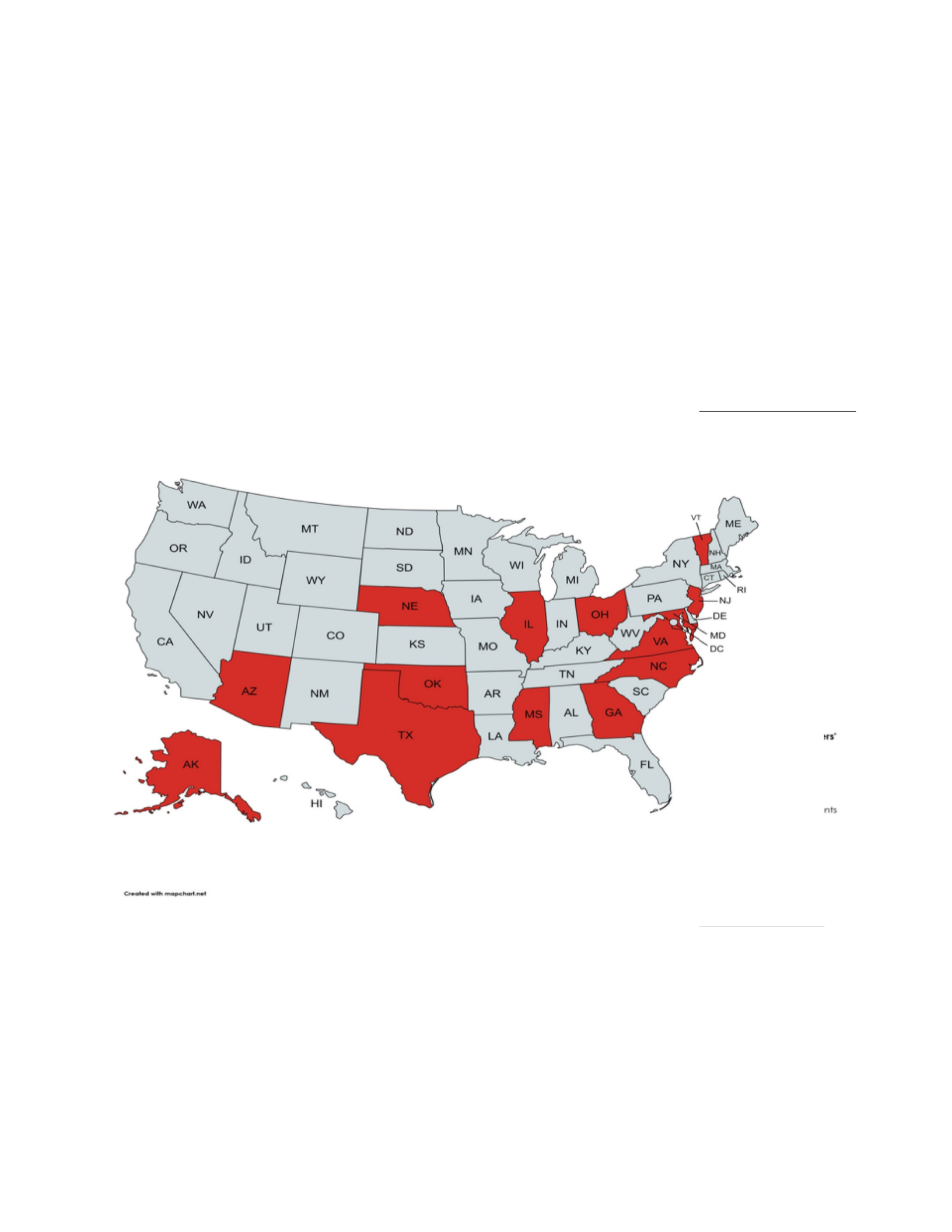
Map of the Location of Head Start Middle Manager Research Participants
80
As shown in the map in Figure 9, participants from 14 states, representing 9 out of 12
Administration for Children and Families Head Start Regions, participated in the study.
Texas had the highest number of participants, making up 27.69% of the sample. New Jersey was
next with 23.08%, followed by North Carolina at 16.92%. Virginia and Vermont comprised
7.69% and 3.08% of the participants, respectively. Arizona and Maryland each accounted for
4.62% of the total responses.
Figure 9
of the survey results to understand the descriptive statistics, specifically, the dispersions and
variations in the data. The mean values for transformational leadership are 5.40 and 5.43 for
organizational learning. These high mean scores indicate that the respondents, on average, rated
these constructs high, implying that the sample generally perceives the presence of
Map of the Locatio of Head Star Middle Manager Researc Participants
Moving beyond the demographic data related to the sample, additional detailed
analysis

81
transformational leadership and organizational learning as strong within their programs. The
mean scores for the dimensions of innovativeness provide insights into the middle managers'
perceptions of the construct based on Ruvio et al.'s (2014) research. Specifically, the high mean
of 4.13125 for creativity alludes to respondents generally perceiving their organizations as
highly creative.
Similarly, a mean score of 3.933594 for proactiveness indicates that the organizations are
adept at identifying future needs and anticipating and initiating change. Future orientation, with a
high mean value of 4.130208, suggests a focus on long-term planning and foresight within these
organizations. Similarly, openness had a high mean score of 4.132813, implying an
organizational culture that values transparency and open communication. Unlike the other
dimensions of innovativeness, the mean for risk-taking is drastically lower at 2.988281, implying
a more conservative and adverse approach to risk within Head Start programs. The following
section explains additional descriptive statistics to elucidate these trends further.
As shown in Table 7, the standard deviation for all the variables was less than 1.5,
denoting that responses are close to the mean and there is minimal variability or spread. This
finding indicates a general agreement among the respondents about evaluating transformational
leadership, organizational learning, and other dimensions like creativity and openness, which
aligns with Urdan (2022). He explained that the survey responses are more similar when the
standard deviations are small. The range of minimum and maximum values, which lean towards
the higher end of the scale, reveals that innovativeness and organizational learning are generally
perceived positively within the sample and further supports respondents' agreement level.
Noteworthy, the data did not show extremely low scores, and this pattern suggests that the Head

82
Start programs may be performing well in transformational leadership and organizational
learning.
Table 7
Descriptive Statistics for the Transformational Leadership, Organizational Learning, and
Innovativeness Survey
Variable Obs M SD Min Max
Transform. Leadership 64 5.397 1.499 1 7
Creativity 64 4.131 .797 1.4 5
Organizational Learning 64 5.426 1.16 1.5 7
Openness 64 4.133 .821 1.25 5
Future Orientation 64 4.13 .84 1.75 5
Risk-Taking 64 2.988 .796 1.25 5
Proactiveness 64 3.934 .858 1 5
Note. N=64.
4.3 Results
The researcher used Stata to perform multiple statistical analyses, including correlations,
multivariate regression, and confirmatory factor analyses, focusing on organizational learning
and innovativeness outcome variables. The regression analyses were executed with specified
parameters identified using G*Power: a 5% margin of error, an effect size of f2=0.15, a 95%
confidence level, and a power of 0.95. The results of the research questions and the five
hypotheses are discussed in detail below.
4.3.1 Research Question 1 Results
“What is the relationship between middle managers' transformational leadership
behaviors, organizational learning, and organizational innovativeness within a Head Start
program?” The variables used in this study were Transformational Leadership, Organizational
Learning, Creativity, Openness, Future Orientation, and Proactiveness, the five dimensions of

83
innovativeness. In answering the research question, multivariate regression analysis found
several statistically significant relationships between middle managers' transformational
leadership behaviors and organizational learning and innovativeness. The researcher used
multivariate regressions, confirmatory factors, and correlational analyses to investigate the
relationship between the variables.
The regression data shows a significant positive relationship between middle managers'
transformational leadership behaviors, organizational learning, and most of the dimensions of
innovativeness. Specifically, a one-unit increase in Transformational Leadership is associated
with a 0.5159-unit increase in Organizational Learning, a 0.3206-unit increase in Creativity, a
0.2150-unit increase in Openness, a 0.2495-unit increase in Future Orientation, a 0.0554-unit
increase in Risk-Taking, and a 0.9967-unit increase in Proactiveness. Organizational learning,
Creativity, and Future Orientation relationships are statistically significant, p<0.000, and
Openness at p=0.001. Given the extremely low p-values, there is strong evidence rejecting the
null hypothesis for the relationships between transformational leadership and dimensions of
innovativeness to include all the variables except risk-taking. The impact of Transformational
Leadership is most substantial on the dimension of Proactiveness, followed closely by
Organizational Learning and Creativity, as evidenced by the higher standardized coefficients for
these variables. On the other hand, the Risk-Taking dimension is less strongly influenced by
Transformational Leadership, suggesting that other variables not included in the model may also
play a role. Finally, correlational and confirmatory factor analysis showed similar findings as the
regression, with Risk-Taking not statistically significant.

84
4.3.2 Hypothesis 1 Results
Multivariate regression analysis explored how well transformational leadership predicted
organizational learning and innovativeness. H1: A significant relationship between Head Start
middle managers' transformational leadership, organizational learning, and innovativeness was
supported for the dependent variable, organizational learning, and four dimensions of
innovativeness—proactiveness, future orientation, creativity, and openness—through
multivariate regression analyses. Risk-taking was not found to be statistically significant as
summarized in Table 8.
Table 8
Results of Hypothesis 1: Multivariate Regression
Predictor
Variable Standardized
Coefficient (β)
Std.
Error
t-
value p-value Interpretation
Organizational
Learning
Creativity
(Innovativeness)
Openness
(Innovativeness
Future
Orientation
(Innovativeness)
.5158887 .0732029 7.05 0.000*** Organizational Learning was a significant
predictor, B=0.516, SE=0.073, t(df)=7.05,
p<.001, indicating a positive relationship
between Organizational Learning and
Transformational Leadership.
.3205627 .0538692 5.95 0.000*** Creativity was a significant predictor,
B=0.321, SE=0.054, t(df)=5.95, p<.001,
indicating a positive relationship with
Transformational Leadership.
.2150013 .0640011 3.36 0.001*** Openness was a statistically significant
predictor B=0.215, SE=0.064, t(df)=3.36,
p=.001, indicating a positive relationship
with Transformational Leadership.
.2494637 .0636789 3.92 0.000*** Future Orientation was a statistically
significant predictor B=0.249, SE=0.063,
t(df)=3.92, p<.001, indicating a positive
relationship with Transformational
Leadership.
Risk-Taking .0553772 .0670801 0.83 0.412 Risk-Taking was not statistically
significant with Transformational
Leadership, B=0.055, SE=0.067, t(df)=
0.83, p=.41.
Proactiveness .2969783 .0621657 4.78 0.000*** Proactiveness was statistically significant
with Transformational Leadership,
B=0.296, SE=0.062, t(df)=4.78, p<.001.
Note. *** p<0.01, ** p<0.05, * p<0.1.

85
4.3.2.1 Organizational Learning. In examining the influence of transformational
leadership on organizational learning, the regression analysis unveiled statistically significant
results. Specifically, for each one-unit increase in Transformational Leadership, Organizational
Learning increased by 0.516 units, F (1,63) =49.67, p<.001. This finding strongly supports
rejecting the null hypothesis, substantiating the link between Transformational Leadership and
Organizational Learning. Further, the coefficient of determination, R2, was 0.445, indicating that
approximately 44.5% of the variability in Organizational Learning could be accounted for by
Transformational Leadership. This suggests moderate to strong explanatory power for the model
as predicted in the priori hypothesis.
Additionally, the Root Mean Square Error (RMSE) was 0.871, indicating a reasonable fit
of the model, although there was some interesting unexplained variation in Organizational
Learning. The constant term, β0, was statistically significant at 2.641 (p<.001), suggesting a
meaningful baseline level of Organizational Learning when Transformational Leadership is
absent. In other words, the constant terms show that Organizational Learning may exist without
Transformational Leadership; however, the attributing factors are unknown. Yet, this is an
interesting finding, worth further exploration in future studies. These results imply that Head
Start middle managers' transformational leadership significantly enhances organizational
learning. Next, the researcher explains each of the dimensions of innovativeness from the
multivariate regression output.
4.3.2.2 Creativity. Transformational Leadership has a strong, statistically significant
positive impact on creativity, as evidenced by a coefficient of 0.321 (p< 0.001). The R2 is 0.364,
and approximately 36.4% of the variance in creativity is explained by transformational
leadership. This indicates moderate explanatory power, suggesting that while transformational

86
leadership is an important factor, the model might not include other variables affecting creativity.
This point is made clear since 63.6% of the variance is potentially explained by other factors
unknown in this study. The RMSE is 0.641, and the model's predictions are relatively close to
the actual values of creativity, but there is still some discrepancy. In other words, although the
model shows a reasonably good fit and promise for the variable Creativity, there is room for
model improvement. Future research could consider adding more predictors, exploring
interaction effects, or employing more complex modeling techniques to better understand the
underlying mechanisms influencing creativity.
4.3.2.3 Openness. The R2 for Openness was 0.154, and only about 15.4% of the variance
in Openness is explained by Transformational Leadership. This relatively low explanatory
power points to other significant factors affecting Openness that the model does not capture. The
RMSE is 0.761, and the higher RMSE suggests that the model's predictions for Openness are
less accurate than other variables, such as Creativity, reinforcing the lower R2 value.
Transformational Leadership has a moderate yet statistically significant influence on Openness
within the Head Start organization. Specifically, the coefficient stands at 0.215 and is significant
at the p<0.01 level. The results indicate that the relationship is not likely due to chance and
holds meaningful implications for understanding the role of middle managers' Transformational
Leadership in shaping Openness regarding innovation.
4.3.2.4 Future Orientation. The R2 was 0.0109, and nearly 20% of the variance in
Future Orientation is accounted for by Transformational Leadership. While this shows some
influence, it also suggests that other factors contribute substantially to Future Orientation. The
RMSE value is 0.758, which shows a reasonable but imperfect fit, suggesting that the model has

87
some predictive power but could be improved. Future Orientation showed a similar statistically
significant positive relationship, marked by a coefficient of 0.249 (p < 0.001).
4.3.2.5 Risk-Taking. The R2 was 0.011, and unlike the other dimensions of
innovativeness, a very small amount of the variance of 1.1% in Risk-Taking is explained by
Transformational Leadership, denoting that the model is ineffective for this variable and other
factors are likely at play. The RMSE of 0.798 is high and confirms that the model's predictions
are inaccurate for Risk-Taking. Further, Risk-taking is an anomaly; it does not exhibit a
statistically significant relationship with Transformational Leadership, as indicated by its p-
value of 0.4122. Thereby, Risk-taking does not show a significant change, meaning it appears to
be neither positively nor negatively influenced by levels of transformational leadership. Out of
the five dimensions of innovativeness, the Risk-taking variable is the only one that was not
statistically significant with Transformational Leadership.
4.3.2.6 Proactiveness. Proactivity is also positively and significantly influenced, with a
coefficient of 0.297 (p < 0.001). The R2 value is 0.269, and Transformational Leadership
explains about 26.9% of the variance in Proactiveness. This suggests a moderate level of
influence. The RMSE is 0.740, which shows a reasonable fit, suggesting that while the model
has some predictive power for proactivity, it could be refined further. See Figure 10 for the
multivariate regression output. The second statistical analysis addressing H1 included the
confirmatory analyses.

88
Figure 10
Multivariate Regression Output
Equation Obs P RMSE
"R-
sq" F P>F
OrgLearn 64 2 .8709
7
8
9
0.4448 49.66
5
5
5
0.0
Creativity 64 2 .6409
4
3
5
0.3635 35.41
1
5
4
0.0
Openness 64 2 .7614
9
4
0.1540 11.28
5
1
6
0.0
FuturOrient 64 2 .7576
6
0
9
0.1984 15.34
7
0.0
RiskTaking 64 2 .7981
2
8
7
0.0109 .6815
1
3
4
0.4
Proact 64 2 .7396
5
6
8
0.2691 22.82
1
6
8
0.0
Coefficient Std. err. t P>|t| [95% conf. interval]
OrgLearn
TransLe
ad
_cons
.5158887
2.64146
.0732029
.4098123
7.05
6.45
0.000
0.000
.3695581
1.822257
.6622192
3.460663
Creativity
TransLe
ad
_cons
.3205627
2.40113
.0538692
.3015763
5.95
7.96
0.000
0.000
.2128797
1.798288
.4282456
3.003972
Openness
TransLe
ad
_cons
.2150013
2.972421
.0640011
.3582976
3.36
8.30
0.001
0.000
.087065
2.256195
.3429376
3.688648
FuturO
r
i
e
n
t
TransLe
ad
_cons
.2494637
2.783819
.0636789
.356494
3.92
7.81
0.000
0.000
.1221713
2.071198
.376756
3.496441
RiskTaking
TransLe
ad
_cons
.0553772
2.689403
.0670801
.3755349
0.83
7.16
0.412
0.000
.078714
1.93872
.1894684
3.440087
Proact
TransLe
ad
_cons
.2969783
2.330762
.0621657
.3480228
4.78
6.70
0.000
0.000
.1727108
1.635074
.4212458
3.026449
4.3.2.7 Confirmatory Factory Analysis. This dissertation employed Confirmatory
Factor Analysis (CFA) to validate the survey instrument, conceptually replicating previous
research findings (Knekta et al., 2019) related to Transformational Leadership, Organizational
Learning, and five dimensions of organizational innovativeness, Creativity, Proactiveness,
Future Orientation, Risk-Taking, and Openness within a Head Start environment as part of
looking at the interrelationships comprehensively. The instrument was valid and reliable, with a
Cronbach's alpha of 0.8261. The CFA process was replicated in similar studies by scholars

89
(García-Morales et al., 2012; Ruvio et al., 2014). The CFA model showed a good fit to the data,
as indicated by a chi-square value of χ2 (15) =22.15 and a p-value of .103, indicating that the
model fit is adequate, as the p-value is greater than the .05 significance level. Additional fit

90
indices further supported the model's adequacy; the Root Mean Square Error of Approximation
(RMSEA) was .05, and the Comparative Fit Index (CFI) was .97. All factor loadings were
statistically significant at p<.001, confirming the robustness of the model in capturing the latent
constructs. These significant factor loadings provide relevant statistical support for the
hypothesis that Transformational Leadership influences the various dimensions of
innovativeness.
The standardized factor loading for Creativity was ß=.865, for Openness was ß=.855,
and for Future Orientation was ß=.829, suggesting that as the latent variable, Transformational
Leadership, increases, these dimensions of innovativeness are likely to be positively influenced.
Put differently, the high factor loading scores for Creativity, Openness, and Future Orientation
are associated with high scores in Transformational Leadership. Moreover, the CFA results
confirmed that Transformational Leadership significantly influences Organizational Learning
and all five innovativeness dimensions, F (6,58)>20, p<.001. Notably, the standardized
coefficients revealed a strong positive impact of Transformational Leadership on Openness
(β=.865, p<.001), followed by Proactiveness (β=.855, p<.001) and Future Orientation (β=.829,
p<.001). These results suggest that higher levels of Transformational Leadership are associated
with greater innovativeness across these dimensions within Head Start programs. As part of a
broader statistical evaluation, equation-level goodness-of-fit metrics were calculated. Figure 11
shows the CFA model's R2 values for each observed variable. These R2 values ranged from 0 to
1, with higher values indicative of a better model fit for the corresponding variables.

91
Figure 11
R-Squared Values of Each Variable in the CFA
Note. R-squared values for each variable in the CFA. Asterisks indicate statistical significance at the <0.001 level.
R2 values were used to evaluate the proportion of variance explained for each variable to
determine the model's fit to the data. Specifically, the variables Openness (R2=.748),
Proactiveness (R2=.730), and Future Orientation (R2=.688) displayed strong associations with
Transformational Leadership, F(1,63)>15, p<.001. Notably, the high R2 values for these
variables further validate H1 and the central research question for this dissertation study. On the
other hand, the R2 value for Risk-Taking was notably lower (R2=.215), suggesting that the model
does not adequately capture all contributing factors for this variable. The overall R2 for the
multivariate model was .910, further substantiating the model's strong explanatory power for the
dependent variables under consideration. The results suggest that the model is robust in
explaining most innovativeness and organizational learning dimensions with an overall R2 value
for the model of 0.910, denoting 91% of the variance across all the variables in the data.
Nevertheless, the model fails to explain risk-taking, which had the lowest R2 value of all the
other innovativeness dimensions, as illustrated in Table 9.

92
Table 9
Equation-Level Goodness of Fit Variance
Dependent Observations Fitted Predicted Residual R-squared mc mc2
Org. Learning*** 1.324 0.533 0.790 0.403 0.635 0.403
Creativity*** 0.625 0.354 0.272 0.565 0.752 0.565
Openness*** 0.664 0.497 0.167 0.748 0.865 0.748
Future Orientation*** 0.694 0.477 0.217 0.688 0.829 0.688
Risk-Taking 0.624 0.134 0.490 0.215 0.464 0.215
Proactiveness*** 0.725 0.530 0.196 0.730 0.855 0.730
0.910
Note. mc = correlation between the dependent variable and its prediction. mc2 = mc2 is the Bentler, Raykov squared
multiple correlation coefficient. *** p<0.01, ** p<0.05, * p<0.1
Second, a multivariate regression model was run after the CFA. After the regression
analysis, a box plot employing Tukey's (1977) method was used as a diagnostic tool to validate
the model's findings and to assess the robustness, as detailed in Figure 12. Although the
regression model was run before using Tukey's method, employing this as a post-regression
diagnostic tool is widely accepted for evaluating model assumptions and robustness (Field et al.,
2012).
Figure 12
Boxplot of Variables

93
4.3.3 Hypothesis 2 Results
A correlational analysis, using a Pearson Product Moment Correlation (r), was employed
to determine if a relationship existed between transformational leadership and organizational
learning and to denote the strength and direction. Correlational values range from -1 to 1, with -1
representing a negative correlation, 0 indicating no correlation, and 1 denoting a positive
correlation (Blaikie, 2003). With that in mind, the second hypothesis, H2: A positive correlation
exists between the Head Start middle manager's transformational leadership and organizational
learning was supported. The pairwise correlation table presents the relationship between
Transformational Leadership and Organizational Learning. As exhibited in Table 10, the
correlation coefficient between these two variables is 0.667, which is statistically significant
with a p-value of less than 0.0001 (indicated by the asterisk). This strong, positive correlation
suggests that organizational learning increases as transformational leadership increases. The
statistical significance (p < 0.0001) provides strong evidence against the null hypothesis,
affirming that the observed relationship is unlikely to have occurred by chance. Therefore, the
data supports the idea that Transformational Leadership has a meaningful and positive impact
on Organizational Learning.
Table 10
Correlational Matrix of Transformational Leadership and Organizational Learning
Variables (1) (2)
(1) TransLead 1.000
(2) OrgLearn 0.667*
(0.000)
1.000
Note. *** p<0.01, ** p<0.05, * p<0.1 (one-tailed)

94
4.3.4 Hypothesis 3 Results
Hypothesis 3 stated that a positive correlation exists between Head Start middle
managers' transformational leadership and organizational innovativeness, which was partially
supported. The Pairwise Correlations in Table 11 provide insight into the relationships between
Transformational Leadership and organizational variables such as Organizational Learning,
Creativity, Openness, Future Orientation, Risk-Taking, and Proactiveness. All p-values are
reported in parentheses next to the correlation coefficients, with asterisks denoting statistical
significance at different levels.
Transformational Leadership shows statistically significant correlations with all variables
except Risk-Taking. Specifically, Transformational Leadership has a strong positive correlation
with Organizational Learning (r = 0.667, p < 0.000) and Creativity (r = 0.603, p < 0.000), a
moderate correlation with Openness (r = 0.392, p = 0.001) and Future Orientation (r = 0.445,
p < 0.000), and a weaker but still statistically significant correlation with Proactiveness
(r = 0.519, p < 0.000).
Notably, Risk-taking is the only variable that does not have a statistically significant
correlation with Transformational Leadership (r = 0.104, p = 0.412). Among the dimensions of
innovativeness, substantial and statistically significant correlations are evident, such as between
openness and future orientation (r = 0.762, p < 0.000) and between proactiveness and several
other dimensions, including Openness (r = 0.723, p < 0.000) and Future Orientation (r = 0.724,
p < 0.000). In summary, these findings indicate that Transformational Leadership is significantly
related to multiple aspects of organizational dimensions of innovativeness, except for Risk-
taking. These statistically significant correlations underscore the potential influence of
transformational leadership on organizational innovation.

95
Table 11
Correlational Matrix of Transformational Leadership and the Five Dimensions of Innovativeness
Variables (1) (2) (3) (4) (5) (6) (7)
(1) TransLead 1.000
(2) OrgLearn
(3) Creativity
0.667*
(0.000)
0.603*
1.000
0.778*1.000
(4) Openness
(0.000)
0.392*
(0.000)
0.480*0.635*1.000
(5) FuturOrient
(0.001)
0.445*
(0.000)
0.444*
(0.000)
0.562*0.762*1.000
(0.000) (0.000) (0.000) (0.000)
(6) RiskTaking 0.104 0.182 0.225 0.456*0.379*1.000
(7) Proact
(0.412)
0.519*
(0.151)
0.543*
(0.074)
0.634*
(0.000)
0.723*
(0.002)
0.724*0.446*1.000
(0.000) (0.000) (0.000) (0.000) (0.000) (0.000)
Note. *** p<0.01, ** p<0.05, * p<0.1 (one-tailed)
4.3.5 Hypothesis 4 Results
H4 specified a positive correlation exists between organizational learning and
organizational innovativeness, and the hypothesis was partially supported. In examining the
relationships between organizational learning and various dimensions of innovativeness, as
depicted in Table 12, several significant correlations emerge. Specifically, Organizational
Learning shares a robust positive correlation with Creativity, as evidenced by a coefficient of
0.778 and a p-value of less than 0.0001. This strong association suggests that as levels of
Organizational Learning increase, there is a parallel rise in Creativity. Similarly, Organizational
Learning exhibits a moderate yet statistically significant correlation with Openness (r = 0.480, p
< 0.0001), implying that higher levels of Organizational Learning are associated with greater
Openness within the organization.

96
Table 12
Correlational Matrix of Organizational Learning and the Five Dimensions of Innovativeness
Variables (1) (2) (3) (4) (5) (6)
(1) OrgLearn 1.000
(2) Creativity
(3) Openness
0.778*
(0.000)
0.480*
1.000
0.635*1.000
(4) FuturOrient
(0.000)
0.444*
(0.000)
0.562*0.762*1.000
(0.000) (0.000) (0.000)
(5) RiskTaking 0.182 0.225 0.456*0.379*1.000
(6) Proact
(0.151)
0.543*
(0.074)
0.634*
(0.000)
0.723*
(0.002)
0.724*0.446*1.000
(0.000) (0.000) (0.000) (0.000) (0.000)
Note. *** p<0.01, ** p<0.05, * p<0.1 (one-tailed)
With Future Orientation, a moderate positive correlation of 0.444 is observed, which is
also statistically significant (p < 0.0001), indicating that improvements in Organizational
Learning tend to be accompanied by enhancements in Future Orientation. Conversely, Risk-
taking has a weak and non-significant correlation with Organizational Learning (r = 0.182, p =
0.151), suggesting that the relationship between these two variables is neither strong nor
statistically meaningful. Lastly, Proactiveness displays a moderate to strong, statistically
significant correlation with Organizational Learning (r = 0.543, p < 0.0001), reinforcing that
higher levels of Organizational Learning are linked with increased Proactiveness. These
findings provide compelling evidence against the null hypothesis, affirming that the observed
relationships are statistically significant and not due to random chance.

97
4.3.6 Hypothesis 5 Results
Hypothesis 5 states that organizational learning significantly predicts organizational
innovativeness, indicating a positive relationship between the two variables. Hypothesis 5 was
partially supported, as denoted in Table 13. In the linear regression model assessing the
predictors of Organizational Learning, Creativity emerged as a significant factor, with a
coefficient of 1.093, t (62) =6.79, p<.01, 95% CI [0.771, 1.416]. This implies that a one-unit
increase in Creativity is associated with a 1.093-unit increase in Organizational Learning,
holding other variables constant. Conversely, Openness, Future Orientation, Risk-Taking, and
Proactiveness were not statistically significant predictors of Organizational Learning (p=.521,
.945, .935, and .493, respectively). The model exhibited a moderate fit, with an R2 of .613, (5,58)
=18.484, p<.01, indicating that the predictors could account for approximately 61.3% of the
variance in Organizational Learning.
Table 13
Linear Regression Model of Organizational Learning and Innovativeness
OrgLearn Coef. St. Err. t-value p-value 95% CI Sig
Creativity 1.093 .161 6.79 0.000 [.771, 1.416] ***
Openness -.123 .191 -0.65 .521 [-.505, .258]
FuturOrient -.017 .245 -0.07 .945 [-.508, .474]
RiskTaking -.009 .111 -0.08 .935 [-.23, .212]
Proact .192 .278 0.69 .493 [-.364, .748]
Constant .762 .563 1.35 .182 [-.366, 1.889]
Mean dependent var 5.426 SD dependent var 1.160
R-squared 0.613 Number of obs 64
F-test 18.484 Prob > F 0.000
Akaike crit. (AIC) 150.834 Bayesian crit. (BIC) 163.787
Note. CI=Confidence Interval; *** p<.01, ** p<.05, * p<.1

98
Information criteria, including the Akaike Information Criterion (AIC = 150.834) and the
Bayesian Information Criterion (BIC = 163.787), provide additional support for the model's fit.
Additionally, while Creativity appears to be a strong predictor of Organizational Learning, the
other variables do not significantly contribute, suggesting avenues for future research to explore
other potential predictors. Lower values for AIC and BIC generally indicate a better model fit,
and these values can be used for model comparison (Field, 2018).
4.4 Chapter Summary
Chapter 4 focused on the statistical findings and results for the research question and the
five hypotheses. Statistical analyses included multivariate regression and Confirmatory Factor
Analysis (CFA), revealing that Transformational Leadership substantially impacted
Organizational Learning and multiple facets of innovativeness, except Risk-Taking. Thereby
answering the research question--there is a positive and significant relationship between Head
Start middle managers' transformational leadership on organizational learning and
innovativeness. Various fit metrics like RMSEA (.05) and CFI (.97) verified the model's
suitability. The study also found a significant correlation between Transformational Leadership
and Organizational Learning (r = .667, p < .0001), partially validating the third and fourth
hypotheses. The fifth hypothesis indicated that Creativity is a crucial determinant of
Organizational Learning, accounting for approximately 61.3% of its variance (R2 = .613).
The hypotheses predicted the strength and direction of the relationships between the variables,
and a detailed summary of the results is presented in Table 14.

99
Table 14
Research Question, Hypotheses, Statistical Tests, and Results
Research Question and
Hypotheses Statistical Test Results
Research Question 1: What
is the relationship between
middle managers'
transformational leadership
behaviors, organizational
learning, and organizational
innovativeness within a Head
Start program?”
H1: There is a significantly
positive relationship between
Head Start middle managers'
transformational leadership,
organizational learning, and
innovativeness.
Multivariate Regression
Correlations
Multivariate Regression
Model
One-Tailed
Confirmatory Factor Analyses
A significant and positive relationship exists
between middle managers' transformational
leadership and organizational learning and
innovativeness with a Head Start program.
Partially Supported
All dependent variables were statistically
significant at (p < 0.001) except for risk-
taking, which was not significant.
The CFA model showed a good fit to the data,
as indicated by a chi-square value of χ2 (15)
=22.15 and a p-value of .103, indicating that
the model fit is adequate, as the p-value is
greater than the .05 significance level.
H2: A positive correlation
exists between the middle
manager's transformational
leadership and organizational
learning in a Head Start
program.
H3: A positive correlation
exists between Head Start
middle managers'
transformational leadership
and organizational
innovativeness.
H4: A positive correlation
exists between
organizational learning and
organizational
innovativeness.
Correlation Supported
The correlation coefficient between these two
variables is 0.667, which is statistically
significant with a p-value of less than 0.0001.
Pairwise Correlation Partially Supported
All variables were significant at p < 0.000,
except for risk-taking.
Pairwise Correlation Partially Supported
All variables except Risk-Taking have
statistically significant correlations with
Organizational Learning at the p<0.01 level.
H5: Organizational learning
significantly predicts
organizational
innovativeness, indicating a
positive relationship between
the two variables.
Regression
One-Tailed
Partially Supported
In the linear regression model assessing the
predictors of Organizational Learning,
Creativity emerged as the only significant
factor, with a coefficient of 1.093, t (62)
=6.79, p<.01, 95% CI [0.771, 1.416]. All other
variables were not significant.
Note. The scales used for this research were Transformational Leadership and Organizational Learning (García-Morales et al.,
2012) and Innovativeness (Ruvio et al., 2014).

100
Chapter 5 provides a synthesis of these findings, the theoretical and practical
implications, and recommends areas for future research, particularly focusing on Head Start
programs and the role of transformational leadership.

101
CHAPTER 5: Conclusions and Recommendations
This chapter includes a discussion of findings, alignment of findings to the literature,
unexpected findings, recommendations for leadership, practice, and further studies, a reflection,
and the conclusion. This study aimed to extend existing research on transformational leadership,
organizational learning, and innovativeness by applying these well-established theories and
findings to a novel population and setting. Specifically for Head Start programs across the
United States, the research conducted a conceptual replication to examine whether previous
findings are generalizable to this new context. Despite the critical role that Head Start programs
play in early childhood education and development for the nation's most vulnerable children, as
well as support for their families, there is a paucity of literature regarding the impact of
transformational leadership, organizational learning, and innovativeness within these settings.
The lack of research is concerning, given that scholars (Alblooshi et al., 2021; Imran et al., 2016;
Khan & Ismail, 2017; Khan & Khan, 2019; Mohamed & Otman, 2021; Vashdi et al., 2019;
Verma et al., 2022; Siangchokyoo et al., 2020; Yukl, 2009) tout that these factors are critical
drivers of organizational effectiveness, performance, and success in various other contexts and
industries. Before this study, there was an insufficient understanding of how transformational
leadership behaviors of middle managers manifest and impact organizational learning and
innovation outcomes in Head Start programs. This study addressed this gap by evaluating these
constructs within the unique context of Head Start, thereby providing valuable insights for
program improvement, policy development, and future research.
To this end, this non-experimental, explanatory correlational research design study
investigated the relationship between Head Start middle managers' transformational leadership,
organizational learning, and innovativeness. The research question that guided this dissertation

102
research is, “What is the relationship between middle managers' transformational leadership
behaviors, organizational learning, and organizational innovativeness within a Head Start
program?” The priori directional hypotheses were established based on the extant literature and
theoretical reasoning.
5.1 Discussion of the Results and Key Findings
The results of this study are intended to determine the relationship between Head Start
middle managers' transformational leadership behaviors and organizational learning and
innovativeness. For this study, a convenience sample of 64 Head Start middle managers from 14
states completed the survey for transformational leadership, organizational learning, and
innovativeness (García-Morales et al., 2012; Ruvio et al., 2014) used to measure the relationship
between the variables for this research. The researcher explored the answers to the research
question and the five hypotheses by analyzing the survey data results. The findings are presented
below.
5.1.1 Research Question 1
What is the relationship between middle managers' transformational leadership
behaviors, organizational learning, and organizational innovativeness within a Head Start
program? Recent studies (Alsalami et al., 2014; Baxla & Mishra, 2022; Safiia, 2019) suggested
a positive relationship between transformational leadership, organizational learning, and
innovativeness. Consistent with these findings, the study found that transformational leadership
plays a significant role in organizational learning and innovativeness in Head Start programs.
Through quantitative surveys completed by Head Start mid-level managers, the data showed that
transformational leadership qualities such as inspirational motivation, individualized
consideration, and intellectual stimulation were strongly and positively correlated with

103
organizational learning and four out of the five dimensions of innovativeness: proactiveness,
future orientation, openness, and creativity. However, transformational leadership behaviors
were not associated with the risk-taking dimension. These findings are critical and suggest that
investing in leadership development could be strategic for enhancing performance,
organizational sustainability, and overall effectiveness.
5.1.1.1 Hypothesis 1. There is a significant relationship between Head Start middle
managers' transformational leadership, organizational learning, and innovativeness, and the
multivariate regression model explained a substantial portion of the variance in the dependent
variables of organizational learning and innovativeness. Organizational learning and all the
dimensions of innovativeness except for risk-taking were statistically significant. While
transformational leadership has a moderate to strong influence on some dimensions, like
organizational learning and creativity, its impact is much less pronounced for dimensions like
risk-taking and openness. Specifically, risk-taking was not statistically significant, and openness
had the lowest coefficient and t-value. Further, as transformational leadership increases, so does
organizational learning and four dimensions of organizational innovativeness: proactiveness,
future orientation, creativity, and openness. Contrarily, since transformational leadership was not
a significant predictor of risk-taking, this variable should be the focus of further research to
understand why it is not significant and whether the sample size was an influential factor. As
predicted, the directionality of the hypothesis was adequate and correct for all other dependent
variables.
As highlighted in existing literature gaps, constructs like transformational leadership,
organizational learning, and innovativeness have yet to be explored in early childhood settings,
such as Head Start. With that in mind, the CFA confirmed that all the variables associated with

104
innovation and organizational learning were statistically significant, and these results suggest
that higher levels of transformational leadership are associated with greater innovativeness
across these dimensions within Head Start programs. The question arises as to why risk-taking is
not statistically significant in the multivariate regression but is significant in the CFA. In
thinking about this question, it is important to understand that risk-taking may still be a good
measure of the underlying innovativeness construct, as postulated and confirmed in their model
by Ruvio et al. (2014). The purpose and intent of CFA is a construct validation, whereas the
purpose of the regression was to understand predictions. Notably, risk-taking was not a
sufficient predictor for transformational leadership in the multivariate regressions run for this
study. A key takeaway from this hypothesis is that the variables are interrelated,
transformational leadership predicts organizational learning and innovativeness, and the
instruments used in this study are appropriate for the Head Start population.
Tukey's (1977) method also offered valuable insights into the range and scale of the
variables, which is crucial for interpreting their relative importance in the regression model.
When dealing with multiple predictors, such as the five dimensions of innovativeness, it is
especially important to allocate their predictive power properly. While the regression model
indicated that Risk-Taking is not statistically significant, this does not necessarily invalidate the
model. The lack of significance suggests that Risk-Taking may not be a strong predictor in this
specific context, a finding confirmed in the multivariate regression. Various factors could
account for this, such as the predictive power being captured by other variables or Risk-Taking
not being a relevant factor for outcomes within the Head Start population. Future research
should consider incorporating additional variables to gain a more comprehensive understanding
of this dimension.

105
5.1.1.2 Hypothesis 2. A positive correlation exists between the Head Start middle
managers' transformational leadership and organizational learning. Correlational analyses found
a positive correlation between the Head Start middle managers' transformational leadership and
organizational learning.
5.1.1.3 Hypothesis 3. A positive correlation exists between Head Start middle managers'
transformational leadership and organizational innovativeness. Like the findings with the
multivariate regression, risk-taking is the only variable that does not have a statistically
significant correlation with transformational leadership (r = 0.104, p = 0.412). There were
similarities in strength and direction as both statistical tests showed that risk-taking was an
outlier unrelated to transformational leadership.
5.1.1.4 Hypothesis 4. A positive correlation exists between organizational learning and
organizational innovativeness. This hypothesis was partially supported as risk-taking was not
correlated with organizational learning like the other dimensions of innovativeness. Creativity
had a strong association, as shown in multivariate regression. Future orientation, proactiveness,
and openness were all moderately or strongly positively correlated with organizational
learning.
5.1.1.5 Hypothesis 5. Organizational learning significantly predicts organizational
innovativeness, indicating a positive relationship between the two variables. In the linear
regression model assessing the predictors of Organizational Learning, Creativity emerged as a
significant factor, with a coefficient of 1.093, t (62) =6.79, p<.01, 95% CI [0.771, 1.416]. This
implies that a one-unit increase in Creativity is associated with a 1.093-unit increase in
Organizational Learning, holding other variables constant. Conversely, Openness, Future
Orientation, Risk-Taking, and Proactiveness were not statistically significant predictors of
Organizational Learning (p=.521, .945, .935, and .493, respectively). This hypothesis was

106
partially supported. Creativity is a unique variable strongly correlated with transformational leadership
and organizational learning.
5.2 Relationship to Prior Research
Organizational learning is the sum of individual learning (Xie, 2020), and innovativeness
is the total collection of innovations using creativity, future orientation, proactiveness, risk-
taking, and openness to foster new services, systems, approaches, or implement change to
improve the organization overall (Ruvio et al., 2014). Transformational leaders stimulate,
inspire, and serve as role models, fostering organizational learning and bringing out the best in
employees (Xie, 2020). Existing literature reveals that transformational leadership is positively
and significantly related to organizational learning and innovativeness (Bahadur et al., 2021;
Nguyen & Luu, 2019; Park & Kim, 2018; Sattayaraksa & Boon-itt, 2018; Verma et al., 2022;
Xie, 2020) as also predicted and supported in this research, which conceptually replicated
examining the variables with a different population, Head Start middle managers.
Supportive leaders create the ideal environment for organizational innovativeness by
stimulating mutual trust, risk-taking, and shared vision among team members. Both are well-
documented in the literature to foster effective organizational performance (Bahadur et al.,
2021; Karimi et al., 2023). Organizations adept at learning achieve greater strategic competence
and sustainable and competitive advantages (Senge, 1990). Findings from research from
Gorzelany et al. (2021) and Sattayaraksa and Boon-itt (2018) explained, unlike in my research,
that risk- taking was statistically significant with transformational leadership, emphasizing the
importance of the role of the leader and culture determining the level of risk taken related to
experiments, creative errors, and ongoing learning. Thus, the current dissertation research
contrasts with these findings as risk-taking as a dimension of innovativeness was not significant,
indicating little to

107
no influence within the context of transformational leadership. While, the explanatory
correlational research design did not examine causation, the contrast in findings could be
attributed to other situational or organizational factors that were not accounted for in this
dissertation research.
In H1, the multivariate regression in H2 and H3, the correlational analysis indicated that
risk-taking was neither positively nor significantly relevant to transformational leadership, which
were different from the priori hypothesis denoted for this research. Interestingly, H3 and H4
were partially confirmed. Unlike the other facets of innovativeness, risk-taking did not correlate
with organizational learning. Creativity demonstrated the strongest relationship, as evidenced in
the multivariate regression and the correlational analysis. Meanwhile, future orientation,
proactiveness, and openness exhibited moderate to strong positive associations with
organizational learning. Moreover, H5 organizational learning predicts innovativeness, which
was also not fully confirmed, contrary to the literature (Alsalami et al., 2014; Safiia, 2019;
Verma et al., 2022), revealing a strong relationship between the constructs. To put it simply,
Verma et al. (2022) explained the following:
The transformational leader makes employees act as a leading force of the organization
by being emotionally available for the employee, considering them as a valuable resource
for the organization, and inspiring, motivating, and guiding employees to attain higher
values, thus developing organizational learning in them. (p. 18)
The findings of this study align with Verma et al. (2022), who denoted that the
moderating role of the industry type within the effect of organizational learning on innovation
varies across sectors. Their study revealed a stronger correlation between innovation and
business performance for manufacturing firms than for service firms. Head Start is an

108
educational service industry, and the finding was not as significant as the literature, where the
contextual focus was on manufacturing or banking (Afsar & Umrani, 2020; Bello & Adeoye,
2018; Migdadi, 2021; Nguyen & Luu, 2019).
Werlang and Rosetto (2019) used the five dimensions of innovativeness found in this
study, researched the relationship with organizational learning, and found the relationship
statistically significant. The findings for this research only found one of the dimensions of
innovation that predicted organizational learning: creativity. An intriguing revelation of this
research was the pronounced correlation between creativity—a facet of innovation—and
organizational learning. This aligns with Alblooshi et al. (2021), who contended that employee
creativity is directly related to the innovation climate that transformational leaders foster. It
encourages employees to demonstrate their fullest potential and creative thinking.
However, when juxtaposed with the findings of Werlang and Rosetto (2019), it is
essential to note that there were variations, including sample characteristics and methodological
differences. As previously stated in the literature gaps, these constructs have not been widely
investigated in the United States. Werlang and Rosetto's (2019) research took place in Brazil
using small- and medium-sized hospitality and tourism firms and a quantitative cross-sectional
research design. Their study and this one used a similar scale but yielded very different results.
5.3 Limitations
Limitations are reported in research to provide transparency about potential weaknesses
or constraints, ensuring readers understand the study's context and findings (Creswell &
Guetterman, 2019). Reporting limitations prevent overgeneralization of the findings and
conclusions. Furthermore, acknowledging the limitations helps frame the recommendations for

109
future research and provides useful direction for new studies and inquiry (Creswell &
Guetterman, 2019).
Potential limitations of this study include using self-reported survey data, which is
susceptible to biases, possibly resulting in conclusions that are not entirely accurate (Ross &
Bibler Zaida, 2019). Additionally, the statistical tests employed, correlational, multivariate
regression, and the CFA will not provide cause and effect linkages, only relational data between
the variables (Urdan, 2022). Moreover, using a convenience sample does not allow
generalizability to the entire population. Based on initial calculations with G*Power, a sample
size of 74 was determined to achieve an effect size of 0.80. However, while over 86% of
participants responded, the final sample size was 64. A follow-up analysis using G*Power's post
hoc tool revealed that a sample size of 64 yielded an effect size of 0.86, which remains within
the accepted range. Nevertheless, the study's results may need additional statistical testing in
future research using probability sampling to validate the generalizability (Creswell &
Guetterman, 2019) of these results to the broader population of Head Start middle managers.
5.4 Theoretical Implications
Building upon the foundational concepts of transformational leadership theory, the
findings from this research offer a nuanced understanding of how leadership behaviors intersect
with organizational outcomes, specifically organizational learning and innovativeness.
Interestingly, the pronounced role of creativity within organizational learning and innovativeness
and the significance of how transformational leadership exudes this common factor could expand
current theoretical discussions around its central role within organizations. Conversely, the
diminished correlation between risk-taking and specific outcomes challenges existing

110
assumptions, prompting a reevaluation of the theoretical weight ascribed to risk-taking within
innovation, learning, and the intersection with the transformational leadership context.
Moreover, by focusing on specific organizations like Head Start programs, the study
provides pivotal insights into the contextual dynamics of transformational leadership, raising
questions about the broader applicability of these findings in different contexts, such as public
sector maternal health and early intervention programs. This becomes particularly salient when
juxtaposing these findings against the predominance of the studies conducted outside the United
States, as evidenced by discrepancies with research conducted in regions like Brazil. Such
contrasts accentuate the potential cultural, economic, or sectoral variations in transformational
leadership, opening the door for enriched theoretical discussions. Finally, the transformational
leadership theory posits that leaders elevate the aspirations and performance of their followers by
fostering a shared vision, encouraging exploration, and challenging the status quo. In this context
and by addressing the scarcity of literature on transformational leadership, organizational
learning, and innovativeness in early childhood programs, this research contributes a unique
burgeoning perspective to the leadership field.
5.5 Conceptual Replication and Moving Forward
This study has successfully achieved a key objective of the study, conceptual replication,
demonstrating that the core findings from previous research not only exist in a different context
but also contribute to an enhanced understanding of the underlying phenomena, thus reinforcing
the importance of the transformational leadership theoretical framework. This research provides
a basis for the continued utility of the Transformational Leadership, Organizational Learning,
and Innovativeness Scale in Head Start Programs. The survey instrument is appropriate and
relevant for utility in Head Start programs for two key reasons based on the findings from this

111
study. First, the statistical significance of the relationships between the predictor and outcome
variables, coupled with a Cronbach's alpha of 0.8261, shows the survey appears to be a relevant
and appropriate tool for measuring the constructs in this study, even in a new population such as
with Head Start middle managers where it has not been previously used.
The Cronbach's alpha showed high reliability for the survey instrument. It is important to
note that Risk-Taking had the lowest factor loading, suggesting that while Transformational
Leadership influences it, it may also be influenced by other factors not included in the model.
Therefore, four dimensions of innovativeness are salient to the model and this study based on the
results. The CFA results affirmed that the survey is conceptually sound for this new population.
Further validation came from Tukey's (1977) method, which revealed no significant issues with
the individual variables. This dual validation supports the model's appropriateness for the Head
Start population.
Moreover, the by including Akaike Information Criterion (AIC) and Bayesian
Information Criterion (BIC) in robust regression analysis provided four vital components to
show the prowess and strength of using the model in a different context:
1. These criteria facilitate model comparison by assessing different models in terms of
their fit to the data. This balance between goodness-of-fit and model complexity is
essential in robust regression, where the aim is often to minimize the impact of
outliers.
2. Lower AIC and BIC values can bolster confidence in the model's generalizability,
which is crucial when the model's predictions guide important decisions.
3. These criteria enhance the study's methodological rigor, demonstrating that fit and
complexity have been considered.

112
4. Most importantly, the AIC and BIC are interdisciplinary measures, making the
quality of the model easily transferable across different fields of study.
A model with low AIC and BIC values in the initial study can provide strong evidence for the
generalizability and validity of the findings, thereby setting a solid foundation for future
replication. Moreover, when multiple models are considered in the original study, AIC and BIC
can guide researchers in selecting the most parsimonious or simple model that still fits the data
well. The aim is that the selected model in this dissertation research becomes the standard against
which conceptual replications can be compared. If the replication studies, which might employ
different methods or samples, produce models with similarly low AIC and BIC values,
confidence in the robustness and generalizability of the original findings is further enhanced.
Thus, while AIC and BIC are not direct measures of replication success, their role in assessing the
strength of original findings is crucial for the integrity and interpretability of both the initial
and replication studies. In contributing to the leadership field of study, including the AIC and
BIC, it was essential for other scholars to consider when implementing this tool in future
research to confirm and validate further the relevancy and prowess of the tool with different
service-oriented populations.
5.6 Recommendations for Leaders
As predicted, the findings of this research reveal that transformational leadership propels
employees to share and transfer knowledge, think creatively about new endeavors, and engage
in innovations (Northouse, 2021). Transformational leaders create a culture conducive to
learning and innovation. Given the impact of transformational leadership behaviors on
organizational learning and innovativeness, leaders within Head Start programs and other early
childhood organizations should prioritize cultivating inspirational motivation, idealized
consideration,

113
intellectual stimulation, and idealized influence behaviors. These recommendations guide leaders
in nurturing an organizational culture conducive to transformational leadership, learning, and
innovation. Therefore, the following recommendations are recommended for leadership practice.
First, leaders must establish a clear and compelling vision for the future. This vision,
when consistently communicated and reinforced, provides direction and purpose.
Transformational leaders should prioritize not only their growth but also the development of
their teams. Leaders can refine and culminate their skills by attending seminars, workshops, and
courses. Furthermore, promoting a culture of continuous learning is essential, especially among
mid-level managers and emerging leaders. This emphasis on learning individually and
organizationally should focus on innovative strategies, transformational leadership practices, and
approaches as supported by Afsar and Umrani (2020), Baxla and Mishra (2022), Karimi et al.
(2023), and Verma et al. (2022).
Second, the pronounced association between creativity and organizational learning, as
evidenced in the multivariate regression, underscores its importance. Leaders must foster an
environment that actively encourages creative thinking and innovative problem-solving. Given
the positive correlations of future orientation, proactiveness, and openness with organizational
learning, it's evident that these aspects should be central to leadership training initiatives.
Leaders need the tools and strategies to cultivate a forward-thinking mindset in their teams,
encouraging a proactive stance to challenges and an openness to fresh ideas. By emphasizing
intellectual stimulation and inspirational motivation, leaders can create an environment that
champions curiosity, welcomes diverse perspectives, and ensures safe spaces for
experimentation, as highlighted by Migdadi (2021). Lastly, data-driven decision-making is

114
paramount. Leaders should leverage quantitative and qualitative insights to make informed
decisions, particularly when considering innovation and risk-taking.
5.7 Recommendations for Future Research
There are several key recommendations for future research. These recommendations are
based on the research findings, implications, and conclusions to ensure continued growth and
evolution in the leadership field.
1. Future research should employ a mixed-methods design, leveraging the current
instrument and qualitative interviews. This approach will verify content validity and
deepen the understanding of risk-taking as a dimension of innovativeness within early
childhood settings.
2. Future research should expand on the quantitative findings of this research by
designing and conducting a qualitative research design to explore the dynamics, lived
experiences, perceptions, and challenges of how mid-level managers'
transformational leadership influences organizational learning, innovativeness, and
approaches to risk. The qualitative research design could provide a rich contextual
understanding and insight into transformational leadership.
3. It is recommended to replicate the study with a larger sample using structural
equation modeling analyses to elucidate the direct and indirect effects, mediations,
and correlations among independent variables, transformational leadership, and the
organizational learning and innovativeness constructs.
4. This dissertation research utilized a convenience sampling methodology, which limits
the potential for generalizability; therefore, in future research, probability sampling is
recommended to allow for generalizability to a greater population.

115
5. Future research should modify this study to include Head Start Directors and compare
the findings with those of middle managers across various organizations to see the
full impact of transformational leadership on organizational learning and
innovativeness, using a cross-section quantitative research design. Comparing the
findings between middle managers and directors across different organizations may
yield more profound insights and knowledge in understanding transformational
leadership from a macro level.
5.8 Researcher’s Reflections
As I embarked on this research journey, I was driven by my personal experience with
Head Start and the field of early childhood education. Having worked in a Head Start myself, I
was always intrigued by how leadership styles influenced our daily work lives, our motivation,
and our commitment to children and families. My initial assumption was that transformational
leadership would always yield positive results, given its emphasis on vision, inspiration, and
personal connections, which this research successfully demonstrated. Professionally, this
research has deepened my appreciation for leadership as both an art and a science. My view of
leadership has deepened my understanding of its nuances, intricacies, and the profound impact it
has on organizations.
With that in mind, why are Head Start middle managers risk averse in their perceptions
about innovativeness and how it relates to organizational learning? This question continues to
resonate with me. This study amplifies, along with a plethora of other studies, the profound and
effective qualities and efficacy of transformational leadership and inspirational motivation,
intellectual stimulation, idealized influence, and individual consideration permeate the culture to
yield learning and catalyze change. Amid the challenges that Head Start programs experience,

116
the return on investment is worth the exploration to learn how to incrementally embrace some
levels of risk in terms of “thinking outside the box,” specifically in the areas of diversification of
funding to increase salaries and improve program quality.
Even though it was not a focus of this study, research and data-driven decision-making,
pilot programming, and incremental innovations thoughtfully planned out all reduce risk. I hope
to expand this research to further probe into risk-taking to determine if the full scope of
innovativeness is applicable in the transformational leadership of mid-level and futuristically in
the executive leadership of Head Start programs. Methodologically, I initially struggled to decide
between qualitative interviews and quantitative surveys. While I opted for a quantitative research
design, reflecting upon this, I sometimes wonder if deeper qualitative insights might have added
richness to the findings.
From a personal perspective, as a former Head Start parent of two children who went
through the program, I am proud of its influence on my life and the trajectory of my career and
education. Beyond my love for innovation, organizational learning, and leadership, I hope this
dissertation research and its implications will help programs cultivate and foster the
organizational prowess to sustain the program for many more years.
5.9 Conclusion
Chapter 5 presented the conclusion, discussion of key results and findings, limitations,
recommendations for leaders, and directions for future research. The primary objective of this
non-experimental, explanatory correlational research was to explore the relationship between
Head Start middle managers' transformational leadership and its impact on organizational
learning and innovativeness. Four significant gaps in the literature highlight the importance of
this study. First, most of the literature showed that the relationships between leadership,

117
organizational learning, and organizational innovativeness were studied primarily outside North
America, especially outside the United States (Sattayaraksa & Boon-itt, 2018; Verma et al.,
2022). Moreover, the prevailing research settings were in the manufacturing sector. Second,
there was a notable absence of research examining organizational learning and innovativeness
within early childhood education programs. Third, while existing literature extensively focused
on senior executive leaders' roles (Bahadur et al., 2021; Berraies & Zine El Abidine, 2019;
Gorzelany et al., 2021; Mohamed & Otman, 2021; Noruzy et al., 2013), middle managers'
leadership in early childhood settings remained largely unexplored. Although middle managers
play a pivotal role in promoting learning and innovation (Alegbeleye et al., 2020; Engle et al.,
2017; Jyoti & Bhau, 2015), there is a clear need for further research in this area. Fourth, there
were gaps concerning transformational leadership's role in organizational learning and
innovation. Some scholars, such as Anderson (2017) and Yukl (2010), highlighted biases in the
leader-follower dynamics of transformational leadership, suggesting a limitation in its
explanatory power for overall organizational effectiveness.
Furthermore, Yukl and Gardner (2020) argued that the transformational leadership theory
lacks depth in explaining organizational performance, especially in change and group learning
processes. The gaps in the literature provide the basis for this original research. The study
provides a broader understanding of leadership, organizational learning, and innovativeness by
focusing on a previously underexplored context, specifically in the United States. This
burgeoning research, therefore, serves as a foundational reference for future studies and provides
a more comprehensive view of transformational leadership dynamics in diverse settings.
Through various analytical methods, including multivariate regression, correlations, and
confirmatory factor analyses, this study found a significant positive relationship between middle

118
managers' transformational leadership and both organizational learning and innovativeness.
However, risk-taking did not show a statistically significant association. The overall model fit
the data satisfactorily. Notably, the correlation coefficient between transformational leadership
and organizational learning was a robust 0.667. Except for risk-taking, most variables showed
significant correlations at p<0.000. Creativity emerged as the sole significant factor when
evaluating organizational learning predictors.
These findings emphasize transformative leadership's crucial role in enhancing
organizational learning and innovativeness among Head Start managers, particularly highlighting
the significance of creativity in the Head Start context. Consequently, leaders are encouraged to
foster environments that champion learning, promote divergent thinking, and stimulate
innovative problem-solving approaches. Emphasis should be placed on professional
development programs targeting transformational leadership, especially tailored for current mid-
level managers and aspirants to such roles


