


Inclusive Leadership, Psychological Empowerment,
And Affective Organizational Commitment
Introduction
Diversity and inclusion have become CEO-level priorities in
organizations around the world due to their importance in affecting
workplace outcomes such as engagement and productivity (Bourke, Garr,
van Berkel, & Wong, 2017). Diversity is defined as “a characteristic of
social grouping that reflects the degree to which objective or subjective
differences exist between group members” (van Knippenberg & Schippers,
2007, p. 516) and can be divided into different typologies, including
demographic attributes (e.g., gender, race/ethnicity, age), personal attributes
(e.g., personality, attitudes, values), and job-related attributes (e.g.,
educational, functional background).
Significant progress has been made over the past three decades to
increase the levels of workforce diversity for historically marginalized
groups, such as women, members of ethnic and racial minorities, members
of sexual minority groups, older workers, and people with disabilities,
through a combination of anti-discrimination laws and affirmative action
programs (Mor Barak, 2015). Despite this progress, research has shown that

increasing diversity in organizations does not guarantee positive outcomes
for diverse members in terms of retention, promotion, or productivity
(McKay et al., 2007). In fact, some studies have shown that greater diversity
has led to increased conflict and turnover, and lower cohesion and
performance (Kochan et al., 2003; Mannix & Neale, 2005). These negative
consequences suggest that diversity alone is not enough to ensure an
effective work environment for all employees. In response to this, the topic
of inclusion has gained increased attention as a means to realize the benefits
of diversity more fully.
Inclusion refers to an employee’s perception that “he or she is an
esteemed member of the work group through experiencing treatment that
satisfies his or her needs for belongingness and uniqueness” (Shore et al.,
2011, p. 1265). Inclusion practices seek to provide a greater level of insider
status to individuals of different backgrounds, including sharing information,
participation in decision making, having voice, and upward mobility
opportunities (Shore et al., 2011; Shore, Cleveland, & Sanchez, 2018).
It is clear that fostering inclusion is critical to ensuring a positive
environment for diverse individuals. However, achieving an inclusive
climate in practice is a complex challenge that requires an examination of all

facets of the workplace and an authentic willingness to provide the
conditions under which diverse individuals can succeed (Winters, 2014).
Therefore, more research is needed to understand how organizations can
create inclusive environments.
Leadership is one of the key contextual factors that promotes an inclusive
climate. Over the past decade, a specific form of relational leadership,
inclusive leadership, has garnered attention. Inclusive leadership refers to
leaders’ display of openness, accessibility, and availability in their
interactions with followers (Carmeli, ReiterPalmon, & Ziv, 2010). Research
on inclusive leadership has shown positive outcomes on employees such as
increased work engagement, innovative work behaviors, and team
performance (Hirak, Peng, Carmeli, & Schaubroeck, 2012; Javed, Abdullah,
Zaffar, Haque, & Rubab, 2019; Mitchell et al., 2015). However, little is
known regarding the ability of inclusive leadership to affect a wider range of
outcomes, such as organizational commitment.
One component of organizational commitment is affective organizational
commitment, defined as an employee’s attachment to, identification with,
and involvement in the organization (Meyer & Allen, 1991). Affective
organizational commitment has been found to be positively related to

individual and organizational outcomes such as employee attendance,
performance, health and well-being, and organizational citizenship behaviors
(Meyer, Stanley, Herscovitch, & Topolnytsky, 2002). Because of its
positive outcomes, affective organizational commitment has been widely
studied to better understand how organizations can foster it among
employees.
Leadership is considered a key determinant of affective organizational
commitment (Joo, 2010; Mowday, Porter, & Steers, 1982; Neubert, Carlson,
Kacmar, Roberts, & Chonko, 2009; Wallace, de Chernatony, & Buil, 2013).
In particular, positive relationships have been found between affective
organizational commitment and transformational leadership (Avolio, Zhu,
Koh, & Bhatia, 2004), ethical leadership (Benevene et al., 2018; Kim &
Brymer, 2011), servant leadership (Zhou & Miao, 2014), and leader-member
exchange (Eisenberger et al., 2010; Joo, 2010). However, little research has
been dedicated to investigating the influence of inclusive leadership on
affective organizational commitment (Choi, Tran, & Park, 2015). Given the
importance of inclusive leadership on positive workplace outcomes, the
present study investigates the relationship between inclusive leadership and
affective organizational commitment.

Researchers have called for the need to examine various mediating
mechanisms between inclusive leadership and work outcomes in order
to obtain a more comprehensive understanding of how this specific
leadership style is related to work outcomes (Choi et al., 2015; Javed,
Naqvi, Khan, Arjoon, & Tayyeb, 2017). One such mediator,
psychological empowerment, has started to gain traction in the literature
in its relationship with inclusive leadership (Javed et al., 2019).
Psychological empowerment is defined as intrinsic task motivation
that reflects an active orientation to one’s work role and is “manifested in
four cognitions: meaning, competence, self-determination, and impact”
(Spreitzer, 1995, p. 1444). Furthermore, psychological empowerment has
been extensively studied as a mediating mechanism between antecedent
conditions and work-related outcomes, including affective organizational
commitment (Castro, Periñan, & Bueno, 2008; Liden, Wayne, &
Sparrowe, 2000).
For example, Avolio et al. (2004) investigated the mediating role of
psychological empowerment on the relationship between transformational
leadership and affective organizational commitment. They found that
feelings of psychological empowerment mediated the relationship between

transformational leadership and affective organizational commitment such
that the presence of transformational leadership led to greater feelings of
psychological empowerment among subordinates, which in turn, led to
subordinates having higher levels of affective commitment to the
organization.
To date, few studies have examined the role of psychological
empowerment as a mechanism linking inclusive leadership and employee
outcomes. Inclusive leaders create an accepting and welcoming climate for
their employees to voice their ideas and opinions. This signals to employees
that they have impact and control over their work, which ultimately may
increase feelings of psychological empowerment (Randel et al., 2018).
Therefore, the present study investigates psychological empowerment as a
mediator of the relationship between inclusive leadership and affective
organizational commitment.
The following sections present the definition of inclusive leadership,
review the existing literature on the relationship between inclusive
leadership and work outcomes, introduce psychological empowerment as a
mediator, and present hypotheses on the relationships among inclusive

leadership, affective organizational commitment, and psychological
empowerment.
Inclusive Leadership
The term leader inclusiveness was first introduced by Nembhard and
Edmondson (2006), who defined it as “words and deeds by a leader or
leaders that indicate an invitation and appreciation for others’ contributions
[and captures] attempts by leaders to include others in discussions and
decisions in which their voices and perspectives might otherwise be absent”
(p. 947). According to this definition, inclusive leaders create a
psychologically safe environment in which employees of all levels feel
comfortable speaking up and help them believe that their opinions and ideas
are valued.
Carmeli et al. (2010) expanded upon Nembhard and Edmondson’s (2006)
definition to develop their own conceptualization and measure of inclusive
leadership. These researchers were interested in exploring the concept of
relational leadership, which refers to “a social influence process through
which emergent coordination (i.e., evolving social order) and change (i.e.,
new values, attitudes, approaches, behaviors, ideologies, etc.) are constructed
and produced” (Uhl-Bien, 2006, p. 668). Carmeli et al. proposed that

inclusive leadership, which they define as leaders’ display of “openness,
accessibility, and availability in their interactions with followers” (p. 250), is
a core aspect of relational leadership. In other words, unlike many views of
leadership that present leader-follower exchanges in a top down, hierarchical
fashion, inclusive leadership functions as a twoway relationship between
leader and employee (Carmeli et al., 2010; Choi, Tran, & Kang, 2017; Javed
et al., 2019).
Carmeli et al. (2010) argued that through the dimensions of openness,
accessibility, and availability, inclusive leaders encourage employees to
contribute new ideas and take risks by communicating the importance of
these behaviors and ensuring employees that there are not negative
consequences for doing so. Specifically, the dimension of openness implies
that the leader is actively listening and open to hearing new ideas, attentive
to new opportunities to improve work processes, and willing to discuss new
ways for achieving desired work goals. The dimension of availability
explains that the leader is an ongoing presence in the team and is readily
available for consultation on problems, professional questions, and various
requests. Finally, the dimension of accessibility is the degree to which the

leader encourages employees to access him or her on emerging issues and is
readily accessible for discussing problems as they arise.
The present study draws upon Carmeli et al.’s (2010) conceptualization
because of its focus on individual-level perceptions of inclusive leadership,
which is important to study in its relationship with individual perceptions
of psychological empowerment and affective organizational commitment.
Furthermore, this conceptualization has received strong support from the
existing literature as a reliable measure of inclusive leadership (Carmeli et
al., 2010; Choi et al., 2017; Javed et al., 2017).
Although elements of inclusive leadership share similarities with other
leadership styles, it is differentiated in several ways. For example,
inclusive leadership is related to participative leadership, which describes
leaders who consult with employees on issues and share or delegate
decision-making responsibility to them. However, inclusive leadership is
unique in that it pertains to situations in which status or power differences
are present and helps people believe that their voices are genuinely valued
through inviting and appreciating their inputs (Mitchell et al., 2015;
Nembhard & Edmondson, 2006).

Inclusive leadership is also related to transformational leadership. One
dimension of transformational leadership, individual consideration, or the
degree to which the leader listens and attends to each employee’s needs and
concerns and acts as a mentor or coach, is most closely related to inclusive
leadership (Judge & Piccolo, 2004). Yet, transformational leadership is not
necessarily inclusive in nature. Transformational leadership focuses on
changing and transforming employees by increasing motivation based on
shared goals and organizational needs (Kanugo, 2001), whereas inclusive
leadership focuses on accepting employees for who they are and their own
unique perspectives and ideas (Carmeli et al., 2010).
Inclusive leadership also shares similarities with servant leadership. The
defining characteristic of servant leadership is its focus on benevolent
service to others (Neubert, Hunter, & Tolentino, 2016). Servant leaders put
their employees first and promote their well-being and career growth, but
also look beyond those employed by the organization and aim to create
success for other stakeholders such as customers and the community
(Ehrhart, 2004). Inclusive leadership differs from this style of leadership in
that it focuses more narrowly on creating an open and comfortable
environment for employees to speak up, specifically in relation to the work

group. Inclusive leadership also does not focus on external stakeholders as
servant leadership does.
Outcomes of Inclusive Leadership
Past research demonstrates that inclusive leadership is associated with
positive outcomes at both the team and individual levels. At the team level,
inclusive leadership has been shown to be positively associated with team
performance (Hirak et al., 2012; Mitchell et al., 2015; Qi & Liu, 2017) and
team innovation (Ye, Wang, & Guo, 2019). Inclusive leadership has also
been found to enhance leader-directed and work groupdirected helping
behavior, which are forms of extra role behavior, by signaling to employees
that they belong and are valued for their unique talents (Randel, Dean,
Ehrhart, Chung, & Shore, 2016).
At the individual level, inclusive leadership has often been studied in its
relationship with psychological safety ‒ the belief that the workplace is safe
for interpersonal risk taking, which enables employees to feel comfortable
contributing their ideas and information (Edmondson & Lei, 2014).
Specifically, the literature provides support that inclusive leaders promote
greater levels of psychological safety among employees by signaling that

their work is important and their comments and ideas are appreciated
(Carmeli et al., 2010; Hirak et al., 2012; Nembhard & Edmondson, 2006).
Inclusive leadership has also been found to positively impact employee
engagement (Choi et al., 2015), innovative work behaviors (Javed et al.,
2017; Javed et al., 2019), employee creativity (Carmeli et al., 2010), and
employee well-being (Choi et al., 2017). For example, Javed et al. (2019)
found a positive relationship between inclusive leadership and innovative
work behaviors. Inclusive leaders showed strong support for their
employees by directly inviting them to participate in decision-making and
work processes. Based on these positive leader behaviors, the employees
in this study risked disagreement with their leadership and challenged the
status quo by generating and promoting novel ideas and turning these ideas
into useful applications.
Inclusive Leadership and Affective Organizational Commitment
Organizational commitment has been studied extensively in the literature
and is predominantly conceptualized using the three-component model
originally introduced by Meyer and Allen (1991). In the three-component
model, organizational commitment is composed of affective, continuance,
and normative commitment. Affective organizational commitment refers to

employees’ emotional attachment to, and identification with, the
organization; employees stay because they want to. Continuance
organizational commitment refers to employees’ awareness of the costs
associated with leaving the organization; employees stay because they need
to. Normative organizational commitment refers to employees’ feelings of
obligation to continue employment; employees stay because they ought to
(Meyer & Allen, 1991).
Although the three-component model of organizational commitment has
been widely accepted by scholars, recent studies have started to use affective
organizational commitment as the sole indicator of organizational
commitment (Benevene et al., 2018; Brown, Paz-Aparicio, & Revilla, 2019).
Solinger, van Olffen, and Roe (2008) argued that there are conceptual issues
with the three-component model. One issue is that continuance
organizational commitment correlates negatively or not at all with affective
organizational commitment, affective or attitudinal correlates, and work-
related outcomes. In effect, this creates concerns regarding the convergent
validity of continuance organizational commitment. A second issue is that
normative organizational commitment has been found to correlate strongly
with affective organizational commitment, which makes it hard to separate

the two components empirically (Ko, Price, & Mueller, 1997; Meyer et al.,
2002). Thus, there is a low level of discriminant validity and this signals
that normative organizational commitment may be redundant with affective
organizational commitment.
Of the three components of organizational commitment, affective
organizational commitment, therefore, is the most reliable and strongly
validated (Meyer et al., 2002). Affective organizational commitment has the
strongest relationships with work-related outcomes, such as absenteeism, job
performance, and organizational citizenship behaviors. Previous research
has also been more theoretically and empirically conclusive regarding the
relationship between leadership and affective organizational commitment,
compared to continuance or normative organizational commitment (Meyer et
al., 2002). For all of these reasons, the present study focuses solely on
affective organizational commitment.
Leadership has been identified as an important predictor of affective
organizational commitment (Mathieu & Zajac, 1990; Meyer et al., 2002). In
general, positive relationships have been found between various leader
behaviors and affective organizational commitment. For example, Yiing and
Ahmad (2009) studied the relationships between leaders’ directive (initiating

structure; task-oriented), supportive (consideration; people-oriented), and
participative behaviors and affective organizational commitment, and found
positive and significant relationships for each of these leader behaviors.
Specifically, employees felt stronger emotional bonds to their organizations
when they had leaders who provided clear directions, showed concern for
their wellbeing and personal needs, and consulted with them about decisions.
Positive relationships have also been found between leadership styles
and affective organizational commitment. Transformational leadership has
consistently been found to be positively related to affective organizational
commitment (Meyer et al., 2002; Simosi & Xenikou, 2010; Yahaya &
Ebrahim, 2016). Transformational leaders motivate their employees to
think creatively about their jobs, seek new ways of approaching problems,
engender respect and inspiration, and build a sense of confidence (Simosi &
Xenikou, 2010). Walumbwa and Lawler (2003) suggest that through this
encouragement, employees become emotionally attached to their
organizations.
Although there has been considerable research studying the link between
leadership and affective organizational commitment, there is a dearth of
research dedicated to studying inclusive leadership. One exception is

research by Choi et al. (2015). They found that inclusive leadership was
positively related to employees’ affective organizational commitment.
Specifically, the researchers argued that inclusive leaders attended to
employees’ needs by exhibiting openness, accessibility, and availability in
their work, and these positive behaviors facilitated employees’ affective
organizational commitment.
Inclusive leadership may influence affective organizational commitment
via a social exchange process (Blau, 1964; Eisenberger, Shanock, & Wen,
2020). The social exchange theory posits that social relationships are based
on the exchange of benefits between individuals (Blau, 1964). One of the
basic tenets of this theory is the norm of reciprocity, a social norm that
maintains that people should return favors and other acts of kindness
(Gouldner, 1960). Following the norm of reciprocity, if an employee feels
that he or she has a supportive and caring manager, this individual is likely
to reciprocate in the form of positive behaviors and attitudes back to the
manager and organization. Based on the norm of reciprocity, a supportive
manager is also likely to elicit an employee’s felt obligation, or the duty
perceived by an employee to add value to and care about the organization,

through greater affective organizational commitment (Eisenberger, Armeli,
Rexwinkel, Lynch, & Rhoades, 2001).
Inclusive leaders are open, accessible, and available to employees to
share their ideas and participate in the decision-making process by
communicating the importance of such behaviors and assuring employees
that there will not be negative consequences for speaking up (Carmeli et al.,
2010). Additionally, inclusive leaders create an environment in which
employees feel valued for their unique thoughts and ideas. These positive
leader behaviors signal to employees that the organization is friendly and
supportive of them (Liden et al., 2000; Nishii & Mayer, 2009; Shore et al.,
2018). Furthermore, value sharing encourages employees to form an
attachment and emotional bond with the organization (Kim, Eisenberger, &
Baik, 2016; Mathieu & Zajac, 1990).
From a social exchange perspective, the positive environment that
inclusive leaders create invokes in employees the norm of reciprocity and
produces a felt obligation to stay committed to the organization in order to
continue the positive exchange relationship (Chen & Tang, 2018;
Eisenberger et al., 2001). In an effort to advance research on the relationship

between inclusive leadership and affective organizational commitment, I
propose the following hypothesis:
Hypothesis 1: Inclusive leadership will be positively related to affective
organizational commitment.
The Mediating Role of Psychological Empowerment on the Relationship
Between Inclusive Leadership and Affective Organizational
Commitment
In addition to proposing that inclusive leadership is positively related to
affective organizational commitment, it is also important to examine
processes that may underlie this relationship. The present study explores
the potential role of psychological empowerment. Psychological
empowerment is defined as intrinsic task motivation that reflects an active
orientation to one’s work role and thus a sense of control over one’s work,
“manifested in four cognitions: meaning, competence, self-determination,
and impact” (Spreitzer, 1995, p. 1444). Meaning refers to the fit between
one’s work goals and beliefs or values (Hackman & Oldham, 1980).
Competence, or self-efficacy, refers to a belief in one’s capability to
successfully perform work activities (Bandura, 1989).
Self-determination is a sense of choice or autonomy over the initiation
and regulation of one’s actions (Deci, Connell, & Ryan, 1989). Lastly,

impact is the degree to which an individual can influence strategic,
administrative, or operating outcomes at work (Ashforth, 1989). Spreitzer
(1995) noted that the four dimensions are additive to create an overall
construct of psychological empowerment, and that psychological
empowerment is highest when all four dimensions are high.
Inclusive leadership is believed to enhance psychological empowerment
by providing a welcoming and autonomous environment for employees that
allows them to take initiative, speak up, and express ideas, suggestions, and
problems. In addition, several studies have identified a positive link
between psychological empowerment and affective organizational
commitment (Brunetto et al., 2012; Castro et al., 2008; Maynard, Gilson, &
Mathieu, 2012; Seibert, Wang, & Courtright, 2011). Therefore,
psychological empowerment is explored in this study as a mediator of the
relationship between inclusive leadership and affective organizational
commitment.
Although a variety of leadership styles have been explored in relation to
psychological empowerment, there is little research to date studying the
effects of inclusive leadership on psychological empowerment. Recently,
Javed et al. (2019) provided initial support for the relationship between

these two constructs. Results from their study revealed that inclusive
leadership was positively related to psychological empowerment.
According to Javed et al., inclusive leaders invited their employees to
speak up and engage in constructive dialogue, which positively affected
their sense of meaning. They were open and served as a social model for
employees to learn from, leading to greater feelings of competence.
Inclusive leaders shared decision-making power with their employees,
which created a sense of self-determination. Lastly, inclusive leaders
provided timely feedback on their employees’ work contributions, leading
to feelings of impact.
In evaluating their findings, Javed et al. (2019) suggested that inclusive
leadership positively affects employee psychological empowerment
through the relationships inclusive leaders create with their employees.
Employees who feel validated, accepted, and supported via the
relationships they have with their leaders are more likely to feel
empowered and motivated to engage in interpersonal risk taking and
sharing (Nishii & Mayer, 2009). Furthermore, better and more trusting
relationships have been shown to positively affect psychological
empowerment (Maynard et al., 2012). For example, communication with

one’s supervisor is positively associated with meaning, selfdetermination,
and impact dimensions of psychological empowerment (Siegall & Gardner,
2000). Based on the above arguments, I propose the following hypothesis:
Hypothesis 2: Inclusive leadership will be positively related to employee
psychological empowerment.
In terms of the relationship between psychological empowerment and
employees’ affective organizational commitment, results from a meta-
analysis conducted by Seibert et al. (2011) showed a significant and
positive relationship between psychological empowerment and
organizational commitment across 31 different studies. These researchers
proposed that psychological empowerment, as exemplified through the
dimensions of meaning, self-determination, competence, and impact,
increased employees’ affective commitment to the organization.
Specifically, the meaning dimension was argued to increase affective
organizational commitment because it assessed the fit between the work
role and the employees’ needs and values. Selfdetermination, competence,
and impact were argued to increase affective organizational commitment
because they enhanced the abilities of employees to express their values
and interests through their work.

In a more recent study, Macsinga, Sulea, Sârbescu, Fischmann, and
Dumitru (2015) explored the incremental effect of psychological
empowerment on affective organizational commitment after accounting for
personality factors. They concluded that psychological empowerment was a
significant predictor of affective organizational commitment even after
accounting for personality factors, such that employees who felt their work
was meaningful and their actions made a difference were more likely to
develop an emotional attachment to and involvement in the organization.
Providing employees with opportunities to increase their levels of
meaning, competence, self-determination, and impact – in other words,
increasing their feelings of psychological empowerment – is expected to
result in employees who are more likely to reciprocate with higher levels of
affective commitment to their organizations. In view of this, I propose the
following hypothesis:
Hypothesis 3: Employee psychological empowerment will be positively
related to affective organizational commitment.
The literature reviewed above suggests positive relationships between
inclusive leadership and psychological empowerment, and between

psychological empowerment and affective organizational commitment.
Hence, I propose the following hypothesized relationship:
Hypothesis 4: Employee psychological empowerment will mediate the
relationship between inclusive leadership and affective organizational
commitment.
On a final note, Seibert et al. (2011) found that the four dimensions of
psychological empowerment significantly differed among themselves as
predictors of organizational commitment. Specifically, meaning and impact
were stronger predictors of organizational commitment than competence or
self-determination. In order to study whether dimensions of psychological
empowerment differ in their mediating effect on the relationship between
inclusive leadership and affective organizational commitment, I propose the
following research question:
Research Question: Which dimension of psychological empowerment is
the strongest mediator in the relationship between inclusive leadership
and affective organizational commitment?
Present Study
The goal of the present study was to examine the underlying process
through which inclusive leadership is related to employees’ affective

organizational commitment by focusing on psychological empowerment as a
mediator. I also explored which of the four dimensions of psychological
empowerment most strongly mediated the relationship between inclusive
leadership and affective organizational commitment.
This study is one of the first to explore the influence that inclusive
leaders have on both employee psychological empowerment and affective
organizational commitment. Additionally, this study extends the literature on
inclusive leadership by examining a mediated model in order to get a more
comprehensive understanding of the role inclusive leadership plays in
affecting positive outcomes in the workplace. Given the diverse breakdown
of individuals in the workplace today, it is critical to explore inclusive
leadership as a means to fully utilize the unique talents of these individuals
and provide an open environment where everyone has an equal opportunity
to succeed.
Method
Participants
A total of 269 participants responded to an online survey. Participants
were drawn from a convenience sample of my personal and professional
networks (e.g., LinkedIn, Facebook, Instagram) as well as the extended

networks of the participants. The criteria for inclusion in the study were that
participants (a) were currently employed either parttime or full-time for at
least three months at their current company, (b) reported to their current
manager or supervisor for at least three months, (c) were at least 18 years of
age, and (d) did not have a substantial amount of incomplete data. Thus, the
final sample consisted of 189 participants.
The demographic characteristics of the participants are presented in Table
1. The sample consisted of 63.0% women, 36.0% men, and 1.1% non-
binary. Ages ranged from 18 years to 65 years or older, with the majority of
respondents between the ages of 25 and 34 years old (70.9%). Most
respondents identified as White (57.7%), followed by Multiracial (15.9%),
Asian (13.2%), and Hispanic/Latinx (8.5%).
The majority of participants (88.9%) reported working 40 or more hours
per week at their current jobs. Organizational tenure ranged from three
months to more than 15 years, with 54.5% of participants reporting they had
been employed at their current company between three months and two
years, followed by 30.2% of participants with a tenure of between three and
five years. Additionally, 72.5% of participants reported having worked with
their current manager or supervisor between three months and two years,

and 18.5% worked with their current manager or supervisor between three
and five years. Participants reported working in a wide range of industries,
including 16.9% “Other” (e.g., Aerospace, Government, Law Enforcement),
15.9% in computer software/electronics, 15.3% in
healthcare/pharmaceutical, 9.5% in sales/retail, 7.9% in education, and 7.4%
in finance/insurance.
Table 1
Demographic Characteristics of Participants
Variable N %
Gender
Female 119 63.0
Male 68 36.0
Non-binary 2 1.1
Age
18-24 14 7.4
25-34 134 70.9
35-44 13 6.9
45-54 15 7.9
55-64 12 6.3
65 years or older 1 .5
Ethnicity/Race
Asian 25 13.2
Black/African American 1 .5

Hispanic/Latinx 16 8.5
Native Hawaiian or Other Pacific Islander 3 1.6
White 109 57.7
Multiracial 30 15.9
Other 1 .5
Prefer not to respond 4 2.1
Employment Status
Working 40+ hours a week 168 88.9
Working 1-39 hours a week 21 11.1
Tenure
3 months to 2 years 103 54.5
3 to 5 years 57 30.2
6 to 8 years 13 6.9
9 to 11 years 2 1.1
12 to 14 years 2 1.1
15+ years 12 6.3
Table 1 (Continued)
Variable n %
Length of Time Under
Supervisor 3 months to 2
years
137
72.5
3 to 5 years 35 18.5
6 to 8 years 6 3.2
9 to 11 years 3 1.6
15+ years
8
4.2
Industry
Computer Software/Electronics 30 15.9
Education 15 7.9
Engineering/Architecture 6 3.2

Entertainment, Media, Recreation 13 6.9
Finance/Insurance 14 7.4
Food Services 3 1.6
Healthcare/Pharmaceutical 29 15.3
Human Resources 12 6.3
Legal 3 1.6
Manufacturing 7 3.7
Real Estate 6 3.2
Sales/Retail 18 9.5
Other 32 16.9
Note. N = 189.
Measures
All study variables were measured on a 5-point Likert scale, ranging from 1
(Strongly
Disagree) to 5 (Strongly Agree).
Inclusive leadership. Inclusive leadership, defined as leaders’ display
of openness, accessibility, and availability in their interactions with
followers (Carmeli et al., 2010), was measured using Carmeli et al.’s (2010)
nine-item measure of inclusive leadership. This measure assesses three
dimensions of inclusive leaders: openness (three items), availability (four
items), and accessibility (two items). Because the respondents were asked
to rate items for their direct managers, the wording of the items was
changed slightly to fit this study. Example items include, “My manager is

open to hearing new ideas” (openness); “My manager is an ongoing
‘presence’ in this team – someone who is readily available” (availability);
and “My manager encourages me to access him/her on emerging issues”
(accessibility). Responses were averaged to create a composite score.
Cronbach’s alpha for the nine-item scale was .93, indicating high reliability.
Psychological empowerment. Psychological empowerment is defined
as intrinsic task motivation that reflects an active orientation to one’s work
role and thus a sense of control over one’s work, “manifested in four
cognitions: meaning, competence, selfdetermination, and impact”
(Spreitzer, 1995, p. 1444). Spreitzer’s (1995) 12-item scale was utilized to
measure psychological empowerment. This scale measures four dimensions
of psychological empowerment: meaning (three items), competence (three
items), self-determination (three items), and impact (three items). The
respondents were asked to rate their own levels of psychological
empowerment. Example items include, “The work I do is very important to
me” (meaning); “I am confident about my ability to do my job”
(competence); “I can decide on my own how to go about doing my work”
(self-determination); and “My impact on what happens in my department is
large” (impact). Responses were averaged to create an overall score of

psychological empowerment, as well as composite scores of each of the four
dimensions. Cronbach’s alpha for the 12-item scale was .86, indicating high
reliability.
Affective organizational commitment. Affective organizational
commitment refers to employees’ emotional attachment to, and
identification with, the organization (Meyer & Allen, 1991), and was
measured using six items from Meyer, Allen, and Smith’s
(1993) scale of organizational commitment. A sample item was “I really
feel as if this organization’s problems are my own.” Responses were
averaged to create a composite score. Cronbach’s alpha was .85,
indicating high reliability.
Demographic information. Participants responded to seven
demographic items. The items included employment status, organizational
tenure, time working with current manager or supervisor, employment
industry, age, gender, and ethnicity/race.
Procedure The present study was administered in a survey format online
through Qualtrics. Participants were recruited via email, word of mouth, and
social networking platforms (e.g., LinkedIn, Facebook, Instagram). The
invitation to participate included a short description of the study, an

anonymous link to the survey, and a request to share the survey link with
their extended networks. Upon clicking the link, participants were directed
to a consent notice, which provided information on the purpose of the study,
procedures to be followed, potential risks and benefits, confidentiality
parameters, their rights to participate or withdraw at any time, and
appropriate points of contact if they had questions, concerns, or complaints
regarding the research study.
Those who agreed to participate were then directed to the survey, which
contained a total of 34 items regarding their demographic characteristics,
inclusive leadership, psychological empowerment, and affective
organizational commitment. The survey took approximately 10 minutes to
complete. Instructions were displayed at the top of each section to inform
participants of the types of questions that would be asked. At the end of the
survey, participants were thanked for their time. Participants who did not
consent to the survey, reported themselves as unemployed or retired, or
indicated having been employed at their current company or worked with
their current manager or supervisor for less than three months, were directed
to the end of the survey and thanked for their time. Data were analyzed

using the Statistical Package for Social Sciences (SPSS) software program
Version 26.
Results
Descriptive Statistics
The means and standard deviations of the measured variables are
presented in Table 2. Overall, participants reported high levels of inclusive
leadership, indicating they perceived their managers to be open, available,
and accessible (M = 4.28, SD = .69). The participants reported moderately
high levels of psychological empowerment, suggesting that they felt a
moderately high intrinsic task motivation (M = 3.92, SD = .56). Participants
also reported moderate levels of affective organizational commitment,
suggesting that they felt an attachment to, identification with, and
involvement in their organizations (M = 3.39, SD = .85). Table 2 also lists
the means and standard deviations of each dimension of psychological
empowerment. Participants reported the highest levels of competence (M =
4.27, SD = .61) and the lowest levels of impact (M = 3.38, SD = .90).

Table 2
Descriptive Statistics and Pearson Correlations Among the Measured Variables
Variable M SD 1 2 3 4 5 6 7
1. Inclusive Leadership
4.28
.69
(.93)
2. Psychological
Empowerment 3.92 .56 .49** (.86)
3. Affective Organizational
Commitment
3.39 .85 .49** .59** (.85)
4. Psychological
Empowerment: Meaning
3.97 .94 .32** .75** .60**
5. Psychological
Empowerment: Competence
4.27 .61 .17* .58** .20** .28**
6. Psychological
Empowerment: Self-
Determination
4.06 .72 .46** .68** .31** .25** .34**
7. Psychological
Empowerment: Impact
3.38 .90 .40** .76** .46** .42** .20** .39**
Note: N = 189. Reliability coefficients (Cronbach’s alpha) are in parentheses along
the diagonal. *p < .05, **p < .01

Pearson Correlations
Pearson correlation coefficients were computed to assess the strength of
the relationships among the variables in the present study, as shown in Table
2. Results showed that inclusive leadership had a significant, strong positive
relationship with psychological empowerment, r(187) = .49, p <.01,
suggesting that participants whose managers displayed greater levels of
inclusive leadership through behaviors of openness, availability, and
accessibility were more likely to feel a sense of meaning, competence, self-
determination, and impact at work. Inclusive leadership also had a
significant, strong positive relationship with affective organizational
commitment, r(187) = .49, p <.01, suggesting that participants whose
managers displayed greater levels of inclusive leadership were more likely to
feel an attachment to, identification with, and involvement in their
organizations. Furthermore, a significant, strong positive relationship
between psychological empowerment and affective organizational
commitment, r(187) = .59, p <.01, showed that participants who felt a
greater sense of meaning, competence, selfdetermination, and impact in their
jobs were more likely to feel attached to and involved in their organizations.
In sum, these variables were related to each other moderately strongly.

Inclusive leadership was significantly and positively related to each
dimension of psychological empowerment. Inclusive leadership was more
strongly related to selfdetermination, r(187) = .46, p < .01, and impact,
r(187) = .40, p < .01, than meaning, r(187) = .32, p < .01, and competence,
r(187) = .17, p < .05. Each dimension of psychological empowerment was
significantly and positively related to affective organizational commitment.
Meaning had the strongest relationship with affective organizational
commitment, r(187) = .46, p < .01, and competence had the weakest
relationship with affective organizational commitment, r(187) = .46, p < .01.
Tests of Hypotheses
Pearson correlations were computed to test Hypotheses 1-3. Hypothesis
1 stated that inclusive leadership would be positively related to affective
organizational commitment. As mentioned earlier, results showed that
inclusive leadership was significantly related to affective organizational
commitment, r(187) = .49, p <.01, suggesting that participants whose
managers displayed greater levels of inclusive leadership were more likely to
feel an attachment to, identification with, and involvement in their
organizations. Thus,
Hypothesis 1 was supported.

Hypothesis 2 stated that inclusive leadership would be positively related
to employee psychological empowerment. Results showed that inclusive
leadership was positively related to psychological empowerment, r(187)
= .49, p <.01, suggesting that participants whose managers displayed greater
levels of inclusive leadership were more likely to feel a sense of meaning,
competence, self-determination, and impact at work. Thus,
Hypothesis 2 was supported.
Hypothesis 3 stated that employee psychological empowerment would
be positively related to affective organizational commitment. Results
showed that psychological empowerment was positively related to affective
organizational commitment, r(187) =
.59, p <.01, such that participants who felt a greater sense of meaning,
competence, selfdetermination, and impact in their jobs were more likely to
feel attached to and involved in their organizations. Therefore, Hypothesis 3
was supported.
To test for Hypothesis 4, a simple mediation analysis was conducted
using the SPSS macro PROCESS (Hayes & Preacher, 2014). This mediation
model uses an ordinary least squares regression path analysis to determine
the direct and indirect effects of a variable on the outcome (Hayes &

Preacher, 2014). Bootstrapping was used to calculate 95% bias-corrected
confidence intervals (CI) to assess the significance of the indirect effect, as
this method has been argued to have higher statistical power and better
inferential testing than other types of mediation approaches (e.g., the Baron
and Kenny method and the Sobel test; Hayes & Preacher, 2014). An indirect
effect is considered to be statistically significant if zero (0) is not contained
in the confidence interval (Hayes &
Preacher, 2014). Following Hayes and Preacher’s (2014) recommendation,
the bootstrap estimates were based on 10,000 bootstrap samples.
Hypothesis 4 stated that employee psychological empowerment would
mediate the relationship between inclusive leadership and affective
organizational commitment. Results of the analysis are shown in Figure 1
and the unstandardized coefficients (b), standard errors (SE), t values, and
95% confidence intervals (CI) are listed in Table 3. Inclusive leadership
was significantly and positively related to affective organizational
commitment (path c: b = .61, t = 7.70, p < .001), such that participants
whose managers displayed high levels of openness, availability, and
accessibility were more likely to feel a sense of emotional attachment to
their organizations. Inclusive leadership was significantly related to

psychological empowerment (path a: b = .40, t = 7.70, p < .001), such that
participants whose managers displayed high levels of inclusive leadership
were more likely to feel a sense of meaning, competence, self-
determination, and impact at work. Psychological empowerment was
uniquely related to affective organizational commitment after controlling
for inclusive leadership (path b: b = .71, t = 7.18, p < .001), suggesting that
participants who felt a greater sense of meaning, competence,
selfdetermination, and impact in their jobs were more likely to feel attached
to and involved in their organizations.
Regarding the indirect effect of psychological empowerment on the
relationship between inclusive leadership and affective organizational
commitment, results showed that the bias-corrected confidence interval did
not include zero (path ab: b = .28, 95% CI = .19 to .39), indicating a
significant indirect effect. The direct effect of inclusive leadership on
affective organizational commitment, removing the effects of psychological
empowerment, was still significant (path c’: b = .32, t = 4.04, p < .01),
indicating partial mediation. Inclusive leadership and psychological
empowerment explained 40.54% of the variance in affective organizational
commitment.

These results indicate that inclusive leadership was positively related to
affective organizational commitment and psychological empowerment,
psychological empowerment was uniquely related to affective organizational
commitment, and inclusive leadership was significantly related to affective
organizational commitment after controlling for psychological
empowerment. Therefore, employees whose supervisors were open,
available, and accessible to hearing new ideas, discussing new opportunities
to improve work processes, and consulting on problems, professional
questions, and various requests, were more likely to feel intrinsic task
motivation, and subsequently perceive a greater sense of belonging and
emotional attachment to their organizations. These overall findings indicate
that psychological empowerment was a partial mediator of the relationship
between inclusive leadership and affective organizational commitment.
Thus, Hypothesis 4 was partially supported.
c = .61***
Inclusive Leadership
Affective
Organizational
Commitment

**p < .01, ***p < .001
Figure 1. Psychological empowerment as the mediator of the relationship
between inclusive leadership and affective organizational commitment.
Table 3
Relationship Between Inclusive Leadership and Affective Organizational
Commitment as Mediated by Psychological Empowerment
Variable b (SE) t 95% CI
LL UL
Inclusive Leadership—Affective
Organizational Commitment (c)
.61 (.08) 7.70*** .45 .76
Inclusive Leadership—
Psychological Empowerment (a)
.40 (.05) 7.70*** .30 .50
Psychological Empowerment—
Affective Organizational
Commitment (b)
.71 (.10) 7.18*** .52 .91
b = .71***
a = .40***
c' = .32**
Inclusive Leadership
Affective
Organizational
Commitment
Psychological
Empowerment

Inclusive Leadership—Affective
Organizational Commitment (c’)
.32 (.08) 4.04** .17 .48
Indirect Effect
Inclusive Leadership—
Psychological Empowerment—
Affective Organizational
Commitment (ab)
.28 (.05)
.19
.39
Note: N = 189. This table shows the path coefficients and indirect effect for
the relationship between inclusive leadership and affective organizational
commitment as mediated by psychological empowerment. CI = confidence
interval; LL = lower limit; UL = upper limit.
**p < .01, ***p < .001
Additional Analyses
As previously noted, Seibert et al. (2011) found that the four dimensions
of psychological empowerment (meaning, competence, self-determination,
impact) differed among themselves as predictors of organizational
commitment. In order to answer the research question of whether the
dimensions of psychological empowerment differed in their mediating
effects on the relationship between inclusive leadership and affective
organizational commitment, I examined each of these dimensions
individually and conducted a mediation analysis for each dimension of
psychological empowerment.

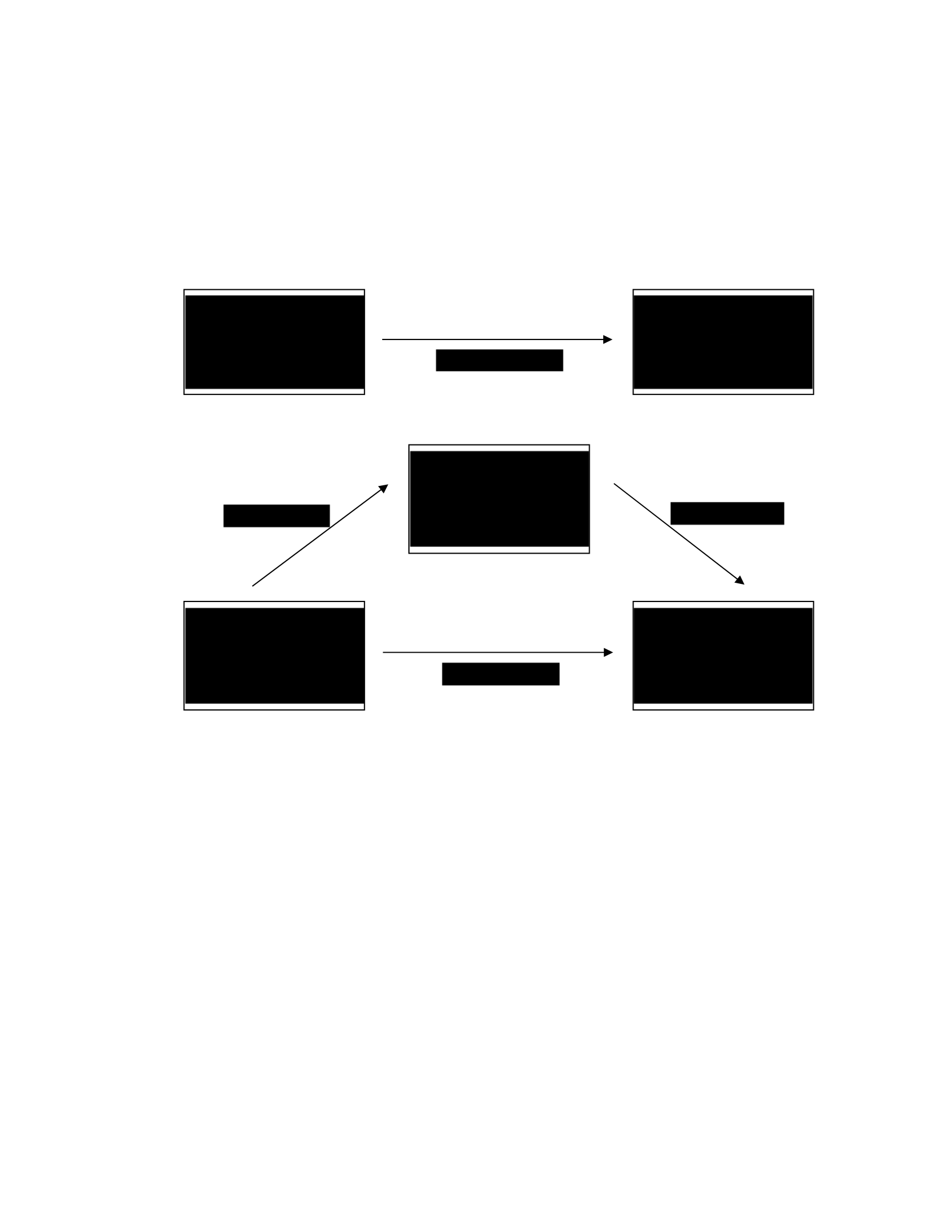
The first analysis examined the meaning dimension of psychological
empowerment as a mediator. Results of the analysis are shown in Figure 2
and the unstandardized coefficients (b), standard errors (SE), t values, and
95% confidence intervals (CI) are listed in Table 4. Inclusive leadership was
significantly and positively related to affective organizational commitment
(path c: b = .61, t = 7.70, p < .001), such that participants whose managers
displayed high levels of openness, availability, and accessibility were more
likely to feel a sense of emotional attachment to their organizations.
Inclusive leadership was significantly related to the meaning dimension of
psychological empowerment (path a: b = .43, t = 4.56, p < .001), such that
participants whose managers were open and attentive to hearing new ideas
were more likely to feel a sense of importance and personal meaning in their
work. The meaning dimension of psychological empowerment was uniquely
related to affective organizational commitment after controlling for inclusive
leadership (path b: b = .45, t = 8.63, p < .001), suggesting that participants
who felt a greater sense of meaning in their work were more likely to feel
emotionally attached to their organizations. Regarding the indirect effect of
the meaning dimension of psychological empowerment on the relationship
between inclusive leadership and affective organizational commitment,

results showed that the bias-corrected confidence interval did not include
zero (path ab: b = .19, 95% CI = .10 to .30), indicating a significant indirect
effect. The direct effect of inclusive leadership on affective organizational
commitment, removing the effects of the meaning dimension of
psychological empowerment, was still significant (path c’: b = .42, t = 5.89,
p < .001), suggesting partial mediation. Inclusive leadership and the
meaning dimension of psychological empowerment explained 45.78% of the
variance in affective organizational commitment.
These results show that inclusive leadership was positively related to
affective organizational commitment and the meaning dimension of
psychological empowerment, meaning was uniquely related to affective
organizational commitment, and inclusive leadership was significantly
related to affective organizational commitment after controlling for meaning.
Therefore, employees whose supervisors were open, available, and
accessible to hearing new ideas, discussing new opportunities to improve
work processes, and consulting on problems, professional questions, and
various requests, were more likely to feel a sense of importance and meaning
in their work, and subsequently perceive a greater sense of emotional
attachment to their organizations. These overall findings indicate that the
meaning dimension of psychological empowerment was a partial mediator
of the relationship between inclusive leadership and affective organizational
commitment.
***p < .001
Figure 2. Meaning as the mediator of the relationship between inclusive
leadership and affective organizational commitment.
Table 4
Relationship Between Inclusive Leadership and Affective Organizational
Commitment as
Mediated by Meaning
c = .61***
Inclusive Leadership
Affective
Organizational
Commitment
b = .45***
a = .43***
c' = .42***
Inclusive Leadership
Affective
Organizational
Commitment
Psychological
Empowerment:
Meaning

Variable b (SE) t 95% CI
LL UL
Inclusive Leadership—Affective
Organizational Commitment (c)
.61 (.08) 7.70*** .45 .76
Inclusive Leadership—
Psychological Empowerment:
Meaning (a)
.43 (.09) 4.56*** .25 .62
Psychological Empowerment:
Meaning—
Affective Organizational
Commitment (b)
.45 (.05) 8.63*** .34 .55
Inclusive Leadership—Affective
Organizational Commitment (c’)
.42 (.07) 5.89*** .28 .55
Indirect Effect
Inclusive Leadership—
Psychological
Empowerment: Meaning—Affective
Organizational Commitment (ab)
.19 (.05)
.10
.30
Note: N = 189. This table shows the path coefficients and indirect effect
for the relationship between inclusive leadership and affective
organizational commitment as mediated by the meaning dimension of
psychological empowerment. CI = confidence interval; LL = lower limit;
UL = upper limit.
***p < .001
The second analysis examined the competence dimension of
psychological empowerment as a mediator. Results of the analysis are
shown in Figure 3 and the unstandardized coefficients (b), standard errors

(SE), t values, and 95% confidence intervals (CI) are listed in Table 5.
Inclusive leadership was significantly and positively related to affective
organizational commitment (path c: b = .61, t = 7.70, p < .001), such that
participants whose managers displayed high levels of openness, availability,
and accessibility were more likely to feel a sense of emotional attachment to
their organizations. Inclusive leadership was significantly related to the
competence dimension of psychological empowerment (path a: b = .15, t =
2.35, p < .05), such that participants whose managers were accessible for
discussing problems, questions, and requests were more likely to feel
confident and self-assured about their abilities to do their jobs. The
competence dimension of psychological empowerment was not uniquely
related to affective organizational commitment after controlling for
inclusive leadership (path b: b = .16, t = 1.82, p > .05). Regarding the
indirect effect of the competence dimension of psychological empowerment
on the relationship between inclusive leadership and affective organizational
commitment, results showed that the biascorrected confidence interval
included zero (path ab: b = .02, 95% CI = -.001 to .07), indicating a
nonsignificant indirect effect. The direct effect of inclusive leadership on
affective organizational commitment, removing the effects of the

competence dimension of psychological empowerment, was still significant
(path c’: b = .58, t = 7.33, p < .001). Inclusive leadership and the
competence dimension of psychological empowerment explained 25.40% of
the variance in affective organizational commitment. These results indicate
that the competence dimension of psychological empowerment did not
mediate the relationship between inclusive leadership and affective
organizational commitment.
*p < .05, ***p < .001
c = .61***
Inclusive Leadership
Affective
Organizational
Commitment
b = .16
a = .15*
c' = .58***
Inclusive Leadership
Affective
Organizational
Commitment
Psychological
Empowerment:
Competence

Figure 3. Competence as the mediator of the relationship between inclusive
leadership and affective organizational commitment.
Table 5
Relationship Between Inclusive Leadership and Affective Organizational
Commitment as
Mediated by Competence
Variable b (SE) t 95% CI
LL UL
Inclusive Leadership—Affective
Organizational Commitment (c)
.61 (.08) 7.70*** .45 .76
Inclusive Leadership—
Psychological Empowerment:
Competence (a)
.15 (.06) 2.35* .02 .28
Psychological Empowerment:
Competence—Affective
Organizational
Commitment (b)
.16 (.09) 1.82 -.01 .34
Inclusive Leadership—Affective
Organizational Commitment (c’)
.58 (.08) 7.33*** .43 .74
Indirect Effect
Inclusive Leadership—
Psychological Empowerment:
Competence—Affective
Organizational Commitment (ab)
.02 (.02)
-.001
.07
Note: N = 189. This table shows the path coefficients and indirect effect for
the relationship between inclusive leadership and affective organizational
commitment as mediated by the competence dimension of psychological
empowerment. CI = confidence interval; LL = lower limit; UL = upper limit.
*p < .05, ***p < .001

The third analysis examined the self-determination dimension of
psychological empowerment as a mediator. Results of the analysis are
shown in Figure 4 and the unstandardized coefficients (b), standard errors
(SE), t values, and 95% confidence intervals (CI) are listed in Table 6.
Inclusive leadership was significantly and positively related to affective
organizational commitment (path c: b = .61, t = 7.70, p < .001), such that
participants whose managers displayed high levels of openness, availability,
and accessibility were more likely to feel a sense of emotional attachment to
their organizations. Inclusive leadership was significantly related to the self-
determination dimension of psychological empowerment (path a: b = .49, t =
7.14, p < .001), such that participants whose managers were open, available,
and accessible to listen to requests and ideas were more likely to perceive a
sense of autonomy and independence in their jobs. The self-determination
dimension of psychological empowerment was not uniquely related to
affective organizational commitment after controlling for inclusive
leadership (path b: b = .13, t = 1.55, p > .05). Regarding the indirect effect
of the self-determination dimension of psychological empowerment on the
relationship between inclusive leadership and affective organizational

commitment, results showed that the biascorrected confidence interval
included zero (path ab: b = .06, 95% CI = -.01 to .14), indicating a
nonsignificant indirect effect. The direct effect of inclusive leadership on
affective organizational commitment, removing the effects of the self-
determination dimension of psychological empowerment, was still
significant (path c’: b = .54, t = 6.14, p < .001). Inclusive leadership and the
self-determination dimension of psychological empowerment explained
25.04% of the variance in affective organizational commitment.
These results show that the self-determination dimension of psychological
empowerment did not mediate the relationship between inclusive leadership
and affective organizational commitment.
c = .61***
Inclusive Leadership
Affective
Organizational
Commitment

***p < .001
Figure 4. Self-determination as the mediator of the relationship between
inclusive leadership and affective organizational commitment.
Table 6
Relationship Between Inclusive Leadership and Affective Organizational
Commitment as Mediated by Self-Determination
Variable b (SE) t 95% CI
LL UL
Inclusive Leadership—Affective
Organizational Commitment (c)
.61 (.08) 7.70*** .45 .76
Inclusive Leadership—
Psychological Empowerment: Self-
Determination (a)
.49 (.07) 7.14*** .35 .62
Psychological Empowerment:
SelfDetermination—Affective
Organizational
Commitment (b)
.13 (.08) 1.55 -.04 .30
b = .13
a = .49***
c' = .54***
Inclusive Leadership
Affective
Organizational
Commitment
Psychological
Empowerment: Self -
Determination

Inclusive Leadership—Affective
Organizational Commitment (c’)
.54 (.09) 6.14*** .37 .72
Indirect Effect
Inclusive Leadership—
Psychological
Empowerment: Self-
Determination— Affective
Organizational Commitment (ab)
.06 (.04)
-.01
.14
Note: N = 189. This table shows the path coefficients and indirect effect
for the relationship between inclusive leadership and affective
organizational commitment as mediated by the self-determination
dimension of psychological empowerment. CI = confidence interval; LL
= lower limit; UL = upper limit.
***p < .001
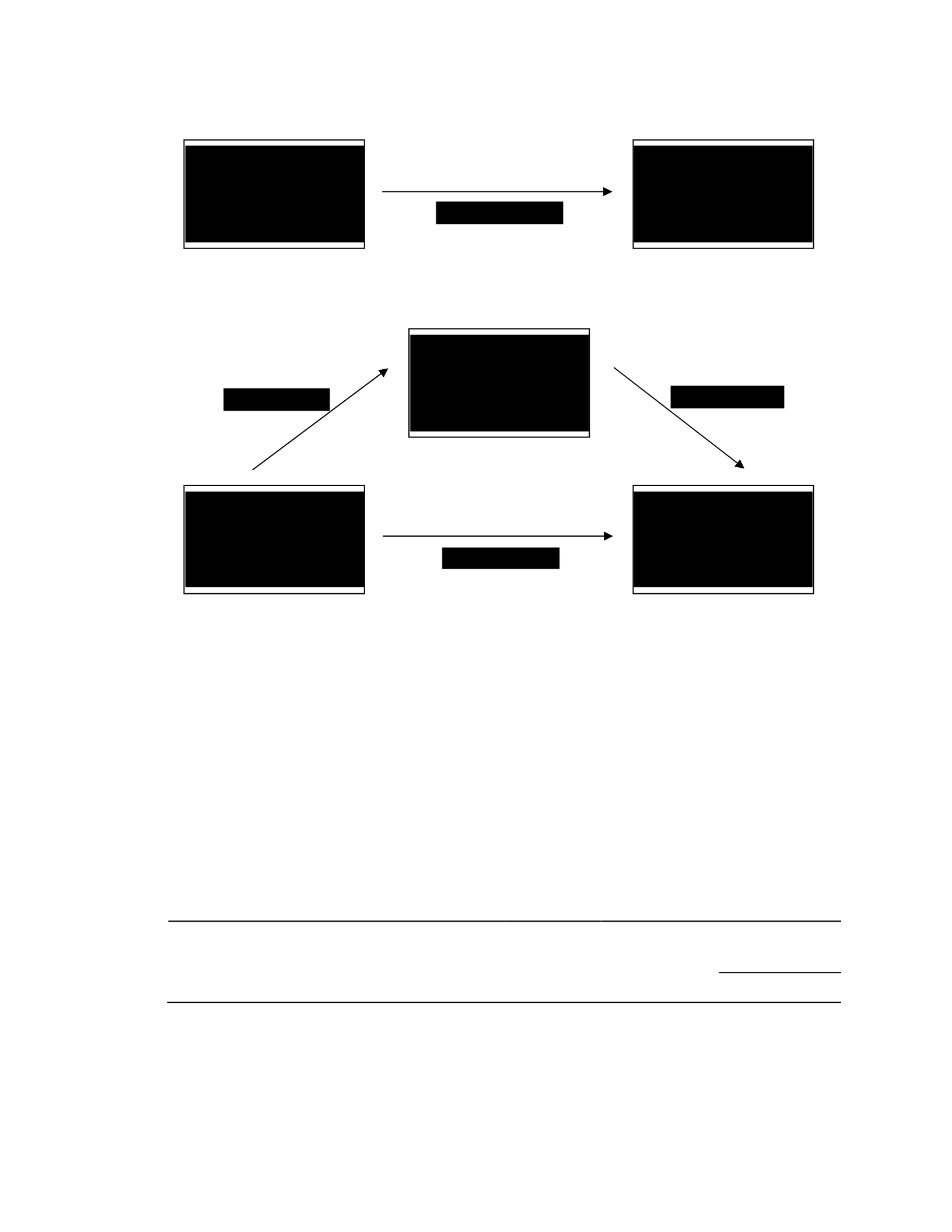
The fourth analysis examined the impact dimension of psychological
empowerment as a mediator. Results of the analysis are shown in Figure 5
and the unstandardized coefficients (b), standard errors (SE), t values, and
95% confidence intervals (CI) are listed in Table 7. Inclusive leadership was
significantly and positively related to affective organizational commitment
(path c: b = .61, t = 7.70, p < .001), such that participants whose managers
displayed high levels of openness, availability, and accessibility were more
likely to feel a sense of emotional attachment to the organization. Inclusive
leadership was significantly related to the impact dimension of

psychological empowerment (path a: b = .52, t = 5.93, p < .001), such that
participants whose managers were open, available, and accessible to hearing
new ideas and requests were more likely to feel a great deal of control and
influence in their departments. The impact dimension of psychological
empowerment was uniquely related to affective organizational commitment
after controlling for inclusive leadership (path b: b = .30, t = 4.85, p < .001),
suggesting that participants who believed that they had a large impact in
their departments were more likely to feel a sense of emotional attachment to
their organizations. Regarding the indirect effect of the impact dimension of
psychological empowerment on the relationship between inclusive
leadership and affective organizational commitment, results showed that the
bias-corrected confidence interval did not include zero (path ab: b = .16,
95% CI = .08 to .25), indicating a significant indirect effect. The direct
effect of inclusive leadership on affective organizational commitment,
removing the effects of the impact dimension of psychological
empowerment, was still significant (path c’: b = .45, t = 5.55, p < .001),
suggesting partial mediation. Inclusive leadership and the impact dimension
of psychological empowerment explained 32.60% of the variance in
affective organizational commitment.

These results indicate that inclusive leadership was positively related to
affective organizational commitment and the impact dimension of
psychological empowerment, impact was uniquely related to affective
organizational commitment, and inclusive leadership was significantly
related to affective organizational commitment after controlling for impact.
Therefore, employees whose supervisors were open, available, and
accessible to hearing new ideas, discussing new opportunities to improve
work processes, and consulting on problems, professional questions, and
various requests, were more likely to feel a sense of impact, control, and
influence in their departments, and subsequently perceive a greater sense of
emotional attachment to their organizations. These findings show that the
impact dimension of psychological empowerment was a partial mediator of
the relationship between inclusive leadership and affective organizational
commitment.
Overall, results of the additional mediation analyses indicate that the
meaning and impact dimensions of psychological empowerment were
responsible for the partial mediation of the relationship between inclusive
leadership and affective organizational
commitment.
***p < .001
Figure 5. Impact as the mediator of the relationship between inclusive
leadership and affective organizational commitment.
Table 7
Relationship Between Inclusive Leadership and Affective Organizational
Commitment as
Mediated by Impact
Variable b (SE) t 95% CI
LL UL
Inclusive Leadership—Affective
Organizational Commitment (c)
.61 (.08) 7.70*** .45 .76
c = .61***
Inclusive Leadership
Affective
Organizational
Commitment
b = .30***
a = .52***
c' = .45***
Inclusive Leadership
Affective
Organizational
Commitment
Psychological
Empowerment:
Impact

Inclusive Leadership—
Psychological Empowerment:
Impact (a)
.52 (.09) 5.93*** .35 .69
Psychological Empowerment:
Impact—
Affective Organizational
Commitment (b)
.30 (.06) 4.85*** .18 .42
Inclusive Leadership—Affective
Organizational Commitment (c’)
.45 (.08) 5.55*** .29 .61
Indirect Effect
Inclusive Leadership—
Psychological
Empowerment: Impact—Affective
Organizational Commitment (ab)
.16 (.04)
.08
.25
Note: N = 189. This table shows the path coefficients and indirect effect
for the relationship between inclusive leadership and affective
organizational commitment as mediated by the impact dimension of
psychological empowerment. CI = confidence interval; LL = lower limit;
UL = upper limit.
***p < .001
Discussion
Fostering inclusion in the workplace is critical to ensuring a positive
environment for diverse individuals. Leadership is one of the key contextual
factors that promotes an inclusive climate. Over the past decade, inclusive
leadership has garnered attention as a means to include others in discussions
and decisions in which their voices and perspectives might otherwise be

absent (Nembhard & Edmondson, 2006). Research on inclusive leadership
has shown its positive outcomes on employees, such as increased work
engagement, innovative work behaviors, and team performance (Hirak et al.,
2012; Javed et al., 2019; Mitchell et al., 2015). However, little is known
regarding the ability of inclusive leadership to affect a wider range of
outcomes, such as organizational commitment. Furthermore, researchers
have called for the need to examine various mediating mechanisms between
inclusive leadership and work outcomes in order to obtain a more
comprehensive understanding of how this specific leadership style is related
to work outcomes (Choi et al., 2015; Javed et al., 2017).
Given the call to explore potential mediators and outcomes of inclusive
leadership, the purpose of this study was to examine the underlying process
through which inclusive leadership is related to employees’ affective
organizational commitment by focusing on psychological empowerment as a
mediator. I also explored which of the four dimensions of psychological
empowerment (meaning, competence, self-determination, impact) most
strongly mediate the relationship between inclusive leadership and affective
organizational commitment.

Summary of Findings
Hypothesis 1 stated that inclusive leadership would be positively related
to affective organizational commitment. The results supported this
hypothesis because inclusive leadership was significantly related to affective
organizational commitment. This indicates that those whose managers
displayed greater levels of inclusive leadership through being open,
available, and accessible to them were more likely to feel an attachment to,
identification with, and involvement in their organizations. These results are
consistent with the one other study to date that has explored and found a
positive relationship between inclusive leadership and affective
organizational commitment (Choi et al., 2015).
One reason for the finding that inclusive leadership was positively related
to affective organizational commitment may be due to a social exchange
perspective where the positive environment inclusive leaders create invokes
the norm of reciprocity in employees and produces a felt obligation to stay
committed to the organization in order to continue the positive exchange
relationship (Chen & Tang, 2018; Eisenberger et al., 2001). That is, if an
employee feels that he or she has a supportive and inclusive manager, this

individual is likely to reciprocate in the form of a positive attitude (i.e.,
affective organizational commitment) back to the manager and organization.
Hypothesis 2 stated that inclusive leadership would be positively related
to employee psychological empowerment. The results supported this
hypothesis, indicating that employees whose managers displayed greater
levels of inclusive leadership were more likely to feel a sense of intrinsic
task motivation at work. This finding is consistent with Javed et al. (2019)
who also found a positive relationship between inclusive leadership and
psychological empowerment.
There are several explanations for the positive relationship between
inclusive leadership and psychological empowerment. First, through being
open to discussing work goals and new ways to achieve these goals, and an
ongoing encouragement to access them on emerging issues, inclusive
leaders can help employees feel a sense of importance and meaning in their
work. Second, inclusive leaders who readily listen to employee requests
and are available for consultation on problems signal to employees that
they trust and care about what employees have to say, thus positively
influencing their feelings of competence. Third, inclusive leaders create
positive relationships with their employees that signal an open two-way

communication channel and opportunities for shared decision-making. In
effect, employees feel a sense of autonomy and opportunity for
independence in how they do their jobs, thus increasing their levels of self-
determination. Finally, inclusive leaders are attentive to hearing ideas and
opportunities to improve work processes and are readily available to
answer questions and provide feedback. Because of this openness and
transparency, employees are more easily able to see the impact that their
work has in their departments.
Hypothesis 3 stated that employee psychological empowerment would be
positively related to affective organizational commitment. Results showed
that psychological empowerment was positively related to affective
organizational commitment, such that employees who felt their work was
meaningful and their actions made a difference were more likely to feel an
emotional attachment to their organizations. Therefore, Hypothesis 3 was
supported. This finding is consistent with the large body of research that has
examined the positive relationship between psychological empowerment and
affective organizational commitment (Maynard et al., 2012; Seibert et al.,
2011).

As previous research has demonstrated, one reason for the positive
relationship between psychological empowerment and affective
organizational commitment is that employees who feel a sense of meaning,
competence, self-determination, and impact are better able to express their
values and interests through their work and thus identify these shared values
and goals with their organizations (Seibert et al., 2011). Furthermore, if
employees intuitively sense that their organizations provide them with
meaningful work that aligns with their personal values, allow them the
opportunity to build their levels of competence and self-determination, and
enable them to make a positive impact, they will be more likely to
reciprocate with greater loyalty and emotional attachment to their
organizations (Liden et al., 2000).
Hypothesis 4 stated that employee psychological empowerment would
mediate the relationship between inclusive leadership and affective
organizational commitment. The results partially supported the hypothesis
because the relationship between inclusive leadership and affective
organizational commitment was only partially mediated by psychological
empowerment. These results indicate that employees whose managers
displayed high levels of inclusive leadership through being open, available,

and accessible to them showed greater levels of intrinsic task motivation,
which in turn, increased their levels of affective organizational commitment.
Furthermore, a direct relationship was found between inclusive leadership
and affective organizational commitment after controlling for psychological
empowerment, such that employees whose managers were open, available,
and accessible were more likely to feel a sense of emotional attachment to
their organizations, irrespective of their levels of psychological
empowerment.
One reason that psychological empowerment acted as a mediator between
inclusive leadership and affective organizational commitment may be that
employees who have positive relationships with their managers, and whose
managers provide them with meaningful opportunities to speak up and voice
their thoughts, ideas, and opinions, are more likely to experience greater
levels of meaning and impact in their work. Because of these positive
cognitions brought on by the relationships they have with their managers,
employees will reciprocate with increased affective commitment toward their
organizations.
In order to answer the research question of whether the dimensions of
psychological empowerment differed in their mediating effects on the

relationship between inclusive leadership and affective organizational
commitment, I examined each of these dimensions individually and
conducted a mediation analysis for each dimension of psychological
empowerment. Results of these additional analyses showed that only the
meaning and impact dimensions of psychological empowerment partially
mediated the relationship between inclusive leadership and affective
organizational commitment; neither the competence nor self-determination
dimensions mediated the relationship.
A possible explanation for the finding of partial mediation in the cases of
meaning and impact is that the presence of inclusive leadership, through the
positive relationships managers create with their employees via open and
encouraging communication and support, signals to employees that the
organization’s values align with their own values. Furthermore, managers
who are attentive and open to discussing opportunities to improve work
processes, desired goals, and new ways to achieve them, may help
employees internalize the importance of their contributions to and impact on
the organization. This sense of meaning and impact may then be
reciprocated by employees through increasing their levels of attachment to,
identification with, and involvement in their organizations.

Competence, or a person’s confidence in his or her ability to do the job,
selfassurance about personal capabilities to perform work activities, and a
sense of mastery regarding the skills required for the job, was not found to
mediate the relationship between inclusive leadership and affective
organizational commitment. This may be due to the fact that competence is
more personal in nature and thus may be present, regardless of whether the
manager is inclusive or not. Therefore, employees may not translate a sense
of competence to their desire to stay affectively committed to their
organization as they perceive the sense of competence to be of their own
volition, not influenced by their immediate manager.
The finding that self-determination – a person’s sense of autonomy,
ability to unilaterally decide how to do his or her work, and opportunity for
independence and freedom in getting the job done – did not mediate the
relationship between inclusive leadership and affective organizational
commitment was surprising, as the ability to have independence and
autonomy is naturally affected by supervisory relations (Siegall &
Gardner, 2000). Although the current study found significant and positive
relationships between inclusive leadership and self-determination, and self-
determination and affective organizational commitment, it may be the case

that respondents did not consciously perceive their managers to be the reason
for a sense of autonomy in how to do their jobs, and thus did not see a need
to reciprocate back to the organizations in the form of affective
organizational commitment. Another possibility for the lack of mediation in
the case of self-determination is that this study was conducted during the
COVID-19 pandemic, a time in which many employees were forced to work
remotely. Due to these altered work arrangements, employees may have had
no other choice than to independently decide how to go about doing their
work, which could explain why selfdetermination did not mediate the
relationship between inclusive leadership and affective organizational
commitment. In other words, self-determination might have been present in
this study due to necessity of the remote work environment rather than due to
viewing the organization positively through having an inclusive leader, thus
participants did not perceive an emotional attachment to the organization
through feelings of selfdetermination.
Theoretical Implications
Inclusive leadership has gained increased research attention over the past
decade given its importance in affecting positive work outcomes (Hirak et
al., 2012; Javed et al., 2019; Mitchell et al., 2015). Given the positive

findings to date, as well as the focus on enabling diversity and inclusion in
the workplace, researchers have suggested that additional research is needed
to examine the relationship inclusive leadership has with other important
mediators and work outcomes (Randel et al., 2018).
This study extends the literature on inclusive leadership in several ways.
The direct relationship between inclusive leadership and affective
organizational commitment has received minimal attention to date, with the
exception of research by Choi et al. (2015) who found initial support among
employees of Vietnamese companies. Consistent with their findings, the
results of the present study provide further support for the direct relationship
between inclusive leadership and affective organizational commitment in the
context of employees based in the United States. These results indicate that
employees whose managers are open, available, and accessible for
discussion on ideas, problems, and questions are more likely to show
emotional attachment to their organizations.
The current study also extends the nascent literature on the relationship
between inclusive leadership and psychological empowerment (Javed et al.,
2019). The results of the current study show that inclusive leadership was
positively related to psychological empowerment such that employees who

felt their managers were open and available to hearing new ideas and who
actively listened to what they had to say were more likely to feel a sense of
meaning, competence, self-determination, and impact in their work.
This is the first study to date that assessed the indirect relationship
between inclusive leadership and affective organizational commitment
through the mediating mechanism of psychological empowerment. The
results indicated partial mediation, such that employees whose managers
exhibited inclusive leadership traits of openness, availability, and
accessibility were more likely to perceive a sense of intrinsic task
motivation, which prompted them to feel a greater sense of emotional
attachment to and identification with their organizations.
On a final note, I found that the meaning and impact dimensions of
psychological empowerment most strongly mediated the relationship
between inclusive leadership and affective organizational commitment.
Seibert et al. (2011) also found that meaning and impact were stronger
predictors of organizational commitment than competence and
selfdetermination. These results provide a more nuanced understanding of
the psychological empowerment construct and its relationship with inclusive
leadership and affective organizational commitment. Spreitzer (1995)

originally modeled psychological empowerment as a unitary second-order
construct rather than as four distinct constructs. However, the results of the
present study and of Seibert et al. (2011) demonstrate the value in exploring
each of the empowerment dimensions individually, as each dimension may
interact differentially in terms of their relationships with various antecedent
and outcome variables.
Practical Implications
The results of the present study offer several practical implications for
organizations looking to increase their levels of inclusion through a deeper
understanding of the benefits of inclusive leadership. First, the findings
demonstrate that managers who display inclusive leadership can directly
promote a more affectively committed workforce. This is important for
organizations given the impact affective organizational commitment has on
positive outcomes such as employee retention (Khatri, Fern, & Budhwar,
2001; Porter, Steers, Mowday & Boulian, 1974). As the present study
demonstrates, managers can increase employees’ affective organizational
commitment indirectly through increasing their levels of psychological
empowerment.

Findings from the present study suggest that it is critical for organizations
to conceptualize psychological empowerment as a cognitive state made up of
four distinct dimensions (Siegall & Gardner, 2000). As the present study
shows, it may be particularly important for organizations to create the
conditions in which employees feel a sense of meaning and impact in their
work, such as ensuring managers from all levels openly communicate the
organization’s mission and direction, and highlight to employees how their
work fits into this direction.
Another practical implication of this study is a better understanding of
how managers can increase their levels of inclusive leadership. As this
study demonstrated, management development programs can benefit from
increasing managers’ levels of openness, availability, and accessibility
among their employees. Specifically, managers can be trained on the
importance of encouraging and attentively listening to new ideas and
opportunities to improve work processes from each of their employees,
particularly in decision-making conversations. Managers should also
cultivate an open-door policy among the team, in which they signal their
ongoing presence through being easily accessible and available for
discussion on problems, ideas, questions, and feedback. Thus, the benefits

of greater diversity in organizations may be more fully realized through
inclusive leaders who encourage active participation from all members of the
team.
Strengths, Limitations, and Future Research
This study has several strengths. First, this is one of the first studies to
look at the relationships between inclusive leadership and both
psychological empowerment and affective organizational commitment.
Additionally, this is the first study to examine the mediating role of
psychological empowerment in the relationship between inclusive leadership
and affective organizational commitment. The present study showed that
psychological empowerment, and specifically the meaning and impact
dimensions of psychological empowerment, partially mediated the
relationship between inclusive leadership and affective organizational
commitment. Because the competence and selfdetermination dimensions of
psychological empowerment were not found to mediate the relationship
between inclusive leadership and affective organizational commitment,
future research may explore other outcome variables such as employee
engagement or satisfaction. Additionally, future research could explore the
contextual factors that may affect the relationship between inclusive

leadership and employee outcomes. For example, Zhu and Bao (2017) noted
that the role of organizational structure has been largely ignored in
leadership research. A deeper understanding of how inclusive leadership
functions within different organizational structures can provide more insight
into the boundary conditions of inclusive leadership.
Another strength of this study is that participants were drawn from a wide
range of industries and composed of diverse ethnic and racial backgrounds.
Therefore, the results of the present study may be generalizable across
various industries, as well as demographically diverse individuals.
Despite the strengths of this study, there are a number of limitations.
First, I used self-reported measures to test the hypotheses, therefore, the
relationships among the studied variables may have been affected by
common method bias. Specifically, participants may have responded to
items in more socially desirable ways, such as their levels of
competence. Additionally, this study was based on a cross-sectional
design and thus correlational in nature, which means causality among the
studied variables cannot be determined. Future research that examines
the longitudinal effects of inclusive leadership across different points in

time will allow for greater confidence in causal relationships among the
studied variables and may also reduce common method bias.
Another weakness of the present study is that the sample was mainly
composed of individuals between the ages of 25 and 34 years old, and those
with relatively short tenure. This was likely due to the use of my personal
networks as a means of gathering data. Therefore, I cannot make confident
claims about the generalizability of findings as it relates to age and tenure.
Future research might examine the impact of inclusive leadership on
psychological empowerment and affective organizational commitment
using a sample that includes participants from a wider range of age and
tenure groups.
A final weakness of this study is that data were collected during the
COVID-19 pandemic, a time when standard work arrangements have been
significantly impacted and the fear of furloughs and layoffs run high. Given
one of the core aspects of inclusive leadership is being readily accessible and
available to employees, the results of this study may have been negatively
impacted by the telework setup many employers were forced to implement,
in which managers and employees were working remotely and unable to
interact in person. Additionally, with many employees working remotely,

they may have had no other choice than to independently decide how to go
about doing their work, which could explain why self-determination did not
mediate the relationship between inclusive leadership and affective
organizational commitment. Future research should reexamine the effects of
inclusive leadership on psychological empowerment and affective
organizational commitment once the pandemic is over and individuals are
able to return to their standard work arrangements.
Conclusion
The current study examined the mediating role of psychological
empowerment on the relationship between inclusive leadership and affective
organizational commitment. The results of this research demonstrated that
inclusive leadership was positively related to psychological empowerment
and affective organizational commitment. Additionally, psychological
empowerment was found to partially mediate the relationship between
inclusive leadership and affective organizational commitment, particularly
through the dimensions of meaning and impact; the dimensions of
competence and self-determination did not mediate the relationship between
inclusive leadership and affective organizational commitment. Given the
positive relationships found in this study, it is important to continue to

explore the benefits of inclusive leadership in organizations as a way to
create a truly inclusive, positive environment for all.

