



A. Introduction
Related to the history of nursing, history which is also called
history etymologically means alaam symptoms or human
symptoms which are a series of events or an event or fact in
the past. And the history of the development of knowledge or science
can support the development of civilization (Al Anang, 2019).
T
Currently, the development of science and technology has
experienced a very massive increase. These various developments
demand changes in community efforts to adapt. Nursing as a science
related to the profession is faced with complex and global problems.
Various learnings must be able to be carried out continuously or
never ending process. This is in accordance with the background of
the development of nursing history that follows the dynamics or life
cycle of humans (Lusk, 2018). The core of nursing is the sense of
caring or also known as the mother instinct. These changes
continued to develop until the emergence of modern civilizations
such as Florence Nightingale who was a nursing figure from the
United Kingdom (Komarudin, 2018).
The concept of the meaning of caring which is the core
character of nursing is interpreted by several experts into several
components as follows:
Nursing Theory Defined Theories
Roach Human beings have love, alturistic, willingness
CHAPTER I
NURSING HISTORY

to be present in a condition
Linen Giving birth to a form of culturally sensitive
nursing service
Boyken and
Schoenhofer
Nurses' creativity in developing nursing in a
stronger dimension
Mayeroff The essence of caring focuses on the
relationship or connection between the
provider and the patient
(Alshmemri and Ramaiah, 2021)
B. History of Nursing in the World
The various types of nursing practice in the Islamic world are a
combination of preventive services (prevention) with curative or
treatment. At first, nursing practice did not have any differences and
characteristics from medical practice. Various forms of health
services are carried out by doctors and nurses in cooperation with
each other. However, the classification of jobs had not yet been raised
at that time.
In fact, the development of world health services is not only
developing from the health of the western world but also from the
eastern region, especially from Islamic civilization. The basic
principles of western care and medicine that developed from a
hippocrates, prioritize the concept of disease evolution, diet and
lifestyle (Saputra, Kusdiana and Rahmatillah, 2020).
In the 19th century, it had not experienced qualified
development and was still underestimated by the public. In those
days, nurses were played by slaves whose notabene was a convict
woman who had no education and was forced to do the job of caring
for patients. However, various unfavorable conditions such as the
existence of wars actually grow the world of nursing. The existence
of the crusade which caused the impact of the emergence of various
diseases because many victims were injured, starved, and killed
actually increased the need for health care.
In contrast to the western world, the development of health in
the eastern world is greatly influenced by the development of Islam.
In the 7th century the presence of Islam was followed by the

development of exact sciences such as chemistry, pharmacy or
medicine and sharing forms of nursing services. The reference for
the importance of maintaining health has been clearly illustrated in
the Qur'an which reads the importance of maintaining personal
hygiene, the environment, and the place of residence. The Islamic
figure who became the figure of the emergence of the century is
rufaidah (Titha and Nubuwah, 2010).
Meanwhile, the development of nursing in China arises from
the development of various sexually transmitted cases such as
syphilis and gonorrhea. The country is trying to overcome the
disease by carrying out alternative treatments derived from plants
and minerals. The medical figure who came from China was Seng
Lung. The themes that are often raised are see, hear, ask and taste.
This concept is the basic banner for the development of nursing
theories related to physical examinations such as inspection and
palpation.
In contrast to the development of nursing in China, the
development of nursing in Europe developed thanks to the struggle
of nursing figure Florence Nightangle. She is often referred to as the
"lady lamp" thanks to her struggle and hard work in advancing the
nursing profession. As for progress in the United Kingdom, it can be
seen with the formation of nursing schools such as the British Nurse
Association (ANA) by a figure named Erenwick in 1987. She then
formed a nursing institution called the International Council Of Nurse
(ICN). From this point on, nursing figures and nursing theories
emerged (Titha and Nubuwah, 2010).
C. History of nursing in Indonesia
The journey of nursing in Indonesia, in line with the struggle for
colonialism by European countries such as colonialism in the days of
the Dutch, Japanese, Japanese, and British accompanied the
development of the nursing profession. Dutch colonialism is identical
With the existence of missionaries who gave birth to nursing
education in the form of care, starting from the scope of the church,
internships developed into ministry in hospitals.

Health services, especially nursing, began with medical
services by the Dutch East Indies colonizers. The Dutch East Indies
Doctors studied with internship programs spread across several
hospitals in Indonesia. Starting from this, the nursing profession
began to be born even though it did not have a clear identity. Starting
with the establishment of the PPNI professional organization, on
April 17, 1972, although recognition as a professional organization
could only be realized in the 80s with the first national conference
precisely in 1983. However, this is the formation of a nursing
professional community. However, to get recognition from cross-
sectors or other professions has not been obtained. Recognition was
only obtained after entering 1992 with the formation of law number
23 on health (Komarudin, 2018).
Broadly speaking, the development of nursing in Indonesia is
divided into nursing developments, namely:
1. Pre-Independence Era
In the period before independence or in the Dutch colonial era,
a hospital called Binen Hospital was established in 1799. In the
period before independence, health workers, especially nurses,
were taken from the indigenous population whose main
purpose was to take care of the sick. At that time, the army and
people's health service was formed which became the pioneer
in improving the health system at that time was Raffles (during
the British colonial period). The Raffles Motto which is the
provision for the development of health in Indonesia is that
health is the right of every human being. With that provision,
various efforts are made and developed to maintain health.
However, on the eve of independence and the defeat of the
allied armies, around 1942-1945 became a period of crisis
accompanied by a setback in the health sector due to various
programs focusing on efforts to legalize Indonesian
independence (Titha and Nubuwah, 2010).
2. The post-independence era.
In the post-independence era, around 1949, only this year did
Indonesia rise from the crisis by starting to establish various
hospitals and health centers. Then, in 1952, it began to
establish basic nursing education. And in 1962, it developed
even higher into nursing education at the undergraduate level

or level. The first university to open a nursing school at the
level of a serjana is the University of Indonesia, followed by
nursing education established in Surabaya, Bandung and other
areas.
With these developments, the recognition of the nursing
profession is getting stronger by the nursing profession both
from the community and from other professions. The nursing
profession has developed so rapidly that it is no longer
dependent on other professions. The various nursing
processes provided are based on clear and scientific methods
and concepts to answer patient needs and solve problems
faced by patients. The method provided is also called providing
nursing care. The stages of nursing care start from the study,
determination of diagnosis, planning, implementation of the
nursing process evaluation era (Titha and Nubuwah, 2010).
As for the various forms of nursing development, if conclusions
are drawn, these various forms of development are greatly
influenced by the development of nursing education. Nursing
education forms the character, and scientific guidelines for the
nursing profession. Another factor is the development of human
structure and civilization. Starting from the form of animism belief,
the spread of various forms
big religion and beliefs with various strata and conditions of society
(Budiono, 2016).
In addition, another factor is the development of the status and
economy of the community also supports the development of the
nursing profession with increasing public awareness of the need for
nursing professional services that not only focus on curing but also
caring. Caring for nurses can be an added value that can motivate
patients to be able to recover quickly from their illness and reduce
the length of treatment and accelerate the improvement of patients'
health status (D'Antonio et al., 2010).

Various forms of modern nursing services that are
comprehensive in the form of providing physical, psychological, and
socio-cultural health services by providing optimal services, which
can increase patient self-esteem, respect and affection between
others. Not only that, various nursing technologies are also
experiencing developments such as tele nursing or tele health which
supports nursing not only in close proximity but also allows long-
distance communication that will facilitate or improve the quality of
care (Smith, 2020).
The nursing process today is a systematic and clearly
organized process. The provision of nursing care is carried out by
first looking at the patient's response and complaints which is then
followed by analyzing the problem and determining the nursing plan
based on clear, structured and detailed guidelines and methods.
These various things, of course, will increase the degree of nursing in
the community as a respectable and professional profession with
optimal servants (Lisamanda, 2010).
A. Definition of philosophy of ilsafat comes from the Greek,
philosophia and philoshophos. According to the form of the
word, philosophia is taken from the words philos and shopia
F
CHAPTER 2
NURSING PHILOSOPHY AND PRADIGMA

or philos and sophos. Philos means love and shopia or shopos means
wisdom, knowledge, and wisdom. In this sense, a person can be said
to have philosophized if all his words and behaviors contain meaning
and characteristics as a person who loves wisdom, knowledge and
wisdom.
Harun (2011), argues that philosophy is taken from the Greek
language, philosophy. The structure of the word comes from the
word philosofien which means to love wisdom, that is, a person can
be called philosophical when he actively acquires wisdom.
Philosophy means thinking according to order (logic) freely (not
bound by tradition, dogma and religion) and with the deepest depth
so that it gets to the basics of the problem. On that basis, according to
Aaron, etymologically philosophy can be defined as:
1. Knowledge of wisdom
2. Knowledge of principles or foundations
3. Finding the truth
4. Discuss the basics of what is discussed
B. Definition of Philosophy of Science
To understand the meaning and significance of the philosophy of
science, the definition of philosophy of science from several experts
summarized in the Philosophy of Science, compiled by Ismaun
(2001)
Robert Ackerman "philosophy of science in one aspect as a
critique of current scientific opinions by comparison to proven past
views, but such a philosophy of science is clearly not a discipline
autonomous of actual scientific paractice". (Philosophy of science is
in some respects a critical review of today's scientific opinions by
comparison with the criteria developed from them, but philosophy of
science is certainly not an independent branch of science from actual
scientific practice.
Lewis White Beck "Philosophy of science questions and
evaluates the methods of scientific thinking and tries to determine
the value and significance of scientific enterprise as a whole.
(Philosophy of science discusses and evaluates methods of scientific

thought and tries to discover and the importance of scientific
endeavor as a whole)
Michael V. Berry "The study of the inner logic if scientific
theories, and the relations between experiment and theory, i.e. of
scientific methods". (The study of the internal logic of scientific
theories and the relationships between experiments and theories,
i.e., the scientific method.)
Stephen R. Toulmin "As a discipline, the philosophy of science
attempts, first, to elucidate the elements involved in the process of
scientific inquiry observational procedures, patens of argument,
methods of representation and calculation, metaphysical
presuppositions, and so on and then to veluate the grounds of their
validity from the points of view of formal logic, practical
methodology and metaphysics". (As a branch of science, philosophy
of science tries to first explain the elements involved in the process
of scientific inquiry of observational procedures, animal patterns,
methods of substitution and calculation, metaphysical
presuppositions, and so on and then assesses the foundations for its
errors from the perspectives of formal logic, practical methodology,
and metaphysics.)
Based on the above opinion, it is possible to obtain an
overview that philosophy is a philosophical study that wants to
answer questions about the nature of science, which is reviewed
from its ontological, epistemelogical and axiological aspects.
C. Function of Philosophy of Science
Philosophy of science is one of the branches of philosophy. Therefore,
the function of philosophy of science cannot be separated from the
function of philosophy as a whole, namely:
1. As a tool to find the truth of all existing phenomena.
2. Defending, supporting and opposing or standing neutral to
other philosophical views.
3. Providing an understanding of the way of life, outlook on life
and worldview.
4. Providing teachings on morals and ethics that are useful in life

5. It is a source of inspiration and guidance for life in various
aspects of life itself, such as economics, politics, law and so on.
Extracted from Agraha Suhandi (1989)
Meanwhile, Ismaun (2001) stated that the function of
philosophy of science is to provide a philosophical foundation in
understanding, sharing concepts and theories of a discipline and
equipping the ability to build scientific theories. Furthermore, it is
also said that the philosophy of science grows in two functions,
namely: as confirmatory theories, which seeks to decrypt the
normative relationship between hypotheses and evidence, and
theory of explanation, which seeks to explain various small or large
phenomena in a simple way.
D. Definition of Nursing Philosophy
Philosophy is a belief in values that are guidelines for achieving a
goal and are used as a view of life. Philosophy is the main
characteristic of a community, both large and small-scale
communities, one of which is the nursing profession community. The
nursing philosophy is the nurse's belief in nursing values which is a
guideline in providing nursing care, both to individuals, families,
groups and communities. Belief in the value of nursing must be the
grip of every nurse, including you today.
As a nurse, it is mandatory for you to hold and instill nursing
values in you when you associate with the community or when you
provide nursing services to patients.
The nursing philosophy is not something that must be
memorized, but an artifact or value that is inherent in nurses. In
other words, the nursing philosophy is the "soul" of every nurse.
Therefore, the nursing philosophy must be a guideline for nurses in
carrying out their work.
As a nurse, of course, in carrying out the nursing profession,
you must always use nursing values in serving patients. On another
aspect, the philosophy of nursing can be used to examine the causes
and laws of the law that underlie reality. In the nursing philosophy,
patients are seen as holistic beings, which must meet all their needs,
both biological, psychological, social and spiritual needs that are
provided comprehensively. Nursing services always pay attention to

the humanitarian aspect of every patient has the right to receive
treatment without any difference.
Nursing services are an integral part of the nursing service
system, making patients an active partner, in good health and illness,
especially focusing on their response to the situation.
The philosophy of nursing according to Roy (Mc Quiston,
1995) is divided into eight elements, four based on the philosophy of
humanism and four based on the principle of veritivity. The
philosophy of humanism/humanity is "to recognize human beings
and the subjective side of human beings and their experiences as the
center of curiosity and appreciation". So he argues that an individual:
1. Sharing each other in the ability to think creatively is used to
find out the problems faced in finding solutions.
2. Behaving to achieve a certain goal, not just fulfilling the law of
action-reaction.
3. Have intrinsic holism.
4. Struggle to maintain integrity and understand the need to have
relationships with others veritivity.
E. Definition of nursing paradigm
In general, paradigama is defined as a way of seeing, seeing, thinking,
interpreting, responding, and choosing actions on existing problems
or phenomena. Paradigm can also be interpreted as a diagram or
frame of mind of a person in explaining a problem or phenomenon of
an event. The nursing paradigm is a global way of view that is
embraced or used by the majority of nursing groups or connects
various theories that form an arrangement that regulates the
relationship between theories in order to develop conceptual models
and nursing theories as a nursing framework.
Several experts in the field of nursing have their own opinions
about the meaning of the nursing paradigm. According to Gaffar
(1997), the nursing paradigm is a fundamental perspective or the
way we see, think, give meaning, respond and choose actions to
various phenomena that exist in nursing. Thus, the nursing paradigm
serves as a reference or basis in carrying out nursing practice.
F. Components of the nursing paradigm
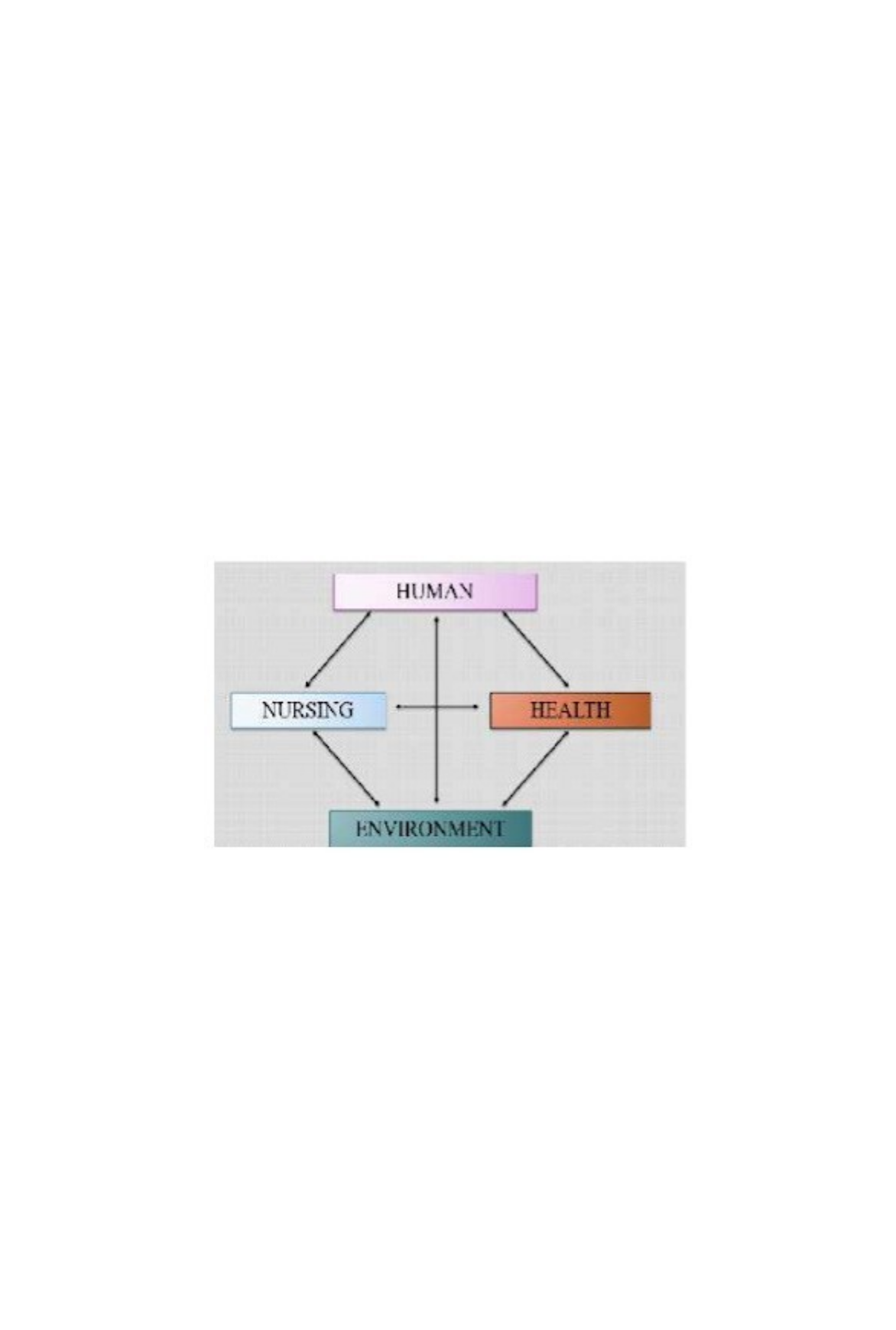
The nursing paradigm is formed on four elements, namely: human or
client, environment, health and nursing. These four components are
interconnected and affect each other, namely:
1. Human or nursing care reception (individual, family, group and
community);
2. Environment (internal and external circumstances affecting
the client);
3. Health;
4. Nursing (Characteristics and Action from nursing
care).
5. The relationship between the four components can be seen in
the following figure:
1. Human
Human beings in the concept of the nursing paradigm, are seen as
whole and complex individuals (holistic beings) consisting of bio-
psycho-socio-spiritual. Humans are the second element in the
nursing paradigm. Humans act or behave verbally and nonverbally,
sometimes in certain situations humans in meeting their needs need
help, and will experience distress if they are unable to do so. This is
the basis for the statement that a professional nurse must relate to
someone who cannot help him or her in meeting his needs, and that
human beings must be seen as whole and complex individuals
(holistic beings) who cannot be separated.

Abraham Maslow (1908-1970), formulated a theory about
basic human needs that can be used by nurses to meet basic human
needs when providing nursing care to clients.
2. Healthy-sick
The definition of healthy in each individual is different and each
person has a concept that depends on a person's viewpoint and
background and social level in interpreting healthy. To make it easier
and understand the concept of health, it is necessary to provide a
broad meaning of health which is often named as a healthy
paradigm.
The healthy paradigm is a person's perspective or mindset
about health that is holistic, proactive and anticipatory, by seeing
health problems as problems that are influenced by many factors
dynamically and cross-sectorally, which are oriented towards
increasing maintenance and protection against diseases to stay
healthy and not just curing the sick. In general, most individuals in
society think that being healthy is not sick, meaning that if there are
no symptoms of illness that are felt, it means that our body is healthy.
Even though such an opinion is incorrect, because there are
some diseases that do not cause symptoms first, after the disease is
severe enough to appear or cause symptoms, such as cancer that is
known after an advanced stage.
3. Milieu
The environment is the fourth element of the nursing paradigm. The
environment in the nursing paradigm is defined as the aggregate of
all conditions and external influences that affect the client's life and
development. The environment in general can be divided into two
physical environments and non-physical environments.
The physical environment, which is the natural environment
around humans. This physical environment includes many things
such as weather, seasons, geographical circumstances, geological
structures, and others.
Non-physical environment, which is an environment that
arises due to interaction between people. This non-physical
environment includes socio-culture, norms, values, customs, and
others.

4. Nursing
Nursing is an art and science that includes various concepts and
skills related to various disciplines. The science of nursing is used to
help individuals with unique processes, which are featured by
performing activities aimed at curing diseases, helping clients regain
independence, even helping clients get a peaceful death.
Nursing is a basic element of the nursing paradigm, which is
provided in the form of professional health services. In accordance
with the results of the agreement of the national nursing workshop
on the concept of nursing, namely, Nursing is an integral part of
health services based on nursing science and tips.
This service is in the form of a comprehensive bio-psycho-
socio-spiritual service aimed at individuals, families, groups and
communities both healthy and sick covering the entire process of
community life (National Nursing Workshop, 1983).
Nursing services as an integral part of health services have the
same position as other health professions (e.g. doctors), namely as
partners. This situation is supported by nursing science which has its
own scientific body, besides that nursing also has a distinctive and
unique form of service.
The duties and functions of nurses in general provide
assistance to patients (from the individual, family to community
level), both in sick and healthy conditions, in order to achieve
optimal health through nursing services.
The provision of this service must be based on expertise in
providing nursing care, which is supported by mastery of clinical
knowledge, experience, interpreting clinical situations in making
complex decisions.
Based on the Decree of the Minister of Health of the Republic of
Indonesia, Number: 647/Menkes/SK/IV/2000 concerning
Registration and Practice of Nursing, which was later updated with
the Ministry of Health of the Republic of Indonesia
No.1239/SK/XI/2001, it is explained that nurses are people who
have graduated from nursing education, both at home and abroad, in
accordance with the provisions of applicable laws and regulations.

Furthermore, nurses are an independent profession that has
the right to provide nursing services independently, and not as a
physician's assistant profession.
G. Nursing Concepts
Nursing services are an integral part of the health profession in
providing health services to patients. As an integral part of health
services, the position of nurses with other health professions (e.g.
doctors) is the same, namely as partners. This, of course, must also
be accompanied by recognition and respect for the nursing
profession.
The duties and functions of nurses in general provide
assistance or services to patients (from the individual, family to
community level), both in sick and healthy conditions, in order to
achieve optimal health through nursing services.
Expertise in providing nursing care is the result of the
knowledge and clinical experience possessed by a nurse. The
expertise required to interpret clinical situations and make complex
decisions is at the core of nursing care and forms the basis for the
development of nursing practice and nursing science.
The general public considers nurses to be people who work in
hospitals or health centers by wearing white uniforms. There are
also those who say that nurses are people who work as physician
assistants.

A. Definition of the Nursing Profession According to the Great
Dictionary of Indonesian (KBBI), profession means a field
of work based on certain expertise education (skills,
vocational, and so on), while nurses are health
professionals who are in charge of providing care to
clients or patients in the form of biological, psychological,
social, and spiritual aspects using the nursing process. Nurse and
nursing according to Nursing Law No. 38 of 2014, Nurse is someone
who has graduated from higher education in Nursing, both in and out
of the country which is recognized by the Government in accordance
with the provisions of Laws and Regulations (PPNI, 2015).
Nursing as an integral part of the health care system, includes
health promotion, disease prevention, and care for the physically ill,
mentally ill, and disabled people of all ages. Nursing provides nursing
care in all health care settings. In this broad spectrum of health care,
specialized care to be provided to individuals, families and groups
against actual or potential health problems (Cherie et al., 2005)
Based on the definitions that have been outlined above, it can
be concluded that the nursing profession is one of the health
professions that has expertise in providing care to patients or clients
holistically based on nursing skills education. Nurses are the most
frequent health workers
Basic Nursing Concepts
M
CHAPTER 3
NURSING PROFESSION

Meeting with patients, they take turns caring for and caring for
patients for 24 hours, so practically nurses are health workers who
meet patients most often.
B. Types of Nurses
The nursing law in Indonesia states 2 types of nurses that are
recognized in Indonesia, the first is vocational nurses, and the
second is professional nurses. Included in the nurse profession are
nurses and specialist nurses. Nurses are nurses who have graduated
from nursing professional education (after a bachelor's degree in
nursing) and specialist nurses are nurses who have graduated from
nursing specialists (after a master's degree in nursing). Vocational
nurses are nurses who have graduated from the nursing diploma
program, with a minimum of three diplomas in nursing. To carry out
their role as a nurse, a nurse in Indonesia is required to have a
registration certificate (STR) (PPNI, 2015).
C. Nursing Education in Indonesia
Indonesian nursing education has been started since the 1800s in a
hospital in Batavia which is now known as PGI Cikini Hospital
Jakarta. In 1953, the Nursing Regulatory School (SPR) was opened
with a junior high school background and a 3-year education period
which was opened in 3 regions, namely Jakarta, Bandung and
Surabaya. In 1955, the Health Officer School (SDK) was opened with
a basic education background (People's school) plus one year. At this
time, it seems that the development of nursing is still very lagging
behind so that in the 1950s there were more than 20 types of nurses.
Hospital-based nursing education is more aimed at meeting
the needs of local hospitals, they work under the supervision of other
health workers. Because the scientific foundation is not solid, the
services provided are more complementary and become less
accountable personnel. This situation encourages the Ministry of
Health to develop more appropriate nursing education to meet the
needs of services with the establishment of the Nursing Academy in
the

18
Ciptomangunkusumo Hospital Jakarta in L962 (formerly known as
Centraol Burgerlijke Ziekenkhuis, CBZ) with a high school education
background plus 3 years of nursing education (DPR RI, 2011).
The development of nursing education in order to reach the
level of professionalism is not enough to reach the diploma level,
inspired by the desire of the nursing profession to continue to
develop education, the Bachelor of Nursing Program of the Faculty of
Medicine, University of Indonesia (PSIK FK Ul) was established in
1985. Furthermore, in 1999, the postgraduate program of the Faculty
of Nursing was established. Nursing is currently also divided into
several focus fields, namely, psychiatric nursing, medical surgical
nursing, maternity nursing, community nursing, and pediatric
nursing, at least that's what is developing in Indonesian nursing. We
can take this division as an example that confirms that the role of the
nurse is very broad and covers the entire human life cycle from the
fetal period to the terminal period (before death). Nursing Education
is an institution that has a big role in developing and creating the
professionalization process of nursing staff. Nursing education is
able to provide a form and pattern of energy that in turn has a level
of ability and is able to facilitate the formation of the nursing
community in providing a voice and contribution to the profession
and society.
Since the 1990s, nursing education in Indonesia has been one
step better than the previous period. Of the 38 State Health
Polytechnics under the Ministry of Health that organize the D III
Nursing study program, the trend of D III Nursing graduates tends to
decrease compared to 2014 (6,909 people), down 1.07% in 2015 and
decreased again in 2016 by 6.89% compared to 2015 ((Ministry of
Health of the Republic of Indonesia, 2017). And every year the
number of nurse graduates is increasing, this shows that nurse
education in Indonesia with nurse graduates is increasing. Currently,
the results of benchmarking in various countries show that the
nursing education system and the nursing service system have
developed very well, because it is supported by the manpower
system and credentialing system that refers to the Nursing Law in
these countries.

In general, Nursing Education in Indonesia refers to Law (UU)
Number 20 of 2003 concerning the National Education System and
Law of the Republic of Indonesia No. 35 of 2014 in Chapter 5
concerning nursing higher education which includes three stages,
namely:
1. Vocational Education, which is a type of Diploma Three (D3)
Nursing Education organized by nursing higher education to
produce graduates who have competence as implementers of
nursing care;
2. Academic Education, which is higher education for
undergraduate and postgraduate programs directed mainly at
mastering certain scientific disciplines;
3. Professional Education, which is higher education after
undergraduate programs that prepares students to have jobs
with special skill requirements (specialist programs and
nursing doctors).
Nursing education is organized based on the need for nursing
services, as stated in Law No. 36 of 2009 concerning Health Article 1
Paragraph (6), which states that health workers are every person
who devotes themselves to the health sector and has knowledge
and/or skills through education in the health sector which for certain
types requires the authority to carry out health efforts. The title
designations for nursing higher education are:
1. D3 nursing level education graduates received the designation
of Associate Nursing Expert (AMD. Kep);
2. Nurse (Nurse) level education, namely (Bachelor's level plus
Profession), graduates get the title of Nurse (Nurse), the title
(Ns);
3. Education at the Master of Nursing level, graduates get a
degree (M.Kep);
4. Nursing specialist level education, consisting of:
20
a. Medical Surgical Nursing Specialist, its graduates (Sp.
KMB);
b. Maternity Nursing Specialist, graduates (Sp.Kep.Mat);

c. Community Nursing Specialist, its graduates (Sp.Kep.
Kom);
d. Pediatric Nursing Specialist, graduates (Sp.Kep.Anak);
e. Psychiatric Nursing Specialist, graduates (Sp. Kep.Jiwa);
f. Education at the Doctoral level in Nursing, graduates (Dr.
Kep).
The master of nursing program is a postgraduate academic
education program that aims to produce masters who have the
following abilities: 1) Developing and upgrading science and
technology by mastering and understanding, approaches, methods,
scientific principles along with their application skills; 2) Solving
problems in the field of nursing through research and development
activities based on scientific principles; and (3) Developing their
professional performance which is shown by the sharpness of
problem analysis, review coverage, cohesion of problem solving or
similar professions. The nursing specialist program is directed at the
results of graduates who have the following abilities: 1) Developing
and upgrading science and technology by mastering and
understanding, approaches, methods, scientific principles along with
their application skills; 2) Solving problems in the field of nursing
through research and development activities based on scientific
principles; and 3) Develop their professional performance which is
shown by the sharpness of problem analysis, review coverage,
cohesion of problem solving or similar professions.
The Nursing doctoral program is directed at the results of
graduates who have the following abilities: 1) Developing new
concepts of science, technology and/or art in their field of expertise
through research, 2) Managing, leading and developing research
programs; and 3) Interdisciplinary approach in working in the field
of nursing (Lestari, 2014)
D. Duties and Responsibilities of Nurses
In Indonesia, the nursing profession is an important profession in
helping to improve the degree of individual health and public health.
Nurses are part of the hospital system and have an important role in
determining the quality of a hospital. A hospital will not develop and
run well if there are no professional and reliable nurses in it. A nurse
has quite a lot of duties, ranging from the independent duties of

nurses in providing nursing care, to overflowing duties from other
health workers. This overflowing task provides a burden for nurses,
so that nurses sometimes forget to carry out their main task, which
is to take care of patients (Mulyadi & Hannan, 2015), and nursing
services are an integral part of the health service system organized
in hospitals.
In the Law of the Republic of Indonesia No. 38 of 2014
concerning nursing article 29, it is explained that the duties and
authorities of nurses in the implementation of nursing practice are
as follows:
1. nursing care providers;
2. extension and counselor for Clients;
3. nursing service managers;
4. nursing researchers;
5. executors based on the delegation of authority; and/or
6. Performing duties in certain limited circumstances.
Meanwhile, according to the International Council of Nurses
(ICN), nurses take a leading role in determining and implementing
acceptable clinical nursing practice standards, management,
research and education. Nurses are active in developing professional
knowledge-based research cores that support evidence-based
practice. Nurses are active in developing and maintaining the core of
professional values. Nurses, acting through professional
organizations, participate in creating a positive practice environment
and maintain safe, equitable social and economic conditions in
nursing. (Nurses, 2012).
22
E. The Role of Nurses in General
The Health Data and Information Center of the Indonesian Ministry
of Health (2017) states that the role of nurses in general is as
follows:
1. Care providers , namely in providing services in the form of
nursing care, nurses are required to apply critical thinking
skills and a systems approach to problem solving and nursing

decision-making in the context of providing comprehensive
and holistic nursing care based on ethical and legal aspects.
2. Manager and Community leader (community leader) is in
carrying out the role of a nurse in a community/community
group, nurses can sometimes carry out leadership roles, both
professional communities and social communities and can also
apply leadership and nursing management in client care.
3. Educators , namely in carrying out their roles as clinical nurses,
community nurses, and individuals, nurses must be able to
play the role of educators. Clients and families are his
responsibility.
4. Advocate (Defender), namely in carrying out their role, nurses
are expected to be able to advocate or provide defense and
protection to patients or the community in accordance with
their knowledge and authority.
5. Researchers , namely with various competencies and
intellectual abilities, nurses are also expected to be able to
conduct simple research in the field of nursing by fostering
ideas and curiosity and finding answers to phenomena that
occur in clients in the community and clinically. With the hope
of applying the results of the study in order to help realize
Evidence Based Nursing Practice
(EBNP). (Ministry of Health of the Republic of Indonesia, 2017)
F. Scope of Work of Professional Nurses
The scope of work of registered nurses includes (Darmawan, 2013):
1. Hospital nurse. Nurses who provide nursing care and nursing
care in hospitals.
2. Clinic nurse. Providing nursing care to patients who are
undergoing outpatient treatment or at polyclinics.
3. Nursing core focility / nursing service facilities. Nurses manage
patient care, assess the health of the population, develop
treatment plans, supervise the work of "Licensed Practical
Nurses" and "Nursing Aides" and perform invasive procedures
such as inserting IVs. They work in special departments such as
unlt rehabilitation, radiotherapy, and others.

4. Home health nurse (Providing nursing services at home) is a
nurse who provides nursing services widely and as a case
manager. Nurses study the patient's environment and provide
instructions to the patient and his family.
5. Public health nurses. Work for government and private agencies
including clinics, schools, retirement communities, and
community services.
6. Occupotional health nurse/ lndustrial nurse. Providing nursing
services in workplaces where there are employees who have a
work accident or are sick.
7. Head nurse or nurse supervisor (nursing manager). Regulating
nursing service activities, especially hospitals.
8. Nurse practitioner. Providing basic primary health services.
Nurse practitioners may prescribe medications that are
permitted by the local government.
9. Clinical nurse specialist, certified nurse anesthetists and cerified
nurse midwives. This rate is the highest in the scope of nursing
work. These nursing specialists/clinicians must pursue higher
education and have long and extensive clinical experience.
G. Summary
Nursing as a profession requires nursing services to be provided
professionally by nurses with competencies that meet standards and
pay attention to ethical and moral principles, so that the community
is protected because they receive quality nursing services and care.
Nursing as a profession also has a clear body of knowledge.
Nurses as the front line of health services and as partners of
doctors are required to be able to be professional. Nurses should be
able to provide maximum health services supported by health
sciences, especially nursing. Moreover, the condition of clients and
their families who are increasingly critical of health service efforts,
especially in the field of nursing. In addition, nurses as a professional
workforce working abroad are also one of the nation's assets, which
can bring in a promising source of foreign exchange.

Caring is a person who has graduated from nursing higher education
(vocational, academic or professional), both at home and abroad
recognized by the Government in accordance with the provisions of
Laws and Regulations that provide care to individuals, families,
groups, or the community, whether sick or healthy (Law of the
Republic of Indonesia Number 38 of 2014).
Nursing Services are professional services that are an integral
part of health services that are based on nursing knowledge and tips
and are aimed at individuals, families, groups or communities both
healthy and sick. (Nursing Law No. 38 of 2014).
Gilles (1989) said that nursing services are a form of
professional service that is an integral part of health services and is
based on comprehensive knowledge and tips of care in the form of
comprehensive biological, psychological, social, and spiritual services
aimed at individuals, families, and communities, both sick and
healthy, which includes the entire process of human life in achieving
optimal health. (Gaffar 1999 in UmiKalsum 2016).
Nursing practice is a service provided by nurses in the form of
nursing care where there is interaction between nurses and clients
and their environment in order to achieve the goal of meeting the
needs and independence of clients in caring for themselves, where in
practice it must be based on humanity, scientific values, ethics and
professionalism, benefits,
justice, protection, health and safety of clients (Law of the Republic
of Indonesia Number 38 of 2014).
Virginia Henderson Nursing Concept Model. Harmer and
Henderson (1995, in Potter, 2005: 274) proposed that Virginia
CHAPTER 4
NURSING CONCEPT MODEL

Henderson's nursing theory covers all the basic needs of a human
being. Henderson (1964, in Potter, 2005: 274) defines nursing as
assisting sick and healthy individuals in carrying out activities that
contribute to their health and healing, where the individual will be
able to do it without assistance if he or she has the necessary
strength, willpower, and knowledge. This is done by helping to regain
their independence as quickly as possible.
Basic Human Needs According to Virginia Henderson.
1. Breathe normally.
2. Eat and drink enough.
3. Removing body waste.
4. Move and maintain the desired position.
5. Sleep and rest.
6. Choosing the right clothes.
7. Worship according to faith.
8. Work with procedures that contain elements of achievement.
9. Play or engage in various recreational activities.
10. Learn to know or satisfy the curiosity that leads to normal
development and health and use the available health facilities.
11. Keeping body temperature within normal limits by adjusting
clothes and changing the environment.
12. Keeping the body clean and well-maintained and protecting
the integument.
13. Avoid environmental hazards that can injure you.
14. Communicating with others in expressing emotions, needs,
fears or opinions.
Henderson (1964, in Potter, 2005) mentioned that the fourteen
basic human needs above can be classified into four components,
namely biological, psychological, sociological and spiritual
components. The basic needs in points 1-9 include the components
of biological needs. Points 10 and 14 include the psychological needs
component. Then in point 11 it includes the spiritual component.
Meanwhile, points 12 and 13 include the components of sociological
needs.

Based on the above theory and the title of this study, the
researcher only uses the basic needs in point 11 which are the
spiritual component. Spirituality, religion, and existential concerns
are also the main components of health related quality of life
(HRQOL). In this HRQOL, there is a questionnaire containing eight
aspects of spirituality, religion, and personal beliefs (related to
spirituality or strength, meaning of life, admiration, integrity and
integration, spiritual strength, inner peace/tranquility/harmony,
hope and optimism, and faith) (Krageloh et al., 2015). Koenig et al (in
Moeini et al, 2016) believe that spirituality can affect one's social
function and one's emotions and in turn also affect the immune
system and endocrine glands. Therefore, spiritual beliefs and
practices are associated with healthy behaviors, stronger immune
function, better cardiovascular conditions, and longer lives. The
nursing model above also explains that the nurse's job is to help
individuals by increasing their independence as quickly as possible
and helping healthy and sick individuals carry out various activities
to support individual health and healing (Harmer and Henderson
(1995, in Potter, 2005: 274).
Florence Nightingale (1859) stated that nursing is seen as a
noncurative action, that is, to put the client in the best condition
naturally, through the provision of an environment conducive to the
occurrence of the reparative process. Meanwhile, nursing
intervention according to Florence Nightingale is to make the patient
in the best condition naturally. The concept of Florence Nightingale's
model focuses on the environment adapted from Murray and
Zentner's concept which states that the environment can prevent,
suppress and encourage a disease, accident or death, which is an
external condition and has an impact on life and development. Focus
on the central concept
Wibowo Hanafi Ari Susanto, M. Kep., et al.
These are the existence of 5 essential things in maintaining health,
namely: fresh air, clean water, efficient drainage, cleanliness,
light/ventilation. Nightingale also feels that nurses must use
common sense to achieve these conditions but must be accompanied
by perseverance, observation and intelligence. Nightingale considers
that someone who wants to be healthy, nurses, nature and that
person must work together so that the reparative process can run.

Examples of nursing applications:
1. provides a comfortable patient room, enough ventilation
2. availability of clean water both in community and indoor
nursing
3. Putting the patient in a situation and condition that is
conducive to achieving the recovery process.
According to the Ministry of Health of the Republic of
Indonesia (1999) the scope of nursing services is a complete nursing
care aimed at four levels of health service users, namely individuals,
families, groups and communities in various nursing service settings
regardless of educational background, socio-economic, gender,
ethnicity, religion, and others, and also health conditions aimed at
promoting or improving health. preventive or disease prevention,
curative or treatment and rehabilitative or health recovery that is
comprehensive, integrated and sustainable.
The nursing code of ethics is a statement of professional
standards that is used as a code of conduct and as a framework for
making decisions. The code of ethics contains professional norms,
values and rules that state what is right and good, as well as what is
not right and not good for professionals. The code of ethics states
what is right and wrong, what should be done and what should be
avoided. The purpose of the code of ethics is for all professionals to
provide the best service to service users, so that the code of ethics
will protect unprofessional acts (PPNI, 2010)
A. The definition of nursing roses is a series of critical thinking and
clinical reasoning activities that nurses use when providing
services to patients (LeMone, 2016). Nurses provide care to
patients by combining scientific problem-solving methods
with critical thinking skills to provide care through the
nursing process (Rosdahl, 2014)
P

B. Purpose
The objectives of the nursing process include:
1. Identifying various human needs that are incapable of doing,
unwilling to do, or do not know how to do it
2. Determine diagnosis Nursing after
Identification is carried out
3. Determining an action plan after a nursing diagnosis is
established
4. Carry out nursing care after planning
5. Knowing the patient's progression from the various actions
that have been taken to determine the success rate
Basic Nursing Concepts
C. Characteristics of the nursing process
The nursing process has unique characteristics that allow it to
respond to changes in the patient's health status. Characteristics of
the nursing process include:
1. The cyclic and dynamic nature of the nursing process
The cyclic in question is an activity or event that repeats
regularly or a sequence of events (cycles) that continuously
changes (dynamic), not static (static)
2. Patient-centric
CHAPTER 5
NURSING PROCESS CONCEPT

Nurses organize care plans based on patient problems, not
nursing goals. Patient-centered care is also called Patient
Centered Care (PCC) which has been widely applied in several
health services. This model is a new paradigm in health
services that positions the patient as the center of service.
There are 7 (seven) dimensions in PCC according to Riskiyah et
al, 2017 , namely: 1) respecting the patient's values, choices
and needs, 2) emphasizing care coordination and nurse
integration, 3) informing, communicating and educating
patients and their families, 4) ensuring physical comfort, 5)
providing emotional support, reducing fear and anxiety, 6)
engaging family and friends, 7) promoting continuous care
among providers and institutions
3. Focuses on problem-solving and decision-making
Problem solving in the nursing process can be done by several
approaches, namely trial and error (trying several approaches
until finding a solution), intuition (knowledge of unknown
things obtained through unconscious thinking processes,
occurring quickly, suddenly, based on data sourced from
emotional states or emotional reactions to past experiences to
direct the right behavior), research process (systematic,
logical) and scientific method/modified scientific method. The
nursing process focuses or is specifically aimed at the patient's
response to illness and illness while the medical process
focuses on physiological systems and disease processes. Although
these two processes begin with the process of data collection, data
analysis and then medical diagnosis and nursing diagnosis will be
obtained.
Decision-making in the nursing process can be applied in
every stage of the nursing process. Nurses are required to be
creative in determining when and how to use data to make
decisions. For example, when a nurse meets with a patient to get
data about pain, the nurse will look for other pain-specific data,
not only from facial expressions but from other data such as when
the pain appears aggravated and reduced, what kind of pain
quality, pain location, pain scale and duration and others. After
getting the data, the nurse will determine the nursing diagnosis
that will be raised from the data and then make a plan from the
nursing diagnosis that appears.
4. Interpersonal and collaborative
The nursing process requires nurses to deliver directly and
consistently to patients and families to meet their needs. These
demands require nurses to collaborate with other health teams, in
a joint effort to provide quality client care
5. Universally applicable and critical thinking use
Universally applicable nursing processes mean that they are used
as a framework for nursing care in all types of healthcare settings,
with patients of all age groups. Nurses must use various critical
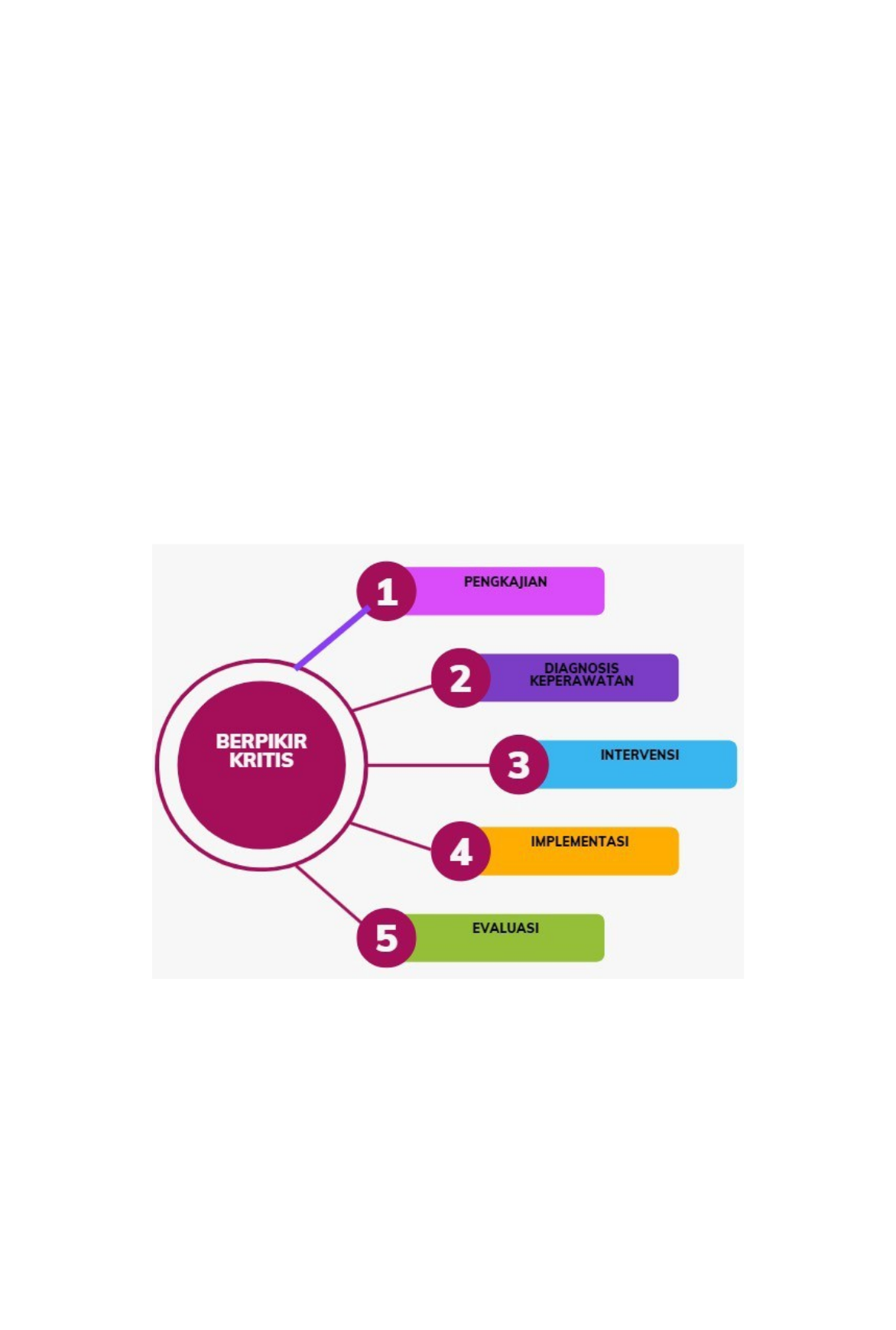
thinking skills to carry out the nursing process. The following is a
scheme of critical thinking in implementing the nursing process:
D. Stages in the nursing process
The stages of the nursing process are as follows:
1. Assessment Level a. Data collection
Assessment is the first step in the nursing process through data
collection activities or obtaining accurate data from patients to find
out various existing problems. The data needed includes data on
biopsychosocial and spiritual or data related to patient problems as

well as data on factors that affect patient problems. In data
collection, the device or format can be adjusted to the patient's
needs. Data collection is carried out by means of interviews (through
communication to get a response from the patient face-to-face),
observation (making observations visually or directly to the patient),
consultation (consulting experts or specialists), and physical
examination (inspection through direct observation of the organ
being examined, palpation by palpation by palpation of the organ
examined, percussion by tapping using the index finger or hammer
in neurological examinations and auscultation by listening to the
sounds of the organs being examined, laboratory examinations and
X-rays, and others.
B. Data validation
Data validation is an effort to provide justification for the data that
has been collected by comparing subjective data and objective data
collected from various sources based on normal value standards, to
find the possibility of re-assessment or additional assessment of
existing data.
There are two types of data, namely subjective data and
objective data. Subjective data is also called symptoms or closed and
visible data on the individual who experiences it so that it can be
explained or verified only by the individual. For example, the patient
said that he could not do daily activities such as eating and drinking
because his hands were swollen and it was difficult to move his
fingers. Objective data is also called sign or open data, which is data
obtained from observation results or measurement results. For
example, changes in skin color, blood pressure measurements,
muscle strength and others. During the physical examination, nurses
obtain objective data to validate subjective data and complete the
assessment phase of the nursing process.
There are two sources of data, namely primary and secondary.
The patient is the primary source of data, while the secondary source
of data can be from family members, friends, medical records and the
health team that manages the patient during treatment c. Identify
patterns/problems
It is the last activity of the assessment stage after validating the data.
Through the identification of patterns or problems, it is possible to
identify nursing disorders or problems that exist in health functions,

such as in the perception of health management, exercise activity
patterns, metabolic nutrition patterns, and others
2. Nursing diagnosis stage a. Definition of Nursing
Diagnosis
Nursing diagnosis is a clinical assessment of the patient's response to
health problems or life processes that he or she is experiencing, both
actual and potential. b. Purpose of Nursing Diagnosis
The goal of nursing diagnosis is to identify the response of the
patient individually, family and community to health-related
situations.
c. Classification of nursing diagnosis
The International Council of Nurses (ICN) since 1991 has developed a
classification system called the International Nurses Council
International Classification For Nursing Practice. (ICNP). This
classification system not only includes the classification of nursing
diagnoses, but also includes nursing interventions and outcomes .
This classification system is compiled to harmonize nursing
terminology used in various countries including Clinical Care
Clasification (CCC), North American Nursing Diagnosis Association
(NANDA), Home Health Care Clasification (HHCC), Systematized
nomenclature of medicine clinical terms (SNOMED CT), International
Classification of functioning, disability and health (ICF), Nursing
Diagnostic system of the centre for nursing development and research
(ZEFP) and ombaha system (Hardikar et al, 2011)
d. Types of nursing diagnosis
Types of nursing diagnosis can be broken down as follows:
1. Actual diagnosis
This diagnosis describes the client's response to a health
condition or life process that causes the patient to experience
health problems. Major and minor signs/symptoms can be
found and validated in patients
2. Risk diagnosis
This diagnosis describes the patient's response to health
conditions or life processes that can cause the patient to be at
risk of experiencing health problems. No major or minor

signs/symptoms were found in the patient, but the patient had
risk factors for experiencing health problems.
3. Health promotion diagnosis
This diagnosis describes the patient's desire and motivation to
improve his or her health condition to a better or optimal level.
e. Components of nursing diagnosis
Nursing diagnosis has two main components, namely problems or
diagnosis labels and diagnostic indicators. Each component is
described as follows:
1. Problem
Problems are nursing diagnosis labels that describe the core
and response of patients to their health conditions or life
processes. Diagnosis labels consist of
over descriptors or explainers and diagnostic focus
A descriptor is a statement that explains how a focus of
diagnosis occurs. Some of the descriptors used in nursing
diagnosis are in the following table:
It Descriptor Diagnostic Focus
1 Ineffective Anfas road cleaning
2 Distractions Gas exchange
3 Decline Cardiac output
4 Intolerance Activity
5 Deficit Knowledge
While a descriptor is a statement that explains how a
diagnosis focus occurs. Some of the descriptors used in nursing
diagnosis are in the following table:
It Descriptor Definition
1 Deficit Not enough, not enough
2 Dysfunction Does not function normally
3 Effective Causes the desired effect
4 Gangguan Experiencing obstacles
5 More Above normal values or

Needed
6 Decline Reduced both in size, quantity
or degree
7 Low is below normal or the
Needed
8 Ineffective Does not cause the desired effect
2. Diagnostic indicators
Diagnostic indicators consist of causes, signs/symptoms, and risk
signs with the following description: a. Etiology
These are factors that affect changes in health status. Etiology
can include four categories, namely: a) physiological, biological
or psychological, b) therapeutic effects/actions, c) situational
(environmental or personal) and d) maturasional
b. Signs and symptoms
Signs are objective data obtained from the results of
physical examinations, laboratory examinations and
diagnoses, while symptoms are subjective data obtained
from the results of anamnesis. Signs/symptoms are
grouped into two categories, namely: 1) Major:
signs/symptoms are found 80100% for diagnosis
validation, 2) Minor: signs/symptoms are not only found,
but if found can establish the diagnosis
c. Risk factors
It is a condition or situation that can increase the
vulnerability of patients to experiencing health problems.
In actual diagnosis, the diagnostic indicators consist of causes
and signs/symptoms. The risk diagnosis does not have causes and
signs/symptoms. It only has a risk factor. Meanwhile, in health
promotion diagnosis, there are only signs/symptoms that show the
client's readiness to achieve a more optimal condition
f. Nursing diagnosis enforcement process
There are three stages, namely:

1. Data analysis
Data analysis is carried out by comparing data with normal
values and grouping data
2. Identify the problem
After the data is analyzed, nurses and patients jointly identify
actual problems, risks and/or health promotion. Health
problem statement refers to a nursing diagnosis label
3. Formulation of the diagnosis.
The formulation is adjusted to the type of nursing diagnosis.
There are two methods of formulating nursing diagnoses,
namely:
a. Writing three parts
This writing method consists of problems, causes and
signs/symptoms. This writing method is only carried out on the
actual diagnosis, with the following formulation:
Problems related to the cause are evident
with signs/symptoms
The phrase 'related to' can be abbreviated b.d and
'proven by' can be abbreviated as d.d
b. Two-part writing
This writing method is carried out on risk diagnosis and health
promotion diagnosis, with the following formulation
(1) Risk diagnosis
The problem is evidenced by the risk factor
Example of writing a diagnosis:
The risk of aspiration is evidenced by a decreased level of
awareness
(2) Health promotion diagnosis
The problem is evidenced by signs/symptoms

Example: readiness to increase urine eliximation as evidenced
by the patient's desire to increase urine elimination, normal
urine volume and characteristics
The diagnostic components of each type of nursing diagnosis
and the method of writing the diagnosis can be seen in the
table below:
It Types of diagnosis Components and writing
Nursing Diagnosis
1 Actual diagnosis Problem b.d cause d.d
Signs/Symptoms
2 Risk diagnosis Problem d.d Risk factors
3 Health promotion diagnosis Problems d.d
Signs/symptoms
Description: b.d (related to), d.d (proven by)
3. Planning Stage
This stage is the process of preparing various nursing interventions
needed to prevent, eliminate, or reduce patient problems. This stage
also means all treatments carried out by nurses which are based on
clinical knowledge and assessment to achieve the expected
outcomes. Planning stage activities can be carried out with various
activities as follows:
a. Prioritizing nursing diagnoses
The determination of the priority of this nursing diagnosis is carried
out after the nursing diagnosis stage. The prioritization of problems
can be based on the severity (life-threatening) and based on human
needs.
1. Based on the severity (life-threatening)
This is motivated by the principle of first aid, which is to divide
high priorities (if it reflects a situation that threatens a person's
life so that action needs to be taken first, such as the problem of
airway cleaning), medium (when describing a situation that is not
urgent and does not threaten the patient's life such as hygiene
problems) and low (when describing a situation that is not
directly related to the prognosis of a specific disease such as a

problem finance or others) 2. Based on the level of the pyramid of
Maslow's basic needs
The 5 (five) basic human needs Maslow's basic needs include
physiological needs (respiratory, circulation, temperature,
nutrition, pain, skin care fluids, mobility, elimination, and
others), security and safety needs (environmental problems,
living conditions, protection, clothing, and others), the need to
love and be loved (problems with affection, sexuality, affiliation
in groups, and relationships between people), and the need for
self-esteem (respect problems from family, feelings of self-
respect), the need for self-actualization (the problem of
satisfaction with the environment)
b. Determine the goals and expected outcomes
The goal is the outcome to be achieved to overcome the problem of
nursing diagnosis. In other words, the objective is a synonym for the
outcome criterion which has the following components: S (subject),
P (predicate), Kr (criterion), Kd (condition), and W (time), with the
following description:
S; Observed patient behavior
P; Conditions that complement the patient
Kr: A quantifiable verb to determine the achievement of a goal
Kd: Something that causes parenting
W: Time to reach
The outcome criterion (expected outcome) is an evaluation
standard which is an overview of the factors that can provide clues
that the goal is achieved and is used in making considerations with
the following characteristics:
1. Each outcome criterion relates to a set goal
2. The results set out in the outcome criteria are achievable
3. The outcome criterion is a statement of one specific thing, it
must be as concrete as possible to facilitate measurement
4. Criteria are measurable and results can be seen, felt and heard
5. Criteria for using positive words, not negative words

In the discussion of goal determination, it is also necessary to
know the nursing output. Nursing outcomes are aspects that can be
observed and measured including conditions, behaviors, or
perceptions of patients, families, or communities in response to
nursing interventions. The nursing output component has three
main components, namely labels, expectations and outcome criteria.
Each component is described as follows: 1) Label:
Nursing output labels are conditions of patient behavior or
perception that can be changed or overcome by nursing
interventions. The nursing intervention label consists of several
words (1 word to 4 words) which begins with a noun (noun) which
functions as a descriptor or explanation of nursing outcomes, 2)
Expectations: Expectations are an assessment of the expected results
achieved. Expectations describe what the patient's condition,
behavior or perception will change after being given a nursing
intervention. There are three possible expectations, including
increased which means an increase in size, number, degree or level,
decreased which means a decrease in size, number, degree or level,
improved (causing a better, adequate, or effective effect, 3) Outcome
criteria: Outcome criteria are patient characteristics that can be
observed or measured by nurses and used as a basis for assessing
the achievement of nursing intervention outcomes. Outcome criteria
can also be referred to as indicators because they describe the
changes to be achieved after nursing interventions.
c. Define an action plan
Actions in nursing interventions consist of observation, therapy,
education and collaboration
1. Observational actions
Actions aimed at collecting and analyzing data on the patient's
health status. This action generally uses the words 'check',
'monitor'. It is recommended to avoid using the word 'review'
because it is similar to the initial stage of the nursing process
and so as not to be confused with nursing actions which is the
post-diagnosis stage, while the assessment is the pre-diagnosis
stage
2. Therapeutic action

Actions that can directly have the effect of restoring the
patient's health status or can prevent the worsening of the
patient's health problems. This action generally uses the words
'give', 'do' and other words
3. Educational actions
Actions aimed at improving the patient's ability to care for
himself or herself by helping the patient acquire new
behaviors that can overcome the problem. This generally uses
the words 'teach', 'encourage', or
'Train'
4. Collaborative actions
Actions that require cooperation both with other nurses and
with other health professions. This action requires a
combination of knowledge and skills from various health
professions. This action is only done if the nurse needs further
treatment. This action generally uses the words 'collaboration',
'refer', or 'consult'.
4. Implementation Stage
It is the fourth stage in the nursing process by implementing various
nursing strategies (nursing actions) that have been planned. In this
stage, nurses must know various things, including physical danger
and protection to patients, communication techniques, ability in
action procedures, understanding of patient rights, patient
development level. In the implementation stage, there are two
actions, namely independent actions and collaborative actions
Here are examples of independent nursing actions
(independent actions) and collaborative actions (interdependent
actions)
a. Identifying coughing abilities (self-acting)
b. Setting the position of the semi fowler or fowler (self-action)
c. Recommend inhaling through the nose for 4 seconds, holding
for 2 seconds, then exhaling from the mouth with pursed
(rounded) lips for 8 seconds (self-action)
d. Collaborating on the provision of mucolytics or expectations
(collaborative actions)

5. Evaluation Stage
The evaluation stage is the last stage of the nursing process by
assessing the extent to which the goals of the nursing plan are
achieved or not. In evaluating, nurses must have the knowledge and
ability to understand the response to nursing interventions, the
ability to describe conclusions about the goals achieved, and the
ability to relate nursing actions to outcome criteria. This evaluation
stage consists of two components, namely process evaluation and
result evaluation. Process evaluation is carried out during the
treatment process or assessing the patient's response, while the
result evaluation is carried out on the expected goal target.
Evaluations can be classified as follows:
a. Formative evaluation
The evaluation is carried out at the time of providing the
intervention with an immediate response.
Example:
Identification of coughing ability
Evaluation results: based on the results of the assessment of
the cough patient, the patient seemed to have difficulty
excreting sputum
b. Summative evaluation
It is a recapitulation of the results of observation and analysis
of the patient's status at a certain time based on the planned
goals at the planning stage. In addition, evaluation is also a
measure of goals that have certain criteria to prove whether
the goal is achieved, not achieved or partially achieved
c. Evaluation achieved
This goal is said to be achieved if the patient has shown
changes and progress in accordance with the criteria that have
been set
Example:
Nursing diagnosis: Breath cleaning is ineffective
Objective: the patient is able to clear secretions or airway
obstructions Evaluation:

S (Subjective): The patient says he can pass his phlegm
O (Objective) : Clear lungs at the time of adoption
A (Assessment or assessment): The disruption of the cleaning of the
asphalt road has been resolved
P (Planning or plan) : Home visits are stopped
SUMMARY:
1. The stages of the nursing process include assessment, nursing
diagnosis, intervention, implementation and evaluation
2. The assessment stage consists of data collection, data validation
and identification of patterns/problems
3. The stages of nursing diagnosis consist of data analysis activities,
problem identification and formulation of nursing diagnosis
4. The stages of the intervention consist of prioritizing the diagnosis,
determining the goals and expected outcomes, determining the
action plan
5. The implementation phase consists of self-nursing actions and
collaborative nursing actions
6. The evaluation stage consists of process evaluation and result
evaluation
ASSIGNMENT
1. What are the 5 stages of the nursing process?
2. What are the 3 types of nursing diagnoses?
3. What is a nursing outcome?
4. What is therapeutic action in nursing intervention?
5. Give examples of self-care actions when acute pain nursing
problems arise!

A. The preemption of health development is aimed at increasing
awareness, willingness and ability to live a healthy life for
everyone in order to achieve an optimal degree of health
as stipulated in the 1945 Constitution. Section 63
paragraph (4) of the Health Law No. 36 of 2009
concerning health, states that the implementation of
treatment and/or treatment based on medical science and
nursing science can only be carried out by health workers who
have expertise and authority. Nurses are one of the health
workers in every health service. Nurses are the frontline in
health services in hospitals,. Nurses are a profession that devotes
themselves to handling nursing care for patients, always has an
CHAPTER 6
RIGHTS AND OBLIGATIONS OF NURSES
P

excessive workload and often also performs activities that are
not their main task, for example in the inpatient room can play
an administrative role. Nurses in hospitals provide 24-hour
service, but there are also nurses on duty in inpatient,
outpatient, and polyclinic service rooms. Nurses have the
authority based on their competence to provide nursing care to
individuals, families and communities in government and
independent health services. A nurse according to the
International Council of Nursing (ICN 1965) is a person who has
completed a qualified nursing education and is authorized in the
country concerned to provide nursing services and is
responsible for improving health, disease prevention and
services.
sick patients. Meanwhile, according to the Nursing Law no. 38 of
2014, a nurse is someone who has graduated from Nursing higher
education both at home and abroad which is recognized by the
Government in accordance with the provisions of the Legislation. As
a nurse, she will provide nursing services in the form of professional
services which are an integral part of health services based on
knowledge and tips aimed at individuals, families, groups, and the
community, both healthy and sick. In carrying out nursing services, a
nurse provides nursing care, with a series of interactions between
nurses and clients and their environment to achieve the goal of
meeting the needs and independence of clients in caring for
themselves. Before fulfilling the rights and obligations, nurses must
take a competency test, namely the measurement process and
knowledge, skills and behavior of students at universities that
organize nursing study programs.then graduate and have a
certificate of competence, to practice nursing, which then has a
registration certificate (STR) as written evidence given by the
nursing council to nurses who have been registered. In carrying out
the rights and obligations of nurses in Indonesia, based on the
Nursing Law no. 38 of 2014 concerning nursing, KMK no.
01.07/Menkes/425/2020 dated July 13, 2020 concerning the
standards of the Nursing Profession then, Permenkes no. 26 of 2019
concerning the Implementation Regulation of Law no. 38 of 2014
concerning Nursing dated August 9, 2019. For this reason, it is
necessary to be addressed by every nurse to add insight in fulfilling

rights and obligations, and also follow the rules that have been made
by the standards made by policy makers, in their respective work
areas, we know, that the rules that are set always refer to the rules
and regulations above them
B. Rights and Obligations of Nurses.
Understanding of rights differs depending on the perspective
, but by experts there is a definition and definition of rights
Rights are words that we often hear in daily life, even in the
smallest organizational activities, for example, social gatherings,
harmony is challenged, there are always words rights and
obligations, every individual has the right to do something and have
something, make decisions, protect themselves, act, express
opinions, receive information, but rights can also make each
individual aware of the limitations in determining what is allowed
and not allowed. Likewise, nurses as competent health workers have
rules about the rights and obligations of nurses that must be
understood by every nurse, so that they do not experience problems
in carrying out nursing care.
1. Definition of Rights
a. Rights according to language or KBBI are a form of authority or
a power that allows an individual to act (on the basis of the law
because it has been regulated and determined by certain laws
or rules) and absolute power based on something or is used to
demand something.
b. Rights According to Prof. Dr. Notonegoro
It is a power or ability of an individual to be able to carry out
several activities such as, receive, do, and have something that
should be accepted, done and owned by the individual.
c. Rights According to Prof.R.M.T.Sukamto Notonagoro
It is an authority where an individual has the authority to
receive or do something that is cold to him and should be
accepted or done by the individual. This right cannot and
cannot be given to other individuals, so it cannot be exercised
and accepted by other individuals.
d. Rights according to C Fagin (1975)

It is a demand for something that a person has rights to, such
as power and privilege in the form of demands based on
justice, morality, or legality.
2. Types of types of rights.
a. Absolute Rights
It is a right that has absolute or landslide without exception,
the right of absold can be applied anywhere as long as it is not
affected by certain situations and circumstances.
b. Welfare Rights
A legally granted right for things that are specific safety
standards in a particular building or area. For example, the
right of patients to obtain nursing care, the right of residents to
receive health services at health service facilities, e.g. to seek
treatment at the health center, receive health protection during
the covid 19 pandemic, through the covid 19 vaccine, utilizing
BPJS health services.
c. Legislative Rights
Legislative rights are applied by law based on the concept of
justice. For example, a woman experiences violence from her
husband so that the woman will exercise her right to legislate.
According to Badman and Badman (1985), legislative rights
have four roles in society, namely making regulations, changing
regulations, limiting morals against unfair regulations, giving
court decisions or resolving disputes.
Factors that affect the development of the personal concept of
a person's rights
a. Social relations with the family, between families and with the
environment,
b. Education from parents, for example, respects and appreciates
the opinions of families who, helping others, help with
homework. is a behavior in creating harmony, which can affect
a person's life in serving and acting
c. Culture influences us to follow certain patterns of behavior that
have been created.

d. Regional factors can affect an individual's personality, for
example in providing care, for example to mention the client's
name in Indonesian starting with the word "Mother" "Father",
or in the Batak tribe with "Amang" for father, or "Inang" for
mother
e. The information obtained, obtained by nurses, of course
through education and also through experience in the field will
affect every action of a person, if positive information is
obtained, the person concerned will do it well guided by the
operational standards that have been established
Nurses' Rights according to the Nursing Law no. 38 of 2014
Part one article 36
Nurses' Rights, According to the Minister of Health Regulation
No. 26 of 2019 concerning the Implementation Regulation of Law No.
38 of 2014 part five Article 35
In carrying out nursing practice, nurses have the following
rights:
a. Obtain legal protection while carrying out their work in
accordance with professional standards, service standards,
operational procedure standards and the provisions of laws
and regulations.
b. Obtain true, clear, and honest information from the client
and/or his family.
c. Carry out duties in accordance with competence and authority
d. Receive a service reward for the Nursing Services that have
been provided.
e. Rejecting the wishes of clients or other parties that are
contrary to the code of ethics, service standards, professional
standards, and operational procedure standards.
f. Obtaining work facilities in accordance with standards
g. Obtain protection for occupational safety and health, treatment
in accordance with human dignity and dignity, morals, morality
and religious values.
1. Obtain other rights in accordance with the provisions of
regulations and laws.

2. Nurses are also entitled to receive remuneration for services
provided for health services provided. Article 36
1. In carrying out Nursing Practice, Nurses have obligations
a. Maintaining the confidentiality of clients' health
b. Obtaining consent from the client or his family for the actions
given.
c. Complement the recommendations and infrastructure of Sesusi
Nursing Services with nursing service standards and provisions of
laws and regulations for nurses who practice independently.
d. Providing Nursing Services in accordance with the code of ethics
for Nursing Service standards, professional standards, operational
procedure standards and legal provisions.
e. Refer clients who cannot be handled to nurses or other health
workers who are more appropriate according to their scope and
level of competence.
f. Documenting Nursing Care in accordance with standards.
g. Providing complete, honest, true, clear and easy-to-understand
information about nursing actions to clients and/or their families
in accordance with the limits of their authority.
h. carry out actions of delegating authority from other health
professionals in accordance with the competence of nurses
i. Implement Assignment special that Set by the
government.
The Rights of Nurses according to Claire Fagin (1975)
a. The right to obtain dignity in order to express and improve
oneself through special use and in accordance with one's
educational background.
b. The right to obtain recognition in relation to contributions
through the stipulations provided by the environment for the
practice carried out as well as economic rewards in relation to
professionals.
c. The right to a work environment with minimal physical and
emotional stress and work risks.,

d. The right to carry out professional practices within the limits
of the applicable law.
e. The right to set quality standards in the care carried out.
f. The right to participate in policy-making that affects care.
g. The right to participate in social and political organizations
that represent nurses in improving health care.
Meanwhile, according to Ismani 2014 in the book Nursing
Ethics, it is stated that the Rights of Nurses:
a. Nurses have the right to get huku protection in carrying out
their duties in accordance with their profession.
b. Nurses have the right to develop themselves through
specialized abilities in accordance with their educational
background.
c. Nurses have the right to reject the wishes of patients/clients
that are contrary to laws and regulations, as well as
professional standards and codes of ethics.
d. Nurses have the right to receive specific information from
patients/clients or their families about their complaints and
dissatisfaction with the services provided.
e. Nurses have the right to improve their knowledge based on
science and technology in the field of nursing/health
continuously.
f. Nurses have the right to be treated fairly and honestly by
service institutions and clients/patients.
g. Nurses are entitled to a guarantee of protection against
occupational risks that can cause physical harm or emotional
stress.
h. Nurses have the right to be included in the preparation and
determination of health service policies.
i. Nurses have the right to privacy and have the right to sue if
their good name is defamed by patients/clients and/or their
families and other health workers.
j. Nurses have the right to refuse to be transferred to another
place of duty, either through advice or written announcement
because it is necessary to take actions that are contrary to

professional standards or the nursing code of ethics or other
laws and regulations.
k. Nurses have the right to receive appropriate awards and
rewards from professional services provided based on
certificates or applicable provisions at the service institution
concerned
l. Nurses have the right to get opportunities, develop their
careers in accordance with their professional fields.
m. Obligation according to 1, John Salmond: Something that must
be done by a person and if he does not do it, he will be
sanctioned.
According to Prof. R.M.T.Sukamto Notonegoro, the obligations
are; Something that must be done by the tensed party with a sense of
responsibility and with principles that can be forcibly demanded by
interested parties.
Obligation :P care. Iswani 2000, in Nursing Ethics:
a. Nurses are obliged to comply with all regulations of the
institution concerned.
b. Nurses are required to provide nursing services or care in
accordance with professional standards and use limits.
c. Nurses are obliged to respect the rights of patients/clients.
d. Nurses are obliged to refer patients/clients to nurses or other
health workers who have better skills or abilities, if the person
concerned cannot cope with it.
e. Nurses provide opportunities for patients/clients to have
contact with their families, as long as they do not conflict with
existing regulations or professional standards.
f. Nurses are obliged to provide opportunities for
patients/clients to carry out their religious worship, in
accordance with their respective religions or beliefs as long as
they do not interfere with other patients
g. Nurses are required to collaborate with medical personnel or
other health workers in providing health and nursing services
to patients.

h. Nurses are obliged to provide accurate information regarding
nursing actions given to patients or their families according to
the limits of their abilities.
i. Nurses are obliged to improve the quality of their services in
accordance with the standards of the nursing profession for
patient satisfaction.
j. Nurses are required to follow the documentation of nursing
care accurately and continuously.
k. Nurses are required to follow the development of nursing
science and technology or health continuously.
l. Nurses are obliged to carry out emergency services as a
humanitarian duty in accordance with the limits of their
authority.
m. Nurses are obliged to keep everything known about the patient
confidential unless requested for information by the
authorities.
n. Nurses are obliged to fulfill matters that have been agreed
upon or agreements that have been made beforehand, to the
institution where they work.
From some of the rights and obligations above, that during the
covid 19 pandemic since 2019 the obligation of nurses is very large
in providing services. Obtain legal protection while carrying out their
work in accordance with professional standards, service standards,
operational procedure standards and the provisions of laws and
regulations.

A. Understanding according to the Ministry of Health (2002) home
care is a service health that ustainable and
comprehensive provided to individuals and families in
their place of residence with the aim of enhancing,
maintaining or restoring health or maximizing the level of
independence and minimizing the consequences of illness.
Home Health Care is a system where health services and social
services are provided at home to people who are disabled or people
who have to stay at home due to their health conditions (Neis and
Mc.Ewen, 2001)
According to Habbs and Perrin, 1985 (in Lerman D. & Eric B.L,
1993) Home Care is a health service that is carried out in the
patient's home, so home care in nursing is a nursing service in the
patient's home that has gone through a long history.
In some developed countries, " home care " is not a new
concept, but it has been developed by William Rathbon since 1859
where he called home care in the form of nursing personnel visiting
homes to treat sick and unwilling clients in the hospital.
From some literature, the meaning of " home care " is:
1. Ministry of Health).
Basic Nursing Concepts
M
CHAPTER 7
BASIC CONCEPTS HOME CARE

B. Nursing Model Concepts/Theories Supporting Home Care
According to Hidayat (2004), nursing models / theories that support
home care include:
1. Environmental Theory (Florence Nightingale)
The environment according to Nightingale refers to the external
physical environment that affects the healing and health process
which includes the five most important environmental components
in maintaining the health of an individual which includes:
a. Clean air,
b. Clean water
c. Efficient maintenance
d. Hygiene
e. Lighting/lighting
Nightingale emphasizes more on the physical environment
than on the social and psychological environment which is explored
in more detail in his writings. His emphasis on the environment is
very clear through his statement that if you want to predict health
problems, then what must be done is to study the condition of the
house, the condition and the way of life of a person rather than
examining his physical/body.
2. Theory of the concept of man as a unit (Martha E. Rogers)
In understanding the concept of this model and theory, Rogers
assumes that human beings are a whole whole, which has different
traits and characters. In the dynamic process of human life, humans
in the process of human life each individual will be different from
each other and humans are created with their own characteristics
and uniqueness. This assumption is based on the forces that develop
naturally, namely the integrity of humans and the environment, then
the availability system as a whole and the process of human life
based on the concept of homeodynamics consisting of integrity,
resonance and helicy.
Integrity means that individuals as a whole with an
environment that cannot be separated, and influence each other.
Resonance means that the life process between individuals and the
environment takes place rhythmically with varying frequencies and

helicy is the process of interaction between humans and the
environment will change, either slowly or quickly.
According to Rogers (1970), the goal of nursing is to maintain
and improve health, prevent pain, and treat and rehabilitate sick and
incapable clients with a humanistic approach to nursing. According
to Rogers, 1979 Framework of Practice: "Whole human beings"
encompass the process throughout life. The client is constantly
changing and aligning with his environment.
3. Theory Transkultural nursing (Leininger)
Leininger believed that the purpose of this theory was to provide a
culturally based service. She believes that nurses must work with the
principle of "care" and a deep understanding of "care" so that the
culture s care‟, values, beliefs, and lifestyles provide a realistic and
accurate foundation for effective planning and implementation of
services in a particular culture. She believes that a nurse cannot
separate the way in which the worldview, social structure and
cultural beliefs (ordinary and professional) of health, well-being,
sickness, or service while working in a particular community group,
because these factors are interconnected with each other. Social
structures such as trust, politics, economics and kinship are
significant forces that have an impact on "care" and affect well-being
and sick conditions.
4. Theory of Human Caring (Watson, 1979)
This theory emphasizes that caring as a type of relationship and
transaction is necessary between the provider and the recipient of
care to enhance and protect the patient as a human being, thereby
affecting the patient's ability to heal.
This view of Jean Watson's theory understands that humans
have four branches of human needs that are interconnected,
including basic biophysical needs (the need for life) which includes
the need for food and fluids, the need for elimination and the need
for ventilation, psychophysical needs (functional needs) which
include the need for activity and rest, sexual needs, psychosocial
needs (the need for integration) which includes the need to achieve,
organizational needs, and intra and interpersonal needs (needs for
development), namely the need for self-actualization.

5. Theory Self Care (Dorothea Orem)
Orem's theoretical view in the nursing service order is aimed at the
needs of individuals in carrying out independent nursing actions and
regulating their needs. In the concept of nursing practice, Orem
develops two forms of Self Care theory, including:
a. Self Care
1) Self Care: is an activity and initiative of the individual and
carried out by the individual himself in fulfilling and
maintaining life, health and welfare.
2) Self Care Agency: is an individual's ability to take care of
themselves, which can be influenced by age, development,
sociocultural, health and others.
3) Theurapetic Self Care Demand: a demand or demand in self-
care which is a self-action that is carried out within a
certain time for self-care by using methods and tools in
appropriate action.
4) Self Care Requisites: the need for self-care is an action aimed
at providing and caring for oneself that is universal and
related to the process of human life and in an effort to
maintain body functions. Self Care Requisites consist of
several types, namely: Universal Self Care Requisites
(universal human needs that are basic needs),
Developmental Self Care Requisites (needs related to
individual development) and Health Deviation Requisites
(needs that arise as a result of the patient's condition).
b. Self Care Challenged
Self Care Deficit is an important part of general care where all
nursing planning is given when care is needed. Nursing is
needed by a person when they are unable or limited to do their
self-care continuously. Self-care deficit can be applied to
immature children, or needs that exceed their abilities as well
as an estimated decrease in ability in care and demands in
increasing self-care, both in quality and quantity.
In fulfilling self-care and assisting in the problem-solving
process, Orem has methods for the process, including acting or
doing for others, as a guide to others, providing support,

improving the development of the environment for personal
development and teaching or educating others.
c. Teori Dinamic dan Self Determination for Self Care (Rice)
Nurses as facilitators and coordinators of healthy pain balance
choices set by patients.
C. Legal Basis Home Care
1. Legal functions in Nurse Practice:
a. Provides a framework for determining which nursing
actions are in accordance with the law
b. Differentiating the responsibilities of nurses from other
professions
c. Helping to determine the limits of authority for
independent nursing actions
d. Helping to maintain standards of nursing practice by
placing nurses accountable under the law.
2. Legal basis:
a. Law Number 29 of 2004 concerning medical practice
b. Law Number 32 of 2004 concerning local government
c. Law Number 36 of 2009 concerning health
d. Government Regulation Number 32 of 1996 concerning health
workers
e. Government Regulation Number 25 of 2000 concerning the
financial balance of the central and regional governments.
f. Government Regulation Number 47 of 2006 concerning
functional positions of doctors, dentists, pharmacists,
ass.pharmacists, lab.kes institutions. Health epidemiology,
health entomology, sanitarians, health administrators, health
counselors, dental nurses, nutritionists, midwives, nurses,
radiographers, medical recorders, and electromedicine
technicians.
g. Decree of the Minister of Agriculture Number 94/KEP/M.
PAN/11/2001 concerning the functional position of nurses.

h. Ministry of Health Number 128 of 2004 concerning the basic
policy of the health center
i. Ministry of Health Number 279 of 2006 concerning guidelines
for the implementation of Perkesmas.
j. Ministry of Health Number 374 of 2009 concerning Health
System
National
k. Ministry of Health Number 267 of 2010 concerning the
determination of the roadmap for health reform.
l. Permenkes Number 920 of 1986 concerning private medical
services
m. Permenkes Number 148 of 2010 concerning the licensing and
implementation of nursing practice
D. Scope of Service Home care
According to Nuryandari (2004), the scope of home care services is:
1. Medical services and nursing care
2. Social services and efforts to create a therapeutic environment
3. Rehabilitation and physical therapy services
4. Information and referral services
5. Education, training and health counseling
6. Hygiene and sanitation of individuals and the environment
7. Improvement services for social activities
According to Rice (2001), the types of cases that can be served
in home health care include common cases after hospital treatment
and special cases found in the community.
1. Common cases that are post-treatment in the hospital are:
a. Clients with chronic pulmonary obstructive disease
b. Clients with heart failure
c. Clients with impaired oxygenation
d. Clients with chronic injuries
e. Clients with diabetes
f. Clients with impaired functionality

g. Clients with health recovery or rehabilitation conditions
h. Clients with infusion fluid therapy at home
i. Clients with impaired neurological function
j. Clients with HIV/AIDS
2. Meanwhile, cases with special conditions include:
a. Clients with post partum
b. Clients with mental health disorders
c. Clients with advanced age conditions
d. Client with terminal condition
E. Basic Skills that Nurses Must Master
Based on the Decree of the Director General of YAN MED Number:
HK. 00.06.5.1.311 states that there are 23 independent nursing
actions that can be carried out by home care nurses, including:
1. Vital sign
2. Installing a nasogastric tube
3. Installing a large milk hose
4. Installing the cateter
5. Replacement of breathing tube
6. Treating decubitus wounds
7. Suction
8. Installing O2 equipment
9. Injection (IV,IM, IC,SC)
10. Installation of infusions and drugs
11. Preparation
12. Granting huknah/laxative
13. Personal hygiene
14. Exercises in the context of medical rehabilitation
15. Client transfer for the implementation of diagnostic checks
16. Health education

17. Terminal case counseling
18. Consultation/phone
19. Facilitation to referring doctors
20. Preparing food menus
21. Cleaning the Patient's Bed
22. Facilitate patient social activities
23. Facilitation of client facility repair.
Basic Competencies
1. Understand the basics of anatomy, physiology, body pathology
in general.
a. Explain anatomy, physiology, pathology as a general body
system
b. Explain the basic concepts of homeostasis, and
pathogenesis.
2. Carry out the administration of drugs to clients/patients
a. Explain how to administer medication to patients
b. Administer medication to patients according to the doctor's
prescription.
3. Understand the types of basic laboratory tests required by
clients/patients
a. Describe the basic types of laboratory tests required by the
client/patient
b. Explaining the preparation of the client/patient to be
examined in the laboratory
c. Deliver clients/patients for examination in the laboratory.
4. Demonstrate the ability to conduct therapeutic communication
a. Explaining the definition of therapeutic communication
b. Explain the functions, and benefits of therapeutic
communication
c. Carry out every nursing action using therapeutic
communication.

5. Showing the ability to take care of babies, toddlers, children,
and the elderly according to their developmental level.
a. Building human relationships
b. Optimizing therapeutic communication
c. Identifying basic human needs
d. Planning basic human needs
6. Demonstrate the ability to serve clients/patients with mild
illnesses
a. Building human relationships
b. Optimizing therapeutic communication
c. Identify the basic needs of clients/patients
d. Plan the basic needs of the client/patient
e. Carry out the basic needs of clients/patients
7. Documenting the results of implementing the needs of sick
patients/clients.
8. Implementing Safety, Occupational Health and Environment
Life (K3LH)
a. Describe occupational safety and health (K3)
b. Implementing OSH procedures
c. Applying environmental concepts
d. Apply first aid provisions to accidents
9. Understanding the health-sick continuum
a. Explaining the balance of the normal human body
b. Explaining the definition of healthy-sick
c. Explaining healthy and sick models
d. Explain the values that affect health
e. Explain Increased healthand Disease prevention
f. Explaining risk factors in human life
g. Explain the impact of illness on clients/patients and families.

10. Understand the basics of simple diseases that are common in
society
a. Explain the diseases of the simple integument system that are
common in society
b. Explain simple diseases of the gastrointestinal system that
are common in the community.
c. Explain diseases of the genitourinary system that are
common in the community
d. Explain simple respiratory system diseases that are common
in the community
e. Explain simple cardiovascular system diseases that are
common in the community
f. Explain simple nervous system diseases that are common in
society
g. Explain simple reproductive system diseases that are
common in society. 11. Understand health improvement and
key health services
h. Explain health improvement and disease prevention
measures
i. Explain key health care actions
j. Explain the role of nursing assistants in the delivery of
primary care.
11. Understanding medication administration
a. Explaining the nomenclature and form of oral medication
b. Explain the factors that affect the action of drugs
c. Explain the ability to administer oral medications.
12. Understanding interpersonal and mass abilities
a. Explain the different levels of communication
b. Explain the communication process
c. Explain the forms of communication
d. Explain the factors that affect communication
e. Discussing therapeutic communication

f. Explain the help in communicating.
13. Principles of human development
a. Explaining the theory of human growth and development
b. Explain phase growth andHuman development
c. Explaining conception
d. Explain the birth process.
14. Understanding the stages of human development
a. Explaining the development of infancy
b. Explaining the development of toddlerhood
c. Explain the development of school-age children
d. Explaining adolescent development
e. Explaining the progression of time
15. Young adults
a. Explaining adult development
b. Explain the development of old age.
16. Understand the attitude of nurse services according to the stages
of development
a. Explain the nurse's attitude towards the client/patient
according to the developmental stage.
b. Explain community health care services and orphanages.
17. Understanding about stress
a. Explain the concept of stress
b. Explaining adaptation to stress
c. Explaining the response to stress
d. Explain the nursing process and adaptation to stress.
18. Understanding basic human needs
a. Explain human physiological needs
b. Explain safety and security needs
c. Explaining the need for love and belonging
d. Explain the need for appreciation and self-esteem

e. Explain the need for self-actualization.
19. Understanding reproductive health
a. Explaining the concept of reproductive health
b. Explain the anatomy and physiology of the reproductive
organs
c. Explain issues related to reproductive health.
20. Understanding empathic behavior
a. Explain an empathetic attitude towards loss, death, grief
when performing e-treatment actions
b. Explain the assistance provided in accordance with the
religion, and the client's ritual needs.
21. Performing vital signs checks
a. Explain guidelines for measuring vital signs
b. Explaining body temperature measurement
c. Performing breath measurements
d. Performs pulse measurement.
22. Passive mobilization of clients/patients
a. Explain about mobilization and movement regulation
b. Explaining mobilization disruptions
c. Explaining mobilization exercises
d. Demonstrate the ability to perform passive and active
mobilization
e. Explain the disruption of mobilization.
23. Providing nutrition
a. Explaining balanced nutrition
b. Demonstrated the ability to provide oral feeding to
patients/clients.
24. Carry out documentation of nursing actions
a. Explain multidisciplinary communication in teams
b. Create documentation according to the guidelines.

25. Carrying out duties in accordance with nursing ethics, and legal
rules
a. Explain the importance of nursing ethics and law in carrying
out duties.
b. Conduct nursing assistant performance behavior in
accordance with nursing ethics and laws.

A. Nurse Professional Organization The nursing profession in
Indonesia is PPNI which is short for National Nurses
Association
Indonesia. PPNI was born on March 17, 1974 as a determination of
the same spirit triggered by nurse pioneers that nursing personnel
must be in the forum of the Indonesian nursing profession
organization. PPNI is committed to providing protection for the
community and the nursing profession by drafting a nursing law. In
its age, which is classified as a productive age, PPNI has grown to
become an independent organization.
The Indonesian National Nurses Association (PPNI) is a
professional organization that gathers nurses nationally and is a
legal entity in accordance with the provisions of laws and regulations
which has the purpose of improving the knowledge and skills of the
dignity and ethics of the nursing profession, as mandated in article
41 in Law No. 38 of 2014 concerning nursing.
B. Roles and Functions of Professional Organizations
The role of PPNI as a forum that gathers nurses nationally
encourages the birth of policies for the interests and welfare of
Indonesian nurses. The function of PPNI as a unifier, coach,
development and supervisor of nursing in Indonesia. and PPNI is
also mandated to function as a unifier, coach, developer and
supervisor of nursing in Indonesia. In order to achieve these goals
and in order to carry out these functions, one of them is that PPNI is
obliged to develop standards that includ
OCHAPTER 8
THE ROLE OF PROFESSIONAL ORGANIZATIONS

competency standards, nursing care standards, and professional
performance standards.
Some of the roles performed by nurse organizations
1. Fighting for various laws and regulations
Nursing professional organizations have championed various
supporting laws and regulations, and credential systems for
nursing.
2. Strengthening nursing professional service standards
Professional organizations to ensure the implementation of
nursing services in the country, set standards for nursing
professional services. Professional service standards regulate
input standards, environmental standards, process standards,
nursing service output standards, and the authority of nurses.
3. Develop mechanism Monitoring Nursing Services
Nursing professional organizations in an effort to monitor
nursing services have developed a monitoring mechanism and
also formed the Nursing Ethics Honorary Council (MKEK).
4. Strengthening the service fee system
Nursing professional organizations fight for a decent amount
of remuneration for nurses in accordance with the authority
and services provided
5. Improving the organization of the nursing profession
The active role of professional organizations in setting various
professional education and training standards, various
professional service standards, and various professional
service supervision mechanisms.
6. Nursing organization coaching
PPNI is tasked with fostering institutions, members, leadership
cadres, law, public relations and the preparation of nursing
policies. This role is carried out by determining the
qualifications of members, establishing legislation and codes of
ethics, and developing the career and welfare of members.
7. Nursing education and training

PPNI is tasked with improving the reach and quality of nursing
education and or training. In order to develop the
implementation of professional nursing care, nursing personnel
need to be prepared through the national higher education
system. The orientation of higher education is on science,
technology and society
8. Nursing service coaching
PPNI aims to increase the coverage and quality of nursing
services and ensure quality and accountable nursing services.
Here PPNI carries out the formulation of standards, registration
and licensing for professions.
9. Science and Technology Construction
The role of professional organizations (PPNI) is to develop
nursing research, nursing development, IT application
development, and publication of research results. This research
needs to be improved so that the theory and concepts in nursing
are more reliable, and the quality of nursing services is
increasing.
10. Member Welfare Development
PPNI is in charge of fostering the welfare of members and
fostering other business entities, fostering foundations and
nursing cooperatives
11. Investigate and recommend the resolution of problems related
to violations of the nursing profession code of ethics in
accordance with the articles of association and bylaws.
C. Competency standards
Nurse competency standards are a reflection of expectations for the
competencies possessed by individual nurses who will work in
nursing services. Nurse competency standards are equivalent to
standards that apply to the health industry sector and can be applied
internationally.
Competency standards aim
1. For Nursing Education and Training Institutions
a. Providing information and references for the development
and curriculum of nursing education

b. Providing information and reference for the development
and curriculum of nursing training
2. For the Business/Health Industry and Users
a. Determination of job descriptions for health workers
b. Recruitment of nurses
c. Performance Assessment
d. Development of specific training programs
3. For institutions that provide testing and certification of nurses
Reference in formulating certification program packages
according to qualifications and types.
Domain and Unit of Nurse Competence
Main Areas of Nurse Competence Nurse competencies are grouped
into 3 main areas, namely:
1. Professional, ethical, legal and culturally sensitive practices
a. Responsible for professional practices
b. Carry out nursing practice (ethically and culturally)
c. Carry out legal practice
2. Provision of nursing care and care management.
a. Apply the basic principles in the provision and management
of nursing care
b. Carry out health promotion efforts in nursing services
c. Conducting a nursing assessment
d. Developing a nursing plan
e. Carry out nursing actions as planned
f. Evaluating nursing care measures
g. Using therapeutic communication and interpersonal
relationships in the delivery of ministry
h. Creating and maintaining a safe environment
i. Using interprofessional relationships in nursing/health
services
j. Using delegation and supervision in nursing care services

3. Professional development
a. Carry out professional improvement in nursing practice
b. Improving the quality of nursing services and nursing care
c. Participating in continuing education as a form of
professional responsibility
D. Standard of Nursing Care
Standard 1 Data collection on the health status of clients/patients
is carried out systematically and continuously. Data
can be obtained, communicated and recorded
Standard 2 Nursing Diagnosis
Standard 3 Nursing care plans include objectives that are made
based on nursing diagnoses
Standard 4 The nursing care plan includes the priorities and
approaches of nursing action that are set to achieve the
goals that are compiled based on the nursing diagnosis
Standard 5 Nursing practices provide an opportunity for
clients/patients to participate in health improvement,
maintenance, and restoration
Standard 6 Nursing actions help clients/patients to optimize their
ability to live a healthy life
Standard 7 Whether or not there is progress in achieving the goals
is determined by the client/patient and the nurse
Standard 8 Whether or not there is progress in achieving the
objectives provides direction to conduct a review,
rearrange the order of priorities, set new goals and
improve the nursing care plan
Indonesian Nursing Diagnostic Standards (SDKI)
Standard nursing diagnostics are needed to control the
implementation of optimal nursing care for clients, families, and the
community. Nursing diagnosis is a clinical assessment of the
experience/response of an individual, family or community to a

health problem, to the risk of a health problem or to the course of
life. Nursing diagnosis is a vital part of determining appropriate
nursing care to help clients achieve optimal health.
The standard objectives of nursing diagnosis are as follows:
1. To be a guide or reference for nurses in enforcing nursing
diagnoses
2. Increasing nurses' autonomy in providing health services
3. Facilitate intraprofessional and interprofessional
communication with the use of uniform and standardized
terminology
4. Improving the quality of nursing care
Nursing diagnosis is divided into 2 types, namely negative
diagnosis and positive diagnosis. A negative diagnosis indicates that
the client is sick or at risk of becoming sick, so the enforcement of
this diagnosis will direct the provision of nursing interventions that
are curative, recovery and prevention. A negative diagnosis consists
of an actual diagnosis and a risk diagnosis. Actual diagnosis
describes the client's response to a health condition or life process
that causes the client to experience health problems. Major and
minor signs/symptoms can be found and validated in the client. Risk
Diagnosis describes the client's response to a health condition or life
process that puts the client at risk of developing health problems. No
major and minor signs/symptoms were found but had risk factors
for experiencing health problems. Health Promotion Diagnosis
describes the desire and motivation of the client to improve his or
her health condition to a better or optimal level.
The Indonesian Nursing Diagnosis Standard (SDKI), consists of 5
categories, namely
1. Categories Physiology
2. Psychological Categories
3. Categories Behavior
4. Categories Relational
5. Categories Environment
Categories Physiology

1. Subcategory Respiration
2. Circulation Subcategory
3. Subcategories of Nutrition and Fluids
4. Subcategory Elimination
5. Activity and Rest Subcategories
6. Subkategori Neurosensors
7. Subcategories of Reproduction and Sexuality
Subcategory Respiration Circulation Subcategory
D.0001 Ineffective airway
clearance
D.0007 Circulatory Disorders
Spontaneous
D.0002 Weaning Disorder
Ventilator
D.0008 Decrease in Bulk
Heart
D.0003 Exchange Disruption
Gas
D.0009 Peripheral perfusion
is ineffective
D.0004 Ventilation
Disturbances
Spontaneous
D.00010 Risk of Disruption
Spontaneous
Circulation
D.0005 Ineffective Breathing
Patterns
D.0006 Aspiration Risks D.00011 Downside Risk
Cardiac Drainage
Subcategories of Nutrition and
Fluids
D.00012 Risk of Bleeding
D.00018 Overweight D.00013 Risk of Ineffective
Gastointestinal
Perfusion
D.00019 Nutritional deficit
D.00020 Diarrhea D.00014 Risk of ineffective
myocardial perfusion
D.00021 Motility Dysfunction
Gastrointestinal
D.00015 Risk of ineffective
peripheral perfusion
D.00022 Hypervolemia D.00016 Risk of ineffective
renal perfusion

D.00023 Hypovolemia D.00017 Risk of ineffective
cerebral perfusion
D.00024 Ichterik Neonatus Subcategory Elimination
D.00025 Upgrade Readiness
Fluid balance
D.00040 Urinary elimination
disorder
D.00041 Fecal incontinence
D.00026 Upgrade Readiness
Nutrients
D.00042 Urinary incontinence
continues
D.00027 Up to quetidacstable
Blood Glucose
D.00043 Incontinence yourin
Excess
D.00044 Incontinence yourin
Functional
D.00028 Effective
Breastfeeding
D.00045 Incontinence yourin
Reflex
D.00029 Ineffective
breastfeeding
D.00046 Incontinence yourin
Stress
D.00030 Obesity D.00047 Incontinence yourin
Urgency
D.00031 Risk of overweight D.00048 Readiness
Increased
Urine elimination
D.00032 Risk of nutritional
differentiation
D.00033 Risk of
gastrointestinal
motility dysfunction
D.00049 Constipation
D.00050 Urine Retention
D.00034 Risiko Hippovolemia D.00051 Risk of Incontinence
Urinal Urgency
D.00035 Risk Icterik
Neonate
D.00052 Risk of Constipation
D.00036 Risk Icterik
Neonate
Subcategories of Activities and
Rest

D.00037 Risk
Fluid imbalance
D.00053 Infant behavioral
disorganization
D.00038 Risk
Imbalance
Electrolyte
D.00054 Mobility disorders
physical
D.00055 Sleep pattern
disorders
D.00039 Risk of Shock D.00056 Activity intolerance
D.00057 Fatigue
D.00058 Readiness for
increased sleep
D.00059 Risk of infant
behavioral
disorganization
D.00060 Risk of activity
intolerance
Psychological Categories
1. Subcategories of Pain and Comfort
2. Ego Integrity Subcategory
3. Growth and Development Subcategory
Subcategories of Pain and Comfort
D.00074 Taste Disorders
Comfortable
D.00077 Acute Pain
D.00075 Postpartum discomfort D.00078 Chronic Pain
D.00076 Nausea D.00079 Pain in Childbirth
Growth and Development Subcategory
D.00106 Growth and
development disorders
D.00108 Risk of growth
disorders
D.00107 Risk of developmental
disorders
Ego Integrity Subcategory
D.00080 Anxiety D.00093 Family coping

inabilityD.00081 Grieving
D.00082 Distress Spiritual D.00094 Defensive Coping
D.00083 Body Image Disorders D.00095 Community Coping
is ineffective
D.00084 Self-Identity Disorder D.00096 Coping is not
effective
D.00085 Perception Disorders
Sensors
D.00097 Decrease in family
coping
D.00086 Low Self-Esteem
Kronis
D.00098 Ineffective denial
D.00087 Situational low self-
esteem
D.00099 Health behaviors
tend to be at risk
D.00088 Hopelessness
D.00089 Readiness to improve
self-concept
D.00100 Risk of spiritual
distress
D.00101 Risk of chronic low
self-esteem
D.00090 Readiness to improve
family coping
D.00102 Situational low self-
esteem risk
D.00091 Readiness to improve
community coping
D.00103 Risk
Powerlessness
D.00104 Pasca trauma
syndrome
D.00092 Powerlessness D.00105 Waham
Categories Behavior
1. Subcategory Personal hygiene
2. Subcategory Extension and learning
Subcategory Personal hygiene
D.00109 Self-care deficit
Subcategory Extension and learning
D.00110 Community health
deficit
D.00114 Disobedience

D.00111 Knowledge deficit D.00115 Ineffective family
health management
D.00112 Upgrade Readiness
Management
Health
D.00116 Health management
ineffective
D.00113 Readiness to increase
knowledge
D.00117 Ineffective health
maintenance
Categories Relational
D.00118 Social interaction
disorder
D.00124 The strain of the role
of caregivers
D.00119 Verbal communication
disorders
D.00120 Disorders of family
processes
D.00125 Ineffective role
performance
D.00121 Social isolation D.00126 Role appearance of
parenthood
D.00122 Readiness to improve
parenthood
D.00127 Risk of attachment
disorders
D.00123 Readiness to improve
family processes
D.00128 The risk of the
parenting process is
not
effective
Categories Environment
D.00129 Disorders of
skin/tissue integrity
D.00136 Risk will yield
D.00130 Hyperthermia D.00137 Risk of injury to the
mother
D.00131 Hypothermia D.00138 Risk of injury to the
fetus
D.00132 Violent behavior D.00139 Risk of skin/tissue
integrity disorders
D.00133 Slowdown in
postoperative
recovery
D.00134 Allergy risk D.00140 Risiko hipotermia
D.00135 Risk of suicide D.00141 Risk of perioperative

hypothermia
Subcategory Security and protection
D.00142 Risk of infection D.00146 Risk of violent
behavior
D.00143 Risk of Falling D.00147 Risk of slowing down
postoperative
recovery
D.00144 Risk of Pressure Cuts
D.00145 Risk of Self-Mutilation D.00148 Risk of ineffective
thermoregulation
D.00149 Ineffective
thermoregulation
Indonesian Nursing Intervention Standards (SIKI)
SIKI is a benchmark used as a guide in the preparation of nursing
interventions in order to provide safe, effective and ethical nursing
care. This standard is a nursing commitment in providing protection
to the community as a nursing care client carried out by the nursing
profession. The nursing intervention standards in its preparation
have been adjusted and developed from the Indonesian nursing
practice standards issued by PPNI in 2009.
The Nursing Intervention Standard is one of the professional
standards needed in carrying out nursing practice in Indonesia.
Nursing intervention is any form of therapy carried out by nurses
based on clinical knowledge and assessment to achieve the
improvement, prevention and recovery of the health of individual,
family and community clients.
The nursing intervention standard includes comprehensive
nursing interventions that include at various levels of practice
(generalists and specialists), various categories (physiological and
psychological), various health efforts (curative, preventive and
promotive), different types of clients (individual, family, community),
types of intervention (independent and collaborative) as well as
complementary and alternative interventions.
Objectives of the Indonesian Nursing Intervention Standards
aim to:
1. To be a guide or reference for nurses in compiling nursing
interventions

2. Increasing nurses' autonomy in providing health services
3. Facilitate intraprofessional and interprofessional
communication with the use of uniform and standardized
nursing intervention terms
4. Improving the quality of care
The SIKI Classification System consists of 5 categories and 15
subcategories, namely
No. Category Subcategories
1. Physiological Respiration
Sirkulasi
Nutrients and fluids
Elimination
Activities and rest
Neurosensors
Reproduction and sexuality
2. Psikologis Pain and comfort
Ego Integrity
Growth and development
3. Behaviour Personal hygiene
Counseling and learning
4. Relational Social interaction
5. Milieu Security and Protection
Physiological
The category of nursing interventions aimed at supporting the
physical and regulatory regulation of homeostasis, consists of:
respiration, circulation, nutrition and fluids, elimination, activity and
rest, neurosensory and reproductive and sexuality.
1. Respiration, contains intervention groups that function to
restore respiratory and oxygenation functions.
2. Circulation, containing intervention groups that restore heart
and blood vessel function

3. Nutrition and fluids, containing intervention groups that
restore gastrointestinal function, metabolism, and regulation of
electrolyte fluids
4. Elimination, containing intervention groups that restore fecal
and urinary elimination function
5. Activity and rest, containing intervention groups that restore
musculoskeletal function, energy use and sleep rest
6. Neurosensory, contains intervention groups that function to
restore brain and nerve function
7. Reproduction and sexuality, containing intervention groups
involving reproductive function and sexuality
8. Drug management, containing intervention groups that
improve the precision and safety of pharmacological agent
administration
Psikologis
The category of nursing interventions aimed at supporting mental
function and processes, consists of: pain and comfort, ego integrity,
and growth and development.
1. Pain and safety, containing intervention groups that relieve
pain and improve comfort
2. Ego Integrity, contains intervention groups that restore one's
emotional well-being
3. Growth and development, containing intervention groups that
restore growth and development function.
Behaviour
A category of nursing interventions aimed at supporting behavioral
changes or healthy lifestyles. Consists of personal hygiene and
counseling and learning
1. Personal hygiene, containing intervention groups that promote
healthy behaviors and self-care
2. Counseling and development, including intervention groups
that increase knowledge and change healthy behaviors

Relational
The category of nursing interventions aimed at supporting
interpersonal relationships or social interactions, consists of: Social
interactions, containing intervention groups that restore
relationships between individuals and other individuals
Milieu
A category of nursing interventions aimed at supporting
environmental safety and lowering the risk of disruption and
lowering the risk of health impairment. It consists of: Safety and
protection, contains intervention groups that improve safety and
reduce the risk of injury due to threats from the internal and external
environment.
Nursing Intervention consists of components
1. Label
This component is the name of the nursing intervention which
is the keyword to obtain information related to the nursing
intervention. Nursing intervention labels consist of one or
more words that begin with a noun (nominal) instead of a verb
(verbal), which serves as a descriptor or explainer of nursing
intervention.
2. Definition
This component explains the meaning of the nursing
intervention label. The definition of a nursing intervention
label begins with a verb in the form of behavior carried out by
the nurse, not the patient's behavior.
3. Action
This component is a series of behaviors and activities carried
out by nurses to implement nursing interventions. Actions in
nursing interventions consist of observation, therapy,
education and collaboration.
Observational actions
This action is aimed at collecting and analyzing the patient's health
status. Actions generally use the words "check", "identification" or
"monitor". Avoid using the word "review", so as not to be confused
with nursing actions in the post-diagnosis stage

Therapeutic Action
Nursing actions that directly have the effect of restoring the patient's
health status or preventing the worsening of the patient's health
problems. This action generally uses the words "give", "do" and or
other words.
Educational actions
Actions aimed at improving the patient's ability to care for himself or
herself by helping the patient acquire new behaviors that can
overcome the problem. This generally uses the words "teach",
"encourage" or "train"
Collaborative Actions
Actions that require cooperation both with other nurses and with
other health professions. This action requires a combination of
knowledge, skills and skills from various health professions. This
action is only done if the nurse needs further treatment. This action
generally uses the words "collaboration", "refer", "consult".
Standard Operating Procedures (SPO)
Standard Operating Procedures (SPO) is one of the standards needed
in carrying out nursing practice in Indonesia. PPNI as a nursing
organization that is nationally responsible for improving the
professionalism of nurses and the quality of nursing care
implementation, it is considered necessary to issue a nursing SPO in
order to create uniformity in the process of implementing effective,
efficient and safe nursing procedures and ensure the convergence of
nursing services provided to the community.
Nursing procedures are a set of instructions or steps to
complete routine work processes carried out by nurses to achieve
the goal of meeting the needs and independence of patients/clients
in caring for themselves. Nursing procedures are carried out in order
to carry out nursing practices in the form of nursing care that must
be provided effectively, efficiently and safely.
The Standard Operational Procedure Guidelines (SPO) cover
nursing procedures in various branches of nursing disciplines such
as maternity, pediatric, medical, emergency, critical psychiatry,
gerontic, family, community, various levels of generalist and
specialist practice, various categories of basic needs of

biopsychosocial, cultural spirituality, various curative, preventive and
promotive health efforts and various types of individual, family and
community clients as well as procedures complementary and
alternative therapies.
Nursing operational standards aim to:
1. As a reference for carrying out effective, eupient, and safe
nursing procedures
2. As a reference in supervision, coaching and improving the
quality of nursing services
3. To protect the public from practices that are not in accordance
with standards
4. To protect the profession from unnatural public demands
E. Standard kinerja professional.
1. Quality assurance
2. Education
3. Performance appraisal
4. Equality
5. Ethics
6. Research
7. Resource utilization
F. Nursing Service Standards
Standard 1 The nursing division has a philosophy and structure
that ensures the provision of high-quality nursing care
and is a means to solve various problems of nursing
practice in all nursing care institutions/services
Standard 2 The Nursing Division is led by qualified executive
nurses and board members
Standard 3 The policies and practices of the nursing division
ensure equitable and continuous nursing services that
recognize religious, socio-cultural, and economic
differences among clients/patients in healthcare

institutions
Standard 4 The nursing division guarantees that the nursing
process is used to design and provide care to meet the
individual needs of the client/patient in a family
context.
Standard 5 The Division of Nursing creates an environment that
guarantees the effectiveness of nursing practice
Standard 6 The nursing division ensures the development of
various educational programs to support the
implementation of high-quality nursing care
Standard 7 The nursing division initiates, utilizes and participates
in reviews or various research projects for the
improvement of client/patient nursing care
Nursing Education Standards
Standard 1 Nursing education institutions are within higher
education institutions
Standard 2 Nursing education institutions have a philosophy that
reflects the mission of the parent institution and is
stated in the curriculum
Standard 3 Nursing education institutions are consistent with the
administrative structure of the parent institution and
clearly describe the lines of organizational
relationships, responsibilities and communication
Standard 4 The standards of human, financial and material
resources of nursing education institutions meet the
requirements in quality and quantity to facilitate the
educational process
Standard 5 The policies of nursing education institutions that
regulate the admission, selection and advancement of
students reflect the philosophy and standards of the
institution, guided by the rules that apply to a higher
education institution

Standard 6 The environment of nursing education institutions
ensures the implementation of the tridharma of higher
education, professional involvement and leadership
development of teaching staff and students, as well as
providing opportunities for the development of
students' talents and interests
Standard 7 Maintenance education Nursing using
Curriculum that Issued by the
authorized institution and developed in accordance
with the philosophy and mission of the educational
institution concerned
Standard 8 The goals and curriculum design of professional
nursing education reflect the philosophy of nursing
education and prepare for the development of special
attitudes and competencies for its graduates.
Standard 9 Nursing education institutions participate in systematic
internal and external evaluation programs
Standard
10
Graduates of professional nursing education carry out
professional responsibilities according to the level of
education
G. Continuing Education Standards
Standard 1 All organizations and administrations of the continuing
education organizing unit are consistent with the
philosophy of the purpose and objectives of the
organizing institution and in accordance with the
standards of nursing education, nursing practice and
continuing education issued by the national nursing
professional organization.
Standard 2 Qualified teaching leaders, resource persons, and
support staff are included in the achievement of the
goals of the continuing education organizing unit
Standard 3 Students participate in identifying their learning needs
and in planning continuing education to meet these
needs
Standard 4 The continuing education design for each program

consists of learning experiences that are planned,
organized and evaluated based on adult educational
principles
Standard 5 Material resources and facilities are adequate to
achieve the goals and carry out the functions of all
continuing education organizing units
Standard 7 Evaluation is an integral quality control process that is
continuous, systematic regarding the continuing
education organizing unit of each program
Evaluation includes measuring the impact on students
and where possible on health care organizations
A. Decision
CHAPTER 9
NURSING ETHICS DECISION

Ethical legal decision-making is a way of making decisions from a
problem that is adjusted to the validity of a decision-making
procedure either in general or in particular.
1. Basic Theory of Decision Making
a. Teleological Theories
b. Deontological Theory
2. Teleologi
Teleology is a doctrine that explains phenomena based on the results
produced.
Teleology is divided into:
a. Rule Utilitarianism
b. Act Utilitarianism
3. Deontology
Deontology is based on the principle of action or action, attention is
focused on the act of performing moral responsibility which can
determine whether something is right or wrong.
Decision-making is an action that involves various components
that must be carefully considered by nurses, especially those related
to problems
Basic Nursing Concepts
in the clinic setting. This is very closely related to the development of
increasingly complex nursing practices, the demand for health
service efficiency in the midst of an ever-changing situation, and the
development of the existing culture that makes the task of decision-
making more difficult. The impact of making the right decisions will
be paid a high price for both the individual who decides and the
institution in which the individual works.
In Sumijatun (2009), it is said that decision-making is always
associated with a problem or a difficulty, in the sense that the
decision and its application are expected to answer the problem or
resolve the conflict. Kepner and George's opinion on decision-making
is "A decision is always choice between various ways of getting a

particular thing done on end accomplished". Decision-making is a
series of activities to choose alternatives or possibilities.
Decision making in nursing is applied by building models from
several disciplines, including economics, philosophy, politics,
psychology, sociology, culture, health, and nursing science itself.
4. Critical Thinking
To be able to make the right decisions, nurses must be able to apply
critical thinking patterns. Marriner A-Tomey (1996) states that
critical thinking is elements that come from the basic dimension that
provide general logic for a reason why the activity is carried out.
These elements include the objectives, the center of the problem or
question that leads to the developing issue, the viewpoint or frame of
reference, the empirical dimension, the conceptual dimension,
assumptions, implications and consequences, and conclusions.
5. Critical Analysis
Critical analysis is an instrument used in critical thinking by
developing several questions about the issue at hand and its validity,
because these questions can help in analyzing the stages in decision-
making.
6. Logical and creative thinking
Hernacki M. and Bobbi D.P (2001) stated that logical and creative
thinking has advantages such as maximizing creative problem-
solving processes, allowing the right brain to work in challenging
situations, understanding the role of personal paradigms in creative
processes, learning how brainstorming can provide innovative
solutions to various problems, and finding success in "outcome
thinking".
7. Troubleshooting
Marriner A-Tomey (1996), in Sumijatun (2009) stated that the
thinking mechanism of the human brain has been conceptualized in
two sides, the right side is intuitive and conceptualwhich is used to
encourage creativity in thinking; while the left side is analysis and
networks.
Hernacki M. and Bobbi D.P (2001) stated that problem solving
is known to have 7 terms that are often used, namely vertical

thinking, lateral, critical, analytical, strategic, thinking about results,
and also creative thinking.
8. The Position of Ethics in Decision Making
Ethical decision-making is one of the processes of decision-making,
in which there is knowledge, position, and ethics. This process
includes problem solving, situations of problems and/or dilemmas
that can be achieved. So the decision-making process is the same
thing and is found in various problematic situations, thus the
situation is very dependent on the norms that society refers to such
as ethics, social interaction, and contextual situational.
9. Ethical Principles as a Guide to Decision Making
In Sumijatun (2009) it is said that nursing practice involves a
complex interaction between individual, social and political values,
as well as their relationship with a particular society. As a result,
nurses often experience situations that are contrary to their
conscience. Nevertheless, nurses will still maintain their obligations
as service providers that are more humane. In making decisions,
nurses will adhere to a rational mindset and moral responsibility by
establishing ethical principles and applicable laws.
10. Ethical Decision-Making Model
a. Kozier, dkk(1997)
1) Identify specific facts and situations
2) Applying the principles and theories of nursing ethics
3) Referring to the nursing code of ethics
4) Seeing and considering its suitability for clients
5) Refers to the values embraced
6) Consider other factors such as values, culture, expectations,
commitment, use of time, lack of experience, ignorance or
anxiety about the law, and loyalty to the public.
b. Potter and Perry (2005)
1) Showing good intentions, having the assumption that
everyone has good intentions to explain the problem at
hand.

2) Identifying all important people, assuming that everyone
involved in the decision-making process is important and
needs to be heard.
3) Gather relevant information, relevant information includes
data on client choices, family systems, medical diagnosis
and prognosis, social considerations, and environmental
support.
4) Identify ethical principles that are considered important
5) Proposing alternative actions
6) Perform a selected action
11. Indonesian Nurse Code of Ethics
Decision of the VI PPNI National Congress in Bandung, Number:
09/MUNAS-VI/PPNI/2000 concerning the Indonesian Code of
Nursing Ethics. That is:
a. Nurses and Clients
b. Nurses and Practices
c. Nurses and the Community
d. Nurses and Peers
e. Nurses and Professions
12. Ethical Principles
According to the Code for Nurses with Interpretive Statement (ANA,
1985), in Potter and Perry (1997) and also PPNI (2003) in Sumijatun
(2009), ethical principles include the following.
a. Respect Behaviour nurse that Respect client
and his family.
b. Autonomy is related to a person's right to regulate and make
their own decisions, although there are still various limitations.
c. Beneficence (Kemurahan Hati)
d. Non-malaficence This principle relates to the obligation of the
nurse not to cause loss or injury to her clients.
e. Veracity
f. Confidentiality

g. Fidelity
h. Justice (Keadilan)
13. Stages of Decision Making
a. Identify problems.
b. Collect problem data.
c. Identify all options/alternatives
d. Think about ethical issues continuously.
e. Making decisions
f. Taking action and reviewing decisions and results of action
evaluation.
14. Factors Influencing Ethical Decision Making In Nursing
Practice
a. Factors of religion and customs
b. Factor sosial
c. Science and Technology Factor
d. Factors of Legislation and Juridical Decisions
e. Funding or financial factor
f. Job factor or position of the client or nurse
g. Factor nursing code of ethics
B. Nursing Ethics
Nursing is one of the professions that provides care to individuals,
families, groups or communities both in sick and healthy conditions.
One of the indicators of the hospital's success is the performance of
nursing staff in providing good health services in accordance with
nursing service standards. The nursing profession in Indonesia has a
relatively large proportion, namely 40% of the number of health
workers in Indonesia, so that the good and bad performance of
nurses is one of the main indicators of the quality of nursing care in
hospitals or other health institutions (Saragih, 2011, p.1).
The nursing profession has a social contract with the
community, which means that the community trusts nurses as a

workforce to provide the needed health services. Nurses are always
faced with ethical situations or dilemmas in both research and
clinical practice.
Decision-making is an action that involves various components
that must be carefully considered by nurses, especially those related
to problems in the clinic order. This is very closely related to the
development of increasingly complex nursing practices, the demand
for efficient health services in the midst of an ever-changing
situation, and the development of the existing culture that makes the
task of decision-making more difficult. The impact of making the
right decisions will be paid a high price for both the individual who
decides and the institution in which the individual works. The main
goal of the nursing profession is to serve as a problem solver, which
is to solve the health problems of their patients using problem-
solving methods. Problem-solving methods are used as a framework
for nurses to make ethical decisions.
In Sumijatun (2009), it is said that decision-making is always
associated with a problem or a difficulty, in the sense that the
decision and its application are expected to answer the problem or
resolve the conflict. Kepner and George's opinion on decision-making
is "A decision is always choice between various ways of getting a
particular thing done on end accomplished". Decision-making is a
series of activities to choose alternatives or possibilities.
Ethical decisions are made based on an agreement between
the patient and the nurse. Therefore, a nurse must be able to
convince patients that ethical decisions are based on careful analysis
and consideration. An agreement between the patient, the patient,
and the nurse about the decision of action can be in the form of
informed consent so that there is strong evidence that the ethical
decision was taken based on mutual agreement. In every ethical
decision-making, the role of nurses is as counselors and advocates,
meaning that nurses must provide information about the conditions
and situations that occur, and involve patients and families in the
decision-making process.
As an advocate, it means that nurses protect patients' right to
receive beneficial and non-detrimental care.
In Sumijatun (2009) it is said that nursing practice involves a
complex interaction between individual, social and political values,

as well as their relationship with a particular society. As a result,
nurses often experience situations that are contrary to their
conscience. Even though they are emikian, nurses will still maintain
their obligations as health service providers which are certainly
more humane. In making decisions, nurses will adhere to a rational
mindset and moral responsibility by establishing ethical principles
and applicable laws.
In the process of ethical decision-making, several theories are
known that can be justified for an ethical decision, namely teleology
and deontology theories. Theology comes from the word telos which
means goal, in this case ethical decisions are based on the goals to be
achieved. What is the impact if an action is taken, whether it has a
good impact, an action is considered good if the action has a good
purpose. The second theory is the theory of deonyology, which is a
concept that focuses on morals and obligations. Deontology speaks of
what should be done. In the above case, from the perspective of
teleological theory, information related to the patient's disease does
not have to be notified considering the risk that the family fears
when the patient knows the disease, the patient will experience
depression or rejection.
Regardless of the purpose of the action, nurses are considered
not to carry out the obligations of a profession that must be subject
to the applicable code of ethics and regulations.
Broadly this theory has been developed into ethical principles.
The approach to problems in decision-making based on ethical
principles expressed by Nursalam (2008) which includes; Justice, the
principle of respecting autonomy, the principle of benefience and
non-malefiency, the principle of veracity, as well as the principle of
confidentiality and commitment (Fidelity) can be described as
follows;
1. The first principle is Justice, or justice. This means that nurses
are required to provide care according to the needs of patients.
The care provided must be in accordance with the standards of
nursing practice professionally and in accordance with
applicable law. If viewed from this perspective, the actions of
the nurses in the above case actually violated justice because
they acted outside their authority, not in accordance with the
applicable law.

2. The second principle is Autonomy which means respecting the
ability of individuals who have self-esteem and dignity, who are
able to decide for themselves matters related to themselves.
Autonomous is capable of regulating or determining itself.
Autonomy is rooted in respect for the individual.

