


INDIVIDUAL ASSESSED WORK: CONSUMER BEHAVIOUR
Consumption of a variety of products is universal. As such, consumer Behaviour has
attracted attention and inquiry across different sectors. “Consumer behaviour is the study of
the processes involved when individuals or groups select, purchase, use or dispose of products,
services, ideas or experiences to satisfy needs and desires.” (Solomon 2010, p 6). With
changing consumer patterns of consumption due to technological advances, global shocks, shift
in consumer patterns, marketers must comprehend the fundamental aspects driving consumer
behaviour. The recent global shock of Corona Virus Disease 2019 (COVID-19) has greatly
affected economies in different realms and was epidemic was formally declared a pandemic by
the World Health Organization (WHO) on March 11, 2020. Since its emergence on December
12, 2019, in Wuhan, China (Wang et al., 2020), the COVID-19 has spread throughout the world
with the statistics standing at 92,506,811 confirmed cases globally with 2,001,773 deaths as of
5:52 pm CET, January 16, 2021 (WHO 2021). Apart from the loss of life, the pandemic has led
to substantial emotional, physiological, social, and economic costs. The dynamics of the cause,
spread, and possible control measures have changed the way of life, including eating habits,
interaction, consumption patterns, and behaviour. The current paper reviews consumption
changes caused by the Covid19 pandemic in Italy. This country's choice was because Italy
suffered the greatest impact registering 2,352 423 cases, including 81 325 deaths as of 5:52 pm
CET, January 16, 2021 (WHO 2021). The changing consumer behaviour is linked to crucial
aspects influencing consumer behaviour, including Motivation, Attitudes, Reference group,
family and household consumption, and Culture and consumption. Emphasis is laid on the
pandemic's impact on essential consumer products, including food and beverage, clothing, and
footwear.
The Covid19 pandemic has undoubtedly and dramatically changed consumption
behaviour among households across the globe. For example, COVID-19 motivated healthy
eating habits in some Asian countries (foodingredients1st, 2020). Despite the low cases in
Africa, fears of possible spread have as well-shaped consumers behaviour. According to MSN
(2020), African nations reduced grocery expenditure with an increased purchase of data to
access the Internet. Like in other countries, the impact of the COVID-19 pandemic on
consumption levels of various commodities and services in Italy were affected differently. The
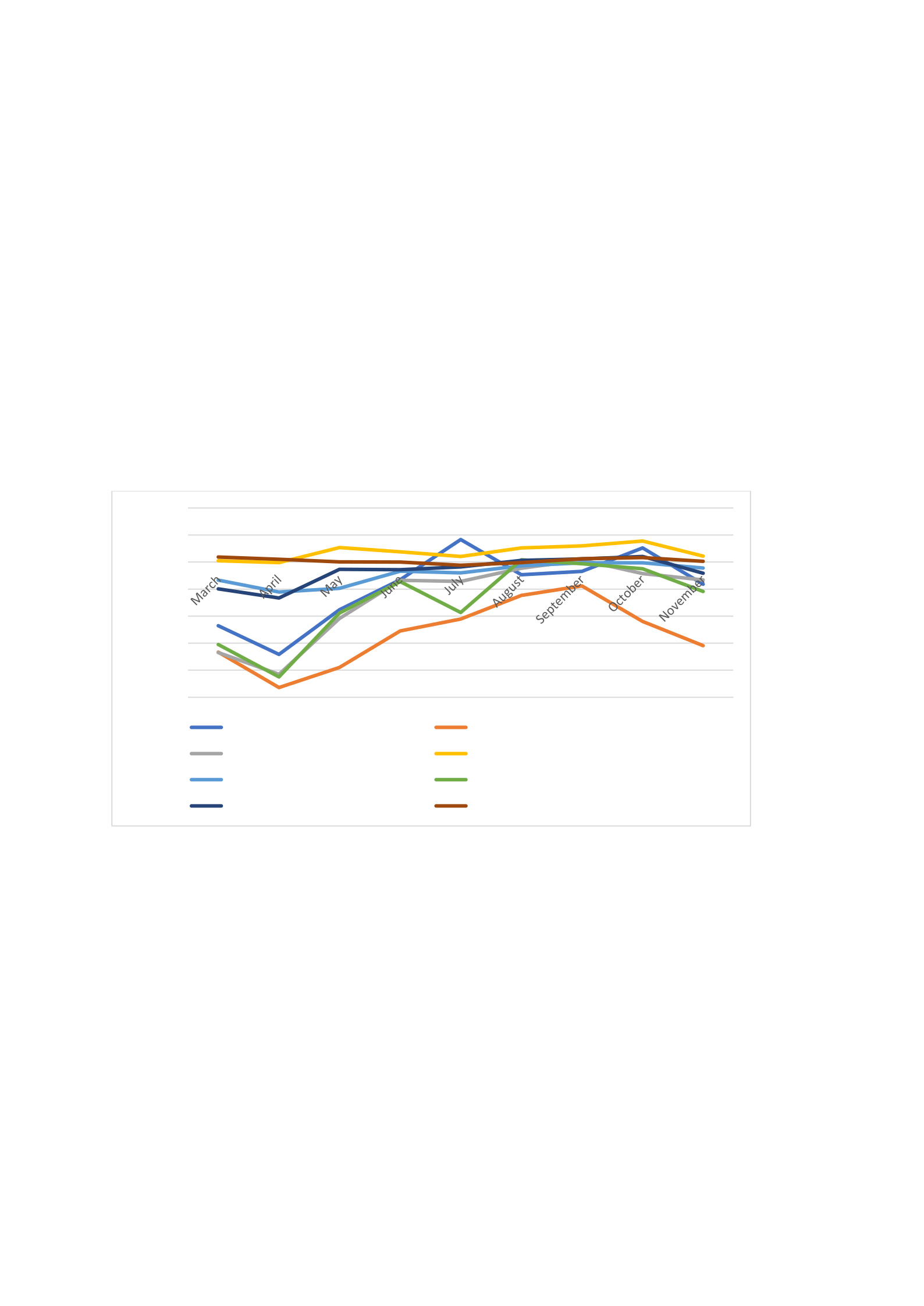
variation in the percentage change trend in broad consumer goods categories since March 2020
when the Italian government declared a countrywide lockdown (March 9, 2020) to cap the
Consumer Behaviour
2
coronavirus's spread, as shown in figure 1. On May 4, Italy eased the lockdown, which saw a
rise in most commodities' consumption levels. As people began to cope with the new normal,
consumption levels began to rise. Yet, the government announced new restrictions in October
2020, owing to the second wave of coronavirus transmissions due to the rising number of cases
to September 2020. The announcement saw a decline in consumption of all commodities in
November. Overall, the accommodation services (hotels and eating outs), clothing and
footwear, transportation services (majorly air), and leisure services are the key sectors
adversely affected by the pandemic. The worst-case scenario in these sectors was registered
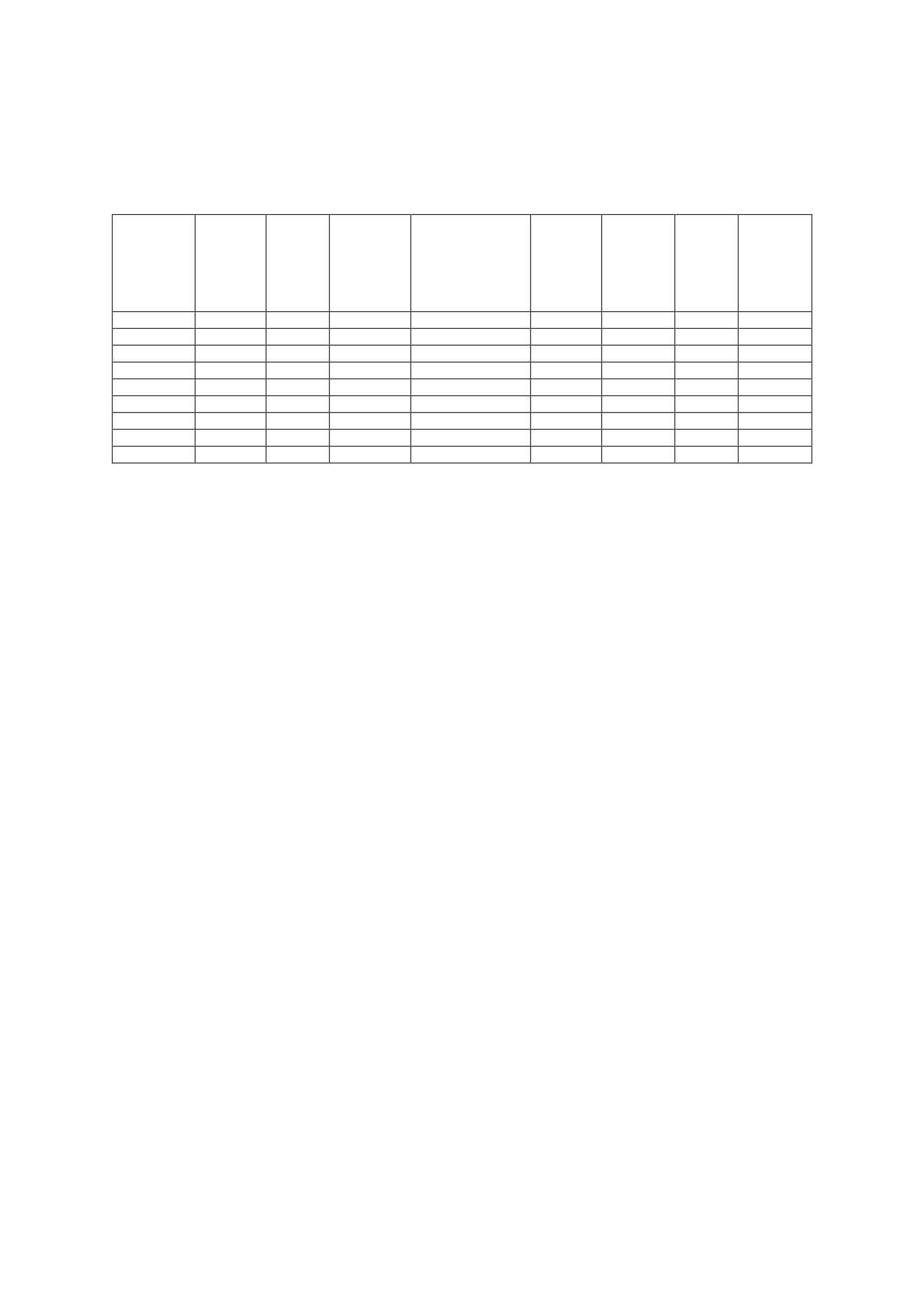
during the initial lockdown in April 2020 with a respective percentage decrease of -92.8%, -
85%, -83%, and -68.3% (see Appendix Table 1). The slacken demand is attributed to the fact
that most people had to stay at home with widespread restrictions on public spaces and eateries.
Data Source: Statista (2020a)
Figure 1: Sectoral percentage change in consumption levels in Italy from March to
November 2020:
Perhaps the decline can be linked to widespread stockpiling of food, hygiene, and
sanitation products as the entire world's order. According to Lufkin (2020), panic buying can
be a high uncertainty level in the future. In this context, it was due to uncertainty of the extent
of lockdown and fear of disruptions in products' supply chains. The supply chains within and
across regional and national borders were restricted except for essential commodities. As a
result, people are forced to buy excess products that might sustain them for a more extended
-100.00%
-80.00%
-60.00%
-40.00%
-20.00%
0.00%
20.00%
40.00%
Leisure Services and Goods Hotels, eating out
Transport goods and services Communication goods and services
Services and goods for personal care Clothing and footwear
House goods and services Food, beverage, tobacco

Consumer Behaviour
3
period. Nonetheless, most unessential activities had to close down their operations. On the
supply side, this meant a reduction in the supply of commodities in the market. Yet, prices of
food and beverages rose remarkably in April by approximately 0.6 percent in May with a lower-
than-expected level of 0.3 percent rise in March, 2020 (Bassetti, 2020). The relatively low
monthly consumer prices rising by only 0.1% in May, 2020 and an equivalent amount in the
aftermath of the lockdown in March, 2020 clearly indicates nonprice determinants of supply –
consumer behaviour. The changes in consumption patterns all boils down to decision making.
According to Trevino (1986), the decision-making model's process emphasizes personal and
situational/contextual factors, including social influences and group dynamics. According to
Sethna and Blythe (2016) and Solomon (2010), decision-making regarding consumer products'
purchase is primarily driven by motivation, attitude, group dynamics, and culture.
The main trigger of a shift in consumption habits is motivation. “Motivation is the
internal force which encourages people to act in specific ways” (Sethna & Blythe, 2016, p 17).
It is usually driven by one's needs that have to be satisfied by wants (Solomon, 2010). The need
can be utilitarian, “a desire to achieve some functional or practical benefits.” (Solomon, 2010).
A survey by Catena et al. (2020) in Italy from November 9 to 16, 2020, revealed that about 80
percent of the Italian consumers claim to decrease spending on discretionary items as a shift to
value and essentials. Their decisions are informed by scientific research supporting that more
immune patients are likely to recover from the coronavirus disease. Researchers highly
recommend eating more nutritious food rich in vitamins, such as fruits and vegetables and
reduce sugary food such as chocolate and pizzas which might increase the viral load in the
body. According to Di Renzo et al. (2019), a healthy diet is vital since food influences gene
expressions of cytokines and regulates inflammation and oxidative stress. A well-managed diet
is instrumental against immune-arbitrated inflammatory conditions, for instance, cancer (Cani,
& Van Hul, 2020).
Thus, the need for good health and immunity and hence stay alive saw a surge in
demand for nutritional and medical products, more so vitamins, fever reducers across the globe.
Notably, low cholesterol level food with high levels of antioxidants such as in fruits and
vegetables and unsaturated fatty acids found in fish, groundnuts, and olive oil (Soldati et al.,
2018) have been preferred during the pandemic. The survey was administered between April 5
to April 24, 2020, among the Italians, by Di Renzo et al. (2020) using an online platform by 15
percent of participants opted for organic products, buying fruits and vegetables, particularly in

Consumer Behaviour
4
the North and Center of Italy. As expected, food and beverage product maintained their
trajectory throughout the pandemic. That is, the two commodities are essential commodities
that cannot be foregone for future satisfaction. The excess demand following the cross-border
restriction has seen Italian companies raise their production capacities.
Moreover, the lockdown saw a rise in Internet usage had changed consumption patterns
and habits. The restriction of grocery shopping led to widespread reliance on online shopping
services. For instance, a recent study involving 248 Italian respondents done by Alaimo, Fiore,
& Galati (2020) indicated that 33.9% of the respondents stated to spend an average of less than
1 hour daily on the Internet. Moreover, the study findings indicated that 41.1% of the
participants claimed to use the Internet at least once a week to buy food products. Besides, the
communication sector's resilience was coupled with increased internet usage from streaming
and videoconferencing, as most people were forced to work at home. Corporates as well as
increased the demand for online use. For instance, as the luxury fashion industry struggling to
rejuvenate had to switch to online shows in July as thousands of Chinese purchasers and media
personnel were forbade to attend the shows complemented with a variety of digital options,
including photo and video content, offstage interviews, webinars, and live-streaming (Jamal,
2020). As evident in figure 1, Communication goods and services was the most resilient sector,
only recording the least percentage decline of 0.4% in April when there was widespread fear
regarding surging death rates and infection. Shortly, as people adjusted to the new normal, the
sector rebounded to its highest growth of 10.7% in May, outmatching all other sectors.
Services and goods for personal care were also less affected by the pandemic.
Commodities included in this broad category include pharmaceuticals, skincare, haircare
products, and cosmetics. With much sensation of consumer awareness on the vitality of
maintaining proper hygiene – more of basic - explains why the sector was not much affected
during the pandemic. Here, proper hygiene, as a basic need that drives people to purchase
personal care products even in times of financial constraints following the COVID-19
pandemic. What is more, Beauty & Personal Care market has been recording rising revenues
from 2016 until the end of 2020 (Mordor Intelligence, 2021). Statista (2021) forecasts indicated
that revenue from the market would hit $10,336 million in 2021, up from $ 9 994,9 million in
2019, with an annual growth of 2.1 percent.
According to Statista (2021), the market is flourishing faster due to younger consumers'
generational shift. Moreover, increased internet usage penetration through social media

Consumer Behaviour
5
platforms has a long-lasting influence on consumers' purchasing behaviour. As a brand gets
positive word of mouth over the internet platforms, it quickly spreads, reaching out to billions
of potential customers at a click. The trends carry implications for investors. By demonstrating
its resilience, the sector is quite lucrative and should be an attraction to investors.
Unlike in personal goods and services, the clothing and footwear sector was adversely
affected by the pandemic. The decline can be associated with the fact that people spend more
time at home and less time interacting with society. The new lockdown error could not allow
for parties, weddings, tourism, games, among other activities involving the public. Such
activities usually force people to buy new outfits as a group dress code or just to fit in. In
economics, the phenomenon is so-called “keeping up with the Joneses.” Thus, as people get
“locked out” with the rest of the world, or at most minimal contact, their demand for clothing
and footwear declined. However, it is expected to witness a rise in revenue to a tune of $13,719
million in 2021, with an annual growth rate of 2.4% (Statista 20121). With the widespread
usage of online usage, the industry is likely to integrate more online shopping functionality and
more marketing on social media platforms, including Facebook and Twitter. The demand for
leisure services rebounded with a 10.5 percent increase in October. The services under this
category include gaming services, bowling, golfing, skating, and swimming. The positive
resurgence is two-fold. First, the weather in October is favourable. People had already adjusted
to the safety protocol, and case recoveries a sign of hope to many. Yet, the coronavirus's
unexpected second wave in September 2020 forced the government to announce new
restrictions in October 202. Since then, consumption levels have declined in nearly all sectors.
Another significant aspect that caused a shift in consumer behaviour is attitude. “An
attitude is a tendency to behave in a consistent manner towards a given stimulus.” (Sethna &
Blythe, 2016 p 19). On the bright side, attitude can be positive when the benefits derived are
pleasurable or satisfactory. For instance, the boosted immune system derived from intake of
nutritious food such including fruits and vegetables have led widespread positive attitude
towards the commodities. According to Solomon (2010), attitude can be changed by sharing
information via the Internet. While the Internet has been instrumental in promoting information
sharing on physical and health guidelines to carp the spread of the virus, the widespread of
myths and misconception surrounding the cause and spread of covid19 has led to led to a surge
of negative feeling towards products from specific regions, especially Asian origin. The
phenomenon is the so-called consumer animosity (Harmeling, Magnusson, & Singh, 2015).

Consumer Behaviour
6
Given that the virus originated from China and spread throughout the world at an
alarming rate, most nationals globally have developed a considerable negative attitude towards
foreign products. Moreover, countries in the Asia-Pacific region such as New Zealand,
Vietnam, Taiwan, South Korea, and China capped the resurgence of COVID-19 compared to
most affected countries, including Italy, the US, and France. For instance, the pandemic
triggered off anti-Chinese hate speech in Indonesia (Szumer, 2020). Contrarily, consumer
animosity on Asian origin products was not pronounced in Italy. If any, Italy’s adoption of
China's COVID-19 vaccine developed by Sinovac Biotech strengthens ties between the two
nations. However, Catena et al. (2020) survey in Italy from November 9 to 16, 2020, revealed
that 76 percent of the Italian consumers changed their brands and stores.
Lastly, consumer behaviour can be linked to culture. “Culture is the set of beliefs and
behaviours that distinguishes one large group of people from another, and it includes such
issues as religious beliefs, customs, class driving distinctions and accepted norms of
behaviour.” (Sethna & Blythe 2016, p 20). According to Sethna and Blythe (2016), group
behaviour is essential in understanding what drives people to purchase particular brands.
People identify themselves to a given group or do not want to associate with another social
driver. Such groups include workmates, friends, family, relatives, and religious groups. The
shared consumptions of group owned items may entail clothing, food, or footwear. Family is
the basic unit that can play a role in influencing the choice of particular consumer behaviour
as families share common commodities like food and upbringings.
According to Solomon (2010), a consumer's culture "determines the success or failure
of specific products and services." (p 498). Hence products whose benefits are coherent with
the wants of members of a given culture are more likely to be accepted in the marketplace.
Associating the Covid19 virus to have originated from China is a form of consumer
ethnocentrism — "believing that it is not appropriate or moral to buy products from foreign
countries” (Ma et al., 2020). An association of COVID-19 with animal origin can possibly lead
many to shift their consumption of cosmetics products, including leather, jewelry, and fashion
goods made of animal products such as snakes.
With the cancellation of social events and gatherings, most citizens spent their time at
home. As illustrated in figure 1, the accommodation sector (hotels and eat-outs) was hard hit
by the pandemic registering a more significant decline than other sectors. The family value
within the Italian culture was manifest. Italians enjoy frequent family gatherings, often sharing

Consumer Behaviour
7
food with extended family (Zimmermann, 2017). Italian cuisine comprising Wine, cheese, and
pasta (e.g., penne, spaghetti, and linguine) from Italian meals. The recent study by Di Renzo et
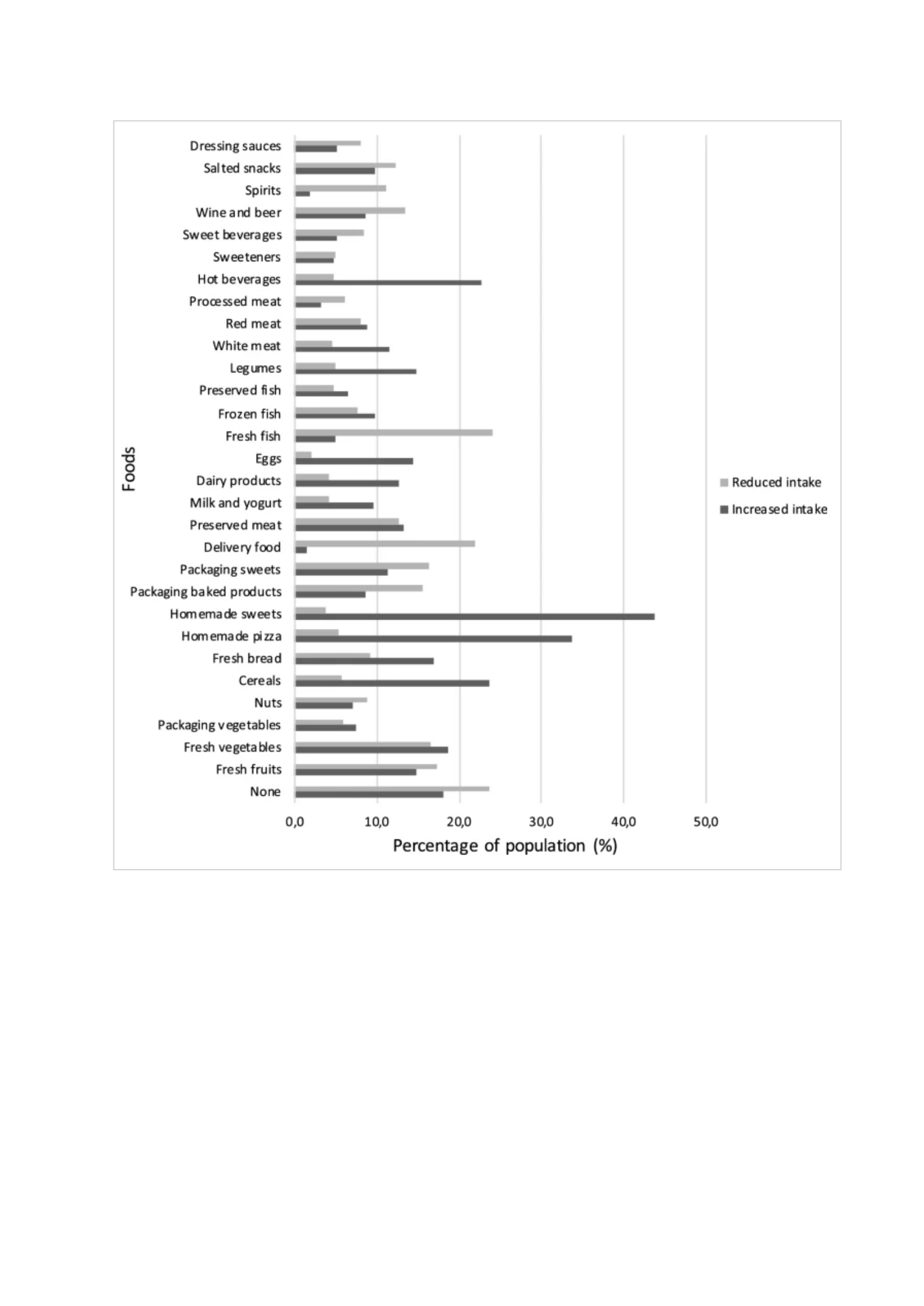
al. (2020) indicated a rise in homemade recipes (e.g., pizza and bread). The study findings
revealed an increase in demand for cereals, legumes, beverages consumption, a reduction in
fish, packaged sweets, baked products, and alcoholics intake (see Appendix, Figure 2). The
decline was due to increased homemade food. The report by Statista (2020b) indicated that 78
percent of the Italian companies specializing in the food sector saw a substantial order decrease
(Statista 2020b).
In conclusion, Covid19 pandemic affected most economies across the globe. Following
the government restrictions within and across national borders, the pandemic greatly disrupted
people's movement and the supply chains. In Italy, it is apparent that the pandemic distorted
the consumption patterns of most consumer goods and services. As most people could no longer
spend time in outdoor activities without fear of contracting the virus, most sectors, including
accommodation services, clothing and footwear, transportation services (majorly air), and
leisure services, were adversely affected pandemic. The shift is primarily driven by motivation,
attitude, and culture—the new normal presents fundamental shifts in consumer behaviour. The
shift towards e-commerce and changing consumer priorities presents marketers and brands'
opportunity to reconsider their marketing strategies. On the bright side, investors should be
keen on quite resilient sectors, even in crises like the COVID-19 pandemic. The sectors include
the communication sector, services, and goods for personal care, food sector. From the review,
essentiality is a crucial determinant of consumer behaviour. Amidst financial constraints in a
crisis, people's choices will largely be guided by the desire to meet essential goods and services.
Lastly, COVID-19 pandemic highlights social media's critical role as a better tool for enhancing
consumer relations. Different brands should utilize the new era of technological advances to
market their products to improve brand loyalty and consumer relation. Through positive word
of mouth, brands can quickly market themselves over social media platforms, reaching out to
billions of potential customers globally.

Consumer Behaviour
8
References
Alaimo, L. S., Fiore, M., & Galati, A. (2020). How the Covid-19 Pandemic Is Changing Online
Food Shopping Human Behaviour in Italy. Sustainability, 12(22), 9594.
Bassetti, M. (2020, May 15). Italy Inflation April 2020. FocusEconomics | Economic Forecasts
from the World's Leading Economists. https://www.focus-
economics.com/countries/italy/news/inflation/inflation-at-over-three-year-low-in-
april-on-falling-energy-prices.
Cani, P. D., & Van Hul, M. (2020). Mediterranean diet, gut microbiota and health: when age
and calories do not add up!. Gut, 69(7), 1167-1168.
Catena, M., Longo, R., Fossat, E., Romeo, R., & Zizioli, M. (2020, December 15). Survey:
Italian consumer sentiment during the coronavirus crisis. McKinsey & Company.
https://www.mckinsey.com/business-functions/marketing-and-sales/our-
insights/survey-italian-consumer-sentiment-during-the-coronavirus-crisis.
Di Renzo, L., Gualtieri, P., Pivari, F., Soldati, L., Attinà, A., Cinelli, G., ... & De Lorenzo, A.
(2020). Eating habits and lifestyle changes during COVID-19 lockdown: an Italian
survey. Journal of Translational Medicine, 18(1), 1-15.
Di Renzo, L., Gualtieri, P., Romano, L., Marrone, G., Noce, A., Pujia, A., ... & De Lorenzo, A.
(2019). Role of personalized nutrition in chronic-degenerative
diseases. Nutrients, 11(8), 1707.
Foodingredients1st (2020), COVID-19 drives healthy eating behaviors in Asia, reveals Innova
Market Insights, https://www.foodingredientsfirst.com/news/COVID-19-
driveshealthy-eating-behaviors-in-Asia-reveals-Innova-Market-Insights.html
Harmeling, C. M., Magnusson, P., & Singh, N. (2015). Beyond anger: A deeper look at
consumer animosity. Journal of International Business Studies, 46(6), 676-693.
He, H., & Harris, L. (2020). The Impact of Covid-19 Pandemic on Corporate Social
Responsibility and Marketing Philosophy. Journal of Business Research.
Jamal, A. (2020, May 8). Fashion in the time of Covid-19: In a first, Milan Fashion Week goes
digital. Hindustan Times. https://www.hindustantimes.com/fashion-and-

Consumer Behaviour
9
trends/fashion-in-the-time-of-covid-19-in-a-first-milan-fashion-week-goes-digital-in-
july/story-84r2eSKWlWIwlpLF3mb7fJ.html.
Ma, J., Yang, J., & Yoo, B. (2020). The moderating role of personal cultural values on consumer
ethnocentrism in developing countries: The case of Brazil and Russia. Journal of
Business Research, 108, 375-389.
Mordor Intelligence. (2021). Italy Beauty and Personal Care Products Market: Growth:
Trends: Forecast. Italy Beauty and Personal Care Products Market | Growth | Trends |
Forecast. https://www.mordorintelligence.com/industry-reports/italy-cosmetics-
products-market-industry.
MSN (2020), Lockdown impact on consumers: Will Africa remain one of the world’s fastest-
growing consumer markets? https://www.msn.com/en-xl/news/other/lockdownimpact-
on-consumers-will-africa-remain-one-of-the-world-s-fastest-growing-
consumermarkets/ar-BB16JcX8
Sethna, Z., & Blythe, J. (2016). Consumer behaviour. Sage.
Soldati, L., Di Renzo, L., Jirillo, E., Ascierto, P. A., Marincola, F. M., & De Lorenzo, A. (2018).
The influence of diet on anti-cancer immune responsiveness. Journal of translational
medicine, 16(1), 1-18.
Solomon, M. R. (2010). Consumer behaviour: A European perspective. Pearson education.
Statista (2020a, December 18). Italy: consumption change & coronavirus impact 2020.
Statista. https://www.statista.com/statistics/1107200/change-in-consumption-value-
due-to-coronavirus-in-italy/.
Statista (2020b, September 8). Italy: coronavirus issues affecting food industry 2020. Statista.
https://www.statista.com/statistics/1109946/coronavirus-issues-affecting-food-
industry-italy/.
Statista. (2021). Beauty & Personal Care - Italy: Statista Market Forecast. Statista.
https://www.statista.com/outlook/70000000/141/beauty-personal-care/italy.

Consumer Behaviour
10
Szumer, Z. (2020, April 30). Anti-Chinese feeling in Southeast Asia revived by pandemic. South
China Morning Post. https://www.scmp.com/lifestyle/article/3081930/coronavirus-
spreads-anti-chinese-feeling-southeast-asia-prejudice-goes.
Trevino, L. K. (1986). Ethical decision making in organizations: A person-situation
interactionist model. Academy of Management Review, 11(3), 601-617.
Varrella, S. (2020, December 18). Italy: consumption change & coronavirus impact 2020.
Statista. https://www.statista.com/statistics/1107200/change-in-consumption-value-
due-to-coronavirus-in-italy/.
Wang, C., Horby, P. W., Hayden, F. G., & Gao, G. F. (2020). A novel coronavirus outbreak of
global health concern. The Lancet, 395(10223), 470-473.
WHO (2021, January 16, 5:52 pm CET) WHO Coronavirus Disease (COVID-19) Dashboard
Data: WHO. https://covid19.who.int/
Zimmermann, K. A. (2017, September 14). Italian Culture: Facts, Customs & Traditions.
LiveScience. https://www.livescience.com/44376-italian-culture.html.
Consumer Behaviour
11
Appendix
Table 1: Sectoral percentage change in consumption volume in Italy from March to
November 2020
Month
Leisure
Services
and
Goods
Hotels,
eating
out
Transport
goods and
services
Communication
goods and
services
Services
and
goods
for
personal
care
Clothing
and
footwear
House
goods
and
services
Food,
beverage,
tobacco
March
-47.1%
-66.6%
-66.9%
1%
-13.3%
-61%
-19.9%
3.7%
April
-68.3%
-92.8%
-83%
-0.4%
-22.2%
-85%
-26.6%
2.1%
May
-35.3%
-78%
-41.7%
10.7%
-19.4%
-37.7%
-5.4%
0.1%
June
-13.1%
-51%
-13.5%
7.5%
-6.7%
-14.4%
-5.7%
0%
July
16.6%
-42.1%
-14.3%
4.1%
-8%
-37.3%
-3.6%
-2.4%
August
-9.4%
-24.7%
-4.5%
10.4%
-2.7%
1.6%
1.3%
-0.4%
September
-6.9%
-17.7%
1.5%
12%
-0.6%
-1.3%
2.4%
2.5%
October
10.5%
-44%
-8.6%
15.5%
-0.5%
-4.9%
4.1%
3.3%
November
-16.4%
-61.8%
-13.2%
4.4%
-4.4%
-21.8%
-8.3%
0.6%
Data Source: Statista (2020a)
Consumer Behaviour
12
Source: Di Renzo et al (2020); The survey was conducted from the 5th to April 24, 2020.
Figure 2: Variation in food intake during COVID-19 pandemic in Italy

