


1
Chapter 1: Introduction
Comparative Immunology
The origin of comparative immunology as a field of science dates back to the first
investigations of phagocytosis in starfish larvae performed by Élie Metchnikoff in the late 1800’s
(Metchnikoff, 1905). The field has since developed into a formal discipline, exemplified by the
establishment of the International Society of Developmental and Comparative Immunology
(ISDCI) in 1976. A cursory glance at publications within the namesake journal Developmental
and Comparative Immunology (DCI) reveals the broad range of animal diversity studied for
immunity. This diversity, in scale and scope, includes the use of non-traditional non-vertebrate
model organisms (arthropods, gastropods, ascidians, etc.) and a myriad of cellular and molecular
approaches to investigate animal immunobiology. To aptly portray the breadth and diversity of
scientific questions and pursuits within the field of comparative immunology would require a
life-long effort exceeding the duration of my PhD graduate studies. More important, though, are
the reasons such a diversity of scientific pursuits exists within the field and why investigations of
comparative immunology should, and will endure.
First and foremost, invoking a comparative framework to investigate immunity forces us
to consider the effect that evolution has had in developing, shaping, and selecting metazoan
immune mechanisms. By doing so, we can determine which aspects of immunity have been
conserved over time and which appear to be taxon-specific novelties of immune function. As a
result, we begin to question our preconceived notions of immunity from model (mammalian)
organisms and explore alternative ways for how animals have achieved immunoprotection. This
notion, in light of the fact that vertebrate organisms constitute only 1% of the living animal
diversity of deuterostomes, protostomes, and pre-bilaterians, makes a compelling case for

2
investigating the immunobiology of non-traditional model organisms (Gourbal et al., 2018). A
hallmark of the scientific process is to reject dogmatic perspectives and that should also include
perspectives of immunity.
Second, investigation of animal immunity across phylogeny is essential to grasp the
impacts that modern anthropogenic phenomena, such as globalization and global climate change,
will have on important economic (food) sources and agents of disease transmission (Kim et al.,
2018; Loker and Bayne, 2018; Stensgaard et al., 2018). These global changes are capable of
compromising immune function, affecting the geographic distribution and abundance, and
perhaps leading to the extinction, of essential animal taxa. Investigations of immunity from
diverse taxa can help inform policy to better preserve and even bolster our valuable biological
resources at a global level. These considerations demonstrate the potential benefit of ecogenomic
approaches to investigating invertebrate immunity, which require ecological and immunological
viewpoints of investigators.
Lastly, comparative immunology has already yielded impactful discoveries of immunity
that traverse animal diversity. These include, but are not limited to, discoveries of Toll receptors
in Drosophila (Lemaitre et al., 1996), RNA-interference mechanisms in Caenorhabditis elegans
(Fire et al., 1998), variable lymphocyte receptors (VLRs) in lampreys (Pancer et al., 2004),
MHC-like allorecognition in the tunicate Botryllus schlosseri (De Tomaso et al., 2005), and
somatic diversification of anti-parasite response genes in the snail Biomphalaria glabrata (Zhang
et al., 2004). The discovery of Toll receptors and MHC-like recognition in invertebrates opened
the door for recognizing that dynamic and competent immune capabilities evolved first among
these animals (invertebrates) and have been conserved for millions of years and occur throughout
phylogeny. RNA-interference (RNAi) was, and continues to be, a cornerstone of experiments for

3
functional characterization of (immune-relevant) genes of interest. VLRs demonstrate how
convergent evolution has led metazoans to develop alternative mechanisms to generate diverse
immune receptors. The discovery of diversified anti-parasite genes in B. glabrata challenges the
notion that invertebrates are incapable of somatically diversifying immune genes, an outdated
concept derived from vertebrate-centered perspectives of lymphocyte-based immune systems. In
total, these discoveries are epitomized by the concept expressed by Klein that, regarding immune
function, “it might be best to forget what we have learned from vertebrates and start a fresh
search, unbiased by preconceived ideas” (Klein, 1989). This concept provided me a personal
framework to investigate snail immunobiology and is the basis for my dissertation, which I
discuss next.
Gastropod Immunology
Gastropods belong to the phylum Mollusca, the second largest phylum of the animal
kingdom, and have adopted diverse lifestyles which has contributed to their colonization of
terrestrial, marine, and freshwater habitats (Loker, 2010). Interest in gastropod (snail)
immunology exists, in large part, because gastropods are hosts for a great diversity of trematode
parasites, some of which cause disease in humans (Adema et al., 2012). Also important is the
consideration that snails have increasingly become economic resources for food and cosmetics
(Draelos, 2017; Loker and Bayne, 2018; Segade et al., 2013). In regard to disease,
schistosomiasis, one of the most prevalent neglected tropical diseases (second only to malaria), is
mainly transmitted by snails of three genera: Biomphalaria, Bulinus, and Oncomelania
(McManus et al., 2018). The distribution, severity, and prevalence of this disease varies and is
dependent on the particular flatworm-parasite species with endemic areas mainly determined by
the geographic range of snail intermediate hosts. More than 200 million people worldwide have

4
schistosomiasis and the World Health Organization’s (WHO) goal of eliminating schistosomiasis
as a health burden by 2025 bears witness to the deleterious impacts of this global disease
(https://www.who.int/schistosomiasis/en/). The approaches for eliminating the disease-causing
parasites are diverse and include mass drug administration (MDA) of praziquantel, an effective
chemotherapy for adult-stage parasites, and snail control efforts
(https://www.who.int/schistosomiasis/strategy/en/). The latter includes control of the snail host
B. glabrata, an intermediate host for Schistosoma mansoni (Coustau et al., 2015; Pila et al.,
2017). Biomphalaria glabrata has been the main subject for investigating snail immunobiology
for over half a century. More specifically, studies of the interaction of B. glabrata with the
trematode parasites S. mansoni and Echinostoma paraensei have revealed fascinating aspects of
gastropod immunity. These include the somatic diversification of immune factors that aid in
defense of trematode infection (see Chapter 2) and the development of the concept known as
acquired resistance, a phenomenon now considered present among many invertebrate lineages
(Gourbal et al., 2018; Lie and Heyneman, 1975). Other discoveries include the existence of a
gene-linked resistance locus in B. glabrata and functional characterization (via RNAi) of
immune-relevant proteins that aid in protection of offspring (Baron et al., 2013; Tennessen et al.,
2015). Significantly, over the last 13 years, an international consortium of more than 100
investigators developed and published a full-scale genome of B. glabrata that continues to
support and extend a robust interest in snail biology, including snail immunity (Adema et al.,
2017). This is not an exhaustive list of the efforts and discoveries pertaining to B. glabrata. A
search on PubMed reveals over 3000 scientific papers since 1947 on B. glabrata, and research
continues. Therefore, comparative immunology, from a gastropod point-of-view, is mainly
informed by investigations of one snail species. However, next-generation sequencing (NGS)

5
technology is beginning to aid broader investigations of gastropod immunity (see Chapter 2),
including the immune systems of the gastropod species Littorina littorea (Gorbushin, 2016,
2018; Gorbushin and Borisova, 2015), Haliotis spp. (Nam et al., 2016; Priyathilaka et al., 2018;
Zhang et al., 2018), and Oncomelania hupenis (Zhi-Qiang, et al., 2017). I would be remiss not to
mention the snail Physella acuta, the main subject of research for my dissertation, which I have
developed as a new model for investigating snail immunobiology.
Physella acuta
Physella acuta (Draparnaud, 1805) is a freshwater snail of the family Physidae, a major
group of the clade Hygrophila (Dayrat et al., 2011). Like many gastropod species, P. acuta is a
simultaneous hermaphrodite, but preferentially outcrosses (Escobar et al., 2008; Tsitrone et al.,
2003). The unique reproductive behavior of P. acuta has spurred investigations of mating
behavior and the success of this snail as an invasive species. Also of interest are the population
dynamics of P. acuta, in connection with P. acuta’s impressive geographic range, global
distribution and success (Ebbs et al., 2018; Lawton et al., 2018). The multitude of common
names for P. acuta, including “sewage snail”, adequately capture the hardiness of this species
and spotlight the use of P. acuta in many ecotoxicology experiments (Gao et al., 2017; Guo and
He, 2014; Martínez-Paz et al., 2017; Morales et al., 2018). Despite these attributes, P. acuta has
been mostly overlooked as a model for investigating snail immunobiology. As a result, very little
is known about the immune capabilities of P. acuta or other physid snails in general.
There are many reasons why P. acuta was chosen as an additional model for gastropod
immunobiology, which are detailed throughout this dissertation. Perhaps the primary motivation
is the phylogenetic placement of P. acuta. As a member of the family Physidae, sister to the
Planorbidae, which houses B. glabrata, P. acuta can reveal shared and unique differences of

6
immune capabilities between these closely related snail taxa. As such, the development of
P. acuta as a lab model for comparative immunology began with a mitogenome project of locally
collected (New Mexico) P. acuta snails. Nolan et al. (2014) at the University of New Mexico
characterized two main isolates (A & B) of P. acuta snails, each with uniquely different
mitochondrial genomes (>10% nucleotide difference overall). In addition to this intra-species
variability, it was also shown that P. acuta has an atypical mitochondrial gene order relative to
other gastropod species (Nolan et al., 2014). The functional implications of these differences
have yet to be determined, albeit, they do demonstrate the propensity for organisms to display
taxon-specific differences in biology. Initial efforts to apply NGS to document pathogen-specific
responses of P. acuta yielded sequence data that helped start my graduate work. I explored the
concept that differences of immune capabilities exist between closely related organisms and
investigated snail immunobiology, afforded by NGS technology and the local availability of
P. acuta snails.
Significance
The body of work presented below is categorized into four main chapters. Chapter two is
a review, published as part of a special edition of DCI which highlighted the impact of NGS
technology on comparative immunogenomics. This chapter provides a historical framework of
gastropod immunology and how high throughput sequencing affords us the ability to investigate
whole-organismal immunity of non-model organisms and sets the stage for utilizing P. acuta in
comparative immunological contexts. In this light, we have chosen P. acuta to a strategic
vantage point to investigate gastropod immunology; investigating the family Physidae, a
neighboring family of the Planorbidae (B. glabrata), expands the scope of gastropod

7
immunobiology and helps interpret the evolution of immunity between these two important
taxonomic groups.
Chapter three is an investigation of P. acuta immune capabilities using 454
pyrosequencing to record transcriptomes of two individual P. acuta snails; one snail after septic
exposure and one snail un-exposed to pathogens. The main goal of this analysis was to capture
and characterize a large portion of the immune repertoire expressed by P. acuta and compare this
to the immune capabilities of B. glabrata that have been documented previously. As expected,
P. acuta shares many of the same immune features with B. glabrata, including a modest
catalogue of antimicrobial peptide sequences balanced with an extensive set of diverse
antimicrobial protein genes. Also discussed is the relevance of fibrinogen-related domain-
containing sequences, which are prominent features of bivalve immunity, and hypothesized to be
important for B. glabrata and P. acuta immunity (see Chapters three, four, and five). Chapter
two also presents a compelling finding that, in contrast to B. glabrata, P. acuta lacks an
extensive repertoire of FREP genes and does not somatically diversify these sequences. This
finding demonstrates the importance of broadening the scope of gastropod immunology by
investigating organisms of different taxa. Lastly, we report for the first time, experimental use of
the host-parasite interaction of P. acuta and E. paraensei. Exposing P. acuta to E. paraensei
helped to confirm that FREPs are not prominent anti-parasite immune components for this snail.
Moreover, this host-parasite model has important potential for study of gastropod
immunobiology because E. paraensei (and related parasites) dramatically interferes with host
biology and helped elucidate novel immune mechanisms in B. glabrata (Adema et al., 2000;
Hanington et al., 2010, 2012; Lie and Heyneman, 1977; Lie et al., 1975, 1976).

8
Chapter four extends the characterization of the host-parasite interaction of P. acuta and
E. paraensei using classical histological techniques and contemporary Illumina RNA
sequencing. The main objective of this analysis was to characterize the early interaction of snail
and host (2-8 days post exposure), a time interval that includes the initial battle between host and
parasite, leading to immune elimination or establishment of infection, and the extended
phenotype displayed by the parasite after takeover of the host. I used whole-organismal histology
to demonstrate the development of E. paraensei within P. acuta and differential expression
analyses of RNA sequences to provide insights into the transcriptional profiles of P. acuta in
response to trematode parasite exposure and infection. A more in-depth analysis of immune-
relevant transcripts that are differentially expressed after exposure to E. paraensei was
performed to catalog putative immune genes and investigate the potential for this parasite to
influence host immune function. This investigation indicates that individual members of large
families of immune factors of P. acuta can have unique expression patterns in response to
E. paraensei, similar to observations made from B. glabrata and Crassostrea gigas (Deleury et
al., 2012; Zhang et al., 2015).
The fifth chapter aimed to open up the potential for investigating the ecoimmunology of
snails by connecting molecular immunology with the immune status of snails in their natural
habitats. Physid snails were collected from Shady Lakes in Albuquerque, NM with the goal of
comparing transcriptional profiles of lab-maintained and field-derived physid snails. The primary
motivation of this work was to determine if field-collected snails display obvious differences of
expressed sequences relative to their lab counterparts in order to determine if laboratory models
reflect the same biological status. Snails caught from the field were screened for the absence of
patent trematode infections (i.e. did not shed cercariae) and transcriptomes of four field-collected

9
snails and seven lab-collected snails were assembled. As next-generation sequencing technology
is likely to become more affordable and increase in use, this analysis highlights the feasibility of
using molecular ecoimmunological approaches to investigate immunity (Hawley and Altizer,
2011; Van Straalen and Roelofs, 2010). Overall, an ecoimmunology approach can facilitate a
better understanding of the processes preventing disease transmission and merge immunological
and ecological questions.
This dissertation demonstrates how traditional and current molecular techniques can
facilitate investigating questions of invertebrate immunology. The work presented here is
accessible to all investigators interested in evolutionary immunology by providing avenues for
addressing ongoing questions of immunity. The NGS datasets also provide a potential resource
for investigators of invertebrates within other fields of comparative genomics.
I encourage those interested in immunological questions to consider the incredible
diversity of metazoans and expand the scope of investigation beyond traditional model
organisms, similar to how I have applied Physella acuta for developing research to reveal new
aspects in comparative immunology.

10
References
1. Adema, C.M., Sapp, K.K., Hertel L.A., Loker E.S., 2000. Immunobiology of the
Relationship of Echinostomes with Snail Intermediate Hosts. in: Fried, B., Graczyk, T.K.
(eds), Echinostomes as Experimental Models for Biological Research. Springer,
Dordrecht.
2. Adema, C.M., Bayne, C.J., Bridger, J.M., Knight, M., Loker, E.S., Yoshino, T.P., Zhang,
S.M., 2012. Will all scientists working on snails and the diseases they transmit please
stand up? PLoS Negl. Trop. Dis. 6, e1835.
3. Adema, C.M., Hillier, L.W., Jones, C.S., Loker, E.S., Knight, M., Minx, P., Oliveira, G.,
Raghavan, N., Shedlock, A., do Amaral, L.R., Arican-Goktas, H.D., Assis, J.G., Baba,
E.H., Baron, O.L., Bayne, C.J., Bickham-Wright, U., Biggar, K.K., Blouin, M., Bonning,
B.C., Botka, C., Bridger, J.M., Buckley, K.M., Buddenborg, S.K., Lima, Caldeira, R.,
Carleton, J., Carvalho, O.S., Castillo, M.G., Chalmers, I.W., Christensens, M., Clifton, S.,
Cosseau, C., Coustau, C., Cripps, R.M., Cuesta-Astroz, Y., Cummins, S.F., di Stephano,
L., Dinguirard, N., Duval, D., Emrich, S., Feschotte, C., Feyereisen, R., FitzGerald, P.,
Fronick, C., Fulton, L., Galinier, R., Gava, S.G., Geusz, M., Geyer, K.K., Geraldo-
Calderón, G.I., de Souza Gomes, M., Gordy, M.A., Gourbal, B., Grunau, C., Hanington,
P.C., Hoffmann, K.F., Hughes, D., Humphries, J., Jackson, D.J., Jannotti- Passos, L.K.,
de, Jesus, Jeremias, W., Jobling, S., Kamel, B., Kapusta, A., Kaur, S., Koene, J.M., Kohn,
A.B., Lawson, D., Lawton, S.P., Lìang, D., Limpanont, Y., Liu, S., Lockyer, A.E.,
Lovasto, T.L., Ludolf, F., Magrini, V., McManus, D.P., Medina, M., Misra, M., Mitta,
G., Mkoji, G.M., Montague, M.J., Montelongo, C., Moroz, L.L., Munoz-Torres, M.C.,
Niazi, U., Noble, L.R., Oliveira, F.S., Pais, F.S., Papenfuss, A.T., Peace, R., Pena, J.J.,
Pila, E.A., Quelais, T., Raney, B.J., Rast, J.P., Rollinson, D., Rosse, I.C., Rotgans, B.,
Routledge, E.J., Ryan, K.M., Scholte, L.L.S., Storey, K.B., Swain, M., Tennessen, J.A.,
Tomlinson, C., Trujillo, D.L., Volpi, E.V., Walker, A.J., Wang, T., Wannaporn, I.,
Warren, W.C., Wu, X.J., Yoshino, T.P., Yusuf, M., Zhang, S.M., Zhao, M., Wilson,
R.K., 2017. Whole genome analysis of a schistosomiasis- transmitting freshwater snail.
Nat. Commun. 8, 15451.
4. Baron, O.L., van West, P., Industri, B., Pouchet, M., Dubreuil, G., Gourbal, B., Reichart,
J.M., Coustau, C., 2013. Parental transfer of the antimicrobial protein LBP/BPI protects
Biomphalaria glabrata eggs against oomycete infections. PLoS Pathogens. 9, e1003792.
5. Coustau, C., Gourbal, B., Duval, D., Yoshino, T.P., Adema, C.M., Mitta, G., 2015.
Advances in gastropod immunity from the study of the interaction between the snail
Biomphalaria glabrata and its parasites: a review of research progress over the last
decade. Fish Shellfish Immunol. 46, 5-16.
6. Dayrat, B., Conrad, M., Balayan, S., White, T.R., Albrecht, C., Golding, R., Gomes, S.R.,
Harasewych, M.G., Martins, A.M., 2011. Phylogenetic relationships and evolution of
pulmonate gastropods (Mollusca): new insights from increased taxon sampling. Mol.
Phylogenet. Evol. 59, 425-437.

11
7. Deleury, E., Dubreuil, G., Elangovan, N., Wajnberg, E., Reichart, J.M., Gourbal, B.,
Duval, D., Baron, O.L., Gouzy, J., Coustau, C., 2012. Specific versus non-specific
immune responses in an invertebrate species evidenced by a comparative de novo
sequencing study. PLoS One 7 e32512.
8. De Tomaso, A.W., Nyholm, S.V., Palmeri, K.J., Ishizuka, K.J., Ludington, W.B.,
Mitchel, K., Weissman, I.L., 2005. Isolation and characterization of a protochordate
histocompatibility locus. Nature. 438, 454-459.
9. Draelos, Z.D., 2017. The Role of a Natural Mollusk Egg-Derived Ingredient in Facial
Appearance. J. Drugs Dermatol. 16, 678-681.
10. Ebbs, E.T., Loker, E.S., Brant, S.V., 2018. Phylogeography and genetics of the globally
invasive snail Physa acuta Draparnaud 1805, and its potential to serve as an intermediate
host to larval digenetic trematodes. BMC Evol. Biol. 18, 103.
11. Escobar, J.S., Jarne, P., Charmantier, A., David, P., 2008. Outbreeding alleviates
senescence in hermaphroditic snails as expected from the mutation-accumulation theory.
Curr. Biol. 18, 906-910.
12. Fire, A., Xu, S., Montgomery, M.K., Kostas, S.A., Driver, S.E., Mello, C.C., 1998. Potent
and specific genetic interference by double-stranded RNA in Caenorhabditis elegans.
Nature. 391, 806-811.
13. Gao, L., Doan, H., Nidumolu, B., Kumar, A., Gonzago, D., 2017. Effects of copper on
the survival, hatching, and reproduction of a pulmonate snail (Physa acuta).
Chemosphere. 185, 1208-1216.
14. Gorbushin, A.M., Borisova, E.A., 2015. Lectin-like molecules in transcriptome of
Littorina littorea hemocytes. Dev. Comp. Immunol. 210-220.
15. Gorbushin, A.M., 2016. Membrane Attack Complex/Perforin domain-containing proteins
in a dual-species transcriptome of caenogastropoda Littorina littorea and its trematode
parasite Himasthla elongata. Fish Shellfish Immunol. 54, 254-260.
16. Gourbal, B., Pinaud, S., Beckers, G.J.M., Van Der Meer, J.W.M., Conrath, U., Netea,
M.G., 2018. Innate immune memory: An evolutionary perspective. Immunol. Rev. 283,
21-40.
17. Guo, Y., He, H., 2014. Identification and characterization of a goose-type lysozyme from
sewage snail Physa acuta. Fish Shellfish Immuno. 39, 321-325.
18. Hanington, P.C., Forys, M.A., Dragoo, J.W., Zhang, S.M., Adema, C.M., Loker, E.S.,
2010. Role for a somatically diversified lectin in resistance of an invertebrate to parasite
infection. PNAS. 107, 21087–21092.

12
19. Hanington, P.C., Forys, M.A., Loker, E.S., 2012. A somatically diversified defense
factor, FREP3, is a determinant of snail resistance to schistosome infection. PLoS Negl.
Trop. Dis. 6, e1591.
20. Kim, J.R., Wong, T.M., Curry, P.A., Yeung, N.W., Hayes, K.A., Cowie, R.H., 2018.
Modelling the distribution in Hawaii of Angiostrongylus cantonensis (rat lungworm) in
its gastropod hosts. Parasitology. 21, 1-8.
21. Klein, J., 1989. Are invertebrates capable of anticipatory immune responses? Scand. J.
Immunol. 29, 499-505.
22. Lawton, S.P., Allan, F., Hayes, P.M., Smit, N.J., 2018. DNA barcoding of the medically
important freshwater snail Physa acuta reveals multiple invasion events into Africa.
Acta. Trop. 188, 86-92.
23. Lie, K.J., Heyneman, D., 1975. Studies on resistance in snails: a specific tissue reaction
to Echinostoma lindoense in Biomphalaria glabrata snails. Int. J. Parasitol. 5, 621–625.
24. Lie, K.J., Heyneman, D., Lim, H.K., 1975. Studies on resistance in snails: specific
resistance induced by irradiated miracidia of Echinostoma lindoense in Biomphalaria
glabrata snails. Int. J. Parasitol. 5, 627-631.
25. Lie, K.J., Heyneman, D., and Jeang, K.H., 1976. Studies on resistance in snails. 7.
Evidence of interference with the defense reaction in Biomphalaria glabrata by
trematode larvae. J. Parasitol. 62, 608-615.
26. Lie, K.J., Heyneman, D., 1977. Studies on resistance in snails: interference by
nonirradiated echinostome larvae with natural resistance to Schistosoma mansoni in
Biomphalaria glabrata. J. Invert. Pathol. 29, 118-125.
27. Loker, E.S., 2010. Gastropod immunobiology. Adv. Exp. Med. Biol. 708, 17-43.
28. Loker, E.S., Bayne, C.J., 2018. Molluscan Immunobiology: Challenges in the
Anthropocene Epoch, in: Cooper, E.L. (Ed.), Advances in Comparative Immunology.
Springer International Publishing AG, Switzerland, pp. 343-407.
doi: 10.1016/j.actatropica.2018.09.013.
29. Lemaitre, B., Nicolas, E., Michaut, L., Reichhart, J.M., Hoffmann, J.A., 1996. The
dorsoventral regulatory gene cassette spätzle/Toll/cactus controls the potent antifungal
response in Drosophila adults. Cell. 86, 973-983.
30. Martínez-Paz, P., Morales, M., Sánchez-Argüello, P., Morcillo, G., Martínez-Guitarte,
J.L., 2017. Cadmium in vivo exposure alters stress response and endocrine-related genes
in the freshwater snail Physa acuta. New biomarker genes in a new model organism.
Environ. Pollut. 220, 1488-1497.

13
31. McManus, D.P., Dunne, D.W., Sacko, M., Utzinger, J., Vennervald, B.J., Zhou, X.N.,
2018. Schistosomiasis. Nat. Rev. Di.s Primers. doi: 10.1038/s41572-018-0013-8.
32. Metchnikoff, E., 1905. Immunity in Infective Disease. Cambridge University Press,
Cambridge.
33. Morales, M., Martínez-Paz, P., Sánchez-Argüello, P., Morcillo, G., Martínez-Guitarte,
J.L., 2018. Bisphenol A (BPA) modulates the expression of endocrine and stress response
genes in the freshwater snail Physa acuta. Ecotoxicol. Environ. Saf. 152, 132-138.
34. Nam, B.H., Jung, M., Subramaniyam, S., Yoo, S.I., Markkandan, K., Moon, J.Y., Kim,
Y.O., Kim, D.G., An, C.M., Shin, Y., Jung, H.J., Park, J.H., 2016. Transcriptome
Analysis Revealed Changes of Multiple Genes Involved in Haliotis discus hannai Innate
Immunity during Vibrio parahemolyticus Infection. PLoS One. 11, e0153474.
35. Nolan, J.R., Bergthorsson, U., Adema, C.M., 2014. Physella acuta: atypical
mitochondrial gene order among panpulmonates (Gastropoda). J. Mollus. Stud. 80, 388-
399.
36. Pancer, Z., Amemiya, C.T., Ehrhardt, G.R., Ceitlin, J., Gartland, G.L., Cooper, M.D.,
2004. Somatic diversification of variable lymphocyte receptors in the agnathan sea
lamprey. Nature. 430, 174-180.
37. Pila, E.A., Li, H., Hambrook, J.R., Wu, X., Hanington, P.C., 2017. Schistosomiasis from
a Snail's Perspective: Advances in Snail Immunity. Trends Parasitol. 33, 845-857.
38. Priyathilaka, T.T., Bathige, S.D.N.K., Lee, S., Nam, B.H., Lee, J., 2018. Transcriptome-
wide identification, functional characterization, and expression analysis of two novel
invertebrate-type Toll-like receptors from disk abalone (Haliotis discus discus). Fish
Shellfish Immunol. 84, 802-815.
39. Segade, P., García-Estévez, J., Arias, C., Iglesias, R., 2013. Parasitic infections in mixed
system-based heliciculture farms: dynamics and key epidemiological factors.
Parasitology. 140, 482-497.
40. Stensgaard, A.S., Vounatsou, P., Sengupta, M.E., Utzinger, J., 2018. Schistosomes, snails
and climate change: Current trends and future expectations. Acta. Trop.
doi:10.1016/j.actatropica.2018.09.013.
41. Tennessen, J.A., Bonner, K.M., Bollmann, S.R., Johnstun, J.A., Yeh, J.Y., Marine, M.,
Tavalire, H.F., Bayne, C.J., Blouin, M.S., 2015. Genome-wide scan and test of candidate
genes in the snail Biomphalaria glabrata reveal new locus influencing resistance to
Schistosoma mansoni. PLoS. Negl. Trop. Dis. 9, e0004077.

14
42. Tsitrone, A., Jarne, P., David, P., 2003. Delayed selfing and resource reallocations in
relation to mate availability in the freshwater snail Physa acuta. Am. Nat. 162, 474-488.
43. World Health Organization, Schistosomiasis. https://www.who.int/schistosomiasis/en/
(accessed 21 March 2018).
44. Zhang, S.M., Adema, C.M., Kepler, T.B., Loker, E.S., 2004. Diversification of Ig
superfamily genes in an invertebrate. Science 305, 251-254.
45. Zhang, L., Li, L., Guo, X., Litman, G.W., Dishaw, L.J., Zhang, G., 2015. Massive
expansion and functional divergence of innate immune genes in a protostome. Sci. Rep.
5, 8693.
46. Zhang, X., Shi, J., Sun, Y., Habib, Y.J., Yang, H., Zhang, Z., Wang, Y., 2018. Integrative
transcriptome analysis and discovery of genes involving in immune response of
hypoxia/thermal challenges in the small abalone Haliotis diversicolor. Fish Shellfish
Immunol. 84, 609-626.
47. Zhi-Qiang, Q., Xiao-Jing, M., Wei, G., Shi-Zhu, L., 2017. Study on transcriptome of
Oncomelania hupensis before and after Schistosoma japonicum invasion: De novo
assembly of data by RNA-Seq. Zhongguo Xue Xi Chong Bing Fang Zhi Za Zhi. 29, 300-
304.

15
Chapter 2: Comparative immunogenomics of molluscs
Schultz, J.H., Adema, C.M., 2017. Comparative immunogenomics of molluscs. Dev. Comp.
Immunol. 75, 3-15.

16
Abstract
Comparative immunology, studying both vertebrates and invertebrates, provided the earliest
descriptions of phagocytosis as a general immune mechanism. However, the large scale of
animal diversity challenges all-inclusive investigations and the field of immunology has
developed by mostly emphasizing study of a few vertebrate species. In addressing the lack of
comprehensive understanding of animal immunity, especially that of invertebrates, comparative
immunology helps toward management of invertebrates that are food sources, agricultural pests,
pathogens, or transmit diseases, and helps interpret the evolution of animal immunity. Initial
studies showed that the Mollusca (second largest animal phylum), and invertebrates in general,
possess innate defenses but lack the lymphocytic immune system that characterizes vertebrate
immunology. Recognizing the reality of both common and taxon-specific immune features, and
applying up-to-date cell and molecular research capabilities, in-depth studies of a select number
of bivalve and gastropod species continue to reveal novel aspects of molluscan immunity. The
genomics era heralded a new stage of comparative immunology; large-scale efforts yielded an
initial set of full molluscan genome sequences that is available for analyses of full complements
of immune genes and regulatory sequences. Next-generation sequencing (NGS), due to lower
cost and effort required, allows individual researchers to generate large sequence datasets for
growing numbers of molluscs. RNAseq provides expression profiles that enable discovery of
immune genes and genome sequences reveal distribution and diversity of immune factors across
molluscan phylogeny. Although computational de novo sequence assembly will benefit from
continued development and automated annotation may require some experimental validation,
NGS is a powerful tool for comparative immunology, especially increasing coverage of the
extensive molluscan diversity. To date, immunogenomics revealed new levels of complexity of

17
molluscan defense by indicating sequence heterogeneity in individual snails and bivalves, and
members of expanded immune gene families are expressed differentially to generate pathogen-
specific defense responses.
1. Introduction
Historical observations of the association between exposure to disease and subsequent
protection from future (human) illness eventually led to development of the smallpox vaccine by
Jenner in the late 1700s (Owen et al., 2013), and of the Germ Theory, linking pathogens and
disease (Walker et al., 2006). Studies of how immunity against pathogens is achieved culminated
in our current understanding of immunology, mostly as it reflects the immune function of
vertebrate animals. Some of the early studies of immunity, however, also benefited from use of
invertebrate organisms. Most famously, Metchnikoff discovered phagocytes and their role in
immunity in starfish larvae (Metchnikoff, 1905). By using one (invertebrate) organism to make
predictions of immune function in other (vertebrate) animals Metchnikoff gave rise to a new
field of biology: comparative immunology. The power of comparative immunology begotten by
investigating invertebrates is evident from landmark characterization of e.g. lectins (Prokop et
al., 1968), antimicrobial peptides (Boman and Hultmark, 1987), Toll-like receptors (Lemaitre et
al., 1996; Medzhitov et al., 1997), and RNA interference (Fire et al., 1998) that have expanded
our understanding of immunity and revealed shared features among animals across phylogeny
and evolution.
The study of immune function of molluscs (including snails, bivalves, cephalopods,
others, see Fig. 1) is motivated importantly by notions that many molluscs are economically
valuable food sources, especially in aquaculture (Carnegie et al., 2016), or may transmit
infectious diseases of medical and veterinary relevance (Adema et al., 2012). Moreover, the

18
highly diverse phylum Mollusca is second in size among animals only to Arthropoda and
represents the generally understudied lophotrochozoan protostomes, one of three lineages of
metazoan animals, along with ecdysozoan protostomes and deuterostomes (e.g. Erwin et al.,
2011). As such, study of molluscs will continue to broaden understanding of the evolution of
immune function across the range of metazoan phylogeny, especially because recent insights
suggest that molluscs are capable of sophisticated and specific immune responses (Adema and
Loker, 2015; Coustau et al., 2015; Guo et al., 2015).
This review briefly discusses the view of molluscan immune capabilities as it developed
from investigations before the availability of immunogenomics. We then present the more
specific characterization of molluscan immunity that was afforded by studies benefitting from
PCR and Sanger sequencing. Following is a discussion of molluscan immune capabilities
discovered from genome mining and transcriptome analyses, especially by relatively easily-
applied large-scale next-generation sequencing techniques. Lastly, we consider current
limitations of utilizing NGS data and discuss the future of molluscan comparative immunology
now that large sequence datasets are increasingly available.
2. Molluscan immunity
Historically, molluscan immunology has been studied in a small number of species
represented within the diversity of the phylum Mollusca. Practical considerations that included
ease of collection, animal size, reliable animal husbandry, selective rearing of genetic lineages,
as well as relevance for disease transmission or economical (aquaculture) importance have
focused consistent study toward a few species of the Gastropoda, and increasingly so in recent
times to some representatives of the classes Bivalvia and Cephalopoda, to the exclusion of other
molluscan classes (Fig. 1). Experimental approaches for initial immunological studies included

19
the monitoring of responses of bivalve and gastropod molluscs following exposure to inorganic
material (e.g. Indian ink; Tripp and Kent, 1967), to pathogens, introduced either by bacterial
injection or through infection with parasites, notably digenean flatworms like Schistosoma
mansoni that causes significant infectious disease when transmitted to humans (Tebeje et al.,
2016). Snails were observed to rapidly clear bacteria from circulation and survive the exposure,
with indications of elevated immunity, a more rapid clearance, after an initial encounter (Bayne,
1980; van der Knaap et al., 1983a, 1981). Some individual snails among populations of
otherwise parasite-susceptible Biomphalaria glabrata proved naturally resistant to digenetic
trematodes, with more rapid responses toward a secondary exposure (Lie and Heyneman, 1979).
Susceptibility to parasite infection was determined by the genetic background of snail and
parasites (Richards et al., 1992). Professional phagocytic cells termed hemocytes, dwelling in the
tissues or circulating with the blood fluid of gastropods and bivalves, phagocytose or encapsulate
pathogens, eliminating these with cell- mediated cytotoxicity involving lysosomal enzymes and
production of reactive oxygen species (Adema et al., 1991; Granath and Yoshino, 1983; La
Peyre et al., 1995; McKerrow et al., 1985; Mohandas et al., 1985; van der Knaap and Loker,
1990). Depending on the species, molluscs may have either a single type or several functionally
different categories of hemocytes, and these cells may originate from connective tissue or
specialized organs, termed the amoebocyte producing organ (APO) in gastropods (Jeong et al.,
1983), or from the white body organ in cephalopods (Claes, 1996; Cowden, 1972). Recognition
of nonself and subsequent immune activation is mediated through lectins, initially referred to as
agglutinins or cytophilic receptors for foreignness, present as humoral factors or on the surface
of hemocytes (Cheng et al., 1984; Michelson and Dubois, 1977; Mullainadhan and Renwrantz,
1986; Renwrantz and Cheng, 1977; Rögener et al., 1985; van der Knaap et al., 1983b). Lectins

20
are non-enzymatic, non-antibody proteins that function as pattern recognition receptors (PRRs)
by binding to repetitive carbohydrate surface determinants that characterize groups of pathogens
(pathogen associated molecular patterns, PAMPs) such as lipopolysaccharide (LPS) and
peptidoglycans of bacteria (Vasta and Ahmed, 2009) and activate immune responses. Contrary to
expectations regarding animal immunity drawn from a vertebrate perspective of immune
function, and by the observation of some level of immunological memory in gastropods (Lie and
Heyneman, 1979), no indications were found in molluscs, or invertebrates in general, of
lymphocytic defenses, i.e. no T-cells, B- cells or the rearranging genes that drive generation of
antigen- specific receptors (Warr, 1981). As a consequence, invertebrates were deemed to
possess a rather unsophisticated innate-type immunity, with a reliance only on invariable,
germline-encoded genes for general broad immune recognition of categories of pathogenic
organisms. However, Klein (1989) championed the importance of investigating the immunity of
invertebrates from new perspectives that are not myopically biased by norms of vertebrate
immunology. While invertebrates may not possess all canonical features of the vertebrate
immune system, as a result of a long independent evolutionary development they may bear
homologs of immune mechanisms, as well as unique immune features that are specific to their
lineage. Through analyses of such immune features, comparative immunology can provide
important insights into the evolution of immunity (Marchalonis and Schluter, 1990).
Continued study of molluscan immunology revealed several defense mechanisms, both
analogous to aspects of vertebrate immunology and de novo from investigation of mollusc-
pathogen encounters and the immune factors involved in these interactions. In the absence of
specific reagents, comparative studies were often performed with heterologous techniques and
reagents, borrowed from vertebrate immunology. The mechanism for production by molluscan

21
hemocytes of toxic reactive oxygen species toward pathogens (Adema et al., 1994) was proposed
to be homologous to that responsible for the cytotoxic respiratory burst of vertebrate phagocytes
as both were sensitive to catechol-like phenol inhibitors of the vertebrate NADPH-oxidase
enzyme complex that generates superoxide (Adema et al., 1993; Noe€l et al., 1993). Chemical
inhibitors and immune-reagents raised against the components of vertebrate signaling pathways
were applied to explore and characterize the role of MAPK and other signaling pathways in the
regulation of molluscan immunity (Humphries et al., 2001; Walker et al., 2010; Zahoor et al.,
2009, 2008; Zelck et al., 2007). A role for vertebrate-type cytokines in immune regulation was
proposed, based on altered cell morphology and activity of hemocytes following exposure to
(human) cytokines, cross-reactivity of molluscan hemocytes with immune-reagents specific for
vertebrate cytokines such as Il-1, Il-6 and TNF, and reduced parasite success after treatment of
snails with recombinant human cytokine (Connors et al., 1998, 1995a, 1995b; Granath et al.,
1994; Hughes et al., 1992, 1991, 1990; Ottaviani et al., 2000, 1997, 1995a, 1995b, 1993; Ouwe-
Missi-Oukem-Boyer et al., 1994; Steelman and Connors, 2009; Stefano et al., 1991). Although
the presence of functional cytokine-like factors in molluscs was not unanticipated and
heterologous immune reagents may correctly reveal sequence homologs in molluscs (Williams
and Gagnon, 1982), the actual identity of such factors remained to be confirmed due to the
potential for false positive immune reactivity via the presence of aspecific antibody-binding
proteins in some molluscs (Hahn et al., 1996) and the lack of evolutionary sequence conservation
among animal cytokines (Beschin et al., 1999).
Study of mollusc-specific immune features, independent of concepts of vertebrate
immunology, provided considerable understanding of how lectins function as non-self receptors.
Immune activation resulted from a complex interaction between soluble and cell-bound lectin

22
receptors, enabled by conformational changes after interaction with target epitopes (Cheng and
Manzi, 1996; Dam et al., 1992; Renwrantz and Richards, 1992; Richards and Renwrantz, 1991).
Along with lectins, hemocytes of Mytilus edulis also released cytotoxic factors with lytic activity
toward target cells (Leippe and Renwrantz, 1988). The snail Biomphalaria alexandrina
expresses multimeric hemolymph lectin molecules that are composed of different members of a
family of glycan-binding lectins, potentially expanding the range of antigen recognition
(Mansour, 1995). Levels of agglutinating activity (lectins) differed in individual Pacific oysters,
Crassostrea gigas that were either susceptible or resistant to Perkinsus marinus parasites
(Romestand et al., 2002). The gastropod B. glabrata responded to Echinostoma paraensei
(flatworm) infection with expression of increased levels of diverse hemolymph lectins
distributed across several molecular weight ranges (Monroy et al., 1992), referred to as G1M,
G2M, and 65 kd lectins (Adema et al., 1997a). These foundational research efforts provided a
deeper understanding of molluscan immune capabilities. Due to technical limitations, however,
the factors or mechanisms involved could not yet be defined beyond general descriptors like
“cross-reactivity with heterologous immune reagents”, “sensitivity to inhibitors”, “specific
carbohydrate binding activity” or “specific molecular weight”. Regardless, molluscan
immunology was well-positioned to benefit from the more detailed analysis of immune factors
and mechanisms afforded by newly available molecular techniques and to develop the potential
of comparative immunology for detailed tracking of the evolutionary development of immune
function across animal clades.
3. Beyond “factorology”, immunogenomics phase 1
The first phase of molluscan immunogenomics began in the early 1990s, benefitting from
several technological developments that facilitated routine access to molecular biology (PCR,

23
cloning and automated dye-terminator Sanger sequencing) and to the internet (computational
bioinformatics and rapidly growing public sequence databases) in a manner that made it possible
to identify molluscan immune factors through characterization of coding sequences. A strategy
that consisted of partial peptide sequencing (Edman degradation) of purified proteins to enable
design of PCR primers and amplify cDNA for sequencing led to targeted characterization of the
first snail lectins. The elucidation of the encoding sequences promoted these lectins from factors
that were broadly defined by molecular weight and carbohydrate specificity to specific, named
entities, with function and relationship to other defense factors defined by sequence. The
parasite-reactive plasma lectins of B. glabrata described by Monroy et al. (1992) were found to
include a diverse set of related fibrinogen-related proteins (FREPs), comprising N-terminal
immunoglobulin superfamily domains juxtapositioned with a fibrinogen-like domain at the C-
terminus (Adema et al., 1997b). The mucus of the slug Incilaria burgsdorfii yielded Incilarin A-
C, three different C-type lectins that shared considerable sequence identity (44-55% identity of
encoded amino acids; Yuasa et al., 1998). Screening of a cDNA library revealed sialic-acid
binding activity derived from several lectins from Limax flavus (Gastropoda), also highly similar
yet with different sequence identities, and each consisting of a single fibrinogen-like domain
(Kurachi et al., 1998). Expression of related lectin sequences from multigene families may
broaden the range of carbohydrate epitopes that can be bound, also considering that lectins may
assemble as multimeric molecules under native conditions (e.g. Adema et al., 1997a; Mansour,
1995). Some of the newly characterized sequences were studied in greater detail. The full-length
genome sequences were determined for several of these FREP genes (Leonard et al., 2001;
Zhang et al., 2001). Moreover, it was observed that somatic mutation of FREP genes causes
B. glabrata snails to generate individually unique repertoires of parasite-reactive FREP lectins

24
(Zhang et al., 2004). Note that FREPs are discussed in detail by Portet et al. elsewhere in this
issue. By revealing intronic sequence differences, Goodall et al. (2006) identified allelic variants
of B. glabrata superoxide dismutase (SOD1) that differentially affected the production of
reactive oxygen species in a manner that associated with parasite resistance/susceptibility
phenotypes of individual snails.
The above targeted characterization of specific immune factors provided detailed
sequence information that began to facilitate comparative immunology, i.e. considering the
nature of molluscan defense factors relative to other organisms, and distribution of related factors
across phylogeny. The experimental work was laborious, however, and progress came at
considerable effort and investment. Many more candidate immune factors were identified at a
higher rate of discovery by transcriptomic studies that employed random gene discovery via high
throughput sequencing of libraries of expressed sequence tags (ESTs). Short cDNA inserts,
usually representing partial gene transcripts, generated by a number of strategies, including
differential display reverse transcription PCR (DD RT-PCR), suppression subtractive
hybridization (SSH), open reading frame EST (ORESTES), were cloned and sequenced to
capture gene expression profiles from snails like Lymnaea stagnalis (Hoek et al., 1996) and
prominently B. glabrata, untreated or exposed to pathogens. Aided by computational
bioinformatics, EST projects recorded many transcribed sequences that helped reveal aspects of
the immune system of gastropods (see Fig. 1). Based on sequence similarity with previously
described defense factors, mostly from other animal taxa, in silico analyses identified gastropod
genes for all components of an internal defense system ranging from non-self recognition
(lectins); activation and regulation of immune responses; humoral defense factors (antibacterial
proteins and peptides); cellular cytotoxicity (lysosomal enzymes, production and metabolism of

25
reactive oxygen species), including antiviral responses as afforded by genes encoding the
machinery for RNA interference. It is of note that up to 60% of EST data from molluscs cannot
be annotated because they have no matches in (current) sequence databases. Designated as novel,
unknown, a proportion of these sequences are likely unique to molluscan biology and await
functional characterization. For an incomplete, yet representative listing of associated projects
see: Bouchut et al., 2006; Hanelt et al., 2008; Ittiprasert et al., 2013; Knight et al., 1999; Lockyer
et al., 2007a, 2007b; Miller et al., 2001; Mitta et al., 2005; Nowak et al., 2004; Raghavan et al.,
2003; Schneider and Zelck, 2001.
Since, EST-based gene discovery has been applied widely to a range of additional species
of gastropods, bivalves and cephalopods. This has provided a wealth of information regarding
(partial) expressed gene sequences of molluscs (Fig. 1). To date, EST-library screening of this
type continues to provide candidate immune factors for further characterization (e.g. Bai et al.,
2009; Borisova and Gorbushin, 2014; Ding et al., 2011; Fleury et al., 2009; Gueguen et al., 2003;
Goodson et al., 2005; Liao et al., 2013; Liu et al., 2011; Roberts and Goetz, 2003; Seo et al.,
2016; Wang et al., 2009, 2007). For example, in 1999, Escoubas et al. recovered from the oyster
C. gigas an EST sequence similar to mammalian IkappaB kinase (IKK) proteins that have central
roles in cell (immune) signaling through activation of nuclear factor-kappaB (NF-kappaB). The
recombinantly-expressed complete sequence effected expression of a NF-kappaB-controlled
reporter gene. This provided a first indication of functional NFKb signaling in molluscs. The
characterization of bivalve lectins and other defense factors has been driven mostly by initial
identification of EST sequences (Kang et al., 2006; Korneev et al., 2002; Song et al., 2006). It is
of particular interest that RNA interference is available for functional transcriptomics in
gastropod and bivalve molluscs (Jiang et al., 2006; Owens and Malham, 2015; You et al., 2012).

26
RNAi knockdown of gene transcripts, and thereby of protein expression, effected by either long
double-stranded RNA or short interfering RNA has shown phenotypic changes in B. glabrata to
demonstrate involvement of immune activities of FREP3 (Hanington et al., 2012, 2010), the
cytokine MIF (Baeza-Garcia et al., 2010), and antibacterial LBP/BPI (Baron et al., 2013).
The analysis of EST datasets can reveal groups of genes that are functionally linked such
that their expression provides evidence for active cellular, humoral and metabolic processes in an
organism. However, EST-based expression profiles recorded from insert libraries best inform by
presence of particular sequences. This technique provides modest information regarding relative
expression levels of (constitutive) immune genes, that are perhaps increased in response to a
pathogen or regarding the potential for pathogen-specific immune responses in molluscs. The
lack of detection of a particular immune transcript sequence may be due to differential
expression or incomplete sampling. Due to the great effort required for sequencing many
individual EST clones, even in automated fashion, and the random nature of insert selection for
sequencing, it is unlikely that EST projects yield full representation of the total diversity of
expressed sequences.
Microarray approaches provide an alternative way to study transcriptomics that affords a
more accurate comparison of expression levels of particular (immune) genes by differentially-
treated molluscs. Several microarray platforms have been designed and applied to study
immunity in gastropods and bivalves of medical or aquaculture relevance (De Zoysa et al., 2012,
2011; Dheilly et al., 2011; Fleury and Huvet, 2012; Jenny et al., 2007; Jia et al., 2011; Leite et
al., 2013; Romero et al., 2015; Venier et al., 2011; Wang et al., 2016, 2010; Zhang et al., 2016).
The number of gene targets included on initial microarray designs was limited by the modest
extent of available sequence data but recent microarrays can harbor upward of 30,000 gene

27
features such that immune sequences are likely included, even if these were not specifically
selected as targets on the array. Microarrays that also contain unannotated gene targets have
potential to identify unknown, novel candidate immune genes if these are differentially
expressed following pathogen encounters. Microarray studies have shown novel aspects of
immunity of particular species of molluscs. For example, different strains of the gastropod
B. glabrata display distinct baseline expression profiles (Lockyer et al., 2012, 2008; Zahoor et
al., 2014); this snail mounts pathogen-specific immune responses to Gram (-), Gram (+) bacteria
and metazoan parasites (Adema et al., 2010), and FREP3 was identified as a common feature of
successful defense responses (Hanington et al., 2012, 2010).
Such studies provided less insights to broaden comparative immunology. Microarrays are
species-specific; they employ previously available sequences for a particular organism as
hybridization targets to detect relative amounts of matching gene transcripts when comparing
different RNA samples of the same organism. Comparison of results from expression studies for
general features of molluscan immunity are difficult because microarrays are available only for a
limited number of gastropods and bivalves and the various array platforms may differ
considerably in number and representation of gene targets. Nevertheless, the focus of molluscan
immunogenomics on gene discovery through sequencing and characterization of (partial) cDNA
sequences was highly effective in cataloguing and defining immune capabilities of bivalves and
gastropods, even though the techniques available were unlikely to capture complete
transcriptomes and thus did not reveal the full extent of gene diversity within molluscan species
or the taxonomic distribution of particular molluscan defense genes. Furthermore, in this time of
extensive characterization of cDNA sequences, little information had accrued regarding

28
intron/exon structures, distribution of genes in the genome, general genome architecture, and
regulatory sequences for managing gene expression toward immune responses.
4. Genomes and next-generation sequencing, immunogenomics phase 2
Genome sequencing efforts, culminating in completion of the human genome in 2000,
had led to development of scientific technology that was able to produce high quality genome
sequence assemblies. However, the capacity for genome sequencing was limited. The complex
and expensive hardware infrastructure that afforded genome sequencing was available only at a
modest number of central facilities. Full genome characterization required a large, costly effort
reliant on labor-intensive sequencing methods and challenging computational bioinformatics to
organize massive sequence datasets into a genome assembly. Nevertheless, advocacy from
(international) consortia of scientists led to inclusion of several molluscs with relevance for
biomedical research or aquaculture among the exclusive group of organisms that enjoyed high
quality, full genome characterization. Obviously, by providing insight into all aspects of
organismal biology, genome sequences yield valuable resources, also for comparative
immunology. To better qualify for full genome sequencing, some research communities
developed complementary genomic resources. Bacterial artificial chromosome (BAC) libraries
were developed for several molluscs like B. glabrata (Gastropoda) and the oysters Crassostrea
virginica and C. gigas, to gain initial access to genomic information (Adema et al., 2006;
Cunningham et al., 2006; Raghavan et al., 2007). BAC libraries consist of considerable numbers
of clones that represent the full genome with large (>100 kb) inserts of molluscan genomic DNA.
Selection and detailed analysis of BAC inserts is a somewhat protracted process, but allows for
focusing investigative analysis towards genes of interest. Several BACs have been sequenced
full-length in the case of B. glabrata (Tennessen et al., 2015a; Hanington et al., 2010). This

29
further confirmed the presence of gene families of some immune genes in the genome of this
gastropod: four FREP genes are present within a 115,524 base pair (bp) genomic region
(Hanington et al., 2010) and B. glabrata BAC clone BG_BBa-10D22 (182,461 bp) contains five
peptidoglycan recognition protein (PGRP) genes (GenBank: AC235813.3). Pending full genome
assembly, this likely provides an incomplete view of these gene families in Biomphalaria. For
instance, PGRP gene families comprising up to 12 different genes are present in other molluscs
species such as Bathymodiolus platifrons, C. gigas, Euprymna scolopes, Octopus vulgaris, and
Solen grandis (Castellanos- Martinez et al., 2014; Goodson et al., 2005; Itoh and Takahashi,
2008; Wei et al., 2012; Wong et al., 2015; Zhang and Yu, 2013). The use of BAC inserts
containing defense/stress response sequences (actin and ferritin) as probes for fluorescent in situ
hybridization (FISH) showed a repositioning of B. glabrata chromosomes in the nucleus
following parasite exposure, likely in aid of active transcription of response genes (Knight et al.,
2011). The utility of BAC libraries is underscored by continued use of this approach to
characterize immune genes of additional molluscs in recent times, with continued observation of
clustering of immune factors, e.g. two genes encoding lipopolysaccharide and beta-1,3- glucan
binding proteins in the Zhikong scallop Chlamys farreri (Kasthuri et al., 2013; Premachandra et
al., 2012; Zhang et al., 2008; Zhao et al., 2012a). Large scale genome efforts, aimed at obtaining
high genome coverage and stringent computational genome assembly with availability of
transcriptomic data for validation of predicted gene models have led to characterization of the
full genomes of one bivalve C. gigas, the cephalopod Octopus bimaculoides and three
gastropods B. glabrata, Aplysia californica and Lottia gigantea (see Table 1). Generally,
molluscan genome assemblies consist of high numbers of genome scaffolds; concise assembly is
challenged by large genome size and high repetitive content. The genome assemblies do provide,

30
however, good representation of expressed protein-encoding genes and genome size, e.g. 97%
and 83%, respectively, for O. bimaculoides (Albertin et al., 2015). As such, they give
unprecedented access to the most complete gene complements ever for these molluscs, and this
allows broad analyses, including those for immune relevant genes.
Accordingly, genome analyses can now identify gene sequences that validate and further
develop previous inferences about immune function in molluscs. In the case of molluscan
cytokines, previously indicated by time-appropriate, yet rather indirect methods, sequence and
functional analyses have confirmed gene sequences for TNF, IL-17 and MIF among bivalves,
gastropods and cephalopods (also see Gao et al., 2015; Rosani et al., 2015a). Sequence homologs
for Il-1 or Il-6 were not recorded. It remains to be determined whether activities previously
ascribed to these cytokines derive from functional analogs or yet other factors (Ottaviani et al.,
1995a, 1993).
Molluscs have abundant genes encoding for a diversity of lectins, including many with C-
type lectin domains, fibrinogen-related sequences or C1q domains (e.g Gorbushin and Borisova,
2015; Zhang et al., 2012). Molluscs also show expanded gene families of Toll-like receptors
(TLR). Diversity of this PRR likely expands non-self recognition capabilities (Buckley and Rast,
2015). The availability of non-coding intergenic genomic sequences further enables exploration
of (immune-relevant) regulatory mechanisms involving transcription factors and nuclear
receptors (Humphries and Harter, 2015; Kaur et al., 2015). Moreover, molluscs possess the
machinery to employ methylation for epigenetic regulation of gene expression (Fneich et al.,
2013; Geyer et al., 2011) and genome-wide analysis of C. gigas suggests that a nucleotide
sequence composition is biased towards GC content in families of inducible genes (like stress
and environmental response genes) to facilitate methylation for epigenetic control of gene

31
expression (Gavery and Roberts, 2010). The genome sequences also provide targets to develop
markers for linkage studies. Such analysis of the association of particular SOD1 alleles with
resistance to schistosome parasites indicated the presence of a linked cluster of redox genes and
possibly other defense genes in the snail B. glabrata (Blouin et al., 2013). Additional analyses
identified the so-called hyperdiverse Guadeloupe Resistance Cluster (HRC) and several other
groups of genes as candidate genomic regions associated with different levels of susceptibility
for parasite infection. Recent efforts have been made to identify the specific genes contributing
to the differential susceptibility phenotype, but many remain to be characterized (Allan et al.,
2017; Tennessen et al., 2015a, 2015b).
As indicated above, the availability of molluscan genomes facilitated comparative
analyses of immune properties among diverse species representing different classes of molluscs.
Mostly, however, the potential of genomic studies deepened comprehension of immunity unique
to single molluscs. Rather than sparking comparative immunology across classes, orders or even
phyla, genome sequences tended to focus research inward, for a few model molluscs. This was of
course because of the considerable challenge to complete genome characterization for any
particular organism, dramatically limiting the number of species for which this was achieved.
This situation changed significantly with the availability of next-generation sequencing (NGS)
capabilities. Several novel high throughput sequencing technologies have been developed as
alternatives to routine Sanger sequencing. Of these, some have already been relinquished (454,
Solid) while Illumina technology has become a mainstay (Pettersson et al., 2009). Compared to
Sanger sequencing, NGS technology generates relatively short sequence reads (150 nt) that may
challenge correct de novo assembly, but sequence is collected at massively increased fold-
coverage and speed. Significantly, NGS carries a modest cost that now enables individual

32
researchers to capture and characterize both genome and transcriptome profiles for their
organism(s) of choice (Sohn and Nam, 2016). The third (next-next) generation of sequencing
technology is already coming on-line, and by enabling significantly longer sequence reads, will
improve sequence assembly capabilities (Ansorge, 2009; Rhoads and Au, 2015; Schadt et al.,
2010). Of note, the amount of nucleic acid input material required for NGS is in the nanogram to
microgram range, far less than required previously for Sanger technology. This enables complete
sequencing from few or even individual organisms. With the current NGS capabilities, the
number of sequenced genomes and transcriptomes, collected in the form of massive,
comprehensive datasets is rapidly increasing (see Fig. 1). Without doubt, many more datasets are
awaiting submission to public databases. These developments have rendered the unique status of
traditional genome projects obsolete. In fact, some have mockingly declared the death of the
genome paper (Smith, 2016), because such high- level prestigious publications are being
replaced by reports that announce the availability of novel NGS data (e.g. Huang and Wu, 2015).
The scrutiny and effort that yielded the initial set of genomes is unlikely to be paralleled and new
genomes will not be assembled or annotated at the same level of quality. Clearly, however, NGS
is of great benefit to comparative immunology. The capture of comprehensive (if not complete)
genome and transcriptome sequence data, for any initial biological research question, provides an
unprecedented data resource that can be mined with computational bioinformatics methods, and
also for immune sequences. With NGS, indeed there are effectively no more non- model
organisms for gene discovery (Dheilly et al., 2014).
The new sequencing capabilities have already shaped new understanding at different
levels of molluscan immunogenomics. NGS characterization of expression profiles of a novel
strain of B. glabrata increased the number of unique FREP gene sequences previously recorded

33
from this gastropod, perhaps by also revealing novel alleles. Moreover, the non-selective manner
of sequence sampling also identified FREP-related lectin sequences with similar domain
structures (upstream IgSF sequences with a C- terminal lectin domain) but displaying either a
galectin or a C-type lectin domain. These novel sequences, named galectin-related protein
(GREP) and C-type lectin-related protein (CREP), respectively, are now grouped together with
FREPs as Variable Immunoglobulin and Lectin domain containing molecules or VIgLs (Dheilly
et al., 2015). Gorbushin and colleagues (Gorbushin et al., 2010; Gorbushin and Borisova, 2015)
have tracked the distribution of defense factors like FREPs across gastropod phylogeny.
Inspection of the genome of the euopisthobranch A. californica, and of NGS transcriptome data
of hemocytes of the prosobranch Littorina littorea, have revealed FREP genes outside of
Biomphalaria. No FREPs were observed from the genome of the basal gastropod Lottia
gigantea. Pending analyses of additional NGS datasets from other molluscs, this led to
development of the hypothesis that FREPs are an evolutionary innovation that took place after
the emergence of class Gastropoda within the Mollusca (Gorbushin et al., 2010). This is
especially intriguing because Mytilus galloprovincialis (class Bivalvia) was reported to express
diversified proteins that contain fibrinogen-related domains, also known as FReDs, thought to
function in immunity (Romero et al., 2011). Numerous other FReD-containing proteins, e.g.
those consisting of single FBG domains, have been recorded from a range of molluscs but these
have not been reported to be diversified (Albertin et al., 2015; Gorbushin and Iakovleva, 2011;
Zhang et al., 2012). A phylogenetic analysis of molluscan FReD sequences, including FREPs,
does not reveal a clear evolutionary origin for canonical FREPs (Fig. 2a). The FREP sequences
from A. californica, B. glabrata, and L. littorea cluster separately among other FReD-containing
sequences. Moreover, the fibrinogen-related sequences of Biomphalaria and Mytilus shown to

34
undergo extensive sequence diversification (Dheilly et al., 2015; Hanington et al., 2010; Romero
et al., 2011; Zhang et al., 2004), fall out in different clades (Fig. 2b and c). This suggests that
diversification of FReDs may have occurred independently at different stages during the
evolution of molluscs. Of course, future investigations may uncover different instances of
diversified FREPs and other FReD-containing proteins. Yet the fact remains that such systems
for intra-individual sequence diversification greatly increase the overall FReD diversity that
occurs in molluscs (Fig. 2b and c).
An apparently general concept of molluscan immunology was revealed by
immunogenomic studies of NGS data involving gene complements and expression profiles from
two classes: gastropods and bivalves. Deleury et al. (2012) collected NGS transcription profiles
of B. glabrata snails that were evoked by different pathogens (yeast, Gram (+) and Gram (-)
bacteria). Zhang et al. (2015) independently exposed C. gigas oysters to multiple pathogens
including (strains of) particular bacteria and a virus, to determine expression profiles using
Illumina NGS. Similar results were observed from annotation and analysis of specific expressed
sequences: both the gastropod and the bivalve molluscs studied possess expanded immune gene
families, and in both molluscs, pathogens are met with generally similar immune processes or
signaling pathways. However, individual sequences of particular gene families are differentially
expressed to generate pathogen- specific immune responses. This indicates that molluscs possess
complex immune systems with extensive discriminatory properties.
5. Limitations and potential, future immunogenomics
NGS has already shown itself to be a powerful tool for immunogenomics. It holds great
promise to elevate molluscan immunology from detailed study of a few model species to a broad
vantage point for true comparative immunology that can reveal commonly shared as well as

35
unique immune features across the diversity of the phylum Mollusca. We must also consider
carefully the limitations of NGS technology to maximize the future benefits. Current NGS
methods generate massive datasets of relatively short read lengths. Computational assembly,
especially de novo (i.e. without a reference genome or gene models), to reconstruct the genome
or the transcript from which they derive, is very challenging. Several software packages are
available for assembly but these are each designed with different assumptions and assembly
strategies in mind. Comparison of de novo genome assemblies with reference-based (human)
genome assemblies of Han Chinese and Yourbal individuals showed that the de novo assemblies
were 16.2% shorter than the reference genomes and were lacking over 2000 protein coding
exons (Alkan et al., 2011). When considered at the rate at which data is now being generated,
these discrepancies can lead to erroneous conclusions about the absence of immune components
for non-model, invertebrate organisms for which reference genomes are typically unavailable.
Transcriptomes also succumb to assembly difficulties. The choice of assembly software can
mean the difference between generating artificial, chimeric contigs, or producing many short,
redundant contigs along with correctly assembled sequence contigs (Mundry et al., 2012).
Annotation of assembled sequence data to infer open reading frames, gene models and
especially function, is another challenge for correct interpretation of molluscan immunology. For
example, Blast2GO (Conesa et al., 2005) is one of the main tools for informative (automated)
annotation of large sequence datasets from non-model organisms. The program relies on blast
searches to identify transcripts with sequence similarity to a modest set of previously
characterized sequences that have been associated with so-called Gene Ontology annotation to
define their functional role in molecular, cellular or biochemical processes. Transcripts that do
not share significant blast similarities with those included in the reference database are excluded

36
from the annotation. Typically this affects a high proportion of molluscan sequences, and
although GO annotation is available for non-model organisms through B2G-FAR (Götz et al.,
2011), the resulting annotation may still not be suited for correct functional interpretation of
molluscan immune factors. For instance, a FREP lectin transcript that contains two functionally
distinct IgSF and fibrinogen-like domains may generate similarities to sequences with annotation
that indicates antibody-based immune function and fibrinogen-mediated blood clotting, even
though neither of these phenomena exist in snail biology. Thus it is of considerable importance
to verify at least some results from in silico analysis of NGS sequence data, validating assembly
of sequences of interest and applying knowledge of specific organismal biology.
Ultimately, immunogenomics can provide an essential mechanistic basis to evaluate the
biological relevance of immune phenomena that may be inferred from observations at the
organismal level (Hauton and Smith, 2007; Little et al., 2008). Surprisingly, we may uncover
mechanistically supported immune phenomena in the lab that fit less with our perceptions of how
immunity should benefit fitness. For instance, there is the unexpected observation of immune
memory in the snail B. glabrata that prevents secondary infection by the parasite S. mansoni in
snails that continue to sustain a primo infection by the same parasite strain, without obvious
benefits to snail fitness (Pinaud et al., 2016).
For developing a representative overview of molluscan immunology, increasingly refined
phylogenies are available to guide selection of species that will fill the current gaps in coverage
by immunogenomics analysis of molluscan diversity (Kocot et al., 2011; Smith et al., 2011). As
evident from Fig. 1, several classes of molluscs deserve particular attention for obtaining NGS
data. Individual investigators are encouraged to release any available relevant NGS datasets so
that duplication of sequencing efforts can be avoided. The Global Invertebrate Genomics

37
Alliance (GIGA community of Scientists, 2014; http://giga-cos.org/) aims to generate genomic
sequences for 5000 (marine) invertebrates and may offer datasets for molluscan clades yet to be
studied with regard to their immune function. Recent depositions of NGS data in public
databases indicate that it is feasible to obtain and collect NGS data from molluscs of the classes
Scaphopoda, Monoplacophora, Polyplacophora and Aplacophora. The currently available data of
these lesser studied molluscs deserves analysis for immune genes. Encouragingly, genome size
estimates have been made for several Aplacophora, Polyplacophora and Scaphopoda (Kocot et
al., 2015) in light of interest to perform NGS-based genome characterization of representatives
of these groups. Given the great diversity of the Mollusca, it is unlikely that full coverage by
genome sequencing is ever achieved. However, strategic sampling will likely provide an initial
overview that can help to identify taxa that may harbor unique aspects of immunobiology (gene
gains or losses) and that are of particular interest for more detailed sampling.
A more comprehensive, inclusive understanding of immune function in molluscs will
identify genes and immune mechanisms that can be targeted to bolster immune vigor in species
with importance for aquaculture or conservation, or for control efforts aimed at molluscs that
negatively impact humanity. Notably, it is worthwhile to consider the potential of the
CRISPR/Cas9 system for genome editing (Singh et al., 2017) as a means for modifications of
molluscan genomes in light of future functional immunogenomics studies.
In closing, recent studies that track distribution of IL-17 signaling components in over 30
bivalves (Rosani et al., 2015a), or that reveal that LBP/BPI proteins are not routinely conserved
across animal phylogeny, yet are import immune factors in molluscs (Baron et al., 2016), show
the great potential of modern immunogenomics to push molluscan immunology from detailed

38
study of limited numbers of model species to true comparative immunology, revealing aspects of
evolution of animal immune function across broad ranges of phylogeny.
Acknowledgements
The authors wish to thank E.S Loker and all other colleagues at the Center for
Evolutionary and Theoretical Immunology at UNM for helpful discussions. This study was
supported by NIH grant P30GM110907 from the National Institute of General Medical Sciences.
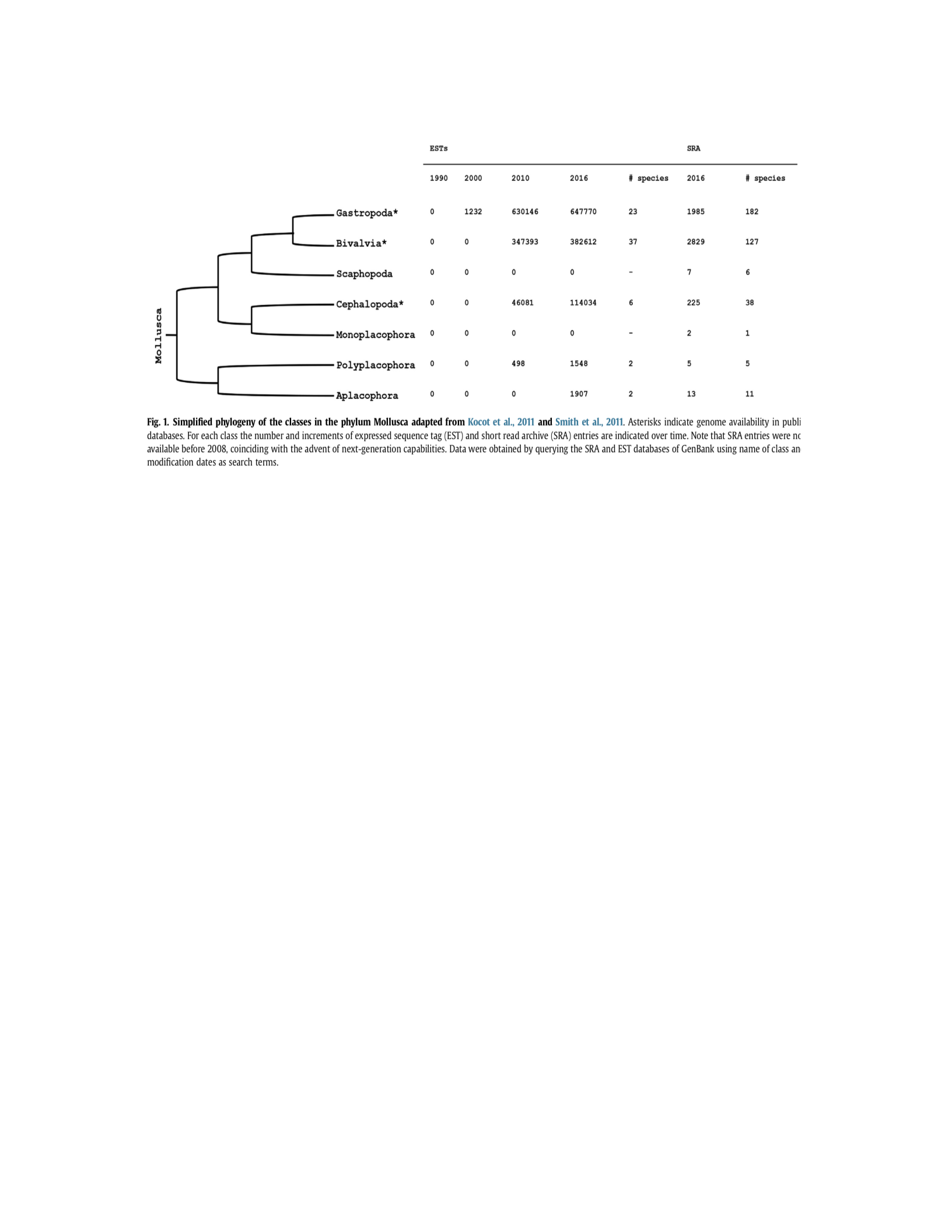
39
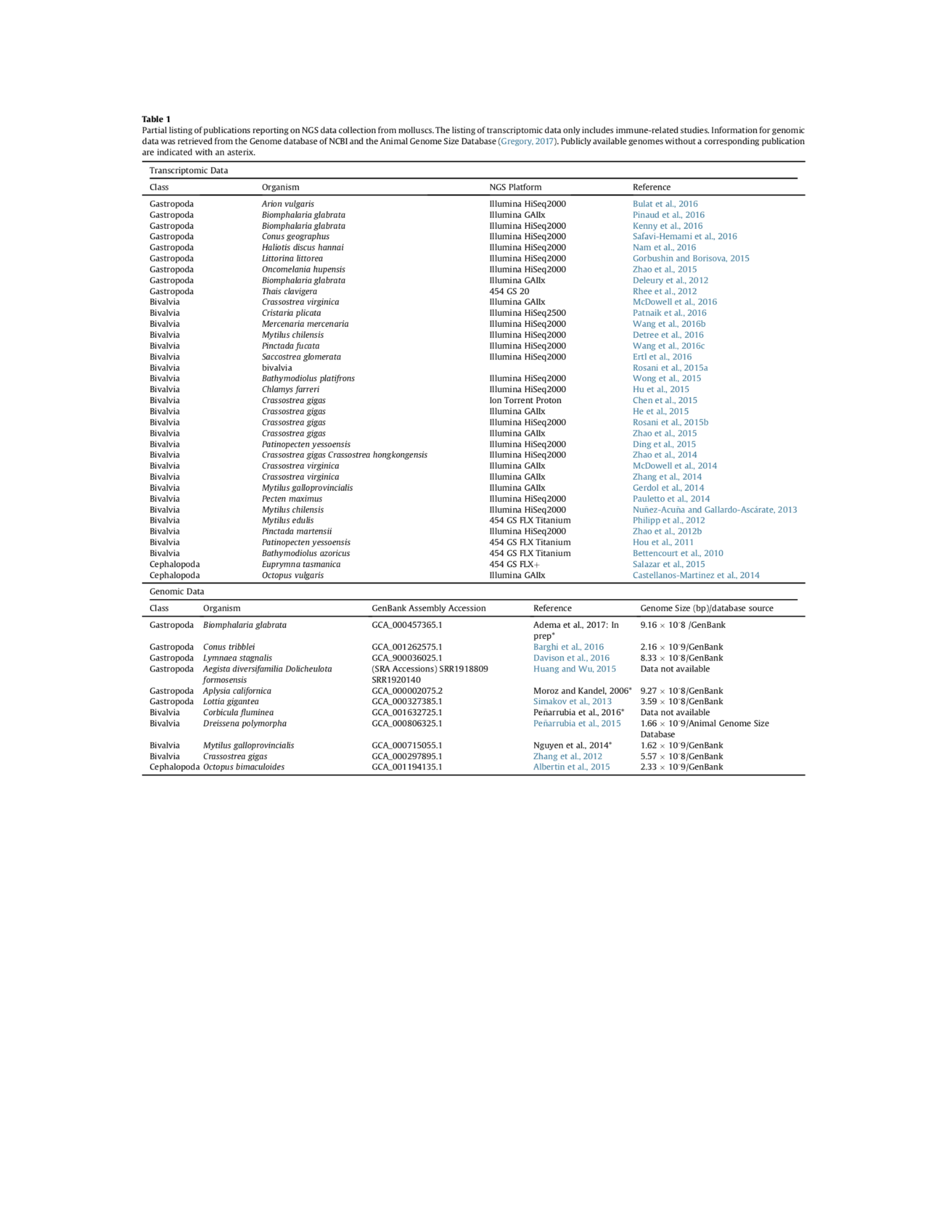
40
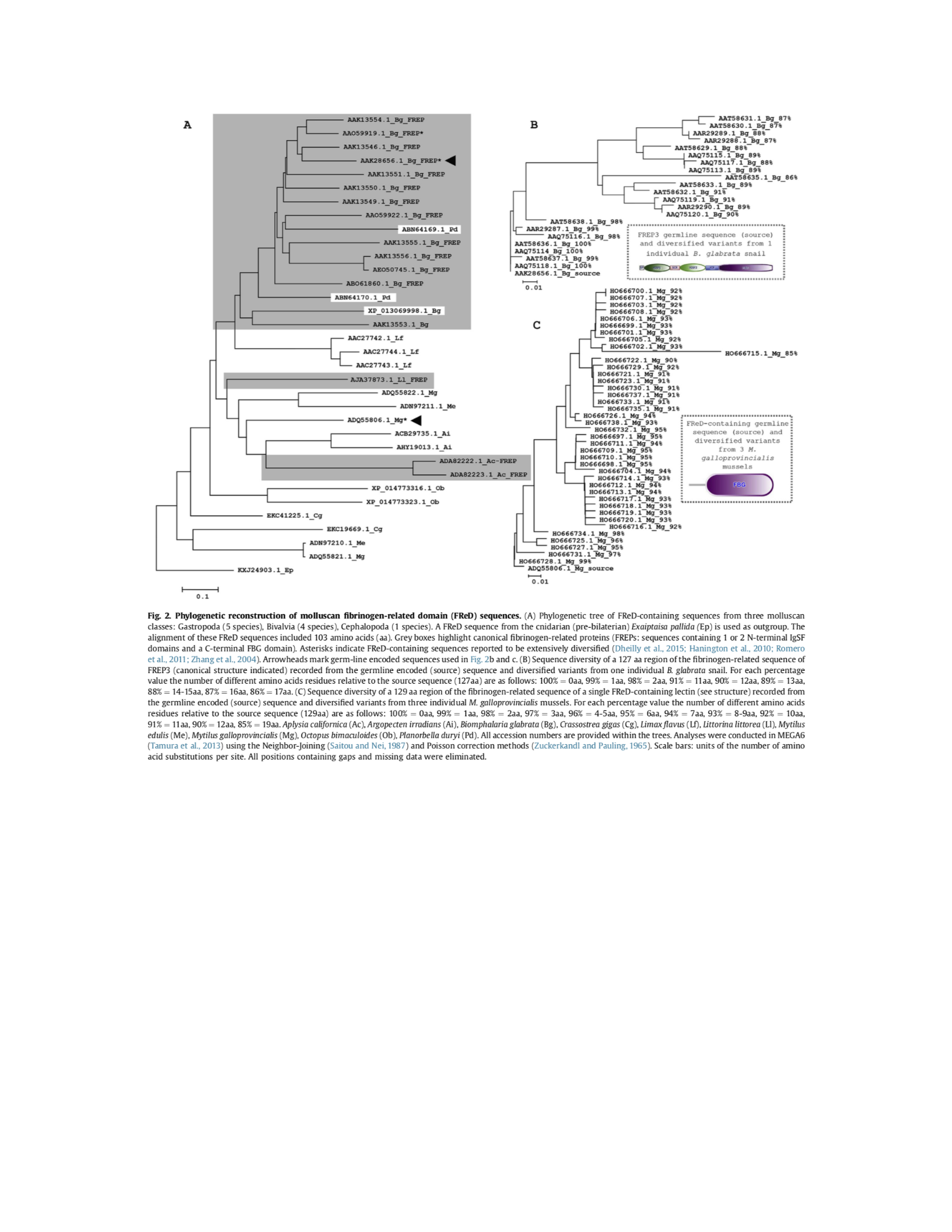
41

42
References
1. Adema, C.M., van der Knaap, W.P.W., Sminia, T., 1991. Molluscan hemocyte- mediated
cytotoxicity: the role of reactive oxygen intermediates. Rev. Aquat. Sci. 4, 201-223.
2. Adema, C.M., van Deutekom-Mulder, E.C., van der Knaap, W.P.W., Sminia, T., 1993.
NADPH-oxidase activity: the probable source of reactive oxygen intermediate generation
in hemocytes of the gastropod Lymnaea stagnalis. J. Leukoc. Biol. 54, 379-383.
3. Adema, C.M., van Deutekom-Mulder, E.C., van der Knaap, W.P.W., Sminia, T., 1994.
Schistosomicidal activities of Lymnaea stagnalis haemocytes: the role of oxygen radicals.
Parasitology 109, 479-485.
4. Adema, C.M., Hertel, L.A., Loker, E.S., 1997a. Infection with Echinostoma paraensei
(Digenea) induces parasite-reactive polypeptides in the hemolymph of the gastropod host
Biomphalaria glabrata. In: Beckage, N.E., Parasites, Pathogens (Eds.), Effects on Host
Hormones and Behavior. Chapman & Hall, New York, pp. 76-98.
5. Adema, C.M., Hertel, L.A., Miller, R.D., Loker, E.S., 1997b. A family of fibrinogen-
related proteins that precipitates parasite-derived molecules is produced by an
invertebrate after infection. Proc. Natl. Acad. Sci. U. S. A. 94, 8691-8696.
6. Adema, C.M., Luo, M.Z., Hanelt, B., Hertel, L.A., Marshall, J.J., Zhang, S.M., DeJong,
R.J., Kim, H.R., Kudrna, D., Wing, R.A., Soderlund, C., Knight, M., Lewis, F.A.,
Caldeira, R.L., Jannotti-Passos, L.K., Carvalho, Odos S., Loker, E.S., 2006. A bacterial
artificial chromosome library for Biomphalaria glabrata, intermediate snail host of
Schistosoma mansoni. Mem. Inst. Oswaldo Cruz 101, 167-177.
7. Adema, C.M., Hanington, P.C., Lun, C.M., Rosenberg, G.H., Aragon, A.D., Stout, B.A.,
Lennard Richard, M.L., Gross, P.S., Loker, E.S., 2010. Differential transcriptomic
responses of Biomphalaria glabrata (Gastropoda, Mollusca) to bacteria and metazoan
parasites, Schistosoma mansoni and Echinostoma paraensei (Digenea, Platyhelminthes).
Mol. Immunol. 47, 849-860.
8. Adema, C.M., Bayne, C.J., Bridger, J.M., Knight, M., Loker, E.S., Yoshino, T.P., Zhang,
S.M., 2012. Will all scientists working on snails and the diseases they transmit please
stand up? PLoS Negl. Trop. Dis. 6, e1835.
9. Adema, C.M., Loker, E.S., 2015. Digenean-gastropod host associations inform on aspects
of specific immunity in snails. Dev. Comp. Immunol. 48, 275-283. Albertin, C.B.,
Simakov, O., Mitros, T., Wang, Z.Y., Pungor, J.R., Edsinger-Gonzales, E., Brenner, S.,
Ragsdale, C.W., Rokhsar, D.S., 2015. The octopus genome and the evolution of
cephalopod neural and morphological novelties. Nature 524, 220-224.
10. Alkan, C., Sajjadian, S., Eichler, E.E., 2011. Limitations of next-generation genome
sequence assembly. Nat. Methods 8, 61-65.

43
11. Allan, E.R., Tennessen, J.A., Bollmann, S.R., Hanington, P.C., Bayne, C.J., Blouin, M.S.,
2017. Schistosome infectivity in the snail, Biomphalaria glabrata, is partially dependent
on the expression of Grctm6, a Guadeloupe Resistance Complex protein. PLoS Negl.
Trop. Dis. 11, e0005362.
12. Ansorge, W.J., 2009. Next-generation DNA sequencing techniques. N. Biotechnol. 25,
195e203.
13. Baeza Garcia, A., Pierce, R.J., Gourbal, B., Werkmeister, E., Colinet, D., Reichart, J.M.,
Dissous, C., Coustau, C., 2010. Involvement of the cytokine MIF in the snail host
immune response to the parasite Schistosoma mansoni. PLoS Pathog. 6, e1001115.
14. Bai, Z., Yin, Y., Hu, S., Wang, G., Xhang, X., Li, J., 2009. Identification of genes
involved in immune response, microsatellite, and SNP markers from expressed sequence
tags generated from hemocytes of freshwater pearl mussel (Hyriopsis cumingii). Mar.
Biotechnol. (NY) 11, 520-530.
15. Barghi, N., Concepcion, G.P., Olivera, B.M., Lluisma, A.O., 2016. Structural features of
conopeptide genes inferred from partial sequences of the Conus tribblei genome. Mol.
Genet. Genomics 291, 411-422.
16. Baron, O.L., van West, P., Industri, B., Ponchet, M., Dubreuil, G., Gourbal, B., Reichart,
J.M., Coustau, C., 2013. Parental transfer of the antimicrobial protein LBP/BPI protects
Biomphalaria glabrata eggs against oomycete infections. PLoS Pathog. 9, e1003792.
17. Baron, O.L., Deleury, E., Reichart, J.M., Coustau, C., 2016. The LBP/BPI multigenic
family in invertebrates: evolutionary history and evidences of specialization in mollusks.
Dev. Comp. Immunol. 57, 20-30.
18. Bayne, C.J., 1980. Molluscan immunity: induction of elevated immunity in the land snail
(Helix) by injections of bacteria (Pseudomonas aeruginosa). Dev. Comp. Immunol. 4,
43-54.
19. Beschin, A., Bilej, M., Brys, L., Torreele, E., Lucas, R., Magez, S., De Baetselier, P.,
1999. Convergent evolution of cytokines. Nature 400, 627-628.
20. Bettencourt, R., Pinheiro, M., Egas, C., Gomes, P., Afonso, M., Shank, T., Santos, R.S.,
2010. High-throughput sequencing and analysis of the gill tissue transcriptome from the
deep-sea hydrothermal vent mussel Bathymodiolus azoricus. BMC Genomics 11, 559.
21. Blouin, M.S., Bonner, K.M., Cooper, B., Amarasinghe, V., O'Donnell, R.P., Bayne, C.J.,
2013. Three genes involved in the oxidative burst are closely linked in the genome of the
snail, Biomphalaria glabrata. Int. J. Parasitol. 43, 51-55.

44
22. Boman, H.G., Hultmark, D., 1987. Cell-free immunity in insects. Annu. Rev. Microbiol.
41, 103-126.
23. Borisova, E.A., Gorbushin, A.M., 2014. Molecular cloning of a-2-macroglobulin from
hemocytes of common periwinkle Littorina littorea. Fish Shellfish Immunol. 39, 136-
137.
24. Bouchut, A., Roger, E., Coustau, C., Gourbal, B., Mitta, G., 2006. Compatibility in the
Biomphalaria glabrata/Echinostoma caproni model: potential involvement of adhesion
genes. Int. J. Parasitol. 36, 175-184.
25. Buckley, K.M., Rast, J.P., 2015. Diversity of animal immune receptors and the origins of
recognition complexity in the deuterostomes. Dev. Comp. Immunol. 49, 179-189.
26. Bulat, T., Smidak, R., Sialana, F.J., Jung, G., Rattei, T., Bilban, M., Sattmann, H., Lubec,
G., Aradska, J., 2016. Transcriptomic and proteomic analysis of Arion vulgaris-Proteins
for probably successful survival strategies? PLoS One 11, e0150614.
27. Carnegie, R.B., Arzul, I., Bushek, D., 2016. Managing marine mollusc diseases in the
context of regional and international commerce: policy issues and emerging concerns.
Philos. Trans. R. Soc. Lond. B. Biol. Sci. 371.
28. Castellanos-Martinez, S., Arteta, D., Catarino, S., Gestal, C., 2014. De novo
transcriptome sequencing of the Octopus vulgaris hemocytes using Illumina RNA-Seq
technology: response to the infection by the gastrointestinal parasite Aggregata
octopiana. PLoS One 9, e107873.
29. Chen, H., Wang, L., Zhou, Z., Hou, Z., Liu, Z., wang, W., Gao, D., Gao, Q., Wang, M.,
Song, L., 2015. The comprehensive immunomodulation of NeurimmiRs in haemocytes of
oyster Crassostrea gigas after acetylcholine and norepinephrine stimulation. BMC
Genomics 16, 942.
30. Cheng, T.C., Marchalonis, J.J., Vasta, G.R., 1984. Role of molluscan lectins in
recognition processes. Prog. Clin. Biol. Res. 157, 1-15.
31. Cheng, T.C., Manzi, J.J., 1996. Correlation between the presence of lathyrose with the
absence of Haplosporidium nelsoni in Crassostrea virginica from two South Carolina
tributaries where Perkinsus marinus also inhibits hemocyte agglutination by the Lathyrus
odoratus lectin. J. Shellfish Res. 15, 391-394.
32. Claes, M.F., 1996. Functional morphology of the white bodies of the cephalopod mollusc
Sepia officinalis. Acta Zool. 77, 173-190.
33. Conesa, A., Götz, S., García-Gomez, J.M., Terol, J., Talo, M., Robles, M., 2005.
Blast2GO: a universal tool for annotation, visualization and analysis in functional
genomics. Bioinformatics 21, 3674-3676.

45
34. Connors, V.A., de Buron, I., Granath Jr., W.O., 1995a. Schistosoma mansoni: interleukin-
1 increases and decreases output of cercariae in schistosome-susceptible Biomphalaria
glabrata. Exp. Parasitol. 80, 139-148.
35. Connors, V.A., de Buron, I., Granath Jr., W.O., 1995b. Schistosoma mansoni interleukin-
1 increases phagocytosis and superoxide production by hemocytes and decrease output of
cercariae in schistosome-susceptible Biomphalaria glabrata. Ex. Parasitol. 80, 139-148.
36. Connors, V.A., de Buron, I., Jourdane, J., Theron, A., Agner, A., Granath Jr., W.O.,
1998. Recombinant human interleukin-1-mediated killing of Schistosoma mansoni
primary sporocysts in Biomphalaria glabrata. J. Parasitol. 84, 920-926.
37. Coustau, C., Gourbal, B., Duval, D., Yoshino, T.P., Adema, C.M., Mitta, G., 2015.
Advances in gastropod immunity from the study of the interaction between the snail
Biomphalaria glabrata and its parasites: a review of research progress over the last
decade. Fish Shellfish Immunol. 46, 5-16.
38. Cowden, R.R., 1972. Some cytological and cytochemical observations on the
leucopoietic organs, the “white bodies” of Octupus vulgaris. J. Invertebr. Pathol 19, 113-
119.
39. Cunningham, C., Hikima, J., Jenny, M.J., Chapman, R.W., Fang, G.C., Saski, C.,
Lundqvist, M.L., Wing, R.A., Cupit, P.M., Gross, P.S., Warr, G.W., Tomkins, J.P., 2006.
New resources for marine genomics: bacterial artificial chromosome libraries for the
Eastern and Pacific oysters (Crassostrea virginica and C. gigas). Mar. Bitotechnol. (NY)
8, 521-533.
40. Dam, T.K., Sarkar, M., Ghosal, J., Choudhury, A., 1992. A novel galactosyl-binding
lectin from the plasma of the blood clam, Anadara granosa (L) and a study of its
combining site. Mol. Cell Biochem. 117, 1-9.
41. Davison, A., McDowell, G.S., Holden, J.M., Johnson, H.F., Koutsovoulos, G.D., Liu,
M.M., Hulpiau, P., Van Roy, F., Wade, C.M., Banerjee, R., Yang, F., Chiba, S., Davey,
J.W., Jackson, D.J., Levin, M., Blaxter, M.L., 2016. Formin is associated with left-right
asymmetry in the pond snail and the frog. Curr. Biol. 26, 654-660.
42. Deleury, E., Dubreuil, G., Elangovan, N., Wajnberg, E., Reichart, J.M., Gourbal, B.,
Duval, D., Baron, O.L., Gouzy, J., Coustau, C., 2012. Specific versus non-specific
immune responses in an invertebrate species evidenced by a comparative de novo
sequencing study. PLoS One 7, e32512.
43. Detree, C., Núñez-Acuña, G., Roberts, S., Gallardo-Escarate, C., 2016. Uncovering the
complex transcriptome response of Mytilus chilensis against saxitoxin: implications of
harmful algal blooms on mussel populations. PLoS One 11, e0165231.

46
44. De Zoysa, M., Nikapitiya, C., Oh, C., Lee, Y., Whang, I., Lee, J.S., Choi, C.Y., Lee, J.,
2011. Microarray analysis of gene expression in disk abalone Haliotis discus discus after
bacterial challenge. Fish Shellfish Immunol. 30, 661-673.
45. De Zoysa, M., Nikapitiya, C., Oh, C., Whang, I., Shin, H.J., Lee, J., 2012. cDNA
microarray analysis of disk abalone genes in gills and hemocytes after viral hemorrhagic
septicemia virus (VHSV) challenge. Fish Shellfish Immunol. 32, 1205-1215.
46. Dheilly, N.M., Lelong, C., Huvet, A., Favrel, P., 2011. Development of a Pacific oyster
(Crassostrea gigas) 31,918-feature microarray: identification of reference genes and
tissue-enriched expression patterns. BMC Genomics 12, 468.
47. Dheilly, N.M., Adema, C., Raftos, D.A., Goutbal, B., Grunau, C., Du Pasquier, l, 2014.
No more non-model species: The promise of next generation sequencing for comparative
immunology. Dev. Comp. Immunol. 45, 56-66.
48. Dheilly, N.M., Duval, D., Mouahid, G., Emans, R., Allienne, J.F., Galinier, R., Genthin,
C., Dubois, E., Du Pasquier, L., Adema, C.M., Grunau, C., Mitta, G., Gourbal, B., 2015.
A family of variable immunoglobulin and lectin domain containing molecules in the snail
Biomphalaria glabrata. Dev. Comp. Immunol. 48, 234-243.
49. Ding, J., Li, J., Bao, Y., Li, L., Wu, F., Zhang, G., 2011. Molecular characterization of a
mollusk chicken-type lysozyme gene from Haliotis discus hannai Ino, and the
antimicrobial activity of its recombinant protein. Fish Shellfish Immunol. 30, 163-172.
50. Ding, J., Zhao, L., Chang, Y., Zhao, W., Du, Z., Hao, Z., 2015. Transcriptome
sequencing and characterization of Japanese scallop Patinopecten yessoensis from
different shell color lines. PLoS One 10, e0116406.
51. Ertl, N.G., O'Connor, W.A., Papanicolaou, A., Weigand, A.N., Elizur, A., 2016.
Transcriptome analysis of the Sydney rock oyster Saccostrea glomerata: Insights into
molluscan immunity. PLoS One 11, e0156649.
52. Erwin, D.H., Laflamme, M., Tweedt, S.M., Sperling, E.A., Pisani, D., Peterson, K.J.,
2011. The Cambrian conundrum: early divergence and later ecological success in the
early history of animals. Science 334, 1091-1097.
53. Escoubas, J.M., Briant, L., Montagnani, C., Hez, S., Devaux, C., Roch, P., 1999. Oyster
IKK-like protein shares structural and functional properties with its mammalian
homologues. FEBS Lett. 453, 293-298.
54. Fire, A., Xu, S., Montgomery, M.K., Kostas, S.A., Driver, S.E., Mello, C.C., 1998. Potent
and specific genetic interference by double-stranded RNA in Caenorhabditis elegans.
Nature 391, 806-811.

47
55. Fleury, E., Huvet, A., Lelong, C., de Lorgeril, J., Boulo, V., Gueguen, Y., Bachere, E.,
Tanguy, A., Moraga, D., Fabioux, C., Lindeque, P., Shaw, J., Reinhardt, R., Prunet, P.,
Davey, G., Lapegue, S., Sauvage, C., Corporeau, C., Moal, J., Gavory, F., Wincker, P.,
Moreews, F., Klopp, C., Mathieu, M., Boudry, P., Favrel, P., 2009. Generation and
analysis of a 29,745 unique expressed sequence tags from the Pacific oyster (Crassostrea
gigas) assembled into a publicly accessible database: the Gigas Database. BMC
Genomics 10, 341.
56. Fleury, E., Huvet, A., 2012. Microarray analysis highlights immune response of pacific
oysters as a determinant of resistance to summer mortality. Mar. Biotechnol. (NY) 14,
203-217.
57. Fneich, S., Dheilly, N., Adema, C., Rognon, A., Reichelt, M., Bulla, J., Grunau, C.,
Cosseau, C., 2013. 5-methyl-cytosine and 5-hydroxy-methyl-cytosine in the genome of
Biomphalaria glabrata, a snail intermediate host of Schistosoma mansoni. Parasit.
Vectors 6, 167.
58. Gao, D., Qiu, L., Gao, Q., Hou, Z., Wang, L., Song, L., 2015. Repertoire and evolution of
TNF superfamily in Crassostrea gigas: implications for expansion and diversification of
this superfamily in Mollusca. Dev. Comp. Immunol. 51, 251-260.
59. Gavery, M.R., Roberts, S.B., 2010. DNA methylation patterns provide insight into
epigenetic regulation in the Pacific oyster (Crassostrea gigas). BMC Genomics 11, 483.
60. Gerdol, M., De Moro, G., Manfrin, C., Milandri, A., Riccardi, E., Beran, A., Venier, P.,
Pallavicini, A., 2014. RNA sequencing and de novo assembly of the digestive gland
transcriptome in Mytilus galloprovincialis fed with toxinogenic and non- toxic strains of
Alexandrium minutum. BMC Res. Notes 7, 722.
61. Geyer, K.K., Rodríguez Lopez, C.M., Chalmers, I.W., Munshi, S.E., Truscott, M., Heald,
J., Wilkinson, M.J., Hoffmann, K.F., 2011. Cytosine methylation regulates oviposition in
the pathogenic blood fluke Schistosoma mansoni. Nat. Commun. 2, 424.
62. GIGA Community of Scientists, Bracken-Grissom, H., Collins, A.G., Collins, T.,
Crandall, K., Distel, D., Dunn, C., Giribet, G., Haddock, S., Knowlton, N., Martindale,
M., Medina, M., Messing, C., O'Brien, S.J., Paulay, G., Putnam, N., Ravasi, T., Rouse,
G.W., Ryan, J.F., Schulze, A., Wo€rheide, G., Adamska, M., Bailly, X., Breinholt, J.,
Browne, W.E., Diaz, M.C., Evans, N., Flot, J.F., Fogarty, N., Johnston, M., Kamel, B.,
Kawahara, A.Y., Laberge, T., Lavrov, D., Michonneau, F., Moroz, L.L., Oakley, T.,
Osborne, K., Pomponi, S.A., Rhodes, A., Santos, S.R., Satch, N., Thacker, R.W., Van de
Peer, Y., Voolstra, C.R., Welch, D.M., Winston, J., Zhou, X., 2014. The global
invertebrate genomics alliance (GIGA): developing community resources to study
diverse invertebrate genomes. J. Hered. 105, 1-18.
63. Goodall, C.P., Bender, R.C., Brooks, J.K., Bayne, C.J., 2006. Biomphalaria glabrata
cytosolic copper/zinc superoxide dismutase (SOD1) gene: association of SOD1 alleles

48
with resistance/susceptible to Schistosoma mansoni. Mol. Biochem. Parasitol 147, 207-
210.
64. Goodson, M.S., Kojadinovic, M., Troll, J.V., Scheetz, T.E., Casavant, T.L., Soares, M.B.,
McFall-Ngai, M.J., 2005. Identifying components of the NF-kappaB pathway in the
beneficial Euprymna scolopes-Vibrio fischeri light organ symbiosis. Appl. Environ.
Microbiol. 71, 6934-6946.
65. Gorbushin, A.M., Panchin, Y.V., Iakovleva, N.V., 2010. In search of the origin of
FREPs: characterization of Aplysia californica fibrinogen-related proteins. Dev. Comp.
Immunol. 34, 465-473.
66. Gorbushin, A.M., Iakovleva, N.V., 2011. A new family of single fibrinogen domain
lectins in Mytilus. Fish Shellfish Immunol. 30, 434-438.
67. Gorbushin, A.M., Borisova, E.A., 2015. Lectin-like molecules in transcriptome of
Littorina littorea hemocytes. Dev. Comp. Immunol. 48, 210-220.
68. Götz, S., Arnold, R., Sebastian-Leon, P., Martín-Rodríguez, S., Tischler, P., Jehl, M.A.,
Dopazo, J., Rattei, T., Conesa, A., 2011. B2G-FAR, a species-centered GO annotation
repository. Bioinformatics 27, 919-924.
69. Granath Jr., W.O., Yoshino, T.P., 1983. Lysosomal enzyme activities in susceptible and
refractory strains of Biomphalaria glabrata during the course of infection with
Schistosoma mansoni. J. Parasitol. 69, 1018-1026.
70. Granath Jr., W.O., Connors, V.A., Tarleton, R.L., 1994. Interleukin 1 activity in
haemolymph from strains of the snail Biomphalaria glabrata varying in susceptibility to
the human blood fluke, Schistosoma mansoni: presence, differential expression, and
biological function. Cytokine 6, 21-27.
71. Gregory, T.R., 2017. Animal Genome Size Database. http://www.genomesize.com.
72. Gueguen, Y., Cadoret, J.P., Flament, D., Barreau-Roumiguiere, C., Girardot, A.L.,
Garnier, J., Hoareau, A., Bachere, E., Escoubas, J.M., 2003. Immune gene discovery by
expressed sequence tags generated from hemocytes of the bacteria-challenged oyster,
Crassostrea gigas. Gene 303, 139-145.
73. Guo, X., He, Y., Zhang, L., Lelong, C., Jouaux, A., 2015. Immune and stress responses in
oysters with insights on adaptation. Fish Shellfish Immunol. 46, 107-119.
74. Hahn, U.K., Fryer, S.E., Bayne, C.J., 1996. An invertebrate (Molluscan) plasma protein
that binds to vertebrate immunoglobulins and its potential for yielding false- positives in
antibody-based detection systems. Dev. Comp. Immunol. 20, 39-50.

49
75. Hanelt, B., Lun, C.M., Adema, C.M., 2008. Comparative ORESTES-sampling of
transcriptomes of immune-challenged Biomphalaria glabrata snails. J. Invertebr. Pathol
99, 192-203.
76. Hanington, P.C., Forys, M.A., Dragoo, J.W., Zhang, S.M., Adema, C.M., Loker, E.S.,
2010. Role for a somatically diversified lectin in resistance of an invertebrate to parasite
infection. Proc. Natl. Acad. Sci. U. S. A. 107, 21087-21092.
77. Hanington, P.C., Forys, M.A., Loker, E.S., 2012. A somatically diversified defense
factor, FREP3, is a determinant of snail resistance to schistosome infection. PLoS Negl.
Trop. Dis. 6, e1591.
78. Hauton, C., Smith, V., 2007. Adaptive immunity in invertebrates: a straw house without
mechanistic foundation. Bioessays 29, 1138-1146.
79. He, Y., Jouaux, A., Ford, S.E., Lelong, C., Sourdaine, P., Mathieu, M., Guo, X., 2015.
Transcriptome analysis reveals strong and complex antiviral response in a mollusc. Fish
Shellfish Immunol. 46, 131-144.
80. Hoek, R.M., Smit, A.B., Frings, H., Vink, J.M., de Jong-Brink, M., Geraerts, W.P., 1996.
A new Ig-superfamily member, molluscan defence molecule (MDM) from Lymnaea
stagnalis, is down-regulated during parasitosis. Eur. J. Immunol. 26, 939-944.
81. Hou, R., Bao, Z., Wang, S., Su, H., Li, Y., Du, H., Hu, J., Wang, S., Hu, X., 2011.
Transcriptome sequencing and de novo analysis for Yesso scallop (Patinopecten
yessoensis) using 454 GS FLX. PLoS One 6, e21560.
82. Hu, F., Pan, L., Cai, Y., Liu, T., Jin, Q., 2015. Deep sequencing of the scallop Chlamys
farreri transcriptome response to tetrabromobisphenol A (TBBPA) stress. Mar.
Genomics 31-38.
83. Huang, C., Wu, W., 2015. Genomic resources of two land snails, Aegista diversifamilia
and Dolicheulota formoensis, generated by Illumina paired-end sequencing [version 1;
referees: 1 approved].F1000Research. 4, 106.
84. Hughes, T.K., Smith, E.M., Chin, R., Cadet, P., Sinisterra, J., Leung, M.K., Shipp, M.A.,
Scharrer, B., Stefano, G.B., 1990. Interaction of immunoreactive monokines (interleukin
1 and tumor necrosis factor) in the bivalve mollusc Mytilus edulis. Proc. Natl. Acad. Sci.
U. S. A. 87, 4426-4429.
85. Hughes, T.K., Smith, E.M., Barnett, J.A., Charles, R., Stefano, G.B., 1991. LPS
stimulated invertebrate hemocytes: a role for immunoreactive TNF and IL-1. Dev. Comp.
Immunol. 15, 117-122.

50
86. Hughes, T.K., Smith, E.M., Leung, M.K., Stefano, G.B., 1992. Evidence for the
conservation of an immunoreactive monokine network in invertebrates. Ann. N. Y. Acad.
Sci. 650, 74-80.
87. Humphries, J.E., Elizondo, L., Yoshino, T.P., 2001. Protein kinase C regulation of cell
spreading in the molluscan Biomphalaria glabrata embryonic (Bge) cell line. Biochim.
Biophys. Acta 1540, 243-252.
88. Humphries, J., Harter, B., 2015. Identification of nuclear factor kappaB (NF-KB) binding
motifs in Biomphalaria glabrata. Dev. Comp. Immunol. 53, 366-370.
89. Itoh, N., Takahashi, K.G., 2008. Distribution of multiple peptidoglycan recognition
proteins in the tissues of Pacific oyster, Crassostrea gigas. Comp. Biochem. Physiol. B
Miochem. Mol. Biol. 150, 409-417.
90. Ittiprasert, W., Miller, A., Su, X.Z., Mu, J., Bhusudsawang, G., Ukoskit, K., Knight, M.,
2013. Identification and characterisation of functional expressed sequence tags-derived
simple sequence repeat (eSSR) markers for genetic linkage mapping of Schistosoma
mansoni juvenile resistance and susceptibility loci in Biomphalaria glabrata. Int. J.
Parasitol. 43, 669-677.
91. Jenny, M.J., Chapman, R.W., Mancia, A., Chen, Y.A., McKillen, D.J., Trent, H., Lang,
P., Escoubas, J.M., Bachere, E., Boulo, V., Liu, Z.J., Gross, P.S., Cunningham, C., Cupit,
P.M., Tanguy, A., Guo, X., Moraga, D., Boutet, I., Huvet, A., De Guise, S., Almeida,
J.S., Warr, G.W., 2007. A cDNA microarray for Crassostrea virginica and C. gigas. Mar.
Biotechnol. 9, 577-591.
92. Jeong, K.H., Lie, J.K., Heyneman, D., 1983. The ultrastructure of the amebocyte-
producing organ in Biomphalaria glabrata. Dev. Comp. Immunol. 7, 217-228.
93. Jia, X., Zou, Z., Wang, G., Wang, S., Wang, Y., Zhang, Z., 2011. Gene expression
profiling in respond to TBT exposure in small abalone Haliotis diversicolor. Fish
Shellfish Immunol. 31, 557-563.
94. Jiang, Y., Loker, E.S., Zhang, S.M., 2006. In vivo and in vitro knockdown of FREP2
gene expression in the snail Biomphalaria glabrata using RNA interference. Dev. Comp.
Immunol. 30, 855-866.
95. Kang, Y.S., Kim, Y.M., Park, K.I., Kim Cho, S., Choi, K.S., Cho, M., 2006. Analysis of
EST and lectin expressions in hemocytes of Manila clams (Ruditapes philippinarum)
(Bivalvia: Mollusca) infected with Perkinsus olseni. Dev. Comp. Immunol. 30, 1119-
1131.
96. Kasthuri, S.R., Premachandra, H.K., Umasuthan, N., Whang, I., Lee, J., 2013. Structural
characterization and expression analysis of a beta-thymosin homologue (Tb) in disk
abalone, Haliotis discus discus. Gene 527, 376-383.

51
97. Kaur, S., Jobling, S., Jones, C.S., NOble, L.R., Routledge, E.J., Lockyer, A.E., 2015. The
nuclear receptors of Biomphalaria glabrata and Lottia gigantea: implications for
developing new model organisms. PLoS One 10, e0121259.
98. Kenny, N.J., Truchado-García, M., Grande, C., 2016. Deep, multi-stage transcriptome of
the schistosomiasis vector Biomphalaria glabrata provides platform for understanding
molluscan disease-related pathways. BMC Infect. Dis. 16, 618.
99. Klein, J., 1989. Are invertebrate capable of anticipatory immune responses? Scand. J.
Immunol. 29, 499-505.
100. Knight, M., Miller, A.N., Patterson, C.N., Rowe, C.G., Michaels, G., Carr, D., Richards,
C.S., Lewis, F.A., 1999. The identification of markers segregating with resistance to
Schistosoma mansoni infection in the snail Biomphalaria glabrata. Proc. Natl. Acad. Sci.
U. S. A. 96, 1510-1515.
101. Knight, M., Ittiprasert, W., Odoemelam, E.C., Adema, C.M., Miller, A., Raghavan, N.,
Bridger, J.M., 2011. Non-random organization of the Biomphalaria glabrata genome in
interphase Bge cells and the spatial repositioning of activated genes in cells co-cultured
with Schistosoma mansoni. Int. J. Parasitol. 41, 61-70.
102. Kocot, K.M., Cannon, J.T., Todt, C., Citarella, M.R., Kohn, A.B., Meyer, A., Santos,
S.R., Schandler, C., Moroz, L.L., Lieb, B., Halanych, K.M., 2011.
Phylogenomics reveals deep molluscan relationships. Nature 477, 452-456.
103. Kocot, K.M., Jeffrey, N.W., Mulligan, K., Halanych, K.M., Gregory, T.R., 2015.
Genome size estimates for Aplacophora, Polyplacophora, and Scaphopoda: small
solengasters and sizeable scaphopods. J. Mollus. Stud. 82, 216-219.
104. Korneev, S.A., Kemenes, I., Straub, V., Staras, K., Korneeva, E.I., Kemenes, G.,
Benjamin, P.R., O'Shea, M., 2002. Suppression of nitric oxide (NO)-dependent behavior
by double-stranded RNA-mediated silencing of a neuronal NO synthase gene. J.
Neurosci. 22, RC227.
105. Kurachi, S., Song, Z., Takagaki, M., Yang, Q., Winter, H.C., Kurachi, K., Goldstein, I.J.,
1998. Sialic-acid-binding lectin from the slug Limax flavus-cloning, expression of the
polypeptide, and tissue localization. Eur. J. Biochem. 254, 217-222.
106. La Peyre, J.F., Chu, F.L., Vogelbein, W.K., 1995. In vitro interaction of Perkinsus
marinus merozoites with eastern and Pacific oyster hemocytes. Dev. Comp. Immunol. 19,
291-304.
107. Leippe, M., Renwrantz, L., 1988. Release of cytotoxic and agglutinating molecules by
Mytilus hemocytes. Dev. Comp. Immunol. 12, 297-308.

52
108. Leite, R.B., Milan, M., Coppe, A., Bortoluzzi, S., dos Anjos, A., Reinhart, R., Saavedra,
C., Patarnello, T., Cancela, M.L., Bargelloni, L., 2013. mRNA-Seq and microarray
development for the Grooved Carpet shell clam, Ruditapes decussatus: a functional
approach to unravel host-parasite interaction. BMC Geno- mics 14, 741.
109. Lemaitre, B., Nicholas, E., Michaut, L., Reichart, J.M., Hoffmann, J.A., 1996. The
dorsoventral regulatory gene cassette spätzle/Toll/cactus controls the potent antifungal
response in Drosophila adults. Cell 86, 973-983.
110. Leonard, P.M., Adema, C.M., Zhang, S.M., Loker, E.S., 2001. Structure of two FREP
genes that combine IgSF and fibrinogen domains, with comments on diversity of the
FREP gene family in the snail Biomphalaria glabrata. Gene 269, 155-165.
111. Liao, Z., Wang, X.C., Liu, H.H., Fan, M.H., Sun, J.J., Shen, W., 2013. Molecular
characterization of a novel antimicrobial peptide from Mytilus coruscus. Fish Shellfish
Immunol. 34, 610-616.
112. Lie, K.J., Heyneman, D., 1979. Acquired resistance to echinostomes in four
Biomphalaria glabrata strains. Int. J. Parasitol. 9, 533-537.
113. Little, T.J., Colegrave, N., Sadd, B.M., Schmid-Hempel, P., 2008. Studying immunity at
the whole organism level. Bioessays 30, 404-405.
114. Liu, L., Yang, J., Qiu, L., Wang, L., Zhang, H., Wang, M., Vinu, S.S., Song, L., 2011. A
novel scavenger receptor-cysteine-rich (SRCR) domain containing scavenger receptor
identified from mollusk mediated PAMP recognition and binding. Dev. Comp. Immunol.
35, 227-239.
115. Lockyer, A.E., Spinks, J., Noble, L.R., Rollinson, D., Jones, C.S., 2007a. Identification of
genes involved in interactions between Biomphalaria glabrata and Schistosoma mansoni
by suppression subtractive hybridization. Mol. Biochem. Parasitol 151, 18-27.
116. Lockyer, A.E., Spinks, J.N., Walker, A.J., Kane, R.A., Noble, L.R., Rollinson, D., Dias-
Neto, E., Jones, C.S., 2007b. Biomphalaria glabrata transcriptome: identification of cell-
signalling, transcriptional control and immune-related genes from open reading frame
expressed sequence tags (ORESTES). Dev. Comp. Immunol. 31, 763-782.
117. Lockyer, A.E., Spinks, J., Kane, R.A., Hoffmann, K.F., Fitzpatrick, J.M., Rollinson, D.,
Noble, L.R., Jones, C.S., 2008. Biomphalaria glabrata transcriptome: cDNA microarray
profiling identifies resistant- and susceptible-specific gene expression in haemocytes
from snail strains exposed to Schistosoma mansoni. BMC Genomics 9, 634.
118. Lockyer, A.E., Emery, A.M., Kane, R.A., Walker, A.J., Mayer, C.D., Mitta, G., Coustau,
C., Adema, C.M., Hanelt, B., Rollinson, D., Noble, L.R., Jones, C.S., 2012. Early
differential gene expression in haemocytes from resistant and susceptible Biomphalaria
glabrata strains in response to Schistosoma mansoni. PLoS One 7, e51102.

53
119. Mansour, M.H., 1995. Evidence for a family of schistosome glycan-binding lectins in
Biomphalaria alexandrina. Dev. Comp. Immunol. 19, 365-376.
120. Marchalonis, J.J., Schluter, S.F., 1990. Origins of immunoglobulins and immune
recognition molecules. Bioscience 40, 758-768.
121. McDowell, I.C., Nikapitiya, C., Aguiar, D., Lane, C.E., Istrail, S., Gomez-Chiarri, M.,
2014. Transcriptome of american oysters, Crassostrea virginica, in response to bacterial
challenge: insights into potential mechanisms of disease resistance. PLoS One 9,
e105097.
122. McDowell, I.C., Modak, T.H., Lane, C.E., Gomez-Chiarri, M., 2016. Multi-species
protein similarity clustering reveals novel expanded immune gene families in the eastern
oyster Crassostrea virginica. Fish Shellfish Immunol. 53, 13-23.
123. McKerrow, J.H., Jeong, K.H., Beckstead, J.H., 1985. Enzyme histochemical comparison
of Biomphalaria glabrata amebocytes with human granuloma macrophages. J. Leukoc.
Biol. 37, 341-347.
124. Medzhitov, R., Preston-Hurlburt, P., Janeway, C.A., 1997. A human homologue of the
Drosophila Toll protein signals activation of adaptive immunity. Nature 388, 394-397.
125. Metchnikoff, E., 1905. Immunity in Infective Disease. Cambridge University Press,
Cambridge.
126. Michelson, E.H., Dubois, L., 1977. Agglutinins and lysins in the molluscan family
Planorbidae: a survey of hemolymph, egg-masses, and albumen-gland extracts. Biol.
Bull. 153, 219-227.
127. Miller, A.N., Raghavan, N., FitzGerald, P.C., Lewis, F.A., Knight, M., 2001. Differential
gene expression in haemocytes of the snail Biomphalaria glabrata: effects of
Schistosoma mansoni infection. Int. J. Parasitol. 31, 687-696.
128. Mitta, G., Galinier, R., Tisseyre, P., Allienne, J.F., Girerd-Chambaz, Y., Guillou, F.,
Bouchut, A., Coustau, C., 2005. Gene discovery and expression analysis of immune-
relevant genes from Biomphalaria glabrata hemocytes. Dev. Comp. Immunol. 29, 393-
407.
129. Mohandas, A., Cheng, T.C., Cheng, J.B., 1985. Mechanism of lysosomal enzyme release
from Mercenaria mercenaria granulocytes: a scanning electron microscope study. J.
Invertebr. Pathol 46, 189-197.
130. Monroy, F., Hertel, L.A., Loker, E.S., 1992. Carbohydrate-binding plasma proteins from
the gastropod Biomphalaria glabrata: strain specificity and the effects of trematode
infection. Dev. Comp. Immunol. 16, 355-366.

54
131. Mullainadhan, P., Renwrantz, L., 1986. Lectin-dependent recognition of foreign cells by
hemocytes of the mussel, Mytilus edulis. Immunobiology 171, 263-273.
132. Mundry, M., Bornberg-Bauer, E., Sammeth, M., Feulner, P.G., 2012. Evaluating
characteristics of de novo assembly software on 454 transcriptome data: a simulation
approach. PLoS One 7, e31410.
133. Nam, B.H., Jung, M., Subramaniyam, S., Yoo, S.I., Markkandan, K., Moon, J.Y., Kim,
Y.O., Kim, D.G., An, C.M., Shin, Y., Jung, H.J., Park, J.H., 2016. Transcriptome analysis
revealed changes of multiple genes involved in Haliotis discus hannai innate immunity
during Vibrio parahemolyticus infection. PLoS One 11, e0153474.
134. Noël, D., Bachere, E., Mialhe, E., 1993. Phagocytosis associated chemiluminescence of
hemocytes in Mytilus edulis (Bivalvia). Dev. Comp. Immunol. 17, 483-493.
135. Nowak, T.S., Woodards, A.C., Jung, Y., Adema, C.M., Loker, E.S., 2004. Identification
of transcripts generated during the response of resistant Biomphalaria glabrata to
Schistosoma mansoni infection using suppression subtractive hybridization. J. Parasitol.
90, 1034-1040.
136. Nun~ez-Acun~a, G., Gallardo-Ascarate, C., 2013. Identification of immune-related SNPs
in the transcriptome of Mytilus chilensis through high-throughput sequencing. Fish
Shellfish Immunol. 35, 1899-1905.
137. Ottaviani, E., Franchini, A., Franceschi, C., 1993. Presence of several cytokine-like
molecules in molluscan hemocytes. Biochem. Biophys. Res. Commun. 195, 984-988.
138. Ottaviani, E., Caselgrandi, E., Franceschi, C., 1995a. Cytokines and evolution: In vitro
effects of IL-1, IL-1B, TNF-a and TNF-B on an ancestral type of stress response.
Biochem. Biophys. Res. Commun. 207, 288-292.
139. Ottaviani, E., Franchini, A., Cassanelli, S., Genedani, S., 1995b. Cytokines and
molluscan immune responses. Biol. Cell. 85, 87-91.
140. Ottaviani, E., Sassi, D., Kletsas, D., 1997. PDGF- and TGF-beta-induced changes in cell
shape of invertebrate immunocytes: effect of calcium entry blockers. Eur. J. Cell Biol. 74,
336-341.
141. Ottaviani, E., Franchini, A., Malagoli, D., Genedani, S., 2000. Immunomodulation by
recombinant human interleukin-8 and its signal transduction pathways in invertebrate
hemocytes. Cell Mol. Life Sci. 57, 506-513.
142. Ouwe-Missi-Oukem-Boyer, O., Porchet, E., Capron, A., Dissous, C., 1994.
Characterization of immunoreactive TNF alpha molecules in the gastropod Biomphalaria
glabrata. Dev. Comp. Immunol. 18, 211-218.

55
143. Owen, J., Punt, J., Stranford, S., 2013. Kuby Immunology, seventh ed. W.H. Freeman
and Company, New York.
144. Owens, L., Malham, S., 2015. Review of the RNA interference pathway in molluscs
including some possibilities for use in bivalves in aquaculture. J. Mar. Sci. Eng. 3, 87-99.
145. Patnaik, B.B., Wang, T.H., Kang, S.W., Hwang, H.J., Park, S.Y., Park, E.B., Chung,
J.M., Song, D.K., Kim, C., Kim, S., Lee, J.S., Han, Y.S., Park, H.S., Lee, Y.S., 2016.
Sequencing, de novo assembly, and annotation of the transcriptome of the endangered
freshwater pearl bivalve, Cristaria plicata, provides novel insights into functional genes
and marker discovery. PLoS One 11, e0148622.
146. Pauletto, M., Milan, M., Moreira, R., Novoa, B., Figueras, A., Babbucci, M., Patarnello,
T., Bargelloni, L., 2014. Deep transcriptome sequencing of Pecten maximus hemocytes: a
genomic resource for bivalve immunology. Fish Shellfish Immunol. 31, 154-165.
147. Peñarrubia, L., Sanz, N., Pla, c., Vidal, O., Vin~as, J., 2015. Using massive parallel
sequencing for the development, validation, and application of population genetics
markers in the invasive bivalve zebra mussel (Dreissena polymorpha). PLoS One 10,
e0120732.
148. Pettersson, E., Lundeberg, J., Ahmadian, A., 2009. Generations of sequencing
technologies. Genomics 93, 105-111.
149. Philipp, E.E., Kraemer, L., Melzner, F., Poustka, A.J., Thieme, S., Findeisen, U.,
Schreiber, S., Rosenstiel, P., 2012. Massively parallel RNA sequencing identifies a
complex immune gene repertoire in the lophotrochozoan Mytilus edulis. PLoS One 7,
e33091.
150. Pinaud, S., Portela, J., Duval, D., Nowacki, F.C., Olive, M.A., Allienne, J.F., galinier, R.,
Dheilly, N.M., Kieffer-Jaquinod, S., Mitta, G., Theron, A., Gourbal, B., 2016. A shift
from cellular to humoral responses contributes to innate immune memory in the vector
snail Biomphalaria glabrata. PLoS Pathog. 12, e1005361.
151. Premachandra, H.K., Wan, Q., Elvitigala, D.A., De Zoysa, M., Choi, C.Y., Whang, I.,
Lee, J., 2012. Genomic characterization and expression profiles upon bacterial infection
of a novel cystatin B homologue from disk abalone (Haliotis discus discus). Dev. Comp.
Immunol. 38, 495-504.
152. Prokop, O., Uhlenbruck, G., Ko€hler, W., 1968. A new source of antibody-like
substances having anti-blood group specificity. A discussion on the specificity of Helix
agglutinins. Vox. Sang. 14, 321-333.
153. Raghavan, N., Miller, A.N., Gardner, M., FitzGerald, P.C., Kerlavage, A.R., Johnston,
D.A., Lewis, F.A., Knight, M., 2003. Comparative gene analysis of Biomphalaria

56
glabrata hemocytes pre- and post-exposure to miracidia of Schistosoma mansoni. Mol.
Biochem. Parasitol 126, 181-191.
154. Raghavan, N., Tettelin, H., Miller, A., Hostetler, J., Tallon, L., Knight, M., 2007. Nimbus
(BgI): an active non-LTR retrotransposon of the Schistosoma mansoni snail host
Biomphalaria glabrata. Int. J. Parasitol. 37, 1307-1318.
155. Renwrantz, L.R., Cheng, T.C., 1977. Agglutinin-mediated attachment erythrocytes to
hemocytes of Helix pomatia. J. Invertebr. Pathol 29, 97-100.
156. Renwrantz, L.R., Richards, E.H., 1992. Recognition of beta-glucuronidase by the
calcium-independent phosphomannosyl surface receptor of haemocytes from the
gastropod mollusc, Helix pomatia. Dev. Comp. Immunol. 16, 251-256.
157. Rhee, J.S., Kim, B.M., Jeong, C.B., Horiguchi, T., Lee, Y.M., Kim, I.C., Lee, J.S., 2012.
Immune gene mining by pyrosequencing in the rockshell, Thais clavigera. Fish Shellfish
Immunol. 32, 700-710.
158. Rhoads, A., Au, K.F., 2015. PacBio sequencing and its applications. Genomics
Proteomics Bioinforma. 13, 278-289.
159. Richards, E.H., Renwrantz, L.R., 1991. Two lectins on the surface of Helix pomatia
haemocytes: a Ca2+-dependent, GalNac-specific lectin and a Ca2+-independent, mannose
6-phosphate-specific lectin which recognises activated homologous opsonins. J. Comp.
Physiol. B 161, 43-54.
160. Richards, C.S., Knight, M., Lewis, F.A., 1992. Genetics of Biomphalaria glabrata and its
effect on the outcome of Schistosoma mansoni infection. Parasitol. Today 8, 171-174.
161. Roberts, S.B., Goetz, F.W., 2003. Expressed sequence tag analysis of genes expressed in
the bay scallop, Argopecten irradians. Biol. Bull. 205, 227-228.
162. Rögener, W., Renwrantz, L., Uhlenbruck, G., 1985. Isolation and characterization of a
lectin from the hemolymph of the cephalopod Octopus vulgaris (Lam.) inhibited by
alpha-D-lactose and N-acetyl-lactosamine. Dev. Comp. Immunol. 9, 605-616.
163. Romero, A., Dios, S., Poisa-Beiro, L., Costa, M.M., Posada, D., Figueras, A., Novoa, B.,
2011. Individual sequence variability and functional activities of fibrinogen-related
proteins (FREPs) in the Mediterranean mussel (Mytilus galloprovincialis) suggest ancient
and complex immune recognition models in invertebrates. Dev. Comp. Immunol. 35,
334-344.
164. Romero, A., Forn-Cuní, G., Moreira, R., Milan, M., Bargelloni, L., Figueras, A., Novoa,
B., 2015. An immune-enriched oligo-microarray analysis of gene expression in Manila
clam (Venerupis philippinarum) haemocytes after a Perkinsus olseni challenge, 43, 275-
286.

57
165. Romestand, B., Corbier, F., Roch, P., 2002. Protease inhibitors and haemagglutinins
associated with resistance to the protozoan parasite, Perkinsus marinus, in the Pacific
oyster, Crassostrea gigas. Parasitology 125, 323-329.
166. Rosani, U., Varotto, L., Gerdol, M., Pallavicini, A., Venier, P., 2015a. IL-17 signaling
components in bivalves: comparative sequence analysis and involvement in the immune
responses. Dev. Comp. Immunol. 52, 255-268.
167. Rosani, U., Varotto, L., Domeneghetti, S., Arcangeli, G., Pallavicini, A., Venier, P.,
2015b. Dual analysis of host and pathogen transcriptomes in ostreid herpes-virus 1-
positive Crassostrea gigas. Environ. Microbiol. 17, 4200-4212.
168. Safavi-Hemami, H., Li, Q., Jackson, R.L., Song, A.S., Boomsma, W., Bandyopadhyay,
P.K., Gruber, C.W., Purcell, A.W., Yandell, M., Olivera, B.M., Ellgaard, L., 2016. Rapid
expansion of the protein disulfide isomerase gene family facilitates the folding of venom
peptides. Proc. Natl. Acad. Sci. U. S. A. 113, 3227-3232.
169. Saitou, N., Nei, M., 1987. The neighbor-joining method: a new method for reconstructing
phylogenetic trees. Mol. Biol. Evo 4, 406-425.
170. Salazar, K.A., Joffe, N.R., Dinguirard, N., Houde, P., Castillo, M.G., 2015.
Transcriptome analysis of the white body of the squid Euprymna tasmanica. PLoS One
10, e0119949.
171. Schadt, E.E., Turner, Kasarskis, A., 2010. A window into third-generation sequencing.
Hum. Mol. Genet. 19, R227-R240.
172. Schneider, O., Zelck, U.E., 2001. Differential display analysis of hemocytes from
schistosome-resistant and schistosome-susceptible intermediate hosts. Parasitol. Res. 87,
489-491.
173. Seo, J.K., Go, H.J., Kim, C.H., Nam, B.H., Park, N.G., 2016. Antimicrobial peptide,
hdMolluscidin, purified from the gill of the abalone, Haliotis discus. Fish Shellfish
Immunol. 52, 289-297.
174. Simakov, O., Marletaz, F., Cho, S.J., Edsinger-Gonzales, E., Havlak, P., Hellsten, U.,
Kuo, D.H., Larsson, T., Lv, J., Arendt, D., Savage, R., Osoegawa, K., de Jong, P.,
Grimwood, J., Chapman, J.A., Shapiro, H., Aerts, A., Otillar, R.P., terry, A.Y., Boore,
J.L., Grigoriev, I.V., Lindberg, D.R., Seaver, E.C., Weisblat, D.A., Putnam, N.H.,
Rokhsar, D.S., 2013. Insights into bilaterian evolution from three spiralian genomes.
Nature 493, 526-531.
175. Singh, V., Braddick, D., Dhar, P.K., 2017. Exploring the potential of genome editing
CRISPR-Cas9 technology. Gene 599, 1-18.

58
176. Smith, S.A., Wilson, N.G., Goetz, F.E., Feehery, C., Andrade, S.C.S., Rouse, G.W.,
Giribet, G., Dunn, C.W., 2011. Resolving the evolutionary relationships of molluscs with
phylogenomic tools. Nature 480, 364-367.
177. Smith, D.R., 2016 Jun 23. Goodbye genome paper, hello genome report: the increasing
popularity of ‘genome announcements’ and their impact on science. Brief. Funct.
Genomics pii: elw026.
178. Sohn, J.I., Nam, J.W., 2016 Oct 14. The present and future of de novo whole-genome
assembly. Brief. Bioinform. pii: bbw096.
179. Song, L., Xu, W., Li, C., Li, H., Wu, L., Xiang, J., Guo, X., 2006. Development of
expressed sequence tags from the bay scallop, Argopecten irradians irradians. Mar.
Biotechnol. (NY) 8, 161-169.
180. Steelman, B.N., Connors, V.A., 2009. Chemokinetic effect of interleukin-1 beta on
cultured Biomphalaria glabrata embryonic cells. J. Parasitol. 95, 772-774.
181. Stefano, G.B., Smith, E.M., Hughes, T.K., 1991. Opioid induction of immunoreactive
interleukin-1 in Mytilus edulis and human immunocytes: an interleukin-1-like substance
in invertebrate neural tissue. J. Neuroimmunol. 32, 29-34.
182. Tamura, K., Stecher, G., Filipski, A., Kumar, S., 2013. MEGA6: molecular evolutionary
genetics analysis version 6.0. Mol. Biol. Evo 30, 2725-2729.
183. Tebeje, B.M., Harvie, M., You, H., Loukas, A., McManus, D.P., 2016. Schistosomiasis
vaccines: where do we stand? Parasit. Vectors 9, 528.
184. Tennessen, J.A., Theron,A., Marine, M., Yeh, J.Y., Rognon, A., Blouin, M.S., 2015a.
Hyperdiverse gene cluster in snail host conveys resistance to human schistosome
parasites. PLoS Genet. 11, e1005067.
185. Tennessen, J.A., Bonner, K.M., Bollmann, S.R., Johnstun, J.A., Yeh, J.Y., Marine, M.,
Tavalire, H.F., Bayne, C.J., Blouin, M.S., 2015b. Genome-wide scan and test of
candidate genes in the snail Biomphalaria glabrata reveal new locus influencing
resistance to Schistosoma mansoni. PLoS. Negl. Trop. Dis. 9, e0004077.
186. Tripp, M.R., Kent, V.E., 1967. Studies on oyster cellular immunity. In Vitro 3, 129-135.
187. van der Knaap, W.P.W., Sminia, T., Kroese, F.G.M., Dikkeboom, R., 1981. Elimination
of bacteria from the circulation of the pond snail Lymnaea stagnalis. Dev. Comp.
Immunol. 5, 21-32.
188. van der Knaap, W.P.W., Boots, A.M., van Asselt, L.A., Sminia, T., 1983a. Specificity
and memory in increased defence reactions against bacteria in the pond snail Lymnaea
stagnalis. Dev. Comp. Immunol. 7, 435-443.

59
189. van der Knaap, W.P.W., Sminia, T., Schutte, R., Boerrigter-Barendsen, L.H., 1983b.
Cytophilic receptors for foreignness and some factors which influence phagocytosis by
invertebrate leucocytes: in vitro phagocytosis by amoebocytes of the snail Lymnaea
stagnalis. Immunology 48, 377-383.
190. van der Knaap, W.P.W., Loker, E.S., 1990. Immune mechanisms in trematode-snail
interactions. Parasitol. Today 6, 175-182.
191. Vasta, G.R., Ahmed, H., 2009. Introduction to animal lectins. In: Vasta, G.R., Ahmed, H.
(Eds.), Animal Lectins: a Functional View. CRC Press, Boca Raton, pp. 3-9.
192. Venier, P., Varotto, L., Rosani, U., Millino, C., Celegato, B., Bernante, F., Lanfranchi,
G., Novoa, B., Roch, P., Figueras, A., Pallavicini, A., 2011. Insights into the innate
immunity of the Mediterranean mussel Mytilus galloprovincialis. BMC Genomics 12, 69.
193. Walker, L., Levine, H., Jucker, M., 2006. Koch's postulates and infectious proteins. Acta
Neuropathol. 112, 1-4.
194. Walker, A.J., Lacchini, A.H., Sealey, K.L., Mackintosh, D., Davies, A.J., 2010.
Spreading by snail (Lymnaea stagnalis) defence cells is regulated through integrated
PKC, FAK, and Src signaling. Cell Tissue Res. 34, 131-145.
195. Wang, H., Song, L., Li, C., Zhao, J., Zhang, H., Ni, D., Xu, W., 2007. Cloning and
characterization of a novel C-type lectin from Zhikong scallop Chlamys farreri. Mol.
Immunol. 44, 722-731.
196. Wang, L., Song, L., Zhao, J., Qiu, L., Zhang, H., Xu, W., Li, H., Li, C., Wu, L., Guo, X.,
2009. Expressed sequence tags from the zhikong scallop (Chlamys farreri): discovery
and annotation of host-defense genes. Fish Shellfish Immunol. 26, 744-750.
197. Wang, S., Peatman, E., Liu, H., Bushek, D., Ford, S.E., Kucuktas, H., Quilang, J., Li, P.,
Wallace, R., Wang, Y., Guo, X., Liu, Z., 2010. Microarray analysis of gene expression in
eastern oyster (Crassostrea virginica) reveals a novel combination of antimicrobial and
oxidative stress host responses after derm (Perkinsus marinus) challenge. Fish Shellfish
Immunol. 29, 921-929.
198. Wang, K., Pales Espinosa, E., Tanguy, A., Allam, B., 2016. Alterations of the immune
transcriptome in resistant and susceptible hard clams (Mercenaria mercenaria) in
response to Quahog Parasite Unknown (QPX) and temperature. Fish Shellfish Immunol.
49, 163-176.
199. Wang, K., del Castillo, C., Corre, E., Pales Espinosa, E., Allam, B., 2016b. Clam focal
and systemic immune responses to QPX infection revealed by RNA-seq technology.
BMC Genomics 17, 146.

60
200. Wang, Z., Wang, B., Chen, G., Jian, J., Lu, Y., Xu, Y., Wu, Z., 2016c. Transcriptome
analysis of the pearl oyster (Pinctada fucata) hemocytes in response to Vibrio
alginolyticus infection. Gene 575, 421-428.
201. Warr, G.W., 1981. Immunity in invertebrates. J. Invert. Pathol 38, 311-314.
202. Wei, X., Yang, J., Yang, D., Xu, J., Liu, X., Yang, J., Fang, J., Qiao, H., 2012. Molecular
cloning and mRNA expression of two peptidoglycan recognition protein (PGRP) genes
from mollusk Solen grandis. Fish Shellfish Immunol. 32, 178-185.
203. Williams, A.F., Gagnon, J., 1982. Neuronal cell Thy-1 glycoprotein: homology with
immunoglobulin. Science 216, 696-703.
204. Wong, Y.H., Sun, J., He, L.S., Chen, L.G., Qiu, J.W., Qian, P.Y., 2015. High-throughput
transcriptome sequencing of the cold seep mussel Bathymodiolous platifrons. Sci. Rep. 5,
16597.
205. You, Y., Huan, P., Liu, B., 2012. RNAi assay in primary cells: a new method for gene
function analysis in marine bivalve. Mol. Biol. Rep. 39, 8209-8216.
206. Yuasa, H.J., Furuta, E., Nakamura, A., Takagi, T., 1998. Cloning and sequencing of three
C-type lectins from body surface mucus of the land slug, Incilaria fruhstorferi. Comp.
Biochem. Physiol. B Biochem. Mol. Biol. 119, 479-484.
207. Zahoor, Z., Davies, A.J., Kirk, R.S., Rollinson, D., Walker, A.J., 2008. Disruption of
ERK signalling in Biomphalaria glabrata defence cells by Schistosoma mansoni:
implications for parasite survival in the snail host. Dev. Comp. Immunol. 32, 1561-1571.
208. Zahoor, Z., Davies, A.J., Kirk, R.S., Rollinson, D., Walker, A.J., 2009. Nitric oxide
production by Biomphalaria glabrata haemocytes: effects of Schistosoma mansoni ESPs
and regulation through the extracellular signal-regulated kinase pathway. Parasit. Vectors
2, 18.
209. Zahoor, Z., Lockyer, A.E., Davies, A.J., Kirk, R.S., Emery, A.M., Rollinson, D., Jones,
C.S., Noble, L.R., Walker, A.J., 2014. Differences in the gene expression profiles of
haemocytes from schistosome-susceptible and -resistant Biomphalaria glabrata exposed
to Schistosoma mansoni excretory-secretory products. PLoS One 9, e93215.
210. Zelck, U.E., Gege, B.E., Schmid, S., 2007. Specific inhibitors of mitogen-activated
protein kinase and P13-K pathways impair immune responses by hemocytes of trematode
intermediate host snails. Dev. Comp. Immunol. 31, 321-331.
211. Zhang, S.M., Leonard, P.M., Adema, C.M., Loker, E.S., 2001. Parasite-responsive IgSF
members in the snail Biomphalaria glabrata: characterization of novel genes with
tandemly arranged IgSF domains and a fibrinogen domain. Immunogenetics 53, 992.

61
212. Zhang, S.M., Adema, C.M., Kepler, T.B., Loker, E.S., 2004. Diversification of Ig
superfamily genes in an invertebrate. Science 305, 251-254.
213. Zhang, Y., Zhang, X., Scheuring, C.F., Zhang, H.B., Huan, P., Li, F., Xiang, J., 2008.
Construction and characterization of two bacterial artificial chromosome libraries of
Zhikong scallop, Chlamys farreri Jones et Preston, and identification of BAC clones
containing the genes involved in its innate immune system. Mar. Biotechnol. (NY) 10,
358-365.
214. Zhang, G., Fang, X., Guo, X., Li, L., Luo, R., Xu, F., Yang, P., Zhang, L., Wang, X., qi,
H., Xiong, Z., Que, H., Xie, Y., Holland, P.W., Paps, J., Zhu, Y., Wu, F., Chen, Y.,
Wang, J., Peng, C., Meng, J., Yang, L., Liu, J., Wen, B., Zhang, N., Huang, Z., Zhu, Q.,
Feng, Y., Mount, A., Hedgecock, D., Xu, Z., Liu, Y., Domazet-Loso, T., Du, Y., Sun, X.,
Zhang, S., Liu, B., Cheng, P., Jiang, X., Li, J., Fan, D., Huang, R., Yang, H., Du, X.,
Chen, L., Yang, M., Gaffney, P.M., Wang, S., Luo, L., She, Z., Ming, Y., Huang, W.,
Zhang, S., Huang, B., Zhang, Y., Qu, T., Ni, P., Miao, G., Wang, J., Wang, Q., Steinberg,
C.E., Wang, H., Li, N., Qian, L., Zhang, G., Li, Y., Yang, H., Liu, X., Wang, J., Yin, Y.,
Wang, J., 2012. The oyster genome reveals stress adaptation and complexity of shell
formation. Nature 409, 49-54.
215. Zhang, Y., Yu, Z., 2013. The first evidence of positive selection in peptidoglycan
recognition protein (PGRP) genes of Crassostrea gigas. Fish Shellfish Immunol. 34,
1352-1255.
216. Zhang, L., Li, L., Zhu, Y., Zhang, G., Guo, X., 2014. Transcriptome analysis reveals a
rich gene set related to innate immunity in the eastern oyster. Mar. Biotechnol. 16, 17-33.
217. Zhang, L., Li, L., Guo, X., Litman, G.W., Dishaw, L.J., Zhang, G., 2015. Massive
expansion and functional divergence of innate immune genes in a protostome. Sci. Rep.
5, 8693.
218. Zhang, S.M., Loker, E.S., Sullivan, J.T., 2016. Pathogen-associated molecular patterns
activate expression of genes involved in cell proliferation, immunity, and detoxification
in the amebocyte-producing organ of the snail Biomphalaria glabrata. Dev. Comp.
Immunol. 56, 25-36.
219. Zhao, C., Zhang, T., Zhang, X., Hu, S., Xiang, J., 2012a. Sequencing and analysis of four
BAC clones containing innate immune genes from the Zhikong scallop (Chlamys
farreri). Gene 502, 9-15.
220. Zhao, X., Wang, Q., Jiao, Y., Huang, R., Deng, Y., Wang, H., Du, X., 2012b.
Identification of genes potentially related to biomineralization and immunity by
transcriptome analysis of pearl sac in pearl oyster Pinctada martensii. Mar. Biotechnol.
14, 730-739.

62
221. Zhao, X., Yu, H., Kong, L., Liu, S., Li, Q., 2014. Comparative transcriptome analysis of
two oysters, Crassostrea gigas and Crassostrea hongkongensis provides insights into
adaptation to hypo-osmotic conditions. PLoS One 9, e111915.
222. Zhao, Q.P., Xiong, T., Xu, X.J., Jiang, M.S., Dong, H.F., 2015. De novo transcriptome
analysis of Oncomelania hupensis after molluscicide treatment by next-generation
sequencing: implications for biology and future snail interventions. PLoS One 10,
e0118673.
223. Zuckerkandl, E., Pauling, L., 1965. Evolutionary divergence and convergence in proteins.
In: Bryson, V., Vogel, H.J. (Eds.), Evolving Genes and Proteins. Academic Press, New
York, pp. 97-166.

63
Chapter 3: Comparative immunological study of the snail Physella acuta
(Hygrophila, Pulmonata) reveals shared and unique aspects of gastropod
immunobiology
Schultz, J.H., Bu, L., Adema, C.M., 2018. Comparative immunological study of the snail
Physella acuta (Hygrophila, Pulmonata) reveals shared and unique aspects of gastropod
immunobiology. Mol. Immunol. 101, 108-119.

64
Abstract
The freshwater snail Physella acuta was selected to expand the perspective of comparative snail
immunology. Analysis of Physella acuta, belonging to the Physidae, taxonomic sister family to
Planorbidae, affords family-level comparison of immune features characterized from
Biomphalaria glabrata, the model snail often used to interpret general gastropod immunity. To
capture constitutive and induced immune sequences, transcriptomes of an individual Physella
acuta snail, 12 h post injection with bacteria (Gram –/+) and one sham-exposed snail were
recorded with 454 pyrosequencing. Assembly yielded a combined reference transcriptome
containing 24,288 transcripts. Additionally, genomic Illumina reads were obtained (∼15-fold
coverage). Recovery of transcripts for two macin-like antimicrobial peptides (AMPs), 12
aplysianins, four LBP/BPIs and three physalysins indicated that Physella acuta shares a similar
organization of antimicrobial defenses with Biomphalaria glabrata, contrasting a modest AMP
arsenal with a diverse set of antimicrobial proteins. The lack of predicted transmembrane
domains in all seven Physella acuta PGRP transcripts supports the notion that gastropods do not
employ cell-bound PGRP receptors, different from ecdysozoan invertebrates yet similar to
mammals (vertebrate deuterostomes). The well-documented sequence diversification by
Biomphalaria glabrata FREPs (immune lectins comprising immunoglobulin superfamily
domains and fibrinogen domains), resulting from somatic mutations of a large FREP gene family
is hypothesized to be unique to Planorbidae; Physella acuta revealed just two bonafide FREP
genes and these were not diversified. Furthermore, the flatworm parasite Echinostoma paraensei,
confirmed here to infect both snail species, did not evoke from Physella acuta the abundant
expression of FREP proteins at 2, 4 and 8 days post exposure that was previously observed from
Biomphalaria glabrata. The Physella acuta reference transcriptome also revealed 24 unique

65
transcripts encoding proteins consisting of a single fibrinogen-related domain (FReDs), with a
short N-terminal sequence encoding either a signal peptide, transmembrane domain or no
predicted features. The Physella acuta FReDs are candidate immune genes based on implication
of similar sequences in immunity of bivalve molluscs. Overall, comparative analysis of snails of
sister families elucidated the potential for taxon-specific immune features and investigation of
strategically selected species will provide a more comprehensive view of gastropod immunity.
1. Introduction
Despite the considerable biological diversity of gastropods, most investigations of
gastropod immunity have utilized the model organism Biomphalaria glabrata. In-depth
characterization of B. glabrata as the primary representative species is begotten by its role as an
intermediate host for the flatworm parasite Schistosoma mansoni, one of the causative agents of
human schistosomiasis, a neglected tropical disease afflicting and requiring treatment for more
than 200 million people each year (Egesa et al., 2017). Consequently, extensive investigations
have led to a better understanding of the immune capabilities and host/parasite dynamics of
B. glabrata and its cognate pathogens (Adema and Loker, 2015; Coustau et al., 2015; Knight et
al., 2016; Yoshino et al., 2012). The recent full characterization of the B. glabrata genome now
helps to further interpret these findings (Adema et al., 2017). Functional assays of immunity in
B. glabrata have revealed proteins that aid in defense against pathogens, such as macrophage
migration inhibitory factor (MIF), toll-like receptor (TLR), granulin, lipopolysaccharide-binding
protein/bactericidal permeability-increasing protein (LBP/ BPI), and biomphalysin (Baeza
Garcia et al., 2010; Baron et al., 2013; Galinier et al., 2013; Hathaway et al., 2010; Pila et al.,
2016a, 2016b). Also, gene discovery efforts have yielded peptidoglycan-recognition protein
(PGRP) and aplysianin as candidate defense factors of B. glabrata (Bayne, 2009; Bouchut et al.,

66
2007; Zhang et al., 2007). With the exception of aplysianin, these snail sequences are homologs
of deuterostome and ecdysozoan immune factors, indicating broad commonalities within the
evolution of immune function in metazoans. However, we must also consider the potential for
differences and lineage-specific aspects of immunity. Transcriptomic and genomic analyses of
B. glabrata reveal species-specific immune responses and complexities of immune gene
complements (Adema et al., 2017; DeLeury et al., 2012). In addition, bivalve molluscs (sister-
taxon to gastropods) display class-unique expansion and diversity of pathogen-response genes
(Zhang et al., 2015). Other differences include the relatively limited repertoire of antimicrobial
peptides (AMPs) recorded from B. glabrata. Confined to a single family of macin-like
sequences, the paucity of these factors is striking when considering the diversity of AMPs
identified from bivalve molluscs, such as Mytilus galloprovincialis, or arthropods (Leoni et al.,
2017; Mitta et al., 2000; Mylonakis et al., 2016). Given the limited number of observed AMP
sequences within the B. glabrata genome, it is reasonable to hypothesize that antimicrobial
immunity is afforded by a reliance on other immune factors, such as antimicrobial proteins. In
fact, Baron et al. (2016) recorded a unique expansion and specialization of LBP/BPI sequences
in B. glabrata compared to other animal phyla. Furthermore, a genome-level survey indicated the
presence of two achacin and 21 biomphalysin genes (Adema et al., 2017). Indeed, we must
remain open to the potential for the discovery of new immune genes, gene-family expansions,
and novel immune functions in distinct branches of phylogeny.
Biomphalaria glabrata also possesses more than 20 fibrinogen-related protein (FREP)
genes within its genome (Adema et al., 2017; Dheilly et al., 2015). FREPs are carbohydrate-
binding lectins that were first discovered in B. glabrata in response to infection with the
trematode parasite Echinostoma paraensei (Adema et al., 1997; Lie and Basch, 1967). Further

67
investigations showed that FREPs play an important role in B. glabrata defense against
S. mansoni and similar responses were ascribed to another planorbid snail, Helisoma trivolvis
(Adema et al., 1999; Hanington et al., 2010). In addition, qPCR recorded differential expression
of FREPs, especially after B. glabrata exposure to E. paraensei (Hertel et al., 2005). FREP genes
are somatically diversified via point mutation and gene conversion (Zhang et al., 2004). The
ability of B. glabrata to achieve this type of shotgun immunity (consider Müller et al., 2017)
suggests the potential for anticipatory immunity of other lophotrochozoan invertebrates. This
discovery has prompted investigators to search for FREPs in other gastropods. Gorbushin et al.
(2010) investigated the FREP repertoire of the euopisthobranch Aplysia californica.
Euopisthobranchs are an evolutionary sister-group to panpulmonates, like B. glabrata (Jörger et
al., 2010; White et al., 2011). Two FREP sequences were identified within the genome of
A. californica, but these were not diversified above levels determined from control genes (actin,
FMRFamide) suggesting absence of somatic diversification. In addition, a search in the genome
of Lottia gigantaea, member of the most basal gastropod clade, did not reveal any FREP
sequences (Gorbushin et al., 2010). More recently, an RNAseq-based analysis of lectin-like
molecules in the common periwinkle Littorina littorea (Caenogastropoda) revealed a single
FREP gene and no sequence diversification (Gorbushin and Borisova, 2015). These analyses
indicate that the somatic diversification of FREPs in B. glabrata is different from other taxa and
may have originated after the evolutionary split of Euopisthobranchia and Panpulmonata
(Gorbushin et al., 2010). Interestingly, recent work by Wu et al. (2017) identified fibrinogen-
related domain-containing proteins (FReDs) as parasite-binding plasma proteins of
B. glabrata. These sequences contain a fibrinogen domain but lack upstream immunoglobulin
superfamily (IgSF) domains, a canonical feature of bonafide FREPs. Similar immune-related

68
sequences collectively designated as FReDs, have been recorded from M. galloprovincialis and
these transcripts showed considerable sequence variation at inter-and intra-individual levels
(Romero et al., 2011).
Comparative investigations of gastropod immunity reveal aspects of evolution among
metazoans, yet such studies are limited in quantity (Schultz and Adema, 2017). It is important to
determine to what extent aspects of B. glabrata defense, including the somatic diversification of
immune molecules (FREPs), characterize gastropod immunity or represent taxon-specific
capabilities. Indeed, next-generation sequencing (NGS) facilitates true comparative immunology
of the extensive diversity of gastropods, especially when using strategic choices of species at
relevant branches of phylogeny to investigate the applicability of our current understanding of
B. glabrata-centered gastropod immunity (Schultz and Adema, 2017).
Physella acuta was selected to investigate taxonomic distribution of immune capabilities
described from B. glabrata. As a member of the family Physidae (Bouchet and Rocroi, 2005),
sister family to the Planorbidae, P. acuta is more closely related to B. glabrata than other
molluscs for which immune-related research exists and both of these snail families belong to the
taxonomic clade Hygrophila (Jörger et al., 2010; Nolan et al., 2014). Physid snails, and in
particular P. acuta, have received considerable attention in ecotoxicology experiments,
investigations of reproductive biology, and phylogenetic analyses (Camargo and Alonos, 2017;
Dillon et al., 2011; Martínez-Paz et al., 2017; Nolan et al., 2014; Wethington and Lydeard,
2007). However, few reports of physid immunity exist (Grimm-Jørgensen, 1987, 1983; Guo and
He, 2014; Lee et al., 2011; Tanveer, 1991).
In this study, we have employed P. acuta to record immune genes from the family
Physidae for comparison to the immunome of B. glabrata. For investigation of a role of FREPs

69
in P. acuta, we re-established viable host/parasite interactions of P. acuta with the digenean
trematode E. paraensei, a notion originally stated by Lie and Basch (1967). This parasite, that
evokes abundant FREP expression in the plasma of B. glabrata, now afforded us the ability to
assess FREP expression in the plasma of E. paraensei-infected P. acuta snails. We also
employed next-generation sequencing (454 and Illumina) to record baseline and induced innate
immune defenses of P. acuta snails, to gain a comprehensive view of the extent of known
antimicrobial response factors, investigate FREP expression and diversity, and aid annotation of
P. acuta FREPs.
2. Materials and methods
2.1. Organisms and experimental treatments
Physella acuta (isolate A) snails, originally collected in 2010 from Stubblefield Lake in
northern New Mexico, are maintained at the University of New Mexico (UNM, Nolan et al.,
2014). Adult snails (4–6 mm shell length) were used in this study.
Gram-negative Escherichia coli (ATCC 14948) and Gram-positive Micrococcus luteus
(ATCC 9341) bacteria were obtained from the microbiology teaching facility at UNM, cultured
overnight in LB, and diluted (OD600 = 1). One individual snail was injected with 50 μL of a 1:1
bacterial suspension (E. coli and M. luteus) into the headfoot using a G27 hypodermic needle.
The bacterially-injected snail (B) was placed into a well of a 24-well plate with artificial spring
water (ASW) for 12h (Adema et al., 1999; Hanelt et al., 2008). An individual sham-exposed (S)
snail, which did not receive an injection, was also placed into a well of a 24-well plate with ASW
for 12 h.
The trematode parasite E. paraensei is maintained at UNM, utilizing M Line B. glabrata
snails and hamsters as intermediate and definitive hosts, respectively (Loker et al., 1992).

70
Individual P. acuta snails were placed in 12-well plates with ASW and exposed to ten
E. paraensei miracidia overnight. The following day, wells were checked for the absence of free-
swimming parasites as a measure of infection. Exposed snails were placed in aquaria and fed
red-leaf lettuce ad libitum. Infections were confirmed at 2, 4, and 8 days post exposure (DPE) via
observation through the shell of parasite sporocysts in the heart of P. acuta using a
stereomicroscope.
2.2. Nucleic acid extraction and purification
RNA was extracted from whole-body tissues of P. acuta snails using Trizol (Invitrogen,
Carlsbad, CA) following the manufacturer’s protocol and treated with DNA-freeTM (DNA
Removal Kit, Ambion, Inc., Austin, TX) to remove residual genomic DNA. RNA quality was
checked using a bioanalyzer (Agilent 2100, nano kit). For 454 pyrosequencing, mRNA was
isolated from the B and S snails (Ambion® MicroPoly(A) Purist Kit, Life Technologies).
DNA was extracted from two P. acuta snails following the CTAB method of
Winnepenninckx et al. (1993). For removal of RNA, the samples were treated with RNAse A for
1 h at 37 °C (ThermoFischer, Waltham, MA).
2.3. 454 pyrosequencing
Messenger RNA was subjected to 454 pyrosequencing on the GS FLX + sequencing
platform (Research and Testing Laboratory, Lubbock, TX). Reads were submitted to the Short
Read Archive (SRA) of GenBank (accessions SRX1041852, SRX1041811).
2.4. Illumina genomic DNA sequencing
DNA samples from two P. acuta snails were used to produce Nextera libraries (Illumina),
which were then sequenced (NextSeq 500) at the CETI core facility of UNM. Genomic reads
(150 bp, paired-end) from both snails were submitted to the SRA database of GenBank

71
(accessions SRX3347695, SRX3347220). Genome coverage was estimated (15X) relative to
Physa rubra (1.17 Gbp; Animal Genome Size Database; Gregory, 2017) using the total number
of nucleotides recorded from the P. acuta genome.
2.5. Assembly of P. acuta reference transcriptome
Prior to transcriptome assembly, reads were assembled with publicly available ITS
sequences to reconstruct a P. acuta rDNA cassette (accessions KF316327, KF316329,
KF316328, KF316326). Reads were screened to remove sequences derived from rDNA
cassettes, mtDNA (Nolan et al., 2014; accession NC_023253), and E. coli and M. luteus
genomes (accessions NC_000913, NC_012803) using SeqClean software
(http://sourceforge.net/projects/seqclean/). Considering that the Newbler software, provided by
454 LifeSciences, uses a lower stringency for merging reads (Mundry et al., 2012), thereby
increasing risk of assembling chimeric contigs, reads from the B and S datasets were assembled
individually using MIRA 4 (default parameters, v4.0.2, Chevreux et al., 1999). The assemblies
were then merged (99% sequence identity, 50 nt minimum overlap) in Sequencher (v4.10.1,
Gene Codes Corporation) to generate a combined reference transcriptome that captured baseline
and evoked immune responses. The reference transcriptome was uploaded to a local blastable
database (ncbi-blast- 2.6.0+) for downstream analyses.
2.6. General analysis and annotation of P. acuta reference transcriptome
Completeness of the 454 reference transcriptome was assessed relative to the
transcriptome of B. glabrata, a closely related snail species for which considerable sequence data
is available (VectorBase, BglaB1.6), using gVolante (Nishimura et al., 2017) to evaluate the re-
presentation of 303 conserved eukaryotic core genes. All predicted transcripts of P. acuta were

72
subjected to InterProScan (Finn et al., 2017) and DIAMOND automated blastx analysis
(Buchfink et al., 2015) for annotation of protein-level sequences.
2.7. Identification of antimicrobial peptides (AMPs)
To search for antimicrobial peptides expressed by P. acuta, the reference transcriptome
was queried against the Antimicrobial Peptide Database (Wang et al., 2009). Sequence similarity
matches with an evalue ≤ 1E-6 were considered significant. Recovered AMP-like sequences
were then used as protein queries (tblastn) against the reference transcriptome of P. acuta to
search for additional related sequences. Phylogenetic reconstruction of protostome macin-type
antimicrobial peptides was performed using MEGA 6 (Maximum-like- lihood, Tamura et al.,
2013) and the Whelan and Goldman (WAG) protein substitution model, employing only
alignable regions shared by all predicted transcripts (amino acid). Sequences were retrieved from
the AMP database (Achatina fulica AP02160, Hirudo medicinalis AP02025, Hydra
magnipapillata APO1552, Theromyzon tessulatum APO15565) and GenBank (Ancylostoma
ceylancium EYB89210, Ancylostoma duodenale KIH43895, A. californica NP_001191629,
Diploscapter pachys PAV63472, Eisenia fetida AKO70613, Folsomia candida XP_ 021953172,
Haemonchus contortus CDJ83884, Helobdella robusta XP_ 009018889, Hydra vulgaris
AFQ20833, Hyriopsis cumingii AEC50045, M. galloprovincialis CCC15015-CCC15019,
Necator americanus XP_ 013305848, Oesophagostomum dentatum KHJ90660, Orbicella
faveolata XP_020621503, Orchesella cincta ODM88634, Pristionchus pacificus PDM62724
Ruditapes philippinarum ALJ03313, Teladorsagia circumcincta PIO76669). Biomphalaria
glabrata macins (biomphamacins) were retrieved from the B. glabrata genome project (Adema
et al., 2017).

73
2.8. Identification of antimicrobial proteins
The reference transcriptome was queried against the non-redundant protein (nr) database
of NCBI via blastx. Transcripts of antimicrobial proteins were recovered using keyword searches
of blast results for aplysianin/achacin, lipopolysaccharide-binding protein/bactericidal
permeability-increasing protein (LBP/BPI), and peptidoglycan-recognition protein (PGRP).
Additionally, a sequence similarity search (tblastn) of the P. acuta reference transcriptome was
performed using B. glabrata biomphalysin (accession KC012466.1). A representative sequence
from each antimicrobial protein category was used to query (tblastn) the reference transcriptome
to search for additional related sequences. Transcripts included in the downstream analyses were
full- length (i.e. containing start and stop codons) continuous open-reading frames (ORFs). The
bioinformatics tools used to analyze and annotate predicted transcripts of P. acuta at the amino
acid level included: ExPASy translate (Gasteiger et al., 2003), SignalP 4.1 (Petersen et al., 2011),
SMART (Letunic and Bork, 2017), and blast (Altschul et al., 1990).
2.9. RT-PCR validation of predicted antimicrobial proteins
RNA from individual P. acuta snails was reverse transcribed (Omniscript RT kit, Qiagen)
with polyT primers followed by PCR (Platinum Taq High Fidelity, ThermoFischer) using gene
specific primers (Table S1). Appropriately sized amplicons were sequenced directly on both
strands using the QIAquick PCR Purification Kit (Qiagen), BigDye v3.1 (Invitrogen, Carlsbad,
CA) and PCR primers. Extension products were recorded (ABI 3130x) at the Molecular Biology
Facility of UNM. Chromatograms were edited by eye in Sequencher (v4.10.1) and compared to
in silico predicted transcripts of the 454 reference transcriptome. RT-PCR validated sequences
were submitted to GenBank under the accessions MF787214, MF978286, MF978287,
MF787215, MF787217, MF787218, and MF978288.

74
2.10. FREP analysis
Blast-generated annotations of all sequences in the reference transcriptome were queried
for FReD-like sequences using fibrinogen, FBG, and FREP as keywords. The resulting in silico
predicted transcripts were analyzed for complete ORFs and canonical features of bonafide
FREPs, including IgSF and FBG domains (Hanington and Zhang, 2011). Selected transcripts
were then translated and used to query (tblastn) the reference transcriptome to broaden the search
of P. acuta FREPs. Secondary protein structures of IgSF domains of P. acuta FREPs were
predicted using JPred 4 (Drozdetskiy et al., 2015). The genomic reads recorded from P. acuta
were uploaded to a local blast database and used to map intron/exon splice sites on the FREP
transcripts and determine the intron/exon splice sequences. Size and full genomic sequences of
introns were not characterized.
To gauge diversification of P. acuta FREPs, RT-PCR amplification of an IgSF and FBG-
containing region of Pa_FREP1 and Pa_FREP2 (accessions MF787215, MF787216) was
performed using cDNA from an individual P. acuta snail using primers designed from the
predicted transcripts (Table S1) and high fidelity Platinum SuperFi DNA polymerase
(Invitrogen). Amplicons were cloned (Zero-blunt TOPO, Invitrogen) into pCR 2.1 (Invitrogen,
Carlsbad, CA) and 24 inserts were sequenced (BigDye, ABI). As a control, 24 inserts of the
housekeeping genes EIF2a and COX1 were cloned and sequenced (accessions MF978287,
MF978286). Partial sequence of an allele of Pa_FREP2 was also recovered (accession
MH358391). Sequences were aligned for comparison (Sequencher, v4.10.1) and inspected for
nucleotide polymorphisms.

75
To check protein level FREP response to an infection, plasma (cell- free hemolymph)
was collected from control (unexposed) and E. paraensei-infected snails (16 total, 4–6 mm in
length). Live snails unexposed and 2, 4, and 8 DPE were placed within a 600 μL microcentrifuge
tube perforated with a small hole at the bottom and were lightly crushed with a dissecting probe.
Each tube was placed within a 1.7 mL collection microcentrifuge tube and spun at 500 x g for
ten minutes at 4 °C. With this approach, body tissues remained in the upper microcentrifuge tube
and hemolymph was collected in the collection tube, separated into a pellet of hemocytes and 2–
5 μL of cell-free plasma. Two μL of plasma was placed in 18 μL of 2X Laemmli Buffer (Bio-
Rad, Hercules, CA) and 5% 2-Mercaptoethanol, boiled (ten minutes) to denature proteins and
then spun (16,000 x g) for 5min to remove any debris. Samples were separated on 5–20%
gradient SDS-PAGE gels (Couch et al., 1990; Loker and Hertel, 1987). Protein gels were stained
with Coomassie Blue (0.25% w/v R-250, 10% v/v glacial acetic acid, 45% v/ v methanol, 45%
v/v H2O) by heating the gel for ten seconds in a microwave (adapted from ThermoFisher
Coomassie R-250 staining protocol), followed by an incubation for ten minutes at room
temperature, a rinse with H2O, and destained (10% glacial acetic acid, 45% methanol, 45%
H2O) for several hrs. The gels were then photodocumented (BioRad Gel Doc XR+).
To determine if FREPs were upregulated at RNA level after exposure to E. paraensei,
differential expression analysis of P. acuta transcripts was performed. A total of 16 P. acuta
snails were used: seven control snails unexposed to E. paraensei, five snails at 2 DPE, and four
snails at 8 DPE. Individual P. acuta snails were placed in 12-well plates with ASW and exposed
to ten E. paraensei miracidia overnight. Infections and RNA extractions were performed as
described previously. RNA samples were used to generate TruSeq (v2) libraries (Illumina) which
were then sequenced (NextSeq 500, 150bp, paired-end). Raw reads were processed using

76
Trimmomatic (Bolger et al., 2014) and aligned (Bowtie2) to the Echinostoma caproni genome
(GCA_000950555.1) to filter out reads contributed by the parasite. Filtered reads (paired-end)
were then assembled using Trinity de novo assembler version 2.4.0 (Grabherr et al., 2011) and
contig-redundancy was minimized using CD-HIT at a 95% clustering threshold (Li and Godzik,
2006). Finally, read abundance was quantified with RSEM and comparisons of control and
experimental transcripts were performed using DESeq2 (Li and Dewey, 2011; Love et al., 2014).
The differentially expressed sequences and associated annotations are provided (Table S2; Data
S1).
2.11. FReD identification and analysis
Predicted transcripts containing fibrinogen-related domains, that were not FREPs (i.e.
lacking IgSF domains), were recovered using InterProScan to identify fibrinogen (FBG) domains
and by using the amino acid sequence of the FBG domain of Pa_FREP1(accession MF787215)
as a query (tblastn) against the reference transcriptome. All recovered sequences were inspected
for ORFs (containing start and stop codons) and subjected to protein domain analysis using
SMART (Letunic and Bork, 2017) and SignalP 4.1 (Petersen et al., 2011) to identify
transmembrane domains, signal peptides, and other putative domains.
The FReD sequences (amino acid levels) were aligned in Clustal X (v2.1, Larken et al.,
2007; Data S2). Phylogenetic analyses were performed using MEGA 6 (Maximum-likelihood,
Tamura et al., 2013) and the Whelan and Goldman (WAG) protein substitution model,
employing only alignable regions shared by all predicted transcripts. FReDs of B. glabrata
(accessions: XP_013069966, XP_013071685) and M. galloprovincialis (accessions: ADQ55806,
ADQ55821, ADQ55822) were recovered from GenBank. A percent similarity and identity

77
matrix of P. acuta FReDs was generated via pairwise alignments between FReD amino acid
sequences (blastp).
3. Results
3.1. Experimental treatments
The bacterial exposure, implemented by injection of 50μL of a bacterial suspension, and
sham exposure, did not negatively impact snail viability; both B and S snails were actively
moving 12 h post-exposure.
Preliminary experiments demonstrated that E. paraensei exposure yielded patent
infections, culminating in the release of viable cercariae from P. acuta. For this study, two
replicate exposures (2 × 12 P. acuta snails) to ten E. paraensei miracida were performed. All
wells lacked observable miracidia upon inspection after 24 h of exposure, suggesting successful
parasite penetration of the snail body. Twenty-three of the 24 P. acuta snails exposed to the
parasite survived. Viable infections were confirmed by the presence of parasite sporocysts in the
snail heart at 2, 4, and 8 DPE or by snails shedding cercariae (patent infection). Infection
prevalence of 52.6% was achieved (12 of 23 snails).
3.2. P. acuta reference transcriptome
The 454 reads generated from snail S (548,871 reads) and snail B (635,344 reads) were
assembled individually using MIRA and merged in Sequencher yielding a total of 24, 288
predicted transcripts (reference transcriptome, Data S3). gVolante analysis showed that general
annotation features were similar between B. glabrata and P. acuta including N50 length, AT-
richness, and mean sequence length (Fig. S1A). The P. acuta reference transcriptome included
63% (partial and complete sequences) of the 303 eukaryotic core genes. By comparison, the
B. glabrata transcriptome recorded 71% (partial and complete sequences; Fig. S1B).

78
InterProScan and automated blastx searches provided general annotation of the P. acuta
transcriptome (Table S3).
3.3. Antimicrobial peptides (AMPs)
Sequence similarity searches against the nr database of NCBI and the AMP database
(Wang et al., 2009) identified two P. acuta transcripts as potential antimicrobial peptides of the
macin family of AMPs, now referred to as physamacins (Pa_macin_1, Pa_macin_2; Data S4).
Both P. acuta macins most closely resemble Mytimacin-6 of the bivalve M. galloprovincialis
(blastp, accession AHG59339). Phylogenetic analysis showed P. acuta macins cluster with other
lophotrochozoan (annelids and molluscs) macins (Fig. 1), separate from ecdysozoan (arthropods
and nematodes) macins. Additionally, pre-bilaterian (cnidarian) macins more closely group with
lophotrochozoan macin sequences.
3.4. Antimicrobial proteins
The reference transcriptome of P. acuta revealed a myriad of known gastropod
antimicrobial protein sequences including 12 aplysianin/achacin, four LBP/BPI, seven PGRP,
and three physalysins (Table 1). Based on distinct coding sequences and untranslated regions
(UTRs), these transcripts were considered to originate from unique genes (Sequencher 99%
identity, 50 nt minimum overlap). The full-length coding sequences (ORFs) of all these
antimicrobial proteins are provided (Data S4) and a randomly selected representative partial
sequence from each immune-gene category was validated by RT-PCR using gene-specific
primers (Table S1). The predicted transcript of Pa_aplysianin1, for which partial sequence was
validated, most resembles an L-amino acid oxidase called ink toxin 1 of Aplysia punctata (blastx,
accession AAR14185) and Aplysianin-A of Aplysia kurodai (blastp, accession Q17043) with
38% identity for both analyses. LBP/BPI1 from P. acuta was significantly similar to LBP/BPI3.2

79
of B. glabrata with 38% identity (blastp, accession AKM45823). PGRP1 from the P. acuta
reference transcriptome has 100% identity to an independently reported PGRP of P. acuta
(accession AEH26026). In addition, all PGRP sequences recorded from the reference
transcriptome do not harbor transmembrane domains and therefore code for short-type regulatory
PGRPs. Lastly, blastx analysis showed that physalysin1 resembles most an uncharacterized
sequence from A. californica (accession XP_005093610) and both sequences resemble an
aerolysin-like factor similar to B. glabrata biomphalysin (accession AGG38744).
3.5. FREPs
Two full-length FREP transcripts were recorded from the reference transcriptome (Data
S5). Analysis of the genomic Illumina reads from the P. acuta genome (15-fold coverage) did
not indicate the presence of additional FREP gene sequences. Experimental validation by RT-
PCR and sequencing confirmed the computationally predicted sequences of Pa_FREP1 and
Pa_FREP2. Pa_FREP1 has 51% sequence identity (blastp) and 65% sequence similarity to
fibrinogen-related protein A precursor (accession AQX34557) of B. glabrata. Pa_FREP2 has
44% sequence identity and 61% similarity to fibrinogen-related protein J2 (accession
AQX3454). Canonical FREP features were evident from P. acuta FREP1 and FREP2 (Fig. 2A).
Additional to a signal peptide (1-21aa FREP1, 1- 23aa FREP2), these include an N-terminal
immunoglobulin superfamily (IgSF) domain (26-145aa FREP1, 32-141aa FREP2) identified by
conserved cysteine residues and predicted secondary protein structures (β sheets; Léonard et al.,
2001) and a C-terminal fibrinogen (FBG) domain (203-414aa FREP1, 297- 498aa FREP2). The
predicted molecular weights are 43.3 kDa and 53.3 kDa for FREP1 and FREP2, respectively.
The amino acid alignment indicates considerable sequence differences between the two genes,

80
including sequence length (421 aa FREP1, 499aa FREP2), mainly accounted for in the region
between the IgSF and FBG domains.
Using genomic Illumina sequence data, intron/exon splice sites for both P. acuta FREPs
were found to be Y/GT and HAG/B, similar to Léonard et al., 2001 (Fig. 2B). The FREP1 gene
spans three exons and two introns whereas the FREP2 gene comprises six exons and five introns
(Fig. 2B). These intron/exon structures differ from those of FREP genes reported from
B. glabrata and A. californica (Adema et al., 2017; Gorbushin et al., 2010).
The subcloning and sequencing of RT-PCR amplicons (24 each) of a 649 nt region of
P. acuta FREP1 and a 735 nt region of FREP2, which span the IgSF and FBG domains, did not
reveal sequences modified via single nucleotide polymorphisms (Table 2). However, one variant
sequence of FREP2 was recovered from two independent inserts and is designated as an allele of
FREP2 (accession MH358391). Sequence analysis of cloned fragments (24 each) of two control
genes, EIF2a and COX1 (Data S5), revealed one variant sequence among the COX1 sequences,
likely achieved via polymerase error, and the EIF2a sequence was not polymorphic (Table 2).
Coomassie-stained SDS-PAGE gels revealed that plasma samples of P. acuta snails
harboring viable infections (Fig. 3A) at 2, 4, and 8 DPE to E. paraensei miracidia were not
discernibly different from plasma samples of control P. acuta snails unexposed to the parasite
(Fig. 3B). In particular, the predicted size range (43.3–53.3 kDa) for P. acuta FREPs did not
reveal obvious changes in protein composition. These results contrast a repeated observation of
increased expression of FREPs in B. glabrata after exposure to E. paraensei, evident as
prominent and broad protein bands in plasma samples from B. glabrata at 3 DPE (Adema et al.,
1999). Also, differential expression analysis of Illumina transcriptome data did not reveal any
upregulated FREP sequences of P. acuta snails 2 and 8 DPE when compared to unexposed

81
control P. acuta snails (Table S2; Data S1), further indicating the lack of a FREP response in
P. acuta snails after exposure to the parasite E. paraensei.
3.6. FReDs
Twenty-four full-length single-FBG FReD sequences were recovered from the reference
transcriptome of P. acuta. These sequences contain predicted C-terminal FBG domains with
short upstream sequences encoding signal peptide domains, transmembrane domains, or neither
of these domains. Phylogenetic analysis of the FBG domains of these FReDs yielded five
clusters of related sequences (Fig. 4A). Two clusters (1 and 5) contain FReD sequences with
predicted signal peptides, indicative of secreted proteins. Cluster 3 includes FReD sequences
with predicted transmembrane domains. The remaining two clusters (2 and 4) contain five
sequences without signal peptides or transmembrane domains, identifying putative cytosolic
factors. As shown (Fig. 4B), extensive sequence diversity exists among these structurally-related
sequences. For sequences with high percent identity (red boxes above 100% diagonal), additional
full-length nucleotide sequence pairwise alignments were performed. With the exception of the
two contigs Pa_FReD23 and Pa_FReD24, no two sequences had fewer than 13 variant
nucleotides when compared, suggesting that these FReD sequences likely originate from unique
genes. Blast searches indicate that B. glabrata also expressed a diversity of similar FReD
proteins. Phylogenetic analysis of predicted amino acid sequences of gastropod and bivalve
FReDs shows that a group of secreted FReD sequences of P. acuta is most closely related to
three immune-relevant FReDs of M. galloprovincialis (Fig. 4C). Biomphalaria glabrata FReDs,
also proposed to be immune-relevant (Wu et al., 2017), cluster with a different subset of secreted
P. acuta FReDs (Fig. 4C).

82
4. Discussion
The current view of gastropod immunity is primarily focused through a lens provided by
extensive studies of B. glabrata. It is pertinent to investigate whether this single species of lung-
breathing freshwater snails (Gastropoda, Hygrophila, Planorbidae) provides a representative
characterization of immunity for the diverse Gastropoda, largest class within the phylum
Mollusca. Next-generation sequencing (NGS) has removed previous limitations for comparative
immunology by providing easy access to organismal genomes and facilitating broad exploration
of immune capabilities among phylogenetically distinct animals, including molluscs (Dheilly et
al., 2014; Litman and Cooper, 2007; Schultz and Adema, 2017). Knowledge derived from model
organisms like B. glabrata can now be considered to inform the evolution of immune function
within larger taxonomic groups. Previously available NGS datasets from a somewhat random
selection of snail species may be mined for comparative gastropod immunity, however, strategic
choices of gastropod species that represent distinct evolutionary branches of phylogeny will
develop answers more directly. For example, B. glabrata employs somatic mutation of immune
genes encoding fibrinogen-related proteins (FREPs) to achieve individually unique immune
identities (Dheilly et al., 2015; Galinier et al., 2017; Hanington et al., 2010; Moné et al., 2010;
Zhang et al., 2004). Analyses, mostly of NGS data, involving basal gastropods (Lo. gigantea,
Li. littorea), the phylogenetically distant A. californica (euophistobranch) and H. trivolvis,
representing a sister genus to Biomphalaria (Adema, 2015; Adema et al., 1999; Gordy et al.,
2015; Gorbushin and Borisova, 2015; Gorbushin et al., 2010) do not provide the phylogenetic
resolution to clarify origin and distribution of somatically diversified FREPs as gastropod
immune factors. This study presents P. acuta as a strategic choice because it represents the
Physidae, sister family of Planorbidae (that includes B. glabrata) within the hygrophila, for

83
family-level comparative analyses of gastropod immune function, including FREP biology
relative to the Biomphalaria model.
gVolante analysis indicates that the reference transcriptome of P. acuta relative to the
transcriptome of B. glabrata (Fig. S1A) provides a comprehensive record of transcripts.
Although not all of the 303 eukaryotic core genes are recorded from either snail species (Fig.
S1B), it is possible that some of the core genes are defined too widely to relevantly capture the
biology of molluscs. In addition, protein coding sequences of one particular mollusc species
(Biomphalaria pfeifferi) may not necessarily be recorded from other mollusc transcriptomes and
genomes (Buddenborg et al., 2017). This indicates the potential for incomplete sampling by
RNAseq or it may reflect differences due to phylogenetic distance of gene expression, or even
presence (absence), of particular genes. The use of whole-body tissue prevents bias for genes
uniquely expressed in particular organs. Both a sham-exposed and a bacterially-injected snail
were sampled to capture both constitutive and induced defense factors. Exposure to bacteria and
bacterial pathogen-associated molecular patterns (PAMPs) can increase abundance of immune
transcripts such that they can be more readily detected (Adema et al., 2010; Hanelt et al., 2008;
Sullivan and Belloir, 2014). The genomic reads captured for P. acuta (15-fold coverage)
provided a valuable resource for mapping transcripts to the genome to confirm gene predictions
and infer gene number and annotate intron/exon structure of select genes.
Compared to other metazoans, the AMP arsenal of B. glabrata is restricted to a gene
family of macins (Adema et al., 2017), with one macin known to be upregulated in B. glabrata
after exposure to S. mansoni miracidia (Ittiprasert et al., 2010). This particular macin sequence
was most similar to theromacin originally described from the leech Theromyzon tessulatum
(Tasiemski et al., 2004). Similarly, just two macin-like AMP sequences were recorded for

84
P. acuta. Macins have been recorded from other molluscs, but in bivalves multiple families of
AMP sequences are present (Gerdol et al., 2012). A broader view of the phylogenetic
distribution of modest representation of AMP genes will require analysis of other gastropod
species outside the Hygrophila. Gastropods likely depend on other aspects of immunity, such as
cellular immune function (Coustau et al., 2015; Humphries and Yoshino, 2003) or other, larger
humoral factors, like antimicrobial proteins (see below) to deal with infection.
The B. glabrata genome and other investigations of B. glabrata immunity revealed
multiple antimicrobial protein genes (Adema et al., 2017; Baron et al., 2016). Likewise, the
P. acuta reference transcriptome yielded 12 aplysianin, four LBP/BPI, three physalysin, and
seven PGRP sequences. Aplysianin, first described from A. kurodai, is an L-amino acid oxidase
(LAAO) that produces hydrogen peroxide, an antibacterial reactive oxygen species (Kamiya et
al., 1986; Kasai et al., 2015). Furthermore, B. glabrata snails resistant to the trematode parasite
E. caproni expressed LAAOs after exposure to miracidia (Bouchut et al., 2007). A proteomics
analysis of the egg mass fluid (EMF) of B. glabrata identified several LAAOs, suggesting
parental investment in immunoprotection of offspring (Hathaway et al., 2010). These
observations suggest an immune role for the 12 LAAO transcripts in P. acuta. Four LBP/BPI
sequences were recorded from the P. acuta reference transcriptome, similar to the B. glabrata
genome that includes five genes encoding LBP/BPI. These are known defense factors of
B. glabrata and some are parentally-invested in EMF to aid in defense against pathogenic water
molds known as oomycetes (Baron et al., 2013; Hathaway et al., 2010). In addition, B. glabrata
expresses unique members of the LBP/BPI family to tailor a defense response to different
pathogens (Baron et al., 2016). Three physalysin transcripts were detected in the reference
transcriptome of P. acuta. Pore-forming toxins are ubiquitous across all kingdoms of life and are

85
thought to have arisen in metazoans via horizontal gene transfer from bacteria (Galinier et al.,
2013; Podobnik and Anderluh, 2017). Twenty-one biomphalysins (similar pore-forming toxins)
were catalogued from the B. glabrata genome (Adema et al., 2017). Biomphalysins responded to
diverse types of pathogens including, fungi, Gram-negative and Gram-positive bacteria, and
trematode parasites (Tetreau et al., 2017). In the latter case, biomphalysins bind directly to the
surface of sporocysts and exert cytotoxic activity (Galinier et al., 2013). The apparent modest
diversity of physalysins, relative to the number of biomphalysins of B. glabrata, may represent
another difference in immunobiology of these two species. Seven PGRP transcripts were found
within the reference transcriptome of P. acuta, all of which are short-form variants that contain
predicted signal peptide sequences. PGRPs belong to two classes of sequences: short-form and
long-form. Short-form PGRPs are secreted proteins that bind peptidoglycan directly, ultimately
resulting in activation of the Toll and prophenoloxidase pathways in Drosophila melanogaster
(Park et al., 2007). Long-form PGRPs usually contain transmembrane domains, are membrane-
bound, and regulate the IMD pathway in Drosophila (Steiner, 2004; Zaidman-Rémy et al.,
2006). PGRPs have been characterized from other gastropods, including Haliotis discus discus
(Premachandra et al., 2014) and B. glabrata. The genome of the latter contains eight PGRP
genes (Adema et al., 2017), including a long form PGRP gene that yields splice variants (Zhang
et al., 2007). Analysis of the P. acuta transcriptome and genome did not reveal any long-form
PGRPs. Potentially P. acuta and B. glabrata differ in their utilization of PGRPs; P. acuta may
only rely on secreted, short-form PGRP types. Furthermore, the absence of transmembrane
domains in B. glabrata long-form PGRPs (accessions EF079962, EF452348, EF452347,
EF079963, EF452349) suggests that gastropod PGRPs (short and long-forms) are not membrane-
bound. Usage of non cell-bound PGRPs proposes that this aspect of gastropod immunity more

86
closely reflects vertebrate (mammalian) immunity (Lu et al., 2006), rather than ecdysozoan
immunobiology (Royet et al., 2011).
Two full-length transcripts encoding canonical FREPs were identified within the
reference transcriptome of P. acuta. Sequence analysis of the genomic Illumina reads identified
matching genomic sequences for the two transcripts and did not indicate additional FREP genes
in P. acuta. This is in stark contrast relative to B. glabrata, which has a FREP gene family of
more than 20 genes (Adema et al., 2017; Dheilly et al., 2015). The modest FREP gene
complement of P. acuta is more similar to that of other gastropods like A. californica, where two
FREP genes have been identified, (Gorbushin et al., 2010) and L. littorea, where one FREP
transcript was expressed (Gorbushin and Borisova, 2015). Physella acuta only has FREPs with a
single IgSF domain upstream of the FBG domain whereas other gastropods have FREPs
containing two IgSF domains (A. californica and L. littorea) or two types of FREPs with either
one or two IgSF domains (B. glabrata). Additionally, the unique intron/exon structures of
P. acuta FREPs, especially the presence of introns in the FBG domain (Pa_FREP2; Fig. 2B)
suggests a unique evolutionary history that differs from other gastropod FREPs (Adema et al.,
2017; Gorbushin et al., 2010). Using the same high fidelity PCR and sequencing methods that
demonstrated FREP sequence diversification in B. glabrata (Dheilly et al., 2015; Zhang et al.,
2004), no FREP sequence diversification was recorded from P. acuta FREPs relative to controls
(Table 2). Combined, these observations from P. acuta present dramatic departures from the
biology of B. glabrata FREPs, perhaps indicating that somatic diversification and gene-family
expansion of FREPs are specific features of planorbid immunity. Investigations of additional
hygrophilid gastropods (lymnaeids and acroloxids) will help develop this hypothesis. FREPs
were initially discovered due to increased abundance in the plasma of B. glabrata after parasite

87
infection, specifically from E. paraensei-infected B. glabrata snails and similar responses were
recorded from H. trivolvis (Adema et al., 1997, 1999; Hanington et al., 2010). Serendipitously,
we confirmed that E. paraensei is compatible with P. acuta snails. Echinostoma paraensei
infection did not evoke detectable expression of P. acuta FREPs at protein levels, signifying a
striking difference from B. glabrata immunobiology. The analysis of protein-level response
showing lack of FREP involvement was corroborated independently by differential expression
analysis of transcripts of E. paraensei exposed P. acuta snails at 2 and 8 DPE. However, not all
P. acuta snails get infected after experimental exposure to the parasite. This implies that some
P. acuta snails can mount effective defense responses to E. paraensei. Current efforts, consisting
of comprehensive analyses of NGS data are underway to characterize the immune response of
P. acuta specifically to determine, if not FREPs, what other aspects of P. acuta immunity are at
play in this novel host/parasite interaction.
Previously Gorbushin et al. (2010) have proposed that FREP diversity and diversification
are features that evolved with panpulmonate gastropods. Our analysis of P. acuta, a hygrophilid
snail of a sister-family to B. glabrata, leads us to further propose that FREP sequence
diversification, gene expansion (diversity), and FREP protein expression are immune features
that may be restricted to planorbid snails. Indeed, we should expect phylogenetic distances and
distinct evolutionary histories to contribute to differences in immunobiology among species,
including the use of FREPs in anti-trematode responses (Suwannatrai et al., 2016). Of course,
FREPs are immune determinants for planorbid snails that transmit schistosome parasites that
cause human disease (Hanington et al., 2012, 2010), and FREPs remain the only invertebrate
immune factors known to be somatically diversified (Ghosh et al., 2011). Given the diversity of
sequences encoding recognition proteins across phylogeny, and the need to immunologically

88
contend with rapidly evolving pathogens, novel immune factors are likely to exist within
P. acuta (Buckley and Rast, 2015; Jack, 2015).
The search for FREPs identified another category of 24 FBG containing sequences from
the reference transcriptome of P. acuta, known as FReDs. These FReD-type sequences are not
well known as immune factors of gastropods, but blast searches indicate a number of FReDs
expressed by B. glabrata with two sequences found to bind parasites (Wu et al., 2017). FReDs
are also present in bivalves, where a range of two to seven genes have been recorded from
Mytilus edulis, Mytilus californianus, and M. galloprovincialis (Gorbushin and Iakovleva, 2011).
The FReDs of M. galloprovincialis are immune-relevant and diversified at the mRNA level
(Romero et al., 2011). An immune role for FReDs is also indicated by the large family of 58
FReD sequences in the ecdysozoan Anopheles gambiae, also considering that these sequences
are upregulated in response to malaria infection (Christophides et al., 2002; Dimopoulos et al.,
2002; Zdobnov et al., 2002). The P. acuta FReDs vary considerably at amino acid level, yet the
FBG domains cluster by groups of FReD sequences that share similar upstream protein domains.
Two groups of FReDs contain predicted signal peptide sequences, which identifies secreted
proteins (Fig. 4A). One group of FReDs have predicted transmembrane domains, a novel type of
molluscan FReD (Fig. 4A). The previously mentioned immune-relevant bivalve FReD sequences
cluster in a gene tree with a group of P. acuta secreted FReD types (Fig. 4C). Indeed, both
groups of FReDs from P. acuta and M. galloprovincialis contain predicted upstream signal
peptides. As such, this group of P. acuta FReDs are promising candidates as immune-relevant
sequences. Interestingly, the parasite-reactive B. glabrata FReDs (Wu et al., 2017) share
sequence similarities to the FBG domain of a subset of secreted P. acuta FReDs (Fig. 4C).
Potentially these secreted P. acuta FReDs are also parasite antigen interactive molecules. The

89
remaining groups of P. acuta FReDs are putative cytosolic proteins because they lack signal
peptides and transmembrane domains. The extensive variability in sequence length and high
levels of nucleotide polymorphisms between P. acuta FReDs suggest that these diverse
transcripts are likely derived from unique genes, rather than through somatic diversification
mechanisms identified in B. glabrata or the uncharacterized mechanisms proposed to drive
FReD diversity in bivalves (Romero et al., 2011; Zhang et al., 2004). Clearly, FReDs deserve
more research regarding their potential as immune factors in P. acuta and other gastropods.
We characterized aspects of the understudied immunobiology of P. acuta and performed
a family-level comparison of gastropod immunomes to determine the extent to which the well-
studied model B. glabrata represents gastropod immunity. Considering snails of the families
Physidae and Planorbidae, it seems that immunity is organized similarly with modest arsenals of
antimicrobial peptides and several multigenic families of antimicrobial proteins. There are,
however, dramatic differences in FREP biology between these gastropod species, leading us to
speculate that this is a unique feature of planorbid immunobiology, rather than a general feature
of gastropod immunity. The considerable diversity of P. acuta FReDs and presence of FReDs in
B. glabrata illuminates a potential novel feature of gastropod immunobiology. Ongoing
investigations of P. acuta immune responses to parasite exposure will contribute a more
functional understanding of P. acuta defenses. Additional investigations of hygrophilid
immunity are needed to expand our phylogenetic resolution of gastropod immune capabilities.
Lastly, strategic choices of organisms used for comparative immunology will help identify
taxon-specific and broad aspects of immune function within the diverse phylum Mollusca and
help bridge gaps in our knowledge on the evolution of immunity among metazoans.

90
Acknowledgments
This study was supported by NIH grant P20GM103452 from the National Institute of
General Medical Sciences (NIGMS). The authors wish to acknowledge the molecular biology
facility (MBF) at the University of New Mexico for sequencing and technical support and the
Center for Evolutionary and Theoretical Immunology (CETI) for NGS data. JHS recognizes the
Alvin R. and Caroline G. Grove scholarship. JHS also acknowledges Benjamin Wheaton for
valuable manuscript edits.
Appendix A. Supplementary data
Supplementary material related to this article can be found, in the online version, at
doi:https://doi.org/10.1016/j.molimm.2018.05.029.
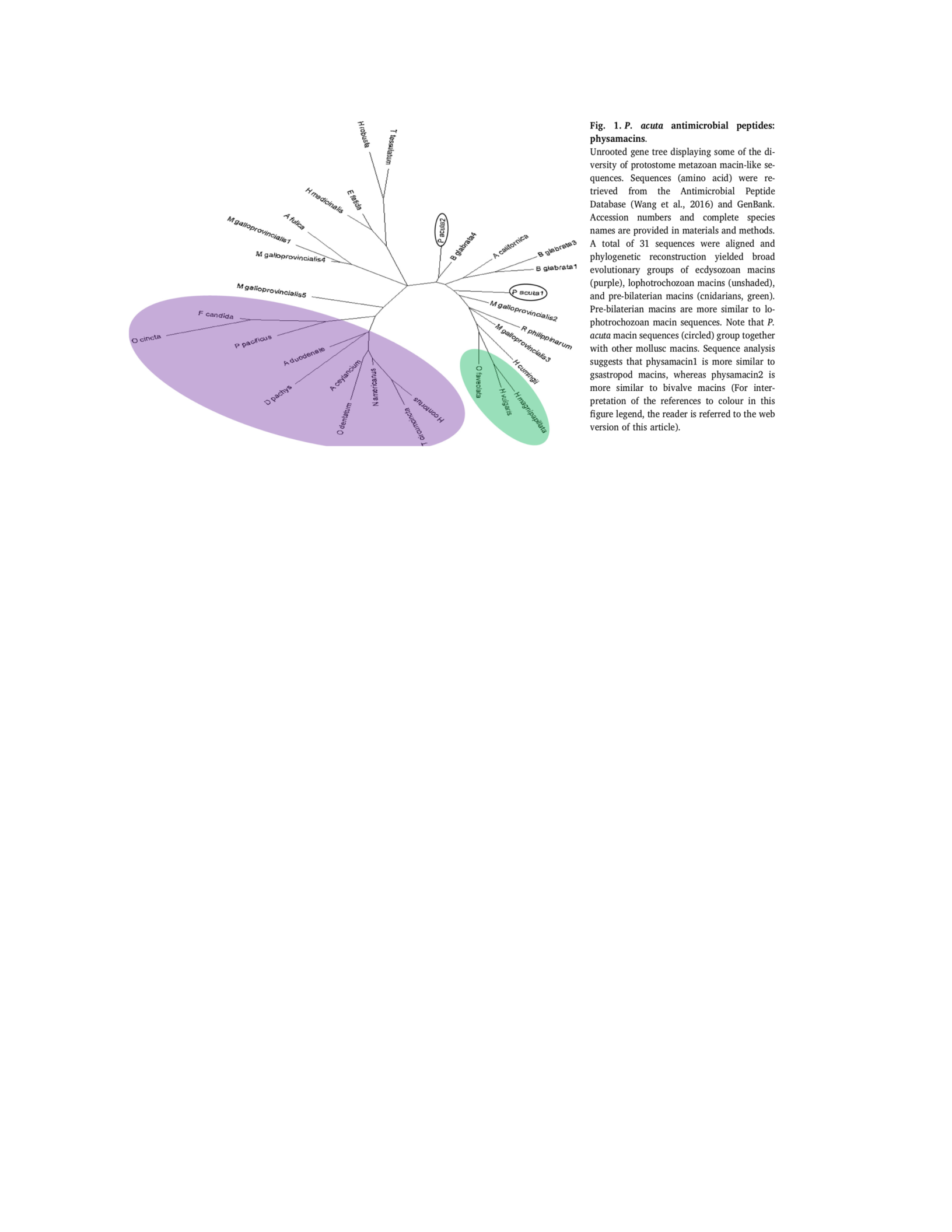
91
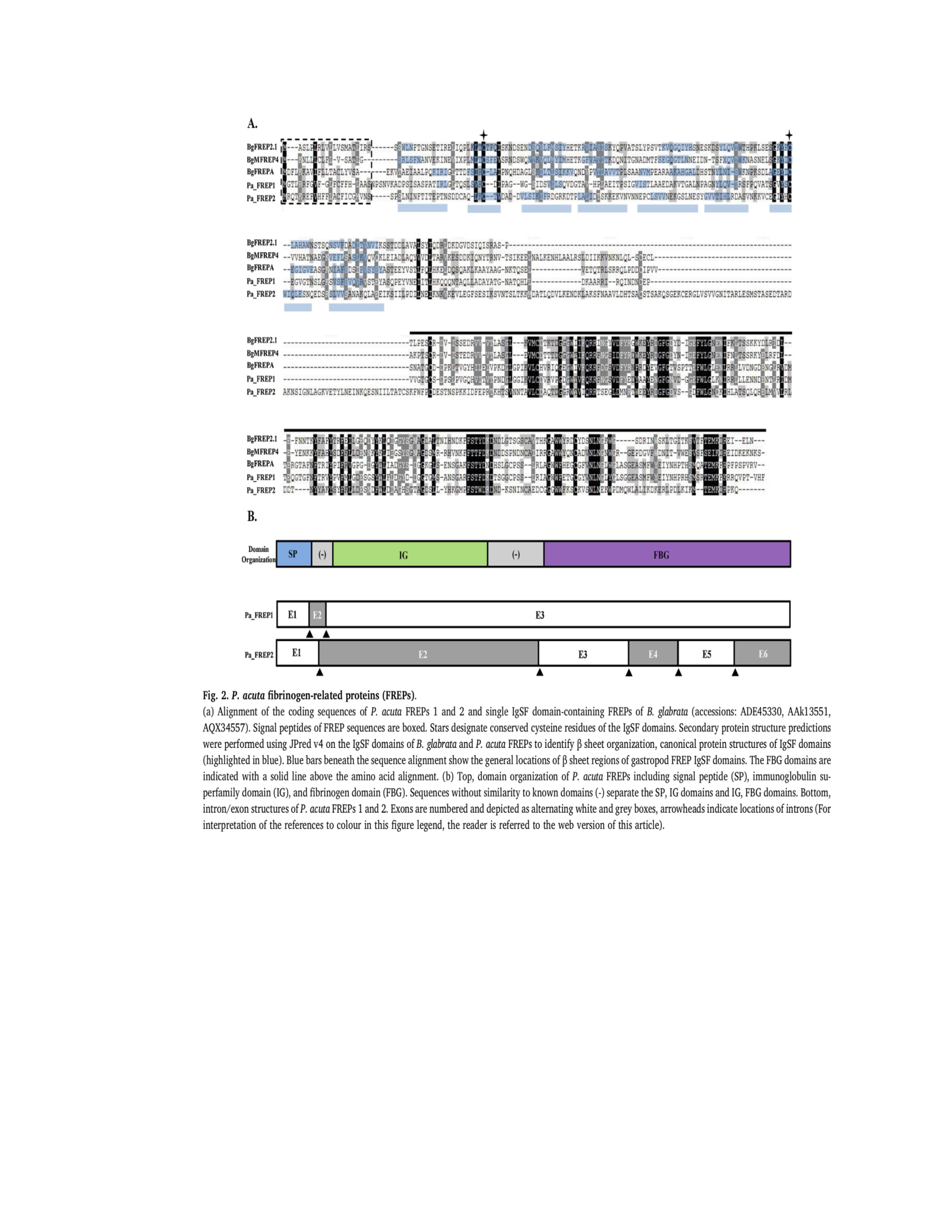
92
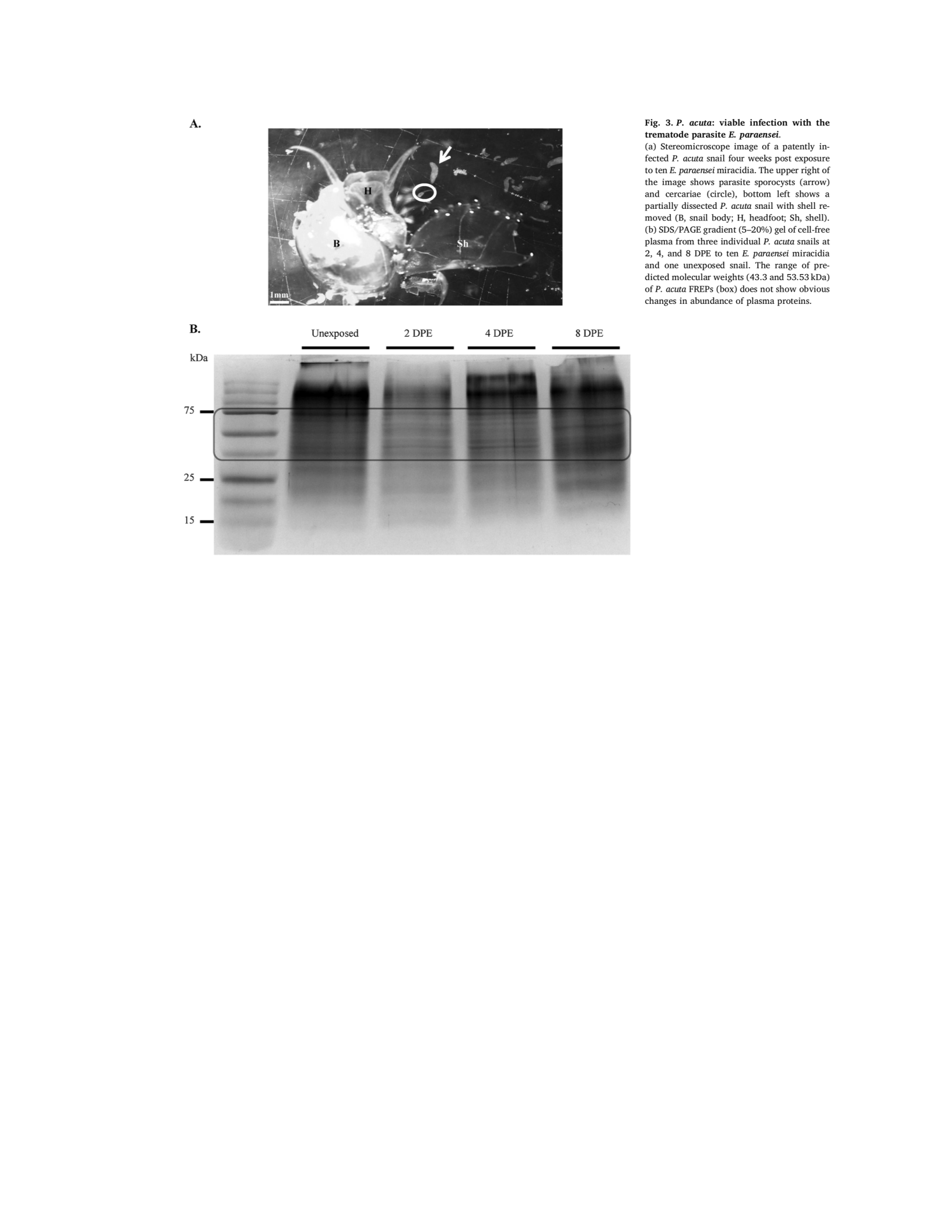
93
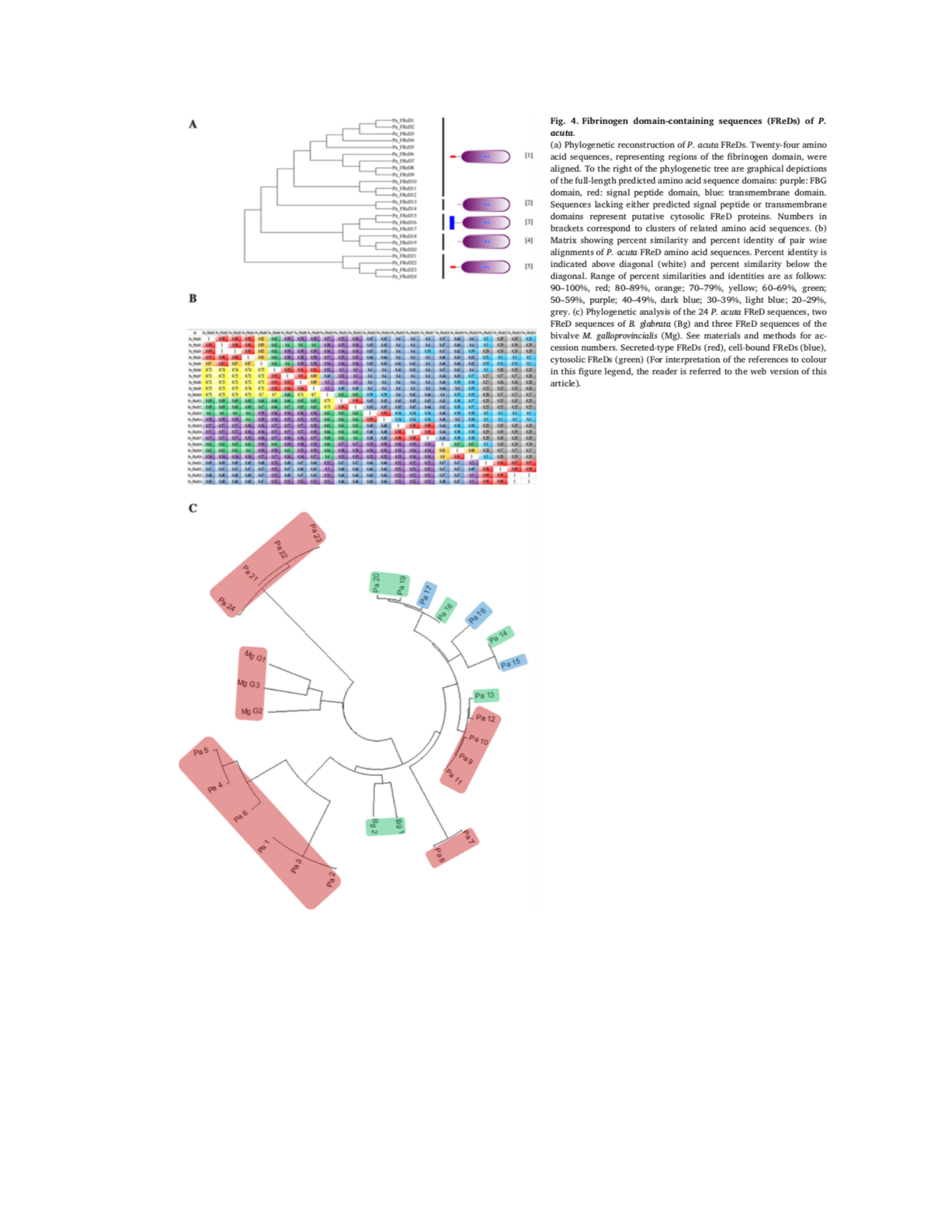
94
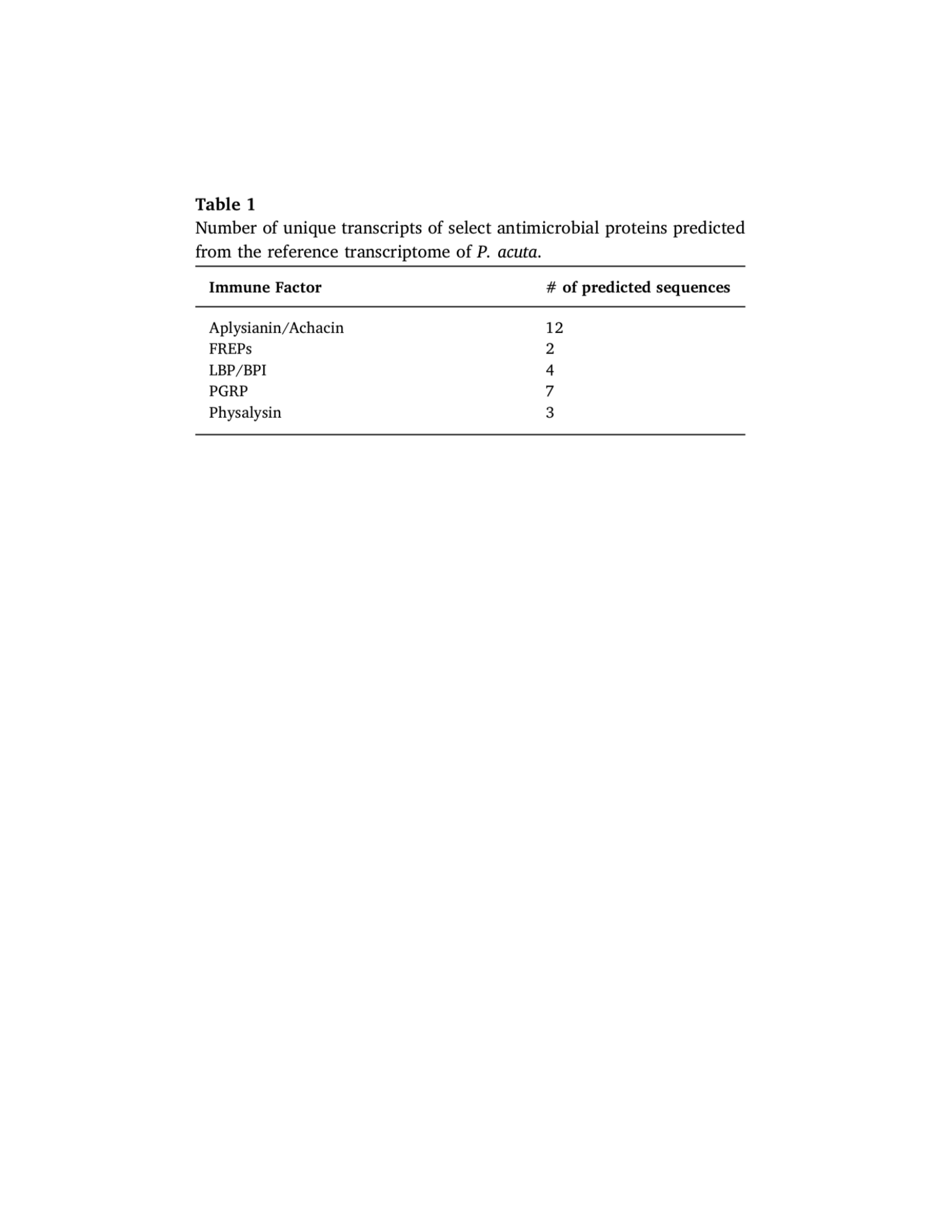
95
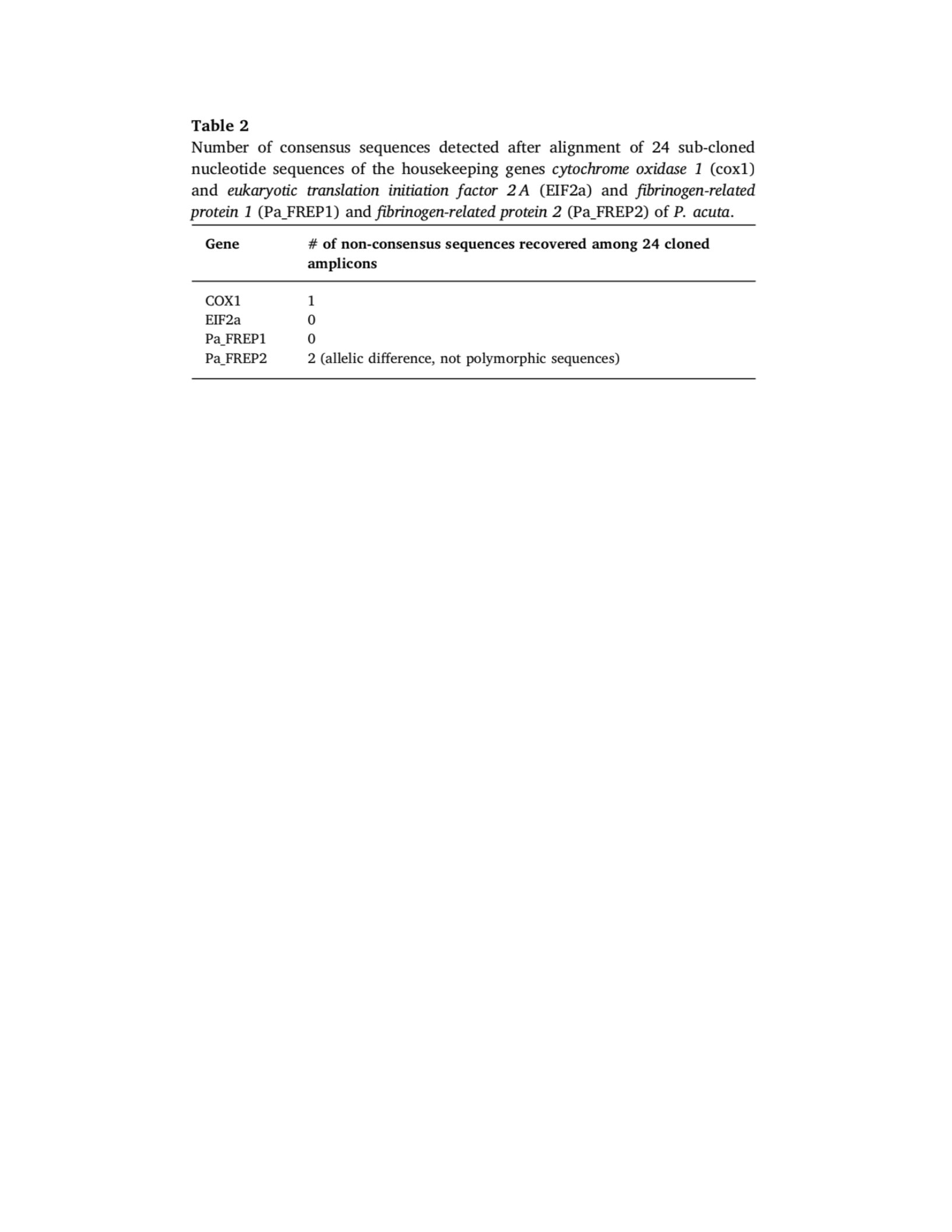
96

97
References
1. Adema, C.M., 2015. Fibrinogen-related proteins (FREPs) in mollusks. In: Hsu, E., Du
Pasquier, L. (Eds.), Pathogen-Host Interactions: Antigenic Variation v. Somatic
Adaptations. Springer International Publishing, Switzerland, pp. 111–129.
2. Adema, C.M., Loker, E.S., 2015. Digenean-gastropod host associations inform on aspects
of specific immunity in snails. Dev. Comp. Immunol. 48, 275–283.
3. Adema, C.M., Hertel, L.A., Miller, R.D., Loker, E.S., 1997. A family of fibrinogen-
related proteins that precipitates parasite-derived molecules is produced by an
invertebrate after infection. PNAS 94, 8691–8696.
4. Adema, C.M., Hertel, L.A., Loker, E.S., 1999. Evidence from two planorbid snails of a
complex and dedicated response to digenean (echinostome) infection. Parasitology 119,
395–404.
5. Adema, C.M., Hanington, P.C., Lun, C.M., Rosenberg, G.H., Aragon, A.D., Stout, B.A.,
Richard, M.L.L., Gross, P.S., Loker, E.S., 2010. Differential transcriptomic responses of
Biomphalaria glabrata (Gastropoda, Mollusca) to bacteria and metazoan parasites,
Schistosoma mansoni and Echinostoma paraensei (Digenea, Platyhelminthes). Mol.
Immunol. 47, 849–860.
6. Adema, C.M., Hillier, L.W., Jones, C.S., Loker, E.S., Knight, M., Minx, P., Oliveira, G.,
Raghavan, N., Shedlock, A., do Amaral, L.R., Arican-Goktas, H.D., Assis, J.G., Baba,
E.H., Baron, O.L., Bayne, C.J., Bickham-Wright, U., Biggar, K.K., Blouin, M., Bonning,
B.C., Botka, C., Bridger, J.M., Buckley, K.M., Buddenborg, S.K., Lima, Caldeira, R.,
Carleton, J., Carvalho, O.S., Castillo, M.G., Chalmers, I.W., Christensens, M., Clifton, S.,
Cosseau, C., Coustau, C., Cripps, R.M., Cuesta-Astroz, Y., Cummins, S.F., di Stephano,
L., Dinguirard, N., Duval, D., Emrich, S., Feschotte, C., Feyereisen, R., FitzGerald, P.,
Fronick, C., Fulton, L., Galinier, R., Gava, S.G., Geusz, M., Geyer, K.K., Geraldo-
Calderón, G.I., de Souza Gomes, M., Gordy, M.A., Gourbal, B., Grunau, C., Hanington,
P.C., Hoffmann, K.F., Hughes, D., Humphries, J., Jackson, D.J., Jannotti- Passos, L.K.,
de, Jesus, Jeremias, W., Jobling, S., Kamel, B., Kapusta, A., Kaur, S., Koene, J.M., Kohn,
A.B., Lawson, D., Lawton, S.P., Lìang, D., Limpanont, Y., Liu, S., Lockyer, A.E.,
Lovasto, T.L., Ludolf, F., Magrini, V., McManus, D.P., Medina, M., Misra, M., Mitta,
G., Mkoji, G.M., Montague, M.J., Montelongo, C., Moroz, L.L., Munoz-Torres, M.C.,
Niazi, U., Noble, L.R., Oliveira, F.S., Pais, F.S., Papenfuss, A.T., Peace, R., Pena, J.J.,
Pila, E.A., Quelais, T., Raney, B.J., Rast, J.P., Rollinson, D., Rosse, I.C., Rotgans, B.,
Routledge, E.J., Ryan, K.M., Scholte, L.L.S., Storey, K.B., Swain, M., Tennessen, J.A.,
Tomlinson, C., Trujillo, D.L., Volpi, E.V., Walker, A.J., Wang, T., Wannaporn, I.,
Warren, W.C., Wu, X.J., Yoshino, T.P., Yusuf, M., Zhang, S.M., Zhao, M., Wilson,
R.K., 2017. Whole genome analysis of a schistosomiasis- transmitting freshwater snail.
Nat. Commun. 8, 15451.

98
7. Altschul, S.F., Gish, W., Miller, W., Myers, E.W., Lipman, D.J., 1990. Basic local
alignment search tool. J. Mol. Biol. 215, 403–410.
8. Baeza Garcia, A., Pierce, R.J., Gourbal, B., Werkmeister, E., Colinet, D., Reichart, J.M.,
Dissous, C., Coustau, C., 2010. Involvement of the cytokine MIF in the snail host
immune response to the parasite Schistosoma mansoni. PLoS Pathogens 6 e1001115.
9. Baron, O.L., van West, P., Industri, B., Pouchet, M., Dubreuil, G., Gourbal, B., Reichart,
J.M., Coustau, C., 2013. Parental transfer of the antimicrobial protein LBP/BPI protects
Biomphalaria glabrata eggs against oomycete infections. PLoS Pathogens 9 e1003792.
10. Baron, O.L., Deleury, E., Reichart, J.M., Coustau, C., 2016. The LBP/BPI multigenic
family in invertebrates: evolutionary history and evidences of specialization in mollusks.
Dev. Comp. Immunol. 57, 20–30.
11. Bayne, C.J., 2009. Successful parasitism of vector snail Biomphalaria glabrata by the
human fluke (trematode) Schistosoma mansoni: a 2009 assessment. Mol. Biochem.
Parasitol. 165, 8–18.
12. Bolger, A.M., Lohse, M., Usadel, B., 2014. Trimmomatic: a flexible trimmer for illumina
sequence data. Bioinformatics 30, 2112–2120.
13. Bouchet, P., Rocroi, J.P., 2005. Classification and nomenclator of gastropod families.
Malacologia 397.
14. Bouchut, A., Coustau, C., Gourbal, B., Mitta, G., 2007. Compatibility in the
Biomphalaria glabrata/Echinostoma caproni model: new candidate genes evidenced by a
suppressive subtractive hybridization approach. Parasitology 134, 575–588.
15. Buchfink, B., Xie, C., Huson, D.H., 2015. Fast and sensitive protein alignment using
DIAMOND. Nat. Methods 12, 59–60.
16. Buckley, K.M., Rast, J.P., 2015. Diversity of animal immune receptors and the origins of
recognition complexity in the deuterostomes. Dev. Comp. Immunol. 49, 179–189.
17. Buddenborg, S.K., Bu, L., Zhang, S.M., Schilkey, F.D., Mkoji, G.M., Loker, E.S., 2017.
Transcriptomic responses of Biomphalaria pfeifferi to Schistosoma mansoni:
Investigation of a neglected African snail that supports more S. mansoni transmission
than any other snail species. PLoS Negl. Trop. Dis. 11 e0005984.
18. Camargo, J.A., Alonos, Á., 2017. Ecotoxilogical assessment of the impact of fluoride (F-)
and turbidity on the freshwater snail Physella acuta in a polluted river receiving an
industrial effluent. Environ. Sci. Pollut. Res. Int. 24, 15667–15677.

99
19. Chevreux, B., Wetter, T., Suhai, S., 1999. Genome sequence assembly using trace signals
and additional sequence information. Computer Science and Biology: Proceedings of the
German Conference on Bioinformatics (GCB) 99, 45–56.
20. Christophides, G.K., Zdobnov, E., Barillas-Mury, C., Birney, E., Blandin, S., Blass, C.,
Brey, P.T., Collins, F.H., Danielli, A., Dimopoulos, G., Hetru, C., Hoa, N.T., Hoffmann,
J.A., Kanzok, S.M., Letunic, I., Levashina, E.A., Loukeris, T.G., Lycett, G., Meister, S.,
Michel, K., Moita, L.F., Müller, H.M., Osta, M.A., Paskewitz, S.M., Reichart, J.M.,
Rzhetsky, A., Troxler, L., Vernick, K.D., Vlachou, D., Volz, J., von Mering, C., Xu, J.,
Zheng, L., Bork, P., Kafatos, F.C., 2002. Immunity-related genes and gene families in
Anopheles gambiae. Science 298, 159–165.
21. Couch, L., Hertel, L.A., Loker, E.S., 1990. Humoral response of the snail Biomphalaria
glabrata to trematode infection: observations on a circulating hemagglutinin. J. Exp.
Zool. 255, 340–349.
22. Coustau, C., Gourbal, B., Duval, D., Yoshino, T.P., Adema, C.M., Mitta, G., 2015.
Advances in gastropod immunity from the study of the interaction between the snail
Biomphalaria glabrata and its parasites: a review of research progress over the last
decade. Fish. Shellf. Immunol. 46, 5–16.
23. Deleury, E., Dubreuil, G., Elangovan, N., Wajnberg, E., Reichart, J.M., Gourbal, B.,
Duval, D., Baron, O.L., Gouzy, J., Coustau, C., 2012. Specific versus non-specific
immune responses in an invertebrate species evidenced by a comparative de novo
sequencing study. PLoS One 7 e32512.
24. Dheilly, N.M., Adema, C.M., Raftos, D.A., Gourbal, B., Grunau, C., Du Pasquier, L.,
2014. No more non-model species: the promise of next generation sequencing for
comparative immunology. Dev. Comp. Immunol. 45, 56–66.
25. Dheilly, N., Duval, D., Mouahid, G., Emans, R., Allienne, J.F., Galinier, R., Genthon, C.,
Dubois, E., Du Pasquier, L., Adema, C.M., Grunau, C., Mitta, G., Gourbal, B., 2015. A
family of variable immunoglobulin and lectin domain containing molecules in the snail
Biomphalaria glabrata. Dev. Comp. Immunol. 48, 234–243.
26. Dillon Jr, R.T., Wethington, A.R., Lydeard, C., 2011. The evolution of reproductive
isolation in a simultaneous hermaphrodite, the freshwater snail Physa. BMC Evol. Biol.
11, 144.
27. Dimopoulos, G., Christophides, G.K., Meister, S., Schultz, J., White, K.P., Barillas-
Mury, C., Kafatos, F.C., 2002. Genome expression analysis of Anopheles gambiae:
responses to injury, bacterial challenge, and malaria infection. Proc. Natl. Acad. Sci. U.
S. A. 99, 8814–8819.
28. Drozdetskiy, A., Cole, C., Procter, J., Barton, G.J., 2015. JPred4: a protein secondary
structure prediction server. Nucleic Acids Res. 43, W389–W394.

100
29. Egesa, M., Hoffmann, K.F., Hokke, C.H., Yazdanbakhsh, M., Cose, S., 2017. Rethinking
schistosomiasis vaccine development: synthetic vesicles. Trends Parasitol. 30187–30193.
30. Finn, R.D., Attwood, T.K., Babbitt, P.C., Bateman, A., Bork, P., Bridge, A.J., Chang,
H.Y., Dosztányi, Z., El-Gebali, S., Fraser, M., Gough, J., Haft, D., Holliday, G.L.,
Huang, H., Huang, X., Letunic, I., Lopez, R., Lu, S., Marchler-Bauer, A., Mi, H., Mistry,
J., Natale, D.A., Necci, M., Nuka, G., Orengo, C.A., Park, Y., Pesseat, S., Piovesan, D.,
Potter, S.C., Rawlings, N.D., Redaschi, N., Richardson, L., Rivoire, C., Sangrador-Vegas,
A., Sigrist, C., Sillitoe, I., Smithers, B., Squizzato, S., Sutton, G., Thanki, N., Thomas,
P.D., Tosatto, S.C., Wu, C.H., Xenarios, I., Yeh, L.S., Young, S.Y., Mitchell, A.L., 2017.
InterPro in 2017-beond protein family and domain annotations. Nucleic Acids Res. 45,
D190–D199.
31. Galinier, R., Portela, J., Moné, Y., Allienne, J.F., Henri, H., Delbecq, S., Mitta, G.,
Gourbal, B., Duval, D., 2013. Biomphalysin, a new β pore-forming toxin involved in
Biomphalaria glabrata immune defense against Schistosoma mansoni. PLoS Pathogens
9, e1003216.
32. Galinier, R., Roger, E., Moné, Y., Duval, D., Portet, A., Pinaud, S., Chaparro, C.,
Grunau, C., Genthon, C., Dubois, E., Rognon, A., Arancibia, N., Dejean, B., Théron, A.,
Gourbal, B., Mitta, G., 2017. A multistrain approach to studying the mechanisms
underlying compatibility in the interaction between Biomphalaria glabrata and
Schistosoma mansoni. PLoS Negl. Trop. Dis. 11 e0005398.
33. Gasteiger, E., Gattiker, A., Hoogland, C., Ivanyi, I., Apple, R.D., Bairoch, A., 2003.
ExPASy: the proteomics server for in-depth protein knowledge and analysis. Nucleic
Acids Res. 31, 81–84.
34. Gerdol, M., De Moro, G., Manfrin, C., Venier, P., Pallavicini, A., 2012. Big defensins
and mytimacins, new AMP families of the Mediterranean mussel Mytilus
galloprovincialis. Dev. Comp. Immunol. 36, 390–399.
35. Ghosh, J., Lun, C.M., Majeske, A.J., Sacchi, S., Schrankel, C.S., Smith, L.C., 2011.
Invertebrate immune diversity. Dev. Comp. Immunol. 35, 959–974.
36. Gorbushin, A.M., Borisova, E.A., 2015. Lectin-like molecules in transcriptome of
Littorina littorea hemocytes. Dev. Comp. Immunol. 48, 210–220.
37. Gorbushin, A.M., Iakovleva, N.V., 2011. A new gene family of single fibrinogen domain
lectins in Mytilus. Fish. Shellf. Immunol. 30, 434–438.
38. Gorbushin, A.M., Panchin, Y.V., Iakovleva, N.V., 2010. In search of the origin of
FREPs: characterization of californica fibrinogen-related proteins. Dev. Immunol. 34,
465–473.

101
39. Gordy, M.A., Pila, E.A., Hanington, P.C., 2015. The role of fibrinogen-related proteins in
the gastropod immune response. Fish. Shellf. Immunol. 46, 39–49.
40. Grabherr, M.G., Haas, B.J., Yassour, M., Levin, J.Z., Thompson, D.A., Amit, I.,
Adiconis, X., Fan, L., Raychowdhury, R., Zeng, Q., Chen, Z., Mauceli, E., Hacohen, N.,
Gnirke, A., Rhind, N., di Palma, F., Birren, B.W., Nusbaum, C., Lindblad-Toh, K.,
Friendman, N., Regev, A., 2011. Full-length transcriptome assembly from RNA-Seq data
without a reference genome. Nat. Biotechnol. 29, 644–652.
41. Gregory, T.R., 2017. Animal Genome Size Database. http://www.genomesize.com.
42. Grimm-Jørgensen, Y., 1983. Immunoreactive somatostatin in two pulmonate gastropods.
Gen. Comp. Endocrinol. 49, 108–114.
43. Grimm-Jørgensen, Y., 1987. Somatostatin and calcitonin modulate gastropod internal
defense mechanisms. Dev. Comp. Immunol. 11, 487–499.
44. Guo, Y., He, H., 2014. Identification and characterization of a goose-type lysozyme from
sewage snail Physa acuta. Fish. Shellfish. Immunol. 39, 321–325.
45. Hanelt, B., Lun, C.M., Adema, C.M., 2008. Comparative ORESTES-sampling of
transcriptomes of immune-challenged Biomphalaria glabrata snails. J. Invertebr. Pathol.
99, 192–203.
46. Hanington, P.C., Forys, M.A., Dragoo, J.W., Zhang, S.M., Adema, C.M., Loker, E.S.,
2010. Role for a somatically diversified lectin in resistance of an invertebrate to parasite
infection. PNAS 107, 21087–21092.
47. Hanington, P.C., Forys, M.A., Loker, E.S., 2012. A somatically diversified defense
factor, FREP3, is a determinant of snail resistance to schistosome infection. PLoS Negl.
Trop. Dis. 6, e1591.
48. Hanington, P.C., Zhang, S.M., 2011. The primary role of fibrinogen-related proteins in
invertebrates is defense, not coagulation. J. Innate Immun. 3, 17–27.
49. Hathaway, J.J.M., Adema, C.M., Stout, B.A., Mobarak, C.D., Loker, E.S., 2010.
Identification of protein components of egg masses indicates parental investment in
immunoprotection of offspring by Biomphalaria glabrata (Gastropoda, Mollusca). Dev.
Comp. Immunol. 34, 425–435.
50. Hertel, L.A., Adema, C.M., Loker, E.S., 2005. Differential expression of FREP genes in
two strains of Biomphalaria glabrata following exposure to the digenetic trematodes
Schistosoma mansoni and Echinostoma paraensei. Dev. Comp. Immunol. 29, 295–303.

102
51. Humphries, J.E., Yoshino, T.P., 2003. Cellular receptors and signal transduction in
molluscan hemocytes: connections with the innate immune system of vertebrates. Integr.
Comp. Biol. 43, 305–312.
52. Ittiprasert, W., Miller, A., Myers, J., Nene, V., El-Sayed, N.M., Knight, M., 2010.
Identification of immediate response genes dominantly expressed in juvenile resistant and
susceptible Biomphalaria glabrata snails upon exposure to Schistosoma mansoni. Mol.
Biochem. Parasitol. 169, 27–39.
53. Jack, R.S., 2015. Evolution of immunity and pathogens. In: Hsu, E., Du Pasquier, L.
(Eds.), Pathogen-host Interactions: Antigenic variation v. Somatic Adaptations. Springer
International Publishing, Switzerland, pp. 1–20.
54. Jörger, K.M., Stöger, I., Kano, Y., Fukuda, H., Knebelsberger, T., Schrödl, M., 2010. On
the origin of Acochlidia and other enigmatic euthyneuran gastropods, with implications
for the systematics of Heterobranchia. BMC Evol. Biol. 10, 323.
55. Kamiya, H., Muramoto, K., Yamazaki, M., 1986. aplysianin-A, an antibacterial and
antineoplastic glycoprotein in the albumen gland of A sea hare, Aplysia kurodai.
Experientia 42, 1065–1067.
56. Kasai, K., Ishikawa, T., Nakamura, T., Miura, T., 2015. Antibacterial properties of L-
amino acid oxidase: mechanisms of action and perspectives for therapeutic applications.
Appl. Microbiol. Biotechnol. 99, 7847–7857.
57. Knight, M., Ittiprasert, W., Arcian-Goktas, H.D., Bridger, J.M., 2016. Epigenetic
modulation, stress and plasticity in susceptibility of the snail host, Biomphalaria
glabrata, to Schistosoma mansoni infection. Int. J. Parasitol. 46, 389–394.
58. Larken, M.A., Blackshields, G., Brown, N.P., Chenna, R., McGettigan, P.A., McWilliam,
H., Valentin, F., Wallace, I.M., Wilm, A., Lopez, R., Thompson, J.D., Gibson, T.J.,
Higgins, D.G., 2007. Clustal W and Clustal X version 2.0. Bioinformatics 23, 2947–
2948.
59. Lee, Y.S., Lee, S., Kang, S.W., Jeong, J.E., Baek, M.K., Choi, S., Chae, S., Jo, Y.H.,
Han, Y.S., Park, H., 2011. Expressed sequence tag analysis of Physa acuta: a freshwater
pulmonate in Korea. J. Shellf. Res. 30, 127–132.
60. Léonard, P.M., Adema, C.M., Zhang, S.M., Loker, E.S., 2001. Structure of two FREP
genes that combine IgSF and fibrinogen domains, with comments on diversity of the
FREP gene family in the snail Biomphalaria glabrata. Gene 269, 155–165.
61. Leoni, G., De Poli, A., Mardirossian, M., Gambato, S., Florian, F., Venier, P., Wilson,
D.N., Tossi, A., Pallavicini, A., Gerdol, M., 2017. Myticalins: A novel multigenic family
of linear, cationic antimicrobial peptides from marine mussels (Mytilus spp.). Mar. Drugs
15 E261.

103
62. Letunic, I., Bork, P., 2017. 20 years of the SMART protein domain annotation resource.
Nucleic Acids Res. http://dx.doi.org/10.1093/nar/gkx922.
63. Li, B., Dewey, C.N., 2011. RSEM: accurate transcript quantification from RNA-Seq data
with or without a reference genome. BMC Bioinformatics 12, 323.
64. Li, W., Godzik, A., 2006. Cd-hit: a fast program for clustering and comparing large sets
of protein or nucleotide sequences. Bioinformatics 22, 1658–1659.
65. Lie, K.J., Basch, P.F., 1967. The life history of Echinostoma paraensei sp. N.
(Trematoda: Echinostomatidae). J. Parasitol. 53, 1192–1199.
66. Litman, G.W., Cooper, M.D., 2007. Why study the evolution of immunity? Nat.
Immunol. 8, 547–548.
67. Loker, E.S., Hertel, L.A., 1987. Alterations in Biomphalaria glabrata plasma induced by
infection with the digenetic trematode Echinostoma paraensei. J. Parasitol. 73, 503–513.
68. Loker, E.S., Cimino, D.F., Hertel, L.A., 1992. Excretory-secretory products of
Echinostoma paraensei sporocysts mediate interference with Biomphalaria glabrata
hemocyte functions. J. Parasitol. 78, 104–115.
69. Love, M.I., Huber, W., Anders, S., 2014. Moderated estimation of fold change and
dispersion for RNA-seq data with DESeq2. Genome Biol. 15, 550.
70. Lu, X., Wang, M., Qi, J., Wang, H., Li, X., Gupta, D., Dziarski, R., 2006. Peptidoglycan
recognition proteins are a new class of human bactericidal proteins. J. Biol. Chem. 281,
5895–5907.
71. Martínez-Paz, P., Morales, M., Sánchez-Argüello, P., Morcillo, G., Martínez-Guitarte,
J.L., 2017. Cadmium in vivo exposure alters stress response and endocrine-related genes
in the freshwater snail Physa acuta. New biomarker genes in a new model organism.
Environ. Pollut. 220, 1488–1497.
72. Mitta, G., Vandenbulcke, F., Roch, P., 2000. Original involvement of antimicrobial
peptides in mussel innate immunity. FEBS Lett. 486, 185–190.
73. Moné, Y., Gourbal, B., Duval, D., Du Pasquier, L., Kieffer-Jaquinod, S., Mitta, G., 2010.
A large repertoire of parasite epitopes matched by a large repertoire of host immune
receptors in an invertebrate host/parasite model. PLoS Negl. Trop. Dis. 4 e813.
74. Müller, V., de Boer, R.J., Bonhoeffer, S., Szathmáry, E., 2017. An evolutionary
perspective on the systems of adaptive immunity. Biol. Rev. Camb. Philos. Soc.
http://dx.doi.org/10.1111/brv.12355.

104
75. Mundry, M., Bornberg-Bauer, E., Sammeth, M., Feulner, P.G.D., 2012. Evaluating
characteristics of de novo assembly software on 454 transcriptome data: a simulation
approach. PLoS One 7 e31410.
76. Mylonakis, E., Podsiadlowski, L., Muhammed, M., Vilcinskas, A., 2016. Diversity,
evolution and medical applications of insect antimicrobial peptides. Philos. Trans. R. Soc.
Lond. B Biol. Sci. 371.
77. Nishimura, O., Hara, Y., Kuraku, S., 2017. gVolante for standardizing completeness
assessment of genome and transcriptome assemblies. Bioinformatics.
http://dx.doi.org/10.1093/bioinformatics/btx445.
78.
79. Nolan, J.R., Bergthorsson, U., Adema, C.M., 2014. Physella acuta: atypical
mitochondrial gene order among panpulmonates (Gastropoda). J. Mollus. Stud. 1–12.
80. Park, J.W., Kim, C.H., Kim, J.H., Je, B.R., Roh, K.B., Kim, S.J., Lee, H.H., Ryu, J.H.,
Lim, J.H., Oh, B.H., Lee, W.J., Ha, N.C., Lee, B.L., 2007. Clustering of peptidoglycan
recognition protein-SA is required for sensing lysine-type peptidoglycan in insects. Proc.
Natl. Acad. Sci. U. S. A. 104, 6602–6607.
81. Petersen, T.N., Brunak, S., von Heijne, G., Nielsen, H., 2011. SignalP 4.0: discriminating
signal peptides from transmembrane regions. Nat. Methods 8, 785–786.
82. Pila, E.A., Tarrabain, M., Kabore, A.L., Hanington, P.C., 2016a. A novel toll-like
receptor (TLR) influences compatibility between the gastropod Biomphalaria glabrata,
and the digenean trematode Schistosoma mansoni. PLoS Pathog. 12 e1005513.
83. Pila, E.A., Gordy, M.A., Phillips, V.K., Kabore, A.L., Rudko, S.P., Hanington, P.C.,
2016b. Endogenous growth factor stimulation of hemocyte proliferation induces
resistance to Schistosoma mansoni challenge in the snail host. Proc. Natl. Acad. Sci. U. S.
A. 113, 5305–5310.
84. Podobnik, M., Anderluh, G., 2017. Pore-forming toxins in Cnidaria. Semin. Cell Dev.
Biol. http://dx.doi.org/10.1016/j.semcdb.2017.07.026.
85. Premachandra, H.K., Elvitigala, D.A., Whang, I., Lee, J., 2014. Identification of a novel
molluscan short-type peptidoglycan recognition protein in disk abalone (Haliotis discus
discus) involved in host antibacterial defense. Fish. Shellf. Immunol. 39, 99–107.
86. Romero, A., Dios, S., Poisa-Beiro, L., Costa, M.M., Posada, D., Figueras, A., Novoa, B.,
2011. Individual sequence variability and functional activities of fibrinogen-related
proteins (FREPs) in the Mediterranean mussel (Mytilus galloprovincialis) suggest an-
cient and complex immune recognition models in invertebrates. Dev. Comp. Immunol.
35, 334–344.

105
87. Royet, J., Gupta, D., Dziarski, R., 2011. Peptidoglycan recognition proteins: modulators
of the microbiome and inflammation. Nat. Rev. Immunol. 11, 837–851.
88. Schultz, J.H., Adema, C.M., 2017. Comparative immunogenomics of mollusks. Dev.
Comp. Immunol. 75, 3–15.
89. Steiner, H., 2004. Peptidoglycan recognition proteins: on and off switches for innate
immunity. Immunol. Rev. 198, 83–96.
90. Sullivan, J.T., Belloir, J.A., 2014. Activation of an innate immune response in the
schistosome-transmitting snail Biomphalaria glabrata by specific bacterial PAMPs. Dev.
Comp. Immunol. 42, 256–260.
91. Suwannatrai, K., Suwannatrai, A., Tabsripair, P., Welbat, J.U., Tangkawattana, S.,
Cantacessi, C., Mulvenna, J., Tesana, S., Loukas, A., Sotillo, J., 2016. Differential protein
expression in the hemolymph of Bithynia siamensis goniomphalos infected with
Opisthorchis viverrini. PLoS Negl. Trop. Dis. 10 e0005104.
92. Tamura, K., Stecher, G., Peterson, D., Filipski, A., Kumar, S., 2013. MEGA6: molecular
evolutionary genetics analysis version 6.0. Mol. Biol. Evol. 30, 2725–2729.
93. Tanveer, A., 1991. Studies on the morphology of hemocytes of Physa acuta and
Bellamaya bengalensis. Punjab Univ. J. Zool. 6, 7–18.
94. Tasiemski, A., Vandenbulcke, F., Mitta, G., Lemoine, J., Lefebvre, C., Sautière, P.E.,
Salzet, M., 2004. Molecular characterization of two novel antibacterial peptides in-
ducible upon bacterial challenge in an annelid, the leech Theromyzon tessulatum. J. Biol.
Chem. 279, 30973–30982.
95. Tetreau, G., Pinaud, S., Portet, A., Galinier, R., Gourbal, B., Duval, D., 2017. Specific
pathogen recognition by multiple innate immune sensors in an invertebrate. Front.
Immunol. 8, 1249.
96. Wang, G., Li, X., Wang, Z., 2009. APD2: the updated antimicrobial peptide database and
its application in peptide design. Nucleic Acids Res. 37, 933–937.
97. Wethington, A.R., Lydeard, C., 2007. A molecular phylogeny of Physidae (Gastropoda:
Basommatophora) based on mitochondrial DNA sequences. J. Molluscan Stud. 73, 241–
257.
98. White, T.R., Conrad, M.M., Tseng, R., Balayan, S., Golding, R., de Frias Martins, A.M.,
Dayrat, B.A., 2011. Ten new complete mitochondrial genomes of pulmonates (Mollusca:
Gastropoda) and their impact on phylogenetic relationships. BMC Evol. Biol. 11, 295.
99. Winnepenninckx, B., Backeljau, T., De Wachter, R., 1993. Extraction of high molecular
weight DNA from molluscs. Trends Genet. 9, 407.

106
100. Wu, X.J., Dinguirard, N., Sabat, G., Lui, H.D., Gonzalez, L., Gehring, M., Bickham-
Wright, U., Yoshino, T.P., 2017. Proteomic analysis of Biomphalaria glabrata plasma
proteins with binding affinity to those expressed by early developing larval Schistosoma
mansoni. PLoS Pathog. 13 e1006081.
101. Yoshino, T.P., Wu, X.J., Liu, H., Gonzalez, L.A., Deelder, A.M., Hokke, C.H., 2012.
Glycotope sharing between snail hemolymph and larval schistosomes: larval trans-
formation products alter shared glycan patterns of plasma proteins. PLoS Negl. Trop. Dis.
6, e1569.
102. Zaidman-Rémy, A., Hervé, M., Poidevin, M., Pili-Floury, S., Kim, M.S., Blanot, D., Oh,
B.H., Ueda, R., Mengin-Lecreulx, D., Lemaitre, B., 2006. The Drosophila amidase
PGRP-LB modulates the immune response to bacterial infection. Immunity 24, 463–473.
103. Zdobnov, E.M., von Mering, C., Letunic, I., Torrents, D., Suyama, M., Copley, R.R.,
Christophides, G.K., Thomasova, D., Holt, R.A., Subramanian, G.M., Mueller, H.M.,
Dimopoulus, G., Law, J.H., Wells, M.A., Birney, E., Charlab, R., Halpern, A.L., Kokoza,
E., Kraft, C.L., Lai, Z., Lewis, S., Louis, C., Barillas-Mury, C., Nusskern, D., Rubin,
G.M., Salzberg, S.L., Sutton, G.G., Topalis, P., Wides, R., Wincker, P., Yandell, M.,
Collins, F.H., Ribeiro, J., Gelbart, W.M., Kafatos, F.C., Bork, P., 2002. Comparative
genome and proteome analysis of Anopheles gambiae and Drosophila melanogaster.
Science 298, 149–159.
104. Zhang, S.M., Adema, C.M., Kepler, T.B., Loker, E.S., 2004. Diversification of Ig super-
family genes in an invertebrate. Science 305, 251–254.
105. Zhang, S.M., Zeng, Y., Loker, E.S., 2007. Characterization of immune genes from the
schistosome host snail Biomphalaria glabrata that encode peptidoglycan recognition
proteins and gram-negative bacteria binding protein. Immunogenetics 59, 883–898.
106. Zhang, L., Li, L., Guo, X., Litman, G.W., Dishaw, L.J., Zhang, G., 2015. Massive
expansion and functional divergence of innate immune genes in a protostome. Sci. Rep.
5, 8693.

107
Chapter 4: Characterization of the early host response of Physella acuta to the
digenetic trematode Echinostoma paraensei
Jonathan H. Schultz, Lijing Bu, Bishoy Kamel, and Coen M. Adema
Center of Evolutionary and Theoretical Immunology (CETI), Department of Biology, University
of New Mexico, New Mexico, USA

108
Abstract
This study analyzed the early response of the snail Physella acuta to Echinosoma paraensei, a
previously described compatible snail/digenean trematode association, during the initial phases
of infection, 2 and 8 days post exposure (DPE). RNA-seq Illumina data were collected and
assembled from 5 snails at 2DPE, 4 snails at 8DPE and 7 unexposed (control) snails. A reference
transcriptome (325,563 transcripts, 98% representation of eukaryotic universal single copy
orthologs; BUSCO) was assembled to guide RNAseq analyses, and available genomic Illumina
reads were applied toward a P. acuta genome assembly comprising 827,188 scaffolds (includes
88% BUSCO genes). Relative to controls, parasite-exposure of P. acuta led to 10,195
differentially expressed (DE) genes at 2DPE and 8,876 DE genes at 8DPE. Few sequence
homologs (18% of upregulated, and 22% of downregulated sequences) were shared between 2
and 8DPE snails. Gene Ontology (GO) analysis provided annotation of only 1.2% of DE genes
to interpret the response of P. acuta to the parasite. Increased insights were achieved by BLAST
identification of 460 immune-relevant transcripts among the DE profiles. Physella acuta
expressed many transcripts of the CD109/TEP, GTPase IMAP and Limulus agglutination factor
(dermatopontin) immune gene families. Newly observed sequences indicated that P. acuta has at
least 82 different members of the FReD gene family and disclosed transcripts that uniquely
(among Metazoa) combined C-LECT and C1q domains. Notably, P. acuta expressed mostly
different assemblages of transcripts from particular immune gene families between 2 and 8DPE.
This shift in transcriptomic profile, especially involving immune factors, after parasite
establishment in compatible P. acuta, raises the notion that E. paraensei may manipulate the
snail host to express immune genes not targeting the parasite itself, but only counter other types
of (opportunistic) pathogens. We propose that this represents an extended phenotype of

109
E. paraensei, imposed upon P. acuta following successful parasite establishment in the snail
after 2DPE. The extensive genomic and transcriptomic resources provided will aid future
investigations to further resolve the molecular underpinnings of the compatible interaction
between P. acuta and E. paraensei.
Introduction
The Physidae, a family of freshwater panpulmonte snails, like many gastropods serve as
obligatory intermediate hosts to a great diversity of trematode parasites (Adema et al., 2009;
Barragán-Sáenz et al., 2009; Kraus et al., 2014; Ebbs et al., 2018; Muñoz-Antolí et al., 2000;
Muñoz-Antolí et al., 2008; Toledo et al., 1998). Overall, snail-parasite compatibility displays
varying degrees of specificity such that the host range for a particular parasite is restricted to a
subset of snail taxa (Adema and Loker, 2015). This suggests that snail responses are tailored for
distinct parasites and prevent most attempts at foreign invasion. Many efforts to elucidate the
molecular mechanisms that determine snail-parasite associations have been motivated by the
goal to curb transmission of human-relevant snail-transmitted diseases (Adema et al., 2012; Lu et
al., 2018; World Health Organization, 2012). Investigations with non-human parasites
transmitted by snails, such as echinostome trematodes however, have elucidated novel aspects of
gastropod immunity that help interpret the evolution of immune function among protostome
invertebrates and better understand host suitability for parasites (Loker et al., 2004). As an
example, the concept of acquired resistance, a mechanism by which an invertebrate organism
exhibits a more pronounced and effective immune response to a pathogen after a previous
encounter, was described in snails after exposure to echinostome parasites (Lie and Heyneman,
1979; Lie et al., 1982, 1983). These findings instigated investigations of the cellular interactions
of the snail host B. glabrata and its cognate echinostomes (Adema et al., 1994; Ataev and

110
Coustau, 1999; DeGaffé and Loker, 1998; Humbert and Coustau, 2001; Jeong et al., 1984; Joky
et al., 1985; Lie et al., 1981; Loker et al., 1986; Loker et al., 1989; Loker et al., 1992; Mounkassa
and Jourdane, 1990; Noda and Loker, 1989a, 1989b; Uchikawa and Loker, 1992). Study of the
humoral response of B. glabrata to echinostomes have been pivotal in understanding these host-
parasite combinations (Couch et al., 1990; Loker and Hertel, 1987; Monroy et al., 1992, 1993;
Loker et al., 1994; Hertel et al., 1994; Tetraeu et al., 2017; Vergote et al., 2005). In particular,
B. glabrata is capable of somatically diversifying carbohydrate-binding lectins known as
fibrinogen-related proteins (FREPs) that are anti-trematode defense factors, thought to increase
the range of non-self recognition (Adema et al., 1997, 1999, 2015; Hanington et al., 2010a, 2012;
Moné et al., 2010; Zhang et al., 2004). Overall, these B. glabrata-echinostome parasite models
contributed significantly to our understanding of gastropod immunobiology and elucidated novel
invertebrate immune capabilities. It is important, however, to consider that there exists a great
diversity of immune capabilities among animals (Buckley and Rast, 2015) and that even closely
related species exhibit taxon-specific differences in how immunity is achieved (e.g. Schultz and
Adema, 2017; Schultz et al., 2018). As such, investigation of diverse host-parasite models
remain relevant and important to expand the scope of interpreting gastropod immunity.
Parasites and their snail hosts are locked in evolutionary arm races (Mitta et al., 2017)
which have manifested in specific associations (Adema and Loker, 2015). However, some
trematode parasites are generalists that exhibit a wider range of suitable snail hosts. The
digenetic trematode Echinostoma paraensei is capable of infecting multiple families of snails
across gastropod phylogeny, including the Lymnaeidae, Physidae, and aforementioned
Planorbidae (Lie and Basch, 1967; Maldonado et al., 2001). Indeed, we recently demonstrated
that a lab-strain of E. paraensei, originally collected from the field in Brazil (Lie and Basch,

111
1967) and maintained with B. glabrata (Loker et al., 1992), is capable of infecting the freshwater
snail Physella acuta (Schultz et al., 2018). Remarkably, this new host-parasite combination
showed that the response of P. acuta to E. paraensei is different from that of B. glabrata
(Schultz et al., 2018). Typically, the fate of trematode parasites (Schistosoma mansoni and
E. paraensei) in B. glabrata is determined early after exposure; changes in transcriptomic
profiles show that the initial host immune response is downregulated 2 days post-exposure
(DPE) (Hanington et al., 2010b). These changes occur during parasite development from
miracaida to sporocysts (within hours after exposure) and at the onset of increased FREP
expression (Adema et al., 1999; Hanington et al., 2010a). However, P. acuta does not increase
FREP gene or protein expression after parasitic exposure and P. acuta does not somatically
diversify FREP genes (Schultz et al., 2018). Investigations of P. acuta immunology are few in
number (Grimm-Jørgensen, 1987, 1983; Guo and He, 2014; Lee et al., 2011; Schultz et al., 2018;
Tanveer, 1991) and both nature and molecular basis of host interactions of P. acuta with
E. paraensei during the early phase of infection remain unknown. In this study we aim to
characterize the response of P. acuta to E. paraensei at 2DPE when P. acuta mounts efforts to
counter colonization by the parasite and at 8DPE when the parasite has successfully negated the
host immune response and established a viable infection. In the early stage of interaction, this
approach will elucidate anti-digenean responses of P. acuta, ultimately to expand the view of
gastropod immune function and characterize the general interaction between parasite and host.
RNA-seq supported by NGS genomic assembly afforded unbiased and comprehensive
characterization of transcriptomic activities and used to survey the snail host responses of
P. acuta 2 and 8DPE to the parasite E. paraensei with particular attention to the role of immune
function of P. acuta to combat trematode infection (Schultz and Adema, 2017).

112
Materials and Methods
Snail and parasite strains
Physella acuta snails (isolate A; Nolan et al., 2014) and E. paraensei parasites (Loker et
al., 1992) were utilized in this study and are maintained at the University of New Mexico.
Parasite exposures
For RNA-seq, adult P. acuta snails (3-4mm) were placed in 12-well plates with artificial
spring water (ASW) and exposed to approximately 10 E. paraensei miracidiae overnight. The
following day, wells were checked for the absence of free-swimming miracidae as a measure of
infection. Snails were then placed in a new aquarium with ASW and fed red-leaf lettuce ad
libitum. Prior to RNA extraction (Trizol, Carlsbad, CA) infections were confirmed at 2 and 8
DPE via observation through the shell of parasite sporocysts in the heart of P. acuta snails.
Additionally, presence of echinostome DNA was confirmed from snail tissue by PCR
amplification using mitochondrial ND1 primers (Morgan and Blair, 1998), Platinum™ Taq DNA
Polymerase (Thermo Fisher, Waltham, MA) and Trizol DNA-extraction method (Trizol,
Carlsbad, CA).
Genome assembly
The genome of P. acuta was previously sequenced (Illumina NextSeq 500, 150bp PE
reads) utilizing two individual snails (Schultz et al., 2018; accessions SRX3347695,
SRX3347220). The genomic reads were processed using Trimmomatic (Bolger et al., 2014) to
remove low quality nucleotides and adaptor sequences added during Nextera (Illumina) library
preparation. The reads were assembled using MEGAHIT v1.0 (Li et al., 2016) with a k-mer
range 21-251. This primary assembly was improved by performing multiple iterations of Rascaf
(Song et al., 2016), using RNAseq data (see below), SSPACE (Boetzer et al., 2011), and

113
GapCloser (Luo et al., 2012). Completeness of assembly was tested using gVolante (Nishimura
et al., 2017) and BUSCO v2/v3 to identify core eukaryotic genes within the genome. The
genome assembly was deposited in GenBank (RDRX00000000).
Transcriptome assembly and differential expression analyses
Previously collected RNAseq data (Illumina NextSeq 500, 150bp PE reads; Schultz et al.,
2018; SRA accession SRR8080746) retrieved from 7 control (non-exposed), 5 2-DPE, and 4 8-
DPE snails to 10 E. paraensei miracidia were used to generate a reference transcriptome. Briefly,
raw reads were processed using Trimmomatic (Bolger et al., 2014). To filter out reads
contributed by the parasite, the reads were aligned using Bowtie2 (Langmead and Salzberg,
2012) to the Echinostoma caproni genome (GCA_000950555.1), a close relative of E. paraensei.
Filtered reads (paired-end) were assembled using Trinity de novo version 2.5.1 (Grabherr et al.,
2011). Additionally, the contigs were mapped to the P. acuta genome using megablast (Altschul
et al., 1990) to ascertain that transcripts were of snail origin. Contigs that aligned to the genome
were processed using CD-HIT at a 95% clustering threshold to minimize contig-redundancy (Li
and Godzik, 2006). Completeness assessment of the transcriptome was performed using
gVolante and the BUSCO v2/v3 ortholog search pipeline (Nishimura et al., 2017). Finally, read
abundance was quantified with RSEM (Li and Dewey, 2011) and comparisons of control and
experimental transcripts for differential expression were performed using EBSeq using default
parameters (Leng and Kendziorski, 2015).
Annotation of differentially expressed transcripts
Nucleotide sequences of in silico predicted transcripts, that were differentially expressed
(DE) (up-regulated, down-regulated) at 2 and 8 DPE, were translated using TransDecoder v5.3.0

114
(https://github.com/TransDecoder/TransDecoder/archive/TransDecoder-v5.3.0) to obtain the
longest open reading frames (ORFs, minumum of 100 amino acids encoded).
Translated sequences were assigned Gene Ontology (GO) identifiers via AgBase-
GOanna (McCarthy et al., 2006) using the blastp algorithm, Ag-Uniprot database, and default
parameters (except e-value threshold was set to 10e-06). Graphical interpretations of GO
annotations were achieved via WEGO 2.0 (http://wego.genomics.org.cn/).
Nucleotide sequences of in silico predicted transcripts were annotated via DIAMOND
blastx (Buchfink et al., 2015) with an e-value threshold of 10e-03. Annotations were assessed
manually. The annotation of the BLAST hit with the highest similarity score was retained for
each transcript. Immune-relevant transcript sequences were analysed in greater detail (see
below).
Translated nucleotide sequences were also annotated using InterPro (Finn et al., 2017) to
explore functional domains in sequences without significant blast hits, in order to broaden
annotation of DE sequences additional to GO and BLAST annotation. Only immune-relevant
domains were quantified and collated from up and downregulated sequences. Immune-relevant
domains were identified by previous investigations of gastropod immunity (Hanelt et al., 2008).
Expanded and novel candidate immune-gene analysis
Sequences were selected based on keyword searches of annotations of DE transcripts.
Only transcripts with the appropriate annotation and containing an open reading frame of at least
100 amino acids were included in downstream analysis. Translated sequences (amino acid level)
were subjected to SMART (Letunic and Bork, 2017) protein domain prediction software.
Sequences (aa level) of a particular gene family were aligned in Clustal X (Larken et al., 2007).
Resulting sequence alignments were visually inspected and the terminal ends of sequences were

115
trimmed to reduce gaps within the alignment. Best-fit protein model predictions for phylogenetic
analysis were performed with MEGA7 (Tamura et al., 2013). With the exception of the
alignment of FReD amino acid sequences, all gaps and/or missing data were excluded from
model predictions and phylogenetic tree reconstruction. All phylogenetic reconstructions utilized
the Maximum Likelihood method, using the evolutionary models predicted by MEGA. The LG
model was used for the CD109/TEP gene family, the WAG model for the complement C1q gene
family, the JTT+G+I model for the dermatopontin gene family, the LG+G model for the GTPase
IMAP gene family, and the WAG+G model for the FReD gene family.
Results
Parasitic exposure
All P. acuta snails survived the overnight exposure to E. paraensei and displayed
normally active behavior until sampling.
P. acuta genome
The initial genome assembly (not shown) yielded 827,188 scaffolds with an N50 length
of 1,289nt including 47.19% complete sequences of 303 eukaryotic core genes (BUSCO v2/v3).
After 6 iterations of genome scaffold improvement (see methods), the final P. acuta genome
(Fig. 1A) yielded 799,945 sequences with an N50 length of 1,358nt. The improved genome
recorded 63.37% core eukaryotic genes and yielded 223,011 scaffolds greater than 1kb in length
(Fig. 1A). The GC-content of the P. acuta genome (36.32%) is similar to that of other
gastropods, which are AT-rich (Adema et al., 2017).
P. acuta reference transcriptome
The Illumina RNA-Seq reads generated from 16 P. acuta snails (isolate A, control and
experimental samples) were assembled yielding a final reference transcriptome of 325,563

116
sequences with an N50 length of 1,262nt (Fig. 1B). Analysis of completeness (gVolante and
BUSCO) of the reference transcriptome recorded 98% of the core eukaryotic genes and 225
transcripts greater than 10kb in length, a considerable improvement compared to a transcriptome
generated using 454 NGS technology for P. acuta reported previously (Schultz et al., 2018). The
two largest transcripts were 26,660 and 26,045 nucleotides in length with open reading frames of
9,378 and 8,392 amino acids long, respectively. Blastp analysis assigned best-hit annotations of
uncharacterized proteins from Aplysia californica (XP_012944848.1, XP_012940635.1). Similar
to the genome of P. acuta, the reference transcriptome also displayed AT-richness (Fig. 1B, GC-
content 36.91%).
Differential expression
Relative to control snails, 2DPE snails yielded 10,195 DE transcripts of which 5,846
were upregulated and 4,349 were downregulated (Fig. 2A). A total of 8,876 transcripts (5,275
up-regulated, 3,601 down-regulated) were differentially expressed in 8DPE snails (Fig. 2A). Six
transcripts up-regulated at 2DPE were subsequently down-regulated at 8DPE and 1,641
remained up-regulated at 8DPE (Fig. 2B). One down-regulated transcript at 2DPE was
subsequently up-regulated at 8DPE and 1,469 remained down-regulated at 8DPE (Fig. 2B). In
total, 4,205/2,985 transcripts were uniquely up-regulated at 2 and 8DPE respectively and
2,880/2,132 transcripts were uniquely down-regulated at 2 and 8DPE respectively.
GO annotation of DE sequences
Due to reliance on blast-similarity and a paucity of gastropod-derived entries in
GenBank, GO analysis assigned annotation to only 1.2% (229) of DE sequences (Fig. 3A),
providing 133 GO terms (level 2) assigned to biological process, 168 to cellular component, and
137 to molecular function (Fig. 3B,C). A total of 101 and 107 GO categories were assigned to

117
transcripts downregulated at 2 and 8DPE, respectively; and 94/136 GO categories were assigned
to transcripts upregulated at 2 versus 8DPE (Fig. 3C). The categories “translation regulator
activity”, “molecular carrier activity”, “transcription regulator activity”, “presynaptic process
involved in chemical synaptic transmission”, and “cell proliferation” were assigned exclusively
to upregulated sequences. In contrast, “signal transducer activity” was assigned uniquely to
downregulated sequences.
Profiles of immune-relevant DE transcripts
A total of 460 DE immune-relevant transcripts were identified by BLAST from both
experimental groups, of which 230 were uniquely DE at 2DPE, 141 were uniquely DE at 8DPE,
and 89 were shared. Heatmap plots revealed individual transcripts that were differentially
expressed 2 and 8DPE versus controls and were sorted by transcript name (Fig. 4A) and
consecutively sorted by log2 fold changes of 2DPE transcripts followed by 8DPE transcripts
(Fig. 4B). Only transcripts with a minimum fold change of 4 were included in the analyses. Note
that variation in expression patterns of individual sequences does not necessarily reflect the
expression patterns of the entire gene-family. As an example, the peroxiredoxin gene family
(Fig. 4) is represented by five sequences. Despite each having their own unique expression
profiles, there is always representation of some members of the peroxiredoxin gene family
regardless of infection status.
InterPro domain annotation, performed to gain further insight into the function of
transcripts not identified by GO or blast, yielded 28 categories of immune-relevant domains
(Table 1). Four domain categories: alpha-2-macroglobulin, alpha-macroglobulin, serpin, and
SRCR (highlighted in red), were absent from downregulated transcripts at 2 and 8DPE (Table
1). Immune-relevant domains consistently and abundantly present (C-type lectin, fibrinogen,

118
immunoglobulin, leucine-rich repeat, Sushi/SCR/CCP) among all experimental groups are
highlighted in green (Table 1).
Expanded and novel candidate immune-gene repertoires
Select categories of DE immune-relevant genes were chosen for in depth analysis based
on large numbers of transcripts representing gene families or novel combination of protein
domains. These included five gene families of sequences encoding CD109/TEP, complement
C1q, dermatopontin, GTPase immunity-associated proteins (IMAP), and fibrinogen-related
domain (FReD) transcripts (Fig. 5). The sequences include complete and partial transcripts.
The CD109/TEP gene family of P. acuta is represented by 18 sequences (Fig. 5A); some
with signal peptides and others lacking any discernible domain upstream of the thioester
protein/alpha 2 macroglobulin (A2M) domains.
The dermatopontin gene family (proposed agglutination factors; Fujii et al., 1992) is
represented by 23 DE sequences in P. acuta and includes transcripts containing signal peptides
and transmembrane domains upstream of the dermatopontin domain (Fig. 5C).
The GTPase IMAP gene family of P. acute includes 36 sequences with a mix of
sequences containing signal peptides, transmembrane domains, and no predicted localization
domains (Fig 5D). Additionally, one sequence displays C2H2 zinc-finger domains downstream
of the GTPase domain. Lastly, 58 unique transcripts of the FReD gene family in P. acuta were
recorded, yielding a total of 82 sequences (complete and partial) when including 24 FReD
sequences retrieved from a previous investigation of bacterially challenged and control P. acuta
snails (Schultz et al., 2018; Fig 5E). Physella acuta FReDs contain either signal peptides,
transmembrane domains or no N-terminal localization domains.

119
Some sequences combined a novel arrangement of concurrent N-terminal C1q-like
domains and C-terminal C-type lectin domains, represented by a family of 6 sequences of the
complement C1q gene family (Fig. 5B).
Discussion
Parasite-host compatibility can be determined by a multitude of factors including host
physiology and immune competence in combinations with parasite capabilities to evade or
interfere with host defenses. Despite such restrictions, some parasites (echinostomes) are
generalists that can infect and thrive in hosts of diverse phylogenetic background (Toledo et al.,
2009). In such cases it is intriguing to consider whether the parasite employs one single approach
to infect and develop or, alternatively, the parasite requires several strategies to effect
compatibility, tailored to different environments encountered inside different hosts.
The digenetic trematode E. paraensei, most often studied from interactions with the
planorbid snail B. glabrata as intermediate snail host, is one such generalist that develops in
snails of other families of freshwater gastropods, including the Lymnaeidae and as recently
shown also the Physidae (Lie and Basch, 1967; Maldonado et al., 2001; Pinheiro et al., 2004;
Schultz et al., 2018). Schultz et al. (2018) reported that E. paraensei encounters a considerably
different snail host immune response whether infecting P. acuta or B. glabrata. Whereas
B. glabrata, the main model to interpret gastropod immune function, possesses an immune gene
family of over 20 fibrinogen-related protein (FREP)-encoding genes to express a diverse array of
FREP proteins that co-determine anti-parasite resistance (Adema et al. 2017), P. acuta has only
few FREP genes and does not express these in response to E. paraensei. Thus, characterization
of the host response in one particular host-parasite interaction may not define determinants of
resistance or compatibility for the interaction of that parasite with another host species. This

120
provides intriguing questions regarding host suitability and the immune mechanisms that dictate
compatibility with cognate pathogens.
To better understand the adaptability of E. paraensei, this study characterized the host
response of P. acuta during initial stages (2 and 8 DPE) of infection by this generalist parasite.
Trematode parasites usually attract snail immune reactions immediately following penetration,
however, compatibility with the snail-first intermediate host is generally decided at 4DPE (Alba
et al., 2018; Loker and Adema, 1995; Nowak et al., 2004). At this time, either the parasite suffers
immuno-elimination in a resistant snail, or the parasite escapes/renders ineffective the host
defenses and proceeds to alter snail host (immuno-)physiology to support a permanent, viable
infection (Hanington et al., 2010b). Accordingly, the time points selected include an initial
hostile environment defined by anti-parasite host defenses (2DPE) that transitions to a parasite-
modulated intramolluscan environment that is supportive of E. paraensei parasite development
(8DPE).
The compatible interaction of E. paraensei and P. acuta was confirmed via PCR
amplification of parasite genomic sequences recovered among nucleic acid samples extracted
from whole-body snail tissue. Additionally, transcripts expressed by E. paraenesei were
recovered from the Illumina RNA-seq data of P. acuta 2 and 8 DPE to the parasite. In conjuntion
with a previous analysis (Schultz et al., 2018), which demonstrated this compatible host-parasite
interaction, NGS methods provided molecular insights of host responses, including host
immunity. Illumina technology enabled comprehensive capture and investigation of the initial
snail defense response to E. paraensei that transitions to a transcriptomic profile associated with
an intramollusan host environment that helps the parasite infection come to fruition.

121
Analysis of the transcriptomic data collected was supported by generating a genome
assembly of P. acuta (isolate A) to enable transcript mapping. This initial genome assembly
(estimated 15-fold coverage) is highly fragmented (> 800,000 scaffolds) and will benefit from
future improvements, however, it is available publicly (GenBank accession RDRX00000000) as
a resource to interpret the biology of P. acuta, also as vector of digenetic trematode parasites.
The Illumina RNAseq datasets collected here from P. acuta, unexposed snails at 2 and 8DPE to
E. paraensei (GenBank SRA/TSA accession SRR8080746/GHAL00000000) are comprehensive
also, as indicated by 99% representation of the BUSCO set of 303 conserved eukaryotic genes of
metazoa (Nishimura et al., 2017, Fig. 1B), appropriate for comparison of differentially expressed
(DE) transcripts toward characterization of the early interaction of P. acuta and E. paraensei.
Clearly, E. paraensei infection alters the transcription profiles of P. acuta relative to
unexposed control snails with DE transcript numbers detected via EBSeq and somewhat more
abundant at 2DPE compared to 8DPE (Fig. 2A). Whereas the overall transcript numbers do not
display great differences, the gene expression profiles differ considerably at 2 and 8 DPE in that
they share no more than 18% of transcripts with increased expression and 22% of transcripts
with lowered expression (Fig. 2B). More dramatically, many transcripts with high expression
levels at 2DPE are expressed at low levels at 8DPE and vice versa. Overall, it is apparent that the
molecular underpinnings of P. acuta biology change significantly during the transition from the
initial response to parasite invasion to the establishment of a compatible E. paraensei infection.
Gene Ontology (GO) analysis was applied to begin interpreting the functional
implications of the overall differential gene expression patterns in P. acuta following parasite
exposure. Although routinely applied in transcriptomic studies, this method is not optimal
because biological function is assigned to sequences based on blast-similarity, which is not

122
frequently detected for transcripts from non-model organisms. Although only 1.2% of DE
sequences from P. acuta were assigned a GO annotation (Fig. 3A), this approach identified some
functional differences within the DE transcript profiles (Fig. 3C). For instance, low “signal
transducer activity” may indicate parasite interference with signaling pathways of P. acuta in
order to establish and develop. Also, increased “cell-proliferation” at 8DPE suggests tissue repair
and perhaps even defense activities against other pathogens after the parasite has established in
the host.
To further develop insights concerning how P. acuta manages exposure to
E. paraensei and how the parasite may influence the biology of its host, attention was directed
onto DE transcripts with immune function. Use of previously applied criteria (Hanelt et al.,
2008; Pinaud et al., 2016; Tetreau et al., 2017) led to identification of 460 immune-relevant DE
sequences (Fig. 4). These belong to a wide range of functionally diverse sequences including
antimicrobial factors like antimicrobial peptides (AMPs), and L-amino acid oxidases (LAAOs);
receptors for pathogen associated molecular patterns (PAMPs), like peptidoglycan recognition
proteins (PGRP) and toll-like receptors (TLR) and sequences involved in detoxification of free
radicals like glutathione S-transferases.
Analyses of the immune components of the transcriptome profiles of P. acuta following
exposure to E. paraensei identified five categories of immune-genes that provide new insight
into immune function in P. acuta (Fig. 5), based on a role in innate immunity in other molluscs,
gene number and diversity, and in one case, a unique combination of protein domains. The latter
applies to a family of C1q domain-containing sequences (Fig. 5B), characteristic for highly
abundant complement-like immune factors in the genome of the bivalve Crassostrea gigas
(Zhang et al., 2015a) and also described for other molluscs (Gorbushin, 2018; Zhang et al.,

123
2016a). Most remarkably, these sequences from P. acuta show a unique organization of C1q
domains upstream of C-type lectin domains, also immune-relevant (Brown et al., 2018). To our
knowledge this combination is unique among Metazoa, and may represent taxon-specific
immune factors of P. acuta.
Physella acuta also yielded a family of 25 DE transcripts with similarity to Limulus
agglutination factor-like (LAF) sequences, containing a dermatopontin domain (Fig. 5C). LAF
proteins of the horseshoe crab Limulus polyphemus (Fujii et al., 1992) facilitate agglutination of
immune cells called amebocytes. Differential expression at 2 and 8DPE suggests a potential
involvement of the P. acuta LAF-like sequences in immunity, especially considering that
Bouchut et al. (2006) demonstrated increased expression of two hemocyte-derived
dermatopontin-like genes from resistant B. glabrata snails following response to Echinostoma
caproni and dermatopontin-like plasma proteins of B. glabrata that bind to proteins of
S. mansoni parasites (Wu et al., 2017). The presence of signal peptides and transmembrane
domains in the LAF-like sequences of P. acuta suggests that these proteins may serve as putative
cell receptors within P. acuta.
In total, 36 differentially expressed immune-relevant sequences expressed by
P. acuta after exposure to E. paraensei belonged to the GTPase IMAP family (Fig. 5D).
Predicted signal peptides and transmembrane domains suggest that P. acuta GTPase IMAPs
function as cell surface proteins. Much remains to be learned about this gene family in
invertebrate organisms but GTPase IMAPs have been implicated in an immune context for
Biomphalaria snails in response to LPS stimulation (Zhang et al., 2016b) and after exposure to
S. mansoni (Buddenborg et al., 2017), and a large family of GTPase IMAP sequences was
differentially expressed by the eastern oyster Crassostrea virginica after bacterial exposure

124
(McDowell et al., 2016). It is plausible that these sequences are surveillance factors after
pathogen exposure that regulate downstream defense mechanisms. How this is achieved is
unknown for P. acuta and other molluscs, warranting further investigation.
The largest group of DE sequences (2 and 8DPE) consisted of a family of 58 fibrinogen
domain-containing sequences (FreDs; Fig. 4, 5E), that are both up and downregulated at 2 and
8DPE (Table 1). This group included a variety of secreted sequences (containing signal
peptides), membrane-bound factors, and possible cytosolic factors. Only two of these FreDs
(designated as FReD 16 and 20) were previously recorded by Schultz et al. (2018) among 24 full
length FReD sequences from P. acuta (unexposed and bacterially challenged). It is potentially
more likely that these two FreDs are expressed in response to bacteria, however the function of
the remaining 56 FReDs is less clear. Notably, two of the DE FReD sequences were identified as
FREPs due to the presence of upstream IgSF domains, increasing the number of FREP genes of
P. acuta to four (Schultz et al., 2018). Other than in B. glabrata, where FREPs contribute
prominently to anti-parasite responses, this study further confirms the conclusion (Schultz et al.,
2018) that P. acuta does not employ increased FREP expression to respond to E. paraensei. In
fact, only two FREP sequences were detected and these were downregulated at 2DPE and
expressed at baseline level (same as control) at 8DPE (Fig. 4). The considerable diversity of 82
FreD sequences (including 2 FREPs) in P. acuta (Fig. 5E) adds to an increasing number of
studies from diverse arthropods and molluscs which indicate an immune role for expanded
families of FReD genes in invertebrate immunity (Christophides et al., 2002; Dimopoulos et al.,
2002; Gerdol et al., 2017; Romero et al., 2011; Wu et al., 2017; Zdobnov et al., 2002; Zhang et
al., 2015a).

125
While members of all categories of immune gene families were always represented (Fig.
4), variation was evident in the level of expression of these immune-gene families relative to
control snails. A subset of various immune sequences that belong to multiple different gene
families was expressed at baseline (control) level at 2DPE and subsequently differentially
expressed at either higher or lower levels at 8DPE (Fig. 4). There are intriguing categories of
immune transcripts present in the DE profiles at 2 and 8DPE to E. paraensei. For instance, there
are 4 categories of immune-relevant domains that were detected only among upregulated
sequences (Table 1). These include alpha macroglobulin, alpha-2 macroglobulin, serpin, and
SRCR (scavenger receptor cysteine rich). Alpha and alpha-2 macroglobulin (A2M) domains
constitute a structural component of thioester-containing proteins (TEPs) and CD109 proteins
that associate with innate immune defenses of molluscs and arthropods (Falade and Otarigho,
2018; Portet et al., 2018). Expression of BgTEP in hemocytes (defense cells) of B. glabrata is
upregulated after exposure to the trematode parasite S. mansoni (Portet et al., 2018), and secreted
BgTEP is proposed to be a component of the FREP-S. mansoni immune complexes that mediates
immune activation after binding parasite antigens (Moné et al., 2010). Serpin-like transcripts
may function in regulation of development, DNA binding, but also in immunomodulation (Law
et al., 2006). Through binding a variety of ligands, including microbial surface determinants,
SRCR-containing sequences may be involved in development and immunity (Buckley and Rast,
2015).
Increased differential expression in P. acuta of genes from the above immune-gene
families after exposure to E. paraensei (Fig. 4) at 2 and 8DPE, even as the parasite thrives within
P. acuta, suggests that some of these factors, expressed at 2DPE respond against E. paraensei,
but that others are important for snail homeostasis during times of injury and repair. Indeed,

126
molluscs possess expanded immune-gene families consisting of members that differ in immune
efficacy toward particular pathogens; through selective expression profiles gastropods can tailor
immune response to be optimally effective to particular pathogens or parasites (Adema et al.,
2010; Deleury et al., 2012; Zhang et al., 2015a). The most upregulated sequence (916-fold) in
P. acuta harboring E. paraensei at 8DPE is a G-type lysozyme-6-like protein that likely
functions in antibacterial defense by cleaving glycosidic bonds in peptidoglycan layers of
bacterial cell walls (Guo and He, 2014). It is unlikely that such a type of immune factor is
upregulated to combat trematode parasites, and even more unlikely after the initial response to E.
paraensei has transitioned to that of a snail that harbors a successfully developing parasite
infection. The transcriptome of P. acuta at 8DPE to E. paraensei, however, does include a
multitude of defense genes and these likely serve not to counter the thriving E. paraensei but to
protect against other (opportunistic) parasites and pathogens.
The findings from this study are interpreted as follows. The molecular mechanisms that
underlie the compatibility of E. paraensei with P. acuta are highly complex. At the onset of this
interaction, both parasite and host mount opposing determinants of compatibility. Physella acuta
expresses a broad set of select members of several immune-gene families, selected for maximum
efficiency to counter invading trematode parasites. Simultaneously, E. paraensei applies as yet
unknown mechanisms to evade or interfere with the host defense response. The outcome of this
interaction leads to polar extremes: either P. acuta proves resistant and eliminates the parasite or
E. paraensei establishes a successful infection and modifies the snail host to facilitate parasite
development and reproduction. Intriguingly, after transitioning from defense to a situation where
the parasite has achieved compatibility, the P. acuta host continues to elaborate immune
activities, although a different subset of each immune gene family is expressed. It is

127
hypothesized that this situation reflects the extended phenotype of the parasite imposed on the
snail host. Briefly, the concept of the extended phenotype poses that traits of one organism
(parasite) many manifest themselves apart the physical body of the organism itself (Dawkins,
1982). Assuming that individual sequences of a large immune-gene family from P. acuta are
pathogen-specific, at 8DPE E. paraensei controls the snail host to selectively express immune
genes that do not impact the parasite, but rather provide immune protection against other
pathogens, effectively becoming an extended phenotype of the parasite. NGS approaches further
revealed the immune armament of P. acuta to respond to digenean parasite infection and helped
postulate that E. paraensei exhibits an extended phenotype in the snail intermediate host for
immunoprotection. This finding also put into focus the question of how compatible parasites are
able to effect such changes in the snail host for future research.
Acknowledgements
The authors wish to acknowledge the molecular biology facility (MBF) at the University of New
Mexico for sequencing and technical support and Lijun Lu and Sam Loker for NGS sequencing
(NIH R37AI101438).

