


1
Chapter 1: Introduction to the Study
Higher education institutions in Colombia must achieve the high academic
standards required by the Colombian Ministry of Education, which is evidenced by the
high-quality accreditation established by the law 30 of 1992 (Camacho, Messina, & Uribe
Barrera, 2017). A critical aspect of achieving accreditation for Colombian higher
education institutions is to have qualified leaders within the academic organizations
(Murillo-Vargas, Gonzalez, & Urrego-Rodríguez, 2020). According to Gumus, Bellibas,
Esen, and Gumus (2018), effective leadership practices bring academic success to
educational organizations. Transformational leadership empowers leaders to achieve
higher levels of performance within their organizations. Transformational leadership in
the field of educational leadership permits leaders to increase their commitment and
capacity in meeting goals (Bush, 2017). Considering the importance that transformational
leadership brings to educational organizations, many countries around the world have
focused on improving their leadership practices based on the transformational leadership
principles (Maureira Cabrera, 2018). However, in some Latin American countries such as
Colombia, transformational leadership has been considered mostly for instructional
practices in higher education institutions, and a lack of information exists concerning
transformational leadership practices in Colombian higher education institutions at the
leadership management level (Mejía, 2018). The purpose of the current study was to
explore deans’ and faculty directors’ transformational leadership practices in higher
education institutions in Colombia. As education changes, leaders must become
transformational leaders to inspire educational members to go beyond their task

2
requirements and contribute to enhancing quality education for Colombian society (Sierra
Villamil, 2016). This study may contribute to the body of knowledge that supports
educational leaders in enhancing their leadership roles, improving their decision-making
practices, increasing their motivation, and deepening their organizational commitment
and effectiveness within their educational organizations.
In the following chapter, I detail the scope of the study and the justification for the
approach to the research problem. I present the background and context of the study to
address the research questions. The chapter also contains the research problem, purpose
of the study, research questions, conceptual framework, nature of the study, definitions of
key terms, assumptions, scope and delimitations, and limitations. The chapter concludes
with the significance of the inquiry and a summary.
Background
In Colombian secondary schools, teachers and students professed a positive
perception when asked about school directors’ transformational leadership practice (Leal-
Soto, Albornoz Hernández, & Rojas Parada, 2016). D. C. Acosta (2017) conducted a
study of secondary school leaders’ effective leadership practices. D. C. Acosta identified
positive communication skills with teachers, strength in decision-making, and positive
teamwork skills as the most important leadership practices. Additionally, D. C. Acosta
provided insight into teachers’ and students’ perception of transformational leadership
among Colombian school directors. In a mixed-methods study, Al-Husseini and Elbeltagi
(2016) sampled 439 teaching staff and 10 leaders from higher education institutions to
examine the importance of transformational leadership practices in enhancing educational

3
process innovation. This study provided valuable information to my research as it relates
to the utilization of transformational leadership within higher education institutions in
developing countries. This research also served as a basis for interview questions in my
study. Alizadeh and Amirkabiri (2017) studied the consequences of transformational
leadership dimensions on the idea of organizational commitment in a sample of 554
individuals; findings indicated that the organizational commitment of teachers is more
justified through their style of transformational leadership, which may improve the
quality of education within higher education institutions. Bouwmans, Runhaar,
Wesselink, and Mulder (2017) examined the extent to which transformational leadership
positive perception is related to team learning. Findings revealed a positive association
between transformational leadership with team learning through some additional factors,
such as decision-making, interdependence, and teachers’ efficacy. Bouwmans et al.’s
results provided insights into my study relative to how transformational leaders can have
a positive influence on team working environment, decision-making, and teacher
efficacy. Elrehail, Emeagwali, Alsaad, and Alzghoul (2018) found that transformational
leadership and knowledge sharing have a positive impact on higher education
institutions’ innovation. Elrehail et al. provided information about essential tools for
measuring transformational leadership perception within higher educational contexts. In a
quantitative study, Khan and Ismail (2017) evaluated how transformational leadership
behaviors affect student learning performance, learning motivation, learner
communication satisfaction, and sense of leadership. Findings revealed that
transformational leadership behaviors such as idealized impact, intellectual incitement,

4
and attributed charisma are the most important characteristics of individual learning
outcomes, such as communication satisfaction and learner sense of leader trustworthiness
in instruction. Khan and Ismail’s study provided insight into the need for training of
stakeholders to improve their perception of transformational leadership as a tool that may
enhance their educational performance. In a descriptive-quantitative study, Nuñez,
Nuñez, Acosta, Parejo, and Palma (2018) studied the managerial skills of leaders in
Barranquilla, Colombia, and found that leaders focus their leadership techniques on
planning strategies to encourage growth and better perception and practice. This study
provided insight into leadership challenges in the development of strategic plans,
elements, and processes at the leadership management level. Ortega, Pérez, and Luis
(2016) found that personality and suitability shape the profile of the university teacher as
a transformational leader. Moreover, the teacher as a transformational leader must
implement a leadership style following the situations presented during the management
of the developmental process, the guidelines established in the pedagogical model, and
the specific characteristics of the students form whom they are responsible (Ortega et al.,
2016). This study provided insight into the primary dimensions that educational leaders
must address, which are related to school improvement. Pérez-Ortega, Jiménez-Valdés,
and Romo-Morales (2017) sampled 627 faculty employees in a quantitative study to
examine the role of transformational leadership within the educational management
context as a tool to encourage higher education change and university transformation.
Results from Pérez-Ortega, Jiménez-Valdés, and Romo-Morales (2017) validated the
need to use transformational leadership in an educational management, as well as the

5
need to conduct further research on transformational leadership in other cities of
Colombia. In a qualitative multiple case study, Pineda-Báez, Bauman, and Andrews
(2019) explored the transformational leadership practices of teachers from Colombian,
Canadian, and Australian universities through unstructured interviews. The interviews
revealed that all teachers had a classroom role and teacher leadership responsibilities.
When addressing educational management, leaders can achieve effective skills by
collaboratively working with teachers. This study provided insight into effective
leadership practices within higher education institutions.
Problem Statement
Leadership in education is one of the most controversial and confusing topics,
given the multiple perspectives that have been assumed within educational settings
(Suwadi, 2017). Relationships among perceptions of leadership and the variables that
exist within an educational context were identified by Jovanovica and Ciricb (2016), who
indicated that when educational managers use a transformational leadership style,
teachers are more satisfied with their position and drive toward their professional growth,
which supports a more effective student learning culture. However, a gap exists
concerning how researchers elsewhere in the world have addressed this topic. In Latin-
American countries like Colombia, transformational leadership has not been explored in
depth within university settings (Day, Gu, & Sammons, 2016). Transformational
leadership research in Colombia has focused on transformational instructor leadership
rather than educational management leadership (Bucurú & Rojas Minotta, 2018).
Research addressing this topic has concentrated on how teachers perceive and practice

6
transformational leadership within their instructional practices, but there was a lack of
information on how educational managers or educational administrators perceive and
practice transformational leadership (Mesa, Bernal, Marcos Abed, & Valdes Ramirez,
2017). Following with this line, Flessa, Bramwell, Fernandez, and Weinstein (2018)
noted the importance of further research in Latin American higher education institutions
concerning leadership styles and leadership perspectives within education management.
Castillo and Hallinger (2018) conducted a similar systematic review of Latin American
educational journals that discuss leadership and management. The findings yielded
recommendations for enhancing research capacity about educational leadership among
Latin American universities. Henley, Contreras, Espinosa, and Barbosa (2017) found that
over 40% of professors in Colombian universities perceive that successful higher
education instruction depends on leaders who demonstrate transformational leadership
behaviors and good practice related to transformational leadership principles. However,
Henley et al. did not consider the transformational leadership perception at the
educational management level. Further research, including input from educational leaders
at this level, may be critical to have a broader insight into the phenomenon (Becker et al.,
2017). Rozo, Sandra, and Abaunza de González (2016) measured the transformational
leadership perceptions of 94 professors from eight major universities in Northwest
Colombia and found that 68.1% had a positive perception of transformational leadership
practice among teachers. However, the study did not include school managers or
administrators. The limited findings reaffirmed the necessity of a study addressing

7
educational leaders (i.e., deans and faculty directors) to increase the knowledge about this
important leadership style within higher education contexts in Colombia.
The current study contributed to the body of knowledge needed to address the
lack of information concerning the perspectives of deans and faculty directors on their
practice of transformational leadership in Colombia. There was a need for further
research on transformational leadership by exploring the higher education deans’ and
faculty directors’ perspectives on their practice of transformational leadership. This study
may contribute to establishing strategies and curricular actions aimed at the exercise of
leadership that leads to the optimization of the teaching-learning process in higher
education universities and institutions in Colombia.
Purpose of the Study
This basic qualitative study addressed the perspectives of deans and faculty
directors regarding their transformational leadership practices in Colombian higher
education institutions. Few studies had been carried out that focused on the leadership
style of educational leaders who are at the management level in Colombian higher
education institutions. The basic qualitative design was used to investigate the central
phenomenon of this study, which involved deans’ and faculty directors’ perspectives on
their transformational leadership practices in higher education institutions in Colombia.
The educational community may find this study useful for improving the leadership
practices of educational leaders within their organizations.
Research Questions
In this study, I used the following research questions (RQs):

8
RQ1: What are Colombian higher education deans’ and faculty directors’
understanding of transformational leadership?
RQ2: What are the perspectives of higher education deans and faculty directors in
Colombia regarding how their transformational leadership practice has impacted their
organizations?
Conceptual Framework
The conceptual framework that informed this study was based on transformational
leadership theory. Burns first introduced the theory in 1978, and Bass (1997) later
expanded on Burns’s work. I selected the transformational leadership theory to serve as
the conceptual framework for this study because this theory focuses on leaders’
perception and practice of transformational leadership, which is reflected in the output of
those for whom the leader is responsible. Positive perceptions of transformational
leadership improve leaders’ decision-making, motivation, organizational commitment,
organizational climate, and the basis for enhancing quality education (LePine, Zhang,
Crawford, & Rich, 2016). Bass and Avolio (1994) established a set of five elements of
transformational leadership: (a) idealized influence or attributed charisma, (b) idealized
influence or behavioral charisma, (c) inspirational motivation, (d) intellectual stimulation,
and (e) individualized consideration. Jiang, Zhao, and Ni (2017) claimed that idealized
influence thrives on the leader’s perception and acceptable practices. Additionally, Para-
González, Jiménez-Jiménez, and Martínez-Lorente (2018) asserted that a leader’s
positive perception of transformational leadership practice encourages followers to
challenge themselves to contribute positively to an organization. Transformational

9
leaders are able to engage, inspire, and empower others to build a thriving organization
(Bohorquez, 2016).
A transformational leadership approach generates important change in people’s
lives and within organizations (Khalili, 2016). Transformational leadership restructures
values, perspectives, expectations, and aspirations of employees to contribute to building
and practicing effective leadership skills. The components of the transformational
leadership theory supported this study by facilitating the exploration of transformational
leadership practice and determining participants’ perceptions concerning the outcome of
their transformational leadership skills to contribute to improving the quality of the
Colombian higher education institutions. Transformational leadership theory is described
in further detail in Chapter 2.
Transformational leadership theory provides an understanding of effective
leadership practices and relationships between school leaders and those involved in the
educational community (Galli, 2019), which was related to RQ1 in the current study.
Transformational leadership theory is built on the concept that a transformational leader
is perceived through their transformational leadership practices. A transformational
leader is perceived as an outgoing and knowledgeable person who sets high and clear
standards, treats others with respect, motivates and inspires them, and contributes to the
success of their organization (Boamah, Laschinger, Wong, & Clarke, 2018). This concept
was directly related to Research Question 2. The transcripts of the interviews were
analyzed to determine leaders’ (i.e., deans’ and faculty directors’) transformational

10
leadership understanding and to explore their perspectives regarding their
transformational leadership practices in higher education institutions in Colombia.
Nature of the Study
I conducted a basic qualitative study including semistructured interviews with six
higher education deans and six faculty directors from two universities in Colombia (three
deans and three faculty directors per institution). As Creswell and Creswell (2017)
indicated, qualitative researchers attempt to understand how individuals interpret or
perceive their experiences and the meaning they give to those experiences. Qualitative
methodology provides opportunities for the researcher to step beyond the evident and
attempt to know the world of the participants from their perspectives. For these reasons, I
chose the basic qualitative design as the ideal approach for this study. Merriam and
Grenier (2019) suggested that qualitative research can be applied at all levels of
education to describe and understand unique situations and interactions in a particular
context. The main reason for using this approach was to discover how participants
viewed the phenomenon that formed the basis for this study. The phenomenon addressed
in this study was the perspectives of deans and faculty directors regarding their
transformational leadership practices.
According to Mihas (2019), the basic qualitative design is used when the
researcher is interested in understanding the way in which the participants involved in a
study perceive a particular phenomenon. Moreover, the researcher is interested in how
people interpret their experiences, construct their world, and give meaning to those
experiences. The purpose of the basic qualitative design is to understand how people

11
make sense of their lives, their worlds, and their experiences, and the goal is to uncover
and interpret the meanings (Eisner, 2017). Qualitative methodology was appropriate for
this study because I explored how leaders (i.e., deans and faculty directors from two
Colombian universities) perceived their transformational leadership practices based on
their leadership experiences.
Permission to conduct the study in Colombia was requested from the two
universities and individual participants. The participants included six deans and six
faculty directors from two Colombian universities (three deans and three faculty directors
per institution). The selection of participants was through purposeful sampling (see
Naderifar, Goli, & Ghaljaie, 2017). Participants were individuals working as educational
leaders in Colombian higher education institutions (i.e., deans and faculty directors). The
time frame identified to recruit participants was also purposive because the starting time
of the academic year needed to be taken into consideration to schedule the interviews.
Participants did not have any relationship with me, which enabled me to avoid any
potential conflict of interest or professional influence. I examined the data within the
context of the two research questions, and I organized the findings according to the
themes that emerged through the coding of the interview transcripts. The interviews were
audio-recorded, transcribed verbatim, translated into English, and converted to text files.
For coding and storing the interviews, I used the qualitative data analysis software
Atlas.ti. As a form of respondent validation, I conducted member checking to allow
participants to check and approve my reading of the transcript data (Varpio, Ajjawi,
Monrouxe, O’Brien, & Rees, 2017). Member checking is a way of discerning whether the

12
data are consistent with the participants’ responses (Thomas, 2017). Member checking
improves the credibility of qualitative research. In this study, I emailed the interview
transcripts to the participants, and I asked them to verify their accuracy (see Linneberg &
Korsgaard, 2019).
I followed the policies and procedures of confidentiality and the protection of
participants and their information. The identities of universities and participants were not
disclosed. Moreover, legal and ethical procedures for data collection and informed
consent were considered before I collected data. Finally, participants were informed of
the type and the purpose of the study.
Definitions
Academic standards: The output of higher education in terms of students’
achievement (Alach, 2016).
Academic performance: The level to which an individual has achieved their short-
or long-term educational goals (Stebbins, 2017).
Educational management: A field that addresses the process of planning,
directing activities, and organizing tasks in an educational organization. Moreover,
educational management is concerned with the effective use of human and material
resources to accomplish the educational organization’s goals (Oplatka, 2019).
Educational motivation: An internal process that makes a person feel inspired to
move toward an academic purpose or goal or to carry out and achieve an academic task,
which plays a large role in learning (Wentzel, 2017).

13
Follower: A person who supports and admires another individual or set of ideas
(Giddens, 2018).
High-quality institution: An organization that has a clear mission and vision and is
effective in meeting its goals (Balcerzak & Pietrzak, 2016).
Higher education: The learning process that occurs at a university, college, or
institution beyond a high school level (Bathmaker, 2016).
Leadership: A method of guiding, supporting, and inspiring others. Leadership is
linked to change, movement, and persuasion (Grint, Jones, & Storey, 2016).
Leader: An individual who has the power to motivate or inspire followers. This
person has the capacity to influence a group of people toward the achievement of a
purpose or a goal (Wirtz, Rigotti, Otto, & Loeb, 2017).
Organizational commitment: A connection between the employee and the
organization through effective behavior and attitudes (Cheah, Chong, Yeo, & Pee, 2016).
Perspective: A particular thought, attitude, or point of view toward or way of
regarding something (Evertson & Brophy, 1976).
Social change: The constant transformation of individuals and their interactions
within the society that change cultural and social institutions (Komives, 2016).
Assumptions
Some basic assumptions were considered in this study. The first assumption was
that the participants understood and practiced transformational leadership within their
organizations. Also, I assumed that they understood the interview questions and were
capable of responding to them. Moreover, I assumed that the participants would answer

14
the questions honestly and openly. Finally, I assumed that the instrument used in this
inquiry would provide a reliable and valid measure of transformational leadership
perspectives. These assumptions were important in the context of the study to provide
clarity, reliability, and validity to the research process.
Scope and Delimitations
I addressed the transformational leadership perspectives of deans and faculty
directors from Colombian higher education institutions relative to their transformational
leadership practices. Because deans and faculty directors are the primary leadership
management personnel within higher education institutions in Colombia, exploring their
perspectives regarding their transformational leadership practices may inform future
studies about educational leadership. The scope of this study was limited to six deans and
six faculty directors from two higher education institutions in Colombia recruited through
purposeful sampling (three deans and three faculty directors per institution). The rationale
for this scope was to explore how a small sample of 12 educational management leaders
perceive their transformational leadership practices so that I could identify their
leadership potential and improve future higher education curricula in leadership.
Selection criteria for participants included deans and faculty directors who had been
working for a minimum of 1 year at a Colombian higher education institution.
Findings from this study may inform future research in educational leadership and
may inform transformational leadership practices that may enrich the higher education
curriculum concerning leadership. The knowledge gained from this study may provide
insight as to how a certain group of Colombian leaders perceive their transformational

15
leadership practices to improve higher education quality in Colombia. Findings may be
transferable to other higher education institutions throughout Latin America.
The full range theory is the most common theory that supports studies about
leadership (Sosik & Jung, 2018). However, this theory was excluded from the current
study because it does not focus on the transformational leadership style. Rather, full
range theory focuses on all of the different leadership styles, providing only a general
description of transformational leadership, which was the main focus of this inquiry.
Therefore, transformational leadership theory was chosen to support this study.
Limitations
When reviewing the literature, I observed a gap in research on transformational
leadership at the management level in Latin American higher education institutions,
which included Colombia. Because the study included a small number of participants, the
findings yielded implications for further study. Instead of including a large sample, I
focused on the deepness of data and the exhaustive analysis of them (see Maxwell,
Delaney, & Kelley, 2017). A large number of participants can bolster transferability,
though there are benefits to obtaining a rich description afforded by the inclusion of a
small, targeted group.
A second limitation was that only deans and faculty directors were included as
data sources for this study. Other forms of data may have facilitated a broader
understanding of the phenomenon. In addition, interviews with other members of higher
education institutions may have provided a more extensive understanding of

16
transformational leadership practice, but a broader scope may have detracted from the
perspectives of the leaders who were at the management level.
I was the sole person responsible for collecting and analyzing data in this study. I
currently work at a Colombian higher education institution. Therefore, the potential for
researcher bias existed. To minimize researcher bias and to strengthen the reliability and
validity of this study, I did not have any connection or relationship with the study site
institutions or participants. Moreover, I followed strict protocols to enhance the reliability
and validity of data collection and analysis.
Significance
This study may contribute to the field of education by providing insight into how
deans and faculty directors perceive their practice of transformational leadership to
enhance their leadership role and the role of others within higher education institutions,
and to improve higher education in Colombia. This study may increase knowledge of
transformational leadership at the educational management level in higher education
settings in Colombia. Research on educational leadership styles has been limited in the
Colombian higher education system as compared to other parts of the world (Pineda,
2016). The results of this study may inform higher education leaders (i.e., deans and
faculty directors) in Colombia of the potential benefits of transformative leadership
practices within their organizations. These practices may include improvement of their
leadership skills, decision-making practices, motivation, and organizational commitment.
Moreover, findings from this study may support the implementation of leadership

17
programs and services within the regular curriculum, and may provide opportunities for
further participation in professional training on leadership.
According to Han, Seo, Yoon, and Yoon (2016), transformational leadership
theory encourages effective leadership practices that can be applied to many aspects of
individuals’ lives, including personal and professional. In addition, exploring
transformational leadership practices to promote educational quality in Latin America,
and subsequently developing these practices may foster improvement in higher education
managers’ and educational community members’ appreciation of the difficulties that
Latin America countries face and the contributions they can make to improve them.
Setting positive goals, developing critical thinking to solve problems, and making wise
decisions to help others and contribute to the organization’s success are skills not only for
leaders but also for people who seek to live a successful life (Fund, 2019).
This study may also be significant in relation to social change because it may
improve social conditions by helping to improve transformational leadership practices.
The study adhered to Walden University’s mission, which focuses on utilizing education
and knowledge to promote positive social change. This study may contribute
intellectually and socially as a beneficial foundation for researchers to develop better
leaders who transform individuals and organizations for the betterment of society.
Finally, this study about deans’ and faculty directors’ perspectives regarding their
transformational leadership practices in Colombian higher education institutions may be
significant for future practice for educational policymakers who are interested in
developing transformational leadership strategies that benefit educational leaders. These

18
leaders may become more aware of the benefits of transformational leadership practices,
and they may endorse further development of educational leadership within higher
education contexts.
Summary
Transformational leadership provides educational opportunities for leaders to
contribute to achieving a high-quality education within Colombian higher education
institutions. Much of what is known about transformational leadership in higher
education contexts is limited to instructional leadership, and a significant knowledge gap
exists in how educational leaders such as educational managers (i.e., deans and faculty
directors) respond to the leadership challenges of 21st-century education. To understand
the unique aspects of transformational leadership that are present in Colombian higher
education institutions, deans and faculty directors who had been working for a minimum
of 1 year at a higher education institution in Colombia were interviewed to explore
perspectives they had regarding their transformational leadership practices.
Chapter 2 includes the literature search strategy used to explain how the literature
review was conducted. A detailed description of the conceptual framework and a
comprehensive review of the literature are provided to support this inquiry on
transformational leadership. The topics that I address in this review include the
following: (a) transformational leadership, (b) five practices of exemplary leadership, (c)
Colombian ministry of education standards for higher education accreditation and their
relationship to transformational leadership, (d) definitions of leadership, (e) relation of
transformational leadership to high-quality education, and (f) development of

19
transformational leadership in Colombian higher education institutions. This chapter also
includes a section on the gap in the research and the importance of transformational
leadership in Colombian higher education.

20
Chapter 2: Literature Review
Research on transformational leadership in Colombian higher education
institutions has concentrated on professors’ perception of this leadership style within their
instructional activities, but there was a lack of information on how Colombian higher
education leaders who are at the management level perceive and practice this style of
leadership within their professional practices (Mesa et al., 2017). The purpose of this
qualitative study was to explore higher education deans’ and faculty directors’
perspectives on their practice of transformational leadership in higher education
institutions in Colombia. According to Sandoval and Guerrero (2018), transformational
leadership has a critical impact on Latin American education because students and
schools seem to be affected positively when effective transformational leadership
practices exist within the educational organizations. Transformational leadership in Latin
American countries such as Colombia have been explored in elementary and secondary
educational settings and have focused on instructional practice (Bernasconi & Rodríguez-
Ponce, 2018). A gap in the literature existed regarding educational leaders’ perspectives
on their transformational leadership practices in Colombian higher education institutions.
A qualitative study addressing how educational leaders (i.e., deans and faculty directors)
perceive their transformational leadership practices may contribute to (a) increasing the
body of knowledge about educational leadership in Colombian higher education
institutions, (b) achieving a more in-depth understanding among educational leaders
regarding transformational leadership, and (c) improving the quality of Colombian higher
education based on leadership practices.

21
Major sections of this chapter include the literature search strategy, the conceptual
framework, and an exhaustive review of the current literature regarding educational
leadership, effective leadership practices, transformational leadership and its effective
practices within the educational context, Colombian higher education, Colombian
secondary and elementary education, and its relationship with both leadership and
transformational leadership. Other concepts discussed include leaders’ leadership style,
leadership management in higher education, Colombian higher education accreditation,
and standards. I conclude the chapter with a summary of major themes in the literature.
Literature Search Strategy
Databases and other resources were consulted to conduct a comprehensive
literature review of printed and digital material from the past 5 years. I used Walden
University’s library portal as the primary source to access the following databases:
ProQuest Dissertations and Theses, Academic Search Complete, ERIC, Education
Resource Complete, SAGE, and PsycINFO. In addition to these databases, I used Google
Scholar to increase access to the most current literature. I also reviewed other resources,
such as online/printed journals and trade publications, for recent relevant studies and
articles pertaining to transformational leadership. Colombian journals, magazines, books,
and publications about transformational leadership in higher education institutions in
Colombia were taken into consideration as well to ensure the academic rigor of a
comprehensive literature review. All articles were peer reviewed.
During the literature search process, I used the following keywords to search the
literature: transformational leadership, educational leadership, leadership management,

22
transformational leadership perception, transformational leadership practices, and
Colombian education. Initially, several articles were returned from the broadest relevant
search term, transformational leadership in Colombian education, with a publication date
of less than 5 years and full-text access. Once the terms current leadership practices,
Colombian higher education, or leadership skills were added, fewer than eight results
were returned. Other concepts included qualitative research, basic qualitative design,
interviews, and qualitative data analysis. A broader search term of leadership yielded
around 1,455 results, which were narrowed using the limiters transformational
leadership, transformational leadership in education, transformational leadership
practices, and higher education and its relationship with transformational leadership.
The narrowed parameters yielded articles and studies that were relevant to the current
study. As a consequence of the limited amount of available research on transformational
leadership in Colombian higher education, the search terms transformational leadership
in Latin American education and transformational leadership in higher education in
Latin American were applied to the literature search. Research related to transformational
leadership in higher education yielded the largest number of resources and led to the
discovery of some articles directly relating to transformational leadership in higher
education at the management level.
Google Scholar was an important source in which a large number of scholarly
articles were found. These tools provided access to thousands of matches that were
returned using the same search parameters. The downside to using this tool was the large

23
quantity of related articles that needed to be manually sorted to find academically
rigorous material that was accessible and appropriate for the current study.
Conceptual Framework
Transformational leadership theory refers to the idea of leadership based on a
team-oriented culture, effective leadership practices, and positive change within
organizations (Wang, Demerouti, & Le Blanc, 2017). Transformational leadership theory
enables leaders to follow effective leadership principles that are meant to inspire leaders
to bring out the true potential to effect change. A transformational leader encourages
followers through permanent support (Duan, Li, Xu, & Wu, 2017). Follower commitment
may increase as the leader’s perception of their transformational leadership practices is
positive and shared (Tabassi, Roufechaei, Bakar, & Yusof, 2017). Transformational
leadership theory allows the optimization of commitment to values and improving the
outcomes for the community and stakeholders (Afsar, Badir, Saeed, & Hafeez, 2017).
Practicing transformational leadership principles motivates the followers so that they
voluntarily align their vision with the organization’s vision. Transformational leadership
theory enhances leaders’ positive perspectives that lead to collective goals and
achievements (Dong, Bartol, Zhang, & Li, 2017). Transformational leadership theory
focuses on increasing positive perceptions of the motivation that enables leaders to build
trust and confidence in their leadership practices, and enables organizations to achieve
better results inside and outside of the organizations. Transformational leaders analyze
their perspectives regarding their transformational leadership practice to look for
explanations that require them to rethink old methods of problem-solving in order to

24
apply new perspectives to resolve new issues (Sun, Chen, & Zhang, 2017). Ding, Li,
Zhang, Sheng, and Wang (as cited in Rosenbach, 2018) affirmed that transformational
leadership theory is used to encourage the pursuit of excellence, inspire self-development
and improvement, and achieve a sustainable commitment to the organization and
community.
Transformational leaders may add value to the organization through their
perceived trustworthiness and integrated standards of excellence, which are considered
critical aspects of effectiveness (Ramsey, Rutti, Lorenz, Barakat, & Sant’anna, 2017).
Transformational leaders are supportive, friendly, attentive, and charismatic when
assessing the needs of an organizations (Maqbool, Sudong, Manzoor, & Rashid, 2017). In
practice, transformational leaders within the educational field (a) influence teachers to
work toward a common goal and align to the vision of the school, (b) create a pleasant
environment that fosters collaboration, (c) include teachers in the decision-making
process, (d) pay attention to the needs of the school’s employees, and (e) lend support to
teachers experiencing challenges in the classroom to achieve quality education (Boamah
et al., 2018). I chose the transformational leadership theory to support this study because
the effective practice of transformational leadership principles promotes cohesion and
collaboration through shared decision-making, support, intellectual stimulation,
motivation, and shared values, resulting in achieving a critical understanding of
leadership practices and a positive perception that enables positive change to occur within
organizations (see Anderson & Sun, 2017).

25
In the next section, transformational leadership and transformational leadership
practices in higher education contexts are described and framed within the higher
education context. Concepts related to educational leadership, management leadership in
the field of higher education, and quality higher education in Colombia are examined.
Literature Review Related to Key Variables and Concepts
Leadership in Education
The concept of leadership, as a complex social phenomenon, is influenced by
culture, as are the criteria of leadership effectiveness (Aguilar & Correa, 2017). The fact
that someone is considered a leader depends on others perceiving that person as such, and
that perception is informed by the belief system of a society (Bejarano, 2016). A manager
could be considered a good leader in a certain country, whereas in another country the
same manager may be seen as a tyrant; the perception of subordinates will determine the
effect that leadership practice has on them (Espinosa, Contreras, & Barbosa, 2016).
The leadership style of an organization is reflected in the culture of the
organization and its relationship with society; if a leader distrusts their power, it is likely
that other members of the social organization will act in a similar way when interacting
with colleagues and the community (Bligh, Kohles, & Yan, 2018). If a leader works
collaboratively and is open, it is likely to promote the same attitudes among staff, and the
leader may collaborate with other organizations. In most cases, the organizational culture
is defined by the style of its leader. If the organization is faithful to its philosophy and
mission, the style of its leader must be consistent with them (Contreras, Vesga, &
Barbosa, 2016).

26
According to the style of coherent leadership, leaders of the organizational field
agree on the variety of changes they are experiencing and will continue to face
organizations in the present century (Shanafelt & Noseworthy, 2017). The speed of
technological changes threatens to overcome the speed of adaptive capacity not only of
individuals but also of institutions; to be a sustainable organization in this century, a
significant change in the strategies used for human resources development is needed at
the organizational and educational level (Allui & Sahni, 2016).
The model of total leadership rank suggests that to develop internal leaders, it is
necessary to work toward a permanent improvement in the behavior and the potentials of
individuals and teams (Somenzari, Ramos, & Sacomano, 2017). In this way, the
followers achieve an internal locus of control, undergo a transformation in their beliefs
and values, and go beyond their interests to achieve the common good, producing an
increase in their effort that exceeds the expectations they had (Rajesh & Suganthi, 2016).
Regarding the origin and evolution of transformational leadership, reference is
made to the main theories that have arisen around this topic (Benavides, 2016). There has
been discussion of classic leadership concepts such as the features and behaviors, as well
as situational, charismatic, and transactional leadership, until reaching meaningful
leadership skills known as transformational leadership (Cragg & Spurgeon, 2018).
The term transformational leadership was coined by Downton in 1973 as a
response to the needs of modern organizations; the term offered a new alternative for the
study of leadership and more appropriate tools to assess the real behavior of people
linked to an organization (Espinoza-Solis & Elgoibar, 2019). At the same time, Lindsey,

27
Nuri-Robins, Terrell, and Lindsey (2018) affirmed that different leadership studies in
previous decades covered not only business but also political, military, and educational
problems, so it was necessary for experts and scientists in the study of the subject to
begin developing a new option that addressed not only the business leader practices but
the leader who could transform their business (Willis, Clarke, & O’Connor, 2017).
It is in this order of ideas, according to the Hoch, Bommer, Dulebohn, and Wu
(2018), the theories of “The Great Man” (Bass, 1990; Northouse, 2004) and later
behavioral and situational studies, were an input for the emergence of theories much
more integrative and holistic as the exchange theory “Follower Leader” (Schrieseim,
Castro and Cogliser, 1999) and the “Meta Way” model (Evans, 1970; House, 1971;
House & Dessler, 1974; House & Mitchell, 1974 ; Fiedler, 1967), but without the latter
being sufficient to assess the real type of leadership in organizations (García, Pantoja, &
Duque, 2011).
This new context leads to the formal development of a leadership model that
would serve as a tool to face new business challenges. It was James M. Burns who, in the
year of 1978, described a new leadership model that caught the attention of academics of
the time. Developed from the analysis of biographies of several political leaders, this
model led to the identification of two types of opposing leaders located in a continuum.
From one extreme, the transactional leaders; who, according to Burns, lead from
exchanges (for example, jobs by votes or salary increases in exchange for increased
productivity). On the other, there are the transformational leaders, who stimulate and

28
inspire their subordinates to achieve extraordinary results and at the same time, develop
their leadership skills (Nguyen, Mia, Winata, & Chong, 2017).
Further, in 1995, Bernarda, based on the concepts proposed by Burns, develops a
new theory based on the approach that a transformational leader measures himself, in
terms of his influence on the followers, in the way he transforms and motivates them by
means of charisma, intellectual excitement and individual consideration (Hermosilla et
al., 2016).
This historical context gives clues to the integration of the classical theories that
were necessary to arrive at the transformational leadership model, and those theories
contributed a fundamental aspect of transformational leadership to this new model: the
influence and inspiration that the leader must have on his followers in search of
competitive behaviors and attitudes (Cragg & Spurgeon, 2018). When talking about
transformational leadership, it also necessary to refer to transactional leadership.
Transformational leadership differs from transactional leadership in terms of the
relationship and exchange of information between superiors and subordinates (Blanch et
al., 2016). Transactional leadership seeks to maintain stability instead of promoting
change in an organization through regular economic and social exchanges in which
specific objectives are achieved, both for leaders and followers (Cecconello et al., 2017).
Transformational Leadership Style
Transformational leadership is a popular topic among scholars around the world.
(Anderson, 2017). Research on this topic has appeared in the literature used in the United
States in educational research, as well as in practice. In Latin American countries,

29
transformational leadership has been studied as an instructional practice more than as a
leadership management practice (Hammad & Hallinger, 2017). Leadership practices
encourage leaders to work toward achieving specific goals to improve the quality of
organizations through the ideals of equality, fairness, and justice. Transformational
leaders understand the importance of motivating followers to go beyond their self-
interests and to attend to their necessities.
The transformational leadership concept was introduced by Burns in 1978 and
further developed by Bass in 1985 based on leaders in diverse professions, such as
business executives, military officers, and politicians. According to Burns, the concept of
transformational leadership had been used for almost 25 years in different countries, and
in the field of applied research and practice. Several studies indicate that transformational
leadership is one of the most popular leadership styles. Bass proposed that practicing
transformational leadership enables employees to help others, and inspires them to work
more effectively toward their organization’s vision and mission.
Transformational leadership scholars affirm that transformational leaders must
build a vision and exhibit positive behavior; they also must support group and individual
goals (Bass, 1985; Burns, 1978; Yukl, 1994). Transformational leaders empower
individuals and encourage them to implement change (Alqatawenh, 2018). According to
Bass (1985), transformational leadership occurs when leaders influence their followers by
increasing their positive perception and awareness of the importance and efficacy of their
roles and tasks within their organizations, making followers or subordinates aware of
their needs for personal and professional growth, accomplishment, and development,

30
while motivating subordinates to seek the common good of the organization instead of
pursuing individual benefit.
Effective practices of transformational leadership occur when a leader inspires
and motivates other people to share a vision and gives them the resources needed for
developing their full potential and achieving a common goal. Transformational leaders
become role models within their organizations, and they are optimistic and cooperate to
generate organizational commitment, as well as focus on the subordinate’ needs for
growth and improvement (Rosenbach, 2018). According to Ghavifekr, Hoon, Ling, and
Ching (2017), transformational leaders encourage problem-solving practices and accept
new ideas from their followers.
A transformational leader also attempts to generate and facilitate learning
opportunities for followers and sometimes may perform the role of a coach or a mentor.
Bass (1985) said that there are four dimensions that characterize transformational
leadership. The first dimension is charisma. The charismatic leader inspires, gains respect
and trust, and increases optimism. Inspiration is the second dimension, which focuses on
leaders’ behavior as a role model for followers and subordinates. The third dimension is
individual consideration. This dimension enables leaders to recognize and determine
followers’ needs and provide them with opportunities for customized training sessions
and activities for growth within their positions. The last dimension of transformational
leadership is intellectual stimulation, which focuses on decision, creativity, and
innovation. According to Girma (2016), a transformational leader one who empowers
others to do the best for the organization and who acts as a role model with strong values

31
and principles, considering all ideas and viewpoints to foster a spirit of cooperation
within an organization, and create a vision of change.
Finally, transformational leaders are responsible for helping the organization
perform beyond expectations, as these leaders influence a sense of mission by stimulating
learning experiences and arousing new ways of thinking (Christensen et al., 2019).
Five Practices of Exemplary Leadership
Effective leadership practices enable leaders to carry out their tasks adequately.
Kouzes and Posner (2018) used different techniques to evaluate leadership practice in
private and public organizations. They found similar aspects that characterize an effective
leader. Honesty was identified as the first essential quality of an exceptional leader,
followed by competence, and finally vision and inspiration. The five practices of
exemplary leadership are operationalized in the Leadership Practices Inventory (LPI) to
assess leader behaviors from the perspectives of leaders, colleagues, and subordinates
(Kouzes & Posner, 2018). Considering the characteristics recognized above, the five
effective practices that Kouzes and Posner identified are as follows:
• Modeling the way: leadership by example by aligning one’s actions and
beliefs;
• Inspiring a shared vision: engaging colleagues and peers toward common
objectives;
• Enabling others to act: empowering followers into cooperative and
collaborative actions;

32
• Challenging the process: inspiring innovative ideas to achieve positive
change;
• Encouraging the heart: recognizing employees’ contributions to the common
goals of the group or organization.
The extent to which the leader demonstrates each of the five practices depends
on the organization, individual leader, and the demands of a given situation (Kouzes &
Posner, 2018). Empowering others to act efficiently towards positive goals within
organizations is the most crucial leadership habit; whereas inspiring shared vision is the
most challenging practice to achieve. Nonetheless, translating a shared vision into action
can produce powerful results (Ndalamba, Caldwell, & Anderson, 2018).
Transformational Leadership Practices Within the Educational Context
High-quality education demands that educational institutions innovate in their
educational management and instructional processes to encourage a sense of inclusion
that can motivate educational members to create different ideas that apply in their work,
improve the performance of the organization, and promote collaboration and integration
toward the achievement of common goals. Therefore, educational institutions require
leaders who can establish an adequate organizational vision, inspire motivation,
understand and communicate emotions, and at the same time, show interest in their
followers (Ramos-Garza & Ramos-Garza, 2019). These requirements demand
transformational leaders who understand the importance of practicing the principles of
this leadership style. Moreover, these same leaders must hold positive perceptions
concerning their leadership practices.

33
Leaders must also possess strong communication skills to guide the direction of
the organization. Transformational leadership has been identified as the type of
leadership that achieves all of the previously mentioned requirements and creates an
environment conducive to innovation. Since it generates positive perceptions,
transformational leaders also help others achieve job satisfaction by driving proper
feedback that serves to guide followers and keep them motivated toward achieving the
goals of the organization (Tintoré, 2019).
Ball (2018) found that maintaining and promoting a positive perception of
leadership is essential for transformational leaders to achieve greater success, which helps
ensure that followers may find more meaning to their work. Transformational leadership
ensures positive perceptions of followers through interpersonal relationships
(Deschamps, Rinfret, Lagacé, & Privé, 2016). According to Scott (2017), for a positive
perception of leadership to be achieved, it is necessary to place people and ideas at the
heart of the organization’s philosophy.
The perception must encourage personnel to grow and learn from mistakes, which
provides a sense of trust, openness, and comfort. This approach helps innovation to
flourish in the process, promoting a positive attitude and learning environment. The
positive perception of leadership also achieves a sense of appropriate community in
which individuals’ function in a trusted environment. When a positive perception for
satisfaction is sought, it is critical to consider the aspects that this process contains such
as evaluating, criticizing, and prosecuting (Segura, Saldaña, & Gianpiere, 2018). For
Northouse (2017), leaders emphasize more negative feedback than positive feedback,

34
especially from the superiors. It is sometimes seen as a negative factor that prevents
achieving positive perceptions on leadership (Bolman & Deal, 2018) so feedback is
required without judgments, and this can only be achieved by a good leader (Jaques,
2017).
In some countries such as Mexico, achieving a positive perception of leadership
has occurred within educational environments in a particular way: communication among
leaders has been nonverbal, indirect, ambiguous, courteous and frank (Schermerhorn &
Bachrach, 2018). Therefore, research in Latin America suggests that leaders must
motivate followers and provide positive incentives. Leaders must exhibit patience and
make an effort to motivate and facilitate the participation of the employees. This
approach increases the collectivism of a group and the degree to which individuals
demonstrate their commitment to their group, organization, or family (Oberschall,
2017). Positive transformational leadership perception leads to a higher quality of
performance in every region (Martínez-Garrido, 2017).
Research concerning transformational leadership has occurred within the
educational context in a meaningful way. Using a multilevel analysis, Martínez-Garrido
(2017) sampled 5,733 teachers from schools in 15 Latin American countries. These
researchers investigated the relationship between school management and leadership
practices. The results showed that variables such as teachers’ support, school climate, and
work environment have the highest influence on the level of positive leadership
perception among educational leaders in Latin American schools. The body of literature
supported the notion that, regardless of region, educational leaders can demonstrate

35
positive perceptions about general leadership practices through particular related
variables.
A meta‐analytic review of transformational leadership within instructional
practices and analysis research was conducted by Balwant (2016) to find associations
between transformational leadership practices and quality education. The findings of this
study indicated that transformational instructor‐leadership has a positive relationship with
students’ perceptions of academic performance and cognitive learning. This study
suggested the necessity for further research on this topic, particularly in higher education
institutions in which transformational leadership has been focused mainly on training
transformational instructor‐leaders.
Across educational institutions, positive leadership perceptions and positive school
climate are essential characteristics for the success of every principal, student, and school
(Strayhorn, 2018).
In a mixed-methods study performed by McCarley, Peters, and Decman (2016)
399 teachers were selected through purposeful sampling. These individuals participated
in two different tests to assess the relationship between teacher perceptions of the degree
to which a principal practices transformational leadership and the perceived school
climate. The results of the analysis indicated a positive correlation between perception of
transformational leadership and all the elements of a school’s climate. This study
provided an insight into the importance of transformational leadership perceptions by
leaders for educational improvement and supported my study’s research question, which
attempted to measure leaders’ perceptions of their leadership practices.

36
Leadership also has an impact on followers’ attitudes and performance. However,
there is a gap in leadership studies in higher education institutions (Alonderiene &
Majauskaite, 2016). This basic qualitative study carried out by Alonderiene and
Majauskaite sampled 72 faculty members and ten supervisors from Lithuanian public and
private universities. Through surveys, the study attempted to study the impact of
transformational leadership style practices on job satisfaction of faculty in Lithuanian
higher education institutions. The findings revealed a significant positive influence of
leadership style on job satisfaction of faculty. This study was meaningful to my research
since it provided insight into effective leadership practices within higher education
institutions to improve quality education.
Based on the Leadership Model of Full Range, Pérez et al. (2015) studied the
transformational leadership style and perception of its effectiveness in a Latin American
higher education institution. The study sampled 93 employees from a Mexican university
and used the multifactor leadership questionnaire (MLQ) indicating that educational
administrators in Mexican higher education institutions became involved in
transformational leadership practices. The study confirmed that transformational
leadership is associated with the effectiveness of the leaders’ leadership practices and
their followers’ positive leadership perceptions through positive behavior, charisma, and
individual stimulation.
A correlational descriptive quantitative study that focused on the relationship
between leadership practices and the quality education in three educational institutions
(Bentín, Mariscal Ramón Castilla and Rosa Merino) from a Latin American country

37
located in the district Rímac sampled 134 teachers through the random number table
strategy. The research carried out by Soria (2016) utilized the inventory of leadership
practices and the organizational commitment questionnaire. The psychometric properties
of content validity, construct validity, and reliability were considered. The data collected
were treated with Spearman’s non-parametric statistical test to measure the relationships
postulated in the general and specific hypothesis between the variables and dimensions of
research and to evaluate the statistical significance of the sample results, which evidenced
that these results were generalized to the population. The correlations found revealed
indices that evidenced the existence of statistically significant positive correlations of
leadership practices and quality education in terms of organizational commitment (0.65),
and between the dimensions of these leadership practices (challenging processes,
inspiring a shared vision, enabling others to act, serving as a model and providing
encouragement) and teaching organizational commitment. The findings related to these
correlations, finally, proved to be significant at a probability level of p <0.05.
A descriptive study which emphasized a theoretical review of 68 articles from 11
Latin American countries attempted to publicize the educational quality landscape with
relationship to leadership understanding in the region and how it has evolved over time.
Rivera (2016) carried out this study using a methodology which focused on a count of
frequencies based on the leadership and organizational culture model of Bass and Avolio
(1985). This model consisted of the information found in three leadership styles,
including the transformational leadership style and concluded that there is a strong
relationship between the understanding of leadership practices, the types of leadership

38
implemented in the educational organizations in Latin American countries, and the
leadership practices that were adopted to improve quality education. In this study, Rivera
suggested the need to conduct more in-depth and empirically observable evidence into
the relationship raised between leadership and quality education so that the
transformations that have occurred in the educational leadership context and their impact
can have a more significant influence in the near future. The relevance of this research to
my study supported the research question that attempted to measure the leadership
understanding among educational leaders in Colombia.
The role of leadership in Colombian higher education institutions was analyzed
by Ortíz and Miguel (2017) who carried out a qualitative study to determine the type of
appropriate leadership consistent with the characteristics of Colombian higher education
institutions. In this study, Ortíz and Miguel compared the conceptual aspects of
transformational leadership and the characteristics of Colombian higher education
institutions to evaluate the advantages of this type of leadership. The data analysis was
developed in four stages. The first stage consisted of documentary research, which was
conducted on the different leadership proposals applied to Colombian educational
institutions; the second stage described the Colombian higher education institutions and
their structure. In the third stage, an analysis was made to compare the characteristics of
the transformational leadership with the structure of higher education institutions. The
last stage reflected and concluded the advantages of transformational leadership in
Colombian higher education institutions. The results of the study showed that Colombian
educational institutions have a different organizational structure from traditional

39
Colombian institutions; moreover, Colombian higher education institutions have different
functions (i.e., education, relations, management, research), which are performed by a
highly trained staff working in an extremely dynamic environment. These results pointed
to the need for transformational leadership, which democratizes decision making and
produces advantages for Colombian higher education institutions.
The development of a tool for the identification of leadership style among 20
students representing a higher education institution in Colombia (12 women, 8 men) was
developed by Acosta et al. (2017). The tool consisted of 12 cinematographic scenes in
which each student acted according to a defined leadership style. The purpose of the
scenes was to observe six mental states: commitment, valence, relaxation, stress,
concentration, and excitement. Subsequently, a statistical treatment was carried out to
discover which mental states had more considerable variability (standard deviation) and,
therefore, better possibilities of being observed. The results showed that most of the
students presented the transformational leadership style, which was evidenced through
positive transformational leadership perception, inspiration faculty, the interaction
between leader and followers, and stimulation among peers and followers toward
working to the mission and vision of the team and the organization. This study informs
my research strategies to identify transformational leadership practices and evaluate them
according to individuals’ perceptions.
Teaching and leadership management play an essential role in improving the
learning process within educational institutions. Therefore, a study about the existing
leadership practices in the group of teachers and managers of the program of techniques

40
and technologies of the Cooperative University of Colombia was carried out by Cuadros
(2015) with the aim of developing an improvement strategy based on leadership
processes oriented to the development of learning, organizational improvement, and
academic achievement. This study recognized types of leadership in teachers and
principals. I considered a descriptive research qualitative technique and a semi-structured
interview developed for students and a focused group for professors to collect data. The
general objective of the study was to identify the teachers’ and managers’ leadership style
from the perceptions of students. Specific objectives aimed to determine the leadership
practices of teachers and managers in the development of their function and to analyze
the styles of perceived leadership, the most common elements that contribute to the
improvement of school management. Results of this study showed the coexistence of the
three styles of leadership, as well as responses from students highlighting the presence of
positive leadership practice. I observed the importance of knowing the university context
to understand an appropriate leadership style for institutional success according to
different situations, aims, or groups. This study was meaningful to my research topic
since it provided an analysis of transformational leadership practices through leadership
perceptions, which increased the body of knowledge that supported my study research
question, and which attempted to investigate leaders’ perceptions regarding their
leadership practices.
In Latin America, leadership has been a critical topic as it is related to the context
of changes and challenges that higher education institutions must face. A study carried
out by Araneda-Guirriman, Neumann-González, Pedraja-Rejas, and Rodríguez-Ponce

41
(2016) attempted to explore the relationship between the perception of a leadership style
that professors have about their academic faculty directors and the education quality
achieved by these directors. The multifactor leadership questionnaire was applied to 55
professors from 22 academic faculties in six Latin American universities. The universities
chosen participated in the institutional accreditation processes led by the National
Accreditation Commission. The sampling was non-probabilistic and non-representative,
and for convenience, since there was no sample framework of the population. Therefore,
the accessibility and availability criteria of the respondents prevailed in answering the
instrument. Of the 71 people contacted, 55 agreed to participate in the study, which gives
a response rate of 77%. The data was processed through bivariate correlation analysis and
stepwise multiple linear regression. The multivariate level of the transformational
leadership showed a higher positive and significant correlation (R = 0.679, p <0.001)
with the quality of academic faculties. The results reported that leadership style perceived
by academics, regarding the faculty directors, is related to the educational quality they
achieved. Transformational leadership is the one factor that had a significant and direct
connection with the educational quality of these faculties, as it was measured in the
average years of accreditation of the professional careers. The results also indicated an
opportunity for higher education institutions to worry about their academic practices, in
particular their academic quality, where leadership plays a fundamental role, since being
present becomes a catalytic agent to guarantee the educational quality. In this sense, the
leaders of the academic faculties were characterized through their followers’ perceptions
as active leaders by giving a higher score to the transformational and transactional

42
leadership styles. Moreover, the results showed that perceived transformational
leadership is the only factor that affected a faculty’s academic quality. Finally, the results
concluded that transformational leadership is the style that has the most profound impact
on the quality of academic faculties in Latin American higher education institutions.
Quality Higher Education in Colombia
Many educational reform projects, at all levels, have been undertaken during the
last decade in Colombia. Some have reached their final stage and have become
administrative acts of a legal application, while others have not exceeded early stages and
have disappeared. However, both have generally had common objectives according to the
time and the needs to be met. On some occasions, the proposed reforms have been due to
changes or the introduction of methodologies and trends, the impulse toward research and
innovations and in others to policies of financing, coverage, administration and
internationalization, and promotion of science and technology. Although implementation
of the reforms has always implied control and surveillance processes, these were limited
to the confrontation of compliance with the regulations. Only with the promulgation of
the Political Constitution of Colombia in 1991 did the spirit of quality appear in the field
of education as the guiding objective of educational processes which considered effective
leadership practices as one of the most critical factors to achieve quality education
(Reimers & Chung, 2019).
As a result of the regulation of the 1991 Constitution, the Higher Education Law
30 of 1992 was realized, and with it came the formulation of elements and bodies which
constituted a system of promoting and judging the quality of programs of Higher

43
Education institutions in Colombia. In compliance with this Law 30 of 1992, The
National Accreditation Council was created, and its composition and functions were
established. The National Accreditation Council, based on policies and principles of its
nature, prepared a series of documents that established conditions, processes, and
procedures that must be taken into account in the prosecution and assurance of the quality
of programs and institutions. Authorized opinions have emerged from the dissemination
and knowledge of these documents by the academic community, which has been
incorporated into the review of some of them. This process of permanently updating
education to the new law had been foreseen by the National Accreditation Council since
its creation. However, to preserve the integral spirit of the policies of judgment and
assurance of the high quality of the programs and based on the experience gained in the
accreditation of more than a hundred of them, a completed and integral review is being
carried out.
With the approval of Law 30 of 1992, which organized the public service of
higher education in Colombia, most institutions are now defined as centers of knowledge.
They consider their primary mission to educate students within a disciplinary conception,
and they have assigned increasing importance to creative activities that favor the search
for more excellent knowledge, leadership practices, artistic creation, and the study of
social, technological, and environmental problems among others.
Society will generate a set of significant challenges for higher education
institutions, challenges that, at the same time, open a series of opportunities for their
development, consolidation, and contribution to the construction of an improved society,

44
specifically in living conditions and in economic, political, cultural, and social aspects
(Shields, 2017). The current challenges of universities are:
• Accepting and understanding the needs for change. Not adapting to change is
limiting quality;
• Increasing coverage with quality and equity in access to the institution and the
system;
• The incorporation of new technologies in the teaching and learning processes;
• The relevance of the research carried out in such a way that it contributes to
and energizes social development;
• The diversification of quality controls and the construction of monitoring and
achievement indicators. It is beneficial in institutions to establish performance
indices internally as an instrument to enhance their self-regulatory capacity;
• The improvement of management capacity, which should be reflected in more
exceptional leadership, organizational, and administrative quality;
• The implementation of effective leadership practices that enable leaders to
strengthen their skills;
• The adoption of efficient financing systems to achieve the proposed quality
objectives;
• The redefinition of the mission and its fulfillment with prospective vision and
strategic sense.
The concept of quality education presents serious difficulties of analysis and
solution according to Sadovnik, Cookson, Semel, and Coughlan (2017). For these

45
authors, the quality of higher education includes both the specific aspects of the learning
process, as well as the institutional and systemic ones, in which quality is measured by
achievements in social products, such as socialization of values, attitudes, effective
leadership practices, and organizational commitment among others.
Elements for a Quality Policy in Colombian Higher Education
Every public policy must start with a sound diagnosis that indicates not only the
problems to be solved but also the causes of these problems and their most significant
manifestations (Spector & Kitsuse, 2017). In Colombia, according to the National
Accreditation Council, it is evident that the low quality of education is related to
insufficient funding, human capital, and leadership skills, as well as physical,
technological, and computer resources to make possible a high-quality educational
infrastructure. The lack of effective leadership practices among teachers and educational
managers does not allow them to establish strong leadership policies (Garcés Bedoya,
Trivaldo, Armando, & Sanchez Cordoba, 2019).
Additionally, there are socio-cultural elements that negatively affect the quality of
Colombian education, such as an oral and written tradition, rejection of technological
development, the absence of a solid tradition in research, and the isolation of the
Colombian educational system from international trends (Álvarez & Pérez-Montoro,
2016).
In terms of process, educational policies in Colombia deal with academic
processes such as teaching, research, leadership practices, academic extension, and
educational members, as well as critical Colombian administrative and academic

46
processes, such as admission and registration, planning, effective leadership practices,
academic disciplinary control, and monitoring of graduates. This policy seeks to promote
high levels of performance, leadership skills, environmental impact, and the satisfaction
of the agents and users of the system, such as employers, graduates, teachers,
administrators and the community in general (Molano, 2016).
The improvement and quality of education must be linked to the existence of the
evaluation process that allows institutions or programs to know the successes and
deviations of their academic project systematically. The evaluation understood as a
system of coherence among the different factors that constitute the reason, the
performance, and the duty of higher education institutions (Rivera Porras, Berbesi
Carrillo, Piedrahita, & León, 2018). This process entails considerations of the three
essential dimensions: relevance or functionality, understood as the coherence of the
institutional process and its programs with the needs and characteristics of the area of
influence of the institution; effectiveness, defined as the coherence between the activities
carried out by the institution as a whole to fulfill its aims and the objectives of each of its
programs; and efficiency, understood in turn, as the coherence between the resources
invested, the effort expanded, and the time taken to achieve the objectives of the
programs and the aims of the institution.
It is necessary to think about having Colombian higher education institutions that,
based on their own academic structure, advance curricular reforms that strengthen the
basic nuclei of training in disciplines and professions to reduce merely informative
contents and that they have the capacity to respond adequately to society’s defendants, as

47
well as to promote effective leadership practices and development possibilities (Martínez
Iñiguez, Tobón,& Romero Sandoval, 2017).
Higher education institutions are a fundamental and inseparable component of the
set of institutions that fulfill the function of contributing to guaranteeing the positive
aspects of society as a whole. To this end, a specific framework of action and a set of
resources that the institution has to organize and deploy in a positive way must first be
established; secondly, the permanent reflection on the characteristics of the desired
society and the mission of the institution must be considered, which requires a significant
capacity for social and institutional planning (Lawrence, 2017).
In higher education, national intelligence is a critical measure. Therefore, the
country has an obligation to ensure that education is delivered with quality, efficiency,
and relevance t (García, 2016). According to the General Education Law. The importance
of higher education is reflected in the volume of human and material resources that
higher education institutions manage, which, although perhaps insufficient, are essential
resources which must be utilized optimally and transparently. If higher education
institutions according to their profile adequately perform their functions, if they prepare
highly qualified people for the various sectors of academic, leadership, economic, social
and political activity, if they generate knowledge and develop technology, preserve and
disseminate culture, then, the social investment made in them will be fully justified
(Melo-Becerra et al., 2017).
Society must ensure rational, planned, adequate access to higher education due to
its magnitude and quality, to meet the needs of leadership, the economy, and the

48
development of society. According to the National Commission for the Development of
Higher Education, academic access implies equity and efficiency, including equity in the
distribution of research and professional opportunities and their impact on the social
field, as well as efficiency in the utilization of available resources, both human and
financial, which are by definition scarce in a less-developed country like Colombia
(Guiliany, Durán, Parra, & Caraballo, 2018).
Leadership within the institution is vital for the conduct of higher education
institutions to meet their objectives and fulfill their mission. To fulfill this purpose,
higher education must be provided with a management model, which contemplates at
least the following aspects:
• Strengthens planning processes that take into account the present, but include
a prospective and future vision;
• Adopts decentralized operation schemes, maintaining the unity of purpose and
policies;
• Modernizes information systems with the incorporation of information
technology and cost systems;
• Incorporate leadership practices that contribute to empower leaders’
leadership skills and improve quality education;
• Performs permanent management evaluation actions to allow examination of
not only the products and results but also of the processes and procedures, to
appreciate the operation of the institution as a living system, and to determine
strategic tasks and continuous improvement programs;

49
• Incorporate the concept of professionalization of institutional management
where officials of the administrative apparatus of higher education institutions
(HEIs), in their different academic-administrative instances, must have a
specific qualification that enables them to carry out their work (Uribe-Tirado,
2016).
Leadership Management in the Field of Higher Education
Leadership in higher education institutions is critical for institutional development
and instructional practices, and its impact on the community. Higher education
institutions are currently concerned with increasing the elements of leadership that can
overcome the constant and vertiginous challenges that are presented today (Arias,
Molina, Intriago, & Vera, 2018).
There are clear differences between the function and satisfaction of a group led by
a leader and the function and satisfaction of a group which has no leader. In this sense,
Campoverde, Rosero, Gonzalez, and Ortiz (2018) maintain that the performance of
leaders affects the environment and culture of the organization of higher education
institutions, and that this models the dedication that the members of the educational
institutions have for their work and the predisposition they have toward change and
improvement.
In contrast to previous decades in which leadership was related to
authoritarianism or bureaucracy, today effective leadership is characterized by a vision of
the future, innovation, and change (García-Martínez, Higueras-Rodríguez, & Martínez-
Valdivia 2018). This new way of understanding leadership is defined as transformational

50
and visionary. Gómez, del Valle Díaz, and De la Vega Marcos (2018) point out that
educational leaders face a crucial dilemma in their efforts to improve teaching and
learning in schools.
Indeed, both theory and evidence have begun to merge around transformative
approaches to leadership considered as the most able to meet the challenges that leaders
face in higher education institutions (Urbaez, 2018). Educational work demands constant
preparation by teachers and educational managers. The teachers and managers are also
leaders and as such exert influence on their followers. This influence, in turn, is guided
toward achievement of a personal and institutional mission. Higher education institutions
establish their identity, supported by values and philosophy transmitted to their
community, as well as the definitive vision of a goal they want to reach and trace, as well
as plans and leading actions (Benavídez et al., 2018).
In this sense, Cabrera (2018) argued that educational organizations must adapt to
the changing environment that surrounds them, which requires leaders to motivate and
direct the educational members so they can change. Additionally, the organization’s
leadership must also change as it develops and progress.
Summary
The review of the literature demonstrated that effective transformational
leadership practices have positive influence on higher education institutions’
environment; leaders’ positive perceptions; and teachers’ job satisfaction, commitment,
and efficacy (Alonderienne & Majauskaite, 2016; Banuelos & Moreno, 2015; Bass, 1985;
Perez & Molano, 2016; Rivera, 2016; Soria,2016; Tintore & Guell, 2016). On the other

51
hand, leadership management has played a critical role within the teaching and learning
processes of Colombian higher education (Avidov-Ungar & Reingold, 2018).
The review also evidenced that in Latin America higher education institutions,
leadership has become a critical component related to change and new challenges that
quality education needs to face (Araneda-Guirriman et al., 2016).
The literature pointed out that higher education must be delivered with quality,
efficacy and relevance thought academic, leadership, economic, social and politic aspects
where effective transformational leadership practices contribute positively to generate
quality knowledge (Melo-Becerra, Ramos-Forero, & Hernández-Santamaría, 2017). The
literature revealed that teachers’ positive perceptions of their leadership roles contribute
to support and improve quality education within higher education institutions and
suggested that more considerable attention on leaders’ perceptions regarding their
transformational leadership practices is necessary to increase the body of knowledge of
the literature (Uribe-Tirado, 2016).
Based on the review of the current literature, there is limited understanding and
lack of knowledge about transformational leadership practices at the management level in
higher education institutions in Colombia. What is known about transformational
leadership in Colombian higher education is limited by how teachers perceive and
practice this style of leadership within their instructional practices. Researchers have been
able to keep pace with the rapid growth of transformational leadership throughout the
United States. However, little is known about how Latin American countries like
Colombia perceive this style of leadership at the management level in higher education

52
institutions. Currently, no research studies have been identified that examine either
educational leaders such as deans’ or faculty directors’ perceptions of their
transformational leadership practices in higher education institutions in Colombia, or how
these leaders understand transformational leadership within these educational contexts.
Therefore, this study may contribute to increasing the body of knowledge in the literature
by providing critical knowledge concerning higher education deans’ and faculty
directors’ transformational leadership understanding and their perceptions on their
transformational leadership practices in higher education institutions in Colombia. In the
next chapter, the sections are organized based on the Research Design and Rationale,
Role of the Researcher, Methodology, and Issues of Trustworthiness.

53
Chapter 3: Research Method
The purpose of this basic qualitative study was to explore higher education deans’
and faculty directors’ perspectives on their transformational leadership practice in higher
education institutions in Colombia. A large body of knowledge exists concerning how
professors and college students perceive leadership practice, but little is known about
how educational leaders who are at the management level in Colombian higher education
institutions perceive their transformational leadership practices. In this chapter, I describe
the research method including the research design and rationale. Moreover, I describe my
position and any biases or ethical considerations within the role of the researcher. The
methodology section provides the data collection procedures used in the study, as well as
the participant selection logic, data collections instruments, and the process for analyzing
data. Next, the issues of trustworthiness section describe aspects of credibility,
transferability, dependability, confirmability, and ethical procedures. Lastly, a summary
of the chapter is provided.
Research Design and Rationale
The research questions that guided the study were developed based on the
available literature that revealed a lack of knowledge on transformational leadership at
the management level in Colombian higher education institutions:
RQ1: What are Colombian higher education deans’ and faculty directors’
understanding of transformational leadership?

54
RQ2: What are the perspectives of higher education deans and faculty directors in
Colombia regarding how their transformational leadership practices have impacted their
organizations?
The perceptions of the participants were central to an understanding of how
educational leaders who are at the management level understand transformational
leadership as a critical component that contributes to improving Colombian higher
education. Because the perspectives of the participants led to a deeper understanding of
the transformational leadership practices within higher education contexts and how this
practice has impacted their organizations, a basic qualitative approach was selected. The
focus of the basic qualitative approach is to understand how people interpret, construct,
or derive meaning from their world and their experiences (Merriam, 2009). The basic
qualitative approach is used by researchers who are interested in solving a problem,
effecting a change, or identifying relevant themes rather than attempting to position their
work in a particular epistemological or ontological paradigm. Moreover, this approach
addresses the experiences of the participants as they interpret the events within a study. In
the current study, I aimed to explore leaders’ perceptions of their transformational
leadership practice, which accounts for my adopting the qualitative methodology and the
basic qualitative research design for this study.
Basic qualitative or interpretive studies can be found in any discipline. However,
in applied fields of practice such as education, the basic design is the most common
qualitative approach (Merriam & Tisdell, 2016). Interviewing participants allows them to
express their perspectives through conversation. Semistructured interviews were the main

55
tool I used to explore the perspectives of the participants. To this end, the basic
qualitative approach was the most appropriate design for this study.
The basic qualitative approach is used to investigate participants’ perceptions of
their experiences (Cho, 2017). This approach was the most suitable design to answer the
research questions in the current study. The qualitative approach emphasizes how people
understand their behaviors and experiences, and what meaning they give to those
experiences (McGrath, Palmgren, & Liljedahl, 2019). The aim of qualitative educational
research is to improve the quality of education; the basic qualitative research design
contributes to the goal of gaining a comprehensive understanding of effective educational
practices and processes and allows researchers to explore educational methods,
approaches, and practices of teachers, educational leaders, and administrators (Gratch &
Warren, 2018). Such insight is difficult to achieve using quantitative approaches.
I conducted an analysis of research designs before choosing the basic qualitative
design. Ethnography allows the researchers to immerse themselves within a culture, often
for years (Creswell & Poth, 2016). However, I did not intend to immerse in a culture for
an extended period; therefore, an ethnographic design was inappropriate. Moreover,
ethnography focuses on studying the system of social phenomena, such as a society’s
customs, traditions, and practices that define a culture, and these topics did not guide the
focus of my study. Case study allows an in-depth investigation of a single case using
several methods and sources of data. My study did not constitute a single case in that
sense, and I used only interviews as a data source. Grounded theory involves the
collection and analysis of data to develop a theory (Ravitch & Carl, 2020). My study

56
included two research questions related to the perspectives of transformational leadership
practices and the understanding of this type of leadership. I did not intend to generate a
theory. Finally, the mixed-methods approach was not appropriate for my study because
this approach involves both quantitative and qualitative data, and my study required only
qualitative data collection and analysis.
Role of the Researcher
My role as the researcher for the current study was to conduct virtual
semistructured interviews with each of the 12 participants (six deans and six faculty
directors) from two Colombian higher education institutions, transcribe the interview
data, and analyze their responses. I was the only person to collect, analyze, and interpret
the interview data. I work at a Colombian higher education institution. However, I have
never served as a leader manager, and I did not have any relationship with the
participants, thereby avoiding any potential conflict of interest. To reduce researcher bias,
I kept a journal throughout the data collection process to enhance objectivity. This
method prevented me from inserted any thoughts or feelings that may have influenced the
interview. Moreover, I bracketed my feelings and thoughts throughout the process.
Bracketing is a technique used in qualitative research that enables the researcher to
moderate the potential effects of preconceptions (McNarry, Allen-Collinson, & Evans,
2019). This technique is not used to suppress biases but to acknowledge and refer to them
throughout a study (Cypress, 2017). By using bracketing, I was confident that I
minimized inaccurate findings as my research progressed and led me in new directions
(see Astroth & Chung, 2018).

57
Methodology
This section includes the rationale for the selection of participants who
participated in the study, instrumentation, procedures for the recruitment of participants,
and issues of trustworthiness. Each section and subsection include detailed information to
provide the reader with the procedures and processes necessary to recreate or extend the
study. The section concludes with a comprehensive data analysis plan.
Participant Selection Logic
The population of leaders who were at the leadership management level in the
two Colombian higher education institutions consisted of 120 leaders, including 20 deans
and 20 faculty directors. According to Etikan, Musa, and Alkassim (2016), in qualitative
research the number of participants is small because qualitative research methods are
often concerned with obtaining an in-depth understanding of a phenomenon or are
focused on meaning, which is often centered on the how and why of a particular issue,
process, situation, subculture, scene, or set of social interactions, rather than on making
generalizations to a larger population of interest. Qualitative researchers must keep the
sample size appropriate and manageable for the study (Tracy, 2019). The sample of the
current study consisted of 12 participants (six deans and six faculty directors) who
provided in-depth information concerning the phenomenon. This sample included six
representatives from each of the two Colombian higher education institutions selected for
the study (three deans and three faculty directors per institution). Because qualitative
researchers pursue an understanding of the participants’ perceptions of their experiences,
it is critical to select a study sample that allows the researcher to obtain relevant data. A

58
small sample supports this objective (Merriam, 2002). According to Welch and Piekkari
(2017), basic qualitative studies with as few as 10 participants can yield meaningful and
applicable results in qualitative research. Therefore, I concluded that 12 participants
would provide sufficient, deep, and rich data. It is also important that the participants in a
qualitative study have firsthand experiences (Lewthwaite & Nind, 2016). Six higher
education deans and six faculty directors constituted the appropriate number of
participants to provide the firsthand information needed to carry out this investigation and
answer the two research questions. According to Boddy (2016), the sample size of a
qualitative study is based on the nature of the study and its objectives. Patton (2002)
suggested that selecting a sample should be based on the reasonableness of describing a
phenomenon. In the current study, a sample of 12 participants was also based on
recommendations for qualitative studies of this nature, the objectives of this study, and
the desired level of depth for my research questions.
I used purposive sampling because the participants were directly and intentionally
selected with a purpose in mind. According to general scholars, researchers need a clear
purpose and criteria to define which participants fit their goals (see Bungay, Oliffe, &
Atchison, 2016). The current study presented a clear objective and specific criteria for
recruiting participants. Selecting participants based on these objectives reflected a
purposeful sampling technique.
To initiate the participant selection process, I reached out to the universities’
human resources departments or the presidents’ offices to obtain permission for their
personnel to participate in the study. Additionally, I requested a list of deans and faculty

59
directors, including information to how to contact them. I contacted participants and
recruited only those who met the inclusion criteria (deans and faculty directors with 1
year minimum of leadership experience). I contacted potential participants until I had
recruited six participants from each university (three deans and three faculty directors per
institution) for a total of 12 participants. If I had not obtained the required number of
participants from the two selected universities, or if the selection criteria had not been
satisfied by the participants, I would have recruited participants from other universities in
Colombia.
When prospective participants verbally approved of being interviewed, I emailed
a formal interview invitation, informed consent form, and interview protocol. Participants
emailed back the signed informed consent. After receiving all informed consent forms, I
proceeded with scheduling the interviews via email.
One of the alternative sampling approaches that I considered before choosing
purposive sampling was random sampling, in which I would ask each higher education
institutions’ president for a list of all their deans and faculty directors, and would
randomly select the participants from that list. In randomly sampling, all participants
have the same probability of being selected, but in this study only the participants who
met the selection criteria were recruited. Moreover, because I intended to conduct
interviews as the means of data collection, I needed a relatively small number of
participants. Statistical generalization was not a relevant concern, so I was able to use
purposeful rather than random sampling.

60
The term saturation in qualitative research is the point past which no new
information is observed in the data (Saunders, 2018). Saturation and its relationship with
sample size is critical because it allows the researcher to determine the appropriate
number of participants. Several strategies can help a researcher estimate the sample size,
but in qualitative research the required number of participants should depend on when
saturation is reached (Russell & Gregory, 2003). In the current study, the final number of
participants was not determined until saturation was reached, and the presumed saturation
point was 12 participants.
Instrumentation
Data for this study was gathered utilizing virtual semi-structured individual
interviews. I chose the semi-structured interview because through this data collection
method, individuals are allowed to provide perceptions of events and experiences as
required in a basic qualitative study (King & Brooks, 2018). Each interview took place at
a time and in a location convenient to the participant. Each interview was recorded for
accuracy and later transcribed. Although I anticipated an interview length of 60 minutes,
the actual amount of time varied and from 40 minutes to 60 minutes. According to
Hawkins (2018), the interview is the most important qualitative method for collecting
data. The interviews for this study were conducted in a secure location that could not be
overheard by others.
Open-ended questions were utilized to determine participants transformational
leadership understanding and how they perceive their transformational leadership
practice. The first part of the interview process (questions 1-12) (Appendix C) contained

61
open-ended questions that addressed research question one: What are Colombian higher
education deans and faculty directors’ understanding of transformational leadership? This
set of questions collected deep information concerning transformational leadership
principles, concepts, and primary aspects of transformational leadership to determine the
participants’ understanding of this leadership style.
The second part included open-ended questions (questions 13-24) (Appendix C)
that focused on answering research question two: What are the perspectives of higher
education deans and faculty directors in Colombia regarding how their transformational
leadership practice has impacted their organizations? This set of questions collected
information related to transformational leadership practices to determine how the
perception of these practices has impacted the participants’ organizations.
I created the interview questions (Appendix C) based on the purpose of the study
and the research questions and based on the literature review of transformational
leadership measurement and evaluation such as the Multifactor leadership questionnaire
(Avolio & Bass, 2004).The elements from the Multifactor leadership questionnaire that
were included in my interview questionnaire were related to the transformational
leadership dimensions which are described as:
• Idealized (attributed) influence in which leaders are admired, respected, and
trusted. Followers identify with them and try to define them (questions
1,8,11,12);

62
• Idealized influence (behavior) which has the same meaning as the previous
factor, but the items that measure it are focused on specific leaders’ behaviors
(questions 3,6,7,20,22);
• Inspirational motivation which refers to leaders who are able to motivate their
team members, providing meaning to their work. Also, the leader formulates
an attractive future vision for employees and the organization (questions
13,15,19,24);
• Intellectual stimulation which refers to leaders who encourage their
collaborators to be innovative, creative and seek for themselves the solution to
the problems that may arise (questions 4,5,9,10,21);
• Individualized consideration which considers leaders’ individual achievement
and growth needs of their team members, acting as mentors or coachers
(questions 2,14,16,17,18,23) (Samanta & Lamprakis, 2018);
Moreover, to design the interview questions, I developed an interview protocol
which was examined by three higher education leaders with expertise and experience in
leadership. Enlisting their help added credibility to the goal that the interview protocol
and questions garnered the information needed to address the research questions. The
higher education leaders reviewed the interview protocol and interview questions and
approved them. In qualitative studies, interviews adhere strictly to the interview protocol
since this tool guides the researcher (Ravitch & Riggan, 2016). Therefore, I used the
interview protocol as a guide for the participants to know the most important aspects of

63
the interview. Moreover, the interview protocol in this study served as an instrument of
inquiry for obtaining participants’ thoughts, feelings, and concerns regarding the study.
Procedures for Recruitment, Participation, and Data Collection
I collected the data from two Colombian higher education institutions. I reached
out to the Human Resources of the Provost or the Universities’ Presidents to obtain
permission for recruiting participants who met the specific criterion (deans and program
directors with a minimum of one year of educational leadership experience). After the
institutions’ approval, and due to the COVID-19 pandemic, I e-mailed each participant
from these institutions. When the participants verbally approved of being interviewed, I
e-mailed a formal participation invitation, the Informed Consent form, and the interview
protocol. In the event that a sufficient number of deans or faculty directors did not meet
the criterion of one year of educational leadership experience, I would have invited deans
and faculty directors from other higher education institutions in Colombia as a
contingency to improve the feasibility of the study in attaining the sufficient number of
participants.
I collected data through virtual conference with each of the 12 participants due to
the COVID-19 pandemic. Each participant connected to the virtual conference from a
secure room in their own house where the interview could not be overheard by others. I
conducted the interviews and collected data over the course of one month. Using open-
ended questions, I captured the participants’ perceptions. According to Paradis, O’Brien,
Nimmon, Bandiera, and Martimianakis (2016), utilizing interviews to collect data is the
most suitable manner for qualitative studies. Each interview was scheduled for one hour,

64
in total. I allotted 2 months to complete all interviews. Additionally, I respected the
participants’ comfort with the process to promote flexibility and sufficient depth of their
reflections to gain a deep understanding of their perceptions. I recorded the interviews
using a digital handheld device. I was the only person who transcribed the interviews
verbatim. In the informed consent, participants were told about the voluntary nature of
the study and the ethical principle related to the right of withdrawing from the study at
any time without prejudice or penalty. Participants’ information reminded confidential. I
reported any early withdrawal from the study to all individuals and agencies concerned
within the study, such as the IRB and research committee members, among others.
The debriefing process in this study included recruiting other participants until I
had the 12 individuals required even if these potential participants were from higher
education institutions other than the original sites. Consequently, the new recruitment
process followed the same ethical considerations and criterion as the original recruitment
process. To this end, the formal invitation email included a final statement explaining that
participants were under no obligation to participate, and that there were no negative
consequences if they withdrew.
Data Analysis Plan
Data collected from the interviews contained information about transformational
leadership understanding and practice of transformational leadership within the
participants’ organizations. The first set of questions (1-12) (Appendix C) contained data
to answer research question one: (a) What are Colombian higher education deans and
faculty directors’ understanding of transformational leadership? The second set of

65
questions (13-24) (Appendix C) contained data to answer research question two: (b)
What are the perspectives of higher education deans and faculty directors in Colombia
regarding how their transformational leadership practices have impacted their
organizations?
Data from each recorded interview was transcribed, translated into English, and
coded. Verbatim transcription allowed an integral analysis and interpretation of verbal
data, and it facilitated the process of coding (Halcomb & Davidson, 2006). The
transcriptions were e-mailed to the participants for their review. Participants did not offer
any changes or corrections. The data was presented within the context of the two research
questions and the two participants groups (deans and faculty directors). Then, the data
was organized according to the themes that emerged through the coding of the interviews
(transcripts). A qualitative data analysis software, Atlas ti 7.5, was utilized to conduct a
Thematic Analysis. Thematic analysis was a logical method to explore people’s views,
opinions, knowledge, experiences or values from a set of qualitative data such as
interview transcripts, social media profiles, or survey responses (Castleberry & Nolen,
2018). I then coded and stored the interviews from each participant since this is a useful
data analysis tool in qualitative research (Friese, 2019). According to Woods, Paulus,
Atkins, and Macklin (2016), coding involves grouping together conceptually similar data
in the respective nodes after the desegregation of textual data based on similarities and
differences. To conduct the thematic analysis, I followed the six steps developed by
Braun and Clarke (2019)

66
• Familiarization: During this step, I got a thorough overview of all the data I
collected before starting analyzing individual items.
• Coding: I highlighted sections of the interview transcripts, these were phrases
or sentences, and I came up with labels or “codes” to describe their content.
• Generating themes: I looked over the codes I created, identified patterns
among them, and started coming up with themes.
• Reviewing themes: In this step, I made sure that the themes were useful and
accurate representations of the data. Here, I could return to the data set and
compare the themes against it.
• Defining and naming themes: Once I had assembled a final list of themes, I
named and defined each of them.
• Writing up: In this last step, I wrote my analysis of the data. According to the
research question, the aims and approach of participant groups (deans and
faculty directors) in this study was inductive because it involved allowing the
data to determine the themes.
To begin the coding process, I transcribed and translated into English the semi-
structured interviews, which were organized according to the two research questions and
the two participant groups (deans and faculty directors). Then, I created a Hermeneutic
Unit (UH), also known as a project or database that includes primary documents such as
citations, codes and memos (Friese, Soratto, & Pires 2018).Within this UH, the
documents associated with a particular project such as the interviews can be collected and
organized. The Atlas ti program was used to import the transcript of each interview

67
(primary documents). Different coding options are available to the researcher as open
coding, live or by list. Atlas ti 7.5 program provides a toolbar to facilitate coding, thus
allowing the creation and organization (in alphabetical order) of codes through the code
manager. The primary document is shown on the left side of the program, while the codes
are displayed on the right side.
To encode each response, I used the open and In vivo coding strategies (Strauss &
Corbin, 1990). Initially, open coding was applied to consider every detail of the interview
transcripts. The information was coded by identifying one or more passages of text with a
topic and relating it to a code. Atlas ti 7.5 allowed me to assign different colors to each
code for easy distinction (right side of the program). Atlas ti 7.5 has a highly visual
manner of showing both coding and context (Rambaree, 2016). The code manager
showed the codes that I created.
During In vivo coding, I focused on identifying portions of data that itself was
representative of a concept. In vivo coding in Atlas ti 7.5 took the highlighted text as its
code name. The ability to navigate a multitude of primary documents offered by this
program was crucial in determining the connections between categories and codes as they
emerged. The Atlas ti 7.5program offers 7 types of relationships with their respective
symbol, but many others can be created according to the researcher’s needs and
conveniences. One of the most useful tools of this program is the Codes-Links Manager
that I used to link codes with other codes, allowing the construction of networks that
facilitated the construction of relationships or links between codes and themes. The
creation of networks allowed me to visualize graphically the structure of data and themes.

68
I applied successive reading, coding, revision, and re-codification of the data in
categories or “families” (“Family” is a term used in Atlas ti 7.5 to refer to thematic
categories) (Santos, 2019). Another useful tool of Atlas ti 7.5 was its “Family Manager”
that facilitated the process of creating and managing “families.” The primary advantage
of a “family” was that it could be used like any other type of code to design elaborate
queries within the entire data set or use them as network nodes (Oswald, 2019).
In qualitative research, discrepant cases could arise during the data analysis. This
situation happens when a participant’s responses may contradict or run counter to any
particular category or specific pattern. In this study, all data was considered and
discrepant cases were identified as significant for further probing or follow up. Moreover,
in case of discrepant findings, I presented the participants with a summary of the findings
and, when necessary, I discussed with them their responses. Discrepant cases were
identified and reported. Discrepant findings can yield for potential flaws of instruments
design, data ambiguity or insufficient depth in participants’ responses (DiLoreto &
Gaines, 2016).
Issues of Trustworthiness
This section addresses the trustworthiness and the credibility of the study. In each
subsection I include specific elements that are appropriate for qualitative research. I
conclude this section with ethical procedures for the treatment of participants and their
rights.

69
Credibility
I utilized member checking to establish the credibility of this study. According to
Birt, Scott, Cavers, Campbell, and Walter (2016), the trustworthiness of results is the key
to maintain high-quality qualitative research. Member checking, also known as
participant or respondent validation, is a technique that allows the researchers to explore
the credibility of results. Data are returned to participants to check for accuracy with their
experiences. Therefore, participants in this study received a copy of the interview
transcription via e-mail for review and clarification. Utilizing member checking provides
a means to ensure that the findings of the study are trustworthy, verifiable, and reliable,
and that the study is ethically conducted (Connelly, 2016). Considering the participants’
feedback after checking their responses, I asked them to edit, and clarify their own words
from the narratives. I used member checking only with the verification of interview
transcripts. Moreover, I bracketed my feelings and thoughts throughout the process, and I
kept a research journal describing my own experiences, feelings, and biases that might
have influenced my interpretation of the data. Data from each participant was explored to
create a rich description of their perceptions.
Transferability
I addressed transferability by providing detailed information about this study’s
procedures, context, participants, and their perspectives to permit other researchers in
similar situations to arrive at similar conclusions. I utilized a researcher’s journal to
reflect upon my own experiences in efforts to remain objective. To promote

70
transferability further, discrepant cases were explored and described to deepen the
understanding of the data.
Dependability
Using reflexivity, maintaining a research journal to describe my own experiences,
feelings, and biases that may influence my interpretation of the data reinforced the
dependability in this study (Merriam & Grenier, 2019). In addition, during the interviews,
I added my personal comments and saved those thoughts for the journal. Member-
checking and verbatim transcription allowed for transparency and possible duplication of
the study. Also, the use of a secure central database for storing, managing, and coding the
data provided a way to ensure the integrity of the data.
Confirmability
Confirmability was related to the objectivity of a qualitative study (Wa-Mbaleka,
2017). I used reflexivity to address confirmability in this study. Reflexivity was described
as engaging in self-reflection to identify factors that could influence the researcher’s
interpretation of the data (Postholm, 2019). I used a researcher’s journal to reflect upon
any feelings or biases that could emerge during the interview phase. I reviewed my notes
and annotations throughout the process and as new themes emerge. Additionally, I
reflected upon my own experiences with involvement in professional development and its
influence on my leadership expertise. Finally, I assured confirmability by bracketing any
feelings or biases that could arise during the interview phase.

71
Ethical Procedures
I applied to obtain Walden’s Institutional Review Board (IRB) approval and the
higher education institutions’ permissions. Upon receipt of the universities’ consent,
prospective participants who approved to participate in the study received a formal
participation invitation, the Informed Consent form, and the interview protocol via e-
mail.
The consent form described: (a) purpose of the study, (b) nature of the study, (c)
participants’ right to withdraw from the study at any time, (d) methods of data collection,
(e) time needed during the study, and (c) assurances of confidentiality and all information
concerning ethical protection. Moreover, the Informed Consent form included all
information about the material related to the study.
Participants refusing participation, early withdrawal from the study, or any
predicable adverse events were reported immediately to all individuals and agencies
directly and indirectly involved in the research such as the IRB, and research committee
members among others. In case any of these events happened, I put in place contingency
plans, which included a new recruitment process of participants.
Incentives such as money, gift cards, books, and invitations to join support groups
and associations among others are strategies to be used by researchers to ensure
participant recruitment and retention. However, this study did not provide any type of
incentive. Instead, it focused on a critical ethical principle, which is the right to withdraw.
This principle states that participants can withdraw at any time and during any stage of
the investigation. In this study, no pressure of participation or obligation was applied in

72
any way to prevent research participants from withdrawing from the study. This study
considered the ethical principle of respect for persons (Brännmark, 2017). In this
principle, the right to withdraw protects individuals from “information imbalance,
inability to hedge, inherent uncertainty, and untoward bodily invasion, and it serves to
bolster public trust in the research enterprise” (Schaefer & Wertheimer, 2010, p. 329).
During debriefing, I reminded participants that the data they provided would remain
confidential. I asked the participants whether they had any questions regarding the study.
I documented each step of the data collection process in detail in my research journal to
maintain ethical considerations and quality of data collection.
I used pseudonyms to ensure ethics and keep confidentiality of the participants.
Moreover, confidentiality was assured by locking the data in a file cabinet in my home.
Utilization of a secure, central database for storing, managing, and coding the data
provided a means by which to guarantee the integrity of the data. Transcripts of the
interviews were secured with a password. I was the only person responsible for
transcribing the data. All identifying information will be kept confidential, retained for 5
years and then destroyed.
Summary
In this chapter I explained the reasons for utilizing a basic qualitative approach
addressing the problem and research questions of this study. I presented and explained
each component of the research design, the participants’ selection, data collection, and
instruments. I outlined the data analysis, presented procedures for ensuring the highest
ethical standards, and provided criteria for trustworthiness of the study.

73
In Chapter 4, I present a comprehensive analysis of the participants’ perspectives
and the findings from the study organized around each research question.

74
Chapter 4: Results
The purpose of this basic qualitative study was to explore higher education deans’
and faculty directors’ perspectives on their practice of transformational leadership in
higher education institutions in Colombia. It was important to know how Colombian
deans and faculty directors understand transformational leadership and how the practice
of this type of leadership affects their organizations. Research in this area may assist the
educational community in improving the leadership practices of educational leaders
within their organizations. Chapter 4 includes the research questions, descriptions of the
interview settings and participant demographics, the data collection and data analysis
processes, the evidence of trustworthiness, and the results of this qualitative study. The
research questions for this study were the following:
RQ1: What are Colombian higher education deans’ and faculty directors’
understanding of transformational leadership?
RQ2: What are the perspectives of higher education deans and faculty directors in
Colombia regarding how their transformational leadership practice has impacted their
organizations?
Setting
The interviews for this study were conducted through virtual conferences due to
the COVID-19 pandemic. The participants remained in their homes to observe social
distancing and follow COVID-19 protocols. I chose a secure room in my home where the
interview could not be overheard by others, and I suggested that the participants do the
same. The interviews were conducted at a time convenient for each participant. The

75
interviews took place after work hours and did not interfere with the leaders’ duties. To
establish rapport, participants and I engaged in light conversation about how they were
doing, how their year was progressing, and how their work was going before the
interviews began. Each participant appeared to be comfortable and excited about
participating. Nothing from the initial conversations appeared to indicate pressure or
tension that could have influenced the participants’ responses to the interview questions.
Demographics
The participants for this study were deans and faculty directors with a minimum
of 1 year of leadership experience who worked at two Colombian higher education
institutions. The two higher education institutions were located in the south region of
Colombia that encompasses both rural and suburban settings. The two higher education
institutions have a total of 1,407 professors, 784 administrators, and student populations
that exceed 20,000 students. Deans and faculty directors belong to the administrative
area, but deans hold a higher rank than faculty directors. Moreover, the leadership tasks
of deans in higher education institutions in Colombia are different from those of the
faculty directors. I assigned pseudonyms to protect the privacy and confidentiality of the
participants. A brief summary of each participant’s leadership position and years of
leadership experience is presented in Table 1 followed by a brief description of each
participant.

76
Table 1
Summary of Demographics
Participant
Present position
Years of leadership
experience
Don
Faculty director
1.5 years
Gloria
Faculty director
15 years
Mara
Faculty director
8 years
Liseth
Faculty director
3.5 years
Cristian
Faculty director
4 years
Pedro
Faculty director
3.5 years
Juan
Dean
19 years
Jorge
Dean
6 years
Mario
Dean
2 years
Ronald
Dean
2 years
Sarah
Dean
1.5 years
Yanira
Dean
4 years
Note. All names are pseudonyms assigned to protect the privacy of the participants.
Don is 39 years old; he has been a faculty director of the Linguistics faculty for
1.5 years. He has been leading several activities at the regional and national level on his
discipline.
Gloria is 45 years old; she has been a director of the Internationalization
Department for 15 years. She has been holding a leadership role proposing and managing
several projects to improve the Internationalization Department that includes the mobility
of students, teachers, and administrators.
Mara is 49 years old; she has been a director of the Psychology program. She has
been working as a leader in the Humanistic and Social Sciences faculty for 8 years. She
has been leading several projects to improve her discipline and to offer her employees
alternatives of professional improvement.

77
Liseth is 52 years old; she has been a director of the Social Work Department for
3.5 years. She has been leading several strategies and activities toward the improvement
of her department.
Cristian is 38 years old; he has been a director of the Master’s Program in
Pedagogy for 4 years. Before this position, he held other leadership roles.
Pedro is 49 years old; he has been a Director of the Agricultural Science Research
Center for 3.5 years. He has managed a research group where he works on several
projects to improve his discipline.
Juan is 50 years old; he has been working as a dean of the Engineering faculty for
19 years, and he is also the academic director at this organization. He has been providing
different strategies toward achieving academic accreditation of his faculty, and he has
been leading different projects, activities, and plans to improve his faculty.
Jorge is 54 years old; he has been working as a dean of the Agricultural Science
faculty for 6 years. Jorge has been leading different plans and projects to achieve high
quality in his faculty.
Mario is 27 years old; he has been working as a dean of the Linguistics faculty for
2 years. Mario has been leading national and international projects to achieve high
academic standards.
Ronald is 35 years old; he has been working as a dean of the Law faculty for 2
years. Before being designated as a dean, he worked as a teacher at the law school and
was leading several plans, strategies, and projects to achieve institutional accreditation of
the Law faculty at his organization.

78
Sarah is 47 years old; she has been working as a dean of the Education faculty for
1.5 years. She also holds a leadership role as a program director of the Childhood
Program at her organization.
Yanira is 46 years old; she has worked as a dean of the Health Sciences faculty
for 4 years. She has been leading programs that have positioned her faculty at high
academic levels.
Data Collection
After receiving IRB approval (09-01-20-0748440), I proceeded with the data
collection plan. Due to the COVID-19 pandemic, I contacted the universities’ presidents
to obtain permission for recruiting participants by email and not face-to-face. The
organizations provided me with a list of deans’ and faculty directors’ names and contact
information to recruit potential participants. The information from the list that the
organizations provided included faculty directors and deans who had a minimum of 1
year of leadership experience with their organizations. I sent six emails to deans and six
emails to faculty directors (three deans and three faculty directors per institution)
explaining general aspects of the study, outlining the purpose of the study, and inviting
them to participate. Four faculty directors agreed to participate and two did not answer
the email. Five deans agreed to participate and one did not answer the email. I sent the
invitation email to two other faculty directors and one dean, and all of them accepted.
After faculty directors and deans agreed to participate, I emailed them the consent form,
and they replied with the words “I consent.” I scheduled the interviews, but it was
necessary to reschedule three interviews because two deans and one faculty director had

79
job-related activities at the time scheduled for the interview. Ronald’s original interview
was rescheduled because he had to attend to a meeting. Mario’s original interview was
rescheduled because he had a situation with some work reports. Cristian’s original
interview was rescheduled because he had a conference. Rescheduling the interviews did
not present a problem. I let Ronald, Mario, and Cristian know that I appreciated their
flexibility and desire to participate.
I conducted virtual semistructured interviews with 12 participants to obtain the
data for this study. I changed from face-to-face interviews to virtual interviews through
video conference due to the COVID-19 pandemic and its associated social distancing
protocols. Saturation was ensured by the number of participants for this study. According
to Hennink, Kaiser, and Weber (2019), saturation is reached when data collected become
repetitive and redundant. I used constant comparison to identify common perspectives,
and I noticed that by the 10th interview, the information was becoming redundant. The
11th and 12th interviews were held to determine whether new data would surface. The
data obtained from these last two interviews were consistent with data from the previous
interviews.
With participants’ permission, I recorded the virtual interviews. I used the
interview protocol as a guide for participants to understand the most important aspects of
the interview. Moreover, the interview protocol served as an instrument of inquiry for
obtaining participants’ thoughts, feelings, and concerns regarding the study before I
conducted the interviews (see Appendix A). The common feeling before the interviews
was one of gratitude for being part of the study.

80
A few participants allowed me to video record the interviews; most only allowed
me to audio record them. I used ZOOM as the virtual platform to conduct the interviews;
this virtual platform had an option to record the conferences using the camera or only the
microphone. I asked the participants which way they felt more comfortable to be
recorded. I used the Instant Transcription application to transcribe the interviews. This
application manages more than 70 languages; therefore, it was convenient for me because
I conducted the interviews in Spanish to be translated into English. I used Cambridge
Translator to translate interviews into English. All transcripts were reviewed while
listening to the recordings to ensure accuracy in transcription. All transcripts were saved
in Microsoft Word rich text format for uploading into the Atlas.ti 7.5 qualitative software
for data analysis.
All interviews were between 45 and 60 minutes in length. Because the interviews
were virtual due to the COVID-19 pandemic and social distancing protocols, the
interviews took place online while each participant remained in their home. During the
interviews, I used a researcher’s journal to note any feelings or biases that could have
emerged. Finally, during the interviews, I bracketed my feelings and thoughts throughout
the process. Bracketing is a technique that helps the researcher to moderate the potential
effects of preconceptions (McNarry at al.,2019).
The COVID-19 pandemic forced me to change the original plans for data
collection. I contacted the organizations and the participants virtually, and I conducted
the interviews virtually. I thought the pandemic might influence the feelings of the
participants during the interview and might affect their responses because all of the

81
participants were in quarantine. However, the participants seemed not to be affected. In
fact, they seemed to enjoy the interview and its pace and flow.
Data Analysis
The following section presents the data analysis process used to answer each
research question according to each participant group (faculty directors and deans). I
considered it important to conduct the analysis according to participant groups because in
Colombian higher education institutions, deans and faulty directors have different
leadership roles. Therefore, analyzing the data based on the leadership role was
important. In the findings section, I review the findings in relationship to the codes and
the themes that emerged from data analysis for each research question and each group of
participants.
At the completion of the interviews, recorded data were transcribed utilizing the
Instant Transcription application and saved in Microsoft Word documents. Then, I e-
mailed participants a copy of the transcriptions to review their responses. The participants
e-mailed back, agreeing with the transcriptions. After the participants agreed with the
accuracy of the transcriptions, I translated the interviews into English using Cambridge
Translator. I uploaded all the transcriptions to Atlas.ti 7.5 qualitative data analysis
software for storing and managing the transcripts. The data was presented within the
context of the two research questions and the participants groups (deans and faculty
directors). Then I organized the data according to the themes that emerged through the
coding of the interviews (transcripts). To analyze the data, I conducted a Thematic
Analysis. Thematic Analysis proved an important method to explore the participants’

82
perspectives on their transformational leadership practice. According to King and Brooks
(2018), Thematic Analysis allows the researcher to study people’s views, opinions,
knowledge, experiences, or values based upon a set of qualitative data, such as interview
transcripts, social media profiles, or survey responses.
To conduct the thematic analysis in Atlas.ti 7.5, I followed the six steps developed
by Braun and Clarke (2019):
• Familiarization: During this step, I got a thorough overview of all the data I
collected before starting analyzing individual items.
• Coding: I highlighted sections of the interview transcripts, these were phrases
or sentences, and I came up with labels or “codes” to describe their content.
• Generating themes: I reviewed the codes I created, identified patterns among
them, and started deriving themes.
• Reviewing themes: In this step, I made sure that the themes were useful and
accurate representations of the data. Here, I was able to return to the data set
and compare the themes against it.
• Defining and naming themes: Once I had a final list of themes, I named and
defined each of them.
• Writing: In this last step, I wrote my analysis of the data according to the
research questions and each participant groups’ (deans and faculty directors),
aims and approach, which was inductive because it involved allowing the data
to determine the themes. I presented the themes and their relationship to the
found codes.

83
To begin the coding process, I created a Hermeneutic Unit (UH) in Atlas.ti 7.5,
also known as a project or database that includes primary documents such as citations,
codes and memos. Within the Hermeneutic Unit, I organized the interview transcriptions
according to the two research questions and the two groups of participants (deans and
faculty directors).
To encode each response, I used the open and the In vivo coding strategies
(Linneberg & Korsgaard, 2019). Initially, I used open coding to consider every detail as I
developed categories or “families” (Family is a term used in Atlas.ti 7.5 to refer to
thematic categories) (Varela-Ordorica & Valenzuela-González, 2020). The information
was coded by identifying passages of the interviews with a topic and relating it to a code.
I assigned names to all codes. Atlas.ti 7.5 allowed me to see both coding and its context.
The code manager showed the codes that I created, the co-occurrence codes, and the
codes with their specific quotations taken from the interview passages.
During In vivo coding, I focused on the words of the participants to create codes,
a process that allowed me to identify the main families and come up with the themes. I
utilized the Atlas.ti 7.5 program to establish relationships among the codes and the
themes with their respective symbols. After creating the families, I created tables and
networks to visualize graphically the structuring of data according to the research
questions and the participant groups (deans and faculty directors). In the following table,
I presented the codes and themes that emerged from the interview transcriptions reviewed
in Atlas.ti 7.5. The table also presents the number of quotations taken from the interviews

84
reviewed in Atlas.ti 7.5, I used some of the quotations to support the codes and themes
description below and a summary (see Table 2).
Description of Emergent Codes and Themes
Emerging Theme 1: Leadership Commitment
The first theme that emerged from the analysis of participant’s responses was
leadership commitment. The codes related to this theme were commitment,
encouragement and managing situations. The theme of leadership commitment
encompasses a leadership quality that inspires and attracts people. The codes in this
theme were important concepts in the field of leadership. Commitment involves the act of
being dedicated to something or someone. Regarding commitment, deans and faculty
directors understand its importance within their leadership tasks. The participant Cristian
stated, “I believe that every person who wants to achieve transformation and change in
institutions and people must have a regulatory principle of commitment, ethics and co-
responsibility.” Gloria added important information about commitment saying, “Trust is
earned over time, and based on the commitments made and tasks and challenges
assumed, it is always necessary to possess a clear strategy where the results are evident in
the long-, medium- and short-term, so all the results are measurable.” The second code
was encouragement, which referred to the capacity of a leader to provide support,
confidence, and hope. Speaking of encouragement, Gloria pointed out, “Encouragement
means to empower the employee to create and build more things. New leaders should
encourage the employer by giving more opportunities to develop at their jobs.”

85
The third code in this theme was managing situations, which referred to the
leader’s capacity to manage critical or challenging situations. About managing situations
Jorge said, “I think that to get to manage critical aspects or critical situations, you have to
do some preliminary exploration analysis, either because I can look for preliminary
documentary evidence or because I can complement it with statistical evidence with
studies already done.”
Emerging Theme 2: Shared Vision
The second theme that emerged was shared-vision, which refers to the tasks that a
leader and the other personnel want to create or accomplish as part of the organization.
The codes in this theme were decision-making, feedback, effective communication, and
team working. Deans and faculty directors presented an understanding about the
significance of having strong decision-making skills, being open to positive feedback,
maintaining an open communication with followers, and promoting teamwork within
their organizations. Decision-making referred to the process of making choices by
identifying an idea, gathering information, and assessing alternative resolutions. Liseth
stated, “Making a decision implies taking risks, and risks are worth depending on the
guidelines that exist and the purposes that a leader has.” Feedback was the second code in
this theme, and it made reference to the comments or a return of information about a
result, a person, or a process. Ronald stated, “It seems important to me the feedback that
is made by the different actors of the system, in this case, the teachers, the students, the
administrative staff, because that also allows me to have a perspective at how a process is
perceived, a practice, a guideline and, to the extent if possible, make adjustments.” Good

86
communication was a code which referred to the positive in which a leader must transmit
a message to others. Mara said, “It is good to know how our behavior affects our
communication to others; it is frequent that in the communication act mistakes are
sometimes made, and we express things that we do not really want or that others do not
understand us or sometimes we do not make ourselves understood. Therefore, positive
feedback for me is very important and I try to ask others what they think.” The last code
within this theme, team working refers to the willingness of people to work together to
achieve a common goal. Yanira stated, “You also have to know how to listen to others
and work with them because that help you to have greater co-responsibility in what you
want to achieve.” Deans and faculty directors agreed on the importance of having skills
to make sound decisions that allow the organizations to progress and succeed, the
importance of promoting teamwork, and maintaining an honest and open communication
at their organization at all times. All these codes that emerged referred to the interactional
and social aspect that allow an organization to have identify, service, and a centered point
for the organization to “think” and organize its structure to achieve success. The code
decision making was also referred to the capacity that a leader must have to make
assertive decisions to guarantee the welfare of their subalterns and the organization.
Ronald said, “Well, it is one of the leader’s roles the inspection and monitoring of the
tasks entrusted to each of the team members in the organization. I think that all decisions
have to be taken into the team, and according to the team’s performance, the decisions
work or do not work.” The code effective communication was also referred to regarding
the connections that the leader is able to acquire with other people or other organizations

87
to strengthen ideas, plans, strategies, and future implementations. Moreover, this code
concerns the interactions that a leader has inside their organization to identify issues and
solve them. Cristian said, “I always try to make an assessment with teachers; it is not the
formal evaluation that the already established institution has, but a slightly more familiar
evaluation and self-evaluation with dynamics and strategies that I apply with the
employees to know the feelings of them in all the working process and the results that
have been achieved there personally have been very interesting.” Moreover,
communication was related to the strategies implemented by the leader of the
organization to keep a positive communication with the members of the organization to
achieve positive results. Yanira said, “When we transmit a message, I assume that the
other understood the same thing that I wanted to transmit. However, that has not always
happened and sometimes employees end up doing things very different from the ones that
we supposedly agreed to reach upon an agreement.” Pedro added, “I try to have monthly
meetings, formal and informal conversations and dialogues about planning, curricular
work, and aspects related to the academic process with the employees. Those meetings
have had a positive impact, obviously for the program or for the faculty has brought very
great results.” Team working considered the manner in which the members of an
organization work under a leader’s role. Juan said, “Work teams have been formed and as
work teams they formulate proposals, because obviously the results for the organization
would be great if all work together. I think this maximizes resources, minimizes efforts,
allows learning well, there are various amounts benefits of working together. “

88
Emerging Theme 3: Idealized Influence
The third theme that emerged was called idealized influenced, which made
reference to leaders’ behavior to become role models for their followers. The codes that I
clustered under this theme were change adaptability, inspiration, and ethics. Participants
identified the importance of adapting to change when necessary, inspiring followers, and
holding a sense of ethics within their leadership role. The code change adaptability refers
to adjusting to different conditions, new environments, or to modifying ideas and
accepting different purposes. Pedro stated, “Changes are important; changes must be
lived and assimilated. For example, what we are experiencing, the situation caused by the
pandemic, made the in-campus classes be taken virtually.”
Sara added “I think that the human being has the ability to resilience, adaptation
and mental flexibility towards the changes that may occur, on the other hand,
technological advancement makes the processes simpler and in others there is a higher
degree of complexity that makes leaders to be in permanent training, adjust and adapt to
changes.” Change referred to acts and processes through which something or somebody
becomes different. Ronald stated, “Well, precisely in a faculty, we consider that the law
belongs to the social sciences, of course. As we have said previously, the social sciences
are not static but belong to a dynamic modality, that dynamic modality will always be
changing and generating new challenges, which is why we must be open and flexible and
we as leaders, we need to be willing to face these new challenges, precisely that
flexibility will motivate our students who see us as a potential leader to face or respond to
those social needs.” The code inspiration concerned the ways that a leader enhances the

89
potential of the followers. Jorge pointed out, “Well, I always try to do things as well as
possible and I think that my behavior inspires others and that people who see that
inspiration can follow that example.” The code ethics referred to the kinds of morals and
values that identify a leader. Some of these values are community service, respect,
justice, honesty, etc. Sarah said, “I believe that the ethical part and the moral part
constitute a fundamental axis in each of the decisions that one is going to make because,
each decision has some implications for the other, and even more when the position I am
holding is directly related with human talent. Therefore, I cannot ignore that each one of
the actions will have implications, and many times those dilemmas in which one faces are
ethical or moral dilemmas.” Cristian added, “I think because you know, a leader has to
treat people with dignity and respect, you know? And that’s a one of the principles of
equality.”
Emerging Theme 4: Inspirational Motivation
The fourth theme that emerged from the data was inspirational motivation, which
referred to the ability to inspire others through confidence, motivation, and a sense of
purpose in the followers. The transformational leaders must have a clear vision, a good
communication, and demonstrated commitment. The codes that I grouped under this
theme were consideration and empowering language. Deans and faculty directors stated
the importance of having a sense of consideration and empowerment among followers
were positive aspects for leading their organizations. The code consideration involved the
extent to which a leader demonstrates concerns for the welfare of the followers. Of
consideration Mara said, “I try to arrange employees’ schedules and other activities upon

90
common concern to make the employees feel the best possible way working with me.”
Yanira mentioned, “Well, the considerations are incentives that I can give to the
employees and those are social and affective incentives. I don’t have the authority to give
professional or social incentives, but if I can give emotional incentives in this sense, that
generates much more comfort than I could imagine because my permanent recognition of
those exceptional actions that some colleagues do on some occasions has been very
important to the organization.” The code empowering language considered all the
strategic ways that a leader has to communicate with the members of the organization to
achieve common goals. Concerning this aspect, Cristian mentioned, “It is important to
me to establish some points of agreement where some forms of work and time are
expected, as this, a concession is made, let’s say based on common purposes. At the
organization, there are not problems and it is done through dialogue; I believe that
dialogue is fundamental in this part because that allows us to clarify doubts, concerns,
and also unify perceptions, and then we continue with monitoring and verification of
results.” Juan added, “I call people to dialogue and to that extent the decisions are agreed
sometimes not only with a person involved but we ask other people for advice. This
affected the organization in that the plans are agreed, discussed, and are assumed in a
better way.”
Emerging Theme 5: Intellectual Stimulation
The fifth theme was called intellectual stimulation, which was related to a leader
who encourages themselves and their followers to innovate, to use critical thinking,
creativity, and to employ problem-solving strategies within their leadership role.

91
Moreover, this theme emphasizes on all the knowledge that a leader acquires through
professional training. The codes under this theme were professional development,
training, and orientation. Deans and faculty directors considered these codes as a critical
aspect of professional development and training and orientation options to their followers
to maintain and improve their performance within their organizations. The code
professional development was related to formal courses taken by the leaders and the
followers, courses which were taken by their own initiative or courses offered by the
organizations. Pedro mentioned, “the university has contemplated within its welfare
policies the fact that workers can be trained more and more; in fact, the person who
works with me is doing her master’s degree for free. From the research group, we
promote the call to apply for scholarships such as CEIVA scholarship. We have more
than 12 scholarships for students and they get everything paid. We always seek the
personal and professional growth of our team.” The code training and orientation was
related to formal or informal trainings and orientation involving the specific tasks that
each member should handle at the organization. These orientations and trainings are
usually provided by the organization. Sarah stated, “An improvement plan at my
organization allows workers to recognize their weaknesses with the aim of improving the
difficulties and strengthen them. I believe that is an opportunity for us to achieve a
professional growth into our field and new areas of knowledge.” Cristian added, “We
have always sought to carry out a training process to help others achieving goals. As a
dean, the best way is to assume leadership by orienting and training employees so they
acquire the necessary skills to have a job well done. I am convinced that training is

92
necessary in the organization, complementary training based on change is part of
organizational development.”.
Emerging Theme 6: Organizational Performance
The sixth theme was organizational performance. This theme was related to
strategies, plans, activities, and tasks carried out by the leader which can have a direct
cause and effect relationship upon organizations and their success. The codes grouped
into this theme were development, performance, and strategic plans. Deans and faculty
directors agreed with the importance of empowering organizational development,
identifying leaders and followers’ performance, and designing strategic plans as critical
factors within their organizations. The code development referred to the internal structural
tasks that a leader has to manage and administer to lead their organization. Cristian said,
“I believe that an organization should be projected and not stay with the same, in
institutional life there are usually permanent dynamics of transformation because the
institutions respond to social political demands and cultures and the institutions and one
should jointly seek strategies mechanisms initiatives for improvement. I think that
developing academic structures aligned to the organization standards helps a lot to have a
university government where governance seeks the legitimacy of the institution and the
effectiveness of the organization. That would help make a transformation of the
organization.” The code performance included the way followers carry out tasks based on
a leader’s guide. Yanira stated, “Ah, I feel happy when employees do what needs to be
done. I feel happy, it is a tranquility for me, so there I go to give positive feedback to
people because the fact that they do a suitable job will generate well-being for everyone.”

93
The code strategic plans was related to institutional planning that a transformational
leader considers to carry out their leadership role successfully. Don pointed out, “Many
times institutional planning does not depend on the director; it also depends on the
members of the program. If they are willing to take risks and take on challenges, the team
as a whole decides whether they want to take that risk to include into the institutional
planning or if they do not want to take it.”
Emerging Theme 7: Future Orientation
The seventh theme that emerged was future orientation, which considered all
changes and innovations in regulations, technology, and demands that a leader has to
implement into their organization to achieve improvement. The codes assembled into this
category were change, confidence, and vision and strategy. Deans and faculty directors
considered change, confidence, and having a vision and strategy as significant factors to
guarantee the success of their organizations. The code change in this theme referred to
the adjustments made into an organization to increase productivity and improve the
human and the financial capital. Juan added, “Working in the field of education means
that many things can go wrong. You know, it’s not like something is permanent. We’re
working with people. We’re working with humans and all humans make mistakes. So,
we’re always working towards improving and changing things, you know, or like trying
to fix something.” Mara said, “I do not think that it is logic that everything works
excellent at my organization, but we always have to change. Obviously, it is necessary to
take time to analyze whether a change that is implemented works or not, but situations,
things nothing can be eternal and even more in this society where everything happens so

94
fast, so I think that the changes obviously have to take place in a prudential way.” The
code confidence related to the ability to believe in own or others’ competencies and
skills. Sarah said, “I think that if you are not convinced of what you are doing, it is
difficult to do things well, yes, and that conviction, I think goes with my leadership
ideology.” Don stated “if I am here at the moment is because I believe in my institution
because I believe in what we are doing contributes to a social purpose and that I also try
to make it explicit in my speech with collaborators and teachers.” The code vision and
strategy encompassed the manners and processes that a leader uses to build a vision and
keep the organization focused, always aiming for defined outcomes to achieve success
within their organization. Moreover, it is related to the strategies that a leader
contemplates to execute tasks to achieve the organizations’ goals. Pedro said, “When the
manager or leader sets an example at this/her organization about punctuality,
commitment, quality of tasks to be carried out, the degree of responsibilities for actions to
be taken would increase. The best strategy to keep an organization focused to achieve
goals successfully is to be a good example at all times, then the followers would not have
other choice but to follow the same working methodology. Moreover, proposing
challenges all the times is necessary for the organization to advance.” Mario added, “For
me, it is critical to build trust and confidence, so teams work and support each other to
achieve the organizations standards and goals. In the case of my organization, we all
work together to achieve institutional accreditation. My strategy is to keep my employees
motivated, correcting mistakes fast and making changes a soon as possible to avoid deep
failures.” Don stated, “I believe that if one is clear about the mission of the organization,

95
it is clear what its functions are, one will work based on the fulfillment of those
objectives, and if this occurs, it will positively impact the organization and its vision.”
Table 2
Summary of Codes and Themes
Themes
Codes
Idealized influence
Ethics, Inspiration
Leadership commitment
Commitment, Encouragement, Managing
Situations
Shared vision
Decision Making, Effective Communication,
Feedback, Team working
Future orientation
Change, Confidence, Vision and Strategy
Inspirational motivation
Consideration, Empowering Language
Intellectual stimulation
Professional Development, Training and
Orientation
Organizational performance
Development, Performance, Strategic Plans
Discrepant Cases
In qualitative research, discrepancy may occur when participants’ responses run
counter to any particular category or specific pattern. Although this study did not present
any surprises or clear cases of discrepancy, I e-mailed the participants the transcriptions
of the interviews for checking. I sought clarification from two participants for responses
around the 10th question, which referred to taking risks even though a possibility of
failure exists. After clarification, I was able to code the transcripts without issues.
Evidence of Trustworthiness
Credibility
I established the credibility of this study in several ways, including the utilization
of member checking. I e-mailed each participant a copy of their interview transcript.

96
Three participants responded with minor corrections, and I contacted two participants
who provided additional information to better explain one of their original responses. The
two participants e-mailed me the additional explanations, which helped me add to the
credibility of the data. Moreover, I bracketed my feelings and thoughts throughout the
process, and I kept a research journal describing my own experiences, feelings, and
biases that could influence my interpretation of the data.
Transferability
I addressed transferability in this study by providing detailed information about
this study’s procedures, context, participants, and their perspectives that could permit
other researchers in similar situations to arrive at similar conclusions. I utilized a
researcher’s journal to reflect upon my own experiences in efforts to remain objective. To
further promote transferability, discrepant cases were explored and discussed with
participants to deepen the understanding of the data.
Dependability
I used reflexivity, and I kept a research journal to describe my own experiences,
feelings, and biases that might have influenced my interpretation of the data to reinforce
the dependability in this study (Merriam & Grenier, 2019). In addition, during the
interviews, I added my personal comments and save those thoughts for the journal.
Member-checking and verbatim transcription allowed for transparency and possible
duplication of the study. Also, the use of a secure central database for storing, managing,
and coding the data provided a way to ensure the integrity of the data.

97
Confirmability
I used reflexivity to address confirmability in this study. Reflexivity was
described as engaging in self-reflection to identify factors that may influence the
researcher’s interpretation of the data (Postholm, 2019). Therefore, I contacted the
participants when clarification was needed. I used a researcher’s journal to reflect upon
any feelings or biases that could emerge during the interview phase. I reviewed my
annotations throughout the process. I also reflected upon my own experiences with
involvement in professional development and its influence on my leadership expertise.
The data collection took place during the COVIID-19 pandemic, soI observed all the
social distance protocols. Therefore, I also assured confirmability by bracketing any
feelings or biases that might have arisen during the interview phase due to this situation.
Results
This section presents a discussion of the results and their relation to each research
question. I included quotations from the interviews ‘transcripts and documents to support
the findings.
In the first part of this discussion, I present networks to visualize graphically
codes and themes that emerged as a result of clustering the data in Atlas.ti 7.5, and I a
detailed description of the findings (see Figures 1,2,3,4,5,6,7). Figure 1 shows the
relationship between the codes and the first theme in this study: leadership commitment.

98
.
Figure 1. Leadership commitment.
The first research question asked about Colombian higher education deans’ and
faculty directors’ understanding of transformational leadership. Transformational
leadership is a style of leadership in which leaders work with other people to identify
problematic situations at organizations and implement change, as well as create a vision
to guide the change through inspiration (Buil et al., 2019). Transformational leaders
integrate creativity, persistence, principles, positive attitudes, and sensitivity to the needs
of others to enhance quality performance of their organizations (Jensen & Bro, 2018).
Leadership commitment was the first theme that emerged from coding data. Leadership
commitment, according to Kim and Beehr (2019), is a critical characteristic that
transformational leaders need to have to lead an organization. Commitment requires the
leader’s capacity to engage their people with responsibility, punctuality, and
organization to work toward a common objective. Faculty directors and deans
demonstrated a positive understanding of leadership commitment by identifying aspects
such as encouragement, managing situations, and commitment. The code commitment
represented graphically in Figure 1 depicted a direct relationship to leadership
commitment. General characteristics of commitment are used in leadership commitment

99
with the difference being that in the field of leadership commitment, it is the leader who
inspires others to commit and guide the human talent to give their best every day (Asif et
al., 2019). The participant Cristian said, “I believe that every person who wants to
achieve transformation and change in institutions and change on people must have a
regulatory principle of commitment, ethics and co-responsibility.” The codes
encouragement and managing the situations proved to be associated to leadership
commitment. Transformational leaders bring out the best in other people, encouraging
and motivating them to manage difficult situations with precaution. Mario stated,
“Influencing the worker, recognizing employees’ skills, and talents make them feel
motivated, and usually motivated employees work better than unhappy workers.” Mara
pointed out, “When people are encouraged, they fully commit to their organizations, they
feel valued and cared for.” Both group of participants, deans and faculty directors,
recognized the positive value of leadership commitment and the aspects associated to it.
Figure 2 shows the relationship between the codes and the second theme in this study:
shared vision.
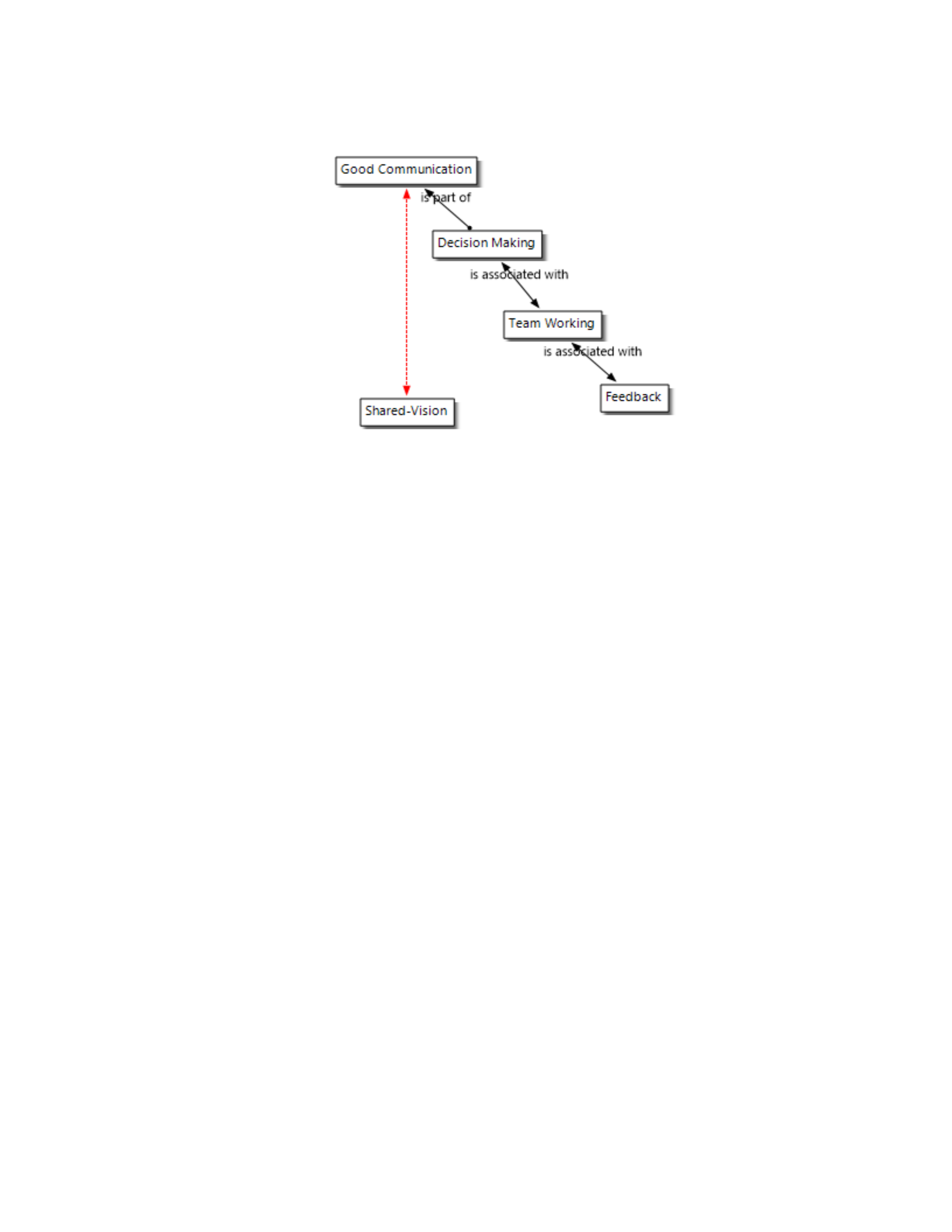
100
Figure 2. Shared vision.
Shared-vision was the second theme that emerged from coding data. Shared-
vision in leadership allows the leader to identify the essential role that each member of
the organization can play in achieving their shared goals. When a leader assumes a
shared-vision aspect, there is a permanent group identity, stronger team cohesion, and,
ultimately, effective performance, and organizational outcomes (Qadach, Schechter, &
Da’as, 2019). The codes presented in Figure 2 displayed the association among the codes
feedback, team working, decision making, and good communication as critical elements
for leaders to achieve a shared-vision characteristic. Feedback is important in the field of
transformational leadership because it can be constructive to help people grow by
learning, and by reinforcing the activities they are doing well (Lee, Idris, & Tuckey,
2019). The code team working allows a leader to create organizational structures around
common goals. A transformational leader allows followers to work cooperatively with
others to achieve group objectives (Ellis, 2018). Gloria mentioned, “I am not actually a
leader that likes to take a lot of risks, but when risks come out, I try to get advice from

101
my team, and make decisions as a team. I believe a lot in team decisions and it works
very well for me.” The figure 2 showed that decision making is part of a good
communication and good communication has a direct relationship to shared-vision.
According to the majority of the participants, communication influences team
effectiveness and creates a positive and significant effect on transformational leadership.
Don said, “It is important to listen to various points of view. We need to analyze a
decision from different perspectives, not necessarily one perspective is the correct one.”
Sarah added, “Leaders need to generate confidence to maintain a very open
communication with employees.” Pedro stated, “A comment has to be released to help
another person; when the comment is not good, it is better not to do it. If the comment
does not contribute, it is better not to say anything. Criticism must be to the construction
not to damage the moral of the being human.” Yanira reported, “I know that having an
open communication with teachers and other people at the university is important, but
we all hold different culture, different educational levels, skills and abilities, and we also
have different personalities, so sometimes it is very difficult to keep an effective
communication.” Deans and faculty directors presented an understanding of the
importance of holding a shared-vision characteristic and the elements described above
when assuming a leadership role. Moreover, participants recognize the significance of
constructive feedback and the difficulties of maintaining positive communication with
employees. Khan, Ahmad, and Ilyas (2018) stated that transformational leaders focus on
the entire organization as a whole and not on themselves. Transformational leaders’
vision extends beyond their immediate goals. Deans and faculty directors described the

102
importance of teamwork as a critical part into their organizations. Mario said, “Team
works formulate important proposals for the organization. Working as a team maximizes
resources and minimizes efforts. Working together allows learning which bring positive
benefits to the organization.” Sarah stated, “Working with others is very beneficial to the
organization because there may be different points of view and all of them may provide
positive changes to the organization. However, working with others is not easy all the
time. People are different with different personalities. Therefore, sometimes to agree
under a common purpose is not that easy. As leaders, we need to be very patient and
understandable.” Jorge mentioned, “Due to my strong attitude, it is not that easy for me
to work within a team. Being authoritarian has affected my organization in a negative
way. Therefore, I know I need to change this aspect.” The figure 2 displayed that
effective communication and decision making were codes that were associated with
organizational consciousness. Gloria stated, “Decisions are best taken in a group. I
consider everyone’s opinions before taking a decision because decisions affect not only
the leader, but also the entire organization.” Yanira mentioned, “Having a good working
team is essential to take wise decisions, and from the decisions taken into a group may
depend the future of an organization.” Juan said, “A leader needs to analyze and imply
the risks behind decisions. It is impossible to avoid the risks that decisions can bring.
However, if those decisions are analyzed into a group. Then the advantages and
disadvantages can be better discussed.” According to deans, communication is a critical
tool to manage an organization. Yanira said, “I think that the best way to keep a good
confidence with the members of the organization is to demonstrate trust and confidence.”

103
Based on deans’ and faculty directors’ responses, there was an evident importance of
organizational consciousness into these leaders’ practices. They described the
significance of focus on the entire organizations rather than specific individuals only.
The element of teamwork played a critical role that has affected deans’ organizations
positively. Some deans recognized the need to manage attitudes and authoritarian
personalities when working in a team with the aim of achieving better results into the
organization. Finally, communication was a significant factor for participants, since it
enables organizations to have clarity on the objectives to achieve and processes into their
organizations. Moreover, according to the participants motivating individuals, respecting
their opinions, having a clear vision of the organization, and sharing ideas with
stakeholders are positive practices that deans and faculty directors use as part of their
transformational leadership roles to affect positively their organizations. Figure 3 shows
the relationship between the codes and the third theme in this study: idealized influence.
Figure 3. Idealized influence.
Idealized Influenced was the third theme of this study, and it showed to have a
relationship with the codes inspiration, change adaptability, and ethics. According to
Puni, Mohammed, and Asamoah (2018), idealized influence is related to leaders’

104
behavior to inspire their followers to be respected and trusted and to become role
models. The code inspiration was associated with idealized influence. Deans and faculty
directors considered that being a transformational leader means to become a role model
who inspires others to be better professionals and better human beings. For the
participants, inspiring others was one of the most important characteristics that a
transformational leader must possess. Moreover, one of the deans thought that followers
were in charge of judging leaders concerning their role of inspiring others. Mara said,
“Well, I consider that my followers should be the ones to judge if I am an inspirational
leader for them. Juan stated, “I consider myself an example to my employees. They can
follow what I do to develop the tasks faster because I have proposed some guidelines
before. It is easier if they just follow them because I know that the things that I do, have
worked good.” In relation to the code change adaptability, Hetland, Hetland, Bakker,
and Demerouti (2018) stated that change means the leader’s capacity to adjust and
connect to a new environment usually requires a new organization’s culture to develop a
new structure that has to be aligned of its demands. Participants acknowledged the
significance of change adaptation and recognized this trait as one of the most important
transformational leader’s characteristics. Pedro stated, “Changes are important; changes
must be lived and assimilated.” Gloria mentioned, “A leader should promote
transformation and followers that follow that transformation through different processes.
Moreover, transformation requires leaders’ characteristics such as charism, inspiration,
and positive attitudes. There are changes in the world and we have to adapt to new
processes.” According to these results, deans and faculty directors evidenced a sound

105
understanding of transformational leadership dimensions and the aspects associated with
it. When considering the code ethics, deans and faculty directors agreed on the idea that
transformational leaders should hold a deep sense of ethics during all their leadership
tasks and behavior. Don added, “A leader must give an example of the actions that one
hopes to obtain from others. I believe that punctuality and responsibility should be in
compliance in the actions.” Ronald added, “The moral principles and ethics of the leader
must always be at the forefront, that is, we cannot try to transform by example if we have
not established and validated moral principles and ethics.” Figure 4 shows the
relationship between the codes and the fourth theme: inspirational motivation.
Figure 4. Inspirational motivation.
Inspirational motivation was the fourth theme that emerged from participants’
responses. According to Mousa and Puhakka, (2019), inspirational motivation is related
to leaders’ abilities to inspire confidence, motivation, and a sense of purpose in their
followers. Moreover, transformational leaders must develop a clear vision for the future,
keep clear lines of communication with followers concerning expectations of the group,
and demonstrate a sense of responsibility and commitment to the goals that have been

106
laid out. The codes under this category were consideration and empowering language.
Gloria said, “The organization gives official recognition. Sometimes, the organization
only provides verbal recognition, but that is very positive and very important to motivate
the employees and it has affected in a positive way to the organization.” Yanira added,
“Well, as a program, we cannot provide incentives beyond the incentives provided by the
organization, but we always provide public recognition and that affects the organization
in a good manner.” Mara said, “The reinforcement and positive feedback generates
levels of behavioral learning much better than punishments, such as repression, negative
feedback, etc. I have some knowledge in organizational psychology, and I know
perfectly the dynamics of work motivation. Therefore, I already know that incentives are
the best strategy to obtain a good performance into my organization.” It was evident
based on faculty directors’ responses, that the fact of motivating employees by providing
positive and sensitive feedback produces a positive motivation which allows
inspirational motivation to take place within their organizations with the aim of
obtaining successful results. Participants considered that empowering languages included
open and good communication strategies within the organization to enhance its
productivity and to achieve positive outcomes. Cristian said, “It is important to consider
the opinion of others because others can contribute positively to achieving the objective
of an organization. I believe that people have different points of view. Then, I believe
that sharing or allowing others to contribute to the achievement of the objective allows to
have a good communication into the organization, and it impacts in a positive way.”
Sarah stated, “I believe that having a permanent dialogue is fundamental into an
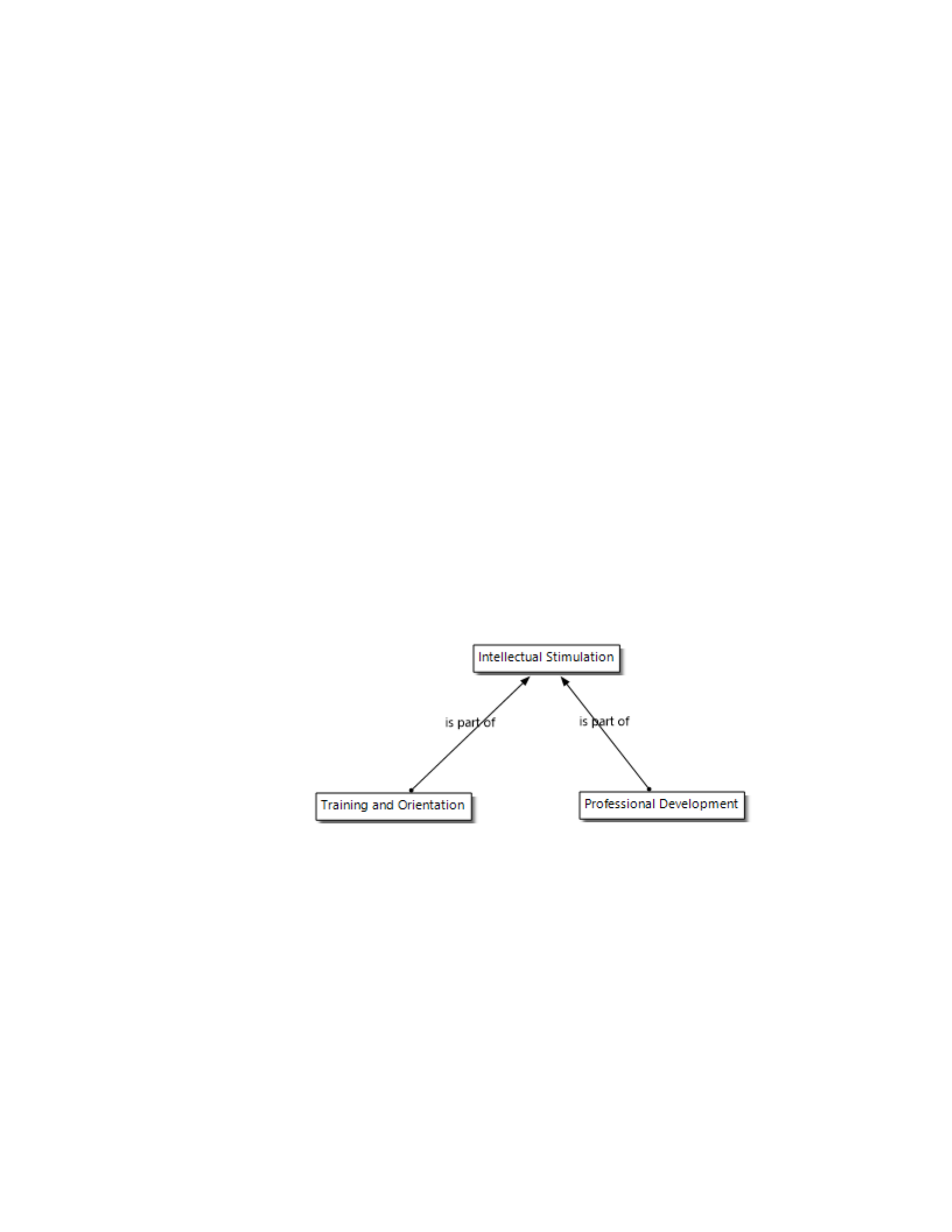
107
organization because that allows us to clarify doubts, concerns, and also unify
perceptions, and then we continue with monitoring and verification of results to improve
our tasks.” Cristian added, “Having a successful communication is essential to reach a
consensus around goals and to know that all people may provide interesting ideas.”
Pedro said, “Speaking with conviction is critical to keep an open communication because
I can demonstrate that I am sure about what I am doing, and about the results that I
expect from my employees. Conviction when leading is important and has affected my
organization positively.” Deans and faculty directors showed that motivation, conviction,
and communication are critical aspects related to consideration and empowering
language, all of which have positively affected their organizations. Figure 5 shows the
relationship between the codes and the fifth theme: intellectual stimulation.
Figure 5. Intellectual stimulation.
Figure 5 showed that there was a direct relationship between the theme
intellectual stimulation and the codes training and orientation and professional
development. According to Sánchez-Cardona, Salanova Soria, and Llorens-Gumbau,
(2018), intellectual stimulation refers to some aspects and skills that a transformational

108
leader needs to hold such as innovation, creativity, critical thinking and problem-solving
skills. Besides, intellectual stimulation involves arousing followers ‘skills by stimulating
their ability to identify and solve problems creatively through professional development
and intellectual growth. Gloria said “in the globalized world in which we live, there are
many possibilities of scholarships. courses, etc. I really try to support employees to
improve professionally by offering them the alternatives of increasing their knowledge”.
Mara mentioned “professional development alternatives are offered every semester by
the organization. Professionals who work with us are allowed to choose any type of
course to improve as professionals. Therefore, having better professionals has affected in
a really good way to our organization”. Yanira said “investing on human capital is the
best alternative to guarantee an organization’s success”. Based on deans and faculty
directors’ responses, professional development alternatives have affected their
organizations effectively by having a skillful and well-prepared human capital which has
risen its options to succeed. Figure 5 shows the relationship between codes and the sixth
theme in this study: organizational performance.

109
Figure 6. Organizational performance.
Organizational performance was the sixth theme that emerged in this study.
Transformational leadership influences the relationship of organizations and their
associated success. Transformational leaders are those who shape institutional strategies,
including their execution and effectiveness by determining values, culture, change
tolerance, and employee motivation (Al Khajeh, 2018). Figure 6 showed a direct
relationship between organizational performance and organizational development.
According to Subramony, Segers, Chadwick, and Shyamsunder (2018), transformational
leadership practices play a significant and crucial role in the development of any
organization. Organizations without effective leadership cannot work efficiently.
Transformational leadership is an important function of the educational management,
which helps to enhance productivity and to achieve organizational goals (Kim & Thapa,
2018). Based on faculty directors’ responses, Figure 6 also showed that the code strategic
plans was associated with performance, and the code performance were part of
organizational development. Don said, “This organization is not managed by itself; the
organization has been built by a team and the team has contributed with their ideas, and

110
the results achieved are not the achievements of the leaders but are the achievements of
the whole team.” Yanira mentioned, “Each academic term required of an action plan
where the objectives are set up. I consider that initial goals need to be clear into an
organization, and the role of a leader is to make sure those goals are not only clear, but
also are achieved during a certain period of time. As a leader I do not use improvisation,
everything obeys to very well developed and planned strategies.” As evidenced from the
participants’ responses, practicing good leadership strategies enhances organizations’
performance and effective development, which contributes to ensuring the positive
functioning of any organization. Figure 6 shows the relationship between codes and the
seventh theme in this study: future orientation.
Figure 7. Future orientation.
Future orientation was the seventh theme that emerged in this study.
Muralidharan and Pathak (2018) stated that future orientation refers to the degree to
which strategies that a transformational leader uses to encourage and reward future-
oriented behaviors from their followers helps enhance planning and creating a vision for
their organizations. Figure 7 presented a direct relationship between the theme future

111
orientation and the code change. According to deans’ responses, change is a critical
element that must take place within the organization to dynamize the structure of the
organizations, to innovate, to achieve better results, and to be in line with the progress of
the society. Maria mentioned, “Nothing keeps working good all the time. We always
have to change; obviously, we have to take some time to analyze whether a change that is
implemented is working or not, but situations, things, nothing can be eternal and even
more in this society where everything goes really fast, so leaders and organizations need
to understand that change is important to grow as an organization.” Faculty directors
thought that taking risks is always important to achieve change and to dynamize the
working climate because it allows transformation and improvement. Don added,
“Transformation is indispensable. We cannot pretend to be static and to manage things in
the same way over and over. If we want that our organizations progress over time, it is
necessary to implement new strategies, policies, rules, and processes that allow us to
innovate and be more creative.” Roald mentioned, “Many new things occur into the
society, and into the field of education. Many aspects need to be renovated constantly
because technology advances and innovations require our organizations to adapt to
change; otherwise, we will be stuck in the same conditions under the same rules without
progressing.” Mario stated, “Change is important, but we need to be careful when
implementing change. Change cannot be implemented too constantly. It is necessary to
analyze change implementation within a specific period of time, and then if what was
implemented did not work, modifications and interventions can be used. We need to be
flexible, but we also need to be cautious.” Based on the participants’ responses, the codes

112
confidence and vision and strategy are associated with the future orientation and change
of any organization. Maria said, “I think that if we are not convinced of what we are
doing, it is difficult to do things well, take risks, and implement changes. I think that
conviction goes with my ideology, and having a strong confidence in myself has affected
my organization positively because I provide trust among my employees.” Ronald
mentioned, “As educational leaders, we need to challenge ourselves to do new things, and
I am sure that bring new challenges to the organizations will always have a positive
impact.” Sarah said,”Taking risks and facing challenges are part of my everyday tasks.
As a leader, I must know that many things can happen, and I have to be wise enough to
face those situations, avoiding negative consequences to the organizations. Yanira stated,
“I am sometimes afraid of implementing change and take challenges into my organization
because I am afraid of failure. At the beginning of the semester, some challenges are
presented to us in order to plan strategies and assume them along the semester. However,
when new challenges just appear on the way, I feel a little insecure to face them. I always
ask for advice.” Maria said, “In order to implement change, as leaders, it is important to
motivate our team work and make them understand that the specific change is necessary
to improve, and that it will be the best for the organizations. It is necessary to present the
advantages that the change will bring into the future. Therefore, motivation is an
important aspect to consider when trying to implement any type of change within an
organization.” Juan said, “at my organization, before implementing any type of change, I
need to make sure, those changes are aligned to the organization standards and compile to
the organization vision and mission.” Ronald stated, “Sometimes, I want to implement

113
changes into my organization, but I cannot because I have to look for the changes to be
validated by the president of my organization. Most of the time, plans have to be
approved by the president of my organization before being implemented. There is not too
much independence into my organization. As it is evidenced on deans’ responses, change
is a critical factor that may be integrated into any organization with precaution and
analysis. Change needs to be aligned to the organization standards and processes to make
sure leaders and followers work together towards common organizational goals and
achieve a future oriented organization.’ Liseth said, “Efficient workers are a reflection of
their leaders. If we are not good leaders, we cannot expect to have good results into our
organizations because the people, the management, the tasks, nothing will work
appropriately. Leaders are the main keys to make sure an organization works well and
have a clear vision towards the future.” As noticed, participants agreed that being
confident of followers’ and leaders’ skills when managing an organization is critical for
planning its future. Moreover, participants thought that holding a vision for the future of
the organization allows leaders to formulate strategies that guarantee the success of the
organization.
According to the data analysis, among deans and faculty directors, the codes with
the highest number of quotations that were considered to answer RQ1were inspiration
and managing situations. This meant that all participants discussed these aspects with a
higher frequency because for the participants these two aspects needed to be emphasized
during their discussion as their present a high level of knowledge on these two topics

114
within their transformational leadership understanding. I presented a summary of codes
and quotation by participants in Table 3 below.
Table 3
Summary of Codes and Quotations
Codes
Sarah
Juan
Jorge
Mario
Ronald
Yanira
Gloria
Don
Mara
Pedro
Liseth
Cristian
Totals
Change
Adaptabilit
y
2
3
3
4
3
4
2
1
1
1
1
2
27
Commitme
nt
2
1
1
2
0
2
1
1
0
1
1
3
15
Decision-
Making
1
3
0
0
0
0
1
2
1
1
2
3
14
Effective
Communic
ation
2
2
3
1
1
1
3
1
3
0
2
2
21
Encourage
ment
1
1
1
1
1
3
0
1
2
0
1
1
13
Ethics
2
4
3
1
2
3
1
2
0
1
1
2
22
Feedback
2
2
1
2
2
0
1
1
1
1
1
1
15
Idealized
Influence
0
0
0
0
0
0
0
0
0
0
0
0
0
Inspiration
2
2
2
4
2
3
3
2
5
1
2
1
29
Leadership
Commitme
nt
0
0
0
0
0
0
0
0
0
0
0
0
0
Managing
Situations
2
3
4
2
3
6
1
3
2
2
0
1
29
Shared
Vision
0
0
0
0
0
0
0
0
0
0
0
0
0
Team
Working
3
1
2
1
1
3
2
1
3
0
2
3
22
Totals
19
22
20
18
15
25
15
15
18
8
13
19
207
Based on the results, among deans and faculty directors, the codes with highest
number of quotations that were considered to answer RQ2 were team working and
training and orientation. This meant that all participants discussed these aspects with
more frequency than the rest of the codes because for the participants, these two aspects
presented a high importance when leading an organization. I presented a summary of
codes and quotation by participants in Table 4 which appears below.

115
Table 4
Summary of Codes and Quotations
Codes
Sarah
Juan
Jorge
Mario
Ronald
Yanira
Gloria
Don
Mara
Pedro
Liseth
Cristian
Totals:
Change
3
2
2
0
0
2
1
0
0
1
0
1
12
Confidence
1
2
1
0
1
0
0
0
0
1
0
0
6
Consideration
1
2
3
2
1
2
1
0
3
1
2
0
16
Decision
Making
1
2
3
1
1
0
0
1
1
0
0
0
10
Development
4
3
3
1
3
1
0
0
1
0
0
0
16
Effective
Communication
3
1
0
2
1
0
0
1
0
0
0
0
8
Empowering
Language
3
1
1
2
1
0
0
1
0
1
1
0
11
Future
Orientation
2
0
2
0
0
0
0
0
0
0
3
0
7
Inspirational
Motivation
2
0
2
0
0
2
2
2
3
0
0
0
13
Intellectual
Stimulation
3
0
3
0
3
0
0
0
0
0
0
0
9
Organizational
Performance
2
0
2
0
0
3
0
0
2
0
2
0
12
Performance
4
1
4
2
2
2
0
0
2
1
1
0
19
Professional
Development
2
1
2
1
1
0
0
0
0
1
1
0
9
Strategic Plans
1
2
1
0
1
1
0
1
0
0
1
0
8
Team Working
3
4
1
5
4
1
0
1
1
1
3
1
25
Training and
Orientation
1
1
3
2
1
3
1
1
1
1
1
1
17
Vision and
Strategy
4
2
2
0
1
1
0
1
0
0
1
0
12
TOTALS:
31
24
26
18
18
13
3
7
9
8
9
3
169

116
Summary
The purpose of this basic qualitative study was to explore deans’ and faculty
directors’ perspectives on their practice of transformational leadership in higher education
institutions in Colombia.
The analysis of this research identified important results in relation to the two
research questions and the two participants’ groups. Seven major themes emerged from
the data: (a) leadership commitment, (b) shared-vision, (c) idealized influence, (d)
inspirational motivation, (e) intellectual stimulation, (f) organizational performance, and
(g) future orientation.
Concerning RQ1, three major themes were considered to answer RQ1: (a)
leadership commitment, (b) shared-vision, and (c) idealized influence. In regards to RQ2
four themes were considered to answer RQ2 (a) inspirational motivation, (b) intellectual
stimulation, (c) organizational performance, and (d) future orientation.
Concerning RQ1, both, deans and faculty directors evidenced a positive
understanding of transformational leadership by recognizing transformational
leadership’s key aspects within the identified themes of commitment, positive
communication, encouragement, ethics, and change adaptability. Faculty directors
revealed that these aspects allowed them to carry out their leadership tasks effectively
into their organizations. Faculty directors also understood the necessity of
communication with employees to plan, design, and carry out tasks within their
organizations with more efficacy. They also knew that inspiration was a key factor that
enhances employee’s productivity and increases job satisfaction. This group of

117
participants identified change adaptability as a key element that is necessary within
every organization to bring innovation and creativity. Deans recognized that taking
cautious risks to avoid failures is important, but according to them, challenges and risks
are important for an organization and may bring many advantages to the organization.
Deans recognized that a transformational leader must inspire others through example,
and they knew that they should motivate their followers by providing them incentives,
treating them with respect and dignity, and valuing all their efforts within the
organization. Four deans considered that other people should recognize them as leaders.
Jorge said, “I consider that a leader needs to be identified as a leader by the followers,
but it is not appropriate that the leader identifies him/herself as that.” This is an aspect
that leaders must improve upon because according to the transformational leadership
characteristics, a transformational leader should feel, act, and recognize their leadership
skills. A transformational leader must identify themselves as a leader (Hillis, 2018). In
general, deans also presented a positive understanding of transformational leadership.
Participants evidenced a higher level of understanding on transformational leadership
factors such as inspiration and managing situations, citing them as critical aspects in
their leadership roles.
Regarding RQ2, the main aspects identified were consideration, empowering
language, professional development, training and orientation, development, performance,
strategic plans, confidence, vision, and strategy. According to the participants, decision
makingteamwork, effective communication, and change are aspects that have affected
their organizations positively. Faculty directors recognized the difficulty of maintaining

118
open and positive communication all the time with followers, but they understood that
maintaining positive communication with employees is a key factor in transformational
leadership practices and that this aspect affects organizations deeply. Faculty directors
described the importance of offering alternatives to professional development, so
personnel within the organization improve their skills and knowledge to offer better
services to the educational community. Faculty directors recognized that their
organizations cannot be static. They must change and acquire technology, establishing
new strategies to progress and improve with the aim of achieving a future-oriented
organization. Deans considered that sometimes they do not like to take risks in order to
avoid failure, but they recognized that this factor may affect organizations positively
because innovation, creativity, and change must be implemented. Deans and faculty
directors understood that inspiration is a significant aspect for leading an organization and
enhancing teamwork and cooperation. However, deans recognized that behaviors such as
authoritarianism or strong attitudes toward followers restrict the opportunity to maintain
positive communication with them and that this aspect has influenced their organizations
negatively. This is an aspect that must be improved upon to achieve better results. Deans
explained that being flexible and patient with their employees may empower
organizational performance and inspirational motivations, which are key factors that
enable an organization to advance and succeed. Deans were in agreement with faculty
directors about the high relevance of factors such as teamwork and training and
orientation, as these two elements presented the highest level of quotes among
participants.

119
In this section, I presented the setting, participant demographics, data collection,
and analysis for this study, as well as provided a description of the evidence of
trustworthiness and the results in relation to the two research questions. The
interpretations of findings, limitations of the study, recommendations, as well as
implications are discussed in Chapter 5.

120
Chapter 5: Discussion, Conclusions, and Recommendations
Chapter 5 presents the interpretation of the findings, limitations of the study,
recommendations, implications, and conclusions based on insights obtained from the
interviews conducted. The purpose of this basic qualitative study was to explore higher
education deans’ and faculty directors’ perspectives on their practice of transformational
leadership in higher education institutions in Colombia. Considering the importance of
transformational leadership in educational organizations, this study was conducted to
increase the body of knowledge about this leadership style within higher education
institutions in Colombia. Based on the literature review, there was a lack of information
about transformational leadership practices in Colombian higher education institutions at
the leadership management level (Gaviria-Rivera & López-Zapata, 2019). Therefore, this
study was conducted to gain information about transformational leadership that supports
leaders to enhance their leadership roles, improve their decision-making practices,
increase motivation, and enhance organizational commitment and effectiveness within
their educational organizations.
Interpretation of the Findings
To interpret the findings of this study, I considered the two research questions.
RQ1 allowed for exploration of deans’ and faculty directors’ perspectives on their
transformational leadership understanding. RQ2 allowed for the exploration of deans’
and faculty directors’ perspectives on how their transformational leadership practice has
impacted their organizations. The findings of this study in relation to RQ1 were
consistent with reports in existing literature, which were related to the effective practices

121
of transformational leadership that occur when a leader inspires and motivates other
people to share a vision and gives them the resources needed for developing their full
potential and achieving a common goal. According to deans and faculty directors
interviewed in the study, a transformational leader should be an example to others and
become a role model who inspires others to be better human beings and professionals.
This finding was consistent with the literature, which indicated that transformational
leaders become role models within their organizations, they are optimistic and cooperate
to generate organizational commitment, and they focus on their subordinates’ needs for
growth and improvement (see Rosenbach, 2018). According to Ghavifekr et al. (2017),
transformational leaders encourage problem-solving practices and accept new ideas from
their followers. The findings in the current study were consistent with this part of the
literature review because deans and faculty directors considered the importance of
accepting other people’s ideas to enhance communication and promote problem-solving
strategies within the organizations.
Deans and faculty directors in the current study recognized the importance of
promoting professional learning, orientation, and training in the organizations to achieve
better results from their followers and improve job performance. This finding was
consistent with the literature that indicated a transformational leader is an individual who
generates and facilitates learning opportunities for followers and may play the role of a
coach or a mentor. The findings were also consistent with the literature because the
current study participants had an understanding of the four transformational leadership
dimensions promoted by Bass (1985). The first dimension is charisma. The charismatic

122
leader inspires, gains respect and trust, and increases optimism. Inspiration is the second
dimension, which focuses on leaders’ behavior as a role model for followers and
subordinates. The third dimension is individual consideration. This dimension enables
leaders to recognize and determine followers’ needs and provide them with opportunities
for customized training sessions and activities for their growth within their positions. The
last dimension of transformational leadership is intellectual stimulation, which focuses on
decision, creativity, and innovation.
Based on the literature reviewed, I discovered that transformational leaders who
recognize themselves as leaders are strong individuals who are able to stimulate and
inspire their subordinates to achieve extraordinary results while developing their
leadership skills (see Nguyen et al., 2017). Deans in the current study highlighted the
importance of improving this aspect because they considered that leaders need to be
recognized by others and not by themselves. Deans understood the importance of
improving this transformational leadership practice through achieving a deeper sense of
leadership and self-recognition.
Findings in the current study were consistent regarding the importance of having
positive and open communication with others. According to deans and faculty directors,
establishing dialogue and providing positive feedback creates debates, discussions,
meetings, and other means of communication; reduces the risks of issues and
misunderstanding; and enhances comprehension among employers to set up clear and
coherent goals. Based on the literature review presented in this study, leaders must have
strong skills of communication to guide the direction of the organization through their

123
leadership practices. According to current study participants, transformational leadership
practices enhance creativity and motivation, which enables employees and other leaders
to achieve better results within their organizations. This finding was consistent with the
literature, which established that transformational leaders create an environment
conducive to innovation because they generate positive perceptions and job satisfaction
by properly driving feedback that serves to guide followers and keep them motivated
toward achieving the goals of the organization (Tintoré, 2019).
Regarding RQ2, the findings in this study were consistent with the literature
review concerning the importance of analyzing the leadership style of an organization
because it is reflected both in the culture of the organization and in its relationship with
society; in this way, if a leader distrusts their power, it is likely that other members of the
social organization will act in a similar way when interacting with colleagues, as well as
with the community (Bligh et al., 2018). If a leader works collaboratively and is open,
they are likely to promote the same attitudes among staff and may collaborate with other
organizations. In most cases, organizational culture is defined by the style of its leader. If
the organization is faithful to its philosophy and mission, the style of its leader must be
consistent with them (Contreras et al., 2016). Deans and faculty directors in the current
study recognized the critical role that a leader has in organizations because their behavior
may impact the correct functioning of the organization, its organizational culture, and its
vision. Deans and faculty directors described the significance of cooperation, teamwork,
and working collaboratively to achieve better results within the organization. Moreover,
deans and faculty directors reflected on the critical role that adapting to change means to

124
an organization and its members. According to participants, change is a strategy that
brings to the organization innovation, creativity, and progress. Deans and faculty
directors thought that changes should be carefully implemented within the organization in
order to avoid failures, even though it was understood that failing would always be part
of the risks taken in the process. According to the literature reviewed in this study,
leaders of the organizational field agree on the changes they are experiencing and how
those changes have been opportunities to progress and succeed (Shanafelt & Noseworthy,
2017).
Based on the literature reviewed, transformational leaders should motivate
followers to go beyond their self-interests and attend to their necessities. This motivation
should be implemented using positive reinforcement and avoiding negative behaviors,
such as punishment or authoritarianism (Espinoza-Solis & Elgoibar, 2019). Consistent
with the literature review, deans and faculty directors thought that effective leadership
practices encourage leaders to work toward achieving goals to improve the quality of
organizations through the ideals of equality, fairness, and justice. Participants noted that
some behaviors recognized among their leadership practices, such as authoritarianism,
must be changed.
The findings in this study also increased the body of knowledge concerning
transformational leadership at Colombian higher education institutions. Research on
transformational leadership in Colombian higher education institutions has focused on
professors’ perception of this leadership style within their instructional activities, but
there was a lack of information on how Colombian higher education leaders at the

125
management level perceived and practiced transformational leadership within their
leadership roles (Mesa et al., 2017). Therefore, this study may contribute to the expansion
of knowledge regarding this topic. Additionally, the findings in this study increased
knowledge concerning transformational leadership in Latin American countries such as
Colombia because this style of leadership has been explored mostly in elementary and
secondary educational settings and has focused on instructional practice (Bernasconi &
Rodríguez-Ponce, 2018).
The conceptual framework that informed this study was based on transformational
leadership theory. Burns introduced the theory in 1978, and Bass (1997) later expanded
on Burns’s work. I selected the transformational leadership theory to serve as the
conceptual framework for this study because this theory focuses on leaders’ perception
and practice of transformational leadership, which is reflected in the exceptional output
of the leaders’ followers. Positive perception of transformational leadership also
improves leaders’ decision-making, motivation, organizational commitment,
organizational climate, and ability to enhance the quality of education (LePine et al.,
2016).
The findings in this study supported the transformational leadership theory as they
expanded knowledge regarding transformational leadership style. The findings presented
perspectives from deans and faculty directors concerning their transformational
leadership practices at Colombian higher education institutions and promoted the
importance of the five elements of the transformational leadership theory: (a) idealized
influence or attributed charisma, (b) idealized influence or behavioral charisma, (c)

126
inspirational motivation, (d) intellectual stimulation, and (e) individualized consideration
( Mahmood, Uddin, & Fan, 2019). Deans and faculty directors reported that holding and
promoting positive attitudes may influence followers and enhance job performance in
organizations. Participants also noted that motivating followers and considering their
needs and weaknesses may increase their motivation, commitment, and quality of service.
Participants acknowledged that authoritarianism was a negative aspect of their behavior
and a factor that needed to be improved. Moreover, participants identified professional
development opportunities as an important aspect to improve human capital and ensure
high quality in their organizations.
The findings aligned with transformational leadership theory because the themes
that emerged from the participants’ responses focused on the transformational leadership
dimensions and principles that best describe leaders, such as respecting others, having
positive communicative skills, inspiring and motivating followers, improving self-
recognition as leaders, having a vision, and working collaboratively with others to
achieve common goals. Moreover, the findings reflected the importance of
transformational leadership in organizations because this approach generates change in
people’s lives and within organizations (see Khalili, 2016). Transformational leadership
restructures values, perspectives, expectations, and aspirations of employees to contribute
to building and practicing effective leadership skills. The components of the
transformational leadership theory supported this study to facilitate the exploration of
transformational leadership practice and determine participants’ perceptions concerning
the outcome of their transformational leadership skills to contribute to improving the

127
quality of Colombian higher education institutions. The findings in this study also
supported transformational leadership theory because they provided an understanding of
effective leadership practices and relationships between school leaders and those
involved with the educational community (see Galli, 2019).
Limitations of the Study
While completing the study, I confronted some limitations that arose due to the
COVID-19 pandemic. I had to limit data collection to two higher education institutions.
Moreover, the data collection process was carried out virtually due to the social
distancing protocols. Under these conditions, I could not visit higher education
institutions and conduct face-to-face interviews. Alternatively, I conducted virtual
interviews with the 12 participants (six deans and six faculty directors) using online video
conferences.
A second limitation was that only deans and faculty directors were included as
data sources for this study. Other forms of data could increase a broader understanding of
the phenomenon. Interviews with other members of the higher education institutions
could contribute to gain a more extensive understanding of transformational leadership
practice, but they could detract from the actual perspectives of the leaders who were at
the management level.
The third limitation was research bias. I was the sole person responsible of
collecting and analyzing the data comprising this study and I was currently working at a
Colombian higher education institution. Therefore, potential for researcher bias existed.

128
To minimize researcher bias and to strengthen the reliability and validity of this study, I
had no relationship or connections with the locations or the participants.
Recommendations
I recommend that this study be replicated in higher education institutions in
different geographic areas to better understand deans’ and faculty directors’ perspectives
on their transformational leadership practices. Including more leaders at the educational
management level may yield additional information. A replication of this study in a
different geographic area would reveal best leadership practices that differ from those
that I gathered and may add transformational leadership practice perspectives missing
from the present study.
I suggest that this study be replicated in higher education institutions around
other Latin American countries in which there is evidence of deficient leadership
practices. Perspectives toward best transformational leadership practices may be
different in universities that function with a lack of support for quality education. Further
research may uncover additional information about transformational leadership
perspectives.
I also recommend a comparative study that includes the perspectives of faculty
and staff regarding the transformational leadership practices developed by their leaders.
Evidence gathered in this study suggests that faculty and staff input may be important
when trying to find the best transformational leadership practices into higher education
institutions in Colombia. Systematic analysis of followers’ opinions would contribute to
the literature on transformational leadership practice.

129
Implications
Implications for Social Change
The results of this study could potentially be used by educational managers and
those responsible for holding leadership roles into higher education institutions. Deans
and faculty directors may consider their leadership skills and reevaluate the effectiveness
of their current transformational leadership practices. Actively involving followers in the
planning and curriculum design could improve job performance, commitment,
organizational performance, and motivation, as well as enhance positive communication
among educational managers, professors, and positively impact the quality,
effectiveness, and success of the educational organizations. Professors may feel more
committed and encouraged to advance professionally within their organizations because
their experiences, concerns, and needs would be met and students learning might
improve. Developing a deeper understanding of the perspectives about transformational
leadership practices from deans and faculty directors may contribute to enhance higher
education quality by improving decision-making practices, motivation, and potentially
enhance organizational commitment and effectiveness leading to a positive social
change. Effective transformational leadership practice into educative organizations is
said to be responsive to the educational members’ necessities and causes positive change
in management practices that meet followers need (Adhikari, 2019).
Effective transformational leaders within the higher education field must work
toward adapting positively to a rapidly changing environment. They must understand and
effectively manage internal and external social changes to ensure success into the

130
educational organizations and the society in general (Heaton, 2020). Additionally,
transformational leaders into the educational field must understand the phenomenon of
transformational leadership and learn effective practices that enable them to deal with the
issues that sometimes may surround them, to find problem-solving strategies, to move
forward and make progress within and outside of their organizations, and to manage
future-oriented organizations that contribute to positive changes in the community at all
levels.
Methodological, Theoretical, and Empirical Implications
Methodological implications. As a basic qualitative case-study inquiry, this
study could provide comparative literature for other scholars who need to use a basic
qualitative methodology in their research projects. This study focused on one single
element as the central part of the issue studied. Highlighting the transformational
leadership practice of deans and faculty directors into Colombian higher education
institutions. This methodological choice could be a guide for other researchers or students
to apply a basic, qualitative research approach in exploring the significant element of a
particular phenomenon to be studied.
Theoretical implications. This study is a scholarly attempt to support the body of
literature in relation to transformational leadership in higher education. Transformational
leadership practices from deans and faculty directors in Colombian higher educational
institutions included all perspectives to understand current educational leaders’ skills and
practices, while combining the existing literature to increase the knowledge into this
field.

131
Practical implications. The practical implications of this study encompass a
reference for Colombian and Latin American educational leaders to examine their current
transformational leadership practices and improve their performance regarding their
leadership role and avoid the pitfalls of inadequate educational leadership. To some
extent, the findings of this study add to the body of literature for transformational leaders
who support and wish to improve quality education.
Recommendations for Practice
This study may contribute to enhance quality education by enforcing the practice
of transformational leadership within higher education institutions. This study may
provide information for educational leaders to understand the importance of
transformational leadership style and the principles that conform it to enhance and
improve leadership practices within educational organizations. Furthermore, this study
may uncover effective transformational leadership practices already used by deans and
faculty directors that can be used by other leaders to improve their leadership roles.
The results of this study may improve transformational leadership practices, such
as communication, teamwork, training and orientation, inspiration, change adaptation,
and achievement of a vision of the future to realize positive outcomes and sustainable
goals within higher education institutions.
Conclusion
The purpose of this basic qualitative study was to explore higher education deans’
and faculty directors’ perspectives on their practices of transformational leadership in
higher education institutions in Colombia. As the findings confirmed, transformational

132
leadership understanding and practice by deans and faculty directors in Colombian higher
education institutions are positive with only small percentage of these leaders reporting
negative views of transformational leadership behavior, such as authoritarianism and lack
of leadership self-recognition.
This study is important as it may increase understanding of the knowledge of
deans and faculty directors related to transformational leadership in Colombian higher
education institutions at the management level. Based on deans and faculty directors’
perspectives on their transformational leadership practices, this study may contribute to
increase the body of knowledge about transformational leadership, which may enable
leaders within educational environments to enhance quality education by improving
decision-making practices, motivation, job performance, and potentially organizational
commitment and effectiveness leading to progress and success. The results of this study
indicate that best transformational leadership practices within higher education
institutions are necessary to establish and maintain an open communication among
leaders and followers, to improve team working, to implement professional development
opportunities and to work actively toward achieving common goals with the aim of
creating future-oriented educational organizations.

