


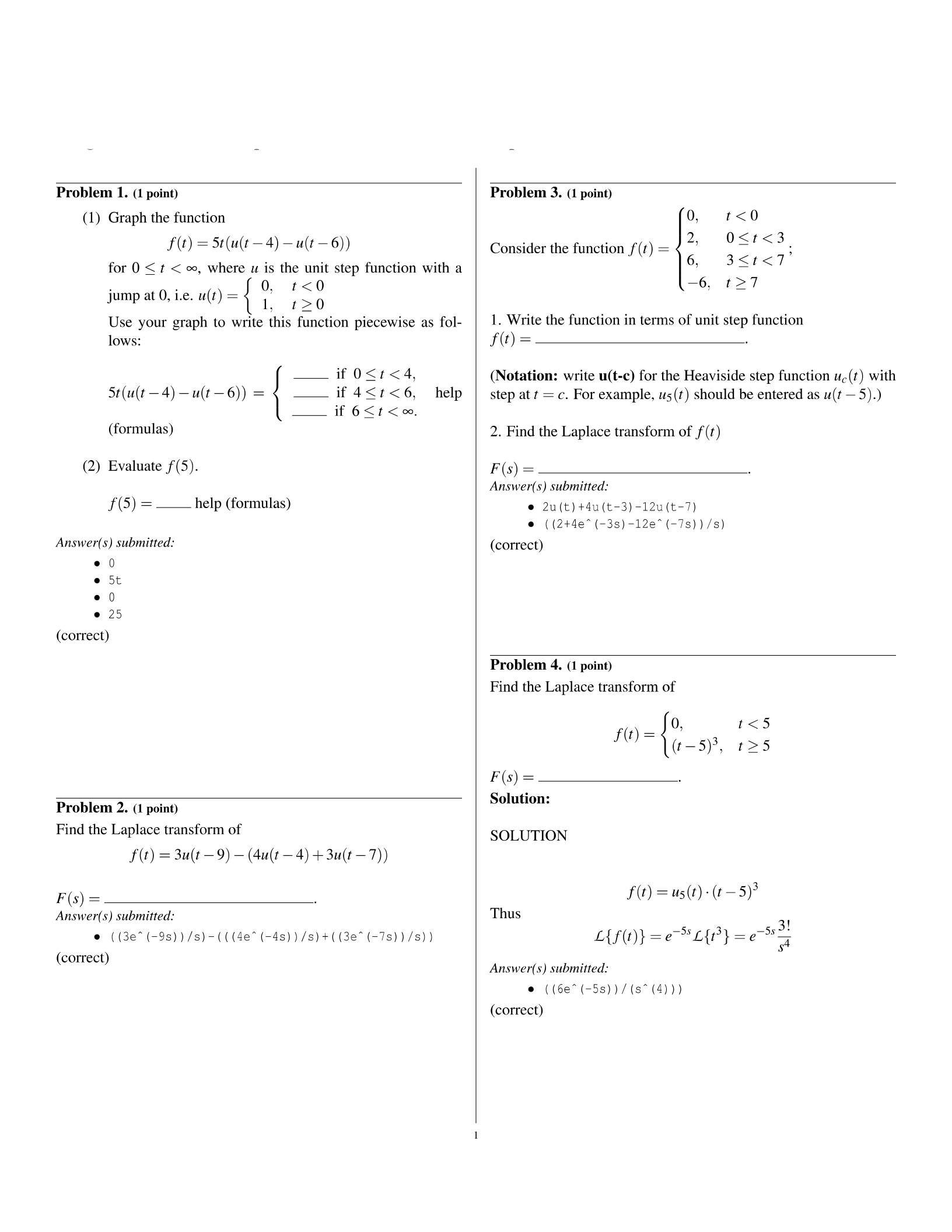
Problem
1.
(1
point)
(1)
Graph
the
function
f(t)
=
5t(u(t
—
4)
—
u(t
—6))
for
0
<
t
<
co,
where
is
the
unit step
function
with
a
. .
0,
t<O0
jump
at
0,
i.e.
u(t)
=
1
t>0
Use
your
graph
to
write
this
function
piecewise
as
fol-
lows:
if
0<t<4,
5t(u(t
—4)
—u(t—6))
=
____
if
4<t<6,
help
if
6<t<o.,
(formulas)
(2)
Evaluate
f(5).
f(5)
=
help
(formulas)
Answer(s)
submitted:
e
0
e
5t
e
0
e@
25
(correct)
Problem
2.
(1
point)
Find
the
Laplace
transform of
f(t)
=
3u(t
—9)
—
(4u(t
—
4)
+
3u(t
—7))
F(s)=
Answer(s)
submitted:
e
((3e*
(-9s))/s)-((
(4e*
(-4s)
)
/s)
+((3e*
(-7s))/s))
(correct)
Problem
3.
(1
point)
0,
1t<0
2
0<t<3
Consider
the
function
f(t)
=
6
4
c
'
:
7
;
6,
t>7
1.
Write
the
function
in
terms of
unit
step
function
f=
(Notation:
write
u(t-c)
for
the
Heaviside
step
function
u,(t)
with
step
at
t
=
c.
For
example,
us(t)
should
be
entered
as
u(t
—
5).)
2.
Find
the
Laplace
transform
of
f(t)
F(s)=
Answer(s)
submitted:
@
2u(t)+4u
(t-3)-12u(t-7)
e
((2+4e*
(-3s)-12e*
(-7s))/s)
(correct)
Problem
4.
(1
point)
Find
the
Laplace
transform of
0,
t<5
f(t)=
a
t>5
F(s)
=
Solution:
SOLUTION
f(t)
=us(t)-(¢-5)?
Thus
3!
LA{f()}
se
LP}
=e
OF
Answer(s)
submitted:
@
((6e°
(-5s))/(s*(4)))
(correct)
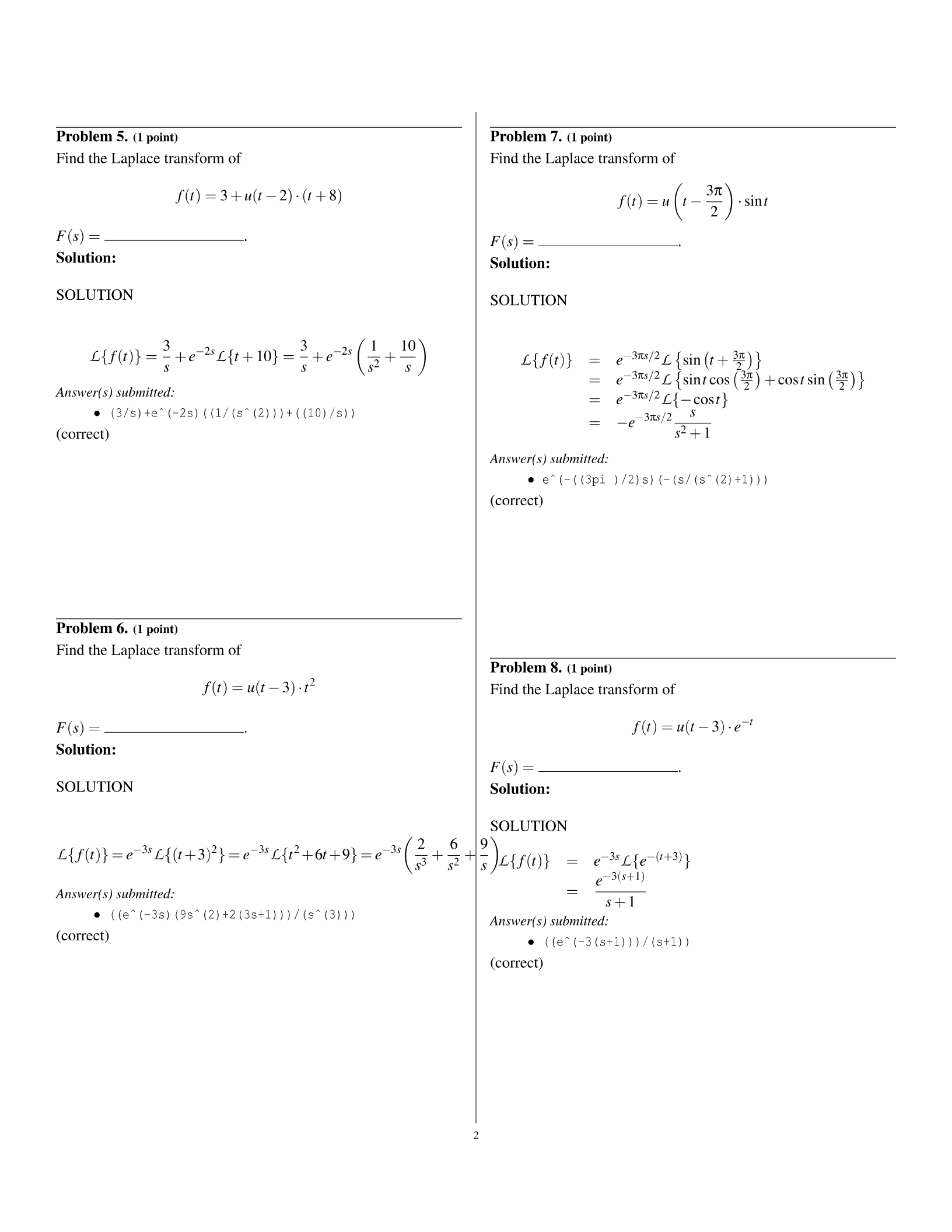
Problem
5.
(1
point)
Problem
7.
(1
point)
Find
the
Laplace
transform of
Find
the
Laplace
transform of
f(t)
=3+u(t—2)-
(+8)
fe)
=u
(1
F)
sin
F(s)=
F(s)
=
Solution: Solution:
SOLUTION SOLUTION
30 30
1
10
L{f}=
{+e
“L{t+10}=—+e
2s
(a+)
LAf(t)}
=
3/20
{sin
(t+
+3)
=
e
3/2
¢
{sintcos
(32)
+
cost
sin
(3)
}
Answer(s)
submitted:
—
9
3ts/2¢
{—
cost}
e
(3/s)+e*
(-2s)
((1/(s*
(2)))+((10)/s))
—
_¢-3ms/2_8
(correct)
e+
Answer(s)
submitted:
e
e*
(-((3pi
)/2)s)
(-(s/(s*
(2)
+1)))
(correct)
Problem
6.
(1
point)
Find
the
Laplace
transform of
Problem
8.
(1
point)
f(t)
=u(t—3)-0°
Find
the
Laplace
transform of
F(s)
=
f(t)
=u(t—3)-e7*
Solution:
F(s)
=
SOLUTION
Solution:
SOLUTION
2
6
|9
_
3s
2)
_
,—3s
2
—
p35
,f
=
—
a
__
L{f(H}
=e
L{(t+3)°}
=e
PL{t+6t+9}
=e
(2
+
2
+
~
etse)}
=
ef
fe(t+3)}
e
3(s+1)
Answer(s)
submitted:
—
s+1
@
((e*
(-3s)
(9s*
(2)
+2
(3s+1)))/(s*
(3)))
Answer(s)
submitted:
(correct)
e
((e*(-3(st1)))/(st1))
(correct)
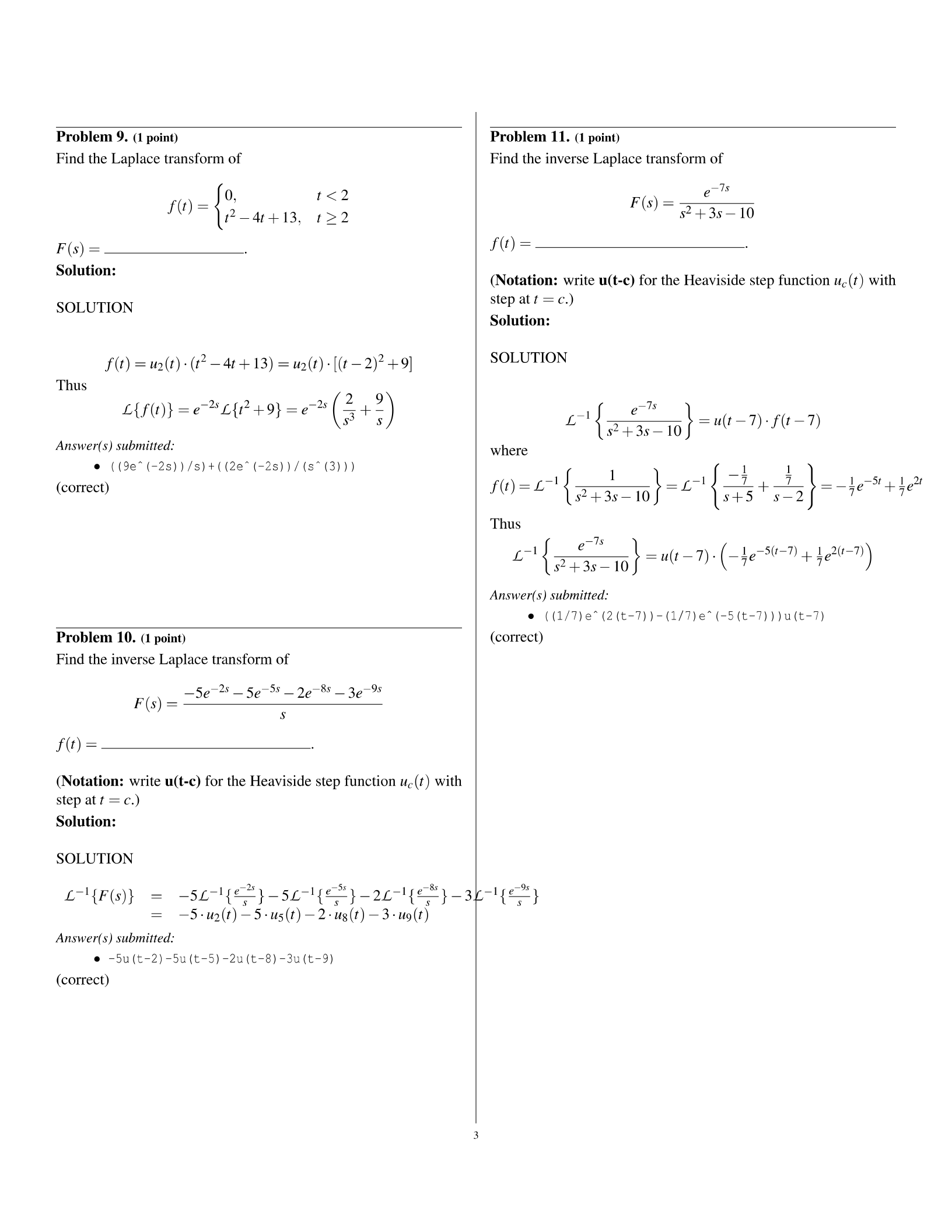
Problem
9.
(1
point)
Find
the
Laplace
transform of
0,
t<2
t=
fo)
{raat
t>2
F(s)=
Solution:
SOLUTION
f(t)
=un(t)-
(t?
—4¢
+13)
=
u(t)
-
[(t
2)?
+9]
Thus
5
LUf()}
=e
PL{P
+9}
=e
(2
+
*)
Answer(s)
submitted:
@
((9e*
(-2s))/s)+((2e*
(-28))/(s*
(3)))
(correct)
Problem
10.
(1
point)
Find
the
inverse
Laplace
transform
of
—5e~25
—
5-95
—
Je
85
_
3¢-98
S
F(s)
=
f=
(Notation:
write
u(t-c)
for
the
Heaviside
step
function
u,(t)
with
step
att
=c.)
Solution:
SOLUTION
—5s
LO{F(s)}
=
—S£7{}
See}
-2L-1
{3-3
=
—5-up(t)—5-us(t)
—2-ug(t) —3-uo(t)
Answer(s)
submitted:
@
—5u(t-2)-5u(t-5)
-2u
(t-8)
-3u(t-9)
(correct)
Problem
11.
(1
point)
Find
the
inverse
Laplace
transform
of
e's
F(s)
=
373510
f=
(Notation:
write
u(t-c)
for
the
Heaviside
step
function
u,(t)
with
step
att
=c.)
Solution:
SOLUTION
1
e's
where
1
_1
1
th=£-'
—.—_
fact,
}=-}
fo)
\aaco}
fasts
7€
Thus
co
es
_
7
1,—-5(t-7)_,
1,,2(t—7)
243s—10f
~~
):(-4e
+7)
Answer(s)
submitted:
@
((1/7)e*
(2
(t-7)
)-
(1/7)
e*
(-5
(t-7)
) )
u(t-7)
(correct)
—5t
1
2¢
+
Fe
—9s
~{}
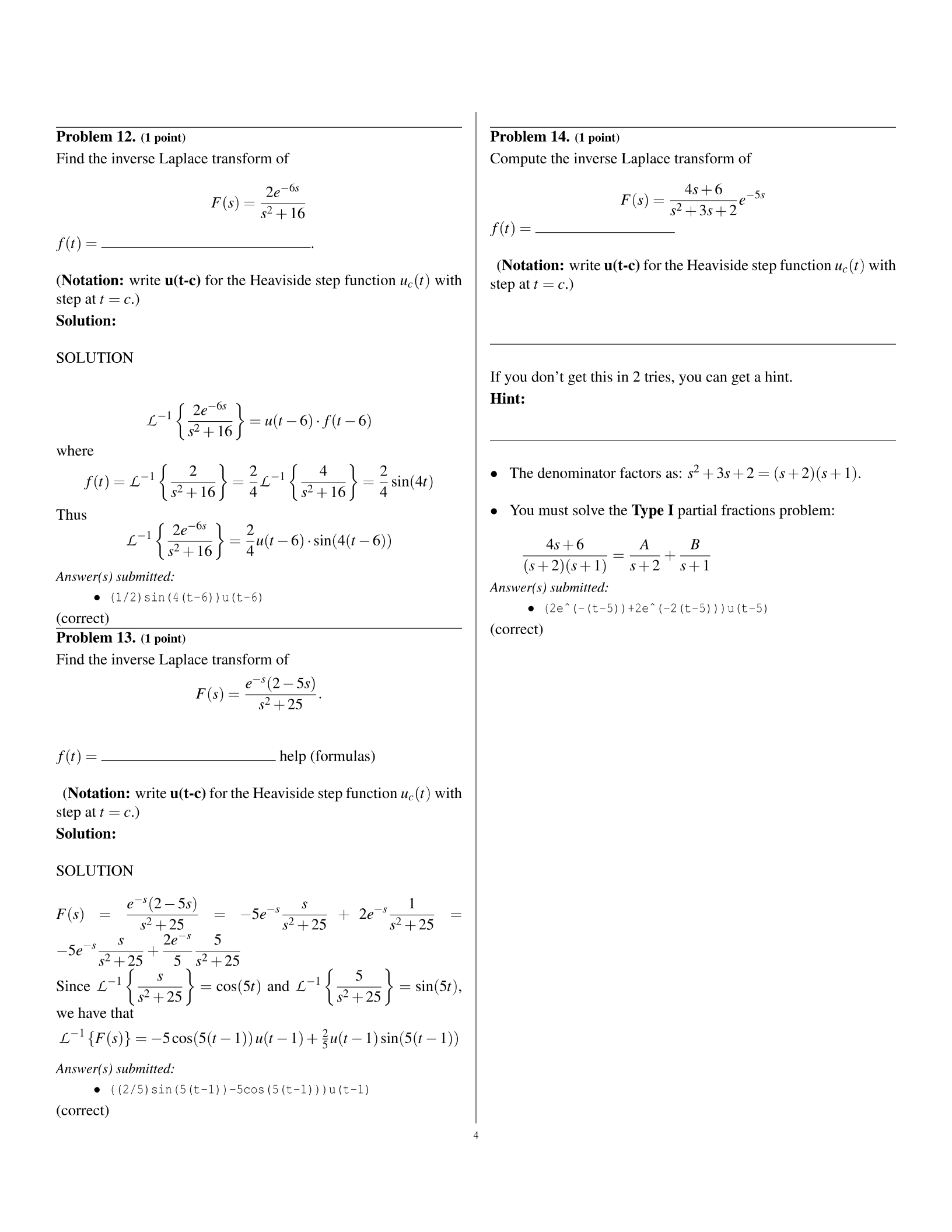
Problem
12.
(1
point)
Find
the
inverse
Laplace
transform
of
Ie
65
F(s)
=
~—_
(8)
346
f=
(Notation:
write
u(t-c)
for
the
Heaviside
step
function
u,(t)
with
step
att
=c.)
Solution:
SOLUTION
oo
{I
~
u(t
—6)-
f(t—6)
where
2 2
4
2.
fe)=2"'}
arg}
=i"
ane}
=
7
sin(4t)
Thus
e
Lo}
is
is}
=
su
—6)-sin(4(t
—6))
Answer(s)
submitted:
@
(1/2)
sin
(4
(t-6)
)u(t-6)
(correct)
Problem
13.
(1
point)
Find
the
inverse
Laplace
transform
of
e
*(2—5s)
F(s)
=
45
f(t)=
help
(formulas)
(Notation:
write
u(t-c)
for
the
Heaviside
step
function
u,(t)
with
step
att
=c.)
Solution:
SOLUTION
e
*(2—5s)
_,
Ss
_s
1
F(s)
=
2M
_
_seos
2e-s
=
)
s2
+25
C
R425
*
*
2495
“se
5
eS
s*
+25
5
s*+25
5
Since
£7!
235
=
cos(5t)
and
£71
{2
235}
=
sin(5t),
we
have
that
£7|
{F(s)}
=
—Scos(5(t
—
1))
u(t
—1)
+
2u(t
—
1)
sin(5(t—1))
Answer(s)
submitted:
@
((2/5)sin(5(t-1))-5cos
(5(t-1)))u(t-1)
(correct)
Problem
14.
(1
point)
Compute
the
inverse
Laplace
transform of
4s+6
—55
F(s)
=
~~
(s)
2
43s4+2°
f=
(Notation:
write
u(t-c)
for
the
Heaviside
step
function
u,(t)
with
step
att
=c.)
If
you
don’t
get
this
in
2
tries,
you
can
get
a
hint.
Hint:
e
The
denominator
factors
as:
s?
+
3s+2
=
(s+2)(s+1).
e
You
must
solve
the
Type
I
partial
fractions
problem:
4s+6
_
A
B
(st+2)(s+1)
s+2
TS4+1
Answer(s)
submitted:
@
(2e*
(-(t-5))+2e*
(-2
(t-5)))u(t—-5)
(correct)
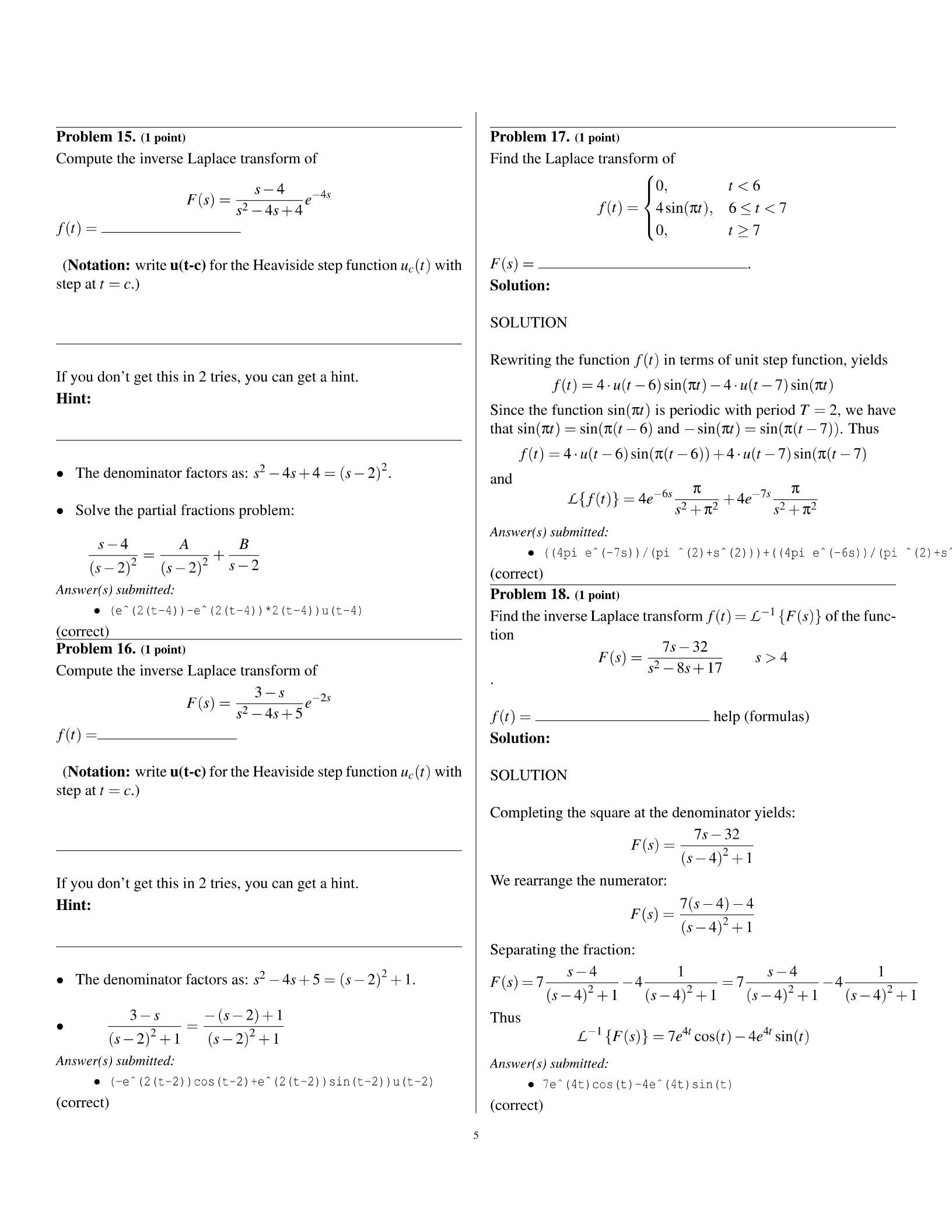
Problem
15.
(1
point)
Compute
the
inverse
Laplace
transform of
—4
MO)
=
a
apae
f(t)
=
(Notation:
write
u(t-c)
for
the
Heaviside
step
function
u,(t)
with
step
att
=c.)
If
you
don’t
get
this
in
2
tries,
you
can
get
a
hint.
Hint:
e
The
denominator
factors
as:
s*
—4s+4
=
(s—2)”.
e
Solve
the
partial
fractions
problem:
s-4
A
B
(2
2-2
Answer(s)
submitted:
@
(e°
(2
(t-4))-e*
(2
(t-4)
)
*2
(t-4)
)u
(t-4)
(correct)
Problem
16.
(1
point)
Compute
the
inverse
Laplace
transform of
3—s
—2s
F(s)
=
2
—As+5°
f(t)=
(Notation:
write
u(t-c)
for
the
Heaviside
step
function
u,(t)
with
step
att
=c.)
If
you
don’t
get
this
in
2
tries,
you
can
get
a
hint.
Hint:
2
e
The
denominator
factors
as:
s*—4s-+5
=
(s—2)°
+1.
3—s
|
—(s—2)+1
(s—2)*+1 (s—2)?+1
Answer(s)
submitted:
@
(-e*
(2(t-2))
cos
(t-2)
+e*
(2
(t-2))
sin
(t-2)
)u(t-2)
(correct)
Problem
17.
(1
point)
Find
the
Laplace
transform of
0,
t<6
f(t)
=
4sin(at),
6<t<7
0,
t>7
F(s)=
Solution:
SOLUTION
Rewriting
the
function
f(t)
in
terms of
unit step
function,
yields
f(t)
=4-u(t
—
6)
sin(ar)
—
4-
u(t
—
7)
sin(ar)
Since
the
function
sin(mt)
is
periodic
with
period
T
=
2,
we
have
that
sin(ar)
=
sin(z(t
—
6)
and
—
sin(at)
=
sin(a(t
—7)).
Thus
f(t)
=4-u(t
—
6)
sin(a(t
—
6))
+
4-
u(t
—7)
sin(a(t
—
7)
and
T
_
1
rap
+
4e
s
a)
+1
S°+T
Lif
(t)}
=4e°
Answer(s)
submitted:
e
((4pi
e*(-7s))/(pi
*
(2)
+s*(2)))+((4pi
e*
(-6s))/
(pi
*
(2)
+8"
(correct)
Problem
18.
(1
point)
Find
the
inverse
Laplace
transform
f(t)
=
£~!
{F(s)}
of
the
func-
tion
S
7s
—
32
F(s)
=
~~
4
(s)
s*—8s+17
5
f()=
help
(formulas)
Solution:
SOLUTION
Completing
the
square
at
the
denominator
yields:
7s
—
32
F(s)
=
ee
(s—4)°+1
We
rearrange
the
numerator:
1s—4)—4
ro)
1-404
(s—4)°+1
Separating
the
fraction:
s—4
1
s—4
1
7
4
20.
7,
74
2
(s—4)°+1 (s—4)°+1
(s—4)°4+1
(s—4)*+1
F(s)=7
Thus
L'
{F(s)}
=
Te
cos(t)
—
4e™sin(t)
Answer(s)
submitted:
@
Je*
(4t)cos(t)-4e*
(4t)
sin(t)
(correct)
Powered by TCPDF (www.tcpdf.org)

