


Lee, Amanda
4.5: Introduction to Rational Functions (Lesson)
Started: November 8, 2019, 2:49 pm
Last change: November 8, 2019, 3:06 pm
Time spent: 17 minutes
Total time questions were on-screen: 17.2 minutes.
Showing Scored Attempts | Show Last Attempts | Show Review Attempts
Hide Correct Questions
Hide Perfect Questions
Hide Unanswered Questions
Show All Answers
Preview All
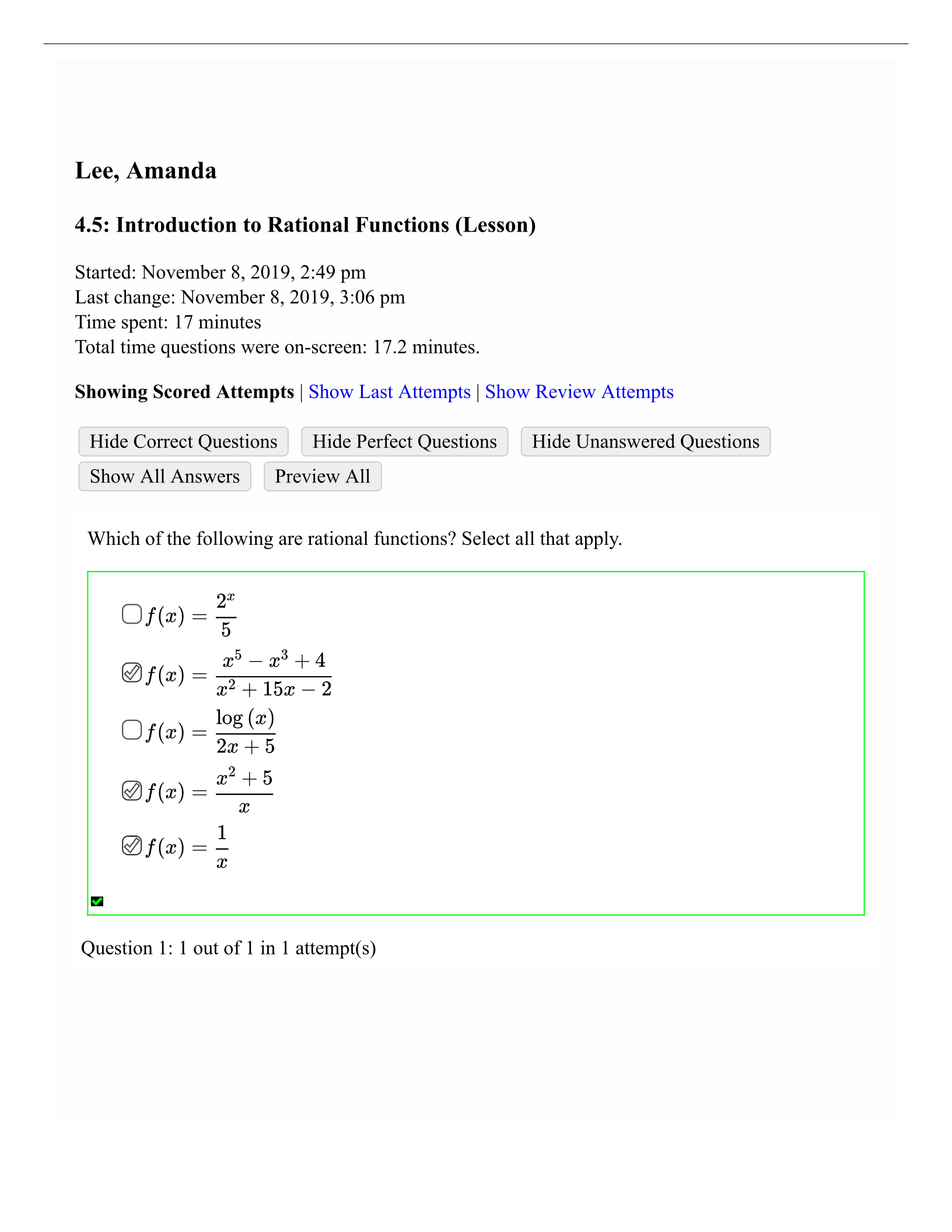
Which of the following are rational functions? Select all that apply.
f x =
f x =
f x =
f x =
f x =
Question 1: 1 out of 1 in 1 attempt(s)
( ) 5
2x
( ) x+ 15x−2
2
x−x+ 4
5 3
( ) 2x+ 5
log x( )
( ) x
x+ 5
2
( ) x
1
11/11/19, 11:16 PM
Page 1 of 8
Grade Book Detail
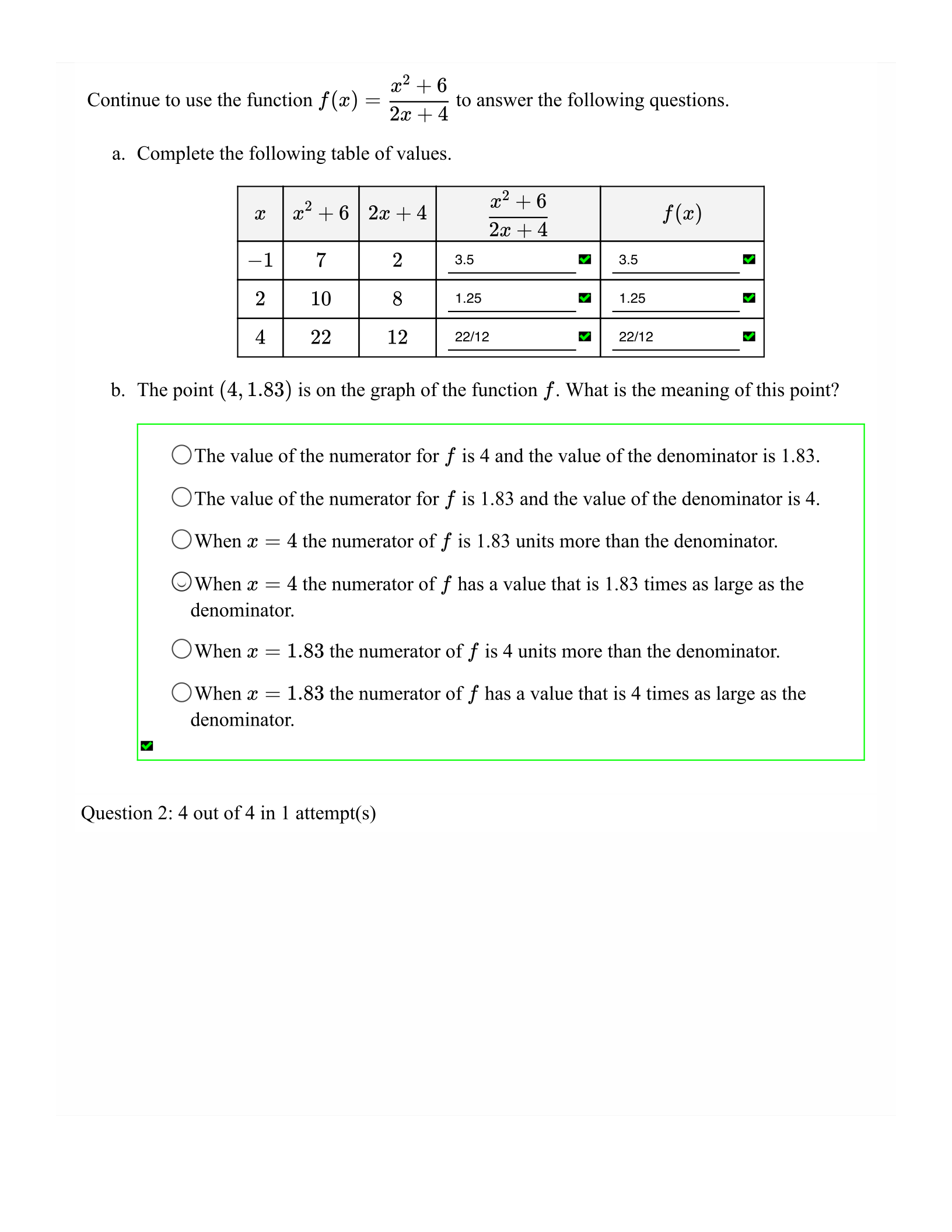
Continue to use the function f x = to answer the following questions.
a. Complete the following table of values.
x x + 6 2x+ 4 f x
−1 7 2
3.5
3.5
2 10 8
1.25
1.25
4 22 12
22/12
22/12
b. The point 4, 1.83 is on the graph of the function f. What is the meaning of this point?
The value of the numerator for f is 4 and the value of the denominator is 1.83.
The value of the numerator for f is 1.83 and the value of the denominator is 4.
When x= 4 the numerator of f is 1.83 units more than the denominator.
When x= 4 the numerator of f has a value that is 1.83 times as large as the
denominator.
When x= 1.83 the numerator of f is 4 units more than the denominator.
When x= 1.83 the numerator of f has a value that is 4 times as large as the
denominator.
Question 2: 4 out of 4 in 1 attempt(s)
( ) 2x+ 4
x+ 6
2
2
2x+ 4
x+ 6
2( )
( )
11/11/19, 11:16 PM
Page 2 of 8
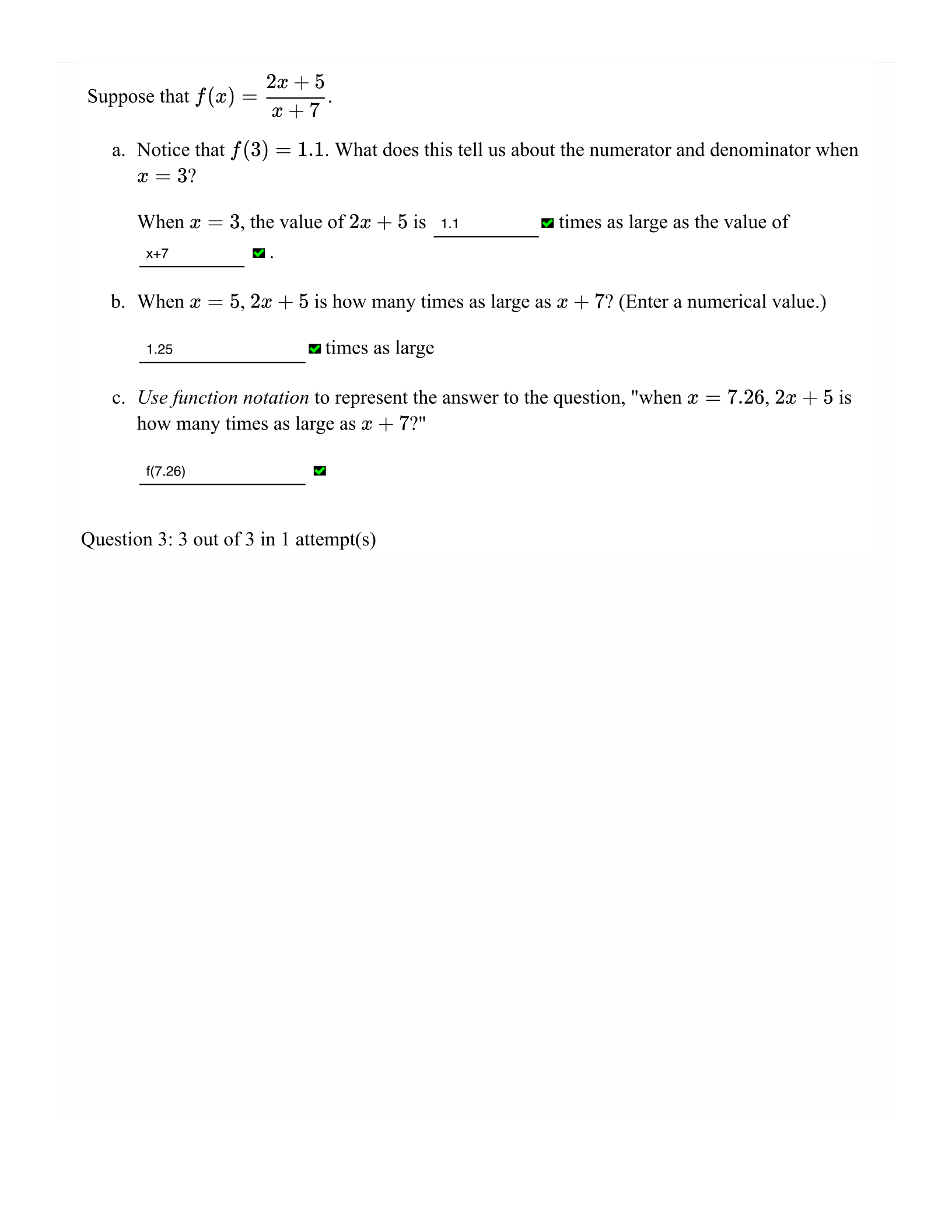
Suppose that f x =.
a. Notice that f3 = 1.1. What does this tell us about the numerator and denominator when
x= 3?
When x= 3, the value of 2x+ 5 is
1.1
times as large as the value of
x+7
.
b. When x= 5, 2x+ 5 is how many times as large as x+ 7? (Enter a numerical value.)
1.25
times as large
c. Use function notation to represent the answer to the question, "when x= 7.26, 2x+ 5 is
how many times as large as x+ 7?"
f(7.26)
Question 3: 3 out of 3 in 1 attempt(s)
( ) x+ 7
2x+ 5
( )
11/11/19, 11:16 PM
Page 3 of 8
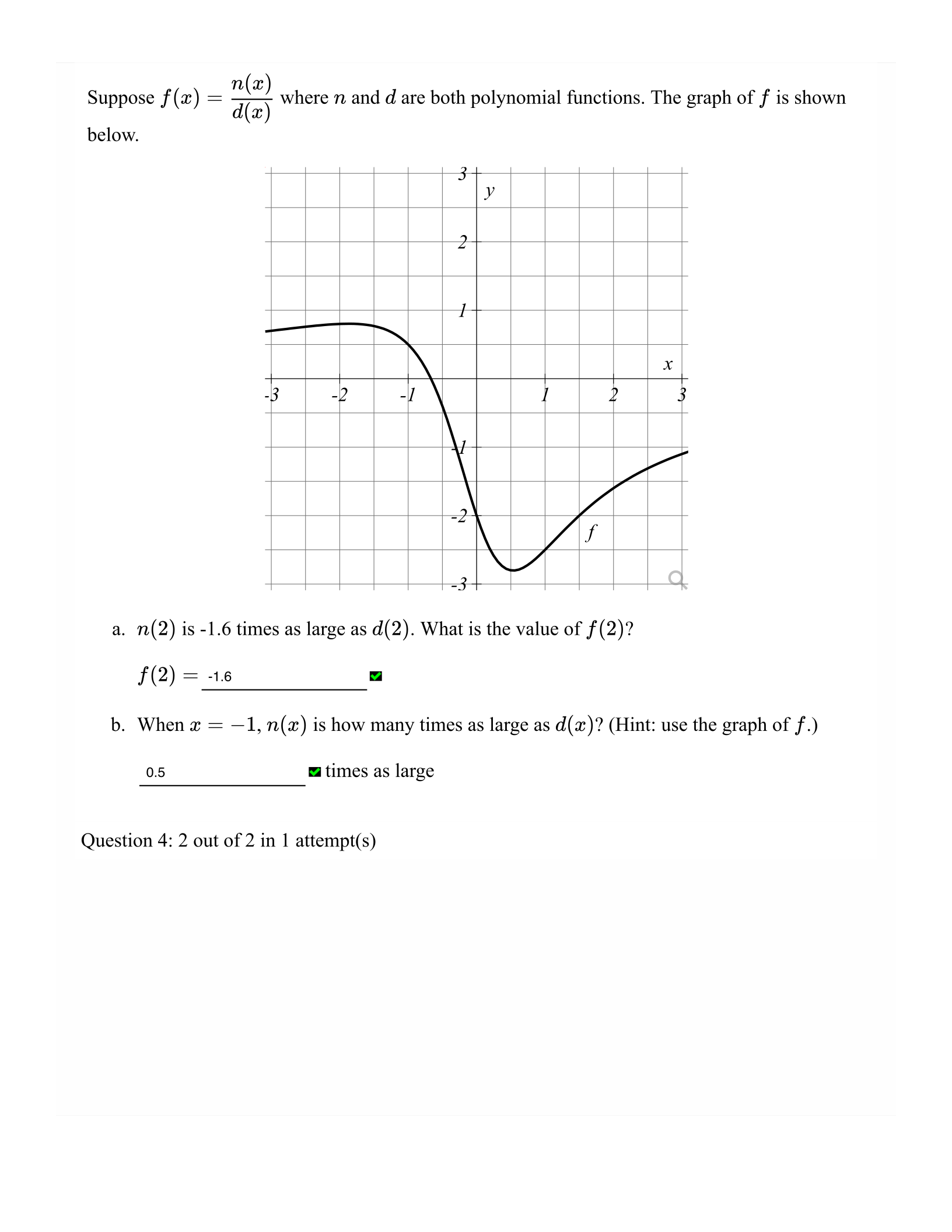
Suppose f x = where n and d are both polynomial functions. The graph of f is shown
below.
1 2 3-1-2-3
1
2
3
-1
-2
-3
x
y
f
a. n2 is -1.6 times as large as d2. What is the value of f2?
f2 =
-1.6
b. When x=−1, n x is how many times as large as d x ? (Hint: use the graph of f.)
0.5
times as large
Question 4: 2 out of 2 in 1 attempt(s)
( ) d x( )
n x( )
( ) ( ) ( )
( )
( ) ( )
11/11/19, 11:16 PM
Page 4 of 8
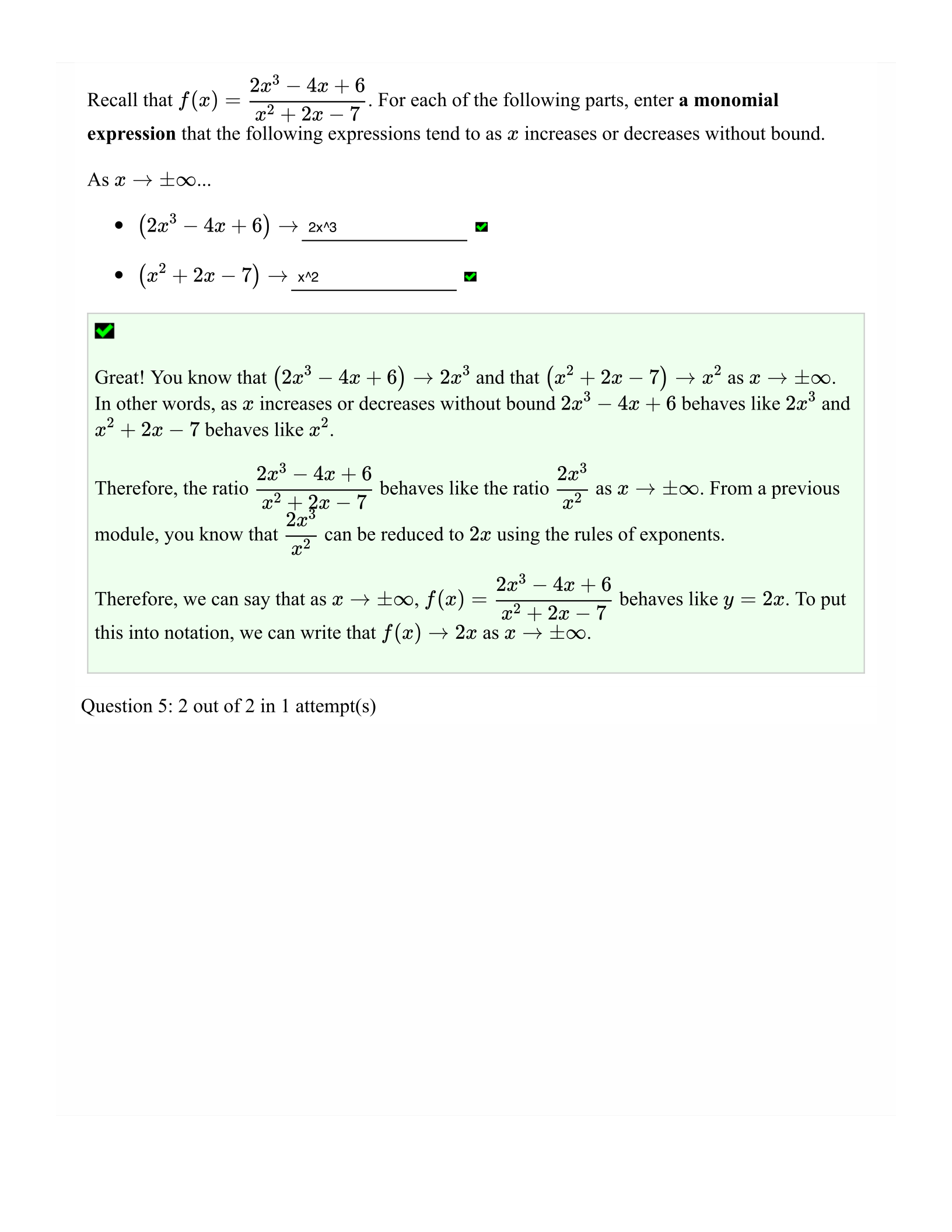
Recall that f x =. For each of the following parts, enter a monomial
expression that the following expressions tend to as x increases or decreases without bound.
As x→±∞...
2x−4x+ 6 →
2x^3
x+ 2x−7→
x^2
Great! You know that 2x−4x+ 6 →2x and that x+ 2x−7→x as x→±∞.
In other words, as x increases or decreases without bound 2x−4x+ 6 behaves like 2x and
x+ 2x−7 behaves like x.
Therefore, the ratio behaves like the ratio as x→±∞. From a previous
module, you know that can be reduced to 2x using the rules of exponents.
Therefore, we can say that as x→±∞, f x = behaves like y= 2x. To put
this into notation, we can write that f x →2x as x→±∞.
Question 5: 2 out of 2 in 1 attempt(s)
( ) x+ 2x−7
2
2x−4x+ 6
3
(3)
(2)
(3)3(2)2
3 3
2 2
x+ 2x−7
2
2x−4x+ 6
3
x2
2x3
x2
2x3
( ) x+ 2x−7
2
2x−4x+ 6
3
( )
11/11/19, 11:16 PM
Page 5 of 8
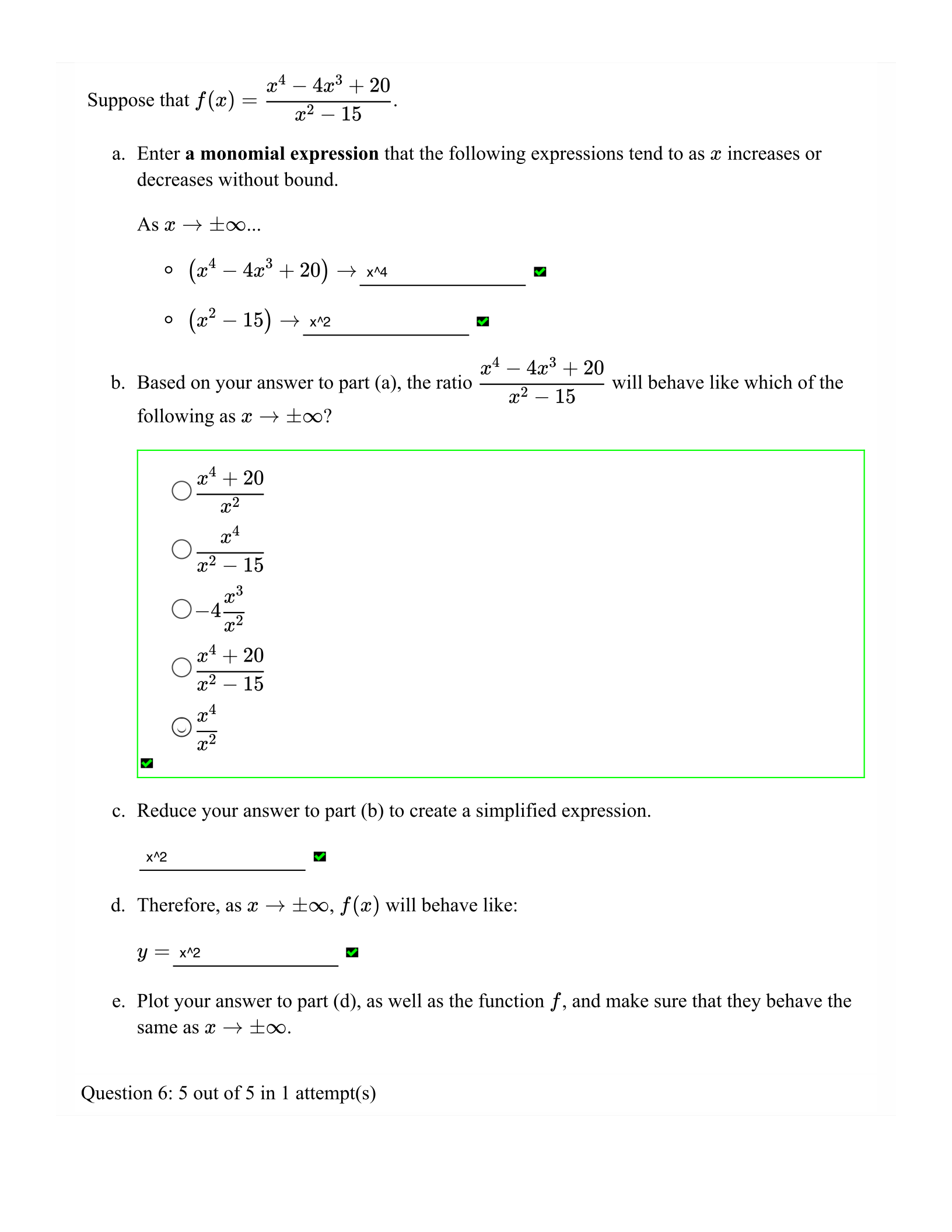
Suppose that f x =.
a. Enter a monomial expression that the following expressions tend to as x increases or
decreases without bound.
As x→±∞...
x−4x+ 20 →
x^4
x−15 →
x^2
b. Based on your answer to part (a), the ratio will behave like which of the
following as x→±∞?
−4
c. Reduce your answer to part (b) to create a simplified expression.
x^2
d. Therefore, as x→±∞, f x will behave like:
y=
x^2
e. Plot your answer to part (d), as well as the function f, and make sure that they behave the
same as x→±∞.
Question 6: 5 out of 5 in 1 attempt(s)
( ) x−15
2
x−4x+ 20
4 3
(4 3 )
(2)
x−15
2
x−4x+ 20
4 3
x2
x+ 20
4
x−15
2
x4
x2
x3
x−15
2
x+ 20
4
x2
x4
( )
11/11/19, 11:16 PM
Page 6 of 8
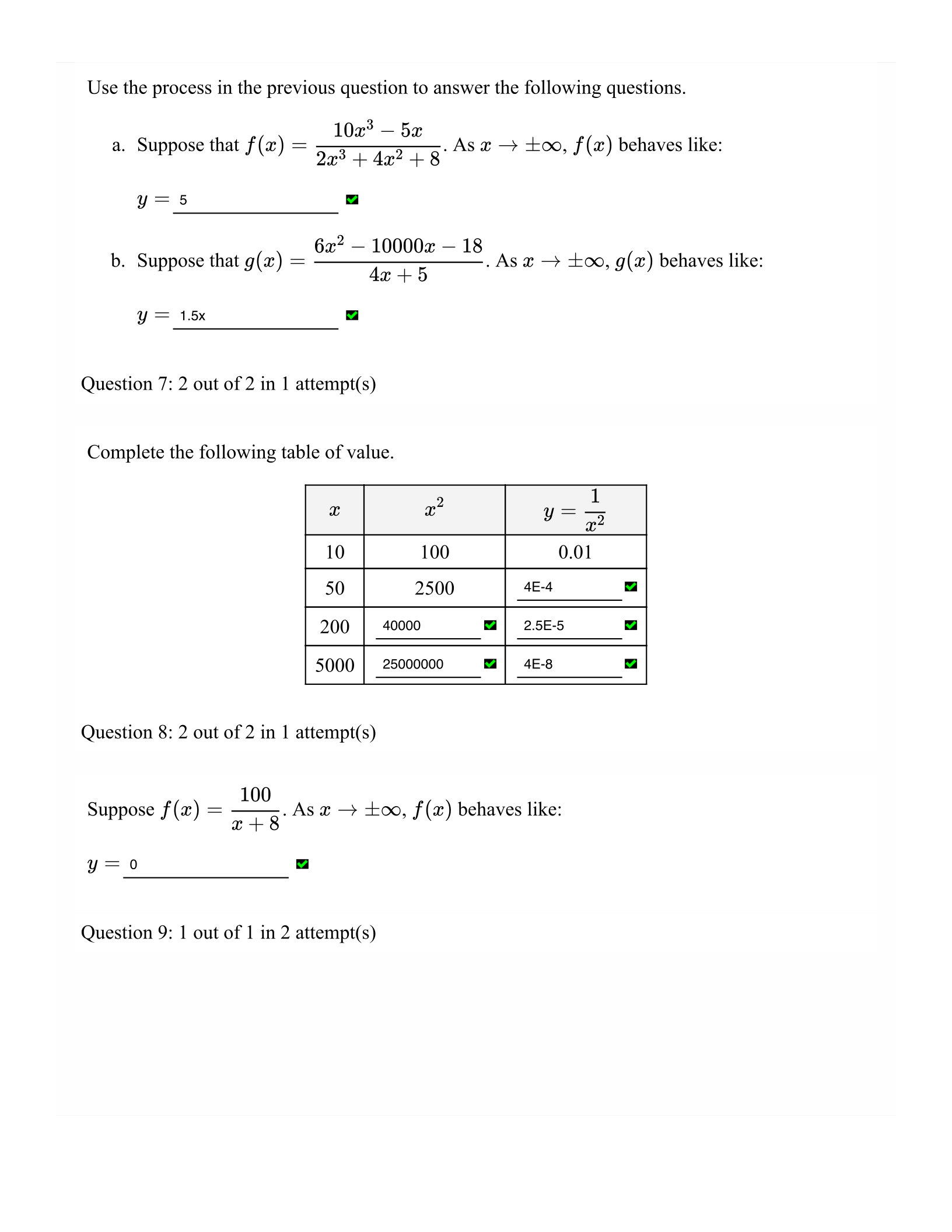
Use the process in the previous question to answer the following questions.
a. Suppose that f x =. As x→±∞, f x behaves like:
y=
5
b. Suppose that g x =. As x→±∞, g x behaves like:
y=
1.5x
Question 7: 2 out of 2 in 1 attempt(s)
Complete the following table of value.
x x y=
10 100 0.01
50 2500
4E-4
200
40000
2.5E-5
5000
25000000
4E-8
Question 8: 2 out of 2 in 1 attempt(s)
Suppose f x =. As x→±∞, f x behaves like:
y=
0
Question 9: 1 out of 1 in 2 attempt(s)
( ) 2x+ 4x+ 8
3 2
10x−5x
3
( )
( ) 4x+ 5
6x−10000x−18
2
( )
2
x2
1
( ) x+ 8
100 ( )
11/11/19, 11:16 PM
Page 7 of 8
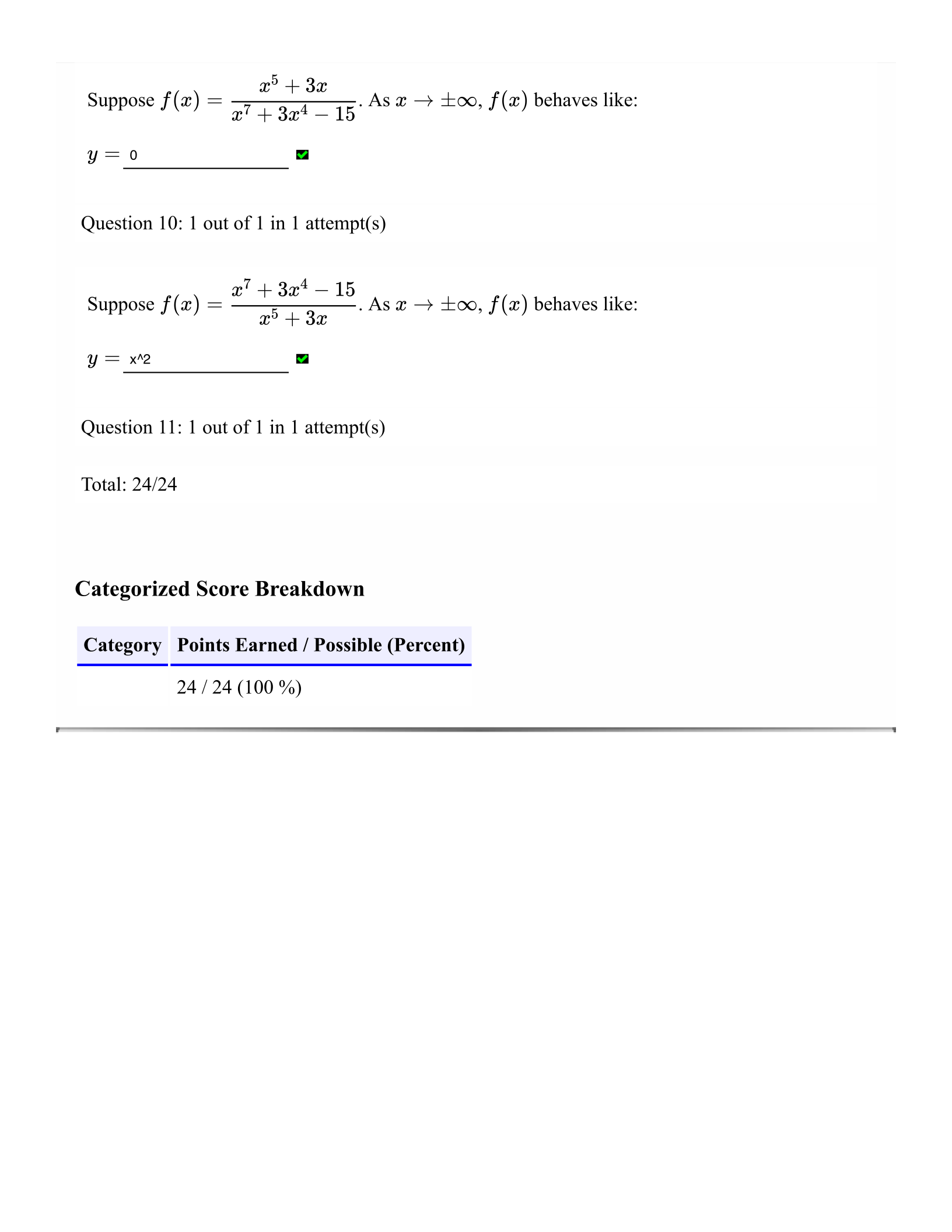
Suppose f x =. As x→±∞, f x behaves like:
y=
0
Question 10: 1 out of 1 in 1 attempt(s)
Suppose f x =. As x→±∞, f x behaves like:
y=
x^2
Question 11: 1 out of 1 in 1 attempt(s)
Total: 24/24
Categorized Score Breakdown
Category Points Earned / Possible (Percent)
24 / 24 (100 %)
( ) x+ 3x−15
7 4
x+ 3x
5
( )
( ) x+ 3x
5
x+ 3x−15
7 4
( )
11/11/19, 11:16 PM
Page 8 of 8
Powered by TCPDF (www.tcpdf.org)

