


INTRODUCTION Five years into the public availability
Overview
Five years into the public availability of the world wide web (WWW), Metcalf (1995)
then famously proclaimed, “I predict the internet will soon go spectacularly supernova and in
1996 catastrophically collapse” (p. 61). Now we can see the humor in that innocuous line with
almost every facet of our lives dominated by technological connection and communication
through the internet and the WWW.
Blockchain technology (BT) represents the internet of value as opposed to the internet of
information. Alternatively, some see blockchains as part of web 3.0, a decentralized, read-
writeexecute web that is fundamentally different from web 1.0 (the read-only web, used to search
for information) and web 2.0 (the read-write web of user-generated content). Blockchains have
also been portrayed as part of the fourth industrial revolution, following the revolutions inspired
by steam, electricity, and information technology. BT may represent a technological revolution,
but new techno-economic paradigms do not establish themselves overnight (O’Dair, 2018).
Unlike TCP/IP emerging as dominant internet protocol during the protocol wars of the
1970’s, the design of any blockchain protocol currently cannot support all transactions that
potentially benefit from BT. Characteristics of use cases require certain blockchain design
characteristics to achieve desired outcomes for all stakeholders involved in the respective use
case. New BT use cases are introduced frequently and, with many more expected in the future,
developing a framework is needed to guide potential BT adopters on which type of blockchain is
best suited for the respective purposes (Risius & Spohrer, 2017).
Blockchain, a revolutionary technology first introduced through Bitcoin in 2008, has
been defined as a “digital, decentralized and distributed ledger in which transactions are logged
and added in chronological order with the goal of creating permanent and tamper-proof records”

(Treiblmaier, 2018, p. 547). Implications for the storage and transfer of value through Bitcoin
and other cryptocurrencies are enormous. As Dalio (2020) notes, economic cycles tend to happen
every 60-80 years. The last major shift in reserve currency was the 1971 announcement from
President Nixon stating the U.S. dollar would no longer be pegged to gold, therefore effectively
rendering the Bretton Woods system inept. The growing inability of the U.S. Federal
Government and the U.S. Central Bank to work in tandem to both curb the spiraling debt and
maintain a healthy real economy is leading to calls for the next reserve currency to be identified.
Some are preparing for Bitcoin as a decentralized inevitability, changing from the control of a
central authority manipulating monetary policy to orchestrate macroeconomic conditions.
However, BT has now found its way beyond digital currency and into the realm of business
models, processes, and inter-organizational network facilitation.
Problem Addressed
As BT continues to gain attention and interest in various industries, enterprises
worldwide are exploring its potential for practical applications. The unique characteristics of BT
offer great potential to foster various sectors through decentralization, immutability, and
transparency (Casino et al., 2018). These BT features signify a potential for significant disruption
for many different business processes and industries. However, little is known regarding which
features are relevant for particular use cases and how they need to be designed (Risius &
Spohrer, 2017). As recently as 2020, over 80% of enterprises considered blockchain important as
a strategic priority, yet only 39% reported deployment of a use case into production (Pawczuk et
al., 2020). Enterprises face numerous challenges in realizing the optimal benefits of BT adoption,
resulting in a significant gap between interest and actual technology implementation.
One major challenge lies in identifying the appropriate blockchain design characteristics
for their particular use cases. For any blockchain design characteristic, numerous technological

options have been developed. For instance, consensus provides block finality, which determines
if the information stored on the chain can be considered perpetually stored once the block has
been added to the chain. Consensus designs include over 30 alternatives since proof-of-work
(i.e., a consensus mechanism used by many cryptocurrencies to validate transactions on their
blockchains and award tokens for participating in the network) was introduced with the advent of
Bitcoin (Nakamoto, 2009). Given this diversity of blockchain protocols, organizations must
consider numerous technological options to suit their specific needs and carefully evaluate the
advantages and disadvantages of each design characteristic to make informed decisions, a
particularly challenging task for emerging technologies. The absence of a framework that
connects blockchain design characteristics with use case characteristics makes it difficult for
potential BT adopters to make the right choices regarding technology selection and adoption.
Another challenge organizations encounter is the lack of understanding of the critical factors
influencing the successful adoption of BT at the enterprise level (Sanka et al., 2021). Current
research on technology adoption primarily focuses on general technology adoption theories and
conceptual models, such as the Technology, Organization, Environment (TOE) model and
Roger's (2003) Diffusion of Innovations (DOI) theory. While these frameworks provide valuable
insights into various aspects of technology adoption, they often fail to address the specific
nuances and complexities of BT adoption, which includes other factors not often requiring
consideration in the domain, such as inter-organizational complexities of an ecosystem
technology.
The regulatory environment surrounding BT adds another layer of complexity to
successful BT adoption. The uncertain and evolving regulatory landscape in many countries
generates challenges for enterprises in areas such as cryptocurrency usage, governance
structures, and data privacy. This uncertainty can inhibit organizations from fully leveraging

BT's potential or deter them from exploring the technology altogether (Ali et al., 2020).
Finally, there is a lack of practical guidance rooted in empirical evidence from real-world
BT adoption experiences. Enterprises seeking to adopt BT can significantly benefit from the
learning and success stories of early BT adopters, particularly those who have managed to
overcome the challenges and barriers facing BT implementation. However, limited research has
been conducted on the experiences of these early adopters, and their insights have not been
consolidated into actionable principles for other enterprises to follow. As a result, enterprises
often struggle to navigate the complexities of BT adoption, leading to a lack of standardized
adoption practices and, ultimately, less effective implementation of BT in the business
environment resulting in use cases not meeting desired outcomes, or worse, failure. This
research addresses these challenges head on and contributes to the body of knowledge on BT
adoption by establishing a comprehensive framework that connects blockchain design
characteristics with use case characteristics while also examining the factors that impact the
successful enterprise-level adoption of BT. By combining the taxonomy presented in Chapter 3
of use case meta-characteristics and conducting an empirical study on multiple organizations' BT
adoption in Chapter 4, my research provides practical guidance for potential BT adopters and
sheds light on the underlying success factors in the enterprise context. Ultimately, this research
contributes to the broader understanding of BT adoption and facilitates accelerated global
blockchain value realization across industries.
Research Questions
The problems described previously highlight an academic literature gap between
enterprise-level interest in BT and its actual adoption into enterprise technology stacks and
business processes. Recognizing the critical role of appropriate design characteristics and
understanding the factors influencing successful BT adoption, this research bridges this gap

through the development of a comprehensive framework and generating practical insights from
the experiences of early adopters. Specifically, to guide enterprises looking to adopt BT, I aim to
answer the following research questions:
•RQ1: What blockchain design characteristics are best suited for respective use case
characteristics?
•RQ2: What are the technological, organizational, environmental, and inter-organizational
factors that lead to successful enterprise-level adoption of blockchain technology? To
match blockchain design characteristics with use case characteristics (RQ1), I developed a
taxonomy matrix of both design and use case meta-characteristics in an enterprise context.
To develop factors leading to the successful adoption of BT (RQ2), I leveraged a multiple
casestudy approach to compare organizations that have adopted BT and continued use of at
least one use case.
Significance of the Proposed Research
The BT domain represents a new type of technology that crosses beyond traditional
technology adoption, and because of its inherent decentralized characteristics, forces enterprises to
consider other dimensions when selecting and adopting it. For instance, enterprises can be
governance nodes that validate data, yet some blockchain designs require payment in native
cryptocurrency, an area of regulatory uncertainty across the world. Some blockchain solutions have
introduced innovative technical solutions like VeChain’s Multi-Payment Protocol, which allows one
party to pay the fee for transaction costs, so users can receive value from the blockchain without ever
having to hold native cryptocurrency.
Proper technology design is a key factor for adoption and continued use. Current research
focuses on general blockchain features, often in the form of a conceptual model. While helpful to
frame enterprise motivation for consideration of BT as an innovation to adopt, Risius and Spohrer

(2017) conclude that previous work on enterprises and industries has provided extensive frameworks
and starting points for future research to advance research in a structured and impactful fashion. A
sophisticated consideration of the different blockchain features (e.g., permission level, data access,
transaction consensus, modularity, scalability, interoperability, centralization, and anonymity) is
required to advance the macro-adoption of BT (Walsh et al., 2016).
My research agenda serves to provide practical guidance derived from the early enterprise
adopters of BT to enterprises seeking to extract the value of BT across any number of use cases. It is
my belief that at this early stage of the adoption lifecycle, highlighting the success factors is more
important than generating a list of failure factors. Thomas Edison is attributed to saying, “I have not
failed. I have just found 10,000 ways that won’t work.” Similarly, early BT adoption has witnessed
numerous ways to fail, which is why there are so few scaled adoption success stories to date.
Studying the few that have succeeded and isolating the factors allowing longitudinal success will
serve as a lighthouse to accelerate BT adoption. For increased validity, I studied one failure as a
contrasting benchmark to better understand successes.
The enterprise is the unit of analysis for my research. The blockchain domain has seen a rapid
increase in adoption at the individual level, driven by new consumer business models, such as
decentralized finance (defi) and non-fungible tokens (NFT). Traditional enterprise use cases often
involve business ecosystem complexities and multi-stakeholder governance. Unlocking insights
about successful enterprise adoption can accelerate global blockchain value realization.
CHAPTER 2: OVERVIEW OF THE RESEARCH AREA AND APPROACH
Introduction
Unlocking the promise of BT value requires understanding its successful adoption within
enterprises. Several academic research dimensions emerge as critical anchors for my research.
This dissertation delves into the comprehensive landscape of the technology adoption literature,

highlighting established theoretical frameworks such as the TOE model (Tornatzky & Fleischer,
1990) and Roger's (1995) DOI theory to characterize the unique challenges presented by BT
adoption. Insights provided by these existing frameworks were aimed at uncovering factors
influencing successful enterprise implementation and continued use of BT.
The dissertation employs a two-step methodology that combines taxonomy development
and case study research to enhance our understanding of BT adoption at the enterprise level and
to offer valuable, practical guidance for potential technology adopters, ultimately contributing to
the global discourse on blockchain adoption.
Foundational Literature Review
Technology adoption is a relatively mature domain, including over 20 theoretical
frameworks applied to varying units of analysis across industries. The construct adoption as a
dependent variable (DV), however, has taken several forms across the literature. Early BT
adoption literature focuses on the catalyst for behavioral intention to adopt a technology. More
recently, studies have focused on other forms of adoption, including actual system use,
continuance of use, and mixed-use, which includes any study taking two or more definitions of
adoption. This study seeks to develop the principles required for the successful adoption and
scaled implementation of BT. Therefore, the working definition of adoption focuses on the
continuance of use. Continuance of use can be defined as a person or organization deciding to
continue to use or adopt an innovation in the future (Rad et al., 2017).
Rogers (1995) provided landmark research on the diffusion of innovations, including
technological innovations. He states that in an organization, technology adoption is “a decision to
make full use of an innovative IT as the best course of actions available” (Rogers, 1995, p. 61).
Rogers’ DOI theory identified four critical elements in the diffusion process: the innovation, its
communication from one individual to another, the social system, and time. He also introduced

the well-known bell curve notated by categories of adopters: innovators, early adopters, early
majority, late majority, and laggards. The rate of adoption (curve slope) is impacted by five
factors: relative advantage, compatibility, trialability, observability, and complexity. Rogers, and
the majority of literature that spans technological innovation diffusion, took a consumerist unit of
analysis (Rad et al., 2017). Researching the organizational level of early adoption requires
different factors to be considered to consider the complexities across innovation adoption
intention and use. DOI has been leveraged widely in the technology adoption domain over the
last 20 years (Chiu et al., 2017).
Many theoretical constructs have been developed to explain technology adoption and use.
Venkatesh et al. (2003) attempted to leverage eight previous models to theorize technology
adoption in enterprises. The result was the Unified Theory of Acceptance and Use of Technology
(UTAUT). According to UTAUT, four main factors influence the intention and usage of
technology. Performance expectancy is the degree of belief using the technology will help attain
gains in organizational performance. Effort expectancy is the degree of ease associated with use.
Facilitating conditions are degrees of organizational and technical infrastructure support. Finally,
social influence is the degree of perception that others believe the use of technology.
While BT is a nascent technology, the domain of technology selection, adoption, and use
is in an intermediate state. Early models such as TAM are still utilized today and applied to
specific technology adoption areas (Zheng & Li, 2020). Alignment on the maturity level of
technology adoption remains elusive due to the lack of consensus on a unified technology
adoption theory that most researchers will agree on.
Another alternative adoption theory is the TOE model (Tornatzky & Fleischer, 1990).
The TOE model addresses technology adoption at the enterprise level and has been proven to be
effective (Zhu et al., 2006). The TOE model focuses on three categories to explain technology

adoption; the technological category includes the characteristics and usefulness of the
technology, the organizational category explores internal characteristics like management,
employees, and capabilities, and the environmental category takes into account industry, social,
and political attributes, including competitors and business partners (Chiu et al., 2017).
To add structure to the technology context of TOE, many studies integrate Rogers’ (1995)
DOI theory into their conceptual model. The integration of DOI and TOE has been validated as a
combined model to explain enterprise-level adoption of innovations (Chiu et al., 2017; Hsu et al.,
2006; Piaralal et al., 2015). Particularly, the characteristics of innovation (i.e., relative advantage,
compatibility with pre-existing systems, complexity, trialability, potential for reinvention, and
observability) have been shown as significant predictors of technology adoption in multiple
studies (Rogers, 1995). BT can be leveraged for both data representing the digital world and data
representing the physical world. Multiple technology adoption frameworks, such as TOE and
DOI, have been combined to address blockchain research studies bridging the digital and
physical worlds. Both Wang et al.’s (2010) research on enterprise adoption of RFID in the
manufacturing sector and Thomas and Espadanal’s (2014) research on cloud computing adoption
in the service industry combine TOE and DOI theories. Because new technologies can be
complex, combining more than one theoretical model may be appropriate to gain a better
understanding of enterprise adoption (Oliveira & Martins, 2011).
TOE-DOI studies across industries, technologies, and organizational characteristics have
led to varying results across the five DOI innovation characteristics. One study found that
compatibility is the most important factor in technology adoption (Zhu et al., 2006). Wang et al.
(2010) found compatibility positively correlated to adoption, while complexity was negatively
correlated. Another study found that relative advantage and complexity were inversely correlated
to adoption (Low et al. 2011). A study on information and communications technology adoption

found all factors except trialability were significant factors in enterprise adoption (Sin Tan et al.,
2009). However, a study on cloud computing adoption found that trialability does contribute to
the reduction of uncertainties in adoption (Alshamaila et al., 2013).
Annabel et al. (2015) studied enterprise adoption of cloud computing. In their research,
organizational context attributes included management support, enterprise size, and technological
readiness, which have been validated as significant factors in innovation adoption. Jeyaraj et al.
(2006) found top management support as one of the best predictors of enterprise innovation
adoption. Lee and Xia (2006) found organization size had a positive correlation to innovation
adoption, with several moderating variables. Hameed et al. (2012) studied the correlation
between organizational readiness and enterprise innovation adoption and found organizational
readiness to be the largest factor.
Because of the core characteristics of BT, as well as the continued regulatory uncertainty,
BT exhibits environmental attributes that do not impact other technological innovations.
Traditional environmental factors worth exploring are government and regulatory support,
business partners, consumer pressure, and competitive pressure. I propose blockchain
governance, both on- and off-chain, as a critical consideration to the adoption of BT. Private
versus permissioned versus public blockchain governance has implications for sustainability and
blockchain development, which should directly influence how enterprises select and adopt a
specific BT. Subdimensions influencing enterprise adoption around BT governance include roles,
incentives, membership, communication, and decision-making (van Pelt et al., 202). Debate
about theoretical constructs related to enterprise-level adoption of innovations continues in
academia. The gap between a generation of new evidence and the translation of the evidence into
practice is the single biggest chasm in innovation adoption research today (Allen et al., 2017).
This lag is partly due to a lack of understanding and consensus on organizational level factors

affecting adoption decisions and implementations, as well as the various characteristics of
innovative technologies. One of the major issues in the adoption domain is the inconsistent
measurement and lack of information on the reliability and validity of organizational constructs
(Allen et al., 2017). Wisdom et al. (2014) found no consistency in measures across studies on
innovation adoption. Allen et al. (2017) recommend more mixed methods research in this
domain where both qualitative and quantitative methodologies can bring to bear an increased
understanding of enterprise-level adoption of innovations.
Models of innovation adoption focus on predictors, moderators, and mediators of
adoption. Behavioral intent to adopt is a complex, multi-faceted process and is a distinct research
focus in research on adoption within the context of diffusion, dissemination, or sustainability.
(Chor et al., 2014). Chor et al. (2014) conducted a meta-analysis of innovation adoption and
found 118 measures associated with 27 innovation adoption predictors. The top predictors
aligned with the TOE model were found to be complexity, relative advantage, and observability
for technological context and organizational size, structure for organization context, and external
environment for external context.
Description of the Research Agenda
The research agenda for this dissertation demands a two-step approach to address the
research questions. They are both inextricably linked in addressing BT adoption in the context of
organizational use cases.
BT represents a unique innovation in the domain of information systems. Technology
selection is a critical dimension of technology adoption. Business decision makers seeking to
achieve value through BT adoption are met with a nascent industry continuing to explore
technological designs. The first paper addresses this challenge for practitioners by creating a
taxonomy of blockchain design characteristics as well as a taxonomy of organizational use case

characteristics. These two taxonomies serve as axes for a matrix that guides appropriate
technological design characteristics required based on the characteristics of any use case. This
conceptual paper anchored technological considerations that were explored in the second study.
The second phase of this research involved an empirical, multiple-case study approach of large
enterprises which have successfully adopted one or more use cases of BT. Case studies are the
most widely used method for qualitative research (Baskarada, 2014) and examine phenomena in-
depth within context, especially when boundaries are not clearly evident (Yin, 2017) or for
emergent phenomena (Treiblmaier, 2019). Ridder (2017) identified four types of case studies. I
employed gaps and holes (Ridder, 2017), which utilizes existing theory to explain how and why
enterprises are successful in adopting BT. The sampling method was purposeful sampling, with a
focus on large enterprises that successfully adopted public or hybrid protocols. The multiple case
study methodology allowed me to uncover commonalities and contextual differences between
cases. The results of this research led to a list of success factors across the theoretical dimensions
(e.g., technological, organizational, environmental, inter-organizational). These success factors
then led to practical recommendations to business practitioners to improve their understanding
and decision-making in their blockchain adoption journey.
Blockchain adoption at scale in an enterprise context is nascent. Case study research to
build theory on the early adopters of BT creates findings within context making up many
complex sets of variables in play intra- and inter-organization. For this reason, I took an
interpretivist stance. Interpretivism allows a researcher to have multiple views for a research
problem because the research sees the world through the eyes of the participants (Greener, 2008).
It is part of subjective epistemology and it takes into account relativist and subjective realities
across participants within and between cases. The interpretivist “emphasizes social context and
human complexity with regard to how people understand the phenomena” (Rashid et al., 2019, p.

4). An interpretivist view seeks to deeply understand social phenomena while also recognizing
the subjectivity of participants because each perceive their own reality. In interpretivist research,
participants leverage their own words to relate experiences and beliefs.
Justification of the Research Agenda and Approach
In addressing the research questions, I ultimately seek to influence the adoption of
emerging technologies such as BT. There are multiple ways to approach the objective of
influencing IS practice depending on the specific context of a research project. Treiblmaier
(2019) notes the significant time lag between top academic publications and industry adoption
regarding BT. The lengthy review cycle of journals, the complexity of the technology, and poorly
understood use cases have created limited research for academia and practitioners alike.
Case studies allow for flexibility and broad applicability required to address previous research
challenges in the domain and is well-suited to study nascent phenomena (Treiblmaier, 2019).
The qualitative case study methodology is “an empirical inquiry that investigates a phenomenon
in depth within its real-world context, especially when the boundaries between phenomenon and
context may not be clearly evident” (Yin, 2017, p. 15). Early adoption often requires deep
context across the multiple dimensions provided by theoretical IS adoption frameworks like the
TOE model to generate insights that can be defendable.
Ridder (2017) presented a comprehensive segmentation of four case study types, each
with different strengths and focus. The first is called no theory first, which is leveraged when
there are a couple of preliminary variables and constructs, but no assumed relationships. It uses
theoretical sampling to analyze and identify emerging constructs within the case or between
cases. The second is called gaps and holes, which utilizes existing theory to answer how and why
questions about a phenomenon. Purposeful sampling is used to generate pattern matching or
analytic generalizations across case studies. The third case study design is called social

construction of reality and is generally driven by a researcher’s curiosity about a phenomenon.
This type of case study also uses purposeful sampling, but to build categorical aggregation which
may help better understand a theoretical issue. The fourth case study type is anomalies, which
investigates why a phenomenon cannot be explained by existing theories. It uses theoretical
sampling to reconstruct a particular theory based on the case study data and artifacts gathered.
Because my motivation included existing technology adoption theory, my research falls under
gaps and holes. Existing theory drove initial dimensions for each case study, but the data analysis
across cases within my sampling ultimately determined the final constructs for the generalized
propositions found in Chapter 4.
The taxonomy matrix artifact was leveraged to frame the case studies. Each case study
use case was mapped to the matrix to align the value achieved through the design decisions. Use
case characteristics collectively defines use case value through business requirements. These
requirements are satisfied through the design characteristics. Each case study’s technology
adopted was mapped to the technology design characteristics to validate whether the technology
selected was appropriate for the use case characteristics, and to determine the value of the use
case itself.
Data sources and data collection included interviews with implementation partners or BT
representatives and publicly available information. Interviews were semi-structured to allow for
deeper dives into specific research areas based on the responses during the interview. In
Treiblmaier’s (2019) research on case studies for BT, he introduces a framework (Figure 1) to
approach case studies depending on the outcome desired. I sought to create practical
recommendations in the form of a summary of action principles early adopters of BT leveraged
in their journey to continue the use of BT. Action principles seek to arm IS practitioners seeking
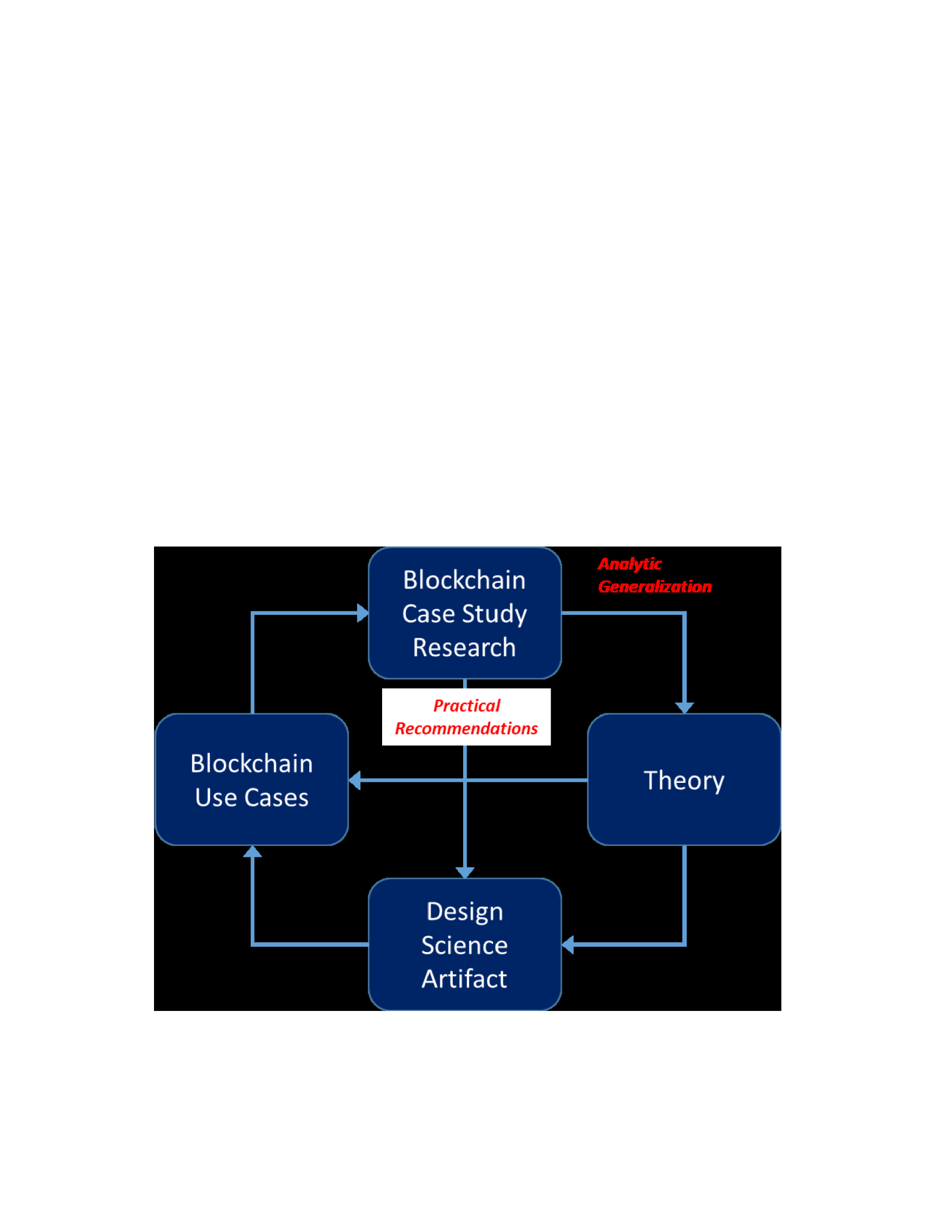
to adopt a technology with key success factors and barriers overcome by experienced early
adopters of that technology (Lacity et al., 2021).
Figure 1
A Framework for Blockchain Case Study Research
Action principles research seeks to create a set of action principles that answer the
following questions (Lacity et al., 2021):

•Robustness: What is the same?
•Distinctiveness: What is unique?
•Provocativeness: What is surprising?
Enterprises seeking to design and implement BT applications should seek out principles
that guide their journey based on lessons learned from innovators and early adopters to improve
chances of successful adoption or fast failure. Lacity (2018) states that, at a minimum, action
principle research should seek to understand robustness and distinctiveness. A benefit of the
qualitative nature of the action principle methodology is to potentially develop provocative
principles. Because BT introduces new dimensions of managerial decision-making during the
solution design and implementation (e.g., on- and off-chain governance embeddedness), action
principles in this study sought to identify principles in areas where BT is unique compared to
other technologies. Because I am not a technical IS architect and my background is light on deep
technical expertise in traditional IS capabilities (e.g., architecture, software design), the research
methodology offered me the ability to engage with various constituents of an organization to
obtain data. Unlike design science and action research, which require high technical expertise in
BT, action principles research requires low technical expertise, high interpersonal skills, and
medium business or consulting expertise. My interpersonal skills, my deep business acumen, and
a decade of consulting experience enabled a good fit for action principles methodology.
CHAPTER 3: A TAXONOMY MATRIX OF ENTERPRISE BLOCKCHAIN
TECHNOLOGY DESIGN AND USE CASES

Introduction
In recent years, BT has emerged as a unique innovation in the realm of information
systems, offering decentralized features that compel organizations to rethink traditional
approaches to conducting business and managing data. As BT continues to expand and innovate,
enterprises are faced with the challenge of navigating this nascent landscape and identifying the
most appropriate blockchain designs for their specific use cases. This challenge is exacerbated by
novel considerations stemming from BT adoption, such as enterprises' roles as governance nodes
that validate data and the regulatory uncertainties associated with native cryptocurrencies.
Moreover, businesses must also persuade network partners to explore and adopt BT,
necessitating a structured and strategic approach to technology selection and implementation. In
recognition of these complexities, the present study aims to develop a comprehensive framework
that guides enterprises through the intricate process of evaluating various BT designs and
understanding their potential applications.
The first part of this paper proposes a taxonomy of blockchain design characteristics,
focusing on features such as permission level, data access, transaction consensus, modularity,
scalability, interoperability, centralization, and anonymity. This taxonomy builds on previous
research (Walsh et al., 2016) to offer a more sophisticated and structured approach to understand
the diverse range of BT options available in the market. Additionally, this study develops a
taxonomy of organizational use case characteristics that enables businesses to determine the most
appropriate BT solutions for their specific contexts.
These two taxonomies form the basis for a matrix designed to guide appropriate
technological design selection for any given use case. By providing a systematic framework to
evaluate and match blockchain designs with specific use cases, enterprises can lower the risk of
technical failure and increase the chances of successful BT adoption. This strategic approach is

particularly valuable for businesses exploring BT as an ecosystem technology, as it can help
accelerate the process of persuading network partners to adopt and participate in blockchain
initiatives.
Building upon existing research that highlights the trial-and-error nature of blockchain
experimentation (Labazova et al., 2019) and the complexity of BT adoption (Xu et al., 2017),
this study seeks to make a substantial contribution to the growing body of knowledge on
blockchain implementation within enterprises. The proposed framework not only facilitates the
technology selection process for practitioners but also lays the foundation for applying these
insights to future BT innovations. By mitigating the risks and potential losses associated with
blockchain adoption, the ultimate goal of this research is to enable organizations to harness the
transformative potential of this emerging technology.
Related Research
Taxonomies are forms of classification, along with typologies, ontologies, and
frameworks. Despite being often used interchangeably, each aims at slightly different outcomes.
Classifications are the fundamental mechanism to organize knowledge (Wand et al., 1995). A
classification system can be visualized as a set of boxes that things can be put into to do some
kind of work (Bowker & Star, 1999). Ontology is the study of what is through questioning the
types of structures, events, and processes of any area of reality (Smith, 2008). Although
ontologies can sometimes function like taxonomies (Wand & Weber, 2004), Dogac et al. (2002)
note they are distinct artifacts. Typology is a system of conceptually derived groupings, usually
multi-dimensional and more complex than classification systems (Nickerson et al., 2013). The
term framework is a general term, like classification, which is used to organize objects.
Taxonomies are important to help researchers and practitioners understand and analyze complex
domains (Nickerson et al., 2013). Taxonomies create structure and enterprise to knowledge in a

field, resulting in the ability to study relationships between concepts and develop hypotheses
(Glass & Vessey, 1995). This ability becomes increasingly important in nascent, complex
domains such as BT, where design and design selection decisions are often made without
substantial real-world adoption. Taxonomies support the ability to understand the science behind
design principles of observed artifacts (Williams et al., 2008). Iivari et al. (1998) noted
taxonomies are forms of conceptual knowledge in design science and the goal of taxonomies aim
to “identify essences in the research territory and their relationships” (p. 46). Taxonomy
development is a complex process (Nickerson et al., 2013). Various disciplines provide guidance
to researchers seeking to develop taxonomies in nascent domains. Biology, for instance, uses
taxonomies such as the Linnaean taxonomy to organize living things based on a predefined
hierarchy of categories. Each organism is placed in the taxonomy based on where it fits at each
level of the hierarchy. Phenetics and cladistics are two other methods of organizing with
taxonomies. Phenetics involves classifying based on common characteristics and cladistics
examines evolutionary relationships between organisms (Eldridge & Cracraft, 1980). Bailey
(1994) suggests a three-level approach to taxonomy development, which includes conceptual,
empirical, and indicator levels. The resulting artifact should have a set of dimensions that consist
of mutually exclusive and collectively exhaustive characteristics, and every object has precisely
one characteristic in every dimension (Nickerson et al., 2013).
Nickerson et al. (2013) attempted to develop a methodology for taxonomy development
in IS, noting existing research has not adequately addressed taxonomy development by using an
ad hoc approach. The result of his research outlined a taxonomy development method for IS that
incorporates both an empirical-to-conceptual (induction) and a conceptual-to-empirical
(deduction) approach to fulfill ending conditions set out by a researcher. These ending conditions
can be either objective or subjective and are met through multiple iterations of the

methodological process. Omair and Alturki (2020a) note that the rigidity in Nickerson’s
methodology can limit taxonomy development because it does not “provide a technique that
supports creativity and can deal with surprising derived results, which can be handled by
adopting abduction as a form of logical reasoning” (p. 536). They also point out that abduction
can be a creative approach to design artifacts, such as a taxonomy, when little knowledge exists.
A goal of taxonomy development is like design science research, in which design is a search
process and includes a generate and test cycle. Omair and Alturki (2020b) suggest that an
optimal taxonomy is intractable, therefore any methodology a researcher leverages should
include different strategies iteratively to reach a useful taxonomy. Their approach extends
Nickerson’s process by embedding abduction as an essential addition for domains in which a
researcher may be handicapped in knowledge. These handicaps can include limited empirical
data, restricted knowledge access, time or location obstacles, or data that cannot support the
derived results.
A useful taxonomy has several qualitative attributes that make it valuable (Nickerson et
al., 2013). First, it is concise. A taxonomy should contain a limited number of dimensions and
characteristics within each dimension. Attempting to create a taxonomy that includes an
exhaustive list of dimensions or characteristics may exceed the cognitive load of the researcher
and thus be difficult to comprehend and apply (Bailey, 1994). Second, it should be robust. A
taxonomy should have the number of dimensions and characteristics required to clearly
differentiate between objects. A useful taxonomy consists of groups that are distinct from one
another, yet members within a group are as alike as possible. Third, a taxonomy should be
comprehensive. While this attribute may seem to contradict the concise attribute, the key is that a
taxonomy allows the researcher to classify all known objects within the domain under
consideration (Nickerson et al., 2013). Fourth, taxonomies should be extendible. Particularly in a

nascent technological domain such as BT, the ability to include additional dimensions or new
characteristics within a dimension when new types of objects are developed is important to
ensure the taxonomy becomes a living, not static, reference of the current state. Finally,
taxonomies should be explanatory. The dimensions and characteristics should not describe every
detail of the reference objects, but rather useful explanations of the nature of the objects.
Explanatory taxonomies allow somebody who knows the characteristics of an object to clearly
find an identifiable place in the taxonomy which represents those characteristics. The nascent
domain of BT requires a particular focus on extendibility to ensure the evolution of technological
design and use case development are able to be included through iteration.
Nickerson et al. (2013) proposed a methodology for taxonomy development (Figure 2) in
IS technology based on a systematic review of taxonomy development in other disciplines
resulting in desirable qualities. IS taxonomy development is largely ad hoc and over 40% of the
papers Nickerson et al. (2013) surveyed did not identify a taxonomy development approach.
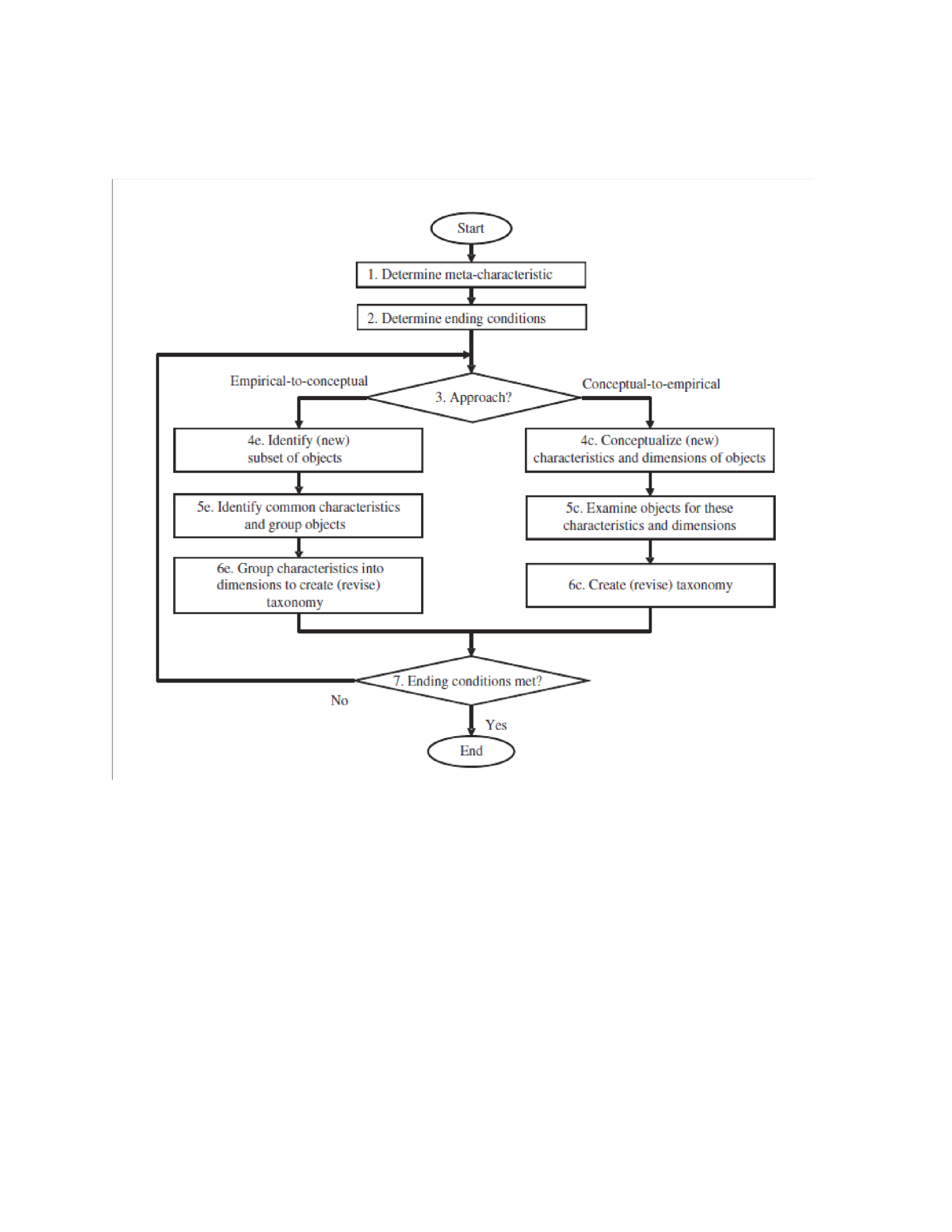
Figure 2
The Taxonomy Development Method
The first step to developing a taxonomy is to identify meta-characteristics that are based
on the purpose of the taxonomy. These meta-characteristics should support the intended use of
the taxonomy. Next, the ending conditions are established by defining objective and subjective
outcomes. Ending conditions are defined as a taxonomy state achieved to terminate further
iterations. Once all ending conditions are identified, the researcher determines whether an
empirical-to-conceptual or conceptual-to-empirical approach is most appropriate depending on
the availability of data about objects under study. With limited initial data, a conceptual-
toempirical approach is best. With significant data, even with limited domain knowledge,
pursuing an empirical-to-conceptual path is optimal. After several iterations, identified ending
conditions will be met and the resulting taxonomy needs to be evaluated for usefulness in the
context of the stated objectives of the research (Nickerson el. al., 2013).
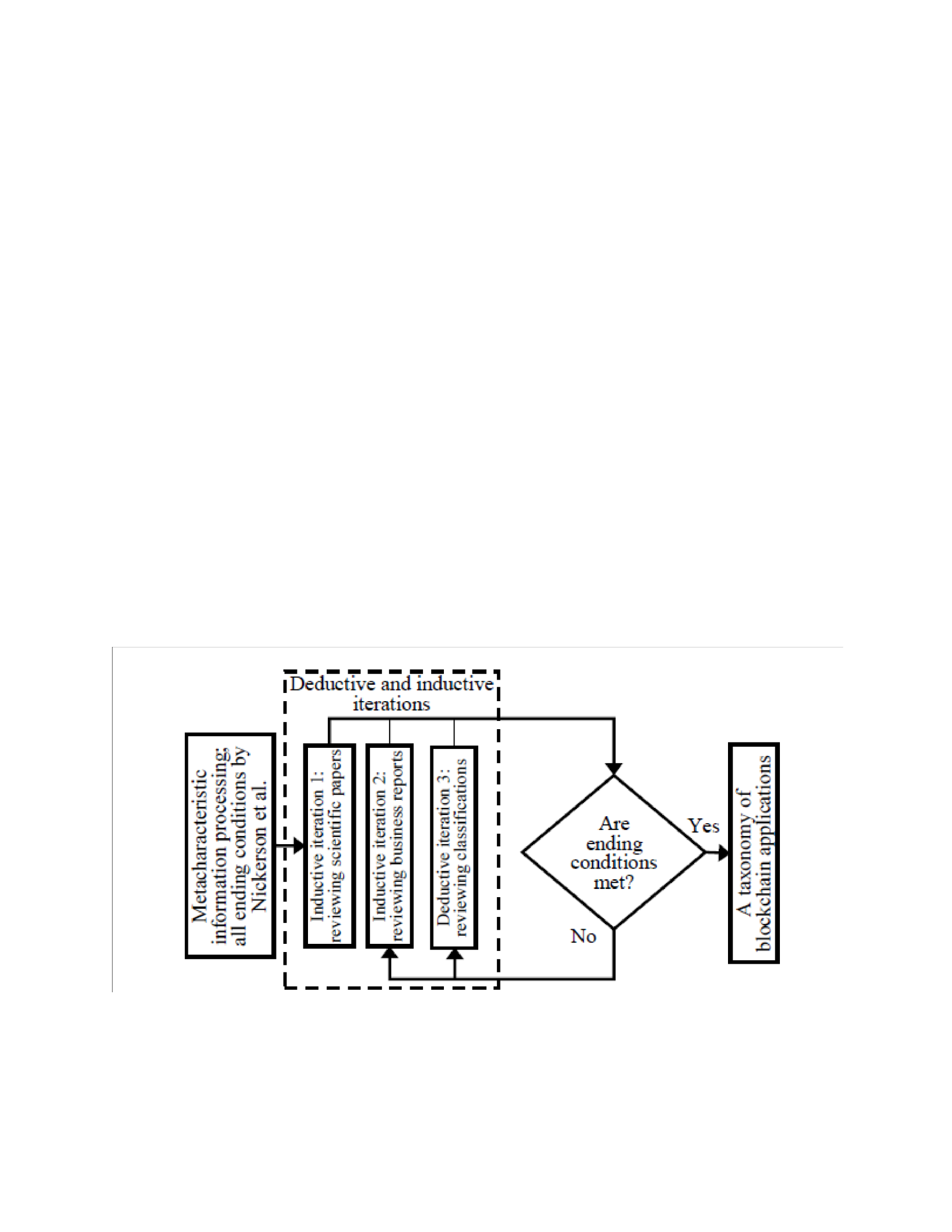
Labazova et al. (2019) leveraged Nickerson’s approach to develop a taxonomy of
blockchain applications. The method (Figure 3) uses both inductive and deductive iterations. I
propose a similar approach for this research, by developing initial dimensions and characteristics
from the rigor of scientific literature, then moving towards practical relevance through business
reports of blockchain protocols and use cases in real-world environments. Finally, the ability to
deductively review classifications to enhance taxonomic dimensions and characteristics through
legitimately proposed solutions will be a critical step to fulfilling ending conditions.
Figure 3
Taxonomy Approach for Blockchain Applications

Research Approach, Taxonomy Development
The objective of this study is to create a taxonomy matrix with one axis blockchain
design characteristics and the other axis of use case characteristics. For the meta-characteristics, I
selected the value propositions, or key driving principles (Tasca & Tessone, 2019), of BT (i.e.,
consensus, transparency, security). The variation of design considerations of these
metacharacteristics is central to the optionality of a practitioner's decision-making process.
Technology selection is driven by the suitability of the technology to satisfy business
requirements, which are the implicit descriptions of the value an enterprise seeks to generate
from the implementation of said technology.
Taxonomy development in social sciences has been described as taking an empirical and
inductive approach (Bailey, 1994). As opposed to a typology, which is conceptual and deductive,
Bailey (1994) claims taxonomies determine the deviation from the ideal type based on the
empirical realities of the world. In this approach, researchers develop a typology based on a
theoretical foundation. One method, called substruction, is to add dimensions until a satisfactory
enterprise of objects is complete. Another method, called reduction, involves conceptualizing a
vast number of dimensions, then eliminating some until there is sufficient parsimony. In this
study, the approach used is substruction to develop a taxonomy that is sufficiently
comprehensive for practical application.
The aim of taxonomy development is to create useful taxonomies, not perfect or correct
ones, as any claim could not be defended (Nickerson et al., 2013). Particularly, in an emerging
technological domain, design considerations and use cases could change over time, so the goal of
creating a taxonomy is to search for optimal classification based on the current knowledge
(Nickerson et al., 2013). It is crucial to meet a set of objective and subjective conditions (Table

1) that ensure the practicality and effectiveness of the resulting framework. Meeting these
conditions ensures a robust, reliable foundation for businesses to make informed decisions while
tackling the complexities of the BT landscape.
Table 1
Taxonomy Ending Conditions
Ending Condition Type Ending Condition Description Explanation of Satisfaction
Objective Conditions
All available taxonomy objects
must be studied
Comprehensive analysis of all
relevant characteristics
No changes in dimensions or
characteristic after the last
dimension
Consistent taxonomy without
alterations upon completion
Every characteristic for each
dimension should have at least one
object
Meaningful connections
ensured
All dimensions and characteristics
within a dimension are unique
No redundancy in the
taxonomy
Subjective Conditions
Concise Clear, compact representation
for easy understanding.
Robust Reliable foundation for
compatibility analysis.
Comprehensive Covers spectrum of enterprise
blockchain applications.
Extendible Accommodates future
advancements seamlessly.
Explanatory Guides decision-making with
valuable insights.
Objective conditions emphasize thorough analysis and comprehensive analysis of all
pertinent characteristics within a taxonomy. Stability is achieved when dimensions and
characteristics remain unchanged after the final dimension is established. It is essential that for
every characteristic within each dimension, at least one object is connected to create meaningful
and relevant relationships. Additionally, a taxonomy must avoid redundancy by maintaining
unique dimensions and characteristics. Subjective conditions focus on qualities that contribute to

the overall applicability and usefulness of a taxonomy in real-world scenarios. A concise and
clear representation is key for practitioners to understand and leverage for implementation.
Robustness in the framework ensures dependability when it comes to compatibility analysis and
covering a wide range of enterprise blockchain applications offers versatility. Equally important
is a taxonomy's extendibility, allowing it to accommodate future advancements seamlessly and
remain relevant in the evolving BT domain. Lastly, a taxonomy should provide explanatory
insights to guide businesses through the BT adoption journey. Satisfying these conditions can
result in a valuable tool set for organizations pursuing the transformative potential of BT.
To generate the comprehensive taxonomies of enterprise blockchain design and use case
characteristics, I undertook a systematic data analysis process. This process consisted of data
collection, examination, and synthesis, applying both qualitative and quantitative methods to
ensure a robust, well-rounded analysis. The data for this study was sourced from a variety of
platforms to ensure broad coverage of the rapidly evolving blockchain space. Each of the
individual taxonomies was developed over three iterations. Because in each case, physical
implementation and theoretical knowledge already exist, both approaches of taxonomy
development (i.e., conceptual à empirical, empirical à conceptual) can be used. The first
iteration was performed through a literature review of the domain. In this iteration, I followed a
logical process based on a firm theoretical foundation, which included a review of the existing
taxonomies highlighted in published papers. I searched for articles with the search string
“blockchain OR distributed ledger” as well as “taxonomy” in the title and abstract, covering all
publications by time period and type. The search returned 282 papers. After screening titles and
abstracts, I coded 129 remaining relevant articles. The analysis process involved thematic
analysis. This approach involves identifying patterns, themes, and categories within the data.

This was achieved through a process of coding, which assigns labels or tags to sections of data
that corresponded to specific themes or concepts. The iteration created detailed information of
design and use cases included in literature but lacked comprehensiveness due to the evolving
nature of an emerging technology like blockchain.
In the second iteration, I reviewed business reviews, white papers, and other publicly
available artifacts to generate additional dimensions and components. These artifacts were issued
by governments, consulting firms, and third-party blockchain news agencies. The third iteration
involved reviewing the classifications and taking a deductive approach to ensure ending criteria
(e.g., mutual exclusivity) were satisfied. Refinements were made to both classifications and
attributes generated in the first two iterations, as well as adding additional attributes to ensure
comprehensiveness for enterprise blockchain design and use case characteristics. The iterative
process of open coding, thematic analysis, and continuous refinement led to the development of
two comprehensive taxonomies that encapsulate the design characteristics of enterprise BT and
the characteristics of its use cases. These taxonomies enabled a comprehensive overview of the
current landscape of enterprise BT and its use cases, offering a valuable tool for both researchers
and practitioners in the field. For blockchain design characteristics, I identified 11 dimensions
coinciding with 59 components. For use case characteristics, I identified six dimensions
coinciding with 36 components.
Analysis and Results: Taxonomy to Match BT with Use Cases
The taxonomy developed on BT design characteristics refer to the essential elements and
attributes that define the structure, behavior, and properties of blockchain systems when
implemented in various business contexts. The specific combination of design characteristics is
highly dependent on the targeted use case, business requirements, and desired outcomes. A
comprehensive evaluation of these characteristics is critical for enterprises seeking to adopt BT,

as it allows for tailoring the system to meet the unique demands of business operations while
ensuring regulatory compliance, risk management, and efficient resource allocation. An
understanding of design characteristics serves to prepare for potential challenges, such as
performance bottlenecks, privacy concerns, and interoperability issues and facilitates strategic
decision-making regarding the adoption and implementation of BT.
Enterprise BT use case characteristics can be defined as the specific aspects and
properties that are relevant to the successful integration of blockchain-based solutions within the
organizational context. These characteristics encompass dimensions such as application type,
value proposition, implementation complexity, ecosystem, regulatory considerations, and
integration with existing systems. Identifying these characteristics for any given use case is
essential for businesses to determine the feasibility, scope, and potential impact of employing BT
in various enterprise scenarios. Analysis of use case characteristics helps to comprehend potential
benefits, challenges, and trade-offs associated with adopting BT and empowers stakeholders to
make informed strategic decisions about the design, development, and deployment of BT
solutions that cater to their specific requirements while addressing potential concerns such as
data privacy, security, performance, and regulatory compliance.
Taxonomy of Enterprise Blockchain Technology Characteristics
The resulting taxonomy of enterprise blockchain design characteristics serves as a
foundation to understand the diverse ecosystem of blockchain technologies suited for enterprise
use. The taxonomy categorizes key technical dimensions of blockchain solutions, encompassing
network types, consensus mechanisms, data privacy and confidentiality, smart contracts,
scalability, interoperability, and various methods to ensure security and compliance.
Preliminary insights from this taxonomy highlight the versatility and adaptability of
blockchain technologies, catering to a wide range of use cases and requirements across

industries. The design characteristics reveal that trade-offs exist among various aspects, such as
decentralization, privacy, and performance. The taxonomy also illustrates the importance of
balancing desired features, such as transparency, scalability, security, and regulatory compliance,
in implementing successful enterprise blockchain solutions. The following section covers each
taxonomy component to illustrate the diversity and potential applicability of blockchain
technologies in enterprise use cases.
•Network Type
1. Public: A public blockchain network is an open, decentralized platform where anyone
can participate, read, and write transactions. It operates on a consensus mechanism to
validate transactions and maintain the integrity of the network. Examples: Bitcoin and
Ethereum.
2. Permissioned Public: A permissioned public blockchain network is a
semidecentralized platform where participants must be granted permission to read,
write, or validate transactions. This type of network provides more control over the
participants while maintaining some level of openness. Examples: Ripple and Stellar.
3. Consortium: A consortium blockchain network is a partially decentralized platform
governed by a group of pre-selected enterprises or entities. These enterprises share
the responsibility of validating transactions and maintaining the network's integrity.
Examples: R3 Corda and Quorum.
4. Private: A private blockchain network is a centralized platform where access,
participation, and control are restricted to a single enterprise or a limited set of
entities. Private blockchains are typically used for internal purposes and offer higher
levels of privacy, security, and control. Examples: Hyperledger Fabric and
MultiChain.

•Consensus Mechanism
1. Proof of Work (PoW): PoW is a consensus mechanism where participants, called
miners, compete to solve complex mathematical problems to validate transactions and
add new blocks to the blockchain. The first miner to solve the problem is rewarded
with newly created cryptocurrency. Example: Bitcoin.
2. Proof of Stake (PoS): PoS is a consensus mechanism where participants, called
validators, lock up a portion of their cryptocurrency holdings as a stake. Validators
are chosen to create new blocks and validate transactions based on their stake and
other factors, such as the age of their holdings. Examples: Ethereum and Cardano.
3. Proof of Authority (PoA): PoA is a consensus mechanism where a limited number of
trusted entities, called authorities, are responsible for validating transactions and
creating new blocks. PoA offers faster and more energy-efficient transaction
validation compared to PoW and PoS. Examples: VeChain and POA Network.
4. Delegated Proof of Stake (DPoS): DPoS is a variation of PoS where token holders
vote for a select group of delegates, who are responsible for validating transactions
and maintaining the network. DPoS aims to provide a more democratic and scalable
consensus mechanism. Examples: EOS and Lisk.
5. Practical Byzantine Fault Tolerance (PBFT): PBFT is a consensus mechanism
designed to tolerate a certain number of malicious or faulty nodes in the network. It
relies on a voting process among nodes to validate transactions and reach an
agreement, providing high levels of security and fault tolerance. Examples:
Hyperledger Fabric and Tendermint.
6. Federated Byzantine Agreement (FBA): FBA is a consensus mechanism used in
consortium and permissioned public blockchain networks. It operates through a set of

trusted nodes, called quorums, that validate transactions and maintain the network's
integrity. FBA provides a balance between decentralization and efficiency. Examples:
Stellar and Ripple.
•Data Privacy & Confidentiality
1. Public Data (Openly accessible on the blockchain): Public data refers to information
stored on a public blockchain that can be accessed, read, and verified by anyone. This
type of data promotes transparency and auditability. Examples: Bitcoin and Ethereum
transaction data.
2. Encrypted Data (Accessible only to authorized parties): Encrypted data refers to
information stored on a blockchain in a secure, encrypted format. Access to this data
is restricted to authorized parties who possess the necessary decryption keys.
Examples: Monero and Zcash.
3. Zero-Knowledge Proofs: Zero-knowledge proofs are cryptographic techniques that
allow one party to prove the validity of a statement without revealing any information
about the statement itself. This enables privacy-preserving transactions and data
sharing on a blockchain. Examples: Polygon zkEVM and zk-SNARKs in Ethereum.
4. Confidential Transactions: Confidential transactions are a privacy-preserving
technique that conceals transaction details, such as sender, receiver, and amount,
while maintaining the integrity and security of the transaction. Examples:
Confidential Assets in Liquid Network and Mimblewimble protocol.
•Smart Contracts
1. Smart Contract Language Capabilities: This refers to the ability to use multiple
coding languages in smart contract development. Examples: Ethereum and

Hyperledger Fabric
2. Turing Complete: A Turing complete smart contract language is capable of expressing
any computable algorithm, allowing for the creation of complex and versatile smart
contracts. Examples: Solidity in Ethereum.
3. Non-Turing Complete: A non-Turing complete smart contract language is limited in
its computational capabilities, focusing on specific use cases and providing a more
secure and efficient environment for smart contracts. Example: Bitcoin Script.
4. Off-chain Execution: Off-chain execution refers to the processing of smart contract
logic outside the main blockchain, reducing the computational load on the network
and improving scalability. Examples: Ethereum's Layer 2 solutions and Chainlink
oracles.
5. Oracles: data feeds that provide external, real-world information to smart contracts on
the blockchain. They act as a bridge between the blockchain and the external world,
pulling in data that isn't natively available within the blockchain. This data could
range from price information to election results to weather reports, among other
examples, and is used to trigger the execution of smart contracts when certain
conditions are met. Examples: Chainlink and Band Protocol
6. Privacy-Preserving Smart Contracts: Privacy-preserving smart contracts enable the
execution of smart contract logic while maintaining the confidentiality of sensitive
data involved in the contract. Examples: Enigma protocol and Aztec protocol.
•Scalability & Performance
1. Layer 1 Scaling - Sharding: Sharding is a Layer 1 scaling technique that divides the
blockchain network into smaller, more manageable segments, allowing transactions to
be processed concurrently and improving overall network performance. Examples:

Ethereum 2.0 and Zilliqa.
2. Layer 2 Scaling - State Channels: State channels are off-chain communication
channels that enable participants to transact and interact directly, bypassing the main
blockchain. This reduces transaction costs and improves scalability. Examples:
Lightning Network for Bitcoin and Raiden Network for Ethereum.
3. Layer 2 Scaling - Plasma Chains: Plasma chains are off-chain scaling solutions that
create child chains connected to the main blockchain, enabling faster and more
efficient transaction processing. Examples: OMG Network and Matic Network.
4. Layer 2 Scaling - Optimistic Rollups: Work on the principle of optimism, meaning
they assume that all transactions are valid by default. They allow for the execution of
smart contracts with almost similar security guarantees to the Ethereum mainnet.
Transactions are executed and posted on-chain, but the computation and state storage
are conducted off-chain. If a transaction is fraudulent, it is up to the network's
participants to identify it and submit proof of fraud.
5. Layer 2 Scaling – ZK-Rollups: Bundle multiple transfers into a single transaction
using zero-knowledge proofs, a cryptographic method that allows one party to prove
to another that a statement is true, without revealing any specific information beyond
the validity of the statement itself allowing transactions to be validated before being
added to the blockchain.
•Interoperability
1. Cross-Platform Compatibility: Cross-platform compatibility refers to the ability of
different blockchain networks to interact, exchange information, and collaborate
seamlessly.

2. Cross-Chain Communication: Cross-chain communication enables different
blockchain networks to interact and exchange data, assets, and transactions,
promoting interoperability and cross-chain functionality. The ability of different
blockchain protocols to interact and transact with one another. This is an important
feature as it allows for asset transfers, data sharing, and functionality across multiple
distinct blockchain systems. For instance, if Blockchain A and Blockchain B can
communicate, you might be able to move a token from A to B seamlessly. Examples:
Polkadot and Cosmos.
3. Token & Asset Bridges: Token and asset bridges facilitate the transfer of assets and
data between different blockchain networks, promoting interoperability and
crosschain functionality. Examples: Ethereum and Binance Smart Chain bridge.
4. Sidechains & Parachains: Sidechains and parachains are auxiliary blockchain
networks connected to a main blockchain, enabling the transfer of assets and data
between networks and improving interoperability. Examples: Liquid Network for
Bitcoin and Polkadot's parachains.
•Identity & Access Management
1. Decentralized Identifiers (DIDs): Decentralized identifiers are a type of digital
identity that is self-sovereign, enabling users to own, control, and manage their
identities without relying on a centralized authority. Examples: Microsoft's ION and
Sovrin.
2. Role-Based Access Control: Role-based access control is an identity and access
management technique where access permissions are granted based on predefined
roles assigned to users. Examples: Role-based access control in Hyperledger Fabric.

3. Attribute-Based Access Control: Attribute-based access control is an identity and
access management technique where access permissions are granted based on user
attributes, such as job title, department, or seniority. Examples: Attribute-based access
control in Hyperledger Fabric.
•Governance & Compliance
1. On-chain Governance: This refers to the decision-making processes that are
embedded within the blockchain itself. Protocols, rules, and decision-making
processes are encoded into the blockchain, and decisions are enforced automatically.
Examples of protocols that feature on-chain governance include Tezos and Polkadot.
2. Off-chain Governance: This refers to decision-making processes that occur outside of
the blockchain's protocol. This may involve decisions made by developers, a
foundation, or miners, and they may be informal and based on social or political
mechanisms. Examples include Bitcoin and Ethereum.
3. Regulatory Compliance: Some blockchain protocols have features that allow entities
using the blockchain to comply with relevant laws and regulations. This may include
features related to security, privacy, financial regulations, etc. An example is Corda, a
blockchain platform designed for the financial industry that has built-in features to
facilitate compliance with financial regulations.
4. KYC/AML: Some blockchain protocols have integrated Know Your Customer (KYC)
and Anti-Money Laundering (AML) features to help entities using the blockchain
comply with these regulations. This may involve identity verification, transaction
monitoring, etc. An example is R3's Corda which is designed with financial
institutions in mind and supports KYC/AML compliance.

5. Auditing/Monitoring: This refers to the ability of a blockchain protocol to provide
transparent, verifiable records that can be used for auditing and monitoring purposes.
Almost all blockchains have inherent auditing and monitoring capabilities due to their
transparent and immutable nature. An example of a protocol specifically designed for
auditability is Hyperledger Fabric, which has features like channel and private data
collections to facilitate the sharing of data with auditors.
6. Personal Data (e.g., GDPR, HIPAA): Some blockchains have features designed to
help entities using the blockchain comply with personal data protection laws like the
General Data Protection Regulation (GDPR) in the European Union or the Health
Insurance Portability and Accountability Act (HIPAA) in the United States. This can
be a challenging area for blockchains due to issues around the right to be forgotten
and the immutability of blockchains. Examples of projects working on this include
Oasis Labs with their privacy-preserving blockchain platform, and Hyperledger Indy,
a distributed ledger built specifically for decentralized identity with privacy
considerations.
•Asset & Tokenization
1. Native Asset: A native asset is a digital asset or cryptocurrency that is native to a
particular blockchain network and serves as its primary medium of exchange, store of
value, or unit of account. Examples: Bitcoin and Ether.
2. Tokenization: Tokenization refers to the process of representing real-world assets,
such as stocks, bonds, or real estate, as digital tokens on a blockchain network. This
enables fractional ownership, streamlined asset transfer, and improved liquidity.
Examples: Security tokens and stablecoins.

3. Fungible Tokens (ERC-20): Fungible tokens are digital tokens with equal value and
interchangeable properties, making them suitable for representing standardized assets,
such as currencies or utility tokens. ERC-20 is a widely adopted token standard on the
Ethereum blockchain. Examples: Tether and Chainlink.
4. Non-Fungible Tokens, NFTs (ERC-721): NFTs are digital tokens with unique
properties and distinct values, making them suitable for representing one-of-a-kind
assets, such as digital art, collectibles, or real estate. ERC-721 is a popular token
standard for creating NFTs on the Ethereum blockchain. Examples: CryptoKitties and
NBA Top Shot.
5. Security Tokens (ERC-1400): Security tokens are digital tokens that represent
ownership in real-world assets, such as stocks, bonds, or real estate, and are subject to
securities regulations. ERC-1400 is a token standard on the Ethereum blockchain
designed for creating and managing security tokens. Examples: tZERO and Polymath.
6. Central Bank Digital Currency (CBDC): A central bank digital currency is a digital
form of a country's fiat currency, issued and regulated by the central bank. CBDCs
aim to provide a digital alternative to physical cash, enabling faster and more efficient
payment systems. Examples: China's Digital Yuan and Sweden's e-Krona.
•Data Storage & Management
1. Data Structures: This refers to the way data is structured, organized, and stored in a
blockchain protocol. For example, Bitcoin uses a UTXO (Unspent Transaction
Output) model and Ethereum uses an account-based model.
2. Merkle Patricia Trees: This is a type of data structure used to store data in an efficient
and secure manner. Ethereum uses Merkle Patricia Trees to store transaction data and
contract state.

3. On-chain Storage: This refers to data stored directly on the blockchain. All
transactions and smart contract executions in blockchains like Bitcoin and Ethereum
are examples of on-chain storage.
4. Off-chain Storage (e.g., Distributed Hash Table): Refers to data stored outside of the
blockchain. This is typically used to improve scalability and efficiency. OrbitDB is an
example of a decentralized database that uses a distributed hash table and operates on
top of the InterPlanetary File System (IPFS).
5. Data Versioning & Timestamping: This feature allows for the recording of different
versions of data and the specific times they were recorded. Gitcoin, a
blockchainbased platform for collaborative projects, uses data versioning and
timestamping for its operations.
6. Decentralized Storage Solutions (e.g., IPFS, Filecoin): These are protocols that
provide decentralized data storage, where data is not stored by a central entity but is
instead distributed across many nodes. Examples include IPFS and Filecoin.
7. Data Formats and Serialization (e.g., JSON, protobuf): This refers to how data is
formatted and serialized for storage and transmission. Ethereum uses Recursive
Length Prefix (RLP) for data serialization, while other projects like Protocol Buffers
(protobuf) from Google are also used in various blockchain projects.
8. Data Exchange Protocols (e.g., GraphQL, REST): This refers to how data is
exchanged between different systems. The Graph is a protocol for building
decentralized applications (dApps) quickly on Ethereum and IPFS using GraphQL.
9. Cross-chain Communication (e.g., atomic swaps, bridges): This allows for the
transfer of data or value between different blockchains. Cosmos and Polkadot are
examples of protocols that facilitate cross-chain communication.

•Security
1. Cryptography: Cryptography refers to the use of mathematical techniques and
algorithms to secure data and communications in a blockchain network. Examples
include cryptographic hashing, digital signatures, and public-key cryptography.
2. Multi-Signature Transactions: Multi-signature transactions are a security feature that
requires multiple parties to sign and approve a transaction before it can be executed,
providing an additional layer of security and preventing unauthorized access.
Examples: Multi-signature wallets in Bitcoin and Ethereum.
3. Hardware Security Modules (HSM): Hardware security modules are specialized,
tamper-resistant devices designed to securely generate, store, and manage
cryptographic keys, providing an additional layer of security for blockchain networks
and applications. Examples: Ledger Nano and Trezor hardware wallets.
4. Secure Multi-Party Computation (SMPC): SMPC allows multiple parties to jointly
compute a function over their inputs while keeping those inputs private. This is
particularly useful in scenarios where enterprises need to collaborate on sensitive data
without revealing their individual data. Example: Collaborative data analysis between
multiple financial institutions. They can use SMPC to jointly compute risk metrics or
detect fraudulent activities without revealing sensitive customer data to each other.
5. Key Management Systems (KMS): KMS is essential for managing cryptographic
keys used for encryption, decryption, and signing operations. Proper key management
ensures that keys are securely stored, rotated, and revoked when needed. Example: A
healthcare consortium using blockchain to share patient records among hospitals and
clinics. The consortium can use KMS to manage the cryptographic keys required for

secure communication between participants and ensure only authorized parties can
access and modify the data.
6. Vulnerability & Penetration Testing: Regular vulnerability assessment and penetration
testing help identify potential security weaknesses in a blockchain system and ensure
that it remains secure against attacks. Example: An enterprise deploying a
permissioned blockchain for managing its supply chain. Conducting regular
vulnerability and penetration testing can help the enterprise detect and mitigate any
potential security risks, ensuring the integrity of the supply chain data and protecting
against unauthorized access.
Taxonomy of Enterprise Use Case Characteristics
Use case characteristics are the distinguishing features or attributes of a use case. These
characteristics encompass a wide range of factors, including the nature of the problem being
addressed, the stakeholders involved, the technology being used, the benefits and drawbacks of
the solution, and the overall feasibility of the use case.
The taxonomy of enterprise BT use case characteristics developed provides a structured
analysis of the diverse aspects of blockchain implementations across various industries and
applications. These characteristics were selected to cover a broad range of criteria, encompassing
the application type, value proposition, implementation complexity, ecosystem, regulatory
considerations, and integration with existing systems. Categorizing the use cases under these
characteristics enables a methodological assessment of the potential advantages, challenges, and
nuances associated with each use case. The taxonomy structure can enable enterprises to make
well-informed decisions when exploring and implementing BTs in their operations.
•Application Type

1. Data Management: The use of BT for secure storage, retrieval, and sharing of data
across multiple parties.
2. Asset Tracking and Ownership: The implementation of BT for verifying and
maintaining records of asset ownership, transfer, and history.
3. Contract Automation Self-executing, programmable contracts with the terms of the
agreement directly written into code, enabling automation and decentralization of
contractual processes.
4. Decentralized Applications (DApps): Applications built on top of a blockchain
platform that leverage its decentralized nature and smart contract capabilities.
5. Identity Management: The use of BT for secure and efficient management of digital
identities, including authentication, authorization, and access control.
6. Payment Systems: The implementation of BT for facilitating digital payments,
remittances, and transfers without intermediaries.
7. Communication: The application of BT for secure, decentralized, and tamper-proof
communication between parties.
•Value Proposition
1. Transparency: A clear, open, and auditable record of transactions and data. Achieved
through a shared, distributed ledger where all participants have access to a consistent
view of the data, fostering trust and collaboration among participants.
2. Security: Increased data protection and resilience against cyberattacks through
cryptographic techniques, decentralized consensus mechanisms, and tamper-proof
data structures. Achieved by ensuring data cannot be easily altered or manipulated
without the consensus of the network, therefore maintaining data integrity and
reducing the risk of fraud and malicious activities.

3. Decentralization: Distribution of authority, control, and computational resources
among multiple parties, reducing single points of failure and ensuring no single entity
can manipulate the data. Decentralization eliminates the need for central
intermediaries, empowering participants to interact directly with each other in a
peerto-peer manner and fostering a more resilient and robust network.
4. Immutability: Permanence and inalterability of records on the blockchain, ensuring
data integrity and historical accuracy. Achieved through the use of cryptographic hash
functions that create a unique identifier for each block of data, forming a chain of
blocks that cannot be altered without invalidating subsequent blocks. This makes it
virtually impossible to alter past transactions, providing a tamper-proof audit trail.
5. Trustlessness: Capacity to enable transactions and data sharing between parties
without relying on a trusted intermediary. Achieved by implementing consensus
mechanisms that ensure network participants can validate and agree on the state of
the blockchain without the need for a central authority. This characteristic allows
participants to collaborate and transact with confidence, even in the absence of trust
relationships.
6. Automation: Execution of predefined actions and processes automatically, reducing
manual intervention and human errors. Automation is often realized through the use
of smart contracts, which enable automated execution of contractual processes,
streamlining operations, and increasing efficiency.
7. Cost Reduction: Reduction of transaction costs, eliminating intermediaries, and
streamlining processes. Achieved by removing the need for intermediaries, which
results in lower fees, faster transactions, and reduced administrative overhead.

8. Traceability: Comprehensive and end-to-end view of the history and provenance of
assets, transactions, or data, enabling enhanced visibility and auditability. Achieved
through the use of a shared, distributed ledger that records every transaction or data
update, creating an immutable and transparent record easily accessed and verified by
all participants.
9. Auditing: Streamlining and simplifying an auditing process by providing a
transparent, immutable, and verifiable record of transactions and data. The inherent
characteristics of BT, such as transparency and immutability, facilitate a more
efficient and accurate auditing process, reducing the time and resources required for
audits and enhancing compliance and regulatory reporting.
10. Real-Time Processing: Enabling faster and more efficient transaction processing and
data updates in real-time or near-real-time. Real-time processing is facilitated using
consensus mechanisms and distributed ledger technology that allows for rapid
validation and confirmation of transactions, reducing latency and ensuring up-to-date
data is available to all participants.
11. Disintermediation: The removal of intermediaries from processes and transactions
through the use of BT, enabling direct, peer-to-peer interactions between parties.
Achieved by decentralizing authority and control, eliminating the need for third
parties to validate, authenticate, or facilitate transactions, and streamlining processes
to increase efficiency and reduce costs.
12. Micropayments: The facilitation of small-value transactions using BT, enabling
efficient, low-cost, and near-instantaneous transfers of value. Micropayments
leverage the decentralized nature of BT and its ability to process transactions without
the need for intermediaries, reducing transaction fees and processing times.

13. Legally Binding Recording and Timestamping: Creating a secure, verifiable, and
legally binding record of transactions, documents, or data, along with a tamper-proof
timestamp that provides proof of existence and authenticity. Achieved through the
combination of cryptographic techniques, immutability, and decentralized consensus
mechanisms, ensuring records are recognized as valid and enforceable by relevant
legal and regulatory authorities.
14. Security and Risk Management: The enhancement of security measures, reduction of
risk, and prevention of fraudulent activities. Achieved by leveraging the transparency,
immutability, and decentralized nature of BT, which creates a tamper-proof and
resilient system that is less vulnerable to fraud and single points of failure. The
distribution of risk among network participants helps ensure the integrity and security
of the network, even in the face of adversarial behavior or unforeseen events.
Moreover, the reduction of information asymmetry and the elimination of
intermediaries contribute to more secure transactions and processes, resulting in a
more robust risk management framework.
15. Reduction of Redundancy: Elimination of duplicate or unnecessary data and
processes leading to more efficient and streamlined operations. Achieved by
maintaining a single, shared, distributed ledger that serves as the authoritative source
of truth for all participants. This ensures data is consistent and up-to-date across the
network, reducing the need for separate, siloed databases or systems, and minimizing
data replication and synchronization efforts.
16. Enhanced Information Sharing: Improvement of information exchange and
collaboration between ecosystem stakeholders, fostering trust and more equitable
outcomes. Achieved by providing a transparent, shared, and verifiable record of

transactions and data that can be accessed and analyzed by all participants. This
ensures that all parties have access to the same information and can make informed
decisions based on a common understanding of the data, reducing information
asymmetry and promoting more effective collaboration and decision-making.
•Implementation Complexity
1. Low: Blockchain implementations that require minimal modifications to existing
systems and processes, with a relatively straightforward development and deployment
process.
2. Medium: Blockchain implementations that involve moderate changes to existing
systems and processes, with a more complex development and deployment process
that may require additional resources and expertise.
3. High: Blockchain implementations that necessitate significant alterations to existing
systems and processes, with a highly complex development and deployment process
that demands substantial resources, expertise, and time.
•Ecosystem
1. Internal: Blockchain implementations primarily involving stakeholders within an
enterprise, focusing on internal processes and systems.
2. External: Blockchain implementations primarily involving stakeholders outside the
enterprise, focusing on collaboration with partners, suppliers, customers, or other
external entities.
3. Mixed: Blockchain implementations involving a combination of internal and external
stakeholders, addressing both internal processes and external collaboration.
•Regulatory and Compliance Considerations

1. Low: Blockchain implementations with minimal regulatory and compliance
requirements, allowing for a more flexible development and deployment process.
2. Medium: Blockchain implementations with moderate regulatory and compliance
requirements, necessitating additional attention to legal and regulatory considerations
during development and deployment.
3. High: Blockchain implementations with extensive regulatory and compliance
requirements, demanding significant focus on legal and regulatory aspects during
development and deployment, potentially affecting the implementation timeline and
complexity.
•Integration with Existing Systems
1. Standalone: Blockchain implementations that function independently of existing
systems, with minimal interaction or reliance on legacy infrastructure.
2. Interoperable: Blockchain implementations that can interact and exchange data with
existing systems, enabling a more seamless integration while still maintaining a level
of separation from legacy infrastructure.
3. Fully Integrated: Blockchain implementations that are deeply embedded within
existing systems, requiring significant modifications to legacy infrastructure and a
higher level of integration complexity.
Guidance Using the Taxonomy Matrix
The resulting taxonomy matrix (Figure 4) is structured with BT design characteristics
along the y-axis and BT enterprise use case characteristics along the x-axis. The matrix offers a
comprehensive framework for evaluating the suitability and interoperability of various enterprise
blockchain configurations. Each cell in the matrix represents an intersection between a design
characteristic and a use case characteristic. Intersecting cells marked in red signify nonsuitability

due to inherent incompatibilities or limitations in the design characteristic to meet desired
outcomes of the use case characteristic. On the other hand, cells marked in green reflect high
suitability, where design characteristics are optimally suited to the use case characteristics in
terms of functionality, performance, or compatibility. Blank cells denote context-dependent
relationships that require detailed analysis based on specific project constraints, requirements, or
other contextual factors.

Figure 4
Taxonomy Matrix of Enterprise Blockchain Technology Design and Use Cases
Using the taxonomy matrix involves identifying relevant use case characteristics based on
organizational needs and priorities. Subsequently, practitioners must examine the matrix's
intersections to assess the suitability of design characteristics concerning the identified
requirements. By focusing on the green intersections, practitioners can identify ideally suitable
design characteristics while avoiding unsuitable choices marked in red. In the case of blank cells,

a deeper analysis is necessary to discern the best fit in the context of specific project needs,
constraints, and objectives. Utilizing the taxonomy matrix in this manner will enable
practitioners to make informed decisions regarding their enterprise blockchain projects. Both
the design characteristics and use case characteristics taxonomy satisfy Nickerson et al.’s (2013)
objective (i.e., all available object studied, no changes after the last iteration, each dimension
consisting of at least one component, and all objects are unique) and subjective (i.e., concise,
robust, comprehensive, extendible, and explanatory) ending conditions.
Application of the Taxonomy
The taxonomy matrix developed represents a comprehensive framework for evaluating
and selecting appropriate design characteristics for specific enterprise BT use case
characteristics. By systematically analyzing the compatibility between the design characteristic
taxonomy and the use case taxonomy, practitioners, researchers, and decision-makers can gain
valuable insights into the optimal design choices for their specific blockchain applications. The
taxonomy matrix also enables users to identify potential mismatches or issues that may arise due
to the incompatibility of certain design choices with the requirements of the use cases. Together,
compatibility and unsuitability can guide the decision-making process when designing or
choosing a blockchain solution for specific enterprise use cases. I will show an example of how
to apply the taxonomy to a real-world enterprise BT use case, Digital Royalties Payment
Solution.
An enterprise seeks to implement a blockchain-based digital royalties payment solution
to enhance transparency, trustlessness, and automation in calculating creative royalty’s payments
for a digital ecosystem of stakeholders. The current royalties management process is opaque and
highly manual, causing significant trust issues and frustration from the upstream stakeholders
who receive royalties payments. The primary use case characteristics for this application include:

•Application Type: Smart Contracts
•Value Proposition: Transparency, Trustlessness, Automation
•Implementation Complexity: High
•Ecosystem: Mixed (internal and external)
•Regulatory Considerations: High
•Integration with Existing Systems: Interoperable
Using the taxonomy matrix, the use case characteristics map to suitable design characteristics
and exclude potential mismatches. For instance:
•Application Type - Smart Contracts: For a digital royalty tracking system, smart
contracts serve as an essential element to automate business logic and distribution of
royalties. The ideal design option, in this case, would be Turing Complete Smart
Contract Language, which enables the implementation of complex logic and ensures
flexibility in automating royalty calculation and distribution.
•Value Propositions - Transparency, Trustlessness, Automation: The digital royalties
tracking use case requires high levels of transparency, trustlessness, and automation.
For transparency, a Public or Consortium Network Type combined with Data Privacy
and Confidentiality options such as Encrypted Data with selective access could be
considered. Trustlessness can be achieved using a Decentralized Network Type, a
consensus mechanism like Proof of Stake or Practical Byzantine Fault Tolerance, and
Off-chain Governance. Automation can be ensured through Turing Complete Smart
Contracts, Oracles for external data inputs, and Off-chain Execution mechanisms.
•Implementation Complexity - High: A high implementation complexity demands
advanced features like scalability, performance, and security. Adopting Layer 2
Scaling solutions such as State Channels, Plasma Chains, or Optimistic Rollups can

improve transaction throughput and processing speed. Advanced security measures
such as Secure Multi-Party Computation, Cryptography, and Hardware Security
Modules can be employed to safeguard the system against potential vulnerabilities.
•Ecosystem - Mixed: A mixed ecosystem requires seamless communication and
collaboration between different organizations and platforms. Interoperability
solutions such as Cross-Platform Compatibility, Cross-Chain Communication, and
Token and Asset Bridges are integral to supporting interactions between multiple
blockchain networks and external systems.
•Regulatory Considerations - High: High regulatory considerations necessitate
compliance with data protection laws and financial regulations. Identity and Access
Management with features like Decentralized Identifiers and Attribute-Based Access
Control, and Data Privacy and Confidentiality with Encrypted Data, should be
incorporated. Additionally, adopting consensus mechanisms such as Proof of Stake or
Practical Byzantine Fault Tolerance ensures regulatory compliance due to their
energy efficiency and potential tamper resistance.
•Integration with Existing Systems - Interoperable: For interoperable integration,
Cross-Platform Compatibility, Cross-Chain Communication, and Token and Asset
Bridges are crucial in enabling seamless interactions between the digital royalties
tracking system and other platforms. Data Exchange Protocols (e.g., GraphQL,
REST) facilitate data communication between the blockchain and external systems.
These options provide an initial starting point; a more detailed analysis based on the
specific context and requirements of the project should be conducted to finalize the design.
However, based on the summarized options, a few BT solution features emerge which meet the
needs of the use case:

•Ethereum: Ethereum supports a Turing complete smart contract language (Solidity),
and it can work as a public or consortium network. Ethereum has transitioned to a
Proof of Stake consensus mechanism. Off-chain governance is carried out by the
Ethereum community through Ethereum Improvement Proposals (EIPs). Layer 2
scaling solutions like Optimistic Rollups and ZK-Rollups are available, and advanced
security measures are inherent to the protocol. Ethereum also supports
interoperability with other networks such as Polkadot and Cosmos through bridge
technologies. Identity and access management features can be built using smart
contracts and Ethereum-based solutions like uPort. Ethereum does not natively
support data encryption, but there are third-party solutions like NuCypher that can
provide this functionality.
•Polkadot: Polkadot can fulfill most of the requirements. It uses a Turing complete
smart contract language (Substrate, which can compile into various languages
including Solidity), and it uses a variant of Proof of Stake as its consensus
mechanism. Polkadot supports both public and consortium networks through different
parachains. It emphasizes interoperability between different blockchains, and it also
supports Layer 2 scaling solutions. Polkadot has a decentralized off-chain governance
model with on-chain voting. It can support data privacy and confidentiality through
parachains that implement these features. Identity and access management features
can be implemented at the parachain level.
•Cosmos: Cosmos supports a Turing complete smart contract language and can be
configured as a public or consortium network. It uses a variant of Proof of Stake as its
consensus mechanism, and it also supports interoperability between different
blockchains via the Inter-Blockchain Communication (IBC) protocol. Cosmos

provides off-chain governance and also has Layer 2 scaling solutions. Data privacy
and confidentiality can be handled by specific zones, which are application-specific
blockchains connected to a central hub. Identity and access management features can
be implemented at the zone level.
Discussion and Contributions
Several theoretical implications emerge from this study. The taxonomy matrix provides a
structured framework to understand the complex landscape of BT, contributing to increased
conceptual clarity of the domain. By dissecting various blockchains into individual design
components, this study offers a systematic approach to analyzing and comparing different
blockchain architectures, thereby enhancing the theoretical understanding of BT. The taxonomy
proposed helps bridge the gap between different disciplines, including IS and computer science,
by examining the relationship between enterprise blockchain design characteristics and use case
characteristics. This interdisciplinary approach allows for a more holistic understanding of BT
and its potential applications, enriching the theoretical foundation across various academic fields.
This research contributes to the methodological advancements in the field of BT by proposing a
taxonomy matrix as a systematic approach to analyze and compare different blockchain
architectures. This methodological approach can inspire future research that
examines other emerging technologies, resulting in improved rigor and relevance of academic
research in the business and IS domains. Complexities in BT design have commonalities with
other emerging technologies, such as quantum computing and generative AI. This research can
inform a methodological approach to domain taxonomy for other technologies with no dominant
design and design attributes that continue to evolve. Theoretical insights resulting from my
research can inform policymakers and regulators about the potential benefits and challenges of
implementing BT across industries. The comprehensive taxonomy matrix can contribute to the

development of evidence-based policies and regulations that foster responsible and sustainable
adoption of BT.
The practical implications of my research can impact the development and adoption of
BT across industries. The comprehensive taxonomy matrix developed provides valuable insights
for practitioners of enterprises seeking to explore or increase adoption within their stakeholder
ecosystems. Enterprises can leverage the taxonomy matrix to make informed decisions regarding
the selection, design, and implementation of BT solutions tailored to their specific use case
requirements. Understanding the relationship between BT design characteristics and use case
characteristics is critical for enterprises to identify the most appropriate blockchain architectures
for their use cases and to eliminate design characteristics that do not satisfy the value proposition
enterprises seek from adopting BT.
This research helps address the need for standardization and increased interoperability
within the blockchain ecosystem. Identifying commonalities and differences in BT design
characteristics across various use cases can contribute to the development of industry-wide
standards that enable seamless integration and collaboration among different BT platforms. The
taxonomy matrix can also foster cross-industry collaboration. Introducing synergies between
different enterprise use cases and BT design characteristics fosters the exchange of knowledge
and best practices among industry stakeholders. This collaborative knowledge could lead to the
creation of innovative, cross-industry blockchain enhancements and solutions.
The taxonomy proposed helps better understand the BT landscape, and it can also be used
as a structured framework for evaluation that leads to increased adoption success of blockchain
solutions. Enterprises looking to understand the potential benefits and challenges of
implementing BT should find a taxonomy matrix a valuable artifact, whether they are exploring
BT for the first time or whether they already have prior experience.

Limitations and Future Research
This study provides a taxonomy matrix for enterprise BT design characteristics and use
case characteristics, but there are limitations that could result in future research directions. BT
innovation continues to evolve, resulting in new protocols, techniques, and solutions. The
taxonomy presented may require updates and refinements to remain relevant and comprehensive.
Future research should monitor and incorporate these advancements to ensure the taxonomy
reflects the state-of-the-art in enterprise BT. Additionally, future research can dig deeper into
specific design characteristics, exploring their nuances, trade-offs, or synergies in detail to
provide an understanding of real-world implications for enterprise blockchain applications.
The taxonomy matrix can be further validated and refined through case studies and empirical
analysis of real-world enterprise blockchain implementations. Examining the successes or
failures of enterprises seeking to adopt different design characteristics for specific use cases can
contribute to the development of best practices for enterprise BT adoption. BT touches various
research domains, such as computer science, economics, law, and business management.
Future research can incorporate cross-disciplinary perspectives to better understand the
multifaceted nature of enterprise blockchain applications, particularly between design
characteristics, use case characteristics, and implications to broader organizational constructs.
Addressing these limitations will enable scholars to contribute a more nuanced and robust
understanding of enterprise BT, guiding practitioners and decision-makers in designing and
implementing effective blockchain solutions for various use cases across industries.
Conclusions
BT has the potential to transform various business domains, including financial services,
Internet of Things (IoT), consumer electronics, insurance, energy, logistics, transportation,
media, communications, entertainment, healthcare, automation, and robotics. Since the

emergence of Bitcoin in 2009, awareness of BT has grown significantly, with the financial
industry being the first to adopt these innovations. In response to the increasing interest in
blockchain, this study presents a taxonomy matrix that examines the intersection of enterprise
blockchain design characteristics and enterprise use case characteristics. The matrix aims to
facilitate the exploration of design domains, as well as the implementation, deployment, and
performance measurement of different blockchain architectures, catering to various enterprise
use cases.
The proposed taxonomy matrix dissects various blockchains into individual functional or
logical components and identifies possible alternative layouts based on component-based design.
By examining the relationship between blockchain design characteristics and use case
characteristics, the matrix provides valuable insights for software architects, companies, and
regulators seeking to create globally compatible, cross-industry, and cost-effective solutions.
This work was inspired by the ongoing proliferation of enterprise BT adoption failures, non-
interoperable BT platforms, and the need for BT standards. While this study contributes to the
development of these standards, it is possible that the standardization process may take several
years to produce concrete solutions, particularly for complex scenarios. Regardless, this
taxonomy matrix represents a timely and valuable exercise that serves as preliminary support for
those interested in reducing BT complexity and increasing the success of BT projects. I
recognize that this taxonomy matrix, though useful, is preliminary and may evolve into more
complex iterations in the future. By providing a comprehensive overview of the relationship
between enterprise blockchain design characteristics and use case characteristics, this matrix can
serve as a foundation for future research and development in the field of BT.


CHAPTER 4: FACTORS LEADING TO ADOPTION WITH CONTINUED USE IN
LARGE ENTERPRISES
Introduction
BT represents a unique shift in how enterprises apply technology to manage data and
business network participation. Still in its infancy, the blockchain domain has seen relatively few
cases of true adoption through scaled, continued use, despite the majority of enterprises
considering BT as a strategic priority (Deloitte, 2020). Literature exploring blockchain adoption
to date is either largely conceptual or it discusses adoption in the context of behavioral intent.
The promise of BT for enterprises can be considered in the context of business ecosystems.
Every enterprise has one or more partners across its value chain as well as the networks in which
it participates. Efficiencies in data sharing across an enterprise and its partners can improve
margins, therefore increasing value for shareholders through improved enterprise financial health
or capital allocation to high-value activities. Coleman (1988) found that network density, defined
as trust and close support, is a key moderator in network value realization. BT enables trust
between enterprises in a fair, distributed manner, minimizing network structural issues such as
actor power imbalance. Enterprises embracing technology and tools to strengthen ecosystems
can acquire new capabilities and achieve system value (Singer, 2022).
The objective of this study is to identify common success factors of early organizational
adopters of BT in the form of continued use. Drawing on foundations of technology adoption and
network theory, I explored success factors in four major areas: technological, organizational,
environmental, and inter-organizational.
This research leveraged the cross-case study method, which allowed extraction of
insights on common success factors across cases, as well as contrast case study of an

organization that failed to adopt BT. Eisenhardt (1989) states that the selection of the appropriate
population controls for irrelevant variation and helps bound the generalized findings. I followed
the design principles that cases should be purposeful, and I seek variation along different
dimensions, including across geographic footprint, industry, technology span, and size. Drawing
on dimensions of interest extracted from technology adoption theory, I analyzed within-case
similarities, coupled with cross-case differences across technological, organizational,
environmental, and inter-organizational dimensions to define patterns of interest. This
methodology allows for insights to be derived beyond initial impressions through the use of
structured and diverse lenses on the data (Eisenhardt, 1989).
Literature Review
Blockchain Technology
In 2008, a pseudonym (Satoshi Nakamoto) released a whitepaper describing an
innovative peer-to-peer digital currency called Bitcoin (Nakamoto, 2008). Satoshi built on
previous work by Haber and Stornetta (1991), who designed a secure, sequenced chain of
information cryptographically. The term blockchain has been defined in several ways; however, a
generally accepted definition includes that it is a distributed public ledger (Zhao et al., 201) or
meta-technology, which is a technology made up of several technologies (Mougayar & Buterin,
2016). Blockchain is a chain of blocks acting as a linear ledger of all transactions made on the
chain of blocks. For the original decentralized case of Bitcoin, miners compete to solve a
cryptographic challenge to mine a block and add to the chain every 10 minutes, a design
characteristic known as proof of work. Bambara and Allen (2018) state blockchain is a
“distributed, transparent, immutable, validated, secured, and pseudo-anonymous database
existing as multiple nodes such that if 51 percent of the nodes agree then trust of the chain is
guaranteed” (p. 1).

Mougayar and Buterin (2016) conceptualize blockchain from technical, business, and
legal standpoints. Technically, the blockchain is a back-end database that maintains a distributed
ledger that can be inspected openly. Business-wise, the blockchain is an exchange network for
moving transactions, value, and assets between peers, without the assistance of intermediaries.
Legally speaking, the blockchain validates transactions, replacing previously trusted entities.
Characteristics that define BT together make BT unique and unlike any technology seen to date.
Distributed Ledger Technology (DLT) has been around as a concept since the Roman empire,
when the banking system allowed people to participate in transactions across different regions of
the vast empire. From a technology perspective, DLT concepts and networks have been around
since the advent of P2P network design. However, the Byzantine Generals Problem (BGP) could
not be solved by DLT alone. The problem is described as an analogy to several generals
surrounding an enemy city for attack. The generals must communicate with each other to gain
consensus on attack plan. However, there is no way to prevent or predict a corrupt general from
plotting against the others from achieving their goal. Bitcoin’s PoW consensus innovation was
the first solution to the BGP, allowing each node on the network to work individually yet, at the
same time, maintain a synchronized and distributed ledger without coordination or
communication (Blockstreet HQ, 2018).
I used Sai et al.’s (2021) holistic BT architecture framing, which is based on the Open
Systems Interconnection (OSI) layered model that describes the functions of a networking
system. Because blockchain is one technological solution to DLT, utilizing a similar layered
model to the generic OSI model and adjusting for BT is appropriate.
Current literature on barriers to BT adoption in business enterprises is largely conceptual
in nature. Because of the nascent state of blockchain, there are limited studies on the reasons why
a specific blockchain was selected and adopted. This gap in knowledge is critical to address for

practitioners to understand the factors that lead to continued use of BT. If an enterprise’s decision
on BT adoption was merely selecting a technology for the transactional activities BT can
provide, little need for my research beyond validating BT value in specific industries or use cases
would be warranted. However, BT adoption introduces new considerations because of a new type
of business and technology network. For instance, an enterprise has opportunities to directly be
involved in BT protocol governance and consensus.
BT adoption brings unique characteristics and challenges enterprises must consider
(Treiblmaier, 2019), including versioning, hard forks, multiple chains, regulatory opaqueness,
shared governance, and viable ecosystems. Blockchains are typically not products of a single
company, but a network of computers that can evolve in various ways, out of a particular
enterprise’s control. These changes may or may not be in the best interest of an enterprise that
has already deployed BT into its business processes.
One key characteristic of BT is distributed trust, so management behavior and risk
tolerance must change. At best, embedding an enterprise’s resources in a private consortium
blockchain governance and consensus will allow the enterprise to have a strong voice in the
network’s design. At worst, drawing on the true value of a decentralized blockchain, an
enterprise influencing the network will be on a level playing field with each governing node,
including retail investors, government, competitors, and random supporters.
Chen et al. (2021) noted that enterprise users and their decision-making in a decentralized
system is currently understudied, resulting in limited insights of how incentive design impacts
BT adoption. Entrepreneurial teams that build the blockchain infrastructures attempt to design
enough incentives to draw users to their protocol. The interaction of user and consensus
provision and, more generally, the service provision and demand in a platform economy can
bring new economic insights for blockchain applications (Chen, 2021). Moving beyond

conceptual models toward empirical evidence of blockchain value and identifying
enterpriserequired characteristics for adoption represents a significant under-researched yet
critical space in the BT literature to facilitate adoption and achieve the promise of BT.
Technology Adoption
The nascent nature of BT and its use in enterprises has so far resulted in limited realworld
examples of adoption with continued use and, consequently, studies beyond the conceptual stage
are scarce. As Leible et al. (2019) state regarding the selected BT for their study, “a few of them
disappeared, got canceled with official statements of their developers, or are subjectively dead
based on long-time inactivity” (p. 19). In the end, a blockchain alone represents a database with a
unique bulk of characteristics but requires application within a business context to support
purpose and functionality to achieve value creation for enterprises.
Innovation and technology adoption theories generally conceptualize adoption as
behavioral intent. In this study, I seek adoption with continued use as an outcome. Cooper and
Zmud (1990) proposed a six-stage IS diffusion process within enterprises: initiation, adoption,
adaptation, acceptance, routinization, and infusion. In this model, the adoption phase occurs
when an enterprise agrees to invest in the technology. Adaptation is the initial development,
installation, and maintenance period. As the technology is embedded in the process and staff are
encouraged to use the technology, it moves into the acceptance stage. Routinization is when the
technology is no longer viewed as extraordinary, and utilization of the technology has become a
normal activity. Finally, in the infusion stage, the enterprise seeks increased organizational
effectiveness through a comprehensive and integrated manner to support higher-level operational
activities. I define adoption with continued use as enterprises which have moved the BT into the
routinization and infusion stages. This involves consistent utilization, upgrades, or even
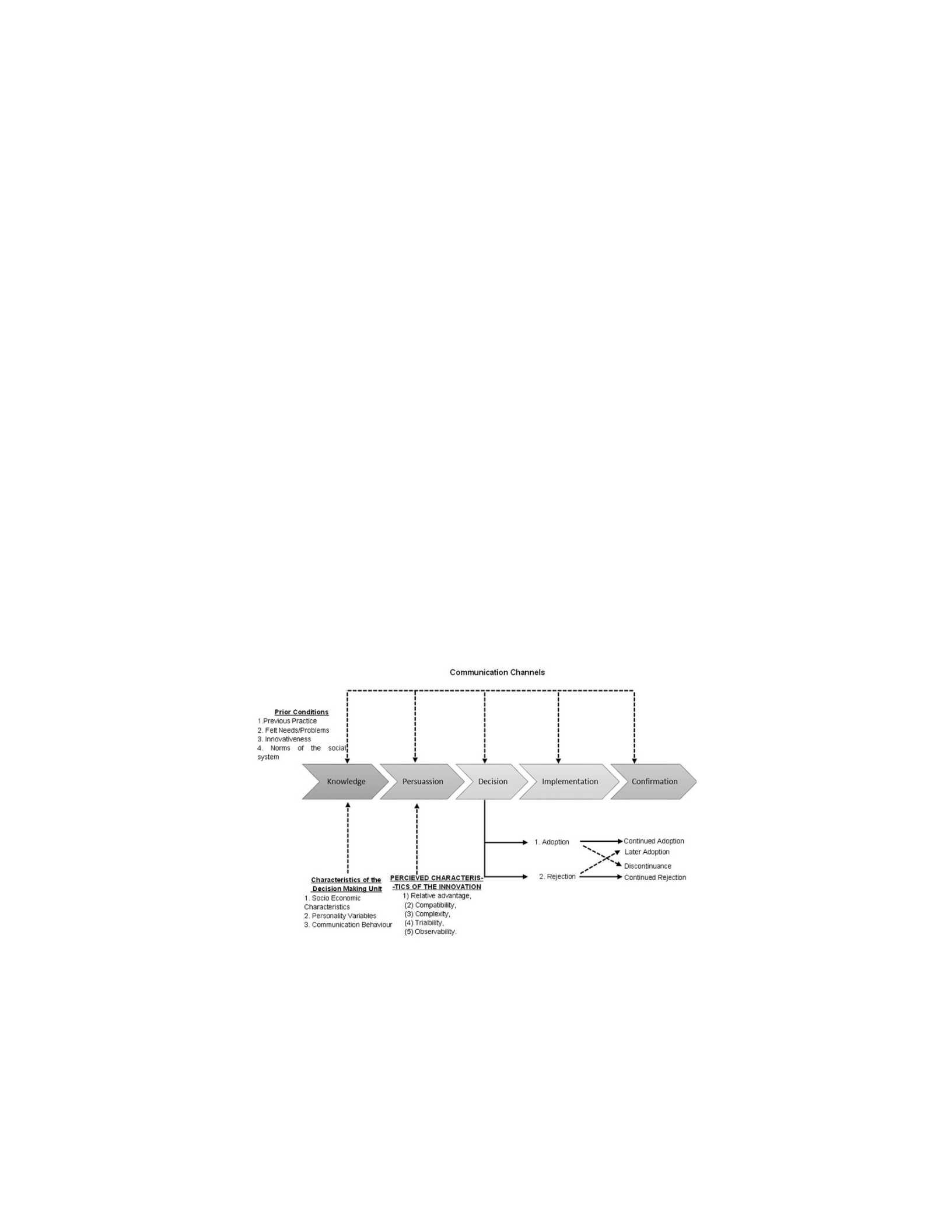
expanding the technology's use to other areas within an organization to ensure the technology
remains relevant and valuable to the organization over time.
Researching adoption of an emerging technology merely in context of use will inherently
include insights from those cases where the technology was explored but failed to be embedded
in process and behavior through a clear organizational decision to invest in production scale
solutions (Rogers, 2003). By isolating use cases which have led to continued adoption,
hypotheses and valuable insights for enterprises seeking to explore BT can be derived.
Rogers’ (2003) seminal work on technology adoption included a construct called the
Innovation-Decision Process. The Innovation-Decision Process is an information-seeking and
information-processing activity, where an individual is motivated to reduce uncertainty about the
advantages and disadvantages of an innovation (Figure 5).
Figure 5
The Innovation-Decision Process
The knowledge stage is when an organization becomes aware and seeks information
about an innovation. The persuasion stage includes a more subjective, or feeling-centered,
evaluation of innovations to decide to adopt. The decision stage involves a choice to adopt or
reject an innovation. Rogers (2003) defines the decision to adopt as fully utilizing an innovation

because it is the optimal course of action available. The implementation stage is when an
organization attempts to use the innovation. There are varying degrees of uncertainty with
implementation outcomes which can cause problems. In the confirmation stage, the individual
seeks to validate the decision to adopt. The greatest factor in moving forward to implementation
is a belief that the innovation will meet desired outcomes. Adopters tend to seek confirmation
bias in this stage so attitudinal awareness of influences during this stage becomes crucial.
The TOE model (Tornatzky & Fleischer, 1990) specifically addresses technology adoption at
the enterprise level and has been shown to be effective (Zhu et al., 2006). The TOE model
focuses on three categories to explain technology adoption within enterprises: the technological
category, which includes the characteristics and usefulness of the technology; the organizational
category, which explores internal characteristics like management, employees, and capabilities;
and the environmental category, which takes into account industry, social, and political
attributes, including competitors and business partners (Chiu et al., 2017).
To add structure to the technology context of TOE, many studies integrate Rogers’ (1995)
DOI theory into their conceptual model. The integration of DOI and TOE has been validated as a
combined model to explain enterprise-level adoption of innovations (Chiu et al., 2017; Hsu et al.,
2006; Piaralal et al., 2015). Particularly, the characteristics of innovation, including relative
advantage, compatibility with pre-existing systems, complexity, trialability, potential for
reinvention, and observability have been shown as significant predictors of technology adoption
in multiple studies (Rogers, 1995). BT can be leveraged for both data representing the digital
world and for data representing the physical world. Multiple technology adoption frameworks,
such as TOE and DOI, have been combined to address blockchain research studies bridging the
digital and physical worlds. Both Wang et al.’s (2010) research on enterprise adoption of RFID in
the manufacturing sector and Thomas and Espadanal’s (2014) research on cloud computing

adoption in the service industry combine TOE and DOI theories. Because new technologies can
be complex, combining more than one theoretical model may be appropriate to gain a better
understanding of enterprise adoption (Oliveira & Martins, 2011). Integrated TOE-DOI studies
across industries, technologies, and organizational characteristics have led to varying results
across the five DOI innovation characteristics. One study found that compatibility is the most
important factor in technology adoption (Zhu et al., 2006). Wang et al. (2010) found
compatibility positively correlated to adoption, while complexity was negatively correlated.
Another study found that relative advantage and complexity were inversely correlated to
adoption (Low et al. 2011). A study on information and communications technology adoption
found relative advantage, compatibility, complexity, observability, and security were significant
factors in enterprise adoption (Sin Tan et al., 2009). However, a study on cloud computing
adoption found that trialability does contribute to the reduction of uncertainties in adoption
(Alshamaila et al., 2013).
Annabel et al. (2015) studied enterprise adoption of cloud computing. In their research,
organizational context attributes included management support, enterprise size, and technological
readiness, which have been validated as significant factors in innovation adoption. Jeyaraj et al.
(2006) found top management support as one of the best predictors of enterprise innovation
adoption. Lee and Xia (2006) found organization size had a positive correlation to innovation
adoption, with several moderating variables. Hameed et al. (2012) studied the correlation
between organizational readiness and enterprise innovation adoption and found organizational
readiness to be the largest factor.
The complexity of BT has created a significant knowledge gap in even the most
experienced organizational decision-makers. Very few ecosystem technologies exist that force an
organization to make technology adoption decisions in tandem with business partners. One such

technology, electronic data interchange (EDI), is simply an automated, standard data feed across
two companies (Huang et al., 2008). Malone et al. (1987) introduced the inter-organizational
dimension required to achieve value through EDI in the form of efficiencies. EDI research
captures similar insights expected in the BT domain. For instance, enterprise experience with
older technology may impede openness to adopt new technologies because of switching costs
(Zhu et al., 2006).
Research Methodology
To explore success factors leading to the successful adoption of BT within large
enterprises, I employed a multiple case study design (Fereday &Muir-Cochrane, 2006). A case
study is an exploratory, qualitative methodology and it is a suitable approach in contexts with
limited prior empirical research (Creswell and Creswell, 2017), which is the context of
blockchain, where there is scarce theory and empirical research on the factors that lead to
continued use. Case study research results in the generalization of a phenomenon with the goal of
expanding existing theory through theoretical propositions (Yin, 2017). While case study
research does not often lead to grand theories applicable to an entire domain of research, case
studies are important in grounded theory within context to begin identifying theoretical
constructs which are testable, novel, and empirically valid (Eisenhardt, 1989).
In this study, a cross-case analysis of different blockchain projects led to propositions that
sought to identify factors beyond the context of any individual firm and use case. Both primary
and secondary data were collected from five successful BT adoption cases, and one failure, to
provide sufficient heterogeneity and variation to develop the propositions (Eisenhardt, 1989).
Study Population and Sampling
I targeted large enterprises for this study. Large enterprises were chosen to explore
complexities that small and medium enterprises (SMEs) do not necessarily encounter. For

instance, SMEs typically have one decision maker, often the CEO or CTO, for adopting
technology. Large enterprises typically exhibit decision-making complexity based on the
involvement of IS and other business functions. No universal definition of large enterprise exists
globally, so I leveraged the U.S. Small Business Administration definition, which defines large
enterprises across all industries as ones with more than 500 employees.
To strengthen the theoretical propositions arising from the analysis, case study variability
was a key consideration (Table 2). Striving for variation within a multiple case study research
agenda can expand the application of theoretical constructs arising from the analysis. The case
studies included five successes and one failure as a control to contrast and strengthen
propositions. Variation across case studies included: geographic footprint (local [e.g., one
country], regional, and global), industry, technology span (e.g., intra-enterprise and
interenterprise), and size.
Table 2
Description of Case Studies
Company Founded HQ Employees Revenue Geographic
Footprint Industry Type Result
Birra
Peroni 1846 Rome, Italy 1,500+
€350
million
(2019)
Europe,
North
America
Beverage -
Alcoholic Success
Takeda 1781 Tokyo, Japan 50,000+
$31.9
billion
(2020)
Global Pharmaceuticals -
Biotech Success
ANSA 1945 Rome, Italy 1,100+ N/A Italy, Europe Media –
News Agency Success
Aretaeio
Hospital 2005 Nicosia,
Cyprus 1,000+ N/A Cyprus Healthcare -
Hospital Success
Microsoft 2001 Washington, 2,400+ $4.76 Global Media – Success

XBox USA billion
(2022) Gaming
Healthcare Decades
old USA Tens of
thousands
$10s of
billions
(2022)
Global Healthcare Failure
While Birra Peroni, Takeda, ANSA, and Aretaeio are companies from different industries
with distinct products or services, there are some commonalities that can be observed in their
innovation strategies. First, all four companies leverage the use of modern technology and digital
solutions to enhance their products or services. For example, Birra Peroni introduced ecofriendly
packaging and low-alcohol beverages, Takeda's plasma division leverages technology to improve
patient outcomes, ANSA uses digital technology to improve its reporting capabilities and
distribution channels, and Aretaeio Hospital utilizes state-of-the-art medical equipment and
electronic medical records to improve patient care.
Second, most of these companies, if not all, have invested in collaboration and
partnerships with external stakeholders to support their innovation strategies. Takeda collaborates
with external partners to expand its product portfolio, Birra Peroni partners with food and
hospitality brands to offer complementary products, ANSA collaborates with news enterprises to
provide high-quality news content, and Aretaeio Hospital collaborates with healthcare providers
to enhance patient care.
Lastly, these companies prioritize customer or patient engagement as a critical component
of their innovation strategies. For example, Birra Peroni engages with its consumers through
targeted marketing campaigns and social media channels, Takeda's plasma division focuses on
patient outcomes and satisfaction, ANSA uses social media to engage with its audience and
provide personalized content, and Aretaeio Hospital empowers patients to take an active role in

their care. Microsoft Xbox maintains backward compatibility allowing users to continue to enjoy
their favorite game versions or games from previous consoles.
Overall, while there are differences in the products or services that these companies offer,
their innovation strategies share some commonalities based on their focus on technology,
collaboration, and customer or patient engagement.
Data Collection and Analysis
Data collection was systematic and robust through a multi-dimensional approach to
address gaps in obtaining proprietary primary data. Data collection for each case was done
through multiple sources, including documentation (e.g., company reports, news articles,
websites, and other business reports), interviews, and direct observations, consistent with
appropriate sources for case studies (Yin, 2017). The advantages of interviews in qualitative
research include gathering historical information not easily gathered from other data sources and
allowing the researcher to have control over the line of questioning (Creswell, 2018). Interviews
were semi-structured, covering categorical dimensions while allowing for flexibility to
understand other adoption factors which emerged during the discussion.
Technology innovation in large corporations typically requires external information
systems and advisors or consulting firms to help develop the technology’s innovation strategy
and to support implementation. In some cases, enterprises may directly work with a BT
foundation (e.g., VeChain) to develop and implement use cases. I followed Ravasi and Turati’s
(2011) suggestions to mitigate the potential risks associated with using consulting firms as
primary data sources. I selected consulting firms with a reputation for objectivity and
impartiality, clearly defined the research questions and objectives of the study before engaging
with the consulting firms, established clear guidelines for data collection and analysis, and
conducted triangulation of data from multiple sources. These measures were taken to ensure the

data collected from these interviews is objective, valid, and free from bias. Also, the consulting
partners' expertise and insights enhance the quality of the research.
For each case study, the firm’s websites were accessed to gain data about the organization
itself and, where possible, the BT use case itself, including details about drivers of adoption. For
instance, the website for Ashai (Birra Peroni's parent company) offered details about the reasons
and benefits for exploring the blockchain traceability effort, and ANSA includes a detailed
description of the technology and how customers should consider the use cases when interacting
with the news agency reporting articles.
Other principles of case study data collection were followed, which maximize the benefit
of the data collection methods, including creating a case study database to separate and compile
data in an orderly manner and maintaining a chain of evidence to increase the construct validity
of the information. Caution was exercised when considering data from social media sources
because it can overwhelm the researcher, and it is not easy to cross-check the reliability of
sources or the data itself (Yin, 2017).
A thematic method of data analysis was used. The thematic analysis technique includes
examining, ascertaining, analyzing, recording, and unveiling themes that are relevant to the
subject studied (Boyatzis, 1998; Braun & Clarke, 2006) and is considered a primary method for
analyzing qualitative data due to the multidimensional nature of qualitative data (Braun &
Clarke, 2006). More specifically, a hybrid approach (Boyatzis, 1998) was employed because
codes were both theoretically and empirically driven.
The data analysis of the interviews involved three stages. In stage 1, the constructs of
TOE and I (Inter-organizational) were developed from the literature. To code the raw data into
the appropriate categories, the definitions and descriptions of four categories of the T-O-E-I
framework were written in simpler language using code names and a definition associated with

each code. In Stage 2, all interviews were transcribed and imported into NVivo software. The
transcripts were then coded manually into appropriate categories. Subsequently, a consistency
check was ascertained for all the codes to see how credible and applicable they are for successive
raw data. To ascertain reliability, the initial coding exercise was checked by three reviewers with
combined academic and blockchain expertise to relate the codes and supporting evidence against
the categories. In Stage 3, codes were further validated through the application of adoption
factors found in other data sources analysis for each case study. Constructs were strengthened by
the additional validation of data insight across all data sources, particularly in determining
factors common to all or most of the case studies.
Case Studies of Blockchain Technology Projects
Case Study Organization & Process
The organization for the case studies focuses on details for each individual case, followed
by a cross-case analysis. Each case study is structured in three parts: an overview of the
organization, a description of the use case, and data on the successful design and implementation
of the use case. These were categorized according to technological, organizational,
environmental, and inter-organizational factors. To analyze the case studies, I employed the TOE
framework as a lens for coding the data because it is well-suited for examining emerging
technology adoption in large enterprises. Separating TOE dimensions in describing each case
study offers several benefits, including a structured approach to perform a systematic analysis. A
thorough examination of each dimension helps to identify patterns and trends within and across
the cases. Each case study can be analyzed using a consistent framework, improving
comparability and leading to a more robust understanding of the critical success factors in
blockchain adoption. Dividing the case studies into the TOE dimensions also helped to isolate
specific aspects of blockchain adoption, allowing a more nuanced understanding success factor

context. Examining each dimension individually as well as comprehensively helps to identify
generalizable insights applicable to a broader range of contexts which is important for early
technology adoption research to develop guidelines for successful blockchain adoption in large
enterprises, as well as advancing academic knowledge of the domain.
Our initial theoretical construct added inter-organizational factors, such as trust and
power dynamics as an additional coding lens, which is an important context for blockchain
applications. In traditional systems, other organizations are external to the firm, but many
blockchain applications leverage inter-organizational coordination and information exchange.
Therefore, I found a strong interconnected nature between environmental and interorganizational
factors and combined the two. Environmental factors encompass the external context in which
the organization operates, such as regulatory requirements, industry standards, market
competition, and other stakeholders or organizations not directly involved with the blockchain
solution. Inter-organizational factors refer to the relationships and collaborations between the
enterprise and its partner ecosystem.
Birra Peroni
Birra Peroni is a renowned Italian beer brand, established in 1846 in Rome, and wholly
owned by the Asahi Group, a global beverage company. Birra Peroni has maintained a reputation
for quality by utilizing the finest ingredients, including malted barley, hops, and their own yeast
strain, which creates a unique flavor profile. This commitment to quality has helped the brand
maintain a loyal customer base and establish itself as a leading beer brand in Italy and globally.
Birra Peroni's approach to quality aligns with the concept of value co-creation, as customers are
actively involved in creating value by paying for and consuming high-quality products.
Furthermore, Birra Peroni's innovation strategy includes experimentation with new
flavors and product lines, including gluten-free and low-alcohol options to expand its market

reach and attract new customers. Birra Peroni has engaged in partnerships with other brands and
companies to create unique and limited-edition beer varieties, enabling the company to cater to
diverse customer preferences and create new market segments. Birra Peroni's innovation strategy
aligns with the concept of open innovation (Chesbrough, 2003), where firms collaborate with
external partners to develop new products or services.
Birra Peroni's innovation strategy has been recognized by industry experts, with the
company winning several awards for its innovative products and sustainable practices. For
example, in 2019, Birra Peroni announced that it had achieved zero waste to landfill across all its
production sites, a significant milestone in its sustainability efforts. In 2020, the company won
the "Best Innovation in Packaging" award at the World Beverage Innovation Awards for its new
infinitely recyclable aluminum bottle, which is made from 100% recycled aluminum and can be
recycled an unlimited number of times without losing its quality.
In 2018, Birra Peroni partnered with EY and a local startup, Posti, to implement a
blockchain-based traceability system to enhance its supply chain management and ensure the
quality and authenticity of its products. BT is used to track the entire brewing and distribution
process, from the selection of raw materials to the delivery of the final product to the end
consumer. The desired outcome for Birra Peroni is better visibility into the production process to
ensure quality, while consumers could prove the authenticity of the materials involved in the beer
they purchased.
Birra Peroni's blockchain-based traceability system works by recording every step of the
brewing and distribution process using the blockchain. The system starts with the selection of
raw materials, such as hops and barley, and tracks their journey from the farm to the brewery.
Each batch of hops is assigned a unique identifier, and its journey is recorded on the blockchain
as it is transported from the farm to the brewery. Once the raw materials have been sourced and

verified, the brewing process begins. As each batch of beer is brewed, it is assigned a unique
identifier and recorded on the blockchain. The blockchain records important information such as
the ingredients used, the date and time of the brewing, and the temperature and pressure at
various stages of the process. As the beer is bottled and packaged, the blockchain continues to
record its journey from the brewery to the distributor and ultimately to the end consumer. This
creates a tamper-proof and immutable record of the product's journey, providing enhanced
transparency and trust.
To eliminate doubts in the consumer's mind about product quality, technology solutions
needed to be open and transparent, not controlled by Peroni itself. The Ethereum blockchain was
originally chosen due to unique features such as smart contract capabilities allowing for the
automation of processes and execution of rules without the need for intermediaries. Additionally,
Ethereum's scalability, security, and established network were essential factors in Birra Peroni's
decision to satisfy key business requirements.
However, variability in gas fees associated with writing to the Ethereum blockchain
forced Birra Peroni to move to Polygon, an Ethereum-compatible protocol designed to maximize
scalability with minimal, predictable transaction fees. Ethereum can take 30 minutes to mine a
block, but on Polygon blocks are created within seconds. In addition, the carbon footprint from
Ethereum at the time was in conflict with Birra Peroni’s sustainability objectives. Polygon is
scalable, transparent, and sufficiently decentralized. Birra Peroni's solution requires an annual
token throughput of thousands, which is easily achievable with Polygon’s maximum of 7,000
transactions per second. Birra Peroni leveraged a third-party blockchain management solution to
connect to the blockchain itself, relieving the costs of initializing and maintaining a node.
The tracking along the supply chain leveraged ERC721 tokens, a non-fungible digital asset
representing the characteristics of a batch and uploaded onto the blockchain by using an

encrypted hash function. Traceability initially included the ability to understand which batches of
malt were contributing to a specific batch of brewing. The solution was expanded upstream from
malt houses to be able to trace back to local farms producing the barley and seeds of each bottle
of beer using tokenization. Birra Peroni data was extracted from the production management
system, based on SAP. Data captured on the blockchain included raw material data, brewing
data, quality control data, and supply chain data.
BT was part of a suite of innovative products within Birra Peroni’s global rebranding
initiative to support the communication of product quality to consumers. EY was selected as an
implementation partner because of its BT experience and Posti was used as an expert in using
technology to improve the customer’s experience. Both Posti and EY led innovation sessions to
design and define where to put the traceability QR code on the bottle and what data the
customers would see when the QR code is scanned. The output of the innovation sessions was
tested on consumers to refine prior to scaling.
Key Birra Peroni sponsors of the project were the CEO and the head of Corporate Affairs
because they were the representatives and leaders of the company’s digital transformation and
sustainability journey. From an execution standpoint, the head of the supply chain was the dayto-
day sponsor, orchestrating several cross-functional departments and outside suppliers to make the
project a success.
The main goal of this project was to increase revenue through rebranding. The rebranding
meant to highlight corporate values of transparency, authenticity, innovation, quality, while
cultivating a cooler brand to make Birra Peroni more appealing to the new young consumers.
Cost reduction through higher efficiencies and better decision-making was a secondary benefit.
Following the initial success in traceability, the solution expanded to support integrating
traceability data into ESG reporting and quantifying carbon footprint savings.

In recent years, institutional investors and consumers alike have become very attentive to
the sustainability of products. Birra Peroni highlighted their sustainability focus using blockchain
in their annual regulatory financial filings for investors. In addition, the blockchain utility is
highlighted on their corporate website in discussing sustainable ingredients and local farmers.
From a regulatory standpoint, data on the blockchain met existing beverage and packing
standards so there were no adverse regulatory considerations or impact.
Change management was a key focus on the supplier side. Malt houses needed to digitize
business workflows for the solution to work. Ensuring accuracy in collecting data from malt
houses and farmers is a very complex process requiring additional investment. Farmers are not
always as digitally mature as the rest of the ecosystem, so this required major change
management to bring them along the journey. Malt houses and farmers had an incentive to adopt
and provide data because the increase in Birra Peroni sales drives increased production and
revenues for them as well. In addition, information from suppliers enabled by the BT solution
has supported better decision-making in Birra Peroni.
ANSA
Founded in 1945, Agenzia Nazionale Stampa Associata (ANSA) is one of the oldest and
most reputable news agencies in Italy. As the news industry has rapidly evolved with digital
technology, ANSA has consistently adapted its innovation strategy to meet the changing needs of
its audience, utilizing digital technologies to expand its reach and deliver timely and accurate
news to its audience. ANSA’s innovation strategy places a strong emphasis on audience
engagement and leverages artificial intelligence to better understand its audience’s needs and
preferences to automatically generate news articles tailored to their interests.
ANSA’s innovation strategy has been recognized by industry experts, with the company
winning several awards for its innovative products and services. In 2020, ANSA won the “Best

Use of Data in a Breaking News Story” award at the Data Journalism Awards. The award
recognized Ansa’s coverage of the COVID-19 pandemic, which leveraged data visualization and
analysis to provide timely and accurate updates to its readers.
In recent years, the dissemination of disinformation and fake news has become an
increasingly pervasive issue, prompting calls for innovative solutions to address the crisis of trust
in journalism. In response, ANSA launched a blockchain-based system called ANSAcheck in
2020 to bolster the veracity and traceability of its news articles. ANSAcheck verifies the origin
of news a consumer sees on ANSA platforms and is based on the Ethereum public blockchain. A
green digital ANSAcheck certificate on an article informs readers the article is verified and has
not been manipulated or spoofed. Since its launch, ANSAcheck certifies thousands of news
articles an hour resulting in millions certified since inception. The solution has been well
received by ANSA customers and, currently, ANSA is exploring additional solution
enhancements to drive new business models across the news value chain. One example is the
business-to-business (B2B) flow of news to build industry standards that protect and authenticate
data shared across news agencies.
When an ANSA journalist writes a news article, the content undergoes review and
factchecking by editorial staff. Upon approval, a unique cryptographic hash is generated for the
article, which serves as a digital fingerprint encapsulating the content's metadata, including
authorship, publication date, and version history. The hash is then added to a new block, along
with other pertinent metadata. Subsequently, the block is broadcasted to the permissioned
network for validation. Nodes within the network engage in a consensus process to validate the
block. Once consensus is achieved, the block is appended to the existing chain, creating an
immutable and tamper-evident record. End users can click on an ANSA check logo included on a
news article page to verify the authenticity by comparing its hash against the stored data on the

blockchain. The decentralized and transparent nature of the blockchain ensures the provenance
and integrity of the information, instilling trust in the news content.
The ANSAcheck leverages EY’s OpsChain Traceability technology to generate a hash
function stored as a token on the blockchain. The OpsChain platform is built to enable
blockchain benefits seamlessly on top of existing enterprise platforms and applications. When a
consumer clicks on an article, the web browser compares the article to the immutable, encrypted
hash function stored on the chain to see if it is a match. If matched, the article will generate the
green certificate, which can be clicked to show meta-characteristics of the article on the
blockchain. These meta-characteristics include the transaction ID, article title, content hash,
event, and time stamp.
The organization opted for a permissioned blockchain network, ensuring that only
approved entities (e.g., journalists, editors) can participate in the consensus process and validate
transactions. This decision aligns with ANSA's business model, which emphasizes the
importance of maintaining control over the news production process while ensuring a high
degree of transparency and credibility. Because of the infrastructure required, it has moved from
initially running on Ethereum to Polygon for efficiency and sustainability. This move reduced the
cost of transactions due to batching into blocks of hundreds. Polygon uses PoS consensus that
completes the transaction confirmation process in a single block. By doing so, Polygon can
maintain fast transaction processing speeds. Polygon's average block processing time is 2.1
seconds, and the transaction fee is around $0.01.
Batching of new articles involves aggregating the news through a Merkle tree to generate
the hash function that gets written to the blockchain. Each time an article gets updated with new,
verified information from the publisher, that article is included in a subsequent Merkle tree hash
to ensure the verifiability is always accurate in real-time. The CEO of ANSA was the key

sponsor of the initiative, providing the resources and investment required to build and scale. The
IT team was a highly competent group which enabled ANSA to accelerate internal knowledge of
BT and to understand complexities across the implementation process.
ANSA communicated the solution in detail to consumers through press releases as well
as a dedicated landing page, including the direct benefits for the readers. The landing page can be
accessed through a clear ANSAcheck button at the top of the ANSA home page, signaling the
importance of the solution for ANSA customers.
ANSAcheck is consumer-centric through the validation of the on-chain hash. Instead of
merely providing a trusted checkmark on articles, consumers can click on the checkmark, which
will bring them to the actual transaction on the blockchain for which the hash function was
generated, which consequently provides immutability of news content to consumers. The
solution has strengthened the reliability of ANSA articles with the ecosystem of publishers that
partner with ANSA. The certification engine has opened new business models for those
publishers because they can put the certification on their own consumer-facing platform. In
addition, ANSAcheck tackled news content verification first, leaving future evolutions to take on
the more complex misinformation and disinformation of content within each article. An example
of this evolution includes secure communication and collaborative reporting. Secure
communication securely and transparently shared information among journalists, editors, and
external sources to enhance the confidentiality of sensitive information and protect the identify
of anonymous sources.
Takeda
Takeda is a Japanese pharmaceutical company, established in 1781, that has evolved into
a global organization with a strong commitment to innovation. The company's innovation
strategy encompasses research and development (R&D) in various therapeutic areas, including

oncology, gastroenterology, and neuroscience. Takeda's R&D efforts include open innovation,
whereby the company collaborates with external partners to develop new products or services. In
2021, Takeda won the "Best Partnership Alliance" award at the Asia-Pacific Bioprocessing
Excellence Awards for its collaboration with the National University of Singapore to develop a
new manufacturing process for biologics.
Takeda's plasma division is a critical component of its innovation strategy. The division is
responsible for the production of plasma-derived products, such as immunoglobulin, albumin,
and coagulation factors, used to treat various medical conditions. The plasma division has a
history of successful innovation, with Takeda being one of the first companies to develop
plasma-derived products in Japan. The company has since expanded its plasma division globally
and has a strong presence in the U.S., Europe, and Asia. The company has formed partnerships
with various plasma collection centers, providing a reliable supply of raw materials for the
production of plasma-derived products. Additionally, the plasma division has collaborated with
other pharmaceutical companies to develop new plasma-derived products, expanding its product
portfolio and market reach.
Plasma-derived therapies are critical to treat various medical conditions, including
immunodeficiency disorders, hemophilia, and other blood-related diseases. Ensuring the
traceability and safety of plasma-derived products throughout the supply chain is vital to
protecting patients and maintaining regulatory compliance. In response to these challenges,
Takeda adopted BT to enhance the traceability and security of its plasma supply chain, benefiting
both patients and stakeholders.
Takeda's implementation of BT centered on creating a tamper-proof, transparent, and
auditable record of plasma-derived product provenance. The company selected a permissioned
blockchain network, allowing only authorized entities (e.g., suppliers, manufacturers,

distributors, regulators) to participate in the consensus process and access the shared ledger. This
approach aligned with Takeda's commitment to ensuring the security, privacy, and regulatory
compliance of sensitive data across the plasma supply chain.
The integration of Takeda's blockchain solution within its plasma supply chain is
anchored on collecting and digitizing relevant data at each step of the supply chain pertaining to
plasma-derived products, including donor information, plasma collection, testing, processing,
and distribution. The collected data are encrypted and added to a new block, accompanied by a
unique cryptographic hash that serves as a digital fingerprint, encapsulating the product's
metadata. Stakeholders within the plasma supply chain can access and verify the product's
provenance through the shared ledger, ensuring transparency, accountability, and regulatory
compliance. Blockchain facilitates real-time information sharing and enhances trust among
participants.
The technology solution was initially designed to tackle internal process problems and to
gain an early understanding of how to tokenize data. Tokenization was an innovative solution to
provide more granular tracking of individual plasma components through the product lifecycle.
Tokenization also streamlined the transferability and ownership of plasma units through the
supply chain. It was important to spin up an environment quickly, resulting in the selection of
PoA governance to enable speed in execution. In PoA-based networks, transactions and blocks
are validated by approved accounts, known as validators. Takeda identified which systems across
the plasma ecosystem were needed for the BT solution to interact with, the data to be collected,
how to standardize formatting, and how to translate the data to tokens tracked on a blockchain.
Tokenization allowed Takeda to prevent double counting, eliminate inventory mix-ups, and
verify plasma content in the final product for patients and healthcare providers. Because
tokenization was required, a protocol that had a seamless smart contract capability was a key

business requirement. To minimize any end-user engagement with the blockchain, user-friendly
interfaces were developed to display transaction data and token tracing.
The CIO of the Plasma Therapies division of Takeda was the overall sponsor, with buy-in
from the CFO. He understood the value of a public blockchain solution and, through his
commitment to that sentiment, drove the blockchain solution to be built on top of Ethereum’s
technology. The CFO saw this project as a way to increase visibility into inventory and explore
future business models to collateralize. Transparency and authenticity into plasma characteristics
could act as an alternative asset class for institutional investors or open up new avenues of
revenue to customers like research institutions.
The innovation arm of the IT group was involved in the project as it saw the opportunity
to learn about BT as potentially disruptive technology. Takeda had previous experience
experimenting with Hyperledger and it leveraged knowledge from those experiments to
accelerate the plasma use case. Once in production, DevOps for the solution was minimal,
although it still required maintenance due to impacts of upstream system changes over time. For
instance, if a data attribute on the donor system changes that is not recognized by Takeda’s
solution, it will be instantly recognized but requires support to troubleshoot and remedy.
Pharmaceutical companies are required to comply with strict healthcare data privacy
requirements, so the only information stored on-chain is the token ID and hashed metadata. The
hashed metadata gives the location of the plasma data on the internal Takeda server environment.
All data attribute relating to patients or donors is strictly maintained off-chain. The
plasmaderived therapy market is projected to increase to over $30 billion per year by 2030.
Takeda distinguishes its offerings within the highly competitive plasma manufacturing landscape
by emphasizing product transparency as a key differentiating factor.

Due to the initial solution focused on improving internal efficiencies, Takeda did not
engage with its ecosystem’s stakeholders during development, resulting in some broader use case
requirements not being met. When later approaching partners and suppliers, it was difficult to
prove the value to gain consensus and buy-in from the broader distributed network. In particular,
collaborating with the specialty pharmacies that distribute the plasma therapies could have built
the last mile of traceability into the solution. The benefits of this last mile for plasma traceability
for patients and plasma infusion centers came in the form of transparency and immutability of
plasma content and supply chain activity. Takeda gained greater insights into plasma
consumption, resulting in better forecasting and commercialization strategies.
Aretaeio
Aretaeio Hospital is a leading healthcare facility in Cyprus that provides a range of
medical services, including diagnostics, surgery, and rehabilitation. The hospital has a strong
focus on innovation and has implemented several strategies to enhance patient engagement and
improve healthcare outcomes. Aretaeio's innovation strategy has been recognized by industry
experts. In 2020, Aretaeio won the "Best Hospital for Patient Experience" award at the
Healthcare Business Awards for its patient-centered care initiatives.
One key aspect of Aretaeio's innovation strategy is its use of digital technologies to
provide remote consultations and improve patient access to care. According to the hospital's
website, Aretaeio has implemented a telemedicine platform that allows patients to consult with
doctors and receive medical advice from the comfort of their own homes. The hospital has
implemented a digital patient portal that allows patients to access their medical records, schedule
appointments, and communicate with their doctors online.
Another key aspect of Aretaeio's innovation strategy is its focus on patient-centered care.
The hospital has implemented several initiatives to improve the patient experience, including a

patient satisfaction survey program and a patient engagement platform that allows patients to
provide feedback on their care experiences. Aretaeio has invested in patient education and health
promotion programs to help patients better understand their health conditions and make informed
decisions about their care.
In 2020, Aretaeio, in partnership with technology consultant iDante, developed a
blockchain-based digital app, E-HCert, which allows patients to access and control their COVID-
19 antibody test results. The application has since expanded to include other medical
information, diagnostics, and lab results. The E-HCert application helps organize and properly
flow patient information across the stakeholders that need access to patient care. Patients are also
able to digitally access medical records at any time, and they are notified of new data uploaded to
the system through application notifications. The data is real-time, includes user-friendly
visualizations, and is designed to improve doctor-patient communication and diagnosis across
the different providers caring for each patient.
Aretaeio developed a BT application that was flexible to the evolving business needs of
the hospital ecosystem. The selection of VeChain as a protocol was driven by the need for
sufficient decentralization, but a priority requirement of scalability and security. For scalability,
VeChain offers the ability to handle thousands of transactions per second at an average cost of
less than .02 cents. VeChain provides innovative functionality such as multi-party payment
(MPP) smart contracting. The MPP innovation allows iDante to pay for gas fees to write on the
blockchain and, in turn, charge a predictable fee to Aretaeio for transactions. This enables
Aretaeio to use the blockchain without having to hold and self-custody cryptocurrency. The
solution connects seamlessly to the hospital data center, complementing data origination to
ensure transparency and trust. Data security requirements for patient health is the stringent all
over the world. The solution required hospital decision-makers to be absolutely confident about

the security of the solution, including tamper proofing and prevention of unauthorized access.
One of VeChain’s innovative enterprise-focused attributes is called MPP. MPP enables multiple
parties to jointly pay for a single transaction, streamlining and simplifying complex payment
processes. VeChain is one of the most sustainable blockchains with carbon emissions for running
the entire blockchain for a year equivalent to just 51 transactions in Ethereum. The VeChain
foundation acts as an enabler of the platform, leveraging technology partners to cocreate
solutions for enterprises seeking BT solutions.
Aretaeio created a dedicated twin server for the hospital, which acted as the test
environment. The test environment was established within weeks to meet the needs of the
original use case of COVID-19 test results. The design of the consumer-facing application was
prioritized to ensure maximum useability and patient engagement. Experts in user experience
were brought in to conduct focus groups that obtained user needs, thereby including patient input
in the functionality design.
Sponsorship for the project came from both the CFO and CIO of Aretaeio. Aretaeio
decision-makers had knowledge of enterprise BT and understood that VeChain was an
established protocol with real-world use cases publicly revealed in the media. Aretaeio used an
agile mindset to ensure the solution evolved to the needs of the hospital’s healthcare practitioners
and patients, which was evident through the evolution and expansion of patient data offered on
the application.
The solution development process included a discovery session between the hospital and
the implementation partners to align on deliverables, timelines, and costs. The initial solution
took three months to develop. In addition, legal and compliance personnel who validated the
solution complied with various local and European Union General Data Protection Regulation
(GDPR) data and digital regulations. Throughout the development process, and as the solution

has continued to evolve, consistent communication and collaboration between the
implementation partners, the hospital team, and the auditors was a priority.
The application design satisfies the European Union’s GDPR by putting only the hash
function associated with anonymized encrypted data. GDPR includes the right to be forgotten, or
an individual’s right to erase his or her data, which is in direct contrast with the decentralized
nature of a blockchain. The E-HCert solution provides a hash function of the internal system the
data resides, therefore eliminating any identifying information for a patient and satisfying GDPR.
Building something powerful for patients required something cool and easy to use. The hospital
remained focused on putting the patient at the center of the solution. Patients felt empowered
based on the access and control of their healthcare data, improving the trust between the hospital
and its customers.
Microsoft Xbox
Microsoft Xbox is a business unit of Microsoft Corporation, focused on the development,
production, and distribution of gaming consoles, games, and related services. Since its inception
in 2001, Xbox has played a pivotal role in shaping the gaming industry through continuous
innovation and cutting-edge technology. Xbox's innovation strategy revolves around three core
pillars: immersive gaming experiences, accessibility, and community building.
Differential offerings, such as the Xbox Adaptive Controller launched in 2018, represent
a groundbreaking example of gameplay innovation. It allows gamers with limited mobility to
customize their controller setup. The 2019 AbleGamers' Accessibility Award honored the Xbox
Adaptive Controller for its exceptional inclusivity and adaptability for gamers with disabilities.
Xbox also received the Golden Joystick Award for "Best Gaming Hardware" in 2020,
recognizing the Xbox Series X as a groundbreaking gaming console.

The accelerated growth of the gaming industry, in both users and revenue, over the last
decade has resulted in an exponential increase in game publishers. Game sales and in-game
purchasing royalties constitute the majority source of revenue for game publishers and
intellectual property (IP) holders. Managing and disbursing royalties in a transparent and timely
manner has historically been a challenge, requiring innovative solutions across the complex
ecosystem of stakeholders. Royalty settlements are opaque and burdensome to verify payments
based on contract types and terms for specific products. In response, Microsoft Xbox developed
a BT solution, the Rights and Royalties (R&R) platform, to streamline the tracking and payment
of royalties, with the aim of fostering trust and efficiency within its gaming ecosystem. Over
1,500 game publishers contract with Xbox, resulting in tens of thousands of contracts. A typical
contract has around 15 different logical terms and over 40 calculations applied to each quantity
of sale. Game publishers also require upstream royalty payments to creative stakeholders, such as
graphic artists. Prior to the R&R solution, settlements on royalty payments were manually
calculated on spreadsheets and took up to 45 days for payment. The company chose a
permissioned blockchain network consistent with Microsoft Xbox's commitment to safeguarding
the privacy and security of sensitive financial data across its gaming ecosystem. Stakeholders
within the ecosystem could access and verify royalty-related transactions through the shared
ledger, promoting transparency, accountability, and trust. The R&R platform facilitated real-time
information sharing, reducing payment delays and improving efficiency in the royalty
management process.
Converting each contractual detail into smart contracts is unfeasible. Xbox, in partnership
with EY, created a contract smart engine that extracted key contractual terms and converted them
into digital smart contracts. The solution was built using the Quorum blockchain on the
Microsoft Azure cloud computing platform. Eight blockchain protocols were assessed for the

solutions, but Quorum was chosen because it stood out based on its ability to offer significant
scalability and privacy, both required for millions of royalty transactions per year. The nodes for
the solution sat within the same Azure instance. Game publishers welcomed the value of BT, but
most were not willing to invest in maintaining a node on their own infrastructure.
Integration into transaction data workflows were built so metadata about licensing agreements
and sales were imported into the smart contract engine, providing near real time visibility into
sales and royalties. Unstructured data was from the various sources of retail sales were cleaned
and standardized. The royalty data, along with pertinent metadata, was encrypted and added to a
new block, accompanied by a unique cryptographic hash that encapsulates the transaction
information. Due to the solution integrating with payments, strict financial controls and
compliance considerations were required. Integration with Microsoft’s ERP systems was
necessary to feed into the SAP invoicing modules, bounded by the traditional treasury rails,
which is the infrastructure that allows money to flow from a payer to a payee.
Microsoft and EY built a business intelligence capability into the solution, allowing
Microsoft to run analytics on transactions and improved business financial planning. The
business intelligence interface can proactively communicate potential risks to compliance
guardrails.
The Microsoft Xbox CFO was the key sponsor of the initiative, as he sought a financial
return on the investment through process efficiencies. Also in support of the initiative was the
Azure business unit, which had a strategic objective of building out and scaling its enterprise
blockchain as a service market offering. While there was an existing royalties group, the solution
required technology training to improve competency in order to scale adoption, particularly in
smart contract development. The royalties group identified accountable resources for the

solution. Over the last five years, the team has improved competency and it has relied on EY as a
technology partner to improve the solution.
The initial pilot focused on one game publisher contract and was developed in four
weeks. The solution was then scaled in three-month intervals, providing valuable insights and
learnings as additional features and workflows were integrated.
Overcoming the various financial, operational, digital privacy, and confidential data
compliance considerations were the largest hurdles to overcome in the solution design. For
instance, financial controls were required to be embedded in how the contract engine processes
the royalty workflows. Once the solution calculated the royalty payment, it got fed back into
SAP for payment. The settlement from SAP then got ingested back into the contract engine to be
part of the system of payment records between parties.
Microsoft worked from the beginning with game publishers, gathering desired business
requirements from their perspective. The overwhelming need was to provide transparency to
improve forecasting and business planning. The R&R platform included a game publisher view,
providing real-time transparency into its royalty transactions, which could be as fast as four
minutes from when sales information is generated in the system. The platform interface provided
the value of a blockchain solution without having to engage with the contract engine by
extracting the smart contract data and processing backend workflows. Part of the interface
included a feedback mechanism for game publishers to communicate back to Microsoft Xbox
any desired enhancements of the platform to meet their needs. Upon launch, Microsoft used
multiple media outlets to highlight the royalty payment solution, including Forbes. Once partners
saw the value of the portal, the R&R platform saw an acceleration of adoption across the vast
game publishing community.

Enterprise Use Case Failure
A leading global company, hereafter referred to as Company X based on its request to
remain anonymous, has been at the forefront of innovation in its industry since its inception.
With a diverse portfolio of cutting-edge products, the company has been a market leader.
Company X's innovation strategy is centered around a commitment to a culture of innovation,
through internal efforts and collaborations with external partners. A key component of Company
X's innovation strategy is its willingness to explore and invest in emerging technologies, such as
blockchain, artificial intelligence, and advanced data analytics. Integrating these technologies
into its core processes aims to drive efficiency, optimize decision-making, and deliver better
solutions to customers. Strategic partnerships and alliances with industry stakeholders, academic
institutions, and technology providers help the company access new ideas, expertise, and
resources to accelerate product development and address customer needs.
The industry has become increasingly data-driven and managing third-party agreements
(TPAs) to access, purchase, and monitor data is an essential hurdle. Current processes and
procedures cause difficulties in verifying, retrieving, and consolidating data across multiple
vendors. In addition, limited visibility into the end-to-end TPA process and no systematic way to
monitor and document TPA creates compliance risks. Company X sought to enhance its data
asset and information access management governance process by building a blockchain-enabled
TPA. The solution aimed to improve the visibility and auditability of data assets, streamline the
TPA process, reduce overhead costs, and minimize the risk of data misuse and non-compliance.
The TPA management solution utilized Guardtime's Keyless Signature Infrastructure
(KSI) BT hosted outside of Company X’s infrastructure environment. Key components of KSI
include Merkle Trees and Merkle Hash Chains, which enable the aggregation of a vast number of
requests per block and quick cadence (1.5 block/second). The permissioned Calendar Blockchain

ensured linear growth with time, independent of load (2-4 GB/year), and maintained a widely
distributed database with periodically published top hashes. Most blockchain protocols use
public key infrastructure (PKI) for data validation and security, however, KSI blockchain uses a
keyless signature scheme which eliminates the need for key management.
Shared data was extracted and stored in an AWS S3 bucket in a database table form.
Monitoring access required customization on accessing software. Guardtime's solution allowed
for the design of a validation of cryptographic signatures through a standard math proof. The
solution facilitated TPA initiation and signing while capturing necessary data fields. It supported
the upload of manual PDF request forms, approval of TPA requests, and electronic signing of
TPAs. The solution offered a secure environment for data provisioning and disabled data access
after TPA expiry, confirming data destruction through self-attestation. Additionally, the system
provided visibility into data access and user login, automated system and email notifications, and
offered monitoring metrics dashboards.
The project was sponsored and funded by the VP of the central innovation group. The
project leveraged outside parties to design and implement the pilot. One of the external
collaborators was a large consulting firm, and the other was a blockchain development company.
Workshops were held to gain alignment on the technical approach, milestones, user acceptance
criteria, and delivery timelines. The functional business units accountable for TPA management
were involved but availability was limited, and there was confusion regarding the proof-
ofconcept environment setup and the roles of the two external parties.
Once the pilot was complete, the business process owner decided not to move forward
with further exploration. The feedback given was that the blockchain solution was overkill for
the problem and scalable costs proposed by the external parties could not be justified. Company

X’s cloud service provider had proposed a technical solution to TPA management which would
cost a fraction of the customized blockchain development solution.
Company X is responsible for onboarding data vendors, managing data acquisition
mechanisms, and ensuring regular data refreshes. The pilot did not involve any TPA management
providers or data stewards. Typically, for innovation efforts in Company X, there are
representatives for legal, compliance, and regulatory involved to facilitate design decisions
dealing with project risk. However, the pilot did not include these representatives.
Results
The case study method facilitated a grounded approach to identify success factors within
and across case studies. The purpose was to facilitate any exploratory insights that could result in
new theories or constructs. Overall, the findings suggest success factors related to BT adoption in
terms of continued use are largely consistent with other technologies. Interestingly, some
interesting nuances emerged, particularly in BT adoption.
Table 3 summarizes the key findings drawn from each case study across technological,
organizational, and environmental dimensions. Success factors have been classified into strong
and modest factors based on their frequency of occurrence across the cases. Strong success
factors are bolded and were observed in four or five cases, whereas modest success factors
appeared in one, two, or three cases.
Table 3
Dimensions and Factors of Blockchain Adoption
Dimension Factor Insight Count
Technology
Compatibility
Solution designed for optimal user experience 5
Solution was complementary to existing systems, not a replacement 5
Solution designed for optimal data attributes (e.g. security-metadata
within a hash, non-fungibility-ERC721, etc.)
4
Data was standardized 3
Complexity Blockchain technology exposure to end users is minimal 3
Solution satisfied the application trilemma - utility, usability, coolness 2
Observability Relenquishment of enterprise control through building on public protocol 4
Dynamic, agile solution which can evolve (e.g. adapt to envionmental 4

changes, additional value propositions, etc.)
Relative Advantage
Blockchain trilemma satisfied by prioritizing security and scalability at
expense of decentralization
5
All stakeholder incentives designed into solution 4
No enterprise requirement for owning crypto or running consensus node 4
Confidence in blockchain protocol enduring over time 2
Trialability
Pilot timeline and cost aligned with experience of other innovative
technologies
3
Test environment for pilot available to validate security and use case value 3
Organizational
Communication
Communication with sponsors and compliance/auditors throughout process 2
Stakeholder feedback process established 2
Included end user in solution design process 2
Proactive end user communication (e.g. education, benefits, etc.) 3
Organizational Context
Innovation is an organizational priority (i.e. willingness to invest
$/resources)
5
C-Suite sponsorship 5
Strong collaboration between enterprise, solution consultant, and/or
blockchain stakeholders
5
Clear and trusted value proposition 4
Blockchain solution supports broader enterprise goals (e.g. sustainability,
rebranding, digital transformation)
4
Organizational
Knowledge
Knowledge of blockchain technology and use cases 4
Identified competent technical owner(s) for solution 4
Prior internal projects exploring blockchain technology 2
Environmental & Inter-
Organizational
Regulatory Compliance with regulatory (i.e. GDPR, HIPAA) data requirements 4
Regulatory/compliance resources involvement in solution design 2
Partner Support Supported change management efforts with ecosystem partners 1
Trust Ecosystem partner trust and willingness to invest to meet solution needs 2
Technological
In the technology dimension, compatibility emerged as a critical success factor. Solutions
designed for optimal user experience and those complementary to existing systems, rather than
serving as replacements, were observed in all five cases. Furthermore, four cases emphasized the
importance of solutions designed for optimal data attributes, such as security through metadata
within a hash and non-fungibility using the ERC721 token standard. Relative advantage was also
a strong success factor. All cases considered the importance of prioritizing security and
scalability at the expense of decentralization in the blockchain trilemma. Four cases reported
prioritizing the design of a solution that addressed all stakeholder incentives and did not require
enterprises to own crypto or run a consensus node. Observability factors, such as relinquishment
of enterprise control through building on public protocol and having a dynamic, agile solution
that can evolve were reported in four cases.

Complexity played a less prominent role. Two cases reported the importance of satisfying
the application trilemma, which includes utility, usability, and coolness, while three cases
mentioned the significance of minimizing BT exposure to end users. Trialability was also a factor
across three case studies, with the ability to design and execute a pilot aligned with previous
technology experience as a factor. The ability to test the value proposition and validate
technology security in a pilot was a success factor in three of the cases.
Organizational
The cross-case study revealed the importance of organizational context in the adoption of
BT. Innovation as an organizational priority, with a willingness to invest resources, was a success
factor in all cases. Sponsorship from the C-Suite and strong collaboration between the enterprise,
solution consultant, and blockchain stakeholders were also strong success factors, mentioned
across all cases. Four cases reported that the blockchain solution was a piece of a broader
enterprise strategic priority, such as sustainability, rebranding, or digital transformation.
Regarding modest success factors, communication with sponsors and compliance or
auditors throughout the process were emphasized only in two cases. Including end users in the
solution design process and proactive end-user communication were reported in two and three
cases, respectively. Once the solution was live, the establishment of a stakeholder feedback
process was emphasized in two cases. Organizational knowledge factors, such as prior internal
projects exploring BT, were observed in two cases.
Environmental and Inter-organizational
In the environmental dimension, regulatory compliance emerged as a strong success
factor. Compliance with regulatory data requirements, such as GDPR and HIPAA, was observed
in four cases. Various methods to meet data requirements were observed, including hash
encryption and hashes referencing internal artifacts and servers, not the actual data itself.

Regarding modest success factors, supporting change management efforts with ecosystem
partners was observed in one case. Existing ecosystem partner trust and willingness to invest to
meet solution needs were reported in two cases, and the involvement of regulatory or compliance
resources in solution design was observed in two cases as well.
Discussion and Theoretical Propositions
Several interesting insights emerged that stand out or contradict common findings in
technology adoption research. Six propositions were developed, informed by success factors
found across all case studies.
•Proposition 1 – The Blockchain User Experience Proposition: Enterprise blockchain
solutions that prioritize optimal user experience will lead to continued use.
Increased exposure to technology typically improves adoption, yet the cross-case results suggest
that minimizing end-user exposure to the underlying BT that powers an application is a key
contributor to adoption. This may suggest the complexity of BT can be overwhelming and a
seamless user experience that abstracts the technology may lead to a more positive response.
Providing a user experience that is both intuitive and convenient minimizes friction in users first
attempting a technology as well as a desire to continue to use the technology. This is in
accordance with both the compatibility and complexity-fit hypothesis of DOI theory (Rogers,
1995). In an enterprise context, technology supplements a business workflow for an individual
resource. A blockchain solution should integrate seamlessly into an existing workflow. If a
blockchain solution is too complex or difficult to use, it is less likely to be adopted by users
beyond the adaptation/pilot stage. In the failure use case, the enterprise neglected to engage the
end users in the development process. In addition, multiple additional business process steps
were built into the solution workflow, creating unnecessary complexity for users to obtain the
proposed business value.

•Proposition 2 – The Blockchain Complementary Systems Proposition: Enterprise blockchain
solutions that are complementary to existing systems will lead to continued use.
Unlike other technology adoptions where an enterprise often seeks to replace legacy systems, the
cross-case study findings suggest that enterprise blockchain solutions that are complementary to
existing systems, as opposed to replacements, are likely to succeed. This is consistent with DOI
theory (Rogers, 1995), which suggests technology is more likely to be adopted if it is a good fit
within an enterprise. Fit can be defined as the degree to which a specific technology aligns with
the needs, requirements, and goals of an enterprise while also complementing its existing
systems and processes. Large enterprises often have complex and entrenched systems, processes,
and enterprise structures. The value of blockchain is achieved when enhancing enterprise data
with blockchain characteristics, such as immutability or decentralization. Blockchain solutions
designed to integrate seamlessly with existing structures, without introducing significant changes
or disruptions, are more likely to be accepted in organizations. A complimentary solution can be
achieved by detailing the current system business processes and taking advantage of existing
resources where possible. For example, blockchain applications can be developed to integrate
with existing databases, or APIs can be used that interface between the blockchain solution and
existing systems. This helps to minimize disruption of existing technology workflows and
replacement costs from introducing BT solutions. This finding highlights the importance of
interoperability and integration, as opposed to wholesale replacement of existing systems. In the
case of the failure, the enterprise developed a solution that required additional system and
capability building for the solution to work, such as automated data cataloging. In addition, the
solution was not built on the enterprise's internal environment, creating security and access issues
for data flow and user access to an external environment.

•Proposition 3 – The Blockchain Trilemma Proposition: Enterprise blockchain solutions
require prioritizing security and scalability over decentralization.
BT is often associated with decentralization as a core value proposition. However, as the
blockchain trilemma framework suggests, there are fundamental trade-offs in blockchain
applications regarding decentralization, security, and scalability. The case study findings indicate
that enterprises should prioritize security and scalability over decentralization when having to
make tradeoffs in the blockchain trilemma. The success cases suggest that the benefits of BT,
such as enhanced security and efficiency, are more critical for enterprise adoption than the
ideological appeal of decentralization. This is especially true in public blockchain solutions, as
full decentralization is very difficult to achieve at scale and with adequate security with the
current universe of layer 1 protocols.
In prioritizing scalability and security over decentralization, perhaps enterprises can
determine what is the sufficient level of decentralization that satisfies business outcomes so that
it can focus on the trade-offs between security and scalability. This ensures that the
blockchainbased solution is robust and reliable, whilst still enabling the benefits of distributed
ledger technology. In the case of the failure, the enterprise chose a private, permissioned solution
that was centrally controlled, therefore negating the core BT value proposition of creating a
trustless environment to share data across the ecosystem of stakeholders.
•Proposition 4 – The Blockchain Innovation Proposition: Enterprises that prioritize
innovation will adopt successful blockchain solutions.
An increasingly competitive business landscape requires large enterprises to adopt new
technologies to maintain their market position and capitalize on emerging opportunities. BT
promises to create this opportunity through decentralization, security, and transparency. By
prioritizing innovation, an enterprise signals its commitment to staying ahead of the curve, and

this proactive mindset is critical for the successful integration of blockchain solutions within its
existing infrastructure. The case study results suggest that when an enterprise is willing to invest
resources, including capital, time, and workforce, in the exploration and implementation of BT, it
demonstrates a level of commitment that can be critical for overcoming many barriers in the
adoption of BT solutions, including resistance to change, regulatory hurdles, and technical
complexities. The enterprise highlighted in the failure case drives innovation through a
centralized function. The value chain functions are lean and have limited ability to create
resource capacity for disruptive or radical innovation, leading to incremental innovation
activities and minor improvements in process or financial impacts.
•Proposition 5 – The C-Suite Blockchain Sponsorship Proposition: C-suite sponsorship of
blockchain solutions will lead to successful adoption.
While leadership support is often found in technology adoption, the emphasis on C-suite
sponsorship in all cases suggests that the adoption of BT may require even stronger top-down
support, given its transformative and disruptive nature. The case study results show that
technology initiatives that are not sponsored by executive-level decision-makers are often
hampered by a failure to obtain resources and behavior necessary to adopt the technology
solution. With emerging technology such as BT, the complexity of understanding, developing,
and implementing requires additional sponsorship beyond executives at a functional level. Clevel
executives are in a unique cross-functional and authoritative position to recognize the potential of
this technology and its ability to benefit their enterprise. Furthermore, by providing resources
such as budgets, personnel, and executive sponsorship, these senior leaders are critical to the
successful adoption and continued use of BT in large enterprises. In the case of the failure, the
use case was sponsored by the central innovation lead, who held a VP title and had limited
influence on functional priorities and resource allocation.

•Proposition 6 – The Blockchain Partners Proposition: Collaboration between the
enterprise and external BT partners will lead to successful adoption.
Successful deployment of new technologies in large enterprises requires a high degree of
collaboration between all stakeholders involved. This is especially true of BT, which requires the
participation of a variety of different actors, including experts in and outside of the enterprise,
solution providers, core infrastructure providers, and end-users. The case study results suggest
that a high degree of collaboration between enterprises and their technology partners across all
cases indicates the importance of having a collaborative mindset and the willingness to co-create
solutions in the rapidly evolving blockchain ecosystem. One way to facilitate a strengthened
collaboration is to leverage solution providers and other blockchain stakeholders as early as the
knowledge phase in the BT adoption journey. This can help enterprises and key decision-makers
develop a better understanding of the potential advantages and opportunities the technology
offers, leading to a clearer picture of its value to the enterprise. Strong collaboration between
internal and external stakeholders facilitates a shared vision of potential use cases. When
working closely together, this vision develops into an appropriate solution design based on
enterprise and user requirements and creates a strong foundation for the ongoing adoption and
use of BT. Several conflicts of scope and ways of working were uncovered during the enterprise
failure process. The enterprise was surprised by scope accountability that was not discussed prior
to the start of the project. In addition, one consulting partner was viewed as highly focused on
selling additional services during the duration of the project, creating distraction and frustration
for enterprise stakeholders.
BT presents unique characteristics rarely seen across technologies. The most evident trait
is creating a trustless environment for an ecosystem of stakeholders who cannot inherently fully
trust each other. Given this context, while there can be value for single organizational use cases

to capture efficiencies, such as a global conglomerate, the vast majority of use cases rely on two
or more enterprises to adopt a BT-based solution. Innovation adoption is difficult within one
large enterprise, therefore successful adoption in an ecosystem of enterprises exponentially
increases this difficulty. The propositions presented highlight critical areas that lead to an
ecosystem technology to be adopted. Some propositions, such as User Experience and C-Suite
Sponsorship, can be addressed during the planning and execution of the BT adoption process.
However, propositions such as the Innovation and Partners proposition generally require
evidence of fulfillment prior to going down the adoption journey. These insights can help guide
future research and inform enterprise decision-makers considering blockchain adoption. While
some of our findings align with prior technology adoption research, others offer a nuanced
perspective, emphasizing distinctive characteristics and challenges associated with enterprises
seeking to adopt BT.
Practical Implications
The propositions provide some guidelines for the practice of BT design, development,
and implementation. The Blockchain User Experience proposition suggests that a driver of
design and development should be to make the user interface simple, despite the complexity of
the underlying blockchain-based engine that powers these applications. User experience
optimization can be achieved through careful and well thought out design of the interface, taking
into account the needs and preferences of end users. The development process should include
clear activities that solicit end-user preferences and requirements, such as the AGILE technology
development process. In AGILE, developers use an iterative approach to solution development
that builds products in small, digestible increments, collecting and embedding user feedback
along the way.

A user interface should be easy to use and minimize the number of clicks or steps to
streamline the user experience. Additionally, hard-to-grasp concepts should be communicated in
simple, plain language instead of being presented as highly technical concepts. If possible,
creating a blockchain solution application that allows users to achieve the value of BT without
having to engage with the blockchain is ideal. Training should be provided for existing users to
help them transition to the new system and be designed to accelerate competency while
balancing training material complexity to generate competency.
Regarding the Blockchain Trilemma proposition, there are several efforts underway to
address the blockchain trilemma in the Ethereum ecosystem. One of the biggest changes has
been to transition the consensus mechanism from PoW to PoS. The goal of this change was to
maintain decentralization while improving scalability and security through lower barriers to
entry. PoS randomly selects validators to confirm transactions and create new blocks resulting in
reduced hardware requirements to run. Security is improved by creating increased economic
penalties for 51% attacks by the investment required to acquire a majority token stake but also
the loss of overall token value through a 51% attack. Multiple layer 2 solutions, such as Polygon
and Arbitrum, create a scalable environment for solutions through batch transaction additions to
the Ethereum blockchain.
Finally, security is enhanced through data privacy innovations such as EY Nightfall. EY
Nightfall is an open-source initiative by consulting firm EY that leverages zero-knowledge
proofs (ZKPs) by allowing transactions to be verified without revealing the details of the
transaction. The transition of Ethereum from PoW to PoS introduces unique implications for
developers and businesses. This necessitates developers to upgrade their DApps or smart
contracts to the new network, which could involve additional costs and complexity. The usage of
layer 2 solutions and zero-knowledge proofs also adds another layer of requisite knowledge and

skills. However, these changes also present risks, such as potential centralization with PoS and
privacy issues with ZKPs. Therefore, understanding these trade-offs is critical in navigating the
trade-offs between decentralization, scalability, and security, which will help materialize the
Blockchain Trilemma Proposition at the lower layer protocols.
Regarding the Blockchain Innovation proposition, when enterprise leaders prioritize
investment in innovation, they are likely to create a culture that fosters creativity,
experimentation, and learning. This is particularly applicable for BT because an innovative
organizational culture can be invaluable when exploring the potential applications of BT as it
encourages employees to test the technology despite contradictory public narratives around
cryptocurrency and the sustainability of the domain. As a result, enterprises are more likely to
identify use cases for BT that align with their strategic objectives and drive value for their
enterprises. The proposition highlights the necessity of structures and processes to cultivate
innovation. Practical measures might include setting up innovation labs, providing
blockchainfocused training, forging partnerships with blockchain startups or consortia, and
incorporating blockchain into existing digital transformation strategies.
Blockchain adoption mandates alterations in business processes and practices, even when
integrated into existing enterprise technologies. Business process change necessitates robust
change management to ensure required behavior change from end users and information systems
resources. This should include clearly communicating the benefits and reasoning behind the
change to all stakeholders, providing ample training and support, managing any resistance, and
aligning this change with the organization's culture and strategic goals. A deliberate focus on
these aspects can significantly smooth the transition to BT.

Conclusions
The cross-case analysis highlights the importance of compatibility, relative advantage,
and observability as strong technological success factors for the continued use of BT
applications. Organizational context and knowledge were strong organizational factors, with
regulatory compliance as a strong environmental factor. On the other hand, complexity,
trialability, communication, and environmental factors (support and trust) emerged as moderate
success factors. Further research is necessary to better substantiate these findings. Nevertheless,
these findings offer valuable insights into the factors that influence enterprise adoption of BT
with continued use and can inform decision-making for enterprises considering blockchain
implementation.
While this study offers valuable insights into the factors influencing enterprise adoption
of BT, I acknowledge some limitations and identify future research directions to advance the
understanding of blockchain adoption in different contexts. First, on the generalizability of the
findings given that it is based on only five enterprise cases, the study provides directional
insights but may not adequately capture the diverse range of factors influencing BT adoption
across different industries, organization sizes, and enterprise cultural contexts. However, given
the scarcity of continued use of BT applications, the study provides a rich set of findings that
advance the study of BT adoption
Second, this study is limited to BT adoption in larger corporations. Future research can
take several directions to expand understanding of enterprise blockchain adoption, for example
by collecting data on a more diverse sample of enterprises across various industries, sizes, and
cultural contexts. Future research can also address the impact on the continued use of BT of
contextual factors, such as industry-specific regulations, competitive dynamics, and
technological infrastructures. This can help identify the unique challenges and opportunities

faced by enterprises in different sectors, enabling a more tailored approach to blockchain
adoption strategies.
Third, this study is limited to some of the few cases of continued BT adoption as of the
time of data collection. Therefore, it could be premature to make hard conclusions about what the
success factors are, although this study of successful BT adoption is a positive step in this
direction. Longitudinal studies could assess the evolution of blockchain adoption factors over
time. As the technology matures, additional BT innovations will be developed and more
enterprises will effectively appropriate the value that BT offers. This could identify trends and
shifts in the importance of different factors and provide insights into the long-term success and
sustainability of various blockchain solutions.
Finally, there may be success factors not covered in the interviews. In particular, the TOE
framework is at the organizational level, so individual-level success factors were not studied in
detail. Researchers could explore the role of individual characteristics, such as employee
attitudes, knowledge, and skills, in shaping blockchain adoption. It will be interesting to
complement this study with one that addresses the micro-level factors that contribute to the
success or failure of blockchain implementation efforts, which can lead to the development of
targeted interventions and training programs to support successful BT adoption.
While this study provides valuable insights into the factors influencing early enterprise
adoption of BT, further research is needed to refine and expand our understanding of this
complex, rapidly evolving domain. By addressing the limitations of the present study and
pursuing the identified research directions, scholars and practitioners alike can contribute to the
advancement of knowledge in the field of BT adoption.

CHAPTER 5: CONCLUSIONS AND IMPLICATIONS
Implications for Advancing Theory
The results of this study have several implications to build upon and advance various
theories in the context of technology adoption and information systems domains. In particular,
the study contributes contextual nuances to the TOE framework, DOI theory, and network theory
by examining the intersection of BT design characteristics, use case characteristics, and success
factors for early enterprise adoption of BT.
With regards to the TOE framework, the research not only provides a holistic view of the
multi-dimensional factors influencing the adoption of BT but also reveals specific insights within
a BT context, emphasizing distinctive technology characteristics such as decentralization,
transparency, and immutability. Insights relating to compatibility and complexity align well with
the existing TOE framework literature, indicating that factors impacting BT adoption share
similarities with other technologies. Blockchain represents an ecosystem technology. This
research validates the need for the TOE framework to be enhanced with inter-organizational
considerations to increase understanding of adoption factors whenever the technology is used
across organizations. The resulting TOEI model, which includes inter-organizational constructs
such as power and trust dynamics across ecosystem stakeholders, should be considered for any
technology adoption research that requires an organization to engage and influence beyond
organizational boundaries.
This research also builds upon the DOI theory by exploring factors such as compatibility,
relative advantage, and observability in the BT context. Although these factors were reaffirmed
as predictors of new technology adoption, the research uncovered unique aspects particular to BT
adoption, such as the need to prioritize user experience by minimizing exposure to the

complexity of the technology and the importance of secure and scalable solutions in the face of
trade-offs inherent in blockchain systems.
This research contributes to network theory by examining BT adoption factors through an
inter-organizational lens. BT involves collaboration and coordination across stakeholders within
an ecosystem and understanding underlying network dynamics is important to the success of BT
use case implementations. The case studies provide valuable insights into the role of trust,
cooperation, and strategic alignment in fostering sustained BT adoption. Social network theory
examines the relationships between actors in a system and how the structure of these
relationships influences various outcomes, including knowledge sharing, collaboration, and
innovation (Liu et al., 2017). Implications of this research on social network theory include early
insights into how network structures, such as centrality or density, impact the likelihood of BT
adoption, and the role that social ties between enterprises play to facilitate the spread of
knowledge and expertise about BT.
Actor-Network Theory (ANT) is a theoretical approach that considers both human and
non-human (e.g., technological) actors as part of a network collectively constructed through
negotiation and interaction (Creswell et al., 2010). In the context of BT adoption, ANT highlights
the process of negotiating and enrolling different actors (e.g., organizations, individuals,
technologies) to adopt and implement BT. Implications of this research for ANT include
examining how the process of network formation around BT influences the adoption decision
and the challenges faced during the adoption process, including standardization, regulatory
compliance, and interoperability.
In summary, this research has meaningful implications for advancing various
foundational theories in the context of BT adoption within the information systems domain.

Additionally, this work lays the groundwork for future research seeking to refine existing
theories or develop new ones to address the unique challenges and opportunities presented by
BT. Building upon and extending these theories can enable researchers to develop a more
comprehensive understanding of the factors that drive the successful and continued adoption of
BT in enterprises across industries and around the world.
Implications for Business Practice
This research can significantly impact business practice by offering valuable insights for
enterprises seeking to explore, adopt, and implement BT with their ecosystem partners.
Holistically examining factors that contribute to the successful adoption of BT sheds light on the
essential aspects an enterprise needs to consider while concurrently navigating the complex and
rapidly evolving BT landscape, ultimately improving success rates in harnessing the
transformative potential of this nascent technology. The proposed taxonomy matrix, which
analyzes and matches BT design characteristics with specific enterprise use case characteristics,
provides a structured framework to guide informed decision-making for organizations exploring
BT. This taxonomy matrix can serve as a valuable tool, assisting in optimal design choices
aligning with specific requirements and desired outcomes of an enterprise use case. This
research introduces notable implications across organizational management and product
development. First, the findings highlight the importance of prioritizing user experience and
ensuring compatibility of BT solutions with existing systems and processes. This insight
suggests that enterprises should focus on seamless technology integration and prioritizing
userfriendly interfaces, therefore minimizing any learning curve for end-users and maximizing
the potential for adoption. Additionally, this research showcases the importance of fostering a
culture of innovation within organizations. Sponsorship for such innovation should come from
top executives to strengthen organizational resolve to pursue solutions like BT. Enterprises

should cultivate an open-minded, collaborative environment which encourages employees to
explore new ideas, take risks, and embrace emerging technologies such as BT. Promoting this
innovation mindset is particularly important when navigating the BT domain, where continued
design advances and a highly dynamic regulatory and economic environment demand an
adaptable and resilient workforce. An innovation-driven organization is better suited to identify
areas in which BT can bring substantial benefits and is more likely to achieve successful
implementation and integration of blockchain solutions.
From an enterprise technology perspective, this research highlights the importance of
striking a balance between security, scalability, and decentralization when adopting BT.
Enterprises must carefully consider the trade-offs between these benefits to deliver robust and
reliable solutions that cater to their unique requirements, while also realizing use case value
propositions. In many cases, prioritizing security and scalability over decentralization may be the
most appropriate approach, as it helps to ensure the integrity of the system while providing the
necessary room for solution growth and expansion. Understanding these trade-offs is critical for
organizations to develop strategies that align with their business objectives and mitigate potential
risks associated with BT implementation.
Finally, the research findings introduce implications for inter-organizational
collaboration. The majority of BT use cases for enterprise entails leveraging existing ecosystems
or forging partnerships and alliances to drive value creation. Enterprises should actively seek
collaborative opportunities that allow them to leverage shared resources, knowledge, and
expertise. Establishing strong relationships with external stakeholders, such as technology
partners, regulatory bodies, and industry consortia can help organizations navigate the challenges
associated with BT adoption and foster successful outcomes for all parties involved. In
summary, this research has generated several implications for business practice, offering a deeper

understanding of the factors influencing successful BT adoption within an enterprise context.
Enterprises considering the insights gleaned from this study can develop informed strategies and
make effective decisions in the design, development, and implementation of BT solutions. This
enables organizations to capitalize on the transformative potential of BT, driving value creation
internally and across ecosystem stakeholders.
Limitations and Recommendations for Future Research
Despite the valuable insights gained from this study, certain limitations need to be
acknowledged and addressed in future research agendas. The use of five enterprise cases may
limit the generalizability of the findings, as the study sample may not comprehensively represent
the full range of factors influencing BT adoption and continued use across different industries,
organization sizes, and enterprise cultural contexts. Although the case study approach is
appropriate for generating exploratory insights, expanding the sample size to include a wider
variety of enterprises could provide a more robust evidence base for understanding the factors
driving successful BT adoption. Additionally, the use of thematic analysis and cross-case
comparisons may have led to some factors appearing more prominently than they would in a
larger sample. To address this limitation, future research could employ alternative
methodologies, such as large-scale surveys or econometric analyses, to identify success factors
across a larger sample of organizations and industries.
The focus of my research on large enterprises may limit the applicability of the findings
to SMBs, which may face unique challenges and opportunities when seeking to adopt BT. Future
research can explore the adoption of BT in SMBs, examining whether the success factors
identified hold true for smaller organizations and identifying any additional factors that may be
relevant in this context.

While the factors identified provide a comprehensive overview of the potential drivers of
successful blockchain adoption, additional factors not covered in the interviews may also be
relevant. The use of the TOE framework as the primary lens for categorizing factors influencing
blockchain adoption could have led to an oversimplification of the factors at play. While this
framework is widely recognized and has been proven effective in technology adoption research,
it may not fully capture the intricacies and complexities of blockchain adoption. Adding an
individual-level perspective to the research, by exploring factors such as employee attitudes,
knowledge, and skills, could provide a more comprehensive view of the adoption process. Future
research can employ other theoretical frameworks (e.g., the socio-technical systems approach,
the TOEI framework) to explore the impact of individual characteristics on blockchain adoption
and continued use, complementing the organizational-level analysis conducted in this study.
The rapid pace of innovation in the BT domain may result in new protocols, techniques, and
solutions that could affect the relevance and applicability of the proposed taxonomy. Future
research should incorporate these advancements to ensure the taxonomy remains up-to-date and
reflective of the current state of the art. Additionally, further research can examine the nuances,
trade-offs, or synergies between various BT design characteristics in greater detail, providing
more concrete and granular understanding of the real-world implications for enterprise BT
applications.
This research agenda primarily focused on the factors influencing blockchain adoption at
a specific point in time. As BT continues to evolve and mature, new challenges and opportunities
in how individuals and enterprises continue to adopt BT may arise, which were not covered. To
address this limitation, future research can employ a longitudinal approach, examining the
evolution of BT adoption factors over time. This could help identify trends and shifts in the

importance of different factors, providing valuable insights into the long-term success and
sustainability of various blockchain solutions.
Future research can also focus on specific use cases both within and across industries. A
comparison of adoption factors of a use case across different ecosystems within the same
industry can be a compelling agenda as well. Supply chain traceability is a first mover for many
enterprise BT use cases due to the natural end-to-end product ecosystem required for consumer
goods. However, other highly valuable use cases should see increased adoption in the coming
years. One such use case is that of complex inter-organizational contracts which can be
automated to minimize human errors in the procure-to-pay process as well as improve capital
flows and cash management. Another use case seeing increased adoption recently is the
enterprise use of NFTs across a variety of applications, including consumer gamification and
intellectual property management.
Overall, this research provides a valuable starting point to understand the factors
influencing enterprise adoption with continued use of BT. By addressing the limitations and
potential research directions identified, scholars and practitioners can contribute to a more
comprehensive understanding of BT adoption which can, in turn, inform better decision-making
and implementation for organizations exploring this innovative technology.
Conclusion
The motivation of this research stemmed from my intense curiosity about the nascent, yet
transformative, domain of BT and the desire to explore, understand, and address the complexities
and challenges that emerge in the process of BT adoption within large enterprises. I am
passionate about the potential of BT to revolutionize industries and create a more trustworthy
and transparent world. We are witnessing an evolving global business environment, where
country and enterprise-level relationships and alliances are changing, resulting in the evolution

of trust dynamics within business ecosystems and consumers. BT provides the promise to
provide a trustless solution of business data regardless of border or value chain activity.
Through the development of a comprehensive taxonomy matrix of enterprise blockchain
design and use case characteristics, this research significantly contributes to the growing body of
knowledge on enterprise BT adoption beyond mere use case proof of concept exploration.
Systematically evaluating success factors influencing enterprise BT adoption with continued use
provides valuable insights for practitioners to understand and navigate the intricacies of the
blockchain landscape and make more informed decisions about the development,
implementation, and management of BT solutions.
My hope is that this research will demystify BT to practitioners on what it is and how the
value proposition spans beyond cryptocurrency as a use case. The case study findings shed light
on the crucial role of compatibility, relative advantage, observability, organizational context and
knowledge, and environmental factors such as regulatory compliance in the successful adoption
and continued use of BT. In addition, the research highlights the importance of user experience
optimization, complementing existing systems, prioritizing security and scalability over
decentralization, organizational innovativeness, executive sponsorship, and strong collaboration
with BT partners. This research has potential to make a meaningful impact in the real world by
guiding and informing enterprise decision-makers looking to the value propositions of BT. Not
only does this research provide tangible benefits for businesses looking to harness BT, but it
paves the way for future research and innovation across various industries and contexts. I
purposely neglected to take a stance regarding on-going macro debates in the BT domain in how
the research agenda was designed and executed. For instance, there are two BT practitioner
camps with respect to the future landscape of Layer 1 protocols. One side predicts Ethereum will
be the only base protocol (outside Bitcoin for its financial transactions purpose) with any

shortcomings supplemented through a variety of Layer 2 solutions. The other side predicts
Ethereum will be one of several Layer 1 protocols which are connected through bridges and
oracles. I believe it is early to put a stake in the ground on one side. However, I lean towards the
former through the simple and undeniable fact that Ethereum has the vast majority of BT
investment and resource allocation to scale and improve the protocol and ecosystem. However,
early research on the adoption of BT can take a neutral position until further levels of adoption
are seen over time.
As I reflect on the journey of conducting this research, I am grateful for the opportunities
it provided to deepen my understanding of BT and its potential to drive change and innovation in
enterprises across the globe. Early in this journey I was introduced to the concept of Ikigai,
which is a method to find one’s purpose. I believe this expertise in BT fulfills completely my
Ikigai. I am hopeful that the findings of this study will inspire future research and contribute to
the advancement of knowledge and practice in the field of enterprise BT adoption, ultimately
serving as a catalyst for organizations to unlock the transformative power of this emerging
technology.

