


1
Section 1: Foundation of the Study
The purpose of this qualitative study was to explore strategies used by
information technology (IT) managers to transition their e-commerce organizations to
chip-and-personal identification number (PIN) credit card authentication infrastructures.
Background of the Problem
IT managers are challenged to provide the most secure computing environments
for their users, both internal and external. Protecting their organization’s customers from
credit card fraud and stolen personal identifiable information (PII) are mandated
compliancy requirements. With limited implementation of chip-and-PIN credit card
authentication systems within the United States, the findings from this study can be used
to inform all stakeholders on the benefits and capabilities of implementing chip-and-PIN
credit card authentication infrastructures.
Problem Statement
According to the 2013 Federal Reserved Payments Study, the estimated number
of unauthorized card payment transactions in 2012 was 29.5 million, with a total loss
estimated at $3.9 billion (Gerdes et al., 2013). The U.S. Department of Justice, Bureau of
Justice Statistics, National Criminal Justice found approximately 66% of credit card fraud
victims experienced a financial loss (Harrell, 2015). The general IT problem was the lack
of chip-and-PIN credit cards and point-of-sales (POS) enabled terminals in the United
States. The specific IT problem was that some IT managers lack strategies to transition
their e-commerce organizations to chip-and-PIN credit card authentication
infrastructures.

2
Purpose Statement
The purpose of this qualitative pragmatic study was to explore strategies used by
IT managers to transition their e-commerce organizations to chip-and-PIN credit card
authentication infrastructures. The targeted population was IT managers in e-commerce
organizations, located in the United States, who had strategies to transition their
organizations to a chip-and-PIN credit card authentication infrastructure. In the findings
of the study, I identified strategies that other IT managers can apply to efficiently
transition their e-commerce organizations to a chip-and-PIN credit card authentication
platform. The implications for positive social change include increased security of credit
card transactions and protection of consumer’s PII, reducing fraud in the global e-
commerce market and financial crimes committed within society.
Nature of the Study
I selected a qualitative approach as the most appropriate means to explore
strategies used by IT managers to transition their organizations to chip-and-PIN credit
card authentication infrastructures. A qualitative methodology allows the researcher to
gain information on the participant’s experience and interpretations of the phenomenon,
using techniques like field notes, participant observation, and open-ended questions
(Leppaaho et al., 2016). A quantitative methodology can reveal statistical information
and test hypotheses of the past and current phenomenon (Frels & Onwuegbuzie, 2013).
The goal of this study was not to measure variables, prove a hypothesis, or compare the
statistical outcomes of each organization’s strategy. A mixed-methods approach is a

3
methodology with which a researcher uses the data sets and statistical results from a
quantitative method combined with aspects of the qualitative method to further interpret
the reason of a phenomenon (Mauceri, 2014). I did not have a hypothesis in this study;
therefore, neither the quantitative method nor the mixed-methods approach was
appropriate for this study.
I used a pragmatic inquiry design to explore the strategies used by organizations’
IT managers to transition their organizations to chip-and-PIN credit card authentication
infrastructures. Conducting a pragmatic study is an effective design to investigate a
contemporary phenomenon using participants in real-world environments (Patton, 2015;
Salkind, 2010). Using a pragmatic inquiry design allowed me to develop in-depth insight
into each organization’s experience, transition strategy, and strategic perspective from
their IT managers.
When selecting the most suitable study design for this study, I considered
ethnographic and phenomenological designs as possible alternatives to a pragmatic study.
An ethnographic design is used to capture and compare organizational cultural
influences, behaviors, and experiences of participants within a group during their lived
experience of the phenomenon (Jarzabkowski et al., 2014). In a phenomenological study,
the researcher collects data from multiple, in-depth interviews with participants who have
already experienced the phenomenon (Gill, 2014). Based on the need to research multiple
organizations and their strategies during their transition, I determined that the
phenomenological and ethnographic designs would not be as effective in exploring in-
depth the strategies and transition events as shared by the IT managers who experienced

4
their organizations’ transition to chip-and-PIN credit card authentication infrastructures.
Therefore, the ethnographic and phenomenological designs were not selected.
Research Question
This study was guided by the following research question: What strategies are
used by IT managers to transition their organizations to chip-and-PIN credit card
authentication infrastructures? Appendix B contains a list of interview questions, which I
asked to explore more detailed elements of the main research question.
Theoretical or Conceptual Framework
In 1962, Rogers first framed the innovation diffusion theory (IDT), which is a
model used to define how new ideas are disseminated among people in society (Shaw et
al., 2022). Innovation defines the new ideas, and diffusion is a method of communicating
new ideas to people in a social system (Scott & McGuire, 2017).
Decades later, Rogers (2003) refined, popularized, and documented the diffusion
of innovation (DOI) theory, explaining how innovation is communicated in a social
system. I used the DOI theory as the theoretical framework for this qualitative pragmatic
study. Innovation diffusion is an effective research concept used in the decision-making
process for emerging information technology (EIT; Cegielski et al., 2013). The
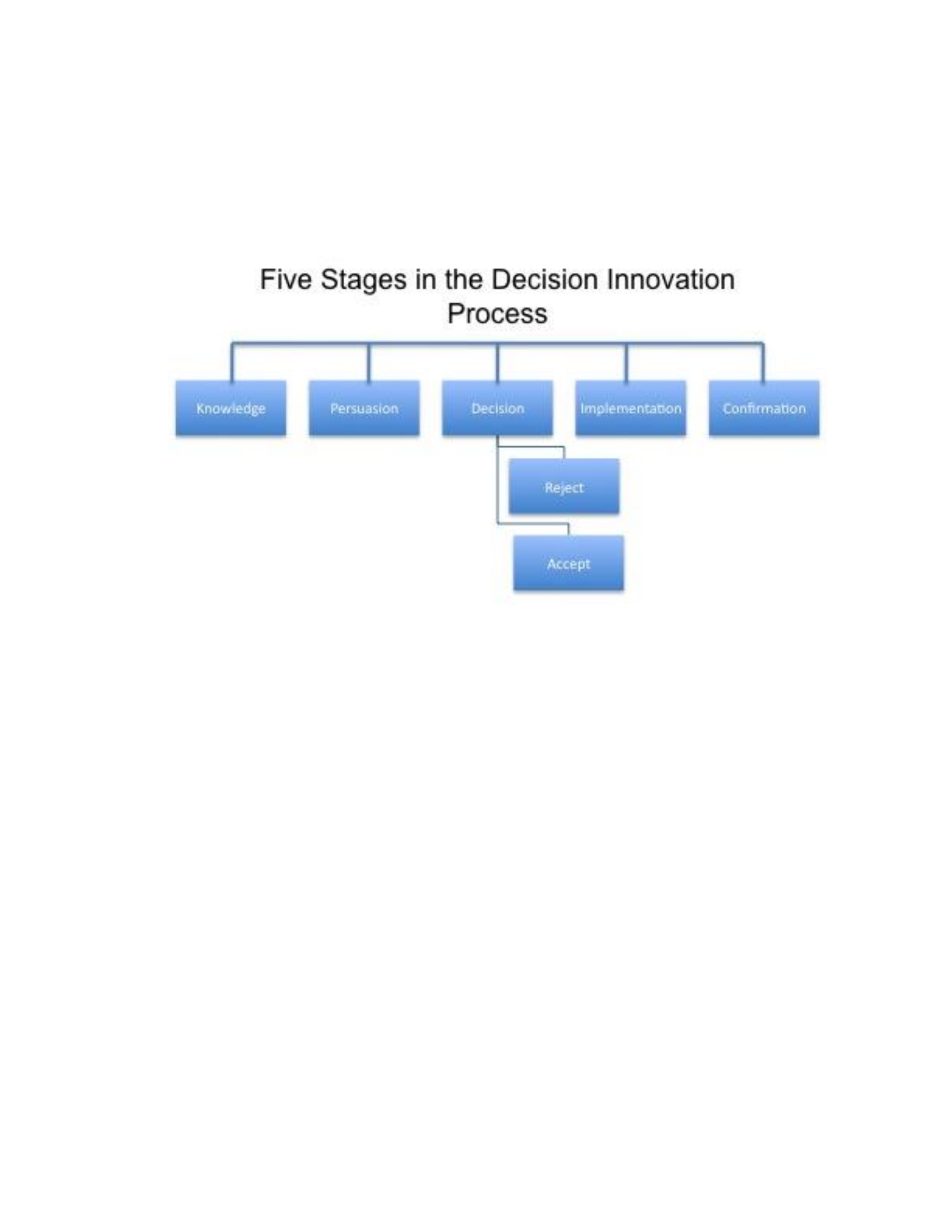
innovation-decision process consists of five main levels: knowledge, persuasion,
decision, implementation, and confirmation. Cegielski et al. (2013) stated that EITs
represent an avenue for enhancing the effective and efficient flow and utilization of
information within the organization to support business objectives and, ultimately, firm
performance. Drnevich and Croson (2013) found that without an alignment of business

5
and IT strategies, a business will not be effective. Green (2014) found that performing
and evaluating qualitative information systems (ISs) research is best conducted using a
methodological framework.
In this research study, I applied the constructs of the innovation-decision process
to gather real-world input and open feedback from IT managers. The persuasion and
implementation phases of the innovation-decision process were the main themes within
the study. Given the vast list of organizations required to do a full phenomenological
study on authentication technologies affecting the global market, census sampling was
the best alternative to conducting the inquiry of stakeholders necessary to answer the
research question in this study. Based on the limited international knowledge of the
organizations taking part in the research study, Ahmad (2014) gathered and triangulated
information from both interviewing sessions and experiential knowledge. Census
sampling enables researchers to gather adequate experiential knowledge and information
to complete their study without conducting an exhaustive and prolong inquiry process of
all organizations. Focusing the questions on the main phases of the DOI theoretical
framework ensured sampling data saturation on the main themes of the research study
(see Baldwin & Fellingham, 2013).
Definition of Terms
Chief information security officer (CISO): The corporate-level person responsible
for the security of their organization’s computing environment (Souppaya & Scarfone,
2013).

6
Chip-and-PIN: Smart card technology with an embedded chip on the credit card
read by a card reader and requires the input of a PIN to complete a transaction (Figliola,
2015).
EIT: Emergent IT that organizations may or may not adopt (Cegielski et al.,
2013).
EuroPay, Mastercard, and Visa (EMV): The original instance and standard of
chip-and-PIN technology for electronic transaction payments. Chip cards are formally
known as EMV cards, named for the coalition of three companies: Europay, MasterCard,
and Visa (Figliola, 2015).
IDT: A model used to define how new ideas are disseminated among people in
society (Cadarette et al., 2016).
Interview protocol refinement (IPR) process: The process used to efficiently
collect, record, and document information from participant interviews (Castillo-Montoya,
2016).
POS terminal: The equipment used to execute the exchange of funds during a sale
of goods and services (Abubakar & Ahmad, 2013).
Technology acceptance model (TAM): A method to measure user’s acceptance of
technology. TAM is often used to analyze data and information collected for quantitative
and mixed method studies (Tan et al., 2014).
Thematic analysis (TA) process: A method for identifying and analyzing patterns
in qualitative data (Clarke & Braun, 2013).

7
Unified theory of acceptance and use of technology (UTAUT): A widely used
theory to evaluate end-user ’s adaption to innovation and information system changes
(Chang et al., 2016).
Assumptions, Limitations, and Delimitations
Assumptions
To establish the baseline and communicate essential ideas of the study, past and
current factors pertinent to the topic are defined as assumptions within the study
(Kirkwood & Price, 2013). My first assumption was that a current review of available
literature indicated a need for further exploration in the body of knowledge and strategies
for implementing chip-and-PIN authentication technology within the United States.
Another assumption was that the organization’s IT manager plays a key role in bringing
resources, stakeholders, and technologies together to deliver the appropriate security
measures and authentication infrastructure. My last assumption was that successful
implementation of chip-and-PIN POS terminal authentication technology within the
United States will reduce the security risks associated with conducting e-commerce
payment transactions with credit cards.
Limitations
Limitations are the expect shortcomings of capabilities within a study to provide
a total solution to the entirety of the problem or phenomenon (Brutus et al., 2013). The
first limitation was based on the variety of organizational structures and e-commerce
hardware infrastructure utilized in the United States. Therefore, the study could not fully
inform, cover, and provide a strategic solution for every type of credit card POS terminal

8
infrastructure. The next limitation was the fact that online e-commerce purchases do not
require the credit card to be present, limiting the effectiveness of studying the use of chip-
and-PIN authentication technologies as it relates to an online website and online e-
commerce purchases. The final limitation was that the findings of the study may not
include strategies that are suitable and applicable to all organizations.
Delimitations
Delimitations define the parameters and scope of a study (Podsakoff et al., 2016).
To present an effective, comprehensive, and informative qualitative pragmatic study, I
applied three main delimitations. The first delimitation was the established size of the
population of the participants in the study. To focus on specific planning and
implementation strategies, the interview participants were IT managers in the retail
industry. The second delimitation was that the interviews were conducted using
participants located in the United States. The final delimitation was the fact that large,
internet-only, web stores were not evaluated in this study.
Significance of the Study
Contribution to IT Practice
IT managers are challenged to provide the most secure computing environments
for their users, both internal and external. Protecting their business’ customers from credit
card fraud and stolen PII are mandated compliancy requirements. With limited
implementation of chip-and-PIN credit card authentication systems within the United
States, the findings from this study may inform all stakeholders on the benefits and
capabilities of chip-and-PIN credit card transactions. The results of this study may also

9
provide an informative set of findings to fill the IT knowledge gap for consumers,
managers, and security professionals required to implement and maintain chip-and-PIN
credit card authentication infrastructures in the banking and consumer-facing economic
industries. The findings of this study may provide strategies used to improve the
efficiency of the processes currently in place to implement credit card chip-and-PIN
authentication technology. In addition, the study results can be used as an IT strategic
template to efficiently transition other nations to the same credit card authentication
platform, securing both consumers utilizing credit cards and vendors providing services
within the global e-commerce market.
Implications for Social Change
The results of this study may contribute to positive social change through
potentially being used to help protect businesses and consumers from credit card fraud.
Consumers using chipped credit cards may reduce the risks of credit card fraud and
financial liability to merchants, resulting in lower administrative costs and fees levied
against all stakeholders in the e-commerce process (Robertson, 2014). The findings of
this study might help to inform individuals about the current status of the IT innovation
processes of chip-and-PIN credit card authentication. These individuals might use their
increased IT knowledge to communicate, demand, and insist that businesses and their
business partners increase credit card security with chip-and-PIN authentication
infrastructures. Paying for services with the more secured chip-and-PIN credit cards may
be safer when conducting business with local and international service providers. Once
the chip-and-PIN credit cards authentication infrastructures are implemented throughout

10
all financial and business institution globally, individuals traveling worldwide would
have easier and safer access to their buying power, reducing their risks of potential credit
card fraud. Informed credit card users, their vendors, and banking institutions may be on
a more secured e-commerce security platform, reducing the number of identity theft
crimes committed. Additionally, the study results can be used as a strategic template to
help efficiently transition other nations to the same credit card authentication platform,
securing both consumers utilizing credit cards and vendors providing services within the
global e-commerce market. Securing the electronic exchange of funds by using chip-and-
PIN authentication technology can reduce the amount of credit card fraud and number of
crimes committed.
A Review of the Professional and Academic Literature
In this literature review subsection, I present and review historical information
and empirical data related to the topic of the study. Additional research and the collection
of literature was conducted to support the methodology and conceptual framework used
to guide this study. I conclude this section with a final summary of literature research and
findings.
The literature review is organized in three main categories: scholarly, peer-
reviewed; non-peer-reviewed; and scholarly seminal literature. I present the literature in
the following order: a review of the current IT status, IT problem, methods to design and
develop the study, and methods to collect and validate the data from participants of the
study. The majority of literature was selected from academic and professional
organization databases, including ProQuest, Sage, Thoreau, and Science Direct. The first

11
phase of the review was to collect the appropriate data to confirm the need of the study
topic and the specific IT problem. A thorough search in online library databases and
government-sponsored statistical sites provided exemplary supporting information to
support the study. I conducted further review of the literature to establish the conceptual
frameworks and models that were used to support the foundation of the study. Extensive
research was conducted on how innovation diffusion is an effective research concept used
in the decision-making process for EIT. It was important to ensure 85% of the total
supporting literature sources address current IT technology issues and have a publication
date of less than 5 years ago. The selected peer-reviewed studies, papers, and journal
articles support established facts, proven theories, and known limitations to the topic
under study. The percentages and statuses related to the literature reviewed are listed in
Table 1.
Table 1 S of Literature Review
Summary of Literature Review
Reference type
Total
Published less
than 5 years ago
Published more
than 5 years ago
Peer reviewed
78
70
8
Non-peer reviewed
13
10
3
Seminal source
3
0
3
Application to the Applied IT Problem
The purpose of this qualitative pragmatic study was to explore strategies used by
IT managers to transition their e-commerce organizations to chip-and-PIN credit card
authentication infrastructures. In the literature review, I addressed the specific IT problem

12
and strategies applied to implement chip-and-PIN credit card and POS authentication
infrastructures. The first portion of the literature review includes a description of the
impact of the IT problem and importance of having a concerted strategy to address the
problem. In the second area of the subsection, I discuss the IDT conceptual framework
and the application of IDT constructs to the IT problem. In addition, literature outlining
previous IDT research and findings are presented. In the closing subsection, I summarize
the literature review, emphasizing the application to the IT problem and need for further
research study.
According to the 2013 Federal Reserved Payments Study, the estimated number
of unauthorized card payment transactions in 2012 was 29.5 million, with a total loss
estimated at $3.9 billion (Gerdes et al., 2013). The U.S. Department of Justice, Bureau of
Justice Statistics, National Criminal Justice found approximately 66% of credit card fraud
victims experienced a financial loss (Harrell, 2015). The main theme and phenomena
under study was the lack of chip-and-PIN credit cards and POS-enabled terminals in the
United States. A federal and financial institution compliance mandate required
organizations to implement the more secure chip-and-PIN capability by fall of 2015;
however, some retailers have not fully converted to the full implementation, forcing
customers to use the older magnetic strip methods to authenticate their purchases (Bush,
2016). The two-factor authentication process, using chip-enabled terminals with a secret
PIN, provides a more secure electronic payment transaction.
Despite the increase in issuing of chip-and-PIN credit cards by the banking
institution, some merchants are still not capable of providing chip-enabled authentication

13
infrastructures (Bush, 2016). Some merchants have upgraded POS terminals; however,
their networks are not enabled or certified to accept chipped cards. Recent banking
statistics indicate an increase in U.S, EMV payment transactions, but minimal in
comparison to other continents and nations, such as Europe, Africa, Asia, Canada, Latin
America, and Caribbean (EMVCO.com, 2016; Milker, 2007; Shepard, 2016; Wakamori
& Welte, 2017). Figures 1 and 2 show the comparison with other continents.
Figure 1
Statistics of EMV Transactions
Note. Adapted from “MasterCard Reports Strong US EMV Uptake. 2016. EMV CHIP
Deployment statistics,” by R. Boden, 2016 (http://www.NFCworld.com). Copyright
2016 by Taylor & Francis LLC. Reprint with permission.

14
Figure 2
Statistics of EMV Chip Card Deployment and Adoption
Note. Adapted from “MasterCard Reports Strong US EMV Uptake. 2016. EMV CHIP
Deployment Statistics,” by R. Boden, 2016 (http://www.NFCworld.com). Copyright
2016 by Taylor & Francis LLC. Reprint with permission.
Data collected by MasterCard indicated a 105% increase in chip-and-PIN card
usage since the October 1, 2015 transition of liability to merchant’s deadline (Shepard,
2016). Even with the risks of liability for fraud and abuse of noncompliance credit cards,
the 2 million merchants using chip-and-PIN enabled networks account for only 33% of
U.S. merchants using chip-and-PIN card technology (Boden, 2016). According to Peter
Larkin, President and CEO of the National Grocers Association,
None of these delays are the fault of merchants, yet it’s the merchant who is
facing an onslaught in new chargebacks as well as confusion among consumers
who don’t understand why they can’t use their chip cards at their local
supermarket. (Karolefsk, 2016, p. 1).

15
Implementation of chip-and-PIN card technology in U.S. e-commerce markets is lagging
behind the expectations of the payment card industry standards.
The comparisons between the U.S. credit card industry and other nations shows a
great deficit and limited progress in improvements in U.S. credit card authentication
technology infrastructure and protection of customer privacy (Boden, 2016; Wakamori &
Welte, 2017). Credit card transactions using chip-and-PIN reduces security risks because
EMV transactions at chip POS terminals provide more security of consumers’ personal
data than magnetic strip POS transactions (Foxworth, 2015). Rockwell (2013) argued that
payment cards are often targets of fraud schemes that victimize the issuing financial
institution and individual cardholders. The physical characteristics of payment credit
cards can determine the ease at which they can be compromised, and typical
counterfeiting methods were linked to counterfeit payment cards (Rockwell, 2013).
Credit card fraud is mostly associated with credit cards equipped with only magnetic strip
authentication features that are not capable of the chip-and PIN process at POS terminals
(Cepeda et al., 2015). The findings from these studies show and support the need to
implement the transition from magnetic strip authentication to the chip-and-PIN process.
With the growth in debit and credit cards as the main method of paying for
services and products, there is a need for improved security of the card-based
authentication system. Organizations must implement their IT solutions and innovation in
an ethical manner (Kernaghan, 2014). Vendors are obligated to protect the customer’s
privacy rights under the Fair and Accurate Credit Transactions Act (Cepeda et al., 2015).
User’s acceptance of the new technology is critical for the successful implementation of

16
the chip-and-PIN authentication systems. The usage of credit cards is aligned with
consumer confidences in the protection of their data and privacy (Arief & Adzmi, 2015).
Customers will discontinue the use of credit cards at POS terminals if they believe the
systems are unsecure. Implementing and educating customers on the increased security of
the chip-and-PIN authentication systems will provide them with the confidence needed to
continue using the convenience of credit cards.
Current trends for protecting access to computing environments include
multifactor authentication. Two-factor authentication is a proven method used to ensure
the right individuals and only that user can access data, providing confidentially (Choi &
Park, 2015). Secure authentication is accomplished when a user must use two different
identity factors to complete the authentication process (Kaur & Pathak, 2015).
Combining biometrics technology as one element in the two-factor authentication process
increases the security capability and complexity; biometric authentication includes the
use of fingerprints, iris scans, face, and voice recognition (Martinovic et al., 2017).
Multiple researchers have validated the advancement in the use of biometrics as a means
for user authentication, with the possibility to use data representation modules within
multimodal biometric systems to take advantage of facial recognition (Choi & Park,
2015; Martinovic et al., 2017; Moon et al., 2015). Payment card industry (PCI) systems
can benefit from the dual usage of biometric systems for both data collection and user
authentication (Choi & Park, 2015). The implementation of two-factor authentication
methods demonstrates the potential effectiveness of using biometrics as a method of
increasing security beyond smart card authentication.

17
Chip-and-PIN Smart Card Technology
Chip-and-PIN enabled credit card technology is an effective method of
implementing two-factor authentication (Smith et al., 2018). The leading system for
smart card-based payments worldwide, EMV, is widely deployed in Europe and is
starting to be introduced in the United States as well (Bond et al., 2015). Chip-and-PIN
enabled credit card technology is the foundational method used in e-commerce, two-
factor authentication. The chip-and-PIN authentication process requires certified
hardware and software systems to take full advantage of the more secure electronic fund
transfer authentication method (Fourar-Laidi, 2013; PCI DSS, 2018).
Organizations are implementing various infrastructures that allow them to have
secure e-business transactions. Bond et al. (2015) found that despite this wide
deployment, a series of significant vulnerabilities make EMV vulnerable to the replay
attack. Implementing changes to security specific protocols within the security
authentication process and introducing a new authentication scheme will increase the
strength of smart card authentication (Jiang et al., 2015). A framework-based solution can
use smart cards to store keys and perform cryptographic algorithms, allowing e-
commerce partners to realize secure transactions (Fourar-Laidi, 2013). Shin et al. (2013)
expanded on the ideas of emerging capabilities in the dual-chip contactless card. There is
the ability to overcome the insecure credit card transaction by using biometrics to activate
the smart card technology. Elements and principles used in the listed technology can
provide benefits for all stakeholders and support strategies in gaining IT investment
funding support from C-level officers (Shin et al., 2013). Fully communicating the risk of

18
conducting insecure electronic fund transfers to both customers and vendors will support
the organization’s business needs statement and potential benefits to their profits.
The use of business intelligence is improving the effectiveness of companies in
understanding their customers’ requirements and increases the return on investment of
their business initiatives (Ogiela & Ogiela, 2014). Converting the raw data collected from
customers into business intelligence requires organizations to collect sensitive and
confidential information from their customers (Soilen, 2016). Banks use their customer
databases and analytics tools to craft highly sophisticated pictures of their customers’ and
prospects’ values, profitability, and credit risks and then bombard them with 2 billion
credit card solicitations every year (Peppers & Rogers, 2013). Credit card information
and consumer usage habits are maintained in databases, presenting increased risks to
customer privacy (West & Bhattacharya, 2016). Organizations must have a
comprehensive strategy for implementing secure credit card transaction authentication
and protection solutions.
IT managers are responsible for providing the most secure computing
environments for their organization’s users, both internal and external. With limited
implementation of chip-and-PIN credit card authentication systems within the United
States, protecting customers from credit card fraud, privacy, and stolen PII requires a
viable IT strategy that compliments the organization’s business strategy. Drnevich and
Croson (2013) found that without an alignment between business and IT strategies, a
business will not be effective. The relationships and confidence between the CEO, CIO,
and IT managers are essential elements to ensure IT solutions contribute to the overall

19
strategy of the organization. Supporting the CEO’s strategies with IS contributions is a
key factor in successful organizations (Johnson & Lederer, 2013). Well-developed IT
strategies and investments increase the performance of an organization (Mithas & Rust,
2016). The IT manager plays a key role in developing and executing the IT investments
to secure their IT infrastructures and gain stakeholder buy-in for new systems.
Data and financial data security are a significant concern in business and in IS
education from both a technological and a strategic standpoint. The establishment and
requirements of the Payment Card Industry Data Security Standard (PCI DSS), and the
associated consequences for noncompliance, represents a business-like approach to the
organizational protection of data (Willey & White, 2013). PII, electronic health records,
and financial data are prime targets for hackers seeking means to compromise the privacy
of individuals. Performing and evaluating qualitative IS research is best conducted using
a proven methodological framework (Antonenko, 2015; Green, 2014). Advancing an
organization’s business model to e-commerce requires a well-developed strategic plan
and framework (Kaptein & Parvinen, 2015). The environmental concern must be
considered to develop the appropriate framework and explore the factors needed to
successfully evaluate the phenomenon. In some instances, a combination of multiple
frameworks may be required to accurately measure the acceptance of innovation and the
concerns of the environmental culture (Ho et al., 2015). Organizations must identify and
use a comprehensive framework to accomplish their chip and PIN credit card
authentication implementation strategy.

20
Diffusion of Innovation Theory, Core Elements
In 1962, Rogers framed the IDT. The IDT is a model used to define how
innovative ideas are disseminated among people in society. The core elements of the IDT
are awareness, persuasion, decision, implementation, and confirmation. The innovation
diffusion theory model is depicted in Figure 3. Innovation defines the introduction of a
new idea. Diffusion is an effective method to introduce new ideas to people in a social
network (Dutta & Omolayole, 2016). The IDT provides tools to determine the factors,
uncertainty, resistance, and rate of diffusion of a technology (Zsifkovits & Gunther,
2015). For a better understanding of the phenomena and ability to confer the themes to
the reader, creating visual models and mapping is very effective means to demonstrate
the point (Antonenko, 2015). The innovation diffusion framework will be an excellent
means to evaluate, study, report findings, and make recommendations for future research.
In 2003, Rogers refined, popularized, and documented the DOI, explaining how
innovation is communicated in a social system. The diffusion of innovation theoretical
framework will be used to conduct this qualitative pragmatic study. The IDT model is
depicted in Figure 3.
Figure 3
Graphic Illustration of Innovation Diffusion Theory Model

21
Note. Adapted from Diffusion of Innovations (5th ed.) by E. Rogers, 2003, Free Press.
Copyright 2003 by Free Press.
Innovation diffusion is an effective research concept, used in the decision-making
process for EIT (Cegielski et al., 2013). The innovation-decision process consists of five
main levels: knowledge, persuasion, decision, implementation, and confirmation.
1. Knowledge: The process of learning about the innovation or the phenomenon.
2. Persuasion: The time in the process where personal feelings and value
judgements are made to form a final perception on the innovation.
3. Decision: The actual process of communicating a final stand on which to act
on the innovation.
4. Implementation: The process of using the innovation.
5. Confirmation: The process is used to evaluate the decision and results of the
implementation, for the validity of the innovation.
The innovation-decision process model is depicted in Figure 4.
22
Figure 4
Graphic Illustration of Innovation-Decision Process Model
Note. Adapted from “Evaluating Adoption of Emerging IT for Corporate IT Strategy:
Developing a Model Using a Qualitative Method,” by C. G. Cegielski, D. M. Bourrie, &
B. T. Hazen, 2013, Information Systems Management, 235-249. Copyright 2013 by
Taylor & Francis LLC. Reprint with permission.
Without an established framework, it is difficult to adequately define the concepts
and themes of the study (Antonenko, 2015). Cegielski et al. (2013) EITs represent an
avenue for enhancing the effective and efficient flow and utilization of information
within the organization to support business objectives and, ultimately, firm performance.
This research study applied the constructs of the innovation-decision process, to gather
and analyze input and open feedback from IT managers. Innovation stems from
knowledge recombination of prior discoveries and applications, the individual capacity to

23
search for knowledge over both familiar and unfamiliar technological domains is also
likely shaping fundamental processes in creativity, problem-solving, and innovation
within organizations (Van Knippenberg et al., 2015). Caiazza and Volpe (2017) used the
innovation diffusion process to study the adaptation of precision farming technologies.
Zhang et al., (2017) emphasize the importance each stakeholder and their efforts to bring
about IT innovation acceptance within their organization. Successful IT solutions depend
on the effective implementation of a strategic framework such as the innovation diffusion
processes, between stakeholders and their customers. The phases of the innovation
diffusion process assist in identifying roles; innovator, adopters and, intermediaries
essential to applying the technology (Caiazza & Volpe, 2017). Using the innovation
diffusion process, I was able to identify the key implementation players and stakeholders
in a successful implementation of chip and PIN technology.
The decision, implementation, and confirmation phases of the innovation-decision
process were the three main themes within my doctoral study. These three phases were
selected based on their alignment with the strategic critically of getting stakeholders buy-
in and witnessing the success of end-user usage of the strategy. The decision phase
addresses the need to convince the organization leadership to adapt the technology and
communicate the security advantages to consumers. Leaders, within an organization, are
critical to creating the culture for change and be enablers for innovation (Camps &
Molina, 2014). The implementation and confirmation phases covered the banking
industry issuing of chipped credit cards, POS hardware installation, software
certification, and customers successfully completing PIN and chip transactions. Denning

24
and Dew (2015) found that 90% of innovation is in fostering adoption. Organizations are
often slow to adapt new innovations, based on perceived risks and cultural attitude
towards change (Martins et al., 2014). Adopting change requires the ability to listen for
concerns, histories, movements of social power, barriers, moods, reactions to offers, and
followers in networks (Denning & Dew, 2015). In the decision phase, the IT manager
must have a strategy which can convince stakeholders within his organization to adapt
the new IT innovation.
Cost savings is one of the most popular factor in the means of persuading
organizations to adapting new information technology. Franceschinis et al. (2017)
evaluated the coherence of the underlying preference structure using as criteria
psychological constructs from the theory of diffusion of innovation. Using the theory of
diffusion of innovation was a means to validate the theory by providing evidence of
segmentation of the population consistent with the individuals’ propensity to adopt
innovations (Franceschinis et al., 2017). Franceschinis et al. findings indicated that
preferences for heating systems and respondents’ willingness to pay for their key features
vary across segments. “These results enabled us to generate maps that show how
willingness to pay estimates vary across the region and can guide local policy design
aimed at stimulating adoption of sustainable solutions” (Franceschinis et al., 2017, p.
314). Potential cost savings are very effective incentives to gain support and funding for
new technology.
The medical industry benefits from the uses diffusion of innovation conceptual
theory in research and implementation of new medical procedures and equipment. “Our

25
aim was to examine the speed (number of publications over time) and spread (across
institutions) of each innovation and interpret uptake relative to innovation attributes, the
social system, and communication channels” (Cadarette et al., 2016, p. 151). The Islamic
community, often seen as a group which is slower to fully adopt technological
innovations, provided a great opportunity to validate the effectiveness of the diffusion of
innovation conceptual theory. Jamshidi and Hussin (2016) applied the innovation
diffusion theory in their review of the adoption and understanding of credit card usage in
the Islamic community. In the medical service industry and Islamic community, Jamshidi
and Hussin’s finding showed the alignment of customer satisfaction with services has a
noticeable final impact on social influence.
Valente et al. (2015) incorporated the diffusion of innovation theory in their study
to understand the level of efforts for diffusion of future information. Stages in the
diffusion of innovation theory were effective in measuring the status of organizations and
adopters within the innovation network. Valente et al. findings showed that online
communication networks accelerated the ratification process. By using the data and
analysis produced from the stages in the theory, the World Health Assembly can develop
specific communication plans to spread the Framework Convention on Tobacco Control
(FCTC) information about tobacco use and health safety.
The diffusion of innovation theory can be used to compliment other theories and
framework within a study. In a study conducted by Nehme et al. (2016) the research
measurement properties were designed to align the transtheoretical model (TTM) stages
of changes with the diffusion of innovation theory stages. In comparison, the DOI staging

26
approach was more effective than the TTM at classifying the readiness for adopting
change (Nehme et al., 2016). One of the main findings was the advantage of using a
theory-based construct from outside the normal methods to evaluate health behavior
research (Nehme et al., 2016). The combined research analysis theories were successful
in identifying the value which transportation bicycling provided towards preventing the
risk of chronic diseases.
Given the popularity of the internet, networks, and infrastructures used to connect
the global exchange of information on the internet is affected by the innovations of
diffusion in technology as well. Chen and Li (2014) conducted a study to analyze the
complex dynamics of technical upgrades in the innovation of diffusion process. Chen and
Li introduced the concept of Diffusing Mode of Innovation in the study. The mode
included several types of innovation: institutional innovation, innovation of management,
and technical innovation. Technical innovation occurs quickly and is usually forced on to
other industrial networks to keep up with the standard. According to Chen and Li
industrial network is a scale-free network, it makes the diffusion of innovation on
industrial network very easily, and each enterprise has different affection on the whole
industry. Technical innovation diffusion is an enabler for other forms of innovation, as
supporting innovation infrastructure and knowledge management innovation multiplier.
Another perspective of adoption of innovative technology is the difference
between men and women, in regard to accepting new technology. Dutta and Omolayole
(2016) conducted a study of the influence of gender on the accepting technology and
innovation diffusion. Internet usage was technology measured in the study. The study’s

27
initial indications were that women prefer using information technology largely to satisfy
their bonding and sharing nature whereas men prefer using information technology
essentially as an enabling tool that enhances their abilities (Dutta & Omolayole, 2016).
Despite minor differences between genders, the results indicate that acceptability to new
information technologies are gender neutral (Dutta & Omolayole, 2016). The diffusion of
innovation conceptual theory proved once again to provide valuable insight in quality
research studies.
The diffusion of innovation conceptual theory has historically been applied to
many different industries to understand their best strategies to implement new
technology. Harvey (2016) used the innovation diffusion concepts in his research on the
adaptation of the new 45 RPM single and 33 RPM album technology in the recording
industry. The standardization of the 45 RPM single and 33 RPM albums in 1951 forced
the recording industry to rethink their marketing strategies (Harvey, 2016). Findings from
the study conclude that the industry tended toward sub optimal, risk-averse strategies, and
that the LP likely succeeded despite record companies’ efforts to control their products
and messaging (Harvey, 2016). The diffusion of innovation conceptual theory was
successfully used to gauge a major change in not just the recording industry, but to how it
affected society as a whole.
Similar to the changes in the music recording industry, the travel industry
transitioned from store front services agencies to more services being provide online. The
travel communities and travel service agencies experienced a major change in the way
consumers acquire travel process and arrangement. With more consumers making their

28
own travel arrangements with online booking sites, Agag and El-Masry (2016) conducted
a study using the IDT and TAM models to explore the behavior and intentions of
customers to conduct their travel process online. Customers were more positive towards
using online travel services than visiting a travel agency office. The findings indicated
that users of the online travel community services were more likely to recommend the
services to others (Agag & El-Masry, 2016).
Eastwood et al. (2017) used the diffusion of innovation conceptual theory process
to study the adaptation of precision farming technologies. The primary purpose of the
study was to examine the interaction and distribution of research and extension roles of
public, private, and agricultural industry organizations in precision farming innovation
systems. A timeline analysis method, underpinned by a function of innovation systems
framework, was used to examine activities of actors and organizations in the case studies
(Eastwood et al., 2017). One of the major findings from Eastwood et al. study was that
complex agricultural innovations require a collaborative approach for successful
innovation and diffusion. As earlier mentioned, the innovation diffusion process was used
to identify key roles and the impact they had on the adoption of new innovations.
In Nieuwenhuijsen et al. (2018) quantitative study, a diffusion of innovation
theory was used to determine the acceptability of automated vehicle technology. Despite
the multitude of advantages offered by automated and self-driving vehicles, there was no
major increase in the purchase of those vehicles. One of the main themes identified from
using the DOI theory was that the maturity of technology in automated vehicles were in
direct relations with market size. DOI analysis provided valuable and iterative feedback

29
about the rate of acceptance of vehicles and sales of automated vehicles. Nieuwenhuijsen
et al. findings were able to show the gradual acceptability of new automation features in
vehicles over a longer period of time.
Research using a DOI theory methodology is prevalent in many technology
disciplines. Hosseini et al. (2015) study involved the aspects of diffusion of innovation in
the architecture, engineering, and construction industry. To ensure safety to populations,
architecture, engineering, and construction methods are being standardize globally. It was
important to study the global understanding and usage of the innovation of diffusion
methodology within these industry communities of practice. Global virtual engineering
team’s efficiency and effectiveness are affected by the level of acceptance of the
innovative technology. According to Ozorhon et al. (2014) findings, innovation barriers
are responsible for the limitations experienced in construction organizations.
Implementation of innovation diffusion within construction is highly depending on
government enforcement (Na Lim, 2014).
Simpson and Clifton (2017) used diffusion of innovation in their study of early
adopters of solar energy in Australia. The goal was to demonstrate that Rogers’ theory
would benefit the adoption of emerging solar technology, based on incentives.
Government policies promoting the new technology through diffusion of innovation was
evaluated, especially providing financial incentives. Simpson and Clifton findings attest
to the effective use of incentive to drive the adoption of innovation. No matter what
industry diffusion of innovation is a critical element to move technology forward.

30
Zhou and Li (2014) employed the diffusion of innovation theory in their analysis
of the carbon emission reductions in China. The intent was to analysis how
improvements, acceptability, and use of new technology could decrease the carbon
emission affecting the population. According to Zhou and Li findings indicate economic
growth is driving up carbon emission. However, industrial enterprises implementing
technology innovation diffusion techniques could increase technology measures to reduce
carbon emission. Zhou and Li study is another example of the wide-reaching effect and
values the diffusion of innovation conceptual theory has in the analysis of accepting
technology innovation.
When considering the possible conceptual frameworks and theories, the public-
sector innovation (PSI) theory was reviewed as a possible framework. Gow (2014)
presents a variety of samples in innovation theories to examine possible changes within
the PSI theory. The outcome seems to be two themes in innovation theory changes.
Innovation is seen either through a structured process or a continuous series of events in
trial and errors. It seems that there is still important disagreement about what constitutes a
true innovation, with the debate centering on the merits of a multitude of lesser
improvements versus a smaller number of major, disruptive, changes (Gow, 2014). Glor
‘s (2015) grounded theory approach to examining the innovation of change within
organizations argues that researcher cannot apply preset categories immediately, but must
develop substantive theory first, then see if others’ categories are linked to the emergent
substantive theory. The PSI theory would limit the potential applicability of this research
study, excluding the value to private sector organizations.

31
In addition to the innovation diffusion theory conceptual framework, literature
exploring the UTAUT and TAM theories for IT services were widely reviewed, as
possible conceptual frameworks to conduct this study. The constructs: performance
expectancy, effort expectancy, social influence and facilitating conditions, of the UTAUT
theory is widely used to evaluate end-user ’s adaption to innovation and information
system changes (Chang et al., 2016). UTAUT is a mature conceptual framework,
developed on the improvement from other proven theories of technology adoption (Rahi
et al., 2018). UTAUT was used to provide a comprehensive model of user’s motivation to
use mobile payment card systems (Morosan & DeFranco, 2016). Maillet et al. (2015)
study findings were very comprehensive; however, demonstrated some limitation in the
use of UTAUT to gain a totally non-refutable study result. Khalilzadeh et al. (2017) used
the hybrid of the UTAU and TAM theories to incorporate the user’s attitude in an effort
to increase the efficacy of their study. The TAM theory is often used to analyze data and
information collected for quantitative and mixed method studies. Tan et al. (2014)
findings confirm that convenience is a key factor in mobile payment adoption. If
consumers find the innovation useful, they are more likely to adopt the services offered
(Rahi et al., 2017). Seetharaman et al. (2017) study using the TAM model validated an
85% supportability of acceptance of mobile wallet in Singapore. This is particularly in
view of the advantages brought about by mobile credit card over cash or credit card
payment in terms of quicker and more convenient transactions. In the Tan et al. study, the
model only takes into consideration two constructs, resulting in the overall prediction as
not considered to be complete. Under that circumstance, the PSI, UTAUT, and TAM

32
conceptual theories were not sufficient to be the independent conceptual framework,
requiring additional constructs to defend the findings of the study.
IT is constantly changing. The methods and conceptual models used to measure
changes and innovation must be adaptable to changes in technology. Overemphasis on
construct measurement can lead to operationalism: a naive empiricism that reduces a
concept to its measures. Substituting operationalization for conceptualization means that
the original assumptions and meanings underlying the concept are left unexamined
(Welch et al., 2015). One model can totally represent all factors affecting the adoption of
innovation by customers (Park & Lee, 2014). Caiazza (2016) study provided insight into
the importance policy maker exert on the overall success of innovation diffusion. Legal,
economic, technical, and cultural barriers degrade the process of diffusion (Caiazza,
2016). Without the support of policy-maker to adapt appropriate policy and governance,
consumers and providers of technology innovations suffer from innovation barriers.
Focusing the questions in the study on those three main phases of the innovation
theoretical framework ensured sampling data saturation on the main themes of the
research study. Given the main objective of the study, the diffusion of innovation theory
was used to evaluate, study, report findings, and make recommendations for future
research.
Previous Research and Findings
Previous research conducted on smart card technology, like chip-and-PIN
technology, show the favored potential for security. However, research indicates that
organizations are not taking full advantage of the value. Conroy’s (2014) article is a

33
summary of the state of chip-and-PIN credit card usage in the United States. “Despite the
liability deadline, by the end of 2015 only 70% of credit cards in the U.S.A. are expected
to be EMV-ready, and only 41% of debit cards. This is according to a report released by
the Aite Group in October 2014” (Conroy, 2014, p. 1). Banks and vendors will be held
responsible for protecting the integrity and privacy of the credit card. “According to the
Aite report, credit card fraud has doubled from 2007 to 2014, reaching 10 cents out of
every $100 in transactions. Most financial institutions are preparing to use Chip-and-
Signature to secure credit cards, and Chip-and-PIN to secure debit cards” (Conroy, 2014,
p. 1). After the banking industry issues all credit cards with chip technology, the security
risks and financial liability transfers to vendors and their point of sales systems. In
addition, Conroy (2014) illustrated the financial costs to credit cards holder and banking
industry. The data supports the negative impacts of vendor’s credit card authentication
systems not moving to the new chip technology.
Users must trust in the security of the emerging technology before they will use it.
Jones and Leonard, (2014) study tested a model of buyer's trust in customer to customer
e-commerce. By examining previous trust models, perceived web site quality, third-party
recognition, fear of seller opportunism, information asymmetry, and Internet safety
training were found to influence buyer's trust in conducting e-commerce transactions
(Jones & Leonard, 2014). Tsohou et al. (2015) argued that security awareness processes
are associated with interrelated changes that occur at the organizational, the technological
and the individual level. Organizations which can provide consumer confidence in their

34
products and security of their organization business systems are more likely to keep their
customers and strive financially.
Vuori and Huy (2016) conducted a qualitative study of Nokia to understand its
rapid downfall over the 2005–2010 periods from its position as a world-dominant and
innovative technology organization. The authors found that top and middle managers’
shared emotions during the smartphone innovation process caused cycles of behaviors
that harmed both the process and its outcome. Vuori and Huy study showed managers
were afraid of external competitors and shareholders, while middle managers were
mainly afraid of internal groups, including superiors and peers. The authors findings
indicate that shared emotions can hinder the subsequent integration of attention,
influencing innovation processes and outcomes and resulting in temporal myopia—a
focus on short-term product innovation at the expense of long-term innovation
development.
There were previous research and study findings from multiple functional areas
supporting the effectiveness of using biometrics as a method of increasing security
beyond smart card authentication. Moon et al. (2015) study improve on the theories and
scheme findings presented by Lu et al. study on advanced scheme authentications. The
recommendation is to use the findings and collection of empirical data to support the
need for further study in the application of credit card smart card technology. Jiang et al.
(2015) study supports the premises that smartcard authentication is more secure than
simple login ID and password authentication. Jiang et al. findings support the capability
for enhanced technical controls of the authentication process, leaving opportunities to

35
further inquire about the human behavior aspect and reasons for the slow implementation
of smartcard usage in the United States.
There are statistics demonstrating the abuse and misuse of card credits in
electronic payment transactions. According to the 2013 Federal Reserved Payments
Study, the estimated number of unauthorized card payment transactions in 2012 was 29.5
million, with a total loss estimated at $3.9 billion (Gerdes et al., 2013). Gerdes et al.
(2013) covered a variety of payment statistics including the charts and graphs, giving an
unexpected visual effect and interpretation of the data. The data presented in the study
provides enough data saturation to confidently substantiate the premises of abuse in
unauthorized credit card transactions. However, it is limited to data, that was collected 7
years ago, leaving opportunity for further research efforts.
The U.S. Department of Justice Bureau of Justice Statistics National Criminal
Justice finds approximately 66% of credit card fraud victims experienced a financial loss
(Harrell, 2015). Collins (2015) presented up to date information on the use and
circulation of EMV cards.. The fact that the credit card company expects 60% of all large
U.S. retailers to have implemented EMV by the end of the year. EMV transactions
specific algorithms are not publicly known, criminals cannot (easily) replicate the
algorithm to produce counterfeit credit cards (Collins, 2015; Martinovic, et al., 2017).
The findings indicate the value of using a chip and PIN technology to conduct e-
commerce transactions.
Those Federal Bureau of Investigation (FBI) statistics were used in my research
study to emphasize the additional network security benefits of using two-factor

36
authentication. In addition, EMV card transactions transmit data between the merchant
and the issuing bank with a special code that is unique to each individual transaction. The
unique transaction code provides the cardholder greater security and makes the EMV
card less vulnerable to criminal activity while the data is transmitted from the chip-
enabled PoS to the issuing bank (Foxworth, 2015; Shu et al., 2016). Kamel and Lanet
(2013) described and defined the most common and dangerous attack named cross site
scripting and propose solutions to prevent and check if the Web application is well
developed, by applying secured development methodology. Kamel and Lanet study
demonstrates the lack of knowledge of technical solution providers in the methodologies
available for securing e-commerce smart card transactions. Hendi (2011) study
demonstrates the effective uses of chip-and-PIN authentication to deter credit card fraud.
Reduction in credit card fraud was successfully tracked over a period of years to
substantiate the technology as the leading cause for the reduction. There was quantifiable
evidence that the majority of credit card crimes against the United Kingdom credit card
owners were committed from overseas, by using stolen credit card information in
countries without upgraded chip-and-PIN authentication technology (Hendi, 2011).
Lewis et al. (2014) findings indicate that a lack of security in e-commerce infrastructures
are technology-related obstacles and barriers to international e-commerce. Research
shows credit card transactions without chip and PIN technology introduces vulnerabilities
to the global payment card industry.
There has been progress made in the uses of empirical studies, to further the
transfer of knowledge to the information security industry. Hemphill and Longstreet

37
(2016) acknowledged the constant changes to security evaluation measures, challenges to
restore confidence in technology security standard. It is important to understanding the
cybercrime impact to stakeholders and providing them adequate information with
methods for practical applications to protect credit card users (Arief & Adzmi, 2015).
Choi and Park (2015) found the need for further research on multimodal biometric
systems and supports my premise for a further doctoral level research study. Shin and
Lee (2014) expanded on the ideas of emerging capabilities in the dual-chip contactless
card, using a user’s fingerprint to active electronic payment transactions without the
requirement to interact physically with a POS terminal. There are future challenges to
improve credit card fraud detection frameworks and continue the studies required to
attracting more industrial contributions to body of knowledge (Fiore et al., 2017). The
security of electronic fund transfers using credit cards requires continuous review,
application of emerging technologies, and innovative methods for improvement.
Implementing chip and PIN technology is essential; however, validation and
continuous improvement to the system is required. In a study by Ouerdi et al. (2013), the
authors address the need to conduct vulnerability testing as a prerequisite to building
security into trusted credit card security systems. The scope of the study was to develop
robust test cases and run exploiting attacks against the vulnerability within the payment
systems. Ouerdi et al. generated vulnerability test cases based on models of EMV
specifications. The findings from this study provided supporting data for establishing
relevant content to my research study and need for additional rigorous testing of
authentication processes.

38
After a major comprise and data breach is conducted successfully, organizations
must be able to react to the effects. Organizations must acknowledge, repair, and provide
protection from future threaten events. Bahnsen et al. (2015) using a real credit card fraud
dataset provided by a large European card processing company, compared state-of-the-art
credit card fraud detection models, and evaluated how the different sets of features have
an impact on the results. The authors present statics, conceptual theories, and frameworks
about security breaches and trust repair strategies in their study. Wan and Zhang (2014)
argued managerial step can lessen concerns about “cheap talk” and the limitations of
mere words to repair trust after a violation. Wan and Zhang study proposes possible
research suggestions about repair after privacy breach incidents. An important part of the
implementation of a new authentication system is to gain back the confidence of the
customers affected by the previous security breach. This information supported the
quality of the data collected for the doctoral study.
In their efforts to reduce security risks and limit financial liability caused by
security breaches, organizations are seeking other secure methods process credit card
transactions. Lundberg et al. (2014) shed light on how retailers view alternative payment
forms and to what extent they are willing to risk offending their customers by imposing
payment restrictions. The focused was solely on the retailers’ point of view on the
payment stage, implying a need for additional research on customers’ and bank
representatives’ views on the same matter. Citizens and stakeholders buy in is critical in
successfully implementing smart technology (Yeh, 2017). A study by Lundberg et al.
focuses on how the banking industry has and can lead in providing a more secure e-

39
commerce. Lundberg et al. provides a comparison between European and United States
banking industries. The United States has the largest number of financial loss due to
credit card fraud. “In the United States, although fraud constituted less than 1% of total
expenditures, credit card losses totaled $5.33 billion, an increase of 14.5% from 2011”
(Figliola, 2015, p. 2). Growth in e-commerce, international trade, reduction of trade
restrictions, market capitalization of new nations, and globalization increases the uses of
credit card transactions. Increase access to automated teller machine and vendors
accepting credit cards has increased the use of credits cards for travelers. Figliola findings
show globally, card fraud totaled $11.3 billion in 2012, an increase of 15% from 2011.
With statistical data validating the increase in credit card fraud, the implementation of
chip-and PIN technology is an essential authentication technology, to reduce the growing
problem.
The internet of things (IOT) has increased the capability of using near-field
communication (NFC); virtual credit cards, credit cards payment services loaded on
phones, iPad, token devices, and other Bluetooth credit card payment options. Shin and
Lee (2014) described how mobile payment is the integration of near-field communication
(NFC) enabled smartphones and credit/debit/prepaid cards. Using the TAM and
Technology Readiness and Acceptance Model, Shin and Lee (2014) demonstrate how
those conceptual frameworks can be effectively implemented in a doctoral study. The
banking industry in South Korea provides a digital certificate for the online banking users
at no cost. The personal digital certificate must be saved on a personal smartphone.
Without buying hardware authentication token, online banking users in South Korea can

40
use their own smartphone for their authentication in South Korea. Shin and Lee study
suggest that to be a successful payment service, the NFC mobile payment service must be
much more focused on the usefulness against other alternative payment methods. This
was a reliable source for presenting an alternate perspective other than chip-and-PIN.
One of the growing security problems with credit card transactions is the Card-
not-present (CNP) vulnerability. Without the actual credit card being present during the
transaction, other non-tangible factors must be validated, requiring the vendor to depend
on the verbal confirmation of the person making the CNP transaction. Pouwelse and
Bruggink’s (2016) address the growing complications of securing credit card transactions
by CNP transaction fraud, within a study. Pouwelse and Bruggink study indicate that card
fraud is a key cybercrime activity, with a full-scale underground economy. Conducting
the study in Europe allowed the authors to draw from the ample amount of data collected
on their credit card systems. Pouwelse and Bruggink present an effective depiction of the
contrast of card fraud in the USA compared to the rest of the world. Biza-Khupe’s (2014)
study examined consumer information acquisition activities for banking services by
proposing a model postulating search as influenced by perceived benefits, perceived risk,
perceived search cost and prior knowledge. The tests measured a comprehensive model
of consumer credit search behavior using structural equation modeling. The implications
of these findings to theory and policy, particularly as concerning rethinking financial
information regulation in consumer financial markets (Biza-Khupe, 2014). CNP is the
weakest area and highest risk facing the credit card payment transaction process. The
findings from all recent studies indicate the importance of using the more secure chip-

41
and-PIN method of authentication. The value of chip-and-PIN is lost in a CNP
transaction.
Security breaches, computer viruses, malicious codes, and new hacking methods
are being developed every day. These security threats are having a macroeconomic
impact on the global payment card industry (Banka, 2017). Preventing or reducing the
damage of these security threats require continuous innovation of technology and how
humans use technology. There is a crucial need to continue analyzing human aspects in
information security, because technology alone cannot deliver complete security
solutions (Ashish et al., 2017). A common theme expressed throughout the literature
reviewed was the need to continue further research on the improvement of user
authentication technology, human side of information security, and integrating it into all
phases of the information systems development life cycle. Until a higher percentage of
merchants implement chip and PIN capable infrastructure, there is ample reasons and
justification to conduct studies to explore the IT problem. In addition, there are limited
peer-reviewed documents and resources published addressing chip and PIN technology
implementations in the United States. Most documentation references the
implementations and statistics in Europe, Asia, and Africa.
Transition and Summary
The purpose of this qualitative pragmatic study was to explore strategies used by
IT managers to transition their e-commerce organizations to point-of-sales smart card
authentication infrastructures. In this section, I conducted an extensive literature review,
revealing some example of the success of chip-and-PIN technology in other countries.

42
The review provided insight into the gaps in the body of knowledge addressing the
insecurities of credit card purchase in the United States, without using chip and PIN
technology.
The following two sections of this study presents a comprehensive synthesis of
the selected theories and concepts, as they applied to the problem statement and purpose
of the study. In section 2, I provided detail explanations of the researcher’s role, data
collection process, and methodology used to validate the quality of the data. For the third
and final section, I included a summary of the data, findings, and application to IT
discipline. Also, I summarized additional recommendations made for further study and
benefits to social change.

43
Section 2: The Project
In Section 2, I present a comprehensive synthesis of the selected theories and
concepts as they apply to the problem statement and purpose of the study. Detailed
explanations of the researcher’s role, data collection process, and validation of the quality
of the data are also provided in this section.
Purpose Statement
The purpose of this qualitative pragmatic study was to explore strategies used by
IT managers to transition their e-commerce organizations to chip-and-PIN credit card
authentication infrastructures. The targeted population was IT managers in e-commerce
organizations located in the United States who had strategies to transition their
organizations to a chip-and- PIN credit card authentication infrastructures. In the findings
of the study, I identified strategies that other IT managers can apply to efficiently
transition their e-commerce organizations to a chip-and- PIN credit card authentication
platform. The implications for positive social change include the increased security of
credit card transactions and protection of consumer’s PII as well as the reduction of fraud
in the global e-commerce market and number of financial crimes committed.
Role of the Researcher
To examine each organization’s chip-and-PIN implementation strategies, I was
the primary interviewer and data collection manager. In a qualitative study, the researcher
is heavily involved in the interview, data collection, and assessment processes of the
phenomena (McClusker & Gunaydin, 2015). In their study, McClusker and Gunaydin
compared the research method and design choices and indicated the role the researcher

44
plays in each design. From this comparison, they reported that the qualitative researcher
was more immersed in the data collection activities of the phenomena than a quantitative
researcher. I initiated all correspondence with the participants, conducted all interviewing
sessions, and collected and maintained all the data (in the form of participant interview
audio recordings, field notes, other empirical data, and data files) in the current study.
Although I have knowledge on the use of chip-and-PIN technology, no personal
or professional relationships existed between me and selected participants. I used chip-
and-PIN smart card technology on a daily basis to access my desktop computer at my
workplace. Without a successful chip-and-PIN smart card authentication login process, I
cannot access my computer or network resources in my organization, so I am very
familiar with the topic. Until the participants were selected, I only knew them as
members of organizations with a POS technology presence. Several of the potential
participating organizations have their headquarters in the United States. I did not have
any relationship to the geographic locations of the participating organizations. The
organizations and geographic locations selected for this study were chosen based on their
ability to broaden the reach of retail organizations with substantial amounts of POS
technology presence.
To ensure I conducted the research study in an ethical manner, I followed all
elements within the Walden University institution’s ethical guidelines. I requested
approval from the Walden University Institutional Review Board (IRB) to conduct my
study. IRBs provide oversight on studies involving human subjects, protecting
participants from unethical research practices (Cross et al., 2014). In my request for

45
approval, I provided my National Institutes of Health (NIH) Protecting Human Research
Participants Certification Number 1794335 (see Appendix B) to the IRB. I protected the
privacy and information of all participants by following the guidelines laid out in The
Belmont Report (see U.S. Department of Health & Human Services, 1979). Under the
rules established in The Belmont Report, interviewers are required to ensure all
participants and protected sensitive groups are not harmed by the research and
interviewing processes (Barker, 2013). I had a complete understanding of and then
adhered to the guidelines of the Walden University IRB and The Belmont Report to
ensure all participants were protected and the study was fully aligned with expected
ethical requirements.
As a certified system engineer and IS security professional, I have vast experience
and technical skills acquired throughout my 35 years in the IT security field. A
researcher’s experiences have influence on their interviewing methods and interpretation
of the collected data (Anyan, 2013). Despite having experience in the field of study, it
was important that I adhered to the interviewing strategies and protocol for best accuracy.
In West and Kreuter’s (2013) study on the behavior of interviewers, experienced
interviewers were just as likely to make mistakes as non-experienced interviewers,
whenever they did not stick to the observation strategies. Having vast experience and
familiarity with the topic can present potential issues to the study concerning the
researcher’s influence and personal bias. Conversely, as an experienced professional and
subject matter expert in the field under study, my experience may provide valuable
insight on the best means to interpret the data collected. I mitigated bias by accurately

46
documenting the statements and contents provided by each participant. Immediately
annotating and recording the answers of the interviewees reduced the risks of bias (see
Chenail, 2011). I used a proven interview protocol and data collection technique, coding
the data collected and removing the names and specifics of the participants. Aligning the
coded data to the established themes removes potential risks to researcher bias (Pierre &
Jackson, 2014). Instituting an effective interview protocol and data collection and coding
processes and then following those standards rigorously reduced the possibility of bias in
the study.
Conducting an effective research study relies on the ability to bring credibility to
the data collected in the study. In a qualitative study, the interview process is a
fundamental method used to collect most of the data to be analyzed. A qualitative study
can be conducted using public available records, organization data, and interviews
consisting of semi structured and open-ended questions (Zohrabi, 2013). Based on my
pragmatic inquiry design, this study required me to be consistent in the way I conducted
the interviews across all organizations. I used a general interviewing protocol method to
gather multiple perspectives of an organization’s experiences with implementing chip-
and-PIN authentication technology (see Appendix C). An interview protocol is used by
researchers to ensure the structure, elements, and questions are conducted the same across
all interview sessions (Patton, 2015). Interview protocols keep both the interviewer and
interviewee focused on the main research question and topics. Interviewing IT managers
in different organizations provided the appropriate data sets to validate the research
findings. I designed and presented the interview questions in a manner to ascertain

47
specific information from IT managers based on a comparison between the old methods
of magnetic strip authentication and the new chip-and-PIN system. Maintaining
consistency and integrity of the data collected is most efficient when an interview
protocol is established, implemented, and followed (Castillo-Montoya, 2016). Using a
general interviewing protocol method ensured the interview sessions were organized and
credible in this study.
Participants
To gain the most accurate data about chip-and-PIN implementation strategies, e-
commerce organizations were the targeted population in this pragmatic inquiry. The
participants were IT managers within the organizations selected. IT managers within the
organizations were interviewed because interviewing a group of subject matter experts is
the best way to gather information to support a research topic (see Sutton & Arnold,
2013). Managers at the executive level make the decisions on how organizations will
implement their security posture (Flowerday & Tuyikeze, 2016). IT managers are
expected to guide the implementation of IT security measures within their organizations
(Ashenden, & Sasse, 2013). Organizations experience high turnovers of their IT security
managers due to the increased cybersecurity complexity and stress of the position (Clay,
2015). The inclusion criteria for the participants were 2 years of experience as an IT
manager and 1 year of experience with their current organization. Senior managers and
their understanding of the value of IT security in their organization is a critical factor in
understanding and reducing security risks (Barton et al., 2016). The organizations’ IT
managers were subject matter experts who implemented security solutions within their

48
organizations and was able to authoritatively speak to the strategies used in their
implementation of solutions.
My strategy to gain access to participants for this study included written
correspondence, telecommunications systems, mail messaging systems, and online
collaboration applications. I searched for participants in organizations that have an e-
commerce presence. I received permission to interview IT managers, who were the
selected participants within organizations. I initiated contact with interview candidates by
web interface, email, or phone, if email was not possible. Phone communication with
perspective participants is an effective means to ensure maximum participation in the
study (Flood-Grady et al., 2017). I sent a formal invitation to participants through online
collaboration software or written email along with a consent form included as an
attachment. Two weeks was sufficient time to gain a response from the potential
participants. Participants agreed to the interview session either by making a website
acknowledgement, email confirmation, or official mail correspondence. The researcher’s
views and methods used in communicating with participants can affect the quality of the
study (Berger, 2015). Phone calls, emails, and online collaboration events were used to
schedule the culminating interviewing session for each IT manager. Online and other
technological methods are available to conduct interviewing sessions; however, face-to-
face interviews provide the strongest validity in gaining the most convincing study
findings from participants (Bowden & Galindo-Gonzalez, 2015). Using the web
collaboration tools, internet, “contact us” mailboxes, phone calls, and follow-up

49
scheduling calls gave me full access to participating organizations and their
representatives.
To establish a working relationship with the participants, I scheduled a
preliminary interview kick-off meeting. To build trust and gain the participant’s
confidence, I discussed the purpose of the study, explained the interview protocol,
established the interview session framework, and confirmed the time schedule.
Interviewers should have an interviewing concept and be familiar with the questions they
will pose to participants (Mittereder et al., 2017). I explained the data collection methods,
IS measures, and record storage procedures to the participants. Protection of participant
information is required by law and enforced by the IRB process. Participants will be
more willing to share information knowing that their information will be protected
against unauthorized disclosure (Beskow et al., 2014). I used final follow-up and open-
ended questions to get the interviewees to share their implementation strategies,
experiences, and recommendations on how to best implement chip-and-PIN systems.
Open-ended questions provide participants with the opportunity to explain their reasoning
behind their initial answer to a question. (Yii et al., 2014). Member checking can be used
iteratively to validate information provided to the researcher for clarity and alignment
with the research question (Harvey, 2015). I used member checking to validate the
accuracy of the data collected.
The researcher can establish a positive working relationship with each participant
by providing an effective open channel of two-way communication, communicating
expectations, synchronizing schedules, and following the interviewing protocol. To

50
ensure the main research question is answered by the appropriate participants, IT
managers within organizations were the key person to interview. I abstracted study data
from IT managers using an interview protocol, consisting of eight sub questions
supporting the main research question. The IT manager had the opportunity to bring all
available resources with them to the interview and were provided with enough time to
answer each question in detail.
Research Method and Design
In this study, I employed a qualitative methodology with a pragmatic inquiry
design as the most appropriate means to explore the themes of the phenomenon. In this
subsection, I identify, discuss, and review other potential methodologies and designs that
were considered. In addition, I explain and justify my research methodology and design
decisions.
Method
I selected a qualitative methodology as the most suitable means to explore
strategies used by IT managers to transition their organizations to chip-and-PIN credit
card authentication infrastructures. I selected the qualitative method to engage in a more
in-depth, exploratory dialog with participants interviewed in the study. A qualitative
methodology allows the researcher to gain information on the participants’ experiences
and interpretations of the phenomenon (Sutton & Austin, 2015). Incorporating open-
ended questions and taking detailed field notes allowed me to better understand the
participants’ responses to the interview questions and the themes they expressed. I used
the open-ended questioning technique because it was effective in extracting a clearer

51
understanding from the subject matter experts’ perspectives. My field notes helped me
explain some of the nonverbal expressions made by participants.
The qualitative research method empowers participants to be more open and
express themselves, resulting in a more comprehensive research study (Edwards &
Brannelly, 2017). A more comprehensive study provides data saturation and more
evidence towards establishing dependability in the findings of the research study. The
qualitative research method gave participants the freedom to expound on their ideas,
experiences, and application of their strategies. By empowering the participants to speak
openly and unfettered, an interview question could initiate a richer discussion about a
specific theme the participant may feel is more important to explain their experience of
the phenomenon. A qualitative interview session also provides flexibility that allows the
researcher to ask about and understand the whole experience of the respondent (Makrakis
& Kostoulas-Makrakis, 2016). As a means to gain the full picture, I asked each
participant to explain any other critical relationships and partnerships affecting the
success of their strategies. Using a qualitative research method provided me with more
agile and spontaneous interactions with my participants, allowing me to adjust the
questions and model the study according to the emerging themes.
In the initial search for the best research method, quantitative and mixed-method
approaches were two other methodologies considered. A quantitative methodology can
reveal statistical information and test hypotheses of the past and current phenomenon
(Frels & Onwuegbuzie, 2013). My assessment, of understanding the problem within the
study, did not reveal a need to test a hypothesis or compare statistical analysis of the

52
organizations participating in the study. I did not think numerically grading each
organization against each other organization would provide the insight and interpretation
of feelings of individuals who experienced the phenomenon. Quantitative research
findings are commonly used to conduct numerical analysis of a hypothesis, rather than
non-numerical data assessments (Landrum & Garza, 2016). The approach of this study
was not to measure variables, prove a hypothesis, or compare the statistical outcomes of
each organization’s strategy. The most important aspect of the study was to explore and
understand the strategies that were used by each organization. Using a quantitative
method would have limited the interpretation of the participant’s experience in the
phenomenon. A quantitative method provides more detailed information base on
measuring specific variables but limits the interpretation of the phenomena experienced
by participants (McCusker & Gunaydin, 2015). Given those factors, a quantitative study
approach did not align with exploring the IT problem within the study.
Another methodology considered was a mixed-methods approach. A mixed
methods approach is a methodology which uses the data sets and statistical results from a
quantitative method combined with qualitative methods to further interpret the reason of
a phenomenon (Mauceri, 2014). With the main intent of the study was to determine the
strategies to answer the “how” and “why” questions, conducting an initial quantitative
study would not align with the IT problem and research questions, within this study.
Without a need to test a hypothesis or compare numerical statistical analysis of each
organization, I believe there was no reasonable cause to conduct a mixed method
approach. Tsushima (2015) findings indicated mixed-method research needs to be

53
constructed based on measurable variables and present information which cannot be
accomplished by conducting either a single quantitative or single qualitative method.
Based on Tsushima definition of a mixed methods approach, I did not believe the
research questions in my study required conducting both a single quantitative and a single
qualitative method to explore strategies used in a chip-and-PIN smart card authentication
process. Conducting a mixed-methods approach can a create conflict of the established
norms of both qualitative and quantitative approaches (Archibald et al., 2015). I think a
mixed methods approach would confuse the themes, audience, and focus of the main
research question. My decision was further supported by the fact that this study did not
have a hypothesis. Therefore, a quantitative method or a mixed methods approach was
not appropriate for this study. The qualitative method was used to explore the strategies
used by some IT managers to transition their e-commerce organizations to chip-and-PIN
credit card authentication infrastructures.
Research Design
A pragmatic inquiry design was used in this study. A pragmatic study is an
exploratory research design of a phenomenon, to gain in depth insight from multiple
groups of individuals experiencing the phenomenon (Lohre, 2020; Nipp et al., 2016). A
pragmatic inquiry design was used to explore strategies by organization’s IT managers. A
pragmatic study is an effective design to investigate a contemporary phenomenon,
utilizing participants and analysis of publicly available data in real-world environment
(Agrawal, 2021). IT managers participating in the study were the perfect candidates to
explain their experiences and strategies. Using a pragmatic inquiry design provided in-

54
depth insight into each organization’s experience, transition strategy, and strategic
perspective from their IT managers. Interviewing and collecting their verbal and written
statements gave the opportunity to document the phenomena. Pragmatic studies provide
the means to use multiple methods to gather and document the participant’s experience of
the phenomena (Pagnini et al., 2021). Documenting the information from the participants
provided the factors to define, establish, and refine the themes needed to report the results
of the study. The results of the pragmatic study can be used to inform the other
ecommerce organizations facing the same IT problem and determine future requirements
for further studies. Pragmatic study research allows for an exploratory and conceptual
understanding of the emotional and cultural behaviors of the studies participants (Mao et
al., 2021; Stewart, 2016). Conducting a pragmatic study allows the research study to be
shown as transferable, based on validating the study across multiple organizations. To
ensure the appropriate level of scrutiny of the IT problem across the ecommerce industry,
a pragmatic inquiry was the best suited design approach.
When selecting the best study designs, ethnographic and phenomenological
designs were considered as possible alternatives to a pragmatic inquiry. An ethnographic
design is used to capture and compare organizational cultural influences, behaviors, and
experiences of participants within a group, during their live experience of the
phenomenon (Jarzabkowski et al., 2014). In the ethnographic research study design, the
researcher participates heavily in the group experiencing the phenomenon (Berthod et al.,
2017). Ethnographic studies require the researcher to involve themselves in the physical
events and actions of the group within the study of the phenomenon (Mears, 2013). The

55
intent of the study was to learn from successful strategies which have already been
executed, by the participants, not to go through the transition with them. The recruited
organization’s information security measures, confidentiality requirements, and need-to-
know policies would limit the researcher’s ability to successfully conduct an
ethnographic study design.
A phenomenological design study collects data from in-depth and multiple
interviews with each participant, who have already experienced the phenomenon (Gill,
2014). A phenomenological approach can lead to different interpretations and acceptance
of the facts, due to the individual perspective of everyone (Whittemore, 2014). Everyone
within each organization was interviewed, only the appropriate IT managers.
Phenomenological studies place more focus on individual experiences (Tomkins &
Eatough, 2013). The primary goal is to gain a comprehensive and consolidated strategic
insight from each organization, not multiple strategies from every employee. Based on
the need to research multiple organizations and their strategies used during their
transition, a phenomenological and ethnographic design approach would not be as
effective in exploring in-depth the strategies and transition events from IT managers, who
experienced their organization’s transition to chip-and-PIN credit card authentication
infrastructures. Therefore, ethnographic and phenomenological designs were not selected.
O’Reilly and Parker (2013) agreed with the concept of saturation, that qualitative
research is concerned with the richness of information and the number of participants
required. I ensured all formats of data, information, and opportunities to gather
information were exhausted. Appropriate saturation depends on the nature of the topic

56
and the resources available. It is acceptable, therefore, that any limitations of sampling
adequacy are transparently reported. Researchers thus need to be clear in dissemination if
they reached saturation, how they reached it and what issues they faced during
recruitment (O’Reilly & Parker, 2013). To ensure data saturation, a larger amount of
invitation should be extended to potential population audience than is required for the
maximum participation of interviewees (Fusch & Ness, 2015). I sent multiple invitations
out to potential participants, ensuring full participation for the pragmatic inquiry.
Applying a rigor inquiry concept ensured saturation, as well as the reliability, validity,
and dependability of the population and sample. J. M. Morse (2015) insisted data
saturation is essential to establishing rigor, which is the concern of external evaluators
who ultimately determine the worth of qualitative research. External evaluators of the
data collection and analysis techniques provides creditability to qualitative research study
(Cope, 2014). In addition, empirical data collected from other relevant studies can be
analyzed to determine the effectiveness of census sampling size within the study (Berthod
et al., 2017). To effectively explore the research topic and ensure data saturation, a
pragmatic inquiry design was the optimal design for use in this study.
Population and Sampling
The populations selected for this study was the IT managers of e-commerce
organizations. The population was located in the United States. Identifying the
appropriate population and sample size are key elements in the conducting a success
research strategy and gaining accurate findings for a study topic (Robinson, 2014). I used
census sampling of selected organizations in the retail industry. In a pragmatic study, a

57
census selection method involves participation from all organizations in consideration.
Census sampling allows researchers analyze members within targeted populations
(Bossuyt et al., 2020). Researchers must identify and determine the sample size, which
aligns best with their problem statement and address the desired research validity
(Bengtsson, 2016). Developing the representative sample size requires the evaluation of
potential bias (Enticott et al., 2017). To effectively represent the group affected by the
problem, a census sampling method was used to select the sample size. Census sampling
is an effective method to gain understanding of the research problem from a smaller
population most familiar with the problem (Roy et al., 2015). Lucas (2014) findings
indicated the use of census sampling must be conducted in a manner which generalization
of the overall population is consistent with acceptable social research. Using census
sampling, the populations selected for this study was IT managers in e-commerce
organization. IT managers are the executive level officer responsible for; sponsoring,
reporting, and executing the funding for the final solution. Qualitative study’s do not
have mandatory or minimum sample sizes. Sample size is based on element of the
research strategy and expected quality of data (Elo et al., 2014). The sampling method
used resulted in a sample size of five, which was determined based on the population size
of e-commerce organizations. In a one-phase approach candidate screening effort, Yin
(2014) recommended avoiding prolong screening of each individual candidate, which
slows down the process and may become individual case studies themselves.
Consideration of the potential harm to interviewee’s leadership position, valuable time,
confidentially, and privacy within their organization must be respected. A qualitative

58
pragmatic inquiry research by Johnson (2014) exploring ethical issue associated with
researchers shadowing healthcare CEOs demonstrated the need to consider the potential
harm and unwarranted exposure of the participant. Johnson’s research of top managers
included a small sample size to satisfy ethical review requirements, but not overload busy
managers. Johnson considered the rich data collected from the CEOs would be better
than from a larger group, as long as the CEOs were given the confidentially and privacy
they needed to participate in the research but not impact their workload. I took into
consideration the mission impact to the IT manager within each of the organizations in
the pragmatic inquiry. The sample size was determined based on the ability to have
enough data saturation to compare strategies between organizations who have already
implemented chip-and-PIN authentication technology. The IT managers were
interviewed through an online collaboration tools or at a location within their
organization, providing a setting where they can discuss matters confidentially and free
from bias. The interview questions were provided to the interviewees prior to the session,
allowing them time to gather their thoughts and reflex on their implemented solution
strategies. Interviewing the IT managers enabled access to them and to other supporting
resources they may provide, during the interview. The researcher asked open-ended
questions and provided the interviewee the opportunity to elaborate on each question and
follow-up questions. There was the potential to collect briefing material, design notes,
and other artifacts used in their implementation strategy.
Collecting information from interview sessions, briefing materials, design notes,
and other data artifacts, provided sufficient information to support my study. I gathered

59
enough information, conduct triangulation, and member checking to fulfill data
saturation. Data saturation goals is the driving factor used in establishing the participant
population size for theoretical saturation (Hennink et al., 2016). Drew (2014) conducted a
study to determine the best means to overcoming barriers in qualitative interviews.
Interviewing organizations elites can be challenging; however, results in rich data
collected. Drew findings indicated the method and means the researcher engages the
interviewees will determine the success of data saturation from interview sessions. Data
and results from secondary data analysis can be helpful in validity and data saturation for
studies (Moy & Murphy, 2016). Moy and Murphy (2016) studied the differences in
survey data collected from primary verses from secondary collection methods. The
secondary data provided additional critical information, discussion of collection
methodology, and data comparison values. I sought out secondary and empirical data to
augment the interview sessions, incorporated in my study. The answers from the
interview sessions, additional empirical data, and artifacts assisted in accomplishing data
saturation. An explorative investigation of organizations, using member checking,
secondary data, and triangulation, provided ample amount of data saturation to compare
the different strategic implementations of their organization’s chip-and-PIN
authentication solutions.
Ethical Research
I ensured that all participants agree to the studies agenda and conditions. I had
each participant sign a consent form. The consent document is depicted in Appendix D.
IRB are boards established by research organizations to ensure each research study is

60
conducted in compliance U.S. federal regulations, international guidelines, and ethic
research standards. There was strict adherence to the ethical research standards, including
proof of IRB approval. IRB approval is required to conduct studies involving collection
of data from Human participants (Lunnay et al., 2015). Participants were informed of
their rights and expected roles in the study. Beskow et al. (2014) demonstrated in their
study the success achieved when informing participants of the efforts the researcher will
take in protecting their rights and privacy. Describing the terms and possible risks, the
consent form helped potential participants of the research to be aware of potential risk
and helped them make a more informed decision on their willingness to participating in
the study. The research strategy should provide protection of the participant’s privacy and
sensitive information (Mealer & Jones, 2014). The participants were briefed as to the
nature of the study and their rights to change their mind later and withdraw if necessary.
Participants could withdraw at any time, during the study. In accordance with the
consent form, participants were instructed on their right to withdrawal from the study. As
a means to ensure the integrity of the findings, the withdrawal process and effect on data
analysis should be addressed and documented in the study (Thrope, 2014). Participants
could verbally or in written format notify the researcher that they no longer want to be
involved with the study. Interviewees could verbally inform of their intent to withdraw
from the study to me by phone or face to face conversations. Interviewees could write an
email or a letter to indicate their intentions to end their participation. I would have
acknowledged receipt of the withdrawal notification and confirm the nature of any future
communications with the participant.

61
There was personal incentive or compensation for the participants of the study.
Paying incentives to participants to participate in a research study is not unethical.
Establishing the adequate amount to pay participants for an interview session was
considered appropriate for this doctoral study. If financially well off, participants can feel
insulted to be offered compensation for their efforts in a study (Killawi et al., 2014). For
example in Killawi et al. (2014) study of compensating research participants in Qatar,
offering a $30 dollar pre-paid mobile phone card could offend financially well off
participants. The researchers decided to offer the compensation after the end of the study,
to those who were interested in the $30 dollars pre-paid cards. Paying research participant
may coerce their participation and influence their response to study questions. Polacsek et
al. (2017) defined key terms, definitions, and assessments of what is acceptable when
paying research participants. Other than the logistical cost for hosting the research
interview session, paying an incentive could influence the participant’s sincerity to be
involved in the study (Polacsek et al., 2017). Participants were informed that their
involvement is volunteer and provides financial incentive for their time. The consent
form specifically stated that there is financial incentive for participating in the study.
Using a coding system, I separated the individual identifiable information from
the research data, ensuring the integrity of the study data. Data and personal information
should be instantly recoded with a random generated code (Turner et al., 2014). All
electronic data was processed on my laptop. All transmission and storage of data was
encrypted and remain encrypted while at rest. All data is stored on an external hard drive
and secured in a safe, whenever study data is not being used. Orrell et al. (2013)

62
conducted a qualitative study, examining continence services for older people, from a
service providers’ perspective. Due to the private and sensitive nature of the Orrell et al.
study topic, protecting participants and their client’s information was of utmost priority to
the researchers. Orrell et al. study emphasized the sensitivity of conducting a study and
need to protect participants information at all stages of the research process. In
comparison, an organization’s IT security data is sensitive and requires protection. I
explained the protection of private and sensitive data in the consent form, available in
Appendix D. I demonstrated my commitment, intention, and ethical requirement to
protect data, by providing my NIH Protecting Human Research Participants Certification
Number 1794335 to the IRB. My NIH certificate is presented in Appendix C. I will
maintain the data in a safe place for 5 years to protect the confidentiality of participants.
Data and paper files should be stored in a locked filing cabinet, which can only be
accessed by the researcher (Johnson, 2014). I secured the research notes, files, and
external hard drive in a lockable fire safe cabinet.
Data Collection
Instruments
I was the primary data collector. I conducted all the interviews and gathering of
study data artifacts. The effective collection of data is key to conducting a reliable
research study. The beginning phase of the research process is collecting data (Rimando
et al., 2015). In this qualitative pragmatic inquiry, a semi structured in-depth interview
was used as the primary data collection instrument. I conducted the interviews using
online collaboration tools and face to face methods, presenting open-ended research

63
questions to the IT managers within each organization. The findings of Wolgemuth et al.
(2015) studies indicate that semistructured interviews encourage free and open
discussions. Conversational interviews techniques between interviewer and interviewees
provide more clarity and accuracy of response (Mittereder et al., 2017). Conducting face
to face interviews results in more reliable and uncontested research data sources (Bowden
& Galindo-Gonzalez, 2015). A well-established interviewing protocol framework can
reinforce the reliability of the research (Patton, 2015). The research must ensure the
questions are appropriate for the audiences and aligned with the theme of the study
(Rimando et al., 2015). Prior to the interview session, the protocol process and questions
were rehearsed, using the four-phase process to IPR process. The IPR process consists of;
ensuring interview questions align with research questions, constructing an inquiry-based
conversation, receiving feedback on interview protocols, and piloting the interview
protocol (Castillo-Montoya, 2016). The protocol steps and interview protocol refinement
processes are presented in Appendix C. The goal of the data collection instruments in a
qualitative research study is to get a detail and in-depth understanding from the people
experiencing the phenomenon (Neuman, 2014). To gather more in-depth personal
knowledge and build a more conducive interviewing atmosphere, the majority of
subquestions asked to interviewees was open-ended questions. Qualitative research
methods making use of interviews with open-ended questionnaires is an effective means
to obtain, analyze, and interpret the research data (Yii et al., 2014).
In addition to interviewing sessions, I collected documents, available secondary
data, and existing organizational empirical data to support the data collected from

64
interview sessions, incorporated in my study. Secondary data sources strengthen the
reliability of qualitative studies (Reddy, 2015). In Reddys’ study he demonstrated and
emphasized the uses triangulation of interview sessions, empirical, and archival data to
strengthen the rigor of a pragmatic inquiry. The examination of secondary documents and
artifacts helps to explore the experiences of the phenomenon (Colorafi & Evans, 2016).
Colorafi and Evans used documentation and artifacts to support their data collection
process in a qualitative descriptive approach. I believe secondary documents and artifacts
helped to support data saturation. I used Microsoft Excel and Nvivo as document archival
and electronic data management applications to store and harvest data during the
collection process. Defelice and Janesick (2015) study of the use of technology in
phenomenological research indicated that using tools like spreadsheets and word
documents increased the efficiency of managing data within the studies. Microsoft Excel
is a very effective tool to collect, create, and analysis qualitative research data (Defelice
& Janesick, 2015). I used standard records and document management procedures to
properly label, store, and archive documents.
Based on the study’s semi structured data collection format, member checking
was conducted to facilitate data saturation from the interviewees. Member checking is a
method to ensure information was correctly recorded and interpreted, as stated by the
interviewees during the session (Shipherd et al., 2014). Member checking techniques
ensure the researcher doesn’t impose their own interpretation of the interviewee’s
reflextions (Harvey, 2015). Conducting member checking empowers the interviewees,
ensuring their interpretation of the questions and their answers are correct (Holmberg et

65
al., 2014). Member checking is a technique used to improve data collection, which was
used to enhance the credibility and internal validity of the study. The six main IT
managers focused questions and demographical background questions are listed in
Appendix A.
Data Collection Technique
Data collected from the interview sessions was used to set the baseline and
establish the supporting elements for the main themes. Additional data artifacts were
collected by email messages, electronic file exchanges, person to person, or by registered
mail. Primary data collection was be accomplished by recording each face-to-face
interview sessions, either by voice or video recording. Recording detailed data helps to
keep the researcher focused on the main themes of the study (Pinsky, 2015). Conducting
a face-to-face interview allowed me to observe the non-verbal and facial expression from
the interviewees. In a Mindfulness Meditation Training for Sports study conducted by
Baltzell et al. (2015), it was crucial for the researchers to monitor the verbal and non-
verbal expressions from the coaches, being interviewed. Baltzell et al. used audiotaping
and transcribing techniques, ensuring interviewer reliability when conducting their study.
I believe video or audio taping my interviewees provided the most reliable data. I
scheduled the interview session to last at least 1 hour. A 1 hour initial interview session
provided ample enough data to represent an organization’s experience of the
phenomenon. I was the primary transcriber of the interview recordings. A 45-minute
interview recording session could yield up to 30 pages of transcribed information (Sutton

66
& Austin, 2015). Using the time and page count estimate from Sutton and Austin study,
my interviews should yield approximately 40 to 45 pages transcribed information.
At the beginning of the data collection process, each organization’s IT manager
was sent an invitation letter requesting their participation in the study. After acceptance
of the offer, interviewees were sent consent forms and copies of the interview questions.
The interview session took place online. An interview session was scheduled for
appropriately 1 hour. At a minimum, interviewees were presented with a copy of the
interview questions, for submitting their written answers and additional comments as
necessary. The interview began with an introduction of the intent of the study, protocol
administrative announcements, review of the consent form, and the opportunity to decline
continuation of the interview. The researcher recorded the session with an online
recording system, based on organization’s policies, permission, and availability. At the
end of the interviewing session, the interviewee had the opportunity to provide immediate
feedback. The recording was made available for review at the end of the session.
Conducting in-depth face to face interviews provides the advantage of making a
more personal connection with the interviewee. The interviewer can better determine if
the questions were understood or fully answered, by observing both verbal inflections
and non-verbal gestures by the interviewee. Researchers can use face to face interview
sessions to generate casual conversations, building trust in the interviewee (Pinsky,
2015). Holmberg et al. (2014) research findings indicated that interviewees appreciated
the opportunity to interact with the interviewer, rather than answering the questions
without the ability to verbally express themselves. Comi et al. (2014) study shows the

67
possibility of including visual technique into qualitative interviews, to gain a better
insight into feelings about organizational change.
The most obvious disadvantage to doing an in-depth face to face interview is the
fact that interviewees may not feel comfortable being interviewed. Bourne and Robson
(2015) study inquiring on interviewing techniques for studies addressing sexual behavior
demonstrated that participants feared judgment by the interviewer, even though their
session data would be kept under strict confidence. Recording the interview session could
discourage potential participants (Killawi et al., 2014). Online surveys and other
anonymous methods of feedback allows interviewees to answer questions more freely,
without being judged by the interviewer and observing their nonverbal gestures (Bowden
& Galindo-Gonzalez, 2015). Another potential disadvantage of face-to-face
semistructured interviews, is the possibility of the researcher imposing their ideas and
limiting the personal insight or initiative of the interviewee (Rimando et al., 2015). As
stated above, conducting a pilot study would reduce time spent on the actual study and
reduce the available population for the final study interviews. Therefore, a pilot study
was not requested or conducted.
I used member checking to enhance the richness of data collected and gain data
saturation. Member checking of the notes and recording allows for confirmation of
translated information (Harvey, 2015). Caretta (2016) used a pamphlet in her study to
conduct member checking, which is one example of checking preliminary findings with
informants. After initial and final drafts of the transcript were completed, I scheduled
another interview session to conduct member checking with each interviewee. Each

68
interviewee was provided the opportunity to review and comment on the validity of the
interpretation of their statements, which they made during their initial interview session.
Member checking of the initial and consequential interview sessions provides the
opportunity for immediate verification of the content (Birt et al., 2016). Once all the
updates are verified and the interviewees were satisfied with their transcribed statement,
data saturation was meet from that interviewees.
As a part of the data collection process, I collected any available documents,
secondary data, and existing organizational empirical data, for the organization. To
harvest the additional documents, secondary data, and empirical data, I requested access
to documentations used in their implementation of their chip-and-PIN solution.
Documents and data which I requested were; strategic plans, project charters, project
management plans, technical working group meeting minutes, change advisory board
formal decisions, decision briefing, test and evaluation results, and administrative data
associated with their chip-and-PIN implementation. Email messages request and file
transfer exchanges were the primary techniques used to get the additional documents and
secondary data. I established an electronic journal to record documents, data files, and
any other media provided as artifacts for the study. One possible disadvantage, to using
this method to obtain paper-only document, was in the event that the organization does
not want to send the documents by mail. In such a case, an on premises face-to-face
interviewing session would have been necessary.

69
Data Organization Techniques
The data organization process was completed using both paper, and electronic
data formats, supporting a logical thematic data analysis process. The initial process
started with the storing of electronic logs and matrices, consisting of literature review,
research questions, and drafts sections of research study. All paper documentation, notes,
and other non computerized information media were converted into a data format
accessible by computers and capable for coding. After conversion to an electronic format
those documents were archived in a lockable fire safe cabinet. Electronic filing and data
storage provide convenient means to quickly develop, record, index, and manipulate
research data (Khan, 2014). Digital data was easy to copy and manipulate, allowing more
innovative method to analyze research studies (Childs et al., 2014). DeFelice and
Janesick (2015) used Call Graph and Audacity applications to record and quickly edit the
recording of their interview sessions, demonstrating the value of using electronic
applications and tools to organize their study data. I used Nvivo software. The next data
organization steps were recording and saving the interview sessions, using a voice
recorder and taking notes. I used a journal to documents any extraneous or miscellaneous
field notes. I used an online collaboration recording tools and Nvivo software programs
to record, extract, and transcribed participant’s answers. The recordings were saved to an
external hard drive for storage and review. Appropriate folders were created on the hard
drive to protect against data spillage or compromise of coded information. I used
computerized software programs, Nvivo and Microsoft Excel, to code the transcribed
data of each interviewee’s response to questions. I established a coding system to protect

70
the privacy of the participating organizations. Protecting participants, by masking their
identity is an essential requirement in qualitative analysis (Fielding et al., 2013). Coded
research information can be indexed and classified, to support the research’s main themes
(Pierre & Jackson, 2014). Coded information presented in Microsoft Excel spreadsheets
can be put through a rigorous and accelerated data reduction technique, increasing the
efficiency of the data analysis (Watkins, 2017). During the evaluation of the appropriate
software to conduct coding and analysis, NVivo software was taken into consideration.
Consider easy to use, researchers can collect, organize, and analyze various types of
research data with NVivo software (Castleberry, 2014). In comparison to other software
analyzing tools, NVivo requires more interactions from the researcher in the analysis
process (Sotiriadou et a., 2014). Zamawe (2015) used NVivo software in his study to edit
the recording of both video and audio files. NVivo software is considered reliable and
often used for thematic analysis (Derobertmasure & Robertson, 2014). Given the ease of
use with Microsoft Excel spreadsheets in comparison with the required addition
interactions from the researcher in the NVivo software analysis process, Microsoft Excel
spreadsheets was initially used for this study. However, Nvivo was used to refine the
coding and selection of emerging themes.
The coding of information was an iterative process, requiring the continuous
organization of coded revisions of interview transcripts. To preserve the integrity of the
research study and the ability to defend the research’s findings, information, and data
pertinent to the study must be protected. In addition to the coding process, I implemented
physical security of paper documents and data files, created during the study processes.

71
These security measures are mandatory ethical compliance requirements under IRB
approval (Wolf et al., 2015). Research institutions have formalized protocols for the
ethical treatment of research participants (Greenwood, 2016). Interviews, notes, and
recordings produce detailed data on participants that may present risks to them (Jordan &
Gray, 2014). Documents were maintained in a folder labeled with the appropriate
confidential and privacy designations. In addition, paper documents were scanned into
electronic format and afterward destroyed, as a precautionary measure. Electronic data
was stored on an external hard drive. All documents and data collected during the
research study will be stored in a locked container for 5 years.
Data Analysis Technique
I used a thematic data analysis process to explore the themes found within the
datasets created from the interviewing sessions with participants. A TA method is an
effective qualitative research data analysis design, used to focus on gathering the
experience of the participant of the study, subjectively (Firmin et al., 2016). Fugard-Pratt
and Potts (2015) findings indicated that the thematic analysis is appropriate for research
studies conducted with multiple participants. My research study involves multiple
participants and aligned with the methods used in Fugard-Pratt and Potts study.
Conducting several iterations of the thematic analysis process perfected the quality of
data analysis within my study. In Kissil and Nino (2017) study, several reiterations of the
thematic analysis process were needed to gain the final results. The thematic analysis
process allowed me to efficiently code, categories, assess, and compare the data patterns
and themes within the study.

72
Using TA, I reviewed the recorded semi structured interview sessions consisting
of 11 open-ended questions. Semistructured interviews allowed the interviewee the
ability to request further clarification and reflect on any additional ideas they may have
brought up themselves during the interview (Drew, 2014). I used online collaboration
tools and Nvivo software programs to download and transcribed the participant’s
answers. Post-coding analysis is the process of linking themes within the data to theories
(Pierre & Jackson, 2014). I analyzed the transcribed and coded data, produced by NVivo
and Microsoft Excel software programs. By applying the six phase thematic analysis
method Caton and Chapman (2016) were able to overcome the complexity and
challenges to determining their emerging themes. In their study, Caton and Chapman
were able to establish major themes from their research data, using the thematic analysis
method. I analyzed patterns and developed themes found within the coded data. I applied
the six phases of the thematic analysis process: becoming familiar with the data,
generating initial codes, searching for themes, reviewing themes, defining and naming
themes, and producing the report. These steps and expected results are listed in Table 2.

73
Table 2 T analysis process
Thematic analysis process
Phase
Description
Result
1
Becoming familiar with the data
Preliminary understanding of
answers/data and patterns
2
Generating initial codes
Create, define, and defend coding
methodology
3
Searching for themes
Develop list of possible themes from
coded data patterns
4
Reviewing themes
Validate accurate themes from specific
data patterns
5
Defining and naming themes
Finalize themes and explain correlation
to research problem
6
Producing the report
Final report and interpretation of results
of data analysis
I used the results from the thematic analysis process to define and align the final
data themes with the three main elements of the research’s conceptual framework. A
thematic approach produces a leaner set of measurable facts, by reducing the excessive
context collected during the interview (Kerwin-Boudreau & Butler-Kisber, 2016).
I used a methodological triangulation process, to ensure rigor within the study.
Three different data collection processes provided the expected rigor. Ponterotto (2014)
insisted that triangulation of both data sources and research methods are principal

74
elements to the iterative research process. Brown et al. (2015) used triangulation to bring
rigor into their mixed method study of nine dimensions, with 107 participants.
Triangulation is an effective method to validate the most convincing research findings,
for multiple types of research designs (Modell, 2015).
After using triangulation to compare the datasets collection analysis, I aligned the
major emerging themes with the elements in the conceptual framework. Using a
framework assist the researchers with organizing data analysis in a format to intelligently
present the findings (Green, 2014). I compared and contrasted the data analysis result
with the three applicable diffusion of innovation theory levels: decision, implementation,
and confirmation. The innovation diffusion theory is an optimal framework to address
emerging technology (Cegielski et al., 2013). Using the TA method, I analyzed patterns
within each theme. I contrasted and compared the elements supporting each theme
against the three major themes: decision, implementation, and confirmation. I categorized
the multiple themes into one of the three major themes. The final comparison of themes
provided insight on the strategies used in each organization, to implementation chip-and-
PIN technology. In the final analysis stage, the ability to effectively classify and interpret
the emerging patterns enhanced the ability to compare the resulting themes with the
phenomenon related to the purpose of the research study.
Reliability and Validity
Reliability and validity are essential criteria to establish trustworthiness in
academic research (Olson et al., 2016). Reliability relates to the consistency of a measure.
Reliability is achieved when the same responses occur each time the test is completed

75
(Faris, 2017). Validity is the methodologies and processes used to determine the final
conclusion of a study’s measurement are aligned with its inference. Validity in qualitative
studies is measured using four criteria: dependability, credibility, transferability, and
confirmability. Validity ensures that the findings are applicable to other similar case
studies (Baskarada, 2014). In my qualitative pragmatic inquiry, I employed the four
validity criteria to perfect the rigor and trustworthiness of my study.
Dependability
The trustworthiness of the content within a research study is critical to the
acceptance of the findings and potential implications for affecting change. Dependability
is an important aspect to supporting validity, ensuring confidence about the findings of
the research (Flower et al., 2016). I documented my research processes, maintain field
notes, and audit logs to provide dependability to this research study. Member checking is
an enabling approach to establishing triangulations of data and dependability of findings
(Birt et al., 2016). Participants, of the study, were given the opportunity to validate their
input, by reviewing their transcripts for errors or misunderstanding. Researchers and
participants must come to a consensus on the interpretation of the data to validate the
integrity of the outcome (Noble & Smith, 2015). Member checking establishes
dependability by showing an external validity of the researcher’s interpretation of the
participant’s experience. I used member checking to ensure participants interview
information is accurately transcribed. Morse (2015) insisted that using iterative
credibility practices; peer debriefings, member checking, and triangulation, support the

76
overall dependability of the study. Readers must feel the information in the research is
dependable and peer reviewed, by subject matters experts in the field.
Creditability
Validation of information in a research study will be established using credible
data collection and data analysis techniques. Credibility is shown when the methods used
to gain and verify the research information is trustworthy (Boesch et al., 2013). I
followed the participant recruiting and interviewing protocol, ensuring each participant is
a qualified subject matter expert and given the full opportunity to answer each question to
the fullest extent. Interviewing a group of subject matter experts is the best way to gather
information and build credibility, to support a research topic (Sutton, & Arnold, 2013). In
addition, having extensive experience in a particular field will make it more difficult for
researchers to not engage in biases. I used coding as a method to reduces my potential
bias and influence on the analysis of the data collected. Member checking and conducting
an audit trail are essential elements to reduce bias and distortion of the study findings
(Lub, 2015). Developing an effective coding system and using it when interpreting the
collected data will assist in limiting the personal bias from the researcher (Sutton &
Austin, 2015). I used member checking to assist with achieving creditability.
Transferability
The validity of a research study includes the ability to use the methods of the
study to benefit further studies. I included the extensive information, background, data
collection methods, and analysis technique to facilitate transferability of the study’s
findings. Transferability provides readers with descriptions of context and background of

77
the research study data (Hoyland et al., 2017). Transparency of the content, participants,
and data analysis rigor equates to transferability (Connelly, 2016). I defined and
described the methods and design used for conducting the research; conceptual
frameworks, protocols, and data analysis techniques. Aligning the theory and conceptual
framework of the study with the findings makes the study more transferable to other
studies (Colorafi & Evans, 2016; Reilly, 2013). To ensure transferability of the themes,
concepts, processes, and finding within this study, the interview techniques, questions,
data coding, and analysis will be designed in formats and a framework applicable for use
in other research topics. In this study, I used proven processes, methodologies, theoretical
and conceptual frameworks such as; DOI theory, protocol and IPR process, and thematic
analysis method.
Confirmability
A quality research study is developed from factual data and free from bias.
Research findings which contradict the values of the researcher might suffer from
personal and selective citation bias. Confirmability methods are used to ensure the
research study and findings are not affected by potential bias by the researcher
(Kornbluh, 2015). Triangulation of multiple data sources can provide other perspectives
and remove bias from the researcher (Olson et al., 2016). In contrast to the standard
validity framework used in a quantitative study, qualitative research is not based on
traditional criteria for judging validity using variables and independent variables.
Therefore, confirmability in a qualitative study requires the study to be confirmable by
and external party. When conducting qualitative research external validity is of utmost

78
importance (Safarnejad et al., 2018). Confirmability of a research study is established
when credibility, transferability, and dependability are all achieved (Mavhandu-Mudzusi,
2018). Conducting processes; member checking of interview transcriptions, transcript
reviews, documenting the check and rechecking process, keeping audit logs, obtaining
peer review, and triangulation will satisfy confirmability in the research study (Lub,
2015).
An effective research study must convince the reader that a sufficient amount of
data was gathered and analyzed to produce reliable findings. To ensure data saturation, a
larger number of invitations were extended to potential population audience, than is
required for the maximum participation of interviewees. Fusch and Ness (2015)
recommends researchers consider more people than normally expected to reach data
saturation. I made sure all research questions were completely answered during the
interviewing sessions. Data saturation can be considered met when further data collection
and analysis yield little or no change to possible outcome (Constantinou et al., 2017).
Ferreira et al. (2015) study on ethical consideration for conducting research emphasizes
the point of data saturation, where the value of the data collected does not out weight the
possible harm to participants. Saturation is a tool used to complete the data collected to
support the study (Reilly, 2013). I refined the data collected from interviewing sessions
with additional member checking interview sessions, ensuring data saturation. I
exhausted all data collection efforts, until there is no longer any new information to
benefit the study.

79
Transition and Summary
In section 2, I presented detail descriptions of the purpose, design, literature
review, and information processing techniques contained within the project of the
doctoral research study. The roles of the researcher, study’s participants, and ethical
parameters were defined in this section. The conceptual framework, data collection, and
data management techniques methods were outlined in detail, to establish reliability and
validity in the research study. In the next section, I discussed the final analysis and
summary of the findings of the research. The discussions will include: a documented
comprehensive review of the data findings, a final comparison of the content against the
applicable conceptual framework, and a summary of the findings as they relate to the
application in professional practice, potential for improvement in social change, and
suggestion for implementing the recommended actions. Then, I made final closing
comments on; recommendations for further research, the impact the study has on the
researchers, social change, and concluding message.

80
Section 3: Application to Professional Practice and Implications for Change
Overview of Study
The purpose of this qualitative pragmatic study was to explore strategies used by
IT managers to transition their e-commerce organizations to chip-and-PIN credit card
authentication infrastructures. Data were collected from semi structured interviews with
IT managers with 16 to 35 years of IT experience in e-commerce organizations located
within the United States who shared their experience in developing and implementing
strategies in chip-and-PIN credit card authentication infrastructure technology. My goal
was to explore in-depth the strategies and transition events of IT managers. To protect
their privacy, each participant was coded as a number preceded by the letter P. To
achieve data saturation and data integrity, I used the triangulation methodology with
publicly available data, journal notes, and existing organization documentation in
addition to the participants’ interview responses. Using the TA process, I analyzed
patterns and discovered the major emerging themes: that a successful implementation
strategy is required; the development and buy-in of critical elements defining the business
needs and scope within the organization, attaining PCI DSS regulatory compliance; and
confirming the value to the business and customer experience. The findings were in
alignment with the DOI conceptual framework used in the study. The summary of the
emergent themes and findings in the study supported by current, peer-reviewed literature
resulted in the following presentation of findings.

81
Presentation of Findings
The research question guiding this study was: What strategies are used by IT
managers to transition their organizations to chip-and-PIN credit card authentication
infrastructures? My goal with this research question was to identify strategies that IT
managers use to efficiently transition their e-commerce organizations to a chip-and-PIN
credit card authentication platforms. In this subsection, I discuss the emerging themes,
their alignment with the conceptual framework, and the current literature supporting the
findings. From analyzing the data collected for the study, the following three major
themes emerged from all participants that were further supported by the associated minor
themes: (a) elements influencing the appropriate selection of strategy, (b) implementation
of PCI DSS regulatory compliance, and (c) value to business and customer experience.
Theme 1: Elements Influencing the Appropriate Selection of Strategy
Elements influencing the appropriate selection of strategy was the foremost theme
indicated in the data. Five of the six participants stated that the key to having a successful
strategy was to determine the scope of the problem: business need, security risk,
technology gap, current resources, available funding, and completion timeline. P6’s
views were in agreement with the other five participant statement but communicated that
his organization was more of an earlier adopter of technology despite other influencing
elements. Given that most projects would have the same generic elements in developing a
strategy, I decided to do a more granular analysis of the unique elements particular to
their chip-and-PIN credit card authentication infrastructures strategy. From further
analysis, I was able to identify four minor themes more applicable to the research

82
question. The minor themes were fraud and liability cost, increased credit card security,
regulatory compliance, and modernization of POS systems.
Fraud and the cost to recover from incidents was one of the most important
elements considered in determining the right strategy. Four of the five participants stated
that informing and providing statistics about fraud and its cost was effective to get
stakeholder buy-in from the C-suite decision makers. P4 stated that “it is unfortunate but,
communicating fear of fraud and liability cost was a very effective way to persuade
stakeholder buy-in within my organization.”
Improving credit card security was a consistent and required element addressed in
the data and was requested as a requirement by the IT security departments in most
organizations. Any efforts to reduce vulnerabilities to the security posture of the
organization were a critical element of the strategy.
Regulatory compliance was another important element for organizations to
include in their strategy. Implementing a chip-and-PIN credit card authentication
infrastructure would improve security; however, it was mandatory for organizations to
meet the PCI DSS regulatory compliance. In addition, meeting the compliance would
reduce the liability to the organization should credit card fraud occur during their sale
transactions. Explaining the benefits of being in PCI compliance was an effective
communication strategy and a critical strategy element when persuading stakeholders on
the benefits of chip-and-PIN credit card authentication infrastructures.
The modernization of POS systems was another element critical to the strategy. In
the larger organization, this element was important; however, it was not seen as such a

83
big challenge and was expected as part of their strategy. For the smaller organizations,
modernization of their POS systems was an element that could determine the
survivability of their company. Their noncompliance could result in fees and potential
liability costs of fraud incidents.
All participants made multiple references to the individual elements these minor
themes because they affected their organization and strategy (see Table 3 for frequency
of themes). Overall, all six participants indicated the importance of validating,
communicating, and getting buy-in on all the minor elements, resulting in a
comprehensive and inclusive strategy.
Table 3
Frequency of First Major Themes: Elements Influencing the Appropriate Selection of
Strategy
Thematic category: persuasion &
decision
n
References
Documents
Fraud & liability cost
6
23
2
Increased credit card security
6
35
3
Regulatory compliance
6
32
3
Modernization of point-of-sales
system
2
16
1
There is current literature supporting the major theme elements influencing the
appropriate selection of strategy. Understanding the scope and risk of the requirement is a
step organization must use to start the strategy development process. Managers in the
current study employed various strategies to communicate the security and liability cost
risks to their organizations. It is important to understand the impact of cybercrime to
stakeholders and provide them with adequate information on the methods for practical

84
applications to protect credit card users (Arief & Adzmi, 2015). Understanding the
security requirements of the new product helps with the development of a process and
search for business dependencies in the collaborative innovation strategy (Chung, 2020).
Fraud and the cost to recover from incidents were two of the most important
elements that were used in the strategy to gain stakeholder buy-in. Some businesses do
not understand IT security and do not adhere to good security practices (Clapper, &
Richmond 2016). Some retailers have not fully converted to the full implementation,
forcing customers to use the older magnetic strip methods to authenticate their purchases
(Bush, 2016). Organizations implementing chip-and-PIN solutions must meet the PCI
DSS (2018) regulatory compliance mandates that apply to all system components
included in or connected to the cardholder data environment.
The modernization of POS systems was critical to advance the strategy. In some
instances, the modernization strategy and costs, include platform systems and hardware
that is not only dedicated to the POS systems. Network components, including, but not
limited to, firewalls, switches, routers, wireless access points, network appliances, and
other security appliances (PCI DSS, 2018). Small businesses with limited funds,
datacenter infrastructures, and network bandwidth connections may not be able to gain
PCI compliance. Small-scale organizations often lack adequate capacity and resources to
evaluate, learn, establish, and set aside finances to cater for uncertainty of the technology
in future (Taha et al., 2018). The recent literature aligns with the findings of this study
and confirms the need to establish elements influencing the appropriate selection of
strategy.

85
The process of validating, communicating, and getting stakeholder buy-in on all
critical elements in the selected strategy also aligns with the conceptual framework of this
study. The IDT provides tools to determine the factors, uncertainty, resistance, and rate of
diffusion of a technology (Zsifkovits & Gunther, 2015). The DOI theory provides a
framework representative of the types of users commonly found throughout the world
regardless of economic status and allows for a structured analysis of constructs affecting
the decision to adopt an innovation or technology (Shaw et al., 2022). In the first three
phases of the DOI theory, Rogers (2003) prescribed the need to make known the
conditions, needs, characteristics, and desired outcome when studying the effect of an
innovation and its acceptability by society. Leite (2022) confirmed that innovation is
driven by the activities of searching, acting, and convincing actors of an opportunity to
develop innovative solutions. My analysis and identification of the elements influencing
the appropriate selection of a strategy are aligned with the first three phases (i.e.,
awareness, persuasion, and decision) in the innovation-decision process. Leite found
convincing was present in every phase of the innovation. However, the findings in the
current study indicate that persuasion was mostly used in the activities to gain a decision
on the final selected strategy. Leite found it necessary to convince others about the idea
and, therefore, encourage them to collaborate, convincing others to talk positively about
the project after the implementation phase, such as the public officials and the local and
international media. Zhang et al. (2017) emphasized the importance of each stakeholder
and their efforts to bring about IT innovation acceptance within their organization.
Participants in the current study used the individual elements to inform stakeholders of

86
the potential fraud, liability cost, regulatory noncompliance fees, credit card security
risks, and technology gaps in their POS system to gain a viable implementation strategy.
The appropriate understanding of the threats and an organizational commitment to
security have a significant and positive influence on users’ intention to comply with
corporate security policies (Forsyth, 2020). In the literature, Coodarzi et al. (2021)
confirmed that providing information on environmental technologies help potential
adopters overcome some of the barriers against eco-friendly options, such as their higher
cost or inferior aesthetics.
The trustworthiness of information sources plays a significant in developing the
best strategy. Innovation stems from a knowledge recombination of prior discoveries and
applications, and the individual capacity to search for knowledge over both familiar and
unfamiliar technological domains is also likely shaping fundamental processes in
creativity, problem solving, and innovation within organizations (Van Knippenberg et al.,
2015). These elements supported the data analysis showing the emerging minor and
major themes. The minor themes from the data analysis show how participants informed
and persuaded their e-commerce organization to make a decision favorable to implement
chip-and-PIN credit card authentication infrastructures.
Diffusion is a method of communicating new ideas to people in a social system
(Scott & McGuire, 2017). Therefore, the DOI theory aligns with and confirms why the
identification of elements influencing the appropriate selection of a strategy is
fundamental to a successful implementation strategy.

87
Theme 2: Implement PCI DSS Regulatory Compliance
Implementing PCI DSS regulatory compliance was the most prominent major
theme. All six participants summarized the main reason for their strategy was to meet
PCI DSS regulatory compliance. PCI standards are mandated by the card brands, and the
administration and development of standards are managed by the Payment Card Industry
Security Standards Council (PCI DSS, 2018). The standards were created to protect
cardholder data and to reduce credit card fraud. The PCI DSS’s goal is to protect
cardholder data wherever it is processed, stored, or transmitted (Nagar et al., 2021). P5
indicated PCI DSS regulatory compliance as the number one reason for his organization
to support the strategy and expedient implementation of chip-and-PIN credit card
solutions. Despite the high number of references to fraud by P1, P2, P3, P4 and P5, the
most important factor was to be in compliance with PCI DSS standards. When an
ecommerce organization is PCI DSS compliant, the liability for the fraud incident is
placed on the card issuer (Clapper & Richmond, 2016). The e-commerce organization
must ensure their POS systems is capable of accepting and conducting the chip-an-PIN
transaction. Once the e-commerce organization has passed the PCI DSS attestation, they
are relieved of the liability from fraudulent activities committed with a chip-enabled
transaction. The bank that issued the credit card is responsible for ensuring the user of the
card is validated by the chip-and-PIN POS transaction. The reduction in liability cost is a
major motivator for organizations to implement the more secure transaction.
The implementation of PCI DSS regulatory compliance theme was further
supported with four minor themes emerging from the data analysis: investment cost,

88
internal implementation, external outsource implementation, and modernization of POS
system (see Table 4 for frequency of themes). Three of the six participants stated that
investment cost was not much of a factor after getting stakeholder buy-in. P5 indicated
that a thorough research of the equipment and technical support provider is critical to the
success and maintenance of the final solution. P5 stated that he has witnessed other
agencies trying to implement cheap and minimum standard solutions that failed and
ended up costing more at the end. P3 stated that “sometimes it is frustrating because you
show them the security risks and cost to other organizations to recover from their
incident/breach and they still don’t do it because they think it cost too much.” Once
again, investment cost was an issue for some of the smaller organizations with limited
capital spending.
When analyzing the data in reference to internal or external outsourcing
implementation strategies, two of the six participants insisted that their strategy would be
implemented internally. The other four participants recommended that the
implementation be outsourced to consultants and subject matter experts certified to in the
PCI DSS skillsets. P4 recommended that organizations who plan on using internal staff to
do the implementation should bring in consultants and POS system vendors to train their
internal staff first. Dobrosielski (2019) insisted that focusing on people, calling them a
human firewall and the most valuable asset in protecting against fraud, should be the
main priority in implementations of security solutions.
Another important benefit from achieving PCI DSS regulatory compliance is the
requirement to upgrade from outdated POS equipment and systems that do not meet the

89
minimum data security standards. Modernization of POS systems was another minor
theme the emerged from the analysis of the data. As organizations started to understand
the requirements outlined in the PCI DSS regulatory compliance, it became apparent that
their current POS systems needed to be upgraded or updated, depending on the age of
their systems. Some organizations were fortunate and only required software updates,
while other organizations’ hardware and software both required total replacement.
As significant as implementing PCI DSS regulatory compliance is to a successful
strategy, four of the six participants did not initially come to that conclusion until they
reflected on and summarized their interview sessions. The analysis of the data and minor
themes indicated PCI DSS regulatory compliance was a major theme, if not the most
important theme.
Table 4
Frequency of Second Major Themes: Implement PCI DSS Regulatory Compliance
Thematic Category: Implementation
n
References
Documents
Investment cost
6
21
1
Internal implementation strategy
5
8
1
Outsourced implementation strategy
4
4
0
Modernization of point-of-sales system
6
16
1
Meeting regulatory compliance
6
32
2
The literature supports the theme that ecommerce organization should implement
PCI DSS regulatory compliance. In 2018, the number of such chip-authenticated card
payments reached 48.8 billion, a substantial increase from the 1.4 billion in-person chip-

90
authenticated card payments in 2015 and larger than the 37.3 billion in-person card
payments without chip authentication in 2018 (Gerdes et al., 2019). Organizations
without a successful chip-and PIN POS system is at a higher risk to be liable for
fraudulent credit card activities. The primary benefit of complying with PCI DSS is the
reduction in risk associated with a data breach (Clapper & Richmond, 2016).
Implementing the PCI DSS required organizations to invest into new authentications
capabilities to enable chip-and-PIN multifactor authentication. Standardization bodies
like the National Institute of Standards and Technology and payment card industry have
proposed a set of guidelines concerning the digital identity management through
(Sinigaglia et al., 2020). Organization seeking PCI DSS regulatory compliance must be
assessed by a third party evaluator certified to conduct PCI assessment. Security
compliance practices ensures organizations are adhering to established security controls
(Choi et al., 2018). At least annually and prior to the annual assessment, the assessed
entity should confirm the accuracy of their PCI DSS scope by identifying all locations
and flows of cardholder data, and identify all systems that are connected to or, if
compromised, could impact the data loss (Payment Card Industry Security Standard
Council, 2018). Organization should upgrade their outdated POS equipment and systems,
which no longer meet the minimum data security standards. Websites are one of the
avenues hackers use to harvest and extract customer’s PII and financial data. E-
commerce merchants who must be compliant with the PCI DSS can use an approved
scanning vendors to automatically certify that their websites meet some parts of the PCI
DSS (Kellogg et al., 2020). Increased use of either chips or PINs separately can increase

91
the security of card payments, while the use of a chip and PIN together can further reduce
the risk of third-party payments fraud (Gerdes et al., 2019).
The implement PCI DSS regulatory compliance theme aligns well with the DOI
theory conceptual framework. The phases of the innovation diffusion process assist in
identifying roles; innovator, adopters and, intermediaries essential to applying the
technology (Caiazza & Volpe, 2017). The fourth phase in the DOI theory is the
implementation phase, which directly coincides with the second emerging major theme
from the data collected within my study. Utilizing the innovation-decision process, the
next logical step is to implement the strategy for the expected outcome. Regulatory
collaborations are valuable, in that they aid organizational compliance with regulatory
enforcement actions (Desai, 2016). To document the goals of the research questions,
participants were asked to provided data describing the implementation of their strategies.
Six out of six participants summarized the main reason for their implementation strategy
was to meet the PCI DSS regulatory compliance. The current literature and conceptual
framework confirm that implementing PCI DSS regulatory compliance is an integral part
to implementing a successful chip-and-PIN credit card authentication infrastructure.
Theme 3: Value to the Business and Customer Experience
The third major theme that emerged from the data analysis was the value to the
business and customer experience. This major theme was derived from the data analysis
of four minor emerging themes. The minor themes were customer usage and satisfaction,
improved credit card payment process, meet regulatory compliance, and modernized POS
system (see Table 5). Five out of six participants indicted that the value to the business

92
was more associated with the fiduciary return on investment, either short or long term.
Their C-suite leader’s biggest concern was how soon would the cost of the chip-and-PIN
implementation be recuperated and how to measure the expected return on investment.
P2, P3, P4, and P5 indicated the internal IT staff had a different view of valuing return on
investment. The IT staff understood the hours and tasks involved in remediating
fraudulent incidents and preventing breaches without the increased security option of
chip-and-PIN infrastructure. The IT staff were also concerned about the addition efforts
and cost to maintain the older and failing systems. For them, a modernized POS system
was the confirmation they expected, considering that as a true and tangible business
value. All six participant did acknowledge that a major fraud incident or breach would be
detrimental for their organization’s brand and name, causing potential business
devaluation. When addressing business value, P6 provided a totally different aspect and
view. P6 stated that customer loyalty and brand name recognition was how they
measured value. Giving customers the best experience was most important to their
company. Value to the customer experience was another part of the third major theme. It
is important to point out that the participants had a variety of views on this data point.
The first observation was the definition of customer. Some participants only consider the
external customer requesting services or goods from their organization. Concern from a
customer service perspective was whether, the customer will use the new chip-and-PIN
POS systems, the authentication process would increase the time customers needed at the
POS systems for checking out, and the remedy if the customer doesn’t remember their
PIN. Based on the data analysis, those concerns were easily confirmed. P5 was the only

93
responded that stated that the customer’s increase transaction wait times for completing
transactions were slightly noticeable, if at all, were in very larger retail stores or small
businesses with limited network bandwidth connections. P5 and P4 expressed a different
view of customers. They considered internal stakeholders as customers. For example,
they consider the cashiers at the POS to be important internal customer. Cashier were the
organizations representative to the external customer. The cashier would need to assist
the customer with any problem associated with the sales transaction, including potential
chip-and-PIN errors. They need to be trained on customer the support aspect of the chip-
and-PIN POS systems. Another internal customer was the IT security staff. The
implementation of the new system should increase the security posture within the
organization and reduce the workload of the IT security staff.
Table 5
Frequency of Third Major Themes: Value to the Business and Customer Experience
Thematic category: confirmation
n
References
Documents
Modernized point-of-sales system
6
16
0
Customer usage and satisfaction
6
32
1
Meet regulatory compliance
6
32
3
Improved IT security posture
6
35
2
The recent literature supports the emerging value to the business and customer
experience theme. IT enables an easy and extensive matching that facilitates the creation
of value and the rapid development of the phenomenon or innovation (Frey et al., 2019).
A firm’s IT use for knowledge search strengthens internal innovation benefits, which, in
turn, lead to an improvement of innovation performance (Hensen & Dong, 2020). Well-

94
developed IT strategies and IT investments increased the performance of an organization
(Mithas & Rust, 2016). Based on the ability to expose innovation and critical
characteristic, Shree et al. (2021) used DOI and Technology-Organization-Environment
framework to identify and measure the contributing factors for adoption of digital
platforms in business to business organizations. Value to the business is often focus on
what is the immediate return on investment, instead of the long-term value the innovation
can bring to society. Legal, economic, technical, and cultural barriers degrade the process
of diffusion (Caiazza, 2016). Too often, IT innovation incentives are not sufficiently
strong because organizations see limited benefits in the adoption of new IT relative to its
cost (Zweifel, 2021). C-suite leaders can hinder the implementation of required security
innovation because of not understanding or relating it to the long-term business value.
Vuori and Huy (2016) study showed managers were afraid of external competitors and
shareholders, while middle managers were mainly afraid of internal groups, including
superiors and peers. Although there may be a high initial investment cost to
implementing a chip-and-PIN POS systems, managers must communicate the benefits
and long-term business value to financier and executive board members. Firms that want
to achieve a competitive advantage based on their IT resources have also learned to
effectively combine their IT resources in order to create overarching goals (Wiesbock et
al., 2020). Although there may be a high initial investment cost to implementing a chip-
and-PIN point-of-sales systems, managers must communicate the benefits and long-term
business value to financier and executive board members. When implementing
innovation, managers are key decision makers and should champion innovation to drive

95
positive business value. Vuori and Huy indicated that shared emotions can hinder the
subsequent integration of attention, influencing innovation processes and outcomes and
resulting in temporal myopia—a focus on short-term product innovation at the expense of
long-term innovation development. Wan and Zhang (2014) argued managerial steps can
lessen concerns about “cheap talk” and the limitations of mere words to repair trust after
a violation or incident. Value to the customer experience is an important factor in the
implementation of new technology innovation. Jamshidi and Hussin’s (2016) finding
showed the alignment of customer satisfaction with services has a noticeable final impact
on social influence. The potential adopters are inclined to gather information before
purchasing, which corresponds to the knowledge and persuasion stages in the innovation
diffusion model (Zhang et al, 2022). Credit card information and habits of consumer’s
usage are maintained in databases, presenting increased risk to customer privacy (West &
Bhattacharya, 2016). Customer must feel comfortable using payment card systems and
trust that the ecommerce organization is protecting consumer data privacy. Customer will
share their experience with others, impacting on overall social influence. Information
sources have several effects on sustainable behavior and the adoption of environmental
technologies by users (Goodarzi et al., 2021). Improved security in credit card payment
processes is a value to the customer experience. EMV transactions at chip POS terminals
provide more security of consumers’ personal data than magnetic strip POS transactions.
In addition, EMV card transactions transmit data between the merchant and the issuing
bank with a special code that is unique to each individual transaction (Federal Bureau of
Investigation, 2015). Value to the business and customer experience requires all members

96
of the organization to be engaged with the innovation. In some cases, it requires a major
organizational culture change. There is a crucial need to continue analyzing human
aspects in information security, because technology alone cannot deliver complete
security solutions (Ashish et al., 2017). A successful of PCI DSS implementation
depends on the capability of the organization’s information security in providing the
effective safeguard of their information asset, while cardholder data security is the main
concern (Yulianto et al., 2016). As P4 stated in the interview sessions, “you should
always look at it from the customers point of view.” The recent literature aligns with the
findings of the data analysis and confirms the value to the business and customer
experience theme.
The theme value to business and customer experience aligns with the conceptual
framework. Evaluating the value to these two main constructs is a method to confirm that
the implemented innovation is being used and customers are satisfied with the solution.
The fifth phase of Roger’s (2003) DOI theory is confirmation. The phase in the diffusion
of innovation process where expected outcome of the innovation is validated and
confirmed, either as accepted or rejected. Stages in the theory were effective in
measuring the status of organizations and adopters within the innovation network
(Valente et al., 2015). The measure of an adequate level of protection is an indicator of
the cybersecurity awareness aspects of an organization's business processes in the short,
medium, and long term (Sulistyowati et al., 2020). In their study of collaboration
networks, team communication dynamics, and diffusion of education in the process,
Woodland et al. (2021) found the diffusion of innovation theory was effective in

97
measuring team’s innovation adaptation and educational diffusion within the social
network analysis. When asked to of the status of their chip-and- PIN implementation, all
six participants in the study stated they were able to successfully implement chip-and-
PIN credit card authentication infrastructures within their ecommerce organizations. In
2018, the number of such chip-authenticated card payments reached 48.8 billion, a
substantial increase from the 1.4 billion in-person chip-authenticated card payments in
2015 and larger than the 37.3 billion in-person card payments without chip authentication
in 2018 (Gerdes et al., 2019). The overall indication in the United States is trending
favorable to the successful implementation of chip-and-PIN credit card authentication
infrastructures within ecommerce organizations. Smith et al. (2018) implied that
observability characteristic implies the perceived visibility of innovations to others.
Successful innovation networks emerge not solely from a business goal, but also from a
social goal and can still generate business opportunities for companies (Zhang et al.,
2022). The measurement and confirmation of improvements in chip-and-PIN credit card
implementation globally, within the United States and within the population of my study
shows that the findings align well with the conceptual framework for this study. These
findings confirm and provide evidence to the application of concepts found in existing
literature and executed as best business IT practices, within ecommerce environments.
Application of Professional Practice
This study helps IT managers to better understand the complexity of innovation
and the process connected to developing an effective chip-and-PIN credit card
implementation strategy. The findings of the study inform IT managers on the ways

98
which they can garner leadership support and resources to implement successful credit
card security measures. To prevent costly liabilities charges and harm to their brand
names, organizations must improve their ecommerce infrastructure security posture,
reduce credit card fraud, and protect consumer’s PII. Consumers depend on organization
to ensure their transactions and payments are conducted using the most secure
technology. Implementation of PCI DSS regulatory compliance is a proven technology
standard, which give all stakeholders trust in the payment process. The research study
provided an informative set of findings to fill the IT knowledge gap for consumers,
managers, and security professional required to implement and maintain chip-and-PIN
credit card authentication infrastructures in their ecommerce organizations. IT managers
have a baseline strategic roadmap they can build on, adjust to their unique requirement,
and follow. The study provide strategies IT managers can use to improve the efficiency
of their current payment system security processes and help to upgrade implemented
legacy credit authentication technology. Organization leaders can use the study findings
to establish key indicators for measuring the value to their business, workforce, and
customer experience. Organization can use this study to communicate their efforts to
secure consumers from fraud and efforts to implement a more secure cybersecurity
postures for all stakeholders. Using the findings from this study, credit card users can be
informed and make better credit card selections. Credit card issuing providers can use this
study to advertise the benefits of their chip enabled credit cards, contrasting added
security value against their competitors. In addition, the study’s results can be used as an
IT strategic template to efficiently transition other nations to the same credit card

99
authentication platform, securing both consumers utilizing credit cards and vendors
providing services within the global e-commerce market.
Implication for Social Change
The outcome of the study will contribute to positive social change through the
potential of protecting businesses and consumers from credit card fraud. Consumers
using chipped credit cards will reduce the risks of credit card fraud and financial liability
to merchants, resulting in lower administrative cost and fees levied against all
stakeholders in the e-commerce process (Robertson, 2014). The study will help to inform
individuals about the current status of the IT innovation processes of chip-and-PIN credit
card authentication. Members in our society can use their increased IT knowledge to
communicate, demand, and insist that businesses which they patronize, and their business
partners increase credit card security with chip-and-PIN authentication infrastructures.
Paying for services with the more secured chip-and-PIN credit cards will be safer when
conducting business with local and international service providers. Once the chip-and-
PIN credit cards authentication infrastructures are fielded throughout all financial and
business institution globally, individuals traveling worldwide would have easier and safer
access to their buying power, reducing their risks of potential credit card fraud. Informed
credit card users, their vendors, and banking institutions will be on a more secured e-
commerce security platform, reducing identity theft crimes committed within our society.
Additionally, the study’s results can be used as a strategic template to efficiently
transition other nations to the same credit card authentication platform, securing both
consumers utilizing credit cards and vendors providing services within the global e-

100
commerce market. Securing the electronic exchange of funds conducted using chip-and-
PIN authentication technology will reduce credit card fraud and crimes conducted within
society.
Recommendations For Action
With the regulatory mandate to implement secure ecommerce credit card
transaction authentication platforms, IT manager must develop and implement strategies
to provide those secure and safe POS computing environments. As credit card fraud
increases, consumers are losing confidence in the protection of their credit, PII and
banking systems. They suffer financial loss and possible bankruptcy, as a victim of a
credit card fraud/data breach. Organizations and their POS service providers are obligated
to paid for the liability cost associated with credit repair and PII protection for those fraud
victims, impacting the overall ecommerce system. These security threats are having a
macroeconomic impact on the global payment card industry (Banka, 2017). The purpose
of my study was to explore strategies used by IT managers to transition their e-commerce
organizations to chip-and-PIN credit card authentication infrastructures. Findings from
my study can provide IT managers with the strategies they lack to move forward with
their implementation. I recommend the following actions on the part of IT managers:
1. IT managers should take inventory of their current credit card
authentication infrastructures, systems, and platforms.
2. Identify the risks and gaps within their environments.
3. Compare their organization with elements required in the regulator
compliance policies/guidelines.

101
4. Develop a scope, project charter, and strategy (use element or themes from
the study findings).
5. Develop and present course of actions (COA) and cost estimates to
decision maker within the organization, communicating the risk, cost, and
strategy to get executive level sponsorship and business units stakeholder buy-in.
6. Seek internal of external resources to plan and conduct the implementation
7. Execute the implementation plan and confirm operational capabilities
8. Document execution, review, and conduct continuous improvement
Although not an all-inclusive list, the action listed above address some of the major
findings provided by the data collected and viewpoints of participants within the study.
Upon approval, I will provide a one to two page summary of my study and
recommendations to the participants and their organizations. I plan to publish the findings
of this research in academic and professional journals. I will present briefing and lectures
on the findings of this study to ecommerce businesses, IT security forums, IT
associations and technical symposiums. I will disseminate summaries of the findings to
financial and cybersecurity professional groups on LinkedIn and similar networking
platforms. I intend to share this study and findings with the cybersecurity, crime, fraud
prevention, law enforcement community, and professional practice writ large.
Recommendation for Further Research
The literary review and findings from the study revealed several security and
information body of knowledge gaps within the protection of e-commerce authentication
platforms. There is a need for further research in the biometrics application to two factor

102
authentication of credit card POS transactions. Two-factor authentication is a proven
technology for securing IS. Combining biometrics technology as one element in the two-
factor authentication process increases the security capability and complexity. Biometric
authentication includes the use of; fingerprints, iris scans, face, and voice recognition
(Martinovic, et al., 2017). PCI systems can benefit from the dual usage of biometric
system for both data collection and user authentication (Choi & Park, 2015).
In addition to the study of biometrics authentication, there is a need for further
research on the security methods for protection of contactless payments and CNP credit
card transactions. One of the growing security problems with credit card transactions is
the CNP vulnerability. Without the actual credit card being present during the transaction,
other nontangible factors must be validated, requiring the vendor to depend on the verbal
confirmation of the person making the CNP transaction. Pouwelse and Bruggink’s (2016)
address the growing complications of securing credit card transactions by CNP
transaction fraud, within a study. Pouwelse and Bruggink study indicate that card fraud is
a key cybercrime activity, with a full-scale underground economy. Biometric
authentication and CNP was identified as above scope and outside the limits of this study.
However, these two topics are rife for a doctoral level study.
Reflections
During my Walden University doctoral study evolution, I had the opportunity to;
discover my weaknesses, find my inner strengths, develop humility, patient, and
endurance. Conducting this study gave me the opportunity to meet and work with a
diversity of students and instructors, allowing me to see subjects and ideas from different

103
points of views. I felt the most overwhelming and challenging aspect of doing the study
was the recruitment of participants. The COVID 19 Pandemic effected my access to
potential participants and created the need for me to use online and virtual
communication collaboration tools, for both recruiting and interviewing participants. In
addition, multiple nationwide cybersecurity threats and attacks, during my study, created
barriers to IT managers and their willingness to discuss their organization’s IT security
postures and strategies to protect their computing environments. Another element which
surprised me was the clarity of the data to confirm the increased practice of organizations
outsourcing/utilizing external service providers for their POS strategies and solutions,
limiting their liabilities and efforts to provide internal services.
Given my many years of experience in the IT security field and currently working
in an organization with POS systems and infrastructure, I was initially concerned that my
potential bias would challenge the objectivity of my study. However, using the semi
structure interview sessions with open-ended questions gave me the opportunity to be
more of a listener than a talker, limiting the chance for me to influence the participants of
the study. Despite some of challenges I faced both personal and academic in the pursuit
of this doctoral study, I will use those enlighten learning experience in future analysis,
development, and implementation of emerging IT solutions, throughout my career.
Conclusion
IT managers are responsible for providing the most secure e-commerce
computing environments for their organization’s users, both internal stakeholders and
external consumers. Some IT managers lack strategies to transition their e-commerce

104
organizations to chip-and-PIN credit card authentication infrastructures. A federal and
financial institution compliance mandate required organization to implement, the more
secure, chip and PIN capability by fall of 2015. However, some retailers have not fully
converted to the full implementation, forcing customers to use the older magnetic strip
methods to authenticate their purchases (Bush, 2016). The two-factor authentication
process, using chip-enabled terminals with a secret PIN, provides a more secure
electronic payment transaction. Secure authentication is accomplished when a user must
use two different identity factors to complete the authentication process (Kaur & Pathak,
2015). With the appropriate strategy, IT managers can efficiently transition their e-
commerce organizations to a chip-and-PIN credit card authentication platforms,
increasing the security of the consumer’s credit card payment experience. The study’s
findings can be used as an IT strategic template to efficiently transition other nations to
the same credit card authentication platform, securing both consumers utilizing credit
cards and vendors providing services within the global e-commerce market.

