


Introduction Summaries As a digital society
As a digital society, we live in a connected world inclusive of our personal, professional, and
academic lives. Furthermore, digital citizens have certain expectations for their interactions with
government agencies. These interactions require that government agencies adopt new
technologies to meet the needs of their constituents. However, with technology adoption comes
additional risk in the form of cyber-attacks and ransomware. Government agencies now face
additional challenges beyond the public and political. The vast amounts of constituent data they
collect make them a prime target for cyber-criminals. While technology solutions are available
to mitigate cybersecurity issues within an organization, the first line of defense and prevention is
a cyber-educated workforce. Cybersecurity awareness has become more important in recent
years due to the increased access to the internet, the availability of multiple connected devices,
and the advent of digital citizenship.
There are “malicious actors who aim to use social engineering to exploit users into giving
up valuable and confidential information” (Diaz et al. 2020, p. 44). Cybersecurity awareness
training uses cyber education to help mitigate or even prevent data breaches within an
organization. Cyber breaches can be among the most devastating events that can occur within an
organization, so understanding the effectiveness of cybersecurity training on an employee’s
knowledge and of cybersecurity concepts becomes paramount. However, many organizations do
not adopt cybersecurity tools and training until after experiencing a breach, usually with
disastrous consequences for the organization and its patrons (Chowdhury et al., 2019). Black et
al. (2018) further argue that “those who do not have formal training or career experience in
cybersecurity struggle with understanding” cybersecurity concepts and therefore put their
organizations at risk (p. 1822). Moreover, there are many reports of government agencies being

breached or compromised, however, there is also a lack of quantitative research regarding prior
steps taken to prepare for and mitigate cyber-attacks (Macmanus et al., 2013; Kweon et al.,
2019). This lack of understanding and awareness of cybersecurity concepts can lead to the vast
amounts of constituent data collected by government agencies being at risk of being
compromised in a cyber-attack.
Statement of the Problem
The lack of knowledge regarding cybersecurity concepts among internet users has
become a serious problem, and for government organizations whose employees lack
cybersecurity awareness, it has become a critical problem (Diaz et al., 2020; CISA, 2020;
Chowdhury et al., 2019). This lack of awareness of cyber threats has facilitated the work of
cybercriminals to exploit these individuals and compromise the organizations that employ them.
These compromises can be both devastating and life-altering to an individual due to the potential
for embarrassment and financial ruin. However, a compromise such as a data breach or
ransomware attack at the government level can expose employee and constituent data, affect tens
of thousands of individuals, or disrupt services that can lead to millions of dollars in damages.
This challenge raises many questions. How does an organization disseminate cybersecurity
awareness training when the topics are potentially too complex for the average computer-using
employee? Will training employees on complex cybersecurity topics and daily tasks be met with
resistance and lackluster results? Regardless of the answers to these questions, cybersecurity
education needs to be seriously considered, especially when “the human factor, or error, is
responsible for 95% of security incidents” (Diaz et al., 2020, p. 53). It only takes one employee
to make a mistake that can cripple an entire organization, expose sensitive data, or cause millions
of dollars in damage and lost productivity. Accordingly, it is in an organization's self-interest to

understand the consequences of having an employee base that does not possess basic
cybersecurity knowledge to recognize cybercrime tactics. These organizations should “empower
employees through a workforce transformation to meet the growing security expectations of the
21st century” (Axelrod, 2019, p. 2). A training program for any organization must consider
relevance to work-related tasks, and end-user risk, and provide opportunities to mitigate to create
an effective and aware workforce, most importantly it should be part of the solution to the
problem and not a hindrance to daily tasks (Miller, 2017). Therefore, a cybersecurity-educated
workforce can be an invaluable addition to an organization’s defense against cyber threats.
Need for the Study
Cybersecurity threats are growing in intensity, regularity, and severity and are a threat to
the security of the United States. The internet is no longer as safe as its patrons once thought it
was; cybercrime is a phenomenon that continues to be of worldwide concern and has only been
exacerbated by major events including but not limited to the U.S. Presidential election and the
Coronavirus Pandemic (CISA, 2020). Digital citizens live in a completely connected world,
which is all-encompassing in their personal and professional lives. The lack of cybersecurity
awareness amongst internet users has made it easy for cybercriminals to exploit and
compromise the organizations they work for, especially when these company employees are
responsible for most cybersecurity-related incidents (Diaz et al., 2020). Yet these organizations
often have difficulty with the application of security-based technology and even more difficulty
ensuring that all employees receive cybersecurity education. Bruijn and Janssen (2017) further
suggest that while “communication about cybersecurity issues is a difficult endeavour” for
organizations, the behavior of their employees does not reflect a sufficient level of awareness,

and while “almost everybody has heard of cybersecurity,” and yet “people are often not worried
about cybersecurity” (p. 2).
Correspondingly, a lack of cybersecurity knowledge can be correlated to an uptick in
what is now known as cybercrime, as would-be criminals develop methods to exploit internet
users' lack of security and internet safety practices. The lack of proper training and the resultant
lack of knowledge suggests that while “cyberspace offers an endless list of services and
opportunities,” for these uninitiated users “it is also accompanied by many risks, of which many
Internet users are not aware” (Kortjan and Solms, 2014, p. 29). The exploitation of these users
and systems suggests that everyone can be a potential threat to the organization. The need for
“policies to be in place and that people understand” is required, “as we know that unawareness
on the part of users can introduce further vulnerabilities” (Bruijn and Janssen, 2017, p. 4). The
use of cybersecurity awareness training as an educational mitigation tool against cyber-attacks
requires critical research to determine if the effectiveness of the training on an employee’s level
of cybersecurity awareness is sufficient to stay a security breach.
Cormier (2019) agrees that with “the rapid influx of electronics into all aspects of daily
life and the constant movement of massive amounts of data, cybersecurity becomes ever more
important” (p. 32). People’s lack of cybersecurity knowledge affects not only their personal but
their professional lives which can leave their respective employers open to a security
compromise. Accordingly, it becomes necessary for organizations to provide their cybersecurity
awareness training to develop a more cyber security-aware workforce to minimize the probability
of a compromise on their secured data. Training that is implemented successfully can effectively
raise cybersecurity awareness while helping to reduce cybersecurity breaches. This allows more
government entities to consider incorporating cybersecurity awareness training as part of their

training regimen. Therefore, studying the effects of cybersecurity training on government
employees’ knowledge of cybersecurity issues and their ability to mitigate cybersecurity threats
warrants investigation.
Purpose of the Study
This research study was prompted based on the results of a cybersecurity awareness
survey conducted by the Cameron County government, during the internationally observed
Cybersecurity Month in the Fall of 2019, which reflected some deficiencies in Cameron County
employees’ knowledge of common cybersecurity threats. The results of the 2019 survey
reflected the current state of cybersecurity awareness within the selected population of
government employees. There were some key findings in the survey results listed below and are
listed as follows:
•Nearly 39% of the surveyed population had never heard of social engineering.
Figure 1: What is Social Engineering
•55% felt that they were personally vulnerable to cyberattacks, while 6% were not
personally concerned with their cybersecurity.

Figure 2: Personal Internet safety
•The most concerning was that a combined 63% believed that their organization was at
risk of a cyber-related incident or were indifferent about its cybersecurity preparedness.
Figure 3: Is your organization cybersecurity prepared
More importantly, the survey also exposed several online behaviors that could be addressed
with proper cybersecurity awareness training. The application of proper training and the
resulting knowledge can help internet users be aware of the many risks including but not
limited to their use of public Wi-Fi, the adoption of unsecured passwords, and their lack of

personal cybersecurity hygiene. There are many ways to combat cybercrime and the provision
of adequate training is one way to improve an employee/learner’s awareness, which in turn can
improve their online safety and the organization’s security posture. However, Bruijn and
Janssen (2017) argue that “despite all their good intentions and countermeasures, there is
always the potential that an organization will suffer a cybersecurity attack” (p. 4).
A digital society is a progressive society that is the result of the adaptation of technology
and internet connectivity. A digital government furthers that by adopting several digital tools to
meet the requirements of tech-savvy digital citizens looking to conduct their government-related
business online. The adoption of internet-based technologies by any organization comes at the
cost of ensuring the security of that data, this is especially true of government agencies that are
required to safeguard the information of their constituents along with their organizational data.
The act of securing digital data is at the core of cybersecurity and is defined by The National
Initiative for Cybersecurity Careers and Studies (NICCS) as “any activity or process, ability or
capability, or state whereby information and communications systems and the information
contained therein are protected from and/or defended against damage, unauthorized use or
modification, or exploitation” (NICCS, 2021, Vocabulary).
Securing digital data is easier said than done, as while technology can be used to secure
an organization to a certain extent, cybercriminals and modern cybercrime tactics have now
started to target the “human firewall” otherwise known as organizational employees (Diaz et al.,
2020; Chowdhury et al., 2019). Kemper (2019) furthers that for many organizations,
“employees pose the greatest cybersecurity threats” to their corporate data and networks,
especially when they are not trained to be cybersecurity aware (p. 11). Cybercriminals seek to
exploit employees who are not aware of these tactics and the only way to mitigate this potential

exploit of an organization is through awareness education. In fact, the South Texas government
agency where this study’s researcher works experienced a virus attack in November of 2017, as a
consequence of a user opening an e-mail with a malicious attachment. While the attack was
contained and mitigated, it took several days to fully restore operations at that building. These
are the kinds of situations that have played out across various locations in the State of Texas at
businesses, schools, and government agencies alike. In 2019, to mitigate the growing threat of
cybercrime, The Texas House of Representatives in conjunction with the Department of
Information Resources (DIR) passed House Bill 3834, which mandated the annual completion of
a cybersecurity awareness training course by all State and local government employees that use a
computer to conduct at least 25% of their work. The initial piloted training was conducted in the
first half of 2020, which served as a benchmark for conducting agency-wide, mandated training.
In 2021, the Cameron County Information Technology Department was taking an active role in
conducting the training and collecting metrics for the training. Archival data in the form of
employees’ pre-and post-test scores were collected and will be analyzed in this study. A training
platform was purchased to enhance the training with mock phishing attempts and scenarios to
enhance the learner experience and engagement. This training will continue to be conducted at
regular intervals and on an ongoing basis in an effort to improve the agency's cybersecurity
knowledge and awareness, which theoretically could reduce the cyber risk faced by this
government agency.
Research Questions
Based on the proposed purpose stated above, this research study has explored the
following research questions:

•What is the effect of a cybersecurity awareness training program on government
employees’ knowledge of cybersecurity issues and practices?
•What is the effect of a cybersecurity awareness training program on government
employees’ ability to mitigate cybersecurity threats?
•What demographic factors are related to government employees’ knowledge of
cybersecurity issues and practices and their ability to mitigate cybersecurity threats?
Research Hypothesis
The hypothesis will be proven true if:
•There is a statistically significant positive effect of a cybersecurity awareness training
program on government employees’ knowledge of cybersecurity issues and practices as
measured by a comparison of their pre-and post-test scores.
•There is a statistically significant positive effect of a cybersecurity awareness training
program on government employees’ ability to mitigate cybersecurity threats as measured
by the frequency of mitigated cybersecurity threats identified prior to and after the
training
•There is a statistically significant relationship between employees’ cybersecurity
awareness scores and demographic variables such as gender, age, and the highest level of
education attained.
Significance of the Study
The internet was an innovation that made our otherwise massive world’s information
more accessible to individuals across their multiple connected devices. The internet has changed
almost every aspect of our lives, including how society interacts with one another and the way
businesses are run. The internet has also changed the rules of modern warfare, how countries

can now attack one another without ever firing a single bullet or dropping a single bomb, yet
capable of debilitating a rival country's infrastructure. For evidence of this, we only need to
research the Solarwinds hack of 2021, which was presumably perpetrated by the Russian threat
actors (hackers) and led to the compromise of 12 federal agencies including the U.S. Department
of Defense and several major Fortune 500 companies (Jibilian and Canales, 2021). While not all
cyber-attacks are related to political and military agendas, most are the result of threat actors who
are looking for financial gain as a result of an organization’s misfortune. These threat actors are
usually malicious groups or individuals responsible for the security incident, which can
compromise an organization’s security infrastructure. The attacks can cripple an organization’s
computer network or quietly steal sensitive data such as the personal identification data of an
organization’s employees or customers without their knowledge. These threats compel many
organizations to provide robust cybersecurity training in the hope of developing a workforce
more knowledgeable in cybersecurity concepts while lowering the probability of a compromise
of their secured data. A data breach or the theft of sensitive or proprietary data by a threat actor
can permanently damage an organization's reputation and lower its trust level amongst
customers, which is even more critical for a government agency managing constituent data.
The significance of this research is notable in that the findings of this study could
contribute to understanding the need for a workforce more knowledgeable in cybersecurity
concepts while helping security practitioners understand the effectiveness of training programs to
help facilitate that knowledge. More effective training, based on research data, can be used to
improve the existing state of cybersecurity awareness within organizations including but not
limited to public, private, and educational institutions. Furthermore, understanding that the

human factor in the organization’s security posture plays as much of a role as their technical
defenses furthers the organizational need for security training of their workforce. As Diaz et al.
(2020) asserted that “the human factor, or error, is responsible for 95% of security incidents” (p.
53) and affirmed by Chowdhury et al. (2019) who similarly stated that “it is estimated that more
than 95 percent of successful cyber-attacks are caused by human error” (p. 1290), cybersecurity
awareness is becoming more important, especially in recent years due to the increased access to
the internet, the availability of multiple connected devices, and the advent of digital citizenship.
The need for cybersecurity is evident when most internet users believe that “anti-virus with a
firewall is the only requirement for protecting data, privacy, and security” (Tirumala et al., 2016,
p. 228). This research can assist policymakers in the identification of security challenges and
help in the development of security policies, procedures, and training curricula. This research
could also help the perceptions of organizations, who are looking for ways to address the
increasing role of cybersecurity knowledge through awareness programs for their employees. It
is hoped (or hypothesized) that the more knowledgeable a workforce is about cybersecurity
threats, the less likely they will be to fall for the deceptive techniques of cyber criminals. This
premise is supported by Costa et al. (2019) who proclaimed, “It is vital for the organizations to
foster a culture of security and responsibility on users,” as they are a functional part of the
organization’s security posture (p. 2033). To this end, this research has studied the effect of
cybersecurity training on government employees’ knowledge of cybersecurity issues and their
ability to mitigate cybersecurity threats.
Definitions of Terms
The following terms will be discussed throughout this dissertation and are operationally
defined in the context of this research study.

Cryptovirology. Young and Yung (2017) define the field of Cryptovirology as the study of how
cryptographic technology is used to design powerful malicious software and viruses.
Cybersecurity. The term cybersecurity is defined by National Initiative for Cybersecurity
Careers and Studies as “any activity or process, ability or capability, or state whereby
information and communications systems and the information contained therein are
protected from and/or defended against damage, unauthorized use or modification, or
exploitation” (NICCS, 2021, Vocabulary).
Data Breach. The term breach or more specifically data breach is defined by National Initiative
for Cybersecurity Careers and Studies as “the unauthorized movement or disclosure of
sensitive information to a party, usually outside the organization, that is not authorized to
have or see the information” (NICCS, 2021, Vocabulary).
Exfiltration. The term exfiltration or more specifically data exfiltration is defined by the
National Initiative for Cybersecurity Careers and Studies as the “unauthorized transfer of
information from an information system” (NICCS, 2021, Vocabulary).
Exploit. The term exploit is defined by the National Initiative for Cybersecurity Careers and
Studies as “any malicious application or script that can be used to take advantage of a
computer’s vulnerability” (NICCS, 2021, Vocabulary). A technique to breach the
security of a network or information system in violation of security policy.
Firewall. The term firewall is defined by the National Initiative for Cybersecurity Careers and
Studies as “the capability to limit network traffic between networks and/or information
systems. A hardware/software device or a software program that limits network traffic

according to a set of rules of what access is and is not allowed or authorized” (NICCS,
2021, Vocabulary).
Human Firewall. It is a commitment of a group of employees to follow best practices to prevent
as well as report any data breaches or suspicious activity. The more employees you have
committed to being a part of the security system, the stronger it gets (Chowdhury et al.,
2019; Moramarco, S., 2020).
Malware. The term malware is defined by the National Initiative for Cybersecurity Careers and
Studies as any “software that compromises the operation of a system by performing an
unauthorized function or process” (NICCS, 2021, Vocabulary). A wide variety of types
of malware exist, including computer viruses, worms, Trojan horses, ransomware,
spyware, adware, rogue software, and scareware.
Mitigate. The term mitigate is defined by the National Initiative for Cybersecurity Careers and
Studies as “the reduction in severity or seriousness of an event. In cybersecurity,
mitigation is centered around strategies to limit the impact of a threat against data in
custody” (NICCS, 2021, Vocabulary).
Multi-Factor Authentication (MFA).
The term is defined by the Cybersecurity and Infrastructure Security Agency as “a
layered approach to securing your online accounts and the data they contain. When you
enable MFA in your online services (email, online banking, or social media), you must
provide a combination of two or more authenticators to verify your identity before the
service grants you access. Using MFA protects your account more than just using a
username and password” (CISA, 2020).

NCSAM. The term NCSAM is an acronym for Nation Cybersecurity Awareness Month and
since 2004, the President of the United States and Congress have declared the month of
October to be Cybersecurity Awareness Month. The premise is to bring cybersecurity to
the forefront by helping individuals protect themselves from online threats. Due to the
increased threat to technology, critical infrastructure, and confidential data have become
more commonplace. (CISA, 2020)
NIST Framework.
The term NIST Framework is defined by the National Institute of Standards and
Technology as “a policy framework of computer security guidance for how private sector
organizations in the United States can assess and improve their ability to prevent, detect,
and respond to cyber-attacks. It provides a high-level taxonomy of cybersecurity
outcomes and a methodology to assess and manage those outcomes” (NIST, 2018).
Phishing. A technique for attempting to acquire sensitive data, such as bank account numbers,
through a fraudulent solicitation in email or on a website, in which the perpetrator
masquerades as a legitimate business or reputable person (NIST, 2018).
Ransomware.
The term ransomware is defined by the Cyber Security and Infrastructure Security
Agency as “an ever-evolving form of malware designed to encrypt files on a device,
rendering any files and the systems that rely on them unusable. Malicious actors then
demand ransom in exchange for decryption. Ransomware actors often target and threaten
to sell or leak exfiltrated data or authentication information if the ransom is not paid”
(CISA, 2020).

Security Posture. The security status of an enterprise’s networks, information, and systems are
based on information security resources (e.g., people, hardware, software, policies) and
capabilities in place to manage the defense of the enterprise and to react as the situation
changes. (NIST, 2018).
Spear-Phishing. The term Spear phishing is defined by the company KnowBe4 as “the act of
sending emails to specific and well-researched targets while purporting to be a trusted
sender. The aim is to either infect devices with malware or convince victims to hand over
information or money” (KnowBe4, n.d.).
Social Engineering. It is defined as when an adversary exploits human traits, such as modesty,
altruism, empathy, and diligence of a victim to gain access to restricted resources, steal
secrets, or cause other kinds of havoc (Schürmann et al., 2020).
Threat Agent. The term threat agent or threat actor is defined by the Cyber Security and
Infrastructure Security Agency as “an individual, group, organization, or government that
conducts or has the intent to conduct detrimental activities. In threat intelligence, actors
are generally categorized as external, internal, or partner” (NICCS, 2021, Vocabulary).
Threat Mitigation. The term mitigation is defined by the National Initiative for Cybersecurity
Careers and Studies as “the application of one or more measures to reduce the likelihood
of an unwanted occurrence and/or lessen its consequences. Implementing appropriate
risk-reduction controls based on risk management priorities and analysis of alternatives”
(NICCS, 2021, Vocabulary).

Organization of the Dissertation
This dissertation is organized into five chapters. The present chapter, Chapter One, serves
as the introduction to the study. This chapter also includes the need for the study, presents a
statement of the problem, defines the purpose of the study, presents the hypotheses, and provides
definitions of cybersecurity terms. Chapter Two provides a review of the relevant literature,
focusing on existing studies discussing cyber-attacks, awareness of cybersecurity concepts, and
the benefits of a cybersecurity-knowledgeable workforce. Chapter Three describes the
methodology utilized for the study, explaining the concepts behind the research design,
participants, instrumentation, treatment, data collection procedures, data analysis procedures, and
limitations of the study. Chapter Four presents the results of the study. The last chapter, Chapter
Five presents the conclusion to the study, interpretations, and implications from the results
obtained while also offering recommendations for future activities.
Summary
This chapter aimed to provide a brief overview of the problem of cybersecurity and its
background, including vulnerabilities, especially concerning cybersecurity knowledge and the
human factor. The next section will review relevant literature that will further highlight the need
for cybersecurity training and the mitigation benefits organizations have seen as a result.
CHAPTER II
REVIEW OF THE LITERATURE

Introduction
The purpose of this study was to analyze the effect of a cybersecurity awareness training
program on government employees’ knowledge of cybersecurity issues and their ability to
mitigate cybersecurity threats and will be explored using the following research questions:
•What is the effect of a cybersecurity awareness training program on government
employees’ knowledge of cybersecurity issues and practices?
•What is the effect of a cybersecurity awareness training program on government
employees’ ability to mitigate cybersecurity threats?
•What demographic factors are related to government employees’ knowledge of
cybersecurity issues and practices and their ability to mitigate cybersecurity threats?
In this chapter, a literature review is offered to provide a synopsis of the relevant
cybersecurity literature related to training, management intervention, awareness, intention to act,
and the resultant employee behaviors as presented in the theoretical framework adapted for this
study. The literature review was a critical part of the development and adaptation of the
theoretical framework used for this study. A systematic search of the existing body of knowledge
for quality peer-reviewed and cybersecurity-related literature validates the presence of the
research problem while justifying and adding structure to the study. Existing subject matter
expert knowledge, research questions, and theoretical underpinning for this study of
disseminating and empirically testing a cybersecurity course for an improvement in
cybersecurity skills were discovered from this literature review.

An Emerging Cybersecurity Threat
The Internet and its use are a critical part of the daily operations of many organizations in
the public, private, and educational business sectors. The same holds for individuals and their
use of social media, email, and streaming services along with their exorbitant use of the internet.
Research shows that while the use of the internet is increasing, safe practices on the internet,
otherwise known as cybersecurity, are not equally increasing (Costa et al., 2019; Chowdhury et
al., 2019; and Tirumala et al., 2019). As digital citizens, we conduct financial transactions and
freely share personal details, all while children converse with total strangers while gaming
online. This new digital reality has led to a new tactic by threat actors, known as social
engineering, where criminals use publicly available information tricks users into providing
additional and more sensitive information or enacting a compromise (MacManus et al., 2013).
The use of the internet and online resources without threat awareness can have disastrous results
for organizations and individuals alike.
When unaware and untrained government employee accesses the internet while at work,
they can put an immense amount of constituent and transactional data at risk. Government
employees are often pressured to meet deadlines and the subsequent sense of urgency often lures
them into a secure state of mind. This lack of situational awareness regarding their security
habits has “shown that the human firewall in cybersecurity is often compromised, with
potentially catastrophic consequences for users, the organizations they represent, and their
clients” (Chowdhury et al., 2019, p. 1291). It is also important to note that for many “meeting
cybersecurity requirements often holds users back in their primary work tasks” and therefore
“perception of the importance of cybersecurity in the organization further deteriorates” (p. 1298).
Chowdhury et al. (2019) further state that with regard to security policies, security procedures,

and technical controls “the likelihood of success of these countermeasures ultimately depends on
the actual behaviour of security practitioners” as these controls can seem to overcomplicate and
burden employee operations (p. 1293). Costa et al. (2019) further suggest that these security
controls as established by organizational administration help disseminate how employee
“behaviour plays a fundamental role in the security of the information, of the equipment, and of
the systems, both in their workplace and home (p. 2036). Kortjan and Solms (2014) further state
that management can further an organization’s cybersecurity goal by being supportive of security
initiatives, “that promoting cyber-security awareness would contribute greatly towards
cybersecurity as a whole” (p. 29).
Following a proper cybersecurity regimen complemented by adequate training and
exercises allows employees “to focus on continually improving citizen experience without
having to worry about the disruption” of services and “organizational processes, or perhaps
worse, that their needs may go unmet” (Axelrod, 2019, p. 1). Especially in an environment where
data security is key to serving the public’s interest and maintaining trust, all of which can be
enforced by proper training and security habits.
However, for training to be successful, the appropriate content and approaches should be
considered, and security awareness content developers should as Adorjan and Ricciardelli (2019)
recommend, by developing content that gives the learner the “ability to relate to and apply such
messages in their day-to-day experiences,” while trying to avoid putting excessive “focus on
dangers that are both highly unlikely and at odds with” the learner’s professional and social
experiences (p. 432). Daengsi et al. (2021) argue that “the risks from this kind of threats can be
reduced if the employees have cybersecurity awareness” (p. 102). This sentiment is echoed by
Costa et al., 2019; Heartfield and Loukas, 2018; and Kortjan and Solms, who agree that

awareness training is key to employees being able to identify suspicious activity and reporting it
to their security team. Diaz et al., (2020) and Daengsi et al., (2021) further recommend that
training should also be complemented with simulations, which can facilitate greater participation
and learning while identifying deficiencies in training and training content. Peker et al., (2016)
stated, “An adequately interactive security awareness module that demonstrates the shocking
consequences of careless cyber habits of common Internet/technology users will effectively
increase awareness at a large scale” (p. 4). Organizations that invest in cybersecurity training for
their employees make them “part of the solution instead of part of the potential problem” (Costa
et al., 2019, p. 2036).
Some organizations may still be somewhat apprehensive about the provision of training
for their employees, including but not limited to cybersecurity awareness training. Researchers
agree that there are many benefits to organizations investing in cybersecurity awareness training
and that empowering its employees has the added benefit of improving the organization’s overall
security posture and cyberattack resilience (Costa et al., 2019; Diaz et al., 2020; Peker et al.,
2016, and Daengsi et al., 2021). For an organization to understand the added benefits of
implementing a cybersecurity awareness program, Tirumala et al. (2019) suggest that “the
importance of cybersecurity awareness is established by presenting various statistics, followed
by the current implementations for cybersecurity awareness,” this establishes the organization's
current baseline (p. 1). Also, Oancea et al. (2019) further state that “most cyber-attacks exploit
the vulnerability of users and only some of them exploit the technical flaw” and the only remedy
to that vulnerability is to improve the security-based situational awareness of their workforce (p.
46). The validity and efficiency of the training can then be assessed via a survey as in the case of

this study and as Tirumala et al. (2019) suggest a “survey provides a comprehensive
understanding of cybersecurity awareness” of an organization post-training (p. 1). Yazdanpanahi
(2021) argues that “when employees are well educated and trained, they can also be valuable and
the first line of protection against cyber threats,” however organizations “must have consistent
training classes and anti-phishing campaigns throughout the year to keep employees aware” of
the ever-changing threat landscape (p. 3). Cybersecurity training courses became mandated
when the State of Texas passed House Bill 3834 in 2019 and House Bill 1118 in 2021, for all
state and local government employees as a result of the increase in cyberattacks across the nation
and Texas specifically (Yazdanpanahi, 2021).
This lack of cyber awareness is leading to compromises of business data, corporate
networks, and personal identity information for groups and individuals alike (Daengsi et al.,
2021; Kortjan and Solms, 2014; Olmstead and Smith, 2017). While many organizations do not
know how to properly disseminate information and training on cyber awareness, most
individuals do not know they should be aware of cybersecurity concepts while on the internet
(Peker et al., 2016; Olmstead and Smith, 2017). The application of traditional corporate training
courses often takes much of a worker's time and productivity away and is mostly seen as a chore,
usually not taken seriously. This literature review is offered to provide a synopsis of the relevant
cybersecurity literature and further, the understanding of the effectiveness of cybersecurity
training to increase cybersecurity awareness in a population.
There is a consensus between the national news and the research that there is a vital need
for cyber awareness training to improve the cybersecurity of both organizations and individuals
(Diaz et al., 2020; Costa et al., 2019; Vishwanath, 2021; Skertic, 2021). Kemper (2019) states

that “in 2019, employees still aren’t convinced about their company’s vulnerability to
cybercrimes, even though 34% of people experienced a breach of their personal data in 2017.”
He further states that for organizations, “employees pose the greatest cybersecurity threats” to
their corporate data and networks, especially when they are not trained to be cybersecurity aware
(Kemper, 2019, p. 11). This is further exacerbated by a culture of internet users that share
passwords and consistently click on links in e-mails or websites that are unsafe. They simply do
not understand or are aware of the repercussions of their actions and their role in safeguarding
their company’s data assets or even their data. One way to change this culture and in agreement
with most security experts is through education if an employee touches a computer, they need
cybersecurity training to make them cybersecurity aware and responsible for their actions online
(Costa et al., 2019; Heartfield and Loukas, 2018; Kortjan and Solms, 2014; CISA, 2020).
Conceptual Framework
A considerable number of information security compromises are the result of human
error, negligence, or perhaps even a lack of awareness regarding cybersecurity concepts (Diaz et
al., 2020; Chowdhury et al., 2019; Tirumala et al., 2019). While training can work as a
mitigation tool, other factors can both impede or improve an employee’s functional awareness
and behavior in response to cybersecurity incidents. Sherif et al. (2015) argued that the
development of a security culture within the organization was another method for improving
behavior that would lead to fewer cybersecurity incidents and developing a framework for
establishing that security culture. Sherif’s conceptual framework presents how information
security culture may serve as a model for improved behavior and awareness from the
organizational level up to the national level.

Figure 4 below depicts an adaptation of Sherif’s (2015) conceptual framework. The
adaptations include adding variables and factors that influence cybersecurity culture within an
organization. The framework consists of components including management’s influence, the
employee's awareness, their acceptance of cybersecurity concepts, and the anticipated changes to
behavior. The values are gathered into the four steps required to create cyberculture and improve
security compliance within the framework proposed by Sherif et al. (2015). The framework
adapted for this study consists of using Sherif et al.’s (2015) parent variables for security
compliance within organizations but adds steps as sub-variables that have been identified
according to the role, they play in influencing the employees’ intention to comply with security
policies and action regarding cybersecurity incursions.
Figure 4: Study framework adapted from Sherif et al. (2015)’s conceptual framework for
information security culture.
The framework in Figure 4 above presents the organizational steps required for an
improved security posture, enhanced awareness, and the required knowledge of information
security provided by cybersecurity awareness training, and management support. Employees are

therefore equipped to do their job in a way that is consistent with acceptable information security
practices that keep their organization secure while improving job security and organizational
security posture.
Sherif et al. (2015) argued that an organization’s security culture begins with the support
of management and is included within “the fields of corporate governance, information security,
and organizational culture” (p. 438). Corporate values help establish the “beliefs, assumptions
and values shared” of the organization’s employees (p. 438). Those values are often driven by
corporate policies, including but not limited to those referring to cybersecurity and acceptable
use of Internet communications technologies (ICT). These values are often adopted with less
resistance when employees can see management’s active role in the promotion of specific events
including but not limited to National Cybersecurity Awareness Month (NCSAM) in October.
Alternatively, Sherif et al. (2015) further suggest that “some aspects of an organization’s security
culture have evolved as a logical response to security threats, and are espoused by the
management of the organization” (p. 439). In many cases, the need for security adoption is the
result of a compromise, resulting from a lack of awareness and preparation. Lastly, a policy can
be driven and sometimes enforced by state and federal mandates as in the case of Texas House
Bill 3834, which requires government employees in Texas to take an annual cybersecurity
course. Chowdhury et al. (2019) suggest that when organizations disseminate cybersecurity
courses, it drives awareness within the organization and can help expose issues of self-efficacy
with technology and a user’s perception of vulnerability when working with ICT. Kortjan and
Solms (2014) further argue that “education plays a critical part” in an organization's efforts “in
cultivating a culture of secure behavior” (p. 29). Determining the level of cybersecurity
awareness within an organization can allow security groups within the organization, often the IT

Department, to work towards improving awareness and identifying if there is a lack of awareness
within specific demographic groups, allowing them to effectively target those groups to receive
additional reinforcement. Situational awareness is the eventual behavioral change that leads to
the acceptance of the need to be more cautious of online behaviors and the usage of
internetconnected technologies (Heartfield and Loukas, 2018; Catota, Morgan, & Sicker, 2019).
As a result of the need for awareness of cybersecurity concepts, the acceptance of
cybersecurity policies, and the expected behavioral change, the framework developed by Sherif
et al. (2015) was adapted for this study and includes motivators (intent to act) for cybersecurity
acceptance and the improvement to an organization’s security posture as a result of better
employee behavior with regards to the use of internet-connected technologies. The idea of
intention and the resultant action was discussed by Baier (1970), who suggested that a person
cannot do what they do not know how to do, they can only learn to do something. An employee
may be motivated to act responsibly online through the application of training and can therefore
act by following the techniques and concepts learned through the provided cybersecurity
training. Motivation can also be related to subjective norms and attitudes within the
organization, issues related to job satisfaction, and even job security as a result of failing to act
accordingly to prevent a cybersecurity incident. This type of motivation would be related to
models such as the Theory of Reasoned Action as proposed by Salgues (2016), where the
employee's action is the result of a causal chain of beliefs and attitudes, developed by
cybersecurity training, management support, and their acceptance of how cybersecurity concepts
impact their organization and ultimately their job satisfaction and improve their job security.
This ultimately creates the cybersecurity culture recommended by Sherif et al. (2015).
Sherif et al. (2015) suggest that a positive and active cybersecurity culture based on their
framework, or the used modified framework can lead to an organization with employees that

have enhanced cybersecurity awareness that makes them less of a target for cybercriminals and
even less of a threat to the organization's security posture. Organizations including but not
limited to the Cybersecurity and Infrastructure Security Agency (CISA) and the Department of
Homeland Security (DHS) have developed programs to improve the online behavior of the
average person, working towards behaviors that remind them to think before they click (Kessler
and Ramsay, 2013; CISA, 2020). An organization with a functional cybersecurity culture
theoretically has a good security posture and has a lowered risk of cybersecurity compromise
(Costa et al., 2019; Peker et al., 2016). Yazdanpanahi (2021) further state “a strong security
culture that can go a long way toward minimizing threats for city government” (p. 4).
Factors Influencing Cybersecurity Awareness
Cybersecurity awareness for government agencies is critical as they are required to
safeguard large amounts of constituent data under their care (Schürmann et al., 2020; Macmanus
et al., 2013; de Bruijn and Janssen, 2017). Furthermore, government employees are historically
targets for phishing attacks by cybercriminals, especially when time pressure and deadlines can
make them less cautious and more susceptible (Schürmann et al., 2020; Chowdhury et al., 2019;
McCormac et al., 2017; Kemper, 2019). A lack of awareness of cybersecurity concepts can lead
to the vast amounts of constituent data collected by government agencies being at risk of being
compromised. Government employees require the specific skills and competencies needed to
contend with and mitigate cyber-related risk (Yazdanpanahi, 2021; Anwar et al., 2017). There
are several factors thought to influence cybersecurity awareness. This section will address the
four most common (1) Cybersecurity education, (2) Measuring Awareness, (3) Demographic
factors, and (4) Threat perception and mitigation.

Cybersecurity education
The educational process can be used to instill a cybersecurity-aware mindset. The use of
educational strategies can be used to “apply new ways of thinking, new understanding, and new
strategies to our nation’s response to cyberattacks” (Kessler and Ramsay, 2013, p. 36).
Employees' understanding of cybersecurity concepts allows the average internet user to identify
and possibly mitigate cyber threats, thereby improving self-efficacy (Olmstead and Smith,
2017b). Kessler and Ramsay (2013) further stated that “education provides individuals with a
systemic understanding” of the discipline that is cybersecurity (p. 40). Management support of
cybersecurity education can improve awareness and along with policy, procedures, and
technology allows organizations to improve their security posture.
Paradigms for Cybersecurity Education
The U.S. Homeland Security Agency has been one of the government agencies leading
the charge for more cybersecurity education (Kessler and Ramsay, 2013). Kessler & Ramsay
(2013) state that the federal government has tasked academic institutions with taking “an active
role in Homeland Security education” with the passing of The Homeland Security Act in 2002 (p.
37). Government research has shown that the United States has “a shortage of cybersecurity
expertise” and little effort was being made to improve our chances of surviving the next “Cyber–
Pearl Harbor” (Kessler & Ramsay, 2013, p. 36). A lack of cybersecurity awareness among its
denizens coupled with an aging, yet critical infrastructure does give rise to the concerns that the
U.S. Department of Homeland Security (DHS) has placed cybersecurity on the nation’s shortlist
of security concerns. Kessler and Ramsay (2013) propose paradigms for the development of
cybersecurity programs and their integration into academic curricula. Furthermore, the authors

suggest that attempting to force students into cybersecurity programs will not work and that
learners do not need full expertise in the subject matter to understand the threat posed by a lack
of cybersecurity.
Kessler and Ramsay’s (2013) paradigm addresses teaching Homeland Security learners
the operational and applicable side of cybersecurity concepts, which the authors assert is lacking
from traditional cybersecurity training.
Figure 5: Paradigms in information assurance/cybersecurity
The proposed curriculum is inclusive of daily operations, structured management, policy,
procedures, roles, and applicable laws. This will train learners on the specific skills and
competencies needed to contend with cyber-related risk, “whereas education provides
individuals with a systemic understanding” of the discipline that is cybersecurity (Kessler &
Ramsay, 2013, p. 40). The suggested curriculum and pedagogy are general and not overly
technical where learners may become discouraged. The proposed paradigm also recommends
the use of techniques including scaffolding to allow learners to apply their knowledge to other
aspects involving the nation’s security.

When applying a paradigm such as this to consumer-based training, applying a similar
pedagogy that allows for systemic understanding, is not overly technical, and most importantly
applicable to the learner’s daily routine is important (Yazdanpanahi, 2021; Carlton, 2016).
Cybersecurity should be consistent and relevant to the learner’s role within the organization. The
considered curriculum is suggested by The Department of Homeland Security as a means to help
mitigate the threat posed by cybercriminals to their organizations. Homeland Security has raised
concerns about the nation’s cybersecurity, and state and local agencies are a primary target
(Kessler and Ramsay, 2013; Macmanus et al., 2013; Schürmann et al., 2020). They explain that
a vested interest in their own agency’s security is key, as they are likely as much a target as the
national government. Education is a valuable tool that can improve local government agencies'
chances of surviving a cybersecurity attack and lowering their overall cyber risk (Yazdanpanahi,
2021).
Education Is Critical To Cybersecurity Awareness
Kortjan and Solms (2014) state that “although cyberspace offers an endless list of
services and opportunities, it is also accompanied by many risks, of which many Internet users
are not aware” (p. 29). Kessler and Ramsay (2013) argue that it is difficult “to provide technical
literacy for a student population that is, in general, not overly technically inclined,” making it
harder to educate employees and individuals on what may be considered highly technical content
that they didn’t know they needed (p. 41). A single employee that is not cybersecurity aware can
cost organizations millions if not billions of dollars in damages in addition to the costly
embarrassment of having a data breach (Skertic, 2021; Kostyuk and Wayne, 2020). These
breaches or cyber ransoms can often mean catastrophic losses for organizations, which translate
to significant revenues for cybercriminals. Kortjan and Solms (2014) recommend that the “target

audience should be presented with topics that are relevant to them,” thus, making the content
more approachable and user-friendly can theoretically lead to more cyber security-aware
learners, thus reducing the odds of having a cybersecurity incident (p. 33). This was furthered by
Schürmann et al. (2020) who suggested that “cybersecurity training must be perceived as
relevant by the target group for it to be effective” (p. 199).
Kortjan and Solms (2014) further found that “education plays a critical part” in an
organization's efforts “in cultivating a culture of secure behavior” (p. 29). People and workers
depend on the Internet for the majority of day-to-day activities. Diaz et al. (2020) state that even
in a digital society, the lack of cybersecurity awareness among active internet users can their
personal information at risk, that the increased use of “social engineering to exploit users into
giving up valuable and confidential information” is rapidly increasing (p. 53).
This is furthered by Tirumala et al. (2019) who state that cybersecurity is “
misunderstood by many people, cybersecurity is not confined to securing computers on the
internet,” it involves the human factor as much as the machine (p. 1). The uninitiated internet
user is surprisingly susceptible to the tactics associated with cybercrime, which “at present,
social engineering is one of the widely used approaches for stealing individual information and
private data” (p. 2). The application of educational content could result in a behavioral change
when it comes to the mitigation of cybersecurity attempts, through an employee’s knowledge and
understanding of cybersecurity concepts (Kostyuk and Wayne, 2020; Peker et al., 2016). The
world is gradually becoming more interconnected, everyone shares the responsibility of securing
cyberspace (Kessler and Ramsay, 2013).

Improving Employees’ Capacity For Cybersecurity Through Malware Training
He et al. (2020) investigated methods to improve the effectiveness of cybersecurity
training media by observing the use of multimedia along with the inclusion of printed
cybersecurity risk reports. Also, they administered pretest-posttest surveys along with a training
program that consisted of different combinations of media. Their study observed the use of
multimedia along with the inclusion of printed cybersecurity risk reports. Their study consisted
of a pretest-posttest survey along with a training program that consisted of different
combinations of media. The objective was to see if the different combinations of media changed
the effectiveness of the training and to determine if “any changes of their perceptions of
vulnerability, severity, self-efficacy, security intention as well as their self-reported cybersecurity
behaviors” (p. 208). Their study resulted in that while multimedia makes little difference, the act
of providing training or “people patching” helps learners to recognize, mitigate, or simply avoid
cybersecurity threats (p. 209). This includes consistently updating employees about new cyber
threats and how to identify them, in order to avoid workplace disruption. Another important
consideration when providing training and raising its effectiveness is to “relate cyber awareness
to employees’ personal life, family, and home, in order to be more engaging and to encourage
employees to change their cybersecurity behavior both personally and professionally (p. 210).
Essentially any effort on the part of an organization to put their employees in front of
cybersecurity awareness training can be beneficial, the higher the quality of the training, the
better the results (Daengsi et al., 2021; Yazdanpanahi, 2021; Peker et al., 2016; Costa et al.,
2019; Yazdanpanahi, 2021).
Effectiveness of Training on Cybersecurity Incidents
Heartfield and Loukas (2018) and Carlton (2016) suggest that self-efficacy is one of the
largest concerns with the deploying or administering of cybersecurity training. Kweon et al.

(2019) used the number of cybersecurity incidents and their relation to cybersecurity training to
measure the effectiveness of a proposed training. The researchers found that there was a positive
correlation between decreased or slowed incidences of cybersecurity threats and employees’
participation in cybersecurity training. Correspondingly, if the incidences of cybersecurity threats
increased or remained the same after training, the researchers could state little to no correlation
between the incidences of threats and employees’ participation in cybersecurity training.
Furthermore, the authors reiterate the concerns that their data, although intangible, is part of their
core assets and, therefore, critical for most organizations. The damages arising from
cybersecurity incidents are not intangible, but physical and have a monetary cost associated with
them (Kweon et al., 2019). Moreover, the authors agree that cybersecurity training and
education enhance an employee’s ability to mitigate cyber risk. Training an organization’s
employees generally have a positive effect, in that it helps to protect an organization from
external threats.
Kweon et al. (2019) further the discussion that human error is one of the major concerns
and often the cause of a cybersecurity incident. Many organizations are willing to invest in
physical security but fail to see the return on investment (ROI) in the application of cybersecurity
training (Kweon et al., 2019). Recent research has shown that ransomware-related cyberattacks
are on the rise and targeting employees with tactics including social engineering and phishing,
attacks which often come at a higher cost (Kweon et al., 2019; Yazdanpanahi, 2021; Kostyuk and
Wayne, 2020). Kweon et al. (2019) also posit that understanding the level of awareness in an
organization is critical to mitigating cyber risk. Their study examined the actual impact of
cybersecurity training by observing and quantifying the number of security incidents
posttraining. Kweon et al. (2019) also recommended that cybersecurity training also include

managers and department heads, as their survey placed 28% of the blame for security breaches
on management’s lack of awareness and “prioritizing of cybersecurity” (p. 4). Furthermore, they
argue that organizations where management has a passive stance on cybersecurity, also have
employees who neglect their cyber responsibilities. Moreover, the authors observed that there is
a shortage of qualified technical staff, even more, so those with training skills. In the end, the
result of the Kweon et al. (2019) study suggested that more time with cybersecurity concepts and
training would be more beneficial in reducing cyber risk. This is consistent with the
recommendation that cybersecurity training not only needs to be relevant but also consistently
provided (Kortjan and Solms, 2014; de Bruijn and Janssen, 2017; Adorjan and Ricciardelli, 2019;
Yazdanpanahi, 2021).
Measuring Awareness
Understanding the level of cybersecurity awareness in an organization can be the
difference between surviving or succumbing to a cyber-attack, that awareness is measured within
that organization’s workforce. An organization’s employees are often considered the weakest
link in the organization’s security posture and are consistently the cause of a compromise, this is
a well-known issue among many cybersecurity professionals (Diaz et al., 2020; Chowdhury et
al., 2019). Whether using surveys or phishing exercises, measuring an organization’s
cybersecurity awareness allows management to understand what their workforce knows and if
additional training or education is needed to improve their cybersecurity awareness. Researchers
have categorized levels of cybersecurity awareness as low, medium, and high and even used data
analytics; to establish how neglectful or attentive internet users are toward the proper usage of
technology and knowledge of cybersecurity concepts (Zwilling et al., 2020; Tirumala et al.,
2019). Assessing the effectiveness of the training program and whether it can improve the

awareness of cybersecurity concepts in a population helps to improve learning content for cyber
risk awareness and supports organizations attain a better cybersecurity posture.
Cybersecurity knowledge and awareness can be maintained by including the regular
delivery of both awareness and educational content post-study. These include but are not limited
to periodic assessments in the form of “fake phishing” e-mails that were presented to random
employees to gauge if the population of learners was benefiting from the adopted learning
materials or if further instruction or training was required. The dissemination of training
programs by organizations must “consider the implications of end-user-driven risks, they should
also consider the opportunities to mitigate these risks and create a workforce that has the
knowledge to make knowledgeable choices” (Miller, 2017, p. 13) and can be part of the solution
rather than part of the problem. A workforce that is cybersecurity aware improves an
organization's security posture and is therefore at a lower risk of cyber-related incidents
including but not limited to cybercrime.
Factors Related to Cybersecurity Awareness
Daengsi et al. (2021) argue that the threats associated with cybersecurity compromise can
be reduced if employees have cybersecurity awareness. Kortjan and Solms (2014) further that
this awareness can be improved by providing employees with relevant information and training
in cybersecurity concepts. Daengsi et al. (2021) suggest that the dissemination of cybersecurity
“best practices, concepts, policies, assurance, guidelines, safeguards, actions, risk management
methods, training, tools and technologies that can be used to protect users' assets and the
organization environment” (p. 102). Daengsi et al. (2021) tested cybersecurity through the use
of attack simulations (phishing) in a comparison between company departments and “found that
there are significant differences in cybersecurity awareness level between Thai employees from

technology-based departments (e.g., IT department) and social-based departments (e.g., HR
department) within the same organization” (p. 102). They further found that cybersecurity
awareness improved after they were involved with the cybersecurity awareness development
processes. Furthermore, Daengsi et al. (2021) and Diaz et al. (2020) argued that cybersecurity
awareness is impacted by several demographic factors, including educational background, work
experience, field of study, gender, age, and socioeconomic status. Moreover, they defined
cybersecurity awareness as the response to cyber threats and cyber-attacks properly, through both
technical and the efforts of their workforce. Yazdanpanahi (2021) and Costa et al. (2019) suggest
that the return on investment for the provision of cybersecurity awareness training is their
workforce’s ability to protect their company’s assets against cyber threats, thereby making them
“part of the solution instead of part of the potential problem” (p. 2036).
Cybersecurity Awareness and Knowledge
The growth of information technology and the internet has brought about a new
consumable resource as well as a new type of consumer, the “netizen” or digital citizen
(Zwilling, 2020, p. 1). However, these new consumers do not often have sufficient awareness or
even the minimum required knowledge to protect themselves from cybercrime while online. This
unsafe behavior leads to them becoming the weakest link in the security posture of the
organizations that employ them. A study by Zwilling et al. (2020) categorized levels of
cybersecurity awareness as low, medium, and high; which established how neglectful or attentive
an internet user is toward the proper usage of technology and knowledge of cyber threats. They
also defined cybersecurity awareness as “the degree of understanding of users about the
importance of information security and their responsibilities and act to exercise sufficient levels
of information security control to protect the organization’s data and networks” (Zwilling, 2020,

p. 2). Therefore, the need for additional training is required to help mitigate the lack of
cybersecurity awareness among individuals and organizations as a whole. These training courses
have become mandated in some organizations, including but not limited to government entities
as a result of the threat of cybercrime.
The dependency on internet-based technologies has grown across all modern
organizations both public and private, and knowledge of cybersecurity threats has not grown at
the same pace among internet users. Research even found that “self-identified experts had less
cyber hygiene knowledge than self-identified non-experts,” meaning that the rapidly changing
landscape of cybersecurity requires constant and consistent training (Zwilling, 2020, p. 3).
Behavior changes are one of the ultimate goals of cybersecurity awareness. An employee’s
behavior related to risk-taking and self-efficacy are good indicators of their threat level to the
organization. This also establishes the need for additional awareness training as a means to enact
sustainable behavioral change, while increasing the employee’s knowledge of cybersecurity.
Surveying internet usage and cybersecurity awareness
Both public and private business sectors are moving more and more of their services at an
accelerated rate to the internet, called cyberization. As a result of this rapid growth of internet
usage, most of which has taken place in the last decade, cybercrime or unlawful acts committed
on the internet or cyberspace have also increased. These cybercrimes are requiring for
institutions to provide institutions provide some form of adequate cybersecurity awareness
training as a deterrent to cybercriminals as “employees pose the greatest cybersecurity threats to
businesses” (Kemper, 2019, p. 11). This is further argued by Peker (2016) when stating that “the
need for creating a culture of safe cyber behavior is growing significantly” (p. 3). The only way
to establish this cyber-aware culture is through proper instructional courses and well-established

and disseminated security policies.
To develop a cyber awareness course, the current level of awareness needs to be
measured within the targeted population. Tirumala, Valluri, and Babu (2019) suggest that
metrics could be collected to measure existing knowledge, using a “survey [that] provides a
comprehensive understanding of the cybersecurity awareness” of a given population (p. 1).
Interestingly, Tirumala et al. (2019) survey did provide some valuable metrics including that
“over 80% connects to the internet through a home broadband connection,” that “only 38% of
total participants” have implemented some form of active internet security protection, and that
“that about 10% are little or not at all concerned about security,” which further bolsters the need
for cyber awareness (p. 2). These concerning metrics, in turn, can be used to guide instructional
designers in the development of training content based on Tirumala et al. (2019) who proposed a
“framework that leads to the process of implementing cybersecurity awareness” (p. 1). A
framework that takes passwords, cyber-bullying, and common cybercrime techniques into
account. Assessing the mindset and existing knowledge of a population helps to prepare learning
content for cyber risk awareness.
Improving cybersecurity awareness with data analytics
While the statistical analysis data by Tirumala et al. (2019) provides data for the
development of a cyber awareness framework to be used in the development of course materials,
it does not consider the qualitative “human-factor” data regarding the value of the course content
to the individual. If instructional material, regardless of the topic, does not appeal to the learner
or is formatted in such a way that they can understand it, it can be deemed ineffective. Korpela
(2015) states that a consequence of an ineffective cyber awareness program is that it usually ends

with a compromise of security and the loss of “executives’ sponsorship and cybersecurity
professionals’ respect” (p. 72).
Korpela (2015) recommends using data analytics to properly assess the risk to an
organization given that “if end users are not aware of the security risks inherent in their actions”
they can be a serious flaw in their organization's security posture (p. 75). She stated that for a
cybersecurity awareness program to be successful organizations need to identify users that are at
risk due to a lack of cybersecurity awareness and understand how that awareness is best achieved
by learners. These two data points can help improve the overall metrics collected. She also
argues that “organizations should not assume only the technologically illiterates would fall” for
the devices of cybercriminals (p. 73). She states that even users “with no access to confidential
information” can be a threat to an organization’s security posture, due to handling tasks for
higher-ranking officials within the organization (p. 73). While statistical data is useful, data
analytics should be used to conduct a “human risk assessment to understand the risk level
associated with each end-user and therefore deploying a risk-based cybersecurity awareness and
training program” (p. 75). Utilizing the risk assessment allows educators to use a constructivist
methodology to build scaffolding material to build upon existing cyber awareness deficiencies.
Raising cybersecurity awareness
Peker et al. (2016) state that cybersecurity and the need for cyber awareness are a direct
result of society's increasing “reliance on digital equipment and programs to manage our daily
lives, including the transmission and storage of personal information” (p. 1). The authors
explain that “a common ignorance of people in managing and protecting their information in
cyberspace” (p. 2), is why cyber awareness training is needed by organizations and individuals
alike. They exemplified their statement by presenting a common phishing attack story and

how easily a user was duped into sharing personal information and further stated that “as a
result of this ignorance, threats of cybercrime are continuously rising” (p. 2). This includes
data breaches for large organizations and governmental institutions, mostly due to reckless
uninformed human behavior. Simply stated, the authors observed that the “digital world
provides many conveniences but also poses new risks that often go unknown or unnoticed”
because “society did not plan, create, and disseminate education about cyberspace quickly
enough to match the increased use of cyberspace” (p. 2).
In general, people do not know they are not being careful until a compromise happens, or
they are educated about proper internet usage etiquette. These data breaches and personal
compromises are exemplary justifications for “the need for creating a culture of safe cyber
behavior” (p. 3). In the case of Peker et al. (2016) study, they focus on college students and used
interactive learning modules, not unlike those found in a microlearning lesson to “improve
college students’ awareness of cybersecurity” (p. 4). Programs such as this are being developed
by organizations in all sectors of business, including but not limited to public, private, and
educational in order “to increase awareness and responsiveness to cybersecurity threats” (Peker
et al., 2016, p. 5).
Cybersecurity Awareness in Government
Schürmann et al. (2020) discussed that government employees, especially those who
conduct elections, should take a cybersecurity awareness course due to the amount of constituent
data they oversee and that historically they are often spear-phishing targets. However,
Schürmann et al. realize that “cybersecurity awareness training has a bad reputation for being
ineffective and boring” (p. 196) and that some modifications to the development and assessment
are required to make them more effective for short-term retention of cybersecurity concepts and

that this training helps to protect an organization from security breaches and prepares employees
to help defend against cyber-attacks. They suggest that cybersecurity training sharpens “a user’s
common sense and the ability to recognize, react, and mitigate an imminent attack, and to install
a designed behavior in connection with security” (p. 196). Therefore, Schürmann et al. suggest
that training needs to be “methodologically relevant and consistent” after a security analysis is
conducted to understand the organization's security risk factors, which helps to establish
relevancy and help to change employee behavior.
Schürmann et al. used Kirkpatrick’s Model to evaluate the effectiveness of cybersecurity
training by using a pre-and post-training survey to understand “how intellectual capability has
changed from before the training” (Schürmann et al., 2020, p. 203). Their study was one of the
first to look at e-learning for short-term retention of cybersecurity concepts.
Schürmann et al. (2020) define security awareness as having three levels, perception,
comprehension, and projection. This suggests that the cyber security-aware employee effectively
is more “aware of that there are potential,” able to “understand and assess the dangers of security
risks,” and “able to anticipate future situations” involving cybersecurity risks (p. 197).
Therefore, improving an employee’s status as the weakest component within their organization’s
security framework and improving their organization's security posture. The human factor or
more colorfully “the human firewall” is consistently breached and is a well-known issue among
many cybersecurity professionals (Diaz et al., 2020; Chowdhury et al., 2019). Furthermore,
Catota et al. (2019) state the importance of increasing learner engagement with “cybersecurity
awareness and education can be essential against a subset of attacks,” while improving the
learners' personal protective measures (p. 16).

Using Phishing to Test Awareness
User susceptibility and behavior are critical factors to understand within any organization
that hopes to mitigate cyber risk. While risk assessment helps to determine an organization’s,
risk factors and points of susceptibility, cybersecurity awareness training aims to change
employee behaviors. Diaz et al. (2020) studied these factors within an academic environment,
looking for a correlation between awareness and being susceptible to a mock-phishing exercise.
The authors conducted that regardless of industry or business sector, “the human factor or error is
responsible for 95% of security incidents” (p. 53), which is a consensus shared by other
researchers. Their study consisted of fake phishing attempts against the studied population at the
University of Maryland, the population was initially unaware of the study. The phishing of fake
email attempts looked authentic enough that only the trained eye could spot the not-so-obvious
red flags that would delegitimize the email. The phishing attempt was significant enough that the
campus technology department (IT) alerted the campus of a campus-wide phishing attempt.
The authors’ concern about susceptibility was answered when “of the 1350 students randomly
selected for this study, 1246 (92%) opened” one of the three phishing e-mails (p. 59). The study
found that the more educated or advanced a student was the less likely they were to click or be
susceptible to phishing attempts. However, contrary to the researchers’ expectations some of the
more technical students did fall victim to the phishing attempt as a result of what was likely an
overestimation of their knowledge of phishing.
Chowdhury et al. (2019) state that in most organizations, the human factor involved will
always be the weakest link and most exploitable point of any cybersecurity risk scenario.
Subsequently, the consideration of the human factor in information security has become
increasingly important for organizations, especially government agencies (McCormac et al.,

2017). Diaz et al.’s (2020) study found that even the most technical employee can lack the
awareness needed to mitigate cyber risk. Even the more tech-savvy can overestimate their
knowledge of cybersecurity concepts and be susceptible to more sophisticated attacks. This was
confirmed when “nearly 70% of the tech-savvy students clicked the phishing link” (p. 65) that
would initiate a compromise. Furthermore, Costa et al. (2019) recommend that all
organizational employees participate in an organization-sponsored cybersecurity awareness
training, to “enable the users to understand that their behaviour plays a fundamental role in the
security of the information” (p. 2036).
Demographic Factors Impacting Cybersecurity
The literature is consistent in that many cybersecurity breaches are the result of human
error, a lack of cybersecurity awareness, and even considering employees as the weakest link in
the organization’s security posture (Fatokun et al., 2019; Diaz et al., 2020; Miller, 2017; He et
al., 2020; Kweon et al., 2019; Heartfield and Loukas, 2018). Demographics can play a large
factor in how an organization’s employees receive and apply cybersecurity concepts (Olmstead
and Smith, 2017; Fatokun et al., 2019; Adorjan and Ricciardelli, 2019; Daengsi et al., 2021).
Fatokun et al. (2019) further argue that these demographic factors can be used to enhance
effectiveness and perhaps even better target cybersecurity awareness curriculum. The idea that
demographic factors such as age, gender, and level of education affect a learner’s ability to
comprehend the threats associated with cybersecurity compromise is not a new one, as several
authors have found that these factors have subtle but important effects on cybersecurity (Anwar
et al., 2017; Fatokun et al., 2019; Tirumala et al., 2016).
Age has been one of the more studied demographic factors, especially with the belief that
many so-called “digital natives” are expected to perform better with technical content as a result

of “having been exposed to technology from a young age” compared to older generations with
less exposure (Haney and Lutters, 2017, p. 6). When studying gender, differences have been
found in the perceptions of males versus females regarding self-efficacy and perceived risk of
cybersecurity threats. In a study, Fatokun et al. (2019) found that males scored better than
females regarding technical concepts. Education is another factor associated with the belief that
individuals enrolled in higher levels of education are more exposed to current information,
including but not limited to cybersecurity awareness (Carlton, 2016; Kostyuk and Wayne, 2020;
Olmstead and Smith, 2017). Fatokun et al. (2019), conducted a study where younger
undergraduate students fared better than older post-graduate students. Several studies have
shown that the age of the learner may play a larger factor in education (Fatokun et al., 2019;
Diaz et al., 2019; Tirumala et al., 2019).
Gender Differences in Cybersecurity Behaviors
Anwar et al. (2017) continue the argument that the human factor is a critical weakness in
any organization’s security framework and that there is a need “to develop effective
cybersecurity training programs for employees in the workplace, it is necessary to understand the
security behavior of both men and women” (p. 437) because of their different perspectives on
cybersecurity concepts. The researchers used a Likert-based survey to determine their
cybersecurity beliefs and behaviors. The study found that females were more “concerned about
privacy” and “are more likely to comply with security policy than men” (p. 440). It also found
that males “place a greater influence on attitude toward using technology than women” (p. 440).
More importantly, Anwar et al. (2017) determined that the ability to perceive and accept risk
varies by gender, females are generally more concerned with perceived risk as opposed to their
male counterparts.

Anwar et al. (2017) state that the differences based on gender “are statistically
significant gender-wise differences in terms of computer skills, prior experience, cues-to-action,
security self-efficacy, and self-reported cybersecurity behavior” (p. 440). Research shows that
gender plays a role in cybersecurity awareness, especially concerning self-efficacy with
technology (Tirumala et al., 2016; Diaz et al., 2020; Fatokun et al., 2019). Anwar et al. (2017)
further argue that as a result of these differences, curriculum developers may consider these
differences during the development of cybersecurity awareness courses. Researchers agree that
addressing these gender-related differences in behavior, perceived threat, perceived risk, and
genuine attitudes toward cybersecurity concepts can make the difference between an
organization facing a compromise of their cybersecurity or remaining cyber secure (Tirumala et
al., 2016; Diaz et al., 2020; Fatokun et al., 2019; Anwar et al., 2017).
Adult learners and cybersecurity education
Furthering the concern that the human factor is the weakest link in an organization’s
security chain, researchers (Anwar et al., 2017; Fatokun et al., 2019; Olmstead and Smith, 2017)
look at the role played by age on cybersecurity awareness. Jacob et al. (2019) discovered that
“there has also been a significant growth in tech adoption in recent years among older
generations” (p. 72), which was often driven by younger technology users in their lives.
Research has shown that “people over 55 are overall not well educated when it comes to
cybersecurity” (Ricci et al., 2019, p. 231), they represent a generation less exposed to technology
and currently some of the longer-standing employees within organizations. However, on the
opposite side of the spectrum, we have “digital natives” otherwise known as Millennials who are
entering the workforce and are even more susceptible to cybercrime due to their lack of
experience and overconfidence (Ford, 2021; Haney & Lutters, 2017; Redekop, 2021). While age

plays a critical part in how an internet user uses the internet or reacts to cybersecurity incidents,
education is an essential tool in the mitigation of many of the age-related issues stemming from a
lack of cybersecurity awareness (Ricci et al., 2019; Fatokun et al., 2019).
Ricci et al. (2019) used the Pew survey conducted by Olmstead and Smith (2017) and
further found that many adults “are unaware of key cybersecurity topics, terms, and concepts” (p.
244). They found that the key to developing an effective cybersecurity awareness program
tailored to adults is important to identify what areas of cybersecurity they are most concerned
with and would like to learn more about. As many organizations adopt new internet-based
technologies, less tech-savvy adult employees may face issues of anxiety due to their lack of
experience (Olmstead and Smith, 2017). Ricci et al. (2019) suggested that the combination of
new technologies and an employee’s lack of experience can lead to a compromise in the
organization’s security. Employee-sponsored or mandated cybersecurity awareness is critical to
this augmentation of skills as many adults are less likely to partake in cybersecurity awareness
training of their volution or on their own time, especially if it affects the primary work tasks
(Ricci et al., 2019; Chowdhury et al., 2019; Yazdanpanahi, 2021).
Education Level and Cybersecurity Confidence
Olmstead and Smith (2017) argue that regarding cybersecurity awareness, “most
consistent differences are related to educational attainment” (p. 7). In their survey conducted for
Pew Research, they found that “higher levels of education and younger internet users are more
likely to answer cybersecurity questions correctly” (p. 7). The suggestion that internet users with
higher levels of education attained are more aware of cybersecurity concepts is echoed by several
researchers (Ricci et al., 2019; Costa et al., 2019; Kostyuk and Wayne, 2020; Diaz et al., 2020).

While other researchers argue that cybersecurity should be integrated with formal education
(Zwilling et al., 2020; Krishna and Sebastian, 2021; Catota et al., 2019; Kweon et al., 2019).
While education and the level of education attained an important demographic factor,
cybersecurity education is a targeted response to a common ailment in multiple industries
(Fatokun et al., 2019). However, it must be noted that cybercriminals who participate in
cybercrimes including but not limited to social engineering, phishing scams, and ransomware do
not discriminate against a person’s age, gender, or educational level attained.
Industry Perception of Cybersecurity Threat
Costa et al. (2019) argue that while it is important to assess knowledge and awareness, it
is also important to assess human behavior “in order to perceive the security risks we are
currently facing as a society, governments, companies, etc.” (p. 2032). How individuals and
organizations perceive the problem posed by cyber threats, can be a representation of how they
prepare. Chowdhury et al. (2019) further that many “tend to perceive the costs… of meeting
cybersecurity requirements as much higher than the expected benefits” (p. 1298). Fatokun et al.
(2019) suggest that these failures to perceive the threat posed by cybercrime and prepare
accordingly, are also rooted in the previously discussed demographic characteristics, including
notions such as perceived vulnerability and perceived severity of cyber threats. Enhancing the
cybersecurity awareness of individuals helps them to properly understand the threats associated
with cybercrime and improve an organization’s mitigation efficacy and perceived vulnerability.
Cryptovirology: The Rise of Ransomware
Cryptovirology, a type of malware, now simply known as ransomware is a formidable
threat affecting many organizations, “attacks make the news daily” (p. 26). Young and Yung
(2017) explain the origins of ransomware and suggest that many horrible things were designed

by accident. The authors refer to ransomware as the “unholy union” (p. 24)of cryptography and
malware. The designers wanted to know how devastating and malicious a software attack could
be on a proposed target. Zimba et al. (2019) explain that “the incorporation of encryption into
malware has given birth to new forms of cyber-attacks the most notable being cryptoviral
extortion” (p. 3259). They created an evolved malware that could not be forcefully removed.
Essentially an attacker encrypts the victim’s data and demands a usually significant ransom
amount (paid in cryptocurrency) before returning access to the encrypted data. Furthermore, the
advent of ransomware has “changed the very definition of ‘computer breach” (Young & Yung,
2017, p. 26), now organizations need to contend with the possibility of extortion and data
exfiltration. This has led to many federal, state, and local government agencies introducing laws
and penal codes to legitimize cybercrime and outlaw the use of ransomware as well as mandate
the education of computer users (Yazdanpanahi, 2021; Macmanus et al., 2013; Kortjan and
Solms, 2014; Kessler and Ramsay, 2013; Skertic, 2021).
Several authors further explain how a crypto-viral attacker uses public and private
encryption keys to encrypt data and only offers the decryption key when the ransom is paid
(Zimba et al., 2019; Young and Yung, 2017; Salunke et al., 2021). Payment only exacerbates the
situation and motivates would-be attackers, and possibly funds terrorist organizations, however, it
is often the only solution for most organizations (Skertic, 2021; Costa et al., 2019; Young and
Yung, 2017; Chung, 2019). Furthermore, Young and Yung (2017) state that the ransomware
“business model” used today, is a billion-dollar cybercrime industry (p. 25). Moreover, Young
and Yung (2017) reveal that 20+ years ago, they posited that weaponized cryptography would be
the world's top cyber threat and even went as far as suggesting countermeasures, but their
warning fell on deaf ears with many security professionals dismissing and disregarding the

warning. Many dismissed the notion that cybercrime was a real threat, for most organizations
and technology departments, cybersecurity, as a result, is often an afterthought, usually after a
compromise (Young and Yung, 2017; Costa et al., 2019; Kessler and Ramsay, 2013).
Organizations need every advantage to combat the threat of cryptoviral extortion (ransomware)
attacks and the least costly involves their first line of defense, an educated and cyber-aware
workforce (Oancea et al., 2019; Zwilling et al., 2020; Tirumala et al., 2019; Daengsi et al.,
2021).
Understanding The Gap Between Perceived Threats to and Preparedness for
Cybersecurity
The internet opened a wealth of knowledge to the world, unfortunately, it also “brought
about an unprecedented level of vulnerability” (Nam, 2019, p. 1). de Bruijn and Janssen (2017)
state that “cybersecurity can be perceived as a problem of the individual or as a problem of
society” (p. 4). The internet has also given rise to cyber-terrorism, which has shaken the “social
faith in governments and corporations” (Nam, 2019, p. 1) capabilities to assess risk and prevent
future attacks. Kostyuk and Wayne (2020) further argue “that citizens do not see data breaches
as a major threat because these threats are perceived as less common” (p. 4). Cybercrime and
cyber-terrorism affect individuals and organizations alike, their perception of these threats
determines how they prepare for them, determining the likelihood of surviving the attack
(Fatokun et al., 2019; Chowdhury et al., 2019; Nam, 2019).
Nam (2019) used data collected from a Pew Research Center survey conducted in 2016,
specifically looking at the relationship between the perception of a cybersecurity threat and the
preparedness for that perceived threat. Nam was looking for the psychological impact (intent to
act) created by the threat of cyber-terrorism and how cybersecurity awareness narrows the gap

between perception and preparedness to lower organizational vulnerability, by drawing attention
to security issues and raising confidence. Zwilling et al. (2020) further explained that
“perception of situations is subject to control due to individual knowledge increases motivation
to act” (p. 10). However, that enhanced confidence can also lead to less preparation, whereas
feelings of insecurity lead to over-preparation (Kortjan and Solms, 2014; Fatokun et al., 2019;
Kostyuk and Wayne, 2020).
Nam (2019) found that “cybersecurity awareness…increased recognition of
vulnerabilities” (p. 7) is similar to the way that past experiences (experiential) with cybersecurity
breaches increase awareness. That several psychological constructs including but not limited to
cognitive awareness dictate how an individual or organization will actively prepare for a
cyberattack as opposed to allowing fear (psychological) and anxiety (emotional) to drive their
response (Kostyuk and Wayne, 2020; Nam, 2019; Chowdhury et al., 2019). Nam (2019)
recommends that in the inevitability of a cybercrime incident organizations, especially
government agencies should work to “further enhance their efforts by strengthening awareness
training and security behavior” (p. 9). A cyber security-aware workforce allows education and
experience to “influence the level and type of perceived preparedness relative to the perceived
threats to cybersecurity” (p. 9). Cybersecurity awareness in the workforce allows for a more
effective preparedness response to cyber-terrorism, a response that is more likely to result in a
favorable ending (Catota et al., 2019; Ricci et al., 2019; Kweon et al., 2019; Skertic, 2021).
Cybersecurity in Local Government
Local government needs to contend with two conflicting principles when considering
cybersecurity, one is the right of the people to open government called transparency, and the
second is avoiding measures that can violate public values such as privacy (Macmanus et al.,

2013; Yazdanpanahi, 2021; de Bruijn and Janssen, 2017). Macmanus et al. (2013) further
suggest that cybersecurity adds to the complexity of government agencies having to protect their
organization’s infrastructure and subsequently the data of their constituents. The state that “fear
of cyberattacks” is driving the development of new “policies and procedures” at the local
government level, but often with the same insufficient funding that is also commonly associated
with local government (Macmanus et al., 2013, p. 452). Yazdanpanahi (2021) furthers that
statelevel government is intervening through mandated training and policy that “will create a
strong security culture that can go a long way toward minimizing threats for city government” (p.
4). Furthermore, Macmanus et al. (2013) suggest that many members of the public “fear that
their privacy rights will be diminished” (p. 453), if the government has to raise its security level
as breaches of government networks increase and concerns about their private data being at risk
are also increasing. Moreover, the advent of E-government means that local government
agencies are providing more services online, which while generating additional revenue and
providing a facility of transparency to its constituents, also requires improved security measures
on the part of the government, which could effectively reduce access (Conklin and White, 2006;
Macmanus
et al., 2013).
For government entities, the absence of a continual push for cybersecurity awareness can
be attributed to various factors, such as an unforgiving political and media environment when
errors are made concerning the reliability of the information or the security of sensitive content,
the limited fiscal budgets appropriated to technology departments (MacManus et al., 2013;
Krishna and Sebastian, 2021; Conklin and White, 2006). Nam (2019) furthers that there is also
a psychological factor between the perceived and potential cyber threats the organization faces

that also affects the push for cybersecurity awareness. The demand for transparency from the
public is two-fold for employees of local government, whose employment is contingent on a
request for transparency that infringes on their privacy. The reduced expectation of privacy is
further exacerbated by cyberattacks with a political agenda (de Bruijn and Janssen, 2017;
MacManus et al., 2013; Skertic, 2021; Kostyuk and Wayne, 2020). This creates the studied
cross-pressure on government agencies to both provide and secure information. Nam (2019)
suggests that “clearer standards and procedures with regard to how to provide cybersecurity as
well as better training” (p. 466), help balance the demand for transparency and privacy.
Motivational Factors Influencing Cybersecurity Intent to Act
Baier (1970) states that intent to act can only occur if it is “something we can intend, it
must be something we can do, not just something that we do; that is, we must be able both to do
it and not to do it” (p. 657). Furthermore, employee behavior and resultant actions are often
influenced by different factors within their employing organization, including the perceived
importance of cybersecurity and the resultant business continuity (Chowdhury et al., 2019).
Zwilling et al. (2020) suggest that these factors can help motivate employees to behave in a
certain way, and that “perception of situations as subject to control due to individual knowledge
increases motivation to act” (p. 10). The literature further shows that management intervention
and support drive many of the behavioral aspects of an organization including but not limited to
cybersecurity culture and awareness (Krishna and Sebastian, 2021; Yazdanpanahi, 2021; Kortjan
and Solms, 2014; Costa et al., 2019). Management interventions including training, prepare the
employee to act in the face of a potential cybersecurity compromise (Chowdhury et al., 2019;
Kweon et al., 2019; He et al., 2019). Baier (1970) argues that a person can not intend to do
something they do not know how to do, they must learn to do it first. Therefore, the application

of cybersecurity training could provide the knowledge required for an employee to act
accordingly under cybersecurity threat scenarios.
Skills and Successful Cybersecurity Advocacy
How an organization perceives and prepares for cybersecurity threats depends greatly on
how the message is presented to the organization. Spremić and Šimunic (2018) present the idea
that organizations “still assume cyber security is solely the responsibility of IT departments or
assigned individuals” (p. 345). While other authors have presented that cybersecurity is a
problem that spans the organization, insisting that employees and management should be equally
involved (Yazdanpanahi, 2021; Catota et al., 2019; Ricci et al., 2019; Kweon et al., 2019;
Skertic, 2021). The designated individuals responsible for cybersecurity awareness within an
organization, require specialized skills to contend with a lack of cybersecurity awareness and
technical skills in their organization’s employees. Regarding the specific skills, Dawson and
Thomson (2018) further “argue that the people who operate within the cyber domain need a
combination of technical skills, domain-specific knowledge, and social intelligence to be
successful” and further that some of these skills are not something someone can simply be
trained on (p. 1). This results in many organizations lacking “the right personnel to
communicate cyber threats to less technologically savvy decision-makers” (Haney & Lutters
2017, p. 3) in management and subsequently the organization’s staff.
Haney and Lutters (2017) argue that designated cybersecurity staff referred to as
“cybersecurity advocates” must have the necessary technical skills (credibility) to understand the
underlying threat but also “possesses the ability to promote best practices, educate, persuade, and
serve as change agents for cybersecurity adoption” (p. 1). These advocates serve as ‘translators’
for the organization to bridge the gap between the technical and social aspects of cybersecurity.

When working with non-tech savvy employees it is soft skills like communication and empathy
that makes these advocates successful in conveying cybersecurity best practices as well as
training to members of the organization. While this combination of technical and social skills
is crucial for these advocates to spread their message, a later study by Haney and Lutters (2021)
referred to them as additionally playing the role of “force-multipliers in security adoption” (p.
497). These advocates fulfill this role by helping their organization’s staff with cybersecurity
awareness education and best practices, effectively making the rest of the organization
extensions of the organization’s security team.
Safer Practices to Enhance Cybersecurity in Government
The dependency on digital data for the government and its constituents has increased the
need for those organizations to make every effort to safeguard this digital resource. Phishing
attempts are a common method used to compromise these organizations’ users and allow
cybercriminals to gain access to these digital resources. Ikhsan and Ramli (2019) suggest that
“employees are the closest to restricted government information” (p. 1) and further suggest that
these employees must have security awareness for the overall security of the organization.
Cybersecurity awareness is an important tool in safeguarding digital information, being able to
apply conscious thought before acting on a phishing e-mail (Think Before You Click) can save
an organization from a serious compromise (Costa et al., 2019; Peker et al., 2016; CISA, 2020).
Organizations like CISA and other researchers have started to suggest additional
practices to be included in and to complement cybersecurity awareness training (CISA, 2020;
Weber et al., 2008; Matthews, 2012; Walsh, 2020). Phishing attempts have become more
effective and more aggressive and additional safeguards including but not limited to stronger
passwords and multi-factor authentication make it more difficult for a cybercriminal to

compromise government employees (Ikhsan and Ramli, 2019). Weak, simple, or easily
guessed passwords can be obtained in a phishing campaign or through social engineering
methods (Weber et al., 2008). Cybersecurity awareness training helps educate users on safer
internet identity protection practices and helps reduce the threat caused by employees who
lack cybersecurity awareness and best practices to safeguard their online identities against the
“various social engineering techniques used to manipulate, influence, and deceive
government employees” (Ikhsan & Ramli, 2019, p. 2).
Summary
This chapter presented an overview of the literature surrounding the relevant issues in
cybersecurity and how organizations prepare to be more cybersecurity aware. Also, it
introduced the theoretical framework. Chapter Three will present the methodology that was used
to address the research question proposed in this study.
CHAPTER III
RESEARCH METHODS
Introduction
]The purpose of this study was to analyze the effect of a cybersecurity awareness training
program on government employees’ knowledge of cybersecurity issues and their ability to
mitigate cybersecurity threats was explored using the following research hypotheses:
•There is a statistically significant positive effect of a cybersecurity awareness training
program on government employees’ knowledge of cybersecurity issues and practices as
measured by a comparison of their pre-and post-test scores.

•There is a statistically significant positive effect of a cybersecurity awareness training
program on government employees’ ability to mitigate cybersecurity threats as measured
by the frequency of mitigated cybersecurity threats identified prior to and after the
training
•There is a statistically significant relationship between employees’ cybersecurity
awareness scores and demographic variables such as gender, age, and the highest level of
education attained.
This chapter includes the following sections: Research Design and Methodological
Rationale; Participants; Instrumentation; Treatment, Data Collection Procedures; and Data
Analysis Procedures.
Research Design and Methodological Rationale
To satisfy the objectives of the research hypotheses, a quantitative research approach was
used, which included archival data from the Cameron County’s Information Technology
Department from their cybersecurity training and assessments. This was part of the County’s
adoption of an annual state-mandated cybersecurity training program and a cybersecurity
awareness survey.
The risk presented by a cybersecurity compromise made it not possible to conduct an
experimental study as the data were archival and all members of the target group were required
to take the training. The House Bill 3834 mandate required the inclusion of supervisors and
elected/appointed officials to be included in addition to frontline employees. The mandatory
nature of the requirements ensured that the government employees took part in the training and
took the pre-post-test surveys. All qualified county employees were provided with the survey
questionnaire which was used to assess their cybersecurity knowledge and awareness.

Participants
Cameron County is geographically located at the southernmost tip of Texas and had an
estimated population of 423,163 at the time of the study. Cameron County government at the
time of this study had a workforce count of 1200, of that number, 1024 participants (85%) met
the requirements and participated in the security training required by the County. The mandate
stated that only computer-using employees or those who work at the computer at least 25% of
the time were required to participate in the training. The demographic data presented in Tables 1
and 2 below present a breakdown of the County employees who participated in the training,
based on the variables of gender, age, and the highest level of education. The participating
employees consisted of 54.3% female employees and 44.8% male employees. Where the
majority of the employees 30%, ranged in age from 36 to 45, followed by 26% at 46 to 55 years
and 25% from 26 to 35 years of age. The highest education level attained was another
demographic collected as that technology and education are sometimes related. More than half
of the participating employees 52% possessed a High School level education, followed by 16 %
holding an Associate degree, 20% holding a Bachelor's degree, and only 10% holding a Master's
degree or higher.
Table 1: Gender and Age

This study required the systematic analysis of archival data for the target group of existing local
government employees working in Cameron County's local government during the
organization’s annual response to a state-mandated cybersecurity training, which is in fulfillment
of The Texas Legislature’s House Bill 3834. All employees who participated in the required
training used a computer at least 25% of the time to complete their daily work and were therefore
required to take the annual cybersecurity training.
Table 2: Gender and Education
The archival survey data used as part of this study also included information regarding
how employees rated their technical knowledge. Please see Figure 6 below.

Figure 6: Self-Assessed Technical Skills by Gender
Figure 7: Self-Assessed Technical Skills by Age Group

Moreover, the employees who participated in the training, consisted of the majority if not
the entire workforce to maintain the integrity of both the organization and the participants in the
event of a cybersecurity-related incident.
Cybersecurity Program
The Cameron County Information Technology Department is responsible for the
cybersecurity defenses of the County including but not limited to cybersecurity education and
assessment. The approval of House Bill 3834 and the subsequent House Bill 1118 mandated that
the organization provide approved cybersecurity training on an annual basis or be disqualified
from most state and federal grants. The training consisted of short videos and assessment
questions to ensure understanding of the concepts. The training was reinforced using mock
phishing tests, the controlled use of the same deceptive tactics used by cybercriminals to trick
employees into causing a compromise. Their assessments use random sample sizes and samples
of the population to gain insight into the existing level of cybersecurity awareness.
Instrumentation
In this study, archival data were obtained from existing survey results and mock phishing
tests conducted by the Information Technology Department. The data were analyzed to
determine if there were any significant statistical differences between pretest and post-test
responses as a result of the cybersecurity training and if any demographic factors had a role in
the improvement or understanding of cybersecurity concepts and safer internet practices.

Cybersecurity Knowledge Survey
The survey used by Cameron County was adapted from Pew Research’s Cybersecurity
Knowledge Quiz (Smith, 2017) and contained the following constructs: Secured internet
browsing (SB), Virus infection (VI), Phishing (PH), Botnets (BN), Multi-Factor Authentication
(MFA), Passwords (PS), Ransomware (RN), Internet Privacy (IP), GPS Tracking (GPS), Virtual
Private Networking (VPN), and Wireless Safety (WS). Pew Research Center’s (2016)
Cybersecurity Knowledge Quiz was developed to evaluate cybersecurity awareness in the
American population. It was first deployed in 2017, to assess what the U.S. public knows about
cybersecurity. The authors of this survey Olmstead and Smith (2017) investigated why “many
Americans do not trust modern institutions to protect their personal data – even as they
frequently neglect cybersecurity best practices in their own personal lives” (p. 2). The technical
questions which were taken from the Pew Research survey consisted of eleven multiple-choice
questions to assess the employees’ existing knowledge of cybersecurity concepts and mitigation
efforts. Cybersecurity is a complicated subject, however, the questions included in the survey
cover many of the general concepts that cybersecurity professionals stress are critical for users
to protect themselves while conducting their digital lives.
The multiple-choice questionnaire included in the survey was aligned with Bloom’s
Taxonomy and the learning outcomes of remembering, understanding, and application were used
to assess the target group before and after the mandated training. Cybersecurity not only
requires the knowledge and understanding of cybersecurity concepts but also the ability to
recognize the tactics of cybercriminals when an attempt to compromise them or their
organization is made. This questionnaire allows for measurements at levels 1 (remembering), 2

(understanding), and level 3 (applying) of Anderson-Krathwohl’s revision of Bloom’s Taxonomy
(Wilson, 2016).
Figure 8: Bloom's Taxonomy (Halawi et al. (2009))
The usability of Bloom’s taxonomy was furthered by Halawi et al. (2009) who stated that
“Bloom’s taxonomy was developed so that researchers could categorize the objectives of the
learning system” (p. 374). A learning system that was developed by the Information Technology
Department and inclusive of the cybersecurity course that these employees took as part of the
mandated H.B. 3834 response that addresses levels 1 and 2 of Bloom’s taxonomy and the mock
phishing tests that addressed level 3, application. The survey was used to determine to what
degree the employees understood the presented cybersecurity concepts and then applied them to
not only their responses in the questionnaire but while accessing the internet. The analysis of the
archival pre-and-post-survey assessment data was used to understand the effectiveness of this
cybersecurity awareness training program. The Pew questionnaire was designed to understand
the extent to which a population understands cybersecurity concepts, the first iteration was
conducted on the American public (Olmstead and Smith, 2017). The instrument included several
common cybersecurity concepts including:

• Securely accessing the internet via browsers and public Wi-Fi;
• Attempts at compromise like phishing attacks and malware;
• Secure passwords;
• Two-Factor authentication to better protect themselves online;
• Ransomware and its effects on organizations;
• And securely remote accessing their company’s network.
Demographics Survey
The survey questionnaire used by the County included ten questions designed to collect
demographic and employment data for the target group. The following demographic variables
were included: Time with the organization (YR), Ethnicity (ET), Gender (G), Age (AG),
Education level (ED), Primary Language (PL), Technical Self-efficacy (SE), and Department
(D). This was included by the organization to collect employment and demographic data from
Cameron County’s employees. The digital survey was administered by Cameron County’s
Information Technology Department via the organization’s E-mail system and using
SurveyMonkey© as their data collection platform. The government employees received the
survey as part of the organization’s mandated response to Texas House Bill 3834, which required
them to partake in cybersecurity training. It was used to measure an employee’s ability to
understand cybersecurity concepts, apply pertinent content to their daily operations, and
recognize tactics used by cybercriminals to compromise organizations.
The archival data collected by these instruments provided insight into psychological,
social, demographical, and educational factors that may be affecting these government
employees’ cybersecurity behaviors. Olmstead and Smith (2017), conducted the original survey

for Pew Research which determined that older generations are usually less aware of
cybersecurity concepts when compared to younger subjects, and subjects with higher levels of
education were a good indicator of having more awareness of cybersecurity concepts. Anwar et
al. (2017) furthered the demographic discussion by suggesting that gender also was a factor that
affected cybersecurity beliefs and behaviors. The demographic portion of the survey collected
the following demographics (See Appendix A):
•Years working at the organization;
•Ethnicity;
•Gender;
•Age;
•Highest Educational Degree Held;
•Primary Language;
•How they rate their technical skills; • Their department within the organization;
•Previous Cybersecurity training.
Analyzing the archival data will provide a clearer understanding of the effect of the
cybersecurity training population along with any effects related to the other measured constructs.
Cameron County conducted this assessment to understand its current security posture, and the
results would add to the improvement of future cybersecurity exercises provided to its employees
regarding cybersecurity concepts with efforts to improve their security posture.
Data Collection Procedures
Following approval from Cameron County Administration and the Institutional Review
Board of The University of Texas Rio Grande Valley, archival data were obtained from the

Cameron County Information Technology Department for all employees who took the mandated
cybersecurity training in 2021. The Information Technology department used the web-based
SurveyMonkey as their survey platform to administer the online surveys, a sample is included in
Appendix A. The participants were required to have an organization-provided e-mail address to
receive and participate in the survey that was included with the training course. The online
survey collected general demographic details and existing knowledge related to cybersecurity
and safe internet practices before and after the provided training course. The included
demographic details consisted of gender, age, race, education, department, and the current length
of employment with the organization. The survey was adapted from a Pew Research survey
(2017) to determine the users' level of understanding of cybersecurity concepts and their
respective scenarios.
The online survey was included with the required training e-mail, as part of the
dissemination. The link and/or a QR code was provided to the participant to access the
questionnaire via their computers or mobile device. The survey results were collected online by
the organization. The collected archival data were processed and analyzed using the methods
described in the next section.
Data Analysis Procedures
To address the first research question, data collected from the pre-and-post-survey
questionnaires were analyzed to determine if there is any statistical significance in the pre-and
post-survey scores. Peker et al. (2016), also looked for statistical significance in their study
where they also looked at the cybersecurity awareness of their population and wanted to
understand the effectiveness of security awareness programs by looking for a statistically
significant increase in post-test scores. Peker et al’s study determined that the cybersecurity

awareness program “has raised their level of awareness not only for the specific topics that the
module addressed but overall, in cybersecurity” (p. 15). This statistical test helped determine if
there was a significant effect on cybersecurity awareness in our population because of the
implementation of cybersecurity training.
Figure 9: Analysis of variance across time
Their study required the comparison of the changes in mean scores over time, analyzing
the data using repeated-measures ANOVA (Analysis of Variance). The repeated measures
ANOVA tests for whether there were any variances between related population means. Two
separate points (pre-intervention and post-intervention) were analyzed for statistical significance
in the final test scores. This particular test required one independent variable and one dependent
variable. The dependent variable was the cybersecurity training offered annually and the
independent variable was the repeated measurable test scores. The measurements were repeated
over time, by measuring changes in resultant test scores as a result of the cybersecurity training
program.
The second question assessed the change in the mitigation skills of employees through a
series of mock phishing attempts conducted by the Cameron County IT department. These
phishing attempts were conducted randomly on a random sample of the population, it was

important to note that these population samples may not have been representative of the entire
population. The phishing tests were used to determine whether employees who had taken their
mandated training were still susceptible to attempts made to compromise the organization. The
assessment collected which employees ignored, clicked links, opened attachments, or entered
personally identifiable information (PII) into a phishing website. Each level was more critical to
the security compromise of an organization. The analysis of the archival data looked for the
changes in percentages over some time which included before the mandated training and
included phishing attempts that had taken place after the required training.
To assess the third research question, a regression analysis was conducted on gender, age,
the highest educational level attained, and how they self-assess their technical skills, to identify
any significant differences to post Cybersecurity Knowledge Survey assessment scores. The
regression analysis of the demographic variables helped to identify statistically significant
relationships between their collected variables and the results of cybersecurity training. Diaz
(2020) used Pearson’s R and Cramer’s statistical tests to look for relationships between
demographic factors and a population click rate on phishing e-mails, another studied
cybersecurity attack method. Anwar et al. (2017) studied the gender differences in cybersecurity
behaviors through an online survey and found no significance (p = 0.248) between gender and
cybersecurity behaviors, but there were significant gender-based differences in technology
adoption and perception of risk. Ricci et al. (2019), also conducted a survey-based study on age
and cybersecurity awareness education courses and found that the vast majority of participants
were interested in cybersecurity education where age-related changes in ability were taken into
account when designing products and training programs for aging adults (p. 245).

Limitations of the Study
This study was delimited to a population of local government employees in South Texas,
who had been provided with state-mandated cybersecurity awareness training that should have
been completed by June 14th, 2021. The course was required by the Texas State Legislature,
following House Bill 3834 which was passed on April 25, 2019. The training was required of
local and state government employees and even state contractors who use a computer to complete
at least 25 percent of the employee’s required duties.
Prior Exposure to Cybersecurity Awareness Content
Due to the number of mock phishing attempts that had been conducted by the
Information Technology Department’s Security team, that lead up to the annual observation,
employees may have had a greater awareness of cybersecurity concepts and topics ahead of the
survey and state-mandated training. This study also took place during the newly-minted history
related to the SolarWinds hack (Jibilian and Canales, 2021) and more recently the Colonial
Pipeline hack (Oxford Analytica, 2021) where terms like cyber-compromise and ransomware
were being explained to the general public. Which may have swayed the awareness of the
target group.
Phishing Test Data
Phishing attempts made by the IT department’s security team were random and the
sample size was also random. Results were considered as an approximation and best effort to
determine whether the population remained susceptible to cybersecurity compromise after the
application of training.

Limitations related to one-group quasi-experimental research design with pre-and post-test
Research
A limitation of a one-group quasi-experimental research design was that a participant
cannot receive the treatment condition first and then be tested in an “untreated” control condition.
Participants in the study could have taken the assessments in the wrong order or both at the same
time, therefore, affecting the results. Participants may have been exposed to other cybersecurity
content before the treatment or discussed the assessment with other employees, which may have
affected the way in which they answered the pre-and post-test survey.
Limitations related to survey research
A limitation of survey research in our study is that there was likely a lower priority for
partaking in the survey because of competing urgent tasks. Employees may have left questions
unanswered, due to a lack of understanding and interpretation. While House Bill 3834 has a set
requirement for government employees, there was a lack of enforcement and enforceable
repercussions at the state and local levels, and some employees may not have participated.
Some participants may have felt uncomfortable providing answers that present them or their
internet practices in an uncomplimentary manner. Other participants may simply be going
through the motions and therefore not feel encouraged to provide correct, honest answers.
Limitations related to the Covid-19 pandemic
A limitation in the collection of data during the covid-19 pandemic, no archival phishing
data was collected or available for the year 2020 due to circumstances related to working from
home and alternating schedules for the studied population.

Validity and Reliability of the Survey Instrument
In regards to the validation of the instrument, the results of Pew Research’s 2016 survey
were referenced in studies by Black et al. (2018), Kostyuk and Wayne (2020), and Ricci et al.
(2019), and Olmstead and Smith (2017). Pew Research’s ethics statement implies that they only
use tools and methods of analysis that in their professional judgment permit external parties to
evaluate the credibility of their results. The adapted instrument used by Cameron County was
reviewed by the Chief Information Security Officer of the government agency to help establish
face validity and ensure that the instrument measures what it was designed to measure, the
existing (or improved) cybersecurity awareness of the participant government employees.
Extraneous Variables
Another limitation of the study would include existing employee awareness of
cybersecurity concepts due to ongoing campaigns by the IT department regarding the
cybersecurity of the organization, including the House Bill 3834 Mandate in the Spring and the
NCSAM observation in October. In recent years news and social media have brought
cybersecurity compromises to government agencies and critical infrastructure. These include but
are not limited to Facebook (2019), City of Atlanta (2018), City of Baltimore (2019), Solarwinds
(2021), Colonial Pipeline (2021), and T-Mobile (2021). There was no attempt made to verify to
measure how honestly or accurately the participants completed the demographic portion of the
survey. While the survey was included as part of addressing the House Bill 3834 mandate, some
participants may not have seen the invitation because they were working out on the field or
deleted one of the requests accidentally.

Summary
This chapter presented the Methodology section of the research proposal, which was used
to achieve the purpose of the study. Chapter Four presents the results produced by these
procedures.

CHAPTER IV
RESULTS
Introduction
The purpose of this study is to analyze the effect of a cybersecurity awareness training program
on government employees’ knowledge of cybersecurity issues and their ability to mitigate
cybersecurity threats. Therefore, the study addresses the following research questions: • What
is the effect of a cybersecurity awareness training program on government employees’
knowledge of cybersecurity issues and practices?
• What is the effect of a cybersecurity awareness training program on government
employees’ ability to mitigate cybersecurity threats?
• What demographic factors are related to government employees’ knowledge of
cybersecurity issues and practices and their ability to mitigate cybersecurity
threats?
This chapter describes the results that were obtained when the different hypotheses were
tested using the methodology described in the previous chapter. The results are reported in
tabular, graphical, and descriptive formats.
Results Summary
The Cameron County cybersecurity training included a pre-test and post-test to measure
the effectiveness of the training. While the completion of the training meets the requirements
mandated by Texas House Bills 3834 and 1118, there is still a viable concern that the training
may leave them susceptible to a user-based cybersecurity compromise.

Results Obtained for Research Hypothesis One
To test the first research hypothesis, there is a statistically significant positive effect of a
cybersecurity awareness training program on government employees’ knowledge of
cybersecurity issues and practices as measured by a comparison of their pre-and post-test scores,
a repeated-measures ANOVA (Analysis of Variance) was performed to compare the effect of
cybersecurity training on the employees of the Cameron County government. The Qualified
Target group (N = 1024) of Cameron County government employees took the pre-test, mandated
cybersecurity training, and post-test. The resultant descriptive statistics are listed in the table
below:
Table 3: Descriptive Statistics
As shown in Table 3, the calculated Means for the pretest and posttest were 68.41 and
82.02, resulting in a 13.61% increase between assessments.
Results Obtained for Research Hypothesis Two
To test the second research hypothesis, there is a statistically significant positive effect of
a cybersecurity awareness training program on government employees’ ability to mitigate
cybersecurity threats as measured by the frequency of mitigated cybersecurity threats identified
before and after the training, archival data from annual phishing campaigns conducted randomly
over time by the Cameron County IT department were analyzed. While the pre-test and
subsequent post-test results of the mandated cybersecurity training proved significant, the testing

reflects that users can answer questions regarding their knowledge of cybersecurity issues and
concepts. Knowledge of cybersecurity tactics and concepts is only a portion of an organization’s
cybersecurity posture and the path toward cyber resilience. Reinforcement of an employee’s
knowledge with real-world scenarios of cybersecurity concepts is a method of ensuring that
internet users are not as easily compromised. To address the second question, archival data from
annual phishing campaigns conducted randomly over time by the Cameron County IT
department were analyzed. A phishing campaign is a series of fake e-mails sent to test a user's
ability to identify and report suspicious e-mails as opposed to opening, clicking, and potentially
causing a compromise. It is important to note that the participants studied were a random sample
of the population and not indicative of the entire population. Phishing attempts were compared
to determine if the training exerted any effect on government employees' ability to identify
suspicious phishing emails and potentially mitigate an organizational compromise.
The attempts were made from October 2018 through June 2022 using different phishing
systems, no testing phishing testing was conducted in 2020 due to operational changes as a result
of the COVID-19 pandemic. The data collected for this study was from the 2021 mandated
response to the HB 3834 cybersecurity training requirement.
Table 4: Phishing Campaign 2018
In 2018, before the passing of Texas House Bill 3834 by the House on April 25, 2019, the

Cameron County IT department conducted the first annual phishing campaign in observance of
National Cybersecurity Awareness Month (NCSAM) in October. The Target group of the initial
campaign in 2018 (N=1180) was sent a phishing e-mail requesting a password change. The
results were that 463 employees opened the phishing e-mail and an additional 365 employees
attempted to change their password using the provided phishing link. The results of this phishing
campaign established that 70.2% of the employee target group could be compromised using a
phishing e-mail. This phishing campaign was conducted before any official or mandated training
was offered by Cameron County to its employees.

Table
5: Phishing Campaign 2019
In 2019 after the initial H.B. 3834 mandated training course was provided in May; the
next phishing campaign was also conducted in observance of National Cybersecurity Awareness
Month (NCSAM) in October. The Target group of this campaign in 2019 (N=1298) was sent a
phishing e-mail from Lone Star National Bank and included an attachment with a link. The
results were that 146 employees opened/clicked the phishing e-mail, an additional 96 employees
opened that attachment, and lastly, 9 employees entered banking data using the provided
phishing link. The results of this phishing campaign showed a significant reduction in the
employee target group from the previous year that could be compromised using a phishing
email, 19.4% were phishing prone. 2019 gave the Target group the ability to mitigate phishing
attempts by allowing a single-click report button on their e-mail client. During this test cycle, 8
employees reported the phishing e-mail to IT.
Texas House bill 1118 was passed by the House on May 18, 2021, focusing on all state
agencies and local government offices and their compliance with cybersecurity training
requirements. Agencies that did not meet the mandated training requirement would lose access
to grant funding. In 2020, while mandated training was conducted, no phishing tests were
75

Table
conducted due to operational changes (work from home) as a result of the COVID-19 pandemic.
6: Phishing Campaign 2021
In 2021, the tool and method used to conduct phishing tests in Cameron County were
replaced with a product from a company called Proofpoint. Phishing campaigns were conducted
on smaller random groups within the Target group as opposed to the entire population and
multiple campaigns were conducted. The new tool included a plug-in for the employee’s
Microsoft Outlook client that installed a button that would allow employees to identify and
report phishing e-mails. The change in process and procedure was a direct result of the
employees starting to return from the mandated COVID-19 protocol that had many of them
working from home during the latter portion of the year. Which resulted in a significantly
smaller Target group being tested. Table 4 reflects the combined results of the multiple phishing
campaigns conducted in 2021. Two health insurance-related phishing e-mails were sent out in
October and one streaming service-related in December 2021 to a smaller combined Target
group (N=330) and saw a combined 2.42% of employees clicking/opening the e-mails, 4.55%
opening the attachment, 4 (1.21%) employees clicked the link that would lead to a compromise,
but more importantly 6 employees reported the phishing e-mail.
76

Table
7: Phishing Campaign 2022
A more aggressive set of phishing tests began in 2022, with them being issued in January,
March, June, and two tests issued in October. 2022 reflected a higher percentage of employees
being phish-prone, this is a direct result of new tools and using phishing topics that would lure
employees into a false sense of safety. The security team at Cameron County used current
events as topics for their campaigns, including but not limited to the War in Ukraine, an E-mail
error, and the Federal Student Loan Forgiveness program that many public servants were
applying for. It is this same false sense of safety that allows cyber-criminals to breach the
“human firewall” (Diaz et al., 2020; Chowdhury et al., 2019).
These tests reflected a combined Target group (N=1187) and saw a combined 7.25% of
employees clicking/opening the e-mail that would lead to a compromise, 23.08% opening the
attachment, and 17 (1.43%) employees reporting the e-mail to IT. However, it was the 30.33%
phishing prone that was concerning as it was almost an 11% increase from the campaign in
2019.
77

Figure 10: Phishing Campaigns in 2018-2022 with click trend
78

While the results appear consistent across the phishing campaigns, the graph presented in
Figure 10 reflects that the click trend decreased across the phishing campaigns. Employees
clicking on links and attachments are one of the leading causes of organizational compromise, a
lowering click trend can improve an organization’s security posture.
Results Obtained for Research Hypothesis Three
To test the third research hypothesis, there is a statistically significant relationship
between employees’ cybersecurity awareness scores and demographic variables such as gender,
age, the highest level of education attained, and their ability to mitigate cybersecurity threats, a
multivariate analysis was used to analyze the relationship between the demographic variables
and the scores on the cybersecurity pre-test and post-test.
The pre-test and subsequent post-test results of the mandated cybersecurity training were
significant in reflecting that users can answer questions regarding their knowledge of
cybersecurity issues and concepts. Increased training over time has shown a decrease in how
prone the Target group is to be phished by a threat-actor and leading to a greater compromise of
the organization. The collection of demographic data was included in the survey instrument and
was compared against their knowledge of cybersecurity concepts and subsequent scores.
I wanted to understand if age, gender, level of education, or how they rate their technical
skills had any impact on the employee’s ability to get a passing score on the post-test. This
began with an ANOVA to obtain the descriptive statistic details for the collected demographics.
Table 8: Descriptive Statistics of Pre- and Post-Test Scores by Demographics
79

The means reflect an improvement in the average mean score from the pre-test to the
post-test based on the selected demographics.
To assess the third research question, a multivariate analysis was used to analyze the
relationship between the demographic variables and the scores on the cybersecurity pre-test and
post-test. It was determined that the variables related to how a person self-evaluates their
technical skills were significantly related to the pre-test score (p=0.022), but after taking the
training, the post-test score was not significantly different suggesting that the training could have
a short-period effect. The variable related to the subject’s highest level of educational degree
reached a very close significance at p=0.067.
Table 9: ANOVA results from variable intersections
80
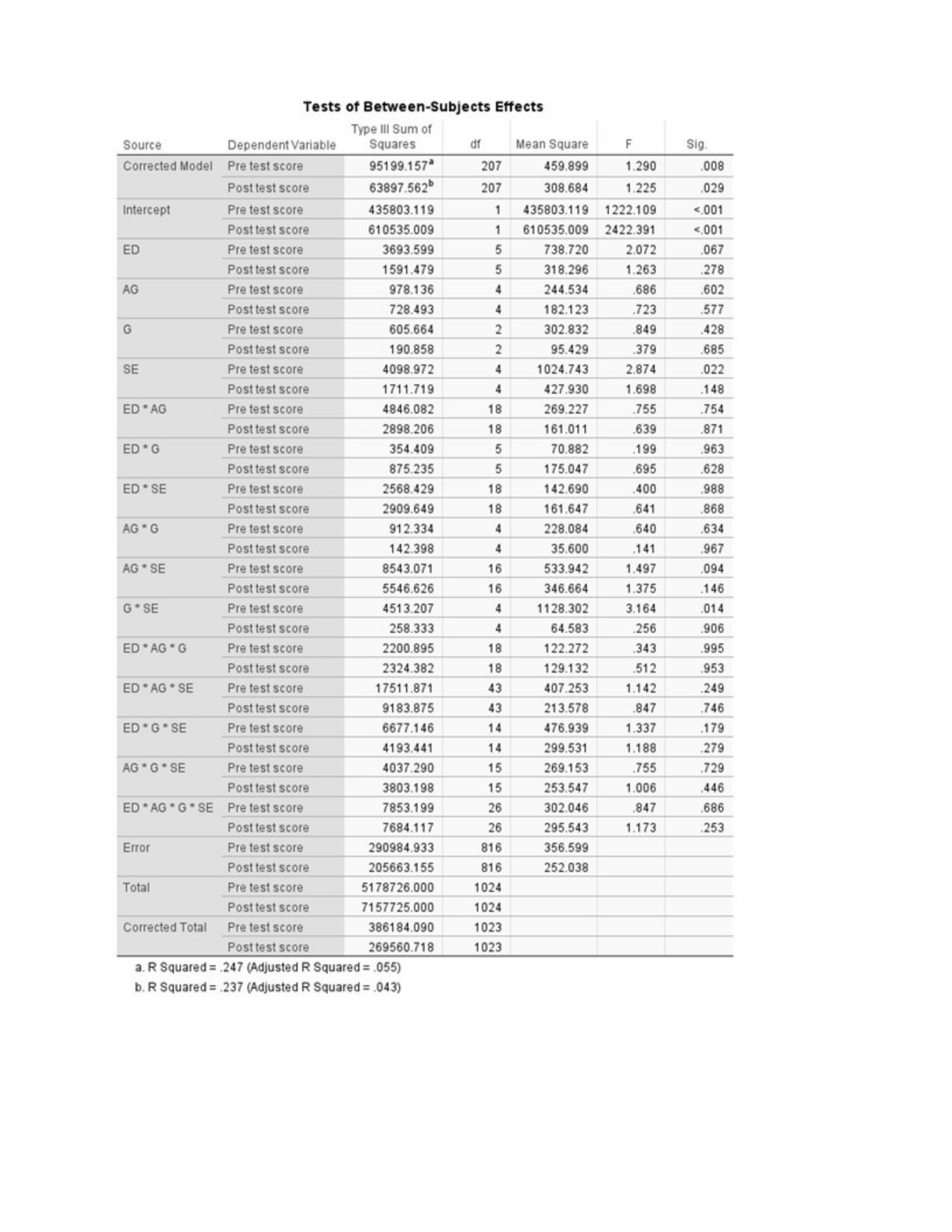
The intersection between gender and the self-skills assessment on the pre-test also
resulted as significant (p=.014). In most cases, female subjects rated their skills higher than their
male counterparts suggesting some gender-wise differences in how these government employees
self-assess their technical skills. This significant intersection may follow Anwar et al. (2017)
81

and their suggestion that those differences based on gender “are statistically significant,
genderwise differences in terms of computer skills, prior experience, cues-to-action, security
selfefficacy, and self-reported cybersecurity behavior” (p. 440).
A multiple regression analysis was further conducted on the pre-and post-test scores to
examine the relationships between these variables and determine what are effective predictors.
In both scoring instances, the variables for Education (ED) and technical skills (SE) were
determined to be significant. Notably, gender (G) was additionally significant under the post-test
analysis.
Table 10: Predictors will be kept in the stepwise model
A One-way ANOVA was used to determine the significant differences between the
demographic variables and the post-test scores. The initial analysis was conducted against the
age demographic and found that the mean difference was significant between the 26 to 35 group
and the 46 to 55 group (p=.033). The technical knowledge data was also observable as related
82

to age or generation and how these government employees self-assess their technical skills
based on their age. A steady increase and decline were notable as age increased. This could
reflect a generational gap in technology usage and access based on the age difference between
the two groups.
Table 11: ANOVA comparison between Age and Post-Test Scores
The between-groups comparison reflects significance (p=.027) making the model
between age and post-test scores significant. The Age demographic factor has a significant
effect on the post-test score, however, only between the specified age groups.
Table 12: ANOVA results post-test vs age.
83

Another one-way ANOVA was used to evaluate the education level demographic and
found two significant pair comparisons. It found that the post-test scores for users with
Bachelor’s (p=.003) and Doctorate (p=.005) degrees were significantly higher when compared
to those with only a high school diploma.
Table 13: Comparison between highest education level attained and post-test score.
The descriptive statistics reflect a gradual increase in the mean of the post-test score as
the highest level of education attained increases.
Table 14: Descriptive statistics Education vs. Post-test scores
This allows the inference that higher levels of education can improve the subject’s ability
to successfully answer questions on the cybersecurity knowledge quiz.
Table 15: ANOVA results in posttest vs Highest Education Level Attained.
84

The ANOVA results for the highest level of education attained are significant (p <.001)
and we can infer that the educational degrees affect the subject’s ability to answer questions
correctly on the cybersecurity knowledge test after the training course has been administered.
Table 16: Post Hoc Test Comparison of Gender
A separate analysis found that gender also significantly affected the scores on the
posttest. The comparison between males and females was significant with a p-value of .028 and
the between-groups analysis was significant at p=.003.
Table 17: ANOVA results posttest vs Gender
85

An analysis of the means for the post-test scores shows that female participants scored
slightly higher than their male counterparts. This is in agreement with the suggestion by Anwar
et al. (2017) that the ability to perceive and accept risk varies by gender and females are
generally more concerned with perceived risk as opposed to their male counterparts. Which may
explain why women scored slightly higher than male subjects. However, Anwar et al. (2017)
also suggested that male subjects “place a greater influence on attitude toward using technology
than women” (p. 440).
Table 18: Analysis of Means for Gender
The final ANOVA was used to understand the significance of self-assessed technical
skills against the subject’s post-test score. The comparison between Basic and Advanced
technical knowledge was found to be significant (p<.001) as was the comparison between
Limited and Advanced technical knowledge (p=.003).
Table 19: Pairwise comparison between self-assessed technical skills
86

An evaluation of the Mean of the post-test scores and the self-assessed technical skills
provides a better assessment of how the participants rate their technical skills and how that
affects their scores on the cybersecurity knowledge survey.
Table 20: ANOVA results posttest vs Self-Assessed Skill Level
A steady increase in the Mean score is observable as the level of technical knowledge
increases in the resulting descriptives table.
87

Table 21: Descriptive Statistics for Self-Assessed Technical Skills and Post-test Scores
The effect of certain demographic variables on the scores for the cybersecurity
knowledge test at the post-test level was determined to be significant. The analysis has
determined that the demographic variables for gender (p=.003) and age (p=.027) have a
significant effect on post-test scores. The demographic variables for the highest level of
education attained (p <.001) and the subject’s self-assessed technical skills (p <.001) have a
stronger effect on the subject’s ability to correctly answer questions on the cybersecurity
knowledge test.
The cybersecurity knowledge quiz tests an internet user’s understanding of cybersecurity
issues and concepts. A user’s ability to identify and report a suspected cyber-attack attempt
(phishing) allows the organization’s security teams to take further actions to contain and prevent
further incursion or compromise of the organization. The questions asked in the cybersecurity
knowledge quiz measured whether the participants could effectively identify specific
88

cybersecurity concepts that could lead to a compromise of the organization. The following will
compare the success rate of Cameron County employees against the results of the original study
by Kenneth Olmstead and Aaron Smith for Pew Research in 2017.
Figure 11: Identifying Phishing Techniques
The majority of the participants (93%, n =1024) were able to successfully identify that all
the possible responses were different tactics used to effectively “phish” users. The remaining 65
users (6%) answered incorrectly and less than 1% were unsure. This is compared to the national
2016 Pew research study by Olmstead and Smith which found that 54% of those studied
correctly identified and the remaining 46% were incorrect or unsure.
89

Figure 12: What is ransomware?
The majority of the participants (96%, n =1024) of the 1200 Cameron County employees
were able to successfully define the threat known as ransomware, a method used by cyber
criminals to monetize their actions. Ransomware is often the subsequent result of a phishing
attack. The remaining 45 users (4%) answered incorrectly or were unsure. The national Pew
survey found that 48% of the participants studied selected ransomware, while 52% were
incorrect or unsure.
90

Figure 13: Secure Passwords
Secure passwords are a best practice against cyber-attacks and again 96% (n =1024) of
the 1200 Cameron County participants were able to successfully identify a properly formed and
more security-minded password, whereas only 4% were not able to do so. The national Pew
survey found that 75% of the participants studied selected the secure password, while the
remaining 25% were incorrect or unsure.
Knowledge of cybersecurity concepts can lead to improved cybersecurity habits and can
have a risk-reducing impact on an organization’s cybersecurity posture. The results of the
cybersecurity knowledge quiz presented to the participants in Cameron County and adapted from
a 2016 survey conducted by Pew Research reflected that Cameron County employees well
exceeded the averages found by the national survey. An employee’s ability to mitigate a cyber
threat can be based on their ability to identify that threat and report it to the organization’s
security department. Preventing a breach of the “human firewall” reduces the probability of an
organizational breach and employees being able to identify and report suspicious activity allows
the organization to take appropriate action, all of which lead to an improved security posture
(Diaz et al., 2020; Chowdhury et al., 2019).
Summary
This study examined the effect of a cybersecurity training course on government
employees. It looked at their ability to mitigate threats in their limited capacity and whether any
demographical factors improved these outcomes. The study consisted of reviewing archival
data from four years (2018-2022) and measured with a pre and post-test included in a survey
presented to all employees in 2021. Success was measured in an employee’s ability to identify
and report cybersecurity incidents in the form of phishing attempts. This chapter presented the
results obtained from the analyses used to test the hypotheses outlined in this study. The next
91

chapter, Chapter Five, presents the conclusions, interpretations, and implications suggested by
those results.
CHAPTER V
CONCLUSIONS, INTERPRETATIONS, AND IMPLICATIONS
Introduction
This chapter presents the conclusions, interpretations, and implications related to the core
findings of this study. Future research directions will also be discussed. The purpose of this
study is to analyze the effect of a cybersecurity awareness training program on government
employees’ knowledge of cybersecurity issues and their ability to mitigate cybersecurity threats.
To achieve this purpose, the following research questions were developed and tested and the
results were presented in the prior chapter.
•What is the effect of a cybersecurity awareness training program on government
employees’ knowledge of cybersecurity issues and practices?
•What is the effect of a cybersecurity awareness training program on government
employees’ ability to mitigate cybersecurity threats?
•What demographic factors are related to government employees’ knowledge of
cybersecurity issues and practices and their ability to mitigate cybersecurity threats?
The study tested the employees of the Cameron County government during their annual
cybersecurity training response to Texas House Bill 3834. The research hypothesizes posited
that cybersecurity training had a positively related to the knowledge and mitigation ability of
government employees. He et al. (2020) argue “the best cybersecurity investment an
organization can make is better training” (p. 204).
92

The purpose of this study is to analyze the effect of a cybersecurity awareness training
program on government employees’ knowledge of cybersecurity issues and their ability to
mitigate cybersecurity threats. Their ability to help mitigate a potential compromise can make
them part of the organization's security solution as opposed to being the primary attack vector for
a cyber attacker (Costa et al., 2019). An employee base that can work at alerting their
organization to an attempted compromise puts that organization in better standing with its
security posture.
Conclusion and Interpretation for Hypothesis One
To test the first research hypothesis, there is a statistically significant positive effect of a
cybersecurity awareness training program on government employees’ knowledge of
cybersecurity issues and practices as measured by a comparison of their pre-and post-test scores,
a repeated measures ANOVA was used. Table 3 on page 78, presents the results, which show a
significant increase in the mean scores between pretests and posttests. The test scores improved
by 13.61% between the pre-test and post-test. Therefore, the research hypothesis was accepted.
There was a statistically significant positive effect of a cybersecurity awareness training
program on government employees’ knowledge of cybersecurity issues and practices as
measured by a comparison of their pre-and post-test scores.
This finding is supported by Oancea et al. (2019) who found that “most cyber-attacks
exploit the vulnerability of users and only some of them exploit the technical flaw” and the only
remedy to that vulnerability is to improve the security-based situational awareness of their
workforce (p. 46). Based on pre-and post-test scores, employees who participated in the
mandatory cybersecurity awareness training benefitted from and increased their knowledge of
cybersecurity issues and practices. Accordingly, Kortjan and Solms (2014) suggest that
93

management security initiatives and enhanced security tools are successful when used in
conjunction with cybersecurity training to strengthen cybersecurity safety and reduce threats.
Daengsi et al. (2021) further that “the risks from this kind of threats can be reduced if the
employees have cybersecurity awareness” (p. 102). In summary, while improved cybersecurity
awareness as a result of training in and of itself cannot mitigate cybersecurity threats, when
combined with other organizational efforts it can help to reduce threats caused by the human
factor.
Conclusion and Interpretation for Hypothesis Two
To test the second research hypothesis, there is a statistically significant positive effect of
a cybersecurity awareness training program on government employees’ ability to mitigate
cybersecurity threats as measured by the frequency of mitigated cybersecurity threats identified
before and after the training, mock phishing attempts for the previous five years were collected
and compared. The first mock-phishing attempt conducted in the Fall of 2018 reflected that the
employees of Cameron County local government (N=1180) were found to be highly susceptible
(70.2%) to common phishing techniques as reflected in the results Table 4 on page 80. This was
followed by a survey conducted in September 2019 that further reflected that a sample of this
population felt that they were vulnerable (55.31%) to cybersecurity attacks as reflected in the
table below.
94

Figure 14: 2019 Survey question result.
After the initial H.B. 3834 mandated training course was provided in May 2019, A
phishing campaign was conducted in October. The results of that mock phishing campaign
(N=1298) reflected a significant improvement from the year before, lowering the susceptibility to
19.4%. Mandated training continued in the Spring and the observance of National Cybersecurity
Awareness Month (NCSAM) in the Fall provided a continuous focus on cybersecurity. These
focusing events offered additional enforcement in the form of mock phishing campaigns which
continued to lower the reflected susceptibility of the studied population. Off-cycle phishing
campaigns in the Spring and Summer of 2022 were conducted on smaller samples of the
population and saw fewer employees being compromised and more employees reporting the
phishing e-mail to Cameron County's Information Technology
Department effectively aiding in the mitigation of a cybersecurity compromise attempt.
These findings suggest that there was a statistically significant positive effect of a
cybersecurity awareness training program on government employees’ ability to mitigate
cybersecurity threats as measured by the frequency of mitigated cybersecurity threats identified
95

before and after the training. The cybersecurity program in Cameron County started in 2018 and
expanded with the mandating of cybersecurity training in 2019, and as of the Summer of 2022.
Based on the results of mock phishing attempts, where employees were sent simulated e-mails
attempting to compromise employees in a controlled manner, reflected a significant statistical
decrease in the projected susceptibility of its employees. The lowered susceptibility suggests
that there is a lowered likelihood that an employee would be compromised by phishing e-mail.
The findings also reflected an increase in the target group's ability and willingness to mitigate
these mock phishing attempts by reporting them to Cameron County’s security team. As with
the first research hypothesis, there was a notable drop in progress which can also be attributed to
limited cybersecurity training efforts possible as a result of the COVID-19 pandemic and
employees working remotely. This was made evident by the comparison of the full population
susceptibility results of 2019 (19.4%) and 2022 (30.33%), which continues to suggest that
cybersecurity education needs to be consistent to remain effective.
Zwilling et al. (2020) categorized levels of cybersecurity awareness as low, medium, and
high; which established how neglectful or attentive an internet user is toward the proper usage of
technology and knowledge of cyber threats. That awareness score functions similarly to the
level of susceptibility established by mock phishing tests conducted by Cameron County’s
security team, the lower the susceptibility the higher the organization's security posture. This
collected data assists the organization’s security team in understanding the level of awareness in
the organization and knowing when to take corrective action. Tirumala et al. (2019) also
suggested that collecting metrics to understand the existing knowledge “provides a
comprehensive understanding of the cybersecurity awareness” of a given population (p. 1). In
Summary, these findings suggest that using phishing exercises and measuring an organization’s
cybersecurity awareness allows management to understand what their workforce knows and if
additional training or education is needed to improve their cybersecurity awareness.
96

Conclusion and Interpretation for Hypothesis Three
To test the third research hypothesis, there is a statistically significant relationship
between employees’ cybersecurity awareness scores and demographic variables such as gender,
age, self-assessed technical skills, and their highest level of education attained, an ANOVA was
used against the results of the survey instrument which included the Cybersecurity Knowledge
Quiz. The Pew research study by Olmstead and Smith (2017) showed some modest significance
between age and cybersecurity knowledge. As Daengsi et al. (2021) and Diaz et al. (2020)
argued cybersecurity awareness is impacted by several demographic factors, including,
educational background, work experience, the field of study, gender, age, and socioeconomic
status.
The descriptive statistics on Table 8 on page 86 present the results of the ANOVA that
was conducted on the population’s post-test score and whether the employee achieved a passing
grade (60 or better), these were compared against the following demographic variables:
•Gender (G)
•Age Range (AG)
•Highest Education Level attained (ED)
•How do they rate their technical skills (SE)
The significance threshold was set at .05 and the correlation is significant at the 0.01
level (2-tailed). The results of the analysis found that the post-test analysis that the highest level
of education attained (p < .001, r= .152), and the skills self-assessment (p < .001, r=.147) were
consistently and highly significant. Whereas gender (p=.003, r= .095), and age (p =.027,
r= .022) were only significant at the post-test level and not during the pre-test.
Fatokun et al. (2019) suggested that these demographic factors can be used to enhance
the effectiveness and perhaps even better target cybersecurity awareness curriculum. These
97

findings suggest that an employee’s level of education and how they rate their technical
knowledge reflected a statistically significant positive effect when concerning the results of the
cybersecurity awareness training. Dawson and Thomson (2018) argued: “that the people who
operate within the cyber domain need a combination of technical skills, domain-specific
knowledge, and social intelligence” for successful cyber performance (p. 1). These same results
found that there was no consistent effect that was statistically significant brought by the
demographic variables of gender or age. Therefore, higher levels of academic education and
technical skill do support the acceptance of the hypothesis.
Implications for Research
The threat of cyberattacks against government agencies is serious enough that the
requirement for training was mandated by the State of Texas. The Texas House of
Representatives passed House Bill 3834 in 2019 as a result of the increase in cyberattacks on
government agencies, it was later amended with house bill 1118 in 2021 which makes
noncompliant agencies ineligible for State grant funding (Yazdanpanahi, 2021).
Government agencies need to educate their employees on cybersecurity concepts and ensure
that they can effectively identify phishing attempts and alert their organization's
cybersecurity team to take further action.
Training a workforce is not an easy process as Kessler and Ramsay (2013) argued that it
is difficult “to provide technical literacy for” a population of employees on what may be
considered highly technical content that they didn’t know they needed (p. 41). This study was
used to determine the effect that a cybersecurity awareness training program had on government
employees’ knowledge of cybersecurity issues and their ability to mitigate cybersecurity threats.
The training program provided knowledge of cybersecurity concepts and a pre-test and post-test
were used to assess the population’s knowledge and understanding of those concepts sufficiently
98

to apply them. “Education plays a critical part” in an organization's efforts “in cultivating a
culture of secure behavior” (Kortjan and Solms, 2014, p. 29). The results of this study suggest
that taking cybersecurity training is effective over time in reducing an employee’s susceptibility
to cybersecurity compromise. However, the results of the study also reflect that the effect can be
short-lived and that this government agency (as well as others) should continually enforce
cybersecurity training and include random phishing tests to maintain the effect. This is consistent
with the recommendation that cybersecurity not only needs to be relevant but also consistently
provided (Kortjan and Solms, 2014; de Bruijn and Janssen, 2017; Adorjan and Ricciardelli, 2019;
Yazdanpanahi, 2021). Therefore, regular and consistent cybersecurity education and training are
effective tools for helping employees identify and potentially help mitigate cybersecurity threats.
The pre-test and post-test consisted of a cybersecurity knowledge survey adapted from
Pew Research’s Cybersecurity Knowledge Quiz (Smith, 2017). The target group (N = 1024) of
Cameron County government employees took the Cybersecurity Knowledge. The results of this
study suggest that the employee’s knowledge of specific cybersecurity concepts improved from
the pre-test to post in their awareness of specific cybersecurity concepts.
99

Figure 15: Pre-test results for ransomware
Research has shown that ransomware-related cyberattacks are on the rise and targeting
employees with tactics including social engineering and phishing, attacks which often come at a
higher cost (Kweon et al., 2019; Yazdanpanahi, 2021; Kostyuk and Wayne, 2020). The results
for question #15, which asks if the employee knows what ransomware is, show that many
employees were able to answer correctly before partaking in the training (pre-existing
knowledge) and an increase was reflected for additional employees after the training. The
results suggest employees’ knowledge and awareness about Ransomware increased from 84% to
95% after the training.
Figure 16: Post-test results for ransomware
This is also reflected in the lowering click rate on Figure 9 page 84 and the lowered
phishing-prone levels reflected by the annual phishing campaigns. When employees have a
better understanding of what ransomware is and how an organization can be compromised by a
phishing e-mail, can aid in the mitigation process.
100

Although the results of this study supports the need for cybersecurity training amidst the
growing threat of ransomware attacks against organizations both public and private, this study
suggests that cybersecurity training has a positive effect on making government employees more
aware of cyber threats. However, this study can not provide a sufficient prediction of the future
actions of one of these employees when placed in a cybersecurity compromise situation. To a
certain extent, the results of the study identified that a significant portion of the target group
understood the training content sufficiently enough to lower the overall susceptibility of the
organization. The Cybersecurity Knowledge Quiz and the phishing tests help identify those
groups that scored low or were successfully phished and allow them to be monitored more
closely and further trained. This will require additional changes to the cybersecurity program at
Cameron County, including training, best practices, and methods of testing. These changes to
practice are discussed in the next section as recommended areas for improvement for the
security program in Cameron County.
Implications for Practice
The results of this study suggest a positive impact on cybersecurity awareness of the
target population, however, the Mean post-test score was 82.02%, and the Grand Mean of
75.21%. This suggests the target population is passing the quiz, but not with a 100%. This
compounded with the results reflecting that there are still employees that were not able to
identify what ransomware is (5% of the target group) should be concerning for the organization.
The fact that it only takes a mistake from a single employee to trigger a major cybersecurity
threat, can put the organization where the needs of its constituents can go met (Axelrod, 2019).
Addressing these potential deficiencies will require changes to current best practices and
training procedures. The suggested changes should be targeted not only at the specific users that
are having difficulty with the content but also focusing on the topics in which they are deficient,
101

all the while attempting to maintain the status quo of the entire organization’s cybersecurity
awareness and posture.
Bruijn and Janssen (2017) argue that “limited visibility, socio-technological complexity,
ambiguous impact, and the contested nature of fighting cybersecurity complicates” the ability to
not only defend but effectively train against rapidly changing threat vectors (p.2). Phishing
attempts often attempt to collect user credentials to be used in an attack at a later time (Daengsi
et al., 2021; Yazdanpanahi, 2021). The Cybersecurity Knowledge Quiz asked questions
regarding complex passwords and additional methods for secure authentication. In addition to
additional training, government employees should be able to develop strong passwords that are
not easily guessed or shared with co-workers. Question 16 of the Cybersecurity Knowledge
Quiz asked the target group to identify the strongest password in the provided list. Tirumala et
al. (2019) found it “alarming to see that 68% are using common passwords across various
authorizations and only about 30% of users are having strong passwords with at least a number,
an alphabet, and a special character” (p. 4). The results of the study indicated that at least the
target population was able to identify a strong password and exceeded the results of the national
study conducted by Pew Research.
102

Figure 17: Strong Passwords National vs. Cameron County
Tirumala et al., (2019) further found that when most computers users are “asked to create
a password, the majority of the people tend to follow minimum requirements that are mandated
by the software, website, or social media platform rather than thinking about how secure their
password is” (p. 3). This is reflected in the results that suggest that there is still a small group
(4%) that still are unable to identify or possibly create a strong password.
However, even strong passwords can still be compromised by a phishing attack if an
employee does not have proper cybersecurity awareness. Walsh (2020) argues that “passwords
alone are not secure because weak passwords are easily hacked by using a list of common
passwords, and complex passwords can be deciphered due to human predictability” (p. 1). The
research suggests that passwords are more secure when combined with a second level of
authentication, which is also known as multi-factor authentication (Matthews, 2012; Walsh,
2020; Weber et al., 2008). Multi-Factor Authentication is the act of using a secondary
authentication method in combination with a password to verify your identity, this includes but is
not limited to a pin code, security questions, or a biometric interface (i.e. fingerprint) (CISA,
2020). Question 15 of the Cybersecurity Knowledge Quiz asked the target group to identify an
example of multi-factor authentication. Tirumala et al., 2019 found it “surprising to see that
about 45% of participants are familiar with two-factor authentication” (p. 4). The results of the
study indicated that only 67% of the target population was able to identify the proper example,
which was still better than the 10% from the national study.
103

Figure 18: MFA identification National vs. Cameron County
The results suggest that there is still further training required regarding the effective use
of two-factor authentication. Passwords, even strong passwords lose their effectiveness in a
phishing attack, especially when employees lack basic cybersecurity awareness. Cybersecurity
training needs to be frequently updated and consistently provided and paired with safer internet
practices that include but are not limited to these additional authentication practices (Kortjan and
Solms, 2014; de Bruijn and Janssen, 2017; Adorjan and Ricciardelli, 2019; Yazdanpanahi,
2021).
A strong password consists of multiple characters in upper-case/lower-case, numbers 0-
9, and special characters (#%@...) and be changed at regular intervals to make them more
difficult to guess or force (Habib et al., 2018). Matthews (2012) suggests that passwords are
simply not enough and that a secondary authentication method should be added to secure a
user's identity.
These authentication methods known as ‘factors’ can be defined as “something you know” such
as a pin code, “something you have” such as an authenticator app on a mobile phone, or
104

“something you are” such as a fingerprint or retinal scan (biometric) (CISA, 2020; Walsh, 2020;
Matthews, 2012).
Recommendations for Future Research
This study examined the effect that cybersecurity training had on government employees'
knowledge of cybersecurity concepts and their ability to aid in the mitigation process. Due to
cybersecurity’s critical entanglement with the continued operations of most organizations and
specifically government agencies, success in cybersecurity education is important. Research has
demonstrated that the employee or “human firewall” is often the first attack vector in an
organized cybersecurity attack, they are often the easiest way into an organization (Diaz et al.,
2020; Chowdhury et al., 2019). Kemper (2019) further suggests that “employees pose the
greatest cybersecurity threats” to their corporate data and networks, especially when they are not
trained to be cybersecurity aware (p. 11).
For this reason, all organizations, especially government agencies need to ensure that
cybersecurity training and education are a priority. A cybersecurity compromise of a public
organization, like a government agency can affect its ability to operate and for a government
agency, it hinders its ability to provide services to the public (Axelrod, 2019; Yazdanpanahi,
2021). The ability of employees to understand cybersecurity concepts and identify phishing
emails is critical because often cases the employee will see them before the Information
Technology and Security department, making them the first line of defense. Based on the
findings in this study, the following recommendations are for future studies.
1. Research addressing the efficacy of cybersecurity training for long-term knowledge
retention. Understanding that cybersecurity training could have a short-period effect
105

