


Statement of the Problem As practicing clinicians
As practicing clinicians, psychologists are guided by the ethical guidelines of the
American Psychological Association (APA). For the last two decades, the APA has established
the expectation that psychologists “are expected to use tests that have been demonstrated to be
reliable and valid for the population being tested” (Chrisler & McCreary, 2010, p. 66). Further,
recognizing that gender is no longer defined on a binary, APA has expanded these guidelines to
encourage clinicians to “abandon binary gender measurement in favor of accurate and
inclusionary measures” (APA, 2015, p. 4).
When a clinician is working with a forensic population, or a population involved within
the legal system, oftentimes an assessment of risk is pertinent in classification or treatment
(Forensic Psychology, 2019). This systematic review focused upon assessment instruments
utilized within an adult, forensic population that measure a person’s potential to inflict harm upon
others. The tools intended to measure this risk may be classified by a variety of names, including
violence risk assessment, violence prediction, or risk and need assessment, each with the
intention of reducing recidivism by examining various individual factors (National Center for
State Courts, 2014). While these examined factors remain diversified amongst the identified
tools, such as criminogenic needs (i.e., factors directly related to recidivism), static risk factors
(i.e., unchanging factors related to risk), and dynamic risk factors (i.e., changeable factors related
to risk), they will henceforth be inclusively referred to as risk assessment tools.
Risk assessment tools are highly useful instruments for clinicians. A limitation in their use
is that the gender of the normative populations used to develop the tools are often that of the
binary male. Yet, no synthesized resources are available for clinicians to reference which risk
assessment tools may be used on a binary female or nonbinary population. The lack of available
synthesized information on gender and violence risk assessment presents a glaring issue, as tools

that are improperly used can lead to misclassification of an offender, which can ultimately
increase the probability of recidivism (Taxman, 2016). The goal of this dissertation, therefore,
was to conduct a systematic review to organize the risk assessment tools that have incorporated
gender-responsive components to expand their normative population to encompass genders
outside of the male binary. This goal, matched with a call for proposed modifications, a more
nuanced understanding of gender in the assessment literature, and for ethically inclusive clinical
practice, drives the rationale for this systematic review.
In order to address gender-responsive modifications made to risk assessment tools, this
chapter first reviews the initial need for and creation of these tools, details the evolution of risk
assessment tools, describes the population and setting for which they are utilized, and notes the
limitations of their current use. It then details how both society and psychology are adopting the
gender spectrum (in lieu of the gender binary), and the role that gender plays in violence risk and
risk and need assessment. The rationale and background for the present study are then
summarized with focal research questions for the systematic review of the literature that was
conducted for this dissertation.
Historical and Contemporary Risk Assessment
This section describes the history of risk assessment, including the generational evolution
of risk assessment tools; examines contemporary risk assessment tools; introduces ethical
considerations when examining gender within risk and need factors; and highlights gender
differences within research when addressing risk.
History of Risk Assessment
The assessment of an individual’s risk to society was not formally addressed until the late
nineteenth century when Cesare Lombroso, a renowned criminologist, developed a theory
believed to identify future violent criminals based solely upon their physical features (Ackerman,

2010). When individuals committed crimes, they were then punished based upon their unique
features, not the crimes themselves, and removed from society through detainment (Ackerman,
2010). It was not until the turn of the twentieth century that society began to shift focus from
containing offenders to rehabilitating them, which held as the dominating treatment approach
through approximately the next seven decades (Conroy & Murrie, 2007).
By the 1930s, medical explanations began to take prominence in assessing criminal
behavior. Attempts to identify moral insanity after the publication of Harvey Cleckley’s The
Mask of Insanity widely propelled the definition of a psychopath (Ackerman, 2010). Legal
systems quickly adhered to this newfound “science,” enacting laws and statutes that were
deemed compassionate and reasonable to identify and treat those that had been labeled as
morally insane or psychopathic (Conroy & Murrie, 2007).
By the 1960s, the indefinite terms of hospitalization began to fall away as the movement
towards compassion and reasonable treatment was actualized. Hospitalization was replaced by
community-based treatment as people in society called into question the condemnation of
individuals labeled as deviant (Conroy & Murrie, 2007). The groundbreaking legal case of
Baxstrom v. Herold (1966) addressed an offender’s constitutional right to be released or
conserved upon the completion of a criminal sentence. This case resulted in the release of
numerous other offenders who may still have had a mental illness but were deemed to be sane
upon the completion of their sentences (Warren & Supreme Court of The United States, 1965).
This legal and societal shift sparked a series of longitudinal studies following offenders
who had been deemed “high risk” but had never reoffended, which revealed an alarmingly high
rate of false-positive predictions, which contributed to the continuation of unjust incarcerations
(Ackerman, 2010). Clinicians retrospectively determined that, during this time, when a clinician

evaluated a client who was deemed to be of significant risk to society, this assessment was only
accurate approximately one-third of the time (Melton et al., 2007).
The recognition that false positives resulted in the curtailment of individual liberties
eventually led to the development of future generations of risk assessment tools. In the 1980s,
risk assessment tools “emerged as a dominant theme for institutional and community corrections,
which contributed to an expanding number of tools in the public domain and proprietary tools”
(Taxman, 2016, p. 3). With this increased breadth of tools, the behaviors that were predicted also
began to expand (Taxman, 2016). The utilization of risk assessment tools to assess for violence
and guide management has continued to hold prioritization within criminal justice and forensic
environments, particularly when addressing imminent risk (Ramesh et al., 2018). By the early
2000s, risk assessment was posited “as a core organizing concept of the Western world”
(McSherry, 2004, p. 1).
Generations of Risk Assessment Development
Throughout the literature, four generations of risk assessment development span these
aforementioned societal phenomena, resulting in unique additions from each era. They are most
commonly organized as follows:
• 1st: Professional judgment
• 2nd: Actuarial assessment
• 3rd: Use of static and dynamic risk factors (structured professional judgment)
• 4th: Addition of case management factors (structured professional judgment)
In the early 1900s, the first generation was largely reliant upon the subjectivity of
professional judgment offered by clinical and correctional staff based on training and experience.
While valuable, neither standardization nor structure was incorporated in the formulation of this
opinion, leaving the original judgment of risk privy to human error and biases (Bonta &

Wormith, 2008).
The creation of the first actuarial assessment instrument in 1936 marked the beginning of
the second generation of risk assessment. These tools allowed for the incorporation of structure
and objectivity due to the statistical analyses of static factors (i.e., historical and unchanging
factors, such as criminal history) that resulted in numeric formulations of risk. This generation
continued to gain momentum, and with it, further iterations of risk assessment modalities began
to emerge (Bonta & Wormith, 2008).
The third generation developed through the movement towards risk and need
responsivity, leading to the inclusion of both static and dynamic risk factors (i.e., changeable
factors, such as engagement in substance use or negative peer associations). This inclusion began
to remove the focus solely from historic and immutable focal points towards factors that may
shift for the individual, allowing for treatment recommendations in the reduction of risk (Bonta
& Wormith, 2008).
Lastly, the fourth generation of risk assessment continues to build upon these ideas by
integrating a case management component into the assessment of both static and dynamic
factors. Instruments from the second, third, and fourth generation of risk assessment development
remain relevant to modern use and are further detailed in the following section
(Bonta & Wormith, 2008).
Contemporary Risk Assessment
Today, the ideal risk assessment evaluation balances the inclusion of evidence-based risk
tools, static and dynamic factors, and areas of need and intermittent re-assessments of the
individual (Lanier & DeVall, 2018). As such, this process will be inclusively referred to as risk
assessment, and its three aforementioned components are described next, followed by the
different types of risk assessment tools and schools of thought/models.

Static risk factors and dynamic risk factors are both ideally examined within a thorough
risk assessment (Melton et al., 2007). Both have been associated with the prediction of violence,
such as criminal record, social and interpersonal factors, mental health diagnoses and history,
substance use, and more (McSherry, 2004). By also basing risk assessment and treatment on
dynamic factors, the clinician is assuming that “offender’s risk is not static, fixed, or immutable,
but rather is dynamic and changeable and that positive changes can occur on treatment targets”
(Otto & Douglas, 2011, p. 127). A mistake often made by clinicians is approaching risk to be a
singular trait; when in reality, it is a complex combination of objective and subjective traits held
by the individual, as well as factors of the environment (Melton et al., 2007). Risk assessment
tools that are formulated from the appraisal of these static and dynamic risk factors, otherwise
known as criminogenic needs, aid in identifying which offenders require higher supervision,
which offenders would benefit from treatment programs, which are most likely to recidivate, and
which offenders simply require shifts to their situational needs (Andrews et al., 2012). While the
inclusion of these varied factors provides a well-rounded approach to risk assessment, clinicians
must remain aware of factors that influence judgments of dangerousness. These may include
variability in the definition of legally relevant risk (henceforth referred to as risk), the variety of
supporting literature, judgment biases, and prior legal precedent (Melton et al., 2007).
Encompassing these components, a majority of contemporary risk assessment tools fall
under five main types: “clinical assessment,” “anamnestic assessment,” “structured professional
judgment,” “actuarial assessment,” and “adjusted actuarial assessment” (Melton et al., 2007, p.
307). Actuarial assessments, from the second generation, have historically been utilized for their
reliable ratings and predictive accuracy achieved through derived formulas. However, these
formulas are generally composed of static factors, or those that do not change over time (Melton

et al., 2007). Since assessment tools that focus on static risk factors are based upon past,
unamenable events, Otto and Douglas (2011) note:
They are not suitable for assessing the current functioning of the individual or informing
important clinical or management activities such as treatment to reduce the risk for sexual
recidivism, assessment of changes in risk, and community supervision of the individual.
(p. 127)
To amend this limitation, many clinicians now prefer to utilize risk assessment tools that
incorporate structured professional judgment. This method calls for the clinician to conduct a
structured clinical assessment to identify and synthesize both static and dynamic factors that
“have established empirical correlations with violence” (Melton et al., 2007, p. 309) with the
clinician’s lived experience and expertise, combining both clinical judgments with empirical
data. It has been touted as the “gold standard approach [as] recommended by the Department of
Health” (Roychowdhury & Adshead, 2014, p. 13). Due to the inclusion of both static and
dynamic factors, structured professional judgment instruments may branch both the third and
fourth generation of risk assessment development (Bonta & Wormith, 2008).
Clinical assessment largely remains unstructured, consisting of a clinician examining both
static and dynamic factors, but with the clinician subjectively deciding what is relevant to the
assessment (Otto, 2000). Anamnestic assessment also relies upon the clinician’s individual
identification of important themes across factors, leaving each clinician free to decide what holds
weight within the assessment (Otto, 2000). Due to the variability that may exist within these
instruments, largely believed to fall within the first generation of risk assessment development,
when examining the most commonly used risk assessment tools for general recidivism, violent
recidivism, and sexual offense recidivism, a majority of the identified tools fall under either an
actuarial or structured professional judgment instrument type (Melton et al., 2007).

The field remains segmented on models of recidivism under which these results may be
interpreted. This separation is most frequently identified through the prediction model, which
expresses “frequency and probability estimates,” and the prevention model, which expresses
“categorial estimates of risk (e.g., low, moderate, high), including a listing of relevant risk
factors...and risk management strategies” (de Ruiter & Kaser-Boyd, 2015, p. 246). Although the
prevention model is historically deemed preferable by forensic psychologists and members of the
court, a mixed model approach is still supported by practicing clinicians (de Ruiter &
KaserBoyd, 2015). Both types of models allow for quantitative data to shape the reduction of
recidivism by providing directions to correctional systems on the prioritization of resources, in
lieu of the dated assumption that nothing was effective, a bias historically used when addressing
recidivism (Taxman, 2016).
Ethical Considerations in Risk Assessment
Given the substantial implications of the determination of risk on both society and
forensic practice, ethical considerations are key in the risk assessment process. While it is
important to note that violence risk assessment tools can be utilized in a variety of environments,
this systematic review remains focused on those of a forensic nature. A clinician’s involvement in
forensic science, particularly the prediction of violence, remains a controversial topic, namely
due to the potentially significant effects upon the offender’s freedom, or even life itself (Barbaro,
2019). Legal commitments associated with risk can be both short term, such as temporary civil
commitment, or long term, such as rearrest or rehospitalization (Melton et al., 2007). Given that
violence risk assessment is pertinent in nearly all forensic psychiatric settings, researchers have
encouraged clinicians to treat this with the same weight as other clinical interventions
(Roychowdhury & Adshead, 2014). An elevated level of competence is required when
administering these instruments, involving years of education, training, experience, and strict

adherence to ethical codes (Barbaro, 2019). Considering the significant outcome of these
decisions, clinicians often face ethical dilemmas when estimating risk.
Furthermore, in a forensic environment, consent versus court-ordered referrals must be
taken into account (Roychowdhury & Adshead, 2014). The clinician must also consider the
disclosure of an offender’s confidential communication, weighing confidentiality with risk to
self, others, and society (McSherry, 2004). The Tarasoff v. The Regents of the University of
California (1976) case still instructs mental health practitioners on warning intended victim(s)
when a formal threat to harm another is made (de Ruiter & Kaser-Boyd, 2015). Errors in
judgment can occur throughout the administration of risk assessment tools, particularly in
forensic settings (e.g., prison, jails, and hospitals) where offenders are removed from typical
social environments and contexts in which future recidivism may occur (Melton et al., 2007).
Due to the complexity of this field, as it is based upon both historical factors and ever-shifting
human nature, methodological limitations and biases of human error can lead to contradictions in
the research and clinical practice (Melton et al, 2007).
Judgment errors are often attributed to cultural factors, as “mental health professionals
who conduct such evaluations are typically white and hail from middle- to high-income families,
while persons of color and lower socioeconomic status are overrepresented among examinees”
(Melton et al., 2007, p. 301). In striking contrast, persons of color are glaringly overrepresented
within many forensic samples, as these often stem from justice systems that are deeply ingrained
with their own biased, systemic structure (Davis et al., 2021). When data stems from a racially
biased system, this ultimately leads to biases within the resulting risk scores (Eckhouse et al.,
2018). This has increased the call for research examining the various layers of systemic bias
reflected throughout the criminal justice system. While some researchers have suggested that the

utilization of expert witness testimony may have a mitigating factor on a jury’s perception of race
influencing risk, the data largely remains inconclusive and requires further exploration
(Davis et al., 2021).
Societal values can affect clinical judgment, as researchers have found western ideals to
emphasize false negatives in lieu of false positives (i.e., it is worse to free someone who is
dangerous than to detain someone who is not dangerous; Roychowdhury & Adshead, 2014).
Compounding this ethical consideration is the outcome of false negatives that widely affect
mental health staff, institutions, policy makers, and society; whilst false positives generally affect
the sole individual who received an inflated statistic related to their level of risk (Roychowdhury
& Adshead, 2014). Likewise, societal pressures and current risks in media foci can influence
bias, such as heightened public anxiety, inadvertently exerting pressure upon researchers to seek
predisposing features within patients that may imply biological predispositions to criminal
behavior (Wasserman, 2014). With the public spotlight on forensic work, increasingly driven
through true crime television shows and podcasts and dubbed the “CSI effect,” the general public
expects more advanced contributions than what the field can offer at this point in time (Barbaro,
2019).
Gender discrepancies further drive judgment errors, as researchers repeatedly illustrate
the glaring disregard for any mention of gender throughout the literature, despite gender being a
crucial component for normative data and despite the growing number of females in the forensic
sciences (Barbaro, 2019; Melton et al., 2007). Likewise, normative standards are often based
upon men-in-power’s social behavior, which leads to feminist views that androcentrism
dominates psychological standards, and results in male “stereotypic behavior” to be viewed as
positive, whilst female’s behaviors tend to be “defined negatively” (Chrisler & McCreary, 2010,

p. 76). Otto and Douglas (2011) detailed the importance of considering how risk factors differ
between binary genders, as some risk factors may be universal, but many will hold higher
prevalence in one group versus another.
Social Perspectives on Gender
A crucial component of understanding the necessity of gender-responsive modifications
to risk assessment tools is to understand society’s ever-developing definition of gender. This
section defines gender and its embodiment within individuals’ lives, differentiates gender from
sex and sexual preference, and addresses the spectrum of gender.
Gender is no longer ruled by the binary idea of male versus female. By eliminating this
dichotomous view, the range through which masculinity and femininity are experienced can
receive justice, inclusive to variations of background, socio-economic status, generation, and
ethnicity that all affect gender expression (Chrisler & McCreary, 2010). The idea of gender now
incorporates an expanded notion of self-identity and societal identity, addressing not only the
way an individual sees oneself but how others view the individual (Brill & Kenney, 2016). These
identities take shape in roles an individual is expected to fulfill, interests an individual is assumed
to harbor, and what membership an individual is allocated amongst peers in society (Brabender
& Mihura, 2016). Many of these ideas are represented within feminist theory, which
acknowledges the reality of oppression through masculinity’s longstanding normative role and
posits strategies to shift this dynamic by affirming that gender matters in the way that individuals
psychologically, socially, culturally, and historically identify and interact (Taxman, 2016).
Messages of gender permeate one’s life, starting with childhood toys, following individuals
through schooling, bombardments of the media and community, following one’s development
through religion and culture, and all the while, slowly integrating into almost every aspect of self
and society (Brill & Kenney, 2016).

When considering definitions, the terms gender and sex are often misclassified as
interchangeable, “disregard[ing] the nonaggregate differences among women and between men
and women” (Hannah-Moffat, 2009, p. 214). Sex is innate and biological in nature, generally
related to reproductive organs, hormones, and physical makeup, and determines legal
classification; while gender is formed by society (Bloom et al., 2003). Sex is generally “assigned
at birth due to these characteristics, often miss[ing] not-visible intersex configurations…[or]
complex genitalia” (Brill & Kenney, 2016, p. 43).
Likewise, it is a common misperception that one’s gender identity or expression
automates a stereotyped sexual orientation (Brill & Kenney, 2016). However, “gender is about
who we are, and sexual orientation is about who we are attracted to physically and/or
romantically” (Brill & Kenney, 2016, p. 61). Sexual orientation similarly lives in contained
categories of heterosexual, gay, and bisexual, instead of the reality of a “fluid-continuum model
of attraction to one or both sexes” (Brabender & Mihura, 2016, p. 506).
Society often exercises labels by assumed gender, a term based upon the assumed sex,
inherently assigns males the gender of boy/man and pronouns of he/him, while females are
assigned the gender of girl/woman and pronouns of she/her (Brill & Kenney, 2016). The
embracing of this assigned role is considered gender conformity (Brabender & Mihura, 2016). As
society continues to embrace gender-expansive pronouns, language continues to shift to embrace
that which best defines an individual’s identity. The use of gender-expansive pronouns (such as
they/them) have become more common identifiers for individuals that do not claim a binary sex.
Gender identity is the internalized experience of one’s gender; it is not chosen nor
determined by society, but “emerges from within” (Brill & Kenney, 2016, p. 50). Issues of
conforming gender identity to one’s physical characteristics had previously been addressed by

asking individuals to “prove to the medical practitioner their gender identities” (Brabender &
Mihura, 2016, p. 745) and often assigned a pathological ascription.
In contrast, gender expression is an externalized embodiment of one’s gender, often
shaped by societal influences such as dress, hairstyle, behavior, and interactions (Brill &
Kenney, 2016). Gender expression is composed of:
Gender presentation (how we present our self to others and what they see whether we
intend them to see us that way or not); gender norms (the rules and ideas about how a
culture thinks males and females should look); and gender roles (the behaviors we
expect, and think are appropriate for each gender). (Brill & Kenney, 2016, p. 54)
The antiquated idea of masculine versus feminine is shifted by gender expression’s
conformity, or lack thereof, to gender stereotypes (Brabender & Mihura, 2016). Stereotypes are
formed from expectations of social groups and are generally flexible in nature, such as
intelligence, height, preferences, etc. (Ellemers, 2018). This adaptability is frequently lost when
addressing gender stereotypes, often maintaining its binary composition, with individuals
preserving a “chronically salient, relatively fixed, and easily polarized” view on gender
(Ellemers, 2018, p. 277).
Progressing from the binary idea of gender, gender is now defined along a spectrum,
encompassing the holistic nature of human development (Brill & Kenney, 2016). The gender
spectrum is identified as the:
Concept that gender exists beyond a simple man/woman binary model, but instead exists
on a continuum. Some people fall towards more masculine or feminine aspects, some
people move fluidly along the spectrum, and some exist off the spectrum entirely.
(PFLAG, 2021)
When one’s assigned sex matches gender identity, this is considered cisgender; while
transgender refers to one’s gender identity not matching one’s assigned sex (Brabender &
Mihura, 2016). Gender-expansive and nonbinary are alternate terms used in addressing the
removal from binary classification, which is even embodied through this cisgender and

transgender categorization (Brill & Kenney, 2016). The term nonbinary, which will be utilized
throughout this dissertation, reduces the grand spectrum of gender, but remains a digestible
identifier in our current society (Motmans et al., 2019).
While the academic research specifically addressing mental health matters of nonbinary
individuals remains limited, the data suggests that nonbinary individuals are at higher risk for
discrimination and negative outcomes (i.e., anxiety, depression, and suicidality; Rider et al.,
2020; Young, 2020). Pursuing specialized training to gain advanced competencies in working
with nonbinary populations are highly recommended. It was only in the recent past that
transgender health was conceptualized from a disease model (i.e., a deviation from natural
development) in lieu of the modern, and more appropriate, transgender health model, which is
that of diverse identity, with association to traumatic stressors stemming from the imposed
stigmas that continue to permeate our culture (Motmans et al., 2019). Notwithstanding, when
experiences of perceived discrimination based upon gender identity are removed, research
continues to show nonbinary youth remain at a great risk to negative mental health outcomes
(Price-Feeney et al., 2020).
Gender affirmation interventions are being made available through social, legal, political,
and medical means (Fontanari et al., 2020). Research shows that, when transgender and gender
nonbinary youth engaged with these services, results included further promotion of gender
positivity and lowered rates of negative mental health outcomes (Fontanari et al., 2020).
Influential entities continue to push for the positive promotion of transgender health, with various
countries adopting options for nonbinary gender identities, the World Health
Organization removing the classification of transgender as a mental disorder, and discussion of
the new addition of the Diagnostic and Statistical Manual of Mental Disorders- Fifth Edition

(DSM-5) removing gender dysphoria from its next edition (Motmans et al., 2019). With the
recent release of the DSM-5-TR, gender dysphoria has not been removed, but has been modified
with culturally sensitive language (e.g., “desired gender” changed to “experienced gender” and
“cross-sex medical procedure” changed to “gender-affirming medical procedure”; American
Psychiatric Association, 2022).
Psychological Perspectives on Gender
As society’s definitions and ideas about gender progress, so must the way that the
psychological community addresses gender. Biases often emerge through practice, whether
present in intake, assessment, diagnosis, psychotherapy, psychological assessment, report
writing, or other clinical duties (Brabender & Mihura, 2016). It is the job of the clinician to
remain aware of these biases, both within themselves and within our society, since all patients are
entitled to competent interventions and assessment (Brabender & Mihura, 2016). Clinical
interventions can occur across treatment and practice, including micro- (e.g., utilizing preferred
pronouns), mezzo- (e.g., providing gender-informed trainings to peers regarding interventions,
evaluations, or programming), and macro-level interventions (e.g., advocating for
genderinclusivity through means such as policy directives or research; Matsuno, 2019).
In order to examine trends in gender research, Chrisler and McCreary (2010) conducted a
content analysis of two of the largest and longest-standing academic journals for community
psychology, spanning the years of 1973-2007. While some countries, such as Canada, had
already began to incorporate gendered issues within their research initiatives by 1990 (Task
Force on Federally Sentenced Women, 1990), Chrisler and McCreary (2010) found a sharp rise
in the number of articles addressing gendered research beginning in 1998, signifying a significant
increase to publications addressing gendered differences. While research has continued to

analyze biases, barriers, and discrimination faced by non-binary-males, it is still widely lacking
in recommendations for the effective reduction of these issues (Belingheri et al., 2021).
In order to better understand gender-responsive modifications to risk assessment tools, the
psychological and forensic fields’ approaches to gender-responsivity must first be examined. This
subsection discusses forensic psychology and gender, gender-responsivity with female offenders,
gender in psychological assessment, gender in violence risk assessment, and how gender is
embodied within forensic psychological research.
Forensic Psychology and Gender
Historically, forensic psychology tended to determine gender based on biological sex,
exemplified by the past practice of determining which correctional facility a transgender
individual would be assigned to based solely upon the individual’s genitalia (Chrisler &
McCreary, 2010). This error of gender equating to biological sex was mirrored within legal
policies, as exemplified by the Federal Bureau of Investigation’s 1992 classification of rape only
applying if the victim and the perpetrator were of two separate genders (Chrisler & McCreary,
2010). Departments of corrections rarely incorporated feminine needs into basic protocols,
overlooking female-specific needs such as hygiene and child visitation considerations (Bloom et
al., 2003).
The misinformed oversimplification of gender has slowly begun to shift, with legal
jurisdictions beginning to determine gender based off of “psychological, sexual, and social
identities” (Chrisler & McCreary, 2010, p. 588). Expanding upon this progress, research has
found gender differences to exist amongst “each stage in the criminal justice process” (Bloom et
al., 2004, p. 29).
As a result, the turn of the century brought the development of and advocacy for
genderinformed criminal-justice programs (Gobeil et al., 2016). A decade later, in 2010, the

United Nations created the first international standards for adult, female prisoners (“the Bangkok
Rules”), calling for research on “the causes of women’s imprisonment, the characteristics of
women in prison, and the impact [this has] on children” (Taxman, 2016, p. 237). This work
specified that classification methods address gender-specific needs and that individualized
treatment plans address gender-specific factors of rehabilitation and reintegration to be
implemented (Taxman, 2016). As of 2014, the National Institute of Corrections reported that
“73% of [responding] jurisdictions have developed some gender-responsive policies for their
female offenders involving health care, programming, allowable properties, searches, and
restraints” (King & Foley, 2014, p. 3). As of 2015, California became the first state to fund the
sex affirmation surgery of a transgender inmate, leading to the expansion of policy in provisions
for transgender female inmates that are incarcerated in a men’s facility (Associated Press, 2017).
Despite these advances, gender-responsive correctional changes are often not driven by
policy or correctional directives, leading to “tremendous inconsistency in the management of
women offenders” (King & Foley, 2014, p. 1). When correctional institutions have created
gender-responsive shifts to policy, these shifts are historically viewed as a deviation from the
standard assumption of genders being interchangeable and may not incorporate the appropriate
training required (Gray et al., 2013). Yet, shifts toward gender-responsivity continue to be
supported as the literature builds on the deleterious effects that the stress caused by the
perception of gender-based stigmas and discrimination on both mental and physical health
(Brabender & Mihura, 2016; Vigod & Rochon, 2020).
Gender-responsivity with Female Offenders
Alongside the psychological literature’s general tendency to not address gender outside of
the binary male, research shows that, in general, gender minorities are “disproportionally affected
by psychopathology,” inclusive to people living with anxious, depressive, and psychotic

disorders (Brabender & Mihura, 2016, p. 656). Similarly, in research based on Western female
culture, many assumptions were made about pathways to pathological behaviors, such as the
extreme underestimation of sexual abuse encountered by females and the victim-blaming
practices that often accompanied the treatment of sexual abuse survivors (Chrisler & McCreary,
2010).
In an effort to validate, or invalidate, these findings, quantitative research on female
offenders has increased over approximately the last two decades, reidentifying what was
previously considered gender-specific needs to that of gender-specific risk factors (Taxman,
2016). This refocus allowed the view of female offenders to shift, previously being viewed as a
“needy, deficient, and/or poorly adjusted” population (Kruttschnitt & Gartner, 2003, p. 21), to
that of a high-risk population that requires specified services and interventions (Taxman, 2016).
In order for truly gender-responsive risk assessment tools to be developed, this rich
baseline for defined gender-specific risk factors, environments, and practices must be established
(Taxman, 2016). Taxman (2016) acknowledged that the most recent wave of gender-responsive
research has been focused upon binary females; however, she also accentuated the benefits of
gender-responsive research for all genders, as gender-specific risk factors are present for binary
males, binary females, and those that identify as gender-expansive. In order for psychology to
appropriately address gender, research must remain “contextually grounded and ecologically
relevant” to accurately address an individual’s resources to best determine treatment modalities
(Chrisler & McCreary, 2010, p. 631).
Gender in Psychological Assessment
Historically, a non-gendered, or gender-neutral, approach was thought to be ideal in
psychological assessment, particularly within cognitive tests (Brabender & Mihura, 2016;
Chrisler & McCreary, 2010). Although this approach might be said to work under the guise of

eliminating gender bias, it in fact assumes that the spectrum of genders would fall equally
amongst the continuum of the skill being measured, with some theorists going as far as to name
gender as irrelevant (Brabender & Mihura, 2016; Chrisler & McCreary, 2010).
Furthermore, even stereotypes of binary gender do not equate upon said continuum, as
measured traits are often viewed through a “gender-based lens” (Brabender & Mihura, 2016, p.
14). For example, Brabender and Mihura (2016) described a study examining stereotypes within
aggression. The primary subject, a self-identified female client with an aggressive style in the
workplace, scored lower on an aggression scale with a non-gendered population norm as
compared to a gendered one. When interviewed, the client’s colleagues expected the client’s
female gender role to insinuate a lower expressed level of aggression. Brabender and Mihura
(2016) remind us that “[a]ny discussion of gender - be it a group or an individual - must
reference the environment because social environments see individual behaviors through the lens
of gender” (p. 14).
The lack of gender research across all assessment tools has been attributed to two forms
of bias - that of assessment bias and criterion bias (Chrisler & McCreary, 2010). Assessment bias
is recognized as “the same behaviors or symptoms being rated differently based on the gender of
the individual who exhibits them” (Chrisler & McCreary, 2010, p. 73), whereas criterion bias is
rooted on a deeper level, as the “construct or pathology is based on a gender-biased model”
(Chrisler & McCreary, 2010, p. 73). This issue of biases in test construction inherently leads to
flaws in statistical inferences and estimated measurement errors, as well as proclivity towards
male-dominated standardization samples; “thus, any gender bias in the constructs can be
expected to carry over into the tests” (Chrisler & McCreary, 2010, p. 81).
Unfortunately, these biases are bolstered by the substantial lack of literature addressing
psychological assessment with any gender outside of the binary norm, with instruments often

being “based disproportionately on [binary] male and female samples” (Brabender & Mihura,
2016, p. 23). When psychological assessments do address binary gender, the level of complexity
present in the gender differences is apparent, shown through differences in endorsed personality
traits (such as on the NEO-PI-R), the attempted creation of gender-based norms (as was done
with the MMPI), items attempting to address gender expression, but conflating this with sexual
orientation (also present in the MMPI), or assumptions in historical experiences being
genderbiased (argued to be present in the MMPI-2’s F and Fp scales; Brabender & Mihura, 2016;
Chrisler & McCreary, 2010). Even heavily used forensic tools, such as the Psychopathy
Checklist-Revised (PCL-R) may not be diagnostically accurate for females, as the data was
originally normed upon male prisoners who were deemed to be psychopathic (Chrisler &
McCreary, 2010).
Gender in Violence Risk Assessment
Risk does not have one universal definition, and the predictive validity of a risk
assessment may shift based on the length of detainment in question, the severity of the historical
violence, and subjective details of each case (Melton et al., 2007). The highest predictive utility
of a risk assessment tool is achieved when risk factors and protective factors are taken into
account, the exposure and sensitivity to which differ amongst genders (Otto & Douglas, 2011).
By focusing on these differences, the necessity of utilizing assessments for their intended,
normative population becomes clear. By utilizing a risk assessment tool that is responsive to the
person as a whole, including their gender identity, the clinician can gather subjective empirical
data to see each individual through a holistic lens and create a full idea of the true risk present
within the offender’s life (Melton et al., 2007). Given the necessary empirical data required to
promote gender-responsive modifications to psychological assessment, they can be viewed as

outdated in comparison to the policies adopted by the psychological field as a whole, which are
inclusive to the modern idea of expansive gender (Chrisler & McCreary, 2010).
When examining gender in psychological assessments, the individual’s self-assignment of
gender, the assumed perception of the individual’s gender, and cultural labels of gender all affect
biases and assessment procedures. Although only the first tends to directly be inquired within an
assessment, all three have the ability to lead to biases in the interpretation of the assessment data
(Chrisler & McCreary, 2010). These considerations are being incorporated into nation-wide
policies in efforts to eliminate biases, and therefore errors, in assessing for risk. The National
Institute of Corrections released a bulletin detailing the importance of revising existing protocols
to address the lack of gender-responsive, or gender-informed, policies in order to “create a more
effective and efficient correctional approach” (p. 1), in a research-driven initiative that:
Takes into consideration the unique pathways that lead women to commit crimes and are
trauma-informed, strengths-based, and culturally competent. The term [genderresponsive]
is not meant to be exclusive, but rather stresses the importance of recognizing the
gendered differences for both men and women in psychological development,
socialization, exposure to trauma, and cultural, racial, and class-based experiences. (p. 2)
Different pathways to crime result in different needs for the offenders, most of which are
ignored when a non-gender-responsive approach is utilized (King & Foley, 2014). Brown (2017)
noted that binary female offenders “score higher on virtually all gender-responsive factors,”
leaving the debate not for integration of these factors in “women-centered corrections
philosophy,” (p. 6) but for these factors being actively incorporated into risk assessment tools.
There is agreement among criminology and criminal justice researchers that gender
differences in crime exist; however, there is a divergence of opinion when addressing the
formulation of these differences (Taxman, 2016). When examining binary gender, some
researchers substantiate the innate differences between a female’s life and a male’s life prior to
offending, implying that the pathways to criminal behavior, as well as expressions and means of

violence, therefore differ by gender (Taxman, 2016; Otto & Douglas, 2011). Some factors that
have been associated with binary gender pathways include experiencing abuse, exposure to
violence, substance abuse, or homelessness experienced throughout the offender’s life. Other
factors are considered non-gendered or appear to affect both binary genders equally, such as
crimes that are economically motivated (Otto & Douglas, 2011). The goal then becomes
incorporating these different factors into the individual’s assessment and treatment to achieve
optimal interventions for each offender, while still adhering to evidence-based interventions
(Taxman, 2016).
Terms Addressing Gender in Risk Assessment
Although the terms gender-responsive and gender-informed are used interchangeably
throughout the literature, feminist theorists advocate the use of gender-responsive, as it is thought
to imply empowerment over passive acceptance and inclusion (Taxman, 2016). A gender-
responsive approach is multidimensional and based on theoretical perspectives that address the
aforementioned gendered pathways to build self-efficacy (Bloom et al., 2003). In treatment, this
approach utilizes empathic and empowering behavioral interventions, supported by social
learning theory and feminist philosophies, to create optimal responses (Taxman, 2016).
When addressing gender, three types of risk factors primarily emerge: gender-neutral,
gender-salient, and gender-specific. Gender-neutral risk factors have the same predictive
accuracy for both binary genders, inclusive to the domains of criminal peers and attitudes,
employment, and community functioning (Brown, 2017). The existing bodies of research are
largely composed of gender-neutral risk factors, with progressive studies showing that some
factors, largely touted as “primary criminogenic needs for all offenders” are actually less
predictive for binary female offenders (Taxman, 2016, p. 233). Bloom et al. (2004) found that

“programs or policies declared ‘genderless’ or ‘gender-neutral’ are in fact male-based” (p. 36),
highlighting the prevalence of sexism in current practices.
In order to correct this issue, research is beginning to endorse the inclusion of risk factors
that consider gender differences (i.e., those that are gender-responsive; Brown, 2017). Some
researchers have taken into account gender-salient factors, entailing that some risk factors have a
stronger prediction for one gender over others, while other researchers are supporting gender
specificity, detailing risk factors solely entailed for the identified gender (Andrews et al., 2012).
A broad amount of data exists for gender-neutral risk and correctional treatments, but there has
historically been a severe lack of empirical evidence for gender-specific or gender-salient
approaches to risk assessment (Andrews et al., 2012). Even when taking into account feminist
theorists, “gender neutrality [remains] the rule and gender specificity is the exception” (Andrews
et al., 2012, p. 119). Brown (2017) proposes that by promoting mixed-gender samples in further
research to prove that specific factors are gender-salient or gender-specific, research identifying
gender-responsive factors of recidivism will be bolstered (Brown, 2017).
Gender within Forensic Psychological Research
Given all of the aforementioned factors, it is imperative to ensure that the assessment
tools chosen to determine risk are as precise of a fit to the individual in question as possible. The
American Psychological Association’s Ethics Code has, since 2002, identified that
“psychologists are expected to use tests that have been demonstrated to be reliable and valid for
the population being tested” (Chrisler & McCreary, 2010, p. 66). Bloom et al. (2004) posed the
question of gender’s effect on criminal behavior and criminal justice processes, asking readers
to:
Consider this: if gender played no role in criminal behavior and criminal justice
processing, then 51.1% of those arrested, convicted, and incarcerated could be expected
to be women, as that figure represents the proportion of women in the general population.

(p. 13)
However, this is not the case, and the staggering number of binary male offenders is seen
to eclipse the needs of other genders (Bloom et al., 2003). Although the binary male holds the
majority within the correctional system, the Bureau of Justice Statistics reports a profound shift
has occurred with the number of incarcerated binary females, increasing by over 700% between
the years of 1980 to 2019 (Incarcerated Women and Girls, 2020).
Prior to the turn of the century, a majority of research was either conducted solely on
men, or gender was not factored into the given sample (Cobbina, 2010), with studies often failing
to disaggregate data based upon the represented genders (Gobeil et al., 2016). Such studies leave
researchers with convoluted data, which was deemed excusable in the past due to the minority
representation of females in the overall offender population worldwide (Gobeil et al., 2010). This
smaller base rate inherently leads to smaller sample sizes, making gendered treatment effects
harder to pinpoint (Blanchette & Brown, 2006). When applied to a non-binary population, this
research becomes even more scarce. Despite this difficulty, research supports that pathways and
motives for violence differ vastly amongst genders, to the point that “even if [women] commit
the same type of crime... [the crime will be] qualitatively and quantitatively different from
men’s” (Hannah-Moffat, 2009, p. 212).
It is unquestionable that males are drastically overrepresented in samples of criminal
offenders (Andrews et al., 2012). This overrepresentation, therefore, leaves the lesserrepresented
genders, or anything other than the non-binary male, with less attention, and assumedly, fewer
resources tailored to the gender’s specific needs. Bloom et al. (2003, p. vi) concluded that the
“criminal justice system often has difficulty applying to women offenders’ policies and
procedures that have been designed for male offenders,” leaving the system inadequate in
correctly assessing the risks or needs for non-binary-male genders.

It is also pertinent to consider the international progress of gender-responsive assessment
research. Canada has notably “led the way in the development of offender assessment,”
particularly that addressing gender (Caulfield, 2010, p. 322), with the Canadian government
initiating the aforementioned Task Force on Federally Sentenced Women nearly three decades
ago, examining the management and policies addressing binary female offenders and mandating
changes to encourage female empowerment in their correctional systems (Government of
Canada, 2019).
A point of consideration is that, historically, the limited number of female offenders
represented in intra-study comparisons of correctional systems resulted in confidence intervals
that are drastically lower than that of their male counterparts (Andrews et al., 2012). Having a
binary gender underrepresented in the data is egregious in its own right, but when consideration
for non-binary genders is taken into account, there appears to be a “forced choice” to choose one
of the binary labels, which in turn fuels interpretation and statistical analysis to only be
represented by two genders (Chrisler & McCreary, 2010, p. 65). Chrisler and McCreary (2010)
identified that “most psychological tests ignore the issues of people who define their gender
differently than their biological sex…transgendered [or gender-expansive] people...have neither
guidance nor visibility of standardized psychological tests” (p. 65).
Hannah-Moffat (2009) critiqued criminological and correctional disciplines for their
treatment of non-binary-male offenders as “afterthoughts,” and for the “uncritical use of male
norms in the management and treatment” (p. 212) of offenders. This critique provides the
foreground for a critical reevaluation of the role gender plays in the development of risk
assessment tools, and necessitates not only a gender-informed instrument, but one that was
intentionally created for the population on which it will be utilized (Hannah-Moffat, 2009).
Andrews et al. (2012) framed the importance of evaluating risk factors through a

genderresponsive framework, not because a factor doesn’t exist across genders, but because the
discrepancies between opportunities, equality, and discrimination provide different social
advantages for different genders. According to Andrews et al. (2012), “it would be absurd to
deny the existence of gendered social disadvantage or the importance of efforts to reduce it” (p.
117).
Nearly a decade ago (i.e., 2008), in the first large-scale study unquestionably supporting
gender specificity, Brown and Motiuk examined individual items of predictive validity. This
study discovered that a greater percentage of risk factors used to predict criminal recidivism
(53%) held predictive evidence of gender specificity (e.g., mental illness or history of
victimization), whilst a lesser percentage (47%) held predictive evidence of gender neutrality
(e.g., offender demographics or criminal history; Andrews et al., 2012; Marshall & Miller, 2018).
The authors concluded that gender-neutral measures have the capacity to become
genderinformed, should adequate gender-responsivity shifts to measures occur; however, further
primary research is required (Brown & Motiuk, 2008). Despite years of this data existing, only
small steps have been made towards equality in policy and practice.
The current research on gender-responsivity focuses on global queries, comparing entire
risk assessment tools to one another instead of homing in on which aspects of individual
assessment tools may work better for non-binary-male genders (Brown, 2017). There are a
variety of smaller modifications that affect the responsivity of any given measure, such as
normative populations, included factors, the scales that these factors form, or methods of
interpreting the resulting data. When risk assessment tools are not built to measure
genderspecific factors, they are not likely to capture these factors within the results, and therefore
lead to frequent misclassification of risk (Taxman, 2016). When risk is misclassified, the offender
is then not able to receive the proper interventions for treatment, leading to an increased

probability of recidivism (Taxman, 2016). This literature directly emphasizes that the improper
use of a tool can not only have a negative effect on the individual being assessed, but the
community within which they exist may be placed at greater risk.
In order to balance the gender discrepancy amongst normative samples, Brabender and
Mihura (2016) suggested that, in lieu of available normative test data being at the discretion of
individual constructors, a consensus should be reached amongst practicing constructors and
assessors to determine the minimization of gender-based biases. This would potentially be done
by deciding which circumstances gender-specific or gender-salient information should or could
be utilized (Brabender & Mihura, 2016).
Gender-Responsive Modifications to Risk Assessment Tools
The direction that risk assessment development has taken, in an attempt to be more
inclusive to individuals outside of the binary, cisgender male, has been towards that of gender
neutrality (Andrews et al., 2012). Yet, as previously mentioned, to adopt a gender-neutral
approach is to make the erroneous decision that all circumstances and individual characteristics
that ultimately predict criminal behavior are similar enough to be deemed neutral between males
and females (Andrews et al., 2012). Bloom et al. (2003) identified that “although many
respondents discussed differences between men and women offenders in terms of needs and risks
to institutional and public safety, few states have incorporated these differences in objective
classification instruments” (p. 17). In general, research demonstrates that the predictive validity
of an assessment tool is largely reliant upon its use within the intended population (Taxman,
2016). With risk assessment tools specifically, the “quality of prediction is the primary concern,”
inclusive to the “selection, weighting, and tailoring” of items to the population on which they
will be used, or “gender-responsive calibration" (Taxman, 2016, p. 356). In Chrisler and

McCreary’s publication from 2010, they exemplify the critical approach researchers take in
attempted gender-responsive adaptations, describing the utilization of norms that claimed to be
gender-based (as is utilized in the Minnesota Multiphasic Personality Inventory [both MMPI and
MMPI-2]), gender-neutral scales that ignore any differences between male versus female
respondents (as is used within the Level of Service Inventory - Revised [LSI-R]), and the blatant
omission of gender as an explicit risk factor (as is the choice within the Post-Conviction Risk
Assessment, PCRA; p. 69).
Out of the aforementioned approaches, the utilization of gender-based norms, appears to
be the most commonly used. However, the interpretations that are provided are still nongendered,
meaning that “the same interpretation is provided for different levels of behavior, an obvious
source of bias” (Chrisler & McCreary, 2010, p. 69). A limitation of attempting to validate a
preexisting risk assessment tool with a population outside of the established normative
population is that it does not shift the empirically and theoretically androcentric basis on which
the assessment was initially developed and therefore is not an equivalent measure when utilized
outside of its normative population (Hannah-Moffat, 2009). Taxman (2016) argues that in order
“to create a criminal justice environment that reflects the realities of justice-involved women,
while simultaneously addressing their individual needs and strengths, traditional, male-based risk
assessments are simply insufficient” (p. 222).
However, these are considerations that must still be taken into account. By foregoing the
use of gender-responsive risk factors in the creation of risk assessment tools, the risk of
misclassifying the non-binary-male offender increases (Taxman, 2016). This “overclassification,
which assigns women to higher risk levels than is behaviorally warranted, frequently occurs with
male-based institutional custody classification instruments, such as the NIC Model Prisons
classification” (Taxman, 2016, p. 233). However, to ignore all prior established violence risk

assessment tools would also be a disservice to our referral questions and the patients that they so
vastly impact. Brown (2017) identified that “there is no agreed upon statistical litmus test for
ascertaining whether gender differences exist” (p. 8), as currently, researchers often choose to
“disaggregate the data by gender and conduct separate analyses for each” (p. 8). Although this is
not ideal, it is representative of forward-thinking shifts to account for gender in some capacity.
An Example of Gender-Responsivity within Contemporary Risk Assessment
Through the research conducted for this background and rationale, one example of a risk
assessment tool continued to surface that incorporated ideal gender-responsive modifications.
This was the Women’s Risk/Needs Assessment (WRNA) suite, which consists of an individual
instrument and a trailer that may be utilized with pre-existing violence risk assessment
instruments. Through the completion of this systematic review, we intend to find violence risk
assessment tools that may be classified as gender-responsive (or the suggestions that are made in
order for tools to accommodate gender-responsivity) and to gather these suggestions to benefit
both practicing clinicians and future research endeavors exploring this topic.
The Women’s Risk/Needs Assessment (WRNA) suite, developed in 2008 as a
collaboration between the National Institute of Corrections and the University of Cincinnati,
consists of both a formal assessment instrument and a trailer (the Women’s Risk/Needs
Assessment Trailer, WRNA-T; Women’s Risk Needs Assessment Research, 2019). The suite is
described to contain “the only validated, peer-reviewed risk/need instruments in the public
domain specifically designed by and for system-impacted women” (Women’s Risk Needs
Assessment Research, 2019, p. 1). It is composed of both gender-neutral and gender-responsive
risk factors, which have not been established as female-salient or female-specific but have still
been shown to accurately predict female offenders’ recidivism (Brown, 2017). Focal points of
trauma, interpersonal relationships, stress associated with parenting, and safety, matched with a

strength-based focus, have been correlated with positive treatment outcomes (Taxman, 2016).
The WRNA-T is often paired with other widely utilized risk assessment tools, such as the Level
of Service Inventory - Revised (LSI-R) and the Correctional Offender Management Profiling for
Alternative Sanctions (COMPAS), supplying additional scales that “provide contextual details
that contribute to gender responsivity” (Taxman, 2016, p. 347).
Taxman (2016) argues that the most accurate appraisal of a woman’s risk will be achieved
by utilizing risk assessment instruments that are built solely for women, as the inclusion of
statistically predictive gender-responsive risk factors is the only way to “see true and accurate
measures of women’s criminogenic risk” (p. 232). The WRNA suite fulfills this ideal; however,
this is not the reality for a wide variety of assessment tools. Therefore, this dissertation’s
systematic review focused on risk assessment tools for adults that have incorporated gender-
responsive modifications.
Summary of Proposed Need for Gender-Responsive Modifications
The need for conducting this systematic review arose among the limited, yet at times
conflictual, research on gender-responsive risk assessment tools. When examining
genderresponsive modifications to psychological assessments, a majority of the literature focuses
upon binary male normative samples, largely due to their gender majority within correctional
systems, but also due to the assumptions of male normative data applying equally to females
(Andrews et al., 2012; Bloom et al, 2003; Hannah-Moffat, 2009; NIC, 2014; Taxman, 2016). The
emergence of binary-female-driven data in the literature accentuates the fact that rarely any
literature addresses gender outside of the binary norm (Brabender & Mihura, 2016).
As a shift in awareness for this need has occurred over approximately the last two
decades, the path to examining non-binary male offenders has been slow to form. A majority of
the contributing literature focuses upon gender-neutral interventions, with few studies attending

to solely females, much less any non-binary gendered individuals (Gobeil et al., 2016). These
gender-neutral risk instruments, based upon gender-neutral risk factors, “appear to be less valid
for women offenders, particularly those who follow gendered pathways to offending” (Taxman,
2016, p. 232).
Gender-responsive pathways, often determining exposure to gender-responsive risk
factors, instead provide a more holistic view of the individual, allowing the clinician a clear idea
of the true risk present within the offender’s life (Melton et al., 2007). The research found that by
incorporating gender-responsive pathways and considerations into institutional and community
settings, better outcomes were found for both binary male and female genders (Bloom et al.,
2003).
Amongst the significant rise in gender-based research, starting in 1998 (Chrisler &
McCreary, 2010), the National Institute of Corrections (NIC) began a multi-year endeavor (1999-
2002) to expand correctional institutions’ knowledge of gender-responsive interventions and
management of female offenders (Bloom et al., 2003). The NIC noted a variety of conditions that
required the initiation of gender-responsive policy development, including:
● growth in the number of incarcerated females was faster than that of males,
● gender-responsive training of employees was viewed to be lacking,
● significant growth in research on females across mental health fields,
● and public interest in gender-responsivity, specifically for children of the incarcerated
(Bloom et al., 2003).
With the United Nations’ creation of “the Bangkok Rules” establishing mandatory
research on women’s criminal pathways and risk factors (Taxman, 2016) and the National
Institute of Corrections’ 2014 survey reporting that nearly three-quarters of the jurisdictions in
their survey had created policies that were gender-responsive for those offenders that identify as

female (King & Foley, 2014), these changes have started to become more promising. With the
drive for further empirical data and policy changes, strong bases for risk assessment tools may
now be available for researchers. On a national level, program evaluations of gender-responsivity
have been activated, including “Moving On,” “the Women Offender Case Management Model,”
and “Seeking Safety,” which have demonstrated the “effectiveness of adult correctional-based
interventions for women targeting their substance abuse and psychological well-being” (Taxman,
2016, p. 235).
Further research surrounding gender issues within risk remains a necessity (Andrews et
al., 2012). When accommodations to the existing risk assessment process are added, it is
imperative that they are reflective of that gender’s risk factors. This research tends to be limited
in both “theoretical and conceptual scope,” even for the binary female population (Taxman,
2016, p. 228). As has been identified, the best risk appraisal for a specific gender will occur
through the utilization of a risk assessment tool that was built for that gender, as it was “never
scientifically defensible to add women and stir” (Taxman, 2016, p. 228).
With the aforementioned development of the WRNA suite, an assessment suite that was
built for female offenders, research has supported that other existing risk assessment tools may
be under classifying binary female offender’s risk (Taxman, 2016). Despite the lower base rate,
the drastic proportional increase in female offenders over the last four decades necessitates the
same ethical and legal obligations apply to managing and treating the presented risk (Taxman,
2016; Incarcerated Women and Girls, 2020).
Risk assessment tools carry some of the highest consequential outcomes of any
psychological assessments (Melton et al., 2007), and addressing their normative values is
pertinent on both an ethical and moral level for practitioners (Otto & Douglas, 2011; Melton et

al., 2007). As identified by Chrisler and McCreary (2010), “forensic researchers have an
obligation to adhere to the best possible methodological standards and to the practice and policy
standards of the field to minimize [the] risk that bad science causes harm to the public” (p. 589).
Hence, it is the clinician’s responsibility to administer a risk assessment tool with a normative
population that, if not matched to, at least takes into consideration the individual’s gender.
Research Questions
It was the goal of this dissertation, therefore, to systematically review all risk assessment
tools that have incorporated gender-responsive components to expand their normative population
to encompass genders outside of the binary male. This systematic research review potentially
lays the groundwork for clinicians to reference when utilizing risk assessment tools for a
nonbinary-male patient. The research questions for the dissertation included:
1. According to the available literature, what gender-responsive modifications have
been made to which risk assessment tools?
2. Which gender-responsive modifications have been proposed for future changes?
3. How does the aforementioned literature define gender in discussing these
genderresponsive modifications?
Chapter 2: Methodology
Systematic Review Approach
The goal of a systematic review is to provide a “methodical, replicable, and transparent
approach” (Siddaway et al., 2019, p. 749) to comprehensively gather all existing data on a
particular research subject in order to critique the extent and quality of available information.
When done properly, a systematic review is able to link evidence and theory, synthesizing an
extractable idea upon which future research can build (Siddaway et al., 2019). The five-stage

process of an integrative review includes: “(1) problem formulation, (2) data collection or
literature search, (3) evaluation of data, (4) data analysis, and (5) interpretation and presentation
of results” (Russell, 2005, p. 8).
This systematic review examined three research questions: (1) According to the available
literature, what gender-responsive modifications have been made to which violence risk
assessment tools and risk/need assessment tools? (2) Which gender-responsive modifications
have been proposed for future changes? (3) How does the aforementioned literature define
gender in discussing these gender-responsive modifications?
Given the novel nature of this review’s research questions, a wide variety of evidence was
evaluated in order to cultivate an encompassing view of the current research that is able to
“capture the context, processes, and subjective elements of the topic” (Whittemore & Knafl,
2005, p. 552). Therefore, an integrative review approach appeared to be the most appropriate due
to its incorporation of both quantitative and qualitative empirical studies, as well as applicable
theoretical literature (Whittemore & Knafl, 2005). This technique allows researchers to examine
what information is known, the quality of this information, as well as gaps in the literature, and
allows researchers to propose potential steps to progress research (Russell, 2005).
Eligibility Criteria
In this systematic review, publication sources that were eligible for inclusion included
published peer-reviewed journal articles and Canadian government documents. While
government entities within the United States have started to research this pertinent field as well,
Canada has remained a frontrunner in these matters with the development of widely accepted and
utilized models and assessments addressing gender-responsivity, publishing government
documents addressing each research project as it unfurls (Gobeil & Blanchette, 2007; Van
Voorhis et al., 2010). Therefore, in deciding to expand beyond the inclusion of peer-reviewed and

published articles, the unparalleled quality of novel research expanded within the Canadian
government deemed these available resources to be adequate for inclusion as well. Sources must
also have been published in English and had a publication date no earlier than 1998 in order to be
eligible for inclusion.
The sources chosen to be examined within this systematic review must have contained
research variables inclusive to assessment tools addressing violent risk or risk/need,
genderresponsivity, and a forensic population. A forensic population is defined by the American
Psychological Association to be “composed broadly of individuals who may present with a
psychiatric diagnosis or may have other characteristics that are relevant to a clinical-legal
decision and who are involved with the judicial system” (Forensic Psychology, 2019, p. 1).
Forensic populations are often divided into either “civil” or “criminal” populations, inferring the
litigation or legal proceedings with which the individual is involved (Forensic Psychology, 2019,
p. 1). As this definition of a forensic population remains broad, individuals defined as such may
be associated with a variety of institutions or judicial bodies, likely addressing pre-, post-, and/or
current incarceration or legal issues.
The sources chosen to be examined within this systematic review must have contained
risk and need assessment tools that had either already been modified or had suggestions for
modification specifically addressing individuals who identified their gender to be outside of a
binary, cisgender male. This criterion was inclusive to any other identification amongst the
spectrum of gender identities, which may include those who identify as binary cisgender female,
transgender, bigender or trigender, non-gendered, other-gendered, or any genderfluid
identification. The sex of the individuals can be male or female, and there is no limitation to
sexual preference. Individuals addressed must be adults, defined as 18 years of age or older. The
individual’s status of involvement within the legal system must abide by the aforementioned

definition of a forensic population. The data examined spanned from 1998 to present, as made
pertinent by Chrisler and McCreary’s (2010) content analysis of published gender research.
Workflow for Selection, Screening, and Quality Appraisal
The order in which the selection, screening, and quality appraisal processes occurred is
depicted in the “PRISMA Workflow Diagram” below. It includes the selection stage, the
screening stage, the quality appraisal stage, and the data extraction/inclusion stage.
Search, Screening, and Selection Processes
The sources chosen to be examined within this systematic review were obtained from a
variety of psychological databases, criminal justice databases, academic databases, legal journals,
textbooks, government publications, and presentations. The online databases that were originally
identified included: WorldCat, PsycINFO, PsychARTICLES, HeinOnline, Academic
Search Complete, ProQuest: GenderWatch, ProQuest: Sociological Abstracts, Sage Journals, and
PubMed. However, ProQuest Sociological Abstracts was discarded as a database upon
completion of screening, due to each retrieved article being an abstract of the original article.
In order to acquire the proper sources fitting the aforementioned criteria, the original
Boolean search string was: gender* AND ("risk and need" OR "risk-need" OR "RNA" OR
"R.N.A." OR "risk/need") AND assessment* AND ("offender*" OR "prison*" OR "ex-offender*"
OR "forensic*" OR "correction*" OR "criminal justice"). However, upon completing an initial
pilot review of this search within two randomly chosen databases (PsycINFO and WorldCat), we
realized that this search string required refinement in order to garner more results addressing
expansive views of gender, ideally encompassing that beyond a binary view, as well as a more
encompassing view of the types of risk assessments that we wished to address.
Therefore, the updated Boolean search became: gender* AND ("risk and need" OR
"riskneed" OR "RNA" OR "R.N.A." OR "risk/need" OR "risk assessment" OR "violen* risk*" OR

"violen* assess*") AND assessment* AND ("non-binar*" OR "gender expan*" OR
"genderexpan*" OR "transgender*" OR "trans*" OR "Gender-Inform*" OR "Gender-Respon*"
OR
"gender-specific" OR "gender specific*" OR "gender respons*" OR "gender informed*" OR
"gender fluid*" OR "gender-fluid*" OR "gender divers*" OR "gender-divers*" OR
"genderqueer*" OR "gender-non-conform*" OR "gender non-conform*" OR "gender
incongruen*" OR "gender-incongruent*") AND ("offender*" OR "prison*" OR "ex-offender*"
OR "forensic*" OR "correction*" OR "criminal justice") was used to identify key facets within
articles that were pertinent to this systematic review. When applicable, the specified parameters
were “peer reviewed” and had a custom publication range from the dates of “1998 to present.”
This Boolean search, with the specified parameters, was entered into each database. The process
of recording these individualized search terms, utilizing them in a search plan for the
aforementioned databases, and record of which databases and search terms have been used was
included within the Search Record (Appendix A).
The resulting studies then entered the first step of screening, removing any noticed
duplicates. After these duplicates were excluded, the remaining articles were then further
screened based on a series of steps. This screening process included an examination of the title,
abstract, and overview of the full article for the following inclusion/exclusion criteria:
● Articles must have been published in the English language.
● Articles must have been published in 1998 or later.
● Articles must have addressed an adult population (18 years or older).
● Article must have been peer-reviewed.
● A violence risk assessment or risk/need assessment tool addressing a forensic population
must have been identified within the article.

● The study must have addressed a gender-responsive modification to the identified
assessment tool (e.g., changes to administration, changes to the development of the tool,
creating a tool solely for non-binary males, etc.).
In order to verify that both the primary researcher and the research assistant were
applying the inclusion and exclusion criteria in the same manner, a secondary pilot review was
conducted. Ten articles were chosen by the primary researcher after reviewing the title and
abstract that appeared to contain information relevant to this systematic review. Both the primary
researcher and the research assistant were provided these articles, along with the
Inclusion/Exclusion Criteria Checklist sheet (see Appendix D) to complete independently. The
results were then directly compared, with disagreement occurring between the two researchers on
three of the ten articles. After discussion, both researchers agreed on the status of inclusion or
exclusion of the three articles, garnering a detailed understanding of both the material and the
process for both parties. The items that required further discussion or clarification included: the
nature of the identified tool (i.e., was the tool a violence risk assessment or a risk and need
assessment tool); the nature of the risk addressed (i.e., violence towards others, excluding tools
that are solely examining sexual violence or violence towards the self); and the nature of the
addressed modification (i.e., was gender-responsivity actually discussed within this resource).
Due to this exercise, both of the researchers were able to clarify their understanding of the
inclusion and exclusion criteria. It was collaboratively determined that, should any questions
arise as to whether a specific resource may or may not be worthy of inclusion, a verification
option would be added to the inclusion and exclusion form to indicate that further screening
and/or discussion was deemed necessary. This allowed for the screening mechanism to be of
cocollaboration between the primary researcher and the research assistant. This pilot process was
deemed essential by the participating researchers, as it inherently allowed for greater clarity and,

ultimately, an assumed elevation in interrater agreement with the utilization of the screener.
When applied to the full screening process, the initial examining researcher would determine if a
specific resource was worthy of inclusion, should be excluded, or if it required further
verification. Each of the articles that were deemed to be worthy of inclusion or required further
verification were then double verified by an alternate researcher, either the primary investigator
or a research assistant. In this process of double verification, the researchers agreed to meet on a
biweekly basis in order to address any discrepancies. In total, 96 resources were double verified,
94 of which were originally found to be worthy of inclusion, and two of which had been marked
for verification. In total, 66 additional resources were double screened, but determined not to
meet criteria for inclusion. This was due to the resource not mentioned genderresponsive
modifications (33 resources); no violence risk assessment or risk and need assessment tool
identified (15 resources); the gender-responsive modifications mentioned were for
treatment, policy, or programming (11 resources); females were only identified as the victim (1
resource); and the types of risk addressed were outside of limitations defined (i.e., risk for
substance use, risk for sexual deviancy, risk for self-harm, or health risks; 6 resources).
While all attempts were made to control for biases, it is important to acknowledge that the
primary researcher had additional knowledge regarding the subject matter due to specialized
education and clinical experience. The nature of a power differential between a primary
researcher and a research assistant was openly discussed, and the research assistant was
encouraged to vocalize any contrary ideas or opinions. At no point was an agreement unable to
be reached after discussion. All included and excluded articles were noted in the Dissertation
Database (Appendix B) under the “Screening and Selection” tab.

Quality Appraisal of Individual Studies
Once all of the sources were screened for inclusion into the systematic review, the quality
of each included study was then critiqued. This critique assessed overall quality using two tools:
the Mixed Methods Appraisal Tool (MMAT) and the University of Oxford’s Centre for Evidence-
Based Medicine’s Systematic Reviews Critical Appraisal Sheet (CEBM Tool). The goal of this
step was to assess the quality of each individual study to determine if that study is worthy of
undergoing data extraction, the next step of the systematic review process. In an attempt to
control for any bias, particularly due to the limited resources appearing to address the research
questions, a third researcher (henceforth known as the “QA research assistant”) was brought in to
appraise the quality of the resources that had been screened thus far. A thorough training was
provided by the primary researcher to utilize each of the appraisal tools. A pilot trial of five
studies was conducted, including resources that would utilize both the MMAT and the CEBM
tool. The primary researcher and the QA research assistant retained consensus on the inclusion of
all but one resource. After discussion, consensus was reached. This allowed for a thorough
understanding of the material and tools. The primary researcher and QA research assistant
likewise held biweekly meetings in order to address any questions or concerns that had surfaced.
The MMAT is a critical appraisal tool designed to gauge the quality of research in five
different categories of studies, including: qualitative research, randomized controlled trials,
nonrandomized studies, quantitative descriptive studies, and mixed method studies. While the
MMAT was originally created in 2006, it was reiterated in both 2011 and 2018 (Hong et al.,
2018). Since it was developed approximately 15 years ago, it has gained widespread traction in
the research community and has been utilized within a multitude of systematic reviews (Hong et
al., 2018). This tool was chosen for use in the present dissertation study because of the MMAT’s

supportive studies exhibiting high levels of interrater reliability, content validity, usability, and
efficiency (Hong et al., 2018).
For the purposes of this systematic review, we utilized the most recent version of this
appraisal tool. While the 2018 updated version encouraged users to take a qualitative approach to
analyzing the quality of the study, the authors noted that the pre-existing method of scoring
quantitatively was still adequate (Hong et al., 2018). Therefore, for the ease of coding, each study
was separately examined in a holistic manner while still assigned a numerical value to determine
inclusion or exclusion, following the identified coding instructions as detailed within the
previous edition.
The MMAT consists of two sections, Part I is a two-item checklist and Part II consists of
five tailored criteria, sorted by category of study design. The two items within Part I consisted of
“Are there clear research questions” and “do the collected data allow you to address the research
questions?” For details on Part II, please see Appendix E to examine each individual
methodological quality criteria as organized by category. In order to progress to Part II, both
items in Part I must have been answered with a “Yes.” For the remaining criteria in Part II,
criteria can qualify as “Yes,” “No,” or “Can’t Tell.” Only criteria that received a “Yes” was
awarded points. If all five criteria received affirmative responses, then the study was granted
100/100. Therefore, in order for a study to be included within our systematic review, only one
criterion was allowed to be marked as “Can’t Tell” or “No”, or a minimum of 80/100 points.
As the MMAT specifically defines its parameters of use to be that for empirical studies,
an alternate validated appraisal tool was needed to assess systematic reviews in the current study.
Therefore, we chose the CEBM Tool to assess the small amount of systematic reviews that had
passed screening. The University of Oxford’s Centre for Evidence-Based Medicine has created a

number of critical appraisal tools to ensure that researchers are critically appraising the
reliability, validity, importance, and applicability of clinical evidence. The tool addressing
Systematic Reviews specifically has been translated into six different languages (Systematic
Reviews Critical Appraisal Sheet, n.d.). The CEBM Tool similarly consists of one initial
screening question (“Is the main question clearly stated”) followed by five criteria that can
receive a response of “Yes,” “No,” or “Unclear.” These criteria include items addressing the
likelihood of relevant studies being missed, the appropriateness of selection criteria, the validity
of included studies given the research question(s), and the similarity of results. In order for the
study to be considered, the initial screening question must have been answered in the affirmative.
For each affirmative response on the remaining criteria, 20/100 points were awarded. Therefore,
if all five of the secondary criteria received affirmative responses, then the study was granted
100/100. In order for a study to be included within our systematic review, only one criterion was
allowed to be marked as “Can’t Tell” or “No”, or a minimum of 80/100 points. Please refer to the
aforementioned Appendix F to further examine the evaluative criteria.
The areas of research to be included within this systematic review entailed a broader
range of sources than just empirical studies and systematic reviews. Given the novelty of this
area of research, literature reviews were deemed to be important contributors of data within the
available sources. Unfortunately, neither existing quality appraisal tool fits the literature review
source type. The CEBM Tool addresses quality by inquiring about the encompassing nature of
the review, the inclusion criteria, and the quality appraisal process of that specific review;
therefore, given the nature of literature review process, any literature review would have
automatically resulted in a disqualification from the screening process if the CEBM Tool was
used. This researcher determined that the best course of action to determine quality for literature
reviews was to adhere to the original inclusion criteria mandated in the primary screening

process. Therefore, if a literature review had previously passed inclusion criteria, it was deemed
acceptable for inclusion in this systematic review, despite the limitation of not having a quality
appraisal check.
Likewise, additional resources, such as government publications, were not appropriate for
the available quality appraisal tools, as they most closely resembled literature reviews. Therefore,
the judgment for inclusion took into consideration the creator of the source. It was assumed that
government agencies were publishing appropriately researched literature, given the weight and
influence that their publicized opinion may hold.
The information from both appraisal tools, as well as the outlier resources, was then
collected and coded onto the Dissertation Database (see Appendix B) under the “Quality
Appraisal Review” tab. For an article to pass the critical appraisal process, it must have received
a score of 80 or 100, as both tools scored in increments of 20. Those that are 80 or higher were
added to the “Included Sources” portion to move on to Data Extraction, while those that are less
than 80 were moved to the “Excluded Sources” tab of the Dissertation Database. The outlier
resources (e.g., the literature reviews and government publications), were placed in an additional
section to acknowledge inclusion. To ensure that this process was thorough and objective, an
intermittent peer review occurred for all articles at this stage. Due to potential subjectivity in the
quality appraisal process, it was not expected that the peer reviewer and the principal reviewer
would be in exact concordance in assigning values. After the initial coding had occurred, any
reconciliation between differences in quality ratings were discussed and an agreement was
reached between raters.
Although this process did not fully eliminate biases, it allowed for less discretion amongst
individual contributors. An audit trail was kept, documenting any disagreement amongst
reviewers and the resolution process of such disagreements. Reconciliation during the quality

appraisal process was required on 9 of the resources due to questions regarding the fulfillment of
criteria. Each of these was reviewed by the primary researcher, thoroughly discussed between the
primary researcher and the QA research assistant, and consensus was reached across each
resource.
Ultimately, 96 total studies were appraised for quality. Eighty-four studies underwent evaluation
with the MMAT tool, 3 studies underwent evaluation with the CEBM tool, and 9 resources were
determined to qualify as literature reviews (including the two government resources). The CEBM
tool deemed the 3 systematic reviews to be inappropriate for inclusion, largely due to lack of
clarity in their own inclusion or exclusion criteria and the perceived likelihood that relevant
studies were missed due to the limitations of the search process and criteria. Of the screened
MMAT tools, 3 of the studies were deemed inappropriate for inclusion, due to lack of clarity in
participant selection, lack of clarity in methods of statistical analysis, and lack of accountability
for confounding factors. Therefore, 90 studies total entered the final screening process. For
further details, please refer to the Results section (Results of Individual and Overall
Study Quality subsection).
Final Screening Process
At this point in the process, it was noted that further duplicate resources required
screening from the included resources. This was largely due to additional authors being noted,
different publication years being noted, or the human error or misspelled titles. After this
screening was conducted, 27 more resources were removed. The remaining 63 resources were
then thoroughly reviewed to verify full adherence to the identified criteria. This step further
eliminated 4 resources, all of which had appeared to address gender-responsive modifications to
risk assessment tools but had ultimately failed to fulfill this specified criterion due lack of true

modifications either being suggested or examined. A total of 59 resources passed the final
screening process.
Data Collection and Extraction
The variables included within the data collection process highlighted the research
questions previously posed: (1) According to the available literature, what gender-responsive
modifications have been made to which risk assessment tools? (2) Which gender-responsive
modifications have been proposed for future changes? (3) How does the aforementioned
literature define gender in discussing these gender-responsive modifications?
In order to garner the relevant findings for these questions, sources that underwent both
the screening for title, abstract, and inclusion/exclusion criteria, as well as the quality analysis
process, were then read fully, for the purposes of completing the Data Collection and Extraction
Form (Appendix G). At this point, any remaining duplicates were also removed from the sources.
The data extraction form included a wide variety of categories that were meant to capture
each of the important points to address in gathering relevant data. In total, the ten categories
include: origin information, general information, details of inclusion/exclusion, design
characteristics and methodological features, assessment of research variables, study participant
characteristics, and relevant quotes, as detailed below:
● Origin Information addressed Document ID, Database Used, Year Published, Type of
Publication, Journal, and Country of Research
● General Information included Full Document Title, Authors, In-text Citation, and Full
Citation
● Details of Inclusion/Exclusion outlined the Date Completed, if the article appeared to
address implemented and researched modifications or if the article only suggested
modifications, and any relevant notes to the inclusion/exclusion screening process

● Design Characteristics and Methodological Features detailed the Date Completed,
Identified Design, QA Score, and any relevant notes to the quality appraisal process
● Study Participant Characteristics defined Sample Size and Sample Characteristics
(Gender, Ethnicity, Age, Forensic Status, Location, etc.)
● Assessment of Research Variables asked: How was gender defined? What risk assessment
tools were identified? Suggested gender-responsive modifications? Implemented gender-
responsive modifications or direct research conducted regarding gender-responsive
modifications to identified risk assessment?
● Relevant Quotes organized all important highlighted quotes from the article as to
contribute further to the discussion of the data
The information from each of these forms was then compiled into a master sheet called
the Dissertation Database (see Appendix B).
Data Management, Synthesis and Analysis Plan, and Reporting of Results
Data Management
As previously mentioned, the studies that passed the initial screening and achieved the
cut-off (80+/100) for the inclusion criteria within the Quality Appraisal forms, as well as the
outlier resources that were deemed worthy of inclusion, underwent the Data Extraction process.
The information from all of these steps was entered into the Dissertation Database Excel
spreadsheet on Google Drive (see Appendix B), which held information from each article in one
place.
The Dissertation Database (see Appendix B) contained four tabs, labeled “Screening and
Selection,” “Quality Appraisal Review,” “Included Sources,” and “Excluded Sources.” In order
to move on to the next tab, the source must have “passed” the previous tab for inclusion. The
“Included Sources” tab held all of the different data points as collected from both the Quality

Appraisal process and the Data Extraction process. This also acted as the Evidence Base for
Research Questions, as all data was included in one page. The “Excluded Sources” tab held only
the identifying information of the study (Document ID, Database Used, Authors, Year Published,
and Reason for Exclusion). In total, after the two duplicate screenings, inclusion and exclusion
screening, and quality appraisal screening, 1692 resources were excluded, and 59 resources
remained for full synthesis and analysis.
Synthesis and Analysis
Following the initial quality appraisal, the data collection and extraction process allowed
for the accumulation of relevant data to be gathered into the Dissertation Database (see Appendix
B). This database was then appraised as both a “Rating of Evidence Reviewed” and as an
“Overall Quality of the Systematic Review.” The Rating of the Body of Evidence occurred in two
phases. Phase one involved viewing the quality appraisal numbers across the board and
averaging the overall number to see how strong the articles utilized for the systematic review
truly were. Phase two consisted of clustering and comparing relevant data that aided in answering
the three research questions. Since this was an integrative systematic review, a qualitative
metasynthesis was chosen as the best method for synthesizing information.
Qualitative metasynthesis allows for the researcher to identify specific research questions
that guided the search for relevant qualitative evidence. It is a deliberate, systematic process by
which the data undergoes selection, appraisal, and refinement in order to best present the
evidence for the research questions. This process allows for rigorous synthesis to meld with
educated interpretation, presenting a finished product that extends the application and the
meaning of the given data (Erwin et al., 2011). By coding the data through a systematic process,
themes and patterns are able to be identified for analysis. The benefits of using qualitative coding

include improved validity of the analysis due to structured processes, increased awareness of
biases due to defined guidelines for coding, and increased transparency for fellow researchers
(Essential Guide to Coding Qualitative Data, n.d.).
For this systematic review, a combined approach was utilized, incorporating both
inductive and deductive coding processes. After completing the literature review relevant to the
background and rationale, specific research questions were identified. This created the
foundation for a collection of codes through which the articles would be screened, including: the
way gender was defined (binary versus non-binary), the types of risk assessment tools that would
be screened (violent risk, general risk, risk/need), and some forms of the modifications made
apparent through the literature review (different cut-off scores, development “from the ground
up,” etc.; see Code Manual in Appendix C for further detail).
By initially developing this loose collection of deductive coding, the researchers were
then able to identify relevant information from the screened sources. While the coding criteria
went through some refinement during data extraction, evolving the definitions of the categories,
it was largely led by the deductive coding process. After the data was acquired, the primary
researcher was able to use knowledge acquired throughout the dissertation process to categorize
different patterns and themes by utilizing higher order coding obtained as a result of the original
deductive coding, further organizing the extracted information (Saldaña, 2013). While some
preconceived notions existed regarding the data that would be found, the researcher remained
open to both themes and narratives that began to emerge through the data extraction process.
Allowing this flexibility, the deductive coding process provided preconceived categories by
which the information could be organized, while the inductive coding process allowed for the
creation of new categories of coding to wholly encompass the discovered information. Given the

exploratory and novel nature of this research, the combined approach was deemed appropriate to
fully encompass the available data into this systematic review.
Through this combined coding process, the initial cycle of coding largely entailed
Descriptive Coding, or the summation of content, encapsulating the themes of the foraged data
(Saldaña, 2013). After this step was completed, the researchers were left with a variety of data
points that was then organized through Thematic Analysis. This process allowed for recurrent
themes and patterns to be discovered within the data while also grouping content of similar
coding together (Given, 2008).
The remaining findings from the data extraction were then compared by publication
information, methodological features, study participant characteristics, and setting
characteristics. Any patterns that surfaced were examined to see if relevant conclusions or
inferences could be drawn from the gathered information. The coded information was then
reviewed as data to help synthesize qualitative and quantitative information. As mentioned, this
combined coding process documented different patterns, lacking information, or anomalies that
arose in the data and allowed for an open-minded and thorough examination of the selected
literature. In order to limit biases that were potentially present in the data analysis process (e.g.,
expecting certain results), a detailed audit trail was kept, as recorded within the Dissertation
Database’s Quality Appraisal section (Appendix B). Any biases that appeared to have been
present were then detailed in the Limitations section of the finalized systematic review.
After final review of the included articles, and thereby the risk assessment tools that were
identified, three tools were specifically noted to be highly relevant to violence risk assessment,
but not directly measuring this quality. The limitations of these remaining included resources are
addressed within Chapter 4; however, this information is separated from the final results into
their own chart for future researchers to reference. These resources were not removed from the

results overall due to their composure (i.e., the questions addressed within each of these three
contained violence risk questions) and how commonly these tools are utilized within violence
risk assessments.
Reporting of Results
Analyzed data from the appraisal of the Dissertation Database, including responses to the
research questions, as well as the combined coding process, were then presented in narrative
form in the Results section. Also, visual representations of thematic contact were formed into
charts and graphs as found throughout the Results section and within the accompanying
appendices.

Chapter 3: Results
This results section provides an overview of the 59 included studies in this systematic
review of the literature on gender-responsive risk assessment tools, as well as how the results of
the analysis addressed the study’s three research questions (1) According to the available
literature, what gender-responsive modifications have been made to which risk assessment tools?
(2) Which gender-responsive modifications have been proposed for future changes? and
(3) How does the aforementioned literature define gender in discussing these gender-responsive
modifications?
The screening process, as identified within the PRISMA Diagram (see Figure 1 below),
refined the original 1751 sources into 59 included studies, each passing inclusion/exclusion
criteria and containing information relevant to our assessment of research variables. Upon
completing the coding of the data from these eligible articles and documents, the results of the
deductive and inductive coding and thematic analyses were conducted. This results section
summarizes each of the defined research questions through both visual representations and
descriptive explanations.
Figure 1
PRISMA Workflow Diagram
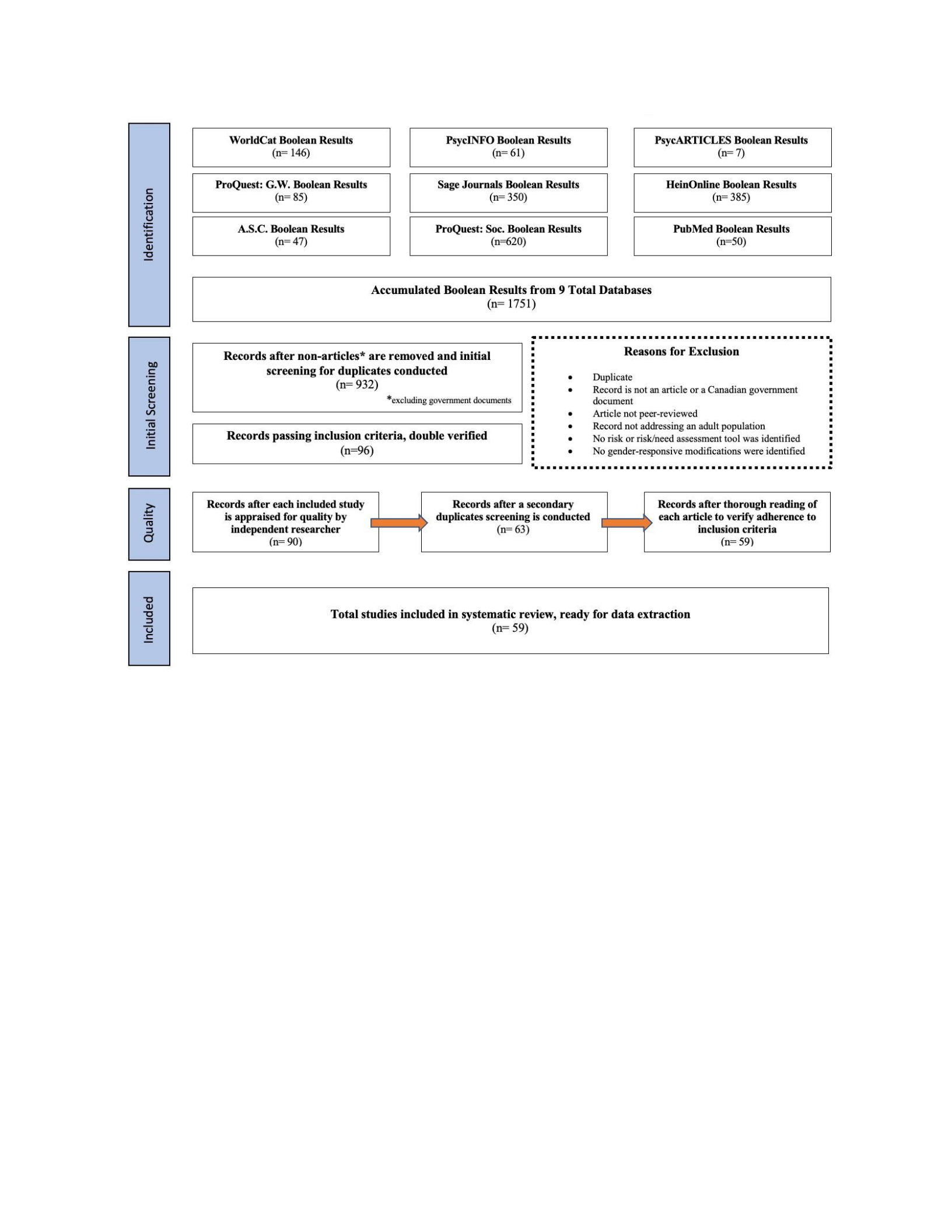
Overview of Included Studies
After completing the full study selection process, 59 studies were included within the
analysis portion of the systematic review. Of these, there were 46 non-randomized peer-reviewed
articles, 9 literature reviews (2 of which were government published documents addressing
policies), 1 qualitative peer-reviewed article, 1 quantitative descriptive peer-reviewed article, and
1 peer-reviewed randomized controlled trial.
Of these studies detailing gender-responsive modifications to risk and risk/need
assessment tools, there were 51 implemented modifications, 19 researched modifications, and 50
suggested modifications. 16 of these 59 studies included multiple modalities of modifications,
resulting in the increased sum of each type of modification. While statistical analyses were not

independently utilized, the researchers calculated frequencies throughout the analysis process in
order to identify patterns and themes within the data. The following identified patterns are
organized by geolocation, database, and journal.
As organized in respect to frequency, the locations from which these resources originated
spanned across:
• the United States (33 modifications);
• Canada (17 modifications);
• the Netherlands (3 modifications);
• New Zealand (3 modifications);
• the United Kingdom (3 modifications);
• Australia (1 modification); • Finland (1 modification);
• Germany (1 modification).
Addressing databases, the most frequently cited publications were found within:
• HeinOnline (30 sources);
• Sage Journals Online (13 sources);
• PsycINFO (7 sources);
• PubMed (4 sources);
• WorldCat (3 sources);
• Academic Search Complete (2 sources).
Regarding journals, the most frequently cited publications were found within:
• The Criminal Justice and Behavior Journal (30 sources);
• The International Journal of Forensic Mental Health (3 sources);
• Government publications (3 sources);
• The Law and Human Behavior Journal, Crime and Delinquency Journal, and Journal of

Contemporary Criminal Justice (2 sources each);
• Social Work in Public Health; Behavioral Sciences and the Law; the Journal of
Interpersonal Violence; Federal Probation; Criminal Justice Policy Review; Feminist
Criminology; Sexual Abuse; Assessment; Probation Journal; International Journal of
Offender Therapy and Comparative Criminology; Criminology and Public Policy; The
Prison Journal; Psychiatry, Psychology, and Law; the Journal of Forensic Psychiatry and
Psychology; Psychology, Crime, and Law; and the Journal of Sexual Aggression (1
source each).
Addressing overall demographics, 23 of the 59 studies specified examining only a binary
female population while none of the studies examined a non-binary population. The remaining
were of a binary male and female sample. The average age across the pertinent studies was 33
years old.
When specified, average sample size across the pertinent studies was 8,426, while the
median sample size was 645. Available sample sizes ranged from 73 to 128,183.
Addressed ethnicities within these sources, rounded to the nearest tenth of a percentage,
included:
• White/Caucasian (19.4 to 79.6%);
• Indigenous/Aboriginal/Native (0.2 to 60.0%);
• Black/African (3.0 to 56.3%);
• Hispanic/Latino (1.0 to 31.5%);
• Asian (0.4 to 4.3%);
• East Indian (2.5%);
• Pacific Populations (8.0%);
• Dutch Origin (84.4 to 87.2%);

• Other Minority (0.3 to 11.3%).
Of note, not all studies addressed each of the aforementioned ethnicities; therefore, only stated
percentages were included.
The noted forensic statuses of the populations included:
• Incarcerated individuals (such as federal, prison, Department of Corrections, or jail,
spanning all levels of security) with various offenses or convictions (such as felonies and
misdemeanors, inclusive to seriously violent, substance-use related, sexual, and
homicide);
• Individuals that were pre-sentence, post-incarceration, or commitment;
• Individuals found to be not guilty by reason of insanity (NGRI);
• Forensic Psychiatric Hospitals patients;
• Court-Mandated Residential Treatment Facility patients;
• Individuals on probation, community supervision, or parole.
The locations from which the examined populations hailed spanned the United States
(including Arkansas, California, Colorado, Connecticut, Florida, Illinois, Michigan, Minnesota,
Missouri, New Mexico, New York, Ohio, Oregon, Texas, Washington, Wisconsin, the
“Southwest,” “Eastern” states, the “Midwest,” and “Southern” states), Canada, the Netherlands,
New Zealand, Australia, England and Wales, Finland, Germany, and Pakistan.
For more specific details regarding each of the aforementioned demographics, please
refer to Appendix H.
Results of Individual and Overall Study Quality Appraisal
Of the 59 included studies, 9 were identified as literature reviews, with two of these
identified as government documents, and the remaining 50 were analyzed for individual quality
appraisal with information from the MMAT tool. All included studies must have passed the

standard of “80% or above.” Two of the included articles (both non-randomized trials) included
two different studies, resulting in multiple assigned quality appraisal scores within each article.
This resulted in 37 of the included studies fulfilling all quality appraisal criteria, scoring 100%,
while 11 studies missed one criteria point through omission or lack of clarity, scoring 80%, and
the two remaining resources that held dual studies were averaged for an additional 80% and 90%,
respectively (i.e., 80% and 100% averaged to 90% while the alternate resource scored 80% on
both studies). Ten of the 80% studies, along with the two dual-study resources, fell within the
Non-Randomized Trial categorization, while the remaining study was identified as a
Randomized Controlled Trial. These points were missed for: lack of complete outcome data, lack
of clarity surrounding the accountability of confounding variables, or lack of clarity regarding the
intervention administration procedure. Details of this process can be found within Appendix B.
As previously mentioned, the resulting quality appraisal numbers were averaged to
determine the overall strength of the articles utilized for this systematic review; referred to as
overall quality appraisal. This analysis resulted in 37 resources scoring 100/100, 1 resource
scoring 90/100, and 12 resources scoring 80/100. The remaining 9 resources did not receive a QA
score. By averaging the assigned scores, the rating of the body of evidence was found to be
95/100.
Findings Organized by Research Questions
According to the Available Literature, What Gender-responsive Modifications Have Been Made
to Which Risk Assessment Tools?
This research question was inductively organized into both implemented and researched
gender-responsive modifications for risk/risk-need assessment tools. In this study, researched
modifications means that, while the modification itself has not been directly implemented, it has

surpassed the stage of suggestion and the research either has, or is currently being, conducted in
order for implementation to occur. While researched modifications may not yet have been
applied, the novelty of this topic honors the progress made through peer-reviewed research.
There was a total of 22 implemented modifications across 13 identified risk assessment tools and
13 researched gender-responsive modifications across 5 identified risk assessment tools
identified in this dissertation. It is relevant to note that further tools may be within the research
process for gender-responsive modifications, but many of these tools were left either unnamed or
unidentified.
The present systematic review of 59 sources found the following gender-responsive
modifications to have been directly implemented across a variety of risk/risk-need assessment
tools, as organized by frequency of description across the sources: developed a genderresponsive
tool from the ground up (26 sources), included gender-specific risk factors (7 sources), developed
gender-specific risk assessment guidelines from the ground up (5 sources), differed cut-off scores
by gender (4 sources), developed a gender-responsive trailer (3 sources), included gender-
informed scales (2 sources), used gender-specific risk models (2 sources), varied coding by
gender (1 sources), and used gender-based norms (1 sources). Please refer to Appendix C for
further definitions of these categories.
Likewise, this review found the following gender-responsive modifications to have been
researched in application to risk assessment tools, as organized by frequency: develop a
genderresponsive tool from the ground up (4 research projects), include gender-specific risk
factors (4 research projects), develop a gender-responsive trailer (3 research projects), differ cut-
off scores by gender (3 research projects), include gender-informed scales (3 research projects),
develop gender-specific risk assessment guidelines from the ground up (1 research project).
Across these implemented and researched modifications, the assessment tools included:

Female Additional Manual (FAM), the Women’s Risk Needs Assessment (WRNA) Suite, the
Security Reclassification Scale for Women (SRSW), the Service Planning Instrument (SPIn)
Suite, the Level of Service (LS) Suite, The Historical Clinical Risk Management – 20, Version 3
(HCR-20 v3), the Missouri Women's Risk Assessment, the Inventory of Need Pretrial Screening
Tool (ION), the COMPAS Risk & Need Assessment System, the Ohio Risk Assessment System
(ORAS), the Minnesota Screening Tool Assessing Recidivism 2.0 (MnSTARR), the Static Risk
and Offender Needs Guide (STRONG) Assessment System, and the Dynamic Risk Assessment
for Offender Re-entry (DRAOR). A number of researched modifications were also identified,
without formal affiliations with a specified risk/risk-need assessment instrument.
Below is a detailed table including each identified risk/risk-need assessment tool and the
modification that was implemented or researched. The researched modifications are included at
the end, organized either by the unnamed, “general” research, or by the temporary name that the
researchers had provided the tool as it remained in creation.
Table 1
Results of Implemented Modifications, as Organized by Tool
Assessment Tool
Modifications
COMPAS (Correctional Offender Management Profiling for
Alternative Sanctions) Risk & Need Assessment System
Include gender-specific risk factors
Include gender-informed scales
Dynamic Risk Assessment for Offender Re-entry (DRAOR)
Include gender-specific risk factors
Female Additional Manual (FAM)
Develop gender-specific risk assessment
guidelines from ground up
Historical Clinical Risk Management - 20, Version 3
(HCR20 v3)
Develop gender-specific risk assessment
guidelines from ground up
Inventory of Need Pretrial Screening Tool (ION)
Develop gender-specific tool from ground up

Include gender-informed scales
Level of Service (LS) Suite
Include gender-specific risk factors
Different cut-off scores by gender
Use of gender-based norms
Minnesota Screening Tool Assessing Recidivism 2.0
(MnSTARR)
Use of gender-specific risk model
Missouri Women's Risk Assessment
Develop gender-responsive tool from ground up
Ohio Risk Assessment System (ORAS)
Different cut-off scores by gender
Security Reclassification Scale for Women (SRSW)
Develop gender-responsive tool from ground up
Include gender-informed scales
Service Planning Instrument (SPIn) Suite
Develop gender-responsive tool from ground up
Include gender-specific risk factors
Different cut-off scores by gender
Static Risk and Offender Needs Guide (STRONG)
Assessment System
Use of gender-specific risk model
Different cut-off scores by gender
Include gender-specific risk factors
Women's Risk Needs Assessment (WRNA) Suite
Develop gender-responsive tool from ground up
Include gender-specific risk factors
Develop gender-responsive trailer
Three tools that were related to violence risk assessment, but not directly measuring these
qualities themselves, remained included within these findings yet separately denoted as “adjacent
tools.” This inclusion and demarcation was due to the frequency of their use, as exemplified by
the Static-99R, and the Hare Psychopathy Checklist - Revised (PCL-R), or to their representation
of context-specific tools, as is the case with the Correctional Mental Health Screen for Females
(CMHS-F). Accordingly, each of these tools are frequently utilized within comprehensive

batteries of risk, even if they themselves and on their own are not direct measures of violence
risk. The Static-99R specifically examines sexual recidivism, but in doing so, assesses for
convictions of non-sexual violence (Hanson & Anderson, 2021). Likewise, the PCL-R assesses
for psychopathy and is frequently included in both batteries as an independent tool and as a
scoring factor embedded within other violence risk assessment tools (e.g., the Violence Risk
Appraisal Guide-Revised; Hare, 2017). Alternatively, the CMHS-F was developed for use in
correctional institutions specifically to assess for the mental health risks and needs of an
individual and are often included in initial screenings of inmates as a determination of potential
risk for disciplinary and adjustment problems while incarcerated (Ford et al., 2007). Table 2 lists
the tools that had remained included throughout this screening process, and are often utilized in
adjacent means to violence risk assessment:
Table 2
Results of Implemented Modifications of “Adjacent Tools”
Assessment Tool
Modifications
Correctional Mental Health Screen for Females (CMHS-F)
Develop gender-responsive tool from ground up
Hare Psychopathy Checklist - Revised (PCL-R)
Develop gender-specific risk assessment guidelines
from ground up
Different cut-off scores by gender
Static-99R
Different "coding" by gender
Which Gender-responsive Modifications Have Been Proposed for Future Changes?
Across the 59 sources, 13 different suggestions for gender-responsive modifications to
risk/risk-need assessment tools were located. Four higher order categories developed through
thematic analysis captured the nature of the suggestions: the development of a tool, the
interpretation of a tool, the improvement of a tool that involves further research, and an
extraneous category of modifications that could occur either during the development or the

improvement of a tool. This latter category was created due to the lack of specificity by each
resource’s author as to specifically how or when this proposed modification would happen.
Given the nature of the modification, it was determined that this could occur during either stage.
Below, Table 3 details these four categorizations, 13 suggestions, and the frequency with which
each of these were suggested within the literature.
Table 3
Results of Suggested Modifications, as Organized by Category
Categorization of Suggestion
Actual Suggestion
Suggestions in
Literature
Development of a tool
Develop a gender-responsive tool from the ground up
13
Develop a gender-responsive trailer
1
Develop gender-specific risk assessment guidelines
1

Include gender-specific risk and/or risk/needs factors
15
Include gender-informed scales
1
Interpretation of a tool
Differ cut-off scores by gender
5
Gender-specific modifications in interpretation
1
Improvement of a tool that involves
further research
Improve statistical reliability and validity by gender
3
Use gender-specific risk models
1
Adjust risk categories to be more inclusive to gender
1
Use gender as a predictor or risk assessment item
1
Modifications that can occur either
in the development or improvement
of a tool
Include larger female sample sizes
4
Reweigh or recalibrate tool to be gender-responsive
3
How Does the Aforementioned Literature Define Gender in Discussing These
Genderresponsive Modifications?
Of all included research questions, the least amount of data pertained to how gender was
defined within the 59 sources that made it through the screening and quality appraisal process.
No sources specifically defined gender beyond the binary male or female within their data set(s).
Only two studies acknowledged the existence of non-binary aspects within gender, with this

information remaining within the literature review or discussion section. First, de Vogel and
Nicholls (2016) referred to the lack of research surrounding transgender individuals, particularly
related to violence. Second, Hannah-Moffat (2009) explicated that studies “often categorically
characterize gender as a ‘sex’ variable and disregard the nonaggregate differences among women
and between men and women. Such a binary approach rests on specific assumptions about the
nature of ‘gender’” (p. 214).
Thus, these two studies demonstrated awareness about the social construct of gender and
the range of characteristics and identities beyond the male and female binary. Despite this
recognition, the targeted population in these two studies remained that of the binary male and
females; the same was true for all of the other 57 sources. Also, neither of these sources defined
gender in specific relation to their gender-responsive modifications.
Conclusion
The goal of this chapter was to present the results of the deductive and inductive analyses
of the 59 studies on gender-responsive modifications to risk and need assessment tools. Careful
and detailed categorizations were made of these findings to address the three research questions
pertaining to modifications of risk and need assessment tools. By organizing the data in a
meaningful and digestible manner, it is hoped that the reader will easily access information
related to gender-responsive modification types, tools that have incorporated these changes,
suggestions for future changes, and their associated research articles. Of note, the quality or
amount of actual use of these modifications, tools, and suggestions was not a part of the research
questions or the collected data.
To make more meaning of this data, the results must be considered within the context of
their practical use. The following chapter details the field’s actual use of the various

modifications or tools noted in the results and provides opinions regarding the quality and
suggested applications of this information, to inform future research and practice.

Chapter 4: Discussion
This systematic review focused on identifying gender-responsive modifications and
which risk assessment tools have implemented these modifications, what suggestions have been
made for relevant future research, and how this literature defined gender. This literature review
was the first study to identify and synthesize this information. Through the use of a
comprehensive and detailed review process, nine databases were carefully searched for relevant
content, ultimately resulting in 59 synthesized resources. In total, nine unique means by which
violence risk assessment tools may become gender-responsive were identified, alongside 13
violence risk assessment tools that have implemented these modifications (see Table 1). In
regards to suggested modifications, four independent categories were identified, consisting of 13
total suggestions (see Table 3). Lastly, none of the aforementioned resources addressed nonbinary
gender, with only two of these resources even mentioning gender outside of binary (i.e., male and
female) terms; a significant finding given the APA’s ethical guidelines that specify gender to be
non-binary. Each of these findings has the potential to carry an important foundational step in
furthering psychology’s understanding of gender-specific violence risk assessment.
Discussion of Findings
This discussion section seeks to extend the impact of these results by exploring the
information’s practical use. Due to the foundational nature of this study, the quality or amount of
actual use of these gender-responsive risk assessment tools remained outside the scope of the
project. Therefore, a retrospective consideration of these tools’ practical use will be presented to
facilitate the use of this systematic review as a resource for clinicians, researchers, and
policymakers. Thus, this chapter is intended to discuss these findings in practical use and to
provide opinions regarding implications for practice and policy, future research, and theory.

Implications for Practice and Policy
This systematic review was intended to provide a tool for clinicians to reference when
working with a forensic population that identifies beyond the binary male in assessing for
violence risk and/or criminogenic need. While the nuances of assessment tool selection include
various types of risk (of note, suicide risk or tools solely addressing sexual violence were not
included in the present study) and a number of identity variables, the aforementioned literature
highlights the importance of representation, particularly in gender. Whereas gender remains the
crux of this reviewed research, assessment tool selection must also take into account other static
and dynamic factors. The following information is reflective of gender specifically.
When assessing for violence risk and criminogenic need, a clinician will often formulate a
subjective battery that encapsulates a variety of different clinical factors in order to garner the
most accurate picture of the individual’s risk factors and future potential to recidivate. When
seeking risk assessment tools that are responsive to the identity markers of a specific individual,
many clinicians will initially seek a tool that fulfills the same functional need as an original,
gender-neutral tool. As previously mentioned, the two primary types of tools utilized within
violence risk assessment include actuarial tools, which estimate specific probability of an
individual engaging in future violence through the use of fixed algorithms that are interpreted
through inductive processes, or structured professional judgment (SPJ) tools, which incorporate
these evidence-based guidelines with professional discretion (Hart et al., 2007; Melton et al.,
2007).
During the assessment tool selection process, clinicians must also consider the quality and
validity of the gender-responsive modification. Hierarchically, tools with normed populations
that most closely resemble the individual identified for assessment are likely to provide the most
accurate representation of the individual’s violence risk and criminogenic need. For example, it is

inherent that a gender-specific tool that is created for a binary female population will be the
preferred tool in regard to validity for cisgender women (e.g., WRNA Suite). A gender-specific
tool is created most often by incorporating gender-responsive risk factors, including gender-
informed scales, and identifying methods of interpretation based on the identified gender (e.g.,
COMPAS, ION, and LS Suite, respectively).
However, the frequency with which a modification is created should not be confused with
the ideal method of utilizing a normative population that is representative of the individual with
whom it will be utilized. For example, some tools may only identify specific cut-off scores for
alternate populations (e.g., ORAS). While alternate cut-off scores remain a valid modification, it
must be supported by the appropriate research in order to be widely applied. Without properly
enacting the validation research necessary to explore the predictive validity for a specific
population (i.e., binary female offenders), researchers caution against the use of said
modifications (Blanchette & Brown, 2006). When adjusting cut-off scores, the most common
deleterious effects to the validity of the measure can include misclassification of the individual or
an imbalance of the tool’s specificity to sensitivity (Blanchette & Brown, 2006; Roehl et al.,
2005).
We see an example of researchers warning clinicians that the gender-responsive
modification of differing coding cut-offs by gender is insufficient within the Static-99R (a tool
measuring sexual recidivism that is commonly utilized within risk assessment batteries). This
tool is not fully supported for use with binary females by the community, largely due to a
published study examining the association between individual items on the Static-99R and the
sexual recidivism of binary females (Marshall et al., 2021). Since Marshall et al. (2021)’s study
displayed an overwhelming lack of association between these items and the women’s recorded

sexual recidivism, the author’s noted that the tool was not suitable for use with this specific
population.
While this systematic review was initially built upon the ideas of ensuring empirical data
remains current with societal progress, there may be areas where this progress is inappropriately
applied or utilized in practice prior to proper validation. Likewise, risk assessment tools are often
based upon small sample sizes, particularly when accounting for gender. While violence risk
assessment tools ultimately perform better than other risk assessments, they continue to have
lower positive predictive values and have been found to function better when applied to
individuals deemed to be of lower risk (Fazel et al., 2012). Therefore, a natural limitation within
this type of tool is the accuracy of predicting specific instances to occur within a multitude of
potentially impactful stimuli, inclusive to environments, events, and external individuals.
Thus, this author recommends the following gender-responsive risk assessment tools,
which fall under the highest level of modification quality, namely a tool that has been developed
specifically for a binary female population and has been thoroughly researched. Both stand-alone
tools and supplements are included in the following list, categorized by their classification as an
actuarial or structured professional judgment type of risk assessment:
Table 4
Author Recommendations of Gender-Responsive Tools for Use
Risk Assessment Type
Gender-Responsive Risk Assessment Tool
Actuarial
WRNA, WRNA-T (to supplement the LSI-R), SRSW, SPIn-W

Structured Professional
Judgment
FAM (to supplement the HCR-20)
With the organization of the totality of information found within this systematic review,
as seen in Appendix I, clinicians can search by gender-responsive modification or name of
assessment tool. The tabular presentation allows for ease of access to the results of this
systematic review in a variety of applications. Clinicians may then utilize the provided
information to guide their choices by further researching the population upon which the tool was
normed and the current research on the tool itself.
Although this systematic review examined the specific domain of violence risk
assessment, gender-responsivity directly impacts case management and programming across
institutions. By incorporating the relevant pathways and criminogenic needs that are likewise
addressed in the creation of these assessment tools, society can further direct efforts to related
avenues within our correctional and forensic facilities. Based on the resources created in the
present study, potential changes in mental health policies could also be recommended. Such
changes are necessary given the fields of clinical and forensic psychology’s need to remain
current with the individuals and societies they serve.
While ultimately a call for research can be concluded from the sparse information
available (see next subsection), there may also be the potential for mental health policies to be
affected on a variety of levels (i.e., institutional versus larger ordinances). For example, the
Council of State Justice Center’s (2021) resource guide for adopting gender-responsive
approaches for women in the justice system provide direct potential implications of these shifts:
Gender-responsive and trauma-informed policies, practices, and programs recognize that
women have distinct histories, pathways to offending, and experiences in the criminal
justice system. These approaches address issues that may contribute to women’s
involvement in the justice system, such as domestic violence, abuse, and victimization;

family and relationships; trauma; and poverty, mental illnesses, and substance use
disorders. (p. 3)
Finally, a primary goal of this systematic review was to bring attention to the disparity
between society’s definition of gender and psychological assessment’s incorporation of gender as
a factor of consideration. While a wide variety of markers define an individual’s identity or
intersectional identities, the societal construct of gender, whether binary or non-binary, has a
significant impact on an individual potential path to criminality and criminogenic needs. Again, it
was significant that only two studies included within this systematic review even mentioned the
concept of non-binary gender. Still, it is the hope that such considerations may be included both
within forensic psychological practice and the field as a whole.
Implications for Research
Even though a strength of this systematic review is that it provides a referential source to
which clinicians may refer when conducting risk assessments with non-binary-male populations,
it also points to the need for more research regarding gender-responsivity in risk assessment
tools. This limitation was highlighted through the aforementioned findings, with many articles
largely noting the small sample sizes of non-binary-male offenders.
One way to remedy this problem could be to include larger samples of binary female
populations within future research. This may be enacted either in accompaniment with binary
male populations or through solely examining binary female populations. For example, a future
research endeavor could focus upon a binary female population within a correctional or forensic
setting. Through a hypothetical longitudinal study, a specified risk assessment tool could be
administered to a group of inmates or patients prior to their release dates. These individuals
would then be followed for a set amount of time to record if any violent actions, violations of
supervision, or general recidivism were to occur. The correlation between individual items or

collective scores on the assessment would then be directly compared to the longitudinal violence
and recidivism data. However, continuing to solely study binary genders remains a flawed
approach.
Instead, addressing non-binary genders in risk assessment would bridge a brazen gap in
the literature and would comport with ethical practice standards. As previously mentioned, the
APA’s (2015) ethical guidelines “stipulate that psychologists should (a) recognize gender as
nonbinary and (b) abandon binary gender measurement in favor of accurate and inclusionary
measures” (p. 4). Given that none of the included tools identified within this study define gender
beyond “male” and “female,” it is pertinent that non-binary populations begin to be examined
with efforts to create normative populations through which existing risk assessment tools and
novel tools may be validated.
Cameron and Stinson (2019) detailed the consequences and ethical violations, as defined
by the American Psychological Association (APA), in utilizing binary gender in demographic
measures, and provided suggestions for future research to evolve the field of psychological
research. Cameron and Stinson (2019) cautioned that when a non-binary individual participating
in psychological research is forced to choose between binary gender identifiers, this experience
fuels prejudice and discrimination. Further, this forced choice leads to false data collection, as
non-binary individuals are not able to accurately account for their gender within these limited
factors, which can threaten the validity of the psychological study.
One way to be more gender-inclusive is through the use of open-ended questions of
gender identification. Another way is to use a gender-inclusive measure. If one is not available,
the researcher may maintain the reliability and validity of the research by including a thorough
description of participants’ gender identities as well as a thorough methodological description of
how data from nonbinary participants were treated (Cameron & Stinson, 2019). While the

research and tools may not currently be available to adequately represent individuals that do not
identify as one of the binary genders, clinicians must account for such factors within their
evaluations. It is a rarity for the normed population of a tool to represent an individual’s identity
in full in direct practice. However, including these limitations within one’s interpretation of
violence risk and criminogenic need is exceedingly important when accounting for how an
individual may reintegrate into society.
Due to the limited nature of the data examining gender responsivity in risk assessment
tools, extant studies may often lack critical methodologies of statistical precision to uphold
empirical validity (Saxena et al., 2014). Given the limitations identified within the variety of
included studies, there appear to be challenges in assessing the clinical significance between
gender-neutral and gender-responsive interventions, such as unreliable validity or misinformed
conclusions being drawn (Gobeil et al., 2016). Therefore, this appears to be an area in desperate
need of further research, allowing grace while the gap between social science and society
narrows.
Limitations
The limitations of this study occurred in both the methodology and through the nature of
the research questions themselves. As identified by Whittemore and Knafl (2005), an integrative
systematic review can be easily biased, as methods of coding and synthesizing information can
be poorly defined. Therefore, the detail within the methodology section was intended to be as
well-defined as possible, particularly since work in this project involved multiple researchers,
and so that the replicability of the subjective structure would be elucidated. In order to control for
systematic biases or errors, the use of an intermittent peer reviewer and an audit trail aided in
balancing the subjectivity of the quality appraisal and data extraction forms.

In addressing limitations within the methods section, it is important to note that these
researchers utilized quality appraisal tools for both mixed method resources and systematic
reviews. However, nine of the included resources were categorized as literature reviews,
inclusive to government publications. These resources did not undergo a formal quality appraisal
process aside from the established inclusion and exclusion criteria for this systematic review,
including the resource having undergone a peer review process. A majority of researched quality
appraisal tools appeared to best address systematic reviews and required a defined rationale for
the included articles, which none of the included literature reviews appeared to have. While
varied quality of included resources is expected in an integrative systematic review examining a
budding topic in the field of psychology, all possible standards should be upheld. Therefore, for
future researchers, curating a standardized quality appraisal process for the inclusion of literature
reviews may be an option, given this writer’s hope that further research will continue to surface,
broadening the scope and availability of relevant information.
Also, the chosen search criteria specifically targeted either violence risk or risk and need
assessment tools. Some gender-responsive tools solely measuring criminogenic need (such as the
Gender Informed Needs Assessment, or GINA) were not included within these findings (The
Council of State Governments Justice Center, 2021). Likewise, only sources that had been
published in the English language were included within this study. This inclusion criteria may
have affected both the breadth of the information included as well as the bias towards
Eurocentric ideas and demographics reflected within these results.
While the primary researcher utilized the aid of two research assistants during this
process, formal interrater reliability checks were not conducted. If disagreements regarding the
criteria of a source were encountered, they were met with open discussion and were all resolved

without needing to involve a further party or mediator. The primary researcher acknowledges that
this may be the result of a power imbalance between herself and the research assistants.
However, all three involved parties maintained respectful terms, audit trails, and detailed notes
regarding decisions made to avoid potential biases having detrimental effects upon the research.
Likewise, this systematic review chose to solely focus upon gender and not sex or
sexuality, as these terms are frequently conflated within the community. While there are many
other variables that hold extreme importance to the identity of an individual, gender is the aspect
chosen for this specific dissertation. Future research would best include a variety of focal points,
not limited to sexuality, ethnicity, cultural and religious values, and many other pertinent points
of identity as well as their intersectionality.
As this systematic review examined a topic that is a recently developed field of research,
the search process yielded a relatively low amount of data. As previously mentioned in the
literature review, the research that appears to exist outside of the binary male gender addresses
the binary female gender. The extracted data solely applied to binary females, with only two
included articles mentioning non-binary genders but not including such individuals within the
study itself. The lack of non-binary data was a pre-research assumption; however, this lack of
evidence does not conclude that the difference does not hold significance but may instead be
reflective of the field of psychological assessment’s early stages of change towards gender
existing on a full spectrum. While future researchers are encouraged to expand their limited
definition of gender, the present study is still believed to be a progressive step towards modifying
normative populations from the current majority of binary male.
Summary: Contributions and Concluding Remarks
This systematic review contributes to the fields of forensic and clinical psychology by
providing clinicians and researchers with a novel comprehensive resource that identifies which

contemporary forensic risk and risk/need assessment tools have been modified to accommodate
binary female or gender-expansive normative populations. After conducting the literature review
necessary to complete the background and rationale section of this systematic review, as well as
the full systematic review, this author did not find any extant resource that accomplished this
goal. To meet this need, this systematic review created a detailed resource identifying the nature
of any implemented or proposed gender-responsive modifications. It is hoped that this novel and
needed synthesis of accurate risk and risk/need assessment tools will, therefore, make them more
easily accessible for use and study with members of the forensic population outside of the binary
male gender.
While not all tools are able to be widely applied amongst different populations, this
resource may also serve as a launching point for further gender-responsive tools to be developed.
Future researchers can identify relevant tools in existence and model steps of modification from
these examples. By also examining how these modifications have defined “gender,” bases for
further research can be provided.
In conclusion, it is hoped that the results of this dissertation have the potential to aid
future research and practitioners in their work with forensic individuals identifying outside of the
male binary gender. With the impact to social liberties that each risk assessment may address, it
is ever important to ensure that the clinician’s role remains adherent to ethical models of best
practices. By further investigating and expanding the available resources by which nonbinary or
binary female individuals may identify, the psychological field will continue to maintain
adherence to societal expectations and due justices, particularly within forensic systems.

