


○ 12-Lead ECG Mechanisms
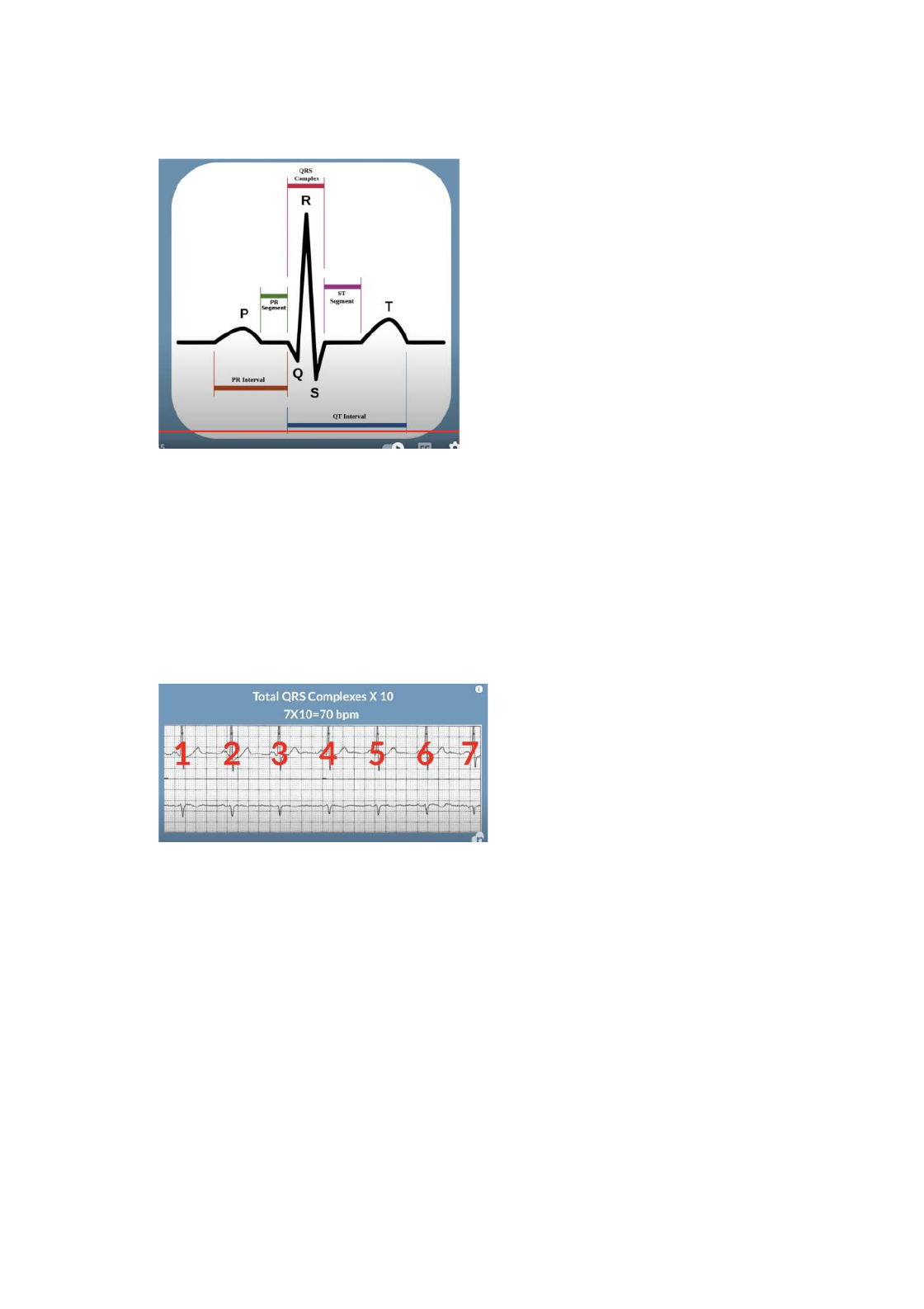
■ P-Wave
● Atrial depolarization
● ≤ 0.111 seconds (~3 small boxes)
● Positive deflection on wave form
● Signal comes from the SA node, through the atria, and the atria
contracts
■ PR Interval/Segment
● Goes from the beginning of the p wave to the beginning of the
QRS complex
● Signifies the time it takes for the SA node to fire, get to the AV
node, let the AV node pause, send a signal to the ventricles
○ If this process is slow, you can predict their is a problem
with the communication between the SA node and the AV
node
● <0.02 seconds (less than five small boxes)
■ QRS Complex
● Ventricular depolarization
● (Atria also gets repolarization here)
● 3 waves represents depolarization
● Longer than the p-wave because the ventricles are bigger so they
have much more electricity going through them
● Must be working quickly to prove effectiveness
● Beginning of Q to the end of the S should be <0.12 seconds (<
three small boxes)
■ QT Interval
● Beginning of the Q the the end of the T
● Full time it takes for the ventricles to fully contract and fully relax
● Issue if this is prolonged — the ventricle is trying to contract while
it is still trying to relax
■ ST Segment
● Ventricular contraction
● End of S wave and beginning of T wave
● Should be all the way at the bottom at the “base line” aka the
isoelectric line
●If elevated by more than two small boxes, infarction; if
depressed, ischemia
■ T-wave
● Ventricular repolarization
● Electricity is essentially reversing and the ventricles are getting a
chance to relax
■ “Electrical stimulus process” = depolarization
○ 5 Step Method for Interpreting EKGs
■ Normal Sinus Rhythms
● 1. Is it regular?
○ Equal amount of beats between each QRS Complex
○ If the amount of small boxes are between 1-2 on every
single one, it is regular
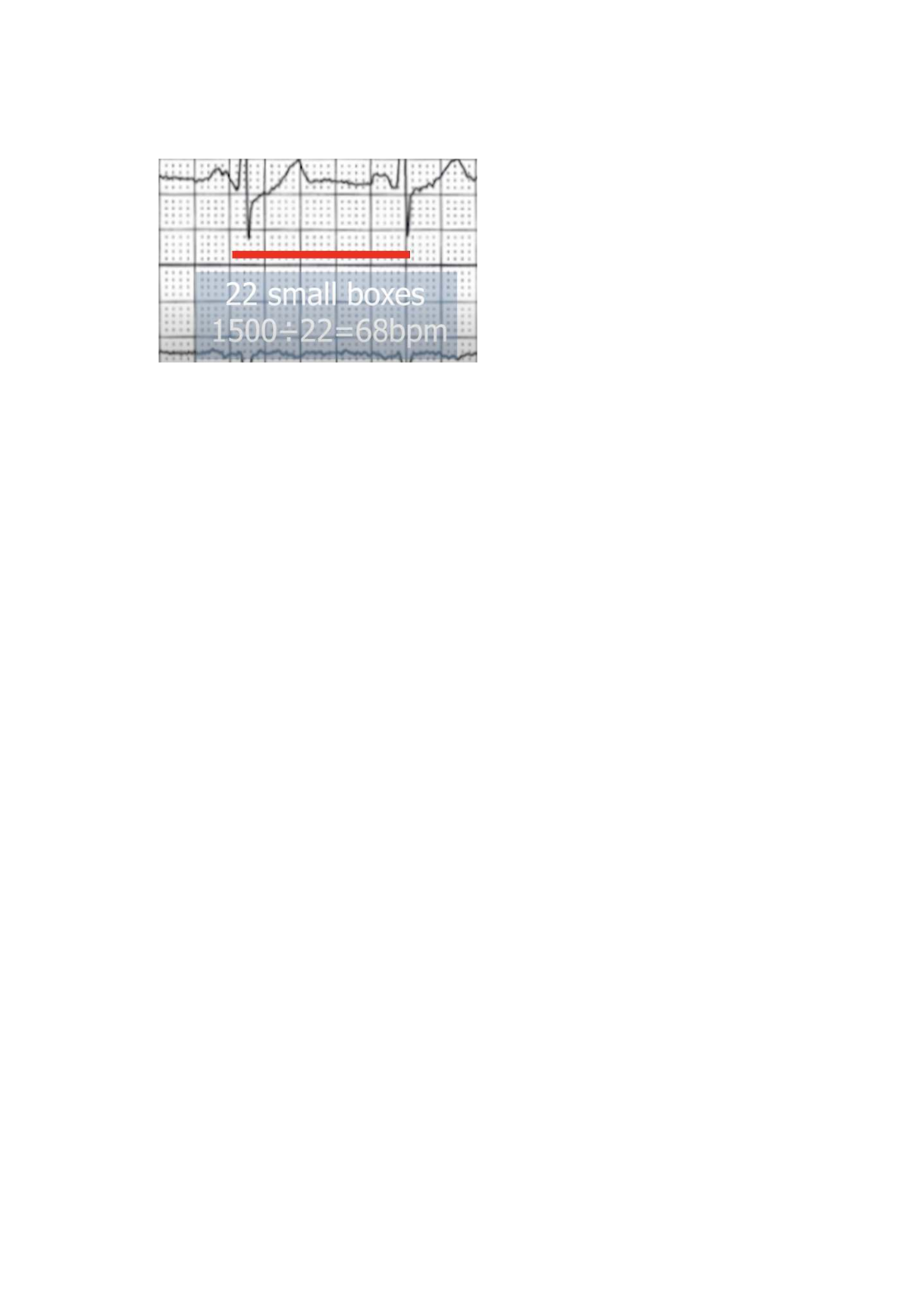
● 2. Rate
○ Normal HR is between 60-100 bpm
○ If you have a 6-second strip, you can count the total # of
QRS complexes and multiply it by 10
■ This is a relative estimate, but will be sufficient for
determining rate
○ 1500 Method is more accurate
■ Count the small boxes between QRS complexes
and then divide that into 1500
■ Will not be accurate if the person has an irregular
rhythm
● 3. P to QRS Ratio
○ First, check if there are P waves; if there are no P waves,
there’s a problem with the atria not contracting as they
should
■ There should be 1 P wave for every QRS complex
(ratio is 1:1)
● 4. Look at the QRS complex
○ < 3 seconds
● 5. Look at PR interval
○ < 0.02 seconds

