


1
Section 1: Foundation of the Study
The establishment of sustainable practice in healthcare institutions has been a
major concern in most developed countries because the healthcare institutions and the
public can benefit from it (McGain & Naylor, 2014; Qadir et al., 2014). A hospital
operates 24 hours a day and 7 days a week; the natural resources consumption for
maintaining a safe and stable operation is considerably high (Kaplan, Sadler, Little, Franz,
& Orris, 2012). Although global studies show that hospitals can reduce the negative
effects on the environment by implementing sustainable initiatives such as energy and
water preservation programs and waste management strategies only 30% of Hong Kong
hospitals employ an effective and applicable sustainable program. As healthcare costs are
rising globally, the hospital leaders or the management can reduce energy costs by
introducing a sustainable energy program at the hospital (Berwick & Hackbarth, 2012;
McGain & Naylor, 2014; Qadir et al., 2014).
Background of the Problem
The growth of the global population has depleted the natural resources in most
developed countries (Alam & Kabir, 2013). The rapid growth of healthcare services due
to increased demand and changes in disease etiology has contributed to an additional
burden of environmental pollution (Dall et al., 2013; McGain & Naylor, 2014).
Healthcare services in major developed countries are among the most polluting industries
(Berwick & Hackbarth, 2012; Short, Lomas, Giridharan, & Fair, 2012). Researchers have
suggested that healthcare leaders look for effective strategies to reduce greenhouse

2
emissions by developing and implementing a sustainable program for their healthcare
institutions (McGain & Naylor, 2014; Sadler & Guenther, 2015).
Corporate sustainability measures of an organization suggested the stakeholders’
well-being in three major areas including a social aspect, financial aspect, and
environmental aspect (Stoughton & Ludema, 2012). An organization can improve both
long- and short-term competitive advantages by incorporating sustainability into the
company strategy (Lloret, 2016). For the healthcare setting, the benefits of introducing a
sustainable program for hospitals include reducing costs, increasing the brand image, and
improving public health status by reducing pollution (Harvey, 2013; Trong, 2012).
Energy costs are high in Hong Kong public hospitals (Tong & Fong, 2014). A well
established sustainable energy program is promising for reducing energy costs (Rohde &
Martinez, 2015).
Implementing sustainable practices is a challenge to many business leaders
because it will incur changes to the company internally and externally (Stoughton &
Ludema, 2012). However, Hong Kong studies on how hospital leaders can successfully
employ a sustainable energy program are rare. Studies pointed out that the use of the
corporate sustainability model developed by Epstein in 2008 to design and implement
sustainable practice can be applied to business firms (Epstein & Buhovac, 2014; Kuei &
Lu, 2013; Stuart, 2013).
Problem Statement
Extensive hospital activities in Hong Kong have caused an increase in energy
consumption (Hospital Authority Annual Report, 2013). Tong and Fong (2014) indicated

3
that the energy expenditure of 42 public hospitals in Hong Kong was high, reaching
around 100 million U.S. dollars per year. A study estimated that a hospital can save up to
20 million U.S. dollars of energy cost in 5 years by implementing a sustainable energy
program (Kaplan et at., 2012). The general business problem is that hospital leaders are
often unable to control energy expenses that can lead to an increase in operating costs.
The specific problem is that the strategies necessary to develop and implement an
effective sustainable energy program in Hong Kong hospitals are not understood by some
leaders in that city-state.
Purpose Statement
The purpose of this qualitative, multiple site case study was to explore the
strategies necessary to develop and implement an effective sustainable energy program in
Hong Kong hospitals. The participants of this study were the hospital green committee
chairpersons of five public hospitals in Hong Kong that received outstanding
achievement recognition from the local government. Hospitals are one of the most
energy-intensive facilities; implementing a sustainable energy program will help to
reduce pollution and energy costs (McGain & Naylor, 2014; Qadir et al., 2014). The
implications for positive social change may include providing findings as a reference for
hospital leaders to redirect the saved resources from a sustainable energy program to
improve patient care and reduce pollution (McGain & Naylor, 2014).
Nature of the Study
I employed qualitative research methods with a multiple case study design to
explore the strategies for Hong Kong hospital leaders to develop and implement a

4
sustainable energy program to increase cost effectiveness. Fassinger and Morrow (2013)
showed that researchers can use a qualitative research approach to engage the participants
in a research study and to address their personal experiences, emotions, motivations, and
inner life in the study. Researchers can use the qualitative research method to understand
the phenomena by describing, decoding, translating, and understanding data (Sergi &
Hallin, 2011). For quantitative research, researchers can use it to investigate the observed
phenomena by statistical or computational techniques. Researchers using quantitative
research quantify data and generalize results from a sample of the population of interest
and measure the incidence of various views and opinions in a chosen sample (Yin, 2014).
The mixed method is an approach for the researchers to understand the phenomena by
combining both qualitative and quantitative methods to analyze data, and it is suitable for
researchers because the results from one study can support the other study (Klassen,
Creswell, Plano Clark, Smith, & Meissner, 2012). I used the qualitative research method
to understand the behavior of Hong Kong healthcare leaders in responding to sustainable
practice in the hospitals. I used the qualitative method in this study because it is a method
that researchers use to gather an in-depth understanding of a specific human behavior in a
group or organization, and social, political areas. A researcher can use the qualitative
method to explore human behavior on how the participants can apply measures to handle
the specific problem (Hyett, Kenny, & Virginia Dickson-Swift, 2014).
Yin (2014) suggested that researchers use a case study design when they are
looking for an answer to how and why questions, and when researchers cannot
manipulate the behavior of those involved in the study. Case study research design is an

5
approach to understanding a particular phenomenon within its context using a variety of
data sources, and researchers can use the case study approach to obtain an in-depth
appreciation of an issue, event, or phenomenon of interest, in a real-life context (Crowe et
al., 2011). The phenomenological design is a method to explore and understand the
participants’ living experience (Ardley, 2011). So that the phenomenological design may
not apply to address the research question of this study on what are the strategies for
Hong Kong hospitals leaders to develop and implement sustainable energy program to
reduce energy cost. Ethnographic design is an approach to explore the relationship
between the participants’ culture and behavior, but is not a suitable design for this study
(Christiansen, 2011; Nite & Singer, 2012)
Qualitative case study research design is an approach for the researcher to
understand a particular phenomenon within its context using a variety of data sources
(Lewis, 2015). Yin (2014) suggested that researchers should use case study design when
they are looking for an answer how and why questions, and when researchers cannot
manipulate the behavior of those involved in the study. Also, researchers can use case
study design to find out the contextual conditions because they believe they are relevant
to the phenomenon under study. Finally, Yin (2014) pointed out that the researcher
should use a case study design when they do not know the boundaries of the phenomenon
and the context is not clear. As a researcher, I did have the power to manipulate the
decision of the healthcare leaders to adopt sustainable energy practice at their hospitals. I
used the qualitative case study research design to understand why and how the local
healthcare leaders are developing and implementing a sustainable energy program in their

6
hospitals, and how to facilitate the incorporation of the sustainable energy program to
obtain costeffectiveness by reducing energy costs.
Research Question
The research question of this study is, “What strategies do the hospital leaders use
to develop and implement a sustainable energy program to reduce energy cost?”
Interview Questions
1. Can you tell me what corporate sustainability measures are implemented in your
hospital?
2. What are the external and internal driving forces/motivations to facilitate the
implementation of a sustainable energy program in your hospitals?
3. As the leader of the hospital green management committee, what is your role in
managing sustainable practice in the hospital?
4. What are your management strategies/approaches/tools to facilitate the successful
implementation of the sustainable energy program at your hospital?
5. How do you comment on the organization structure of green management
committee at your hospital?
6. How can you mobilize and motivate your staff/stakeholders to develop and
implement a sustainable energy program at your hospital?
7. What skill, knowledge, or training for your staff is needed for practice in a
sustainable manner?
8. What are the hospital performance measures for the sustainable energy program?

7
9. Can you tell me the challenges/barriers to implementing the sustainable energy
program at your hospital and how do you overcome them?
Conceptual Framework
The aim of this study was to explore the strategies for the Hong Kong public
hospital leaders to develop and implement a sustainable energy program to reduce energy
costs. The conceptual framework is the system of concepts, assumptions, expectations,
beliefs, and theories that support the design and the problem statement of the study
(Timmermans & Tavory, 2012). I used the corporate sustainability model as the
conceptual framework to explain the aim of the study in a systematic way and to view the
phenomenon of energy sustainability in hospitals.
The corporate sustainability model (CSM) developed by Epstein in 2008 provides
a description of the drivers of corporate sustainability performance (Epstein, 2008). The
CSM contains the elements of social, environmental, and financial dimensions of
sustainability as its foundation, and consists of four major drivers. The CSM is a
comprehensive approach to examining, measuring, and managing the drivers of corporate
sustainability, and has been tested and revised in both academic and managerial studies
(Epstein & Buhovac, 2014).
The CSM includes the drivers of corporate sustainability performance, and the
leaders can use them to affect the organization performance and the consequences of
those actions on corporate environmental, social, and financial performance (Epstein,
2008). In CSM the sustainable organization activities consist of inputs, processes, outputs,

8
and outcomes, which are necessary for the implementation of a sustainability strategy in
an organization (Epstein, 2008).
The inputs include (a) external context, (b) internal context, (c) business context,
and (d) human and financial resources (Epstein, 2008). The processes include (a)
leadership, (b) sustainability strategy, (c) sustainability structure, and (d) sustainability
systems, programs, and actions (Epstein, 2008). The outputs include sustainability
performance and stakeholder reactions (Epstein, 2008). Finally, the outcomes include the
long-term corporate financial performance and sustainability performance. Sustainable
practice at the hospital can increase cost effectiveness and can reallocate the saved
resources into other service improvement initiatives (McGain & Naylor, 2014). The CSM
is a valuable guideline for Hong Kong healthcare leaders to understand which strategies
are necessary to develop and implement a sustainable energy plan to improve cost
effectiveness and financial status for the public hospitals in Hong Kong.
Operational Definitions
Corporate sustainability: The ability of a firm to grow over time by effectively
meeting the expectations of diverse stakeholders in social, financial, and environmental
areas (Montiel & Delgado-Ceballos, 2014).
Corporate sustainability management: A management concept that states that the
viability of the company is closely related to the success of the company to provide profit
without neglecting the benefits of other stakeholders in social and environmental aspects
(Ameer & Othman 2012).

9
Corporate sustainability model (CSM): A conceptual framework that describes
the drivers of corporate sustainability performance that the management can use to
influence performance, and the outcomes of the sustainability actions for social,
economic, and financial performance (Epstein & Buhovac, 2014). The CSM describes the
sustainability activities in four major steps including input, process, output, and outcome
(Epstein & Buhovac, 2014).
Sustainable energy program: An important utility system resource that can also
reduce greenhouse gasses, save money for customers, and generate jobs. In response to
both economic concerns and climate change, legislators and regulators have supported
energy efficiency at unprecedented levels (American Council for an Energy-Efficient
Economy, 2012).
Sustainable healthcare: Sustainable healthcare is to provide high-quality health
services to the customer, the service should benefit the social, financial, and
environmental aspects, and without exhausting natural resources or causing severe
ecological damage (Patel & Soundararajan, 2015). Sustainable healthcare initiatives
involve greening the energy consumption, water consumption, waste management,
transportation, and building facilities to efficiently and responsibly use resources (Patel &
Soundararajan, 2015).
Assumptions, Limitations, and Delimitations
Assumptions
An assumption is a belief or feeling that something is true or that something will
happen, although there is no proof (Oxford University Press, 2014). The assumptions

10
include that the participants of this study answered the interview questions in an honest
and candid manner, and that they have all the required knowledge and experiences to
answer the interview questions. Also, the elements present in the literature review can be
transferred and applied across the healthcare industry, and each of these elements
supports the successful implementation of sustainable measures that will eventually lead
to long-term benefits for local hospitals.
Limitations
A limitation is a point or level beyond which something does not or may not
extend or pass (Oxford University Press, 2014). One of the limitations of this study is that
the participants’ responses to the research questions may not be the best information,
although they are the most appropriate individuals to participate in the study due to their
official positions on the hospital green committee. Another limitation is the fast
advancements in sustainable technologies. All of the participants’ input is according to
what current technologies can provide; technology advancement on the sustainable
measure will limit the value of the results of this study because technology improvement
can enhance sustainable value to the hospital in the future.
Cultural difference, government policy, readiness to practice green initiatives, and
corporate direction of the local hospitals are not comparable to the countries presented in
the literature review references of this study. Also, the findings of this study on what
strategy is required to develop and implement a sustainable energy program to save
energy costs are assumed to apply to Hong Kong because the local studies on healthcare
sustainability and a sustainable energy program for the hospital are rare.

11
Chairpersons of five hospital green committees participated in the interview, but
their views on what strategy is necessary for employing a sustainable energy program in
public hospitals in Hong Kong to effectively reduce energy consumption may not fully
reflect the views of the other 37 public hospitals in Hong Kong. The findings may apply
to hospitals of similar size, within similar regions, or in the same setting. The study was
during a period of good economic health; the 2014 gross domestic product is estimated to
be 272.5 billion U.S. dollars (Hong Kong Trade Development Council, 2014). The
findings of this study may not apply to a situation of the economic downturn.
Delimitations
Delimitation is the boundary set for the study, and which the researcher will not
look into in detail (Svensson & Doumas, 2013). The scope of this study was to explore
the strategy for local hospital leaders to employ a sustainable energy program in public
hospitals in Hong Kong to effectively reduce energy consumption using a qualitative
multiple case study approach. Quantitative findings, such as financial achievement of the
hospital by implementing a sustainable energy program and indicators of sustainability,
performance will not be the focus of this study.
The scope of this study did not include any proposal for management or an
operations framework for hospital leaders to implement a sustainable energy program.
The research interview data from five of the local public hospital green committee
chairpersons limits the ability to generalize the findings to the whole public hospital
system in Hong Kong. Finally, the researcher of this study did provide a solution to
improve sustainability performance for Hong Kong public hospitals because the study

12
will look into the sustainable energy program alone, which cannot reflect the other
criteria of corporate sustainability in healthcare.
Significance of the Study
The Sustainable Development Unit of National Health Service identified that
hospitals use up two and a half times more energy than commercial buildings, and they
spend more than 8.5 billion U.S. dollars annually on energy (Naylor & Appleby, 2013).
The total annual energy consumption of hospitals and clinics of the Hong Kong Hospital
Authority was around 35,000,000 gigajoules in 2012–2013, and the rising trend of energy
consumption is due to the increase in hospital activities (Hospital Authority Annual
Report, 2013). Tong and Fong (2014) indicated that the energy expenditure of 42 public
hospitals in Hong Kong was high, reaching around 100 million U.S. dollars per year.
Energy usage can cost between 1-3% of a hospital’s operating budget and hospital
leaders can apply a sustainable energy program to save money on energy costs and
reallocate the resources to other hospital initiatives to improve service quality (McGain &
Naylor, 2014). Hospitals in Hong Kong operate 24 hours a day and 7 days a week, and
the use of energy in providing medical services in Hong Kong hospitals is comparable to
the U.S.
Contribution to Business Practice
Business leaders may benefit from the results of my study because I explored the
strategy necessary for local public hospitals to develop and implement a sustainable
energy program. The study suggests that hospital leaders can reduce energy costs by
implementing sustainable energy at their hospitals (Kaplan et al., 2012). Also, there are

13
few external drivers that the local hospitals must face in budgeting for energy expenditure
to maintain their financial well-being, which includes the increase in energy costs, supply
challenges, and the globalization of climate regulations (Naylor & Appleby, 2013).
Implication for Social Change
Society may benefit from the results of my study because the report of the Hong
Kong Environment Protection Department (2015) revealed that only 13 out of 42 local
public hospitals had a sustainable plan for waste and carbon reduction, and there were
only six public hospitals that had implemented a sustainable energy plan and received the
Hong Kong Green Organisation Certification Award in 2014. According to the Hong
Kong Hospital Authority annual report (2013), they estimated that the total healthcare
expenditure of the local public hospitals was 2.5% of the total Hong Kong gross domestic
product. Although the Hong Kong government supports the entire healthcare cost of the
local public hospitals, the saved money is a valuable resource for other service
improvement initiatives to achieve the organizational goals. By exploring a strategy for
local hospital leaders to employ a sustainable energy program in public hospitals in Hong
Kong to reduce energy consumption, the healthcare leaders can cut energy costs and
reallocate resources to other hospital activities to improve service quality (McGain &
Naylor, 2014).
Healthcare is a major contributor to climate change; energy consumption accounts
for 24% of the carbon dioxide emissions in England (Barna, Goodman, & Mortimer,
2012). In addition to the financial benefit of implementing a sustainable energy program,
the reduction of carbon emissions from hospitals can help alleviate climate change, which

14
can reduce the incidence of disease caused by environmental pollution such as asthma,
respiratory disease, and further improve the healthcare financial burden (Thompson, Frith,
& Pencheon, 2013).
A Review of the Professional and Academic Literature
I expanded the academic literature related to the topic of this study to exploring
the strategy for Hong Kong hospital leaders for employing a sustainable energy program
in public hospitals to reduce energy consumption. The literature and peer-review journals
related to this topic help explain the topic of this study. A literature review involved the
selection, synthesis, and evaluation of the published articles on healthcare sustainability
and the effect of sustainable practice in hospital on cost effectiveness. The content of the
literature review also included the currently available research on sustainable energy
measures in hospitals to improve energy efficiency and cost effectiveness. A literature
review could help to build my research on the top of existing research on the same topic
and fill in the gaps in current knowledge (Denney & Tewksbury, 2013).
The literature search of peer-reviewed journals in this section provided a better
understanding of the basic knowledge on the current sustainability issues related to
healthcare services. This part further investigated the definition of sustainability practice
in hospitals, the effect of energy-saving plans in hospitals, a conceptual framework for
developing and implementing sustainable practices, and driving factors for sustainability,
which will lead to suggestions for the topic of this study. The online databases used to
find the selected articles in the literature review included Academic Search
Complete/Premier, Business Source Complete, PubMed, Emerald Management Journals,

15
ProQuest Central, Sage Premier, and Science Direct. This selection of journals’ databases
contains peer-reviewed journals on corporate sustainability practices in healthcare
settings. I searched the peer-reviewed journal for the topic of this study by using
keywords that included corporate sustainability, corporate social responsibility,
sustainable healthcare, green practice in hospitals, and sustainable energy programs in
healthcare or a hospital, and energy efficiency programs.
The initial search provided an overview of the literature that discussed these
topics. A further refinement of limiting the research to scholarly peer-reviewed literature
published after 2009 allows additional in-depth article on the topic of this study. There
were 99 reference articles in the literature review, which included dissertations, technical
reports, books, and relevant internet websites in the search process, and 95 of them,
representing 96% of these findings, were current. Among these 99 articles, 87 of them,
representing 88%, were peer-reviewed journals with publication dates within 5 years of
my anticipated graduation date of 2017. Table 1 illustrates the classification of the
sources reviewed in this literature review. The literature review consists of five themes,
and these themes helped to provide an overall understanding of current research on
healthcare sustainability and paved the way for the development of my research topic: the
necessary strategies for Hong Kong hospital leaders to develop and implement a
sustainable energy program in Hong Kong public hospitals to increase cost-effectiveness.
I organized my thesis into seven major topics which includes the following (a)
conceptual framework for corporate sustainability, (b) sustainable issues of healthcare, (c)
definition of sustainable healthcare, (d) governance and strategic framework of

16
sustainable practice in healthcare organization, (d) financial issues of sustainable practice
in healthcare organization, (e) assessment of hospital suitability performance, (f)
opponents of the corporate sustainability, (g) barriers to corporate sustainability, and (h)
overview of the healthcare system and hospital green practices in Hong Kong. I reviewed
the relevant current literature on each topic to explore the corporate and healthcare
sustainability issues in details.
Table 1
Synopsis of Sources in the Literature Review
Reference type
Number
Less than 5
years
Greater than
5 years
Research-based peer-reviewed journal
89
87
2
Dissertation
1
1
-
Book
5
3
2
Website
4
4
-
Total
99
95
4
Conceptual Framework for Corporate Sustainability
The CSM developed by Epstein in 2008 provides a description of the drivers of
corporate sustainability performance (Epstein, Buhovac & Yuthas, 2010). The CSM uses
the social, environmental, and financial dimensions of sustainability as its foundation and
consists of four major drivers. The CSM provides a comprehensive approach to
examining, measuring, and managing the drivers of corporate sustainability and has been
extensively tested and revised in both academic and managerial studies and
implementations (Epstein & Buhovac, 2014).
Epstein (2008) suggested that there are four drivers of corporate sustainability
performance in the CSM: inputs, processes, outputs, and outcomes, which the manager

17
can apply to affect the sustainability performance and financial benefit for the
organization. The inputs include (a) external context, (b) internal context, (c) business
context, and (d) human and financial resources. The processes include (a) leadership, (b)
sustainability strategy, (c) sustainability structure, and (d) sustainability systems,
programs, and actions (Epstein & Buhovac, 2014). The outputs include sustainability
performance and stakeholder reactions. Finally, the outcomes include the long-term
corporate financial performance and sustainability performance.
Scholars’ studies on corporate sustainability model. Scholars use Epstein’s
CSM because it is a well-established conceptual framework for corporate sustainability
studies in the business field (Borkowski, Welsh, and Wentzel, 2012; Kuei & Lu, 2013;
Stuart, 2013). Stuart (2013) used CSM to study the relationship of leadership with
building corporate sustainability branding and suggested that transformational leader is
favoring an organization in implementing corporate sustainability. Two scholars used
CSM as the framework to look into the way to implement sustainability management for
quality performance measurements and suggested a quality management conceptual
framework that contains corporate sustainability as one of the essential elements (Kuei &
Lu, 2013). Borkowski, Welsh, and Wentzel (2012) used CSM to measure the success of
an international organization in implementing corporate sustainability and suggested
improvements for sustainability reporting.
Kaplan et al. (2012) suggested that a sustainable practice at a hospital can increase
cost-effectiveness, and leaders can reallocate the saved resources into other services’
improvement initiatives such as increasing staff strength, employee development,

18
technology advancements, and facilities improvement. The CSM provided a valuable
guideline for Hong Kong healthcare leaders to understand the concept of corporate
sustainability and to determine the strategies necessary to develop and implement a
sustainable energy plan to improve cost effectiveness and financial status for the public
hospitals in Hong Kong.
Contexts for corporate sustainability. The external context, such as government
regulations on the environment, waste disposal, nondiscrimination, and safety working
conditions, will have a significant effect on the formulation and implementation of a
sustainability program (Epstein & Buhovac, 2014). Ioannou and Serafeim (2014)
examined the effect of mandatory sustainability reporting on several measures of socially
responsible management practices in 58 countries, and suggested that the sustainability
performance in these countries has improved. The improvements included sustainable
development, employee training for sustainability measures, and corporate sustainability
governance. Similarly, Yuan, Kang, Yu, and Hu (2011) identified in their study that the
external context has a significant effect on the sustainability performance; China reduced
energy consumption by 19.1% after implementing an energy conversation policy in 2006.
The internal context is another input driver to facilitate sustainability performance.
A company that has a strong vision and mission to carry out corporate sustainability will
help the company to accomplish their goal (Epstein & Buhovac, 2014). Thompson (2013)
identified that healthcare organizations should include a sustainability element in their
organizations’ vision to facilitate sustainability development and implementation. Studies
show that a sustainability vision is crucial in successful sustainability performance.

19
Factors that determine the success of corporate sustainability management include the
ability to integrate sustainability into an organization’s vision, effectiveness to articulate
the vision to the employees, and ensure that the sustainability vision is part of decision
making and company activities (Caprar & Neville, 2012; Robinson & Boulle, 2012).
The business context, such as the nature of the industry, affects the corporate
sustainability performance of a company. Companies with high impact of social, and
environmental may have a sustainability performance (Epstein & Buhovac, 2014).
However, Ameer and Othman (2012) argued that companies that participate in public
utility and energy production perform better in environmental protection than other
industries such as healthcare, financial, and customer service. Internal and external
business contexts are the important driving forces to implement corporate sustainability
in an organization. Studies suggested driving forces such as governance, leadership, and
company strategy on corporate sustainability are playing an important role in corporate
sustainability development.
Governance and strategic framework for sustainable practice. Robinson and
Boulle (2012) suggested that there are three levels of sustainability achievement, namely,
non sustainability, weak sustainability, and strong sustainability. Strong sustainability
will need the engagement of management. Also, studies have shown that corporate
sustainability is an easy concept to understand but difficult to implement (Ameer &
Othman, 2012; Robinson & Boulle, 2012). Effective governance is the key to success in
implementing a sustainable practice in an organization, and the leader is responsible for

20
setting up principles and practices that will help institutionalize the sustainability concept
in the organization (Epstein & Buhovac, 2014).
Galpin, Whitttington, and Bell (2015) indicated that the sustainability-centered
cultures reinforce a view that environmental and social values are important to the
organization and guide the behavior of managers and employees, and that these cultures
can influence the attitudes of other stakeholders. Galpin and Lee Whittington (2012)
further supported the importance of leaders’ role in corporate sustainability. Galpin and
Lee Whittington (2012) suggested a sustainability leadership model, which explains that
the sustainability outcome of a firm is the result of the leaders’ work in setting up the
vision and values and engaging the workforce. The model has macro and micro levels of
activity. The macro level includes setting up the mission, values, goals, and strategy (Lee
Whittington, 2012). The authors use the human resource value chain theory to illustrate
the micro level in staff recruitment, orientation, engagement workforce, and sustainability
outcome measures (Lee Whittington, 2012). Studies suggested governance is an
important element for an organization to practice in corporate sustainability. The
commitment and strategic direction from the top management can drive the company
leaders and activities and to facilitate performance to achieve the company goals (Chan,
Watson, & Woodliff, 2014).
Governance and leadership in corporate sustainability. Commitment from the
management level is an essential element in most of the current sustainability frameworks
for effectively implementing sustainable practices. Eccles, Ioannou, and Serafeim (2014)
concluded that successfully implementing sustainability direct link to engagement of the

21
management board. Studies suggested that there is a strong link between governance and
leadership and successful corporate sustainability implementation. Epstein (2008)
discussed the CSM in his study and suggested that leadership, strategy, structure, and
system are important inputs for implementing sustainable practices in a company. Lozano
(2013) noted that sustainability strategies are top-down initiatives and are effective with a
commitment from the management. Klettner, Clarke, and Boersma (2014) developed a
process model for the governance of corporate responsibility that is implemented via a
cyclical process of linking commitment, leadership, implementation, and communication.
Another study on how management affects the implementation of a sustainable program
by Rahardjo, Idrus, Hadiwidjojo, and Aisjah (2013) further suggested five factors for
management that can assist the company in implementing sustainable practices. The
factors are (a) commitments of shareholders to encourage the management engaged in
sustainable issues; (b) the strength of a humanist paradigm adopted by the management;
(c) the ability of the management to reach a high standard of sustainability performance;
(d) the ability of management to manage a strong sustainability culture; and (e) the ability
of management to have mutually beneficial collaboration with the stakeholders. Similarly,
Milne and Gray (2013) further identified in their study that commitment from the
company is necessary for implementing a triple bottom line in an organization. Corporate,
business, and functional level strategies should incorporate sustainability initiatives to
implement successful corporate sustainability.
A sustainability-centered culture reinforces the core value of environmental and
social responsibilities and engages stakeholders to collaboration in a sustainable business

22
(Galpin et al., 2015). Another study by Galpin and Lee Whittington (2012) suggested a
sustainability leadership model, which explains that the sustainability outcome of a firm
is the result of the leaders’ work in setting up vision and values and engaging the
workforce. However, Schneider and Meins (2012) argued that the management
implementation of sustainability-oriented organizational structures and managerial
instruments is not promising for sustainability performance. Stoughton and Ludema
(2012) provide an integrative model for how a commitment to sustainability emerges at
the organizational, functional, and individual levels within organizations. If a company
wants to have long-term success in sustainability, it should have strategies at the
organizational level, the functional level, and individual level. Senior staff should define
sustainability, and align sustainability with business purposes and drive the sustainability
priorities. However, the lack of strategic leadership in corporate sustainability measures
may end in failure in some organizations (Strand, 2014). Leadership is one of the most
important elements to assist an organization to go through a cha
nge (Holten & Brenner, 2015). Studies suggested that a company with strong
leadership would help the company to develop, implement and outperform in corporate
sustainability (Milne & Gray, 2013; Stoughton & Ludema, 2012).
Strategy for corporate sustainability. Corporate sustainability concerns the
impact of the business activities on the ecosystems, societies, and environment of the
future. Sustainable corporations should plan their business activities according to their
strategy (Ameer & Othman, 2012). A clear and good business strategy is the key for a
company to gain a competitive advantage and achieve high performance (Chen & Jermias,

23
2014). Strategies for corporate sustainability from the top management with an effective
reward system are essential for successful implementation of sustainable activities
(Klettner et al., 2014). Management shall establish a clear strategy for accomplishing
environmental, social, and financial outcomes. Global companies believe sustainability is
becoming important to their business strategy, but most of them do not properly align
their business activities and value for a long-term sustainability outcome (Galpin & Lee
Whittington, 2012). A corporate sustainability strategy for an organization is an
important driver for successful sustainable development, and it directs the company to the
challenges of social, legal, political and economic requirements under the conditions of
market competition (Schaltegger, Lüdeke-Freund, & Hansen, 2012). In a recent review of
governance for corporate sustainability, some authors suggested that the commitment of
management to a robust organizational structure and strategy is necessary for successful
implementation of sustainable practices in a company for financial rewards (Klettne et al.,
2014).
Another study on sustainability strategies suggested that linking the company
strategy to sustainable outcomes is related to profitability and shareholder interests
(Butler, Henderson, & Raiborn, 2011). A conceptual framework related to sustainability
strategy management, named Sustainability as an integral part of strategy, suggested that
when a company decides to achieve sustainability outcomes, management should take
sustainability measures into account during their decision-making process and
incorporate them into corporate, business, and functional levels (Galpin et al., 2015). A
company that have a clear business strategy from the management is an essential element

24
for them to obtain good performance and achievement. Studies suggested that a company
should have a clear business strategy to successfully implement and outperformance in
corporate sustainability (Ameer & Othman, 2012; Butler, Henderson, & Raiborn, 2011;
Chen & Jermias, 2014).
Sustainability framework for healthcare. For healthcare services, the
Sustainable Development Unit of National Health Service (2013) identified the
importance of introducing the concept of corporate sustainability in healthcare, and they
established a route map for sustainable health, which explained the crucial role of
governance and leaders in achieving sustainable health services. The route map has
system governance as one of the six themes for healthcare services to become sustainable
care, and suggested that leaders should embed sustainability into mandatory board
business, annual reports, regulatory framework, and training. Recent studies provide
successful stories in the sustainable journey and suggest that healthcare or hospitals can
use the NSH sustainable route map as a framework to develop strategies and implement
sustainable activities to improve sustainable initiatives (Pencheon, 2015; Sadler &
Guenther, 2015).
Stakeholder management in corporate sustainability. Stakeholder engagement
is an essential step in for both the business strategy and sustainable development (Smith,
Ansett, & Erez, 2011). Business leaders must identify their stakeholders and engage them
to obtain a long-term relationship for achieving organizational goals (Crilly, 2011).
Strong corporate governance is essential for successful implementation of corporate
sustainability, and stakeholder engagement is one of the integral elements for corporate

25
governance (Jo & Harjoto, 2012). The stakeholder approach is also a major strategy for
sustainability management (Montiel & Delgado-Ceballos, 2014). However, Peloza,
Loock, Cerruti, and Muyot (2012) noted that companies that did not communicate well
on the sustainability activities with their stakeholders including investors, employees, and
the customers could damage the sustainability performance..
The authors of one study investigated 180 companies in the United States of
America on their sustainability performance and showed that stakeholder engagement
processes were outperformed in companies that adopted a comprehensive set of corporate
policies related to the environment, employees, community, products, and customers.
Stakeholder engagement processes can help the company to reduce resistant, improve
communication, and ensure long-term financial achievement in these high sustainability
companies (Eccles et al., 2014). The authors of a study investigating sustainability
management have suggested that the ability of management to build mutually beneficial
collaboration with the economic stakeholders is one of the important factors for
successful sustainability implementation (Rahardjo et al., 2013). Researchers of a study
in the healthcare setting have suggested that healthcare professionals in England are not
engaged in corporate sustainability activities and encouraged educational events to
improve their engagement (Charlesworth, Ray, Head, & Pencheon, 2012). Studies
suggested that stakeholders’ management is crucial in corporate sustainability
development in an organization. Involvement of different level of staff, good
communication with the company strategy on corporate sustainability, and balance

26
between mutual benefits are helpful implement corporate sustainability in a company
(Charlesworth, Ray, Head, & Pencheon, 2012; Eccles et al., 2014; Jo & Harjoto, 2012)
Sustainable Issues of Healthcare
Health is a dynamic state of well-being characterized by a physical and mental
potential, which satisfies the demands of life commensurate with age, culture, and
personal responsibility (Bircher, 2005). A healthcare institution or organization is
responsible for providing healthcare services to primary, secondary, tertiary, and public
health levels. However, healthcare activities including the procurement of goods and
services, energy use by healthcare facilities, transport of staff, visitors, patients and
suppliers, and the generation of waste have contributed to the serious pollution issue.
Countries with an advanced healthcare system are the major contributors to
climate change. England has a serious situation of environmental issues; their health
services produce 25 million tons of carbon dioxide each year (Naylor & Appleby, 2013).
In 2009, the American health care sector reported that they accounted for nearly 10% of
the country’s carbon dioxide footprint (Chung & Meltzer, 2009). There is no national
analysis of healthcare carbon dioxide emissions in Australia, but the situation is close to
the estimation in England (McGain & Naylor, 2014). Even in China, the largest country
with rapid development of healthcare service, the carbon emissions from hospitals
increased the burden on the environment and healthcare in some developed regions (Jiang
et al., 2012; Liu, Zong, Zhao, Chen, & Wang, 2014).
Researchers of current studies have been working on the relationship of climate
change with human health issues. Climate change is the biggest health threat for humans

27
today, including the spread of infectious diseases and an increase in cardiovascular and
respiratory diseases due to extreme heat weather (Altizer, Ostfeld, Johnson, Kutz, &
Harvell, 2013; Franchini & Mannucci, 2015; McMichael, 2013). Healthcare leaders can
implement measures to reduce carbon emissions than will help to reduce the negative
health effect caused by climate change, and which can alleviate the financial burden of
health services (Thompson et al., 2013; Woodward et al., 2014). Hospitals and healthcare
facilities require a large amount of energy supply to operate 24 hours a day and seven
days a week. Fossil fuel combustion and its associated emission of greenhouse gasses,
and the high level of electricity consumption of the healthcare system contribute to high
healthcare costs due to increased asthma and other respiratory illnesses (Barnes, 2014;
Kolokotsa, Tsoutsos, & Papantoniou, 2012).
The environmental effect is a long-term concern to human health. In addition to
scholarly work on how pollution affects human health, the World Health Organization
reported in the Quantitative risk assessment on the effects of climate change on selected
causes of death estimated that climate change is expected to cause approximately
250,000 additional deaths per year between 2030 and 2050 (Hales, Kovats, Lloyd, &
Campbell-Lendrum, 2014). The environmental problems generated by the healthcare
system and hospitals have serious effects on human health. There is an obvious urgency
to reduce the environmental harm by the healthcare services.
The World Health Organization recognized the importance of the population
problem caused by global healthcare services and endorsed a sustainable work plan on
how to prevent healthcare services from putting further stress on the environment. The

28
WHO work plan includes raising awareness that climate change is a fundamental threat
to human health, to coordinate with partners to ensure health is properly represented in
climate change, to review scientific evidence of the effect of global health services on the
environment, and to help hospitals reduce the harm to climate change (Barna et al., 2012).
The current pollution problem caused by global healthcare services is worsening.
Healthcare leaders in the world have been working on a strategy to reduce the degree of
damage to the environment by healthcare services. According to Thompson et al. (2013),
countries with advanced healthcare systems have implemented measures in response to
this worsening situation. The United Kingdom aims to reduce carbon emissions by 80%
by 2050 and suggested that a sustainable strategy should seek transformational change
and genuinely foster sustainable models of care (Killip, 2013). The United States is
committed to reducing greenhouse gas emissions by 17% below the 2005 level by 2020,
and The European Commission aims to reduce greenhouse gas emissions by 8% by 2012
(McGain & Naylor, 2014).
Definition of Corporate Sustainability and Sustainable Healthcare
In the past three decades, companies in the world have studied and implemented
corporate sustainability measures to maintain their competitive advantage and to benefit
their stakeholders. Hannon and Callaghan (2011) stated that sustainable issues are
currently ranked as a high priority strategy for global companies because the company
can improve short and long-term competitive advantages by adopting corporate
sustainability. Leaders of the organization need to focus not only on shareholders’
interests but also on external stakeholders’ concerns because a study showed that

29
companies that have sustainability practices can sustain better (Van & Greenwood, 2011).
The business world will keep investing and developing sustainable practices. Choi and
Ng (2011) estimated that companies would spend hundreds of millions of dollars on
sustainable development to maintain competitive advantages.
The concept of corporate sustainability started more than 30 years ago. The World
Commission on Environment and Development Report defined healthcare sustainability
development as meeting the needs of today without compromising the ability of future
generations to meet their needs (Burton, 1987). Klöpffer and Ciroth (2011) further
supported Burton’s definition of sustainability in their study. Sustainable healthcare is to
provide high-quality health services to the customer in a benefit of social, financial, and
environmental considerations, and without exhausting natural resources or causing severe
ecological damage. Sustainable healthcare initiatives involve greening the energy
consumption, water consumption, waste management, transportation, and building
facilities to ensure resources are efficiently and responsibly used (McGain & Naylor,
2014). Thompson et al. (2013) identified a similar viewpoint on sustainable healthcare in
their book; a healthcare institution should provide the best quality of care, promote
healthy living, and avoid harming the environment. Wilkinson (2013) declared that
sustainability is about harmony with the environment and different industries. In contrast,
Li (2011) argued that sustainability is related to a strategic management method to ensure
change and uncertainty, and Tregida, Kearins, and Milne (2013) suggested that
sustainability in businesses focuses on addressing organizational self-sufficiency and
autonomy instead of stakeholders’ interests. However, Montiel and Delgado-Ceballos

30
(2014) argued, after reviewing 16 scholarly works, that no one single standard definition
for corporate sustainability exists.
Although there are plenty of studies suggesting the benefits of implementing
sustainability measures for a company to adopt a successful corporate sustainability, the
company will need a conceptual framework to follow for developing, implementing, and
controlling sustainable practices (Baumgartner, 2014). Elkington (1997) suggested a
triple bottom line (TBL) sustainability framework that attracted scholars’ attention and
investigations in the last two decades. The TBL focuses on the organization’s efforts in
three areas, namely, people, the environment, and finances, to achieve sustainability for
an organization. The benefits must be mutually beneficial to all, rather than exclusive.
The balance between economic progress, social responsibility, and environmental
protection can lead to a competitive advantage.
The TBL framework also provides a performance assessment standard for the
management to measure their efforts regarding people and environmental, social, and
financial aspects (Schneider & Meins, 2012). Researchers have been conducting studies
on corporate sustainability adhering to the TBL framework, which focus on the scope of
environmental sustainability, financial sustainability, and social sustainability in the last
two decades. However, it is not common to find research studies on TBL in healthcare.
For the healthcare service industry, Mohrman and Shani (2012) suggested that a
healthcare organization should focus on TBL to achieve sustainability and improve
service quality. The study on sustainable healthcare started in the 1980s (Jamaludin,
Habidin, Shazali, Alil, & Khaidir, 2013) and there are various definitions of sustainable

31
healthcare. These definitions focus on the mutual benefits of meeting present healthcare
service needs, sustaining healthcare institution business, and preserving the environment.
One of the largest healthcare organizations in the world, the Nation Health Service (NHS)
of Britain, further supported the definition of sustainable healthcare as a health system
that addresses needs today without prejudicing our ability to do the same in the future
(Sustainable Development Unit, 2013).
Financial Issues of Sustainable Practices in Healthcare Organizations
Companies are adopting corporate sustainability activities to achieve long-term
benefits (Chabowski, Mena, & Gonzalez-Padron, 2011). Companies that have
implemented sustainability activities including modifying existing products and
processing or developing new products and processes can obtain financial benefits
(Kurapatskie & Darnall, 2013). One study suggested that a company with high
sustainability standards can achieve better financial performance because they have
human capital, more reliable supply chains, and are more competitive in the sustainability
business by introducing new products and processes. Furthermore, a high sustainability
company can also avoid costly controversies with nearby communities (Eccles et al.,
2014). A study involving the top 100 sustainable global companies suggested that
companies with a higher level of sustainability initiatives have better financial
performance in term of sales, return on assets, and profit before taxation (Ameer &
Othman, 2012). In addition to solving the environmental problems caused by the heath
service providers, becoming sustainable can benefit the healthcare organization’s cost
effectiveness aspects.

32
Healthcare energy costing: Healthcare costs are increasing in the United States
(Keehan et al., 2012). Spending on energy accounts for a larger portion of the total
hospital costs, and the hospital energy costs rose 56% from $3.89 per square foot in 2003
to $6.07 per square foot in 2008; these costs are predicted to continue to rise in the near
term (Li & Yan, 2012; Teke & Timur, 2014). A study and survey carried out by the major
developed countries in the world suggested that the energy costs for hospitals are
expensive. The U.S Department of Energy estimated that in 2013, the total energy cost
spent on U.S. hospitals was more than nine billion dollars a year. Canada encounters the
same problem. The NHS estimated that their hospitals are spending more than 750
million Euros on energy cost each year (Naylor & Appleby, 2013). Hospitals in the Asian
region are having a similar problem. A survey done by Tong and Fong (2014) showed
that the energy cost for Hong Kong public hospitals is reaching 100 million U.S. dollars
per year. The price of fossil fuels is on the rise, and the cost of energy is also rising
(Thompson et al., 2013).
Financial concerns of energy sustainability in the hospital. Hospital
management should seek a sustainable energy efficiency program to improve the cost
effectiveness of the hospitals. One study showed that corporate sustainability could
improve the financial performance of a company (Ameer & Othman, 2012; Rahim,
Jalaludin, & Tajuddin, 2011). Similarly, Charlesworth, Pencheon, and Stern (2011) and
Wormer et al. (2013) pointed out that healthcare organizations could save money by
implementing sustainable practice. Kaplan et al. (2012) suggested that a sustainable
energy program at a hospital could save money and increase cost effectiveness.

33
Hospitals are one of the most energy-intense types of building (McGain & Naylor,
2014). Naylor and Appleby (2013) further estimate that an energy efficiency plan can cut
the energy bill by 20%, and help to save €150 each year in hospitals under the Nation
Health Service.. Studies note that hospitals can reinvest the resources saved by
implementing a sustainable energy program into other hospital initiatives to improve
service (McGain & Naylor, 2014). McGain and Naylor (2014) further argued that
sustainable practice in health services will help healthcare leaders to save money,
resources, and improve health and suggested that hospitals can use the resources saved in
the energy efficiency program to empower staff strength and to purchase advanced
equipment for service quality improvement.
Assessment of Hospital Suitability Performance
Implementing sustainability practices in an organization has resource implications
including investment in green technologies, educational activities, and administrative
input (Papagiannakis, Voudouris, & Lioukas, 2014). To ensure the success of
implementing sustainability to improve cost effectiveness, assessments for measuring
sustainable practices can serve this purpose. A proper assessment tool is also necessary
for the company to formulate improvement plans for corporate sustainability and to avoid
strategies that deviate from the corporate direction (Epstein & Buhovac, 2014).
Epstein and Buhovac (2014) suggested six objectives that business leaders should
consider in formulating their assessment tool for measuring the success of sustainability.
The six objectives for measuring sustainability performance are (a) make strategic
objective clear, (b) focus on core cross-functional process, (c) focus on critical success

34
variables, (d)identify early warning signals for problems ahead, (e) identify critical
factors going awry, and (f) link to reward. Epstein and Buhovac (2014) mentioned that an
effective assessment should include measuring the input of money and the workforce
used to implement sustainability activity, a system used to deliver an output, and
sustainable and financial performance. Rahardjo et al. (2013) identified five factors for
the management of the success of corporate sustainability practice, and the factors are: (a)
the commitment of shareholders to encourage the management engaged in solving social
and environment issues, (b) the strength of a humanist paradigm adopted by the
management, (c) the ability of management to achieve a higher level sustainability
performance, (d) the ability of management to build and run a strong sustainability
culture that reflects the principles of sustainability properly, and (e) the ability of
management to build a mutually beneficial collaboration with the economic stakeholders.
A Thai study on measuring corporate sustainability indicated that management
perseverance and resilience are two direct predictors of a firm’s ability to perform
corporate sustainability in an organization (Kantabutra, 2014).
Sustainability Assessment Tools of the Hospital
Implementing sustainability in a hospital requires additional resource investments.
An effective evaluating tool can help the leaders to manage the sustainable activities.
Sahamir and Zakaria (2014) suggested that hospitals use a systematic assessment system
to measure the success of their sustainability initiatives. Sahamir and Zakaria (2014)
compared and contrasted three major green assessments for hospitals: BREEAM
(Building Research Establishment’s Environmental Assessment Method) used in U.K,

35
the LEED (The Leadership in Energy and Environmental Design) green building rating
system used in U.S, and the GREEN STAR rating system used in Australia. Sahamir and
Zakaria (2014) wrote that the healthcare system or hospitals have to select the appropriate
assessment according to requirements that can assist the leaders to evaluate the success of
the sustainable activities.
Opponents of Corporate Sustainability
Although the majority of researchers on corporate sustainability have suggested
that being sustainable can benefit the organization, studies on the opposite positions are
available. Researchers have found that sustainable corporate activities can enhance a part
of the financial performance (Gupta, 2012). Lanoizelle (2011) stated that corporate
sustainability activities do not provide a better financial performance, and sustainability
management cannot improve the competitive advantage of a company. Kiron, Kruschwit,
Haanaes, and Velken, (2012) demonstrated in their study that implementation of
corporate sustainability management does not always contribute to financial success,
better collaboration with stakeholders, and cooperation with society. Scholars have
shown that the radical change in the management thinking style and the lack of
assessment tools for detecting sustainable stages of a company can lead to failure in the
identification of business opportunities related to corporate sustainability (Calabrese,
Costa, Menichini, Rosati, & Sanfelice, 2013).
Barriers to Sustainable Practice
Implementing change in healthcare is an uneasy task; it involves human, social,
and organizational factors that may not lead to successful change. Leaders must

36
understand the barriers to change to figure out a solution (Kuipers et al., 2014). Barriers
to achieving corporate sustainability are suggested to contribute to implementation failure,
and the barriers include: (a) lack of consensus at the high management level; (b) costs of
sustainability and economic conditions; (c) lack of sustainability standards and
appropriate regulations; and (d) misalignment of short-term and long-term strategic goals
(Giunipero, Hooker, & Denslow, 2012). Barriers to implementing corporate sustainability
can come from three sources individual, cultural, and organizational (Lozano, 2013).
Lozano (2013) suggested that the individual level barriers to corporate sustainability
include the lack of communication, lack of trust, and job insecurity. The group level
barriers include group conflict and group culture, and the organization level barriers
include lack of management commitment and strategy. Also, a study identified
implementing sustainable practices as requiring additional costs in equipment, facilities,
and human resources implications, and the benefits of corporate sustainability may not
come in the short term (Papagiannakis et al., 2014).
Beare, Buslovich, and Searcy (2014) pointed out in their study on corporate
sustainability reporting that a lack of direction from the government on sustainable
corporate practices one of the key barriers to the organization. A New Zealand study
showed that the key barriers to sustainability for an organization are a lack of knowledge
and unclear return on investment in sustainable technologies (Bond & Perrett, 2012). An
Australian study pointed out that the key obstacle for healthcare providers to perform
sustainable practices is the lack skill and knowledge training on sustainability in a
healthcare setting. Healthcare providers think they are not qualified to carry out

37
sustainable practice in their daily work and fear conflict and professional ostracism
(Dunphy, 2013). Also, a lack of a widely accepted assessment tool and reward system for
measuring environmental sustainability in healthcare is another key barrier to
implementing sustainable practices in healthcare (Naylor & Appleby, 2013).
Overview of the Healthcare System and Green Hospital Practice in Hong Kong
The Hospital Authority (HA) is a statutory body managing all the public hospitals
and institutes in Hong Kong. It is under the governance the Secretary for Food and Health
of the Hong Kong Government. The HA has been responsible for managing Hong
Kong’s public hospital services since December 1991. The HA is funded primarily by a
Hong Kong Government subvention, which amounted to 42.5 billion Hong Kong dollars
for 2012–2013. It takes care of 90% of primary and secondary health services in Hong
Kong. They are accountable to the Hong Kong Special Administrative Region
Government through the Secretary for Food and Health, who formulates overall health
policies for Hong Kong. According to the HA official website, it currently has a
workforce of around 67,000 people and manages 42 hospitals and institutions,
47 specialist outpatient clinics, and 73 general outpatient clinics. They provide a total of
27,440 beds, or about four beds for every 1,000 members of the public (Hospital
Authority, 2013).
Green Practice in Hong Kong Public Hospitals
According to the 2014 Certificate of Merit of The Hong Kong Awards for
Environmental Excellence (the HKAEE) co-organized by Environmental Campaign
Committee alongside the Environmental Protection Department of Hong Kong (The

38
Hong Kong Awards for Environmental Excellence, 2015), there were six hospitals
received the awards in 2014. These six hospitals were awarded the Certificate of Merit
from the HKAEE and had a green management committee in each hospital as the
sustainable energy program governing structure. There are 42 public hospitals in Hong
Kong, and the number of hospitals involved in sustainable energy practice represents
14% of the total public hospitals in Hong Kong. The green activities of those six hospitals
included initiatives on water preservation, waste management, and energy saving the
program in the carbon reduction program content. The energy saving initiatives for those
six hospitals involved in the carbon reduction program used administrative measures and
energy saving technologies to reduce energy consumption.
According to the Hong Kong Awards for Environmental Excellence (2015), the
local hospitals implemented green technologies as one of the strategies for an energy
saving program and used administrative measures as well to reduce energy consumption.
The energy saving technologies included (a) use of a heat pump system to replace diesel
boilers, (b) use of solar energy, (c) lighting retrofitting, (d) overall thermal transfer value
enhancement, (e) installation of energy savers on window type air conditioners, (f)
introduced equipment retrofitted for LED exit sign lighting system and lift lighting, (g)
use of electric vehicle for outreach service, and (h) introduction of cook-chilled patient
food system (Nguyen & Aiello, 2013; Todorovic & Kim, 2014). The local hospitals also
included energy saving administrative measures for energy saving activities including
promotion and education approaches, and the establishment of guidelines and policies
(Zuo & Zhao, 2014).

39
Energy measures in Hong Kong hospitals. Hospitals use 1-3% of the operation
budget in energy expenditure and is a significant contributor to greenhouse gas emissions
and carbon dioxide emissions (Kaplan et al., 2012). Hospital leaders may consider
implementing energy efficiency measures to reduce energy cost (Teke & Timur, 2014).
Energy saving measures that can help hospitals to save energy expenditures include
adjusting and installing a variable speed drive into the heating, cooling, and lighting
system in unoccupied areas, purchasing more energy-efficient equipment and a
renewable energy system, and adjusting the ventilation system (Gago, Muneer, Knez, &
Köster, 2015; Saidur, Mekhilef, Ali, Safari, & Mohammed, 2012). A recent study by
Peterman, Kourula, and Levitt (2012) developed a conceptual framework called Strategic
Drivers for Energy Efficiency Program Implementation for commercial building energy
efficiency management. The energy efficiency conceptual frameworks describe five
major strategic drivers and how these drivers can assist the company, staff, and manager
to accomplish energy efficiency in a commercial building. The five major drivers are
energy policy, economic incentives, certifications, alliances and partnerships, and internal
company programs; hospital leaders may consider using this conceptual framework to
introduce an energy saving program in the hospital.
Transition and Summary
The objective of this qualitative study with a multiple case study design was to
explore the strategy for employing a sustainable energy program in public hospitals in
Hong Kong to effectively reduce energy consumption. The background information in
Section 1 contained a foundation of knowledge about the current situation and

40
consequences of corporate sustainability in both commercial and healthcare settings.
Furthermore, Section 1 also contained theories, conceptual frameworks, and strategies
that facilitate the Hong Kong hospital leaders to develop and implement corporate
sustainability. Hong Kong hospital leaders realize the urgency and importance to
incorporate sustainable practice in their hospitals to reduce energy costs and improve cost
effectiveness. Also, the readers can obtain useful information on the barriers and
opponents to corporate sustainability, which they can find helpful in planning sustainable
activities in their organizations.
Section 2 includes the purpose of the project; I discuss my role as the researcher,
the details of the participants, research methods, and research design of this study.
Section 2 also includes a discussion on data collection and the analysis approach and the
work to ensure reliability and validity of this research study. To conclude, I discuss the
results and conclusion in Section 3.

41
Section 2: The Project
The increasing healthcare financial burden is one of the major driving forces for
healthcare institutions to apply sustainable measures. Studies indicate that hospitals can
obtain both long-term and short-term financial benefits by introducing sustainable
measures in their hospitals (Keehan et al., 2012). Applying a sustainable energy program
in the hospital is a promising approach to reduce operating costs, and leaders of the
hospitals can reallocate the resources for other service enhancement initiatives. A
hospital’s sustainable policy, strategy, and leadership are the key elements for hospital
leaders to successfully implement sustainable measures (Berwick & Hackbarth, 2012).
The majority of Hong Kong hospitals do not have a robust sustainable energy program in
place, yet six local public hospitals have introduced sustainable activities with
recognizable achievements (Hospital Authority, 2013). This section elaborates on the
purpose of this study, the role of the researcher, a description of the participants, the
research method, description of population and sampling, data collection, data analysis,
reliability, and validity.
Purpose Statement
The purpose of this qualitative, multiple case study was to explore the strategies
necessary to develop and implement an effective sustainable energy program in Hong
Kong public hospitals. The participants of this study were the hospital green committee
chairpersons from five public hospitals in Hong Kong that received outstanding
achievement recognition from the local government. A hospital is one of the most
energy-intensive facilities; implementing a sustainable energy program will help to

42
reduce pollution and energy costs (McGain & Naylor, 2014; Qadir et al., 2014). The
implications for positive social change include providing findings as a reference for
hospital leaders to redirect the saved resources from a sustainable energy program to
improve patient care and reduce pollution (McGain & Naylor, 2014). Also, the reduction
of pollution and greenhouse gas emissions from the hospitals will reduce the incidence of
human disease, and it will further improve the financial burden of public hospital services
(Kaplan et al., 2012).
Role of Researcher
A researcher of qualitative research with a multiple case study design collects,
organizes, and analyzes, categorizes, and interprets primary data from face-to-face
semistructured interviews with questions (Doz, 2011). I conducted a face-to-face
semistructured interview with five chairpersons of the hospital green committees to
explore the strategies needed to develop and implement a sustainable energy program in
the hospital to reduce energy cost. The interaction between the researcher and
participants and the analysis of the qualitative data can lead to an understanding of the
research question of this study and can provide foundational information for future
research (Doz, 2011; Shaw, 2013). A researcher in a study needs to determine which
research approach can answer the research questions, to make good decisions to produce
evidence of the highest possible quality, and learn about the actual behavior, attitudes, or
real motives of the people (Vaismoradi, Turunen, & Bondas, 2013).
According to the Belmont Report (2014) by the U.S. Department of Health and
Human Services, my role as the researcher in this study is part of the ethical aspect to

43
ensure the participants are respected as autonomous agents.Also, I made sure that the
study would not cause any harm to the participants, and ensured a maximum of possible
benefits and a minimum of possible harms to them. I also needed to ensure that the
participants would receive equal treatment throughout the study. The participants signed
an informed consent that contains the details of the risks of the study; they participated on
a volunteer basis.
I established an interview protocol to ensure the reliability of the study and to
guide the data collection process to reduce bias from my personal point of view (Yin,
2014). The interview protocol contained four sections including (a) overview of the case
study, (b) data collection procedures, (c) data collection questions, and (d) guide for the
case study report documented in Appendix B. Yin (2014) suggests that a researcher can
use observations, document reviews, and member checking to enhance the credibility of
the study alone with interviews (Lewis, 2015). I returned the final interview summary to
the participants for their review to ensure that my interpretations reflect their experiences
and feelings accurately. I did not interview the hospital chairperson or vice chairperson of
the green management committee in the hospital where I work to avoid bias in collecting
and analyzing data.
As an allied health professional, I have worked in different clinical settings and
administration departments of the Hospital Authority, which is the largest health
institution in Hong Kong since 2003. In these 11 years of service, I participated in
various clinical and management-related projects at functional, business, and corporate
levels. I chose to study healthcare sustainability because the majority of the public

44
hospitals in Hong Kong do not have a sustainable program to control energy consumption.
There are various benefits for an organization to practice sustainability including lower
operation costs, improved branding, and reduced staff attrition (Epstein & Buhovac,
2014). Local hospitals should allocate efforts for sustainability to improve the
competitive advantages by reducing energy costs and improve service quality.
Participants
I conducted my study by selecting the participants from major local hospitals who
have implemented a sustainable program; this was because a researcher may conduct a
qualitative study using a single unit with multiple participants within the same setting
(Yin, 2014). Lewis (2015) pointed out that a researcher in a qualitative study should
select participants that have thorough knowledge of the phenomena for the study question.
Elo (2014) also suggests that researchers select a participant composition that can best
represent the expertise in the research topic to enhance study reliability. In general, the
participants of this study were the chairpersons of the green management committees
currently working in public hospitals located in Hong Kong. It is assumed that they have
the best knowledge and experiences in developing and implementing sustainable
measures at their hospitals.
Dworkin (2012) suggested that five to 50 samples are appropriate for a qualitative
study. Six Hong Kong public hospitals received awards from the Hong Kong government
on energy saving, but one of the hospital green committee chairpersons resigned from the
position; therefore, I only interviewed the chairpersons of the five green management
committees who had already implemented a sustainable energy program at their hospitals

45
and received an award and recognition from the government. This group of people has
the best knowledge and experience on how to implement a sustainable energy program in
the hospital. I used a semistructured questionnaire to collect the data for analysis because
a semistructured questionnaire is an effective way to collect qualitative data in the case
study design (Yin, 2014).
Gaining access is an important part of doing a qualitative research interview
because the quality of access affects what information is available to the researcher
(Doody & Noonan, 2013). After obtaining consent from the study participants, I sent
them an invitation via electronic mail and arranged the semistructured face-to-face
interviews at the participants’ convenience. Follow-up phone calls to the participants
were made to explain the interview purpose; the process is a close communication
approach with the participants, which can facilitate a successful interview (Kondowe &
Booyens, 2014).
Consent is crucial in gaining access to the participants by informing them of the
purpose of the study and the participants’ rights; this will help to establish rapport with
participants and will provide study access and yield valid data (Lewis, 2015). I provided
the consent form, informing the participants of the intentions and scope of this study. The
participants confirmed their voluntary participation in this study. The consent form
identified the right of the participants to opt out of the study at any time for any reason.
The participants replied to my electronic mail with the word, “I consent,” agreeing to
participate in the study voluntarily and accepting an audio recording of the interview. I
informed the participants of the coding design of responses to protect their identity and

46
the study design to store responses for 5 years after the completion of this study (Searle &
Hanrahan, 2011). I stored the collected data in locked storage, and will keep the data for
5 years after I publish my study.
A successful qualitative study requires a good working relationship with the
participants (Swauger, 2011). The participants of this study were the chairpersons of the
green management committee at the largest local health organization. Although I worked
in the organization for 11 years, there are 42 hospitals in the health organization, and the
size of the organization will not allow me to establish the working relationship between
the participants with me in this study. For this reason, I used the following strategies to
motivate them to participate in my study. I interviewed the chairpersons of the green
management committee who had successfully implemented sustainable practices in their
hospitals and collected their strategies and views of their achievements to avoid rejections
of my invitation. Building rapport and frequent communication with the participants can
help to maintain a good working relationship (Kondowe & Booyens, 2014). I made a
phone call to the participants before sending the invitation and consent form via
electronic mail, and before visiting them to conduct the interview because a well-
prepared researcher is more likely to be engaged, listen attentively, and respond
appropriately in the interview (Doody & Noonan, 2013). I also acknowledged them for
their contributions to my study to motivate them to join my study.
The five participants were the chairpersons of the hospital green management
committee, who have made achievements in leading the hospital to develop and
implement a sustainable energy program. The participants were the best people to

47
interview, with the knowledge of and experience with the factors necessary to develop
and implement a sustainable energy plan to reduce operating costs (Searle & Hanrahan,
2011). Also, according to the Hospital Annual Report 2013, these five hospitals, of the 42
hospitals in Hong Kong, had introduced sustainable energy measures, which further
strengthen their targeted role as participants in my study (Hospital Annual Report, 2013).
Research Method and Design
I used a qualitative research method and multiple case study design to explore the
strategies necessary for Hong Kong hospital leaders to develop and implement a
sustainable energy program to reduce energy costs and to increase cost effectiveness.
Qualitative research is a method that the researcher uses to gather an in-depth
understanding of a specific human behavior in a group or organization, and in social and
political areas (Hyett at al., 2014). The research method is a procedure the researcher uses
to obtain and evaluate data, and to provide additional knowledge to the current research
(Petty, Thomson, & Stew, 2012). After reviewing all of the common research methods
including qualitative, mixed method, and qualitative method, I decided to choose the
qualitative method because it can help answer my research question.
Method
By conducting the qualitative study, the researcher will understand why and how
a behavior works in a particular setting, and will usually involve a small group of samples
for collecting data (Lewis, 2015). A researcher can use the qualitative method to provide
an explanation and analysis of results of the data by investigating the patterns and themes
of the data, whereas quantitative research investigates the observed phenomena by

48
statistical or computational techniques (Yin, 2014). I used qualitative study method in
this study to investigate the business elements that require for the local public hospitals to
develop and implement a sustainable energy program by analyzing the data from the
semistructured interviews and the document reviews.
There are three research methods, namely, quantitative, mixed method, and
qualitative. Quantitative research is a method to predict and describe the observed
phenomena, and the researchers use statistical analysis tools to understand the observed
behavior, whereas qualitative study researchers will use interviews, observations,
document reviews, and a focus group to collect data for analysis (Lewis, 2015). A mixed
method, however, is an approach for researchers to understand the phenomena by
combining both qualitative and quantitative methods to analyze data, and it is suitable for
researchers to use results from one study to support the other study (Klassen et al., 2012).
However, a qualitative study approach is more appropriate for studying social and
cultural phenomenon such as specific business behaviors (Doz, 2011). Therefore, I used
the qualitative research method in this study because I can understand the phenomena for
my research question by describing, decoding, translating, and understanding the data
(Sergi & Hallin, 2011). I used the qualitative research method to understand the behavior
of the healthcare leaders in responding to sustainable practice in the hospitals.
Design
There are three major methods in qualitative study designs, namely, an
ethnography study, case study, and phenomenological study (Wisdom, Cavaleri,
Onwuegbuzie, & Green, 2012). A qualitative case study research design is an approach to

49
understanding a particular phenomenon within its context using a variety of data sources,
and the researcher can use the case study approach to obtain an in-depth appreciation of
an issue, event, or phenomenon of interest, in a real-life context (Crowe et al., 2011).
There are other types of design research methods in the qualitative study including
phenomenology and ethnography. The phenomenological design is a method to explore
and understand the participants’ living experience that may not apply to the research
question about the strategies for Hong Kong hospital leaders to develop and implement a
sustainable energy program to reduce energy cost (Ardley, 2011). The ethnographic
design is not suitable for this study because the ethnographic design is an approach to
explore the relationship between the participants’ culture and the behavior (Christiansen,
2011; Nite & Singer, 2012).
There are a variety of methods of data collection in qualitative research, including
interviews, observations, document reviews, and focus groups to collect data for analysis
(Lewis, 2015). I conducted a semistructured interview with the chairpersons of the green
management committee of five hospitals with outstanding achievements to learn the
factors required for other hospitals to develop and implement a sustainable energy
program to reduce energy costs. Also I used the document review to understand further
the details of the sustainable energy program in their hospitals. The case study approach
can offer additional insights into the gaps in current hospital strategies on sustainable
practice and why other Hong Kong hospital leaders do not have a sustainable energy
program in their hospitals (Crowe et al., 2011).

50
Yin (2014) suggested that researchers use a case study design when they are
looking to answer how and why questions, and when researchers cannot manipulate the
behavior of those involved in the study. Also, researchers can use a case study design to
learn the contextual conditions because they believe that they are relevant to the
phenomenon under study. Finally, Yin (2014) pointed out that the researcher should use a
case study design when they do not know the boundaries of the phenomenon and the
context is not clear. As a researcher, I did not have the power to manipulate the decisions
of the healthcare leaders to adopt sustainable energy practices at their hospitals. I used the
qualitative case study research design to understand why the local healthcare leaders
developed and implemented a sustainable energy program in their hospitals, or why they
do not do so, and how the leaders incorporate a sustainable energy program to obtain cost
effectiveness by reducing energy costs.
Data saturation is a tool used for ensuring that adequate and quality data are
collected to support the study (Walker, 2012). Unless reaching data saturation,
researchers must continue to collect data until no new information or patterns exist to
ensure quality and the content validity of the study (O’Reilly & Parker, 2012). Data
saturation means that there is enough information to replicate the study (O’Reilly &
Parker, 2012; Walker, 2012). Dibley (2011) suggested that the researcher may need to
collect data in both good qualitative and quantitative perspectives to reach data saturation.
The researcher can take many interviews to reach data saturation and interview of people
that one would not normally consider avoiding overshadowing the data (Walker, 2012).

51
I conducted a semistructured interview with most of the potential participants
because one of the chairpersons in the target group resigned from the position. The five
chairpersons of the hospital green committee of local hospitals had received recognition
from the government for their achievement in energy preservation. By including all
potential targeted participants, I could enhance the data saturation for my study.
A focus group interview is another way to elicit multiple perspectives on a given
topic, and the application of triangulation will enhance the reliability of results and move
to data saturation (Walker, 2012). However, due to the workforce limitation and
participants’ accessibility constraint for the public hospital, I did not conduct a focus
group for this study.
Population and Sampling
There are 42 public hospitals in Hong Kong serving more than 90% of the
population. Among these 42 public hospitals, I selected six of them as the targeted
experimental sites because they have implemented a sustainable energy program and
received the 2014 Certificate of Merit of the Hong Kong Awards for Environmental
Excellence (the HKAEE) co organized by the Environmental Campaign Committee
alongside the Environmental Protection Department of Hong Kong (The Hong Kong
Awards for Environmental Excellence, 2015). However, since one of the targeted
participants resigned from the position, and did not reply my electronic mail invitation, I
conducted only five interviews with the targeted participants. These five hospitals were
awarded the Certificate of Merit from the HKAEE and had a green management
committee in each hospital as the sustainable energy program governing structure. The

52
five hospitals include both acute and convalescence settings and are under the Hospital
Authority. The awarded hospitals are (a) Castle Peak Hospital, (b) Haven of Hope
Hospital, (c) Pamela Youde Nethersole Eastern Hospital, (d) Pok Oi Hospital, and (e)
Princess Margaret Hospital. The chairpersons of the five hospital green management
committees were my targeted participants for the interviews.
The research question of this study was to explore the strategies for local hospital
leaders to develop and implement a sustainable program to reduce energy costs. I
conducted a semistructured interview with the chairpersons of the green hospital
committee who led the hospital to the successful implementation of the sustainable
energy program; they would have the best information and knowledge to respond to my
interview questions. Also, these five leaders of the green management committees
demonstrated outstanding achievements among other Hong Kong public hospitals and
received recognition from the government body of energy conservation, and should have
valuable experiences to fortify my data for analysis.
I used the purposive sampling method in my study on what strategies contribute
to the Hong Kong hospital leaders’ development and implementation of a sustainable
energy program to reduce energy costs. Research can use purposive sampling and starts
with a specific purpose in mind and selects the targeted participants (Walker, 2012).
Ando, Cousins, and Young (2014) suggest a sample size of 12 participants as a viable
sample size for reaching saturation. Suri (2011) suggested that a researcher use a
purposive sampling method to access the targeted participants who have the key
knowledge and information on the research topic.

53
To achieve data saturation, I conducted five semistructured interviews with the
chairpersons of the outstanding hospital green management committees who received the
Certificate of Merit by the HKAEE in 2014. Purposeful sampling is one of the most
common sampling methods and is appropriate for a case study design, and the number of
participants for a study to reach saturation could range from five to 50 (Dworkin, 2012).
For the interview setting, Scheibe, Reichelt, Bellmann, and Kirch, (2015) suggest that the
interview area be in a relaxed atmosphere to facilitate participants to respond freely and
ask a question. I conducted the semistructured interview with my participants in a private
meeting room that could maximize their chances to ask questions and respond to my
interview questions.
Ethical Research
The procedures of this study followed the ethical requirements of Walden
University. I received the approval of Walden University Institutional Review Board with
the number 09-29-16-0460679 and then I conducted the data collection procedures. All
participants in this study signed a consent form and were volunteers with no involvement
of any form of coercion or other unethical practice. According to the consent form, all
participants understood the background and the nature of the study, intention of the study,
the use of data collected, risk and benefits of the study, clarification of no incentive
statement for this study, and the terms and right to discontinue participation at any time
with no responsibility or adverse effects. I sent the consent form to all participants one
week before the interview date and conducted the interview only if I received a reply
with the consent form from the participant. Also, the consent contained information on

54
how I would handle the data with privacy and a confidentiality approach to protect the
participants.
To protect the rights and confidentiality of the participants, I have kept their
information anonymous in this study. I will keep all of the participants’ information and
data collected in locked and safe storage for 5 years after the publication of this study,
and then I will destroy the data and participants’ information after the 5 years period.
Data Collection Instruments
As the researcher of this study, I participated as one of the data collection
instruments. Semistructured interviews and a company document review are the types of
collection instruments that can define the areas of interest by obtaining detailed
information from participants on the views, experiences, beliefs, and motivations on a
specific topic (Peters & Halcomb, 2015). I conducted a semistructured interview with
five chairpersons of the hospital green committees and also performed a document review
to collect data for the analysis process. The semistructured interview is flexible,
accessible, and intelligible, and capable of disclosing important and hidden facets of the
specific topic of interest (Qu & Dumay, 2011). A semistructured interview is one of the
most common qualitative research data collection methods, but the researcher should
have the right interview skills to collect valid data. The interview skills include probes or
prompts to encourage elaboration or explanations, the use of comprehensible language
that is relevant to the interviewees, and starts with easy questions then moves to difficult
questions (Doody & Noonan, 2013).

55
Yin (2014) suggested that a documentation review is relevant to most case study
research because it can provide a wide range of information on the topic of interest, and
which is related to the participants or organization. Researchers can review official
documents including reports, publications, information on the official website, and others
that are related to the document review process in the qualitative research (Lewis, 2015).
I reviewed the official publications of the hospital green committees on the governance
and organization structure, the terms of reference, green initiatives, reports, and related
publications or documents that are available on the hospital official website for review.
After I received the Walden University IRB approval with the approval number
09-29-16-0460679 and the signed consent from the participants, I started interviewing my
participants. Semistructured questionnaires, as the major data collection tool, consisted of
nine questions regarding the topic of corporate sustainability and healthcare sustainability
according to the conceptual frameworks stated in the literature review section of this
study. I arranged face-to-face interviews with my participants at their convenience, and
each interview lasted 30 minutes. I used interview techniques to ensure the quality of the
data collected, and the techniques included note taking, careful planning, intensive
listening, and scheduled and unscheduled probes (Qu & Dumay, 2011).
To ensure study reliability and validity, I used data triangulation to enhance the
internal validity and member checking to enhance the reliability of my study (Crowe et
al., 2011; Thomas & Magilvy, 2011). Semistructured interviews and documentation
reviews are the major data collection methods used in this study, and a triangulation
approach to ensure internal validity (Chen, Hailey, Wang, & Yu, 2014). Member

56
checking is a technique that researchers can use to help improve the accuracy, credibility,
validity, and transferability in qualitative research (Morse, 2015; Thomas & Magilvy,
2011). I shared the findings of my study with the participants to ensure that the
information is accurate and reflects participants’ experience and feelings to enhance the
study reliability.
Data Collection Technique
I used a semistructured interview with nine questions and a documentation review
to collect the data for exploring the strategies necessary for Hong Kong hospitals leaders
to develop and implement a sustainable energy plan to reduce energy costs. After I had
received approval from the Walden University IRB with the approval number 09-29-16-
0460679 and the consent from the participants, I sent them an email invitation to arrange
the interview at a convenient time and location.
The interview location was a private conference room to avoid distractions and to
protect participants’ privacy. The participants received a copy of the interview protocol
(Appendix A) that contains information on the duration and procedures of the interview.
To prepare for the interview, I arrived at the interview venue 10 minutes before the
scheduled time. The interviews lasted for 30 minutes, and I informed the participants that
I would take notes and record the interview data during the entire session. The
participants had the right to refuse to answer my interview questions at any time for any
reason.
Documents of the subject hospitals were available for review on the official
websites of these hospitals. Documents including green committee governance and

57
organizational structure, the terms of reference, green initiatives, and reports were
available on the hospitals’ official websites for review.
I used interview to collect the data from the participants of this study. An
interview is a useful technique to collect qualitative data to understand the topic of
interest at an in-depth level, but poor preparation and inadequate interview skills may end
up with disappointing results of the data collected (Qu & Dumay, 2011). Another benefit
of using the interview to collect data is that an interview has the potential to generate a
range of insights and understandings that might be useful (Rowley, 2012; Doody &
Noonan, 2013). However, one of the limitations of conducting an interview in a
qualitative study is that it cannot study a very large or random sample of people, due to
the large amount of time and effort involved (Qu & Dumay, 2011).
I did not conduct a pilot study after I received IRB approval from Walden
University for two reasons. First, there are only six targeted hospitals involved in this
study and they might not provide extra qualified participants for an interview. Second,
the process of conducting a pilot study in the Hospital Authority would require a separate
application to the ethics committee that may affect the chance of getting approval for my
interviews with the six targeted participants.
To ensure data reliability, I used member checking after I collected all the data
from the five participants. Member checking is a technique to ensure the reliability of the
interview data (Crowe et al., 2011; Thomas & Magilvy, 2011). The participants received
my organized data and findings to make sure I had a good understanding of their answers
and to confirm the validity of the details I collected.

58
Data Organization Technique
I conducted five semistructured interviews with nine questions and review
documents related to green activities of the targeted hospitals to collect data for analysis
and to explore the strategies for Hong Kong hospitals leaders to develop and implement a
sustainable energy program to cut energy costs to improve cost effectiveness.
Data organization after the interview is important for the trustworthiness of the
study; also, a software program that can integrate information across many different
functions and purposes can help to manage data for further analysis (White, Oelke, &
Friesen, 2012). NVivo is a computer software for qualitative data analysis. I used NVivo
10 to code, organize, and store the qualitative data collected from the interview and
information and details of all participants. NVivo 10 is also a data management software
that can assist in data management for further analysis, and it can manage a large amount
of qualitative data. White, Oelke, and Friesen, (2012) used the former version of NVivo
10 to organize, code, and analyze qualitative data from 167 interviews in their nursing
study. I used NVivo to analyze the data and came up with findings from the pattern of the
intevew for result resentation purpose.
Also, I used Microsoft Word to record all other interview details including data,
time, location, and participant’s information in a coding system with a case number to
identify the participant. A coding system can protect the confidentiality of the
participants (Searle & Hanrahan, 2011). I categorized all documents and artifacts of the
participants’ information, transcript, consent form, and audio interview recording, and
stored them in safely-locked storage for 5 years.

59
Data Analysis Technique
I conducted a semistructured face-to-face interview with five chairpersons of the
hospital green committees to collect the data to answer the research question on the
strategies required for hospital leaders to develop and implement a sustainable energy
plan to improve cost effectiveness. Document review can strengthen the data
triangulation of the case study research in addition to data collected from the interviews
(Walshe, 2011). Therefore, I reviewed relevant documentation of the hospital green
initiatives on each of the five hospital official websites.
After the data collection procedure from semistructured interviews and document
reviews, I used the qualitative data analysis software NVivo 10 for data management.
The data management process includes data input, storage, coding, figuring out patterns,
and creating themes using the NVivo 10 software. The advantages of using NVivo 10 for
data management and analysis include a better alignment of original data to the
categories and themes in the data, and increased rigor in qualitative research (Leech &
Onwuegbuzie, 2011; Smith & Firth, 2011).
For the qualitative data analysis approach, I used a framework approach to
explore the research question of my study. Smith and Firth (2011) note that a framework
approach can assist the researcher to apply systematically the principles of undertaking
qualitative analysis to a series of interconnected stages that guide the data analysis for
qualitative research. The framework approach is suitable to analyze cross-sectional
descriptive data collected from the interview and document review. The researcher can
use the framework approach to enable different aspects of the phenomena under
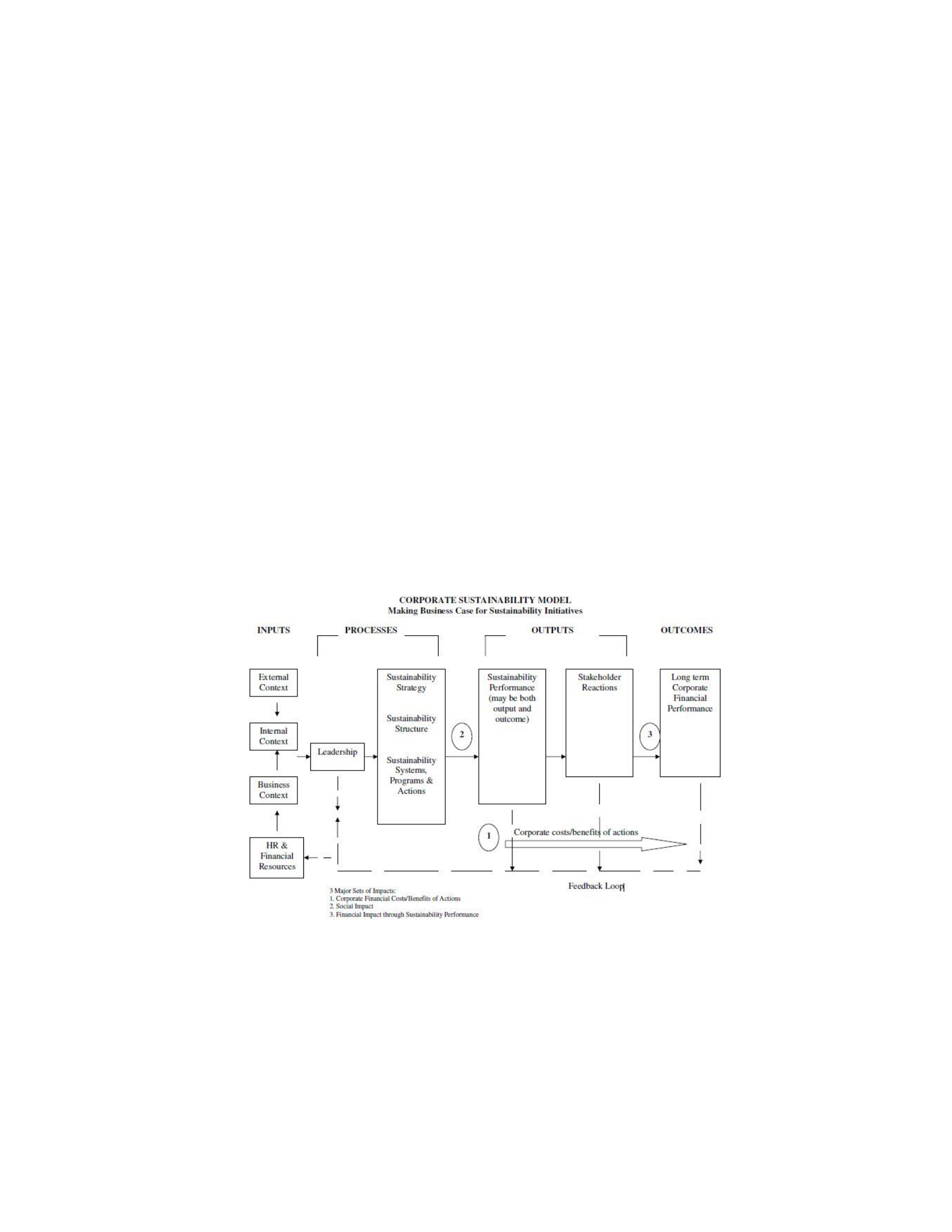
60
investigation to be captured, increase the transparency of the researcher’s interpretation
of the participants’ experiences, strengthen the rigor of the research process, and enhance
the validity of the findings. I used the CSM developed by Epstein (2008) as the major
conceptual framework for this study. The CSM consists of four major parts of 12 driving
factors that provide a systematic approach to understanding and applying sustainability in
an organization (Epstein, 2008). I developed my interview questions according to the
CSM and I analyzed my data collected from interview and document review to explore
the strategies required for Hong Kong hospital leaders to develop and implement
sustainable energy plan in their hospital based on each driving factors described in the
CSM (see Figure 1).
Figure 1. Corporate Sustainability Model developed by Epstein (2008).
For the data analysis process, I used the five phases qualitative data analysis
process suggested by Yin (2014) (a) compiling, (b) disassembling, (c) reassembling, (d)
interpreting, and (e) concluding. In the compiling process, I categorized and sorted the

61
data of this study and labeled the data into specific words, phrases, and sentences. The
second step was to separate the data into a meaningful grouping. The disassembling of
data includes assigning a code to each element in the literature review and conceptual
framework used in this study.
The reassembling process consists of linking the coded materials to identify any
specific pattern and theme in the data by using the computer software NVivo 10. I then
interpreted the patterns and themes identified from the reassembling step, according to
the CSM driving forces, to highlight and explain the findings on how to address my
research question about strategies that could help the Hong Kong hospital leaders to
develop and implement a sustainable energy plan in their hospitals to reduce costs. The
computer software NVivo 10 provided the theme and patterns according to the raw data
collected in the qualitative data collection procedure (Woods, Paulus, Atkins, & Macklin,
2015). The last step in the analysis process was the conclusion. The researcher draws
conclusions according to the findings identified in the whole data analysis process, and
explains how the findings can help the readers to understand the research question (Elo et
al., 2014).
Reliability and Validity
The rigor of method, transparency on the analytical procedures, reliability on the
data collected, and researcher bias are the most controversial parts of the qualitative
research (Noble & Smith, 2015). Reliability is the extent to which another researcher can
repeat the study method at any time, at any place with any other conditions or instruments,
and they should obtain the same findings (Drost, 2011).

62
Dependability is refereeing to the extent that another researcher can repeat the
study when following my study protocol, and the strategies to enhance dependability
include having peers participate in the analysis process, and provide a detailed
description of the research methods (Thomas & Magilvy, 2011). I invited peers to review
my study protocol and make sure another researcher could repeat the study without
showing the participants’ information. Another method to increase the dependability is to
establish a detailed guideline of the research method describing the step by step approach
to the procedure of my study.
I used member checking to increase the credibility of this qualitative study on
how Hong Kong hospitals can develop and implement a sustainable energy program to
improve cost effectiveness. I conducted interviews with five hospitals green committee
chairpersons to obtain the data; participants received the findings and data for their
review and to check to ensure that the content truly reflects their experiences and feelings
(Thomas & Magilvy, 2011).
Triangulation is a tool to enhance credibility of qualitative and it is referred to
increase the trustworthiness of the data collected in a qualitative study by including
multiple resources (Houghton, Casey, Shaw, & Murphy, 2012). In this study on exploring
the strategies necessary for Hong Kong hospitals leaders to develop and implement a
sustainable energy program to reduce costs, I used semistructured interviews consisting
of nine questions related to the conceptual framework of this study.
Transferability is the ability to transfer research findings or methods from one
group to another (Houghton et al., 2012; Thomas & Magilvy, 2011). Strategies to

63
enhance the transferability of a qualitative study include a detailed description of the
accounts of the context, the research methods, examples of raw data, population and
sampling, demographics and geographic boundaries of the study for readers to interpret
(Houghton et al., 2012; Thomas & Magilvy, 2011). To enhance the transferability of my
study, I included a detailed description of the relevant information in the introduction,
research method and design, sampling, data organization, collection, and data analysis
technique of my dissertation (Houghton et al., 2012). For the raw data examples, I
inserted the raw data in Appendix B without identifying the participants’ details to
increase further the transferability of the study.
Confirmability refers to the researcher’s ability to demonstrate that the data
represent the participants’ responses and not the researcher’s biases or viewpoints (Cope,
2014). I included the quotes from my participants in Appendix B without the participants’
identification or details. Including quotes from the participants is a technique to enhance
study confirmability because readers can understand that the conclusion and discussion of
the findings are derived from the raw data collected from the participants (Cope, 2014).
Saturation is a tool used for ensuring that adequate and quality data are collected
to support the study and to ensure that the researchers reach data saturation by collecting
enough information to replicate the study (O’Reilly & Parker, 2012; Walker, 2012). I
tried to include all of the potential targeted participants in my interview who have the
expertise and real life experience on how to develop and implement a sustainable energy
program to improve cost effectiveness, because increasing the number of participants can
help the researcher to reach data saturation (Walker, 2012). However, one target

64
participant did not join my interview because he resigned from his position. Also, I
conducted a document review for the targeted hospitals and ensured there were no
additional findings or data available for exploring my research question to enhance the
data saturation of the study.
Transition and Summary
Section 2 of this proposal includes the criteria for selecting the participants and
the details of the research method and design. I included the supporting documents for
sampling method and the ethical consideration for data collection process in the section.
This section contains the details of data collection instruments, organization techniques,
and analysis strategies. Finally, I present the strategies to enhance the study reliability
and validity in the last part of this section. Section 3 of this study will explain the findings,
implications for social change, recommendation for action, recommendations for further
research, reflections, and the conclusion of my study.

65
Section 3: Application to Professional Practice and Implication for Change
The problem was that the majority of the hospital leaders in Hong Kong did not
implement a sustainable energy program in their hospitals, which induced high energy
consumption costs. I used the research questions of this study to collect qualitative data
through semistructured interviews with the hospital green committee chairpersons who
had successfully implemented a robust sustainable energy program and received
recognition from the local government. I also used a document review to collect relevant
information from the subject hospitals’ official websites for increasing the reliability of
the data quality.
This section of the study contains the results of the interviews with the conclus the
participants who had the best knowledge and experience on developing and
implementing a sustainable energy in Hong Kong public hospitals and from the hospital
document review for data analysis. This section includes an evaluation of the interview
results about the research question. The end of this section contains a conclusion and a
recommendation for future study.
Overview of the Study
The purpose of this qualitative multiple sites case study was to explore the
strategies required for Hong Kong hospital leaders to develop and implement a
sustainable energy plan to save energy costs. Six public hospitals received the Hong
Kong Awards for Environmental Excellence in 2014; I planned to invite all six
chairpersons to my semistructured interviews to achieve data saturation. However, one of
the chairpersons resigned from his previous position and the participant did not reply to

66
my invitation and was not involved in my interviews. Dworkin (2012) suggests that five
to 50 samples are appropriate for a qualitative study; five chairpersons from the hospital
green committee participated in my interviews, and I collected and analyzed the data to
create the themes of this study. The data came from five semistructured interviews with
the chairpersons and a document review of the five public hospitals’ green management
committee, and the study results showed the strategies that the hospital green committee
chairpersons used to successfully develop and implement a sustainable energy program at
their hospitals.
The study findings revealed that to successfully develop and implement a
sustainable energy program in a public hospital, the external and internal driving forces
are crucial factors. The external driving force is the sustainability policy of the local
government, and the internal force includes corporate and hospital green initiatives.
Having a skillful leader is also an important strategy to mobilize staff to comply with and
participate in the sustainable energy program. Findings of this study indicate that strong
leadership skills such as communication skills, influencing tactics, stakeholder
engagement, and a people-centered approach are essential for a hospital leader to
implement a sustainable energy program at a local hospital. Governance and top
management commitment contributed as strong drivers to the implementation and
execution of a sustainable energy program in the hospital. The study findings also
suggested that a sustainable culture could be very helpful to facilitate staff to practice in a
sustainable manner. Capacity-building and knowledge-building are important to enhance
and maintain the sustainability culture in the local public hospital. Finally, performance

67
measures including meeting the key performance indicator, achieving the targeted saving
unit, and receiving awards from nongovernment organizations are effective strategies and
motivators for the hospital to implement the sustainable energy program and evaluate its
effectiveness.
Presentation of the Findings
The research question of this study was: What are the strategies for hospital
leaders to develop and implement a sustainable energy program to reduce energy costs?
Data sources included semistructured interviews with the hospital green committee
chairpersons and a document review of the five public hospitals that had received the
Hong Kong Awards for Environmental Excellence 2014. The five chairpersons of the
green committees were the hospital general manager that led the hospital to develop and
implement the sustainable energy program. All of the participants must have had more
than 10 years management and administration experience to be the hospital general
manager, according to the employment requirement of the Hong Kong Hospital Authority.
The subject hospitals included acute and convalescent settings, and the size of the
hospital ranged from 300 to 1,800 beds. Participants received a draft of the interview
summary for members’ checking purpose, and I reached data saturation after the fourth
interview with the participants.
Several themes emerged from the data analysis process. The leader of an
organization should introduce corporate sustainability measures to enhance an
organization’s competitive edge and to sustain it in both the short and long-term (Bansal
& DesJardine, 2014). Several themes emerged from the data analysis procedure across all

68
participants: (a) external and internal driving forces, (b) leadership, (c) governance, (d)
sustainable culture building, and (e) performance measures. According to Boulle (2012),
strong corporate sustainability organizations have few important attributes of sustainable
measures, including strong awareness, robust policy, and effective investment in
sustainable equipment. The findings of this study revealed that all of the participants’
hospitals in this study demonstrated a strong level of corporate sustainability. Table 2
shows the themes that emerged and shows that the leaders of Hong Kong nonprofit public
hospitals require a multicomponent strategy to effectively lead their hospitals in
achieving the sustainable energy initiatives when dealing with cultural and organizational
considerations.
Table 2
Frequency of Primary Themes from Data Collected from Semistructured Interviews
Themes
N
% of frequency of occurrence
Internal and external driving forces
14
22.22%
Leadership
23
36.5%
Governance
9
14.29%
Building sustainable culture
8
12.7%
Performance measure
9
14.29%
Emergent Theme 1: Internal and External Driving Forces
All five participants pointed out that external and internal driving forces were
essential elements to develop and implement a sustainable energy program in their
hospitals. The government policies and guidelines on energy conservation and
greenhouse gas emissions are the fundamental measures that a public hospital should

69
follow. Government regulations such as energy saving targets and carbon dioxide
reduction provided a clear framework for all subject hospitals to establish a direction and
action plan for their energy saving initiatives. Three documents from the subject hospital
green committees revealed that government regulation on environmental protection was
one of the motives for them to introduce sustainable programs. The findings confirmed
the previous studies that government policy is an effective and essential driver to
facilitate an organization to implement and outperform in the corporate sustainability
measures and activities (Dobbs, Dobbs, van Staden, & van Staden, 2016; Epstein &
Buhovac, 2014; Ioannou & Serafeim, 2014). Two of the participants revealed that the
recent change in stakeholder awareness and expectations of environmental protection was
another external driving force to facilitate their hospitals to implement a sustainable
energy program, which provided findings similar to another study on the external drivers
on corporate sustainability (Lozano, 2015; Naylor & Appleby, 2013).
The hospital’s goal in the sustainable energy direction was an external driving
force for the hospitals to develop and implement a sustainable energy program. The Hong
Kong Hospital Authority, a statutory body providing public hospitals and related services
to the citizens of Hong Kong, governs all subject hospitals (Hospital Authority Annual
2014). All participants pointed out that corporate initiatives were a strong internal driving
force to encourage them in developing and implementing a sustainable energy program.
With a clear mandate and support from the corporate level, all of the participants pointed
out that the hospital can set a strategy and position on energy savings, which was another
main driving force for their energy saving activities. All of the subject hospitals have a

70
clear energy saving policy or statement posted on their website, which further strengthens
the hospital’s direction on the green measures as an important driving force for them to
develop and implement a sustainable energy program. The findings from the interviews
on internal driving forces confirmed the current literature that an organizational goal and
strategy on corporate sustainability is a strong internal driving force to develop and
implement a successful sustainable energy program (Caprar & Neville, 2012; Dobbs et al.,
2016; Lozano, 2015; Robinson & Boulle, 2012).
Four participants pointed out that financial support from the corporate level was
crucial to invest in sustainable equipment in their hospitals because they have not funded
their regular operation costs, and hospitals have difficulty providing extra budgets for
such substantial investments. The findings from these four participants added to the
current knowledge on corporate sustainability because previous studies on private or for-
profit organizations view financial support as an external driving force that can create
financial benefits or return on investment (Ameer & Othman, 2012; McGain & Naylor,
2014; Naylor & Appleby, 2013). However, local public hospitals treated the financial
support from the corporation as an essential resource allocation to comply with the
hospitals’ sustainable energy goal. All public hospitals in Hong Kong have received
subsidies from the Hong Kong Government, and additional resources require a
submission of an annual resource allocation plan with a nonmonetary deliverable set by
the government, which is different from the for-profit or private hospitals.
The CSM by Epstein 2008 was the conceptual framework for this study. The
CSM consists of input and output, and this study’s findings on the internal and external

71
driving forces echoed the theories suggested by the CSM in the internal and external
context parts. The CSM identified a few important external and internal contexts as input
for successfully implementing corporate sustainability practices in an organization
(Epstein, 2008). Internal contexts are company goals and mission of corporate
sustainability, and external contexts are government corporate sustainability or
environmental policies and regulations. The findings of this study on the internal and
external drivers confirmed that hospital leaders could also use CSM as a conceptual
framework to introduce a sustainable energy program in Hong Kong public hospitals.
Emergent Theme 2: Leadership
Current literature on corporate sustainability suggested that good leaders could
help an organization to successfully implement sustainable measures (Eccles, Ioannou, &
Serafeim, 2014; Strand, 2014). Other studies have also identified leadership skills as an
essential element to build up a sustainable culture and to motivate staff to obtain a good
outcome on green activities (Galpin et al., 2015; Whittington, 2012). The findings of this
study confirmed that good leadership skills, including communication skills, influencing
tactics, stakeholder engagement, and a people-centered approach, could help the hospitals
to implement a sustainable energy program and to obtain ideal performance outcomes.
Communication skills. Business studies support that effective communication is
one of the most important for leaders to achieve the organization’s goals (Robles, 2012;
Phelan & Sharpley, 2012). Study findings from four participants noted that they used
effective communication skills to facilitate the implementation of the sustainable energy
program. The sustainable policy or hospital goal on corporate sustainability was well

72
articulated in all levels of staff using both verbal and nonverbal forms of communication.
Presentations and sharing sessions were conducted with the top management and
frontline staff. Leaders of the green committee presented the sustainable program
outcomes at the management meetings to further encourage staff to participate in in the
hospital energy saving activities. The participants listened to staff concerns and ideas on
new energy measures and provided feedback and support regarding their concerns. The
subject hospitals sent posters, electronic mail, and printed materials to all staff to
encourage them to practice in a sustainable energy manner. The study findings of the four
participants confirmed the current studies on business practices on the use of good
communication skills to lead the staff to achieve the company’s goal.
Influencing tactics. Successful leaders can use influencing tactics to mobilize
staff to comply with the company goal and mission (Gregoire & Arendt, 2014). All five
participants pointed out that they used different influencing tactics to mobilize their staff
to comply with the hospital’s goal and mission in the energy saving program. Instead of
using a top-down approach, four participants used a win-win approach to facilitate the
implementation of the sustainable energy program. Staff received benefits/incentives for
complying with the energy saving measures. For example, one of the hospitals introduced
a new material for their uniforms to reduce the energy used to clean and dry them, and
this measure can also help the hospital to solve the uniform shortage and supply problem
due to the long cleaning process. The use of influencing tactics on achieving hospital
energy saving initiatives in all of the study’s hospitals confirmed that the use of
influencing skills could help the organization achieve a company goal. Two participants

73
used the influencing tactics of creating peer pressure among staff by reporting the
performance outcome in the senior meetings and the staff forum. Using peer pressure to
enhance performance in these two participant hospitals confirmed the current study on
healthcare performance management (Zidarov, Sicotte, Menon, Hallé, & Poissant, 2016).
Stakeholder engagement. Recent studies on how stakeholder engagement can
help the leaders to achieve the organization’s goals confirmed that stakeholder
engagement is crucial in a successful business strategy and activity implementation. The
findings of this study also echoed the current studies on stakeholder engagement. All five
participants pointed out that stakeholder or staff engagement is one of the most important
steps to facilitate the early stage of sustainable energy program implementation, and
motivate and mobilize staff to practice energy saving initiatives. The participants also
pointed out that it was important to identify the right person or leaders to join the green
committee to facilitate the change in practices in the hospital. All of the participants
suggested that engaging stakeholders from different levels is the key to implementing
such administrative initiatives in a large hospital with different professional staffs,
suppliers, and patients. Three participants revealed that they introduced a large-scale
stakeholder engagement program in their hospitals from different staff levels,
nongovernment organizations, and patients to facilitate the change in practices. For
example, one participant hospital recruited more than 140 environmental protection
ambassadors from all departments to promote and encourage other staff to comply with
the hospital mission in energy savings. Document reviews of four subject hospitals
suggested that their efforts are injected into stakeholder engagements. These three

74
documents included the key stakeholders on their green committee, and others
nongovernment organizations and patient groups in their sustainable activities.
Transformational leaders. The study identified transformational leadership as
helping the company to successfully adopt the change in practice in green measures
(Metcalf & Benn, 2013). Transformational leadership is a leadership style that can lead
the followers to successfully achieve a company goal by leading by example, inspiring
followers, using a people-oriented approach, and growing with the followers (Choudhary,
Akhtar, & Zaheer, 2013). The people-centered approach is one of the major organization
values of the Hong Kong Hospital Authority. Four participants pointed out that a people-
centered approach was used to implement the sustainable energy program in their
hospitals. Four participants pointed out that one of their main leadership roles was to
inspire their staff in the development of a sustainable energy program and grow with the
staff on the hospital’s green journey. The findings of this study confirmed the current
studies that a transformational leader’s style is favorable to help the company to achieve
the goal of corporate sustainability.
Leadership belongs to the process part of the CSM. The supporting literature from
the conceptual framework focused on how different leadership types, such as a
transformational leader, can help the company to build up sustainable culture, instead of
which specific leadership skill is required to perform the task. The CSM suggested that a
transformational leader is a more effective leadership style to help the organization to
achieve their goal in corporate sustainability (Epstein, 2008). However, the CSM did not
elaborate in detail on which leadership skills of transformational leadership styles are

75
required in the framework and supporting literature to implement corporate sustainability
successfully. The findings of this study provided additional knowledge on which specific
leadership skills are necessary for a Hong Kong public hospital to develop and implement
a sustainable energy program to reduce energy costs. Strong communication skills, good
influencing tactics, and stakeholders’ engagement are the main leadership skills that
hospital leaders can apply to achieve their goal in a sustainable energy program.
Emergent Theme 3: Governance
One study showed that a company with strong corporate governance can obtain
good performance in corporate sustainability activities (Jo & Harjoto, 2012). An
Australian study suggested that good governance structures put in place to ensure that
senior management is involved in sustainability strategy development can assist the
company to obtain benefits (Klettner et al., 2014). The findings of this study confirmed
the current studies on how good governance can be an effective approach to facilitate the
development and implementation of the sustainable energy program at local public
hospitals. All five participants pointed out that top management commitment and the
involvement of relevant hospital leaders with the green committee were helpful in
developing and implementing sustainable activities in their hospitals. The hospitals’
leaders, with top management commitment, can deliver the hospitals’ vision on
sustainability to their staff at different levels. Also, these hospital leaders can influence
their subordinates to practice the hospital energy saving programs. Five documents
collected from the hospital green committee revealed that these hospitals have a robust
governance structure at local hospital or corporate level with highest management

76
commitments and involvements. The hospital general managers were all involved as the
chairperson, and these hospital green committees are under the supervision of a higher
governance structure of the hospital led by the hospital chief executive to drive the
development and implementation of such green activities including the sustainable
energy program at their hospitals.
Studies suggested that the top-down approach is an effective strategy to facilitate
change in sustainable measures (Asif, Searcy, Zutshi, & Fisscher, 2013; Lozano, 2013).
However, all five participants pointed out that although they have a good governance
structure for the hospital green committee, the top-down approach was not the major
strategy used for the implementation of sustainable energy initiatives at their hospitals;
instead, leadership skills with strong influencing tactics and communication skills are
frequently applied for non-clinical services at a public hospital in Hong Kong. The
conceptual framework of this study, the CSM, also suggested that a top-down governance
initiative could be an effective approach for implementation of sustainable measures in an
organization (Epstein, 2008). The findings of this study supported the CSM on the
importance of having a strong governance structure on corporate sustainability initiatives,
but leaders of local public hospitals mainly applied leadership skills to facilitate the
development and implementation of the sustainable energy program at their hospitals.
Emergent Theme 4: Building sustainable culture
Five hospital leaders in the study pointed out that one of the steps to ensure the
successful implementation of a sustainable energy program was to build up and maintain
a strong sustainable culture in their hospitals. A leader can help an organization to

77
achieve its corporate sustainability goal by building up a strong organizational culture
(Strand, 2014). Organizational culture is the norm and the way the staff thinks and acts in
the company (Liu, Li, Zhu, Cai, & Wang, 2014). Another study showed that an
organization with strong corporate sustainability culture can outperform in sustainable
measures and is more capable of obtaining benefits for the company (Engert &
Baumgartner, 2016). To enhance the sustainable awareness, all five participants
introduced a series of culture-building activities in their hospitals including a training
program for new staff, regular knowledge sharing, a promotion carnival, and energy
saving competition programs. To strengthen the sustainable culture, three of the subject
hospitals incorporated corporate sustainability into their hospital strategy. However, two
participants reported that the patient-centered culture was one of the barriers for them to
build up a sustainable culture because two cultures may have contradictions in a hospital
that operates 24 hours a day and seven days a week. The findings of this study confirmed
the current studies on the effect of building a strong sustainable organizational culture as
a strategy to help a company to implement and outperform in corporate sustainability
measures.
The findings of this study suggested that leaders of the hospital green committees
spent efforts to build up a sustainable culture in their hospitals by introducing various
capacity building activities, and intergraded it into the hospital strategy to facilitate the
development and implementation of sustainable measures, including an energy saving
program. The findings on sustainable culture-building also confirmed the CSM that
integrating sustainability into organizational culture can help formulate and implement

78
related activities and achieve desirable outcomes in corporate sustainability initiatives
(Epstein, 2008).
Emergent Theme 5: Performance measure
Implementing sustainability measures has resource implications such as
equipment investments (Papagiannakis, Voudouris, & Lioukas, 2014). An effective
evaluation tool or method can help the leaders to evaluate the success of the sustainable
activities (Sahamir & Zakaria, 2014). A good assessment tool can also help the
organization to determine the insufficiency of the current sustainable measures and to
formulate an improvement plan (Epstein & Buhovac, 2014). The findings of this study
revealed that performance measures of a sustainable energy program could help the
hospital to engage staff, to develop an improvement plan, and to further strengthen
sustainable culture in their hospitals. All of the subject hospitals used various
performance measures to evaluate their programs’ effectiveness. Two of the common
approaches used were awards from other recognized green organizations and
performance outcomes set by the hospital green committee for each program. Four
participants pointed out that they regularly present the sustainable evaluation results to
both frontline staff and management to enhance stakeholders’ awareness and to formulate
an improvement plan. Two participants said that by comparing the results to their
previous performance across departments, frontline managers and staff increased
compliance in the hospital sustainable energy initiatives due to the effect of peer pressure.
Three hospital leaders said the awards from other recognized green organizations were
good encouragement for strengthening the sustainable culture and for recognizing their

79
efforts on the sustainability programs. Four participants pointed out that meeting the
energy saving targets set by the green committee and report in the hospital management
board is a mandate for the program initiated by the corporate level management.
The findings of this study confirmed the current literature on the functions and
benefits of applying performance measures or assessments on the sustainable programs
include monitoring, controlling, evaluating, and improving current sustainable practices
in an organization (Epstein & Buhovac, 2014). The findings of this study also provided
additional knowledge on the current corporate sustainability practices in the public
hospitals. The authors of a study reviewed 101 studies on sustainability performance
measurements, and found that private organizations used mainly financial benefits to
assess their company performance on corporate sustainability (Goyal, Rahman, & Kazmi,
2013). However, according to the findings of this study, Hong Kong public hospital
leaders did not assess their sustainable measures performance with financial achievement.
Instead, they used non-monetary indicators such as awards from other green
organizations and the energy saving unit of each program set by the hospital green
committee for performance evaluation. According to the participants of this study, thery
pointed out that sustainable energy performance measures can be an effective influencing
tool to motivate staff to improve performance in their hospitals because departments and
dvisions are comparing their results to each other. Also, the findings of this study on
performance measures aligned with the conceptual framework in this study that leaders
can use it as a driver to introduce, execute, and outperform in sustainability business
(Epstein, 2008).

80
Application to Professional Practice
The results of this study may serve to the hospital leaders in the public sector for
filling the knowledge gap in which strategies could help the local public hospital to
develop and implement a sustainable energy program. The findings of this study provide
additional references for Hong Kong public hospital leaders to establish a strategy to
handle the persistent problem of the rate of high energy consumption among other Hong
Kong public hospitals. By analyzing the interview data and document reviews of the five
local hospitals who have received government recognitions, local hospital leaders can
explore the external and internal driving forces, apply proper leadership skills and
governance structure, build a sustainable culture, and introduce the performance
measures when developing and implementing a sustainable energy program at their
hospitals. According to a review study, an organization needs a conceptual framework
that the management can rely on to develop, implement, control, and improve corporate
sustainability strategies to obtain desirable outcomes (Baumgartner, 2014). All of the
participants’ hospitals have a clear framework or guideline on corporate sustainability
measures committed by strategic level management. The hospital green committee can
formulate strategies and action plans according to the framework for the staff to comply
with the requirements. All participants used the external and internal driving forces to
initiate and sustain their sustainable energy program. Studies suggested that a lack of
drivers to change is one of the barriers to corporate sustainability development (Lozano,
2013). Also, as a government subsidiary organization, government policy, hospital

81
support, and public expectations are the important drivers for adopting a sustainable
practice.
All participants used both soft and hard skills to facilitate the development and
implementation of the sustainable program. Galpin and Lee Whittington (2012)
suggested that a transformational leadership approach is more effective to help the
company to implement change to a sustainable practice. One of the main strategies used
by the participants in this study is to apply transformational leadership skills to influence
the change in practice in the hospitals, and leadership skills included good
communication, influencing tactics, stakeholder engagement, and a people-centered
approach. Lozano (2013) pointed out that changing existing company culture is a barrier
to the implementation of corporate sustainability. All participants observed a culture
change throughout their green journey by injecting efforts in building a corporate
sustainability culture in their hospitals. Measures to build a sustainable culture included
provide knowledge sharing and training, conducting promotion activities, and distributing
printed and electronic education materials to the staff.
The literature shows that a company can implement performance measures to
manage and to improve current sustainability achievements (Epstein & Buhovac, 2014;
Searcy, 2012). All of the participants in this study observed positive effects after
introducing performance measures as one of the strategies for their corporate
sustainability management. Increased compliance in the sustainable program
strengthened the sustainable culture, and enhanced motivation on sustainable initiatives

82
are the positive effects resulting from introducing performance measures such as targets
set by the hospital green committee and awards from other green organizations.
Implication for Social Change
Society may benefit from the results of my study because Hong Kong hospital
energy consumption is reaching 100 million Hong Kong dollars annually (Tong & Fong,
2014). The Hong Kong Government is funding approximately 50 billion Hong Kong
dollars to all 42 public hospitals (Hong Kong Hospital Authority, 2014). According to
current studies on sustainable energy, implementing a sustainable energy program at the
hospitals can reduce energy consumption by 20% (Naylor & Appleby, 2013). Also, the
energy cost is equivalent to around 1-3% of hospitals’ operating costs (McGain & Naylor,
2014). As a government subsidiary, public hospitals provide a quality healthcare service
for more than 90% of the population. Thus, proper use of public money can be one of
their challenges. Therefore, the findings of this study are the analysis results of five local
public hospitals that successfully implemented a sustainable energy program and received
recognition from the government body. The findings of this study can provide additional
knowledge to existing frameworks or guidelines for the development and management of
sustainability business in the hospital. The results add value to the existing CSM by
Epstein by incorporating culture and organizational considerations. Hospital leaders can
use these findings to develop and implement the sustainable program and to reduce
energy consumption and reallocate the resources to other patient service quality
improvement initiatives (McGain & Naylor, 2014).

83
Improvement in environmental pollution is another implication of this study for
social change. Hospitals are one of the most polluting industries because of their
operating model of 24 hours a day and seven days a week (Alemayehu, Alemayehu, &
Assefa, 2015). Environmental pollution causes climate change, which further increases
the incidence of other infectious, respiratory, and cardiovascular diseases that further
worsen the financial burden of our healthcare system (Watts et al., 2015). Air pollution in
Hong Kong caused more than 3,000 premature deaths and a monetary loss of 39 billion
Hong Kong dollars in 2012 (South China Morning Post, 2015). Local hospital leaders can
implement measures according to the added knowledge to reduce carbon emissions. The
reduction in environmental pollution can further reduce the negative health effects caused
by climate change, which can alleviate the financial burden of health services (Thompson
et al., 2013; Woodward et al., 2014).
Recommendation for Further Action
The Hong Kong Hospital Authority establishes its annual plan every year
according to the strategic intent suggestions in the 5 years strategic plan. The annual plan
includes well-written strategic intentions and program details for all Hong Kong public
hospitals to follow. Hospital activities’ development and implementation are following
the strategic intents set by the corporate management. Studies and findings of this study
identified that strategic or top management commitment is the key to success in corporate
sustainability development (Chen & Jermias, 2014; Galpin et al., 2015; Goyal, Rahman,
& Kazmi, 2013; Klettner et al., 2014). To formulate and implement a sustainable energy
program in all public hospitals, strategic or corporate level management should consider

84
incorporating the corporate sustainability initiatives into their annual plan. Also,
corporate level management should consider adopting a corporate sustainability
conceptual framework to facilitate the development because the study and the findings of
this study suggest that hospitals that have good development and performance of
sustainable energy measures adopted a clear framework and guideline for sustainable
practice (Baumgartner, 2014).
Strategic and hospital management levels should consider formulating a robust
governance structure on corporate sustainability management and development. A
governance structure that is engaged with all stakeholders can help the hospitals in Hong
Kong to formulate strategies and action plans in a multidisciplinary hospital setting. Also,
due to a collaboration culture in Hong Kong public hospitals, a governance structure on
corporate sustainability can further enhance the employee compliance with the hospital
sustainable energy activities and initiatives. However, instead of focusing on a top-down
approach to mobilizing staff to comply with sustainable energy measures, hospital leaders
should apply soft skills such as good communication skills, influencing tactics,
stakeholder engagement, and a people-centered approach. The findings of this study
showed that the leaders of the subject hospitals frequently used a more transformational
leadership style to accomplish the hospital sustainable energy goals. Being people-
centered is one of the organizational values of the Hong Kong Hospital Authority
(Hospital Authority Annual Report, 2013), and a transformational leader uses a people-
oriented strategy to help the company to achieve its goal (Choudhary et al., 2013).
Hospital management can consider providing training on leadership to the hospital green

85
committee members to strengthen their competency in managing a sustainable energy
program at their hospitals.
Lozano (2015) noted that a leader could build a culture of corporate sustainability
in the organization to facilitate implementation and to obtain a desirable performance in
the sustainability business. The local hospital management may consider introducing
measures to build up, enhance, and maintain a strong sustainable culture for the
sustainable energy management. Chairpersons of the subject hospitals implemented a
series of programs to enhance the sustainable culture in their hospitals. Measures have
included staff competency-building, exchange of site visits, promotional activities, and
internal and external energy saving competitions. The participants pointed out that these
awareness-building activities can help the hospitals to incorporate the sustainability
mindset into the hospital culture and drive the staff to change in practice. However, as a
public hospital with a high service workload and limited budget, to ensure these programs
or activities are sustainable, leaders should consider the resources and service provision
implications before introducing the culture-building activities.
Management of local hospitals may introduce performance measures to their
sustainable activities for monitoring, controlling, evaluating, and improving their purpose.
The participants of the study hospitals used performance to find out any insufficiency in
their sustainable energy program and to formulate a future improvement plan. Also, these
hospitals used the performance measures as their strategies to further strengthen the
sustainable culture in their hospitals. Hospital green committees can set the specific goals
for each sustainable energy program and report to the management and frontline staff.

86
The participants reported that staff increased compliance by comparing their
performances to other departments. Hospital green committees can participate in energy
savings competitions organized by other recognized green organizations such as the
Hong Kong Awards for Environmental Excellence by the government sector.
Encouragement and achievement in these awards can enhance staff motivation and
participation in the hospital energy saving initiatives. However, none of the hospital
leaders in this study used monetary indicators for measuring their performance because
financial benefits for the hospital is not a high priority task in the public sector.
Recommendation for Further Research
The public hospitals may consider conducting a study on the benefits of
implementing a sustainable energy program on patient service quality. At a public
hospital, the participants used non-monetary indicators to measure the effectiveness of
their sustainable energy program. Ensuring quality and safe service is one of the major
strategic intents in the 2013 Hospital Annual Plan. Leaders of local public hospitals can
investigate the improvements on service quality by reinvesting the money saved from the
sustainable energy programs. Service quality improvement may have resource
implications, for example, the employment of additional staff, procurement of new drugs,
and advancement on new healthcare devices (Hussey, Wertheimer, & Mehrotra, 2013). A
future study on how a sustainable energy program can benefit patient service quality may
further encourage local hospital leaders to adopt a sustainable energy program at their
hospitals.

87
Hong Kong public hospital leaders may consider conducting a study on the
development or adoption of a conceptual framework that fits the local healthcare context.
A sustainability framework will help the hospital leaders formulate and implement a
successful sustainable energy program. However, currently, the majority of local public
hospitals do not have a clear sustainable framework to follow. Researchers may
collaborate with local hospitals leaders to design a framework that can include the culture
and organizational difference into account. The NHS developed a sustainable route map
that provides direction for clinical leaders in achieving successful guideline
implementation (Higuchi, Downey, Davies, Bajnok, & Waggott, 2013). Hong Kong
public hospitals leaders may consider studying how this English framework can fit the
local healthcare setting.
Reflections
Before beginning a healthcare management doctorate in the business
administration program, I have been working as a clinician in the public sector for more
than 10 years. I am also involved in other community health promotion and policy-
making projects with the local government. One of my main duties is to conduct clinical
and community research or service evaluation projects. Until I started this degree, I
discovered that there is another world in healthcare research that I had never noticed
before. The knowledge and skills in healthcare management research helps me to plan,
manage, monitor, and evaluate the daily clinical and administration duties. Besides, by
understanding healthcare management knowledge, I can align all of my clinical projects
or service developments to the corporate and hospital level strategic intentions. This

88
ability is very helpful for me to accomplish my plan and project according to the hospital
and corporate directions.
Another valuable thing I learned from this doctorate is the academic skill and
knowledge that was applied in writing my dissertation. Starting from the literature review,
writing the proposal, and getting approval from the committee members and IRB, these
experiences are very important for my future career development. Although it was a
difficult journey for me, I overcame these difficulties with the support of my teacher,
advisors, friends, and family. I finally completed the requirements for a doctoral student
and can now apply the high level academic skills and knowledge learned in this program
to further enhance my capacity in pursuing my career in the Hong Kong healthcare
industry.
Conclusion
Hospitals are one of the most polluting industries. The 24 hours-a-day and seven-
days-a-week operation model consumes a high level of energy. Hong Kong public
hospitals are facing a high energy consumption problem. Studies have shown that
introducing a sustainable energy program can help hospitals to save around 20% of its
energy consumption. Hospital leaders in Hong Kong may consider looking for strategies
to implement a sustainable energy program to reduce costs.
The findings of this study show that local public hospitals can successfully
implement a sustainable energy program with a multicomponent strategy approach. The
highest level of management should consider adopting a corporate sustainability
framework to formulate a strategy and develop programs. A robust governance structure

89
with the commitment of the top management and engagement of all major stakeholders
can help the hospital to deliver the green message and to achieve a desirable performance.
Leadership skills such as good communication techniques, influencing tactics,
stakeholder engagement methods, and a people-centered approach are promising for
developing and implementing a sustainable energy program at local public hospitals.
Hospital leaders should introduce culture-building activities as one of the strategies for
developing and implementing sustainable energy programs. It is important to incorporate
the sustainability culture into the organizational culture for sustainability in the long term.
Finally, performance measures are crucial to the development and implementation of a
sustainable energy program in local public hospitals. Hospital leaders may consider
introducing performance indicators for their initiatives to obtain good compliance with
and ideal performance of their sustainable energy programs.

90
References
Alam, M. S., & Kabir, N. (2013). Economic growth and environmental sustainability:
empirical evidence from East and South-East Asia. International Journal of
Economics and Finance, 5(2), 86-97. doi:10.5539/ijef.v5n2p86
Alemayehu, T., Alemayehu, W., & Assefa, N. (2015). Community risk perception on
healthcare wastes in hospitals and health centre’s of Eastern Ethiopia. Sciences
Journal of Public Health, 3(1), 37-43. doi:10.11648/j.sjph.20150301.17
Altizer, S., Ostfeld, R. S., Johnson, P. T., Kutz, S., & Harvell, C. D. (2013). Climate
change and infectious diseases: from evidence to a predictive framework. Science,
341(6145), 514-519. doi:10.1126/science.1239401
Ameer, R., & Othman, R. (2012). Sustainability practices and corporate financial
performance: A study based on the top global corporations. Journal of Business
Ethics, 108, 61-79. doi:10.1007/s10951-011-1063-y
American Council for an Energy-Efficient Economy. (2012). Energy efficiency programs.
Retrieved from http://aceee.org/portal/programs
Ando, H., Cousins, R., & Young, C. (2014). Achieving saturation in thematic analysis:
Development and refinement of a codebook 1, 2, 3. Comprehensive Psychology,
3(1), 1-7. doi:10.2466/03.CP.3.4
Ardley, B. (2011). Marketing theory and critical phenomenology: Exploring the human
side of management practice. Marketing Intelligence & Planning, 29, 628-642.
doi:10.1108/02634501111178668

91
Asif, M., Searcy, C., Zutshi, A., & Fisscher, O. A. (2013). An integrated management
systems approach to corporate social responsibility. Journal of Cleaner
Production, 56, 7-17. doi:10.1016/j.jclepro.2011.10.034
Bansal, P., & DesJardine, M. R. (2014). Business sustainability: It is about time.
Strategic Organization, 12(1), 70-78. doi:10.1177/1476127013520265
Barna, S., Goodman, B., & Mortimer, F. (2012). The health effects of climate change:
What does a nurse need to know? Nurse Education Today, 32, 765-771.
doi:10.1016/j.nedt.2012.05.012
Barnes, C. S., Alexis, N. E., Bernstein, J. A., Cohn, J. R., Demain, J. G., Horner, E., ... &
Phipatanakul, W. (2013). Climate change and our environment: the effect on
respiratory and allergic disease. The Journal of Allergy and Clinical Immunology:
In Practice, 1(2), 137-141. doi:10.1016/j.jaip.2012.07.002
Baumgartner, R. J. (2014). Managing corporate sustainability and CSR: A Conceptual
framework combining values, strategies and instruments contributing to
sustainable development. Corporate Social Responsibility and Environmental
Management, 21, 258-271. doi:10.1002/csr.1336
Beare, D., Buslovich, R., & Searcy, C. (2014). Linkages between corporate sustainability
reporting and public policy. Corporate Social Responsibility and Environmental
Management, 21, 336-350. doi:10.1002/csr.1323
Belmont Report. (2014). U.S. Department of Health & Human Services. Retrieved from
http://www.hhs.gov/ohrp/humansubjects/guidance/belmont.html#xethical

92
Berwick, D. M., & Hackbarth, A. D. (2012). Eliminating waste in US health care. JAMA,
307(14), 1513-1516. doi:10.1001/jama.2012.362
Bircher J. (2005). Towards a dynamic definition of health and disease. Med. Health Care
Philos, 8, 335-41
Blass, A. P., da Costa, S. E. G., de Lima, E. P., & Borges, L. A. (2015). The
measurement of environmental performance in hospitals: A systematic review of
literature. In Sustainable Operations Management (pp. 75-102). Springer
International Publishing. doi:10.1007/978-3-319-14002-5_5
Bond, S., & Perrett, G. (2012). The key drivers and barriers to the sustainable
development of commercial property in New Zealand. Journal of Sustainable
Real Estate, 4(1), 48-77. Retrieved from http://www.josre.org/
Borkowski, S. C., Welsh, M. J., & Wentzel, K. (2012). Sustainability reporting at
Johnson & Johnson: A case study using content analysis. International Journal of
Business Insights & Transformation, 4, 96-10. doi:0.2139/ssrn.1435030
Burton, I. (1987). Report on Reports: Our common future: The world commission on
environment and development. Environment: Science and Policy for Sustainable
Development, 29(5), 25-29. doi:10.1080/00139157.1987.9928891
Butcher, L. (2014). Harnessing the power of sustainability. Energy-efficient hospitals
generate big savings and healthier communities. Trustee: The Journal for
Hospital Governing Boards, 67(3), 10-14. Retrieved from
http://www.trusteemag.com/

93
Butler, J. B., Henderson, S. C., & Raiborn, C. (2011). Sustainability and the balanced
scorecard. Management Accounting Quarterly, 12(2), 1-10. Retrieved from
http://www.imanet.org/resources-publications/management-accounting-quarterly
Calabrese, A., Costa, R., Menichini, T., Rosati, F., & Sanfelice, G. (2013). Turning
corporate social responsibility‐driven opportunities in competitive advantages: A
two‐dimensional model. Knowledge and Process Management, 20(1), 50-58.
doi:10.1002/kpm.1401
Caprar, D. V., & Neville, B. A. (2012). “Norming” and “Conforming”: Integrating
cultural and institutional explanations for sustainability adoption in business.
Journal of Business Ethics, 110, 231-245. doi:10.1007/s10551-012-1424-1
Chabowski, B. R., Mena, J. A. and Gonzalez-Padron, T.L. (2011). The structure of
sustainability research in marketing, 1958-2008: a basis for future research
opportunities. Journal of the Academy of Marketing Science, 39(1). 55-70.
doi:10.1007/s11747-010-0212-7
Chan, M. C., Watson, J., & Woodliff, D. (2014). Corporate governance quality and CSR
disclosures. Journal of Business Ethics, 125(1), 59-73. doi:10.1007/s10551-013-
1887-8
Charlesworth, A., Gray, A., Pencheon, D., & Stern, N. (2011). Assessing the health
benefits of tackling climate change. British Medical Journal 343(19), d6520-
d6520. doi:10.1136/bmj.d6520
Charlesworth, K. E., Ray, S., Head, F., & Pencheon, D. (2012). Developing an
environmentally sustainable NHS: outcomes of implementing an educational

94
intervention on sustainable health care with UK public health registrars. New
South Wales Public Health Bulletin, 23(2), 27-30. doi:10.1071/NB11018
Chen, H., Hailey, D., Wang, N., & Yu, P. (2014). A review of data quality assessment
methods for public health information systems. International Journal of
Environmental Research and Public Health, 11, 5170-5207.
doi:10.3390/ijerph110505170
Chen , Y., & Jermias, J. (2014). Business strategy, executive compensation and firm
performance. Accounting & Finance, 54(1), 113-134. doi:10.1111/j.1467-
629X.2012.00498.x
Choi, S., & Ng, A. (2011). Environmental and economic dimensions of sustainability and
price effects on consumer responses. Journal of Business Ethics, 104, 269-282.
doi:10.1007/s10551-011-0908-8
Choudhary, A. I., Akhtar, S. A., & Zaheer, A. (2013). Impact of transformational and
servant leadership on organizational performance: A comparative analysis.
Journal of Business Ethics, 116, 433-440. doi:10.1007/s10551-012-1470-8
Christiansen, Ó. (2011). Rethinking “quality” by classic grounded theory. International
Journal of Quality and Service Sciences, 3, 199-210.
doi:10.1108/17566691111146096
Chung, J. W., & Meltzer, D. O. (2009). Estimate of the carbon footprint of the US health
care sector. Journal of the American Medical Association, 302, 1970-1972.
doi:10.1001/jama.2009.1610

95
Cope, D. G. (2014. Methods and meanings: credibility and trustworthiness of qualitative
research. Oncology Nursing Forum, 41(1), 89-91. doi:10.1188/14.ONF.89-91
Crilly, D. (2011). Predicting stakeholder orientation in the multinational enterprise: A
mid-range theory. Journal of International Business Studies, 42, 694-717.
doi:10.1057/jibs.2010.57
Crowe, S., Cresswell, K., Robertson, A., Huby, G., Avery, A., & Sheikh, A. (2011). The
case study approach. BMC Medical Research Methodology, 11(1), 100.
doi:10.1186/1471-2288-11-100
Dall, T. M., Gallo, P. D., Chakrabarti, R., West, T., Semilla, A. P., & Storm, M. V.
(2013). An aging population and growing disease burden will require alarge and
specialized health care workforce by 2025. Health Affairs, 32. 2013-2020.
doi:10.1377/hlthaff.2013.0714
Denney, A. S., & Tewksbury, R. (2013). How to write a literature review. Journal of
Criminal Justice Education, 24, 218-234. doi:10.1080/10511253.2012.730617
Dibley, L. (2011). Analyzing narrative data using McCormack’s lenses. Nurse
Researcher, 18(3), 13-19. doi:10.7748/nr2011.04.18.3.13.c8458
Dobbs, S., Dobbs, S., van Staden, C., & van Staden, C. (2016). Motivations for corporate
social and environmental reporting: New Zealand evidence. Sustainability
Accounting, Management and Policy Journal, 7, 449-472. doi:10.1108/SAMPJ-
08-2015-0070
Doody, O., & Noonan, M. (2013). Preparing and conducting interviews to collect data.
Nurse Researcher, 20(5), 28-32. doi:10.7748/nr2013.05.20.5.28.e327

96
Doz, Y. (2011). Qualitative research for international business. Journal of International
Business Studies, 42, 582-590. doi:10.1057/jibs.2011.18
Drost, E. A. (2011). Validity and reliability in social science research. Education
Research and Perspectives, 38(1), 105-123. Retrieved from
http://www.erpjournal.net/
Dunphy, J. L. (2013). Healthcare professionals’ perspectives on environmental
sustainability. Nursing Ethics, 21, 414-425. doi:10.1177/0969733013502802
Dworkin, S. L. (2012). Sample size policy for qualitative studies using in-depth
interviews. Archives of Sexual Behavior, 41, 1319-1320. doi:10.1007/s10508-012-
0016-6
Eccles, R. G., Ioannou, I., & Serafeim, G. (2014). The impact of corporate sustainability
on organizational processes and performance. Management Science, 60, 2835-
2857. doi:10.1287/mnsc.2014.1984
Electrical and Mechanical Services Department. (2014). Energy management in building.
Retrieved from
http://ee.emsd.gov.hk/english/general/gen_energy/gen_en_intro.html#
Elkington, J. (1997). Cannibals with forks: The triple bottom line of twenty-first century
business. Capstone: Oxford.
Elo, S., Kääriäinen, M., Kanste, O., Pölkki, T., Utriainen, K., & Kyngäs, H. (2014).
Qualitative Content Analysis. SAGE Open, 4(1), 1-10.
doi:10.1177/2158244014522633

97
Engert, S., & Baumgartner, R. J. (2016). Corporate sustainability strategy–bridging the
gap between formulation and implementation. Journal of Cleaner Production,
113, 822-834. doi: 10.1016/j.jclepro.2015.11.094
Environment Protection Department. (2015). Green partner. Retrieved from
http://www.epd.gov.hk/epd/english/climate_change/ca_partners_H.html#HA_TW
H.
Epstein, M. J. (2008). Making sustainability work. Best practices in managing and
measuring corporate social, environmental, and economic impacts. San Francisco:
Greenleaf.
Epstein, M. J., & Buhovac, A. R. (2014). Making sustainability work: Best practices in
managing and measuring corporate social, environmental, and economic impacts.
San Francisco, California: Berrett-Koehler.
Fassinger, R., & Morrow, S. (2013). Toward best practices in quantitative, qualitative,
and mixed-method research: A social justice perspective. Journal for Social
Action in Counseling and Psychology, 5(2), 69-83. Retrieved from
http://jsacp.tumblr.com/
Franchini, M., & Mannucci, P. M. (2015). Impact on human health of climate changes.
European Journal of Internal Medicine, 26(1), 1-5.
doi:10.1016/j.ejim.2014.12.008
Gago, E. J., Muneer, T., Knez, M., & Köster, H. (2015). Natural light controls and guides
in buildings. Energy saving for electrical lighting, reduction of cooling load.

98
Renewable and Sustainable Energy Reviews, 41, 1-13.
doi:10.1016/j.rser.2014.08.002
Galpin, T., & Lee Whittington, J. (2012). Sustainability leadership: from strategy to
results. Journal of Business Strategy, 33(4), 40-48.
doi:10.1108/02756661211242690
Galpin, T., Whitttington, J. L., & Bell, G. (2015). Is your sustainability strategy
sustainable? Creating a culture of sustainability. Corporate Governance, 15(1), 1-
17. doi: 10.1108/CG-01-2013-0004
Giunipero, L. C., Hooker, R. E., & Denslow, D. (2012). Purchasing and supply
management sustainability: Drivers and barriers. Journal of Purchasing and
Supply Management, 18, 258-269. doi:10.1016/j.pursup.2012.06.003
Goyal, P., Rahman, Z., & Kazmi, A. A. (2013). Corporate sustainability performance and
firm performance research: Literature review and future research agenda.
Management Decision, 51, 361-3
79. doi:10.1108/00251741311301867\
Greco , G., Sciulli, N., & D’Onza, G. (2015). The influence of stakeholder engagement
on sustainability reporting: evidence from Italian local councils. Public
Management Review, 17, 465-488. doi:10.1080/14719037.2013.7980248/CG-01-
2013-0004
Gregoire, M. B., & Arendt, S. W. (2014). Leadership: Reflections over the past 100 years.
Journal of the Academy of Nutrition and Dietetics, 114(5), S10-S19.
doi:10.1016/j.jand.2014.02.023

99
Gupta, M. (2012). Corporate social responsibility in the apparel industry. An exploration
of Indian consumer’s perceptions and expectations. Journal of Fashion Marketing
and Management, 16, 216-233. doi:10.1108/13612021211222833
Hales, S., Kovats, S., Lloyd, S., & Campbell-Lendrum, D. (2014). Quantitative risk
assessment of the effects of climate change on selected causes of death, 2030s and
2050s. Geneva: WHO. Retrieved from
http://who.int/globalchange/publications/quantitative-riskassessment/en/
Hannon, A., & Callaghan, E. (2011). Definitions and organizational practice of
sustainability in the for-profit sector of Nova Scotia. Journal of Cleaner
Production, Special Issue 19, 877-884. doi:10.1016/j.jclepro.2010.11.003
Harvey, L. (2015). Beyond member-checking: a dialogic approach to the research
interview. International Journal of Research & Method in Education, 38(1), 23-
38. doi:10.1080/1743727X.2014.914487
Harvey, L. D. (2013). Recent advances in sustainable buildings: review of the energy and
cost performance of the state-of-the-art best practices from around the world.
Annual Review of Environment and Resources, 38, 281-309.
doi:10.1146/annurev-environ-070312-101940
Higuchi, K. S., Downey, A., Davies, B., Bajnok, I., & Waggott, M. (2013). Using the
NHS sustainability framework to understand the activities and resource
implications of Canadian nursing guideline early adopters. Journal of Clinical
Nursing, 22, 1707-1716. doi:10.1111/j.1365-2702.2012.04193.x

100
Holten, A. L., & Brenner, S. O. (2015). Leadership style and the process of
organizational change. Leadership & Organization Development Journal, 36(1),
2-16. doi:10.1108/LODJ-11-2012-0155
Hong Kong Awards for Environmental Excellence. (2014). Retrieved from
http://www.hkaee.org.hk/english/winners/el_cl_list/list.html.
Hong Kong Trade Development Council. (2014). Economic and Trade Information on
Hong Kong. Retrieved from http://hong-kong-economy-research.hktdc.com/
Hospital Authority Annual Report. (2013). Hospital Authority. Retrieved from
http://www.ha.org.hk/ho/corpcomm/ar201213/html/en/headoffice/index.html
Houghton, C. E., Casey, D., Shaw, D., & Murphy, K. (2012). Staff and students'
perceptions and experiences of teaching and assessment in clinical skills
laboratories: Interview findings from a multiple case study. Nurse Education
Today, 32(6), e29-e34. doi:10.1016/j.nedt.2011.10.005
Huber, M., Knottnerus, J. A., Green, L., van der Horst, H., Jadad, A. R., Kromhout, D., ...
& Schnabel, P. (2011). How should we define health? British Medical Journal,
343-344, 1-3. doi:10.1136/bmj.d4163
Hussey, P. S., Wertheimer, S., & Mehrotra, A. (2013). The association between health
care quality and cost: a systematic review. Annals of Internal Medicine, 158, 27-
34. doi:10.7326/0003-4819-158-1-201301010-00006
Hyett , N., Kenny, A., & Virginia Dickson-Swift, D. (2014). Methodology or method? A
critical review of qualitative case study reports. International Journal of
Qualitative Studies on Health and Well-being, 9, 1-12. doi:10.3402/qhw.v9.23606

101
Ioannou, I., & Serafeim, G. (2014). The consequences of mandatory corporate
sustainability reporting: evidence from four countries. Harvard Business School
Research Working Paper (11-100). doi:10.2139/ssrn.1799589
Jamaludin, N. H., Habidin, N. F., Shazali, N. A., Ali1, N., & Khaidir, N. A. (2013).
Exploring sustainable healthcare service and sustainable healthcare performance:
based on Malaysian healthcare. Industry Journal of Sustainable Development
Studies, 3(1), 14-26. Retrieved from http://infinitypress.info/index.php/jsds
Jiang, C., Xing, J., Ling, J., & Qin, X. (2012). Energy consumption and carbon emissions
of hospitals in Tianjin. Frontiers in Energy, 6, 427-435. doi:10.1007/s11708-012-
0199-5
Jo, H., & Harjoto, M. A. (2012). The causal effect of corporate governance on corporate
social responsibility. Journal of Business Ethics, 106(1), 53-72.
doi:10.1007/s10551-011-1052-1
Kantabutra, S. (2014). Measuring corporate sustainability: a Thai approach. Measuring
Business Excellence, 18(2), 73-88. doi:10.1108/MBE-02-2013-0015
Kaplan, S., Sadler, B., Little, K., Franz, C., & Orris, P. (2012). Can sustainable hospitals
help bend the health care cost curve? Commonwealth Fund.
Keehan, S. P., Cuckler, G. A., Sisko, A. M., Madison, A. J., Smith, S. D., Lizonitz, J. M.,
& Wolfe, C. J. (2012). National health expenditure projections: modest annual
growth until coverage expands and economic growth accelerates. Health Affairs,
31, 1600-1612. doi:10.1377/hlthaff.2012.0404

102
Killip, G. (2013). Transition management using a market transformation approach:
lessons for theory, research, and practice from the case of low-carbon housing
refurbishment in the UK. Environment and Planning C: Government and Policy,
31, 876-892. doi:10.1068/c11336
Kiron, D., Kruschwitz, N., Haanaes, K., & von Streng Velken, I. (2012). Sustainability
nears a tipping point. MIT Sloan Management Review, 53(2), 69-74. Retrieved
from http://sloanreview.mit.edu
Klassen, A. C., Creswell, J., Plano Clark, V. L., Smith, K. C., & Meissner, H. I. (2012).
Best practices in mixed methods for quality of life research. Quality of Life
Research, 21, 377-380. doi:10.1007/s11136-012-0122-x
Klettner, A., Clarke, T., & Boersma, M. (2014). The governance of corporate
sustainability: Empirical insights into the development, leadership and
implementation of responsible business strategy. Journal of Business Ethics,
122(1), 145-165. doi:10.1007/s10551-013-1750-y
Klöpffer, W., & Ciroth, A. (2011). Is LCC relevant in a sustainability assessment?
International Journal of Life Cycle Assessment, 16, 99-101. doi:10.1007/s11367 -
011-0249-y
Kolokotsa, D., Tsoutsos, T., & Papantoniou, S. (2012). Energy conservation techniques
for hospital buildings. Advances in Building Energy Research, 6(1), 159-172.
doi:10.1080/17512549.2012.672007
Kondowe , C., & Booyens, M. (2014). A student’s experience of gaining access for
qualitative research. Social Work, 50(1), 146-152. doi:10.15270/50-1-17

103
Kucukvar, M., & Tatari, O. (2013). Towards a triple bottom-line sustainability
assessment of the US construction industry. The International Journal of Life
Cycle Assessment, 18, 958-972. doi:10.1007/s11367-013-0545-9
Kuei, C. H., & Lu, M. H. (2013). Integrating quality management principles into
sustainability management. Total Quality Management & Business Excellence,
24(1), 62-78. doi:10.1080/14783363.2012.669536
Kuipers, B. S., Higgs, M., Kickert, W., Tummers, L., Grandia, J., & Van der Voet, J.
(2014). The management of change in public organizations: A literature review.
Public Administration, 92(1), 1-20. doi:10.1111/padm.12040
Kurapatskie, B., & Darnall, N. (2013). Which corporate sustainability activities are
associated with greater financial payoffs? Business Strategy and The Environment,
22(1), 49-61. doi:10.1002/bse.1735
Lanoizelee, F. Q. (2011). Are competition and corporate social responsibility compatible?
Society and Business Review, 6(1). 77-98. doi:10.1108/17465681111105850
Leech, N. L., & Onwuegbuzie, A. J. (2011). Beyond constant comparison qualitative data
analysis: Using NVivo. School Psychology Quarterly, 26, 70-84. doi:10.10
10.1037/a0022711
Lewis, S. (2015). Qualitative inquiry and research design: Choosing among five
approaches. Health Promotion Practice, 16, 473-475.
doi:10.1177/1524839915580941
Li, X. (2011). Assessment, simulation, and decision-making under severe uncertainty in
industrial sustainability. (Doctoral dissertation). Lamar University-Beaumont.

104
Retrieved from ProQuest Dissertations and Theses database. (UMI No.
922417811)
Li, Y. J., & Yan, Z. F. (2012). Study on analysis and quota of energy consumption for
large comprehensive hospital buildings in Shaanxi province of China. Advanced
Materials Research, 512, 2817-2824. doi:10.4028/www.scientific.net/AMR.512-
515.2817
Liu, Z., Li, J., Zhu, H., Cai, Z., & Wang, L. (2014). Chinese firms’ sustainable
development: The role of future orientation, environmental commitment, and
employee training. Asia Pacific Journal of Management, 31(1), 195-213.
doi:10.1007/s10490-012-9291-y
Lloret, A. (2016). Modeling corporate sustainability strategy. Journal of Business
Research, 69, 418-425. doi:10.1016/j.jbusres.2015.06.047
Liu, L ., Zong, H., Zhao, E., Chen, C., & Wang, J. (2014). Can China realize its carbon
emission reduction goal in 2020: From the perspective of thermal power
development. Applied Energy, 124, 199-212. doi:10.1016/j.apenergy.2014.03.001
Lozano , R. (2013). Are companies planning their organisational changes for corporate
sustainability? An analysis of three case studies on resistance to change and their
strategies to overcome it. Corporate Social Responsibility and Environmental
Management, 20, 275-295. doi:10.1002/csr.1325
Lozano, R. (2015). A holistic perspective on corporate sustainability drivers. Corporate
Social Responsibility and Environmental Management, 22(1), 32-44.
doi:10.1002/csr.1325

105
McGain, F., & Naylor, C. (2014). Environmental sustainability in hospitals–a systematic
review and research agenda. Journal of Health Services Research & Policy, 19,
245-252. doi:10.1177/1355819614534836
McMichael, A. J. (2013). Globalization, climate change, and human health. New England
Journal of Medicine, 368, 1335-1343. doi:10.1056/NEJMra1109341
Metcalf, L., & Benn, S. (2013). Leadership for sustainability: An evolution of leadership
ability. Journal of Business Ethics, 112, 369-384. doi:10.1007/s10551-012-1278-6
Milne, M. J., & Gray, R. (2013). W (h) ither ecology? The triple bottom line, the global
reporting initiative, and corporate sustainability reporting. Journal of Business
Ethics, 118(1), 13-29. doi:10.1007/s10551-012-1543-8
Mohrman, S. A., Shani, A. B., & McCracken, A. (2012). Organizing for sustainable
health care: The emerging global challenge. Organizing for Sustainable
Effectiveness, 2, 1-39. doi:10.1108/S2045-0605(2012)0000002005
Montiel, I., & Delgado-Ceballos, J. (2014). Defining and measuring corporate
sustainability are we there yet? Organization & Environment, 27(2), 113-139.
doi:10.1177/1086026614526413
Morse, J. M. (2015). Critical analysis of strategies for determining rigor in qualitative
inquiry. Qualitative Health Research, 25, 1212-1222.
doi:10.1177/1049732315588501
National Health Service Sustainable Development Unit (2013). Route Map for
sustainable health. Retrieve from http://www.sduhealth.org.uk/policy-
strategy/route-map.aspx

106
Naylor, C., & Appleby, J. (2013). Environmentally sustainable health and social care:
Scoping review and implications for the English NHS. Journal of Health Services
Research & Policy, 18(2), 114-121. doi:10.1177/1355819613485672
Neubaum, D. O., & Zahra, S. A. (2006). Institutional ownership and corporate social
performance: The moderating effects of investment horizon, activism, and
coordination. Journal of Management, 32(1), 108-131.
doi:10.1177/0149206305277797
Nguyen , T. A., & Aiello, M. (2013). Energy intelligent buildings based on user activity:
A survey. Energy and Buildings, 56, 244-257. doi:10.1016/j.enbuild.2012.09.005
Nite, C., & Singer, J. N. (2012). Qualitative inquiry: Quality research for connecting with
and affecting change in sport populations. Qualitative Research Journal, 12, 88-
97. doi:10.1108/14439881211222750
Noble, H., & Smith, J. (2015). Issues of validity and reliability in qualitative research.
Evidence Based Nursing, 18(2), 34-35. doi:10.1136/eb-2015-102054
O’Reilly, M., & Parker, N. (2012). “Unsatisfactory Saturation”: a critical exploration of
the notion of saturated sample sizes in qualitative research. Qualitative Research,
13(2), 190-197. doi:10.1177/1468794112446106
Overview of Health Care System in Hong Kong. (2014). GovHK. Retrieved from
http://www.gov.hk/en/residents/health/hosp/overview.htm
Oxford University Press. (2014). Oxford Advanced Learner's Dictionary. Retrieved from
http://www.oxfordlearnersdictionaries.com/

107
Papagiannakis, G., Voudouris, I., & Lioukas, S. (2014). The road to sustainability:
Exploring the process of corporate environmental strategy over time. Business
Strategy and the Environment, 23, 254-271. doi:10.1002/bse.1781
Patel, A., & Soundararajan, V. (2015). Sustainable Healthcare. InnovAiT: Education and
Inspiration for General Practice, 8, 506-507 doi:10.1177/1755738014561896
Peloza, J., Loock, M., Cerruti, J., & Muyot, M. (2012). Sustainability: how stakeholder
perceptions differ from corporate reality. California Management Review, 55(1),
74-97. doi:10.1525/cmr.20
Pencheon, D. (2015). Making health care more sustainable: the case of the English NHS.
Public Health, 129, 1335-1343. doi:10.1016/j.puhe.2015.08.010.12.55.1.74
Peterman, A., Kourula, A., & Levitt, R. (2012). A roadmap for navigating voluntary and
mandated programs for building energy efficiency. Energy Policy, 43, 415-426.
doi:10.1016/j.enpol.2012.01.026
Peters, K., & Halcomb, E. (2015). Interviews in qualitative research: A consideration of
two very different issues in the use of interviews to collect research data. Nurse
Researcher, 22(4), 6-7. doi:10.7748/nr.22.4.6.s2
Petty, N. J., Thomson, O. P., & Stew, G. (2012). Ready for a paradigm shift? Part 2:
Introducing qualitative research methodologies and methods. Manual Therapy, 17,
378-384. doi:10.1016/j.math.2012.03.004
Phelan, C., & Sharpley, R. (2012). Exploring entrepreneurial skills and competencies in
farm tourism. Local Economy, 27(2), 103-118. doi:10.1177/0269094211429654

108
Qadir, S., Akhtar, M. N., Hassan, M. U., Ahmad, I., Naeem, H., & Rehman, O. U. (2014).
Study of hospital waste disposal practice in a tertiary care hospital. Gomal
Journal of Medical Sciences, 12(2), 64-67. Retrieved from
http://www.gjms.com.pk/
Qu, S. Q., & Dumay, J. (2011). The qualitative research interview. Qualitative Research
in Accounting & Management, 8, 238-264. doi:10.1108/11766091111162070
Rahardjo, H., Idrus, M. S., Hadiwidjojo, D., & Aisjah, S. (2013). Factors that determines
the success of corporate sustainability management. Journal of Management
Research, 5(2), 1-16. doi:10.5296/jmr.v5i2.2993
Rahim, R. A., Jalaludin, F. W., & Tajuddin, K. (2011). The importance of corporate
social responsibility on consumer behaviour in Malaysia. Asian Academy of
Management Journal, 16(1), 119-139. Retrieved from http://web.usm.my/aamj
Resnick, M. J., & Barocas, D. A. (2014). The Right Triangle. JAMA Surgery, 149, 677-
678. doi:10.1001/jamasurg.2013.5707
Robinson , D., & Boulle, M. (2012). Overcoming organizational impediments to strong
sustainability management. The Business Review, Cambridge, 20(1), 1-9.
Retrieved from http://www.jaabc.com/brc.html
Robles, M. M. (2012). Executive perceptions of the top 10 soft skills needed in today’s
workplace. Business Communication Quarterly, 75, 453-465.
doi:10.1177/1080569912460400

109
Rohde, T., & Martinez, R. (2015). Equipment and energy usage in a large teaching
hospital in Norway. Journal of Healthcare Engineering, 6, 419-434.
doi:10.1260/2040-2295.6.3.419
Rowley, J. (2012). Conducting research interviews. Management Research Review, 35,
260-271. doi:10.1108/01409171211210154
Sadler, B. L., & Guenther, R. (2015). Ten rules for 21st century healthcare: a US
perspective on creating healthy, healing environments. Future Hospital Journal,
2(1), 22-27. doi:10.7861/futurehosp.15.009
Sahamir, S. R., & Zakaria, R. (2014). Green assessment criteria for public hospital
building development in Malaysia. Procedia Environmental Sciences, 20, 106-
115. doi:10.1016/j.proenv.2014.03.015
Saidur, R., Mekhilef, S., Ali, M. B., Safari, A., & Mohammed, H. A. (2012).
Applications of variable speed drive (VSD) in electrical motors energy savings.
Renewable and Sustainable Energy Reviews, 16, 543-550.
doi:10.1016/j.rser.2011.08.020
Schaltegger, S., Lüdeke-Freund, F., & Hansen, E. G. (2012). Business cases for
sustainability: the role of business model innovation for corporate sustainability.
International Journal of Innovation and Sustainable Development, 6(2), 95-119.
doi:10.2139/ssrn.2010506
Scheibe, M., Reichelt, J., Bellmann, M., & Kirch, W. (2015). Acceptance factors of
mobile apps for diabetes by patients aged 50 or older: A qualitative study.
Medicine 2.0, 4(1), e1. doi:10.2196/med20.3912.

110
Schneider, A., & Meins, E. (2012). Two dimensions of corporate sustainability
assessment: Towards a comprehensive framework. Business Strategy and the
Environment, 21, 211-222. doi:10.1002/bse.726
Searle, G. D., & Hanrahan, S. J. (2011). Leading to inspire others: charismatic influence
or hard work?. Leadership & Organization Development Journal, 32, 736-754.
doi:10.1108/01437731111170021
Sergi, V., & Hallin, A. (2011). Thick performances, not just thick descriptions: the
processual nature of doing qualitative research. Qualitative Research in
Organizations and Management: An International Journal, 6, 191-208.
doi:10.1108/17465641111159152
Short, C. A., Lomas, K. J., Giridharan, R., & Fair, A. J. (2012). Building resilience to
overheating into 1960’s UK hospital buildings within the constraint of the
national carbon reduction target: Adaptive strategies. Building and Environment,
55, 73-95. doi:10.1016/j.buildenv.2012.02.031
Sierra-García, L., Zorio‐Grima, A., & García‐Benau, M. A. (2015). Stakeholder
engagement, corporate social responsibility and integrated reporting: An
exploratory study. Corporate Social Responsibility and Environmental
Management, 22, 286-304. doi:10.1002/csr.1345
Slaper, T. F., & Hall, T. J. (2011). The triple bottom line: what is it and how does it work.
Indiana Business Review, 86(1), 4-8. doi:10.1108/03090561111151808
Smith, J., & Firth, J. (2011). Qualitative data analysis: the framework approach. Nurse
Researcher, 18(2), 52-62. doi:10.7748/nr2011.01.18.2.52.c8284

111
Smith, N. C., Ansett, S., & Erez, L. (2011). How Gap Inc. engaged with its stakeholders.
MIT Sloan Management Review, 52(4), 69-76. Retrieved from
http://sloanreview.mit.edu
South China Morning Post. (2015). Hong Kong air pollution causes 3,000 deaths, costs
billions annually. Retrieved from http://www.scmp.com/news/hong-
kong/article/1128685/hong-kong-air-pollution-causes-3000-deaths-costs-billions-
annually
Stoughton, A. M., & Ludema, J. (2012). The driving forces of sustainability. Journal of
Organizational Change Management, 25, 501-517.
doi:10.1108/09534811211239191
Strand, R. (2014). Strategic leadership of corporate sustainability. Journal of Business
Ethics, 123, 687-706. doi:10.1007/s10551-013-2017-3
Suri, H. (2011). Purposeful sampling in qualitative research synthesis. Qualitative
Research Journal, 11(2), 63-75. doi:10.3316/QRJ1102063
Svensson, L., & Doumas, K. (2013). Contextual and analytic qualities of research
methods exemplified in research on teaching. Qualitative Inquiry, 19, 441-450.
doi:10.1177/1077800413482097
Swauger, M. (2011). Afterword: The ethics of risk, power, and representation.
Qualitative Sociology, 34(3), 497-502. doi:10.1007/s11133-011-9201-5
Teke, A., & Timur, O. (2014). Overview of energy savings and efficiency strategies at
the hospitals. International Journal of Social, Education, Economics and
Management Engineering, 8(1), 242-248. doi:10.1007/s10551-011-1063-y

112
The Hong Kong Awards for Environmental Excellence. (2015). The Hong Kong Awards
for Environmental Excellence. Retrieved from
http://hkaee.gov.hk/english/winners/sa_gia_list/list.html.
Thomas, E., & Magilvy, J. K. (2011). Qualitative rigor or research validity in qualitative
research. Journal for Specialists in Pediatric Nursing, 16(2), 151-155.
doi:10.1111/j.1744-6155.2011.00283.x
Thomas, G. (2011). A typology for the case study in social science following a review of
definition, discourse, and structure. Qualitative Inquiry, 17, 511-521.
doi:10.1177/1077800411409884
Thompson, T., Frith, K., & Pencheon, D. (2013). Sustainable healthcare. New Jersey:
John Wiley & Sons.
Timmermans, S., & Tavory, I. (2012). Theory construction in qualitative research from
grounded theory to abductive analysis. Sociological Theory, 30(3), 167-186.
doi:10.1177/0735275112457914
Todorovic, M. S., & Kim, J. T. (2014). In search for sustainable globally cost-effective
energy efficient building solar system–Heat recovery assisted building integrated
PV powered heat pump for air-conditioning, water heating and water saving.
Energy and Buildings, 85, 346-355. doi:10.1016/j.enbuild.2014.08.046
Tong, K. W., & Fong, K. N. K. (2014). Community Care in Hong Kong: Current
Practices. Practice-research Studies and Future Directions. Hong Kong: City
University of HK Press.

113
Tregidga, H., Kearins, K., & Milne, M. (2013). The politics of knowing “organizational
sustainable development.” Organization & Environment, 26, 102–129.
doi:10.1177/1086026612474957
Trong Tuan, L. (2012). Corporate social responsibility, leadership, and brand equity in
healthcare service. Social Responsibility Journal, 8, 347-362.
doi:10.1108/17471111211247929
U.S. Energy Information Administration. (2014). Retrieved from http://www.eia.gov/
Vaismoradi, M., Turunen, H., & Bondas, T. (2013). Content analysis and thematic
analysis: Implications for conducting a qualitative descriptive study. Nursing &
Health Sciences, 15, 398-405. doi:10.1111/nhs.12048
Valente, M. (2012). Theorizing firm adoption of sustaincentrism. Organization Studies,
33, 563-591. doi:10.1177/0170840612443455
Van, H. J., & Greenwood, M. (2011). Bringing stakeholder theory to industrial relations.
Employee Relations, 33, 5-21. doi:10.1108/01425451111091627
Walker, J.L. (2012). The use of saturation in qualitative research. Canadian Journal of
Cardiovascular Nursing, 22(2), 37–41. doi:10.1177/1049732310370154
Walshe, C. (2011). The evaluation of complex interventions in palliative care: An
exploration of the potential of case study research strategies. Palliative Medicine,
25, 774-781. doi:10.1177/0269216311419883
Watts, N., Adger, W. N., Agnolucci, P., Blackstock, J., Byass, P., Cai, W., ... & Cox, P.
M. (2015). Health and climate change: policy responses to protect public health.
The Lancet, 386(10006), 1861-1914. doi:10.1016/S0140-6736(15)60854-6

114
White, D. E., Oelke, N. D., & Friesen, S. (2012). Management of a large qualitative data
set: Establishing trustworthiness of the data. International Journal of Qualitative
Methods, 11, 244-258. doi:10.1177/160940691201100305
Wilkinson, S. J. (2013). Conceptual understanding of sustainability in the Australian
property sector. Property Management, 31, 260–272. doi:10.1108/02637471311
321496
Wisdom, J. P., Cavaleri, M. A., Onwuegbuzie, A. J., & Green, C. A. (2012).
Methodological reporting in qualitative, quantitative, and mixed methods health
services research articles. Health Services Research, 47, 721-745.
doi:10.1111/j.1475-6773.2011.01344.x
Woods, M., Paulus, T., Atkins, D. P., & Macklin, R. (2015). Advancing qualitative
research using qualitative data analysis software (QDAS)? Reviewing potential
versus practice in published studies using ATLAS.ti and NVivo. Social Science
Computer Review, 34, 597-617. doi:10.1177/0894439315596311
Woodward, A., Smith, K. R., Campbell-Lendrum, D., Chadee, D. D., Honda, Y., Liu,
Q., ... & Haines, A. (2014). Climate change and health: on the latest IPCC report.
The Lancet, 383, 1185-1189. doi:10.1016/S0140-6736(14)60576-6
Wormer, B. A., Augenstein, V. A., Carpenter, C. L., Burton, P. V., Yokeley, W. T.,
Prabhu, A. S., ... & Heniford, B. T. (2013). The green operating room: simple
changes to reduce cost and our carbon footprint. The American Surgeon, 79, 666-
671. doi:10.1186/s40463-014-0046-2

115
Xu, P., Huang, J., Shen, P., Ma, X., Gao, X., Xu, Q., Jiang, H., & Xiang, Y. (2013).
Commercial building energy use in six cities in Southern China. Energy Policy
53,76–89. doi:10.1016/j.enpol.2012.10.002
Yin, R. K. (2014). Case study research: Design and methods (5rd ed.). United States of
America: Sage Publications.
Yuan, J., Kang, J., Yu, C., & Hu, Z. (2011). Energy conservation and emissions reduction
in China—progress and prospective. Renewable and Sustainable Energy Reviews,
15, 4334-4347. doi:10.1016/j.rser.2011.07.117
Zidarov, D., Sicotte, C., Menon, A., Hallé, M. C., & Poissant, L. (2016). Factors
influencing use of a performance measurement system in a rehabilitation hospital.
Journal of Hospital Administration, 5(5), 79. doi:10.5430/jha.v5n5p79
Zuo, J., & Zhao, Z. Y. (2014). Green building research–current status and future agenda:
A review. Renewable and Sustainable Energy Reviews, 30, 271-281.
doi:10.1016/j.rser.2013.10.021

