


1
1) According to body size Light breeds

2
Weight about 1.5 to 1.8 kg, are non seaters, rarely brood. Prolific layers Examples leghorns. Light Sussex
Medium breed
Dual purpose give eggs and meat Eg Rhodes island red
Heavy breeds
Male adults weigh more than 2.8 kg, females 2.0 to 2.5 kg Good for meat production, commonly get broody
Example are austral loop, Plymouth loop, white cornish
2) According to country of origin American class-
Include new Holland blue Plymouth loop
hArmsire red English class Sussex Austral lorp Asiantic class
Has spurs in sharks and feathers grows down the shark Has various color
Examples brhana, cochin Mediterean class leghorn
Breeding goal for chicken

3
INCUBATION AND HATCHERY MANAGEMENT
Incubation is the embryonic development of a fertile egg into a chick It takes different periods in different
species of poultry
Chicken – 21 days Turkey-28 days Geese -30 days
Ducks-Aylesbury -29 days Muscovy - 32 days
Pigeons-17 days Ostrich - 42 days
NB--Importance of knowing the incubation period for each spp is in setting up brooding. For example turkeys
eggs are incubated 7 days before chicken eggs.
1) Natural incubation
The hen incubate its own eggs or the eggs can be mixed. The number of eggs given to the eggs depend on ;
Size of hen Size of eggs
Mothering ability The hen should show broodiness.
Provide a nest at the isolated part of the house
China eggs are always given the hen to increase broodiness
Dust the hen and nest to keep off parasites with veremia powder Provide good food and water for the hen
Hen always go for sand bathing and sun
Advatages
i. Hatchability is high

4
ii. The risk of loss of eggs is minimal

5
Disadvantages
i. Egg production is lower because of long broody period
ii. Brooding of chicks takes another 2 months so takes long time
2) Artificial incubation
This is hatching of eggs without hens. It requires incubators and solid house. The solid house should have a
level ground floor.
Selection of hatching eggs
a) Eggs must be fertile
Provide a proper ratio of corks to hen in 1: 8-10
b) Egg quality
Consider both external and internal quality, size should be 55-60 grams The shell should be strong and texture
that should not be clogged
Set clean eggs, contaminated eggs with fecal materials is scrapped off Washing will clog the air space and
create micro environment for microbes Internal quality is accessed by cundling
c) Age of birds
hatching eggs should be provided from pullet during pullet year older hens lay less viable eggs for hatching
also older eggs lay big eggs
d) The nutrition of breeding stock
Eg the deficiency of Vit E affect hatchability, deficiency of pantothenic and folic acid causes embroyic deaths
e) Care of hatching eggs
Hatching eggs should not be stored for >14 days and should be stored at 10 -130c. High temperatures > 13
drops hatchability.
NB never store eggs in refrigerator this kills the eggs. Choose the latest eggs for hatching.
f) Breeding stock should not suffer from pollurum disease
Conditions necessary for artificial incubation/ Optimum incubation period
1) Temperature
Always follow manufacturers guideline Optimal temp is for hatching is 37.2 to 38.20c
During the first one week allow the temperature at 37.2 to 38.2 .from > 2 weeks lower temp to 37.2.
Thermometer should be placed just above the eggs

6
Effects of high temperature > 40
i. Increase the rate of embryo development, therefore increasing the output of co2 which is lethal or
chicken hatch out with crooked toes and beaks
ii. It also lowers hatchability
Effects of low temperature <37
i. Hatchability time is delayed and there is slowed development of embryos leading to low output of
co2. This leads to abnormal chicks reflected on twisted necks
ii. Low temp affect co2 to o2 ratio of 0.03 to 21%, such chicks are culled immediately
2) Humidity

7
There is no lethal humidity levels. Very low humidity of <50% will cause;
i. Low hatchability and production of smaller chicks
ii. The chicks get stuck on the shell High humidity causes;
i. Low hatchability
ii. Helps control pollurum diseases
iii. Leads to production of marshy chicks (chicks with more moisture on feathers) Ideally humidity
should range from 65 to 85%.
3) Ventilation
This facilitates proper gaseous exchange of rates of 0.03 t0 21% of co2 to O2. High CO2 of 0.5 is lethal and
embryo will die.
Low CO2 of <0.003 result into poor hatchability.
4) Egg turning
Eggs must be turned atleast 4 times in 24hrs. usually turned clockwise and anticlockwise. After 18 days turning
is stopped.
Turning is necessary to facilitate even distributions of temperature
5) Egg testing
Should be tested by candling.Should be done on through 4th and 12th day.
This helps in accessing the development of embryo and identifying dead embryos. Dead embryos appear very
dark at the centre
6) Hygiene
Incubators must be clean and fumigated after every hatch. Use 1% of formalin for fumigation
Factors affecting hatchability Hatchability Is the percentage of fertile eggs hatched.
H = (Number of chicks hatched / number of fertile eggs set) * 100.
It gerally ranges from 50- 85%
Its influenced by different factors;
1) Environmental factors
i) Age of the bird – pullets give eggs of higher hatchability

8
ii) Storage / holding time
Hatching eggs should not be stored for more than 14 days
If eggs are stored in warm place, the embryo will start to develop but conditions wont be ideal
iii) Storage temperature should be at 130C
iv) Nutrition of the breeding stock
Food should be properly balanced to provide all the essential nutrients for both the hen and developing
embryos
Deffeciencies such as vit D , folic acid and pantotheric acids affects hatchability
v) Conditions of incubators as seen above

9
2) Egg quality
Egg size, shell strength and internal egg quality
3) Diseases like pollorum disease cause embryo death
4) In breeding depresses hatchability
5) Embryo mortality
What causes embromortality;
Btw 0 to 4 days
Due to physiological adjustments inside the eggs
Eg the upsurges rise in temperature from 13- 15 C to 37-38 C which is accompanied by high rate of
metabolism. This type of mortality is beyond a farmer control
At 14 days
Vitamin D deficiency especially folic acid, its controllable by giving the breeders well balanced rations
Btw 19- 21 days
Death is due to activities inside the eggs, such as piping, reabsorption of yolk in to the albumen Also due to
pantothenic acid, minimize by improving the nutrition by providing rich feed.
Hatching management
This includes operation at the hatchery.
i) Make sure you quarantine the area by constructing incubators away from public facilities
ii) Maintain the hygiene by taking bath always before getting into hatchery
iii) Set up different operations level ie culling of eggs Compartment of hatchery
Hatchery is made of several sectors
a) Holding room for eggs Temperature should be btw 13 to 150 C Relative humidity should be 75- 80%
b) Grading and traying room
Allow the eggs to warm up inside traying chamber
c) incubator or setter
eggs are placed inside the setting chamber
d) hatcher
e) chicks and shell dumping areas for shells and chicken that die

10
f) debacking and vaccination room
g) chicks are counted and sorted out
h) sexing room
i) chicks storage room
j) accessories facilities eg a store for stand by generator bath room for attendents, dispatch office
always clean and disinfect the trays between bringing the other batch eggs
Sexing of chicks

11
1) japenese / oriental method
The method relies on identification of rudimentary male copulatory organ.
Open the vent through cloaca and look through using a powerfull small torch. See if phallus is present. Male
has it and is called genital eminence. Done before 48 hrs after incubation
2) feathering
Female chicks develop feathers faster
3) examine wattle and combs
Look at the shanks male has light colored shark, female has dark colored shark
4) Examination of testis through the cloaca using proctoscopeie sharp light. Presence of testis shows
the chick is male
Routine management practices in poultry production; Deworming
Deworm with drugs containing piperazine Done after 2-3 weeks
Debeaking
Chicks should be debeaked immediately after hatching before one hour old
Vaccination
The chicken receive routine vaccinations against Marek’s disease (d 1), New Castle disease
(NCD; wk 2, 6, 12, 15), infectious bronchitis (d1, wk 2, 10, 12, 15), infectious bursal disease (wk
3, 15), fowl pox (wk 15), and avian encephalomyelitis (wk 15).
Culling of poultry
Removal or disposing of non productive or those producing below standard Why cull-
reduce expenses eg labor cost
Sale
enhance uniformity of the flock
culling should be continues, only usefull when all other factors that affect the performance of the flock are
maintained constant
advantages of culling
i) economics it eliminates the poor or uneconomical birds from the flock
ii) it saves on feeding
iii) more rooms or pens are made available for more productive birds
iv) the pens are cooler especially night time

12
v) its inspiring since one can quickly see the results . increases motivation
Stages of culling
1) culling of growing stock
This start at day one when chicks arrive on the farm consider
lack of vigourie look unthrifty, lethargic , blind, curled toe, crossed beak drooping or have grey eyes not bright
2) Brooding period culling
Consider
poor feathering which can be due to breeding or breed characteristics, overcrowding, nutritional deficiency
especially protein low in sulphur amino acids

13
3) At point of laying
consider
sizeie should weigh >1.5 kg if look unthrifty, lethalic
4) Culling of layers
Factor to consider Good layer Poor layer
Vigour
Body Large and compact Small tight and hard
Head Fine and allert Coax and beefy
Combs and wattle Large, bright red warm and
full
Small, pale dry cold
and
shrinkle
Effect of production
vent Large oval and moist, look
well bleached/ white
Small round dry and tinted,
look yellowish
Pubic bone Thin pliable wide apart, 3-4
finger can fitthe space
Thick and blind closed
together only 1-2 finger can fit
Keel to pubic bone Soft plyable, 3-4 finger can fit Hard and small, 1-2 finger can fit
Temperament Alert and active Lazy and dull
Plumage Dry raged flayed Greesed and glossy
moulting Starts late and is rapid/ fast
takes 12 weeks
Early and slow, takes 24
weeks
broodiness rare Common more
Disinfection cleaning
Poutry management
Brooding / rearing of chicks

14
Period between 0 to 4 weeks
Most critical stage in chicks management. The survival of the chicks and future performance depends how well
they are cared for during this period. Succesfull brooding depends on several Factors of successful brooding
1) Source of chicks
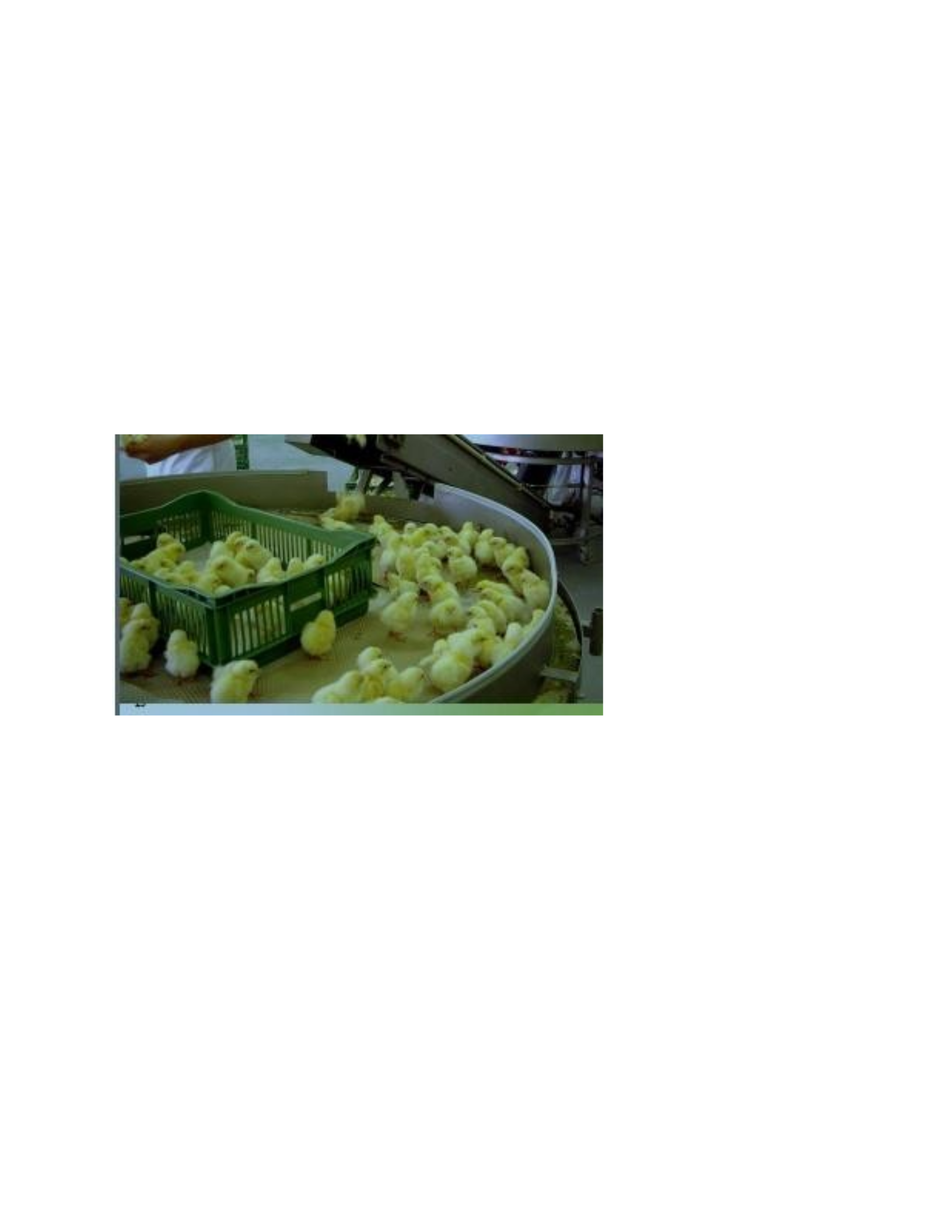
Have healthy and viable chicks Consider reputation of the supplier Hatcheries are the suplliers
Get parental stock from abroad , keep them carefully. Examples of hatcheries include; kenchic, ken breed
farmers, muguku poultry lake hatcheries, sigma feeds
They supply day old chicks
Price of chicks should be considered , this guide quality
15
Avoid buying chicks from open market Specify the breed strain, sex
Chicks should be transported in well ventilated chicks boxes
Consider a slow moving but transportation should not be more than 48 hrs
Preparation before the chicks arrive
Prepare a brooder – a room with corner free
Disinfect the room atleast 2 weeks before date of arrival to avoid disease organism using kerolR Pace in fresh
litter materials to a depth of 5 cm
Spread polythene sheet on top of the litter Place in a heat source at the centre
Put a brooder quard raised 20-25cm high. Draw a brooder
Put the heat feed and water 6 hours before the chicks arrive to raise the temperature Control vermin and rats
around the brooder using vermin powder around the house Put disinfectant at the entrance.
Go for the chicks early to avoid stress amd make them settle to recognize the feeds Remove the chicks from
the chick box and cull the unthrifty ones
Requirements at brooding
1) Temperature
Ideal temperature ranges from 26 to 34 oc Reduce the temperature every week as follows
0-7 days 340C
7-14 days 320C
14-21 days 300C
21-28 days 280C

16
>28 days room temperature
High temperature reduce feed intake thus less growth
Low temperature increase feed intake thus feed go for maintance and production of heat
How do we control temperature?

17
By reducing the number of source of heat 3>2>1
How do you judge ideal temperature?
By looking the behavior of chicks. Chicks will cluster together if temp are low and run away if there is heat
2) space requirements First 2 weeks
floor space – allow 20 -25 chicks / m2
brood the chicks in batches of <500 chicks (maximum of 25m2)
feeder space- linear feeders 4 -5 cm2//chick, water space 0.5 cm / chick during the first 2 weeks
2 – 4 Weeks
Increase space requirement 6-8 cm feeder space
0.6- 1 cm drinker space
1 water fountain for 50 chicks
For feeders count the number of holes and calculate the number of birds
3) Lightening
Provide dim light and allow 23 hours of light to maximize on feed intake for the first week. From 2 to 4 week
allow 16 hrs of light
4) Disease control and health
Maintain high standard of hygiene.
Control worms by deworming with drugs containing piperazine Done after 2-3 weeks
Vaccination is done against
Day old chick mareks disease
7-10 days gumboro (infectiuos basal disease) 14 days Newcastle disease
21 days
6 weeks fowl typhoid
Control of coccidiosis is by maintaining the hygiene by avoiding spillage of water, maintain litter quality etc
5) Ventilation Avoid breezes
Ventilation should be as high as possible. Ventilation is important if you are using hydro carbon source of
heating .this causes co2.
Nb
Increase the breeding space as the chicks grow Change the water twice daily
Vent clogged will kill the chick, so squeeze it out and put liquid paraffin. It causes yolk sac infection.

18
Give chicks glucose in water to promote growth and boost nutrients
Wet heat is encouraged for better development of feathers, is gotten from hydrocarbon source Do not use
white bulb but use ultra red source
Always close the door when getting to the brooder, let the chicks know your presence Maintain the schedule
for feeding.

19
Management of pullets Feeding
Pullet chicks O to 4 weeks
Give chick mash which contain
CP-18-20%
ME 2900 Kcal ME/ Kg
C.F <5% Ca – 0.8% P- 0.45%
Lysine 0.85%
Methionine 0.4% Give 45-60g/chick/day
If 3days old chicks introduce grids or clean sand to improve digestion in the gizzard Give 1 g/chick/ day for a
period of 3 weeks
After 4 weeks change the feeders for chicks feeders to feed hoppers for 1 hopper for 20 pullets Drinker
changed to jerrican of 2 litters
4 to 6 weeks
Change feed from chick mash to grower 1 CP-16-18%
ME 2900 Kcal ME/ Kg
C.F <6% Ca – 0.8% P- 0.4%
Lysine - 0.6%
Methionine 0.4%
Introduce greens (weeds) no cassava, no potato contain cyanine Continue with grid
Give water ad lib as much as possible
6- 18 weeks/20 weeks
Give growers 11
CP-14%
ME 2900 Kcal ME/ Kg
C.F <7% Ca – 1%
Available P- 0.3%
Lysine - 0.45%
Methionine- 0.3% Allow 60 – 90 g/ pullet grower/ day Should weigh 7 to 7.5 kg
Health of growers
Control coccidiosis by hygiene Vaccinate

20
Between 6 -18 weeks – against fowl typhoid at 6 weeks

21
18 weeks fowl pox at once before laying 12 weeks Newcastle disease
Don’t give 2 different vaccine at a go in one day Deworm at 16 weeks continue giving green and grit Provide
perches for roofing to minimize vices Control rats and vermin
Don’t scare the birds
Management of layers
20 / 22 weeks or 5months to 24 months
Economic stage periods, birds are called hens
Management should be towards maximum eggs production
Hens should give enough free returns to offset expenses incurred during brooding and rearing stage .birds
should maintain themselves by the laying period and give the farmer some profit The first egg is collected at
20 or 22 weeks depending on feeding, type of breed and manipulation of lightning
Causes of fluctuation or irregularities in laying;
i. In adequate feeding both in quality and quantity
ii. Inadequate spacing in nest or floor at feedeers and drinkers
iii. Upsetting the peck order by introducing new birds, changing position of feeders, drinkers, laying
nest etc
iv. Drastic change in weather condition ie too cold, storms etc
v. Infection by parasites
vi. Excessive noises
Moulting
is a natural in chicken controlled by hormones. This drops eggs production Can be induced in the following
ways;
i. Withholding water for 3-4 days
ii. Reducing the feeds by 50 -70%
iii. Reducing the light from 14 to 3 hrs a day
Correction of moulting
i. Give protein source rich in sulphur containing amino acids cysteine, methionine
ii. Correct all the induced factors

22
iii. Give them egg formularie preparation of vit and trace elements egegocin
Feeding of layers
Give layers mash or layers pullets or crumbles Food contain
CP-14-16%
ME 2900 Kcal ME/ Kg
C.F <9% Cal – 3.5%
Available P- 0.4%
Lysine - 0.6%

23
Methionine- 0.3%
Give 110 – 140 g/layer/day This depends on
size of the bird Climate of the area Laying capacity
Layers weigning 2 kg requires 82g/day for maintenance For every 10% laying layers requires 6.5 g for
production. Nb for maintenance 82+/-1.4 g
< 2kg substract 1.4 g
>2 kg add 1.4 g
So a bird weigning 1,7 kg and lays 75% what feed will you give;
Maintainance ……2kg = 82 g
1.7 kg = 80.6 g
Production 75/10 * 6.5= 48.75g
Consumption 129.35 g/day
In cold areas add 5%
Hot areas reduce 5% supply water ad lib
Lightning for layers
It stimulates production potential
Lights affects secretion and stimulation of FSH and egg production Layers requires 14 hours of light a day
In tropics use translucent iron sheets
Egg collection
Should be done regularly to avoid piling and breaking in the nest
In small enterprises < 100 layers , egg collection is done twice aday 11.00 am to 4 p.m In medium 100 -500
layers collect eggs 4 times a day after every 3 hours
In large scale enterprise collect eggs after every 2 hours starting at 10 AM
Space requirements in layers houses
4-6 layers/m2 in deep litter for floor space Feeders space allow 10 cm /layer
Drinker space allow 3-6 cm /layer
Laying nest can be individual or communinal Individual 30cm by 30 cm by 35 cm/layer Such nest can be used
by 6-7 birds
Communal nest 100 by 60 by 35 cm for 60 -100 birds

24
Nest should have litter materials of 20 -50 cm depth to conceal the eggs Nest should be a s dark as possible
facing the walls
Roofing should be slant to discourage the birds from soiling while resting
Perches
For resting roosting and help minimize vices To cater for instinct of staying on trees Broody coop

25
Cage made of wire mesh,Suspended above the floor to discourage the broodiness’ Take the layers brody for 3
days to wake them up due to wind and draught Control vermin and rats
Give green to supply xynthophyles to enhance yolk color Green keep the birds
Give grits 1 g /day/chick
Under these conditions layers should lay 86% .
Management of broilers
These are table bird kept for meat.
Criteria used to select broilers
i. Fast or rapid growth rate ie attain weight of 1.8 to 2kg in 7 – 8 weeks Has sudden death syndrome
due to rapid growth
ii. Should have feed conversion efficiency FCE = gain/ feed = 3:1
iii. Have high lean to bone ratio of 5:1
iv. Proper fleshing especially around keel or breast bone. Keel bone should be flexible
0- 4 weeks
Same as pullet chicks except feeding Give broiler starter ration /mash
CP-23%
ME 3200 Kcal ME/ Kg
C.F <5% Cal – 1%
Available P- 0.45%
Lysine - 1.2%
Methionine- 0.5% Give 45-80g/chick/day Drinking water ad lib 5-7/8 weeks
Give or change gradually to broiler finish ration
CP-18-20%
ME 3200 Kcal ME/ Kg
C.F <5% Cal – 0.8%
Available P- 0.35%
Lysine - 0.85%
Methionine- 0.32% Give 90-150g/day
Give water ad lib Give grit 1g/bird/day

26
Don’t give green to prevent yellow coloration
Health and disease control

27
a. Maintain high standard of hygiene
b. No vaccination or not recommended except , new castle disease and infectious basal disease,
which are vaccinated where endemic
c. Deworm at 2 weeks
d. Control coccidiosis
Lightening
Allow 23 hours of light preferably dim light to maximize on feed intake and growth
Spacing
Allow 11-15 broilers/ m2. Give little space to avoid roaming around Feeder space allow 8 cm per broiler
Drinker space allow 5 cm / broiler 1 water fountain for 25-20birds
1 feeder for 15-20 birds
Housing
Preferably deep litter house through out their life to minimize retarded growth
Plan for broiler production
Refers to market time either weekly, monthly or yearly Supply is dictated by market demand
3 plans are available
i) Marketing weakly basis thus 52 batches in a year, so need of atleast 10 houses Have 2 spare houses
for isolation and another for waiting or store of feed
ii) Marketing on monthly basis Thus 12 batches per year Need three pens
iii) All in all out syste
Advantages of natural brooding
Ideal for raising small number of chicks No skills required
Less capital
Disadvantages
Loss of chicks to predators Spread of diseases
Vices
Toe picking
Due to lighting too bright or incorrect feeding. This causes bleeding and it’s a chain
reaction
vent pecking

28
Due to incorrect feeding and other vices, dark rooms during laying, the uterus protrude out and they attempt
to eat it
Feather pecking
Due to infection by worms and parasites, stress all covered
Egg eating
Due to incorrect feeding , luck of space, upset
Cannabolism

29
Control of vices
Correct the management
Debeak- cut 1/3 of upper beak not cutting the blood vessels After cutting cauterize by heating the
blade
Cull the birds if all measures fails
Provide perches
Provide suspended vegetables
Provive vitamin A
Control causative agent
Poultry records
Proper record keeping is a must
Why keep the records
i. Work out the annual profit or loss
ii. Check on the efficiency of the enterprise
iii. For proper planning, decision making and budgeting
Types of records
1) Rearing records
Poultry of concern
Pullet chicks 0-8 weeks
Broiler 0-8 weeks Grower 9—20/22 weeks The records should show The cost of chicks
The cost of labour, heating during brooding, litter, daily feed consumption
Daily feed intake’cost of medication
Calculate the cost of rearing bird/ period
2) layers record
kept for layers during the period of laying, between 20/22 weeks to 24 months information kept in tabular
form
pen no………… date…………
type of hybrid…………
source………………………

30
Date No of
birds
Feeding
kg/day
laying remarks
Whole Broken Total %
On remarks indicate what you did that particular day eg debeaking, culling, medication, mortality etc
3) financial records apply to all bird category should reflect

31
cost of feed cost of grass transport labour
litter equipment heating sales
Periodic calculation / records
Are derived from daily records
The periodic calculation are summarized below;
a) Rate of feed consumption
Using the daily feed consumption per bird/ day Eg g/bird/day—total per month
Rate of feed consumption= (total feed(kg)/month/no of birds /month) * 100%
b) Rate of production/ %hen- housed production
Applicable to layers
%HHP = (total no of eggs per period(month)/(initial no of birds/hens*months days in a while))*100%
c) Mortality/ rate of death
(No of death/initial no of birds)* 100% Mortality
For pullets <10% Broiler<6% Layers<3%

