


Introduction Over the past few decades
“It’s time to make peace with nature. Making peace with nature is the
defining task of the 21st century. It must be the top, top priority for everyone,
everywhere.”
-- The UN Secretary-General, António Guterres, 2 December 2020
Over the past few decades, the effect of economic development on
environment has become a common cause of concern for the society. In 2015, 193
United Nations member states adopted 17 Sustainable Development Goals (SDGs)
to achieve a sustainable agenda by 2030. Building around 17 agendas with 169
targets, the SDGs can be categorized in three layers: Environment, Society and
Economy, among which Environment is the foundation that supports Society and
Economy and has been integrated into many other sustainable development goals
(Elder & Olsen, 2019). Since then, countries have been exerting efforts on tackling
the environment challenges, but the progress has been slow (Arora & Mishra, 2019).
According to the Sustainable Development Goals Report 2020, the natural
environment has continued to deteriorate at an alarming rate, and changes are not
happening at the required speed or scale (United Nations, 2020). Efforts from both
the public and private sectors are required to tackle the challenges.
From the public stakeholder perspective, governments have been
institutionalizing the measures to improve SDG performance. Policies regarding

environment reservation and incentives of a green economy have been enforced in
many countries (Abad-Segura et al., 2020; Jepson, 2004; Yuan & Zhang, 2020).
Consumers have started to pay attention to the private companies’ environmental
effect and take it as part of their purchase decision (Huang & Rust, 2011; Ziesemer
et al., 2019). More investors include sustainability performance as their portfolio
selection criteria. The external force pressures companies to start looking at the
environmental effects as part of the strategy (Eweje, 2011). Recent cases of natural
disasters and health events indicate that the most fundamental, environment issues
are not a future problem; it is a problem that needs to be taken care and treated as a
priority now. It becomes prominent that for companies to achieve sustainable
business growth, they have to keep economic and environmental performance on
their agenda and take actions to drive substantial results on both (Garvare &
Johansson, 2010; Orlitzky et al., 2003a). Based on a survey conducted by KPMG,
around three quarters of the large and mid-cap companies around the world reported
initiatives addressing SDG by 2017 and most of the world’s largest companies have
integrated financial and CSR data into their annual report cycle (KPMG, 2017).
Despite the growing awareness of the environmental performance mandate,
we see mixed results from companies acting on the agenda. Some companies have
been actively engaging in sustainability activities which may help in improving the
environment and economic performance significantly (Camilleri, 2017a). Although
some achieved quite a significant improvement on environmental performance, they
were facing cost challenges and are unable to beat competitors on economic

performance (Esfahbodi et al., 2016) There are companies that, despite their success
in economic results and the allocation of resources on activities related to
sustainability, struggle to demonstrate significant improvement in terms of
environmental performance, or even be criticized for “cherry-picking” or
“greenwashing” (Brough et al., 2020). While there are many factors that may affect
the effectiveness of the efforts, understanding what the factors are and how to
integrate them into the process will not only help companies achieve better E2
performance, but also create a significant positive effect on our environment and
planet.
Previous studies have investigated the mixed results and tried to untangle
the relationship between economic and environmental performance. Three types of
relationships were presented based on theory development and empirical research:
1) Positive correlation between economic and environmental performance (Porter,
1991; Al-Tuwaijri et al., 2004; Porter & Linde, 1995); 2) Negative effect of
environmental performance on economic performance (Hassel et al., 2005); 3)
Neutral relationship between environmental performance and economic
performance (Elsayed & Paton, 2005). No conclusive result was obtained from the
studies on the relationship between economic and environmental performance
(Horváthová, 2010). However, recent studies show that if the organizational
variables are addressed properly, we will be able to find a positive correlation
between the two performances and achieve a win-win situation (Grekova et al.,
2013). Furthermore, studies have been conducted to explore the driving factors

behind the type of relationships of economic and environmental performance, as
well as the mediating and moderating effects (Dal Maso et al., 2018; Epstein et al.,
2015; Grekova et al., 2013). Several empirical studies have found that innovation
plays an important role for firms to achieve superior economic and environmental
performance simultaneously (Fujii et al., 2013; Ong et al., 2019), mainly through
cost optimization or revenue improvement associated with environmental
improvement results.
Rooted in the Resource-Based View (RBV) theory, innovation is the
application of new ideas resulting from organizational process in which different
resources are combined (Rauter et al., 2019). Through the process, innovation
creates an inimitable advantage for the company to achieve superior economic
performance. The same applies when the company addresses environmental
performance issues. Whether it is voluntary or motivated by compliance, the
companies that adopt environmental innovation (new or improved products,
services, or processes that benefits environment) appeared to achieve better results
compared with those that do not (Ramanathan, 2018). This can be explained by the
spillover effect from the know-how and reputation from innovation that is difficult
to be imitated by competitors. Organizational capability established through the
process becomes competitive advantage and leads to superior performance (Rueda-
Manzanares et al., 2008).

Built on previous literature, the author defined the dual agenda innovation
as the adoption of a new idea or process to deliver a new product, process, or
business model with the objective to improve economic and environmental
performance simultaneously. There has been plenty of studies examining the effect
of dual agenda innovation on economic and environmental performances (Rehman
et al., 2021; Rexhäuser & Rammer, 2014; Weng et al., 2015). However, few
systematic studies have explored the mechanism of how the effect works, especially
from an organizational capability perspective. Considering the lack of coverage and
the importance of organizational capabilities as an inimitable competitive
advantage, we want to close the gap in an E2 performance context, in which this
study examines the following research questions:
• What are the difficulties that companies face to address both
economic and environmental performance simultaneously?
• How can dual-agenda innovation reconcile the conflicts and
drive both agendas effectively?
• What are the key capabilities needed for a successful
dualagenda innovation?
To gain a deep understanding at the corporate level, the author used an
interview-based case study approach in the research (Yin, 1994). The author first
developed the theory and hypotheses of the four key capabilities for dual-agenda
innovation. Based on it I designed the interview questionnaire and selected 12

companies with a mixed low-high economic and environmental performance in the
past five years (2015 – 2019) according to Bloomberg data. During phase one, a
total of 12 interviews were conducted in the first half of 2021. The aim of
conducting those interviews was to identify and verify the key challenges and core
capabilities during dual-agenda innovation and understand how the capabilities
apply in the innovation process and drive E2 performance. The information
collected were supplemented by the company’s annual report to address the bias of
using a single source of data.
In phase two, the author coded the information and derived four themes that
corresponds to each of the hypothesized capabilities. The author then mapped out
the information from interview and annual report into the metrics and invited two
subject matter experts to provide relative scores of the level of capability for each
company. They applied the scheme to the interview data and annual report and
provided the score without knowing the name and performance of the company. The
relationship between the assessment score and economic and environmental
performance was studied using a Fuzzy-set qualitative comparative analysis
(fsQCA), a methodology applied to small sample sizes for causational effect (Kraus
et al., 2018) to identify the pre-condition effect of the capabilities and the optimal
combination to achieve superior economic and environmental performance. The
process and expectation during the two stages is summarized in Section 3.

The findings indicate that the conflict among short-term and long-term
performance, perceived resource constraint and trade off (rooted from
stakeholder alignment instead of company size or economic performance), and
functional/design dilemma are the top challenges that companies are facing. The
interviews in the case study revealed that engaging in sustainable initiatives does
not necessarily lead to superior E2 performance. The informants’ responses
confirmed that the capability of value identification and quantification (VIQ),
stakeholder management (SM), cross-boundary collaboration (CC) and digital
transformation (DT) play important roles in achieving superior E2 performance.
Specifically for digital transformation, both the interview and fsQCA test
shows that digital transformation capability not only addressed the
functional/design dilemma, but also helped the other capabilities of value
identification and quantification, stakeholder management and cross boundary
collaboration to address the challenges. The application of digital solutions and
technology can form new solutions to deal with design dilemmas in the process or
product optimization, reduce negative effect and increase positive effect on
environment. With digital tools and technologies, companies can also make better
decisions based on data, measure the benefits of innovation, and communicate with
stakeholders more effectively.
Using the extracted themes from interview notes, subject matter experts
scores and the fsQCA analysis, we found that the combination of stakeholder

management, cross-functional collaboration and digital transformation capability
through an innovation process is positively associated with superior economic and
environmental performance at the same time. Four out of five hypothesis were
supported by the study result. It helped us better understand what leads to successful
dual-agenda innovation. The result is consistent with previous studies about the role
that innovation plays to achieve sustainable performance (Brem & Ivens, 2013). It
answers the questions of how companies reconcile the conflicts between economic
and environmental performance and provides a guideline to deal with the challenges
during dual-agenda innovation.
The study contributes to the literature from multiple perspectives. First, it
identified the common challenges that companies face when pursuing E2
performance and validated them through the interview-based case study. Second,
building on absorptive capacity (ACAP) model of innovation (Zahra & George,
2002.; Zou et al., 2018), in which the study brought new construct of dual-agenda
innovation and identified key capabilities to achieve superior economic and
environmental performance simultaneously. Third, through the study, we found the
important role that digital transformation capability plays to address the challenges
and its multiplier effect on other key capabilities. These findings can be used as a
guideline for companies to pursue superior economic and environmental
performance and provides a reference for policy makers if they want to incentivize
companies for developing sustainable capabilities.

The rest of paper will be unfolded as follows: Part two summarized the
previous studies conducted on E2 performance and innovation; Part three introduces
the theory development and brought up the hypotheses; Part four is research design;
Part five is a summary of the findings from interviews and case studies; Part six will
discuss the findings, its contribution from the academic and practical perspective,
and the limits of the study. We hope that the results of the research can address the
challenges in pursuing economic and environment performance simultaneously and
provide a practical guidance for companies and policy makers to foster dual agenda
innovation.
1. Literature Review
In this section we will be exploring previous studies about innovation,
including its definition, process, capability, and effect on economic and
environmental performance.
1.1 Traditional innovation – economic agenda driven
1.1.1 Define innovation
Based on Resource-based View (RBV) theory, a VRIO (Valuable, Rare, Inimitable,
Organized) framework and dynamic capability are key to addressing a rapidly
changing environment and maintaining a sustainable advantage of the company
(Barney et al., 2001). Built on that theory, innovation is defined in previous

literature as a process and a set of distinctive capabilities to help companies create
competitive advantages through superior products or services (Knight, 1967; Zou
et al., 2018b). Innovation can be categorized per type: Product or Service
innovation, Process innovation, Business Model innovation and Organization
innovation and so on (Kahn, 2018) or per the extent of changes: Radical, break
through innovation and incremental innovation, which is defined as a relatively
small and almost unnoticed improvement that counts of the most of innovation
(Knight, 1967). Besides the outcome and process review of innovation, there is also
a mindset view of innovation, which addresses the internalization of innovation by
individual members of the organization. It also identified key skills that lead to
disruptive innovation: associating, questioning, observing, networking and
experimenting (Barak et al., 2020; Johnson, 2012) and differentiated discovery and
delivery skills during innovation.
Regardless of the type and extent of innovation, one of the prominent
definitions is the “adoption of an internally generated or purchased device, system,
policy, program, process, product, or service that is new to the adopting
organization”(Damanpour, 1991). Garcia and Calantone further defined innovation
as the development, production, and market commercialization of an invention as
well as product diffusion and adoption by customers (Garcia & Calantone, 2002).
1.1.2 Relationship between innovation and firm’s performance

A lot of studies have been conducted to explore the relationship between innovation
and the firm’s performance, whether and to what extent innovation contributes to
the economic performance of the firm, and how the mechanism works. Many
empirical researchers found that, as RBV theory predicted, innovation provides
superior financial performance by creating competitive advantages in the
marketplace (Ahuja, 2000; Han et al., 1998; Rousseau et al., 2016). Expanding the
definition of economic performance from value creation, value delivery, and value
capture to the avoidance of value destroyed and value missing, studies demonstrated
even stronger positive benefits of innovation on firm’s performance.
The benefits were delivered through first mover advantages, adaptation to market
uncertainties and improved stakeholder relationships (Busch et al., 2011; Pedersen
et al., 2018).
Despite the positive association between innovation and firm’s performance,
other researches have also pointed out that innovation is a context-dependent efforts
(Wolfe, 1994). Due to the resource invested and risk associated with innovation, the
act of innovation does not necessarily lead to successful outcomes and it may
decrease the performance if not managed properly (Markham & Griffin, 1998).
Previous studies have found that the quality of innovation process (Dervitsiotis,
2011), firm size (Rosenbusch et al., 2011) and capabilities such as stakeholder
management, integration and other organizational capabilities also influence the
link between innovation and performance (Rousseau et al., 2016; Vincent, 2004.).

Other than the process and capability, studies have also established various
inputs or macro environment as antecedents of successful innovation. The input can
then be categorized as following. First, tangible and intangible resource storage,
including innovation budget, knowledge management, and talent pipeline (Klomp
& Van Leeuwen, 2001). These are the prerequisites to start an innovation process.
Second, management support and organization structure. Innovation is a change
management process that associates with risks. It requires transformational
leadership to aspire the organization for revolutionary changes and achieve high
levels of exploratory and exploitative innovations (Jansen et al., 2008). Although
there are no conclusive findings of the type of organization structure that contributes
to effective innovation, it is a common understanding that leaner, matrix
organization structure and empowered decision making are antecedents to superior
innovation(Zou et al., 2018a). Lastly, entrepreneurial, and collaborative culture are
considered as important for innovation as well. To be more specific, a collaborative
culture foresters information sharing and builds a safe environment for radical,
breakthrough innovation ideas. It facilitates changes implementation and feedback
sharing which help refine the innovation in implementation stage (George & Lin,
2017).
Besides innovation itself, there are also challenges at organizational levels
that impact the effectiveness of innovation and its effect on firm’s performance. Two
challenges have been commonly discussed in innovation literature are 1)

bureaucracy and complicated routine associated with company size, and 2)
organization inertia associated with company maturity (Sørensen & Stuart, 2000).
Both impact the economic return of traditional innovation.
As a company grows, the process and routine unavoidably increase. It
creates difficulties for timely information flow, team coordination and socialization
and learnings and replication. The inefficiency process may lead to a long lead time
to make decisions and response to market change, which in turn affects the
economic performance of the company. The challenge can be even more so for
environmental innovation (innovations that have beneficial effects on
environment), which usually has more stakeholders to engage and align with. The
heavy process may have an effect on cost, which reduces the profitability of product
or service (Watson et al., 2018). To address the challenge, organizations may
consider segregating innovation process from routine process and create informal
communities to compensate for information sharing and learnings. Cross-functional
interfaces, stakeholder management and participation in joint decision-making and
job rotation help to address the issues as well (Jansen et al., 2005)
Another challenge is organization inertia, usually emerging as companies
become mature. Compared with start-up and young companies, mature companies
tend to be more risk averse and emphasize more on predictability and control
systems. The compliance oriented mindset and the pursuit of predictability
discourages people from taking risks (Kelly & Amburgey, 1991). Organization may

fall in the trap of the “good enough” mentality and become less proactive to seek
external opportunities. Even when the innovation opportunities are detected, mature
companies tend to seek incremental improvement that addresses short term issues,
instead of radical, fundamental changes that bring breakthrough economic
performance (Hannan & Freeman, 1984). The incremental innovation may not
generate enough return when launching a new product or service, resulting in a
negative effect on economic performance. Same applies to environmental
innovation. The negative effect of organizational inertia can be mitigated by
promoting an outside-in mindset and allocating dedicated roles and resources to
keep the company updated with innovation pipeline. Adding organization diversity,
encouraging risk taking, agile approach, incentives, innovation culture will help to
address the issue as well (Sørensen & Stuart, 2000).
1.1.3 Process and capability of innovation
Previous studies have suggested that successful innovation requires systematic
processes and capabilities to achieve economic performance from both the top line
and bottom-line perspectives (George & Lin, 2017; Zou et al., 2018a). A typical
innovation process consists of three stages of Design/Creation,
Development/Testing and Marketing (Klomp & Van Leeuwen, 2001). It starts with
discovering the need of something new or different from existing portfolio or
practice, a new product, new process, or new business model, which can be driven
by market value realization, also known as “white space”, or risk mitigation. After
the initial sensing, the problem needs to be further defined with clear goal, scope,

specific measurements based on a feedback and adaptive loop (George & Lin, 2017)
before the new product or new practice reach the market or massive
implementation.
Further looking into the process, it has been widely acknowledged that the
center of innovation is the absorptive capacity (ACAP), defined by (Cohen &
Levinthal, 1990). ACAP refers to the ability of a firm to ‘‘recognize the value of
new external information, assimilate it and apply it to commercial ends’’. It consists
of four capabilities across the two stages of identifying and retaliating potential
opportunities: Acquisition, Assimilation, Transformation and Exploitation (Zahra &
George, 2002). Besides, it distinguishes companies’ capability of identifying
potential opportunities from the capability of realizing those opportunities and
generating economic results (Zou et al., 2018a).
Previous studies indicate that an effective exploration stage requires
acquisition and assimilation capabilities (Zahra & George, 2002), which help the
company acquire and digest the information in a timely manner. According to the
study, acquisition capability refers to a firm’s efforts to identify and acquire external
knowledge, and the quality of the capability is defined by speed, intensity and
direction (Kim, 1997). Assimilation is about the firm’s routine and process to
analyze, interpret and understand the information acquired (Kim, 1997; Szulanski,
1996). These two capabilities define the potential ACAP and enable the firm to
receive or acquire external knowledge (Cohen & Levinthal, 1990; Lane & Lubatkin,
1998)

Following the exploration process, the innovation team needs to come up
with improvement or brand new solutions to address the problem or capture the
opportunity, develop prototypes, pilot in reality and scale up to generate economic
results, so called realization stage of innovation (Knight, 1967; George & Lin, 2017;
Sheu & Lee, 2011). The effectiveness of realization depends on Transformation and
Exploitation capability, which is about reassembling the internal and external
knowledge, building new connections of information, and applying the knowledge
to generate solutions (Zahra & George, 2002). In order to realize the value from the
knowledge acquired externally, the firm also needs the capability of
Transformation, which is defined as the capability to develop and refine the routines
to combine the new knowledge with existing knowledge, and by doing such, shape
the entrepreneurial mindset and actions of the organization (McGrath & MacMillan,
2000); and the capability of Exploitation, which is defined as the firm’s capability
to incorporate acquired and transformed knowledge into its operation (Zahra &
George, 2002). Realized ACAP plays a key role in transforming the acquired
knowledge into a successful innovation, which in turn leads to an improvement in
the company’s performance.
With the input and capabilities, the innovation process generates outputs of
new or improved products/services, new operating processes or a new business
model that contributes to company’s economic performance either by generating
more revenue or saving costs. Figure 1 illustrates the end to end structure of
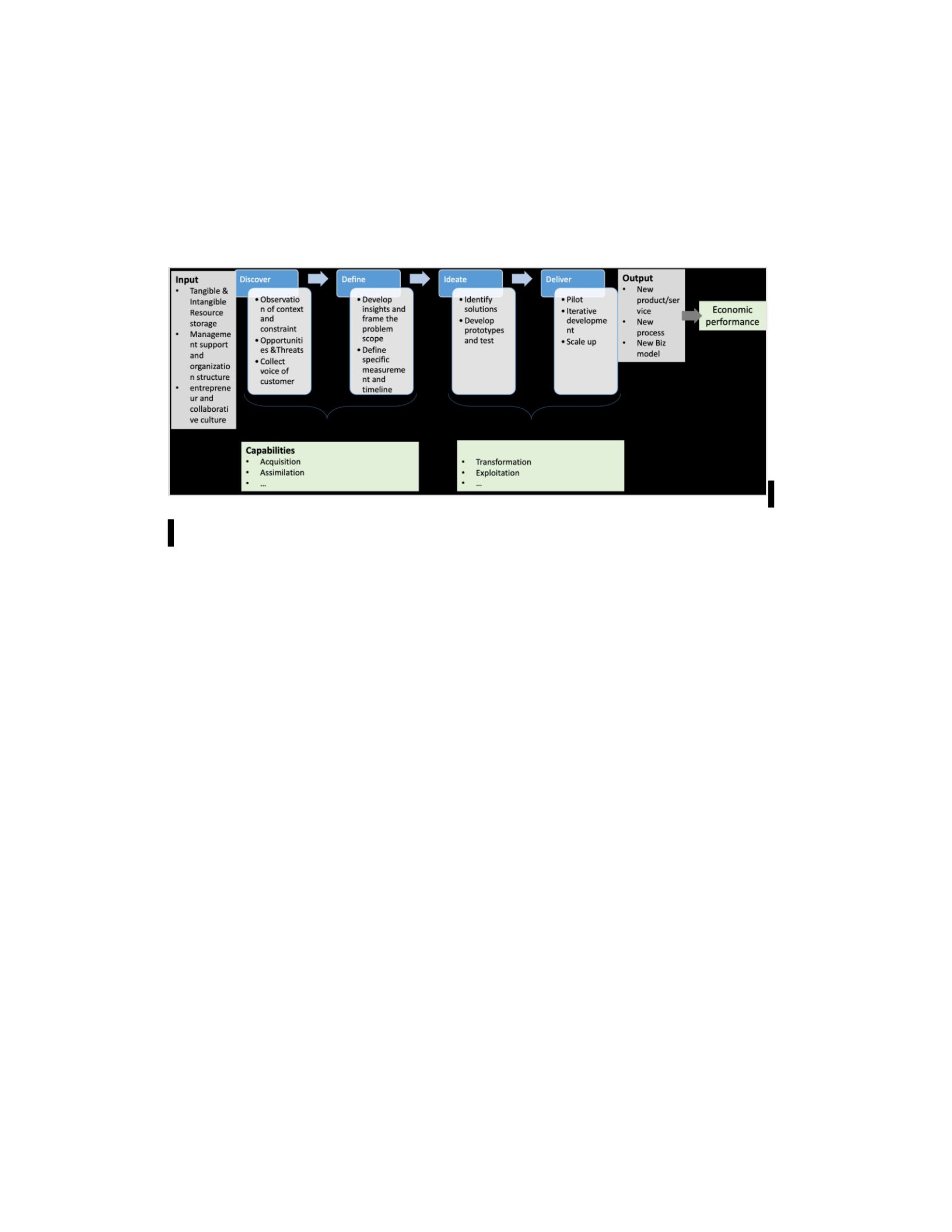
economic agenda innovation that I summarized based on previous literature (Zou et
al., 2018a).
Figure 1: End-to-end structure of Economic Agenda Innovation
1.2 Environmental Innovation – environmental agenda driven
1.2.1 Define environmental innovation
Environmental agenda driven innovation, also known as “Green Innovation”,
“Social Innovation”, “Sustainable Innovation”, “Environmental Innovation”
“Ecoinnovation”, is defined as new or improved products, services, or processes
that aimed at social equity and environmental integrity (Albareda & Iñigo, 2016;
Arranz et al., 2019; Jaskolka et al., 2017; Leach et al., 2012). According to (OECD,
1995), environmental innovation includes all innovations that have beneficial
effects on environment regardless of whether the effect was the main goal of the

innovation. They include process, product, and organizational innovations
(Bernauer et al., 2006). Environmental process innovation typically refers to an
improvement or redesign of production process that results in reduced greenhouse
gas emission and other environmental pollution, better energy usage efficiency and
waste management. Due to the nature of the innovation, it may have a positive effect
on cost efficiency as a by-product (Grekova et al., 2013). Environmental product
innovation typically refers to an improvement or redesign of product or service that
leads to a reduction in environmental effect during the product’s entire life cycle
(Bernauer et al., 2006).
Companies adopt environmental innovation for different motivations. Some
set improvement objectives for a reactive attitude as a response to external pressures
such as risk mitigation from shareholders and compliance requirement from
regulators (Arranz et al., 2019), some take a more proactive approach to seek green
innovation and acquire or build VRIO capabilities that contributes to companies’
sustainable competitive advantages (Camilleri, 2017b).
Previous studies summarized five lenses that innovation helps tackle climate
change and sustainable development: planetary boundaries, grand challenges, social
entrepreneurship, institutional entrepreneurship and sustainable entrepreneurship
(George et al., 2020). From an individual firm’s perspective, the motivation and
success factors of environmental innovation can be retrieved from the stakeholder
theory. Based on the theory, firms need to identify, prioritize and cater to the needs

of different stakeholders instead of only focusing on maximizing the profit for
shareholders (Garvare & Johansson, 2010). Literature has covered different types
of environmental innovation based on improvement areas, motivation, and
identified key success factors: collaboration, stakeholder management, technology
adoption and so on. (Doran & Ryan, 2014a; Picazo-Tadeo
& García-Reche, 2007; Wu, 2013).
1.2.2 Relationship between environmental innovation and firm’s performance
As an extension of RBV theory, a natural-resource-based view (NRBV) was
brought up by Hart in 1995, which is a theory of competitive advantage based upon
company’s relationship to the natural environment. Hart proposed that by adopting
the strategy of pollution prevention, product stewardship and sustainable
development and developing relevant capabilities, companies can build significant
competitive advantage (Hart, 1995). Unlike the widely established positive
relationship between traditional innovation and firm’s performance, empirical
literature of environmental innovation’s contribution to firm’s economic and
environment performance has mixed findings. Through a study of 442 Chinese
firms, Cai and Li found that environmental innovation significantly promotes a
firm's environmental performance by reducing energy consumption, wastes and
other environmental damages with the launch of green products, processes,
technologies and systems (Cai & Li, 2018). Due to the high cost and risk associated
with environmental innovation, it does not directly contribute to firm’s economic

performance in short term. However, environmental innovation may contribute to
economic performance indirectly through the mediator effect of environmental
performance.
Similar to Cai and Li’s findings, many studies support the positive
association between environmental innovation and a firm’s environmental
performance (Rehman et al., 2021). According to the 17 SDGs defined by UN,
environmental challenges are associated with GHG emission, Deforestation, Water
usage, Oceans pollution, Biodiversity, Chemicals and Waste handing (United
Nations, 2012.). Innovation contributes to environmental performance by
reducing resource consumption and pollution (avoid harm) and creating
environmental related value (do good) (Luo et al., 2015). Using relevant R&D
spending as the proxy for environmental innovation, (Fernández et al., 2018) found
that environmental innovation contributes positively to environmental performance.
What remains unclear is whether environmental innovation contributes to
economic performance, either through the innovation itself or through the indirect
effect and intangible benefits from environmental performance. The hypothesis of
positive correlation between environmental performance and economic
performance was brought by Porter back to 1990s when he advocated
environmental regulations and argued that environmental improvement can be
beneficial to the firm and to the wider society, and it is possible to achieve win-win
result of economic and environmental performance(Porter & Linde, 1995). Since
then, there has been decades of inconclusive evidence regarding the relationship

between environmental and economic performance and a lot of debates regarding
the definition, measurement and method of the study (Busch et al., 2011; Carroll &
Shabana, 2010; Margolis & Walsh, 2003)
Through empirical studies, some conclude that environmental innovation
contributes to economic performance through efficiency improvement and cost
savings (Szekely & Strebel, 2013) and there are huge opportunities to increase
revenue and market share. Previous research suggests that environmental initiatives
can be instrumental in improving stakeholder satisfaction and building intangible
assets such as reputation, which will eventually influence financial performance
from long term perspective (Korsunova et al., 2016; Orlitzky et al., 2003b; Surroca
et al., 2010). Aldieri also found that through environmental innovation, there is
knowledge spillover effect that improves firm’s productivity and contributes to
economic performance (Aldieri et al., 2019). Other than environmental innovation
itself, studies also demonstrated positive contribution from environmental
performance to economic performance (Hart, 1995;
Karagozoglu & Lindell, 2000; Shrivastava, 1995).
However, building on the similar concerns of resource investment and risks
associated with traditional innovation, some studies found negative association
between environmental innovation and economic performance, or no direct linkage
between the two. Camilleri argued that the discretionary expenses in CSR initiatives
(environmental innovation included) could distract company’s resource without

adding much value from both tangible and intangible perspectives (Camilleri,
2017b). Under the context of budget constraints and cost-sensitive customers,
research supports a negative relationship between environmental innovation and
economic performance (Yan et al., 2016). (Rexhäuser & Rammer, 2014) also found
that environmental innovations which do not improve company’s resource efficacy
do not generate positive economic return.
On the contrary to the scenario brought by Porter, Palmer et al. (1995)
strongly argues against the win-win relationship between environmental and
PlazaÚbeda et al., (2009) suggests that the win-win scenario is not easy to achieve
in practice. Rather, given the costs of many environmental initiatives, there is a
tradeoff between environmental and economic performance that company needs to
choose at least in short-term. Through dynamic panel data analysis, (Elsayed &
Paton, 2005) concludes that environmental performance has a neutral effect on firm
performance. This finding is consistent with theoretical work suggesting that firms
invest in environmental initiatives until the point where the marginal cost of such
investments equals the marginal benefit. Salem et al. (2018) and Weng et al. (2015)
also claimed no direct linkage between E2 performance. Similarity to traditional
innovation, there is no guaranteed positive effect on firm’s E2 performance from
environmental innovation.
1.2.3 Challenges in environmental innovation

Looking into the process and capabilities of environmental innovation, a study
conducted by Seebode et al. (2012) shows that on top of Absorptive Capability
(ACAP) process and core capabilities from general innovation theory, companies
need to develop new knowledge, new tools and to work at a system level in
environmental innovation. This is mainly due to the unique challenges in
environmental innovation, which will be elaborated on below.
The first unique challenge in environmental innovation is a lack of
transparency and data support during the end-to-end environmental innovation
process from identification to solution, implementation, and communication.
Studies demonstrate that a good environmental performance is significantly
associated with more extensive and quantifiable environmental disclosures of
specific measures (Al-Tuwaijri et al., 2004). However, there’s lack of systematic
methods or indicators of environmental innovation. Barriers range from the
mismatch between market price and investment, unclear or too detailed regulations,
insufficient research efforts and so on (Ilinitch et al., 1998) The challenge not only
makes it difficult for companies to select the most relevant and impactful issue to
work on, but also creates issues to communicate and engage with stakeholders and
seeking their continuous support on driving environmental agenda.(Billio et al.,
2020)
The second challenge, relevant to the first challenge is the difficulties in
translating the environmental improvement results to economic values for the

companies, which is important for seeking the alignment of shareholder and getting
continuous funding and other resources for environmental innovation (George et
al., 2020). Some studies raise the question of whether the efforts on improving
environmental sustainability yields benefits for company and call for further
empirical research (King & Lenox, 2001; Rexhäuser & Rammer, 2014). This could
due to the barriers from the technological, financial and managerial perspectives.
Due to the challenges, it may add difficulties in seeking alignment with stakeholders
and getting the resources needed for the innovation, which in turn impacts its
performance (Fernández et al., 2018).
The third challenge is a lack of collaboration among different stakeholders,
including public and private stakeholders, companies, and consumers. Previous
studies have established that internal and external collaboration are beneficial to
environmental innovation and environmental performance (Albino et al., 2012a).
However, this is also a common challenge reported in literature to a different extent.
Some reported it as dealing with the influence from partners along the value chain
such as suppliers, retailers and customers (Simms et al., 2020). Some reported it as
conquering the barrier of insufficient cooperation, including co-investment and
cocreation during the innovation process (Garcia et al., 2019; Urbaniec, 2015).
Given the complexity and the requirement of a wide resource and knowledge to
environmental innovation, it is unlikely for a firm to achieve superior performance
of environmental innovation just by itself.

With the challenges mentioned above, a successful environmental
innovation will need something “more” on top of ACAP theory developed for
traditional innovation. According to RBV theory, capability is harder to copy than
product, process and practice, thus improving innovation from the capability
perspective is critical for companies to establish sustainable competitive advantage
and it’s been demonstrated in previous studies of the effect of innovation (Wang &
Chen, 2010). Further developed on the theory is natural-resource-based view
(NRBV), which is defined as “allocation of firm's resources and capabilities for new
products/services, processes and technological developments which increase firm's
operational efficiency on the one hand and reduce environmental adversities on the
other” (Alam et al., 2019). Although there has been a lot of studies about ACAP as
a core innovation capability, the complexity and challenges mentioned above
suggest that just relying on ACAP may not be enough to achieve successful
environmental innovation which leads to superior environmental and economic
performance. Some studies pointed out several key capabilities in an environmental
context such as technological capability (Horbach, 2008) and stakeholder
management capability (Salem et al., 2018), but there’s no comprehensive,
systematic study about capabilities that lead to superior environmental performance
per the author’s awareness. Thus, I picked up the capability lens for this study and
further developed ACAP theory in a dual-agenda innovation context. My aim is to
identify the key capabilities to achieve superior E2 performance simultaneously and
find out how the mechanism works through dual-agenda innovation.

2. Hypothesis Development
Previous studies indicate that, despite the efforts and investments made on
economic and environmental innovation, it is not easy to achieve the win-win
results of E2 performance. In this section I will be exploring common conflicts
between economic and environmental agenda and coming up with a new concept
of dual-agenda innovation. I then proposed some key success factors for dualagenda
innovation from a capability perceptive. These hypotheses will be tested during the
interview-based case study.
2.1 Conflict and trade-off between economic and environmental agenda
Based on the learnings from previous study and observations in real life, there seem
to be inherited conflicts and trade-offs between economic and environmental
performance. Here summarized three common challenges as following.
1) Conflict between short-term and long-term. Earlier studies have
casted doubts on the relationship between environmental sustainability and
economic performance and raised questions that whether “green” efforts and
investments pay off (Krüger, 2015).The question has been answered by empirical
studies afterwards with results showing a positive relationship between the two, and
stakeholder value does contribute to shareholder value over time (Weidner et al.,

2020). Real life examples also indicate that pursuing shareholder value with the
sacrifice of stakeholder value dampens the company’s value in the long run.
According to the NRBV theory, Hart (1995) advocated that a firm can enjoy
sustainable competitiveness by using its resources and capabilities for long-term
environmental-friendly products, processes and technologies rather than short-term
profits and benefits. Instead of debating shareholder vs. stakeholder value, what
remains more relevant is the conflict between short-term and long-term benefit and
the trade-off between maximizing short-term profitability and long-term
consequences (Epstein et al., 2015).
Commonly measured by green-house gas emissions, waste generation,
energy consumption, water. usage and so on, environmental performance
improvement could result in cost savings, or increased revenue and market share
when the product or service appeals to customer needs. However, it normally
requires a significant investment upfront, which increases the cost of goods sold or
operating cost. If consumers are not ready to accept the change and the massive
market is not there yet, the new product or service may not be able to generate
enough sales to compensate the cost, making it a loss-making new product or
service launch. A real-life example is Tesla’s electricity car business, which has been
struggling to demonstrate positive accounting performance for a long time.
Because the company’s performance is mainly measured by short term results such
as quarterly and annual reports, the management tends to prioritize the delivery of

short-term results instead of pursuing long-term opportunities that subject to the
uncertainties of return and market response (Epstein et al., 2015).
2) Resource constraint and trade off. Relevant to short-term vs. long-
term conflict is resource constraint and trade-off between environmental and
economic performance. Previous studies have established the importance of
resource investment on the success of innovation (Fernández Fernández et al.,
2018) . R&D investment was adopted as approximate measurements of the extent
of innovation in early studies for general innovation. There are five resource
domains as (Buysse & Verbeke, 2003) identified in environmental context:
investment in conventional green competencies for green products and process
development; investment in employee skills; investment in organizational
competencies measured by the involvement of functions in environmental
management; investments in end-to-end performance management systems;
investment to reconfigure the strategic planning process.
It’s also been empirically verified that the efforts and R&D investments have
a positive effect on improving environmental performance (Rousseau et al., 2016).
However, there might be time lag between the spending and performance
improvement results (Fernández Fernández et al., 2018). Because of the substantial
resource investment, time lag and challenges of measuring environmental benefits,
it might be difficult to justify the business case of environmental innovation. When
the company is facing economic pressure and there is a resource constraint, it will

have to make a trade-off between economic and environmental innovation and
choose the one that gives higher economic return.
Resource constraint and trade-off could also be due to the lack of recognition
of the interaction and reinforcement between economic and environmental
performance. When a company considers environmental innovation as cost
initiative that takes resources without generating economic returns, it may
deprioritize the investment on environmental innovation, instead of considering
win-win opportunities and find common improvement areas to improve
performance in both areas, such as environmental innovation that contributes to cost
savings.
3) Design/Functional dilemma. After the company has aligned the
priority between short-term and long-term, and secured resource investment for
environmental innovation, there could still be challenges of design or functional
dilemma that led to unaccepted processes or products by users. With existing
technology and methods, an environmental driven solution may require a higher
cost, longer delivery time, or compromised functions of the product or service. An
examples could be an innovative package of drinks that uses environmental friendly
materials with costs beyond consumer’s acceptance.
Solving such dilemma normally needs technology breakthrough. However,
previous research has found that the degrees of disruption of environmental

innovation affects its profitability of adoption. (Dowell & Muthulingam, 2017)
found that it is more likely for companies to adopt moderately profitable but easy
initiatives, as compared with a more profitable but disruptive innovation. Other than
technology, the challenge associated with change management may require
sophisticated stakeholder management and communication to solve.
Because of the difficulties and challenges, previous studies found that only
one-sixth of large companies has investigated has a “good” CSR performance;
despite the fact that 60 percent of the companies surveyed indicated that they had
sustainable strategy in place, only two-thirds of these companies reporting that this
strategy is profitable (Moratis, 2014). Although the study is regarding CSR initiative
in general, it implies the challenges to reconcile the value gap between sustainable
and economic agenda and a missing opportunity to bring the linkage of the two.
2.2 Dual-agenda innovation and core capabilities
With the complexity and challenges of the economic and environmental innovation
mentioned above, here I proposed dual-agenda innovation as the solution to solve
the problem and reconcile the challenges mentioned above.
2.2.1 Define dual-agenda innovation

Build on RBV theory and previous definition of innovation, I define Dual-agenda
innovation as the adoption of a new idea or process to deliver a new product,
process, or business model with the objective to improve economic and
environmental performance simultaneously. A previous definition of environmental
innovation is the innovations that have beneficial effects on environment regardless
of the intention (OECD, 1995). It could be an innovation with a specific
environmental improvement goal in mind, or a traditional innovation with
undesired environmental benefits through the new product or new ways of working.
What is unique about dual-agenda innovation is it has specific, desired intention to
achieve economic and environmental performance simultaneously. The dual-goal
was imbedded in the process from the beginning as a guidance to decide what to
innovate and how to innovate, and as the success measure of the outcome of
innovation. Following this logic, an innovation with only environmental
performance improvement as its objective while bringing unintentional economic
benefits such as cost saving, will not be accepted as dual-agenda innovation.
Although there could be a spillover effect from environmental innovation that
benefits economic performance, the result is an unconscious by-product instead of
an intentional achievement. Similarly, an innovation with economic performance
improvement as its only goal (such as innovative package for cost saving purpose)
and contributed to environmental performance as the result (reduced plastic waste)
is not counted as dual-agenda innovation as the win-win intention was not there at
first place.

From a motivation perspective, dual-agenda innovation can be motivated by
environmental compliance mandate or voluntary reasons. Based on the literature of
environmental innovation, one could argue that a voluntary driven dual-agenda
innovation is likely to be more effective as it creates a differentiator for the firm on
top of compliance mandate that every player needs to follow. On the other hand,
one could also argue that a compliance driven dual-agenda innovation has more
favorable condition in terms of the readiness of eco-system. Therefore, it is easier
to create an integrated solution that appeals to the needs of massive customers,
which is important for achieving economic benefits. A life example is the mandate
of phasing out internal combustion engine (ICE) car by certain timeline that has
been adopted by many governments. Such a policy will force car manufactures and
other players along the value chain to shift their production and operation from ICE
to electric car. Thus, there’s higher chance for them to form a partnership to leverage
resources and develop new products, new processes and/or new business model
together. Companies who have strong execution capabilities and agile to the markets
will be the ones to build first mover advantage and achieve both economic and
environmental performance. Due to the complexity of policies across jurisdictions
and the difficulties in observing and measuring, the motivation behind dual-agenda
innovation is out of the scope of this research and can be an area for future study.
2.2.2 Core capabilities for dual-agenda innovation

Since dual-agenda innovation is an innovation in its nature, it shares the same
process exploration and realization, and the same four core capabilities of
acquisition, assimilation, transformation, and exploitation according to the APAC
theory. On top of the challenges associated with single agenda innovation,
dualagenda innovation also needs to deal with the three common challenges
between E2 performance as mentioned earlier. Thus, the four ACAP capabilities
may not be enough to lead to a successful dual-agenda innovation. Previous
literature has found positive correlation between some capabilities and
environmental and economic innovation, such as stakeholder management,
collaboration, technology adoption (Albino et al., 2012a; Judge & Elenkov, 2005;
Watson et al., 2018). Based on it I identified four critical capabilities for dual-
agenda innovation as an extension of
ACAP theory.
Besides the general process and capabilities from traditional (economic agenda)
innovation, dual-agenda innovation requires some unique capabilities to address
the challenges mentioned above to fulfill the goal. Previous literature summarized
the capabilities into two big groups of Operational Capabilities (Marketing,
Environmental, Technological) and Dynamic Capabilities (External & Internal
integrative, Value Framing, Systematized Learning) (Watson et al., 2018). To avoid
the duplication with economic agenda innovation, here I focus on dynamic
capabilities and come up with four unique capabilities to achieve successful
dualagenda innovation as hypothesis: Value Identification and Quantification

(VIQ), Stakeholder Management (SM), Cross-boundaries Collaboration(CC)
and Digital Transformation(DT). The definition and background of each
capability will be further elaborated as following.
2.2.3 Value identification and quantification capability
Build on previous literature, VIQ capability is defined as the capability to identify
and translate the benefits from environmental initiatives into quantified, monetary
benefits (Hinterhuber, 2017). The value could be quantitative as revenue, cost
saving, and qualitative such as customer satisfaction, reputation improvement and
so on. Previous studies of value identification and quantification capability mainly
concentrated in sales process especially in business-to-business context. Through
empirical study, research finds that value identification and quantification capability
improves company’s performance, and they further breakdown the capability into
the practice of proposition design, quantification and communication
(Hinterhuber & Snelgrove, 2016; Töytäri & Rajala, 2015).
Under dual-agenda innovation context, VIQ contributes to E2 performance
by addressing the challenges of short-term vs. long-term and resource constraint.
Unlike traditional innovation whose investment and business case can be justified
with incremental sales or commercial benefits, the value from environmental
innovation may not have a direct effect on commercial bottom-line, making it
difficult to justify investment and get resources. Adding to the difficulty is the lack
of established standard measurements in environmental performance, making it

even more difficult to quantify the effect. Previous studies explored the topic from
business case perspective and pointed out that there is lack of descriptive studies on
the importance and role of the business case and value quantification perspective,
such as managers’ economic arguments used to drive environmental performance,
the usage of qualitative or quantitative tools during the process, and the
effectiveness of such argument (Salzmann et al., 2005). Although it’s been criticized
of the economic driven agenda, the business case review of environmental
innovation is not necessarily bad. According to (Moratis, 2014), economic value
quantification not only helps to choose the relevant environmental issue to solve,
but also helps to communicate the progress and result with stakeholders.
To reconcile the conflict of short term vs. long term benefit, companies need
to establish a proactive approach to seek environmental benefits as part of its
strategy and cascade through the organization. Compared with reactive, compliance
driven environment initiatives, which normally imply cost than value (Trumpp &
Guenther, 2017), proactive strategy seeks environmental value from the upstream
of value chain, product stewardship and sustainable development (Haffar, 2015) . It
promotes a more fundamental, structural change to seek value from green
innovation and will influence the capability and process as well. Accordingly,
including environment performance as part of formal performance appraisal will
help to put the issue on short-term agenda and institutionalize it in the organization.

To address perceived resource constraint and trade-off between economic
and environmental results, innovation process needs to include formal steps to
screen environmental issues and opportunities, quantify their effect and prioritize
environmental outcomes based on the return of investment from allocated resources
(Veltri & Ramsay, 2009) . The “Business case” approach will help the management
of the company better allocate resources based on calculated benefits, seek for
synergies between the two agenda and avoid too-much or too-little issues. Value
identification and quantification capability can also help to build measurement tools
and set lag and lead measures through the innovation process (Kaptein & Wempe,
2001). The data and measurements not only keep innovation deliverables on track,
but also helps communicate with the stakeholder along the process. Based on it, I
came up with hypothesis 1 of:
H1. Superior capability of Value Identification and Quantification is positively
associated with superior E2 performance.
2.2.4 Stakeholder management capability
Stakeholder management has been defined by many previous studies, it’s been
referred to as the activity to identify and engage with different parties who might
have an effect or be impacted by the practice. Previous research pointed out four
groups of stakeholders such as organizational stakeholder, regulatory stakeholder,

community stakeholder and media stakeholder (Kassinis & Vafeas, 2006). It is
identified that different stakeholder has different influence power on environmental
performance. Compared with economic innovation, environmental innovation
influences broader group thus requires a more sophisticated stakeholder
management capability. Build on literature (Korsunova et al., 2016), here I define
stakeholder management capability as the capability of identifying relevant internal
and external stakeholders, collecting their input from various channels, analyzing,
synchronizing and prioritizing the needs or problems to tackle, and reaching
consensus of the change brought by the innovation.
Besides internal stakeholder, environmental innovation usually involves a
big range of external stakeholders such as customers, suppliers, government,
communities, and NGOs (Watson et al., 2018). Stakeholder comes from different
background usually have different institutional origins and review value differently
(Szekely & Strebel, 2013), which means the innovation team needs to understand
and reconcile different opinions and potential conflicts. Previous research has found
that the perceived conflict between economic and environmental agenda can be
solved by recognizing the financial value of stakeholder reactions to environmental
performance, and achieve a “win-win” scenario (Epstein et al., 2015).
By recognizing and communicating the value with different kinds of
stakeholders, company can reconcile the conflicts between short-term and longterm
performance and help stakeholders understand the benefits that dual-agenda

innovation brings. The consensus can also help to gain more resources for the
innovation and explore ways to achieve both economic and environmental
performance instead of a trade-off between the two. By doing such companies will
have higher chance to achieve superior E2 performance. On the other hand, if the
company is not able to identify and engage with stakeholders effectively, the results
and benefits of their environment innovation may not be appreciated by
stakeholders, and the company might even get accused with “green wash” which
will jeopardies its reputation and performance. Based on it, I brought hypothesis 2
that:
H2. Superior Stakeholder Management capability is positively associated with
superior E2 performance
2.2.5 Cross-boundary collaboration capability
While both economic and environmental innovation require new or improved
product and process, environmental innovation has a higher chance lead to business
model or organizational innovation (Seebode et al., 2012), thus requires more
multidisciplinary solutions and strong cross-boundaries collaboration capability.
Even for product and process innovation, a significant improvement of
environmental effect normally requires knowledge and resource beyond single
function and organization. Previous studies looked into the collaboration from the
partnership with different parties such as suppliers, customers, competitors, NGOs,
government agencies, universities and research institutions and established that

such collaborations are beneficial for a company’s environmental performance and
its environmental reputation (Albino et al., 2012b). Build on the findings, here I
define cross-boundary collaboration capability as the capability of working with
different parties who can bring additional resource, expertise, or knowledge within
or outside of the organization. The collaboration can be cross internal boundary
(functions), vertical boundary (upstream or lower stream along the value chain),
and horizontal boundary (competitors within the same industry or partners from
other industries).
Working with cross-boundary partners can help the company address the
challenge of resource constraint. From social capital perspective, previous study
identified the role that relational capital, structural capital and cognitive capital
plays in collaboration and concluded that through knowledge sharing,
crossboundary collaboration has a significant effect on environmental innovation
(Chen & Shiu-Wan, 2014). Cross-boundary collaboration is also critical to solve the
conflict in function or design dilemma. Collaboration with external parties promotes
fresh, radical ideas and provides different perspectives to deal with the constraint or
promote reconsolidation. One example of cross-boundary collaboration practice in
dual-agenda innovation is open innovation, which has been adopted by many
companies to seek inspirations to address some long hanging issues to improve
environmental effect. Studies demonstrate that open innovation is an important way
to extract the value to fulfill the dual agenda of environmental and economic
performance. Firms are less willing to cocreation has negative effect to capture such

value (Garcia et al., 2019). Based on the findings, I come up hypothesis 3 as
following:
H3. Superior Cross-boundary Collaboration capability is positively associated with
superior E2 performance
2.2.6 Digital transformation capability
There have been quite a lot of studies about digitalization, however its concept
remains vague and divergent. Some define it as the adoption of technology, some
define it as the usage of technology to create business value (Parida et al., 2019).
Previous studies combine digitalization with innovation together and use “digital
innovation” to describe the innovation process that adopt technology to a big
extend, or with digital function, process, or business model as its output (Chanias,
2017). The adoption and integration of technology and digital tool is considered as
enabler for innovation and it can be integrated into its input, process and output to
deliver economic and/or environmental performance (Dong & Yang, 2016).
Build on previous study, I define digital transformation capability as the
capability to identify and acquire new technologies that can help the company
improve performance (explorative capability), and the capability to apply the
technology during their operations to achieve the results (exploitative capability).
Inspired by previous study (Irimiás & Mitev, 2020), I also explore how the

capability interacts with other key capabilities mentioned above in dual-agenda
innovation process. There have been some studies about the positive effect from
digital transformation to innovation and E2 performance (Gasser & Palfrey, 2007;
Westerman & McAfee 2012). However, previous study also indicates that the
adoption of digital tools and technology alone does not necessarily generate
superior performance on either agenda (Del Río Castro et al., 2021; Seele & Lock,
2017). The author believe that the core of value generation and environment
performance are the input, process steps and capabilities as described in innovation
structure. The adoption of digital tools can amplify the contribution from innovation
to economic and environmental performance by helping address the challenges and
conflicts as discussed in previous sections.
To address the first conflict of short-term vs. long-term of dual agenda,
digital transformation, specifically digital collection, connection, and creation, will
help quantify the short-term effect from the improvement of environmental
performance and predict how it will contribute to company’s economic
performance. The data transparency and increased certainty will increase the chance
for management to take proactive environmental improvement strategy, and better
define an integrated performance appraisal through the organization.
Accordingly, the data-based transparency and prediction will help
companies better address the second conflict of resource constraint and perceived
trade-off during the exploration stage of innovation. A high-level digital data

collection and connection will make the screening process more effective and
comprehensive. It can capture potential opportunities and risks of economic and
environmental performance from a broader perspective. The adoption of digital tool
also (Loreal and Nestle example) helps establish formal process and measurement
mechanism thus making it easier to follow compared with manual process. Data
based ROI calculation helps company better prioritize the opportunities and better
allocate resources with more certainties of performance. With the support of data, it
becomes easier to communicate and align with stakeholders as well.
To address the third conflict of functional or design dilemma, digital
transformation especially regarding data collection, connection and production can
help identify and screen economic and environmental improvement opportunities
during ideation process. The digital tool can also help collect the feedback during
pilot. With timely feedback, company can adjust the prototype of new product or
service in early stage before putting more resources in the innovation process. It is
also worth to mention that the spillover effect of digital transformation capability
can help companies identify new ways to deal with the bottleneck in design and
solve functional dilemma.
Many companies have adopted digital production to reduce and eliminate
waste during product or service generation, by doing such reduce negative
environmental effect and save operational costs. The adoption of big data, model
simulation can help reduce the uncertainties during innovation and minimize the

risk of failure. AI and machine learning make it easier to predict the performance of
innovation outcome, increasing the odds of innovation success ratio (Nielsen BASE
model for FMCG new products launch). Digital connection also fosters the
capability of cross-boundaries collaboration, making it easier to learn and leverage
best practice from different domains and providing more options in new product,
process, and business model design. Finally, digital transformation capability helps
improve stakeholder engagement and communication, which is critical in delivery
stage of dual agenda innovation. Digital connection offers more channels to reach
out to different stakeholders and engage with them in effective ways. Machine
learning in digital creation can individualize the content of communication to
address specific concerns or deliver educational message in a way that resonate the
most with audience (Saxton et al., 2019). With massive data support, it becomes
easier to explains the reason of expected changes from stakeholders, the decision to
act on certain areas, and the results have been achieved through the changes, which
address the doubts and potential critics of “green washing”. Based on above,
I come up with hypothesis 4 as following:
H4. Superior Digital Transformation capability is positively associated with
superior E2 performance.
2.2.7 Combined effect of core capabilities

Besides identifying the four capabilities that are critical to deal with three
common challenges, it is worth to mention that just relying on one single capability
is not enough to achieve superior E2 performance. Previous study suggests that due
to the complexity of the problem to be solved in environmental innovation, it
requires integrative systematic capabilities at different levels: operational
capabilities, engagement capabilities, value framing capabilities and systematic
learning capabilities (Watson et al., 2018). An empirical research conducted by
Doran and Ryan in 2014 also indicated that in order to maximize the gains from
green innovation, a firm should choose a combination of different initiatives instead
of one (Doran & Ryan, 2014b).
The need of combined capabilities can also be explained by the interaction
among the three common challenges of long-term vs. short-term, resource
constraint and function/design dilemma through the innovation process. For
example, an organization focusing on short-term instead of long-term is likely to
de-prioritize the investment on green or dual-agenda innovation, which contributes
to the challenge of resource constraint; a product or process that faces
functional/design dilemma usually requires a lot of resource to innovate and
generate green solutions. Adding to the complexity is the interaction and spillover
effect among the four capabilities. A superior value identification and quantification
capability can convert long-term, reputation improvement benefit into monetary
amount in present value. But it may not be able to realize the benefits if the
functional/design dilemma cannot be solved through collaboration and digital

transformation capabilities. Similarly, the challenge of resource constraint could be
solved through superior cross-boundary collaboration capability in theory.
However, without a strong stakeholder management and value quantification
capability, it is difficult to get commitment from different resource owners within
or outside of the organization. Other than the multiplier effect of digital
transformation capability as mentioned above, a superior stakeholder management
capability can help identify the right party for cross-boundary collaboration, and a
superior cross-boundary collaboration capability may help companies develop
digital transformation capability as well.
Previous studies have been focusing on testing the contribution from one or
two individual capabilities, however there is no study conducted regarding the
combination or interaction of the capabilities per the author’s awareness. Because
of the complexity of the challenges and the inter-related relationship among the four
capabilities, the combination effect of the capabilities could provide a guideline to
help companies prioritize the capabilities that need to be developed first, and by
doing so complement to other core capabilities
H5. A single superior capability is not enough to achieve superior E2 performance;
Different combination of the core capabilities has different impact on E2
performance; Combined effect of superior capabilities has higher impact on E2P
than the effect of single superior capability

The way how the four capabilities address the challenges through innovation
process can be illustrated in Figure 2. Each capability contributes by addressing one
or more common challenges through the innovation process and plays a critical role
in achieving E2 results.
Figure 2. A summary of theory framework and hypothesis
3. Data Collection
To test the theory, I used interview based case study to collect qualitative
evidence and explore insights of how the mechanism works (Yin, 1994). The
conversations provided a deep and rich understanding of companies’ perspectives
and efforts regarding E2 performance and explored how the capabilities contribute
to E2 results. In order to verify the relationship between capabilities and E2
performance, we used subject matter experts’ scores to convert qualitative
information to quantitative data, and applied fuzzy-set qualitative comparative

analysis (fsQCA) to test the causational relationship between individual and
configuration of capabilities and E2 performance (Fiss, 2007).
There are two stages of data collection. Stage one is collecting primary data
through private interviews of case study companies. The goal is to validate common
challenges and key variables in dual agenda innovation. Particularly, how the
structure contributes to both economic and environmental performance
simultaneously, what are the key elements, and what role does the key capability
play in it. Stage two is data analysis based on subject matter expert score of the
input collected from case study. Using fuzzy-set qualitative comparative analysis
(fsQCA), the goal is to test the hypothesis and identify the optimal combination to
achieve E2 performance. Stages and expectation of each stage is summarized as
following:
Figure 3: Stages of study and the expectation of each step

3.1 Case selection
To highlight the conflicts and struggles that companies face between economic and
environmental agenda, the author first looked at the industries that are identified as
having top negative impact to environment per the SDGs defined by UN: Oil and
Gas, Agriculture, Transportation, Food retail, Fashion, Construction, and
Chemicals. Environmental impact from these industries is mainly about GHG
emission, Water usage, Soil & water pollution, and Biodiversity. Considering the
impact from different industry, the author selected most case study companies from
fast-moving consumer goods (FMCG) sector, with a couple of solution and service
provider companies.
To identify the varies distribution of E2 performance, the author selected companies
from each grid of the matrix of economic and environmental performance. Figure
4 is an illustration of the case study candidates. Considering companies’ access of
resource, stakeholder management context and data availability, the author chose
public companies only and they are mainly top MNC players in the selected
industries.
Figure 4: E2 performance matrix and case study candidates distribution
G, H, I, N
(Gold Player)
A, B, C, D, P
(E2 Winner)

J, K, L, O (Catch
up Player)
E, F, M
(Green Player)
Low High
Environment Performance
To identify E2 performance extremes, the author first found companies with
above peer average economic performance, which was defined by the company’s
price to earnings ratio, enterprise value to earnings before interest, taxes,
depreciation & amortization (EBITDA) ratio, enterprise value to revenue ratio and
price to book value ration of the past five years in Bloomberg. This gives us a pool
of candidates of Gold Players and E2 Winners. The author then referred to
environmental metrics in Bloomberg to identify the candidates of green players and
E2 winners, companies with above sector average environmental performance in
the past five years. Key metrics used in Bloomberg for environmental performance
are Green-house gas emissions to revenue ratio, energy consumption to revenue
ratio, water usage to revenue ratio and waste generation to revenue ratio.
Combining these two data set together, the author identified companies of E2
winners, green players, gold players and catch-up players with their profile in Table
1. The reason of choosing those firms are because they are public, big-size
companies which are less impacted by capital-size limitation (Rosenbusch et al.,
2011). Besides, these companies in the selected industry have a wide range of direct
impact from business on environmental performance during their daily operations,
which provides more data points in terms of Green-house gas emission, energy

consumption, waste treatment and water usage - four main environmental
performance metrics per Bloomberg.
Table 1. Case study company profile
Industry
Annual Revenue
2020 Range
($US billion)
Number of Employees
2020 Range ('000)
Reletive Economic
Performance
Relative Environmental
Performance
FMCG
1~10
1~50
High
High
FMCG
1~10
1~50
High
High
FMCG
51~100
101~200
High
High
FMCG
11~50
51~100
High
High
FMCG
11~50
51~100
Low
High
FMCG
51~100
101~200
Low
High
FMCG
51~100
51~100
High
Low
Industrial & Manufacturing
11~50
101~200
High
Low
Service
11~50
101~200
High
Low
Industrial & Manufacturing
11~50
51~100
Low
Low
FMCG
51~100
201~300
Low
Low
Service
1~10
1~50
Low
Low
FMCG
11~50
1~50
Low
High
FMCG
1~10
more than 300
High
Low
Service
11~50
51~100
Low
Low
FMCG
11~50
51~100
High
High
3.2 Stage one - Interview process
Due to the number of variables and different levels of effect on performance, the
author started with explorational interview with the key persons in the innovation
process of the company. Target interviewees are middle to senior leader who holds
the position of strategy, sustainability, marketing, and general management. The
purpose of the interview is to answer below questions:

1. How does the company perceive E2 performance, what are the challenges that
companies face to address both economic and environmental performance at the
same time?
2. How does dual-agenda innovation address those challenges and conflicts? And
What are the key capabilities to make it successful?
3. What is the Digital Maturity level of the company and how does the adoption of
Digital transformation and technology help achieve E2P simultaneously?
Based on the literature review on relevant topics, the construct and scale of
each variable were operationalized and elaborated during the interview. An example
of the main questions is provided in appendix. Estimated interview time is 60
minutes to have a meaningful conversation.
The interviews were conducted from February to December 2021 with
representatives from E2 winner, green player, gold player and catch-up player.
Together I conducted 16 interviews from 16 companies, about 19 hours of
conversation. Due to the impact of pandemic (2021), all the interviews were
conducted virtually with recording or notes taken subject to participants’ consent.
Table 2 is a summary of informants’ background.
Table 2. Informants’ background
Title
Function
Years in Organization
Years in Industry

Packaging Development Director
R&D
3
16
Director
Marketing
3
22
General Manager
Product line Division
13
13
Senior Manager
Strategy
6
15
Manager
Operations
9
19
Manager
Operations
7
18
Director
Digital Transformation
5
18
Director
Global Strategy
6
20
Customer Development Manager
Sales & Marketing
8
20
Regional CEO
Management
25
25
Brand Manager
Sales & Marketing
4
15
Director
Sustainability
14
19
Senior Manager
Strategy
6
15
Manager
Operations
9
19
Manager
Operations
7
18
Director
Digital Transformation
5
18
3.3 Stage two - data Analysis based on SME score
After the interview, contents were translated into scripts and categorized for coding
and analyzing. Over the six months, the analytical process was iterative and running
with interview process in parallel, which is a method adopted in previous study to
improve the accuracy of response (Vuori & Huy, 2016). The interview from early
stage helped us refine the questionnaire, simplify the questions, and focus on
identifying and applying key capabilities in dual-agenda innovation process. 1st
order coding was conducted based on repetitive input from interviews, based on
which the 2nd order coding was extracted as the themes for each key capability
(Vuori & Huy, 2016).
To address the potential biases of single source self-evaluation, the author
cross-checked the input from interviews with relevant contents from the annual
report of interviewed companies. Supplementary information was added to the
theme of each capability. Based on the two source of information, two subject matter

experts assessed the capability of each company individually. They provided score
1-10 without knowing the name or the category of the firm to keep it objective. The
score was then normalized between 0 to 1 among the 16 companies to measure how
each firm performs in relative to peers, which is consistent with the way E2
performance was measured.
With quantified E2 performance and capability levels of each company, the
author used fuzzy-set qualitative comparative analysis (fsQCA) to identify causal
conditions to E2 performance with a relative small sample size (Fainshmidt et al.,
2020). Defined as a set-theoretic method for establishing sufficient and necessary
conditions to produce a given outcome, fsQCA offers an alternative solution for
linear regression analysis. It is particularly suitable for complex phenomena and
causal relationships (Fainshmidt et al., 2020; Llopis-Albert et al., 2021). Results are
presented as following.
4. Results
4.1 Stage one: Appreciation of E2 performance and common challenges
All 16 case study companies demonstrated the attention to environmental impact
and have conducted different types of initiatives to avoid harm or do good to the
environment. However, the motivations behind the initiatives might be different.
Some initiatives were due to regulations and compliance obligation, such as

adopting environment friendly materials in production; some were due to
commercial incentives such as using environmental claim as unique selling point
for their product or sales; some were derived from company’s sustainable strategy
and organized in a structured way to achieve specific environmental KPIs being
GHG emission, water usage and so on.
“Environment delivers the value of the company, not only helps its
brand position and consumer recognition, but also helps with its
longterm social responsibility” (E2 winner)
“As an organization, there is a lot of focus on environmental
performance, primarily in the supply chain function. Given that
throughout the manufacturing process, the supply process, as well as
our packaging, there is a huge focus on environmental sustainability on
how we reduce the carbon footprint…. especially on the packaging, the
entire focus of our innovation in packaging is also where I would say
environmental sustainability is one of the key ingredients there.” (E2
winner)
“Company D being a global leading company of the industry definitely
has a strong responsibility in terms of sustainability and caring for the
environment given that the number of products that that we produce
around the world. Definitely I think every effort to be friendlier to the

environment in all ways has a very real generate a very strong impact
to the environment” (E2 Winner)
“We do have ESG agenda. The good thing in the case of our company
is the ESG agenda is embedded in our company purpose. It certainly
goes hand in hand, and this guide us in good times and in challenging
times, because as you know, sometimes you may be facing a big
challenge, you just focus on the business and leave all the all the other
topics behind. In this case, since it's embedded in our purpose. This
allows us to maintain it in top of our priority in good times and in
challenging times. Also, the board's ESG, and Public Policy Committee
assist, or mainboard, in overseeing the company policies and programs
and related risks to the company that concern environmental, but also,
as I was telling you earlier, social, legislative, regulatory public matter,
all including towards the company's ESG goals.” (E2 winner)
“We pay a lot attention to environment; we also have sustainability
roadmap, especial target on carbon emission, water pollution
improvement, resource preservation. Environment is at high priority for
us.” (Catch up player)

“From company’s perspective, environmental performance must be
combined with economic performance, and I won’t scarify economic
performance to achieve environmental performance. Another
consideration is company’s reputation. At least I should do no evil to
hurt companies imagine under this condition, if I can drive
environmental performance or gain some value, it’s nice to have. Of
course, we need to comply to the law, if environment
initiative/innovation can generate value, that would be a certain go. If
there’s no value generation, why should I spend big amount of money
on Innovation, R&D.” (Green player)
Regardless of the motivations behind dual-agenda innovation, informants relate to
the conflict of short-term vs. long-term, resource constraint and design/functional
dilemma as three common challenges. The challenges exist in all four types of E2
performance, although the demonstration and severity of the challenges might be
different in each organization:
“We do face short-term vs. long-term conflicts in such (dual-agenda
innovation) initiatives. The short-term challenge mainly from the rise of
cost. However, from long-term perspective, we’re not the only player in
the market, if we are able to connect the full value chain from upstream
to downstream, there’s cost optimization opportunity. The current value

measure may appear negative since we spend more money (on
sustainability products). However, once the consumer image is
established, consumers will appreciate the “Care” value that we
provide and it will build positive brand value, which drives commercial
value of sales into a positive cycle. But currently it’s difficult to quantify
how much the positive cycle contribute to incremental sales. …” (E2
winner)
“When we face the trade-off (of perceived resource constraint),
company choose sustainability as long-term priority.” (E2 winner)
“It is very difficult to balance the investment on environmental
performance with company’s ultimate goal to drive sustainability, as
we’re facing huge pressure from investors…” (Catch up player)
“Resource constraint comes from priorities within the organization. For
example, the priority from marketing (Market share, sales) and strategy
team (environment) are different. If the company doesn’t specify that I
also need to drive environmental performance, most of my resource will
be spent on how I can compete with competitors better, gain more
market share etc. environmental impact will not be my priority. If
sustainability is not a priority across function, environmental initiative
will get very low if any attention and resources.” (Green player)

“For us, the severity of short-term vs. long-term conflict is six out of
ten. Mainly because that we don't rush into the sustainability. It's like a
decade of effort for us to reach there. So how we segregated is that we
have our mass brand, which is the core pillar to help support the
business with a decent P&L. The P&L of sustainable initiative may not
be so good economically compared to those mass product, but it's just
a small portion of our business. So generally, we don't have much issue
funding these initially. Actually, I think we have two (challenges) rather
than three. The first one is what you mentioned in terms of the costing
(short-term vs. long-term). When we look at the gross margin of all
these environment friendly products, naturally, the last module may not
be so ideal, and it will pull down our P&L, so we try to sustain it by
treating it like a small percentage of the business first. Yet, they slowly
going up. Once you have the scale, your supply chain costs will
definitely go down accordingly. Then you can get it began. …The other
challenge is on the products itself (functional/design dilemma). We have
this product A is a very environment friendly product. Unfortunately,
because of the packaging material, we received a lot of feedback from
the efficacy of the products from consumer who care much about
environment friendly, yet the package to get very much damaged during
transportation (design dilemma). So, we have to get a lot
returned...”(Green Player)

“We see all the three challenges here. For short-term vs. long-term, it’s
manifested by the short-term P&L cost increase while the long-term
benefit may not be obvious. With limited budget, we do need to do
tradeoff from time to time and decide where to put resource. Thirdly, the
design dilemma, sometimes the sustainable solution may not replace the
function of original package well. For us, we also have big client using
paper cup but plastic cap, we’re working on joint solution to replace
plastic cap. Need to try different material and different design….
Innovation decides the number of materials used in package and the
quality of package. And different amount decides the funding (cost), so
innovation can help relieve the challenge of short-term vs. long-term.
As long as the environment concern is about “making/producing
something” innovation department must participate, and it plays an
important role. ” (Catch up player)
“From company strategy perspective, it may require decision of
portfolio management (investment and divestment), need leadership
decision and courage to build a sustainable portfolio, it will also have
impact on business performance in long term. – Portfolio
transformation. Consumer/end-user’s insights and acceptance of the
product, whether their perception is aligned with us. Such as certain
materials, we want to promote more environment friendly material, but

it may require higher cost and impact on product performance, such as
less flexible material. To better drive sustainability, it should not be
driven by company, but need to listen and align with consumer.” (Catch
up player)
“Environment is an important topic for us. As far as I know, we don’t
have specific environmental related KPI, but we have a lot of products
and solutions that relate to environment. It’s a value proposition to
customers: Carbon neutral, Energy saving, Emission reduction etc.
through our products and Solutions. Upgrade to new development is
very improvement. Investment is needed.” (Gold player)
4.2 Stage one: The application of four key capabilities in dual-agenda
innovation (appendix 2 themes)
Based on previous literature review, the author designed a questionnaire based on
the hypotheses of core capabilities of VIQ, SM, CC, and DT. Following the question
of the perception of environmental impact and common challenges, informants
were asked about their assessment of the four key capabilities, and how each
capability helped address those challenges.
First, value identification and quantification capability are defined as “the
capability to identify and quantify the economic value from environmental

innovation initiatives”. This includes two parts of 1) identify the areas where the
launch of new environment friendly product or process may contribute from both
value generation and cost saving perspective, and 2) quantify the direct and indirect
value associated with the new product or process. Real life examples were provided
to help informants relate to their business. Informants were asked to assess the level
of the capability and provide supporting examples in their organization.
Build on previous research of environment management system and its
relevance to measuring and quantifying financial impact (Ilinitch et al., 1998;
Orlitzky et al., 2003a), the author also asked if the interviewed company has
environmental related KPIs through the organization, whether such KPIs are
cascaded through the organization and imbedded in innovation process to make
decisions about product, service, or business model. The result varies among
different companies, although there is no pattern observed among different types of
E2 performance groups.
“We have environmental KPI set from top-down across all the functions,
but it carries different weight in different functions during
implementation. The difficulty is the alignment among different
functions, for example, Environment KPI is the No.1 priority for R&D,
but commercial function’s priority is sales volume or gross margin.
Although environment KPI is our priority, but how to promote and

allow other people to buy-in what we’re trying to deliver is a challenge.
Such as the challenge of price/cost of similar products in the market
(from competition). So, we need to do some explanation of the value we
add to the product from sustainability perspective… we have process to
measure and quantify the materials cost, but no system for the brand
value.” (E2 winner)
“Yes, there’s such KPI but I may not be aware of. Actually, the
environmental KPI is quite important to us. It’s a join-efforts with cross
functional efforts such as production, branding, led by senior
management…., environment KPI may sits under supply chain
department to drive together with suppliers, but not to commercial
departments…We have specific solutions that is quantified such as
Reduce, Recycle, Re-invent plastic has specific actions, such as reduce
the amount of plastic in different layers, reduce kg per package, etc.
Big, general environmental KPI has been operationalized in daily,
specific, executable actions and solutions with quantified impact that
link to cost or benefits” (Catch up player)
“Manufacturing and Sourcing have more specific and clearer
environment KPI compared with other functions, mainly linked with
compliance and government regulation requirement, cost and

sustainability considering. Other functions also have related KPI, such
as new idea and new product development has a requirement of
contribution to sustainability and need to understand if any negative
impact on environment. There’s expectation from top-down, but not put
in specific form of KPI. For us, company has put more and more
attention on sustainability. Overall, we will raise the bar for
commercial functions as well.” (Catch up player)
“We have a clear quantified R&D KPI such as its investment ratio to
total sales, but we don’t have specific KPI for Environment initiatives
except for compliance related KPI, such as the usage of certain raw
material in a new product.” (Green player)
“Top 3 challenges in pursuing E2 performance, the first one is to build
a logic relationship – i.e. Why Environmental Performance is important
to the company. If we look from brand promotion perspective, say that
we want to build a positive public image, and by doing such
environmental initiative it will help to promote brand image, but how
much economic benefit that can be gained from brand image promotion
is hard to measure. This is the second challenge. The third challenge
comes from priorities within the organization. For example, the priority
from marketing (Market share, sales) and strategy team (environment)
are different. If the company doesn’t specify that I also need to drive

environmental performance, most of my resource will be spent on how
I can compete with competitors better, gain more market share,
environmental will not be my priority. If sustainability is not a priority
across function, environmental initiative will get very low if any
attention and resources” (Green player)
Next capability hypothesis is stakeholder management. Informants were
asked to assess the capability of identifying and engaging with stakeholders during
dual-agenda innovation process, and how often they were able to reach consensus
when there were different opinions. Examples from real live were given to invite
informants consider a wide definition of stakeholders both internally and externally.
“ (to address short-term and long-term conflict) Not from within
company, but from the alliance in the society, and how to build a
platform connect upstream and downstream players, and the awareness
from consumers.”(E2 winner)
“We mainly use engagement to influence stakeholder (peer
management), meanwhile R&D is considering how to leverage cost
increase, for example, env-friendly paper is more expensive (than
normal paper as a material), but R&D can explore if we can reduce the
usage from structure design, reduce the size of box to maintain the same

cost with env-friendly paper, this would be easier to get stakeholder’s
buy-in. But, if we’re still not able to get stakeholder’s buy-in due to their
different priority of economic value, we will have to use stakeholder
identification to manage up, seeking top-down cascading to make them
accept the change proposal. … Among 10 cases, 4-5 cases for win-win
solutions, total can achieve 9 out of 10 with top-down influence, one
case has to drop due to design or technology challenge.” (E2 winner)
“Our external stakeholder management is more regarding stakeholders
of government and consumer. With government, we normally attend the
forum, manage public image, meanwhile we also work with suppliers
to make sure compliance with government requirements of energy
saving and emissions reduction. Consumer engagement is ongoing.
Such as global ocean day, we will participate and communicate our
environmental initiatives” (Catch up player)
For the third hypothesis, the author asked informants’ opinion about
crossboundary collaboration in dual agenda innovation, and whether they have such
examples with internal and external partners. All informants acknowledged the
importance of the capability, especially in addressing resource constraint and design
dilemma challenge. Compared with gold players and catch-up players, E2 winners
and green players emphasize more about ecosystem and the collaboration among
government, company, and individual.

“The stakeholder management example I just mentioned is a
negotiation within the company. This is just one aspect. Another aspect
is we’re taking steps outside the company. Such as communication with
direct suppliers, and we go even further up to the value stream to
explore solution with recycler and raw material provider to explore
solutions…. Collaboration happens from ideation stage. There are
several benefits if we start reaching out to broader stakeholders at early
stage. If we start approach different methods and areas, we may receive
unexpected solutions, which is much wider compared with close door
ideation and prototype with only internal team.” (E2 winner)
“In one of our packaging innovation initiatives, PCR materials
(postconsumer recycle) is very expensive at the moment due to manual
collection process from individual collectors. If government can
consolidate the process and reach a critical mass, it will lead to cost
reduction in long-term.” (E2 winner)
“(Design/Functional dilemma) it’s a common bottleneck in tech
development, but I believe it will be solved with the development of
technology. How to solve it relies on explore externally…. It’s a process
of utilizing different resource from different parities, sometimes it’s not
enough to only rely on the resource from one function/company, but if I

can utilize the resource from others, we can achieve the goal.” (E2
winner)
“Within value chain collaboration can address tech and cost constraint
challenges, vertical (cross different value chain) collaboration may
solve the challenges to address consumer and society attitude.
PublicPrivate-Partnership, such as garbage sort policy is also critical
to achieve sustainability goals.” (E2 winner)
“Among the four capabilities, CC is the most important to align and
engage with everyone together.” (Catch up Player)
“(difficulties of CC come from) internally to reach alignment is difficult,
and it’s more complicated to reach alignment with external parties.
Previously I proposed to R&D that if we aim to pursue existing
concepts, we need to explore many suppliers in order to get a proper
one. But company’s strategy is we only focus on 1-2 suppliers. But this
limits the availability. By design, their mindset doesn’t consider external
collaboration. It’s impossible to just rely on yourself, right? But if
there’s no such mindset, if you don’t welcome market competition, of
course you won’t get the best economic value.” (Green player)

Finally, the author asked informants to assess the level of digitalization in their
organization, which was defined as the extent of digitalization from the perspective
of digital capture, digital connection, digital production, and digital creation. With
the baseline established, informants provided their assessment of digital
transformation capability from exploration and exploitation perspectives, and how
such transformation helped to achieve E2 performance during innovation. Many
examples were given about how digitalization helped provide data and transparency
in the process. The adoption of technology also improved resource utilization and
operational efficiency, contributing to both economic and environmental results.
“DT help solve short-term vs. long-term conflict from big data
perspective. It can provide a lot of data support to the company and its
consumers about the concept (of sustainability). Besides, DT
contributes a lot of raw data to support us find solutions to solve the
problems. Such as company X use big data to analysis consumers and
design product. We’re doing the same, and we also assess how to use
the big data to design product and release human resource. The
released human resource can support other areas such sustainability.”
(E2 winner)
“Digital transformation has been integrated in the daily operation of
all the functions. Example can be 3D printer to test packaging design
and process. Digital marketing, scan QR code to collect consumer

information etc. We only started recently, not a pioneer in this area, but
we’re pushing it as a priority now.” (Catch up player)
“DT help reduce internal resource waste and improve efficiency. Our
organization is undergoing transformation, inevitability company needs
to adjust its talent and resources towards future direction, including
change to organization and structure, both are happening at the same
time.” (Catch up player)
“The 3rd core capability would be operationalization and digitalization,
it helps organization react fast to external environment, accelerate the
iteration; and through digitalization we identify who we should connect
and collaborate. Through Collaboration there’re a lot about benefits
exchange, Digitalization can provide data, visibility, and unified
standard through collaboration. On one hand, digitalization facilitates
the transfer of benefits, on the other hand, Digitalization also provides
a unified communication supported by data.” (Green player)
Based on the description that informants provided during interviews, the
author used open coding method (Corbin & Strauss, 2014) to go through interview
transcripts and summarize the 1st order codes of key capabilities. The codes were
further extracted into four themes for each capability as demonstrated in Table 3

(Vuori and Huy, 2016). The conversion provided a structured, operationalized
overview of the constructs and facilitated assessment in next stage.
Table 3: Key capabilities input coding
Key Capabilities
1st Order Codes
2nd Order Themes
Value Identification
& Quantification
- Specific targets set for GHG, Water, Waste, Plastic usage
etc.
- Relative goals with % or absolute amount improvement
compared with baseline
SMART environmental KPIs are identified at corporate level and
tracked regularly
- Environmental KPIs were defined at global or strategic
level
- KPIs are cascaded to different functions although they
may carry different weights
Environmental KPIs are cascaded from senior leadership to
frontline
-- KPrPoIcse sasre t oim ebveadludaetde einc odnaoilmy iocp aenrdat
ieonnvsironmental impact of new product/process
Both economic and environment benefits are imbedded in
innovation process
- Cost associated benefits from environmental innovation
-Able to quantify the financial impact of environmental indicatives
although its small
Specific economic benefits are evaluated at project/product level
for "green" innovation
Stakeholder
Management
- Internal stakeholders from other functions, peers,
managers
- External stakeholder such as owner/shareholder,
customer, government - Stakeholder from up value stream: supplier
Identify stakeholders from full eco-system: suppliers, employee,
customers, government, partner, competitors etc.
- Build brand image of sustainability
- Seek alignment of different priorities
- Key to get stakeholder's buy-in
Communicate/Educate stakeholders effectively through different
communication channels (get buy-in of E2 changes, no "green
wash")
- Develop new product/process based on the voice of customer
- Formal stakeholder engagement program to collect input
Engage stakeholders effectively by taking their input into
dualagenda innovation process
- Give consumer the options of environment friendly
- Transparency enabled decision making
Empower stakeholders effectively to make the right decisions in
order to achieve E2 performance
Cross-boundary
Collaboration
- Collaboration between R&D and Commercial functions
- Collaboration with supply chain
- Team work among different functions
Collaborate with different functions within the organization
during E2 innovation
- Collaborate with external parties
- Learn from other companies and industries
- Make positive impact through ecosystem
- Form/participant in industry forums
Collaborate with different companies within or outside of the
industry during E2 innovation, (demonstrated by participating in
industry associations or sponsor industry wide initiatives)
- Collaboration happened from ideation process
- Innovation council formed by different parties through the process
- Collect feedback and improve/refine product
Collaboration happens through the e2e innovation process from
ideation, exploration, pilot and implementation (massive rollout)
stages
- Collaboration through E2E from supplier to consumer
- Build circular economy, work with ecosystem partners
- Improve environmental impact through the whole product life
Establish an ecosystem from supplier to customer and achieve
tangible E2 performance results
Digital
Transformation
- Acquire and apply external technology
- Digitalize/Automate production line
- Digital customer experience
Digital Exploration: Create new business model or operational
model by Appling the latest technology from outside
- DT support in finding solutions to the problem
- Support new product development
- Drive sales and revenue from digitalization
Technology is applied in core area of the business to generate
economic and/or environmental benefits
- Digital helps in data analysis
- Digital data measurement
- Digital monitoring
Technology is applied in peripheral area of the business to generate
economic and/or environmental benefits
- Efficacy and cost optimization through DT
- Environmental result
- Say-do, execution
Application of digital technology yields significant result such as:
cost savings, efficiency & efficacy improvement, information
sharing & transparency

4.3 Stage two: Capability assessment and distribution among four types of
companies
After identifying the themes for each capability, the author mapped the information
collected from interview into each category using the original words. To address the
potential bias of self-evaluation and the limitation of single source data, the
information collected during interview was cross-checked with the content in the
latest sustainability report that published by each company. Themes that could not
get information from either of the two sources were marked as blank.
Based on the fact sheet, two subject matter experts (one from academic and
one from practical background) assessed the capabilities without knowing the name
of the companies and their performance. A scale of 1-10 was used with 1 being the
lowest and 10 being the highest. Blank information was treated as 0 during average
score calculation. Score distribution among the four capabilities and four types of
E2 performance companies is summarized in Table 4. It was demonstrated that E2
winner companies have higher than average score of stakeholder management,
cross-boundary collaboration and digital transformation capability compared with
peers identified as green player, gold player and catch-up player. For value
identification & quantification capability, green player companies have the highest
score compared with the other three groups.
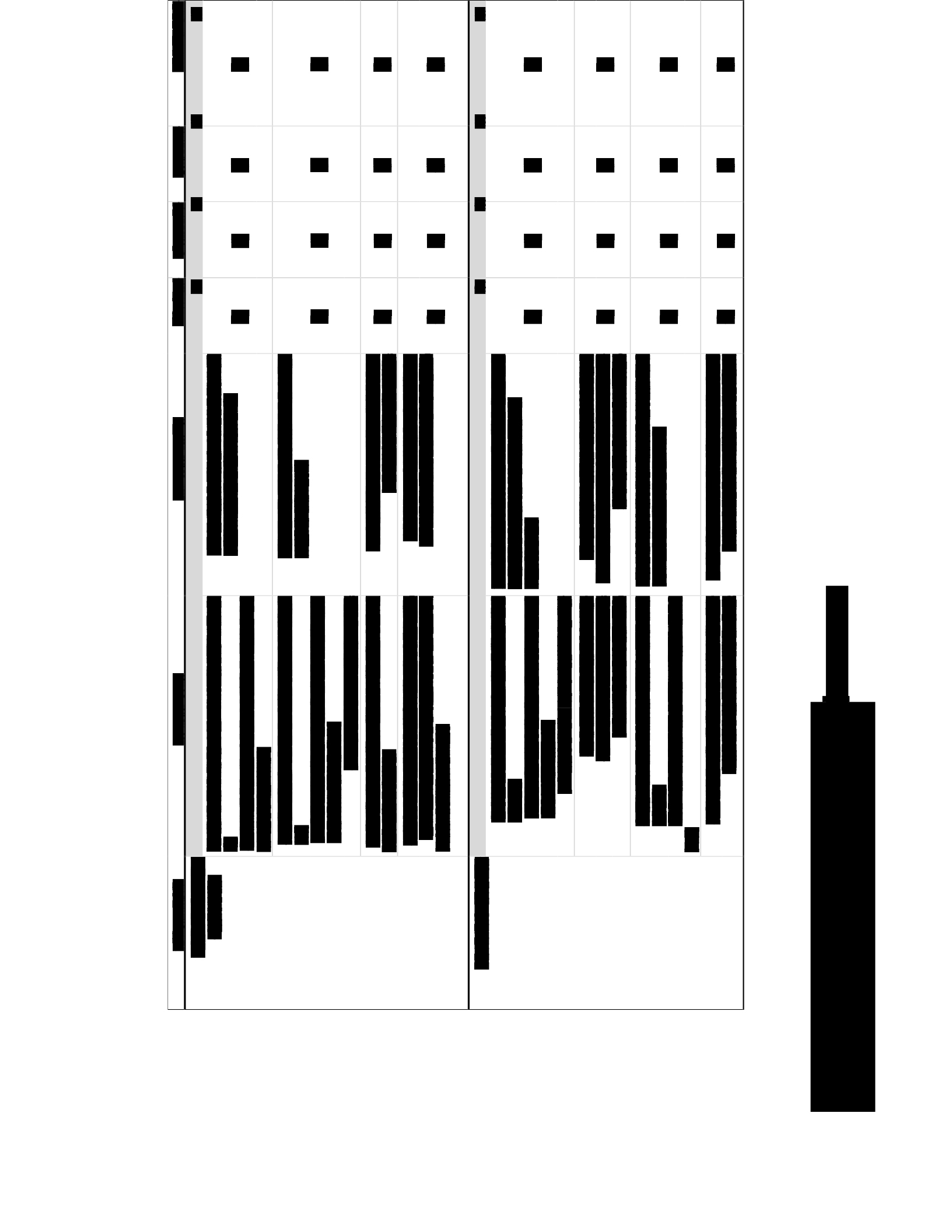
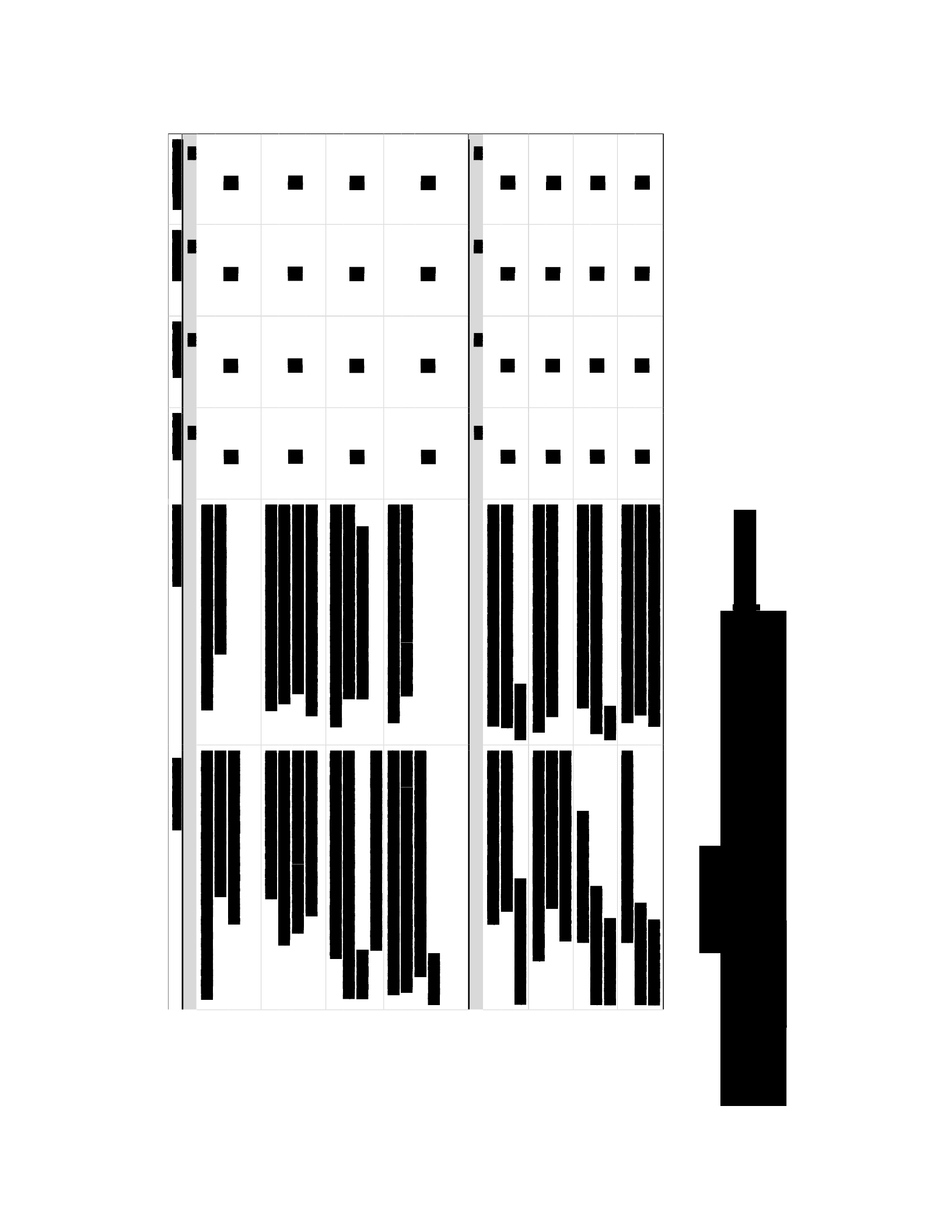


4.4 fsQCA results and hypothesis validation
In order to validate the hypothesis of causal conditions of the capabilities to
achieving superior E2 performance simultaneously, the author used fsQCA to
compare capability assessment results with E2 results of the studied companies. As
a tool to study organizational configurations and complementarities theory,
qualitative comparative analysis (QCA) and fuzzy-set QCA was brought by Ragin
to examine the causal conditions of certain outcome (Ragin, 2014). It has been
accepted as an effective tool to test causational and pre-conditional relationship with
small sample size (Kraus et al., 2018). Compared with tradition method of
regression, which assume independence of different variables, fsQCA derives from
complex interactions among interrelated causational factors (Fainshmidt et al.,
2020). Unlike crisp-set QCA, which uses binary values (0 or 1) to define the
membership or non-membership of the causal set to the outcome, fuzzy-set QCA
uses fine-grained measures that define causal conditions with any value from 0 to
1, thus it helps to better understand how the configuration works (Fiss, 2007). It has
been considered as a reasonable method for sample size of 12 or more, depending
on the number of causal conditions in order to cover potential configurations
(Fainshmidt et al., 2020). Since I identified four core capabilities as potential causal
condition, the preferred sample size is 16 (2x2x2x2) which matches our interviewed
companies.

Since the E2 performance was defined as relative value of a company’s
performance compared with its peers based on Bloomberg data, the author
normalized the level of capability through the calculation in below to get relative
score of a company’s capability level in relevant to others in the study.
Normalized score of capability = (Sum of assessment score of individual company
– Minimum assessment score among the study companies) / (Maximum assessment
score among the study companies - Minimum assessment score among the study
companies)
The expectation is to use fsQCA to test causal condition of each capability
and the combination effect when two or more capabilities present together.
Specifically, the causal condition is defined based on the necessary and sufficient
condition fulfilment per the consistency value from the analysis outcome.
Following fsQCA study guide (Elliott, 1995.), the author calibrated the score
using the commonly accepted standard of 5th,50th and 95th percentiles to transform
the quantitative value into a degree of member of each category (Longest
& Vaisey, 2008), and then tested the coincidence among the four capabilities as.
Result shows coincidence more than 0.5 among positive VIQ, SM and CC, DT with
other factors, and SM and CC. This can be explained with the correlated activities
of using VIQ to engage with stakeholder and partners, the similarity of SM and CC
activities such as communication, influence, negotiation, and the application of DT

during those activities. When tested the absence of the capability, ~VIQ and ~SM,
~SM and ~CC have coincidence higher than 0.5, which reinforced the correlation
mentioned above.
Table 5: Set Coincidence, (~) indicates the absence of the capability
Next step, the necessary conditions of each individual capability was tested with
result as following.
Table 6: Analysis of necessary condition

Result shows that CC has the highest consistency (0.87), followed by DT (0.82).
According to Schneider & Wagemann (2012), a factor is considered necessary if
the consistency is higher than threshold value of 0.9, which means without the factor
we won’t be able to get the outcome. The consistency value as above suggests that
none of the single capability is a necessary condition to achieve E2 performance
(support Hypothesis 5). This is consistent with what I discussed earlier about the
interrelationship and complexity among the challenges and capabilities. It supports
that superior E2 performance depends on a combination of different, superior
capabilities due to the complexity of the issue. For the same reason, one weak
capability does not necessarily lead to weak E2 performance. Companies still have
chance to catch up in other capabilities.
Next step the author used subset/superset analysis to test sufficient condition
of individual and the combination of capabilities to E2 performance. A single or
combined set will be considered as sufficient if the consistency value is higher than
0.8 as commonly accepted threshold (Greckhamer et al., 2018, Rihoux & Ragin,
2009). It means that the presence of the causal condition will lead to the desired
outcome. Result of individual factor shows that only DT has consistency more than
0.8 (0.81), which suggests that superior DT capability has strong association with

superior E2 performance (support Hypothesis 4). While none of the other individual
capability has consistency higher than 0.8: VIQ (0.72), SM (0.71), CC (0.67), the
combination of one or two of them with DT creates consistency more than 0.8 (refer
to table 7 in below), which reinforced the effect of DT as sufficient factor to E2
performance (Llopis-Albert et al., 2021).
Table 7: fsQCA Subset/Superset test of sufficient conditions with the presence of
DT
Given the finding of the important role that DT plays, the author also tested
the sufficient conditions without DT. Result shows the consistency of all the
configurations dropped below 0.8 without DT, including the combined capabilities
of VIQ*SM*CC. This indicates that digital transformation capability plays a critical
role for E2 performance, hypothesis 4 is supported. Results are shown in table 8 in
below.

Table 8: fsQCA Subset/Superset test of sufficient conditions with the absence of
DT
To further validate the implication of the absence of capabilities, the author
tested the sufficient condition of different combinations without VIQ, SM and CC.
Result shows that while the absence of SM and CC reduce the consistency of the
combination compared with their presence, the consistency still maintains above
0.8 when two or three other capabilities are present as in table 9 and 10.
Surprisingly, the absence of VIQ increased the consistency of the combination
VIQ*SM*CC*DT and VIQ*SM*DT (refer table 11), which suggests there might
be some contradiction effect between the presence of SM*DT and VIQ.
Table 9: fsQCA Subset/Superset test of sufficient conditions with the absence of
SM

Table 10: fsQCA Subset/Superset test of sufficient conditions with the absence of
CC
Table 11: fsQCA Subset/Superset test of sufficient conditions with the absence of
VIQ
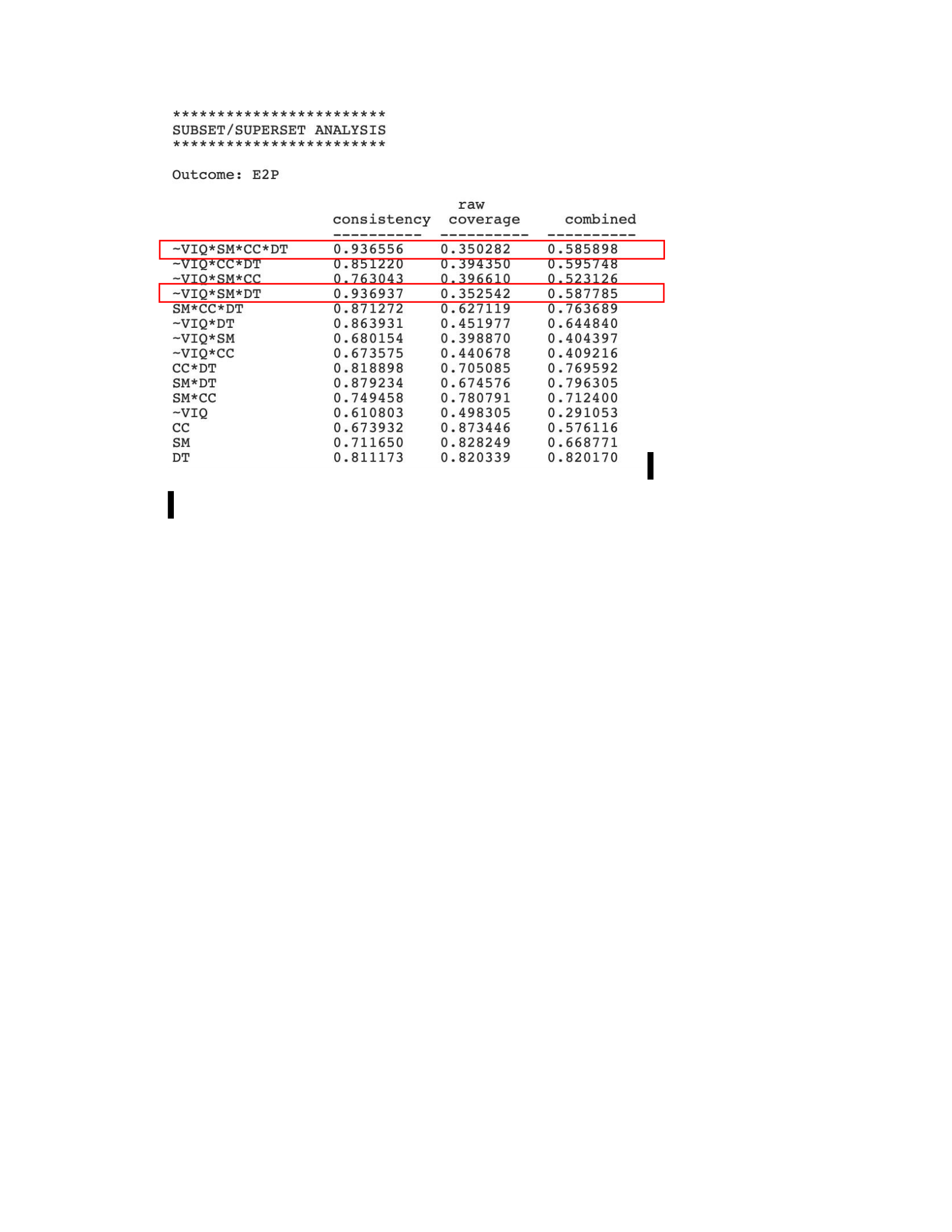
The final conclusion the author drew from fsQCA is fuzzy-set analysis of
truth table, which is used to exam the equifinality of the causal condition of different
configurations and identify the minimum causal factors to achieve the expected
outcome using counterfactual analysis (Fainshmidt et al., 2020; Fiss, 2007).
Using intermediate solution result as suggested by Elliott (2013),
configuration SM * CC * DT has consistency of 0.87 and configuration ~VIQ *
~SM * DT has consistency of 0.84, both illustrate a high degree of which the
configuration is a subset of the membership in the outcome (Ragin, 2008). However,
taking coverage into consideration, which measures the proportion of membership
in the outcome explained by the configuration and represents its empirical relevance
(Greckhamer et al., 2018; Llopis-Albert et al., 2021), the author draw conclusion
that the combination of SM * CC * DT is a causal condition to E2 performance,

with consistency 0.87 and raw coverage 0.63, supported by 6 cases from the study
(ref. table 12).
Table 12: Truth Table Analysis - Intermediate solution of causal configuration to E2
performance
Table 13 is a summary of hypothesis validation result through fsQCA. After
checking the necessary and sufficient condition of the individual and combined
effect of superior capabilities, hypotheses 4 and 5 are supported. Through the
equifinality study, the author found that the combination of superior SM, CC and
DT capability has the strongest causal effect to superior E2 performance.
Table 13: Hypothesis test result

Hypothesis Result
H1: Superior capability of Value Identification and
Quantification is positively associated with superior E2
performance
Not supported
H2: Superior Stakeholder Management capability is positively
associated with superior E2 performance
Not supported
H3: Superior Cross-boundary Collaboration capability is
positively associated with superior E2 performance
Not supported
H4: Superior Digital Transformation capability is positively
associated with superior E2 performance
Supported
H5: A single superior capability is not enough to achieve
superior E2 performance; Different combination of the core
capabilities has different impact on E2 performance; Combined
effect of superior capabilities has higher impact on E2P than
the effect of single superior capability
Supported
5. Discussion and Conclusion
Despite the commonly acknowledged importance and adopted practice, achieving
superior economic and environmental performance simultaneously is not a common
phenomenon. Developed from previous literature, the author proposed that dual-
agenda innovation leads to win-win results and identified four core capabilities on

top of ACAP. Through the interview-based case study and fsQCA, the author
verified the three common challenges and identified how the four capabilities may
contribute to superior economic and environmental performance.
Answers to the three research questions and their implications are discussed as
follows.
• What are the difficulties that companies face to address both
economic and environmental performance simultaneously?
• How can dual-agenda innovation reconcile the conflicts and drive
both agenda effectively?
• What are the key capabilities for a successful dual-agenda
innovation?
5.1 Companies acknowledge the importance of E2 performance, yet they
are facing challenges to achieve superior E2 performance simultaneously
Interviews with four types of companies have shown that the importance of
environmental performance is well recognized through the organization. All
informants acknowledged that companies have both economic and environmental
performance as part of their strategy. However, they are facing the challenges of a
short-term vs. long-term conflict, resource constraints and functional/design
dilemmas when pursuing E2 performance. Inspired by previous studies, the author
defined dual-agenda innovation as the adoption of a new idea or process to deliver

new products, processes, and business models to achieve economic and
environmental performance simultaneously. The core of dual-agenda innovation is
a clearly defined goal of E2 performance improvement as the outcome of the
innovation, and the intentional actions through the entire innovation process to
achieve the goal.
The importance of innovation, especially product and process innovation are
acknowledged by these companies, and they agreed that innovation could be an
effective solution to solve the challenges. All the companies have ongoing
innovation initiatives, but not all of them can be qualified as dual-agenda
innovation,
and not all the companies were able to achieve superior economic and
environmental performance based on Bloomberg data. Focusing on the capability
lens, the study assessed the level of value identification and quantification,
stakeholder management, cross-boundary collaboration and digital transformation
capabilities in each company using a specific scheme extracted from the interviews.
As expected, study results demonstrated that a positive association exists
between the level of individual capability, the configuration of these capabilities,
and the E2 performance of the company, in which the higher the level of
capabilities, the better the economic and environmental performance of the firm
would be. FsQCA results verified that while each individual capability plays a role
in dealing with the common challenges, relying on just one single capability to

achieve superior E2 performance is insufficient. To have successful dual-agenda
innovation, companies need to develop multiple capabilities at the same time and
integrate them through the entire process to address the challenges effectively.
Besides, result implies that the combination of superior stakeholder management,
cross-boundary collaboration and digital transformation capabilities is sufficient to
achieve superior E2 performance, even without a superior value identification and
quantification capability.
Specifically for digital transformation capability, both qualitative and
quantitative results indicated that digital transformation capability plays a critical
role in addressing common challenges and amplifying the effect of other
capabilities. The application of digital transformation includes areas from data
collection, data analysis, process automation and insight generation. It helps
companies improve the efficiency of resource utilization, which leads to
productivity improvement and cost optimization. With the adoption of advanced
technology, digital transformation capability can help address the functional/design
dilemma and come up with new ways of working or use new materials to deliver
the same or better solution to customers with less negative effect on the
environment.
Other than the individual effect of digital transformation capability, fsQCA
results indicated that digital transformation plays a decisive role to the sufficiency
of the configuration of other capabilities to achieve E2 performance. This can be

explained by the amplification effect of digital transformation on other capabilities
when addressing the common challenges. With the combination of VIQ and DT
capabilities, companies can use data to measure the effect and benefits of innovation
and provide the transparency of the performance. It can also help companies in
quantifying the future value in the discussion of short-term and long-term conflict.
Through digital tools, companies can better identify and reach out to stakeholders
and communicate a comprehensive content in an effective way. Many FMCG
companies have adopted digital marketing to connect with consumers. Through
customer profile analysis, companies can engagement with customers who
appreciate the environmental benefits of the product proactively and persuade them
to make green choices in future purchases. The awareness and need of technology
development also increased the need for cross-boundary collaboration, and the
application of digital tools made it easier to connect with internal and external
partners, like what we experienced during the pandemic. A combination of digital
transformation and collaboration capability opens a new lens to solve the challenges
and leverage resources from different parties, which helps in addressing resource
constraints and design/functional dilemma more effectively.
Surprisingly to our hypothesis, fsQCA results indicated that VIQ plays a less
important role compared with individual capabilities, and even a negative role when
it combines with SM and DT (table 11). Among the four types of companies, green
players have the highest VIQ score followed by catch up players, E2 winners and
gold players. The high VIQ capability may help green players in achieving superior

environmental performance, but their economic performance is not as good as E2
winners. This could be explained with the debate of value quantification and KPI
driven performance that the beneficial effects of goal setting have been overstated
and companies should look at deep into the motivation driven performance
(Ordóñez et al., 2009). Interviews with green players and E2 winners indicated that
the conflict of short-term vs. long-term in their organization is not serious as the
company always put long-term benefits at primary position and it’s been cascading
through the organization. Thus, informants considered VIQ as a less important
capability compared with other core capabilities. Taking economic performance
orientation as a given, companies that integrated environmental performance as part
of their strategy and culture are more likely to take long-term initiatives even if it
may not yield significant short-term outcomes. Informants from E2 winners and
green players also mentioned that they have different expectation of return of short-
term economic driven initiative and long-term environmental driven initiatives, and
they will not sacrifice the efficacy of the product when designing environmentally
friendly features. With superior stakeholder management, cross-boundary
collaboration and digital transformation capabilities, these companies were able to
demonstrate the benefits of dual-agenda innovation, which may further reinforce
their choice of long-term benefits over short-term outcomes.

5.2 Theoretical implications
With the empirically validated result, the research contributes to theory from below
two perspectives.
5.2.1 New construct of dual-agenda innovation
The research complemented the existing literature by verifying the common
challenges that companies face when pursuing E2 performance. Built on the
existing definition of traditional, economic agenda driven innovation and
environmental innovation, the author brough up a new construct of dual-agenda
innovation that empathizes the importance of intentional efforts to drive both
economic and environmental performance simultaneously. There have been
numerous debates on the relationship between economic performance and
environmental performance, and relating to them, the debates of the impact from
economic and environmental innovation on companies’ performance. Dual agenda
innovation brings another perspective of the argument and explores the approach to
achieve win-win results.
What differentiates dual agenda innovation from green or environmental innovation
is the intentional efforts to pursue both economic and environmental results during
the entire innovation process of discover, define, ideate, and deliver. Although both
share similar major activities in each stage, the intention to generate win-win results
simultaneously leads to different choices and decisions that companies make at each

step of innovation, thus affecting the result of E2 performance. For example, to
reduce GHG emission, a green or environmental innovation may explore the
solutions of equipment or materials upgrade that require a big amount of upfront
investment without direct economic return. To achieve the same GHG reduction
result with a positive return of investment as the purpose, company may explore
solutions to transform business model or utilize the resource from partnership to
minimize cost and maximize value through the innovation, which may lead to more
cross-boundary collaboration and digital transformation activities.
5.2.2 Core capabilities of dual-agenda innovation
Based on the four capabilities under ACAP model: acquisition, assimilation,
transformation and exploitation (Chauvet, 2015, Gluch et al., 2009), the author
identified four more capabilities to address the common challenges when company
pursuing superior E2 performance. Proven by companies from different E2
performance category, these capabilities became the key success factors of
dualagenda innovation, especially the capability of digital transformation.
Through case-study based interview, the research demonstrated how VIQ, SM, CC
and DT capabilities contributed to E2 performance individually, which reinforced
previous studies about how to achieve superior E2 performance (Chen & Shiu-Wan,
2014; Dal Maso et al., 2018). Not only the study reveals the mechanism of
individual capability, but it also demonstrates the combined effect from different
configurations of the capabilities, and how those capabilities interacted with each

other. This is a breakthrough from previous studies. Besides, the interaction and
spillover effect of the capabilities further enriched the theory of RBV (Judge &
Elenkov, 2005; Ramanathan, 2018) and NRBV (Haffar & Searcy, 2017) that by
solving the complex issues of E2 performance, wherein companies can develop a
set of organizational capabilities that becomes its competitive advantage.
5.3 Practical implication
This study has practical implications from three perspectives. First, the research
reinforced that E2 performance is an unnecessary a trade-off and provided
successful real-life examples of E2 winners. Looking into the specific metrics of
environment and economic performance, companies can identify the sweet spot of
overlapped improvement areas and develop new product or service to achieve them.
Examples such as reducing the materials used for plastic packages which reduces
the cost of the product and minimizes the harm to the environment, energy saving
initiatives which save operating costs and reduce green-house-gas footprint,
environment friendly product that appeals to certain customer segment and
generates significant sales, and so on. Second, to build a sustainable competitive
advantage, companies should place more focus to acquire and develop the core
capabilities that may lead to successful dual-agenda innovation. Compared with
other resources, organizational capability provides more propounding and unique
advantages that are difficult to be observed and replicated by competitors. Finally,
knowing the different effects of the configuration of the capabilities, companies can

identify focus areas of organization development initiatives given their current level
of each capability. While a weak VIQ capability can be compensated through the
alignment of stakeholders and the integration of environmental agenda at the
strategy and cultural level, companies need to develop superior stakeholder
management, cross-boundary collaboration, and digital transformation capabilities
to achieve superior E2 performance. The acquisition and development of the
capability should come as a higher priority than acquiring new products or
processing from the market. If resources are really a constraint, investment in digital
transformation capability has the largest effect to achieve E2 performance according
to the study result.
5.4 Limits and future study suggestions
Given the small sample size, the study does have limitations to generalize across
different industries or different types of companies. A single source bias and time
gap effect may exist because the assessment of the capability reflects the status
while the relative E2 performance is based on the past five years. Future studies
may further explore the drivers and success factors of dual-agenda innovation by
looking into the area of how the capabilities are applied at different stages of
innovation process and/or across different types of innovations (process, product,
business model and so on). The interrelationship among different capabilities is
another interesting area to be further explored, such as the relationship between VIQ

and other capabilities, and the boundary conditions where VIQ may contribute to
jeopardize superior E2 performance.
Besides capabilities, other organizational factors such as leadership, team dynamic,
organization design and practice adoption are also promising areas for future study.
It was mentioned by multiple E2 winner and green player companies that a
determinant leadership and consistent strategy play critical role in pursuing E2
performance. Studies including the samples of small- or median-sized companies
and measuring the development of core capabilities over time could be beneficial
as well.
5.5 Conclusion
Through the interview-based case study of 16 companies in different
industries, the study identified common challenges in pursuing economic and
environmental performance simultaneously and explained how dual-agenda
innovation can help solve the problem. It brought four key capabilities developed
based on the ACAP model. The result supported the proposed dual-agenda
innovation hypotheses, and the findings can be applied to guide companies to find
win-win solutions in achieving superior E2 performance.

