



Population Growth and Economic Development
It is easy to see why some people have become alarmists when it comes to population
growth rates in developing nations. Looking at the world’s low-income countries, they see a
population of more than 2 billion growing at a rate that suggests a doubling every 31 years.
How will we cope with so many more people? The following statement captures the essence
of widely expressed concerns:
“At the end of each day, the world now has over two hundred thousand more mouths to
feed than it had the day before; at the end of each week, one and one-half million more; at
the close of each year, an additional eighty million. … Humankind, now doubling its numbers
every thirty-five years, has fallen into an ambush of its own making; economists call it the
“Malthusian trap,” after the man who most forcefully stated our biological predicament:
population growth tends to outstrip the supply of food.”Phillip Appleman, ed., Thomas
Robert Malthus: An Essay on the Principle of Population—Text, Sources and Background,
Criticism (New York: Norton, 1976), xi.
But what are we to make of such a statement? Certainly, if the world’s population continues
to increase at the rate that it grew in the past 50 years, economic growth is less likely to be
translated into an improvement in the average standard of living. But the rate of population
growth is not a constant; it is affected by other economic forces. This section begins with a
discussion of the relationship between population growth and income growth, then turns to
an explanation of the sources of population growth in low-income countries, and closes with
a discussion of the Malthusian warning suggested in the quote above.
Population Growth and Income Growth
On a simplistic level, the relationship between growth in population and growth in per capita
income is clear. After all, per capita income equals total income divided by population. The
growth rate of per capita income roughly equals the difference between the growth rate of
income and the growth rate of population. Kenya’s annual growth rate in real GDP from
1975 to 2005, for example, was 3.3%. Its population growth rate during that period was
3.2%, leaving it a growth rate of per capita GDP of just 0.1%. A slower rate of population
growth, together with the same rate of GDP increase, would have left Kenya with more
impressive gains in per capita income. The implication is that if the developing countries
want to increase their rate of growth of per capita GDP relative to the developed nations,
they must limit their population growth.
Figure 33.2 "Population and Income Growth, 1975–2005" plots growth rates in population
versus growth rates in per capita GDP from 1975 to 2005 for more than 100 developing
countries. We do not see a simple relationship. Many countries experienced both rapid
population growth and negative changes in real per capita GDP. But still others had relatively
rapid population growth, yet they had a rapid increase in per capita GDP. Clearly, there is
more to achieving gains in per capita income than a simple slowing in population growth.
But the challenge raised at the beginning of this section remains: Can the world continue to
feed a population that is growing exponentially—that is, doubling over fixed intervals?

Figure 33.2 Population and Income Growth, 1975–2005
A scatter chart of population growth rates versus GNP per capita growth rates for various
developing countries for the period 1975–2005 suggests no systematic relationship between
the rates of population and of income growth.
Source: United Nations Development Program, Human Development Report 2007/2008
(New York: Palgrave Macmillan, 2007).
The Malthusian Trap and the Demographic Transition
In 1798, Thomas Robert Malthus published his Essay on the Principle of Population. It proved
to be one of the most enduring works of the time. Malthus’s fundamental argument was
that population growth will inevitably collide with diminishing returns.
Diminishing returns imply that adding more labor to a fixed quantity of land increases
output, but by ever smaller amounts. Eventually, Malthus concluded, increases in food
production would be too small to sustain the increased number of human beings who
consume that output. As the population continued to grow unchecked, the number of
people would eventually outstrip the ability of the land to generate enough food. There
would be an inevitable Malthusian trap, a point at which the world is no longer able to meet
the food requirements of the population, and starvation becomes the primary check to
population growth.
A Malthusian trap is illustrated in Figure 33.3 "The Malthusian Trap". We can determine the
total amount of food needed by multiplying the population in any period by the amount of
food required to keep one person alive. Because population grows exponentially, food
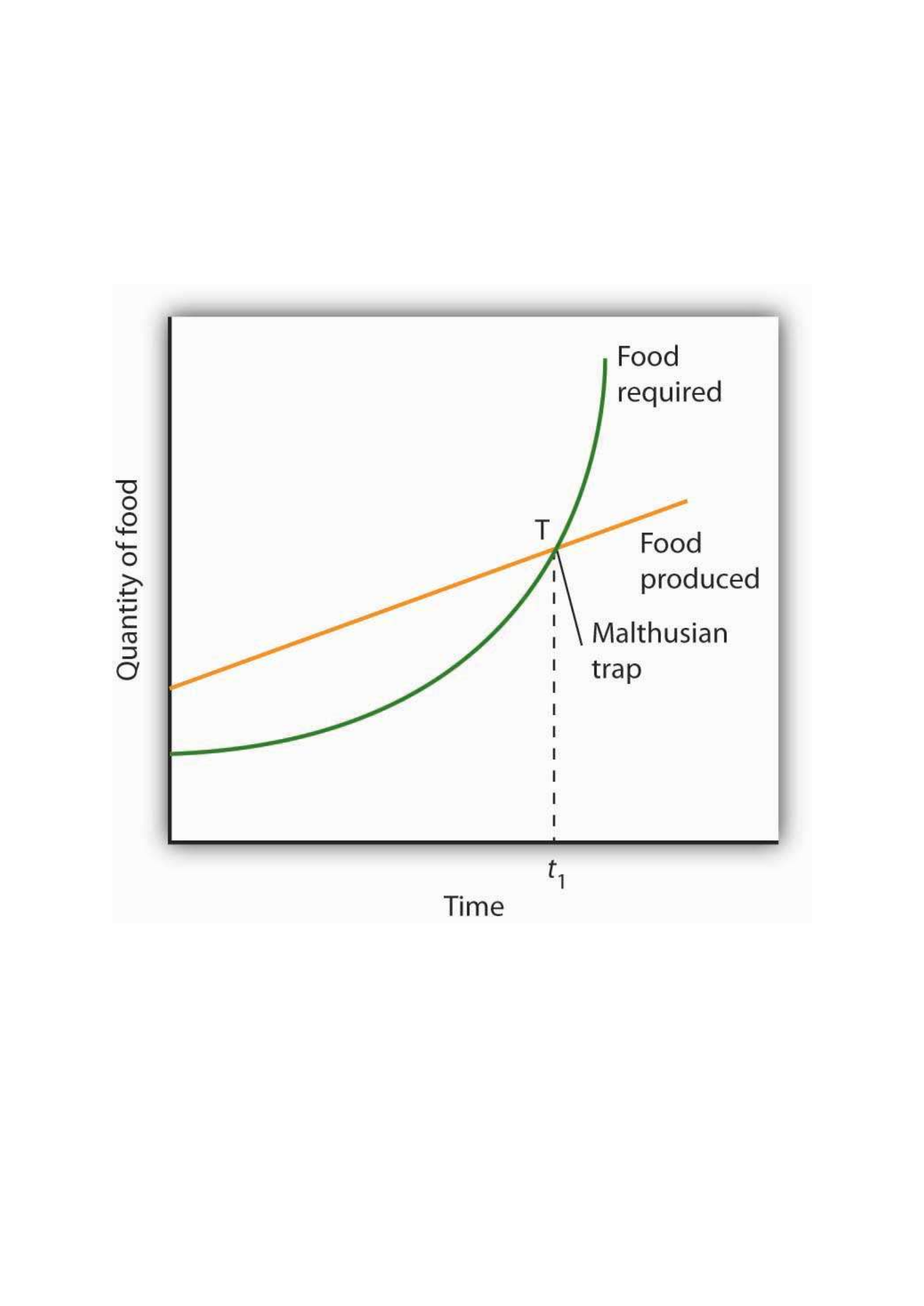
requirements rise at an increasing rate, as shown by the curve labeled “Food required.” Food
produced, according to Malthus, rises by a constant amount each period; its increase is
shown by an upward-sloping straight line labeled “Food produced.” Food required eventually
exceeds food produced, and the Malthusian trap is reached at time t1. The faster the rate of
population growth, the sooner t1 is reached.
Figure 33.3 The Malthusian Trap
If population grows at a fixed exponential rate, the amount of food required will increase
exponentially. But Malthus held that the output of food could increase only by a constant
amount each period. Given these two different growth processes, food requirements would
eventually catch up with food production. The population hits the subsistence level of food
production at the Malthusian trap, shown here at point T.
What happens at the Malthusian trap? Clearly, there is not enough food to support the
population growth implied by the “Food required” curve. Instead, people starve, and
population begins rising arithmetically, held in check by the “Food produced” curve.
Starvation becomes the limiting force for population; the population lives at the margin of

subsistence. For Malthus, the long-run fate of human beings was a standard of living barely
sufficient to keep them alive. As he put it, “the view has a melancholy hue.”
Happily, Malthus’s predictions do not match the experience of Western societies in the 19th
and 20th centuries. One weakness of his argument is that he failed to take into account the
gains in output that could be achieved through increased use of physical capital and new
technologies in agriculture. Increases in the amount of capital per worker in the form of
machines, improved seed, irrigation, and fertilization have made possible huge increases in
agricultural output at the same time as the supply of labor was rising. Agricultural
productivity rose rapidly in the United States over the last two centuries, just the opposite of
the fall in productivity expected by Malthus. Productivity has continued to expand.
Malthus was wrong as well about the relationship between population growth and income.
He believed that any increase in income would boost population growth. But the law of
demand tells us that the opposite may be true: higher incomes tend to reduce population
growth. The primary cost of having children is the opportunity cost of the parents’ time in
raising them—higher incomes increase this opportunity cost. Higher incomes increase the
cost of having children and tend to reduce the number of children people want and thus to
slow population growth.
Panel (a) of Figure 33.4 "Income Levels and Population Growth" shows the birth rates of low-
, middle-, and high-income countries for the period 2000–2005. We see that the higher the
income level, the lower the birth rate. Fewer births translate into slower population growth.
In Panel (b), we see that high-income nations had much slower rates of population growth
than did middle- and low-income nations over the last 30 years.
Figure 33.4 Income Levels and Population Growth
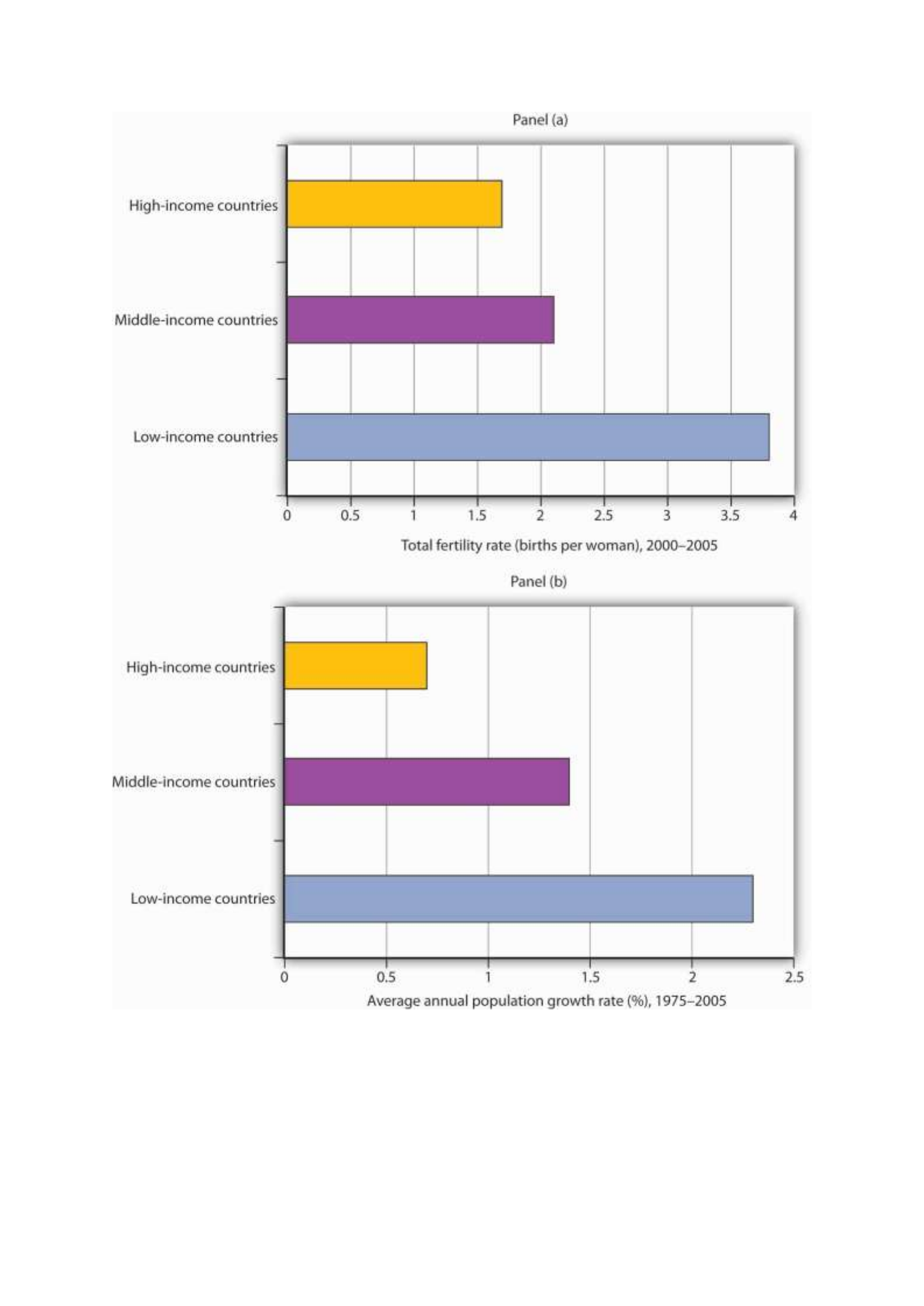
Panel (a) shows that low-income nations had much higher total fertility rates (births per
woman) during the 2000–2005 period than did high-income nations. In Panel (b), we see
that low-income nations had a much higher rate of population growth during the 1975–2005
period.
Source: World Development Indicators database, World Bank, revised October 17, 2008.

An increase in a nation’s income can be expected to slow its rate of population growth. Hong
Kong, for example, has enjoyed dramatic gains in income since the 1960s. Its birth rate and
rate of population growth have fallen by over half during that time.
But if economic development can slow population growth, it can also increase it. One of the
first gains a developing nation can achieve is improvements in such basics as the provision of
clean drinking water, improved sanitation, and public health measures such as vaccination
against childhood diseases. Such gains can dramatically reduce disease and death rates. As
desirable as such gains are, they also boost the rate of population growth. Nations are likely
to enjoy sharp reductions in death rates before they achieve gains in per capita income. That
can accelerate population growth early in the development process. Demographers have
identified a process of demographic transition in which population growth rises with a fall in
death rates and then falls with a reduction in birth rates.
The process of demographic transition has unfolded in a strikingly different manner in
developed versus less developed nations over the past two centuries. In 1800, birth rates
barely exceeded death rates in both developed and less developed countries. The result was
a rate of population growth of only about 0.5% per year worldwide. By 1900, the death rate
in developed nations had fallen by about 25%, with little change in the birth rate. Among
developing nations, the birth rate was unchanged, while the death rate was down only
slightly. The combined result was a modest increase in the rate of world population growth.
Changes were much more rapid in the 20th century. By 1965, the death rate among
developed nations had plunged to about one-quarter of its 1800 level, while the birth rate
had fallen by half. In developing nations, death rates took a similarly dramatic drop, while
birth rates showed little change. The result was dramatic world population growth.
The world’s high-income economies have completed the demographic transition. Less
developed nations have begun to make progress, with birth rates falling by a slightly greater
percentage than death rates. The results have been a sharp slowing in the rate of population
growth among high-income nations and a more modest slowing among low-income nations.
Continued slowing in population growth at all income levels is suggested in Figure 33.5 "The
Demographic Transition at Work: Actual and Projected Population Growth".
Between 1965 and 1980, the world population grew at an annual rate of 2%, suggesting a
doubling time of 36 years. For the world as a whole, it is predicted that population growth
will slow to a 1.1% rate during the 2005–2015 period, a rate that would imply a doubling
time of 65 years.
Figure 33.5 The Demographic Transition at Work: Actual and Projected Population Growth
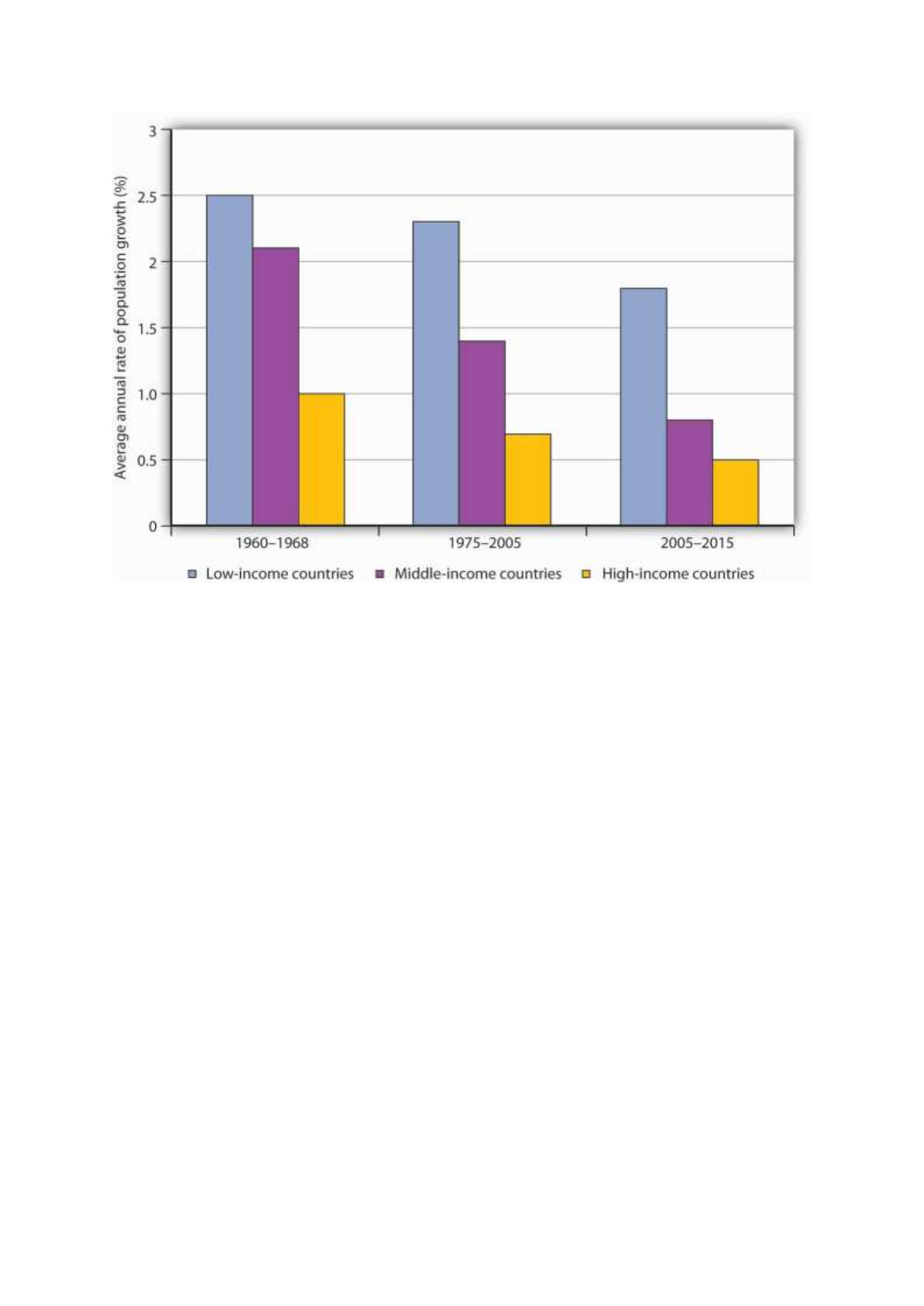
Population growth has slowed considerably in the past several decades.
Source: United Nations Development Program, Human Development Report 2007/2008
(New York: Palgrave Macmillan, 2007) for periods 1975–2000 and 2005–2015, United
Nations Development Program, Human Development Report 1990 (New York, Oxford: Oxford
University Press, 1990) for the 1960–1988 period, in which categories refer to low, middle,
and high human development rankings.
It is easy to see why some people have become alarmists when it comes to population
growth rates in developing nations. Looking at the world’s low-income countries, they see a
population of more than 2 billion growing at a rate that suggests a doubling every 31 years.
How will we cope with so many more people? The following statement captures the essence
of widely expressed concerns:
“At the end of each day, the world now has over two hundred thousand more mouths to
feed than it had the day before; at the end of each week, one and one-half million more; at
the close of each year, an additional eighty million. … Humankind, now doubling its numbers
every thirty-five years, has fallen into an ambush of its own making; economists call it the
“Malthusian trap,” after the man who most forcefully stated our biological predicament:
population growth tends to outstrip the supply of food.”Phillip Appleman, ed., Thomas
Robert Malthus: An Essay on the Principle of Population—Text, Sources and Background,
Criticism (New York: Norton, 1976), xi.
But what are we to make of such a statement? Certainly, if the world’s population continues
to increase at the rate that it grew in the past 50 years, economic growth is less likely to be
translated into an improvement in the average standard of living. But the rate of population

growth is not a constant; it is affected by other economic forces. This section begins with a
discussion of the relationship between population growth and income growth, then turns to
an explanation of the sources of population growth in low-income countries, and closes with
a discussion of the Malthusian warning suggested in the quote above.
It is easy to see why some people have become alarmists when it comes to population
growth rates in developing nations. Looking at the world’s low-income countries, they see a
population of more than 2 billion growing at a rate that suggests a doubling every 31 years.
How will we cope with so many more people? The following statement captures the essence
of widely expressed concerns:
“At the end of each day, the world now has over two hundred thousand more mouths to
feed than it had the day before; at the end of each week, one and one-half million more; at
the close of each year, an additional eighty million. … Humankind, now doubling its numbers
every thirty-five years, has fallen into an ambush of its own making; economists call it the
“Malthusian trap,” after the man who most forcefully stated our biological predicament:
population growth tends to outstrip the supply of food.”Phillip Appleman, ed., Thomas
Robert Malthus: An Essay on the Principle of Population—Text, Sources and Background,
Criticism (New York: Norton, 1976), xi.
But what are we to make of such a statement? Certainly, if the world’s population continues
to increase at the rate that it grew in the past 50 years, economic growth is less likely to be
translated into an improvement in the average standard of living. But the rate of population
growth is not a constant; it is affected by other economic forces. This section begins with a
discussion of the relationship between population growth and income growth, then turns to
an explanation of the sources of population growth in low-income countries, and closes with
a discussion of the Malthusian warning suggested in the quote above.
It is easy to see why some people have become alarmists when it comes to population
growth rates in developing nations. Looking at the world’s low-income countries, they see a
population of more than 2 billion growing at a rate that suggests a doubling every 31 years.
How will we cope with so many more people? The following statement captures the essence
of widely expressed concerns:
“At the end of each day, the world now has over two hundred thousand more mouths to
feed than it had the day before; at the end of each week, one and one-half million more; at
the close of each year, an additional eighty million. … Humankind, now doubling its numbers
every thirty-five years, has fallen into an ambush of its own making; economists call it the
“Malthusian trap,” after the man who most forcefully stated our biological predicament:
population growth tends to outstrip the supply of food.”Phillip Appleman, ed., Thomas
Robert Malthus: An Essay on the Principle of Population—Text, Sources and Background,
Criticism (New York: Norton, 1976), xi.
But what are we to make of such a statement? Certainly, if the world’s population continues
to increase at the rate that it grew in the past 50 years, economic growth is less likely to be
translated into an improvement in the average standard of living. But the rate of population
growth is not a constant; it is affected by other economic forces. This section begins with a

discussion of the relationship between population growth and income growth, then turns to
an explanation of the sources of population growth in low-income countries, and closes with
a discussion of the Malthusian warning suggested in the quote above.
It is easy to see why some people have become alarmists when it comes to population
growth rates in developing nations. Looking at the world’s low-income countries, they see a
population of more than 2 billion growing at a rate that suggests a doubling every 31 years.
How will we cope with so many more people? The following statement captures the essence
of widely expressed concerns:
“At the end of each day, the world now has over two hundred thousand more mouths to
feed than it had the day before; at the end of each week, one and one-half million more; at
the close of each year, an additional eighty million. … Humankind, now doubling its numbers
every thirty-five years, has fallen into an ambush of its own making; economists call it the
“Malthusian trap,” after the man who most forcefully stated our biological predicament:
population growth tends to outstrip the supply of food.”Phillip Appleman, ed., Thomas
Robert Malthus: An Essay on the Principle of Population—Text, Sources and Background,
Criticism (New York: Norton, 1976), xi.
But what are we to make of such a statement? Certainly, if the world’s population continues
to increase at the rate that it grew in the past 50 years, economic growth is less likely to be
translated into an improvement in the average standard of living. But the rate of population
growth is not a constant; it is affected by other economic forces. This section begins with a
discussion of the relationship between population growth and income growth, then turns to
an explanation of the sources of population growth in low-income countries, and closes with
a discussion of the Malthusian warning suggested in the quote above.
It is easy to see why some people have become alarmists when it comes to population
growth rates in developing nations. Looking at the world’s low-income countries, they see a
population of more than 2 billion growing at a rate that suggests a doubling every 31 years.
How will we cope with so many more people? The following statement captures the essence
of widely expressed concerns:
“At the end of each day, the world now has over two hundred thousand more mouths to
feed than it had the day before; at the end of each week, one and one-half million more; at
the close of each year, an additional eighty million. … Humankind, now doubling its numbers
every thirty-five years, has fallen into an ambush of its own making; economists call it the
“Malthusian trap,” after the man who most forcefully stated our biological predicament:
population growth tends to outstrip the supply of food.”Phillip Appleman, ed., Thomas
Robert Malthus: An Essay on the Principle of Population—Text, Sources and Background,
Criticism (New York: Norton, 1976), xi.
But what are we to make of such a statement? Certainly, if the world’s population continues
to increase at the rate that it grew in the past 50 years, economic growth is less likely to be
translated into an improvement in the average standard of living. But the rate of population
growth is not a constant; it is affected by other economic forces. This section begins with a
discussion of the relationship between population growth and income growth, then turns to

an explanation of the sources of population growth in low-income countries, and closes with
a discussion of the Malthusian warning suggested in the quote above.
It is easy to see why some people have become alarmists when it comes to population
growth rates in developing nations. Looking at the world’s low-income countries, they see a
population of more than 2 billion growing at a rate that suggests a doubling every 31 years.
How will we cope with so many more people? The following statement captures the essence
of widely expressed concerns:
“At the end of each day, the world now has over two hundred thousand more mouths to
feed than it had the day before; at the end of each week, one and one-half million more; at
the close of each year, an additional eighty million. … Humankind, now doubling its numbers
every thirty-five years, has fallen into an ambush of its own making; economists call it the
“Malthusian trap,” after the man who most forcefully stated our biological predicament:
population growth tends to outstrip the supply of food.”Phillip Appleman, ed., Thomas
Robert Malthus: An Essay on the Principle of Population—Text, Sources and Background,
Criticism (New York: Norton, 1976), xi.
But what are we to make of such a statement? Certainly, if the world’s population continues
to increase at the rate that it grew in the past 50 years, economic growth is less likely to be
translated into an improvement in the average standard of living. But the rate of population
growth is not a constant; it is affected by other economic forces. This section begins with a
discussion of the relationship between population growth and income growth, then turns to
an explanation of the sources of population growth in low-income countries, and closes with
a discussion of the Malthusian warning suggested in the quote above.
It is easy to see why some people have become alarmists when it comes to population
growth rates in developing nations. Looking at the world’s low-income countries, they see a
population of more than 2 billion growing at a rate that suggests a doubling every 31 years.
How will we cope with so many more people? The following statement captures the essence
of widely expressed concerns:
“At the end of each day, the world now has over two hundred thousand more mouths to
feed than it had the day before; at the end of each week, one and one-half million more; at
the close of each year, an additional eighty million. … Humankind, now doubling its numbers
every thirty-five years, has fallen into an ambush of its own making; economists call it the
“Malthusian trap,” after the man who most forcefully stated our biological predicament:
population growth tends to outstrip the supply of food.”Phillip Appleman, ed., Thomas
Robert Malthus: An Essay on the Principle of Population—Text, Sources and Background,
Criticism (New York: Norton, 1976), xi.
But what are we to make of such a statement? Certainly, if the world’s population continues
to increase at the rate that it grew in the past 50 years, economic growth is less likely to be
translated into an improvement in the average standard of living. But the rate of population
growth is not a constant; it is affected by other economic forces. This section begins with a
discussion of the relationship between population growth and income growth, then turns to

an explanation of the sources of population growth in low-income countries, and closes with
a discussion of the Malthusian warning suggested in the quote above.
It is easy to see why some people have become alarmists when it comes to population
growth rates in developing nations. Looking at the world’s low-income countries, they see a
population of more than 2 billion growing at a rate that suggests a doubling every 31 years.
How will we cope with so many more people? The following statement captures the essence
of widely expressed concerns:
“At the end of each day, the world now has over two hundred thousand more mouths to
feed than it had the day before; at the end of each week, one and one-half million more; at
the close of each year, an additional eighty million. … Humankind, now doubling its numbers
every thirty-five years, has fallen into an ambush of its own making; economists call it the
“Malthusian trap,” after the man who most forcefully stated our biological predicament:
population growth tends to outstrip the supply of food.”Phillip Appleman, ed., Thomas
Robert Malthus: An Essay on the Principle of Population—Text, Sources and Background,
Criticism (New York: Norton, 1976), xi.
But what are we to make of such a statement? Certainly, if the world’s population continues
to increase at the rate that it grew in the past 50 years, economic growth is less likely to be
translated into an improvement in the average standard of living. But the rate of population
growth is not a constant; it is affected by other economic forces. This section begins with a
discussion of the relationship between population growth and income growth, then turns to
an explanation of the sources of population growth in low-income countries, and closes with
a discussion of the Malthusian warning suggested in the quote above.
It is easy to see why some people have become alarmists when it comes to population
growth rates in developing nations. Looking at the world’s low-income countries, they see a
population of more than 2 billion growing at a rate that suggests a doubling every 31 years.
How will we cope with so many more people? The following statement captures the essence
of widely expressed concerns:
“At the end of each day, the world now has over two hundred thousand more mouths to
feed than it had the day before; at the end of each week, one and one-half million more; at
the close of each year, an additional eighty million. … Humankind, now doubling its numbers
every thirty-five years, has fallen into an ambush of its own making; economists call it the
“Malthusian trap,” after the man who most forcefully stated our biological predicament:
population growth tends to outstrip the supply of food.”Phillip Appleman, ed., Thomas
Robert Malthus: An Essay on the Principle of Population—Text, Sources and Background,
Criticism (New York: Norton, 1976), xi.
But what are we to make of such a statement? Certainly, if the world’s population continues
to increase at the rate that it grew in the past 50 years, economic growth is less likely to be
translated into an improvement in the average standard of living. But the rate of population
growth is not a constant; it is affected by other economic forces. This section begins with a
discussion of the relationship between population growth and income growth, then turns to

an explanation of the sources of population growth in low-income countries, and closes with
a discussion of the Malthusian warning suggested in the quote above.
It is easy to see why some people have become alarmists when it comes to population
growth rates in developing nations. Looking at the world’s low-income countries, they see a
population of more than 2 billion growing at a rate that suggests a doubling every 31 years.
How will we cope with so many more people? The following statement captures the essence
of widely expressed concerns:
“At the end of each day, the world now has over two hundred thousand more mouths to
feed than it had the day before; at the end of each week, one and one-half million more; at
the close of each year, an additional eighty million. … Humankind, now doubling its numbers
every thirty-five years, has fallen into an ambush of its own making; economists call it the
“Malthusian trap,” after the man who most forcefully stated our biological predicament:
population growth tends to outstrip the supply of food.”Phillip Appleman, ed., Thomas
Robert Malthus: An Essay on the Principle of Population—Text, Sources and Background,
Criticism (New York: Norton, 1976), xi.
But what are we to make of such a statement? Certainly, if the world’s population continues
to increase at the rate that it grew in the past 50 years, economic growth is less likely to be
translated into an improvement in the average standard of living. But the rate of population
growth is not a constant; it is affected by other economic forces. This section begins with a
discussion of the relationship between population growth and income growth, then turns to
an explanation of the sources of population growth in low-income countries, and closes with
a discussion of the Malthusian warning suggested in the quote above.
It is easy to see why some people have become alarmists when it comes to population
growth rates in developing nations. Looking at the world’s low-income countries, they see a
population of more than 2 billion growing at a rate that suggests a doubling every 31 years.
How will we cope with so many more people? The following statement captures the essence
of widely expressed concerns:
“At the end of each day, the world now has over two hundred thousand more mouths to
feed than it had the day before; at the end of each week, one and one-half million more; at
the close of each year, an additional eighty million. … Humankind, now doubling its numbers
every thirty-five years, has fallen into an ambush of its own making; economists call it the
“Malthusian trap,” after the man who most forcefully stated our biological predicament:
population growth tends to outstrip the supply of food.”Phillip Appleman, ed., Thomas
Robert Malthus: An Essay on the Principle of Population—Text, Sources and Background,
Criticism (New York: Norton, 1976), xi.
But what are we to make of such a statement? Certainly, if the world’s population continues
to increase at the rate that it grew in the past 50 years, economic growth is less likely to be
translated into an improvement in the average standard of living. But the rate of population
growth is not a constant; it is affected by other economic forces. This section begins with a
discussion of the relationship between population growth and income growth, then turns to

an explanation of the sources of population growth in low-income countries, and closes with
a discussion of the Malthusian warning suggested in the quote above.
It is easy to see why some people have become alarmists when it comes to population
growth rates in developing nations. Looking at the world’s low-income countries, they see a
population of more than 2 billion growing at a rate that suggests a doubling every 31 years.
How will we cope with so many more people? The following statement captures the essence
of widely expressed concerns:
“At the end of each day, the world now has over two hundred thousand more mouths to
feed than it had the day before; at the end of each week, one and one-half million more; at
the close of each year, an additional eighty million. … Humankind, now doubling its numbers
every thirty-five years, has fallen into an ambush of its own making; economists call it the
“Malthusian trap,” after the man who most forcefully stated our biological predicament:
population growth tends to outstrip the supply of food.”Phillip Appleman, ed., Thomas
Robert Malthus: An Essay on the Principle of Population—Text, Sources and Background,
Criticism (New York: Norton, 1976), xi.
But what are we to make of such a statement? Certainly, if the world’s population continues
to increase at the rate that it grew in the past 50 years, economic growth is less likely to be
translated into an improvement in the average standard of living. But the rate of population
growth is not a constant; it is affected by other economic forces. This section begins with a
discussion of the relationship between population growth and income growth, then turns to
an explanation of the sources of population growth in low-income countries, and closes with
a discussion of the Malthusian warning suggested in the quote above.
It is easy to see why some people have become alarmists when it comes to population
growth rates in developing nations. Looking at the world’s low-income countries, they see a
population of more than 2 billion growing at a rate that suggests a doubling every 31 years.
How will we cope with so many more people? The following statement captures the essence
of widely expressed concerns:
“At the end of each day, the world now has over two hundred thousand more mouths to
feed than it had the day before; at the end of each week, one and one-half million more; at
the close of each year, an additional eighty million. … Humankind, now doubling its numbers
every thirty-five years, has fallen into an ambush of its own making; economists call it the
“Malthusian trap,” after the man who most forcefully stated our biological predicament:
population growth tends to outstrip the supply of food.”Phillip Appleman, ed., Thomas
Robert Malthus: An Essay on the Principle of Population—Text, Sources and Background,
Criticism (New York: Norton, 1976), xi.
But what are we to make of such a statement? Certainly, if the world’s population continues
to increase at the rate that it grew in the past 50 years, economic growth is less likely to be
translated into an improvement in the average standard of living. But the rate of population
growth is not a constant; it is affected by other economic forces. This section begins with a
discussion of the relationship between population growth and income growth, then turns to

an explanation of the sources of population growth in low-income countries, and closes with
a discussion of the Malthusian warning suggested in the quote above.
It is easy to see why some people have become alarmists when it comes to population
growth rates in developing nations. Looking at the world’s low-income countries, they see a
population of more than 2 billion growing at a rate that suggests a doubling every 31 years.
How will we cope with so many more people? The following statement captures the essence
of widely expressed concerns:
“At the end of each day, the world now has over two hundred thousand more mouths to
feed than it had the day before; at the end of each week, one and one-half million more; at
the close of each year, an additional eighty million. … Humankind, now doubling its numbers
every thirty-five years, has fallen into an ambush of its own making; economists call it the
“Malthusian trap,” after the man who most forcefully stated our biological predicament:
population growth tends to outstrip the supply of food.”Phillip Appleman, ed., Thomas
Robert Malthus: An Essay on the Principle of Population—Text, Sources and Background,
Criticism (New York: Norton, 1976), xi.
But what are we to make of such a statement? Certainly, if the world’s population continues
to increase at the rate that it grew in the past 50 years, economic growth is less likely to be
translated into an improvement in the average standard of living. But the rate of population
growth is not a constant; it is affected by other economic forces. This section begins with a
discussion of the relationship between population growth and income growth, then turns to
an explanation of the sources of population growth in low-income countries, and closes with
a discussion of the Malthusian warning suggested in the quote above.
It is easy to see why some people have become alarmists when it comes to population
growth rates in developing nations. Looking at the world’s low-income countries, they see a
population of more than 2 billion growing at a rate that suggests a doubling every 31 years.
How will we cope with so many more people? The following statement captures the essence
of widely expressed concerns:
“At the end of each day, the world now has over two hundred thousand more mouths to
feed than it had the day before; at the end of each week, one and one-half million more; at
the close of each year, an additional eighty million. … Humankind, now doubling its numbers
every thirty-five years, has fallen into an ambush of its own making; economists call it the
“Malthusian trap,” after the man who most forcefully stated our biological predicament:
population growth tends to outstrip the supply of food.”Phillip Appleman, ed., Thomas
Robert Malthus: An Essay on the Principle of Population—Text, Sources and Background,
Criticism (New York: Norton, 1976), xi.
But what are we to make of such a statement? Certainly, if the world’s population continues
to increase at the rate that it grew in the past 50 years, economic growth is less likely to be
translated into an improvement in the average standard of living. But the rate of population
growth is not a constant; it is affected by other economic forces. This section begins with a
discussion of the relationship between population growth and income growth, then turns to

an explanation of the sources of population growth in low-income countries, and closes with
a discussion of the Malthusian warning suggested in the quote above.
It is easy to see why some people have become alarmists when it comes to population
growth rates in developing nations. Looking at the world’s low-income countries, they see a
population of more than 2 billion growing at a rate that suggests a doubling every 31 years.
How will we cope with so many more people? The following statement captures the essence
of widely expressed concerns:
“At the end of each day, the world now has over two hundred thousand more mouths to
feed than it had the day before; at the end of each week, one and one-half million more; at
the close of each year, an additional eighty million. … Humankind, now doubling its numbers
every thirty-five years, has fallen into an ambush of its own making; economists call it the
“Malthusian trap,” after the man who most forcefully stated our biological predicament:
population growth tends to outstrip the supply of food.”Phillip Appleman, ed., Thomas
Robert Malthus: An Essay on the Principle of Population—Text, Sources and Background,
Criticism (New York: Norton, 1976), xi.
But what are we to make of such a statement? Certainly, if the world’s population continues
to increase at the rate that it grew in the past 50 years, economic growth is less likely to be
translated into an improvement in the average standard of living. But the rate of population
growth is not a constant; it is affected by other economic forces. This section begins with a
discussion of the relationship between population growth and income growth, then turns to
an explanation of the sources of population growth in low-income countries, and closes with
a discussion of the Malthusian warning suggested in the quote above.
It is easy to see why some people have become alarmists when it comes to population
growth rates in developing nations. Looking at the world’s low-income countries, they see a
population of more than 2 billion growing at a rate that suggests a doubling every 31 years.
How will we cope with so many more people? The following statement captures the essence
of widely expressed concerns:
“At the end of each day, the world now has over two hundred thousand more mouths to
feed than it had the day before; at the end of each week, one and one-half million more; at
the close of each year, an additional eighty million. … Humankind, now doubling its numbers
every thirty-five years, has fallen into an ambush of its own making; economists call it the
“Malthusian trap,” after the man who most forcefully stated our biological predicament:
population growth tends to outstrip the supply of food.”Phillip Appleman, ed., Thomas
Robert Malthus: An Essay on the Principle of Population—Text, Sources and Background,
Criticism (New York: Norton, 1976), xi.
But what are we to make of such a statement? Certainly, if the world’s population continues
to increase at the rate that it grew in the past 50 years, economic growth is less likely to be
translated into an improvement in the average standard of living. But the rate of population
growth is not a constant; it is affected by other economic forces. This section begins with a
discussion of the relationship between population growth and income growth, then turns to

an explanation of the sources of population growth in low-income countries, and closes with
a discussion of the Malthusian warning suggested in the quote above.
It is easy to see why some people have become alarmists when it comes to population
growth rates in developing nations. Looking at the world’s low-income countries, they see a
population of more than 2 billion growing at a rate that suggests a doubling every 31 years.
How will we cope with so many more people? The following statement captures the essence
of widely expressed concerns:
“At the end of each day, the world now has over two hundred thousand more mouths to
feed than it had the day before; at the end of each week, one and one-half million more; at
the close of each year, an additional eighty million. … Humankind, now doubling its numbers
every thirty-five years, has fallen into an ambush of its own making; economists call it the
“Malthusian trap,” after the man who most forcefully stated our biological predicament:
population growth tends to outstrip the supply of food.”Phillip Appleman, ed., Thomas
Robert Malthus: An Essay on the Principle of Population—Text, Sources and Background,
Criticism (New York: Norton, 1976), xi.
But what are we to make of such a statement? Certainly, if the world’s population continues
to increase at the rate that it grew in the past 50 years, economic growth is less likely to be
translated into an improvement in the average standard of living. But the rate of population
growth is not a constant; it is affected by other economic forces. This section begins with a
discussion of the relationship between population growth and income growth, then turns to
an explanation of the sources of population growth in low-income countries, and closes with
a discussion of the Malthusian warning suggested in the quote above.
It is easy to see why some people have become alarmists when it comes to population
growth rates in developing nations. Looking at the world’s low-income countries, they see a
population of more than 2 billion growing at a rate that suggests a doubling every 31 years.
How will we cope with so many more people? The following statement captures the essence
of widely expressed concerns:
“At the end of each day, the world now has over two hundred thousand more mouths to
feed than it had the day before; at the end of each week, one and one-half million more; at
the close of each year, an additional eighty million. … Humankind, now doubling its numbers
every thirty-five years, has fallen into an ambush of its own making; economists call it the
“Malthusian trap,” after the man who most forcefully stated our biological predicament:
population growth tends to outstrip the supply of food.”Phillip Appleman, ed., Thomas
Robert Malthus: An Essay on the Principle of Population—Text, Sources and Background,
Criticism (New York: Norton, 1976), xi.
But what are we to make of such a statement? Certainly, if the world’s population continues
to increase at the rate that it grew in the past 50 years, economic growth is less likely to be
translated into an improvement in the average standard of living. But the rate of population
growth is not a constant; it is affected by other economic forces. This section begins with a
discussion of the relationship between population growth and income growth, then turns to

an explanation of the sources of population growth in low-income countries, and closes with
a discussion of the Malthusian warning suggested in the quote above.
It is easy to see why some people have become alarmists when it comes to population
growth rates in developing nations. Looking at the world’s low-income countries, they see a
population of more than 2 billion growing at a rate that suggests a doubling every 31 years.
How will we cope with so many more people? The following statement captures the essence
of widely expressed concerns:
“At the end of each day, the world now has over two hundred thousand more mouths to
feed than it had the day before; at the end of each week, one and one-half million more; at
the close of each year, an additional eighty million. … Humankind, now doubling its numbers
every thirty-five years, has fallen into an ambush of its own making; economists call it the
“Malthusian trap,” after the man who most forcefully stated our biological predicament:
population growth tends to outstrip the supply of food.”Phillip Appleman, ed., Thomas
Robert Malthus: An Essay on the Principle of Population—Text, Sources and Background,
Criticism (New York: Norton, 1976), xi.
But what are we to make of such a statement? Certainly, if the world’s population continues
to increase at the rate that it grew in the past 50 years, economic growth is less likely to be
translated into an improvement in the average standard of living. But the rate of population
growth is not a constant; it is affected by other economic forces. This section begins with a
discussion of the relationship between population growth and income growth, then turns to
an explanation of the sources of population growth in low-income countries, and closes with
a discussion of the Malthusian warning suggested in the quote above.
It is easy to see why some people have become alarmists when it comes to population
growth rates in developing nations. Looking at the world’s low-income countries, they see a
population of more than 2 billion growing at a rate that suggests a doubling every 31 years.
How will we cope with so many more people? The following statement captures the essence
of widely expressed concerns:
“At the end of each day, the world now has over two hundred thousand more mouths to
feed than it had the day before; at the end of each week, one and one-half million more; at
the close of each year, an additional eighty million. … Humankind, now doubling its numbers
every thirty-five years, has fallen into an ambush of its own making; economists call it the
“Malthusian trap,” after the man who most forcefully stated our biological predicament:
population growth tends to outstrip the supply of food.”Phillip Appleman, ed., Thomas
Robert Malthus: An Essay on the Principle of Population—Text, Sources and Background,
Criticism (New York: Norton, 1976), xi.
But what are we to make of such a statement? Certainly, if the world’s population continues
to increase at the rate that it grew in the past 50 years, economic growth is less likely to be
translated into an improvement in the average standard of living. But the rate of population
growth is not a constant; it is affected by other economic forces. This section begins with a
discussion of the relationship between population growth and income growth, then turns to

an explanation of the sources of population growth in low-income countries, and closes with
a discussion of the Malthusian warning suggested in the quote above.
It is easy to see why some people have become alarmists when it comes to population
growth rates in developing nations. Looking at the world’s low-income countries, they see a
population of more than 2 billion growing at a rate that suggests a doubling every 31 years.
How will we cope with so many more people? The following statement captures the essence
of widely expressed concerns:
“At the end of each day, the world now has over two hundred thousand more mouths to
feed than it had the day before; at the end of each week, one and one-half million more; at
the close of each year, an additional eighty million. … Humankind, now doubling its numbers
every thirty-five years, has fallen into an ambush of its own making; economists call it the
“Malthusian trap,” after the man who most forcefully stated our biological predicament:
population growth tends to outstrip the supply of food.”Phillip Appleman, ed., Thomas
Robert Malthus: An Essay on the Principle of Population—Text, Sources and Background,
Criticism (New York: Norton, 1976), xi.
But what are we to make of such a statement? Certainly, if the world’s population continues
to increase at the rate that it grew in the past 50 years, economic growth is less likely to be
translated into an improvement in the average standard of living. But the rate of population
growth is not a constant; it is affected by other economic forces. This section begins with a
discussion of the relationship between population growth and income growth, then turns to
an explanation of the sources of population growth in low-income countries, and closes with
a discussion of the Malthusian warning suggested in the quote above.
It is easy to see why some people have become alarmists when it comes to population
growth rates in developing nations. Looking at the world’s low-income countries, they see a
population of more than 2 billion growing at a rate that suggests a doubling every 31 years.
How will we cope with so many more people? The following statement captures the essence
of widely expressed concerns:
“At the end of each day, the world now has over two hundred thousand more mouths to
feed than it had the day before; at the end of each week, one and one-half million more; at
the close of each year, an additional eighty million. … Humankind, now doubling its numbers
every thirty-five years, has fallen into an ambush of its own making; economists call it the
“Malthusian trap,” after the man who most forcefully stated our biological predicament:
population growth tends to outstrip the supply of food.”Phillip Appleman, ed., Thomas
Robert Malthus: An Essay on the Principle of Population—Text, Sources and Background,
Criticism (New York: Norton, 1976), xi.
But what are we to make of such a statement? Certainly, if the world’s population continues
to increase at the rate that it grew in the past 50 years, economic growth is less likely to be
translated into an improvement in the average standard of living. But the rate of population
growth is not a constant; it is affected by other economic forces. This section begins with a
discussion of the relationship between population growth and income growth, then turns to

an explanation of the sources of population growth in low-income countries, and closes with
a discussion of the Malthusian warning suggested in the quote above.
It is easy to see why some people have become alarmists when it comes to population
growth rates in developing nations. Looking at the world’s low-income countries, they see a
population of more than 2 billion growing at a rate that suggests a doubling every 31 years.
How will we cope with so many more people? The following statement captures the essence
of widely expressed concerns:
“At the end of each day, the world now has over two hundred thousand more mouths to
feed than it had the day before; at the end of each week, one and one-half million more; at
the close of each year, an additional eighty million. … Humankind, now doubling its numbers
every thirty-five years, has fallen into an ambush of its own making; economists call it the
“Malthusian trap,” after the man who most forcefully stated our biological predicament:
population growth tends to outstrip the supply of food.”Phillip Appleman, ed., Thomas
Robert Malthus: An Essay on the Principle of Population—Text, Sources and Background,
Criticism (New York: Norton, 1976), xi.
But what are we to make of such a statement? Certainly, if the world’s population continues
to increase at the rate that it grew in the past 50 years, economic growth is less likely to be
translated into an improvement in the average standard of living. But the rate of population
growth is not a constant; it is affected by other economic forces. This section begins with a
discussion of the relationship between population growth and income growth, then turns to
an explanation of the sources of population growth in low-income countries, and closes with
a discussion of the Malthusian warning suggested in the quote above.
It is easy to see why some people have become alarmists when it comes to population
growth rates in developing nations. Looking at the world’s low-income countries, they see a
population of more than 2 billion growing at a rate that suggests a doubling every 31 years.
How will we cope with so many more people? The following statement captures the essence
of widely expressed concerns:
“At the end of each day, the world now has over two hundred thousand more mouths to
feed than it had the day before; at the end of each week, one and one-half million more; at
the close of each year, an additional eighty million. … Humankind, now doubling its numbers
every thirty-five years, has fallen into an ambush of its own making; economists call it the
“Malthusian trap,” after the man who most forcefully stated our biological predicament:
population growth tends to outstrip the supply of food.”Phillip Appleman, ed., Thomas
Robert Malthus: An Essay on the Principle of Population—Text, Sources and Background,
Criticism (New York: Norton, 1976), xi.
But what are we to make of such a statement? Certainly, if the world’s population continues
to increase at the rate that it grew in the past 50 years, economic growth is less likely to be
translated into an improvement in the average standard of living. But the rate of population
growth is not a constant; it is affected by other economic forces. This section begins with a
discussion of the relationship between population growth and income growth, then turns to

an explanation of the sources of population growth in low-income countries, and closes with
a discussion of the Malthusian warning suggested in the quote above.
It is easy to see why some people have become alarmists when it comes to population
growth rates in developing nations. Looking at the world’s low-income countries, they see a
population of more than 2 billion growing at a rate that suggests a doubling every 31 years.
How will we cope with so many more people? The following statement captures the essence
of widely expressed concerns:
“At the end of each day, the world now has over two hundred thousand more mouths to
feed than it had the day before; at the end of each week, one and one-half million more; at
the close of each year, an additional eighty million. … Humankind, now doubling its numbers
every thirty-five years, has fallen into an ambush of its own making; economists call it the
“Malthusian trap,” after the man who most forcefully stated our biological predicament:
population growth tends to outstrip the supply of food.”Phillip Appleman, ed., Thomas
Robert Malthus: An Essay on the Principle of Population—Text, Sources and Background,
Criticism (New York: Norton, 1976), xi.
But what are we to make of such a statement? Certainly, if the world’s population continues
to increase at the rate that it grew in the past 50 years, economic growth is less likely to be
translated into an improvement in the average standard of living. But the rate of population
growth is not a constant; it is affected by other economic forces. This section begins with a
discussion of the relationship between population growth and income growth, then turns to
an explanation of the sources of population growth in low-income countries, and closes with
a discussion of the Malthusian warning suggested in the quote above.
It is easy to see why some people have become alarmists when it comes to population
growth rates in developing nations. Looking at the world’s low-income countries, they see a
population of more than 2 billion growing at a rate that suggests a doubling every 31 years.
How will we cope with so many more people? The following statement captures the essence
of widely expressed concerns:
“At the end of each day, the world now has over two hundred thousand more mouths to
feed than it had the day before; at the end of each week, one and one-half million more; at
the close of each year, an additional eighty million. … Humankind, now doubling its numbers
every thirty-five years, has fallen into an ambush of its own making; economists call it the
“Malthusian trap,” after the man who most forcefully stated our biological predicament:
population growth tends to outstrip the supply of food.”Phillip Appleman, ed., Thomas
Robert Malthus: An Essay on the Principle of Population—Text, Sources and Background,
Criticism (New York: Norton, 1976), xi.
But what are we to make of such a statement? Certainly, if the world’s population continues
to increase at the rate that it grew in the past 50 years, economic growth is less likely to be
translated into an improvement in the average standard of living. But the rate of population
growth is not a constant; it is affected by other economic forces. This section begins with a
discussion of the relationship between population growth and income growth, then turns to

an explanation of the sources of population growth in low-income countries, and closes with
a discussion of the Malthusian warning suggested in the quote above.
It is easy to see why some people have become alarmists when it comes to population
growth rates in developing nations. Looking at the world’s low-income countries, they see a
population of more than 2 billion growing at a rate that suggests a doubling every 31 years.
How will we cope with so many more people? The following statement captures the essence
of widely expressed concerns:
“At the end of each day, the world now has over two hundred thousand more mouths to
feed than it had the day before; at the end of each week, one and one-half million more; at
the close of each year, an additional eighty million. … Humankind, now doubling its numbers
every thirty-five years, has fallen into an ambush of its own making; economists call it the
“Malthusian trap,” after the man who most forcefully stated our biological predicament:
population growth tends to outstrip the supply of food.”Phillip Appleman, ed., Thomas
Robert Malthus: An Essay on the Principle of Population—Text, Sources and Background,
Criticism (New York: Norton, 1976), xi.
But what are we to make of such a statement? Certainly, if the world’s population continues
to increase at the rate that it grew in the past 50 years, economic growth is less likely to be
translated into an improvement in the average standard of living. But the rate of population
growth is not a constant; it is affected by other economic forces. This section begins with a
discussion of the relationship between population growth and income growth, then turns to
an explanation of the sources of population growth in low-income countries, and closes with
a discussion of the Malthusian warning suggested in the quote above.
It is easy to see why some people have become alarmists when it comes to population
growth rates in developing nations. Looking at the world’s low-income countries, they see a
population of more than 2 billion growing at a rate that suggests a doubling every 31 years.
How will we cope with so many more people? The following statement captures the essence
of widely expressed concerns:
“At the end of each day, the world now has over two hundred thousand more mouths to
feed than it had the day before; at the end of each week, one and one-half million more; at
the close of each year, an additional eighty million. … Humankind, now doubling its numbers
every thirty-five years, has fallen into an ambush of its own making; economists call it the
“Malthusian trap,” after the man who most forcefully stated our biological predicament:
population growth tends to outstrip the supply of food.”Phillip Appleman, ed., Thomas
Robert Malthus: An Essay on the Principle of Population—Text, Sources and Background,
Criticism (New York: Norton, 1976), xi.
But what are we to make of such a statement? Certainly, if the world’s population continues
to increase at the rate that it grew in the past 50 years, economic growth is less likely to be
translated into an improvement in the average standard of living. But the rate of population
growth is not a constant; it is affected by other economic forces. This section begins with a
discussion of the relationship between population growth and income growth, then turns to

an explanation of the sources of population growth in low-income countries, and closes with
a discussion of the Malthusian warning suggested in the quote above.
It is easy to see why some people have become alarmists when it comes to population
growth rates in developing nations. Looking at the world’s low-income countries, they see a
population of more than 2 billion growing at a rate that suggests a doubling every 31 years.
How will we cope with so many more people? The following statement captures the essence
of widely expressed concerns:
“At the end of each day, the world now has over two hundred thousand more mouths to
feed than it had the day before; at the end of each week, one and one-half million more; at
the close of each year, an additional eighty million. … Humankind, now doubling its numbers
every thirty-five years, has fallen into an ambush of its own making; economists call it the
“Malthusian trap,” after the man who most forcefully stated our biological predicament:
population growth tends to outstrip the supply of food.”Phillip Appleman, ed., Thomas
Robert Malthus: An Essay on the Principle of Population—Text, Sources and Background,
Criticism (New York: Norton, 1976), xi.
But what are we to make of such a statement? Certainly, if the world’s population continues
to increase at the rate that it grew in the past 50 years, economic growth is less likely to be
translated into an improvement in the average standard of living. But the rate of population
growth is not a constant; it is affected by other economic forces. This section begins with a
discussion of the relationship between population growth and income growth, then turns to
an explanation of the sources of population growth in low-income countries, and closes with
a discussion of the Malthusian warning suggested in the quote above.
It is easy to see why some people have become alarmists when it comes to population
growth rates in developing nations. Looking at the world’s low-income countries, they see a
population of more than 2 billion growing at a rate that suggests a doubling every 31 years.
How will we cope with so many more people? The following statement captures the essence
of widely expressed concerns:
“At the end of each day, the world now has over two hundred thousand more mouths to
feed than it had the day before; at the end of each week, one and one-half million more; at
the close of each year, an additional eighty million. … Humankind, now doubling its numbers
every thirty-five years, has fallen into an ambush of its own making; economists call it the
“Malthusian trap,” after the man who most forcefully stated our biological predicament:
population growth tends to outstrip the supply of food.”Phillip Appleman, ed., Thomas
Robert Malthus: An Essay on the Principle of Population—Text, Sources and Background,
Criticism (New York: Norton, 1976), xi.
But what are we to make of such a statement? Certainly, if the world’s population continues
to increase at the rate that it grew in the past 50 years, economic growth is less likely to be
translated into an improvement in the average standard of living. But the rate of population
growth is not a constant; it is affected by other economic forces. This section begins with a
discussion of the relationship between population growth and income growth, then turns to

an explanation of the sources of population growth in low-income countries, and closes with
a discussion of the Malthusian warning suggested in the quote above.
It is easy to see why some people have become alarmists when it comes to population
growth rates in developing nations. Looking at the world’s low-income countries, they see a
population of more than 2 billion growing at a rate that suggests a doubling every 31 years.
How will we cope with so many more people? The following statement captures the essence
of widely expressed concerns:
“At the end of each day, the world now has over two hundred thousand more mouths to
feed than it had the day before; at the end of each week, one and one-half million more; at
the close of each year, an additional eighty million. … Humankind, now doubling its numbers
every thirty-five years, has fallen into an ambush of its own making; economists call it the
“Malthusian trap,” after the man who most forcefully stated our biological predicament:
population growth tends to outstrip the supply of food.”Phillip Appleman, ed., Thomas
Robert Malthus: An Essay on the Principle of Population—Text, Sources and Background,
Criticism (New York: Norton, 1976), xi.
But what are we to make of such a statement? Certainly, if the world’s population continues
to increase at the rate that it grew in the past 50 years, economic growth is less likely to be
translated into an improvement in the average standard of living. But the rate of population
growth is not a constant; it is affected by other economic forces. This section begins with a
discussion of the relationship between population growth and income growth, then turns to
an explanation of the sources of population growth in low-income countries, and closes with
a discussion of the Malthusian warning suggested in the quote above.
It is easy to see why some people have become alarmists when it comes to population
growth rates in developing nations. Looking at the world’s low-income countries, they see a
population of more than 2 billion growing at a rate that suggests a doubling every 31 years.
How will we cope with so many more people? The following statement captures the essence
of widely expressed concerns:
“At the end of each day, the world now has over two hundred thousand more mouths to
feed than it had the day before; at the end of each week, one and one-half million more; at
the close of each year, an additional eighty million. … Humankind, now doubling its numbers
every thirty-five years, has fallen into an ambush of its own making; economists call it the
“Malthusian trap,” after the man who most forcefully stated our biological predicament:
population growth tends to outstrip the supply of food.”Phillip Appleman, ed., Thomas
Robert Malthus: An Essay on the Principle of Population—Text, Sources and Background,
Criticism (New York: Norton, 1976), xi.
But what are we to make of such a statement? Certainly, if the world’s population continues
to increase at the rate that it grew in the past 50 years, economic growth is less likely to be
translated into an improvement in the average standard of living. But the rate of population
growth is not a constant; it is affected by other economic forces. This section begins with a
discussion of the relationship between population growth and income growth, then turns to

an explanation of the sources of population growth in low-income countries, and closes with
a discussion of the Malthusian warning suggested in the quote above.
It is easy to see why some people have become alarmists when it comes to population
growth rates in developing nations. Looking at the world’s low-income countries, they see a
population of more than 2 billion growing at a rate that suggests a doubling every 31 years.
How will we cope with so many more people? The following statement captures the essence
of widely expressed concerns:
“At the end of each day, the world now has over two hundred thousand more mouths to
feed than it had the day before; at the end of each week, one and one-half million more; at
the close of each year, an additional eighty million. … Humankind, now doubling its numbers
every thirty-five years, has fallen into an ambush of its own making; economists call it the
“Malthusian trap,” after the man who most forcefully stated our biological predicament:
population growth tends to outstrip the supply of food.”Phillip Appleman, ed., Thomas
Robert Malthus: An Essay on the Principle of Population—Text, Sources and Background,
Criticism (New York: Norton, 1976), xi.
But what are we to make of such a statement? Certainly, if the world’s population continues
to increase at the rate that it grew in the past 50 years, economic growth is less likely to be
translated into an improvement in the average standard of living. But the rate of population
growth is not a constant; it is affected by other economic forces. This section begins with a
discussion of the relationship between population growth and income growth, then turns to
an explanation of the sources of population growth in low-income countries, and closes with
a discussion of the Malthusian warning suggested in the quote above.
It is easy to see why some people have become alarmists when it comes to population
growth rates in developing nations. Looking at the world’s low-income countries, they see a
population of more than 2 billion growing at a rate that suggests a doubling every 31 years.
How will we cope with so many more people? The following statement captures the essence
of widely expressed concerns:
“At the end of each day, the world now has over two hundred thousand more mouths to
feed than it had the day before; at the end of each week, one and one-half million more; at
the close of each year, an additional eighty million. … Humankind, now doubling its numbers
every thirty-five years, has fallen into an ambush of its own making; economists call it the
“Malthusian trap,” after the man who most forcefully stated our biological predicament:
population growth tends to outstrip the supply of food.”Phillip Appleman, ed., Thomas
Robert Malthus: An Essay on the Principle of Population—Text, Sources and Background,
Criticism (New York: Norton, 1976), xi.
But what are we to make of such a statement? Certainly, if the world’s population continues
to increase at the rate that it grew in the past 50 years, economic growth is less likely to be
translated into an improvement in the average standard of living. But the rate of population
growth is not a constant; it is affected by other economic forces. This section begins with a
discussion of the relationship between population growth and income growth, then turns to

an explanation of the sources of population growth in low-income countries, and closes with
a discussion of the Malthusian warning suggested in the quote above.
It is easy to see why some people have become alarmists when it comes to population
growth rates in developing nations. Looking at the world’s low-income countries, they see a
population of more than 2 billion growing at a rate that suggests a doubling every 31 years.
How will we cope with so many more people? The following statement captures the essence
of widely expressed concerns:
“At the end of each day, the world now has over two hundred thousand more mouths to
feed than it had the day before; at the end of each week, one and one-half million more; at
the close of each year, an additional eighty million. … Humankind, now doubling its numbers
every thirty-five years, has fallen into an ambush of its own making; economists call it the
“Malthusian trap,” after the man who most forcefully stated our biological predicament:
population growth tends to outstrip the supply of food.”Phillip Appleman, ed., Thomas
Robert Malthus: An Essay on the Principle of Population—Text, Sources and Background,
Criticism (New York: Norton, 1976), xi.
But what are we to make of such a statement? Certainly, if the world’s population continues
to increase at the rate that it grew in the past 50 years, economic growth is less likely to be
translated into an improvement in the average standard of living. But the rate of population
growth is not a constant; it is affected by other economic forces. This section begins with a
discussion of the relationship between population growth and income growth, then turns to
an explanation of the sources of population growth in low-income countries, and closes with
a discussion of the Malthusian warning suggested in the quote above.
It is easy to see why some people have become alarmists when it comes to population
growth rates in developing nations. Looking at the world’s low-income countries, they see a
population of more than 2 billion growing at a rate that suggests a doubling every 31 years.
How will we cope with so many more people? The following statement captures the essence
of widely expressed concerns:
“At the end of each day, the world now has over two hundred thousand more mouths to
feed than it had the day before; at the end of each week, one and one-half million more; at
the close of each year, an additional eighty million. … Humankind, now doubling its numbers
every thirty-five years, has fallen into an ambush of its own making; economists call it the
“Malthusian trap,” after the man who most forcefully stated our biological predicament:
population growth tends to outstrip the supply of food.”Phillip Appleman, ed., Thomas
Robert Malthus: An Essay on the Principle of Population—Text, Sources and Background,
Criticism (New York: Norton, 1976), xi.
But what are we to make of such a statement? Certainly, if the world’s population continues
to increase at the rate that it grew in the past 50 years, economic growth is less likely to be
translated into an improvement in the average standard of living. But the rate of population
growth is not a constant; it is affected by other economic forces. This section begins with a
discussion of the relationship between population growth and income growth, then turns to

an explanation of the sources of population growth in low-income countries, and closes with
a discussion of the Malthusian warning suggested in the quote above.
It is easy to see why some people have become alarmists when it comes to population
growth rates in developing nations. Looking at the world’s low-income countries, they see a
population of more than 2 billion growing at a rate that suggests a doubling every 31 years.
How will we cope with so many more people? The following statement captures the essence
of widely expressed concerns:
“At the end of each day, the world now has over two hundred thousand more mouths to
feed than it had the day before; at the end of each week, one and one-half million more; at
the close of each year, an additional eighty million. … Humankind, now doubling its numbers
every thirty-five years, has fallen into an ambush of its own making; economists call it the
“Malthusian trap,” after the man who most forcefully stated our biological predicament:
population growth tends to outstrip the supply of food.”Phillip Appleman, ed., Thomas
Robert Malthus: An Essay on the Principle of Population—Text, Sources and Background,
Criticism (New York: Norton, 1976), xi.
But what are we to make of such a statement? Certainly, if the world’s population continues
to increase at the rate that it grew in the past 50 years, economic growth is less likely to be
translated into an improvement in the average standard of living. But the rate of population
growth is not a constant; it is affected by other economic forces. This section begins with a
discussion of the relationship between population growth and income growth, then turns to
an explanation of the sources of population growth in low-income countries, and closes with
a discussion of the Malthusian warning suggested in the quote above.
It is easy to see why some people have become alarmists when it comes to population
growth rates in developing nations. Looking at the world’s low-income countries, they see a
population of more than 2 billion growing at a rate that suggests a doubling every 31 years.
How will we cope with so many more people? The following statement captures the essence
of widely expressed concerns:
“At the end of each day, the world now has over two hundred thousand more mouths to
feed than it had the day before; at the end of each week, one and one-half million more; at
the close of each year, an additional eighty million. … Humankind, now doubling its numbers
every thirty-five years, has fallen into an ambush of its own making; economists call it the
“Malthusian trap,” after the man who most forcefully stated our biological predicament:
population growth tends to outstrip the supply of food.”Phillip Appleman, ed., Thomas
Robert Malthus: An Essay on the Principle of Population—Text, Sources and Background,
Criticism (New York: Norton, 1976), xi.
But what are we to make of such a statement? Certainly, if the world’s population continues
to increase at the rate that it grew in the past 50 years, economic growth is less likely to be
translated into an improvement in the average standard of living. But the rate of population
growth is not a constant; it is affected by other economic forces. This section begins with a
discussion of the relationship between population growth and income growth, then turns to

an explanation of the sources of population growth in low-income countries, and closes with
a discussion of the Malthusian warning suggested in the quote above.
It is easy to see why some people have become alarmists when it comes to population
growth rates in developing nations. Looking at the world’s low-income countries, they see a
population of more than 2 billion growing at a rate that suggests a doubling every 31 years.
How will we cope with so many more people? The following statement captures the essence
of widely expressed concerns:
“At the end of each day, the world now has over two hundred thousand more mouths to
feed than it had the day before; at the end of each week, one and one-half million more; at
the close of each year, an additional eighty million. … Humankind, now doubling its numbers
every thirty-five years, has fallen into an ambush of its own making; economists call it the
“Malthusian trap,” after the man who most forcefully stated our biological predicament:
population growth tends to outstrip the supply of food.”Phillip Appleman, ed., Thomas
Robert Malthus: An Essay on the Principle of Population—Text, Sources and Background,
Criticism (New York: Norton, 1976), xi.
But what are we to make of such a statement? Certainly, if the world’s population continues
to increase at the rate that it grew in the past 50 years, economic growth is less likely to be
translated into an improvement in the average standard of living. But the rate of population
growth is not a constant; it is affected by other economic forces. This section begins with a
discussion of the relationship between population growth and income growth, then turns to
an explanation of the sources of population growth in low-income countries, and closes with
a discussion of the Malthusian warning suggested in the quote above.
It is easy to see why some people have become alarmists when it comes to population
growth rates in developing nations. Looking at the world’s low-income countries, they see a
population of more than 2 billion growing at a rate that suggests a doubling every 31 years.
How will we cope with so many more people? The following statement captures the essence
of widely expressed concerns:
“At the end of each day, the world now has over two hundred thousand more mouths to
feed than it had the day before; at the end of each week, one and one-half million more; at
the close of each year, an additional eighty million. … Humankind, now doubling its numbers
every thirty-five years, has fallen into an ambush of its own making; economists call it the
“Malthusian trap,” after the man who most forcefully stated our biological predicament:
population growth tends to outstrip the supply of food.”Phillip Appleman, ed., Thomas
Robert Malthus: An Essay on the Principle of Population—Text, Sources and Background,
Criticism (New York: Norton, 1976), xi.
But what are we to make of such a statement? Certainly, if the world’s population continues
to increase at the rate that it grew in the past 50 years, economic growth is less likely to be
translated into an improvement in the average standard of living. But the rate of population
growth is not a constant; it is affected by other economic forces. This section begins with a
discussion of the relationship between population growth and income growth, then turns to

an explanation of the sources of population growth in low-income countries, and closes with
a discussion of the Malthusian warning suggested in the quote above.
It is easy to see why some people have become alarmists when it comes to population
growth rates in developing nations. Looking at the world’s low-income countries, they see a
population of more than 2 billion growing at a rate that suggests a doubling every 31 years.
How will we cope with so many more people? The following statement captures the essence
of widely expressed concerns:
“At the end of each day, the world now has over two hundred thousand more mouths to
feed than it had the day before; at the end of each week, one and one-half million more; at
the close of each year, an additional eighty million. … Humankind, now doubling its numbers
every thirty-five years, has fallen into an ambush of its own making; economists call it the
“Malthusian trap,” after the man who most forcefully stated our biological predicament:
population growth tends to outstrip the supply of food.”Phillip Appleman, ed., Thomas
Robert Malthus: An Essay on the Principle of Population—Text, Sources and Background,
Criticism (New York: Norton, 1976), xi.
But what are we to make of such a statement? Certainly, if the world’s population continues
to increase at the rate that it grew in the past 50 years, economic growth is less likely to be
translated into an improvement in the average standard of living. But the rate of population
growth is not a constant; it is affected by other economic forces. This section begins with a
discussion of the relationship between population growth and income growth, then turns to
an explanation of the sources of population growth in low-income countries, and closes with
a discussion of the Malthusian warning suggested in the quote above.
It is easy to see why some people have become alarmists when it comes to population
growth rates in developing nations. Looking at the world’s low-income countries, they see a
population of more than 2 billion growing at a rate that suggests a doubling every 31 years.
How will we cope with so many more people? The following statement captures the essence
of widely expressed concerns:
“At the end of each day, the world now has over two hundred thousand more mouths to
feed than it had the day before; at the end of each week, one and one-half million more; at
the close of each year, an additional eighty million. … Humankind, now doubling its numbers
every thirty-five years, has fallen into an ambush of its own making; economists call it the
“Malthusian trap,” after the man who most forcefully stated our biological predicament:
population growth tends to outstrip the supply of food.”Phillip Appleman, ed., Thomas
Robert Malthus: An Essay on the Principle of Population—Text, Sources and Background,
Criticism (New York: Norton, 1976), xi.
But what are we to make of such a statement? Certainly, if the world’s population continues
to increase at the rate that it grew in the past 50 years, economic growth is less likely to be
translated into an improvement in the average standard of living. But the rate of population
growth is not a constant; it is affected by other economic forces. This section begins with a
discussion of the relationship between population growth and income growth, then turns to

an explanation of the sources of population growth in low-income countries, and closes with
a discussion of the Malthusian warning suggested in the quote above.
It is easy to see why some people have become alarmists when it comes to population
growth rates in developing nations. Looking at the world’s low-income countries, they see a
population of more than 2 billion growing at a rate that suggests a doubling every 31 years.
How will we cope with so many more people? The following statement captures the essence
of widely expressed concerns:
“At the end of each day, the world now has over two hundred thousand more mouths to
feed than it had the day before; at the end of each week, one and one-half million more; at
the close of each year, an additional eighty million. … Humankind, now doubling its numbers
every thirty-five years, has fallen into an ambush of its own making; economists call it the
“Malthusian trap,” after the man who most forcefully stated our biological predicament:
population growth tends to outstrip the supply of food.”Phillip Appleman, ed., Thomas
Robert Malthus: An Essay on the Principle of Population—Text, Sources and Background,
Criticism (New York: Norton, 1976), xi.
But what are we to make of such a statement? Certainly, if the world’s population continues
to increase at the rate that it grew in the past 50 years, economic growth is less likely to be
translated into an improvement in the average standard of living. But the rate of population
growth is not a constant; it is affected by other economic forces. This section begins with a
discussion of the relationship between population growth and income growth, then turns to
an explanation of the sources of population growth in low-income countries, and closes with
a discussion of the Malthusian warning suggested in the quote above.
It is easy to see why some people have become alarmists when it comes to population
growth rates in developing nations. Looking at the world’s low-income countries, they see a
population of more than 2 billion growing at a rate that suggests a doubling every 31 years.
How will we cope with so many more people? The following statement captures the essence
of widely expressed concerns:
“At the end of each day, the world now has over two hundred thousand more mouths to
feed than it had the day before; at the end of each week, one and one-half million more; at
the close of each year, an additional eighty million. … Humankind, now doubling its numbers
every thirty-five years, has fallen into an ambush of its own making; economists call it the
“Malthusian trap,” after the man who most forcefully stated our biological predicament:
population growth tends to outstrip the supply of food.”Phillip Appleman, ed., Thomas
Robert Malthus: An Essay on the Principle of Population—Text, Sources and Background,
Criticism (New York: Norton, 1976), xi.
But what are we to make of such a statement? Certainly, if the world’s population continues
to increase at the rate that it grew in the past 50 years, economic growth is less likely to be
translated into an improvement in the average standard of living. But the rate of population
growth is not a constant; it is affected by other economic forces. This section begins with a
discussion of the relationship between population growth and income growth, then turns to

an explanation of the sources of population growth in low-income countries, and closes with
a discussion of the Malthusian warning suggested in the quote above.
It is easy to see why some people have become alarmists when it comes to population
growth rates in developing nations. Looking at the world’s low-income countries, they see a
population of more than 2 billion growing at a rate that suggests a doubling every 31 years.
How will we cope with so many more people? The following statement captures the essence
of widely expressed concerns:
“At the end of each day, the world now has over two hundred thousand more mouths to
feed than it had the day before; at the end of each week, one and one-half million more; at
the close of each year, an additional eighty million. … Humankind, now doubling its numbers
every thirty-five years, has fallen into an ambush of its own making; economists call it the
“Malthusian trap,” after the man who most forcefully stated our biological predicament:
population growth tends to outstrip the supply of food.”Phillip Appleman, ed., Thomas
Robert Malthus: An Essay on the Principle of Population—Text, Sources and Background,
Criticism (New York: Norton, 1976), xi.
But what are we to make of such a statement? Certainly, if the world’s population continues
to increase at the rate that it grew in the past 50 years, economic growth is less likely to be
translated into an improvement in the average standard of living. But the rate of population
growth is not a constant; it is affected by other economic forces. This section begins with a
discussion of the relationship between population growth and income growth, then turns to
an explanation of the sources of population growth in low-income countries, and closes with
a discussion of the Malthusian warning suggested in the quote above.
It is easy to see why some people have become alarmists when it comes to population
growth rates in developing nations. Looking at the world’s low-income countries, they see a
population of more than 2 billion growing at a rate that suggests a doubling every 31 years.
How will we cope with so many more people? The following statement captures the essence
of widely expressed concerns:
“At the end of each day, the world now has over two hundred thousand more mouths to
feed than it had the day before; at the end of each week, one and one-half million more; at
the close of each year, an additional eighty million. … Humankind, now doubling its numbers
every thirty-five years, has fallen into an ambush of its own making; economists call it the
“Malthusian trap,” after the man who most forcefully stated our biological predicament:
population growth tends to outstrip the supply of food.”Phillip Appleman, ed., Thomas
Robert Malthus: An Essay on the Principle of Population—Text, Sources and Background,
Criticism (New York: Norton, 1976), xi.
But what are we to make of such a statement? Certainly, if the world’s population continues
to increase at the rate that it grew in the past 50 years, economic growth is less likely to be
translated into an improvement in the average standard of living. But the rate of population
growth is not a constant; it is affected by other economic forces. This section begins with a
discussion of the relationship between population growth and income growth, then turns to

an explanation of the sources of population growth in low-income countries, and closes with
a discussion of the Malthusian warning suggested in the quote above.
It is easy to see why some people have become alarmists when it comes to population
growth rates in developing nations. Looking at the world’s low-income countries, they see a
population of more than 2 billion growing at a rate that suggests a doubling every 31 years.
How will we cope with so many more people? The following statement captures the essence
of widely expressed concerns:
“At the end of each day, the world now has over two hundred thousand more mouths to
feed than it had the day before; at the end of each week, one and one-half million more; at
the close of each year, an additional eighty million. … Humankind, now doubling its numbers
every thirty-five years, has fallen into an ambush of its own making; economists call it the
“Malthusian trap,” after the man who most forcefully stated our biological predicament:
population growth tends to outstrip the supply of food.”Phillip Appleman, ed., Thomas
Robert Malthus: An Essay on the Principle of Population—Text, Sources and Background,
Criticism (New York: Norton, 1976), xi.
But what are we to make of such a statement? Certainly, if the world’s population continues
to increase at the rate that it grew in the past 50 years, economic growth is less likely to be
translated into an improvement in the average standard of living. But the rate of population
growth is not a constant; it is affected by other economic forces. This section begins with a
discussion of the relationship between population growth and income growth, then turns to
an explanation of the sources of population growth in low-income countries, and closes with
a discussion of the Malthusian warning suggested in the quote above.
It is easy to see why some people have become alarmists when it comes to population
growth rates in developing nations. Looking at the world’s low-income countries, they see a
population of more than 2 billion growing at a rate that suggests a doubling every 31 years.
How will we cope with so many more people? The following statement captures the essence
of widely expressed concerns:
“At the end of each day, the world now has over two hundred thousand more mouths to
feed than it had the day before; at the end of each week, one and one-half million more; at
the close of each year, an additional eighty million. … Humankind, now doubling its numbers
every thirty-five years, has fallen into an ambush of its own making; economists call it the
“Malthusian trap,” after the man who most forcefully stated our biological predicament:
population growth tends to outstrip the supply of food.”Phillip Appleman, ed., Thomas
Robert Malthus: An Essay on the Principle of Population—Text, Sources and Background,
Criticism (New York: Norton, 1976), xi.
But what are we to make of such a statement? Certainly, if the world’s population continues
to increase at the rate that it grew in the past 50 years, economic growth is less likely to be
translated into an improvement in the average standard of living. But the rate of population
growth is not a constant; it is affected by other economic forces. This section begins with a
discussion of the relationship between population growth and income growth, then turns to

an explanation of the sources of population growth in low-income countries, and closes with
a discussion of the Malthusian warning suggested in the quote above.
It is easy to see why some people have become alarmists when it comes to population
growth rates in developing nations. Looking at the world’s low-income countries, they see a
population of more than 2 billion growing at a rate that suggests a doubling every 31 years.
How will we cope with so many more people? The following statement captures the essence
of widely expressed concerns:
“At the end of each day, the world now has over two hundred thousand more mouths to
feed than it had the day before; at the end of each week, one and one-half million more; at
the close of each year, an additional eighty million. … Humankind, now doubling its numbers
every thirty-five years, has fallen into an ambush of its own making; economists call it the
“Malthusian trap,” after the man who most forcefully stated our biological predicament:
population growth tends to outstrip the supply of food.”Phillip Appleman, ed., Thomas
Robert Malthus: An Essay on the Principle of Population—Text, Sources and Background,
Criticism (New York: Norton, 1976), xi.
But what are we to make of such a statement? Certainly, if the world’s population continues
to increase at the rate that it grew in the past 50 years, economic growth is less likely to be
translated into an improvement in the average standard of living. But the rate of population
growth is not a constant; it is affected by other economic forces. This section begins with a
discussion of the relationship between population growth and income growth, then turns to
an explanation of the sources of population growth in low-income countries, and closes with
a discussion of the Malthusian warning suggested in the quote above.
It is easy to see why some people have become alarmists when it comes to population
growth rates in developing nations. Looking at the world’s low-income countries, they see a
population of more than 2 billion growing at a rate that suggests a doubling every 31 years.
How will we cope with so many more people? The following statement captures the essence
of widely expressed concerns:
“At the end of each day, the world now has over two hundred thousand more mouths to
feed than it had the day before; at the end of each week, one and one-half million more; at
the close of each year, an additional eighty million. … Humankind, now doubling its numbers
every thirty-five years, has fallen into an ambush of its own making; economists call it the
“Malthusian trap,” after the man who most forcefully stated our biological predicament:
population growth tends to outstrip the supply of food.”Phillip Appleman, ed., Thomas
Robert Malthus: An Essay on the Principle of Population—Text, Sources and Background,
Criticism (New York: Norton, 1976), xi.
But what are we to make of such a statement? Certainly, if the world’s population continues
to increase at the rate that it grew in the past 50 years, economic growth is less likely to be
translated into an improvement in the average standard of living. But the rate of population
growth is not a constant; it is affected by other economic forces. This section begins with a
discussion of the relationship between population growth and income growth, then turns to

an explanation of the sources of population growth in low-income countries, and closes with
a discussion of the Malthusian warning suggested in the quote above.
It is easy to see why some people have become alarmists when it comes to population
growth rates in developing nations. Looking at the world’s low-income countries, they see a
population of more than 2 billion growing at a rate that suggests a doubling every 31 years.
How will we cope with so many more people? The following statement captures the essence
of widely expressed concerns:
“At the end of each day, the world now has over two hundred thousand more mouths to
feed than it had the day before; at the end of each week, one and one-half million more; at
the close of each year, an additional eighty million. … Humankind, now doubling its numbers
every thirty-five years, has fallen into an ambush of its own making; economists call it the
“Malthusian trap,” after the man who most forcefully stated our biological predicament:
population growth tends to outstrip the supply of food.”Phillip Appleman, ed., Thomas
Robert Malthus: An Essay on the Principle of Population—Text, Sources and Background,
Criticism (New York: Norton, 1976), xi.
But what are we to make of such a statement? Certainly, if the world’s population continues
to increase at the rate that it grew in the past 50 years, economic growth is less likely to be
translated into an improvement in the average standard of living. But the rate of population
growth is not a constant; it is affected by other economic forces. This section begins with a
discussion of the relationship between population growth and income growth, then turns to
an explanation of the sources of population growth in low-income countries, and closes with
a discussion of the Malthusian warning suggested in the quote above.
It is easy to see why some people have become alarmists when it comes to population
growth rates in developing nations. Looking at the world’s low-income countries, they see a
population of more than 2 billion growing at a rate that suggests a doubling every 31 years.
How will we cope with so many more people? The following statement captures the essence
of widely expressed concerns:
“At the end of each day, the world now has over two hundred thousand more mouths to
feed than it had the day before; at the end of each week, one and one-half million more; at
the close of each year, an additional eighty million. … Humankind, now doubling its numbers
every thirty-five years, has fallen into an ambush of its own making; economists call it the
“Malthusian trap,” after the man who most forcefully stated our biological predicament:
population growth tends to outstrip the supply of food.”Phillip Appleman, ed., Thomas
Robert Malthus: An Essay on the Principle of Population—Text, Sources and Background,
Criticism (New York: Norton, 1976), xi.
But what are we to make of such a statement? Certainly, if the world’s population continues
to increase at the rate that it grew in the past 50 years, economic growth is less likely to be
translated into an improvement in the average standard of living. But the rate of population
growth is not a constant; it is affected by other economic forces. This section begins with a
discussion of the relationship between population growth and income growth, then turns to

an explanation of the sources of population growth in low-income countries, and closes with
a discussion of the Malthusian warning suggested in the quote above.
It is easy to see why some people have become alarmists when it comes to population
growth rates in developing nations. Looking at the world’s low-income countries, they see a
population of more than 2 billion growing at a rate that suggests a doubling every 31 years.
How will we cope with so many more people? The following statement captures the essence
of widely expressed concerns:
“At the end of each day, the world now has over two hundred thousand more mouths to
feed than it had the day before; at the end of each week, one and one-half million more; at
the close of each year, an additional eighty million. … Humankind, now doubling its numbers
every thirty-five years, has fallen into an ambush of its own making; economists call it the
“Malthusian trap,” after the man who most forcefully stated our biological predicament:
population growth tends to outstrip the supply of food.”Phillip Appleman, ed., Thomas
Robert Malthus: An Essay on the Principle of Population—Text, Sources and Background,
Criticism (New York: Norton, 1976), xi.
But what are we to make of such a statement? Certainly, if the world’s population continues
to increase at the rate that it grew in the past 50 years, economic growth is less likely to be
translated into an improvement in the average standard of living. But the rate of population
growth is not a constant; it is affected by other economic forces. This section begins with a
discussion of the relationship between population growth and income growth, then turns to
an explanation of the sources of population growth in low-income countries, and closes with
a discussion of the Malthusian warning suggested in the quote above.
It is easy to see why some people have become alarmists when it comes to population
growth rates in developing nations. Looking at the world’s low-income countries, they see a
population of more than 2 billion growing at a rate that suggests a doubling every 31 years.
How will we cope with so many more people? The following statement captures the essence
of widely expressed concerns:
“At the end of each day, the world now has over two hundred thousand more mouths to
feed than it had the day before; at the end of each week, one and one-half million more; at
the close of each year, an additional eighty million. … Humankind, now doubling its numbers
every thirty-five years, has fallen into an ambush of its own making; economists call it the
“Malthusian trap,” after the man who most forcefully stated our biological predicament:
population growth tends to outstrip the supply of food.”Phillip Appleman, ed., Thomas
Robert Malthus: An Essay on the Principle of Population—Text, Sources and Background,
Criticism (New York: Norton, 1976), xi.
But what are we to make of such a statement? Certainly, if the world’s population continues
to increase at the rate that it grew in the past 50 years, economic growth is less likely to be
translated into an improvement in the average standard of living. But the rate of population
growth is not a constant; it is affected by other economic forces. This section begins with a
discussion of the relationship between population growth and income growth, then turns to

an explanation of the sources of population growth in low-income countries, and closes with
a discussion of the Malthusian warning suggested in the quote above.
It is easy to see why some people have become alarmists when it comes to population
growth rates in developing nations. Looking at the world’s low-income countries, they see a
population of more than 2 billion growing at a rate that suggests a doubling every 31 years.
How will we cope with so many more people? The following statement captures the essence
of widely expressed concerns:
“At the end of each day, the world now has over two hundred thousand more mouths to
feed than it had the day before; at the end of each week, one and one-half million more; at
the close of each year, an additional eighty million. … Humankind, now doubling its numbers
every thirty-five years, has fallen into an ambush of its own making; economists call it the
“Malthusian trap,” after the man who most forcefully stated our biological predicament:
population growth tends to outstrip the supply of food.”Phillip Appleman, ed., Thomas
Robert Malthus: An Essay on the Principle of Population—Text, Sources and Background,
Criticism (New York: Norton, 1976), xi.
But what are we to make of such a statement? Certainly, if the world’s population continues
to increase at the rate that it grew in the past 50 years, economic growth is less likely to be
translated into an improvement in the average standard of living. But the rate of population
growth is not a constant; it is affected by other economic forces. This section begins with a
discussion of the relationship between population growth and income growth, then turns to
an explanation of the sources of population growth in low-income countries, and closes with
a discussion of the Malthusian warning suggested in the quote above.
It is easy to see why some people have become alarmists when it comes to population
growth rates in developing nations. Looking at the world’s low-income countries, they see a
population of more than 2 billion growing at a rate that suggests a doubling every 31 years.
How will we cope with so many more people? The following statement captures the essence
of widely expressed concerns:
“At the end of each day, the world now has over two hundred thousand more mouths to
feed than it had the day before; at the end of each week, one and one-half million more; at
the close of each year, an additional eighty million. … Humankind, now doubling its numbers
every thirty-five years, has fallen into an ambush of its own making; economists call it the
“Malthusian trap,” after the man who most forcefully stated our biological predicament:
population growth tends to outstrip the supply of food.”Phillip Appleman, ed., Thomas
Robert Malthus: An Essay on the Principle of Population—Text, Sources and Background,
Criticism (New York: Norton, 1976), xi.
But what are we to make of such a statement? Certainly, if the world’s population continues
to increase at the rate that it grew in the past 50 years, economic growth is less likely to be
translated into an improvement in the average standard of living. But the rate of population
growth is not a constant; it is affected by other economic forces. This section begins with a
discussion of the relationship between population growth and income growth, then turns to

an explanation of the sources of population growth in low-income countries, and closes with
a discussion of the Malthusian warning suggested in the quote above.
It is easy to see why some people have become alarmists when it comes to population
growth rates in developing nations. Looking at the world’s low-income countries, they see a
population of more than 2 billion growing at a rate that suggests a doubling every 31 years.
How will we cope with so many more people? The following statement captures the essence
of widely expressed concerns:
“At the end of each day, the world now has over two hundred thousand more mouths to
feed than it had the day before; at the end of each week, one and one-half million more; at
the close of each year, an additional eighty million. … Humankind, now doubling its numbers
every thirty-five years, has fallen into an ambush of its own making; economists call it the
“Malthusian trap,” after the man who most forcefully stated our biological predicament:
population growth tends to outstrip the supply of food.”Phillip Appleman, ed., Thomas
Robert Malthus: An Essay on the Principle of Population—Text, Sources and Background,
Criticism (New York: Norton, 1976), xi.
But what are we to make of such a statement? Certainly, if the world’s population continues
to increase at the rate that it grew in the past 50 years, economic growth is less likely to be
translated into an improvement in the average standard of living. But the rate of population
growth is not a constant; it is affected by other economic forces. This section begins with a
discussion of the relationship between population growth and income growth, then turns to
an explanation of the sources of population growth in low-income countries, and closes with
a discussion of the Malthusian warning suggested in the quote above.
It is easy to see why some people have become alarmists when it comes to population
growth rates in developing nations. Looking at the world’s low-income countries, they see a
population of more than 2 billion growing at a rate that suggests a doubling every 31 years.
How will we cope with so many more people? The following statement captures the essence
of widely expressed concerns:
“At the end of each day, the world now has over two hundred thousand more mouths to
feed than it had the day before; at the end of each week, one and one-half million more; at
the close of each year, an additional eighty million. … Humankind, now doubling its numbers
every thirty-five years, has fallen into an ambush of its own making; economists call it the
“Malthusian trap,” after the man who most forcefully stated our biological predicament:
population growth tends to outstrip the supply of food.”Phillip Appleman, ed., Thomas
Robert Malthus: An Essay on the Principle of Population—Text, Sources and Background,
Criticism (New York: Norton, 1976), xi.
But what are we to make of such a statement? Certainly, if the world’s population continues
to increase at the rate that it grew in the past 50 years, economic growth is less likely to be
translated into an improvement in the average standard of living. But the rate of population
growth is not a constant; it is affected by other economic forces. This section begins with a
discussion of the relationship between population growth and income growth, then turns to

an explanation of the sources of population growth in low-income countries, and closes with
a discussion of the Malthusian warning suggested in the quote above.
It is easy to see why some people have become alarmists when it comes to population
growth rates in developing nations. Looking at the world’s low-income countries, they see a
population of more than 2 billion growing at a rate that suggests a doubling every 31 years.
How will we cope with so many more people? The following statement captures the essence
of widely expressed concerns:
“At the end of each day, the world now has over two hundred thousand more mouths to
feed than it had the day before; at the end of each week, one and one-half million more; at
the close of each year, an additional eighty million. … Humankind, now doubling its numbers
every thirty-five years, has fallen into an ambush of its own making; economists call it the
“Malthusian trap,” after the man who most forcefully stated our biological predicament:
population growth tends to outstrip the supply of food.”Phillip Appleman, ed., Thomas
Robert Malthus: An Essay on the Principle of Population—Text, Sources and Background,
Criticism (New York: Norton, 1976), xi.
But what are we to make of such a statement? Certainly, if the world’s population continues
to increase at the rate that it grew in the past 50 years, economic growth is less likely to be
translated into an improvement in the average standard of living. But the rate of population
growth is not a constant; it is affected by other economic forces. This section begins with a
discussion of the relationship between population growth and income growth, then turns to
an explanation of the sources of population growth in low-income countries, and closes with
a discussion of the Malthusian warning suggested in the quote above.
It is easy to see why some people have become alarmists when it comes to population
growth rates in developing nations. Looking at the world’s low-income countries, they see a
population of more than 2 billion growing at a rate that suggests a doubling every 31 years.
How will we cope with so many more people? The following statement captures the essence
of widely expressed concerns:
“At the end of each day, the world now has over two hundred thousand more mouths to
feed than it had the day before; at the end of each week, one and one-half million more; at
the close of each year, an additional eighty million. … Humankind, now doubling its numbers
every thirty-five years, has fallen into an ambush of its own making; economists call it the
“Malthusian trap,” after the man who most forcefully stated our biological predicament:
population growth tends to outstrip the supply of food.”Phillip Appleman, ed., Thomas
Robert Malthus: An Essay on the Principle of Population—Text, Sources and Background,
Criticism (New York: Norton, 1976), xi.
But what are we to make of such a statement? Certainly, if the world’s population continues
to increase at the rate that it grew in the past 50 years, economic growth is less likely to be
translated into an improvement in the average standard of living. But the rate of population
growth is not a constant; it is affected by other economic forces. This section begins with a
discussion of the relationship between population growth and income growth, then turns to

an explanation of the sources of population growth in low-income countries, and closes with
a discussion of the Malthusian warning suggested in the quote above.
It is easy to see why some people have become alarmists when it comes to population
growth rates in developing nations. Looking at the world’s low-income countries, they see a
population of more than 2 billion growing at a rate that suggests a doubling every 31 years.
How will we cope with so many more people? The following statement captures the essence
of widely expressed concerns:
“At the end of each day, the world now has over two hundred thousand more mouths to
feed than it had the day before; at the end of each week, one and one-half million more; at
the close of each year, an additional eighty million. … Humankind, now doubling its numbers
every thirty-five years, has fallen into an ambush of its own making; economists call it the
“Malthusian trap,” after the man who most forcefully stated our biological predicament:
population growth tends to outstrip the supply of food.”Phillip Appleman, ed., Thomas
Robert Malthus: An Essay on the Principle of Population—Text, Sources and Background,
Criticism (New York: Norton, 1976), xi.
But what are we to make of such a statement? Certainly, if the world’s population continues
to increase at the rate that it grew in the past 50 years, economic growth is less likely to be
translated into an improvement in the average standard of living. But the rate of population
growth is not a constant; it is affected by other economic forces. This section begins with a
discussion of the relationship between population growth and income growth, then turns to
an explanation of the sources of population growth in low-income countries, and closes with
a discussion of the Malthusian warning suggested in the quote above.
It is easy to see why some people have become alarmists when it comes to population
growth rates in developing nations. Looking at the world’s low-income countries, they see a
population of more than 2 billion growing at a rate that suggests a doubling every 31 years.
How will we cope with so many more people? The following statement captures the essence
of widely expressed concerns:
“At the end of each day, the world now has over two hundred thousand more mouths to
feed than it had the day before; at the end of each week, one and one-half million more; at
the close of each year, an additional eighty million. … Humankind, now doubling its numbers
every thirty-five years, has fallen into an ambush of its own making; economists call it the
“Malthusian trap,” after the man who most forcefully stated our biological predicament:
population growth tends to outstrip the supply of food.”Phillip Appleman, ed., Thomas
Robert Malthus: An Essay on the Principle of Population—Text, Sources and Background,
Criticism (New York: Norton, 1976), xi.
But what are we to make of such a statement? Certainly, if the world’s population continues
to increase at the rate that it grew in the past 50 years, economic growth is less likely to be
translated into an improvement in the average standard of living. But the rate of population
growth is not a constant; it is affected by other economic forces. This section begins with a
discussion of the relationship between population growth and income growth, then turns to

an explanation of the sources of population growth in low-income countries, and closes with
a discussion of the Malthusian warning suggested in the quote above.
It is easy to see why some people have become alarmists when it comes to population
growth rates in developing nations. Looking at the world’s low-income countries, they see a
population of more than 2 billion growing at a rate that suggests a doubling every 31 years.
How will we cope with so many more people? The following statement captures the essence
of widely expressed concerns:
“At the end of each day, the world now has over two hundred thousand more mouths to
feed than it had the day before; at the end of each week, one and one-half million more; at
the close of each year, an additional eighty million. … Humankind, now doubling its numbers
every thirty-five years, has fallen into an ambush of its own making; economists call it the
“Malthusian trap,” after the man who most forcefully stated our biological predicament:
population growth tends to outstrip the supply of food.”Phillip Appleman, ed., Thomas
Robert Malthus: An Essay on the Principle of Population—Text, Sources and Background,
Criticism (New York: Norton, 1976), xi.
But what are we to make of such a statement? Certainly, if the world’s population continues
to increase at the rate that it grew in the past 50 years, economic growth is less likely to be
translated into an improvement in the average standard of living. But the rate of population
growth is not a constant; it is affected by other economic forces. This section begins with a
discussion of the relationship between population growth and income growth, then turns to
an explanation of the sources of population growth in low-income countries, and closes with
a discussion of the Malthusian warning suggested in the quote above.
It is easy to see why some people have become alarmists when it comes to population
growth rates in developing nations. Looking at the world’s low-income countries, they see a
population of more than 2 billion growing at a rate that suggests a doubling every 31 years.
How will we cope with so many more people? The following statement captures the essence
of widely expressed concerns:
“At the end of each day, the world now has over two hundred thousand more mouths to
feed than it had the day before; at the end of each week, one and one-half million more; at
the close of each year, an additional eighty million. … Humankind, now doubling its numbers
every thirty-five years, has fallen into an ambush of its own making; economists call it the
“Malthusian trap,” after the man who most forcefully stated our biological predicament:
population growth tends to outstrip the supply of food.”Phillip Appleman, ed., Thomas
Robert Malthus: An Essay on the Principle of Population—Text, Sources and Background,
Criticism (New York: Norton, 1976), xi.
But what are we to make of such a statement? Certainly, if the world’s population continues
to increase at the rate that it grew in the past 50 years, economic growth is less likely to be
translated into an improvement in the average standard of living. But the rate of population
growth is not a constant; it is affected by other economic forces. This section begins with a
discussion of the relationship between population growth and income growth, then turns to

an explanation of the sources of population growth in low-income countries, and closes with
a discussion of the Malthusian warning suggested in the quote above.
It is easy to see why some people have become alarmists when it comes to population
growth rates in developing nations. Looking at the world’s low-income countries, they see a
population of more than 2 billion growing at a rate that suggests a doubling every 31 years.
How will we cope with so many more people? The following statement captures the essence
of widely expressed concerns:
“At the end of each day, the world now has over two hundred thousand more mouths to
feed than it had the day before; at the end of each week, one and one-half million more; at
the close of each year, an additional eighty million. … Humankind, now doubling its numbers
every thirty-five years, has fallen into an ambush of its own making; economists call it the
“Malthusian trap,” after the man who most forcefully stated our biological predicament:
population growth tends to outstrip the supply of food.”Phillip Appleman, ed., Thomas
Robert Malthus: An Essay on the Principle of Population—Text, Sources and Background,
Criticism (New York: Norton, 1976), xi.
But what are we to make of such a statement? Certainly, if the world’s population continues
to increase at the rate that it grew in the past 50 years, economic growth is less likely to be
translated into an improvement in the average standard of living. But the rate of population
growth is not a constant; it is affected by other economic forces. This section begins with a
discussion of the relationship between population growth and income growth, then turns to
an explanation of the sources of population growth in low-income countries, and closes with
a discussion of the Malthusian warning suggested in the quote above.
It is easy to see why some people have become alarmists when it comes to population
growth rates in developing nations. Looking at the world’s low-income countries, they see a
population of more than 2 billion growing at a rate that suggests a doubling every 31 years.
How will we cope with so many more people? The following statement captures the essence
of widely expressed concerns:
“At the end of each day, the world now has over two hundred thousand more mouths to
feed than it had the day before; at the end of each week, one and one-half million more; at
the close of each year, an additional eighty million. … Humankind, now doubling its numbers
every thirty-five years, has fallen into an ambush of its own making; economists call it the
“Malthusian trap,” after the man who most forcefully stated our biological predicament:
population growth tends to outstrip the supply of food.”Phillip Appleman, ed., Thomas
Robert Malthus: An Essay on the Principle of Population—Text, Sources and Background,
Criticism (New York: Norton, 1976), xi.
But what are we to make of such a statement? Certainly, if the world’s population continues
to increase at the rate that it grew in the past 50 years, economic growth is less likely to be
translated into an improvement in the average standard of living. But the rate of population
growth is not a constant; it is affected by other economic forces. This section begins with a
discussion of the relationship between population growth and income growth, then turns to

an explanation of the sources of population growth in low-income countries, and closes with
a discussion of the Malthusian warning suggested in the quote above.
It is easy to see why some people have become alarmists when it comes to population
growth rates in developing nations. Looking at the world’s low-income countries, they see a
population of more than 2 billion growing at a rate that suggests a doubling every 31 years.
How will we cope with so many more people? The following statement captures the essence
of widely expressed concerns:
“At the end of each day, the world now has over two hundred thousand more mouths to
feed than it had the day before; at the end of each week, one and one-half million more; at
the close of each year, an additional eighty million. … Humankind, now doubling its numbers
every thirty-five years, has fallen into an ambush of its own making; economists call it the
“Malthusian trap,” after the man who most forcefully stated our biological predicament:
population growth tends to outstrip the supply of food.”Phillip Appleman, ed., Thomas
Robert Malthus: An Essay on the Principle of Population—Text, Sources and Background,
Criticism (New York: Norton, 1976), xi.
But what are we to make of such a statement? Certainly, if the world’s population continues
to increase at the rate that it grew in the past 50 years, economic growth is less likely to be
translated into an improvement in the average standard of living. But the rate of population
growth is not a constant; it is affected by other economic forces. This section begins with a
discussion of the relationship between population growth and income growth, then turns to
an explanation of the sources of population growth in low-income countries, and closes with
a discussion of the Malthusian warning suggested in the quote above.
It is easy to see why some people have become alarmists when it comes to population
growth rates in developing nations. Looking at the world’s low-income countries, they see a
population of more than 2 billion growing at a rate that suggests a doubling every 31 years.
How will we cope with so many more people? The following statement captures the essence
of widely expressed concerns:
“At the end of each day, the world now has over two hundred thousand more mouths to
feed than it had the day before; at the end of each week, one and one-half million more; at
the close of each year, an additional eighty million. … Humankind, now doubling its numbers
every thirty-five years, has fallen into an ambush of its own making; economists call it the
“Malthusian trap,” after the man who most forcefully stated our biological predicament:
population growth tends to outstrip the supply of food.”Phillip Appleman, ed., Thomas
Robert Malthus: An Essay on the Principle of Population—Text, Sources and Background,
Criticism (New York: Norton, 1976), xi.
But what are we to make of such a statement? Certainly, if the world’s population continues
to increase at the rate that it grew in the past 50 years, economic growth is less likely to be
translated into an improvement in the average standard of living. But the rate of population
growth is not a constant; it is affected by other economic forces. This section begins with a
discussion of the relationship between population growth and income growth, then turns to

an explanation of the sources of population growth in low-income countries, and closes with
a discussion of the Malthusian warning suggested in the quote above.
It is easy to see why some people have become alarmists when it comes to population
growth rates in developing nations. Looking at the world’s low-income countries, they see a
population of more than 2 billion growing at a rate that suggests a doubling every 31 years.
How will we cope with so many more people? The following statement captures the essence
of widely expressed concerns:
“At the end of each day, the world now has over two hundred thousand more mouths to
feed than it had the day before; at the end of each week, one and one-half million more; at
the close of each year, an additional eighty million. … Humankind, now doubling its numbers
every thirty-five years, has fallen into an ambush of its own making; economists call it the
“Malthusian trap,” after the man who most forcefully stated our biological predicament:
population growth tends to outstrip the supply of food.”Phillip Appleman, ed., Thomas
Robert Malthus: An Essay on the Principle of Population—Text, Sources and Background,
Criticism (New York: Norton, 1976), xi.
But what are we to make of such a statement? Certainly, if the world’s population continues
to increase at the rate that it grew in the past 50 years, economic growth is less likely to be
translated into an improvement in the average standard of living. But the rate of population
growth is not a constant; it is affected by other economic forces. This section begins with a
discussion of the relationship between population growth and income growth, then turns to
an explanation of the sources of population growth in low-income countries, and closes with
a discussion of the Malthusian warning suggested in the quote above.
It is easy to see why some people have become alarmists when it comes to population
growth rates in developing nations. Looking at the world’s low-income countries, they see a
population of more than 2 billion growing at a rate that suggests a doubling every 31 years.
How will we cope with so many more people? The following statement captures the essence
of widely expressed concerns:
“At the end of each day, the world now has over two hundred thousand more mouths to
feed than it had the day before; at the end of each week, one and one-half million more; at
the close of each year, an additional eighty million. … Humankind, now doubling its numbers
every thirty-five years, has fallen into an ambush of its own making; economists call it the
“Malthusian trap,” after the man who most forcefully stated our biological predicament:
population growth tends to outstrip the supply of food.”Phillip Appleman, ed., Thomas
Robert Malthus: An Essay on the Principle of Population—Text, Sources and Background,
Criticism (New York: Norton, 1976), xi.
But what are we to make of such a statement? Certainly, if the world’s population continues
to increase at the rate that it grew in the past 50 years, economic growth is less likely to be
translated into an improvement in the average standard of living. But the rate of population
growth is not a constant; it is affected by other economic forces. This section begins with a
discussion of the relationship between population growth and income growth, then turns to

an explanation of the sources of population growth in low-income countries, and closes with
a discussion of the Malthusian warning suggested in the quote above.
It is easy to see why some people have become alarmists when it comes to population
growth rates in developing nations. Looking at the world’s low-income countries, they see a
population of more than 2 billion growing at a rate that suggests a doubling every 31 years.
How will we cope with so many more people? The following statement captures the essence
of widely expressed concerns:
“At the end of each day, the world now has over two hundred thousand more mouths to
feed than it had the day before; at the end of each week, one and one-half million more; at
the close of each year, an additional eighty million. … Humankind, now doubling its numbers
every thirty-five years, has fallen into an ambush of its own making; economists call it the
“Malthusian trap,” after the man who most forcefully stated our biological predicament:
population growth tends to outstrip the supply of food.”Phillip Appleman, ed., Thomas
Robert Malthus: An Essay on the Principle of Population—Text, Sources and Background,
Criticism (New York: Norton, 1976), xi.
But what are we to make of such a statement? Certainly, if the world’s population continues
to increase at the rate that it grew in the past 50 years, economic growth is less likely to be
translated into an improvement in the average standard of living. But the rate of population
growth is not a constant; it is affected by other economic forces. This section begins with a
discussion of the relationship between population growth and income growth, then turns to
an explanation of the sources of population growth in low-income countries, and closes with
a discussion of the Malthusian warning suggested in the quote above.
It is easy to see why some people have become alarmists when it comes to population
growth rates in developing nations. Looking at the world’s low-income countries, they see a
population of more than 2 billion growing at a rate that suggests a doubling every 31 years.
How will we cope with so many more people? The following statement captures the essence
of widely expressed concerns:
“At the end of each day, the world now has over two hundred thousand more mouths to
feed than it had the day before; at the end of each week, one and one-half million more; at
the close of each year, an additional eighty million. … Humankind, now doubling its numbers
every thirty-five years, has fallen into an ambush of its own making; economists call it the
“Malthusian trap,” after the man who most forcefully stated our biological predicament:
population growth tends to outstrip the supply of food.”Phillip Appleman, ed., Thomas
Robert Malthus: An Essay on the Principle of Population—Text, Sources and Background,
Criticism (New York: Norton, 1976), xi.
But what are we to make of such a statement? Certainly, if the world’s population continues
to increase at the rate that it grew in the past 50 years, economic growth is less likely to be
translated into an improvement in the average standard of living. But the rate of population
growth is not a constant; it is affected by other economic forces. This section begins with a
discussion of the relationship between population growth and income growth, then turns to

an explanation of the sources of population growth in low-income countries, and closes with
a discussion of the Malthusian warning suggested in the quote above.
It is easy to see why some people have become alarmists when it comes to population
growth rates in developing nations. Looking at the world’s low-income countries, they see a
population of more than 2 billion growing at a rate that suggests a doubling every 31 years.
How will we cope with so many more people? The following statement captures the essence
of widely expressed concerns:
“At the end of each day, the world now has over two hundred thousand more mouths to
feed than it had the day before; at the end of each week, one and one-half million more; at
the close of each year, an additional eighty million. … Humankind, now doubling its numbers
every thirty-five years, has fallen into an ambush of its own making; economists call it the
“Malthusian trap,” after the man who most forcefully stated our biological predicament:
population growth tends to outstrip the supply of food.”Phillip Appleman, ed., Thomas
Robert Malthus: An Essay on the Principle of Population—Text, Sources and Background,
Criticism (New York: Norton, 1976), xi.
But what are we to make of such a statement? Certainly, if the world’s population continues
to increase at the rate that it grew in the past 50 years, economic growth is less likely to be
translated into an improvement in the average standard of living. But the rate of population
growth is not a constant; it is affected by other economic forces. This section begins with a
discussion of the relationship between population growth and income growth, then turns to
an explanation of the sources of population growth in low-income countries, and closes with
a discussion of the Malthusian warning suggested in the quote above.
It is easy to see why some people have become alarmists when it comes to population
growth rates in developing nations. Looking at the world’s low-income countries, they see a
population of more than 2 billion growing at a rate that suggests a doubling every 31 years.
How will we cope with so many more people? The following statement captures the essence
of widely expressed concerns:
“At the end of each day, the world now has over two hundred thousand more mouths to
feed than it had the day before; at the end of each week, one and one-half million more; at
the close of each year, an additional eighty million. … Humankind, now doubling its numbers
every thirty-five years, has fallen into an ambush of its own making; economists call it the
“Malthusian trap,” after the man who most forcefully stated our biological predicament:
population growth tends to outstrip the supply of food.”Phillip Appleman, ed., Thomas
Robert Malthus: An Essay on the Principle of Population—Text, Sources and Background,
Criticism (New York: Norton, 1976), xi.
But what are we to make of such a statement? Certainly, if the world’s population continues
to increase at the rate that it grew in the past 50 years, economic growth is less likely to be
translated into an improvement in the average standard of living. But the rate of population
growth is not a constant; it is affected by other economic forces. This section begins with a
discussion of the relationship between population growth and income growth, then turns to

an explanation of the sources of population growth in low-income countries, and closes with
a discussion of the Malthusian warning suggested in the quote above.
It is easy to see why some people have become alarmists when it comes to population
growth rates in developing nations. Looking at the world’s low-income countries, they see a
population of more than 2 billion growing at a rate that suggests a doubling every 31 years.
How will we cope with so many more people? The following statement captures the essence
of widely expressed concerns:
“At the end of each day, the world now has over two hundred thousand more mouths to
feed than it had the day before; at the end of each week, one and one-half million more; at
the close of each year, an additional eighty million. … Humankind, now doubling its numbers
every thirty-five years, has fallen into an ambush of its own making; economists call it the
“Malthusian trap,” after the man who most forcefully stated our biological predicament:
population growth tends to outstrip the supply of food.”Phillip Appleman, ed., Thomas
Robert Malthus: An Essay on the Principle of Population—Text, Sources and Background,
Criticism (New York: Norton, 1976), xi.
But what are we to make of such a statement? Certainly, if the world’s population continues
to increase at the rate that it grew in the past 50 years, economic growth is less likely to be
translated into an improvement in the average standard of living. But the rate of population
growth is not a constant; it is affected by other economic forces. This section begins with a
discussion of the relationship between population growth and income growth, then turns to
an explanation of the sources of population growth in low-income countries, and closes with
a discussion of the Malthusian warning suggested in the quote above.
It is easy to see why some people have become alarmists when it comes to population
growth rates in developing nations. Looking at the world’s low-income countries, they see a
population of more than 2 billion growing at a rate that suggests a doubling every 31 years.
How will we cope with so many more people? The following statement captures the essence
of widely expressed concerns:
“At the end of each day, the world now has over two hundred thousand more mouths to
feed than it had the day before; at the end of each week, one and one-half million more; at
the close of each year, an additional eighty million. … Humankind, now doubling its numbers
every thirty-five years, has fallen into an ambush of its own making; economists call it the
“Malthusian trap,” after the man who most forcefully stated our biological predicament:
population growth tends to outstrip the supply of food.”Phillip Appleman, ed., Thomas
Robert Malthus: An Essay on the Principle of Population—Text, Sources and Background,
Criticism (New York: Norton, 1976), xi.
But what are we to make of such a statement? Certainly, if the world’s population continues
to increase at the rate that it grew in the past 50 years, economic growth is less likely to be
translated into an improvement in the average standard of living. But the rate of population
growth is not a constant; it is affected by other economic forces. This section begins with a
discussion of the relationship between population growth and income growth, then turns to

an explanation of the sources of population growth in low-income countries, and closes with
a discussion of the Malthusian warning suggested in the quote above.
It is easy to see why some people have become alarmists when it comes to population
growth rates in developing nations. Looking at the world’s low-income countries, they see a
population of more than 2 billion growing at a rate that suggests a doubling every 31 years.
How will we cope with so many more people? The following statement captures the essence
of widely expressed concerns:
“At the end of each day, the world now has over two hundred thousand more mouths to
feed than it had the day before; at the end of each week, one and one-half million more; at
the close of each year, an additional eighty million. … Humankind, now doubling its numbers
every thirty-five years, has fallen into an ambush of its own making; economists call it the
“Malthusian trap,” after the man who most forcefully stated our biological predicament:
population growth tends to outstrip the supply of food.”Phillip Appleman, ed., Thomas
Robert Malthus: An Essay on the Principle of Population—Text, Sources and Background,
Criticism (New York: Norton, 1976), xi.
But what are we to make of such a statement? Certainly, if the world’s population continues
to increase at the rate that it grew in the past 50 years, economic growth is less likely to be
translated into an improvement in the average standard of living. But the rate of population
growth is not a constant; it is affected by other economic forces. This section begins with a
discussion of the relationship between population growth and income growth, then turns to
an explanation of the sources of population growth in low-income countries, and closes with
a discussion of the Malthusian warning suggested in the quote above.
It is easy to see why some people have become alarmists when it comes to population
growth rates in developing nations. Looking at the world’s low-income countries, they see a
population of more than 2 billion growing at a rate that suggests a doubling every 31 years.
How will we cope with so many more people? The following statement captures the essence
of widely expressed concerns:
“At the end of each day, the world now has over two hundred thousand more mouths to
feed than it had the day before; at the end of each week, one and one-half million more; at
the close of each year, an additional eighty million. … Humankind, now doubling its numbers
every thirty-five years, has fallen into an ambush of its own making; economists call it the
“Malthusian trap,” after the man who most forcefully stated our biological predicament:
population growth tends to outstrip the supply of food.”Phillip Appleman, ed., Thomas
Robert Malthus: An Essay on the Principle of Population—Text, Sources and Background,
Criticism (New York: Norton, 1976), xi.
But what are we to make of such a statement? Certainly, if the world’s population continues
to increase at the rate that it grew in the past 50 years, economic growth is less likely to be
translated into an improvement in the average standard of living. But the rate of population
growth is not a constant; it is affected by other economic forces. This section begins with a
discussion of the relationship between population growth and income growth, then turns to

an explanation of the sources of population growth in low-income countries, and closes with
a discussion of the Malthusian warning suggested in the quote above.
It is easy to see why some people have become alarmists when it comes to population
growth rates in developing nations. Looking at the world’s low-income countries, they see a
population of more than 2 billion growing at a rate that suggests a doubling every 31 years.
How will we cope with so many more people? The following statement captures the essence
of widely expressed concerns:
“At the end of each day, the world now has over two hundred thousand more mouths to
feed than it had the day before; at the end of each week, one and one-half million more; at
the close of each year, an additional eighty million. … Humankind, now doubling its numbers
every thirty-five years, has fallen into an ambush of its own making; economists call it the
“Malthusian trap,” after the man who most forcefully stated our biological predicament:
population growth tends to outstrip the supply of food.”Phillip Appleman, ed., Thomas
Robert Malthus: An Essay on the Principle of Population—Text, Sources and Background,
Criticism (New York: Norton, 1976), xi.
But what are we to make of such a statement? Certainly, if the world’s population continues
to increase at the rate that it grew in the past 50 years, economic growth is less likely to be
translated into an improvement in the average standard of living. But the rate of population
growth is not a constant; it is affected by other economic forces. This section begins with a
discussion of the relationship between population growth and income growth, then turns to
an explanation of the sources of population growth in low-income countries, and closes with
a discussion of the Malthusian warning suggested in the quote above.
It is easy to see why some people have become alarmists when it comes to population
growth rates in developing nations. Looking at the world’s low-income countries, they see a
population of more than 2 billion growing at a rate that suggests a doubling every 31 years.
How will we cope with so many more people? The following statement captures the essence
of widely expressed concerns:
“At the end of each day, the world now has over two hundred thousand more mouths to
feed than it had the day before; at the end of each week, one and one-half million more; at
the close of each year, an additional eighty million. … Humankind, now doubling its numbers
every thirty-five years, has fallen into an ambush of its own making; economists call it the
“Malthusian trap,” after the man who most forcefully stated our biological predicament:
population growth tends to outstrip the supply of food.”Phillip Appleman, ed., Thomas
Robert Malthus: An Essay on the Principle of Population—Text, Sources and Background,
Criticism (New York: Norton, 1976), xi.
But what are we to make of such a statement? Certainly, if the world’s population continues
to increase at the rate that it grew in the past 50 years, economic growth is less likely to be
translated into an improvement in the average standard of living. But the rate of population
growth is not a constant; it is affected by other economic forces. This section begins with a
discussion of the relationship between population growth and income growth, then turns to

an explanation of the sources of population growth in low-income countries, and closes with
a discussion of the Malthusian warning suggested in the quote above.
It is easy to see why some people have become alarmists when it comes to population
growth rates in developing nations. Looking at the world’s low-income countries, they see a
population of more than 2 billion growing at a rate that suggests a doubling every 31 years.
How will we cope with so many more people? The following statement captures the essence
of widely expressed concerns:
“At the end of each day, the world now has over two hundred thousand more mouths to
feed than it had the day before; at the end of each week, one and one-half million more; at
the close of each year, an additional eighty million. … Humankind, now doubling its numbers
every thirty-five years, has fallen into an ambush of its own making; economists call it the
“Malthusian trap,” after the man who most forcefully stated our biological predicament:
population growth tends to outstrip the supply of food.”Phillip Appleman, ed., Thomas
Robert Malthus: An Essay on the Principle of Population—Text, Sources and Background,
Criticism (New York: Norton, 1976), xi.
But what are we to make of such a statement? Certainly, if the world’s population continues
to increase at the rate that it grew in the past 50 years, economic growth is less likely to be
translated into an improvement in the average standard of living. But the rate of population
growth is not a constant; it is affected by other economic forces. This section begins with a
discussion of the relationship between population growth and income growth, then turns to
an explanation of the sources of population growth in low-income countries, and closes with
a discussion of the Malthusian warning suggested in the quote above.
It is easy to see why some people have become alarmists when it comes to population
growth rates in developing nations. Looking at the world’s low-income countries, they see a
population of more than 2 billion growing at a rate that suggests a doubling every 31 years.
How will we cope with so many more people? The following statement captures the essence
of widely expressed concerns:
“At the end of each day, the world now has over two hundred thousand more mouths to
feed than it had the day before; at the end of each week, one and one-half million more; at
the close of each year, an additional eighty million. … Humankind, now doubling its numbers
every thirty-five years, has fallen into an ambush of its own making; economists call it the
“Malthusian trap,” after the man who most forcefully stated our biological predicament:
population growth tends to outstrip the supply of food.”Phillip Appleman, ed., Thomas
Robert Malthus: An Essay on the Principle of Population—Text, Sources and Background,
Criticism (New York: Norton, 1976), xi.
But what are we to make of such a statement? Certainly, if the world’s population continues
to increase at the rate that it grew in the past 50 years, economic growth is less likely to be
translated into an improvement in the average standard of living. But the rate of population
growth is not a constant; it is affected by other economic forces. This section begins with a
discussion of the relationship between population growth and income growth, then turns to

an explanation of the sources of population growth in low-income countries, and closes with
a discussion of the Malthusian warning suggested in the quote above.
It is easy to see why some people have become alarmists when it comes to population
growth rates in developing nations. Looking at the world’s low-income countries, they see a
population of more than 2 billion growing at a rate that suggests a doubling every 31 years.
How will we cope with so many more people? The following statement captures the essence
of widely expressed concerns:
“At the end of each day, the world now has over two hundred thousand more mouths to
feed than it had the day before; at the end of each week, one and one-half million more; at
the close of each year, an additional eighty million. … Humankind, now doubling its numbers
every thirty-five years, has fallen into an ambush of its own making; economists call it the
“Malthusian trap,” after the man who most forcefully stated our biological predicament:
population growth tends to outstrip the supply of food.”Phillip Appleman, ed., Thomas
Robert Malthus: An Essay on the Principle of Population—Text, Sources and Background,
Criticism (New York: Norton, 1976), xi.
But what are we to make of such a statement? Certainly, if the world’s population continues
to increase at the rate that it grew in the past 50 years, economic growth is less likely to be
translated into an improvement in the average standard of living. But the rate of population
growth is not a constant; it is affected by other economic forces. This section begins with a
discussion of the relationship between population growth and income growth, then turns to
an explanation of the sources of population growth in low-income countries, and closes with
a discussion of the Malthusian warning suggested in the quote above.
It is easy to see why some people have become alarmists when it comes to population
growth rates in developing nations. Looking at the world’s low-income countries, they see a
population of more than 2 billion growing at a rate that suggests a doubling every 31 years.
How will we cope with so many more people? The following statement captures the essence
of widely expressed concerns:
“At the end of each day, the world now has over two hundred thousand more mouths to
feed than it had the day before; at the end of each week, one and one-half million more; at
the close of each year, an additional eighty million. … Humankind, now doubling its numbers
every thirty-five years, has fallen into an ambush of its own making; economists call it the
“Malthusian trap,” after the man who most forcefully stated our biological predicament:
population growth tends to outstrip the supply of food.”Phillip Appleman, ed., Thomas
Robert Malthus: An Essay on the Principle of Population—Text, Sources and Background,
Criticism (New York: Norton, 1976), xi.
But what are we to make of such a statement? Certainly, if the world’s population continues
to increase at the rate that it grew in the past 50 years, economic growth is less likely to be
translated into an improvement in the average standard of living. But the rate of population
growth is not a constant; it is affected by other economic forces. This section begins with a
discussion of the relationship between population growth and income growth, then turns to

an explanation of the sources of population growth in low-income countries, and closes with
a discussion of the Malthusian warning suggested in the quote above.
It is easy to see why some people have become alarmists when it comes to population
growth rates in developing nations. Looking at the world’s low-income countries, they see a
population of more than 2 billion growing at a rate that suggests a doubling every 31 years.
How will we cope with so many more people? The following statement captures the essence
of widely expressed concerns:
“At the end of each day, the world now has over two hundred thousand more mouths to
feed than it had the day before; at the end of each week, one and one-half million more; at
the close of each year, an additional eighty million. … Humankind, now doubling its numbers
every thirty-five years, has fallen into an ambush of its own making; economists call it the
“Malthusian trap,” after the man who most forcefully stated our biological predicament:
population growth tends to outstrip the supply of food.”Phillip Appleman, ed., Thomas
Robert Malthus: An Essay on the Principle of Population—Text, Sources and Background,
Criticism (New York: Norton, 1976), xi.
But what are we to make of such a statement? Certainly, if the world’s population continues
to increase at the rate that it grew in the past 50 years, economic growth is less likely to be
translated into an improvement in the average standard of living. But the rate of population
growth is not a constant; it is affected by other economic forces. This section begins with a
discussion of the relationship between population growth and income growth, then turns to
an explanation of the sources of population growth in low-income countries, and closes with
a discussion of the Malthusian warning suggested in the quote above.
It is easy to see why some people have become alarmists when it comes to population
growth rates in developing nations. Looking at the world’s low-income countries, they see a
population of more than 2 billion growing at a rate that suggests a doubling every 31 years.
How will we cope with so many more people? The following statement captures the essence
of widely expressed concerns:
“At the end of each day, the world now has over two hundred thousand more mouths to
feed than it had the day before; at the end of each week, one and one-half million more; at
the close of each year, an additional eighty million. … Humankind, now doubling its numbers
every thirty-five years, has fallen into an ambush of its own making; economists call it the
“Malthusian trap,” after the man who most forcefully stated our biological predicament:
population growth tends to outstrip the supply of food.”Phillip Appleman, ed., Thomas
Robert Malthus: An Essay on the Principle of Population—Text, Sources and Background,
Criticism (New York: Norton, 1976), xi.
But what are we to make of such a statement? Certainly, if the world’s population continues
to increase at the rate that it grew in the past 50 years, economic growth is less likely to be
translated into an improvement in the average standard of living. But the rate of population
growth is not a constant; it is affected by other economic forces. This section begins with a
discussion of the relationship between population growth and income growth, then turns to

an explanation of the sources of population growth in low-income countries, and closes with
a discussion of the Malthusian warning suggested in the quote above.
It is easy to see why some people have become alarmists when it comes to population
growth rates in developing nations. Looking at the world’s low-income countries, they see a
population of more than 2 billion growing at a rate that suggests a doubling every 31 years.
How will we cope with so many more people? The following statement captures the essence
of widely expressed concerns:
“At the end of each day, the world now has over two hundred thousand more mouths to
feed than it had the day before; at the end of each week, one and one-half million more; at
the close of each year, an additional eighty million. … Humankind, now doubling its numbers
every thirty-five years, has fallen into an ambush of its own making; economists call it the
“Malthusian trap,” after the man who most forcefully stated our biological predicament:
population growth tends to outstrip the supply of food.”Phillip Appleman, ed., Thomas
Robert Malthus: An Essay on the Principle of Population—Text, Sources and Background,
Criticism (New York: Norton, 1976), xi.
But what are we to make of such a statement? Certainly, if the world’s population continues
to increase at the rate that it grew in the past 50 years, economic growth is less likely to be
translated into an improvement in the average standard of living. But the rate of population
growth is not a constant; it is affected by other economic forces. This section begins with a
discussion of the relationship between population growth and income growth, then turns to
an explanation of the sources of population growth in low-income countries, and closes with
a discussion of the Malthusian warning suggested in the quote above.
It is easy to see why some people have become alarmists when it comes to population
growth rates in developing nations. Looking at the world’s low-income countries, they see a
population of more than 2 billion growing at a rate that suggests a doubling every 31 years.
How will we cope with so many more people? The following statement captures the essence
of widely expressed concerns:
“At the end of each day, the world now has over two hundred thousand more mouths to
feed than it had the day before; at the end of each week, one and one-half million more; at
the close of each year, an additional eighty million. … Humankind, now doubling its numbers
every thirty-five years, has fallen into an ambush of its own making; economists call it the
“Malthusian trap,” after the man who most forcefully stated our biological predicament:
population growth tends to outstrip the supply of food.”Phillip Appleman, ed., Thomas
Robert Malthus: An Essay on the Principle of Population—Text, Sources and Background,
Criticism (New York: Norton, 1976), xi.
But what are we to make of such a statement? Certainly, if the world’s population continues
to increase at the rate that it grew in the past 50 years, economic growth is less likely to be
translated into an improvement in the average standard of living. But the rate of population
growth is not a constant; it is affected by other economic forces. This section begins with a
discussion of the relationship between population growth and income growth, then turns to

an explanation of the sources of population growth in low-income countries, and closes with
a discussion of the Malthusian warning suggested in the quote above.
It is easy to see why some people have become alarmists when it comes to population
growth rates in developing nations. Looking at the world’s low-income countries, they see a
population of more than 2 billion growing at a rate that suggests a doubling every 31 years.
How will we cope with so many more people? The following statement captures the essence
of widely expressed concerns:
“At the end of each day, the world now has over two hundred thousand more mouths to
feed than it had the day before; at the end of each week, one and one-half million more; at
the close of each year, an additional eighty million. … Humankind, now doubling its numbers
every thirty-five years, has fallen into an ambush of its own making; economists call it the
“Malthusian trap,” after the man who most forcefully stated our biological predicament:
population growth tends to outstrip the supply of food.”Phillip Appleman, ed., Thomas
Robert Malthus: An Essay on the Principle of Population—Text, Sources and Background,
Criticism (New York: Norton, 1976), xi.
But what are we to make of such a statement? Certainly, if the world’s population continues
to increase at the rate that it grew in the past 50 years, economic growth is less likely to be
translated into an improvement in the average standard of living. But the rate of population
growth is not a constant; it is affected by other economic forces. This section begins with a
discussion of the relationship between population growth and income growth, then turns to
an explanation of the sources of population growth in low-income countries, and closes with
a discussion of the Malthusian warning suggested in the quote above.
It is easy to see why some people have become alarmists when it comes to population
growth rates in developing nations. Looking at the world’s low-income countries, they see a
population of more than 2 billion growing at a rate that suggests a doubling every 31 years.
How will we cope with so many more people? The following statement captures the essence
of widely expressed concerns:
“At the end of each day, the world now has over two hundred thousand more mouths to
feed than it had the day before; at the end of each week, one and one-half million more; at
the close of each year, an additional eighty million. … Humankind, now doubling its numbers
every thirty-five years, has fallen into an ambush of its own making; economists call it the
“Malthusian trap,” after the man who most forcefully stated our biological predicament:
population growth tends to outstrip the supply of food.”Phillip Appleman, ed., Thomas
Robert Malthus: An Essay on the Principle of Population—Text, Sources and Background,
Criticism (New York: Norton, 1976), xi.
But what are we to make of such a statement? Certainly, if the world’s population continues
to increase at the rate that it grew in the past 50 years, economic growth is less likely to be
translated into an improvement in the average standard of living. But the rate of population
growth is not a constant; it is affected by other economic forces. This section begins with a
discussion of the relationship between population growth and income growth, then turns to

an explanation of the sources of population growth in low-income countries, and closes with
a discussion of the Malthusian warning suggested in the quote above.
It is easy to see why some people have become alarmists when it comes to population
growth rates in developing nations. Looking at the world’s low-income countries, they see a
population of more than 2 billion growing at a rate that suggests a doubling every 31 years.
How will we cope with so many more people? The following statement captures the essence
of widely expressed concerns:
“At the end of each day, the world now has over two hundred thousand more mouths to
feed than it had the day before; at the end of each week, one and one-half million more; at
the close of each year, an additional eighty million. … Humankind, now doubling its numbers
every thirty-five years, has fallen into an ambush of its own making; economists call it the
“Malthusian trap,” after the man who most forcefully stated our biological predicament:
population growth tends to outstrip the supply of food.”Phillip Appleman, ed., Thomas
Robert Malthus: An Essay on the Principle of Population—Text, Sources and Background,
Criticism (New York: Norton, 1976), xi.
But what are we to make of such a statement? Certainly, if the world’s population continues
to increase at the rate that it grew in the past 50 years, economic growth is less likely to be
translated into an improvement in the average standard of living. But the rate of population
growth is not a constant; it is affected by other economic forces. This section begins with a
discussion of the relationship between population growth and income growth, then turns to
an explanation of the sources of population growth in low-income countries, and closes with
a discussion of the Malthusian warning suggested in the quote above.
It is easy to see why some people have become alarmists when it comes to population
growth rates in developing nations. Looking at the world’s low-income countries, they see a
population of more than 2 billion growing at a rate that suggests a doubling every 31 years.
How will we cope with so many more people? The following statement captures the essence
of widely expressed concerns:
“At the end of each day, the world now has over two hundred thousand more mouths to
feed than it had the day before; at the end of each week, one and one-half million more; at
the close of each year, an additional eighty million. … Humankind, now doubling its numbers
every thirty-five years, has fallen into an ambush of its own making; economists call it the
“Malthusian trap,” after the man who most forcefully stated our biological predicament:
population growth tends to outstrip the supply of food.”Phillip Appleman, ed., Thomas
Robert Malthus: An Essay on the Principle of Population—Text, Sources and Background,
Criticism (New York: Norton, 1976), xi.
But what are we to make of such a statement? Certainly, if the world’s population continues
to increase at the rate that it grew in the past 50 years, economic growth is less likely to be
translated into an improvement in the average standard of living. But the rate of population
growth is not a constant; it is affected by other economic forces. This section begins with a
discussion of the relationship between population growth and income growth, then turns to

an explanation of the sources of population growth in low-income countries, and closes with
a discussion of the Malthusian warning suggested in the quote above.
It is easy to see why some people have become alarmists when it comes to population
growth rates in developing nations. Looking at the world’s low-income countries, they see a
population of more than 2 billion growing at a rate that suggests a doubling every 31 years.
How will we cope with so many more people? The following statement captures the essence
of widely expressed concerns:
“At the end of each day, the world now has over two hundred thousand more mouths to
feed than it had the day before; at the end of each week, one and one-half million more; at
the close of each year, an additional eighty million. … Humankind, now doubling its numbers
every thirty-five years, has fallen into an ambush of its own making; economists call it the
“Malthusian trap,” after the man who most forcefully stated our biological predicament:
population growth tends to outstrip the supply of food.”Phillip Appleman, ed., Thomas
Robert Malthus: An Essay on the Principle of Population—Text, Sources and Background,
Criticism (New York: Norton, 1976), xi.
But what are we to make of such a statement? Certainly, if the world’s population continues
to increase at the rate that it grew in the past 50 years, economic growth is less likely to be
translated into an improvement in the average standard of living. But the rate of population
growth is not a constant; it is affected by other economic forces. This section begins with a
discussion of the relationship between population growth and income growth, then turns to
an explanation of the sources of population growth in low-income countries, and closes with
a discussion of the Malthusian warning suggested in the quote above.
It is easy to see why some people have become alarmists when it comes to population
growth rates in developing nations. Looking at the world’s low-income countries, they see a
population of more than 2 billion growing at a rate that suggests a doubling every 31 years.
How will we cope with so many more people? The following statement captures the essence
of widely expressed concerns:
“At the end of each day, the world now has over two hundred thousand more mouths to
feed than it had the day before; at the end of each week, one and one-half million more; at
the close of each year, an additional eighty million. … Humankind, now doubling its numbers
every thirty-five years, has fallen into an ambush of its own making; economists call it the
“Malthusian trap,” after the man who most forcefully stated our biological predicament:
population growth tends to outstrip the supply of food.”Phillip Appleman, ed., Thomas
Robert Malthus: An Essay on the Principle of Population—Text, Sources and Background,
Criticism (New York: Norton, 1976), xi.
But what are we to make of such a statement? Certainly, if the world’s population continues
to increase at the rate that it grew in the past 50 years, economic growth is less likely to be
translated into an improvement in the average standard of living. But the rate of population
growth is not a constant; it is affected by other economic forces. This section begins with a
discussion of the relationship between population growth and income growth, then turns to

an explanation of the sources of population growth in low-income countries, and closes with
a discussion of the Malthusian warning suggested in the quote above.
It is easy to see why some people have become alarmists when it comes to population
growth rates in developing nations. Looking at the world’s low-income countries, they see a
population of more than 2 billion growing at a rate that suggests a doubling every 31 years.
How will we cope with so many more people? The following statement captures the essence
of widely expressed concerns:
“At the end of each day, the world now has over two hundred thousand more mouths to
feed than it had the day before; at the end of each week, one and one-half million more; at
the close of each year, an additional eighty million. … Humankind, now doubling its numbers
every thirty-five years, has fallen into an ambush of its own making; economists call it the
“Malthusian trap,” after the man who most forcefully stated our biological predicament:
population growth tends to outstrip the supply of food.”Phillip Appleman, ed., Thomas
Robert Malthus: An Essay on the Principle of Population—Text, Sources and Background,
Criticism (New York: Norton, 1976), xi.
But what are we to make of such a statement? Certainly, if the world’s population continues
to increase at the rate that it grew in the past 50 years, economic growth is less likely to be
translated into an improvement in the average standard of living. But the rate of population
growth is not a constant; it is affected by other economic forces. This section begins with a
discussion of the relationship between population growth and income growth, then turns to
an explanation of the sources of population growth in low-income countries, and closes with
a discussion of the Malthusian warning suggested in the quote above.
It is easy to see why some people have become alarmists when it comes to population
growth rates in developing nations. Looking at the world’s low-income countries, they see a
population of more than 2 billion growing at a rate that suggests a doubling every 31 years.
How will we cope with so many more people? The following statement captures the essence
of widely expressed concerns:
“At the end of each day, the world now has over two hundred thousand more mouths to
feed than it had the day before; at the end of each week, one and one-half million more; at
the close of each year, an additional eighty million. … Humankind, now doubling its numbers
every thirty-five years, has fallen into an ambush of its own making; economists call it the
“Malthusian trap,” after the man who most forcefully stated our biological predicament:
population growth tends to outstrip the supply of food.”Phillip Appleman, ed., Thomas
Robert Malthus: An Essay on the Principle of Population—Text, Sources and Background,
Criticism (New York: Norton, 1976), xi.
But what are we to make of such a statement? Certainly, if the world’s population continues
to increase at the rate that it grew in the past 50 years, economic growth is less likely to be
translated into an improvement in the average standard of living. But the rate of population
growth is not a constant; it is affected by other economic forces. This section begins with a
discussion of the relationship between population growth and income growth, then turns to

an explanation of the sources of population growth in low-income countries, and closes with
a discussion of the Malthusian warning suggested in the quote above.
It is easy to see why some people have become alarmists when it comes to population
growth rates in developing nations. Looking at the world’s low-income countries, they see a
population of more than 2 billion growing at a rate that suggests a doubling every 31 years.
How will we cope with so many more people? The following statement captures the essence
of widely expressed concerns:
“At the end of each day, the world now has over two hundred thousand more mouths to
feed than it had the day before; at the end of each week, one and one-half million more; at
the close of each year, an additional eighty million. … Humankind, now doubling its numbers
every thirty-five years, has fallen into an ambush of its own making; economists call it the
“Malthusian trap,” after the man who most forcefully stated our biological predicament:
population growth tends to outstrip the supply of food.”Phillip Appleman, ed., Thomas
Robert Malthus: An Essay on the Principle of Population—Text, Sources and Background,
Criticism (New York: Norton, 1976), xi.
But what are we to make of such a statement? Certainly, if the world’s population continues
to increase at the rate that it grew in the past 50 years, economic growth is less likely to be
translated into an improvement in the average standard of living. But the rate of population
growth is not a constant; it is affected by other economic forces. This section begins with a
discussion of the relationship between population growth and income growth, then turns to
an explanation of the sources of population growth in low-income countries, and closes with
a discussion of the Malthusian warning suggested in the quote above.
It is easy to see why some people have become alarmists when it comes to population
growth rates in developing nations. Looking at the world’s low-income countries, they see a
population of more than 2 billion growing at a rate that suggests a doubling every 31 years.
How will we cope with so many more people? The following statement captures the essence
of widely expressed concerns:
“At the end of each day, the world now has over two hundred thousand more mouths to
feed than it had the day before; at the end of each week, one and one-half million more; at
the close of each year, an additional eighty million. … Humankind, now doubling its numbers
every thirty-five years, has fallen into an ambush of its own making; economists call it the
“Malthusian trap,” after the man who most forcefully stated our biological predicament:
population growth tends to outstrip the supply of food.”Phillip Appleman, ed., Thomas
Robert Malthus: An Essay on the Principle of Population—Text, Sources and Background,
Criticism (New York: Norton, 1976), xi.
But what are we to make of such a statement? Certainly, if the world’s population continues
to increase at the rate that it grew in the past 50 years, economic growth is less likely to be
translated into an improvement in the average standard of living. But the rate of population
growth is not a constant; it is affected by other economic forces. This section begins with a
discussion of the relationship between population growth and income growth, then turns to

an explanation of the sources of population growth in low-income countries, and closes with
a discussion of the Malthusian warning suggested in the quote above.
It is easy to see why some people have become alarmists when it comes to population
growth rates in developing nations. Looking at the world’s low-income countries, they see a
population of more than 2 billion growing at a rate that suggests a doubling every 31 years.
How will we cope with so many more people? The following statement captures the essence
of widely expressed concerns:
“At the end of each day, the world now has over two hundred thousand more mouths to
feed than it had the day before; at the end of each week, one and one-half million more; at
the close of each year, an additional eighty million. … Humankind, now doubling its numbers
every thirty-five years, has fallen into an ambush of its own making; economists call it the
“Malthusian trap,” after the man who most forcefully stated our biological predicament:
population growth tends to outstrip the supply of food.”Phillip Appleman, ed., Thomas
Robert Malthus: An Essay on the Principle of Population—Text, Sources and Background,
Criticism (New York: Norton, 1976), xi.
But what are we to make of such a statement? Certainly, if the world’s population continues
to increase at the rate that it grew in the past 50 years, economic growth is less likely to be
translated into an improvement in the average standard of living. But the rate of population
growth is not a constant; it is affected by other economic forces. This section begins with a
discussion of the relationship between population growth and income growth, then turns to
an explanation of the sources of population growth in low-income countries, and closes with
a discussion of the Malthusian warning suggested in the quote above.
It is easy to see why some people have become alarmists when it comes to population
growth rates in developing nations. Looking at the world’s low-income countries, they see a
population of more than 2 billion growing at a rate that suggests a doubling every 31 years.
How will we cope with so many more people? The following statement captures the essence
of widely expressed concerns:
“At the end of each day, the world now has over two hundred thousand more mouths to
feed than it had the day before; at the end of each week, one and one-half million more; at
the close of each year, an additional eighty million. … Humankind, now doubling its numbers
every thirty-five years, has fallen into an ambush of its own making; economists call it the
“Malthusian trap,” after the man who most forcefully stated our biological predicament:
population growth tends to outstrip the supply of food.”Phillip Appleman, ed., Thomas
Robert Malthus: An Essay on the Principle of Population—Text, Sources and Background,
Criticism (New York: Norton, 1976), xi.
But what are we to make of such a statement? Certainly, if the world’s population continues
to increase at the rate that it grew in the past 50 years, economic growth is less likely to be
translated into an improvement in the average standard of living. But the rate of population
growth is not a constant; it is affected by other economic forces. This section begins with a
discussion of the relationship between population growth and income growth, then turns to

an explanation of the sources of population growth in low-income countries, and closes with
a discussion of the Malthusian warning suggested in the quote above.
It is easy to see why some people have become alarmists when it comes to population
growth rates in developing nations. Looking at the world’s low-income countries, they see a
population of more than 2 billion growing at a rate that suggests a doubling every 31 years.
How will we cope with so many more people? The following statement captures the essence
of widely expressed concerns:
“At the end of each day, the world now has over two hundred thousand more mouths to
feed than it had the day before; at the end of each week, one and one-half million more; at
the close of each year, an additional eighty million. … Humankind, now doubling its numbers
every thirty-five years, has fallen into an ambush of its own making; economists call it the
“Malthusian trap,” after the man who most forcefully stated our biological predicament:
population growth tends to outstrip the supply of food.”Phillip Appleman, ed., Thomas
Robert Malthus: An Essay on the Principle of Population—Text, Sources and Background,
Criticism (New York: Norton, 1976), xi.
But what are we to make of such a statement? Certainly, if the world’s population continues
to increase at the rate that it grew in the past 50 years, economic growth is less likely to be
translated into an improvement in the average standard of living. But the rate of population
growth is not a constant; it is affected by other economic forces. This section begins with a
discussion of the relationship between population growth and income growth, then turns to
an explanation of the sources of population growth in low-income countries, and closes with
a discussion of the Malthusian warning suggested in the quote above.
It is easy to see why some people have become alarmists when it comes to population
growth rates in developing nations. Looking at the world’s low-income countries, they see a
population of more than 2 billion growing at a rate that suggests a doubling every 31 years.
How will we cope with so many more people? The following statement captures the essence
of widely expressed concerns:
“At the end of each day, the world now has over two hundred thousand more mouths to
feed than it had the day before; at the end of each week, one and one-half million more; at
the close of each year, an additional eighty million. … Humankind, now doubling its numbers
every thirty-five years, has fallen into an ambush of its own making; economists call it the
“Malthusian trap,” after the man who most forcefully stated our biological predicament:
population growth tends to outstrip the supply of food.”Phillip Appleman, ed., Thomas
Robert Malthus: An Essay on the Principle of Population—Text, Sources and Background,
Criticism (New York: Norton, 1976), xi.
But what are we to make of such a statement? Certainly, if the world’s population continues
to increase at the rate that it grew in the past 50 years, economic growth is less likely to be
translated into an improvement in the average standard of living. But the rate of population
growth is not a constant; it is affected by other economic forces. This section begins with a
discussion of the relationship between population growth and income growth, then turns to

an explanation of the sources of population growth in low-income countries, and closes with
a discussion of the Malthusian warning suggested in the quote above.
It is easy to see why some people have become alarmists when it comes to population
growth rates in developing nations. Looking at the world’s low-income countries, they see a
population of more than 2 billion growing at a rate that suggests a doubling every 31 years.
How will we cope with so many more people? The following statement captures the essence
of widely expressed concerns:
“At the end of each day, the world now has over two hundred thousand more mouths to
feed than it had the day before; at the end of each week, one and one-half million more; at
the close of each year, an additional eighty million. … Humankind, now doubling its numbers
every thirty-five years, has fallen into an ambush of its own making; economists call it the
“Malthusian trap,” after the man who most forcefully stated our biological predicament:
population growth tends to outstrip the supply of food.”Phillip Appleman, ed., Thomas
Robert Malthus: An Essay on the Principle of Population—Text, Sources and Background,
Criticism (New York: Norton, 1976), xi.
But what are we to make of such a statement? Certainly, if the world’s population continues
to increase at the rate that it grew in the past 50 years, economic growth is less likely to be
translated into an improvement in the average standard of living. But the rate of population
growth is not a constant; it is affected by other economic forces. This section begins with a
discussion of the relationship between population growth and income growth, then turns to
an explanation of the sources of population growth in low-income countries, and closes with
a discussion of the Malthusian warning suggested in the quote above.
It is easy to see why some people have become alarmists when it comes to population
growth rates in developing nations. Looking at the world’s low-income countries, they see a
population of more than 2 billion growing at a rate that suggests a doubling every 31 years.
How will we cope with so many more people? The following statement captures the essence
of widely expressed concerns:
“At the end of each day, the world now has over two hundred thousand more mouths to
feed than it had the day before; at the end of each week, one and one-half million more; at
the close of each year, an additional eighty million. … Humankind, now doubling its numbers
every thirty-five years, has fallen into an ambush of its own making; economists call it the
“Malthusian trap,” after the man who most forcefully stated our biological predicament:
population growth tends to outstrip the supply of food.”Phillip Appleman, ed., Thomas
Robert Malthus: An Essay on the Principle of Population—Text, Sources and Background,
Criticism (New York: Norton, 1976), xi.
But what are we to make of such a statement? Certainly, if the world’s population continues
to increase at the rate that it grew in the past 50 years, economic growth is less likely to be
translated into an improvement in the average standard of living. But the rate of population
growth is not a constant; it is affected by other economic forces. This section begins with a
discussion of the relationship between population growth and income growth, then turns to

an explanation of the sources of population growth in low-income countries, and closes with
a discussion of the Malthusian warning suggested in the quote above.
It is easy to see why some people have become alarmists when it comes to population
growth rates in developing nations. Looking at the world’s low-income countries, they see a
population of more than 2 billion growing at a rate that suggests a doubling every 31 years.
How will we cope with so many more people? The following statement captures the essence
of widely expressed concerns:
“At the end of each day, the world now has over two hundred thousand more mouths to
feed than it had the day before; at the end of each week, one and one-half million more; at
the close of each year, an additional eighty million. … Humankind, now doubling its numbers
every thirty-five years, has fallen into an ambush of its own making; economists call it the
“Malthusian trap,” after the man who most forcefully stated our biological predicament:
population growth tends to outstrip the supply of food.”Phillip Appleman, ed., Thomas
Robert Malthus: An Essay on the Principle of Population—Text, Sources and Background,
Criticism (New York: Norton, 1976), xi.
But what are we to make of such a statement? Certainly, if the world’s population continues
to increase at the rate that it grew in the past 50 years, economic growth is less likely to be
translated into an improvement in the average standard of living. But the rate of population
growth is not a constant; it is affected by other economic forces. This section begins with a
discussion of the relationship between population growth and income growth, then turns to
an explanation of the sources of population growth in low-income countries, and closes with
a discussion of the Malthusian warning suggested in the quote above.
It is easy to see why some people have become alarmists when it comes to population
growth rates in developing nations. Looking at the world’s low-income countries, they see a
population of more than 2 billion growing at a rate that suggests a doubling every 31 years.
How will we cope with so many more people? The following statement captures the essence
of widely expressed concerns:
“At the end of each day, the world now has over two hundred thousand more mouths to
feed than it had the day before; at the end of each week, one and one-half million more; at
the close of each year, an additional eighty million. … Humankind, now doubling its numbers
every thirty-five years, has fallen into an ambush of its own making; economists call it the
“Malthusian trap,” after the man who most forcefully stated our biological predicament:
population growth tends to outstrip the supply of food.”Phillip Appleman, ed., Thomas
Robert Malthus: An Essay on the Principle of Population—Text, Sources and Background,
Criticism (New York: Norton, 1976), xi.
But what are we to make of such a statement? Certainly, if the world’s population continues
to increase at the rate that it grew in the past 50 years, economic growth is less likely to be
translated into an improvement in the average standard of living. But the rate of population
growth is not a constant; it is affected by other economic forces. This section begins with a
discussion of the relationship between population growth and income growth, then turns to

an explanation of the sources of population growth in low-income countries, and closes with
a discussion of the Malthusian warning suggested in the quote above.
It is easy to see why some people have become alarmists when it comes to population
growth rates in developing nations. Looking at the world’s low-income countries, they see a
population of more than 2 billion growing at a rate that suggests a doubling every 31 years.
How will we cope with so many more people? The following statement captures the essence
of widely expressed concerns:
“At the end of each day, the world now has over two hundred thousand more mouths to
feed than it had the day before; at the end of each week, one and one-half million more; at
the close of each year, an additional eighty million. … Humankind, now doubling its numbers
every thirty-five years, has fallen into an ambush of its own making; economists call it the
“Malthusian trap,” after the man who most forcefully stated our biological predicament:
population growth tends to outstrip the supply of food.”Phillip Appleman, ed., Thomas
Robert Malthus: An Essay on the Principle of Population—Text, Sources and Background,
Criticism (New York: Norton, 1976), xi.
But what are we to make of such a statement? Certainly, if the world’s population continues
to increase at the rate that it grew in the past 50 years, economic growth is less likely to be
translated into an improvement in the average standard of living. But the rate of population
growth is not a constant; it is affected by other economic forces. This section begins with a
discussion of the relationship between population growth and income growth, then turns to
an explanation of the sources of population growth in low-income countries, and closes with
a discussion of the Malthusian warning suggested in the quote above.
It is easy to see why some people have become alarmists when it comes to population
growth rates in developing nations. Looking at the world’s low-income countries, they see a
population of more than 2 billion growing at a rate that suggests a doubling every 31 years.
How will we cope with so many more people? The following statement captures the essence
of widely expressed concerns:
“At the end of each day, the world now has over two hundred thousand more mouths to
feed than it had the day before; at the end of each week, one and one-half million more; at
the close of each year, an additional eighty million. … Humankind, now doubling its numbers
every thirty-five years, has fallen into an ambush of its own making; economists call it the
“Malthusian trap,” after the man who most forcefully stated our biological predicament:
population growth tends to outstrip the supply of food.”Phillip Appleman, ed., Thomas
Robert Malthus: An Essay on the Principle of Population—Text, Sources and Background,
Criticism (New York: Norton, 1976), xi.
But what are we to make of such a statement? Certainly, if the world’s population continues
to increase at the rate that it grew in the past 50 years, economic growth is less likely to be
translated into an improvement in the average standard of living. But the rate of population
growth is not a constant; it is affected by other economic forces. This section begins with a
discussion of the relationship between population growth and income growth, then turns to

an explanation of the sources of population growth in low-income countries, and closes with
a discussion of the Malthusian warning suggested in the quote above.
It is easy to see why some people have become alarmists when it comes to population
growth rates in developing nations. Looking at the world’s low-income countries, they see a
population of more than 2 billion growing at a rate that suggests a doubling every 31 years.
How will we cope with so many more people? The following statement captures the essence
of widely expressed concerns:
“At the end of each day, the world now has over two hundred thousand more mouths to
feed than it had the day before; at the end of each week, one and one-half million more; at
the close of each year, an additional eighty million. … Humankind, now doubling its numbers
every thirty-five years, has fallen into an ambush of its own making; economists call it the
“Malthusian trap,” after the man who most forcefully stated our biological predicament:
population growth tends to outstrip the supply of food.”Phillip Appleman, ed., Thomas
Robert Malthus: An Essay on the Principle of Population—Text, Sources and Background,
Criticism (New York: Norton, 1976), xi.
But what are we to make of such a statement? Certainly, if the world’s population continues
to increase at the rate that it grew in the past 50 years, economic growth is less likely to be
translated into an improvement in the average standard of living. But the rate of population
growth is not a constant; it is affected by other economic forces. This section begins with a
discussion of the relationship between population growth and income growth, then turns to
an explanation of the sources of population growth in low-income countries, and closes with
a discussion of the Malthusian warning suggested in the quote above.
It is easy to see why some people have become alarmists when it comes to population
growth rates in developing nations. Looking at the world’s low-income countries, they see a
population of more than 2 billion growing at a rate that suggests a doubling every 31 years.
How will we cope with so many more people? The following statement captures the essence
of widely expressed concerns:
“At the end of each day, the world now has over two hundred thousand more mouths to
feed than it had the day before; at the end of each week, one and one-half million more; at
the close of each year, an additional eighty million. … Humankind, now doubling its numbers
every thirty-five years, has fallen into an ambush of its own making; economists call it the
“Malthusian trap,” after the man who most forcefully stated our biological predicament:
population growth tends to outstrip the supply of food.”Phillip Appleman, ed., Thomas
Robert Malthus: An Essay on the Principle of Population—Text, Sources and Background,
Criticism (New York: Norton, 1976), xi.
But what are we to make of such a statement? Certainly, if the world’s population continues
to increase at the rate that it grew in the past 50 years, economic growth is less likely to be
translated into an improvement in the average standard of living. But the rate of population
growth is not a constant; it is affected by other economic forces. This section begins with a
discussion of the relationship between population growth and income growth, then turns to

an explanation of the sources of population growth in low-income countries, and closes with
a discussion of the Malthusian warning suggested in the quote above.
It is easy to see why some people have become alarmists when it comes to population
growth rates in developing nations. Looking at the world’s low-income countries, they see a
population of more than 2 billion growing at a rate that suggests a doubling every 31 years.
How will we cope with so many more people? The following statement captures the essence
of widely expressed concerns:
“At the end of each day, the world now has over two hundred thousand more mouths to
feed than it had the day before; at the end of each week, one and one-half million more; at
the close of each year, an additional eighty million. … Humankind, now doubling its numbers
every thirty-five years, has fallen into an ambush of its own making; economists call it the
“Malthusian trap,” after the man who most forcefully stated our biological predicament:
population growth tends to outstrip the supply of food.”Phillip Appleman, ed., Thomas
Robert Malthus: An Essay on the Principle of Population—Text, Sources and Background,
Criticism (New York: Norton, 1976), xi.
But what are we to make of such a statement? Certainly, if the world’s population continues
to increase at the rate that it grew in the past 50 years, economic growth is less likely to be
translated into an improvement in the average standard of living. But the rate of population
growth is not a constant; it is affected by other economic forces. This section begins with a
discussion of the relationship between population growth and income growth, then turns to
an explanation of the sources of population growth in low-income countries, and closes with
a discussion of the Malthusian warning suggested in the quote above.
It is easy to see why some people have become alarmists when it comes to population
growth rates in developing nations. Looking at the world’s low-income countries, they see a
population of more than 2 billion growing at a rate that suggests a doubling every 31 years.
How will we cope with so many more people? The following statement captures the essence
of widely expressed concerns:
“At the end of each day, the world now has over two hundred thousand more mouths to
feed than it had the day before; at the end of each week, one and one-half million more; at
the close of each year, an additional eighty million. … Humankind, now doubling its numbers
every thirty-five years, has fallen into an ambush of its own making; economists call it the
“Malthusian trap,” after the man who most forcefully stated our biological predicament:
population growth tends to outstrip the supply of food.”Phillip Appleman, ed., Thomas
Robert Malthus: An Essay on the Principle of Population—Text, Sources and Background,
Criticism (New York: Norton, 1976), xi.
But what are we to make of such a statement? Certainly, if the world’s population continues
to increase at the rate that it grew in the past 50 years, economic growth is less likely to be
translated into an improvement in the average standard of living. But the rate of population
growth is not a constant; it is affected by other economic forces. This section begins with a
discussion of the relationship between population growth and income growth, then turns to

an explanation of the sources of population growth in low-income countries, and closes with
a discussion of the Malthusian warning suggested in the quote above.
It is easy to see why some people have become alarmists when it comes to population
growth rates in developing nations. Looking at the world’s low-income countries, they see a
population of more than 2 billion growing at a rate that suggests a doubling every 31 years.
How will we cope with so many more people? The following statement captures the essence
of widely expressed concerns:
“At the end of each day, the world now has over two hundred thousand more mouths to
feed than it had the day before; at the end of each week, one and one-half million more; at
the close of each year, an additional eighty million. … Humankind, now doubling its numbers
every thirty-five years, has fallen into an ambush of its own making; economists call it the
“Malthusian trap,” after the man who most forcefully stated our biological predicament:
population growth tends to outstrip the supply of food.”Phillip Appleman, ed., Thomas
Robert Malthus: An Essay on the Principle of Population—Text, Sources and Background,
Criticism (New York: Norton, 1976), xi.
But what are we to make of such a statement? Certainly, if the world’s population continues
to increase at the rate that it grew in the past 50 years, economic growth is less likely to be
translated into an improvement in the average standard of living. But the rate of population
growth is not a constant; it is affected by other economic forces. This section begins with a
discussion of the relationship between population growth and income growth, then turns to
an explanation of the sources of population growth in low-income countries, and closes with
a discussion of the Malthusian warning suggested in the quote above.
It is easy to see why some people have become alarmists when it comes to population
growth rates in developing nations. Looking at the world’s low-income countries, they see a
population of more than 2 billion growing at a rate that suggests a doubling every 31 years.
How will we cope with so many more people? The following statement captures the essence
of widely expressed concerns:
“At the end of each day, the world now has over two hundred thousand more mouths to
feed than it had the day before; at the end of each week, one and one-half million more; at
the close of each year, an additional eighty million. … Humankind, now doubling its numbers
every thirty-five years, has fallen into an ambush of its own making; economists call it the
“Malthusian trap,” after the man who most forcefully stated our biological predicament:
population growth tends to outstrip the supply of food.”Phillip Appleman, ed., Thomas
Robert Malthus: An Essay on the Principle of Population—Text, Sources and Background,
Criticism (New York: Norton, 1976), xi.
But what are we to make of such a statement? Certainly, if the world’s population continues
to increase at the rate that it grew in the past 50 years, economic growth is less likely to be
translated into an improvement in the average standard of living. But the rate of population
growth is not a constant; it is affected by other economic forces. This section begins with a
discussion of the relationship between population growth and income growth, then turns to

an explanation of the sources of population growth in low-income countries, and closes with
a discussion of the Malthusian warning suggested in the quote above.
It is easy to see why some people have become alarmists when it comes to population
growth rates in developing nations. Looking at the world’s low-income countries, they see a
population of more than 2 billion growing at a rate that suggests a doubling every 31 years.
How will we cope with so many more people? The following statement captures the essence
of widely expressed concerns:
“At the end of each day, the world now has over two hundred thousand more mouths to
feed than it had the day before; at the end of each week, one and one-half million more; at
the close of each year, an additional eighty million. … Humankind, now doubling its numbers
every thirty-five years, has fallen into an ambush of its own making; economists call it the
“Malthusian trap,” after the man who most forcefully stated our biological predicament:
population growth tends to outstrip the supply of food.”Phillip Appleman, ed., Thomas
Robert Malthus: An Essay on the Principle of Population—Text, Sources and Background,
Criticism (New York: Norton, 1976), xi.
But what are we to make of such a statement? Certainly, if the world’s population continues
to increase at the rate that it grew in the past 50 years, economic growth is less likely to be
translated into an improvement in the average standard of living. But the rate of population
growth is not a constant; it is affected by other economic forces. This section begins with a
discussion of the relationship between population growth and income growth, then turns to
an explanation of the sources of population growth in low-income countries, and closes with
a discussion of the Malthusian warning suggested in the quote above.
It is easy to see why some people have become alarmists when it comes to population
growth rates in developing nations. Looking at the world’s low-income countries, they see a
population of more than 2 billion growing at a rate that suggests a doubling every 31 years.
How will we cope with so many more people? The following statement captures the essence
of widely expressed concerns:
“At the end of each day, the world now has over two hundred thousand more mouths to
feed than it had the day before; at the end of each week, one and one-half million more; at
the close of each year, an additional eighty million. … Humankind, now doubling its numbers
every thirty-five years, has fallen into an ambush of its own making; economists call it the
“Malthusian trap,” after the man who most forcefully stated our biological predicament:
population growth tends to outstrip the supply of food.”Phillip Appleman, ed., Thomas
Robert Malthus: An Essay on the Principle of Population—Text, Sources and Background,
Criticism (New York: Norton, 1976), xi.
But what are we to make of such a statement? Certainly, if the world’s population continues
to increase at the rate that it grew in the past 50 years, economic growth is less likely to be
translated into an improvement in the average standard of living. But the rate of population
growth is not a constant; it is affected by other economic forces. This section begins with a
discussion of the relationship between population growth and income growth, then turns to

an explanation of the sources of population growth in low-income countries, and closes with
a discussion of the Malthusian warning suggested in the quote above.
It is easy to see why some people have become alarmists when it comes to population
growth rates in developing nations. Looking at the world’s low-income countries, they see a
population of more than 2 billion growing at a rate that suggests a doubling every 31 years.
How will we cope with so many more people? The following statement captures the essence
of widely expressed concerns:
“At the end of each day, the world now has over two hundred thousand more mouths to
feed than it had the day before; at the end of each week, one and one-half million more; at
the close of each year, an additional eighty million. … Humankind, now doubling its numbers
every thirty-five years, has fallen into an ambush of its own making; economists call it the
“Malthusian trap,” after the man who most forcefully stated our biological predicament:
population growth tends to outstrip the supply of food.”Phillip Appleman, ed., Thomas
Robert Malthus: An Essay on the Principle of Population—Text, Sources and Background,
Criticism (New York: Norton, 1976), xi.
But what are we to make of such a statement? Certainly, if the world’s population continues
to increase at the rate that it grew in the past 50 years, economic growth is less likely to be
translated into an improvement in the average standard of living. But the rate of population
growth is not a constant; it is affected by other economic forces. This section begins with a
discussion of the relationship between population growth and income growth, then turns to
an explanation of the sources of population growth in low-income countries, and closes with
a discussion of the Malthusian warning suggested in the quote above.
It is easy to see why some people have become alarmists when it comes to population
growth rates in developing nations. Looking at the world’s low-income countries, they see a
population of more than 2 billion growing at a rate that suggests a doubling every 31 years.
How will we cope with so many more people? The following statement captures the essence
of widely expressed concerns:
“At the end of each day, the world now has over two hundred thousand more mouths to
feed than it had the day before; at the end of each week, one and one-half million more; at
the close of each year, an additional eighty million. … Humankind, now doubling its numbers
every thirty-five years, has fallen into an ambush of its own making; economists call it the
“Malthusian trap,” after the man who most forcefully stated our biological predicament:
population growth tends to outstrip the supply of food.”Phillip Appleman, ed., Thomas
Robert Malthus: An Essay on the Principle of Population—Text, Sources and Background,
Criticism (New York: Norton, 1976), xi.
But what are we to make of such a statement? Certainly, if the world’s population continues
to increase at the rate that it grew in the past 50 years, economic growth is less likely to be
translated into an improvement in the average standard of living. But the rate of population
growth is not a constant; it is affected by other economic forces. This section begins with a
discussion of the relationship between population growth and income growth, then turns to

an explanation of the sources of population growth in low-income countries, and closes with
a discussion of the Malthusian warning suggested in the quote above.
It is easy to see why some people have become alarmists when it comes to population
growth rates in developing nations. Looking at the world’s low-income countries, they see a
population of more than 2 billion growing at a rate that suggests a doubling every 31 years.
How will we cope with so many more people? The following statement captures the essence
of widely expressed concerns:
“At the end of each day, the world now has over two hundred thousand more mouths to
feed than it had the day before; at the end of each week, one and one-half million more; at
the close of each year, an additional eighty million. … Humankind, now doubling its numbers
every thirty-five years, has fallen into an ambush of its own making; economists call it the
“Malthusian trap,” after the man who most forcefully stated our biological predicament:
population growth tends to outstrip the supply of food.”Phillip Appleman, ed., Thomas
Robert Malthus: An Essay on the Principle of Population—Text, Sources and Background,
Criticism (New York: Norton, 1976), xi.
But what are we to make of such a statement? Certainly, if the world’s population continues
to increase at the rate that it grew in the past 50 years, economic growth is less likely to be
translated into an improvement in the average standard of living. But the rate of population
growth is not a constant; it is affected by other economic forces. This section begins with a
discussion of the relationship between population growth and income growth, then turns to
an explanation of the sources of population growth in low-income countries, and closes with
a discussion of the Malthusian warning suggested in the quote above.
It is easy to see why some people have become alarmists when it comes to population
growth rates in developing nations. Looking at the world’s low-income countries, they see a
population of more than 2 billion growing at a rate that suggests a doubling every 31 years.
How will we cope with so many more people? The following statement captures the essence
of widely expressed concerns:
“At the end of each day, the world now has over two hundred thousand more mouths to
feed than it had the day before; at the end of each week, one and one-half million more; at
the close of each year, an additional eighty million. … Humankind, now doubling its numbers
every thirty-five years, has fallen into an ambush of its own making; economists call it the
“Malthusian trap,” after the man who most forcefully stated our biological predicament:
population growth tends to outstrip the supply of food.”Phillip Appleman, ed., Thomas
Robert Malthus: An Essay on the Principle of Population—Text, Sources and Background,
Criticism (New York: Norton, 1976), xi.
But what are we to make of such a statement? Certainly, if the world’s population continues
to increase at the rate that it grew in the past 50 years, economic growth is less likely to be
translated into an improvement in the average standard of living. But the rate of population
growth is not a constant; it is affected by other economic forces. This section begins with a
discussion of the relationship between population growth and income growth, then turns to

an explanation of the sources of population growth in low-income countries, and closes with
a discussion of the Malthusian warning suggested in the quote above.
It is easy to see why some people have become alarmists when it comes to population
growth rates in developing nations. Looking at the world’s low-income countries, they see a
population of more than 2 billion growing at a rate that suggests a doubling every 31 years.
How will we cope with so many more people? The following statement captures the essence
of widely expressed concerns:
“At the end of each day, the world now has over two hundred thousand more mouths to
feed than it had the day before; at the end of each week, one and one-half million more; at
the close of each year, an additional eighty million. … Humankind, now doubling its numbers
every thirty-five years, has fallen into an ambush of its own making; economists call it the
“Malthusian trap,” after the man who most forcefully stated our biological predicament:
population growth tends to outstrip the supply of food.”Phillip Appleman, ed., Thomas
Robert Malthus: An Essay on the Principle of Population—Text, Sources and Background,
Criticism (New York: Norton, 1976), xi.
But what are we to make of such a statement? Certainly, if the world’s population continues
to increase at the rate that it grew in the past 50 years, economic growth is less likely to be
translated into an improvement in the average standard of living. But the rate of population
growth is not a constant; it is affected by other economic forces. This section begins with a
discussion of the relationship between population growth and income growth, then turns to
an explanation of the sources of population growth in low-income countries, and closes with
a discussion of the Malthusian warning suggested in the quote above.
It is easy to see why some people have become alarmists when it comes to population
growth rates in developing nations. Looking at the world’s low-income countries, they see a
population of more than 2 billion growing at a rate that suggests a doubling every 31 years.
How will we cope with so many more people? The following statement captures the essence
of widely expressed concerns:
“At the end of each day, the world now has over two hundred thousand more mouths to
feed than it had the day before; at the end of each week, one and one-half million more; at
the close of each year, an additional eighty million. … Humankind, now doubling its numbers
every thirty-five years, has fallen into an ambush of its own making; economists call it the
“Malthusian trap,” after the man who most forcefully stated our biological predicament:
population growth tends to outstrip the supply of food.”Phillip Appleman, ed., Thomas
Robert Malthus: An Essay on the Principle of Population—Text, Sources and Background,
Criticism (New York: Norton, 1976), xi.
But what are we to make of such a statement? Certainly, if the world’s population continues
to increase at the rate that it grew in the past 50 years, economic growth is less likely to be
translated into an improvement in the average standard of living. But the rate of population
growth is not a constant; it is affected by other economic forces. This section begins with a
discussion of the relationship between population growth and income growth, then turns to

an explanation of the sources of population growth in low-income countries, and closes with
a discussion of the Malthusian warning suggested in the quote above.
It is easy to see why some people have become alarmists when it comes to population
growth rates in developing nations. Looking at the world’s low-income countries, they see a
population of more than 2 billion growing at a rate that suggests a doubling every 31 years.
How will we cope with so many more people? The following statement captures the essence
of widely expressed concerns:
“At the end of each day, the world now has over two hundred thousand more mouths to
feed than it had the day before; at the end of each week, one and one-half million more; at
the close of each year, an additional eighty million. … Humankind, now doubling its numbers
every thirty-five years, has fallen into an ambush of its own making; economists call it the
“Malthusian trap,” after the man who most forcefully stated our biological predicament:
population growth tends to outstrip the supply of food.”Phillip Appleman, ed., Thomas
Robert Malthus: An Essay on the Principle of Population—Text, Sources and Background,
Criticism (New York: Norton, 1976), xi.
But what are we to make of such a statement? Certainly, if the world’s population continues
to increase at the rate that it grew in the past 50 years, economic growth is less likely to be
translated into an improvement in the average standard of living. But the rate of population
growth is not a constant; it is affected by other economic forces. This section begins with a
discussion of the relationship between population growth and income growth, then turns to
an explanation of the sources of population growth in low-income countries, and closes with
a discussion of the Malthusian warning suggested in the quote above.
It is easy to see why some people have become alarmists when it comes to population
growth rates in developing nations. Looking at the world’s low-income countries, they see a
population of more than 2 billion growing at a rate that suggests a doubling every 31 years.
How will we cope with so many more people? The following statement captures the essence
of widely expressed concerns:
“At the end of each day, the world now has over two hundred thousand more mouths to
feed than it had the day before; at the end of each week, one and one-half million more; at
the close of each year, an additional eighty million. … Humankind, now doubling its numbers
every thirty-five years, has fallen into an ambush of its own making; economists call it the
“Malthusian trap,” after the man who most forcefully stated our biological predicament:
population growth tends to outstrip the supply of food.”Phillip Appleman, ed., Thomas
Robert Malthus: An Essay on the Principle of Population—Text, Sources and Background,
Criticism (New York: Norton, 1976), xi.
But what are we to make of such a statement? Certainly, if the world’s population continues
to increase at the rate that it grew in the past 50 years, economic growth is less likely to be
translated into an improvement in the average standard of living. But the rate of population
growth is not a constant; it is affected by other economic forces. This section begins with a
discussion of the relationship between population growth and income growth, then turns to

an explanation of the sources of population growth in low-income countries, and closes with
a discussion of the Malthusian warning suggested in the quote above.
It is easy to see why some people have become alarmists when it comes to population
growth rates in developing nations. Looking at the world’s low-income countries, they see a
population of more than 2 billion growing at a rate that suggests a doubling every 31 years.
How will we cope with so many more people? The following statement captures the essence
of widely expressed concerns:
“At the end of each day, the world now has over two hundred thousand more mouths to
feed than it had the day before; at the end of each week, one and one-half million more; at
the close of each year, an additional eighty million. … Humankind, now doubling its numbers
every thirty-five years, has fallen into an ambush of its own making; economists call it the
“Malthusian trap,” after the man who most forcefully stated our biological predicament:
population growth tends to outstrip the supply of food.”Phillip Appleman, ed., Thomas
Robert Malthus: An Essay on the Principle of Population—Text, Sources and Background,
Criticism (New York: Norton, 1976), xi.
But what are we to make of such a statement? Certainly, if the world’s population continues
to increase at the rate that it grew in the past 50 years, economic growth is less likely to be
translated into an improvement in the average standard of living. But the rate of population
growth is not a constant; it is affected by other economic forces. This section begins with a
discussion of the relationship between population growth and income growth, then turns to
an explanation of the sources of population growth in low-income countries, and closes with
a discussion of the Malthusian warning suggested in the quote above.
It is easy to see why some people have become alarmists when it comes to population
growth rates in developing nations. Looking at the world’s low-income countries, they see a
population of more than 2 billion growing at a rate that suggests a doubling every 31 years.
How will we cope with so many more people? The following statement captures the essence
of widely expressed concerns:
“At the end of each day, the world now has over two hundred thousand more mouths to
feed than it had the day before; at the end of each week, one and one-half million more; at
the close of each year, an additional eighty million. … Humankind, now doubling its numbers
every thirty-five years, has fallen into an ambush of its own making; economists call it the
“Malthusian trap,” after the man who most forcefully stated our biological predicament:
population growth tends to outstrip the supply of food.”Phillip Appleman, ed., Thomas
Robert Malthus: An Essay on the Principle of Population—Text, Sources and Background,
Criticism (New York: Norton, 1976), xi.
But what are we to make of such a statement? Certainly, if the world’s population continues
to increase at the rate that it grew in the past 50 years, economic growth is less likely to be
translated into an improvement in the average standard of living. But the rate of population
growth is not a constant; it is affected by other economic forces. This section begins with a
discussion of the relationship between population growth and income growth, then turns to

an explanation of the sources of population growth in low-income countries, and closes with
a discussion of the Malthusian warning suggested in the quote above.
It is easy to see why some people have become alarmists when it comes to population
growth rates in developing nations. Looking at the world’s low-income countries, they see a
population of more than 2 billion growing at a rate that suggests a doubling every 31 years.
How will we cope with so many more people? The following statement captures the essence
of widely expressed concerns:
“At the end of each day, the world now has over two hundred thousand more mouths to
feed than it had the day before; at the end of each week, one and one-half million more; at
the close of each year, an additional eighty million. … Humankind, now doubling its numbers
every thirty-five years, has fallen into an ambush of its own making; economists call it the
“Malthusian trap,” after the man who most forcefully stated our biological predicament:
population growth tends to outstrip the supply of food.”Phillip Appleman, ed., Thomas
Robert Malthus: An Essay on the Principle of Population—Text, Sources and Background,
Criticism (New York: Norton, 1976), xi.
But what are we to make of such a statement? Certainly, if the world’s population continues
to increase at the rate that it grew in the past 50 years, economic growth is less likely to be
translated into an improvement in the average standard of living. But the rate of population
growth is not a constant; it is affected by other economic forces. This section begins with a
discussion of the relationship between population growth and income growth, then turns to
an explanation of the sources of population growth in low-income countries, and closes with
a discussion of the Malthusian warning suggested in the quote above.
It is easy to see why some people have become alarmists when it comes to population
growth rates in developing nations. Looking at the world’s low-income countries, they see a
population of more than 2 billion growing at a rate that suggests a doubling every 31 years.
How will we cope with so many more people? The following statement captures the essence
of widely expressed concerns:
“At the end of each day, the world now has over two hundred thousand more mouths to
feed than it had the day before; at the end of each week, one and one-half million more; at
the close of each year, an additional eighty million. … Humankind, now doubling its numbers
every thirty-five years, has fallen into an ambush of its own making; economists call it the
“Malthusian trap,” after the man who most forcefully stated our biological predicament:
population growth tends to outstrip the supply of food.”Phillip Appleman, ed., Thomas
Robert Malthus: An Essay on the Principle of Population—Text, Sources and Background,
Criticism (New York: Norton, 1976), xi.
But what are we to make of such a statement? Certainly, if the world’s population continues
to increase at the rate that it grew in the past 50 years, economic growth is less likely to be
translated into an improvement in the average standard of living. But the rate of population
growth is not a constant; it is affected by other economic forces. This section begins with a
discussion of the relationship between population growth and income growth, then turns to

an explanation of the sources of population growth in low-income countries, and closes with
a discussion of the Malthusian warning suggested in the quote above.
It is easy to see why some people have become alarmists when it comes to population
growth rates in developing nations. Looking at the world’s low-income countries, they see a
population of more than 2 billion growing at a rate that suggests a doubling every 31 years.
How will we cope with so many more people? The following statement captures the essence
of widely expressed concerns:
“At the end of each day, the world now has over two hundred thousand more mouths to
feed than it had the day before; at the end of each week, one and one-half million more; at
the close of each year, an additional eighty million. … Humankind, now doubling its numbers
every thirty-five years, has fallen into an ambush of its own making; economists call it the
“Malthusian trap,” after the man who most forcefully stated our biological predicament:
population growth tends to outstrip the supply of food.”Phillip Appleman, ed., Thomas
Robert Malthus: An Essay on the Principle of Population—Text, Sources and Background,
Criticism (New York: Norton, 1976), xi.
But what are we to make of such a statement? Certainly, if the world’s population continues
to increase at the rate that it grew in the past 50 years, economic growth is less likely to be
translated into an improvement in the average standard of living. But the rate of population
growth is not a constant; it is affected by other economic forces. This section begins with a
discussion of the relationship between population growth and income growth, then turns to
an explanation of the sources of population growth in low-income countries, and closes with
a discussion of the Malthusian warning suggested in the quote above.
It is easy to see why some people have become alarmists when it comes to population
growth rates in developing nations. Looking at the world’s low-income countries, they see a
population of more than 2 billion growing at a rate that suggests a doubling every 31 years.
How will we cope with so many more people? The following statement captures the essence
of widely expressed concerns:
“At the end of each day, the world now has over two hundred thousand more mouths to
feed than it had the day before; at the end of each week, one and one-half million more; at
the close of each year, an additional eighty million. … Humankind, now doubling its numbers
every thirty-five years, has fallen into an ambush of its own making; economists call it the
“Malthusian trap,” after the man who most forcefully stated our biological predicament:
population growth tends to outstrip the supply of food.”Phillip Appleman, ed., Thomas
Robert Malthus: An Essay on the Principle of Population—Text, Sources and Background,
Criticism (New York: Norton, 1976), xi.
But what are we to make of such a statement? Certainly, if the world’s population continues
to increase at the rate that it grew in the past 50 years, economic growth is less likely to be
translated into an improvement in the average standard of living. But the rate of population
growth is not a constant; it is affected by other economic forces. This section begins with a
discussion of the relationship between population growth and income growth, then turns to

an explanation of the sources of population growth in low-income countries, and closes with
a discussion of the Malthusian warning suggested in the quote above.
It is easy to see why some people have become alarmists when it comes to population
growth rates in developing nations. Looking at the world’s low-income countries, they see a
population of more than 2 billion growing at a rate that suggests a doubling every 31 years.
How will we cope with so many more people? The following statement captures the essence
of widely expressed concerns:
“At the end of each day, the world now has over two hundred thousand more mouths to
feed than it had the day before; at the end of each week, one and one-half million more; at
the close of each year, an additional eighty million. … Humankind, now doubling its numbers
every thirty-five years, has fallen into an ambush of its own making; economists call it the
“Malthusian trap,” after the man who most forcefully stated our biological predicament:
population growth tends to outstrip the supply of food.”Phillip Appleman, ed., Thomas
Robert Malthus: An Essay on the Principle of Population—Text, Sources and Background,
Criticism (New York: Norton, 1976), xi.
But what are we to make of such a statement? Certainly, if the world’s population continues
to increase at the rate that it grew in the past 50 years, economic growth is less likely to be
translated into an improvement in the average standard of living. But the rate of population
growth is not a constant; it is affected by other economic forces. This section begins with a
discussion of the relationship between population growth and income growth, then turns to
an explanation of the sources of population growth in low-income countries, and closes with
a discussion of the Malthusian warning suggested in the quote above.
It is easy to see why some people have become alarmists when it comes to population
growth rates in developing nations. Looking at the world’s low-income countries, they see a
population of more than 2 billion growing at a rate that suggests a doubling every 31 years.
How will we cope with so many more people? The following statement captures the essence
of widely expressed concerns:
“At the end of each day, the world now has over two hundred thousand more mouths to
feed than it had the day before; at the end of each week, one and one-half million more; at
the close of each year, an additional eighty million. … Humankind, now doubling its numbers
every thirty-five years, has fallen into an ambush of its own making; economists call it the
“Malthusian trap,” after the man who most forcefully stated our biological predicament:
population growth tends to outstrip the supply of food.”Phillip Appleman, ed., Thomas
Robert Malthus: An Essay on the Principle of Population—Text, Sources and Background,
Criticism (New York: Norton, 1976), xi.
But what are we to make of such a statement? Certainly, if the world’s population continues
to increase at the rate that it grew in the past 50 years, economic growth is less likely to be
translated into an improvement in the average standard of living. But the rate of population
growth is not a constant; it is affected by other economic forces. This section begins with a
discussion of the relationship between population growth and income growth, then turns to

an explanation of the sources of population growth in low-income countries, and closes with
a discussion of the Malthusian warning suggested in the quote above.
It is easy to see why some people have become alarmists when it comes to population
growth rates in developing nations. Looking at the world’s low-income countries, they see a
population of more than 2 billion growing at a rate that suggests a doubling every 31 years.
How will we cope with so many more people? The following statement captures the essence
of widely expressed concerns:
“At the end of each day, the world now has over two hundred thousand more mouths to
feed than it had the day before; at the end of each week, one and one-half million more; at
the close of each year, an additional eighty million. … Humankind, now doubling its numbers
every thirty-five years, has fallen into an ambush of its own making; economists call it the
“Malthusian trap,” after the man who most forcefully stated our biological predicament:
population growth tends to outstrip the supply of food.”Phillip Appleman, ed., Thomas
Robert Malthus: An Essay on the Principle of Population—Text, Sources and Background,
Criticism (New York: Norton, 1976), xi.
But what are we to make of such a statement? Certainly, if the world’s population continues
to increase at the rate that it grew in the past 50 years, economic growth is less likely to be
translated into an improvement in the average standard of living. But the rate of population
growth is not a constant; it is affected by other economic forces. This section begins with a
discussion of the relationship between population growth and income growth, then turns to
an explanation of the sources of population growth in low-income countries, and closes with
a discussion of the Malthusian warning suggested in the quote above.
It is easy to see why some people have become alarmists when it comes to population
growth rates in developing nations. Looking at the world’s low-income countries, they see a
population of more than 2 billion growing at a rate that suggests a doubling every 31 years.
How will we cope with so many more people? The following statement captures the essence
of widely expressed concerns:
“At the end of each day, the world now has over two hundred thousand more mouths to
feed than it had the day before; at the end of each week, one and one-half million more; at
the close of each year, an additional eighty million. … Humankind, now doubling its numbers
every thirty-five years, has fallen into an ambush of its own making; economists call it the
“Malthusian trap,” after the man who most forcefully stated our biological predicament:
population growth tends to outstrip the supply of food.”Phillip Appleman, ed., Thomas
Robert Malthus: An Essay on the Principle of Population—Text, Sources and Background,
Criticism (New York: Norton, 1976), xi.
But what are we to make of such a statement? Certainly, if the world’s population continues
to increase at the rate that it grew in the past 50 years, economic growth is less likely to be
translated into an improvement in the average standard of living. But the rate of population
growth is not a constant; it is affected by other economic forces. This section begins with a
discussion of the relationship between population growth and income growth, then turns to

an explanation of the sources of population growth in low-income countries, and closes with
a discussion of the Malthusian warning suggested in the quote above.
It is easy to see why some people have become alarmists when it comes to population
growth rates in developing nations. Looking at the world’s low-income countries, they see a
population of more than 2 billion growing at a rate that suggests a doubling every 31 years.
How will we cope with so many more people? The following statement captures the essence
of widely expressed concerns:
“At the end of each day, the world now has over two hundred thousand more mouths to
feed than it had the day before; at the end of each week, one and one-half million more; at
the close of each year, an additional eighty million. … Humankind, now doubling its numbers
every thirty-five years, has fallen into an ambush of its own making; economists call it the
“Malthusian trap,” after the man who most forcefully stated our biological predicament:
population growth tends to outstrip the supply of food.”Phillip Appleman, ed., Thomas
Robert Malthus: An Essay on the Principle of Population—Text, Sources and Background,
Criticism (New York: Norton, 1976), xi.
But what are we to make of such a statement? Certainly, if the world’s population continues
to increase at the rate that it grew in the past 50 years, economic growth is less likely to be
translated into an improvement in the average standard of living. But the rate of population
growth is not a constant; it is affected by other economic forces. This section begins with a
discussion of the relationship between population growth and income growth, then turns to
an explanation of the sources of population growth in low-income countries, and closes with
a discussion of the Malthusian warning suggested in the quote above.
It is easy to see why some people have become alarmists when it comes to population
growth rates in developing nations. Looking at the world’s low-income countries, they see a
population of more than 2 billion growing at a rate that suggests a doubling every 31 years.
How will we cope with so many more people? The following statement captures the essence
of widely expressed concerns:
“At the end of each day, the world now has over two hundred thousand more mouths to
feed than it had the day before; at the end of each week, one and one-half million more; at
the close of each year, an additional eighty million. … Humankind, now doubling its numbers
every thirty-five years, has fallen into an ambush of its own making; economists call it the
“Malthusian trap,” after the man who most forcefully stated our biological predicament:
population growth tends to outstrip the supply of food.”Phillip Appleman, ed., Thomas
Robert Malthus: An Essay on the Principle of Population—Text, Sources and Background,
Criticism (New York: Norton, 1976), xi.
But what are we to make of such a statement? Certainly, if the world’s population continues
to increase at the rate that it grew in the past 50 years, economic growth is less likely to be
translated into an improvement in the average standard of living. But the rate of population
growth is not a constant; it is affected by other economic forces. This section begins with a
discussion of the relationship between population growth and income growth, then turns to

an explanation of the sources of population growth in low-income countries, and closes with
a discussion of the Malthusian warning suggested in the quote above.
It is easy to see why some people have become alarmists when it comes to population
growth rates in developing nations. Looking at the world’s low-income countries, they see a
population of more than 2 billion growing at a rate that suggests a doubling every 31 years.
How will we cope with so many more people? The following statement captures the essence
of widely expressed concerns:
“At the end of each day, the world now has over two hundred thousand more mouths to
feed than it had the day before; at the end of each week, one and one-half million more; at
the close of each year, an additional eighty million. … Humankind, now doubling its numbers
every thirty-five years, has fallen into an ambush of its own making; economists call it the
“Malthusian trap,” after the man who most forcefully stated our biological predicament:
population growth tends to outstrip the supply of food.”Phillip Appleman, ed., Thomas
Robert Malthus: An Essay on the Principle of Population—Text, Sources and Background,
Criticism (New York: Norton, 1976), xi.
But what are we to make of such a statement? Certainly, if the world’s population continues
to increase at the rate that it grew in the past 50 years, economic growth is less likely to be
translated into an improvement in the average standard of living. But the rate of population
growth is not a constant; it is affected by other economic forces. This section begins with a
discussion of the relationship between population growth and income growth, then turns to
an explanation of the sources of population growth in low-income countries, and closes with
a discussion of the Malthusian warning suggested in the quote above.
It is easy to see why some people have become alarmists when it comes to population
growth rates in developing nations. Looking at the world’s low-income countries, they see a
population of more than 2 billion growing at a rate that suggests a doubling every 31 years.
How will we cope with so many more people? The following statement captures the essence
of widely expressed concerns:
“At the end of each day, the world now has over two hundred thousand more mouths to
feed than it had the day before; at the end of each week, one and one-half million more; at
the close of each year, an additional eighty million. … Humankind, now doubling its numbers
every thirty-five years, has fallen into an ambush of its own making; economists call it the
“Malthusian trap,” after the man who most forcefully stated our biological predicament:
population growth tends to outstrip the supply of food.”Phillip Appleman, ed., Thomas
Robert Malthus: An Essay on the Principle of Population—Text, Sources and Background,
Criticism (New York: Norton, 1976), xi.
But what are we to make of such a statement? Certainly, if the world’s population continues
to increase at the rate that it grew in the past 50 years, economic growth is less likely to be
translated into an improvement in the average standard of living. But the rate of population
growth is not a constant; it is affected by other economic forces. This section begins with a
discussion of the relationship between population growth and income growth, then turns to

an explanation of the sources of population growth in low-income countries, and closes with
a discussion of the Malthusian warning suggested in the quote above.
It is easy to see why some people have become alarmists when it comes to population
growth rates in developing nations. Looking at the world’s low-income countries, they see a
population of more than 2 billion growing at a rate that suggests a doubling every 31 years.
How will we cope with so many more people? The following statement captures the essence
of widely expressed concerns:
“At the end of each day, the world now has over two hundred thousand more mouths to
feed than it had the day before; at the end of each week, one and one-half million more; at
the close of each year, an additional eighty million. … Humankind, now doubling its numbers
every thirty-five years, has fallen into an ambush of its own making; economists call it the
“Malthusian trap,” after the man who most forcefully stated our biological predicament:
population growth tends to outstrip the supply of food.”Phillip Appleman, ed., Thomas
Robert Malthus: An Essay on the Principle of Population—Text, Sources and Background,
Criticism (New York: Norton, 1976), xi.
But what are we to make of such a statement? Certainly, if the world’s population continues
to increase at the rate that it grew in the past 50 years, economic growth is less likely to be
translated into an improvement in the average standard of living. But the rate of population
growth is not a constant; it is affected by other economic forces. This section begins with a
discussion of the relationship between population growth and income growth, then turns to
an explanation of the sources of population growth in low-income countries, and closes with
a discussion of the Malthusian warning suggested in the quote above.
It is easy to see why some people have become alarmists when it comes to population
growth rates in developing nations. Looking at the world’s low-income countries, they see a
population of more than 2 billion growing at a rate that suggests a doubling every 31 years.
How will we cope with so many more people? The following statement captures the essence
of widely expressed concerns:
“At the end of each day, the world now has over two hundred thousand more mouths to
feed than it had the day before; at the end of each week, one and one-half million more; at
the close of each year, an additional eighty million. … Humankind, now doubling its numbers
every thirty-five years, has fallen into an ambush of its own making; economists call it the
“Malthusian trap,” after the man who most forcefully stated our biological predicament:
population growth tends to outstrip the supply of food.”Phillip Appleman, ed., Thomas
Robert Malthus: An Essay on the Principle of Population—Text, Sources and Background,
Criticism (New York: Norton, 1976), xi.
But what are we to make of such a statement? Certainly, if the world’s population continues
to increase at the rate that it grew in the past 50 years, economic growth is less likely to be
translated into an improvement in the average standard of living. But the rate of population
growth is not a constant; it is affected by other economic forces. This section begins with a
discussion of the relationship between population growth and income growth, then turns to

an explanation of the sources of population growth in low-income countries, and closes with
a discussion of the Malthusian warning suggested in the quote above.
It is easy to see why some people have become alarmists when it comes to population
growth rates in developing nations. Looking at the world’s low-income countries, they see a
population of more than 2 billion growing at a rate that suggests a doubling every 31 years.
How will we cope with so many more people? The following statement captures the essence
of widely expressed concerns:
“At the end of each day, the world now has over two hundred thousand more mouths to
feed than it had the day before; at the end of each week, one and one-half million more; at
the close of each year, an additional eighty million. … Humankind, now doubling its numbers
every thirty-five years, has fallen into an ambush of its own making; economists call it the
“Malthusian trap,” after the man who most forcefully stated our biological predicament:
population growth tends to outstrip the supply of food.”Phillip Appleman, ed., Thomas
Robert Malthus: An Essay on the Principle of Population—Text, Sources and Background,
Criticism (New York: Norton, 1976), xi.
But what are we to make of such a statement? Certainly, if the world’s population continues
to increase at the rate that it grew in the past 50 years, economic growth is less likely to be
translated into an improvement in the average standard of living. But the rate of population
growth is not a constant; it is affected by other economic forces. This section begins with a
discussion of the relationship between population growth and income growth, then turns to
an explanation of the sources of population growth in low-income countries, and closes with
a discussion of the Malthusian warning suggested in the quote above.
It is easy to see why some people have become alarmists when it comes to population
growth rates in developing nations. Looking at the world’s low-income countries, they see a
population of more than 2 billion growing at a rate that suggests a doubling every 31 years.
How will we cope with so many more people? The following statement captures the essence
of widely expressed concerns:
“At the end of each day, the world now has over two hundred thousand more mouths to
feed than it had the day before; at the end of each week, one and one-half million more; at
the close of each year, an additional eighty million. … Humankind, now doubling its numbers
every thirty-five years, has fallen into an ambush of its own making; economists call it the
“Malthusian trap,” after the man who most forcefully stated our biological predicament:
population growth tends to outstrip the supply of food.”Phillip Appleman, ed., Thomas
Robert Malthus: An Essay on the Principle of Population—Text, Sources and Background,
Criticism (New York: Norton, 1976), xi.
But what are we to make of such a statement? Certainly, if the world’s population continues
to increase at the rate that it grew in the past 50 years, economic growth is less likely to be
translated into an improvement in the average standard of living. But the rate of population
growth is not a constant; it is affected by other economic forces. This section begins with a
discussion of the relationship between population growth and income growth, then turns to

an explanation of the sources of population growth in low-income countries, and closes with
a discussion of the Malthusian warning suggested in the quote above.
It is easy to see why some people have become alarmists when it comes to population
growth rates in developing nations. Looking at the world’s low-income countries, they see a
population of more than 2 billion growing at a rate that suggests a doubling every 31 years.
How will we cope with so many more people? The following statement captures the essence
of widely expressed concerns:
“At the end of each day, the world now has over two hundred thousand more mouths to
feed than it had the day before; at the end of each week, one and one-half million more; at
the close of each year, an additional eighty million. … Humankind, now doubling its numbers
every thirty-five years, has fallen into an ambush of its own making; economists call it the
“Malthusian trap,” after the man who most forcefully stated our biological predicament:
population growth tends to outstrip the supply of food.”Phillip Appleman, ed., Thomas
Robert Malthus: An Essay on the Principle of Population—Text, Sources and Background,
Criticism (New York: Norton, 1976), xi.
But what are we to make of such a statement? Certainly, if the world’s population continues
to increase at the rate that it grew in the past 50 years, economic growth is less likely to be
translated into an improvement in the average standard of living. But the rate of population
growth is not a constant; it is affected by other economic forces. This section begins with a
discussion of the relationship between population growth and income growth, then turns to
an explanation of the sources of population growth in low-income countries, and closes with
a discussion of the Malthusian warning suggested in the quote above.
It is easy to see why some people have become alarmists when it comes to population
growth rates in developing nations. Looking at the world’s low-income countries, they see a
population of more than 2 billion growing at a rate that suggests a doubling every 31 years.
How will we cope with so many more people? The following statement captures the essence
of widely expressed concerns:
“At the end of each day, the world now has over two hundred thousand more mouths to
feed than it had the day before; at the end of each week, one and one-half million more; at
the close of each year, an additional eighty million. … Humankind, now doubling its numbers
every thirty-five years, has fallen into an ambush of its own making; economists call it the
“Malthusian trap,” after the man who most forcefully stated our biological predicament:
population growth tends to outstrip the supply of food.”Phillip Appleman, ed., Thomas
Robert Malthus: An Essay on the Principle of Population—Text, Sources and Background,
Criticism (New York: Norton, 1976), xi.
But what are we to make of such a statement? Certainly, if the world’s population continues
to increase at the rate that it grew in the past 50 years, economic growth is less likely to be
translated into an improvement in the average standard of living. But the rate of population
growth is not a constant; it is affected by other economic forces. This section begins with a
discussion of the relationship between population growth and income growth, then turns to

an explanation of the sources of population growth in low-income countries, and closes with
a discussion of the Malthusian warning suggested in the quote above.
It is easy to see why some people have become alarmists when it comes to population
growth rates in developing nations. Looking at the world’s low-income countries, they see a
population of more than 2 billion growing at a rate that suggests a doubling every 31 years.
How will we cope with so many more people? The following statement captures the essence
of widely expressed concerns:
“At the end of each day, the world now has over two hundred thousand more mouths to
feed than it had the day before; at the end of each week, one and one-half million more; at
the close of each year, an additional eighty million. … Humankind, now doubling its numbers
every thirty-five years, has fallen into an ambush of its own making; economists call it the
“Malthusian trap,” after the man who most forcefully stated our biological predicament:
population growth tends to outstrip the supply of food.”Phillip Appleman, ed., Thomas
Robert Malthus: An Essay on the Principle of Population—Text, Sources and Background,
Criticism (New York: Norton, 1976), xi.
But what are we to make of such a statement? Certainly, if the world’s population continues
to increase at the rate that it grew in the past 50 years, economic growth is less likely to be
translated into an improvement in the average standard of living. But the rate of population
growth is not a constant; it is affected by other economic forces. This section begins with a
discussion of the relationship between population growth and income growth, then turns to
an explanation of the sources of population growth in low-income countries, and closes with
a discussion of the Malthusian warning suggested in the quote above.
It is easy to see why some people have become alarmists when it comes to population
growth rates in developing nations. Looking at the world’s low-income countries, they see a
population of more than 2 billion growing at a rate that suggests a doubling every 31 years.
How will we cope with so many more people? The following statement captures the essence
of widely expressed concerns:
“At the end of each day, the world now has over two hundred thousand more mouths to
feed than it had the day before; at the end of each week, one and one-half million more; at
the close of each year, an additional eighty million. … Humankind, now doubling its numbers
every thirty-five years, has fallen into an ambush of its own making; economists call it the
“Malthusian trap,” after the man who most forcefully stated our biological predicament:
population growth tends to outstrip the supply of food.”Phillip Appleman, ed., Thomas
Robert Malthus: An Essay on the Principle of Population—Text, Sources and Background,
Criticism (New York: Norton, 1976), xi.
But what are we to make of such a statement? Certainly, if the world’s population continues
to increase at the rate that it grew in the past 50 years, economic growth is less likely to be
translated into an improvement in the average standard of living. But the rate of population
growth is not a constant; it is affected by other economic forces. This section begins with a
discussion of the relationship between population growth and income growth, then turns to

an explanation of the sources of population growth in low-income countries, and closes with
a discussion of the Malthusian warning suggested in the quote above.
It is easy to see why some people have become alarmists when it comes to population
growth rates in developing nations. Looking at the world’s low-income countries, they see a
population of more than 2 billion growing at a rate that suggests a doubling every 31 years.
How will we cope with so many more people? The following statement captures the essence
of widely expressed concerns:
“At the end of each day, the world now has over two hundred thousand more mouths to
feed than it had the day before; at the end of each week, one and one-half million more; at
the close of each year, an additional eighty million. … Humankind, now doubling its numbers
every thirty-five years, has fallen into an ambush of its own making; economists call it the
“Malthusian trap,” after the man who most forcefully stated our biological predicament:
population growth tends to outstrip the supply of food.”Phillip Appleman, ed., Thomas
Robert Malthus: An Essay on the Principle of Population—Text, Sources and Background,
Criticism (New York: Norton, 1976), xi.
But what are we to make of such a statement? Certainly, if the world’s population continues
to increase at the rate that it grew in the past 50 years, economic growth is less likely to be
translated into an improvement in the average standard of living. But the rate of population
growth is not a constant; it is affected by other economic forces. This section begins with a
discussion of the relationship between population growth and income growth, then turns to
an explanation of the sources of population growth in low-income countries, and closes with
a discussion of the Malthusian warning suggested in the quote above.
It is easy to see why some people have become alarmists when it comes to population
growth rates in developing nations. Looking at the world’s low-income countries, they see a
population of more than 2 billion growing at a rate that suggests a doubling every 31 years.
How will we cope with so many more people? The following statement captures the essence
of widely expressed concerns:
“At the end of each day, the world now has over two hundred thousand more mouths to
feed than it had the day before; at the end of each week, one and one-half million more; at
the close of each year, an additional eighty million. … Humankind, now doubling its numbers
every thirty-five years, has fallen into an ambush of its own making; economists call it the
“Malthusian trap,” after the man who most forcefully stated our biological predicament:
population growth tends to outstrip the supply of food.”Phillip Appleman, ed., Thomas
Robert Malthus: An Essay on the Principle of Population—Text, Sources and Background,
Criticism (New York: Norton, 1976), xi.
But what are we to make of such a statement? Certainly, if the world’s population continues
to increase at the rate that it grew in the past 50 years, economic growth is less likely to be
translated into an improvement in the average standard of living. But the rate of population
growth is not a constant; it is affected by other economic forces. This section begins with a
discussion of the relationship between population growth and income growth, then turns to

an explanation of the sources of population growth in low-income countries, and closes with
a discussion of the Malthusian warning suggested in the quote above.
It is easy to see why some people have become alarmists when it comes to population
growth rates in developing nations. Looking at the world’s low-income countries, they see a
population of more than 2 billion growing at a rate that suggests a doubling every 31 years.
How will we cope with so many more people? The following statement captures the essence
of widely expressed concerns:
“At the end of each day, the world now has over two hundred thousand more mouths to
feed than it had the day before; at the end of each week, one and one-half million more; at
the close of each year, an additional eighty million. … Humankind, now doubling its numbers
every thirty-five years, has fallen into an ambush of its own making; economists call it the
“Malthusian trap,” after the man who most forcefully stated our biological predicament:
population growth tends to outstrip the supply of food.”Phillip Appleman, ed., Thomas
Robert Malthus: An Essay on the Principle of Population—Text, Sources and Background,
Criticism (New York: Norton, 1976), xi.
But what are we to make of such a statement? Certainly, if the world’s population continues
to increase at the rate that it grew in the past 50 years, economic growth is less likely to be
translated into an improvement in the average standard of living. But the rate of population
growth is not a constant; it is affected by other economic forces. This section begins with a
discussion of the relationship between population growth and income growth, then turns to
an explanation of the sources of population growth in low-income countries, and closes with
a discussion of the Malthusian warning suggested in the quote above.
It is easy to see why some people have become alarmists when it comes to population
growth rates in developing nations. Looking at the world’s low-income countries, they see a
population of more than 2 billion growing at a rate that suggests a doubling every 31 years.
How will we cope with so many more people? The following statement captures the essence
of widely expressed concerns:
“At the end of each day, the world now has over two hundred thousand more mouths to
feed than it had the day before; at the end of each week, one and one-half million more; at
the close of each year, an additional eighty million. … Humankind, now doubling its numbers
every thirty-five years, has fallen into an ambush of its own making; economists call it the
“Malthusian trap,” after the man who most forcefully stated our biological predicament:
population growth tends to outstrip the supply of food.”Phillip Appleman, ed., Thomas
Robert Malthus: An Essay on the Principle of Population—Text, Sources and Background,
Criticism (New York: Norton, 1976), xi.
But what are we to make of such a statement? Certainly, if the world’s population continues
to increase at the rate that it grew in the past 50 years, economic growth is less likely to be
translated into an improvement in the average standard of living. But the rate of population
growth is not a constant; it is affected by other economic forces. This section begins with a
discussion of the relationship between population growth and income growth, then turns to

an explanation of the sources of population growth in low-income countries, and closes with
a discussion of the Malthusian warning suggested in the quote above.
It is easy to see why some people have become alarmists when it comes to population
growth rates in developing nations. Looking at the world’s low-income countries, they see a
population of more than 2 billion growing at a rate that suggests a doubling every 31 years.
How will we cope with so many more people? The following statement captures the essence
of widely expressed concerns:
“At the end of each day, the world now has over two hundred thousand more mouths to
feed than it had the day before; at the end of each week, one and one-half million more; at
the close of each year, an additional eighty million. … Humankind, now doubling its numbers
every thirty-five years, has fallen into an ambush of its own making; economists call it the
“Malthusian trap,” after the man who most forcefully stated our biological predicament:
population growth tends to outstrip the supply of food.”Phillip Appleman, ed., Thomas
Robert Malthus: An Essay on the Principle of Population—Text, Sources and Background,
Criticism (New York: Norton, 1976), xi.
But what are we to make of such a statement? Certainly, if the world’s population continues
to increase at the rate that it grew in the past 50 years, economic growth is less likely to be
translated into an improvement in the average standard of living. But the rate of population
growth is not a constant; it is affected by other economic forces. This section begins with a
discussion of the relationship between population growth and income growth, then turns to
an explanation of the sources of population growth in low-income countries, and closes with
a discussion of the Malthusian warning suggested in the quote above.
It is easy to see why some people have become alarmists when it comes to population
growth rates in developing nations. Looking at the world’s low-income countries, they see a
population of more than 2 billion growing at a rate that suggests a doubling every 31 years.
How will we cope with so many more people? The following statement captures the essence
of widely expressed concerns:
“At the end of each day, the world now has over two hundred thousand more mouths to
feed than it had the day before; at the end of each week, one and one-half million more; at
the close of each year, an additional eighty million. … Humankind, now doubling its numbers
every thirty-five years, has fallen into an ambush of its own making; economists call it the
“Malthusian trap,” after the man who most forcefully stated our biological predicament:
population growth tends to outstrip the supply of food.”Phillip Appleman, ed., Thomas
Robert Malthus: An Essay on the Principle of Population—Text, Sources and Background,
Criticism (New York: Norton, 1976), xi.
But what are we to make of such a statement? Certainly, if the world’s population continues
to increase at the rate that it grew in the past 50 years, economic growth is less likely to be
translated into an improvement in the average standard of living. But the rate of population
growth is not a constant; it is affected by other economic forces. This section begins with a
discussion of the relationship between population growth and income growth, then turns to

an explanation of the sources of population growth in low-income countries, and closes with
a discussion of the Malthusian warning suggested in the quote above.
It is easy to see why some people have become alarmists when it comes to population
growth rates in developing nations. Looking at the world’s low-income countries, they see a
population of more than 2 billion growing at a rate that suggests a doubling every 31 years.
How will we cope with so many more people? The following statement captures the essence
of widely expressed concerns:
“At the end of each day, the world now has over two hundred thousand more mouths to
feed than it had the day before; at the end of each week, one and one-half million more; at
the close of each year, an additional eighty million. … Humankind, now doubling its numbers
every thirty-five years, has fallen into an ambush of its own making; economists call it the
“Malthusian trap,” after the man who most forcefully stated our biological predicament:
population growth tends to outstrip the supply of food.”Phillip Appleman, ed., Thomas
Robert Malthus: An Essay on the Principle of Population—Text, Sources and Background,
Criticism (New York: Norton, 1976), xi.
But what are we to make of such a statement? Certainly, if the world’s population continues
to increase at the rate that it grew in the past 50 years, economic growth is less likely to be
translated into an improvement in the average standard of living. But the rate of population
growth is not a constant; it is affected by other economic forces. This section begins with a
discussion of the relationship between population growth and income growth, then turns to
an explanation of the sources of population growth in low-income countries, and closes with
a discussion of the Malthusian warning suggested in the quote above.
It is easy to see why some people have become alarmists when it comes to population
growth rates in developing nations. Looking at the world’s low-income countries, they see a
population of more than 2 billion growing at a rate that suggests a doubling every 31 years.
How will we cope with so many more people? The following statement captures the essence
of widely expressed concerns:
“At the end of each day, the world now has over two hundred thousand more mouths to
feed than it had the day before; at the end of each week, one and one-half million more; at
the close of each year, an additional eighty million. … Humankind, now doubling its numbers
every thirty-five years, has fallen into an ambush of its own making; economists call it the
“Malthusian trap,” after the man who most forcefully stated our biological predicament:
population growth tends to outstrip the supply of food.”Phillip Appleman, ed., Thomas
Robert Malthus: An Essay on the Principle of Population—Text, Sources and Background,
Criticism (New York: Norton, 1976), xi.
But what are we to make of such a statement? Certainly, if the world’s population continues
to increase at the rate that it grew in the past 50 years, economic growth is less likely to be
translated into an improvement in the average standard of living. But the rate of population
growth is not a constant; it is affected by other economic forces. This section begins with a
discussion of the relationship between population growth and income growth, then turns to

an explanation of the sources of population growth in low-income countries, and closes with
a discussion of the Malthusian warning suggested in the quote above.
It is easy to see why some people have become alarmists when it comes to population
growth rates in developing nations. Looking at the world’s low-income countries, they see a
population of more than 2 billion growing at a rate that suggests a doubling every 31 years.
How will we cope with so many more people? The following statement captures the essence
of widely expressed concerns:
“At the end of each day, the world now has over two hundred thousand more mouths to
feed than it had the day before; at the end of each week, one and one-half million more; at
the close of each year, an additional eighty million. … Humankind, now doubling its numbers
every thirty-five years, has fallen into an ambush of its own making; economists call it the
“Malthusian trap,” after the man who most forcefully stated our biological predicament:
population growth tends to outstrip the supply of food.”Phillip Appleman, ed., Thomas
Robert Malthus: An Essay on the Principle of Population—Text, Sources and Background,
Criticism (New York: Norton, 1976), xi.
But what are we to make of such a statement? Certainly, if the world’s population continues
to increase at the rate that it grew in the past 50 years, economic growth is less likely to be
translated into an improvement in the average standard of living. But the rate of population
growth is not a constant; it is affected by other economic forces. This section begins with a
discussion of the relationship between population growth and income growth, then turns to
an explanation of the sources of population growth in low-income countries, and closes with
a discussion of the Malthusian warning suggested in the quote above.
It is easy to see why some people have become alarmists when it comes to population
growth rates in developing nations. Looking at the world’s low-income countries, they see a
population of more than 2 billion growing at a rate that suggests a doubling every 31 years.
How will we cope with so many more people? The following statement captures the essence
of widely expressed concerns:
“At the end of each day, the world now has over two hundred thousand more mouths to
feed than it had the day before; at the end of each week, one and one-half million more; at
the close of each year, an additional eighty million. … Humankind, now doubling its numbers
every thirty-five years, has fallen into an ambush of its own making; economists call it the
“Malthusian trap,” after the man who most forcefully stated our biological predicament:
population growth tends to outstrip the supply of food.”Phillip Appleman, ed., Thomas
Robert Malthus: An Essay on the Principle of Population—Text, Sources and Background,
Criticism (New York: Norton, 1976), xi.
But what are we to make of such a statement? Certainly, if the world’s population continues
to increase at the rate that it grew in the past 50 years, economic growth is less likely to be
translated into an improvement in the average standard of living. But the rate of population
growth is not a constant; it is affected by other economic forces. This section begins with a
discussion of the relationship between population growth and income growth, then turns to

an explanation of the sources of population growth in low-income countries, and closes with
a discussion of the Malthusian warning suggested in the quote above.
It is easy to see why some people have become alarmists when it comes to population
growth rates in developing nations. Looking at the world’s low-income countries, they see a
population of more than 2 billion growing at a rate that suggests a doubling every 31 years.
How will we cope with so many more people? The following statement captures the essence
of widely expressed concerns:
“At the end of each day, the world now has over two hundred thousand more mouths to
feed than it had the day before; at the end of each week, one and one-half million more; at
the close of each year, an additional eighty million. … Humankind, now doubling its numbers
every thirty-five years, has fallen into an ambush of its own making; economists call it the
“Malthusian trap,” after the man who most forcefully stated our biological predicament:
population growth tends to outstrip the supply of food.”Phillip Appleman, ed., Thomas
Robert Malthus: An Essay on the Principle of Population—Text, Sources and Background,
Criticism (New York: Norton, 1976), xi.
But what are we to make of such a statement? Certainly, if the world’s population continues
to increase at the rate that it grew in the past 50 years, economic growth is less likely to be
translated into an improvement in the average standard of living. But the rate of population
growth is not a constant; it is affected by other economic forces. This section begins with a
discussion of the relationship between population growth and income growth, then turns to
an explanation of the sources of population growth in low-income countries, and closes with
a discussion of the Malthusian warning suggested in the quote above.
It is easy to see why some people have become alarmists when it comes to population
growth rates in developing nations. Looking at the world’s low-income countries, they see a
population of more than 2 billion growing at a rate that suggests a doubling every 31 years.
How will we cope with so many more people? The following statement captures the essence
of widely expressed concerns:
“At the end of each day, the world now has over two hundred thousand more mouths to
feed than it had the day before; at the end of each week, one and one-half million more; at
the close of each year, an additional eighty million. … Humankind, now doubling its numbers
every thirty-five years, has fallen into an ambush of its own making; economists call it the
“Malthusian trap,” after the man who most forcefully stated our biological predicament:
population growth tends to outstrip the supply of food.”Phillip Appleman, ed., Thomas
Robert Malthus: An Essay on the Principle of Population—Text, Sources and Background,
Criticism (New York: Norton, 1976), xi.
But what are we to make of such a statement? Certainly, if the world’s population continues
to increase at the rate that it grew in the past 50 years, economic growth is less likely to be
translated into an improvement in the average standard of living. But the rate of population
growth is not a constant; it is affected by other economic forces. This section begins with a
discussion of the relationship between population growth and income growth, then turns to

an explanation of the sources of population growth in low-income countries, and closes with
a discussion of the Malthusian warning suggested in the quote above.
It is easy to see why some people have become alarmists when it comes to population
growth rates in developing nations. Looking at the world’s low-income countries, they see a
population of more than 2 billion growing at a rate that suggests a doubling every 31 years.
How will we cope with so many more people? The following statement captures the essence
of widely expressed concerns:
“At the end of each day, the world now has over two hundred thousand more mouths to
feed than it had the day before; at the end of each week, one and one-half million more; at
the close of each year, an additional eighty million. … Humankind, now doubling its numbers
every thirty-five years, has fallen into an ambush of its own making; economists call it the
“Malthusian trap,” after the man who most forcefully stated our biological predicament:
population growth tends to outstrip the supply of food.”Phillip Appleman, ed., Thomas
Robert Malthus: An Essay on the Principle of Population—Text, Sources and Background,
Criticism (New York: Norton, 1976), xi.
But what are we to make of such a statement? Certainly, if the world’s population continues
to increase at the rate that it grew in the past 50 years, economic growth is less likely to be
translated into an improvement in the average standard of living. But the rate of population
growth is not a constant; it is affected by other economic forces. This section begins with a
discussion of the relationship between population growth and income growth, then turns to
an explanation of the sources of population growth in low-income countries, and closes with
a discussion of the Malthusian warning suggested in the quote above.
It is easy to see why some people have become alarmists when it comes to population
growth rates in developing nations. Looking at the world’s low-income countries, they see a
population of more than 2 billion growing at a rate that suggests a doubling every 31 years.
How will we cope with so many more people? The following statement captures the essence
of widely expressed concerns:
“At the end of each day, the world now has over two hundred thousand more mouths to
feed than it had the day before; at the end of each week, one and one-half million more; at
the close of each year, an additional eighty million. … Humankind, now doubling its numbers
every thirty-five years, has fallen into an ambush of its own making; economists call it the
“Malthusian trap,” after the man who most forcefully stated our biological predicament:
population growth tends to outstrip the supply of food.”Phillip Appleman, ed., Thomas
Robert Malthus: An Essay on the Principle of Population—Text, Sources and Background,
Criticism (New York: Norton, 1976), xi.
But what are we to make of such a statement? Certainly, if the world’s population continues
to increase at the rate that it grew in the past 50 years, economic growth is less likely to be
translated into an improvement in the average standard of living. But the rate of population
growth is not a constant; it is affected by other economic forces. This section begins with a
discussion of the relationship between population growth and income growth, then turns to

an explanation of the sources of population growth in low-income countries, and closes with
a discussion of the Malthusian warning suggested in the quote above.
It is easy to see why some people have become alarmists when it comes to population
growth rates in developing nations. Looking at the world’s low-income countries, they see a
population of more than 2 billion growing at a rate that suggests a doubling every 31 years.
How will we cope with so many more people? The following statement captures the essence
of widely expressed concerns:
“At the end of each day, the world now has over two hundred thousand more mouths to
feed than it had the day before; at the end of each week, one and one-half million more; at
the close of each year, an additional eighty million. … Humankind, now doubling its numbers
every thirty-five years, has fallen into an ambush of its own making; economists call it the
“Malthusian trap,” after the man who most forcefully stated our biological predicament:
population growth tends to outstrip the supply of food.”Phillip Appleman, ed., Thomas
Robert Malthus: An Essay on the Principle of Population—Text, Sources and Background,
Criticism (New York: Norton, 1976), xi.
But what are we to make of such a statement? Certainly, if the world’s population continues
to increase at the rate that it grew in the past 50 years, economic growth is less likely to be
translated into an improvement in the average standard of living. But the rate of population
growth is not a constant; it is affected by other economic forces. This section begins with a
discussion of the relationship between population growth and income growth, then turns to
an explanation of the sources of population growth in low-income countries, and closes with
a discussion of the Malthusian warning suggested in the quote above.
It is easy to see why some people have become alarmists when it comes to population
growth rates in developing nations. Looking at the world’s low-income countries, they see a
population of more than 2 billion growing at a rate that suggests a doubling every 31 years.
How will we cope with so many more people? The following statement captures the essence
of widely expressed concerns:
“At the end of each day, the world now has over two hundred thousand more mouths to
feed than it had the day before; at the end of each week, one and one-half million more; at
the close of each year, an additional eighty million. … Humankind, now doubling its numbers
every thirty-five years, has fallen into an ambush of its own making; economists call it the
“Malthusian trap,” after the man who most forcefully stated our biological predicament:
population growth tends to outstrip the supply of food.”Phillip Appleman, ed., Thomas
Robert Malthus: An Essay on the Principle of Population—Text, Sources and Background,
Criticism (New York: Norton, 1976), xi.
But what are we to make of such a statement? Certainly, if the world’s population continues
to increase at the rate that it grew in the past 50 years, economic growth is less likely to be
translated into an improvement in the average standard of living. But the rate of population
growth is not a constant; it is affected by other economic forces. This section begins with a
discussion of the relationship between population growth and income growth, then turns to

an explanation of the sources of population growth in low-income countries, and closes with
a discussion of the Malthusian warning suggested in the quote above.
It is easy to see why some people have become alarmists when it comes to population
growth rates in developing nations. Looking at the world’s low-income countries, they see a
population of more than 2 billion growing at a rate that suggests a doubling every 31 years.
How will we cope with so many more people? The following statement captures the essence
of widely expressed concerns:
“At the end of each day, the world now has over two hundred thousand more mouths to
feed than it had the day before; at the end of each week, one and one-half million more; at
the close of each year, an additional eighty million. … Humankind, now doubling its numbers
every thirty-five years, has fallen into an ambush of its own making; economists call it the
“Malthusian trap,” after the man who most forcefully stated our biological predicament:
population growth tends to outstrip the supply of food.”Phillip Appleman, ed., Thomas
Robert Malthus: An Essay on the Principle of Population—Text, Sources and Background,
Criticism (New York: Norton, 1976), xi.
But what are we to make of such a statement? Certainly, if the world’s population continues
to increase at the rate that it grew in the past 50 years, economic growth is less likely to be
translated into an improvement in the average standard of living. But the rate of population
growth is not a constant; it is affected by other economic forces. This section begins with a
discussion of the relationship between population growth and income growth, then turns to
an explanation of the sources of population growth in low-income countries, and closes with
a discussion of the Malthusian warning suggested in the quote above.
It is easy to see why some people have become alarmists when it comes to population
growth rates in developing nations. Looking at the world’s low-income countries, they see a
population of more than 2 billion growing at a rate that suggests a doubling every 31 years.
How will we cope with so many more people? The following statement captures the essence
of widely expressed concerns:
“At the end of each day, the world now has over two hundred thousand more mouths to
feed than it had the day before; at the end of each week, one and one-half million more; at
the close of each year, an additional eighty million. … Humankind, now doubling its numbers
every thirty-five years, has fallen into an ambush of its own making; economists call it the
“Malthusian trap,” after the man who most forcefully stated our biological predicament:
population growth tends to outstrip the supply of food.”Phillip Appleman, ed., Thomas
Robert Malthus: An Essay on the Principle of Population—Text, Sources and Background,
Criticism (New York: Norton, 1976), xi.
But what are we to make of such a statement? Certainly, if the world’s population continues
to increase at the rate that it grew in the past 50 years, economic growth is less likely to be
translated into an improvement in the average standard of living. But the rate of population
growth is not a constant; it is affected by other economic forces. This section begins with a
discussion of the relationship between population growth and income growth, then turns to

an explanation of the sources of population growth in low-income countries, and closes with
a discussion of the Malthusian warning suggested in the quote above.
It is easy to see why some people have become alarmists when it comes to population
growth rates in developing nations. Looking at the world’s low-income countries, they see a
population of more than 2 billion growing at a rate that suggests a doubling every 31 years.
How will we cope with so many more people? The following statement captures the essence
of widely expressed concerns:
“At the end of each day, the world now has over two hundred thousand more mouths to
feed than it had the day before; at the end of each week, one and one-half million more; at
the close of each year, an additional eighty million. … Humankind, now doubling its numbers
every thirty-five years, has fallen into an ambush of its own making; economists call it the
“Malthusian trap,” after the man who most forcefully stated our biological predicament:
population growth tends to outstrip the supply of food.”Phillip Appleman, ed., Thomas
Robert Malthus: An Essay on the Principle of Population—Text, Sources and Background,
Criticism (New York: Norton, 1976), xi.
But what are we to make of such a statement? Certainly, if the world’s population continues
to increase at the rate that it grew in the past 50 years, economic growth is less likely to be
translated into an improvement in the average standard of living. But the rate of population
growth is not a constant; it is affected by other economic forces. This section begins with a
discussion of the relationship between population growth and income growth, then turns to
an explanation of the sources of population growth in low-income countries, and closes with
a discussion of the Malthusian warning suggested in the quote above.
It is easy to see why some people have become alarmists when it comes to population
growth rates in developing nations. Looking at the world’s low-income countries, they see a
population of more than 2 billion growing at a rate that suggests a doubling every 31 years.
How will we cope with so many more people? The following statement captures the essence
of widely expressed concerns:
“At the end of each day, the world now has over two hundred thousand more mouths to
feed than it had the day before; at the end of each week, one and one-half million more; at
the close of each year, an additional eighty million. … Humankind, now doubling its numbers
every thirty-five years, has fallen into an ambush of its own making; economists call it the
“Malthusian trap,” after the man who most forcefully stated our biological predicament:
population growth tends to outstrip the supply of food.”Phillip Appleman, ed., Thomas
Robert Malthus: An Essay on the Principle of Population—Text, Sources and Background,
Criticism (New York: Norton, 1976), xi.
But what are we to make of such a statement? Certainly, if the world’s population continues
to increase at the rate that it grew in the past 50 years, economic growth is less likely to be
translated into an improvement in the average standard of living. But the rate of population
growth is not a constant; it is affected by other economic forces. This section begins with a
discussion of the relationship between population growth and income growth, then turns to

an explanation of the sources of population growth in low-income countries, and closes with
a discussion of the Malthusian warning suggested in the quote above.
It is easy to see why some people have become alarmists when it comes to population
growth rates in developing nations. Looking at the world’s low-income countries, they see a
population of more than 2 billion growing at a rate that suggests a doubling every 31 years.
How will we cope with so many more people? The following statement captures the essence
of widely expressed concerns:
“At the end of each day, the world now has over two hundred thousand more mouths to
feed than it had the day before; at the end of each week, one and one-half million more; at
the close of each year, an additional eighty million. … Humankind, now doubling its numbers
every thirty-five years, has fallen into an ambush of its own making; economists call it the
“Malthusian trap,” after the man who most forcefully stated our biological predicament:
population growth tends to outstrip the supply of food.”Phillip Appleman, ed., Thomas
Robert Malthus: An Essay on the Principle of Population—Text, Sources and Background,
Criticism (New York: Norton, 1976), xi.
But what are we to make of such a statement? Certainly, if the world’s population continues
to increase at the rate that it grew in the past 50 years, economic growth is less likely to be
translated into an improvement in the average standard of living. But the rate of population
growth is not a constant; it is affected by other economic forces. This section begins with a
discussion of the relationship between population growth and income growth, then turns to
an explanation of the sources of population growth in low-income countries, and closes with
a discussion of the Malthusian warning suggested in the quote above.
It is easy to see why some people have become alarmists when it comes to population
growth rates in developing nations. Looking at the world’s low-income countries, they see a
population of more than 2 billion growing at a rate that suggests a doubling every 31 years.
How will we cope with so many more people? The following statement captures the essence
of widely expressed concerns:
“At the end of each day, the world now has over two hundred thousand more mouths to
feed than it had the day before; at the end of each week, one and one-half million more; at
the close of each year, an additional eighty million. … Humankind, now doubling its numbers
every thirty-five years, has fallen into an ambush of its own making; economists call it the
“Malthusian trap,” after the man who most forcefully stated our biological predicament:
population growth tends to outstrip the supply of food.”Phillip Appleman, ed., Thomas
Robert Malthus: An Essay on the Principle of Population—Text, Sources and Background,
Criticism (New York: Norton, 1976), xi.
But what are we to make of such a statement? Certainly, if the world’s population continues
to increase at the rate that it grew in the past 50 years, economic growth is less likely to be
translated into an improvement in the average standard of living. But the rate of population
growth is not a constant; it is affected by other economic forces. This section begins with a
discussion of the relationship between population growth and income growth, then turns to

an explanation of the sources of population growth in low-income countries, and closes with
a discussion of the Malthusian warning suggested in the quote above.
It is easy to see why some people have become alarmists when it comes to population
growth rates in developing nations. Looking at the world’s low-income countries, they see a
population of more than 2 billion growing at a rate that suggests a doubling every 31 years.
How will we cope with so many more people? The following statement captures the essence
of widely expressed concerns:
“At the end of each day, the world now has over two hundred thousand more mouths to
feed than it had the day before; at the end of each week, one and one-half million more; at
the close of each year, an additional eighty million. … Humankind, now doubling its numbers
every thirty-five years, has fallen into an ambush of its own making; economists call it the
“Malthusian trap,” after the man who most forcefully stated our biological predicament:
population growth tends to outstrip the supply of food.”Phillip Appleman, ed., Thomas
Robert Malthus: An Essay on the Principle of Population—Text, Sources and Background,
Criticism (New York: Norton, 1976), xi.
But what are we to make of such a statement? Certainly, if the world’s population continues
to increase at the rate that it grew in the past 50 years, economic growth is less likely to be
translated into an improvement in the average standard of living. But the rate of population
growth is not a constant; it is affected by other economic forces. This section begins with a
discussion of the relationship between population growth and income growth, then turns to
an explanation of the sources of population growth in low-income countries, and closes with
a discussion of the Malthusian warning suggested in the quote above.
It is easy to see why some people have become alarmists when it comes to population
growth rates in developing nations. Looking at the world’s low-income countries, they see a
population of more than 2 billion growing at a rate that suggests a doubling every 31 years.
How will we cope with so many more people? The following statement captures the essence
of widely expressed concerns:
“At the end of each day, the world now has over two hundred thousand more mouths to
feed than it had the day before; at the end of each week, one and one-half million more; at
the close of each year, an additional eighty million. … Humankind, now doubling its numbers
every thirty-five years, has fallen into an ambush of its own making; economists call it the
“Malthusian trap,” after the man who most forcefully stated our biological predicament:
population growth tends to outstrip the supply of food.”Phillip Appleman, ed., Thomas
Robert Malthus: An Essay on the Principle of Population—Text, Sources and Background,
Criticism (New York: Norton, 1976), xi.
But what are we to make of such a statement? Certainly, if the world’s population continues
to increase at the rate that it grew in the past 50 years, economic growth is less likely to be
translated into an improvement in the average standard of living. But the rate of population
growth is not a constant; it is affected by other economic forces. This section begins with a
discussion of the relationship between population growth and income growth, then turns to

an explanation of the sources of population growth in low-income countries, and closes with
a discussion of the Malthusian warning suggested in the quote above.
It is easy to see why some people have become alarmists when it comes to population
growth rates in developing nations. Looking at the world’s low-income countries, they see a
population of more than 2 billion growing at a rate that suggests a doubling every 31 years.
How will we cope with so many more people? The following statement captures the essence
of widely expressed concerns:
“At the end of each day, the world now has over two hundred thousand more mouths to
feed than it had the day before; at the end of each week, one and one-half million more; at
the close of each year, an additional eighty million. … Humankind, now doubling its numbers
every thirty-five years, has fallen into an ambush of its own making; economists call it the
“Malthusian trap,” after the man who most forcefully stated our biological predicament:
population growth tends to outstrip the supply of food.”Phillip Appleman, ed., Thomas
Robert Malthus: An Essay on the Principle of Population—Text, Sources and Background,
Criticism (New York: Norton, 1976), xi.
But what are we to make of such a statement? Certainly, if the world’s population continues
to increase at the rate that it grew in the past 50 years, economic growth is less likely to be
translated into an improvement in the average standard of living. But the rate of population
growth is not a constant; it is affected by other economic forces. This section begins with a
discussion of the relationship between population growth and income growth, then turns to
an explanation of the sources of population growth in low-income countries, and closes with
a discussion of the Malthusian warning suggested in the quote above.
It is easy to see why some people have become alarmists when it comes to population
growth rates in developing nations. Looking at the world’s low-income countries, they see a
population of more than 2 billion growing at a rate that suggests a doubling every 31 years.
How will we cope with so many more people? The following statement captures the essence
of widely expressed concerns:
“At the end of each day, the world now has over two hundred thousand more mouths to
feed than it had the day before; at the end of each week, one and one-half million more; at
the close of each year, an additional eighty million. … Humankind, now doubling its numbers
every thirty-five years, has fallen into an ambush of its own making; economists call it the
“Malthusian trap,” after the man who most forcefully stated our biological predicament:
population growth tends to outstrip the supply of food.”Phillip Appleman, ed., Thomas
Robert Malthus: An Essay on the Principle of Population—Text, Sources and Background,
Criticism (New York: Norton, 1976), xi.
But what are we to make of such a statement? Certainly, if the world’s population continues
to increase at the rate that it grew in the past 50 years, economic growth is less likely to be
translated into an improvement in the average standard of living. But the rate of population
growth is not a constant; it is affected by other economic forces. This section begins with a
discussion of the relationship between population growth and income growth, then turns to

an explanation of the sources of population growth in low-income countries, and closes with
a discussion of the Malthusian warning suggested in the quote above.
It is easy to see why some people have become alarmists when it comes to population
growth rates in developing nations. Looking at the world’s low-income countries, they see a
population of more than 2 billion growing at a rate that suggests a doubling every 31 years.
How will we cope with so many more people? The following statement captures the essence
of widely expressed concerns:
“At the end of each day, the world now has over two hundred thousand more mouths to
feed than it had the day before; at the end of each week, one and one-half million more; at
the close of each year, an additional eighty million. … Humankind, now doubling its numbers
every thirty-five years, has fallen into an ambush of its own making; economists call it the
“Malthusian trap,” after the man who most forcefully stated our biological predicament:
population growth tends to outstrip the supply of food.”Phillip Appleman, ed., Thomas
Robert Malthus: An Essay on the Principle of Population—Text, Sources and Background,
Criticism (New York: Norton, 1976), xi.
But what are we to make of such a statement? Certainly, if the world’s population continues
to increase at the rate that it grew in the past 50 years, economic growth is less likely to be
translated into an improvement in the average standard of living. But the rate of population
growth is not a constant; it is affected by other economic forces. This section begins with a
discussion of the relationship between population growth and income growth, then turns to
an explanation of the sources of population growth in low-income countries, and closes with
a discussion of the Malthusian warning suggested in the quote above.
It is easy to see why some people have become alarmists when it comes to population
growth rates in developing nations. Looking at the world’s low-income countries, they see a
population of more than 2 billion growing at a rate that suggests a doubling every 31 years.
How will we cope with so many more people? The following statement captures the essence
of widely expressed concerns:
“At the end of each day, the world now has over two hundred thousand more mouths to
feed than it had the day before; at the end of each week, one and one-half million more; at
the close of each year, an additional eighty million. … Humankind, now doubling its numbers
every thirty-five years, has fallen into an ambush of its own making; economists call it the
“Malthusian trap,” after the man who most forcefully stated our biological predicament:
population growth tends to outstrip the supply of food.”Phillip Appleman, ed., Thomas
Robert Malthus: An Essay on the Principle of Population—Text, Sources and Background,
Criticism (New York: Norton, 1976), xi.
But what are we to make of such a statement? Certainly, if the world’s population continues
to increase at the rate that it grew in the past 50 years, economic growth is less likely to be
translated into an improvement in the average standard of living. But the rate of population
growth is not a constant; it is affected by other economic forces. This section begins with a
discussion of the relationship between population growth and income growth, then turns to

an explanation of the sources of population growth in low-income countries, and closes with
a discussion of the Malthusian warning suggested in the quote above.
It is easy to see why some people have become alarmists when it comes to population
growth rates in developing nations. Looking at the world’s low-income countries, they see a
population of more than 2 billion growing at a rate that suggests a doubling every 31 years.
How will we cope with so many more people? The following statement captures the essence
of widely expressed concerns:
“At the end of each day, the world now has over two hundred thousand more mouths to
feed than it had the day before; at the end of each week, one and one-half million more; at
the close of each year, an additional eighty million. … Humankind, now doubling its numbers
every thirty-five years, has fallen into an ambush of its own making; economists call it the
“Malthusian trap,” after the man who most forcefully stated our biological predicament:
population growth tends to outstrip the supply of food.”Phillip Appleman, ed., Thomas
Robert Malthus: An Essay on the Principle of Population—Text, Sources and Background,
Criticism (New York: Norton, 1976), xi.
But what are we to make of such a statement? Certainly, if the world’s population continues
to increase at the rate that it grew in the past 50 years, economic growth is less likely to be
translated into an improvement in the average standard of living. But the rate of population
growth is not a constant; it is affected by other economic forces. This section begins with a
discussion of the relationship between population growth and income growth, then turns to
an explanation of the sources of population growth in low-income countries, and closes with
a discussion of the Malthusian warning suggested in the quote above.
It is easy to see why some people have become alarmists when it comes to population
growth rates in developing nations. Looking at the world’s low-income countries, they see a
population of more than 2 billion growing at a rate that suggests a doubling every 31 years.
How will we cope with so many more people? The following statement captures the essence
of widely expressed concerns:
“At the end of each day, the world now has over two hundred thousand more mouths to
feed than it had the day before; at the end of each week, one and one-half million more; at
the close of each year, an additional eighty million. … Humankind, now doubling its numbers
every thirty-five years, has fallen into an ambush of its own making; economists call it the
“Malthusian trap,” after the man who most forcefully stated our biological predicament:
population growth tends to outstrip the supply of food.”Phillip Appleman, ed., Thomas
Robert Malthus: An Essay on the Principle of Population—Text, Sources and Background,
Criticism (New York: Norton, 1976), xi.
But what are we to make of such a statement? Certainly, if the world’s population continues
to increase at the rate that it grew in the past 50 years, economic growth is less likely to be
translated into an improvement in the average standard of living. But the rate of population
growth is not a constant; it is affected by other economic forces. This section begins with a
discussion of the relationship between population growth and income growth, then turns to

an explanation of the sources of population growth in low-income countries, and closes with
a discussion of the Malthusian warning suggested in the quote above.
It is easy to see why some people have become alarmists when it comes to population
growth rates in developing nations. Looking at the world’s low-income countries, they see a
population of more than 2 billion growing at a rate that suggests a doubling every 31 years.
How will we cope with so many more people? The following statement captures the essence
of widely expressed concerns:
“At the end of each day, the world now has over two hundred thousand more mouths to
feed than it had the day before; at the end of each week, one and one-half million more; at
the close of each year, an additional eighty million. … Humankind, now doubling its numbers
every thirty-five years, has fallen into an ambush of its own making; economists call it the
“Malthusian trap,” after the man who most forcefully stated our biological predicament:
population growth tends to outstrip the supply of food.”Phillip Appleman, ed., Thomas
Robert Malthus: An Essay on the Principle of Population—Text, Sources and Background,
Criticism (New York: Norton, 1976), xi.
But what are we to make of such a statement? Certainly, if the world’s population continues
to increase at the rate that it grew in the past 50 years, economic growth is less likely to be
translated into an improvement in the average standard of living. But the rate of population
growth is not a constant; it is affected by other economic forces. This section begins with a
discussion of the relationship between population growth and income growth, then turns to
an explanation of the sources of population growth in low-income countries, and closes with
a discussion of the Malthusian warning suggested in the quote above.
It is easy to see why some people have become alarmists when it comes to population
growth rates in developing nations. Looking at the world’s low-income countries, they see a
population of more than 2 billion growing at a rate that suggests a doubling every 31 years.
How will we cope with so many more people? The following statement captures the essence
of widely expressed concerns:
“At the end of each day, the world now has over two hundred thousand more mouths to
feed than it had the day before; at the end of each week, one and one-half million more; at
the close of each year, an additional eighty million. … Humankind, now doubling its numbers
every thirty-five years, has fallen into an ambush of its own making; economists call it the
“Malthusian trap,” after the man who most forcefully stated our biological predicament:
population growth tends to outstrip the supply of food.”Phillip Appleman, ed., Thomas
Robert Malthus: An Essay on the Principle of Population—Text, Sources and Background,
Criticism (New York: Norton, 1976), xi.
But what are we to make of such a statement? Certainly, if the world’s population continues
to increase at the rate that it grew in the past 50 years, economic growth is less likely to be
translated into an improvement in the average standard of living. But the rate of population
growth is not a constant; it is affected by other economic forces. This section begins with a
discussion of the relationship between population growth and income growth, then turns to

an explanation of the sources of population growth in low-income countries, and closes with
a discussion of the Malthusian warning suggested in the quote above.
It is easy to see why some people have become alarmists when it comes to population
growth rates in developing nations. Looking at the world’s low-income countries, they see a
population of more than 2 billion growing at a rate that suggests a doubling every 31 years.
How will we cope with so many more people? The following statement captures the essence
of widely expressed concerns:
“At the end of each day, the world now has over two hundred thousand more mouths to
feed than it had the day before; at the end of each week, one and one-half million more; at
the close of each year, an additional eighty million. … Humankind, now doubling its numbers
every thirty-five years, has fallen into an ambush of its own making; economists call it the
“Malthusian trap,” after the man who most forcefully stated our biological predicament:
population growth tends to outstrip the supply of food.”Phillip Appleman, ed., Thomas
Robert Malthus: An Essay on the Principle of Population—Text, Sources and Background,
Criticism (New York: Norton, 1976), xi.
But what are we to make of such a statement? Certainly, if the world’s population continues
to increase at the rate that it grew in the past 50 years, economic growth is less likely to be
translated into an improvement in the average standard of living. But the rate of population
growth is not a constant; it is affected by other economic forces. This section begins with a
discussion of the relationship between population growth and income growth, then turns to
an explanation of the sources of population growth in low-income countries, and closes with
a discussion of the Malthusian warning suggested in the quote above.
It is easy to see why some people have become alarmists when it comes to population
growth rates in developing nations. Looking at the world’s low-income countries, they see a
population of more than 2 billion growing at a rate that suggests a doubling every 31 years.
How will we cope with so many more people? The following statement captures the essence
of widely expressed concerns:
“At the end of each day, the world now has over two hundred thousand more mouths to
feed than it had the day before; at the end of each week, one and one-half million more; at
the close of each year, an additional eighty million. … Humankind, now doubling its numbers
every thirty-five years, has fallen into an ambush of its own making; economists call it the
“Malthusian trap,” after the man who most forcefully stated our biological predicament:
population growth tends to outstrip the supply of food.”Phillip Appleman, ed., Thomas
Robert Malthus: An Essay on the Principle of Population—Text, Sources and Background,
Criticism (New York: Norton, 1976), xi.
But what are we to make of such a statement? Certainly, if the world’s population continues
to increase at the rate that it grew in the past 50 years, economic growth is less likely to be
translated into an improvement in the average standard of living. But the rate of population
growth is not a constant; it is affected by other economic forces. This section begins with a
discussion of the relationship between population growth and income growth, then turns to

an explanation of the sources of population growth in low-income countries, and closes with
a discussion of the Malthusian warning suggested in the quote above.
It is easy to see why some people have become alarmists when it comes to population
growth rates in developing nations. Looking at the world’s low-income countries, they see a
population of more than 2 billion growing at a rate that suggests a doubling every 31 years.
How will we cope with so many more people? The following statement captures the essence
of widely expressed concerns:
“At the end of each day, the world now has over two hundred thousand more mouths to
feed than it had the day before; at the end of each week, one and one-half million more; at
the close of each year, an additional eighty million. … Humankind, now doubling its numbers
every thirty-five years, has fallen into an ambush of its own making; economists call it the
“Malthusian trap,” after the man who most forcefully stated our biological predicament:
population growth tends to outstrip the supply of food.”Phillip Appleman, ed., Thomas
Robert Malthus: An Essay on the Principle of Population—Text, Sources and Background,
Criticism (New York: Norton, 1976), xi.
But what are we to make of such a statement? Certainly, if the world’s population continues
to increase at the rate that it grew in the past 50 years, economic growth is less likely to be
translated into an improvement in the average standard of living. But the rate of population
growth is not a constant; it is affected by other economic forces. This section begins with a
discussion of the relationship between population growth and income growth, then turns to
an explanation of the sources of population growth in low-income countries, and closes with
a discussion of the Malthusian warning suggested in the quote above.
It is easy to see why some people have become alarmists when it comes to population
growth rates in developing nations. Looking at the world’s low-income countries, they see a
population of more than 2 billion growing at a rate that suggests a doubling every 31 years.
How will we cope with so many more people? The following statement captures the essence
of widely expressed concerns:
“At the end of each day, the world now has over two hundred thousand more mouths to
feed than it had the day before; at the end of each week, one and one-half million more; at
the close of each year, an additional eighty million. … Humankind, now doubling its numbers
every thirty-five years, has fallen into an ambush of its own making; economists call it the
“Malthusian trap,” after the man who most forcefully stated our biological predicament:
population growth tends to outstrip the supply of food.”Phillip Appleman, ed., Thomas
Robert Malthus: An Essay on the Principle of Population—Text, Sources and Background,
Criticism (New York: Norton, 1976), xi.
But what are we to make of such a statement? Certainly, if the world’s population continues
to increase at the rate that it grew in the past 50 years, economic growth is less likely to be
translated into an improvement in the average standard of living. But the rate of population
growth is not a constant; it is affected by other economic forces. This section begins with a
discussion of the relationship between population growth and income growth, then turns to

an explanation of the sources of population growth in low-income countries, and closes with
a discussion of the Malthusian warning suggested in the quote above.
It is easy to see why some people have become alarmists when it comes to population
growth rates in developing nations. Looking at the world’s low-income countries, they see a
population of more than 2 billion growing at a rate that suggests a doubling every 31 years.
How will we cope with so many more people? The following statement captures the essence
of widely expressed concerns:
“At the end of each day, the world now has over two hundred thousand more mouths to
feed than it had the day before; at the end of each week, one and one-half million more; at
the close of each year, an additional eighty million. … Humankind, now doubling its numbers
every thirty-five years, has fallen into an ambush of its own making; economists call it the
“Malthusian trap,” after the man who most forcefully stated our biological predicament:
population growth tends to outstrip the supply of food.”Phillip Appleman, ed., Thomas
Robert Malthus: An Essay on the Principle of Population—Text, Sources and Background,
Criticism (New York: Norton, 1976), xi.
But what are we to make of such a statement? Certainly, if the world’s population continues
to increase at the rate that it grew in the past 50 years, economic growth is less likely to be
translated into an improvement in the average standard of living. But the rate of population
growth is not a constant; it is affected by other economic forces. This section begins with a
discussion of the relationship between population growth and income growth, then turns to
an explanation of the sources of population growth in low-income countries, and closes with
a discussion of the Malthusian warning suggested in the quote above.
It is easy to see why some people have become alarmists when it comes to population
growth rates in developing nations. Looking at the world’s low-income countries, they see a
population of more than 2 billion growing at a rate that suggests a doubling every 31 years.
How will we cope with so many more people? The following statement captures the essence
of widely expressed concerns:
“At the end of each day, the world now has over two hundred thousand more mouths to
feed than it had the day before; at the end of each week, one and one-half million more; at
the close of each year, an additional eighty million. … Humankind, now doubling its numbers
every thirty-five years, has fallen into an ambush of its own making; economists call it the
“Malthusian trap,” after the man who most forcefully stated our biological predicament:
population growth tends to outstrip the supply of food.”Phillip Appleman, ed., Thomas
Robert Malthus: An Essay on the Principle of Population—Text, Sources and Background,
Criticism (New York: Norton, 1976), xi.
But what are we to make of such a statement? Certainly, if the world’s population continues
to increase at the rate that it grew in the past 50 years, economic growth is less likely to be
translated into an improvement in the average standard of living. But the rate of population
growth is not a constant; it is affected by other economic forces. This section begins with a
discussion of the relationship between population growth and income growth, then turns to

an explanation of the sources of population growth in low-income countries, and closes with
a discussion of the Malthusian warning suggested in the quote above.
It is easy to see why some people have become alarmists when it comes to population
growth rates in developing nations. Looking at the world’s low-income countries, they see a
population of more than 2 billion growing at a rate that suggests a doubling every 31 years.
How will we cope with so many more people? The following statement captures the essence
of widely expressed concerns:
“At the end of each day, the world now has over two hundred thousand more mouths to
feed than it had the day before; at the end of each week, one and one-half million more; at
the close of each year, an additional eighty million. … Humankind, now doubling its numbers
every thirty-five years, has fallen into an ambush of its own making; economists call it the
“Malthusian trap,” after the man who most forcefully stated our biological predicament:
population growth tends to outstrip the supply of food.”Phillip Appleman, ed., Thomas
Robert Malthus: An Essay on the Principle of Population—Text, Sources and Background,
Criticism (New York: Norton, 1976), xi.
But what are we to make of such a statement? Certainly, if the world’s population continues
to increase at the rate that it grew in the past 50 years, economic growth is less likely to be
translated into an improvement in the average standard of living. But the rate of population
growth is not a constant; it is affected by other economic forces. This section begins with a
discussion of the relationship between population growth and income growth, then turns to
an explanation of the sources of population growth in low-income countries, and closes with
a discussion of the Malthusian warning suggested in the quote above.
It is easy to see why some people have become alarmists when it comes to population
growth rates in developing nations. Looking at the world’s low-income countries, they see a
population of more than 2 billion growing at a rate that suggests a doubling every 31 years.
How will we cope with so many more people? The following statement captures the essence
of widely expressed concerns:
“At the end of each day, the world now has over two hundred thousand more mouths to
feed than it had the day before; at the end of each week, one and one-half million more; at
the close of each year, an additional eighty million. … Humankind, now doubling its numbers
every thirty-five years, has fallen into an ambush of its own making; economists call it the
“Malthusian trap,” after the man who most forcefully stated our biological predicament:
population growth tends to outstrip the supply of food.”Phillip Appleman, ed., Thomas
Robert Malthus: An Essay on the Principle of Population—Text, Sources and Background,
Criticism (New York: Norton, 1976), xi.
But what are we to make of such a statement? Certainly, if the world’s population continues
to increase at the rate that it grew in the past 50 years, economic growth is less likely to be
translated into an improvement in the average standard of living. But the rate of population
growth is not a constant; it is affected by other economic forces. This section begins with a
discussion of the relationship between population growth and income growth, then turns to

an explanation of the sources of population growth in low-income countries, and closes with
a discussion of the Malthusian warning suggested in the quote above.
It is easy to see why some people have become alarmists when it comes to population
growth rates in developing nations. Looking at the world’s low-income countries, they see a
population of more than 2 billion growing at a rate that suggests a doubling every 31 years.
How will we cope with so many more people? The following statement captures the essence
of widely expressed concerns:
“At the end of each day, the world now has over two hundred thousand more mouths to
feed than it had the day before; at the end of each week, one and one-half million more; at
the close of each year, an additional eighty million. … Humankind, now doubling its numbers
every thirty-five years, has fallen into an ambush of its own making; economists call it the
“Malthusian trap,” after the man who most forcefully stated our biological predicament:
population growth tends to outstrip the supply of food.”Phillip Appleman, ed., Thomas
Robert Malthus: An Essay on the Principle of Population—Text, Sources and Background,
Criticism (New York: Norton, 1976), xi.
But what are we to make of such a statement? Certainly, if the world’s population continues
to increase at the rate that it grew in the past 50 years, economic growth is less likely to be
translated into an improvement in the average standard of living. But the rate of population
growth is not a constant; it is affected by other economic forces. This section begins with a
discussion of the relationship between population growth and income growth, then turns to
an explanation of the sources of population growth in low-income countries, and closes with
a discussion of the Malthusian warning suggested in the quote above.
It is easy to see why some people have become alarmists when it comes to population
growth rates in developing nations. Looking at the world’s low-income countries, they see a
population of more than 2 billion growing at a rate that suggests a doubling every 31 years.
How will we cope with so many more people? The following statement captures the essence
of widely expressed concerns:
“At the end of each day, the world now has over two hundred thousand more mouths to
feed than it had the day before; at the end of each week, one and one-half million more; at
the close of each year, an additional eighty million. … Humankind, now doubling its numbers
every thirty-five years, has fallen into an ambush of its own making; economists call it the
“Malthusian trap,” after the man who most forcefully stated our biological predicament:
population growth tends to outstrip the supply of food.”Phillip Appleman, ed., Thomas
Robert Malthus: An Essay on the Principle of Population—Text, Sources and Background,
Criticism (New York: Norton, 1976), xi.
But what are we to make of such a statement? Certainly, if the world’s population continues
to increase at the rate that it grew in the past 50 years, economic growth is less likely to be
translated into an improvement in the average standard of living. But the rate of population
growth is not a constant; it is affected by other economic forces. This section begins with a
discussion of the relationship between population growth and income growth, then turns to

an explanation of the sources of population growth in low-income countries, and closes with
a discussion of the Malthusian warning suggested in the quote above.
It is easy to see why some people have become alarmists when it comes to population
growth rates in developing nations. Looking at the world’s low-income countries, they see a
population of more than 2 billion growing at a rate that suggests a doubling every 31 years.
How will we cope with so many more people? The following statement captures the essence
of widely expressed concerns:
“At the end of each day, the world now has over two hundred thousand more mouths to
feed than it had the day before; at the end of each week, one and one-half million more; at
the close of each year, an additional eighty million. … Humankind, now doubling its numbers
every thirty-five years, has fallen into an ambush of its own making; economists call it the
“Malthusian trap,” after the man who most forcefully stated our biological predicament:
population growth tends to outstrip the supply of food.”Phillip Appleman, ed., Thomas
Robert Malthus: An Essay on the Principle of Population—Text, Sources and Background,
Criticism (New York: Norton, 1976), xi.
But what are we to make of such a statement? Certainly, if the world’s population continues
to increase at the rate that it grew in the past 50 years, economic growth is less likely to be
translated into an improvement in the average standard of living. But the rate of population
growth is not a constant; it is affected by other economic forces. This section begins with a
discussion of the relationship between population growth and income growth, then turns to
an explanation of the sources of population growth in low-income countries, and closes with
a discussion of the Malthusian warning suggested in the quote above.
It is easy to see why some people have become alarmists when it comes to population
growth rates in developing nations. Looking at the world’s low-income countries, they see a
population of more than 2 billion growing at a rate that suggests a doubling every 31 years.
How will we cope with so many more people? The following statement captures the essence
of widely expressed concerns:
“At the end of each day, the world now has over two hundred thousand more mouths to
feed than it had the day before; at the end of each week, one and one-half million more; at
the close of each year, an additional eighty million. … Humankind, now doubling its numbers
every thirty-five years, has fallen into an ambush of its own making; economists call it the
“Malthusian trap,” after the man who most forcefully stated our biological predicament:
population growth tends to outstrip the supply of food.”Phillip Appleman, ed., Thomas
Robert Malthus: An Essay on the Principle of Population—Text, Sources and Background,
Criticism (New York: Norton, 1976), xi.
But what are we to make of such a statement? Certainly, if the world’s population continues
to increase at the rate that it grew in the past 50 years, economic growth is less likely to be
translated into an improvement in the average standard of living. But the rate of population
growth is not a constant; it is affected by other economic forces. This section begins with a
discussion of the relationship between population growth and income growth, then turns to

an explanation of the sources of population growth in low-income countries, and closes with
a discussion of the Malthusian warning suggested in the quote above.
It is easy to see why some people have become alarmists when it comes to population
growth rates in developing nations. Looking at the world’s low-income countries, they see a
population of more than 2 billion growing at a rate that suggests a doubling every 31 years.
How will we cope with so many more people? The following statement captures the essence
of widely expressed concerns:
“At the end of each day, the world now has over two hundred thousand more mouths to
feed than it had the day before; at the end of each week, one and one-half million more; at
the close of each year, an additional eighty million. … Humankind, now doubling its numbers
every thirty-five years, has fallen into an ambush of its own making; economists call it the
“Malthusian trap,” after the man who most forcefully stated our biological predicament:
population growth tends to outstrip the supply of food.”Phillip Appleman, ed., Thomas
Robert Malthus: An Essay on the Principle of Population—Text, Sources and Background,
Criticism (New York: Norton, 1976), xi.
But what are we to make of such a statement? Certainly, if the world’s population continues
to increase at the rate that it grew in the past 50 years, economic growth is less likely to be
translated into an improvement in the average standard of living. But the rate of population
growth is not a constant; it is affected by other economic forces. This section begins with a
discussion of the relationship between population growth and income growth, then turns to
an explanation of the sources of population growth in low-income countries, and closes with
a discussion of the Malthusian warning suggested in the quote above.
It is easy to see why some people have become alarmists when it comes to population
growth rates in developing nations. Looking at the world’s low-income countries, they see a
population of more than 2 billion growing at a rate that suggests a doubling every 31 years.
How will we cope with so many more people? The following statement captures the essence
of widely expressed concerns:
“At the end of each day, the world now has over two hundred thousand more mouths to
feed than it had the day before; at the end of each week, one and one-half million more; at
the close of each year, an additional eighty million. … Humankind, now doubling its numbers
every thirty-five years, has fallen into an ambush of its own making; economists call it the
“Malthusian trap,” after the man who most forcefully stated our biological predicament:
population growth tends to outstrip the supply of food.”Phillip Appleman, ed., Thomas
Robert Malthus: An Essay on the Principle of Population—Text, Sources and Background,
Criticism (New York: Norton, 1976), xi.
But what are we to make of such a statement? Certainly, if the world’s population continues
to increase at the rate that it grew in the past 50 years, economic growth is less likely to be
translated into an improvement in the average standard of living. But the rate of population
growth is not a constant; it is affected by other economic forces. This section begins with a
discussion of the relationship between population growth and income growth, then turns to

an explanation of the sources of population growth in low-income countries, and closes with
a discussion of the Malthusian warning suggested in the quote above.
It is easy to see why some people have become alarmists when it comes to population
growth rates in developing nations. Looking at the world’s low-income countries, they see a
population of more than 2 billion growing at a rate that suggests a doubling every 31 years.
How will we cope with so many more people? The following statement captures the essence
of widely expressed concerns:
“At the end of each day, the world now has over two hundred thousand more mouths to
feed than it had the day before; at the end of each week, one and one-half million more; at
the close of each year, an additional eighty million. … Humankind, now doubling its numbers
every thirty-five years, has fallen into an ambush of its own making; economists call it the
“Malthusian trap,” after the man who most forcefully stated our biological predicament:
population growth tends to outstrip the supply of food.”Phillip Appleman, ed., Thomas
Robert Malthus: An Essay on the Principle of Population—Text, Sources and Background,
Criticism (New York: Norton, 1976), xi.
But what are we to make of such a statement? Certainly, if the world’s population continues
to increase at the rate that it grew in the past 50 years, economic growth is less likely to be
translated into an improvement in the average standard of living. But the rate of population
growth is not a constant; it is affected by other economic forces. This section begins with a
discussion of the relationship between population growth and income growth, then turns to
an explanation of the sources of population growth in low-income countries, and closes with
a discussion of the Malthusian warning suggested in the quote above.
It is easy to see why some people have become alarmists when it comes to population
growth rates in developing nations. Looking at the world’s low-income countries, they see a
population of more than 2 billion growing at a rate that suggests a doubling every 31 years.
How will we cope with so many more people? The following statement captures the essence
of widely expressed concerns:
“At the end of each day, the world now has over two hundred thousand more mouths to
feed than it had the day before; at the end of each week, one and one-half million more; at
the close of each year, an additional eighty million. … Humankind, now doubling its numbers
every thirty-five years, has fallen into an ambush of its own making; economists call it the
“Malthusian trap,” after the man who most forcefully stated our biological predicament:
population growth tends to outstrip the supply of food.”Phillip Appleman, ed., Thomas
Robert Malthus: An Essay on the Principle of Population—Text, Sources and Background,
Criticism (New York: Norton, 1976), xi.
But what are we to make of such a statement? Certainly, if the world’s population continues
to increase at the rate that it grew in the past 50 years, economic growth is less likely to be
translated into an improvement in the average standard of living. But the rate of population
growth is not a constant; it is affected by other economic forces. This section begins with a
discussion of the relationship between population growth and income growth, then turns to

an explanation of the sources of population growth in low-income countries, and closes with
a discussion of the Malthusian warning suggested in the quote above.
It is easy to see why some people have become alarmists when it comes to population
growth rates in developing nations. Looking at the world’s low-income countries, they see a
population of more than 2 billion growing at a rate that suggests a doubling every 31 years.
How will we cope with so many more people? The following statement captures the essence
of widely expressed concerns:
“At the end of each day, the world now has over two hundred thousand more mouths to
feed than it had the day before; at the end of each week, one and one-half million more; at
the close of each year, an additional eighty million. … Humankind, now doubling its numbers
every thirty-five years, has fallen into an ambush of its own making; economists call it the
“Malthusian trap,” after the man who most forcefully stated our biological predicament:
population growth tends to outstrip the supply of food.”Phillip Appleman, ed., Thomas
Robert Malthus: An Essay on the Principle of Population—Text, Sources and Background,
Criticism (New York: Norton, 1976), xi.
But what are we to make of such a statement? Certainly, if the world’s population continues
to increase at the rate that it grew in the past 50 years, economic growth is less likely to be
translated into an improvement in the average standard of living. But the rate of population
growth is not a constant; it is affected by other economic forces. This section begins with a
discussion of the relationship between population growth and income growth, then turns to
an explanation of the sources of population growth in low-income countries, and closes with
a discussion of the Malthusian warning suggested in the quote above.
It is easy to see why some people have become alarmists when it comes to population
growth rates in developing nations. Looking at the world’s low-income countries, they see a
population of more than 2 billion growing at a rate that suggests a doubling every 31 years.
How will we cope with so many more people? The following statement captures the essence
of widely expressed concerns:
“At the end of each day, the world now has over two hundred thousand more mouths to
feed than it had the day before; at the end of each week, one and one-half million more; at
the close of each year, an additional eighty million. … Humankind, now doubling its numbers
every thirty-five years, has fallen into an ambush of its own making; economists call it the
“Malthusian trap,” after the man who most forcefully stated our biological predicament:
population growth tends to outstrip the supply of food.”Phillip Appleman, ed., Thomas
Robert Malthus: An Essay on the Principle of Population—Text, Sources and Background,
Criticism (New York: Norton, 1976), xi.
But what are we to make of such a statement? Certainly, if the world’s population continues
to increase at the rate that it grew in the past 50 years, economic growth is less likely to be
translated into an improvement in the average standard of living. But the rate of population
growth is not a constant; it is affected by other economic forces. This section begins with a
discussion of the relationship between population growth and income growth, then turns to

an explanation of the sources of population growth in low-income countries, and closes with
a discussion of the Malthusian warning suggested in the quote above.
It is easy to see why some people have become alarmists when it comes to population
growth rates in developing nations. Looking at the world’s low-income countries, they see a
population of more than 2 billion growing at a rate that suggests a doubling every 31 years.
How will we cope with so many more people? The following statement captures the essence
of widely expressed concerns:
“At the end of each day, the world now has over two hundred thousand more mouths to
feed than it had the day before; at the end of each week, one and one-half million more; at
the close of each year, an additional eighty million. … Humankind, now doubling its numbers
every thirty-five years, has fallen into an ambush of its own making; economists call it the
“Malthusian trap,” after the man who most forcefully stated our biological predicament:
population growth tends to outstrip the supply of food.”Phillip Appleman, ed., Thomas
Robert Malthus: An Essay on the Principle of Population—Text, Sources and Background,
Criticism (New York: Norton, 1976), xi.
But what are we to make of such a statement? Certainly, if the world’s population continues
to increase at the rate that it grew in the past 50 years, economic growth is less likely to be
translated into an improvement in the average standard of living. But the rate of population
growth is not a constant; it is affected by other economic forces. This section begins with a
discussion of the relationship between population growth and income growth, then turns to
an explanation of the sources of population growth in low-income countries, and closes with
a discussion of the Malthusian warning suggested in the quote above.
It is easy to see why some people have become alarmists when it comes to population
growth rates in developing nations. Looking at the world’s low-income countries, they see a
population of more than 2 billion growing at a rate that suggests a doubling every 31 years.
How will we cope with so many more people? The following statement captures the essence
of widely expressed concerns:
“At the end of each day, the world now has over two hundred thousand more mouths to
feed than it had the day before; at the end of each week, one and one-half million more; at
the close of each year, an additional eighty million. … Humankind, now doubling its numbers
every thirty-five years, has fallen into an ambush of its own making; economists call it the
“Malthusian trap,” after the man who most forcefully stated our biological predicament:
population growth tends to outstrip the supply of food.”Phillip Appleman, ed., Thomas
Robert Malthus: An Essay on the Principle of Population—Text, Sources and Background,
Criticism (New York: Norton, 1976), xi.
But what are we to make of such a statement? Certainly, if the world’s population continues
to increase at the rate that it grew in the past 50 years, economic growth is less likely to be
translated into an improvement in the average standard of living. But the rate of population
growth is not a constant; it is affected by other economic forces. This section begins with a
discussion of the relationship between population growth and income growth, then turns to

an explanation of the sources of population growth in low-income countries, and closes with
a discussion of the Malthusian warning suggested in the quote above.
It is easy to see why some people have become alarmists when it comes to population
growth rates in developing nations. Looking at the world’s low-income countries, they see a
population of more than 2 billion growing at a rate that suggests a doubling every 31 years.
How will we cope with so many more people? The following statement captures the essence
of widely expressed concerns:
“At the end of each day, the world now has over two hundred thousand more mouths to
feed than it had the day before; at the end of each week, one and one-half million more; at
the close of each year, an additional eighty million. … Humankind, now doubling its numbers
every thirty-five years, has fallen into an ambush of its own making; economists call it the
“Malthusian trap,” after the man who most forcefully stated our biological predicament:
population growth tends to outstrip the supply of food.”Phillip Appleman, ed., Thomas
Robert Malthus: An Essay on the Principle of Population—Text, Sources and Background,
Criticism (New York: Norton, 1976), xi.
But what are we to make of such a statement? Certainly, if the world’s population continues
to increase at the rate that it grew in the past 50 years, economic growth is less likely to be
translated into an improvement in the average standard of living. But the rate of population
growth is not a constant; it is affected by other economic forces. This section begins with a
discussion of the relationship between population growth and income growth, then turns to
an explanation of the sources of population growth in low-income countries, and closes with
a discussion of the Malthusian warning suggested in the quote above.
It is easy to see why some people have become alarmists when it comes to population
growth rates in developing nations. Looking at the world’s low-income countries, they see a
population of more than 2 billion growing at a rate that suggests a doubling every 31 years.
How will we cope with so many more people? The following statement captures the essence
of widely expressed concerns:
“At the end of each day, the world now has over two hundred thousand more mouths to
feed than it had the day before; at the end of each week, one and one-half million more; at
the close of each year, an additional eighty million. … Humankind, now doubling its numbers
every thirty-five years, has fallen into an ambush of its own making; economists call it the
“Malthusian trap,” after the man who most forcefully stated our biological predicament:
population growth tends to outstrip the supply of food.”Phillip Appleman, ed., Thomas
Robert Malthus: An Essay on the Principle of Population—Text, Sources and Background,
Criticism (New York: Norton, 1976), xi.
But what are we to make of such a statement? Certainly, if the world’s population continues
to increase at the rate that it grew in the past 50 years, economic growth is less likely to be
translated into an improvement in the average standard of living. But the rate of population
growth is not a constant; it is affected by other economic forces. This section begins with a
discussion of the relationship between population growth and income growth, then turns to

an explanation of the sources of population growth in low-income countries, and closes with
a discussion of the Malthusian warning suggested in the quote above.
It is easy to see why some people have become alarmists when it comes to population
growth rates in developing nations. Looking at the world’s low-income countries, they see a
population of more than 2 billion growing at a rate that suggests a doubling every 31 years.
How will we cope with so many more people? The following statement captures the essence
of widely expressed concerns:
“At the end of each day, the world now has over two hundred thousand more mouths to
feed than it had the day before; at the end of each week, one and one-half million more; at
the close of each year, an additional eighty million. … Humankind, now doubling its numbers
every thirty-five years, has fallen into an ambush of its own making; economists call it the
“Malthusian trap,” after the man who most forcefully stated our biological predicament:
population growth tends to outstrip the supply of food.”Phillip Appleman, ed., Thomas
Robert Malthus: An Essay on the Principle of Population—Text, Sources and Background,
Criticism (New York: Norton, 1976), xi.
But what are we to make of such a statement? Certainly, if the world’s population continues
to increase at the rate that it grew in the past 50 years, economic growth is less likely to be
translated into an improvement in the average standard of living. But the rate of population
growth is not a constant; it is affected by other economic forces. This section begins with a
discussion of the relationship between population growth and income growth, then turns to
an explanation of the sources of population growth in low-income countries, and closes with
a discussion of the Malthusian warning suggested in the quote above.
It is easy to see why some people have become alarmists when it comes to population
growth rates in developing nations. Looking at the world’s low-income countries, they see a
population of more than 2 billion growing at a rate that suggests a doubling every 31 years.
How will we cope with so many more people? The following statement captures the essence
of widely expressed concerns:
“At the end of each day, the world now has over two hundred thousand more mouths to
feed than it had the day before; at the end of each week, one and one-half million more; at
the close of each year, an additional eighty million. … Humankind, now doubling its numbers
every thirty-five years, has fallen into an ambush of its own making; economists call it the
“Malthusian trap,” after the man who most forcefully stated our biological predicament:
population growth tends to outstrip the supply of food.”Phillip Appleman, ed., Thomas
Robert Malthus: An Essay on the Principle of Population—Text, Sources and Background,
Criticism (New York: Norton, 1976), xi.
But what are we to make of such a statement? Certainly, if the world’s population continues
to increase at the rate that it grew in the past 50 years, economic growth is less likely to be
translated into an improvement in the average standard of living. But the rate of population
growth is not a constant; it is affected by other economic forces. This section begins with a
discussion of the relationship between population growth and income growth, then turns to

an explanation of the sources of population growth in low-income countries, and closes with
a discussion of the Malthusian warning suggested in the quote above.
It is easy to see why some people have become alarmists when it comes to population
growth rates in developing nations. Looking at the world’s low-income countries, they see a
population of more than 2 billion growing at a rate that suggests a doubling every 31 years.
How will we cope with so many more people? The following statement captures the essence
of widely expressed concerns:
“At the end of each day, the world now has over two hundred thousand more mouths to
feed than it had the day before; at the end of each week, one and one-half million more; at
the close of each year, an additional eighty million. … Humankind, now doubling its numbers
every thirty-five years, has fallen into an ambush of its own making; economists call it the
“Malthusian trap,” after the man who most forcefully stated our biological predicament:
population growth tends to outstrip the supply of food.”Phillip Appleman, ed., Thomas
Robert Malthus: An Essay on the Principle of Population—Text, Sources and Background,
Criticism (New York: Norton, 1976), xi.
But what are we to make of such a statement? Certainly, if the world’s population continues
to increase at the rate that it grew in the past 50 years, economic growth is less likely to be
translated into an improvement in the average standard of living. But the rate of population
growth is not a constant; it is affected by other economic forces. This section begins with a
discussion of the relationship between population growth and income growth, then turns to
an explanation of the sources of population growth in low-income countries, and closes with
a discussion of the Malthusian warning suggested in the quote above.
It is easy to see why some people have become alarmists when it comes to population
growth rates in developing nations. Looking at the world’s low-income countries, they see a
population of more than 2 billion growing at a rate that suggests a doubling every 31 years.
How will we cope with so many more people? The following statement captures the essence
of widely expressed concerns:
“At the end of each day, the world now has over two hundred thousand more mouths to
feed than it had the day before; at the end of each week, one and one-half million more; at
the close of each year, an additional eighty million. … Humankind, now doubling its numbers
every thirty-five years, has fallen into an ambush of its own making; economists call it the
“Malthusian trap,” after the man who most forcefully stated our biological predicament:
population growth tends to outstrip the supply of food.”Phillip Appleman, ed., Thomas
Robert Malthus: An Essay on the Principle of Population—Text, Sources and Background,
Criticism (New York: Norton, 1976), xi.
But what are we to make of such a statement? Certainly, if the world’s population continues
to increase at the rate that it grew in the past 50 years, economic growth is less likely to be
translated into an improvement in the average standard of living. But the rate of population
growth is not a constant; it is affected by other economic forces. This section begins with a
discussion of the relationship between population growth and income growth, then turns to

an explanation of the sources of population growth in low-income countries, and closes with
a discussion of the Malthusian warning suggested in the quote above.
It is easy to see why some people have become alarmists when it comes to population
growth rates in developing nations. Looking at the world’s low-income countries, they see a
population of more than 2 billion growing at a rate that suggests a doubling every 31 years.
How will we cope with so many more people? The following statement captures the essence
of widely expressed concerns:
“At the end of each day, the world now has over two hundred thousand more mouths to
feed than it had the day before; at the end of each week, one and one-half million more; at
the close of each year, an additional eighty million. … Humankind, now doubling its numbers
every thirty-five years, has fallen into an ambush of its own making; economists call it the
“Malthusian trap,” after the man who most forcefully stated our biological predicament:
population growth tends to outstrip the supply of food.”Phillip Appleman, ed., Thomas
Robert Malthus: An Essay on the Principle of Population—Text, Sources and Background,
Criticism (New York: Norton, 1976), xi.
But what are we to make of such a statement? Certainly, if the world’s population continues
to increase at the rate that it grew in the past 50 years, economic growth is less likely to be
translated into an improvement in the average standard of living. But the rate of population
growth is not a constant; it is affected by other economic forces. This section begins with a
discussion of the relationship between population growth and income growth, then turns to
an explanation of the sources of population growth in low-income countries, and closes with
a discussion of the Malthusian warning suggested in the quote above.
It is easy to see why some people have become alarmists when it comes to population
growth rates in developing nations. Looking at the world’s low-income countries, they see a
population of more than 2 billion growing at a rate that suggests a doubling every 31 years.
How will we cope with so many more people? The following statement captures the essence
of widely expressed concerns:
“At the end of each day, the world now has over two hundred thousand more mouths to
feed than it had the day before; at the end of each week, one and one-half million more; at
the close of each year, an additional eighty million. … Humankind, now doubling its numbers
every thirty-five years, has fallen into an ambush of its own making; economists call it the
“Malthusian trap,” after the man who most forcefully stated our biological predicament:
population growth tends to outstrip the supply of food.”Phillip Appleman, ed., Thomas
Robert Malthus: An Essay on the Principle of Population—Text, Sources and Background,
Criticism (New York: Norton, 1976), xi.
But what are we to make of such a statement? Certainly, if the world’s population continues
to increase at the rate that it grew in the past 50 years, economic growth is less likely to be
translated into an improvement in the average standard of living. But the rate of population
growth is not a constant; it is affected by other economic forces. This section begins with a
discussion of the relationship between population growth and income growth, then turns to

an explanation of the sources of population growth in low-income countries, and closes with
a discussion of the Malthusian warning suggested in the quote above.
It is easy to see why some people have become alarmists when it comes to population
growth rates in developing nations. Looking at the world’s low-income countries, they see a
population of more than 2 billion growing at a rate that suggests a doubling every 31 years.
How will we cope with so many more people? The following statement captures the essence
of widely expressed concerns:
“At the end of each day, the world now has over two hundred thousand more mouths to
feed than it had the day before; at the end of each week, one and one-half million more; at
the close of each year, an additional eighty million. … Humankind, now doubling its numbers
every thirty-five years, has fallen into an ambush of its own making; economists call it the
“Malthusian trap,” after the man who most forcefully stated our biological predicament:
population growth tends to outstrip the supply of food.”Phillip Appleman, ed., Thomas
Robert Malthus: An Essay on the Principle of Population—Text, Sources and Background,
Criticism (New York: Norton, 1976), xi.
But what are we to make of such a statement? Certainly, if the world’s population continues
to increase at the rate that it grew in the past 50 years, economic growth is less likely to be
translated into an improvement in the average standard of living. But the rate of population
growth is not a constant; it is affected by other economic forces. This section begins with a
discussion of the relationship between population growth and income growth, then turns to
an explanation of the sources of population growth in low-income countries, and closes with
a discussion of the Malthusian warning suggested in the quote above.
It is easy to see why some people have become alarmists when it comes to population
growth rates in developing nations. Looking at the world’s low-income countries, they see a
population of more than 2 billion growing at a rate that suggests a doubling every 31 years.
How will we cope with so many more people? The following statement captures the essence
of widely expressed concerns:
“At the end of each day, the world now has over two hundred thousand more mouths to
feed than it had the day before; at the end of each week, one and one-half million more; at
the close of each year, an additional eighty million. … Humankind, now doubling its numbers
every thirty-five years, has fallen into an ambush of its own making; economists call it the
“Malthusian trap,” after the man who most forcefully stated our biological predicament:
population growth tends to outstrip the supply of food.”Phillip Appleman, ed., Thomas
Robert Malthus: An Essay on the Principle of Population—Text, Sources and Background,
Criticism (New York: Norton, 1976), xi.
But what are we to make of such a statement? Certainly, if the world’s population continues
to increase at the rate that it grew in the past 50 years, economic growth is less likely to be
translated into an improvement in the average standard of living. But the rate of population
growth is not a constant; it is affected by other economic forces. This section begins with a
discussion of the relationship between population growth and income growth, then turns to

an explanation of the sources of population growth in low-income countries, and closes with
a discussion of the Malthusian warning suggested in the quote above.
It is easy to see why some people have become alarmists when it comes to population
growth rates in developing nations. Looking at the world’s low-income countries, they see a
population of more than 2 billion growing at a rate that suggests a doubling every 31 years.
How will we cope with so many more people? The following statement captures the essence
of widely expressed concerns:
“At the end of each day, the world now has over two hundred thousand more mouths to
feed than it had the day before; at the end of each week, one and one-half million more; at
the close of each year, an additional eighty million. … Humankind, now doubling its numbers
every thirty-five years, has fallen into an ambush of its own making; economists call it the
“Malthusian trap,” after the man who most forcefully stated our biological predicament:
population growth tends to outstrip the supply of food.”Phillip Appleman, ed., Thomas
Robert Malthus: An Essay on the Principle of Population—Text, Sources and Background,
Criticism (New York: Norton, 1976), xi.
But what are we to make of such a statement? Certainly, if the world’s population continues
to increase at the rate that it grew in the past 50 years, economic growth is less likely to be
translated into an improvement in the average standard of living. But the rate of population
growth is not a constant; it is affected by other economic forces. This section begins with a
discussion of the relationship between population growth and income growth, then turns to
an explanation of the sources of population growth in low-income countries, and closes with
a discussion of the Malthusian warning suggested in the quote above.
It is easy to see why some people have become alarmists when it comes to population
growth rates in developing nations. Looking at the world’s low-income countries, they see a
population of more than 2 billion growing at a rate that suggests a doubling every 31 years.
How will we cope with so many more people? The following statement captures the essence
of widely expressed concerns:
“At the end of each day, the world now has over two hundred thousand more mouths to
feed than it had the day before; at the end of each week, one and one-half million more; at
the close of each year, an additional eighty million. … Humankind, now doubling its numbers
every thirty-five years, has fallen into an ambush of its own making; economists call it the
“Malthusian trap,” after the man who most forcefully stated our biological predicament:
population growth tends to outstrip the supply of food.”Phillip Appleman, ed., Thomas
Robert Malthus: An Essay on the Principle of Population—Text, Sources and Background,
Criticism (New York: Norton, 1976), xi.
But what are we to make of such a statement? Certainly, if the world’s population continues
to increase at the rate that it grew in the past 50 years, economic growth is less likely to be
translated into an improvement in the average standard of living. But the rate of population
growth is not a constant; it is affected by other economic forces. This section begins with a
discussion of the relationship between population growth and income growth, then turns to

an explanation of the sources of population growth in low-income countries, and closes with
a discussion of the Malthusian warning suggested in the quote above.
It is easy to see why some people have become alarmists when it comes to population
growth rates in developing nations. Looking at the world’s low-income countries, they see a
population of more than 2 billion growing at a rate that suggests a doubling every 31 years.
How will we cope with so many more people? The following statement captures the essence
of widely expressed concerns:
“At the end of each day, the world now has over two hundred thousand more mouths to
feed than it had the day before; at the end of each week, one and one-half million more; at
the close of each year, an additional eighty million. … Humankind, now doubling its numbers
every thirty-five years, has fallen into an ambush of its own making; economists call it the
“Malthusian trap,” after the man who most forcefully stated our biological predicament:
population growth tends to outstrip the supply of food.”Phillip Appleman, ed., Thomas
Robert Malthus: An Essay on the Principle of Population—Text, Sources and Background,
Criticism (New York: Norton, 1976), xi.
But what are we to make of such a statement? Certainly, if the world’s population continues
to increase at the rate that it grew in the past 50 years, economic growth is less likely to be
translated into an improvement in the average standard of living. But the rate of population
growth is not a constant; it is affected by other economic forces. This section begins with a
discussion of the relationship between population growth and income growth, then turns to
an explanation of the sources of population growth in low-income countries, and closes with
a discussion of the Malthusian warning suggested in the quote above.
It is easy to see why some people have become alarmists when it comes to population
growth rates in developing nations. Looking at the world’s low-income countries, they see a
population of more than 2 billion growing at a rate that suggests a doubling every 31 years.
How will we cope with so many more people? The following statement captures the essence
of widely expressed concerns:
“At the end of each day, the world now has over two hundred thousand more mouths to
feed than it had the day before; at the end of each week, one and one-half million more; at
the close of each year, an additional eighty million. … Humankind, now doubling its numbers
every thirty-five years, has fallen into an ambush of its own making; economists call it the
“Malthusian trap,” after the man who most forcefully stated our biological predicament:
population growth tends to outstrip the supply of food.”Phillip Appleman, ed., Thomas
Robert Malthus: An Essay on the Principle of Population—Text, Sources and Background,
Criticism (New York: Norton, 1976), xi.
But what are we to make of such a statement? Certainly, if the world’s population continues
to increase at the rate that it grew in the past 50 years, economic growth is less likely to be
translated into an improvement in the average standard of living. But the rate of population
growth is not a constant; it is affected by other economic forces. This section begins with a
discussion of the relationship between population growth and income growth, then turns to

an explanation of the sources of population growth in low-income countries, and closes with
a discussion of the Malthusian warning suggested in the quote above.
It is easy to see why some people have become alarmists when it comes to population
growth rates in developing nations. Looking at the world’s low-income countries, they see a
population of more than 2 billion growing at a rate that suggests a doubling every 31 years.
How will we cope with so many more people? The following statement captures the essence
of widely expressed concerns:
“At the end of each day, the world now has over two hundred thousand more mouths to
feed than it had the day before; at the end of each week, one and one-half million more; at
the close of each year, an additional eighty million. … Humankind, now doubling its numbers
every thirty-five years, has fallen into an ambush of its own making; economists call it the
“Malthusian trap,” after the man who most forcefully stated our biological predicament:
population growth tends to outstrip the supply of food.”Phillip Appleman, ed., Thomas
Robert Malthus: An Essay on the Principle of Population—Text, Sources and Background,
Criticism (New York: Norton, 1976), xi.
But what are we to make of such a statement? Certainly, if the world’s population continues
to increase at the rate that it grew in the past 50 years, economic growth is less likely to be
translated into an improvement in the average standard of living. But the rate of population
growth is not a constant; it is affected by other economic forces. This section begins with a
discussion of the relationship between population growth and income growth, then turns to
an explanation of the sources of population growth in low-income countries, and closes with
a discussion of the Malthusian warning suggested in the quote above.
It is easy to see why some people have become alarmists when it comes to population
growth rates in developing nations. Looking at the world’s low-income countries, they see a
population of more than 2 billion growing at a rate that suggests a doubling every 31 years.
How will we cope with so many more people? The following statement captures the essence
of widely expressed concerns:
“At the end of each day, the world now has over two hundred thousand more mouths to
feed than it had the day before; at the end of each week, one and one-half million more; at
the close of each year, an additional eighty million. … Humankind, now doubling its numbers
every thirty-five years, has fallen into an ambush of its own making; economists call it the
“Malthusian trap,” after the man who most forcefully stated our biological predicament:
population growth tends to outstrip the supply of food.”Phillip Appleman, ed., Thomas
Robert Malthus: An Essay on the Principle of Population—Text, Sources and Background,
Criticism (New York: Norton, 1976), xi.
But what are we to make of such a statement? Certainly, if the world’s population continues
to increase at the rate that it grew in the past 50 years, economic growth is less likely to be
translated into an improvement in the average standard of living. But the rate of population
growth is not a constant; it is affected by other economic forces. This section begins with a
discussion of the relationship between population growth and income growth, then turns to

an explanation of the sources of population growth in low-income countries, and closes with
a discussion of the Malthusian warning suggested in the quote above.
It is easy to see why some people have become alarmists when it comes to population
growth rates in developing nations. Looking at the world’s low-income countries, they see a
population of more than 2 billion growing at a rate that suggests a doubling every 31 years.
How will we cope with so many more people? The following statement captures the essence
of widely expressed concerns:
“At the end of each day, the world now has over two hundred thousand more mouths to
feed than it had the day before; at the end of each week, one and one-half million more; at
the close of each year, an additional eighty million. … Humankind, now doubling its numbers
every thirty-five years, has fallen into an ambush of its own making; economists call it the
“Malthusian trap,” after the man who most forcefully stated our biological predicament:
population growth tends to outstrip the supply of food.”Phillip Appleman, ed., Thomas
Robert Malthus: An Essay on the Principle of Population—Text, Sources and Background,
Criticism (New York: Norton, 1976), xi.
But what are we to make of such a statement? Certainly, if the world’s population continues
to increase at the rate that it grew in the past 50 years, economic growth is less likely to be
translated into an improvement in the average standard of living. But the rate of population
growth is not a constant; it is affected by other economic forces. This section begins with a
discussion of the relationship between population growth and income growth, then turns to
an explanation of the sources of population growth in low-income countries, and closes with
a discussion of the Malthusian warning suggested in the quote above.
It is easy to see why some people have become alarmists when it comes to population
growth rates in developing nations. Looking at the world’s low-income countries, they see a
population of more than 2 billion growing at a rate that suggests a doubling every 31 years.
How will we cope with so many more people? The following statement captures the essence
of widely expressed concerns:
“At the end of each day, the world now has over two hundred thousand more mouths to
feed than it had the day before; at the end of each week, one and one-half million more; at
the close of each year, an additional eighty million. … Humankind, now doubling its numbers
every thirty-five years, has fallen into an ambush of its own making; economists call it the
“Malthusian trap,” after the man who most forcefully stated our biological predicament:
population growth tends to outstrip the supply of food.”Phillip Appleman, ed., Thomas
Robert Malthus: An Essay on the Principle of Population—Text, Sources and Background,
Criticism (New York: Norton, 1976), xi.
But what are we to make of such a statement? Certainly, if the world’s population continues
to increase at the rate that it grew in the past 50 years, economic growth is less likely to be
translated into an improvement in the average standard of living. But the rate of population
growth is not a constant; it is affected by other economic forces. This section begins with a
discussion of the relationship between population growth and income growth, then turns to

an explanation of the sources of population growth in low-income countries, and closes with
a discussion of the Malthusian warning suggested in the quote above.
It is easy to see why some people have become alarmists when it comes to population
growth rates in developing nations. Looking at the world’s low-income countries, they see a
population of more than 2 billion growing at a rate that suggests a doubling every 31 years.
How will we cope with so many more people? The following statement captures the essence
of widely expressed concerns:
“At the end of each day, the world now has over two hundred thousand more mouths to
feed than it had the day before; at the end of each week, one and one-half million more; at
the close of each year, an additional eighty million. … Humankind, now doubling its numbers
every thirty-five years, has fallen into an ambush of its own making; economists call it the
“Malthusian trap,” after the man who most forcefully stated our biological predicament:
population growth tends to outstrip the supply of food.”Phillip Appleman, ed., Thomas
Robert Malthus: An Essay on the Principle of Population—Text, Sources and Background,
Criticism (New York: Norton, 1976), xi.
But what are we to make of such a statement? Certainly, if the world’s population continues
to increase at the rate that it grew in the past 50 years, economic growth is less likely to be
translated into an improvement in the average standard of living. But the rate of population
growth is not a constant; it is affected by other economic forces. This section begins with a
discussion of the relationship between population growth and income growth, then turns to
an explanation of the sources of population growth in low-income countries, and closes with
a discussion of the Malthusian warning suggested in the quote above.
It is easy to see why some people have become alarmists when it comes to population
growth rates in developing nations. Looking at the world’s low-income countries, they see a
population of more than 2 billion growing at a rate that suggests a doubling every 31 years.
How will we cope with so many more people? The following statement captures the essence
of widely expressed concerns:
“At the end of each day, the world now has over two hundred thousand more mouths to
feed than it had the day before; at the end of each week, one and one-half million more; at
the close of each year, an additional eighty million. … Humankind, now doubling its numbers
every thirty-five years, has fallen into an ambush of its own making; economists call it the
“Malthusian trap,” after the man who most forcefully stated our biological predicament:
population growth tends to outstrip the supply of food.”Phillip Appleman, ed., Thomas
Robert Malthus: An Essay on the Principle of Population—Text, Sources and Background,
Criticism (New York: Norton, 1976), xi.
But what are we to make of such a statement? Certainly, if the world’s population continues
to increase at the rate that it grew in the past 50 years, economic growth is less likely to be
translated into an improvement in the average standard of living. But the rate of population
growth is not a constant; it is affected by other economic forces. This section begins with a
discussion of the relationship between population growth and income growth, then turns to

an explanation of the sources of population growth in low-income countries, and closes with
a discussion of the Malthusian warning suggested in the quote above.
It is easy to see why some people have become alarmists when it comes to population
growth rates in developing nations. Looking at the world’s low-income countries, they see a
population of more than 2 billion growing at a rate that suggests a doubling every 31 years.
How will we cope with so many more people? The following statement captures the essence
of widely expressed concerns:
“At the end of each day, the world now has over two hundred thousand more mouths to
feed than it had the day before; at the end of each week, one and one-half million more; at
the close of each year, an additional eighty million. … Humankind, now doubling its numbers
every thirty-five years, has fallen into an ambush of its own making; economists call it the
“Malthusian trap,” after the man who most forcefully stated our biological predicament:
population growth tends to outstrip the supply of food.”Phillip Appleman, ed., Thomas
Robert Malthus: An Essay on the Principle of Population—Text, Sources and Background,
Criticism (New York: Norton, 1976), xi.
But what are we to make of such a statement? Certainly, if the world’s population continues
to increase at the rate that it grew in the past 50 years, economic growth is less likely to be
translated into an improvement in the average standard of living. But the rate of population
growth is not a constant; it is affected by other economic forces. This section begins with a
discussion of the relationship between population growth and income growth, then turns to
an explanation of the sources of population growth in low-income countries, and closes with
a discussion of the Malthusian warning suggested in the quote above.
It is easy to see why some people have become alarmists when it comes to population
growth rates in developing nations. Looking at the world’s low-income countries, they see a
population of more than 2 billion growing at a rate that suggests a doubling every 31 years.
How will we cope with so many more people? The following statement captures the essence
of widely expressed concerns:
“At the end of each day, the world now has over two hundred thousand more mouths to
feed than it had the day before; at the end of each week, one and one-half million more; at
the close of each year, an additional eighty million. … Humankind, now doubling its numbers
every thirty-five years, has fallen into an ambush of its own making; economists call it the
“Malthusian trap,” after the man who most forcefully stated our biological predicament:
population growth tends to outstrip the supply of food.”Phillip Appleman, ed., Thomas
Robert Malthus: An Essay on the Principle of Population—Text, Sources and Background,
Criticism (New York: Norton, 1976), xi.
But what are we to make of such a statement? Certainly, if the world’s population continues
to increase at the rate that it grew in the past 50 years, economic growth is less likely to be
translated into an improvement in the average standard of living. But the rate of population
growth is not a constant; it is affected by other economic forces. This section begins with a
discussion of the relationship between population growth and income growth, then turns to

an explanation of the sources of population growth in low-income countries, and closes with
a discussion of the Malthusian warning suggested in the quote above.
It is easy to see why some people have become alarmists when it comes to population
growth rates in developing nations. Looking at the world’s low-income countries, they see a
population of more than 2 billion growing at a rate that suggests a doubling every 31 years.
How will we cope with so many more people? The following statement captures the essence
of widely expressed concerns:
“At the end of each day, the world now has over two hundred thousand more mouths to
feed than it had the day before; at the end of each week, one and one-half million more; at
the close of each year, an additional eighty million. … Humankind, now doubling its numbers
every thirty-five years, has fallen into an ambush of its own making; economists call it the
“Malthusian trap,” after the man who most forcefully stated our biological predicament:
population growth tends to outstrip the supply of food.”Phillip Appleman, ed., Thomas
Robert Malthus: An Essay on the Principle of Population—Text, Sources and Background,
Criticism (New York: Norton, 1976), xi.
But what are we to make of such a statement? Certainly, if the world’s population continues
to increase at the rate that it grew in the past 50 years, economic growth is less likely to be
translated into an improvement in the average standard of living. But the rate of population
growth is not a constant; it is affected by other economic forces. This section begins with a
discussion of the relationship between population growth and income growth, then turns to
an explanation of the sources of population growth in low-income countries, and closes with
a discussion of the Malthusian warning suggested in the quote above.
It is easy to see why some people have become alarmists when it comes to population
growth rates in developing nations. Looking at the world’s low-income countries, they see a
population of more than 2 billion growing at a rate that suggests a doubling every 31 years.
How will we cope with so many more people? The following statement captures the essence
of widely expressed concerns:
“At the end of each day, the world now has over two hundred thousand more mouths to
feed than it had the day before; at the end of each week, one and one-half million more; at
the close of each year, an additional eighty million. … Humankind, now doubling its numbers
every thirty-five years, has fallen into an ambush of its own making; economists call it the
“Malthusian trap,” after the man who most forcefully stated our biological predicament:
population growth tends to outstrip the supply of food.”Phillip Appleman, ed., Thomas
Robert Malthus: An Essay on the Principle of Population—Text, Sources and Background,
Criticism (New York: Norton, 1976), xi.
But what are we to make of such a statement? Certainly, if the world’s population continues
to increase at the rate that it grew in the past 50 years, economic growth is less likely to be
translated into an improvement in the average standard of living. But the rate of population
growth is not a constant; it is affected by other economic forces. This section begins with a
discussion of the relationship between population growth and income growth, then turns to

an explanation of the sources of population growth in low-income countries, and closes with
a discussion of the Malthusian warning suggested in the quote above.
It is easy to see why some people have become alarmists when it comes to population
growth rates in developing nations. Looking at the world’s low-income countries, they see a
population of more than 2 billion growing at a rate that suggests a doubling every 31 years.
How will we cope with so many more people? The following statement captures the essence
of widely expressed concerns:
“At the end of each day, the world now has over two hundred thousand more mouths to
feed than it had the day before; at the end of each week, one and one-half million more; at
the close of each year, an additional eighty million. … Humankind, now doubling its numbers
every thirty-five years, has fallen into an ambush of its own making; economists call it the
“Malthusian trap,” after the man who most forcefully stated our biological predicament:
population growth tends to outstrip the supply of food.”Phillip Appleman, ed., Thomas
Robert Malthus: An Essay on the Principle of Population—Text, Sources and Background,
Criticism (New York: Norton, 1976), xi.
But what are we to make of such a statement? Certainly, if the world’s population continues
to increase at the rate that it grew in the past 50 years, economic growth is less likely to be
translated into an improvement in the average standard of living. But the rate of population
growth is not a constant; it is affected by other economic forces. This section begins with a
discussion of the relationship between population growth and income growth, then turns to
an explanation of the sources of population growth in low-income countries, and closes with
a discussion of the Malthusian warning suggested in the quote above.
It is easy to see why some people have become alarmists when it comes to population
growth rates in developing nations. Looking at the world’s low-income countries, they see a
population of more than 2 billion growing at a rate that suggests a doubling every 31 years.
How will we cope with so many more people? The following statement captures the essence
of widely expressed concerns:
“At the end of each day, the world now has over two hundred thousand more mouths to
feed than it had the day before; at the end of each week, one and one-half million more; at
the close of each year, an additional eighty million. … Humankind, now doubling its numbers
every thirty-five years, has fallen into an ambush of its own making; economists call it the
“Malthusian trap,” after the man who most forcefully stated our biological predicament:
population growth tends to outstrip the supply of food.”Phillip Appleman, ed., Thomas
Robert Malthus: An Essay on the Principle of Population—Text, Sources and Background,
Criticism (New York: Norton, 1976), xi.
But what are we to make of such a statement? Certainly, if the world’s population continues
to increase at the rate that it grew in the past 50 years, economic growth is less likely to be
translated into an improvement in the average standard of living. But the rate of population
growth is not a constant; it is affected by other economic forces. This section begins with a
discussion of the relationship between population growth and income growth, then turns to

an explanation of the sources of population growth in low-income countries, and closes with
a discussion of the Malthusian warning suggested in the quote above.
It is easy to see why some people have become alarmists when it comes to population
growth rates in developing nations. Looking at the world’s low-income countries, they see a
population of more than 2 billion growing at a rate that suggests a doubling every 31 years.
How will we cope with so many more people? The following statement captures the essence
of widely expressed concerns:
“At the end of each day, the world now has over two hundred thousand more mouths to
feed than it had the day before; at the end of each week, one and one-half million more; at
the close of each year, an additional eighty million. … Humankind, now doubling its numbers
every thirty-five years, has fallen into an ambush of its own making; economists call it the
“Malthusian trap,” after the man who most forcefully stated our biological predicament:
population growth tends to outstrip the supply of food.”Phillip Appleman, ed., Thomas
Robert Malthus: An Essay on the Principle of Population—Text, Sources and Background,
Criticism (New York: Norton, 1976), xi.
But what are we to make of such a statement? Certainly, if the world’s population continues
to increase at the rate that it grew in the past 50 years, economic growth is less likely to be
translated into an improvement in the average standard of living. But the rate of population
growth is not a constant; it is affected by other economic forces. This section begins with a
discussion of the relationship between population growth and income growth, then turns to
an explanation of the sources of population growth in low-income countries, and closes with
a discussion of the Malthusian warning suggested in the quote above.
It is easy to see why some people have become alarmists when it comes to population
growth rates in developing nations. Looking at the world’s low-income countries, they see a
population of more than 2 billion growing at a rate that suggests a doubling every 31 years.
How will we cope with so many more people? The following statement captures the essence
of widely expressed concerns:
“At the end of each day, the world now has over two hundred thousand more mouths to
feed than it had the day before; at the end of each week, one and one-half million more; at
the close of each year, an additional eighty million. … Humankind, now doubling its numbers
every thirty-five years, has fallen into an ambush of its own making; economists call it the
“Malthusian trap,” after the man who most forcefully stated our biological predicament:
population growth tends to outstrip the supply of food.”Phillip Appleman, ed., Thomas
Robert Malthus: An Essay on the Principle of Population—Text, Sources and Background,
Criticism (New York: Norton, 1976), xi.
But what are we to make of such a statement? Certainly, if the world’s population continues
to increase at the rate that it grew in the past 50 years, economic growth is less likely to be
translated into an improvement in the average standard of living. But the rate of population
growth is not a constant; it is affected by other economic forces. This section begins with a
discussion of the relationship between population growth and income growth, then turns to

an explanation of the sources of population growth in low-income countries, and closes with
a discussion of the Malthusian warning suggested in the quote above.
It is easy to see why some people have become alarmists when it comes to population
growth rates in developing nations. Looking at the world’s low-income countries, they see a
population of more than 2 billion growing at a rate that suggests a doubling every 31 years.
How will we cope with so many more people? The following statement captures the essence
of widely expressed concerns:
“At the end of each day, the world now has over two hundred thousand more mouths to
feed than it had the day before; at the end of each week, one and one-half million more; at
the close of each year, an additional eighty million. … Humankind, now doubling its numbers
every thirty-five years, has fallen into an ambush of its own making; economists call it the
“Malthusian trap,” after the man who most forcefully stated our biological predicament:
population growth tends to outstrip the supply of food.”Phillip Appleman, ed., Thomas
Robert Malthus: An Essay on the Principle of Population—Text, Sources and Background,
Criticism (New York: Norton, 1976), xi.
But what are we to make of such a statement? Certainly, if the world’s population continues
to increase at the rate that it grew in the past 50 years, economic growth is less likely to be
translated into an improvement in the average standard of living. But the rate of population
growth is not a constant; it is affected by other economic forces. This section begins with a
discussion of the relationship between population growth and income growth, then turns to
an explanation of the sources of population growth in low-income countries, and closes with
a discussion of the Malthusian warning suggested in the quote above.
It is easy to see why some people have become alarmists when it comes to population
growth rates in developing nations. Looking at the world’s low-income countries, they see a
population of more than 2 billion growing at a rate that suggests a doubling every 31 years.
How will we cope with so many more people? The following statement captures the essence
of widely expressed concerns:
“At the end of each day, the world now has over two hundred thousand more mouths to
feed than it had the day before; at the end of each week, one and one-half million more; at
the close of each year, an additional eighty million. … Humankind, now doubling its numbers
every thirty-five years, has fallen into an ambush of its own making; economists call it the
“Malthusian trap,” after the man who most forcefully stated our biological predicament:
population growth tends to outstrip the supply of food.”Phillip Appleman, ed., Thomas
Robert Malthus: An Essay on the Principle of Population—Text, Sources and Background,
Criticism (New York: Norton, 1976), xi.
But what are we to make of such a statement? Certainly, if the world’s population continues
to increase at the rate that it grew in the past 50 years, economic growth is less likely to be
translated into an improvement in the average standard of living. But the rate of population
growth is not a constant; it is affected by other economic forces. This section begins with a
discussion of the relationship between population growth and income growth, then turns to

an explanation of the sources of population growth in low-income countries, and closes with
a discussion of the Malthusian warning suggested in the quote above.
It is easy to see why some people have become alarmists when it comes to population
growth rates in developing nations. Looking at the world’s low-income countries, they see a
population of more than 2 billion growing at a rate that suggests a doubling every 31 years.
How will we cope with so many more people? The following statement captures the essence
of widely expressed concerns:
“At the end of each day, the world now has over two hundred thousand more mouths to
feed than it had the day before; at the end of each week, one and one-half million more; at
the close of each year, an additional eighty million. … Humankind, now doubling its numbers
every thirty-five years, has fallen into an ambush of its own making; economists call it the
“Malthusian trap,” after the man who most forcefully stated our biological predicament:
population growth tends to outstrip the supply of food.”Phillip Appleman, ed., Thomas
Robert Malthus: An Essay on the Principle of Population—Text, Sources and Background,
Criticism (New York: Norton, 1976), xi.
But what are we to make of such a statement? Certainly, if the world’s population continues
to increase at the rate that it grew in the past 50 years, economic growth is less likely to be
translated into an improvement in the average standard of living. But the rate of population
growth is not a constant; it is affected by other economic forces. This section begins with a
discussion of the relationship between population growth and income growth, then turns to
an explanation of the sources of population growth in low-income countries, and closes with
a discussion of the Malthusian warning suggested in the quote above.
It is easy to see why some people have become alarmists when it comes to population
growth rates in developing nations. Looking at the world’s low-income countries, they see a
population of more than 2 billion growing at a rate that suggests a doubling every 31 years.
How will we cope with so many more people? The following statement captures the essence
of widely expressed concerns:
“At the end of each day, the world now has over two hundred thousand more mouths to
feed than it had the day before; at the end of each week, one and one-half million more; at
the close of each year, an additional eighty million. … Humankind, now doubling its numbers
every thirty-five years, has fallen into an ambush of its own making; economists call it the
“Malthusian trap,” after the man who most forcefully stated our biological predicament:
population growth tends to outstrip the supply of food.”Phillip Appleman, ed., Thomas
Robert Malthus: An Essay on the Principle of Population—Text, Sources and Background,
Criticism (New York: Norton, 1976), xi.
But what are we to make of such a statement? Certainly, if the world’s population continues
to increase at the rate that it grew in the past 50 years, economic growth is less likely to be
translated into an improvement in the average standard of living. But the rate of population
growth is not a constant; it is affected by other economic forces. This section begins with a
discussion of the relationship between population growth and income growth, then turns to

an explanation of the sources of population growth in low-income countries, and closes with
a discussion of the Malthusian warning suggested in the quote above.
It is easy to see why some people have become alarmists when it comes to population
growth rates in developing nations. Looking at the world’s low-income countries, they see a
population of more than 2 billion growing at a rate that suggests a doubling every 31 years.
How will we cope with so many more people? The following statement captures the essence
of widely expressed concerns:
“At the end of each day, the world now has over two hundred thousand more mouths to
feed than it had the day before; at the end of each week, one and one-half million more; at
the close of each year, an additional eighty million. … Humankind, now doubling its numbers
every thirty-five years, has fallen into an ambush of its own making; economists call it the
“Malthusian trap,” after the man who most forcefully stated our biological predicament:
population growth tends to outstrip the supply of food.”Phillip Appleman, ed., Thomas
Robert Malthus: An Essay on the Principle of Population—Text, Sources and Background,
Criticism (New York: Norton, 1976), xi.
But what are we to make of such a statement? Certainly, if the world’s population continues
to increase at the rate that it grew in the past 50 years, economic growth is less likely to be
translated into an improvement in the average standard of living. But the rate of population
growth is not a constant; it is affected by other economic forces. This section begins with a
discussion of the relationship between population growth and income growth, then turns to
an explanation of the sources of population growth in low-income countries, and closes with
a discussion of the Malthusian warning suggested in the quote above.
It is easy to see why some people have become alarmists when it comes to population
growth rates in developing nations. Looking at the world’s low-income countries, they see a
population of more than 2 billion growing at a rate that suggests a doubling every 31 years.
How will we cope with so many more people? The following statement captures the essence
of widely expressed concerns:
“At the end of each day, the world now has over two hundred thousand more mouths to
feed than it had the day before; at the end of each week, one and one-half million more; at
the close of each year, an additional eighty million. … Humankind, now doubling its numbers
every thirty-five years, has fallen into an ambush of its own making; economists call it the
“Malthusian trap,” after the man who most forcefully stated our biological predicament:
population growth tends to outstrip the supply of food.”Phillip Appleman, ed., Thomas
Robert Malthus: An Essay on the Principle of Population—Text, Sources and Background,
Criticism (New York: Norton, 1976), xi.
But what are we to make of such a statement? Certainly, if the world’s population continues
to increase at the rate that it grew in the past 50 years, economic growth is less likely to be
translated into an improvement in the average standard of living. But the rate of population
growth is not a constant; it is affected by other economic forces. This section begins with a
discussion of the relationship between population growth and income growth, then turns to

an explanation of the sources of population growth in low-income countries, and closes with
a discussion of the Malthusian warning suggested in the quote above.
It is easy to see why some people have become alarmists when it comes to population
growth rates in developing nations. Looking at the world’s low-income countries, they see a
population of more than 2 billion growing at a rate that suggests a doubling every 31 years.
How will we cope with so many more people? The following statement captures the essence
of widely expressed concerns:
“At the end of each day, the world now has over two hundred thousand more mouths to
feed than it had the day before; at the end of each week, one and one-half million more; at
the close of each year, an additional eighty million. … Humankind, now doubling its numbers
every thirty-five years, has fallen into an ambush of its own making; economists call it the
“Malthusian trap,” after the man who most forcefully stated our biological predicament:
population growth tends to outstrip the supply of food.”Phillip Appleman, ed., Thomas
Robert Malthus: An Essay on the Principle of Population—Text, Sources and Background,
Criticism (New York: Norton, 1976), xi.
But what are we to make of such a statement? Certainly, if the world’s population continues
to increase at the rate that it grew in the past 50 years, economic growth is less likely to be
translated into an improvement in the average standard of living. But the rate of population
growth is not a constant; it is affected by other economic forces. This section begins with a
discussion of the relationship between population growth and income growth, then turns to
an explanation of the sources of population growth in low-income countries, and closes with
a discussion of the Malthusian warning suggested in the quote above.
It is easy to see why some people have become alarmists when it comes to population
growth rates in developing nations. Looking at the world’s low-income countries, they see a
population of more than 2 billion growing at a rate that suggests a doubling every 31 years.
How will we cope with so many more people? The following statement captures the essence
of widely expressed concerns:
“At the end of each day, the world now has over two hundred thousand more mouths to
feed than it had the day before; at the end of each week, one and one-half million more; at
the close of each year, an additional eighty million. … Humankind, now doubling its numbers
every thirty-five years, has fallen into an ambush of its own making; economists call it the
“Malthusian trap,” after the man who most forcefully stated our biological predicament:
population growth tends to outstrip the supply of food.”Phillip Appleman, ed., Thomas
Robert Malthus: An Essay on the Principle of Population—Text, Sources and Background,
Criticism (New York: Norton, 1976), xi.
But what are we to make of such a statement? Certainly, if the world’s population continues
to increase at the rate that it grew in the past 50 years, economic growth is less likely to be
translated into an improvement in the average standard of living. But the rate of population
growth is not a constant; it is affected by other economic forces. This section begins with a
discussion of the relationship between population growth and income growth, then turns to

an explanation of the sources of population growth in low-income countries, and closes with
a discussion of the Malthusian warning suggested in the quote above.
It is easy to see why some people have become alarmists when it comes to population
growth rates in developing nations. Looking at the world’s low-income countries, they see a
population of more than 2 billion growing at a rate that suggests a doubling every 31 years.
How will we cope with so many more people? The following statement captures the essence
of widely expressed concerns:
“At the end of each day, the world now has over two hundred thousand more mouths to
feed than it had the day before; at the end of each week, one and one-half million more; at
the close of each year, an additional eighty million. … Humankind, now doubling its numbers
every thirty-five years, has fallen into an ambush of its own making; economists call it the
“Malthusian trap,” after the man who most forcefully stated our biological predicament:
population growth tends to outstrip the supply of food.”Phillip Appleman, ed., Thomas
Robert Malthus: An Essay on the Principle of Population—Text, Sources and Background,
Criticism (New York: Norton, 1976), xi.
But what are we to make of such a statement? Certainly, if the world’s population continues
to increase at the rate that it grew in the past 50 years, economic growth is less likely to be
translated into an improvement in the average standard of living. But the rate of population
growth is not a constant; it is affected by other economic forces. This section begins with a
discussion of the relationship between population growth and income growth, then turns to
an explanation of the sources of population growth in low-income countries, and closes with
a discussion of the Malthusian warning suggested in the quote above.
It is easy to see why some people have become alarmists when it comes to population
growth rates in developing nations. Looking at the world’s low-income countries, they see a
population of more than 2 billion growing at a rate that suggests a doubling every 31 years.
How will we cope with so many more people? The following statement captures the essence
of widely expressed concerns:
“At the end of each day, the world now has over two hundred thousand more mouths to
feed than it had the day before; at the end of each week, one and one-half million more; at
the close of each year, an additional eighty million. … Humankind, now doubling its numbers
every thirty-five years, has fallen into an ambush of its own making; economists call it the
“Malthusian trap,” after the man who most forcefully stated our biological predicament:
population growth tends to outstrip the supply of food.”Phillip Appleman, ed., Thomas
Robert Malthus: An Essay on the Principle of Population—Text, Sources and Background,
Criticism (New York: Norton, 1976), xi.
But what are we to make of such a statement? Certainly, if the world’s population continues
to increase at the rate that it grew in the past 50 years, economic growth is less likely to be
translated into an improvement in the average standard of living. But the rate of population
growth is not a constant; it is affected by other economic forces. This section begins with a
discussion of the relationship between population growth and income growth, then turns to

an explanation of the sources of population growth in low-income countries, and closes with
a discussion of the Malthusian warning suggested in the quote above.
It is easy to see why some people have become alarmists when it comes to population
growth rates in developing nations. Looking at the world’s low-income countries, they see a
population of more than 2 billion growing at a rate that suggests a doubling every 31 years.
How will we cope with so many more people? The following statement captures the essence
of widely expressed concerns:
“At the end of each day, the world now has over two hundred thousand more mouths to
feed than it had the day before; at the end of each week, one and one-half million more; at
the close of each year, an additional eighty million. … Humankind, now doubling its numbers
every thirty-five years, has fallen into an ambush of its own making; economists call it the
“Malthusian trap,” after the man who most forcefully stated our biological predicament:
population growth tends to outstrip the supply of food.”Phillip Appleman, ed., Thomas
Robert Malthus: An Essay on the Principle of Population—Text, Sources and Background,
Criticism (New York: Norton, 1976), xi.
But what are we to make of such a statement? Certainly, if the world’s population continues
to increase at the rate that it grew in the past 50 years, economic growth is less likely to be
translated into an improvement in the average standard of living. But the rate of population
growth is not a constant; it is affected by other economic forces. This section begins with a
discussion of the relationship between population growth and income growth, then turns to
an explanation of the sources of population growth in low-income countries, and closes with
a discussion of the Malthusian warning suggested in the quote above.
It is easy to see why some people have become alarmists when it comes to population
growth rates in developing nations. Looking at the world’s low-income countries, they see a
population of more than 2 billion growing at a rate that suggests a doubling every 31 years.
How will we cope with so many more people? The following statement captures the essence
of widely expressed concerns:
“At the end of each day, the world now has over two hundred thousand more mouths to
feed than it had the day before; at the end of each week, one and one-half million more; at
the close of each year, an additional eighty million. … Humankind, now doubling its numbers
every thirty-five years, has fallen into an ambush of its own making; economists call it the
“Malthusian trap,” after the man who most forcefully stated our biological predicament:
population growth tends to outstrip the supply of food.”Phillip Appleman, ed., Thomas
Robert Malthus: An Essay on the Principle of Population—Text, Sources and Background,
Criticism (New York: Norton, 1976), xi.
But what are we to make of such a statement? Certainly, if the world’s population continues
to increase at the rate that it grew in the past 50 years, economic growth is less likely to be
translated into an improvement in the average standard of living. But the rate of population
growth is not a constant; it is affected by other economic forces. This section begins with a
discussion of the relationship between population growth and income growth, then turns to

an explanation of the sources of population growth in low-income countries, and closes with
a discussion of the Malthusian warning suggested in the quote above.
It is easy to see why some people have become alarmists when it comes to population
growth rates in developing nations. Looking at the world’s low-income countries, they see a
population of more than 2 billion growing at a rate that suggests a doubling every 31 years.
How will we cope with so many more people? The following statement captures the essence
of widely expressed concerns:
“At the end of each day, the world now has over two hundred thousand more mouths to
feed than it had the day before; at the end of each week, one and one-half million more; at
the close of each year, an additional eighty million. … Humankind, now doubling its numbers
every thirty-five years, has fallen into an ambush of its own making; economists call it the
“Malthusian trap,” after the man who most forcefully stated our biological predicament:
population growth tends to outstrip the supply of food.”Phillip Appleman, ed., Thomas
Robert Malthus: An Essay on the Principle of Population—Text, Sources and Background,
Criticism (New York: Norton, 1976), xi.
But what are we to make of such a statement? Certainly, if the world’s population continues
to increase at the rate that it grew in the past 50 years, economic growth is less likely to be
translated into an improvement in the average standard of living. But the rate of population
growth is not a constant; it is affected by other economic forces. This section begins with a
discussion of the relationship between population growth and income growth, then turns to
an explanation of the sources of population growth in low-income countries, and closes with
a discussion of the Malthusian warning suggested in the quote above.
It is easy to see why some people have become alarmists when it comes to population
growth rates in developing nations. Looking at the world’s low-income countries, they see a
population of more than 2 billion growing at a rate that suggests a doubling every 31 years.
How will we cope with so many more people? The following statement captures the essence
of widely expressed concerns:
“At the end of each day, the world now has over two hundred thousand more mouths to
feed than it had the day before; at the end of each week, one and one-half million more; at
the close of each year, an additional eighty million. … Humankind, now doubling its numbers
every thirty-five years, has fallen into an ambush of its own making; economists call it the
“Malthusian trap,” after the man who most forcefully stated our biological predicament:
population growth tends to outstrip the supply of food.”Phillip Appleman, ed., Thomas
Robert Malthus: An Essay on the Principle of Population—Text, Sources and Background,
Criticism (New York: Norton, 1976), xi.
But what are we to make of such a statement? Certainly, if the world’s population continues
to increase at the rate that it grew in the past 50 years, economic growth is less likely to be
translated into an improvement in the average standard of living. But the rate of population
growth is not a constant; it is affected by other economic forces. This section begins with a
discussion of the relationship between population growth and income growth, then turns to

an explanation of the sources of population growth in low-income countries, and closes with
a discussion of the Malthusian warning suggested in the quote above.
It is easy to see why some people have become alarmists when it comes to population
growth rates in developing nations. Looking at the world’s low-income countries, they see a
population of more than 2 billion growing at a rate that suggests a doubling every 31 years.
How will we cope with so many more people? The following statement captures the essence
of widely expressed concerns:
“At the end of each day, the world now has over two hundred thousand more mouths to
feed than it had the day before; at the end of each week, one and one-half million more; at
the close of each year, an additional eighty million. … Humankind, now doubling its numbers
every thirty-five years, has fallen into an ambush of its own making; economists call it the
“Malthusian trap,” after the man who most forcefully stated our biological predicament:
population growth tends to outstrip the supply of food.”Phillip Appleman, ed., Thomas
Robert Malthus: An Essay on the Principle of Population—Text, Sources and Background,
Criticism (New York: Norton, 1976), xi.
But what are we to make of such a statement? Certainly, if the world’s population continues
to increase at the rate that it grew in the past 50 years, economic growth is less likely to be
translated into an improvement in the average standard of living. But the rate of population
growth is not a constant; it is affected by other economic forces. This section begins with a
discussion of the relationship between population growth and income growth, then turns to
an explanation of the sources of population growth in low-income countries, and closes with
a discussion of the Malthusian warning suggested in the quote above.
It is easy to see why some people have become alarmists when it comes to population
growth rates in developing nations. Looking at the world’s low-income countries, they see a
population of more than 2 billion growing at a rate that suggests a doubling every 31 years.
How will we cope with so many more people? The following statement captures the essence
of widely expressed concerns:
“At the end of each day, the world now has over two hundred thousand more mouths to
feed than it had the day before; at the end of each week, one and one-half million more; at
the close of each year, an additional eighty million. … Humankind, now doubling its numbers
every thirty-five years, has fallen into an ambush of its own making; economists call it the
“Malthusian trap,” after the man who most forcefully stated our biological predicament:
population growth tends to outstrip the supply of food.”Phillip Appleman, ed., Thomas
Robert Malthus: An Essay on the Principle of Population—Text, Sources and Background,
Criticism (New York: Norton, 1976), xi.
But what are we to make of such a statement? Certainly, if the world’s population continues
to increase at the rate that it grew in the past 50 years, economic growth is less likely to be
translated into an improvement in the average standard of living. But the rate of population
growth is not a constant; it is affected by other economic forces. This section begins with a
discussion of the relationship between population growth and income growth, then turns to

an explanation of the sources of population growth in low-income countries, and closes with
a discussion of the Malthusian warning suggested in the quote above.
It is easy to see why some people have become alarmists when it comes to population
growth rates in developing nations. Looking at the world’s low-income countries, they see a
population of more than 2 billion growing at a rate that suggests a doubling every 31 years.
How will we cope with so many more people? The following statement captures the essence
of widely expressed concerns:
“At the end of each day, the world now has over two hundred thousand more mouths to
feed than it had the day before; at the end of each week, one and one-half million more; at
the close of each year, an additional eighty million. … Humankind, now doubling its numbers
every thirty-five years, has fallen into an ambush of its own making; economists call it the
“Malthusian trap,” after the man who most forcefully stated our biological predicament:
population growth tends to outstrip the supply of food.”Phillip Appleman, ed., Thomas
Robert Malthus: An Essay on the Principle of Population—Text, Sources and Background,
Criticism (New York: Norton, 1976), xi.
But what are we to make of such a statement? Certainly, if the world’s population continues
to increase at the rate that it grew in the past 50 years, economic growth is less likely to be
translated into an improvement in the average standard of living. But the rate of population
growth is not a constant; it is affected by other economic forces. This section begins with a
discussion of the relationship between population growth and income growth, then turns to
an explanation of the sources of population growth in low-income countries, and closes with
a discussion of the Malthusian warning suggested in the quote above.
It is easy to see why some people have become alarmists when it comes to population
growth rates in developing nations. Looking at the world’s low-income countries, they see a
population of more than 2 billion growing at a rate that suggests a doubling every 31 years.
How will we cope with so many more people? The following statement captures the essence
of widely expressed concerns:
“At the end of each day, the world now has over two hundred thousand more mouths to
feed than it had the day before; at the end of each week, one and one-half million more; at
the close of each year, an additional eighty million. … Humankind, now doubling its numbers
every thirty-five years, has fallen into an ambush of its own making; economists call it the
“Malthusian trap,” after the man who most forcefully stated our biological predicament:
population growth tends to outstrip the supply of food.”Phillip Appleman, ed., Thomas
Robert Malthus: An Essay on the Principle of Population—Text, Sources and Background,
Criticism (New York: Norton, 1976), xi.
But what are we to make of such a statement? Certainly, if the world’s population continues
to increase at the rate that it grew in the past 50 years, economic growth is less likely to be
translated into an improvement in the average standard of living. But the rate of population
growth is not a constant; it is affected by other economic forces. This section begins with a
discussion of the relationship between population growth and income growth, then turns to

an explanation of the sources of population growth in low-income countries, and closes with
a discussion of the Malthusian warning suggested in the quote above.
It is easy to see why some people have become alarmists when it comes to population
growth rates in developing nations. Looking at the world’s low-income countries, they see a
population of more than 2 billion growing at a rate that suggests a doubling every 31 years.
How will we cope with so many more people? The following statement captures the essence
of widely expressed concerns:
“At the end of each day, the world now has over two hundred thousand more mouths to
feed than it had the day before; at the end of each week, one and one-half million more; at
the close of each year, an additional eighty million. … Humankind, now doubling its numbers
every thirty-five years, has fallen into an ambush of its own making; economists call it the
“Malthusian trap,” after the man who most forcefully stated our biological predicament:
population growth tends to outstrip the supply of food.”Phillip Appleman, ed., Thomas
Robert Malthus: An Essay on the Principle of Population—Text, Sources and Background,
Criticism (New York: Norton, 1976), xi.
But what are we to make of such a statement? Certainly, if the world’s population continues
to increase at the rate that it grew in the past 50 years, economic growth is less likely to be
translated into an improvement in the average standard of living. But the rate of population
growth is not a constant; it is affected by other economic forces. This section begins with a
discussion of the relationship between population growth and income growth, then turns to
an explanation of the sources of population growth in low-income countries, and closes with
a discussion of the Malthusian warning suggested in the quote above.
It is easy to see why some people have become alarmists when it comes to population
growth rates in developing nations. Looking at the world’s low-income countries, they see a
population of more than 2 billion growing at a rate that suggests a doubling every 31 years.
How will we cope with so many more people? The following statement captures the essence
of widely expressed concerns:
“At the end of each day, the world now has over two hundred thousand more mouths to
feed than it had the day before; at the end of each week, one and one-half million more; at
the close of each year, an additional eighty million. … Humankind, now doubling its numbers
every thirty-five years, has fallen into an ambush of its own making; economists call it the
“Malthusian trap,” after the man who most forcefully stated our biological predicament:
population growth tends to outstrip the supply of food.”Phillip Appleman, ed., Thomas
Robert Malthus: An Essay on the Principle of Population—Text, Sources and Background,
Criticism (New York: Norton, 1976), xi.
But what are we to make of such a statement? Certainly, if the world’s population continues
to increase at the rate that it grew in the past 50 years, economic growth is less likely to be
translated into an improvement in the average standard of living. But the rate of population
growth is not a constant; it is affected by other economic forces. This section begins with a
discussion of the relationship between population growth and income growth, then turns to

an explanation of the sources of population growth in low-income countries, and closes with
a discussion of the Malthusian warning suggested in the quote above.
It is easy to see why some people have become alarmists when it comes to population
growth rates in developing nations. Looking at the world’s low-income countries, they see a
population of more than 2 billion growing at a rate that suggests a doubling every 31 years.
How will we cope with so many more people? The following statement captures the essence
of widely expressed concerns:
“At the end of each day, the world now has over two hundred thousand more mouths to
feed than it had the day before; at the end of each week, one and one-half million more; at
the close of each year, an additional eighty million. … Humankind, now doubling its numbers
every thirty-five years, has fallen into an ambush of its own making; economists call it the
“Malthusian trap,” after the man who most forcefully stated our biological predicament:
population growth tends to outstrip the supply of food.”Phillip Appleman, ed., Thomas
Robert Malthus: An Essay on the Principle of Population—Text, Sources and Background,
Criticism (New York: Norton, 1976), xi.
But what are we to make of such a statement? Certainly, if the world’s population continues
to increase at the rate that it grew in the past 50 years, economic growth is less likely to be
translated into an improvement in the average standard of living. But the rate of population
growth is not a constant; it is affected by other economic forces. This section begins with a
discussion of the relationship between population growth and income growth, then turns to
an explanation of the sources of population growth in low-income countries, and closes with
a discussion of the Malthusian warning suggested in the quote above.
It is easy to see why some people have become alarmists when it comes to population
growth rates in developing nations. Looking at the world’s low-income countries, they see a
population of more than 2 billion growing at a rate that suggests a doubling every 31 years.
How will we cope with so many more people? The following statement captures the essence
of widely expressed concerns:
“At the end of each day, the world now has over two hundred thousand more mouths to
feed than it had the day before; at the end of each week, one and one-half million more; at
the close of each year, an additional eighty million. … Humankind, now doubling its numbers
every thirty-five years, has fallen into an ambush of its own making; economists call it the
“Malthusian trap,” after the man who most forcefully stated our biological predicament:
population growth tends to outstrip the supply of food.”Phillip Appleman, ed., Thomas
Robert Malthus: An Essay on the Principle of Population—Text, Sources and Background,
Criticism (New York: Norton, 1976), xi.
But what are we to make of such a statement? Certainly, if the world’s population continues
to increase at the rate that it grew in the past 50 years, economic growth is less likely to be
translated into an improvement in the average standard of living. But the rate of population
growth is not a constant; it is affected by other economic forces. This section begins with a
discussion of the relationship between population growth and income growth, then turns to

an explanation of the sources of population growth in low-income countries, and closes with
a discussion of the Malthusian warning suggested in the quote above.
It is easy to see why some people have become alarmists when it comes to population
growth rates in developing nations. Looking at the world’s low-income countries, they see a
population of more than 2 billion growing at a rate that suggests a doubling every 31 years.
How will we cope with so many more people? The following statement captures the essence
of widely expressed concerns:
“At the end of each day, the world now has over two hundred thousand more mouths to
feed than it had the day before; at the end of each week, one and one-half million more; at
the close of each year, an additional eighty million. … Humankind, now doubling its numbers
every thirty-five years, has fallen into an ambush of its own making; economists call it the
“Malthusian trap,” after the man who most forcefully stated our biological predicament:
population growth tends to outstrip the supply of food.”Phillip Appleman, ed., Thomas
Robert Malthus: An Essay on the Principle of Population—Text, Sources and Background,
Criticism (New York: Norton, 1976), xi.
But what are we to make of such a statement? Certainly, if the world’s population continues
to increase at the rate that it grew in the past 50 years, economic growth is less likely to be
translated into an improvement in the average standard of living. But the rate of population
growth is not a constant; it is affected by other economic forces. This section begins with a
discussion of the relationship between population growth and income growth, then turns to
an explanation of the sources of population growth in low-income countries, and closes with
a discussion of the Malthusian warning suggested in the quote above.
It is easy to see why some people have become alarmists when it comes to population
growth rates in developing nations. Looking at the world’s low-income countries, they see a
population of more than 2 billion growing at a rate that suggests a doubling every 31 years.
How will we cope with so many more people? The following statement captures the essence
of widely expressed concerns:
“At the end of each day, the world now has over two hundred thousand more mouths to
feed than it had the day before; at the end of each week, one and one-half million more; at
the close of each year, an additional eighty million. … Humankind, now doubling its numbers
every thirty-five years, has fallen into an ambush of its own making; economists call it the
“Malthusian trap,” after the man who most forcefully stated our biological predicament:
population growth tends to outstrip the supply of food.”Phillip Appleman, ed., Thomas
Robert Malthus: An Essay on the Principle of Population—Text, Sources and Background,
Criticism (New York: Norton, 1976), xi.
But what are we to make of such a statement? Certainly, if the world’s population continues
to increase at the rate that it grew in the past 50 years, economic growth is less likely to be
translated into an improvement in the average standard of living. But the rate of population
growth is not a constant; it is affected by other economic forces. This section begins with a
discussion of the relationship between population growth and income growth, then turns to

an explanation of the sources of population growth in low-income countries, and closes with
a discussion of the Malthusian warning suggested in the quote above.
It is easy to see why some people have become alarmists when it comes to population
growth rates in developing nations. Looking at the world’s low-income countries, they see a
population of more than 2 billion growing at a rate that suggests a doubling every 31 years.
How will we cope with so many more people? The following statement captures the essence
of widely expressed concerns:
“At the end of each day, the world now has over two hundred thousand more mouths to
feed than it had the day before; at the end of each week, one and one-half million more; at
the close of each year, an additional eighty million. … Humankind, now doubling its numbers
every thirty-five years, has fallen into an ambush of its own making; economists call it the
“Malthusian trap,” after the man who most forcefully stated our biological predicament:
population growth tends to outstrip the supply of food.”Phillip Appleman, ed., Thomas
Robert Malthus: An Essay on the Principle of Population—Text, Sources and Background,
Criticism (New York: Norton, 1976), xi.
But what are we to make of such a statement? Certainly, if the world’s population continues
to increase at the rate that it grew in the past 50 years, economic growth is less likely to be
translated into an improvement in the average standard of living. But the rate of population
growth is not a constant; it is affected by other economic forces. This section begins with a
discussion of the relationship between population growth and income growth, then turns to
an explanation of the sources of population growth in low-income countries, and closes with
a discussion of the Malthusian warning suggested in the quote above.
It is easy to see why some people have become alarmists when it comes to population
growth rates in developing nations. Looking at the world’s low-income countries, they see a
population of more than 2 billion growing at a rate that suggests a doubling every 31 years.
How will we cope with so many more people? The following statement captures the essence
of widely expressed concerns:
“At the end of each day, the world now has over two hundred thousand more mouths to
feed than it had the day before; at the end of each week, one and one-half million more; at
the close of each year, an additional eighty million. … Humankind, now doubling its numbers
every thirty-five years, has fallen into an ambush of its own making; economists call it the
“Malthusian trap,” after the man who most forcefully stated our biological predicament:
population growth tends to outstrip the supply of food.”Phillip Appleman, ed., Thomas
Robert Malthus: An Essay on the Principle of Population—Text, Sources and Background,
Criticism (New York: Norton, 1976), xi.
But what are we to make of such a statement? Certainly, if the world’s population continues
to increase at the rate that it grew in the past 50 years, economic growth is less likely to be
translated into an improvement in the average standard of living. But the rate of population
growth is not a constant; it is affected by other economic forces. This section begins with a
discussion of the relationship between population growth and income growth, then turns to

an explanation of the sources of population growth in low-income countries, and closes with
a discussion of the Malthusian warning suggested in the quote above.
It is easy to see why some people have become alarmists when it comes to population
growth rates in developing nations. Looking at the world’s low-income countries, they see a
population of more than 2 billion growing at a rate that suggests a doubling every 31 years.
How will we cope with so many more people? The following statement captures the essence
of widely expressed concerns:
“At the end of each day, the world now has over two hundred thousand more mouths to
feed than it had the day before; at the end of each week, one and one-half million more; at
the close of each year, an additional eighty million. … Humankind, now doubling its numbers
every thirty-five years, has fallen into an ambush of its own making; economists call it the
“Malthusian trap,” after the man who most forcefully stated our biological predicament:
population growth tends to outstrip the supply of food.”Phillip Appleman, ed., Thomas
Robert Malthus: An Essay on the Principle of Population—Text, Sources and Background,
Criticism (New York: Norton, 1976), xi.
But what are we to make of such a statement? Certainly, if the world’s population continues
to increase at the rate that it grew in the past 50 years, economic growth is less likely to be
translated into an improvement in the average standard of living. But the rate of population
growth is not a constant; it is affected by other economic forces. This section begins with a
discussion of the relationship between population growth and income growth, then turns to
an explanation of the sources of population growth in low-income countries, and closes with
a discussion of the Malthusian warning suggested in the quote above.
It is easy to see why some people have become alarmists when it comes to population
growth rates in developing nations. Looking at the world’s low-income countries, they see a
population of more than 2 billion growing at a rate that suggests a doubling every 31 years.
How will we cope with so many more people? The following statement captures the essence
of widely expressed concerns:
“At the end of each day, the world now has over two hundred thousand more mouths to
feed than it had the day before; at the end of each week, one and one-half million more; at
the close of each year, an additional eighty million. … Humankind, now doubling its numbers
every thirty-five years, has fallen into an ambush of its own making; economists call it the
“Malthusian trap,” after the man who most forcefully stated our biological predicament:
population growth tends to outstrip the supply of food.”Phillip Appleman, ed., Thomas
Robert Malthus: An Essay on the Principle of Population—Text, Sources and Background,
Criticism (New York: Norton, 1976), xi.
But what are we to make of such a statement? Certainly, if the world’s population continues
to increase at the rate that it grew in the past 50 years, economic growth is less likely to be
translated into an improvement in the average standard of living. But the rate of population
growth is not a constant; it is affected by other economic forces. This section begins with a
discussion of the relationship between population growth and income growth, then turns to

an explanation of the sources of population growth in low-income countries, and closes with
a discussion of the Malthusian warning suggested in the quote above.
It is easy to see why some people have become alarmists when it comes to population
growth rates in developing nations. Looking at the world’s low-income countries, they see a
population of more than 2 billion growing at a rate that suggests a doubling every 31 years.
How will we cope with so many more people? The following statement captures the essence
of widely expressed concerns:
“At the end of each day, the world now has over two hundred thousand more mouths to
feed than it had the day before; at the end of each week, one and one-half million more; at
the close of each year, an additional eighty million. … Humankind, now doubling its numbers
every thirty-five years, has fallen into an ambush of its own making; economists call it the
“Malthusian trap,” after the man who most forcefully stated our biological predicament:
population growth tends to outstrip the supply of food.”Phillip Appleman, ed., Thomas
Robert Malthus: An Essay on the Principle of Population—Text, Sources and Background,
Criticism (New York: Norton, 1976), xi.
But what are we to make of such a statement? Certainly, if the world’s population continues
to increase at the rate that it grew in the past 50 years, economic growth is less likely to be
translated into an improvement in the average standard of living. But the rate of population
growth is not a constant; it is affected by other economic forces. This section begins with a
discussion of the relationship between population growth and income growth, then turns to
an explanation of the sources of population growth in low-income countries, and closes with
a discussion of the Malthusian warning suggested in the quote above.
It is easy to see why some people have become alarmists when it comes to population
growth rates in developing nations. Looking at the world’s low-income countries, they see a
population of more than 2 billion growing at a rate that suggests a doubling every 31 years.
How will we cope with so many more people? The following statement captures the essence
of widely expressed concerns:
“At the end of each day, the world now has over two hundred thousand more mouths to
feed than it had the day before; at the end of each week, one and one-half million more; at
the close of each year, an additional eighty million. … Humankind, now doubling its numbers
every thirty-five years, has fallen into an ambush of its own making; economists call it the
“Malthusian trap,” after the man who most forcefully stated our biological predicament:
population growth tends to outstrip the supply of food.”Phillip Appleman, ed., Thomas
Robert Malthus: An Essay on the Principle of Population—Text, Sources and Background,
Criticism (New York: Norton, 1976), xi.
But what are we to make of such a statement? Certainly, if the world’s population continues
to increase at the rate that it grew in the past 50 years, economic growth is less likely to be
translated into an improvement in the average standard of living. But the rate of population
growth is not a constant; it is affected by other economic forces. This section begins with a
discussion of the relationship between population growth and income growth, then turns to

an explanation of the sources of population growth in low-income countries, and closes with
a discussion of the Malthusian warning suggested in the quote above.
It is easy to see why some people have become alarmists when it comes to population
growth rates in developing nations. Looking at the world’s low-income countries, they see a
population of more than 2 billion growing at a rate that suggests a doubling every 31 years.
How will we cope with so many more people? The following statement captures the essence
of widely expressed concerns:
“At the end of each day, the world now has over two hundred thousand more mouths to
feed than it had the day before; at the end of each week, one and one-half million more; at
the close of each year, an additional eighty million. … Humankind, now doubling its numbers
every thirty-five years, has fallen into an ambush of its own making; economists call it the
“Malthusian trap,” after the man who most forcefully stated our biological predicament:
population growth tends to outstrip the supply of food.”Phillip Appleman, ed., Thomas
Robert Malthus: An Essay on the Principle of Population—Text, Sources and Background,
Criticism (New York: Norton, 1976), xi.
But what are we to make of such a statement? Certainly, if the world’s population continues
to increase at the rate that it grew in the past 50 years, economic growth is less likely to be
translated into an improvement in the average standard of living. But the rate of population
growth is not a constant; it is affected by other economic forces. This section begins with a
discussion of the relationship between population growth and income growth, then turns to
an explanation of the sources of population growth in low-income countries, and closes with
a discussion of the Malthusian warning suggested in the quote above.
It is easy to see why some people have become alarmists when it comes to population
growth rates in developing nations. Looking at the world’s low-income countries, they see a
population of more than 2 billion growing at a rate that suggests a doubling every 31 years.
How will we cope with so many more people? The following statement captures the essence
of widely expressed concerns:
“At the end of each day, the world now has over two hundred thousand more mouths to
feed than it had the day before; at the end of each week, one and one-half million more; at
the close of each year, an additional eighty million. … Humankind, now doubling its numbers
every thirty-five years, has fallen into an ambush of its own making; economists call it the
“Malthusian trap,” after the man who most forcefully stated our biological predicament:
population growth tends to outstrip the supply of food.”Phillip Appleman, ed., Thomas
Robert Malthus: An Essay on the Principle of Population—Text, Sources and Background,
Criticism (New York: Norton, 1976), xi.
But what are we to make of such a statement? Certainly, if the world’s population continues
to increase at the rate that it grew in the past 50 years, economic growth is less likely to be
translated into an improvement in the average standard of living. But the rate of population
growth is not a constant; it is affected by other economic forces. This section begins with a
discussion of the relationship between population growth and income growth, then turns to

an explanation of the sources of population growth in low-income countries, and closes with
a discussion of the Malthusian warning suggested in the quote above.
It is easy to see why some people have become alarmists when it comes to population
growth rates in developing nations. Looking at the world’s low-income countries, they see a
population of more than 2 billion growing at a rate that suggests a doubling every 31 years.
How will we cope with so many more people? The following statement captures the essence
of widely expressed concerns:
“At the end of each day, the world now has over two hundred thousand more mouths to
feed than it had the day before; at the end of each week, one and one-half million more; at
the close of each year, an additional eighty million. … Humankind, now doubling its numbers
every thirty-five years, has fallen into an ambush of its own making; economists call it the
“Malthusian trap,” after the man who most forcefully stated our biological predicament:
population growth tends to outstrip the supply of food.”Phillip Appleman, ed., Thomas
Robert Malthus: An Essay on the Principle of Population—Text, Sources and Background,
Criticism (New York: Norton, 1976), xi.
But what are we to make of such a statement? Certainly, if the world’s population continues
to increase at the rate that it grew in the past 50 years, economic growth is less likely to be
translated into an improvement in the average standard of living. But the rate of population
growth is not a constant; it is affected by other economic forces. This section begins with a
discussion of the relationship between population growth and income growth, then turns to
an explanation of the sources of population growth in low-income countries, and closes with
a discussion of the Malthusian warning suggested in the quote above.
It is easy to see why some people have become alarmists when it comes to population
growth rates in developing nations. Looking at the world’s low-income countries, they see a
population of more than 2 billion growing at a rate that suggests a doubling every 31 years.
How will we cope with so many more people? The following statement captures the essence
of widely expressed concerns:
“At the end of each day, the world now has over two hundred thousand more mouths to
feed than it had the day before; at the end of each week, one and one-half million more; at
the close of each year, an additional eighty million. … Humankind, now doubling its numbers
every thirty-five years, has fallen into an ambush of its own making; economists call it the
“Malthusian trap,” after the man who most forcefully stated our biological predicament:
population growth tends to outstrip the supply of food.”Phillip Appleman, ed., Thomas
Robert Malthus: An Essay on the Principle of Population—Text, Sources and Background,
Criticism (New York: Norton, 1976), xi.
But what are we to make of such a statement? Certainly, if the world’s population continues
to increase at the rate that it grew in the past 50 years, economic growth is less likely to be
translated into an improvement in the average standard of living. But the rate of population
growth is not a constant; it is affected by other economic forces. This section begins with a
discussion of the relationship between population growth and income growth, then turns to

an explanation of the sources of population growth in low-income countries, and closes with
a discussion of the Malthusian warning suggested in the quote above.
It is easy to see why some people have become alarmists when it comes to population
growth rates in developing nations. Looking at the world’s low-income countries, they see a
population of more than 2 billion growing at a rate that suggests a doubling every 31 years.
How will we cope with so many more people? The following statement captures the essence
of widely expressed concerns:
“At the end of each day, the world now has over two hundred thousand more mouths to
feed than it had the day before; at the end of each week, one and one-half million more; at
the close of each year, an additional eighty million. … Humankind, now doubling its numbers
every thirty-five years, has fallen into an ambush of its own making; economists call it the
“Malthusian trap,” after the man who most forcefully stated our biological predicament:
population growth tends to outstrip the supply of food.”Phillip Appleman, ed., Thomas
Robert Malthus: An Essay on the Principle of Population—Text, Sources and Background,
Criticism (New York: Norton, 1976), xi.
But what are we to make of such a statement? Certainly, if the world’s population continues
to increase at the rate that it grew in the past 50 years, economic growth is less likely to be
translated into an improvement in the average standard of living. But the rate of population
growth is not a constant; it is affected by other economic forces. This section begins with a
discussion of the relationship between population growth and income growth, then turns to
an explanation of the sources of population growth in low-income countries, and closes with
a discussion of the Malthusian warning suggested in the quote above.
It is easy to see why some people have become alarmists when it comes to population
growth rates in developing nations. Looking at the world’s low-income countries, they see a
population of more than 2 billion growing at a rate that suggests a doubling every 31 years.
How will we cope with so many more people? The following statement captures the essence
of widely expressed concerns:
“At the end of each day, the world now has over two hundred thousand more mouths to
feed than it had the day before; at the end of each week, one and one-half million more; at
the close of each year, an additional eighty million. … Humankind, now doubling its numbers
every thirty-five years, has fallen into an ambush of its own making; economists call it the
“Malthusian trap,” after the man who most forcefully stated our biological predicament:
population growth tends to outstrip the supply of food.”Phillip Appleman, ed., Thomas
Robert Malthus: An Essay on the Principle of Population—Text, Sources and Background,
Criticism (New York: Norton, 1976), xi.
But what are we to make of such a statement? Certainly, if the world’s population continues
to increase at the rate that it grew in the past 50 years, economic growth is less likely to be
translated into an improvement in the average standard of living. But the rate of population
growth is not a constant; it is affected by other economic forces. This section begins with a
discussion of the relationship between population growth and income growth, then turns to

an explanation of the sources of population growth in low-income countries, and closes with
a discussion of the Malthusian warning suggested in the quote above.
It is easy to see why some people have become alarmists when it comes to population
growth rates in developing nations. Looking at the world’s low-income countries, they see a
population of more than 2 billion growing at a rate that suggests a doubling every 31 years.
How will we cope with so many more people? The following statement captures the essence
of widely expressed concerns:
“At the end of each day, the world now has over two hundred thousand more mouths to
feed than it had the day before; at the end of each week, one and one-half million more; at
the close of each year, an additional eighty million. … Humankind, now doubling its numbers
every thirty-five years, has fallen into an ambush of its own making; economists call it the
“Malthusian trap,” after the man who most forcefully stated our biological predicament:
population growth tends to outstrip the supply of food.”Phillip Appleman, ed., Thomas
Robert Malthus: An Essay on the Principle of Population—Text, Sources and Background,
Criticism (New York: Norton, 1976), xi.
But what are we to make of such a statement? Certainly, if the world’s population continues
to increase at the rate that it grew in the past 50 years, economic growth is less likely to be
translated into an improvement in the average standard of living. But the rate of population
growth is not a constant; it is affected by other economic forces. This section begins with a
discussion of the relationship between population growth and income growth, then turns to
an explanation of the sources of population growth in low-income countries, and closes with
a discussion of the Malthusian warning suggested in the quote above.
It is easy to see why some people have become alarmists when it comes to population
growth rates in developing nations. Looking at the world’s low-income countries, they see a
population of more than 2 billion growing at a rate that suggests a doubling every 31 years.
How will we cope with so many more people? The following statement captures the essence
of widely expressed concerns:
“At the end of each day, the world now has over two hundred thousand more mouths to
feed than it had the day before; at the end of each week, one and one-half million more; at
the close of each year, an additional eighty million. … Humankind, now doubling its numbers
every thirty-five years, has fallen into an ambush of its own making; economists call it the
“Malthusian trap,” after the man who most forcefully stated our biological predicament:
population growth tends to outstrip the supply of food.”Phillip Appleman, ed., Thomas
Robert Malthus: An Essay on the Principle of Population—Text, Sources and Background,
Criticism (New York: Norton, 1976), xi.
But what are we to make of such a statement? Certainly, if the world’s population continues
to increase at the rate that it grew in the past 50 years, economic growth is less likely to be
translated into an improvement in the average standard of living. But the rate of population
growth is not a constant; it is affected by other economic forces. This section begins with a
discussion of the relationship between population growth and income growth, then turns to

an explanation of the sources of population growth in low-income countries, and closes with
a discussion of the Malthusian warning suggested in the quote above.
It is easy to see why some people have become alarmists when it comes to population
growth rates in developing nations. Looking at the world’s low-income countries, they see a
population of more than 2 billion growing at a rate that suggests a doubling every 31 years.
How will we cope with so many more people? The following statement captures the essence
of widely expressed concerns:
“At the end of each day, the world now has over two hundred thousand more mouths to
feed than it had the day before; at the end of each week, one and one-half million more; at
the close of each year, an additional eighty million. … Humankind, now doubling its numbers
every thirty-five years, has fallen into an ambush of its own making; economists call it the
“Malthusian trap,” after the man who most forcefully stated our biological predicament:
population growth tends to outstrip the supply of food.”Phillip Appleman, ed., Thomas
Robert Malthus: An Essay on the Principle of Population—Text, Sources and Background,
Criticism (New York: Norton, 1976), xi.
But what are we to make of such a statement? Certainly, if the world’s population continues
to increase at the rate that it grew in the past 50 years, economic growth is less likely to be
translated into an improvement in the average standard of living. But the rate of population
growth is not a constant; it is affected by other economic forces. This section begins with a
discussion of the relationship between population growth and income growth, then turns to
an explanation of the sources of population growth in low-income countries, and closes with
a discussion of the Malthusian warning suggested in the quote above.
It is easy to see why some people have become alarmists when it comes to population
growth rates in developing nations. Looking at the world’s low-income countries, they see a
population of more than 2 billion growing at a rate that suggests a doubling every 31 years.
How will we cope with so many more people? The following statement captures the essence
of widely expressed concerns:
“At the end of each day, the world now has over two hundred thousand more mouths to
feed than it had the day before; at the end of each week, one and one-half million more; at
the close of each year, an additional eighty million. … Humankind, now doubling its numbers
every thirty-five years, has fallen into an ambush of its own making; economists call it the
“Malthusian trap,” after the man who most forcefully stated our biological predicament:
population growth tends to outstrip the supply of food.”Phillip Appleman, ed., Thomas
Robert Malthus: An Essay on the Principle of Population—Text, Sources and Background,
Criticism (New York: Norton, 1976), xi.
But what are we to make of such a statement? Certainly, if the world’s population continues
to increase at the rate that it grew in the past 50 years, economic growth is less likely to be
translated into an improvement in the average standard of living. But the rate of population
growth is not a constant; it is affected by other economic forces. This section begins with a
discussion of the relationship between population growth and income growth, then turns to

an explanation of the sources of population growth in low-income countries, and closes with
a discussion of the Malthusian warning suggested in the quote above.
It is easy to see why some people have become alarmists when it comes to population
growth rates in developing nations. Looking at the world’s low-income countries, they see a
population of more than 2 billion growing at a rate that suggests a doubling every 31 years.
How will we cope with so many more people? The following statement captures the essence
of widely expressed concerns:
“At the end of each day, the world now has over two hundred thousand more mouths to
feed than it had the day before; at the end of each week, one and one-half million more; at
the close of each year, an additional eighty million. … Humankind, now doubling its numbers
every thirty-five years, has fallen into an ambush of its own making; economists call it the
“Malthusian trap,” after the man who most forcefully stated our biological predicament:
population growth tends to outstrip the supply of food.”Phillip Appleman, ed., Thomas
Robert Malthus: An Essay on the Principle of Population—Text, Sources and Background,
Criticism (New York: Norton, 1976), xi.
But what are we to make of such a statement? Certainly, if the world’s population continues
to increase at the rate that it grew in the past 50 years, economic growth is less likely to be
translated into an improvement in the average standard of living. But the rate of population
growth is not a constant; it is affected by other economic forces. This section begins with a
discussion of the relationship between population growth and income growth, then turns to
an explanation of the sources of population growth in low-income countries, and closes with
a discussion of the Malthusian warning suggested in the quote above.
It is easy to see why some people have become alarmists when it comes to population
growth rates in developing nations. Looking at the world’s low-income countries, they see a
population of more than 2 billion growing at a rate that suggests a doubling every 31 years.
How will we cope with so many more people? The following statement captures the essence
of widely expressed concerns:
“At the end of each day, the world now has over two hundred thousand more mouths to
feed than it had the day before; at the end of each week, one and one-half million more; at
the close of each year, an additional eighty million. … Humankind, now doubling its numbers
every thirty-five years, has fallen into an ambush of its own making; economists call it the
“Malthusian trap,” after the man who most forcefully stated our biological predicament:
population growth tends to outstrip the supply of food.”Phillip Appleman, ed., Thomas
Robert Malthus: An Essay on the Principle of Population—Text, Sources and Background,
Criticism (New York: Norton, 1976), xi.
But what are we to make of such a statement? Certainly, if the world’s population continues
to increase at the rate that it grew in the past 50 years, economic growth is less likely to be
translated into an improvement in the average standard of living. But the rate of population
growth is not a constant; it is affected by other economic forces. This section begins with a
discussion of the relationship between population growth and income growth, then turns to

an explanation of the sources of population growth in low-income countries, and closes with
a discussion of the Malthusian warning suggested in the quote above.
It is easy to see why some people have become alarmists when it comes to population
growth rates in developing nations. Looking at the world’s low-income countries, they see a
population of more than 2 billion growing at a rate that suggests a doubling every 31 years.
How will we cope with so many more people? The following statement captures the essence
of widely expressed concerns:
“At the end of each day, the world now has over two hundred thousand more mouths to
feed than it had the day before; at the end of each week, one and one-half million more; at
the close of each year, an additional eighty million. … Humankind, now doubling its numbers
every thirty-five years, has fallen into an ambush of its own making; economists call it the
“Malthusian trap,” after the man who most forcefully stated our biological predicament:
population growth tends to outstrip the supply of food.”Phillip Appleman, ed., Thomas
Robert Malthus: An Essay on the Principle of Population—Text, Sources and Background,
Criticism (New York: Norton, 1976), xi.
But what are we to make of such a statement? Certainly, if the world’s population continues
to increase at the rate that it grew in the past 50 years, economic growth is less likely to be
translated into an improvement in the average standard of living. But the rate of population
growth is not a constant; it is affected by other economic forces. This section begins with a
discussion of the relationship between population growth and income growth, then turns to
an explanation of the sources of population growth in low-income countries, and closes with
a discussion of the Malthusian warning suggested in the quote above.
It is easy to see why some people have become alarmists when it comes to population
growth rates in developing nations. Looking at the world’s low-income countries, they see a
population of more than 2 billion growing at a rate that suggests a doubling every 31 years.
How will we cope with so many more people? The following statement captures the essence
of widely expressed concerns:
“At the end of each day, the world now has over two hundred thousand more mouths to
feed than it had the day before; at the end of each week, one and one-half million more; at
the close of each year, an additional eighty million. … Humankind, now doubling its numbers
every thirty-five years, has fallen into an ambush of its own making; economists call it the
“Malthusian trap,” after the man who most forcefully stated our biological predicament:
population growth tends to outstrip the supply of food.”Phillip Appleman, ed., Thomas
Robert Malthus: An Essay on the Principle of Population—Text, Sources and Background,
Criticism (New York: Norton, 1976), xi.
But what are we to make of such a statement? Certainly, if the world’s population continues
to increase at the rate that it grew in the past 50 years, economic growth is less likely to be
translated into an improvement in the average standard of living. But the rate of population
growth is not a constant; it is affected by other economic forces. This section begins with a
discussion of the relationship between population growth and income growth, then turns to

an explanation of the sources of population growth in low-income countries, and closes with
a discussion of the Malthusian warning suggested in the quote above.
It is easy to see why some people have become alarmists when it comes to population
growth rates in developing nations. Looking at the world’s low-income countries, they see a
population of more than 2 billion growing at a rate that suggests a doubling every 31 years.
How will we cope with so many more people? The following statement captures the essence
of widely expressed concerns:
“At the end of each day, the world now has over two hundred thousand more mouths to
feed than it had the day before; at the end of each week, one and one-half million more; at
the close of each year, an additional eighty million. … Humankind, now doubling its numbers
every thirty-five years, has fallen into an ambush of its own making; economists call it the
“Malthusian trap,” after the man who most forcefully stated our biological predicament:
population growth tends to outstrip the supply of food.”Phillip Appleman, ed., Thomas
Robert Malthus: An Essay on the Principle of Population—Text, Sources and Background,
Criticism (New York: Norton, 1976), xi.
But what are we to make of such a statement? Certainly, if the world’s population continues
to increase at the rate that it grew in the past 50 years, economic growth is less likely to be
translated into an improvement in the average standard of living. But the rate of population
growth is not a constant; it is affected by other economic forces. This section begins with a
discussion of the relationship between population growth and income growth, then turns to
an explanation of the sources of population growth in low-income countries, and closes with
a discussion of the Malthusian warning suggested in the quote above.
It is easy to see why some people have become alarmists when it comes to population
growth rates in developing nations. Looking at the world’s low-income countries, they see a
population of more than 2 billion growing at a rate that suggests a doubling every 31 years.
How will we cope with so many more people? The following statement captures the essence
of widely expressed concerns:
“At the end of each day, the world now has over two hundred thousand more mouths to
feed than it had the day before; at the end of each week, one and one-half million more; at
the close of each year, an additional eighty million. … Humankind, now doubling its numbers
every thirty-five years, has fallen into an ambush of its own making; economists call it the
“Malthusian trap,” after the man who most forcefully stated our biological predicament:
population growth tends to outstrip the supply of food.”Phillip Appleman, ed., Thomas
Robert Malthus: An Essay on the Principle of Population—Text, Sources and Background,
Criticism (New York: Norton, 1976), xi.
But what are we to make of such a statement? Certainly, if the world’s population continues
to increase at the rate that it grew in the past 50 years, economic growth is less likely to be
translated into an improvement in the average standard of living. But the rate of population
growth is not a constant; it is affected by other economic forces. This section begins with a
discussion of the relationship between population growth and income growth, then turns to

an explanation of the sources of population growth in low-income countries, and closes with
a discussion of the Malthusian warning suggested in the quote above.
It is easy to see why some people have become alarmists when it comes to population
growth rates in developing nations. Looking at the world’s low-income countries, they see a
population of more than 2 billion growing at a rate that suggests a doubling every 31 years.
How will we cope with so many more people? The following statement captures the essence
of widely expressed concerns:
“At the end of each day, the world now has over two hundred thousand more mouths to
feed than it had the day before; at the end of each week, one and one-half million more; at
the close of each year, an additional eighty million. … Humankind, now doubling its numbers
every thirty-five years, has fallen into an ambush of its own making; economists call it the
“Malthusian trap,” after the man who most forcefully stated our biological predicament:
population growth tends to outstrip the supply of food.”Phillip Appleman, ed., Thomas
Robert Malthus: An Essay on the Principle of Population—Text, Sources and Background,
Criticism (New York: Norton, 1976), xi.
But what are we to make of such a statement? Certainly, if the world’s population continues
to increase at the rate that it grew in the past 50 years, economic growth is less likely to be
translated into an improvement in the average standard of living. But the rate of population
growth is not a constant; it is affected by other economic forces. This section begins with a
discussion of the relationship between population growth and income growth, then turns to
an explanation of the sources of population growth in low-income countries, and closes with
a discussion of the Malthusian warning suggested in the quote above.
It is easy to see why some people have become alarmists when it comes to population
growth rates in developing nations. Looking at the world’s low-income countries, they see a
population of more than 2 billion growing at a rate that suggests a doubling every 31 years.
How will we cope with so many more people? The following statement captures the essence
of widely expressed concerns:
“At the end of each day, the world now has over two hundred thousand more mouths to
feed than it had the day before; at the end of each week, one and one-half million more; at
the close of each year, an additional eighty million. … Humankind, now doubling its numbers
every thirty-five years, has fallen into an ambush of its own making; economists call it the
“Malthusian trap,” after the man who most forcefully stated our biological predicament:
population growth tends to outstrip the supply of food.”Phillip Appleman, ed., Thomas
Robert Malthus: An Essay on the Principle of Population—Text, Sources and Background,
Criticism (New York: Norton, 1976), xi.
But what are we to make of such a statement? Certainly, if the world’s population continues
to increase at the rate that it grew in the past 50 years, economic growth is less likely to be
translated into an improvement in the average standard of living. But the rate of population
growth is not a constant; it is affected by other economic forces. This section begins with a
discussion of the relationship between population growth and income growth, then turns to

an explanation of the sources of population growth in low-income countries, and closes with
a discussion of the Malthusian warning suggested in the quote above.
It is easy to see why some people have become alarmists when it comes to population
growth rates in developing nations. Looking at the world’s low-income countries, they see a
population of more than 2 billion growing at a rate that suggests a doubling every 31 years.
How will we cope with so many more people? The following statement captures the essence
of widely expressed concerns:
“At the end of each day, the world now has over two hundred thousand more mouths to
feed than it had the day before; at the end of each week, one and one-half million more; at
the close of each year, an additional eighty million. … Humankind, now doubling its numbers
every thirty-five years, has fallen into an ambush of its own making; economists call it the
“Malthusian trap,” after the man who most forcefully stated our biological predicament:
population growth tends to outstrip the supply of food.”Phillip Appleman, ed., Thomas
Robert Malthus: An Essay on the Principle of Population—Text, Sources and Background,
Criticism (New York: Norton, 1976), xi.
But what are we to make of such a statement? Certainly, if the world’s population continues
to increase at the rate that it grew in the past 50 years, economic growth is less likely to be
translated into an improvement in the average standard of living. But the rate of population
growth is not a constant; it is affected by other economic forces. This section begins with a
discussion of the relationship between population growth and income growth, then turns to
an explanation of the sources of population growth in low-income countries, and closes with
a discussion of the Malthusian warning suggested in the quote above.
It is easy to see why some people have become alarmists when it comes to population
growth rates in developing nations. Looking at the world’s low-income countries, they see a
population of more than 2 billion growing at a rate that suggests a doubling every 31 years.
How will we cope with so many more people? The following statement captures the essence
of widely expressed concerns:
“At the end of each day, the world now has over two hundred thousand more mouths to
feed than it had the day before; at the end of each week, one and one-half million more; at
the close of each year, an additional eighty million. … Humankind, now doubling its numbers
every thirty-five years, has fallen into an ambush of its own making; economists call it the
“Malthusian trap,” after the man who most forcefully stated our biological predicament:
population growth tends to outstrip the supply of food.”Phillip Appleman, ed., Thomas
Robert Malthus: An Essay on the Principle of Population—Text, Sources and Background,
Criticism (New York: Norton, 1976), xi.
But what are we to make of such a statement? Certainly, if the world’s population continues
to increase at the rate that it grew in the past 50 years, economic growth is less likely to be
translated into an improvement in the average standard of living. But the rate of population
growth is not a constant; it is affected by other economic forces. This section begins with a
discussion of the relationship between population growth and income growth, then turns to

an explanation of the sources of population growth in low-income countries, and closes with
a discussion of the Malthusian warning suggested in the quote above.
It is easy to see why some people have become alarmists when it comes to population
growth rates in developing nations. Looking at the world’s low-income countries, they see a
population of more than 2 billion growing at a rate that suggests a doubling every 31 years.
How will we cope with so many more people? The following statement captures the essence
of widely expressed concerns:
“At the end of each day, the world now has over two hundred thousand more mouths to
feed than it had the day before; at the end of each week, one and one-half million more; at
the close of each year, an additional eighty million. … Humankind, now doubling its numbers
every thirty-five years, has fallen into an ambush of its own making; economists call it the
“Malthusian trap,” after the man who most forcefully stated our biological predicament:
population growth tends to outstrip the supply of food.”Phillip Appleman, ed., Thomas
Robert Malthus: An Essay on the Principle of Population—Text, Sources and Background,
Criticism (New York: Norton, 1976), xi.
But what are we to make of such a statement? Certainly, if the world’s population continues
to increase at the rate that it grew in the past 50 years, economic growth is less likely to be
translated into an improvement in the average standard of living. But the rate of population
growth is not a constant; it is affected by other economic forces. This section begins with a
discussion of the relationship between population growth and income growth, then turns to
an explanation of the sources of population growth in low-income countries, and closes with
a discussion of the Malthusian warning suggested in the quote above.
It is easy to see why some people have become alarmists when it comes to population
growth rates in developing nations. Looking at the world’s low-income countries, they see a
population of more than 2 billion growing at a rate that suggests a doubling every 31 years.
How will we cope with so many more people? The following statement captures the essence
of widely expressed concerns:
“At the end of each day, the world now has over two hundred thousand more mouths to
feed than it had the day before; at the end of each week, one and one-half million more; at
the close of each year, an additional eighty million. … Humankind, now doubling its numbers
every thirty-five years, has fallen into an ambush of its own making; economists call it the
“Malthusian trap,” after the man who most forcefully stated our biological predicament:
population growth tends to outstrip the supply of food.”Phillip Appleman, ed., Thomas
Robert Malthus: An Essay on the Principle of Population—Text, Sources and Background,
Criticism (New York: Norton, 1976), xi.
But what are we to make of such a statement? Certainly, if the world’s population continues
to increase at the rate that it grew in the past 50 years, economic growth is less likely to be
translated into an improvement in the average standard of living. But the rate of population
growth is not a constant; it is affected by other economic forces. This section begins with a
discussion of the relationship between population growth and income growth, then turns to

an explanation of the sources of population growth in low-income countries, and closes with
a discussion of the Malthusian warning suggested in the quote above.
It is easy to see why some people have become alarmists when it comes to population
growth rates in developing nations. Looking at the world’s low-income countries, they see a
population of more than 2 billion growing at a rate that suggests a doubling every 31 years.
How will we cope with so many more people? The following statement captures the essence
of widely expressed concerns:
“At the end of each day, the world now has over two hundred thousand more mouths to
feed than it had the day before; at the end of each week, one and one-half million more; at
the close of each year, an additional eighty million. … Humankind, now doubling its numbers
every thirty-five years, has fallen into an ambush of its own making; economists call it the
“Malthusian trap,” after the man who most forcefully stated our biological predicament:
population growth tends to outstrip the supply of food.”Phillip Appleman, ed., Thomas
Robert Malthus: An Essay on the Principle of Population—Text, Sources and Background,
Criticism (New York: Norton, 1976), xi.
But what are we to make of such a statement? Certainly, if the world’s population continues
to increase at the rate that it grew in the past 50 years, economic growth is less likely to be
translated into an improvement in the average standard of living. But the rate of population
growth is not a constant; it is affected by other economic forces. This section begins with a
discussion of the relationship between population growth and income growth, then turns to
an explanation of the sources of population growth in low-income countries, and closes with
a discussion of the Malthusian warning suggested in the quote above.
It is easy to see why some people have become alarmists when it comes to population
growth rates in developing nations. Looking at the world’s low-income countries, they see a
population of more than 2 billion growing at a rate that suggests a doubling every 31 years.
How will we cope with so many more people? The following statement captures the essence
of widely expressed concerns:
“At the end of each day, the world now has over two hundred thousand more mouths to
feed than it had the day before; at the end of each week, one and one-half million more; at
the close of each year, an additional eighty million. … Humankind, now doubling its numbers
every thirty-five years, has fallen into an ambush of its own making; economists call it the
“Malthusian trap,” after the man who most forcefully stated our biological predicament:
population growth tends to outstrip the supply of food.”Phillip Appleman, ed., Thomas
Robert Malthus: An Essay on the Principle of Population—Text, Sources and Background,
Criticism (New York: Norton, 1976), xi.
But what are we to make of such a statement? Certainly, if the world’s population continues
to increase at the rate that it grew in the past 50 years, economic growth is less likely to be
translated into an improvement in the average standard of living. But the rate of population
growth is not a constant; it is affected by other economic forces. This section begins with a
discussion of the relationship between population growth and income growth, then turns to

an explanation of the sources of population growth in low-income countries, and closes with
a discussion of the Malthusian warning suggested in the quote above.
It is easy to see why some people have become alarmists when it comes to population
growth rates in developing nations. Looking at the world’s low-income countries, they see a
population of more than 2 billion growing at a rate that suggests a doubling every 31 years.
How will we cope with so many more people? The following statement captures the essence
of widely expressed concerns:
“At the end of each day, the world now has over two hundred thousand more mouths to
feed than it had the day before; at the end of each week, one and one-half million more; at
the close of each year, an additional eighty million. … Humankind, now doubling its numbers
every thirty-five years, has fallen into an ambush of its own making; economists call it the
“Malthusian trap,” after the man who most forcefully stated our biological predicament:
population growth tends to outstrip the supply of food.”Phillip Appleman, ed., Thomas
Robert Malthus: An Essay on the Principle of Population—Text, Sources and Background,
Criticism (New York: Norton, 1976), xi.
But what are we to make of such a statement? Certainly, if the world’s population continues
to increase at the rate that it grew in the past 50 years, economic growth is less likely to be
translated into an improvement in the average standard of living. But the rate of population
growth is not a constant; it is affected by other economic forces. This section begins with a
discussion of the relationship between population growth and income growth, then turns to
an explanation of the sources of population growth in low-income countries, and closes with
a discussion of the Malthusian warning suggested in the quote above.
It is easy to see why some people have become alarmists when it comes to population
growth rates in developing nations. Looking at the world’s low-income countries, they see a
population of more than 2 billion growing at a rate that suggests a doubling every 31 years.
How will we cope with so many more people? The following statement captures the essence
of widely expressed concerns:
“At the end of each day, the world now has over two hundred thousand more mouths to
feed than it had the day before; at the end of each week, one and one-half million more; at
the close of each year, an additional eighty million. … Humankind, now doubling its numbers
every thirty-five years, has fallen into an ambush of its own making; economists call it the
“Malthusian trap,” after the man who most forcefully stated our biological predicament:
population growth tends to outstrip the supply of food.”Phillip Appleman, ed., Thomas
Robert Malthus: An Essay on the Principle of Population—Text, Sources and Background,
Criticism (New York: Norton, 1976), xi.
But what are we to make of such a statement? Certainly, if the world’s population continues
to increase at the rate that it grew in the past 50 years, economic growth is less likely to be
translated into an improvement in the average standard of living. But the rate of population
growth is not a constant; it is affected by other economic forces. This section begins with a
discussion of the relationship between population growth and income growth, then turns to

an explanation of the sources of population growth in low-income countries, and closes with
a discussion of the Malthusian warning suggested in the quote above.
It is easy to see why some people have become alarmists when it comes to population
growth rates in developing nations. Looking at the world’s low-income countries, they see a
population of more than 2 billion growing at a rate that suggests a doubling every 31 years.
How will we cope with so many more people? The following statement captures the essence
of widely expressed concerns:
“At the end of each day, the world now has over two hundred thousand more mouths to
feed than it had the day before; at the end of each week, one and one-half million more; at
the close of each year, an additional eighty million. … Humankind, now doubling its numbers
every thirty-five years, has fallen into an ambush of its own making; economists call it the
“Malthusian trap,” after the man who most forcefully stated our biological predicament:
population growth tends to outstrip the supply of food.”Phillip Appleman, ed., Thomas
Robert Malthus: An Essay on the Principle of Population—Text, Sources and Background,
Criticism (New York: Norton, 1976), xi.
But what are we to make of such a statement? Certainly, if the world’s population continues
to increase at the rate that it grew in the past 50 years, economic growth is less likely to be
translated into an improvement in the average standard of living. But the rate of population
growth is not a constant; it is affected by other economic forces. This section begins with a
discussion of the relationship between population growth and income growth, then turns to
an explanation of the sources of population growth in low-income countries, and closes with
a discussion of the Malthusian warning suggested in the quote above.
It is easy to see why some people have become alarmists when it comes to population
growth rates in developing nations. Looking at the world’s low-income countries, they see a
population of more than 2 billion growing at a rate that suggests a doubling every 31 years.
How will we cope with so many more people? The following statement captures the essence
of widely expressed concerns:
“At the end of each day, the world now has over two hundred thousand more mouths to
feed than it had the day before; at the end of each week, one and one-half million more; at
the close of each year, an additional eighty million. … Humankind, now doubling its numbers
every thirty-five years, has fallen into an ambush of its own making; economists call it the
“Malthusian trap,” after the man who most forcefully stated our biological predicament:
population growth tends to outstrip the supply of food.”Phillip Appleman, ed., Thomas
Robert Malthus: An Essay on the Principle of Population—Text, Sources and Background,
Criticism (New York: Norton, 1976), xi.
But what are we to make of such a statement? Certainly, if the world’s population continues
to increase at the rate that it grew in the past 50 years, economic growth is less likely to be
translated into an improvement in the average standard of living. But the rate of population
growth is not a constant; it is affected by other economic forces. This section begins with a
discussion of the relationship between population growth and income growth, then turns to

an explanation of the sources of population growth in low-income countries, and closes with
a discussion of the Malthusian warning suggested in the quote above.
It is easy to see why some people have become alarmists when it comes to population
growth rates in developing nations. Looking at the world’s low-income countries, they see a
population of more than 2 billion growing at a rate that suggests a doubling every 31 years.
How will we cope with so many more people? The following statement captures the essence
of widely expressed concerns:
“At the end of each day, the world now has over two hundred thousand more mouths to
feed than it had the day before; at the end of each week, one and one-half million more; at
the close of each year, an additional eighty million. … Humankind, now doubling its numbers
every thirty-five years, has fallen into an ambush of its own making; economists call it the
“Malthusian trap,” after the man who most forcefully stated our biological predicament:
population growth tends to outstrip the supply of food.”Phillip Appleman, ed., Thomas
Robert Malthus: An Essay on the Principle of Population—Text, Sources and Background,
Criticism (New York: Norton, 1976), xi.
But what are we to make of such a statement? Certainly, if the world’s population continues
to increase at the rate that it grew in the past 50 years, economic growth is less likely to be
translated into an improvement in the average standard of living. But the rate of population
growth is not a constant; it is affected by other economic forces. This section begins with a
discussion of the relationship between population growth and income growth, then turns to
an explanation of the sources of population growth in low-income countries, and closes with
a discussion of the Malthusian warning suggested in the quote above.
It is easy to see why some people have become alarmists when it comes to population
growth rates in developing nations. Looking at the world’s low-income countries, they see a
population of more than 2 billion growing at a rate that suggests a doubling every 31 years.
How will we cope with so many more people? The following statement captures the essence
of widely expressed concerns:
“At the end of each day, the world now has over two hundred thousand more mouths to
feed than it had the day before; at the end of each week, one and one-half million more; at
the close of each year, an additional eighty million. … Humankind, now doubling its numbers
every thirty-five years, has fallen into an ambush of its own making; economists call it the
“Malthusian trap,” after the man who most forcefully stated our biological predicament:
population growth tends to outstrip the supply of food.”Phillip Appleman, ed., Thomas
Robert Malthus: An Essay on the Principle of Population—Text, Sources and Background,
Criticism (New York: Norton, 1976), xi.
But what are we to make of such a statement? Certainly, if the world’s population continues
to increase at the rate that it grew in the past 50 years, economic growth is less likely to be
translated into an improvement in the average standard of living. But the rate of population
growth is not a constant; it is affected by other economic forces. This section begins with a
discussion of the relationship between population growth and income growth, then turns to

an explanation of the sources of population growth in low-income countries, and closes with
a discussion of the Malthusian warning suggested in the quote above.
It is easy to see why some people have become alarmists when it comes to population
growth rates in developing nations. Looking at the world’s low-income countries, they see a
population of more than 2 billion growing at a rate that suggests a doubling every 31 years.
How will we cope with so many more people? The following statement captures the essence
of widely expressed concerns:
“At the end of each day, the world now has over two hundred thousand more mouths to
feed than it had the day before; at the end of each week, one and one-half million more; at
the close of each year, an additional eighty million. … Humankind, now doubling its numbers
every thirty-five years, has fallen into an ambush of its own making; economists call it the
“Malthusian trap,” after the man who most forcefully stated our biological predicament:
population growth tends to outstrip the supply of food.”Phillip Appleman, ed., Thomas
Robert Malthus: An Essay on the Principle of Population—Text, Sources and Background,
Criticism (New York: Norton, 1976), xi.
But what are we to make of such a statement? Certainly, if the world’s population continues
to increase at the rate that it grew in the past 50 years, economic growth is less likely to be
translated into an improvement in the average standard of living. But the rate of population
growth is not a constant; it is affected by other economic forces. This section begins with a
discussion of the relationship between population growth and income growth, then turns to
an explanation of the sources of population growth in low-income countries, and closes with
a discussion of the Malthusian warning suggested in the quote above.
It is easy to see why some people have become alarmists when it comes to population
growth rates in developing nations. Looking at the world’s low-income countries, they see a
population of more than 2 billion growing at a rate that suggests a doubling every 31 years.
How will we cope with so many more people? The following statement captures the essence
of widely expressed concerns:
“At the end of each day, the world now has over two hundred thousand more mouths to
feed than it had the day before; at the end of each week, one and one-half million more; at
the close of each year, an additional eighty million. … Humankind, now doubling its numbers
every thirty-five years, has fallen into an ambush of its own making; economists call it the
“Malthusian trap,” after the man who most forcefully stated our biological predicament:
population growth tends to outstrip the supply of food.”Phillip Appleman, ed., Thomas
Robert Malthus: An Essay on the Principle of Population—Text, Sources and Background,
Criticism (New York: Norton, 1976), xi.
But what are we to make of such a statement? Certainly, if the world’s population continues
to increase at the rate that it grew in the past 50 years, economic growth is less likely to be
translated into an improvement in the average standard of living. But the rate of population
growth is not a constant; it is affected by other economic forces. This section begins with a
discussion of the relationship between population growth and income growth, then turns to

an explanation of the sources of population growth in low-income countries, and closes with
a discussion of the Malthusian warning suggested in the quote above.
It is easy to see why some people have become alarmists when it comes to population
growth rates in developing nations. Looking at the world’s low-income countries, they see a
population of more than 2 billion growing at a rate that suggests a doubling every 31 years.
How will we cope with so many more people? The following statement captures the essence
of widely expressed concerns:
“At the end of each day, the world now has over two hundred thousand more mouths to
feed than it had the day before; at the end of each week, one and one-half million more; at
the close of each year, an additional eighty million. … Humankind, now doubling its numbers
every thirty-five years, has fallen into an ambush of its own making; economists call it the
“Malthusian trap,” after the man who most forcefully stated our biological predicament:
population growth tends to outstrip the supply of food.”Phillip Appleman, ed., Thomas
Robert Malthus: An Essay on the Principle of Population—Text, Sources and Background,
Criticism (New York: Norton, 1976), xi.
But what are we to make of such a statement? Certainly, if the world’s population continues
to increase at the rate that it grew in the past 50 years, economic growth is less likely to be
translated into an improvement in the average standard of living. But the rate of population
growth is not a constant; it is affected by other economic forces. This section begins with a
discussion of the relationship between population growth and income growth, then turns to
an explanation of the sources of population growth in low-income countries, and closes with
a discussion of the Malthusian warning suggested in the quote above.
It is easy to see why some people have become alarmists when it comes to population
growth rates in developing nations. Looking at the world’s low-income countries, they see a
population of more than 2 billion growing at a rate that suggests a doubling every 31 years.
How will we cope with so many more people? The following statement captures the essence
of widely expressed concerns:
“At the end of each day, the world now has over two hundred thousand more mouths to
feed than it had the day before; at the end of each week, one and one-half million more; at
the close of each year, an additional eighty million. … Humankind, now doubling its numbers
every thirty-five years, has fallen into an ambush of its own making; economists call it the
“Malthusian trap,” after the man who most forcefully stated our biological predicament:
population growth tends to outstrip the supply of food.”Phillip Appleman, ed., Thomas
Robert Malthus: An Essay on the Principle of Population—Text, Sources and Background,
Criticism (New York: Norton, 1976), xi.
But what are we to make of such a statement? Certainly, if the world’s population continues
to increase at the rate that it grew in the past 50 years, economic growth is less likely to be
translated into an improvement in the average standard of living. But the rate of population
growth is not a constant; it is affected by other economic forces. This section begins with a
discussion of the relationship between population growth and income growth, then turns to

an explanation of the sources of population growth in low-income countries, and closes with
a discussion of the Malthusian warning suggested in the quote above.
It is easy to see why some people have become alarmists when it comes to population
growth rates in developing nations. Looking at the world’s low-income countries, they see a
population of more than 2 billion growing at a rate that suggests a doubling every 31 years.
How will we cope with so many more people? The following statement captures the essence
of widely expressed concerns:
“At the end of each day, the world now has over two hundred thousand more mouths to
feed than it had the day before; at the end of each week, one and one-half million more; at
the close of each year, an additional eighty million. … Humankind, now doubling its numbers
every thirty-five years, has fallen into an ambush of its own making; economists call it the
“Malthusian trap,” after the man who most forcefully stated our biological predicament:
population growth tends to outstrip the supply of food.”Phillip Appleman, ed., Thomas
Robert Malthus: An Essay on the Principle of Population—Text, Sources and Background,
Criticism (New York: Norton, 1976), xi.
But what are we to make of such a statement? Certainly, if the world’s population continues
to increase at the rate that it grew in the past 50 years, economic growth is less likely to be
translated into an improvement in the average standard of living. But the rate of population
growth is not a constant; it is affected by other economic forces. This section begins with a
discussion of the relationship between population growth and income growth, then turns to
an explanation of the sources of population growth in low-income countries, and closes with
a discussion of the Malthusian warning suggested in the quote above.
It is easy to see why some people have become alarmists when it comes to population
growth rates in developing nations. Looking at the world’s low-income countries, they see a
population of more than 2 billion growing at a rate that suggests a doubling every 31 years.
How will we cope with so many more people? The following statement captures the essence
of widely expressed concerns:
“At the end of each day, the world now has over two hundred thousand more mouths to
feed than it had the day before; at the end of each week, one and one-half million more; at
the close of each year, an additional eighty million. … Humankind, now doubling its numbers
every thirty-five years, has fallen into an ambush of its own making; economists call it the
“Malthusian trap,” after the man who most forcefully stated our biological predicament:
population growth tends to outstrip the supply of food.”Phillip Appleman, ed., Thomas
Robert Malthus: An Essay on the Principle of Population—Text, Sources and Background,
Criticism (New York: Norton, 1976), xi.
But what are we to make of such a statement? Certainly, if the world’s population continues
to increase at the rate that it grew in the past 50 years, economic growth is less likely to be
translated into an improvement in the average standard of living. But the rate of population
growth is not a constant; it is affected by other economic forces. This section begins with a
discussion of the relationship between population growth and income growth, then turns to

an explanation of the sources of population growth in low-income countries, and closes with
a discussion of the Malthusian warning suggested in the quote above.
It is easy to see why some people have become alarmists when it comes to population
growth rates in developing nations. Looking at the world’s low-income countries, they see a
population of more than 2 billion growing at a rate that suggests a doubling every 31 years.
How will we cope with so many more people? The following statement captures the essence
of widely expressed concerns:
“At the end of each day, the world now has over two hundred thousand more mouths to
feed than it had the day before; at the end of each week, one and one-half million more; at
the close of each year, an additional eighty million. … Humankind, now doubling its numbers
every thirty-five years, has fallen into an ambush of its own making; economists call it the
“Malthusian trap,” after the man who most forcefully stated our biological predicament:
population growth tends to outstrip the supply of food.”Phillip Appleman, ed., Thomas
Robert Malthus: An Essay on the Principle of Population—Text, Sources and Background,
Criticism (New York: Norton, 1976), xi.
But what are we to make of such a statement? Certainly, if the world’s population continues
to increase at the rate that it grew in the past 50 years, economic growth is less likely to be
translated into an improvement in the average standard of living. But the rate of population
growth is not a constant; it is affected by other economic forces. This section begins with a
discussion of the relationship between population growth and income growth, then turns to
an explanation of the sources of population growth in low-income countries, and closes with
a discussion of the Malthusian warning suggested in the quote above.
It is easy to see why some people have become alarmists when it comes to population
growth rates in developing nations. Looking at the world’s low-income countries, they see a
population of more than 2 billion growing at a rate that suggests a doubling every 31 years.
How will we cope with so many more people? The following statement captures the essence
of widely expressed concerns:
“At the end of each day, the world now has over two hundred thousand more mouths to
feed than it had the day before; at the end of each week, one and one-half million more; at
the close of each year, an additional eighty million. … Humankind, now doubling its numbers
every thirty-five years, has fallen into an ambush of its own making; economists call it the
“Malthusian trap,” after the man who most forcefully stated our biological predicament:
population growth tends to outstrip the supply of food.”Phillip Appleman, ed., Thomas
Robert Malthus: An Essay on the Principle of Population—Text, Sources and Background,
Criticism (New York: Norton, 1976), xi.
But what are we to make of such a statement? Certainly, if the world’s population continues
to increase at the rate that it grew in the past 50 years, economic growth is less likely to be
translated into an improvement in the average standard of living. But the rate of population
growth is not a constant; it is affected by other economic forces. This section begins with a
discussion of the relationship between population growth and income growth, then turns to

an explanation of the sources of population growth in low-income countries, and closes with
a discussion of the Malthusian warning suggested in the quote above.
It is easy to see why some people have become alarmists when it comes to population
growth rates in developing nations. Looking at the world’s low-income countries, they see a
population of more than 2 billion growing at a rate that suggests a doubling every 31 years.
How will we cope with so many more people? The following statement captures the essence
of widely expressed concerns:
“At the end of each day, the world now has over two hundred thousand more mouths to
feed than it had the day before; at the end of each week, one and one-half million more; at
the close of each year, an additional eighty million. … Humankind, now doubling its numbers
every thirty-five years, has fallen into an ambush of its own making; economists call it the
“Malthusian trap,” after the man who most forcefully stated our biological predicament:
population growth tends to outstrip the supply of food.”Phillip Appleman, ed., Thomas
Robert Malthus: An Essay on the Principle of Population—Text, Sources and Background,
Criticism (New York: Norton, 1976), xi.
But what are we to make of such a statement? Certainly, if the world’s population continues
to increase at the rate that it grew in the past 50 years, economic growth is less likely to be
translated into an improvement in the average standard of living. But the rate of population
growth is not a constant; it is affected by other economic forces. This section begins with a
discussion of the relationship between population growth and income growth, then turns to
an explanation of the sources of population growth in low-income countries, and closes with
a discussion of the Malthusian warning suggested in the quote above.
It is easy to see why some people have become alarmists when it comes to population
growth rates in developing nations. Looking at the world’s low-income countries, they see a
population of more than 2 billion growing at a rate that suggests a doubling every 31 years.
How will we cope with so many more people? The following statement captures the essence
of widely expressed concerns:
“At the end of each day, the world now has over two hundred thousand more mouths to
feed than it had the day before; at the end of each week, one and one-half million more; at
the close of each year, an additional eighty million. … Humankind, now doubling its numbers
every thirty-five years, has fallen into an ambush of its own making; economists call it the
“Malthusian trap,” after the man who most forcefully stated our biological predicament:
population growth tends to outstrip the supply of food.”Phillip Appleman, ed., Thomas
Robert Malthus: An Essay on the Principle of Population—Text, Sources and Background,
Criticism (New York: Norton, 1976), xi.
But what are we to make of such a statement? Certainly, if the world’s population continues
to increase at the rate that it grew in the past 50 years, economic growth is less likely to be
translated into an improvement in the average standard of living. But the rate of population
growth is not a constant; it is affected by other economic forces. This section begins with a
discussion of the relationship between population growth and income growth, then turns to

an explanation of the sources of population growth in low-income countries, and closes with
a discussion of the Malthusian warning suggested in the quote above.
It is easy to see why some people have become alarmists when it comes to population
growth rates in developing nations. Looking at the world’s low-income countries, they see a
population of more than 2 billion growing at a rate that suggests a doubling every 31 years.
How will we cope with so many more people? The following statement captures the essence
of widely expressed concerns:
“At the end of each day, the world now has over two hundred thousand more mouths to
feed than it had the day before; at the end of each week, one and one-half million more; at
the close of each year, an additional eighty million. … Humankind, now doubling its numbers
every thirty-five years, has fallen into an ambush of its own making; economists call it the
“Malthusian trap,” after the man who most forcefully stated our biological predicament:
population growth tends to outstrip the supply of food.”Phillip Appleman, ed., Thomas
Robert Malthus: An Essay on the Principle of Population—Text, Sources and Background,
Criticism (New York: Norton, 1976), xi.
But what are we to make of such a statement? Certainly, if the world’s population continues
to increase at the rate that it grew in the past 50 years, economic growth is less likely to be
translated into an improvement in the average standard of living. But the rate of population
growth is not a constant; it is affected by other economic forces. This section begins with a
discussion of the relationship between population growth and income growth, then turns to
an explanation of the sources of population growth in low-income countries, and closes with
a discussion of the Malthusian warning suggested in the quote above.
It is easy to see why some people have become alarmists when it comes to population
growth rates in developing nations. Looking at the world’s low-income countries, they see a
population of more than 2 billion growing at a rate that suggests a doubling every 31 years.
How will we cope with so many more people? The following statement captures the essence
of widely expressed concerns:
“At the end of each day, the world now has over two hundred thousand more mouths to
feed than it had the day before; at the end of each week, one and one-half million more; at
the close of each year, an additional eighty million. … Humankind, now doubling its numbers
every thirty-five years, has fallen into an ambush of its own making; economists call it the
“Malthusian trap,” after the man who most forcefully stated our biological predicament:
population growth tends to outstrip the supply of food.”Phillip Appleman, ed., Thomas
Robert Malthus: An Essay on the Principle of Population—Text, Sources and Background,
Criticism (New York: Norton, 1976), xi.
But what are we to make of such a statement? Certainly, if the world’s population continues
to increase at the rate that it grew in the past 50 years, economic growth is less likely to be
translated into an improvement in the average standard of living. But the rate of population
growth is not a constant; it is affected by other economic forces. This section begins with a
discussion of the relationship between population growth and income growth, then turns to

an explanation of the sources of population growth in low-income countries, and closes with
a discussion of the Malthusian warning suggested in the quote above.
It is easy to see why some people have become alarmists when it comes to population
growth rates in developing nations. Looking at the world’s low-income countries, they see a
population of more than 2 billion growing at a rate that suggests a doubling every 31 years.
How will we cope with so many more people? The following statement captures the essence
of widely expressed concerns:
“At the end of each day, the world now has over two hundred thousand more mouths to
feed than it had the day before; at the end of each week, one and one-half million more; at
the close of each year, an additional eighty million. … Humankind, now doubling its numbers
every thirty-five years, has fallen into an ambush of its own making; economists call it the
“Malthusian trap,” after the man who most forcefully stated our biological predicament:
population growth tends to outstrip the supply of food.”Phillip Appleman, ed., Thomas
Robert Malthus: An Essay on the Principle of Population—Text, Sources and Background,
Criticism (New York: Norton, 1976), xi.
But what are we to make of such a statement? Certainly, if the world’s population continues
to increase at the rate that it grew in the past 50 years, economic growth is less likely to be
translated into an improvement in the average standard of living. But the rate of population
growth is not a constant; it is affected by other economic forces. This section begins with a
discussion of the relationship between population growth and income growth, then turns to
an explanation of the sources of population growth in low-income countries, and closes with
a discussion of the Malthusian warning suggested in the quote above.

