


1
An Examination of Small Businesses Propensity to Adopt Cloud-Computing
CSE 546 - Cloud Computing
Arizona State University

2
Introduction
Small business employment and production are essential for the economic health
of the United States (Small Business Administration [SBA], 2009). Information
technology (IT) innovation has been shown to foster sustainable business competitive
advantage and economic viability (McAfee & Brynjolfsson, 2008; Oh & Pinsonneault,
2007; Porter & Millar, 1985). Cloud computing, the elastic and ubiquitous provisioning
of IT services via the Internet, was envisioned as an emerging innovation enabling
enterprise strategies via a novel business-computing paradigm to achieve competitive
advantage (Cheng, 2010; Gens et al., 2010; Smith, 2009; Wyld, 2009).
In this doctoral study, small business leaders’ perceptions of cloud-computing
innovation and their propensity to adopt this emerging technology were examined.
Background information is presented as a foundation for the economic importance and
volatility of U.S. small businesses. IT innovation is discussed as a basis for contributing
to competitive advantage. Cloud computing was described as an innovative
businesscomputing paradigm delivering economic value via global IT scale and scope
(Mell & Grance, 2010; Truong, 2010). Based on the predictive ability derived from the
diffusion of innovations theory, specific research questions were addressed by testing
hypotheses that examined the relationship of perceived innovation attributes and small
businesses’ propensity to adopt emerging cloud-computing technology. A review of the
literature is presented to support the significance of this research, which was framed in
addressing the gap in understanding related to small businesses’ proclivity to use cloud-
computing innovation as a means of obtaining economic value.

3
Background of the Problem
The subject area of interest for this doctoral research project was the propensity of
small business leaders to adopt emerging cloud-computing innovation. The
conceptualization of cloud-computing innovation was inspired in the genesis of the
Internet (Buyya, Yeo, Venugopal, Broberg, & Brandic, 2009). Envisaged as utility-like,
cloud computing was featured as the ubiquitous, on-demand, self-service, elastically
scalable, pay-for-use provisioning of information technologies via the Internet (Cheng,
2010; Mell & Grance, 2010; Smith, 2009). Cloud-computing innovation was viewed as
an emerging economy-of-scale leveraged commoditization of IT services including
hardware, software, networking, or a combined platform of services together with its
undergirding human capital IT acumen.
The long-term health and vitality of small businesses have been essential for
economic prosperity and enjoyment of personal freedoms (Anderson, 2009; Michael &
Pearce, 2009; Shackelford, 2009; SBA, 2009). The volatility and high rate of
discontinuances of small businesses have become an economic threat for community and
government interests (Bates, 2005; SBA, 2009). The lack of sustainability in small
businesses threatens the viability of the United States’ free market economic system.
Established to preserve free competitive enterprise, the SBA (2009) has
recognized the critical importance of small businesses to U.S. economic strength as well
as their role in the global marketplace. For the purposes of this doctoral study, the
meaning of a small business was defined as a firm employing fewer than 500 employees
and generating annual revenues of $50 million or less, which was consistent with the

4
SBA’s definition. In the United States, small businesses have been reported as creating
the greater part of the gross domestic product while comprising nearly all employers and
employing the majority of the private sector workforce (Ibrahim, Angelidis, & Parsa,
2008; SBA, 2009).
An examination of the research revealed that innovation is essential for the
economic benefits of sustainable business vitality (Braganza, Awazu, & Desouza, 2009;
Elmore, 2007; Estrin, 2009; Mangelsdorf, 2009; Michael & Pearce, 2009). Innovation
has been shown to yield competitive advantage via unique business process capabilities
(Chalhoub, 2010; Hoerl & Gardner, 2010; Latzer, 2009), novel products and services for
existing markets (Dew, Sarasvathy, Read, & Wiltbank, 2008), and disruptive creations of
new markets (Carayannopoulos, 2009; Dewald, & Bowen, 2010; Hagel, Brown, &
Davison, 2008). Specifically, investments in IT innovation and IT dependent strategies
have been correlated with economic performance and competitive advantage (Latzer,
2009; McAfee & Brynjolfsson, 2008; Oh & Pinsonneault, 2007; Qureshil, Kamal, &
Wolcott, 2009).
Unprecedented acceleration in competition triggered by Internet globalization
amid the business volatility induced by recent economic turmoil has hastened the
mandate for IT agility and efficiency at lower costs (Liao, Welsch, & Moutray, 2008;
McAfee & Brynjolfsson, 2008; Renski, 2009). IT innovation has served as a catalyst for
improving business performance and economic value (Dibrell, Davis, & Craig, 2008;
Latzer, 2009; Porter & Millar, 1985). Anticipating delivery of economic value essential
for business, cloud computing has been portrayed as a novel business computing

5
paradigm extending IT flexibility and improving IT capabilities via ubiquitous
provisioning of IT services (Katzan, 2008; Sultan, 2010). The pay-for-use aspect of the
cloud-computing business paradigm was anticipated to mitigate capital-intensive IT costs,
thereby benefiting capital-constrained small businesses (Marston, Li,
Bandyopadhyay, Zhang, & Ghalsasi, 2010).
Diffusion of innovation (DOI) and technology acceptance model (TAM) theories
have been used in research to understand the diffusion and acceptance of innovation
among members of society (Davis, 1989; Rogers, 2003). Although the DOI research
tradition has its genesis in diffusion of agricultural innovation inquiry dating back to the
early 1960s (Rogers, 2003), there has been extensive DOI research related to diffusion of
IT and Internet innovations (Andrés, Cuberes, Diouf, & Serebrisky, 2010; Rogers, 2003;
Valier, McCarthy, & Aronson, 2008). Similarly, TAM has been used extensively as a
theoretical framework for studying the acceptance of IT technologies based on ease of
use and usefulness measures (Azadegan & Teich, 2010; Davis, 1989; Venkatesh, Morris,
Davis, & Davis, 2003). Rooted in DOI and TAM theory, Valier et al. (2008) developed a
predictive model for researching the adoption of IT innovation during its prediffusion
stage. Valier et al.’s predictive DOI model undergirds the theoretical framework applied
to this inquiry for examining the relationship between cloud-computing innovation and its
adoption by small businesses.
The ability for small businesses to finance innovation has been a serious
consideration in its use and economic viability (Robb & Robinson, 2009; Schwienbacher,

6
2007). Entrepreneurial financing often has been restricted to bootstrap financing
techniques and limited debt financing whereas only a small fraction of small businesses
were able to secure adequate equity financing (Barringer & Ireland, 2010; Paul, Whittam,
& Wyper, 2007). Access to financial capital has been a factor influencing small
businesses’ investment in innovation and their strategies for growth. Technology
innovations such as the Internet have mitigated capital barriers that previously restricted
small business global competition, thus reducing the socioeconomic gaps often attributed
to the diffusion of innovation and the spread of new ideas (Rogers, 2003).
Alleviating the capital investment requirements of large-scale IT capability, cloud-
computing innovation has operationalized these front-loaded costs via pay-for-use global
rapid provisioning of seemingly infinite on-demand IT services creating a novel business-
computing model (Katzan, 2008, 2010; Marston et al., 2010; Mell & Grance, 2010). The
emergence of disruptive business model innovations has contributed to the rapidly
changing business environments (Dewald & Bowen, 2010). The cloudcomputing
business paradigm was perceived as a radical disruptive innovation supplanting extant
business computing models’ facilitation of competitive advantage. Early adoption of
disruptive innovation often has garnered a leveraged marketplace opportunity to protect
or unseat extant competitive advantage (Dew et al., 2008).
Large corporations and public sector organizations have been targeted as early
adopters of emerging cloud-computing innovation purposing to yield greater competitive
advantage and economic value (Braude, 2008; Davis, 2009; Gens et al., 2010; Mell &
Grance, 2009; Smith, 2009; Wyld, 2009). The methods for past small business survival

7
have undergone a transformation as small businesses have capitalized on emerging
technology innovations (Carayannopoulos, 2009) to compete in an increasingly global
economy. In a new era of competitive survival, early adoption of cloud-computing
innovation was anticipated to provide the opportunity for small businesses to capitalize
on this novel business-computing paradigm and to thrive in the changing global and
virtual business environment. With the exception of limited utility functions such as
hosted e-mail services (Schadler, 2009), a review of the research literature has revealed
that small businesses have not been early adopters of emerging cloud-computing
innovation (Truong, 2010; Wyld, 2009).
Scarcity of information related to the penchant of small businesses to adopt
cloudcomputing innovations was considered problematic because it is the sort of insight
useful for establishing policies and other positioning influences to foster improved small
business sustainability and economic vitality. Acquiring a better understanding of small
business leaders’ propensity to adopt cloud-computing innovations could help service
providers improve positioning of this emerging technology for greater small business
benefit and economic value. This scant understanding was addressed in this study by
examining small business leaders’ perceived attributes of cloud-computing innovation
and their propensity to adopt emerging cloud-computing technology.
Problem Statement
Small businesses that do not embrace cloud computing forfeit the benefits
attributed to its novel business-computing paradigm resulting in a competitive
disadvantage that further threatens small businesses’ sustainability and economic

8
contribution (Armbrust et al., 2010, Marston et al., 2010). The general problem targeted
was small businesses’ slow embrace of technology innovations for greater economic and
societal contributions. The specific problem researched in this study was the limited
early adoption of cloud-computing innovation by small businesses for improved
economic value. Adapting a resource-based view of IT to cloud computing, Truong
(2010) reported that less than 2% of small businesses have employed a limited form of
newly emerging cloud computing and further recognized the need to understand small
businesses’ potential use of cloud-computing technology. Modeling cloud-computing
business macroeconomics, Etro (2009) forecasted improved small business economic
contribution by simulating approximately 430,000 firm creations during a 5-year period
using a rapid cloud computing adoption rate, which was more than five times the number
of firm creations using a slow adoption rate.
Purpose Statement
The purpose for this quantitative study was to examine the relationship between
small business leaders’ perception of cloud-computing attributes and their propensity to
adopt this emerging innovation. Applying predictive DOI theory, this objective was
accomplished by collecting information from Arizona small business IT decision-makers
through a previously tested online survey instrument that was designed to assess the
adoption of IT during the prediffusion stage of innovation. To ensure an adequate
response size, a convenience sample of Arizona small businesses was drawn from an
entire e-mail list maintained by the Arizona Commerce Authority (ACA).

9
Constructs measuring the perceived attributes of cloud computing, which included
the independent variables compatibility, complexity, observability, relative advantage,
results demonstrable, trialability, and voluntariness, as well as the dependent variable
intent to use cloud computing, were collected via the survey instrument. The data
collected were analyzed using SPSS statistics to assess the relationship between small
business leaders’ perception of cloud-computing attributes and their intent to use this
emerging technology. Based on a nonexperimental cross-sectional survey design, this
research was not intended as an investigation of causation.
A better understanding of small business leaders’ propensity to adopt cloud
computing was envisaged to guide positioning of this emerging technology to foster rapid
adoption translating into increased entrepreneurial startups and stimulating small business
growth. Transcending economic value, contributions to social change were projected by
potentially guiding policy practices for developing employee skills, initiating private and
public sector collaboration, and anticipating the environmental consequences of
computing.
Nature of the Study
A quantitative research method was elected for this doctoral research project.
Rooted in a postpositivist worldview of determinism (Stacey, 2007), this inquiry was
undertaken to understand the relationship between small businesses’ perception of
cloudcomputing innovation attributes and their intent to adopt this emerging IT
innovation. Beyond advancing prediffusion stage DOI research and providing a
steppingstone for continued research linking cloud-computing technology to small

10
business competitive advantage, the immediate anticipated benefit of this understanding
was the potential for guiding the establishment of policies and other positioning
influences related to cloudcomputing innovation for more rapid adoption by small
businesses. Targeting this outcome, study hypotheses were stipulated to address specific
research questions based on Valier et al.’s (2008) theoretical model related to the adoption
of IT during the prediffusion stage of the innovation process.
Quantitative analysis was performed using SPSS’s statistical functionality
consisting of bivariate linear regressions and multiple regression computations. The
statistical functions performed were based on one dependent variable, the small business
leaders’ intent to use, and seven independent variables representing the perceived
innovation attributes: relative advantage, compatibility, complexity, observability,
trialability, results demonstrable, and voluntariness. The quantitative research method
was well suited for deductively testing objective theories by empirically measuring and
statistically analyzing variables to understand their relationships (Campbell & Stanley,
1963; Creswell, 2009; Onwuegbuzie, Johnson, & Collins, 2009).
Conversely, qualitative research methods are generally exploratory in nature,
inductively seeking to construe the meaning about a phenomenon derived from
participants’ vantage (Creswell, 2009; Onwuegbuzie et al., 2009; Yin, 2009). In
particular, Rogers (2003) reported that qualitative case studies have been effective in
exploring postdictive DOI social system and change agent influences. Mixed methods
research have been employed in other studies to combine the interdisciplinary strengths

11
of deductive and inductive practices attributed to quantitative and qualitative
epistemologies, respectively (Cassell, Buehring, Symon, & Johnson, 2006).
The inductive, open-ended exploratory aspect of the qualitative research method
was not congruent with this doctoral study’s predictive DOI research purpose, which was
proposed to examine deductively the relationship between the prediffusion attributes of
cloud-computing innovation and the intent of small businesses to adopt cloud-computing
technology. Moreover, the added complexity of mixed methods research extended
beyond the scope of this doctoral study’s purpose. Neither qualitative nor mixed methods
research were as well suited for this research study’s bounded scope as a quantitative
approach.
This research project was fashioned from a traditional quantitative cross-sectional
survey design strategy that included four key elements: literature-based theoretical
hypotheses and study variables, population sampling criteria, a single point of data
acquisition via a survey instrument, and statistical data analysis and interpretation
(Creswell, 2009). Although the conceptualization of cloud computing has its genesis in
the framing of the Internet, cloud computing was viewed as a newly emerging IT arena
(Buyya et al., 2009; Katzan, 2010; Louridas, 2010; Truong, 2010). The rationale for
using a cross-sectional survey design approach was anchored in providing statistical
inferences from measurement data collected at a specific point versus using multiple
survey results collected over a period.
The quantitative survey design approach was chosen over a structured interview
strategy to measure more efficiently and cost-effectively the requisite sample size in a

12
timely manner (Bardhan, 2007; Creswell, 2009). Furthermore, this cross-sectional
research design consisted of a web-based, self-administered data acquisition process.
Web-based survey tools have been employed in numerous IT-related surveys, offering
benefits over traditional survey practices (Oke, Burke, & Myers, 2007, Maronick, 2009).
The use of a web-based survey tool was preferred as responses were received
more quickly than with traditional mail methods while mitigating data entry errors
encountered in recording hardcopy survey results. The use of an online survey tool was
calculated to be lower in cost than the traditional mail methods because printing, mailing,
and handling expenses are mitigated. Additionally, the use of a web-based survey tool
benefited the participant by providing participant anonymity while capturing necessary
informed consent, eliminating manual response remittance activities, and assimilating
with modern experiences in electronic communication methods.
Arizona small businesses numbered approximately 106,800 firms in 2008 (U.S.
Census Bureau, 2008). Based on the U.S. Census Bureau 19 industry-sector
categorization, the top four numbering sectors, including construction, professional
together with scientific and technical, health care and social assistance, and retail trade,
comprised slightly over half the total number of Arizona small business. The study
population of Arizona small businesses was derived from ACA’s estimated 4,500
crossindustry sector e-mail addresses. Anticipating a small sample response rate of 3%,
the number of survey participants was expected to include around 135 senior IT
deployment decision-makers from Arizona small businesses. A study sample size of at
least 117 participants was needed based on a priori goodness-of-fit G*Power calculation

13
(Faul, Erdfelder, Buchner, & Lang, 2009). Based on the sampling method, cross-
sectional survey, and other study elections, this research project was considered a
nonexperimental quantitative design and was not intended as an investigation of
causation. Additional information elaborating on the specific details related to this
study’s research method and design is presented in Section 2.
Research Questions
To address the problem statement and to achieve the objectives of this study’s
purpose, given small business volatility and economic importance, the overarching
research question guiding this study was, “What is the propensity of small businesses to
embrace the cloud computing novel business-computing paradigm?” The relationship
between each of the independent variables composing the perceived attributes of
cloudcomputing innovation and the dependent variable intent to use cloud-computing
technology were addressed by the following specific research questions (RQ).
RQ1: To what extent does relative advantage, a perceived attribute of innovation,
relate to small business leaders’ intent to use cloud-computing services?
RQ2: To what extent does compatibility, a perceived attribute of innovation, relate
to small business leaders’ intent to use cloud-computing services?
RQ3: To what extent does complexity, a perceived attribute of innovation, relate
to small business leaders’ intent to use cloud-computing services?
RQ4: To what extent does observability, a perceived attribute of innovation, relate
to small business leaders’ intent to use cloud-computing services?

14
RQ5: To what extent does trialability, a perceived attribute of innovation, relate to
small business leaders’ intent to use cloud-computing services?
RQ6: To what extent does results demonstrable, a perceived attribute of
innovation, relate to small business leaders’ intent to use cloud-computing services?
RQ7: To what extent does voluntariness, a perceived attribute of innovation, relate
to small business leaders’ intent to use cloud-computing services?
RQ8: Which has a stronger relationship to small business leaders’ intent to use
cloud-computing services the perceived attribute of innovation relative advantage or
voluntariness?
The study focus, which was delineated by the research questions, was honed
further via the hypotheses stipulated in the following section.
Hypotheses
Congruent with the postpositivist deterministic research paradigm, the hypotheses
were a priori assumptions that were tested using statistical procedures as described in
Section 2 to determine the existence, strength, and direction of the study’s variable
correlations (Creswell, 2009). An entire list of the survey questions is presented in
Appendix A. Additionally, each survey question’s contribution to the meaning of the
variable constructs assessed via the hypotheses is identified in the Operational
Definitions of Variables section. The following are the hypotheses related to the research
questions assessed by this doctoral study.

15
Hypothesis 1
The first hypothesis (H1) was stated theorizing that, during the prediffusion stage,
the higher the level small business leaders perceived the relative advantage of cloud
computing the greater their propensity to adopt the innovation.
H10: No correlation exists between relative advantage and intent to use cloud
computing.
H1a: Relative advantage is correlated with intent to use cloud computing.
Hypothesis 2
The second hypothesis (H2) was stated theorizing that, during the prediffusion
stage, the higher the level small business leaders perceived the compatibility of cloud
computing with extant factors the greater their propensity to adopt the innovation.
H20: No correlation exists between compatibility and intent to use cloud
computing.
H2a: Compatibility is correlated with intent to use cloud computing.
Hypothesis 3
The third hypothesis (H3) was stated theorizing that, during the prediffusion stage,
the lower the level small business leaders perceived the complexity of cloud computing
the greater their propensity to adopt the innovation.
H30: No correlation exists between complexity and intent to use cloud computing.
H3a: Complexity is negatively correlated with intent to use cloud computing.

16
Hypothesis 4
The fourth hypothesis (H4) was stated theorizing that, during the prediffusion
stage, the higher the level small business leaders perceived the observability of cloud
computing the greater their propensity to adopt the innovation.
H40: No correlation exists between observability and intent to use cloud
computing.
H4a: Observability is correlated with intent to use cloud computing.
Hypothesis 5
The fifth hypothesis (H5) was stated theorizing that, during the prediffusion stage,
the higher the level small business leaders perceived the trialability of cloud computing
the greater their propensity to adopt the innovation.
H50: No correlation exists between trialability and intent to use cloud computing.
H5a: Trialability is correlated with intent to use cloud computing.
Hypothesis 6
The sixth hypothesis (H6) was stated theorizing that, during the prediffusion
stage, the higher the level small business leader perceived the results demonstrable of
cloud computing the greater their propensity to adopt the innovation.
H60: No correlation exists between results demonstrable and intent to use cloud
computing.
H6a: Results demonstrable is correlated with intent to use cloud computing.

17
Hypothesis 7
The seventh hypothesis (H7) was stated theorizing that, during the prediffusion
stage, the more mandatory (i.e., less voluntary) small business leaders perceived the
voluntariness of cloud computing the greater their propensity to adopt the innovation.
H70: No correlation exists between voluntariness and intent to use cloud
computing.
H7a: Voluntariness is negatively correlated with intent to use cloud computing.
Hypothesis 8
The eighth hypothesis (H8) was stated theorizing that, during the prediffusion
stage, small business leaders’ perceived relative advantage of cloud computing was more
strongly related to their propensity to adopt the innovation than the strength of
relationship between their perceived voluntariness and propensity to adopt cloud
computing.
H80: Voluntariness has an equal or greater correlation with intent to use cloud
computing than does relative advantage.
H8a: Relative advantage has a higher correlation with intent to use cloud
computing than does voluntariness.
Theoretical Framework
The theoretical framework for this study was based predominately on the DOI
theory. Commencing with his doctoral dissertation presentation in 1957, Everett M.
Rogers has championed DOI research, culminating in his internationally acclaimed work
Diffusion of Innovation, which had its fifth edition publishing in 2003. Rogers’s (2003)

18
research findings and generalizations related to DOI have been used as the theoretical
framework for a multitude of studies examining the process of innovation communication
via channels to members of social systems over time. Although the genesis of DOI grew
out of various research traditions from the dawn of the 20th century (Rogers, 2003), the
DOI framework has been widely embraced for studying the diffusion and adoption of IT
and Internet innovations (Andrés et al., 2010; Häggman, 2009; Ross, 2010; Valier et al.,
2008; Williams, Dwivedi, Lal, & Schwarz, 2009).
As an alternative to the DOI framework, Vega, Chiasson, and Brown (2008)
proposed the systems of innovation approach (SIA) for understanding diffusion of
complex innovation. Vega et al. described SIA as an organizational learning process
influenced by social capabilities and acquired knowledge that shaped the development,
diffusion, and use of innovations. Although cloud computing has been shaped by
complex and emergent interactions, yielding new knowledge and intermediate
innovations, the full depth and breadth of the SIA framework adds a degree of complexity
not merited by this study’s research questions. Recognizing the importance of these
influences on DOI, social factors have been engineered into the research by refining the
traditional measures related to the perceived attributes of innovation. Based on the
study’s findings, the potential for follow up SIA research may be warranted.
The traditional DOI framework has been contextualized by four main elements:
innovation, communication via channels, time duration, and social system constituency
(Häggman, 2009; Rogers, 2003). Silverstein, Samuel, and DeCarlo (2009) prefaced their
conceptualization of innovation by describing innovation in the common terms of

19
“introducing something new” or “coming up with the next big idea” (pp. xvii-xviii).
Rogers’s (2003) DOI research revealed that the rate of innovation adoption was
determined by five variables: perceived innovation attributes, innovation decision types,
communication channels, social system characteristics, and change agent effectiveness.
Suggesting strategies for cloud-principled computing technology innovation, Sahoo
(2009) adapted the traditional DOI framework into a triune context consisting of
customer context, industry-competitor context, and technical intricacies context. Sahoo’s
customer-value perspective context in conjunction with the technical intricacy context
closely resembled Rogers’s (2003) DOI construct for the perceived attributes of
innovation while the industry-competitor context was analogous to Rogers’s DOI social
system characteristics construct. Similarly, for the purposes of this study, the primary
DOI framework emphasis has been refined to focus on an expanded delineation of the
attributes of innovation related to cloud-computing innovation in lieu of the traditional
measures.
Understanding the perceived attributes of innovation has become a predominant
focus of DOI research (Häggman, 2009; Rouibah & Hamdy, 2009; Valier et al., 2008;
Vega et al., 2008). Rogers (2003) asserted, “The individual’s [adopter or potential
adopter] perceptions of the attributes of innovation, not the attributes as classified
objectively by experts or change agents, affect its rate of adoption” (p. 223). In his DOI
research, Rogers further distilled the perceived attributes of innovations to include
relative advantage, compatibility, complexity, trialability, and observability (pp. 15-16).
However, like other researchers, Rouibah and Hamdy’s (2009) instant messaging

20
adoption study and Chong, Ooi, Lin, and Raman’s (2009) collaborative commerce
(ccommerce) adoption inquiry limited the measures of innovation attributes to relative
advantage, compatibility, and complexity.
In prominent diffusion research (Moore & Benbasat, 1991; Rogers, 2003;
Venkatesh et al., 2003), relative advantage was emphasized as an essential innovation
attribute in determining the adoption of IT innovations. Often expressed in economic
value, societal significance, and other beneficial facets, the variable relative advantage
was used to measure the perceived degree of betterment attributed to an innovation in lieu
of precursor ideas (Rogers, 2003). Regularly associated with perceived usefulness,
relative advantage within the context of this study was gauged by quickly performing
tasks, improving quality, working easier, enhancing effectiveness, improving
performance, and increasing productivity.
Compatibility was defined as a measure of the perceived degree of congruence
attributed to the innovation based on the adopter’s experiences, values, and needs
(Rogers, 2003). Distinguishing compatibility as an essential innovation attribute measure
for technology acceptance, Rouibah and Hamdy (2009) further calibrated compatibility as
a measure of the adequacy of fit for the task the technology was intended to perform as
well as culture in which it will be used. Consistent with Rouibah and Hamdy’s meaning,
compatibility within the context of this study was assessed by factors including
compatibility with work, productivity, current situation, and work style.
Analyzing four determinates of c-commerce adoption: innovation attributes,
environment, information sharing culture, and organizational readiness, Chong et al.

21
(2009) emphasized the perceived degree of complexity as an important innovation
attribute determinant. Although commonly associated with perceived ease of use, the
variable complexity was defined as an assessment of the perceived degree of difficulty or
simplicity attributed to understanding and using the innovation (Chong et al., 2009;
Conrad, 2010; Rogers, 2003). Chong et al. and Rogers’s (2003) meaning of complexity,
which gauges factors such as cumbersome to use, understandability, performs as desired,
and easy to learn, was deemed consistent with the purpose of this study.
Trialability was defined as a measure of the perceived ability for use inspection
attributed to the innovation (Conrad, 2010) while observability is the perceived degree of
communicability or visibility to others attributed to the innovation’s use, features, or
benefits (Rogers, 2003). Although Rouibah and Hamdy (2009) and Chong et al. (2009)
eliminated these measures from their innovation adoption research, for this study both
trialability and observability were considered important attributes of innovation for cloud
computing based on the obstacles associated with cloud computing revealed in the
literature review.
In the context of this study, Rogers’s (2003) meanings of trialability and
observability were applied. Rogers defined observability as a measurement used to
examine other firms’ use, other internal uses, the degree visible, and the ease of viewing
other uses of the innovation. Additionally, Rogers defined trialability as a gauge of the
opportunity for experimentation, knowing where to try, the ability to try, and the
empowerment to try or experiment adequately.

22
Building upon the attributes of innovation research, Moore and Benbasat (1991)
developed a generalizable survey instrument consisting of 25 scale items to measure eight
attributes of IT innovations. The eight attributes consisted of a hybrid of Rogers’s classic
five plus three additional attributes. Moore and Benbasat’s additional attributes included
social variables: image, voluntariness, and results demonstrable. Image was described as
the perceived degree of enhancement of one’s social system status or prestige (Moore &
Benbasat, 1991). Voluntariness was depicted as the perceived degree of self-determined
sovereign choice to use an innovation (Moore & Benbasat, 1991).
Extending and superseding the theory of reasoned action (TRA), researchers’ use
of TAM has dominated IT and Internet inquiry related to ease of use and usefulness
acceptance measures (Azadegan & Teich, 2010; Davis, 1989; Venkatesh et al., 2003).
Moore and Benbasat embraced the influence of Davis’s (1989) TAM research by
integrating the construct perceived usefulness into the classic innovation attribute relative
advantage and superseding the attribute complexity by the construct perceived ease of use
(Moore & Benbasat, 1991; Rogers, 2003). Al-Hajri and Tatnall (2008) highlighted the
variable ease of use as a focal measure driving Internet banking adoption. Moore and
Benbasat (1991) further delineated the classic attribute observability by its distinct
attributes of communicability and visibility resulting in the refined attribute measures of
results demonstrable and visibility.
Researchers applying DOI theory typically have examined the rate of innovation
adoption based on five variables. Researchers employing TAM primarily have correlated
the constructs of perceived usefulness and perceived ease of use with the acceptance or

23
rejection of technology, in particular IT. DOI researchers were concerned with
innovations, technology based and otherwise, whereas TAM researchers are singularly
interested in technologies. Davis (1989) defined perceived usefulness as the extent to
which a person’s belief that using a particular IT system enhances his or her job
performance. Likewise, Davis defined perceived ease-of-use as the degree to which a
person believes that using a particular system would be effortless or free of difficulty.
TAM has been used extensively in research to examine user acceptance of various IT
innovations (Al-Hajri & Tatnall, 2008; Gounaris & Koritos, 2008; Williams et al., 2009).
Expansive IT acceptability research has led to the proliferation of technology
acceptance and adoption models. Venkatesh et al. (2003) evaluated eight prominent
models related to an individual’s intentions to use IT culminating in the unified theory of
acceptance and use of technology (UTAUT). Venkatesh et al.’s UTAUT model consisted
of four core variable determinates of technology acceptance and up to four moderating
variables. Gounaris and Koritos (2008) emphasized Moore and Benbasat’s (1991)
usability attributes while also incorporating measurement factors related to the social and
psychological aspects of the adoption process. While recounting the parsimonious
attraction of the TAM framework, Straub and Burton-Jones (2007) suggested that
UTAUT and other TAM adaptations are far from parsimonious having a bias for common
methods variance. Straub and Burton-Jones called for comprehensive metaanalysis of
TAM’s independent and dependent variables, their relationships, and moderating factors
reconstituting TAM into its essential parsimonious set of variables and critical
antecedents.

24
Additionally, Compeau, Meister, and Higgins (2007) extended Moore and
Benbasat’s (1991) theoretical framework further transforming the variables compatibility
and results demonstrability. Compeau et al. extrapolated the variable compatibility into
three constructs: compatibility with prior experience, preferred work style, and values.
Expressing concern related to the potential inability to distinguish between Moore and
Benbasat’s constructs for visibility and results demonstrable, Compeau et al. added clarity
to visibility by emphasizing visibility of others’ use and transforming the variable results
demonstrability into two constructs: communicability and measurability.
As previously stated, Rogers’s (2003) framework defining the variable
compatibility and observability were preferred in lieu of Moore and Benbasat’s (1991)
and Compeau et al.’s (2007) framework related to these constructs. However, Moore and
Benbasat’s constructs for results demonstrable and voluntariness, which have a social
context, were considered appropriate based on the marketing hype and policy mandates
exposed in the literature review. For the purposes of this study, the construct for results
demonstrable was defined to assess factors such as difficulty in telling others, sharing
consequences, apparent outcomes, and explaining the rationale for use, while the
construct voluntariness was defined to gauge indicators such as management’s use
expectation, adopter’s choice, optional use, compulsory use, and preferences.
Acceptability research typically has been forward looking, investigating the ideal
attributes of an innovation, to position the innovation for greater acceptance and,
therefore, a more rapid rate of adoption (Rogers, 2003; Valier et al., 2008). As a point of
reference, typical DOI research is intrinsically postdictive correlating present perceived

25
attributes of innovation with the prior adoption rate of the innovation (Valier et al., 2008).
In their diffusion of the Internet research analyzing longitudinal data collected over the
period of 1990 through 2004 in 214 countries, Andrés et al. (2010) examined actual
innovation adoption versus the potential for adoption signaling a traditional postdictive
approach. Acknowledging that the number of producers engaged in offering an
innovation has been used as a measurement of its diffusion, Andrés et al. measured
diffusion based on user adoption that was more consistent with Rogers’s (2003) DOI
approach and the theoretical framework of this study.
Recognizing the postdictive nature of DOI research, Rogers (2003) advocated a
prediction DOI research design that measured the attributes of innovation at an
innovation’s prediffusion stage (time1), which is a time prior to, or concurrent with, an
individual’s innovation adoption decision, to predict its rate of adoption during future
diffusion (time2). Rogers favored this predictive research design strategy in lieu of (a)
extrapolating the rate of adoption from a prior similar innovation into the future or (b)
measuring the potential adopters’ perceived attributes of a hypothetical innovation to
predict its impending rate of adoption. Alternatively, Häggman (2009) demonstrated
using the DOI framework as means of inductive inquiry related to adoption and diffusion
of technology.
Compeau et al. (2007) deepened the conceptualization of predictive DOI research
focusing beyond the direct effects of perceived attributes of innovation. Compeau et al.
investigated the ways in which antecedents to innovation adoption operated to influence
the behavior of innovation adoption and use. Evolving Rogers’s (2003) perceived

26
attributes of innovation through the lens of Moore and Benbasat’s (1991) acceptance
constructs, Compeau et al. developed a more refined set of variables to measure
innovation adoption that undergirded their extended theoretical DOI model of indirect
antecedent influences of innovation adoption. Compeau et al.’s extended predictive DOI
model offered a greater scope than required for this study; their research further
substantiated the direct effects of the independent variables examined in this doctoral
research.
Conceived in Rogers’s (2003) predictive DOI research assumptions, Valier et al.
(2008) developed a theoretical model to test the predictive ability of DOI theory. Valier
et al.’s predictive DOI model was used to examine, during the prediffusion stage, the
correlation between seven perceived attributes of an innovation and the potential
adopter’s intent to use the innovation. The activities leading to the early adoption of an
innovation, which signal the beginning of diffusion, encompass the prediffusion stages of
the innovation-development process (Rogers, 2003). However, Valier et al.’s research
limited prediffusion activities through the research and development stages, thereby
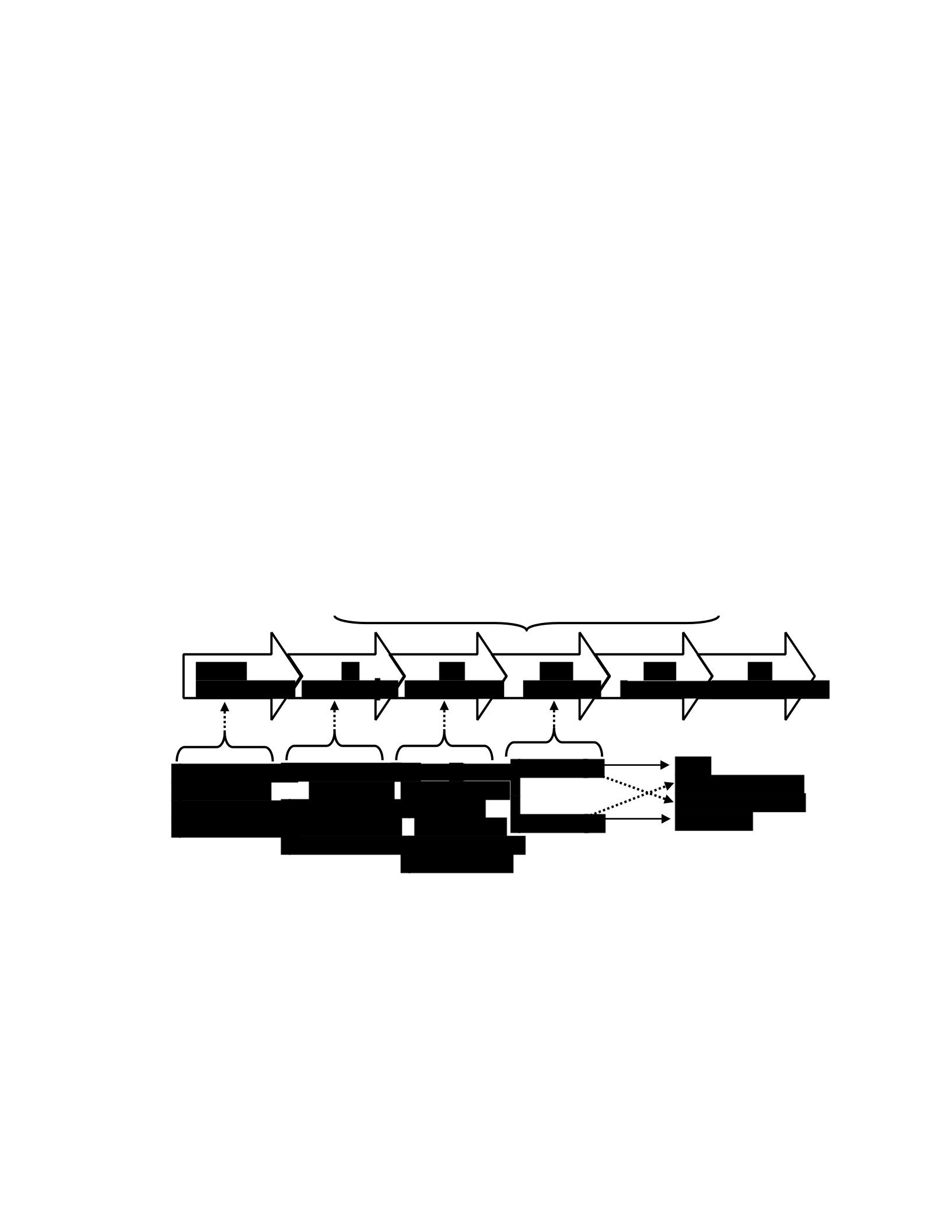
excluding the commercialization stage. The conceptual series of the
innovationdevelopment stages depicting the predecessor role of the prediffusion stages is
illustrated in Figure 1.
1
.
Problem
Identification
2
.
Research
5.
Diffusion
& Adoption
3.
D
evelopment
.
4
Commer-
cialization
6.
C
onse
q
uence
s
Postdictive:
Traditional Tracer Studies
Traditional DOI Studies
Predictive:
Prediffuson DOI Studies
27
Figure 1. Theoretical sequence of activities in the innovation-development process.
Adapted from “Diffusion of Innovation, 5th Edition” by Everett M. Rogers, 2003, The
Free Press, Figure 4-1, p. 138. Copyright 2003 by Everett M. Rogers. Copyright 1983 by
Free Press, a Division of Simon & Schuster, Inc. Reprinted with permission of the
publisher per Appendix B. All rights reserved.
Constructed on the innovation research of Rogers (2003), Moore and Benbasat
(1991), and Gounaris and Koritos (2008), Valier et al.’s (2008) predictive DOI model
included the seven independent variables: relative advantage, compatibility, complexity,
results demonstrable, trialability, observability, and voluntariness. The dependent
variable in Valier et al.’s model consisted of intent to use, which was the outcome of the
decision stage, the third of five stages, in the innovation-decision process (Rogers, 2003,
p. 169). The innovation-decision process is illustrated in Figure 2.
- - - - - - - - - - Communications Channels - - - - - - - - - -
4.Trialability
5.Observability
Figure 2. Theoretical continuum of decision-making activities in the innovation-decision
process. Adapted from “Diffusion of Innovation, 5th Edition” by Everett M. Rogers,
2003, The Free Press, Figure 5-1, p. 170. Copyright 2003 by Everett M. Rogers.
Copyright 1983 by Free Press, a Division of Simon & Schuster, Inc. Reprinted with
permission of the publisher per Appendix B. All rights reserved.
I.
Knowledge
Prior
Conditions
II.
Persuasion
III.
Decision
IV.
I
mplement
V.
Confirmation
1
.Prior practice
2
.Felt needs
.Innovativeness
3
4
.Social Norms
Decision Maker
Attributes
.Socioeconomic
1
2
.Personalities
3
.Communicable
P
erceived
A
ttribute
of Innovation
.Relative
1
Advantage
2
.Compatibility
3
.Complexity
1
. Adoption
2
. Rejection
Use
Later Adoption
Discontinuance
Non-Use

28
Valier et al. (2008) successfully tested their predictive DOI model by measuring,
during the prediffusion stage, the perceived attributes of open source software
innovations and Linux User Groups World Wide members’ use intentions. The
theoretical framework applied to this doctoral study was adopted from Valier et al.’s
predictive DOI model based on Rogers’s (2003) four elements of DOI. In this instance,
the four elements of DOI were applied as follows:
1. The innovation was emerging cloud-computing technologies.
2. The channels of communications were both formal and informal.
3. The timeframe was prediffusion through the commercialization stage.
4. The social system included the Arizona small business sector.
Gounaris and Koritos (2008) extended the innovation-attributed framework
combining measures of usability associated with TAM, attributes of innovation
characteristic of DOI, and social and psychological measures. Using a logistic
regression, Gounaris and Koritos analyzed the relationship of the various measurement
factors and the predictability of Internet banking adoption. Gounaris and Koritos’s
research closely resembles the predictive DOI model used by Valier et al. (2008).
Additionally, this study’s independent and dependent variables were adopted from
Valier et al.’s (2008) predictive DOI model. The independent and dependent variables
were examined to test empirically the hypothesis derived from this study’s research
questions. The independent variables were defined to assess the perceived attributes of
cloud-computing innovation, which included relative advantage, compatibility,
complexity, results demonstrable, trialability, observability, and voluntariness. Consistent

29
with the predictive DOI model, these independent variable measurements reflected the
potential adopter’s perceptions versus those of industry experts or DOI researchers. The
dependent variable, intent to use, was defined to assess small business leaders’ propensity
to adopt cloud-computing innovation. Operationalized definitions of the study variables
are stipulated in the Data Collection segment in Section 2.
Although the innovation-development process featured in Figure 1 depicted a
series of sequential stages, Rogers (2003) affirmed that the timing, occurrence, and
iteration of stages were not uniform for all innovations because of reinvention and other
factors influencing the process. Cloud-computing innovations have fluctuated between
the development processes with standardization of services yet fully defined for
commercialization. Cloud computing was envisioned as utility-like commercialization
demonstrating rapid elasticity of measured services that were not generally available to
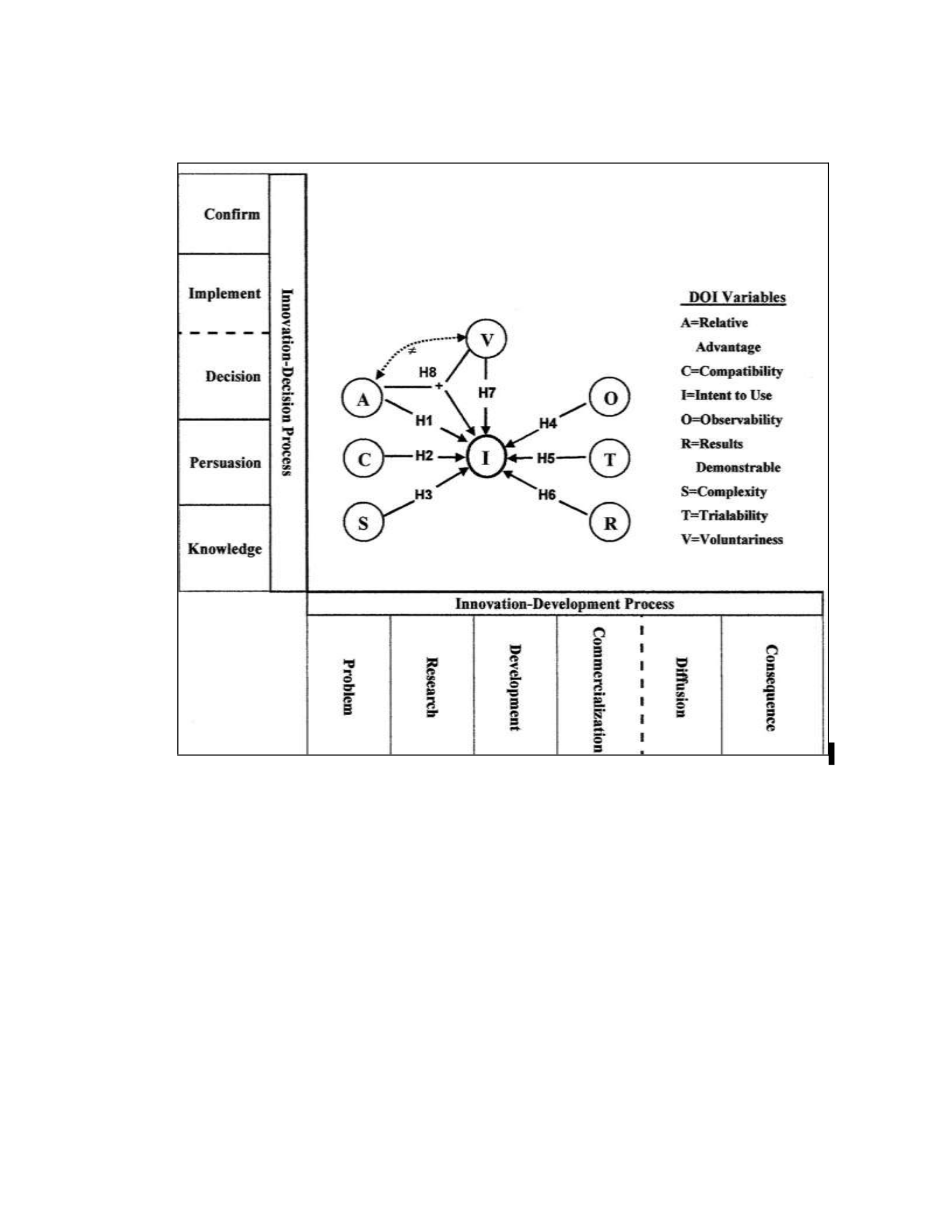
all potential adopters. The theoretical framework for this DOI inquiry is illustrated in
Figure 3 depicting the research, development, and commercialization stages of the
innovation-development process.
30
Figure 3. Theoretical predictive DOI framework. Framed in context of the
innovationdevelopment and innovation-decision processes, the perceived innovation
attributes were related via the hypotheses to the potential adopter’s use intention. The
innovationdevelopment process and innovation-decision process were adapted from
“Diffusion of Innovation, 5th Edition” by Everett M. Rogers, 2003, The Free Press,
Figures 4.1 & 5-1, pp. 138, 170. Copyright 2003 by Everett M. Rogers. Copyright 1983
by Free Press, a Division of Simon & Schuster, Inc. Reprinted with permission of the
publisher. All rights reserved.

31
Definition of Terms
This study was framed on concepts and terminology centric to Internet and
cloudcomputing technology that may be unfamiliar to the reader. A brief description was
provided explaining the meaning for each key technology term.
Broad network access: Extensive connectivity and usability via standard
mechanisms supporting heterogeneous thin or thick client platforms (Mell & Grance,
2010).
Cloud computing: Large, scalable, on-demand, rapidly provisioned, IT assets and
capabilities ecosystem connected with and available through the Internet including
networks, servers, storage, applications, and services (Cheng, 2010; Mell & Grance,
2010; Smith, 2009).
Community cloud: A cloud infrastructure collectively supporting organizations
that have a shared affinity, concerns, or purpose (Mell & Grance, 2010).
Competitive advantage: A position of strategic benefit acquired by a firm in
relation to its competitors (Porter, 1998).
Diffusion: The process of innovation communication via channels to members of
social systems over time (Rogers, 2003).
Information technology: The management of computer-based information systems
relating to software applications and computer hardware used to convert, store, protect,
process, retrieve with security, or transmit any information (Information Technology
Association of America, 2009).

32
Infrastructure as a Service (IaaS): The provision of managed processing, storage,
networks, and other fundamental computing resources for consumer deployment of
software including operating systems and application software via the Internet (Mell &
Grance, 2010).
Innovation: The embodiment, combination, or synthesis of knowledge or an idea
related to relevant products, processes, services, or other objects that are perceived by its
adopter as novel and potentially value adding (Crespell & Hansen, 2008; Rogers, 2003).
Innovation-development process: The innovation life-cycle continuum of activities
and decisions that transpires commencing with the perception of a problem need through
research, innovation development, commercialization, diffusion and adoption, and
consequence (Rogers, 2003).
Internet: The global information system that (a) is logically linked by a globally
unique address space based on the Internet Protocol (IP) or its subsequent extensions; (b)
can support communications using the Transmission Control Protocol/Internet Protocol
(TCP/IP) suite or its subsequent extensions, or other IP-compatible protocols; and (c)
provides, uses or makes accessible, either publicly or privately, high-level services
layered on the communications and related infrastructure (Federal Networking Council,
1985).
Hybrid cloud: A cloud infrastructure comprising two or more clouds (private,
community, or public) that is bound together by standardized or proprietary technology
that enables data and application portability (Mell & Grance, 2010).

33
Measured Service: The transparent provisioning, metering, and accounting of an
abstraction of computing resources in accordance with a service level commitment (Mell
& Grance, 2010).
On-demand self-service: A consumer’s unilaterally provisioned computing
capabilities as needed without requiring service provider human interaction (Mell &
Grance, 2010).
Platform as a Service (PaaS): The computing capability deployed onto the cloud
infrastructure consisting of programming environments, virtualization, layered interfaces,
and other development tools supplied and maintained by the service provider enabling
consumers to use created or acquired applications via the Internet (Mell & Grance, 2010).
Prediffusion: The activities in the innovation-development process leading to the
commencement of diffusion, which is signaled by the first adoption of the innovation
(Rogers, 2003; Valier et al., 2008).
Private cloud: A cloud infrastructure operated exclusively for a sole organization
(Mell & Grance, 2010).
Public cloud: A cloud infrastructure commercially available to the general public
or a large industry group (Mell & Grance, 2010).
Rapid elasticity: The seemingly infinite dynamic and immediate provisioning of
computing resources that scales (up or down) to instant consumer demand (Mell &
Grance, 2010).
Resource pooling: The autonomous dynamic multi-consumer sharing of
computing assets or components (Mell & Grance, 2010).

34
Software as a Service (SaaS): The provision of supplier managed application
programs to consumers hosted on a cloud infrastructure (Katzan & Dowling, 2010; Mell
& Grance, 2010).
Service Oriented Architecture (SOA): An open standard based on loosely coupled
components and a functional architecture that allows the integration and interoperability
of different applications by different members of an IT ecosystem (Sahoo, 2009; Vouk;
2008).
Small business: A size classification of business entities organized for profit. In
the United States, the SBA established small business size standards on an industry-
byindustry basis as a function of annual revenues or number of employees, which
typically include firms employing fewer than 500 employees and generating revenues
below $50 million (SBA, 2007).
Sustainability: To establish and maintain economic, environmental, societal
viability for the present as well as the future (Senge, Kruschwitz, Laur, Schley, & Smith,
2008).
Assumptions, Limitations, and Delimitations
The assumptions, limitations, and delimitations related to this research study were
disclosed to enhance reviewer comprehension as well as to inform further research about
this study’s methods, conclusions, and findings. The assumptions were defined to
recognize unconfirmed facts considered true that may beget potential risks. The
limitations were revealed to highlight known areas of restrictions potentially exposing

35
areas of study deficiency. The delimitations were defined to delineate the study’s scope
and boundaries.
Assumptions
The first assumption warranting disclosure posited that the IT agility, efficiency,
and economic benefits attributed to large organization’s early adopter use of emerging
cloud-computing innovation similarly would be experienced by small businesses, thus
resulting in their increased economic viability and sustainability. Process agility,
computing scalability, outsourced technology competency, economies of scale, and
operationalized costs were identified in the literature review as rationale for large
company and public agency early adoption of the yet fully commercialized
cloudcomputing innovations. Although large-firm practices are not necessarily
transferable to small businesses (Galán, Monje, & Zúñiga-Vicente, 2009; Tan, Fischer,
Mitchell, & Phan, 2009), the large enterprise cloud-computing innovation benefits were
anticipated applicable.
Another assumption was that the individuals from small businesses participating
in this study had sufficient understanding of emerging cloud-computing technology to
record their perceptions regarding its innovation attributes. Although cloud-computing
technology may not be fully evolved through the research and development and
commercialization stages of the innovation-development process continuum,
cloudcomputing innovation has been sufficiently conceptualized and communicated via
formal and informal channels. As a result, small business participants were believed

36
informed sufficiently to conceptualize perceptions about the cloud-computing innovation
attributes.
To add clarity, cloud-computing innovation terminology was specified in the study survey
instrument to mitigate risks associated with this assumption.
A related assumption was that of participant self-reporting bias, which is
influenced by societal and cultural norms expressed via personal feelings and attitudes.
Moreover, self-reporting bias occurs when a participant’s experience, self-perception, and
work environment influence their survey responses (Han & Anantatmula, 2007).
Participant self-reporting bias was mitigated by soliciting honest and objective participant
survey responses.
Limitations
A common limitation of DOI research has been a pro-innovation bias. This
phenomenon in DOI research was conceptualized as a predetermination that the subject
innovation should be adopted and spread rapidly throughout all members of the targeted
social system without consideration of re-innovation or rejection (Rogers, 2003). A
proinnovation bias has limited researchers’ vision to overlook or underemphasize
innovation rejection, discontinuance, or re-invention as well as to avoid antidiffusion
inquiry.
The rationale for the selection of cloud-computing technology as the innovation of
interest for this DOI research mitigated the pro-innovation bias. Specifically, the
preliminary research conducted to uncover and understand the problem as stipulated for
this research study evidenced the meritorious IT agility and economic value of

37
cloudcomputing innovation while recognizing its embryonic development. The re-
inventive nature related to certain aspects of cloud-computing technology was a driving
factor in the election of its prediffusion study emphasis.
The prediffusion emphasis, which included the innovation-development stages
leading to the innovation adoption decision, of this study was narrowed by its predictive
focus. Consideration of the adoption rate, adoption consequences, or other influences
associated with innovation diffusion was excluded because of this study’s predictive
emphasis. These additional innovation diffusion considerations may delineate the scope
of further inquiry beyond this research study. Additionally, Valier et al. (2008)
recognized the predictive methodological approach as potentially limiting the
appropriateness of causal relationship analysis.
Another potential limitation of this study was related to the practical limitations in
assembling a list of the entire Arizona small business sector as a whole. The population
sampling frame elected was convenience sampling (Creswell, 2009) based on the entire
small business e-mail list maintained by the ACA. As a result, generalization of the
study’s findings was limited potentially to the study population and was not implied
beyond. The potential convenience sample limitations were mitigated to a degree by the
anticipated increased sample size.
Delimitations
The problem statement, theoretical framework, and research design have been
instrumental in determining the scope and bounds related to this research study. The
delimitation discussed in this study proposal included four factors: innovation election,

38
innovation measurement, population sample selection, and data collection and analysis.
The boundaries associated with these delimitation factors were used as a guide to identify
what was in and out of the project scope.
After a preliminary scan of emerging technology innovations, cloud-computing
innovation’s meritorious business computing paradigm was revealed as a potential means
for greater small business economic contribution. Although this insight potentially
reinforced a pro-innovation bias, the potential economic and societal benefits warranted
further investigation to understand small business leaders’ propensity to adopt
cloudcomputing innovation relative to its perceived innovation attributes. This DOI
research project was delimited by the specific innovation of interest, which was cloud-
computing technology.
Encompassing a wide range of exploratory possibilities spanning the six stages of
the innovation-development process continuum, the five stages of the innovation-decision
process spectrum, and the five variable determinants of the rate of adoption, DOI research
has been extensively embraced (Rogers, 2003). This predictive DOI research project was
delimited by the prediffusion stages in the innovation-development process continuum,
the decision stage in the innovation-decision process spectrum, and the perceived
attributes of innovation in the determination of the rate of adoption arena.
The DOI social system of interest was delimited to the small business sector.
More specifically, Arizona small businesses delimited this study’s subject scope. Based
on the research design, data collection was performed during a 10-day period using a
cross-sectional online survey. Additionally, quantitative statistical methods delimited the

39
data analysis conducted. These study delimitations, in whole, composed this distinctively
unique research study.
Significance of the Study
This study’s significance was demonstrated by reducing the gap identified in
extant research concerning small businesses’ penchant to adopt cloud-computing
innovation and by recognizing the potential implications for positive social change. The
research gap reduction was prefaced by a recap of extant research deficiency. The
implications for social change extended beyond small business sustainability affecting
economic, societal, and environmental benefits.
Reduction of Gaps
The value and volatility of small businesses in the U.S. economy and free
enterprise capitalism has permeated the literature. The importance of IT and innovation
adoption for competitive advantage in support of small businesses’ sustainability was
broadly evidenced throughout scholarly research. However, the review of the literature
revealed a deficiency in understanding about the propensity of small businesses to adopt
emerging cloud-computing innovation, relative to the relationship of perceived
cloudcomputing innovation attributes and adoption intent. This research has strengthened
the potential for increased small business economic viability and sustainability via the
increased understanding about the relationship of small businesses’ perceived
cloudcomputing innovation attributes and their intent to use this emerging innovation.
Building on the framework of prior DOI research, this research was conducted to
address the literature gap by examining small businesses’ propensity to adopt

40
cloudcomputing innovation. More specifically, this study’s findings revealed the
correlation of small businesses’ prediffusion perception of cloud-computing innovation
attributes in conjunction with the intent to use cloud-computing technology. A limited
number of studies have been conducted based on the prediffusion stage of innovation
adoption while the preponderance of DOI research has been conducted during and post
innovation adoption. Filling this void in the literature provided a steppingstone for
continued research linking cloud-computing technology to small business competitive
advantage and sustainability.
Implications for Social Change
Business sustainability was defined as a triune conceptualization consisting of (a)
making present choices that do not compromise future choices, (b) enhancing the
economic well-being, and (c) respecting the ecological and societal carrying capacity
(Senge et al., 2008; Will, 2008). A better understanding of small businesses’ potential use
of cloud-computing innovation holds the possibility of reducing small business failures,
increasing their economic contributions, and promoting sustainability. Furthermore, this
study’s findings and added understanding was anticipated to transcend the benefits of
business sustainability by potentially guiding policy practices for elevating employee job
skills, improving private and public sector collaboration, and increasing the U.S. gross
domestic product and U.S. global innovative leadership (Estrin, 2009).
Small businesses may use this study’s findings to improve capitalization of IT
innovations for sustainability. These findings were anticipated useful for projecting
employee development proficiencies in preparation for deploying cloud-computing

41
innovations. Local communities were expected to benefit from these findings by
understanding the importance for educating the nascent workforce related to developing
cloud-computing technology skills. Regulatory and public agencies were anticipated to
develop better insights related to assisting small business employers with needed
technology innovation collaboration support to facilitate academic and public sector
technology commercialization (Blau, 2009; Renski, 2009; Rosser & Taylor, 2008).
Additionally, rapid diffusion of cloud-computing innovation has the potential for
significant positive environmental impact via the reduction of overall energy
consumption and electronic equipment disposal waste shifting the burden from nature
(Senge et al., 2008, pp. 199-200).
A Review of the Professional and Academic Literature
The literature reviewed for this research project was organized into five topical
areas. The first topic area was small business perspectives, which identified current
trends and information relative to small business statistics, economic contributions,
global impact, and closures. The second topic area was small business innovation policy,
which surfaced trends in small business innovation collaboration, governmental
intervention, and academic influences. The third topic area was small business
innovation essentials, which revealed the criticality of business innovation, the strategic
role of innovation, and trends in small business innovations. The fourth topic area was
small business IT innovation, which focused on small business IT and Internet innovation
practices. The fifth topic area was cloud-computing ecosystems, which presented a
conceptualization of this rapidly evolving technology emphasis.

42
Although printed book publications were included in the literature review, the
main literature search was conducted via electronic databases, primarily EBSCOHost’s
Computers and Applied Sciences Complete and Business Source Complete/Premier,
ProQuest’s ABI/INFORM Complete and Business Dissertations and Theses, and Emerald
Management Journals. Keywords used for the electronic database search of the topic
domains included x business sustainability, entrepreneur, small business, U. S. economy
for small business perspectives; x collaborative commerce, diffusion of innovation,
economic policy, and technology transfer policy for small business innovation policy; x
competitive advantage, innovation, technology invention, pre-adoption, and product
development for small business innovation essentials; x e-business, e-commerce, Internet,
and IT strategy for small business IT innovation; and x cloud computing, grid computing,
service computing, utility computing, and virtualization for cloud-computing ecosystems.
A total of 152 resources were found relevant, eight of them were books, two of them were
dissertations, seven of them were government publications, and two of them were online
references. The remainder was peer-reviewed journal articles. A map of the literature
reviewed is presented in Appendix C to communicate the literature’s basis for
establishing ongoing inquiry and research.
An understanding of the importance of small businesses in the United States and
to the global economy was developed based upon the literature review. This
understanding included factors affecting the efficacy of small businesses as well as
enabling influences that foster innovation in small business. Additionally, current

43
motivations and strategies regarding the innovation practices of small business were
explored. Last, the rapidly evolving presence of cloud computing was examined as a
potential ecosystem for novel small business innovation to facilitate sustainable
competitive advantage.
Small Business Perspectives
The literature review concerning small business perspectives was highlighted to
build an understanding of current trends and information relative to small business mass
and economic contributions, small business global impact, and small business closure or
discontinuance volatility. The SBA has recognized the critical importance of small
business to the United States’ economic strength and its role in the global marketplace.
Since its establishment in 1953, the SBA (2009) has served and protected the interests of
small business concerns to preserve free competitive enterprise. Based on 2008 data, the
SBA (2009) reported that the more than 27 million small businesses in the United States
represented 99.7% of all employer firms, generated 60 to 80% of net new jobs annually,
and created more than one half of the nonfarm private gross domestic product.
The U.S. statistics were similar to those reported relative to comparable free
enterprise markets. In Australia, small businesses accounted for 96.7% of total business
numbers employing 70% of the total workforce (Quaddus & Hofmeyer, 2007; Scupola,
2009). In Europe, small businesses numbered 23 million and account for 99% of all
European businesses (Blau, 2009). The similarity of these statistics depicted small
businesses’ global economic significance.

44
Defining exactly what constituted a small business was challenging. Sovereign
governing bodies throughout the world have established unique criteria for designating a
firm’s size. The U.S. federal government has stipulated a business’ size as a function of
annual revenues or number of employees based on the North American Industry
Classification (NAIC) system (Small Business Act, 1979). The maximum qualifying
annual revenue varies from $750 thousand to $50 million and the maximum number of
employees ranges from 100 to 1,500 depending on NAIC designation (SBA, 2007).
Although in the United States small businesses typically included firms employing fewer
than 500 employees and generating revenues of $50 million or less, small businesses
were reported to comprise nearly all U.S. employers, employ the majority of the private
sector workforce, and create the greater part of the gross domestic product (SBA, 2009).
The executive arm of the European Union defined small and medium size
enterprises (SMEs), which were comparable to U.S. small businesses, as independent
companies with fewer than 250 employees (Blau, 2009). In Australia, small businesses
were designated as firms employing 200 or fewer workers (Scupola, 2009). However, in
New Zealand SMEs were considered firms with fewer than 20 employees (Al-Qirim,
2007). These various definitions created ambiguity in identifying small businesses with
consistency throughout the literature. Universally, SMEs have been characterized as
catalytic economic agents with relatively limited resources and broad diversity (Forsman,
2008).
To counteract the decline in the United States’ leadership role in technology due to
fewer workers and entrepreneurs entering careers in competitive science, technology,

45
engineering, and mathematics (Rosser & Taylor, 2008), strengthening and expanding
small businesses’ innovation capabilities has been defined as a top priority (Galston,
2010; Heffes, 2009; SBA, 2009). In 2008, the European Commission approved the EU
Small Business Act, which was designed to help small businesses and entrepreneurial
startups to develop innovative capacity as a means of closing its research gap with the
United States (Blau, 2009). Barba-Sánchez and Martínez-Ruiz (2009) emphasized
European SMEs’ contribution to regional employment and social-economic development.
Li and Mitchell (2009) recognized the competitive dynamics of the Chinese knowledge
worker spillover as a model to stimulate radical small business innovation in transitional
economies. In comparison, small businesses in the United Kingdom’s more developed
economy have been predisposed to focus more on leveraging return on investments, thus
favor incremental versus radical innovations (Oke et al., 2007). Additionally, Uddin’s
(2006) study of innovations diffusion in Bangladesh offers an important consideration for
incremental change leading to sustained small business development globally. These
global considerations for small business innovation and technology leadership
demonstrated the economic value of small business innovations.
Kampschroeder, Ludwig, Murray, and Padmanabhan (2008) exposed the adverse
rippling economic fallout of failed small businesses. Faced with large-company and
global competition, small businesses have experienced high discontinuance rates: 76% of
new firms remain open after 2 years, 47% after 4 years, and 38% after 6 years (Liao et
al., 2008; SBA, 2009). Likewise, Tan et al. (2009) reported that somewhere between
50% and 80% of small businesses fail.

46
At the state level, year-to-date third quarter 2008 Arizona small business
discontinuances outpaced new ventures by 13.75% and small business contractions
exceeded expansions by 44.7% (SBA Office of Advocacy, 2009). Nonfarm Arizona
small business employers in 2006 made up approximately 1.8% of U.S. small business
employers (SBA, 2009). During the 2006 timeframe, Arizona small business employers
numbered approximately 107,500 firms, accounted for 97.4% of the state's employers,
and employed 48.8% of the state’s private-sector workforce (SBA, Office of Advocacy,
2009). More recently, the U.S. Census Bureau (2008) reported that Arizona small
businesses numbered approximately 106,800 firms, reflecting a decline in small business
economic vitality.
However, equating small business closure with business failure was misleading.
Bates (2005) reported that according to U.S. Bureau of the Census survey data,
approximately 37% of Year 6 firm closures were deemed successful at the time that the
decision was made to cease operations. Understanding the rationale for small business
discontinuance was an important consideration in their economic contributions. A
resource-based view of nascent entrepreneurs revealed that financial resources and
technology knowledge were salient factors in business discontinuance (Liao et al., 2008).
However, the literature review exposed a gap in knowledge in relation to cloudcomputing
innovation and small business adoption for economic sustainability.
Small Business Innovation Policy
The literature review in connection with small business innovation policy
explored the rationale for governmental intervention, investigated academic knowledge

47
transfer influences, and highlighted business collaborative trends in small business
innovation. Recognizing the commercialization value of small businesses for public
sector research, U.S. federal policy established the Small Business Innovation Research
(SBIR) and Small Business Technology Transfer (STTR) programs. SBIR and STTR
programs collaboratively team private sector expertise via small business entrepreneurs
and innovative university research with public sector funding to maximize return on
investment for research, foster innovation leadership, and stimulate economic
development (Ford, Shino, Sander, & Hardin, 2008).
Similarly, state government and local municipal public policies such as ACA’s
Angel Investor and Enterprise Zone programs promoted local and regional economic
development via collaborative public assisted research and small business
commercialization (ACA, 2011). ACA is a newly established quasi-public state authority
governed by a board of directors comprising public and private sector members
envisioned to foster an operating environment for strategic collaboration and economic
growth. Emphasizing small business and entrepreneurship, ACA’s strategies were aimed
at diversifying the overall state economy by incubating and bringing in new businesses.
Often these policies have resulted in agglomeration of research and small business
incubation clusters further leveraging economies of scale and network effects (Maine,
Shapiro, & Vining, 2010).
Although government intervention aimed at information and communication
technologies (ICT) in rural economies was designed to foster regional small business
sustainability and growth, government-provided Internet technology to rural communities

48
appeared to stifle regional entrepreneurship as a result of greater competitive access to
rural communities (Cumming & Johan, 2010). Analyzing the multiscalar innovation and
development research-center frameworks in North America, Clark (2010) recommended
horizontal and vertical coordination policy within national innovation systems evidencing
the overall value attributed to innovation commercialization as an economic policy
intervention. Government policy intervention was intended to serve as a catalyst and
resource for small business innovations (Michael & Pearce, 2009).
Likewise, university-based research centers have fostered commercialization of
innovation via small businesses to leverage the economic value of their research and to
further academic pursuits. For example, the Center for Advanced Technology and
Innovation pioneered a unique technology-led economic development strategy in
Southeastern Wisconsin to foster rural small business innovation transfer (Wagner, 2008).
Similar research centers designed for commercialization of technology innovation have
emerged in other global regions. For example, Finland has established its global
competitiveness by retaining economic value of homeland production through academic
research technology transfers bringing together technology, design and small business to
develop innovative products (Cervi, 2008).
An important motive for collaborative small business innovation was to create
economies of scale for market share benefit (Allen & Stearns, 2009; Carree & Thurik,
2008). Allen and Stearns (2009) highlighted small businesses in rural communities
successfully competing with urban centers via regional innovation and technology
entrepreneurship collaboration. Similarly, the Organization for Economic Co-operation

49
and Development (OECD) has fostered sustainable economic growth, advanced
employment, and promoted individual living standards by lobbying democratic
governments and market economies to develop economic cooperatives that innovatively
and competitively cultivate small business development (Carree & Thurik, 2008). In
recent years, the European countries have developed collaborative economic policies
based on economic regional development models to stimulate the creation and expansion
of small and medium-sized companies in synergistic industries (Barba-Sánchez &
Martínez-Ruiz, 2009). Another motivation for innovative collaboration was the
byproduct of operational efficiencies and cost savings generated through small business
business-to-business (B2B) trading exchanges and information sharing (Quaddus &
Hofmeyer, 2007).
Throughout the Cold War era of the mid-to-late 20th century, private and public
research centers in the United States collaboratively launched a technological revolution
that has reshaped the way people live, work, and play, and have built the most advanced
communications, computing, and scientific technology in the world (Estrin, 2009).
However, changing regulatory and market driven policies have reconstituted the once
mammoth and broad R&D center into more narrowly focused, cost-conscious innovative
strategies, thus eroding the innovation ecosystem. To capitalize on the economic value
associated with their innovation and market agility, small businesses have benefited from
governing policies compensating for their capital limitations (Etro, 2009), thus decreasing
their susceptibility to discontinuance (Liao et al., 2008). Further research was deemed
necessary to understand better small business collaboration relative to cloud-computing

50
adoption and sustained economic advantage, whether it is B2B, governmental, or
academic.
Small Business Innovation Essentials
The literature was reviewed related to small business innovation essentials
exploring the critical aspect of business innovation for survival, the strategic role of
innovation in small businesses, and trends in small business innovation. Commonly
understood in today’s global economy and competitive environment, a firm must
innovate or it will perish (Silverstein et al., 2009). This phenomenon has been
conceptualized by the theory of economic development as the process of creative
destruction, suggesting that innovative business activities are attributed to economic
growth and sustainability (Gúzman-Cuevas, Cáceres-Carrasco, & Soriano, 2009).
Sharpening differences between firms versus reducing them, IT innovation has been
shown to complement business management ability to achieve rapid process innovations
(McAfee & Brynjolfsson, 2008).
The vitality of American culture and free enterprise has been sustained by the
ideals of innovation, exploration, freedom, and renewal (Estrin, 2009). In their extensive
review of the literature related to small business research, Tan et al. (2009, p. 234)
concluded that small businesses were at the center of action in technology and
innovation. The various aspects of innovation have emphasized product, process, market,
supply chain, and industrial organization (Porter, 1998). Understanding the ability to
measure innovation as well as the enablers of innovation has been paramount in recent
research (Braganza et al., 2009; Mangelsdorf, 2009; Rogers, 2003). This understanding

51
holds true for large companies and small businesses alike (Dibrell et al., 2008) even
though Welsh and White (1981) recognized that a small business is a distinct innovation
agent and not merely a little big business.
Although the majority of family owned firms were small businesses, Ibrahim et al.
(2008) reported that 34% of the companies listed on the Standard and Poor's 500 were
family operated businesses that typically outperformed nonfamily firms. Ibrahim et al.’s
research revealed that family owned small businesses typically developed unique
strategies, which were linked to attributes conducive to innovation deriving competitive
advantage. Although small businesses typically were nimbler, more customer-oriented
and quality focused, and more active in the community (Ibrahim et al., 2008), Galán et al.
(2009) noted that small businesses experienced more trouble than larger firms in enduring
under hostile environmental conditions, suggesting other factors constrain their
sustainability.
Countering the intensified small business challenges attributed to recent complex
and turbulent economic assaults (SBA, 2009), Ribeiro-Soriano and Urbano (2009)
advocated leveraging the benefit of collaborative entrepreneurship. Ribeiro-Soriano and
Urbano’s integrated innovation and knowledge management approach was framed by
three dimensions: a shared collaborative projects strategy, adaptability via collaborative
environmental structure, and a management philosophy consisting of shared values and
trust. Galán et al. (2009) further identified how the constraints hindering small business
during difficult times were transformed or leveraged into strategic innovations for
competitive advantages. Likewise, Will (2008) advocated a corporate foresight strategy

52
to transfer methods of predictive and technology analysis to the small business context
for sustainable development, small business management, and strategic innovation.
These strategies and others portrayed innovation as a core small business objective.
However, Forsman (2008) claimed that there were many unanswered questions
regarding small business development projects relative to improved business
performance. Forsman further posited that the small business innovation projects seemed
to exhibit several interrelated dimensions; success propelled upward while failure
spiraled downward. As an explanation to this phenomenon, small businesses’
competitiveness typically depended on innovation resourcefulness while larger
organizations emphasized a resource-based view minimizing the innovation risk
(HewittDundas, 2006). In this context, small businesses that offered technology-based,
knowledge-intensive business services (T-KIBS) or large network-based service achieved
innovation based more on professional knowledge while other small business service
firms conformed to supplier-driven innovations (Miles, 2008). Moreover, small
businesses often engaged T-KIBS firms to deploy business technologies such as
enterprise resource planning (ERP) systems as a source of innovative competitive
advantage (Sledgianowski, Tafti, & Kierstead, 2008). Ultimately, developing new
products and services was among the highest innovation concerns for all firms including
small businesses (Vermeulen, Van Den Bosch, & Volberda, 2007).
Small Business IT Innovation
The literature review included a survey of the current understanding relative to
small business IT innovation focus as well as Internet IT innovation practices. Crespell

53
and Hansen (2008) identified that small business innovation was often achieved by
adoption or synthesis of existing technology resulting in a new process, capability,
product, or service for the firm. Crespell and Hansen further recognized that the small
businesses’ propensity to innovate was predicated in their organizational culture and work
climate. Organizational culture generally was descriptive relating to the common set of
shared meanings among employees about goals, problems, and practices while work
climate typically was contextualized as the organization’s policies and routines as
perceived by employees (Kaplan & Norton, 2004). Moreover, Benitez-Amado,
LlorensMontes, and Perez-Arostegui (2010) analyzed the relationship among market
performance, technological IT and managerial IT resources, and intrapreneurship culture,
which embodied a working environment infectious with creativity, innovation, and
entrepreneurship. Benitez-Amado et al. found that IT resources had a positive effect on
intrapreneurship that in turn was a predictor of firm market performance indicating
competitive advantage.
Additionally, Qureshil et al. (2009) reported that SMEs adopted IT and ICT to
enable competitive advantage evidencing that IT-dependent initiatives resulted in creating
and sustaining value. Qureshil et al. further suggested that the ICT competitive
advantage was applicable to micro enterprises as well. Although McAfee and
Brynjolfsson (2008) argued that the link between technology and competition has become
much stronger since the mid-1990s, they concluded from their research that (a)
IT sharpened competitive distinction, (b) executive leadership positively correlated with

54
IT-enabled value, and (c) IT-intensive competitiveness was continuous. As further
evidence of IT-enabled firm value, Oh and Pinsonneault’s (2007) empirical study related
to resource-centered and contingency-based IT strategies indicated that investments in
growth-oriented IT applications exhibited a positive correlation to firm profitability,
which is at the heart of competitive advantage. The literature further revealed specific
uses of IT for operational efficiency and focused strategic initiatives.
Specifically, Archer, Wang, and Kang (2008) researched the barriers related to the
adoption of online supply chain management by Canadian SMEs. Archer et al.
recognized the benefits of using shared IT capabilities by small businesses for effective
supply chain decisions illustrating the use of IT innovation to create upstream and
downstream collaboration for competitive advantage. Correspondingly, Al-Qirim (2007)
examined the adoption of e-commerce, communications, and application technologies
innovation by small businesses in New Zealand. Al-Qirim’s research indicated that the
small business executive's Internet IT innovativeness was a primary determinant for
adoption of external-e-mail, intranet, virtual private network (VPN) extranets, and
websites. Similarly, unprecedented acceleration of competition within the U.S. economy
was triggered by the mid-1990s mainstream adoption of the Internet, enterprise software,
and other IT innovations (McAfee & Brynjolfsson, 2008).
E-business, which comprises e-intelligence, e-commerce, and e-collaboration, has
become an accepted process capability with more than 45% of Canadian firms possessing
some form of e-business capability (Raymond & Bergeron, 2008). For example, the
emergence of Internet banking capabilities has revolutionized the IT innovation strategies

55
of banks and financial industry firms striving for competitive market advantage in
developed and many developing countries (Al-Hajri & Tatnall, 2008). While ecommerce
has become a basic banking staple, Al-Hajri and Tatnall (2008) indicated that Internet
banking adoption is attributed to perceived ease of use, functionality perceived as a
relative advantage, projected operational efficiency improvements, and anticipated
customer relationship enhancement. Employing a strategic typology that included
prospectors, analyzers, and defenders, Raymond and Bergeron (2008) found positive
performance outcomes for small business manufacturers in terms of growth, productivity
and financial performance when the firm’s e-business capabilities was in alignment with
the firm’s strategy. In essence, the e-business innovation potential resided in strategically
aligned IT capability versus merely in the technology innovation.
Additionally, Dibrell et al. (2008) recognized that small businesses were
sophisticated adopters of IT as a competitive tool to facilitate strategy and build core
competencies. Evidencing this sophistication, Chalhoub (2010) investigated the adoption
of innovative practices undergirded by intellectual capital and social networks developing
a theoretical model based on the relationship between technological and process
innovation as well as leadership performance. Cenfetelli, Benbasat, and Al-Natour
(2008) further suggested shifting the firm’s IT strategy from internal management tools to
customer-directed Internet applications (i.e., business-to-customer e-commerce) to
facilitate innovation of core competencies. Correspondingly, Doherty and Terry (2009)
studied the relationship of IT resources and IT capabilities, which were described in
constructs of tangible and intangible IT assets, yielding sustainable competitive

56
advantage. Doherty and Terry found that outside-in, customer driven IT initiatives, and
spanning, complementary internal and customer driven IT initiatives, were highly
correlated to sustainable improvements in competitive positioning. Although Dibrell et
al. (2008) concluded that synergistic integration of technology with product and process
improvements enhanced small business performance, limitations in their study suggested
additional research to show the correlation of Internet IT innovation to small businesses’
sustainability.
Cloud-Computing Ecosystem
The literature was investigated to discern the rapidly evolving presence of the
cloud-computing ecosystem as a foundation for exploring its potential use in fostering
small business innovations. The conceptualization for cloud-computing innovation has
been traced back to 1969 with the pioneering contributions of Leonard Kleinrock, a chief
scientist with the Advanced Research Projects Agency Network (ARPANET) that
incubated the Internet (Buyya et al., 2009). The Internet, commonly portrayed as the
cloud, has evolved into a global communication network. The Internet provides the
connectivity infrastructure for shared hardware and software technologies as well as
enables ubiquitous access to these technology assets. The deployment of scalable, rapidly
provisioned, and metered IT assets and computing capabilities ubiquitously accessible via
the Internet is known as cloud computing (Cheng, 2010; Smith, 2009). In other words,
cloud computing was portrayed as the manifestation of “the long-held dream of
computing as a utility” (Armbrust et al., 2010, p. 50) that was proclaimed “the new
frontier of the Internet era” (Etro, 2009, p. 179).

57
The National Institute of Standards and Technology (NIST) depicted cloud
computing in the context of five essential characteristics, three service components, and
four deployment approaches (Mell & Grance, 2010). The cloud-computing essential
characteristics were featured as on-demand self-service, broad network access, resource
pooling rapid elasticity, and measured services. The service components consisted of
software as a service (SaaS), platform as a service (PaaS), and infrastructure as a service
(IaaS). These service components were typically organized in a layered service oriented
architecture whereby IaaS was the lowest layer comprising hardware and networking
components; SaaS was the highest layer consisting of user interfaces and application
functionally; and PaaS was an in-between layer comprising virtualization, operating
systems, databases, application program interfaces (APIs), and other service platforms.
Last, the deployment approaches included private, community, public, or hybrid cloud
strategies. Each of these cloud-computing aspects was further delineated in the
Definition of Terms section.
Emerging in a seemingly boundless environment, the genealogy of cloud
computing was cited as evolving via the linage of open source software (Dwivedi &
Mustafee, 2010; Sharif, 2010). Open source software was a significant enabling factor in
cloud-computing feasibility attributing to the practicality of its vision as the fifth utility.
Although open source software was a dominant force in IaaS operating systems and PaaS
programming and database environments, open source software is rapidly emerging in
SaaS via open source projects aimed at enabling enterprise IT applications and mobile
technology applications (Dwivedi & Mustafee, 2010; Vescuso, 2010).

58
Cloud computing is uniquely distinct from super computing capabilities that have
been proprietary to large scale data centers typically funded and controlled by
government, academic research centers, and the largest corporate enterprises. Traditional
computing and IT was designed to support an enterprise scale while cloud computing was
envisaged via a broader Internet scale (Etro, 2009). Cloud computing was based on a
global scale ecosystem model for the ubiquitous rapid provisioning of on-demand,
shared-access, technology resources such as networks, servers, computers, storage,
applications, and other IT services (Katzan, 2008, 2010; Mell & Grance, 2010, 2009;
Truong, 2010).
The cloud-computing ecosystem conceptualization illustrated in Figure 4 was
devised as consumable computing services based on virtual, networked, and recursive
layering of hardware and software technologies (Armbrust et al., 2010; Blaskovich, &
Mintchik, 2011; Etro, 2009; Katzan, 2010). Cloud computing was foreseen as the fifth
utility following water, electricity, gas, and telephony; whereby the Internet functions
analogous to electric or telephone connection and transmission lines (Buyya et al., 2009).
Although Katzan (2008) drew a distinction between cloud computing and traditional
utility computing, the capital investment requirements of large-scale IT capability are
operationalized via the cloud-computing pay-for-use scheme for global rapid
provisioning of seemingly infinite on-demand IT services (Mell & Grance, 2010; Rodero-
Merino et al., 2010).

59
Figure 4. Cloud-computing ecosystem depicting deployment and service models. The
conceptualization comprised various deployment models (private, community, public,
and hybrid) and service models (SaaS, PaaS, and IaaS). SaaS provides applications and
the user interface; PaaS provides virtualization, operating systems, databases, and layered
interfaces; and IaaS provides servers, networking, data storages, and other computing
hardware. The ecosystem model was adapted from “Effectively and Securely Using the
Cloud-Computing Paradigm,” by Peter Mell and Tim Grance, 2009, National Institute of
Standards and Technology. Published by the United States Federal Government.
While delineating cloud computing as merely hardware-as-a-service (HaaS) and
referencing SaaS and SOA as independent technology innovations, Sahoo (2009)
formulated an IT innovation model for evaluating these emerging technologies based on
three contexts: customer value perspective, industry market sustainability, and technology
intricacies. Counter to Sahoo’s viewpoint, Vouk (2008) asserted that SOA is an essential
underlying and enabling architectural construct of cloud computing functioning in
conjunction with virtualization and workflow management.

60
Brynjolfsson, Hofmann, and Jordan (2010) suggested that the analogy of
computing services in the clouds (i.e., via the Internet) is not as simplistic as other utility
services. Katzan and Dowling (2010) portrayed cloud computing as a utility
conceptualized by service democratization including ubiquitous availability, optimal
resource sharing, and consumer demand provisioning. Utilities such a water, natural gas,
electricity are typically standardized products delivered to end user consumers catalyzing
other innovations. Cloud computing entails a wide range of services and delivery models
evolving at the rate of Moore’s law; thus, utility-like solutions have not been universally
considered well suited to cloud-computing challenges (Brynjolfsson et al., 2010).
Rodero-Merino et al. (2010) proposed a unique consumer abstraction interface,
named Claudia, for the diverse and evolving cloud-computing ecosystem to address the
utility-like provision challenges. Similarly, Goscinski and Brock (2010) devised the
resources via web services framework (RVWS) to offer a higher-level abstraction of
cloud resource offerings. The RVWS model featured provisioning of cloud computing
based on the current dynamic state and characteristics of cloud services and resources
(Goscinski & Brock, 2010) while Claudia featured mobility amidst the universe of
disparate cloud forms (Rodero-Merino et al., 2010). Goscinski and Brock depicted the
macro level design of RVWS to include dynamic brokering, stateful and dynamic web
service definition language (WSDL) documents, web service resource framework,
dynamic attributes, and resource connectors. Rodero-Merino et al. described Claudia in
the context of a service abstraction layer atop a cloud infrastructure manager.

61
Beyond Claudia and RVWS, Manzalini, Minerva, and Moiso (2010) envisioned
the CASCADAS (component-ware for autonomic situation-aware communications, and
dynamically adaptable services) project as an autonomic approach for cloud computing.
Relying on complex adaptive systems (CAS) for the self-organizing administration of
network of networks (NoNs), the CASCADAS project was a prototype of the autonomic
communication element (ACE) abstraction that was at the heart of managing the
complexities of the cloud-computing service ecosystem. Manzalini et al. (2010)
described ACE as empowered with the duties of fault finding, configuration,
maintenance, and performance optimization, thus autonomically reducing anomalies and
improving efficiency. These capabilities were considered the DNA for the data revolution
inherent in the next forecasted generation of the Web, which is known as
Semantic Web (Web 3.0).
The feasibility for cloud computing resides in the projected computing capability
and efficiency experienced via economy of scale and scope synergies in response to the
amalgamation of fluctuating demands and commitment levels (Buyya et al., 2009; Katzan
& Dowling, 2010; Truong, 2010). Emphasizing cloud-computing capabilities as a
fundamental change in the management of computing needs, Han (2010) illustrated novel
applications for cloud computing to enhance voluminous capabilities in library asset
management. The economic feasibility of cloud computing was most evident when the
alternative computing strategies require significant initial fixed capital costs, thus
resulting in greater initial economic value (Etro, 2009). The practicality of off-the shelf

62
rapid deployment of cloud-computing services enhanced its viability and feasibility as
well (Truong, 2010).
The financial advantages of cloud computing have become recognized by chief
financial officers (CFOs) as an enticing business model (Ford, 2010; Marston et al.,
2010). Economies of scale derived from centralized, shared computing resources have
spawned price pressure commoditization deemphasizing business requirement
culminating in undisclosed risks of other service limitations to maintain price
competiveness (Durkee, 2010). However, the use of cloud-computing innovation has not
abdicated business responsibilities centric to intellectual rights, licensing, regulatory, and
privacy compliance.
The service level agreement (SLA) has been designed to disclose risks and hidden
costs, thus leveling the market space based on price performance that is essential for
widespread commercialization of cloud computing (Durkee, 2010). In contrast to smaller
organizations, large organizations with existing IT capabilities were reported as savvier
and having greater negotiating power in garnering business model and end user
experience conformance (Ryan & Loeffler, 2010). However, Hayes (2010) asserted that
dominate cloud-computing service providers are less interested in negotiating the
provisions of their SLA versus merely leveraging its basic market appeal.
Sharif (2010) reported that the commercialization and adoption of
cloudcomputing innovation was not merely based on its economic and shared technology
advantages emphasizing consumer centric drivers. Although cloud computing has
fostered innovations in the IT industry, its innovation potential was anticipated to emerge

63
through novel business paradigms connecting and engaging people, thus effecting a
virtualized economy (Katzan, 2008; Sultan, 2010). The average transaction in the
virtualized economy typically involved upwards of 20 entities amidst various regulatory
and currency systems imposing increased accountability mandates (Ford, 2010).
Although small businesses traditionally have been late adopters of emerging
technologies, Sharif forecasted that the emergence of the cloud-computing virtual
economy would dissolve IT and other barriers distinguishing large and small businesses.
Various standards such as solution deployment description (SDD), configuration
description, deployment, and lifecycle management (CDDLM), open virtual format
(OVF), and other IT practice specific governance methods have served to enable
cloudcomputing innovations (Rodero-Merino et al., 2010). However, the emerging
cloudcomputing ecosystem subsists as an embryonic evolution pending universal
governance of consumption standards, metering accountability, provisioning capability,
and risk mitigation (Armbrust et al., 2010; Buyya et al., 2009; Vouk, 2008). Although
several large companies have invested in building cloud-computing technology
infrastructures, only a few pioneering firms have entered the market to offer cloud-
computing services (Etro, 2009; Louridas, 2010). Obstacles related to early cloud-
computing adoption have been expressed including perceived proprietary lock-in, data
security risks, software licensing, and fault tolerance concerns (Armbrust et al., 2010;
Louridas, 2010; RoderoMerino et al., 2010).
Russell, Yoon, and Forgionne (2010) attributed cloud-computing availability and
reliability apprehensions to its increased architecture and infrastructure complexity as

64
well as to the multitude of potential Internet access failure points. Performance modeling
and service level agreements have been used to mitigate these concerns (Russell et al.,
2010). Other issues related to fragmented and dispersed data-based assets have
influenced cloud-computing performance; thus, incubating novel data access
methodologies such as MapReduce facilitating parallel data retrieval, processing, and
storage (Lin & Dyer, 2010; Louridas, 2010).
The perceived benefits and obstacles associated with cloud computing were
extracted from the review of the literature (Armbrust et al., 2010; Bennett, 2009; Braude,
2008; Buyya et al., 2009; Cheng, 2010; Katzan, 2008, 2010; Katzan & Dowling, 2010;
Louridas, 2010; Mell & Grance, 2009; Russell et al., 2010; Schadler, 2009; Truong, 2010;
Vouk, 2008), thus predominately reflecting the perception of industry experts versus the
perception of potential adopters of cloud-computing innovations, in particular potential
small business adopters.
The perceived benefits associated with adoption of cloud-computing innovations
based on the literature review included:
x Cloud-computing services are typically on demand and rapidly deployed. x
Cloud-computing services are provisioned real-time based on
consumerinitiated demand exhibiting elasticity.
x Cloud-computing services offered lower initial capital costs as compared to
alternates.

65
x Cloud-computing costs are operationalized via pay-for-use metering. x IT
competencies for infrastructure, platforms, and applications are outsourced. x The
Internet provided ubiquitous global access to cloud-computing services.
x Cloud-computing services offered seemingly infinite massive and rapid
scalability.
x Increased economies of scale and scope via pooled shared resource utilization
lower overall cost.
The perceived obstacles associated with adoption of cloud-computing innovations
based on the literature review included:
x Large-scale bandwidth is required for data transfers in data-based
cloudcomputing technology.
x Private or propriety cloud-computing technology may result in data lock-in. x
Reduced availability and dependability concerns due to increased failure points
including Internet reliability.
x Increased vulnerability concerns due to security threats and data confidentiality
breaches in shared ecosystem.
x Heightened noncompliance concerns with existing diverse software licensing
requirements.
Despite the issues related to cloud computing, large organizations are evidencing
early adoption of cloud computing for application such as e-mail, calendaring, human

66
resource information systems (HRIS), customer resource management (CRM),
ecommerce, and other common utility applications (Bennett, 2009; Schadler, 2009).
Hayes (2010) asserted that the more mission critical an application was considered; the
more likely apprehension was perceived about cloud-computing technology. Moreover,
Hayes reported that a 2009 IDC survey of 691 IT executives across the Asian Pacific
revealed that 11% of the respondents surveyed used cloud-based technology in some
form while 64% of those surveyed perceived significant deficiencies in cloud computing
with the remainder lacking an adequate understanding about cloud computing.
Large corporations such as Google, Amazon, IBM, and Microsoft have
emphasized cloud computing in their innovation strategies as cloud-computing service
providers (Bennett, 2009; Braude, 2008; Buyya et al., 2009; Russolillo & Tibken, 2010;
Smith, 2009). In contrast, large public sector organizations such as the IRS, Veterans
Administration, 2010 U.S. Census, and other government agencies initially have
embraced private cloud computing for rapid deployment of massive scale shared
applications (Mell & Grance, 2009; Sharif 2010; Wyld, 2009). These large government
agencies were portrayed as viewing the advent of cloud computing as an emergency
escape from the evident inadequacies and obsolescence inherent in their antiquated
legacy computer systems and IT applications, which are burdened with massive ongoing
operational costs.
Economic downturns have created business pressures inducing executive
administrative mandates to use cloud-computing technology and have been largely
responsible for federal government agency adoption of cloud-computing technology

67
(“Federal Govt,” 2010; Kundra, 2010; Mell & Grance, 2009). Only 34% of the federal
agencies surveyed in the “Federal Govt” (2010) study reported lacking familiarity with
cloud computing. Although 14% of those surveyed indicated using some form of cloud
computing, 21% of the cyber-security professionals indicated lacking awareness about
cloud computing (“Federal Govt.,” 2010).
The U.S. Department of Health and Human Services (HHS) decided to implement
cloud-computing innovations in response to administrative mandates to reduce costs and
streamline medical records processing (Chatman, 2010; Kundra, 2010). Health and
Human Services perceived the relative advantage of rapid deployment, scalability, lower
capital costs, and adjunct IT expertise while expressing concern over medical records
security and privacy. Another example, the Virtual Computing Laboratory (VCL) based
at North Carolina State University has established a research-based cloud-computing
pilot project linking its college campuses and other out-of-state IBM virtual computing
initiative member universities (Vouk, 2008). Although the literature revealed significant
advantages for adopting cloud computing including economies of scale, provision
elasticity, and massive-scale computing capability (Davis, 2009; Braude, 2008; Smith,
2009), research related to small business use of cloud computing for innovation is
virtually nonexistent.
Recent studies (Buyya et al., 2009; Etro, 2009; Gens et al., 2010) have predicted
slow initial adoption of cloud-computing innovation followed by aggressive accelerated
adoption and cloud computing utilization. Using a dynamic stochastic general
equilibrium (DSGE) calibrated model augmented with endogenous market structures,

68
Etro (2009) conjectured, with a measured degree of uncertainty, the forecasted growth in
European GDP because of the macroeconomic impact of cloud-computing innovations.
Etro extrapolated these GDP predictions into the creation of more than 430,000 SMEs
and thousands of new jobs for the 25 European countries studied based on five industry
sectors: manufacturing, wholesale and retail trade, hotels and restaurants, transport
storage and communication, and real estate renting and business activities.
Gens et al. (2010) forecasted similar emergence in cloud-computing
commercialization with global public cloud-computing services projected to reach $55.5
billion by 2014, representing a 27.4% compounded annual growth rate from its 2009 $16
billion level. When compared to the 5% forecast in traditional IT growth, the forecasted
cloud-computing growth rate is more than five times as rapid capturing over 12% of the
total traditional IT market by 2014 and consuming approximately one third of the total
new IT investments, which is anticipated to disrupt extant IT market leadership (Gens et
al., 2010). As cloud-computing adoption becomes more globally widespread, Gens et al.
forecasted a reduction from the U.S. dominance in public cloud-computing revenues
measured at more than 70% in 2009 to approximate 51% by 2014 indicating increased
cloud-computing adoption in Europe and developing countries.
Mobile computing devices ranging from the netbook, personal data assistants
(PDAs), and a myriad of smart phones have rapidly become a portal to the utility of
cloud-computing innovations (Greengard & Kshetri, 2010). In developing economies,
mobile computing and cloud-computing innovations have achieved entrepreneurial
economic contribution bypassing the traditional IT development lifecycle. Greengard

69
and Kshetri (2010) illustrated the development of iPhone apps using virtualization in
Nairobi, Kenya, where iPhone service is not yet available and local computing resources
are limited. Although the relative advantage of cloud computing for small business was
expected to be significant (Buyya et al., 2009; Etro, 2009; Gens et al., 2010; Greengard &
Kshetri, 2010), specificity relative to the adoption of cloud-computing innovation by U.S.
small businesses, in particular Arizona small businesses, for sustained economic vitality
is lacking.
Transition and Summary
The challenges relative to small business sustainability that threatens free
enterprise economy were acknowledged via a discussion of the research problem. The
importance of the gestation and diffusion of IT innovations for small business economic
vitality were recognized in the literature review. Based on its novel business-computing
paradigm, the emergence of cloud-computing innovation has evidenced the potential for
even greater economic value and societal benefit. A deficiency was surfaced via the
literature review in knowing small businesses’ propensity to adopt cloud-computing
technology. This research project has investigated this deficiency by examining the
relationship between small businesses’ perceived cloud-computing innovation attributes
and their adoption intent. This investigation was optimally suited for a quantitative
crosssectional survey design to address the hypotheses stemming from the research
questions postulated. The following Project section is presented to detail more fully the
research method and design, population and sampling scheme, data collection process,
data analysis techniques, and the study’s reliability and validity. Additionally, the study

70
results and findings as well as their application to professional practice and implication
for social change are presented Section 3.
Section 2: The Project
The Project section was stipulated to delineate the mechanics of the research study
including how the study was conducted, what activities were performed, and other study
parameters. Preceding the discussion of the project’s internal mechanisms, the research
study purpose is revisited to reinforce the emphasis and rationale for this inquiry.
Additionally, the role of the researcher is described in support of the study’s purpose and
in rendering the resultant findings. The specific project inner-workings included the
subject participants, the research method and design, the study population and sampling
scheme, data collection process, data analysis techniques, and the study’s reliability and
validity.
The process of gaining access to, involvement with, and assurance for study
participants’ ethical safeguards is documented in the Participants section. Originating in
the logical problem statement genesis, the distinctiveness of the designated research
method and design are further clarified in the Research Method and Design section. The
population characteristics and study relevance are disclosed in conjunction with its
derivative sampling scheme in the Population and Sampling section. The study’s
measurement instrument, its application, and the items measured as well as the survey
instrument’s reliability and validity are delineated more fully in the Data Collection
subsections. The quantitative analysis of the study data in context with the research
questions and supporting hypotheses are identified and discussed in the Data Analysis

71
section. Last, the reliability and validity of the study, including the study instrument, are
assessed in the Reliability and Validity section.
Purpose Statement Revisited
The subject area of interest for this inquiry was the propensity of small businesses,
given their economic importance and volatility, to adopt emerging cloudcomputing
innovation. In this doctoral study, the problem researched was the limited early adoption
of cloud-computing innovation by small businesses for improved economic value. The
purpose for this inquiry was to understand the relationship between the perceived
attributes of cloud-computing innovation and the propensity for adoption by small
businesses. Anchored in a predictive DOI theoretical framework, this research was
devised to examine the intention of Arizona small business leaders to use emerging
cloud-computing technology for obtaining the benefits associated with its novel
businesscomputing paradigm.
This objective was accomplished by employing a quantitative cross-sectional
survey research method soliciting input from IT deployment decision-makers from a
sample of Arizona small businesses. Employing Valier et al.’s (2008) survey instrument,
participant information was solicited based on a convenience sample of small businesses
derived from Arizona Commerce Authority’s e-mail list. Valier et al.’s pretested survey
instrument was administered in an online manner via the Internet collecting
measurements of the participants’ perception about cloud-computing innovation attributes
as well as their propensity for cloud-computing technology adoption. The perceptions of
the innovation attributes were equated to the independent variables: compatibility,

72
complexity, observability, relative advantage, results demonstrable, trialability, and
voluntariness. The dependent variable, intent to use, was framed in the construct of the
participant’s propensity to adopt cloud-computing technology.
The participant survey response data were analyzed using SPSS’s statistical
functionality. Once the survey data were collected, descriptive statistics procedures were
performed to reveal the composition of the study data. Cronbach’s coefficient alpha and
factor analysis procedures were performed to reaffirm the instrument reliability and
validity. Analysis was performed to ensure a normally distributed dataset as a basis for
testing the statistical relationship between each independent variable and the dependent
variable. Bivariate regression analysis was employed to assess the strength of
correlations between the independent variables and the dependent variable. Multiple
regression analysis was employed to assess the strength of relationship between multiple
independent variables and the dependent variable.
The goal of the inquiry, data collection, and data analysis was to understand better
the prospect of cloud-computing innovation adoption by small businesses, potentially
enhancing their economic vitality. The findings from this investigation, which are
addressed in Section 3, highlight the potential for small businesses to capitalize on the
forecasted economic value of cloud computing as well as other societal contributions.
Transcending the benefits of small business economic value, the anticipated societal
contributions included the potential for guiding policy practices for developing employee
job skills, improving private and public sector collaboration, and improving the
environmental consequences of computing.

73
Role of the Researcher
The involvement by the researcher in the data collection process originated with
the stipulation of the study population and sample criterion based on the research problem
and associated research questions, thus establishing a portion of the study’s boundedness
(Creswell, 2009). Beyond the population sample provisioning, the researcher’s role
during the data collection process in a quantitative study employing a self-administered
survey instrument typically necessitates less direct participant interaction than with other
quantitative research designs or in a qualitative methods study. One of the predominant
characteristics of qualitative research is that the researcher is a key instrument in the data
collection process (Creswell, 2009). Qualitative research is by nature interpretive; it
typically requires the personal involvement of the researcher as an observer or even as an
observer participant. Whereas the quantitative researcher, engaging minimal participant
contact, establishes empirical measurement instruments and procedures engaged in
collecting study data required to deduce analytical conclusions.
Described in detail in the Methods and Design section, this doctoral research
project was modeled after a quantitative cross-sectional survey design using a participant
self-administered Internet survey capability. The role of the researcher during the data
collection process was limited to the following activities:
1. The researcher performed the setup and configuration of the Internet-based
self-administered survey instrument, complete with positive affirmation of
ethical disclosure and consent acknowledgement.

74
2. By e-mail invitation facilitated via ACA announcement, the researcher solicited
the participants’ anonymous engagement to complete the survey.
3. The researcher retrieved the anonymous survey responses for subsequent
analysis.
4. The researcher responded directly to participant questions and concerns via e-
mail and telephone.
Possessing more than 20 years of experience, the author of this doctoral study has
gained industry expertise in the field of IT strategy. In this capacity, the researcher has
worked directly with IT technologists, senior executives, and boards of directors for small
businesses, large companies, and the public sector as well. Specifically, the researcher
has facilitated and measured increased organizational capacity, improved operational
efficiency, and lowered operating costs accredited to strategically aligned IT innovations.
More information about the researcher was presented in the Curriculum Vitae appended
to this research study. This experience enhances awareness, knowledge, and sensitivity to
many of the challenges and issues centric to strategic IT innovations as well as IT agility
for business continuity. Although conscious effort was made to ensure objectivity, the
possibility of researcher bias existed potentially affecting the data collection and
interpretive analysis activities. Because of the limited researcher role during the data
collection process, the researcher’s experience related to strategically aligned IT practices
was not perceived to pose a material bias to this study.

75
Participants
The field of interest for this research consisted of Arizona small businesses, which
included firms with fewer than 500 employees and earning less than $50 million
annually. In 2008, Arizona small businesses accounted for nearly all of the state’s
employers and slightly under half of its private sector employees (SBA, Office of
Advocacy, 2009). The preferred individual from each sampled small business to
participate in the online survey was the IT deployment decision-maker, which may be the
chief technology officer (CTO).
Creeger (2009, 2010) recognized the strategic role of the CTO in evaluating,
understanding business application, and adopting emerging technologies. The CTO
typically engages in formal and informal networks sharing and exchanging technology
developments. The CTO’s role was attributed to technology innovation decision-making,
or at a minimum recommending innovation for adoption. The CTO typically has access
to innovation communication channels, is considered a leadership change agent, and is
astutely cognitive of their corporate and industry sector (social system).
Rogers (2003) cited studies in which an individual, such as a director, reported his
or her perception of innovation attributes as a construct for an organizational unit of
measurement and analysis. The CTO’s role uniquely aligned with the five variables
associated with determining the rate of adoption of an innovation, thus qualifying as a
well eligible candidate for participating in this research survey process. However, many
small businesses cannot support an organizational structure that includes a distinct CTO
position. In a small business, the responsibilities of the CTO may be shared by another

76
area of responsibility. Therefore, the targeted survey participant was the IT deployment
decision-maker, which may be the CTO, chief information officer (CIO), chief executive
officer (CEO), or technology leader equivalent. The study participants were expected to
possess sufficient knowledge of the emerging cloud-computing technology to calibrate its
perceived innovation attributes as stipulated in this study’s Assumptions section.
The ACA cooperated in this study by inviting study participants. Using their
email contact information, ACA issued an e-mail announcement to small businesses for
soliciting participation in this study. Additional specifications regarding the population
and sampling process are stipulated in the Population and Sampling section.
Invited participants were presented information regarding the study’s scope and
purpose as well as opt-in access to the online survey instrument hosted at Survey
Monkey. Disclosure was made to the participants regarding ethical information in
compliance with the Walden University’s Internal Review Board (IRB) requirements
including participant anonymity surety. The researcher’s contact information was
provided to address any participant questions or concerns related to this study.
Beyond the benefit of helping to gain further knowledge related to the research
topic, participants were offered the incentive to receive a copy of the study’s findings.
Optionally, e-mail information was collected at the conclusion of the online survey
process to request a copy of the research results. The optionally entered e-mail
information was maintained in a manner to ensure survey participant anonymity. At the
outset of the survey, each participant was presented ethics and confidentiality information
and was required to affirm participant consent prior to receiving authorization to engage

77
in the survey. The ethics and confidentiality disclosure information that was presented
online requiring participant affirmation prior to survey entry is featured in Appendix D.
Research Method and Design
A postpositivist worldview undergirded the premise of beliefs guiding the
methodology and design of this inquiry. Based on a deterministic philosophy (Stacey,
2007), this doctoral study was undertaken to understand the relationship of small business
leaders’ perception of cloud-computing innovation attributes and their intent to adopt this
emerging technology. The research method and design were logically derived from the
study’s applied business problem statement. The specific research methodology and
design strategy stipulated for conducting this DBA study is described more fully in the
following subsections.
Method
Creswell (2009) reported that postpositivism thinking challenged positivism, a
prior traditional viewpoint about the absolute truth of knowledge. The postpositivist
assumptions are steeped in deterministic philosophy that emphasizes examining
relationships between items studied (Stacey, 2007). This vantage has been predominately
used for quantitative research, commonly referred to as the scientific method or the
empirical science. Empirical research has been classified as deductive reasoning,
applying generalities to make inferences about the specifics. Deductive reasoning has
been used as a lens for testing hypotheses derived from research questions (Génova,
2010; Stacey, 2007). Alternatively, qualitative methods have been recognized as more
exploratory and inductive, formulating general rules based on particular cases (Creswell,
2009; Génova, 2010).

78
This inquiry was conceived in a postpositivist deterministic viewpoint by
examining the relationship of small businesses’ perception of cloud-computing
innovation attributes and their intent to adopt the emerging cloud-computing technology.
As such, a quantitative research method was elected for this research project.
Endeavoring to verify as well as refute hypotheses, quantitative researchers accept only
reasonable hypotheses possessing significant explanatory power (Génova, 2010). The
study’s hypotheses were empirically tested to address specific inferential research
questions derived from the problem statement.
The purpose of the research was unfolded in clarity through the framing
parameters of the research method elected (Creswell, 2009). Using the lens of Valier et
al.’s (2008) theoretical model related to the adoption of IT during the prediffusion stage
of an innovation, this quantitative study investigated the relationship between the
independent study variables and the dependent variable. The quantitative analysis
specified in this study employed SPSS’s statistical functionality to perform descriptive
and regression analysis computations based on the dependent variable, small business
leaders’ intention to use cloud-computing technology, and seven independent variables
representing its perceived innovation attributes: compatibility, complexity, observability,
relative advantage, results demonstrable, trialability, and voluntariness. The quantitative
research method was ideally suited for deductively testing the study’s objective theories
by empirically measuring and statistically analyzing variables to understand construct
relationships (Campbell & Stanley, 1963; Creswell, 2009; Génova, 2010; Onwuegbuzie
et al., 2009; Stacey, 2007).

79
Offering an alternative approach to quantitative inquiry, qualitative research
methods are typically framed in the embrace of social constructivism, interpretivism,
critical theory, or advocacy and participatory philosophical perspectives while mixed
methods research is adopted based on pragmatism as a worldview (Creswell, 2009;
Onwuegbuzie et al., 2009). Qualitative research procedures are contextualized by
formative and interpretive narrative inquiry, observation, and analysis activities.
Qualitative research methods are generally exploratory in nature addressing open-ended
questions inductively seeking to construe the meaning about a phenomenon derived from
participants’ vantage resulting in findings of particularity versus generalizability
(Creswell, 2009; Yin, 2009). Qualitative case study research has been illustrated as an
effective method for exploring postdictive DOI research to understand the influences
attributed to the nature of social systems or the change agents (Rogers, 2003). Although
distinct case themes are reflective of the particularity of the qualitative generalizations
(Creswell, 2009), the rationale for the multiple case design is derived directly from the
literal and theoretical replications from case to case, thus reporting the interpretive
findings of comparative cases (Yin, 2009). The personal researcher time and effort
intense qualitative exploratory methods typically are not as well suited as quantitative
methods to predictive or deterministic focused inquiry outcomes.
Mixed methods research is recognized as a combination of the interdisciplinary
strengths of deductive and inductive practices attributed to quantitative and qualitative
epistemologies, respectively (Cassell et al., 2006). Mixed methods research has grown in
popularity in social and human sciences studies (Creswell, 2009). The inherit

80
characteristics of the qualitative aspect of a mixed methods approach were deemed to
necessitate an expansion of the study’s purpose statement and research problem.
Although mixed methods research may have rendered applicability related to this inquiry,
the scope of a mixed methods approach far exceeded the boundedness set forth by the
research problem definition.
Research Design
Quantitative studies are acknowledged as offering fewer design approaches as
compared to qualitative research methods. Creswell (2009) recognized the existence of a
multitude of qualitative research approaches that he has distilled into the five distinct
inquiry strategies of narrative, phenomenology, ethnography, case studies, and grounded
theory. In contrast, quantitative research typically has been classified as either survey or
experimental methods (Creswell, 2009). Campbell and Stanley (1963) featured 16
distinct experimental and quasi-experimental design models while Creswell featured two
nonexperimental survey design strategies: cross-sectional and longitudinal.
While reiterating the importance of the rigor associated with the design of
experiments, Campbell and Stanley (1963) recognized that ultimately every experiment
was imperfect and fraught with potential sources of invalidity. Resembling other rigorous
aspects of experimental design, the quasi-experimental design typically has lacked the
element of random assignment and full control over scheduling of data collection
(Campbell & Stanley, 1963; Trochim, 2006). The nonexperimental survey design was
recognized as an alternative quantitative inquiry approach for examining trends, attitudes,
or opinions via a sample of the subject population (Creswell, 2009). Claims or

81
generalizations about the population typically are deduced based on the survey sample
results.
Conceived in a survey design in which the study sample is derived from the entire
sampling frame, this research was fashioned from a traditional quantitative crosssectional
survey design strategy that was not intended as an investigation of causation. Creswell
(2009) described the quantitative cross-sectional survey design to include four elements:
literature-based theoretical hypotheses and study variables, population sampling criteria,
a single point data acquisition process via a survey instrument, and statistical data
analysis and interpretation. The distinction between a cross-sectional and a longitudinal
survey design strategy resides in the data collection process; whereby the longitudinal
survey design strategy collects sample measurements at multiple points during an
extended period (Creswell, 2009; Davidsen & Krogstie, 2010).
Bardhan (2007) and Davidsen and Krogstie (2010) illustrated the distinction
between the cross-sectional and longitudinal survey research design strategies. Using a
longitudinal survey research approach, Davidsen and Krogstie studied intrinsic problems
and aspects related to information systems development and support by comparing survey
results collected in 2008 with prior surveys conducted during a prior 15-year period.
Conversely, Bardhan demonstrated the use of a quantitative cross-sectional survey design
strategy. Based on a one-time survey of development product managers, Bardhan’s
research tested the development of adaptive structuation theory (AST) in relation to
collaborative product commerce (CPC) practices associated with IT innovation.

82
Cloud computing was featured as a newly emerging IT innovation (Buyya et al.,
2009; Etro, 2009; Katzan, 2010; Truong, 2010). The rationale for using a cross-sectional
survey design approach was anchored in providing statistical inferences from
measurement data collected at a specific point versus using multiple survey results
collected during a longer period. Using the cross-sectional survey design achieved the
predictive research problem requirement by measuring the participants’ perceived
innovation attributes in conjunction with their intent to use the innovation prior to or
concurrent with adoption (i.e., prediffusion).
Quantitative survey data typically is collected via a self-administered survey or,
alternatively, by conducting structured interviews with the participants (O'Hegarty et al.,
2010). The structured interview procedure is often used when the researcher is seeking to
collect other observable data in the process or when the self-administered surveys are not
suitable for sample participants use (Creswell, 2009; O'Hegarty et al., 2010). The
selfadministered quantitative survey design approach was preferred over a structured
interview strategy to more efficiently and cost effectively measure the requisite sample
size in a timely manner (Bardhan, 2007; Creswell, 2009). Moreover, this cross-sectional
research design entailed using a web-based self-administered data acquisition process
hosted by the online survey provider Survey Monkey. Additional, information about the
survey instrument, the survey administration, and the survey data retrieval have been
more fully discussed in this study’s Data Collection section.
Web-based survey tools have been used in numerous IT related surveys and offer
benefits over traditional survey practices (Maronick, 2009; Oke et al., 2007; Valier et al.,

83
2008). The use of a web-based survey tool is preferred due to responses being received
more quickly than with traditional mail methods. Costs were calculated lower using the
online survey tool because printing, mailing, and handling expenses were mitigated. The
use of a web-based survey tool has benefited the participant by ensuring their anonymity
while capturing necessary informed consent, eliminating manual response remittance
activities, and assimilating with modern practices in electronic communication methods.
The population and sampling scope was an essential factor in informing this study
research method and design. Originating from the study’s problem statement, the
theoretical population was described in the context of small businesses. The study
population, which is the accessible population for collecting the study sample, was
further honed by the purpose statement stipulating Arizona small businesses. Practical
limitations in compiling an inclusive list of all Arizona small businesses precluded
conducting simple random sampling of the study population in its entirety.
Narrowing the sample scope by the sampling frame of ACA’s small business e-
mail list provided viable access to derive an Arizona small business sample. A further
narrowing of ACA’s e-mail list via randomization was not elected because it was deemed
potentially to yield an insufficient sample response. Therefore, a convenience sample
based on the entire ACA small business e-mail list (Creswell, 2009) was used for this
study. See the Population and Sampling section for more specific information about the
population and sampling process performed.
Reciprocally, the research method and design strategy were shaped by and molded
the study’s data analysis process. Guided by the study’s problem statement, the research

84
design strategy became the mechanism used to narrow the viable data analysis processes
suitable for formulating conclusions related to the study’s research questions. The
research design for this study stipulated quantitative analysis using SPSS’s statistical
functionality to perform bivariate regression and multivariate regression computations
based on seven independent variables and one dependent variable. See the Data Analysis
section following for more specific information about the data analysis process
performed.
Population and Sampling
The population and sampling process was an essential aspect of this study’s
design strategy and for maintaining its integrity by ensuring internal and external validity.
The study’s scope and boundedness was framed by the population and sampling process.
The role of the population and sample was discussed as a prelude to indentifying the
study population and describing the specific sampling method employed. Last, the
rationale and appropriateness of the elected sampling as well as the study participant’s
eligibility has been explained.
In quantitative research, statistical inference is a means of drawing conclusions
about a population based on a subset of the population known as a sample (Anderson,
Sweeny, & Williams, 2008; Creswell, 2009). The quality of the statistical inference is a
function of the sampling method applied for collecting study measurements. Probability
sampling is considered more generalizable for making population inferences than
nonprobability sampling. A precise understanding of the population of interest and the

85
sampling method employed was crucial for the study’s design and the integrity of its
findings.
Population
The population was described in a tiered context with the theoretical population at
the highest level. The theoretical population typically represents the masses to which the
study may be generalized (Trochim, 2006). The theoretical population has its origin in
the study’s overarching problem, which in this case was stipulated via the applied
business problem statement as small businesses. The study population was defined by
narrowing the theoretical population via the lens of the purpose statement to the domain
of accessible subjects (Trochim, 2006). Representing the total subject domain of interest
from which the sample was drawn, the study population consisted of Arizona small
businesses. The sampling frame consists of the source means for gaining access to the
study population to select a study sample (Anderson et al., 2008; Trochim, 2006). The
sampling frame for this study was designated as ACA’s small business e-mail list. A
conceptualization of the population sampling is presented in Figure 5.

86
Figure 5. Conceptualization of the population sampling refinement process. The
conceptual funnel was depicted illustrating the distillation of the theoretical population of
small businesses into the purpose statement’s study population of Arizona small
businesses that were accessed via the sampling frame of ACA’s small business e-mail list
for soliciting participation in this study’ survey to designate the study sample.
The U.S. Census Bureau (2008) reported that Arizona small businesses, which
constituted this study’s population, numbered at approximately 106,800 firms in 2008.
An industry breakdown of the study population is depicted in Figure 6 to illustrate the
diversity of the Arizona small business in 2008. However, the top four numbering sectors
of the 19 industry sectors, including construction, professional together with scientific
and technical, health care and social assistance, and retail trade, comprised slightly more
than half of the total Arizona small businesses.
Theoretical Population: Small Businesses
Study Population: Arizona Small Businesses
Sampling Frame: ACA
Small Business Email List
Study Sample: Arizona
Small Businesses
ACA Subscribers
Participant:
Arizona Small
Business Leader

87
Figure 6. Bar chart of Arizona small businesses by industry sector. The number of firms
within each industry sector was extracted from “Statistics of U.S. Businesses (SUSB):
States, NAICS sectors,” published by U.S. Census Bureau in 2008.
The ACA was a newly established quasi-public state authority replacing the
Arizona Department of Commerce governmental agency. The ACA’s purpose has been
described as creating vibrant communities and a globally competitive Arizona economy
via collaboration among private and public sectors to stimulate business startups, foster
small business growth, and attract new businesses to the state (ACA, 2010). The ACA
has maintained an e-mail list that it estimated to contain contact information for
approximately 4,500 small businesses at the time of sampling frame election. ACA’s e-
Arizona Small Businesses by Industry Sector
9,094
5,343
142
,
2
6
51
10,707
6,703
154
346
4
,
324
1,179
12,446
5,211
1,590
1,553
187
7,107
7,776
15,163
15,262
Other Services
W holesale Trade
Utilities
Transportation and W arehousing
Retail Trade
Real estate and Rental & Leasing
Professional, Scientific, & Technical
Mining, Quarrying, Oil & Gas
Manufacturing
Management of Companies
Information
Health Care and Social Assistance
Finance and Insurance
Educational Services
Construction
Arts, Entertainment, and Recreation
Agriculture, Forest, Fishing & Hunting
Administrative, W aste & Remediation
Accommodation and Food Services

88
mail list represented a cross-section of Arizona firms from the various industry sectors
and was used as the sampling frame for this study.
Sampling
Compiling a list of the entire population of Arizona small businesses was
impracticable. In lieu of soliciting survey participation from the entire study population,
Creswell (2009) recommended probability sampling by collecting survey measurements
from a portion of the population for inference about the entire study population.
Probability sampling consists of the rigor to ensure that the likelihood of being selected is
known for each subject participant (Anderson et al., 2008). An alternative and less
desirable method is nonprobability sampling, which consists of convenience, purposive,
or judgment sampling.
In this instance, the sampling frame consisted of an ACA maintained e-mail list
containing small business leaders’ e-mail addresses. In response to opt-in and opt-out
requests, ACA’s e-mail list fluctuates. At the time of the survey announcement, 3,897
survey participation announcements were distributed by ACA using its e-mail list. A low
response rate of roughly 3% was anticipated based on prior similar research results
(Maronick, 2009; Oke et al., 2007). In lieu of inviting a randomized subset of the sample
population, the entire ACA e-mail list was solicited for participation in the survey,
ensuring a sufficient number of participants to derive meaningful results. Accordingly, a
convenience sample method using the entire sampling frame was elected for this study.
Macht and Robinson (2009) advocated convenience sampling with sufficient sample
responses as opposed to insufficient sample responses from a random sample. Based on

89
the sampled Arizona small businesses, the individual targeted as the survey participant
was designated as the technology deployment decision-maker, which may be the CEO,
CIO, CTO, or technology leader equivalent.
Rationale, Appropriateness, and Eligibility
Recapping the population and sampling frame, the targeted survey participant was
the individual responsible for IT deployment decision-making within an Arizona small
business. Qualified participants were invited to take part in the online study survey via e-
mail announcements facilitated by ACA based on its small business e-mail listing.
Constituents in the ACA e-mail list, typically, opt-in via e-mail contact (ACA, 2011).
The ACA e-mail list was designated as the sampling frame for this study.
This study was crafted to rely on e-mail as the means for inviting participation in
the online survey. Recent research (Maronick, 2009; Oke et al., 2007; Valier et al., 2008)
demonstrated the viability of e-mail as a vehicle to solicit survey participation. Noted
advantages of e-mail and Internet surveys included low cost, speed, and technology
accepted modality while some disadvantages included low response rate concerns,
questionable quality of expedited responses, and unsolicited e-mail filtering restricting
access (Maronick, 2009). The concern related to the rejection of unsolicited e-mail
filtering was mitigated as the ACA was designated as the sender via its e-mail list service
and the opt-in recipients anticipated e-mails from ACA.
The study sample was initially estimated by ACA to contain of approximately
4,500 Arizona small businesses. This estimated study sample was expected to generate
approximately 135 participants equating to a 3% response rate. The sample size was

90
estimated due to fluctuations in ACA’s e-mail list of Arizona small businesses. However,
the actual sample size was 3,897, generating 151 completed surveys, which was slightly
lower than a 4% response rate. The survey response rate was well above the required 117
number needed to achieve a medium effect size of 0.30, a significance level of .05, and a
power of .90 as computed by the G*Power version 3.1.2 software program (Faul et al.,
2009). The G*Power program was available free from the Internet via the universal
resource locator (URL) address
http://www.psycho.uniduesseldorf.de/abteilungen/aap/gpower3/.
The study participants were expected to assess the innovation attributes related to
the emerging cloud-computing technology. The CTO’s responsibilities are uniquely
aligned with the five variables associated with determining the rate of adoption of an
innovation: perceived attributes of innovation, type of innovation-decision,
communication channels, nature of social system, and change agent promotional
effectiveness (Rogers, 2003). The CTO’s uniquely aligned responsibilities were
designated as the eligibility qualifications for candidates participating in this research
survey. Not all small businesses could support an organizational structure that included a
distinct CTO position. The responsibilities of the CTO may have been distributed to
another area of responsibility. Therefore, the targeted survey participant was the IT
deployment decision-maker, which may be the CTO or technology leader equivalent.
Ethical Research
Ethical research was a paramount concern for the researcher, Walden University,
study participants, and others who rely upon the outcomes of this research. Ethical

91
procedures and practices were undertaken ensuring that this research was conducted
ethically. These ethical procedures included a participant consent and withdrawal
process, disclosure of incentives, data safeguard practices, and compliance with Walden
University’s IRB guidelines.
An announcement disclosing the research purpose and soliciting study
participation was issued via ACA using its e-mail publication distribution list. A copy of
the Letter of Cooperation from the ACA was presented in Appendix E. Individuals
electing to participate in the study linked to the survey hosted at Survey Monkey using
the Internet URL provided in the ACA e-mailed invitation announcement.
As a prerequisite to the online survey, participants were issued information
regarding the study’s scope, purpose, participation qualifications, and ethics and
confidentiality disclosure consent requirements. In compliance with the Walden
University’s IRB requirements, disclosure was made to the participant regarding ethical
information including participant anonymity surety. The IRB approval number issued by
Walden University for this research study was 07-07-11-0160136. Researcher contact
information was provided for directly addressing any participant rights or privacy
questions or concerns. Additionally, contact information to a Walden University
representative was provided for other participant ethics concerns.
Participants were given the option to print a copy of the ethics and confidentiality
disclosure. After reading the ethics and confidentiality disclosure, participants electing to
proceed with the survey were required electronically to affirm agreement and consent
prior to receiving access to the online survey instrument. Each participant was advised

92
that at anytime throughout the survey process he or she may cancel the survey and
withdraw his or her participation from the study. Moreover, if a participant considered
any survey question too personal he or she was advised that he or she may elect to skip
the question. After completing the survey, each participant was prompted optionally to
provide, at his or her sole option, an e-mail address for receiving a copy of the completed
study results.
The ethics and confidentiality disclosure statement was written stipulating that
participant incentives were limited exclusively to the personal gratification of
involvement in the study outcomes and the opportunity to receive, at the participant’s sole
discretion, a copy of the completed study results. No compensation or other inducements
were offered for study participation. A copy of the Ethics and
Confidentiality Disclosure Consent form is included in Appendix D.
Data collected through the online survey were maintained in a confidential and
safe manner. No names of individuals or organizations or other identifying information
were collected or stored with the survey data. Optional e-mail addresses entered
requesting a copy of the study results were stored in a repository separate from the survey
data and were used exclusively for that purpose. The survey data were collected to
perform statistics functions as stipulated in the Data Analysis section. A copy of the
study data was encrypted and maintained in a safe location for a minimum of 5-years to
protect the rights of participants. A signed copy of the Researcher Confidentiality
Agreement form is included in Appendix F.

93
Data Collection
The tools and the techniques crafted to acquire the prescribed data that was
applied to the ensuing analysis for testing a priori hypotheses was the emphasis of the
research data collection. The data acquisition tool is synonymous with the study survey
instrument (Creswell, 2009). The data acquisition activities included the data collection
and data organization techniques. Additionally, operational definitions for the
quantitative study variables are presented as a prelude to the discussion of the instrument
and data acquisition activities.
Operational Definitions of Variables
The relationship of small business leaders’ perceived attributes of innovation
relative to cloud computing and their intention to use the cloud computing encompasses
the conceptualization of the constructs measured in this study. The construct perceived
attributes of innovation comprised seven independent variables: relative advantage,
compatibility, complexity, observability, trialability, results demonstrable, and
voluntariness. The construct intent to use constituted the dependent variable. The
elements used to assess each of these constructs were derived from prior research (Valier
et al., 2008). The validity and reliability of these elements has been substantiated in prior
peer reviewed research (Moore & Benbasat, 1991; Rogers, 2003; Valier et al., 2008).
These variable elements provided a reliable and effective means for this study’s data
collection and measurement process. Each variable was operationalized by construct
definition and element composition. Each item was measured using a 7-point Likert-type
scale of ordinal values ranging from 1 to 7, with 1 = strongly disagree, 4 = neutral, and 7

94
= strongly agree.
Compatibility: Independent variable (X1). Anchored in Rogers’s (2003)
compatibility construct assessing the perceived degree of congruence attributed to the
innovation based on the adopter or potential adopter’s experiences, values, and needs,
Valier et al.’s (2008) operationalized definition was applied as the compatibility
measurement for this DBA study. Ensuring construct reliability as well as
appropriateness, Valier et al.’s compatibility measurement, adapting for cloud computing,
comprised Items 1 through 4 as stipulated in the sample PreDOI survey instrument
featured in Appendix A. Compatibility was an independent variable in the context of this
study.
Complexity: Independent variable (X2). Valier et al.’s (2008) complexity
operationalization, which was based on Rogers’s (2003) construct assessing the perceived
degree of difficulty or simplicity attributed to understanding and using the innovation,
was applied as the complexity measurement for this study. Ensuring construct reliability
as well as appropriateness, Valier et al.’s complexity measurement, adapting for cloud
computing, comprised Items 5 through 10 as stipulated in the sample PreDOI survey
instrument featured in Appendix A. Complexity was an independent variable in the
context of this study.
Intent to Use: Dependent variable (Y). Derived from Rogers’s (2003) intent to
use construct assessing the subject’s propensity to adopt an innovation based on its
prediffusion information, Valier et al.’s (2008) operationalized definition was applied as
the intent to use measurement for this DBA study. Ensuring construct reliability as well

95
as appropriateness, Valier et al.’s intent to use measurement, adapting for cloud
computing, comprised Items 36 through 39 as stipulated in the sample PreDOI survey
instrument featured in Appendix A. Intent to use was a dependent variable in the context
of this study.
Observability: Independent variable (X3). Valier et al.’s (2008) observability
operationalization, which was derived from Rogers’s (2003) construct assessing the
perceived degree of visibility to others attributed to the results of the innovation, was
applied as the observability measurement for this study. Ensuring construct reliability as
well as appropriateness, Valier et al.’s observability measurement, adapting for cloud
computing, comprised Items 11 through 14 as stipulated in the sample PreDOI survey
instrument featured in Appendix A. Observability was an independent variable in the
context of this study.
Relative advantage: Independent variable (X4). Valier et al.’s (2008) relative
advantage operationalization, which was based on Rogers’s (2003) construct assessing
the perceived degree of betterment attributed to an innovation in lieu of precursor ideas,
was applied as the relative advantage measurement for this study. Ensuring construct
reliability as well as appropriateness, Valier et al.’s relative advantage measurement,
adapting for cloud computing, comprised of Items 15 through 22 as stipulated in the
sample PreDOI survey instrument featured in Appendix A. Relative advantage was an
independent variable in the context of this study.
Results demonstrable: Independent variable (X5). Based on Moore and
Benbasat’s (1991) results demonstrable construct assessing the perceived degree to which

96
tangible evidence of the benefits of an innovation is communicable, Valier et al.’s (2008)
operationalized definition was applied as the results demonstrable measurement for this
study. Ensuring construct reliability as well as appropriateness, Valier et al.’s results
demonstrable measurement, adapting for cloud computing, comprised Items 23 through
26 as stipulated in the sample PreDOI survey instrument featured in Appendix A.
Results demonstrable was an independent variable in the context of this study.
Trialability: Independent variable (X6). Based on Rogers’s (2003) trialability
construct assessing the perceived ability for use inspection attributed to the innovation,
Valier et al.’s (2008) operationalized definition was applied as the trialability
measurement for this study. Ensuring construct reliability as well as appropriateness,
Valier et al.’s trialability measurement, adapting for cloud computing, comprised Items 27
through 31 as stipulated in the sample PreDOI survey instrument featured in Appendix A.
Trialability was an independent variable in the context of this study.
Voluntariness: Independent variable (X7). Valier et al.’s (2008) voluntariness
operationalization, which was based on Moore and Benbasat’s (1991) construct assessing
the perceived degree of self-determined sovereign choice to use an innovation, was
applied as the voluntariness measurement for this study. Ensuring construct reliability as
well as appropriateness, Valier et al.’s voluntariness measurement, adapting for cloud
computing, comprised Items 32 through 35 as stipulated in the sample PreDOI survey
instrument featured in Appendix A. Voluntariness was an independent variable in the
context of this study.

97
Instrument
The discussion about the instrument was conducted to address its composition and
integrity. The instrument source and the specific data collected were defined via the
instrument composition. The instrument integrity was examined to reveal the
instrument’s reliability and validity.
Instrument composition. With the authors’ permission as evidenced in
Appendix G, the instrument used in the acquisition of the study data was adopted from
Valier et al.’s (2008) PreDOI survey instrument. Change to the instrument was limited to
replacing the reference of open source software to cloud computing throughout the
PreDOI survey instrument leaving the remainder of the survey instrument unaltered.
Regardless, cloud computing was conceived as having an evolutionary lineage of open
source software; conceptually cloud computing has been viewed somewhat synonymous
with open source software (Dwivedi & Mustafee, 2010; Sharif, 2010; Vescuso, 2010). In
many facets of cloud computing such as IaaS and PaaS as well as with recent trends in
SaaS, open source software was considered a primary enabler (Dwivedi & Mustafee,
2010).
Previously used for examining prediffusion adoption of IT innovations, Valier et
al.’s (2008) PreDOI survey instrument was easily applicable to this study’s data collection
requirements. As with Valier et al.’s study, the PreDOI survey instrument employed in
this study was administered via a hosted online web-based platform, which was Survey
Monkey. Study participants were invited by e-mail and directed to an Internet URL link
(www.surveymonkey.com/s/sepowelson) to contribute their survey input. A depiction of

98
the PreDOI survey instrument highlighting the prompts for data item input was presented
in Appendix A. The PreDOI survey instrument contained two main sections: general
participant items and cloud computing research items.
The general participant information was derived in total from 16 selectable
response items capturing nominal, ordinal, and interval measurements. The general
participant information included three categories: participant demographics, social
systems, and channel communications. The participant demographics information
included Items A through E, which were constructed to capture the participant
characteristics. The social systems information included Items F through K, which were
configured to identify the context in which innovation was perceived. The channel
communications included Items L through P, which facilitated recording the basic means
of learning about the attributes of innovation.
The cloud computing research section of the PreDOI survey instrument was
constructed to contain measurement scales related to the seven perceived attributes of
innovation variables as well as the intent to use variable. These scales reflected the seven
independent variables and the dependent variable, which were operationalized in the
Operational Definition of Variables subsection. The cloud computing research section of
the PreDOI survey instrument facilitated collecting data from 39 items based on a 7-point
Likert-type scale of ordinal values for each item ranging from 1 meaning strongly
disagree to 7 meaning strongly agree.
The constructs measured in this section of the instrument reflected the
participant’s perceptions about the attributes of cloud-computing innovation and their

99
propensity to adopt cloud-computing technology. Recognizing that reversely worded
items required inverting, the hypotheses were stated to suggest that the greater the score
for the scale items compatibility, observability, trialability, relative advantage, results
demonstrable and voluntariness ,the more favorable the participant perceives the
innovation attribute while the lower the score for the scale item complexity, the more
favorable the participant perceives the innovation attribute.
Instruments integrity. The online survey instrument was made available to
Walden University’s IRB for inspection and approval related to ethical compliance
standards. The IRB ethical critique was essential for ensuring internal consistency via
participant anonymity as well as assuring the potential for replicable external validity.
Valier et al. (2008) used their PreDOI survey instrument to measure participant
perceptions related to open source software innovation attributes. Valier et al. tested the
reliability and validity of the survey instrument and compared its results against similar
primary diffusion studies. Valier et al.’s benchmarked results assessing their PreDOI
instrument variables are presented in Table H1.
Psychometric theory has outlined the basis for quantitative assessment of the
reliability and validity of abstract theoretical constructs or variables used to capture
measurement items via survey instruments (Tiku & Pecht, 2010). Contrasting physical
experimental research and empirical psychometric research, Tiku and Pecht (2010)
featured an eight-step process for evaluating the survey instrument’s internal consistency,
which in psychometric terms means reliability, and its validity referring to the
generalizability resultant from the measures functioning as intended.

100
Modeling empirical psychometric methods, Camisón and Forés (2010) developed
novel measures of knowledge absorptive capacity constructs: potential and realized
absorptive capacities. Camisón and Forés demonstrated the ability to measure knowledge
absorptive capacity, an essential agent for innovation adoptions, via confirmatory factor
analysis statistics related to the psychometric properties of reliability, validity, and
dimensionality scales. The psychometric methods illustrated by Tiku and Pecht’s (2010)
and Camisón and Forés’s (2010) quantitative research approach, which empirically
validated their study measures, served as a template for the strategies crafted to address
threats to this study’s validity and reliability. Nevalainen, Larocque, Oja, and Pörsti
(2010) further suggested extending univariate and multivariate nonparametric procedures
ensuring clustered and hierarchical data for statistical legitimacy.
Based on the survey data collected, the survey instrument integrity was
reexamined for reliability by performing the SPSS statistic functions Cronbach’s
coefficient alpha and factor analysis on item groups (Green & Salkind, 2008). A detailed
review of reliability and validity confirmation procedures employed to substantiate the
instrument has continued integrity was presented in the Data Analysis Techniques section.
Comparing the confirmatory statistical results, which are depicted in Table H2, against
Valier et al.’s (2008) instrument reliability and validity benchmarks featured in Table H1
served as a continued verification of this survey instrument’s reliability and validity.
Data Collection Technique
The survey instrument was implemented as a self-administered online web-based
survey hosted at Survey Monkey. Once implemented, the online survey instrument was

101
visually inspected by an independent small panel to confirm that the instrument questions
and parameters are matched to the original survey instrument questions and data
collection stipulations. As a preface to the data collection activity, the online survey
instrument was quality assurance tested to validate its functionality and accuracy in
collecting the scale item responses. Afterwards, the online survey data repository was
initialized to ensure that the test data were cleared prior to study participant entry.
Arizona small businesses included in the sampling frame were sent an e-mail
soliciting their study participation in the online survey process. Participant invitees were
informed about the study’s scope, purpose, ethical consideration and consent
requirements, and participation qualifications as well as opt-in access to the online survey
instrument hosted at SurveyMonkey.com. In compliance with the Walden University’s
IRB standards, the ethical consensus, including participant anonymity surety, was
affirmed as a prerequisite step in the online survey process.
The researcher’s personal contact information was provided so that study
questions, issues, and concerns may be addressed directly. The survey participants were
presented the option to cancel the survey at any time during the process. Additionally,
survey participants were offered the opportunity to skip any general participant
information question that they preferred not to answer. At the end of the survey,
participants were provided the opportunity to see their responses and edit them before
final submission.
The self-administered online survey process conformed to the following general
activities:

102
1. Affirmation of IRB consent form information.
2. Entry of the general participant survey information section data.
3. Entry of the Likert-type responses to each of the scale items contained in the
survey instrument.
4. Optionally, review participant survey responses prior to final submission.
5. Entry of optional election to participate in the study incentives, which consisted
of receiving a copy of the study results.
Data Organization Techniques
Daily throughout the online data collection process, the survey process was
monitored for response levels and the entered survey data were archived for safeguard.
The self-administered survey process was made available for a 10-day period. The
survey participant, at his or her sole discretion, could have elected to receive the offered
study incentives, which consisted of a complimentary report of the study results. The
participant’s incentive election information, which was an e-mail address, was stored in a
repository separate from the survey data. The incentive election information was used to
instruct individuals about retrieving a complimentary report of the published research
results.
At the conclusion of the self-administered survey data collection period, the final
survey dataset was downloaded from SurveyMonkey.com for archival and analysis. The
final survey dataset was encrypted and copied to a permanent online archive and a
writeonce compact disk. Subsequently, the final survey dataset was transformed into an
Excel workbook before importing into the windows-based SPSS program. Thereafter, the

103
study’s data were stored and processed in an SPSS native file format. Additionally, SPSS
log files were maintained as an audit trail of the data transformations, computed
variables, and other statistical manipulations. The SPSS datasets and process log files
were added to the research data archives for safekeeping and research integrity.
Data Analysis Technique
Architecturally framed by the research strategy, the data analysis procedures and
techniques were designed to test the study hypotheses that were fashioned from the
research questions. Prior to hypotheses testing, the survey data were examined via
descriptive statistics and analyzed for reliability and validity confirmation. The statistical
analysis conducted for this research project was performed using SPSS’s statistical
procedures.
The software program SPSS was developed as a statistical analysis software
package for the social sciences. The SPSS program was designed to automate the
complex formulas and calculations used in various statistics allowing researchers to focus
on the research analysis without having to master the arduous intricacies of the statistical
functions (Green & Salkind, 2008). Prior research has been conducted using the SPSS
program to calculate correlation coefficients to determine the relationships, if any,
between independent and dependent variables (Green & Salkind, 2008; Ness, 2005). The
SPSS Windows-based program PAWS Statistics GradPack© version 17.0.02 was
employed to calculate the statistical results for this study based on the survey data
collected.

104
Once the survey dataset was imported into the windows-based SPSS program as
described in the Data Organization Techniques section, the study’s data were maintained
and stored in a SPSS native format throughout the analysis process. To facilitate study
continuity, the variables and scale item responses were labeled consistently with naming
references originating from this study’s definitions and the PreDOI survey instrument. As
discussed in the Descriptive Statistics Highlights section, incomplete survey instances
were removed from the sample dataset as a preliminary step. Responses to items framed
in a reversely worded manner were inverted into their respective reciprocal scale prior to
statistical analysis ensuring consistency in item and scale interpretation. The scale items
requiring reciprocal scale inversion included survey items 8, 9, 10, 13, 26, 32, 37, 38, and
39.
For each survey instance, a single value was computed for each of the eight
variable constructs by calculating the mean value of the participant’s responses
corresponding to all items in the variable scale. The variable scale items were delineated
in the Operational Definition of Variable sections. Based on the PreDOI theoretical
framework applied to this research project, the computed variable values were subjected
to statistical procedures using SPSS to examine the relationship of each of the seven
independent variables and the one dependent variable. In addition to the
hypothesistesting procedures, this study’s survey data were subjected to descriptive
statistics and reliability and validity analysis. Collectively these analysis techniques were
designed logically and sequentially to address the research questions.

105
Descriptive Statistics Techniques
Based on the 151 completed survey responses, univariate descriptive statistics
were performed to concisely and precisely depict the variable and item measurement data
by summarizing distributions of scores (Green & Salkind, 2008). Frequency distributions
by number and percent were generated for the nominal and interval measures. The
descriptive statistics for continuous scale measurement type data included count,
minimum, maximum, mean, and standard deviation.
The initial aspect of the data analysis process involved performing univariate
descriptive statistic procedures for the general participant information and the study
measures composed of the independent and dependent variables. The descriptive
statistics output related to the general participant information is presented in Appendix I.
Based on the general participant information collected, frequencies and percentages were
calculated and presented in a summary tabular format describing the participant
characteristics, small business attributes relating to the social system conceptualization of
DOI, and cloud-computing awareness relating to the communication channel
conceptualization of DOI.
The independent and dependent study variable descriptive statistics included an
analysis of the survey questions and the study variable scale constructs, which are
presented in Appendix J. The study variables were based on the 39 cloud-computing
research survey questions. For each cloud-computing research question, a Likert-type
7-point scale was used to indicate the participant’s degree of disagreement or agreement.
These indicator questions were subjected to descriptive statistical analysis to determine

106
their central tendency and dispersion. A summary of the participant’s responses to these
questions is presented in Table J1. A scan of the initial descriptive statistics indicated that
no responses to the cloud-computing research survey questions were missing from the
sample of 151 participant surveys.
The cloud-computing research questions were examined for data extremes, which
evidenced outliers that were recorded as responses to the instrument survey questions.
Each cloud-computing research question was subjected to an exploratory analysis to
examine the distribution of responses to the question. The computed study variables were
formed as the basis for the analysis and relational hypotheses testing stipulated in this
study. The study variables were subjected to descriptive statistical analysis to determine
their central tendency, dispersion, and distribution. A summary of the study variables’
central tendency and dispersion based on the completed survey dataset of 151 instances is
presented in Table J2 and a summary of the study variables’ distribution is presented in
Table J3.
Testing for normality, a stem-and-leaf analysis accompanied by graphical boxplot
depiction were applied to each computed variable construct to identify out-of-bound
responses that may influence the analysis findings. The outcome of the initial normality
assessment using the completed survey dataset is presented as a bloxplot diagram
consisting of a summary of separate variables in Figure 7. An iterative process of
normality testing was performed eliminating outliers for each variable, individually and
collectively. The outcome of this process resulted in a normally distributed dataset such
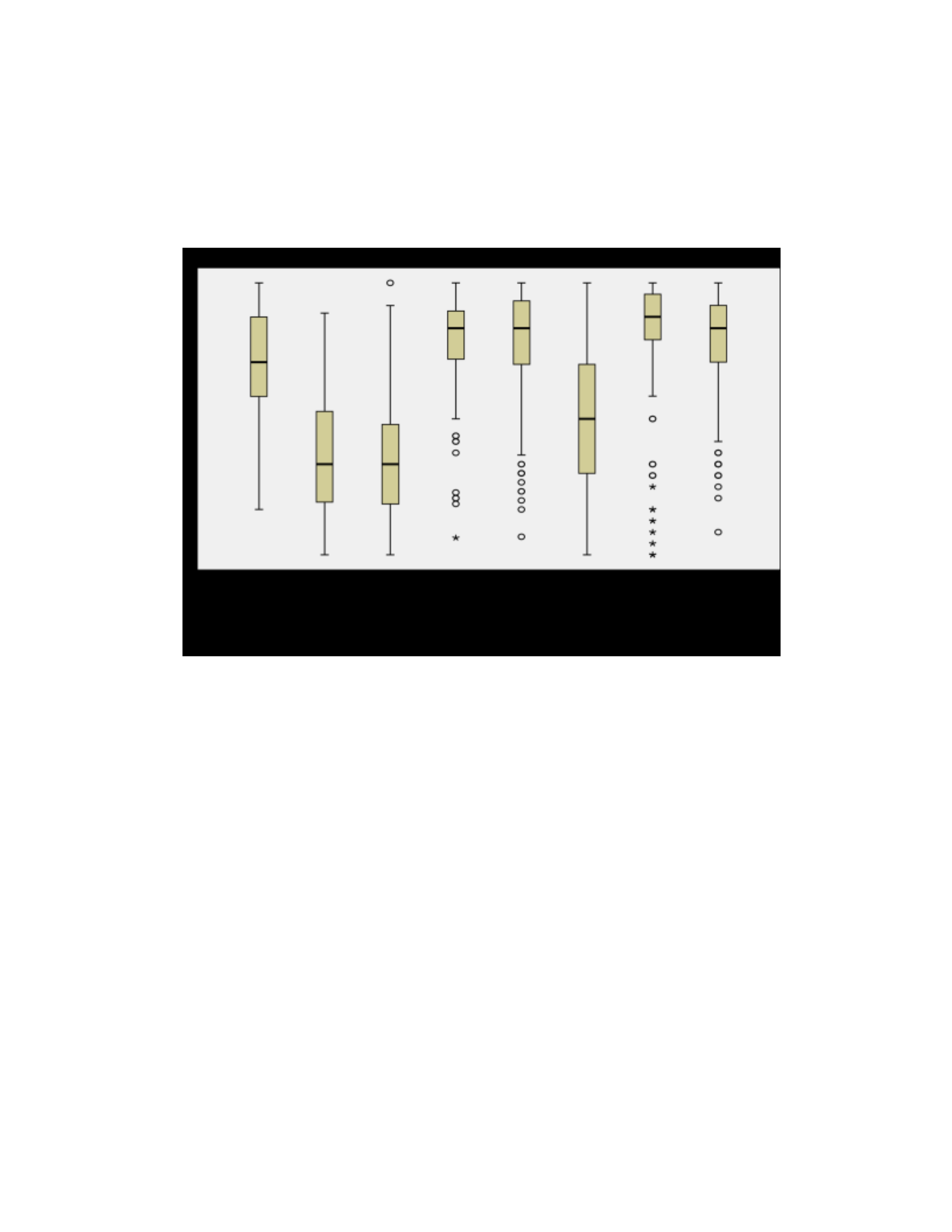
107
that each variable was normally distributed ignoring the other variable and each variable
was normally at every level of the other variables.
Figure 7. Completed survey dataset boxplot diagram comprising a summary of the
separate study variables. For each study variable, a boxplot was depicted showing the
quartile ranges with median item and item outliers, if any, based on the 151 completed
survey responses.
The normally distributed dataset was expected to yield linear relationships
between the independent variables and the dependent variable (Anderson et al., 2008).
Using the normalized dataset as a basis, a summary of the study variables’ central
tendency and dispersion is presented in Table J4 and a summary of the study variables’
distribution is presented in Table J5. A boxplot diagram consisting of a summary of
separate variables based on the normalized dataset is presented in Figure 8.
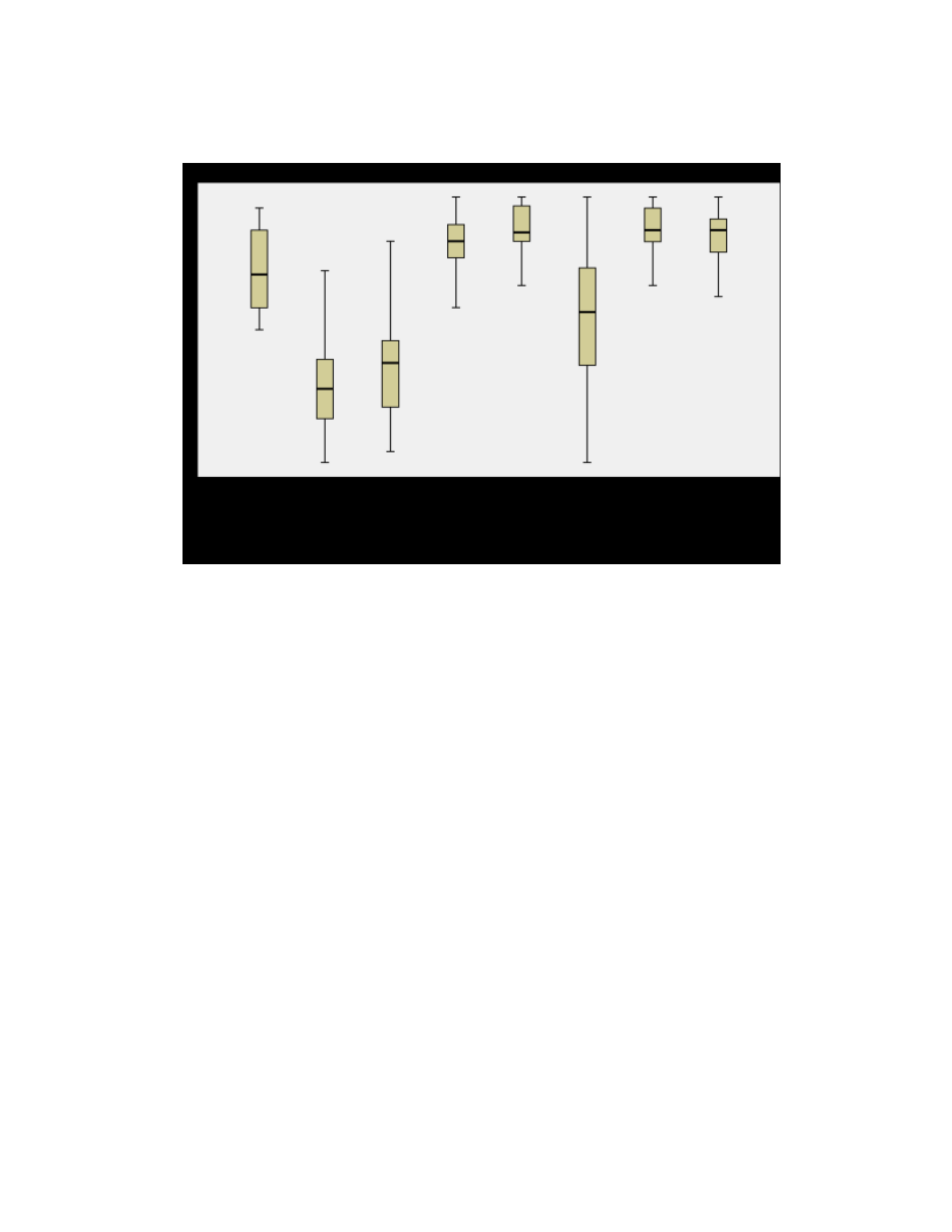
108
Figure 8. Normalized survey dataset boxplot diagram comprising a summary of the
separate study variables. For each study variable, a boxplot was depicted showing the
quartile ranges with median item for the 86 survey responses after eliminating outliers.
The number of survey response remaining in the normalized dataset was 86. The
G*Power software program function “Post hoc: Compute achieved power” was
performed for linear regression t tests that resulted in a power of .84 based on the sample
size of 86, a medium effect size of 0.30, and a significance level of .05. The computed
power was lower than the a priori calculated power of .90 anticipated in the study’s
design. The lower power result was considered a potential limitation related to the data
analysis and study findings.
Reliability and Validity Analysis Techniques
Statistical procedures were performed to reaffirm the internal reliability of the
survey instrument. The SPSS reliability analysis function was employed to confirm the

109
instrument reliability via split-half estimates and Cronbach’s coefficient alpha item
analysis for each variable construct scale. Extending the split-half reliability procedure,
Cronbach’s coefficient alpha was utilized to assess the consistency of the scores among
the items of a measurement construct by averaging all possible split-half combinations
(Trochim, 2006). The actual item measurements were assessed without the need to
convert the measurement data to z-scores as all item measurements were consistently
defined by a 7-point Likert-type scale of ordinal values. Variable construct scale
reliabilities ranged from .78 to .95 indicating that they exhibited an acceptable level of
reliability. Although Cronbach’s coefficient alpha ranges in value from 0 to 1, typically
an Alpha equal to or greater than .7 is considered an acceptable level even though some
authorities advocate for a stronger standard of at least .8 (Jiménez-Barrionuevo,
GarcíaMorales, & Molina, 2011; Wheeler, Vassar, Worley, & Barnes, 2011).
The SPSS factor analysis procedure was conducted to assess the measurement
scales validity by performing a discrete analysis on each scale. An examination of
eigenvalues was conducted to confirm that the scale items measured the construct tested.
Based on the survey data collected, a summary of the instrument reliability and validity
assessments is presented in Table H2. Consistency of the questions with PreDOI
instrument was considered important to enable reliance on the reliability and validity
significance results of previous studies as a basis for this study.
Hypotheses Testing Analysis Techniques
This research project was conceived in a nonexperimental quantitative design
examining study variable relationships (correlations) that was not intended as an

110
investigation of causation in contrast to more formal experimental methods investigating
cause-and-effect. Eight hypotheses were set forth to address the study’s research
questions. The hypothesis tests were conducted using SPSS statistical analysis
procedures based on the operationalized variables, which were calculated as the mean of
the scale item values corresponding to the variable constructs. Based on the PreDOI
theoretical framework applied to this research project, the Hypotheses H1 through H7
theorized relationships between each perceived cloud-computing attribute construct and
intent to use cloud-computing technology while Hypothesis H8 theorized the distinction
concerning the relationships between the attributes relative advantage and voluntariness
with intent to use cloud-computing technology. The SPSS regression analysis output for
each of the Hypotheses H1 through H8 is presented in Appendix K.
Analysis H1 to H7. For Hypotheses H1 through H7, separately each of the
independent variables was examined assessing the extent of the relationship between
small business leaders’ perceived cloud-computing innovation attributes and their
propensity for adoption. Bivariate regression tests were conducted to signal the degree of
linear relations between each independent variable of cloud-computing attributes and the
dependent variable intent to use based on the study sample. The bivariate linear
regression equation related the predicted criterion (Ǔ) to each independent variable (X)
via a slope weight (Bslope) for X and an additive constant (Bconstant): Ǔ = Bslope X + Bconstant
(Green & Salkind, 2008).
Whereas this research design was a nonexperimental quantitative cross-sectional
study, the assumptions underlying the significance test were based on the random effects

111
model. Green and Salkind (2008) ascribed the following assumptions underlying the
significance test for the bivariate linear regressions:
1. The predictor and criterion variables are bivariately normally distributed in the
population.
2. The scores on variables are independent of other scores on the same variables
and are derived from a random sample.
The SPSS linear regression procedure was used to test significance by means of
four correlation index variations: the Pearson correlation coefficient (r), the overall
correlation index (R), a squared correlation (R2), and an adjusted squared correlation
(R2adj). A correlation index equal to zero indicated no correlation between the predictor
and the criterion variables. An index with a value below zero indicated an inverse or
negative correlation while a value above zero indicated a positive predictive correlation.
The closer the correlation index value approached either -1 or +1 the stronger the
independent variable predicted the criterion variable (Anderson et al., 2008). The SPSS
output for the bivariate linear regression included correlation coefficients and overall
summary correlation statistics, which are presented in Table K1 and Table K2,
respectively. Additionally, bivariate scatterplots were developed for each test depicting
the occurrence of outliers as well as the existence of possible linear relationships.
Analysis H8. The eighth research question was an inquiry regarding which
perceived attribute of innovation relative advantage or voluntariness has a stronger
relationship to small business leaders’ intent to use cloud-computing technology.
Hypothesis H8 was specified to examine, during the prediffusion stage, whether small

112
business leaders’ perceived the relative advantage of cloud computing is more strongly
related to their propensity to adopt the innovation than their perceived voluntariness of
cloud computing. The multiple linear regression procedure was performed as a test for
Hypothesis H8 to assess the strength-of-relationship index indicating the degree of
correlation between the multiple predictor variables (i.e., the independent variables
relative advantage and voluntariness) and the criterion variable, which in this case was
the dependent variable intent to use. The multiple linear regression equation related the
predicted criterion (Ǔ) to the linear combination of the independent variables and an
additive constant. With two predictors (relative advantage and voluntariness) as
stipulated in hypothesis H8, the regression equation is Ǔ = B1slope X1 + B2slope X2 + Bconstant
(Green & Salkind, 2008).
The assumptions underlying the significance test based on the random effects
model were applied. Green and Salkind (2008) ascribed the following assumptions
underlying the significance test for the multiple correlation coefficients:
1. The variables are multivariately normally distributed in the population.
2. The cases represent a random sample from the population, and the scores on
variables are independent of other scores on the same variables.
The SPSS multiple regression procedure was used to test significance by means of
four correlation index variations: the Pearson correlation coefficient, the multiple
correlation, a squared multiple correlation, and an adjusted squared multiple correlation
(Green & Salkind, 2008). A multiple correlation index equal to zero indicated no
correlations between the predictor and the criterion variables. A correlation coefficient

113
with a value below zero indicated an inverse or negative correlation while a value above
zero indicated a positive predictive correlation. The closer the correlation coefficient
value approached either -1 or +1 the stronger the independent variable predicted the
criterion variable (Anderson et al., 2008). The multiple regression analysis included part
and partial correlations for each predictor and criterion, partialling out the effects of the
other predictors in the regression equation. The SPSS output from the multiple linear
regression procedures included coefficients and t test, regression correlations, and overall
correlation indices with change statistics, which are presented in Table K3, Table K4, and
Table K5, respectively.
Reliability and Validity
Reliability and validity considerations were integral to this study and were
interwoven throughout, commencing with the initial study design and concluding with
study findings and future implications. The reliability and validity issues were centric to
the survey instrument as well as the overall study integrity. Although the meaning behind
these terms varies depending on the research method, the quantitative definitions were
applied for this study.
The survey instrument’s reliability and validity were discussed in the Instrument
Integrity subsection of the Data Collection section and in the Reliability and Validity
Confirmation subsection of the Data Analysis Technique section. The following was
provided as a recap of the survey instrument reliability and validity. The internal and
external validity of the study was examined as well.

114
Reliability
In quantitative research, reliability has been defined as the assurance of the
internal consistency in the instrument item measures as well as in the test administration
and scoring (Creswell, 2009). The survey instrument used in this study was adopted from
Valier et al.’s (2008) pretested PreDOI survey instrument. The basis for the reliability
and validity of Valier et al.’s PreDOI instrument was demonstrated via statistic techniques
including the factor analysis results presented in Table H1. The survey instrument was
administered via an online web-based service.
Once setup, the survey instrument underwent visual inspections, including an
independent small panel review, and quality assurance tests to validate that scores were
accurately recorded. The nature of the online web-based survey data collection procedure
was constructed to ensure reliability by mitigating the variability associated within in-
personal survey administration. After collecting the study data, statistic techniques were
performed as an initial phase of the data analysis procedures to ensure the instrument has
continued reliability. As previously discussed in the Data Analysis Technique section, the
reliability statistical tests included Cronbach’s coefficient alpha item analysis assessing
internal consistency and factor analysis explaining the statistical variation and covariation
among items.
Additionally, the research question hypotheses testing were conducted using
SPSS’s regression techniques as detailed in the Hypotheses Testing Analysis Techniques
section. Testing Hypotheses H1 through H7, the bivariate linear regression procedure
was applied as a means for examining the study variable relationships stipulated via the

115
theoretical framework. Similarly, the multiple linear regression procedure was applied as
the statistical function to test Hypothesis H8.
Validity
Validity in quantitative research has been defined as the assurance of concluding
meaningful inferences from the instrument scores (Creswell, 2009). Threats to
quantitative research validity have included internal issues, external factors, statistical
conclusions, and construct adequacy. Participants with predisposition threaten internal
validity. Internal validity consisted of assuring the veracity of the relationships between
the independent variables and dependent variable while external validity consisted of
ensuring the generalizability of the study variable relationships beyond the contexts of the
study setting (Creswell, 2009; Onwuegbuzie et al., 2009).
The construct validity was ascertained by the adequacy of study variable
definitions and measures whereas the statistical conclusion validity was confirmed by the
accuracy of inferences drawn from the data based on statistical power and underlying
assumptions (Creswell, 2009). Many of the threats associated with the experimental
research design such as history, maturation, mortality, diffusion of treatment, interactions
or selection, setting, or treatment, and other validity threats (Campbell & Stanley, 1963;
Creswell, 2009) were not applicable to the nonexperimental cross-sectional survey design
approach based on extant empirical psychometric research.
Regression and selection posed the greatest potential internal validity threats to
this research. Creswell (2009) described regression validity issues as extreme participant
scores and selection validity concerns as participants with predisposition to certain

116
outcomes. Descriptive statistics and iterative or follow-up statistical functions as
described in the Data Analysis Technique section were conducted to isolate or otherwise
mitigate regression validity issues. The sampling approach was chosen as an optimal
means for increasing the sample size for addressing potential selection validity concern
based on the study population. Additionally, the SPSS factor analysis function, as
previously discussed in the Data Analysis Technique section, was performed using the
collected survey data to reaffirm the construct validity of the pretested PreDOI survey
instrument.
The nature of the cross-sectional survey study mitigated several traditional
experimental internal validity concerns (e.g., history, maturation, mortality, treatment
diffusion, and control group demoralization or rivalry) because of the limited duration of
participant involvement (Campbell & Stanley, 1963; Creswell, 2009). Independent
expert review and critique of the statistical analysis techniques and procedures were
engaged to elevate the study’s statistical conclusion validity. Correct inferences drawn
from the study data to other settings in past or future situations substantiate quantitative
research external validity (Creswell, 2009). This study’s reliability and validity results
were evaluated against Valier et al.’s (2008) results as well as other prior DOI research
assessments.
Transition and Summary
The mechanics of the research study were revealed in the Project section by
detailing the project’s inner-workings and how the study was conducted including its
underlying assumptions. The purpose for this quantitative survey study was to examine

117
the relationship of small business leaders’ perception of its cloud-computing innovation
attributes and their propensity to adopt this emerging technology. The researcher’s role
was focused on ensuring the reliability and validity of the study while rendering the
resultant findings.
The subject participants were defined as Arizona small business IT deployment
decision-makers, which likely were CTOs or equivalent small business leaders. The
sampling frame was designated as ACA’s small business e-mail list. A convenience
sample was drawn from the entire sampling frame to enhance the study sample size as a
tradeoff to a random probability sample. The rationale for the quantitative research
method was explained in context of the research problem and questions. Additionally, the
suitability of the cross-sectional survey design using a self-administered, online webbased
data collection tool was affirmed.
Valier et al.’s (2008) PreDOI survey instrument served as the research instrument,
which was fully described featuring operational definition for the seven independent and
one dependent measurement constructs. The procedures utilized to safeguard the data
and preserve its integrity including encrypted permanent archives were disclosed. The
reliability and validity of the instrument and overall study was affirmed via statistical
techniques, research design practices, and other quality assurance methods.
The data was analyzed using SPSS statistical techniques to ensure comprehension
of the data, reaffirm reliability and validity of the survey instruments, and to test the
research question hypotheses. Bivariate linear regression tests were applied to test each
of the Hypotheses H1 through H7. Similarly, multiple regression statistics were applied

118
to test Hypothesis H8. The data analysis techniques were explained as a basis for
supporting or disconfirming the stipulated hypotheses.
The interpretation of the data analysis and the study findings, including the
research question conclusions, are presented and related to application for professional
practice in Section 3. The study findings and conclusions are bound by the evidence
collected in context of the theoretical framework. Grounded in the significance of the
study foundation and project outcomes, implications for social change are expressed in
terms of tangible improvements for workforce preparedness, environmental
consciousness, and social entrepreneur enablement. A call to action is derived from the
application of the study conclusions to professional practice and the recommendations for
further study. Section 3 is closed by disclosing reflective insights related to the research
project and the summary conclusions and by encouraging future improvement and
benefit.
Section 3: Application to Professional Practice and Implications for Change
The purpose of this quantitative survey inquiry was to examine the relationship
between small business leaders’ perception of cloud-computing innovation attributes and
their propensity to adopt the emerging cloud-computing technology. The previous
sections of this study were composed to establish the foundation and project workings for
a doctoral study with practical applications. Supported by a review of the professional
and academic literature, the Section 1 foundation included a statement of the problem
researched, a description of the research purpose, a summary of the nature of the study,

119
the research questions and associated hypotheses, and the theoretical framework basis as
well as an emphasis about the study’s significance. Section 2 included a discussion of the
project workings that incorporated an understanding about the role of the researcher, the
participants, the mechanics of research method and design, the population and sampling
approach, data collection technique and data organization practice, and the data analysis
techniques as well as an assessment of the study’s reliability and validity.
Building on the research foundation and project mechanics, Section 3 contains the
research results and its significance. Following an overview of the research study, the
researcher presents the study findings in context of the theoretical framework and
research questions, discusses how the research can be applied to professional practice and
its underpinning implications for social change, and provides recommendations for action
and further study. In closing, the researcher shares reflections about the study and
presents a recap of the study and the research conclusions.
Overview of Study
Although the general problem targeted by this study was the slow embrace of
technology innovations by small businesses, the specific problem researched was honed
to small business early adoption of cloud-computing innovation for improved economic
value. The research project’s purpose was founded on a review of the professional and
academic literature emphasizing five topical areas: small business trends and economic
contributions, small business innovation policy, the strategic role of small business
innovation, small business IT and Internet innovation practices, and the emerging
cloudcomputing ecosystems. Based on this foundation, the purpose for this inquiry was

120
to examine the relationship between small business leaders’ perceptions of cloud-
computing attributes and their propensity to adopt the emerging cloud-computing
technology.
The theoretical framework for this study was adopted from Valier et al.’s (2008)
predictive DOI theory, which predominantly was grounded in Rogers (2003) and Moore
and Benbasat’s (1991) DOI research. The predictive DOI framework was embraced to
assess small business leaders’ intent to use emerging cloud-computing technology and
their perceptions about cloud-computing innovation attributes relying on the variable
constructs relative advantage, compatibility, complexity, observability, trialability, results
demonstrable, and voluntariness. Following this theoretical framework, this research
project was constructed based on a quantitative research method using a nonexperimental
cross-sectional survey design strategy.
In response to the problem statement and the study purpose, given small business
volatility and economic importance, the overarching research question guiding this study
was, “What is the propensity of small businesses to embrace the cloud computing novel
business-computing paradigm?” Anchored in the predictive DOI theoretical framework,
the seven perceived attributes of innovation were designated as independent (predictor)
variables and intent to use was designated as a dependent (criterion) variable. For each of
the seven perceived attributes of cloud-computing innovation, a research question and
corresponding hypothesis was stipulated to examine individually the extent of the
relationship between small business leaders’ perceived attribute of innovation and their
intent to use cloud computing. The eighth research question and corresponding

121
hypothesis was stipulated to examine the strength of relationship between relative
advantage and intent to use in comparison to the strength of relationship between
voluntariness and intent to use.
Valier et al.’s (2008) previously tested online survey instrument, which was
designed to assess the adoption of IT during the prediffusion stage of an innovation, was
applied to collect the data for this study. The study’s survey instrument included 16
questions related to the participant and 39 questions related to small business leaders’
perceived cloud-computing innovation attributes and their intent to use cloud-computing
technology. The survey instrument was implemented as a self-administered online survey
hosted at Survey Monkey.
The research survey was announced via an Arizona Commerce Authority e-mail
distribution soliciting participation from senior IT deployment decision-makers based on
a convenience sample of small businesses drawn from an entire e-mail list maintained by
ACA. The survey participant’s involvement included affirmation of IRB consent, entry
of general participant information, entry of the Likert-type responses to each scale item
question, and optional designation of the election to receive a copy of the study results.
At the conclusion of the data collection timeframe, the study’s data were retrieved,
encrypted and archived, and imported into SPSS for statistical analysis to test the
stipulated hypotheses.
The data analysis procedures and techniques performed were architecturally
framed by the study’s quantitative research method and cross-sectional survey design
approach. The software program SPSS was used to calculate the statistical results based

122
on the survey data collected. The current study’s analytical scope included descriptive
statistics, instrument reliability and validity confirmation, and hypotheses-testing
correlation regressions.
The 3,897 e-mails distributed by the ACA announcing the research survey resulted
in 151 completed surveys equaling a 3.87% response rate. Univariate descriptive
statistics were performed using the survey data to depict the central tendency, dispersion,
and distribution of the participant information, item measurements, and variable data.
Based on the participant information collected via the survey instrument, frequencies and
percentages were calculated and presented in a summary tabular format describing the
participant characteristics, small business attributes, and cloud-computing awareness.
Each cloud-computing research question, which used a Likert-type 7-point scale
to indicate the participant’s degree of disagreement or agreement, was subjected to
descriptive statistical analysis to determine its central tendency and dispersion. Similarly,
the study variables, which were calculated based on the mean of the corresponding item
scale values for each instance, were subjected to descriptive statistical analysis to
determine their central tendency, dispersion, and distribution. For each of these analysis
procedures, summary statistics were reported in tabular format while key statistics are
highlighted in the Descriptive Statistics Findings section.
Additionally, statistical procedures were performed to reaffirm the internal
reliability of the survey instrument. The SPSS reliability analysis function was employed
to confirm the instrument reliability using Cronbach’s coefficient alpha item analysis for
each variable construct scale. The SPSS factor analysis procedure was conducted to

123
assess the measurement scales validity by performing a discrete analysis on each scale.
An examination of eigenvalues was conducted to confirm that the scale items measured
the construct tested.
Analysis was performed to test the research hypotheses by using SPSS statistical
procedures to examine the relationship of each of the seven independent variables and the
one dependent variable. As a basis for the hypotheses testing, normality test procedures
were performed to ensure that the hypotheses-testing dataset was normally distributed.
For each hypothesis, statistical procedures were performed assessing the extent of the
relationship, individually, between each perceived cloud-computing innovation attribute
and intent to use cloud computing. The bivariate regression statistics procedures were
applied separately to each of the independent variables and the dependent variable testing
Hypotheses H1 through H7. The bivariate SPSS regression analysis procedures were
performed to assess the degree of relationship, if any, based on each predictor variable
and the criterion intent to use. The multiple regression statistics procedures were applied
to test Hypothesis H8, which assessed the strength of relationship between relative
advantage and intent to use in comparison to the strength of relationship between
voluntariness and intent to use.
The basis for the study findings was framed in the interpretation of the results of
the data analysis procedures. With the exception of Hypothesis H7, the null hypothesis
associated with each research question was rejected; therefore, the findings were
interpreted as supporting the hypothesized predictions for each research question other
than the seventh research question. Statistical diagrams are presented that further

124
supported findings from this study. A further discussion of the data analysis
interpretation and study findings is presented in the Presentation of the Findings section.
Presentation of the Findings
This study’s findings were organized by presenting conclusions addressing each
research question. These conclusions were derived from the interpretation of the
outcomes of the data analysis performed based on the survey data collected as described
in Section 2. To address the research questions, hypothesis-testing regression statistics
procedures were applied separately to the stipulated predictor variables and the criterion
variable intent to use. The variable construct intent to use was operationally defined as
the subject’s propensity to adopt cloud-computing technology. An operational definition
for each predictor variable is restated in the discussion of the corresponding research
question findings.
For Hypotheses H1 through H7, bivariate regression analysis procedures were
performed as a test to determine the degree of relationship between each predictor
variable and the criterion intent to use. For Hypothesis H8, the multiple linear regression
procedure was performed as a test to assess the strength-of-relationship index indicating
the degree of correlation between the multiple predictor variables relative advantage and
voluntariness and the criterion variable intent to use. Reinforcing the conclusions, the
study findings were related to the theoretical framework and the extant literature
regarding effective business practices.
Derived from the completed survey dataset, a scatterplot overlay mapping the
variable coordinate relationships between each cloud-computing attribute and intent to
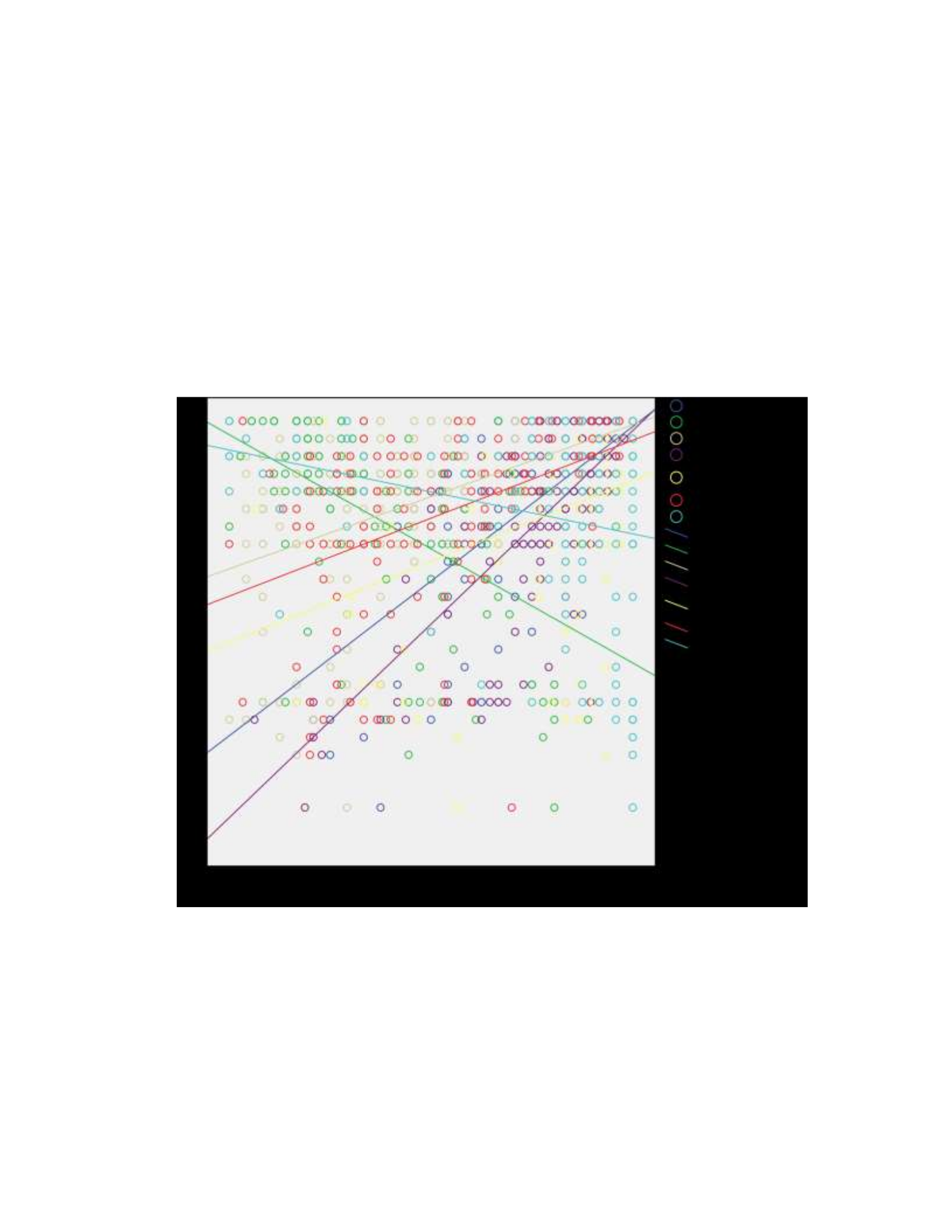
125
use is presented in Figure 9. Although this overlay diagram does not depict any strong
relationships, the scatterplot overlay was provided as a basis for graphically comparing
the predictor and criterion variable relationships based on the completed survey dataset
with the individual scatterplot diagrams based on the normalized dataset presented for
each research question findings.
Figure 9. Scatterplot overlay mapping the predictor and criterion coordinate relationships.
For each sample response based on the completed dataset of 151 surveys, best-fit lines
were formed to depict the linear relationships between each predictor variable and the
criterion variable intent to use including R2 coefficients for each correlation.
Descriptive statistics highlights were presented as a preface to the
hypothesistesting findings to instill greater understanding about the study participants and

126
the research data collected. Univariate descriptive statistics procedures were applied to
the general participant information collected via this study’s survey. The resultant key
descriptive statistics included participant characteristics, small business attributes, and
cloud-computing awareness. Additionally, descriptive statistics related to the study
variables based on the completed survey and normalized datasets were highlighted.
Descriptive Statistics Highlights
As the initial phase of the data collection process, ACA distributed 3,897 e-mails
announcing this study to solicit survey participation. The e-mail announcement
precipitated 154 survey participants. Three of the survey participants elected to cancel
the survey process resulting in 151 completed surveys equaling a 3.87% response rate,
which exceeded the initial response projection calculations. Based on the completed
survey responses, descriptive statistics highlights are presented about the participant
characteristics, small business attributes, and cloud-computing awareness. Descriptive
statistics highlights are presented about the study variables based on the normalized
dataset that resulted from a refinement of the completed survey responses after
eliminating variable outliers.
Participant characteristics. The descriptive statistics composing the participant
characteristics, which were framed on Survey Questions A through E, are presented in
Table I1. Eighty respondents, equaling 53% of the sample, indicated that the
responsibility classification of information technology best fit them, while 37
respondents, representing 24.5% of the sample, designated the executive classification.
The ages 41-50 years and 31-40 years nearly tied for the top age-range category rankings

127
with 55 participants equaling 36.7%, and 49 participants equaling 32.7% of the
respondents, respectively. Although 11 participants constituting 7.3% of the sample
elected not to specify a gender designation, 106 participants equaling 75.7% of the
respondents designated male as their gender. Ninety-eight participants representing
65.3% of the respondents designated the education level classification of a Bachelor’s
degree. The 11-20 years category was designated most for the number of years of
fulltime experience with 73 responses equaling 48.3% of the sample.
Small business attributes. The descriptive statistics composing the business
attributes, which were based on Survey Questions F through K, are presented in Table I2.
Seventy-one participants equaling 47.3% of the respondents designated the classification
corporation as their firm’s legal structure while 62 participants representing 41.6% of the
respondents designated the category 11-20 years as the range of years that their firm had
been in business. Although the number of industry categories in which the participants’
firms operated was broad, the top three designated categories garnered more than half of
the total responses. Totaling more than half of the industry classifications, professional,
science, and technical, finance and insurance, and education were designated by 38
participants equaling 25.5%, 25 participants equaling 16.8%, and 22 participants equaling
14.8% of the respondents, respectively. As a measure of firm size based on the sample,
82 participants equaling 54.3% designated 10-49 employees as the range for the firm’s
number of employees while 87 respondents representing 57.6% selected the classification
of less than $2 million for the firm’s annual revenue category. Although 124 participants
representing 82.7% of the respondents indicated that their firm did not use

128
cloudcomputing technology, 26 participants designated that their firm used at least one
cloudcomputing technology. Eighteen of the 26 respondents indicated that their firm
used cloud-computing designated hosted application such as e-mail, office, or other
utility functions as the nature of their firm’s cloud computing usage.
Cloud computing awareness. The descriptive statistics composing the cloud
computing awareness, which were derived from Survey Questions L through P, are
presented in Table I3. Eighty-three participants equaling 55.7% of the respondents
designated 1-3 years as the range of years in which the participant had known about cloud
computing. Although four individuals elected not to respond to Question M, 112
participants equaling 76.2% of the respondents designated not attending any cloud
computing presentation. Conversely, 124 participants equaling 82.1% of the sample
indicated having read advertisements about cloud computing. One hundred nine
participants representing 72.7% of the respondents indicated that they had talked with a
colleague about cloud computing. Last, 117 participants equaling 79.1% of the
respondents indicated not having previously used cloud computing.
Study variable measures. The refinement of the completed survey responses
based on the normalized study variables restricted the dataset to 86 survey instances.
This normalized dataset was the basis for the study variable descriptive statistics and the
hypothesis-testing regression statistics. Based on the mean study variables,
generalizations about the sample of perceived attributes of cloud-computing technology
and intent to use cloud-computing technology were developed. On average, participants
indicated that they somewhat less than slightly disagreed that cloud computing was

129
difficult to understanding and use while indicating that they somewhat more than slightly
disagreed that its results were visible to others. Participants, on average, indicated
slightly more than neither disagreement nor agreement that they possessed the ability for
use inspection of cloud computing. On average, participants indicated that they nearly
agreed (i.e., more than slightly agreed but less than agreed) that cloud computing was
perceived a betterment in lieu of precursor ideas and cloud computing was congruent
with their experiences, values, and needs. On average, participants indicated that they
more than agreed that the tangible evidence of its benefits were communicable, using
cloud computing was a self-determined sovereign choice, and they intended to use
cloudcomputing technology.
Research Question 1 Findings
The first research question asked: To what extent does relative advantage, a
perceived attribute of innovation, relate to small business leaders’ intent to use
cloudcomputing services? The variable construct relative advantage was operationally
defined as the perceived degree of betterment attributed to cloud-computing technology
in lieu of precursor ideas. Based on a review of the literature related to the cloud-
computing ecosystem and the theoretical framework, the first hypothesis was framed
theorizing that, during the prediffusion stage, the higher the level small business leaders
perceived the relative advantage of cloud computing the greater their propensity to adopt
the innovation. The null hypothesis H10 was stipulated: No correlation exists between
relative advantage and intent to use cloud computing.
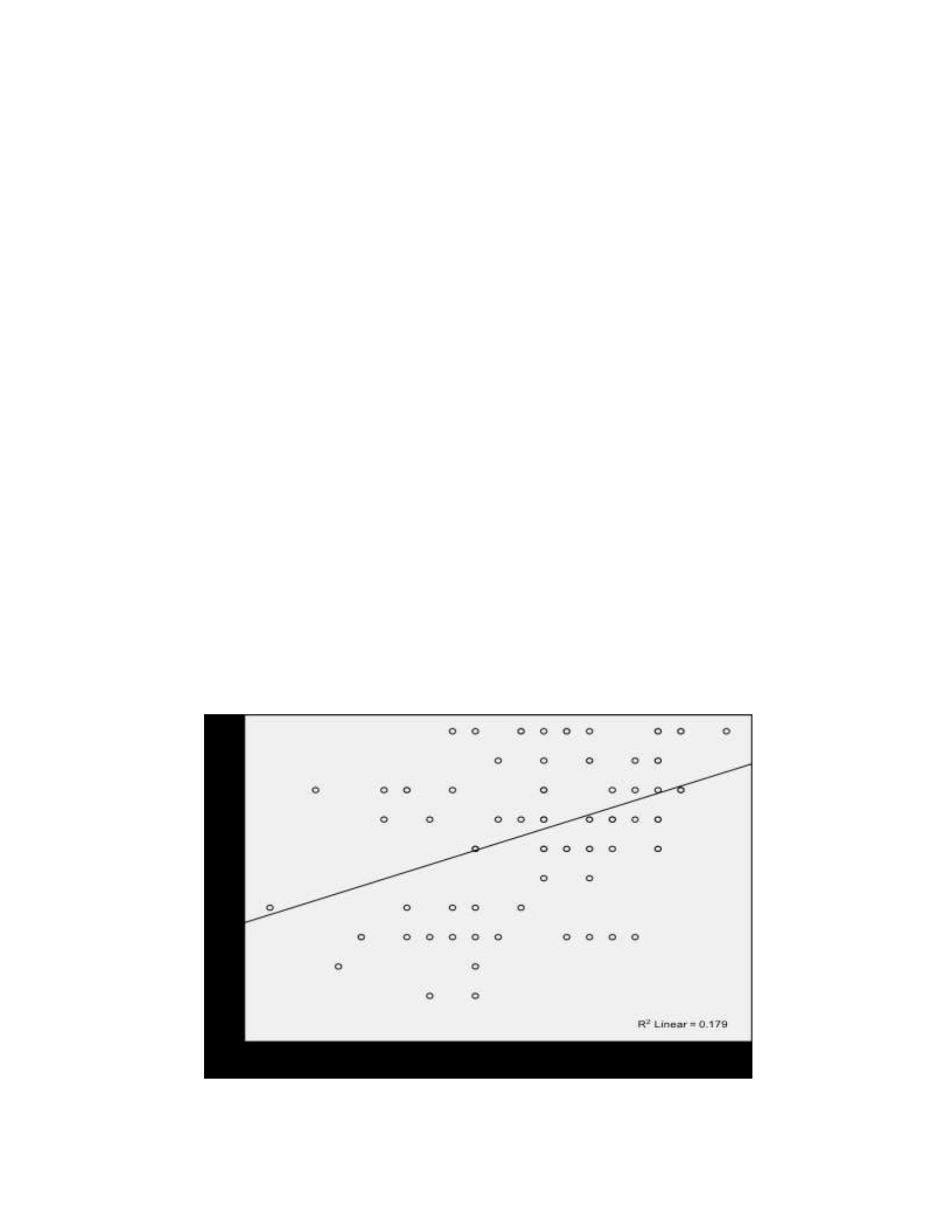
130
A linear regression analysis was performed to evaluate the prediction of intent to
use cloud-computing technology based on small business leaders’ perceived relative
advantage of cloud-computing innovation. The scatterplot diagram depicting relative
advantage and intent to use, as shown in Figure 10, was presented revealing that the two
variables were linearly related such that as the attribute relative advantage increased the
intent to use increased. The regression equation for predicting the intent to use, given
relative advantage, was
Predicted Intent to Use = .49 Relative Advantage + 3.25. (1)
An intent to use value of 3.25, which reflected the regression equation y-intercept value
when relative advantage theoretically equaled zero, was interpreted as a propensity to use
cloud-computing technology between slightly disagree and neither disagree or agree.
The 95% confidence interval for the slope, .26 to .71, did not contain the value zero, and
therefore relative advantage was significantly related to intent to use.

131
Figure 10. Scatterplot mapping relative advantage and intent to use coordinates. The
coordinates, best-fit line, and R2 coefficient were based on the normalized dataset.
The significance tests for the bivariate regression analysis included the t test
associated with the SPSS coefficients table output. The bivariate linear regression test
result was significant, t(84) = 4.28, p < .01. The magnitude of the standardized
correlation coefficient was between medium and large, .42, evidencing that relative
advantage was more than moderately related to intent to use. Approximately 18% of the
variance of the intent to use was associated with relative advantage. As hypothesized, the
H10 null hypothesis was rejected (p < .01), and relative advantage was deemed positively
correlated to intent to use. Therefore, based on these findings the first hypothesis, H1,
was supported. The conclusion related to the first research question was interpreted
based on the statistical analysis findings indicating that relative advantage was correlated
to intent to use in a greater than moderate positive degree.
Research Question 2 Findings
The second research question asked: To what extent does compatibility, a
perceived attribute of innovation, relate to small business leaders’ intent to use
cloudcomputing services? The variable construct compatibility was operationally defined
as the perceived degree of congruence attributed to cloud-computing technology based on
the subject’s experiences, values, and needs. Guided by a review of the literature related
to the cloud-computing ecosystem and the theoretical framework, the second hypothesis
was framed theorizing that, during the prediffusion stage, the higher the level small
business leaders perceived the compatibility of cloud computing with extant factors the

132
greater their propensity to adopt the innovation. The null hypothesis H20 was stipulated:
No correlation exists between compatibility and intent to use cloud computing.
A linear regression analysis was performed to evaluate the prediction of intent to
use cloud-computing technology based on small business leaders’ perceived compatibility
of cloud-computing innovation. The scatterplot diagram depicting compatibility and
intent to use, as shown in Figure 11, was presented revealing that the two variables were
linearly related such that as the attribute compatibility increased the intent to use
increased. The regression equation for predicting the intent to use, given compatibility,
was
Predicted Intent to Use = .28 Compatibility + 4.63. (2)
An intent to use value of 4.63, which reflected the regression equation y-intercept value
when compatibility theoretically equaled zero, was interpreted as a propensity to use
cloud-computing technology between neither disagree or agree and agree slightly. The
95% confidence interval for the slope, .14 to .42, did not contain the value zero, and
therefore compatibility was significantly related to intent to use.
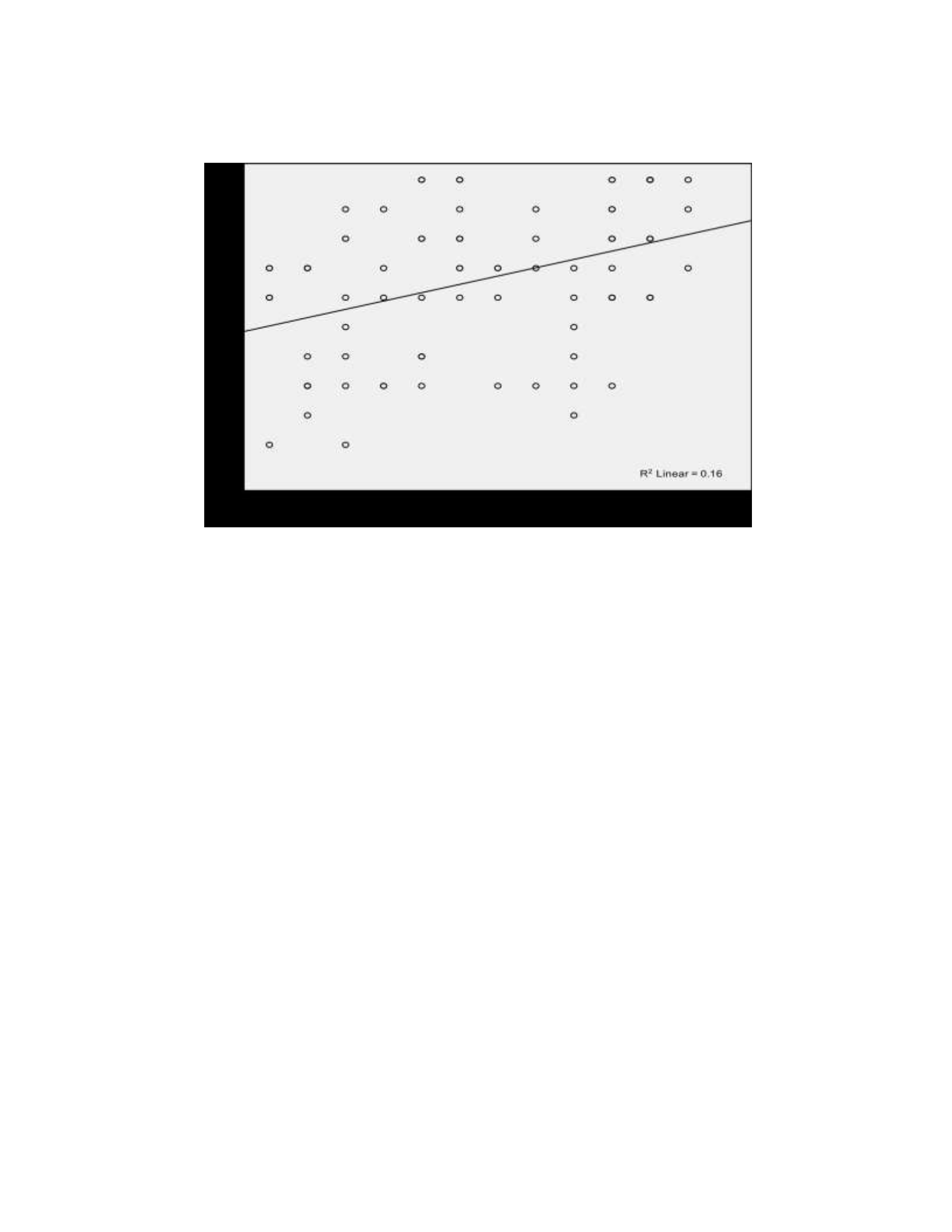
133
Figure 11. Scatterplot mapping compatibility and intent to use coordinates. The
coordinates, best-fit line, and R2 coefficient were based on the normalized dataset.
The significance tests for the bivariate regression analysis included the t test
associated with the SPSS coefficients table output. The bivariate linear regression test
result was significant, t(84) = 4.00, p < .01. The magnitude of the standardized
correlation coefficient was between medium and large, .40, evidencing that compatibility
was more than moderately related to intent to use. Approximately 16% of the variance of
the intent to use was associated with compatibility. As hypothesized, the H20 null
hypothesis was rejected (p < .01), and compatibility was deemed positively correlated to
intent to use. Therefore, based on these findings the second hypothesis, H2, was
supported. The conclusion related to the second research question was interpreted based
on the statistical analysis findings indicating that compatibility was correlated to intent to
use in a greater than moderate positive degree.

134
Research Question 3 Findings
The third research question asked: To what extent does complexity, a perceived
attribute of innovation, relate to small business leaders’ intent to use cloud-computing
services? The variable construct complexity was operationally defined as the perceived
degree of difficulty or simplicity attributed to understanding and using cloud-computing
technology. Guided by a review of the literature related to the cloud-computing
ecosystem and the theoretical framework, the third hypothesis was framed theorizing that,
during the prediffusion stage, the lower the level small business leaders perceived the
complexity of cloud computing the greater their propensity to adopt the innovation. The
null hypothesis H30 was stipulated: No correlation exists between complexity and intent
to use cloud computing.
A linear regression analysis was performed to evaluate the prediction of intent to
use cloud-computing technology based on small business leaders’ perceived complexity
of cloud-computing innovation. The scatterplot diagram depicting complexity and intent
to use, as shown in Figure 12, was presented revealing that the two variables were
linearly related such that as the attribute complexity increased the intent to use decreased
and inversely as the complexity attribute decreased the intent to use increased. The
regression equation for predicting the intent to use, given complexity, was
Predicted Intent to Use = -.25 Complexity + 6.86. (3)
An intent to use value of 6.86, which reflected the regression equation y-intercept value
when complexity theoretically equaled zero, was interpreted as a propensity to use
cloudcomputing technology between agree and strongly agree. The 95% confidence
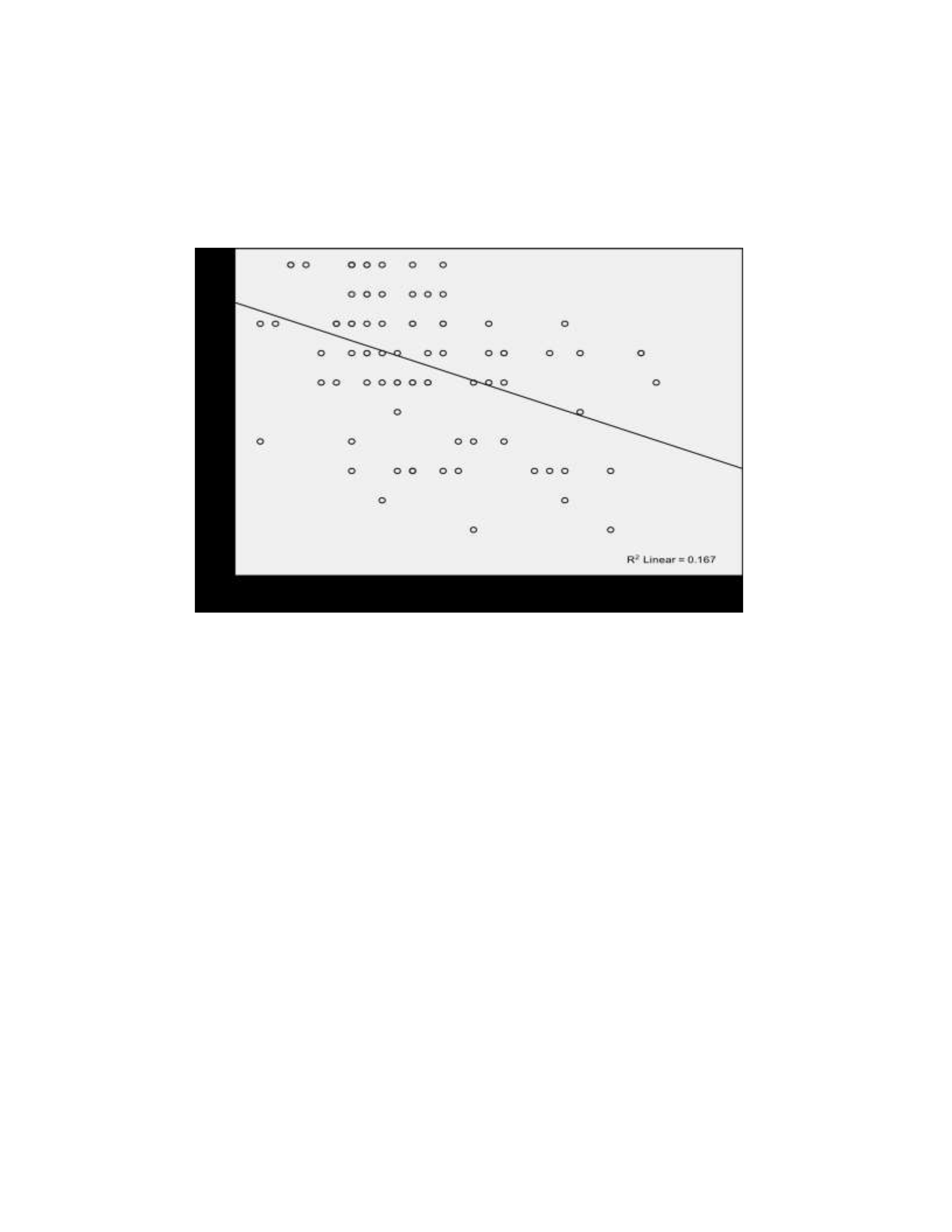
135
interval for the slope, -.38 to -.13, did not contain the value zero, and therefore
complexity was significantly related to intent to use.
Figure 12. Scatterplot mapping complexity and intent to use coordinates. The
coordinates, best-fit line, and R2 coefficient were based on the normalized dataset.
The significance tests for the bivariate regression analysis included the t test
associated with the SPSS coefficients table output. The bivariate linear regression test
result was significant, t(84) = -4.11, p < .01. The magnitude of the standardized
correlation coefficient was between medium and large, -.41, evidencing that complexity
was more than moderately related to intent to use. Approximately 17% of the variance of
the intent to use was associated with complexity. As hypothesized, the H30 null
hypothesis was rejected (p < .01), and complexity was negatively correlated to intent to
use. Therefore, based on these findings the third hypothesis, H3, was supported. The
conclusion related to the third research question was interpreted based on the statistical

136
analysis findings indicating that complexity was correlated to intent to use in a greater
than moderate inverse degree.
Research Question 4 Findings
The fourth research question asked: To what extent does observability, a perceived
attribute of innovation, relate to small business leaders’ intent to use cloudcomputing
services? The variable construct observability was operationally defined as the perceived
degree of visibility to others attributed to the results of the cloud-computing technology.
Guided by a review of the literature related to the cloud-computing ecosystem and the
theoretical framework, the fourth hypothesis was framed theorizing that, during the
prediffusion stage, the higher the level small business leaders perceived the observability
of cloud computing the greater their propensity to adopt the innovation. The null
hypothesis H40 was stipulated: No correlation exists between observability and intent to
use cloud computing.
A linear regression analysis was performed to evaluate the prediction of intent to
use cloud-computing technology based on small business leaders’ perceived observability
of cloud-computing innovation. The scatterplot diagram depicting observability and
intent to use, as shown in Figure 13, was presented revealing that the two variables were
linearly related such that as the attribute observability increased the intent to use
increased. The regression equation for predicting the intent to use, given observability,
was
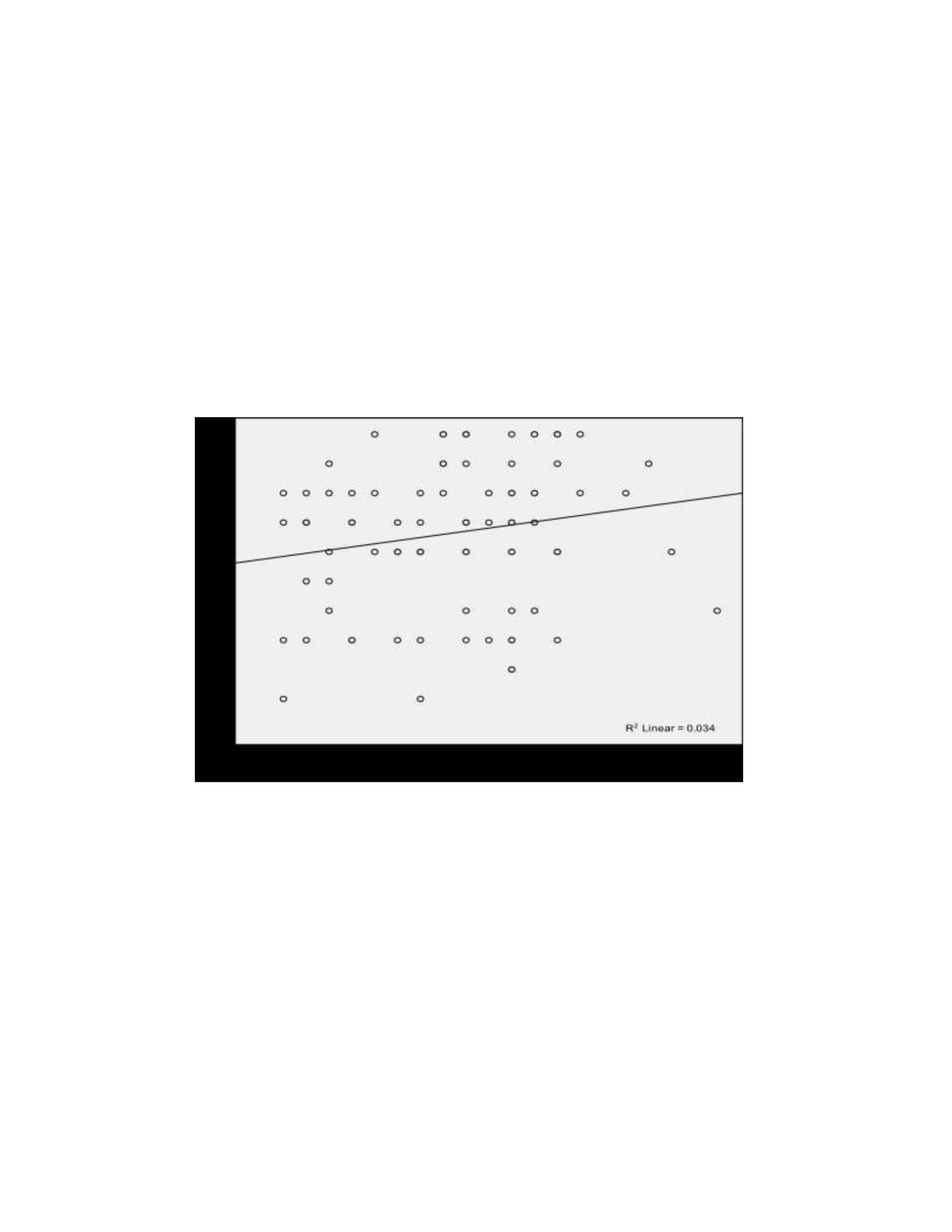
137
Predicted Intent to Use = .11 Observability + 5.83. (4)
An intent to use value of 5.83, which reflected the regression equation y-intercept value
when observability theoretically equaled zero, was interpreted as a propensity to use
cloud-computing technology nearing agree. The 95% confidence interval for the slope,
.02 to .23, did not contain the value zero, and therefore observability was significantly
related to intent to use.
Figure 13. Scatterplot mapping observability and intent to use coordinates. The
coordinates, best-fit line, and R2 coefficient were based on the normalized dataset.
The significance tests for the bivariate regression analysis included the t test
associated with the SPSS coefficients table output. The bivariate linear regression test
result was significant, t(84) = 1.72, p < .01. The magnitude of the standardized
correlation coefficient was between small and medium, .19, evidencing that observability
was less than moderately related to intent to use. Approximately 3% of the variance of

138
the intent to use was associated with observability. As hypothesized, the H40 null
hypothesis was rejected (p < .01), and observability was positively correlated to intent to
use. Therefore, based on these findings the fourth hypothesis, H4, was supported. The
conclusion related to the fourth research question was interpreted based on the statistical
analysis findings indicating that observability was correlated to intent to use in a slightly
moderate positive degree.
Research Question 5 Findings
The fifth research question asked: To what extent does trialability, a perceived
attribute of innovation, relate to small business leaders’ intent to use cloud-computing
services? The variable construct trialability was operationally defined as the perceived
ability for use inspection attributed to cloud-computing technology. Guided by a review
of the literature related to the cloud-computing ecosystem and the theoretical framework,
the fifth hypothesis was framed theorizing that, during the prediffusion stage, the higher
the level small business leaders perceived the trialability of cloud computing the greater
their propensity to adopt the innovation. The null hypothesis H50 was stipulated: No
correlation exists between trialability and intent to use cloud computing.
A linear regression analysis was performed to evaluate the prediction of intent to
use cloud-computing technology based on small business leaders’ perceived trialability of
cloud-computing innovation. The scatterplot diagram depicting trialability and intent to
use, as shown in Figure 14, was presented revealing that the two variables were linearly
related such that as the attribute trialability increased the intent to use increased. The
regression equation for predicting the intent to use, given trialability, was
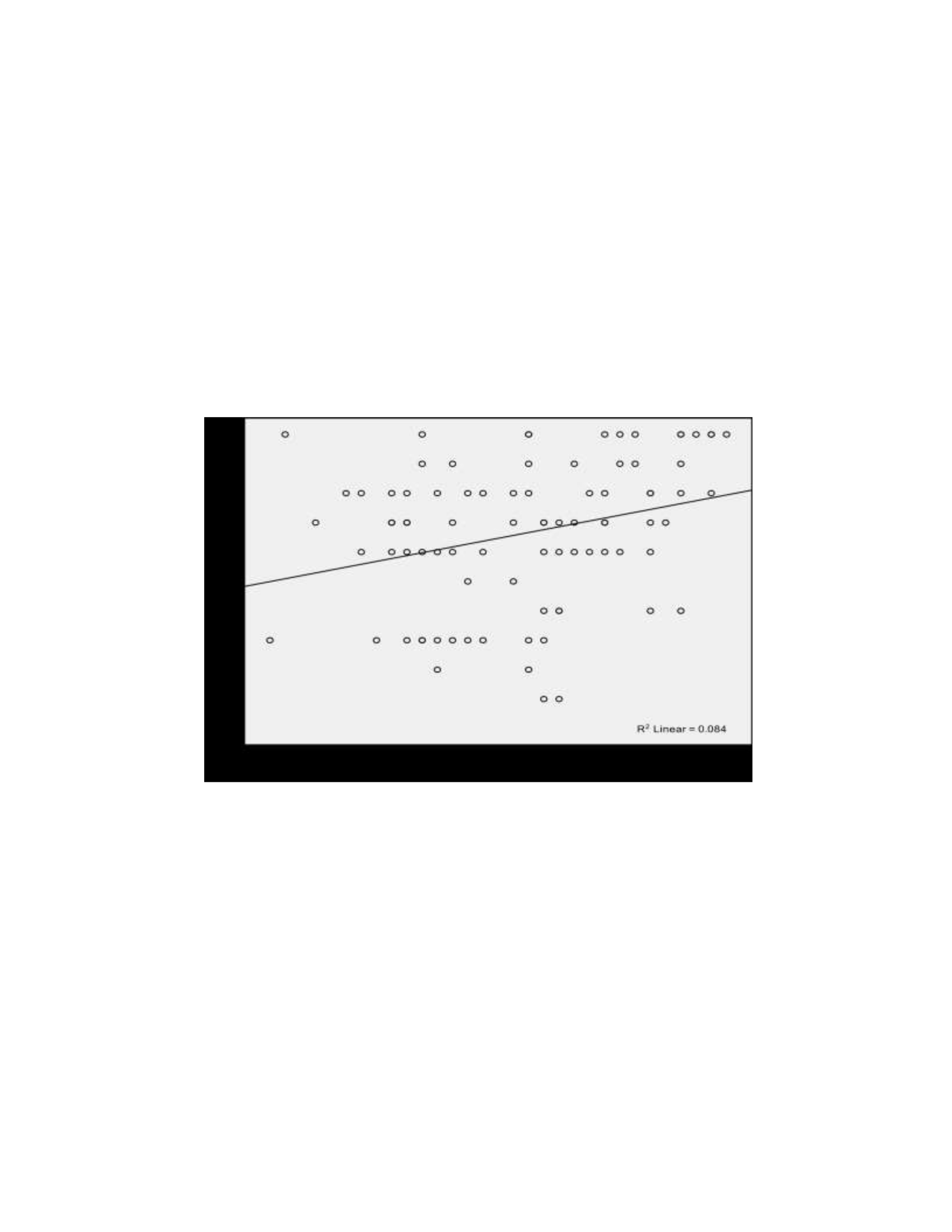
139
Predicted Intent to Use = .12 Trialability + 5.63. (5)
An intent to use value of 5.63, which reflected the regression equation y-intercept value
when trialability theoretically equaled zero, was interpreted as a propensity to use
cloudcomputing technology between agree slightly and agree. The 95% confidence
interval for the slope, .04 to .21, did not contain the value zero, and therefore trialability
was significantly related to intent to use.
Figure 14. Scatterplot mapping trialability and intent to use coordinates. The coordinates,
best-fit line, and R2 coefficient were based on the normalized dataset.
The significance tests for the bivariate regression analysis included the t test
associated with the SPSS coefficients table output. The bivariate linear regression test
result was significant, t(84) = 2.78, p < .01. The magnitude of the standardized
correlation coefficient was medium, .29, evidencing that trialability was moderately
related to intent to use. Approximately 8% of the variance of the intent to use was

140
associated with trialability. As hypothesized, the H50 null hypothesis was rejected (p <
.01), and trialability was positively correlated to intent to use. Therefore, based on these
findings the fifth hypothesis, H5, was supported. The conclusion related to the fifth
research question was interpreted based on the statistical analysis findings indicating that
trialability was correlated to intent to use in a moderate positive degree.
Research Question 6 Findings
The sixth research question asked: To what extent does results demonstrable, a
perceived attribute of innovation, relate to small business leaders’ intent to use
cloudcomputing services? The variable construct results demonstrable was operationally
defined as the perceived degree to which tangible evidence of the benefits of a
cloudcomputing technology is communicable. Guided by a review of the literature
related to the cloud-computing ecosystem and the theoretical framework, the sixth
hypothesis was framed theorizing that, during the prediffusion stage, the higher the level
small business leaders perceived the results demonstrable of cloud computing the greater
their propensity to adopt the innovation. The null hypothesis H60 was stipulated: No
correlation exists between results demonstrable and intent to use cloud computing.
A linear regression analysis was performed to evaluate the prediction of intent to
use cloud-computing technology based on small business leaders’ perceived results
demonstrable of cloud-computing innovation. The scatterplot diagram depicting results
demonstrable and intent to use, as shown in Figure 15, was presented revealing that the
two variables were linearly related such that as the attribute results demonstrable
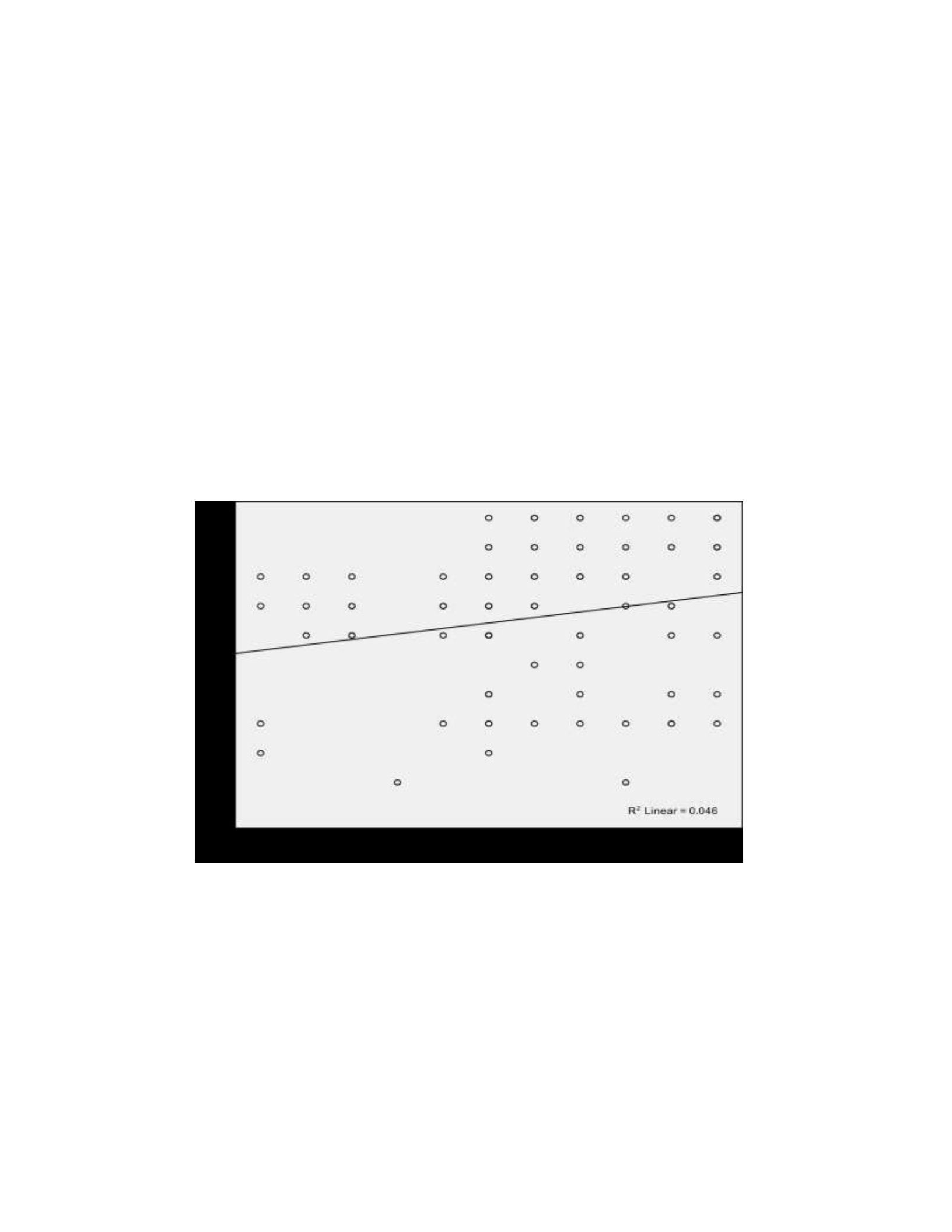
141
increased the intent to use increased. The regression equation for predicting the intent to
use, given results demonstrable, was
Predicted Intent to Use = .23 Results Demonstrable + 4.71. (6) An
intent to use value of 4.71, which reflected the regression equation y-intercept value
when results demonstrable theoretically equaled zero, was interpreted as a propensity to
use cloud-computing technology between neither disagree nor agree and agree slightly.
The 95% confidence interval for the slope, .00 to .47, did not contain the value zero, and
therefore results demonstrable was significantly related to intent to use.
Figure 15. Scatterplot mapping results demonstrable and intent to use coordinates. The
coordinates, best-fit line, and R2 coefficient were based on the normalized dataset.
The significance tests for the bivariate regression analysis included the t test
associated with the SPSS coefficients table output. The bivariate linear regression test
result was significant, t(84) = 2.01, p < .05. The magnitude of the standardized

142
correlation coefficient was between small and medium, .21, evidencing that results
demonstrable was less than moderately related to intent to use. Approximately 5% of the
variance of the intent to use was associated with results demonstrable. As hypothesized,
the H60 null hypothesis was rejected (p < .05), and results demonstrable was positively
correlated to intent to use. Therefore, based on these findings the sixth hypothesis, H6,
was supported. The conclusion related to the sixth research question was interpreted
based on the statistical analysis findings indicating that results demonstrable was
correlated to intent to use in a slightly moderate positive degree.
Research Question 7 Findings
The seventh research question asked: To what extent does voluntariness, a
perceived attribute of innovation, relate to small business leaders’ intent to use
cloudcomputing services? The variable construct voluntariness was operationally defined
as the perceived degree of self-determined sovereign choice to use cloud-computing
technology. Guided by a review of the literature related to the cloud-computing
ecosystem and the theoretical framework, the seventh hypothesis was framed theorizing
that, during the prediffusion stage, the more mandatory small business leaders perceived
the voluntariness of cloud computing the greater their propensity to adopt the innovation.
The null hypothesis H70 was stipulated: No correlation exists between voluntariness and
intent to use cloud computing.
A linear regression analysis was performed to evaluate the prediction of intent to
use cloud-computing technology based on small business leaders’ perceived voluntariness
of cloud-computing innovation. The scatterplot diagram depicting voluntariness and

143
intent to use, as shown in Figure 16, was presented revealing that the two variables were
not significantly related in a linear manner. The regression equation for predicting the
intent to use, given voluntariness, was
Predicted Intent to Use = -.01 Voluntariness + 6.22 (7)
An intent to use value of 6.22, which reflected the regression equation y-intercept value
when voluntariness theoretically equaled zero, was interpreted as a propensity to use
cloud-computing technology between agree and strongly agree. The 95% confidence
interval for the slope, -.27 to .25, did contain the value zero, and therefore voluntariness
was not significantly related to intent to use.
Figure 16. Scatterplot mapping voluntariness and intent to use coordinates. The
coordinates, best-fit line, and R2 coefficient were based on the normalized dataset.
The significance tests for the bivariate regression analysis included the t test
associated with the SPSS coefficients table output. The bivariate linear regression test

144
result was not significant, t(84) = -.07, p = .95. The magnitude of the standardized
correlation coefficient was negligibly small, -.01, evidencing that voluntariness was not
significantly related to intent to use. None of the variance of the intent to use was
associated with voluntariness. As hypothesized, the H70 null hypothesis was not rejected
(p = .95). Therefore, based on these findings the seventh hypothesis, H7, was not
supported. The conclusion related to the seventh research question was interpreted based
on the statistical analysis findings indicating that voluntariness was not significantly
correlated to intent to use.
Research Question 8 Findings
The eighth research question asked: Which has a stronger relationship to small
business leaders’ intent to use cloud-computing services the perceived attribute of
innovation relative advantage or voluntariness? Based on the theoretical framework, the
eighth hypothesis was conceived theorizing that, during the prediffusion stage, small
business leaders’ perceived the relative advantage of cloud computing was more strongly
related to their propensity to adopt the innovation than the strength of relationship
between their perceived voluntariness and propensity to adopt cloud computing. The null
hypothesis, H80, was stipulated: Voluntariness has an equal or greater correlation with
intent to use cloud computing than does relative advantage.
A multiple linear regression analysis was performed to evaluate the distinction
between small business leaders’ perceived cloud-computing attributes relative advantage
and voluntariness in predicting intent to use cloud-computing technology. The scatterplot
overlay, as shown in Figure 17, was presented revealing that the correlation between the

145
attribute relative advantage and intent to use depicted a positive linear slope while
depicting an insignificant linear slope for correlation between the attribute voluntariness
and intent to use. The multiple linear regression equation for predicting the intent to use,
given relative advantage and voluntariness, was
Predicted Intent to Use = .49 Relative Advantage + .04 Voluntariness + 2.97. (8)
An intent to use value of 2.97, which reflected the regression equation y-intercept value
when relative advantage and voluntariness theoretically equaled zero, was interpreted as a
propensity to use cloud-computing technology near disagree slightly. The 95%
confidence interval for the slope associated with predictor relative advantage, .26 to .72,
did not contain the value zero while the 95% confidence interval for the slope for
voluntariness, -.20 to .28, did contain the value zero. Therefore, based on the multiple
regression analysis 95% confidence intervals, relative advantage was deemed
significantly related to intent to use while voluntariness was not significantly related to
intent to use.
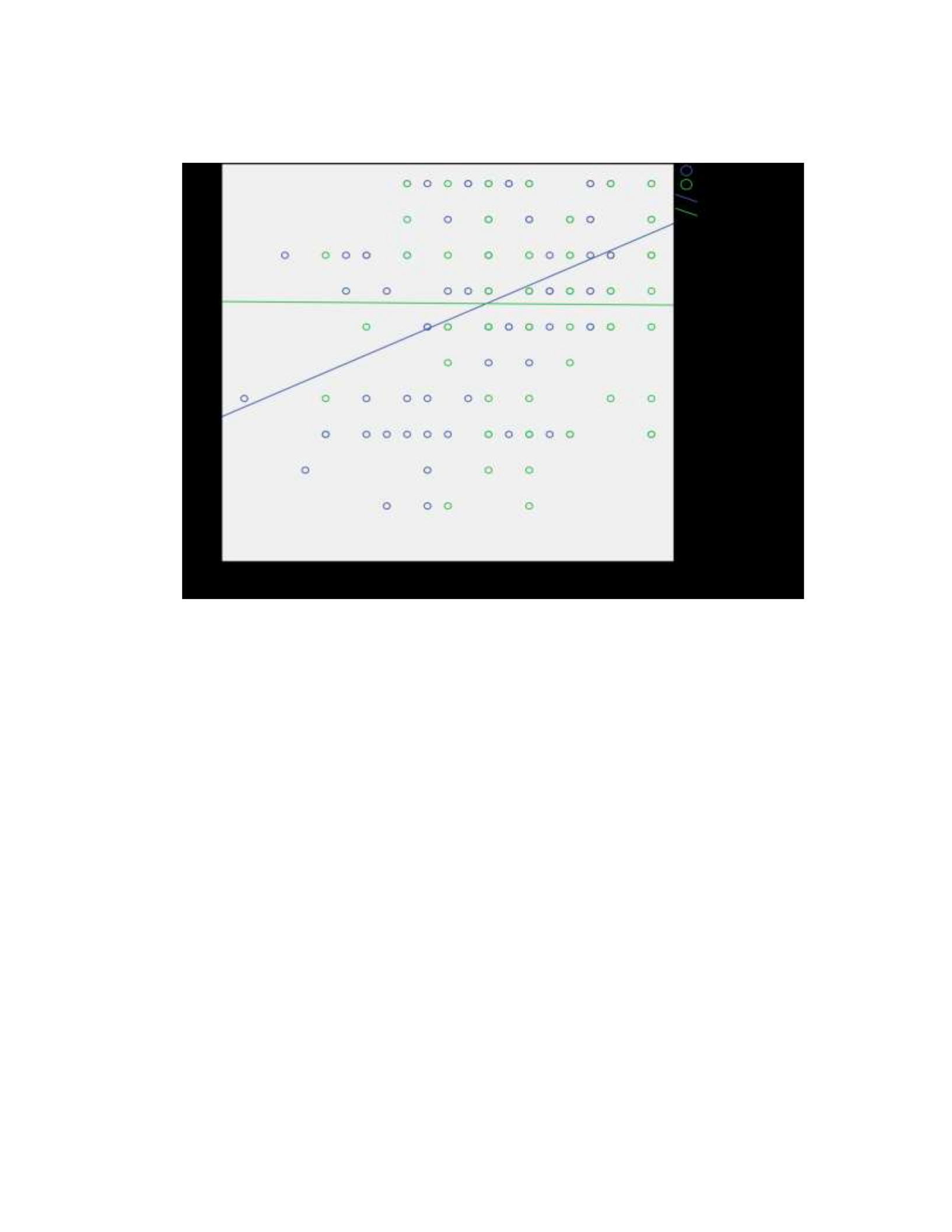
146
Figure 17. Scatterplot overlay mapping relative advantage and voluntariness with intent
to use coordinates. The coordinates, best-fit lines, and R2 coefficients were based on the
normalized dataset.
The significance tests for the multiple regression analysis included the t test for
each predictor with relative advantage was reported as t(83) = 4.27, p < .01 and
voluntariness was reported as t(83) = .34, p = .73. The magnitude of the standardized
correlation coefficients related to intent to use were reported as medium, .43, for relative
advantage while insignificantly small, .03 for voluntariness. As hypothesized, the H80
null hypothesis was rejected on the basis of the strength of correlation between relative
advantage and intent to use that was significant (p < .01) appearing greater than the
strength of correlation between voluntariness and intent to use that was not significant (p

147
= .73). Therefore, based on these findings the eighth hypothesis, H8, was supported. The
conclusion related to the eighth research question was interpreted based on the statistical
analysis findings indicating that relative advantage was correlated to intent to use in a
greater than moderate positive degree while voluntariness was not significantly correlated
to intent to use.
Summary Findings
Anchored in a prediffusion stage DOI theoretical framework, the overall intent of
this study was to examine the relationship between the perceived innovation attributes of
cloud-computing technology and small business leaders’ intent to use cloud computing.
The study intent was summarized by the overarching research question: What is the
propensity of small businesses to embrace the cloud-computing novel businesscomputing
paradigm? The analysis of the survey data collected for this study based on the
normalized dataset resulted in findings indicating significance in the relationship between
each cloud-computing attribute and intent to use cloud-computing technology with the
exception of the attribute voluntariness. The analysis findings were interpreted indicating
no significant relationship between the attribute voluntariness and intent to use cloud-
computing technology. The study findings are highlighted in Figure 18 by depicting
correlation coefficient values for each hypothesized predictor and criterion variable
relationship based on the predictive DOI theoretical framework applied to this inquiry.
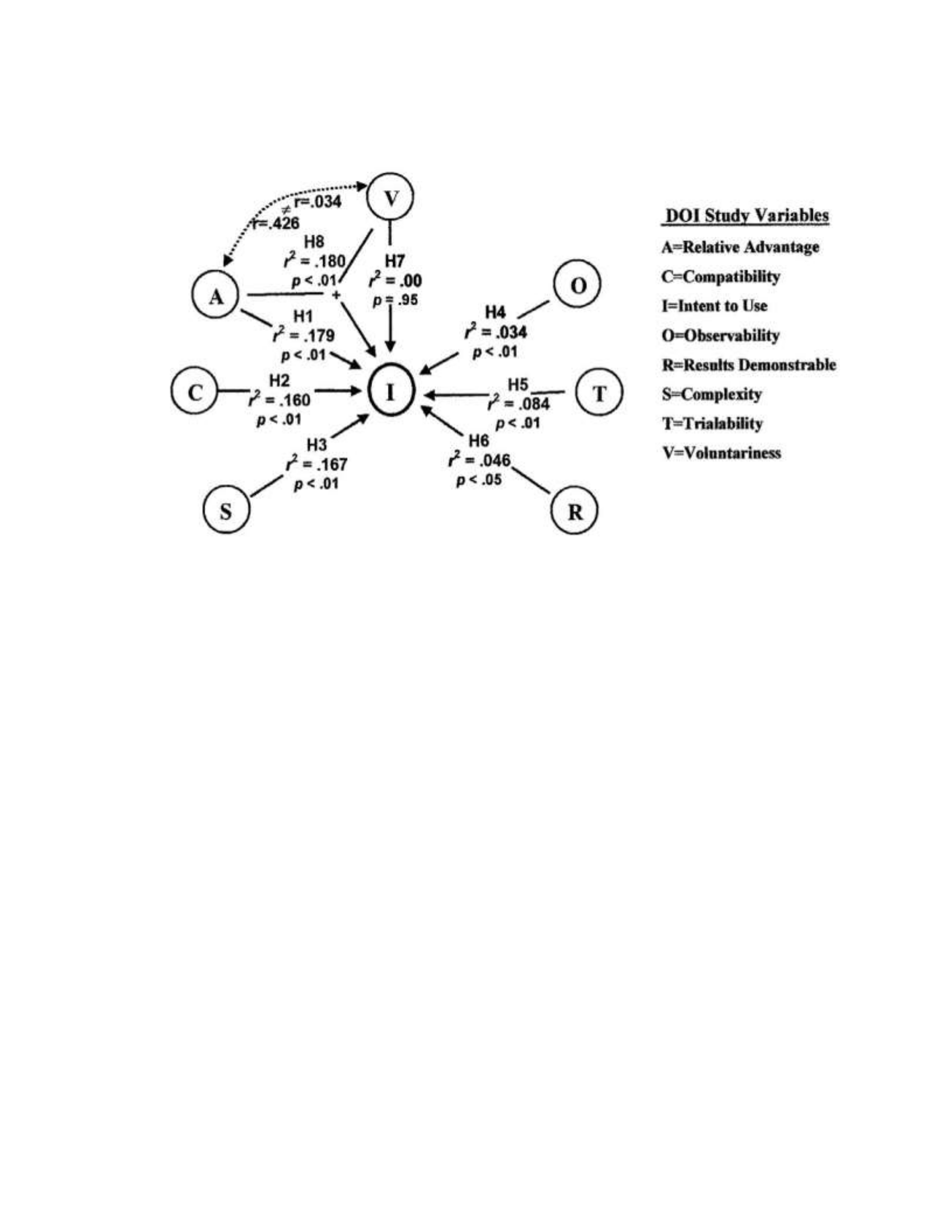
148
Figure 18. Predictive DOI theoretical framework with hypotheses regression analysis
results. The theoretical framework conceptualization was designed to depict the predictor
and criterion variable relationship for each research question hypothesis. The correlation
coefficient (r2) is presented for each hypothesis indicating the strength of relationship
assessment.
The cloud-computing attributes relative advantage, compatibility, and complexity
were found to have a greater than moderate correlation to intent to use. These correlation
findings were consistent with other adoption inquiry electing to limit the measures of
innovation attributes to relative advantage, compatibility, and complexity because of their
strength of relationship with intent to use (Chong et al., 2009; Conrad, 2010; Rouibah &
Hamdy, 2009). In particular, prior research projected that the relative advantage of cloud
computing for small business was expected significant (Buyya et al., 2009; Etro,
2009; Gens et al., 2010; Greengard & Kshetri, 2010).
The cloud-computing attributes trialability, results demonstrable, and
observability were found to have a less than moderate correlation to intent to use while

149
voluntariness was found not significantly correlated to intent to use. These findings were
mostly congruent with Valier et al.’s (2008) open source software research results. Valier
et al. reported findings indicating that the relationships between each perceived
innovation attribute and use intent were statistically significant with the exception of the
correlation between voluntariness and use intent. The current study’s finding related to
trialability was consistent with Conrad’s (2010) DOI study of individuals’ willingness to
use personal web servers based on the factors relative advantage, complexity, and
trialability. Moreover, Conrad reported a positive correlation between complexity and
trialability, which suggested the opportunity for further analysis of this study’s data
beyond the initial hypothesis.
The cloud-computing innovation attributes most strongly related to small business
leaders’ intent to use the emerging technology included relative advantage, compatibility,
and complexity. The attributes relative advantage, compatibility, and complexity were
aligned more closely with the characteristics of the novel cloud-computing business
paradigm (Katzan, 2008, 2010; Mell & Grance, 2010; Truong 2010). Representing key
indicators for small business cloud-computing adoption, these findings were tied to
effective business practice as opportunity for economic value and competitive advantage
attributed to the cloud-computing business paradigm innovation, which included an
operationalized versus capitalized cost structure and an elastic global scale. Access to
capital financing and large-firm competition were portrayed in the research literature as
constraints to small business viability and economic contributions (Barringer & Ireland,
2010; Liao et al., 2008). Perceived competitive advantage improvements attributed from

150
the cloud-computing business paradigm were projected to be a significant factor in small
businesses use of cloud computing (Sharif, 2010; Truong, 2010).
The cloud-computing innovation attributes trialability, results demonstrable, and
observability were identified with the commercialization aspects of the cloud-computing
ecosystem. The extant research has shown cloud-computing technology was iteratively
re-inventive and not fully progressed to the commercialization stage of the
innovationdevelopment process (Etro, 2009; Rogers, 2003). Ambiguity related to the
cloudcomputing technology standards and commercialization maturity (Armbrust et al.,
2010; Blaskovich, & Mintchik, 2011; Buyya et al., 2009; Vouk, 2008) could have
factored into the less than moderate correlation between the perceived attributes
trialability, results demonstrable, and observability and small business leaders’ intent to
use cloud computing. The propensity to use and the adoption rate of IT innovation has
been shown to improve competitive advantage (Conrad, 2010; Truong, 2010). The
current study’s findings related to the cloud-computing attributes trialability, results
demonstrable, and observability were linked to effective business practice by advocating
opportunity for improved commercialization of cloud-computing technology.
A review of the literature (Bennett, 2009; Mell & Grance, 2009; Sharif 2010;
Smith, 2009; Wyld, 2009) indicated that policy and regulatory mandates have influenced
pre-commercialization adoption of cloud-computing technology by large companies and
federal government public sector agencies. The hypothesized relationship between
voluntariness and intent to use was not supported suggesting that the large company and
public sector cloud-computing mandates were not found to have a similar influence on

151
small business leaders’ propensity to adopt cloud computing. The perceived degree of
voluntariness appeared to have no significant correlation with small business leaders’
intent to use cloud computing, which was congruent with Valier et al.’s (2008)
prediffusion stage DOI research results related to open source software.
The conceptualization of voluntariness into the construct categories mandatory
and voluntary potentially introduced biases with respect to other research questions. A
determination of whether the study’s finding holds true when the data is segregated by the
voluntariness categories mandatory (voluntariness values less than four) or voluntary
(voluntariness values equal to or greater than four) was considered beyond the scope of
this research study. Follow-up post hoc analysis is recommended based on the
voluntariness categories mandatory and voluntary.
Based on the sampled small business leaders, on average, the study participants
indicated a negligible degree of trialability, moderately low degrees of complexity and
observability, and comparatively high degrees of relative advantage, compatibility, results
demonstrable, voluntariness, and intent to use cloud-computing technology. The findings
related to a high degree of intent to use differed from prior research (Buyya et al., 2009;
Etro, 2009; Gens et al., 2010) that suggested lower technology innovation adoption
tendencies by small businesses. However, this study’s findings related to a high degree of
intent to use was congruent with prior research that recognized small businesses were
sophisticated adopters of IT as a competitive tool (Chalhoub, 2010; Dibrell et al., 2008).
The low percentage of firms indicating extant use of cloudcomputing technology and the

152
types of cloud-computing technology used by these small businesses were consistent with
the findings of prior research (Schadler, 2009; Truong, 2010; Wyld, 2009).
The researcher acknowledged a number of inherent study limitations including the
convenience sampling based on the entire small business e-mail list maintained by ACA.
The study participants’ indication of a high degree of intent to use signaled the potential
for self-selection bias, which arises when individuals select themselves to participate in
research derived from nonprobability sampling (Heckman, 1979; Melino, 1982). A
related assumption included participant self-reporting bias, which occurs when a
participant’s experience, self-perception, and work environment influence their survey
responses (Han & Anantatmula, 2007). Valier et al.’s (2008) prediffusion stage DOI
probability sample research results were examined as a baseline (Blaskovich & Mintchik,
2011; Norton, Dow, & Do, 2008; Sampat, 2007) revealing a nearly identical high degree
of intent to use compared with this study’s results. The reviewer’s interpretation of the
analysis and findings presented in this research project were advised within the context of
these limitations.
This study’s conclusions and findings were framed as a basis for evidencing the
significance of this research project. The current study’s significance was demonstrated
by contributing to the academic literature via addressing the gap identified in extant
research concerning small businesses’ penchant to adopt cloud-computing innovation.
The significance of this study was demonstrated further by the prospect of applying the
study’s findings to professional practice as well as recognizing the research results’
potential implications for positive social change.

153
Applications to Professional Practice
The focal consequence of this research project resided in applicability of the study
findings to the professional practice of business. This study’s significance was realized
by identifying means for transforming the theoretical conclusions and findings into the
potential tangible benefits attributed via professional practitioner application. Numerous
opportunities to apply the study findings to professional practices were identified.
However, the application of the study findings was prioritized by emphasizing two facets
of small business economic vitality consisting of a cloud-computing deployment strategy
and a cloud-computing commercialization strategy.
Cloud-Computing Deployment Strategy
A holistic conceptualization of the novel cloud-computing business paradigm was
presented in this study including the synergistic integration IT components, IT capability
resourcefulness, and the operationalized capital-cost financial model. The
cloudcomputing ecosystem depicted in Figure 4 was presented to illustrate the technology
building-block components of cloud computing including IaaS, PaaS, SaaS, and other
technologies in conjunction with service delivery approaches such as private, community,
public, and hybrid clouds. The characteristics attributed to the cloud-computing
ecosystem highlighted IT capabilities such as on-demand self-service, ubiquitous access,
rapid elasticity, resource pooling, massive scale, metered services, and other IT facilities.
Moreover, the traditional front-loaded capital intense IT financial model was
reconstituted into an operationalized economic IT capability via the novel
cloudcomputing business model.

154
The attributes of cloud-computing innovation examined in this study via the
predictive DOI framework were measurements of the sample small business leaders’
perceptions related to the cloud-computing ecosystem. As depicted in Figure 18, this
study’s findings indicated significant (more than moderate) correlations between each of
the cloud-computing innovation attributes relative advantage, compatibility, and
complexity and the sample small business leaders’ intent to use cloud computing. The
significance of these correlation findings was accompanied by the sampled small business
leaders’ indication, on average, of a moderately low degree of complexity in conjunction
with relatively high degrees of relative advantage, compatibility, and intent to use cloud-
computing technology.
Notwithstanding the acknowledged limitations of this research project, this
study’s findings were deemed applicable to business by offering a lens for examining the
cloud-computing ecosystem for intended use. Examining cloud-computing technologies
via the cloud-computing attributes relative advantage, compatibility, and complexity were
projected to provide a viable framework for gauging small businesses’ use propensity.
This study’s findings were contemplated to inform small businesses formulation of cloud-
computing deployment strategies that leveraged its novel businesscomputing paradigm.
Moreover, these research results were expected to promote deployment of competitive
small business strategies by incorporating the potential benefits and capabilities attributed
to the cloud-computing ecosystem. The current study’s findings were recommended to
serve as a baseline for assessing the effectiveness of cloud-computing deployment
strategies for small businesses.

155
The findings from this study were interpreted as potentially signaling that the time
was opportune to shift the traditional IT strategy from a finite resource-based view to a
strategic perspective based on resourcefulness. Enabled by the operationalized pay-
foruse and global-scale IT capability of cloud-computing innovation, the resourcefulness
strategic perspective was envisaged to overcome the financial capital costs and
largecompany economy-of-scale advantage hindering small business economic viability.
Developing cloud-computing resourcefulness strategies was predicted to ignite small
business and entrepreneurial innovation via novel IT capabilities and disruptive creation
of products and service.
Cloud-Computer Commercialization Strategy
Strengthening the economic vitality of small business was shown to transcend to
economic community value while cultivating future returns via incubation of ongoing
entrepreneurial innovation. Given the dominating numbers of small businesses compared
to the number of large firms, the small business marketplace was forecasted as a
potentially large consumer of the cloud-computing ecosystem. Maturing the
cloudcomputing ecosystem beyond the prediffusion stage more fully into the
commercialization stage of the innovation-development process was anticipated to offer
significant economic contribution to and through small businesses. Cloud-computing
service providers and community policymakers were deemed to have vested interests in
promoting the commercialization of cloud computing for adoption by small businesses.
The cloud-computing attributes trialability, results demonstrable, and
observability were examined via the predictive DOI framework as means for assessing

156
the sample small business leaders’ perceptions in context of the commercialization
aspects of the cloud-computing ecosystem. As shown in Figure 18, this study’s findings
indicated significant (slightly moderate) correlations between the cloud-computing
attributes observability, results demonstrable, and trialability and the sampled small
business leaders’ intent to use cloud-computing technology. The significance of these
correlation findings was accompanied by the sampled small business leaders’ indication,
on average, of a moderately low degree of observability and a negligible degree of
trialability in conjunction with a relatively high degree of results demonstrable.
This study’s findings related to observability, results demonstrable, and trialability
were deemed applicable to cloud-computing service providers by informing their
commercialization strategies related to cloud-computing technologies. Recognizing the
potential for improving small business leaders’ perceptions related to the cloudcomputing
attributes observability and trialability offered opportunities for cloudcomputing service
providers. Specifically, cloud-computing service providers were advised to apply this
study’s findings in context of the predictive DOI framework by tailoring
commercialization strategies related to cloud-computing products and services to address
the needs and abilities of small business as opposed to large-firm cloudcomputing
offerings. This study’s findings were recommended to serve as a baseline for assessing
the effectiveness of cloud-computing service providers’ commercialization strategies for
small businesses. The findings from this study were interpreted as potentially signaling
that the time was opportune for cloud-computing service providers to capitalize on early
small business marketplace leadership.

157
Moreover, the study’s findings were anticipated to inform community, industry,
and academic policymakers as a motivation for formulating commercialization strategies
related to cloud computing. These strategies were conceived to entail targeted incentives
for collaborative transfer of cloud-computing academic research to private
entrepreneurial firms or targeted incentives for small business use of cloud-computing
services for innovation. Agencies similar to the ACA were anticipated to use the study
findings, in particular results demonstrable, to aid in collaborating with industry experts
to promote cloud-computing awareness in conjunction with education programs for
fostering economic development via small business sustainability and economic vitality.
This study’s findings were recommended to serve as a baseline for assessing the
effectiveness of community, industry, and academic policymakers’ commercialization
strategies for small businesses. Additionally, the application of the study findings to
professional practice served as the catalyst for implications related to social change.
Implications for Social Change
This research project’s implications for social change transcended small business
sustainability by contributing economic, societal, and environmental benefits. Founded
on the study’s significance, the implications for social change were derived from the
application of this study’s findings to professional practice, which emphasized strategies
for cloud computing deployment and commercialization. The focal implications for
social change were expressed in terms of tangible improvements related to workforce
preparedness, environmental consciousness, and social entrepreneur enablement.

158
Workforce Preparedness
Anchored in a predictive DOI framework, this study’s findings were instrumental
for framing the cloud-computing deployment strategy as a targeted application to
professional practice. An essential aspect of the cloud-computing deployment strategy
was expected to focus on development of personnel skills. This study’s findings related
to the perceived degree of difficulty or simplicity attributed to understanding and using
cloud-computing technology (complexity) were envisaged to inform small business
leaders about the personnel skill implications for people who support IT and people who
use IT to enact strategic outcomes.
These projected personnel skill implications were described in context of
workforce preparedness. In the small business context, IT personnel have engaged
tangibly in the deployment and support of the information systems technology. Requiring
less hands-on contact with the technology, cloud-computing IT skills were envisaged to
consist of virtual management and deployment of small business IT via the cloud-
computing ecosystem. The cloud-computing support skills were projected to require
greater governance and more tightly coupled integration with business strategy.
Similarly, small business executives were projected to adapt to new business acumen
associated with the cloud computing business paradigm. New skills were envisaged to
replace extant business strategies and performance metrics via operationalized proforma
and elastic global-scalable computing resources.
In essence, the societal implications related to small businesses were projected to
signal the obsolescence and transformation of designated personnel skills. The results

159
from this research project were planned to inform small business leaders’ forecast of
personnel skill requirements essential for sustainable advantage. While elevating
workforce competencies, developing personnel skills were projected to influence
reciprocally the perceptions about the cloud-computing attribute complexity for improved
use of cloud-computing technology.
Environmental Consciousness
Environmental concerns related to energy consumption and electronic-equipment
waste have grown to global proportions. Many regulatory agencies and nongovernmental
organizations (NGOs) have developed strategies to deal with these environmental
concerns. Transcending the economic benefits attributed to small business adoption of
the cloud-computing ecosystem, cloud-computing innovation was reported as consuming
approximately one third less energy and significantly reducing electronic equipment
disposal. In particular, the perceptions associated with betterment in lieu of precursor
ideas (relative advantage), results visibility to others (observability), and congruence with
experiences, values, and needs (compatibility) were envisioned to be inspired partially by
environmental consideration.
This study’s findings were projected to signal the potential for cloud-computing
deployment and commercialization strategies. The targeted cloud-computing strategies
were anticipated to have significant positive implications for small businesses by
decreasing energy consumption and reducing electronic equipment waste. Moreover,
these implications were envisaged potentially to enlighten policymakers regarding the

160
prioritization of regulatory and NGO environmental strategies for even greater
environmental outcomes.
Social Entrepreneur Enablement
Social entrepreneurs resemble business entrepreneurs in many tangible ways.
Business entrepreneurs have been characterized as innovating and incubating solutions to
industry-wide business problems. Similarly, social entrepreneurs have been recognized
for identifying and solving social problems of a grand scale. Throughout generations,
social entrepreneurs have engaged in societal callings. The societal results of social
entrepreneurship have reached global proportions because of the Internet, social media,
and the use of other information technologies.
Although social entrepreneurs typically are not profit motivated, the
operationalized IT capability projected via the novel cloud-computing business model
was envisaged to provide economic value to social entrepreneurs. The relative advantage
attributed to cloud-computing innovation ascribed to small businesses was thought
potentially to offer similar positive implications for social entrepreneurs. The perceptions
associated with betterment in lieu of precursor ideas, degree of difficulty or simplicity,
and congruence with experiences, values, and needs were considered similarly perceived
by social entrepreneurs. This study’s findings were considered applicable to social
entrepreneurs signaling the advantage of examining the transferability of small business
cloud-computing deployment strategies for the benefit of social entrepreneurs and other
nonprofit organizations.

161
Recommendations for Action
The recommendations for action presented in this study were developed as a
prioritized logical response to the application of the study findings to the professional
practice of business. The conclusions drawn from this study’s findings were reported
indicating significant correlations between perceived cloud-computing attributes and
small business leaders’ intent to use cloud-computing technology. This study’s findings
were interpreted as potentially signaling that the time was opportune for shifting the
traditional IT business strategy to the operationalized economic IT capability
characterizing cloud computing and improving cloud-computing commercialization
perspectives for small businesses. The primary audience summoned to action included
small business IT deployment decision-makers and cloud-computing commercialization
policymakers.
Although numerous recommendations were formulated as logical response to the
study conclusions, the proposals were culled to immediate prerequisite initiatives serving
as building-block steps to useful action. The call to action included three distinct
recommendations: dissemination of the study results, collaboration to formulate a small
business cloud-computing deployment framework, and a summons for further small
business cloud-computing research, which is discussed in the Recommendation for
Further Study section.
Diffusion of Study Results
The highest value related to study conclusions was anticipated to reside with the
small business IT deployment decision-makers and cloud-computing commercialization

162
policymakers. To promote optimal outcomes, dissemination of the study results to the
targeted audience was deemed essential. Based on DOI theory, viral communication
within members of the target audience was perceived the most effective means for the
dissemination of the study results. To facilitate this objective, prerequisite steps for
broadcasting the study findings were proposed including (a) publication of this doctoral
study via an online dissertation library for widespread circulation, (b) publication of a
summary report of the study results via Internet and e-mail distribution, and (c) in-person
presentation of the study results.
Publication of this doctoral study was planned using ProQuest as a means to
provide online access to a vast group of academic and practitioner researchers. In
satisfaction of the commitment to supply the study results to requesting survey
participants, a summary report highlighting the study results was planned. Distribution of
the summary report was planned via e-mail to study participants opting to receive the
study results. Additionally, access to the summary report of study results was intended as
a small business resource via ACA’s website as well as other websites.
By invitation, the researcher has committed to present the study results in person
to forums of small business leaders and entrepreneurs. The forums were planned as a
means for personal presentation of the study results envisioning interactive opportunities
for study results diffusion. These personal presentation settings were anticipated to
provide a channel for potentially launching small business cloud-computing deployment
collaboration.

163
Cloud-Computing Deployment Collaboration
A few small business recipients of the ACA announcement soliciting survey
participation have contacted the researcher requesting collaboration regarding the
development of cloud-computing deployment strategies. These small businesses have
assessed, in varying degrees of sophistication, the potential strategic benefit of
cloudcomputing technology for their respective firms. In response to the personal
presentations of the study results, additional small businesses were anticipated to join the
cloud-computing deployment collaboration. Additionally, cloud-computing service
providers were projected to participate in the small business cloud-computing
deployment collaboration.
The small business cloud-computing deployment collaboration was envisaged as a
focus group for constructing a small business cloud-computing deployment framework
based on the current study findings. As each small business has varying degrees of
capabilities, the development of the small business cloud-computing deployment
framework was projected to be an incremental and iterative process. Based on strategic
commitment and resource allocation, collaborating small business leaders were
anticipated to perform pilot testing of aspects of cloud-computing deployment framework
in their professional practice.
Recommendations for Further Study
Throughout the course of this research project opportunities for further study were
noted. Opportunities for additional research were identified in the study limitations,
application of the theoretical framework, literature review, and implication for social

164
change. Based on these observations, specific recommendations for further study are
proposed.
The convenience sample based on the entire small business e-mail list maintained
by ACA was identified as a potential study limitation. The generalization of the study’s
findings was limited potentially to the study population and was not implied beyond.
Replicating this study based on a randomized sample of a broader sampling frame was
recommended for further study. Moreover, comparing the results of this study against the
additional research conclusions and findings was also recommended.
As an alternative to the DOI framework, the systems of innovation approach was
recommended for understanding the use of cloud-computing technology by small
businesses. Applying the SIA framework was proposed for further study to explore
unconventional constructs related to economic, social, political, organizational,
institutional, and other factors that affect the diffusion and use of innovation. Comparing
the findings and conclusions of research based on the SIA framework against this study’s
results were thought to add a considerably broad understanding of small businesses’ use
of cloud-computing technology for economic vitality and sustainability.
The extant academic literature was virtually void of research related to small
business use of cloud computing to create and sustain their competitive advantage.
Building upon this study’s findings, further research is warranted to examine how
cloudcomputing deployment strategies can enable small businesses to create and sustain
their competitive advantage. This recommended inquiry was thought to offer significant
economic development opportunities to and through small businesses.

165
The preponderance of extant research about cloud computing was related to
largesize organization. The conclusions presented in this study addressed a gap in
understanding related to small business use of cloud computing. Although the mission
results perspective between social entrepreneurs and small businesses are typically polar
opposites, many of their strategies and key success factors are similar. To understand
more fully this study’s implications for social change, another recommendation for
further study was the transferability of this study’s conclusions and findings to social
entrepreneurs and nonprofit organizations.
Reflections
Acknowledging small businesses’ economic contributions, pursuing of a better
understanding of the early adoption of cloud computing by small business was rewarding.
Advancing the predictive DOI theory by examining the relationship between small
business leaders’ perceived cloud-computing attributes and their intent to use cloud
computing, this research project was designed with the expectation for application to
professional practice and the hope for positive societal implications. The rewards derived
from this research project were experienced beyond scholarly benefit by envisaging
practitioner value via application of this study’ findings for improved business outcomes
while recognizing positive implications for social change.
The researcher entered this project as a small business owner and entrepreneur
possessing more than 20 years of industry experience fostering IT agility and facilitating
strategically aligned IT innovations to achieve enterprise competitive advantage. A
conscious effort was made to ensure objectivity by mitigating the possibility of researcher

166
bias. Because of the nature of the quantitative cross-sectional survey strategy in
conjunction with strict adherence to ethical research practices, the researcher’s experience
was not perceived as posing a material bias to this study.
Although the researcher entered this project with a working understanding related
to the theoretical framework of DOI, a greater appreciation and understanding was gained
for the complexities associated with cloud-computing innovation attributes’ influence on
intent to use cloud computing in a prediffusion context. The researcher developed an
acute awareness of the importance and potential economic and societal value associated
with the research findings related to small businesses propensity to adopt cloudcomputing
technology. Moreover, application of the correlated study conclusions to professional
practice was projected possibly to signal a more rapid adoption rate of cloud computing
by small business, which potentially can improve the small business economic
contributions attributed to cloud computing by a factor of five times greater versus a slow
adoption rate.
Summary and Study Conclusions
Given small businesses’ economic and societal contributions, understanding small
business leaders’ propensity to adopt the novel cloud-computing business paradigm is
relevant in an era of economic turmoil and global competitiveness. A quantitative
research method using a nonexperimental cross-sectional survey design was employed to
examine the relationship between small business leaders’ perception of cloud-computing
innovation attributes and their propensity to adopt this emerging technology. A predictive
DOI framework using a pretested survey instrument was adopted to examine small

167
business leaders’ intent to use cloud-computing technology and their perceptions about
cloud-computing attributes including relative advantage, compatibility, complexity,
observability, trialability, results demonstrable, and voluntariness.
ACA cooperated in this research project by using their entire active e-mail list of
small businesses to solicit participation in this study’s online survey. Equaling slightly
less than a 4% response rate, 151 completed participant responses were collected via this
study’s web-hosted survey instrument. Based on the survey data collected, SPSS
software was used to perform descriptive statistics, reliability and validity analysis, and
statistical procedures for testing the hypotheses derived from this study’s eight research
questions. The results of the statistical analysis supported each of the hypotheses with the
exception of the seventh hypothesis associated with voluntariness.
Interpretation of this study’s findings indicated significant (more than moderate)
correlations between the cloud-computing attributes relative advantage, compatibility,
and complexity and intent to use cloud computing; significant (slightly moderate)
correlations between the cloud-computing attributes observability, results demonstrable,
and trialability and intent to use cloud computing; and no significant correlation between
the cloud-computing attribute voluntariness and intent to use cloud-computing
technology. The significance of these correlation findings was accompanied by the
sampled small business leaders’ mean indication of a negligible degree of trialability,
moderately low degrees of complexity and observability, and comparatively high degrees
of relative advantage, compatibility, results demonstrable, voluntariness, and intent to use
cloud-computing technology.

168
Notwithstanding the acknowledged limitations of this research project, the
conclusions drawn from this study’s findings were deemed to offer a lens for developing
strategies to promote rapid small business adoption of cloud-computing technology.
Examining cloud-computing technologies via the attributes relative advantage,
compatibility, and complexity were envisaged to provide a viable framework for gauging
small businesses’ use propensity while offering understanding needed to formulate
cloudcomputing deployment strategies that leverage its novel business-computing
paradigm. Evaluating cloud-computing technologies via the attributes observability,
results demonstrable, and trialability were envisaged to provide a viable framework for
gauging small businesses’ adoption propensity while offering understanding needed to
formulate cloud-computing commercialization strategies. The results from this research
project were anticipated to serve not only as a benchmark for assessing small businesses’
propensity to use cloud-computing technology but also as a catalyst for promoting rapid
adoption of cloud computing via deployment and commercialization strategies advocated.
This study’s conclusions and findings were framed as a basis for evidencing the
study’s significance. The study’s significance was partially demonstrated by contributing
to the academic literature by addressing the gap identified in extant research concerning
small businesses’ penchant to adopt cloud-computing innovation. The significance of this
study was further substantiated via the prospect of applying the findings from this
research project to professional practice by advocating small business cloud-computing
deployment and commercialization strategies. The study’s significance also was cast by
recognizing the potential implications for positive social change that were expressed in

169
terms of tangible improvements related to workforce preparedness, environmental
consciousness, and social entrepreneur enablement.
The findings from this research project were encouraging by offering a framework
for gauging small businesses’ penchant to use cloud-computing technology, which
potentially signaled a new era in small business sustainability and economic
contributions. Equally encouraging was the initial response from small businesses
desiring to collaborate regarding the development of a framework for cloud-computing
deployment strategies.

170
References
Al-Hajri, S., & Tatnall, A. (2008). Technological innovation and the adoption of Internet
banking in Oman. Electronic Journal of Organizational Virtualness & Networks,
10, 59-83. Available from http://www.ejov.org
Al-Qirim, N. (2007). The adoption of eCommerce communications and applications
technologies in small businesses in New Zealand. Electronic Commerce Research
and Applications: Intelligent Agents in E-Services, 6, 462-473. Retrieved from
http://www.elsevier.com/wps/find/journaldescription.cws_home/621289/descripti
on#description
Allen, K. R., & Stearns, T. M. (2009). Changing the equation for rural prosperity in a
global world [Abstract]. International Journal of Technology Transfer &
Commercialization, 8, 302-315. doi:10.1504/IJTTC.2009.024907
Anderson, P. L. (2009). The value of private businesses in the United States. Business
Economics, 44, 87-108. doi:10.1057/be.2009.4
Anderson, D. R., Sweeny, D. J., & Williams, T. A. (2008). Statistics for business and
economics (10th ed.). Mason, OH: Thompson South-Western Publishing.
Andrés, L., Cuberes, D., Diouf, M., & Serebrisky, T. (2010). The diffusion of the
Internet: A cross-country analysis. Telecommunications Policy, 34, 323-
340. doi:10.1016/j.telpol.2010.01.003
Archer, N., Wang, S., & Kang, C. (2008). Barriers to the adoption of online supply chain
solutions in small and medium enterprises. Supply Chain Management: An
International Journal, 13, 73-82. doi:10.1108/13598540810850337

171
Arizona Commerce Authority. (2010). Arizona Commerce Authority: Advancing
Arizona’s economy. Phoenix, AZ: Author. Available from
http://www.azcommerce.com/doclib/aca/FinalBrochure.pdf
Arizona Commerce Authority. (2011, February 25). Arizona innovation connection.
[Electronic mailing list message]. Available from
http://www.azcommerce.com/Home
Armbrust, M., Fox, A., Griffith, R., Joseph, A. D., Katz, R., Konwinski, A., . . . Zaharia,
M. (2010). A view of cloud computing. Association for Computing Machinery,
Communications of the ACM, 53(4), 50-58. doi:10.1145/1721654.1721672
Azadegan, A., & Teich, J. (2010). Effective benchmarking of innovation adoptions: A
theoretical framework for e-procurement technologies. Benchmarking, 17, 472-
490. doi:10.1108/14635771011060558
Barba-Sánchez, V., & Martínez-Ruiz, M. (2009). A longitudinal study to assess the most
influential entrepreneurial features on a new firm's growth. Journal of Small
Business and Entrepreneurship, 22, 253-266, 377. Available from
http://www.jsbe.com/
Bardhan, I. R. (2007). Toward a theory to study the use of collaborative product
commerce for product development. Information Technology and
Management, 8, 167-184. doi:10.1007/s10799-007-0013-y
Barringer, B. R., & Ireland, R. D. (2010). Entrepreneurship: Successfully launching new
ventures (3rd ed.). Upper Saddle River, NJ: Prentice-Hall.

172
Bates, T. (2005). Analysis of young, small firms that have closed: Delineating successful
from unsuccessful closures. Journal of Business Venturing, 20, 343-358.
doi:10.1016/j.jbusvent.2004.01.003
Benitez-Amado, J., Llorens-Montes, F. J., & Perez-Arostegui, M. N. (2010). Information
technology-enabled intrapreneurship culture and firm performance. Industrial
Management & Data Systems, 110, 550-566. doi:10.1108/02635571011039025
Bennett, J. (2009). Cloud computing: The future of internal comms? Strategic
Communication Management, 14(1), 9. Available from http://www.melcrum.com/
Blaskovich, J., & Mintchik, N. (2011). Information technology outsourcing: A taxonomy
of prior studies and directions for future research. Journal of Information Systems,
25(1), 1-36. doi:10.2308/jis.2011.25.1.1
Blau, J. (2009). New spurs for Europe's small firms. Research Technology Management,
52(3), 5-7. Retrieved from http://www.ingentaconnect.com/content/iri/rtm
Braganza, A., Awazu, Y., & Desouza, K. (2009). Sustaining innovation is challenge for
incumbents. Research Technology Management, 52(4), 46-56. Available from
http://www.ingentaconnect.com/content/iri/rtm
Braude, E. (2008). Software-as-a-service and offshoring. International Journal of
Business Insights and Transformation, 2(1), 93-95. Retrieved from
http://www.ijbit.org/

