



Overcoming Data Breaches and Human Factors in
Minimizing Threats to Cyber-Security Ecosystems
Chapter 1: Introduction to the Study
Propagation of network communications has changed the nature of businesses,
resulting in an unprecedented magnitude of threats and vulnerabilities to business
information systems. Security risks from data breaches fall into the following four basic
patterns, which were first identified by Auray and Kaminsky (2007): integration as an
employee, opting to be independent, the path of fraud, and parallel remuneration under a
masked identity. This categorization is still used today to understand then modes through
which many internal data breaches occur. Many security hackers use these approaches to
build progressively split identities as hackers and professionals.
Although there have been many theories about data breaches, many historical
theories are still relevant in the context of increasing numbers of data breaches due to
external and internal human factors. Pierce’s test (1976) of Durkheim’s (1951) social
order theory is still relevant and a useful method to understand the role of human factors
in systems attacks and data breaches. Durkheim theorized that social and economic
changes contribute to the disturbance of existing goals and norms that push people into
novel social settings. These individuals use essential means such as malicious malware
to attain their intrinsic objectives, which could be economic, religious, political,
retributive, or social. Similarly, the motivation for committing cyber-crimes has multiple
facets such as external threats as well as internal threats from employees, both deliberate
and accidental. These threats frequently become viable because of a lack of involvement

by some top managers in the development of organizational plans and efforts designed to
mitigate cyber-attacks. Thus, the results of this study could have positive social
implications by providing insights on how managers and organizational leaders can
prevent data breaches and protect organizational as well as customer information.
Background of the Study
The proliferation of emerging information technology (IT) is a primary reason for
economic and technological advancements across Africa. Advancement in IT has
changed the nature of business activities and has permitted businesses, governments, and
consumers to buy, sell, or request services via the Internet. Additionally, the financial
industry, governments, customers, and many other organizations and individuals access
their information or make transactions over the Internet. Businesses and governments are
communicating more than ever with their customers virtually and globally through
network communications. This global network of electronic communication systems has
increased business transactions rapidly and has transformed the nature of data exchange
worldwide.
This expansion of information processes also has increased risks significantly.
Threats have expanded from mass malware and industrialized attacks that target
individuals and their access privileges to long-term exploits of the more adept adversary,
whose tactics are difficult to discern from a legitimate user’s activity (Forrester, 2011).
The potential for cyber-crimes has increased in sophistication by outpacing defenses.
With the Internet of things (IoT), a large number of people are using smart
devices, which seem to be intelligent enough to be dangerous. As more mobile devices

become IP-enabled, they are instrumental in BotNets because a cyber-hacker may infect
the mobile devices with malicious software and control them without the owners’
knowledge through spam, inappropriate messages, or other platforms used for distributed
attacks. Tracing the sources of the distributed attacks are difficult while overwhelming a
target is easier. In past years, activists and blackmailers have used distributed denial of
service attacks, while many cybercriminals have used distributed reflection denial of
service attacks. The latter focuses on a handful of protocols, including the simple
network management protocol (SNMP), which is an application layer (Layer 7) protocol
commonly used to manage devices with IP addresses.
Unlike other distributed denial of service and distributed reflection denial of
service attacks, the SNMP attacks permit malicious actors to hijack unsecured network
devices such as routers, printers, cameras, and sensors and use them as bots, which are
web robot scripts to attack third parties. The SNMP attacks are a major concern because
a number of devices could be compromised easily, including remote devices such as
printers and sensors which, generally, are not secured, leaving them open to exploitation.
Devices such as sensors used in motion detectors, control valves at power plants, door
locks for bank vaults, and traffic signals can be compromised easily as well. Search
engines such as Shodan could reveal such connected devices, many of which are entirely
without security.
The stateless protocol such as user datagram protocol used by SNMP is subject to
IP spoofing, which is a forgery or fake IP address. A reflection denial of service (DoS)
attack using SNMP is an amplification attack because an SNMP request generates a

response that is typically at least three times larger, which could allow an attacker to
portscan a range of IP addresses to identify exploitable SNMP hosts. An attacker sends
an SNMP request to these hosts using the spoofed IP address of the target server, while
replies of hosts saturate the bandwidth of the target, making it unavailable. The raw
response size of the traffic is amplified significantly, enabling the SNMP reflection attack
vector to become a dominant force.
The sources of data breaches continue to grow. McAfee (2014), which is a
provider of endpoint security software, reported that there were nearly 8 million new
pieces of malware just in the third quarter of 2014. Additionally, malicious and high-risk
mobile apps are on the rise. Trend Micro (2014), for instance, identified 195,000
malicious Android apps in September 2014. Preventing malware attacks on systems is
still a challenge with emerging mobile devices and concepts, such as bring your own
device (BYOD), which is a growing threat with an increase in smartphones and tablets
that are available in the market. Even though smartphone sales declined by 1.3% in
2014, mobile phone sales reached 2.5 billion units in the world. This proliferation creates
significant challenges for cyber-security personnel, whereas rendered network
communications are even more vulnerable to cyber-attacks.
Most IT managers and top organizational leaders continue to view cyber-terrorism
and attacks by hackers as top security concerns together with malware infections and
application vulnerabilities. Moreover, the list of significant security concerns is growing
in length and diversity. As a result, the exposure footprint is expanding due to the BYOD
movement in the work environment. From a security perspective, implications of BYOD

involve more untrusted devices connecting into corporate networks and enterprise
publicfacing websites; consequently, as more mobile devices become accessible,
employees may participate in malware propagation and BotNet-based attacks, leading to
significant data breaches.
Many organizations may not be able to change either the BYOD phenomena or
how they conduct their operations. Networks, whether they are private or public, are
circulatory systems of the business. Malicious and unwanted traffic clogs these
electronic arteries and increases risks that may impact maintaining stable operations,
reaching profitability objectives, managing brand reputation, complying with regulations,
and safeguarding sensitive data.
Many organizations rely on an assortment of gateways and filters to purify their
network traffic to diminish these risks. Although logical, this approach is dependent on
the effective and timely identification of threatening traffic, prevention of intrusion, and
updating security policies and malware and intrusion signatures with equal accuracy and
speed. However, this critical task is difficult due to the involvement of many factors,
such as steady escalation in traffic volume and origins, evolving network and computing
infrastructures, traffic patterns, and hacker sophistication in evading detection and
gaining access (Adebayo, 2012). In many organizations, employees may exploit the
company’s trust for personal gain or malicious intent by exposing the company’s
sensitive information and data to a third party. These resilient threats increase
significantly when considering the unprecedented volume and magnitude of external

threats to internal vulnerabilities that lead to data breaches causing major disaster
recovery efforts in government and business information systems in the Ivory Coast.
Data breaches have their roots in politics as well as in the lure of easy money,
notoriety, and personal or malicious motivations. Therefore, understanding the impacts
of human behavior on the creation of dysfunctional information processing could help to
secure information systems to prevent data breaches and compromised information.
Increasing data breaches and human errors impede information availability,
confidentiality, and integrity, which are significant concerns to many organizations and
citizens because data breaches are getting worse and information is compromised more
frequently. As a result, data breaches from human errors could weaken an organization’s
ability to exercise a greater level of dynamic control over its valuable information leading
to a loss of public trust. Decision makers of most organizations should understand the
impact of data breaches and their role as leaders in preventing cyber-threats that impact
the organization.
Problem Statement
The general problem I investigated in this study was the internal human factors
contributing to data breaches that adversely affect many organizations. The specific
problem was how managers could protect the information system of an organization
against internal human factors that contribute to data breaches, and could minimize
threats to cyber-security ecosystems in Ivory Coast, Africa (see Dutta & McCrohan,
2011). Many researchers and security practitioners agreed that successful cyber-attacks
are due to data breach triangulation hackers use to gain access to information systems.

Many financial institutions and other organizations continue to suffer the consequences
of data breaches through human factors, social environments, or system flaws. A report
by the Identity Theft Resource Center (ITRC, 2014) indicated that in January 2014,
Target, which is a popular discount retailer, stated that hackers stole more than 70 million
credit and debit card data between November 27 and December 15, 2013. In October
2013, hackers accessed 5.6 million social security numbers and other personal data since
1998 from servers at the South Carolina Department of Revenue (SCDOR, 2013).
Symantec (2013) underlined that the majority (88%) of reported data breaches were due
to attacks by outsiders. A report by the International Organization of Security
Commissions (IOSCO, 2013) indicated that 53% of stock exchanges were under
cyberattacks during 2012. McAfee (2014), an endpoint security software provider,
reported that there were nearly 8 million new malwares just in the third quarter of 2014.
The National Institute of Standards and Technology (NIST, 2013) took a more holistic
approach to information security and risk management due to emerging cyber-threats and
emphasized that maintaining cyber-security hygiene is critical to the availability of
information residing in systems.
Purpose of the Study
Cyber-threats come from both external and internal sources. However, the
purpose of this study was to provide executive managers with a guideline to prevent data
breaches from cyber-threats by focusing on internal sources because many organizations
in Ivory Coast and other African countries have less effective information systems
security controls, resulting in pervasive vulnerabilities, undetected breaches, and

unknown amounts of damages and thefts. These deficiencies place Ivory Coast
information systems assets at risk for inadvertent or deliberate misuse and financial
information at risk for unauthorized exposure. From my perspective, it seemed that the
Ivory Coast government has delegated many central IT responsibilities to the French
government and private IT contractors in France. In addition, IT contractors appeared to
not understand Ivorian human behavioral aspects, while executive managers did not seem
to know anything about overseas contractors. Furthermore, it appeared that the
government did not establish any clear guidelines about which IT operations should be
kept in-house. Similarly, many African governments appear to lack an overall plan to
function effectively because of their deep divisions and changing focus due to political
instability, causing dysfunctions in the decisions of managers. Consequently, data
breaches are often unnoticed due to the unavailability of information and the lack of a
framework to protect critical infrastructures from cyber-threats. Ivory Coast has seemed
to face increasing cyber-security challenges with the proliferation of emerging
technologies and network communication devices in the knowledge-based global
economy. I examined the significant cyber-security challenges that Ivory Coast
businesses face and what role top executives and managers could play in overcoming
human factors that contribute to internal data breaches.
Research Questions
I developed the following three research questions for this study:
RQ1: What are the internal human factors that contribute to data breaches and
compromised information in the Ivory Coast emerging business environments?

RQ2: What are the root causes of the internal human factors that contribute to
data breaches and compromised information in the Ivory Coast businesses?
RQ3: What preventative measures could managers use to minimize the threat
from human factors, which are related to an internal employee, that contribute to data
breaches or compromised information?
These research questions were linked to a survey and open-ended interview
questions that provided the basis for the collection of data discussed in Chapter 4.
Participants were Ivorian government executives, financial executives, IT managers, and
information systems technicians, who had at least 3 years of experience in their positions.
I used the collected data to determine the significance of dysfunctional managerial
processes and the impacts on managerial decisions.
Theoretical Foundation
The Swiss cheese model of human error was the primary theory used in this study.
The theory holds that flaws exist in each layer and could lead to an accident if they are
aligned despite many layers of defense between hazards and accidents. This has
historically been a problem for managers. During the last 25 years, many researchers
have proposed similar taxonomies. For example, Swain and Guttman (1983) argued that
organizational conditions contribute to human errors. Miller and Swain (1987) found that
inadequate workspace and work layout, poor environmental conditions, derisory human
engineering design, insufficient training and job aids, and poor supervision were the
causes of human errors. Other researchers such as Perrow (1984), Pauchant and Mitroff
(1992), Roberts (1990), and Sagan (1994) studied the impacts of organizational culture

on the incidence of human errors. However, the Swiss cheese model is useful because it
forces investigators to address latent failures within a causal sequence of events.
Although this model is a simple theoretical framework, it is not a prescriptive
investigation technique and only has a few details on how to apply it in a real-world
setting. Executive-level and IT managers should find out what holes there are, how big
they are, and how they correlate so that they can be detected and corrected before an
accident occurs (Wiegmann & Shappell, 1997). Although these references are over 20
years old, there is an urgent need to mitigate human errors in the context of growing data
breaches, which cause increasing economic and operational damages to organizations
today.
Many data breaches happen due to human negligence within organizations. A
Computer Security Institute (2013) report indicated that over 46% of 351 survey
participants stated that human errors and factors resulted in the most cost and damage to
the organization. Monitoring employees and security awareness training remain lesser
concerns for many organizations despite increasing global cyber-attacks. A cost-benefit
analysis is often used to justify resource allocations, though obtaining accurate estimates
for costs versus benefits is difficult. Using inaccurate data could undermine the quality
of resource allocation decisions in combating data breaches. In 2013, the Computer
Security Institute (CSI), in conjunction with the Federal Bureau of Investigation (FBI),
conducted an annual computer e-crime and security survey and found that the motivation
for stealing intellectual property and proprietary information is for financial gain (CSI,
2013). Studies by the United States Computer Emergency Readiness Team (US-CERT),

Australia, Canada, News Zealand, and the United Kingdom also showed that incidents
involving human errors and factors remained a big concern for many organizations
(USCERT, 2018).
The outcomes of these and other studies indicated that the problems due to human
errors and factors are real and pervasive. Some key findings reported by the Secret
Service and Carnegie Mellon (2014) on human errors and recurring factors in
organizations indicated that data breaches primarily happened due to the errors of
insiders. Current employees caused the majority (56%) of incidents, followed by
customers (32%). Similarly, they found that executives neither documented and
consistently enforced policies nor had periodic security awareness training for all
employees (Cummings, Lewellen, McLntire, Moore, & Trzeciak, 2014). Unreported
incidents are a key challenge in deriving these statistics. In 2013, the study by the CSI
and FBI indicated that only 42%, which was up from 25% from previous year, reported
incidents to law enforcement (CSI, 2013). Similarly, the 2013 e-crime survey results
indicated that two-thirds of cyber-crimes committed due to human errors were dealt with
internally and not reported to law enforcement (CSO,2013). Reasons for not reporting
incidents included loss of reputation, negative publicity, increased liability, inability to
identify the perpetrator, and the acceptance that damage was not sufficient enough to
report due to lack of skilled professionals (CSO, 2013). Unfortunately, the full impact of
human errors will remain unknown unless top managers document and report to
information assurance researchers so that they can analyze available cases related to

human errors for possible solutions. Preventing human errors threat is critical and
complex because employees are the most common points of entry in security breaches.
Employees have authorized accesses to the systems and information of
organizations, and they have the inside knowledge of intuitive information operation
systems of organizations. Security breaches due to human errors and their impacts come
in many forms; in most cases, those errors are related to individuals’ roles and
responsibilities. Although a threat mitigation effort to overcome human errors and
factors is complex and challenging, a risk management approach can be useful to guide
the process. The probability of intervention by managers to prevent attacks or limit the
damage done by attacks is slim because many managers and supervisors have less time
and are likely to overlook many warning signs.
Human errors have the potential to cause harm from accidents. A cyber-crime
survey showed that cyber-crime threats are on the rise and current attempts to counter
them frequently continue to be unsuccessful. Many organizations could not defend
themselves effectively against human errors and factors, and end users have limited or no
technical expertise (PWC & CSO, 2013). Propagation of network connections and
mobile devices have enabled employees to conduct and easily conceal their activities.
Additionally, many organizations could not rival the persistence, tactical skills, and
technological prowess of their potential cyber-adversaries.
Generally, people do not have malicious intent when they commit an error. Most
human errors happen accidentally because of a lack of due diligence practices, which are
designed to prevent data breaches. However, there are malicious intents involving

employees who use their trusted access privileges to intentionally impair the organization
when there are no roles and responsibilities for checks and balance. This deliberate harm
might be sabotage, destruction, theft, embezzlement, espionage, and so forth (Adebayo,
2012). Consequently, it is necessary for an organization to determine the human factors
that might expose it to risks before data breaches occur. Correlation is a mathematical
tool used frequently for analyzing a series of values, such as a time series, and for
measuring the degree to which two or more quantities are linearly associated (Weisstein,
2008).
Autocorrelation is the correlation of a data set with itself. Autocorrelation
analyzes serial dependency of data, that is, knowing the total time to resolve events today
and what could be inferred about the time to resolve events tomorrow. Correlation time
is used for analyzing security infrastructure because understanding relationships between
incidents help analysts uncover hidden patterns in human factors. Trends are often more
valuable than individual snapshots because baselines could be established to determine if
operations are improving or declining across a wide range of security infrastructures.
Because human behavior is at the core of information asset risks and consequently plays
an essential role in the protection of such assets, the theoretical framework for this study
was the Emmanuel and Daniele’s (2011) theory of culturally-aware IT. This theory
addresses the theoretical and technological aspects of IT about humans and their culture.
This theoretical approach provided the details on cultural awareness and insider
human behavior that affected information systems and technology in general. The
approach offered guidance to understand the internal human factors that contributed to

internal data breaches and to prevent these data breaches. Additionally, it provided
insights into the social environmental challenges and methods to overcome the human
factors that contribute to data breaches in order to minimize the adverse consequences of
cyber-attacks.
Conceptual Framework
Information and data of many organizations are vulnerable to cyber-attacks across
the globe due to the proliferation of network communications. Cyber-criminals use
several approaches to gain unauthorized accesses to data of the affected organizations. I
explored two basic approaches to generating an attack graph, namely the state-based
approach proposed by Ammann, Wijesekera, and Kaushik (2002) and the host-based
approach proposed by Ammann, Pamula, Ritchey, and Street (2005). However, several
previous approaches have utilized both forward and backward chaining algorithms to
develop an attack graph and to understand the objective of an attacker. Thus, to attain
reachability of an attack graph, it is critical to determine all ports and hosts in a network
that are reachable via TCP or UDP connections from all interfaces on all hosts in a
network. Therefore, the state-based approach gives information at a more granular level,
whereas the representation quickly becomes large and complicated even for a modest size
network (Sheyner, Haines, Jha, & Wing, 2002). In a host-based attack graph, each node
could be identified as a network entity and the edges may be privileges obtained after
applying exploits among them. The host-based approach gives compact representations,
which are used in visual representation and handled scalability at the cost of abstracting
several low-level details related to exploiting correlation, vulnerability, and attacker

privileges. For example, obtaining user-level privilege on a host, say Host AB, and
escalation of that privilege to the superuser level, could be treated as two distinct states in
the state-based approach. Additionally, the attack graph shows weaknesses in the system
for administrators and assists them to decide appropriate security measures to deploy.
This host-based approach enables the combination of all individual privileges and retains
the highest-level privilege as a graph edge. Availability of low-level details in a
statebased attack graph depends on the level of risks that executives are willing to accept
or reject if there was a system threat.
In the approach proposed in this study, I used the state-based forward chaining
algorithm to generate an attack graph with the necessary exploits. The necessary exploits
were the set of exploits, a subset of which could be used by an attacker, to obtain the goal
because the forward reachable attack graph might contain redundancies. The runtime
complexity of such a forward chaining algorithm could be represented by the polynomial
O (|A|2. E), where A and E represent the number of network state of beings and exploits,
respectively, and where each vertex in the generated attack graph edges is used to
represent the causal relationship among network states and exploits (Ammann et al.,
2002). Additionally, a system administrator could discover how an actual attack might
occur within a system by using a backward search in the state-based forward chaining
algorithm.
Identifying and predicting threats require an understanding of the behaviors of
cyber-attackers. An attack graph could help to organizations identify the most likely
network attacks. To achieve this objective, securing the network using generated attack

paths and applying the Boolean minimization are the best logical options (Sheyner et al.,
2002). The proposed in-depth risk management methodology could be classified as: (a)
detection and removal of cycles onward accessible attack graph, (b) identifying all attack
paths frontward available directed acyclic attack graph, (c) identifying the minimum
possible network securing options for risk mitigation, and (d) identifying the likelihood
attack path based on attack surface measure.
An attacker might use the stack and queues concept to exploit a vulnerability in
network nodes of an organization to access data. However, the system administrator
could use the state-based forward reachable attack graph if an attacker used a stack and
queues concept of business data. The state-based forward reachable attack graph
represents each pre and post-clause of the highest point and their contributory
relationship, allowing the system administrator to see the rims loop algorithm, where the
attack took place (Ammann et al., 2002). Consequently, a system administrator could
have better visibility of the cause of the attack. Having a better visibility of business
network communications is essential for IT managers to prevent cyber-attacks. Since
2000, several practitioners recommended that testing network communication was and
still is critical to secure the internal network connectivity from remote attack (Jajodia,
Singhal, Islam, Long, & Atluri, 2008). This approach demonstrates the methods used by
cyber-criminals to launch an attack on the network by exploiting data vulnerability of an
organization through a remote buffer overflow.
A successful execution of this attack immediately permits the attacker to gain the
control of a network to steal business information remotely. The interloper used a

solitary computer to send known exploit to access information that resided in the
network. Thus, it is essential to have a non-redundant authentication in attack replica
approach to minimize data breaches (Ammann et al., 2002). In conjunction to these
approaches, the British Standard BS 7799, the International Standards Organization
17799 (ISO 17799), the Generally Accepted Information Security Principles, the System
Security Engineering Capability Maturity Model, and the Standard of Good Practice for
Information Security delineated the best security practices for stakeholders involved in
protecting information assets. Moreover, the Federal Information Security Management
Act of 2002 (FISMA) and the NIST recommended mandatory security controls to
mitigate data breaches or systems attacks.
Nature of the Study
Threats to business network communications have increased as interdependency
of computer systems continue to increase rapidly. As a result, it is a challenge for many
banks and organizations to provide efficient, secure, and documented access to their
information systems at all levels from internal employees and contractors to external
partners and customers. Most organizations do not have the technology to allow their
system administrators to act in real-time and enforce access to computer systems across
highly complex and ever-expanding business network environments. Many organizations
are unable to create, modify, and delete user accounts, user profiles, and corporate
policies, and cannot correlate data from human resources, financial, travel, procurement,
and email systems.

Therefore, I used a mixed-method approach in this study because it is suitable for
understanding internal human behavioral aspects that play vital roles in data breaches,
compromised information, and confidentiality in many organizations. My focus on how
the processing of information could positively improve decisions and minimize data
breaches was consistent with Emmanuel and Daniele’s (2011) theory of culturally-aware
IT. This theory helped me explain how human factors contribute to both external and
internal data breaches and compromise information systems of many organizations.
Thus, the objective of this research study was to determine how IT managers and top
managers could control internal and external human factors to prevent data breaches.
This research should help to pinpoint how collaborative processes are crucial to minimize
data breaches and compromised information, where dysfunctional managerial functions
are a danger to cyber-security ecosystems.
Definitions
Below I have provided operational definitions of keywords I used throughout the
study.
European Union Directive 95/46/EC on the Protection of Personal Data: This is
a legislative act of the European Union (EU) that requires member countries to meet
certain requirements for data privacy protection without specifying the process. The
impact has spread to the U.S. due to strict requirements governing the transfer of data to
non-EU nations (EU Directive, 1995).
Federal Information Security Management Act of 2002 (FISMA): As defined by
NIST, it is a law governing information security practices within U.S. Federal

government agencies that requires annual audits of information security within each
agency (FISMA, 2002).
Human error: Human error is defined at least in three ways: phenomenological,
scheme lumps, and human biases or tendencies (Reason, 1990).
Human factor: The human factor is the relationship between technology and
humans. It marks information related to human behavior, abilities, and limitations, and is
taken into consideration during the design of tools, machines, systems, tasks, jobs, and
environments for effective, productive, safe, and reliable human use.
In addition, I have developed the following definitions based on personal IT
experience.
Computer security threat: The probable danger resulting from the exploitation of
a vulnerability.
Cyber-security ecosystem: The interaction of public-private organisms and law
enforcement to protect the critical infrastructures, national security, and economic
interests of a country.
Data breach: A security incident in which sensitive, protected, or confidential
information is released intentionally or unintentionally to an untrusted environment.
Data mart: A data repository designed to serve a community of knowledge
workers based on bona fide need.
Disclosure (Disc): When information is revealed to an unauthorized individual.
Fraud: The deliberate misuse or misapplication of organizational resources or
assets for personal gain or any theft of information by an insider.

Insider: A current or former employee, or temporary employee or contractor
including business partners or customer, authorized end-user of IT resources of the
organization. Three common insider threats are fraud, theft of intellectual property, and
sabotage of IT infrastructure.
Intellectual property theft: The use of IT by an insider to steal or expose valuable
information assets of an organization.
Loss: When an asset is found in an unintended location and not where it was
supposed to be, or when an asset cannot be located.
Risk: The association of threat, vulnerability, and impact.
Sabotage of IT infrastructure: The use of IT by an insider to harm IT resources of
an organization.
Security vulnerability: An unintended flaw in software code or a system that can
lead to a potential exploitation in the form of unauthorized access or malicious behavior
(i.e., viruses, worms, Trojan horses, and other forms of malware).
Theft: When an asset is thought or known to have been taken without the
permission of the responsible person.
Assumptions
The primary assumption of this study was that employees have an impact on
assets, policy, and process of an organization and how they may affect data and other
assets technology. Because employees are the weakest link in an organization in terms of
data breaches, managers should have a method to overcome internal human factors
effectively to minimize cyber-threats. Another assumption of this study was that the

intended purposely selected sample of participants from five different organizations,
consisting of Ivorian government officials, financial executives, chief information
officers, IT managers, and information systems technicians, was sufficient in responding
to the survey and the interview questions in contributing to answering the research
questions.
Scope
In this study, I addressed how people were an essential part of overall security and
how they affected an organization’s information assets. I focused only on overcoming
data breaches, resulting from internal employees in information systems of an
organization. Furthermore, I did not address in this study the technical design of
information systems. There were 27 participants in this study purposely selected from
five different organizations, consisting of five Ivorian government officials, four financial
executives, five chief information officers, six IT managers, and seven information
systems technicians, who had at least three years of experience in their position.
The focus of this study was to address the significance of dysfunctional
managerial processes and their impacts on decisions to overcome data breaches and
human factors related to information systems. Each participant received the survey
questionnaire, which had an average completion time of fewer than fifteen minutes each,
and the interview took approximatively thirty minutes. Moreover, the participants
received an opportunity to review a compilation of the questionnaire responses, survey,
and interview notes to ensure that the transcription was accurate, and their anonymity is
protected. The entire process took less than 60 minutes to complete.

Limitations
There were several limitations to this study. First, the continued involvement of
all participants was critical to the success of this study. Though the participants were
volunteers without any compensation, they participated until the completion of this study.
Second, there was the possibility that some participants provided diverse answers to
survey, questionnaire and interview questions because of their cultural and ethnic
differences. To minimize such risk, the participants answered the same set of questions.
Although the participants came from five different organizations, they had the
opportunity to ask any questions about the study. Lastly, five organizations and their
participants were not perfect representations of decision-makers and end users in their
organizations.
Significance of the Study
This project is significant because a large number of people have had their
information compromised almost daily across the globe, and it seems to be getting worse.
Preventing data breaches in organizations could prevent sensitive information about
citizens from being exposed. Data breaches have adverse consequences for both
corporations and consumers. Organizations, in particular, could face severe
repercussions to their businesses, resulting in financial loss and reputational damages.
Major data breaches often attract extensive media coverages, and, in some cases, a class
action lawsuit filed by the affected customers against the company. In 2018, Facebook
reported that data from 50 million users have been compromised, and the lawyers are
lining up to file class action cases against the company.

Attackers tend to form a wicked community of learners, taking notes and sharing
tips via the Internet. For example, typical cyber-thieves target local credit unions or
regional banks. Some scholars found that the use of attack trees has been successful
generally in identifying threats and risks to systems (Edge, Raines, Grimaila, & Baldwin,
2007). Protection trees are used, in conjunction with attack trees, to evaluate trade-offs
between risk mitigation processes and to calculate the probability of each attack scenario
affecting victims, which allowed the defender to identify attacks that exceed their risk
tolerance. These countermeasures could help to model and determine the behavior of the
adversaries. Also, attack trees captured and documented factors of the risk analysis.
Attack trees analysis approaches are valuable tools to demonstrate due diligence
in the event of data breaches (Ingoldsby, 2009). Other researchers suggested using the
textual clustering and data mining theory, which used probabilistic latent semantic
indexing to generate links among documents, topics of interest, and people. From these
links, an interest profile for an individual could be generated (Trillo, Po, Ilarri,
Bergamaschi, & Mena, 2011). Therefore, the core of this research was to contribute to
information security literature, in which only limited information is available about data
breaches and human factors in the Ivory Coast. Although the focus of attack and
protection trees was generally on the determination of overall system risk, the
methodology was applicable equally to human factors threat domain. Attack trees
formally represented all attack vectors and helped to determine which events might occur
for an attack to be successful. It was important to begin determining risk level at each
node to calculate metrics, such as the impact to a system if an action is accomplished

(Edge et al., 2007). Determining risk level of each node within the network of an
organization was one possibility to pinpoint the likelihood of risk in the event of an
attack.
Security practitioners are worried primarily about a DoS attack as a distraction for
cyber-theft to use in combination with malware like SpyEye, Zeus, and Citadel.
Criminals were hitting businesses that used small to mid-sized banks by distracting their
victims for hours in a DoS attack on a bank. When an organization or individual could
not confirm wire transfers because the bank network is down, the chances of being
defrauded increase significantly. The Verizon 2009 data breaches investigation report
highlighted that 93% of over 285 million records compromised in 2008 were from
financial services firms.
Attackers continue to pursue soft targets internationally and create increased
concern in emerging economies, especially concerning consumer data. Data thieves
showed no partiality between larger enterprises and smaller establishments because they
base their attacks on the perceived value of data and convenience (Verizon, 2009). A
report by the Center for Strategic and International Studies (CSIS) (2014) showed that
the cost of cyber-crimes increased from $375 billion in 2011 to $575 billion in 2013.
Therefore, preventing data breaches and human errors and factors is critical, especially
in the Ivory Coast, which appears to have dysfunctional managerial processes of
information. Because of the limited research on this topic specific to Ivory Coast, this
research could fill this gap by analyzing the significance of the problem of apparent data
breaches and human factors that affected decision-making process to safeguard the

information of citizens. The results of this research could enhance Ivory Coast cyber-
ecosystems by preventing data breaches and overcoming internal human errors and
factors to minimize cyber-threats.
Significance to Practice
A study by Ponemon Institute, LLC (2014) on data breaches confirmed that a
strong security posture helped organizations to reduce the cost of a data breach by $14
per record and lead to significant reduction in losses. Lost or stolen devices, third-party
involvement in incidents, and notification and engagement of consultants increased the
per capita cost of data breaches. Additionally, data breaches involving the lost or stolen
devices could also lead to losses, for instance, cost per record could surge by $161.10 if a
data breach involving lost or stolen devices (Ponemon Institute LLC, 2014). Verizon
(2014) security experts also recommended the following controls to mitigate data
breaches:
•do not use single-factor password authentication for anything that faces the
Internet;
•set up automatic patches for any content management system such as Drupal
and WordPress;
•fix vulnerabilities right away before hackers find them;
•enforce lockout policies; and
•monitor outbound connections.
Therefore, these advance practices demonstrate the criticality of top management
involvement when dealing with employees’ human errors and factors related to the
system of organizations, applications, and data.

Significance to Theory
Data breach mitigations could be expressed as mathematical objects to model,
analyze, construct, and determine the likelihood of preventing a data breach. The time
that a problem lingers within the system or organization is an indication of the
effectiveness of data breach prevention. The correlation time provides information about
the average amount of time needed to recover from an incident. This measure could be
expressed as the relationship between amounts of overlap in security events after
removing fluctuations for weekly and daily trends, as well as for any periodic trends that
might become apparent over more extended periods. Correlation time is relative to the
current baseline of organizations, or to last month performance versus this month, or as
compared to the target correlation time an organization established to minimize threats.
The autocorrelation function provides information related to future performance
of security infrastructure. A positive correlation together with above-mean resolve time
for today could indicate a high-security capability and business operation for tomorrow.
The number of security events could decline and allow security infrastructure aptitude to
leverage additional events and to respond to the effects. The inability of security
operation systems to react to human behaviors could cause an individual security
workload. Autocorrelation helps security infrastructures to have a better oversight of
data settings and enables an analysis of data dependency and the total time to resolve
incidents. Additionally, correlation helps to uncover hidden patterns in data breaches and
provides valuable information on system security. Security trend baselines are designed

to evaluate whether security operations are improving or declining within an
organization.
An organization security infrastructure could be expressed as mathematical
objects to analyze and construct a secure e-transaction environment. The strength of
etransaction security of organizations depends on the effectiveness of their security
infrastructure and the length of time taken bring a system online after a security incident.
Correlation time is relative to the current baseline, or to last month performance versus an
actual month or compared to the target correlation time of an organization.
An organization with a security infrastructure built with appropriate functionality
could continue to operate normally in the event of a data breach. However, a large
correlation time during a severe event or many simultaneous minor events could indicate
a severe impact on business operations and security functionality. The correlation time
could be a security assurance measure and a business risk index for extreme or multiple
events.
Assessing security assurance is a recent discipline that is rapidly gaining
momentum because government agencies and organizations realized limitations in their
ability to measure the effectiveness of their security infrastructure. A central tenet of
business management is that it could not be managed effectively if it could not be
measured. The field approaches the security similar to other well-established disciplines,
as a process, whose efficiencies could and might be measured with essential indicators.
However, the methodologies are not based on scientific and mathematical rigor that
sustained other disciplines (Jaquith, 2007). Measurement of security assurance requires

the identification and quantification of metrics. Quantification is driven by the need for
probable security and accountability.
Assessing security assurance is a rapidly developing field, although still lacking
the standards and broad consensus (Applied Computer Security Associates, 2013). The
security assurance field has a strong demand for skilled information security
professionals since 2007 due to the Internet global capability and availability features
(Theoharidou & Gritazalis, 2007). Such demand is relevant still in many organizations,
especially in Africa. Considerable controversies still exist regarding terms such as
metrics, measure, score, rating, rank, or assessment results (Applied Computer Security
Associates, 2013). Utilization of a baseline by the metrics to compare security status to
determine improvement is the critical distinction between metrics and measurement.
Significance to Social Change
As interdependency of computer systems continued to increase rapidly, threats to
business network communications were widened. As a result, banks and other
organizations experienced challenges to provide efficient, secure, and documented access
to their information systems at all levels, for internal employees and contractors as well
as external partners and customers. Many organizations did not provide or process
technology to allow their system administrators to act in real-time and enforce access to
computer systems across highly complex and ever-expanding business network
environment. Many organizations were unable to perform the creation, modification, and
deletion of user accounts, user profiles, and corporate policies as well as the correlation

of data from human resources, financial, travel, procurement, and among others, email
systems.
Therefore, this study could have a social change impact because it underlined how
to implement accessibility of information without retribution. Protecting confidential
data is a concern for every level of society. Moreover, this study provided insight on how
to prevent external intrusions and internal human factors, which facilitated
decisionmakers to make better decisions and improve cyber-security ecosystems in Ivory
Coast.
Summary and Transition
The nature of businesses is changing with more global network interconnection
capabilities and availabilities. Attackers are incessantly reviewing their processes and
techniques to ensure that they gain access to systems, information, and data of
organizations. Despite multiple challenges in cyber-landscape, top managers of many
organizations generally do not take proper measures to prevent data breaches, especially
due to internal human errors and factors.
However, some companies did not even realize they had been compromised.
They were unable to estimate the cost of intellectual property that they had lost to a
competitor, a thief, or another nation-state. The tasks to protect information systems and
data are not getting any easier because information in the world grows recurrently, and
some companies are collecting and selling consumers information and data to other
organization. Cyber-criminals are adapting to current protection strategies of many
organizations and inventing new ways to access valuable data. Lack of security

awareness in many organizations leads to failures to implement even fundamental
security practices that have been recommended by the NIST of the U.S. Commerce
Department. Lack of awareness about the significance and scale of threats is a serious
and ongoing problem to manage the state of information security. Consequently, many
information security scholars and IT practitioners proposed methods to protect
information assets and data of an organization adequately, which is the emphasis of
Chapter 2.
Chapter 2: Literature Review
Preventing data breaches and internal human factor errors is a primary concern of
IT managers and requires responsibility from everyone with access to IT resources. The
number of successful data breaches is on the rise because uniformity of security across
the industries is impossible; therefore, breaches are more likely in organizations with
limited IT investment (Scott, 2010). To help prevent data breaches, the researchers at the
Information Technology Laboratory (ITL) at the NIST developed the test methods,
reference data, proof of concept implementations, and technical analysis to advance the
development and productive use of IT; however, it is not mandatory to implement these
measures and they are at the discretion of companies to decide how they would apply
them. In any organization, three group levels, management, information systems or IT
practitioners, and end users play a role in protecting IT assets. Though collaboration and
support between each group are essential to efficiently protect from data breaches, senior
managers play a crucial role in creating the appropriate environment to secure the IT

assets of a business. The security responsibilities of senior managers include establishing
security policies, ensuring enforcement, and financing the security programs over time.
Literature Search Strategy
The objective for the literature review search strategy in this study was to identify
published literature regarding data breaches and overcoming internal human errors and
factors. I used standard search strategies involving keyword searches of two online
databases such as MEDLINE and Cochrane followed by the evaluation of the
bibliographies of relevant articles. I also used websites of relevant organizations
including IBM, Google Scholar, Yahoo Scholar, NIST, Penomon Institute, Verizon, and
Symantec, especially their published information regarding data breaches and
overcoming internal human factors in the surge of global cyber-threats. I used the
inclusion and exclusion criteria to identify potentially relevant peer reviewed articles, and
evaluated the relevance of each article to the following research questions:
RQ1: What are the internal human factors that contribute to data breaches and
compromised information in the Ivory Coast emerging business environments?
RQ2: What are the root causes of the internal human factors that contribute to
data breaches and compromised information in the Ivory Coast businesses?
RQ3: What preventative measures could managers use to minimize the threat
from human factors, which are related to an internal employee, that contribute to data
breaches or compromised information?

I did not test any hypotheses in this study because of the use of qualitative mixed
methods to understand better the internal human behaviors responsible for data breaches
and to propose measures that managers could use to prevent breaches.
It was also necessary for the selected articles to address one of the predictor
variables and either quality (as measured by processes or outcomes) or cost.
Furthermore, the selected articles must have focused on strategies that could mitigate data
breaches, cost, and overcoming internal human factors in the growth of cyber-threats.
For instance, the NIST Special Publication (NIST SP, 2012) provided guidelines for
developing security assessment plans and associated security control assessment
procedures. The NIST is a joint task force comprising members from the U.S.
Intelligence Community, Department of Defense, and Committee on National Security
Systems with the mission to develop a unified information security framework for the
federal government and its contractors. The SP 800-53A, Rev. 1 and 800-53, Rev. 4
were developed to instruct organizations on enterprise-wide, near real-time risk
management.
Managing risks from systems in the dynamic operational environments could
affect organizational operations and assets, individuals, other organizations, and the
nations, adversely. The guideline proposed by the NIST for developing security
assessment plans is intended to support a wide variety of assessment activities in all
phases of the system development life cycle including development, implementation, and
operation (NIST SP, 2013).

Theoretical Foundation Approach to Data Breach
The propagation of network communications has changed the nature of
businesses, resulting in an unprecedented magnitude of threats and vulnerabilities to
business information systems. According to information security theories, the behaviors
of internal employees could have severe consequences to business information systems
and data with the growth in network communications. In their user behavior model,
Aytes and Connolly (2003) emphasized users’ perceptions of risk and choice and
indicated that information security behavior of internal employees is a result of their own
choices. They also argued that the behavioral choice could have personal and
organization-wide implications (Aytes & Connolly, 2003). The influence of individuals
on information security has been recognized in past research studies. For example,
Banerjee, Cronan, and Jones (1998) underlined that individual characteristics, judgments,
and beliefs, including organizational issues (e.g., organizational ethical climate) could
have an impact on the ethical behavioral intentions of information security employees.
Forcht, Pierson, and Bauman (1988) emphasized the role of employees, their attitudes,
actions, and sense of right and wrong in addressing information system security issues.
These end user-centric considerations indicated a social perspective on the role of
information systems security while emphasizing the capability of people to develop
attitudes and a sense of right and wrong independently.
Auray and Kaminsky (2007) indicated that the security risks from data breaches
could be categorized into four basic patterns: integration as an employee, opting to be
independent, the path of fraud, and parallel remuneration under a masked identity. Since

2007, many individuals have used these procedural patterns to transform themselves into
security hackers by developing a split identity and fragmenting their professional identity.
The demand characteristics theory proposed by Orne (1969) is still significant and could
help to understand some cyber-crimes. This theory emphasizes that the influence of
peers affects people significantly such that an individual could decide to participate in the
ideological or physical attacks either against individuals, groups, nations, or financial
institutions to advance their beliefs or goals.
As a consequence of being a part of such a group, the individual could feel
justified in fearlessly carrying out the harmful, dangerous, or even deadly tasks, ranging
from personal assaults to mass suicide bombings because the group justifies its demands
to execute such tasks based on ideologies. For example, religious groups may justify
their actions as mandated by their god with the expectation for spiritual rewards.
Consequently, these participants are vulnerable to adverse influences because they
believe in the value of their religious causes with the hopes that their involvement could
contribute to improving their stature within their religions either in this life or in the after-
life.
With increasing cyber-threats, many organizations focus more on IT architecture
and software to prevent intrusions, whereas they spent fewer resources on understanding
human behaviors responsible for preventing data breaches. Increasingly sophisticated
data breaches have been occurring in governments and businesses ranging from major
newspapers, defense contractors, and cutting-edge technology companies across the
globe (Forrester, 2011). Researchers at the Ponemon Institute LLC (2013) calculated that

the average annual cost of data breaches for 234 organizations was $7.2 million, with a
range between $375,387 and $58 million. The success of advanced persistent data
breaches continues to affect a large number of citizens due to the exposure of their
information. Many scholars have debated the surging problem with cyber-attacks from
different controversial moral viewpoints. For example, as far back as 1781, Kant stressed
that un-equal treatment could encourage people living in an imperiled status to choose
their actions regardless of the impacts on the society or other individuals.
The question of universal moral standards is what if everyone did that? The
moral could be worthless if everyone makes a moral justification for their actions because
each one has different moral standards. Bentham’s (1781) notion of pleasure is still
relevant for understanding how cyber-criminals might justify their actions (Bentham,
1781). Bentham held that the justification for an action is determined by how long the
pleasure would last, how intense it would be, and how likely it is to give further pleasure.
People determine the degree of pleasures by subtracting any units of pain caused by their
action. The remaining is the happiness value of their action, and Bentham called it a
utility because the more pleasure that an action brings about, the more useful it is to
society.
The principle of utility as a criterion of morals suggests that the right action
produces a greater happiness than any alternative actions. The objective of Bentham’s
definition was to give words like right and wrong a descriptive connotation with an
assumption that one should decide the right actions among various possible ways of

acting in any given situation (Bentham, 1781). Therefore, the criterion of morals for each
individual could influence their participation in data breaches.
Two basic paths to data breaches in many organizations are external and internal
human factors. Similarly, cyber-crimes result from a combination of elements such as
threats from employees and lack of involvement of top managers in mitigating
cyberattacks that damage the reputation and profit of many businesses. After data
breaches, many of these businesses pay a third party to monitor the credit of customers
and could face a class-action lawsuit.
Despite the growing number of data breaches and their negative consequences, the
Ivory Coast government and most companies in the country appear to be inadequately
protected from deliberate external and internal attacks, and the accidental loss of data by
internal employees on their devices including desktops, laptops, and mobile devices.
Lack of appropriate managerial responses commonly results in less productivity,
contributing to a loss in revenue generation. Further, the loss of sensitive company
information or the inability to prevent unauthorized access could not only add costs to
remediate any lost data, but also tarnish the corporate brand, shake shareholder
confidence, and increase customer and employee concerns about data privacy, especially
given the increase of BYOD practices.
Conceptual Framework
The architecture of a computer network has changed with advances in technology.
The commercial and financial sectors, including all levels of government agencies, are
pursuing a secure computer network architecture to safeguard the integrity of information

exchange (Florence & Swamydoss, 2011). Nevertheless, hackers continue to steal
personal data from computer systems on a daily basis. The cyber-attack on the South
Carolina Department of Revenue (SCDOR) is the most significant breach against a state
tax agency in the U.S. and affected nearly four million taxpayers, with estimates
approaching six million in 2012 (SCDOR, 2012). This cyber-attack was successful
because top managers did not ensure that SC DOR had the adequate security measures to
protect personally identifiable information (PII) of taxpayers (SCDOR, 2012).
Consequently, the state spent $20 million for added protection in the first year alone, and
the state cabinet agencies and top managers were working on the security improvements.
However, this data breach could have been prevented if top managers were willing to
spend $25,000 on preventive measures to deter attackers to gain access to their
information systems (Pardue, 2013).
This is one of the many challenges that top managers face to prevent the external
human factors contributing to data breaches. Therefore, top managers should focus on
internal human factors resulting from the dysfunctional managerial functions that impact
the security of information systems. In the globally competitive market, the profit
remains the most common motive for insider malicious activities and the profit motives
are associated with money (Dutta & McCrohan, 2011). The competitive market
economics is possible because of the use of electronic services in the financial
institutions, which increased the need for security, principally due to the sensitive nature
of information exchanged. For example, Internet banking systems require a successful
security assessment or security evaluation process to mitigate Internet banking threats

(Sujatha & Arumugam, 2011). The increasing success of data breaches is achieved
because of the impossibility to achieve the uniformity of security across all industries;
therefore, weaker links exist in organizations depending on their IT investment (Scott,
2010). Additionally, the success of data breaches is related to the complex behavioral
motivational typology in the mounting risks of computer crime, especially in the Internet
banking environment (Malathi & Baboo, 2011). Therefore, managers should provide
security awareness to end users due to the complexity of security systems, and the nature
of threats and attacks in the financial and other industries (Soerjadibrata, Jakarta, &
Wagiyati, 2010). The threat of systems attacks is complicated, though understanding
data breach process is helpful to prevent attacks.
Data breaches occur due to a series of intertwined and orchestrated events. Six
top-level threat categories along with the prevalence are as follows:
•Hacking - 31% cause of data breaches;
•Malware - 25% cause of data breaches;
•Misuse - 22% cause of data breaches;
•Deceit - 12% cause of data breaches;
•Physical - 9% cause of data breaches; and
•Error - 1% cause of data breaches (Verizon, 2009).
Regarding malicious action against information systems, hacking is the leading
cause of data breaches with the extensive library of hacking and intrusion techniques.
The latest Verizon data breach investigations report (Verizon, 2015) provides the
outcomes of data breach investigations within 70 organizations in 61 countries.

Accordingly, the biggest incident threats are from four categories, namely miscellaneous
errors (29.4%), crimeware (25.1%), insider misuse (20.6%), and theft/loss (15.3%),
whereas the biggest data breaches are post intrusions (28.5%), crimeware (18.8%),
cyberespionage (18%), insider misuse (10.6%), and miscellaneous errors (8.1%).
Many intrusions exploited the fundamental mismanagement of identity. As a
result, the intruder accessed via default and then shared the stolen credentials to a third
party. Poor access control lists left a wide-open door for the assailant to walk through
unchallenged and allowed cyber-criminals to:
•take the path of least resistance; or
•Use the SQL injection, which appears to be the common technique for
hackers to gain access. This type of attack ranked second in prevalence
(utilized in 16 breaches) and first in the number of records compromised (79%
of the aggregate 387 million) (Verizon, 2015).
The bulk of attacks continued to target applications and services rather than the operating
systems or platforms, on which they run.
Cyber-criminals used remote access services and web applications to gain access
to corporate systems, whereas a smaller percentage of hackers targeted routers, switches,
and other network devices. Malware is an essential component of nearly all large-scale
data breaches. The most common malware delivery technique is the remote installation
of malware after an attacker gains access to a compromised system.
New elaborate varieties of malware utilities could bypass existing data controls
and encryption to create vulnerable data stores for future retrieval from the victim.

Examples include:
•memory scrapers, which consist of sophisticated packet capture utilities and
could identify and collect specific data sequences within unallocated disk
space and from a page file;
•the percentage of customized malware is 69% of all samples encountered;
•most common in 2014 was the malware that had been created for attacks
entirely from scratch, accounting for 87% of the 387 million records breached
in the year;
•most malware used to compromise data may be detectable at the internetwork
operating system (IOS) layer three level; and
•overall, 25% of breaches were caused by some form of misuse, including
social engineering and phishing scams targeting attacks (Verizon, 2015).
Unfortunately, many organizations rely on the IOS layer three as the primary
malware prevention and detection technique.
Organizations should self-assess to determine whether they are a target of choice
or a target of opportunity. Random opportunistic attacks are when attacker(s) identified
the victim when searching randomly or widely for weaknesses and then exploited the
weakness, whereas the directed opportunistic attacks target the victim specially selected
because they were known to have a particular weakness that attacker(s) could exploit.
Similarly, fully targeted attacks occur when the victim is chosen first as the target and
then the attacker(s) determine a way to exploit them. Targeted attacks accounted for 90%
of the total records compromised. By a large margin and for the fifth year in a row,

online data consisting of various types of servers and applications were the most
frequently compromised assets, accounting for nearly all of the 285 million records
breached across the 2008 caseload (Verizon, 2009). Thus, large and remotely accessible
data stores remained the target of cyber-criminal activity. More records were breached in
2008 than any other single year and more than in the previous four years combined. The
following top five breaches in 2008 accounted for 93% of total records compromised:
•Payment card breaches - near 80% mark and far outnumbered other data types
by consuming 98% of all records compromised in the year.
•The clear majority of cyber-criminals were looking for a quick and easy
payoff.
•Personal identification number (PIN) information associated with consumer
payment card accounts were increasingly targeted in 2008.
•These attacks involved the identification and compromise of store magnetic
strip data, together with a PIN, setting the stage for more damaging forms of
identity fraud.
•PII was the second most compromised data type (Verizon, 2009).
Credentials give attackers the prospect of increased access for illicit activity and
attackers appear to be exploiting that advantage. Additionally, organizations
generally do not have a complete inventory of their IT assets, resulting in unknown
opened ports or forgotten assets, such as:
•a system unknown to the affected organization or business group;
•an existing system storing data that is unknown to the organization;

•a system that had unknown network connections or accessibility; and
•a system that had unknown accounts or privileges.
Approximately half of the breaches investigated in 2008 consisted of at least one
type of unknown (Verizon, 2009). The unknown impacts of a breached system remained
unknowns; thus, increasing visibility and reducing variability in the IT operating
environment should be a top priority for the risk management efforts.
Furthermore, there were various ATM attacks throughout the world even in the
technologically advanced countries. Organized criminals installed cleverly disguised
equipment on the front of an existing bankcard slot of the legitimate bank ATMs to steal
the card number and the PIN. The equipment had a wireless PIN reading camera and was
housed in an innocent looking leaflet. Skimmers were mounted to the front of the
standard ATM card slot that read the ATM magnetic strip and transmitted information
wirelessly to the criminals. The criminals copied the cards and the PIN numbers to
withdraw cash from many accounts in a brief time directly by hacking into the cash
machine (Krebs, 2011). Therefore, recognizing the severity of cyber- threats helps
organizations to shape the behavior of their customers.
Data Breach Review Analysis
During the last few years prior to this study, the number of data attacks has
increased in business environments and in personal use environments. Protecting against
any data breaches is the precondition for any e-transaction between users and
organizations. To protect against data theoretically, an attacker might use a hypothetical
network, which had five nodes A to E. The nodes represented only the system

attackability measures, where attack surface measures were the node weights for the
individual nodes. To replicate the trust between the hosts, the degrees of access should
be set in the increasing order from the initial root to the authentication process to the full
authorization of the user. In this situation, the practitioners suggest applying the
algorithm, RelaxMatrix, to ensure access control on a bona fide need basis. Also, the
fixed conversion may not exist for mapping the qualitative aspects of security to the
quantitative values. Therefore, security system administrators could design a customized
network to secure the specific needs of the business and to synchronize the network
access levels. To achieve this, the algorithm backtracks could be applied sequentially,
where node C could be introduced into the stack, which acted as the pivot node. The
backtracking could continue on the network because the neighboring node is reachable as
per the adjacency of node C.
In the hypothetical network, the algorithm then searches for an alternative path to
avoid the black nodes. The potential victim among the nodes is the node with the
broadest measure of attack surface. The algorithm once again proceeds similarly and
selects the second largest node until it reached the end of the node. The algorithm stops
the search and returns the nodes falling and forming part of attack path to trace attack
path that a potential intruder may use to commit a data breach (Manadhata, Flynn, &
McQueen, 2006). Manadhata et al. (2006) underlined that the traceability of an attack
path could be verified through an authenticated access from the file transport protocol
daemon (FTPD) for Unix systems developed at Washington University (WU). WUFTPD
is the most popular file transport protocol (FTP) daemon on the Internet, used on many

anonymous ftp sites all around the world to mask a user’s identity and the Pro FTP
daemon (ProFTPD), which is a file transport protocol n FTP server and open-source
software compatible with Unix-like systems and Microsoft Windows. In a hypothetical
situation, this process reveals the vulnerability in the network at the WuFTPD and
ProFTPD level. The hypothetical intruder first assaults the node with higher attack
surfaces, and then attacker tracks back to the ProFTPD algorithm. This process could
reveal the approach that the intruder uses to breach data if the access is not available
(Manadhata et al., 2006). In this hypothetical situation, the intruders could also engage in
criminal activities because data that they obtained could be used illegally.
The wider use of the Internet led to an increase in criminal activities such as
identity theft, payment card fraud, and intellectual property theft. U.S. Department of
Justice (2011) sentenced two Wellington men in a mail and aggravated identity theft ring.
Wayne K. Roustan pleaded guilty to stealing credit and debit cards from a mailbox and
using them to make purchases and cash withdrawals, costing victims $786,000 on
February 12, 2011. Moreover, the human error and factor threat mitigations are
appealing and urgent with the growing data breaches in financial network transactions.
The reported losses due to human errors were 37%, resulting in the most cost and damage
to any organization (CSO, 2013). Some organizations have filed civil complaints against
some criminals.
In March 2012, Microsoft Corporation and co-plaintiffs filed a civil complaint
against 39 persons caught in the illegal computer network activities using the Zeus and
SpyEye BotNets, which were computers remotely controlled by hackers. Hackers used

both Zeus and SpyEye to steal online banking information and then transferred funds to
money mules or the U.S. residents with bank accounts, who could move the money out of
the U.S. Microsoft was granted the court approval to seize 800 domains and several
servers in Pennsylvania and Illinois that had been used to control the Zeus and SpyEye
BotNets. Furthermore, the FBI arrested more than 100 Romanian-based criminal groups
for a wire fraud scheme by selling items on Internet auction and online websites. The
potential buyers were asked to wire money to bogus bank accounts. The suspected
fraudsters received more than $10 million in reported profit, whereas the victims never
received their purchased goods (Microsoft, 2012).
In another case, hackers from countries including Estonia, Russia, and Moldova
reportedly hacked the Royal Bank of Scotland WorldPay computer network by defeating
the encryption that was used to protect customer information associated with the payroll
card processing system. Hackers used counterfeit payroll debit cards to withdraw $9.4
million of the salaries of employees from over 2,100 ATMs across at least 280 cities
around the world, including in the U.S., Russia, Ukraine, Estonia, Italy, Hong Kong,
Japan, and Canada. In 2011, over $9 million was lost within 12 hours (Zetter, 2011)
Approximately 51% of the world population had an Internet connection in 2017
(world internet users statistics, WIS, 2017). The number of Internet users increased
tenfold from 1999 to 2015 and reached 3.2 billion in 2015 (WIS, 2015). Similarly,
growing digital technologies facilitate the frauds and schemes through Internet servers
and digital communication devices located in physical locations. These locations might
be different from the criminals or victims, posing the jurisdictional challenges in

investigation and prosecution of cyber-criminals (WIS, 2014). However, financial
institutions and other organizations could not stay indifferent due to the environmental
changes of threats.
Clapper (2013) outlined that cyber-threats are the third most pressing threat to
financial institutions and national security. Dutta and McCrohan (2011) indicated in their
study that profit is the most common motive for malicious activities by an insider. The
profit motive is associated often with power reassurance, that is, my beliefs are right,
whereas yours are not. Another common manifestation of profit was the modus operandi
of espionage. In espionage, individuals viewed selling secrets as a business rather than
an act of betrayal or treason. Undercover work might be a primary activity of insider
threat. Two notable examples are Robert Hanssen and Aldrich Ames. Former FBI agent
Hanssen provided classified manuscripts and precise information about the U.S.
intelligence and capabilities to Russia extracted using his authorized access and
credentials without hoisting any suspicion. He developed diverse methods to steal
information and went home on many occasions quietly with confidential and classified
documents and digital media. Hanssen committed espionage for more than 15 years
before being caught and pleaded guilty to receive a life in prison in 2001, even though
there were some indicators that something was amiss.
Between 1986 and 1994, a former Central Intelligence Agency officer, Aldrich
Ames, provided classified human source information to the Soviet Union for over $2.5
million (Senate Select Committee on Intelligence, 1994). Despite an openly spendthrift
lifestyle, his activities went unchallenged for eight years. This incidence highlights that

mitigation of the human factors threat is a multidisciplinary problem requiring people,
processes, and technology.
Scott (2010) stated that the advantages of cloud computing to mitigate this
problem are well-documented. Although the system is stable in 2017, hackers might
attack the system in the near future. Furthermore, the security of cloud computing
delivery model appears to be unstable despite widespread acceptance in several emerging
markets. These security concerns are legitimate among larger enterprises as well as small
and medium businesses (SMBs). Unfortunately, various security and compliance point
solutions could influence the view about data assets of an organization. Subsequently,
cloud security for one organization could be vulnerabilities for other companies, making
the uniformity of security across all industries impossible.
However, there might be more natural ways to ensure sufficient levels of security
and, therefore, compliance, depending on the business core needs. Due to a constrained
budget or limited internal resources, information security compliance of SMBs differs
from that of the larger enterprises because the former lacks the time and in-house skills to
execute cost-effective controls. Consequently, the crown jewels of banks or other
organizations are protected in the cloud. In the meantime, other practitioners such as
Malathi and Baboo (2011) argued that it is critical to understanding the complex
behavioral motivational typology in the context of increasing computer crimes, especially
in the Internet banking environment. They also argued the necessity to authenticate the
identity of customers accessing Internet-based financial services.

Many governments and business communities need new ways of conducting
financial electronic transactions efficiently by developing a reliable and secure electronic
transaction in the global market economy to ensure the protection of customer
information and to reduce incidents of identity theft and fraud. Businesses run more
electronic transactions in heterogeneous IT infrastructures; hence, monitoring of network
interconnectivity is a challenge. Additionally, technology alone could not solve the
insider threats due to human factors. Malathi and Baboo (2011) asserted that
organizational policies and security processes are also insufficient and still relevant in
2018.
Power-reassurance included low-aggression behaviors that promoted or restored
the self-confidence of the individual. The power-reassurance did not focus on human
errors that cause mischief or test their skills in handling their daily tasks to minimize data
breaches. Power-assertive refers to the use of moderate to high-aggression behaviors to
promote or restore the self-worth of an individual, including a need for recognition and a
desire to be seen as irreplaceable. For example, an employee used a contractor badge to
gain access to the network operations center and offsite storage facility of a company,
stole the backup tapes and caused system failures. The employee had hoped to be in a
position to save the day because he had the backup tapes. However, he was captured in
the hidden security cameras in the network operations center and offsite storage facility.
Anger-retaliation is another commonly associated behavioral motivation in human
factors and includes revenge, retaliation, ideology, and sabotage. Timothy Lloyd is the
first American sent to prison under new laws against deleting critical organizational files.

Lloyd sought revenge against his company after being demoted and the prosecution
established the guilt after the forensic analysis of a hard drive found in Lloyd's garage
revealed a time bomb code used to delete the files. His malicious actions cost his
organization, Omega Engineering, an estimated $10 million in damage. Opportunistic
malicious human behavioral threats occur when a moral conundrum arises between
pursuing selfish and selfless actions. Often, this behavior takes place when an
opportunity for satisfaction coincides with the low probability of discovery.
There is only a limited understanding of the human behavioral aspect to
holistically approach the network systems security. Malathi and Baboo (2011) also
supported research that could help to understand the human behavioral aspect holistically
through deductive reasoning, leading to human error and factor threat mitigations.
Understanding the human behavioral aspect, primarily related to electronic services in
financial institutions, is critical because of the sensitive nature of information exchange
(Sujatha & Arumugam, 2011). Internet banking systems require an effective security
assessment or security evaluation process to mitigate Internet banking threats. In
particular, information systems auditor should have the necessary knowledge, technical
and operational skills to review the technology and the risks associated with Internet
banking.
A new authentication approach presented by this security assessment or security
evaluation process provides a threshold for the end users to reduce system security risks.
Analysis of text-based authentication using images in the banking system is the basis of
this security assessment and provides a great value in terms of convenience, customer

intimacy, time-saving, inexpensiveness, and coherence in banking sectors. Nevertheless,
security in the banking sectors remains volatile and complex. Soerjadibrata et al. (2010)
underlined the complexity of security systems in the financial industry and suggested
managers to provide security awareness to the end users. However, most end users lack
the minimum skills and knowledge about the use of the system. They also found that
role-based administrator rights to control information access is a prerequisite for optimal
performance and systems protection.
The flow of data reporting systems and operating financial electronic transaction
is of a security concern. Florence and Swamydoss (2011) explained that the change in
computer network architecture with advances in technology such that the commercial and
financial sectors including the government agencies are pursuing the secure computer
network architectures to safeguard the integrity of information exchange. Active
networks represent a new approach to network architecture and provide a more resilient
network infrastructure. The network security is mainly based on the network
architecture, which gives the security spectrum in network system architecture and
highlights security issues. Therefore, an inclusive design of network architecture, such as
peer-to-peer network, client-server model, network security, authentication, national
counter intelligent and security center, and the consideration of human factors, is
suggested to assess security issues.
Human factors threats have increased with the proliferation of the passwords of
the end users. Byungrae and Franz (2009) argued that Internet security is one of the
latest concerns along with extensive use. One-time password (OTP) is the first security

medium for strengthening the stability of electronic financial transactions. Byungrae and
Franz (2009) proposed a method that generates the OTP key using location and
fingerprints. The fingerprint is one of the key personal authentication factors and could
create a variable password key for single information use. This approach helped reduce
system security flaws as evident from a simulation conducted by Byungrae and Franz
(2009).
The multi-agent system (MAS) is another approach when dealing with human
factors threats. Talib, Rodziah, and Rusli (2010) suggested that the one-way secure
financial system, which is based on the use of MAS problem-solving multi-agent
simulation construction of synthetic worlds collective robotics technique, could be
beneficial to increase the security of cloud data storage. The system users could use the
proactive and reactive features provided by the MAS techniques for cloud data storage
security. A set of agent communities forms the architecture of the system.
Moreover, MAS could be used in a cloud platform for serving the security
developed using a collaborative environment of Java agent development. To solve
increasing system security concerns, MAS architecture offers several security attributes
generated from four key security policies, namely correctness, integrity, confidentiality,
and availability of user data in the cloud. Talib et al. (2010) also described an approach
for businesses to build a secure cloud platform using the MAS architecture, which uses
specialized autonomous agents for specific security services and allow agents to interact
to facilitate security of cloud data storage.

Other practitioners such as Salve, Suraj, Rahul, and Harshad (2011) argued that
technologies define the need in every sector, and it is vital that enterprises, including the
financial sector, consider the changing needs of customers. To satisfy the financial needs
of customers, executives at banks have been utilizing new technologies such as the
Internet, which led to the development of e-banking despite the problems. However,
using new technology such as the Internet and e-banking would not solve the security
problems for banks without considering human factors. The potential use of mobile
devices in financial applications such as banking and stock trading requires an increased
security for e-banking. Salve et al. (2011) outlined that the objective of e-banking is to
provide a secure environment for various types of transactions and focused on two-step
security for authentication, that is, the use of mobile banking and steganography to
improve the communication channel. To enhance the security, they proposed data
encryption to hide the patterns and provided a system based on the biometric information,
that is, face recognition.
Selecting appropriate countermeasures have become a central concern for security
practitioners due to human threats. Granadillo, Daniel, Mustapha, Nabil, and Herve
(2012) highlighted the necessity to have traceability of security events from the analysis
of attacks to selecting appropriate countermeasures for the risks. Furthermore, the design
of network and system devices is heterogeneous with different characteristics and
functionalities that increase the complexity of selecting appropriate countermeasures.
Therefore, Granadillo et al. (2012) introduced an ontology-driven approach to address the
complexity. The proposed model considers two main aspects of this field; they are

information manipulated by the security information and event management
environments and the operations applied to this information to achieve the desired goals.
To reach the goal, they used BotNets to illustrate Internet vulnerabilities for a secure
Internet transaction.
Network communication systems have flaws that lead to security breaches.
Morais, Cavalli, and Martins (2011) asserted that network communication systems are
intrinsically parameter random access memory (PRAM) and the flaws in the network
communications could lead to security breaches in applications, which a malicious user
could exploit to cause security failures in the system or could take total control of the
vulnerable system. Therefore, they introduced a new attack injection approach based on
attack modeling to perform security testing and to detect any potential security
vulnerabilities. Morais et al. (2011) used attack trees to describe the system flaws and
derive similar attack scenarios. Attack scenarios are refined to executable scripts for
testing tools that oversee attacks against the system. They used real attacks such as
denial of service and cipher suite rollback attacks to the wireless application protocol,
currently used in the low-tier mobile devices, to support their assertion. The
experimental results suggested that the approach could achieve high efficiency in
uncovering vulnerabilities to reduce security risks.
Human factor threats have increased mobile device accessibility. Pefuegnot,
Laurent, Aurelien, Thibault, Julien, and Louis (2011) highlighted that the mobile
transactions pose severe threats to e-banking because the end users ignore security
precautions associated with mobile phones in e-banking, providing hackers a platform to

launch malicious codes to intercept and hijack the system with even a smart card. An
attacker might use a keylogger to capture the amount of the payment displayed in the
terminal to fool the user or to steal the credential. Pefuegnot et al. (2011) proposed a
security mechanism based on the graphical Turning test to prevent mobile transaction
submissions by the malware. The graphical Turning test sustained the mobile transaction
solution and strengthened the security mechanism of entrusted handheld devices. It also
underlined a proof of concept to implement and test the feasibility of SIM card to
determine the mobile phone performances and security level.
The mobile phone performance and security level are challenges for many
organizations around the world since 2008. Wamyil and Mu’azu (2008) explained that
the global system for the mobile communication network, knowns as GSM, is a
worldwide standard for mobile communication such as voice calls, short and multimedia
messaging services, known as SMS and MMS, and global packet radio service, known as
GPRS, used for Internet connectivity. Some of these services have possible security
vulnerabilities. Wamyil and Mu’azu (2008) also investigated the security measures used
in the GSM networks and found that they were inadequate to the current cyber-threats,
including authentication, encryption, equipment identification and subscriber identity
confidentiality, as well as the manifestation of network vulnerabilities including SIM,
SMS, encryption and signaling attacks. These mobile devices are widely used in many
developing countries for diverse purposes and could have a major role in information
system security (ISS) breaches.

The outcome of ISS breaches differs from damaging database integrity to physical
destruction of whole information system facilities. Geric and Hutinski (2011) indicated
that information systems face different types of security risks, which could originate from
inside or outside of the facility intentionally or unintentionally. The security risks could
cause disruptions in negligible vital segments of information systems or with significant
interruptions in information systems functionality. Accurate calculation of losses caused
by such incidents is difficult due to some small-scale ISS incidents, which might not be
detected or could be detected after a significant time delay.
A portion of these incidents results from an under evaluation of ISS risks. Geric
and Hutinski (2011) also addressed the different types and criteria for ISS risks
classification and outlined most common classifications used in literature and practice.
They delineated a standard set of criteria that could be used for the ISS threats
classification, which could be useful to compare and evaluate different security threats
and could help organizations to manage their ISS risks or threats better.
The computer security plan assistant (SPA) could manage ISS risks or threats.
Hunteman, Evans, Brownstein, and Chapman (2009) argued that the industries should use
the computer SPA, which is an expert system for reviewing Department of Energy (DOE)
automated data processing (ADP) security plans. The computer security policies of the
DOE stipulate to review and update the ADP security plan periodically for all DOE sites.
The Center for Computer Security at Los Alamos National Laboratory sponsored BDM
International Inc. to develop SPA using an expert system shell, called XI-Plus.
Furthermore, the SPA runs on an IBM or compatible personal computer and consists of a

series of questions about the ADP security plan. An SPA user answers the questions
related to information systems based on the ADP security plan. The SPA end-user
reviews each section of the security plan in any order until all sections have been
reviewed. The SPA user might stop the assessment process after any section and resume
later.
A security plan review report is available after the appraisal of each section of the
security plan. The security plan review report provides a written assessment of the
completeness of the ADP security plan to the end user. The security practitioners then
test the SPA results at Los Alamos and provide a report on system security posture of
organizations. This approach helped in mitigating security risks or threats within
information systems of organizations.
Data Breach and Human Factor Security Framework
Most organizations lack a cyber-security strategic roadmap for securing their IT
assets, resulting in constant attacks on information systems and data breaches. In general,
these attacks and data breaches are undisclosed, especially in Ivory Coast and other West
African countries. Most banks lack the following three overarching strategic goals to
drive their cyber-security strategy and guide their future direction: (1) Manage and
control access to applications, information, and data, (2) Protect the infrastructure that
contains applications, information, and data, and (3) Protect information and data. The
dynamics of the cyber-security threat landscape and implications for modern electronic
transactions have moved away from nuisance and destructive attacks in favor of activities
motivated by financial, political, and religious gains.

Moreover, a considerable number of network owners across the globe did not
require a network license to receive an IP address. However, the network topography
across the globe uses a nonunified standard and does not have to obey physical and
logical network topologies, resulting in poorly designed network topologies and
unprotected compromised servers. The expansion of network communications did not
consider the network architecture layouts of LANs and WANs as well as the advantages
and disadvantages of each layout and the optimal application. Nearly every hosting
provider, who hosts millions of websites, email servers, DNS servers, database servers,
VOIP gateways, resulted in compromised servers, websites, and applications because
many of the providers offer little if any deep packet inspection to their customers.
A firewall and demilitarized zone do not ensure the full security of the network
topology. Most often organizations do not know they have compromised customer data
in their network. Firewalls stop screening data in the OSI model at the session,
presentation, and application layers, where most exploits could occur. Therefore,
cybercriminals might use DMZ and firewall failures to stop exploits or other means to
commit data breaches within an organization.
Data Breach Process
The cyber-threat landscape is more dynamic than ever because attackers are
rapidly adapting to new security measures developed and implemented to protect
computers systems. The current security threats identified in the Internet security trend
reports are:
•increased professionalism and commercialization of malicious activities;

•threats that are increasingly tailored for specific regions;
•increasing numbers of multi-staged attacks;
•attackers targeting victims through banks exploiting trusted entities; and
•convergence of attack methods according to the North American Industry
Classification System (NAICS), which is the standard used by the Federal
statistical agencies to collect, analyze, and publish statistical data related to
the U.S. business economy (NAICS, 2011).
The old mainframe platforms pose a challenge because the active security tools
are not available for the old mainframe. Cyber-criminals continue to automate and
modernize their techniques toward low-risk attacks against weaker targets. Hacking
incidents and malware attacks have increased together with an increase in the
involvement of the activist groups in data breaches. Furthermore, information systems
attacks happened at the general support system, where 94% of the compromised data
involving servers were up from 18% (NAICS, 2011). These threats remain the preferred
tools used by the external agents to commit most information systems attacks and data
breaches.
Many attacks continue to manipulate the authentication process using the stolen or
guessed credentials and access information systems. The globalization of network
communications is a primary challenge to identify locations of cyber-threats agents
because most breaches do not require the physical presence of attackers. The following
three categories of cyber-threats exist:

•External threats: They originate external to the organization and the network
of partners, for example, former employees, lone hackers, organized criminal
groups, and government entities. They also include environmental events
such as floods, earthquakes, and power disruptions. Typically, external
entities are not trusted or privileged.
•Internal threats: They come from within the organization, for example,
executives, employees, independent contractors, interns, as well as internal
infrastructure. Insiders are trusted and privileged, and the level of trust and
privilege vary among individuals.
•Partner threats: They include any third party sharing a business relationship
with an organization, for instance, suppliers, vendors, hosting providers, and
outsourced IT support. Some level of trust and privilege are implied between
business partners (NAICS, 2014).
The involvement of external agents is a major threat and occurs mainly with the
assistance of the insider agents in many cases, for instance, the Equifax data breach in
2017. The motive of outsider threat agents is variant and outsider attacks remain at the
peak within information systems attacks and data breaches, specifically in the financial
industry.
A resurgence of hacktivism activities against the financial industry is increasing
with the concept changing from the cult of dead cow in the late 19th century of website
defacements to coordinated denial of service attacks and other jaunts to express
disagreement or obtain bragging rights to review. The activist groups add data breaches

to their repertoire with a heightened intensity and publicity. Similarly, data breaches with
money-driven motive continue to focus on opportunistic attacks against weaker targets.
Attackers steal smaller hauls of data from a large number of smaller organizations
presenting a lower risk to attackers. In contrast, the activist groups could use some of the
most dangerous attack vectors, such as drive-by attacks, targeted attacks, consumer
attacks, metasploit attacks, internal attacks, Botnet attacks, and scripted attacks.
Objectives of Cyber-Attacks
There are many motivations for cyber-attacks. Internet security threat reports
revealed that attackers use various techniques to avoid detection and prolong their
presence in the system to steal information, hijack the computer for marketing purposes,
provide remote access, or otherwise compromise confidential information for profit
(NAICS, 2014). Common cyber-crimes include:
•theft of credit card and other financial data
•theft of personal information, that is, identity theft
•extortion motivated by a threatened information disclosure
•extortion based on threatened denial of service
•alteration of data on web pages or other trusted sources
•economic gain, retribution, or political purposes
•exploitation of operating systems for a remote control for denial of service
•exploitation of operating systems for remote control of spyware installation
•commercially-motivated information theft
•theft of defense secrets for the national interest

Vectors of Cyber-Attacks
Majority of the vulnerabilities are related to the web applications and other
avenues of attacks include:
•Software bugs and software with an inadequate patch or poor configuration
such as passwords and unnecessary services could lead to the following
attacks: simple remote exploit, worms, external remote-control software
(bots), rootkits, spyware, keystroke loggers, and information disclosure such
as network or configuration details;
•Flawed protocols and weak network architectures could allow the following
attacks to succeed: man-in-the-middle attacks, snooping/sniffing, and session
hijacking;
•Curiosity, carelessness, and even the desire to be helpful proliferates these
attacks: social engineering, phishing or spear phishing, viruses, IM messages
with attachments or hyperlinks to an infected site, email messages with
attachments or hyperlinks to an infected site, and password disclosure;
•Improper physical security practices, lack of proper inventory controls, and
lax data destruction practices lead to the theft of computer systems, drives,
laptops, PDAs, cell phones and smartphones; the loss of tapes, disks, USB
keys and devices with sensitive data; and the leak of confidential information
on machines/drives that are donated or resold to dumpster divers; and
•Failure to address the backup and recovery issues as well as business
continuity planning lead to loss of critical data, extended service interruptions,

loss of revenue and reputation, and failure to meet service level agreements
and financial penalties.
Sources of Cyber-Attacks
Attackers are increasingly sophisticated and organized, and they have begun to
adopt practices that are like traditional software development and business practices.
Alarmingly, the global decentralized networks of collaborative malicious activity
(BotNets) have become so pervasive that they are rented or sold as commodities in the
Internet underground economy. Another indication of the commercialization of
malicious activity is the emergence of phishing toolkits, which are a set of scripts that
allow an attacker to set up phishing websites automatically to imitate the legitimate
websites of various companies and to generate corresponding phishing email messages.
One significant sign of a phishing toolkit is the hosting of numerous phishing websites on
a single IP address (NAICS, 2014) and the use of phishing kits is increasing rapidly on a
wide-spread level. The phishing toolkits utilize the BotNets to target unsuspecting
customers. The financial industry faces severe challenges combating these BotNets,
which use numerous attempts to defraud the electronic payment system to steal several
millions of dollars from victims (NAICS, 2014). Other prevalent cyber-attackers include
amateur and professional computer hackers, organized crime gangs, professional and
non-state sponsored actors such as terrorists and political activists), rival corporations,
nation-states seeking competitive advantage, angry and unethical employees, contractors
and consultants, outsourced or subcontracted employees and firms, and software and
hardware vendors looking for financial benefits (NAICS, 2014). These cyber-attackers

may use multiple techniques of sources attacks, which are diverse and focus primary on
easy targets.
Targets of Cyber-Attacks
Internet security trends have identified increased attacks aimed at client-side
applications and increased use of evasive tactics to avoid detection. Additionally, large
widespread Internet worms have helped smaller more targeted attacks focusing on fraud,
data theft, and other criminal activities. Although software vendors and enterprises try to
adapt to the changing threat environment by implementing security best practices,
attackers have begun to adopt new techniques such as targeting malicious code in
clientside applications. Commonly targeted applications include web browsers, email
clients, and other desktop applications (NAICS, 2014). However, cyber-attacks targets
vary and include Internet applications, Intranet applications, database servers, web
servers, mail servers, DNS servers, wireless networks, desktops, laptops, PDAs, routers,
switches, appliances (e.g., smart printers), PBXs and telephony infrastructure, network
devices, VPNs, flash media, cell phones and smartphones, and IDS/IPS equipment.
Networks Threats
With well-equipped tools, a hacker could primarily do an investigative work to
identify a target host within a network to discover any weaknesses it might have. The
network scan could help to locate the hosts and ports together with the identification of
possible victims. Internet registration bodies and DNS servers could provide information
about the networks because domain names and IP address mapping are simple to access
by hackers.

Hackers could find the network information from a router that uses SNMP for
management purposes, especially, if the router has the default public community string
enabled. Hackers could utilize whois, which a UNIX-based command from Internet
registration sites and the lookup command from the Windows command line to display
lists of registered IP addresses, domain names, and possible connections. Alternatively,
they could use the traceroute command to identify the intermediate networks in a path to
a host. Importantly, less sophisticated hackers could access information when a network
administrator leaves the DNS information in the public domain because the DNS has a
distributed database that records types of equipment and operating system used.
After the identification of the network components, hackers could identify the
individual machines connected to the network via war-dialing, which is a program that
calls a given list or range of phone numbers and records. Those that answer with the
handshake tones are possible entry points to computer or telecommunications systems.
Due to these activities, the financial institutions and other organizations should
assure the confidentiality, integrity, and availability of their information and information
systems. Perhaps, the most significant example of a nation-state sponsored BotNet attack
is the cyber-attacks launched by the Russian hackers against Estonia. The Russian
hackers launched the cyber-attack as a retaliation to the defacement of a statue of Lenin
in Estonia, which knocked the entire country off the Internet.
Web-based Malicious Activity
The 2013 Data Breach Investigations Report indicated that malware was
responsible for over one-third of data breach cases investigated. The malware was the

cause of 40% of data breaches, resulting in 90% of total compromised records (Verizon,
2013). Malicious codes have evolved to reflect the recent emphasis on web-based attacks
and led to the following issues:
•The emergence of malicious code altered web pages on compromised
computers.
•The malicious modified code on the compromised computer redirected the
browser to malicious websites that could further compromise the user’s
computer.
•PIN information associated with consumer payment card accounts was
increasingly targeted in 2012. Personally identifiable information (PII) was
the second most-compromised data type. 674 instances of massive data
breaches were recorded by late 2012.
•Data of 45 million people were exposed.
•More than $56 billion worth of ID theft occurred since 2005.
•94 million credit cards worth of $450M were lost as of mid-2012.
•In addition to theft-sensitive government information, personal privacy and
business secrets are compromised as well (Verizon, 2013).
Today, criminals are frequently attacking business websites due to the availability
of new technologies.
Criminal Website Attacks
Because data breaches occur through network communication, understanding the
usefulness of attack path in the network and the vulnerability score are essential in

securing the confidentiality, integrity, and authenticity of data or information. The
vulnerability score is provided on a 10-point scale and is computed based on the technical
report on the common vulnerability scoring system version 2.0. Mell, Scarfone, and
Romanosky (2007) asserted that the probabilities of attacking the WU-FTPD and
PoFTPD are 0.8 and 0.2, respectively. Mell, Scarfone, and Romanosky indicated that
the probability of attacking the WuFTPD is more than that of the ProFTPD because the
WuFTPD access is that of an authenticated user. A vulnerability score of 7.0 or more is
categorized as critical. Additionally, attacking the ProFTPD from WuFTPD has a higher
probability compared to the direct attack.
The assigned probabilities are log-normalized followed by the multiplication by a
factor of 10. This approach was verified using the Dijkstra single source shortest path
algorithm, resulting in the same attack path as discovered by the proposed methodology.
Ammann et al. (2005) proposed the following attack path: Attacker → WuFTPD →
ProFTPD. Therefore, many security practitioners have assumed that a vulnerability score
of 7.0 or more could provide a root level access to the attacker on both the WuFTPd and
the ProFTPD. Similarly, the access level between the WuFTPD and the ProFTPD gets
upgraded to the root from authenticated access, providing information on the paths that
the hacker took to compromise the business information.
The following two attack paths are available for a hacker to choose: (1) Attacker
→ WuFTPD → ProFTPD and (2) Attacker → ProFTPD. In both processes, a hacker
uses an algorithm to confirm the access type level. Thus, the security practitioners
consider the path identification holistically as one method to stop a network cyber-attack

(Ammann et al., 2005). The goal is to reduce the risk and secure the network after the
path identification. Understanding this concept could assist to mitigate the risks and
avoid the security vulnerabilities on a node on the attack path. Thus, the path
identification is not an isolated process and has to work with the risk mitigation and
human errors and factors. The iterative result process could lead to overall improvement
of security of the network.
Attack graph provides a holistic analysis of the system security against the
objective of an attacker and is useful for proactive identification of possible risk
management measures. Furthermore, the graph also addresses the issue of the cyclic
dependencies and proposes the detection and removal of probable network flaws. The
generated attack paths are used to represent the assault target network security conditions.
The Boolean logic minimizer helps to identify the minimum possible automated
network security options and to find the possible attack niche in the polynomial time
complexity, known as the host network of attack surface measures. The Boolean
methodology can be adapted for active human factors risk mitigation in an organizational
network based on the theoretical models and practical technologies. However, the
increase in wireless technology has resulted in the multi-stage threats in such networks.
The consideration of wireless threat analysis in networks is due to the growing research
interest in wireless financial e-transaction and electronic authentication. Criminal attacks
use different electronic agents to commit data breach. The findings from the 18
organizations showed that their data breach was caused by a malicious insider or an
outside hacker (Ponemon Institute LLC, 2013).

Employee Negligence in Data Breaches
In many organizations, data breaches occur due to the negligence of employees or
internal policies regarding malicious codes. Ponemon Institute LLC (2013) found that
the main cause of a data breach for 51 organizations was the employee or contractor
negligence accounting for 49% of incidents followed by 37% for a malicious or criminal
attack, and 23% for system glitches including a combination of IT and business process
failures. Mitigation of such growing security concern depends on managers
implementing measures to tackle internal human factors threats.
Access to Applications, Information, and Data
Cyber-security threats to network communications have increased because of the
rapid increase in interdependency of computer systems. As a result, challenges to banks
and other organizations are to provide an efficient, secure, and documented access to
their information systems at all levels, from internal employees and contractors to
external partners and customers. Most banks and other organizations do not provide the
technology to allow their system administrators to act in real-time. Similarly, they do not
enforce access to computer systems across highly complex and growing financial
industry network environment.
Banks and other organizations cannot create, modify, and delete user accounts,
user profiles, and corporate policies as well as the correlation of data from human
resources, financial, travel, procurement, and email systems. Additionally, banks and
other companies face web-based threats such as malware, which is analogs to
cybervandalism and generally spreads through trojans, rootkits or backdoors keystroke

loggers ransomware (KPMG, 2013). Growing and sophisticated malware increase the
complexity of emerging security threats landscape.
New Threats to Security Landscape
Emerging Technologies
Cloud computing offers scalable and virtual resources as a service over the
Internet. Cloud refers to the Internet infrastructure as a service. Because most cloud
computing services are not regulatory compliant, business entities are responsible for
preventing regulatory data from residing in the cloud. Furthermore, services are not
customizable to organizational security standard because there is no one size fits all lines
of attack and organizations must adhere to service provider technology standards. The
pros and cons of cloud computer system are given in Table 1. Segregation of data is not
segmented physically, and many customers data are segmented via the use of VLANs.
Table 1
Cloud Computer Strength and Weakness Analysis
Pros Cons
Fast start-up
Scalability
Business agility
Faster product development
No capital expenditure
Bandwidth considerations
Application performance
Data security
Economies of scale
Adoption
Interoperability

Mandatory Security Controls and e-Financial Transactions The
FISMA (2014) states that the agency program officials should conduct the annual
enterprise continuous monitoring (eCM) security controls assessments to mitigate
system security breaches and should have mandatory security controls. Mandatory
security controls are assessed in conjunction with one-third baseline for security controls
based on the FISMA year of systems (e.g., year 1, 2, or 3). The NIST (2013) suggests
that mandatory security controls are the most volatile, that is, most affected by ongoing
changes to the information system or environment of operation. Additionally, they are
most critical to protect organizational operations and assets, individuals, other
organizations, and Nation, resulting in frequent testing using an approved organizational
risk assessment method. This process could assist the agency to implement a more
disciplined and structured approach to managing, controlling, and documenting changes
to an information system or environment.
The annual testing of mandatory security controls could minimize or eliminate the
potential threats or vulnerabilities associated with systems. Mandatory security controls
are reviewed and adjusted to address current threats at the beginning of each FISMA
year, July 1. These controls are tested at every eCM annual assessment unless the control
could fit at least one of the following criteria:
•Control is a risk-based decision during a previous cyber-security assessment
and is re-validated to ensure risk-based decision status.
•Control is a known open risk against a system, that is, an open plan of action
and milestones (POA&M) weakness.

•Any control with a known vulnerability as long as the weakness is still open.
During the annual system security control assessment, a list of mandatory controls
to be tested for each eCM annual assessment is provided to the owner of the system or
application. The following eleven mandatory controls in seven control groups exist,
namely access, audit and accountability, configuration management, planning,
identification and authentication, systems and communications protection, and system
information integrity. These controls represent operational, technical, and management
controls presented in NIST SP 800-53 r4.
Vulnerability Analysis and Assessment
The NIST (2013) recommendations stressed that industries could scan for
vulnerabilities among tools and automated parts of the vulnerability management process
to detect software flaws and improper system configurations. Vulnerability analysis
measures the vulnerability impact of systems or hosted applications and is done at least
monthly for all systems and upon the identification of new vulnerabilities by following
the steps outlined below:
•Analyze vulnerability scan reports and results from security control
assessments.
•Remediate legitimate vulnerabilities by risk assessment.
•Share information obtained from the vulnerability scanning process and
security control assessments with designated persons within the organization
to eliminate similar vulnerabilities in other information systems (i.e., systemic
weaknesses or deficiencies).

•Allow for possible false positives in a scan report and vulnerabilities that have
been determined to be an acceptable risk.
Vulnerability scanning tools should have the capability to readily update the list
of information system vulnerabilities identified through the scan at least biannually or
upon the identification of new vulnerabilities. Vulnerability scanning procedures should
demonstrate the breadth and depth of coverage with information system components
scanned and vulnerabilities checked. Some financial industries and other organizations
should discern information that is discoverable by adversaries. Automated mechanisms
should detect the presence of unauthorized software in information systems and notify
designated officials to mitigate system vulnerabilities. Vulnerability analysis and
assessment should address any system weaknesses through the POA&M process, which
is a key document in security authorization package and is subject to federal reporting
requirements established by the Office of Management and Budget. The POA&Ms
updates are based on the findings from security control assessments, security impact
analyses, and continuous monitoring activities. Therefore, the NIST recommends to
maintain and document information systems by developing, implementing, and managing
a process for ensuring the security of POA&M weaknesses.
The vulnerability analysis and assessment could remedy information security
actions to mitigate risks to organizational operations and assets, individuals, other
organizations, and the Nation. Furthermore, NIST (2013) outlined concepts related to
minimum information security risk and helped companies to define, monitor, and report
on information security performance, which is an outcome-based metrics to measure or

evaluate the effectiveness or efficiency of information security program and the security
controls employed to conduct the day-to-day operation. Some companies should
disseminate, and periodically review and update a business impact analysis to analyze the
loss or degradation of each asset including customer information. The review could
impact business functions of organizations and determine the time, at which the critical
operations could be affected. For this reason, companies should know their recovery
time objective (RTO).
To effectively apply RTO, companies may analyze the consequences of the loss
or degradation of each asset and establish the necessary recovery time frames. The
maximum RTO for a critical asset should be specified when full functions of the system
could be back online before significant impacts are felt. The system RTO should be
consistent across the time that it would take to impact national security, homeland
security, economic stability, and health and welfare of the American people (NIST,
2013). The RTO approach helps managers to determine the period that a company could
stay off the network without having business operations.
Cyber-Security Operations Roadmap Challenges
Many organization clientele services rely on the seamless interconnectivity of
internal and external systems to deliver mission-critical applications via an electronic
storefront of Internet-based services to customers and partners as well as Intranet-based
services to employees. Meanwhile, the nature of cyber-threats to Internet-based business
transactions has been changing rapidly. Some financial institutions and other industries
have difficulties in protecting sensitive personally identifiable information regardless of

whether it is created, distributed, or stored and whether it is typed, electronic,
handwritten, printed, filmed, computer-generated, or spoken.
Threats to information and information systems have risen dramatically and many
information and information systems in financial institutions and other industries do not
have adequate protection from criminal, insider, or self-inflicted accidental (human
factors) events that could weaken their security and degrade public trust and confidence.
Intruders could disrupt the operation of information systems of banks. Most financial
institutions and other organizations information systems do not take preventative,
detective, and corrective measures to reduce vulnerabilities to cyber-threats before they
could be exploited.
Despite the reality of such threats and potentially catastrophic results, many
financial institutions face challenges to protect information and information systems from
criminal, insider or self-inflicted accidental events weakening the security. Though many
banks and other organizations have progressed to a certain extent in protecting customer
accounts and information, they have not leveraged the technology to full capacity to
modernize account activities due to the rapid growth of cyber-criminals and emerging
transcontinental cyber-threats (Berghel, 2011). Many customers still have confidence in
banks and maintaining this confidence is vital for the survival of the financial industry
and other organizations.
Time Span of Breach
The timeline of events leading up to and following a data breach varies
considerably. Pre-attack phase could provide some information about target acquisition,

reconnaissance techniques used, and warning signs existed before the attack. In 2013,
investigators found at least some indication of pre-attack phase or research involvement.
Intruders explored network and systems of victims until they found a desired point of
attack. Criminals could access data in a matter of minutes or hours most of the time the
compromise is undiscovered or uncontained for weeks or months in the majority of the
cases. Overall, some organizations discovered breaches slightly quicker in 2013, though
it was not quick enough to contain damages (Ponemon Institute LLC, 2013). Many
organizations contain the damage by stopping the bleeding and do not refer to complete
remediation of root problems.
Once a breach is contained, organizations remove unauthorized access and
exposure of information; however, the majority of the breaches require weeks or more to
control and only a few could be contained in less than a couple of days. Nevertheless, it
could take a prolonged period if disaster recovery preparedness plan of organization is
inadequate. Consequently, many organizations could not respond when a crisis occurs.
Data breaches suggest that the utilization of detective controls among breach victims is
relatively low:
•Some large organizations did not have intrusion detection systems.
•Others had deployed IDS; but, it has not activated them.
•Monitoring network activity with IDS, though not in locations or assets
involved in the breach.
•Some organizations do not have prescriptive compliance requirements for
event detection.

In addition to low detective capability, most organizations are not equipped to
respond adequately to breaches when they are discovered, with only 38% of victims had
an incident response plan. Investigators found signs of anti-forensics in over one-third of
cases in 2013 because companies did not want to tarnish their reputation and removed
evidence of criminal actions to manipulate post-incident investigations (Ponemon
Institute LLC, 2013). This attitude underlined the behavior of some organizations when
dealing with human factors threats.
This approach also highlighted the attitudes of companies toward monitoring and
testing networks:
•Tracked and monitored access to network resources and cardholder data (9%
compliant).
•Recurrently tested security systems and processes (17% compliant).
•Kept a policy that tackled information security (17% compliant).
The situation is prominent in the financial industry and other organizations with an online
card payment system due to the risk of non-compliance (Verizon, 2013). Hackers also
use anti-forensics measures with data wiping, data hiding, and data corruption.
Secure Trusted Information and Information Systems
Secure and trusted information and information systems are vital to financial
modernization in the global economic system. Many bank customers, trading partners,
and other organizations rely on trusted information to achieve key personal and mission
objectives. Each phase of financial industry business processes is dependent on the
availability of reliable and uncompromised information, information systems, and

business processes. Therefore, availability of a secure information environment is
essential in the context of increasing attacks on information systems and must be a
critical component in the modernization of technology by organizations to reflect
changing customer account activities in the global economy. A secure and trusted
information path is important for clienteles to access information with confidence in
integrity.
However, network communications have vulnerabilities with computer operating
systems. In general, many companies do not update security patches that Microsoft or
Apple releases on a daily or weekly basis. Consequently, cyber-criminals use flaws in
the software and computer operating system vulnerabilities to attack the integrity,
availability, and confidentiality of information systems.
Electronic Authentication of Financial Transactions
An electronic transaction policy should form the basis to determine the
authenticity of the electronic transfer of financial information to mitigate frauds.
However, the authentication should not be standardized across the financial industry
because it could make it easier for hackers to exploit every system. The digital signature
key is particularity to secure customer e-transaction authenticity and requires public key
digital signatures of each bank for financial transactions. Therefore, financial institutions
should implement a certificate public cryptographic key to provide proof that an
authenticated person has made the transaction. Financial electronic transactions policy
should address e-authentications of clientele with bridge certification.

However, financial e-authentication should be agile to adjust quickly to changing
financial threats as mandated by the Federal information processing standards stipulated
by the NIST. The banking industry is the pioneer to develop policies and best practices
for e-authentication, including the development of methods based on public certificates
and other cryptographic credentials, to secure payment, collection, and collateral
transactions. As a result, certification authority of banks could have to work under the
authority of Treasury root certification authority, which could issue a single certificate
validating authorized agent of the bank and the status of the bank as a designated agent of
Treasury.
The individual bank should have the authority to issue certificates to end users.
Moreover, the governments and financial industry could allow banks to have their
cryptographic credentials, which could ensure financial e-transactions security and
minimize e-transaction frauds. Therefore, governments and the financial industry should
coordinate strategies to combat e-transaction frauds to achieve security equilibrium.
Compliance to Payment Card Industry Data Security Standard
The payment card industry data security underline the following threats related to
the compliance deficiency in financial institutions and other organizations: guarded
cardholder data, stored data (11% compliant), encrypted transmission of cardholder data
and sensitive information across public networks (68% compliant), upheld a vulnerability
management program, used and regularly updated security patched (62% compliant),
developed and maintained secure systems and applications (5% compliant), implemented
strong access control measures, confined access to data on bona fide need to know (24%

compliant), assigned a unique ID to each person with computer access (19% compliant),
limited physical access to cardholder data (43% compliant), frequently monitored and
tested networks, tracked and monitored all access to network resources and cardholder
data (5% compliant), recurrently tested security systems and processes (14% compliant),
preserved an information security policy, and kept a policy that tackled information
security (14% compliant) (Ponemon Institute LLC, 2013). Among them, protecting
stored data, developing and maintaining secure systems, and applications tracking and
monitoring access to network resources and cardholder data are the most important
because they are responsible for several major breaches over the past five years. Many
researchers indicated that protecting against data breaches and controlling internal threat
sources are major challenges in the context of ever-changing network communications in
global political dominant leadership and competitive market economy. Because
protecting against data breaches in Ivory Coast has not been investigated in detail, the
purpose of this study was to contribute knowledge to this gap based on information
collected from professionals on the protection of information and prevention of data
breaches.
Summary and Conclusions
Many financial institutions and business environments continue to evolve with
growing network communications across the globe. The clientele of the financial
industry has switched predominantly to an online money transfer system to pay their bills
or make international payments. Also, customers are using telex transfers (TT), through
which they transfer money, make payments, or purchase merchandises to secure

interbank transactions. However, financial e-transaction environment has created new
types of financial frauds such as identity fraud and e-transaction flaws. To mitigate
financial e-transactions irregularities, countries such as the U.S. have promoted generally
accepted accounting principles, which is the financial accounting standards for fraud
prevention. Tracking of financial e-transaction is possible with the financial interbank
communications through the bank identifier code, providing the financial e-transaction
security system to reduce frauds. However, the effectiveness of tracking financial
etransactions is still a challenge in the global market economy because countries,
organizations, and banking systems do not have the same information security capability.
Consequently, the banking industry and many organizations, including governments,
should build a uniform security information, security environment, policies, and laws
across the globe to protect their systems and customers. Therefore, I will discuss in
Chapter 3 about the research methods and challenges to data breach to understand how
data breaches and internal human factor threats could be overcome so that top managers
could control data breaches and internal human factors effectively.
Chapter 3: Research Method
Many organizations in Ivory Coast and other African countries have significant
deficiencies in information systems security controls, resulting in pervasive
vulnerabilities, undetected breaches, unknown amounts of damages, and numerous thefts.
These deficiencies could increase the risks of deliberate misuse and unauthorized
exposure of Ivory Coast information system assets. The focus of this study was to

investigate significant data breach challenges faced by the Ivory Coast citizens and the
role that executives or managers could play to minimize cyber-security threats.
Research Design and Rationale
I chose the research design for this study based on contextual features and
research problems. The following three research questions investigated in this study
were:
RQ1: What are the internal human factors that contribute to data breaches and
compromised information in Ivory Coast emerging business environments?
RQ2: What are the root causes of the internal human factors that contribute to
data breaches and compromised information in Ivory Coast businesses?
RQ3: What preventative measures could managers use to minimize the threat
from human factors, which are related to an internal employee, that contribute to data
breaches or compromised information?
Therefore, I used a qualitative research methodology involving a survey
consisting of 20 questions. Furthermore, I used a design that involves intense
examination of a small number of entities without varying independent variables or
controlling confounding variables. In addition to the surveys, I utilized open-ended
questionnaires, coded interviews, and systematic observation for data collection (see
Straub, Boudreau, & Gefen, 2004). Since this was a qualitative study, I used open-ended
questions to obtain the feelings of the participants and probed their understanding through
additional questions depending on their responses. The qualitative research paradigm
focuses on the process rather than the product or outcomes (Merriam, 1988) and

emphasizes individual experience and descriptions of life situations. Therefore, I sought
to explore the life experiences of the individual participants, particularly what they
understood about the impact of human factors on data breaches and the ways to mitigate
them.
In most cases, the data breach events were accidental, while they were intentional
in many other cases. However, data is valuable regardless of whether the breach is
accidental or criminal and the media reported numerous high-profile examples of the data
loss. A compilation of a few cases is shown in Table 2.
Table 2
Examples of Data Loss
Company name Year Compromised records
Sun Trust 2018 1.5 million
Equifax 2017 140 million
Home Depot 2015 94 million
Sony Corporation 2011 77 million
The results of data loss could lead to brand damage, damage to shareholder faith,
legal fees, class action lawsuits, public relations costs, regulatory fines, victim
notification for state disclosure laws, credit monitoring services, free goods and services
to retain customers, service downtime, breach investigations, lost customers, and lost
revenue. Furthermore, most data resided in data centers, where data loss occurs due to a
lack of security controls on servers, storage, content, and networks. Further, data centers
have been going through a generational change over the last few years with

consolidation, virtualization, and the use of cloud services. Data loss could continue to
increase if the security of data centers is not factored in, preferably at the design and
architecture phase of construction, in the context of the increased complexity of the
nextgeneration data centers coupled with the massive amount of data they store and
process.
Thus, I used seven steps in the research design process:
1. Acceptance: Do I have a goal that determines the design process?
2. Analysis: Do I have themes related to the design problem?
3. Definition: Do I define the problem and steps related to the planning of the
work?
4. Ideation: Do the research questions inquire sensual experiences and feelings
of the participants’?
5. Idea Selection: Are the themes specifically related to the research problem?
6. Implementation: Will I be able to recommend that will contribute to social
changes?
7. Evaluation: Will I be able to objectively critique the proposed process and
findings?
Role of the Researcher
The role of a researcher in this study was as a participant observer, interviewer,
data collector, and analyzer. I purposely selected 27 participants for this study, consisting
of five Ivorian government officials, four financial executives, five chief information
officers, six IT managers, and seven information systems technicians who had at least 3

years of experience in their positions. This study addressed the significance of
dysfunctional managerial processes and their impacts on leaders’ decisions about
overcoming data breaches and human factors related to information systems. The group
did not receive any training in this study and completed the survey, questionnaire, and
open-ended interview questions to provide robust data for analysis. I used the snowball
sampling technique for selecting the participants by asking a participant to choose the
next one from the list of pseudonyms. Ultimately, the role was to probe the participants
and then listen to and process their responses before asking more probing questions to get
a detailed understanding.
Methodology
Measurement is critical in cyber-security as well as quantitative research to ensure
the trustworthiness of the system or the results of the study. Therefore, I used the
validation decision tree proposed by Straub et al. (2004) to prioritize incident report
assessment as opposed to other validation approaches such as internal validity and
statistical conclusion validity. After verifying the numbers, I conducted a trend analysis
to correct and validate data.
When conducting the data analysis, I ensured that the date of the data breach
incident was reported to CSIRC-CI aligned with the month and year associated with the
incident. An incident could involve one asset or multiple assets. For the latter, I included
all assets when determining the volume of assets for the compromised data risk
assessment; however, I included incident only once when determining the volume of

incidents based on incident type, location, and a related company. Thus, when deciding
appropriate data analysis techniques, I also used the decision tree concept proposed by
Hair (1995), leading to reduced bias and correct decision during data analysis.
Assumptions
Many security practitioners and scholars have made several assumptions related to
the theories for protecting data and mitigating data breaches within information systems.
The researchers at the ITL, NIST developed test methods, reference data, proof of
concept implementations, and technical analyses to safeguard data and advance the
productive use of IT (NIST, 2012). The NIST special publication series reports have
highlighted the ITL research, guidelines, and outreach efforts in ISS as well as
collaborative activities with industry, government, and academic organizations. Some
scholars have argued that attack trees are used successfully to identify threats and risks to
the system, while protection trees are used in conjunction with attack trees to evaluate
trade-offs in the risk mitigation process (Edge et al., 2007). While the focus of attack and
protection trees is generally on the determination of the overall system risk, the
methodology is applicable equally to the human factors threat domain.
Attack trees formally represented all attack vectors and helped to determine the
events that might occur for attacks to be successful. Calculation of metrics, such as the
impact to a system if an action is accomplished, requires the determination of risk level
for each node (Edge et al., 2007). Others have used textual clustering and data mining
theories, which used probabilistic latent semantic indexing to generate links among
documents, topics of interest, and people. From these links, an interest profile for an

individual could be generated (Okolica, Peterson, & Mills, 2008). Therefore, these
assumptions emphasize that an organization needs to protect data because cyberincidents
could have a significant impact on data breaches.
Cyber-Incidents in Cyber-Attacks
Data analysis was based on the following coding of incidents reported in the
electronic tracking (e-trak) database:
•Disclosure (Disc): Information is revealed to an unauthorized individual.
•Loss: An asset is found in the undesired location or cannot be located.
•Theft: An asset is thought or known to have been taken without permission
from the responsible person.
I adopted the above codes to organize the reported incidents into three-dimensional data
to ask a consistent and specific set of questions of all data.
Participant Selection
Twenty-seven participants in this study represented the sample population of
government officials, financial executives, IT managers, and information systems
technicians who had at least 3 years of experience in their position and actively used
computer systems in their work environment. These requirements were necessary to
ensure that the participants reflected the minimum skills necessary to secure computer
systems. The requirements also ensured that the participants had a detailed
understanding of information assets and their protection.
Additionally, the possibility of conducting appropriate statistical analyses was
another factor considered during the participant selection. Consequently, I provided the

participants with information to ensure that they understand social and ethical issues to
enable them to form opinions and attitudes. I ensured that each member of the group
understood the basic concepts involved in the study. In this process, I provided the
groups with a series of questions written on cards to address and discuss, which allowed
me to reduce any bias in data compilation. I then checked whether the groups were
comfortable with audio recording and found that two-thirds of participants were not.
Consequently, I took notes and shared them with respective participants for concurrence.
Additionally, I developed a questionnaire to capture their incident reports in five West
African countries.
Instrumentation
I used an e-trak database to control and track data breach incidents involving
disclosures, losses, and thefts reported through CSIRC-CI. For each incident reported,
the database contained information on the type of incident, asset(s), types of PII/SBU,
risk assessment code, the location of the incident, relevant dates, and the number of
impacted individuals and businesses. I reviewed incidents for accuracy by checking the
consistency between the key facts narrative and type of incident, type of asset, and
location of the incident. I also reviewed incident notes and the origination for cases with
conflicts and made the required corrections on the database. After validating the extract
from the CIS report, I matched data against the dashboard reports from e-trak to verify
the accuracy of the number of incidents. This process allowed me to check and include
background information on reporting, risk assessment, and notification processes for

incidents reported to CSIRC-CI. I did so to ascertain if there were no significant changes
to the processes outlined in the previous trend analysis report.
ABC bank employees reported incidents involving disclosure of PII or loss or
theft of IT assets. After I received the incident reports, I entered the information into
incident management by utilizing e-trak database system to track and manage them
throughout incident management process, including the risk assessment determination,
reporting, and to allow potentially impacted individuals to be notified, if necessary.
Thus, to validate the findings, I used the 2012 data loss barometer (KPMG, 2012) and the
2013 Internet security threat report (Symantec, 2013).
The KPMG report exposed some of the latest trends and statistics for lost and
stolen information in 2012 across the world as well as the trends over the last five years.
Over 82 countries are represented in 2012, whereas over 96 countries are represented
over the last five years. The report revealed data loss incidents and respective locations.
Data loss incidents increased by 40% since 2011 with hacking being the primary cause
accounting for 60%. Internal threats reduced significantly, whereas external threats
doubled. The worst performing sectors in terms of the total number of incidents were
technology, financial services, retail, and media over the last five years. Over the past
five years, over one billion people have been affected by data loss incidents around the
world with publicly disclosed incidents increased by 40% in the last two years.
Data loss incidents in financial services reduced by 80% in the last five years,
although they were still the fifth worst performing sector in the first half of 2012. From
2008 through 2012, KPMG (2012) reported that hackers accessed 681 million records,

which could increase with growing connectivity. The majority (88 %) of reported data
breaches were due to attacks by outsiders. However, the insider threat still remains high
in the form of lost laptops, misplaced memory sticks, deliberate or accidental data theft
by employees. For example, the U.K. Information Commissioner fined and prosecuted
more businesses because of insider mistakes than outsider attacks. Most SMBs should be
vigilant about their internal employees and anonymous hackers alike.
The highest number of identities were stolen in January 2012 due to a single
breach involving over 24 million identities, whereas the numbers mostly fluctuated
between one and 12 million stolen identities per month for the rest of the year. The
average number of monthly breaches for the first half of the year was 10.7 million, which
increased to 15.4 million in the second half of the year, resulting in a 44% increase
(Symantec, 2013). The level of data breach demonstrates the growth of human factor
threats and their consequences on organizations if managers did not take proper measures
to mitigate threats.
Procedures for Recruitment, Participation, and Data Collection
The purposely selected samples included five Ivorian government officials, four
financial executives, five chief information officers (CIO), six IT managers, and seven
information systems technicians. I used three data collection approaches such as survey,
questionnaires, and interviews, which were investigated and validated as mentioned in
the methodology and instrumentation sections. I conducted data collection in two phases
after the approval of the Institutional Review Board at Walden University. During the
first phase between January 2011 and December 2012, I evaluated secondary data

collected from five African countries including Ivory Coast, whereas the second phase of
data collection focused on Ivory Coast from October 1 to November 3, 2017, depending
on the availability of the participants. I personally contacted all the participants, who
agreed to participate in this research, to reduce the number of non-respondents. I used a
multi-tiered strategy of assertive tracking for all initial non-respondents by approaching
them a second or even a third time via email or phone call. The key to having low
turnout responses was to develop a personal relationship with the participants.
Table 3
Monthly Incident Reports
Disc Loss Theft Total Disc Loss Theft Total
Jan 85 35 10 130 201 47 11 259
Feb 100 36 9 145 222 47 14 283
March 219 32 5 256 187 59 10 256
April 207 30 9 246 169 40 11 220
May 231 34 9 274 141 51 5 197
Jun 194 60 9 263 198 69 13 280
Jul 243 52 10 305 253 47 7 307
Aug 221 54 14 289 269 45 22 336
Sept 203 47 11 261 324 65 7 396
Oct 194 58 21 273 307 55 9 371
Nov 188 50 10 248 271 61 12 344
Month
FY11 Incidents FY12 Incidents

Dec 158 58 6 222 175 46 8 229
Total 2,243 546 123 2,912 2,717 632 129 3,478
% FY
Incidents
77.0% 18.8% 4.2% 100.0% 78.1% 18.2% 3.7% 100.0%
The peak volume of total incidents was the unimodal distributions for FY11 and
occurred in July (Table 3). However, the volume remained consistent throughout the
year with January and February reflecting the lowest volumes. In FY12, the distributions
were not skew with less consistent volumes and the peak volumes were bimodal
distributions and occurred in September and October. The histograms for reported
incidents in both years were nonsymmetric distributions, and the disclosure was the most
recurring incident with 77.0% in FY11 and 78.1% of total incidents.
Recurring Incidents Breakdown Disclosures
Table 4 provides a breakdown of all disclosure incidents reported in 2011 and
2012. The number of disclosure incidents reported monthly for two years did not show
any significant pattern. In FY11, disclosures appeared to follow a varying pattern based
on the highest frequency in the months, whereas incidents did not reach their peak until
September and October in FY12. The total number of disclosure incidents per month for
the year 2012 was 2,717, which is 21% greater than the total of 2,243 for 2011.
Similarly, the average number of disclosures per month increased from 187 to 226.
Table 4
Monthly Disclosure Reports

Month FY11 FY12
Jan 85 201
Feb 100 222
March 219 187
April 207 169
May 231 141
Jun 194 198
Jul 243 253
Aug 221 269
Sept 203 324
Oct 194 307
Nov 188 271
Dec 158 175
Total 2,243 2,717
Average/Month 187 226
Losses of Wireless Aircards, Mobile Phone Devices, and USB Units
Table 5 provides a breakdown of all losses reported in 2011 and 2012. Incidents
followed a similar, though not identical reporting pattern with the highest volume
reported in June for both years. Accordingly, a total number of losses per month in 2012
was 632 with 16%, which is greater than the total of 546 for 2011. An average number of

losses increased from 46 to 53 per month, which could be because of increased volume
and types of assets, such as wireless air cards, BlackBerry devices, and USB units,
assigned to employees.
Table 5
Monthly Losses
Month FY11 FY12
Jan 35 47
Feb 36 47
March 32 59
April 30 40
May 34 51
Jun 60 69
Jul 52 47
Aug 54 45
Sept 47 65
Oct 58 55
Nov 50 61
Dec 58 46
Total 546 632
Average/Month 46 53

Thefts of Laptop, Mobile Phone, and Wireless Card
The number of stolen mobile devices reported in 2011 and 2012 are given in
Table 6. The variation across the month did not show any clear pattern. For FY2011, the
volume of incidents was consistent except for October with 21 thefts. In contrast, the
highest volume of 22 was recorded in August in 2012. The total number of thefts per
month in 2012 was 129 accounting for a 5% greater than the total of 123 for 2011. The
monthly average of thefts increased slightly from an average of 10.3 in 2011 to 10.8 in
2012.
Table 6
Monthly Theft Report
Reporting Month FY11 FY12
Jan 10 11
Feb 9 14
March 5 10
April 9 11
May 9 5
Jun 9 13
Jul 10 7
Aug 14 22
Sept 11 7
Oct 21 9

Nov 10 12
Dec 6 8
Total 123 129
Average/Month 10.3 10.8
Background Data Analysis
Interpretation of the Monthly Incident Reports for FY11 and FY12
Table 7 reflects the number of incidents and assets used in this analysis. Because
one incident could contain multiple assets, the number of assets was more significant than
the number of incidents.
Table 7
Incident Types
FY11 FY12 % Change FY11 FY12 % Change
Disclosure (Disc) 2,243 2,717 21.1% 2,347 2,802 19.4%
Loss 546 632 15.8% 592 668 12.8%
Theft 123 129 4.9% 165 186 12.7%
Grand Total 2,912 3,478 19.4% 3,104 3,656 17.8%
From FY11 to FY12, the ABC Bank experienced an increase of 21%, 16%, and
5% increase in disclosures, losses, and thefts, whereas the number of assets lost, stolen,
or disclosed increased by 18%. Thefts were the only incident type, where the number of
assets increased at a higher rate than the number of incidents, suggesting that the thefts
Type of Incident
Incidents Assets

were more likely to involve multiple assets. Thus, I investigated recurring monthly
incidents for FY11 and FY12, and their impacts on data breaches.
Analysis of Incidents
This section included data on the overall number of incidents for disclosures,
losses, and thefts. For each reporting month, disclosures generally represented the
highest number of incidents, followed by losses and thefts. For FY11, disclosures
accounted for 77% of all incidents, followed by losses at 19% and thefts at 4%. The
percentages for FY12 were almost identical, with disclosures at 78%, losses at 18%, and
thefts at 4%. Populations for FY11 and FY12 incidents were 2,912 and 3,478,
respectively, and determined based on reported incidents.
Examination of the Previous Incident Reports and Analysis
I hypothesized that the monthly incidents are statistically significant and have an
impact on data. I tested the hypothesis using the analysis of variance (ANOVA) test,
which is an inferential statistical test whether the means are different significantly from
each other. It assumes that the dependent variable has an interval or ratio scale. In this
example, I tested the response to the question to determine incidents impact on data. The
null hypothesis, H0, was µDisc = µLoss = µTheft, where µ represents the mean incident,
whereas the alternative hypothesis, Ha, was µDisc ≠ µLoss ≠ µTheft at a significance level α
of .05. Because the incident was ratio scaled approximately and had three groups, the
between-subjects ANOVA was appropriate. I analyzed data using IBM SPSS software.
Descriptive Statistics
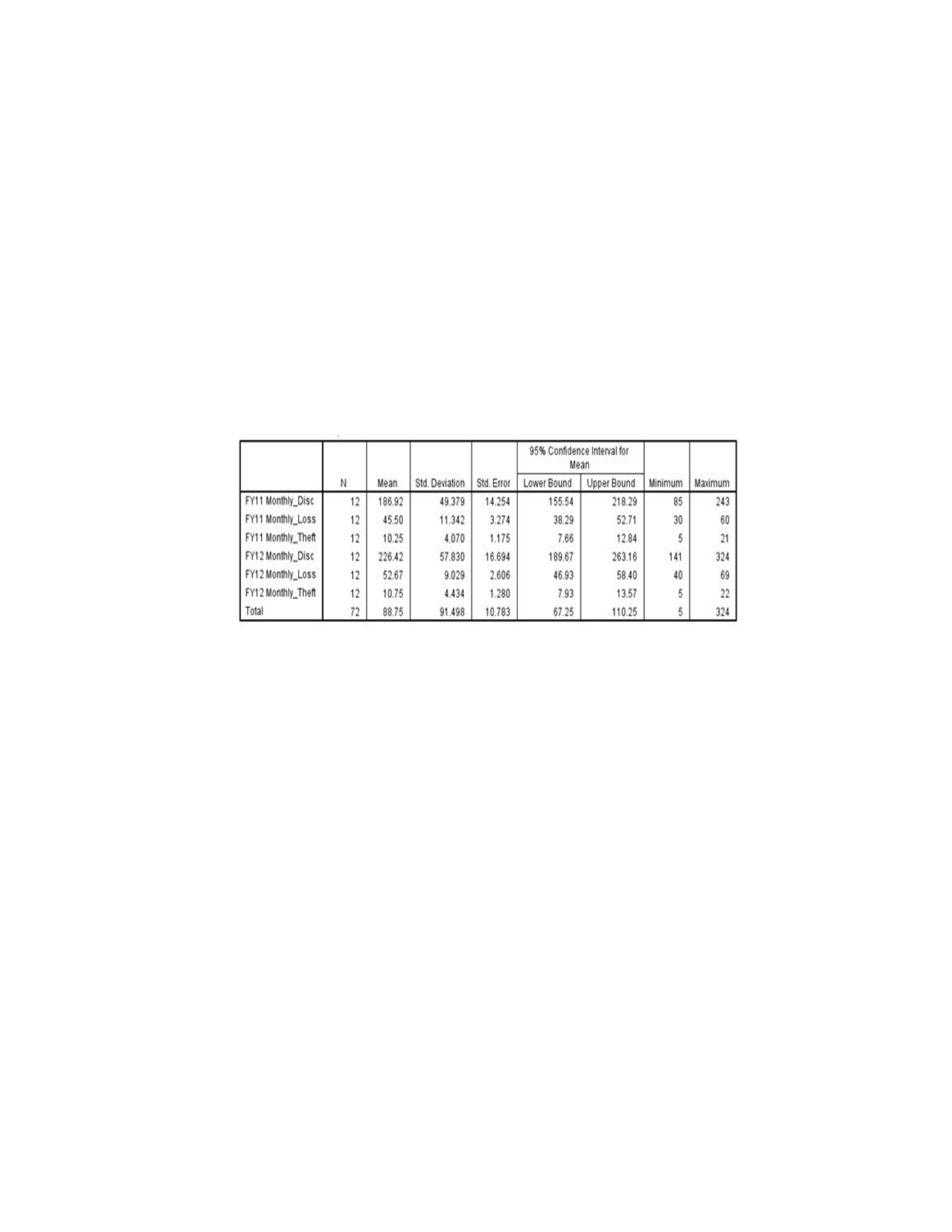
Output 1
For each dependent variable (e.g., IncidentNum), I obtained the descriptive output
consisting of sample size, mean, standard deviation, minimum, maximum, standard error,
and confidence interval for each level of the (quasi) independent variables and presented
in Table 8.
Table 8
FY11 & FY12 Descriptive Incident Reports
Output 2
The ANOVA results indicated that there was a statistically significant difference
among incident types, F(5, 71) = 105.11, p = .000. I used the Tukey's Honest Significant
Difference (HSD) test as the post hoc multiple comparisons test to identify specific
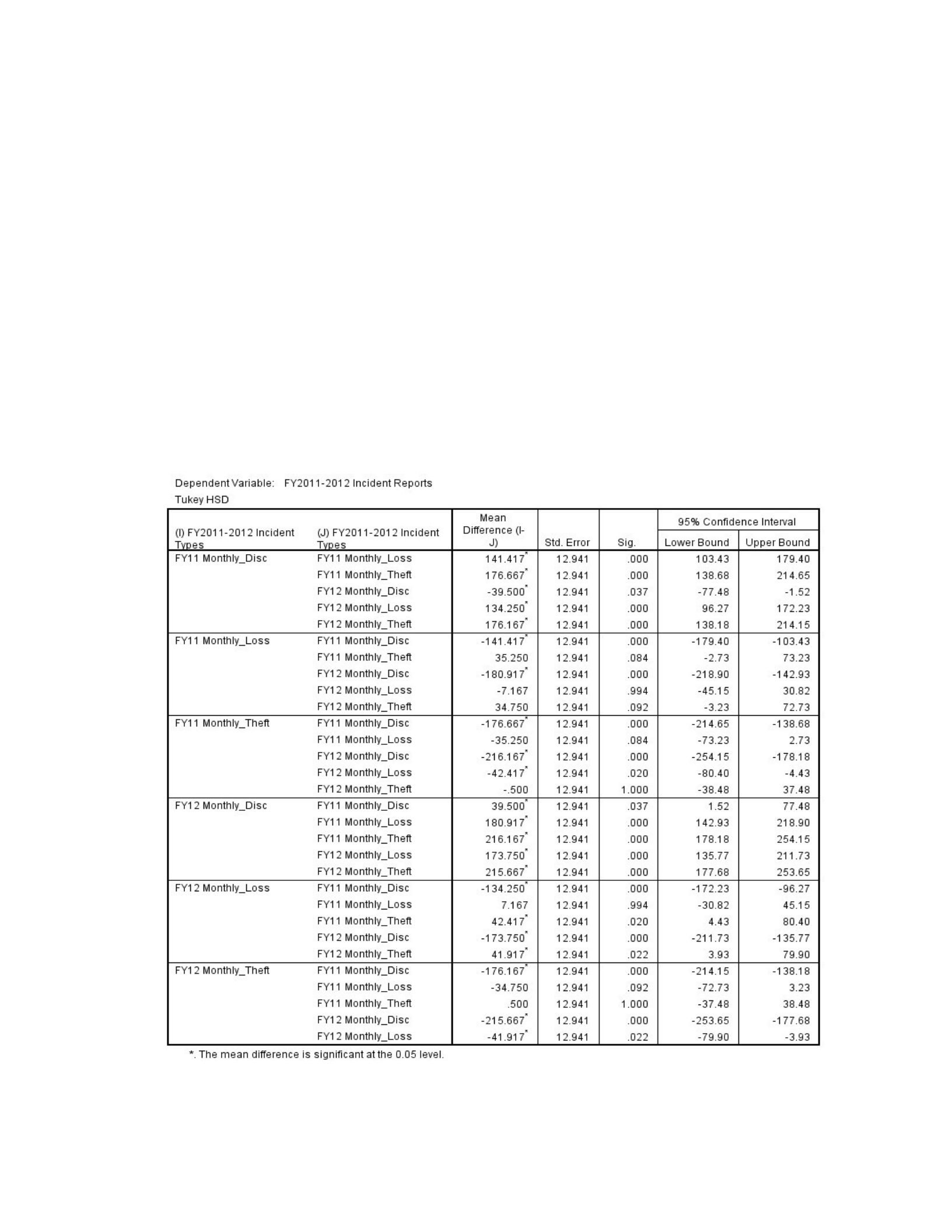
conditions that were different from each other. As evident in Table 9, the majority of p
values for mean difference are less than .05 suggesting the statistically significant
difference between mean values. Among them, eight values are greater than .05 and
correspond to a comparison between Loss and Theft conditions, indicating that both
conditions are not significantly different in terms of incident outcomes. In contrast,
Disclosure, Loss, and Theft conditions were significantly different.
Table 9
Tukey’s HSD Results
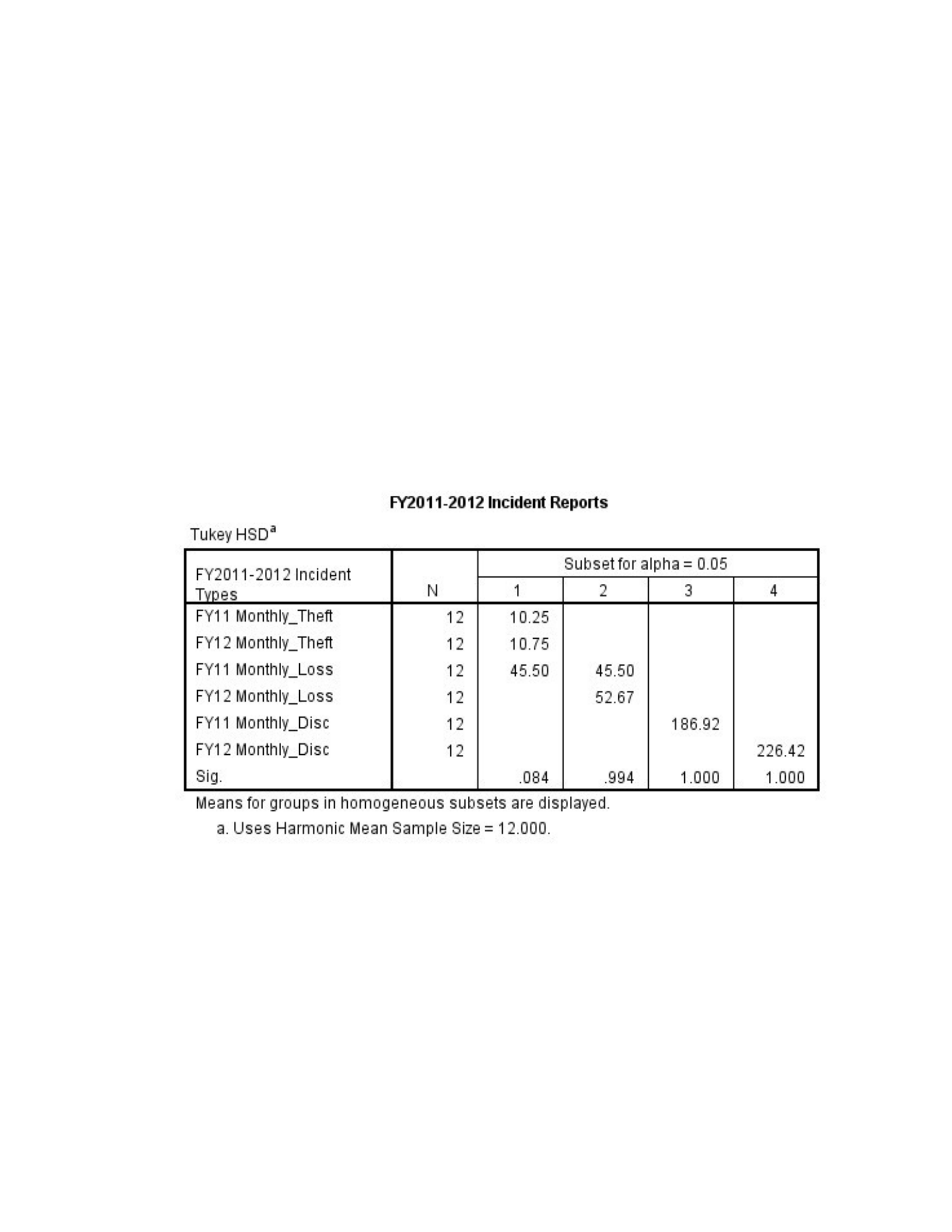
Output 3
The homogenous subset results listed the groups in the order of ascending means.
As evident in Table 10, Loss and Theft incidents might not have any impact if they were
not discovered, whereas Disclosure incidents could have a high impact on confidentiality,
integrity, and availability.
Table 10
Homogenous Subsets of Incidents
Output 4
The impacts of incidents could change over time. Therefore, independent
variables, incidents, might have different impacts on their dependent variables according
to the number of incidents. Thus, I conducted a bar graph analysis to understand the
FY12 and FY11 incidents within groups.
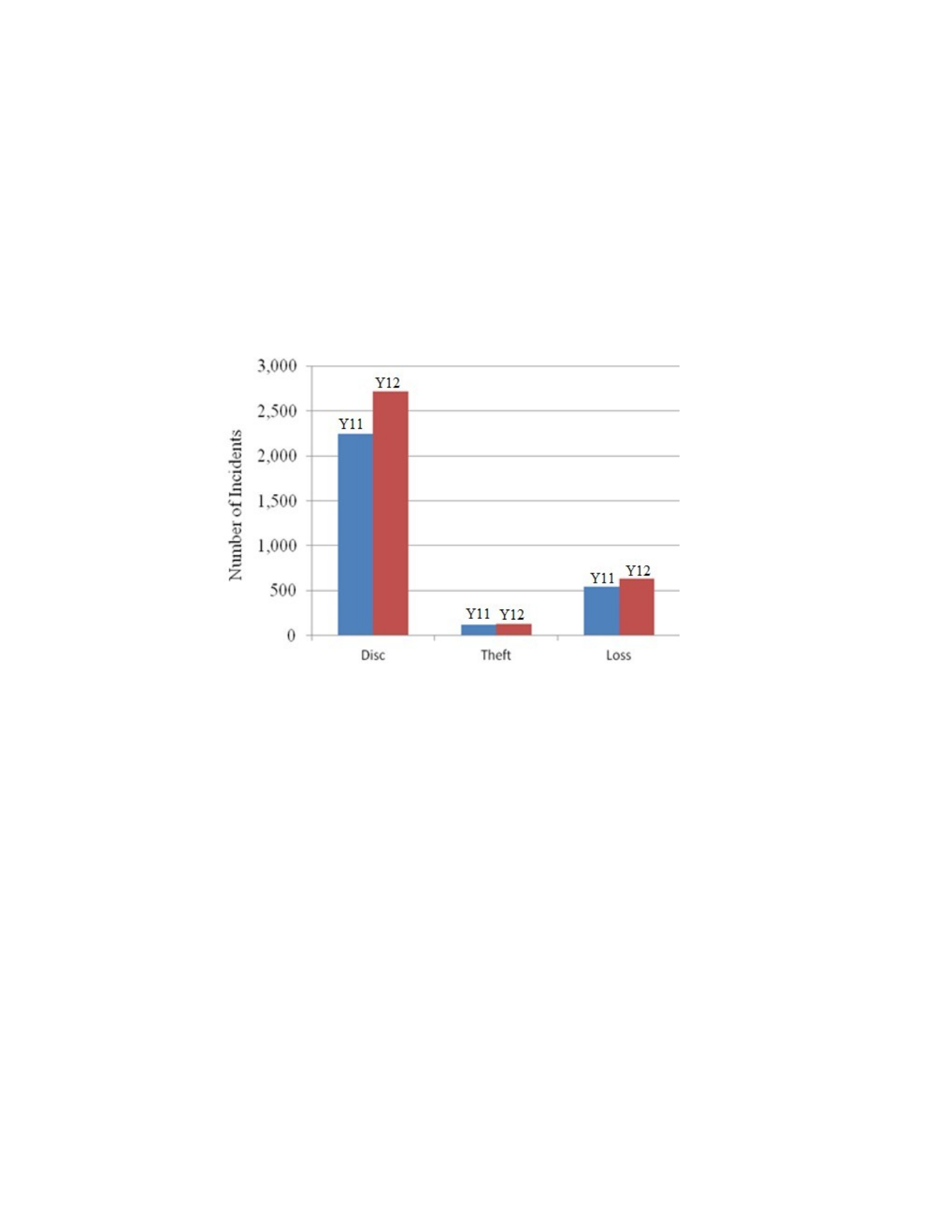
Analysis of the Bar Graph
As evident in Figure 1, the number of incidents in FY12 had increased for
Disclosure and Loss and remained the same for Theft. Therefore, Disclosure was the
worst incidents accounting for 78% from FY11 to FY12.
Figure 1. Three major incidents (Disclosure, Theft, and Loss) from annual
reports.
Issues of Trustworthiness
Trustworthiness is a significant concept as it enables a researcher to explain
virtues of qualitative terms outside of parameters, which are generally used in the
quantitative study without the bias nature of data collection and analysis. Additionally,
trustworthiness shows that the results are accurate and consistent, and the outcomes of
data analysis are genuine. Therefore, it is important that each step during the analysis,
such as data collection, data treatment, data organization, and the result reporting, is
trustworthy (Elo et al., 2014). Credibility, transferability, dependability, and

confirmability are the measures used to evaluate the trustworthiness of a qualitative study
(Houghton, Casey, Shaw, & Murphy, 2013). The overall hypothesis of this case study
underlined the following accepted conclusions:
•Average incident scores among disclosure, loss, and theft were different.
•Average disclosure scores were more significant than even the combined
average of loss and theft.
•Statistic results showed that disclosure incidents were widespread.
Credibility
I used continual observation, utilization of existing concepts, and the agreement
of participants with transcription of their interview, and triangulation to establish the
credibility. Participants had the chance to review copies of transcriptions of the
interview, survey and questionnaire, and to correct any mistakes or misinterpretations of
their responses. The internal validation process of triangulation is an important method
to improve the credibility and validity of study outcomes (Carter, Bryant-Lukosius,
DiCenso, Blythe, & Neville, 2014). Selecting participants of different genders, with
different levels of education, and with varying experience levels was useful for
triangulation.
Data were sorted from the highest to lowest based on the total asset volume. A
large number of different types of assets were consolidated into similar categories. For
FY11 and FY12, the top five asset types by volume were hardcopy documents, sensitive
data, wireless air cards, mobile phones, and laptops. Except for laptops, other categories
experienced an increase from FY11 to FY12. The volume of incidents involving

hardcopy and sensitive data was reflective of the use of a large volume of customer
contact and correspondence the ABC Bank initiated through mail and fax. In addition,
there was a significant increase in wireless air cards and USB units because these assets
have been distributed widely to employees. In contrast, there was an overall decrease of
7% in the number of laptop losses and thefts. Because of the large volume of PII that
these assets could contain, the decrease in these incidents is significant.
Transferability
Transferability is defined as the degree, to which study outcomes can be
generalized to another population (Munhall, 2012). Sample size and the diversity of the
participants are some of the factors that determine the transferability of study outcomes.
The study participants consisted of male and female genders, who came from five
organizations and fulfilled the selection criteria. Therefore, this study results may have
some transferability since the participant responses related to data breach incidents were
diverse (Table 11). Table 11 contains data on the volume for a different type of assets
involved in each incident type and provides a breakdown of the percentage of
disclosure, loss, and theft incidents for each type of asset. Additional details about the
top six asset types by volume were provided in the following subsections. In addition,
the RQ survey, questionnaire and interview questions were the same for each participant
and I did not significantly interfere when they responded.
Table 11
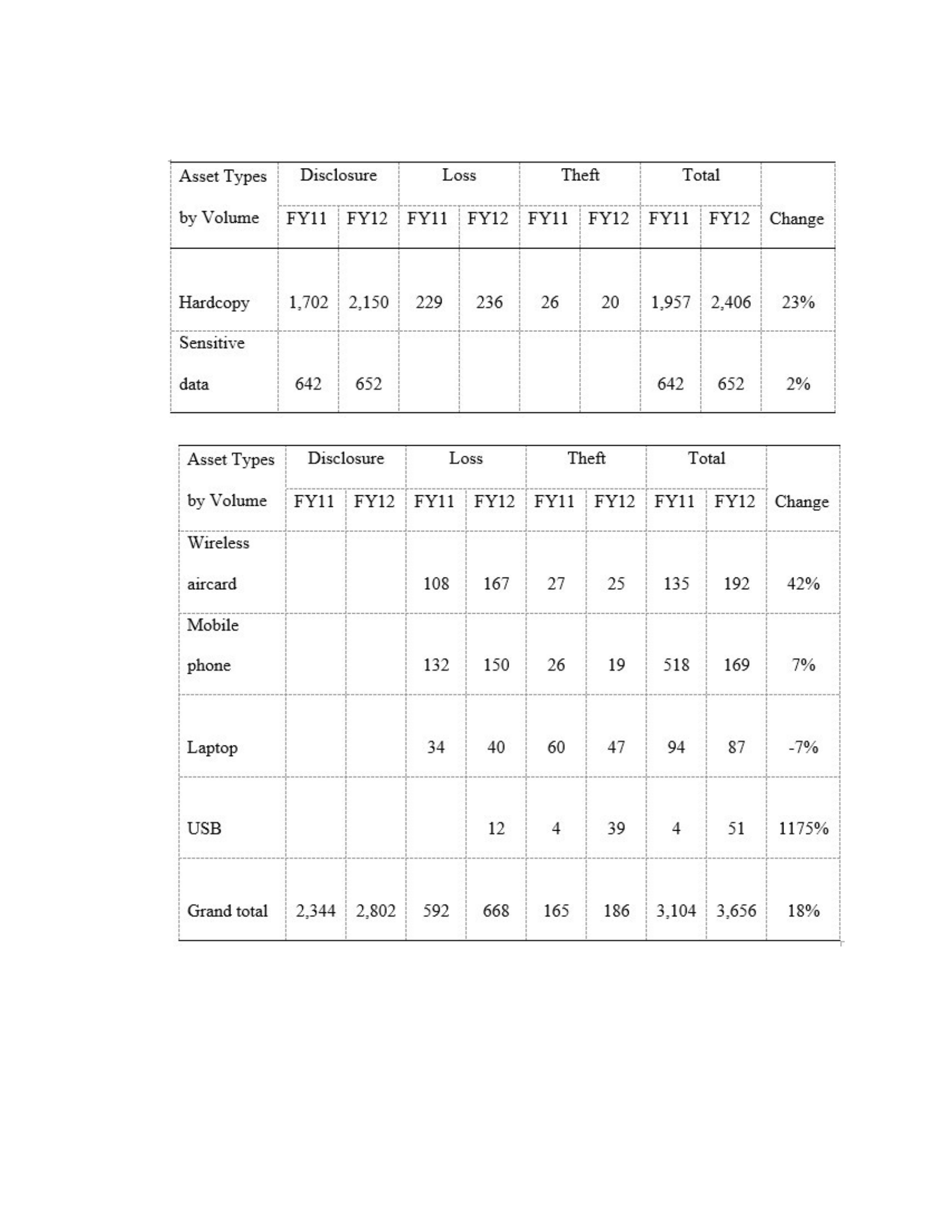
Reported Asset Types

Dependability
Dependability is the extent that the study could be repeated by other researchers to
get consistent results. That is, the dissertation should provide adequate information for a
person to replicate the study in Africa. Such information includes adopted methods, study
context, population, samples, and sample selection criteria. Therefore, scrutinization of
the study and the outcomes could be possible (Thomas & Magilvy, 2011). It even
appeared that organizations in Africa countries have similar causes of data breach issues
due to the outdated business environment, in which they continue to operate.
Hardcopy documents or sensitive data accounted for almost all of the disclosure
incidents, whereas losses of hardcopy documents accounted for 39% of all losses in FY11
and 35% in FY12 (Table 12). Losses of wireless aircards increased from 18% of all
losses in FY11 to 25% in FY12 and laptop losses remained constant at 6% of all losses for
each year. Thefts of laptops showed a decrease from 36% to 25% of overall thefts.
The USB units had the highest increase in thefts, rising from 2% of thefts in FY11 to
21% in FY12.
Table 12
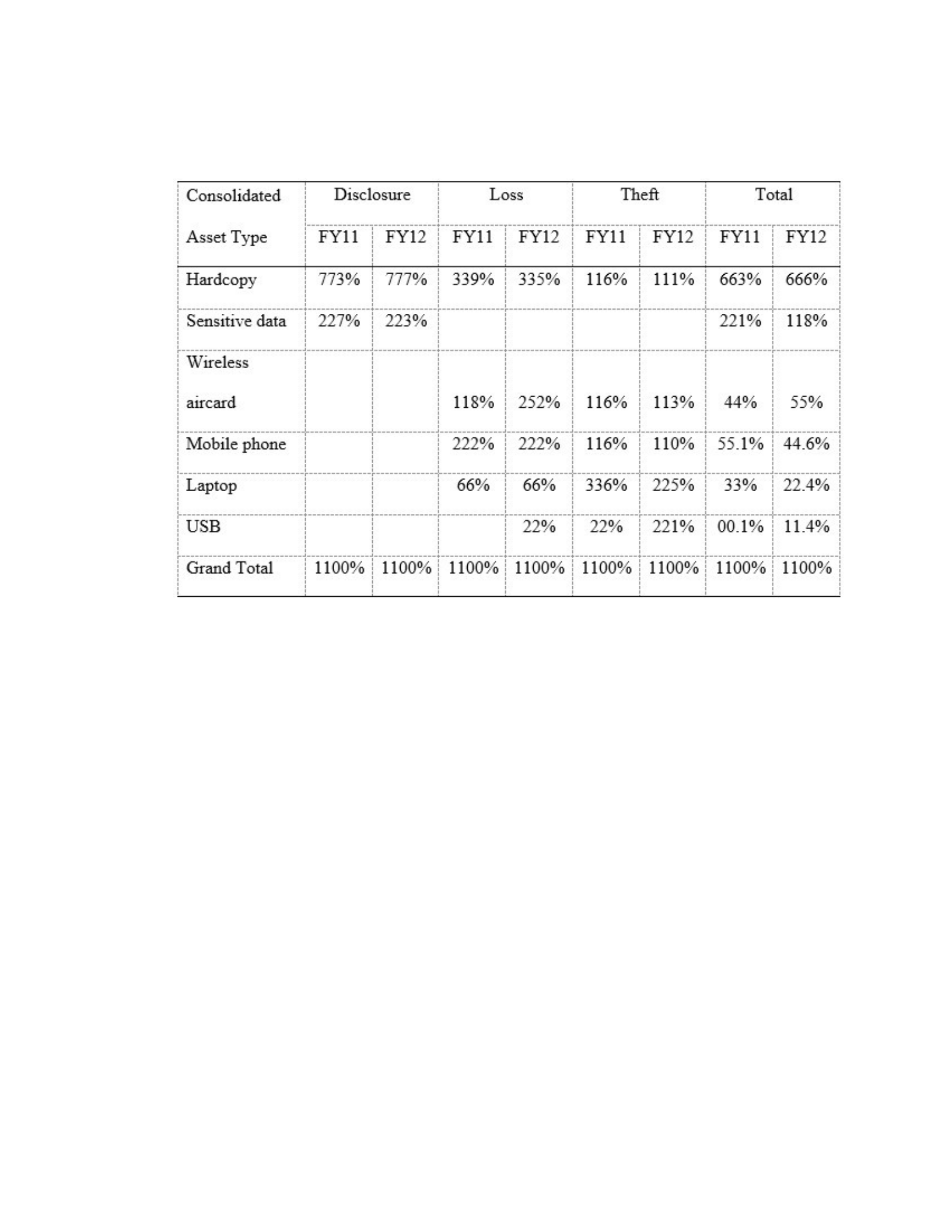
Combined Asset Types
As evident in Table 13, hardcopy documents experienced the highest volume of
incidents, increasing from 63% of all assets in FY11 to 66% on FY12. Table 13 provides
a breakdown of incidents involving hard copy documents based on the location of the loss
or theft or the method of disclosure. Key finding included:
•Incidents involving hardcopy documents sent through the mail had the highest
volumes, followed by the fax and ABC Bank facility. Hardcopy incidents in
the mail generally involved sending incorrect documents to the customer.
•The greatest percentage increase of 241% was related to incidents involving
the transcript delivery system, where transcripts were sent to an incorrect third
party.
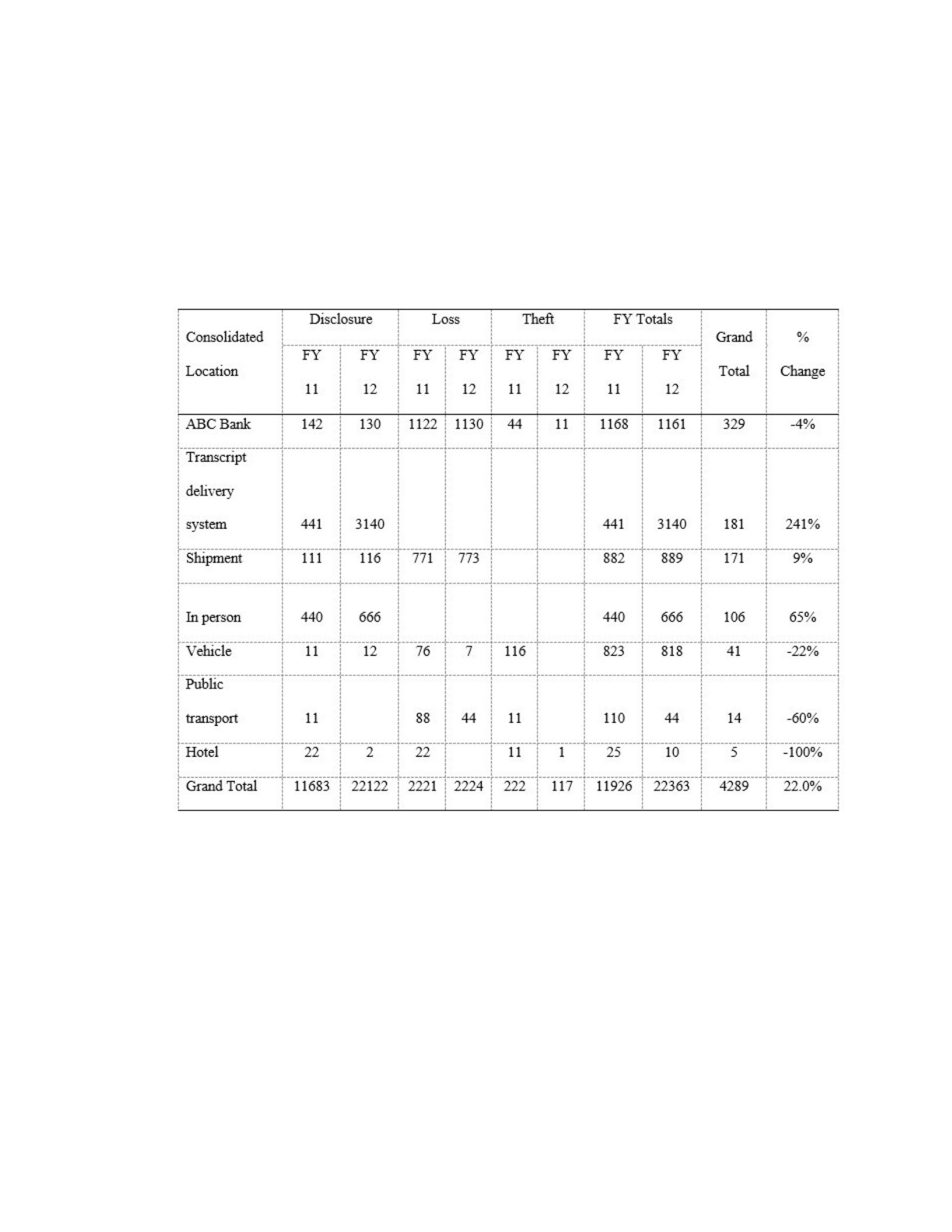
•Hardcopy documents disclosed in-person increased by 65% and generally
involved false documents handed to a clientele or third party.
Table 13
Hardcopy Incident Locations
Conformability
The concept of confirmability is a comparable concern to objectivity and refers to
the degree, to which data can be confirmed or corroborated (Cope, 2014). There are
various techniques for improving confirmability such as an audit strategy, where the
researcher checks and rechecks the transcription to ensure their accuracy. I shared the

transcription with participants so that they can review and clarify if there were any
discrepancies.
The Veterans Affairs Office of Inspector General reported a laptop and external
hard drive containing the names, birth dates and social security numbers of about 26.5
million active-duty troops and veterans were stolen on May 3, 2006, from a veteran affairs
data analyst in Aspen Hill. The theft was the largest information security breach in the
history of the government and raised fears of potential mass identity theft. As a result, the
Department of Veterans Affairs agreed to pay $20 million to current and former military
personnel to settle a class action lawsuit on behalf of men and women, whose personal
data was on the stolen laptop. Subsequently, I could conclude that cyberincidents have
severe impacts on data breaches due to human factors. From this assertion, I developed
the data breach triangulation blueprint as shown in Figure 2.
Human Factor
Social Enviorment Loss System flaw
Figure 2. Data breach triangulation blueprint.
Theft
Disclosure

Ethical Procedures
The rules governing the access to information or data for researchers are not
defined clearly on the international level. For example, mobile network providers are
subject to different regulations on data retention depending on their location. Data
retention laws are under debate because they conflict with the privacy requirements
(Bloomberg, 2014). Meanwhile, privacy regulations are on a national level despite the
international operations of mobile network providers. Data protection directive of the
E.U. (95/46/EC), for example, only covered the E.U. citizens or within the E.U. territory
(Gasson, Kosta, Royer, Meints, & Warwick, 2011).
Most African countries lack a locally binding legal framework to govern the
release of data. Therefore, data release follows an ad hoc framework, in which the only
binding commitment to privacy and data protection was made between researchers and
the company through a non-disclosure oral agreement. The francophone, West Africa
countries, use a version of strict data protection regulations from France established by the
Commission Nationale Information et Liberte, although the implementation and
enforcement are a problem due to social and cultural factors. In addition, Ivory Coast is
not a signatory; hence, many companies operate with minimum or no data protection
policy.
In most African countries, enforcement regarding the protection of data and citizen
rights is weak, resulting in limited power for organizations to use and distribute data under
their own patronages. In addition, data protection or retention is at the discretion of
companies in Ivory Coast or other Africa countries. Thus, constraints from the Ivory

Coast regulator on privacy seemed to be minimal. Consequently, in most African
countries, many people mentioned that signing a formal document outlining privacy and
consent would not be necessary, and it would perhaps discourage potential participants in
many African countries. The most recommended practice for a researcher was to build
mutual trust with the participants by understanding and respecting their culture and social
environment to conduct a successful research study because the participants preferred to
remain anonymous and confidential. Ethical risks in international research are substantial,
complex, and continue to grow, especially in developing countries like Ivory Coast and
many West Africa countries. To ensure that the participants, populations, and
communities were not harmed or exploited, I also followed the U.S. regulations, though it
might increase risks, for example, around the informed consent, where the cultures were
different from the U.S. The international research ethical risks are beyond the boundaries
of the research oversight infrastructure of Walden University. Thus, risk mitigations must
rely on thoughtful and informed judgments; otherwise, researchers may not pursue
research in these areas or may not overcome ethical challenges in protecting human
research participants in developing countries, especially in Africa, related to data
breaches.
Summary
In summary, uniform solutions to prevent data breaches are difficult due to human-
related factors. Despite the existence of the emerging technologies that could prevent data
breaches, hackers still launch a significant number of attacks by exploiting the weaknesses
in information systems of organizations or their employees. Therefore, organizations

require a strong leadership to upgrade technology frequently and to ensure that the
internal human factors do not cause any data breaches. In this dissertation, I interviewed
27 participants, who had insights on how to develop solutions to prevent data breaches
occurring due to internal employees in the Ivory Coast cyber-ecosystems. Hence, one-
third of the interviews were focused on external data breaches, whereas twothirds were on
internal human factors data breaches. This chapter elaborated on the experimental design
used in this study to collect data needed to address the research questions. The ANOVA
test followed by the Tukey’s post hoc test found that overcoming data breaches and
internal human factors are essential to minimize the cybersecurity threats. Chapter 4
provided an in-depth analysis of data collected in this study followed by Chapter 5.
Chapter 4: Results
Introduction
Several organizations and government entities continuously experience data
breaches caused by external people or internal employees. Many organizations and
government entities are aware of the risks that internal human factors might pose to the
data security of a company. Historically, outsiders have carried out data breaches, costing
hundreds of thousands of dollars (often millions more). However, traditional security
measures could control outsider threats. In contrast, threats due to internal human factors,
specifically accidental errors or deliberate acts, cause relatively more damages to an
organization (PWC, 2015). Therefore, the purpose of this study was to provide executives

with guidelines on the prevention of data breaches from cyber-threats by focusing on
internal human behavior.
I used a qualitative mixed-methods approach to comprehensively capture user
experience because it could be difficult to answer why and how with a quantitative study
alone. I examined the assumed causal relationship between the internal human factors
(i.e., employees behaviors), and the occurrence of data breaches or compromised
information. Speicfically, I used this qualitative approach to identify the assumed root
causes of threats from internal human factors. In addition, I used this approach to
understand the perspectives of participants on how managers can minimize internal
human factor threats that contribute to data breaches or compromised information.
The three research questions focused on why, how many, and how widespread.
This chapter contains data analysis which I used to answer the following three research
questions, where each RQ was categorized by subthemes:
RQ1: What are the internal human factors that contribute to data breaches and
compromised information in the Ivory Coast emerging business environments?
RQ2: What are the root causes of the internal human factors that contribute to data
breaches and compromised information in the Ivory Coast businesses?
RQ3: What preventative measures could managers use to minimize the threat from
human factors, which are related to an internal employee, that contribute to data breaches
or compromised information?
This chapter also contains evidence of trustworthiness, and descriptions of the
setting, demographics, data collection timeline, and coding. The results section describes

results based on the categorical findings and theoretical results. Finally, I revisit the
conceptual framework for this study and discuss it alongside the phenomenal theory of
internal human factors related to cyber-threats to organizations.
Study Setting
The study site was Abidjan, Ivory Coast, West Africa, between October 1 and November
3, 2017. I did not have any community partners; therefore, I liaised unofficially with
some Ivorian community stakeholders, including the government officials and the heads
of department in organizations in Abidjan, Ivory Coast to identify the prospective
participants. I discussed the purpose of the research with these officials and emphasized
the benefits of the outcomes of this research study to minimize the human factors of
employees that contribute to data breaches or compromised information. Then, I
requested that officials distribute the research flyer to their employees to solicit their
participation in the research study. Interested participants contacted me directly via phone
to maintain their privacy and confidentiality.
Selection of Research Participants
The research participants consisted of government ministers, department heads,
CFOs, branch managers, CIOs, IT division managers, and information systems
technicians (see Table 14). I used the snowball sampling process for the target population
to build purposely selected samples for this study. I started with unofficial visits to
different organizations and requested that managers distribute the flyers to their
employees as the population seed for the snowball sampling. With each visit, the size of
the sample and snowball grew. I chose the next organization for the visit by logically

assessing the potential for obtaining the perspectives that were beneficial to the study.
Eventually, I sampled from five organizations and 50 employees. Although I received
expressions of interest from 50 employees from five different public and private
organizational structures within Abidjan, Ivory Coast, only 27 participants agreed to
participate in the study. All participants read and signed the consent form in duplicates
and retained a copy for personal record purposes before the research study began.
Table 14
Participant Description
Organization Type Number
Comp X&T
Government ministers
CIOs
1
3
IT division managers 2
Comp Z & C
Government ministers
CFO
2
2
Information systems technicians 3
Comp B & X
CIOs 2
Government minister 1
Comp T & C
IT division managers 4
Government ministers 1
Comp C & Z
Information systems technicians 4
CFO 2

Demographic Data
I did not collect any specific demographic details such as age and race. The
selected participants included both genders, including 20 men and 7 women. Most
participants had the privilege to access accounts, whereas some participants had some
level of elevated permissions in the computer system of organizations or supervised
employees with such elevated permissions.
Survey, Questionnaire, and Interview Data Collection
The instrument used for this research consisted of surveys developed by Basu and
Muylle (2011) and O’Keeffe, Buytaert, Brozovic, and Sinha (2016), a questionnaire, and
interview scripts using semi-structured questions including open-ended questions and the
Likert scale questions. These semi-structured questions were helpful for collecting
descriptions of experiences related to creating IT business values, maximization and
evaluation, and for understanding techniques to overcome data breaches due to human
factors. Phenomenological studies include observation, note taking during the interviews,
and field notes, which were essential to understanding the operative of internal human
factor threats.
To ensure the privacy of the participants and their organizations, I assigned each
participant a different alias such as Comp1 and Emp1 for five selected organizations. I
conducted the survey for four days from October 3 to October 6, 2017. The participants
completed 21 survey questions, including open-ended questions and questions with 1 to 4
scales ranging from zero important to highly important. On the fourth day, I collected the

survey data by appointment only. Then, participants completed 21 questions from the
questionnaire from October 10 to October 13, 2017. Each participant had aliases, such as
4hjb5, k67rb, and w3ev1, to protect the identities. Data was collected by appointment
only in a private hotel meeting room on the fourth days. Last, each participant answered
16 face-to-face interview questions. The interview comprised three parts with the first
part focusing on the risks related to malicious insiders and unintentional insiders, while
the second part focused on data access and responsibilities of employees using the 1 to 5
scales. The third part concentrated on the state of cyber-defense using the 1 to 5 scales.
The interviews lasted between 15 minutes and 30 minutes, and took place in a private
hotel meeting room between October 17 and October 19, 2017. Participant received
aliases such as Ca45 to protect their identity.
I entered the collected data in a Microsoft Excel spreadsheet and reviewed their
usability. The collected data were secured using logical (i.e., authorization,
authentication, encryption, and password) and physical (i.e., restricted access and locked
file cabinets) protections in Abidjan, Ivory Coast. I changed the key code and door-lock
combinations regularly to prevent all physical access to data. I used data discovery tools
to identify sensitive data that were inadequately protected. I used a safe and secure
network IPSec protocol to protect research data while in transit over a public or private
network. I also used different names from actual data while data was at rest. Lastly, I
used SecureZip to protect all data on a laptop and encrypted USB. All research data will
be kept for at least 5 years as required by Walden University before proper disposal.

Data Coding
The collected data were recorded in a Microsoft Excel spreadsheet according to
their themes. Then, I used the statistical frequency and proportion to tabulate the
categorical data and the corresponding codes are given in Appendix A. Discrepant cases
did not emerge, possibly due to the nature of the study. The findings were factored into
the analysis and data segments were inductively incorporated into a subcategory or
category. Emergent themes expanded my understanding of the existing theoretical
framework proposed by Loch et al. (1992). Furthermore, I shared the collected data,
including the interview transcriptions, with the respective participants for validation and
to protect their identity and privacy.
Evidence of Trustworthiness
The evidence of trustworthiness was evident from the research design, data
collection, data analysis, and interpretation. Use of the grounded theory concept and a
constant comparative method increased the validity of the study. The participants
reviewed their responses to the survey, questionnaire and interview for clarity along with
the subthemes, core categories, and theoretical findings after completion of the study,
contributing to the trustworthiness of the study. Participants had multiple opportunities to
review data and clarify or correct whenever required.
Further, the purpose of a qualitative research is not to generalize findings, rather, it
is to understand a phenomenon (Corbin & Strauss, 2008, p. 319). Therefore, it is difficult
to generalize the results of this study to other organizations. However, the concepts,
including core categories and theoretical conceptualizations and models emerged from

this study, could be considered by other organizations. The knowledge gained could be
applied to other organizations, at least after a critical review, despite the potential
differences between workplace environments. Corbin and Strauss (2008) stated that
“concepts should apply to many organizations, though specifics might differ” (p.
320).
Coding is primarily an analytical process and several past studies have provided
guidelines for coding. For example, Miles and Huberman (1994) stated that emergent
themes should be linked to a theoretical model (pp. 134-137). Models are the
simplification of reality; hence, investigator and peers should determine the degree that a
model describes the event and perform proper validation of the models (Denzin &
Lincoln, 2003, p. 278). Denzin and Lincoln (2003, p. 278) discussed that the grounded
theory models generally should be validated using the experts. In this study, there were
no informants and the subject matter experts were the participants. Therefore, the
theoretical models were developed and shared through the constant comparative process,
as if they were mainly a quasi-peer review.
Results
The results of this study are divided into the following three subsections according
to the themes:
•Internal human factors that contribute to data breaches.
•Root causes of internal human factors that contribute to data breaches.
•Preventive measures to minimize the internal human factors that contribute to
data breaches.

Many researchers have adapted the human information processing models to illustrate the
errors of individuals at different stages of a business. Conzola and Wogalter (2001)
discussed the impacts of incentives from the environment on the human sensory system
using the communication-human information processing model and the findings are still
relevant. A subset of information is attended to, comprehended, and aligned (or
misaligned) with attitudes, beliefs, and motivations of an individual, resulting in the
behavioral responses. With the increase in new connected devices, many new and
unknown security threats have emerged from megatrends and technologies such as
BYOD, mobility, cloud computing and internet usage, as well as internal accidental and
malicious actions, introducing organizations to a multitude of new risks contributing to
data breaches.
Research Question 1
Many documented data breaches were accidental due to unintentional employee
behaviors. Human errors often are patterns of recurrence when examined over time.
Information breaches due to internal human factors are caused by individuals, who seek to
damage organizations or undermine information security due to various causes. Instead,
the human errors causing negative impacts are often the consequences of ineffective
system conditions, process features, or individual employee characteristics, and are known
as the system induced human errors (Norman, 2013). The insider threats continue to be
mostly accidental and carelessness. A holistic approach to identifying the internal human
factors responsible for data breaches and compromised information in
Ivory Coast is essential to protect the landscape of Ivory Coast cyber-ecosystem.

Internal Security Challenges and Recommendations
Unintentional exposure of organizations to risks due to the actions of some
employees could damage organizations. Eighteen participants commented that many
employees in Ivory Coast engage in behaviors that could put the corporate and personal
data at risk. Eleven participants mentioned that top managers generally do not allocate
proper resources for IT-related projects, whereas five participants stated that IT
professionals are often unaware of the behaviors of employees and that it is a
businesswide challenge to prevent data leakage or breaches due to lack of funds.
According to 15 participants (56%), the most prominent internal challenges for most
security professionals are errors of employees, ineffective security deployment and
managing hostile behaviors. Endsley (1995) called the above challenges as the situation
awareness and defined as “the perception of the elements in the environment within a
volume of time and space, the comprehension of their meaning, and the projection of their
status in the near future” (p.36). Furthermore, 14 participants (52%) agreed that
implementing adequate security measures and controls are critical to overcoming the
internal security challenges. Seventy percent of the participants indicated that executives
could achieve the maximum returns in business if they have a good knowledge and
understanding of emerging global business and technology requirements with the IoT.
They also commented that providing continuous exposure and training to IT managers on
the business and technical skills could maximize the return from the IT investment, which
agrees with the view of Rodgers (2000) that the effective decision making to reduce error
rates generally depends on having a good situation awareness. However, resolving

internal security challenges is inefficient if an organization does not address workplace
violence with adequate mitigation plans.
Workplace Violence Impact on Data
The definition of workplace violence is the unsafe climate and job environment for
employees and the survival of an organization. Twenty-six participants (96%) said
avoiding the ethnic discrimination and detecting the unhappy employees could reduce
workplace violence on data or information of an organization. Thus, 14 respondents
(52%) indicated that an organization should have security guards to protect itself both
inside and outside of its perimeters. In addition, 12 of them suggested that the workplace
crisis team should assist or investigate any issues related to workplace violence with a
zero-tolerance policy. Having workplace violence mitigation and dissuasion plans could
allow organizations to operate in a safer environment and diminish some insider
accidental threats.
Insider Accidental Threats: Causes and Mitigations
Although external actors are considered as the biggest threat to cyber-security of
an organization, many documented data breaches are due to various unintentional
behaviors of employees (Sarabi, Naghizadeh, Liu & Liu, 2016). Accidents due to human
errors often form patterns of recurrence when examined over time (Pond, 2003). As
Julius Caesar said to Brutus, Et tu, Brute?, which means Even you, Brutus, my best friend,
when Caesar resigned himself to his fate. Therefore, it is critical to identify the root
causes of insider accidental threats and their mitigation to avoid the Caesar fate within
organizations. Additionally, human factors and performance indicators such as high

subjective mental workload, lack or loss of situation awareness, and mind wandering
could increase the likelihood of human errors, resulting in incidents related to internal
systems, data, or information (Martin & Jones, 1984). The results of this study indicated
that 19 participants (71%) attributed the insider accidental threats to human failures
trusted employees and lax cultural environments.
Human inadequacies resulted in costly accidents by insiders with access to the
most sensitive information. To mitigate insider accidental threats, 14 respondents (52%)
recommended developing a security culture from top to down and setting up automatic
alerts for sensitive devices at risk. Furthermore, 18 respondents (67%) mentioned that
malicious employees, unzipped sensitive data, and untrained employees are the leading
causes of insider deliberate threats. Additionally, 13 participants (48%) suggested that
implementing employee training to identify the risks accurately and improving overall
security posture could reduce insider deliberate threats. Furthermore, 15 participants
(55%) said that an organization should provide an effective phishing detection and
information security training, whereas 14 participants accounting for 52% suggested
security+ and network+ certifications as additional training.
Precautionary Measures to Minimize Insider Threats
The new components during expansion of IT infrastructure of an organization
could introduce new vulnerabilities, whereas not all employees understand rapidly
changing IT environment (Sarabi et al., 2016). Consequently, companies are exposed to
internal threats from employees. According to 18 participants (67%), ineffective software
patching, management, password sharing and recycling, and absence of encryption are the

security issues faced by many organizations. Furthermore, 21 participants (78%) stated
that managers could develop a culture of security solution, security awareness, and
computer login limitations to change employee attitudes to minimize insider threats.
Attitudes do not have any significance unless people choose vector, namely positive,
negative, or neutral, which define eventually the outcomes of the human existential
environment at work or in society.
There are greater concerns when dealing with internal security threats. Twentytwo
participants (82%) attributed internal security threats challenges to ethnic factors,
organizational culture, and non-malicious insiders. The participants agreed that attitudes
are learned behaviors, habits, perceptions, and judgments. Therefore, understanding
insider threats is essential for managers to develop multiple approaches to reduce insider
threats. Thereafter, managers determine to adopt or keep the mitigation methods within
an organization to combat insider threats. Developing a positive business attitude helps
employees to take initiative to improve their skills by voluntarily enrolling in more
security courses to be more efficient in their security management responsibilities. Most
participants tried to take more security courses to fill the knowledge gap and understand
the business better to realize the maximum benefits from IT investments (Table 15).

Table 15
Security Management Responsibilities
Security element Preferred selected topics Results
Security management Operations security/Cyber- security trends 89%
Personal security
Effective security awareness
Conducting effective security self-inspection
85%
81%
Information systems security
Employee internet access security
Fundamentals of information security systems
85%
85%
Global security issues
Protecting business operations
Critical infrastructure threats
85%
78%
Information security Mobile device security risks 93%
Identity theft techniques 89%
Physical security Disaster planning 81%
Protecting information from physical threats 78%
Professional development Communicating security risks to senior managers 78%
Proving value as a security professional 70%
Training and awareness programs should focus on enhancing employee skills and
behaviors, and help them to identify possible cognitive biases and limitations that could
lead to a higher risk of committing such errors or judgment. Additionally, the participants
mentioned that the positive attitude of an organization could help employees to fulfill their
roles and responsibilities effectively and to have a comfortable work life. It is important
for employees to combine positive thinking and attitude, which are the core of success and
a brighter future in life and at work. Therefore, the benefits of having adequate training

and awareness programs are diverse and important for a better relationship between
organizations and employees.
Security Awareness Training
Employees are the critical human component for information security of an
organization and the awareness program provides employees with tools and information
that they require to make the security as the second nature. Twenty participants (74%)
were interested in participating in continuous security awareness training programs and
preferred to extend security awareness training workshops to developing the effective
security procedures, policies and a technology control plan. Moreover, 21 participants
(78%) emphasized that organizations should include user behavioral analysis, data
protection, and mobile device management to minimize data breaches by overcoming
internal threats. Furthermore, 25 participants (93%) identified the location as the
predominant factor that determines their participation in security awareness training,
while the registration fee was a concern for 23 respondents (85%). According to them,
examining and analyzing insider threats is a common practice in developing the
characteristics of the most critical incidents in the form of a general set of models such as
management and education of the risk of insider threat (MERIT) models. The models
identify common patterns, contributing factors and observables, and mitigation measures
targeting effective training topics due to the employee feedback. Improved understanding
of employees about the impacts of computing behavior on the security of the company
could lead to positive results for the company. However, the overconfidence of

companies and institutions in their labor force could make them vulnerable to malicious
employees (Appendix A).
Research Question 2
Twenty-seven participants thought that internal human factor threats are difficult
to prevent because generally, they are unintentional. Therefore, a holistic approach to
security is vital in the modern threat landscape to combat the risks due to unintentional or
malicious intents. The approach should address effectively insider and outsider threats
together with successful management of both unintentional and intentional threats posed
by internal human factor threats (employees).
Organizations Incident Types
Their betrayals of employees through corporate espionage, embezzlement, data
theft, or double-crossing damage many organizations profoundly. Trusted insiders of
organizations could have the power and the will to damage the organization. After the
infamous National Security Agency data leaks and various well-publicized thefts of
corporate resources, including the intellectual property, customer lists, or money,
executives have focused on developing the best approach to protect their information
assets from malicious insiders and to detect potentially problematic employees
beforehand.
Employees often have access to the most sensitive information. Six participants
(21%) mentioned that the most successful security attacks by employees are the exposure
of sensitive data, theft of intellectual property and the introduction of malware.

Additionally, 13 participants (48%) indicated that disclosure of sensitive data, loss or theft
of IT Assets and malicious codes are the leading incident types within their organizations.
According to 17 participants (63%), most incidents happened after work hours with 37%
of incidents occurred in cars when employees were in transit to home with IT assets, 30%
were because employees left assets unattended on their desks or not secured in office,
whereas 22% of them happened in a hotel when traveling.
Nineteen participants said that 63% of assets were lost, whereas 37% were stolen
from the locked areas. Meanwhile, 56% were not in locked areas and 19% were
unknown. Interestingly, 48% of the stolen assets did not show any signs of forced entry
and 33% of them occurred by the forced entry. X, Z, B, T and C facilities, office desks,
cabinets, and storage room share 85% of the lost or stolen assets. Further, 17 participants
(62%) mentioned that the stolen assets were in the unsecure places, whereas 23% of these
incidents were unknown and only 15% were locked in secure areas. Meanwhile, assets of
organizations were lost or stolen from 78% of interiors and 22% of trunks of the vehicles.
The participants indicated that 48% of the lost assets were laptops or phones and 18
participants (67%) confirmed that these laptops and mobile devices did not have any
enterprise disk encryption, whereas 63% of them did not have any cable locks.
Twentythree research participants (87%) agreed that most IT security threats are due to
the unintentional mistakes of the insiders than any malicious abuse of privileges.
Disclosure of Sensitive Data
Sending the sensitive documents to unintended recipients is a primary insider
error. According to 14 participants (52%), the sensitive data were disclosed due to the

errors in faxing, lost packages and the errors in emailing. Companies notified the local
mail coordinator in 48% of the disclosure cases, whereas 37% did not. Moreover, 22% of
incidents were unable to trace. Furthermore, 63% of these incidents occurred with the
local post office and 37% with the internal mail delivery. Access to data, even highly
sensitive data, is difficult for many organizations to manage because of the changing
business environments and the complexities of the modern workforce. Most companies in
Ivory
Coast did not appear to have any data protection or there was no enforcement if they did.
Data Protection
Most companies in Ivory Coast did not appear to have the SBU data protection.
Twenty-one participants (78%) pointed out the non-existence of data protection laws or
the laws did not consider the social cyber-threat. Furthermore, 74% of the companies did
not have an internal review code to protect their data. Because the cyber-threat landscape
is evolving continuously, the most sophisticated threats are constantly changing to adapt
to the defenses against them, especially with the access to increased mobile devices and
changing business environments.
Internal Risk Factors
The insider threats are intense because of increased mobile and hyper-connected
world. Almost every employee has the multiple interconnected devices that could
compromise information of a company. Similarly, the social norms are shifting, eroding
loyalty between employers and employees (Coburn et al., 2018). According to the
participants, the internal risk factors are due to 26% of careless or negligent, 22% of

inadvertent exposure, 19% of email accidents, 11% of BYOD, and 7% of curiosity,
innocent actions, and malicious insiders. Furthermore, 27 respondents stated the
following:
•security softie (weak) - 30%;
•Non-enforcement of the security policy – 26%;
•gadget geek (overly knowledgeable of business assets) - 19%;
•business work environments - 15%; and
•Saboteur (deliberate destruction of company data or assets) and squatter
(intruder accessing organization data without right or title) – 10%.
Most participants said that increased data breaches could be primarily due to the
internal threats. The risk factor threats of employees could be a major threat to businesses
in Africa. Efforts to mitigate the internal threats, such as additional security controls and
improved vetting of new employees, could remain at odds with the efficiency measures.
More internal human factor threats with malicious intent could emerge as more employees
in Ivory Coast place their ethics, ethnic groups and perceptions above those of their
employers (Appendix A).
Research Question 3
Twenty-three participants identified several internal human factors threats related
to data leakage, for example, fraudulent actions through an integrity breach, loss of
availability, or business continuity because of the mistakes or deliberate actions. In
general, internal threats could cause significant impacts on business because of the

privileges that employees have over IT, being responsible for their actions, in
contradiction to external threats.
Dealing with Insiders Risks
Twenty-seven participants said that management of insider risks should consider
malicious, negligence and accidental risky behaviors. Once the risk is identified and
assessed, executives should implement the technical and management controls and align
the roles, responsibilities, and privileges throughout the employment life cycle. They also
indicated that many executives in organizations in Abidjan, Ivory Coast are not aware of
the complexity and unfamiliarity of the new cyber-security threats, and do not have the
expertise to deal with the internal human errors.
Security Measures to Reduce Internal Human Errors
Seventeen participants mentioned that human error is not defined comprehensively
in the academic literature because the errors could occur in cognition and behaviors.
Features of the tools, tasks, and operating environment could have an influence on human
errors (Dekker, 2002). In this study, I defined human error as a failure. Furthermore, the
participants indicated that managers should consider the business environments to reduce
the internal human errors, especially in Africa, where employees are more loyal to their
ethnic groups than organizations. Therefore, they argued that managers should focus on
implementing adequate security measures to mitigate internal human errors. Figure 3
shows the percentages of the security measures used to reduce the internal human errors.
Appendix A Part I has additional information.
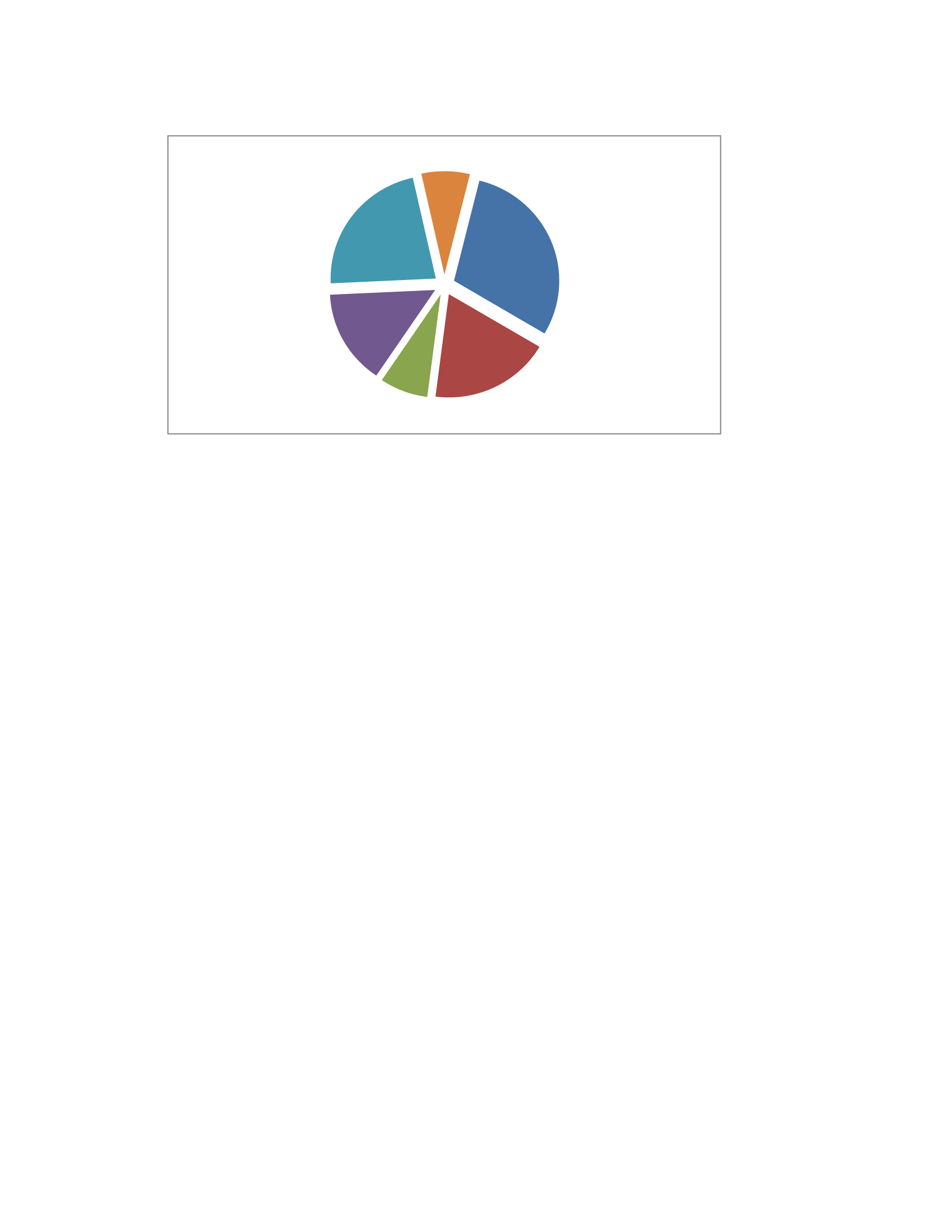
Figure 3. Reducing internal human errors.
The participants underscored that the above security measures could mitigate the
internal human factor threats. Because employees have access to sensitive information on
a regular basis and are aware of the protection, they could steal or leak information easier
than outsiders. Employees could leak data accidentally by attaching the wrong file to an
email, sharing on social media, losing a laptop or USB drive, or through some other
mistake, which an outsider typically could not do. Furthermore, these security measures
could help managers to overcome several essential malicious insider threats, including
fraud, intellectual property theft, sabotage, and espionage. In this research, the
participants identified the critical factors that characterized the different type of insider
threats. Twenty participants (74%) thought that managers should implement the
following efficient security solutions to reduce internal malicious risks:
•a process to identify assets and vulnerabilities;
•identify the likely attack methods;
•identify all privileged accounts and credentials;
Adequate
Segregation of
Duties 30%
Discouraged
Environmental
Dishonesty
19%
Internal
Controls 7%
Having
Written
Security Policy
15%
Internal
Bonding
Employees Act
22%
Disaster
Planning 7%

•establish proactive and reactive strategies; and
•No Windows power user groups.
Similarly, 23 participants (85%) suggested that it is important for managers to
implement the following security solutions to reduce unintentional employee risks:
•multifactor authentication;
•employees controls;
•risk assessment;
•password management system;
•BYOD policy;
•security controls; and
•security policies.
The participants also emphasized that managers should secure data in the following
breakdown structures due to the internal data breaches:
•track sensitive data – 30%;
•qualitative risk analysis approach – 26%;
•information classification - 19%;
•computer ethics - 15%; and
•quantitative risk analysis approach - 10%.
Some sensitive information requires special care and handling because the inappropriate
handling of data could result in data breaches.
Sensitive Data Dwelling
Data and applications reside on the network, endpoints, and in the continually
evolving cloud ecosystem. Seven participants (25%) admitted that most sensitive data

are not in a secure store in most organizations. However, the Ivory Coast businesses are
entering into the global market with the IoT. As a result, it is important for these
organizations to secure a multitude of applications, users, devices, and infrastructures.
Twenty-seven participants said that the traditional methods are common in most
organizations to store sensitive data in Ivory Coast and the use of encryption to secure
data regardless of their storage formats according to the following breakdown:
•floppy disk - 26%;
•flash drive - 22%;
•CD - 19%;
•hardcopy - 15%;
•Windows 2003 server - 11%; and
•data discovery - 7%.
Having improper data storage and protection could lead to the breach of data privacy and
the security of the confidential personal information. Additionally, improper data storage
could create a significant data cost.
Reducing Big Data Cost
The Ivory Coast businesses had the need to reduce the cost of expensive data
protections according to 27 participants. Eighteen participants (66%) expressed the need
for reducing data protection cost in the following order:
•move complete or partial data to the cloud;
•implement data variable length deduplication, which is a technique to delete
duplicate data; and

•archive data.
Moreover, 18 participants (66%) indicated that reducing data protection cost could help
organizations to meet the audit compliance requirements, which can be achieved if
managers is:
•being sensitive to changes in their industry;
•keeping compliance data and documentation secure;
•paying attention to legacy IT systems;
•having a disaster preparation readiness plan;
•bringing known flaws to the forefront; and
•knowing employees with access to data, applications, and systems, when, why
and what.
Data Access and Responsibilities of Employees
Most participants expressed a significant concern about the access to data because
data access tended to be unstructured in many organizations. They also stressed that
managers should not focus solely on the perimeter security, leaving the enterprise data
being vulnerable to insider threats. Organizations could rely on the static security
perimeters to protect the onsite data centers; however, this is not a viable strategy due to
the growing reliance on mobile and IoT devices as well as new threat types.
The employee threats could range from accessing data without proper
authorization or downloading unauthorized software without understanding the potential
risks. According to 13 participants (48%), they often had the access to data, whereas five
(19%) had somewhat often and three (11%) had somewhat very often, regardless of their

roles and responsibilities. Moreover, 14 participants (52%) mentioned that information
security is only the responsibilities of IT. In contrast, only five participants (19%) said it
is the responsibilities of all employees. It is worthy to note that most organizations in
Ivory Coast did not have any internal data policies according to 15 participants (56%),
whereas 14 participants (52%) mentioned that data protection enforcement significantly
lacks within most organizations in Ivory Coast. Two-thirds of participants agreed that
data security is not the responsibility of everyone in the organization, whereas the rest,
mostly CIO, IT managers and technicians, thought that everyone should protect the
sensitive information and data for the survival of organization (Appendix A Part II for
more information). Unfortunately, many organizations do not identify new
vulnerabilities quickly, especially in West Africa. This is compounded by the anytime,
anyplace, anywhere nature of accessing business data, everywhere from inside the
network to application layers and mobile devices.
Cyber-Defense
Twenty-seven participants mentioned that several organizations and government
entities were in the news lately across the globe due to data breaches caused by external
people or internal employees. They stated that many organizations need to implement
security best practices and programs best suited to mitigate internal security threats. To
effectively mitigate security threats, managers should know the state of their cyberdefense
before implementing any security measures.

Cyber-Defense State
Increased access to data of organizations on mobile devices and the use of
cloudbased services create new vulnerabilities together with IoT. The participants from
five different organizations had mixed perceptions of security threats and the measures
used to counter them. Sixteen participants (59%) indicated that existing security systems
in Ivory Coast could not capture cyber-security threats sometimes. Therefore, 24
participants (88%) were unsure whether organizations could prevail from advance
cyberattacks or stop insiders from stealing corporate information. However, 12
participants (44%) strongly agreed that many businesses in Ivory Coast would not survive.
However, 15 participants (56%) agreed that organizations could implement a
strong security program to withstand the targeted insider attacks. However, 11
respondents (41%) were of the opinion that the monitoring sensitive data is a challenge in
Africa, especially in the Ivory Coast (Figure 4). Employees of many organizations in
Ivory Coast are affiliated and loyal to their ethnic groups, regardless of the policies or
security measures of an organization. Therefore, it appeared that almost anyone could
have the access to sensitive data of an organization without any bona fide need by being a
member of an ethnic group (Appendix A Part III for more information).
Eight participants highlighted that executives should develop a holistic approach to
cyber-defense and develop a culture of data security. Furthermore, they also stressed that
effective data protection must encompass end-to-end encryption solutions for endpoint
devices, databases, networks, and applications (Refer to Appendix A for more
information).

Figure 4. Monitoring sensitive data.
Summary
According to the results of this study, managers should consider information
security in a broader organizational context of mission or business success. With the
global market economy and interconnectivity, the support of the executive managers
seemed to be lacking in addressing emerging threats with internal human factors. An
organization could not achieve the missions and business success without addressing the
internal human factor threats in the global market economy with the IoT. The human
factor threats are likely to increase in the coming years and could be a significant threat to
organizations. Efforts to reduce these threats, such as additional security controls and
improved vetting of new employees, could remain at odds with the efficiency measures.
More insiders with malicious intent could emerge because the increased number of
employees prioritize their own ethics and perceptions over those of the employers.
%0 %10 20% 30% %40 50%
Strongly agree
Agree
Disagree
Strongly disagree
Unsure
%11
19%
%22
7%
41%
Percentage of Participants
Monitoring Sensitive Data

The dysfunction among the workforce is a challenge to mitigate the internal
human factor threats. The commitment of managers to create cyber-security awareness
and training programs could have a critical impact on the perception of the staff about
responsibilities in relation to securing organization information systems and maintaining
safe cyber-environments. Recognizing the importance of managing security risks and
establishing appropriate governance structures for managing such risk are critical for
organizations in Ivory Coast. Chapter 5 contains the interpretation of the findings, a
discussion of research limitations, recommendations for further research, and the
implications for social change.
Chapter 5: Discussion, Conclusions, and Recommendations
Introduction
The purpose of this study was to provide executives with a framework to guide
them in deciding how to prevent data breaches from cyber-threats by focusing on internal
human behavior. The interconnected world with its network communications has
changed the ways people do business with the IOT, leading to increased cyber-attacks on
information and data of organizations. Security practitioners have proposed many
conceptual frameworks, including the state-based approach (Ammann et al., 2002) and the
host-based approach (Ammann et al., 2005), to reduce the unauthorized access to data and
thereby to mitigate cyber-attacks. These conceptual frameworks are useful for
understanding the behaviors of cyber-attackers and preventing any possible attacks.
Specially, the host-based approach allows an organization to monitor its network and

discover vulnerabilities in the broadband access network. Additionally, it enables an
organization to have a clear view of its measurement performance metrics to establish the
service level agreements for providing guaranteed and business class services.
Sheyner et al. (2002) recommended the Boolean minimization approach to permit
managers to have an in-depth understanding of the risk management methodology to
identify the likely attack path based on attack surface measures. Consequently, the British
Standard BS 7799, the International Standards Organization 17799 (ISO 17799),
generally accepted information security principles (GAISP), system security engineering
capability maturity model (SSE-CMM), and the standard of good practice for information
security have stipulated the best security practices for the stakeholders of all
organizations. The objective of these security best practices is to guide an organization to
protect assets from internal human factor threats and outsider threats. Additionally,
FISMA and NIST have recommended mandatory security controls to reduce epidemic
data breaches or systems attacks.
Furthermore, other security practitioners such as Swain and Guttman (1983) have
emphasized that human errors could be a result of organizational conditions, including
work layout, poor environmental conditions, insufficient human engineering design,
inadequate training and job aids, and inadequate supervision. Other researchers such as
Perrow (1984), Roberts (1990), Sagan (1994), and Pauchant and Mitroff (1992) indicated
that organizational culture has an impact on human errors. Although these authors called
attention to these issues decades ago, it is interesting that their findings are still relevant

today. In Chapter 4, the study results showed the impacts of internal human factor threats
on data breaches, underscoring the theoretical foundation of the primary research theory.
The Swiss cheese model focuses on hidden failures within the causal sequence of events.
This model is a theoretical framework and is not a prescriptive investigation technique
with some application to a real-world problem. The study results showed that top
managers and IT managers should identify the problems, their magnitude, and their
importance to detect and correct before an accident (Wiegmann & Shappell, 1997). These
findings should help managers implement security measures to reduce internal human
factor threats.
Interpretation of Findings
Managers should monitor their information systems and data vigilantly because of
changing work ethics, the mobility of employees, interconnected devices of employees,
and perspective about corporate data. The truism “amateurs hack systems, while
professionals hack people” has relevance as security technologies designed to stop
hackers, spies, phishers, and frauds are compromised by human weaknesses, namely
inattention, incompetence, and complacency. The study results revealed that the
behaviors of employees are a key risk factor to compromised information assets (see
Aytes & Connolly, 2003). Internal human factor threats are common in most
organizations and could continue to be the case. For instance, 73% and 18% were
outsiders and insiders, respectively, among 600 breaches analyzed in Verizon’s (2013)
data breach investigation report.

The latest report (Verizon, 2014) also revealed similar results, with 72% of
breaches involving outsiders, whereas 25% were related to insiders. The limited
commitment from top executives to ensure the availability of sufficient resources for
organization-wide risk management programs contributed to internal human errors and
factor threats. The IBM Cyber-Security Intelligence Index Report (2015) indicated that
55% of attacks were carried out by either malicious insiders or inadvertent actors and
could have potential impacts on successfully executing organizational missions and
business functions if senior leaders or executives are not committed to making risk
management a fundamental mission. Most organizations appeared to address risk as a
strategic capability and an enabler of missions and business functions across
organizations. As a result, they did not manage information security risk
organizationwide to address the following essential elements:
•assignment of risk management responsibilities to top managers;
•ongoing recognition and understanding by top managers about information
security risks to organizational operations and assets, individuals, other
organizations, and the Nation;
•establishing and communicating organizational risk tolerance throughout the
organization including the guidance about the impacts of tolerance on ongoing
decision-making activities; and
•accountability by top managers for their risk management decisions and the
implementation of effective and organization-wide risk management
programs.

Thus, most top managers in Ivory Coast did not appear to have established a joint
task force with security institutions because the existence of an organization is part of the
IoT. Despite employees of many Ivorian organizations carrying mobile devices to their
workplace, many organizations did not have any security measures to regulate the
growing number of BYODs or understand internal human factors risk and mitigation as a
part of their critical responsibilities. The behaviors of employees and managers are the
key contributors to ensure the security of data and information systems and to prevent
damage from malicious or unintentional attacks or data breaches (Banerjee et al., 1998).
The absence of an effective ethical security climate could impact the ethical behavioral
intention of employees in protecting an organization’s data and systems.
Security Awareness
Inadequate security awareness training could prevent employees from transitioning
from the most significant security risk to the greatest security asset. Thus, information
security is predominantly about educating employees. Top managers should recognize
that explicit and well-informed decisions are essential to balance benefits gained from the
use of information systems with associated risks such as purposeful attacks,
environmental disruptions, or human errors causing mission or business failures.
Information security risk requires the best collective judgments of individuals and groups
who are responsible for strategic planning, oversight, management, and day-to-day
operations.

Hence, protection of assets from internal human factor threats is crucial for
managers because the business survival of the IoT is data and information. Top managers
did not seem to take actions to:
•motivate employees to follow policies and procedures,
•stop employees from opening suspicious email attachments,
•greatly minimizing the damage done in the event of an attack,
•prevent the weak link targeting from internal and external threats,
•avert damage from revenge hacking by disgruntled employees,
•ensure employees take password protection seriously, and
•maintain zero workplace violence.
A successful organization should focus on people, processes, and technology in a
similar order. Technology provides automatic safeguards and processes; however,
managers should provide security awareness to end users because even organizations with
strong security practices are vulnerable to human error (Soerjadibrata et al., 2010). Often,
focus on the people is insufficient, but it is critical to raising awareness about their
carelessness. Thus, technology and processes must be combined with employee education
so employees are aware of threats and can guard against them. The safety of an
organization relies on continuous education of employees about identifying suspicious
communications and new possible risks.
Detect, Deny, and Disrupt Internal Attacks
Twenty-one of the participants mentioned that they are unsure if their
organizations could withstand cyber-attacks because most organizations’ managers did

not know their assets, what to look for, how to detect and disrupt internal human factor
threats. Further, the participants pointed out that full features of existing security systems
have not been activated in the organization, that is, managers use only default settings or
do not implement threat intelligence services. Most organizations did not have relevant
data inventory or data were captured, retained, or shared correctly. Companies with
outdated SIEM, firewalls, and endpoint protection did not have real-time correlation and
fine-grained rules, which prevented from elevating the criticality of primary indicators. A
mature IT security or IT operation department should build their defenses to address the
betrayal or mistake by an insider and remain alert against external threats.
Architecture and toolsets should be flexible and capable of looking inside and outside the
organization to detect and mitigate threats to data security. In August 2015, the FBI
reported that the loss due to the scam phishing business email was over $1.2 billion (FBI,
2015). Many organizations in Ivory coast did not seem to have proper security measures
to combat in real time internal human factor threats or cyber-attacks.
Data Collection and Aggregation
Some practitioners such as Malathi and Baboo (2011) argued that it is critical for
an organization to understand complex typology of data collection, retention, and
aggregation across functional boundaries, product silos and organizational groups. The
key consideration is the identification of the most valuable for an organization. However,
twenty participants in this study mentioned that security and IT teams do not work in
collaboration as business partners, leading to difficulty in identifying critical assets,
developing baseline for appropriate assets use (i.e., applications, users, time of the day,

and typical workloads), relevant indicators of an attack, and security. For example, an
accounting database server could have sensitive data, communicate using specific ports
and protocols, have a finite set of approved applications and users working within typical
workdays, and occasional peaks such as end-of-month reporting. An attacker could
attempt to exploit the SQL vulnerabilities in a database or operating system, which can be
mitigated through countermeasures, such as application whitelisting, database activity
monitoring, and network intrusion-based prevention. According to the results of this
study, many companies do not document and baseline their assets for IT team to set alerts
for and act on any unusual behavior. Despite growing threats with mobile devices in
workplace, most IT teams do not have adequate number of skillful workers to identify the
internal hosts attacks and have the visibility into the internal hosts as well as the
correlation with unusual port or protocol combinations, for example, initiation of a
sudden communication by a database server over port 80 via FTP (IoA 2), which could be
identified by a baseline profile. Similarly, the database server could communicate to a
system in the DMZ (IoA 3), which could be the path for data theft; however, most
organizations do not have the visibility for data breaches because they still use traditional
unencrypted data storage methods.
Internal Human Factor Threats and Responsibility for Preventing Data Breaches
Internal human factor threats are considered generally as an organizational failure,
that is, human resources, managers, executive officers, and IT departments are responsible
in some way for actions of an insider. In some cases, IT department could be responsible
for not detecting malicious activity due to incorrect implementation of technical tools,

though the department is not empowered in some cases to detect and mitigate the activity
due to maintaining confidentiality, integrity, and availability of IT systems. Malicious
insider activities are typically driven by some ideological or psychological disagreements
with the mission or values of the organization. However, detection of such situation is the
responsibility of managers, not the IT department. Although outsiders are more likely to
act maliciously with data of an organization, the source of the highest risk is generally
employees.
External hackers are looking continuously for the weaknesses to exploit and the
most significant vulnerability is the carelessness, ineffective security deployments or
misguided actions by insiders. Employees could fall victims to phishing schemes or
social engineering attacks, or they open unrecognized emails, or they access corporate
systems while sitting in an internet café. The participants of this study revealed that data
protection applications are not up-to-date and the business continuity plans almost do not
exist or at the highest risk of not working. Furthermore, the participants outlined that the
following employee behaviors unknowingly created security risks in several ways and
provided access to external sources to cause damage to the organization:
•carelessness with emails;
•negligence with mailings;
•password sharing and recycling;
•loss or theft of IT assets; and • not using encryption.

Limitation of the Study
In this study, I did not investigate all organizations in Abidjan or any other
organizations outside Abidjan, Ivory Coast. There were no community partners from
Abidjan involved in this study. Additionally, there was the possibility that some
participants provided diverse answers to survey, questionnaire and interview questions
because of their cultural and ethnic differences. To minimize such risk, I provided the
same set of questions to the experimental and control groups used in this study.
Kahneman, Slovic and Tversky (2013) found that human tendencies and cognitive biases
influence human behaviors.
Schneier (2008) discussed extensively various risks and the inability of humans to
assess the magnitude of risks within an organization correctly. Furthermore, he studied
human limitation in accessing risks and underlined the following five critical methods,
through which people incorrectly assess the magnitude of risks:
•exaggerating spectacular and rare risks, whereas downplaying more common
risks;
•experiencing difficulties in determining risks outside of their normal situation;
•underestimating risks under control and overestimating risks out of control;
•perceiving personal risks to be higher than anonymous risks; and
•overestimating risks that are the object of public discussion (CMU/SEI-2013-
TN-022 | 13 2008).
Many of the factors associated with malicious insider crimes, particularly those
relating to motivational factors, did not seem to play a role in unintentional insider threats

(UIT) cases. Reactions to failure tend to focus on individual employee, who committed
the error, instead of developing strategies to avoid it by examining work environment and
systems (Dekker, 2002). Dekker (2002) divided a system into a proximal sharp end
(including people, who are in direct contact with critical processes) and a distal blunt end
(an organization that shapes, drives, and supports activities at sharp end). In addition to
providing resources, blunt end creates constraints and pressures that can lead to errors at
the sharp end.
Recommendations
Building a Culture of Trust
Executive managers in an organization must nurture a culture of trust between
organization and insiders. Organizations with a high level of insider risks should expand
their insider threat and security awareness programs. Additionally, technical and
management controls should be placed in locations, where managers trust their insiders, to
assist them to perform trusted responsibilities without a problem. Furthermore, managers
should foster a culture that makes an organization worthy of trust in return. Therefore,
cultivating a culture of trust could help to mitigate cyber-threats because insider attacks or
insider mistakes are not expected and often not detected. The former president of U.S.,
Ronald Reagan, said that “trust but verify” backgrounds and actions of your insiders
before handing over digital keys to your systems. Thus, security measures are necessary
to curtail data breaches and insider errors.

Minimizing Data Breaches and Human Factor Threats
The best approach is to implement different layers of security by conducting
background checks, implementing a policy of least privilege, and regularly reviewing and
revoking data access privilege. Furthermore, implementing role-based control for access
to any critical data, ensuring the logging, and capturing successes and failures could be
useful. Data loss prevention software could help businesses to filter the internet traffic,
prevent critical data from being mailed offsite, and protect end-points from being used
maliciously.
In contrast, a robust patch management strategy and a periodic vulnerability
assessment could help to prevent the outside attackers in addition to different layers of
security using anti-virus solutions, network behavior analysis, and log monitoring.
Furthermore, it is important for an organization to avoid ad-hoc handling of sensitive
information. Although top managers strives to secure their corporate applications and
infrastructure, the porting of information from these protected environments in a
distributed manner, using many other computing devices including laptops, phones, cloud,
and to devices outside of company’s domain, could create the most significant
threat to data security.
Top managers of organizations should establish and continuously improve their
information security policies to address access, handling, communication, and storage of
corporate information. Otherwise, productivity and morale of employees reduce. Despite
credible risks posed by inside and outside threats to enterprises and organizations, human

costs of insider threats are significant for managers to identify the potential source of
threats and monitor their activities. Similarly, business costs of outside threats could
result in closing down of a company.
Preventive Measures to Minimize Internal Employee Human Factor Threats
Management of an organization should be prepared to tackle emerging
cyberthreats. Minimizing threats requires an understanding of the threat characteristics by
the insiders such as employees or trusted third parties, resulting from the pressure after
reorganizations or transfers and grievances. Additionally, external factors such as the
status of a relationship, unexpected expenses or health-related issues could lead to the
careless attitude among employees. The non-technical staff and contractors, such as
lawyers, with some level of access to data, could be another source of unintentional
insider threats for both business-to-business and business-to-customer companies. Thus,
it is important to provide a proper training for staff on security practices, although it is
difficult to train and control external contractors with the access to data or systems.
Consequently, control of their access to data should be through software measures and
contractual agreements. Monitoring insider threats are generally the primary
responsibility of the human resources department during the hiring process through
various internal employee background checks, security, and IT teams. Security teams
should use external cyber-activity monitoring tools to extract online activities such as
posts, rants, and tweets that could indicate whether a threat is imminent. In general,
cyber-criminals exploit credit cards or bank account of an organization, though they could
extract information and use them in social engineering or other schemes.

The overall market costs due to compromised accounts or personal records are in
the order of million dollars across the world with the significant reputational costs to the
trusted organization, the identity of which has been used to trick employees because it is
difficult to regain the trust of customers. Implementing proper security measures to
prevent insider and outsider threats depend on the business model along with data
collection and utilization to achieve the mission. In the case of insider threats, managing
risks should extend across the malicious, negligence and accidental risky behaviors.
Additionally, managers should:
•have a zero tolerance for workplace policy breach based on the Denise Brown
McZinc group behaviors approach, that is, forming-storming-
normingperforming. Four phases are necessary for the team to grow, face up
to the challenges, tackle problems, find solutions, plan work and deliver
results. Additionally, strong communication skills of the leaders could help to
build trust and establish group collaboration among employees;
•be sensitive to changes in their industry;
•secure compliance data or documentation;
•pay attention to the legacy of IT systems;
•having a disaster preparation readiness plan;
•bring known flaws to forefront;
•Develop a proper identity and access management plan for data, applications,
and systems;

•move data or partial data to the cloud;
•monitor sensitive data; and
•build cyber-defense.
Furthermore, managers should implement at least the following security measures
to curtail growing cyber-attacks and prevent internal human factor threats:
•have a process to identify assets and vulnerabilities;
•identify likely attack methods;
•identify privileged accounts and credentials;
•established proactive and reactive strategies;
•have no Windows power user groups;
•multifactor authentication;
•employees controls;
•risk assessment;
•password management system;
•BYOD policy;
•security controls;
•security policies;
have data variable length deduplication;
•deploy encryption in motion across all platforms; and
•use agile methodologies of development and operations, which is a
collaboration between lines of business, development and IT operations.
The crucial next approach is to establish the tolerance for risk in the organization
by identifying factors to measure such as life, health and safety, environmental

protection, and intellectual property, and the degree of severity of an impact, that is,
production loss or financial impact. Managers could articulate the impacts of a
compromised device or component, information or systems environment by setting the
tolerance levels. Consequently, managers could change the attitude of employees to the
consequence-based approach from What could happen? and What if something happens?
to When something happens, how bad will it be? The focus could move to mitigation
controls to minimize the impacts. With continuous improvement to both network and
endpoint security, these hybrid techniques are likely to increase. It is critical for
organizations to ensure they have proper controls, audit, and protection to detect and
trace insider threats.
Recommendations for Further Research
The following recommendations for further research could expand the
understanding about cyber-threats to organizations:
•investigating factors contributing to careless acts and technical problems that
lead to insider human errors together with the development of effective
mitigation strategies;
investigating ineffectiveness of leaders to build a culture of shared ownership
for cyber-risks;
•investigating about setting up partnerships between public and private sectors
and ensuring that the leadership engages and supports cyber-security
programs;

•examining the role of managers in avoiding issues between the Ivory Coast
ethnic groups and political groups that could lead to malicious attacks; and
•examining the data protection process used by organizations in Abidjan to
minimize internal human errors.
Cyber-security continues to lag in Africa, resulting in delays in implementing a
resilient cyber-security. Training and awareness programs have their limits and
organizations could not eliminate human errors associated with risk perceptions and other
cognitive or decision-making processes. A comprehensive mitigation strategy should
include novel and effective automatic safeguards against human factor threats.
Malicious insider threat and UIT have many common contributing factors in areas such
as security practice, organizational processes, management practices, and security
culture. However, they also have significant differences, for example, human errors play
a significant role in UIT. Therefore, UIT mitigations should focus on strategies for
improving productive work environments, healthy security cultures, and human factors
that increase the usability and security of the system and decrease the likelihood of
human errors.
Observable Reflection by the Researcher
Due to the interdependence in growing global digital economy, failure of one
organization could affect many other organizations, especially with businesses becoming
a part of the IoT. Because governments, enterprises, and other organizations are not
restricted within a controlled perimeter in the current environment, they require a novel
security strategy for integrated ecosystems. Many organizations in Ivory Coast do not

protect themselves against growing threat of cyber-criminals. The methods used for daily
business transactions have not evolved and still rely on outdated technology without any
significant cyber-security protection. Consequently, many government and private
industries are vulnerable to cyber-attack. Some Africans have little trust in governments,
particularly on repressive or autocratic leadership, and said that officials spy on the
citizens. Additionally, lack of information sharing due to ethnic and political divisions
within private and public sectors significantly affects the fight against cyber-crimes.
The IoT could provide an increased accessibility to criminals to exploit naive users
with limited experience with technology to introduce viruses and malware in government
and business information systems. In Ivory Coast like other African countries, skills
shortages and lack of education about potential cyber-threats are the primary reasons for
the lack of protection against cyber-attacks. Ivory Coast government expects other donors
to build their cyber-ecosystems instead of allocating funds for cyber-security defense.
This passive attitude could be detrimental in the context of increasing cyber-attacks
because internal homegrown solutions are effective in protecting data and information
systems. Therefore, the African governments initiate programs to develop their cyber-
security defense reflecting their unique social environment.
Therefore, African countries should develop their protection solutions against
cyber-threats internally rather than solely relying on outsiders. Additionally, the Ivory
Coast government and private sectors must not launch their e-systems without
guaranteeing security. Otherwise, e-systems for crucial national systems and

infrastructure should be on a separate network through a secure network. In general,
emails of many organizations are insecure, and criminal organization could exploit email
to breach security quickly and easily. Therefore, it is critical to implement the use of
secure sockets layer (SSL) certificates for the communications between simple mail
transfer protocol (SMTP) servers and the public essential infrastructure (PKI) SSL/PKI
certificates for SMTP server to client communications.
Implications
The primary implication of this study is that the identification of internal risk
factors is the primary step to overcome internal human factors threats and data breaches in
organizations. With the increasing use of mobile devices and laptops, management
should have a clear visibility about internal network access (i.e., Internet and intranet) and
IT assets. Employees, executives, suppliers, or partners of an organization are the
common sources of data risks and problems due to the following reasons:
•Organizations allocate security and training budgets based on an inadequate
understanding of business risks and compliance requirements of privacy laws,
trends and technologies, and therefore are poorly prepared to adequately
safeguard data within their environment.
•Due to the lack of continuity between the roles and departments, data can pass
through several people and it is difficult to track the activities of each
individual, increasing the risk of data mishandling.

•Because most insider attacks are not reported, it is difficult to assess the
effectiveness of certain third-party security measures. Additionally, it is
unrealistic to expect anyone to make correct procurement or hiring decisions if
he or she does not understand problem, risk, law, or technology.
•Training and awareness programs about privacy and digital diligence for every
employee are critical to understanding the impacts of their role and actions on
data and security. However, most training programs are inadequate across
government and private organizations.
Potential Implications for Social Change
The results of this study could help top management to understand internal human
factor threats and potential mitigation strategies to avoid data breaches. Additionally,
knowledge generated in this study has extended cyber-security literature, especially in the
Ivory Coast, where there was little information about the state of cyber-security. This
study results also provide both categorical and theoretical knowledge that may be
considered by academia, industry, government, and public at large. In the context of
increasing data breaches and social scrutiny over data breaches, it is critical for
organizations to prevent every data breach because one data breach could impact millions
of people.
Information security is a part of the strategic business security strategy of an
organization. An attack on unprotected or poorly protected information systems could
cause the loss of confidence in the institution and lower the stock price (Telang & Wattal,

2007). Overcoming internal human factor threats should focus on maintaining a
productive data flow, work setting, work planning and control, and employee readiness.
For example, implementing widely tested and implemented security best practices
throughout the organization as stipulated by practitioners and government agencies such
as NIST in the industry should impact internal human factor threats mitigation goals
positively. Furthermore, educating managers and employees should mitigate data
breaches and overcome internal human threats. The compilation of the results of this
study could help to improve awareness of the leaders and employees of cyber-security
threats (Table 16). Combining the vigilance of humans with advancements in technology
could enable an organization to build many layers of protection to improve cyber-security
risk management to achieve business objectives.
Table 16
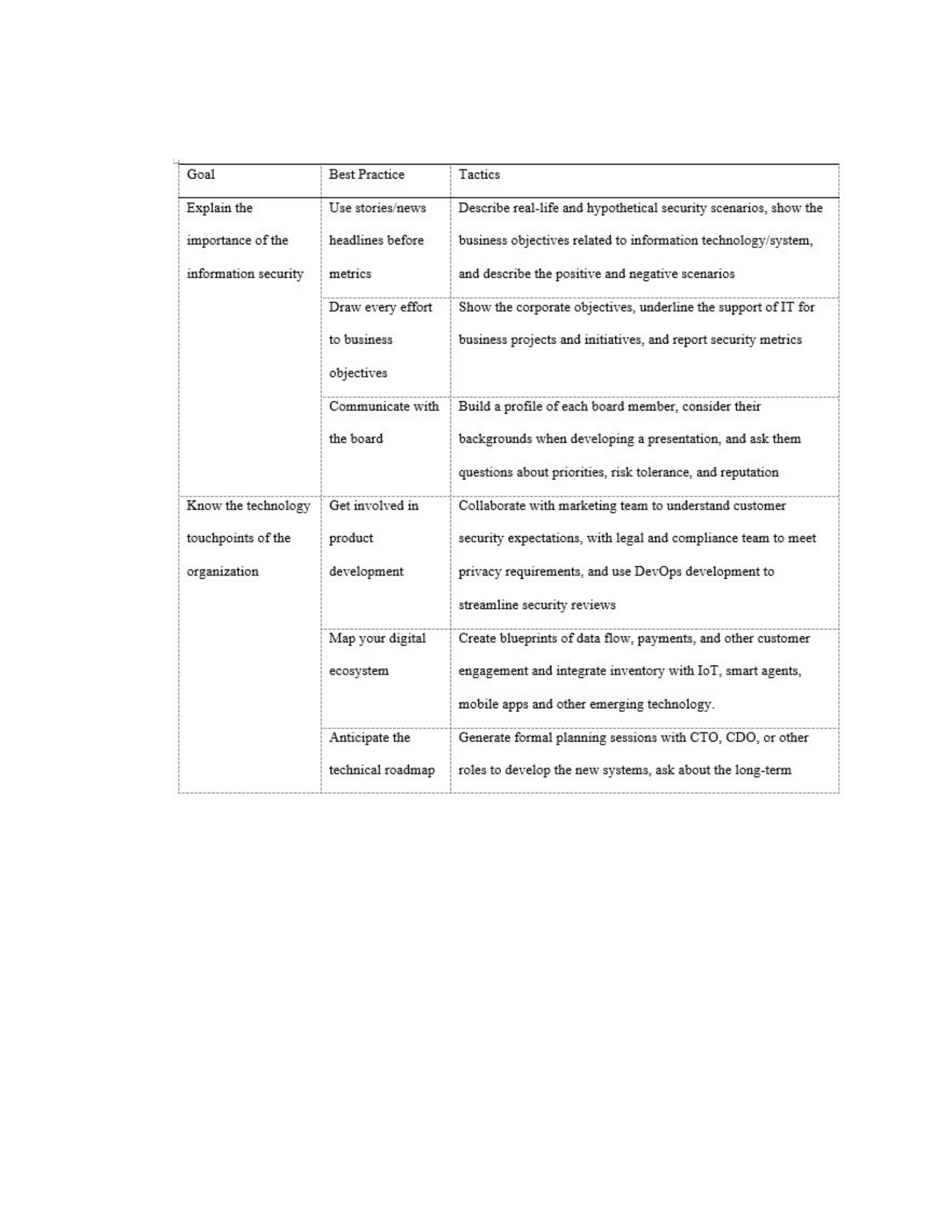
Tactics to Educate Leaders of Organizations
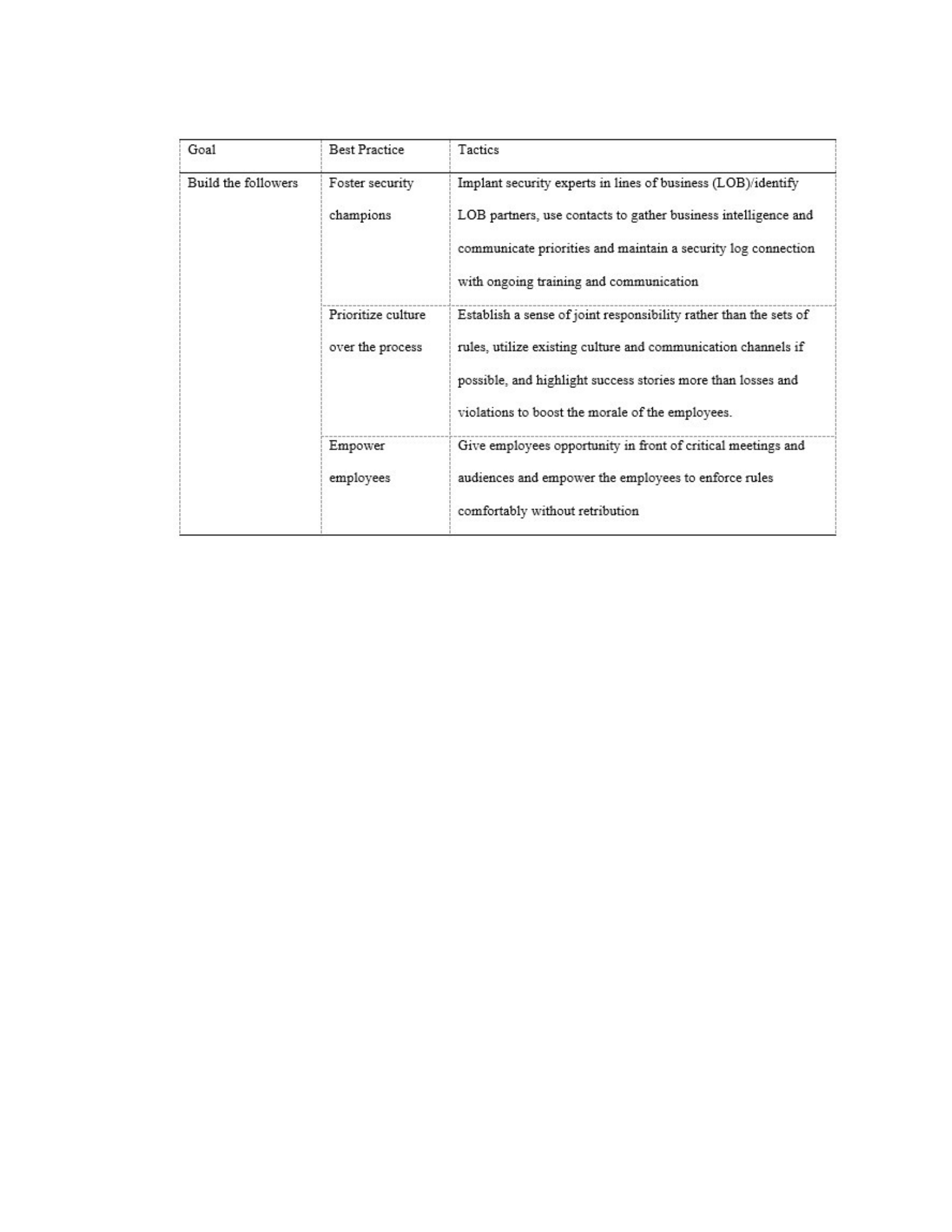
Conclusions
Increased use of computer and mobile devices together with the digitalization of
businesses operations requires an informed and knowledgeable manager, who understands
vulnerabilities and threats to data and information assets of the organization and develops
strategies to overcome internal human factor threats to protect data and assets. Without
strong security measures, a disgruntled employee could share data and information with a
competitor because employees know the type and storage locations of sensitive data.
Because of the lack of understanding and training, some employees could provide
access to digital intruders unintentionally. Additionally, the source of most data breaches
is the insider of a company accidentally or intentionally. Breaches through a contractor or
other service providers, for example, in the case of the Wyndham hotels, Target, and the
Home Depot breaches, are another common type of breaches. Therefore, it is essential to

develop and continuously update a robust internal security policy to educate employees
and mitigate risk. Although it is impossible to eliminate every threat, organizations could
have protocols that could minimize the damage due to an internal data breach. Top
managers should consider the resource tradeoffs that the time is taken to ensure a safe
culture versus maximizing the output, creativity, speed, and worker satisfaction.
Individuals do not consider risk consciously when facing high workloads and tight
deadlines. Managers should focus on risk avoidance strategies, for example, proactive
system designs versus reactive ones and negligence versus normal security and usability.
In summary, the occurrence of an internal data breach threat factor without at least a
negligent action by an insider is relatively rare.
The policies and controls dealing with a data breach, for example, the employee
security training and organizational information security policy, fine-grained access
controls, and comprehensive network monitoring could improve breach vulnerability.
Top managers should be responsible for improving cyber-security because the global
payment systems, private customer data, critical control systems, and core intellectual
property are at risk. Managers have the responsibility to understand the security
intelligence maturity level of their organizations based on their IT security and business
risk posture. Additionally, managers should evaluate the appetite of organizations for
risks based on their capabilities to mitigate and plan to close any potential security gaps.
With proper application of new security technology and strong public-private
partnerships, organizations could protect their information systems assets and could

become robust and resilient. However, poorly implemented IT security rules and
procedures could hinder organizations from achieving the mission and could impact
customer privacy adversely.

