


Experimentation:
I have devised my experiments by using the traditional sequence.txt files we have been using
for the duration of this project.
For usage in all experiments, I have written test fitness data similar to that provided, but in
incremental lengths of 10, 100, 500, 1000, 5000, 10000 lines of fitness data. I feel that these are
good increments that will test various experiments with different quantities of data length.
In order to perform experiment 1, I wrote a sequence file (experiment1.txt) to compare and
contrast the comparison count, swap count, and runtime of different lengths of data using both
merge sort and insertion sort.
Results:
0
1750000
3500000
5250000
7000000
Insertion Sort Comparisons
Merge Sort Comparisons
0
1250
2500
3750
5000
Insertion Sort Swaps Merge Sort Swaps
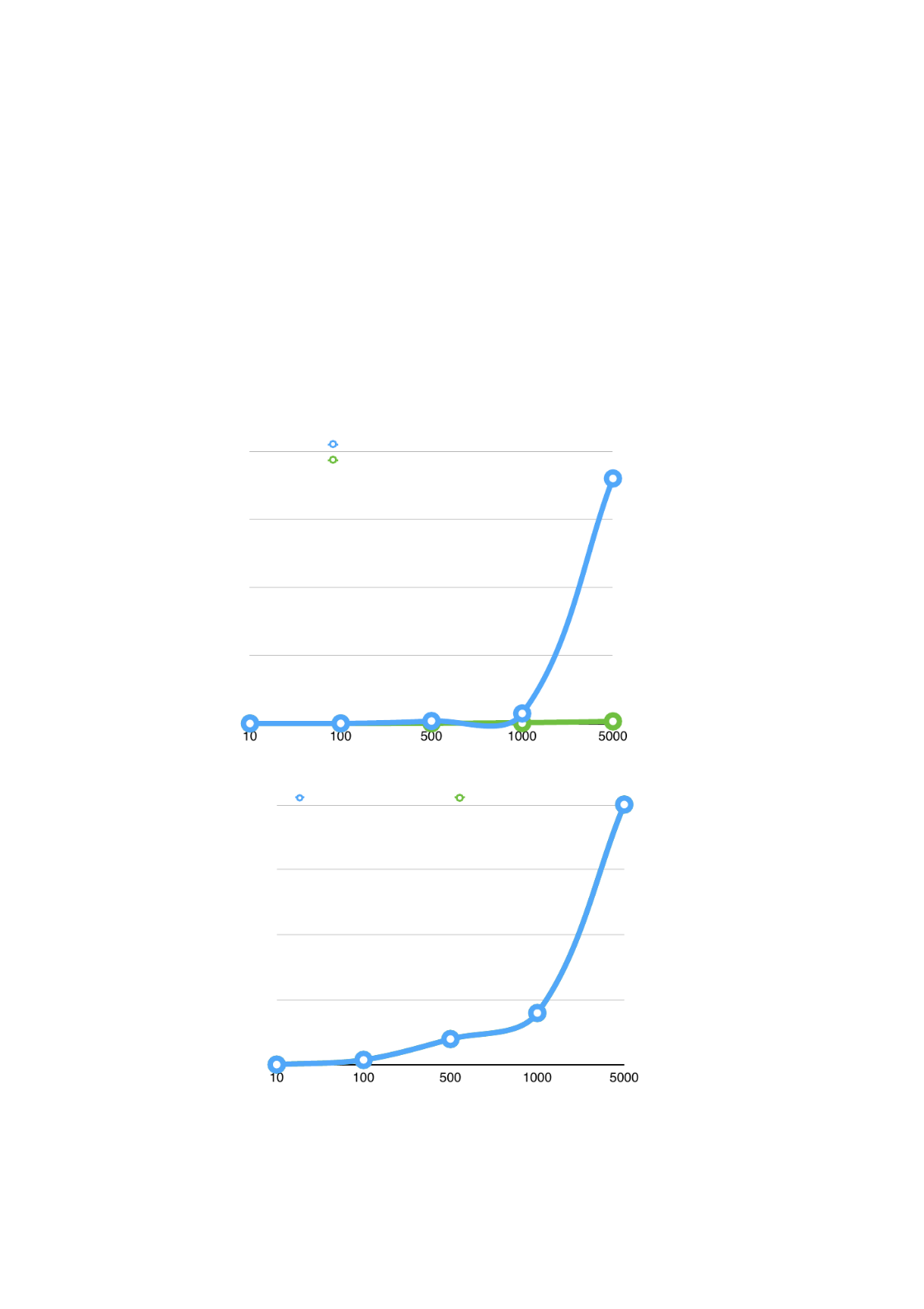
After observing my results, a few things are clear. Merge sort is the definite winner when it
comes to large amounts of data. My results support the face that the number of swaps and
comparisons by insertion sort is always equal to or larger than merge sort. This would make
merge sort the winner; however, after observing runtime it is clear that we’d want to use
insertion sort for sets of data around or lower then 100 elements. Otherwise, for sets of data
larger then 100 elements, merge sort would be the most efficient method of the two compared.
In order to perform experiment 2, I wrote a sequence file (experiment2.txt) to compare and
contrast the runtime of data using both the average and parallel average function.
Results:
0
7.5
15
22.5
30
Insertion Sort Runtime Merge Sort Runtime
0
3.5
7
10.5
14
Serial Average Runtime
Parallel Average Runtime

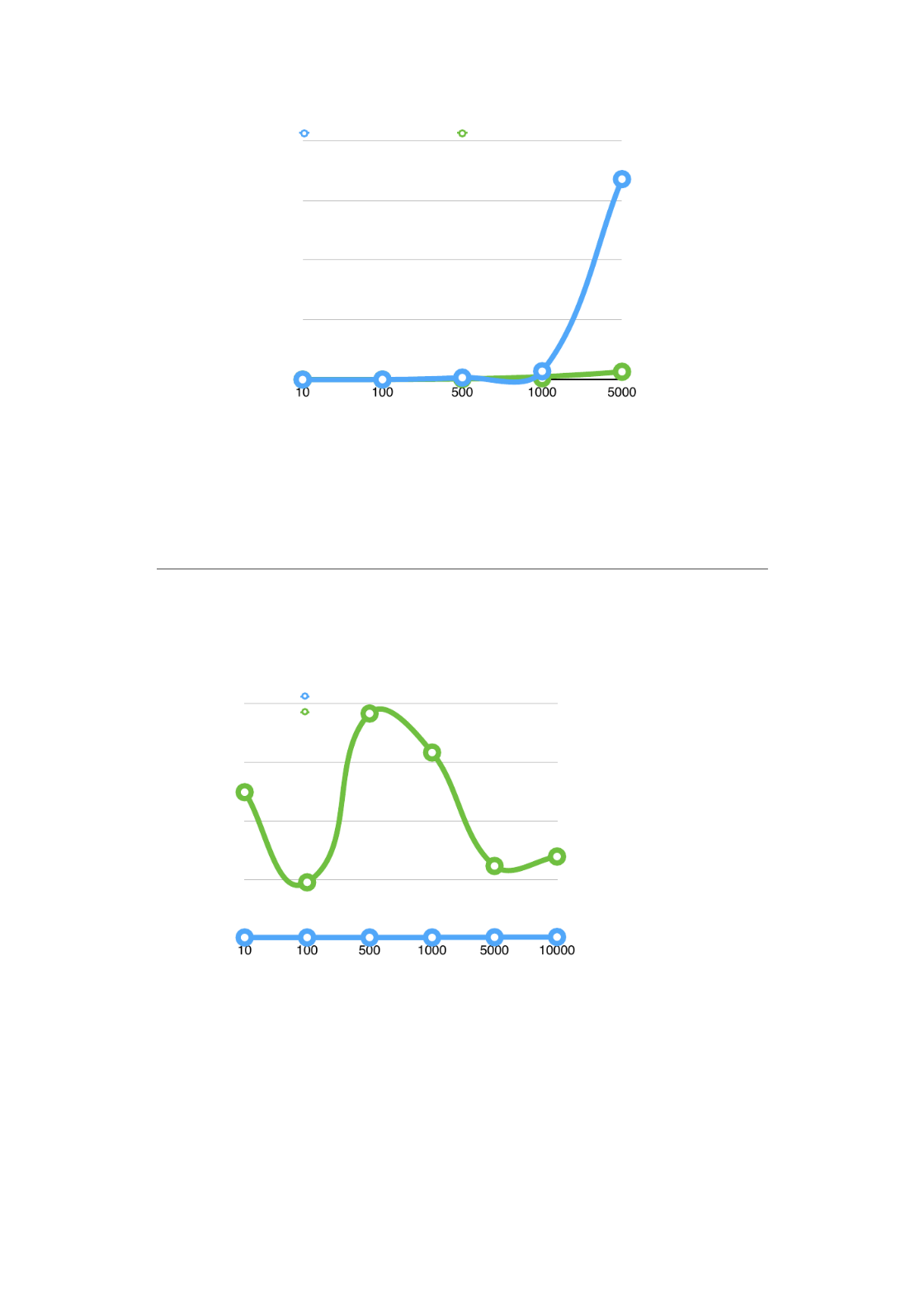
Oddly enough, the results I am receiving show that my parallel implementation is always taking
much longer. I assume this has something to do with the amount of threads OpenMP is
receiving. After tweaking the number of threads allocated to 4, I am seeing better results. The
more this is increased, the better my results; however, the graph above is based on four
threads. The point here that I learned is that without a large number of threads, using parallel
processing on relatively small lengths of data will result in a slower program then the equivalent
in serial. This was a good lesson to learn.
In order to perform experiment 3, I wrote a sequence file (experiment 3.txt) to compare and
contrast the comparison count, swap count, and runtime of different lengths of data using both
merge sort and parallel merge sort. This is a good opportunity to compare and contrast sorting
algorithms that are done serially and in parallel.
Results:
0
35000
70000
105000
140000
Serial Merge Sort Comparisons
Parallel Merge Sort Comparisons
0
2500
5000
7500
10000
Serial Merge Sort Swaps
Parallel Merge Sort Swaps

While the swap and comparisons were the same for serial and parallel, I can start to see a trend
where the runtime is becoming less different between serial and parallel. As per usual, a serial
method outperforms parallel methods when the data set is of a low size. As the length of the
data set increases, the parallel begins to take over as the dominent algorithm. Great to know!
These finding, while they may be screwed by programming mistakes, were very helpful in
visualizing the advantages and disadvantages of using serial vs parallel. In addition, they gave
me a great idea on when to use each scenario (wether the data set was small or large).
0
0.75
1.5
2.25
3
Serial Merge Sort Runtime
Parallel Merge Sort Runtime

