


CSC111 Lab
Object Oriented Programming – Lab IIII
---- Lab 9 ---
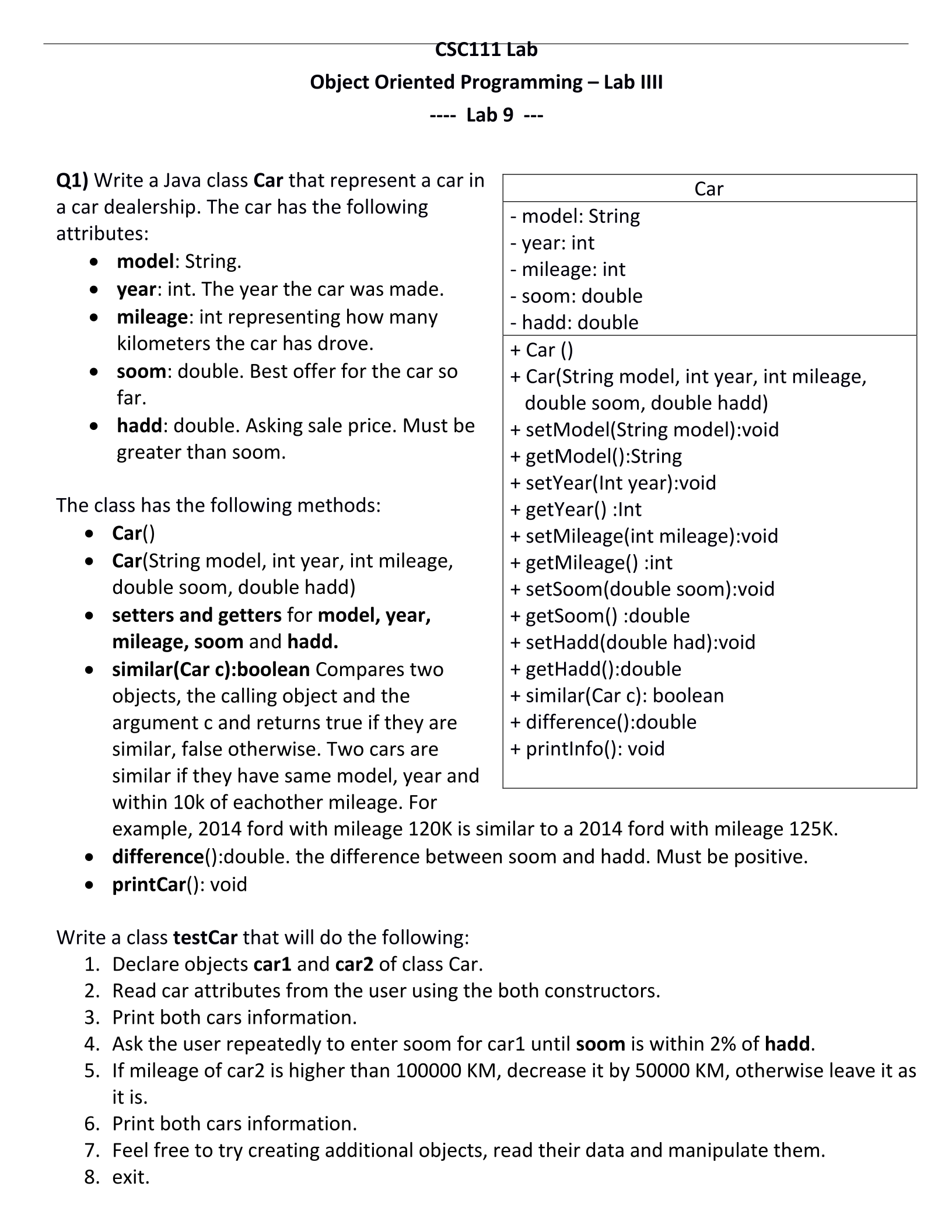
Q1) Write a Java class Car that represent a car in
a car dealership. The car has the following
attributes:
• model: String.
• year: int. The year the car was made.
• mileage: int representing how many
kilometers the car has drove.
• soom: double. Best offer for the car so
far.
• hadd: double. Asking sale price. Must be
greater than soom.
The class has the following methods:
• Car()
• Car(String model, int year, int mileage,
double soom, double hadd)
• setters and getters for model, year,
mileage, soom and hadd.
• similar(Car c):boolean Compares two
objects, the calling object and the
argument c and returns true if they are
similar, false otherwise. Two cars are
similar if they have same model, year and
within 10k of eachother mileage. For
example, 2014 ford with mileage 120K is similar to a 2014 ford with mileage 125K.
• difference():double. the difference between soom and hadd. Must be positive.
• printCar(): void
Write a class testCar that will do the following:
1. Declare objects car1 and car2 of class Car.
2. Read car attributes from the user using the both constructors.
3. Print both cars information.
4. Ask the user repeatedly to enter soom for car1 until soom is within 2% of hadd.
5. If mileage of car2 is higher than 100000 KM, decrease it by 50000 KM, otherwise leave it as
it is.
6. Print both cars information.
7. Feel free to try creating additional objects, read their data and manipulate them.
8. exit.
Car
- model: String
- year: int
- mileage: int
- soom: double
- hadd: double
+ Car ()
+ Car(String model, int year, int mileage,
double soom, double hadd)
+ setModel(String model):void
+ getModel():String
+ setYear(Int year):void
+ getYear() :Int
+ setMileage(int mileage):void
+ getMileage() :int
+ setSoom(double soom):void
+ getSoom() :double
+ setHadd(double had):void
+ getHadd():double
+ similar(Car c): boolean
+ difference():double
+ printInfo(): void
Create a project Lab09
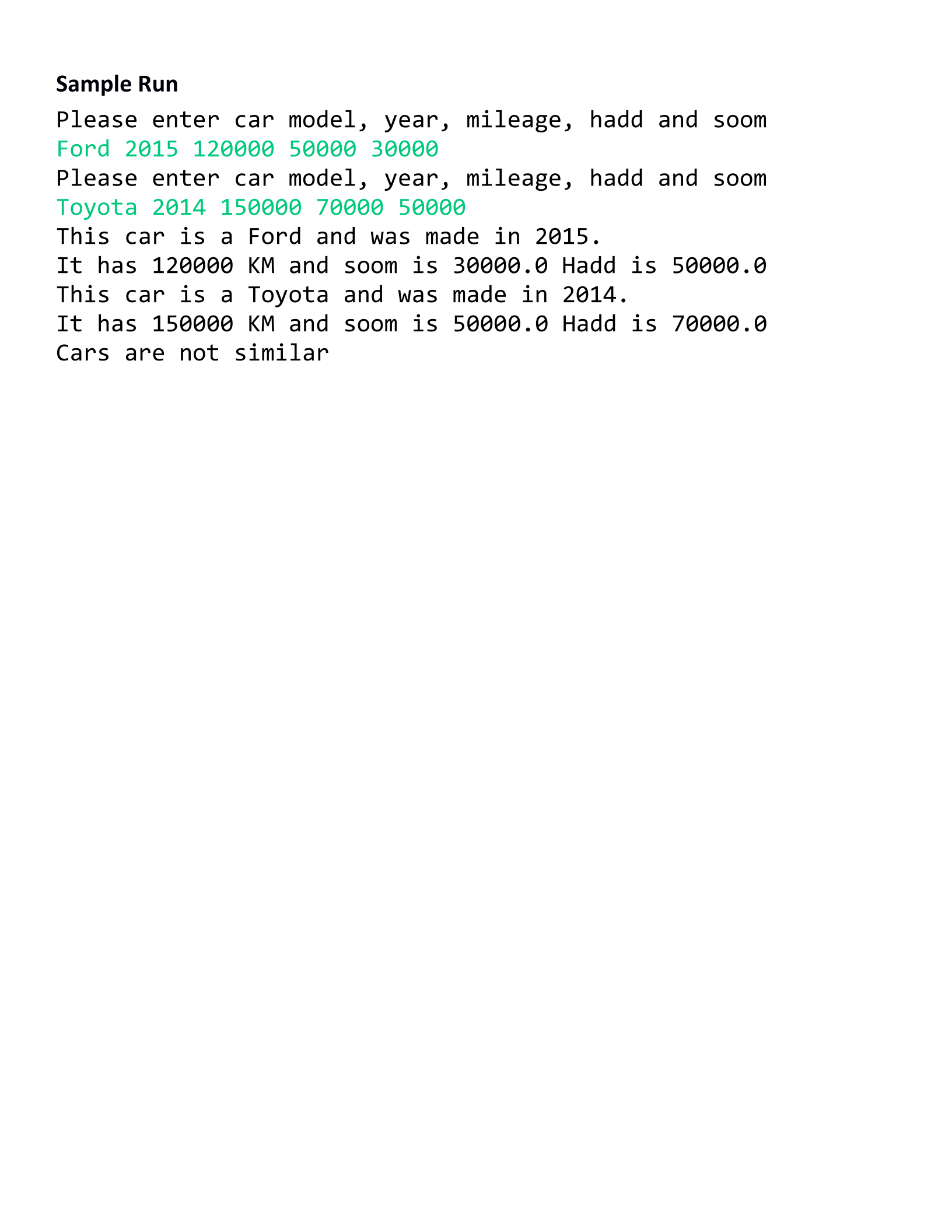
Sample Run
Please enter car model, year, mileage, hadd and soom
Ford 2015 120000 50000 30000
Please enter car model, year, mileage, hadd and soom
Toyota 2014 150000 70000 50000
This car is a Ford and was made in 2015.
It has 120000 KM and soom is 30000.0 Hadd is 50000.0
This car is a Toyota and was made in 2014.
It has 150000 KM and soom is 50000.0 Hadd is 70000.0
Cars are not similar
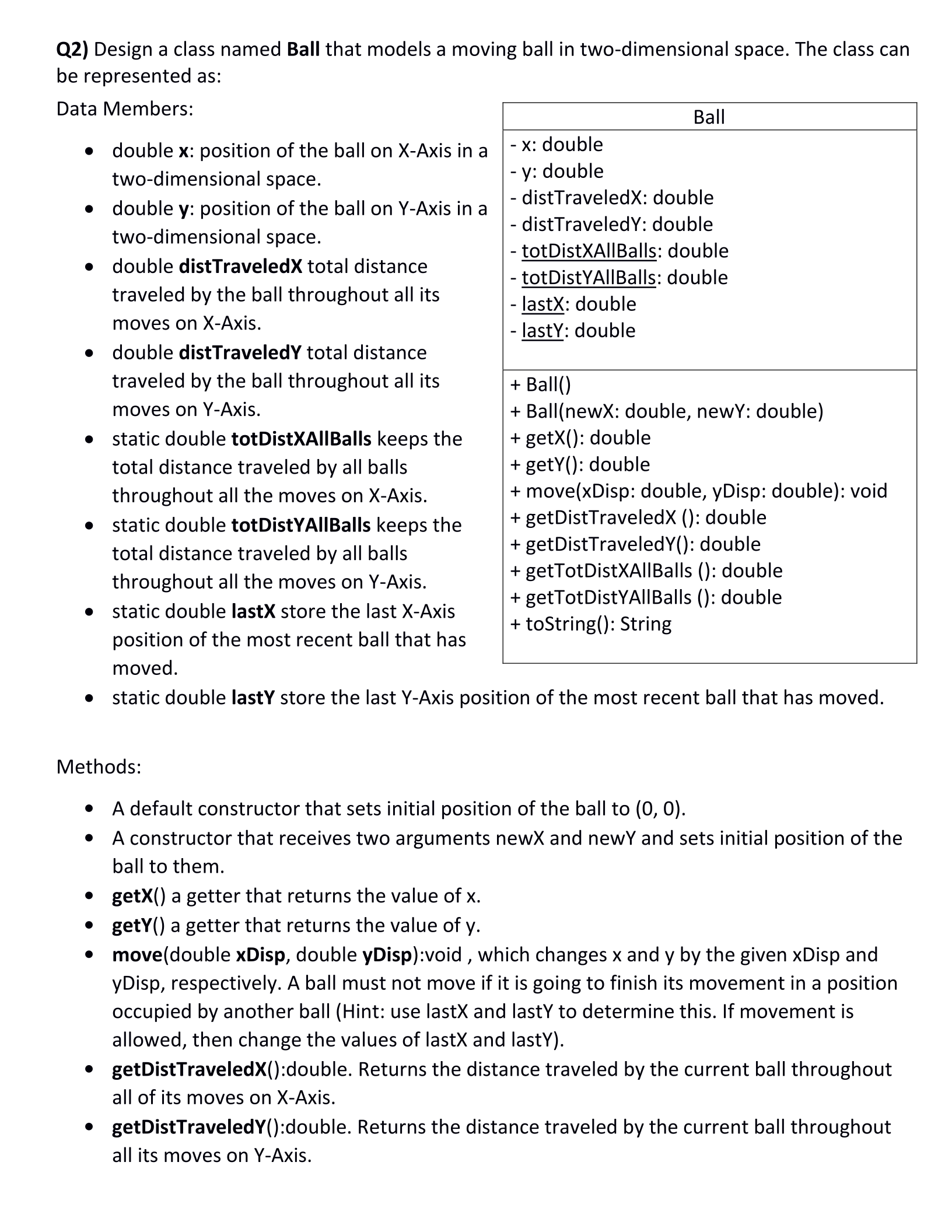
Q2) Design a class named Ball that models a moving ball in two-dimensional space. The class can
be represented as:
Data Members:
• double x: position of the ball on X-Axis in a
two-dimensional space.
• double y: position of the ball on Y-Axis in a
two-dimensional space.
• double distTraveledX total distance
traveled by the ball throughout all its
moves on X-Axis.
• double distTraveledY total distance
traveled by the ball throughout all its
moves on Y-Axis.
• static double totDistXAllBalls keeps the
total distance traveled by all balls
throughout all the moves on X-Axis.
• static double totDistYAllBalls keeps the
total distance traveled by all balls
throughout all the moves on Y-Axis.
• static double lastX store the last X-Axis
position of the most recent ball that has
moved.
• static double lastY store the last Y-Axis position of the most recent ball that has moved.
Methods:
• A default constructor that sets initial position of the ball to (0, 0).
• A constructor that receives two arguments newX and newY and sets initial position of the
ball to them.
• getX() a getter that returns the value of x.
• getY() a getter that returns the value of y.
• move(double xDisp, double yDisp):void , which changes x and y by the given xDisp and
yDisp, respectively. A ball must not move if it is going to finish its movement in a position
occupied by another ball (Hint: use lastX and lastY to determine this. If movement is
allowed, then change the values of lastX and lastY).
• getDistTraveledX():double. Returns the distance traveled by the current ball throughout
all of its moves on X-Axis.
• getDistTraveledY():double. Returns the distance traveled by the current ball throughout
all its moves on Y-Axis.
Ball
- x: double
- y: double
- distTraveledX: double
- distTraveledY: double
- totDistXAllBalls: double
- totDistYAllBalls: double
- lastX: double
- lastY: double
+ Ball()
+ Ball(newX: double, newY: double)
+ getX(): double
+ getY(): double
+ move(xDisp: double, yDisp: double): void
+ getDistTraveledX (): double
+ getDistTraveledY(): double
+ getTotDistXAllBalls (): double
+ getTotDistYAllBalls (): double
+ toString(): String
• public static double getTotDistXAllBalls() that return the distance traveled by all balls
throughout all of the moves on X-Axis.
• public static double getTotDistYAllBalls() that return the distance traveled by all balls
throughout all of the moves on Y-Axis.
• toString(), which returns the string "Ball @ (x,y)".
Create a class testBall to test our Ball class. This class will do the following:
• It creates a new ball with a position (2, 2).
• Then it moves the ball by (3, -2).
• Then it moves the ball by (2, -7).
• Then it creates a new ball with a position (0,0).
• Then it moves the ball by (7, -7). Notice that the second ball must not move since it will
otherwise occupy the same place occupied by the first ball.
• Then it moves the ball by (2, 4).
Finally, it prints the last position of the two balls using toString method and the total distance
traveled on both X-Axis and Y-Axis by each ball and by all balls.
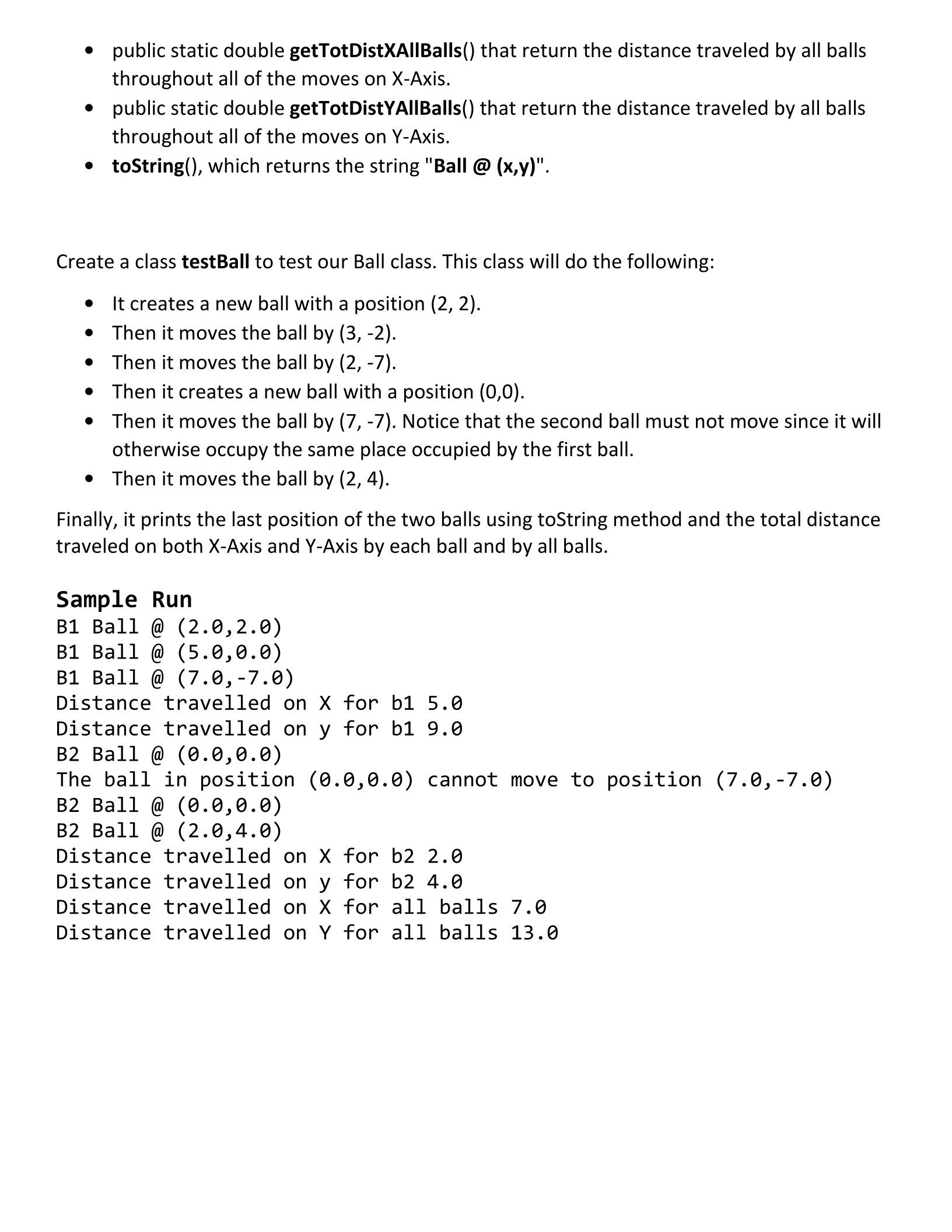
Sample Run
B1 Ball @ (2.0,2.0)
B1 Ball @ (5.0,0.0)
B1 Ball @ (7.0,-7.0)
Distance travelled on X for b1 5.0
Distance travelled on y for b1 9.0
B2 Ball @ (0.0,0.0)
The ball in position (0.0,0.0) cannot move to position (7.0,-7.0)
B2 Ball @ (0.0,0.0)
B2 Ball @ (2.0,4.0)
Distance travelled on X for b2 2.0
Distance travelled on y for b2 4.0
Distance travelled on X for all balls 7.0
Distance travelled on Y for all balls 13.0
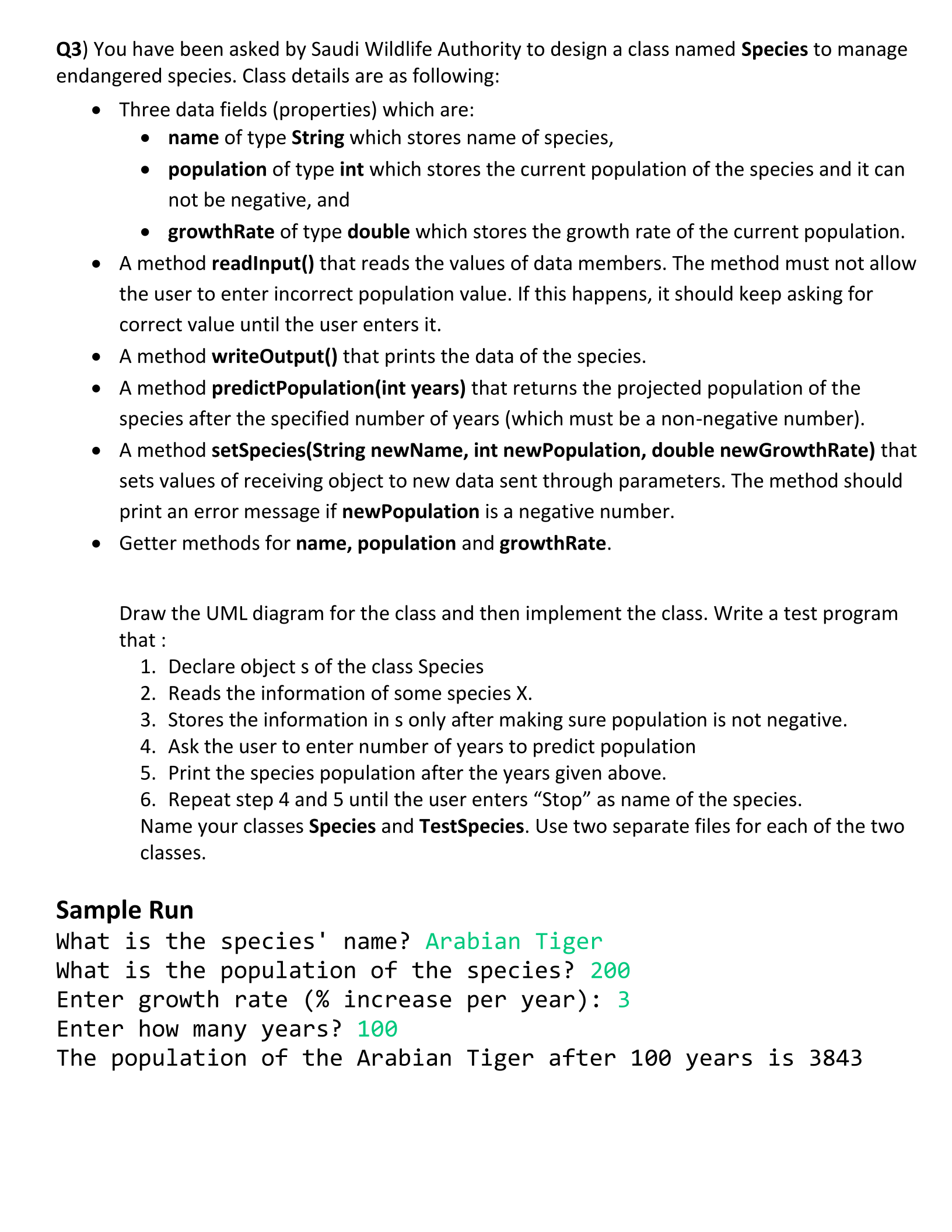
Q3) You have been asked by Saudi Wildlife Authority to design a class named Species to manage
endangered species. Class details are as following:
• Three data fields (properties) which are:
• name of type String which stores name of species,
• population of type int which stores the current population of the species and it can
not be negative, and
• growthRate of type double which stores the growth rate of the current population.
• A method readInput() that reads the values of data members. The method must not allow
the user to enter incorrect population value. If this happens, it should keep asking for
correct value until the user enters it.
• A method writeOutput() that prints the data of the species.
• A method predictPopulation(int years) that returns the projected population of the
species after the specified number of years (which must be a non-negative number).
• A method setSpecies(String newName, int newPopulation, double newGrowthRate) that
sets values of receiving object to new data sent through parameters. The method should
print an error message if newPopulation is a negative number.
• Getter methods for name, population and growthRate.
Draw the UML diagram for the class and then implement the class. Write a test program
that :
1. Declare object s of the class Species
2. Reads the information of some species X.
3. Stores the information in s only after making sure population is not negative.
4. Ask the user to enter number of years to predict population
5. Print the species population after the years given above.
6. Repeat step 4 and 5 until the user enters “Stop” as name of the species.
Name your classes Species and TestSpecies. Use two separate files for each of the two
classes.
Sample Run
What is the species' name? Arabian Tiger
What is the population of the species? 200
Enter growth rate (% increase per year): 3
Enter how many years? 100
The population of the Arabian Tiger after 100 years is 3843
Powered by TCPDF (www.tcpdf.org)

