



6
E pluribus unum.
(One composed of many.)
—Virgil
O! call back yesterday, bid time
return.
—William Shakespeare
Call me Ishmael.
—Herman Melville
Answer me in one word.
—William Shakespeare
There is a point at which
methods devour themselves.
—Frantz Fanon
Objectives
In this chapter you’ll learn:
■
How
static
methods and
fields are associated with
classea rather than objects.
■
How the method call/return
mechanism is supported by
the method-call stack.
■
How packages group related
classes.
■
How to use random-number
generation to implement
game-playing applications.
■
How the visibility of
declarations is limited to
specific regions of programs.
■
What method overloading is
and how to create overloaded
methods.
Methods: A Deeper Look,
Solutions
Self-Review Exercises 2
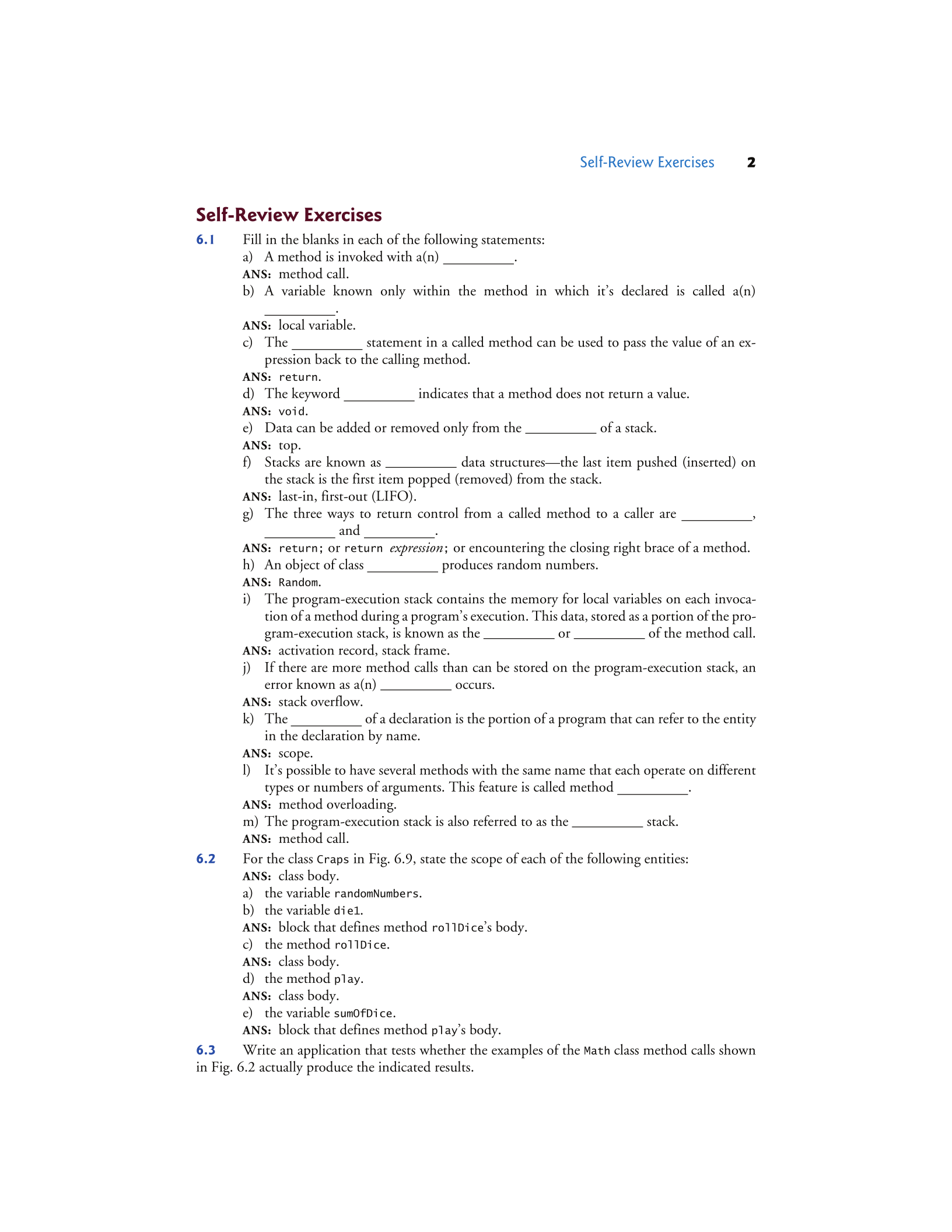
Self-Review Exercises
6.1 Fill in the blanks in each of the following statements:
a) A method is invoked with a(n) .
ANS:
method call.
b) A variable known only within the method in which it’s declared is called a(n)
.
ANS:
local variable.
c) The statement in a called method can be used to pass the value of an ex-
pression back to the calling method.
ANS:
return
.
d) The keyword indicates that a method does not return a value.
ANS:
void
.
e) Data can be added or removed only from the of a stack.
ANS:
top.
f) Stacks are known as data structures—the last item pushed (inserted) on
the stack is the first item popped (removed) from the stack.
ANS:
last-in, first-out (LIFO).
g) The three ways to return control from a called method to a caller are ,
and .
ANS:
return;
or
return
expression
;
or encountering the closing right brace of a method.
h) An object of class produces random numbers.
ANS:
Random
.
i) The program-execution stack contains the memory for local variables on each invoca-
tion of a method during a program’s execution. This data, stored as a portion of the pro-
gram-execution stack, is known as the or of the method call.
ANS:
activation record, stack frame.
j) If there are more method calls than can be stored on the program-execution stack, an
error known as a(n) occurs.
ANS:
stack overflow.
k) The of a declaration is the portion of a program that can refer to the entity
in the declaration by name.
ANS:
scope.
l) It’s possible to have several methods with the same name that each operate on different
types or numbers of arguments. This feature is called method .
ANS:
method overloading.
m) The program-execution stack is also referred to as the stack.
ANS:
method call.
6.2 For the class
Craps
in Fig. 6.9, state the scope of each of the following entities:
ANS:
class body.
a) the variable
randomNumbers
.
b) the variable
die1
.
ANS:
block that defines method
rollDice
’s body.
c) the method
rollDice
.
ANS:
class body.
d) the method
play
.
ANS:
class body.
e) the variable
sumOfDice
.
ANS:
block that defines method
play
’s body.
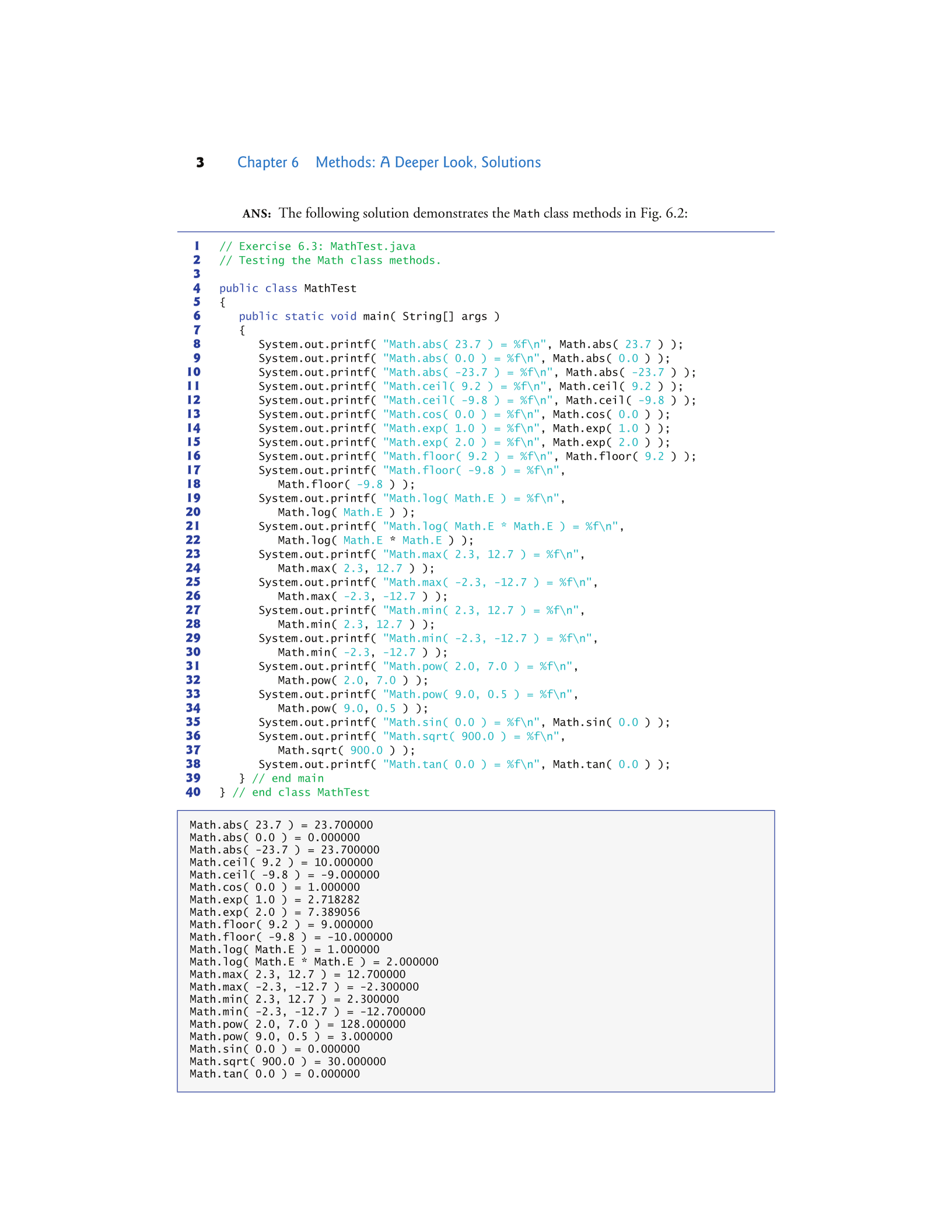
6.3 Write an application that tests whether the examples of the
Math
class method calls shown
in Fig. 6.2 actually produce the indicated results.
3Chapter 6 Methods: A Deeper Look, Solutions
ANS:
The following solution demonstrates the
Math
class methods in Fig. 6.2:
1
// Exercise 6.3: MathTest.java
2
// Testing the Math class methods.
3
4
public class MathTest
5
{
6
public static void main( String[] args )
7
{
8
System.out.printf( "Math.abs( 23.7 ) = %f\n", Math.abs( 23.7 ) );
9
System.out.printf( "Math.abs( 0.0 ) = %f\n", Math.abs( 0.0 ) );
10
System.out.printf( "Math.abs( -23.7 ) = %f\n", Math.abs( -23.7 ) );
11
System.out.printf( "Math.ceil( 9.2 ) = %f\n", Math.ceil( 9.2 ) );
12
System.out.printf( "Math.ceil( -9.8 ) = %f\n", Math.ceil( -9.8 ) );
13
System.out.printf( "Math.cos( 0.0 ) = %f\n", Math.cos( 0.0 ) );
14
System.out.printf( "Math.exp( 1.0 ) = %f\n", Math.exp( 1.0 ) );
15
System.out.printf( "Math.exp( 2.0 ) = %f\n", Math.exp( 2.0 ) );
16
System.out.printf( "Math.floor( 9.2 ) = %f\n", Math.floor( 9.2 ) );
17
System.out.printf( "Math.floor( -9.8 ) = %f\n",
18
Math.floor( -9.8 ) );
19
System.out.printf( "Math.log( Math.E ) = %f\n",
20
Math.log( Math.E ) );
21
System.out.printf( "Math.log( Math.E * Math.E ) = %f\n",
22
Math.log( Math.E * Math.E ) );
23
System.out.printf( "Math.max( 2.3, 12.7 ) = %f\n",
24
Math.max( 2.3, 12.7 ) );
25
System.out.printf( "Math.max( -2.3, -12.7 ) = %f\n",
26
Math.max( -2.3, -12.7 ) );
27
System.out.printf( "Math.min( 2.3, 12.7 ) = %f\n",
28
Math.min( 2.3, 12.7 ) );
29
System.out.printf( "Math.min( -2.3, -12.7 ) = %f\n",
30
Math.min( -2.3, -12.7 ) );
31
System.out.printf( "Math.pow( 2.0, 7.0 ) = %f\n",
32
Math.pow( 2.0, 7.0 ) );
33
System.out.printf( "Math.pow( 9.0, 0.5 ) = %f\n",
34
Math.pow( 9.0, 0.5 ) );
35
System.out.printf( "Math.sin( 0.0 ) = %f\n", Math.sin( 0.0 ) );
36
System.out.printf( "Math.sqrt( 900.0 ) = %f\n",
37
Math.sqrt( 900.0 ) );
38
System.out.printf( "Math.tan( 0.0 ) = %f\n", Math.tan( 0.0 ) );
39
} // end main
40
} // end class MathTest
Math.abs( 23.7 ) = 23.700000
Math.abs( 0.0 ) = 0.000000
Math.abs( -23.7 ) = 23.700000
Math.ceil( 9.2 ) = 10.000000
Math.ceil( -9.8 ) = -9.000000
Math.cos( 0.0 ) = 1.000000
Math.exp( 1.0 ) = 2.718282
Math.exp( 2.0 ) = 7.389056
Math.floor( 9.2 ) = 9.000000
Math.floor( -9.8 ) = -10.000000
Math.log( Math.E ) = 1.000000
Math.log( Math.E * Math.E ) = 2.000000
Math.max( 2.3, 12.7 ) = 12.700000
Math.max( -2.3, -12.7 ) = -2.300000
Math.min( 2.3, 12.7 ) = 2.300000
Math.min( -2.3, -12.7 ) = -12.700000
Math.pow( 2.0, 7.0 ) = 128.000000
Math.pow( 9.0, 0.5 ) = 3.000000
Math.sin( 0.0 ) = 0.000000
Math.sqrt( 900.0 ) = 30.000000
Math.tan( 0.0 ) = 0.000000
Self-Review Exercises 4
6.4 Give the method header for each of the following methods:
a) Method
hypotenuse
, which takes two double-precision, floating-point arguments
side1
and
side2
and returns a double-precision, floating-point result.
ANS:
double hypotenuse( double side1, double side2 )
b) Method
smallest
, which takes three integers
x
,
y
and
z
and returns an integer.
ANS:
int smallest( int x, int y, int z )
c) Method
instructions
, which does not take any arguments and does not return a value.
[Note: Such methods are commonly used to display instructions to a user.]
ANS:
void instructions()
d) Method
intToFloat
, which takes an integer argument
number
and returns a floating-
point result.
ANS:
float intToFloat( int number )
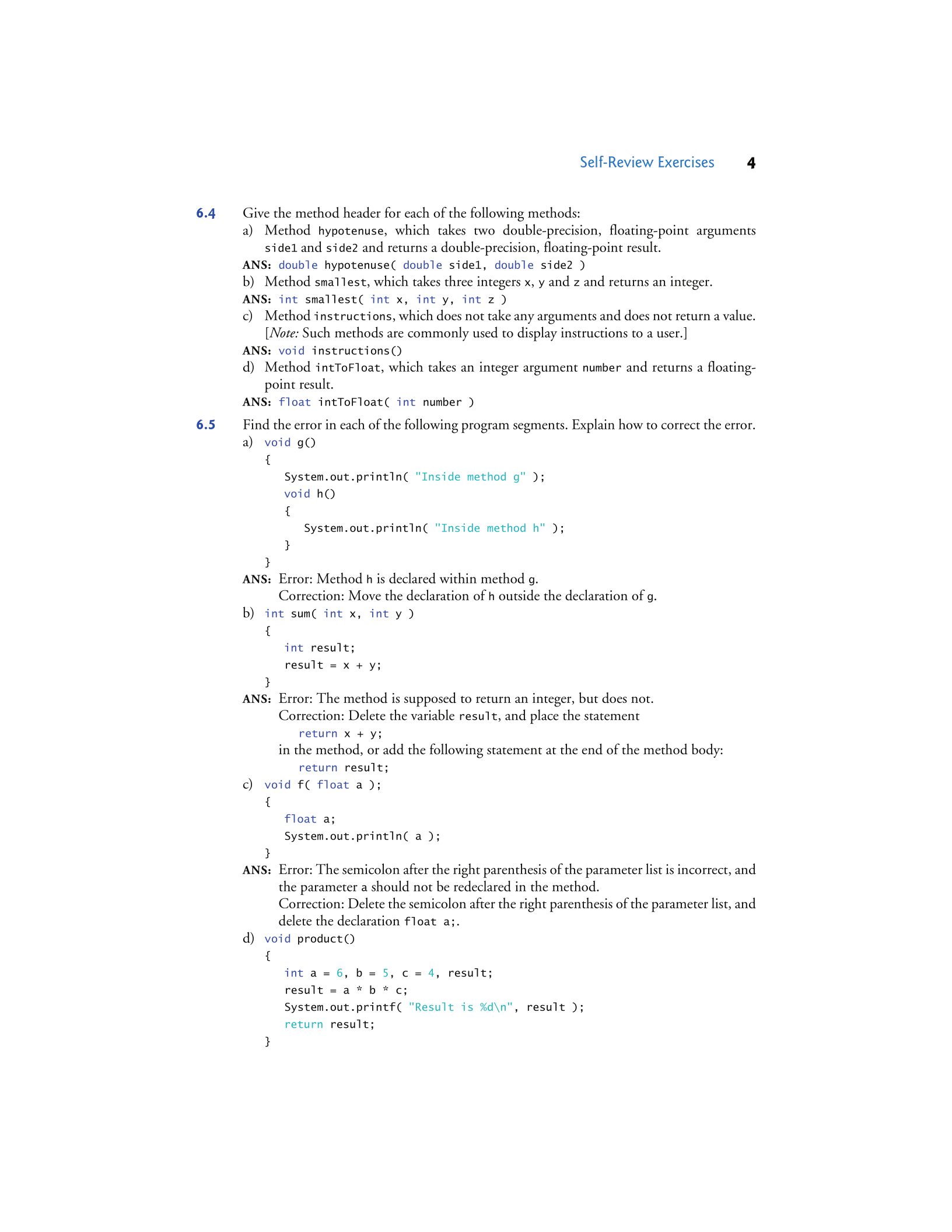
6.5 Find the error in each of the following program segments. Explain how to correct the error.
a)
void g()
{
System.out.println( "Inside method g" );
void h()
{
System.out.println( "Inside method h" );
}
}
ANS:
Error: Method
h
is declared within method
g
.
Correction: Move the declaration of
h
outside the declaration of
g
.
b)
int sum( int x, int y )
{
int result;
result = x + y;
}
ANS:
Error: The method is supposed to return an integer, but does not.
Correction: Delete the variable
result
, and place the statement
return x + y;
in the method, or add the following statement at the end of the method body:
return result;
c)
void f( float a );
{
float a;
System.out.println( a );
}
ANS:
Error: The semicolon after the right parenthesis of the parameter list is incorrect, and
the parameter
a
should not be redeclared in the method.
Correction: Delete the semicolon after the right parenthesis of the parameter list, and
delete the declaration
float a;
.
d)
void product()
{
int a = 6, b = 5, c = 4, result;
result = a * b * c;
System.out.printf( "Result is %d\n", result );
return result;
}
5Chapter 6 Methods: A Deeper Look, Solutions
ANS:
Error: The method returns a value when it’s not supposed to.
Correction: Change the return type from
void
to
int
.
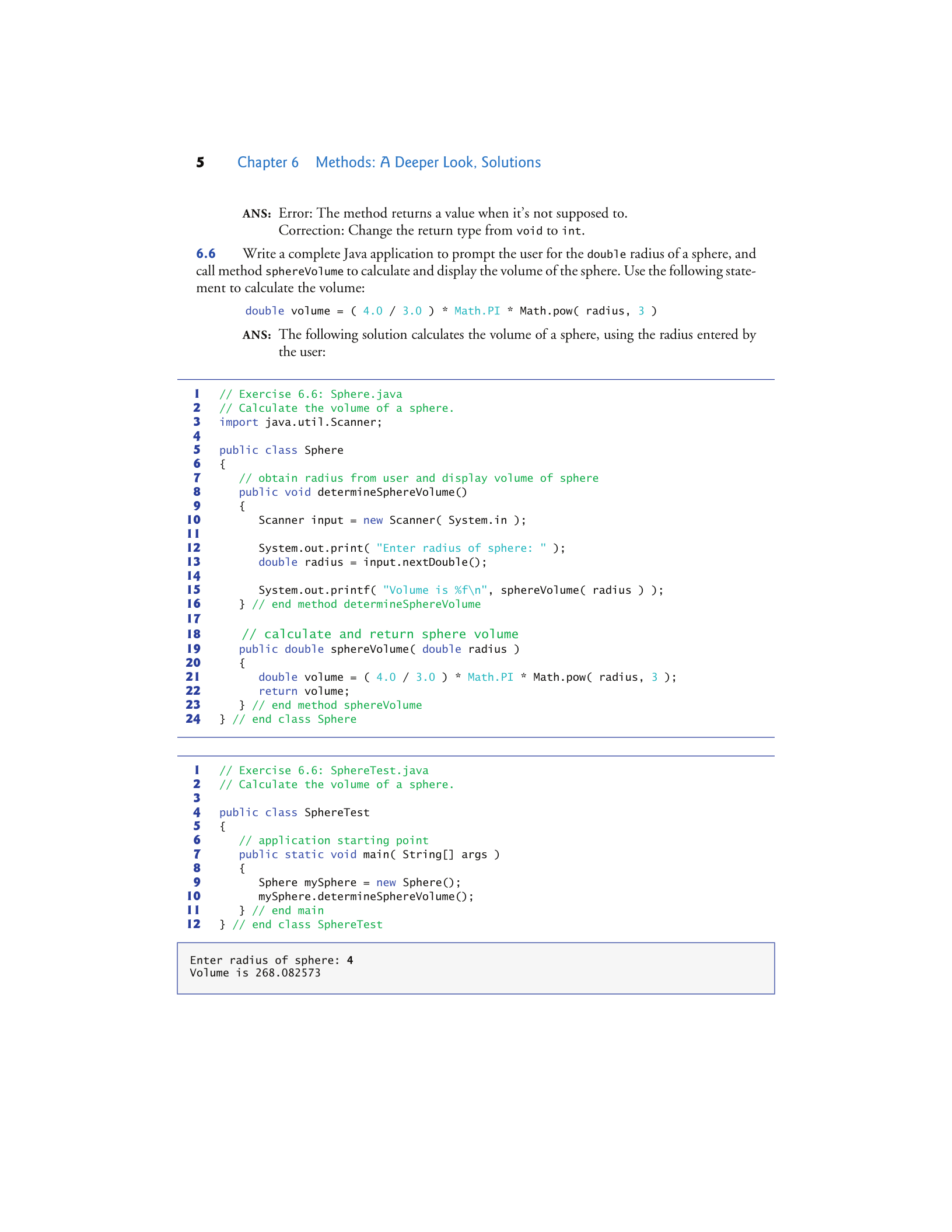
6.6 Write a complete Java application to prompt the user for the
double
radius of a sphere, and
call method
sphereVolume
to calculate and display the volume of the sphere. Use the following state-
ment to calculate the volume:
double volume = ( 4.0 / 3.0 ) * Math.PI * Math.pow( radius, 3 )
ANS:
The following solution calculates the volume of a sphere, using the radius entered by
the user:
1
// Exercise 6.6: Sphere.java
2
// Calculate the volume of a sphere.
3
import java.util.Scanner;
4
5
public class Sphere
6
{
7
// obtain radius from user and display volume of sphere
8
public void determineSphereVolume()
9
{
10
Scanner input = new Scanner( System.in );
11
12
System.out.print( "Enter radius of sphere: " );
13
double radius = input.nextDouble();
14
15
System.out.printf( "Volume is %f\n", sphereVolume( radius ) );
16
} // end method determineSphereVolume
17
18
// calculate and return sphere volume
19
public double sphereVolume( double radius )
20
{
21
double volume = ( 4.0 / 3.0 ) * Math.PI * Math.pow( radius, 3 );
22
return volume;
23
} // end method sphereVolume
24
} // end class Sphere
1
// Exercise 6.6: SphereTest.java
2
// Calculate the volume of a sphere.
3
4
public class SphereTest
5
{
6
// application starting point
7
public static void main( String[] args )
8
{
9
Sphere mySphere = new Sphere();
10
mySphere.determineSphereVolume();
11
} // end main
12
} // end class SphereTest
Enter radius of sphere: 4
Volume is 268.082573
Exercises 6
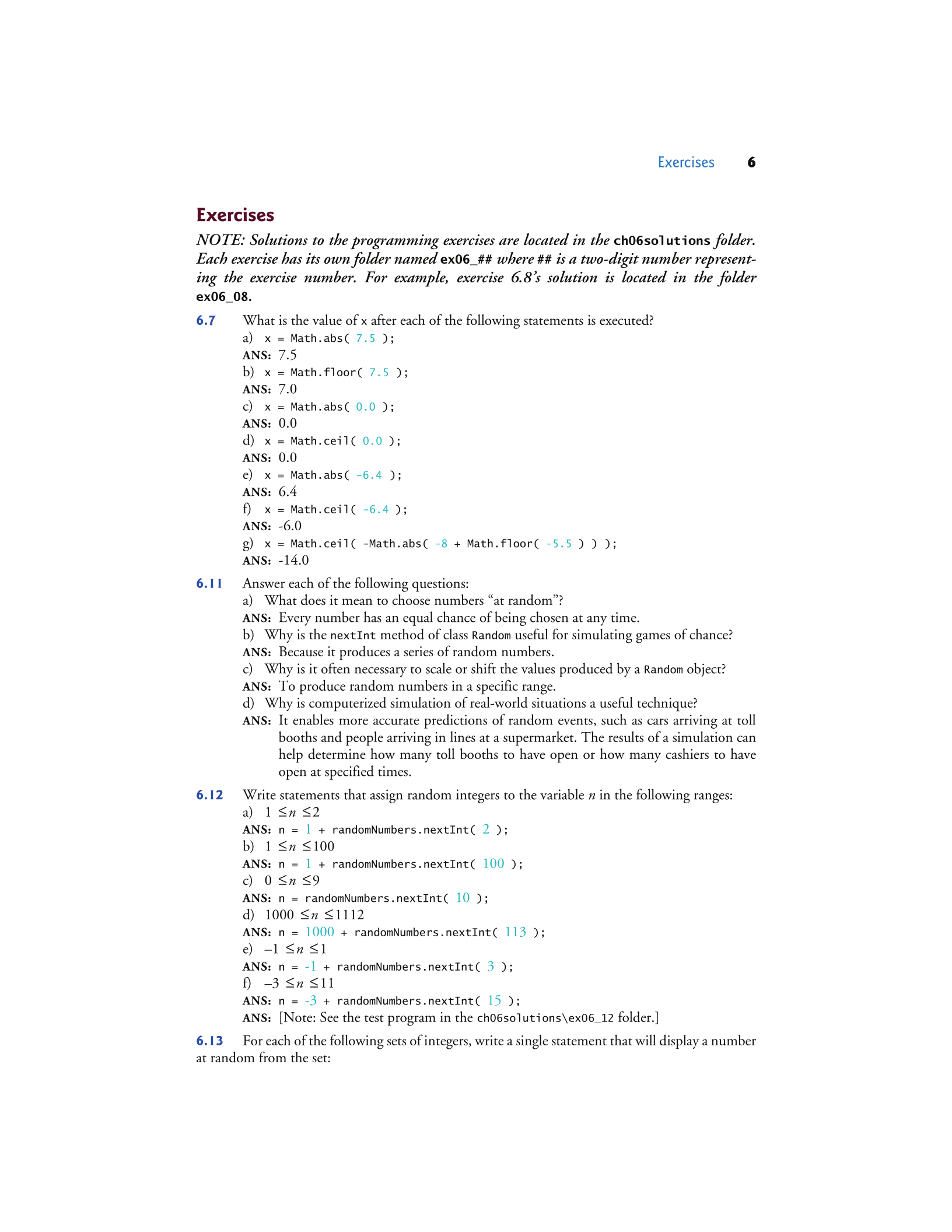
Exercises
NOTE: Solutions to the programming exercises are located in the
ch06solutions
folder.
Each exercise has its own folder named
ex06_##
where
##
is a two-digit number represent-
ing the exercise number. For example, exercise 6.8’s solution is located in the folder
ex06_08
.
6.7 What is the value of
x
after each of the following statements is executed?
a)
x = Math.abs( 7.5 );
ANS:
7.5
b)
x = Math.floor( 7.5
);
ANS:
7.0
c)
x = Math.abs( 0.0 );
ANS:
0.0
d)
x = Math.ceil( 0.0 );
ANS:
0.0
e)
x = Math.abs( -6.4
);
ANS:
6.4
f)
x = Math.ceil( -6.4 );
ANS:
-6.0
g)
x = Math.ceil( -Math.abs( -8 + Math.floor( -5.5 ) ) );
ANS:
-14.0
6.11 Answer each of the following questions:
a) What does it mean to choose numbers “at random”?
ANS:
Every number has an equal chance of being chosen at any time.
b) Why is the
nextInt
method of class
Random
useful for simulating games of chance?
ANS:
Because it produces a series of random numbers.
c) Why is it often necessary to scale or shift the values produced by a
Random
object?
ANS:
To produce random numbers in a specific range.
d) Why is computerized simulation of real-world situations a useful technique?
ANS:
It enables more accurate predictions of random events, such as cars arriving at toll
booths and people arriving in lines at a supermarket. The results of a simulation can
help determine how many toll booths to have open or how many cashiers to have
open at specified times.
6.12 Write statements that assign random integers to the variable n in the following ranges:
a) 1
≤
n
≤
2
ANS:
n =
1
+ randomNumbers.nextInt(
2
);
b) 1
≤
n
≤
100
ANS:
n =
1
+ randomNumbers.nextInt(
100
);
c) 0
≤
n
≤
9
ANS:
n = randomNumbers.nextInt(
10
);
d) 1000
≤
n
≤
1112
ANS:
n =
1000
+ randomNumbers.nextInt(
113
);
e) –1
≤
n
≤
1
ANS:
n =
-1
+ randomNumbers.nextInt(
3
);
f) –3
≤
n
≤
11
ANS:
n =
-3
+ randomNumbers.nextInt(
15
);
ANS:
[Note: See the test program in the
ch06solutions\ex06_12
folder.]
6.13 For each of the following sets of integers, write a single statement that will display a number
at random from the set:
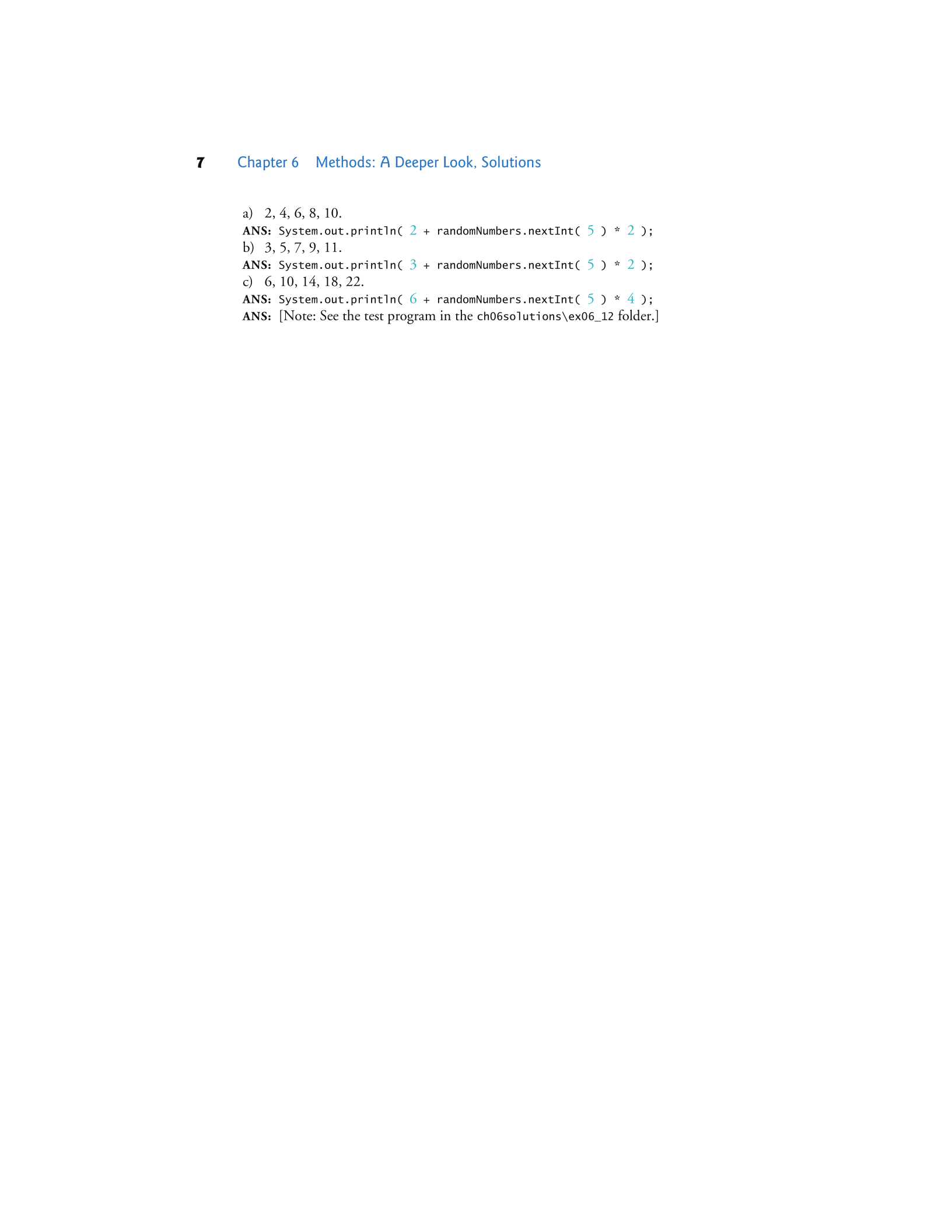
7Chapter 6 Methods: A Deeper Look, Solutions
a) 2, 4, 6, 8, 10.
ANS:
System.out.println(
2
+ randomNumbers.nextInt(
5
) *
2
);
b) 3, 5, 7, 9, 11.
ANS:
System.out.println(
3
+ randomNumbers.nextInt(
5
) *
2
);
c) 6, 10, 14, 18, 22.
ANS:
System.out.println(
6
+ randomNumbers.nextInt(
5
) *
4
);
ANS:
[Note: See the test program in the
ch06solutions\ex06_12
folder.]


