


INTRODUCTION REFLECT ON THE COURTSHIP
When asked to reflect on the courtship of a former girlfriend, acclaimed New
York Times bestselling author Neil Strauss (2005) stated the following:
When talking to a woman, I could recognize the specific point
when she became attracted to me, even if she was acting distant or
felt uncomfortable. I knew when to talk and when to shut up;
when to push and when to pull; when to tease and when to be
sincere. (p. 212)
Although the preceding account depicts the experiences of just one individual, it does
present a unique illustration of the process of attraction. On a similar note, it is especially
important to be able to decode indications of interest because they can enhance or deter
romantic relationship development. Along this line, the introduction of this paper defines
interpersonal attraction and discusses the empirical foundations that underlie this
multifaceted yet charming phenomenon.
The Many Hats of Interpersonal Attraction Interpersonal
attraction refers to “the affectional component of social relationships” (Huston, 1974, p.
xv). Stated differently, this topic area addresses a multitude of positive emotional
responses that occur between strangers, friends, and romantic partners (Berscheid &
Walster, 1969; Duck, 1977; Huston, 1974). For example, individuals can be
interpersonally attracted to physical attributes such as the facial appearance or body
physique of a dyadic partner (Huston, 1974). On the other hand, psychological features
including demeanor and “attitudes toward a limited number of topics” (Huston, p. 10)
can also produce feelings of desirability. In short, interpersonal attraction encompasses a

host of diverse physical and mental characteristics. Initial empirical research on
interpersonal attraction yielded three conceptual definitions. First, Berscheid and Walster
(1969) suggested interpersonal attraction was a multidimensional construct that was
predicated on attitudes towards another individual. A short time later McCroskey, Larsen,
and Knapp (1971) claimed interpersonal attraction was concentrated on “judgments
about whether we ‘like’ another person, whether we desire to associate with or spend
time with him, whether we ‘feel good’ in his presence” (p. 38). Finally, Huston (1974)
extended the multidimensionality argument and posited that attraction was comprised of
evaluative, cognitive, and behavioral components. When taken together, these
conceptualizations indicated that interpersonal attraction is a complex social construct
that involves liking for another individual.
Early communication scholarship devoted to interpersonal attraction examined
how individuals convey romantic interest. For instance, Kirkendall (1961) reported that
men tactically discuss their social prowess before attempting to steer the conversation
towards intimate discussion. In terms of nonverbal channels, premier communication
studies reported that interpersonal attraction was expressed through smiling (Argyle,
Alkema, & Gilmour, 1972), gazing (Cook & Smith, 1975), and displaying an open
posture (Mehrabian, 1969). The seminal work of these scholars was beneficial because it
identified expressive functions, yet other social scientific research has been advantageous
because it has produced unique insight on the theoretical underpinnings of interpersonal
attraction.
Empirical Foundations of Liking

There are two philosophical approaches that are vital to the present research. First
and foremost, interaction appearance theory (IAT) suggests that social interactions can
positively or negatively influence judgments about the physical appearance of a dyadic
partner (Albada, Knapp, & Theune, 2002). In terms of the relationship between
communication and interpersonal attraction, IAT declares:
In order to effect a positive change in one’s perceptions of a partner’s
physical attractiveness, continued social interaction is essential. Social
interaction may continue for any number of reasons, and it may occur
over a relatively short or long period of time. Ultimately, if the satisfaction
with the interaction is assessed significantly higher than the initial perception
of physical attractiveness, one’s desire for romantic involvement should be
activated. (p. 12)
Thus, one of the central tenets of IAT is that source attractiveness is not always a static
variable. Instead, theory advocates assert that perceptions of physical appearance are
vulnerable to multiple social interactions. While IAT represents a contemporary means
for understanding desirability, a classic attraction principle continues to yield novel data
on interpersonal liking.
The second philosophical approach inherent to this study is the
similarityattraction hypothesis. The basic premise behind this well-established theoretical
foundation is the claim that individuals are naturally attracted to similar others (Byrne,
1961). Historically speaking, the empirical roots of this axiom can be traced back to the
Athenian empire some 350 years before Christ. In fact, it was the renowned Greek
philosopher Aristotle (translated in 1932) who famously proclaimed: And they are

friends who have come to regard the same things as good and the same things as
evil, they who are friends of the same people, and they who are enemies of the
same people . . . . we like those with whom we wish to be friends, if they show the
same inclination . . . .we like those who resemble us, and are engaged in the same
pursuits. We like those who desire the same things as we. (pp. 103-105)
In other words, interpersonal liking correlates with perceived similarity. While the
opening pages of Chapter II further highlight the fruitful nature of the similarityattraction
hypothesis, it should be noted that one independent variable has failed to support the
robust foundation of this particular paradigm. Specifically, Bell and Wilford (2008)
reported that attraction did not develop between individuals who shared similar levels of
intelligence. In that particular study, researchers concluded “those who were more similar
to the intelligent individuals described were not significantly found to be more attracted
to them” (Bell & Wilford, 2008). As such, additional investigation into how perceived
intelligence functions in an attraction-relevant context is certainly warranted.
The Central Purpose of this Dissertation
The present study is being guided by the aforementioned chief maxim of IAT. In
essence, the role of IAT in the present investigation is two-fold. First, IAT provides an
empirical foundation on which this doctoral dissertation is being grounded. Second, this
study attempts to extend the underlying attraction mechanism that represents the heart of
IAT. In order to accomplish this objective, this study is scientifically testing if a brief date
can impact judgments of physical attractiveness, similarity, and intelligence. As alluded
to previously, IAT nicely illustrates how perceptions of dyadic partners change over long
periods of time. However, IAT and other extant literature do not address whether a single

social interaction has the power to affect feelings of desirability. Thus, this study has been
designed to address this gap in the literature as the central question being examined is:
can a single communication event influence perceptions of physical attractiveness?
This dissertation is comprised of five separate chapters. The opening chapter
begins by defining the central topic and discussing independent variables. The second
chapter reviews the existing literature devoted to interpersonal attraction in potentially
romantic relationships. More specifically, this section of the paper illustrates the
pervasiveness of similarity research, examines how intelligence influences desirability,
describes how propinquity mediates liking, and evaluates the impact of first impressions.
The second chapter concludes by identifying several examples of positive
communication, highlighting the effects of negative social interactions, and proposing
several hypotheses as well as a research question. It is in the third chapter of this text that
the author outlines methodological considerations. Once completed, the fourth chapter
presents the results of this experiment. Lastly, the fifth and final chapter concludes by
discussing study findings, identifying limitations, and suggesting directions for future
research.
CHAPTER II
REVIEW OF LITERATURE
Early Theory and Methodology
Two schools of thought dominate the theoretical landscape of interpersonal
attraction. First, the attraction paradigm suggests individuals experience high amounts of
attraction for similar others (Byrne, 1971). That is, people prefer interpersonal partners
who possess comparable attitudes (Byrne, 1961). As archetype founder Don Byrne

(1971) summarizes:
Several different kinds of evidence indicate that interpersonal
attraction is related to similarity and dissimilarity of attitudes. If, however,
we wish to initiate a research paradigm, it is necessary to consider that
apparent relationship as simply the starting point for a program of basic
research. (p. 47)
Indeed, the similarity-attraction foundation has been fruitful as subsequent research
indicated that a strong relationship existed between interpersonal attraction and similarity
(Berscheid & Walster, 1978; Bochner, 1984; Duck, 1976). Stated differently, early
empirical observations on interpersonal attraction dispelled the famous adage that
opposites attract.
The second empirical foundation of interpersonal attraction research is commonly
referred to as the goal-oriented perspective. Scholars who embrace this philosophical
approach argue that interpersonal attraction is influenced by individuals who desire
healthy, positive, and stable communication atmospheres (Sunnafrank, 1983; Sunnafrank
& Miller, 1981). As communication researcher Michael Sunnafrank (1984) stated:
“Participating in normal, nonthreatening, get-acquainted conversations provides the
individuals with a mutually experienced stable, predictable, and controllable
environment” (p. 374). He also added the following:
This experience should lead individuals to perceive that future
contact is likely to proceed in a manner that will satisfy these goals.
This goal satisfaction, both as experienced in the communicative past

and perceived in the future, should lead to high levels of attraction,
regardless of the similarity state. (p. 374)
In other words, interpersonal attraction develops as a result of comfortable interactions in
the past and because of the potential for pleasant interactions in the future. Thus, the goal-
oriented perspective supports uncertainty reduction axioms (Berger & Calabrese, 1975)
and also explains the relationship between communication and attraction in upcoming
interactions.
The longstanding dispute between the goal-oriented and similarity-attraction
camps resulted in some academics adopting a middle-of-the-road perspective. For
example, Duck and Barnes (1992) asserted that similarity has some, but not exclusive
control over interpersonal attraction. While they argued, “the concept of similarity is
actually fundamental to the study of communication” (p. 199), they nevertheless
maintained that goals are related to both attraction and communication. In a similar vein,
Bochner (1991) stated that individuals communicate to attain goals, determine attitude
similarity, and assess potential for interpersonal bonding. Even though advocates of a
blended approach haggle about the fundamental underpinnings of each philosophical
camp, these same scholars frequently embrace diverse methodologies for studying
interpersonal attraction.
Initial quantitative research on interpersonal attraction produced two prominent
measures. First, Byrne (1971) constructed the interpersonal judgment scale, which
suggested attraction was based on intelligence, knowledge of current events, morality,
adjustments, personal feelings, and working together. A year later McCroskey and
McCain (1972) simplified desirability research when they introduced the interpersonal

attraction scale, which measured social, physical, and task attraction. Taken together,
these scales offered researchers an efficient means for systematically studying example,
Additional studies used factor analysis to quantitatively examine interpersonal
attraction. For instance, Triandis (1964) found that five independent factors represented
about 60% of the variance in his study of interpersonal attraction. Moreover, the Triandis
investigation identified a socio-emotional and task category of interpersonal attraction. In
a related study, Kiesler and Goldberg (1968) found additional empirical support for the
notion that interpersonal attraction was comprised of at least a task and liking dimension.
As a direct result, one of their final conclusions was that “factor analysis might be a very
useful tool in the study of interpersonal attraction” (p. 703). In summary, both of these
studies provided support for the claim that interpersonal attraction was multidimensional
in nature.
Early qualitative research on interpersonal attraction normally involved
participant interviews. For example, Kirkendall (1961) conducted interviews with 200
college-aged men in order to assess their motivation, communication, protective
measures, attitudes, and self-evaluations of romantic partners. When interview participant
number 52 (referred to as M) was asked about interpersonal attraction, Kirkendall
summarized his sentiments by stating, “There are certain things which he finds are good
indications as to whether or not the girl will become a willing partner” (p. 109).
Kirkendall goes on to summarize:
He also thinks it is indicative if a girl begins to flatter a boy. If
she tells him he is a big wheel, or smooth guy, it means that she is

impressed, and will accept advances from him when she might
not from other fellows. (p. 110)
One of the main findings from the Kirkendall interviews was that men frequently
developed communication strategies for building attraction. While this finding was
empirically intriguing, the majority of subsequent attraction research focused less on
strategy and more on similarity.
The Role of Similarity in Interpersonal Dyads
The relationship between interpersonal attraction and similarity can be evaluated
in a myriad of different contexts. Most notably, Byrne (1961) reported that individuals
had significantly more positive feelings for similar strangers than dissimilar strangers.
Results also indicated that individuals viewed similar strangers as more intelligent, better
adjusted, and more ethical than their dissimilar counterparts. When examined
collectively, these conclusions were instrumental because they provided a solid
foundation for later similarity-attraction research.
One of the more intriguing studies devoted to the similarity-attraction hypothesis
was conducted by Byrne and Nelson (1965). The central hypothesis of this study was that
feelings of attraction would increase as proportions of similar attitudes increased. As
hypothesized, ratings of attraction between individuals did improve when similar
attitudes increased. Put differently, this finding indicated that a strong linear relationship
existed between attraction and proportions of similar attitudes. Notably, this Byrne and
Nelson study was one of the first investigations to offer empirical evidence of a positive
correlation between similarity and attraction.

Numerous other social scientists have further developed the relationship between
interpersonal attraction and similarity. For example, Byrne, Clore Jr., and Worchel (1966)
found that individuals reported more attraction for strangers who shared similar economic
statuses in comparison to people who were financial opposites. Likewise, Zander and
Havelin (1960) claimed that individuals felt increased attraction for persons who shared
similar amounts of confidence. Back in the laboratory, Zimbardo and Formica (1963)
demonstrated that participants preferred to affiliate with individuals who maintained
similar emotional states. Although these studies revealed that attitudinal similarity was
positively associated with interpersonal attraction, subsequent research focused on the
conceptualization of similarity.
Interpersonal attraction scholars have squabbled over the relative importance of
perceived and actual similarity. Most studies have indicated that perceived attitude
similarity is more indicative of liking for another than actual similarity (Byrne, 1969;
Lindzey & Byrne, 1968). In terms of perceived similarity, Klohnen and Luo (2003)
reported that similarity to an ideal self was a strong predictor of interpersonal attraction.
With regard to actual similarities, Werner and Parmelee (1979) suggested that individuals
preferred acquaintances that enjoyed similar activities to acquaintances that shared
similar attitudes. While these results empirically demonstrated that strangers are drawn to
commonplace similarities, other investigations reported that individuals are attracted to
less traditional characteristics.
Additional social scientific literature devoted to interpersonal attraction and
similarity has found that individuals are enticed by unconventional similarities. For
instance, Jones, Pelham, Cavallo, and Mirenberg (2004) claimed that individuals

experienced elevated levels of attraction for others simply because they shared similar
surnames. Moreover, Jones and colleagues also found that participants experienced more
attraction for people who were given arbitrary numbers that closely matched their
individual birthday. Similarly, scholars argued that individuals are more likely to report
feelings of closeness for individuals who actually do share a birthday, regardless of
whether conversational similarities existed (Miller, Downs, & Prentice, 1998). When
taken together, these findings indicated that individuals fail to make a distinction between
chance similarity and genuine similarity that often emerges in conversation.
Communication scholarship is heavily focused on the correlation between similarity and
interpersonal attraction. A study by Buller, LePoire, Aune, and Eloy (1992) indicated that
similarity between the speech rates of speakers and listeners resulted in increased levels
of attractiveness. On the other hand, research has demonstrated that speech rate
dissimilarity caused diminished perceptions of social attractiveness (Street & Brady,
1982). In addition, Wheeless and Reichel (1990) reported that similarity in
communication style was a strong indicator of attraction for another interlocutor. As these
communication studies focused on speech rate and style, separate investigations
examined theoretical considerations related to attraction and similarity.
Communication accommodation theorists evaluated interpersonal attraction,
similarity and a possible link to convergence. Empirical work by Giles, Mulac, Bradac,
and Johnson (1987) suggested convergence occurred when “individuals adapt to each
other’s speech by means of a wide range of linguistic features, including speech rates,
pauses and utterance length, pronunciations and so on” (p. 14). In the same report, they
argued that individuals who converged their speech were more likely to be seen as

likable. In a similar vein, Fortman (2003) argued that “the more similar the attitudes, the
greater the attraction and the more likely accommodation will occur” (pp. 107-108).
Therefore, the findings from these studies empirically demonstrated that a strong
correlation existed between communication accommodation and feelings of interpersonal
attraction.
Attributional communication scholars evaluated whether a correlation existed
between attraction, similarity, and attributions. For instance, Berger (1973) developed two
hypotheses to test whether a relationship existed between attributions and interpersonal
attraction. First, he hypothesized that individuals who successfully completed a word
anagram would attribute their success to internal factors. Second, he theorized that
individuals would experience increased attraction for those individuals who made the
same attribution regarding task completion. Indeed, results suggested that individuals
who made similar attributions were more likely to experience interpersonal attraction in
comparison to sources that made dissimilar attributions.
Studies dedicated to similarities in persuasive communication and interpersonal
attraction have yielded inconsistent results. In one investigation of young adults,
Burleson and Samter (1996) reported that similarity in communication skills consistently
predicted attraction except in a persuasive skills condition. In contrast, Waldron and
Applegate (1998) found that similarity in persuasive tactics was positively correlated with
increased social attraction during argumentative conversations. While Waldron and
Applegate attribute the contradictory findings as a function of different methodologies,
other scholars such as Spitzberg, Canary, and Cupach (1994) maintain that feelings of
ambivalence during conflict can result in both feelings of attraction and dislike. Either way,

the relationship between attraction and similarities in persuasive communication remains
decidedly unclear.
Humorous communication scholarship evaluated whether humor impacts
attraction and similarity. Cann, Calhoun, and Banks (1997) tested the relationship
between humorous communication and interpersonal attraction by having an attitudinally
similar or attitudinally dissimilar stranger relay a humorous message over an intercom.
They found that participants reported more attraction to dissimilar strangers who
appreciated the joke in comparison to attitudinally similar strangers who felt neutral about
the humorous message. Comparable research by Murstein and Brust (1985) examined
students who rated humorous stimuli in a similar manner. Results indicated that humor
rating similarity was positively correlated with liking, loving, and a predisposition to
marry. All joking aside, these studies collectively suggested that attraction increased
between individuals who embraced similar humor tendencies. Non-theoretical
interpersonal attraction literature focused on individuals who share similar
communication values. Burleson, Kunkel, and Birch (1994) identified four different types
of communicative values in dating relationships, which included comforting, ego support,
conflict management, and regulation. They hypothesized that partner similarity on these
dimensions was positively correlated with feelings of interpersonal attraction. Indeed,
results indicated that similar communication values were associated with increased
feelings of attraction for an interpersonal partner.
Finally, nonverbal communication scholarship evaluated the correlation between
interpersonal attraction and similarity. A speed-dating study by Gueguen (2009) revealed
that men were more interpersonally attracted to women who mimicked their nonverbal

behavior during a first meeting in comparison to women who did not engage in similar
behaviors. Prior research by Dabs (1969) suggested that individuals felt higher levels of
rapport for partners who displayed similar nonverbal postures. Thus, both of these
findings imply that similar nonverbal behaviors can result in greater attraction during
interpersonal communication.
Other literature devoted to nonverbal similarity and interpersonal attraction has
produced strong claims concerning the relationship between attitude similarity and
nonverbal communication. For instance, Cappella and Palmer (1992) argued that
“nonverbal similarity depresses the effect of attitude similarity on attraction and
satisfaction to the point of non-significance” (p. 184). In an earlier study, Cappella and
Palmer (1990) claimed that a causal relationship existed between nonverbal similarity and
attraction in such a way that “attitude similarity works through behavioral similarity in
accounting for attraction and satisfaction judgments without having a direct effect itself”
(p. 178). Stated differently, similar nonverbal actions speak louder than similar attitudes.
The salience of the similarity-attraction hypothesis remains a topic of considerable
debate. While disciples from the Byrne camp continue to argue that similarity causes
attraction, Sunnafrank advocates steadfastly maintain that attraction is inherently tied to
the potential for positive outcomes in the future. Comparatively speaking, both
philosophical approaches have advanced strong empirical support. Perhaps, situational
factors related to perceived intelligence, physical proximity, initial communication,
individual perceptions, and impression formation mediate whether attraction develops. As
such, this paper now discusses each of these elements and their correlation with
interpersonal attraction.

Intellectual Ability and Source Attractiveness
Scholarship dedicated to intelligence and perceptions of physical appearance is
deeply rooted. Perhaps the most notable research on these variables came from Thorndike
(1920) who reported that positive ratings on the physical qualities of others strongly
correlated with elevated judgments concerning the intelligence of others. The label
ascribed to the cognitive process that Thorndike unearthed became reified and is now
referred to as the halo effect. Since that time, the halo of physical attractiveness and its
correlation with measures of competence and intelligence have been of particular interest
to several other academics.
Succeeding research on perception and attraction has provided additional support
for the seminal findings of Thorndike. A classic study by Dion, Berscheid, and Walster
(1972) found that physically attractive individuals were rated as more competent parents
and more likely to secure a prestigious job in comparison to less physically attractive
persons. While Dion and associates did not specifically measure intelligence, their
famous “what is beautiful is good” (p. 285) aphorism tacitly suggested that individuals of
higher physical attractiveness are also more likely to be perceived as intellectually gifted.
Along a similar line, Cann (1991) reported “the relationships of competence to other
socially desirable qualities, interpersonal attraction and intelligence, fit the emerging
pattern. Competence of either type made anyone more interpersonally attractive” (p.
229). Put differently, both intelligence and attraction share a strong correlation with social
competence.
Newer scholarship devoted to attraction and intelligence has focused on when
these variables are most salient. For instance, Haselton and Miller (2006) proposed that

ovulatory cycles affected female attraction towards either a high or low intelligence
potential mate. Specifically, they hypothesized that women would be more attracted to
intellectually creative men compared to wealthy men when females were especially
fertile. In order to test their hypotheses, researchers had mid-cycle female participants
choose a short-term mate based on two contrasting scenarios that featured either a less
talented wealthy man or an intellectually creative potentially mate. As hypothesized,
results suggested that females had the tendency to choose intellectually creative men over
wealthy potential mates when females were mid-cycle and nearing peak fertility. Thus, it
appears that female biology can affect whether women are more or less attracted to an
intelligent potential romantic partner.
Other research on how gender mediates perceptions of intelligence and attraction
has been conducted in the standard college environment. For instance, a study by Lao,
Upchurch, Corwin, and Grossnickle (1975) required male and female confederates to
role-play either a high, medium, or low assertive demeanor in front of a committee of
university faculty members. They argued that study participants would rate females who
enacted the highly assertive disposition as less likeable and intelligent. Indeed, findings
indicated that perceptions of intelligence and likeability were lower in the condition
during which the female acted in a conventionally inappropriate sex-role manner. Put
another way, it appears that liking for another as well as perceptions of intelligence are
dependent on whether females enact their traditional social role.
There are at least two studies that have examined how communicative
information affects perceptions of interpersonal attraction and intelligence. In one study,
Bailey and Garrou (1983) supplied potential daters information concerning the religious

involvement of other single individuals. More specifically, researchers asked participants
to rate their perceptions of the attractiveness and intelligence of potential daters who were
either labeled as either high or low in religious involvement. Results indicated that both
females and males perceived the targets who were classified as highly religious as more
intelligent and physically attractive in comparison to the non-religious individuals. While
this particular study used upper body slides (or pictures) to assess perceptions of
intelligence and attraction, other empirical research has looked at how nonverbal
communication affected perceptions of these same variables.
A second study on how communicative information affects individual perceptions
was conducted by Elliot and Niesta (2008). For this particular investigation, researchers
were interested in whether the color red influenced perceptions of intelligence and
attraction. With regard to methodology, participants were asked to examine female
photographs that were featured against either a red or white background. Once
completed, participants were then asked to measure the physical attractiveness, kindness,
and intelligence of the photographed women. Findings indicated that men perceived
females who were set against a red background as more attractive physically in
comparison to females who were featured against a white background. However, results
also suggested that male perceptions of female intelligence were not influenced by the
color of the background used in the photograph. Therefore, it appears that the color red
can influence male perceptions of physical attractiveness but not male perceptions of
intelligence.
Existing scholarship devoted to perceptions of physical attractiveness and
intelligence has yielded several findings that are pertinent to this study. First, a halo effect

exists whereby increased ratings on one measure correlate with increased ratings on the
other measure. Second, female attraction to intelligent men is vulnerable to biological
process. Third, individuals who are categorized as religious are also more likely to be
perceived as attractive and intelligence. All things considered, perhaps Feingold (1982)
best summarized the extant research on these two variables in stating “a reasonable
conclusion, however, is that attractiveness and mental ability covary in an unpredictable
manner” (p. 284). While additional research on perceptions of physical attractiveness and
intelligence are forthcoming, scholarship focused on propinquity and attraction has been
much more predictable.
The Correlation Between Propinquity and Liking
The concepts of proximity and interpersonal attraction have shared a robust
connection in previous scholarship. Berscheid and Walster (1969) broadly summarized
the correlation between these two phenomena in stating “other things being equal, the
closer two individuals are located geographically, the more likely it is that they will be
attracted to each other” (p. 46). In a classic study of how propinquity mediates attraction,
Bossard (1932) investigated the effects that proximity had on mate selection during the
dating stages of relationships that eventually resulted in marriage. Findings suggested that
as the physical distance between dating individuals increased the number of petitions for
marriage licenses decreased. Put differently, it appears that potential feelings of romantic
attraction are hindered by geographic separation.
Extant quantitative research devoted to attraction and proximity has commonly
employed experimental design to scientifically test independent variables. Some of the
more succinct studies such as Arkin and Burger (1980) reported that individuals who

directly interacted with others were more likely to report greater amounts of attraction in
comparison to control conditions in which participants experienced lessened amounts of
direct social interaction. In a similar vein, Byrne, Baskett, and Hodges (1971) focused on
the effects that similarity had on both proximity and attraction. Although the results for
male participants were not significant, this study indicated that female participants were
more likely to sit physically closer to similar strangers as well as report greater attraction
towards that similar individual. While both of these studies contributed additional
understanding on physical distance, the majority of existing literature on propinquity has
sought to determine whether proximity impacts attraction or whether attraction impacts
proximity.
The lion’s share of prior social scientific literature devoted to propinquity has
identified proximity as a determinant of interpersonal attraction. For instance, a
specialized investigation by Zajonc (1968) examined the relationship between “mere
exposure” (p. 1) and source liking. He hypothesized that repeated access to a given
stimulus would eventually result in more favorable perceptions of that stimulus. Not
surprisingly, results indicated that as time passed individuals eventually held more
favorable perceptions of a photographic stimuli that occurred with a greater frequency in
comparison to photographic stimuli that occurred at a lesser frequency. Zajonc nicely
summarized his central finding in stating: “If the function of orienting behavior is
eventually to change a novel stimulus into a familiar one, it is also its consequence to
render the stimulus object eventually more attractive” (p. 21). This study demonstrated
that feelings of interpersonal attraction can be induced from something as simple as
repeated exposure.

Other empirical studies have further investigated proximity as a cause of
attraction processes. Burgoon and associates (2002) found that closer proximity resulted
in more favorable ratings on measures of task attraction. With regard to organizational
communication, Quinn and Judge (1978) proposed that employees who worked
physically closer to one another were more likely to interact and thus potentially develop
feelings of interpersonal attraction. Along this same line, a survey by Anderson and
Hunsaker (1985) indicated that 68% of workplace romances occurred between two
employees who worked in a close immediate vicinity. Taken together, these investigations
proposed further evidence that attraction can develop as result of maintaining close
employment proximity.
Additional literature has examined how reciprocity influences propinquity and
interpersonal attraction. As Kubitschek and Hallinan (1998) suggest, “persons may not
approach others deemed more attractive, more competent, or of higher status because
they anticipate their attraction will not be reciprocated” (p. 4). Similarly, Kenny and
LaVoie (1982) reported that propinquity exerted greater influence over attraction and
reciprocity during the early stages of acquaintanceship as opposed to the latter stages of
acquaintanceships. Either way, it appears that reciprocity is a salient independent variable
in the marriage between propinquity and liking.
There are at least two studies that illustrate how changes in proximity can sway
feelings of interpersonal attraction. First, a longitudinal study by Priest and Sawyer
(1967) indicated that attraction was less affected by changes in proximity when initial
perceptions of source attractiveness were relatively high. In a similar vein, a second study
by Mehrabian (1968) found that as the distance between communicators decreased, the

amount of liking between dyadic partners increased. In other words, it appears that
maintaining a close physical proximity to another individual can result in increased levels
of attraction if the initial perceptions of that individual are positive.
Finally, some research has downplayed the significance of proximity as
determinant of interpersonal attraction. For instance, a study by Blass and Schwarcz
(1982) examined the relative importance of attitude similarity, need similarity, frequency
of exposure, and proximity. More specifically, a sample of skilled researchers were asked
to rank order these four variables in terms of their empirical ability to predict feelings of
attraction. Comparatively speaking, respondents rated physical proximity as being the
least statistically significant determinant of interpersonal attraction. While all of the
studies discussed thus far have focused on how proximity affects attraction, other
investigations have assessed the influence that attraction has on physical proximity.
Extant scholarship on whether attraction is a determinant of physical proximity has a less
celebrated history. Nevertheless, one study by Byrne, Ervin, and Lamberth (1970) sought
to further analyze the relationship between attraction and proximity in a non-laboratory
setting. With regard to their methodology, researchers introduced a pair of opposite sex
partners and asked them to interact for a period of thirty minutes. Shortly thereafter,
measures of interpersonal attraction were administered to both male and female
participants. Interestingly, findings indicated that individuals who reported higher levels
of attraction for a fellow interlocutor were more likely to stand closer together to that
individual while the experimenter debriefed participants. Therefore, it appears that
individuals who experience larger amounts of interpersonal attraction are more likely to
seek out closer physical proximity.

A second study by Allgeier and Byrne (1973) investigated similarity in the arena
of propinquity and how it affected interpersonal attraction. Researchers proposed that
both female and male participants would sit closer to a stranger they perceived as
attitudinally similar in comparison to a stranger they viewed as dissimilar. Indeed, results
indicated that participants were more likely to choose a seat that was two feet closer to a
stranger they viewed as both attractive and attitudinally similar. Put another way, it seems
that similarity can impact attraction, which in turn can affect the role of proximity.
In summary, considerable amounts of research have examined the correlation between
proximity and attraction. Some studies have indicated that mere exposure eventually
results in more favorable perceptions of a given phenomenon. However, many other
studies have evaluated the correlation between propinquity and attraction over lengthy
periods of time. While it is vital to consider the function of proximity, it is of greater
importance to appreciate the nature of theory in potentially romantic relationships. As
such, the next section of this dissertation examines the theoretical foundations of social
interaction and perceptions of others. More specifically, this paper meticulously unpacks
the interaction appearance theory (IAT) of communication in order to strategically
highlight the interconnectedness of interpersonal communication and physical
attractiveness.
Communication and Attraction During Initial Interactions
Several empirical theories have examined communication during initial
interactions. For example, social penetration theory (SPT) suggests relational closeness
develops through a gradual process of matched self-disclosures (Altman & Taylor, 1973).
According to Altman and Taylor, strangers engage in four stages of communication that

include orientation, exploratory affective exchange, affective exchange, and stable
exchange. Empirical research on SPT has indicated the depth of information shared
during first meetings is limited. Instead, new acquaintances engage in ordinary
conversation that is characterized by limited amounts of self-disclosure. A second
theory that focuses on communication during first meetings is uncertainty reduction
theory (URT). URT proposes strangers participate in a series of communicative behaviors
that are designed to reduce cognitive and behavioral uncertainty (Berger & Calabrese,
1975). One of the central assumptions of URT is that interlocutors enter initial
interactions with high levels of anxiety. As a direct result, individuals employ
information-seeking strategies in order to minimize uncomfortable feelings. In other
words, communication is a tool for collecting information during initial interactions.
While both SPT and URT effectively analyze dialogue during first meetings, the
aforementioned interaction appearance theory (IAT) evaluates initial interactions and
beyond.
The interaction appearance theory (IAT) of communication examines the
correlation between social interactions and perceptions of physical appearance (Albada,
Knapp, & Theune, 2002). The philosophical underpinnings of this theory are embedded
in four inter-related assumptions that address the link between communication and
feelings of romantic interest. The first supposition is that social interaction and physical
attraction are interdependent variables. Second, social interactions exist whereby
participants evaluate dyadic partners as not attractive enough to romantically pursue, but
not unattractive enough as to disregard as a potential partner. The third assumption of IAT
proposes that individuals eventually place more emphasis on positive social interactions

than on physical attributes. Finally, IAT suggests initial perceptions of physical attraction
are adjusted because of continued social interaction. When taken together, IAT concisely
posits that communication can alter opinions of physical appearance.
Albada and colleagues (2002) completed three separate studies in order to
validate IAT. In their first investigation, they interviewed participants who had been or
were currently in a committed heterosexual relationship for a period of at least 60 days.
Participants were asked to describe specific occasions during which their perceptions of a
partner’s physical appearance positively changed over time. Several participants
indicated they had experienced this phenomenon. In fact, one response was: “Which one
do you want me to talk about?” (p. 17). Moreover, interviewees were able to frequently
cite positive interactions that caused them to favorably evaluate the physical appearance
of a romantic partner. Or, as one interview participant succinctly suggested: “The more
time I spent with her, the more I noticed her personality outshining her physical
attributes” (p. 21).
Surveys were used in the second study to determine the salience of physical
attractiveness for individuals who were currently involved in a committed heterosexual
relationship (Albada et al.). For this portion of the investigation, Albada and colleagues
proposed four straightforward assumptions. They argued that: (1) physical attraction was
an important aspect of relationship involvement; (2) individuals would prefer attractive
partners; (3) daters would favor quality interactions in relationships; and (4) romantic
partners would view physical attraction and social attraction as interrelated variables. In
order to test these hypotheses, researchers used a sample of undergraduate participants
who were currently involved in a dating relationship. Support was found for all

hypotheses as 89% of participants suggested physical attraction was an important
relationship component, 58% claimed satisfying romantic relationships involved a
physically attractive partner, 99% stated that interaction satisfaction was an important
component of good relationships, and 92% acknowledged the interdependence of social
and physical attraction.
The third study by Albada and associates (2002) involved participant diaries. For
this portion of their analysis, researchers instructed 20 romantic couples to anonymously
rate their initial perceptions of their partner’s physical attractiveness. Next, participants
used written diaries to record positive and negative interactions that occurred over a
three-week period. Finally, participants re-evaluated their partner’s physical appearance
after they described their social interactions. Results for male participants yielded no
statistically significant results for positive interactions. However, researchers reported
that perceptions of physical appearance decreased for men after negative exchanges.
Moreover, a significant shift occurred for females after both positive and negative social
interactions. That is, females’ initial ratings of physical attraction significantly changed
after non-neutral interactions with their romantic partner.
A scarce amount of scholarly literature has further investigated the perceptions of
physical appearance claim proposed in IAT. Lewandowski Jr., Aron, and Gee (2007)
examined whether trait information affected ratings of physical attraction. They
hypothesized that positive personality variables would cause participants to see others as
more physically attractive. On the other hand, they argued negative qualities would result
in lesser amounts of physical attraction. Study participants evaluated yearbook photos of
opposite sex participants, engaged in a non-related distraction task, and then re-examined

the original set of photos. However, during the re-examination, the original photos were
accompanied with either positive or negative information about the pictured individual.
Findings indicated that perceptions of physical attraction increased after participants were
supplied with positive information and decreased when photos were accompanied with
non-flattering information.
Persuasion theorists recently examined compliance within an IAT context. For
instance, Hendrickson and Goei (2009) analyzed the relationship between interpersonal
favors and date requests. One of their hypotheses was that female participants would
experience increased levels of attraction for men who provided them a drink.
Furthermore, researchers posited that one implication of increased attraction would be
improved chances for compliance with an impending date request. In other words,
researchers maintained that perceptions of physical appearance would function as a
mediating variable in compliance requests.
Participants in the Hendrickson and Goei study watched a series of videotaped
vignettes in order to test IAT’s claims on perception and physical attraction. The vignettes
featured confederates role-playing a 90-second interaction at a rented-out bar filled with
extras. The various scenes featured social interactions during which a free drink was
either offered or not offered to a female confederate. Next, participants viewed the
interaction and rated indebtedness, compliance, and physical attraction. Results indicated
that free drink favors resulted in more positive assessments of source attraction. That is,
this finding provided additional empirical support for the IAT axiom which suggests
positive social interactions induce greater perceptions of physical attractiveness.
Subsequent research on IAT has examined the correlation between perceptions of

physical attraction and the absence of social interaction. For example, a recent
computermediated communication (CMC) study exposed research participants to the
Facebook pictures of attractive and unattractive strangers to determine if physical
appearance affected the probability of initiating a social interaction (Wang, Moon, Kwon,
Evans, & Stefanone, 2010). Findings suggested that participants were more likely to
initiate friendships with strangers who displayed attractive photos in comparison to
participants who displayed unattractive photos. In terms of implications for IAT, this
study demonstrated that physical attraction influenced social interactions in the same way
that social interactions influenced attraction.
Specialized investigations have extended IAT into different academic disciplines.
Research by Griffin, Polit, and Byrne (2007) found that physical attractiveness did not
influence social interactions in a medical setting. Specifically, they reported that nurses
treated all patients similarly regardless of physical attractiveness. Therefore, this finding
indicated that the relationship between physical attraction and social interaction is
contextually dependent. Put another way, IAT is vulnerable to the social environment.
Campbell (2005) applied IAT outcomes to retirement care facilities. One of the
main goals of this report was to develop a specialized model of attraction that illustrated
the relationship between attractiveness and the treatment of nursing home residents. In
order to accomplish this objective, Campbell cited the fundamental IAT premise that
suggests positive social interactions result in greater perceptions of physical appearance.
Based off of case study data, she concluded that physical appearance and communication
behaviors worked in tandem to impact perceptions of attractiveness, approaches to care,
quality of care, and client outcomes. Stated differently, both central variables of IAT

(physical appearance and social interaction) were fundamental elements in her attraction
model.
To briefly summarize, IAT maintains that social interactions influence perceptions
of physical attractiveness. The majority of subsequent research on IAT has offered
support for the fundamental axioms of this communication theory. As previously
mentioned, one of the central roles of IAT in the present study is to provide a conceptual
framework for examining whether a single conversation can impact evaluations of
physical beauty. While IAT provides a solid foundation for understanding the implications
of multiple social interactions, it is also critical to understand how constructs such as
impression formation, positive communication, and negative communication function in
the courtship arena. As such, this paper now discusses each of these variables and their
correlation with interpersonal attraction.
The Significance of Impressions When Strangers First Meet
Social scientific literature has thoroughly examined the salience of first
impressions. In terms of a formal definition, an impression can be conceptualized as the
“perceiver’s cognitive representation of another person” (Hamilton, Katz, & Leirer, 1980,
p. 1051). Scholars have examined the function of impression formation in a variety of
different communication contexts ranging from public communication in an educational
environment (Kelley, 1950) to applied interpersonal settings involving personal
counseling (Brown, 1970). While the majority of extant literature devoted to impressions
has taken place in the niche of behavioral psychology, some studies have sought to marry
the concepts of impression formation and interpersonal attraction within the world of
interdisciplinary scholarship.

Numerous investigations have examined how nonverbal communication affects
impression formation and perceptions of physical appearance. For instance, Ambady and
Rosenthal (1993) reported that independent observers accurately predicted how students
would evaluate instructors from watching the nonverbal behaviors of a teacher in a brief
video clip. Moreover, this study also suggested that “students’ ratings of teachers were
somewhat influenced by the physical appearance of the teachers” (p. 435). Along this
line, subsequent research by Ambady, Hallahan, and Conner (1999) indicated that
participants could correctly evaluate the sexual orientation of strangers at better than
chance levels from merely watching a 10-second video. Taken together, these empirical
investigations suggested that impressions based on physical appearance are made almost
instantaneously via observing thin slices of nonverbal behavior.
A classic study by Zuckerman, Miyake, and Hodgins (1991) sought to determine
whether a correlation existed between physical attractiveness and vocal attractiveness.
They hypothesized that impressions of attractiveness in one channel (i.e. auditory or
visual) would influence perceptions of attractiveness in the other channel. Stated
differently, they posited that individuals would infer an overall impression of
attractiveness based on exposure to a single variable. In terms of their methodology,
participants were exposed to either a facial picture or the voice of another individual.
Participants were then asked to rate the attractiveness of the individual on the opposite
measure. Results indicated that favorable impressions on physical attractiveness
correlated with favorable impressions of vocal attractiveness and vice versa. Thus, it
appears that vocal features have the ability to affect perceptions of physical attractiveness.

Related scholarship on impressions and attraction has examined whether
communication influences individual perceptions. For example, a study by Wyer,
Budesheim, and Lambert (1990) claimed that speakers who described others favorably
were more likely to leave a positive impression about her or himself. Comparable
research by Gawronski and Walther (2008) indicated “the evaluations endorsed by a
given source can recursively transfer to the source, such that people tend to form positive
attitudes toward sources who like other individuals” (p. 1288). Moreover, Ames, Bianchi,
and Magee (2010) argued that speakers who talked positively of others were more likely
to be seen as giving off a likeable demeanor. As a whole, the aforementioned scholarship
has yielded evidence that liking can occur via positive impressions of another individual.
Extant literature that exclusively focuses on negative first impressions and
attraction is rare. In fact, most studies such as Rosen, Cheever, Cummings, and Felt
(2008) discussed the unflattering aspects of negative first impressions as an afterthought
to the reported findings on positive first impressions. However, scholars like Denrell
(2005) have conducted entire investigations devoted to the effects of negative first
impressions. With regard to latter, Denrell found evidence of a recency effect, during
which the negative effects of first impressions diminished as a result of continued positive
social interactions. Put another way, initial negative impressions start subsiding as
feelings of liking for another individual continue to increase.
A novel empirical investigation of impression formation by Clark, Klesges, and
Neimeyer (1992) sought to determine whether smoking status impacted initial judgments
of interpersonal attractiveness. Researchers proposed that participants would have more
negative first impressions of individuals who smoked in a videotaped vignette in

comparison to others who did not smoke. Results suggested that both male and female
participants reported higher levels of interpersonal attraction for the nonsmoking models.
Additionally, findings indicated that smoking female models were rated as less healthy
and less likable. Stated simply, this study nicely demonstrated that negative impressions
could result in lower ratings of physical attractiveness.
In summary, the existing literature focused on initial impressions and liking has
presented straightforward insight on how individuals assess perceptions of interpersonal
attraction. First, the literature suggested that impressions based on physical appearance
are made very quickly via thin slices of behavior. Second, prior literature suggested that
nonverbal communication commonly impacts impressions of source attractiveness.
Finally, scholarship indicated that negative impressions resulted in decreased amounts of
social attractiveness. Now that an overview of impressions and attraction has been
undertaken, this paper now examines the relationship between positive communication
and interpersonal attraction.
Positive Communication and Attraction for Others
The broad umbrella of positive communication has been regularly investigated in
previous literature devoted to developing and established romantic relationships. For
instance, Burgoon and LePoire (1993) reported that individuals who engaged in a
pleasant communication style were rated favorably on measures of credibility, positive
expectancies, and source attractiveness. Subsequent research on positive messages
indicated that happy relational partners engaged in “more frequent and special types of
pleasurable communication” (Langhinrichsen-Rohling, Schlee, Monson, Ehrenshaft, &
Heyman, 1998, p. 208). According to Knapp, Ellis, and Williams (1980), positive

communication in potentially romantic and romantic relationships changed over time as
individuals offered more personalized positive comments after escaping banal
conversation. When taken together, these studies illustrated that individuals are attracted
to pleasant interlocutors, favor pleasurable communication, and consciously alter their
positive communication behaviors when appropriate.
There are at least four types of positive communication that have the ability to
influence feelings of interpersonal attraction. First, research has suggested that
compliments are an effective tool for strategically building interpersonal rapport (Greer &
Buss, 1994). Along this line, Aronson and Linder (1965) found that participants rated
confederates as most attractive in experimental conditions during which the confederates
spoke about other participants in a complimentary fashion. Moreover, Grant, Fabrigar,
and Lim (2010) reported that compliments resulted in increased amounts of liking for a
message sender in the arena of interpersonal compliance research. Indeed, these empirical
reports offered strong documentation that compliments are a regular staple in
interpersonal attraction scholarship.
One of the more noteworthy studies on compliments and interpersonal attraction
was conducted by social scientists Katz and Beach (2000). In this particular investigation,
researchers sought to determine whether potential romantic partners reacted favorably to
individuals who offered both supportive and enhancing comments. That is, one of the
goals of this study was to determine what effects these examples of positive
communication had on other individuals. Results indicated that participants reported high
amounts of initial attraction for individuals who offered both enhancing and verifying

statements. Therefore, it appears that compliments can be used in conjunction with other
positive comments as a means to effectively increase romantic desirability.
Comparable research from Wildermuth, Vogl-Bauer, and Rivera (2006) evaluated
the salience of compliments as communication strategy for initiating a romantic
relationship. As part of their methodology, researchers employed a content analysis in
order to determine the prevalence of complimentary communication in initial
interactions. Results indicated that complimenting others was a tactic that individuals
frequently used to build rapport with a potential romantic partner. However, since the
impressions of compliment receivers were not ascertained in this investigation, one who
embraces the use of complimentary communication to build interpersonal attraction
should proceed with care.
A multi-faceted study by Doohan and Manusov (2004) examined relational
outcomes and the most common types of compliments. In terms of the latter, findings
indicated that flattering statements about the physical appearance of another individual
occurred with the greatest frequency. With regard to the former, results suggested that
complimentary behavior was positively correlated with perceptions of relational
satisfaction. Stated simply, we like dyadic partners who compliment us. Additionally,
researchers reported that individuals prefer emotional compliments (e.g. expressing
feelings about being happy with the other person) over positive comments related to her
or his physical appearance. Although this study offered additional evidence that
compliments are omnipresent in social interactions, other research has investigated the
correlation between attraction and other types of positive communication.

A second type of positive communication that has been heavily researched in the
arena of interpersonal attraction is humorous messages. For example, Fraley and Aron
(2004) reported that individuals felt closer to interpersonal strangers who used humor in a
first meeting in comparison to individuals who did not use humorous communication
during an initial interaction. Further support for this claim emerged in the work of
Wanzer, Booth-Butterfield, and Booth-Butterfield (1996) who suggested:
The more entertaining and humorous communicators are, the more
they should be desired as social partners. Certainly humor isn’t the
only communicative transaction occurring in relationships, but especially
at a relatively superficial or acquaintance-level stages of relationships,
successful humor enactments probably serve to make the
communication more rewarding. (p. 46)
Perhaps the most intriguing finding from the Wanzer and colleagues study was that
individuals who enacted humorous messages were rated as more socially attractive.
Indeed, both of these studies tacitly illustrated that humor is a common type of positive
communication that is especially regarded when strangers first meet.
Newer research on humorous messages and interpersonal attraction examined
how these constructs work together to influence mate selection. For instance, McGee and
Shevlin (2009) hypothesized that individuals who possessed a good sense of humor
would be rated high on measures of physical appearance and mate suitability. As
proposed, this hypothesis was supported as targets who were rated as having a good sense
of humor were also rated high on aspects of attractiveness and suitability. In addition, it is
also interesting to note that males rated females with an average or no sense of humor

relatively high on both measures. Thus, this finding infers that males place less emphasis
on selecting a potential mate who is regarded as humorous.
A specialized investigation by Kuiper and Leite (2010) focused on whether
different humor types had the ability to influence liking for another. Specifically,
researchers proposed that individuals who employed affiliative and self-enhancing humor
approaches would be received more positively than participants who embraced
aggressive and self-defeating humor types. Findings suggested that participants who
utilized affiliative and self-enhancing humorous communication were seen as more
friendly than those who did not. Interestingly, this study also highlighted that not all types
of humor positively influenced a dyadic partner.
A study by Weber, Goodboy, and Cayanus (2010) sought to investigate how
humorous flirtation would be perceived during an initial interaction. Participants in this
investigation watched a series of simulated interactions during which male participants
initiated a conversation with a female stranger via either a humorous attempt, direct
compliment, direct introduction, flippant line, or through a third-party introduction. Next,
a modified version of the conversational appropriateness scale (Canary & Spitzberg,
1987) was administered to all participants. Comparatively speaking, attempts at humor
were rated second to last in terms of their appropriateness and effectiveness as an opening
gambit with a potential romantic partner. Therefore, individuals who use humor as an
opening line to build interpersonal rapport might want to caveat emptor.
Additional literature focused on humorous messages as a form of positive
communication and interpersonal attraction sought to evaluate long-term preferences in
mate selection. For instance, Lundy, Tan, and Cunningham (1998) reported that women

rated humorous men as more desirable in terms of consideration for a serious relationship
or marriage. Comparable scholarship by Gueguen (2010) extended previous research in
suggesting:
Humor for women may perhaps be interpreted as a personal level
trait related to intelligence; intelligence is an important trait in
evaluating the probability of obtaining higher status and success in
financial prospects. This effect could explain why men used humor
more frequently than women because the lack of humor is
associated with less interest in the female’s mental activity. Such a
lack of interest might have decreased the opportunity for men to
find a a possible partner. (p.152)
Gueguen also uncovered evidence that men who employed humor during interpersonal
interactions were viewed as highly attractive potential mates. When examined
collectively, the majority of these studies demonstrated that humorous messages are a
salient type of positive communication that frequently induce feelings of interpersonal
attraction.
A third type of positive communication that can affect interpersonal attraction is
self-disclosure. Initial empirical research on this phenomenon indicated that individuals
who disclose personal information about her or himself are more likely to be perceived as
attractive and well-adjusted socially (Cozby, 1973). The theoretical groundwork on
selfdisclosure was also sowed during this time as scholarship suggested that sharing
personal information with others helped facilitate the development of personal
relationships

(Altman & Taylor, 1973) and alleviate feelings of uncertainty (Berger & Calabrese,
1975). Simply put, this literature laid a strong foundation for understanding the
correlation between self-disclosure and interpersonal relationship development.
Two empirical studies by Banikiotes and colleagues nicely illustrate the
correlation between interpersonal attraction and self-disclosure. In the first study,
Banikiotes and Daher (1976) reported that individuals experienced increased amounts of
interpersonal attraction for participants who self-disclosed similar amounts, similar types,
and similar levels of personal information. Less than a decade later, Winum and
Banikiotes (1983) investigated the correlation between self-disclosure flexibility and
interpersonal attraction. In other words, they were interested in whether attraction was
positively correlated with the ability to consciously alter self-disclosure tendencies.
Findings indicated that individuals who were flexible with their self-disclosure were seen
as more interpersonally attractive. As a collective whole, these investigations suggested that
participants are attracted to individuals who share similar information, disclose at a
comparable level (i.e. high, medium, low), and modify their self-disclosure as the situation
requires.
Additional investigations examined impressions and how different genders
perceive the attractiveness of self-disclosers. For instance, scholarship has suggested that
high amounts of appropriate self-disclosure resulted in positive first impressions on
measures of social attractiveness (Clark, Dockum, Hazeu, Huang, Luo, Ramsey, &
Spyrou, 2004). Moreover, findings from this investigation indicated that both males and
females believed they were liked more when they increased their self-disclosure. While it
has been stated that everyone’s favorite subject to talk about is themselves, this study was

unique because it inferred that some individuals believe self-disclosing can be used as a
tool for increasing her or his social attractiveness.
Finally, flirtatious nonverbal communication represents a fourth type of positive
communication behavior that is often investigated by interpersonal attraction researchers.
Along this line, McCormick (1979) reported that females demonstrated positive body
language as a means to telegraph interpersonal attraction. With regard to specific
nonverbal behaviors, Eibl-Eibesefeldt (1970) indicated that smiles and eyebrow flashes
were positive communication behaviors that females regularly displayed during
courtship. Complementing these studies, Burgoon, Manusov, Mineo, and Hale (1985)
found that an interlocutor was rated more positively in terms of attraction and credibility
when she or he demonstrated average or high amounts of gazing during an interpersonal
interaction. Taken together, these studies demonstrated that subtle nonverbal cues are a
strong indicator of interpersonal attraction.
A novel study by Clore, Wiggins, and Itkin (1975) sought to draw comparisons
between positive and negative nonverbal behaviors in terms of their effect on
interpersonal attraction. With regard to perceptions, they hypothesized that participants
would observe that males would experience greater attraction for females who
demonstrated cold and then warm nonverbal behaviors in comparison to females who
consistently displayed warm behaviors. In terms of their methodology, researchers
compiled a list of the most frequently employed warm and cold behaviors in the world of
interpersonal attraction. Participants were then randomly assigned to watch videotapes in
which a female demonstrated either cold and then warm nonverbal behaviors or only
warm nonverbal behaviors. As hypothesized, results indicated that participants viewed

interpersonal attraction as more prevalent in the cold and warm condition in contrast to
the warm only condition.
Other studies on the relationship between flirtatious nonverbal communication
and attraction have been conducted in applied settings. For instance, Moore (1985)
studied specific types of playful gestures and movements at a singles bar, university
library, snack bar, and at a university center for women. One of the main findings from
her investigation was that women were significantly more likely than men to use
nonverbal behaviors to demonstrate attraction. In a related study, McCormick and Jones
(1989) conducted participant observation of flirtatious nonverbal behaviors in bars,
lounges, and nightclubs. Results suggested that women were more likely to engage in
attraction-enticing behaviors such as exhibiting positive facial expressions, grooming
gestures, hair stroking, and briefly touching others in comparison to men. Thus, it appears
that women embrace nonverbal channels as a means to covertly telegraph interpersonal
attraction.
In summary, positive communication shares a strong connection with increased
amounts of interpersonal attraction. Prior research has identified compliments, humor,
self-disclosure, and flirtatious nonverbal behaviors as four specific types of positive
communication that commonly result in additional liking for another. However, with the
good also comes the bad. As such, this document now discusses how negative
communication can adversely affect feelings of interpersonal attraction.
Negative Communication and Attraction for Others
The study of negative communication in close interpersonal relationships has been
a topic of interest in several academic disciplines. For instance, Sher and Baucom (1993)

reported that negative communication in distressed marital relationships resulted in
increased levels of interpersonal dissonance. Within the arena of family psychology,
Corenelius, Shorey, and Beebe (2010) found that a strong correlation existed between
negative communication and aggressive behaviors in romantic relationships. Moreover,
behavioral psychologists suggested that depressed females are more likely to engage in
negative communication if they regularly maintain a sad emotional state (Rehman,
Ginting, Karimiha, & Goodnight, 2010). Taken together, these studies imply that negative
messages produce detrimental interpersonal outcomes.
Communication researchers have also investigated negative communication. For
example, Vangelisti and Crumley (1998) indicated that acquiescent responses such as
apologizing and crying were common retorts to negative communication in close
interpersonal relationships. Comparable research by Sanford (2007) claimed that
expressions of angriness during a disagreement resulted in increased amounts of negative
communication. Similarly, Domingue and Mollen (2009) reported that couples who had
insecure attachments to partners were more likely to avoid and withdraw than were
relationship partners who demonstrated secure attachment styles. Thus, it appears that
negative communication encourages damaging feedback from a fellow interlocutor.
There are at least three specific types of negative communication behaviors that
are regularly investigated in the world of interpersonal attraction. First, deceptive
communication has indicated that physically attractive potential mates are more likely to
be lied to in comparison to less attractive potential mates (Rowatt, Cunningham, & Druen
1999). Similarly, Toma and Hancock (2010) investigated the role of physical appearance
and deception in online dating. Results from their study indicated that less attractive

participants were more likely to be dishonest about variables related to age, height, and
weight. In terms of implications for the present research, these studies put forth evidence
that deceptive messages have a negative effect on interpersonal attraction development.
One of the more engaging studies that evaluated deception and physical
attractiveness emerged from DePaulo, Tang, and Stone (1987). One of the main themes
that guided their research was whether physically attractive individuals had more skill at
detecting deception in comparison to individuals who were not as physically attractive.
Findings from their investigation indicated that participants who were rated as high in
attractiveness were able to detect lies told to other highly attractive participants more
frequently than individuals who were rated as moderately attractive. Therefore, based on
the results of this study it appears that similarity in attractiveness corresponds with the
ability to identify deceptive communication.
A second type of negative communication behavior that is especially prevalent in
interpersonal attraction research is ingratiation. While many individuals would
characterize ingratiatory behavior as the evil cousin of complimentary communication, a
more formal definition of ingratiation would be “the act of giving esteem to another with
the view in mind of obtaining rewards or benefits from the recipient” (Berscheid &
Walster, 1969, p. 62). That is, ingratiatory communicators speak favorably of others as a
means to strategically promote their own self-interests in forthcoming social interactions.
As the following paragraphs will illustrate, the concepts of ingratiation and interpersonal
attraction have shared a relatively prosperous yet sordid empirical history.
A classic study by Jones, Jones, and Gergen (1963) was one of the first
investigations to evaluate the correlation between ingratiatory communication and

interpersonal attraction. One of the major implications that emerged in this study was a
preliminary model of how ingratiation affected attractiveness. Moreover, Jones and
associates also reported that individuals who were rated as high in ingratiatory
communication were eventually perceived as less attractive. In contrast, individuals who
use ingratiatory messages less frequently were eventually perceived as more attractive. In
addition to proposing a general model on ingratiation and attractiveness, another central
finding from this study was that participants liked other individuals less in conditions
where participants believed that an ulterior motive was present. Stated differently,
individuals were received less favorably if they were perceived as an ingratiatory
communicator.
A separate study on attraction and ingratiation conducted by Pandey and Bohra
(1986) focused on evaluating these constructs in a simulated organizational context. That
is, researchers were interested in whether praising a superior, supporting the views of a
person who was in a position of power, asserting the significance of an influential
individual, or changing attitudes to match those of prominent superiors would affect
feelings of liking. They hypothesized that witnesses to ingratiating behaviors would be
more interpersonally attracted to individuals who communicated in a non-ingratiatory
style. Indeed, results indicated that participants viewed non-ingratiators more favorably
and socially attractive in comparison to their ingratiating counterparts.
Two investigations have examined ingratiation and attraction during the courtship
stage of romantic relationships. In one study, Stretch and Figley (1980) investigated
whether ingratiation could significantly predict feelings of interpersonal attraction for a
potential mate. Results from their study indicated that ingratiation did not statistically

predict ratings of attractiveness. A second study by Plesser (1995) focused on how men
used ingratiatory behaviors as a means to build rapport with potential romantic partners.
Findings from this doctoral dissertation indicated that men claimed similar attitudes with
attractive women in order to promote feelings of liking. Moreover, this study suggested
that men rarely engaged in ingratiatory behaviors in the presence of less attractive
females. In sum, these empirical pursuits found evidence that ingratiatory behavior is
especially common when one is desirous of attracting a potential mate.
A study by Kahn and Young (1973) added a nice touch to the extant literature on
ingratiation and interpersonal attraction because it employed an unorthodox methodology.
In fact, this study was one of the first to empirically test ingratiation outside of a highly
controlled laboratory setting. Instead, participants in this study utilized ingratiatory tactics
in a “relatively free social situation” (p. 580) that involved a 15minute discussion with a
stranger. Findings suggested that ingratiating participants were statistically unsuccessful
at getting an interpersonal partner to like her or him in comparison to the control group.
Hence, it appears that using verbal ingratiation to strategically build attraction can be a
daunting challenge.
Finally, negative expectancy violations represent a third type of negative
communication behavior that is of regular interest in interpersonal attraction research. For
example, Afifi and Burgoon (2000) investigated how various amounts of negative
expectancy violations affected uncertainty and source attractiveness. They concluded
that, “attraction is more strongly affected by the violation valence than the violation’s
impact on uncertainty, the valence of prior information, or the pure magnitude of the
violation” (p. 227-228). Interestingly, they go on to assert that, “individuals behaving

unpleasantly during the initial portion of the interaction were able to ‘repair’ their
attractiveness by positively violating observers’ expectations later in the interaction” (p.
228). Stated differently, negative violations hurt perceptions of attraction yet are
redeemable via positive violations.
A decade earlier Kellerman and Reynolds (1990) analyzed whether negative
violations affected our desire to associate with other individuals. As part of their
methodology, they utilized a series of unconventional negative violations including an
individual wearing a suit to an amusement park. One of their conclusions was that strong
negative violations resulted in other individuals judging the violator in a non-flattering
manner. Moreover, they also reported that individuals were less desirous of conversing
with those participants who significantly violated social decorum. Thus, it seems that
negative violations hinder not only attraction but also our motivation to engage in future
interactions with negative expectancy violators.
Empirical investigations by Burgoon and associates have focused on how
nonverbal violations affect ratings of interpersonal attraction. For instance, Burgoon and
Hale (1988) sought to extend prior research via conducting a social experiment on how
nonverbal expectancies impacted attraction for another individual. They hypothesized
that significant violations on measures of nonverbal immediacy would result in less
attraction during social interaction. While statistically significant results did not emerge
for this hypothesis, a separate study on specific nonverbal expectancies by Burgoon,
Coker, and Coker (1986) found that individuals who violated normal eye gazing
expectancies were viewed as less interpersonally attractive. In terms of implications from

these Burgoon studies, perhaps procedural differences influenced whether these
nonverbal expectancies produce lessened amounts of attraction.
Other empirical research devoted to specific types of negative communicative
behaviors and interpersonal attraction can be categorized as choppy. For instance, a crude
study by Stapleton, Nelson, Franconere, and Tedeschi (1975) reported that attraction for
other individuals decreased as the number of electric shocks administered by a fellow
interpersonal partner increased. Stanley, Markman, and Whitton (2002) claimed that
negative communication experiences such as invalidation and escalation were positively
correlated with lessened amounts of relationship satisfaction and feelings of liking for
another. Similarly, Gottman (1999) suggested that liking for a relational partner decreased
as critical, contempt, and defensive messages increased amongst dyadic partners. Back in
the communication laboratory, McCroskey, Richmond, Daly, and Cox
(1975) found that as feelings of interpersonal attraction decreased, levels of
communication apprehension increased. Despite the fact that all of these studies
employed different methodologies, one commonality that emerged in most of these
investigations was that a strong inverse relationship existed between negative
communication and feelings of interpersonal attraction.
Summary of Positive and Negative Communication
The extant literature devoted to positive and negative communication has yielded
consistent results. Positive communication has shared a strong correlation with increases
in social satisfaction and interpersonal attraction. In contrast, negative communication
tends to generate feelings of dislike and interpersonal animosity. Even though these

results make logical sense, all of the previously cited studies were valuable as each
offered specific conclusions concerning communication in close interpersonal contexts.
One of the major limitations of positive and negative communication scholarship
is that comparatively few studies have looked at how these diverse phenomena function
when strangers first meet. Moreover, the majority of the investigations that have
examined positive and negative communication during initial interactions have done so in
tightly controlled laboratory settings. Thus, there is a need to further study these
communication processes in a more naturalistic context. Recently, a new methodology
emerged that is suited for studying how positive and negative communication impact
interpersonal attraction after an initial interaction. Along this line, this paper highlights an
attraction-relevant methodology for assessing how communication is correlated with
perceptions of physical attractiveness.
Background on Speed-dating
Speed-dating is a romantic matchmaking process that allows individuals to go on
several short dates in a limited amount of time. While the exact origins of this
cuttingedge phenomenon are debatable, most sources credit Rabbi Yaacov Deyo as being
the founder of this innovative dating paradigm (Deyo & Deyo, 2002; Finkel, Eastwick, &
Matthews, 2007; Houser, Horan, & Furler, 2007). Deyo, a Harvard graduate, first
introduced his round-robin dating system in southern California during the late 1990s. In
its original format, speed-dating provided local Jewish singles an efficient means to
quickly assess interpersonal attraction.
National interest in speed-dating started to flourish in the early 2000s. According
to Finkel, Eastwick, and Matthews (2007) the popularity of speed-dating can be partially

attributed to unique portrayals on popular television shows such as Sex and the City and
Frasier. In addition, several mainstream media programs have also depicted speed-dating
in a favorable light. For instance, in 2004 CBS journalist Bob Simon reported on 60
Minutes II that “these dating systems work so well because the shame of looking for love
is disappearing” (Fager, 2006). Indeed, speed-dating has become successful because it
has bonded with a new generation of daters who embrace less conventional approaches to
courtship.
The popularity of speed-dating has continued to grow more than a decade into the
new millennium. For example, in 2010 pre- dating.com advertised that
thousands of singles attend monthly events in over 190 different cities across the United
States and Canada. In terms of global considerations, speed-dating has become
increasingly popular in eastern cultures like Japan, Singapore, and China (“History of
Speed-Dating,” 2010).
In fact, MacFarquhar (2006) reported that the matrimonial banquet (the speed-dating
event) was one of the most popular events at the Islamic Society of North America’s 2006
annual convention. In another specialized investigation, Jones (2009) found that speed-
dating sessions were used to enhance the social experiences of learning disabled
individuals. Although these reports demonstrated the pervasiveness of speed-dating, one
question that naturally emerges is: How does speed-dating work?
Speed-Dating Procedures
The speed-dating process is comprised of three basic stages. First, participants are
required to pre-register with a commercial dating agency prior to speed-dating sessions.
Event registration normally occurs online several days in advance. As part of the

registration process, speed-dating participants are required to pay a fee. This initial
enrollment cost can range anywhere from 30 to 80 dollars depending on location and the
type of speed-dating service provided (“History of Speed-Dating,” 2010). For example,
participation in specialized speed-dating events that involve racially specific, age
controlled, or same-sex participants costs more than standard speed-dating sessions
(“History of Speed-Dating,” 2010). Once enrollment is completed, e-mail notification is
sent to daters along with information regarding an upcoming event. Participants can then
accept or decline an invitation to partake in an upcoming session.
The second stage of the speed-dating process occurs at the actual event. Upon
entrance, event organizers immediately separate male and female daters as a means to
eliminate happenstance encounters before the event begins. This initial separation ensures
that all participants secure equal face time with other speed-dating partners. Participants
are then assigned a number or given a nametag for identification purposes. Next, event
organizers distribute evaluation forms to both male and females. Finally, female
participants are seated at a series of small personal tables and the event is set to begin.
The formal speed-dating process starts when male participants are brought in the
room and matched with their first female dating partner. The length of the interaction and
subsequent interactions is predetermined; yet, all mini-dates occur for an equivalent
amount of time. The event coordinator rings a bell after a predetermined amount of time
has passed (generally three to eight minutes) in order to let male participants know it is
time for them to rotate to the next female dater. In terms of conversation, participants are
allowed to discuss a wide range of topics including both impersonal and intimate
information. While the total number of participants at a speed-dating event can vary, the

majority of sessions involve 14-24 total participants (“Frequently Asked Speed-Dating
Questions,” 2011). Finally, the speed-dating event concludes after all male and female
participants have had a chance to interact.
The last stage of the speed-dating process occurs after the event has concluded.
Upon event completion, all participants fill out evaluation forms to identify which dating
partners they would like to have contact with in the future. The evaluation forms may be
physically submitted or entered online depending on the type of speed-dating agency. For
most events, there is no limit on the number of potential suitors a person can identify as a
match. Event organizers then review the evaluation forms to look for matches. Lastly,
within two to four days speed-daters are informed only of their matches and are provided
with contact information. Participants then have the autonomy to contact, not contact, or
date any of their matches.
The evolution of speed-dating has both academic and non-academic implications.
One non-scholarly result is that speed-dating affects how love-seeking strangers
communicate in certain contexts. As Deyo and Deyo (2002) explain: SpeedDating offers
a smarter and faster way to date to find a lifelong relationship. Given the proper tools –
such as knowing which questions to ask before the dating process begins and as the
relationship unfolds – you can quickly and more confidently assess a relationship. (p.
xiv)
That is, strategic communication impacts relational outcomes. Moreover, another
nonacademic benefit of speed-dating is that it provides love-seekers an efficient way to
quickly interact with potential dating prospects (Deyo & Deyo, 2002). Put simply,
speeddating saves time.

One important communication benefit of speed-dating is that it eliminates certain
types of rejection feedback (Finkel & Eastwick, 2008). For instance, the formal structure
of speed-dating eradicates uncomfortable verbal conversations that naturally ensue when
one partner declines a date request. Instead, speed-dating provides participants an easy
way to offer negative feedback in a non-direct, less hurtful manner that does not involve
face-to-face conversation. In fact, speed-dating participants never directly communicate
their dating disinterest to non-matches. In addition to these communication implications,
speed-dating also provides several benefits for researchers.
The restricted structure of speed-dating yields several scholarly advantages. First,
it allows attraction scholars a controlled means to understand interpersonal dynamics
(Finkel & Eastwick, 2008a). As social scientists Finkel, Eastwick, and Matthews (2007)
succinctly stated:
Speed-dating provides a promising methodological paradigm for
studying initial romantic attraction and early relationship development
because it enables investigators to assess a large battery of background
information about individuals before they meet one another, to introduce
them to one another in a controlled laboratory setting (the speed-dating
event), and to follow them after the laboratory session to examine
relationship dynamics over the ensuing days, weeks, and beyond. (p.
151)
In terms of other research benefits, Finkel and associates (2007) have argued that
speeddating methodologies offer researchers strong ecological validity, efficient
observational benefits, and numerous ways to manipulate experimental variables. When

taken together, it can easily be seen that speed-dating offers both academic and non-
academic benefits.
Empirical Studies On Speed-Dating
Several contemporary scholars have used speed-dating to gain additional insight
on interpersonal attraction. For example, a recent study by Place, Todd, Penke, and
Asendorpf (2009) focused on whether independent observers could accurately predict
romantic interest in interpersonal dyads. In order to test their hypotheses, Place and
colleagues had participants watch videos of strangers meeting for the first time at a
speed-dating event. The results from their investigation indicated that participants could
better identify male interest during speed-dating than female interest. Nevertheless,
research participants were able to accurately predict both male and female interest at
above-chance levels.
A similar study by Wilson, Cousins, and Fink (2006) was also devoted to
predicting speed-date outcomes. In this investigation, Wilson and associates had
speeddaters complete a 25-item compatibility measure before attending a speed-dating
event. Correlation analyses indicated that participants who had similar compatibility
scores were more likely to either request a second date or desire friendship. Additionally,
results suggested that age was a strong predictor of speed-dating outcomes. That is,
findings indicated that both males and females favored potential relationships in which
the female was younger than the male.
Comparable speed-dating research by Todd, Penke, Fasolo, and Lenton (2007)
had participants complete a pre-event questionnaire. One of the main goals of this study
was to assess whether stated mate preferences accurately predicted second dates. In other

words, researchers were curious if speed-daters would select partners who possessed
qualities they identified as most important before the event. They found that pre-event
preferences did not affect selections for a second date. Moreover, Todd and associates
reported that men were more inclined to select physically attractive women, while women
were more likely to choose men who shared similar levels of self-perceived
attractiveness.
Two separate journal articles analyzed participant data from a large commercial
speed-dating firm. In their first study, Kurzban and Weeden (2005) reported that facial
attractiveness, body physique, and taller stature were strong predictors of male
desirability. On the other hand, male participants viewed females who possessed
attractive facial features, a fit body, and a younger age as most desirable. Subsequent
research by Kurzban and Weeden (2007) indicated that pre-event racial preferences were
most predictive of whom individuals eventually chose for a second date. This empirical
finding resulted in subsequent scholarship looking more closely at the function of race at
speed-dating events.
The racial component of speed-dating has been analyzed in numerous contexts.
For example, Fisman, Iyengar, Kamenica, and Simonson (2008) evaluated racial
preferences and the ethnic background of speed-daters. In an effort to improve
generalizability, Fisman and colleagues employed a diverse sample of relatively older
graduate students. Additionally, their data was collected from 17 speed-dating sessions
that occurred over a rather extensive two-year period. One of their main findings was that
women preferred dating racially similar partners more so than men. Moreover, some
empirical support was found for the claim that participants who grew up in non-racially

segregated zip codes were less likely to date outside their race. Or, as Fishman and
associates concisely stated, “familiarity can decrease tolerance” (p. 18).
Prior research by Fisman, Iyengar, Kamenica, and Simonson (2006) concentrated
on the socio-economic backgrounds of speed-daters. Interestingly, Fisman and colleagues
reported that females valued speed-dating partners who came from affluent
neighborhoods and were perceived as intelligent. In contrast, findings suggested that
males did not appreciate women whose intelligence was perceived as greater than their
own. Additionally, men were not inclined to choose second dates with women who were
perceived as relatively ambitious. Instead, further support was found for the claim that
men were more concerned with physical appearance than other attributes.
Newer studies have replicated and extended previous research on mate
preferences in speed-dating. For instance, Finkel and Eastwick (2008) hypothesized that
men would choose physically attractive partners, while females would prefer speeddating
participants who possessed increased earnings potential. They also posited that males
would demonstrate greater pursuit of partners who were viewed as more physically
attractive and that women would aggressively pursue participants with strong earnings
prospects after a speed-dating event concluded. While no statistically significant results
emerged for the latter claims regarding relationship pursuit, Finkel and Eastwick did
report further evidence that physical attractiveness in women and strong earnings
potential for men were both positively correlated with romantic interest during an initial
interaction.
Eastwick and Finkel (2008b) also examined how interpersonal attachment
affected speed-dating outcomes. In order to measure partner attachment, researchers had

participants complete a pre-event questionnaire that measured anxiety, reassurance, and
the perceived interest of a potential romantic partner. They hypothesized that participants
who scored higher on the partner-specific anxiety scale (PSAnx) would be more likely to
initiate the first contact with matches after the speed-dating event was finished. Indeed,
results indicated that participants who reported higher levels of partner attachment
anxiety were more likely to send the first message to matches after a first meeting. When
examined collectively, the empirical studies of Finkel and Eastwick are influential
because they were the first to report participant behavior after a speed-dating event
concluded. Moreover, their research has been particularly important because it has
acknowledged the importance of interpersonal dynamics in a speed-dating context.
Some experimental studies have examined the type of relationship that
speeddaters pursue. For example, an investigation by Provost, Kormos, Kosakowski, and
Quinsey (2006) evaluated the correlation between participant openness to sexual
experiences and the type of relationship that speed-daters desired. They found that
females who were not open to having numerous sexual experiences were more likely to
pick less masculine males for long-term relationship purposes. In contrast, females who
were comparatively liberal about past and future sexual behaviors were more interested in
highly-masculine men for short-term relationships. Although the findings from this
investigation indicated that relational intentions might influence preferences, other
studies have looked at self-characteristics and their connection with interpersonal
attraction.
Extant literature has indicated that personality attributes influence interpersonal
attraction at speed-dating events. For instance, a recent study by Luo and Zhang (2009)

focused on reciprocity, similarity, and the self-reported personality characteristics of
speed-daters. While little empirical support was found for the value of reciprocity and
similarity, study results indicated that significant correlations existed between several
personality features and attraction. Most notably, Luo and Zhang reported a positive
correlation existed between interpersonal attraction and women who were extroverted,
open, and younger. In other words, females who possessed these characteristics were
more likely to report feelings of interpersonal attraction while speed-dating than were
females who did not possess these characteristics.
Technology scholarship has analyzed the relationship between online dates and
offline speed-dates. A recent study by Frost, Chance, Norton, and Ariely (2008) randomly
assigned participants to either a control group that reviewed online dater profiles or an
experimental group that had participants go on virtual dates during which they shared
real-time messages with online dating partners. Once completed, participants in both
conditions attended a speed-dating event, which allowed researchers to draw comparisons
between the two groups. Results indicated that participants who virtual dated online had
more favorable reactions after meeting face-to-face at speed-dating than did participants
in the control condition who merely examined online profiles before meeting at the
speed-dating event.
Other empirical studies devoted to speed-dating have analyzed communicative
functions. Most notably, Houser, Horan, and Furler (2008) recently evaluated how
communication impacted speed-dating results. They hypothesized that interpersonal
attraction and nonverbal immediacy would affect speed-dating decisions. In an effort to
further examine predicted outcome value theory (Sunnafrank, 1986), they collected data

from 157 speed-daters over a six-month period. Correlation analyses indicated that a
positive correlation existed between predicted outcome value judgments and both
interpersonal attraction and nonverbal immediacy. That is, the ability to convey positive
social characteristics and nonverbal immediacy were likely to affect decisions about
whether participants desired a second date.
Another study by Houser, Horan, and Furler (2007) examined verbal and
nonverbal communication during speed-dating. One of the goals of this investigation was
to evaluate the initial assessments that participants made after a brief period of time.
Thus, researchers had speed-daters interact for 30 seconds before pausing the date.
During the pause, participants completed an initial evaluation of their partner. Thematic
analyses indicated that men cited positive communication behaviors most frequently in
dates where they had a pleasant initial assessment after the first 30 seconds. In terms of
nonverbal communication, females strongly favored men who demonstrated either a nice,
cute, or warm smile after the brief encounter. Taken together, these results suggested that
both verbal and nonverbal behavior were salient during the first meetings of potential
romantic partners.
Subsequent nonverbal communication scholarship has examined nonverbal
similarity during speed-dating. In a mimicry study, Gueguen (2009) instructed female
confederates to imitate the nonverbal behaviors of their male speed-dating partners.
Specifically, Gueguen advised confederates to match behaviors like arm-folding, facial
touches, and scratching approximately three to four seconds after male participants
demonstrated these specific behaviors. Findings indicated that men rated the interaction
higher in the experimental condition during which female confederates imitated their

nonverbal behaviors. Interestingly, results also suggested that men rated their female
dates as more sexually attractive in the condition where their nonverbal behaviors were
matched.
To briefly summarize, speed-dating allows singles an efficient means to quickly
assess feelings of interpersonal attraction. Newer investigations have used a speed-dating
methodology to study communication during initial interactions. However, no studies
have examined the correlation between communication and perceptions of physical
appearance within a speed-dating environment. As such, this paper now outlines an
empirical study devoted to communication and speed-dating.
The Current Research
The purpose of this study is to test whether a brief conversation can significantly
influence interpersonal perceptions. The main goal of this experiment is to determine if a
single communication event can positively or negatively impact initial opinions of
physical attractiveness. The secondary goal of this project is to examine whether a brief
chat can affect perceptions of intelligence and similarity. Two separate conditions are
being created in an effort to systematically test these constructs. Specifically, this study
features a positive communication condition and a negative communication condition.
Each condition is comprised of verbal and nonverbal elements. In order to empirically
test whether positive and negative communication influences perceptions, an
attractionrelevant context is being used to strategically analyze the aforementioned
dependent variables.
The role of speed-dating in the current research is three-fold. First, it is being used
as a tool for investigating perceptions of others. Along this line, a speed-dating

environment is appropriate for the current research because it offers a naturalistic context
for analyzing the initial communication of potential romantic partners. Moreover,
speeddating is a valuable instrument for studying interpersonal attraction because it has
become increasingly popular among young singles. Finally, speed-dating is being used to
examine construct salience because it is during initial interactions that impressions of
physical attractiveness, intelligence, and similarity are especially volatile. In sum,
utilizing a speed-dating environment for the present investigation is advantageous
because it yields an efficient means for studying perceptions, provides a naturalistic
context, and allows the investigator to examine multiple social constructs.
The second function of speed-dating in the current research is to serve as a
distraction task. That is, speed-dating will occur between the pre-test and post-test
administration in order to strategically divert the minds of study participants. As a direct
result of intentionally placing social interaction between two separate data collection
points, participants will be less likely to remember their initial perceptions of physical
attractiveness, intelligence, and similarity. Put simply, speed-dating will occur between
assessments to ensure that participants do not recall their initial ratings.
The central rationale for this dissertation is to learn about the effects of a single
interpersonal communication event. One of the main results that can be discovered via
analyzing single interaction contexts is whether male or female perceptions change after a
brief conversation. Moreover, studying the effects of a single interaction context can yield
practical understanding of the attraction-related processes that significantly influence
interpersonal relationship development. Another reason why we should study whether
communication influences perceptions during first meetings is because it will determine

the overall volatility of intelligence and similarity judgments after initial interaction. As
such, the findings from this part of the investigation are important because they can be
applied not only to dating environments but also to organizational contexts like the
traditional employment interview. When taken together, the current research has the
ability to offer both novel and applied data to the empirical foundations of several
different interpersonal communication niches.
A second rationale for this dissertation is to further explore gender differences
within an attraction relevant context. Extant scholarship (e.g. Finkel & Eastwick 2008;
Todd, Penke, Fasolo, & Lenton, 2009) has consistently suggested that male daters place
more emphasis on physical attractiveness than female daters at the onset of social
interaction. However, comparatively little research has examined which gender
appreciates a physical attractive mate more after dating commences. Females have
regularly cited intelligence as a desirable attribute in a potential partner while other
empirical studies have demonstrated that males are intimidated by highly intelligent
females within various dating contexts. Studies focused on perceived similarity and
actual similarity have produced evidence that men and women conceptualize these social
constructs very differently. In sum, gender differences exist within attraction relevant
environments but additional research can offer further insight.
One of the central conclusions that can be drawn from the review of related
literature is that interpersonal attraction is a heavily researched topic. Numerous studies
have demonstrated that similarity is positively linked with feelings of attraction. Prior
scholarship has also suggested that intelligence and physical attractiveness operate in
tandem as components of the halo effect. Theoretically based literature has illustrated that

feelings of interpersonal attraction are particularly salient during initial meetings.
Moreover, a robust amount of previous scholarship has found that first impressions of
verbal and nonverbal behaviors affect initial liking for another. Despite the fact that we
know a healthy amount about the general function of interpersonal attraction, there are
still many avenues of research that have yet to be explored. Perhaps the next area of
empirical development is the one devoted to analyzing if judgments of physical
attractiveness are influenced by conversation. Thus, there is a need for this investigation.
Interpersonal Outcomes Related to Positive and Negative Communication
Some of the main questions that are not addressed in previous literature fall
underneath the positive communication umbrella. Prior research tells us that positive
communication has the tendency to produce feelings of attraction over significant periods
of time. A further unpacking of empirical scholarship offers evidence that compliments,
humorous messages, appropriate self-disclosures, and flirtatious nonverbal
communication are especially prevalent in the study of interpersonal attraction. Extant
research has also demonstrated that perceptions of similarity induce feelings of liking for
another but has not detailed when these similarity judgments are most volatile. Yet, there
is reason to believe that perceptions of others are highly unstable at the onset of social
interaction. For instance, scholarship has indicated that perceptions of physical
attractiveness significantly increased when participants were exposed to a single positive
vocal cue of a non-familiar other (Zuckerman, Miyake, & Hodgins, 1991). In terms of
gender differences, Albada, Knapp, and Theune (2002) provided evidence that male
perceptions of others were more volatile than female perceptions of others. While theories

like IAT illustrate how perceptions of others change over significant periods of time, no
studies have investigated the relative impact of positive communication in a single
attraction-relevant context. Similarly, no studies have examined how positive
communication affects perceptions of physical attractiveness, intelligence, and similarity
after just one social interaction. In sum, additional research on positive communication
would be empirically beneficial.
Negative communicative behaviors tend to produce negative relational outcomes.
While this broad statement is not surprising, there have been a moderate amount of
studies that have investigated negative communication in the arena of interpersonal
attraction. Some of the more prevalent types of negative communication that have
achieved status in the realm of interpersonal attraction research are deceptive,
ingratiatory, and expectancy violation communicative behaviors. Scholarship devoted to
these negative constructs has tacitly implied that perceptions of others are vulnerable to
limited information. For example, empirical evidence has suggested that initial
perceptions of others decreased when participants were exposed to a single piece of
negative information concerning the overall personality of another individual
(Lewandowski Jr., Aron, & Gee, 2007). With regard to gender differences, research has
suggested that male perceptions are more unstable than female perceptions after negative
social interactions (Albada, Knapp, & Theune, 2002). Nevertheless, and akin to the
literature on positive communication, no studies were found to assess how perceptions of
intelligence and similarity were affected by a single chat in a dating relevant context.
Moreover, no investigations have determined whether negative communication has the
ability to impact perceptions of physical attractiveness after just one conversation.

Therefore, based on these gaps in prior scholarship, the following hypotheses and
research question are being offered:
H1: A single positive communication will cause participants to increase
their perceptions of the physical attractiveness of a dating partner from
pre-test to post-test while a single negative communication will cause
participants to decrease their perceptions of the physical attractiveness
of a dating partner from pre-test to post-test.
H2: A single positive communication will cause participants to increase
their perceptions of the intelligence of a dating partner from pre-test to
post-test while a single negative communication will cause participants
to decrease their perceptions of the intelligence of a dating partner from
pre-test to post-test.
H3: A single positive communication will cause participants to increase
their perceptions of the attitudinal similarity of a dating partner from
pre-test to post-test while a single negative communication will cause
participants to decrease their perceptions of the attitudinal similarity of
a dating partner from pre-test to post-test.
H4: A single positive communication will cause participants to increase
their perceptions of the background similarity of a dating partner from pre-test
to post-test while a single negative communication will cause participants
to decrease their perceptions of the background similarity of a dating partner
from pre-test to post-test.

RQ1: What effect will participant gender have on perceptions of
physical attractiveness, intelligence, attitudinal similarity, and background
similarity from pre-test to post-test after a single positive or a single negative
communication occurs within a dating
environment?
In summary, the current research is examining whether a single social interaction
can significantly impact individual perceptions. In order to accomplish this objective,
speed-dating is being used to investigate perceptions and serve as a distraction task. A
review of the extant scholarship devoted to positive communication and negative
communication resulted in the emergence of four hypotheses. Now that the central
purpose of this dissertation has been revealed, this document proceeds forward as it
describes methodological considerations.

CHAPTER III
METHODOLOGY
Introduction
The purpose of this chapter is to describe the methodology of this study. The first
section focuses on securing study participants. The second section discusses the materials
that were utilized in this social experiment. The author then presents an overview of the
pre-event, during-event, and post-event procedures. The last section of this chapter
examines the process of data analysis. All of the aforementioned items were approved by
the Institutional Review Board at the University of Southern Mississippi (Appendix A).
Participants
The participants in this study were 104 undergraduate students (53 women, 51
men) at a large southeastern university. The age range for participants was between 18
years old and 48 years of age; the mean age was 20.97 (sd = 4.27). The majority of the
sample was Caucasian (63.5%), followed by African American (29.8%), Asian (3.8%),
and Hispanic (2.9%). With regard to relationship status, 70.2% of participants indicated

they were single, 19.2% claimed they were in a relationship, and 10.6% suggested they
were casually dating. None of the study participants were married.
Participants were recruited via a series of efforts. First, a total of 25 teaser
advertisements (See Appendix B) were strategically placed on campus kiosks and
classroom bulletin boards four weeks prior to the first speed-dating session. Next, the
investigator promoted this study by completing a series of brief five-minute class visits to
six different introductory level communication courses. Third, participants were verbally
encouraged to engage in snowball sampling; it was during the series of class visits that
potential participants were informed they could “bring a friend and meet new friends,”
which is akin to a previous speed-dating slogan utilized by Finkel, Eastwick, and
Matthews (2007). Fourth, 25 detailed advertisements (See Appendix C) were posted on
campus bulletin boards 10 days before the first speed-dating session. Fifth, a one-person
manned advertisement table was set up inside the lobby of the university union after the
initial speed-dating sessions were completed; the table was set up on seven different
occasions. Sixth, a brief article (See Appendix D) appeared in the campus newspaper; the
article provided the contact information of the investigator and discussed the general
purpose of this study. Finally, a casual form of direct marketing was used as the
investigator and a research assistant passed out flyers to potential participants in the
minutes leading up to the final two speed-dating sessions.
One additional component of this study that is related to study participants
involved a power analysis. Specifically, the investigator used the G-Power program
(Erdfelder, Faul, & Buchner, 1997) to investigate effect size, sample size, and the like.
The power to detect main effects and interactions was 0.998 when the input parameters

were set at a total sample size of 104 and an effect size of .25. In sum, this program
allowed the investigator to compute a general power analysis.
Materials
Perceptions of Others Measurement Scale
The present study used a 19-item instrument to assess individual perceptions of
other speed-daters. This instrument contained four sub-scales designed to measure the
variables of interest. All items featured a seven point response continuum (1 = strongly
disagree, 7 = strongly agree). First, the variable of physical attractiveness was measured
with a physical attractiveness sub-scale that was originally created by McCroskey and
McCain (1974). The sub-scale is comprised of eight items that measure perceptions of:
(1) handsomeness (prettiness); (2) sexy looking; (3) very attractive physically; (4) don’t
like the way a person looks; (5) is somewhat ugly; (6) not very good looking; (7) wears
neat clothes; and (8) clothes are not becoming. Items four, five, six, and eight are reverse
coded. Extant literature has frequently utilized this sub-scale as Cronbach’s coefficient
alpha (reliability) scores have ranged between the lower .80s and upper .80s. It has
consistently exceeded the acceptable social scientific threshold of .70 (Baxter & Babbie,
2004). Thus, the physical attractiveness sub-scale was included in this study.
A second set of items on the 19-item instrument focused on perceptions of
intelligence. Specifically, the intelligence dependent variable was measured with a
perceptions of others intelligence scale that was originally created by Murphy (2007). In
that study, Murphy used three separate items to evaluate perceived intelligence. The three
items used in the Murphy investigation involved perceptions of: (1) competence; (2)
brightness; and (3) smartness. A nine-point response continuum was utilized in that

particular study. Cronbach’s coefficient alpha (reliability) was calculated at .79 in her
investigation. This satisfactory reliability level resulted in the perceptions of others
intelligence scale being incorporated into this social experiment.
Perceptions of attitudinal similarity (homophily) were also represented on the
19item instrument that was utilized in the current research. In order to test attitudinal
similarity, the investigator employed McCroskey, Richmond, and Daly’s (1975) similarity
(homophily) scale. Four items from this scale are devoted to attitudinal similarity and
look at whether another person: (1) is like me; (2) is different than me; (3) thinks like me;
and (4) doesn’t behave like me. Items two and four are reverse coded. Scale reliability for
this construct has commonly landed in the mid .80s. As such, this sub-scale was included
in the present research.
The final set of items on the 19-item instrument analyzed perceptions of
background similarity. The principal researcher once again utilized McCroskey,
Richmond, and Daly’s (1975) similarity (homophily) scale. The four items from this scale
that were dedicated to background similarity looked at perceptions as to whether another
person: (1) has status like me; (2) is from a different social class than me; (3) is culturally
different than me; and (4) is economically like me. Items two and three are reverse coded.
Rocca and McCroskey (1999) calculated reliability for this sub-scale at .69 in their study.
Reliability for this sub-scale generally hovers around .70. Nevertheless, these four items
were integrated into this study.
Match Sheet
The final piece of material that warrants discussion in this section of the paper is
the speed-dating match sheet. As stated previously, this form was structured so that

participants would first write their name and nametag number in the upper right hand
corner. Most importantly, this sheet of paper allowed participants to indicate those
individuals with whom they desired future contact. While no statistical testing was
completed on this form per se, this material did yield interesting empirical data that is
subsequently discussed in the results section of this paper.
Procedure
Pre-Event Procedures
The speed-dating process for this study can be broken down into three separate
sections: pre-event, during-event, and post-event. The first pre-event activity was a
twohour training session for study confederates. The male confederate was a 22-year old
undergraduate student who was majoring in communication studies. The female
confederate was a youthful looking 26-year old graduate student who was completing her
second year of communication studies doctoral coursework. Both of the confederates
were current students at the large southeastern university where the present research was
conducted. The male and female confederate were each paid $200.00 for their
participation. These two individuals were personally selected by the investigator for two
main reasons. First and foremost, both confederates were familiar with the discipline.
That is, both the female and male confederate had completed formal coursework in the
areas of interpersonal communication, nonverbal communication, and communication
theory. The second reason these individuals were chosen was because of their availability
to participate at the pre-arranged speed-dating dates and times.

The initial matter of business for the two-hour training session was to provide an
overview of the current study. As such, the confederates for this investigation were not
blind but instead conscious of the central thesis that was guiding the present research.
Moreover, confederates were also educated on how speed-dating works so they knew
what to expect at each individual session. It was also during the training session that
confederates were exposed to the physical space where the impending speed-dating
sessions would take place. In fact, the majority of the two-hour training session was
conducted in the conference room where all of the speed-dating experiments
subsequently unfolded.
The central matter of business for the two-hour training session was to instruct
study confederates on how to behave during their speed-dating interactions. More
specifically, confederates were given precise instructions regarding verbal comments,
tonality, and nonverbal communication. With regard to the negative communication
condition, confederates where advised to employ a “conceited and somewhat standoffish
communicative demeanor.” It should also be noted that confederates were not advised to
be critical of her or his speed-dating partners. Instead, they were instructed to display an
overly confident disposition. For example, one of the questions that confederates were
encouraged to ask in the negative communication condition was: “I don’t mean this in an
arrogant way, but I know that I am pretty attractive, what do you have going for you more
than your looks, what do you have going for you more than the eye meets?” The
confederates were instructed to employ similar types of haughty comments in the
negative communication condition as much as each three-minute speed-date allowed (See
Appendix E for the positive and negative communication script). In addition,

confederates were asked to execute a condescending tonality and exhibit disengaged
nonverbal communication. Explicit instructions were given concerning eye contact.
Specifically, confederates were told to maintain a minimal amount of mutual eye contact
and to look down at the table when eyes met for a period of more than three seconds.
With regard to a general demeanor for the positive communication condition,
confederates were advised to “smile constantly, maintain a cheerful disposition,
demonstrate high immediacy non-verbal behaviors, and offer complimentary verbal
communication.” In line with previous scholarship on attraction and positive
communication, confederates were told to be friendly, cordial, flirtatious, and engaging
during their three-minute positive communication speed-dates. For instance, one of the
comments that study confederates were advised to communicate at the end of their
positive communication speed-dates was: “Are you on Facebook? You should friend me!”
Structurally speaking, confederates were asked to engage in cheerful communication for
the duration of each three-minute speed-date. They were also advised to demonstrate a
peppy voice tonality; confederates were instructed to positively inflect their voice in a
flirtatious manner. In addition to smiling throughout the duration of each three minute
date, confederates were told to maintain consistent and comfortable eye contact with their
dating partners. In fact, they were told to smile with their eyes or smize during each of
their individual speed dates. Immediately after study confederates had a relatively solid
grasp on the verbal comments, tonality, and nonverbal communication that were being
expected of them, they were given a 15-minute window to individually review and
rehearse the positive and negative communication script.

The final aspect of the two-hour training session involved study confederates
enacting a series of role-playing interactions. Both male and female participants
roleplayed the positive and negative condition. The investigator watched each interaction
and coached study confederates after each simulated interaction was completed. While
the initial role-play manipulation was too strong and somewhat forced, it was during the
fourth role-play that the simulated interactions began to feel more natural and
ecologically valid. Shortly thereafter, more practice and individual coaching ensued.
Finally, the investigator videotaped the last two role-plays. In the first videotaped
roleplaying session, the male engaged in positive communication while the female
enacted the negative communication script. In the second videotaped role-playing
session, the female engaged in positive communication while the male enacted the
negative communication script. Both sessions were videotaped with the exact same
conference table, chairs, and background that were utilized during actual speed-dating
sessions.
The second pre-event activity involved collecting information on the negative and
positive manipulation before actual speed-dating sessions commenced. In order to
accomplish this objective, a 12-item validation measure (Appendix F) was created and
administered to 22 students in an introductory level communication class. Six of the items
applied to the first video and six of the items were applicable to the second video. The
measure featured a seven point response continuum that ranged from strongly disagree to
strongly agree (1 = strongly disagree, 7 = strongly agree). Methodologically speaking, the
communication class was exposed to several different procedures. First, they were
instructed that participation was voluntary. Second, the validation measure was

distributed. Third, the students who elected to participate were informed that they were
about to view two separate social interactions. Fourth, classroom students were told that
they would need to indicate their perceptions of the two videotaped social interactions.
Next, the first video was played. As aluded to previously, this video featured the male
enacting the positive communication script while the female executed the negative
communication script. After the video ended, classroom students filled out the six scale
items devoted to the first video. Once completed, the second video was played. In the
second video, the opposite occurred as the female role-played the positive communication
script while the male engaged in negative communication. Students then completed the
six items dedicated to the second video. Each video was three minutes in length, which
matched the duration of each individual speed-date. Both of the videos were shown at the
start of the 50-minute class session.
Statistical analyses were then conducted on the obtained data from the
introductory level communication course. First, reliability analyses were conducted for
the six items focused on positive communication and for the six items dedicated to
negative communication. Cronbach’s coefficient alpha (reliability) was .837 for the
positive communication items and was .743 for the negative communication items. A
paired-samples t test was then calculated to determine if the positive and negative
communication were identifiable. The results of the paired-samples t test were
statistically significant (t (21) = 14.370, p < .001, Cohen’s d = 4.66). The mean for the
positive condition was 6.51 (sd = .68) while the mean for the negative condition was 1.98
(sd = .97). These findings suggested that the manipulation was successful and easily
observed.

The third pre-event activity involved participants sending a letter of interest email
to the investigator. A new e-mail account was created for this aspect of the study to lend
credibility to this experiment; the e-mail address was [email protected]. As
part of the registration process, participants supplied basic demographic information
including name, class status, and future contact information in their initial
correspondence. In addition, participants also indicated their availability for speed-dating
in the body of this particular e-mail.
The fourth pre-event activity was a reply e-mail that was sent by the investigator.
This correspondence highlighted the general purpose of the study, described speed-dating
attire, and briefly discussed speed-dating procedures. Figure 1 (see below) uses fictional
names to demonstrate the general structure of this message. As the subsequent item
illustrates, the reply e-mail also identified a specific date and time for participants to Speed-
dating Session on Sunday, April 10th:
Figure 1. Fictional Sample of Reply E-mail. This correspondence illustrates the
grammatical structure and language that was used to confirm speed-dating registration.

speed-date. In sum, the central purpose of this correspondence was to confirm an exact
time and date for study participants.
The fifth pre-event activity involved preparing the speed-dating room. The
location of all speed-dating sessions was a medium-sized conference room that was
located on the first floor of the university library. While the space is normally used for
public speaking classes, the overall ambiance of the room was remarkably conducive for
a speed-dating experiment. The room itself can be characterized as contemporary. The
floors feature trendy carpeting and three of the walls are a soothing off-white color. The
final wall is an accent wall that is a light turquoise color. In terms of non-stagnant
features, bottled water and soft drinks were laid out on a small coffee table that was
located immediately adjacent to the main door. The same coffee table also featured
complimentary finger foods, plates, napkins, and plastic utensils. Thirteen medium-sized
conference tables were strategically arranged as a means to maximize the overall
potential of the speed-dating space. Two cushioned chairs were placed at each conference
table so all participants would have a place to sit. It should also be noted that the tables
were individually marked with an assigned number so participants would have a sense of
where to sit at various times. The table numbering system helped make the rotation aspect
of this experiment significantly more time efficient. Female participants were instructed
to report to this room 15 minutes before their speed-dating session started.
The sixth pre-event activity involved preparing a waiting room for male
participants. While the particular room that was utilized generally functions as a practice
area for public speaking students, the same room ended up being conducive for seating
male participants beforehand. The space itself is approximately 1/8 the size of the

speeddating room and is located approximately 20 feet away from the speed-dating
conference room. The waiting area displayed carpeting and walls that were similar to the
overall style of the speed-dating conference room. However, no conference tables were
situated in the male waiting area. Instead, a total of 15 chairs were placed in this room so
the male participants would have a comfortable place to sit. Akin to the tables in the
speed-dating conference room, the chairs in the male waiting area were individually
numbered in order to maximize organizational efficiency. Male participants were asked to
report to this room 15 minutes before their speed-dating session began.
The seventh pre-event activity required the investigator to pre-test technical
equipment in the speed-dating conference room and the small waiting room for the male
participants. Both the speed-dating conference room and the small waiting room for male
participants featured large monitors that were A/V compatible. In addition, both monitors
had the ability to upload digital photographs in just a matter of seconds. Once the
investigator pre-tested the two separate monitors, he then pre-tested the camera to make
sure that it was functioning properly.
The final pre-event activity was a meeting with study confederates. It was during
this time that confederates were informed of which communication script she or he would
be enacting for that particular night. Two additional points should be made in relation to
the pre-speed-dating meeting. First, confederates were told during this meeting that they
should execute the same script for the entire night. That is, all of the dates for that night
were either positive or all of their dates for that night were negative. This non-alternation
between the positive and negative communication script kept the confederates in
character for that particular evening. Second, confederates enacted the same scripts for

each night. For example, the female confederate engaged in positive communication on
the same night that the male confederate engaged in positive communication. Similarly,
the female confederate engaged in negative communication on the same night that the
male confederated engaged in negative communication. In sum, the major pre-event
activities included a training session for confederates, validating the manipulation,
receiving a letter of interest e-mail from potential speed-daters, sending a confirmation
email to enroll speed-daters, preparing the speed-dating room, preparing the male waiting
area, pre-testing the required technical equipment, and meeting with study confederates.
During-Event Procedures
There were also a series of during-event procedures that unfolded in this study.
First, the investigator or a research assistant individually greeted, seated, and numbered
study participants. Upon arrival, females were seated at the conference tables in the
speed-dating room. Concurrently, males were being seated in the waiting room area. It
was also during this period of time that participants were assigned a dating number based
off of their time of arrival. For instance, the first female who arrived was female dater
number one for the evening, while the second female who arrived was female dater
number two for the evening, and so forth. The same random number assignment was
concurrently administered to male participants.
The second during-event activity required the investigator or the research assistant
to take digital photographs of study participants. A Polaroid PoGo digital camera was
used to take full body photographs of participants from a distance of three feet away.
Participants were seated in a chair when their photograph was taken. Their entire body

was visible. Once all of the photographs of the female participants were taken, the
investigator subsequently uploaded this material to the large computer monitor in the
male waiting room area. Likewise, the photographs of the male participants were
uploaded to the large computer monitor in the speed-dating room where the female
participants were presently situated. During this process, each photograph was tagged
with a number that corresponded with the nametag number of the photographed
participant. It is noteworthy to mention here that the female and male confederates
engaged in the exact same process (e.g. being greeted by the investigator, individually
photographed, etc.) as other study participants. This precaution was taken as a means to
ensure that study participants would not become cognizant of the presence of study
confederates.
The third during-event activity involved participants completing an array of
methodological items. In order to accomplish this objective, every female seat in the
speed-dating room and every male seat in the male waiting room area had a blue pen,
nametag, and two manila folders resting beside them. The manila folders were placed on
top of one another. The top manila folder was labeled: “Female Dater Pre.” The second
manila folder was directly underneath the top folder and was labeled: “Female Dater
Post.” The layout of the folders was identical for the male participants yet the label:
“Male Dater” was used instead of the label: “Female Dater.” The contents of the top
folder included two copies of an informed consent form that were signed by the
investigator (Appendix G), one copy of a basic demographic information sheet (Appendix
H), four copies of a 19-item measurement scale (Appendix I) that served as the pre-test
assessment, and one copy of a speed-dating match sheet (Appendix J). The second manila

folder contained four copies of the 19-item measurement scale that functioned as the
post-test measure for this investigation. Participants were first asked to write their first
name and dater number on their nametag. Next, the investigator explained the informed
consent form and described the study. Participants were then given time to read as well as
sign the informed consent form if they were still interested in speeddating. Shortly
thereafter, the investigator informed participants that one copy of the informed consent
form was for them while the other copy of the informed consent form was for the
investigator. Once completed, the investigator instructed participants to fill out the basic
demographic information form. Participants were then ready to complete the 19-item
measurement scale that was created for this study.
The primary dependent measures in this study were the 19-item pre-test and the
19-item post-test. With regard to the pre-test, the investigator first instructed participants
to number their form in the upper right hand corner. Specifically, the investigator stated:
“You are about to be shown a series of different photographs. Please label each
photograph individually. At this time, please write number one where it says photograph
# in the upper right hand corner of your form.” The investigator then used the large
computer monitor to unveil the first photograph of an opposite-sex speed-dater. Once
displayed in full view, the investigator said the following: “Please indicate your
perceptions of the person in the photograph. Please indicate the degree to which each
statement applies to you by marking whether you strongly disagree one, disagree two,
somewhat disagree three, undecided four, somewhat agree five, agree six, or strongly
agree seven. You should look at the item, look at the photograph, and then answer. So,
you should look at the photograph after you answer each individual item. Again, look at

the photograph, look at the item, and then answer. Look at the photograph, look at the
item, and then answer and so forth and so on until you have completed all 19 items.
Please begin now.” Participants were then given a three-minute window of time to assess
their perceptions of the person in photograph number one. After this period of time
expired, the investigator removed the photograph from plain view and stated: “Okay,
moving on. On the second sheet of paper, please write photograph number two in the
upper right hand corner and the same set of instructions will apply. You should look at
the photograph, look at the item, and then answer. Okay? Please indicate your
perceptions of the person in the photograph starting now.” The investigator then
displayed the second photograph of an opposite-sex speed-dater. The same three-minute
window of time was provided to participants so they could complete all 19-items for the
second photograph. The investigator continued this process until each participant had
examined either three or four photographs; participants were not exposed to all of the
photographs of other speed-daters so as to maximize time efficiency and thereby reduce
potential discomfort and possible fatigue. Along a similar line, the photographs of the
male and female confederates were always included in the unveiled mix. The order in
which the photograph of the female and male confederate were displayed changed at each
individual session. For instance, in the very first session the female confederate
photograph was photograph number three in the mix and the male confederate
photograph was photograph number three in the mix. At the second session, the female
confederate photograph was photograph number one and the male confederate
photograph was photograph number four. Now that an initial assessment of perceptions

was ascertained, participants were then advised to peruse the final item in their first
manila folder.
The final form that was enclosed in the top manila folder was the speed-dating
match sheet. This document allowed participants to identify those persons with whom
they desired to have future contact with after their speed-dating session concluded. In
terms of the overall procedure, the investigator or the research assistant announced the
following: “The final sheet of paper in your manila folder is your speed-dating match
form. This is the document you will use to indicate whether or not you felt you were a
match with someone else. Now, it doesn’t necessarily have to be a romantic match, it
could just be someone you think is cool or someone you might like to spend time with as
friends in the future. Or, it could be someone you wish to romantically date in the future.
Either way, what you need to do is this. You will write one of two things for each date that
you complete. So, for date one, you will write the first name of the other speed-dater and
their dater number. You should do this when you first meet this other individual. At the
end of the night, after you have gone on all of your dates, you will then write one of two
things in the comments line. You will write either ‘Match. My e-mail address is
_________’ followed by your own individual e-mail address or ‘Not a match based on our
speed-date.’ Does this kind of make sense to everyone? Does anyone have any
questions?” After these instructions were given, the investigator or the research assistant
then briefly explained to participants how the speed-dating process would unfold.
The third major during-event activity involved seating the male participants in the
speed-dating conference room. In order to complete this task, the investigator escorted the
male participants into the speed-dating room where the female participants were eagerly

waiting. Immediately before the male participants entered the room, the investigator
opened the main door to the speed-dating conference room and stated to the already
seated female participants: “Okay ladies! Are you all ready to meet your future
husbands?” Seconds later, the investigator brought the male participants into the room
and directed male participant number one to sit at the table with female participant
number one, male participant number two to sit at the table with female participant
number two, and so on and so forth. Once all of the male participants were seated directly
across from their first female speed-dating partner, the investigator excitedly announced:
“Okay. Here is what is going to happen folks. You will have three minutes to meet with
your date. At the start of each date, you should write the first name and dater number of
your fellow speed-dater at the top of your speed-dating match sheet. After three minutes
of time have passed, I will flip off the lights in this room. At that moment, there will be a
30-second window of time during which the male participants will rotate to the table on
their immediate left. Ladies you will stay seated; the guys are going to be coming to you.
Now, don’t write any comments on your match sheet at this point in time. That form will
be completed after the entire session has been completed. Okay? Without further adieu,
let’s get things started by meeting your speed-dates! Mingle with your first partner
everyone!” At this moment in time, the three minute stopwatch began and the
speeddating process was finally underway.
The last major during-event activity involved facilitating the social interactions.
With regards to proximal considerations, the investigator and or the research assistant
stood next to the light switch and carefully monitored the time. As stated previously, each
speed-date lasted for a period of three minutes. After the allotted amount of time had

passed, the investigator or the research assistant flipped the light switch off so as to signal
that the present date had concluded. In addition to the nonverbal lighting cue, the
investigator or the research assistant verbally stated at the end of each three minute date:
“Okay. Guys. Please take a moment and rotate to your next date.” This process
subsequently continued until all of the male and female participants had the chance to
socially interact. In sum, the central during-event activities included numbering
participants, photographing participants, completing all of the forms in the first manila
folder, escorting male participants into the speed-dating room, and then facilitating the
social interactions.
Post-Event Procedures
Four post-event procedures began immediately after speed-dating concluded.
First, the investigator separated the male and female participants. While the female
participants were advised to remain seated in the speed-dating room, the male participants
were escorted by the investigator back to the male waiting room area. The investigator or
the research assistant then personally met with both groups. The first matter of business
involved the speed-dating match sheet. For this particular item, participants were given
anywhere from five to nine minutes to complete this document. The time it took to
complete the match sheet depended on the total number of speeddaters attending any
given session. For instance, only five minutes were given to complete the speed-dating
match sheet at the smallest speed-dating session that featured a total of five male
participants and a total of five female participants. In contrast, participants were given
nine minutes to complete the speed-dating match sheet at the largest speed-dating session,
which featured 13 male participants and 11 female participants. Hence, as the number of

session participants increased so too did the amount of time that was allocated for the
speed-dating match sheet. Once the investigator or the research assistant noticed that the
allotted amount of time had passed, he or she then proceeded to administer the post-test
measurement scale for this study.
The second major post-event activity required participants to re-evaluate the exact
same set of photographs that they had examined before they completed their speed-dating
session. Participants were first instructed to remove their four 19-item perceptions of
others post-test forms from their second manila folder. Once removed, the investigator
then displayed the same first photograph on the large computer monitor. Participants
were then given the exact same set of instructions by the investigator. He stated: “Please
indicate your perceptions of the person in the photograph. Please indicate the degree to
which each statement applies to you by marking whether you strongly disagree one,
disagree two, somewhat disagree three, undecided four, somewhat agree five, agree six,
or strongly agree seven. You should look at the item, look at the photograph, and then
answer. So, you should look at the photograph after you answer each individual item.
Again, look at the photograph, look at the item, and then answer. Look at the photograph,
look at the item, and then answer and so forth and so on until you have completed all 19
items. Please begin now.” Participants were then given the same three-minute window of
time to assess their perceptions of the person in photograph number one. After this period
of time expired, the investigator removed the first photograph from plain view and stated:
“Okay, moving on. On the second sheet of paper, please write photograph number two in
the upper right hand corner and the same set of instructions will apply. You should look
at the photograph, look at the item, and then answer. Okay? Please indicate your

perceptions of the person in the photograph starting now.” The investigator then
displayed the same second photograph of an opposite-sex speed-dater on the computer
monitor. The same three-minute window of time was provided so that participants could
complete all 19-items related to photograph number two. The investigator subsequently
continued this process to ensure that each participant had examined the exact same set of
photographs. The photographs of the female and male confederate were always included
in the mix because the exact same set of photographs were being evaluated by study
participants. The other assessments besides those of the confederates were merely
distractors. The re-evaluation of the confederate photographs served as the post-test
dependent measure for this study. Now that the post-test empirical data had been
collected, the investigator was ready to inform participants about the specific purpose of
this social experiment.
The third major post-event activity involved debriefing participants. The
investigator met with the male participants first and the female participants second. It is
especially important to note here that it was during this time that study participants were
informed about the presence of the female and male confederate. The investigator
specifically identified these individuals and stated: “Before your speed-dating session
began, two of your fellow speed-daters who were conscious of the purpose of this study
were instructed to enact either a positive or negative communication script during your
individual speed-dates. Put differently, these two individual were acting a part, they were
role-playing an interaction. So, they will not be matched up with anyone. All things
considered, the central purpose of this study was to determine if a single interaction could
influence perceptions of another. And these two confederates or actors were used to

statistically determine if your perceptions would change from before speed-dating to after
speed-dating. Does that kind of make sense to everyone? That was the goal of this study.
Does anyone have any questions?” If questions emerged, the investigator answered them
in a candid and straightforward manner. In most circumstances, study participants either
smiled or chuckled after the confederate information was disclosed. Once discussion on
the confederates subsided, the investigator informed participants: “Here is what is going
to happen now. Within 48 hours you will receive an e-mail from me that will identify your
speed-dating matches. If you don’t have any matches, you will still receive an e-mail from
me letting you know of this. Does anyone have any additional questions or comments at
this point? Okay, please leave all of your materials including your manila folders in your
seat. Thank you again for your participation today. I really appreciate it. Have a good
day!” Male participants were then dismissed. Shortly thereafter, the investigator gave the
same debriefing, e-mail information, and thank you to the female participants. If no
questions emerged, then the female participants were subsequently dismissed from the
speed-dating room.
The final post-event activity involved the investigator individually e-mailing all
study participants within 48 hours of their individual speed-dating session being

Figure 2. Fictional Sample of Matches E-mail. This correspondence illustrates the
grammatical structure and language that was used to identify speed-dating matches.
completed. Figure 2 uses the same set of fictional names to illustrate the overall structure
of this correspondence. Usually, the investigator e-mailed participants the following day.
As the preceding example illustrates, the subject line of the e-mail was “Speed-dating
Session from” followed by their actual speed-dating date. In the body of the e-mail, the
investigator again thanked the participant for their attendance as well as supplied match
information. If study participants did not receive a match, the investigator moderately
personalized their individual e-mail (See Figure 3 on the following page). Specifically,
the investigator included his cellular phone number in the correspondence to provide
participants an additional way to get in touch with him because some study participants
may have desired to talk about not making any matches at their speed-dating event. As

Figure 3. Fictional Sample of No Matches E-mail. This correspondence illustrates the
grammatical structure and language that was used when no matches were identified.
noted, study participants were also encouraged to contact the investigator if they had any
additional questions about their speed-dating session. In sum, the central post-event
activities included separating male and female participants, completing the speed-dating
match sheet, administering the post-test, debriefing participants, and e-mailing match
information to study participants.
Data Analyses
Quantitative Data Analysis
The data analysis portion of this study involved importing the empirical data into
the statistical program SPSS. Once inputted, the three physical attractiveness items that
were reverse coded were then recoded into a different variable. Next, a composite score
for each participant for the physical attractiveness dependent variable was calculated in
SPSS. This composite score represented the mean pre-test perception of the physical
attractiveness of the confederate for that specific participant. Shortly thereafter, the
reverse coded post-test data were then recoded into a different variable. Once again, an
overall composite score was computed for each participant concerning the overall

physical attractiveness of the confederate for the post-test. This composite score
represented the mean post-test perception of the overall physical attractiveness of the
confederate for that specific participant. Now, each participant had a mean score for their
pre-test perception of the physical attractiveness of the opposite-sex confederate and a
mean score for their post-test perception of the physical attractiveness of the opposite-sex
confederate. The investigator subsequently completed this exact same process for the
intelligence, attitudinal similarity, and background similarity dependent variables. In
other words, each participant had a composite score for each dependent variable on both
the pre-test and the post-test.
The next data analysis step involved quantitatively testing the newly transformed
SPSS data. The investigator conducted a 2 (participant gender – male and female) x 2
(communication condition – positive and negative) x 2 (repeated measure – pre-test and
post-test) mixed factorial ANOVA on the physical attractiveness dependent variable to
uncover statistically significant results.1 Participant gender (male or female) and
communication condition (positive or negative) were entered as the between subjects
factors while pre-test and post-test were entered as the within subjects factor. This type of
2 x 2 x 2 design allowed the investigator to test for main effects and interactions. If
found, appropriate follow-up measures were completed. The same series of steps and
statistical tests (2 x 2 x 2 mixed factorial ANOVAs and appropriate follow-up tests) were
subsequently completed on the intelligence, attitudinal similarity, and background
similarity dependent variables. While these analyses represented the main aspect of this
experiment, additional empirical testing was also conducted in this social scientific
investigation.

One additional type of quantitative data analysis that was completed focused on
second date selection. That is, a number of basic statistical tests were completed on dating
outcomes. Specifically, the investigator calculated the total number of matches that
emerged from this experiment. Next, the investigator determined what percentage of the
matches involved interracial dating parting partners. The investigator then ran a series of
tests to assess the dating selectiveness of each gender. Most importantly, findings focused
on second date selection with study confederates were also examined.
To briefly summarize, a series of different steps were executed in order to
quantitatively test the emergent data from this study. First, the perceptions of others
pretest scale and perceptions of others post-test scale were matched up for every study
participant. Next, the obtained data was imported into SPSS. Third, a series of different
statistical tests included 2 x 2 x 2 mixed factorial ANOVAs were completed on the
emergent data. Fourth, a number of general analyses were conducted in order to assess
dating outcomes and dating selectiveness. Lastly, the level of statistical significance for
this study was set at p < .05.
CHAPTER IV
RESULTS
The current study scientifically tested whether perceptions of physical
attractiveness, intelligence, attitudinal similarity, and background similarity were

influenced by three minutes of interpersonal communication. The present chapter
discusses the results of this social experiment as it focuses on: 1) reliability analyses; 2) 2
x 2 x 2 mixed factorial ANOVAs; and 3) follow-up tests. Study findings are presented in
aggregate form by dependent variable.
Physical Attractiveness Dependent Variable
Reliability Testing on Physical Attractiveness
The reliability analysis for the physical attractiveness sub-scale was initially
completed on the conventional eight items for the pre-test in the positive condition. This
produced an alpha reliability of .879, which is considered very strong. When question
eight (the clothes of the person in the photograph are not becoming) was removed from
the analysis, reliability for the positive condition decreased negligibly to .877.
A reliability analysis was then conducted using the conventional eight items for
physical attractiveness for the pre-test in the negative condition. This yielded a reliability
of .829. However, when question eight (the clothes of the person in the photograph are
not becoming) was deleted from the pre-test portion of the negative condition reliability
increased somewhat moderately to .840. While this differential provided initial evidence
that utilizing the 7-item sub-scale would help improve overall reliability, the investigator
decided to conduct additional analyses on the physical attractiveness sub-scale before
making any decisions.
The next reliability analysis was completed on the eight item post-test for physical
attractiveness in the positive condition. This produced an estimate of .850. When question
eight (the clothes of the person in the photograph are not becoming) was removed,
reliability analyses for the seven item post-test for the positive condition increased

negligibly to .858. Indeed, more evidence emerged that the seven item subscale would be
more reliable.
Finally, a reliability analysis was conducted on the 8-item post-test for physical
attractiveness in the negative condition. This produced a reliability estimate of .862.
When question eight (the clothes of the person in the photograph are not becoming) was
deleted, the reliability analysis for the seven item post-test for the negative condition once
again moderately increased to .874. Thus, additional evidence emerged in support of the
7-item sub-scale.
In total, reliability analyses increased either negligibly or moderately in three out
of the four conditions where the seven item physical attractiveness sub-scale was utilized.
Since one of the primary objectives of a researcher is to “desire the highest reliability
possible” (Frey, Botan, & Kreps, 2000, p. 112) the eighth item (the clothes of the person
in the photograph are not becoming) was deleted from this study. Instead, the seven item
physical attractiveness sub-scale was used for subsequent statistical tests. Now that a
highly reliable physical attractiveness sub-scale was obtained, the investigator focused on
testing for main effects and interactions.
2 x 2 x 2 Mixed Factorial ANOVA on Physical Attractiveness
The following results emerged after a 2 x 2 x 2 mixed factorial ANOVA was
completed on the physical attractiveness dependent variable. The participant gender main
effect (between subjects) was not statistically significant (F (1, 100) = .150, p = .70,
Partial Eta Squared = .001). A communication condition main effect (between subjects)
was not observed (F (1, 100) = .011, p = .91, Partial Eta Squared = .000). The pre-test and
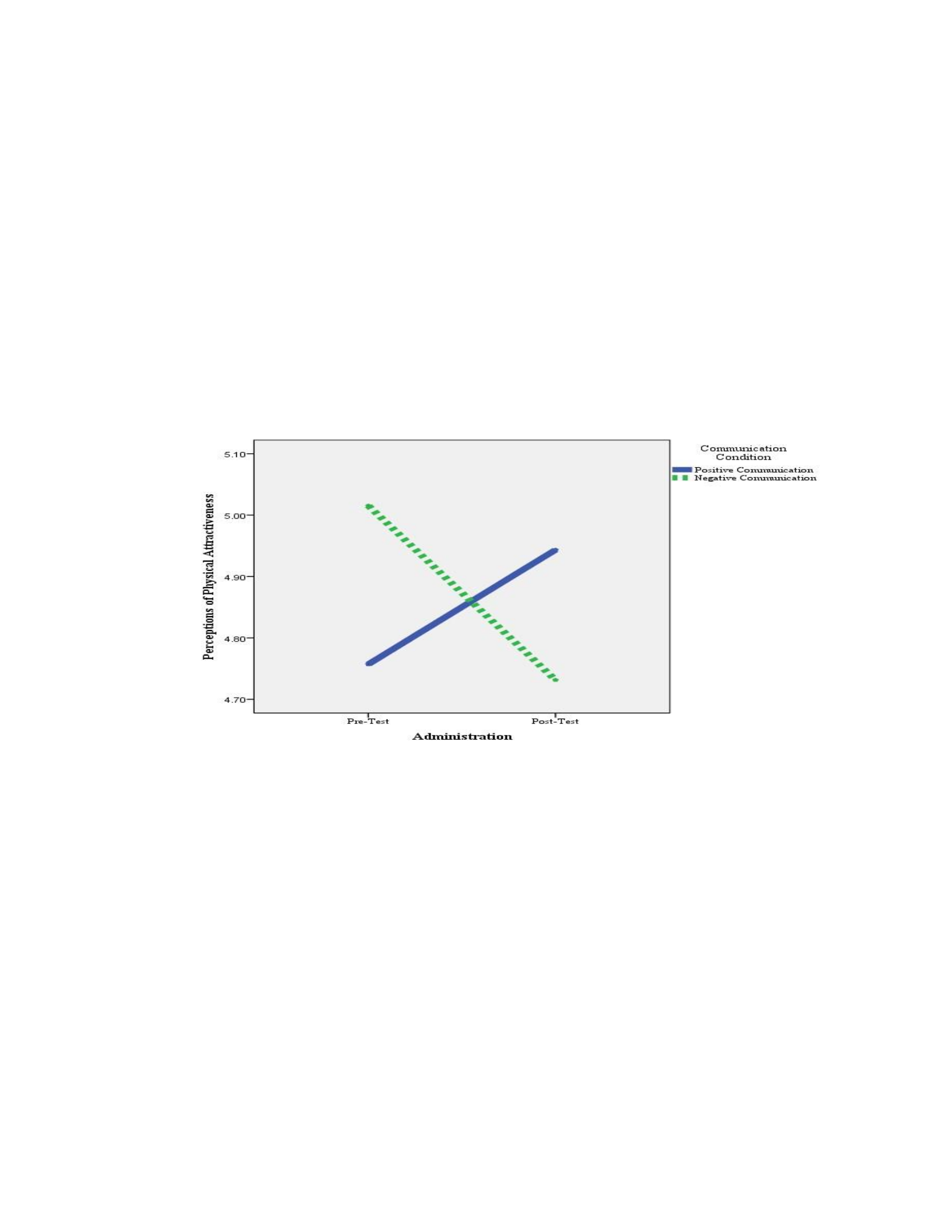
post-test administration main effect (within subjects/repeated measures) did not produce
statistically significant results (F (1, 100) = .331, p = .56, Partial Eta Squared =
.003). No two-way interaction was observed between participant gender and
communication condition (F (1, 100) = 3.591, p = .06, Partial Eta Squared = .035).
Similarly, a two-way interaction between participant gender and administration was not
uncovered (F (1, 100) = .096, p = .75, Partial Eta Squared = .001). However, a two-way
interaction (See Figure 4) between communication condition and administration was
Figure 4. Interaction Plot for Communication Condition and Administration on
Perceptions of Physical Attractiveness.
observed (F (1, 100) = 7.689, p = .007, Partial Eta Squared = .071). Finally, a three-way
interaction between participant gender, communication condition, and administration was
not found (F (1, 100) = 3.363, p = .07, Partial Eta Squared = .033). Taken together, only
one interaction was observed for the physical attractiveness dependent variable.
Hypothesis one proposed that a single positive communication would cause
participants to increase their perceptions of the physical attractiveness of a dating partner
from pre-test to post-test while a single negative communication would cause participants

to decrease their perceptions of the physical attractiveness of a dating partner from pretest
to post-test. This hypothesis was partially supported; it was in the positive condition that
perceptions of physical attractiveness negligibly increased from pre-test to post-test Table
1
Means for Interaction between Communication Condition and Administration on
Perceptions of Physical Attractiveness
__________________________________________
Condition Administration Mean Std. Err
__________________________________________
Positive Communication Pre-Test 4.757 .156
Post-Test 4.943 .183
Negative Communication Pre-Test 5.015 .148
Post-Test 4.731 .173
_________________________________________
while it was in the negative communication condition that perceptions of physical
attractiveness significantly decreased from pre-test to post-test (See Table 1). Thus, an
interaction was observed between communication condition and administration for this
hypothesis. Two follow-up tests provided additional insight on how perceptions of
physical attractiveness were influenced by interpersonal communication. First, results
indicated that perceptions of physical attractiveness did not significantly increase in the
positive communication condition (F (1, 47) = 3.363, p = .07, Partial Eta Squared =
.067). More specifically, the mean pre-test rating of the physical attractiveness of study
confederates before positive communication occurred was 4.76 (sd = 1.15) while the

mean post-test rating of the physical attractiveness of study confederates after positive
communication occurred was 4.94 (sd = 1.31). Despite the fact that a difference was
found to exist, the observed increase from pre-test to post-test was not strong enough to
be considered statistically significant. That is, three minutes of positive communication
are not enough to make another individual appear more physically attractive.
The second follow-up test examined whether participants rated the physical
attractiveness of a dating partner significantly lower after negative communication
occurred during a single social interaction. Indeed, the negative communication data set
yielded evidence that perceptions of physical attractiveness were in fact influenced by a
single interpersonal communication event (F (1, 53) = 4.629, p = .03, Partial Eta Squared
= .080). Findings indicated that initial perceptions concerning the physical attractiveness
of study confederates before negative communication were a mean of 5.02 (sd = 1.03)
whereas post-test perceptions of the physical attractiveness of study confederates after
negative communication were a mean of 4.73 (sd = 1.29). As stated previously, this
decrease from pre-test to post-test was statistically significant. Put differently, three
minutes of negative interpersonal communication can actually make another person
appear less attractive physically.
Summary on Participant Gender and Perceptions of Physical Attractiveness
The research question for this study asked: What effect will participant gender
have on perceptions of physical attractiveness, intelligence, attitudinal similarity, and
background similarity from pre-test to post-test after a single positive or a single negative
communication occurs within a dating environment? As previously stated, findings from
the physical attractiveness dependent variable indicated that participant gender did not

interact with communication condition (F (1, 100) = 3.591, p = .06, Partial Eta Squared =
.035) or administration (F (1, 100) = .096, p = .75, Partial Eta Squared = .001). However,
the observed increase from pre-test to post-test for the male participants in this study was
significant in the positive communication condition (t (23) = -2.358, p = .03). As for the
female participants, a minimal increase in perceptions of physical attractiveness was
observed from pre-test to post-test in the positive communication condition albeit not
statistically significant (t (24) = -.376, p = .71). In terms of the negative communication
condition, male perceptions of the physical attractiveness of the female confederate
significantly decreased after negative interpersonal communication occurred (t (26) =
2.107, p = .04) while female perceptions of the physical attractiveness of the male
confederate did not significantly decrease from pre-test to post-test after negative
interpersonal communication occurred (t (27) = .692, p = .49). Interestingly, and perhaps
the most intriguing finding for the physical attractiveness portion of the aforesaid
research question was that: females do not experience less physical attraction for a man
who engages in negative communication during a single social interaction while males do
experience less physical attraction for a woman who engages in negative communication
during a single social interaction.
Intelligence Dependent Variable
Reliability Testing on Intelligence
The second set of items on the 19-item instrument focused on perceptions of
intelligence. For the present investigation, Cronbach’s alpha for the intelligence items
was .82 in the positive condition and .90 in the negative condition. Further reliability
analyses on the perceptions of others intelligence scale yielded an alpha of .81 for the pre-

test. A test of reliability for perceptions of intelligence on the post-test also produced a
high alpha reliability that was calculated at .84. In sum, all of the computations for the
reliability of the perceptions of others intelligence scale for this study were .81 or higher.
2 x 2 x 2 Mixed Factorial ANOVA on Intelligence
A 2 x 2 x 2 mixed factorial ANOVA that was calculated on the intelligence
dependent variable produced the following results. The participant gender main effect
(between subjects) was not statistically significant (F (1, 100) = .974, p = .32, Partial Eta
Squared = .010). A main effect for communication condition (between subjects) was not
discovered (F (1, 100) = .638, p = .42, Partial Eta Squared = .006). The pre-test and
posttest administration main effect (within subjects/repeated measures) was also not
statistically significant (F (1, 100) = .058, p = .81, Partial Eta Squared = .001). In
addition, no two-way interaction was observed between participant gender and
communication condition (F (1, 100) = .453, p = .50, Partial Eta Squared = .005). A
twoway interaction was observed between participant gender and administration (F (1,
100) = 6.995, p = .009, Partial Eta Squared = .065). A two-way interaction was also found
between communication condition and administration (F (1, 100) = 16.244, p < .001,
Partial Eta Squared = .140). These two-way interactions were qualified by a statistically
significant three-way interaction between participant gender, communication condition,
and administration (F (1, 100) = 4.362, p = .04, Partial Eta Squared = .042).
Hypothesis two proposed that a single positive communication would cause
participants to increase their perceptions of the intelligence of a dating partner from
pretest to post-test while a single negative communication would cause participants to
decrease their perceptions of the intelligence of a dating partner from pre-test to post-test.
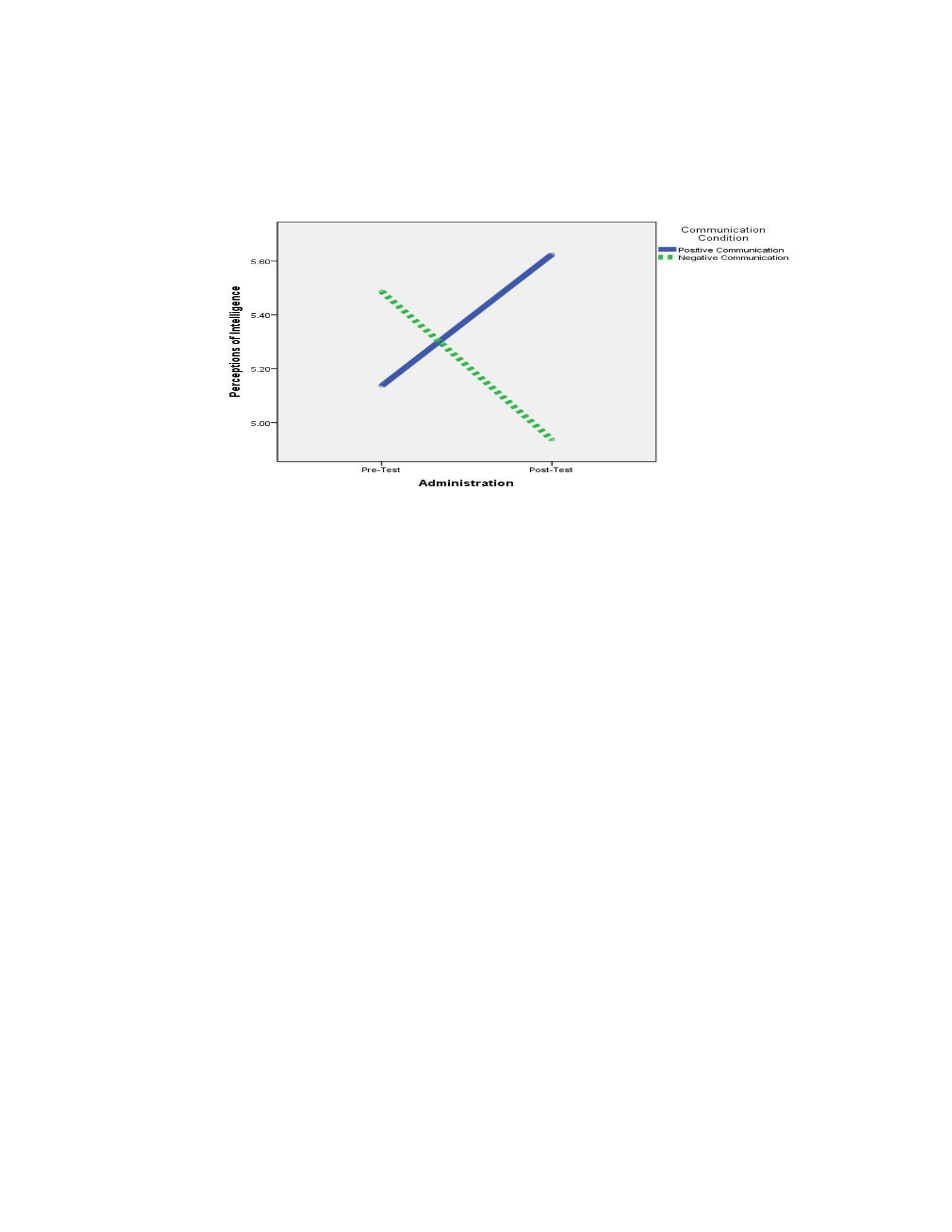
This hypothesis was supported; an interaction was observed between communication
condition and administration (See Figure 5 below). Two follow-up tests were then
Figure 5. Interaction Plot for Communication Condition and Administration on
Perceptions of Intelligence.
completed in order to further examine the interaction between communication condition
and administration on perceptions of intelligence (See Table 2 on the following page).
First, the data from the positive communication condition revealed that perceptions of
intelligence increased in a statistically significant manner from pre-test to post-test (F (1,
47) = 9.430, p = .004, Partial Eta Squared = .167). Specifically, the perceived intelligence
rating of study confederates before positive interpersonal communication ensued was
5.14 (sd = 1.16) while the perceived intelligence rating of study confederates after
positive interpersonal communication ensued was 5.62 (sd = 1.22). Thus, it can be said
that three minutes of positive communication during a single social interaction can
actually make another person appear more intelligent.
Table 2

Means for Interaction between Communication Condition and Administration on
Perceptions of Intelligence
__________________________________________
Condition Administration Mean Std. Error
__________________________________________
Positive Communication Pre-Test 5.136 .157
Post-Test 5.624 .199
Negative Communication Pre-Test 5.487 .149
Post-Test 4.937 .188
__________________________________________
The second follow-up test for this dependent variable further analyzed the
interaction between communication condition and administration. Results indicated that
participants rated the intelligence of a dating partner significantly lower after negative
communication occurred during a single social interaction (F (1, 53) = 7.755, p = .007,
Partial Eta Squared = .130). It was in the negative communication condition that study
participants initially assigned confederates a relatively high intelligence rating of 5.49 (sd
= 1.03) but later assigned confederates a lower intelligence rating of 4.94 (sd =1.58) after
negative communication transpired. Indeed, negative interpersonal communication during
a single social interaction causes individuals to see another person as less intelligent.
The crossover interaction between participant gender and administration also
warranted additional examination (See Figure 6 and Table 3 on the following page).
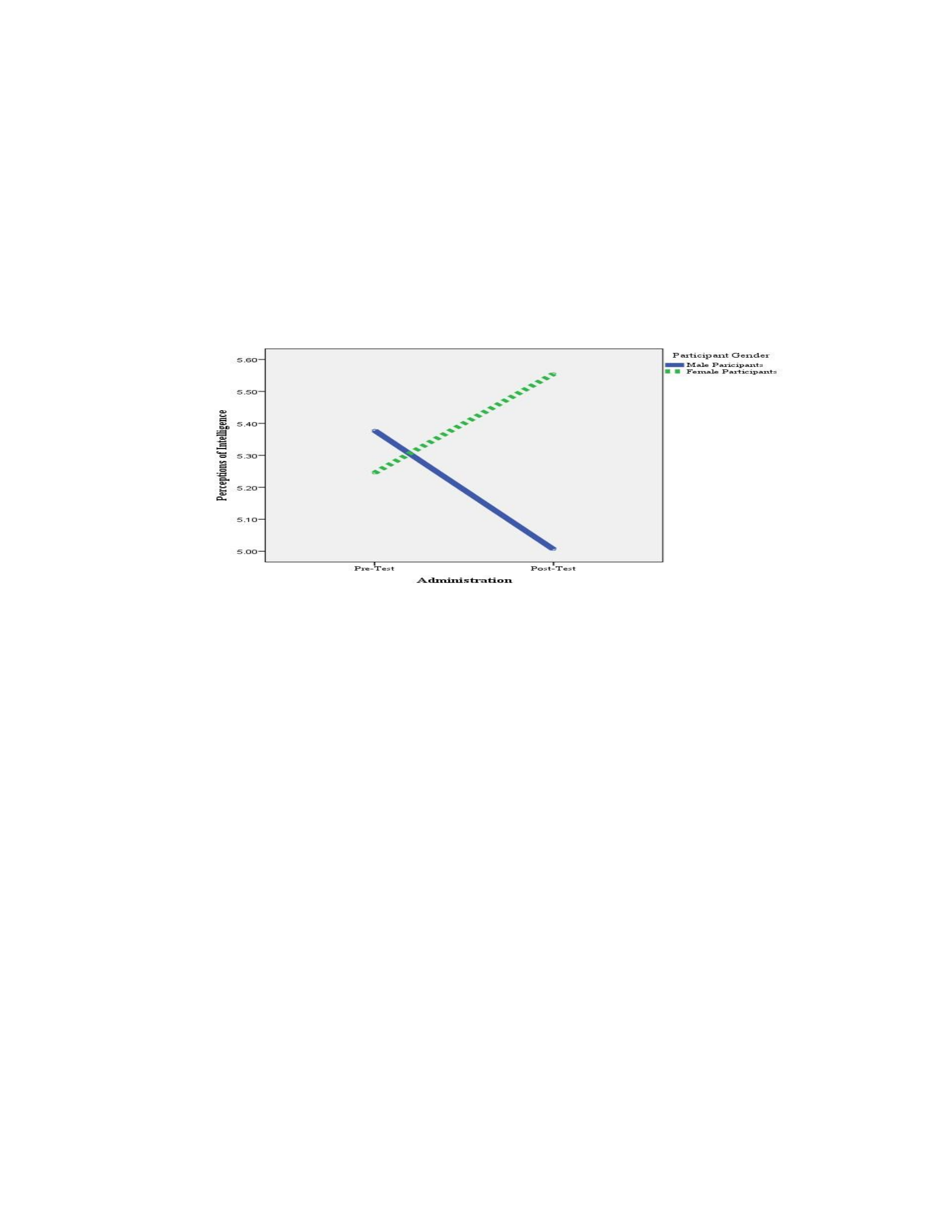
Therefore, two follow-up tests were completed. First, a significant difference was not
observed on male perceptions of intelligence from pre-test to post-test (F (1, 50) = 3.410,
p = .07, Partial Eta Squared = .064). Male pre-test perceptions of the intelligence of the
female confederate were a mean of 5.38 (sd = 1.23) while male post-test perceptions of
the intelligence of the female confederate were a mean of 5.01 (sd = 1.73). Second, a
Figure 6. Interaction Plot for Participant Gender and Administration on Perceptions of
Intelligence.
Table 3
Means for Interaction between Participant Gender and Administration on Perceptions of
Intelligence
__________________________________________
Gender of Participants Administration Mean Std. Error
__________________________________________
Male Pre-Test 5.378 .155
Post-Test 5.006 .196
Female Pre-Test 5.245 .152

Post-Test 5.555 .192
__________________________________________
statistically significant difference was not found on female perceptions of intelligence
from pre-test to post-test (F (1, 52) = 3.162, p = .08, Partial Eta Squared = .057). Female
pre-test perceptions of the intelligence of the male confederate were 5.25 (sd = .96) while
female post-test perceptions of the intelligence of the male confederate were 5.55 (sd =
1.07). When taken together, pre-test to post-test main effects negligibly increased for
females and negligibly decreased for males which resulted in a complete crossover.
Indeed, neither main effect was individually significant but the two main effects were
significantly different from each other. Thus, a crossover interaction was observed.
Finally, the three-way interaction (See Figure 7A and 7B on the following page)
that was observed on this dependent variable resulted in four additional follow-up tests
being undertaken. First, a statistically significant increase was uncovered on the male
participant data from pre-test to post-test in the positive communication condition (t (23)
= -2.378, p = .03). The mean pre-test perception of the intelligence of the female
confederate was 5.14 (sd = 1.20) whereas the mean post-test perception of the
intelligence of the female confederate was 5.56 (sd = 1.37). As aluded to previously, three
minutes of positive interpersonal communication during a single social interaction causes
males to regard a female as more intelligent.
A second follow-up test was then completed on the observed three-way
interaction for this dependent variable. The results illustrated that female perceptions of
intelligence significantly increased from pre-test to post-test in the positive
communication condition (t (23) = -2.135, p = .04). Findings from this follow-up test
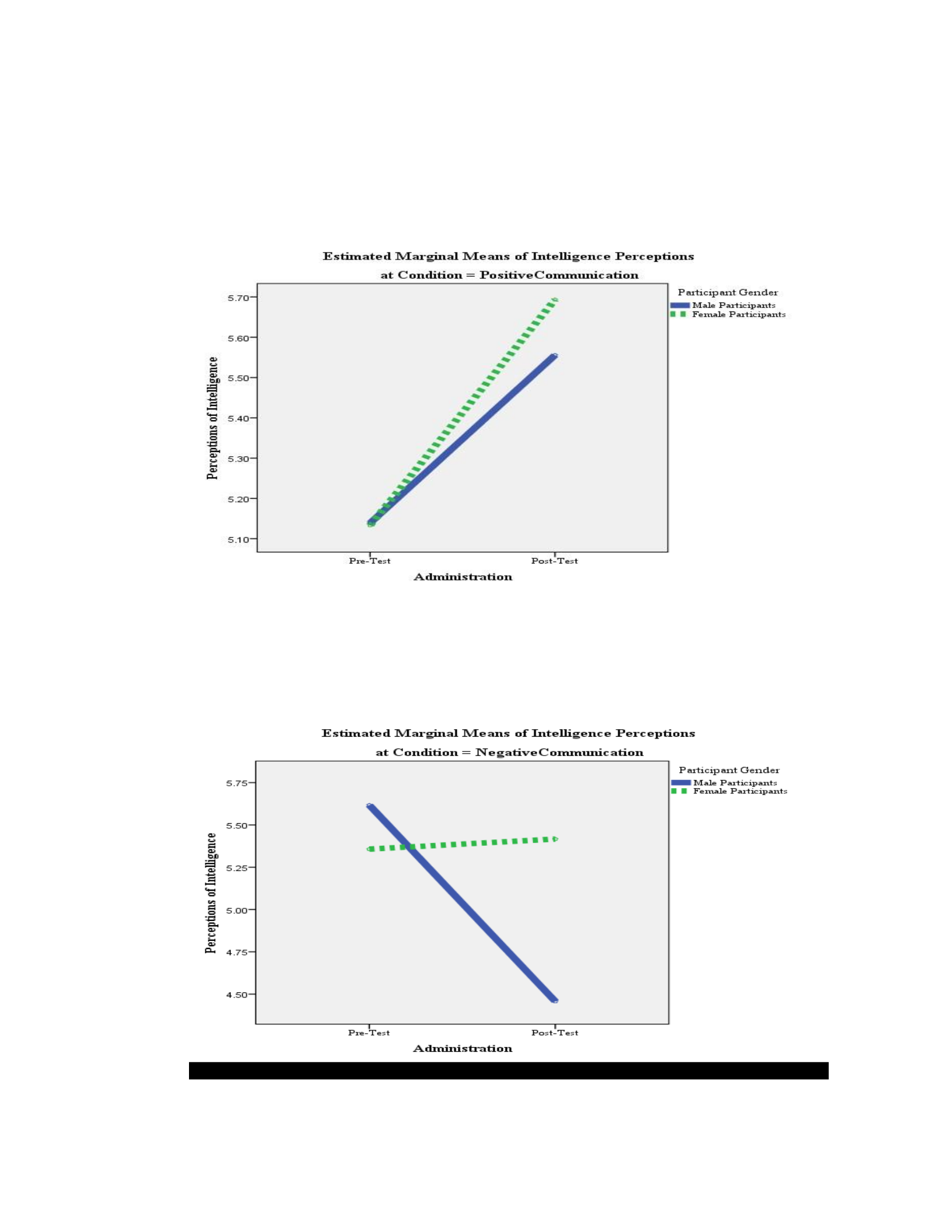
indicated that the mean intelligence rating of the male confederate before positive
communication was 5.13 (sd =1.15) while the mean intelligence rating of the male
Figure 7A. Three-Way Interaction Plot between Participant Gender, Positive
Communication, and Administration on Perceptions of Intelligence.

Figure 7B. Three-Way Interaction Plot between Participant Gender, Negative
Communication, and Administration on Perceptions of Intelligence. confederate after
positive communication was 5.69 (sd = 1.09). Thus, a male who engages in three minutes
of positive communication during a single social interaction can make women perceive
him as more intelligent.
The third follow-up test on the three-way interaction analyzed male perceptions of
intelligence from pre-test to post-test in the negative communication condition. A
statistically significant decrease was observed from pre-test to post-test for the male
participants in the negative communication condition (t (27) = 3.389, p = .002). Pre-test
perceptions of the intelligence of the female confederate were 5.61 (sd = 1.24) while
Table 4
Means for Three-Way Interaction between Participant Gender, Communication
Condition, and Administration on Perceptions of Intelligence
__________________________________________
Gender of Participants Condition Administration Mean Std. Error
__________________________________________
Male Positive Pre-Test 5.139 .225
Post-Test 5.556 .285
Negative Pre-Test 5.617 .212
Post-Test 4.457 .269
Female Positive Pre-Test 5.133 .220
Post-Test 5.693 .279
Negative Pre-Test 5.357 .208
Post-Test 5.417 .264

__________________________________________
post-test perceptions of the intelligence of the female confederate were 4.45 (sd = 1.88).
Therefore, it can be argued that negative communication during a single social interaction
will cause men to perceive a female as less intelligent.
A final follow-up test provided additional insight on the three-way interaction that
was observed for this dependent variable. A statistically significant decrease was not
discovered from pre-test to post-test for the female participants in the negative
communication condition (t (27) = -.291, p = .77). In fact, a slight increase was observed
as pre-test perceptions of the intelligence of the male confederate were a mean of 5.36 (sd
= .774) while post-test perceptions of the intelligence of the male confederate were a
mean of 5.42 (sd = 1.06). Nevertheless, it can be said that negative interpersonal
communication during a single social interaction does not cause females to evaluate a
male as less intelligent.
Summary on Participant Gender and Perceptions of Intelligence
The effects of participant gender on the intelligence dependent variable are also
interesting to note. Most notably, a three-way interaction was observed between
participant gender, communication condition, and administration (F (1, 100) = 4.362, p =
.04, Partial Eta Squared = .042). In terms of specific gender differences, findings
indicated that male perceptions of intelligence significantly increased from pre-test to
post-test in the positive communication condition (t (23) = - 2.378, p = .03) as did female
perceptions of intelligence from pre-test to post-test in the positive condition (t (23) = -
2.135, p = .04). Also, it was found that male perceptions of intelligence significantly
decreased from pre-test to post-test in the negative communication condition (t (27) =

3.389, p = .002) while female perceptions of intelligence did not significantly decrease
from pre-test to post-test in the negative communication condition (t (27) = -.291, p =
.77). In sum, one of the central findings for the perceptions of intelligence portion of the
research question was that: females do not perceive a dating partner as less intelligent
after a single negative social interaction while males do perceive a dating partner as less
intelligent after a single negative social interaction.
Attitudinal Similarity Dependent Variable
Reliability Testing on Attitudinal Similarity
Reliability analyses were also conducted on the attitudinal similarity dependent
variable. Findings indicated that reliability for the four items focused on attitudinal
similarity for the pre-test in the positive condition was .824 while reliability for the
posttest in the positive condition was .690. On the other hand, reliability analyses for the
attitudinal similarity items for the pre-test in the negative condition was .784 while
reliability for the post-test in the negative condition was .864. All in all, reliability was
fairly strong for this dependent variable.
2 x 2 x 2 Mixed Factorial ANOVA on Attitudinal Similarity
A 2 x 2 x 2 mixed factorial ANOVA was calculated on this dependent variable to
uncover main effects and interactions. The main effect for participant gender (between
subjects) was statistically significant (F (1, 95) = 5.791, p = .02, Partial Eta Squared =
.057). However, the main effect for communication condition (between subjects) was not
statistically significant (F (1, 95) = 2.009, p = .16, Partial Eta Squared = .021). A pre-test
and post-test administration main effect (within subjects/repeated measures) was not
observed in the present study (F (1, 95) = 1.861, p = .18, Partial Eta Squared = .019).
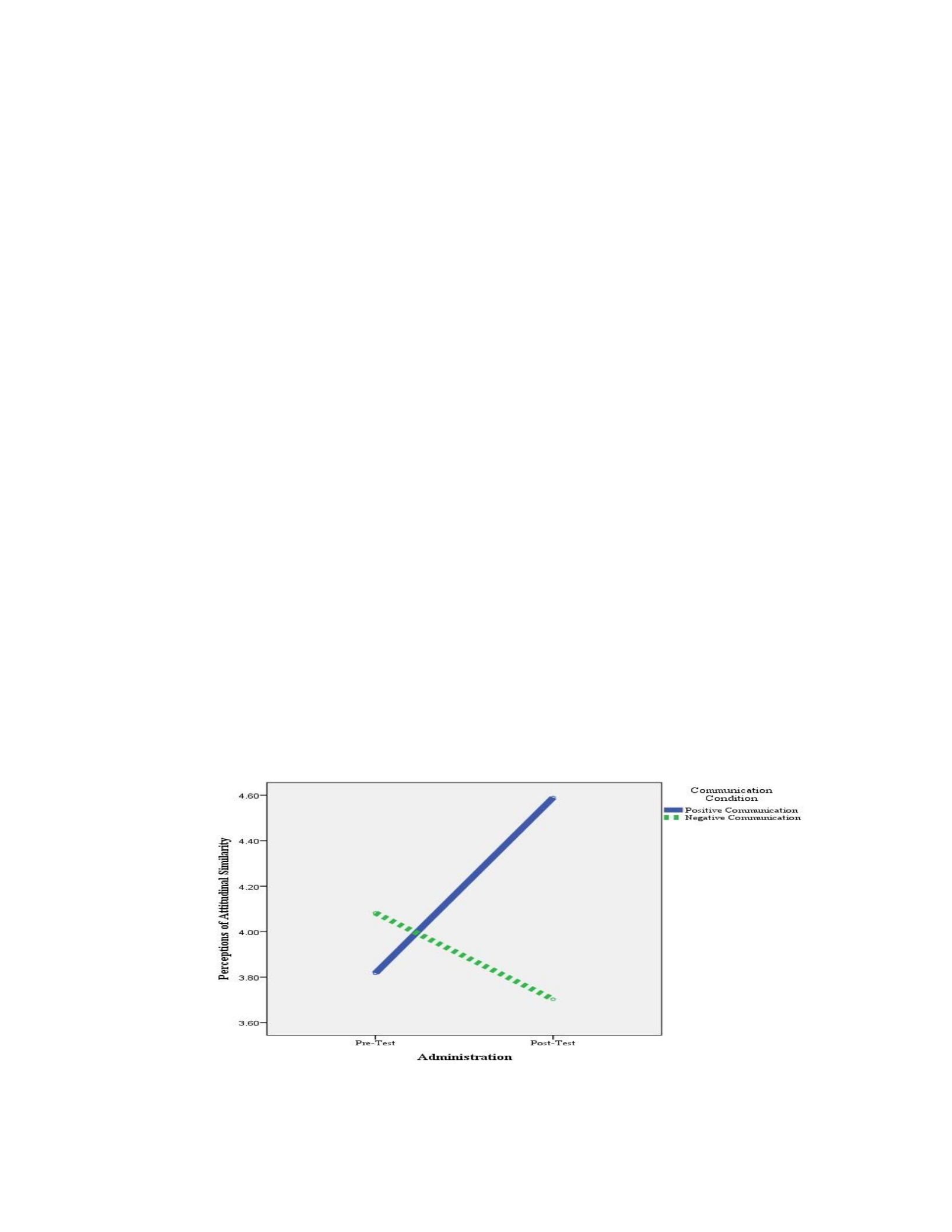
Nevertheless, a two-way interaction between participant gender and communication
condition was observed (F (1, 95) = 4.689, p = .03, Partial Eta Squared = .047).
Moreover, a two-way interaction between participant gender and administration was
uncovered (F (1, 95) = 7.308, p = .008, Partial Eta Squared = .071). A two-way
interaction was also observed between communication condition and administration (F
(1, 95) = 16.005, p < .001, Partial Eta Squared = .144). However, a three-way interaction
between participant gender, communication condition, and administration was not
discovered (F (1, 95) = 2.361, p = .13, Partial Eta Squared = .024).
Hypothesis three proposed that a single positive communication would cause
participants to increase their perceptions of the attitudinal similarity of a dating partner
from pre-test to post-test while a single negative communication would cause participants
to decrease their perceptions of the attitudinal similarity of a dating partner from pre-test
to post-test. This hypothesis was partially supported as an interaction was observed
between communication condition and administration (See Figure 8 below and Table 5 on
the following page). The initial follow-up test for this dependent variable centered on

Figure 8. Interaction Plot for Communication Condition and Administration on
Perceptions of Attitudinal Similarity.
the positive communication data set and demonstrated that perceptions of attitudinal
similarity were significantly higher after positive communication occurred during a single
social interaction (F (1, 47) = 28.500, p < .001, Partial Eta Squared = .377). Results from
the positive communication condition illustrated that pre-test perceptions of the
attitudinal similarity of confederates were 3.82 (sd = 1.14) while post-test perceptions of
the attitudinal similarity of confederates were 4.59 (sd = 1.11). In the end, perceptions of
attitudinal similarity increased as a direct result of three minutes of positive interpersonal
communication during a single social interaction.
Another follow-up test on the two-way interaction between communication
condition and administration on perceptions of attitudinal similarity was completed on
the data that was obtained in the negative communication condition. Perceptions of
Table 5
Means for Interaction between Communication Condition and Administration on
Perceptions of Attitudinal Similarity
__________________________________________
Condition Administration Mean Std. Error
__________________________________________
Positive Communication Pre-Test 3.818 .168
Post-Test 4.590 .203
Negative Communication Pre-Test 4.082 .166

Post-Test 3.703 .201
__________________________________________
attitudinal similarity did not significantly decrease after a negative social interaction (F
(1, 48) = 2.356, p = .13, Partial Eta Squared = .047). Initial perceptions concerning the
attitudinal similarity of study confederates were 4.08 (sd = 1.20) before negative
communication occurred whereas post-test perceptions of the attitudinal similarity of
study confederates were 3.70 (sd = 1.84) after negative communication occurred.
Although a decline was observed, it was not statistically significant from pre-test to
posttest. Put differently, negative communication during a single social interaction does
not have the power to significantly influence attitudinal similarity perceptions.
The next series of follow-up tests for this dependent variable focused on the
twoway interaction between participant gender and communication condition (See Figure
9 below and Table 6 on the following page). First, it was found that male perceptions of
attitudinal similarity significantly differed between the positive communication condition
and the negative communication condition (F (1, 46) = 9.195, p = .004, Partial Eta
Squared = .167). Male participants in the positive communication condition perceived the
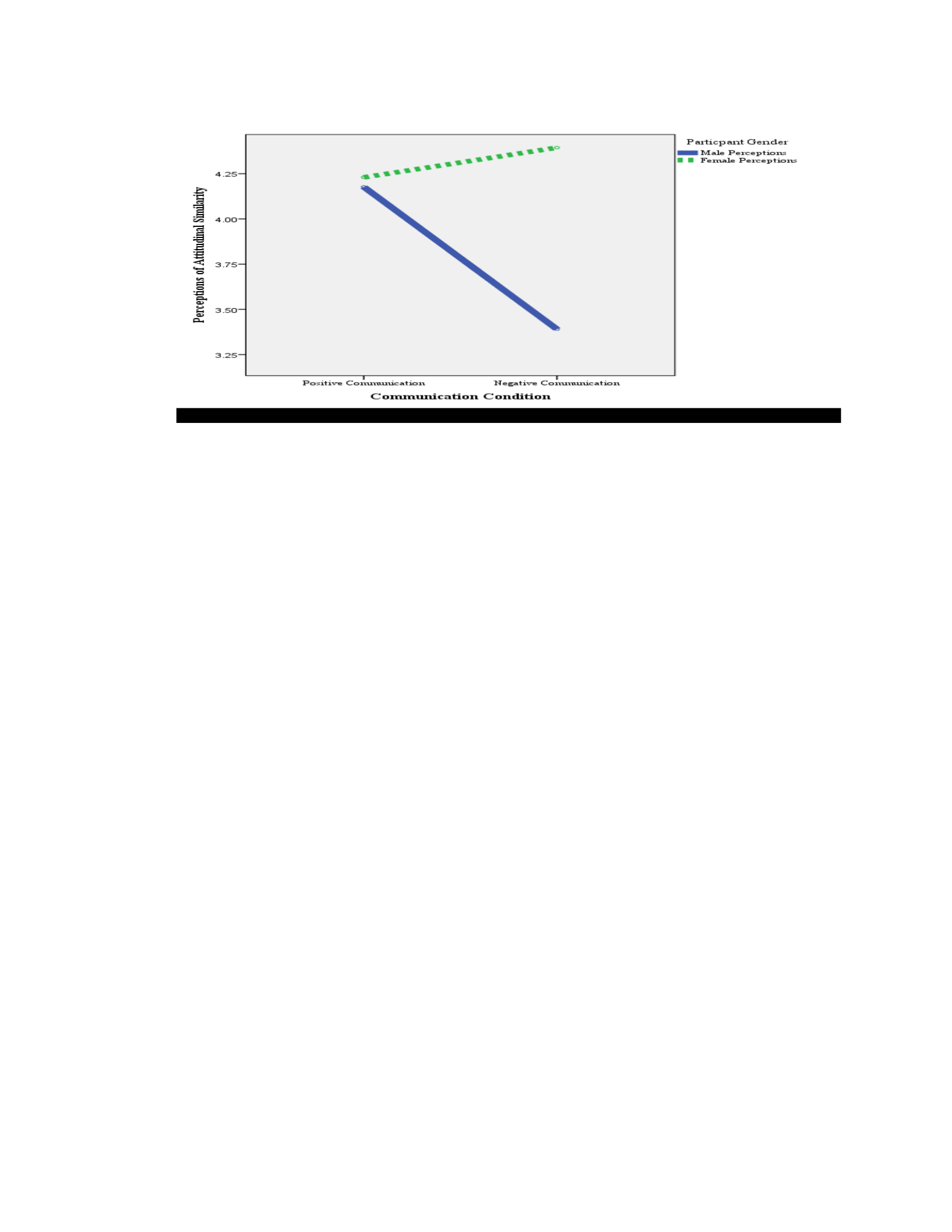
Figure 9. Interaction Plot for Participant Gender and Communication Condition on
Perceptions of Attitudinal Similarity.
attitudinal similarity of the female confederate at a mean of 4.17 (sd = 1.15) while male
participants in the negative communication condition perceived the attitudinal similarity
of the female confederate at a mean of 3.39 (sd = 1.18). It seems that males perceive a
female to be more attitudinally similar when she engages in positive communication
relative to when she engages in negative communication.
Table 6
Means for Interaction between Participant Gender and Communication Condition on
Perceptions of Attitudinal Similarity
__________________________________________
Gender of Participants Condition Mean Std. Error
__________________________________________
Male Positive 4.177 .223
Negative 3.391 .223
Female Positive 4.230 .218

Negative 4.394 .214
__________________________________________
A subsequent follow-up test for this dependent variable further examined the
twoway interaction between participant gender and communication condition. Results
suggested that female perceptions of the attitudinal similarity of the male confederate
were not influenced by whether positive or negative communication occurred (F (1, 49) =
.222, p = .64, Partial Eta Squared = .005). The female participants in the positive
communication condition evaluated the attitudinal similarity of the male confederate as a
4.23 (sd = 1.11) whereas the female participants in the negative communication condition
evaluated the attitudinal similarity of the male confederate as a 4.39 (sd = 1.61). As
hinted at previously, female perceptions of attitudinal similarity were not affected by
whether positive or negative communication transpired.
The last set of follow-up tests for this dependent variable focused on the two-way
interaction between participant gender and administration (See Figure 10 below and Table
7 on the following page). It was found that male perceptions of attitudinal similarity from
pre-test to post-test did not increase in a statistically significant manner when the positive
and negative communication data were combined (F (1, 47) = .577, p = .45, Partial Eta
Squared = .012). When taken together, male pre-test perceptions of the attitudinal
similarity of the female confederate were a mean of 3.88 (sd = .95) while male post-test
perceptions of the attitudinal similarity of the female confederate were a mean of 3.69 (sd
= 1.59). Next, a statistically significant difference was observed on female perceptions of
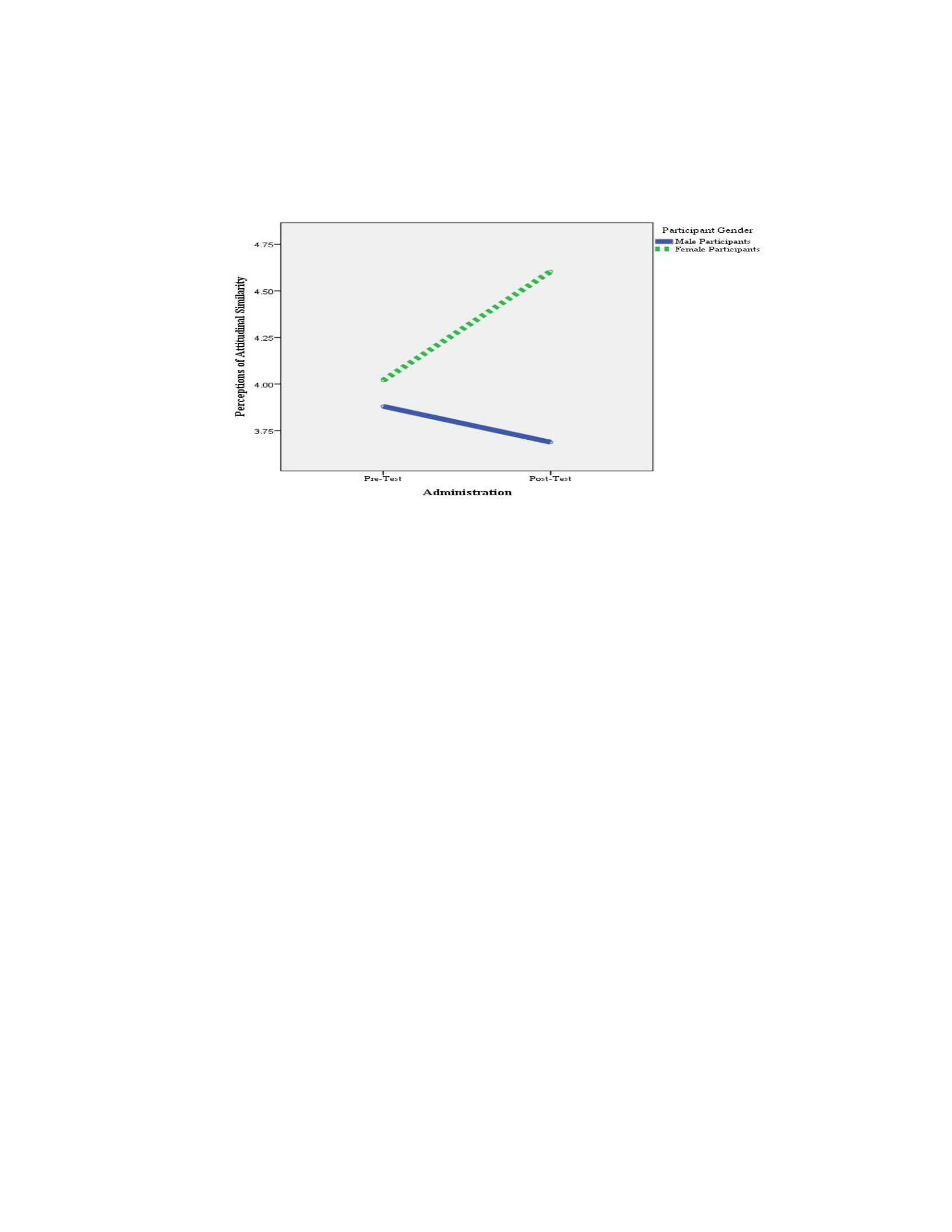
attitudinal similarity from pre-test to post-test when the positive and negative
communication data were combined (F (1, 50) = 9.885, p = .003, Partial Eta
Figure 10. Interaction Plot for Participant Gender and Administration on Perceptions of
Attitudinal Similarity.
Table 7
Means for Interaction between Participant Gender and Administration on Perceptions of
Attitudinal Similarity
__________________________________________
Gender of Participants Administration Mean Std. Error
__________________________________________
Male Pre-Test 3.880 .170
Post-Test 3.688 .205
Female Pre-Test 4.019 .165
Post-Test 4.605 .199

__________________________________________
Squared = .165). Female pre-test perceptions of the attitudinal similarity of the male
confederate were 4.02 (sd = 1.35) while female post-test perceptions of the attitudinal
similarity of the male confederate were 4.60 (sd = 1.44). Interestingly, females evaluated
the attitudinal similarity of the male confederate more favorably after conversation
regardless of whether positive or negative communication occurred during their single
social interaction.
Summary on Participant Gender and Perceptions of Attitudinal Similarity
Perceptions of attitudinal similarity and their relationship with participant gender
required further analysis. While findings highlighted a two-way interaction between
participant gender and communication condition (F (1, 95) = 4.689, p = .03, Partial Eta
Squared = .047) as well as a two-way interaction between participant gender and
administration (F (1, 95) = 7.308, p =.008, Partial Eta Squared = .071), subsequent
analyses further illustrated the relationship between participant gender and perceptions of
attitudinal similarity. Results indicated that male perceptions of attitudinal similarity
significantly increased from pre-test to post-test in the positive communication condition
(t (23) = -3.117, p = .005) as did female perceptions of attitudinal similarity from pre-test
to post-test in the positive communication condition (t (23) = - 4.398, p = .001). In
addition, male perceptions of the attitudinal similarity of the female confederate
significantly decreased from pre-test to post-test after negative social interaction
transpired (t (23) = 2.399, p = .02) while female perceptions of the attitudinal similarity
of the male confederate did not significantly decrease from pre-test to post-test after
negative social interaction transpired (t (23) = -.812, p = .42). In response to the proposed

research question that focused on the role of participant gender: it seems that perceptions
of attitudinal similarity differ between men and women after negative communication
occurs during a single social interaction.
Background Similarity Dependent Variable
Reliability Testing on Background Similarity
The final set of reliability analyses were conducted on the background similarity
sub-scale items. Results suggested that reliability for the pre-test in the positive condition
was .718 while reliability for the post-test in the positive condition was .713. On the other
hand, reliability for background similarity in the negative condition was .728 for the
pretest items and was .844 for the post-test items in the negative condition. When taken
together, the range of reliability for the background similarity sub-scale varied from a low
of .71 to a high of .84.
2 x 2 x 2 Mixed Factorial ANOVA on Background Similarity
The following set of results emerged after a 2 x 2 x 2 mixed factorial ANOVA was
calculated on the background similarity dependent variable. Statistically significant
results emerged on the main effect (between subjects) for participant gender (F (1, 95) =
6.271, p = .01, Partial Eta Squared = .062). However, statistically significant results did
not emerge on the main effect (between subjects) for communication condition (F (1, 95)
= .554, p = .46, Partial Eta Squared = .006). The pre-test and post-test administration
main effect (within subjects/repeated measures) was not statistically significant (F (1, 95)
= 1.499, p = .22, Partial Eta Squared = .016). Yet, a two-way interaction between
participant gender and communication condition was observed (F (1, 95) = 7.950, p =
.006, Partial Eta Squared = .077). In addition, a two-way interaction between participant

gender and administration was also discovered (F (1, 95) = 6.647, p = .01, Partial Eta
Squared = .065). However, the two-way interaction between communication condition
and administration was not statistically significant (F (1, 95) = 1.868, p = .18, Partial Eta
Squared = .019). A three-way interaction was discovered (F (1, 95) = 6.418, p = .01,
Partial Eta Squared = .063).
Hypothesis four proposed that a single positive communication would cause
participants to increase their perceptions of the background similarity of a dating partner
from pre-test to post-test while a single negative communication would cause participants
to decrease their perceptions of the background similarity of a dating partner from pretest
to post-test. This hypothesis was not supported because an interaction was not observed
between communication condition and administration. The results from the positive
communication data illustrated that perceptions of background similarity did not
significantly increase after positive social interaction (F (1, 47) = .012, p = .91, Partial
Eta Squared = 0.00). It was in the positive communication condition that pre-test
perceptions of the background similarity of study confederates were 4.26 (sd = 1.05)
while post-test perceptions of the background similarity of study confederates were 4.28
(sd = 1.09). This negligible increase in perceptions of background similarity from pre-test
to post-test was not statistically significant. Similarly, perceptions of background
similarity did not significantly decrease after negative social interaction (F (1, 48) =
2.873, p = .09, Partial Eta Squared = .056). Findings from the negative communication
condition indicated that initial perceptions of the background similarity of study
confederates were a mean of 4.26 (sd = 1.20) while post-test perceptions of the
background similarity of study confederates were a mean of 4.01 (sd = 1.59). When taken
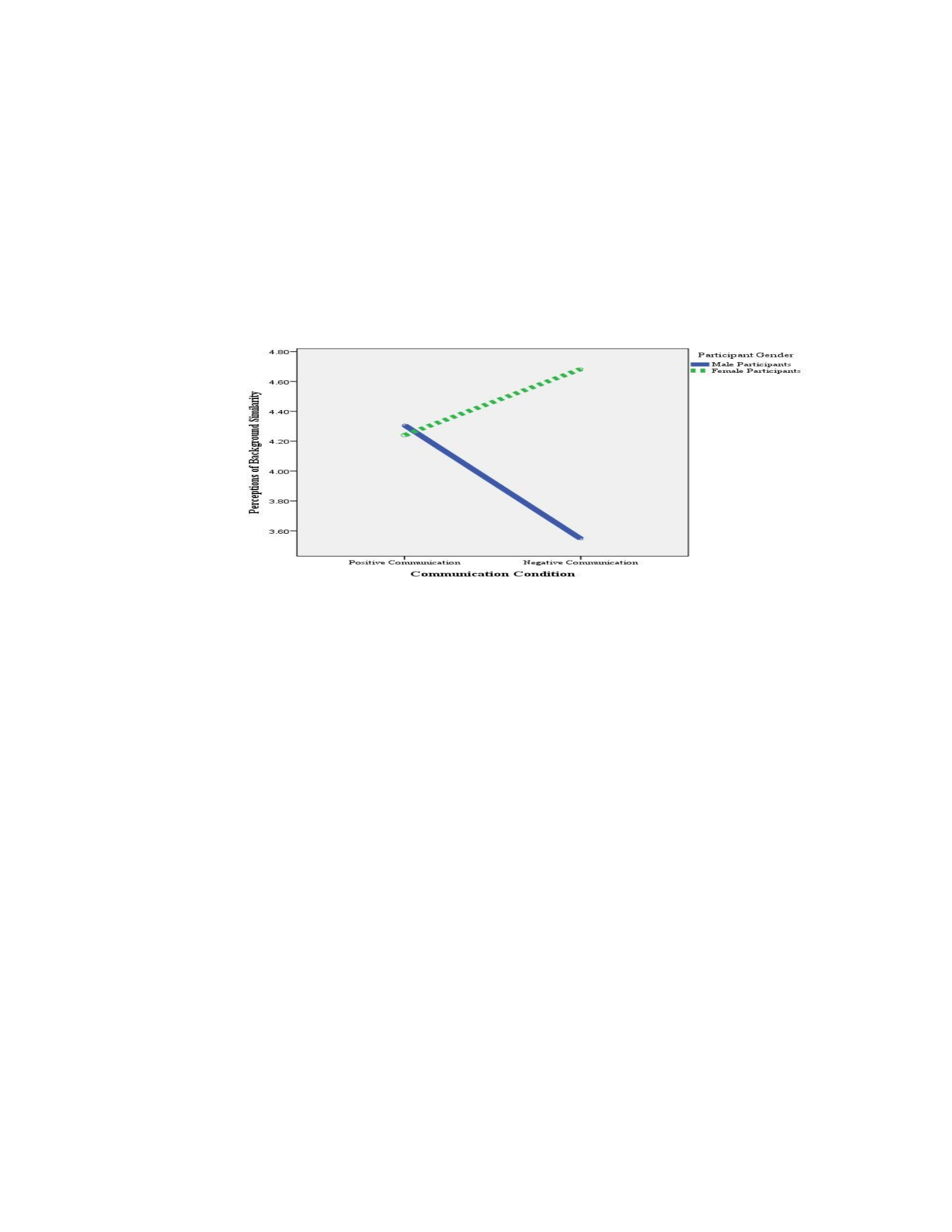
together, the pattern for positive communication did not significantly increase from
pretest to post-test and the pattern for negative communication did not significantly
decrease from pre-test to post-test.
Initial follow-up tests for this dependent variable were devoted to the two-way
interaction between participant gender and communication condition (See Figure 11
Figure 11. Interaction Plot for Participant Gender and Communication Condition on
Perceptions of Background Similarity.
Table 8
Means for Interaction between Participant Gender and Communication Condition on
Perceptions of Background Similarity
__________________________________________
Gender of Participants Condition Mean Std. Error
__________________________________________
Male Positive 4.307 .217
Negative 3.547 .217
Female Positive 4.240 .212

Negative 4.683 .208
__________________________________________
and Table 8). First, male perceptions of background similarity significantly differed
between the positive communication condition and the negative communication
condition (F (1, 46) = 11.239, p = .002, Partial Eta Squared = .196). Male participants in
the positive communication condition perceived the background similarity of the female
confederate to be a mean of 4.30 (sd = 0.91) while male participants in the negative
communication condition perceived the background similarity of the female confederate
to be a mean of 3.54 (sd = 1.02). It seems that males who are exposed to positive
communication will perceive that a female will possess a background more similar to his
own relative to males who are exposed to negative communication.
The next follow-up test for the background similarity dependent variable further
examined the two-way interaction between participant gender and communication
condition (See Table 8 above). Female perceptions of background similarity were not
influenced by whether they participated in the positive or negative condition (F (1, 49) =
1.559, p = .21, Partial Eta Squared = .031). The female participants in the positive
communication condition rated the attitudinal similarity of the male confederate as a 4.24
(sd = 1.24) whereas the female participants in the negative communication condition
rated the attitudinal similarity of the male confederate as a 4.68 (sd = 1.44). Simply put,
female perceptions of background similarity did not differ depending on whether they
were exposed to either positive or negative communication.
The two-way interaction between participant gender and administration on
perceptions of background similarity also required that additional follow-up tests be
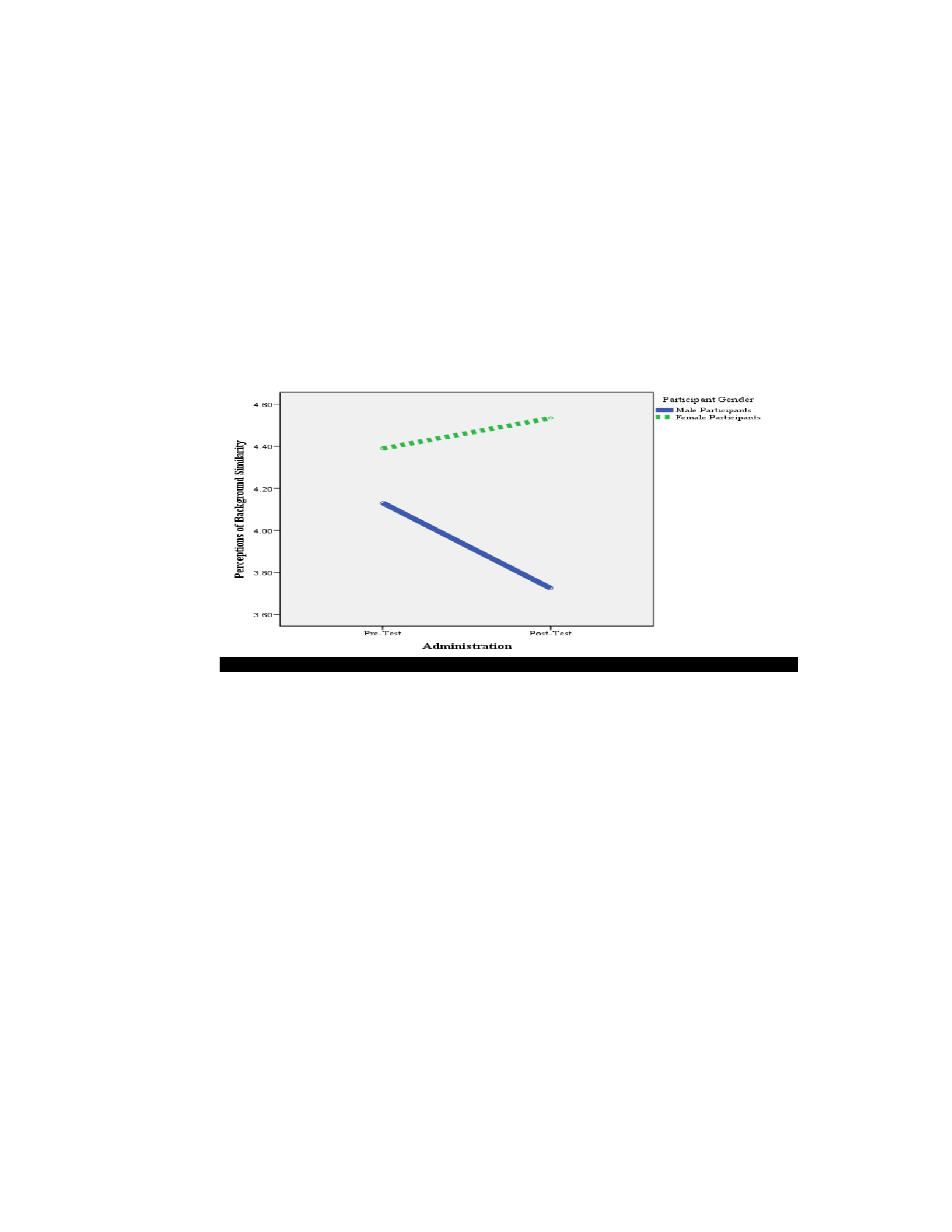
undertaken (See Figure 12 and Table 9). First, results indicated that male perceptions of
background similarity significantly decreased from pre-test to post-test regardless of
whether positive or negative communication occurred during a single social interaction
(F (1, 47) = 5.035, p= .03, Partial Eta Squared = .097). Male pre-test perceptions of the
background similarity of the female confederate were a mean of 4.13 (sd = .83) while
male post-test perceptions of the background similarity of the female confederate were a
Figure 12. Interaction Plot for Participant Gender and Administration on Perceptions of
Background Similarity
Table 9
Means for Interaction between Participant Gender and Administration on Perceptions of
Background Similarity
__________________________________________
Gender of Participants Administration Mean Std. Error
__________________________________________
Male Pre-Test 4.130 .162
Post-Test 3.724 .180

Female Pre-Test 4.389 .158
Post-Test 4.534 .174
__________________________________________
mean of 3.72 (sd =1.25). Second, a statistically significant difference was not observed on
female perceptions of background similarity from pre-test to post-test when the positive
and negative communication data were combined (F (1, 50) = 1.301, p = .26, Partial Eta
Squared = .025). Female pre-test perceptions of the background similarity of the male
confederate were 4.39 (sd = 1.34) while female post-test perceptions of the background
similarity of the male confederate were 4.53 (sd = 1.36). Nevertheless, it is interesting to
note that male perceptions of background similarity decreased from pre-test to post-test
regardless of the communication condition.
The next follow-up tests examined the three-way interaction between participant
gender, administration, and communication condition (See Figure 13A and Figure 13B on
the following page). Four follow-up tests looked at the differences between participant
gender from pre-test to post-test in the positive and negative communication conditions.
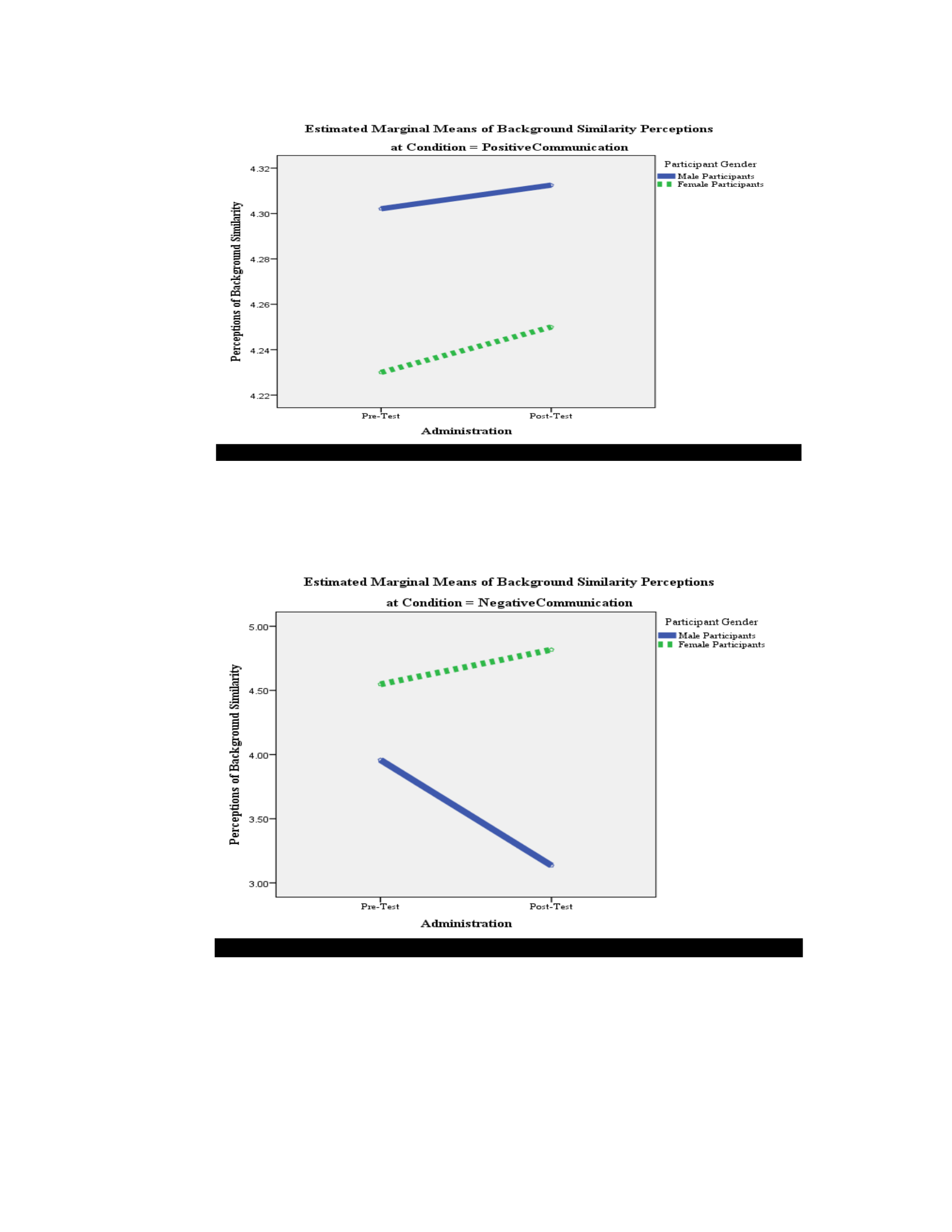
Figure 13A. Three-Way Interaction Plot between Participant Gender, Positive
Communication, and Administration on Perceptions of Background Similarity.
Figure 13B. Three-Way Interaction Plot between Participant Gender, Negative
Communication, and Administration on Perceptions of Background Similarity.

Results indicated that male perceptions of background similarity were virtually stagnant
from pre-test to post-test in the positive communication condition (t (23) = -.053, p =
.96). Specifically, the male participant data from the positive communication condition
demonstrated that initial perceptions of the background similarity of the female
confederate were 4.30 (sd = .869) and that post-test perceptions of the background
similarity of the female confederate were 4.31 (sd = .959). This minimal increase
suggests that three minutes of positive interpersonal communication will not cause men
to regard a female dating partner as having a background similar to his own.
Table 10
Means for Three-Way Interaction between Participant Gender, Communication
Condition, and Administration on Perceptions of Background Similarity.
__________________________________________
Gender of Participants Condition Administration Mean Std. Error
__________________________________________
Male Positive Pre-Test 4.302 .230
Post-Test 4.313 .254
Negative Pre-Test 3.958 .230
Post-Test 3.135 .254
Female Positive Pre-Test 4.230 .225
Post-Test 4.250 .249
Negative Pre-Test 4.548 .221
Post-Test 4.817 .244

__________________________________________
The second follow-up test for the observed three-way interaction focused on the
data that was obtained from the female participants in the positive communication
condition. No statistically significant effect was found (t (23) = - .104, p = .91). Initial
perceptions of the background similarity of the male confederate in the positive
communication condition were 4.23 (sd = 1.23) while post-test perceptions of the
background similarity of the male confederate in the positive communication condition
were 4.25 (sd = 1.24). Indeed, there is no evidence that three minutes of positive
interpersonal communication will cause females to evaluate the background similarity of
a male dating partner any differently.
The third follow-up test analyzed the background similarity dependent variable
for the male participants in the negative communication condition. A significant effect
was observed as male perceptions of the background similarity of the female confederate
significantly decreased from pre-test to post-test (t (23) = 2.896, p = .008). Additional
evidence illustrated that male pre-test perceptions of the background similarity of the
female confederate were 3.95 (sd = .789) while male post-test perceptions of the
background similarity of the female confederate were 3.13 (sd = 1.26). Three minutes of
negative interpersonal communication resulted in men perceiving a woman as having a
background as less similar to his own personal background.
The final follow-up test for the observed three-way interaction for this dependent
variable examined the female participant data that was collected in the negative
communication condition. A significant effect was not found (t (25) = -1.560, p = .13).
Female pre-test perceptions of the background similarity of the male confederate in the

negative communication condition were 4.54 (sd = 1.44) while female post-test
perceptions of the background similarity of the male confederate were 4.81 (sd = 1.44). In
the end, negative interpersonal communication during a single social interaction does not
cause females to lower their perceptions of the background similarity of a male dating
partner from pre-test to post-test.
Summary on Participant Gender and Perceptions of Background Similarity The
background similarity dependent variable also produced evidence of some gender
differences. As stated previously, a three-way interaction was observed between
participant gender, administration, and communication condition (F (1, 95) = 6.418, p =
.01, Partial Eta Squared = .063). When further broken down, male perceptions of
background similarity did not significantly increase from pre-test to post-test after
positive communication occurred (t (23) = -.053, p = .96) and female perceptions of
background similarity did not significantly increase from pre-test to post-test after
positive communication occurred (t (23) = -.104, p = .91). It was also found that male
perceptions of background similarity significantly decreased after negative
communication (t (23) = 2.896, p = .008) but female perceptions of background similarity
did not signficantly decrease after negative communication (t (25) = -1.560, p = .13).
Thus, in response to the aforesaid research question which asked what effect will
participant gender have on perceptions of background similarity from pre-test to post-test
after a single positive or a single negative communication event: it seems that perceptions
of background similarity differ between men and women after the occurrence of a single
negative communication event.

To briefly summarize, the first part of this chapter focused on main effects and
interactions. The opening pages illustrated that perceptions of physical attractiveness
significantly decreased after negative communication occurred during a single social
interaction. Next, a three-way interaction was observed on the perceptions of intelligence
dependent variable. In terms of attitudinal similarity, three different two-way interactions
were found for this dependent variable. A three-way interaction was also observed on the
background similarity dependent variable. Study findings also indicated that some
individual perceptions varied as a result of participant gender. Lastly, it should be noted
here that some of the aforementioned findings from this section have negligible
application to real world contexts. That is, some of the reported results that were not
focused on the central hypotheses or research question were described in order to
maintain a consistent writing style from dependent variable to dependent variable. Even
though individual perceptions and interpersonal communication were the central
variables in this study, other miscellaneous data collaterally emerged as a direct result of
employing a speed-dating methodology.
Additional Findings
There are several supplemental findings that materialized after this study was
completed. To begin, a total of 54 matches were made in the present investigation. Of that
total, only three (or 5.55%) of the matches involved interracial dating partners (e.g. a
Caucasian male matching with an African American female, a Hispanic female matching
with an Asian male, etc.). Second, female speed-daters were almost three times choosier
in terms of second date selection than their male speed-dating counterparts. Specifically,
females identified a male speed-dater as a “match” on 72 different occasions on their

speed-dating match sheets. In contrast, male participants identified a female speed-dater
as a “match” on 201 different occasions on their speed-dating match sheets. While the
aforementioned data did not include instances where a confederate was picked as a
match, the findings related to identifying the male or female confederate as a match are
also interesting to note.
Findings concerning the selection of study confederates for a second date are
intriguing. Overall, the female confederate was picked for a second date on 17 different
occasions out of her 51 total dates. Statistically speaking, she was identified as a match in
33.3% of her dates. When broken down further, the female confederate was selected for a
second date 12 times (or 50% of the time) out of her 24 total positive communication
speed-dates. In contrast, the female confederate was selected for a second date five times
(or 18.5% of the time) out of her 27 total negative communication speed-dates.
The male confederate was picked for a second date on 14 different occasions out
of his 53 total dates. Mathematically speaking, the male confederate was identified as a
match in 26.4% of his dates. When further broken down, the male confederate was picked
for a second date three times (or 12% of the time) out of his 25 total positive
communication speed-dates. On the other hand, the male confederate was selected for a
second date 11 times (or 39.2% of the time) out of his 28 total negative communication
speed-dates. Since an analysis of dating outcomes has now been undertaken, the last
paragraph of this chapter briefly summarizes the additional results.
To conclude, several supplementary findings emerged after the completion of this
study. First, the total number of matches was calculated by the investigator. Next,
findings illustrated that a relatively small amount of matches involved interracial dating

partners. Third, study data indicated that women were significantly choosier than men
with regards to identifying a fellow speed-dater as a match. Now that the empirical
findings of this study have been presented, the final chapter of this dissertation will focus
on discussing results, identifying limitations, and proposing avenues for future research.

CHAPTER V
DISCUSSION
The present study was conducted because it supplied novel and practical data on
cognitive processes and interpersonal communication. Interaction appearance theory was
discussed in the opening chapters of this dissertation as it provided a strong foundation
for understanding the relationship between social interaction and personal judgments. The
third chapter highlighted how a speed-dating methodology could be used to determine if
three minutes of communication had the ability to perceptually alter impressions of
another. It was also in the third chapter that an overview of the positive and negative
communication conditions were provided; confederates were instructed to maintain a
cheerful disposition, demonstrate high-immediacy non-verbal behaviors, and offer
complimentary verbal communication in the positive communication condition while
confederates were instructed to make haughty verbal comments and sustain a standoffish
communicative demeanor in the negative communication condition. The most recent
chapter presented an array of mixed empirical results and highlighted dating outcomes.
The last chapter of this dissertation demonstrates how the main findings from this study
can be applied as well as generalized to various communicative contexts. Finally, this
dissertation concludes by discussing limitations and identifying directions for future
research.
Physical Attraction Changing Because of Social Interaction
This study’s first hypothesis focused on perceptions of physical attractiveness. It
proposed that three minutes of positive social interaction would cause participants to

experience more physical attraction for a dating partner from pre-test to post-test while
three minutes of negative social interaction would cause participants to experience less
physical attraction for a dating partner from pre-test to post-test. This hypothesis was
partially supported. Evidence related to the proposed research question demonstrated that
males and females evaluated perceptions of physical attractiveness differently after a
single negative social interaction. Less specifically, overall perceptions of physical
attractiveness significantly decreased after a single negative interpersonal communication
event. In contrast, overall perceptions of physical attractiveness did not significantly
increase after a single positive interpersonal communication event. Interestingly, the latter
finding contradicts previous literature by Albada, Knapp, and Theune (2002) who
reported that perceptions of physical appearance were vulnerable to positive interpersonal
communication events. While this conflicting result might seem puzzling at first glance,
it can rather easily be explained by comparing methodological approaches.
There are three methodological reasons why conflicting results emerged between
this experiment and the Albada et al. investigation. First, this study examined the effect of
a single interpersonal communication event whereas the Albada et al. report focused on
multiple social interactions. Second, the present study featured a sample of primarily
single participants while the Albada and colleagues investigation only enlisted
participants who were in a committed dating relationship. Thus, the relational stage may
make a difference in terms of perceptions as they are highly unstable during interpersonal
relationship development but relatively stable after dating ensues. Third, this dissertation
employed a speed-dating methodology whereas the Albada et al. study relied on a diary
method of data collection. Indeed, having to intrapersonally assess the physical

attractiveness of multiple speed-dating partners brought about a different result than
merely evaluating and re-evaluating the physical attractiveness of the same person
repeatedly in a diary. As a collective whole, these three fundamental differences suggest
why contradictory results emerged between this investigation and the diary method study
of Albada and associates.
Two theoretical conclusions can be drawn based on the results from the physical
attractiveness dependent variable. Most notably, this study successfully extends the
underlying attraction mechanism that represents the heart of IAT. That is, IAT was
originally predicated on the axiom that it takes multiple social interactions for individuals
to alter their perceptions of the physical attractiveness of another individual (Albada,
Knapp, & Theune, 2002). Instead, this study demonstrated that a single chat can make
another person appear more or less physically attractive. Moreover, this study also
illustrated that male perceptions of physical attractiveness were in fact vulnerable to
positive social behaviors while the seminal reporting of IAT indicated that male ratings of
physical attractiveness were not impacted by positive interaction. When taken together,
both of these findings broaden the empirical parameters of IAT.
One general reason why the results from the physical attractiveness variable are
interesting to note is because they further highlight the significance of interpersonal
communication in burgeoning romantic relationships. Specifically, the present research
illustrated that it takes only 180 seconds of communicative behavior for individuals to
evaluate another person as physically different. While prior scholarship has found that
perceptions of others are made based on relatively thin slices of behavior (e.g. Ambady,
Hallahan, & Connor, 1999; Ambady & Rosenthal, 1993), lesser amounts of scholarship

have documented how much communication is required for these initial perceptions to be
cognitively altered within a dating environment. Indeed, conventional wisdom suggests
that first impressions are lasting impressions. At the same time, this study offers evidence
that first impressions are not always lasting impressions as it nicely illustrates the
volatility of perceptions during initial interaction.
The data that emerged from the negative communication condition for the
physical attractiveness dependent variable are discussion worthy. The finding that overall
perceptions of physical attractiveness decreased after just three minutes of negative
interpersonal communication was consistent with prior literature that suggested
judgments of physical appearance should decrease after negative social interactions
(Albada, Knapp, & Theune, 2002). While it may not be surprising that a single negative
social interaction would cause individuals to evaluate others less favorably, it is at least
moderately surprising to see that only three minutes of negative communication would
induce such a strong perceptual shift on the physical attractiveness variable. It appears
that most individuals are opposed to negative communication during initial interaction. It
could also be argued that a small number of persons may desire to critically evaluate the
physical attractiveness of a dating partner immediately after a single negative
interpersonal communication event. All things considered, the unfavorable post-test
evaluations phenomenon appeared to be especially prevalent in the minds of male
participants relative to the minds of female participants. In fact, additional follow-up tests
demonstrated that male speed-daters post-test evaluations of the physical attractiveness of
the confederate were much lower than their female speed-dating counterparts. Thus, it
can be argued that negative communication during a single social interaction has a more

powerful effect on men compared to women. All in all, the finding that overall
perceptions of physical attractiveness statistically decreased further exemplifies the
interconnectedness of these two constructs (e.g. communication type and physical
attractiveness) in most communicative contexts and conditions.
Assessing the Intelligence of Others
The second hypothesis examined perceptions of intelligence. The investigator
posited that three minutes of positive social interaction would cause participants to see a
dating partner as more intelligent from pre-test to post-test while three minutes of
negative social interaction would cause participants to see a dating partner as less
intelligent from pre-test to post-test. Support was found for this hypothesis. In addition,
follow-up tests on the three-way interaction produced valuable information concerning
the proposed research question. Specifically, findings indicated that male perceptions of
female intelligence significantly decreased from pre-test to post-test in the negative
communication condition. However, female perceptions of male intelligence did not
significantly decrease from pre-test to post-test in the negative communication condition.
All things considered, several discussion points emerged for this dependent variable.
The finding that intelligence perceptions changed from pre-test to post-test is
applicable to several communicative contexts. First, the results on the intelligence
variable have dating implications as single individuals often cite intelligence as a
desirable attribute for potential mates to possess (Cann, 1991). As such, an individual
who can strategically make her or himself appear intelligent during a three-minute social
interaction can thereby increase her or his chances of being desired as a potential mate. In
other words, intelligence can be used a tool for increasing desirability. Akin to the

findings on the physical attractiveness dependent variable, it would be interesting to note
whether tonality, nonverbal communication, or verbal comments are most influential in
terms of their overall ability to impact intelligence ratings within various attraction
relevant contexts. Indeed, some research has suggested that humorous verbal comments
are highly correlated with perceptions of intelligence and desirability (Gueguen, 2010).
However, the results from this study provide only circumstantial evidence as to which
communicative dimension (i.e. tonality, nonverbal communication, verbal comments,
etc.) is strongest in terms of its relative ability to make another person appear more
intelligent. Although this intelligence finding merely adds to prior interpersonal attraction
scholarship, this same result is nevertheless unique because it offers insight on a
completely separate avenue of communication research.
The results from the intelligence dependent variable can also be applied to
organizational communication scholarship. Specifically, it is interesting to note the
findings on the intelligence variable because they can be applied to employment
interviewing in an organizational setting. That is, newer scholarship has indicated that
speed-dating for jobs has become en vogue for some academic institutions and corporate
organizations (Orum, 2010). In fact, a recent Ph.D. candidate in sociology named Tennant
(2008) stated the following in an online article after she speed-dated for her first tenure
track faculty position:
My advisor and some well-meaning members of my dissertation
committee urged me to give it a shot. ‘It’s good practice,’ they said.
‘And what have you got to lose?’ Actually, I lost $45 the minute I signed up

for the service, but I assured myself it would be worth it for the interview
experience and possible job offers.
Even though Tenant did not secure employment from her sociological speed-dating
session, the fact that speed-dating has entered a new realm of society makes the findings
on the intelligence dependent variable particularly intriguing. Most notably, results from
the present study suggest that potential employees who can successfully maintain positive
communication for only three minutes can thereby make themselves a more appealing job
candidate. Similarly, less savvy interviewers who are armed with the findings from this
study now have a strategic tool for marketing her or himself as a highly intelligent
potential employee. In terms of implications for the other side of the table, hiring
managers need to exert more diligence before assessing the overall intelligence of a
potential employee. Regardless, the finding that perceptions of intelligence were highly
variable in a speed-dating environment is applicable to daters, potential employees, as
well as potential employers.
One general reason why the overall findings concerning the intelligence
dependent variable are interesting to note is because intelligence perceptions can
positively or negatively correlate with other personal attributes. As stated previously, the
famed halo effect (Thorndike, 1920) suggested that favorable impressions on one quality
regularly induce positive judgments on a separate and often unrelated variable. In fact,
Thorndike specifically analyzed intellect as he argued:
Different traits such as intelligence, industry, technical skill reliability,
etc., were very highly correlated and very unevenly correlated. It consequently
appears probable that those giving the ratings were unable to analyze out these

different aspects of the person’s nature and achievement and rate each in
independence of others. (p. 25)
Thus, if a potential romantic partner or potential employee is regarded as highly
intelligent because of positive communication then she or he might be overestimated in
terms of her or his sociability, attractiveness, competence, and the like. Conversely, an
individual who is regarded as less intelligent because of negative communication might
be underestimated on various personal and professional qualities. Either way, single
individuals and hiring managers who become cognizant of the intelligence perceptual
shift that occurs during a single social interaction will now be less prone to misjudge the
other attributes of another individual.
The three-way interaction that materialized for this dependent variable is
intriguing. It appears that participant gender influenced the pre-test to post-test
differences that were dependent on whether positive or negative communication
occurred. This result was partially due to the finding that female perceptions of
intelligence negligibly increased in the negative communication condition. While
counterintuitive to the anticipated ramifications of negative conversation, it could be
argued that this particular result emerged because females are more thoughtful than
males. That is, the finding that females did not regard a male dating partner as less
intelligent after negative communication while males did regard a female dating partner
as less intelligent after negative communication suggests that females differentiate
between intellectual ability and negative social interaction. It appears that women are
perhaps more reflective about a negative chat during a single social interaction than are
men. In fact, the females in this study appeared to more closely analyze the specific

negative comments that emerged in this experiment in comparison to the male
participants. Female participants did not observe intellectual ability unfavorably because
the male confederate did not offer unintelligent communication. Instead, female
participants were exposed to haughty comments and a standoffish communicative
demeanor. Thus, female perceptions of the intelligence of the male confederate did not
decrease because they engaged in a thoughtful communication analysis. On the other
hand, slightly different results emerged concerning the male participants in this study. For
men, negative communication was married to negative intelligence perceptions regardless
of intellectual content. In the end, it appears that some gender differences exist between
men and women in terms of how they perceive the intelligence of another after a single
negative social interaction.
How do We Receive Attitudinally Similar Others?
The third hypothesis for this study looked at perceptions of attitudinal similarity.
It was hypothesized that three minutes of positive social interaction would cause
participants to see a dating partner as more attitudinally similar from pre-test to post-test
while three minutes of negative social interaction would cause participants to see a dating
partner as less attitudinally similar from pre-test to post-test. Partial support was found
for the attitudinal similarity hypothesis. Evidence related to the proposed research
question revealed that both male and female perceptions of attitudinal similarity increased
after positive communication. Along this line, prior research by Byrne (1961;
1969; 1971) and his associates (Byrne & Nelson, 1965; Byrne, Clore, & Worchel 1966;
Byrne, Ervin & Lamberth, 1970; Byrne, Baskett, & Hodges, 1971) has yielded consistent
support for the claim that individuals experience increased amounts of attraction for

similar others. Based on Bryne’s research, it makes logical sense that participants
evaluated the attitudinal similarity of confederates more favorably after they were
exposed to a single positive communication event. That is, these results probably
emerged because most individuals generally believe that they in fact possess an overall
positive attitude. Simply put, most people believe that they consistently maintain a
positive attitude. As such, it would be expected that perceptions of attitudinal similarity
would increase after the confederates demonstrated positive communication behaviors
because participants who believe that they consistently maintain a positive attitude would
upon seeing the positive behaviors of another regard them as similar to her or his own
attitudinal tendencies. Stated differently, most people consider themselves to be
attitudinally positive and thus found attitudinal similarities after positive communication
ensued.
The finding that perceptions of attitudinal similarity did not significantly decrease
from pre-test to post-test after negative communication should also be noted. It appears
that the attitudinal similarity dependent variable may have been less prevalent than other
variables during the negative communication speed-dating sessions. This was particularly
true for the female participants. One possible reason why this result emerged is because
female speed-daters during the negative communication speed-dating sessions may have
been more pre-occupied with other variables (e.g. physical attractiveness, intelligence,
etc.) than were their male speed-dating counterparts during the negative communication
sessions. It is also conceivable that female speed-daters in the negative communication
sessions perhaps chalked the negative communication of the male confederate up to him
just merely having a bad day and not up to him maintaining an overall negative attitude.

Either way, the female participants in the negative communication sessions were less
likely to negatively evaluate their overall perception of the attitudinal similarity of the
male confederate after negative social interaction.
Additional findings for this dependent variable indicated that male pre-test to
post-test perceptions of attitudinal similarity were virtually unchanged regardless of
which communication condition they were exposed to. This was an expected finding
because the post-test evaluations contained the data from both the positive and negative
manipulations. One unexpected finding for this dependent variable was that female
perceptions of attitudinal similarity increased in a statistically significant manner in both
communication conditions. It is possible that communication whether positive or negative
allows females to experience an attitudinal similarity connection with males. For females,
it is conceivable that the mere presence of interpersonal interaction is enough to instill a
feeling of rapport with another individual. Thus, this connection via dyadic
communication could have made it more difficult for females to unfavorably evaluate the
attitudinal similarity of their male dating counterpart during the post-test assessment. Or,
it is also feasible that some female participants misperceived some of the nonverbal
communication that occurred in the negative communication condition. For instance,
some females might perceive a lack of eye contact as being consistent with a shy
disposition while other females might perceive a lack of eye contact as being symbolic of
a negative attitude. While the findings on this dependent variable may have produced
more questions than answers, the results concerning the final dependent variable were
much easier to interpret.

Perceptions of Background Similarity in a Dating Environment The final
hypothesis evaluated perceptions of background similarity. It was proposed that three
minutes of positive social interaction would cause participants to perceive that a dating
partner possessed a background as more similar to her or his own personal background
while three minutes of negative social interaction would cause participants to perceive
that a dating partner possessed a background as less similar to her or his own personal
background. This hypothesis was not supported. Findings related to the proposed research
question indicated that some gender differences existed between male and female
perceptions of background similarity after a single negative social interaction. Follow-up
tests demonstrated that perceptions of background similarity did not significantly increase
after positive interpersonal communication. Moreover, perceptions of background
similarity did not significantly decrease after negative interpersonal communication.
The observed three-way interaction produced novel data on participant gender
and the proposed research question. One interesting discussion point relates to why
perceptions of background similarity did not increase after a single positive
communication event. It appears that pre-test and post-test scores were stagnant for this
dependent variable because some participants may have inferred perceptions of
background similarity based solely on aesthetic observations. That is, the construct of
background similarity may have been ascertained autonomous of the enacted
communicative behaviors if some participants developed conclusions based off of
peripheral nonverbal indicators. Specifically, visual cues such as ethnicity, haircut, dress,
and economic status could have been perceived without social interaction. At the same
time, it is also possible that visual cues made no difference in terms of swaying individual

perceptions. Either way, it is at least conceivable that non-controllable features like
ethnicity may have influenced some individual perceptions of background similarity.
It should also be noted that very few gender differences were observed on this
dependent variable relative to other study variables. In fact, the only difference identified
in the present research was on perceptions of background similarity in the negative
communication condition. It was in this condition that male perceptions of the
background similarity of the female confederate significantly decreased after negative
communication. However, negative communication did not cause females to lower their
perceptions of the background similarity of the male confederate. In fact, female
perceptions of male background similarity negligibly increased after negative
communication. This effect may have been observed because the male confederate in this
study was native to the state where the present research was conducted. In essence, his
background was similar to the majority of the female participants who participated in this
study. In the end, this unexpected finding partially facilitated the three-way interaction
that was observed for this dependent variable.
There are a couple of reasons why male perceptions of female background
similarity decreased after negative communication. One possible explanation is that the
female confederate in this study was from the upper Midwest. In contrast, all male
participants in this study were students at a large Southeastern university. Thus, highly
observant participants may have detected a negligible Midwest accent in the female
confederate (or a lack of a southern accent) and thereby drew assumptions concerning
background similarity based on that vocal cue. Perhaps a more plausible explanation as to
why male perceptions of female background similarity decreased after negative

communication is that during some of the social interactions the male participants asked
the female confederate where she was from in the opening seconds of their speed-date.
Therefore, some inadvertent background data leaked during some of the social
interactions. Even though the female confederate firmly adhered to the negative
communication script, she was also instructed beforehand to not blatantly lie during her
social interactions. Moreover, since the female confederate answered all demographic
questions honestly, the male participants might have drawn irreversible assumptions
concerning the background similarity of the female confederate based off of this single
question. When taken together, subtle vocal cues and casual verbal comments may have
potentially tipped off some participants on the lack of background similarity possessed.
Additional Findings and Implications
The finding that women were more discriminating than men in terms of second
date selection is consistent with previous literature. In fact, Todd, Penke, Fasolo, and
Lenton (2007) reported in their speed-dating investigation that “men ‘propose’ to nearly
every woman above some certain attractiveness threshold, independent of their own
desirability as a mate” (p. 15015). Indeed, this same phenomenon was evident in this
study as several male participants were so desirous of landing a second date that they
subsequently indicated ‘match’ for every female they speed-dated. Put differently, the
male participants in this study were quite open to exploring second date possibilities.
A somewhat related psychological process comparable to the phenomenon
identified by Todd and associates (2007) appeared to be consuming the minds of female
speed-daters. To begin to describe this effect, it should first be noted that some females
were moderately unhappy about the lack of quality male speed-daters. Specifically, some

female participants suggested that their male speed-dating partners were socially
awkward and not very attractive physically. While some of these claims might have been
warranted, the central byproduct of this perception was that the regular male confederate
subsequently became overly desired in both communicative conditions. In other words,
perceptions of the physical attractiveness and fundamental social competence of the male
confederate were rated exceedingly high because of the other male speed-daters in
attendance. As such, the “I don’t want to go home empty-handed” effect seemed
especially prevalent for female participants. Thus, it appears that physical attractiveness
(relative to the other male speed-daters) induced female participants to select the male
confederate for a second date at a relatively high frequency.
One final theoretical implication that should be noted is that perceptions of
various other social constructs are applicable to IAT. The original foundation of IAT was
solely devoted to perceptions of physical attractiveness. This study demonstrated that
perceptions of intelligence, attitudinal similarity, and background similarity were also
vulnerable to interpersonal outcomes in certain circumstances. Put differently, it seems
that a single positive or a single negative social interaction will cause individuals to alter
multiple perceptions of a fellow dyadic partner. All things considered, IAT is not merely
limited to perceptions of physical attractiveness but can instead be applied to various
other dependent and independent variables.
Recurring Themes Across Multiple Dependent Variables
The data from this study yielded several supplementary findings that can be
characterized as moderately related to the central hypotheses and research question. As
hinted at previously, some gender differences were prevalent in this empirical

investigation. Comparatively speaking, male perceptions of the female confederate were
more likely to change from pre-test to post-test than were female perceptions of the male
confederate from pre-test to post-test. Along a similar line, female perceptions were less
likely to gravitate towards the proposed directional shift in comparison to the male
participants. This was a recurring pattern that was especially noticeable on the
intelligence and background similarity dependent variables. It is conceivable that the
female participants in this study placed less emphasis on their interpersonal
communication with the male confederate relative to the male participants. Stated
differently, female participants may have been more fixated on the physical attractiveness
of the male confederate. Or, it could also be argued that male participants placed more
emphasis on the interpersonal communication that occurred during speed-dating relative
to the female participants. Either way, female perceptions in this study were less volatile
but more surprising than the perceptions of their male speed-dating counterparts.
There is one consistent pattern that occurred across every dependent variable that
is discussion worthy. Specifically, male perceptions of physical attractiveness,
intelligence, attitudinal similarity, and background similarity significantly decreased from
pre-test to post-test in the negative communication condition. This was a constant pattern.
There are two possible explanations as to why this particular result consistently
developed. First, it appears that males are perhaps more critical than females immediately
after negative communication transpires. A second possible reason why this pattern
developed is because males do not differentiate between various types of negative
communication. As aluded to previously, the findings from this study suggest that for
male daters negative communication is consistently and inherently tied to across the

board negative perceptions of a female dating partner. Regardless of the explanation, the
significant decrease for males after negative communication is consistent with prior
literature by Markman and Kraft (1989) who reported from a psychological perspective
that both men and women are adversely affected by negative interaction. The results from
this study suggest that males are particularly vulnerable to the results of a single negative
social interaction.
One additional theme that cut across multiple dependent variables involves the
size of the observed effects. More specifically, the effect sizes in this investigation
generally ranged from small to medium based on a classification system that was
developed by Cohen (1988). While statisticians quibble over the relative importance of
effect size, the recurring theme of non-large effects from this study is noteworthy because
it demonstrates the observed changes were not especially powerful. That is, perceptions
of others can be altered in a statistically significant manner because of three minutes of
interpersonal communication but the extent or degree to which perceptions are altered is
not particularly strong. All things considered, it seems that three minutes of
communication can cause individuals to see another person somewhat differently albeit
not substantially different.
Limitations and Future Research
Limitations
This empirical study like all scholarly research featured methodological
limitations. One major limitation was the speed-dating room. Even though the
speeddating space was trendy, attraction-relevant, and centrally located, it was altogether
too small for some of the larger speed-dating sessions. Thus, the medium-sized

conference room at times felt physically uncomfortable and congested despite the fact
that the air conditioning was set at a relatively cool 65 degrees Fahrenheit. Moreover, the
ventilating system for the speed-dating area was below average. The amalgamation of a
mediumsized area, warm bodies, and poor ventilation caused some participants to
become physically hot. In fact, some participants were lightly sweating. Along a similar
line, the confined quarters of the speed-dating room resulted in stronger smells lingering
in the said environment. For instance, a male participant at the fifth session decided to
speeddate immediately after he completed an outdoor soccer practice. This non-showered
male was so soiled that one female participant remarked during the debriefing session:
“his feet smelled like stale milk.” Sadly, this situation was further exacerbated because
the male participant wore his soccer cleats over his shoulder like a duffle bag as he
rotated from date to date. At this particular session, it is feasible that some female
participants may have slightly rushed through their post-test evaluations because the said
environment was not physically comfortable. In any event, a moderately larger room with
better air circulation would have been a better dating environment.
A second limitation of this study involved participant use of technology during
speed-dates. The use of iphones, blackberries, and the like was problematic because it
allowed participants to easily exchange contact information immediately after or during a
good speed-date. It was difficult to definitively ascertain whether or not this happened
largely because of the multi-purposeful nature of cellular technology. In all likelihood, the
exchange of contact information between participants while speed-dating probably
occurred at least once but less than five times total. This may have influenced some of the
matching data that emerged in this study. In contrast, it is the speculation of the

investigator that some participants may have strategically used their cell phones as a tool
for communicating disinterest to other speed-daters. That is, participants who brought
their cellular phones with them to the event could easily focus on that accessory instead
of her or his date in circumstances where a fellow speed-dater did not meet her or his
minimum physical attractiveness standards. In addition to being rude, a participant who
texted during speed-dating would have also been less focused on the communicative
behaviors that occurred during the dates with the confederates and other participants.
While this was not a major issue, it could easily be resolved in future research if the
investigator instructs participants beforehand to turn off all technological devices before
speed-dating begins.
A third limitation of this study was the participant sample. This empirical
investigation was only open to undergraduate students at the current university. As such,
the participants in this study were from a relatively homogenous group. Future empirical
research that employs a speed-dating methodology should secure a non-college aged
sample. Similarly, the results from a sample comprised of homosexual participants would
also be interesting to note. This would allow investigators to compare and contrast the
function of speed-dating between two populations who embrace different sexual
preferences.
An additional limitation of this study involves experimenter effects. The
confederates in this study were conscious of the original hypotheses that were driving this
empirical investigation. Thus, it possible that confederates were trying to please the
experimenter by speed-dating in such a way that would ensure that statistically significant
results would emerge. This affect may have been further confounded because

confederates were provided financial compensation for their participation. Indeed, it
seems that a blind experimental procedure in which confederates were not aware of the
central purpose may have been more appropriate for this social sciences project. A final
limitation of this study was that only two confederates were employed for this empirical
investigation. It is conceivable that the observed and non-observed effects were limited to
the two individuals who severed as confederates in the present research. It also possible
that confederates may have varied at their degree of proficiency with regard to executing
each communication script. That is, the female confederate (or the male confederate) may
have been exceedingly skilled at performing the positive communication script but not as
skilled at performing the negative communication script or vice versa. Perhaps this
limitation impacted the background similarity dependent variable the most of all. Either
way, using additional confederates could have strengthened or diminished the reported
effect sizes and brought more consistency to the enactment of each communication script.
All things considered, it would have made better methodological sense to have utilized at
least two female and two male confederates.
Future Research
There are several intriguing avenues for future research. One interesting area for
future speed-dating research involves incorporating additional verbal and nonverbal
variables into the experimental design. With regards to the latter, only one empirical
study (Guegen, 2009) has investigated the function of nonverbal communication in a
speed-dating environment. As such, it would be fascinating to test if a brief hand touch
could make a fellow speed-dater appear more attractive, intelligent, or similar. While
related scholarship by Hubbard, Tsuji, Williams, and Seatriz Jr. (2003) found that a light

touch induced higher gratuities, it would be interesting to note if the psychological effects
of touch during an initial dating interaction would also yield favorable outcomes. With
regards to the verbal component, focusing on specific types of verbal communication
could also produce fascinating empirical data. For instance, one could assess the role of
humor in an attraction-relevant environment by having a confederate share a joke during
speed-dates in order to determine if that type of communication influences individual
perceptions in a statistically significant manner. Moreover, focus group research could be
completed after each speed-dating session in order to qualitatively ascertain what specific
types of communicative behaviors made a fellow dating partner appear more or less
physically attractive, intelligent, and similar.
A second area of future research on speed-dating involves altering the traditional
face-to-face interaction. Newer research could physically mask study participants, utilize
a poorly light environment, or place a screen between participants as a means to ensure
that social interaction is especially salient. By doing so, more emphasis would be placed
on interpersonal communication while less attention would be devoted to other constructs
like physical attractiveness, attire, status, and the like. Now that some future avenues for
speed-dating research have been identified, this paper will now explore future research
devoted to liking for another.
Future interpersonal attraction scholarship should examine the role of imagined
interactions in various dating contexts. As the preceding pages have insinuated, the
confederates in this study mentally rehearsed both the positive and negative
communication scripts before completing their speed-dates. Not surprisingly, this
intrapersonal focus on forthcoming communication helped produce statistically

significant results on some of the proposed hypotheses. In the future, it would be
interesting to scientifically test whether individuals who pre-script their social
interactions with others thereby increase their chances of landing a romantic date in
comparison to individuals who merely rely on situational communication to obtain a date
with another single individual. That is, future social scientific research could examine if
pre-planned pick-up banter is more effective than spontaneous pick-up banter in
environments like coffee shops, singles bars, and the like. This line of research could
thereby empower less-savvy communicators as she or he could then intrapersonally
rehearse effective pick-up rhetoric beforehand in order to systematically improve her or
his chances of securing a romantic date.
Conclusions
In conclusion, this study provided evidence that perceptions of physical
attractiveness, intelligence, attitudinal similarity, and background similarity were
influenced by three minutes of interpersonal communication. In addition, this paper
offered empirical support that the philosophical underpinnings of interaction appearance
theory are germane not only to judgments of physical appearance but can also be applied
to constructs such as intelligence and similarity. Moreover, the findings from this study
pertain to an array of diverse social arenas that include both interpersonal relationship
development and interviewing within an organizational communication setting. Thus, the
present research has both theoretical implications as well as practical applications. While
this dissertation began with a quote from popular author Neil Strauss, this dissertation
now concludes by reaffirming that interpersonal communication has an influential impact
over our individual perceptions.


